Automated transcript · Written by software from the replay's audio. It can mishear names and figures; the replay is the record.
10:36 They do all the hard work, for sure. I'd argue that the last 18 months, those scales have balanced out with the challenges of the capital markets for sure. But they are doing the very hard yards. They're the best team I've worked with in the space. It's an absolute pleasure to work with people that have a singular desire to build things in a space where I just don't think we build enough. And it's a great differentiating factor. I think right now the current equity markets, it's very hard to differentiate good stories from bad and any story that's doing well, but outside of some of the great new discovery stories we've seen.
11:34 It's a dedication to the company. They're all singularly focused on Monero and that's rare in the space. Darren, the CEO, lives in Toronto, but basically has spent over 3 of the last 4 years down in Mexico alongside a team that are as much the team as almost a second family to him. But you know, those are hard yards. Mexico has presented its challenges and notwithstanding the global challenges of the pandemic, Mexico has become a tougher place to work. But I think our strength of being a team down there with the experience down there is, despite some things which are slowed down, it's a team that will ultimately get things done.
12:26 I've always said that, you know, certain delays definitely don't have the same cost as say CapEx overruns. CapEx overruns that's a real big dollar number you can be facing. You know the delays and certain things which have been in some cases outside of our control. In some cases, we've delayed things deliberately, say Cerro de Oro's surface rights negotiations was deliberately designed to take, knowing it was gonna take longer to ensure that we had everything we needed, not just for that base case, Cerro de Oro operation, but an upside case we're so confident of that that's what we're permitting for right now.
13:16 But yeah, Darren is the mind builder, the mind designer. He figures out, he'll look at a project like it's a mixed up Rubik's Cube puzzle. And either figure out a way to make all those sites correct or discard it and move on to the next one. Whilst he's a metallurgist by training, he has spent a long time in the PCM business. So he's incredibly smart. One of the smartest people I've worked with in space. And, you know, supported by Federico Alvarez, who's highly regarded in Mexico. He was he's our CEO.
14:03 He when the team built the the El Castillo mine under the Castle Gold banner, he was running it. I mean, Darren designed it. Miguel found all the gold and then continued to find gold. He's our VP, ex-Miguel Cardona, ex-tech coming code down there. Again, fantastic explorationists. And Federico, he ran the operation. And even when Argonaut bought Castle Gold, they had Federico continue to run the operation. So we've got mine designers, we've got mine finders, we've got mine runners. And then Carolina Salas, again, another Mexican national that's part of the team, worked with Darren on one of the mines that he's been involved with down there.
14:54 You know, she's doing a lot of the day-to-day stuff at Santana. I'm very proud of the fact that, You know, we have tremendous inclusivity. We're not a whole bunch of, you know, white gringos on a board or on a management team. I mean, 3 of our 8 management team are women, you know, a large part are Mexican. You know, it's good to see. And I think when operating in a country like Mexico, you definitely don't want to be doing it from some ivory tower in Toronto or Vancouver. You wanna have the boots on the ground. You wanna have the organizational infrastructure on the ground. It's what will help you work through the challenges posed.
15:42 And there will always be challenges. Sometimes they're technical challenges with a deposit. We don't have those. You know, sometimes they're governmental, you know, or whatever. And we've got some of those. But the project that we built very cheaply and was working fine and will work fine and I think we're going to have a much better 2024 Santana. You know the challenges have not been technical like if it's an open pit heap leach and you have metallurgical recovery issues it can kill a project. Dead. Doesn't matter how supportive a government is or your shareholders, whatever, that project can be dead on technical grounds. Santana doesn't have those issues and so we can work through some of the delays right now and be fine when we come out the other side.
16:35 But yeah, so it's a great team. It's 1 I'm very proud to be part of and very proud to represent in the capital markets. Yeah, it's quite a team. I know investors always like to know some of the names and the figures that help stuff actually come together. So appreciate the opportunity to chat about the team people might not know about as personally. But yeah, I mean, you did talk about how there are some increased challenges in Mexico as a jurisdiction. I wanna get into that a little bit because my opinion, developers generally are a little undervalued right now in the market and projects in Mexico tend to be as well. So I'm curious if you think that'll turn around and why that might be. Yeah, I think developers in general are only because for a lot of them that are in Tier 1 jurisdictions, the concern is, if you're going to build this, the sticker price on it is X now, but what's it going to be coming out the other end? We've seen lots of examples of huge cost overruns, which have been basically offset ultimately by tremendous shareholder dilution to meet the additional capital requirements.
17:52 So notwithstanding projects can present technical problems in the startup, we've seen the inflationary pressures present financial complications before even starting up these mines during construction. So I think that there's a certain amount of hesitancy there. But I also think that if there was better money flow coming into the space that developers would be faring better. I mean, really all companies are faring similarly right now. I mean, the inflows have just not been there. And so kind of the marginal seller kind of controls the tape. I think the good thing is the sector is from time to time seeing significant inflows and things should boy better to, I think people will be more predisposed to, companies with real assets, developers have something that's defined and they're taking it through the steps.
19:01 These markets, I think, lend people to jump on the shiny object. It's a squirrel looking at the next shiny object, because in many ways, the few companies that are doing well, unfortunately, it's only a few out of a myriad in the space, are new discovery plates. But at the same time, there are hundreds of exploration companies that are sucking air right now because they need the cash inflows to do the very drilling that supports their business model. I mean, from Monero's perspective, you know, we, At the beginning of the current presidency, there's a federal election in Mexico this summer. At the beginning of it, I mean, we got our permits from the current administration at Santan, and everything was moving very, very well.
19:59 I mean, the environmental permit we got super rapidly, way quicker than we were guiding the market at the time by several months. And in fact, I used to pre-COVID, we were kind of knocking it out of the park with our guidance and our timelines and either doing everything on time or ahead of time. You know, COVID definitely had an impact. It was very hard for a company to make accurate estimates of timelines. And so you're trying to give best guesstimates and then you layer on top of that, you know, just the impact on governments and dealing with things and everything kind of slowed down. And in the last couple of years of the current administration, everything has kind of slowed down there.
20:56 Now you add on top of that layers of, you know, proposed mining reform in Mexico. I've said on interviews, Mexico is not going to become the next Venezuela. Mining is very important. I mean, not just the historical legacy of mining in Mexico, but It employs half a million people directly. It contributes, I don't know, 6 or 7% of Mexican GDP. The current administration is making more money from the mining sector than any previous administration. Mining is important to Mexico. I think that there is good intentions with the proposed mining reforms. I actually don't have any major issues with the bulk of the mining reforms that are proposed by the Mexican government, because I think they're not just well-intentioned, but in line with how we should be approaching, you know, responsible mineral development anywhere in the world.
22:00 So discussing mines that shouldn't be built, open pit mines that shouldn't be built in areas of bad water availability, I think that's appropriate. It's why mines in Baja Mexico likely will not get built. And, you know, making sure that indigenous populations are protected. So mines that are in areas of major indigenous populations, or that could be impacted there, probably shouldn't need to go ahead. But overall, I think there's a lot of very positive mineral development that actually supports the very local stakeholders that you're cooperating with right from the start of the permitting process.
22:52 So, there's been a lot of unhelpful headlines because a lot of stuff has got conflated to kind of a broader Mexico issue and it's not. And it's why we're actually very positively predisposed to continuing looking for other assets in Mexico. Our team has seen it all over the last 14 years down there. Things will reverse to the, you know, revert to the mean and in due course. Mining in Mexico is just too important. So, but I think mining anywhere in the world should be done in a responsible manner. And, you know, and I think a lot of a lot of what has been proposed is, is ensuring that the state's natural resources are developed, let's face it, some of some of the proposals we're talking about, well, you can't have a concession for 50 years with an extension for another 50 years because people are just sitting on that. So they've shortened that to 30 and 30, which I think could probably be shortened even further, that actually is a message to say we want our resources properly developed, which kind of contradicts, oh no, mining is a bad thing. No, mining can be a very good thing. I mean, we've impacted a lot of our local communities in a very positive manner.
24:20 The communities and the local town and where Cerro de Oro is located. And when we started the process, people in the town were already cleaning up houses and stuff, ready, awaiting, even if it was a couple of years in advance, for the people that are going to be coming there, that are going to pay a rent and stay. You know, even our permit application talks about 95% of workforce being Mexican and and predisposition to local hiring and stuff like that and so yeah I think any government should be looking to enhance mining because it can have a huge impact, not just on people, but also infrastructure.
25:09 Mines bring infrastructure, whether it's more medical facilities or better roads or whatever, mines help create better infrastructure. All these things are very useful for these communities. But I think it's fair that government should be wanting stuff to be done in a very responsible manner, environmentally responsibly, corporately responsibilities, appropriate discussions on closure costs. So there's no legacy impact or at least the most modest of impact from that mining at the end of it all. So, you know, it's like anything, it's up to us as a company and like a country as well in educating what this is about, how this can be a positive, what takeaways from it all. And I think one of the onus is on me right now is to make sure I'm as informed as possible on all the processes down in Mexico so I can best inform our shareholders so they can make informed decisions.
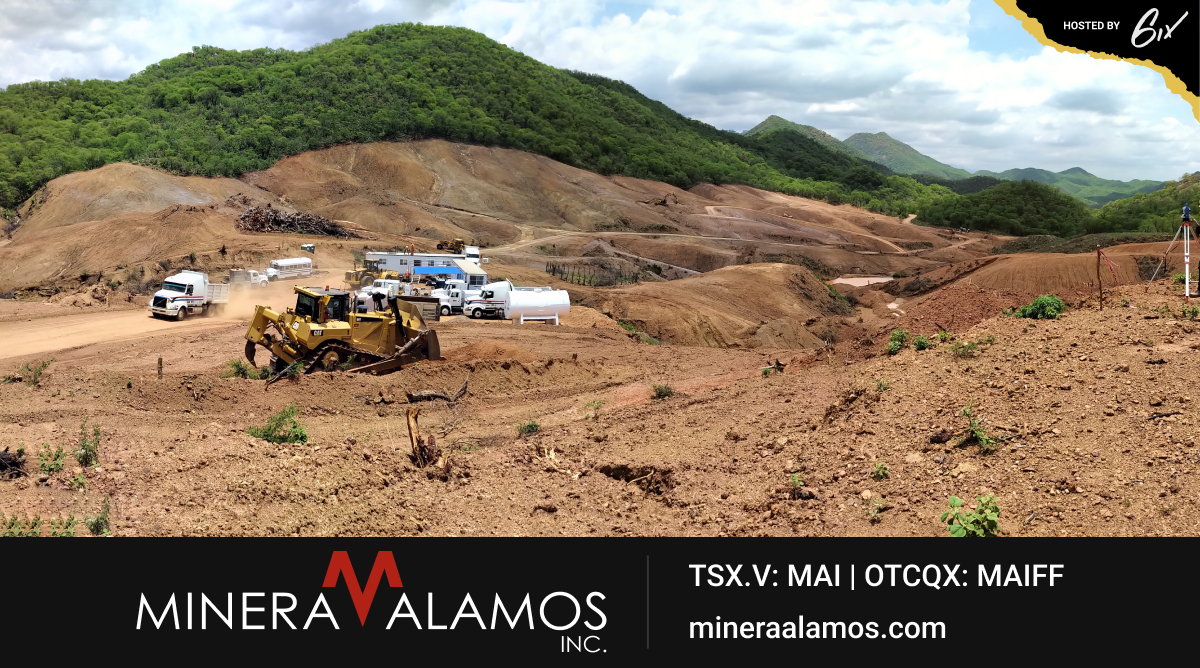
26:24 I appreciate that context and being in Mexico now myself, there's certainly a difference between the headlines that make it to Canada and the United States and the reality of what mining means in Mexico. So I appreciate that context. I wanted to zoom into projects really specifically just for listeners who might already be part of them in their Alamos story. Curious what they can look forward to at Santana this year specifically. Yeah, well, I mean, obviously all eyes are waiting on the permanent amendment there. We feel we said before Christmas, we're very optimistic in terms of the work we've done with Surmanat that it should draw to a close real soon. I mean, maybe, you know, by the time this airs, it's we've got it. But we're also looking at plans to expand operations even in advance of that permanent amendment. So those plans are being considered. Again, I'm not sure if, I think whilst we're comfortable and confident about the work we've put in and the back and forth with Surma on our applications for this modest amendment to our existing permit there at the mine.
27:37 I don't think, I mean, A, you shouldn't expect your shareholders to just sit on their hands and patiently wait, but also corporately, I don't think we should either. I mean, we're meant to be a gold mining company producing money and producing gold. And so we've considered plans over Christmas that we're finalizing now that would allow us to expand gold production at Santan and using existing heat beach pad space, even in advance and in preparation for that permit amendment, which we do expect will come at some point. But is it next week? Is it next month? Is it tomorrow? I just don't think you can sit around and arguably wait forever in that regard.
28:30 You will continue to test the patience of your shareholder base. Yes, our builds are cheap and they're pretty insulated from inflationary pressures, so we don't have that same impact on our balance sheet if things go awry or take time, but time does have its cost. And I'm sure a lot of shareholders last year, we tested their patients sufficiently that they decided to go to pastures near. And that pains me because I think the opportunities that lie ahead of Moneira are fantastic. But I understand that, you know, those, the decision of anyone who actually chose to sell last year. Now you can come into the new year and everyone's excited about what the new year can bring.
29:22 If things continue to drag, you're going to test the resolve of a bunch more shareholders. And I think when we're at the cusp of something great with the business model, I don't want to lose any of those people who now have the opportunity to go, see, that's why I was invested in Monero. And so we've got plans afoot to, I think, move things in such a way that it should be encouraging for our shareholder base. I mean, I've come into the new year very encouraged with what lies ahead. Even with all the backdrop of Mexican elections and the like. I think, you know, Manera has got a lot going for it in 2024 and beyond. And so, you know, we want to hit the ground running hard in these first few months of the year, and that's what we're working on right now on a few initiatives to kind of underscore that. Now, looking forward to seeing those pop through.
30:28 What can we expect from Sardioro this year as far as timeline, what's up next? Yeah, we're doing a few things behind the scenes right now, including de-risking, you know, future water needs there, which I think is important. We've got drilling and additional network that needs to be done. We know there's an upside case there and the upside case is something that we want to, we're framing our permit application was framed around the upside case, but there's some additional drilling we want to do. Really, it's, you know, we've got a funding package there available to draw on upon receipt of permit. So we've de-risked the funding component upon that success of the permit application.
31:23 And in the meantime, yeah, I think we've got some drilling, both infill and potentially some step out drilling of the deposit that we want to do. At some point, we want to test the underlying sulfide component, which we know is gold-bearing. Barely any historical drilling into it. No mat done on it. Our PEA is purely based around the oxide component of the deposit. But again, that's another potential upside there. So yeah, we should have a plan of notwithstanding, it's in permitting, so that will run its course. I think we'll have a plan out in the next month or 2 that will be outlining all the other steps that we're going to be doing in parallel with its progress through permitting.
32:17 Great. One thing I always like to ask, because I know we've got a good industry following, there's going to be a lot of young, young geos, young mining crowd that's watching this video. So just curious, what advice you have for people looking to build a successful career in mineral extraction? Don't apply to the voluntary services overseas. It seems like a strong lesson. It's, you know, the one advantage that they have that I never had is like get into things like understand GIS. You know, if you're into computers and stuff, understand GIS stuff. I see younger Geosyn than I ever was now and what they're able to do with the software now.
33:07 There's a lot of older people in this space that aren't skilled on that stuff. There's an advantage there for sure. So think about how you can apply more modern technology to give yourself an advantage really over more seasoned people that may have kicked a lot more rocks. And go to conferences. I always used to like PDAC. There was always be a raft of students going through and there would always be 1 that, I remember 1, he made business cards. And I don't know, I've got it somewhere.
33:54 I kept in contact with him for a while, but he had a business card and it was like, your future geologist on it, as his title. It was like, But he just shows some initiative. Go talk to people, understand, get, you know, there should be a thirst for knowledge and understanding that, you know, and you can only get that, PDAC is a fantastic opportunity to speak to very seasoned people that honestly have a lot of time at the booth where they're not talking to people. So introduce yourself. In many ways, you can do a PDAC. What I was doing, stuffing resumes into envelopes and mailing them out to companies, you know, but try to set yourself apart. See if you can, you know, one of the biggest challenges is not having experience early on. It's such a catch-22, I experienced that.
34:55 You know, see what volunteer work you can do. Try to get like a, you know, don't worry about making money initially. It's about building a resume. So if you can see if you can get some summer jobs with some of these companies, where you're gonna be fed and watered at a campsite, you're going to do hard work. But you're going to start building up your experience. The rest will come. I was 20 years into my career before I really made my money. Everything that led up to that was about making my experience and building on that experience. There's no rush in this space. If you're 22, 23 getting into the space, Well, you've got a lifetime ahead of you in an industry that is not going away.
35:55 So there should be no rush. And I think the real challenge to overcome is building experience on a resume. And so I go to PDAC or the conferences in Vancouver, Try to stand out from the crowd, talk, listen to people, and offer yourself up to learn from them in the field, or, you know, data entry in their offices, or anything that kind of gets you closer to your goal of actually full-time employment in the space.
36:42 That's great. And good luck. It's an incredibly rewarding industry. It comes with its ups and downs, for sure. We've discussed some of those today. But it's amazing. And the people in it are amazing people. And I think it's one of the reasons most of us will never truly retire because your social network becomes the mining brotherhood that you become part of and it's because there are so many interesting people and so many wild stories I'm sadly I don't seem to have the exciting stories that some of my contemporaries have, but it really is. So yeah, good luck. Appreciate that very much. And Doug, thanks so much for talking to me today.
37:31 Thanks Romeo, it was great.