Transcript
Automated transcript · Written by software from the replay's audio. It can mishear names and figures; the replay is the record.
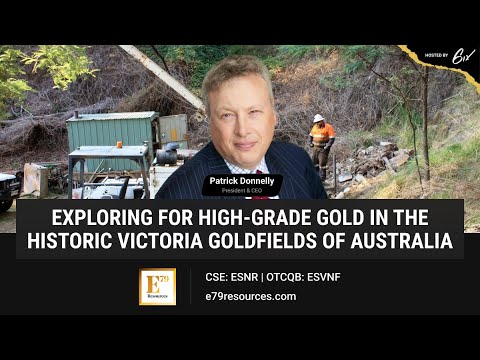
0:08 Hello, everyone. Welcome to E79 Resources live investment summit today, hosted by 6. I'm pleased to introduce their president and CEO, Patrick Donnelly. Patrick's going to walk us through our company presentation and after we're going to enter into a Q&A session. I'd like to remind everyone in the audience that you can ask questions using the Q&A tab found on the right hand side of your screen at any point during today's summit. As always, this event is being recorded and it's going to be available on six.com as an on demand video.
0:33 Without further ado, though, Patrick, I'd like to pass things over to you. Get us started. Great. Thank you so much, Cameron. And thank you, everybody, for taking the opportunity here about E79. I only just started with the company last May and the reason I joined, it's an interesting story, the board of directors approached me last spring and introduced me to the story. I never even heard of e79 and so when I started looking at all their public disclosure Specifically, you know the press releases and their technical disclosure I was really really impressed by the assets they have in Australia And for those who don't know me very well, my background is I was originally an exploration geologist for about 10 years, looking for gold, nickel, zinc, platinum, palladium, diamonds. And So, you know, when I put my geologist hat on and I looked at the story and the tremendous exploration potential and the tremendous success they've had so far, I was very, very compelled. And that's why I joined the company last May as President and CEO.
1:48 The other thing I mentioned is people always ask me and I'll get it out of the way, you know, what does E79 stand for? It's the 79th element on the periodic table, which happens to be gold. So that's how they came up with the name. East 79 is a relatively new company. It's only been around for just over a year. And our initial drilling commenced early in 2021. So I think that's one of the reasons why the story is not very well known. And, but since I've joined in May, I've been out and about telling the story. I just got back from Beaver Creek and which was a very, very successful conference.
2:33 And I was very, very pleased with the quality of the attendees. So we can talk more about that later and at this point let's let's get into the story. So here are some more forward-looking statements. I will be making some forward looking statements. So just to start off with, if I had 30 seconds to tell you why you should invest, the first thing is, one thing I learned a long time ago as a geologist, the best place to look for mine is within a shadow of a head frame. And specifically, our assets are located in the Victorian gold fields of Southern Australia. And specifically, we're in the same area as the world-class Fosterville mine, which I'll talk a little bit about later. There's a few other mines, the Costa field mine, Ballarat and a number of others. And this area historically has produced over 80 million ounces of gold, which is a staggering amount.
3:30 So you want to be in these gold fields and it's an area that's been relatively underexplored and I'll talk more about that in a minute. The other thing is, as I mentioned, we started drilling just over a year ago and right off the bat we had some very good drilling results. Our third hole was a screamer, 11 meters of 160 grams at our happy valley prospect within Myrtleford which I'll talk more about a minute so in since then we've put out very high grade results so this These deposits that we're working on have very, very high grades and are very discreet. So again, your grade is king and that's what you want. Very large land package in the Victoria gold fields, which I'll talk about in a minute. You want big land packages with good geology and lots of smoke.
4:20 Our drilling costs are low. Matter of fact it says here $3.15. Actually those drilling costs have been coming down. We're using a family-run drilling company And I was just talking to our people last week and our direct drilling costs. So just the drill itself, we're paying 150 Australian per meter. And just put that perspective, you know, the Canadian Australian dollar trades a 0.9 of a Canadian dollar. So you know these costs are going to come down quite a bit. We have a lean team, there's not a lot of employees, we have 1 drill turning and so again we can make, we can get most bang for the buck. Experience management on the board, I've been doing this for a long time, I've been doing this for 30 years.
5:06 I was a geologist, I was a mining analyst for a number of years in Toronto, and I've been on the corporate side for the last 10 years, and I've been all over the world. So our VP of exploration, Shane Mellie, he's an Australian, he's based in Australia and he's worked all over Victorian gold fields and he's just a great asset. And one thing I've learned, you know, in this industry, especially now, and probably his audience is aware, there's an acute shortage of talented people. So, you know, we're very fortunate to have Shane and his team there in Australia. And I think that's, I think 1 saying I've heard before is, you know, we've had bad teams ruining good projects. In our case, I think we have a very strong team and I'm very confident in the capabilities.
5:55 Cash, we have lots of cash. So, you know, 6 million Canadian And most of our costs are Australian dollars. So, you know, we're in a good spot. I'm not here, as Rick Brewer would say, with the begging bowl. I'm here because we're moving ahead with drilling and we think we can make this cash last for a long time. And meanwhile, we'll keep drilling on our assets and putting out news. So you know despite the markets we're small, we're nimble, we have quality assets and I think our exploration costs are relatively low. We're not you know for exploration we're not using helicopters or large camps or that sort of thing. We're 20 minutes from the local town in a very supportive area of Australia.
6:39 So just to give you an overview where we are, as I said before, we're in the Victorian gold fields. This is an area that's produced a lot of gold. And just a bit of background, this area was first, there was activity in this area in the late 1800s with the Australian Victorian Gold Rush. And so that's how this area was originally discovered. And you have, you know, numerous deposits, you know, you can see here, there's Costa field, Ballarat, Stadwell, Bendigo, Fosterville, and these deposits, They're very, very high grade and they're narrow. And it's kind of interesting, this area, I call it kind of the stepchild of Australian mining districts until 2016.
7:30 And this area was kind of turned on its head when Kirkland Lake Gold found really high-grade gold mineralization at Fosterville. And Fosterville, for those who are not aware, was a very challenging asset. It's been around for, you know, producing gold for a long time. It was very metallurgically challenging. It was running 4 grams per ton open pit and it was a very, very marginal deposit. And then in 2016, they found this very, very high grade zone called the Swan Zone, which was multi-house coarse gold. And that really turned things around for Kirkland Lake Gold and ended up becoming one of the highest grade most profitable mines in the world. So that's garnered a lot of attention for this area going away from metallurgically challenging deposits to deposits with very, very coarse gold, easy to recover.
8:22 Kirkland Legg revised their production guidance 3 times in 2017 or 2018 from a couple hundred thousand ounces per year to over, I think it was almost 600,000 ounces per year. And so just the high grade nature. So it's really resulted in a lot of companies coming into the area. It's getting a lot of attention. Unfortunately, our principals got in early. They got these assets in 2019. And again, we're in the heart of the Victorian Gold Belt. So again, as I always say, you want to be in good geography and around projects that have already been successful. So again, a compelling area and again, very, very supportive environment. So let's start with Myrtleford.
9:08 And I was down there just last June, and I was very, very impressed with what I saw. What blew me away, or really impressed me, is that there's numerous gold showings, adits, workings in the area. And most of the original production in the late 1800s was alluvial mining, and they pulled out over 5 million ounces of gold from the alluvials. That's an astounding amount of gold. So the question is, where is this gold coming from? Which I'll talk about in a minute. There's been no modern exploration in this area, no drilling. And so we acquired this in 2019. And as I said before, only last year, we started drilling this area. So again, very, very compelling area.
9:56 Here's a map showing Myrtleford. It's a large land package, length of 45 kilometers. The red dots here represent gold occurrences in the form of workings, showings, adits. And what's really fascinating is when the old-timers were here and they were mining the hard rock sources of this alluvial gold, they only went down to the water table. They only went about 30 meters or so, then they stopped because they didn't have the capability to deal with the water because they were hitting it with pickaxes and shovels. It was all manual. So that's what really impressed me is, there's so much smoke and yet, nobody really thought of much of this area until recently. And again, the change of thinking at Fosterville, I think contributed to that.
10:43 So yeah, so again, large property and lots of smoke, tons of smoke. And so what we're doing is chasing those working. So we only started drilling last year, it's 40 kilometers long and the 2 areas we're focusing on are Twist Creek and Happy Valley. And we originally commenced drilling at Happy Valley in early 2021. And we only started drilling Twist Creek earlier. I think it was in April we commenced drilling there. So again, And those aren't the only 2 areas. We've got lots of other areas here. This big multi-kilometre stretch here is the magpie zone. That's another area that's never been drilled. There's a lot of low-hanging fruit and we've got more targets than we know what to do with. So we're going out, we're flying it, we've done LIDAR survey on the area.
11:38 We've also done a lot of geocam, rock chip sampling, soil geocam, a lot of other work to further refine these targets and go in there and drill them. So here specifically is Happy Valley. It's a 13 kilometer long trend. I was up there in June and this is the area that saw a lot of historical activity and the old-timers that were there in 1800s, they were chasing coarse gold. So if you see it at it, or you see a trench or any other working, then you know that that originally hosted coarse gold. And I think the average grade was over an ounce. So they're going after high grade. And again, they're doing this by hand, basically pick and shovel. And no modern exploration methods were used. So again really intriguing area this is where we started.
12:31 You can see here we've drilled about 25 holes in Happy Valley. This is the plan map showing that drilling and specifically hole 3 was the screamer, but we've also had other holes that had very, very good mineralization. And I'll show you that here. Here's the plan map. We're dealing with these vertical, the sub vertical reefs. They tend to be very, very high grade. So you can see here, hole 3, 11 meters, 160 grams, hole 6, you know, you have 2 meters of 44 grams, you know, hole 7, almost 6 meters of 66 grams, you know? So again, and it's completely open at depth. Right now we're not drilling there. We've taken a step back. It's completely open at depth, but what we're working on now is putting together a three-dimensional model showing the location of these reefs, there's numerous structures in the area.
13:26 So before we go back and start drilling deep holes, we really want to have a good three-dimensional model to help us target these structures and reefs as they go to depth, but it's completely open. Again, very, very high grade and very positive results. And here on slide 12, you can see some of these results. Again, very, very high grade. That's the nature of this area. And it's interesting, you know, when I went to the Fosterville mine and met the, you know, Fosterville is now owned by Agnico. And we met with their technical people who are very, very gracious. And we spent a lot of time talking about the evolution of the Fosterville mine, specifically the Swan Zone. And what I came away with, 1, is that the Swan Zone is very discreet. It's not a big deposit, but yet it's very, very high grade.
14:15 And What was interesting, as I mentioned before, there were numerous operators at that mine and they never could find the Swan Zone. They kept missing it. They were always targeting the sulfides, which are always metallurgically challenging. My point is, these deposits are not large. They're very discreet and yet they're very, very rich. So when you hit them, you hit them. And so, you know, you could be 10 feet away and miss it. So again, we're trying to be intelligent about it. We're trying to be methodical and that's why we're doing this three-dimensional model. The other area we were focusing on at Myrtleford is Twist Creek and again you can see here 7 kilometer long trend of workings very very high grade showings.
15:01 You can see you know I walked it again I walked it in June and there's all kinds of working showings at its trenches and again the old-timers in 1800s, late 1800s, were chasing these things and again there's never been a drill hole here. So we only started drilling here in May or in April. And as I said before, pretty high grade, the historical grades are around an ounce. So again, if you're hitting an ounce material that's about an ounce, you're not gonna need much material to put together a decent resource. So we started drilling there. You can see here's a number of high-grade reefs on slide 14 here and the 2 areas that we've really become excited about are Victoria and Scandinavian. Put out some very very high grades from there and we're drilling there right now. We've got 1 drill turning at Twist Creek and we'll continue on from there. So the topography is pretty good. And again, the access is fantastic.
15:57 You're 20 minutes from town. And a matter of fact, all our employees live locally. So we don't have to fly people in, we have no camps. And our employees like working here because a lot of Australians used to fly to other places to work and stay in camps or remote areas. Here, our geologists and technical people, they sleep in their beds at night. So it's a great situation for everybody. And so it's a nice change for me, because I was a Canadian geologist. Most of my experience is working in really remote areas and camps. So here's a plan map of the Scandinavian prospect of Twist Creek. You'd see here, you know, we've had some very, very good drill holes and mineralizations open at depth. And so We're following up with that now. At Scandinavian, here's a cross-section of the drilling results to help you get, you know, able to, so you can conceptualize this mineralization, it's open at depth. And so we're right now following up on the original drilling. So hopefully we'll have some results
16:57 in the coming months from Scandinavian. Here's the Victoria prospect again, more drill results, very good grades. And again, it's open to depth. And so now we'll also be following up at Victoria at the Twist Creek project. Our other project, Gold Fort is in the western portion of the Victorian goldfields. And again, very large land package, 20 kilometers long. And there's been a lot of historical alluvial production, over 1 million ounces, at very, very good grades. Again, great infrastructure. Topography is very favorable to doing work. And again, I was up there in June, walking the area. And again, you could see all the working showings at it. And then adjacent to the property, you could see where all the alluvial mining happened. And so again, the question is, where is this gold coming from? And you can see here, you know, we've identified some of the structures that control gold mineralization. We've done a lot of geocam work, specifically soils, rock chip sampling and LIDAR.
18:07 You've got these Northwest trending, North-South trending structures. You can see on slide 21, some of the geochem we've done with some contoured gold grades and the interpretation of all the structures. We haven't drilled there yet. We'll probably go in there later in the year, do some shallow air core drilling, and then we'll probably follow it up with some diamond drilling. So again, a very, very interesting area. A lot of historical gold is coming out of here and so we do have high expectations for this project. So I've mentioned Fosterville a few times and I won't get into too much detail here, but what I will say and reiterate is, it's not big, but it's very, very high grade.
18:56 It was a very challenging mine and they discovered a Swan Zone only in 2016, which has changed everything in the whole Victoria Gold Belt and how the geology, mineralization structure. Again, I want to reiterate that they did a lot of drilling and missed it a few times and then they finally hit it. So again, one of the highest, you know, greatest king and that's why we like these deposits. And again, it's totally opened up the whole region. And here, I won't get into too much detail here. I know, you know, if I start talking about geology, I'll put everybody to sleep, but what I will say is there's some really good similarities between our projects and what you see at Fosterville.
19:45 And what's really interesting is the whole geologic interpretation of the region has been changing quite a bit. There's a gentleman named Ross Caley, who is an academic and works for the Victoria State Government as their lead geoscientist, and he's been doing a lot of work on that. And so again, I think that's one of the reasons why this area has really opened up. There's a lot of junior mining companies in the area, a lot of Canadian companies, a lot of Australian companies. And it's because this area has been turned on its head. And again, only within the last few years. So again, very good similarities with Fosterville. And again, you know, we've been, we talked to the Fosterville people quite a bit and get some of their intelligence and then apply that to how, you know, we're looking for these gold deposits.
20:34 Capital structure, you know, this company last year was over a dollar and it's gone all the way down to about 20 cents. Reason being is, you know, I only started in May and there wasn't anybody really running a company for 6 or 7 months before I came aboard. So while we're putting out really good drilling results, there wasn't really any marketing, nobody telling the story, and yet we're pulling out really good drilling results. So we have 6 million in cash. We think we can make that last for a while. Great institutional shareholders, you got Eric Sprott, Commodity Capital, US Global, very good, very, very good. And Management Insider's own a lot of stock. And, you know, I've been buying stock in the market. You know, these prices are just ridiculous. We're trading enterprise value of only $3 million.
21:23 And we're in yet, we're one of the most, you know, prolific gold mining jurisdictions in the world. So very, very, you know, we've no warrants, no debt, nothing like that. Very, you know, and, and, again, really good capital structure and ownership for the company. So just regards to, you know, what is what are we expecting to do in the next few months? As I said before, right now we're at Twist Creek. We'll continue drilling there. We plan to go back to Happy Valley and maybe drill some of those deeper reefs and extend to the depth. And then also there's magpie, which we really like a lot, which we haven't even touched. So again, we have so many areas that we could drill.
22:13 And so yeah, it's great to have smoke everywhere. So again, we're gonna be methodical about it. We're gonna be intelligent about it. Our drilling costs are pretty tight. We will do some more work at Beaufort, as I said before, some air core drilling. And then later on, we'll do some diamond drilling. So lots to do. We can make this money last for a while and meanwhile, keep on drilling. So just in conclusion, why is E79 a compelling story? Again, large land position, lots of showings, lots of workings, lots of pits, lots of areas that have never seen any systemic modern exploration. We expect more exploration success. We have a very good team. They know what they're doing. They're from the area. They've all worked at Fosterville and some of these other areas in Australia.
23:05 And so they're doing the work and my job is to tell the story and keep an eye on the cash. Again we've already had great success at Happy Valley, hole 3. As you saw there are other holes that are very, very compelling as well. We're well financed, 6 million in cash, and we have tremendous shareholders. And it's funny, I was down at Beaver Creek, and I met a lot of these shareholders, and they're very, very supportive. And, you know, they're going to stick with us, which is great. And finally, as you're all well aware, jurisdictions become more of a problem than ever, and even in North America. And so we're in an area, the Victorian government is just tremendous. They really support mining. They're putting a lot of money into academic research in the area to help gold mining companies.
23:50 They're flying geophysical surveys to support mining companies. And it's a very straightforward, prescriptive permitting and operating system in that state. And as you're well aware, Australia has got a great workforce, it's the mines in their blood. And so I can't think of anything better, anywhere better to be. So again, very, very happy to be there. So anyway, 26 minutes and I am happy to answer every single question that's out there. So I'll pass it back to Cameron. Yeah, absolutely, Patrick. Well, Thank you so much for the great presentation. And with that, I'd like to remind everyone in the audience that you can ask questions using the Q&A tab found on the right hand side of your screen.
24:38 First question though, Patrick, do you know yet if it's gonna be an open pit or an underground mining or both for that matter?
24:44 It seems like- Yeah, I'd say it's likely to be underground. What's interesting with these deposits, they're pretty narrow, but they're super high grade. So it'd be lending itself to underground mining methods. And What was interesting, the Australians in this neck of the woods are very comfortable with doing narrow underground mining. And that's what we see at Fosterville. And when you got very, very high grade material, you have a lot of slack to mine narrow vein deposits. So it'll most likely be underground. All right.
25:30 How long is your cash going to last at this point? Probably 18 months to 2 years at the current burn rate. And that's, you know, if we keep drilling. So we are cash for quite a while. Fair enough. Regarding share price, Why is it that it's about $0.20 compared to especially over a year ago where it was more than $1? Yeah, as I said before, the previous CEO left last fall. And despite the fact they're putting out great drilling results, and it took them, you know, it was really hard. They wanted the right person to run the ship. And so for 7 months there, there was nobody at the helm to tell the story.
26:15 And so there was no marketing, no conferences, nothing. And they're putting out really good drill results, but the challenge is, you know, you wanna put out drill results, but you need someone to explain what they mean and tell the story. So it's been a very, very quiet story. And, you know, for example, you know, when the board approached me, you know, I think it was in March, I didn't know what E79 was. I never even heard of it. And I've been around the block a few times. I've been in this business for over 30 years. So I think it's just, there just wasn't anybody pushing the story. And I think, as you're well aware, in this business, when you're telling a story like this, you gotta stay front and center, you gotta stay on top of your shareholders, and you gotta be showing from the rooftop.
27:04 So I think that's the main reason because the results have been very, very good and I'm very happy with what I've seen. And you know, when once I read everything, read all the disclosures, I met all the people, I was like, wow, this is a great opportunity. And hey, you know, shares are cheap. So I've been buying stock. It's crazy. But obviously the markets don't help, but I'm not gonna use that excuse. I think it's just simply that it's a story that needs more, needs someone to champion it. And that's what I'm gonna do. All right then. Are you looking at any other transactions? Yeah, you know what? We're looking. There's great opportunities in the state of Victoria, and there's other juniors in the area, they're not in as strong financial position as we are. So yeah, we like the, you know, we know it very well.
27:58 Our technical people know the back, like the back of your hands. And so, you know, if an opportunity comes along, we'll look at it. So, you know, we want to specialize in that and the holding costs aren't high. And as I said, the drilling costs aren't that high and it's easy to get around. So yeah, absolutely. If we see something interesting, we'll investigate it. Okay, fair enough. What's the greatest upcoming challenge that you're anticipating? I think that's a great question. I think the biggest challenge is just these headwinds, right? And the uncertainty in the markets, everybody's been beaten up and it's a risk off environment. And you know, we're a little junior mining company. So you know, we got 2 years of cash and you know, and I got to remember, You know, our insiders and founders have a lot of stock, right? They don't want to do a financing of 20 cents. They'd be very, very reticent.
28:51 So it's the trying to balance, you know, trying to get expiration bang for the buck, keep the drills turning, but also making sure that our cash lasts. Right. I don't believe in, you know, just sitting there shutting everything down and sitting on the cash. I don't think the shareholders appreciate that. But the same time is you don't want to dilute your shareholders as well. So I think that's the balance I'm trying to straddle is keep the drills turning, make the cash last and get banged for the buck. Fair enough. Have you spoken to any major gold mining companies? Yeah, absolutely. You know, there's discussion. Like I said, we were at Fosterville in June, and which is owned by Agnico. And they're interested in, and they're talking to everybody that's working in the district.
29:37 And it's interesting when I was at the Fosterville mine, they're spending $60 million this year in exploration because the Swan Zone is not going to last forever. So absolutely, we were just at Beaver Creek and we spoke to a number of companies that are interested in the area. And again, this is an area that never really got a lot of love until, you know, Kirkland Lake, which is now, like Neco made that breakthrough with the Swan Zone. And so it's opened up a lot of eyes. And so, yeah, absolutely. If you're a major, you gotta look at this area because as I said before, it's also a region that's very politically stable, very supportive and a good place to do business. So yeah, absolutely. We've had people approach us and we'll talk to them.
30:26 I think, my view is, we got so many areas to look at. We don't want to give away the cow or the milk and we got lots of money. So let's see what we got. We'll talk to people, but you know, we want to extract full value out of these properties. And so we're not in any rush to do any with anybody, but we'll certainly talk to them. Absolutely. Okay. This next question is requesting that you you talk about you dive in on and review your technical team. Absolutely. You know, Shane Melley, he's our VP of exploration. And, you know, he's been doing this for 30 years. He's worked all over the Victorian gold fields.
31:12 His previous employer was Navarre, which is also in the area. And yeah, so, you know, he's from Victoria, all his experience is in Victoria. And so that's what you want, right? And yeah, he's just a great guy and I rely on him heavily and him and I, you know, I talk to Shane probably almost every day. And, you know, technology is great. You know, WhatsApp and Zoom and all these other technologies is great because it allows us to, you know, work together and communication is so vital in this business and I believe in strong communication. So yeah, and then we have our team in Australia. Like I said, the advantage we have is that They all live in the local town, which is 20 minutes from our projects. So they're not having to fly. You know, a lot of them historically have always, you know, had to fly to Western Australia or Northern Territory and do like a 2 or 3 week stint and then come home. Here they go home every night. So for us, it's an advantage to attract and retain people. So yeah, we're very fortunate to have experienced people who can drive to our project.
32:26 All right. Can you review your upcoming catalysts for the next 12 months? Absolutely. So Right now, drilling at Twist Creek. We'll probably be there for the next month or 2. We'll put out drilling results from there. We're looking at some other acquisitions, properties in the area. Stay tuned for that. We'll start Aircore drilling at Beaufort. Hopefully, we're looking at November and then follow that up with Diamond drilling. And then obviously going back to Happy Valley and seeing what's adept. So, and then as I mentioned before, the other area that was really intrigued was Magpie, which is halfway down and that's, you know, long strike length. And as I said before, I walked it with Shane last June and it's full of workings. So when you see workings and showings and adits, you know they're chasing multi-ounce Gold. So there's no shortage of smoke in the area. It's just incredible. So we'll be chasing that as well. You know, the drill's turning. We got 1 drill.
33:31 It's going to plug away and we'll probably put out 1 to 2 press releases per month on the drilling. So that's the plan. Okay. Well, Patrick, listen, I want to thank you for coming on today. That's all the questions we've had to come in so far. I of course want to thank everyone in the audience for joining us today, especially those who have asked questions. But Patrick, before we wrap up the day, I want to pass things back to you, give you an opportunity to have some closing remarks, final words. Yeah, absolutely. And thank you, everybody, for taking the time to hear the story. And I just put up my contact details based in Vancouver. You can reach me at Patrick at e79resources.com and or the info at e79resources.com. I always respond to my emails and you know, I'm willing to talk about e79.
34:17 I'm willing to talk about gold mining as I said before I'm an ex-analyst so You want to talk about the markets or anything else? I'm happy to I like talk. You know mine is in my blood and You know my father was a miner, and so you know I've been doing this for a long time. So I pretty much don't have a life except for mining. So if you want to talk about it, give me a send me an email and I'm happy to answer any questions. And again, thank you so much for taking the time. Hopefully these markets turn around, gold moves up and everybody stays healthy.