Automated transcript · Written by software from the replay's audio. It can mishear names and figures; the replay is the record.
20:32 very early or very soon is to set up a hole that would test that target area probably in the in its northeast, northeastern corner here to start with. And finally Ant 4, again cut into its own structural domain, slightly thinner in terms of lateral dimension, but again very strong evidences or suggestions when we look at the signature profile here that there's a drop even west of Ant 4, so that may lead eventually to an Ant 5 target area.
21:22 But as we were getting very, very close to the limit of the Ant survey, where the the confidence level becomes relatively low as compared to the center core of the the survey. I didn't create that target as of yet. We'll see with upcoming data that we intend gathering, what we can do, you know, even further away from that survey data. So that's pretty much it on that, unless Terry, did I forget something? No, I think you covered it, you know, so I mean, basically from a timing perspective, right now the rigs are getting geared up I think we're gonna be starting to turn tomorrow our first hole this winter is going to be a we were halfway through it at on our NIST main and we'll finish that up and I guess it's number 42 I don't know if it's on that but yeah that one there so so we'll finish that. And then after that, we're going to Ant 3, and as Ken suggested, going into that Northeast area in that corner.
22:43 And we'll be testing that. And our philosophy on the rigs is that we've got a second rig coming, and that second rig will actually be going to Wildcat to follow up on our highly successful PGM holes. And so what will happen on Ant 3, if Ant 3 is successful, i.e. We test it and we hit a massive sulfide intersection that we like, then we'll continue to focus on development drilling on Ant 3, follow up on it, and we'll bring in a, capital obviously aside, we'll bring in another rig, a third rig, to follow up probably at, on Ant 2 or Ant 1, I think.
23:30 And then, and the same process there, once we successfully intersect the mass of sulfide, we'll leave that rig continuing to drill step out, appropriate step out holes. Again, just to give you a context, on this main we drilled almost 30,000 meters in total, I think. So, you know, these will probably take, you know, and 3 would probably take, you know, 20, 30,000 meters to develop it into a full pod, fully exploited. So, there's obviously a ton of exploration work that will be done over the fullness of time, but from a impact on the potential size of it, the more that we can sort of identify these new pods and that they're successful, obviously that will have a material impact on our growth potential. And people say, well, how big can NIST be?
24:31 And I cite the, it's an ultramarket discovery. So Lynn Lake was 22 million tons, Boise Bay ultramarket plus 50. I would think we would for sure be between these guys and possibly towards the upper end. And the neat thing about NISQ is that this is pretty much a surface to like, I guess, 600 meters or so, 500 meters depth. Generally speaking, that is not how nickel is found. Generally speaking, nickel is found much deeper, like Raglan, which is another very great mine in Quebec, you know, at Norel's Voices Bay, they're already more 500 meters to 2 kilometers because nickel's heavy and it tends to sink.
25:30 So we're quite excited, you know, because we obviously see we've got a great deposit in this main, it's growing, it looks like there's other, you know, very attractive exploration pods to be found. We know that in the history of time, every single nickel sulfide mine ever produced has always been more than 1 ore body. It's always been multiple pods. So it's highly likely that's what we have here. So that looks very prospective that we can add these on. But the other cool thing is that and why we again talk about it being such an amazing asymmetric investment opportunity is that you're not paying for that right now. You're getting this thing for 10 or 20 cents on the dollar. And then we've got all this exploration upside on the surface to 500 meters. Plus, when Fleet comes back next summer, we're gonna be doing some deeper discovery.
26:24 And I mean, Norilsk is the world's only trillion dollar deposit for minerals. It started off as a service mine and then they found a couple of kilometers away the really big stuff. So that's sort of, who knows how big this can be, but as an investor what's exciting is that's all free. You're getting it all for free. And so that's why we think it's such an amazing exploration opportunity is that, we see lots of great targets that we can go after now. And the team is completely psyched about these opportunities based upon the scientific data we've got on our hand. And of course, we'll learn by drilling. And I'm sure there'll be some good surprises and some bad ones because that's how it works. But we're pretty stoked about what we see and we think it's got crazy potential.
27:18 So, let's just go to the, wrap it up again with talking about the next steps. If you can move forward a few slides. Yeah, sure. Just to comment on what you just said, Terry, I'd like to remind people a bit, too, that when we look at the profile here on top of that screen looking north, and we focus at where is NISQ main versus that ant signature that we've kind of locked on. We got to realize that NISQ main location is the only place that that ant signature kind of rises up and it gets closer to surface and I'm kind of wondering sometimes, is that part of the reason why, you know, NISQ has been discovered in the first place?
28:15 You know, for that signature to come and rise closer to surface, easier to find perhaps, I'm talking through my hat a bit, but if that is the case, then it would certainly explain in a way, you know, that Ant 3, 4, 2, 1 are all very, very good targets, but can't be seen from surface, it's too deep. So, just wanted to comment on that. Yeah, fair enough. So you wanted me to... Yeah, go to the nickel carbon-free thing. Yeah, yeah. There we go. Back 1 slide.
29:05 Maybe it's a head one slide. Yeah, yeah. So basically, just in terms of the NISC action plan, we basically got the benchmark studies from CVMirror will be coming out in the next week to 10 days. I was talking to CV Merit today. They're working around the clock on it. And obviously, we started drilling. The drilling drill rig will be turning tomorrow. We'll be testing what we talked about, a 3 and 2, I think first. And obviously that'll be exciting when we get that news out. There'll be an early Q2, we'll have a prototype report where that's where CVMRI will actually be taking, you know, fairly, you know, large amount of our ore, processing it in a replica plant that we would theoretically build here and then seeing what the recoveries are. So we go from sort of like a bench talk model to an actual prototype.
30:09 And then that ultimately allow us to produce the feasibility study in, we think in Q3. We hope to have it out sooner, but we need more metallurgical rock to do that, and we have to drill to get it, so that's why that's delayed a little bit. But generally speaking, we're gonna be having drill results starting, I think in the next 10 days or so, And then I would think every 2 weeks from, you know, now until August, just on the current program. And then ultimately we will probably, I think, update our, just announced 43-101 and make it into a PEA in Q4. So a lot of amazing exploration news going to be coming from NISC.
30:57 Hard, hard news. We, I was going through with one of the investment banks today that we think we're gonna have probably 20 press releases between here and the end of June. And none of them fluff pieces are all sort of meaningful like you can see. So yeah, exciting stuff. So maybe now would be a good time to take some questions and answer any questions that might be out there in the audiences and happy to do that. Kyle, if you've got some, that would be a good time. Okay, great. Yeah, there's a lot of questions and keep them coming. So we're gonna start from the top. Are you able to re-entry to go deeper on drill holes to save on drilling?
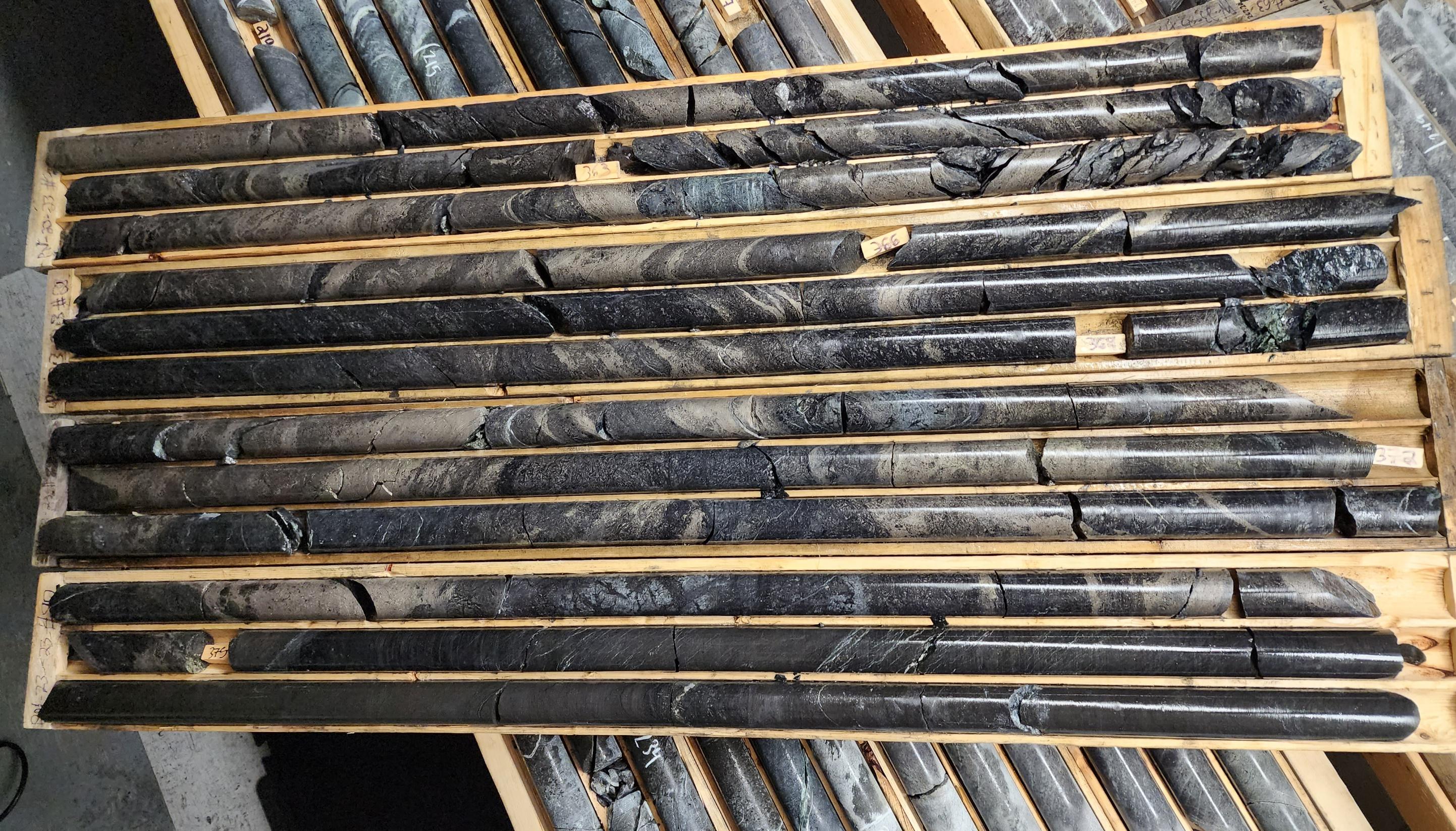
31:52 May I answer that? Yeah, of course. Absolutely. I think the question is referred to, can we actually drill a mother hole and then wedge off of it to save on the top portion of the mother hole and then constantly drilling more and more targets. We are starting to do that now with that old 42. We're drilling actually 42B and it's going to be a wedge starting off probably at mid distance around in that mother hole, 42 being the mother hole, and then from that midpoint we'll be wedging higher to pierce the target location, few tens of meters above the actual intercept.
32:43 And starting now, we will be using probably more and more of that strategy, especially as the targets are becoming deeper and deeper, we will try to make good use of that money for sure. Thank you, Ken. Adrian's wondering, once the data has been collected on an area, might it need to be redone at a different depth at some point, or is it a 1 and done type of technology? For my understanding, the depth is based upon the number of geodes you have and the spacing of the geodes. So we had a allocation, I think it was, I can't remember, I think it was like 100 or so. Now, you know, like, and Fleet is, they're, I mean, this is a relatively new company, you know, several years old now, but, and they're rapidly growing and they're learning their technology as how to make it better. So last year, the common deployment was 100. This year, it's almost double that.
33:49 And so to get them denser so we can go deeper. So this year I would say we probably got to, you know, 4 or 500 meters. And next summer we hope to get to, you know, almost double that, you know, with the density. So there is some new approaches that, and by putting them together closer and some better technology always being upgraded from there and their software so that they hope to be able to get us deeper looks. And if I may Terry, I don't know if the question was very very technical or not but if it is very technical what I can say is the different ant surveys can be combined 1 into each other.
34:37 So if you do a very high-res, small-scale survey and then you decide to do a property scale one, obviously the resolution on property scale will be a lot less than the detailed survey but at the end of the day what fleet guys and girls do is they do combine all of it together so you get better resolution within the regional lower resolution model in the areas where you would have done detailed surveys there. And that's pretty much what we're looking at doing later this year. Great. Thank you guys.
35:23 Jack's wondering about the expected turnaround times for the recent drilling and the assay results. We expect we will get something out in the next 10 days to 2 weeks on some of the fall targets? I noticed there are legacy holes in the Ant 3 and Ant 2 areas. Are there any potential to re-enter? Oh, this is, seems like a similar question as the other one about re-entering the holes and drilling down. Yeah, similar question, but in the answer for that specific one though is no. The previous drill holes were drilled and did pass through the target area, but they were overshooting the target, like drilling too close to surface rather than deeper.
36:12 So even if we were to extend those previous holes, it would not gain nothing. We require a deeper setup. This might add on nicely to his question regarding drilling. Are there any advantages to using technology from shale oil drilling where 1 hole could be kicked out in different directions from the bottom? Again that is related to wedging and specifically in this case the what we're referring to is a difficult directional drilling. I'm used to do that a lot when the drilling is really deep and it has lots of advantages. It's very very precise drilling where you actually define the pierce points and you let the technicians and specialists to actually steer the hole to actually get to those pierce points.
37:10 But that technology is about 2 to 2.5 times as much as expensive as regular drilling is with simple wedging. So maybe eventually we'll consider Divico, depending at what the depth is, what the geometry of them zones are and blah, blah, blah, but it would have to work the money invested. So right now we can do as good of a job without spending that much money. CP Folk has an interesting question here. How does the lithological dipping of NISQ deposit and host rocks affect the quality and interpretation of the Ant Surveys?
38:00 That's a really really good question Actually, it has lots of impacts In the sense that the geodes The receivers of the data are located on surface so Ideally if we'd have you know Subvertical or So ideally, if we have sub-vertical or sub-horizontal surfaces or volumes to deal with, it would make the interpolation or interpretation of that data by the fleet geophysicist a lot easier. Having to deal with oblique contacts creates some sort of a blurriness and that's why we were actually I should have mentioned that earlier but that's why we're referring to a range of velocities not a specific velocity attached to 1 particular rock type but because it's dipping and the the data is kind of coming through all of it at the same time it blurries the image and so we end up with a lower level of confidence so the contact becomes a range of velocity And that range of velocity is what we've highlighted being that Ant signature that we're kind of following. So within that range is where we expect, you know, the core of the deposit to
39:31 be. But where exactly in that range, we got a drill to know that. It's a little bit the same principle as an airborne mag survey where you would see shadows along the mag highs, for say, that would be an indication on the dip of them structures where it's, if people are used with geophysics analysis, then it's a little bit the same approach here. Thank you for that, Ken. I think I'll direct this next question to Terry here. Just wondering about getting some commentary on some strategic investments in the Nickel market, specifically Canada Nickel's deal with Agnico Eagle and Samsung.
40:20 Now add on FPX's recent 1 with, I don't remember the name exactly, Sumitomo, Sumitomo Mills, and you have a great partner with CBMR, but do you want to touch on that? Yeah, sure. So, I mean, obviously congratulations to both CNC and FTX great you know accomplishments for those companies and I think you know it shows that despite obviously honestly a declining nickel price at the moment and because of you know you know the Indonesian oversupply at the moment you know it shows you how ultimately scarce nickel is in the world and especially North American nickel and nickel that can be class 1 nickel that would be eligible for batteries and you know, for you know, high tech use really.
41:21 So, you know, despite these projects being not a crazy lucrative in terms of IRRs, internal rates of returns, based upon their feasibility studies, They're getting investors because they actually can produce nickel in big numbers, and that's attractive for these folks like Samsung and Sumitomo, and for them, I think for Samsung, it's definitely, they have a need, I believe, for 200,000 tons of nickel per year from North American sources. So they got a big supply crunch because of the IRA. They gotta find it somewhere. So I think that's why they stepped up.
42:08 They're trying to solve that in some way, shape or form. And I think, you know, the interesting, in many ways, I understand why they're doing it. They've got these batteries they're committing to delivering. They need nickel, and it has to be sourced locally to be competitive, so they gotta find choices. So you can see them stepping up and say, hey, we'll be part of this process with Canard Nickel. What's more interesting is, what about Agnico? Agnico is a gold company, you know what I mean? But they're a mining company, obviously, and a very bright bunch of guys over there always liked Agnico. And So they look at this and sort of said, hey, this is a great time to be buying at the bottom of the cycle, that the long-term future for nickel looks bright.
43:02 There's 2 primary driving forces to nickel. The first and the biggest is stainless steel. So stainless steel is basically urbanization. You know, if you're buying pots and pans and fridges and stoves and washers and dryers, you're buying stainless steel. And stainless steel is made of a lot of nickel. So that is like 60, 70% of the nickel is stainless steel. So that's the number 1 driver. Stainless steel growth has been 6% compound annual growth rate over the last many number of years I mean, I think under kovat and China probably there was some reduction I haven't seen the last year's number, but I suspect that's what's provided a bit of the glut right now And then the other big driver in the nickel demand is electrification.
43:51 So the batteries, generally speaking, not just car batteries, but all the other batteries, but the car batteries are almost, you can look and sort of say, well, how many cars EVs are out on the road today, how many will be out next year and so forth. And then if you can move forward just a few years based upon all the government incentives and government mandates really, there's no question there's gonna be a lot more EVs on the road. Well, they're gonna need a lot of nickel for those EVs. You know, there's not gonna be people say, hey, well, what about, you know, lithium iron batteries? And there's not gonna be 1 winner in the battery world. You know, basically there's gonna be multiple winners. There's gonna be more need for all of this stuff. If you're traveling any sort of distance, which is basically the North American situation and some other places in the world, or you have weather conditions like cold or wet, you need nickel.
44:51 So there's gonna be multiple demands and based upon what we've seen with people like Benchmark and Wood Mackenzie, these forecasters, and even BHP. BHP is saying we're gonna need 2 times the amount of nickel. So I don't know. There's gonna be a lot of nickel demand, and so what we're seeing here on the investment side is smart companies taking advantage of the market knowing that they have to get positioned and making investments. So I think the second part of the question was, what is Power Nickel doing in that respect? And so we're very much exploring that. We've got, I think 8 or 9 companies now in our data room.
45:37 We said we weren't gonna negotiate anything until we had our 43-101 posted and out. And we announced it, we'll be putting it out, the full document, possibly later this week or early next week. It's imminent in a BC Securities for final review right now. And then we're gonna do a process. We said in our press release at the outset of the year for 2024 planning purposes, expect us to do a deal in H1 where we have 10% stake and possibly some offtake with it. And we believe that that'll generate, you know, 20 to $40 million for the company, which would be obviously a big move from where we're at today. But we just think that, you know, this is what industry will pay for this project because of its bones. And industry isn't, you know, they're competing against themselves.
46:38 There's gonna be 15 or 20 people that want this piece and only one of them is gonna get it. So that's a definition of being a good position. So, yeah, that's what we're planning to do over the next several months. And that'll, I think, be a big, obviously when that happens, that'll be a big day for us. Great, thank you for that response. It's quite thorough. We have one more question here. Well, we have, I know you guys have been back to back meetings all day. So I think we have enough time for one more question here. And it's going to circle back. CP Folk had a follow-up question there Ken, in regards to the Ant surveys there, he was just wondering, do you see strong velocity changes in the identified fault zones?
47:27 Well actually, yes, actually The fault zone interpretation comes actually from breaks that we see in the velocity response. So let's, we can still see the screen I guess. So if we look at the bottom image here, them faults, their location here seems to be off, but what we need to have a look at is in 3D, when we spin things around, we will see along them different dashed lines here, many, many surfaces and breaks that are lining up.
48:13 And that is very, very strongly suggesting presence of a break, aka a fault. And once we identify that, what I do after is I reload all of the other data sets, mag data, structural measurements from surface, blah, blah, blah, blah, blah, blah, to make sure that there were, if possible, to know that there were indication of a fault there. So the data basically helps us to define where the faults are and primarily defining their dip because we can follow those breaks in 3D and that's a really really really good indication of the dip on them on that structure.
49:01 Mind you the mag data is showing also the same breaks on surface so it's a combination of everything here. So Kyle, just before we go I was just reading one of the other questions and one of them had a question about, you know, saying, you know, you know, the EV market is over. And, you know, I think that's a fair question, you know, and I think there's, you know, you know, obviously, we're seeing a lot of, you know, the lithium stocks are down. Generally, the nickel stocks are down. I think we're up slightly year over year, but overall the sector has been down. And so Is that sort of a problem?
49:49 And there's a couple of answers to that question. One is nickel mines have been around for a very long time and they've been looking for nickel for a very long time because nickel is needed. Stainless steel is a huge product and there's many other purposes for nickel, but that's like the easiest one to understand. And it's been growing at, as I said, 6% compound annual growth rate. And so this nickel deposit here would be Profitable, you know just as a supplier of stainless But that's not what we're gonna do, but I'm just saying Certain deposits because of the grade are profitable. If you have a .2% nickel, like the F&P and Canon nickel, those ones need more things to stay, they need a rebound in the nickel market.
50:57 They need more government support because of the huge capital costs, because they ultimately can produce a lot of nickel. And if you're Samsung, as I said, who needs 200,000 tons of nickel per year, that may very much solve your problem. Even though it's not like a tremendous economic return and you know for for Samsung you know from the economics of the nickel what it makes on its batteries is what its businesses and that may be a tremendous thing for Canonical shareholders because they get to produce this and sell it. So that's that, but it is reliant on the nickel EV market at least to get financed and off and running.
51:43 Whereas one of the benefits, you know, from a risk perspective about a project like NIST, because it's high grade, we're not reliant on the nickel EV market. We don't think it's disappearing anytime soon. Do I think people said the EV market, the forecaster was saying, will be 50% of the nickel market, and today it's 10%. I don't think it's gonna be 50%. I just don't think we can find that many nickel mines. But I think it could be 25%, and that would be massively positive for nickel. I think that would be ridiculous for us. But the other cool thing about working with somebody like CVMR is I think their biggest product right now is powders. So they make nickel powders, which you can use in batteries, but you can also use them in 3D printers.
52:32 They use them in aerospace. Their biggest client is the US Department of Defense. So there's some very high-end products that can and will be made with a class 1 nickel. They came to us not necessarily for the car market, but for their other clients. They also obviously sell the car market as well, but so there's a lot of applications for that. So I think it's never as good or as bad as it seems. So it wasn't as the whole EVs to the stratosphere thing was not true. And no, EVs not gonna die either. There's gonna be electric vehicles, and there's gonna be a lot more of them in the future. Now, will there be 100% electric vehicles? I don't believe so, never have. But I believe there'll be a significant growth there and that'll be something we can take advantage of. But I think there's many growing, interesting high-tech purposes for nickel, especially class 1 nickel.
53:30 And I think we've got the partner that can probably deliver that. So that's pretty cool. So that's yeah, that's my comment on that, because I think it's a valid question. I think it's in people's minds and it's it's important to address that last question from Ulrich. And then we'll we have to jump because we got our next meeting. Ulrich asks about, you seem to have done a good job in exploration on the business side, but what about the stock? So again, a fair question. And that's the one that I have, we as a team have the least control over. The stock market is sort of its own beast. We believe, somebody once told me when I first got in the business world, they said, in the short run, there can be good companies and bad stocks, and bad companies and good stocks.
54:23 But in the long run, there's only good companies and good stocks, and bad companies and bad stocks. So our intent is to be a good company and a good stock. We think we're gonna be a great stock. We think we're doing all the right things and eventually we're gonna get a reward. We think it's imminent. You know, if you look at our chart, it's sort of 18 to 36. We're at sort of towards the bottom end. We got like a ton of great news coming. We got our 4310 out. It came out at the end of the year, which is unfortunate, but it's, you know, we're getting our story out there. Industry's picking it up. You know, we're about to, you know, do some deals with some bigger investment banks, in terms of, you know, research coverage and stuff like that. So I'm bullish. I was the biggest investor of my family in the last round. So one can only write with one's own checkbook. And I have been the biggest, my family and I have been the biggest investor in power nickel for the last 18 months. So do I believe I'm crazy and that I've made a bad investment? No, I think we've made a hell of an investment. It hasn't been realized yet, but it will be soon. And I think it's, I'm expecting this to be, honestly, if I don't make 10 times my money, I'll be super depressed. And I think it could be a lot better than that. But I mean, you gotta be patient. If you have to wait an extra 6 months to make that multiple X, Is that a bad thing? I don't think so. But when this thing goes, you're gonna say, damn, I should have bought.
55:51 That's, I know that's gonna happen. Many of you are out there listening. Some of you will not, and you'll be saying, I know I should have bought that one. That's what I think is gonna happen, but we'll see. So I think that's about it. Kyle, what do you think? Yeah, we better give you some buffer between meetings here, but a good way to end it. Terry, thank you so much. Ken, Duncan, I know I sat in on these events with you a few times and I want to thank your audience too, always engaged and always asking a lot of questions, some curious minds in the audience. So it makes these events worthwhile. If you came in a little late, it is being recorded so it will be available on YouTube afterwards. So don't fret if you came in a little late, but yeah, I guess I could pass it back to you to close it off, but thank you. Yeah, okay, so we'll just close it off. I see one last question they ask, is there any chance that we'll have a battery recycling plant on this site? And yeah, there is.
56:48 In fact, CVMyer's plan is at the moment to build 1 into the structure because it would cost probably 15 or $20 million more to do so now. And then we'd be able to take in both lithium-ion and regular NMC batteries and break them down and produce constituent parts, as opposed to building a whole new recycling facility, which would cost over a hundred million. So it would enhance margins, allow us to be 100% carbon neutral, and we think it'd be quite a lucrative business. So yeah, that's something we would think about doing. And then just in terms of Next things to watch for, for us from the communication side of things with shareholders is after the benchmark studies come out from CVMR, which we expect will show a much higher recovery rate for our metals, we'll have a CVMR podcast. And I know CVMR is a bit of a mystery to many folks because they're a private company and they're not as well known as say Glencore or Ivanhoe or something like that, but they're powerhouses in their own respect.
57:57 And I think that'll be very interesting for you all to attend. And we look forward to chatting with you then. And until that point, be safe and have a great day. ♪