Transcript
Automated transcript · Written by software from the replay's audio. It can mishear names and figures; the replay is the record.
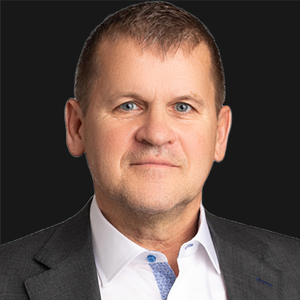
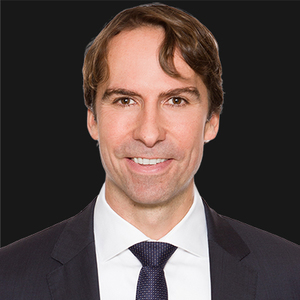
0:08 Hello everyone, welcome to Discovery Silver's live investment summit today, hosted by 6. I'm pleased to introduce the interim CEO and director, Tony Mikuch, as well as Forbes Gemmel, Discovery Silver's Vice President of Corporate Development. Tony and Forbes are gonna walk us through a company presentation, and after we'll be taking some questions live, I'd like to remind the audience that you can submit questions using the Q&A tab found on the right hand side of your screen at any time during today's presentation. And as always, this event is being recorded. It's gonna be available online, on demand in the next few days on six.com. Without further ado, Tony, I'd like to hand things over to you and get us started. Okay, thanks. And thanks everybody for being here and listening on the call. And I think we've got some really interesting, interesting, I guess, value proposition to talk to you about with Discovery Silver. I know I'll go through both myself and Forbes Gimel here on the line giving the presentation and Forbes will probably more lead some of the presentation as we go along and then we'd be happy to do a question Q&A as we're completed.
1:08 Maybe just before kicking off in terms of Discovery Silver and who Discovery Silver is and the Cordura project, I think this slide kind of highlights one thing, I mean what we really feel and what I've really come familiar with over the last few months of getting involved with Discovery Silver, this is probably, you know, it's definitely a Tier 1 silver asset. You know, it's probably one of the best undeveloped silver assets globally. And when we talk about it being a tier 1 asset, we know the assets located in Mexico, but when you look at it from a size point of view, I think from a jurisdictional point of view, we think it's actually in a very good jurisdiction. When you look at size, and this is size that came out of the PEA that was completed just last year, where 26 million ounces equivalent annual production, which would put it in one of the top 5 silver mines globally.
2:07 From an operating cost point of view, an operating margin, all in sustaining costs of below $1,250 US an ounce of silver, Again, one of the lowest costs, you know, we're definitely in the lower half of assets globally in this space. And then we sit in here with a 16-year mine life. Now we'll go through, and this is work that was done at the PEA, there's been a lot of work ongoing since and there is a number of deliverables that we are looking at with Discovery Silver over the next 2 or 3 months and then going into next year, main thing being going from the PEA to the pre-feasibility study, which should be out sometimes towards the middle of Q4, end of Q4, somewhere in the end of November of this year and then leading to a full feasibility study done in 2023.
3:00 I think you are going to see, we definitely believe that there are some improvements in both productivity and costs that are going to come out into the pre-feasibility study and draw upon some of the changes, a lot of the market changes that have happened in terms of cost inflation, et cetera. So there's definitely, you're gonna see that this is really gonna be demonstrating over the next while that this is definitely one of probably one of the best undeveloped tier 1 assets
3:31 in silver space globally. Anyway, maybe with that I'll pass it on to Forbes and he can give you some more color in it. And again, we'll be ready to take questions when everybody's at some point in the presentation. We've got about 14 slides, or about another 12 slides to talk about. Go ahead, Forbes. Thanks, Tony. So as Tony mentioned, we're in Mexico. We're in Chihuahua, Mexico, which is one of the key mining states. Certainly mining is the backbone of the economy there. And you can look on that map there on the right. So some of the operating mines as well as some of the companies, I mean, Pan American Silver, Neko Eagle, Pignolis, Grupo Mexico, Coor Mining, big operating mines, Certainly a great place to be operating in.
4:18 And then also I really want to sort of flag right up front here is our cash balance. We have approximately $60 million of cash right now, which is comfortably positioning us to fund our pre-feasibility study as well as our feasibility study and effectively taking us through to a construction decision. So we obviously have a bit of market volatility right now, but certainly that cash balance allows us to weather that in an efficient fashion. So as far as just the capital structure is concerned, probably key points I'll point out here is Eric Sprott, he owns 25% of the company. This would be his biggest silver investment in the silver developer space, and probably second biggest overall investment in the silver space behind 1st Majesty.
5:10 We actually caught up with him last week. He's very happy with how the project's coming along and remains a big supporter of the company. And then look on the share price there, we're trading around a dollar now, which equates to a market cap around $350 million. I think we all are aware investors in the commodity space, there is that cyclicality there. And usually it's the down markets which we're in the middle of right now, which I mean, they're the times where the value proposition is most compelling and certainly where the most upside opportunity lies ahead. And when You can see some of our recent share price well north of $2 at a higher silver price. Now we're down around $1 with silver having pulled back a lot. The project's still better than ever, but it's purely been on the back of that silver price fall off. When you look at the longer term outlook for silver, and certainly once I think we get through these rate rises, silver's poised for a very powerful rally, and I think we'll be a big beneficiary of that.
6:11 I think just going back to
6:14 the highlight here, Again, from a value proposition point of view, you can get a sense of where the share price is and seeing there's a significant upside in the share price. Definitely as we progress from PEA to PFS, and if the PFS stays equal or better than what was in the PEA, you can see that you're building 1 of the largest silver mines, again, globally at definitely competitive costs. But I think one thing that's highlighted in the previous slide, Forbes, was it's 1 billion ounce resource within
6:44 the mine plan currently. It only really mines about 400, just over 400 million ounces of that total resource. So there's a lot of optionality in the future, a combination of, you know, as we get costs down, can we dig the pit deeper and access more of the resource, and or, depending on the optionality in metal prices, what happens. But you do have a solid 16 year mine plan and a current PEA which demonstrates significant cash flow generation, significant financial strength of the company on this project as it goes forward. So sorry Forbes. No, no, it's all good points. And now we're sort of zooming in on the project. It's interesting the mining space, you don't get to choose where your project is.
7:31 I think most other businesses choose where your factory is or your plant or where your business is compared to the end market. We don't have that luxury in the mining space, but if I feel like if you did have that luxury, you'd want to choose a project that's easily accessible. You'd want to choose a project that's sparsely populated. You don't want sort of local towns you have to move or local communities there which would have to be accommodated.
8:00 You wouldn't want to be in areas that are environmentally sensitive. You would want to be in areas with gentle topography. Ideally, you'd have a sort of power line close by. And certainly, you want to be in a jurisdiction where mining is supported and where there's a clear and transparent permitting process and an efficient timeline to get those permits. So all those key attributes are what we have here with Cordero, and that gives us a huge head start in 2 key areas. One is as far as the execution risk goes, there's much lower social risk, there's much lower environmental risk, low permitting risk, and certainly with the established infrastructure, we're not having to build huge amounts of infrastructure to get the project set up. And the second big advantage is just from the initial development cost standpoint, we have a huge benefit given we don't have to invest in all that initial infrastructure to build a line here. So I know you've been to hundreds of projects over your career and I know you recently at SARS. I'm not sure if there's anything else you want to add there.
9:07 Yeah, I mean the one thing that I really seen when you went to site here is the first off in terms of where it's located. It's well located close to the communities and close to infrastructure suppliers and access to people, etc. It's in a good region. It is
9:28 coming off the main road though in the area. It is in an area where there's no legacy issues, where the mine and the footprint of the mine is very reasonable, definitely a buildable project in terms of what you see here, and you can see access to where the power line is, you can get access to water, access to be able to build a tailings area on site, etc. There's a lot of positives there that you see from the project, just geographically where it's located and the topography, etc., and the region where it is. The other thing is when you do go through and look at the resource, the actual resource model that's been done, look at the drilling, I mean there's been a lot of improvements done by Discovery over the last few years on the project in terms of changing direction and drilling and interpretation, which improved the interpretation of the deposit.
10:22 You can definitely get a feel for
10:27 some of the other technical aspects of the project in terms of the coarse grind nature of this, one of the coarsest grinds that I'm used to in over 200 micron. Definitely from a water management point of view tailings management point of view it's going to have a lot of positives. Strip ratio in the pit is reasonable and very actually relatively low compared to a lot of other projects. And then the logistics in terms of what you need to build here and which, you know, what affects a lot of other capital projects with not necessarily things that come out of scope that you can't really define. Looking at the project area and looking at what to have here, the scope is somewhat well established in terms of what you need to do. You don't have significant overburdens to deal with. You don't have significant water management issues or water infrastructure around that could cause
11:19 scope changes, etc. To the project. So, you know, I've seen a lot of positives about this project in terms of where it is geographically and then the technical aspects of, you know, from the geology point of view to the infrastructure and foundations and soils point of view in the region. So carry on, I'm sorry Forbes if I talked more than I should have there. It's a lot of excellent flavour there. So as far as the timeline goes, we put out the PEA end of last year. We're now targeting a pre-feasibility study towards the end of this year. And then we have a tentative timeline of a feasibility study approximately 12 months later towards the end of 2023. So we're very active, we're moving this forward systematically and de-risking the project and certainly improving on the economic potential.
12:13 And from a permitting point of view, We're putting all the paperwork together now, should submit our permit applications in the fourth quarter. And then it's typically a 12 to 18 month process for the granting of the construction permits. And so when you look at places like Canada or Nevada, where you're often dealing with permanent timelines that are 345 years. For us, potentially, to be permits in hand, ready to go here, in 12, 20 months, certainly I think speaks to
12:44 the support the mining industry has in the state of Chihuahua and Mexico. A couple other points here, Forbes, when you talked about the revamped PEA that was completed last year and then the drilling that was done this year, you know, within the PEA, the majority of the resource mined, almost all the resource mined, it was actually measured indicated resource. So when we're going now into PFS, we expect to definitely be able to convert this resource to a reserve. So from a resource understanding of the resource on the block model here, it was very well understood coming into the PEA and even more improved upon in the PFS. And it's always one of the biggest risks in these projects is understanding the geology and the grade distribution and the deposit. I think there's been a lot of really good work done understanding that. And then, you know, there's a lot of other areas in terms of metallurgy, et cetera, that have been improved upon from the PEA.
13:43 I think, obviously reiterating Tony's highlighted these points, but it is as far as project execution goes. Given it's a nice large disseminated ore body, resources well drilled, it's very easy to liberate the metals from the rock, and we've shown that with 2 metallurgical test programs. The benefit of that existing local infrastructure.
14:04 I mean, from an execution point of view, this is very well set up. And what's nice is when you take these qualitative attributes from the project, And then you put an economic study around it. These were the numbers from the PEA. So the base case was silver at $22 an ounce. NPV is $1.2 billion. IRR is almost 40%. You take silver up to $27.50, which were there not too long ago. The NPV is now $2 billion. And look, even on the downside, you take silver down to $18 an ounce. The NPV is still around $800 million. So very attractive numbers. And that comes from the size of the project And the level of production of silver we were producing with the fact we're in the bottom half of the cost curve with ASIC less than 1250 an ounce and the long mine line.
14:55 And we did mention the capital intensity. The other nice thing about this project is that you can stage the sizing of the mill. And so we're starting off with a smaller size mill. We're going to expand the mill. And the reason we can do that is we're an open pit operation. So the bottleneck is not on the mining side. The bottleneck is actually on the processing side. If you're an underground deposit, usually the bottlenecks on the mining side that dictates how big the mill is. In our case, we have flexibility on the sizing of that mill
15:25 and that stage expansion approach helps reduce that initial capex. We've talked about scale. I think this just puts it in context. So the green columns here, that's the level of production coming from Cordero. If the year's 1 to 10, the production is actually north of 30 million ounces of equivalent.
15:47 So when you compare that to 1st Majestic Core Heckler, it's effectively the same level of production. The key difference being those companies all have 4 operating mines, whereas in our case, all the production's coming from the one operating mine. And then the black dots here that shows you the ASIC. You can see where it's sitting around 1250 an ounce, significantly lower than a lot of our peers. And that ultimately translates into that T1 asset that we talked to. And this, by the way, is PEA results, not PFS results, right? Yeah. That's a good point. And if we do look at the key differences between the PEA and the PFS, as Tony said, the PEA already had a huge amount of drilling. Pretty much all the times we're already measuring indicator.
16:39 We've added another 200 drill holes and close to another 60,000, 70,000 of meters of drill. So it's going to give us an even higher level of confidence in our estimation of the ore deposit. The metallurgy,
16:54 our program for the PFS, we actually got higher recoveries with much lower reagent consumption. And so what that means is much lower processing costs and higher recovery. So certainly some economic benefits that will come through on that side of things. And then we did some tests on the oxides. So There's an oxide cap that sits above the huge sulfide body. In the PEA, we assume the oxide will be processed on a heat bleach, but we did some test work blending the oxides in with the sulfides and looking at recovery through flotation with very positive results. So when you look at the process design for the pre-feasibility study, there's no heap leach. So right there, that's a $70 million CAPEX saving.
17:40 And what we've done with the sizing of the mill is really take advantage of that saving and increase that initial scale by about 25%. So the initial throughput is going to be around 25,000 tonne per day for the PFS. And like we said, we're staging the sizing of the mill. So after year 4 or year 5, the mill will be expanded towards 50,000 tonne per day, but that staging helps reduce that initial upfront capex. That's where it's very capital efficient. So the first build, it will then be able to pay for the second phase of the expansion on the project. But then if you look at, we showed you some numbers in the previous slide. If you think of those numbers in a previous slide from a production point of view, all of a sudden you're seeing a 25% improvement in productivity at site, at both the initial phase and the expanded phase on the project. You have a mine and pit that can support that. We're still going to mine, we're not looking at changing the mine layout at all, dropping cut-off grades, etc. So you're just going to more than rightly see that in terms of the increase in productivity, production
18:48 from the mine, increased revenue, and at the same time you should see some benefits from an operating cost point. And so look, we've talked about the value proposition, So we're trading around 0.2 times now. If you look at the go-to developers in the space, certainly Silvercrest and MAG, they're actually now transitioning
19:11 from developers into producers. We can sort of see the multiples trading around 1 times NAV. So as we continue to advance towards a construction decision, we see very clear and obvious re-rating potential. And then keep in mind too, potential for tailwinds from the silver price. And just given the sheer size of the deposit, its ability to get even bigger at higher silver prices, you should get not only a higher net present value, but then a higher multiple on the net present value too. So certainly well positioned to continue to grow that multiple over time, certainly with a cash balance of over 60 million to not rely on the equity markets during some of this volatility we're
19:59 seeing right now. We talk about optionality and Tony sort of flagged the size of the resource. So that black outline around the very outside there is the resource pit outline. You have over 1 billion ounces of silver equivalent in that resource. Now the PEA mine plan you can see is in that shaded pink. That's what was mined within the PEA state, about 228 million tonnes of rock was processed through the mill within that mine plan. But there's another 300 million tonnes that sits within the resource but outside that PEA mine plant. So you can very easily see that 16-year mine life being extended another 10 years or so and certainly at higher silver prices. You think 15 years down the road,
20:47 the infrastructure is already there, It's an existing operation and you've got natural pushbacks to the northeast. Very clear ability to extend the mine life. So that's when we talk about that scalability, that optionality. That's where I think we certainly are very different to a lot of the other silver stories, which are going to be underground vein deposits. This is the last slide here. I might just hand back to you just to sort of give a quick recap. Yeah, so, so, I mean, summarizing, you know, a couple of things, you know, you see from this slide, number 1 is we feel this is a tier 1 project and one of the best undeveloped tier 1 projects in the silver space globally. You know, you're looking at a 15-year mine life, you know, and plus 25 million ounces of silver production annually, and as Forrest mentioned, bottom half of the cost curve. But as we're doing the pre-feasibility study, we're able to make some improvements in terms of both from a productivity point of view up to 25% improvement in production and with the ability to have that increased scale in terms of being able to look at ways to reduce operating costs and still keep the cost low.
22:05 So you are going to have definitely a good margin project and we mentioned about the size of the resource here and so there is optionality in the future if the silver price increases or as you've mined out this project, what's the next phase, what can do and we haven't really talked much about the expiration upside in the area, but there's significant expiration upside. We talk about from a capital efficiency point of view, you know, the capex relative to what you're going to build and what you're going to create from a NAV point of view is relatively low. Because of the staged approach, we're somewhat able to not have to spend as much money in terms of financing this project as you would if you went straight to the 50,000 ton a day project. Although the 50,000 ton a day project is a great project and maybe a lot of larger companies might have gone to that stage and number 1.
23:00 It's a simple process design, very straightforward crushing, grinding, very coarse grind, flotation, you know, in terms of and the infrastructure, etc. To support that. It's easy to understand the scope and, you know, and to de-risk the project in terms of defining what you need to build from tailings area water and management on site. The permitting timeline is fairly clear and definitely by the improvements in terms of removing the heat bleach up front, no use of cyanate is going to help in terms of advancing this project. You have a strong management and board and part of
23:38 what the goal for the company in terms of delivering value for shareholders is to demonstrate what this project is and we talk about a deliverable in terms of the PFS that's demonstrates a strong project before the end of this year and before the end of November of this year, coming to a feasibility study in 2023, you're gonna have the combination of understanding, shareholders understand the quality of this project, You have a strong management team in place that has the optionality in terms of being able to advance this project, but there's also, because of the size and the cost ratio of this project where it is, there's significant opportunity for other value enhancing and strategic alternatives for the board to consider and the company to consider as it goes forward, but it's not going to be the driving force in terms of what we're going to do to demonstrate value for our shareholder.
24:28 And then, you know,
24:30 You've got the definitely optionality in terms of silver, where silver prices are going to go, plus there's over 50% of the revenue from this project is coming from zinc and lead or other metals. As you say, And more and more as you dig into this project, it is one of the best undeveloped silver projects right now globally, let alone in the Americas. Anyway, with that, I don't know if you have any more to summarize there, Forbes, but we can always take questions if anybody has any questions.
25:05 Yeah, I think if there's any questions let's go through them. Absolutely gentlemen, thank you for the presentation. As you say we'll be entering the Q&A section today. At this point I'd like to remind everyone in the audience that you can ask your questions using the Q&A tab on the right-hand side of your screen. We do have a lot, so let's dive right into it, guys. First question, do you speak at all from your experiences to make a rough estimate for the total value of the whole Discovery Silver area, the DSV area?
25:36 Well, yeah, the value is tied up with Cordero. And I think the numbers we outlined in the PEA give us a rough guideline for its overall value within that land package. And so I think that's usually the most accurate approach to look at a project through. And you then have to sensitize it to the different commodity prices. So look, silver's pulled down towards $18 an ounce. Zinc price is actually going up. About 30% of our revenues come from zinc. So I feel right now, if you ran the economic mine plan at spot commodity prices, you're probably showing a value somewhere between 900 million and 950 million. Geologically, it's also in a very highly prospective region here, and while I'm going into Durango, there's a lot of significantly large projects already being mined and developed in the region and a lot of other exploration targets to be followed up on.
26:40 For Discovery, Discovery has been focused on, you've defined this billion ounce resource and 400 million ounce subset of it that could be mined. And so Discovery over the last, basically over the last year and
26:53 A02 years, has been really been working on developing that and demonstrating and de-risking that and demonstrating value in terms of this as a project, but there is significant exploration upside to find more of these resources, these deposits in the region. The company hasn't really been able to spend a month or focus its effort on spending much time there in terms of using its capital resources
27:15 for the main deliverable, which is the PFS and feasibility study over the next 12 months. Great, thank you for that. Ilhano who asked that first question has a couple of follow-ups just in regards to timelines if you can answer them. That being, do you have any idea about the start of actual mining and can you think of a new plan for starting the first mill somewhat earlier than estimated at this moment? So look it's typically a two-month, two-year construction period prior to operation. So if you assume we're hitting a construction decision end of 2023, you could see initial production towards the end of 2025. We still have to nail down timing of the feasibility study and the construction decision.
28:00 It may go into the first half of 2024, just given the permanent timeline in Mexico typically ranges from 12 to 18 months. And there was a second part to the question, wasn't there?
28:15 Just about if you have any ability or any thoughts or opinion on the chance that you'd have the first mill somewhat earlier than estimated at this moment. Look, I think it comes down to the permitting timeline. We're planning on submitting the permit application in the fourth quarter of this year. That's typically a 12 to 18-month process. So I think in some cases it's been 9 months. I think we're trying to choose a timeline that we can deliver on. So perhaps the earliest in terms of that initial construction decision will be the end of 2023, which means earliest production end of 2025. But the other aspect of this, right, Forbes, part of it is a pertaining timeline. But the other aspect is in terms of, and the company will be working on financing alternatives for the project. Definitely if you had the financial money right now to build a project, you might be able to improve a little bit on the timelines.
29:15 You're not going to be able to necessarily improve on the permitting but it's it's the decision between from when you complete the feasibility study to go to go to production etc. So the other thing besides permitting it's also the financial aspect that gets financing for the project. Absolutely. Question for Manuel, what's Tony's role going to be at the company moving forward and will he become a permanent CEO?
29:43 Well that's a good question. I mean and you know we're still going through some things here. I mean, I didn't join Discovery with the goal that this would happen. And I mean, this is something that's come on. Definitely as we review the project, we see a lot that, As I say, this is definitely a valuable project. There's a couple of things that I need to work on on a personal level, they decide how to move forward here. But we definitely see a very positive project here. And maybe I'll make one other comment. I've also had the pleasure of having the opportunity to work with the management team and the board. Very strong management team in the company and very strong and supportive and board in terms of strategy and understanding the project.
30:31 The company is well set up to move forward.
30:35 Absolutely, and then Mo actually has a follow-up question, you know, if the company's looking to sell the project to a major or the company planning to develop and construct the project? I think the first and foremost is the goal here is to demonstrate the project and what the value of this project is. Based on what I've seen and the work we've been doing up to this is definitely a buildable project
31:01 and so there's what we have and within the management group and, you know, in the company including Tony Esplin, Gurnett, Andres and Forbes and as a senior management group and people out of Mexico led by Roman, the country manager, you have the people available in this company to build this project. I think we go through and we complete the pre-feasibility study and the feasibility study, they're really good handle on the scope and the financial financing requirements for the project. It could be built, but we always work for the best value for our shareholders and the shareholders will have the optionality on this project to see whether this is something that the shareholders will want to develop and build with the management group, or there's optionality, I'm looking at some strategic alternatives into the future but I think the main priority right now is to complete the pre-feasibility study and demonstrate make sure the shareholders understand the value of what they have here for a project so they can make a more informed decision on as you move forward.
32:07 Absolutely. David has a question about if you could just address your thoughts on maybe get further into it or just readdress your ability to become permanent. My ability to become permanent?
32:20 Well, maybe not yours, but... Well, no, I mean, you know, I get it again, you know, I didn't, I joined the board of Discovery Silver because I was intrigued, you know, in terms of the project, etc. Again, I feel pretty, it's a very good project and you gotta look at, there's a couple of things that I need to work out over the next while, both in terms of talking with the board of discovery and looking at strategy for the company as well as some personal items to be resolved. But we're going to be coming to that decision fairly shortly in terms of where to move forward. Absolutely, Thank you for that. Bob has a good question talking about the markets and how they're not currently seeing the benefits right now.
33:10 Can you take your DSV hats off for a moment just to help the audience understand what's going on and what it's going to take for the silver market to recognize the value and thus manifest value. You want to start that, Forbes? Yeah, look, I think it's important to sort of flag up front, we have a very strong cash balance. In any silver developer exploration company, you're relying on the equity markets to basically advance your project and do your business and given the volatility of those markets companies often get in the trap of running out of cash being back into a corner And share price capitulates under those types of scenarios.
33:49 We have a very strong cash balance, which gives us wiggle room here to manage this market volatility. And it's a case, I think, of being patient. We all know rates are going up right now. And when you look at the Fed rate rises, it's creating a much stronger US dollar, which is creating commodity price weakness. But I think when you look at the broader economic trends of lower metal prices, transport costs already starting to come down, housing markets starting to come down, certainly all deflationary items. I think once we get towards the end of fourth quarter here, that rate rise cycle will have stopped and it won't take much to sort of get to rate cuts again, which means a weaker US dollar and certainly a lot of torque for gold and silver, which have sold off relatively heavily here.
34:35 So
34:38 I think it's still well positioned for a powerful rally. We can continue to advance our project and deliver on the PFS and work our way through an FS. And it may work out perfectly where you have this lovely tailwind in 2023 as we're coming through that feasibility study and project financing period too. But certainly we do have runway with that cash balance to weather that volatility.
35:02 But the other part about taking a DSB hats off, I mean, you know, I guess, I mean, I can't speak for everybody, but I mean, I've been, you know, over the years, you see the cyclical nature of the market. And you know, just because the, you know, the market is a little bit down in terms of where we are right now doesn't mean that we should all cry wolf and stick our head in the sand. These are actually opportunities. The metal prices, things will continue to drive. There's lots of underlying strength in the silver price, silver market going forward. Definitely this project has exposure to both zinc and lead
35:50 in terms of value creation or as you move forward. I think what we try to do here and what I always look at is we're price takers in our business, we're not price makers. And so what we've got to do is we've got to create the best project we can based on what we have, what the geological endowment is and the resource. And what you see here is a project that will produce between, say, 26 and 40 million ounces of silver a year for in excess of 10 years at all-in-sustaining costs at 12, 15 ounce or less. So even if the silver market goes to $15 an ounce or much lower, This is a project that will survive low silver prices and low metal prices.
36:39 But if you see some of the optionality in terms of growing the productivity, reducing costs here further, which is what we try to do, We can't control what's going to happen in the future on metal prices, but if we build the cheapest project we can, sorry, build a project with the lowest cost we can, not the cheapest, the lowest cost we can, that you can survive low metal prices. At the same time, you can take advantage, significant advantage when the metal prices go up in terms of what you can have in terms of cash generation for the company from the project. And then this project also, and the other thing you're always looking for is optionality into the future. And again, you're only mining a subset of the total resource on the current the resource to find on this project so there's other opportunity into the future. So you know you sit there say out there cycles in the industry because the price of silver and price of metals are low doesn't mean that this is what's going to be all the time.
37:34 The second aspect of this, and sometimes by the way you should be building the projects now when the prices are low so that when the prices do come back up and you're into production you can really generate a lot of cash flow. The other aspect of this project also, and what you're always looking for, is what's the expiration upside, what's the future value that I can develop once I got this mine built. Because once you build an open pit mine, typically with an open pit mine, every year you mine now you're taking value away. So unless you can add to resource, add to reserve, your peak value at the current metal prices is there. So there's other things that come into play that create value for you, but the increasing metal price that you have no control over. So we always try to look at how do we build the best project we can that can help us survive lower metal prices than what we forecast and not be caught up in the market.
38:28 Sorry. Don't worry, Tony, I appreciate it. This might reiterate some of what you've already talked about. I want to make sure that it's asked just in case there's any other elements that you'd like to address. Ben wants to know, how is the current cost, how's current inflation going to affect the PFS and what are the possibilities to mitigate this impact? Well, I mean, Forbes, you can answer some of that. I could too, but... Yeah, maybe I'll, I might just bring up, these were our Operating cost assumptions in the PEA. And our 2 biggest costs are mining and the processing. You can see there's some heat bleach costs here. We're getting rid of the heat bleach, if you recall. So mining, contract mining is very common in Mexico. It's very cost effective.
39:18 There would have been some cost creep up here, but I would assume it's more in the 10 to 15% range. So not a massive increase. We'll verify those numbers over the coming months. The other big processing costs, the other big costs are processing costs. And so we talked on this briefly in the presentation, but of those processing costs, reagents make up around 55% of those costs. Now the test work we did, we reduced the reagent consumption significantly whilst actually still achieving better recovery performance. So a lot of the other headwinds you've probably seen the processing costs in terms of power, labour, consumables, etc. We feel we should more than offset those increases with the cost we're getting on the reagent reduction. So certainly a good result for us to help weather some of that inflation.
40:14 So there is inflation happening in terms of costs, but where the project is going and some of the things to counteract the inflationary effects is, 1, you got lower reagent costs or lower amount of reagents to get the same or improve metallurgical recovery, so you get more metal from the same costs that you had before, maybe, and using less reagents, which help offset some of the inflation in other areas. And then the other thing we're doing in terms of Growing the productivity by 25% on the project, you know, again, you're going to, by growing the productivity on the project, you got the opportunity to counteract or get some benefit on lower operating costs. So the net effect is yeah, there's inflation, but if you get higher productivity, 25% higher productivity, up to 5% more metallurgical recovery, With lower reagent costs, you have some opportunity to reduce your value there. And then because of the coarse-grind nature of this deposit, your power costs are gonna be lower, your water management should be much more improved as we go forward than what was maybe previously understood in the PEA.
41:34 So we're not saying the costs are going to be lower right now, but there's a lot of there's a lot of headwinds that are pushing costs up, but there's a lot of initiatives coming in from the company to help pull costs back down again and counteract them. No, absolutely. I appreciate the context. Sid wants to know how many drill rigs are operating and how many meters are planned in phase 3? We have 2 rigs operating right now And we're still evaluating what the phase 3 drill program is going to look like. And so I think there'll be a focus on feasibility study drilling. So that'll be engineering drilling, infill slash grade control drilling, as well as trying to grow the size of the open pit, focus of that.
42:20 And then we still have our property wide targets as well. So we have 5 main property wide targets that we want to get going and wrap up here sort of towards the end of the year and through the first half of next year. So we haven't set a meter's target yet, but certainly we're going to continue to be active with that drilling activity across those different areas. Go ahead, Tony. I'm going to say the main priorities though now is working on the PFS and the feasibility study is focusing on with drilling as things to support that work, right? Whether it's supporting the mine plan or doing some geotechnical work or some condemnation work over the next while, because our main deliverable is the PFS and then the feasibility study.
43:06 So we're not necessarily looking for new resources at this point in time. No fair enough. And David has a question sort of on that point. In spite of the current dollar to gold ratio, Several analysts that he's read are still projecting spot gold in 2023 to be greater than 2000. So the question is how much gold is estimated at present to be in the project and how might that change the estimates in your opinion? The gold is, that just shows you production by metal. So you can see silver's in the gray, gold's in the gold. Lead and blue is ink and light blue. So the gold was a bit higher in the PEA because we used the heat bleach when we used to focus on flotation only.
43:52 The gold contribution is going to be, I think it's 1% overall in the PEA. It's probably going to be around that 1% mark. So it's not a big component of our project. Silver is around 50, 55 percent, zinc is around 35 percent. Certainly they're the 2 key metals and the zinc price actually has done very well. There's expected to be big demand for zinc from wind turbines. Certainly from a silver point of view, it's extensively used in solar panels. So this big shift towards green energy, I think we should certainly be beneficiaries of that. Absolutely. Vic wants to know if the high-grade portion of the deposit has been drilled off and is offset drilling continuing? So look, there's various high-grade zones within the deposit.
44:40 Certainly the phase 1 is probably where we see our best grades. It's in the sort of southwest of the deposit. The drilling there is well drilled off. You're probably down to sort of 25, 30 metre spacing. When you look at some of the high grade zones in the later phases, it's probably more like 30 to 50 metre spacing. So it's majority of that's going to be in the measured category. So when we put out our PFS, that should translate to being proven reserves rather than probable reserves. So certainly the highest category. In terms of more drilling, the only thing we'd look at is maybe coming in and doing the grade control type drilling. And that's something we can look at either as part of the FS or maybe that's something we do during the construction period. We still have to sort of decide on that internally but certainly when you look at the amount of drill holes, the amount of drill meters And how well the deposit hangs together, I think we're quite confident in terms of the continuity of the high-grade zones.
45:38 Absolutely. Thank you for that. Jane wants to know if your figures consider or take into consideration the energy crisis and inflation as well. Look, energy in Mexico is quite separate from energy escalation you're seeing in Europe and other parts of the world. The majority of energy is sourced locally within Mexico, so there has been some increases there but I think initial feedback from the engineers that are pricing that is approximately 15% year on year increase in the energy cost. As Tony mentioned because of the coarse grain nature of the mineralisation, energy costs are actually a pretty low overall portion of our operating costs because you don't have to crush to a fine grind. You've just got to do some high level course crushing, course grinding before sending it off to the flotation part of the circuit. So that certainly will help us weather some of that inflation, mostly elsewhere.
46:43 Absolutely. This question comes from Ryan. How do you decide as to whether you're going to serve on the board of a company or not? Does it always mean that you believe the company is promising? Well, I mean, there's a couple of things. First, I mean, personally, you got to get a sense on, yeah, I mean, the company, what's the promising nature? But you want to be part of, but I want to look at something, is there value here that can be created? Or, you know, what's the, you know, you don't do this stuff for lifestyle, right? If there's a way that you can get involved and make a difference and see projects through. I mean, from my perspective, I'm born in the mining industry, I like to be part of building mines, right? And so is there a value here in this project or is this just something you're going to continue to explore forever?
47:34 That's 1, but then you got to look at what's the value proposition and can you really make a difference and bring a value forward for shareholders. Second part is the people and who you're working with. I mean, there's a lot of good people in the world, but people have the like mind and like thinking, and whether it's, we all have different things that we look at priorities, what's the ethics, what's the morals of the people, whatever the things they're looking at. Again, don't mean that other people are bad, but sometimes, you know, it's got to be a fit, right? And so you look at that, you just don't join a board just for the sake of it. I don't look at these things as being lifestyle. You're not, you know, you can always get a job or do something you like to be able to be a part of something that that creates value for shareholders and you're a shareholder too. So it would be something that yeah, would I buy stock in this company?
48:25 Yeah, would I would I would I would I can you know you see a path where there's a lot more value to be created by putting some effort into it. And you have a team of people that you're working with that are like-minded and want to have the same, achieve the same goals. Is that a good answer, bad answer? You know, there's a lot of boards, a lot of things that you can do. Sometimes you don't know if you can create value there. And you're always trying to, you know, sometimes it's opportunity to learn and figure out something new as well. And for me, this project being in a different jurisdiction, it's interesting to learn a different jurisdiction. But it's a good project, good people, strong board, high standards of corporate governance, high standards of quality in terms of engineering and work and what you try to do.
49:24 And we feel you can create a difference or have some influence on what things are going on. No, I think that definitely covers it, Tony, and thank you. I'll say right now we have 10 minutes remaining. We have a lot of questions still to go through, so I want to try and grind through as many of them as we can. I'll remind the audience, if unfortunately we don't have the time to address your question, I'll be passing these questions over to the team and they can get back to you at a later time directly. Question from David, talking about what the President has said, you know, about keeping current concessions and not handing out new concessions because they aren't needed according to routers. What are the implications for discovery, if any? Yeah, so I can talk to that. So that's in reference to sort of new exploration licenses.
50:11 So, look, we we have our land package secured. That's all fully permitted. We can do exploration activity so that there's no issues directly on us. Certainly AMLO, the current president of Mexico, has been quite noisy in his rhetoric against mining. And what is interesting, though, is when you look at things at the state level, and we're in Chihuahua State where mining is a very key part of the economy, the permits are still getting granted, everything is still progressing because of the strong local support there. And the permit delays that have been made experience, there tend to be permits going through the Federal Office in Mexico City. I think what's key to point out for our project that will go through the State Office in Chihuahua. It's still a Federal Office, but it sits within the Chihuahua State.
51:04 So some of the issues we have seen elsewhere, not related to permitting but a lack of social buy-in from local communities. We don't face that issue with local communities. We're still very focused on the ESG side of things. We've done a lot of work on that today, but certainly we don't think that noisy rhetoric from the president translates to anything that's gonna hold up this project. No, absolutely. Thank you for that, Forbes. George wants to know if the number of shares outstanding is a concern at all. Is a reverse split talked about at all by management? Look, yeah, there's, I mean, the numbers are what they are. We have 350 million shares outstanding. I think the market cap right now, obviously at around a dollar, it's 350 million. So the company was formed using focus on other projects in Mexico.
51:51 And then we merged with a company called Le Bon in 2019. So the initial starting point, there was a higher share count and then subsequent financing. So that have led to the current current shares outstanding. So that's something that we would have to sort of chat with our biggest shareholders on before sort of going ahead with that. I think When you look at the potential share price appreciation, you've got to focus on the market cap, which is 350 million. If we're outlining a project here with a NPV of US 1 billion, so 1.3 billion Canadian, if we see some of the multiples in terms of mag and silver crest at 1 times NAB, I think there's very clear potential for 3 to 4 times growth in that market cap and given we're sort of well funded already without too much increase in the shares outstanding.
52:44 So certainly still lots of room for upside beyond where we're at compared to given the number of shares we have out. No, absolutely. Thomas wants to know at what intervals can further drilling results be expected? Our next drill results release is either next week or the week after. And it's going to be a combination of drilling sort of within the pit out line as well as up into the North East and targeting some resource expansion. So yeah, it should be the next week or 2 here. Absolutely. Bob wants to know, and this sort of goes back to the, you know, we're talking about the federal versus the provincial stuff, but the area currently seems to be somewhat politically stable. You know, is there any political risk issue present right now for you going forward?
53:34 Look, I think that it doesn't matter where you are, there's always different levels of risk. And I think in terms of political risk, the fact we're in Chihuahua and you've only got to look at some of the operating mines, the operating companies there, to know that mining is the backbone of the economy. And just to add some colour to our permitting process, first of all, in Mexico it's a very clear and transparent process. And Like I said, it typically takes 12 to 18 months. And because we're not using cyanide, we now can permit through the state environmental office in Chihuahua. So if we were using cyanide, we'd go through Mexico City, and that's where there typically have been long permitting delays. So in terms of overall political risk from a permitting point of view, we feel we're well set up and certainly the focus we have been putting towards ESG I think will help, certainly help decrease that sort of political risk overall, especially when you look at some of the neighbors we have on this map here.
54:37 Absolutely. Oh, go ahead, Tony. I was going to say, you're in a mining- I mean, there's a history of mining in the region, actually, Peral, what is it, 150 years, they've been mining silver in the Peral region here in Mexico. But you're in an area where you have a history of mining, you have mining rules, mining law, mining regulation in place, so the government's familiar with it. You have operating companies, you have people that actually that work in the industry and you know, and it's vertically integrated, it's not just mine, but you also have refineries and smelters in the region. You also have suppliers and that whole supplier relationship here. So there's a lot of things within the state of Chihuahua that support mining and give you a sense that this is a project that can move forward. And then you have a project that is going to be a value enhancer and a value creator for the region, and we're working towards very high ESG standards in terms of yeah we're gonna make a mark on a mark in the ground here but we want it to be a positive mark and be able to clean ourselves up and heal whatever disturbances you make over time. So, I think the company's been really focused on managing the social side very strongly as well, you know, and maybe support from the communities, support from the local landowners in the region that bodes well for being able to advance this project.
56:07 All right, well listen gentlemen, as I said 10 minutes ago, we are coming close on time now. Unfortunately, we do have a lot of questions still have gone unanswered. I apologize to everyone in the audience who has asked questions. At the same time, thanking you for your participation. We'll make sure that your questions get sent over to the team and the team can follow up with you directly, of course. But listen, Forbes, Tony, I want to thank you for joining me today and I want to provide you the opportunity just to close us out with any remarks you have before the end of today's session. Do you do that, Tony? Okay, well, anyway, maybe I'll just say thanks everybody for listening and yeah, I know I see there's still lots of very good questions, I'd be happy to answer them over time. In terms of the project and again in terms of Discovery Silver, what I see and as you get more familiar with it is definitely a very robust project in a good area, in a good region, definitely a project that's buildable, very, very straightforward, in terms of the mill process design, you're not doing anything that's leading edge, it's very, very straightforward in terms of what needs to be done. So the risk on getting the mill built, the risk on getting the mine built, and being able to manage the capital part of the project is very low because you can identify the scope, etc., and provide you do all the engineering, etc., upfront, which the company's doing.
57:33 So it's, you know, it abodes well that this is one of the best undeveloped silver assets globally that I feel and you know what we're working towards over the next while is demonstrate to the shareholders through the pre-feasibility study the value of this project and going into the feasibility study what needs to be done and with the enhancement to be and build a management team, management group that provides that optionality to the shareholders. We could build it and operate it And this is definitely a buildable project by Discovery Silver. Build it and operate it and create a real anchor asset for the company that you can then even build on more value as you go forward. Very capital efficient because you can stage the expansion of the mine from 25,000 tons a day up to 50,000 tons a day. Gives you that optionality in the future. So there's a lot of positives here with this project.
58:26 And definitely because of this, and as we demonstrate that to the market, you're going to bring a lot of other value propositions in terms of strategic alternatives, in terms of partnerships you can work in the region and how that fits within discovery over time and or some, you know, even a further idea in terms of what this project can do to, and it would definitely be a project that would take any current silver company and reduce their cost curve and increase the production substantially to make a big difference. So there's a lot of value in this project, a lot of value in the company and what we're really working towards is being able to make sure that the shareholders understand that and see what that is and you know when you look at the current share price and what the value is, hey you know over the last really you know the last 3 or 4 months we haven't done much marketing We're just finally getting out here trying to start marketing.
59:22 We see there's going to be a lot of things coming up over the time that are going to create value for the shareholder. Before I was mentioning about continued exploration upside, we're going to continue working and getting pre-feasibility's done and with that, we build up a lot of new catalysts coming into 2023 for the company to continue to drive share price and share price performance for shareholders. Thanks for listening and again, thanks for the questions and you know, as we say, we will work as hard as we can to answer any of the other questions you