Transcript
Automated transcript · Written by software from the replay's audio. It can mishear names and figures; the replay is the record.
0:07 Good morning, good afternoon, good evening, depending on where in the world you're signing in from. Did look like a bit of a global audience, so really appreciate everybody for making time today to join us. I'm happy, as always, to be joined today by Giga Metals Manager of Development, Lyle Tritton. How are you today, Lyle? I'm very good, thank you, Romeo. Awesome. So today, as advertised, we'll be doing a deep dive on the Turnagain project. I know many of you in the room and watching the recording aren't 100% familiar with the project, but some of you are. That being said, there should be enough material to keep your interest either way. Now, how today is gonna
0:38 work, as Lyle will go through a presentation outlining the project, then I'm gonna go ahead and ask him a few questions that we've seen circulating around the market. And finally, I'm gonna open it up to you, the live viewers, for a chance to ask Lyle some questions directly. 1 caveat, if it's a question about the investment side of Giga, I'm going to go ahead and pass it through to CEO Mark Jarvis and his team. And they'll get back to you as soon as possible. So please do pose them. It's just we won't deal with them in today's event. But if your questions are related to the project, technical overview, or anything we talk about today, we're gonna try to get through as many of those questions as we can after we're done with the presentation component.
1:12 Should also say today's event is being recorded and the replay should be available late this afternoon. But enough out of me, without further ado, I'm going to throw it to Lyle to run through his presentation. Excellent. Thank you, Romeo.
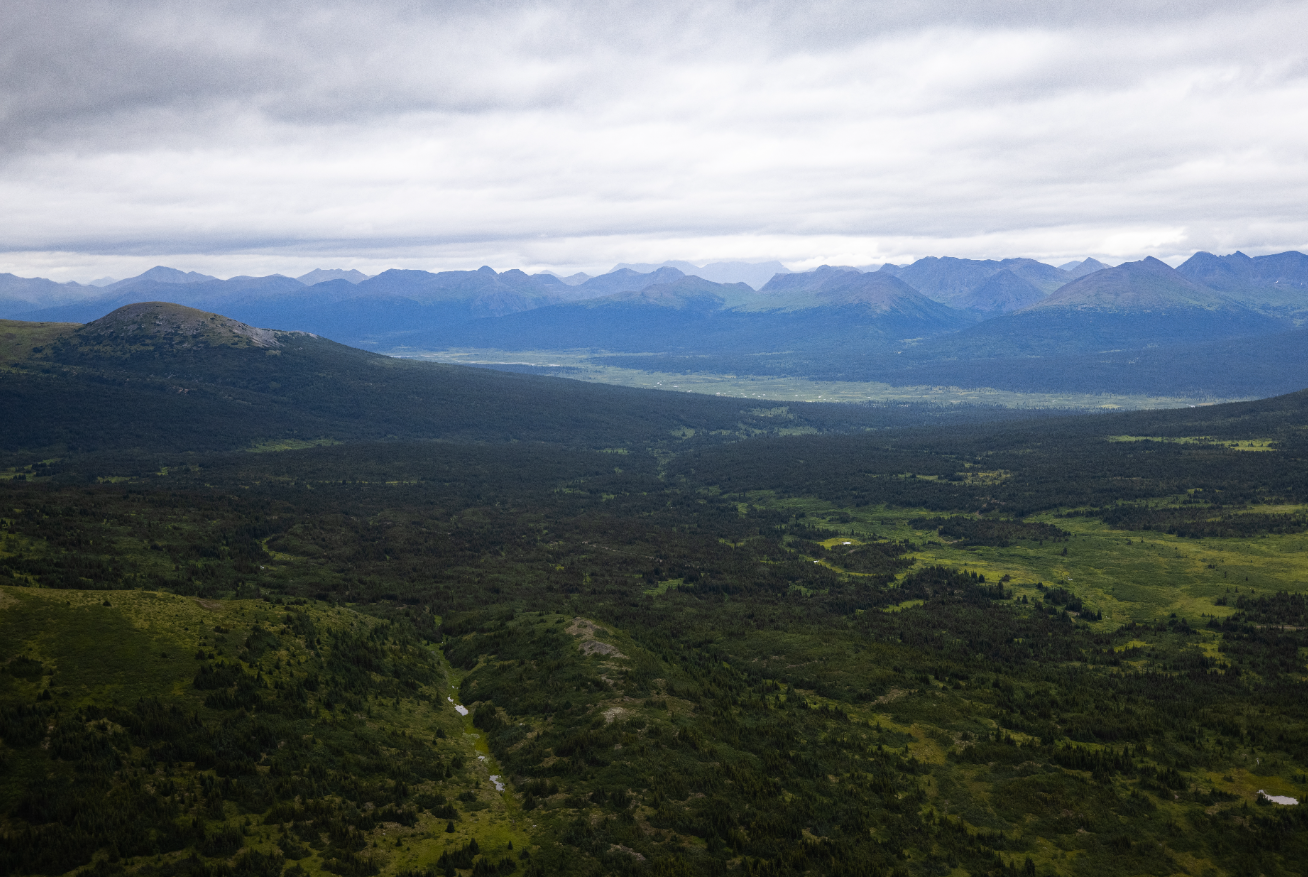
1:30 All right. So as Romeo indicated, this is intended to be more of a deep dive, get into some of the more technical aspects of the Turnagain project. I will provide a very brief high-level overview at the start for people who are not fully familiar with it, and then we'll get into the meat of it that I want to talk about more. So let's go ahead. Romeo, we have a standard disclaimer slide, of course, being a public company. So, you know, there are a lot of forward-looking statements, of course. Let's move ahead. So the Turnagain project is located in northern BC, joint Talltan and Kaskadena territory. I should say I'm joining from Treaty 6 territory in Edmonton, Alberta.
2:11 We believe through our discussions with both the Talltan and the Kaska people that both nations are generally supportive of responsible mining development, but they do want it to be responsible. From the Turnagain location, just off Highway 37 in Northern BC, we do have access to a deep water, all season Pacific Port at Stewart, as well as down at Prince Rupert and Kitimat, and access to North American Rail at Kitwanga on the Yellowhead Highway. So that gives us very good options for shipping our concentrate, depending on who the customers are. Moving ahead, please. So one of the parts of our project we're the most proud about is the joint venture that we signed with Mitsubishi Corporation a couple of years ago. Mitsubishi is a 15% owner today.
2:58 Gigametals has 85% and we're looking to move the project forward from there. The jurisdiction we're in is a well-recognized mining jurisdiction, lots of large successful mines in British Columbia. We've got a very simple processing flow sheet, which I'll get into in a little bit more detail, but having operated process plants in my life, I really like that. Complexity leads to difficulties, and simple is always a more reliable approach. Our product has multiple paths to market. We're not making a pure nickel product ourselves. We're making a concentrate, but that can be treated by a number of different means. And of course, one of the features of our project in British Columbia is that we have a low greenhouse gas footprint for the operations themselves because we're relying heavily on BC hydro power for much of our energy input, limiting the fossil fuel burn as much as possible, and we have the added benefit of carbon sequestration in our tailings.
4:00 How much? Always an open question until you've built the plant and the tailings facility, but certainly it is real and it is there.
4:10 Our PFS that we completed last year, these are the highlights of it. I won't go through all of them. I would like to call attention to really 3 components though. This is a long life project. We have 30 years in the defined mineral reserves today and substantial additional resources and room for exploration. We make a high grade Nickel concentrate. 18% might not sound very high if you're not in the Nickel business, but in a business where the average is 10% to 12%, Nickel and concentrate with a lot of Iron and Sulphur and other impurities in there, 18% is really good. There are some projects that have higher, but they're not standard concentrates. Our material as a pentlandite mineral is the exact same material that all smelters are used to treating today.
5:01 And lastly, we have an extraordinarily low strip ratio, 0.4. And I'll get into why that's so important later on. But I will note that when we had our first discussions with Tetra Tech, who did the pre-feasibility study for us, they queried this and said they can't possibly be right. You must be out by an order of magnitude. 4 is more reasonable. And then they got into the mine plan and came back and said, oh, no, actually, this is amazing. And it's all to do with the shape of the deposit. Let's move ahead. So as I said, we have a substantial amount of mineral reserves. Our proven and probable reserves classified in the PFS are 950 million tons at a nickel grade of 0.21 percent, or nickel equivalent grade including the cobalt of 0.24 percent. And that's a subset of the total measured and indicated resources, which are 1.6 billion tons. So there's another several hundred million tons in the measured and indicated resources where we have more certainty that are not in the reserves today. Either they're in an area where the mining is not as accessible or the grade may not make it worth the money today, but in the future it may well be. And then we also have over a billion tons of similar grade material in inferred resources, which is geologically less certain when we do the classification.
6:28 The geological certainty is indicated by measured indicated versus inferred resources. And only measured and indicated can be used in a pre-feasibility study to make proven and probable reserves. Inferred resources cannot be used in the mine plan. That doesn't mean that if you mine material that's inferred resources that you won't process it. You absolutely would, but you simply can't put it in a pre-feasibility or feasibility study. Moving ahead, please. As I said, our deposit is open to exploration. It's quite a large deposit. It's a large ultramafic, intrusive, about 8km long. What we've got in the mine plan today is in the purple clouded area. That's really the horse trail and northwest zones of the deposit in the Duffy zone. We've also got substantial resources in the Hatzell zone across the Turnagain River, but today we haven't included that in the mine plan because it adds a fair bit of complexity to mineral transport.
7:29 The Cliff zone looks pretty interesting as well, And we've done very little exploration further uphill in the highland and central areas. Our geologists believe that this is all excellent exploration territory. It's just that we have enough resources to run a commercial project today. So the money isn't in exploration, the money is in advancing the project. Moving ahead, please. So the resource model, this is a cross section of the model and you can see the size of deposit we're talking about. About 500m deep in the mine pit and a couple of kilometres long and it's about 1km across. So this is going uphill from the Turnagain River up into the surrounding rolling topography.
8:18 When you look at this, what you see is kind of a bowl-shaped deposit. And this is why we end up with our strip ratio being so low. The gray zones are waste rock that we would remove simply to get access to the resources that we intend to process. But you don't see an awful lot of it in here. And often with an open pit mine, what you have is a very narrow pipe of material that people are trying to chase down. It's higher grade, But it means that everything around that, as you create a pit that's geotechnically stable, you have to mine a lot of waste in order to chase that pipe down. If you were trying to go down through the core of that pink zone in the middle and only mine that as resources, you'd have a ton of waste material here. But we don't have that. Our resources are much more spread out and bowl shaped.
9:06 Let's move ahead, please. Through the mining optimization process, we've come up with a mining model where we've paid a lot of attention in the optimization to managing the amount of material moved, both ore and waste and low-grade material that goes onto stockpiles and off of stockpiles, to try and get a fleet that's easily manageable and a quantity of material moved that's easily manageable. So we've come up with 6 mining phases, pushback 1, the red circle in the center, that's where we start our mining that's exposed at surface. It's effectively ready to start digging today. We can go in there and start there. And then as we extend out the mine life, we move uphill into pushback 2 and then surround that and eventually move to the Duffy zone and pushback 6 in later years of the mine life.
10:03 Through all of these, we have this average low strip ratio of 0.4, which includes 53 million tons of inferred ore, which is about a year and a half worth of operation, almost 2 years worth of operation, that are in our model as being economic grade, but don't have the geologic certainty to be classified as measured and indicated and to be converted to reserves. If they are what we think they are, they're actually ore, not waste. So that strip ratio would go down in practice. We've minimized the amount of stockpiling in this design. The PEA that we did featured a very large amount of stockpiling of low-grade material and a lot of movement of material on and off the stockpile, which from a mathematical optimization point of view looks good, but creating that much stockpile space and managing the quantities and materials that have to go in and out of it is actually a really significant challenge at an operational level. So what we've got now is the biggest, the maximum size our stockpile ever gets is 1 year of operating quantity, 32, 34 million tons of ore.
11:17 We've got a maximum annual mining rate of 150,000 tons a day, which sounds like a lot. And I'll talk about that in a minute. But you can see that as we mine through our stages here, And I apologize, the colors in the mining schedule don't match the pit colors. But it starts with pushback 1, pushback 2 in orange, and so on. We've really tried to flatten the amount of material we use because that then optimizes the size of your mining fleet and the amount of expenditure that you have on buying equipment. You don't want a spiky mining schedule because then you have to buy a bunch of trucks to manage that material for a couple of years, and then they sit there and you don't use them for a few years when your mining rate drops back down. So it's a cornerstone of running a sustainable operating mine is that you try and keep the mining rate quite constant.
12:12 Let's move ahead, please. So Let's talk about strip ratio. Open pit mines can be small, can be large. In our business, we compare ourselves to the copper porphyry projects. We have 3 big ones in British Columbia, 4 actually. I don't have Highland Valley shown there. Then there's a bunch in South America and other places in the world. And these are very good analogs of projects because they have a similar recovered value from the ore. You know, they've got a slightly higher grade of copper than we have of nickel, but copper is worth less. So overall, it comes out about the same in terms of the recovered value per ton of ore. But what you see when you have a strip ratio as low as ours is that your mining rate is actually not that different than the amount of ore that you want to process. If you look at, especially at the South American deposits, where you are in Kalahwasi, where they're trying to process 160,000 tons a day of ore from a couple of different pits, they're moving almost a million tons a day of rock in totality because they've got so much waste material. And that's cost, right?
13:26 Every ton of rock that you move requires blasting, digging, and hauling, so you want to remove as little waste as possible. I did run a pro forma operating cost for Turnigan looking at what would happen if the strip ratio was different. It's basically 80 cents a pound to go up 0.8 in the strip ratio, or 10 cents a pound for 0.1 in the strip ratio. So we can see how big that impact is. If we were running a strip ratio of 2, our operating costs would be almost $2 a pound higher than what it is in our pre-feasibility study. And that's a really significant factor because that would be a make or break for a project like ours. Let's move ahead, please. The layout of our project is kind of interesting.
14:15 The Turnagain River bisects the operational area that we plan to use. The Turnagain River is not a big river. It's relatively small, maybe 25, 30 meters across in most places, kind of knee deep. It's a lovely little river, and not a significant impediment to us. But our mine is very close to the river on the north side. And given the topography of the area and where we believe the best place is to put the tailings management facility, which is on the south side of the river for a variety of reasons, we've elected to put the process plant near the tailings facility. And we've done that for a couple of reasons. I really don't like the idea of processing all the ore close to the mine.
15:01 That always sounds like a great idea, but then pumping tailings a long ways to get them into your tailings management facility. Any pipeline full of tailings slurry is going to leak at some point in time, and that's not a good thing. Having a tailings pipeline near the river rupture and leak would be very significant. What we're doing instead is crushing the ore near the mine and then conveying it on a conveyor across the river, overland conveyor, about 4 kilometres long. We're not moving all the water. We're only moving the rock that we need to, so we're not pumping water uphill. We're just conveying the ore uphill to the process plant, and then its gravity flowed downhill from the process plant into the tailings management facility. So we don't even need pumps.
15:46 We don't need to put the tailings under high pressure in a pipeline to get it where we want it to go. It will flow by gravity. And that means that if we actually do have a leak, it will flow down into the tailings management area anyway. So it will go where we want it to go. Not planning for leaks, but recognizing that over 30 years of mine life, something is probably going to go wrong at some point in time. Let's move ahead, please. So let's talk about the flow sheet. I indicated that I think this is a very simple flow sheet. And for the nickel business, this is. It's pretty comparable to what you see with the copper porphyry project, but a little bit simpler. So what we have is a primary crusher at the mine site. So we blast the ore to about 1 meter maximum size. Of course, a lot of it will be smaller than that. Goes through a primary crusher and gets crushed down to about 150 millimetres or 6 inches for conveying across the river. At that size, it's easy to get it on and off the conveyor. It doesn't get sticky.
16:46 It doesn't freeze to it in the winter. It's a very easy material to handle Boulder, little rocks that are 6 inches in diameter. We have storage of that up by the process plant. It's not a huge storage facility. It's pretty big because we're running a high daily operating rate of 90,000 tonnes. Then we take it from there through a secondary crusher to bring it down to about 38mm or 1.5 inch if you're not metric, Before we take it to a high pressure grinding roll for final crushing down to milling size, down to about 4 millimeters. And a traditional approach here would be a SAG mill, semi-autogenous grinding, and I'll talk a little bit more about why we love the HPGR for this application in a minute.
17:33 From the HPGR, very simple, reliable operation, 2 stages of grinding to bring it down to our final recovery size of 80 microns. And then it's a very straightforward flotation circuit. Some very large roughers, because we do have a large throughput that recover a small amount of material that then goes into the much smaller cleaner and scavenger flotation circuits. We're not having to deal here with de-sliming units and multiple products with multiple flotation circuits and things like that. It's just very straightforward. Once through, rougher, cleaner and out. The cleaner tailings go through a scavenger to make sure that we've got as much of the material as is reasonable to recover. All those tailings go off to the tailings management facility.
18:19 And our concentrate, which is finely ground, 80 micron, but very particulate matter, is easily dewatered and filtered and shipped out to markets. Let's move ahead. So I wanted to talk a little bit about high pressure grinding wheels because they're a little bit novel to the base metals industry. They're a well proven technology. They've existed in the cement industry for decades. They've been used in gold and base metal operations for about the last 10 years or so. They're not necessarily the best approach for every ore type, but they're a really good approach for ours because our ore is quite hard and competent, And that means it takes a lot of energy to break it apart.
19:04 So the normal approach would be sag mill, semi-autogenous grinding, where you use a really large mill with a high power input, put in the ore, a bunch of water, and a relatively small number of balls and tumble this thing around. You know, that works, but it's not great for really competent ores like Ternigan because they tend to come out as well scrubbed little rocks. They don't get broken down as well as you would like necessarily. And so you always end up with a problem with competent ores of having to have additional bypass crushing circuits and things. The high pressure grinding rule is a very different set of technology where it works by counter rotating roles. So these roles spin into each other, suck the material down from the top, crush it against each other. It's actually, you know, rocks crushing against rocks and runs it at the bottom.
20:00 And, you know, as you know, with an experience in the nickel business, this is actually the exact same technology that we use for making nickel briquettes from nickel powder, except instead of trying to crush it, we use counter rotating rolls with little slots in them, little pillows to make the nickel briquettes by squishing the nickel powder together. We managed to get this into testing, test our actual Turnigin ore through the pilot unit at University of British Columbia early last year, And I was amazed at the results. And I want to play a little video for you here, Romy, if you go to the video. Because what's really neat, we're running through about 200 kilograms of ore here through a pilot unit. And what I love about this is what you don't see and what you don't hear.
20:54 It's a very quiet operation. There's no dust coming off it. The ore goes in damp, you know, 3 or 4% moisture, but it's not mixed in a slurry like you would for a sag mill. There was effectively no dust coming off this. You can hear it, but hardly. It's not like a big tumbling mill or a big crusher banging around. It's an amazingly smooth and simple operation and saves a lot of power. We get about an 8 times size reduction in the ore going through here and we do it with say 10 megawatts of power instead of about 30 in a big sag mill like we might need for this. Let's go ahead.
21:40 I'm a process engineer, extractive metallurgist by background. I want to talk a little bit about the mineralogy because that's what makes Turnagin special. We have a deposit that, in the absence of sulfur, would be the parent rock that would make a nickel laterite deposit in the tropics. It's an ultramafic with nickel in the silicate minerals. And when it was emplaced in the ore body, there was some sulfur there already present in what we call the country rock surrounding it, which was dissolved into the melt. And the sulfur really likes nickel and iron. So it likes to grab the nickel and iron and segregate them away from the silicates. And so what we have is about 70%, 75% of our nickel was removed from the silicates and is now present in sulfides.
22:33 And a bunch of the iron is also present in sulfides. But sulfur likes nickel better than iron. So when you have a limited amount of sulfur, you get more pentlandite, more nickel sulfides, and less pyrritite, or iron sulfides. And when you have a lot of excess sulfur, you get a lot of pyrritite, or iron sulfides. So the chart on the top right is just the distribution of sulfur minerals. We really only have 2 of importance in this deposit. We've got the pyrrhotite, which at high sulfur can be 3, 4, 5, up to 8 or 10%, but that's very rare for us. Our average sulfur level is a bit less than 1%. So most of our deposit is actually lower sulfur, And so we have a relatively even blend of puritite in the blue line there to pentlandite in the red. And pentlandite is the mineral we want.
23:25 There's a little bit of other nickel sulfides, millerite and hazelwoodite, but they're really a small factor for us. And The bottom chart shows this. Our deposit has, by characteristics, most of the material that we believe is ore is going to have most of the nickel in Pentland Ink. That's the red line on the bottom left chart. We have some in the material, we call it fine nickel sulfide texture. It's just that it's the particles are so small that we can't really determine exactly what their mineralogy is. And then we have some millerite and hazelwoodite, the other nickel sulfides in yellow circles with the red, yellow dots with the red around them, that only really become important in material that's probably waste anyway.
24:13 The yellow line that decreases going from left to right is this, the nickel is tied up in the silicates. That's not recoverable for us. So that material is going to our tailings. It's embedded in the silicate minerals, can't get at it, and that's fine. Let's go ahead. So what we've designed to get those nickel sulfides out is a flotation circuit that's, you know, very simple chemically and very simple mechanically. We run it at natural pH. That means we don't have to add a lot of acids. We don't have to add a lot of bases, which people often do in flotation circuits, to change the surface chemistry and make the minerals that they want recoverable or make the minerals they don't want removable. We've got a very low use of reagents in this deposit, and the reagents we use are quite benign.
25:02 And it's very good at rejecting both puritite, iron sulfides, and the non-sulfide gangue, these silicate minerals. We've got a highly reliable and simple recovery curve. And as an extractive guy, I was thrilled to see this when we developed it out of the geometallurgical work. We have 1 assay parameter to measure, which is the ratio of nickel by a certain leach test to Nickel by a standard for acid leach. That dictates what our recovery of Nickel is going to be in the flotation circuit. It's highly reliable.
25:43 Comparable projects you'll see will have 3 or 4 or 5 different recovery curves depending on the zone of the deposit that they're working in. You'll see they have a Hazelwood-like dominant zone or a Pentland-like dominant zone or this zone or that zone. They'll have different recovery curves. Each of those recovery curves in the reports that we've reviewed are less precise, less accurate than what we achieve for turning it. We love that. What I especially love is the high reliability at the low end of the recovery. Nobody likes a 20% recovery, but 20% is about where our cutoff is to move from waste to ore. It's really important to be able to get that right, to know that the material that you're taking into the plant is good and the material you're putting in the waste pile is bad, is not in the money. If your recovery curve is not
26:40 highly reliable, then you're going to end up putting a bunch of ore to your waste pile and you're going to put a bunch of waste through your ore circuit. And that's money. At the end of the day, that's money. So we love this. We've managed to make a very consistent high-grade concentrate, reliably producing 15% to 20% nickel grades. We can get higher than that if we want, but it starts to become a recovery issue, versus the average of a bunch of smelters around the world that are treating around 11%. This is great material. It's the same mineral, but just at a higher nickel grade. We've got very low impurities, arsenic, mercury, those kinds of things, selenium, those are all very, very low in our concentrate, which is great. That makes, opens up all your options for treatment. You're not reliant on some process facility that can handle a specific nasty impurity.
27:33 And both,
27:35 we can take this product to a smelter, which is the base case in our pre-feasibility study, or to a pressure oxidation facility, such as Valet built at Long Harbor, or Sherratt built in Fort Saskatchewan in 1954, or Quenana in Australia. There will be more of these facilities built, because I think you're going to see that the future of nickel sulfide processing is pressure oxidation, not smelting. And we can go either way. We're not picky about where our product goes. Next slide, please.
28:09 In the mining business, you can never forget about your waste materials. We have waste rock, not a lot of it, given our low strip ratio. And we do have quite a substantial amount of tailings because we're dealing with a low grade deposit. We completed a multiple accounts alternative study a couple of years ago that reviewed many, many different locations for tailings facility and different tailings deposition technologies concluded that what we had been planning using this flat creek valley with a slurry deposition approach was the most reasonable thing to do. Our tailings deposition is in a valley, which means we only need to build dams at the top and bottom. The surrounding topography keeps the tailings in place around the sides.
28:56 We're not building a tailings management deck all the way around our tailings system, which is great.
29:03 This part of northern BC is, we're not in the coastal mountains, so it's a very low seismic risk. It's like Alberta, Saskatchewan, and Manitoba, Ontario, from that point of view. Very safe seismically, and it's got a very good water balance because most of the water gets dropped out of the rain and snow clouds as they hit the coastal mountains,
29:24 which are in the way from the Pacific. So we've got a very good water balance for our site. Our primary focus with the tailings management facility was designing for safety. So it's got a downstream starter dam that's built before we start construction, and then center line raises with buttresses on the main dam. So we continually raise it year on year as our tailings quantity increases. But We have no upstream dam construction, and we're not using the tailings from the project to build the tailings dam. That always raises concerns.
29:57 It might be geotechnically suitable for some deposits, but we don't think it's a good way to go for turn again. So we're using purposely quarried rock, maybe some of the waste rock to build the tailings management facility. Our operational plan is to create large beaches, push the water away from the dams and have our process water pond in the middle of the tailings deposit. So we will have a couple of kilometers of free beach space between the dam and the water pond, which really increases the safety factor of the dam. And that beach is then able to promote carbon sequestration from the atmosphere. Next slide, please.
30:38 Operating cost estimates, these are all driven out of the prefeasibility study. I left a little note in there comparing to the PEA for the column of data I removed, so please ignore that. But this is our typical full operating year rate, years 3 to 28 of our mine life. The mining cost is about $2 per ton of material mined, but because our waste ratio is so low, it's about $3 per ton of ore mined. Processing is where more of our cost is. That $5 a ton includes the major factors there, grinding materials and power to turn the mills. This is a high power consuming project.
31:21 Our site costs are about $3.85 per pound of nickel. And then we have to ship it to market and we get byproduct credits. It gives us a total cost net of credits of about 363.
31:36 And when we think about the, you know, as we talked about in the business, the C1 cost, the net, the total net cash operating cost, net of refining charges, that's about 465. And that's based on the assumed estimated 78 percent payment for the concentrate. Next slide, please. The economics are, you know, not fantastic, but they're reasonable and we think they're real. It's about 11% ROI pre and post tax. The post tax is oddly a little bit higher because of the impact of the Canadian clean technology manufacturing investment tax credit. Thank you to the federal government for bringing that in. It's really important for projects like ours.
32:21 And those kinds of tax credits are being used throughout a wide range of clean technology areas and mirror the kind of things that are being done in the US with the Inflation Reduction Act. Our base case, we ran 9.75, which if you look at the nickel price today, it's not there. But We think that's a more reasonable long-term price for nickel produced in the West. Let's move ahead.
32:53 We are, of course, as a lower-grade deposit with a large throughput and large production rate, fairly sensitive to the nickel price. So these are plus or minus 15% in high and low price cases. We're still in the money at, you know, sort of current prices. It's just the rate of return is not great. But it's still a positive NPV at just over $8 nickel. Next slide, please. I'd like to take a moment to talk about carbon management. I've spent years of my life, not just operating, but doing EH&S and sustainability work as well. The greenhouse gas footprint is a really important metric for our potential customers.
33:40 Not everybody cares. Nobody talks about greenhouse gas footprint for stainless steel, but boy, electric vehicle manufacturers are thinking about it very hard. Our scope 1 and 2 emissions to make concentrate are very low, right around 2t per ton of Nickel. That's within the industry, about as low as you get. You of course have additional
34:05 footprint for the refining of that. And that how much that is depends on what style of refining you use and where it's done. Smelting in Canada is generally pretty efficient because we have pretty low carbon power grids in Ontario. But we can't dictate today where that product is going.
34:28 What we've seen internationally is that the massive growth in nickel production in the last 5 years in Indonesia is very high greenhouse gas intensity. The nickel pig iron plants typically 60 or more, scope 1 and 2 GHG, more if you add scope 3 and of course, and what we've done with our project is really look hard at what can we do using equipment that's available today to reduce that carbon footprint. So we selected electric drills, electric shovels,
35:02 electric trolley assist haul trucks for the ore to reduce the amount of diesel burn, which reduces our greenhouse gas footprint and improves our economics. You get a double bonus there. We believe that we won't actually have diesel trolley assist mine haul trucks by the time we build this facility, because all of the manufacturers are right now working on fully electric or hydrogen powered haul vehicles. I expect that battery electric, perhaps with a trolley assist system, will be the standard approach by the time. We're building turning it The co2 sequestration that we have demonstrated in the lab would make about 30 000 40 30 or 40 000 tons a year of carbon being sequestered from the atmosphere. That's great, but we can't prove the amount at this point in time, and anybody who tells you that they can is probably not being fully
35:59 honest with you about what they actually know about their tailings facility, because temperature matters, moisture content matters, mineralogy matters, how it's exposed matters. There's a bunch of different things. We know it happens. We do have, though, with the carbon sequestration and with the move away from a diesel haul fleet, a real path to net 0 for this project. Let's move ahead.
36:25 So I'd like to just dive a little bit into the concentrate processing side of things because I'm an extractive metallurgist by background, so I love this stuff. There are a number of routes to market in the nickel business. And whether you're talking about battery-grade production or class 1 nickel, there are different routes. But What we see today is almost all the production from nickel sulfates in the world is by the top route here, smelting to make a nickel matte, then refining to class 1 nickel, and then
36:55 that class 1 nickel is used as is, for example, in high alloys, or has historically been used for dissolving to make nickel sulfate for battery products. Class I nickel used for battery products is almost gone today. And I think what we're going to see is an increasing use of directly refining nickel matte to battery grade products without going through a step of making class 1 metal first. It's entirely viable, just not being done much in the West right now, but it is being done in Asia.
37:29 The other route, pressure oxidation, where you're not using a high temperature smelter. The Valet facility is running today, works quite well. It's a slightly different concentrate than ours, got a bunch more copper in it, but it works. They use solvent extraction to separate the metals and then make class 1 metal out of it that then goes off to their customers. But again, we don't actually need to go that route. I much prefer a route where we make an intermediate product like mixed hydroxides or mixed sulfides that can be shipped from the pressure oxidation facility to a final customer where they're refined into battery grade products. I think that's probably the more likely path for the future, but we have to actually start building that supply chain. And that's a topic we're in conversation with government and other partners about on a regular basis.
38:21 Next slide, please.
38:25 So we like to leave with this question. You know, we need more nickel in the world. There's a significantly growing demand both for stainless steel and for batteries. Batteries are growing faster and we expect by 2040 that it will probably be similar amounts of nickel in the product in the marketplace going into the stainless steel and the battery markets. Today, it's about 66% stainless and about 15% battery. We expect it'll be more like 50-50 by 2040.
38:57 But where are we gonna get that from? Are we just going to let it all come out of Indonesia with all the problems that have been noted there. We're seeing reports just about weekly about the environmental devastation from the mining practices being used there, the treatment of effluents and all those kinds of things. Or are we going to start mining in the West again and actually develop projects here where we can control the supply chain? Certainly, there's a lot of interest in doing that. But advancing projects is hard work. And that's what we're working on now. Next slide, please. So we'll leave you here with contact information. Any questions you ask today will get filtered that I don't answer, will get filtered to Ali whose e-mail address is here. If you have questions after the fact and you want to get them to me, just go by Ali, that'll work great. She'll fire them off to me and I'll answer them.
39:50 And yeah, let's go to questions, Romeo. Awesome, thanks, I appreciate it. I always love a deep dive, I feel like I come out learning quite a bit. So there's a number of questions that I've got, and then I'm going to jump to some of the ones from the audience. One question, and these are collected from various message boards, et cetera, that we've got around, but I'll say this. The PFS discusses mining method used being open pit mining. Now, given the recent unfortunate incident that Victoria Gold's Eagle mine, do you see anything your team would or must reconsider regarding the mine site layout, engineering plans, or regulatory hurdles that may set back the Turnagin project from advancing? You know, honestly, no, I don't. There will be concerns, of course, but I think we have to draw the differentiation between a project like ours and a project like that one.
40:44 When you're running a heap leach, you ground your material up fairly fine and then crush it up fairly fine and then laid it out in a heap and you're dripping solution through it all the time. So you've got fine material that's laid out on a pad being constantly wet by the solutions you're using to extract the materials. And that's prone to be, you know, there's more likelihood of that having a geotechnical issue than a project like ours. You know, where we have a waste rock pad that's going to be, you know, very benign waste rock. It's the material that we've just dug out of the ground, very straightforward stuff, and it's large, right? So you're not dealing with finely ground material that's subject to slumping. You're dealing with large rocks in a pile. And on the tailing side, we're putting it behind an engineer tailing facility.
41:33 But secondly, when we think about the impacts of an incident, if it was to occur, when you have a gold heap leach, you're dealing with cyanide solutions. Cyanide is a scary word. Sodium cyanide that they use for gold. It's very effective, but it is quite toxic to the environment. The reagents that we use at Turnagain are much lower toxicity levels. They tend to biodegrade and disappear. It's really Calgon that we used to put, all put in our dishwashers, an alcohol to create the froth in the flotation circuit that tends to biodegrade very quickly, so it doesn't build up on you. And what we call a xanthate, which is the collector, which adheres to the sulfide particles to float them and ends up in the product. So most of that material is either broken down or ends up in the product and gets shipped out.
42:32 And whatever is left in the tailings pond is relatively benign. Of course, we still have to take measures to minimize seepage and prevent release to the environment. And of course, all of that, but it's a very different scenario than when you're dealing with a heat bleach with cyanide solution. Great, thanks. Zwan, I've seen this come up a couple of times on, you know, bullboards, et cetera. So I just wanted to throw it directly to you. I know you touched on it, but I think it's worthwhile to chat about it fulsomely. And that's, Can you discuss the water management and use of water at Turnagain? Where will it come from, how it will be used, and almost most importantly, is there any conceivable opposition from local communities in regards to water? Well I will never step out and say that local communities won't be concerned.
43:19 They probably will be, and it will be on us to demonstrate to them that our water management practices are responsible and are of minimal impact to them, especially because we are situated along the Turnagain River, which flows across country and out into the Arctic Ocean eventually. Where we are, we expect to have a very good water balance. What that means is that we don't have a lot of water to release to the environment. We don't have to take a lot of water from the environment. The modeling studies we've done show that we'll have to recover some water from the environment With the tailings facility in a valley, the intention is that we'll have ditches to collect runoff coming down the valley walls, and we can direct a portion of that into the tailings facility as our water make up.
44:16 That amount, it's not all of the water coming out of that valley. We're only looking at taking a portion of it, but it's not like we have to go and pump water out of the river either. We're not working in the Andes, in the desert region where water is always the availability of water is such a big issue. Availability of water is reasonably good for us. And it's really a matter of effluent management. We don't expect to have a lot of effluent. What effluent we have will be treated before it is responsibly disposed. Great. There's a couple questions in the chat that I'm going to pass directly through to Mark and his team. So Jaylathani, one of yours, and M. Babin, one of yours. I'm just going to shoot them straight through to Mark so I'll get an answer quickly. One of the chats is from C. Robertson's asking, just what's happening on site this summer, drilling, environmental studies, etc.?
45:05 Honestly, not much is happening this summer. As we continue down the partnering process, we're trying to be responsible managers of our funds, and that doesn't involve doing a lot of work with money that we don't have in the bank. So we have a presence at our camp to ensure camp safety. We'll continue doing our climatology, meteorology, and surface water management measurements. We have a team that goes up twice a year and measures the flow rate in the streams, gets water samples so that we have good baseline information, but nothing significant beyond that. Our camera program will continue as it has for the last several years to monitor the presence and distribution of large mammals, but beyond that, not much.
45:51 Nope, appreciate that. So the processing facilities are gonna be, as I understand it, about 4 and a half kilometers from the mine site and a conveyor. Are there, and we touched on this, but it's a question I see often, so I want you to look at it. Are there any environmental concerns or risks with this mode of transportation between those 2? Well, there's always risks to everything you do. From the environmental side, this is what the most benign way that you can move material. You could haul it with a truck, but then you've got to burn fuels and your truck can roll and lots of bad things can happen. We're choosing to put it on the conveyor across the river to minimize the amount of our rock that ends up in the environment. Will there be some spillage off the conveyor?
46:39 Possibly from time to time. If you have a crash stop of the conveyor, rocks can dislodge and move. But these are the rocks that we've just dug out of the ground, mostly magnesium silicate, very low sulfur. They're pretty benign, and I'd much rather spill rocks at a six-inch size that I can go and pick up with a front-end loader than, for example, slurry if we were pumping a ground slurry up the hill or the tailings up to the tailings pond. So I really like the features of the conveyor for that. It's fully electric, so it's a part of our low greenhouse gas approach, low carbon footprint approach, and it keeps the material confined. You know, long overland conveyors are pretty well known in the industry, and you know, whether it's coal or iron ore or other base metals, It's not that uncommon to do this and we think it's the best approach for us to get it up the hill. Great.
47:38 While we're on transportation, and then there's a couple questions in the chat I'm going to jump to before I sneak back to mine. There's going to be a single lane road between Highway 37 and the project site, that's right? Mm-hmm. Is that road already established, and is there a risk of BC winters affecting getting to and from the site via that road? Well, I mean, winter is winter. I live in Edmonton. There can always be problems. The reality that we're dealing with is, it's a single lane road. It exists today as what we call the Boulder Exploration Trail. It is semi-functional, shall I say. It's passable with good four-wheel drive trucks or what we call rock trucks, which are articulated large wheeled vehicles, low ground pressure vehicles.
48:25 But eventually we will build that to be a real forestry standard road that we can use for hauling material in and out all the time. The single lane will have pullouts every few hundred meters along it so that you can actually have the ability for vehicles to pass. You don't need, because there's no other use of the area aside from local hunting and gathering activities that do go on up there. You know, we think that's pretty reasonable. It does go through a range of mountains between Dease Lake and our site where, you know, the Caribou Pass is a little higher up and a little snowier and we will have to clear the road. But it's not, I emphasize, this is not the Coast Mountains where they get several meters of snow a year. We're talking about an area that at our site we get a meter-ish of snow every year.
49:20 It's not that unusual. So it's reasonably easy. We would simply, we have all our own equipment for moving a lot of stuff around, so it's not that hard to keep a road clear. Great. One question in the chat, they ask how you see BHP's Western Australia nickel closure effect on the nickel market. I've got great news for you. Giga's president and CEO just talked about this on Monday, so I'm going to go ahead and send you that link afterwards so that you can see a fulsome discussion on just that topic. There's another question from the chat. It's getting into technical. How do you see the dollar amount value for IRA nickel compared to non IRA with regards to an 811 NCM battery? Well, you know, there's a big question in the industry right now of is there going to be a so-called green premium for nickel?
50:09 IRA compliant, green premium, whatever. We believe that There will be a differentiation in price for North American and European consumption between nickel produced in the West and nickel produced under Chinese-dominated facilities in Indonesia and China. And The US and Europe are trying to wrest that supply chain away from China a little bit right now. And that's important. But nobody knows what that number is going to be. So it's pretty hard to bank on. What I can say with 30 years experience in the nickel business now is, you might think that all nickel sells at the LME price, but it doesn't. There is today a premium and a discount for different operators.
50:57 If you make a better product and you have a better perception, you will get a premium. If you produce a worse product or you have certain constraints on where your product can go, what it can be used for, you'll get a lower price. You'll get LME plus and LME minus. The amount of those premiums and discounts will change over time. So even though there may not be ever be a separate price LME and IRA compliant nickel, what you will see is that those IRA compliant facilities will get a premium compared to the non-IRA compliant facilities. It's what we see in the market today, just nobody discloses that. Great. I got one question that was emailed in actually and it speaks to production schedule and strategy there. And it said, are there higher grade zones that GIGA intends to target in the initial years of mine production?
51:52 Well, yes, but not in the context of high grade zones. So there is a differentiation of ore value across the deposit and the best, you know, Some of the best material is in that stage 1 pit. We have some very good material that's not being mined in those first few years, though, because it's underneath a lot of other material. So you have to take into account the value of the material and where it is and the cost of getting it out. And that the optimisation process has been designed to follow that. But our deposit is more uniform than many. And so there's less opportunity for real hardcore mine optimization in a deposit like ours than in 1 where you've got veins and high-grade pods and things like that, that you can maybe get at with different approaches to your mining, more selective approaches.
52:51 It's a fairly disseminated ore body. Yeah, it's higher grade in the horse trail down towards the river, and that's where we're starting. But there's high-grade stuff underneath, too. Great. One question in terms of CapEx, is there a phased ramp up to full production plant? Yeah, what we've done in the pre-feasibility study, the PEA took an approach of build phase 1, 45,000 tons per day, right off the bat, run it for 5 years, and towards the end of that, build phase 2, another 45,000 tons per day, and ramp that up. When we looked at the economics of doing that, they're not favorable. You want to bring that cash flow forward in time. And so what we've done now is optimize that strategy so that we're building the first train of operation in year minus 3, minus 2, minus 1, as we call it in the modeling, and starting that up in year 1 and then while we're building train 2 in year 1 and starting it up in year 2 and what that allows us to do is to stage the construction and commissioning and startup teams from 1 unit to the other maintain that expertise and deliver a much more comprehensive and stable approach to building the project as opposed to demobilizing everybody and then trying to bring them all back 5 years later when you get a whole different crew that doesn't understand it and you're retraining everybody. So we like the approach now a lot better.
54:22 It's economically advantageous as well. We do give up in doing that the opportunity to perhaps test some different technologies in the mineral recovery plant that might make us rethink how to train to and maybe optimize that and do it a little differently. But when we talk to the experienced mineral processing people, they really don't see that there's an awful lot there that we're really giving up. The technology we've chosen works. It's reliable. It's very straightforward. It's well known. And it's low risk. And we like all those aspects of it. Great. I'm curious. I'm not sure if you're able to answer this question, but Brad from the chat asks, have you reached the phase where you're selecting an EPCM firm?
55:10 No, we won't be selecting an EPCM firm until we get that next tranche of funding from our partnership process. And at that point, we'll be going out with an RFP, like I did for the pre feasibility study, and we'll be evaluating, you know, a number of companies that are interested in working on this project, and looking at, you know, what can they do for us? Who's the best partner for that? Makes sense. One question from the chat, I think one's a quick answer and 1 might take a little longer, but to ask if you see a deficit of nickel available for the Western world, and can you speak to whether the product will go towards class 1 or 2 nickel? So I'm not the nickel market specialist, Martin is. You know, we're forecast, but, you know, I read the Macquarie analysis yesterday.
55:56 The we're forecasting surpluses for the next couple of years And available to the West is really kind of a meaningless term because it's all available. If you want to buy it, you buy it. The reality is that we expect a surplus for the next few years, eventually moving into deficit. The Indonesian ore is not going to last forever. We're already seeing the impacts of declining ore grades in Indonesia, as we see with any mine over time. Getting us to the 5 or 6Mt a year of capacity that is forecast to be needed by 2040 is going to be a challenge. We are going to run into nickel shortfalls in the longer run. Is it the next 3 years? No. Is it by 2030?
56:44 Maybe. Are we going to have shortfalls between 2030 and 2040? I think so. Great. So I got one last question, and I'm going to go ahead and let you go. This is 1 we get via email, we get, I see it on Bulldozer. So this last one I'm going to throw at you, which is what further data does the team at Giga need to conduct a full feasibility study on Turingan? When would that be expected? What do you most anticipate to change between the PFS and the AFS? So there's really 3 areas that we're focused on for data collection. And this is leaving aside an environmental assessment process. The biggest one in terms of cost and time is geotechnical information. We need to do a bunch more geotechnical drilling around the tailings facility, around the mine pit, around the waste rock storage facility in order to fully characterize the underlying materials and make sure that those facility designs are as safe as we want them to be. That's just something you gotta do. So we haven't done as much yet as we will need to do, and that's going to be a significant item.
57:50 We expect to do another several dozen samples through geometrical work to further refine that recovery curve, prove it out even better, make sure everything that we expect will be as expected. We will do some more testing of the combination technologies, run some more samples for the high pressure grinding role, make sure there's no surprises, do a little bit more grinding test work, those kinds of things just to beef up our data set. We already have a hundred grinding tests across the deposit today, but we'll want to beef that up a little bit more on both the flotation and the combination side. So those are 2 big items. As we will do some more exploration drilling, I expect within the deposit, probably to get samples for fresh testing.
58:45 That will allow us to then update the geological model a little bit. And then with a reinterpretation of the model, we'll of course go back into the mine pit optimization and stuff. But it's really from my point of view, metallurgical data and geotechnical data are the big 2 that we need to do the feasibility study. And that's why I'm not fussed about the timing on selecting an EPCM firm, because I don't have the data for them to go to work with yet anyway. You