Scott Gilbert
CEO at CORCEL PLC
Replay available
Investor Presentation hosted by Corcel (LSE:CRCL) on Investor Meet Company, held 2025-12-03.
Automated transcript · Written by software from the replay's audio. It can mishear names and figures; the replay is the record.
0:00 Good morning, and welcome to the CORCEL PLC investor presentation. Throughout this quarter presentation, investors will be in listen only mode. Questions are encouraged, they can be submitted at any time by the q and a tab situated at the right hand corner of your screen. Just simply type in your questions and press send. The company may not be in a position to answer every question received in the meeting itself. However, the company can review all the questions submitted today and publish responses where it's appropriate to do so. Before we begin, I'd like to submit the following poll. I'd now like to hand you over to CEO, Scott Gilbert. Good morning to you, sir. Good morning. Thank you everyone for joining us in this investor presentation. This is the second time we've done an investor presentation this this year, and the purpose today is to really give investors an overview of where we are primarily from an operational perspective.
0:52 So I'll so joining me today is Geraldine Giraldo, who's CORCEL's chief commercial and strategy officer, Richard Lane, our chief operating officer, and Scott Caves, chief financial officer. And myself, Scott Gilbert, I'm the CEO of of CORCEL. So we'll talk, just to remind everybody about our, portfolio overview, operational milestones over the last twelve months, what we're doing from an operational perspective, and lastly, Geraldine will wrap up with our growth and expansion plans. So just to remind everybody, we've got three core assets in the onshore Kwanzaa Basin, CORCEL.
1:43 CORCEL eleven 12 are operated by Angola's national oil company, SONGO. We also announced last year entry into Brazil through the signing of an option agreement in a gas producing asset on on onshore in the Northeast Of Brazil. The company is yet to determine whether it's going to exercise that option or or not. But our focus today will be primarily on on our operational assets in Angola and primarily in CORCEL sixteen. So over the last over the last twelve months, we we've had a series of operational milestones which have taken the company from from moving forward across its its different operation activities that have taken place in in Angola. So focusing primarily on on CORCEL sixteen, which which is where majority of the funding the company has has raised over the last twelve months has has gone into.
2:45 We started with the EFTG on CORCEL 16 and CORCEL and the partial coverage partial coverage of CORCEL 11. So that happened in December 2024. We then moved over to awarding and starting environmental impact assessment over CORCEL 16, which which allowed for the eventual award of the seismic contract, but that happened in April 2025. So we we awarded environmental impact assessment. That work took place. And and from there, we moved on to June I'm sorry, in May 2025 when we increased our equity up to 85% on CORCEL PLC, and we subsequently divested 5% of CORCEL PLC to Centana Energy for $2,500,000 in cash.
3:36 We we were able to secure further institutional investors into the company, and we were able to commit and award the two d seismic contract in in CORCEL sixteen. On the back of that, the warrants that were structured in February 2025 were successfully exercised, and that generated proceeds to the company of close to £4,000,000. And that funding essentially allowed us to to start the seismic program, which is exactly where where we are today. And and we we we have the the the funds to to complete that that program over the next over the next few months. Going forward after that, our our plan is to drill a high impact pre salt high impact exploration well, targeting the pre salt and post salt towards the end of next year and into q one of twenty twenty seven.
4:39 Had the opportunity to be in Angola last week and just wanted to share these images where we've got the virus size trucks ready to go. And we've got roughly about 200 people on the ground. So another focus over the last week has been on final health and safety preparations and checks and make sure that everything is up to standard to to begin to begin the work. So it's a very exciting time for the company. It's it's the it's the first major seismic program in the onshore plants and basins since since 2000 and since 2010 covering the 300 plus kilometer lines that we we're gonna be covering over the next over the next few months.
5:28 So over the last twelve months, we've really strengthened the shareholder base of the company bringing in institutional investors. We successfully had the warrants exercise, which fully funds the seismic program and really is a testament of the operational milestones that we we've been able to to deliver for the company. And and going into the beginning of next year, we we strongly feel the company is very well positioned for an accelerated growth. It's a it's a pivotal moment, and Geraldine will talk a little bit about our plans going forward. With that, I'll pass on to Richard. Thank you, Scott. Hi, everyone. So first, we'll go through the CORCEL portfolio in the Kwanzaa Basin and our associated work program, and then we'll move to cover the ongoing seismic acquisition campaign at Con sixteen because we're we're active on the ground at the moment. And we can share some pictures and and updates on where we are with that.
6:39 So, yeah, as as Scott said, we've licensed over 3,000 square kilometers in the Kwanzaa Basin, this old prime basin across three three blocks. We have an operated interest in Con 16 and non operated interest in the in Con 11 and CORN 12. As a reminder, the Kwanzaa Basin, this is a proven petroleum system. We know hydrocarbons are there. Legacy wells from the fifties and sixties prove it. Those discoveries were made. Those discoveries from the fifties and sixties were made based on very limited data, predominantly surface geology and gravity data. And modern sort of exploration techniques, the kind that we're applying now and that we're gonna be talking about in this presentation, simply were not available back then. So we are now looking at the same known proven system, but with modern twenty first century eyes.
7:33 And so what is our immediate work program in our portfolio? You know, we have started operations now at CORCEL sixteen with our two d seismic acquisition program. And that seismic data, the acquisition's gonna be going on December and January and into February, and that data will get processed during 2026. And then when our team have completed the interpretation of that data, that will then lead to the identification of multiple drilling opportunities. So the pathway is very clear here. We're acquiring the data over the next few months. We'll be processing that data over, you know, three to six months after acquisition, and then we'll be interpreting it and then drilling based off that data.
8:22 And in the midterm, there'll be two d acquisition in the Con 11 and 12 blocks, which is just located to the north of of Con 16. And this will also lead to some exploration drilling activity approximately twelve months after the acquisition of the seismic data. So we've got an active program across our licenses. But on on this slide, we're showing sort of the existing two d seismic data that was acquired in 2010 and the CORCEL planned acquisition in Con '16 in red. So if you see the the seismic lines on these this satellite map to the left, the the the lines in orange are the sort of regional dataset that was acquired in 2010. In red, we've got our planned acquisition. And we've talked about this before, but very briefly, the 2010 regional two d survey was the first time that modern technology was used to image the Kwanzaa Basin.
9:21 This regional data was recently reprocessed this year by TGS to improve the imaging and reliability, and that benefited CORCEL PLC licensed that reprocessing over CORN 16, CORN eleven, and twelve, and and the surrounding blocks. So we have that data set, and the quality is good. Images shallower post salt targets and the deeper pre salt targets. But this is this is a regional scale dataset, and therefore, the line spacing is too wide to support immediate drilling without additional data, which takes us to why we're acquiring our seismic data now. So the CORCEL twenty twenty five two d program at CON sixteen, which is the red the red lines on the satellite map, it will reduce that two d line spacing from 15 kilometers, which it is today, to around two and a half kilometers, which basically is with a tighter grid and with more seismic lines that allows for a much more accurate accurate representation of the subsurface.
10:26 In addition, the the CORCEL acquisition will give us sort of very high resolution imaging of the subsurface. We're using very high end acquisition parameters that have never been used before in the in the onshore Kwanzaa Basin. And on integrating all of this data in 2026, we will have multiple drill ready prospects within CONS sixteen that will have been built on very solid technical foundations. And so here we have an image that was taken during one of the scouting trips that CORCEL attended. So this image from a from a drone is actually over the Con 16 area during one of our scouting trips. You can see the cars going along the path there. So you can see what the terrain looks like here. It's sort of a a savannah type terrain with with sort of rolling hills.
11:24 And what we've been able to do is part of the 2024 EFTG acquisition by Metatec, one of the products that we received was a high resolution lidar survey over com 16. And this this was actually acquired to assist with the EFTG gravity radiometry data. Basically, you use it to provide surface level corrections for the for the data. But we're able to use this lidar survey, which is effectively a map of the surface, a high resolution map of the surface of CONSIG steam, to use we were able to use that to create maps and identify surface level faulting and structures, map out roads and tracks, identify rough and smooth terrain. Basically, it as a scouting tool to assist us with our operations during our seismic acquisition.
12:19 So we're able to identify where we might have challenging terrain for seismic acquisition because we have to get large heavy fiber sized trucks in. And this was a very useful tool to help us scout and help us position our our seismic lines. So this is a really good example where we acquired this sort of very technical, high resolution geophysical dataset, but we were actually able to use some of that data to help us scout and to help us operationally above above the ground. So we we got a lot of value from that. And and this image shows you we where I you know, where we're identifying smooth terrain, easy access. We're able to check that by going on the ground, you know, with our four by fours and and check that our findings match our model.
13:08 So that was very productive and helped us, you know, position our our lines in the most sensible places. And here we have some images of of our operations today. So we're we've got the image on the left shows you some of the VibraSize trucks that we have. These are very heavy, 60,000 pound fiber sized trucks that send sound waves through the subsurface. And, you know, as as a reminder, you know, what what is two d seismic? You know, why how how does how does this work? You know, basically, two d seismic gives us a cross sectional view through the subsurface, and we send acoustic waves into the ground and measure how they bounce back. And we do that with these fiber sized trucks. So they these fiber sized trucks go out to our lines that we've cleared, and they send vibrations through the earth's surface.
13:59 And basically, different rock types and fluids in the subsurface reflect those sound waves differently, and we record that data and then process it. And that that data helps us identify traps where hydrocarbons can accumulate, and we pick drilling locations with a much higher confidence based off that data. And it's a it's a really, it's a critical step between us saying we think there's something there to us being able to say we know exactly where to drill. So those fiber sized trucks help us do that. And the image in the top right is a vehicle inspection that we conducted a few few days ago. We're gonna have lots of vehicles on-site. They've been inspected by our HSC manager, and we've been doing HSC training, first toolbox meetings, and the team team are active now on the ground at CORCEL sixteen.
14:52 So the acquisition will start very shortly. We're starting to prepare the lines for our 326 line kilometer acquisition, And, you know, that acquisition should be complete in the next few months. And that like I said, we'll go to process that data and then interpret it, and that should lead to multiple drilling opportunities. But we have hundreds of people on the ground now active working on Con sixteen, and we're sort of looking forward to sharing updates as we as we advance our operations at Con sixteen over the next few weeks. And now I'm going to pass on to Geraldine, who's gonna talk about our strategic expansion and and the business development. Thank you. Thank you, Richard.
15:38 As Scott and Richard stated, we're pleased to have delivered on the priorities for 2025. The main one being the equity increase in CORCEL sixteen from 35% to 55 and then 85%. That strengthened our position as we prepare to secure financing for the high impact well in CORCEL sixteen. We've strengthened our cash position as well, as Tom mentioned, to deliver on the operational milestones and having delivered consistently since 2024 on the operational targets, EFTG in 2023 and now seismic in 2024. I think we're well positioned to be able to grow the company. So the next phase of our strategy is designed to deliver resilience, cash flow, and long term impact. And we've got three pillars for that. The first being, organic growth. We have an existing portfolio that has got two additional assets. We've got CORCEL 16, our operated asset, which is our primary target, and we've got CORCEL 11 and CORCEL 12, which Richard alluded to at the beginning of his presentation.
16:43 In con sixteen, we have an opportunity to integrate an experienced partner to complement our expertise as we prepare to drill this high impact post salt, presalt well. We are looking at various options, including a farm down, and the equity position at 85 positions us quite strongly for that. The other element or the other lever in terms of organic growth is being able to replicate the value creation, model that we have applied in CORCEL 16 to our nonoperated assets. I think CORCEL sixteen has provided us a very sound blueprint, for value creation in the Kwanzaa Basin. We are now focused on working closely with our operator to be able to apply those two strategies.
17:29 We are doing exactly what we did in con sixteen in these two assets. We're using our contractual position to find opportunities to increase our equity, and we're working with our operator to enable us to transfer some of these valuable small company agile operational experiences to unlock the value in those assets as well with con twelve having both a presalt and post salt potential like con sixteen, albeit not to the same magnitude. And so that is how we're positioning ourselves in terms of organic growth based on our existing portfolio. The second lever in terms of strategy is expansion in the Kwanzaa Basin. We told the market earlier this year that we had a strategic partnership, with Santana to continue to evaluate opportunities across the basin to allow us to be able to enter into multiple blocks.
18:24 We have the advantage as first movers to be able to understand the basin, to be able to understand and have a very solid relationship with the regulators, and we're now using that opportunity to be able to understand where else we want to acquire acreage in the basin. Our business development pipeline is very strong. This is also facilitated by the fact that Angola now has a permanent offer model similar to Brazil, which we are taking advantage of in terms of advancing discussions and negotiations across the basin. We are also well positioned, to take advantage of the secondary market that is emerging. A lot of companies acquired acreage in the Kwanzaa Basin around the same time that we did, and, there are gaps in terms of operations and moving some of those assets forward and being well positioned in the basin and being a partner with many of the companies that operate these assets across the basin.
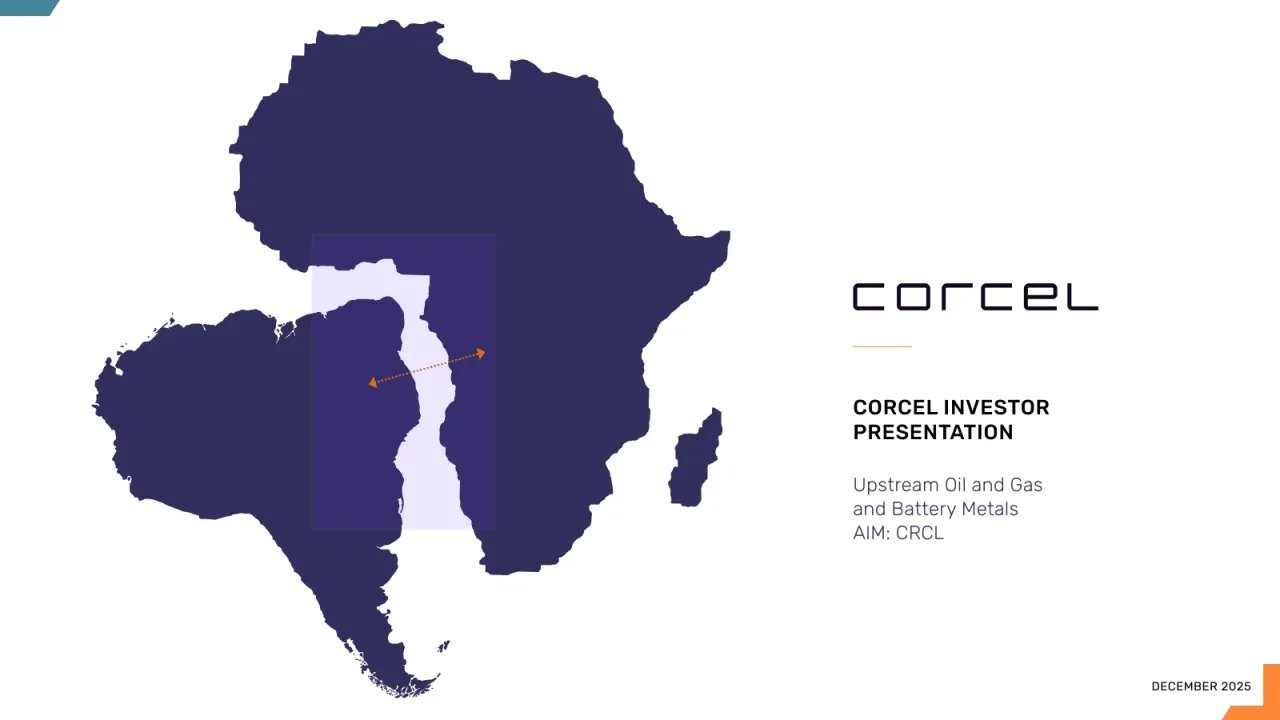
19:19 In other blocks, we are advancing and using that position to be able to actually strengthen our position and go after assets in a value accretive way and ensure that we have a very strong portfolio and a strong positioning and maintain our leadership in the Kwanzaa Basin. The third pillar is one we've talked about consistently. As you recall, we have consistently mentioned that it is very important for us to secure cash flow. The objective of this is to accelerate the resilience of our portfolio and to make sure that we can then strategically use that strong portfolio to return value to the shareholders through very significant deals. We are as you recall, we had the work the option in Brazil. We have extended our ability to make a decision on that option. And the reason we did that is that over time, as we've strengthened our financial position and we've capitalized the company, we have had the opportunity to open up new business development avenues in the conjugate margins of Angola and South America, and we're now evaluating a host of opportunities that could provide us the first production deal.
20:27 And that we're looking to do as early as these first the second quarter of next year or the first quarter of next year considering how strong the pipeline is of the opportunities we have developed over time. So we're really excited at CORCEL at this point in time both from an operational perspective and a strat strategy perspective. I think we're well positioned, for the new year. So thank you. I will hand over back to you. That's great. Well, thank you very much for the presentation. Ladies and gentlemen, please do continue to submit your questions, and you can do so just by using the q and a tab that is situated on the top right hand corner of your screen. We have received questions, and I want to start off the q and a session with a pre submitted question here, which reads as follows.
21:13 Regarding block con 11, TO 13, and TO 14 wells, are activities still ongoing? Yeah. I I can take this one. Thank you. Yeah. Thank you for the question. So this in con 11, that is a nonoperated block. The operator, Sonangal, is working on on that asset. We we are waiting for an official update from the operator on on Con eleven, and we can't make an an announcement until we've until the operator has notified the partnership and the National Petroleum Agency. And when they have done, when they've sent their official sort of update on that, then we'll be able to communicate that to our investors.
22:01 So at at the moment, present, the the press release that we made in the first half of the year still stands, and we can't announce anything on on Con eleven until the operator sends official updates to the partnership. Thank you. That's great. Thank you very much, Richard. Another question here. If the CORCEL PLC was successful, what is the likely commercialization route, and would a farm down or partnership be considered for development? I can answer that. I think that is a two part question. So I'll take the first part, which is what is the likely commercialization route? There's always been two options in the Kwanzaa Basin. Being close to the Luanda refinery, there is an opportunity when you have a commercial well to set up an early production system and truck the oil to the refinery for revenue as early as, you know, a few months after drilling.
22:55 Full field development given the capacity at the refinery will require some other solutions, and we have been working actively to look at preliminary solutions considering our expectations for the delivery of the prospects in CONS 16. That would include a set of pipelines and a barge offshore to be able to process and eventually have the product transferred to international markets. So I think that covers the first part of the sec the question. The second part relates to a farm down. As I mentioned, we are actively looking for a farm down partner. We have strategically increased our equity position in con 16 to 85% in order to to enable us to have this optionality.
23:41 With this strong position, we're able to look for not only a partner that can help us finance the well and derisk this for our shareholder base, but this could also allow us to bring in a partner with very complementary expertise and experience considering that we are drilling a complex but potentially very highly impact a high impact exploration well that will go all the way to the presold. That's great. Thanks very much, Geraldine. We have had another question here. What's the main operational risk that could delay seismic acquisition or the transition to drilling in 2026? Yeah. I I can take that one. Thank you. Yeah. What what are our biggest operational challenges? I guess so for CORCEL sixteen specifically, that would be logistics infrastructure.
24:30 You know, you're you're mobilizing equipment into areas that haven't seen this kind of activity for decades, but it but it's also part of the opportunity. You know, if this was easy, everyone everyone would be doing it. And the fact, you know, the fact that CORCEL can execute in this environment gives us a competitive advantage. So so definitely logistics and infrastructure can one of those challenges. Of course, weather is as well. You know, we're in a tropical climate and you can get heavy rains. And, you know, we've we were anticipating that and we have plans in place for that. You know, if we get heavy rains during our acquisition, then we will we will have some downtime. And that might be for a few hours a day. It might be for an entire day, but you will get a little bit of stop start during the acquisition if you have if you have heavy rains.
25:20 So those are the sort of operational risks for the for the seismic acquisition. I think, you know, we've got people on the ground now, and the seismic acquisition will happen. So, yes, you might you might get a few days of delay here and there because of those those things that I've mentioned, logistics and infrastructure and and weather related, but it you know, work will happen. And and we've we've you know, with the team we've got in place And with the service company that we've hired to to to do the acquisition, we're we're well placed to execute on our on our work. So so, yeah, hopefully, that answers the question about the the operational challenges. It's great. Thank you very much, Richard. Moving on to the next question. Do we have a drilling rig provisionally lined up for CORCEL 16, or do we need to wait for the data analysis to work out what rig would be the optimum type to use?
26:17 Yeah. I I can I can take that on the rig? So we we've got lots of options for the drilling rig. And, yeah, we to know exactly where you want to drill, yes, we need to wait for the for the seismic acquisition to be processed and interpreted. But today, we have, you know, quite high confidence on on what we're going to be targeting. So there's some very obvious prospects in our block that we've we've mapped using our existing seismic data, our EFTG data, and and lots of legacy legacy data. So we have a very good idea of of what we would be targeting. So that means we we know roughly how deep we would be drilling. And therefore, you know, with that information, we can already start scouting for drilling rigs and equipment, long lead items, and services.
27:10 So you need the seismic data to know exactly where to drill, and that will come. You know, that that information will come during 2026 as we process the data and work with it. But the planning for drillings has already started because we have that high level information. We know the depth that we want to drill to. We know the targets. We know the, you know, the geological conditions and the formations. We know what to expect. So that that means we can start planning now and look for a suitable rig. And we have, you know, multiple options for rigs that we're looking at today. So we haven't signed a drilling contract or anything like that, but we we are looking at different rigs, and we don't need to wait for that seismic data to get processed and interpreted for us to to start the planning because, obviously, locking in a rig for a drilling campaign is one of the key key things you need to do to get a firm sort of time frame on drilling.
28:07 So that's something we're working towards now. Thanks very much, Richard. Another question that's come in. Are you looking at other blocks in the Kwanzaa or Congo Basin? I can answer that one. So we've consistently stated that we would like to keep our focus on the Kwanzaa Basin. It will come down. Once we operate, it will be very important to make sure that we have operational synergies from it, and this will drive down costs and ensure that we can return significant value from each of each barrel that we produce. However, the we are always open to looking at different basins, and we are actively looking at different basins in order to ensure that we find the best acreage for our portfolio.
28:59 So we are actively looking at the Congo Basin and other jurisdictions. Our focus though is on the Kwanzaa Basin in terms of deploying our capital today. Thank you very much, Sherrod. And and the final question we've got for the moment, what would be an ideal farming partner for com sixteen in terms of size and profile? Are we talking of a large independent or other? Yeah. I can take I can take this question. Well, we we actually we we have been very lucky that we we've seen a lot of interest in our blog. And, you know, the question specifically asks if we're talking about a large independent, and and we we can we can safely say that we we've had large independents talking to us, and we're keeping our options open. The key for us is to find a farming partner that's that's gonna add strategic value.
29:56 And we we wanna make sure that we get this well right and and bringing a partner that that is gonna add from from a technology and expertise perspective. It's it's it's gonna be critical as well as funding the the the wealth that we're gonna be drilling towards the end of next year into two twenty twenty seven. That's great. Thank you very much, Scott. Well, that that is all the questions we've received from investors. So, Scott, if I could just ask you for a few closing comments, that'd be great. Yeah. Well, first of all, I would like to thank everybody for for for joining this presentation. The the real objective with this was to to to showcase what we've done over the last twelve months, what we've done with the with the funding that that we acquired through the different placings, and and what we've been able to to to deliver with that.
30:55 And and and really show how we've positioned the company for for the next stage of of transformational growth, which is along the lines of what sits in our in our pipeline of business development. So we're very excited about what's going on at the moment, and we're very excited about the future. And we look forward to continue to update the market on on the progress of our operations on the ground. Thank you very much. It's great. Well, I'd like to thank the team for updating investors today. Could I please ask investors not to close the session as you now be automatically redirected to provide your feedback in order that the management team can better understand your views and expectations? This will only take a few moments to complete, but I'm sure it'll be greatly valued by the company. On behalf of the management team of CORCEL PLC, we'd like to thank you for attending today's presentation, and good morning to you all.
Follow Corcel PLC into a list and get an email when it puts out news.
CEO at CORCEL PLC
CFO at CORCEL PLC
Chief Strategy and Commercial Officer at CORCEL PLC
COO at CORCEL PLC