Replay available
Contango ORE: Year in Review & Beyond
Join the company's CEO, Rick Van Nieuwenhuyse, for a review of all the work done at Manh Choh and Lucky Shot in 2023 and for a preview of what's in store for investors in 2024. A live Q&A follows a brief presentation.
- Company
- 6ix, Contango Silver & Gold Inc. (AMEX:CTGO)
- Date
- Tue, Dec 12, 2023, 2:00 PM ET
- Replay
- Watch the replay on this page · 32 min
On 6ix: 6ix.com/event/contango-ore-year-in-review-and-beyond
Replay
Transcript
Automated transcript · Written by software from the replay's audio. It can mishear names and figures; the replay is the record.
0:08 Good morning, good afternoon, or good evening, depending on where you're logging in from, and welcome to Contango Aura's live digital summit. I'm pleased to introduce their CEO and President today, Rick Van Nuenhuysen. Rick will take us through a brief presentation, afterwards we'll be accepting questions. Questions are always open on the right hand side of your screen in the chat panel. Please ask at any time during the presentation, we'll make sure to get to them after the presentation is completed. And as always, the summit is being recorded today and will be available on six.com and YouTube to watch afterwards. Without further ado, I'll hand it over to Rick to kick things off. Romeo, thanks very much and good morning, good afternoon and good evening, everyone.
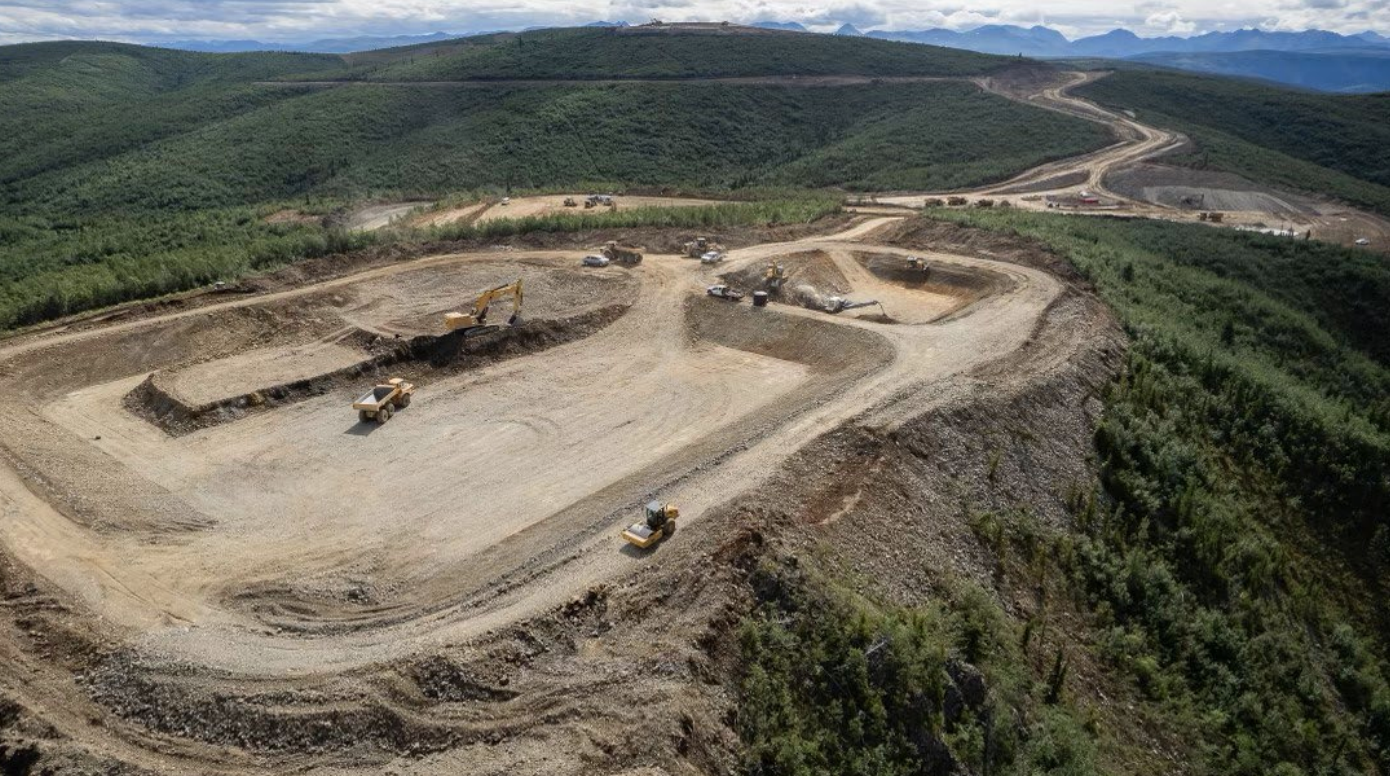
0:47 I'm coming to you from our new office in Fairbanks. So we're still getting things set up, but we're pleased to have moved the headquarters up here to Fairbanks, Alaska. So just starting as we usually do with sort of high level highlights, it's been a busy year for Contango. We are now fully permitted with this receipt of the state mine operating permits earlier this summer, where we started actually mining. And so we are fully permitted. The other big thing that we were responsible for doing this summer is getting the company fully financed in obviously a pretty tough market for gold equities.
1:33 But we did manage to raise over $30 million of equity and we put in place a $70 million line of credit with ING and Macquarie Banks. So we are fully funded, we're fully permitted for production and I'll show you some photos of site and we're well on our way to becoming a producer in 2024. So we're on track and as I said, we're fully funded, fully permitted. Of course, just a quick review is the Moncho project located close to the Yukon border there but in Alaska on land zoned by the Teletman tribe.
2:20 We've had an agreement with the tribe since 2008. They're very much looking forward to receiving a royalty. We already hire a lot of local people from the Tetlin village and from the Toke area. So the idea again is to mine that site, at the Moncho site, and truck the ore up to the Fort Knox mill located in central Alaska, just outside of Fairbanks here where the red star is on the map of Alaska. And as we'll talk about a little later, our Lucky Shot mine located just north of Anchorage, again on the road system, actually on the rail system over in south central Alaska, rail between Anchorage and Fairbanks and we'll look at the same kind of a plan for developing Lucky Shot with mining at site but transporting the ore to the mill at Fort Knox here. Lots of work to do to get there but we're looking at that same kind of plan to execute.
3:23 Quick update on our capital structure, obviously we've issued some equity so we're up to about $9.4 million issued and outstanding, a little bit of a few warrants and options and then our debt facility of $70 million. We've drawn 20 of that, and we have an additional $20 million of a convertible debt in there as well. And we ended the year about $16 million of cash in the bank. So we're again, well-funded. We've only tapped into 20 million of that $70 million line of credit. So I think we're in really good shape. We had our mine opening this summer after we received the state mine operating permit, and the governor was there, Chief Michael Sam from the Tetlin tribe, all the tribal members, tribal council members, and other dignitaries.
4:17 So we are now the sixth operating mine in Alaska. So I think it was a great, great grand celebration. Mining is taking place. Our mine contractor is Kiewit, one of the largest in the world. And we're mined during the wintertime. We always get a lot of questions of whether we can mine in Alaska during the wintertime. Fairbanks and the interior is clear and cold. Tokopet is one of the colder places in North America, but As long as it stays above 40 we can mine year-round No problem at all This is the highway, or sorry the roadway from the mine site down to the highway.
5:05 In this, we're passing one of the freight haul trucks that are transporting the ore from the Moncho mine site up to the Fort Knox mill. You can see this is a, The road here is a gravel road. It's pretty wide and it's got a 6% grade, so it makes it easy for the truck haul, particularly in the wintertime. You want to make sure safety's obviously the most important thing here. So you have a nice wide road and a nice gentle grade all the way up to the mine site, between the mine site and the road, the highway. We're transporting ore. Picture here on the right is the first dump of ore into the stockpile at Fort Knox. And I think they're running between 5 and 8 trucks a day right now so things are going according to plan and on schedule actually I'd say ahead of schedule if anything.
6:01 At the moment modifications at Fort Knox are moving along. They've completed the stockpile, obviously we're stockpiling. They're making a few modifications to it to improve the speed turnaround on the dumps. The tailings pipeline down to the bottom of the oldest part of the Fort Knox pit has been completed. There's still some work being done at the mill itself, kind of in 2 main areas. Basically it's all tanks and piping, because the ore at Moncho is 8 grams per ton and the average of the Fort Knox ore is 0.8. So there's a 10 times great going through the mill with the Moncho ore We need more tank space for cyanide, for the cyanide distribution circuit, for lime addition, and for carbon loading.
7:00 So those are all the tanks. Area 3 there is a conveyor system that will reroute the harder ore that gets kicked out of the sag mill and it gives it a second shot to go through the sag mill again and get broken up. Again get broken up. This is a little different from what happens with the typical forked oxo ore that actually just gets kicked out because it doesn't have any grain in it. But our harder material does have a lot of grain in it so it will get a second shot at the mill circuit. But that's all scheduled to be completed in the next few months here and we'll be looking to have our first gold pour in the first half of the year and generating cash flow back to the company and that'll be a momentous time for the company. It's been a long hard road to get here but we're nearly there.
7:59 We've basically spent most of the capital now, I think about 98% capital spend, and we're basically spending working capital now mining and transporting ore up to the Fort Knox Mill. We believe we're still on track for our all-in sustaining costs to be a little over $1,100, $1,116 as per the feasibility study. Because we're contract mining, we have contract hauling, and we have a contract tolling arrangement. There really isn't a lot of huge room for inflationary pressures there. The main one would be the price of oil and the price of diesel specifically. We've used, for our banking parameters, we've used $100 a barrel based diesel price. And so obviously we're well under that right now, I think we're just over $70 a barrel.
8:57 We bought all our fuel for the year here, so We're in good shape there. I think we'll see our all-inclusivity costs coming right on track. So next stop is production. We plan to have the guidance is still have production by the middle of the year and I think we're a little bit ahead of schedule, so hopefully we'll be a bit in front of that, but we'll be looking forward to building that stockpile up at Fort Knox and
9:27 continuing to have operations for the next 5 years. And obviously a lot of exploration work to do beyond that on the very large land package that we have under lease from the Tetlin tribe.
9:45 Cash flow, these really haven't changed. As per the feasibility study, the high end of the numbers we could use in the feasibility study were 19, 20, and you can see that generates over $50 million of free cash flow. I think we're still on track for that. Gold had another run up over 2000,
10:02 but now it's come back off. Excuse me. So, we're gonna kind of stick with this guidance. I think for our internal planning purpose, we're using an 1850 gold price for internal budgeting purposes. So, I think we're well on track to be able to achieve our objectives for the year coming up by the year, I mean 2024, the year ahead of us.
10:32 So we will be looking at advancing our other projects, other exploration projects, this year. But one of our main focuses will continue to be on Lucky Shot, where we see the opportunity to do more or less the same thing that we've done with Mon Chaud, using an existing mill facility to process ore. A lot of work to do to get there. First step is to find a mineable resource.
11:01 First lucky shot, high grade historic producer, produced about a quarter million ounces at 40 grams per ton. That was selectively mined and hand cobbed ore, so they upgraded the ores just literally by hand. That was pretty much what they did back in the day.
11:18 We're looking at something resource more in the half ounce per ton range. We did earlier this year, publish our initial resource around 100,000 ounces and about half ounce per ton, 15.6 grams per ton. And we started to align plans to drill up at Coleman. We got set up, but we didn't really get a lot of drilling done. Winter came a bit early on us and we got a bit of a late start. So we're all set up to start that work next summer. We decided not to not to try to operate during the winter time. It would just be expensive and we decided it'd be better to hold on to our cash until we made sure that Moncho was actually in production.
12:08 We did get set up, you can see the mountain there is pretty steep, so you have to set up these drill pads. They're a lot of work, and you kind of place them strategically so we can get probably 10 or 15 holes drilled per pad in a fan shot. The idea here is to
12:31 this is on the Coleman segment, The purple and red colors are the ore chutes, the higher grade zones that we want to mine. The vein is continuous, but it only runs high grade in these ore chutes. You can see in the middle of that donut there is where the historic mining took place. Obviously that was good grade. But we just want to drill a little further down plunge
12:56 from this pad. We'll probably set up a couple more pads to drill further down plunge. And this area basically plunges right towards the
13:06 end of the western drift here. So this is a perspective looking to the north. The Lucky Shot insert tunnel comes in there. We've done you see the drilling that we've done To identify the vein these are our pilot holes and on the very end of the western drift there That's the drift that goes off into the foot wall of this Lucky Shot vein. We've drilled a couple of fan shots there. It only outlines a very small resource, a little over 10,000 ounces, but we're just getting started.
13:39 And that Coleman zone comes in down to this level, just off to the left of the image here and into the screen, if you will. So it's a bit offset from where we are along the fault there. But once we get that drilled and the resource to find out that level, we'll be able to use the in-search infrastructure
14:03 to mine and exit the ore so that we can then haul it up to Fort Knox. Obviously we've got a lot of work to do to get there. We want to drill out the Coleman area and then also drill out the the Lucky Shot In the footwall and the hang wall. It's a lot of drilling it's it's about 15 13,000 meters of drilling all short holes are only maybe 50 to 100 meter holes at the longest But once we get that done, we should have a 3 to 400,000 ounce resource identified plus what we have over at
14:47 the Coleman. And that'll be enough to develop a mine plan around. So we'll start this work next year in the summertime, give us a year to get all the drilling done and put together a mine plan. Then we then would hope to have something we could present to everybody in, say, 2026
15:07 as a mining operation. Obviously, we'd have to work out an arrangement with Fort Knox. We would look to use the rail to transport the ore up to Fairbanks and by truck up to Fort Knox. So a lot of work to do, but we think it's a good, solid plan to maybe augment our production initially by 30 to 40,000 ounces, and then over time as we get more working faces going Maybe up to 50 60 thousand ounces of production again. We own 100% of
15:41 Lucky shot so It'll be a little different arrangement was Fort Knox, but they've got a hungry mill and they They tell us they're interested to entertain the idea of processing lucky shot or
15:57 So where else what else do we do and I wanted to spend a bit of time just talking about the Lausanne curve. And it's been talked a lot about over the years. Pierre Lausanne is a well-known investor in the mining space and in the junior space specifically. And
16:15 I think he introduced this about 25 years ago. But, you know, it sort of talks about the or shows that demonstrates the progression of exploration the excitement of a discovery hole and but then You know That's the steep part of the curve and there's a lot of value to add there. But then the hard work starts and you have to do metallurgy and resource continuity and infill drilling and does the grade really hang together and all those geotechnical, hydrology, etc. All that work is a little boring to the market.
16:52 You peak out and then you go through that long period of time where you've got to do a lot of hard work. You're not adding ounces, so you go into a bit of a trough zone. Then once you get permitted and you raise the capital and build the mine, you're valued more on a discount to cash flow or a premium to cash flow, depending on the kind of operation you are, where jurisdictionally where you are. So but that is a pretty typical well-known curve and it's
17:27 been demonstrated time and time again in the market and I wanted to show you so here's a couple of things that have happened with the Lausanne curve. I think the excitement there for discovery is still very much alive and well, and you have got a great, good drill holes, you get the attention of the market. But you're still subject to this orphan period.
17:50 And what's happened with the orphan period is actually extended. It used to be 2 to 3 years, and now it's probably 5 plus years. So the typical junior company that is an explorer and puts together a resource has that long hard slog and if it's permitting or First Nations issues or just raising capital In a tough market, it's hard to raise money and you're doing it at relatively lower valuations. That's an opportunity. It's an opportunity for us because I plotted where I think, roughly, Contango sits. We're on the other side of the orphan period because we very quickly were permitted, we were very quickly built our mine infrastructure because we didn't build a mill and a tailings facility and we didn't have to permit those things.
18:48 It didn't take 5 years to do that, it took us a year. So we kind of beat the Lausanne curve a bit and we're on the other side of it. We're not fully valued in the sense of we're not valued on a cash flow, we're valued on a discount to our cash flow, not on a pure cash flow basis. But on a relative basis, we're much stronger than our peer group companies who have a resource and who are struggling to raise capital to advance it. So that's going to present an opportunity for us. I wanted to just leave you with that thought. We don't have anything specific to present, but we see this as an opportunity for Contango and for Contango shareholders. So I'll leave you with that and wish you a happy holidays.
19:40 But before we get to the end here, I'll turn it back to you, Romeo, and see if there's any questions there. Thanks very much, Rick, for that update. I know we have gotten some questions live, but there's some questions that came in on email in advance. I just wanted to run through those first before we get to the live questions. But for the group, especially those who came in a bit later, just so you know, the bottom right of your screen, there's a chat function where you're welcome to ask questions at any time. So jumping into the questions that we've got from email, first one you already answered it but always good to reiterate, asked is Manchurian fully permitted to production? Is anything needed before a pour? Yeah, no we're fully permitted. Federal permits were received over a year ago, state permits earlier this summer. And I'll just, but I'll take the opportunity to just talk a little bit about the trucking plan. We don't need any permits to drive legal trucks with legal drivers on the highway.
20:35 But there's been definitely some controversy over that, especially specifically with some local community concerns. And so we've been addressing those. The governor appointed a committee to look at those, not just for Moncho trucking, but for all trucking on the highway. I don't think the governor really wanted to single out a specific project, but we've certainly been working our way through that. Of course, there's a group that opposes the plan and so they've brought a lawsuit against DOT and that's being walked through the process, but we're confident that the plan is a good plan.
21:22 Ken Ross has a very high safety culture and that's something that they take very seriously. These, I think I would venture to say, these will probably be some of the safest trucks on the highway. They're legal loads, they're legal size trucks, and they meet all the criteria that the DOT has determined are appropriate for the truck haul. So I did want to point that out. It wouldn't be a mining operation if there wasn't some level of controversy around it, but we actually don't need any permits to do what is planned to do. Great, Thank you. Another question you touched on it, but just in full, Brad asks, are all roads built for Manshaw or all roads that are going to be used by Manshaw already built?
22:13 Yeah. So the one photo there with the truck coming, the road haul truck coming down the road. That was the road that we built this summer, started last winter but completed this summer. It's a 6 percent grade road, very wide. You can see there's a lot of room on that road for the truck and the opposing traffic. That's our roads on private land owned by the tribe on the tribal lands. That road then connects the mine site to the Alaska Highway and of course Alaska Highways you know was built back in the 40s to support the war effort, actually. And that's a paved highway all the way to Fairbanks, actually all the way up to Fort Knox, the entrance to the Fort Knox facility.
22:58 So yeah, all roads are completed and no other than maintenance, there's no other work to do. I will say that we do have in the truck haul schedule, I can't remember if it's 5 or 10 days of restricted use on the trucks. Just, you know, if there's a snowstorm, blowing snow, if it's super cold, they might not want to run the trucks on the highway. So There's a built-in number of days in the schedule of downtime, if you will. Doesn't necessarily mean you'll be down all day. It might be only for half a day or 3 or 4 hours of a day. But safety's the most important thing in any mining operation.
23:46 And that certainly applies to the truck haul as well. That makes sense. Another question that came over email, this is the last one before we get to the live questions for those waiting for the questions to get answered. Steve asks, is the agreement with the Tetlin tribe over Mancho permanent or is it ever up for renegotiation? Nothing's ever permanent so it's a 15-year lease that can be renewed in for 15-year increments thereafter. That's a pretty typical mining arrangement. Sometimes they're for 20 years or 25 years, but this one was for 15. And so, we're in good shape there. The tribe is, I think I mentioned before that you know the tribe wants this mine started yesterday.
24:35 They're very much looking forward to the royalties that they'll receive but also the jobs. We've always done a good job of working with the community and with the tribe to hire locally and train for jobs. And so that effort certainly continues under Tim Ross's management. Great, thanks. Talking to the live questions, So Mr. St. Gene asks, when is the lucky shot PFS estimated for? You don't have a date at this point. First thing is get the drilling underway this summer and put together a resource that, like I said, somewhere in the 400,000 ounce range that we think is large enough to then develop a mine plan around.
25:27 So I'd say, give us a year to get the drilling done and then we'd look to do that. That would be 2025 if we want to sort of aim a date, but I don't have anything more specific than that at this point. Great, thanks. And while we're on exploration, Mike asks, what's the exploration potential around Mancho at this point? Yeah, so it's a huge land position, 675,000 acres, so roughly the size of the state of Rhode Island. And we've really only taken a hard look at about 5% of that land package. Now we've done, there's a lot of exploration potential right around Manchot. The structural zones that the mineralization occurs along, the identified resource reserve now at Manchuro is open long strike.
26:23 There's several other significant surficial targets based on soil geochemistry and coincident geophysical anomalies. So there's more to work to do right around the known deposits, we call this MINEX. And then we have a lot of data there that suggests that there's more mineralization there, so it just needs a lot more drilling. But then there's the rest of the land package, and we've only done preliminary stream sediment sampling and pan concentrate sampling on the rest of it. Lots of other anomalous areas to follow up on. This coming year, 2024, we've just approved a roughly $4.7 million expiration budget. So that'll get started in the summertime.
27:11 And a good part of that will be focused on drilling. So I'm pretty bullish on finding additional mineralization around the mine site and being able to add to the current mine plan or the current mine life of 4 and a half years. That's probably the single most thing we can do to add value for shareholders is finding a few additional years of production at Manshaw. That makes sense. Graham asks, he says, Rick, Is the plan to follow the man show model for your other exploration projects? To a degree yes, I mean that's certainly what we're thinking about doing with Lucky Shot. Again, I don't want to say that's definitely what's going to happen, but if we can outline something in the 10 to 15 gram grade and it's very consistent ore with Fort Knox.
28:12 It's just quartz and gold, so there's very little sulfide in it. So it would be a good candidate to blend with the Fort Knox milling more. So for LuckyShot, certainly, our other exploration assets like Shamrock and ZZZ, we'll see what we what we what exploration finds at the very early stage at this point. But we think it certainly makes sense and look at opportunities where you can take advantage of the existing mill infrastructure. So we like that plan, and if we can duplicate it, we will. But that's not to say if we find A345 million ounce low-grade heat bleachable or that we wouldn't do something there. But obviously, it's gonna take longer to permit and all those things. So, you know, we want to go in with our eyes wide open on looking at new opportunities.
29:11 That makes sense. Another question from Toby. He asks, 2 parts, but one is, is it a bad winter in Alaska and 2 does winter slowdown mill modifications at all It's actually in the interior Alaska is a big place so Anchorage has had a ton of snow on it this year Kind of remind me when I was a kid we used to get lots of snow in Anchorage and then for a period of time they didn't get a lot of snow. So this year Anchorage has got a ton of snow. In the interior we have not had a lot of snow. It's been cold but clear and cold is fine for working as long as it stays above about minus 40. When it's as cold Celsius as it is Fahrenheit, you know it's damn cold. So that's when you want just, you know, again, safety first.
29:58 Tend to slow down things when it's minus 40. We have not had any minus 40 weather yet. I'm sure we'll get there. We always do in interior. But by and large, it's been a fairly easy winter in the interior so far. Great. Thanks. This is one last question I'd just like to ask at the year-in-review style events. What are you most excited for next year? Production. This is a great, high-quality deposit, 8g per tonne. I think it will be one of the highest-grade, open-pit gold mines in the world. Everything's come together and lined up. We've got good contractors working on the mine site with Kiewit. The Orr Hall contract, They're doing a great job in safety first always.
30:50 I have to take my hat off to Ken Ross. They've run a very good, safe operation and smooth and on time, on budget, factor ahead of schedule. So I have to really commend our joint venture partner and manager of the project and the Ken Ross Alaska folks in general. They've done a great job. And yeah, look forward to that first Gold Port. It's going to be very exciting and it's going to start a whole new chapter in Contango or so That's one of the reasons why I want to move the office up here to Fairbanks we've got lots of other ideas and what do we can do up here and we think 2024 is gonna be a fantastic year. So, appreciate the question.
31:38 Awesome, well thanks Rick for taking us through the presentation and the Q&A today. I wanna thank everybody who joined us, particularly those who submitted questions. If you're like me and you think of the perfect question to ask right after we hang up today, please do send it in. I'll make sure that the Katango team gets back to you as soon as possible. You can always find more information on their website at katangowar.com. But thanks again for joining us. I'll hand it off to Rick for our final farewell. I just want to wish everybody happy holidays. It's a good time of year just to get your thoughts together and be with family and friends and loved ones and enjoy the holidays and we'll look forward to seeing you in 2024. Cheers.
Follow 6ix into a list and get an email when it puts out news.
Follow Contango Silver & Gold Inc. into a list and get an email when it puts out news.
Latest news releases
Companies on this call
More from Contango Silver & Gold Inc.
- Oct 06, 2026 Lucky Shot Drill Results
- Sep 23, 2026 Kitsault MRE Update
- Sep 01, 2026 Exploring & Mining in Top American Jurisdictions
- Aug 14, 2026 Contango Silver & Gold (NYSE American: CTGO) Q2 2026 Earnings Call
- Aug 14, 2026 Contango Silver & Gold: Q2 Financials 2026
- Jul 27, 2026 Precious Metals: The Macro Picture