Transcript
Automated transcript · Written by software from the replay's audio. It can mishear names and figures; the replay is the record.
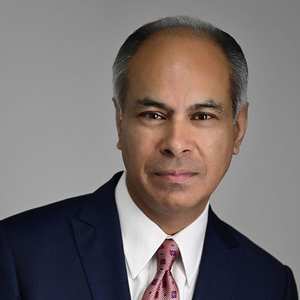
0:08 Hello, everyone, and welcome to Blue Lagoon Resources live investment summit today hosted by 6. Today we're joined by Rana Vig, Blue Lagoon CEO. And today he's going to walk us through his company presentation. Afterwards, we'll move to the live Q&A session where we'll be accepting and answering some questions. You can submit your questions using the Q&A panel found on the right hand side of your screen at any time. And as always, the summit is being recorded and will be available to watch afterwards on six.com. So without further ado, Rana, I'm gonna hand it over to you to take it away. Well, thanks very much, Cameron. Thanks for hosting this. I really appreciate it. Welcome everybody.
0:40 It's great to be here and share our story with you. We're very excited for those of you who have seen this before or seen some of my presentations before. Hopefully you'll get a nice update. And for those of you who are viewing this for the first time, I'm gonna share the story with you and then take it from there. And of course, before we get started, just the traditional disclaimers. You could go to our website. Our presentation is there and you can read the forward looking statements there and and learn all about it. So look Blue Lagoon Resources there are 3 keys to our project. And that's what's really exciting about it. Number 1, we're near-term production. And when I say near-term, I really mean truly near-term. We are just literally, in our opinion, months away from getting this into production.
1:31 See this project, we acquired it, called Dome Mountain. We acquired it just about 14 months ago. Wonderful people. They had spent $28 million before we got there. All in development, infrastructure and permitting, which is one of the keys. You know, it takes 20 years to get a permit in British Columbia, and this project already has a permit. But unfortunately, you know, they literally ran out of time to finish the project because they're 83 years old and not in the best of health, so along we came. It was only $2 million that were required in order to get this back into production. Those are the 3 amendments that were required. We've deployed the $2 million already. We finished all the underground bolting that was required that was a little over half a million dollars. We finished the water treatment plant which was a major milestone for this project that that was needed and we finished it in fact as we speak they are running the final trials full-scale trials on the water treatment plant right now And we expect that to wrap up tomorrow.
2:34 And then within a couple of weeks, we'll have the results back. We're not expecting any surprises. We've already run the preliminary trial before. And then once we have that, we will take that data, not only submit it to the ministry, but also submit it to which is responsible for the third amendment, which is updating the reclamation plans. And we expect all of that to be complete by the end of August, and then we'll submit that to the ministry. And in the next approximately 120 days, we should be getting the green light to move forward. So we're very excited about that. In fact, you know, the interesting thing is that we also have about more than 6,000 tons of mineralized material sitting in the tunnel. You can see it here. This is the, and we started actually trucking it out. This is one of the first trucks that went out to the mill. We have already a toll milling agreement with Nicola Mining, which is a state-of-the-art milling facility in Merritt, British Columbia.
3:32 And as of last week, we started sending trucks out. We sent out 15 trucks of mineralized material there last week. We're gonna send another 15 this week. We're gonna continue that until we move all of that material out of the tunnel. So that's gonna do 2 things. Number 1, it's gonna show everybody that we're actually executing on everything that we've been that I've been talking about that we're doing and and and we're moving closer and closer to making that production decision. And number 2, it's gonna bring back money back into the Treasury which is always great and puts a smile on any CEO's face. So we're excited about that to be receiving some funds back from this material that's been sitting there for years. Now this is not a stockpile material or excuse me This is not a tailings, this is actually material, actually ore from the mine, from the tunnel that we're gonna be shipping out. So we're very excited about that. So as I said, there's 3 keys to this project. Number 1, truly near-term production. Number 2, we have a clear path to a million plus ounces for our resource. And I'm gonna show you what our path is to that. And number 3, there's a tremendous amount of blue sky beyond just that, because there's 15 known high grade veins beyond our main Boulder vein, plus 90% of the property that has never been explored. And I'll share that with you as well. So if we take a look at where we are, for those of you who don't know, we're just outside the town of Smithers, which is in northern
5:03 British Columbia. And we have 2 properties. In fact, when we negotiated this deal to acquire this project, we also acquired this project here called the Big Onion, which is a big copper porphyry. And, but I'm not gonna talk too much about that. You know, with copper getting up to all time highs, we're going to definitely figure out a way to monetize that. But at this time, we're gonna just leave that alone. This is only 20 minutes away from the town of Smithers. All year round, we can drive to it. Then as we go a little bit further, we can see here, this is our main project, which is the Dome Mountain. This is less than an hour away. So we're only about a 50-minute drive, again, once again, all year round, we can get there and access that very easily. That's important for a couple of reasons. One is cost control.
5:54 You don't have to fly in with helicopters or put expensive camps out there. And number 2, it really gives us the ability to retain great talent. You know, we're so fortunate that we've been able to attract senior people, people who work for major mining companies, you know, who've put their time in, who are in their mid-50s or late-50s, and They don't want to be out in the bush anymore. They want to be close to family. So we've been able to attract this great talent that allows them to work for us and bring all their wealth of their experience, as well as be able to be able to have a quality of life and be with their families every night for dinner. And then if we look at the topography, you can see here, it's a forest, pretty much forest land. You can see the forest companies active. Here are the clear cuts that you can see here. Here's the main road that drives, that comes right through our property that's maintained by the 4 services companies And we're right here these little red dots and this little area here about 3 kilometers is a small road that we maintain and that's It the little red dots is where our mine is and the other veins are as You can see up here all this area has never been ever was never explored. And we flew the first ever airborne survey on this property last year. And it was just amazing. The whole thing just lit up. I mean, it was just incredible.
7:12 And everybody was scratching their head, thinking, wow, How come no 1 knew about this before? And predominantly it was because the private company was very focused on what they wanted to do, which was to try to get this mine into production. And of course they were in a very bad market and kudos to them that they raised $28 million still in that market and put all that development and infrastructure and permitting work in. If we now hone in and zoom in onto these little red dots, we can see a little bit more about the resource that we currently have. The little diamond here that you see, this is where the current portal is. The solid red line is where our current resource is. And we have a nice little starter resource of a couple hundred thousand ounces in both indicated and inferred.
8:03 It grades about 12 grams a ton so very nice high grade we also have About a million ounces of silver there is there's approximately a 1 to 4 a gold to silver ratio here, which is very nice. And of course, with prices of silver where they're going, and some people believe that silver is gonna even outperform gold. So that's gonna be very, very interesting for us and certainly give us a lot to cheer about. Okay, so This current, this yellow line that I just, this is where the current resources, and if we look to the west here, this dotted line, this is where our, this is 800 meters, where in 2016, where the drilling, the last drilling was done. And if we look at the cross section, we can see here, this is the area here that I'm talking about, and we can see here the drilling that was done in 2016. And you can see These are the drill holes, these are all mineralized.
9:02 And that's what's exciting. And the only reason why it's not in any kind of a category, of course, is because it hasn't been drilled enough. So this is our low-hanging fruit. All we have to do is go drill this out, and we are very confident that we'll easily double our resource to somewhere around 400,000 and a half a million. And then there's the depth. This is open at depth. And if you look at the handful of holes that were drilled deeper, this is all high grade.
9:31 And if you look at the the chart here to the left you can see it's all high-grade and this was only done somewhere around a hundred and 50 hundred and 60 hundred and you know 70 meters 80 meters in depth so we went deeper we went to the deepest point You can see here in the news release that we put out in January, over 300 meters we went deep and we hit 3.13 meters, almost 18 grams gold and over 70 grams silver. So that gives us a lot of confidence that as we go deeper, that we can once again add significant ounces to the resource. And then there's the Eastern part, right here that we drilled. Again, very exciting.
10:17 If we look at this image here, you can see right here, these are the drill holes that we put in and you can read in the news releases again, we have high grade gold. But what's very interesting is this mag feature right here that was identified in the airborne that I talked about. And this looks like it's likely an extension of this boulder vein. So we're going to go and chase that here this year. And you know what, if it's an extension, fantastic. If it's a new discovery, fantastic. We win either ways. So between the current resource we have at our main resource, between the Western side, the 800 meters that I talked about, between the depth that we can get to. And of course this Eastern side here, we believe we have a clear path to a million plus ounces. Hope you agree. And you know, the next part of the story, I believe is even more exciting, which is there are 15 other high grade veins known on the property.
11:20 And that still only encompasses this small area, which is less than 10% of the entire property. So I'm not gonna talk about all of them. You can see them here. There's veins here, veins here, veins throughout here, a swarm of veins. But let's talk about just maybe 1 or 2. If you look at here, this is a free gold. This is slightly to the about a kilometer and a kilometer and a half north of our main area of the Boulder area. And we just started drilling that last week. If you look at this, this is an historical map that we have from from back in the 60s of that free gold and this is what you're looking ahead is what you're looking here is 300 meters and if we look at it if we look at this and it may be a little bit hard to see but if you look at this these are all in ounces okay these are channel samples so there's a 1.2 ounces over 112 feet here's 0.6 ounces over 120 feet here's a 3.2 ounces over 95 feet I mean it's just the numbers are just you know just this exciting and it's staggering so if and then if we look at the airborne that came back, there were 5 new targets that the airborne identified, And we believe there are more. So if we look at them here, you can see there's 1234, and 5. And again, this has all been news released and you can take your time and study it and read it or drop me an email and happy to discuss further.
12:42 If we look at this number 5, which is the map that I just showed you. This is this is free gold. If we look at that a little bit closer, you can see here the vein right in the middle of this of this here. And then what's very exciting is that my technical team is very excited and telling me that this here was surrounding it is a classic porphyry signature. So those of you who know a little bit about mining, probably a lot more than me, you know, know that that's a game changer right there if we hit that. And that's just 1 of 5 targets that we've identified And we believe that there are more. So there's there's quite a bit, you know, that gets us excited and really makes us jump out of bed every morning. This is a highly prospective property. So, you know, to kind of just review, you know, again, I talked about 3. There are 3 keys. One is near production. You know, we believe we're literally months away from making that decision.
13:35 You know, number 2, we have a clear path to a million plus ounces. And number 3, we have this highly prospective area with not only just the 15 known veins like Free Gold, but you know, the rest of the area, which gives us a lot of opportunity to put lots of exploration holes in there, which as you know, and you can appreciate it, is what really drives the value in a junior exploration company. And then again, you know, we did a lot of other work, soils, you know, we did a tremendous amount of soil here and we're going to do a lot more now so we can get gain more valuable data and make some great strategic decisions. This is a high level map of the Airborne. You can see here for reference again, you can see this yellow here, this is the road that I talked about earlier that goes to our property. Here's Freegold right here to give you a scale and here's Boulder.
14:35 When we saw this MAG feature right here, this was our claim block boundary and you can see we immediately went and staked all this that night. And thank goodness we did because the following week we got the EM back. And look at this, look at the tremendous amount of activities going on here, also in the south of the Boulder. So again, it just goes back to, you know, what we're talking about, that there are a lot of areas that are being unexplored. You know, we showed this to a very senior geologist the other day who's been part of a couple of very, very big discoveries, and he was scratching his head and he says, hey, how come this is one that got away from you? How come I didn't know about this? And that's been the beauty of this project is it's been really under the radar because it's been private hands for for many many many many years So I you know, that's that's pretty much it in terms of in terms of a high level on on dome you can see here some of the grades again, these are all been news released. We've got anywhere from 15 plus grams over roughly a meter and a half plus to 107 grams.
15:45 So it's just great numbers for us to work with. Here's some pictures of the mine site. Again, this is not something that's a hundred year old. The people before me took a lot of pride. I mean, look at this. Have you ever seen a mine portal that looks like this, looks like a ski chalet? And the reason is because the previous owners really took a lot of pride in what they were doing. And when we went up there for the first time to do our due diligence, we were blown away. We were blown away at how well organized and what a great mindset it was. You can see here over a thousand meters of tunneling already been done. That's millions of dollars of development work that's already been done. So we've got generators and offices and rescue stations. And in fact, a couple of weeks ago, 8 of our team actually completed a rescue safety training course, which is required before you can go into production. So we're getting all the steps in and getting ready
16:49 to get going here, which is, of course, tremendous because it'll cash flow nicely, depending on the price of gold, we believe, and allow us to put several thousand meters a year back into the ground. And then just to wrap up, talk very briefly about a couple of other properties that we have that also add a lot of value to our company. We have this property here that I talked about earlier, which is the Big Onion. This is a copper porphyry. You can see here in red, it has already a historical resource of about 690 million pounds. And it's got over $8 million already spent on it and over 300 drill holes. There are already 2 untested anomalies ready to go. So it's pretty much drill ready. So we're gonna figure out how to monetize that with copper hitting new highs and it's just on a tear. And from everything I'm reading, it looks like it's definitely gonna be in play for the next 2 to 5 years with all the infrastructure that governments are announcing.
17:50 And of course the electric car movement, which takes 4 to 5 times more copper than a regular car. So that's very, very exciting to help us monetize that property. And then we've got this property here in central British Columbia called Pallaire near Williams Lake. It's a great property. It's got a 20-man camp there. You can see some of the old equipment sitting there as well. This is the property here. It's got 10 high grade veins. You can see them here. The road is a road that leads right up to the to the property. So access is not a not a huge issue. And we're going to figure out how to get going on this here in the near future as well. But this is one of my favorites about this property is this here little pile of dirt that doesn't look like a whole lot. This is actually 25,000 tons of mineralized material. You know, stockpile that's been sitting there for many, many years. We went and surf, we went and tested it at surface last year. We got about 5 and a half grams a ton on there but we believe deeper it's much higher and much better better better grades but even at 5 and a half grams you know the back of the envelope quick little estimates look pretty good. We don't need any permits to take this out. It's simply a matter of fixing a little bit of the infrastructure. There's a couple of bridges we need to fix. It's less than $200,000.
19:08 Open up the road there that has a bit of a mudslide on it and we can start getting that out. So we're going to be getting heading up there actually in a couple of weeks and starting trying to look at what we can do. So either later this year, hopefully, we can get that out. And certainly if not, then certainly next year, we'll be getting that out. So these are all aspects of the company that add value to our project. And then Of course, we've got a great looking Treasury still. We've got roughly $3 million still in Treasury after we have deployed the $2 million on the amendments, after we spent money on 7,100 meters already. We announced a 20,000 meter drill program back in January. We completed 7,100 meters. That's all paid for. We still have roughly 3 million dollars in the bank.
19:55 I run a very tight ship, so we've got no debt. And you know what? We've got about 5 million dollars in the money warrants. So we're sitting in a in a in pretty good shape. And I think that, you know, we're very undervalued, which is another reason why I personally added another million shares to my personal position about 3 months ago. I believe we're very undervalued. We're just getting going. And you know, the most exciting part of any exploration company is just before the discovery, as you know, you know, they call that the discovery curve. And I believe we are right there with all the things that we've got going on. We have a very, very busy summer ahead of us. As I mentioned, we just started the drilling program last week and we are going to look for ways to accelerate that. And yeah, I think that we're we've got a great story and we hope you keep an eye on us and hope you agree with some of the things that I talked about. So that's it for our story. Happy to take questions and answer whatever may be unclear or on someone's mind. Absolutely. Well, thanks, Raina. I'd like to remind the audience that guests at this time will be entering the Q&A section.
21:08 So feel free to ask any questions you like using the Q&A channel on the right-hand side of your screen. So Raina, to start things off, Daniel asks this. Have you had dialogues with the authorities during the work with the amendments or will the documents you submit to them completely be completely new to them? In short, do they know you are working on getting the mine into production or will it be a surprise for them? Great question. Listen, I believe in communication. We are in constant communication with the ministry on a monthly basis and sometimes a couple of times a week. The inspector, in fact, was just there yesterday to monitor and review and understand the water treatment just as an example and he was thoroughly impressed which is what he said as he left the site. So yes, we are in constant communications with them. They know exactly what we're doing and there will be no surprises for them at all.
22:08 Great, that sounds awesome, Raina. And Ryan just wants to clarify something but that she didn't get the news release even though she's a shareholder. Where can she find that news release? Our news releases are always published on our website. So that's one way. Of course, there's also CDAR. So our website is www.bluelagoonresources.com. All news releases are there. Of course, we file on CDAR under the company's profile, which is cdar.com. You can go to Blue Lagoon's profile and you'll see all the filings there as well. Always good information to know, I guess. Jonathan asks, how many rigs will be turning? We're starting with the first rig and we're just evaluating to see to add the second rig because we had 2 rigs going last drill program and I believe we'll be adding the second rig here shortly.
22:57 Wonderful. Trevor asks for a bit of detail on the drill plan sequence and the implication for future financing. I'm not sure what he means by sequence, but I mean, we have, as I mentioned, we announced a 20,000 meter drill program. We have done 7,100 of that already. So we're going to finish that up with the roughly 13,000 more to go. We've started that already. We're going to start at free gold. And then based on the results, we'll start to see. We've got many targets that we've got in mind. But free gold is where we wanna start. And then of course, we'll be releasing the results. In terms of financing, I'm gonna see how things go.
23:42 The warrant money is starting to come in. We have a lot of great shareholders. So I've been talking to them and they are exercising their warrants so that money is coming in. I have a couple of strategics that I'm speaking to, so it may take a little bit of money if the right parties come to the table and work with us. But no, so far so good. I think we're looking good. We certainly have the money to execute on the plans that I have for this year. Awesome to hear. Jonathan asks, is there any possibility that the 20,000 meter program this year will be increased?
24:16 You know, We'll evaluate as we go along. I've got an incredible team. Our chief geologist, Bill Kronk, was a chief geologist for many years for Dundee. He worked for John Robbins Companies, which is one of the greatest geologists known here in Canada, as well as a great businessman. He sold Northern Empire to Coors Mining. That was his last deal. Bill was his chief geologist. He's an incredible guy. Where I'm going with this is that, you know, we have a lot of discussions about how fast we want to move. And one of the things I really like about Bill is that it doesn't matter how much money I throw at him, you know, he always said, you know, he's always like, let's just pause, evaluate, and then move. So yes, we want to move quickly, but we want to move very strategically.
25:01 So we will evaluate the data after we finish this 13,000 meter drill program, evaluate our position, our treasury position, and make a decision based on that. Now, we do have the opportunity at this property to drill all year round. We can do almost everything all year, we can work underground all year round, so once we're in production we can certainly operate all year round, we can drill all year round, and of course we can access the property all year round. So we're not in any rush, we'll get the data, it's going to be a great summer and then we'll evaluate and if we feel it's appropriate to drill more this late fall and winter, we certainly will continue to do that. Wonderful, thank you for that, Raina. Jonathan asks, Freegold has drilling started last week. How are the intercepts looking and any feedback from your team yet?
25:54 Yeah, I mean, look, we just started last week. So far, so good. We haven't obviously We haven't got any assays back yet. We just we're just starting to ship those out. But, you know, without disclosing any undisclosed sort of information, I can say nothing negative. And look, I'm smiling, aren't I? So so far, so good. Awesome, thank you. Edward says this. I wish to invest. What is the minimum stock order to qualify? Well, there's no minimum, Edward. I mean, you just have to go on whatever broker you use, whether it's a full service broker, like a Canaccord or a Mackie or a PI or, you know, Heywood, or if you're using one of the discount brokers, you know, the various ones, there's no minimum that I'm aware of. It's just, you know, whatever the, you know, the market is at the time and whatever you feel is appropriate for your portfolio.
26:49 Great. Thank you. James says this. How does the Porphyria signature improve the finding on airborne mapping? Is it a copper signature? A gold signature? I've been told that British Columbia porphyry is not as profitable as other areas in Canada. I don't know enough really to comment. However, do you have any thoughts on this? Yeah, look, I'm not a person, but I can certainly give you a high level. There are there are obviously porphyries in British Columbia and there are there is there is production. So, you know, we'll see. And we don't know if it's we don't we know there's a lot of gold associated there and then obviously there's a potential for a copper. What's interesting is that if you look at the mag, there's a Northwest trend going and wow I'm gonna Bill's gonna say what you're talking about you know his area of expertise but since he's not here you know you can see here let me just turn on this drawing tool here You can see here this this here.
27:48 So, you know, this is so this is a very interesting, you know, to us. And of course, free gold is right in here. So, you know, there's a lot of data that is still yet to come in. And we're waiting for we're accumulating. So all I can say is that, you know, we, that's exploration. We have to go in there, we have to accumulate as much intelligence as we can, you know, with the data points, you know, connect the dots and then let the team that I've assembled go to work for that. So to answer your question, we don't know, obviously we don't know the scale of this yet. We don't know the grades yet, but we do know that there's enough there for us to go after.
28:35 And drilling will tell. I mean, that's ultimately, you know, what we're going to define. Is it a big copper, you know, porphyry? Is it more gold? Or is it a swarm of veins, as a couple of other very senior geologists have looked at this trend and have compared it to some other properties of similar nature in Australia and Colombia. So we'll see. We'll see this summer. This year is going to be a game-changing year for our company. I think is what I'm really getting at. Wonderful to hear, Rana. Suresh asks, will you need to do a capital raise in the next 12 months? Sorry, cut out there for a second. Will we need to do a?
29:17 A capital raise in the next 12 months. You know, see, and the reason I say that is because there is a warrant money. So it depends in how fast that warrant money comes in. As I mentioned earlier, you know, I am talking to, you know, a couple of strategic partners and if they, if you know, if that comes together then it would make sense to take a little bit of money. But, you know, we'll evaluate that as we as we go but I don't anticipate, you know, that we're gonna do too many financings in the near future. You know, like I said, if we take a little bit of money in that, along with the warrant money, along with some of the money that's going to come in from these trucks that we're sending out to the mill right now, plus the current treasury that we have, we think we should be in good shape, until we make that decision to go into production.
30:08 Wonderful. Steph asks, when do you anticipate or hope to be in production, the fall?
30:14 I think the fall is being a little bit too optimistic. I don't wanna, you know, I like to under promise and over deliver. So I think that's a little too optimistic. I believe that we'll have all our amendment work done and the application to the government, the amendment application to show them that we've got finished everything sometime by the end of August. And I believe, based on my conversations, my regular conversations with the ministry, I believe their review process is going to be somewhere around 120 days. So my anticipation is towards the end of this year. And if we miss it by a month or 2, then we may fall into a jam in February. But that's kind of the timeframe that I'm looking at. Great. Eric says this, you've mentioned great people added to your team who liked local work. Who was added?
31:01 Oh, for example, our mine manager, Roy Evertson, is an incredible, incredible individual who's taken such ownership of this. You know, he's worked for us. You know, he's worked on Esqued Creek. I mean, this guy's been he's got underground mining experience like you wouldn't believe. And he
31:35 We're so fortunate to have her and one of her key, one of the keys was other than she was excited about the project, one of the really keys was that she, you know, she had family and she wanted to be home every night. And this gives her the opportunity to drive 50 minutes in, 50 minutes out and be home every night. So those are 2 examples of recent additions to our team. Wonderful to hear. Jonathan asks, have any grades come back from the material being shipped to Nikola? Well no, we already know the grades. The grades, and this was also news released a couple of weeks ago, you can read about it there, a couple years ago before we got involved, my predecessors sampled the mineralized material. And if you look at it, you'll see it. They sampled about 5,000 tons of that material.
32:28 And the weighted average was 13 grams a ton. Okay. Mark asks, what are your AISC at Dome Mountain? You know, that's a very tricky question that I can't really answer. And the reason is because around talking about economics, not having a some sort of feasibility study. So I'm not dodging this question. All I'm saying is that you know I don't get in trouble. I'm very careful. There's a lot of rules and regulations around that so we're not quite there yet but I can tell you this that we have done our own analysis and there are some documents filed on CDAR. You can go take a look at our profile and you'll see in the question you asked may be answered in some of those documents.
33:18 But we are certainly all the estimates that we've done, we are in line with all the other
33:25 producers in the country. So perhaps I can just leave it at that. And everything that we've looked at shows us that. So you got to remember, this is a high grade project. So we're talking about 10, 12 grams a ton. And at gold prices that even if they are 1750, 1800, even at 1700, gold companies are very profitable. And then on top of that, don't forget we have a lot of silver. We have 1 to 4 gold to silver ratio. And silver at the prices that it's at, I mean, that's honestly that's like free money to us. That's going to pay for all our DNA. So there's a lot of very cool things going on here with this project. Thank you for that, Raina, and absolutely fair.
34:11 Nils says that he's also invested in other explorers and that they keep in touch with the First Nations. How is that situation with you? We have a great relationship with First Nations. In fact, half our staff is First Nations. I'm a great believer of making sure that we do everything in our power to be respectful of the land that we are working on and be respectful of the community around us. So that's anywhere from First Nations to the town of Smithers. We wanna be very good corporate citizens. In fact, you know, this is the mantra that we, you know, that we preach and we talk every single day, you know, with our staff, right, that we want to be the best citizens possible, corporate citizens possible. And we're doing that. So we have a great relationship, you know, with the First Nations, you know, so far and we continue, We are always open. And in fact, we're going to a function here with them here this coming long weekend.
35:13 All right, thank you. Greg says I'm an Eagle Peak guy. Yes, this is a great property. Can you give an estimated cost of production yet? No, I can't do that. As I mentioned, there's a lot of rules about what we can talk publicly about economics. And of course, Eagle Peak is the company that was well before us that had the project. And we don't have anything to do with Eagle Peak. We actually took over a Metal Mountain, but I believe the Eagle Peak shareholders got were divided out of the Metal Mountain shares, which eventually turned into Blue Lagoon. Fair enough. Mark asks, when do you expect stock analyst coverage? You know, that's been challenging because of COVID. You know, we have a number of people, you know, who would like to visit the site. We do have, you know, fundamental research.
35:58 I did a report on us, very favorable report and showed us, you know, that they thought we were quite undervalued and ranked our stock at a dollar 3. And that was 3 months ago or so. And then there's another company here, another research report that somebody is working on here, shortly, that I believe is coming out. But it's been tough to get, some of these analysts out, they wanted to, but because of COVID, international travel, I've got a couple of guys from the US that really want to come out to the mine site, but of course they can't because of the restrictions. And then same thing from Toronto. People are just hesitant because of the COVID, but hopefully that'll turn soon and we'll get a lot more coverage.
36:43 Wonderful. Thank you. Jonathan asks, when do you expect to start drilling the Eastern Boulder extension? That's a good question. We well, we're going to we're going to focus on Freegold right now. And depending on how things are going there and what the Treasury looks like, that's likely where we're going to go next. We're also waiting for the final of our what's called our MX permit. So we have a permit already which is on our lease area where the actual mine is and the boulder vein is and we can drill all along that area without any required permits. However, to step out to that, we've applied for a, what's called an MX permit, a multi-year, five-year plan. Unfortunately, with COVID, the ministry office is just so behind and unfortunately they've had so much turnover of staff that there is just incredible how long this process has taken. However they've been great, I spoke to the head guide there just last week and you know he's on it and we expect that to get approved here shortly And then that's one of the things that we need in order to get back onto the Boulder East. So I think we'll certainly see that this summer, but I suspect in the next few weeks we'll start attacking that area as well.
37:59 Thank you for that. Jonathan also says this, What was the highest soil sample found around Freegold? The previous release showed greater than 2,500 parts per billion. What were the actual highest grades? I apologize. I don't have that number in front of me. If Bill was here, I'm sure he is. It's amazing how the GOs can remember all this stuff. And I don't have that, but you know what? It is in the news releases. So I apologize. If you could go back to our website and take a look or go on Yahoo Finance or something, the numbers are in there. Absolutely fair, Rana, Thank you. You know, Rana, I'd like to hand it back to you now for some final words. We've worked our way through all the questions from the audience at this point. So if I can hand it off to you and leave the audience with your final thoughts.
38:46 Sure. Well, thanks so much. Look, if there's more questions I'm happy to engage. Just go to our website www.BluegoonResources.com. There's an email link there. Communicate with me. I'm happy to. I love talking to shareholders or potential shareholders and then we can answer more there. Your final thoughts, again, I believe that we are a very prospective company. If you're looking for a good exploration junior to study, to do due diligence on, I believe we should be at the top of your radar. This is why, as I mentioned, I personally have written checks, you know, I've written over half a million dollars, about half a million dollars now into this company. My family, a handful of my closest friends, 5, 6 of them in my family, we put in $2.2 million into this company here at much higher levels, a dollar and above, you know, before COVID hit and before there was such volatility in the markets. So you know, we believe in this. I think it's one of the keys where management has to be vested, has to be aligned.
39:49 And you know what, I'm not doing this to, you know, because I need a job, thank Touchwood, you know, not to be, I hope you, not to be arrogant or anything, so please don't misunderstand me, you know, I'm no big shot. I just, I just work hard. I had a, I was very fortunate to put together some very large deals. The last 2 deals that I put together, 1, which were in the non-resource sector. One is trading currently at, these are 2 companies that I took public. One is currently trading at $12 billion and the other one just got sold 3 weeks ago for 2.1 billion. Again, these are in the non-resource sector. I'm an entrepreneur. This is my next play. And I'm totally sold on the commodity super cycle. I believe, I got involved in this industry almost 11 years ago at the wrong end. That was when mining was collapsing, But I got a very expensive lesson. But now I'm at the right end. I'm going to believe that we're just in the beginning of the commodity super cycle. If you believe that as well, then I think that you should be taking a hard look at Blue Lagoon Resources.
40:59 Ask some tough questions. You know, you've got hard-earned money, you know, that you worked hard for it. So I respect that. All I would say is ask some tough questions, do your due diligence. And then if you believe that we are undervalued, as I believe, then I would encourage you to put it on your watch list and talk to your investment advisor and see if this is a right investment for you. Absolutely. Thank you, Raina. And to the audience, I also thank you for attending. If you didn't get a chance to get your questions answered or if you think of 1 after the summit, don't worry, we'll be sending out a short survey where you can leave your contact information and get into direct contact with Blue Lagoon's team. You can also find more information as mentioned earlier today at bluelagoonresources.com. And with that, We're going to finish up today. Rana, thank you again, and I hope everyone has a good day.
41:49 Thanks very much for hosting this. I appreciate all you