Transcript
Automated transcript · Written by software from the replay's audio. It can mishear names and figures; the replay is the record.
0:04 Good morning, good afternoon, or good evening, depending on where people are standing in from. I did see several time zones represented, including people in Europe. So thanks for joining us so late in your evening. But I am lucky enough to have with me today, Jordi Marks, CEO of Blue Jay Gold, hot on the back of drilling news this morning. Jordi, how are you today? Oh, we're fantastic. We're very excited. You know, just having having listed just last week, you know, getting out and drilling so quickly is exciting and sort of testament to, you know, how much activity we're going to have up in the Yukon this year. Now it's exciting. I saw the news. I was
0:35 like, oh, I need to readjust some of the questions I have for Jordan. It's fun to see news this morning. Here's how it's going to work for folks in the room. So this is an interactive event. There's a chat button at the bottom of the screen. You can press that to ask questions at any point during today's event. I know folks have already asked a couple questions over email, so we won't get to those first. Please do feel free to ask questions at any point during today's event. I will make sure to get back to you. If for whatever reason I don't get to your question, whether we run out of time or it's off topic. Also make sure that the BlueJ team gets it afterwards so that they can get back to you. There's also a request meeting button at the bottom of the screen. You can press that at any time during either the presentation or the questions that follow it. You can press that button, we'll get you connected to the BlueJ team and get you to talk to them afterwards. Last thing that I'll say before I get into the protein is this is being recorded and will be available for replay probably in the late afternoon Eastern time. It'll pop right in your inbox on the same URL, but it'll also be on Six's YouTube channel. That is enough out of me. I'll pass it off to Jordi for today's presentation before we get into questions. Right. Thanks. Thanks a lot.
1:36 Just confirming you can see everything before we start. I can see it but it's not in presentation mode. But yeah, I think we're stuck with this one now. Yep. Okay, great. Well thank you everyone for joining and certainly across time zones, appreciate your attention. And yeah, Jordi Mark, CEO of Bluejay. Look, Bluejay quickly, you know, we're a new high-grade Gold story in Canada.
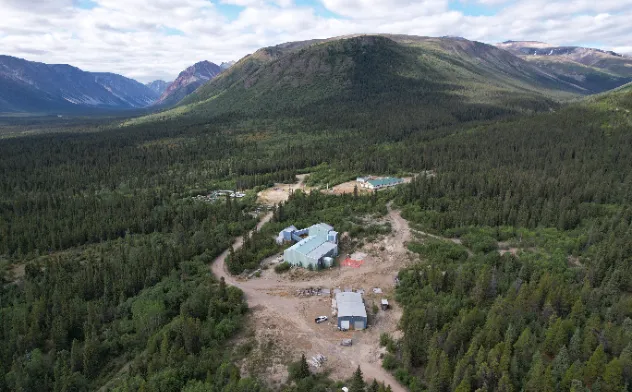
1:59 And in particular, our primary asset is in a very exciting jurisdiction of Canada, is in the Yukon. The Yukon is really hot right now. There's a lot of activity happening. And for us, for Blue Jay, you know, the stellar project is what you see in this image here. It's a site of form of production. There's a processing plant right in the middle. There's a 50 person camp, technical services workshop, 120 kilometres a core. Important to us, it's a brownfields area that you can drive to from Whitehorse in a bit over an hour. So logistically, really, really, really well positioned. And we're very excited about getting there and exploring this year. So I'll get on to the next few slides. Being a new company, picking up the Stellar project in September last year, and then getting public only a few days ago. It's really exciting to be able to share with you what we have.
2:52 Now, we've got almost getting up to 1 million ounces of Gold, grading at about 8g. You can see that on Cedar. We posted that in January this year. It's an 8g project. We picked it up and started looking at this project at the end of 2024. It took us a while to do our due diligence, love the geology, got into the process and then worked through. While we like the geology, it's a very large land package. And we saw, even though there's 120 kilometres of drill core historically completed, you know, we saw ultimately the opportunity of those explorers in the past not having the sort of 50,000 foot viewpoint of being able to contextualize everything that's been done and also elevate former exploration with modern technology.
3:38 So we're very excited to be able to work on this very large land package, 170 square kilometers. You know, that's 2 times the footprint of Zurich or Manhattan or 10 times the footprint of downtown Toronto. So you can see the workroom that we actually have to look to find more resources and discover new systems. So very excited there. Targeted exploration program up to 16,000 metres. Obviously 1 drill is already underway, another drill is coming on there. Mobilising to this height very soon. So very, very key for exploration. Integrating new modern technology. Geophysics, downhole geophysics in terms of looking at core, so some very interesting things happening there.
4:25 Underscored by ease of access to site, you can drive there, and that's a fantastic asset around brownfields areas. You've got a form of processing plant right there, 50 person camp, technical service and workshop. So we really like the opportunity to use that as a template for more effective exploration. This is a great image. This is the first gold bar that came out of the project in 1986. So this was a producing site in the 80s. So it produced from 1986 to 1988. But you know, I love Gold. We've got around about almost 900 of those equivalent in the ground. So we're looking pretty good and looking to expand on the existing resource base. Very tight share structure. So we completed a capital raise not too long ago, about $14.7M. Tight share structure, about 14.5M shares.
5:13 Outstanding. And that gives us a really solid shareholder base. 1 third institutional base, 50% high net worth individuals, importantly a large proportion of those come out of Europe and they like safe jurisdiction assets in gold. And we look to grow that resource base over time. So very strong shareholder base, which we'll look to capitalize on going forward. We're in the Yukon, obviously part of Western Canada, Northwest Canada. Many of the names that you'll see and have seen in the news over time, certainly up in the middle of the Yukon, up here, you know, Heckler's in operation up here around Keno City. You know, we are south of Whitehorse, the capital city, drive there by highway and a public road straight to site. So we're a little bit different in terms of relative access to infrastructure and proximity to a community.
6:10 So we think that really gives us some differentiation in terms of operability and execution on exploration. Value propositions in terms of how do we look at relative to similar nature of companies in safe jurisdictions. They've got great infrastructure, a resource base, maybe a PEA. We've been working in the background over the last 18 months cobbling together our resource package. In that interim, commodity price and sentiment has really given our peers an opportunity to be able to communicate that message to the market and elevate the relative valuation to the assets that they have. We are comparatively lower value in terms of per ounce, so we think there's an opportunity to re-rate coming out of the gate just on communicating a new story to a global audience, in particular focusing on North American markets, European and Asia.
7:07 This is a story that sort of resonates well. I was a mining analyst for 17 years based in Canada, looking at projects and producing assets on 6 continents and certainly relative value in communicating these assets to a market is a really good opportunity. So we think we can do that now. But also we think there's another dimension to our story in terms of re-rate and that in terms of outcomes for exploration. So we are targeting exploration growth in terms of looking for extensions to known mineralisation, but also testing new targets, which we've already defined since owning the property. We are UConn's highest grade gold project, and we think we can expand.
7:55 So lots of really good momentum, we think, in terms of drill bit-led momentum in terms of resource growth potential. As an analyst background, I look at how this is contextualised in terms of the Canadian sort of goldscape, so to speak. And we've got a graph here that looks at resource size, so number of million ounces on the X axis and the Y axis, we're looking at grade cut off of 3g. Now, we sit up very well in terms of where we sit in terms of the profile of Canadian assets within this purview. I'd say ultimately, if we take a line here and go to the right, most of those are already in production today based on prices that were materially lower, commodity prices are materially lower than what we see today. So we think, well, we could put out a PEA now on what we have, given the resource base.
8:46 We think we have the opportunity to let exploration add value through the drill bit, to look for expanding the resource over the next couple of years. So give us 2 years, look for expansion of that resource and then we'll look to table sort of a framework economic study. But we're really well positioned relative to peer groups here. As a mining analyst, we contextualise cycles for the mining industry and with commodity price sentiment waves. And the last 18 months have been fantastic for producers who have ridden really well in terms of equity price performance. Free cash growth, free cash flow growth quarter on quarter due to commodity price appreciation over time.
9:33 I think the next 2 years for me will be a rotation in that in terms of the natural evolution that typically is, you start to consolidate assets to the greater good of existing mid or large scale producers, or you get consolidation of safe jurisdiction asset companies to look to grow their asset base and grow in the future. So we see a great opportunity of further consolidation downstream from the producing assets we see today. So we like what we see in terms of the projection of the next couple of years for consolidation in this space. Now moving to the Yukon, fantastically positioned, and I would say we are the hidden corner of the Western Seaboard of North America. In that sense, you know, if you know the Yukon, you don't necessarily think of the Yukon in terms of access to infrastructure, Western Seaboard. For us, we are, you know, surprisingly, you know, armed well with infrastructure.
10:31 Whitehorse is just an hour's drive away, that's the capital, get there by highway, public road into site, there's a 170 kilometre footprint here. Just off to the east you have the railhead at Carcross which you can drive directly there, It's around about 40 minutes drive. And then that active railhead goes straight to you know deep sea port at Skagway and that's active all the time and so you can get to either Skagway which is the port, all terminal looking to be upgraded there, So you can get there by rail or by road and highway. So I was there, I actually drove that whole circuit there and back, you know, in November last year. So very exciting to actually have, you know, port power just crosses just shy of the project here, port power people, road and rail, all together. And that's important in terms of execution, execution risk potential.
11:23 If something happens to your rig, you need a part, you go drive into town and then you're back. It's that much easier than if you're doing grassroots elsewhere. So in terms of, I see us as the custodian of future production and the assets that we have. So if you're looking at ultimately where to position or where to acquire an asset, Many big features that come into that are, you know, where's your human resource capital coming from? And we are ideally positioned in terms of potentially having a future production centre where the workforce can be residential, it can be based in the population. And that is transcendental to most projects out there. It's going to be important and more important going forward to have workforces based in communities and I think ultimately we've positioned really well there in terms of access to infrastructure but also community-based future workforces.
12:19 Moving on to the project, you know, you come into the project from the Northeast, they're fantastically positioned, you know, they camp and plant, or a 50 person camp plant out there. We see 4 main zones stylized by different styles of mineralization. Pretty large systems. Cytoformal productions, high-grade gold here at Mount Skookum. You've got high-grade intermediate gold, silver mineralized corridor right here. It's part of a 15km shear zone that travels all the way through here, and that's at Scouton Creek. You've got Gold and Tinamony systems out here on the eastern part. And on the western part, you've got another untested sort of 5km of vein corridor, multiple veins, individual veins are up to 1.7km.
13:07 They're not tested. So when we bought the project in September last year, we immediately in October groomed 40km of roads and put drill pads in ready for this year. So we're ready and raring, obviously drilling right now. We see this thematic of many systems fitting into one. This is truly a district scale system in terms of having the potential for different mineral deposits. And This is what the predecessors didn't have the opportunity to do. They were focused very much on what they were looking at on the surface. When I come to that, I'll do a little bit more. The opportunity here now is, and this is an image of a pseudo-color image of total magnetic intensity. This is the first time this has been, you know, done on the area and corrected for topography. And we've been able then ultimately to bring in a two-dimensional exploration history into 3 dimensions.
14:01 So that provides us an opportunity to not only look at the structures and see how things sort of join under cover, but also start to do you know the prime sort of geophysical work. You look at inversion anomalies and start to bring together a geological picture. And it's all sort of bringing together quite nicely in terms of a holistic viewpoint of a magmatic epithermal system, which in different parts will express differently based on geological controls and mineralisation, thermodynamics, that sort of thing. So there's a really interesting new point of exploration that we can thematically put together over time over the next several years. It's looking very exciting. And we can combine that generative exploration with the incremental sort of step out exploration work that you can actually do on the existing resources. So you can combine the 2 components into one. So we're very excited on the ability to look at the system completely with new eyes, with new information and elevate former attempts. And that's really important when you've already got 120 kilometres of drill core, you can elevate that former exploration into modern viewpoint and modern eyes. So it's very exciting to get there and get out there, start drilling and resource expansion.
15:23 That being said, everything has to be underpinned, you know, ultimately by geological providence and grade. And, you know, these are examples of grade intervals at Skookum Creek, which is, you know, we're drilling the Skookum Creek structural corridor right now, certainly starting with RACA. High grades, we see these intersections actually open, so we'll be testing those. And we see part of this continuity is that we see Skookum Creek and RACA forming part of the same structural zone. So we want to understand how they join together and haven't really been tested in a structural sense at all in that 40-year history. So that's where we're bringing in Structurally Oriented Core, which brings
16:05 spectral data sort of analysis of core. It just really revitalizes a huge dataset. 120 kilometers of core, if we're drilling that today, for instance, that would take ages to do. So we save time. That's probably north of US$40M-US$50M. So that's a lot of inherent value that you can leverage going forward. So it's very exciting. When we take a look at that in 3 dimensions, you can see the Skookum Creek resource here. There is underground development already there, never put into production here. You can see grade distribution. All the Gold are above 5g Gold and the resource is at a 3g cutoff. You can see the systems that we're looking at. We see the system completely open, and this is to the north.
16:51 Completely open we'll be testing to the depth and grade. We can see extensions actually going along, extending out to the south. And this is all within, so this is, this image looks as though about 1.2 kilometre image. This sits within a 15 kilometre shear zone, which has outcropping mineralisation. But no one's been able to actually look at the continuity of structures at depth. So this is sort of transcendental for just exploration of one of the 4 corridors that we see. So very exciting. And this little outlier over
17:22 here, this is racket. This is this extreme sort of silver gold system. And so it sits there, no work's been done to see how it ties in. You can actually see that interpreted sort of part of the same structural corridor. So we're just incrementally joining the continuity, bringing it out. And you know, it's very exciting. And this is just one of the multiple zones that we're looking at. So looking for a nice resource expansion, looking for generative new targets and employing new technologies to elevate that exploration success. That's very, very exciting. How do we picture that within a 16,000, up to 16,000 metre drill program? You know, effectively you've got to balance, you know, feeding tomorrow's sort of resource growth with a lower risk up to 16,000m drill program. Effectively, you've got to balance feeding tomorrow's resource growth with lower risk extension drilling. So 70% of exploration goes in towards expanding on existing resources or resource areas.
18:18 So fantastic there. So focus on Schuylkill Creek, also come back in and form a production to look at extensions there. There's some outliers that look very interesting to target on these zones. Plus we'll add in 30% of expenditure to test,
18:34 under test or never tested targets before to elevate those areas and see whether we can find new resources around those areas. So we've got multi-pronged approach in terms of resource expansion, resource discovery, and then you've got that whole sort of tertiary component. And this is doing more work on tertiary targets that look very promising to elevate for future exploration drilling, 2027 and beyond. So having that exploration funnel is very important in terms of being able to progressively look at exploration and new discovery potential over time. Given that you've got 170 square kilometres of ground, you're assessing it with new technology, it's going to take some time. And this is exactly the sort of the framework that intermediate producers, senior producers love to have. You start production around a kernel of resource. You have a life of mine, an operation.
19:32 And over that life of mine, you employ exploration over time to understand the system more and that intellectual property compounds over time and with that quite often they find more resources. I would say over the last history there, you know, I would say at least 50% of resources, say gold or copper, are replaced through exploration around existing production than generative exploration. So you've got a really
20:00 good sort of mindset here. Systems work and they're mineralised, try to understand them better. And this is a sense that, so we have resource expansion, we have a runway, many many years of runway to explore a system that's expansive to find more. So this has never been done here and we're very excited to be able to come in, leverage off the old data sets, use the infrastructure to explore for less and have ease of access because you can drive directly there. So it's very exciting times. This management team, I won't go into me anymore. I was a geologist once, moved over to the analyst side when I jumped from Australia to Canada about 20 years ago. 17 years of that was effectively on the capital markets, equity side as an analyst, looking at projects.
20:47 Rob Scott, a lot of history in the industry, CFO of Great Bear Resources, CFO of Capitan Silver, so very successful background, sage advice. Freeman's out there right now, exploring, leading the drill bit. So just getting out there, doing the work and a very good board. Scott Hicks from Lumina Group sold to 3 companies effectively over the last couple of years. Lumina X, Lumina Resources, merged strategic resources into resources, you know, merge sort of strategic resources into a new company. So, very exciting. We've got John Mark Stoud, obviously, you know, very, very smart, long term pragmatist in exploration. And we've got Colin Healy on the board as well in terms of also runs a company, but also very good financially, but really good sage advice in terms of how to communicate your message into a market. And that's important in terms of it's great to be able to have a catalyst rich year that we have here.
21:52 Lots of drilling coming out and we expect in this framework year, it'll phase up in subsequent years as we get to know the systems better. Go beyond step out drilling on the existing resource targets, phase it up, but communicate a new market message, a new story to a global audience. So that's important in terms of being able to capture interest in Canada, the US, across Europe and Asia. So that's certainly a big component for us. It's important to be able to
22:22 communicate to potential investors on a story that is high-grade Gold in the safe jurisdiction with infrastructure. And you just don't get that very often. So very interesting. Lots of catalysts integrating and elevating former exploration attempts with modern technology and integration of technology. And then that will furnish a whole range of catalyst, usually sort of drill oriented results throughout the rest of the year into probably early next year. So very well positioned with about $14M in cash. We're really well positioned to go all the way through this year, but well into next year in terms of balance sheet and execute on these components. So very exciting times. We're at a perfect time, I think, in terms of gold prices going really well.
23:09 North of $4,000 is a great price for gold. We've seen contextually a lot of really great sentiment for the Yukon.
23:17 And we have a project that has a lot of outstanding sort of merit around it in terms of high-grade resource infrastructure and opportunity to expand. So with that, I'll wrap it up and we can go into question time. Awesome. I really appreciate that, Gerardy. I do have some questions for you, if you don't mind. I know some are already coming in the chat. Please feel free to write in more if you'd like. Also for the folks in the room, especially those who came in a bit late. I know they were a chunk here. Please do use that request meeting button at the bottom of the screen if you'd like to meet with the BlueJ team afterwards. But first thing I got for you, Jordi, as you mentioned, you spent 17 years as a mining analyst looking at what, hundreds of projects from the outside. So I think the obvious question is, what was it about Stellar that made you cross over and run the company?
24:07 You know, it was 30 years in the industry and then obviously a lot of time in mining analyst. So a lot of opportunity ultimately to create a vehicle for
24:26 the elevation of historical temps on exploration. There's so much potential around brownfields areas. The Earth's crust is working for you. True modern technology, the ability to be able to accumulate former exploration with a different vantage point. When you're sort of at the drill pit, drill bit historically you're drilling quickly. If you're able to accumulate the data, then you're able to take a different mindset. So for us, the interesting thing there was to be able to create a vehicle to be in brownfields areas with grade, scale, and the ability to be able to come back in and leverage off infrastructure capacity, but also in terms of the available data that you have there with the drill core, bring in new interpretations. You know, the course of 40 years, geological sort of knowledge is sort of advanced, but so is technology. So we're kind of dovetailing all these very interesting things into a company that features something in a low risk jurisdiction, with high grades and the commodity that everyone understands.
25:29 I like that. That's a good answer. Now going back to past production, because Stellar poured gold back in 86, as you said. When you and the team are walking that site today, what do you reckon you guys can see that operators of that era couldn't possibly have seen because of lack of tech or whatever it might be? Oh, there's so many things. You know, They're very focused where they were. And back then,
25:53 it wasn't a package that you see today. It was only consolidated today in a viewpoint like 20 years ago. So back then, it was fragmented ownership, a partial sort of exploration and very focused and two-dimensional exploration around what they were doing immediately. The opportunity when you come back in with time and you're able to sort of bring in data sets across you know something that's 170 square kilometer footprint, you're able to contextualize things differently. So sometimes when you're looking at a geological system so closely, you don't get to see it all connects, in terms of particularly structural architecture. But also then our understanding of magmatic epithermal systems has radically sort of changed over that time. So we're able to see how different geological systems in that type of environment are expressed differently based on, you know, what part they're in.
26:46 So we have the opportunity to come back in and basically take that 50,000 foot view, but then also use their work to leverage off elsewhere. So it's actually very exciting to
26:57 be able to take that. That saves you a lot of time and money, but also gives you that capacity to put that larger mosaic together, right? Sure. One thing I wanted to sneak into, I saw on the deck you got over 120 kilometers of historical core sitting at the project, which to me is an Indiana Jones kind of experience. What's it like inheriting that data library, and what have you guys found in it so far? Well, it is a very rich library, and it is something that over time will just expand our knowledge of the system. It's a great opportunity. From what I've seen globally, you look at projects that have a lot of core, and quite often you get variability in, you know, review, etc., in terms of geology. But we have a great opportunity to take that knowledge base and then apply something that's more consistent.
27:50 And it's almost coincidental, we'll call it, in terms of this development of new technologies in terms of how to log cork, log coal quickly and cheaply, to give us a whole range of new data that are consistent. And this new spectral data is fantastic and it's cheaper than you could do. You can't do that by human. So we get the opportunity to then bring in an understanding that is consistent across the different styles of mineralization. Then we can employ that into a more generic model to understand these deposits and mineralized areas. So that's very important. So we can come back in and look at the historical core with new eyes. You don't often get that opportunity
28:40 to be able to take a system and then pragmatically review it. So that's Mount Skookum is 1 system and Skookum Creek is a different system and Goodell is a different system and Becker is a different system. But they're all related. They're formed basically at the same time, the same structure. So what a great, great time to be able to do that and do it all consistently. That's exciting. 1 phrase I wanted to get under, you described this as a district rather than a deposit. I know investors hear that relatively often. I certainly do. What does district scale actually look like on the ground at Stellar, do you?
29:15 Yeah, that's an interesting question. Where do you define the bounds? So maybe the best way to define that is, you know, a district is something that has the capacity to develop more than sort of 1 mineralised system. And that is exactly what we have, right? In terms of Skookum Creek itself is a high grade gold silver polymetallic system, intermediate sulfidation system within a kind of 15 plus kilometer shear zone, dual shear zones. Mount Skookum with a site of former production was a low sulfidation epithermal system. You can look at Wahi in New Zealand for a similar analog. That went back into production I think in 1990 or something, and then it's still in production today because they found more because they're just working consistently over that entire region.
30:05 And then you've got your antinomony systems way out east, which are all part of the same, formed in the same geological environment. So these are all different areas with subtly different expressions of mineralization.
30:18 That's a district. Great. I love that answer. It actually makes a lot of sense. We will get to the antimony soon because I do have a question on that. But first, I wanted to get into today's news. I was going to ask, Where does the drill bit go first this summer at Skookum Creek? But this morning's news answered it. First holes are going into the Raqqa zone. We're past drilling, hit over 500g per tonne Silver outside the current resource. My question to you is, what would success at Raqqa mean for how investors should think about the size of Skookum Creek? Well, yeah, we really like the whole sort of Skookum Creek structural sort of corridor that we see, the current interpretation is all these things so basically link up in structure. Our view of now integrating structurally oriented core into the dynamic and it was never done before. So geologists who are on the audience will understand that in terms of now we're able to be and gather data where we can be more predictive for future exploration. So if you don't try to gather your structural data so you can be far more targeted in future exploration. In terms
31:20 of what success is, you know, Racket sits a few hundred metres to the North of Skookum Creek, the defined resource. So there's opportunities not only to find that high-grade Silver-Gold system more, but also then look for structural sort of links and understanding into relationships with Skookum Creek to sort of broaden out the zone. So we see that opportunity is kind of twofold in terms of increasing our understanding of high grade silver gold mineralization, but also understanding what the structural continuity of the 2 could be. I appreciate that. Now, one thing I wanted to note and ask questions is you are mobilizing a second rig before the first one's reported results. Obviously, fortune favors the bold, but what does that tell us about your confidence in the target pipeline at Stellar? We've got an impressive pipeline across 5 or 6 different target areas.
32:13 So bringing the second drill rig into place just comes into place and starts sort of fleshing out that kind of up to 16,000m program. So they define targets since acquiring the asset. We've done a lot of work to look at the geology to find targets for this year's exploration. So we're very excited about getting the drill bit to work in terms of coupling that in terms of resource expansion potential, defining continuity between zones that at the moment are defined as disparate areas, but also then testing new areas. Great. I appreciate that. Now, I said I would get back to the Antimony and I am. It keeps showing up in the story almost quietly at Becker Cochran and elsewhere. How real, because obviously defense metals is a sexy story right now. How real is that opportunity for Blue Jay, do you think? Well, it's very interesting. I mean, the Gold production was in the 80s, so 86-88.
33:04 In the 60s, this whole region lit up on antinomony exploration. It is consistent with how you would see the geology of the system. Antinomony is usually a distal component of a magnetic hyperthermal system, lower temperature part of that. And what they did ultimately was there was a defined reserve on that system. It's not compliant at all. You'd have to go back and do everything from scratch to get an O43-101 compliance on that. But they did maybe up to 500 metres of underground development at it. They took out 15 tonnes of material for metallurgical work. So they did some serious work in terms of comminution and flotation work. They produced antinomony or stibnite concentrates. So that looks like a lot of rigor went into former Antoninoni sort of oriented future world production, right? So, it's a very interesting dynamic as being sort of a distal expression of our larger system, but something in which was, you know, developed some pretty interesting outputs in terms of grade distribution, continuity and continuity potential to depth.
34:12 So we'll come back in and look at that, simply because I like it because it's its own self-standing thing. Sure. And that just adds to the underlying sort of primary focus, which is on expansion of the precious metals resources. Great. Very interesting. Yeah. Yeah, no, it's neat. I want to zoom out and talk about the jurisdiction for a second, because I know Yukon did go through years ago now, but a rough patch in market sentiment. You said timing really matters here. What do you think, I've heard other speakers speak on it, but I'm curious for your perspective of What's changed in the territory that makes you confident the rotation is real? That's a multifaceted answer. I think ultimately the reality that has come through from certainly the last 18 months is the undeniable prospectivity of the Yukon.
35:07 And that's been led by obviously Snyder landed great a few years ago, but new discoveries have just come out and just shown that prospectors have done great. Whitehorse has sort of, sorry, Gladiator is just opening stuff up around Whitehorse itself. Selkirk is expanding on the Copper at that system. Banyan and Sitka, I think it's very interesting timing that the geological potential is just coming to a fore and potentially that's now a critical mass of activity for future production potential. With that, I think for Wate Metals, probably the next new Gold producer in the play buying Colfey-Ott-Newmont last year.
35:57 But I think you've got this geological sort of, you always had this geological potential, but last year was outstanding in terms of bringing that out from the drill bit. And this year is going to be huge in terms of looking at how the outcomes are going to be from heightened, even heightened exploration programs across the board. So that's kind of come together with elevated commodity prices. Gold, Silver, Copper. You also have a change in sort of investor sentiment with that. You know, after Eagle, the market needed a bit of time to see what was happening. And Eagle is obviously moving forward with the potential sort of bidder coming in there. So there's a whole range of things that work together concurrently to highlight first, it has to be led by geology. If you don't have the natural resources, it doesn't matter.
36:53 But the whole confluence, there's geology, there's the economic imperative that relates to commodity price, but also there's that time, okay, we can see something's happening in the Yukon and they want investment for mining. So it's just worked out perfectly well right now in terms of all of those factors coming into play. I appreciate it. It seems like It's kind of stars aligned for Yukon, so it's nice to see. 1 chart I want to talk about from your deck, and I'll then push that into the future for a second. So I saw that $19 per ounce next to that $151 per year average. My question is a year from now, so if we're doing the same event in a year, in 27, what do you want to be able to say happened at Stellar? What would make this the year for Stellar? So this is back to sort of the answer in terms of the UConn a little bit.
37:43 For a year for Stellar, We've had some success in terms of proving resource expansion in terms of long structures. 1, that's nice to have. Elevated understanding in terms of structural targeting and geology. That's in terms of, if you're not improving your geological knowledge as you go along, what are you doing? You should be doing that. That's that cumulative IP sort of advantage that you have when you be in an area. So 3, you're developing a pipeline of other targets are coming in to add other value outside that. So there's a multifaceted component to that outcome. And in terms of relative to the EV per ounce thing, that sorts itself out over time with news, but also communication. Awesome. I appreciate that. I'm going to get into the questions that came in over email and in chat. But just a reminder to the folks in the room, you can ask questions in chat and you can also request a meeting using that request meeting button. One person wrote in over email, how many different target areas have you so far developed from how much past investment?
38:43 That's an interesting question. I'd like to, I mean, we've got about 5 or 6 different sort of targets that we'll drill this year. And, you know, I vary between that depending on the relative rate of drilling, et cetera, on targets that we have earlier on in the pipeline. There are certainly far more targets out there that we can drill this year. And we're being pragmatic and we'll likely take the phased approach in terms of phasing larger and larger programs going forward. That's pragmatic because you want to be able to understand how to work in an area, but also not run too fast ahead of understanding the geology, but be more predictive in terms of geology. That's 1 facet. In terms of cost-wise, I would like to put them in current dollars if you had to execute them today. And if you had to do that today, I think I said that before, you know, if you're looking at $40-$50 million for that type of program to do, let alone the amount of time that you have to be able to do that in.
39:44 And so We get the time advantage, we get the core, and then we're able to leverage the core. That's already been done with new technology. So there are multiple components to that. That's that component. Plus, we ultimately had the developed infrastructure around historic production. So you have the processing plant that's there, you have the access into site that's there, you have the 50 person camp that's there, your technical services workshop that's there. So you've got so many other things that are there. You've got roads. So all of those things all sort of compound together as other assets into the fray. Great, I appreciate that. 2 quick questions from the same person, came in over email, just quick financial questions.
40:29 How much cash do you have in the bank right now? Probably around about $14 million now. We just completed a raise there of $14.7 million a little while ago. And yeah, so that's a good cash position. Great, thanks. And only if you have the napkin math available, but they want to know what the cost per metre is for the drill program this summer. Yeah, I think you were looking at somewhere in the order of about $400. Great, cheers, thank you. One question from the comment in the chat here from James, wants to know if there's any red flags with local communities. There's 1 local sort of First Nations community, that's Carcross Tagish. We interact with our First Nations stakeholders a lot. They have to have their settlement land self-governing, and we want to be part of sort of community awareness, sort of involved in terms of engagement, in terms of activities.
41:22 So that looks very constructive right now. And obviously, our broader communities out there into Whitehorse, et cetera, and business relationships between First Nations groups and elsewhere. Great. I appreciate that. Next question is a classic crystal ball gazer. I'll throw it to you. I answer, obviously, only to the best of your ability. T from the chat wants to know, who are natural buyers for BlueJ, if you're able to share? Look, I think, ultimately, that viewpoint in terms of, we'll take the viewpoint, look, give us a couple of years to double the resource base kind of thing. And as put the analyst hat on, again, the viewpoint of that is, we could do a PEA now, and we could couple together a 7 to 10 year mine life, and you get your production rate that's probably similar to a range of peers on that histogram on the left hand side of those.
42:09 So that's something. When you put your analyst hat on, what I've seen successful in terms of reaching the biggest audience with potential future acquirers, having something like a north of 100,000oz a year of production kind of works pretty well for a 7 to 10 year mine life. So when you have that scenario, then you have sort of potential acquirers looking at you, probably from the intermediates down. But having groups are going to be more constrained going forward in terms of assets that are available in tier 1 jurisdictions with grade that have kind of line sites or near term production. If you've already got the infrastructure, you've already got underground development, there are a bunch of hurdles there that have been at least reduced for you to go. So I think Ultimately, as I said before, and this is expanding on the question, thanks for your patience. The last year and a half have been great for producers and drill bits are starting to get paid. We saw consolidation in Ore and Equinox recently. We saw Agnico consolidate areas up in Finland. We saw Australian consolidation with Regis, etc. Come into play.
43:22 I think the next 2 years will be that consolidation phase of the advanced explorers' development, particularly focused in tier 1 jurisdictions, either coming into the greater good of producers who are looking for that extra shot in the arm in terms of future production or in terms of amalgamation of like companies. So you can show your resource growth, put 1 into production and get another one to come into production after that. So I think you'll start to see that for 2 reasons. Certainly for the producers, the non-producers. If you have amalgamation, what we've seen over the last little bit, the funds that are out there are predominantly still in producers, still in senior producers. Look at their top 10 holdings, pretty much the same top 10 holdings. And that was a pragmatic thing because the market didn't have the capitalization to be able to absorb investment and liquidity.
44:12 You're going to have to start to consolidate in the smaller part of the sector to get that liquidity up. So it's very exciting times, I think, in natural evolution over the next couple of years. I love that. This is why I like talking to former analysts, to get interesting answers to questions like that. So I appreciate it. Last question from Michael in the chat. Is the mineralization in Raqqa included in the most recent resource estimate? No, no, that's outside. So it could be interesting to see how that sort of comes in over time. Yeah, awesome. I'll give everybody a chance to ask one last question while I ask you, Drury, what you're most excited about for the rest of this year? What piece of news or what action on the ground are you most excited to see? See the drill core come out of the ground is always very exciting. And I love to see what we can get out of, looking over this core, historical core as well with the new spectral data. So just putting the big system together, see the outcomes from exploration, and how we can put the whole thesis together.
45:06 So that's certainly led by the drill bit. Awesome. Well, Jordi, thank you so much. I appreciate going through the presentation. Also let me grill you there for a bit on the details. Thanks, everybody who joined. I really appreciate your time. I know there are quite a few in the room today, so I really appreciate everybody's hour. I hope you have a great end to your Thursday. And if you have any additional questions, please send them through. I'll make sure the BlueJ team gets them. Great to learn more about the company.