Transcript
Automated transcript · Written by software from the replay's audio. It can mishear names and figures; the replay is the record.
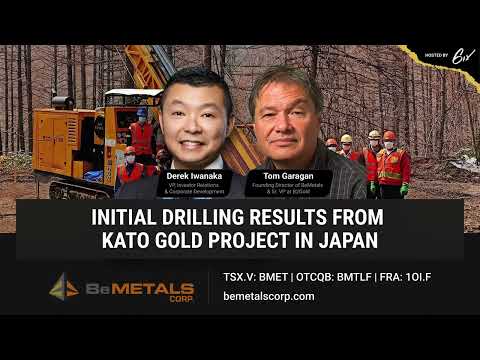
0:08 Hello everyone and welcome to B Metals Live Investment Summit today hosted by 6. I'm pleased to introduce our speakers for today, Derek Iwanaka, Vice President of Investor Relations and Corporate Development at B Metals, as well as Tom Garrigan, Director and B2 Gold's Senior Vice President of Exploration. Derek and Tom are going to walk us through our company presentation and after we'll be accepting some questions during our live Q&A. I'd like to remind everyone in the audience that you can ask questions using the Q&A tab found on the right hand side of your screen at any time and as always this event is being recorded. It will be available to watch in the coming days on SIX.com.
0:40 With that though Derek I'd like to hand things over to you, get us started. Okay thanks Cam and thanks to 6 for hosting today's webcast. Really the crux of today's webinar is going to focus on the drill results that just were released yesterday. I don't know if everybody's had a chance to actually take a look at the results and digest it, but we have an expert on the line who is going to be able to run through some of those results. But I'll just give a little recap on what we're doing here at B-Metals, a little background on the project itself, and then Tom will be coming in as our director and technical geologist that's going to help us run through the actual drill results and give some context as to why we think this is important.
1:30 Obviously this is still early, This is just our first drill hole with B Metals, however, it has been drilled in the past, and so we are quite excited by this good start to the program. We will be making some forward-looking statements, so this is just a little disclaimer in case we say anything that will have some forward-looking statements. So we are active in 3 jurisdictions. We started off in Zambia there in the middle, That's copper exploration, which is at our Pangei Copper Project. We also have the South Mountain Project, which is primarily zinc, but it's a polymetallic deposit that's in Idaho. And then most recently we got into Japan. So We have the Kazan Gold Project, which is in Japan.
2:19 Really it's actually a portfolio project. We call it the Kazan Project, but it's actually a portfolio of 5 prospective projects. 2 of those are in Kyushu and 3 of them are in the northern island of Hokkaido. So we have Konamai, Kato, Todoroki in Hokkaido and then down to the south we have Toshiro and Hokusatsu. Hokusatsu is actually right next to the world-famous Hishikari gold mine as some of you might know or some of you may not know, it is one of the highest grade operating gold mines in the world right now. It is an epithermal type of deposit. It's already produced over 8 million ounces of gold and the average head grade is between 30 and 40 grams per ton.
3:10 The last time I looked, I think the average worldwide production right now is around 1 gram per tonne. So if you put that in context, it's 30 to 40 times higher than what is primarily being mined today, or that's the average grade today. So it's a very high grade gold mine. And that is one of the main draws to why B-Metals and others have joined into Japan to search for the next Hishikari. Focusing on just Hokkaido and the Kato project, since that's what we're going to focus on today. For those who don't know, Hokkaido actually hosts a lot of gold deposits, and many of those are in what's called the Monobetsu Kamishihiro Grabbing. So that's this area here in the red ellipse.
4:03 Our project, the Kato, is kind of on the southern part of that. It was flagged by the Japanese government and was drilled actually in the 1990s. They actually had some very good success. It was called MMHA, which is a Japanese state agency, which is now referred to as JOGMEC, which some of you might be familiar with, because they're partners with us on our Pangani property. But during that time, they had some very good drill intersections including these ones right below which is hole 5MAHB-2,
4:43 17.5 meters of 8.15 grams per ton and the next hole was 18.65 meters of 5.01 grams per ton. So really good grades and decent widths for intersections. Of course that interests people and especially Tom And thankfully Tom is on the line with us today. He's with B2 Gold, but he was also part of the reason why B2 and Kazan got into Japan. And particularly this project was of interest because of those high-grade results that Iwamu and Jay had. They were trying to drill it from 2018 to 2020, were able to get into
5:29 some decent intersections but were challenged. There's challenging ground conditions there and was troubled with an underpowered drill rig. So I think that we've remedied that now and hopefully the drilling is gonna go much better with the metals right now. And this is a look at the drill rig that we got late last year. Unfortunately, we got a little delayed with COVID, and it made it a little difficult for us to get drillers into the country, but we have got drillers into the country now. We've brought in an extra crew as well, so that should help with increasing the speed that we can get the drilling done. So earlier this year we commenced a 1,500 meter program that's about 2.2 million Canadian for a budget and that should give us about 4 to 5 holes.
6:25 And initially, we're going to target where MMJ had those high grade results. So it's a high grade quartz vein in a zone of alteration and Tom can speak a little bit more about that zone of alteration and then eventually we will probably step out and test out some of the extensions of the mineralization there. So again we want to talk about today's results. So the initial results just came out yesterday and Tom has gracefully, we're very fortunate to have him join us. So he is the head geologist at B2 Gold. He's also a director with us at B Metals. And he has a lot of experience with epithermal gold systems.
7:12 Probably the most well-known one would be the Kupel deposit, which he was the head of the exploration team that discovered the Kupal deposit, which is in Far East Russia. Also was part of the exploration at Julieta and most recently now at the Masbati gold mine in the Philippines. So he has a lot of experience. If anybody has any questions, especially about epithermal gold systems or about our deposit, he would be the man to ask. So with that, I'm going to leave it to Tom to talk through some of the results.
7:46 Thanks, Derek. And just reiterate what Derek was trying to say. I've been looking at epithermal deposits since the early 1980s when I was involved in a discovery, a small discovery in the Yukon. Anyway, on this project, As you can see with this cross section through Cato, the hole 11,
8:07 the significance of hole 11 is that it's, you know, 1 is the first hole that we as a group have gotten down into the heart of where the mineralization should be below this, what we're calling the steam heated zone, which is very typical of epithermal, especially low-sulfidation epithermal systems. This is quite a clay alteration zone that sits above these deposits, and it can be quite extensive. And those are the reasons for us having drill problems in the past and certainly Hole 11 took a while to get down into the zone. Once you get into the zone below the steam heated zone, then ground conditions improve significantly. And I'll add one more thing about this.
8:45 We had a similar problem at the north end of Krupal, where Krupal was down faulted at the north, and we had quite a bit of trouble with the higher end of the zone, where we had all this highly clay-altered rock in the steam-heated zone. And once we got below it, We had no problems drilling off the rest of the ore body and certainly it's been mined by Kinross. So this hole here, hole 11, you know 11.5 meters is 6.4 grams with a broad sort of stockwork zone, low-grade stockwork zone around it. Textures in this zone are very typical, a very upper part of the epithermal system. Approximately to the steam heated zone and these textures suggest that this thing has still got some room at depth. You know, they tend to have 2 to 400 meters of depth to them.
9:32 And so we're fairly optimistic that this is gonna continue and certainly hole 12, which is just off section here, we're aiming it to go deeper in the zone to start to get an idea of sort of size potential of this mineralization. Next slide, please. And this is a map, the area in purple sort of highlights the main area of drilling and mineralization. But if you look at this, the structure is open for quite a ways towards the south. You know, you look at the scale of 250 meters, so you're looking at about a kilometer long structure. We see a fair bit of center and sort of intense clay alteration as you go further south.
10:18 So I think once we've got this drilling problem handled and it seems like we do, we're gonna continue to follow this mineralization southward underneath the clay alterations on hole 12 is in the middle of the circle here. And it's going down to a depth just below the depth that hole 5 by the Japanese had gotten, which had 17 meters of 8 grams. And if this hole does hit the zone, then it gives us pretty good continuity for at least 250 meters between hole 11 and hole 5. And then we'll continue to work on this as we go further south. With that, I'll pass it on, Derek. OK. And Tom, just remind me, I know Kupal was an exceptional deposit, but ultimately, how big did that get?
11:05 Kupal, when we left it, it had a resource of I believe about 6 million ounces. So I mean that's an exceptional example, but it was also high grade, similar type of geology that you're seeing here. So thanks, Tom. And really, we're going to have a brief webcast here. So I just wanted to recap share ownership. So as you know, B2 Gold is a large shareholder owning about 20% of our stock as do the Insiders, Tom being one of those large shareholders, myself and the rest of the management and our directors are significant shareholders, we all have skin in the game. We have brought in some institutions since we got into Japan and we at this point are just near our 52-week low, which is almost the same price as where we were at during the pandemic in 2020.
12:04 So, you know, as a forward looking statement, it's probably a good price to be looking at getting in right now into the stock. And share structure is still good. Our cash position at the end of last quarter was 5.3 million so we have enough cash to get through the drilling. We will have to top up at some point later this year but we have enough cash right now to get us through our program.
12:29 And currently market cap, I can't believe it, but we're at 25.7 million dollars so good time to be looking at the stock. And just as a value proposition if you're thinking about B metals I mean I've gone through this before so has John but we truly do have one of the best teams out there, top mine finders, builders and operators. A lot of those people, Tom included, are with B2Gold, and we have access to capital. We've already raised $25 million and we do have B2 Gold as a strategic investor. We still have access to deal flow and we haven't been able to do any deals just partially because the markets have gotten tougher but also just because our share price isn't as high So it's a little bit more difficult to do deals, but we have lots of deal flow.
13:19 We are still looking for an advanced stage goal project.
13:24 And just going for the rest of the year, we have ongoing exploration at the Kato project. As I said, we have the cash to do that and we'll have more results coming out later this year. And then we're working, actually we're drilling as we speak also in Zambia right now, doing air core drilling and we'll have some results out probably later this second half of this year, possibly early next year. And then we're also going to do some geophysics at our South Mountain project in Idaho and then resume our surface drilling program. So lots of potential catalysts for the rest of the year and if anybody has any questions I think we will wrap it up there and unless Cam has any other comments.
14:14 Thanks a lot Derek. I'd like to remind everyone in the audience that you can ask any question you like using the Q&A tab found on the right-hand side of your screen. To start, Derek, we've already gotten some questions. First and foremost, what's your exploration budget for drilling at Cato this year?
14:29 This year we're looking at $2 million US, so it's, depending on the exchange rates, about 2.2, 2.3 million Canadian for this year. So that gives us probably, I think it's going to get us 5 holes for now. Great. All right. And is there any other expectations that you have for additional results coming from Cato as well? That's just a follow-up question. Yeah, so I mean yesterday was just our first result.
15:01 It did take some time, as Tom mentioned, it was a little bit challenging to get things started but I think that the drill crews have a better handle of drilling there. We did some modifications on the drill rig itself so I think that things are running smoother there now. And so we should have results. I don't know exactly when, but I'd hope in about a month's time we should have our next set of results. And then it is pretty difficult to get batches of results out because it takes a fair bit of time. So we'll probably do it 1 hole at a time for the remainder of the year.
15:37 Great. Where else are you exploring this year? So as I said, we're also drilling right now in Zambia. So that's a really interesting copper exploration. You're basically looking for world-class deposits under Kalahari sand along the western extension of the Zambian copper belt. So that's where 1st Quantum Minerals, Barrick is operating, Ivanhoe has their Kukula Kamoa mine which is just actually north of us. So there's massive deposits in that area. We have a really nice property there where we have relatively thin sand cover to penetrate, so it makes the drilling costs easier and just makes it more efficient for us to do our exploration there. So really interesting exploration in Zambia.
16:30 And then we're also going to be doing additional surface drilling. And that's basically, sorry, in Idaho, that's that polymetallic deposit in southwestern Idaho where we really need to prove up probably about a 2 million ton resources where we're looking to get that to and then complete
16:52 a PEA and then a feasibility study after that. That project is further along than the rest of the portfolio, But right now Kato is kind of the main focus for us and Japan has a lot of excitement to come I think. Great thank you for that. A couple other questions. In your opinion what's the greatest challenge that you're facing right now? Greatest challenge? I mean, well, unfortunately, if you look at the stock market right now, that's not a pretty picture. But, you know, we're probably in a fortunate position in that we do have B2 Gold and we have some really firm supporters such as Tom, Clive Johnson, Roger Richet and others that are supporting the stock.
17:41 So I think we're in a good position. As I said, we will have to top up on financing, but I think we hopefully can look at a B2 goal to help with that. So we're probably in a better position than most juniors out there that are struggling to raise cash because I think that we should be able to get some help there. Absolutely. Another question, given some of the difficulties that you've faced, if you were to look back at your acquisition of Kaizen, would you do it again and why? Yeah, absolutely. I mean, we didn't really anticipate that COVID was going to extend our delay for getting into the country but yeah there's no question that we would have done that. I mean yes we still want to do another acquisition for our advanced gold property but you know that it's not very often and probably Tom can add to this, I mean, it's not very often you get exposure to places like Japan that haven't really been touched in the last, well, really since World War II, but has the potential to have deposits like Hishikate.
18:53 So no, I don't think we have any grouts there. Yeah, if I could add to that, those sort of things don't grow on trees around the world and if you get an opportunity to get into a district that hasn't seen exploration for over 50 years. There's certainly no modern exploration and they've already got decent mineralization to start with. I think you do it over again and again and again. Yeah, Fair enough. Last question we have here is a nice little other side of the coin to what was the greatest challenge you're facing. What are you most excited about right now in your opinion. Well for me I mean I'm really excited that we're finally drilling in Japan and that we should have some more news flow coming. It was pretty quiet last year, we didn't have a ton of news flow since we weren't able to drill there, but I think that now that we're drilling and we're drilling in Zambia, so we have 2 simultaneous programs going right now. We should have quite a bit more news flow coming in the next, say, 6 months or so.
19:56 I don't know, I mean, talking to Tom, I think he's probably most excited about the potential at Pangeni. But I guess if you look at B Metals, we're a junior mining company with a market cap of $25 million and we have access to a world-class team, We have access to world-class exploration in Zambia, really high-grade exploration in Japan and then we also have a poly-metallic deposit in Idaho. So it's quite a bit for a small company. Yeah, if I could add to that, I'll just tell a small story. My son, who is now buying stocks, asked me exactly the same question about B metals. What did I like the best? The way I put it to him is that I think Japan is really exciting to get into low-sulfidation systems like that, some of the Ishikari that have not seen any expiration, the chances of finding something there are very good, not just at Cato but some of these other projects we have. We're only doing surface work on them right now. They also have good potential.
21:02 But I said, what I told them is, but for the home run, you got to look at Pangheni. You know, we're picking up Katanga sediments now with copper anomalies underneath the Katanga sediments, they're the host rocks to the most of the Copper Belt rocks. And to be finding them way out under cover in an area that had not seen exploration before, and also finding them with Copper anomalies in several locations, that's exciting. So I don't know if that answers the question from my perspective. Well, it is subjective, so it's great to hear. Listen, gentlemen, those are all the questions that we have for today. I'd like to thank both of you for coming on. I'd also of course like to thank everyone that's not only attended but asked questions.
21:49 Today's video is going to be available as a recording in the coming days like I said on six.com. And today's presentation is also available as a downloadable handout on the right hand side of your screen in the handouts tab. Derek, before we wrap up for the day, I'd like to hand things back to you for some final words. Okay, thanks to everybody for joining us today. It was a quick call. Thanks again to Tom for joining us. I actually literally just brought it up yesterday afternoon and he joined us without a flinch. So thanks again to Tom for joining us today and if anybody has any questions feel free to email me or text me, happy to answer them. You