Transcript
Automated transcript · Written by software from the replay's audio. It can mishear names and figures; the replay is the record.
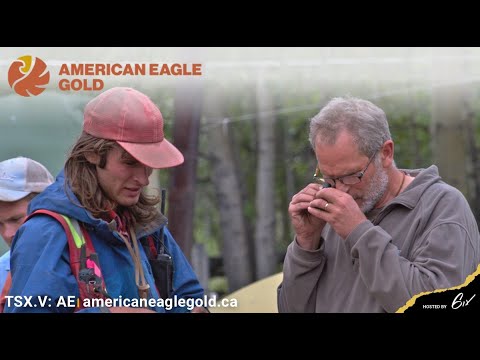
0:08 Good afternoon. My name is Anthony Morrow. I'm the CEO of American Eagle Gold. Thank you for participating in the 6th summit. With me today, this afternoon, we have Charlie Gregg. He's a principal at CJ Gregg and Associates, a geological firm that American Eagle is proud to be working with on its exciting new property called NAC that we acquired in December, that we've been working on ever since, and that we hope to start drilling on in the summer once our permits are approved. So Charlie, I wanted to bring on, because there's not many people that have a better resume career successes than Charlie. He's worked on many, many different projects. Projects have gotten from exploration to production. Projects such as Bruce Jack, Pretium Property.
0:55 He also happened to be part of Canada's most recent, I believe most successful recent acquisition or exploration success, which was GT Gold's Tataga project. They discovered the Saddle North, the Saddle Self deposits. It got acquired last year for over $400M. Charlie helped put that whole project together. I think soup to nuts, Charlie. What was that? 4-years from putting the company together to getting it acquired?
1:25 Yes, roughly. That's 4-5-years. We started in 2016, about this time of year. So If there's someone that knows BC and knows how to find deposits, specifically Copper Gold Porphyry, knows the work that has to be put in, and more specifically knows where to drill and what to look for, it's Charlie. Charlie, why don't you give a quick intro for yourself? Tell us a bit about yourself to the 2 6 and people participating that may know American Eagle Gold, may or may not know you. Yes, thanks. Thanks, Anthony, for the intro. Yeah, I'm from BC, I guess, so I know the province pretty well. Been in the business for about 40 years, went by pretty quickly. I started actually as a soil sampler in business, kind of trying to find my way as a 20 something and got out in the bush and just loved it. So, you know, it's great getting paid to do something you love.
2:27 And then went back to school and got a geology degree and a master's, you know, and worked kind of more in the tectonic side, regional mapping. So I did a lot of geologic mapping and then got back into the mineral exploration side of things thereafter. And then, you know, made geologic maps, you know, all over BC, but in other parts of the world as well. So, a lot of experience doing that, just, you know, mainly working as a contractor, you know, on my own or maybe with an assistant or 2, something like that.
3:04 And after a while, kind of learned that maybe I can do some of this other stuff just about as well as the guys I'm working for. So started doing a bit more exploration, staking claims, vending some, and initially vended some out with the guy who actually is the underlying rights holder on the NAC property, Bernie Kreft. So, he and I were partners for a little while. I won't get into why we split up our partnership. But
3:36 we're still good friends, I guess I would say that. And I respect Bernie. So that's kind of an interesting element in this whole story is that relationship and the respect I have for Bernie's ability to pick up good properties and to hang with them for a long time because Bernie's had the Nye property for quite a while. And then, so basically what I've done over the years, aside from the mapping and making a living that way is, you know, is do what I had to do to stay alive. I was based in Panticton, which is in Southern BC. So it's not really the center of mining exploration in our province or certainly in Canada, but it's a nice place to live.
4:23 And I've managed to eke out a living there. And then eventually started working on some of my own properties and as well as for other companies. And in the process of doing that, kind of got the help get the GT Gold thing going. So I've been around for a long time and know a lot of good people. I think I have a fairly good eye for good young people that helped a lot in this program and bumped into contacts that helped us get going on GT. And when working with good people, you have a way better chance of success. So that's kind of where we're at now. So Charlie, you made 1 mistake when I heard you talking there. You referred to NAC being good. I want to correct you and say I believe it's great. Yeah, well, it's certainly good from what's known already and you know we hope to make it great.
5:18 I mean there's only one way to find out and that's to do some more systematic work and yeah I think it has a very very good chance of being great no doubt about that and it's just a matter of you know getting on the ground doing that systematic prep work that you need to do to sharpen up your targets and then get that drill and start the drill turning and see what comes out of there. But yeah, I think it has a great chance. So to back up a bit and give everyone just some background on Ameripa Eagle Gold and our NAC property. So, Ameripa Eagle Gold went public last year in May. Our company was positioned and focused on our property called Golden Gate. It's in Nevada. It's just south of Barracks, 3 giant properties, Pipeline, Cortez Hills and Gold Rush.
6:05 We're still working on that property. We're waiting for some assays. Our focus predominantly was Nevada, but we have a lot of great geologists on our team, including you, Charlie, who's winning the Bill Dennis Award for PDAC this year. We have 2 other winners of major PDAC awards on our team. And we look at projects all the time. We're focused on Nevada. But as you know, Charlie, you're not going to say no to a great project. And all of our decisions, like any company, I believe decisions should be data-driven. And this property called NAC was shown to us and is located in the middle of BC. And my first instinct was we've got to focus on Nevada. But I have a geologist that works for us and he helped discover Grasberg and did the original mapping for it. And people don't know Grassberg, maybe don't know mining, but it's the most profitable mine in the world. It's owned by Freeport and the Indonesian government.
6:52 It produces over 1 million ounces of Gold a year. And that's a by-product for the mine. It's amazing. And this geologist I know, I call him Dr. Death because I've shown him over 100 projects, mostly for Nevada. He said no to every single project. One reason or another, maybe too expensive to buy, a lot of the reason, the geology just wasn't there. I showed him NACC and NACC, he's been hammering the table. He's been saying, you've got to get this. And I didn't really see it because when I saw NAC, what I saw was a non-compliant resource at surface, around 275Mt of 0.21% Copper equivalent. So I just saw low-grade surface, not economical. And what he said was, Tony, look beyond that, see the forest for the trees. You drink a cappuccino, you're going to taste a bit of the coffee on the top, but what you want to do is get back to this, down to the espresso underneath. You will look at this deposit as being a distribution of low-grade ore. That's the foam. What you're aiming for is the coffee underneath. And the historical work that's done there, yeah, it's shown a low-grade resource, but all anyone's ever done is they've drilled
7:54 shallow. So if you look at the 18,500m of drilling, the average depth, Charlie, 169m. Now if you look at a lot of the projects, the recent big discoveries, Copper Gold, Corphrey discoveries, they've all been deep underground discoveries with lower grade at the surface like NAC. And when I started looking at this and look at some of the recent discoveries that were made, those are made 500 to 700 meters underground. If we look at NAC, the 4 deepest holes are made were around 300 meters. So I saw a lot of potential. I saw some of the things that these other geologists on our team also saw. And everyone I showed this property to, they said, this is great. Even Mark Bradley, who's based out of Nevada, wanted us to buy another Nevada property. As soon as he saw it, he said, we got to get this.
8:40 And then what we did is there was a lot of work done, 40 years of historical data. And a lot of companies came in and they looked at the data, they did some work, and then they walked away. And why they walked away is they only looked at the work that they did. So someone came in, they did ZTEM, someone came in, they did Geochem, someone came in and they did drilling, But no 1 ever analyzed all the different data sets were there before. And a lot of reasons why is none of the data was digitized. So the company we actually purchased the option from, it digitized all the data. They essentially condensed 40 years of work into 1 year. And from this, you know, they look at the ZTEM, the IP, the magnetics, the drilling, and they said, shoot.
9:21 Every single dataset that we see shows the exact same anomaly. And what it shows is that there's a potential target at depth that could be the next Red Chris, Alpala, etc. And that's what excited me. It's having a property that you can drill on soon, that you can get news release on soon, that you can actually discover something that's huge and robust. And what we're aiming for is we're not looking at the low grade of the surface. We're looking at something deep underground. And BC, and Charlie, this is where I'm going to get to, BC, I believe is one of the best jurisdictions, if not the best jurisdiction to be exploration drilling in the world. They love mining. It's also affordable to be drilling, unlike other places in the world. And that's why we're so excited about it. So Charlie, after that rendition about NAC and kind of re-explaining our story to the audience, maybe you can jump on BC and kind of explain to the audience why BC is such a great place and why it's such a hot jurisdiction for people to be looking for Copper and Gold?
10:19 Well I guess one of the reasons is, this is a big place, right? And it's a big place that has a lot of cover too. I mean, we know that there's a mineral system at NACC already from the shallow drilling. We also know that it's actually easy,
10:37 even though porphyry deposits are known as large deposits, they look a lot larger after all the mining infrastructures there. Once there's an open pit, say for example, that's big, waste rock piles can be really big or a tailing spawn can look pretty big on surface and you've got a mill buildings and roads going in or whatever. But you know, before you find them, the actual deposits, what the ore you're going to take out, you know, they're not that big. They can be quite small, the surface footprint. And with the, combined with the fact that there's forest cover and glacial till and et cetera, et cetera, They're actually fairly hard to pinpoint the best part of it. And I would say, even though there's been a significant amount of drilling at NAC, you still may have a high-grade core that comes to surface there. I don't think we should rule that out even.
11:35 Like you say, there's depth potential too, but you also like to have a good payback and I think there's a good chance that that high grade could come right to surface. Like For example, a GT, the Saddle North porphyry kind of thing, we didn't really hit the higher grade part of that right up to surface, but
11:58 the good grade comes right up to surface there. That's important. It's important for your payback ultimately. And I don't think we should rule that kind of thing out. The other side of it is BC has a great power grid system that comes very close to where you are there. That's really one of the key things when you're looking at a big deposit. You're going to need quite a bit of power and having clean power, electrical grid and BC has lots of hydropower. So, that's kind of a key advantage in BC. There's plenty of water if you need a system and you wanna do that carefully, of course, but we have the technology, we have, you know, engineers, I'm not an engineer by any stretch of the imagination, but we have people that can do something safely. And, you know, you can argue that the Mount Pauly spill, you know, that wasn't a great thing, but we also learn from things like that.
13:06 And I do think we can do things safely. This is the best place in the world. We probably have as stringent of regulations as anywhere in the world in terms of doing things safely. So, if you find something and you need to develop it, it's a good place to do it. In terms of infrastructure, we've got skilled workforce, that kind of thing. And in a stable, relatively stable jurisdiction. Every place has some issues, but I don't see any other place being a lot better than this. Now, Charlie, how many discoveries have you or your team been a part of?
13:47 Well, you know, I mean, previously I would just be working for companies and making making geologic maps. So I wouldn't say I was necessarily really key to the actual discovery and a lot of other things. But I've worked on some things that became mines, Bisho over in Eritrea in Northeast Africa, a fabulous deposit, did some mapping over there. I've seen a lot of these projects that eventually turned into mines. And I think that's really a key thing is to have been on the ground on something before it became a hole in the ground or a tunnel in the ground or whatever, to see what these deposits look like at surface. And again, they're not necessarily that big. Bisha's 1, I mean, Alamodorado down a Pan-American mine down in Mexico, La India, another one down in Mexico did some mapping around those things before they became mines.
14:43 You know, I'm kind of forgetting some of these things, but you know, Bruce Jack was another example and I wasn't key to the discovery of any of these things really. But I did some mapping over them or around them or whatever that I think probably contributed to the understanding of those deposits and how you might explore those and everything, I wouldn't say I was super key to that. I mean, the saddle thing,
15:08 I was involved very early on and recognized the potential and hung in there all the way along through it. So I probably, I certainly had a bit more of a role, quite a bit more of a role there and put some money into it, and put my money where my mouth was, and benefited from that too, I suppose. But I also worked with a lot of others on that one as well that deserve a lot of credit. How many previous owners were there on Saddle? How much work was done historically on it before your group put it all together and launched GT? Well, I mean, I think I gave a presentation recently that where I showed that an adjacent property, it was called Castle and that was long held actually and pretty much continuously held from, I don't know when it was, but certainly back into the 1990s, I would think, or maybe before, a number of larger firms, in fact, had explored that just a kilometre or 2 away from the saddle discoveries.
16:16 But I think in that presentation, I showed that when a part of that, the eastern part of that came open, I actually staked online some claims there that were quite close to saddle and then couldn't afford, it was a tough time, I think it was 2009 or something, couldn't afford to kind of wait out some of the other people that had staked some ground. So we dropped those and after some of the deep holes on the nearby Red Crisp deposit were released, there was staking after that. So that's kind of when it was continuously held from, but it was wide open at that time when we staked that part. So that part of that deposit or not deposit, but occurrence just to the West.
17:01 So if I'd gone up there, I think we would have recognized that and maybe state that and actually add it personally. But so it was wide open at that time. There had been some work, but just a tiny little bit. I think there was 1 assessment report where they'd taken a few samples and they recommended coming back to this area. They didn't really recognize what it was, but it was a little junior company, I believe. It wasn't a major that put out this assessment report. And there
17:31 could have been others there that never released their data or anything, but no 1 stuck around. And they only took a few samples. 1 ran 0.3g per tonne Gold, I think, and not much Copper, but they just didn't do much work. They said, oh, this is a goss and it's worth coming back to and doing some more work. They recommended a little more work, but they never did it. So we're just northeast of us and you've been on the land and people always say, people always seem to think like all the great properties is taken or being drilled, etc. But as you just said, GT Gold, all that land, and that purchase for over $400M could have been available 11-years ago to anyone that wanted to stake it. You've been to NAC, and I believe you're right near there right now. And just tell us about that area of BC and how prospective it is and that kind of future opportunity that you see
18:25 there. Yeah, it's had a history of mining. It's in a belt that some people refer to as the Babine Porphyry Belt. And I was in there quite some time ago, actually stakes some ground north of a long trend from Bernie's ground and ended up dropping it. Just never had the, you know, never was able to option it off at that time. It was a bit of a tougher time, but that belt has a history of mining like the Grand Isle and Bell Copper are both open pit deposits that were mined quite some time ago. More for the Copper than the Gold, but the Babine Copper Gold porphyries, I think are kind of underappreciated, underrated. They're younger deposits than the well-known Golden Triangle, which isn't that far away actually. Golden Triangle type deposits, which are typically early Jurassic or even latest Triassic in age. So, 100 plus million years older, quite a bit older.
19:36 The Babine Porphyrys are way younger,
19:39 but they're kind of underrated and I think under explored in a sense. So It's a little bit different terrain, I would say, quite a bit different terrain than the Golden Triangle, which is rugged and mountainous and fairly well exposed. The Babine Belt is not so well exposed, heavily forested, now a lot of clear cuts. So, you know, pretty good place to work, pretty relatively easy access. So, you know, it deserves a lot more, a lot more exploration. And I haven't done a ton of work there, but I do have, you know, a few other properties in that belt, fair ways away from NAC, myself personally.
20:23 So we've got a couple of properties, myself and a partner in that belt, and staked them before I had done any work for American Eagle, of course, but yeah, I think it's underrated and I think that's going to change. Well, we hope so. We hope we do like what Red Chris did in terms of increasing the awareness for the Golden Triangle. We want to increase the awareness to the area that we are in, with that being Copper and Gold Porphyry, area right where NAC is. When we optioned the project, everything moved really fast from here to the Eagle Gold. We started drilling at Golden Gate and we optioned this property in NBC and all of a sudden it was off to the races. We raised some money to do the drilling and we liked what we saw. We already have our targets ready and permittings in place. So right away we had to find a team to work for us on the ground.
21:13 We heard from a lot of different people, a lot of different companies, you got to work with this, this Charlie Gregg, and I always remember your name, that Charlie name sticks out. And I looked into you. And I got a lot of references. And when we first spoke, I was I was pretty happy that you're willing to work for us. But maybe you can kind of tell the audience a bit, you know, why a group that so, you know, so in high demand as CJ Gregg and Associates decided to work with a small outfit like American Eagle Gold, particularly interested in working at NAC? Well, I mean, number 1, I knew the property a little bit. We had a little bit of, had developed through the GT Gold thing, some porphyry expertise. Some of the young geos that work for me have that kind of an expertise and they're fascinating deposits.
21:59 That was one thing. I also know Mark, you know, not well, but Mark Bradley, your VPX, you know, and I, I like Mark. So, you know, we, he came up to, I think, to look at saddle probably for Barrick, was it for Barrick? Yeah. Yeah. And so he spent a few days in a little warehouse that's just outside, you know, in Penticton, where we had some of the saddle core. They were coming up and just, you know, verifying that, you know, this thing was real and having a look at it and thinking about what they thought about it. And so I got to know Mark a little bit and a serious kind of guy, but a good guy. And I thought, okay, well, if he's associated with this outfit, then that's good. And then, got to know you a little bit, and you need a kind of a driver and an aggressive kind of guy at the head of things, that has that youthful enthusiasm that you have, not a tired old dog like myself. I'm not really that tired, but anyway,
23:06 it's nice to have that combination of wisdom that Mark brings and experience and seriousness about what he does and a good track record with youthful enthusiasm that you bring to it in combination with a great property. That's a really great head start. Geologically speaking, I mentioned about the lower grade at surface and why it could be a source from higher grade underneath. Can you, in layman's terms explain to the audience why just having low grade at surface might not be the be all end all and why there is lower grade underneath? Can you maybe explain to people better than I? Why there's higher grade underneath? Well, I mean, porphyry systems are, you know, they're big systems, first of all. So, you know, if you have a large volume of lower grade, typically they're zone systems. So, parts of them have been exposed to
24:07 more hydrothermal events where the veining comes in associated with different pulses of magma or hot, what would eventually, if it came out at surface, be lava. So that magma is kind of driving a hydrothermal system and you have pulses of mineralization coming with that the Copper and Gold comes in with, and parts of those systems can be exposed to more pulses. So they're zoned, and if you haven't done much drilling and don't really fully understand the geology of a system, or you've just drilled shallowly, so just one part of it,
24:52 you haven't really got to the higher grade parts of it. They can also be dismembered and tilted a little bit. If you don't really understand the geological elements of the system, whether that's the different kinds of host rocks and the intrusions that the mineralization is related to, and the alteration and the mineralization itself. You may not be in the hottest and most well-mineralized part of the system. Maybe the lower grade stuff commonly is off to the sides or above, and the hotter core that to some degree is commonly associated with the higher grades might be a little bit deeper.
25:39 But fundamentally, it's just understanding the geologic framework.
25:45 Until you do more drilling in a poorly exposed area, you're going to have trouble understanding that framework. You need to do further drilling to understand that and better target things. There's a good head start. As you say, 18,000m is nothing to sneeze at, but There's a lot of mineralization there, a lot of data, a lot of information that you can use to put together the story. We go and look at that stuff again, do some more drilling and we can come across the good part. That's what we're looking to do. All the hard work has already been put in. Like I mentioned earlier, the digitizing of the data, interpreting all the previous data sets that were put in and the drill targets are pretty much figured out now. So we're waiting for the permitting. We're going up to Smithers next month to talk to our partners, First Nations communities, indigenous communities, and plan is to start drilling. So average depth, historically 169 metres, over 18,500 metres. And what we plan to do is drill deep So plug 6 to 8 drill holes into the ground between 600 800 meters and find that high-grade source and So so be if we happen to intersect through a high-grade source happens to be at surface, but we do believe there is something underground. We believe there's an intrusive dike, and that's what we're looking for. And just looking at some Q and A right now, I got to, I have a couple of questions.
27:13 One of them is, are we funded for our first drill program or do we need to do a raise? We actually don't need to do a raise right now. We're completely funded for our first program. We raised 1 million and a half dollars at the end of December of flow-through, which is all earmarked for our drilling. And our drilling program is based on 1 million and a half dollars. So we kind of work backwards. How many meters in the ground could do for that million and a half plus miscellaneous. And we're looking at between 4200 and 4800 meters all in. Right now we're talking to 3 different drill companies. We're hoping to choose a drill company in the next week or so. And then after that, it's just waiting for the permanent to be approved. Another question from the same individual. This property seems to have a number of positive attributes on the historical data.
27:59 What do you feel could be found at depth? I think I just mentioned that and Charlie, maybe you want to jump in. Historically, there's lower grade, huge halo, huge deposits at surface, but this stuff is coming from somewhere. This disseminated ore is coming from somewhere. We believe it's coming from a pocket of high-grade ore. That's exactly what we believe is at depth and that's what we're going to be drilling at to prove the market is there. We want to show the next red crest, the next great underground Copper-Gold porphyry deposit. Charlie, I don't know if you want to add on that. Yes, I think you just go and get that information and you drill deep, we'll be able to vector toward that if it exists.
28:48 Like I say, If you've got signs of a big system, then you should be able to find that higher grade core. It's a matter of getting the drills out and getting the information that you can put together the geologic model and porphyries, you know, often have similarities. They're always different from place to place to some degree, but there's a lot of similarities from place to place too. And you can use that knowledge that others have, you know, have documented to point you in the right direction. Another question from Sarah. And Troy, I think you're going to have to answer this. Do you have any idea of the age of the mineralization? You might have mentioned this earlier. Yeah. These Babine porphyry, I think they're 60s. I could be wrong. 60 million years.
29:35 But I could be wrong. As I said, I've not worked too much in the belt and I'm looking at 1 that's actually a little bit younger today. I've been looking at core and that's stored in Williams Lake. So I'm up at Williams Lake in a wonderful hotel and just came in for this interview and I'm gonna go back out and look at more and that they're a little bit younger but this one that we're looking at, but I think the baboon portraits are 60, but I could be wrong. So it might be the first time in my career that I'm wrong, but I'm just kidding there. I think there's 60M Babine, but I better check on that. James Wood asks, how wide of an area at NAC are you going to be able to cover and how many drill pad sites are you going to be drilling from? The whole area where we see the halo, we're planning on drilling is 3.5 square kilometers.
30:34 We're only doing 68 drill holes. So how many pads would that take up, Charlie? I think it's about that number, is it not? I'm not sure if we're drilling multiple holes from a single pad. I mean, it kind of depends. You know, we didn't say it at saddle. My guys would always like to get drill pads built beforehand. And I'm like, we can't get too far ahead because I know that when you go out drilling, you put a hole in and then you see what comes out of the ground and you go, okay, we're gonna actually drill somewhere different. So that one's kind of tough to predict. I mean, maybe you do wanna have 5 or 6 holes that you're pretty certain you want to put a drill hole there beforehand because you've got a specific target to test.
31:23 But really, you're kind of flying by the seat of your pants. You go in there, you see something really good in a hole, and you might just tilt the head on the rig if you're drilling a sort of a minus 50 or something, then you see something really good and you just go, okay, well, let's let's drill a let's tilt the head and drill a little steeper and and a little deeper because it looks really good. This hole. So, we're not even going to move off this pad and you may drill 3 holes off that pad. So yeah, you know, you- Almost a win-win situation. The plans are there, but they're flexible and fluid, I would say. It's like a win-win situation. You know, you can do 6 different drill paths with 6 or 8 different holes. You're covering more area and exploring more of the land, but heck, if you hit something, you might just stick in 1 or 2 and that's a good thing too. So, different than Golden Gate, the Carlin type deposits, it's invisible ore, it's not visible, So you can't even see it.
32:19 So once the core comes up, you're going to your next pad because you're waiting for 6 to 8, 12 weeks like we're waiting for our assays to come back. But you take some of this core of the ground at NAC, it's going to be visible. You're going to see if there's Copper there. You're going to see if there's Gold there. And right away, you're going to be, do I want to keep on drilling on the same pattern and change the angle, like you said, Charlie, or am I going to move on? And then the other side of it is, you have an XRF, you can see that it'll be probably Chalcopyrite mineralization, so that's pretty identifiable. There's veins there with that and dissemination, so you can actually see those. You can use an XRF gun to get Copper results. You're probably not going to see anything in the Gold, but you are pretty certain from past work on the property that the Gold runs with the Copper.
33:13 Even though you may not get a response in the XRF, you don't know exactly what the Gold content is going to be. You're pretty certain that the more Copper you got, the more Gold you got with it. That's the approach. A couple more questions. Is there much surface work prior to drilling? There's been a lot of historical surface work at the site, enough for us to work on. There has been historical work that our team is using to analyse where they want to drill, but We haven't done any more surface work. It would just be a waste of funds because there has been so much work previously done. I would add though, and that's Tyler Punk who worked for us at one time. Hi, Tyler. How's it going, buddy?
34:06 But of course, we'll get the guys out on the ground to look around the drill site for sure, just to confirm that the rock types are what they were supposed to be. And it's pretty variable, the outcrop there. So there might not even be much, but certainly we'll get out and have a look at that. I guess what I meant, no more geophysics or geochem for the time being. Right. They have a lot of work there. There's a fair amount of drift in that area. So the Geochem can be a bit misleading to some degree. How's our relationship with the First Nations? So far so good. We just began talking to them. We've had a couple meetings and we're going down to Bobby and Lake in April. So It's just they're our partners. So it's the community the First Nations. They're our partners as much as anybody It's their land and we want to work there. If they want us to work there, they've indicated that they do. We just got to follow the proper procedures, which takes time, but we're meeting with them, which is a great first step and we're in the permitting stage. So all signs are positive so far. It's just about being yourself, being fully transparent about what you wanna do and providing all information.
35:25 Which a lot of the other companies, whether it's in Canada or wherever, That's just the main problem. It's not a problem with them having any issues with the property or the mining. It's just not communicating from the beginning and showing that you are partners. I worked at a big company for a while. I know how important community and First Nations is. We're taking that serious approach at American Eagle right from the onset. Charlie, you've worked a lot too, I guess you know that as well, right? Well, I think the initial success that we had at GT had a lot to do with that communication and not just with the leadership, but then making an effort to work with local First Nations contracting companies.
36:11 Mainly that was labor, that kind of thing, but more of the First Nations are getting in and partnering with drilling companies so they get some benefits that way. And we encourage that, you know, at GT, the initial president, Kevin Keogh, I still work with, you know, he helped a local contractor start up her business or catering and cleaning business that we continue to work with these days. And That's what you want to do is to partner and to help present some opportunities and help people actually grasp those opportunities. And who better to work with than the local people? It doesn't matter whether you're First Nations or not, you want to be working with the locals because ultimately you need that support and you want them to benefit too.
37:12 I mean, I grew up in a small town in central to northern BC and you don't want someone to come in and just extract everything and they say, thanks, see you later. You know, you want some benefits to stick around in that area. And that's what we would like to do. And they're good people. So why not work with good people that don't have to come far to the workplace? It makes a lot of sense. A couple more questions. Assuming success with the proposed drill program, what is the next step? Well, that's easy. Our next step will be planning a next drilling program and drill more in the ground. We have 4,000 to 5,000m we're planning for this drill program. When we do hit our intercepts, we're going to hit mineralization. There's mineralization everywhere. Are we going to hit that high grade that we think exists underneath?
38:01 If and when we do, our next thing will be a more robust, larger, deeper drill plant. I don't know if you want to talk on that. I know you had some success at GT Gold. What happened after your initial hits and how much bigger was your round 2 and round 3 of drilling? That was an interesting one because initially we got onto a gold thing and had some fantastic results. And then it was a bit of a roller coaster after that. You know, maybe your second round of results are not as good and you've got to sort of put all that information together and use it to help you direct to, you know, the next phase of work. And eventually we did get on to the porphyry thing. We kind of kept it in the background. I mean, we kind of had to work with the markets a little bit that way, do some strategic kind of thinking in terms of how we approach that. But, you know, I guess the easiest way, I see something there about vectoring, a question from Dave Dupree, and he's, I would say, how do you vector towards a high-grade minimization?
39:16 The best way is just to drill next to the best intersection you had and just follow it down. That's what you'd like to do. But of course, we would be using alteration and understanding of what phases we think the mineralizers are, what intrusive phases are the best mineralizers. So where would we want to be relative to those best mineralizers, that kind of thing. So we'd use a number of things to help us vector towards the best stuff. Yeah. And again, how you do that? Well, you've got to be watching the rocks come out of the tube and winging it.
40:02 It certainly helps when you have 40 years of work and almost 20,000 meters of drilling, $10M spent and a non-compliant resource to start off, as opposed to starting from scratch and just dropping. No question about that. It's good to have that information and to have that information in a handy format. You know, if you've got it all, like you say, you've got all the, a lot of the previous work entered digitally and you've got, you know, the young geos that are pretty handy with some of the 3D programs and things like that, and you've got that experience and a gut feel for where to drill next, you put that all together, think hard about it, you increase your chances for sure.
40:51 Well, Charlie, if anyone has any questions, shoot them through right now. If not, I'm just gonna wrap it up. It's been 40 minutes. Okay, so Charlie, Before we sign off, is there anything you want to end with or say about NAC or yourself and the company? I'm really looking forward to tackling this thing. I think it's in a great jurisdiction, a great part of the world that if you do find something and you have a great relationship established with the local First Nations, that something can actually be done with it. It's not on the side of a mountain or, you know, on the bottom of a steep valley or whatever.
41:37 It's a workable place. And, you know, I think everybody can benefit from something like this. It's exciting. I'm looking forward to get going on it. Well, Charlie, thank you very much for your time. I know you're at site right now, actually right close to NAC. I appreciate the 45 minutes you lent to us. I really do appreciate you working for our team. I told you this before, it's about working with great geologists, but also people you want to work with to shorten life. And this is a fun industry. And to the whole crowd out there, thank you very much for spending your time to listen to us. American Eagle Gold traded AE on the TSX Venture with 2 main properties, Golden Gate, which is in Nevada, next to Barrick's huge Cortez facility.
42:26 I think it's the future of Barrick if you looked at the recent discoveries they've made there. Also, most recently, NACC, which Charlie and I spoke about. Copper, Gold, Porphyry, Target, NBC, waiting for permits, already have our drill targets in place. And Charlie mentioned this earlier, he wanted to work with us because we have some great geologists at our company. There's a couple of key things. It's having great geologists. It's also having ore bodies next to other ore bodies. And I believe American Eagle Gold has them both. We have a team of geologists that have a huge resume of awards. And we're in Copper Gold country in Babine Lake, and we're excited to make that next giant discovery. We hired, we think the best company to help us with that, Charlie Gregg, he helped discover GT Gold Saddle Deposit, huge discovery recently purchased. So we want to replicate that success and what better to replicate that success than finding the guy that actually had that success and experience so I want to thank Everybody that listened to this call if you have any questions, just send me an email call 6 American Eagle Gold CA trade on the TSX Venture under the symbol AE.
43:36 NACC. Just be prepared to listen to a lot more of it. The issue with these mining companies is having the investors realize that we even exist, American Eagle Gold, and about the property. So you might have heard about NACC first right here, but I promise you, you're going to be hearing a lot more. We put a lot of effort putting out marketing, having the public understand the huge potential that we have at this Copper Gold Porphyry. Copper is going to the moon and we think and we want America eGoogle to do that as well. So thank you very much.