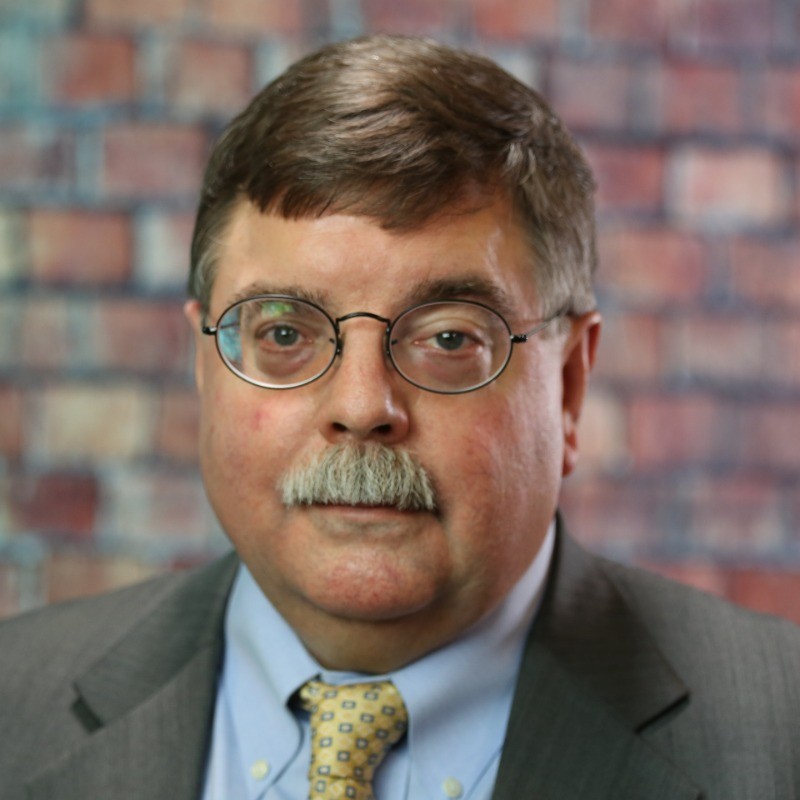
Stephen Rentschler
CEO at Nevada Lithium Resources
25 years of experience in institutional investing. Founding member of the Chilton Global Natural Resources Fund, with peak AUM of >$4B USD.
Replay available
Discover the intersection of geotechnical engineering and mineral exploration with Nevada Lithium's sonic drilling operation at Bonnie Claire. Learn about the process, its precision, and what it means for the future of Nevada Lithium's exploration.
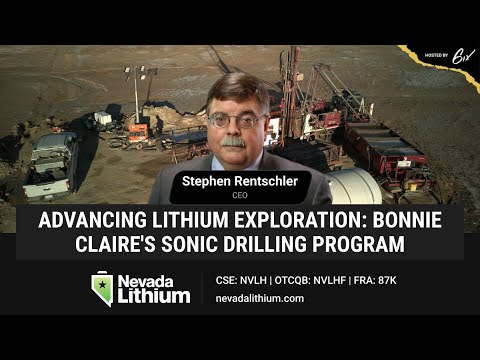
On 6ix: 6ix.com/event/advancing-lithium-exploration-bonnie-claire-s-sonic-drilling-program
Automated transcript · Written by software from the replay's audio. It can mishear names and figures; the replay is the record.
0:08 All right. Hello, everyone, and welcome to the Nevada Lithium live event hosted by 6. I'm pleased to introduce the speaker for today, Stephen Renshula, the CEO. Stephen will walk us through the latest release on the Sonic drilling program. And after that, we'll be accepting questions. As a reminder, you can submit your questions in the chat at any point during the presentation. As always, the summit is being recorded and will be available to watch shortly afterwards. Without further ado, I'd like to hand things over to you, Steve, so that we can get started.
0:37 Super, thanks, Max. Thanks, everybody, for taking a couple of minutes out sort of in the middle of the day here to hear about our latest news release. So specifically, we were speaking, or we have spoken in the past about our core drilling program that's going on at Bonnie Clare. This is part of our PFS work program. It's essentially a bunch of infill drilling that will give us greater statistical confidence in what we have at Bonnyclare, and all that data will be included in the preliminary feasibility study. What we announced the other day in the news release was something that's slightly different, has to do with the optionality that we have at Bonnyclare that we're trying to also maintain going forward. It has to do with the rotasonic drilling program and the way that I tell people about this is this is something that we're looking at that is in the upper strata of the ground at Bonny Clare. We've done field work, we've obviously drilled with our core holes down to 2,000 feet, and what we've noticed in previous work is that the top, say, 500 feet is different than the bottom 1,500 feet of Bonny Clare.
1:48 Essentially, it's more unconsolidated. And what that does is it gives us the ability to examine that for different things. Now, obviously, first of all, at the shallower levels, when you start talking about where you wanna put your mill and your plant, all these other things which are necessary for the PFS, you wanna understand what the strength, the stability, how the water behaves in those areas, again, in that strata, all of that. But what we wanted to do as long as we were there was also look at well what how could we potentially design an open pit. Now as you all know our preferred mining method for the PEA was borehole mining And that's something that we've been looking at going down to basically 2,000 feet.
2:36 At the upper levels, though, considering that we've been hitting higher grade material coming closer to surface, this is a result of what we found out last year's drilling program. And because of the expanse of Bonnie Clare, we said, well, while we're there, let's take a look and start doing some basically strength studies on what open pit stability would look like. And what this has to do with specifically is sort of if you're going to dig a hole in ground that's less consolidated, how far do you have to throw back the dirt on the side so that it doesn't cave in? You all care about open pit stability and about having cave-ins and things like that. Of course the engineers figure that out by doing strength tests. If you have a very strong material, then you'll see pits that sort of look like Kimberlite pits, essentially vertical straight up and down pipes because it's very consolidated rock around a very loose material.
3:30 If you have stuff that's very sandy, which is what we tend to have a Bonnie Claire, then we're going to have to have an open pit that would have shallower walls, basically. So if we're talking about doing this, this is the kind of information that we want to know, and we would like to know it. Frankly earlier the the better. The way that we continue to look at Bonnie Clare is you know with over 18,000 acres to sort of work with. And with different environments that are going on underground. And think about this as if you're looking at a map and you're looking at the eastern part of Bonny Clair and there's Route 95, again incredible access. Underground essentially things are starting to come to the surface as we move farther to the west.
4:17 Now the borehole mining again if we're looking at is something on the order of 2,000 feet deep and the material keeps coming up as we go farther to the east that might be a logical place to see about dividing this project up. I don't know if we can but this is the optionality that I'm talking about. But as we go farther to the east, that might be a logical place for an open pit. By the same token, we've also talked about the seismic program that we started. This is basically to look for underground structures that are similar to what's going on up in the Clayton Valley. So that's up by Albemarle, Silver Peak, and all those other projects that you see sort of a long strike up in that area. Those types of structures come down the valleys, running north to south. And what the key seems to be from what our technical people tell us, is you want to basically be able to drill a hole off set to one of those structures, and that would be a normal ingress route for lithium-bearing brines.
5:13 And then what we have to do is sort of, we'll have to poke holes to essentially see if we're successful, but we'll have to poke holes where we think that there are big accumulated pools of essentially moisture, water, and then we'll have to see whether or not the pH basically was conducive to dissolving the sediments that we know we have, But dissolving those sediments and turning them into basically lithumbarium brine. So more on that as we go forward, we expect to hear results about the seismic on the order. Probably I say by Christmas time we'll have a very good idea. I do know that the data has been accumulated. It's all for processing. I believe it goes off to Australia to the supercomputers there, etc. But like anything else, this is very much an art form. It's a combination of science and the art of interpretation.
6:00 So it's going to take a little time to get that back. By the same token on the core holes, because these are so deep, 2,000 feet deep each, and it's proper that you, with your quality assurance and quality control, that you report these all at once. We're waiting to get the entire slug of assays back, and then we'll basically be presenting that to the market. Now, you know, again, what I always ask people to remember is that this is not an exploration story in the same sense of, say, a gold, you know, some sort of gold project and you're off out drilling kilometers and you're hoping to strike something. We expect to see similar results to the high grade results that we saw from last year. And we expect to see all of this to essentially to play out again as we move further to the East within this sort of box that the engineers have spelled out for us for 10 or 12 holes, we expect to see the same type of behavior from Bonnie and Claire. I mean, we have a pretty good idea about what the strata look like over large expanses.
7:00 And now we're just sort of picking or pinpricking on the inside of that box to again get the statistical confidence up that we need going forward for the PFS. You know, as for a company of our size, even the, you know, the constraints, the caveats going forward. We're still hoping that, you know, we're gonna have that PFS done by the end of the year. I can tell you that I continue to talk to lithium end users. You continue to see news about lithium end users striking deals. They understand the need to secure offtake going forward. The, all of mining right now is facing headwinds of course most of the investment scenarios you see out there are being burdened by rising interest rates.
7:47 You know again additional nationalization types of things that are called into question in terms of previous mining leases. And we're sitting here in Nevada with Governor of Nevada, who just gave, again, one of the most spectacular, as far as I'm concerned, speeches whilst he was in Toronto about, hey, guess what, Nevada is open for business. And I think that he truly wants to see the lithium mining going forward and taking the place of copper and silver and gold. And it's quite, you know, a historical heritage for that to be overtaken, but I think the man does understand that this is the future. So we're continuing to do all the work. Again, this might not be some of the terribly sexiest work that we're going to be talking about going forward. Resolve very necessary. I think it's all very- it's a creative in terms of the optionality again that we see out there. If we have the ability to do things to think outside the box going forward. I can assure you we will exhaust all the possibilities that we can.
8:51 I believe that we already have a tremendous amount of value that's inherently apparent if you just look at our preliminary economic assessment and you see it lower lithium prices than where we are right now. We still have, you know, 1.5 billion dollars sitting there in net present value. And obviously we're going to be making changes to that PEA as we go forward. Our costs are going to come down to, pardon me, our costs are going to get better under control in terms of the risks surrounding them, etc. I do think that our costs are going to come down, but we have to see what the metallurgists say about that. But again, in the end, I think lithium prices being stronger than people expect going forward is really going to be the key. And the optionality that we have just in the project that we have outlined right now with the borehole mining method shows spectacular leverage to those lithium prices going forward.
9:41 If we could do something with open pits or seismic showing us that brine is in fact there, then folks, as I often tell people when we're talking privately, I mean, we've got a multi-headed hydra here as far as I'm concerned. Bonnie Claire is a beast and we're going to try to take advantage of her any way we can. So with that, I think rather than going deep into the details of rotasonic drilling, if people really wanna hear about those differences, let's hear about them in the Q&A. But for now, I think that's a good overview. And Max, why don't we open it up for questions? Great, thanks. And as a reminder for everyone to submit your questions in the chats. But for the first question here, what contingencies are in place should the geotechnical work reveal challenges to the stability of operations?
10:30 Well, again, we're looking at this in 2 ways. We're looking at the geotechnical stability from the borehole mining, which you think about it as at lower depths, and now we're looking at it in the upper strata in the open pit. So say from 0 to, let's call it 500 feet. That to me, that's the insurance, right? That's what we're doing here as a backup. It's not only going to provide optionality because I don't necessarily think these are mutually exclusive type of endeavors.
10:56 But I look at it sort of like what we're doing on top in terms of an open pit and figuring out the stability and everything else, is basically the insurance to the borehole mining. Even though the engineers with the borehole mining, and they are preparing a report right now for us, again, I sort of think that's going to come out around Christmas time, are very, very enthusiastic about the way the material basically caves in at depth and it's all sorts of arcane things like how much horsepower does it take to get material up from 2,000 feet in depth and is the cavern that you create full of water, is it full of air, all these sorts of things. But by doing the work up in the top depths, even though we're again, the PEA is looking at borehole mining, and I don't want people to think that we're abandoning that because we're not, I think it's basically cheap insurance to look at the open pit. And so that's what we're doing.
11:48 Okay, perfect, thanks. And what are the projected costs of the sonic drilling?
11:54 The sonic drilling is, it's more expensive than the core drilling that we're doing quite, but it's all set frankly by the fact that we're not going down as deep. You know, it's, I think it's a couple hundred thousand dollars that we have budgeted, something on the order of that, it's not millions of dollars. But one thing to think about with rotasonic drilling is it gets harder and harder as you go down. Now it gives you a very, very good core. It essentially gives you a more complete core than a core, a diamond drill. And our material again is very soft. So it's very important that we do capture that entire core so that the engineers can do the strength tests on it. But think about it as much cheaper than what we're doing with the core drilling.
12:39 We don't have nearly the amount budgeted and we don't have the number of holes. We're not gonna need the number of holes. The other thing I would just add is that there's multi facets to this because as we're looking at the strength of the ground We're also basically testing how the water is acting under the ground of Bonnie Claire We need to know that hydrological purposes again where we're going to potentially set up mills plants all this kind of thing What kind of foundations which you need given a certain sort of soil, 1 versus the other. So to attribute it all, you know, the cost of sonic all in one place is a little bit disingenuous, but in order of magnitude, think about it as much smaller than what we have going on with the core drilling. Perfect. And the press release mentions that the materials less than 500 feet deep were found to be less consolidated.
13:30 What's the effect on the decision between open pit versus borehole?
13:35 So with the open pit, part of it would come down to what would your layback angles be on the pit? So again, if you just think about, go out in your backyard and if you're digging in a bunch of you know, hard materials, shaley material as an example, you can dig down straight pretty quickly and the size of the hole won't cave in. Now, if you have really wet material, if you live down by the shore, as an example, and you got sand and you start digging, you want to get to a certain depth, you find you have to keep making that hole wider so that you can get down to depth. It's sort of the same principle that we have here. All else being equal, you want to have a steeper pit wall because you want to have as much overburden. Now, what I've told people in the past is when we were going through the PEA at the very beginning, we looked at different economic scenarios.
14:23 Borehole mining was one of them, and the ESG characteristics of the borehole mining are very, very appealing to end users, particularly European car companies because they're very – well, first of all, they're hesitant about having sulfuric acid, so again, our recovery process looks very good since we don't use that. But not having an open pit and the associated footprint and things like that is something also that really appeals to them. The borehole mining would let us shove more tailings down into the hole so we would have fewer tailings on the surface. But if we need to go to open pit or we want to go to open pit, the reality is that you're looking at a lithium supply gap, you know, on the order of, is it 500,000 tons, 1 million tons in 2030? I don't think it really matters. Essentially, as soon as you have 1 ton more of demand than you have supply, you have an upward pressure on prices, which is beneficial for the NPV of the project in no matter what form it takes.
15:21 So this is my way of saying to you, I think that the world's going to need every lithium project that it can probably take on. If we have more than 1, I think obviously that's great, but this is insurance as well. If we need to go to open pit- I would think that the open pit would come in under even higher lithium prices. Are than what we used- you know that would be the scenario that we would look at under PFS maybe an updated PEA. Something like that. So the economics I think would again be very very similar to borehole mining. But for right now I'm just thinking about the technical characteristics of how stable would those pit walls be. And that's really what we want to find out.
16:00 OK. Great answer. Thank you for that. And have you approached the local committees?
16:07 The local committees? Well, we've already, ICONIC, our partner previous to the amalgamation, have been talking to the town of Beatty over time. We're not doing anything new in terms of what we're proposing right now with the drilling program. I will tell you what we're starting to talk to people about is water rights. Town of Beatty is one of those holders of water rights going forward. I've now been out to Bonnie Clare a couple of times and I'm anticipating going out fairly soon again. And I have reached out to the town of Beatty asking if we could get together going forward because I think we're at that point in time where even though nothing's changed we have a different corporate face, we want to get to know people obviously.
16:54 What I've started out with honestly is talking to the people who work on the project who are from the surrounding towns like Beatty to get an idea of what their thoughts are, what their needs are, et cetera. So we haven't had any formal discussions with them right now. However, I anticipate that we're going to be ramping that process up fairly quickly.
17:14 Perfect. So I think that's all we have for the questions for today. So thanks everyone for submitting those and thanks Steve for taking us through that brief update and the Q&A session. Today's recording will be available to watch as always later today. So before we wrap up, just passing things back over to you, Steve, for closing remarks. All right, super. Thanks, everybody. Again, this is one of the types of subjects that it's not always what everybody's hoping to hear or think about, because again, it's not the most terribly sexy type of information that you could pass on. But this is all very necessary stuff. I mean, I'm one of those people who disagrees that you're coming down the sort of the second slope of the Lassonde curve and that it indicates that you're going to be orphaned, et cetera. I think the game has changed.
18:04 I think that serious end users understand the value of everything that we're doing now, and that that downward slope, frankly, may not exist in the lithium industry for companies like ours. So I hope you take a serious look. If you're not a shareholder, please reach out. Happy to talk more with you. We're just starting to get ramped up here. There's a tremendous amount of value that's locked up in Bonnie and Claire, and hopefully we're going to be able to start unlocking it fairly soon. So thanks again for your time.
Follow Nevada Lithium Resources, Inc. into a list and get an email when it puts out news.
CEO at Nevada Lithium Resources
25 years of experience in institutional investing. Founding member of the Chilton Global Natural Resources Fund, with peak AUM of >$4B USD.