Transcript
Automated transcript · Written by software from the replay's audio. It can mishear names and figures; the replay is the record.
0:07 Awesome. Well, as people are coming into the room, let's go ahead and get started. So I'll say good morning, good afternoon, or good evening, depending on where you're signing in from today. Seems like a global audience today, so I appreciate everybody joining us. Today's event is a deep dive on Nickel with, may I call you expert Lyle Tritton, not to embarrass you Lyle. So before we get started, just bear with me for a couple of seconds, I'm just going to do a bit of housekeeping. So this event is going to be recorded today and The replay will be available later this afternoon. Please do feel free to share once that replay comes out. You should get it in your e-mail inbox. This is also an interactive event. Please do feel free to interact in the chat on the bottom right of your screen. There are some questions we may not be able to cover today, but feel free to pose them anyway. I'll make sure the Giga team gets back to you as soon as possible with that information. But enough out of me, I want to introduce Lyle Tritton. How are you today, Lyle?
0:53 Very good today, thanks, Romeo. Awesome. Without further ado, I really do want to get into, because we've got a couple of questions I really wanted to get through before we break to audience questions. I'm going to start with, there's no real doubt in my mind or really what the press will cover, is that the world does need nickel. We'll get into why shortly. I want to start off by setting the stage for the audience today, kind of set the stakes of what the scale of the supply gap really is. So my question to you to start off is in the next 10 years, how much nickel are we lined up to have and how much we lined up to need?
1:26 Well, the lined up to need is more clear than the lined up to have perhaps. If we go back about 5 years, we have a global nickel market of about 2 million tons a year. Today, it's just a shade over 3 million tons a year. So we've seen massive growth in the last several years, All driven out of Indonesia, which now has more than 50% of the global nickel production market. And we're looking at, you know, by 2040 being around 7 million tons a year of
1:56 nickel demand, maybe 5 million by 2030. So we're talking about another 2 million tons a year of nickel production being required in the next 678 years, which is a pretty significant undertaking when we've had the biggest expansion we've ever seen in the industry in the last 5 years. That's only added 1 million tons. Yeah, that's I mean, the gap is clearly going to be seeming, but like you said, we're not 100% sure how much we're going to have at this stage. We got guesses, but you know, nobody's 100% sure yet. I'm curious, and this is, you know, as much for the folks listening as for me, but what is driving that needs? I mean, I think everybody knows about the requirement for batteries, or at least that gets the most press. But what other applications drive the demand that we're seeing?
2:44 Yeah, for those who are new to the Nickel market, it's really easy to be bullish because of batteries, but also to be a little skittish as well, because we keep hearing about other battery technologies that might come in and stuff. But when we think about the Nickel market, there's a stable and growing demand for non-battery applications. Stainless steel is still 60-70% of the nickel demand and other alloys that get used, nickel-based alloys for high corrosion applications or high temperature applications. So today, that's about 2.3 million tons a year of nickel that gets put into the stainless steel and alloys business. And that's growing at about 2% a year historically. So we're looking for that to grow by about a million tonnes over the next 15 or 18 years. So that alone, that's a 50,000 tonne a year project every year just to keep up with that demand.
3:36 Then we layer in the batteries, which today are significant, but they're still relatively a small demand at about 400,000 tons a year, but with a compound annual growth rate that's expected to be north of 10%.
3:49 So we're looking by 2040 for batteries to be more than the stainless steel and nickel demand, 3.5 to 4 million tonnes a year just in the battery demand. So they're both growth stories. Stainless steel growing from a large base today with a relatively lower growth rate, but still significant, needing to add new projects and account for declining production as well. That will drive growth even further. And then the batteries from a low current demand with a very high growth rate. I appreciate that. So we know we need it, but let's get into the meat here. And that's that not all nickel is extracted equally.
4:33 The majority of the world's nickel, as I understand it, currently comes from countries with, we'll call them uneven records on ESG and sometimes geopolitically precarious. So curious for your take on what that breakdown is and why that should matter to an investor in this space. Sure, and before I dive into this, I'm gonna give a shout out. I taped a webinar yesterday with Matt Watson, Green Rush from Kitco, that really looks at the ESG aspects of critical minerals. That will probably air on Monday, so it's worth diving into because there'll be some thoughts there that we might not get to here. So it should be complimentary. But when we think about ESG, a lot of people are focused today on the environment side, and especially the carbon pollution side, and That gets a lot of press in the Nickel industry.
5:22 Nickel produced from Canadian and European sulphide deposits tends to have a very good carbon profile, very low, less than 10t of CO2 per ton of nickel produced.
5:34 At the other end of the scale, the nickel pig iron or ferronickel nickel alloys produced in Indonesia can be over 80 tonnes of CO2 per tonne of nickel, so a factor of 10 worse on the carbon footprint. But the environment is larger than that. We need to also think about biodiversity issues, tropical forests, water and air pollution. The largest anthropogenic SO2 source, sulfur dioxide source, in the world is a nickel smelter. Not 1 in North America, but it's there and they can work hard to improve it, but it's still an issue. Water pollution is a significant issue from some legacy facilities and some new mines where we're getting chromate pollution into waterways in Indonesia because of runoff from the laterite mines. So there's lots of issues there.
6:25 On the social side, you know, we need
6:27 to think about, I break social down into 2 aspects, how you treat your workers and how you treat your community. And the worker side, it's occupational health and safety, fair pay, fair work practices, all those kinds of things. But you also have to think about the communities. You know, what does the community get out of it? What risks are we asking them to bear? What long term liabilities are we asking them to bear? Having run an emergency response group at one of my employers, we thought about the community all the time. And you don't want a disaster that takes out your community. Those are bad things. And on the governance side, the focus historically on governance for companies has been how do we make decisions in the company, who's represented at the table.
7:13 But we also need to think about the external governance. There are benefits that come from resource projects. You know, we've heard tell of the resource curse, the oil curse. Those benefits don't necessarily flow equally. And so are we flowing benefits to governments or individuals that are engaged in practices we don't support, whether that be corrupt governments or warlords or other things that can happen in different jurisdictions. And so when we look at those ESG factors wrapped together, there are certain jurisdictions that always rank very favorably. Scandinavia, Canada look very good, whether you look at the environmental practices or corruption or how we treat our local populations in certain countries that always look pretty bad because they rank very poorly on corruption scales and governance scales and these kinds of things.
8:09 But we have to go where the nickel is. And there is not enough nickel in North America to satisfy North American needs. So we're going to need to develop everything we have and we're gonna need to import more, which means we need to really focus on push driving the ESG controls and around the world.
8:30 I appreciate that. I will break really quickly to a comment from the audience, just because it's right on topic for what we're talking about here. I think this gets into the North American critical mineral strategy and also just broadly how people should think about ESG. He's curious, or he'd like to know, how many big players are willing to invest in clean projects when you can get cheap dirty nickel from Elsewhere in the world. So what's your view on why people might trend towards cleaner setups in the future You know, I I think nickel is going down the route that a number of minerals have in the past.
9:04 We're going to see more and more investment that is ESG sensitive. We go back the better part of a generation we were talking about blood diamonds. You go back 15 years, we were talking about tin, tantalum, tungsten and gold, the 3T plus G, that actually got enshrined in legal
9:23 matters in the US and Europe. Cobalt avoided that, but then 2014, 2015, the Amnesty International reports came out and we started to get a lot of attention from people using cobalt to make sure that they were able to trace where their cobalt came from and that it wasn't being implicated in some of the worst practices that we see in some of the dominant cobalt producing countries. And let's be clear, there are good practices can be done in countries that are very challenging, but it is difficult. It's easier to have great performance in a country that really makes you do it. I appreciate that. I hope, Mike, hopefully that answers your question, but I think what Lyle's pointing to is that the trend is relatively clear.
10:10 I'll jump back to my question. In terms of applicability to battery supply chains, kind of zooming in on that, I understand there's a significant difference between nickel types. So I'm curious which are most applicable and why, just so investors can understand the difference. Sure, so we're gonna get a little technical here and I hope people can follow through. But if you have questions that dive deeper into this, or if I'm not clear, please fire the questions in, and I'll be able to get back to you in writing as well, if need be. So there's really 3 main ways of producing nickel today. The dominant form of production today is Nickel from laterites processed by smelting of ore bodies that have higher grades. These are ore bodies that are high in Magnesium silicate. They have quite a good amount of Nickel 1.5% to 3%.
10:59 The smelting process is dig up the entire ore body, dry it out, chemically reduce it with coal and smelt it with coal-fired electricity, generally not always coal-fired,
11:10 in order to make an iron-nickel alloy that is the product. That could be anywhere from 4 or 5% nickel to 30% nickel in that product. And then that product directly is not useful for batteries, but can then be further treated through a process to make nickel matte, which is chemically very similar to the matte that's made in nickel smelters in Canada and Europe, where you add sulfur and reject a bunch of the iron, make a nickel mat that can then, again, be further treated, refined, in order to make the nickel chemicals that are used in batteries. And that's typically done through making class 1
11:47 nickel cathode or powder that is then redissolved. But it can be, we're now seeing applications where that nickel matte is directly leached to make battery chemicals in a more direct and cost effective route to that battery market. Also on the laterite side, we have a significant development over years of high pressure acid leaching technology, which is used for these nickel laterites or oxides that are high iron and lower nickels. So they're typically 1 to 1.3, 1.4%
12:19 nickel in a high iron matrix. It's not suitable for smelting, but it is suitable for dissolving in sulfuric acid and then recovering metals from that. But Again, the process is applied to the entire ore body. You dig up the ore body, you put it through a high pressure, high temperature autoclave, add a few hundred kilograms of acid for every ton of ore that you put in, and then you have to neutralize all that acid coming out the other side, precipitate all the metals you don't want, and recover the nickel, cobalt, or the primary metals you do want into an intermediate product, typically mixed hydroxides,
12:55 known colloquially as MHP, mixed hydroxide precipitate, also as mixed sulfides, MSP, that can then be further refined to make the battery chemicals or go all the way to class 1 nickel. And so there are facilities in, you know, Australia and Madagascar and such that go all the way to class 1 nickel, and there are now facilities that are taking that MHP or MSP and going to battery chemicals. Both of those involve treating the entire ore body very intensively. They have different environmental issues that come along with them. Smelting gives you a very high carbon profile. Laterite leaching gives you some problems in dealing with the leach residues and tailings that are unlike tailings produced from a traditional mining process.
13:43 In North America and Europe, typically in the global north and the far global south, we have nickel in a different mineralogical form, nickel sulfides, which are treated very differently. So these nickel sulfides as ore bodies are often less concentrated. They're anywhere from what we're dealing with at Turnagain, about 0.2% nickel. Some of the mines are around 0.5%. Some of the great older mines that are deep underground and very expensive to operate can be well over 1% nickel.
14:16 That nickel sulfide ore is then ground using, it's crushed and ground using tumbling mills, fairly low intensity processing. And it's amenable to beneficiation by frost flotation, which is very standard technology used in the industry for more than 100 years, where we recover from that ore the minerals we want into a high-grade concentrate, so 15%, 18% Nickel that can then be shipped to a centralised smelter or other processing facility, converted into nickel matte, and then treated onwards from there. What we're seeing now is a growing trend towards actually being able to treat that material through hydro metallurgy, water-based metallurgy, using pressure oxidation like we use in the gold industry and the zinc industry,
15:06 and treat that concentrate directly, never going to a smelter, and make these same kinds of intermediates that can then be used to make the battery chemicals. And that's a much less intensive processing methodology. It's not new. The Sherratt refinery that I used to work at started treating nickel concentrates in 1954.
15:27 The Quinana refinery in Australia started treating nickel concentrates this way in the late 1960s. It's now coming back into vogue again, and I think we will see much more development of this from the sulfides. And these come with a much better environmental profile. Significant tailings to deal with, but the tailings are relatively benign normally and can be addressed and come with a much lower carbon profile, much lower concerns around some of the other aspects like biodiversity and things because of the locations in which they occur. An underground mine has a very low surface footprint. I got one question from the chat on topic here from VS. He's curious what your take on high-grade nickel matte would be as an alternative nickel sulfate precursor to MHP going forward.
16:18 You know, it's a fine precursor. It's harder to leach than MHP. Mixed hydroxides, you just add acid and they dissolve. It's pretty straightforward. Nickel matte requires pressure oxidation technology. It's a much more difficult material to leach. So it's a solid metallic material that's formed from a molten phase that's then granulated. That needs to be ground up quite fine. We used to treat it at Sheridan. I have a bottle of matte on my shelf behind me. So it's a more intensive processing system, but it works fine. And it is a route that eliminates some of the purity issues that you get with MHP, where you have a lot of manganese and some magnesium and some other materials in there, matte tends to be more pure, more high grade. So a matte coming from, say, an NPI treatment facility will be reasonably high grade nickel with not a lot else in it. Nickel, sulfur, bit of cobalt, bit of iron, not a lot else. Whereas MHP will have 5% or 7% manganese in it that you might ultimately want in a manganese battery, but it still has to be separated and recovered differently than the nickel and the cobalt, which all need to be separated from each other.
17:37 Great. For those in the chat, we will get to your questions. I'm just gonna run through a couple more things I wanted to get covered before we get to you guys. So next thing I wanted to know is, obviously when extracting nickel, there are pretty big, I think surprisingly big cost differences associated with different deposit types. So I'm curious what the least capital intensive deposits are and why they are so much less expensive. Yeah, so we, and you're right to ask about capital. We need to separate capital costs from operating costs because they can be on opposite ends of the spectrum, depending on your technology. But historically, Minerals projects are custom designed, custom built to deal with the complexity of the ore body that you have. Every ore body is different.
18:23 That's the reality that Mother Nature left us. We love the outdoors, but the stuff left in the ground is not large deposits of pure nickel that we would like to just dig up and use.
18:34 And because every deposit is different, that means that there are some differences that we need to take into account in the mineralogy. But the evolution in the nickel business over the last 15 years has been standardization. So the nickel pig iron facilities that have been built in Indonesia, effectively the Chinese have backed companies building these have found ways to effectively standardize these. We're going to build them in single lot lines. They're going to be this size. The design is exactly the same. The coal-fired power plant that goes with it is exactly the same. They're doing it in industrial parks that have already been built. That investment has gone in already. The cost to add another line of NPI is relatively low. And so what we've seen is a real cost advantage on the capital side for these kinds of standardised smelting facilities.
19:30 On the high-pressure acid leaching side, those have traditionally been very expensive facilities to build. I've been involved with a few of them in my career. They can be $70,000 to $100,000 per annual ton of nickel production to build, and that's really a significant cost that historically has not been paid back. A lot of these facilities have not paid back their original capital, even if they have a low operating cost at present. In between there, we have nickel sulfide operations, which are quite highly variable because a lot of factors come into play because they're not being built in a standardized fashion in a pre-existing industrial park.
20:17 You have to go where the deposit is and that can be remote, which adds costs, whether it's for infrastructure like power and roads or just costs for accommodation for workers. Remote building is always more expensive than building in an area where we're used to doing a lot of stuff.
20:36 That can add cost to these. The mine development cost is quite generally quite low for nickel projects if they're on surface mines like Turnagain is, because you don't have to do a lot of pre-stripping. But if you have a nice, rich underground mine, and there are no real great, rich surface deposits because we found those 100 years ago and started exploiting them, you end up sinking a lot of money into development of an underground shaft and adits and all that underground infrastructure that can be very capital intensive. Hopefully, that then gets paid back by having a great ore body underground that is very cheap to operate for a very long time.
21:14 Oh, Great. I have one question that's a big question, but I think it covers a lot of the chatter that you see on boards and social media, et cetera. And that's really, if I'm not mistaken, as of today, a significant amount of global nickel production is what we'd call underwater.
21:31 My question is, why should investors believe that has reason to change?
21:36 Well, I've been in the nickel business for 30 years. This is not my first rodeo with these prices. It is the unfortunate reality of the nickel business that it is cyclical and it does go down to a point where, you know, from time to time about half of nickel production is losing money on a direct cash cost basis. This is why you always want to be in the bottom half of the cost curve. Facilities generally don't immediately shut down when they start losing money because the cost of closing and then restarting an operation is fairly significant. So it can be more advantageous to ride out a low price period when you expect it to be maybe a year. Keep making nickel, keep all your people employed, so you don't have to worry about getting new people and retraining them a year from now if you lay everybody off. And much of your cost is in fact labor.
22:29 But these, you know, It's an old adage, the cure for low prices is low prices. It does result in some closures of high cost operations. It does result in delayed development of new operations. All the while that demand curve keeps driving upwards and low prices drive demand faster. And so what we see is that the demand curve steepens and the supply curve shrinks, and that corrects the pricing in a reasonably short time frame. We went through the destocking of Russian stainless steel in the 1990s, and it depressed price for a decade.
23:05 We went through the period of Chinese building NPI facilities in China in the 2010 to 2015 period, and that depressed price for a few years. We went through the massive build out of Indonesia that's now depressing price. But that surplus is a capacity is not as big as it has been portrayed to be. There's a great report by Jim Lennon recently and he's probably the world's best expert on nickel market fundamentals.
23:36 You know, playing prices is a bit of a mug's game because there's so much hedging and short selling and all these other activities in the business. I don't play on the market side. But, you know, Jim is in China looking at actual demand, actual stockpiles by the consumers there, and concluded that where people had been talking about 200,000,
23:56 300,000 tons surplus for 2024, it was really likely to be under 50,000 tons. That's 1 project. That's 1 year's growth in the stainless steel market. That's going to get sucked up very quickly. So we will see that correction coming just from the demand side. And on the supply side, we've seen a Fair number of, actually an unprecedented number of announcements of shutdowns in the Australian nickel industry. Some of these are very high-grade mines, but they're expensive to operate because they're underground mines. Whether it's Savannah in northern Australia or
24:31 some of the Wailu facilities and some of the corresponding BHP facilities in the area. BHP is now talking about potentially shutting the Calgary smelter and Quenon nickel refinery. That would be kind of an earth shattering move in the nickel industry where it had to happen. That smelter has run since the late 1960s. All the facilities in New Caledonia are in trouble.
24:55 Goro, now Pronia Resources, has been offered a lifeline by the French government with a loan or a debt restructuring. Coney Ambo, very high cost to build, has never really worked out the way it was supposed to. Glencore said they're going to stop funding it. SLN has been offered a debt restructuring as well. These facilities are high cost facilities that are either going to not survive or the price will come back. There is no long term future for them at $7 nickel. It just doesn't exist. The French government can't prop them up forever. And this is partially why I want to do a deep dive on nickel, because, you know, there's a lot of elements for investors to look at, both in the history, but what we should anticipate.
25:42 But I did want to zoom in a bit on Giga Metals, where you are the manager of development. You sent over some slides, so I'll get those loaded up. But what I'd love to do, just for the audience in the room, is to use Turnagain as an example to walk people through the extraction process at a Nickel operations. Floor's yours. Sure. Okay, thanks. So this will be relatively quick, but for those who aren't
26:05 familiar with the Turnagain project, it's owned by Hard Creek Nickel, which is a joint venture company, 85% owned by Gigametals, our public arm. Mitsubishi Corporation owns 15% interest. I Don't know why we have 15% on there twice, but that's my error.
26:22 Located in Northern British Columbia, reasonably good proximity to infrastructure, we're about 70 kilometers off of the highway that runs up to the Yukon. The BC hydroelectric grid is not that far away. It's about 150 kilometers, so it's rational to extend hydroelectric power to the area. It's in joint traditional territories of the Talltan and the Kaskadena nations, both of which have historically a pretty good attitude towards responsible mining in areas that they deem it to be
26:53 acceptable. Lots of mines like Red Crisps and others operating in the territories today. And reasonably good access to rail down at Kitwenga, to port. There's an all-season port at Stewart. It's about 400 kilometers, but that's not a huge haul for nickel concentrate, which has a pretty high value when you've got 16%, 18%, 20% nickel in it. So our infrastructure fundamentals are pretty good compared to, you know, deposits that might exist in the far north or other places.
27:25 Not as good as some locations, of course. Can we flip to the next slide, please, Romeo? So when we think about the flow sheet, you know, the Turnagain Nickel project is going to be a very large development. Because it's a low-grade development, like a copper porphyry, that's really the best analogy for it. These operations run well at low grades because they take advantages of the economies of scale. Mining with large equipment, mining large tonnages, that gets your mining costs down very low compared to say an underground mine that needs to have a very high grade in order to be economic.
28:01 And the process is really very simple to get to that nickel concentrate that we would then sell to a processor somewhere. The run of mine ore comes out of the mine after blasting, digging, loading and hauling at about a 1 metre size. So these are boulders. That goes through a primary crusher, very standard equipment for the industry that crushes it down to about 150 millimetres or 6 inches in size in order for it to be ready for the next stage of processing. And we took a step, you know, within the Turnagin project, We re-scoped some things a few years ago. We're now going to convey that
28:39 6 inch or 150 millimeter crushed ore overland up the hill to where we want to run our processing facility, which we've located in an area that gives us great access for tailing storage. That crush door then goes through 2 more stages of crushing to get to a fairly fine product at about 4 millimeters coming out of the high pressure grinding roll circuit. That stage of crushing is not very power intensive and I love the high pressure grinding rolls. We did some pilot test work last year that was just wow. Impressive equipment to see operate on crushing rocks, unlike our old conception of how we crush things by banging it really hard.
29:26 That 4 millimeter material then goes into 2 stages of milling, again, very standard mineral processing technology to get it down to about 80 micron in particle size. It then goes through the flotation circuits, which is effectively a once-through flotation, froth flotation to recover the sulfides and reject magnesium silicates, pyrrhotite, other gangue minerals to tailings. The rougher float, you know, fairly large equipment because we're dealing with a high throughput of 90,000 tons a day. So we have 2 trains of processing here, each running 45,000 tons a day through large rougher flotation cells, industry standard equipment, and then into the cleaning cells where we progressively scrub more and more of the stuff we don't want away from the concentrate that we do want, which is then filtered, stockpiled and shipped out to market.
30:24 99% or more of what we deal with ends up in tailings. That's the reality of the mining industry. We have to have a large tailings management facility, well designed to current standards. And we've designed a purposefully built facility using specifically quarried rock to meet the demands of the tailings dam structure that we will need to retain our tailings in that. With a once-through flow sheet and just simple froth flotation, looking to recover 1 product, this is very simple and straightforward mineral processing. We're not dealing with multiple products. Oftentimes in the nickel industry, you're trying to make a separate copper product and a separate nickel product, or you're trying to recover different nickel mineralogies where you might have different circuits, magnetic recovery and fines removal and froth flotation for nickel sulfide recovery and stuff. All of that complexity adds to the startup challenges for these facilities.
31:28 And indeed, Globally in the Nickel industry, the facilities that have the most difficult time starting up and getting to full production capacity are those that are the most complicated. The high-pressure acid leach facilities that run globally have had very troubled startups. The nickel pig iron smelters, those run pretty straightforward until they sometimes have a major issue. There were a couple of nickel pig iron smelter explosions in Indonesia in the fourth quarter, very bad outcomes. Bad things happen when you don't take care of your equipment and people. This is a very straightforward mineral processing approach. Can we go to the next slide, please? What goes on at the Turnagain Project site, which is the mining, the crushing, grinding, milling, froth flotation, mineral processing, and tailing storage. And then we have 2 routes to process for our product.
32:23 It can go a traditional route through a smelter. This is described in the top, and this flow sheet is in some of the giga materials on our website. Where we go to a smelter, where that sulfur in our nickel sulfide concentrate is the fuel for the smelter, we burn that, capture the resulting SO2 as sulfuric acid that then gets used industrially, make a nickel matte that can then go on to either nickel refining to class 1 nickel, which can go out to alloy products or battery grade products, or the matte is processed directly to battery grade products as I was discussing before. Alternatively, you can go through the hydrometallurgical route where you directly leach through pressure oxidation that nickel sulfide concentrate.
33:13 This hasn't been done a lot recently. Long Harbour in Newfoundland that Valet built for the Boise's Bay facility is the most recent example of this. Not the flow sheet I would choose for this. There are simpler, more economic ways to do it than what they chose to do, but they have their reasons. Leaching the nickel into solution is very straightforward, and then it's a matter of what do you want to do with it from there. Make a mixed hydroxide product, which is sort of the industry standard route to enter into the battery-grade industry right now. Lots of facilities globally that can take that MHP and make battery grade precursor materials out of it. Or conceptually, you could go directly through solvent extraction into a route without an intermediate.
34:00 Technically, it will work. It's not a route I would personally recommend, because I love the value of having a solid intermediate material that you can stockpile and separate areas of your facility from each other and allow for different operating rates in different areas. It gives you a big boost on reliability when you are able to just stockpile an intermediate for a period of time. So when we have concentrate and MAT or MHP, these are all separate solid materials that can be stockpiled and allow each area of this flow sheet to operate at independent rates, which gives us a lot of benefits on the reliability side. The Turnagin concentrate is low in the nasty impurities of the nickel world, arsenic, selenium, mercury, these kinds of things that are very difficult to deal with at smelters.
34:51 So, you know, we think that's very favorable for it and we look forward to having those multiple routes to market depending on our partners and what they want to do with that product. Great. Sorry about the deck. Everybody in the room, I will make sure you get the correct slides afterwards. I know there's a question for that in the chat, so make sure you get the right ones. Apologize, Microsoft, Google, they hate each other. We're all stuck in their schoolyard fight. I'll make sure you get the right slides after. As a follow-up, while we're speaking about Gigametal specifically, I know very recent memory, you guys put out a PFS on Turnagain. Given everything we talked about today, and I know there's lots of investors in the room, what should they be on lookout for when they read a PFS for a nickel project? What are strong signals and what are potential pitfalls that people should be aware of?
35:37 Yeah, so the junior mining sector has a bit of a historically bad reputation because there have been some practices that have not necessarily been the best outcomes. You know, the reality, when I think about it, I come from an operating background. I spent 25 years with the shared organization helping to run the Fort site, helping to develop projects overseas, starting up a refinery in Australia and 1 in Indonesia. You know, I think about these things from an operational background. If you want a project that's going to be built, you want every step along the way to have the team that understands the technology that is going to be used so that they can make sure that the design is appropriate. So I always look for who's the lead team from the company. Do they have the technical expertise and the market expertise to really understand their business?
36:32 You know, I think, you know, I like my background. Our president has a long history in both Nickel operations and the Nickel markets, and I think we would bring a lot of strength there. The Prefeasibility Study itself is written by an engineering team that is overseen by the corporate team. So my job in when we ran the PFS was to make sure that Tetra Tech, our selected engineering contractor and our selected metallurgy people and our resource people and stuff, were doing the right things to develop a project that I'm proud of, that I believe can be built. That's my goal at the end of the day. Some of these studies get written for purposes of simply driving investment. And they're not necessarily describing a project that can be built in the way it's been put together. And that's unfortunate. You see that sometimes at the PEA level, less frequently at the PFS level, and even less frequently at the feasibility study level, but it does happen.
37:30 And these projects sometimes get through, through various intentions. So selecting that engineering team is an important component of this because you want an engineering team that has real world experience that doesn't just write paper studies, but the people have actually worked in operating mines of the scale that you're working on. They have actually worked with milling operations that are similar to what you're dealing with so that they know when they're designing the flow sheet, the equipment, the physical attributes, that it's the right thing to do. Very proud of our engineering team with Tetra Tech, our metallurgist, Chris Martin, who put our metallurgy program together. These are teams of people that have long experience in the industry. So that engineering team is critical. If it's a team that is just producing paper study after paper study, treat it with a grain of salt.
38:24 And then I look at what's the project actually going to do. Is it actually using a route to market, you know, processing technology that is commercially proven and viable today? Is it actually producing a product that is commercially proven and viable today and has an easy route to market? So when somebody is producing a product that is non-standard, that is not like anything else being produced today, you have to be very careful about the assumptions around the marketability of that, because there may not be a facility in the world that can process it. Somebody might have to build something new, And if you have to convince somebody else to build something for you to treat your material, that's going to come at a cost. And that cost may not be what you think it is. If you're planning to develop it yourselves, there's a reason that the pressure oxidation circuit that I think is the right answer for tourniquet concentrate is not a part of the tourniquet project.
39:22 That adds a lot of cost and complexity and risk to a project that any mine project already has an inherent degree of risk. And so When you're building all that in, it would be foolish to assume that it's all going to be a seamless, easy startup. I do due diligence studies as well on projects around the world. The advice I give clients on these topics is, you know, when a company tells you that this is going to start up faster than anything ever has in their industry, you might want to be a little careful with that assumption. Like it might be true. They might have the wherewithal to do that, but the odds are not stacked in their favor. So that route to market is critically important because the last thing you want to do is produce a product that nobody wants. You invest a couple of billion dollars to make something that nobody wants to buy, that couple of billion is gone.
40:15 So, you know, unfortunately, that could happen in our industry, right? You know, we want to make standard products. The beauty of Turnagain, you know, the reality of the nickel market is that on the nickel sulfide side, there is 1 dominant mineral that has been treated for the last hundred years. It's pentlandite. There's some nickel that occurs in pyrite at very low grades that gets treated as well, but it's really a sideshow. Virtually every nickel smelter in the world has been built to take pentlandite concentrates, And that's what our product is at Turnagain. It's Pentlandite with a little bit of magnesium silicates and a little bit of pyrite and a little bit of this, a little bit of that, all very normal materials for a nickel smelter to take, all very normal materials to be treated through a hydrometallurgical circuit.
41:04 When you're starting to deal with real nickel minerals that exist, and we have some in our deposit like millerite and hazelwoodite and some of these things, they can give you really appetizing nickel grades. The minerals have a higher level of theoretical purity, but the industry isn't used to using them. And they come with certain downsides that, you know, they have less sulfur per unit of nickel. So if you're going to smelt it and you're relying on that sulfur as the energy source, you might be energy deficient and need to blend it. Or you might have too much magnesium in it. This is something we've watched very carefully with the Turning In project because it does have a high magnesium ore body that again requires blending out at the smelter and that can reduce your market access.
41:53 Thank you and I hope that gives some meat for investors to chew on for how to evaluate a PFS, how to evaluate projects. Now there are a ton of audience questions, so we'll try to get through as many as we can. Keep in mind, if we don't get to your question today, or if you think of the perfect question right after, please do feel free to pose it, and we'll make sure the team gets back to you. So we will make sure we get to everybody, just might not be live on the call today. So Curtis asks if you're, and this is about the permitting process, he's curious if you've seen or aware that the federal and provincial governments seem to be streamlining the permit process. He notes that it seems to be a bit excessive currently. So curious for your take on current permitting in Canada and BC. Yeah, so BC is really the lead government in Canada, possibly Quebec as well, in terms of taking what we call a substitution approach, where they have a normal practice of telling the federal government that yes, this has to fall under federal permitting rules because of the size of the facility or the impacts on fisheries or whatever, we're going to do that evaluation and we will provide you the results. And the federal government has a history of saying yes, we agree with that. So this substitution approach is normal in British Columbia.
43:05 And the British Columbia government is known for, I'll say, playing nice with the federal government, working together collaboratively to make these things happen. I happen to live in Alberta, where we don't have as much collaboration federally and so we end up potentially with overlapping duplicate permitting processes when governments don't want to work together but that's not an issue in British Columbia. Interesting development in BC lately is you know the the Talltan Nation within whose traditional territory we are has been working very cooperatively with the BC government to create joint review panels, so that they're involved in the review process from the inside and have a significant say and stake in that project permitting process from the inside rather than being an outside party that is then contributing their views on things to a government that is then you know maybe or maybe not listening. So that cooperative approach that we now have from the First Nation to the province, to the federal government, should really smooth the permitting process in British Colombia.
44:13 Oh, great. I got a couple of questions in a row about Indonesia. So we'll tackle what we can here. SibTiger says that he's heard that Indonesia is targeting to maintain or set kind of trap nickel prices between 815, 9.5 a pound or 18,000 to 21,000 per ton. He's curious what your view is on Indonesia managing a long-term nickel price and the impact that might have on Giga's operations. You know, I don't think they can manage it in the long term. We used to have producer prices in the nickel and cobalt industries in the 50s and 60s. And that all fell apart with growing supply internationally from dominant producers. The Congo was the dominant cobalt producer 50 years ago, and they set the price and everybody else followed.
45:02 Inco used to do that in nickel. Over the next 3 to 5 years, yeah, Indonesia might be able to do that. From a Turnagain point of view, I don't really care because we're not going to be in production in 3 or 4 years. We're looking at the Nickel price from 2030 through 2060 when we would conceivably have this operation running. And Indonesia, they've done a great job of developing their industry very rapidly, but there were a lot of reports last year that their high-grade resources are starting to run out. The stuff they've been tapping very hard might only last another 6 to 10 years, and that's going to impact their cost potential. And so, you know, they're not going to be able to maintain the cost in an area that they think is a great area today and still have as profitable of operations.
45:55 Ultimately, as we develop more demand outside of China and more supply outside of Indonesia, the price is going to vary. And in fact, what we've seen now with the launch last week by benchmark of a green nickel pricing framework, I think we're going to start to see some differentiation in prices that is not historically there in the nickel business. Great. The second kind of follow up question while we're on the same topic. This is some geopolitical crystal ball gazing, so bear with me. Jay Willis is curious that with the expansion of nickel exploitation in Indonesia, the negative press, et cetera, he's wondering if you see a, in his words, day of reckoning coming where government or somebody else intervenes to stop what's going on. Wow.
46:48 Thanks, John. Putting me on the spot. You know, Indonesia is an interesting country. And I've been there, helped develop a project there back in the late 90s. The people are great. The government has a lot of issues. There are a lot of corruption issues in the country. There's a lot of issues around how they've been treating local communities, the workforces, the safety practices, the environment practices, and everything else. But today, the government seems content to let that go on. Historically, Indonesia is considered a non-aligned country. So they're willing to play ball with anybody, China, Russia, North America, Western Europe, whatever.
47:37 But I think what you're going to see is the pressure coming from the West on Indonesian practices is going to result in a tightening up of some things. But it's going to take time. And so I think you're going to see some practices will never improve. But traceability will be our friend. And that traceability will allow for companies to enforce standards at operators that they're involved with. In fact, I have a colleague I have to get back to this afternoon has asked me some questions, just moved to Indonesia to work at a Western-owned nickel facility to help analyze and improve on their sustainability practices. So I think the pressure is going to come first from the consumer side, and then from the government side when they realize that we're at risk of losing our industry that is propping up a lot of our social development.
48:40 But don't forget, Indonesia is a big diverse country, a couple of hundred million people, they've got big coal deposits, They're into a lot of different things. Nickel is not the be all and end all for them. It is one piece of the pie and you can't reform an entire industry sector on its own overnight. It has to be taken in the context of the rest of the society. Appreciate the willingness to crystal ball gaze. I was one question in the chat that I'm glad it was asked because I have the same question. That's do you believe in North America and Canada require more downstream nickel processing capacity? He notes that Canada is trying to implement a mined EV straight through strategy, and he's curious where you think the gaps in that strategy are gonna be. The gaps are everywhere. I did some work for Natural Resources Canada on this a couple of years ago, outlining a path to North American independence.
49:33 They asked for me to do Canada and I said, that's a stupid study. I'll do North America because most of the EV demand is in the US and most of the Nickel is in Canada. The US has very few good deposits. We need the mines and we need the downstream processing. And that's a couple of stages of downstream processing. Today the nickel refining capacity in Canada is about 150,000 tonnes a year total. The Battery Metals Association of Canada put out a report last year that I contributed some thought to that concluded that with a 50-50 share of LFP and nickel-based batteries in North America, by 2040, we need 730,000 tons a year of nickel.
50:20 We've got 150,000 tons a year of processing capacity today. If you brought on all the nickel mines with resources that we know about today, that would add a couple hundred thousand tons a year. That needs new processing capacity. And we'll still need to import as well. No, thank you. Jumping back to an earlier point of discussion when we're talking about low CAPEX processes, Someone in the chat wants to know your opinion on atmospheric leaching of saprolites using sulfuric acid. I have a very dim view of that. Saprolites by their nature contain a lot of magnesium silicates. In fact, the Turnagin deposit, dump it into the tropics, give it a few million years of tropical rain, would turn into a laterite deposit with a limonite layer on top and a saprolite layer underneath. It's the same host rock ore body.
51:12 Saprolites consume a lot of acid. So I've done some test work physically on this. A limonite leach, like we see in the high pressure acid leaching, typical acid consumption is around 300 kilograms of acid per ton of ore. And out of that, you get maybe 10 kilograms of nickel. A saprolyte, you might get 20 kilograms of nickel out of it, but it's going to take 800 or 900 kilograms of acid per ton of ore, which goes to dissolving all that magnesium. And now you've got a huge effluent stream of magnesium sulfate with manganese and chrome and a whole lot of other things that you got to deal with. Some of those you strip out before you get to nickel, but some you don't. And so that entire processing stream is going to be dealing with huge volumes of highly concentrated magnesium liquors that then have to get disposed of. And I just don't see that happening.
52:06 Cape leaching of limonates has been tested, is actually happening at a pilot facility in Brazil right now, and can work. But it's very mineralogy dependent. Some ore bodies are amenable to it. This one in Brazil at Piauí that they're testing seems to be working okay. Other facilities that have tried it, it hasn't been very successful. They did it at Manera in Australia for leaching scats, rejects from the mineral processing. They did it in Turkey. It has not made commercial sense because it's slow, consumes a lot of acid, and ultimately your recoveries are generally not as good as going with more intensive processing approaches.
52:53 Saprolates are going to continue to get smelted. Thank you. Someone in the chat while we're talking about your views on different pieces of the puzzle, someone in the chat wants to know your view on the feasibility of deep sea nodules as contributing to the increased demand that is foreseen. Wants to know if you think the source is going to be needed. Well, needed is an interesting question. I'm going to approach it a little bit differently. I'm not a biologist. I'm not an ecologist. Technically, is it viable? Yes. It's technically viable to recover these nodules and process them. Is it environmentally responsible? Not touching that. On land versus on sea, very different impacts. I don't know enough to know if that's a responsible route.
53:38 Is it socially acceptable? I think that one is gonna be very difficult We've seen a lot of the EV makers come out and say we will not entertain this as a source. And in fact, there's a shareholder proposal to Tesla for their AGM, asking them to put a moratorium on deep sea nodule sourced nickel, and that Tesla tried to not have go to the vote and the SEC, I think yesterday said, no, you have to have this go to a shareholder vote. So there's a lot of social pressure against that as a source. And I think it will be a significant, that end of it will be a very significant factor. Do we have enough land-based resources to meet the needs for the nickel industry for the next 30 years?
54:25 Yeah, we do. Are we going to develop them? Lord, I kind of hope so because as an operator, I like impacts I can see, because if I can see it, I can measure it, I can monitor it, I can manage it, and so can my stakeholders. So when I have an open pit mine and a tailings facility and everything else. People can fly over that with satellites and planes and drones, they can come on site, they can see what we're doing, they can see what practices we're using and oversight is easy, so it's easy to regulate. That to me is a better situation than a situation where nobody can access and where third party regulation and oversight is very difficult. So it can be done. It may be done, but it's going to be a hard push to get those minerals into the EV supply chain in Western countries.
55:19 Okay, now we only have time, I think I'm going to try and squeeze 2 Turnagain specific questions in then everybody else to apologize, but we will respond in email as quickly as possible. As a C Tucker asked, where's the most likely destination for the concentrate from Turnagain to be refined? I don't have a most likely destination. The reality is that it will depend on our partners and what their desires are. So if we sign a Valley or a Glencore as a partner, they may have processing facilities that they want to use. If we sign a company with no nickel background, we may want to build new nickel processing in North America. If we sign another Asian company with nickel processing expertise, maybe the Koreans who do a lot of nickel processing or another Japanese processor, it may go overseas and then come back.
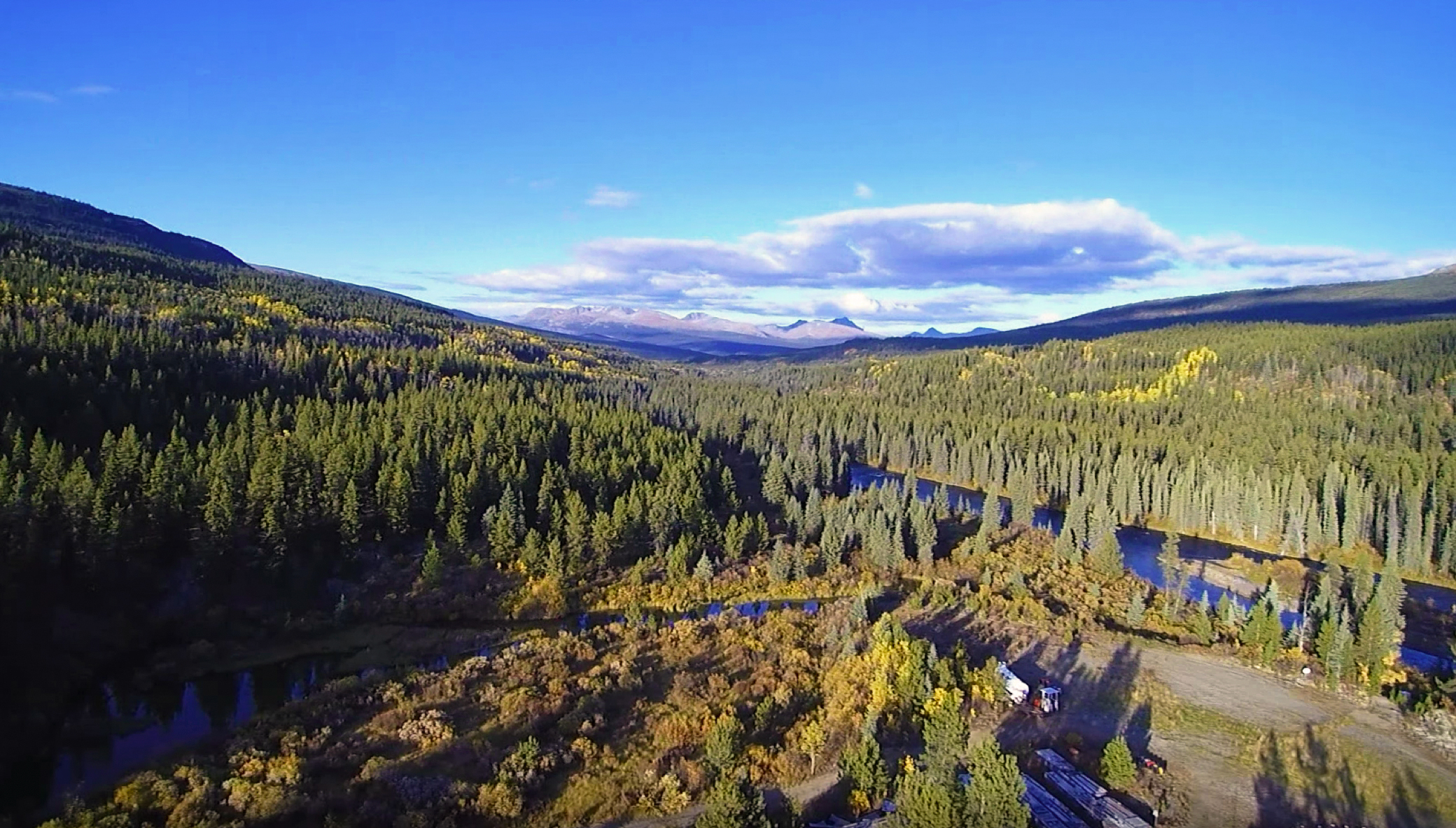
56:05 So there's lots of options on the table. We do need to build more in Canada. That doesn't mean that every Canadian nickel concentrate will go to a Canadian facility for processing. That makes sense. And finally, Tom asks, if you could, in brief, obviously, describe the topography of Turnagain and any challenges you'd have with typical snowfall. Yeah, so Turnagain is really in an advantageous situation when we think about BC overall. We think about BC as being very mountainous, high snowfall, high rainfall, seismically active along the coast. Turnagain is in western BC, but it's in an area that is just inland from the coastal mountains. So where they make 10 metres of snow a year in the coastal mountains, some of the new mines that are being proposed there, we get much, much less than that at Turnagain. Our annual precipitation is about 500 millimeters, 500 to 600 millimeters, similar in fact to Prince George or Edmonton where I live. It's a little cooler, a little moister, but we get about half our precipitation as snow over the year. We'll build up a snowpack of 1 to 2 meters at times in higher elevations. But it's not a really significant factor. It's not different than, for example, Red Crisps, where they've been mining successfully for a decade now.
57:26 Thank you. I know we're just at the edge of the hour. I would like to thank everybody who joined us today. I know it was a pretty big group. Thanks for taking an hour and getting into the deep dive. And Lyle, thank you so much. I think this was great. Give a lot for investors to chew on. Thanks, Romeo. It's been a pleasure.