Osi Pharmaceuticals — Investor Day (November 2007)
140 slides from Osi Pharmaceuticals's investor day presentation, Nov 29, 2007
Slide 1: Welcome to OSI's Analyst Day
Shaping Medicine, Changing Lives Welcome to OSI's Analyst Day November 29, 2007 Exhibit 99.1
Slide 2: Forward-looking Statements
OSI Pharmaceuticals Forward-looking Statements OSI's presentations today contain forward-looking statements. These statements are subject to known and unknown risks and uncertainties that may cause actual future experience and results to differ materially from the statements made. Factors that might
Slide 3: Strategic Overview
Shaping Medicine, Changing Lives Colin Goddard, Ph.D. Chief Executive Officer Analyst Day November 29, 2007 CEO Gold Standard Founding Member Strategic Overview

Slide 4: OSI Analyst Day Agenda
OSI Analyst Day Agenda Time Activity Speaker 12:30 Welcome Kathy Galante 12:35 Strategic Overview Colin Goddard, Ph.D. 12:50 Oncology Gabriel Leung David Epstein, Ph.D. Karsten Witt, M.D. 2:00 Diabetes & Obesity Anker Lundemose, M.D., Ph.D. Jim McCormack, Ph.D., D.Sc Jonathan Rachman, M.D., Ph.D. 2:
Slide 5: OSIP Exiting 2007: Re-Establishing Growth
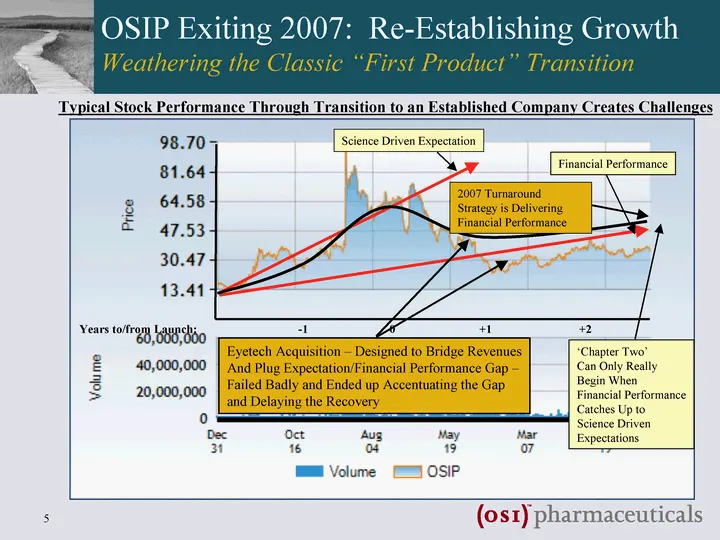
OSIP Exiting 2007: Re-Establishing Growth Weathering the Classic "First Product" Transition Years to/from Launch: -1 0 +1 +2 Science Driven Expectation Financial Performance 'Chapter Two' Can Only Really Begin When Financial Performance Catches Up to Science Driven Expectations Eyetech Acquisition -
Slide 6: OSIP Exiting 2007: Re-Establishing Growth
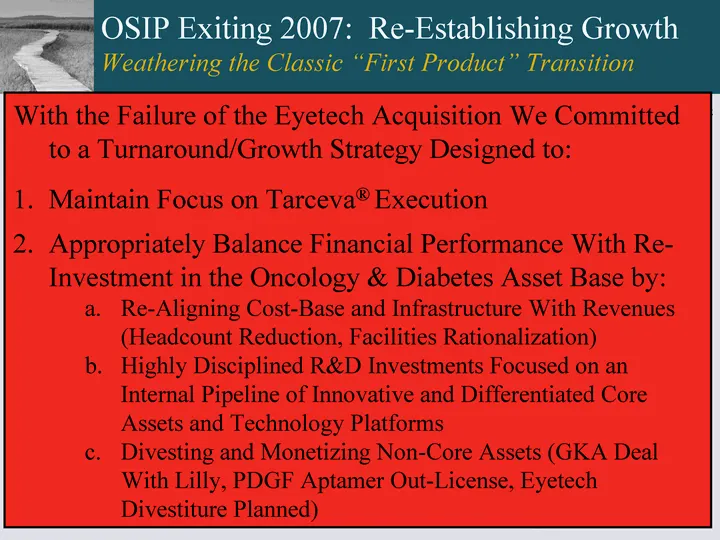
OSIP Exiting 2007: Re-Establishing Growth Weathering the Classic "First Product" Transition Years to/from Launch: -1 0 +1 +2 Science Driven Expectation Financial Performance 'Chapter Two' Can Only Really Begin When Financial Performance Catches Up to Science Driven Expectations Short Squeeze Around
Slide 7: Delivering Financial Performance
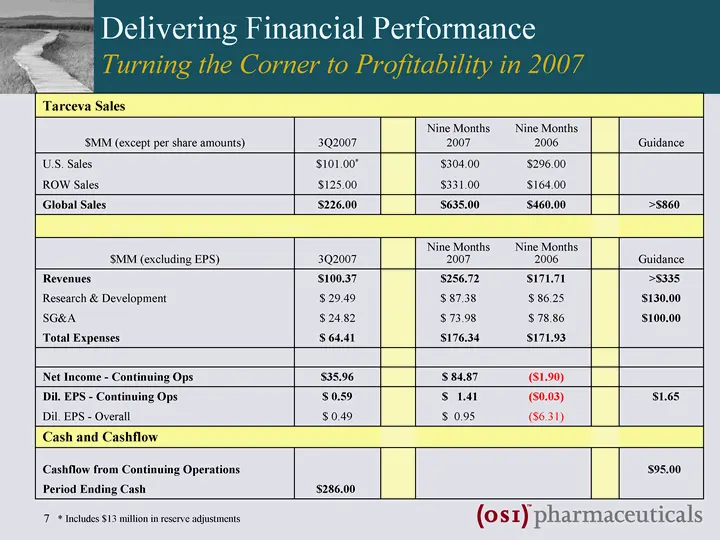
Delivering Financial Performance Turning the Corner to Profitability in 2007 Tarceva Sales $MM (except per share amounts) 3Q2007 Nine Months 2007 Nine Months 2006 Guidance U.S. Sales $101.00* $304.00 $296.00 ROW Sales $125.00 $331.00 $164.00 Global Sales $226.00 $635.00 $460.00 >$860 OSI P&L Highlig
Slide 8: OSIP: What to Expect in 2008/9
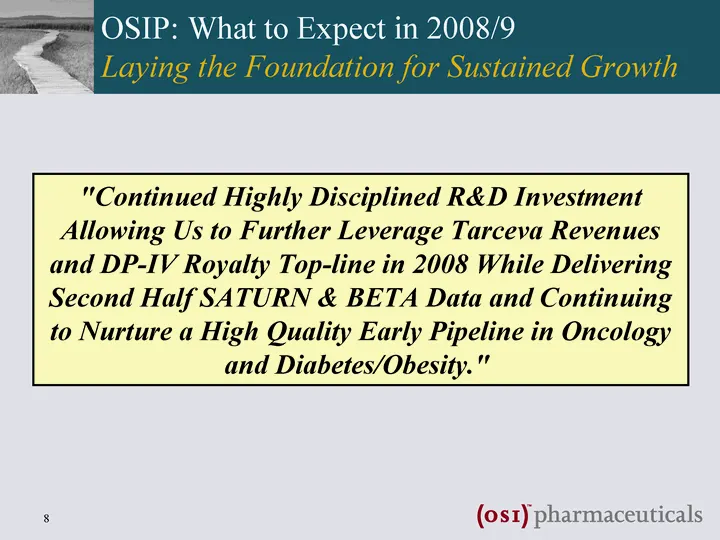
OSIP: What to Expect in 2008/9 Laying the Foundation for Sustained Growth "Continued Highly Disciplined R&D Investment Allowing Us to Further Leverage Tarceva Revenues and DP-IV Royalty Top-line in 2008 While Delivering Second Half SATURN & BETA Data and Continuing to Nurture a High Quality Early Pi
Slide 9: OSIP: What to Expect in 2008/9
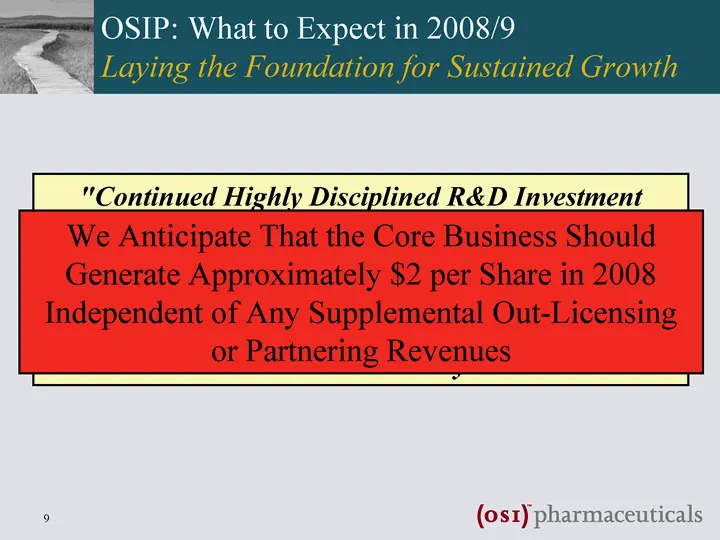
OSIP: What to Expect in 2008/9 Laying the Foundation for Sustained Growth "Continued Highly Disciplined R&D Investment Allowing Us to Further Leverage Tarceva Revenues and DP-IV Royalty Top-line in 2008 While Delivering Second Half SATURN & BETA Data and Continuing to Nurture a High Quality Early Pi
Slide 10: OSIP: What to Expect in 2008-9
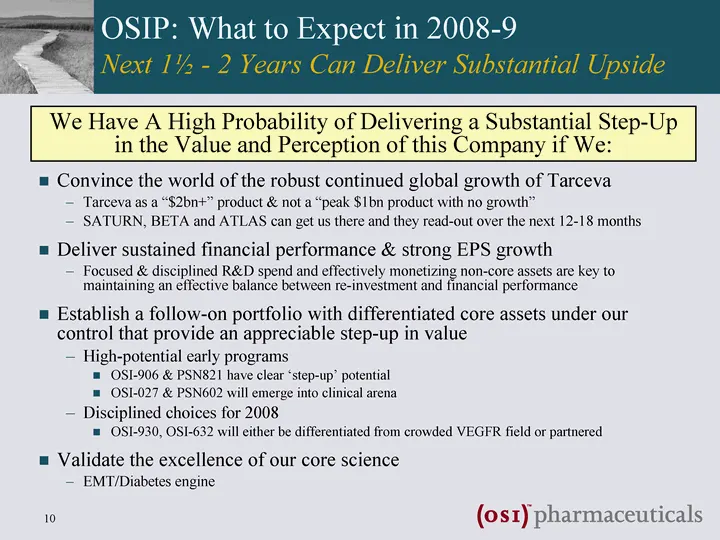
OSIP: What to Expect in 2008-9 Next 11/2 - 2 Years Can Deliver Substantial Upside Convince the world of the robust continued global growth of Tarceva Tarceva as a "$2bn+" product & not a "peak $1bn product with no growth" SATURN, BETA and ATLAS can get us there and they read-out over the next 12-18
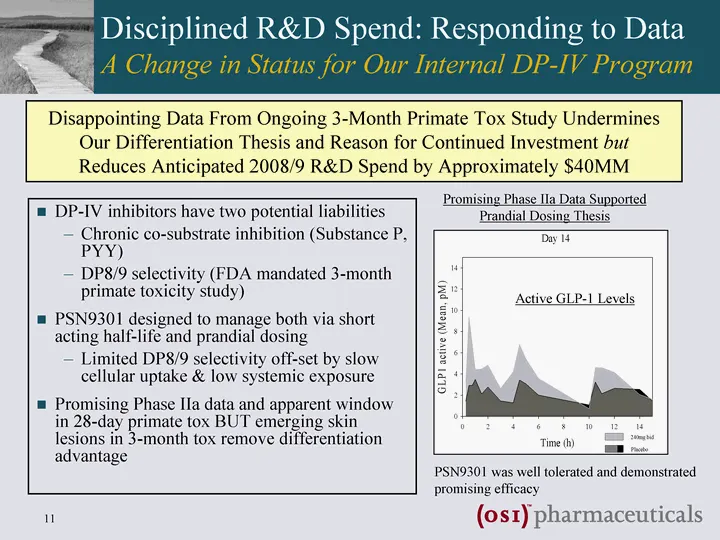
Slide 11: Disciplined R&D Spend: Responding to Data
Disciplined R&D Spend: Responding to Data A Change in Status for Our Internal DP-IV Program DP-IV inhibitors have two potential liabilities Chronic co-substrate inhibition (Substance P, PYY) DP8/9 selectivity (FDA mandated 3-month primate toxicity study) PSN9301 designed to manage both via short act
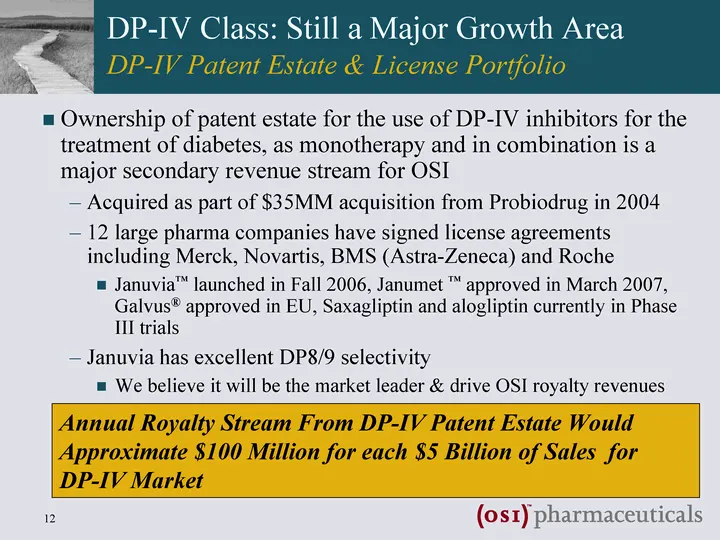
Slide 12: DP-IV Class: Still a Major Growth Area
DP-IV Class: Still a Major Growth Area DP-IV Patent Estate & License Portfolio Ownership of patent estate for the use of DP-IV inhibitors for the treatment of diabetes, as monotherapy and in combination is a major secondary revenue stream for OSI Acquired as part of $35MM acquisition from Probiodrug
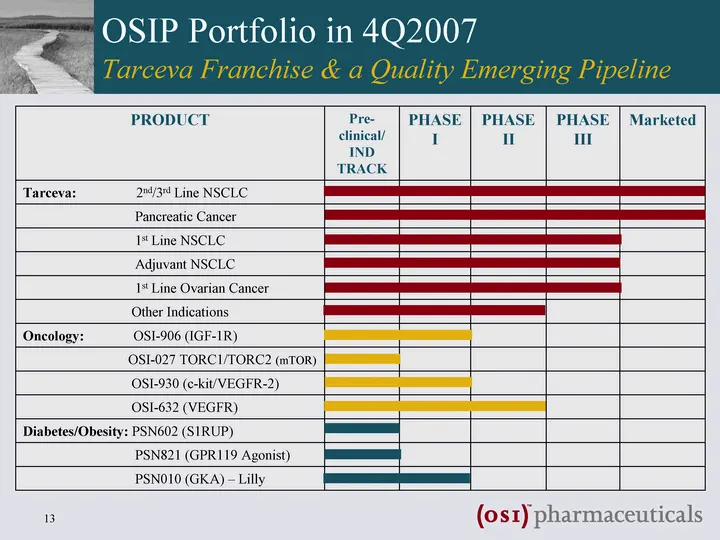
Slide 13: OSIP Portfolio in 4Q2007
OSIP Portfolio in 4Q2007 Tarceva Franchise & a Quality Emerging Pipeline PRODUCT Pre-clinical/ IND TRACK PHASE I PHASE II PHASE III Marketed Tarceva: 2nd/3rd Line NSCLC Pancreatic Cancer 1st Line NSCLC Adjuvant NSCLC 1st Line Ovarian Cancer Other Indications Oncology: OSI-906 (IGF-1R) OSI-027 TORC1/
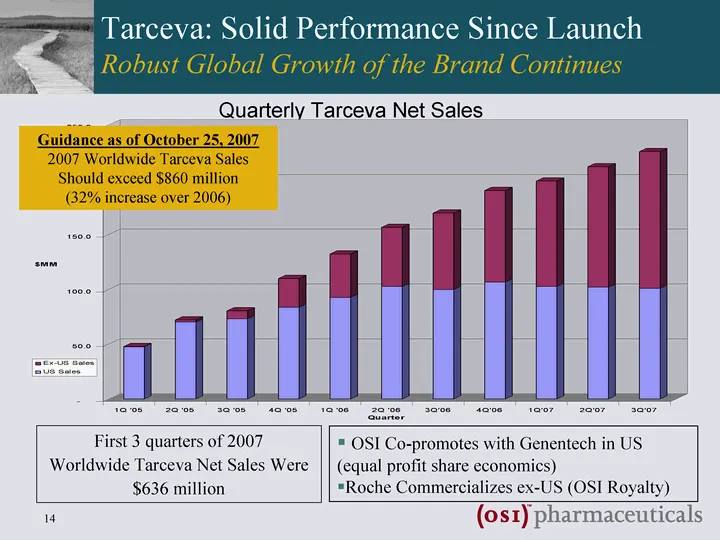
Slide 14: Tarceva: Solid Performance Since Launch
Tarceva: Solid Performance Since Launch Robust Global Growth of the Brand Continues Quarterly Tarceva Net Sales First 3 quarters of 2007 Worldwide Tarceva Net Sales Were $636 million OSI Co-promotes with Genentech in US (equal profit share economics) Roche Commercializes ex-US (OSI Royalty) Guidance
Slide 15: Tarceva: Competitively Positioned
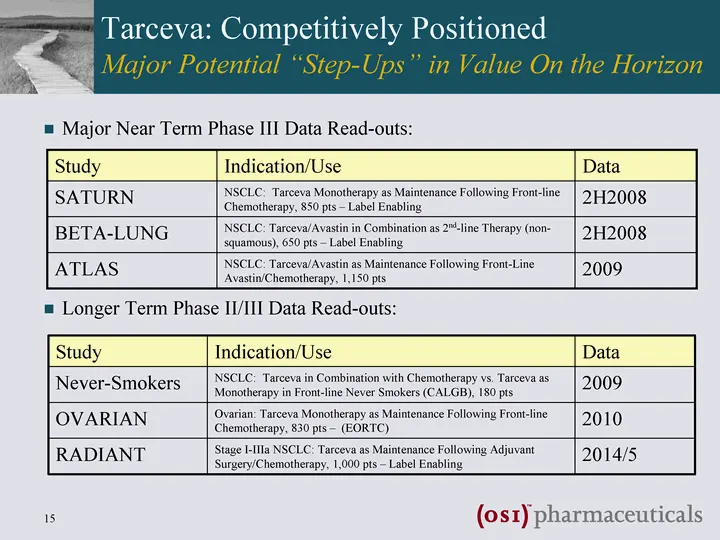
Tarceva: Competitively Positioned Major Potential "Step-Ups" in Value On the Horizon Major Near Term Phase III Data Read-outs: Longer Term Phase II/III Data Read-outs: Study Indication/Use Data SATURN NSCLC: Tarceva Monotherapy as Maintenance Following Front-line Chemotherapy, 850 pts - Label Enabli
Slide 16: Tarceva: Competitively Positioned
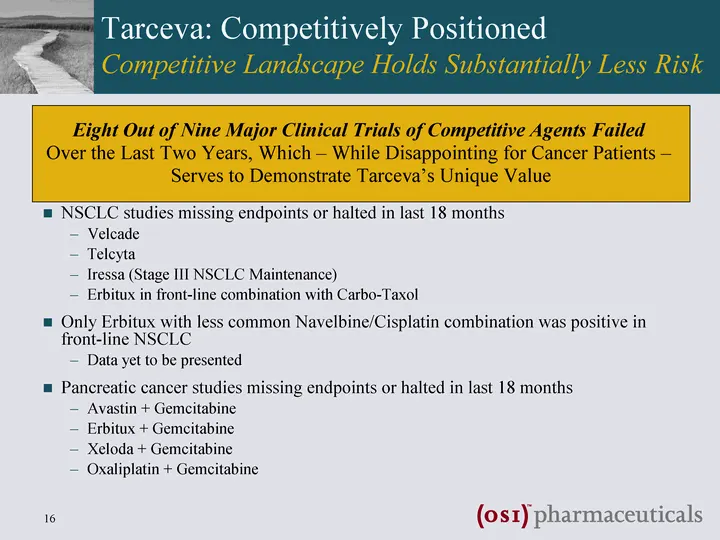
Tarceva: Competitively Positioned Competitive Landscape Holds Substantially Less Risk NSCLC studies missing endpoints or halted in last 18 months Velcade Telcyta Iressa (Stage III NSCLC Maintenance) Erbitux in front-line combination with Carbo-Taxol Only Erbitux with less common Navelbine/Cisplatin
Slide 17: OSI Oncology R&D Exiting 2007
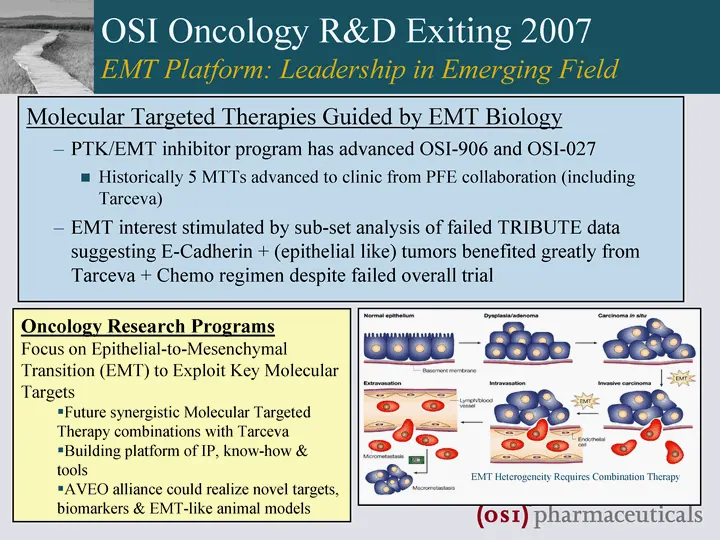
OSI Oncology R&D Exiting 2007 EMT Platform: Leadership in Emerging Field Molecular Targeted Therapies Guided by EMT Biology PTK/EMT inhibitor program has advanced OSI-906 and OSI-027 Historically 5 MTTs advanced to clinic from PFE collaboration (including Tarceva) EMT interest stimulated by sub-set
Slide 18: OSI Oncology R&D Exiting 2007
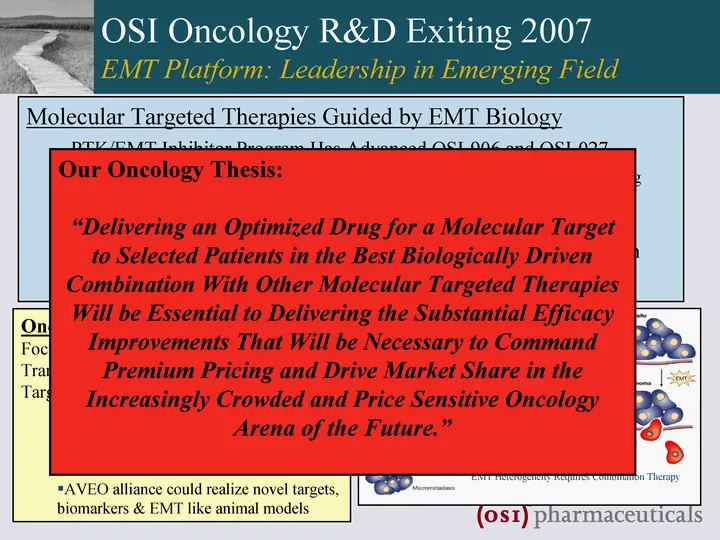
OSI Oncology R&D Exiting 2007 EMT Platform: Leadership in Emerging Field Molecular Targeted Therapies Guided by EMT Biology PTK/EMT Inhibitor Program Has Advanced OSI-906 and OSI-027 Historically 5 MTT's advanced to clinic from PFE collaboration (including Tarceva) EMT interest stimulated by sub-set
Slide 19: OSI Development Portfolio in 4Q2007
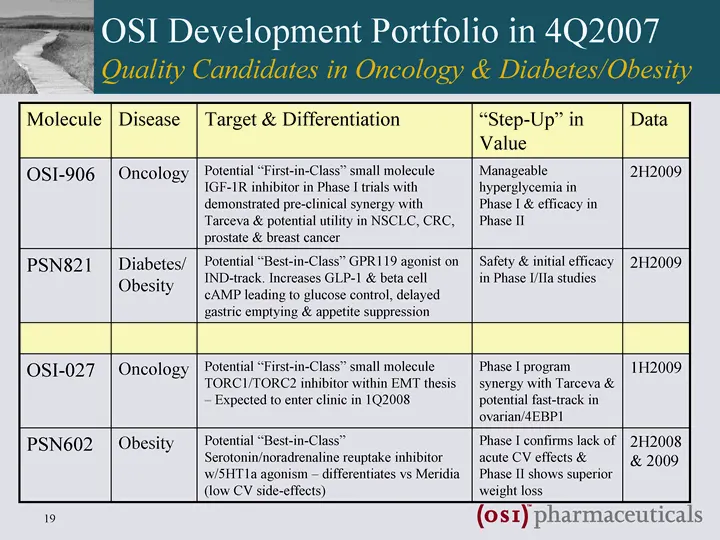
OSI Development Portfolio in 4Q2007 Quality Candidates in Oncology & Diabetes/Obesity Molecule Disease Target & Differentiation "Step-Up" in Value Data OSI-906 Oncology Potential "First-in-Class" small molecule IGF-1R inhibitor in Phase I trials with demonstrated pre-clinical synergy with Tarceva &
Slide 20: OSI Development Portfolio in 4Q2007
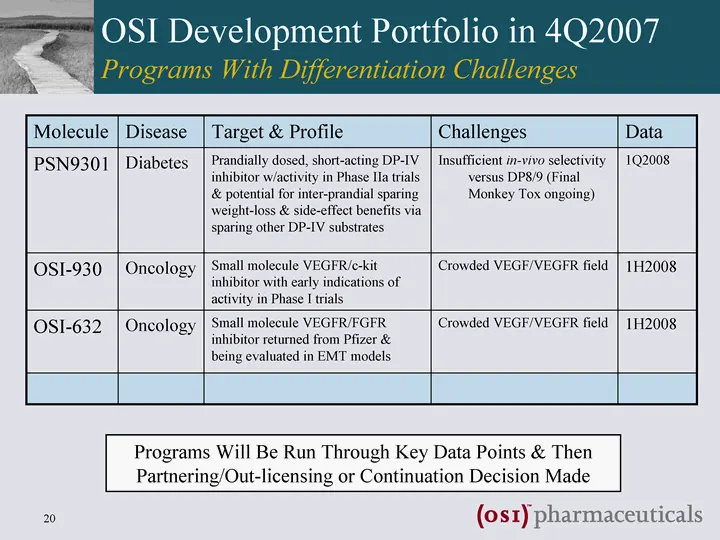
OSI Development Portfolio in 4Q2007 Programs With Differentiation Challenges Molecule Disease Target & Profile Challenges Data PSN9301 Diabetes Prandially dosed, short-acting DP-IV inhibitor w/activity in Phase IIa trials & potential for inter-prandial sparing weight-loss & side-effect benefits via
Slide 21: Partnering/Divestiture of Non-Core Assets
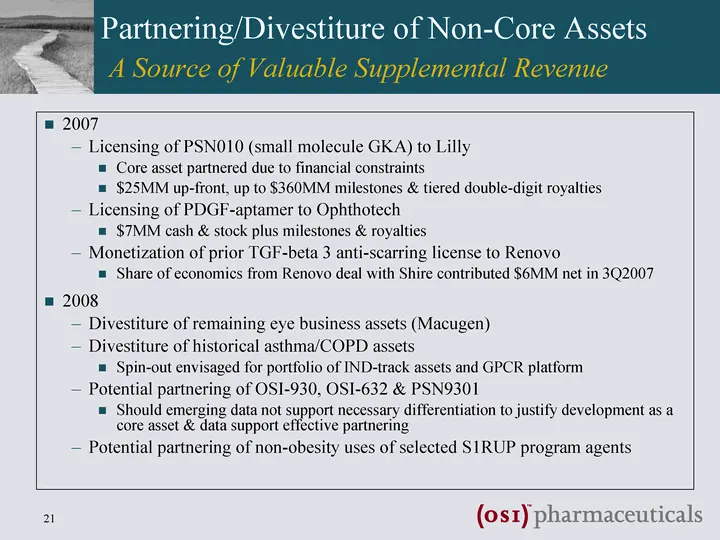
Partnering/Divestiture of Non-Core Assets A Source of Valuable Supplemental Revenue 2007 Licensing of PSN010 (small molecule GKA) to Lilly Core asset partnered due to financial constraints $25MM up-front, up to $360MM milestones & tiered double-digit royalties Licensing of PDGF-aptamer to Ophthotech
Slide 22: OSIP Exiting 2007 Summary
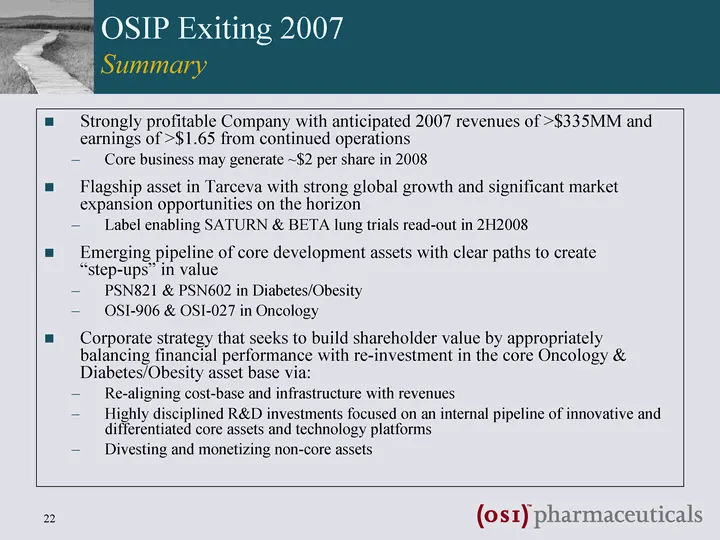
OSIP Exiting 2007 Summary Strongly profitable Company with anticipated 2007 revenues of >$335MM and earnings of >$1.65 from continued operations Core business may generate ~$2 per share in 2008 Flagship asset in Tarceva with strong global growth and significant market expansion opportunities on the
Slide 23: Executing the Tarceva Program
Gabriel Leung President, (OSI) Oncology Executing the Tarceva Program
Slide 24: Tarceva: Solid Performance Since Launch
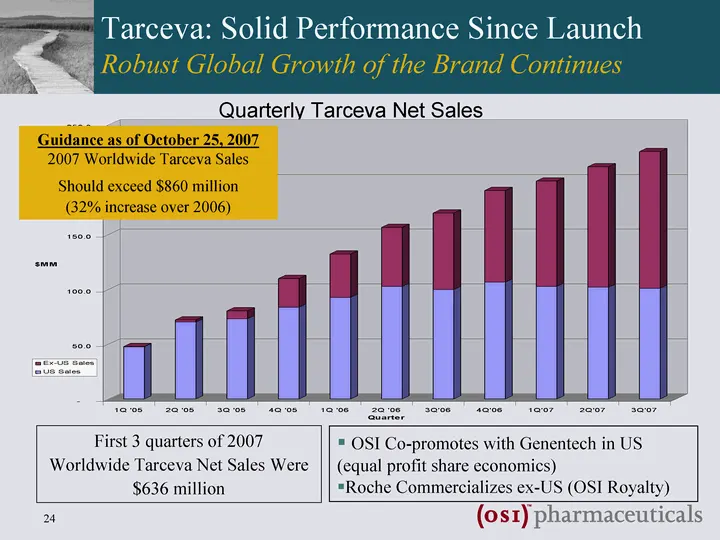
Tarceva: Solid Performance Since Launch Robust Global Growth of the Brand Continues Quarterly Tarceva Net Sales First 3 quarters of 2007 Worldwide Tarceva Net Sales Were $636 million OSI Co-promotes with Genentech in US (equal profit share economics) Roche Commercializes ex-US (OSI Royalty) Guidance
Slide 25: Tarceva Potential Growth Drivers
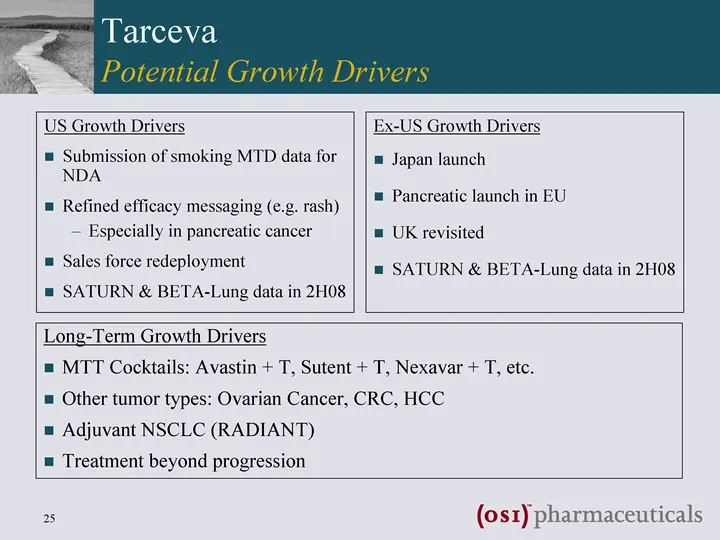
Tarceva Potential Growth Drivers US Growth Drivers Submission of smoking MTD data for NDA Refined efficacy messaging (e.g. rash) Especially in pancreatic cancer Sales force redeployment SATURN & BETA-Lung data in 2H08 Ex-US Growth Drivers Japan launch Pancreatic launch in EU UK revisited SATURN & BE
Slide 26: Tarceva Potential Growth Drivers
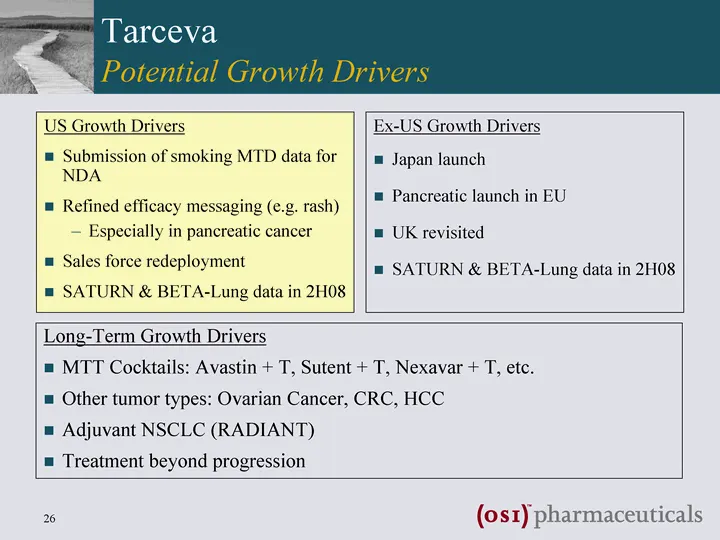
Tarceva Potential Growth Drivers US Growth Drivers Submission of smoking MTD data for NDA Refined efficacy messaging (e.g. rash) Especially in pancreatic cancer Sales force redeployment SATURN & BETA-Lung data in 2H08 Ex-US Growth Drivers Japan launch Pancreatic launch in EU UK revisited SATURN & BE
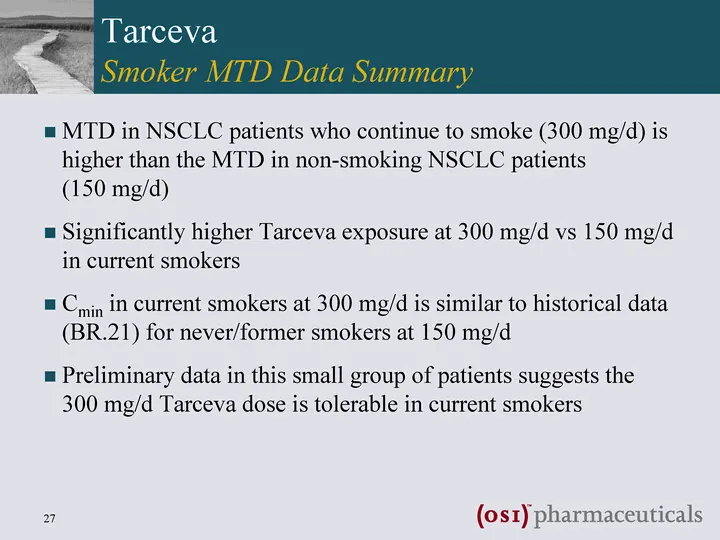
Slide 27: Tarceva Smoker MTD Data Summary
Tarceva Smoker MTD Data Summary MTD in NSCLC patients who continue to smoke (300 mg/d) is higher than the MTD in non-smoking NSCLC patients (150 mg/d) Significantly higher Tarceva exposure at 300 mg/d vs 150 mg/d in current smokers Cmin in current smokers at 300 mg/d is similar to historical data (B
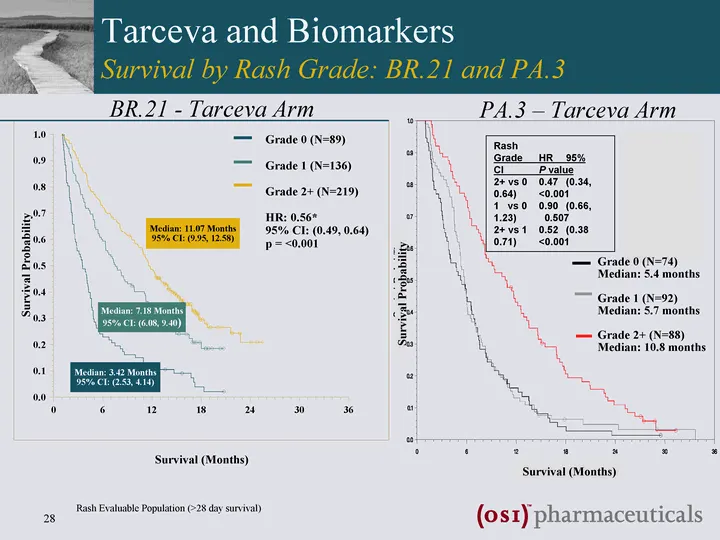
Slide 28: Tarceva and Biomarkers
Tarceva and Biomarkers Survival by Rash Grade: BR.21 and PA.3 Rash Evaluable Population (>28 day survival) Survival Probability Survival (Months) 0 6 12 18 24 30 36 0.1 0.2 0.3 0.4 0.5 0.6 0.7 0.8 0.9 1.0 0.0 Median: 3.42 Months 95% CI: (2.53, 4.14) Median: 7.18 Months 95% CI: (6.08, 9.40) Median: 1
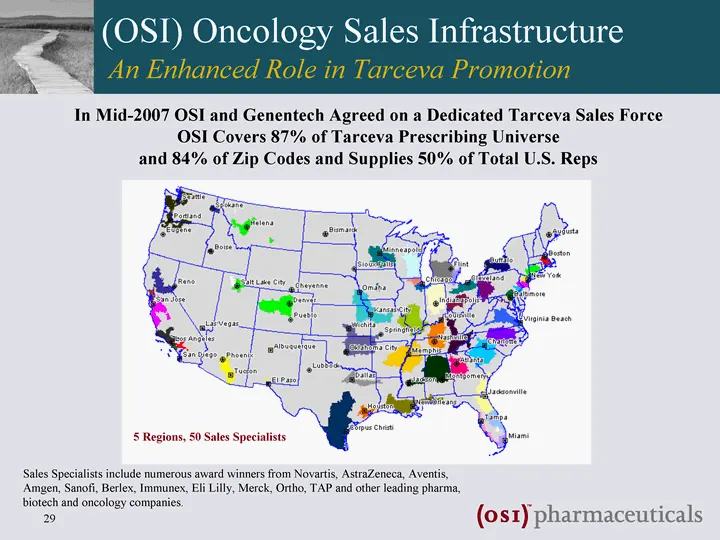
Slide 29: (OSI) Oncology Sales Infrastructure
(OSI) Oncology Sales Infrastructure An Enhanced Role in Tarceva Promotion In Mid-2007 OSI and Genentech Agreed on a Dedicated Tarceva Sales Force OSI Covers 87% of Tarceva Prescribing Universe and 84% of Zip Codes and Supplies 50% of Total U.S. Reps Sales Specialists include numerous award winners f
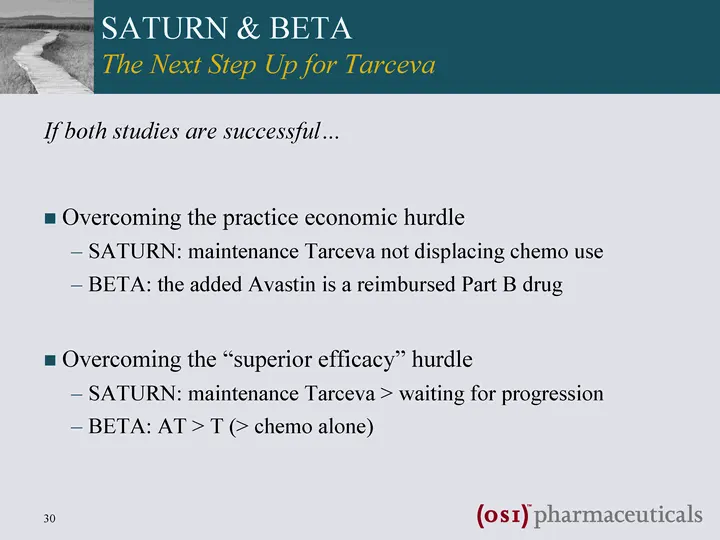
Slide 30: SATURN & BETA: The Next Step Up for Tarceva
SATURN & BETA The Next Step Up for Tarceva If both studies are successful... Overcoming the practice economic hurdle SATURN: maintenance Tarceva not displacing chemo use BETA: the added Avastin is a reimbursed Part B drug Overcoming the "superior efficacy" hurdle SATURN: maintenance Tarceva > waitin
Slide 31: SATURN Maintenance 1st-line NSCLC
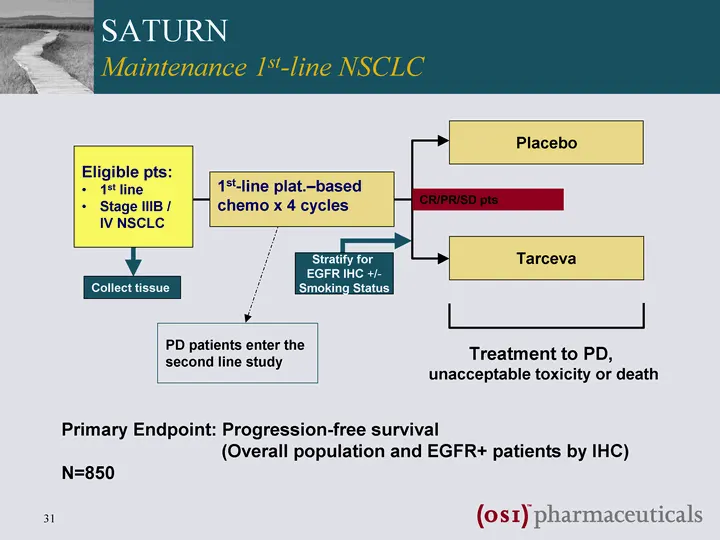
SATURN Maintenance 1st-line NSCLC Eligible pts: 1st line Stage IIIB / IV NSCLC Placebo Tarceva Collect tissue Treatment to PD, unacceptable toxicity or death Primary Endpoint: Progression-free survival (Overall population and EGFR+ patients by IHC) N=850 Stratify for EGFR IHC +/- Smoking Status 1st-
Slide 32: SATURN vs BR.21
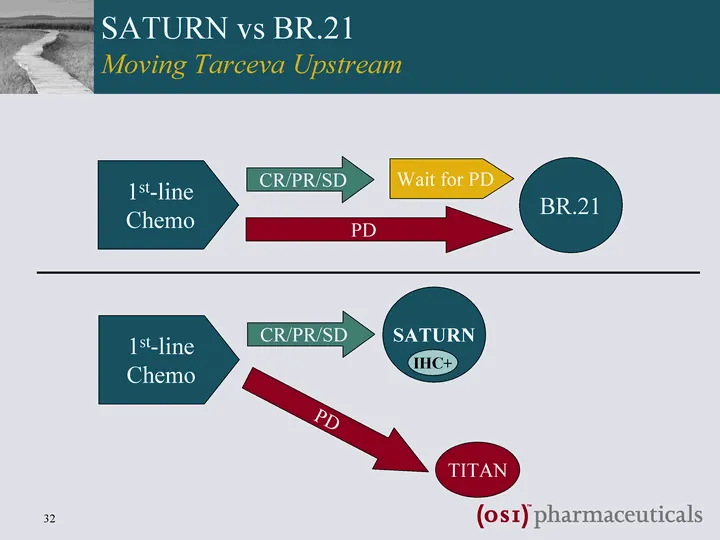
SATURN vs BR.21 Moving Tarceva Upstream 1st-line Chemo PD CR/PR/SD Wait for PD BR.21 1st-line Chemo PD CR/PR/SD SATURN TITAN IHC+
Slide 33: BR.21 Subset Data
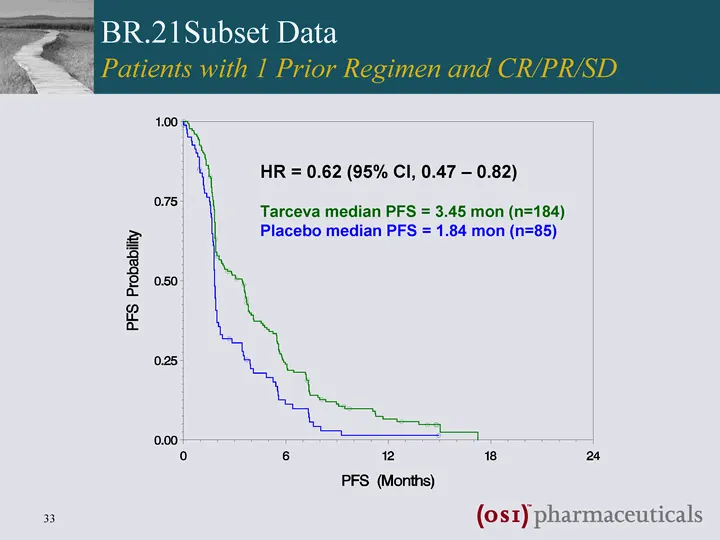
BR.21Subset Data Patients with 1 Prior Regimen and CR/PR/SD HR = 0.62 (95% CI, 0.47 - 0.82) Tarceva median PFS = 3.45 mon (n=184) Placebo median PFS = 1.84 mon (n=85)
Slide 34: BR.21 Subset Data: PFS by EGFR Expression
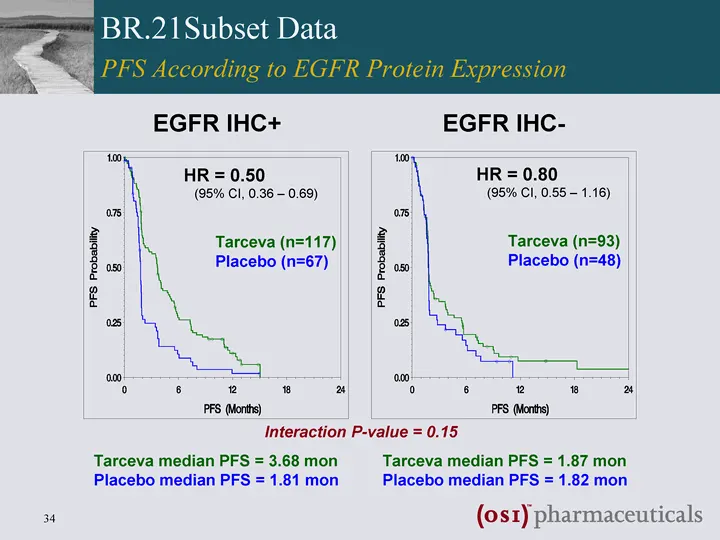
BR.21Subset Data PFS According to EGFR Protein Expression EGFR IHC+ EGFR IHC- HR = 0.50 (95% CI, 0.36 - 0.69) Tarceva (n=117) Placebo (n=67) HR = 0.80 (95% CI, 0.55 - 1.16) Tarceva (n=93) Placebo (n=48) Tarceva median PFS = 3.68 mon Placebo median PFS = 1.81 mon Tarceva median PFS = 1.87 mon Placebo
Slide 35: BETA-Lung: AT vs T in 2nd-Line NSCLC
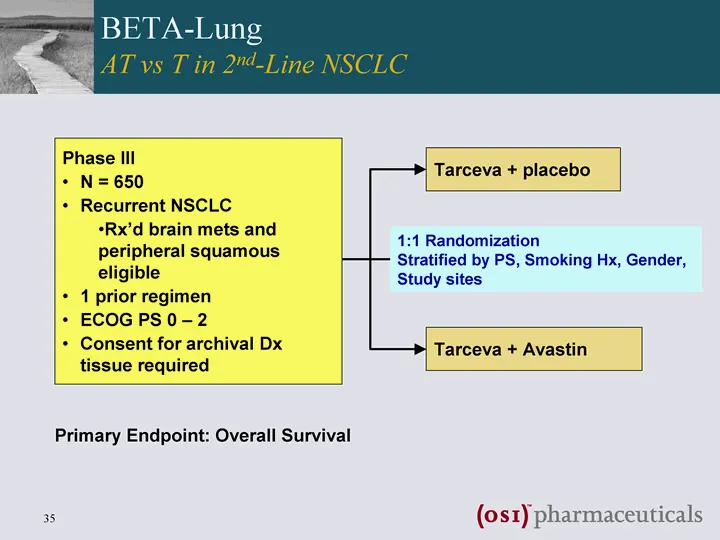
Phase III N = 650 Recurrent NSCLC Rx'd brain mets and peripheral squamous eligible 1 prior regimen ECOG PS 0 - 2 Consent for archival Dx tissue required Tarceva + placebo Tarceva + Avastin 1:1 Randomization Stratified by PS, Smoking Hx, Gender, Study sites Primary Endpoint: Overall Survival BETA-Lun
Slide 36: Tarceva/Avastin Combination Regimen
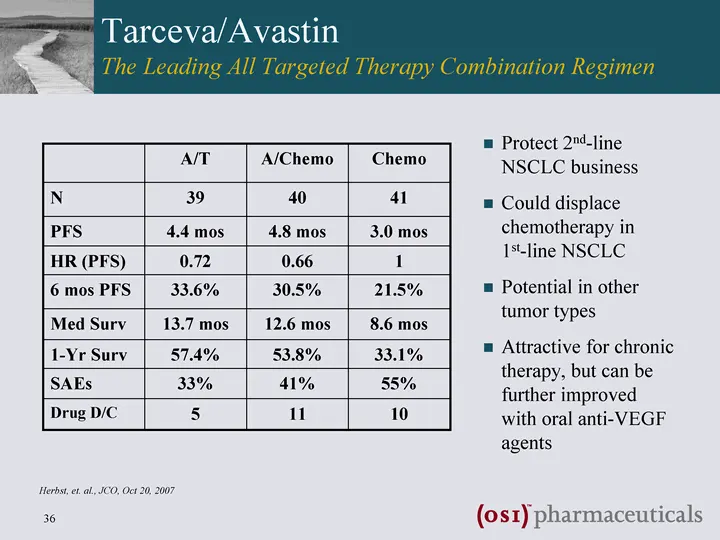
Tarceva/Avastin The Leading All Targeted Therapy Combination Regimen Protect 2nd-line NSCLC business Could displace chemotherapy in 1st-line NSCLC Potential in other tumor types Attractive for chronic therapy, but can be further improved with oral anti-VEGF agents A/T A/Chemo Chemo N 39 40 41 PFS 4.
Slide 37: Tarceva Potential Growth Drivers
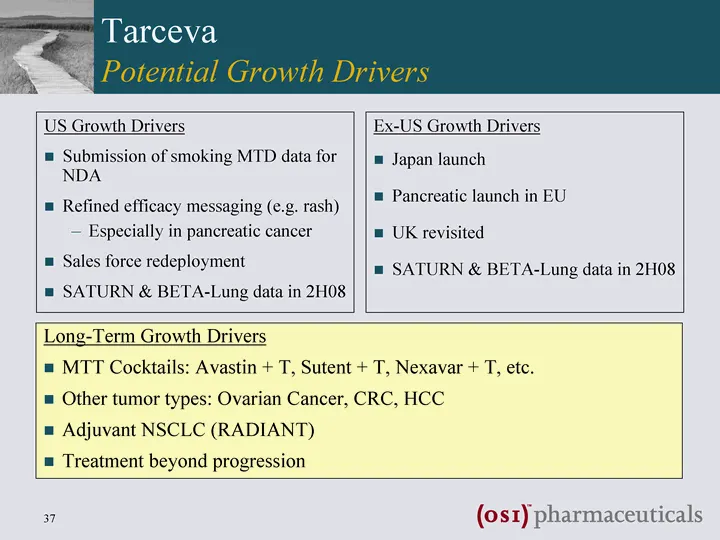
Tarceva Potential Growth Drivers US Growth Drivers Submission of smoking MTD data for NDA Refined efficacy messaging (e.g. rash) Especially in pancreatic cancer Sales force redeployment SATURN & BETA-Lung data in 2H08 Ex-US Growth Drivers Japan launch Pancreatic launch in EU UK revisited SATURN & BE
Slide 38: Tarceva Other Tumor Types
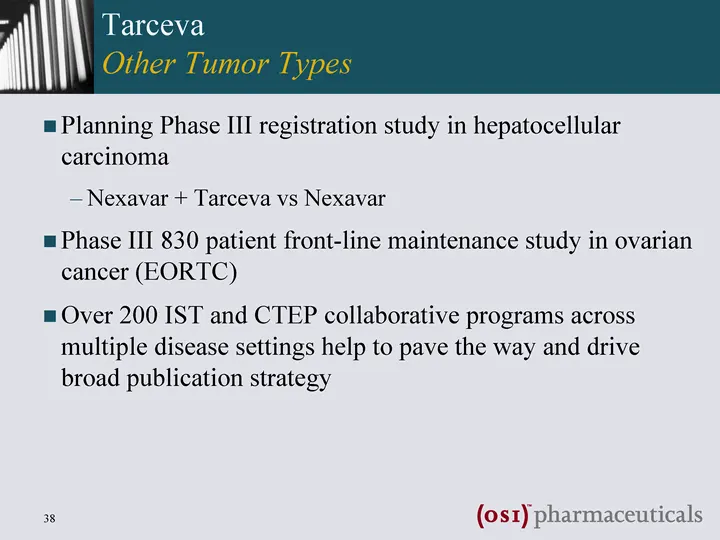
Tarceva Other Tumor Types Planning Phase III registration study in hepatocellular carcinoma Nexavar + Tarceva vs Nexavar Phase III 830 patient front-line maintenance study in ovarian cancer (EORTC) Over 200 IST and CTEP collaborative programs across multiple disease settings help to pave the way and
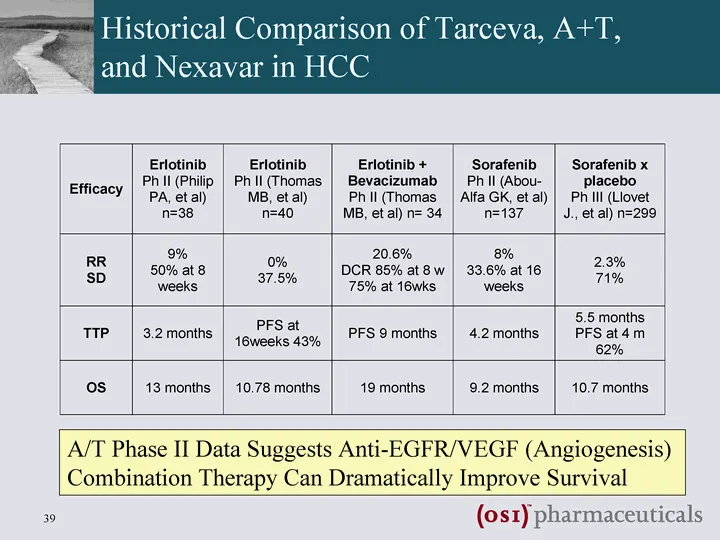
Slide 39: Historical Comparison of Tarceva, A+T, and Nexavar in HCC
Historical Comparison of Tarceva, A+T, and Nexavar in HCC A/T Phase II Data Suggests Anti-EGFR/VEGF (Angiogenesis) Combination Therapy Can Dramatically Improve Survival
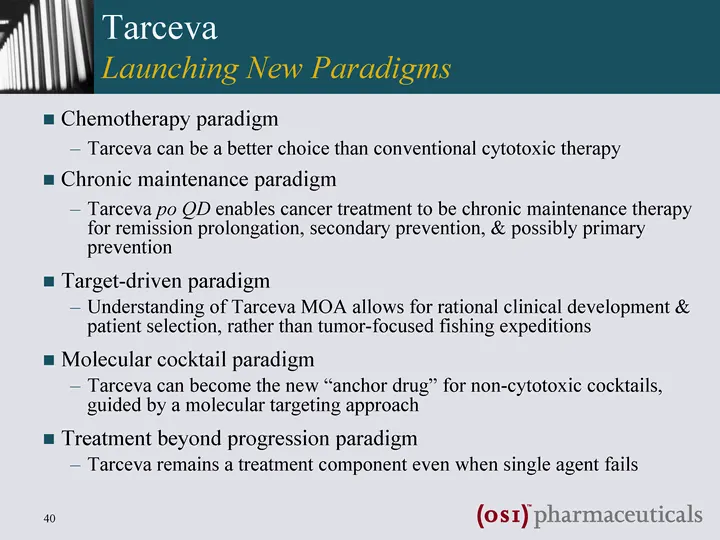
Slide 40: Tarceva Launching New Paradigms
Tarceva Launching New Paradigms Chemotherapy paradigm Tarceva can be a better choice than conventional cytotoxic therapy Chronic maintenance paradigm Tarceva po QD enables cancer treatment to be chronic maintenance therapy for remission prolongation, secondary prevention, & possibly primary preventi
Slide 41: Drug Discovery & Translational Research Focused on EMT
Drug Discovery & Translational Research Focused on EMT David M. Epstein, Ph.D. Senior Vice President, OSI Oncology
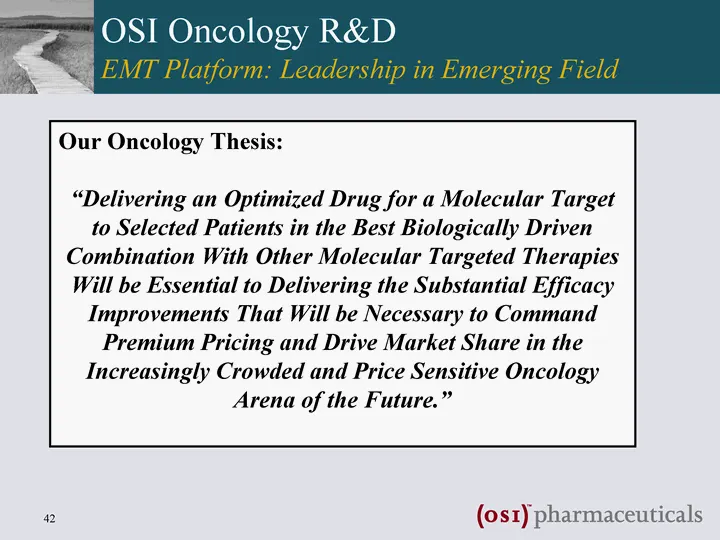
Slide 42: OSI Oncology R&D EMT Platform
OSI Oncology R&D EMT Platform: Leadership in Emerging Field Our Oncology Thesis: "Delivering an Optimized Drug for a Molecular Target to Selected Patients in the Best Biologically Driven Combination With Other Molecular Targeted Therapies Will be Essential to Delivering the Substantial Efficacy Impr
Slide 43: EMT Research & Development Thesis
Epithelial-to-Mesenchymal Transition Research & Development Thesis Focusing on EMT provides OSI the opportunity to Target unique tumor processes Design rational molecular targeted therapies Develop rational MTT combinations Link targets to molecular markers of progression ? Patient selection markers
Slide 44: EMT Research Thesis Topics
Epithelial-to-Mesenchymal Transition Research & Development Thesis Topics, Issues, How we are thinking about EMT What is EMT and how do we target it? Tumor heterogeneity and multi-targeting Alignment of our current portfolio with the OSI EMT thesis AVEO collaboration
Slide 45: Epithelial-to-Mesenchymal Transition Essential for Normal Development
Epithelial-to-Mesenchymal Transition Essential for Normal Development EMT is an essential cellular program for embryonic development Allows for mobilization of epithelial cells and movement to new sites to form organs and tissue In normal EMT, Epithelial cells de-differentiate to form Mesenchymal ce
Slide 46: Pathological EMT Linked to Solid Tumor Progression
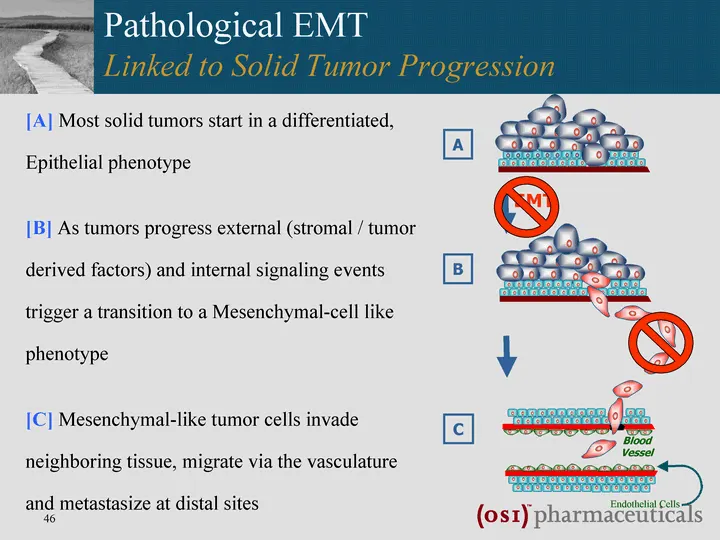
Pathological EMT Linked to Solid Tumor Progression [A] Most solid tumors start in a differentiated, Epithelial phenotype [B] As tumors progress external (stromal / tumor derived factors) and internal signaling events trigger a transition to a Mesenchymal-cell like phenotype [C] Mesenchymal-like tumo
Slide 47: EMT Focus Evolved from Tarceva Response
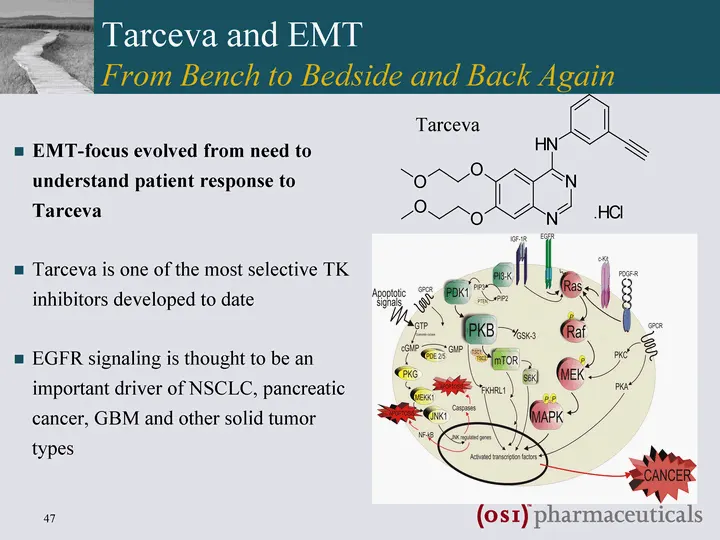
EMT-focus evolved from need to understand patient response to Tarceva Tarceva is one of the most selective TK inhibitors developed to date EGFR signaling is thought to be an important driver of NSCLC, pancreatic cancer, GBM and other solid tumor types Tarceva Tarceva and EMT From Bench to Bedside an
Slide 48: Tarceva Biomarkers & EMT
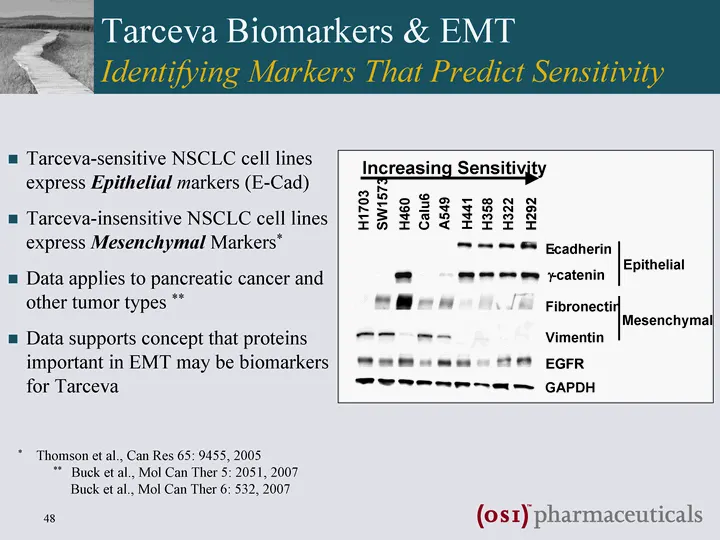
Tarceva-sensitive NSCLC cell lines express Epithelial markers (E-Cad) Tarceva-insensitive NSCLC cell lines express Mesenchymal Markers* Data applies to pancreatic cancer and other tumor types ** Data supports concept that proteins important in EMT may be biomarkers for Tarceva E - - cadherin Fibrone
Slide 49: Clinical Correlates of EMT and Sensitivity
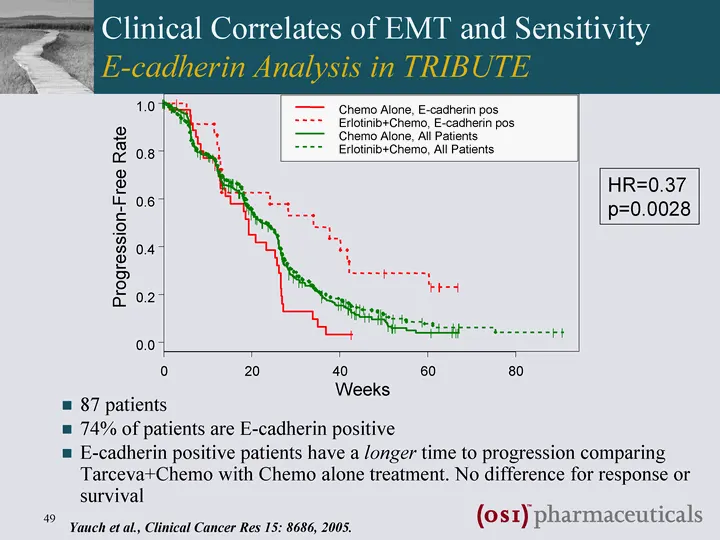
87 patients 74% of patients are E-cadherin positive E-cadherin positive patients have a longer time to progression comparing Tarceva+Chemo with Chemo alone treatment. No difference for response or survival | | | | | | | | | | | | | | | | | | | | | | | | | | | | | | | | | | | | | | | | | | | | | | |
Slide 50: Tarceva Biomarkers: Her3 Mediator of Akt
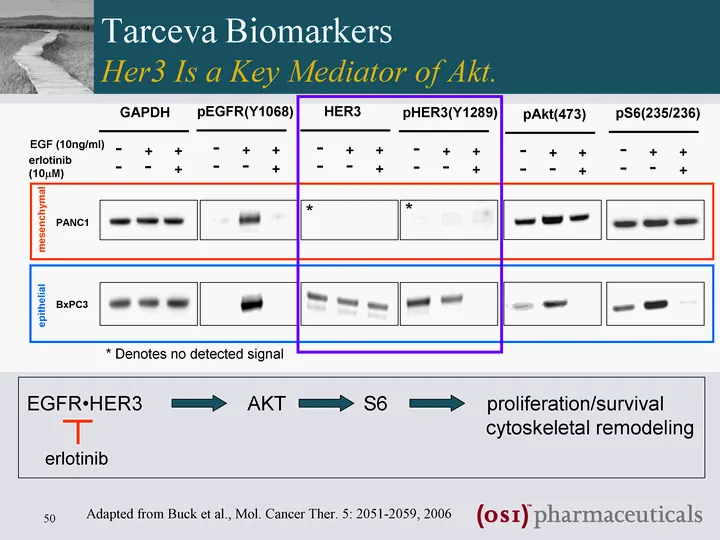
* Denotes no detected signal PANC1 EGF (10ng/ml) erlotinib (10mM) BxPC3 + + + GAPDH + + + pHER3(Y1289) + + + HER3 + + + pEGFR(Y1068) pAkt(473) + + + pS6(235/236) + + + mesenchymal epithelial EGFR•HER3 AKT S6 proliferation/survival cytoskeletal remodeling erlotinib * * Adapted from Buck et al., Mol.
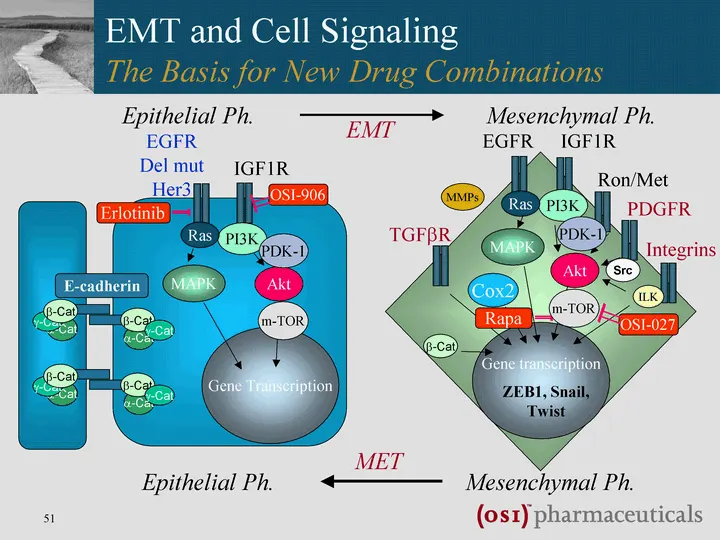
Slide 51: EMT and Cell Signaling: Basis for New Drug Combinations
EMT and Cell Signaling The Basis for New Drug Combinations EGFR Akt MAPK IGF1R PI3K Ras ZEB1, Snail, Twist Integrins Cox2 Ron/Met PDGFR TGFbR Gene transcription ILK b-Cat Epithelial Ph. Mesenchymal Ph. EMT Gene Transcription Akt MAPK EGFR Del mut Her3 IGF1R PI3K Ras a-Cat b-Cat g-Cat Erlotinib a-Cat
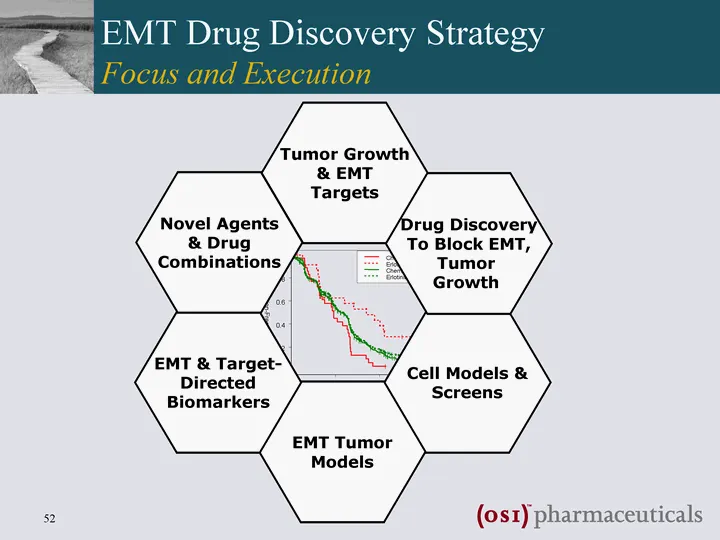
Slide 52: EMT Drug Discovery Strategy
EMT Drug Discovery Strategy Focus and Execution Cell Models & Screens Tumor Growth & EMT Targets Drug Discovery To Block EMT, Tumor Growth EMT Tumor Models EMT & Target- Directed Biomarkers Novel Agents & Drug Combinations
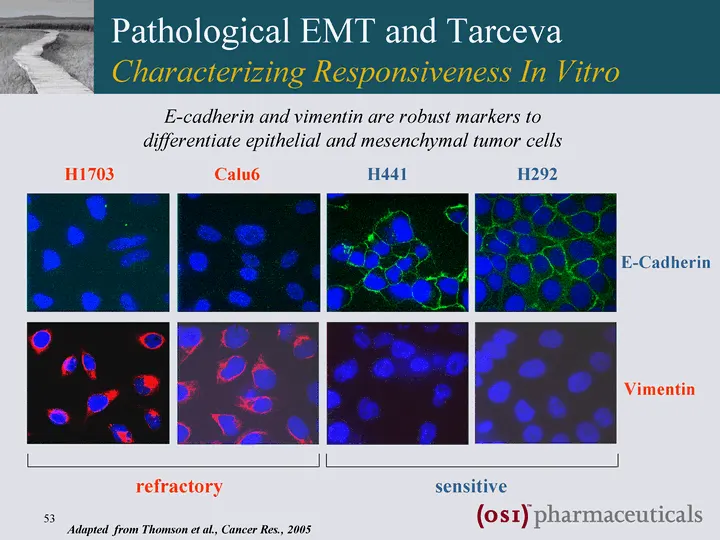
Slide 53: Pathological EMT and Tarceva
Pathological EMT and Tarceva Characterizing Responsiveness In Vitro H1703 Calu6 H441 H292 E-Cadherin Vimentin sensitive refractory Adapted from Thomson et al., Cancer Res., 2005 E-cadherin and vimentin are robust markers to differentiate epithelial and mesenchymal tumor cells
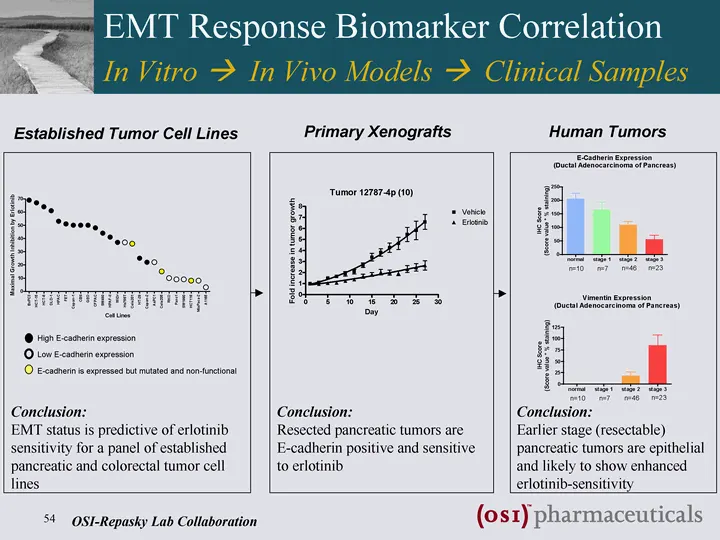
Slide 54: EMT Response Biomarker Correlation
EMT Response Biomarker Correlation In Vitro ? In Vivo Models ? Clinical Samples High E-cadherin expression Low E-cadherin expression E-cadherin is expressed but mutated and non-functional Established Tumor Cell Lines Human Tumors Primary Xenografts Conclusion: Resected pancreatic tumors are E-cadher
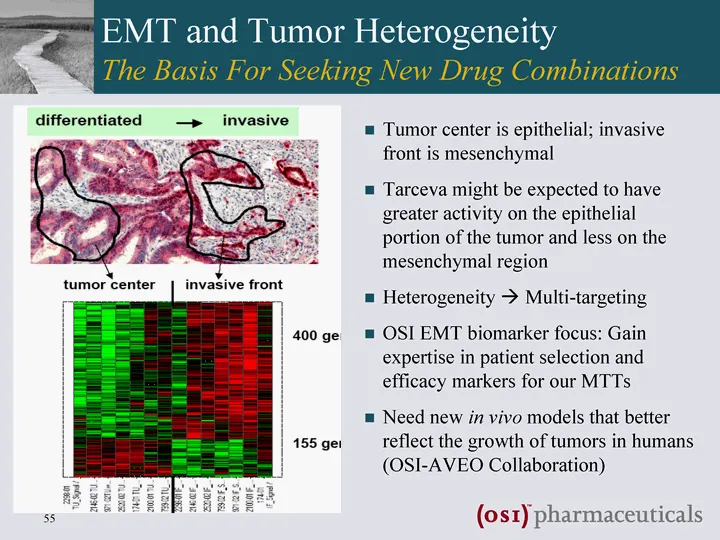
Slide 55: EMT and Tumor Heterogeneity
EMT and Tumor Heterogeneity The Basis For Seeking New Drug Combinations Tumor center is epithelial; invasive front is mesenchymal Tarceva might be expected to have greater activity on the epithelial portion of the tumor and less on the mesenchymal region Heterogeneity ? Multi-targeting OSI EMT bioma
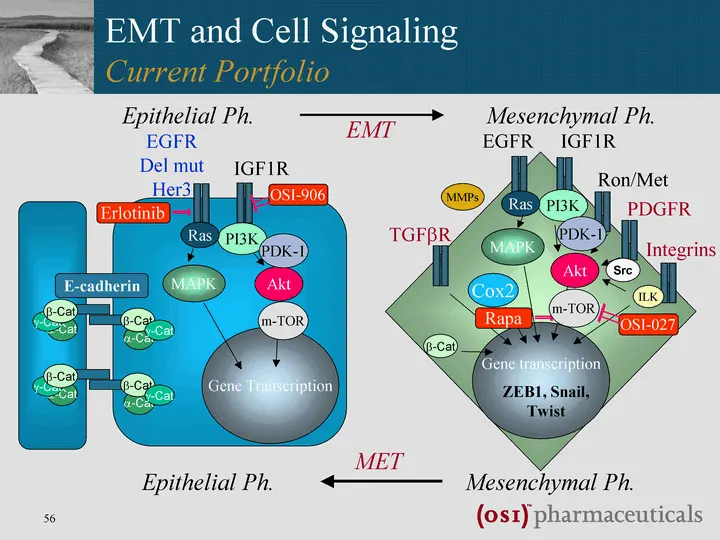
Slide 56: EMT and Cell Signaling: Current Portfolio
EMT and Cell Signaling Current Portfolio EGFR Akt MAPK IGF1R PI3K Ras ZEB1, Snail, Twist Integrins Cox2 Ron/Met PDGFR TGFbR Gene transcription ILK b-Cat Epithelial Ph. Mesenchymal Ph. EMT Gene Transcription Akt MAPK EGFR Del mut Her3 IGF1R PI3K Ras a-Cat b-Cat g-Cat Erlotinib a-Cat g-Cat b-Cat E-cad
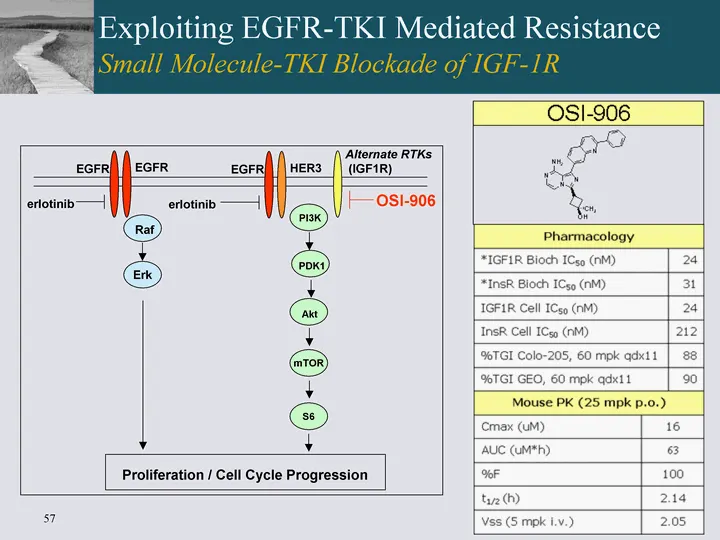
Slide 57: Exploiting EGFR-TKI Mediated Resistance
Alternate RTKs (IGF1R) EGFR EGFR Raf Erk erlotinib Proliferation / Cell Cycle Progression PI3K Akt mTOR S6 PDK1 OSI-906 EGFR HER3 erlotinib Exploiting EGFR-TKI Mediated Resistance Small Molecule-TKI Blockade of IGF-1R
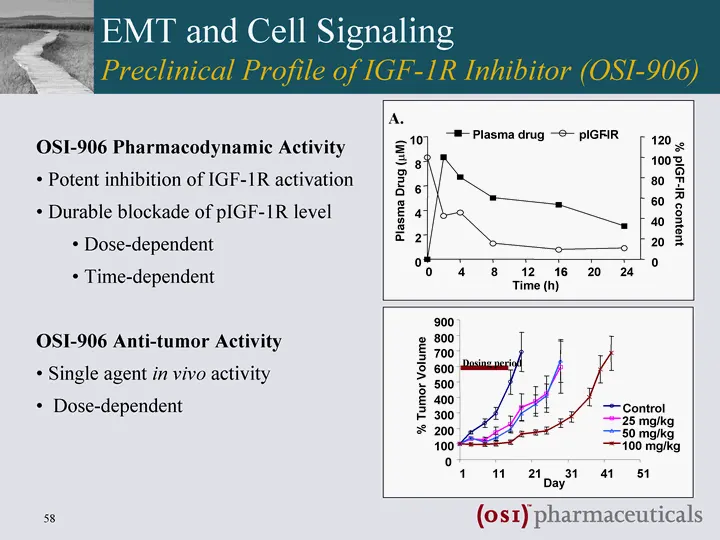
Slide 58: Preclinical Profile of IGF-1R Inhibitor OSI-906
EMT and Cell Signaling Preclinical Profile of IGF-1R Inhibitor (OSI-906) A. 0 4 8 12 16 20 24 0 2 4 6 8 10 0 Time (h) Plasma drug pIGF - - IR Plasma Drug (mM) 0 4 8 12 16 24 2 4 6 8 20 40 60 80 100 120 % pIGF-IR content 0 100 200 300 400 500 600 700 800 900 1 11 21 31 41 51 Day % Tumor Volume Contro
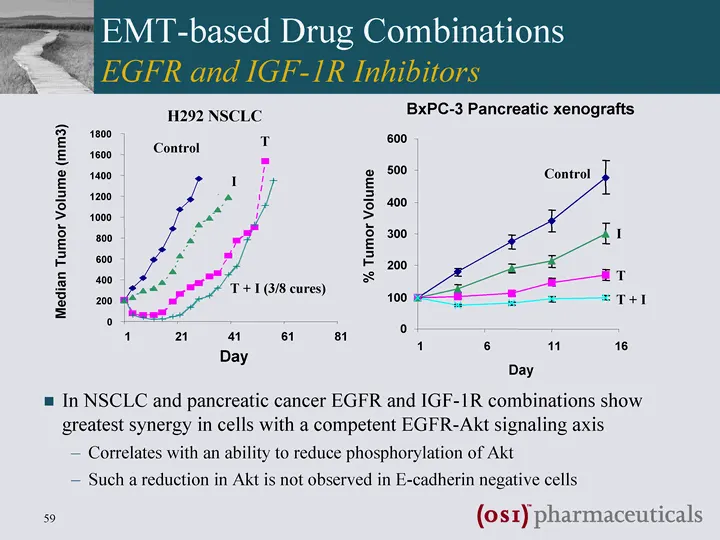
Slide 59: EMT-based Drug Combinations: EGFR and IGF-1R
In NSCLC and pancreatic cancer EGFR and IGF-1R combinations show greatest synergy in cells with a competent EGFR-Akt signaling axis Correlates with an ability to reduce phosphorylation of Akt Such a reduction in Akt is not observed in E-cadherin negative cells EMT-based Drug Combinations EGFR and IG
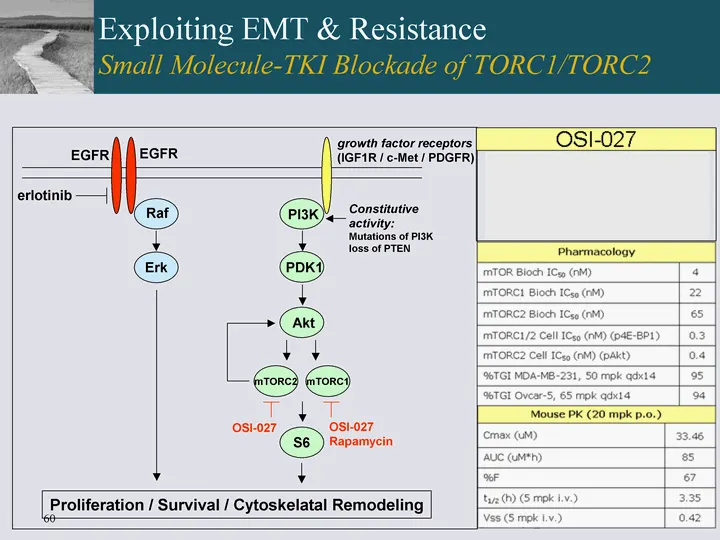
Slide 60: Small Molecule-TKI Blockade of TORC1/TORC2
Exploiting EMT & Resistance Small Molecule-TKI Blockade of TORC1/TORC2 EGFR EGFR growth factor receptors (IGF1R / c-Met / PDGFR) PI3K Akt Raf mTORC2 S6 Erk erlotinib Proliferation / Survival / Cytoskelatal Remodeling Constitutive activity: Mutations of PI3K loss of PTEN PDK1 mTORC1 OSI-027 Rapamycin
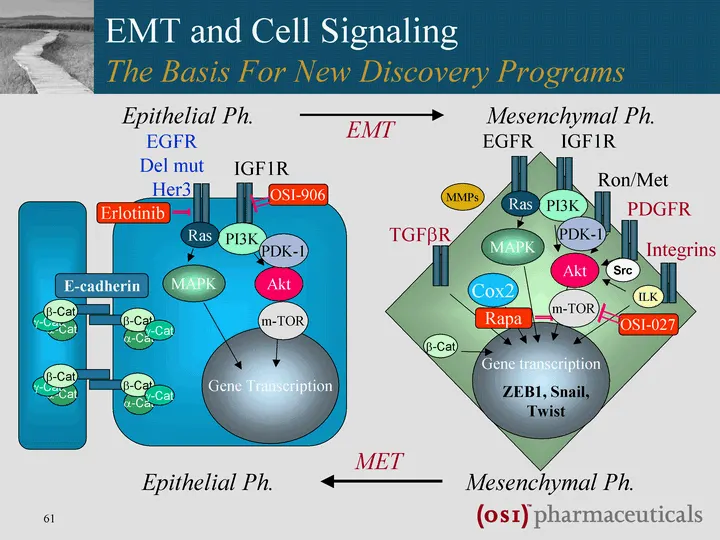
Slide 61: EMT and Cell Signaling: New Discovery Programs
EMT and Cell Signaling The Basis For New Discovery Programs EGFR Akt MAPK IGF1R PI3K Ras ZEB1, Snail, Twist Integrins Cox2 Ron/Met PDGFR TGFbR Gene transcription ILK b-Cat Epithelial Ph. Mesenchymal Ph. EMT Gene Transcription Akt MAPK EGFR Del mut Her3 IGF1R PI3K Ras a-Cat b-Cat g-Cat Erlotinib a-Ca
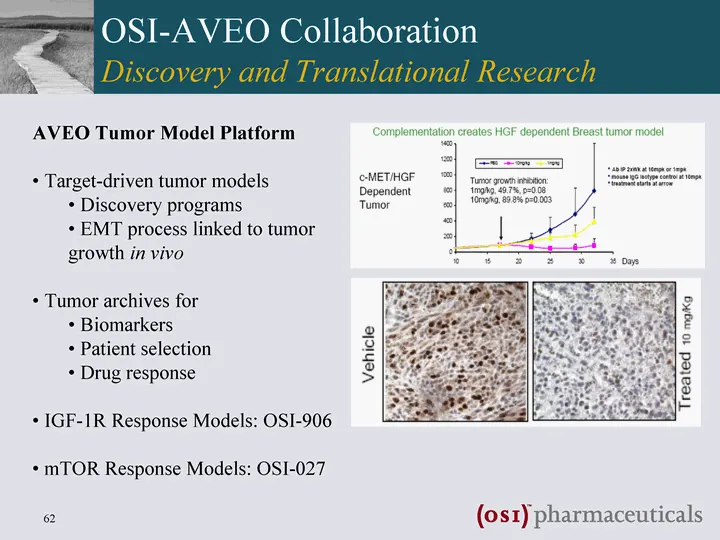
Slide 62: OSI-AVEO Collaboration
OSI-AVEO Collaboration Discovery and Translational Research Discovery and Translational Research Discovery and Translational Research Discovery and Translational Research Discovery and Translational Research AVEO Tumor Model Platform Target-driven tumor models Discovery programs EMT process linked t
Slide 63: EMT Drug Discovery Strategy
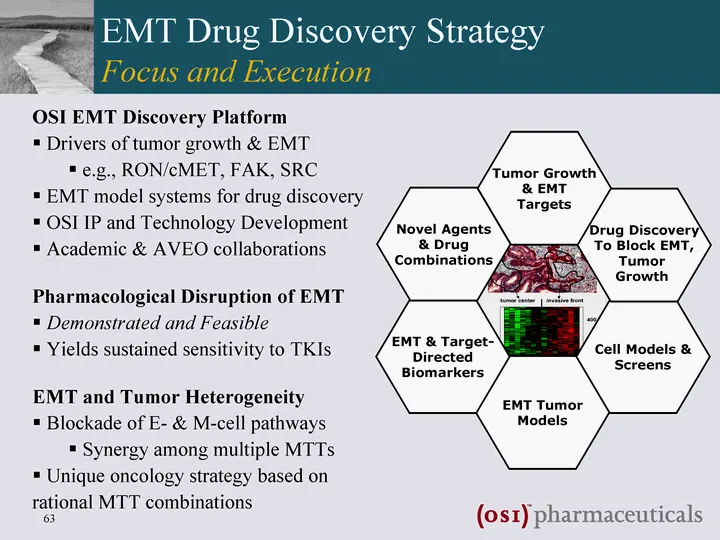
EMT Drug Discovery Strategy Focus and Execution OSI EMT Discovery Platform Drivers of tumor growth & EMT e.g., RON/cMET, FAK, SRC EMT model systems for drug discovery OSI IP and Technology Development Academic & AVEO collaborations Pharmacological Disruption of EMT Demonstrated and Feasible Yields s
Slide 64: Summary: Focus on EMT & Drug Discovery
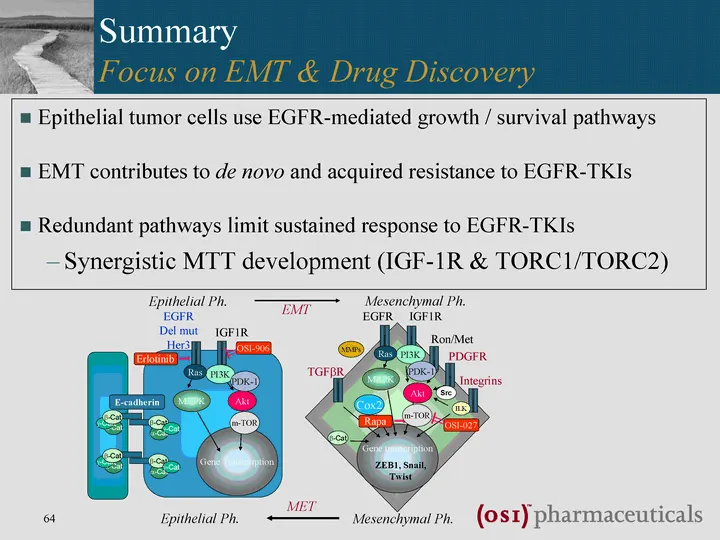
Summary Focus on EMT & Drug Discovery Epithelial tumor cells use EGFR-mediated growth / survival pathways EMT contributes to de novo and acquired resistance to EGFR-TKIs Redundant pathways limit sustained response to EGFR-TKIs Synergistic MTT development (IGF-1R & TORC1/TORC2)
Slide 65: Summary of OSI EMT Research
Summary of OSI EMT Research Building An EMT-Focused Discovery Engine Pioneered understanding of EMT and response to EGFR-TKIs Developing EMT models to understand EGFR TKI resistance, drug combinations, and new EMT-targeted drugs Identified and validated EMT targets for drug development such as RON/M
Slide 66: Development Programs
Development Programs Karsten Witt, M.D. Vice President, Clinical Development, OSI Oncology

Slide 67: OSI-906
(os1) pharmaceuticals OSI-906
Slide 68: IGF-1R as an Anti-Cancer Target
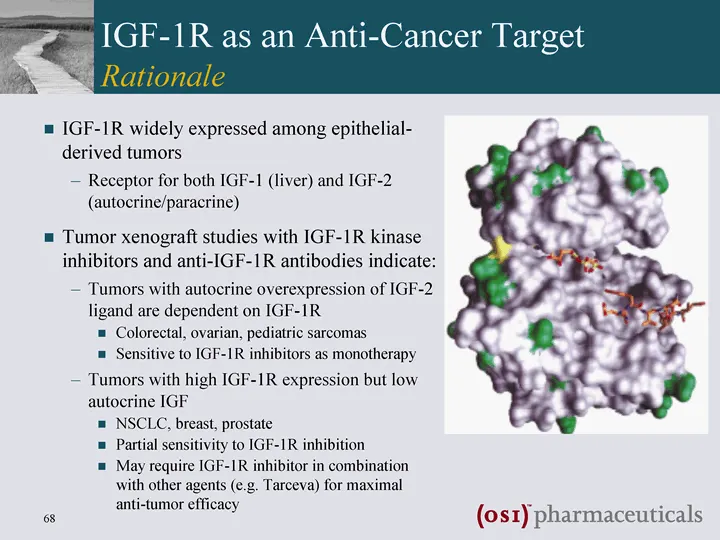
IGF-1R as an Anti-Cancer Target Rationale IGF-1R widely expressed among epithelial- derived tumors Receptor for both IGF-1 (liver) and IGF-2 (autocrine/paracrine) Tumor xenograft studies with IGF-1R kinase inhibitors and anti-IGF-1R antibodies indicate: Tumors with autocrine overexpression of IGF-2
Slide 69: IGF-1R Inhibitor OSI-906 Proof of Concept
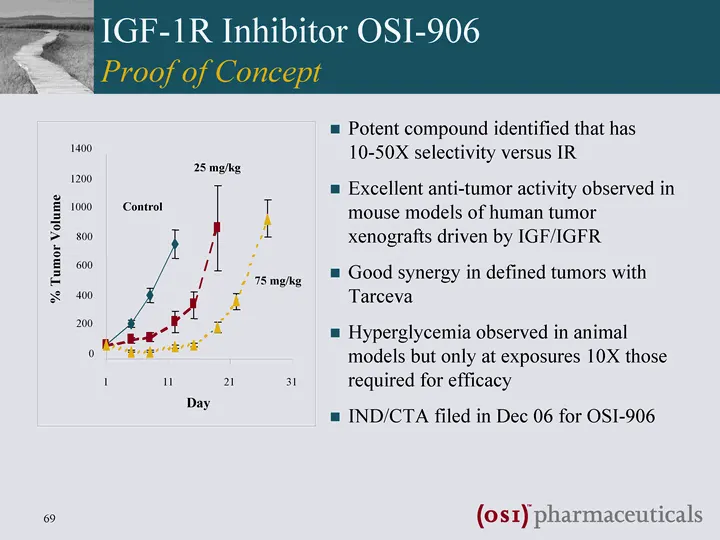
IGF-1R Inhibitor OSI-906 Proof of Concept Potent compound identified that has 10-50X selectivity versus IR Excellent anti-tumor activity observed in mouse models of human tumor xenografts driven by IGF/IGFR Good synergy in defined tumors with Tarceva Hyperglycemia observed in animal models but only
Slide 70: OSI-906 Differentiation Strategy
OSI-906 Differentiation Strategy First-in-Class oral IGF-1R TKI Potentially more effective than antibodies given its inhibition of the pAKT survival pathway Convenience and flexibility of oral administration Shorter half-life Improved ability to manage adverse effects Short-term discontinuation for
Slide 71: OSI-906-101 Accelerated Phase I Program
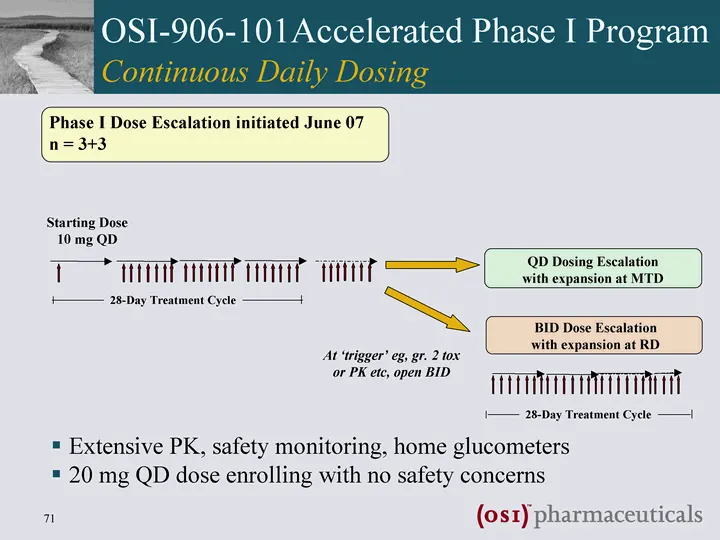
OSI-906-101Accelerated Phase I Program Continuous Daily Dosing Phase I Dose Escalation initiated June 07 n = 3+3 At 'trigger' eg, gr. 2 tox or PK etc, open BID QD Dosing Escalation with expansion at MTD BID Dose Escalation with expansion at RD Starting Dose 10 mg QD 28-Day Treatment Cycle 28-Day Tre
Slide 72: OSI-906-102 Accelerated Phase I Program
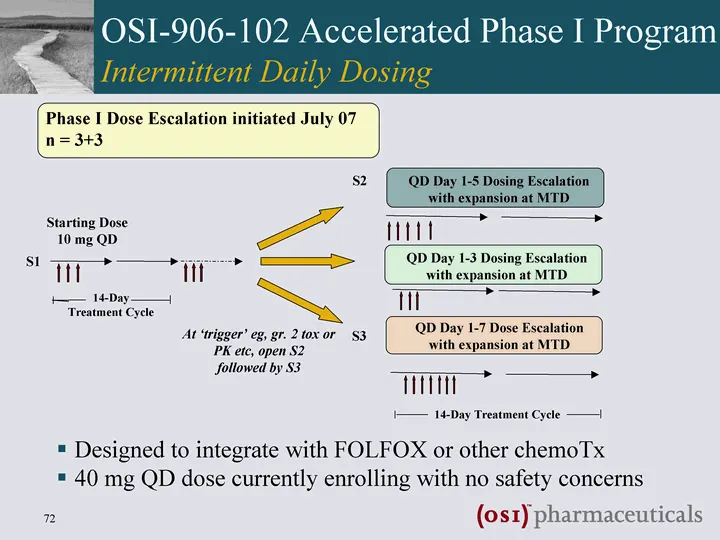
OSI-906-102 Accelerated Phase I Program Intermittent Daily Dosing At 'trigger' eg, gr. 2 tox or PK etc, open S2 followed by S3 QD Day 1-3 Dosing Escalation with expansion at MTD Starting Dose 10 mg QD 14-Day Treatment Cycle 14-Day Treatment Cycle Designed to integrate with FOLFOX or other chemoTx 40
Slide 73: OSI-906 2008 Deliverables
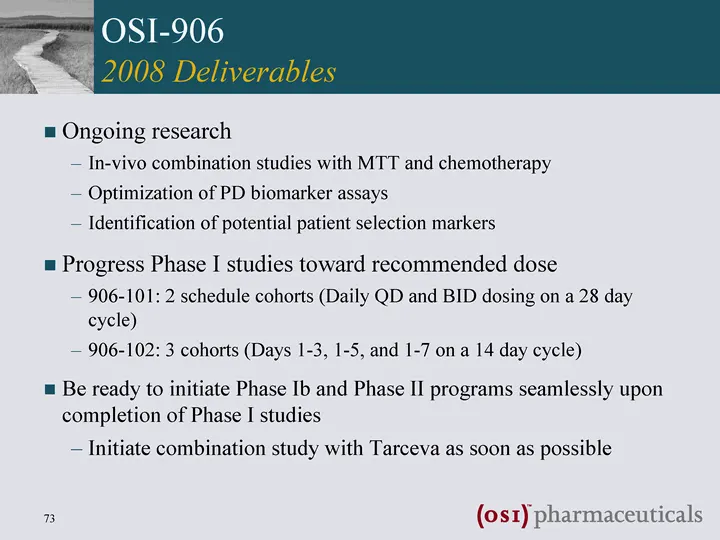
OSI-906 2008 Deliverables Ongoing research In-vivo combination studies with MTT and chemotherapy Optimization of PD biomarker assays Identification of potential patient selection markers Progress Phase I studies toward recommended dose 906-101: 2 schedule cohorts (Daily QD and BID dosing on a 28 day
Slide 74: OSI-906-201 Phase I/II Tarceva Combination
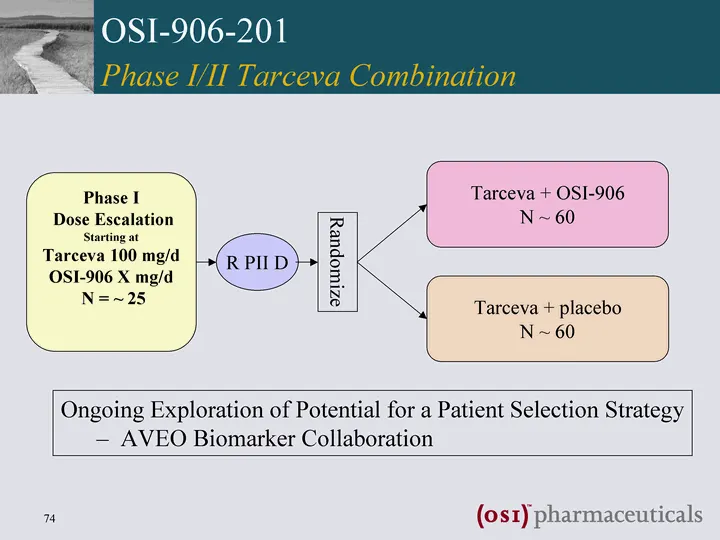
OSI-906-201 Phase I/II Tarceva Combination Tarceva + OSI-906 N ~ 60 Tarceva + placebo N ~ 60 Phase I Dose Escalation Starting at Tarceva 100 mg/d OSI-906 X mg/d N = ~ 25 R PII D Randomize Ongoing Exploration of Potential for a Patient Selection Strategy AVEO Biomarker Collaboration
Slide 75: Summary of OSI-906 Clinical Development Plan
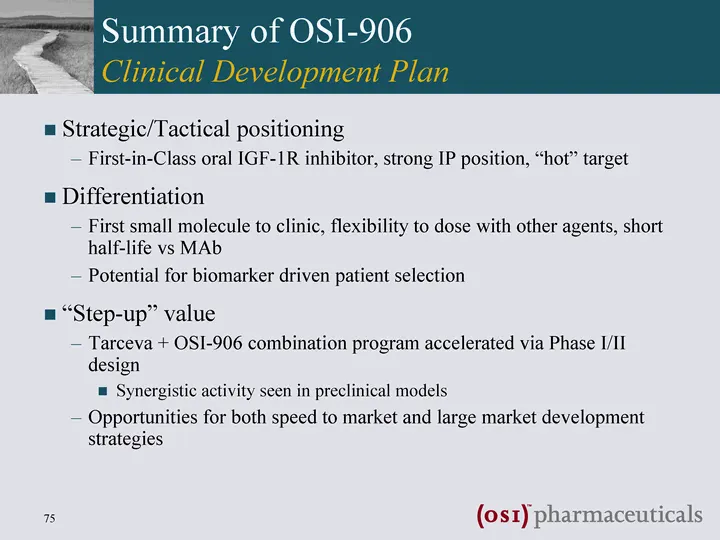
Summary of OSI-906 Clinical Development Plan Strategic/Tactical positioning First-in-Class oral IGF-1R inhibitor, strong IP position, "hot" target Differentiation First small molecule to clinic, flexibility to dose with other agents, short half-life vs MAb Potential for biomarker driven patient sele

Slide 76: OSI-027
(os1) pharmaceuticals OSI-027
Slide 77: mTOR Kinase Inhibitor Project
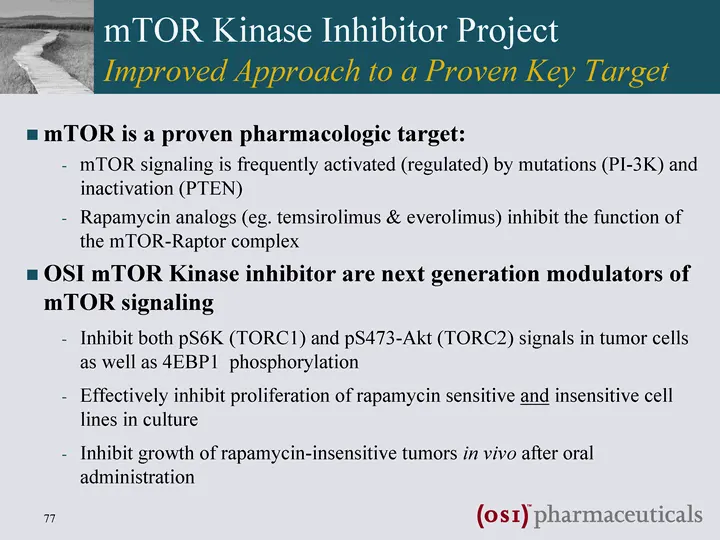
mTOR Kinase Inhibitor Project Improved Approach to a Proven Key Target mTOR is a proven pharmacologic target: mTOR signaling is frequently activated (regulated) by mutations (PI-3K) and inactivation (PTEN) Rapamycin analogs (eg. temsirolimus & everolimus) inhibit the function of the mTOR-Raptor comp
Slide 78: OSI-027 Status Update
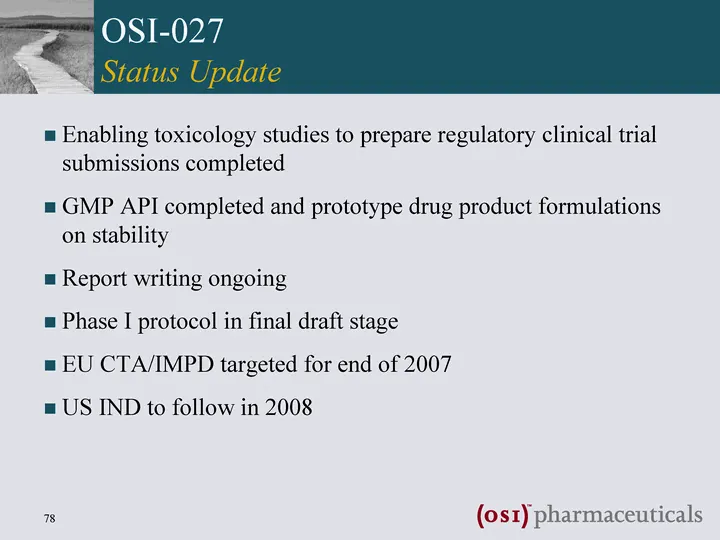
OSI-027 Status Update Enabling toxicology studies to prepare regulatory clinical trial submissions completed GMP API completed and prototype drug product formulations on stability Report writing ongoing Phase I protocol in final draft stage EU CTA/IMPD targeted for end of 2007 US IND to follow in 20
Slide 79: OSI-027-101 Phase I: Cyclic and Continuous Dosing
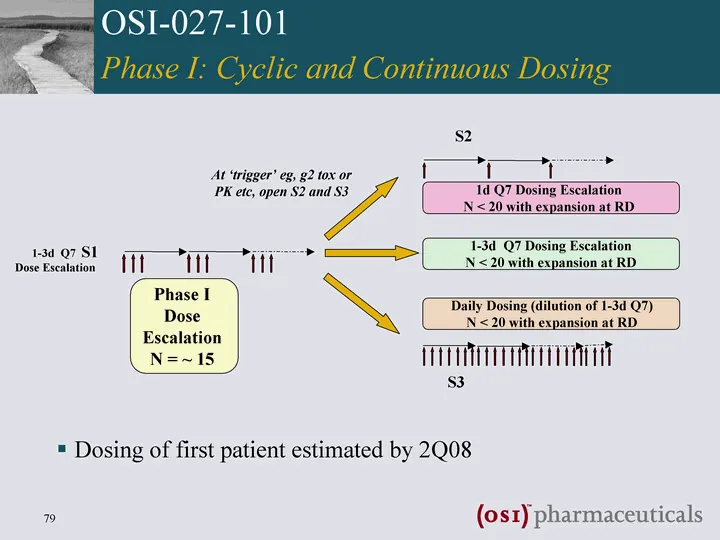
Phase I Dose Escalation N = ~ 15 OSI-027-101 Phase I: Cyclic and Continuous Dosing Daily Dosing (dilution of 1-3d Q7) N < 20 with expansion at RD S3 At 'trigger' eg, g2 tox or PK etc, open S2 and S3 S2 1d Q7 Dosing Escalation N < 20 with expansion at RD 1-3d Q7 Dosing Escalation N < 20 with expansio
Slide 80: OSI-027 Dose Scheduling Study in IGROV1 Tumor Model
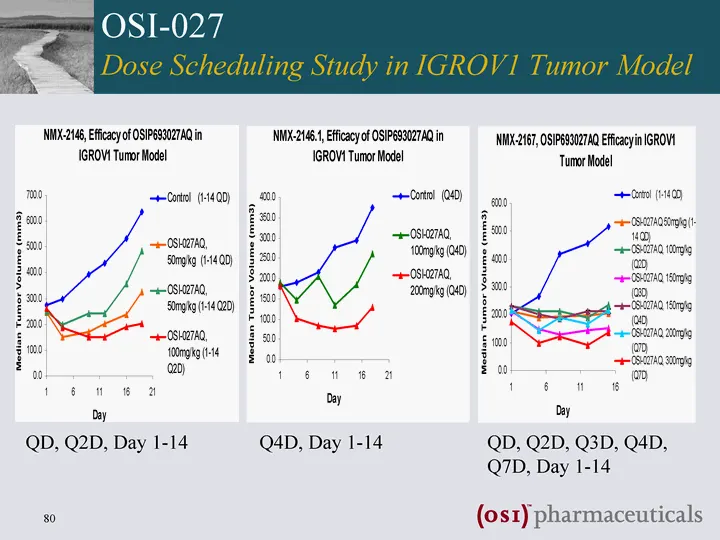
OSI-027 Dose Scheduling Study in IGROV1 Tumor Model QD, Q2D, Day 1-14 Q4D, Day 1-14 QD, Q2D, Q3D, Q4D, Q7D, Day 1-14
Slide 81: OSI-027 Differentiation Strategy
OSI-027 Differentiation Strategy Torc1 and Torc2 inhibition vs Torc1 only for rapalogues Orally available small molecule with predictable PK/exposure compared to rapalogues Active in many tumor cell lines and xenografts: rapalogue sensitive and resistant Good opportunity for first and Best-in-Class

Slide 82: OSI-930
(os1) pharmaceuticals OSI-930
Slide 83: Dual Kit/KDR Inhibitor Rationale
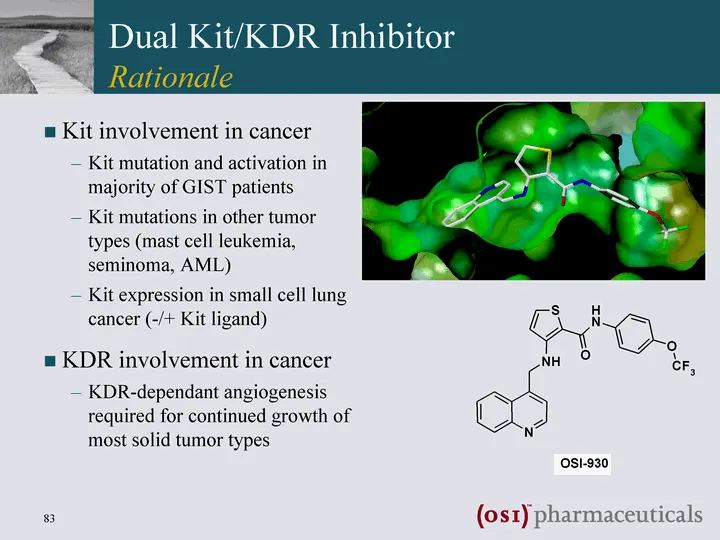
Dual Kit/KDR Inhibitor Rationale Kit involvement in cancer Kit mutation and activation in majority of GIST patients Kit mutations in other tumor types (mast cell leukemia, seminoma, AML) Kit expression in small cell lung cancer (-/+ Kit ligand) KDR involvement in cancer KDR-dependant angiogenesis re
Slide 84: Dual Kit/KDR Inhibitor Rationale
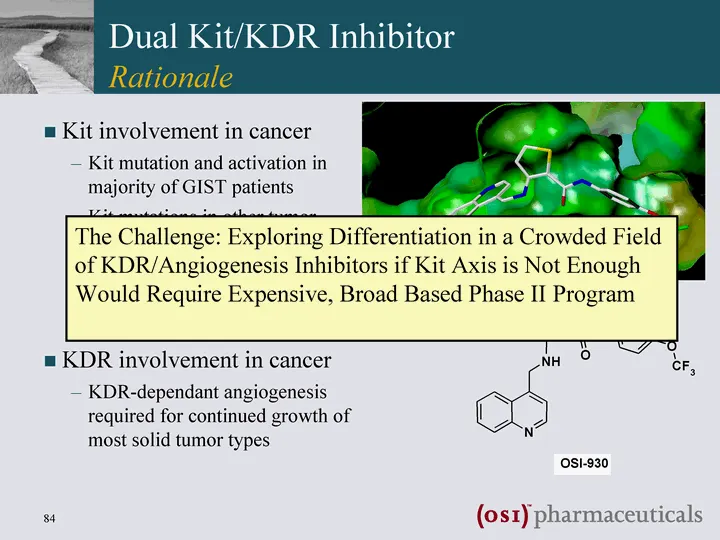
Dual Kit/KDR Inhibitor Rationale Kit involvement in cancer Kit mutation and activation in majority of GIST patients Kit mutations in other tumor types (mast cell leukemia, seminoma, AML) Kit expression in small cell lung cancer (-/+ Kit ligand) KDR involvement in cancer KDR-dependant angiogenesis re
Slide 85: Dual Kit/KDR Inhibitor Current Status
Dual Kit/KDR Inhibitor Current Status OSI-930 Healthy volunteer Phase I study completed (OSI-930-101) PK linear through 300 mg 63 subjects (single dose) 0-300 mg Phase I studies in cancer patients ongoing Single-agent QD and BID dose escalation ongoing (OSI-930-102) Combination with Tarceva initiate
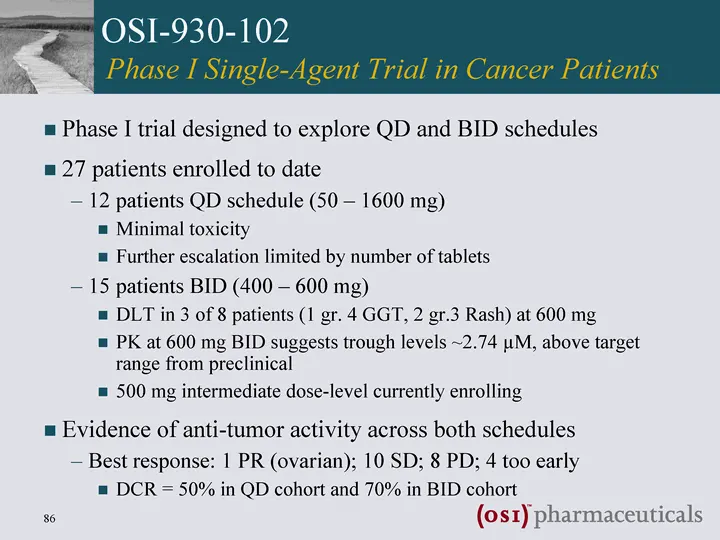
Slide 86: OSI-930-102 Phase I Trial
OSI-930-102 Phase I trial designed to explore QD and BID schedules 27 patients enrolled to date 12 patients QD schedule (50 - 1600 mg) Minimal toxicity Further escalation limited by number of tablets 15 patients BID (400 - 600 mg) DLT in 3 of 8 patients (1 gr. 4 GGT, 2 gr.3 Rash) at 600 mg PK at 600
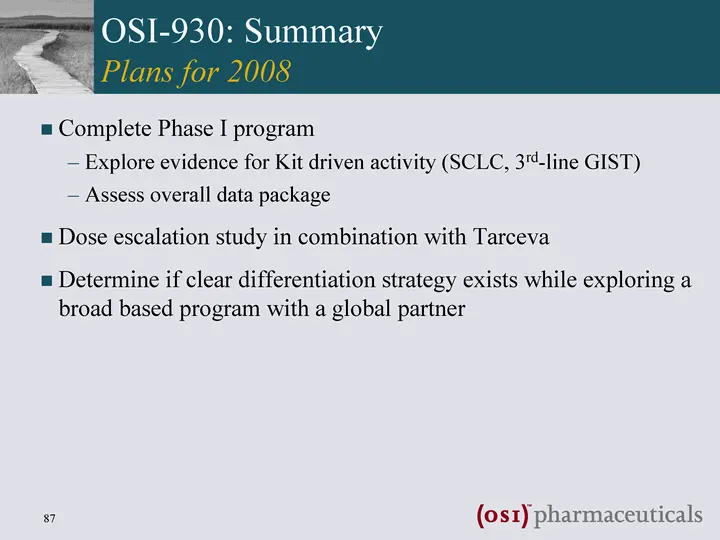
Slide 87: OSI-930: Summary Plans for 2008
Complete Phase I program Explore evidence for Kit driven activity (SCLC, 3rd-line GIST) Assess overall data package Dose escalation study in combination with Tarceva Determine if clear differentiation strategy exists while exploring a broad based program with a global partner OSI-930: Summary Plans

Slide 88: Oncology Q&A
(os1) pharmaceuticals Oncology Q&A (leader)ship
Slide 89: Overview of Diabetes/Obesity Programs
Overview of Diabetes/Obesity Programs Anker Lundemose, M.D., Ph.D. President, (OSI) Prosidion
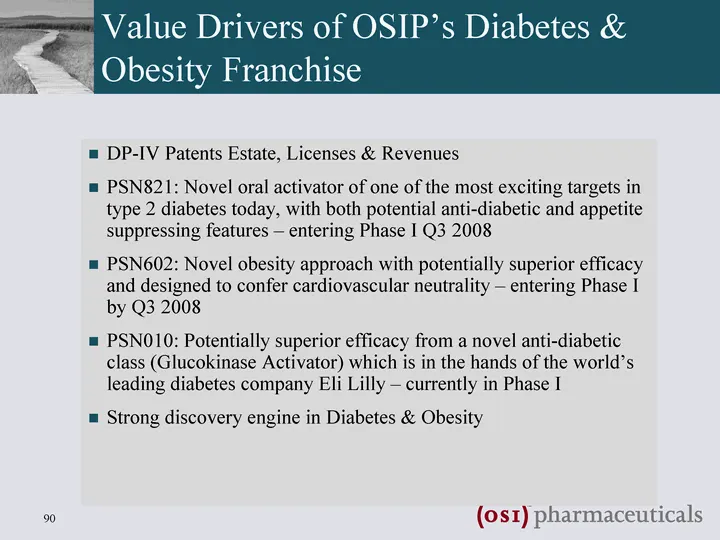
Slide 90: Value Drivers of OSIP's Diabetes & Obesity Franchise
Value Drivers of OSIP's Diabetes & Obesity Franchise DP-IV Patents Estate, Licenses & Revenues PSN821: Novel oral activator of one of the most exciting targets in type 2 diabetes today, with both potential anti-diabetic and appetite suppressing features - entering Phase I Q3 2008 PSN602: Novel obesi
Slide 91: DP-IV Patent Estate & License Portfolio
DP-IV Patent Estate & License Portfolio Strong Potential for Revenue & Cash Flow Ownership/control of patent estate for the use of DP-IV inhibitors for the treatment of Diabetes, as monotherapy and in combination Acquired as part of $35MM acquisition of DP-IV assets from Probiodrug in 2004 Additiona
Slide 92: DP-IV Patent Estate: Januvia Off To A Head Start
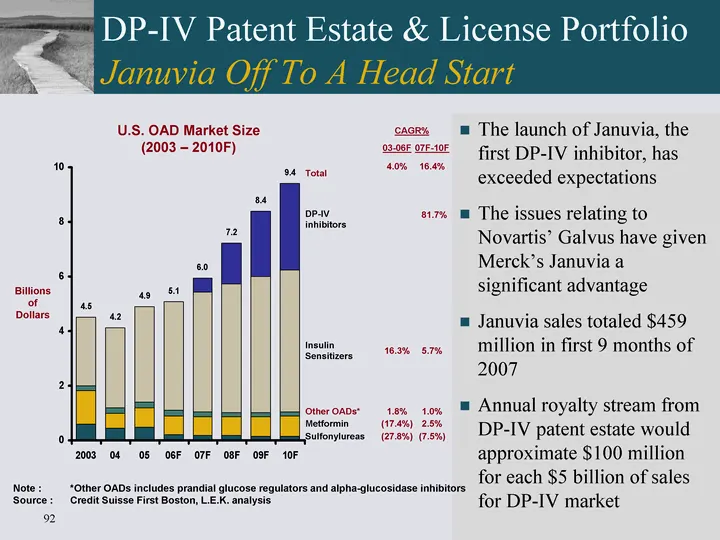
DP-IV Patent Estate & License Portfolio Januvia Off To A Head Start I:\Active\OSP17\Research\[DiabetesMarketResearch_JM_v2.xls]For Slides 2003 04 05 06F 07F 08F 09F 10F Sulfonylureas 0.59 0.46 0.48 0.22 0.18 0.17 0.16 0.15 Biguanides 1.22 0.53 0.71 0.68 0.7 0.71 0.72 0.75 Meglitinides and Amino Acid
Slide 93: Type 2 Diabetes is a Progressive Disease
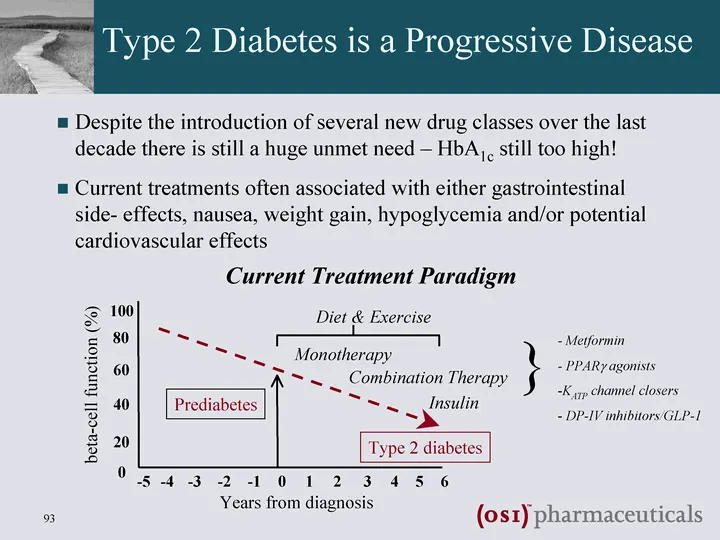
Type 2 Diabetes is a Progressive Disease Current Treatment Paradigm Years from diagnosis beta-cell function (%) 100 0 Prediabetes Diet & Exercise Monotherapy Combination Therapy Insulin 60 40 20 80 - -5 - -4 - -1 - -2 - -3 6 5 0 1 2 3 4 Type 2 diabetes } - - Metformin - - PPARg agonists KATP channel
Slide 94: Diabetes & Obesity - Major Unmet Medical Needs
Diabetes & Obesity - Major Unmet Medical Needs - Our View Effect on Type 2 diabetes disease progression Improved glucose lowering efficacy & improved side effect (S/E) profile Glucose lowering greater than combination of two current agents, with acceptable side-effect profile ^-cell secretagogue - s
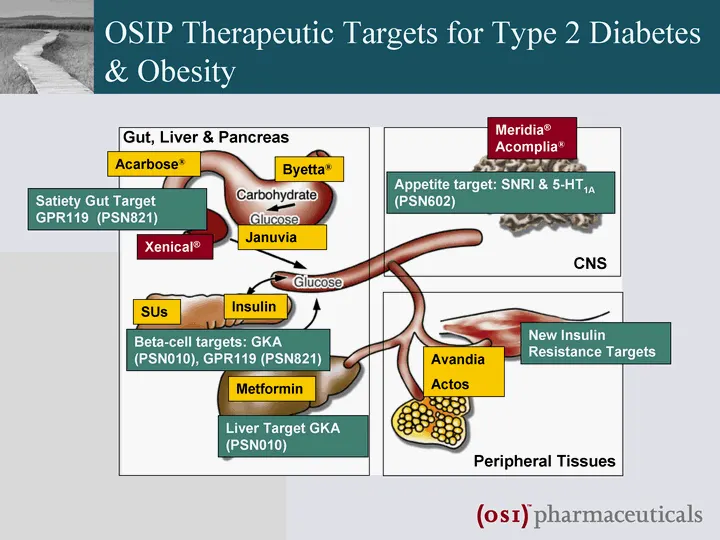
Slide 95: OSIP Therapeutic Targets for Type 2 Diabetes & Obesity
OSIP Therapeutic Targets for Type 2 Diabetes & Obesity CNS Peripheral Tissues Gut, Liver & Pancreas SUs Metformin Acarbose(r) Avandia Actos Insulin Xenical(r) Meridia(r) Acomplia(r) Byetta(r) Januvia Beta-cell targets: GKA (PSN010), GPR119 (PSN821) Appetite target: SNRI & 5-HT1A (PSN602) Satiety Gut
Slide 96: Update on PSN821
Update on PSN821 Jim McCormack, Ph.D, D.Sc. Senior Vice President, (OSI) Prosidion
Slide 97: PSN821 is a Novel GPR119 Agonist
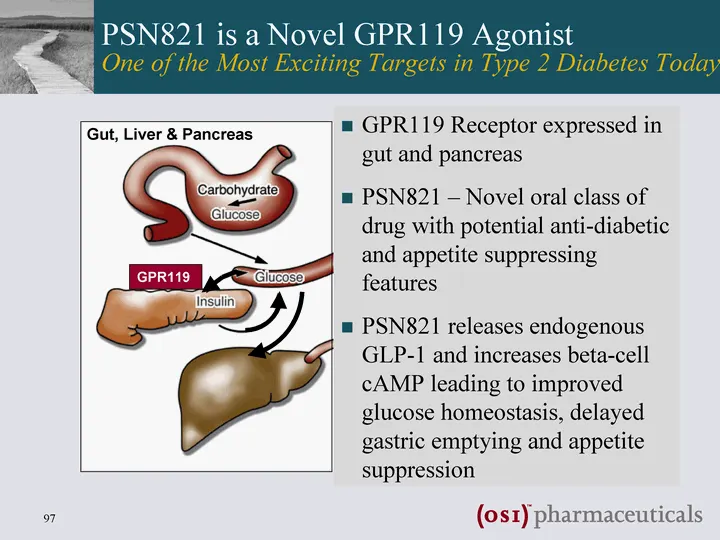
Gut, Liver & Pancreas PSN821 is a Novel GPR119 Agonist One of the Most Exciting Targets in Type 2 Diabetes Today GPR119 GPR119 Receptor expressed in gut and pancreas PSN821 - Novel oral class of drug with potential anti-diabetic and appetite suppressing features PSN821 releases endogenous GLP-1 and
Slide 98: Proposed Mechanisms for GPR119 Agonists Action
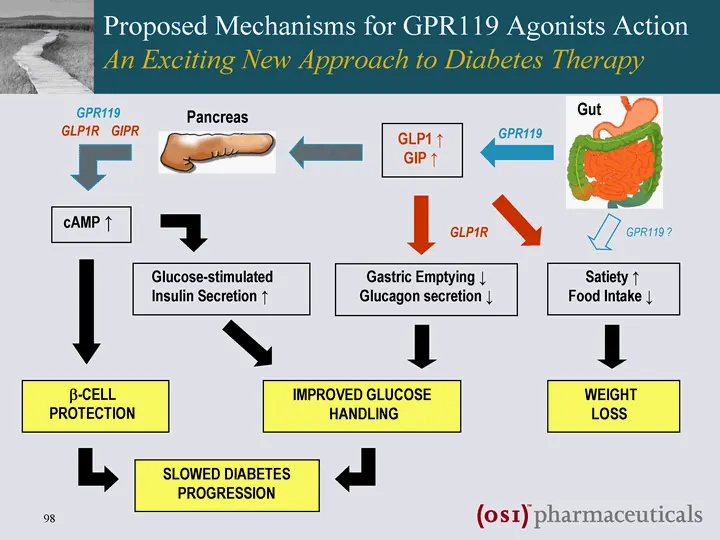
SLOWED DIABETES PROGRESSION WEIGHT LOSS Pancreas GPR119 GLP1R IMPROVED GLUCOSE HANDLING GPR119 GIPR GLP1R cAMP ^ Glucose-stimulated Insulin Secretion ^ b-CELL PROTECTION GLP1 ^ GIP ^ Satiety ^ Food Intake ^ Gastric Emptying ^ Glucagon secretion ^ GPR119 ? Proposed Mechanisms for GPR119 Agonists Acti
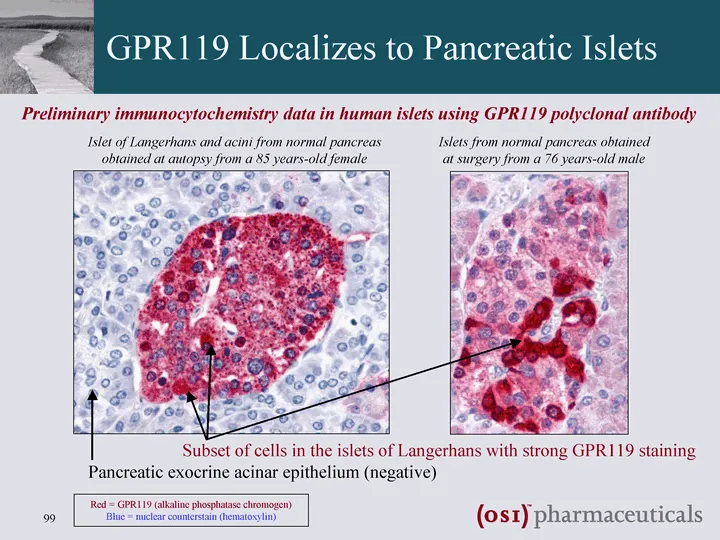
Slide 99: GPR119 Localizes to Pancreatic Islets
GPR119 Localizes to Pancreatic Islets Subset of cells in the islets of Langerhans with strong GPR119 staining Pancreatic exocrine acinar epithelium (negative) Red = GPR119 (alkaline phosphatase chromogen) Blue = nuclear counterstain (hematoxylin) Islet of Langerhans and acini from normal pancreas ob
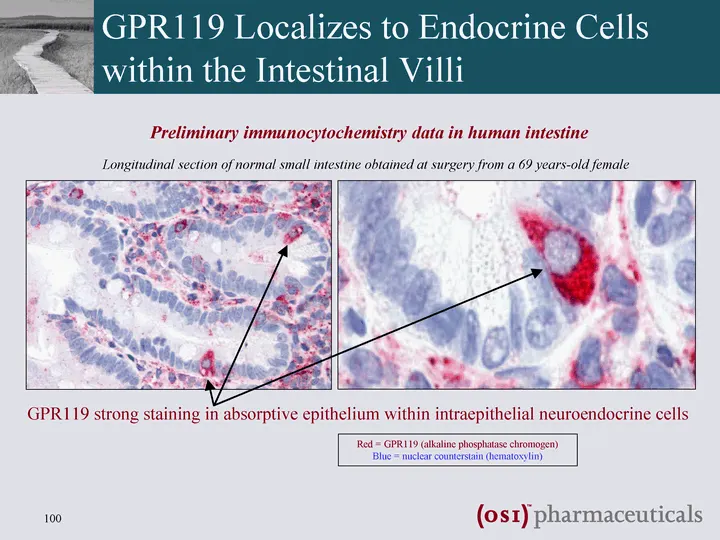
Slide 100: GPR119 Localizes to Endocrine Cells within Intestinal Villi
GPR119 strong staining in absorptive epithelium within intraepithelial neuroendocrine cells GPR119 Localizes to Endocrine Cells within the Intestinal Villi Longitudinal section of normal small intestine obtained at surgery from a 69 years-old female Red = GPR119 (alkaline phosphatase chromogen) Blue
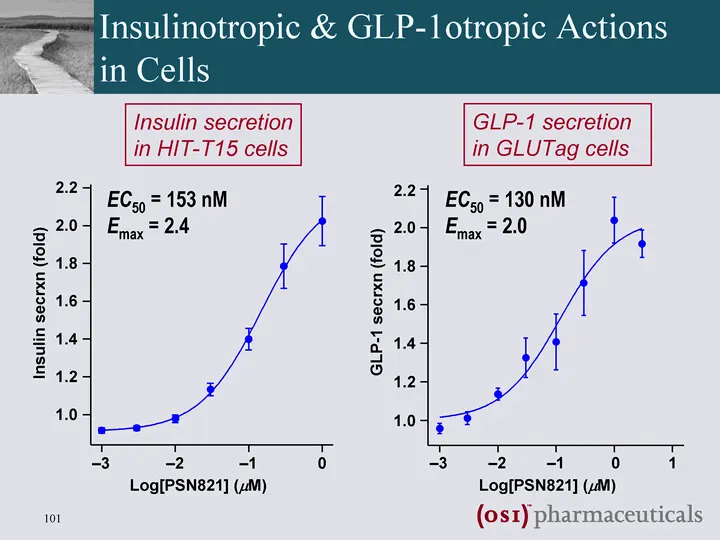
Slide 101: Insulinotropic & GLP-1otropic Actions in Cells
Insulinotropic & GLP-1otropic Actions in Cells Insulin secretion in HIT-T15 cells - -3 - -2 - -1 0 1.0 1.2 1.4 1.6 1.8 2.0 2.2 Log[PSN821] (mM) Insulin secrxn (fold) EC50 = 153 nM Emax = 2.4 Log[PSN821] (mM) - -3 - -2 - -1 0 1 GLP-1 secrxn (fold) 1.0 1.2 1.4 1.6 1.8 2.0 2.2 GLP-1 secretion in GLUTag
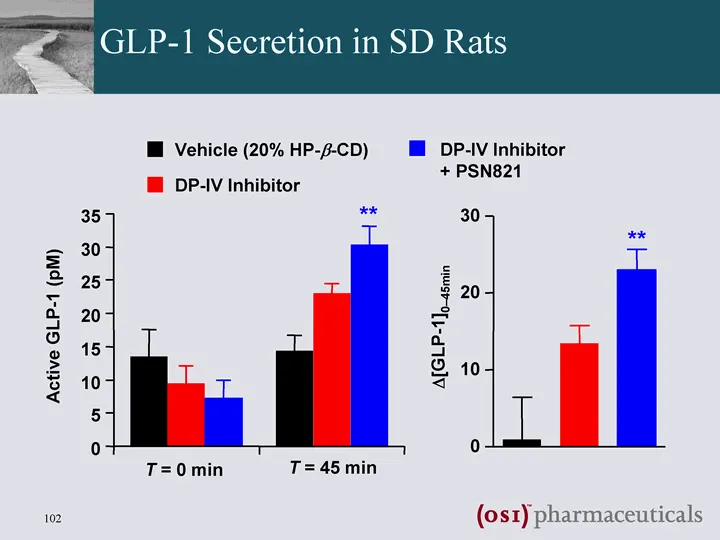
Slide 102: GLP-1 Secretion in SD Rats
GLP-1 Secretion in SD Rats 0 5 10 15 20 25 30 35 Active GLP-1 (pM) T = 0 min T = 45 min ** 0 10 20 30 ** D[GLP-1]0-45min DP-IV Inhibitor + PSN821
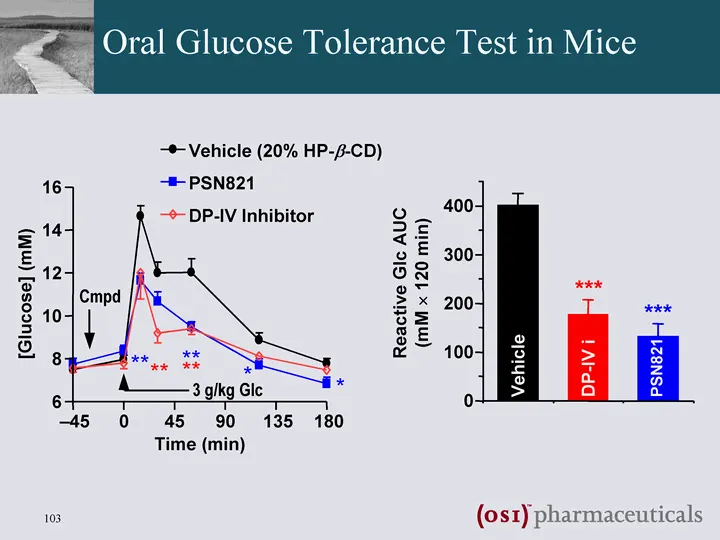
Slide 103: Oral Glucose Tolerance Test in Mice
3 g/kg Glc Oral Glucose Tolerance Test in Mice PSN821 DP-IV Inhibitor - -45 0 45 90 135 180 6 8 10 12 14 16 Time (min) [Glucose] (mM) ** ** ** ** * * 0 100 200 300 400 Vehicle DP-IV i PSN821 *** *** Reactive Glc AUC (mM ? 120 min) Cmpd
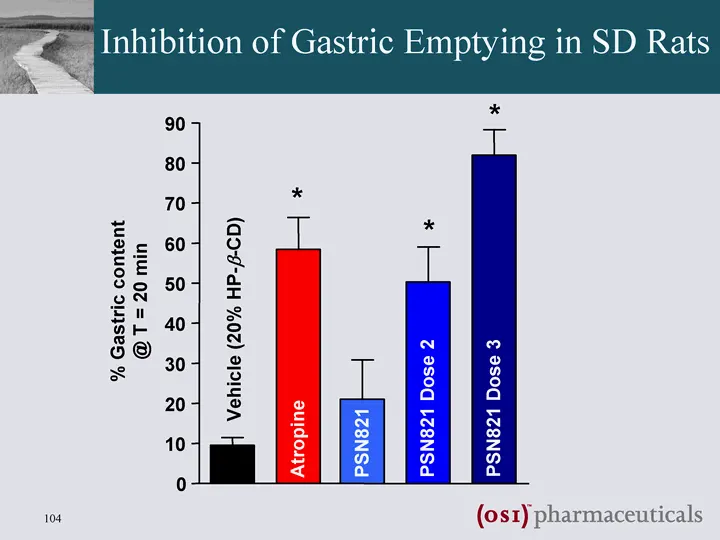
Slide 104: Inhibition of Gastric Emptying in SD Rats
Inhibition of Gastric Emptying in SD Rats Vehicle (20% HP-b-CD) Atropine 0 10 20 30 40 50 60 70 80 90 * * * % Gastric content @ T = 20 min PSN821 Dose 2 PSN821 Dose 3 PSN821
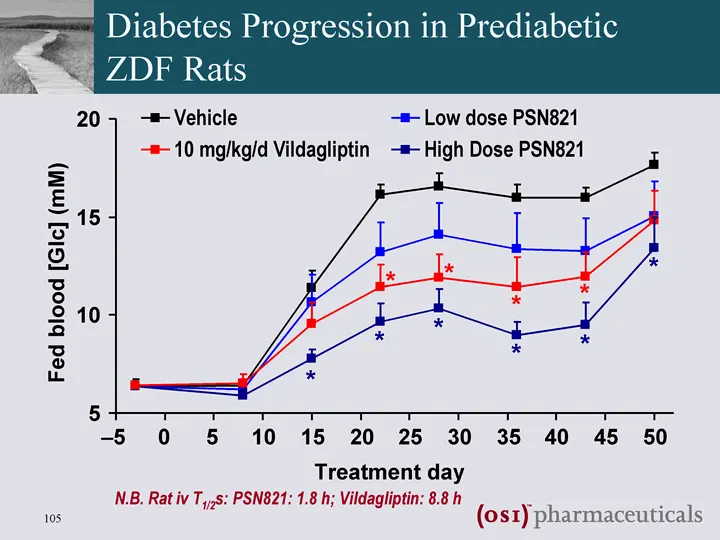
Slide 105: Diabetes Progression in Prediabetic ZDF Rats
Diabetes Progression in Prediabetic ZDF Rats N.B. Rat iv T1/2s: PSN821: 1.8 h; Vildagliptin: 8.8 h 5 10 15 20 - -5 0 5 10 15 20 25 30 35 40 45 50 Treatment day Fed blood [Glc] (mM) Vehicle Low dose PSN821 High Dose PSN821 10 mg/kg/d Vildagliptin * * * * * * * * * *
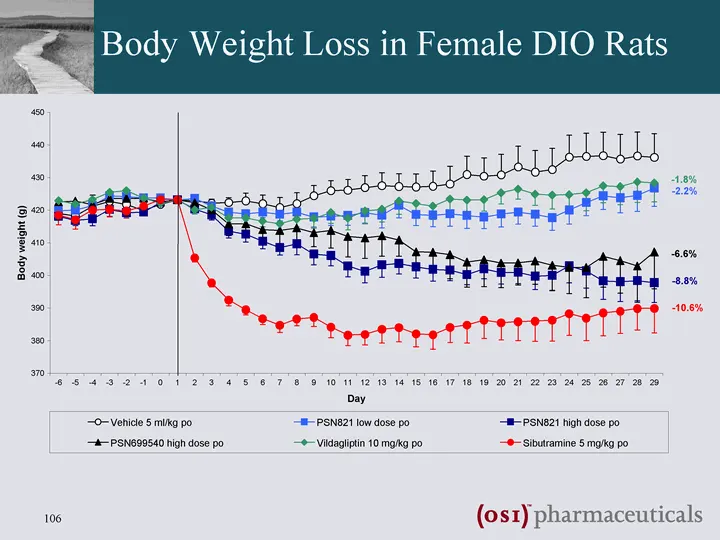
Slide 106: Body Weight Loss in Female DIO Rats
Body Weight Loss in Female DIO Rats 370 380 390 400 410 420 430 440 450 - -6 - -5 - -4 - -3 - -2 - -1 0 1 2 3 4 5 6 7 8 9 10 11 12 13 14 15 16 17 18 19 20 21 22 23 24 25 26 27 28 29 Day Body weight (g) Vehicle 5 ml/kg po PSN821 low dose po PSN821 high dose po PSN699540 high dose po Vildagliptin 10 m
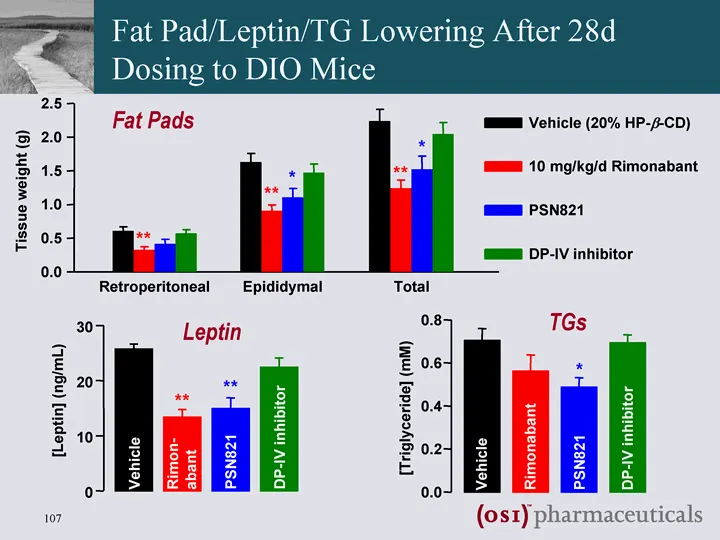
Slide 107: Fat Pad/Leptin/TG Lowering After 28d Dosing to DIO Mice
Vehicle (20% HP-b-CD) 10 mg/kg/d Rimonabant PSN821 DP-IV inhibitor Retroperitoneal Epididymal Total 0.0 0.5 1.0 1.5 2.0 2.5 ** ** * ** * Tissue weight (g) Fat Pads 0 10 20 30 [Leptin] (ng/mL) Vehicle ** Rimon- abant ** PSN821 DP-IV inhibitor Leptin 0.0 0.2 0.4 0.6 0.8 Vehicle DP-IV inhibitor Rimonab
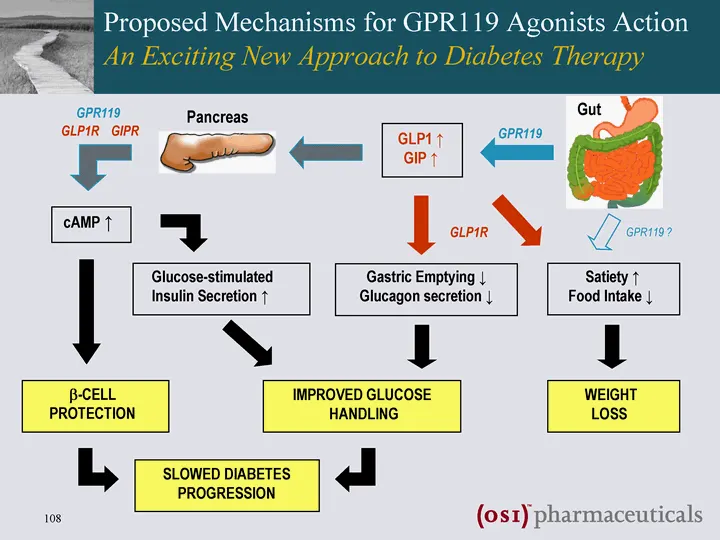
Slide 108: Proposed Mechanisms for GPR119 Agonists Action
SLOWED DIABETES PROGRESSION WEIGHT LOSS Pancreas GPR119 GLP1R IMPROVED GLUCOSE HANDLING GPR119 GIPR GLP1R cAMP ^ Glucose-stimulated Insulin Secretion ^ b-CELL PROTECTION GLP1 ^ GIP ^ Satiety ^ Food Intake ^ Gastric Emptying ^ Glucagon secretion ^ GPR119 ? Proposed Mechanisms for GPR119 Agonists Acti
Slide 109: Update on PSN602 & PSN010
Update on PSN602 & PSN010 Jonathan Rachman, M.D., Ph.D. Senior Vice President, (OSI) Prosidion
Slide 110: PSN602
(os1) pharmaceuticals PSN602 re(new)
Slide 111: PSN602 - A Novel Obesity Approach
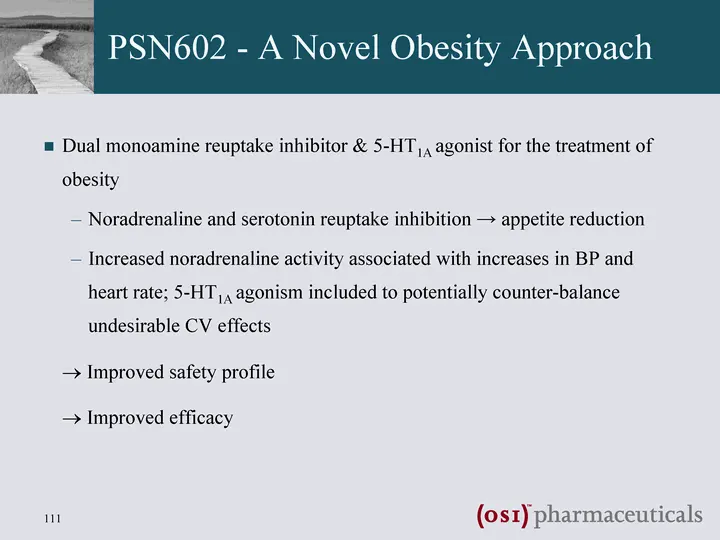
PSN602 - A Novel Obesity Approach Dual monoamine reuptake inhibitor & 5-HT1A agonist for the treatment of obesity Noradrenaline and serotonin reuptake inhibition ^ appetite reduction Increased noradrenaline activity associated with increases in BP and heart rate; 5-HT1A agonism included to potential
Slide 112: Sibutramine - Phase IIa Study
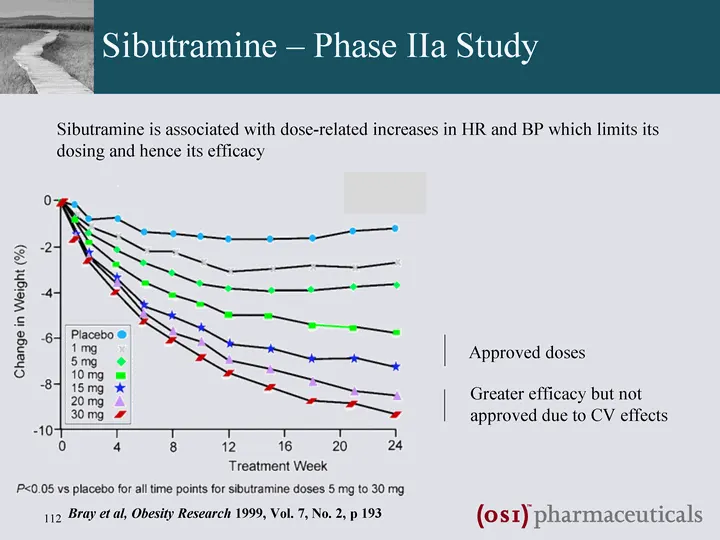
Sibutramine - Phase IIa Study Approved doses Greater efficacy but not approved due to CV effects Bray et al, Obesity Research 1999, Vol. 7, No. 2, p 193 Sibutramine is associated with dose-related increases in HR and BP which limits its dosing and hence its efficacy
Slide 113: PSN602 - Efficacy in Female DIO Rats
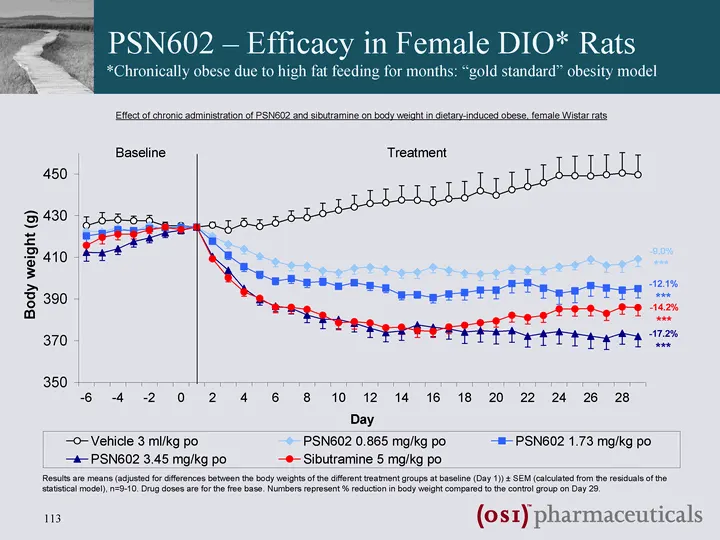
PSN602 - Efficacy in Female DIO* Rats *Chronically obese due to high fat feeding for months: "gold standard" obesity model
Slide 114: PSN602 - No Significant Preclinical CV Effects
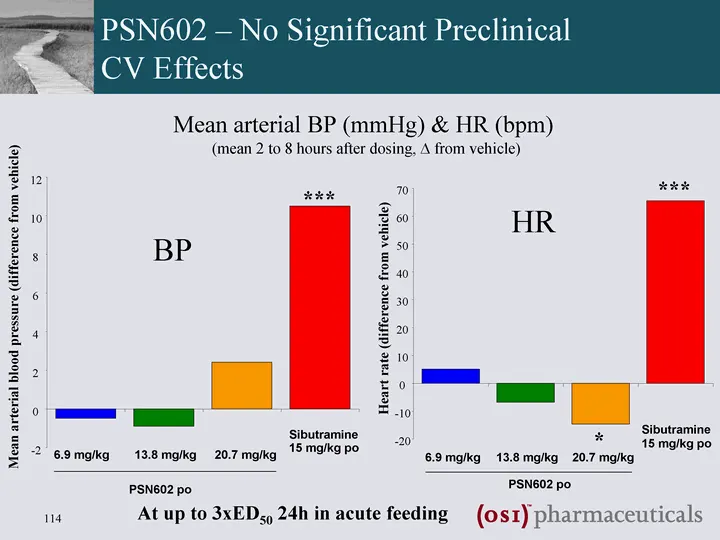
PSN602 - No Significant Preclinical CV Effects At up to 3xED50 24h in acute feeding - -2 0 2 4 6 8 10 12 6.9 mg/kg 13.8 mg/kg PSN602 po 20.7 mg/kg Sibutramine 15 mg/kg po Mean arterial blood pressure (difference from vehicle) *** BP - -20 - -10 0 10 20 30 40 50 60 70 6.9 mg/kg 13.8 mg/kg 20.7 mg/kg
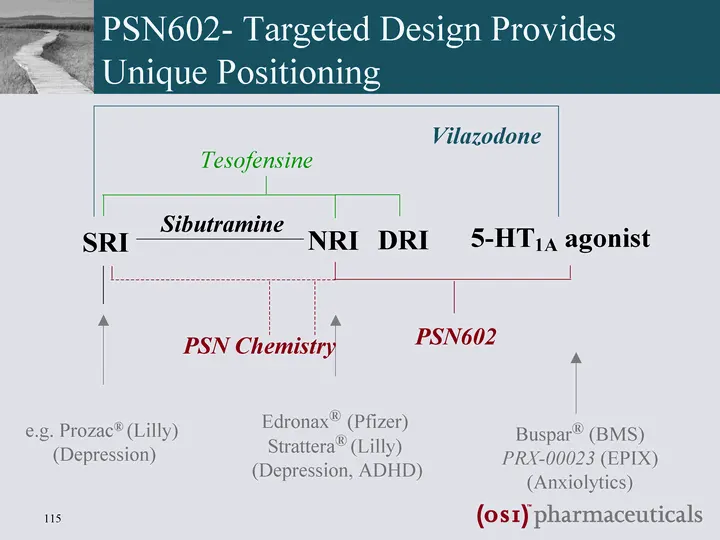
Slide 115: PSN602 - Targeted Design Provides Unique Positioning
PSN602- Targeted Design Provides Unique Positioning 5-HT1A agonist PSN602 Edronax(r) (Pfizer) Strattera(r) (Lilly) (Depression, ADHD) e.g. Prozac(r) (Lilly) (Depression) Buspar(r) (BMS) PRX-00023 (EPIX) (Anxiolytics) SRI NRI DRI Tesofensine Sibutramine PSN Chemistry Vilazodone
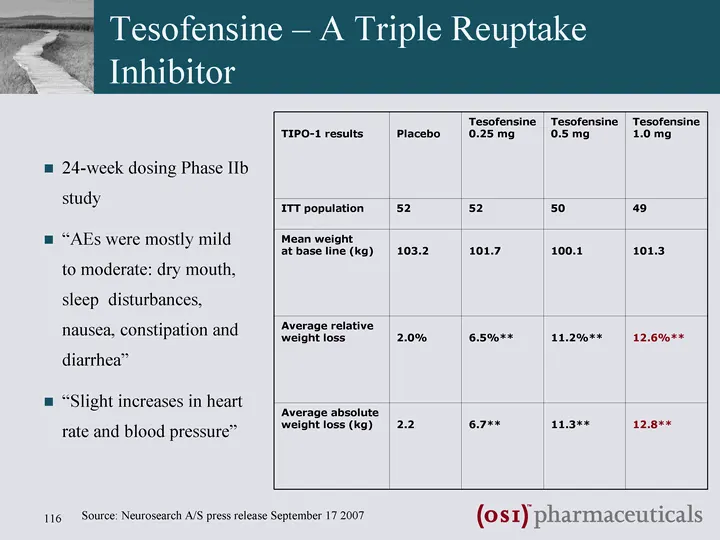
Slide 116: Tesofensine - A Triple Reuptake Inhibitor
Tesofensine - A Triple Reuptake Inhibitor 24-week dosing Phase IIb study "AEs were mostly mild to moderate: dry mouth, sleep disturbances, nausea, constipation and diarrhea" "Slight increases in heart rate and blood pressure" TIPO-1 results Placebo Tesofensine 0.25 mg Tesofensine 0.5 mg Tesofensine
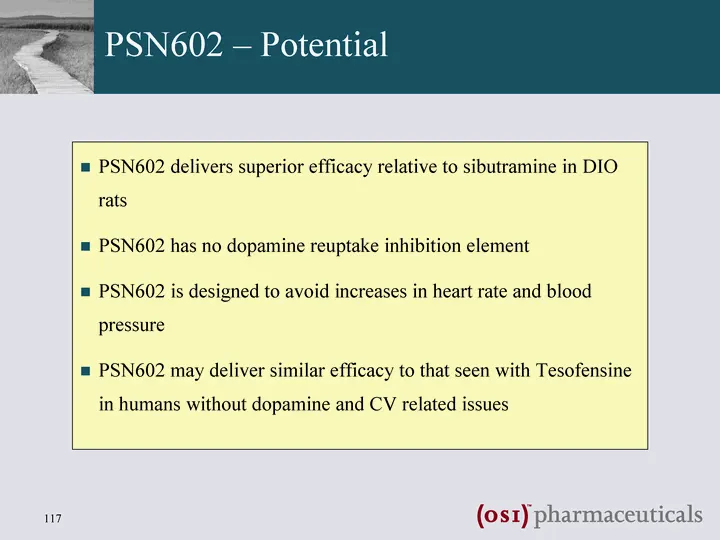
Slide 117: PSN602 - Potential
PSN602 - Potential PSN602 delivers superior efficacy relative to sibutramine in DIO rats PSN602 has no dopamine reuptake inhibition element PSN602 is designed to avoid increases in heart rate and blood pressure PSN602 may deliver similar efficacy to that seen with Tesofensine in humans without dopam
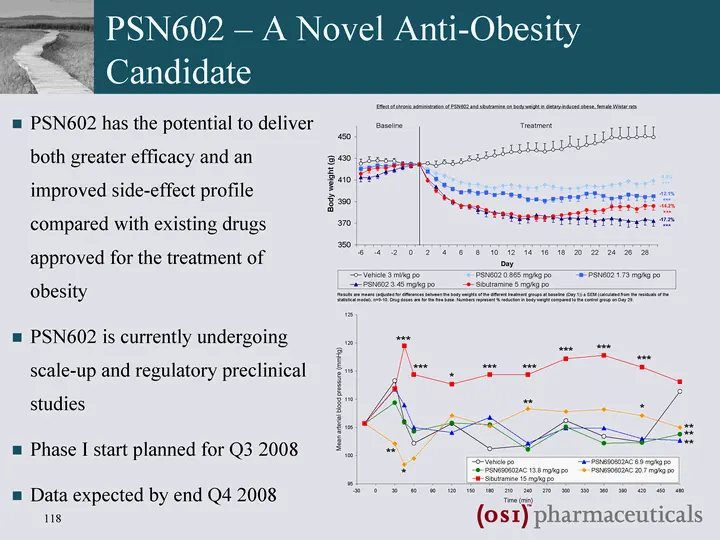
Slide 118: PSN602 - A Novel Anti-Obesity Candidate
PSN602 - A Novel Anti-Obesity Candidate PSN602 has the potential to deliver both greater efficacy and an improved side-effect profile compared with existing drugs approved for the treatment of obesity PSN602 is currently undergoing scale-up and regulatory preclinical studies Phase I start planned fo
Slide 119: PSN010
(os1) pharmaceuticals PSN010 re(new)
Slide 120: PSN010: A Novel Glucokinase Activator
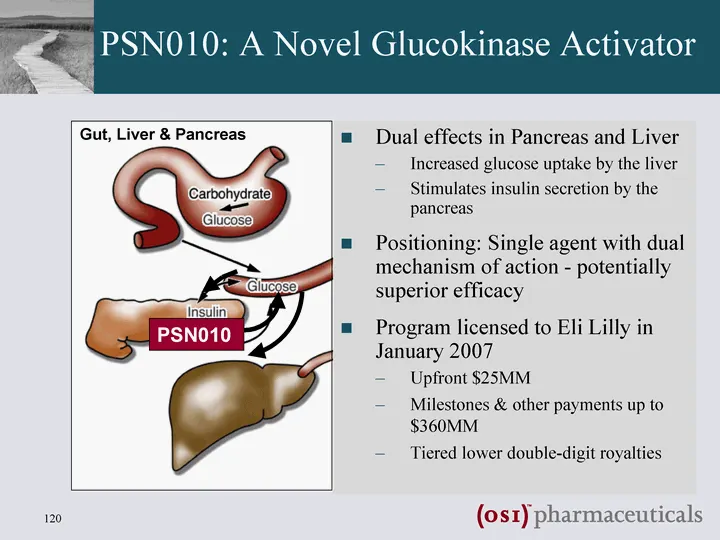
Gut, Liver & Pancreas PSN010 PSN010: A Novel Glucokinase Activator Dual effects in Pancreas and Liver Increased glucose uptake by the liver Stimulates insulin secretion by the pancreas Positioning: Single agent with dual mechanism of action - potentially superior efficacy Program licensed to Eli Lil
Slide 121: (OSI) Prosidion: Closing Remarks
(OSI) Prosidion: Closing Remarks Anker Lundemose, M.D., Ph.D. President, (OSI) Prosidion
Slide 122: Positioning of OSIP's Pipeline
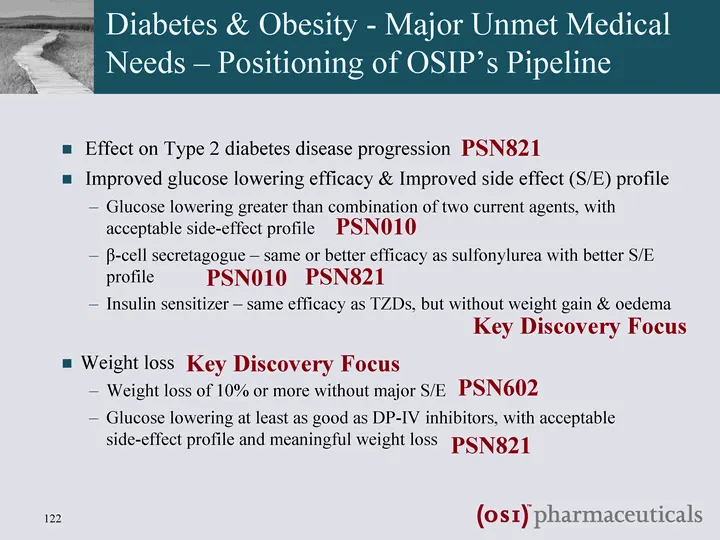
Effect on Type 2 diabetes disease progression Improved glucose lowering efficacy & Improved side effect (S/E) profile Glucose lowering greater than combination of two current agents, with acceptable side-effect profile ^-cell secretagogue - same or better efficacy as sulfonylurea with better S/E pro
Slide 123: Data & Timelines
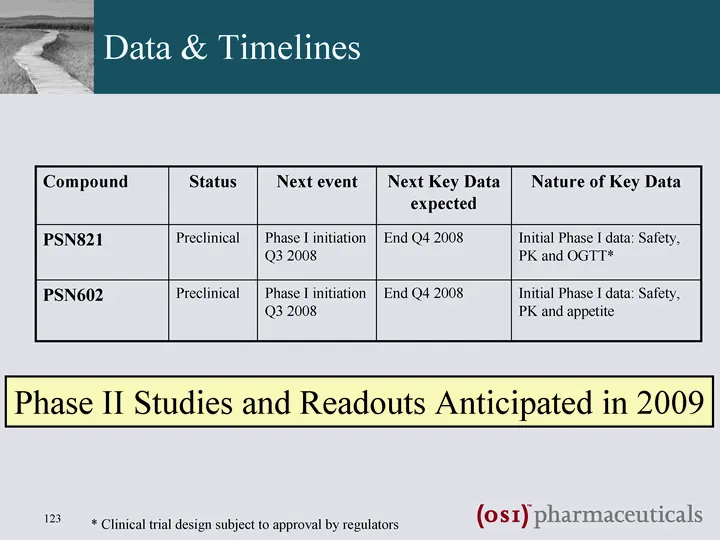
Data & Timelines Compound Status Next event Next Key Data expected Nature of Key Data PSN821 Preclinical Phase I initiation Q3 2008 End Q4 2008 Initial Phase I data: Safety, PK and OGTT* PSN602 Preclinical Phase I initiation Q3 2008 End Q4 2008 Initial Phase I data: Safety, PK and appetite * Clinica

Slide 124: Diabetes and Obesity Q & A
(os1) pharmaceuticals Diabetes and Obesity Q & A re(new)

Slide 125: Financial Commentary
Financial Commentary Michael G. Atieh Chief Financial Officer

Slide 126: A Word About Taxes
(os1) pharmaceuticals A Word About Taxes ma) YF y a f a if 7f re(new) oe aN Amy & s
Slide 127: OSI's Historical Net Operating Losses: Unrecognized Asset
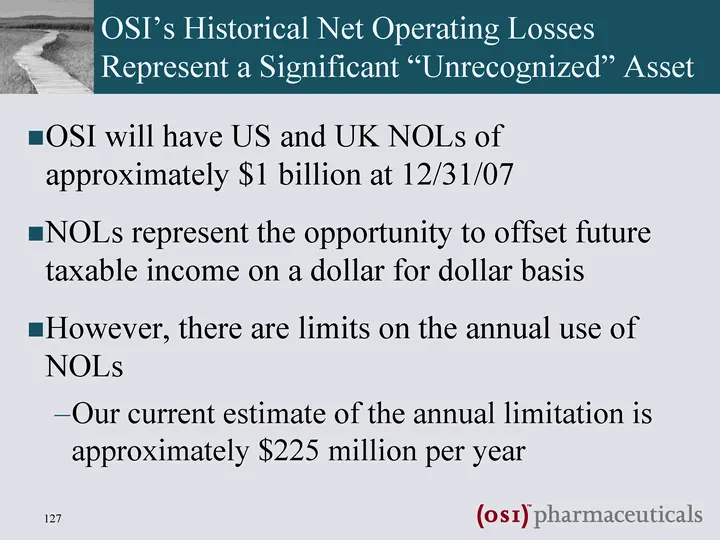
OSI's Historical Net Operating Losses Represent a Significant "Unrecognized" Asset OSI will have US and UK NOLs of approximately $1 billion at 12/31/07 NOLs represent the opportunity to offset future taxable income on a dollar for dollar basis However, there are limits on the annual use of NOLs Our
Slide 128: OSI's Historical Net Operating Losses: Unrecognized Asset
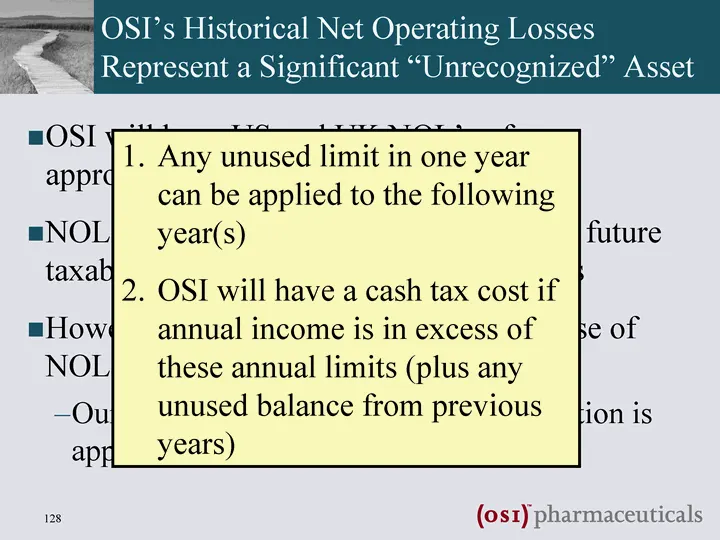
OSI's Historical Net Operating Losses Represent a Significant "Unrecognized" Asset OSI will have US and UK NOL's of approximately $1 Billion at 12/31/07 NOL's represent the opportunity to offset future taxable income on a dollar for dollar basis However, there are limits on the annual use of NOL's O
Slide 129: GAAP Treatment of NOLs
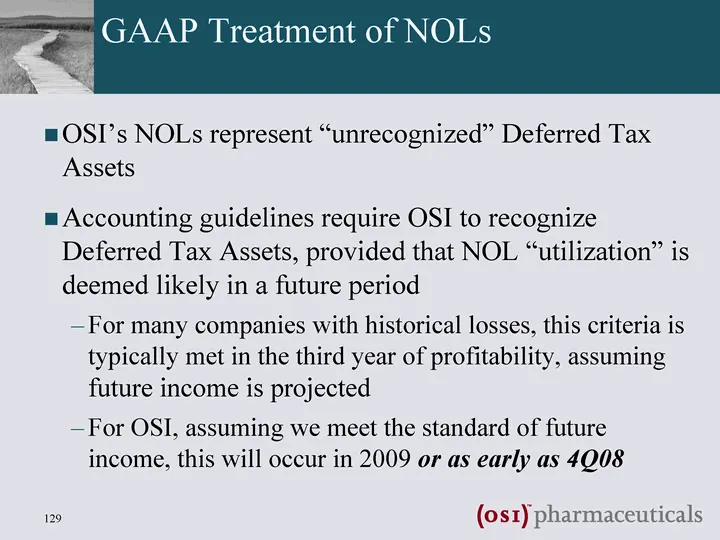
GAAP Treatment of NOLs OSI's NOLs represent "unrecognized" Deferred Tax Assets Accounting guidelines require OSI to recognize Deferred Tax Assets, provided that NOL "utilization" is deemed likely in a future period For many companies with historical losses, this criteria is typically met in the thir
Slide 130: GAAP Treatment of NOLs
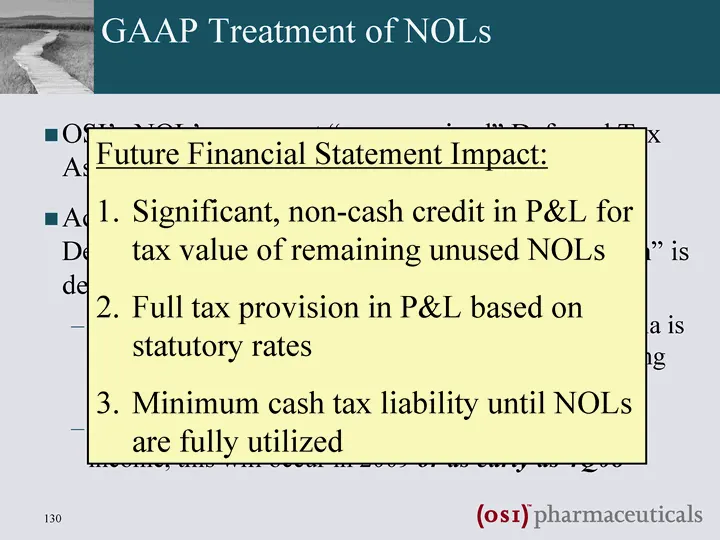
GAAP Treatment of NOLs OSI's NOL's represent "unrecognized" Deferred Tax Assets Accounting guidelines require OSI to recognize Deferred Tax Assets, provided that NOL "utilization" is deemed likely in a future period For many companies with historical losses, this criteria is typically met in the thi

Slide 131: Financial Commentary
(os1) pharmaceuticals Financial Commentary ma) YF a a f a if 7f re(new) oe aN HP bee
Slide 132: 2007: A Year of Financial Transformation
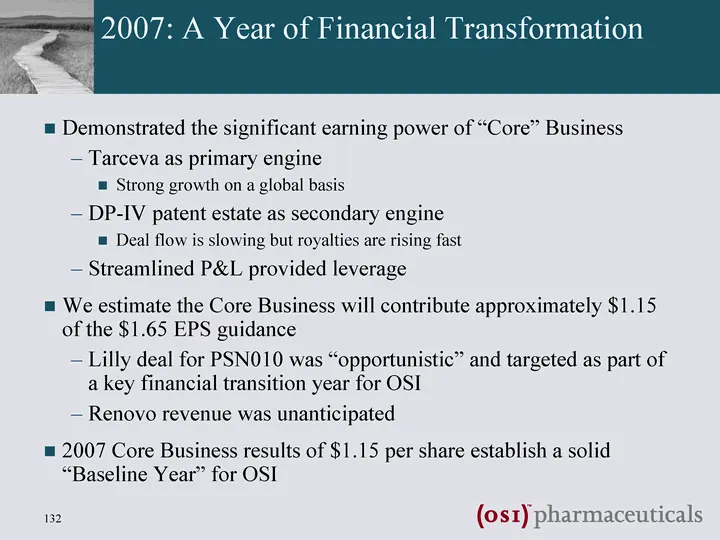
2007: A Year of Financial Transformation Demonstrated the significant earning power of "Core" Business Tarceva as primary engine Strong growth on a global basis DP-IV patent estate as secondary engine Deal flow is slowing but royalties are rising fast Streamlined P&L provided leverage We estimate th
Slide 133: 2007: A Year of Financial Transformation
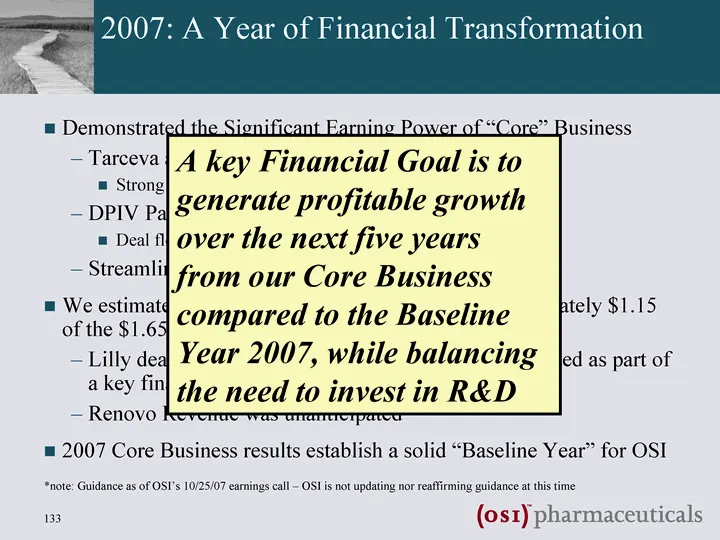
2007: A Year of Financial Transformation Demonstrated the Significant Earning Power of "Core" Business Tarceva as primary Engine Strong growth on a global basis DPIV Patent Estate as secondary Engine Deal flow is slowing but Royalties are rising fast Streamlined P&L provided leverage We estimate the
Slide 134: 2008: A Year of Scientific Transformation
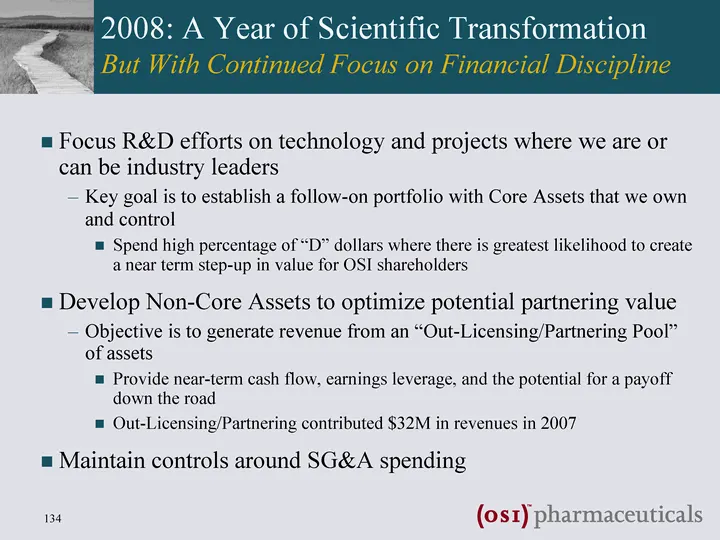
2008: A Year of Scientific Transformation But With Continued Focus on Financial Discipline Focus R&D efforts on technology and projects where we are or can be industry leaders Key goal is to establish a follow-on portfolio with Core Assets that we own and control Spend high percentage of "D" dollars
Slide 135: 2008: A Strong Financial Follow-On Year to 2007
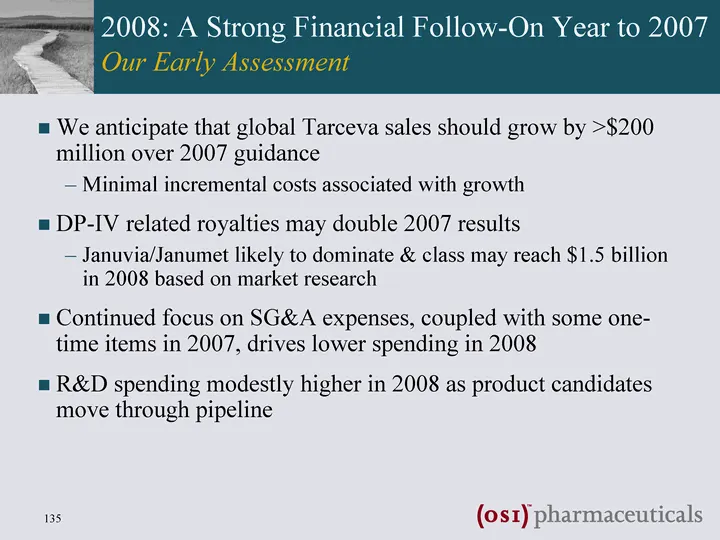
2008: A Strong Financial Follow-On Year to 2007 Our Early Assessment We anticipate that global Tarceva sales should grow by >$200 million over 2007 guidance Minimal incremental costs associated with growth DP-IV related royalties may double 2007 results Januvia/Janumet likely to dominate & class may
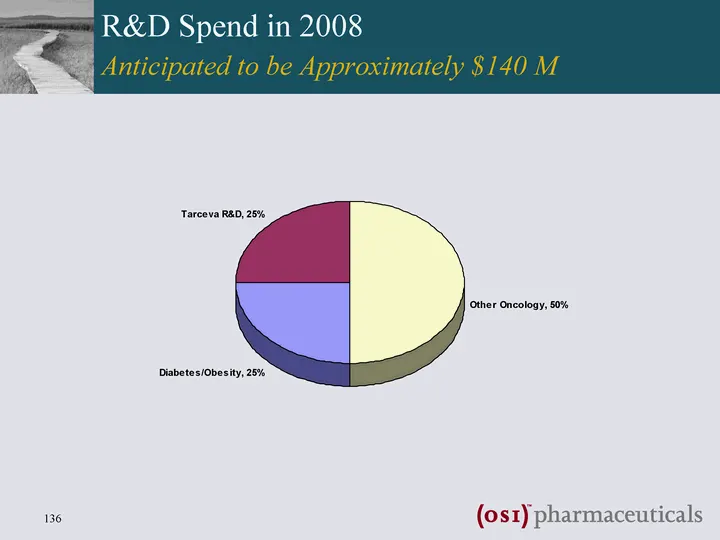
Slide 136: R&D Spend in 2008 Anticipated to be Approximately $140 M
R&D Spend in 2008 Anticipated to be Approximately $140 M
Slide 137: 2008: A Strong Financial Follow-On Year to 2007
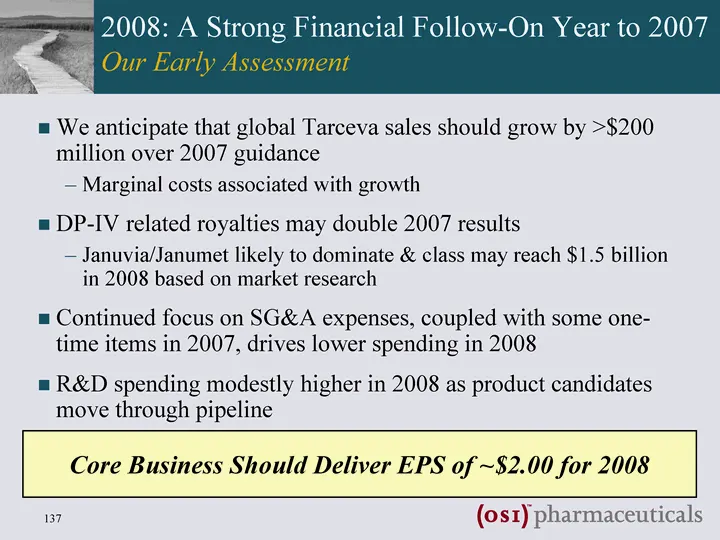
2008: A Strong Financial Follow-On Year to 2007 Our Early Assessment We anticipate that global Tarceva sales should grow by >$200 million over 2007 guidance Marginal costs associated with growth DP-IV related royalties may double 2007 results Januvia/Janumet likely to dominate & class may reach $1.5
Slide 138: 2008: A Strong Financial Follow-On Year to 2007
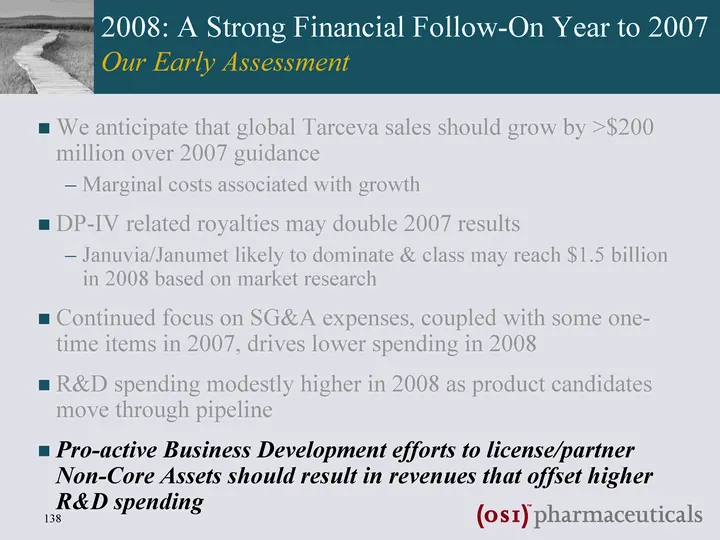
2008: A Strong Financial Follow-On Year to 2007 Our Early Assessment We anticipate that global Tarceva sales should grow by >$200 million over 2007 guidance Marginal costs associated with growth DP-IV related royalties may double 2007 results Januvia/Janumet likely to dominate & class may reach $1.5

Slide 139: Financial Q&A
(os1) pharmaceuticals Financial Q&A ma) YF y a f a if 7f re(new) oe aN Amy & s

Slide 140: Wrap-up and Final Q&A
$1) pharmaceuticals Wrap-up and Final Q&A re(new)
Source: SEC EDGAR · 8-K filed Nov 29, 2007