Daiichi Sankyo Company, Limited · TSE:4568
Daiichi Sankyo — WCLC 2024
56 slides from Daiichi Sankyo's conference presentation, 2024
Slide 1: WCLC 2024 Presentation Materials
WCLC 2024 Presentation Materials Tropion-Lung01 - Sands, J. et al., WCLC 2024 OA08.03. (Oral) Quantitative Continuous Scoring (QCS) - Garassino, M.C. et al., WCLC 2024 PL02.11. (Oral) NeoCOAST-2 - Cascone, T. et al., WCLC 2024 PL02.07. (Oral) DESTINY-Lung03 - Planchard, D. et al., WCLC 2024
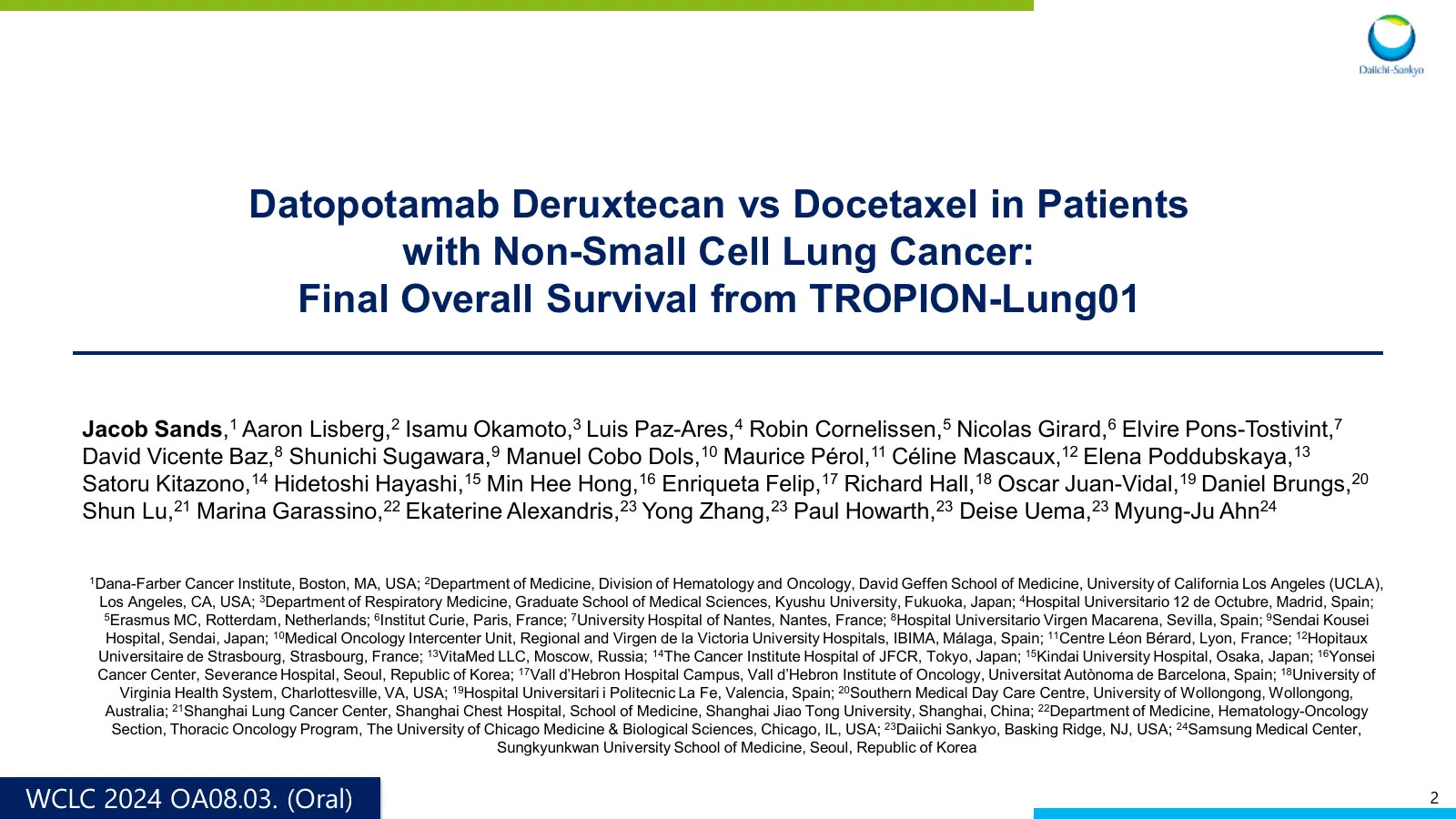
Slide 2: Datopotamab Deruxtecan vs Docetaxel in NSCLC: Final Overall Survival from TROPION-Lung01
Datopotamab Deruxtecan vs Docetaxel in Patients with Non-Small Cell Lung Cancer: Final Overall Survival from TROPION-Lung01 Jacob Sands,1 Aaron Lisberg,2 Isamu Okamoto,3 Luis Paz-Ares,4 Robin Cornelissen,5 Nicolas Girard,6 Elvire Pons-Tostivint,7 David Vicente Baz,8 Shunichi Sugawara,9 Manuel Cobo D
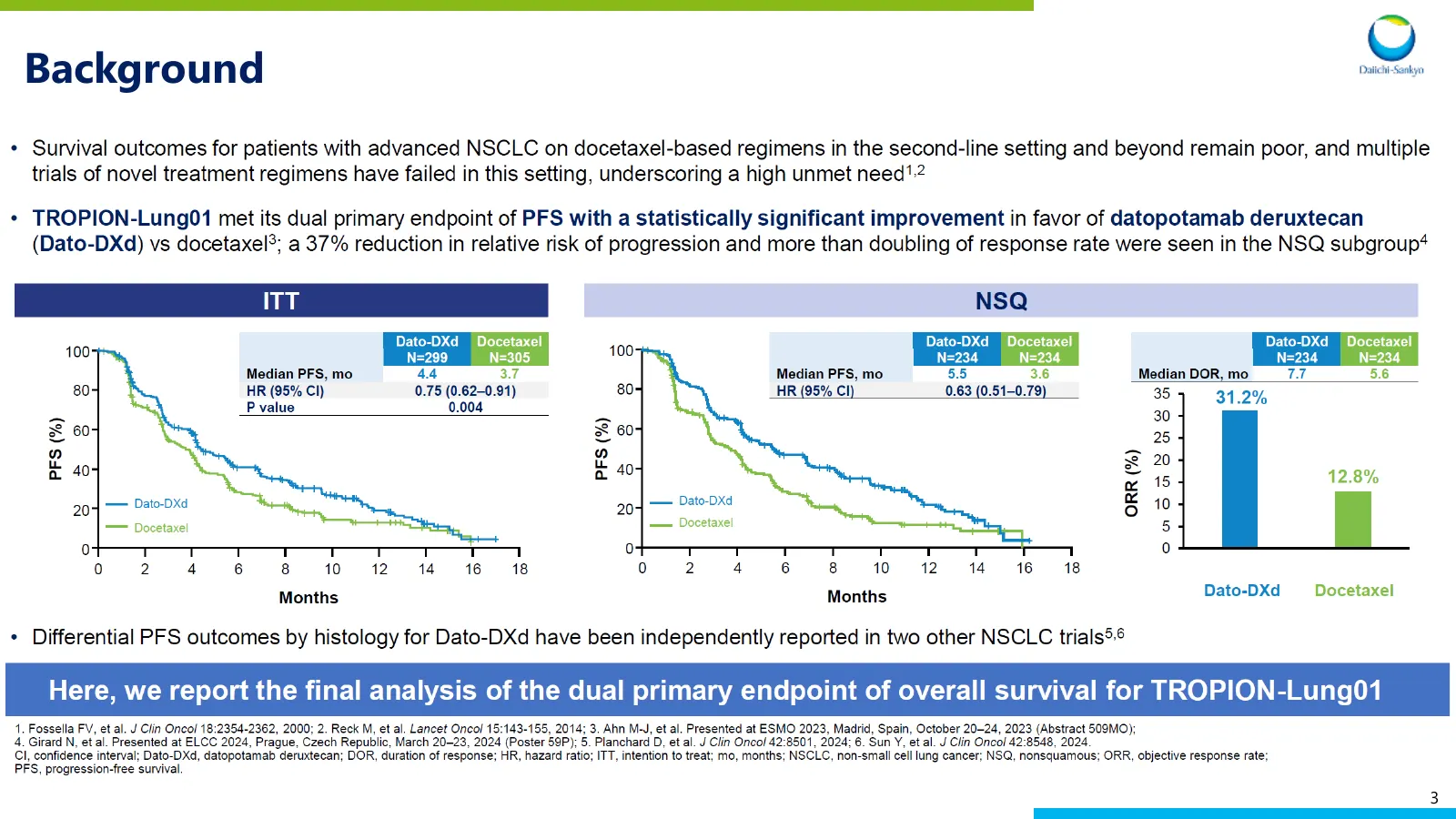
Slide 3: Background
Background + Survival outcomes for patients with advanced NSCLC on docetaxel-based regimens in the second-line setting and beyond remain poor, and multiple trials of novel treatment regimens have failed in this setting, underscoring a high unmet need? * TROPION-Lung01 met its dual primary endpoint o
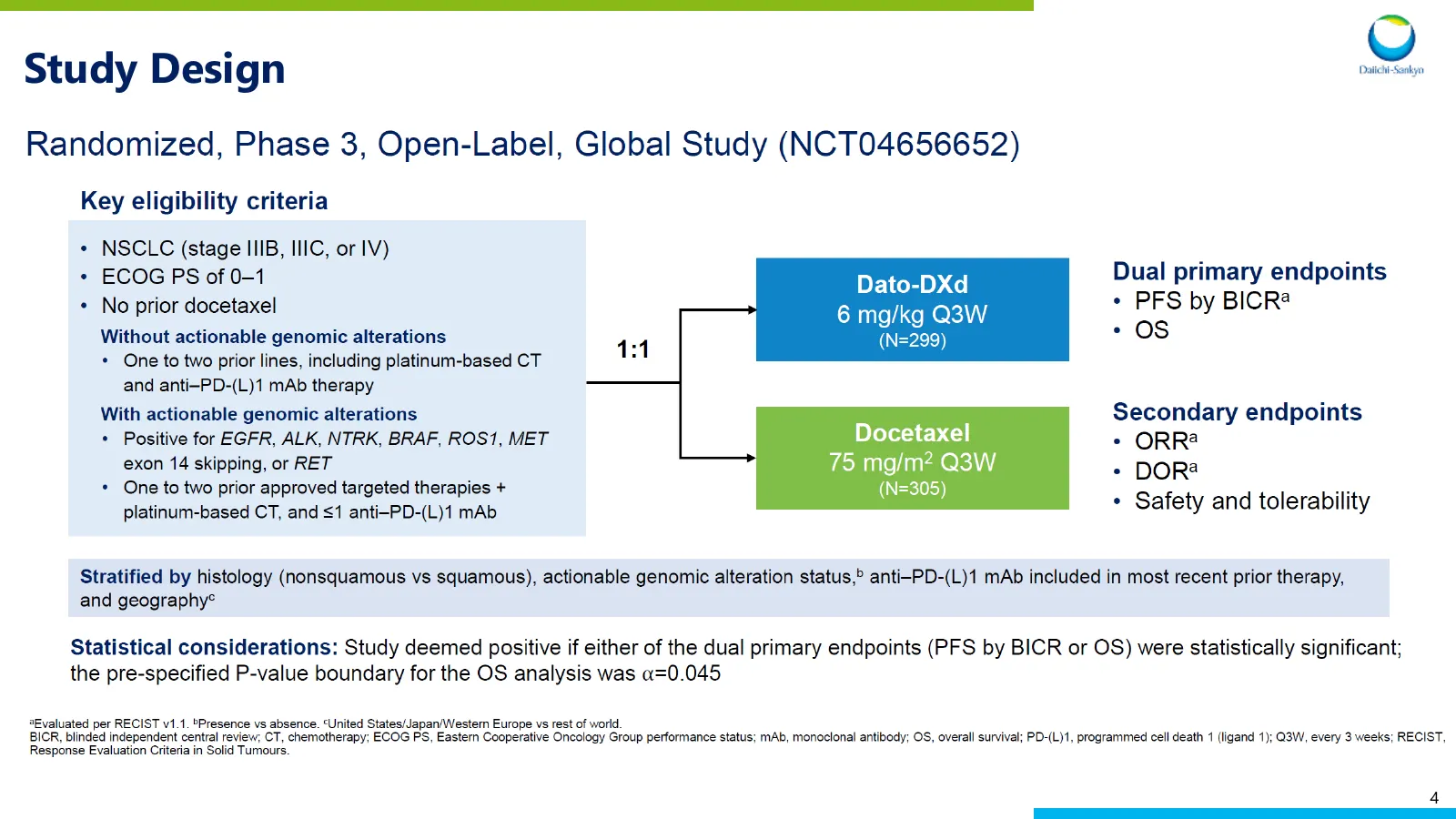
Slide 4: Study Design
Study Design > Randomized, Phase 3, Open-Label, Global Study (NCT04656652) Key eligibility criteria + NSCLC (stage IIIB, IIIC, or IV) . . * ECOG PS of 0-1 Dato-DXd Dual primary endpoints + No prior docetaxel 6 mg/kg Q3W + PFS by BICR@ Without actionable genomic alterations 44 (N=299) * OS * One to t
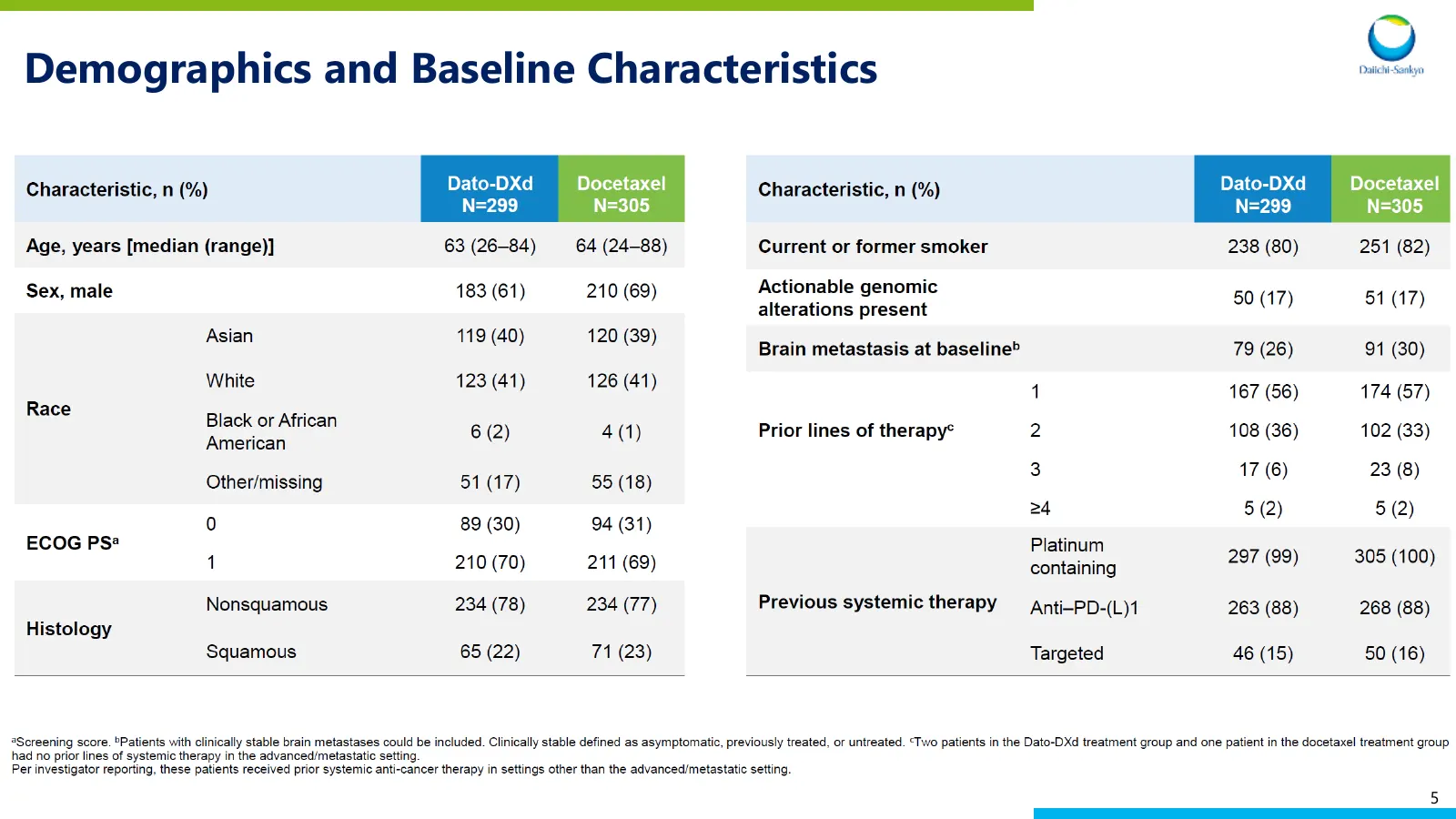
Slide 5: Demographics and Baseline Characteristics
Demographics and Baseline Characteristics 5
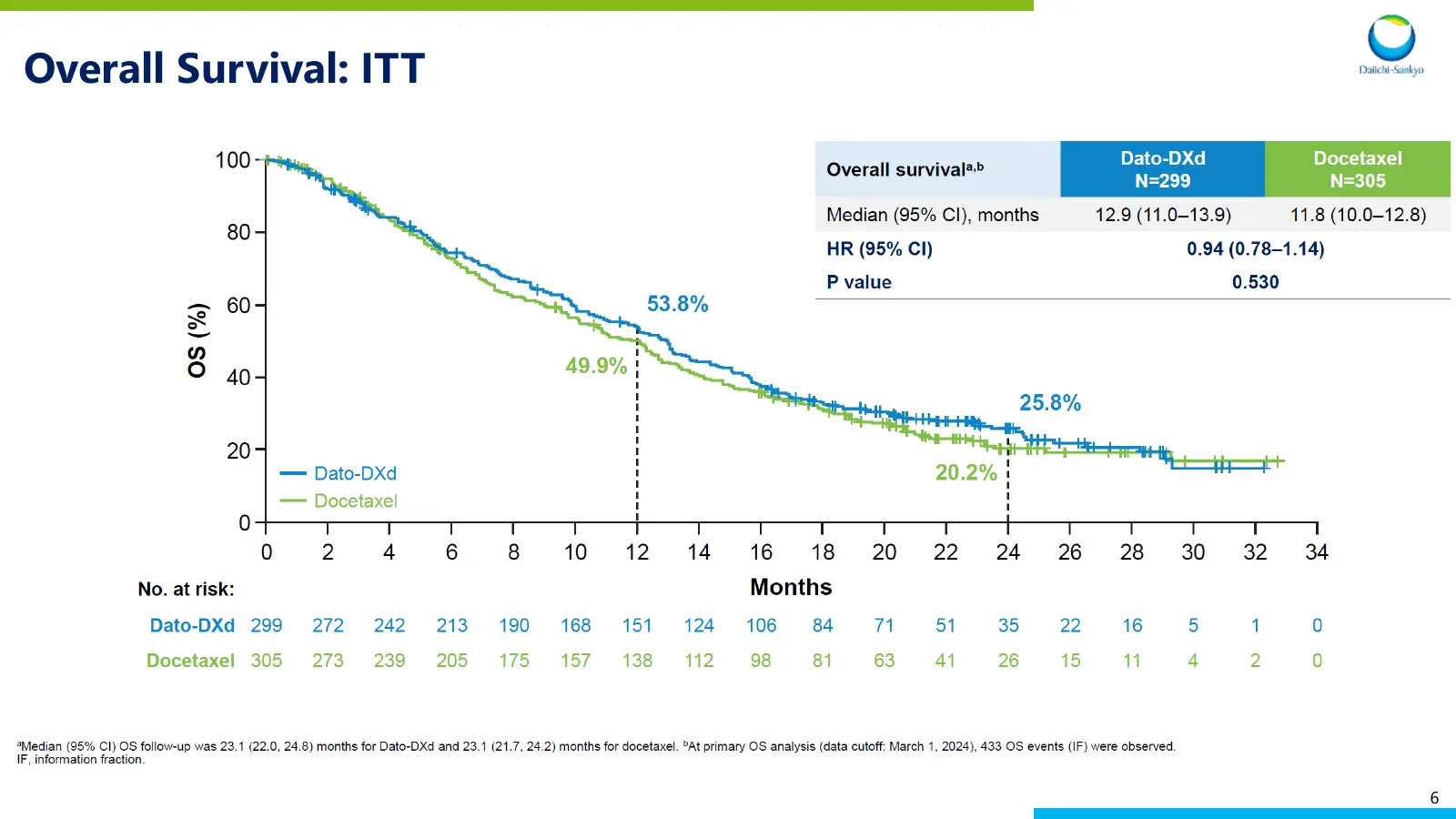
Slide 6: Overall Survival: ITT
a U Overall Survival: ITT ww, 100 ~ Overall survivals? Roses 30 Median (95% Cl), months 12.9 (11.0-13.9) 11.8 (10.0-12.8) HR (95% Cl) 0.94 (0.78-1.14) P value 0.530 = 605 [2] ° 4o- 207 — Dato-DXd ! — Docetaxel t H ) T T T T T T T T T t T T T T 1 0 2 4 6 8 10 12 14 16 18 20 22 24 26 28 30 32 34 No. a
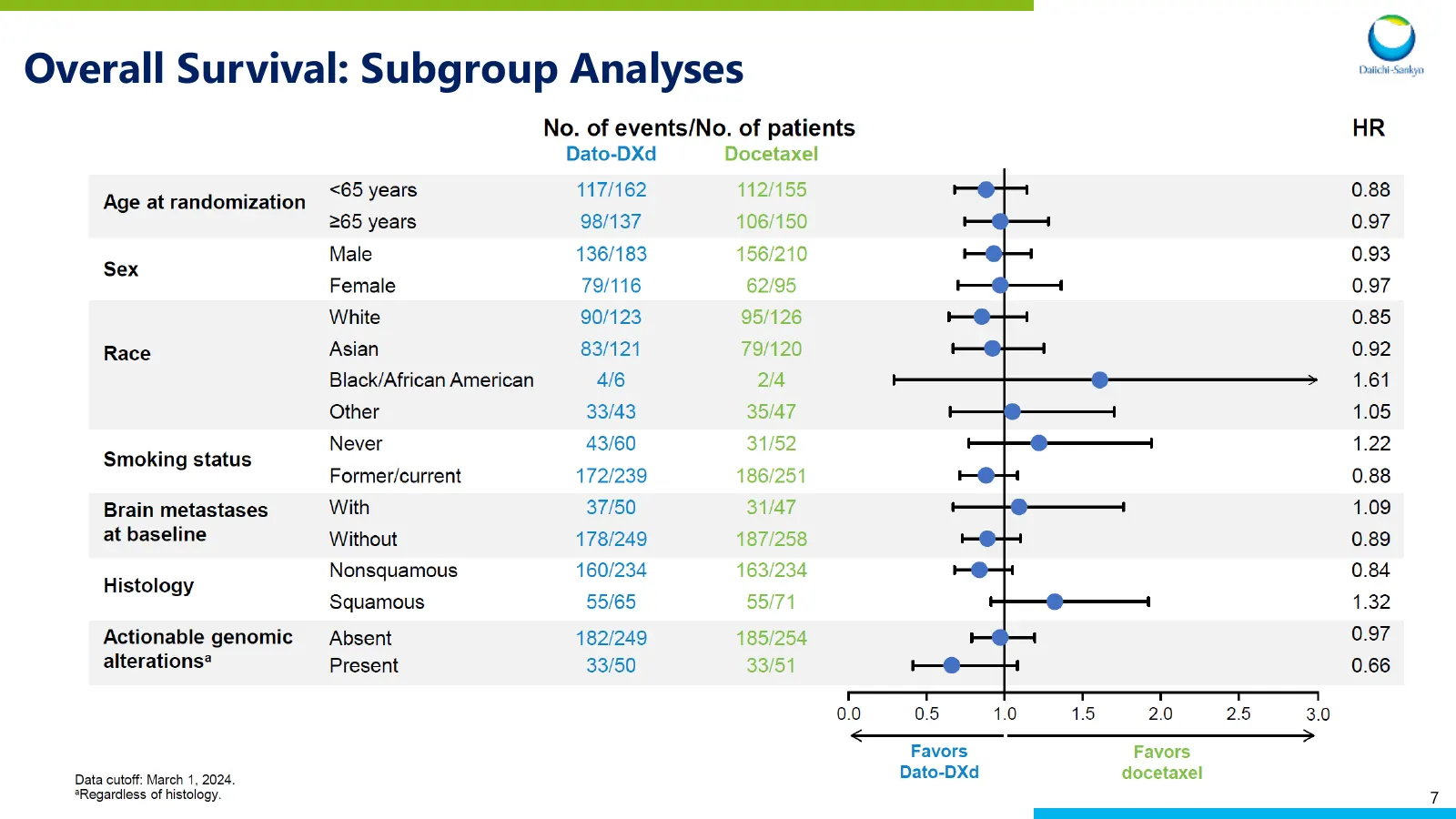
Slide 7: Overall Survival: Subgroup Analyses
Overall Survival: Subgroup Analyses 7
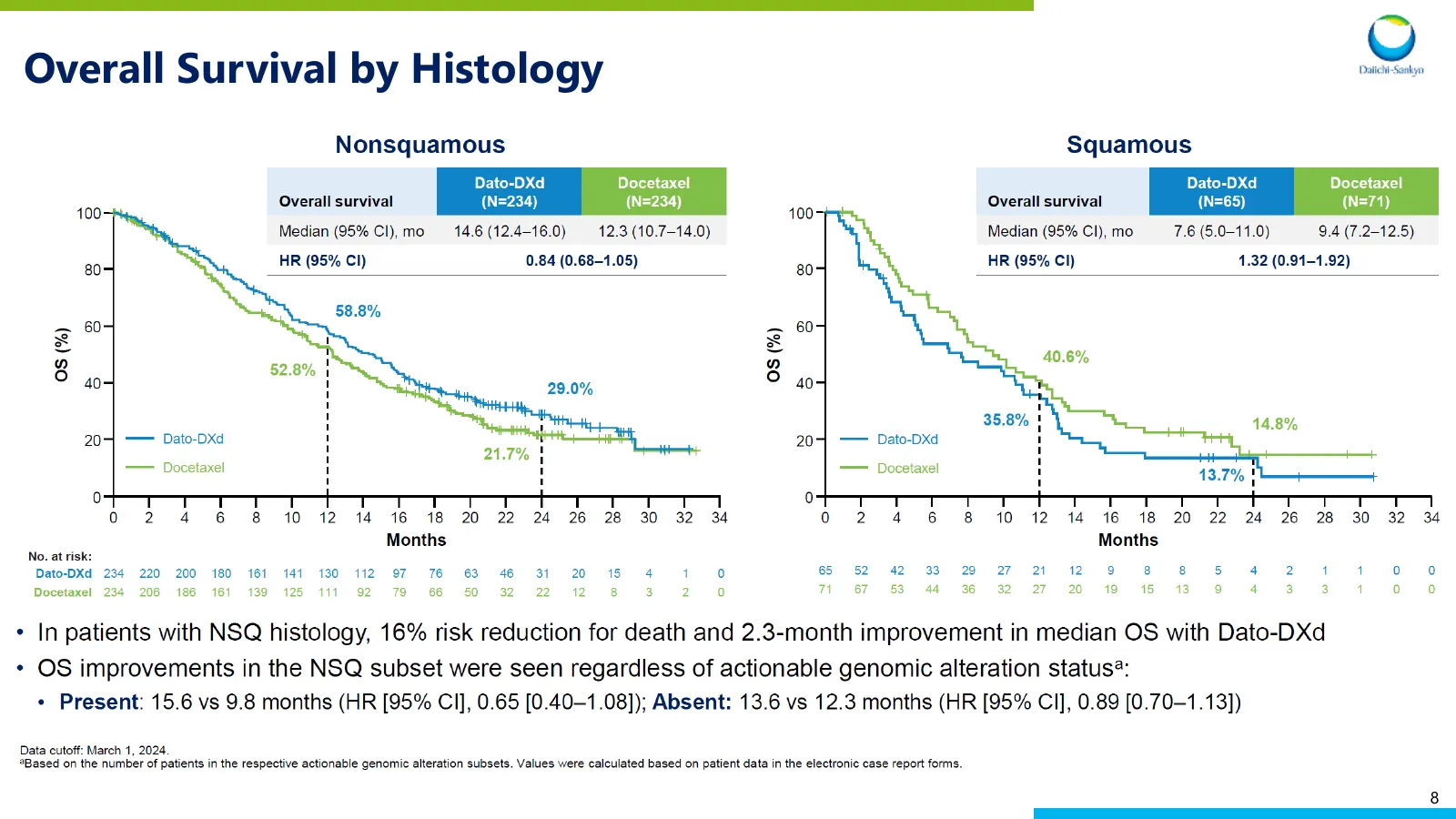
Slide 8: Overall Survival by Histology
Overall Survival by Histology 8
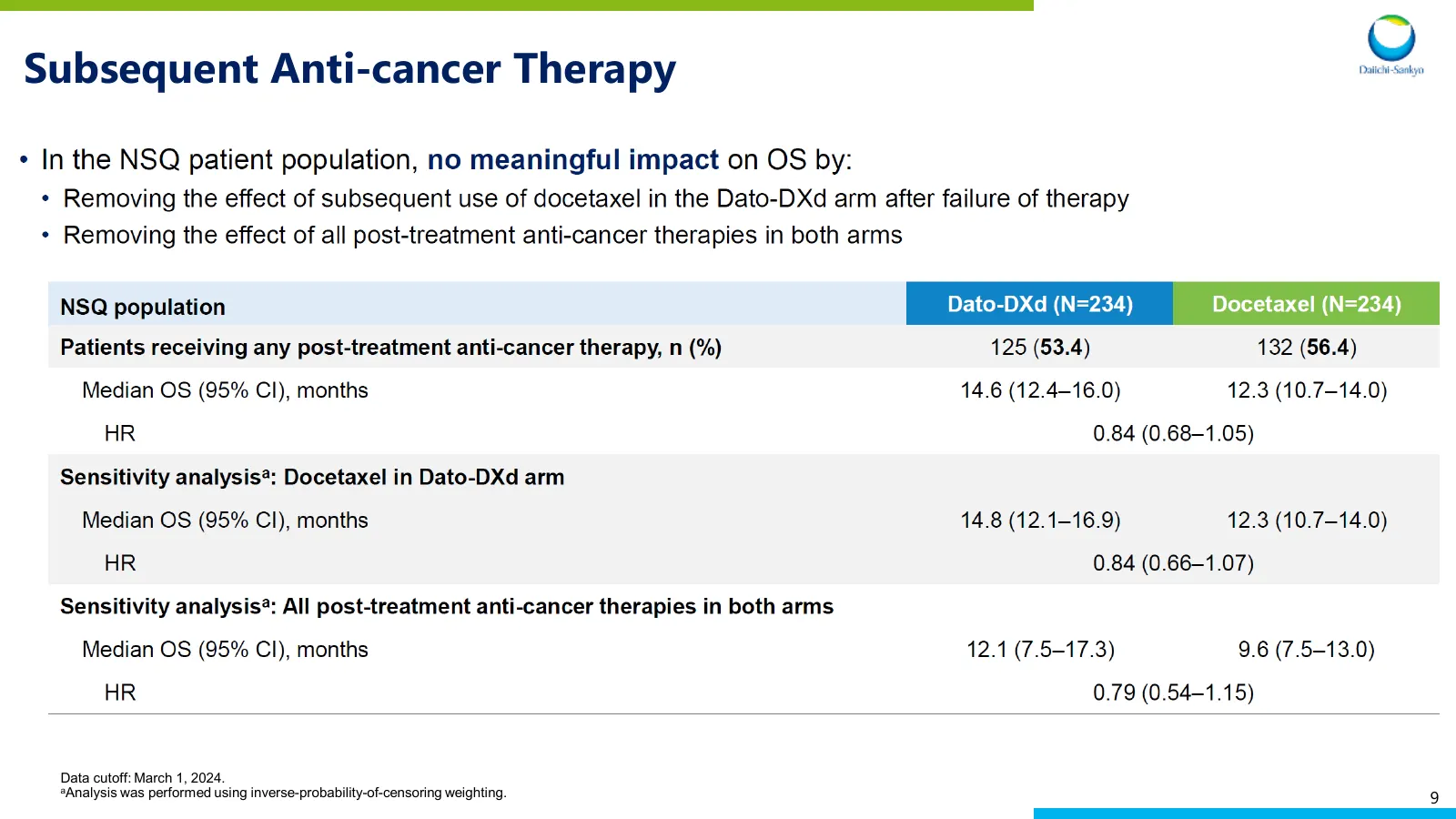
Slide 9: Subsequent Anti-cancer Therapy
Subsequent Anti-cancer Therapy Data cutoff: March 1, 2024. 9 aAnalysis was performed using inverse-probability-of-censoring weighting.
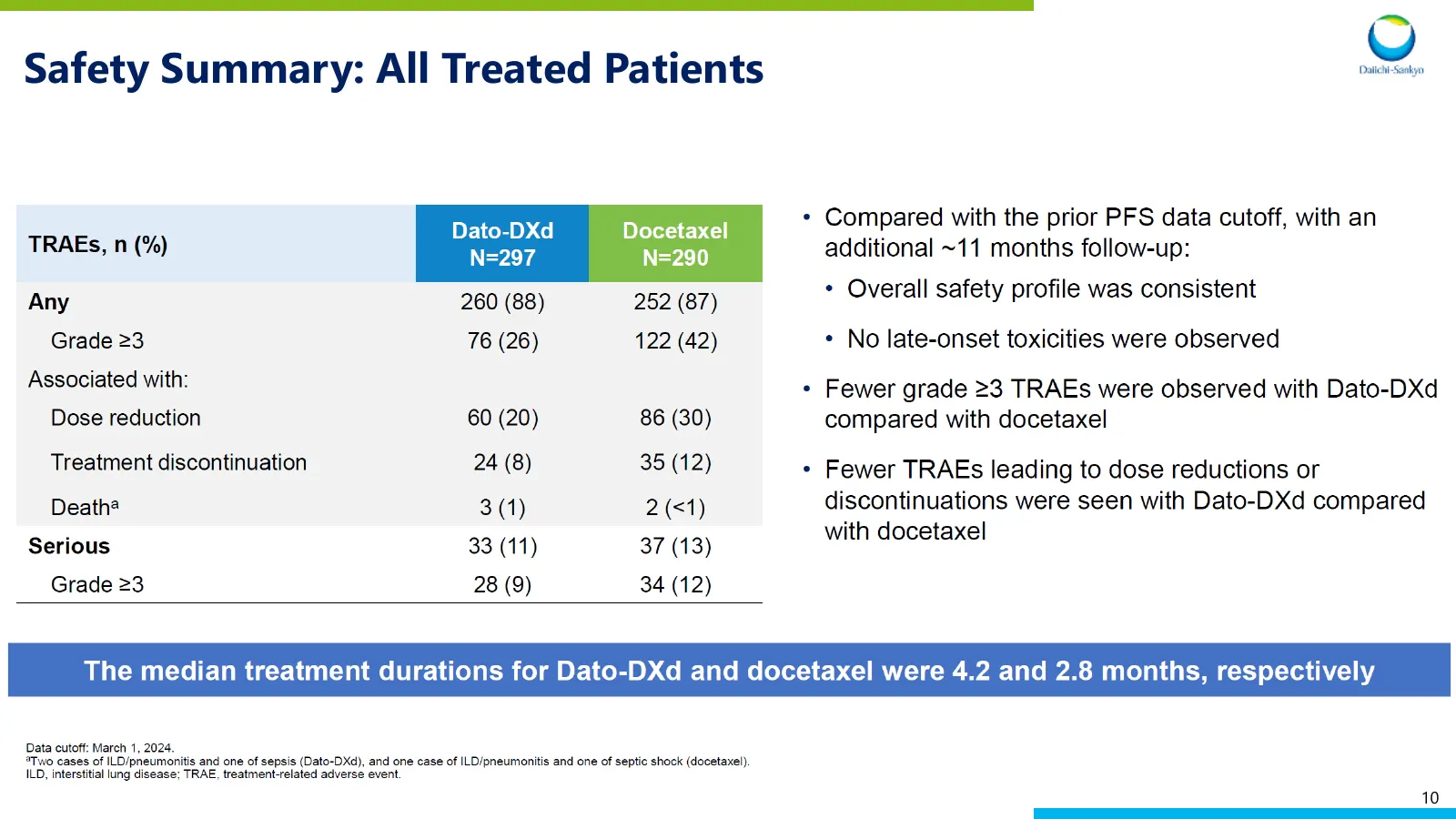
Slide 10: Safety Summary: All Treated Patients
Safety Summary: All Treated Patients 10
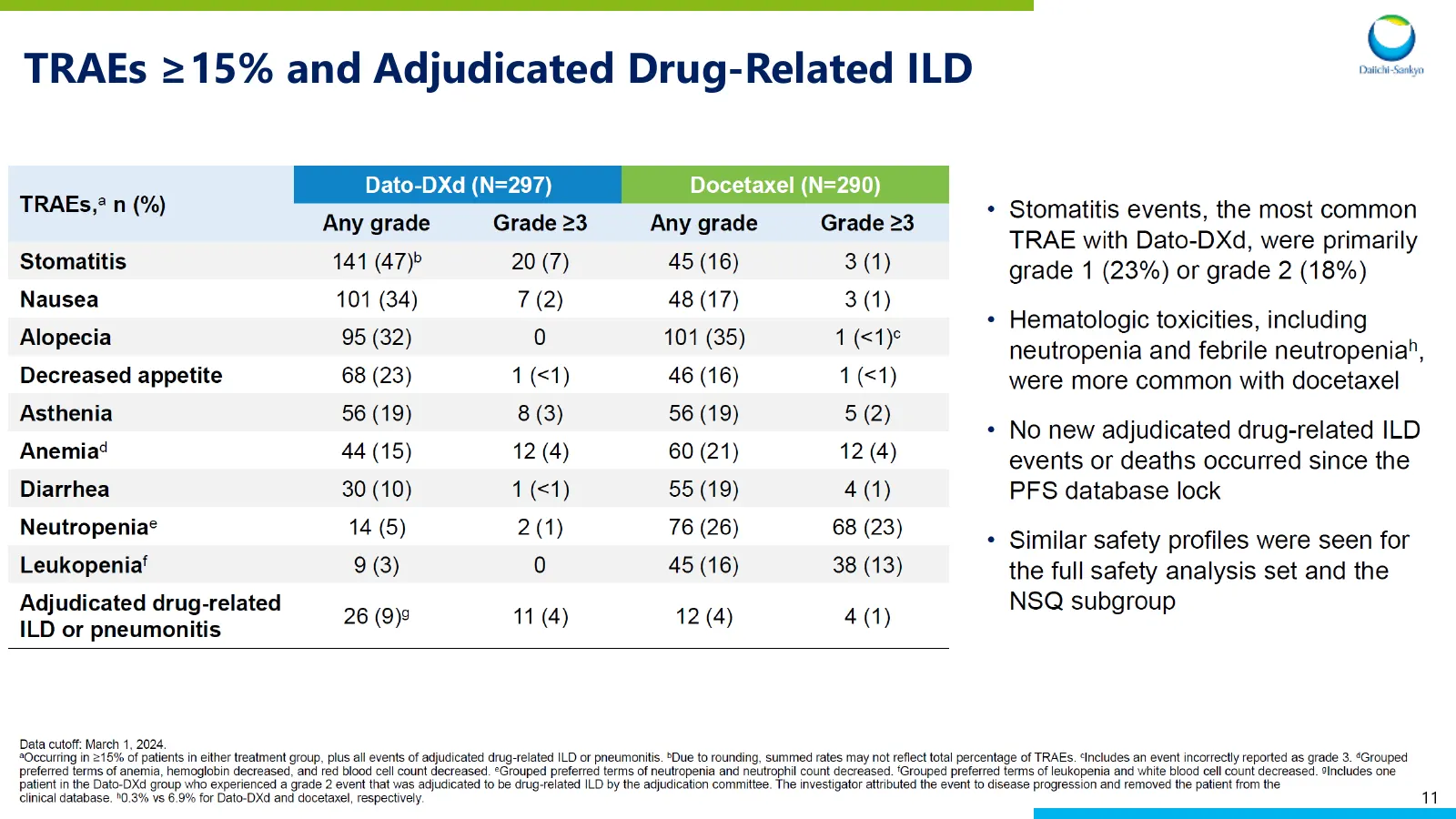
Slide 11: TRAEs ≥15% and Adjudicated Drug-Related ILD
TRAEs ≥15% and Adjudicated Drug-Related ILD 11
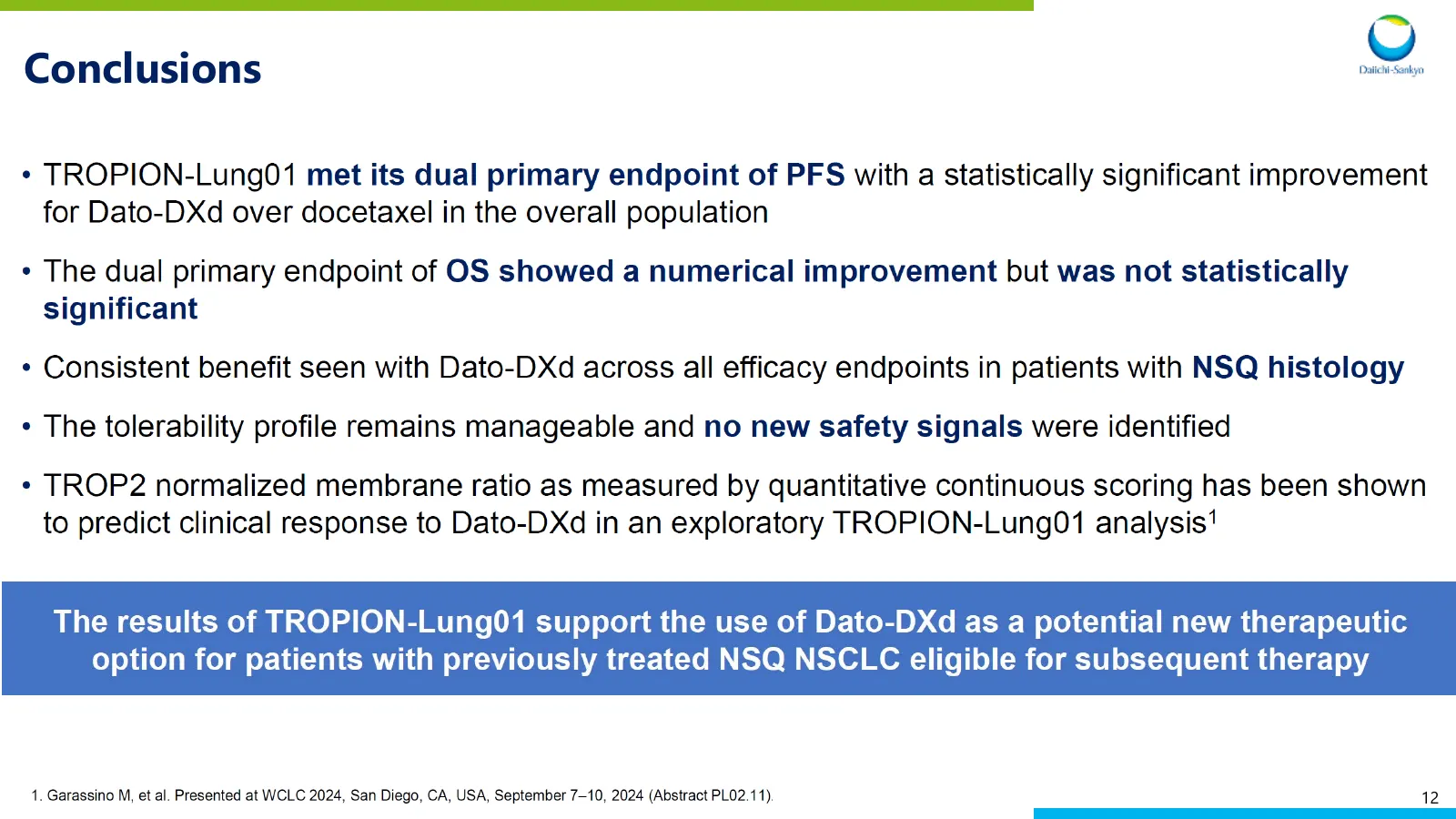
Slide 12: Conclusions
Dalichi-Sonkyn Conclusions * TROPION-Lung01 met its dual primary endpoint of PFS with a statistically significant improvement for Dato-DXd over docetaxel in the overall population * The dual primary endpoint of OS showed a numerical improvement but was not statistically significant * Consistent bene
Slide 13: Normalized Membrane Ratio of TROP2 by Quantitative Continuous Scoring is Predictive of Clinical Outcomes
Normalized Membrane Ratio of TROP2 by Quantitative Continuous Scoring is Predictive of Clinical Outcomes in TROPION-Lung01 Marina Chiara Garassino,1 Jacob Sands,2 Luis Paz-Ares,3 Aaron Lisberg,4 Melissa Johnson,5 Maurice Pérol,6 Danielle Carroll,7 Ansh Kapil,8 Vincent Haddad,7 Deise Uema,9 Hadassah
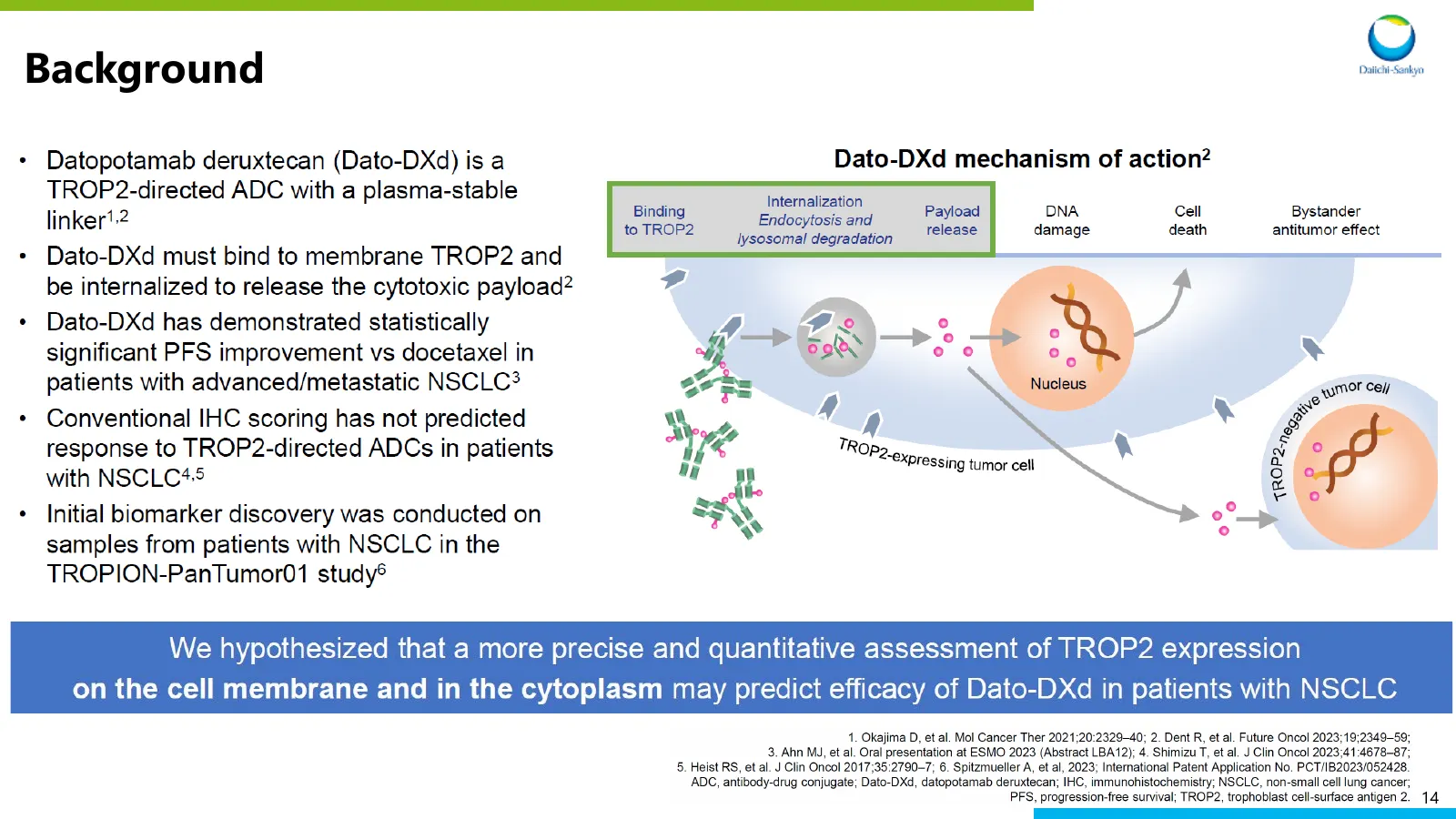
Slide 14: Background
Background Datopotamab deruxtecan (Dato-DXd) is a TROP2-directed ADC with a plasma-stable linker’? Dato-DXd must bind to membrane TROP2 and be internalized to release the cytotoxic payload? Dato-DXd has demonstrated statistically significant PFS improvement vs docetaxel in patients with advanced/met
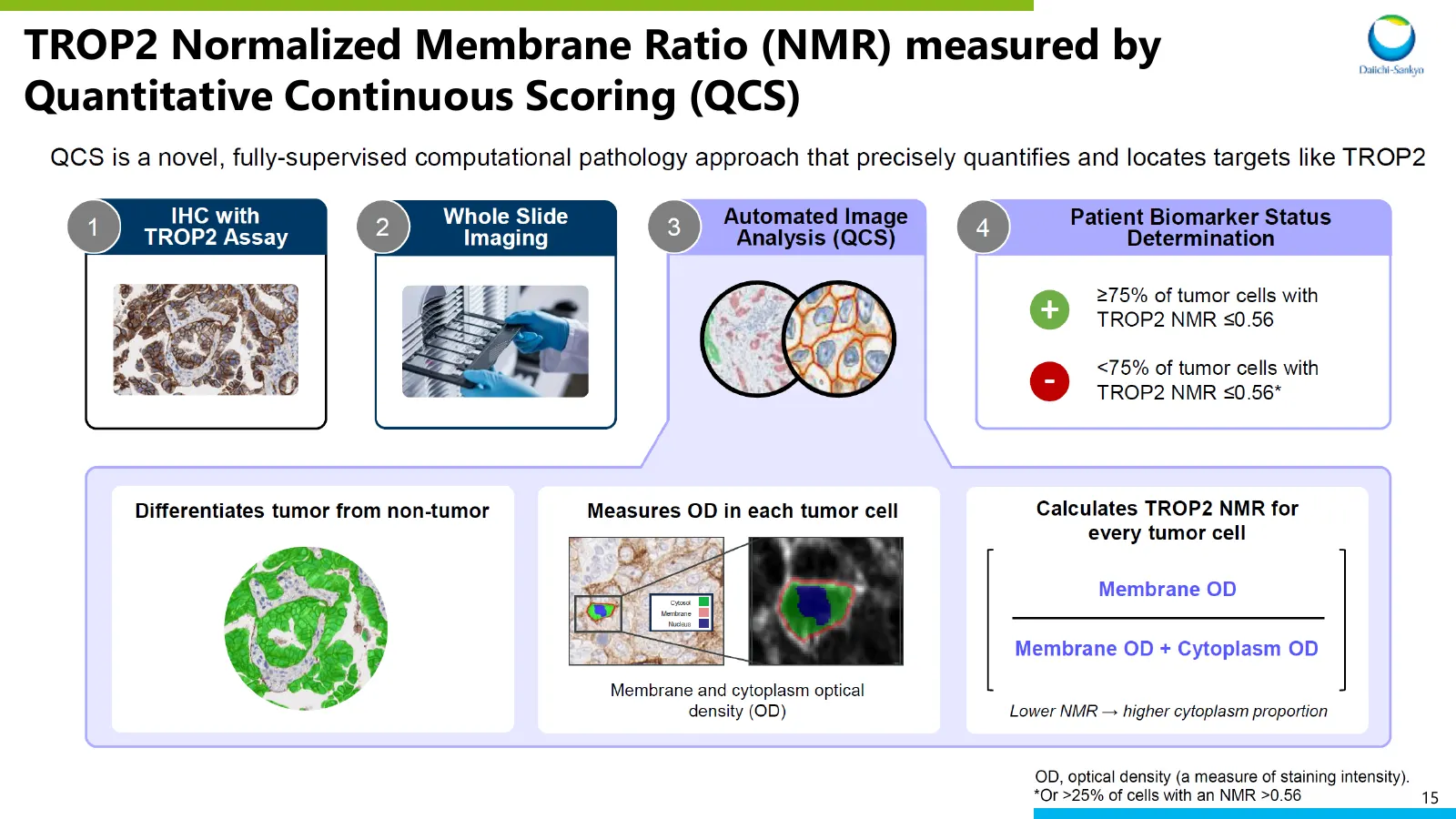
Slide 15: TROP2 Normalized Membrane Ratio (NMR) measured by Quantitative Continuous Scoring (QCS)
TROP2 Normalized Membrane Ratio (NMR) measured by Quantitative Continuous Scoring (QCS) 15
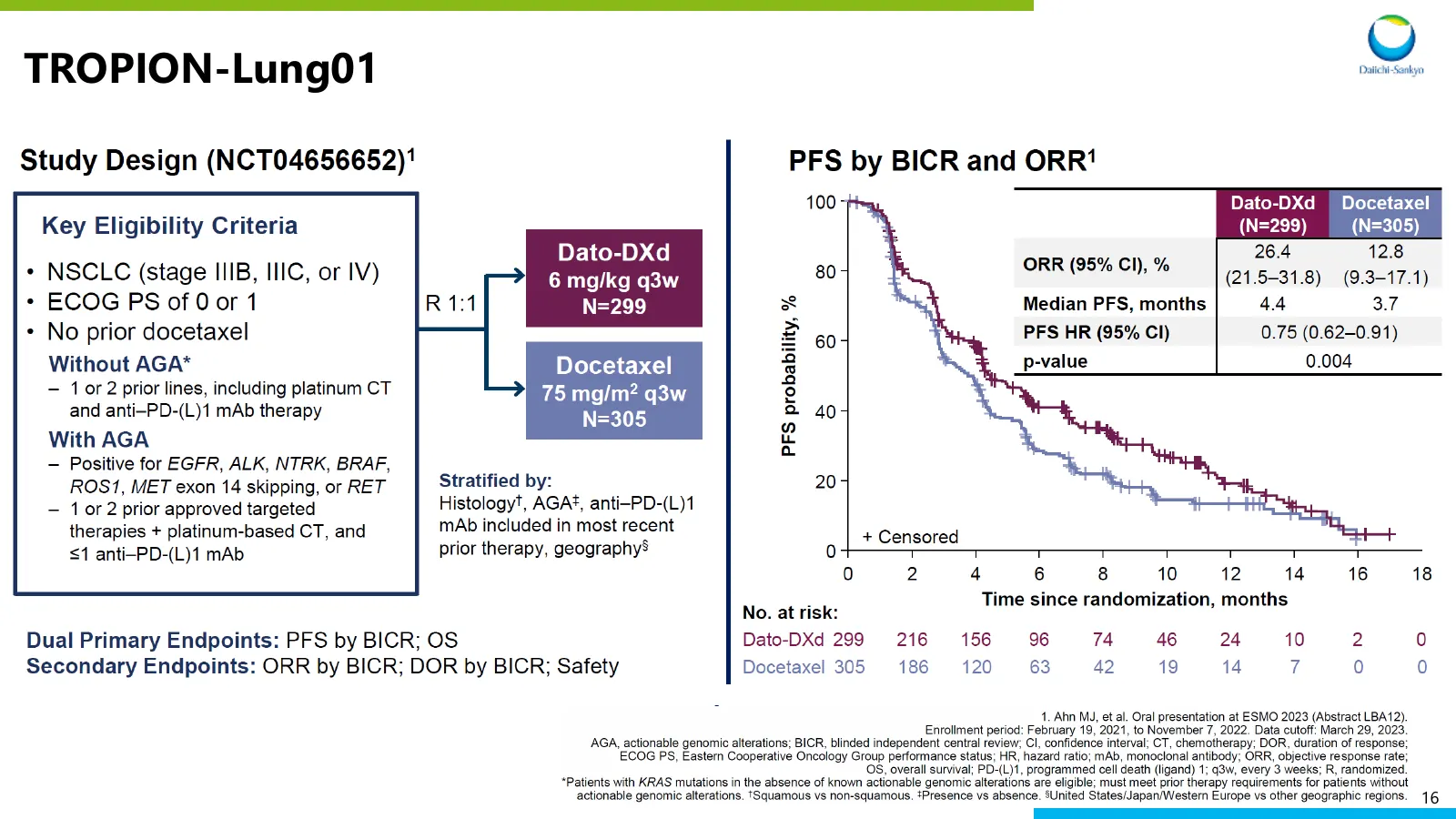
Slide 16: TROPION-Lung01
TROPION-Lung01 Study Design (NCT04656652)' Key Eligibility Criteria + NSCLC (stage IIIB, IIIC, or IV) a 46 mg/kg q3w + ECOG PS of Oor1 R1:1 + No prior docetaxel Without AGA* Docetaxel - 1 or 2 prior lines, including platinum CT and anti-PD-(L)1 mAb therapy With AGA — Positive for EGFR, ALK, NTRK, BR
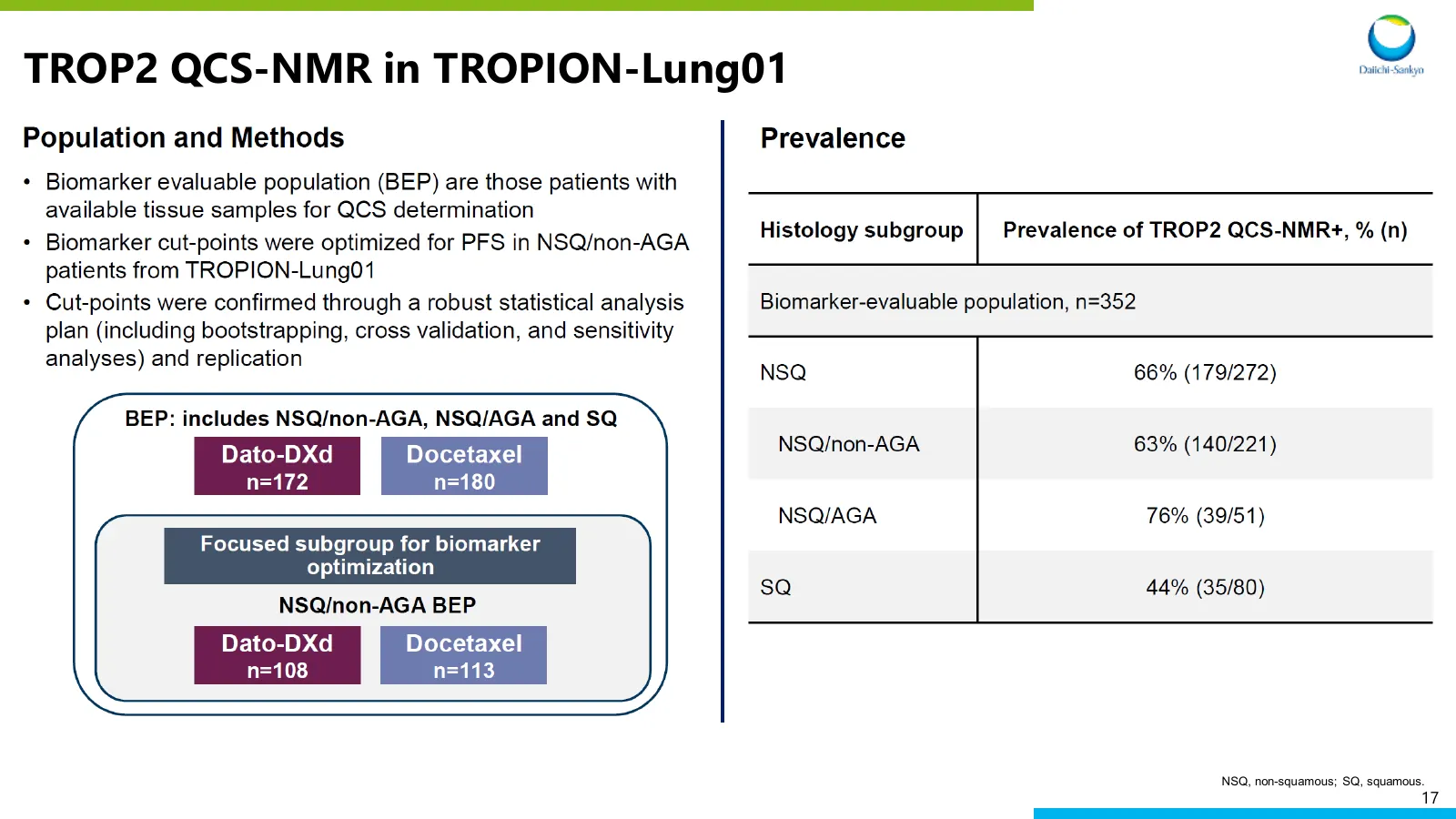
Slide 17: TROP2 QCS-NMR in TROPION-Lung01
TROP2 QCS-NMR in TROPION-Lung01 NSQ, non-squamous; SQ, squamous. 17
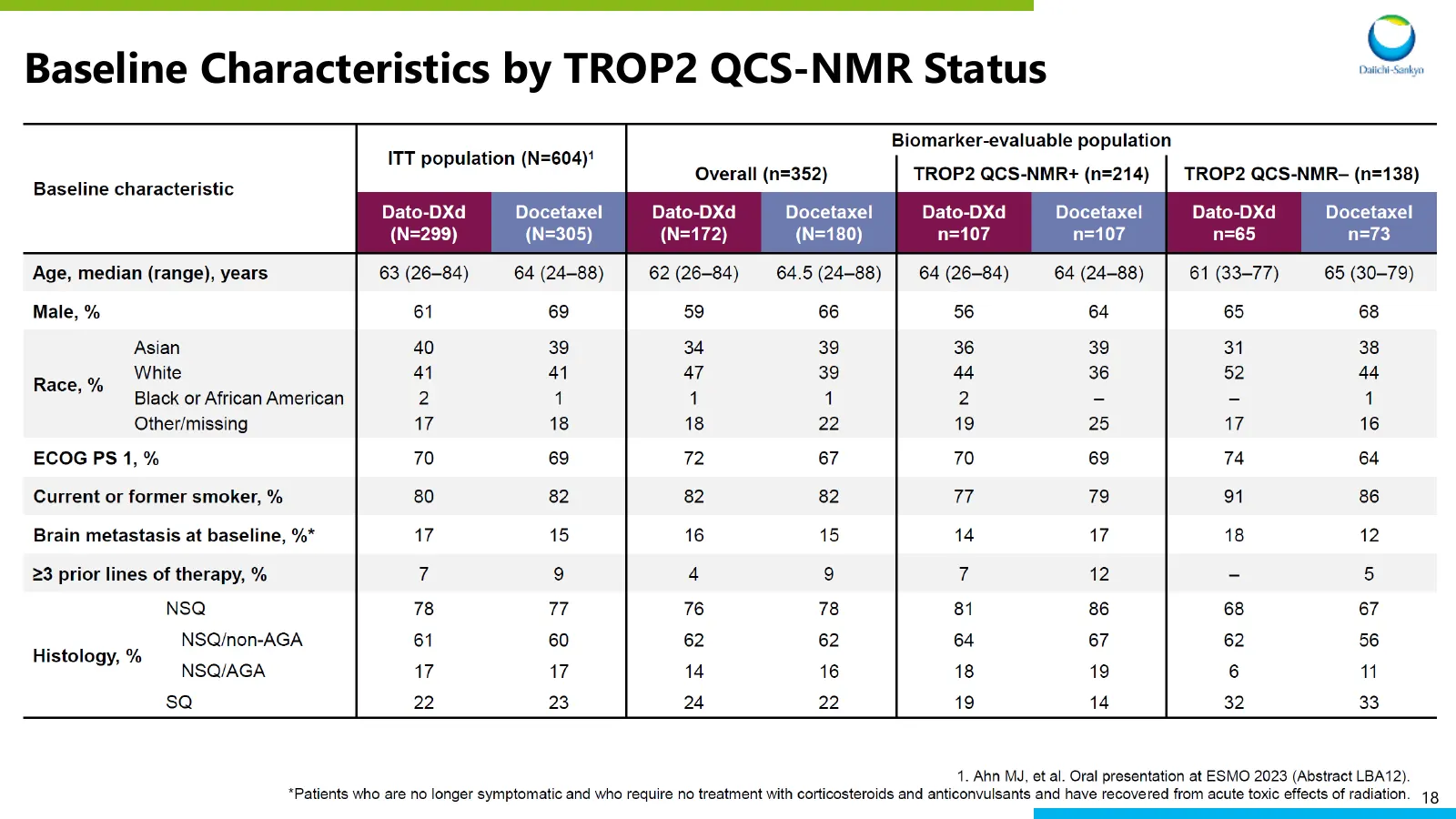
Slide 18: Baseline Characteristics by TROP2 QCS-NMR Status
Baseline Characteristics by TROP2 QCS-NMR Status 18
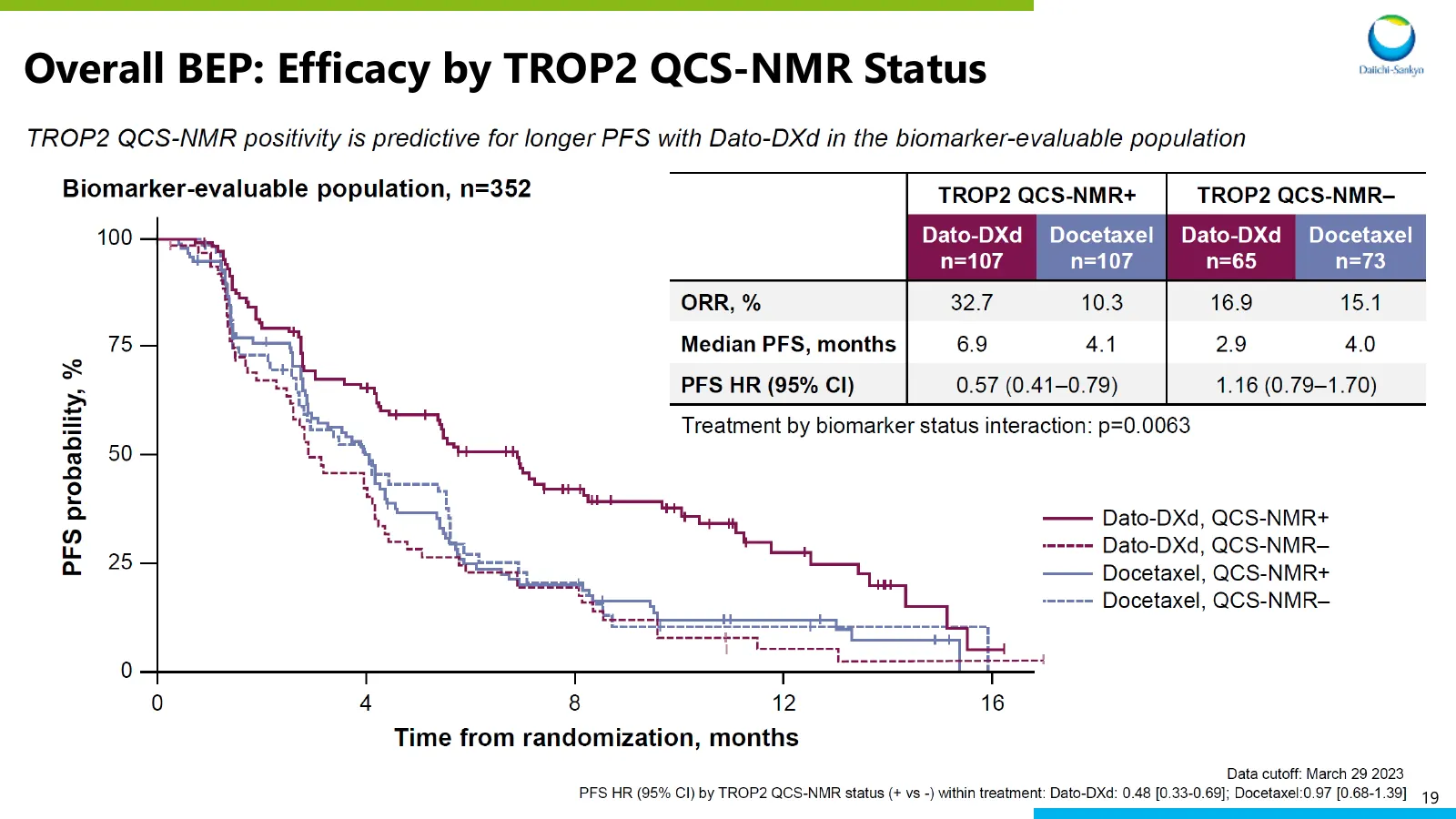
Slide 19: Overall BEP: Efficacy by TROP2 QCS-NMR Status
Overall BEP: Efficacy by TROP2 QCS-NMR Status 19
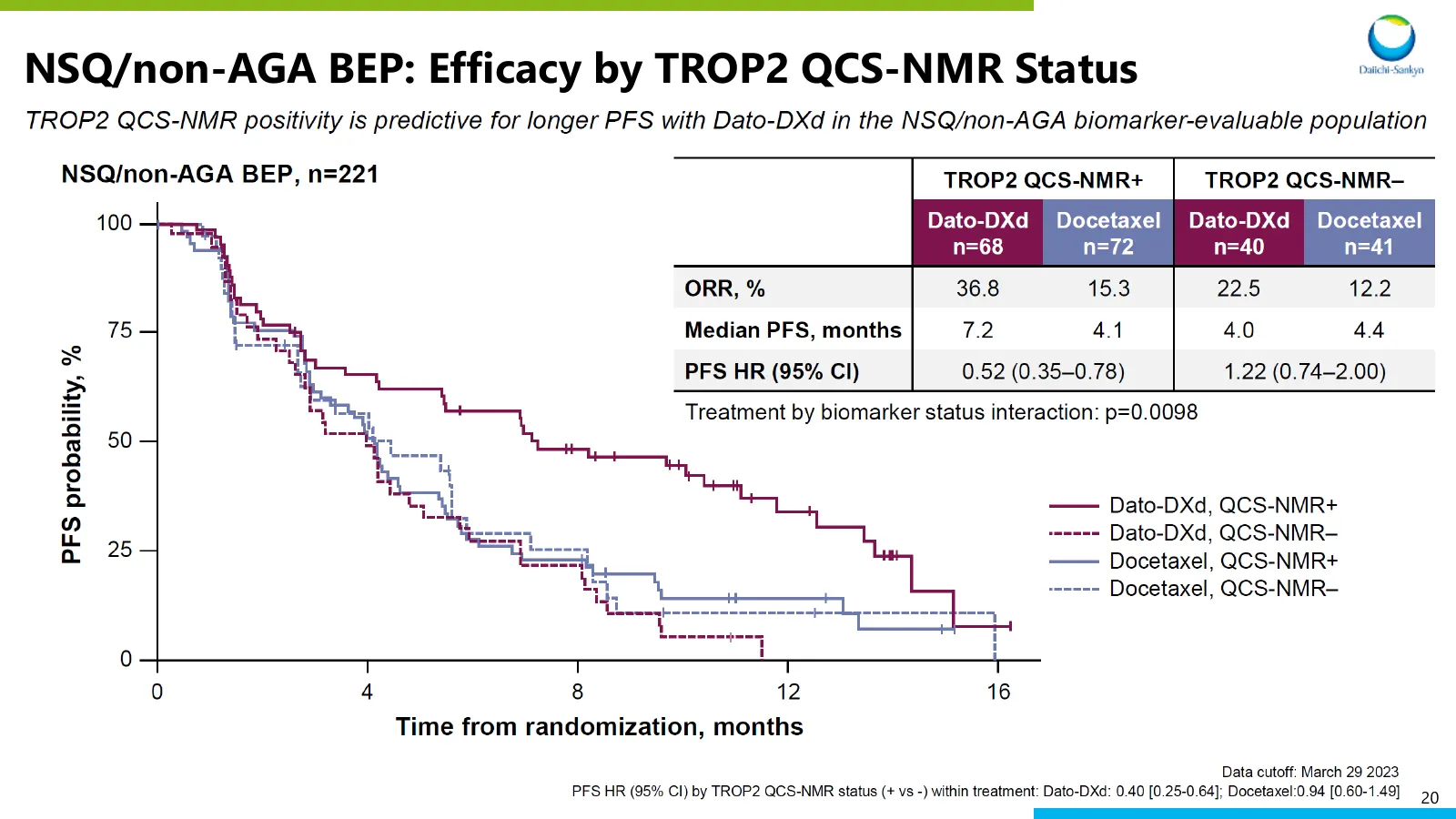
Slide 20: NSQ/non-AGA BEP: Efficacy by TROP2 QCS-NMR Status
NSQ/non-AGA BEP: Efficacy by TROP2 QCS-NMR Status 20
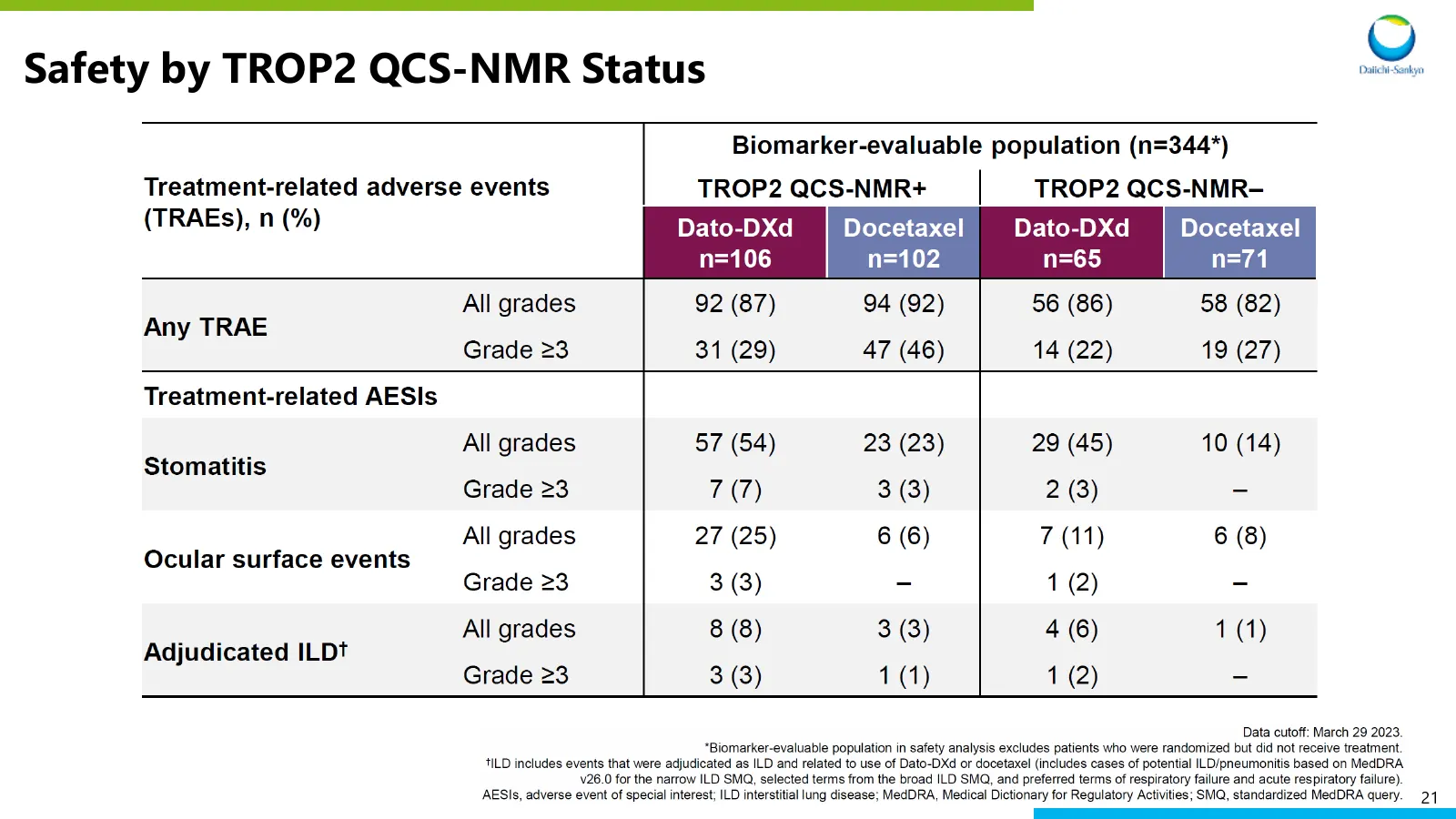
Slide 21: Safety by TROP2 QCS-NMR Status
Safety by TROP2 QCS-NMR Status 21
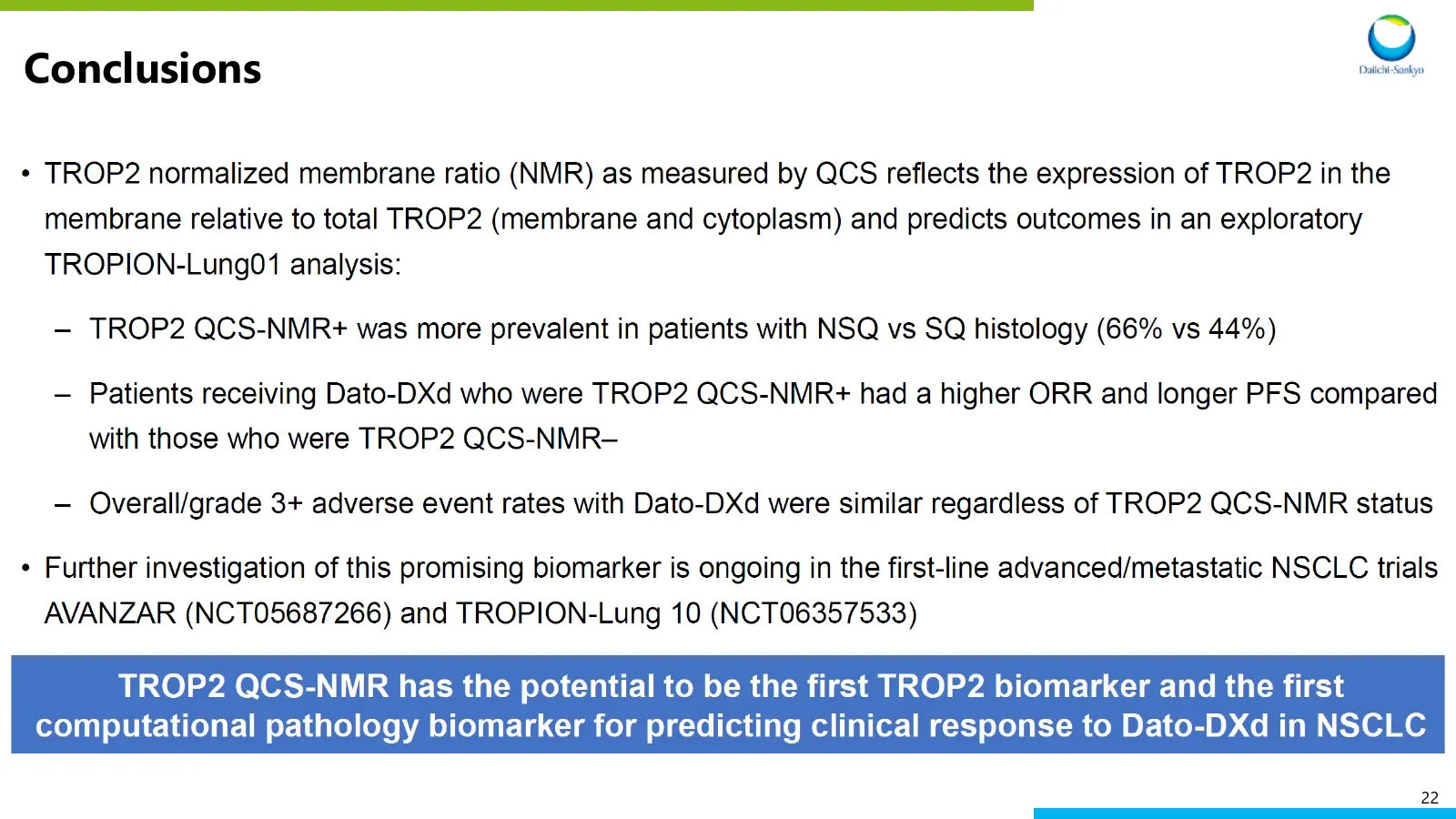
Slide 22: Conclusions
Conclusions ww, * TROP2 normalized membrane ratio (NMR) as measured by QCS reflects the expression of TROP2 in the membrane relative to total TROP2 (membrane and cytoplasm) and predicts outcomes in an exploratory TROPION-Lung01 analysis: — TROP2 QCS-NMR+ was more prevalent in patients with NSQ vs SQ
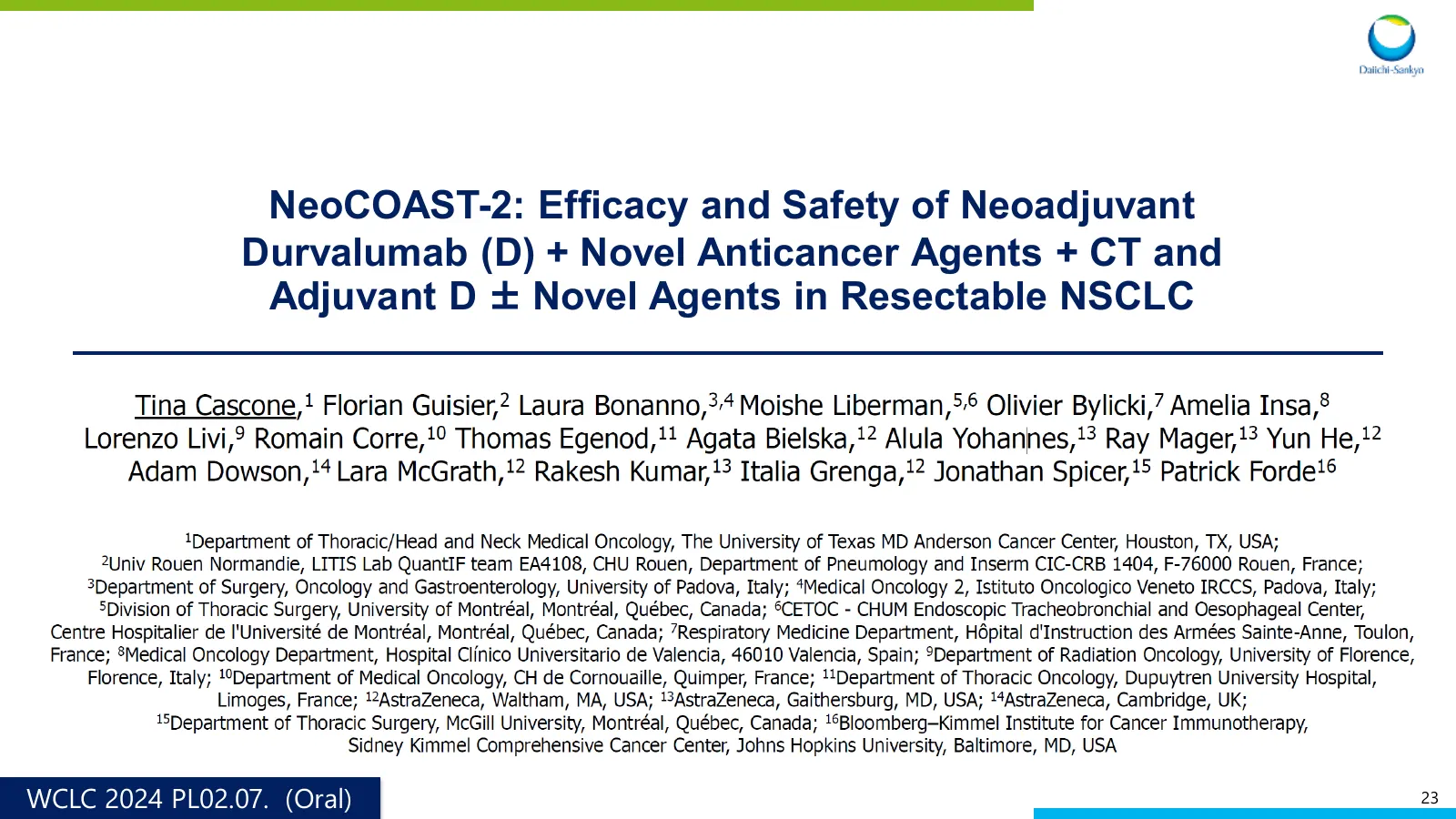
Slide 23: NeoCOAST-2: Neoadjuvant Durvalumab + Novel Agents + CT in Resectable NSCLC
NeoCOAST-2: Efficacy and Safety of Neoadjuvant Durvalumab (D) + Novel Anticancer Agents + CT and Adjuvant D ± Novel Agents in Resectable NSCLC WCLC 2024 PL02.07. (Oral) 23
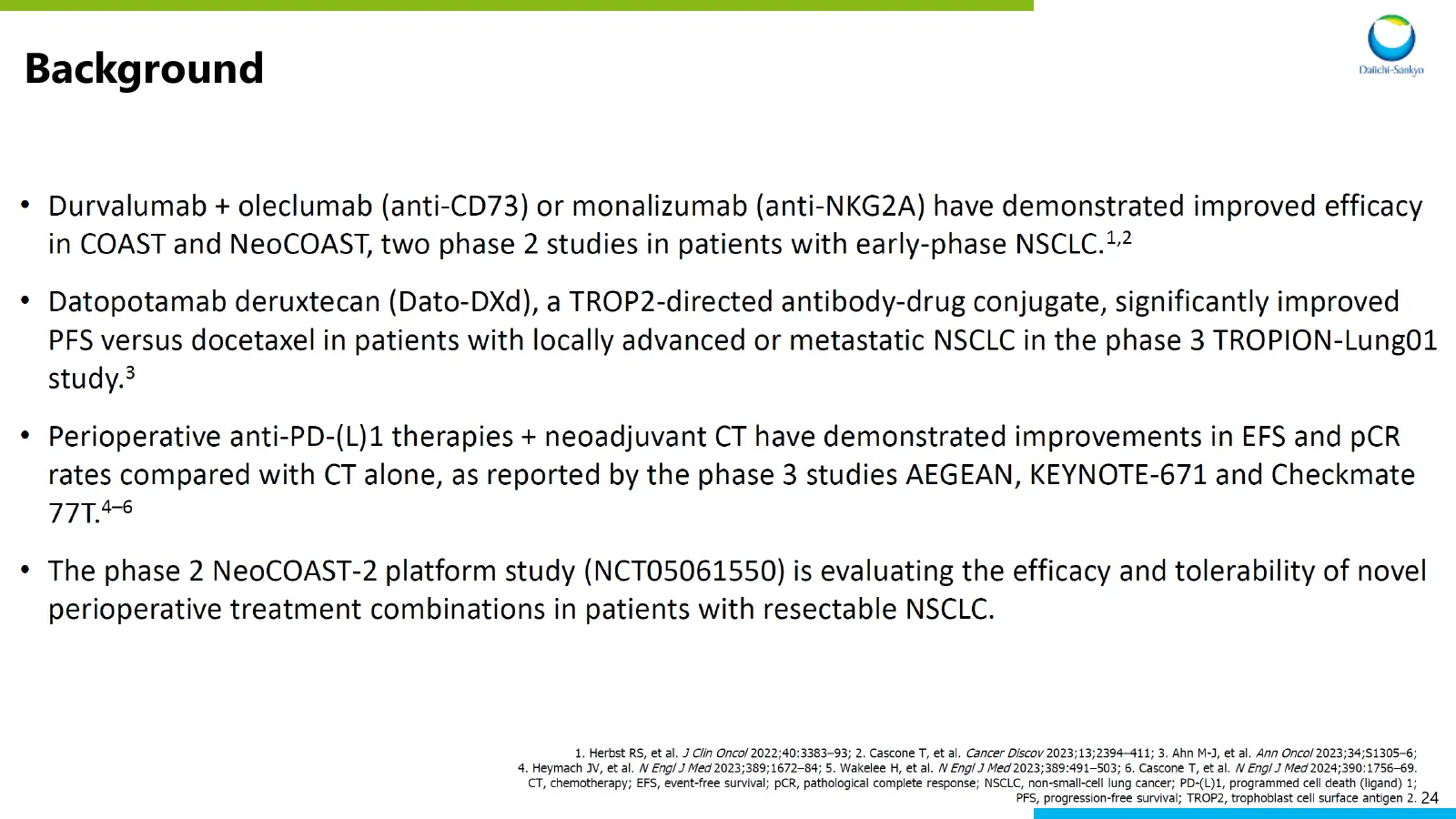
Slide 24: Background
Background we, * Durvalumab + oleclumab (anti-CD73) or monalizumab (anti-NKG2A) have demonstrated improved efficacy in COAST and NeoCOAST, two phase 2 studies in patients with early-phase NSCLC.*2 * Datopotamab deruxtecan (Dato-DXd), a TROP2-directed antibody-drug conjugate, significantly improved P
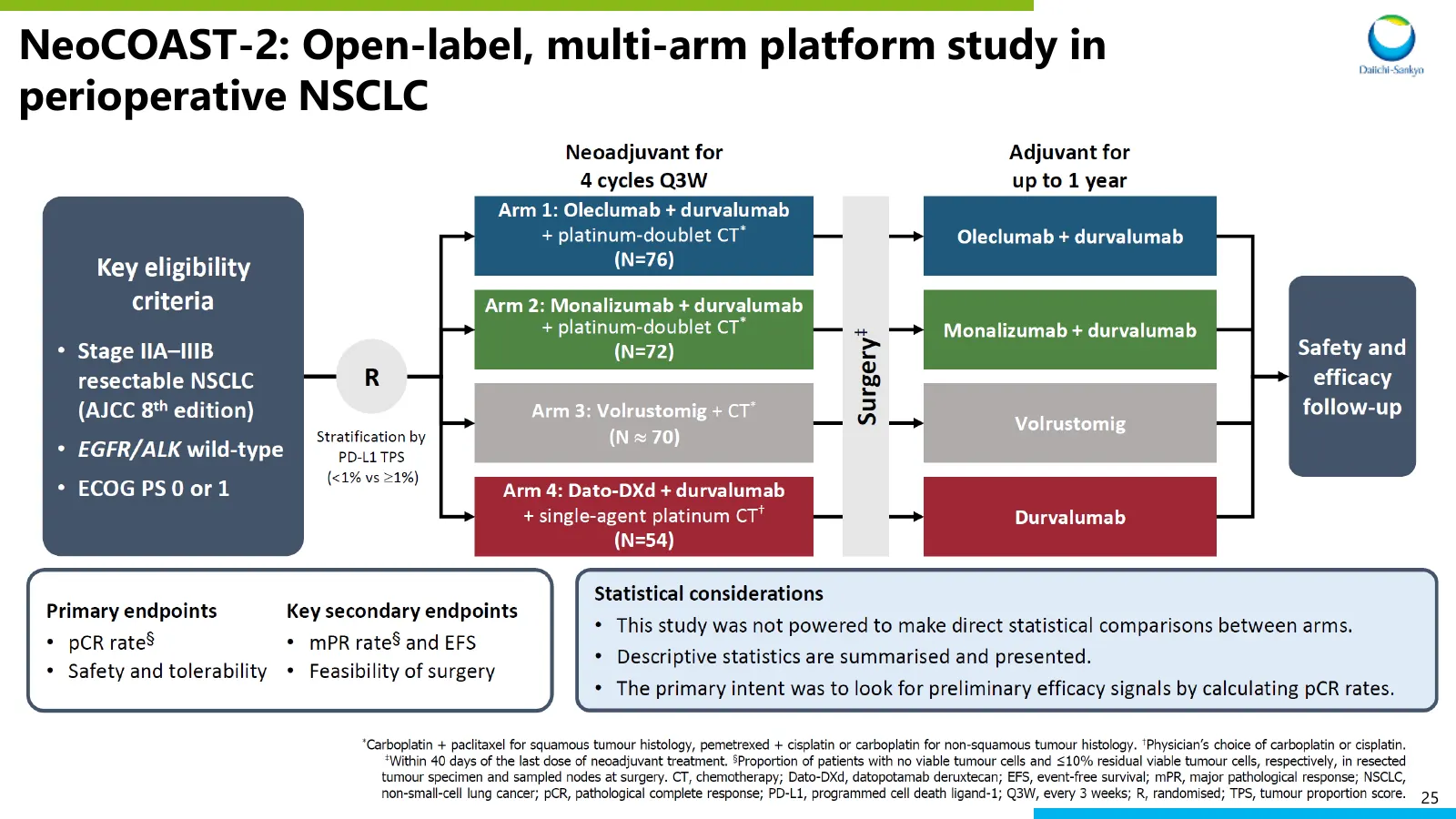
Slide 25: NeoCOAST-2: Open-label, multi-arm platform study in perioperative NSCLC
NeoCOAST-2: Open-label, multi-arm platform study in perioperative NSCLC 25
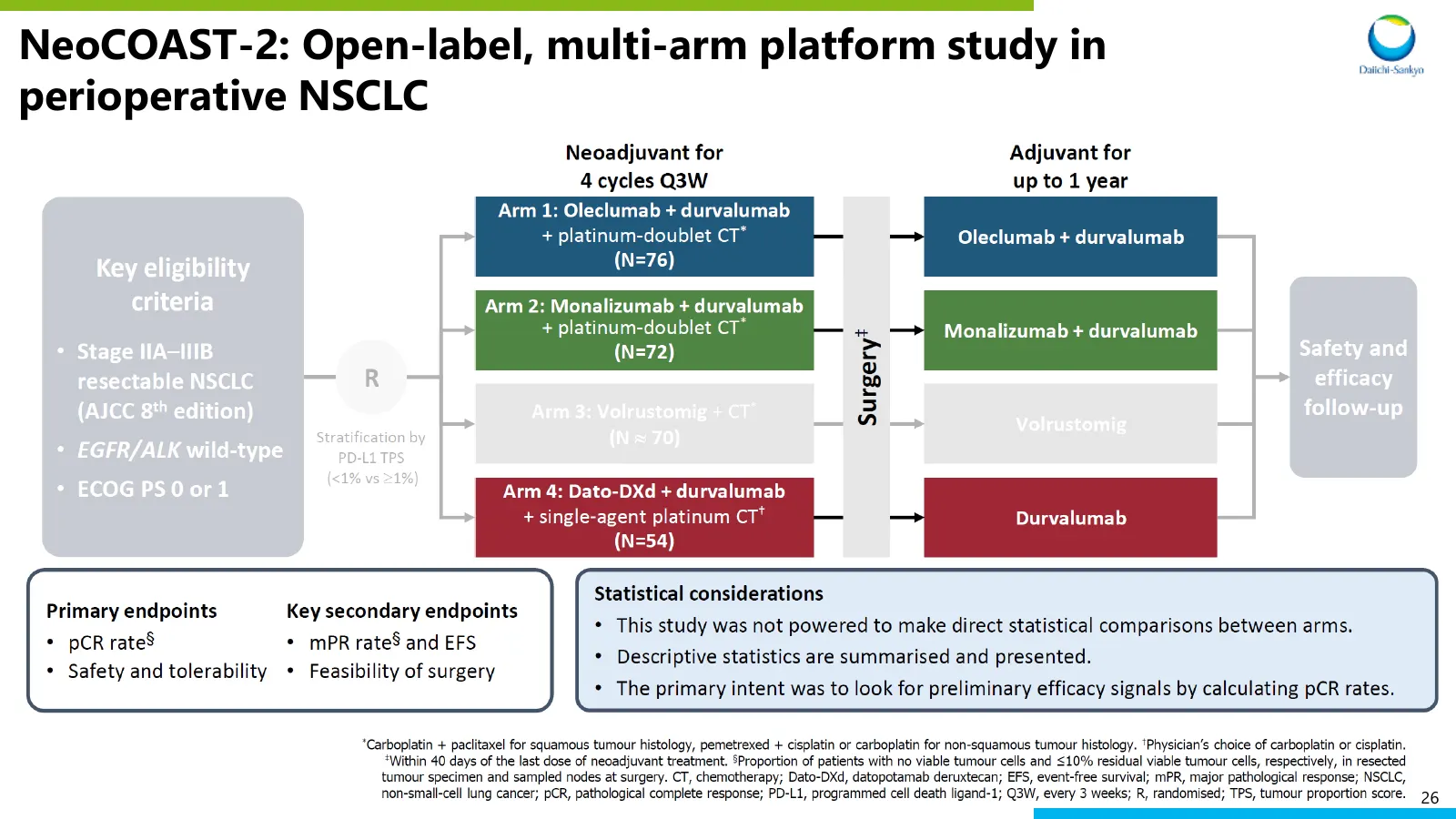
Slide 26: NeoCOAST-2: Open-label, multi-arm platform study in perioperative NSCLC
NeoCOAST-2: Open-label, multi-arm platform study in perioperative NSCLC 26
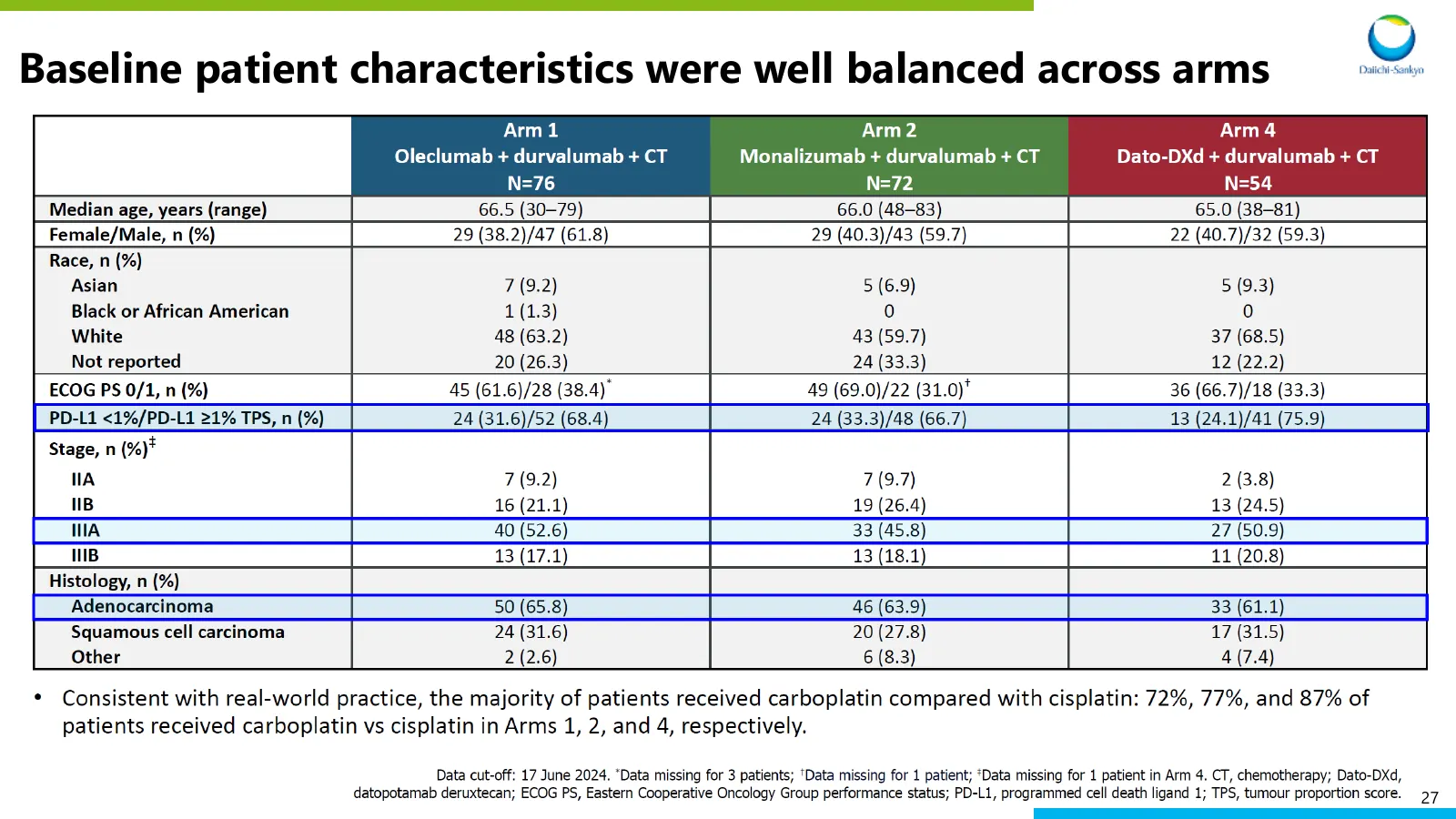
Slide 27: Baseline patient characteristics were well balanced across arms
Baseline patient characteristics were well balanced across arms 27
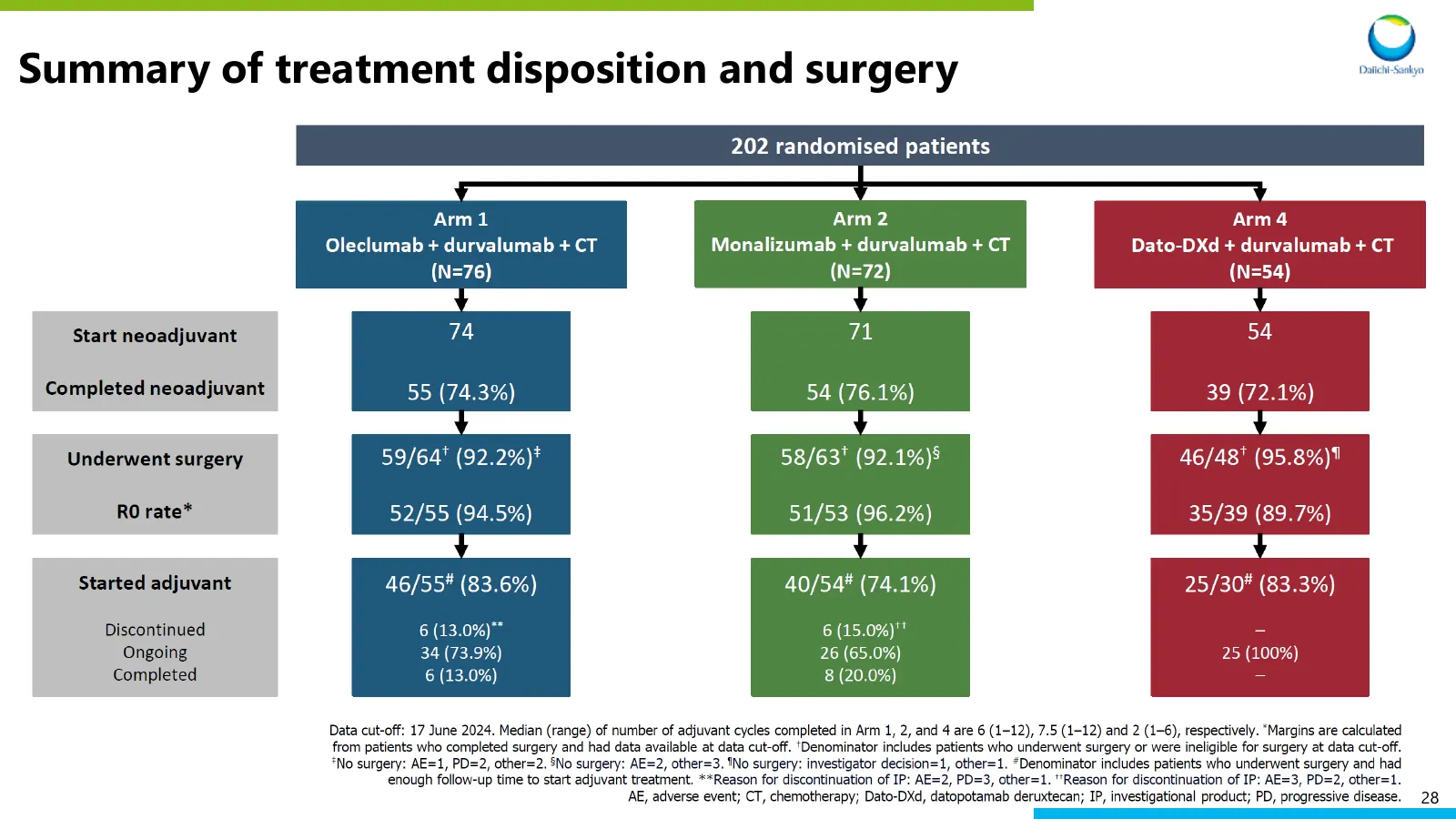
Slide 28: Summary of treatment disposition and surgery
Summary of treatment disposition and surgery 28
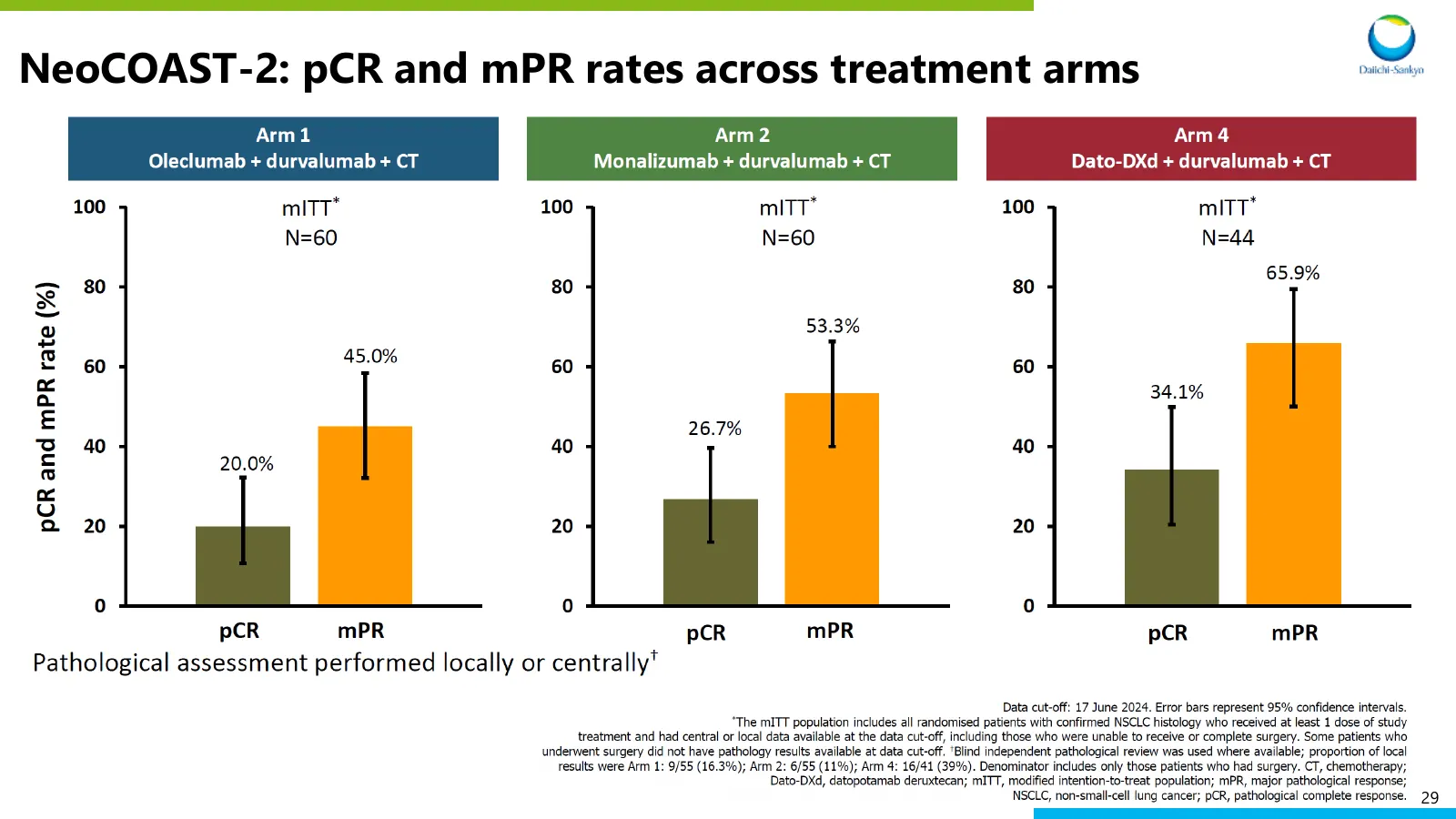
Slide 29: NeoCOAST-2: pCR and mPR rates across treatment arms
NeoCOAST-2: pCR and mPR rates across treatment arms 29
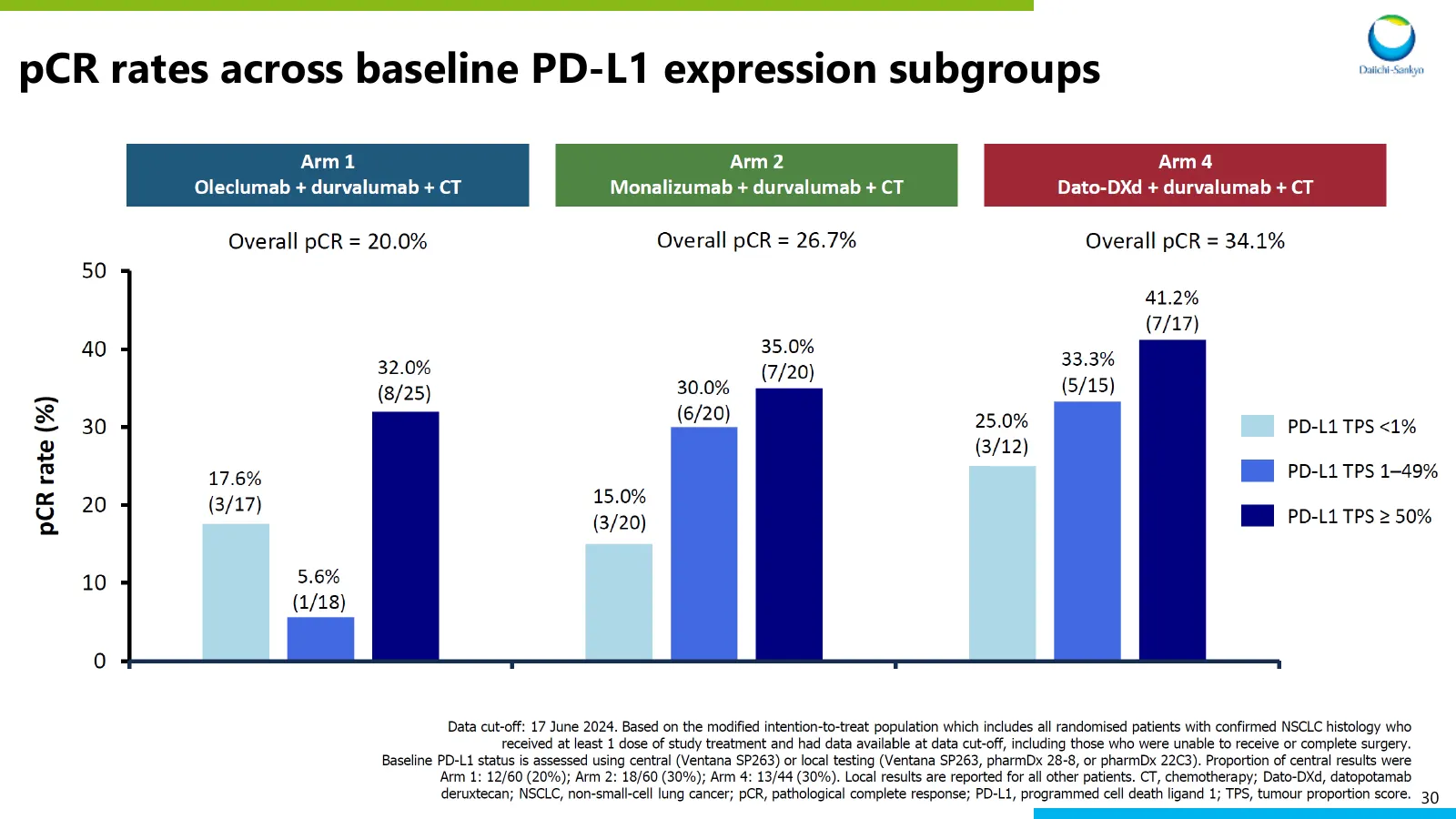
Slide 30: pCR rates across baseline PD-L1 expression subgroups
pCR rates across baseline PD-L1 expression subgroups 30
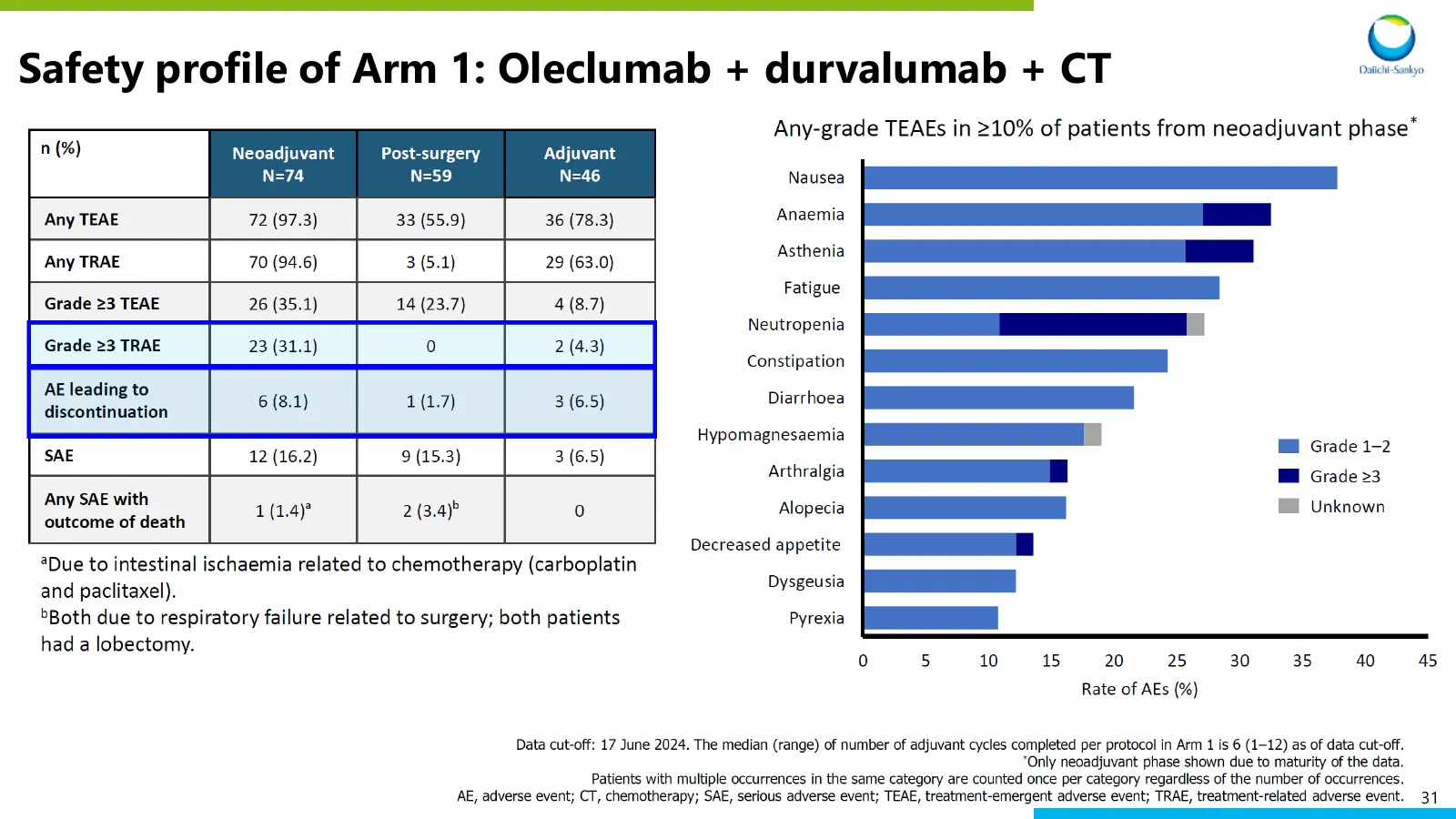
Slide 31: Safety profile of Arm 1: Oleclumab + durvalumab + CT
Safety profile of Arm 1: Oleclumab + durvalumab + CT 31
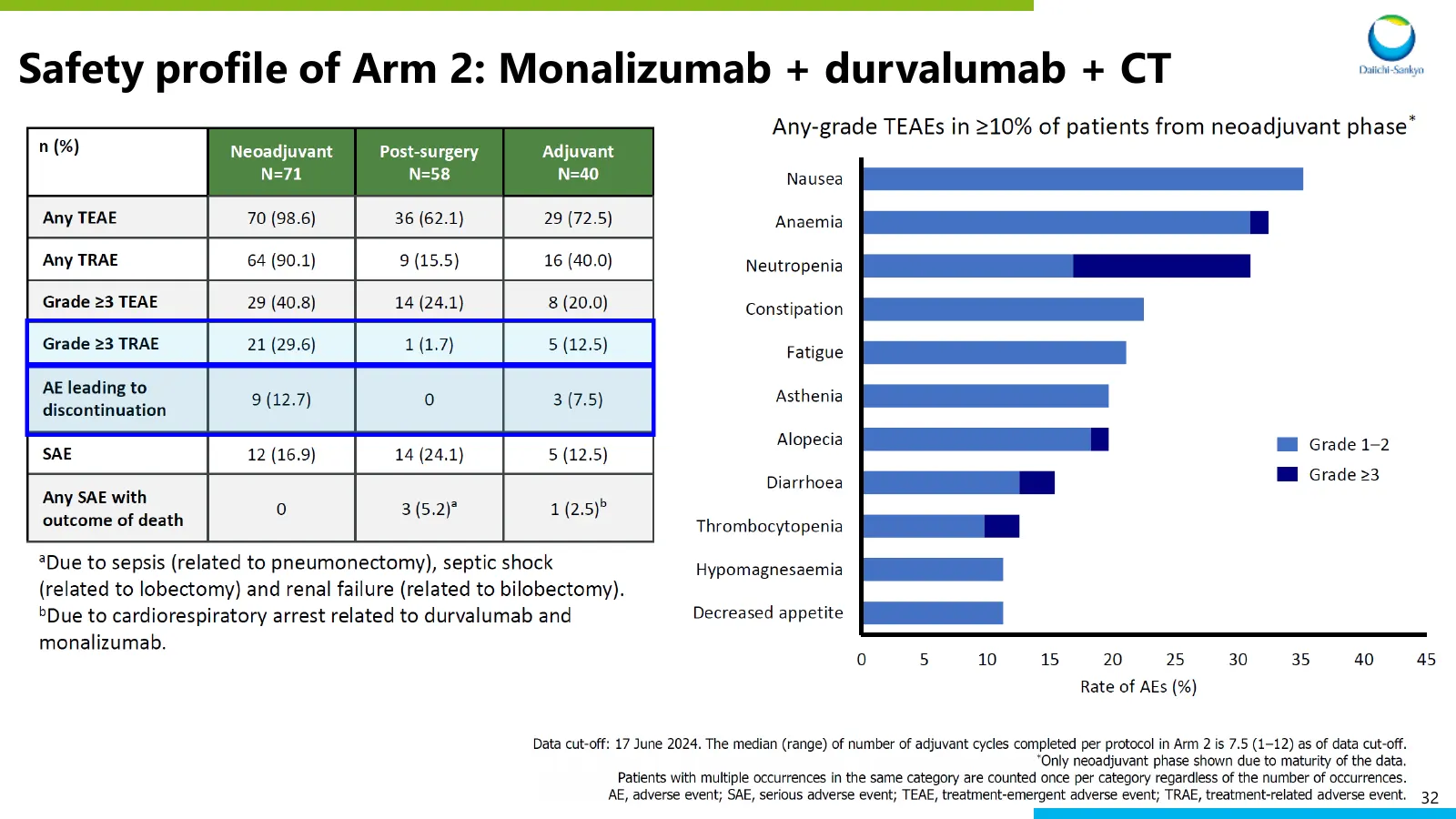
Slide 32: Safety profile of Arm 2: Monalizumab + durvalumab + CT
Safety profile of Arm 2: Monalizumab + durvalumab + CT 32
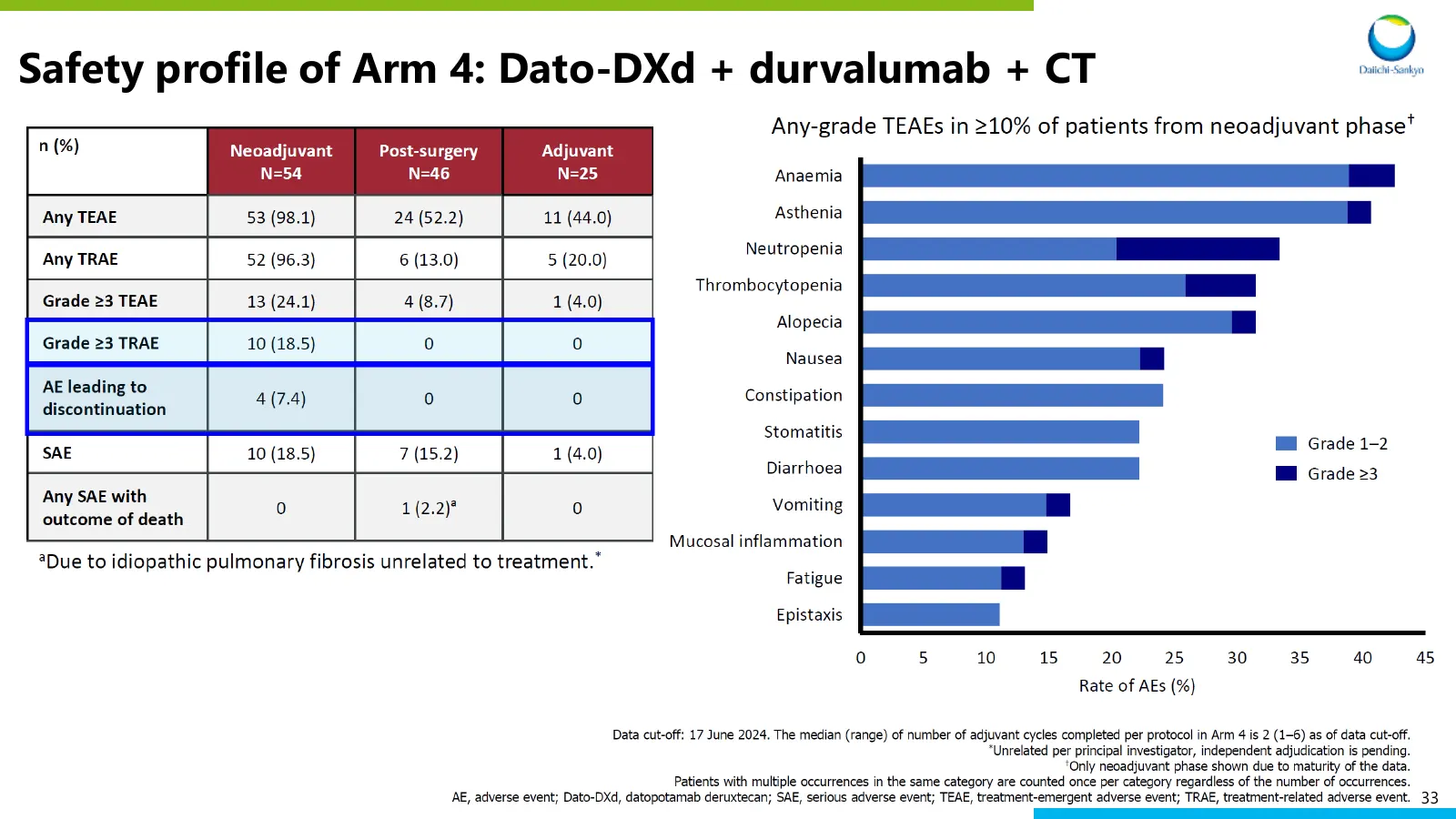
Slide 33: Safety profile of Arm 4: Dato-DXd + durvalumab + CT
Safety profile of Arm 4: Dato-DXd + durvalumab + CT 33
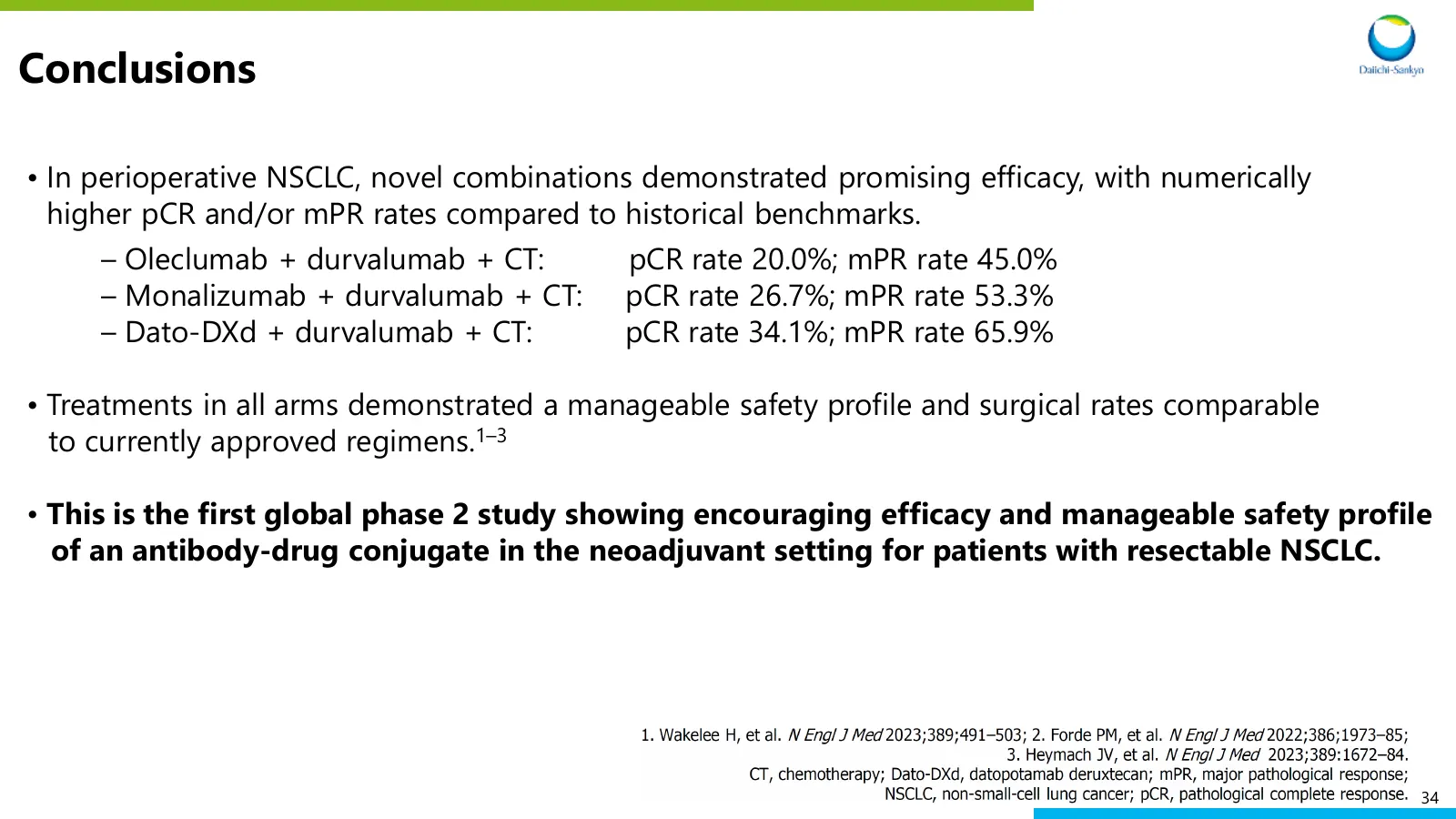
Slide 34: Conclusions
Conclusions • In perioperative NSCLC, novel combinations demonstrated promising efficacy, with numerically higher pCR and/or mPR rates compared to historical benchmarks. – Oleclumab + durvalumab + CT: pCR rate 20.0%; mPR rate 45.0% – Monalizumab + durvalumab + CT: pCR rate 26.7%; mPR rate 53.3% – Da
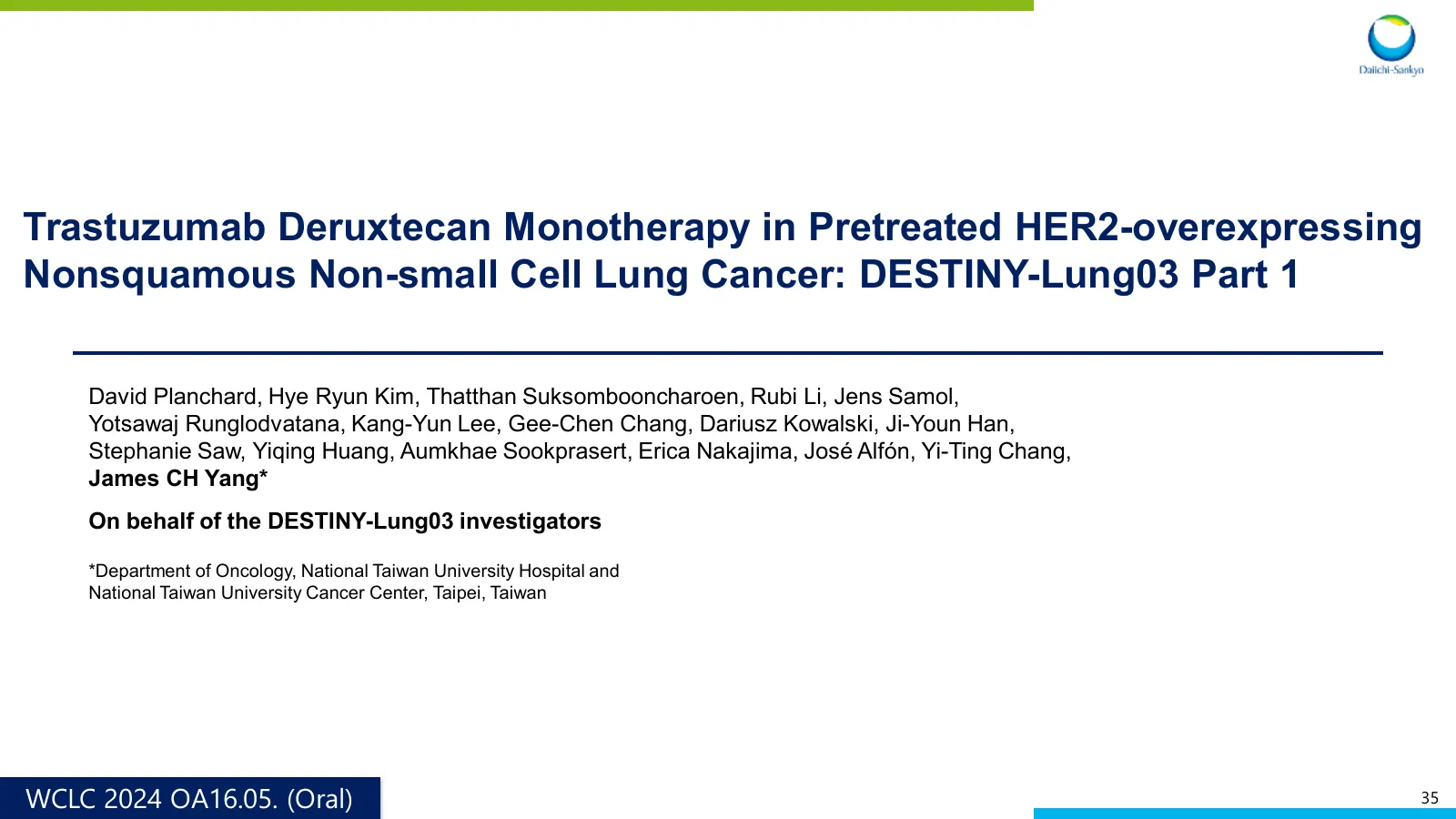
Slide 35: Trastuzumab Deruxtecan Monotherapy in Pretreated HER2-overexpressing Nonsquamous NSCLC: DESTINY-Lung03 Part 1
Trastuzumab Deruxtecan Monotherapy in Pretreated HER2-overexpressing Nonsquamous Non-small Cell Lung Cancer: DESTINY-Lung03 Part 1 David Planchard, Hye Ryun Kim, Thatthan Suksombooncharoen, Rubi Li, Jens Samol, Yotsawaj Runglodvatana, Kang-Yun Lee, Gee-Chen Chang, Dariusz Kowalski, Ji-Youn Han, Step
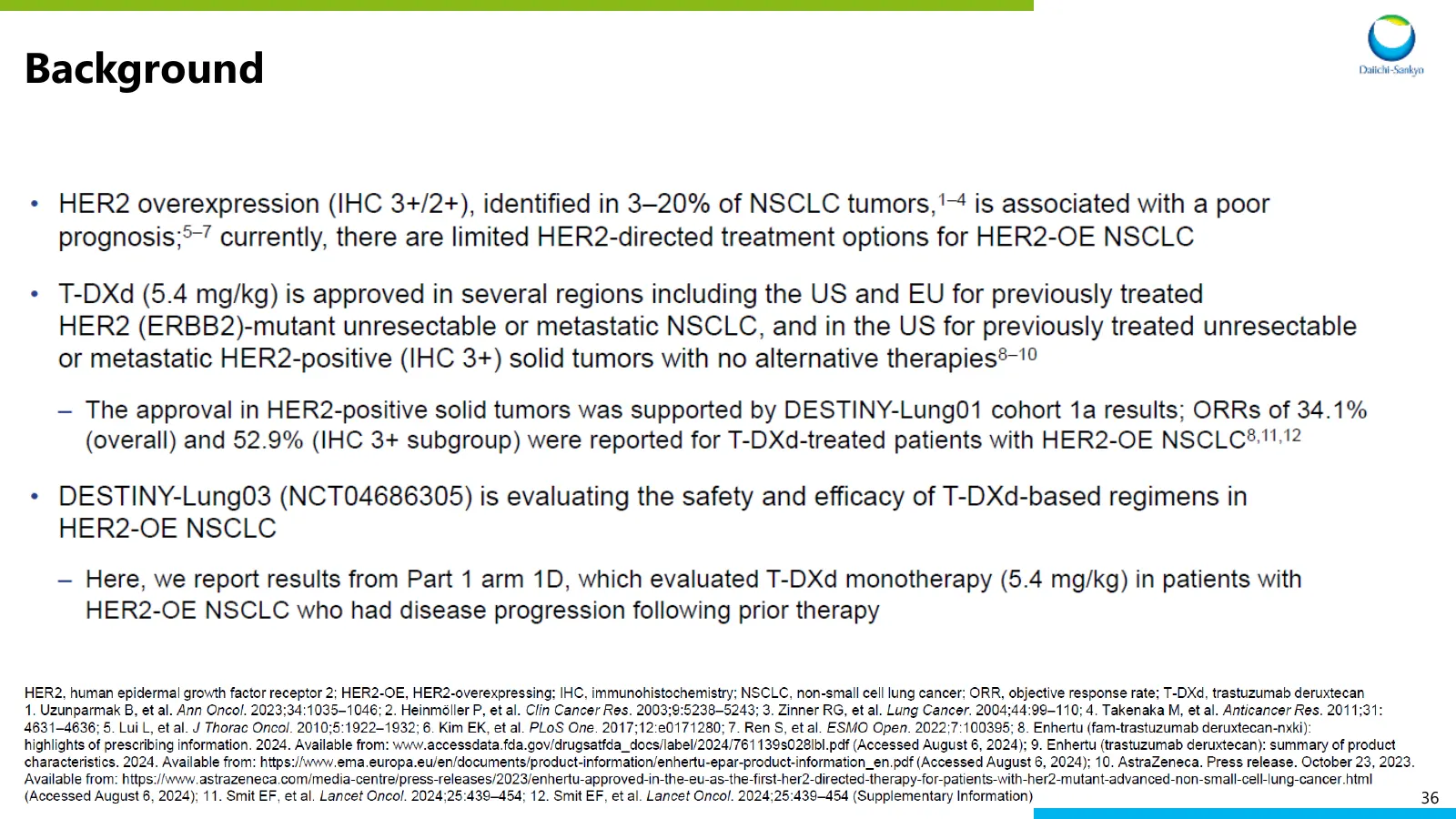
Slide 36: Background
Background wz. + HER2 overexpression (IHC 3+/2+), identified in 3-20% of NSCLC tumors,'~ is associated with a poor prognosis;>~’ currently, there are limited HER2-directed treatment options for HER2-OE NSCLC + T-DXd (5.4 mg/kg) is approved in several regions including the US and EU for previously tr
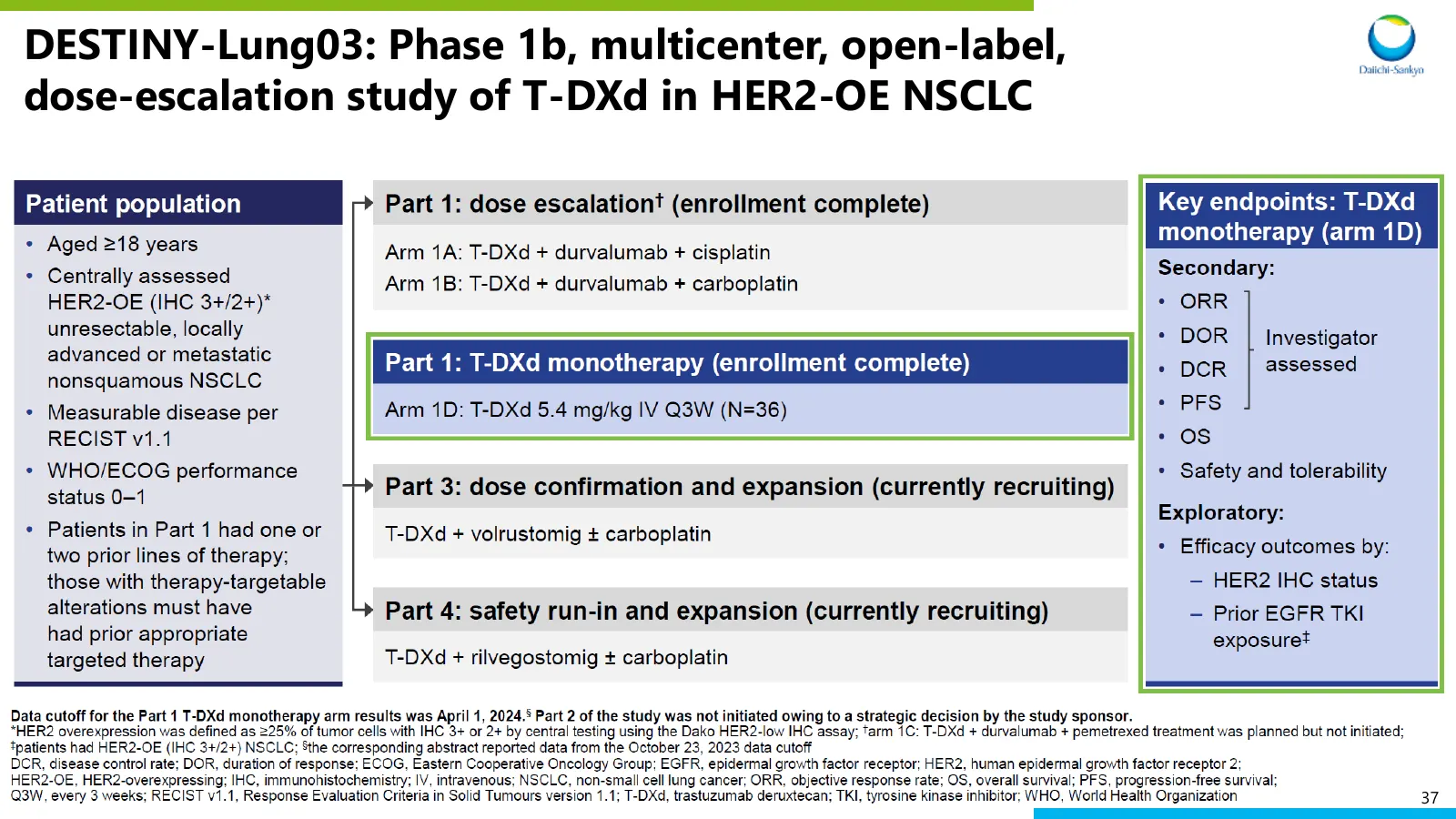
Slide 37: DESTINY-Lung03: Phase 1b dose-escalation study of T-DXd in HER2-OE NSCLC
DESTINY-Lung03: Phase 1b, multicenter, open-label, dose-escalation study of T-DXd in HER2-OE NSCLC 37
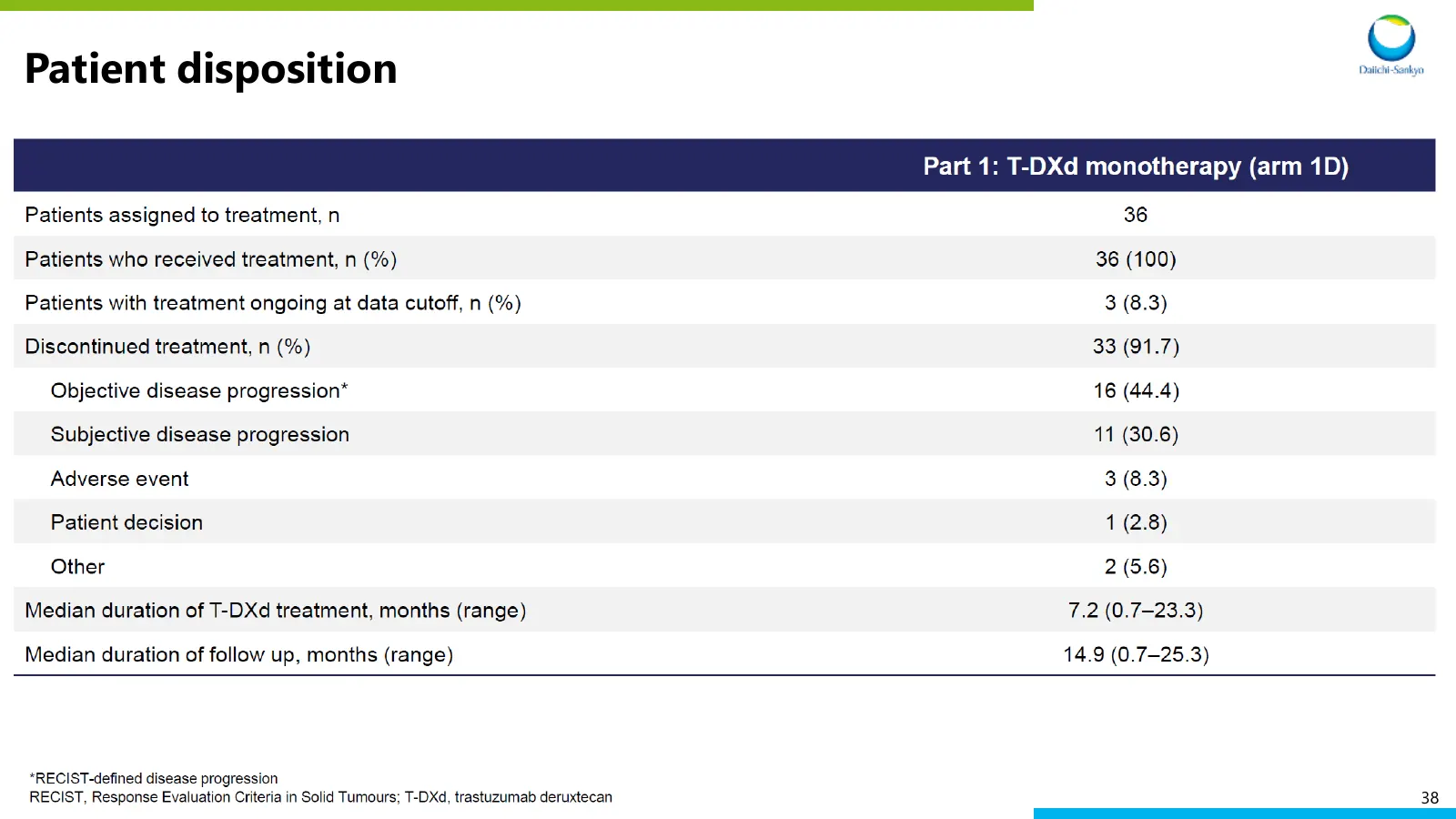
Slide 38: Patient disposition
Patient disposition a U Daichi-Sankyo Part 1 Xd monotherapy (arm 1 Patients assigned to treatment, n Patients who received treatment, n (%) Patients with treatment ongoing at data cutoff, n (%) Discontinued treatment, n (%) Objective disease progression* Subjective disease progression Adverse event
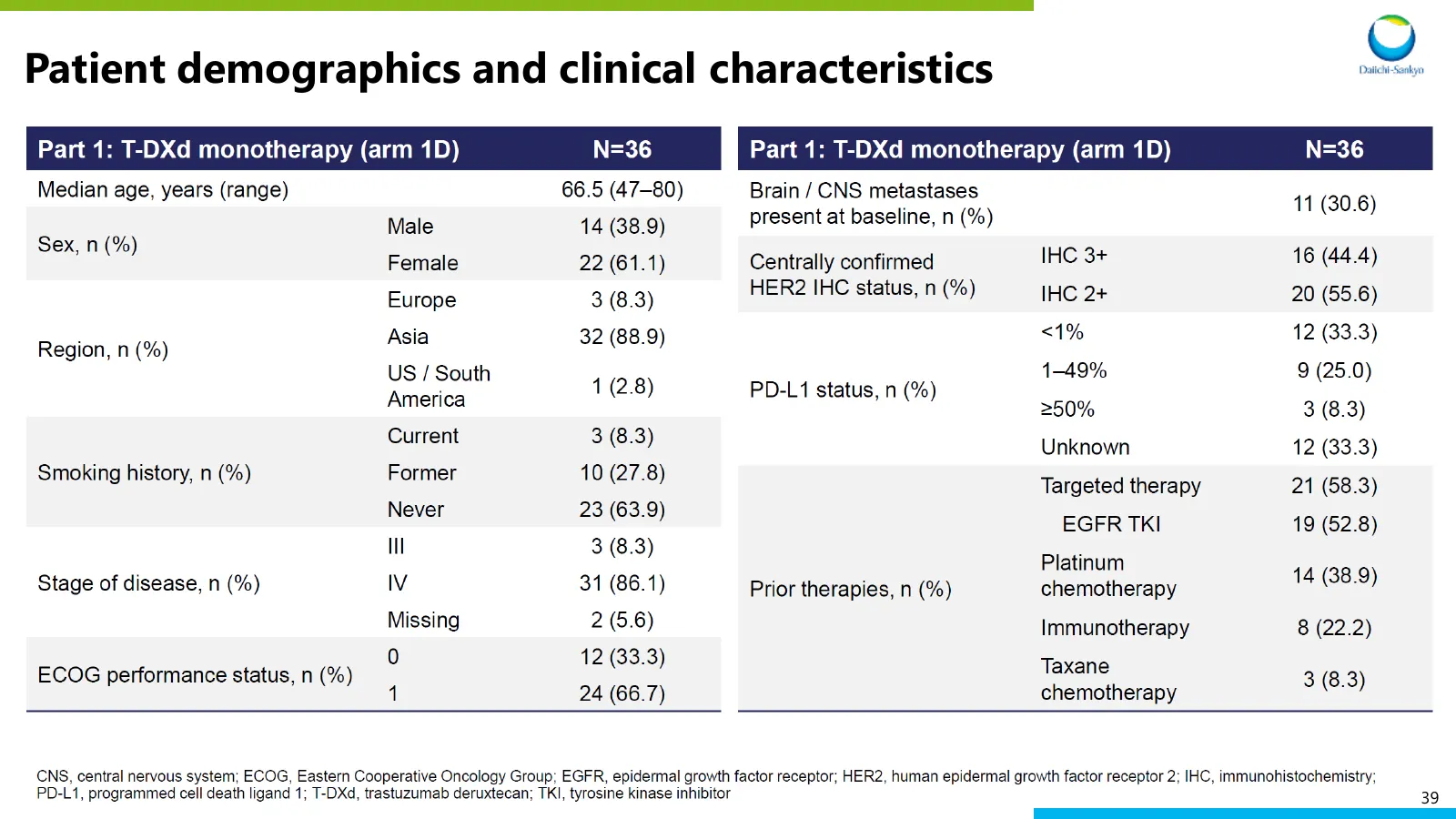
Slide 39: Patient demographics and clinical characteristics
Patient demographics and clinical characteristics 39
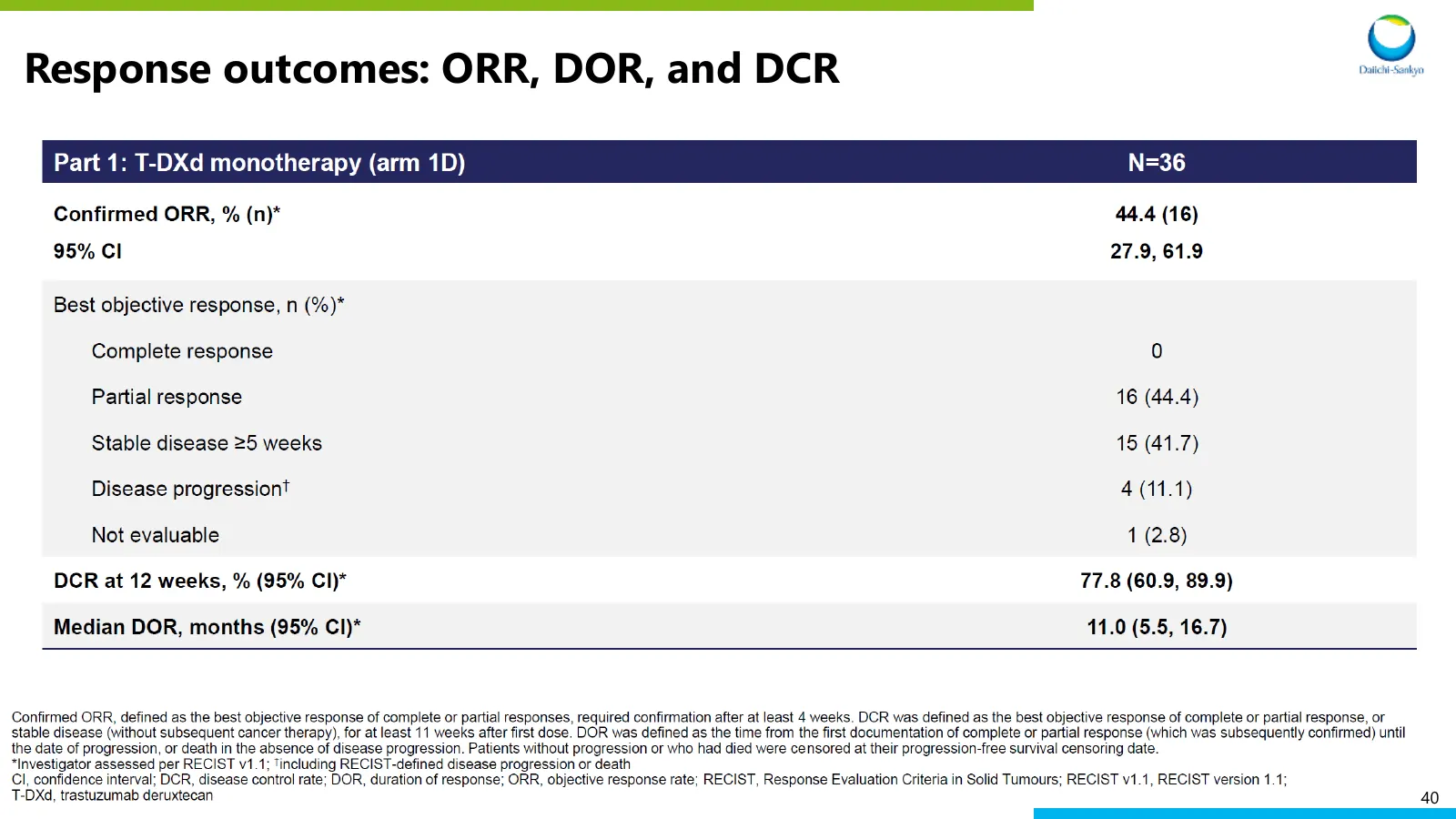
Slide 40: Response outcomes: ORR, DOR, and DCR
Response outcomes: ORR, DOR, and DCR 40
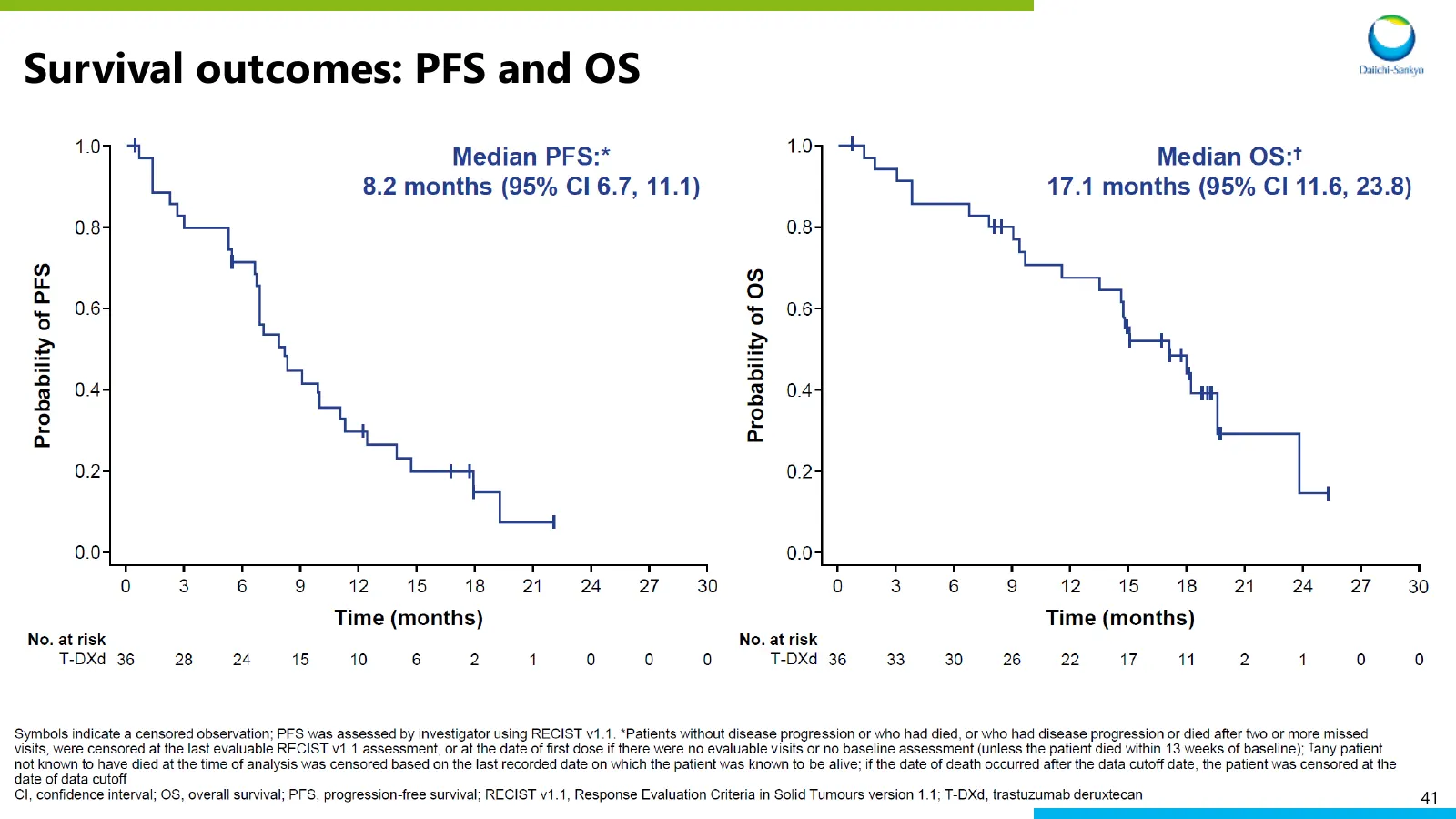
Slide 41: Survival outcomes: PFS and OS
Survival outcomes: PFS and OS 41
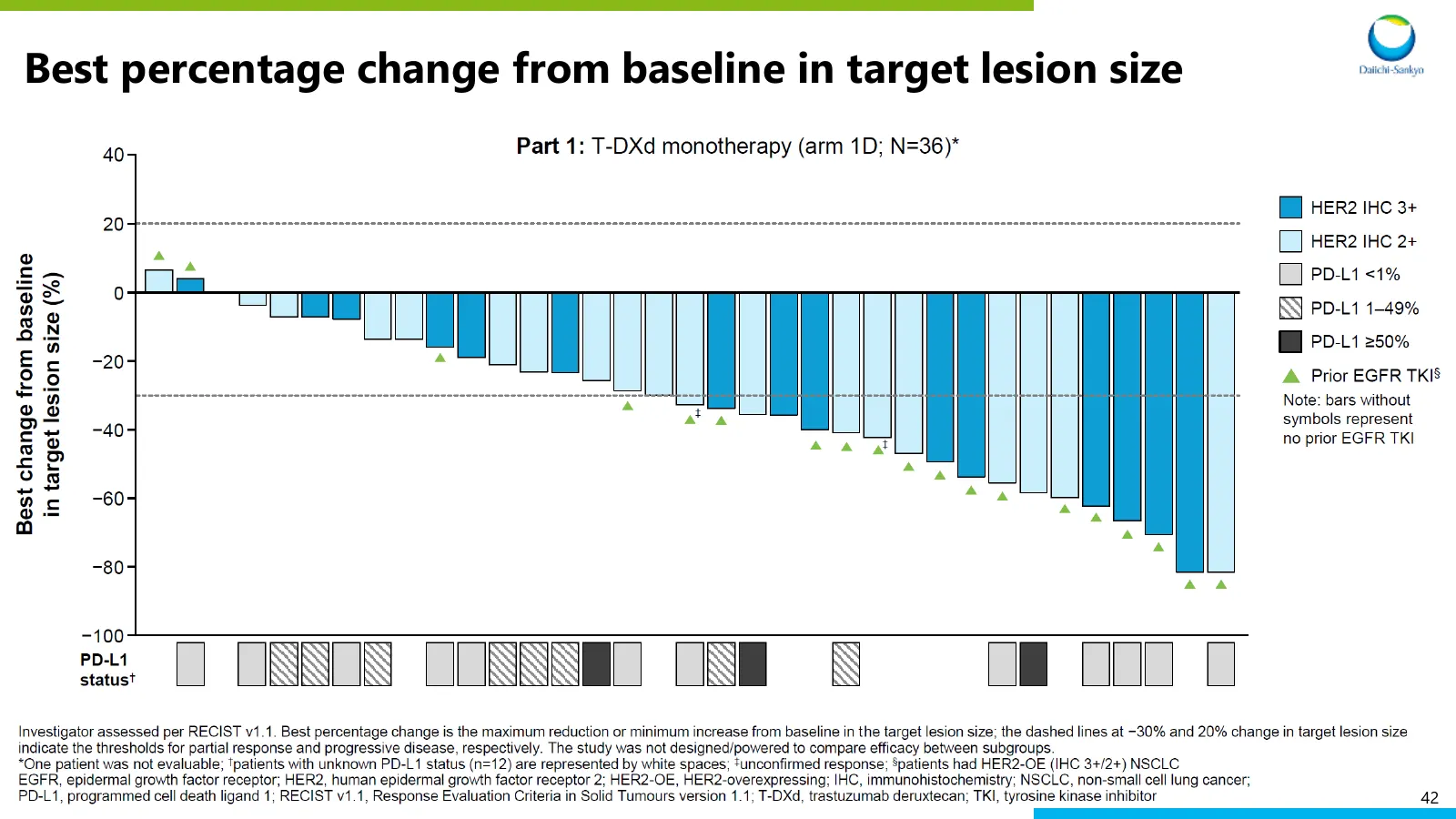
Slide 42: Best percentage change from baseline in target lesion size
Best percentage change from baseline in target lesion size 42
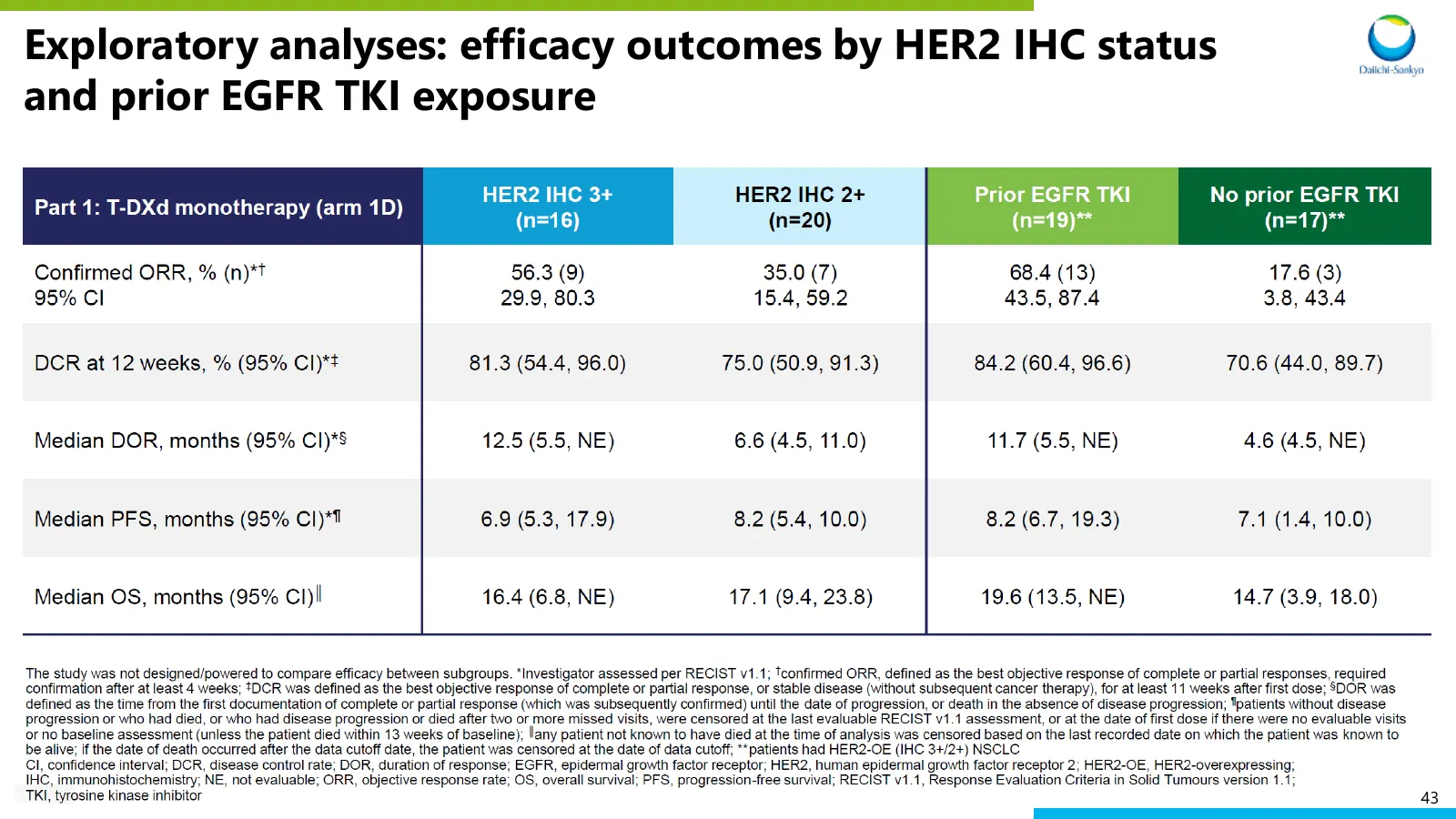
Slide 43: Exploratory analyses: efficacy outcomes by HER2 IHC status and prior EGFR TKI exposure
Exploratory analyses: efficacy outcomes by HER2 IHC status and prior EGFR TKI exposure 43
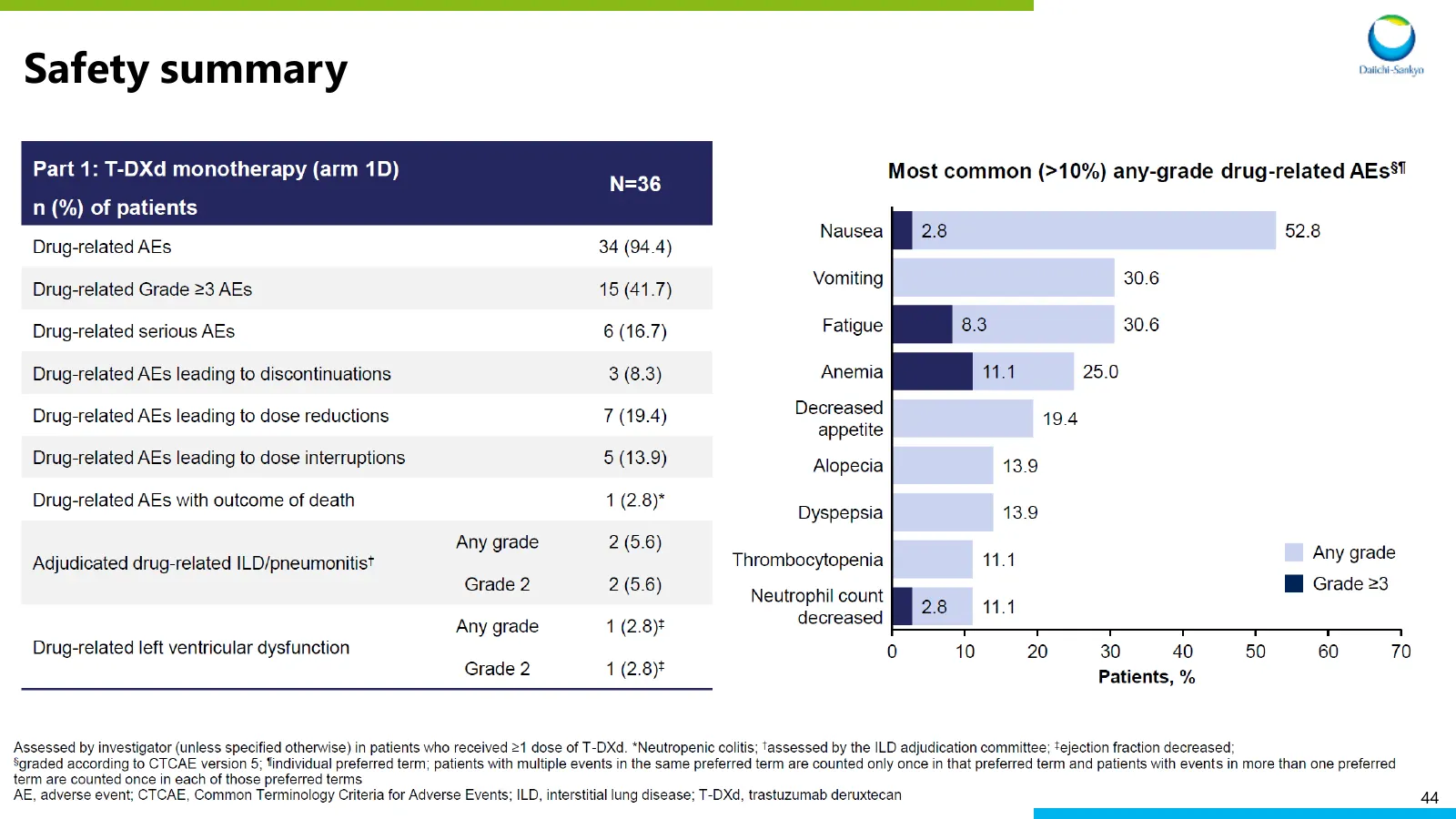
Slide 44: Safety summary
Safety summary Part 1: T-DXd monotherapy (arm 1D) Most common (>10%) any-grade drug-related AEss1 n (%) of patients Nausea | 28 52.8 Drug-related AEs 34 (94.4) Drug-related Grade 23 AEs 15 (41.7) Vomiting 30.6 Drug-related serious AEs 6 (16.7) Fatigue 83 30.6 Drug-related AEs leading to discontinuat
Slide 45: Conclusions
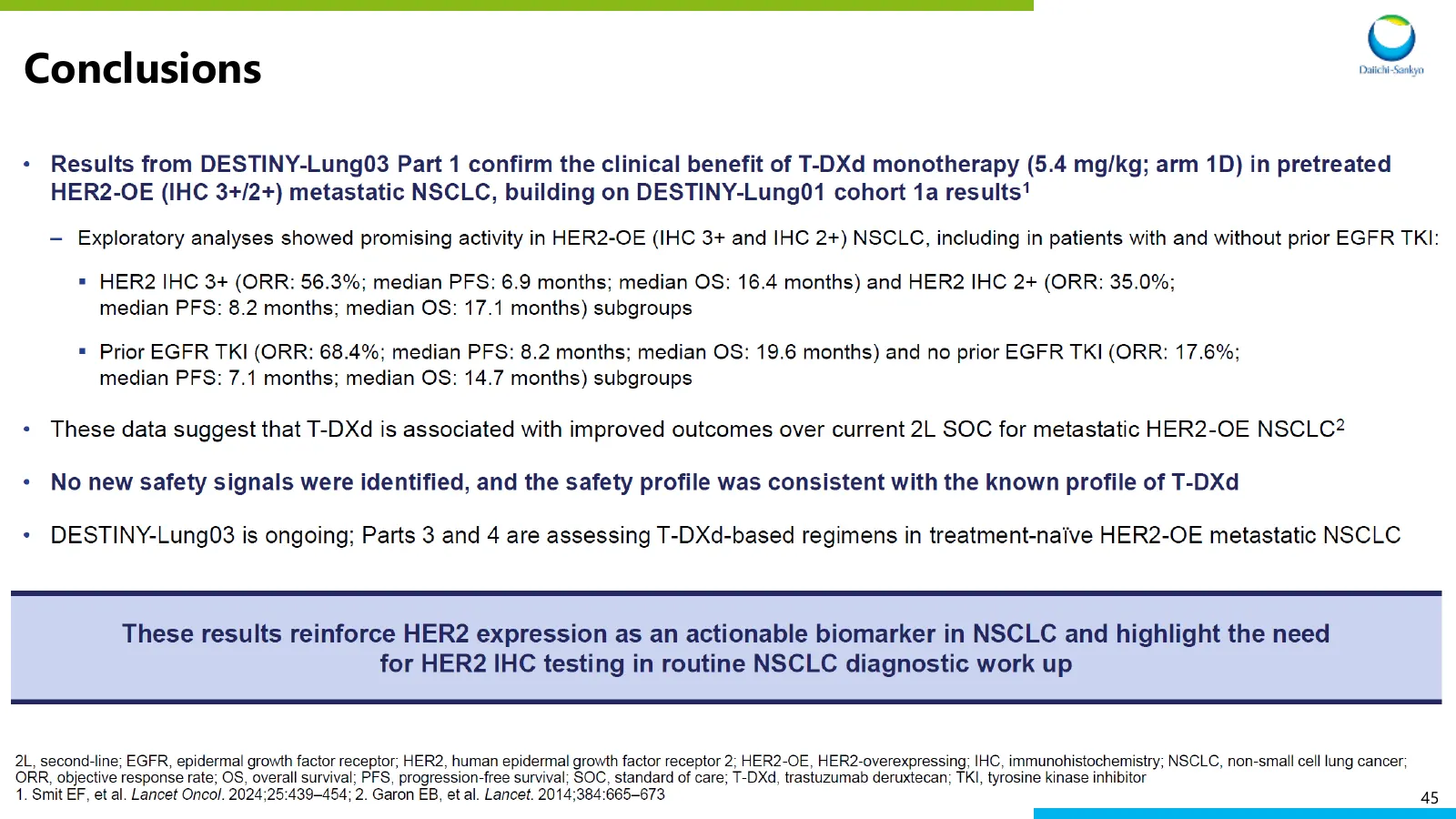
Conclusions + Results from DESTINY-Lung03 Part 1 confirm the clinical benefit of T-DXd monotherapy (5.4 mg/kg; arm 1D) in pretreated HER2-0E (IHC 3+/2+) metastatic NSCLC, building on DESTINY-Lung01 cohort 1a results’ - Exploratory analyses showed promising activity in HER2-OE (IHC 3+ and IHC 2+) NSC
Slide 46: Ifinatamab deruxtecan (I-DXd) in ES-SCLC: interim analysis of IDeate-Lung01
Ifinatamab deruxtecan (I-DXd) in extensive-stage small cell lung cancer (ES-SCLC): interim analysis of IDeate-Lung01 Charles M. Rudin,1 Myung-Ju Ahn,2 Melissa Johnson,3 Christine L. Hann,4 Nicolas Girard,5 Makoto Nishio,6 Ying Cheng,7 Hidetoshi Hayashi,8 Yu Jung Kim,9 Alejandro Navarro,10 Yuanbin Ch
Slide 47: Ifinatamab deruxtecan (I-DXd) was designed with key attributes
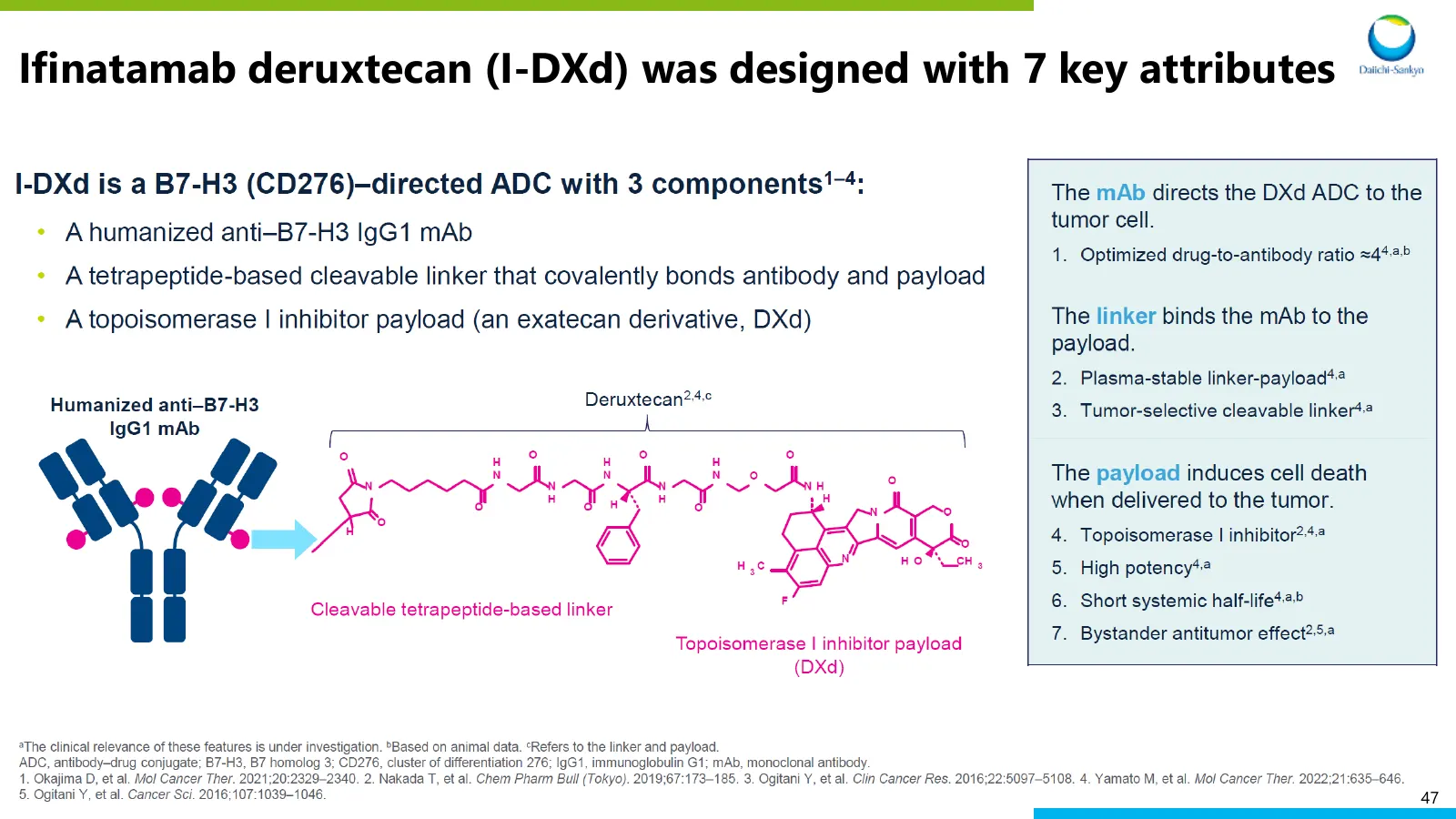
Ifinatamab deruxtecan (I-DXd) was designed with 7 key attributes 47
Slide 48: Phase 2 IDeate-Lung01 study (NCT05280470)
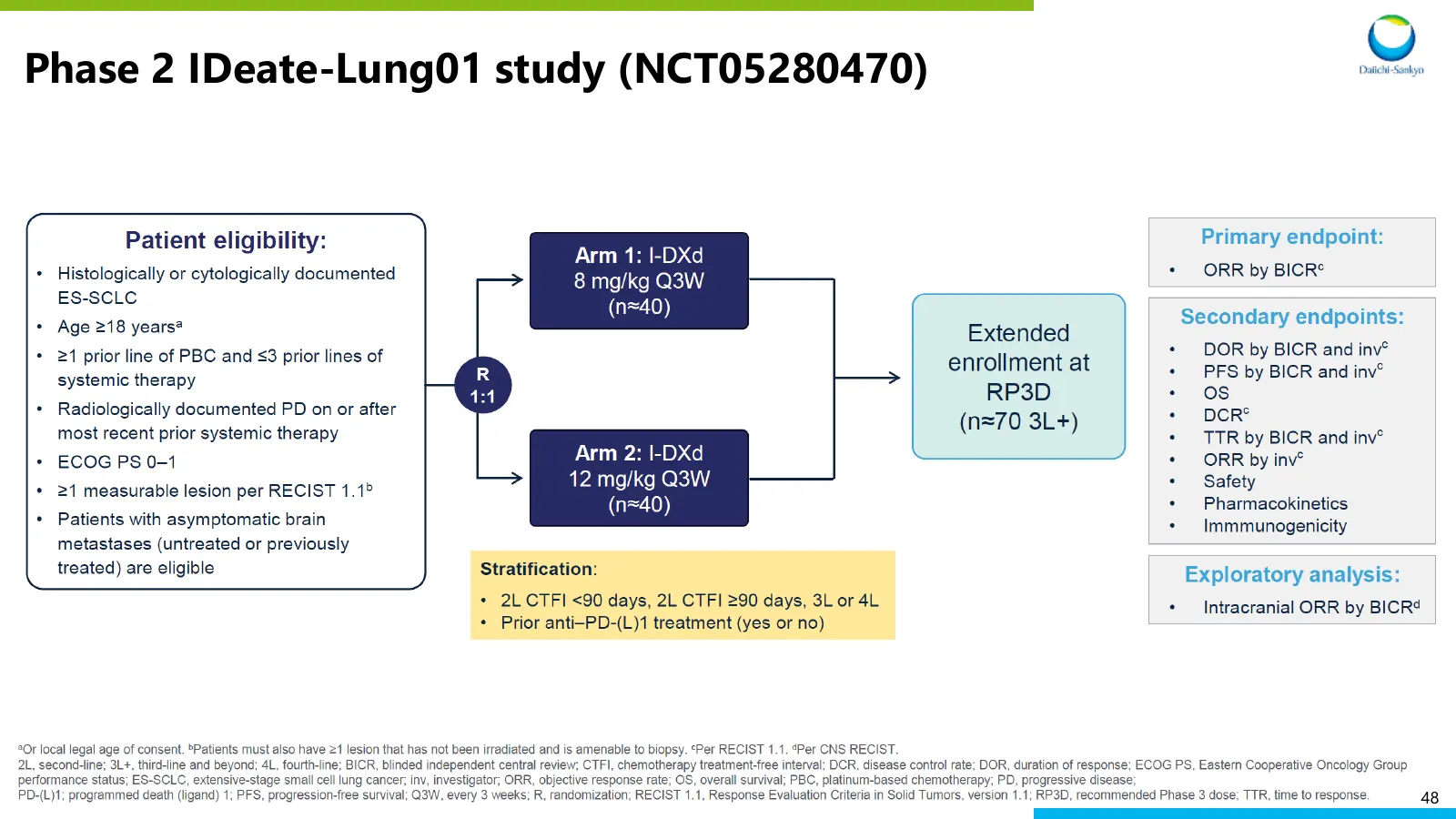
Phase 2 IDeate-Lung01 study (NCT05280470) 48
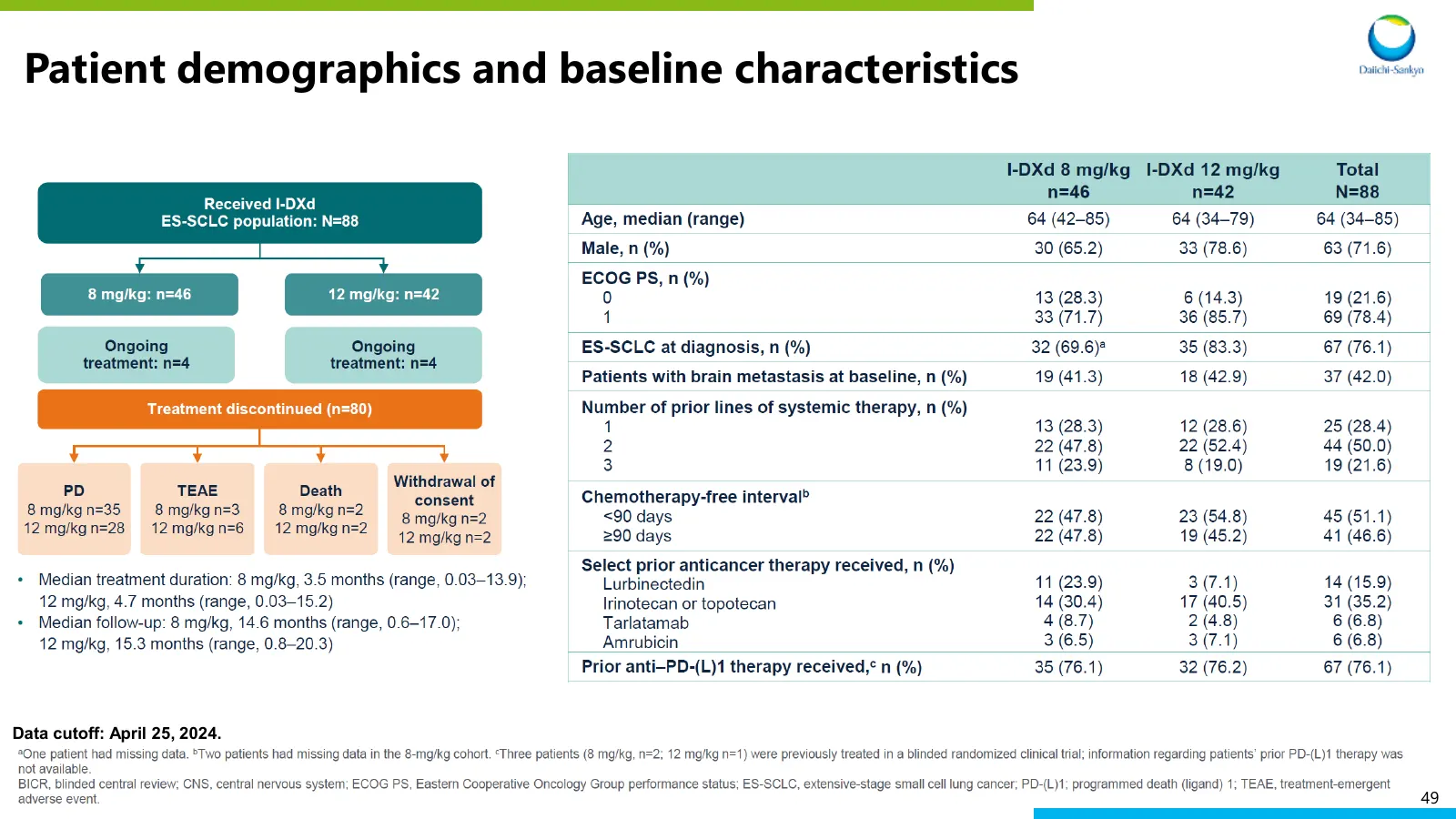
Slide 49: Patient demographics and baseline characteristics
Patient demographics and baseline characteristics Data cutoff: April 25, 2024. 49
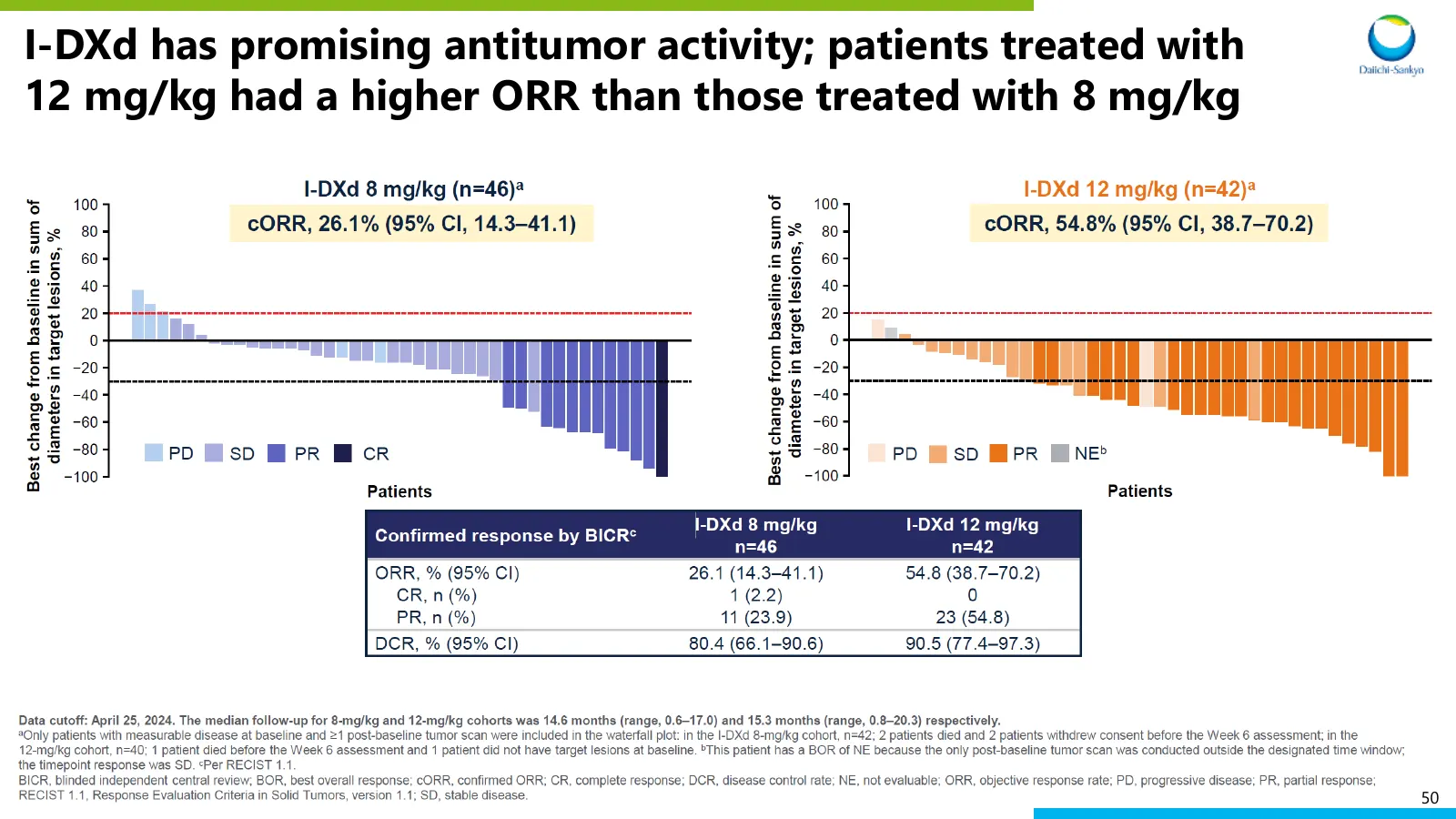
Slide 50: I-DXd has promising antitumor activity; 12 mg/kg had a higher ORR
I-DXd has promising antitumor activity; patients treated with 12 mg/kg had a higher ORR than those treated with 8 mg/kg 50
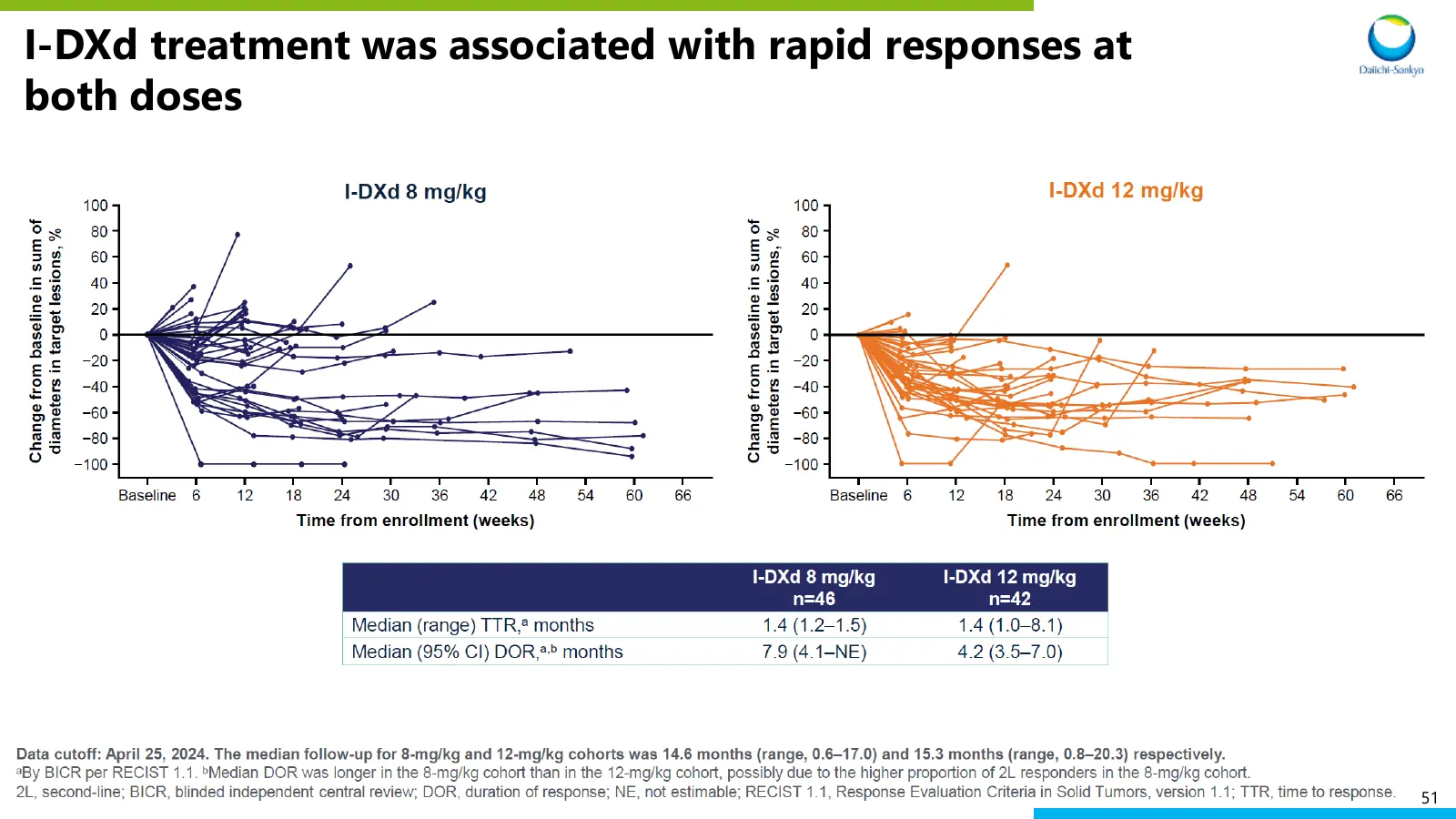
Slide 51: I-DXd treatment was associated with rapid responses at both doses
I-DXd treatment was associated with rapid responses at both doses 51
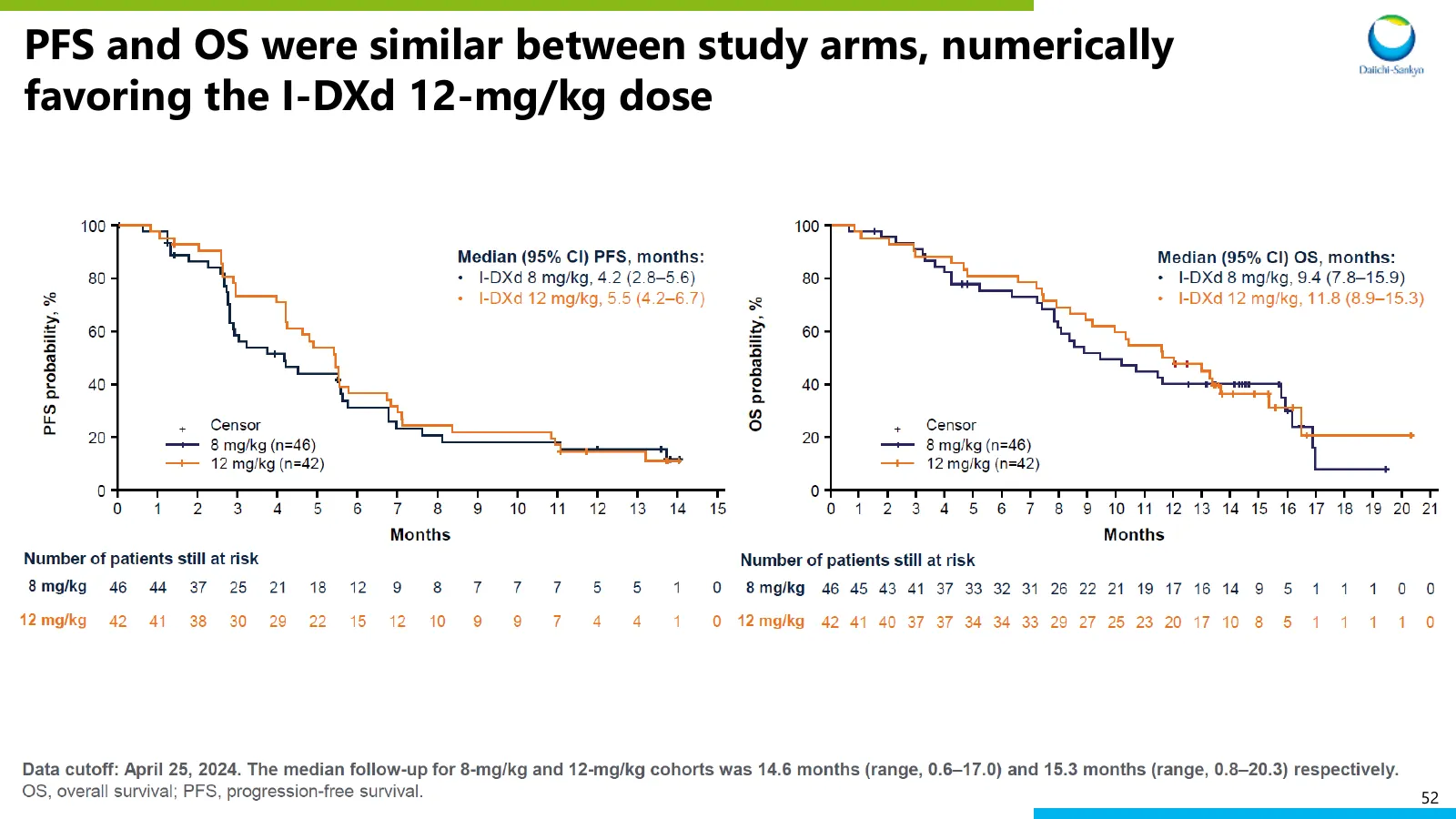
Slide 52: PFS and OS were similar between study arms
PFS and OS were similar between study arms, numerically favoring the I-DXd 12-mg/kg dose 52
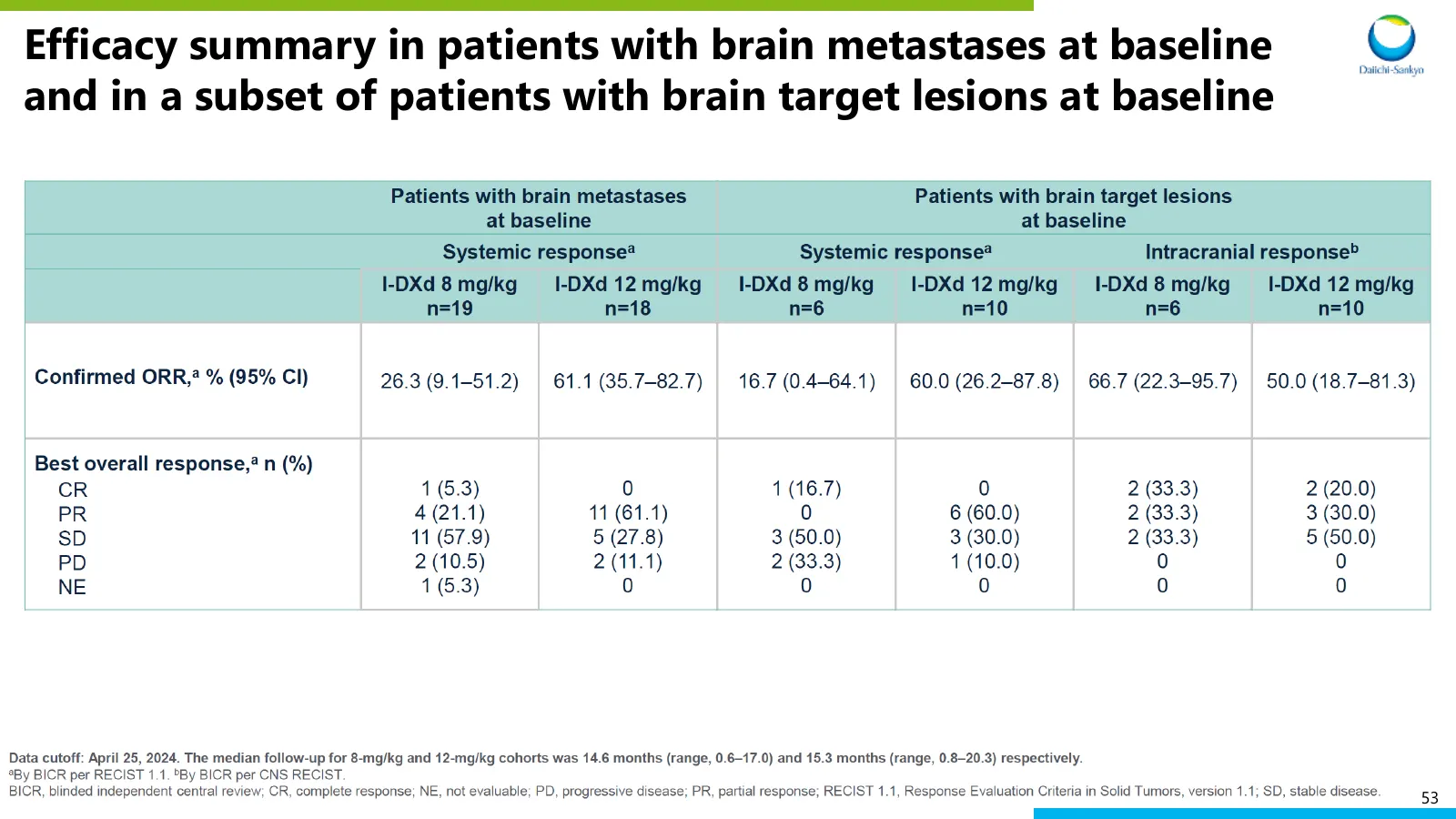
Slide 53: Efficacy summary in patients with brain metastases at baseline
Efficacy summary in patients with brain metastases at baseline and in a subset of patients with brain target lesions at baseline 53
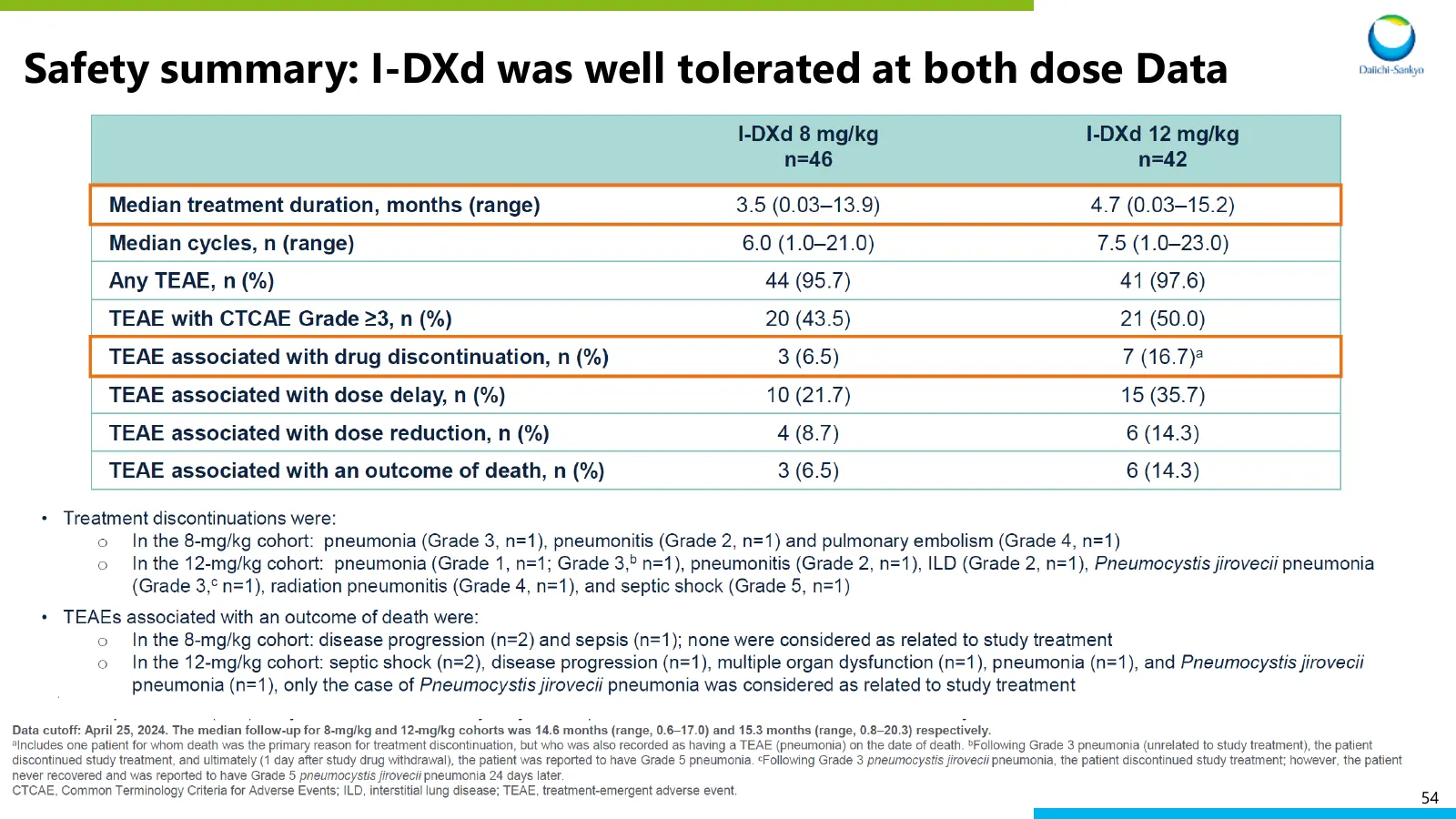
Slide 54: Safety summary: I-DXd was well tolerated at both doses
Safety summary: I-DXd was well tolerated at both dose Data 54
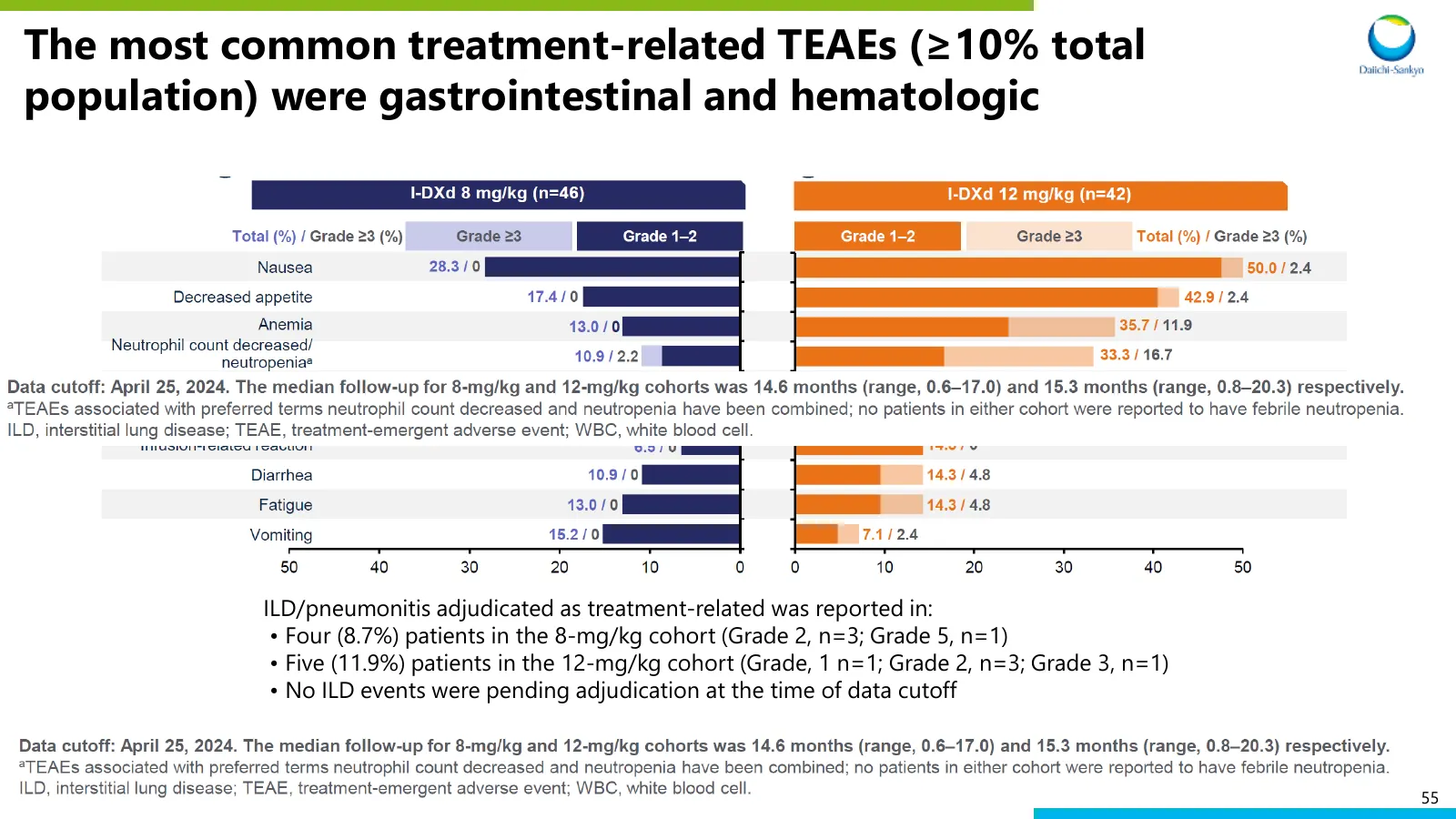
Slide 55: Most common treatment-related TEAEs were gastrointestinal and hematologic
The most common treatment-related TEAEs (≥10% total population) were gastrointestinal and hematologic ILD/pneumonitis adjudicated as treatment-related was reported in: • Four (8.7%) patients in the 8-mg/kg cohort (Grade 2, n=3; Grade 5, n=1) • Five (11.9%) patients in the 12-mg/kg cohort (Grade, 1 n
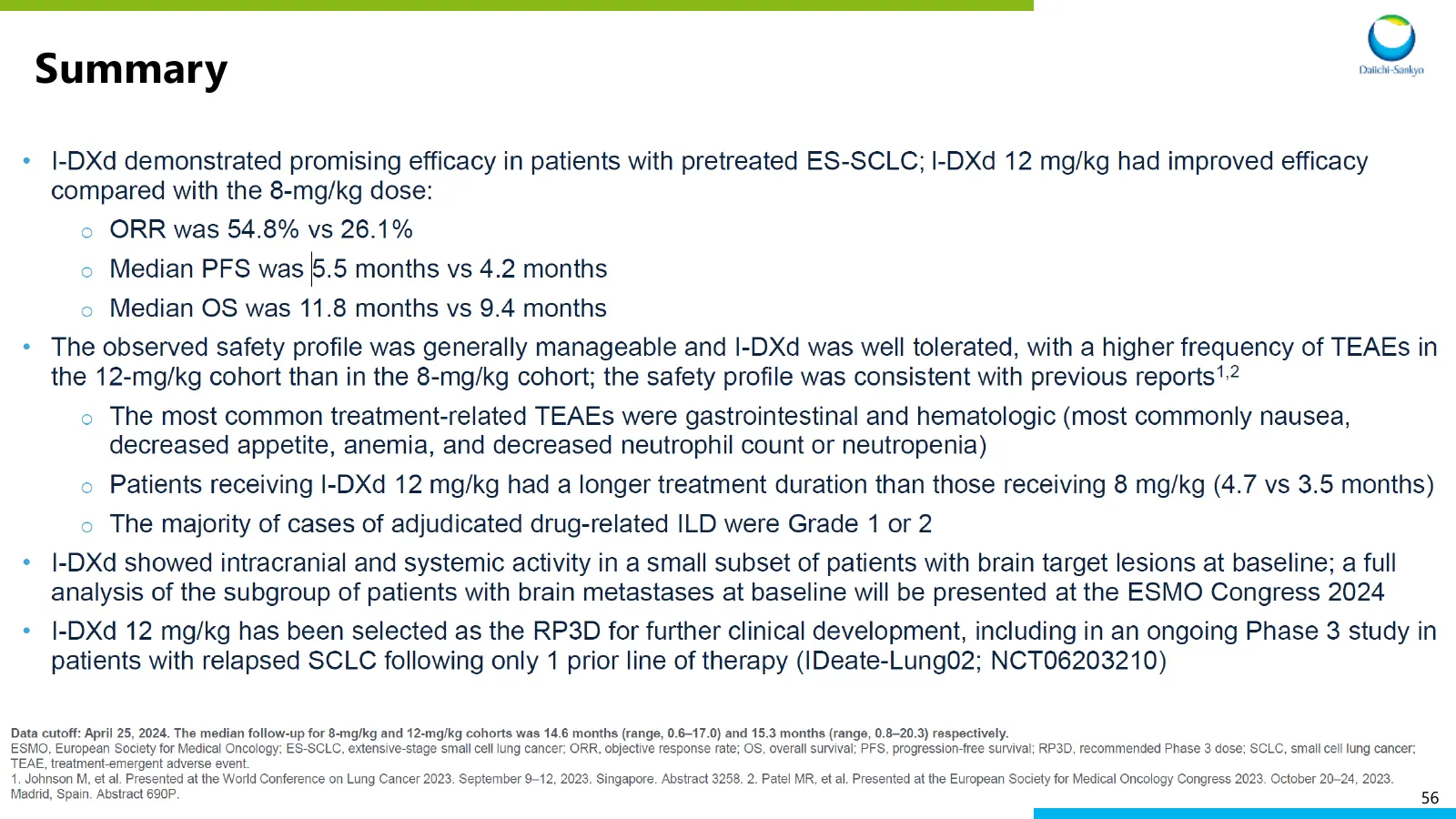
Slide 56: Summary
Summary |-DXd demonstrated promising efficacy in patients with pretreated ES-SCLC; I-DXd 12 mg/kg had improved efficacy compared with the 8-mg/kg dose: o ORR was 54.8% vs 26.1% o Median PFS was |5.5 months vs 4.2 months o Median OS was 11.8 months vs 9.4 months - The observed safety profile was gene
Source: company website
More decks from Daiichi Sankyo Company, Limited
 Q2 2026 Earnings Presentation40 slides · Oct 30, 2026
 Q2 FY2026 Earnings Presentation40 slides · Oct 30, 2026
 Q1 FY2026 Earnings Presentation38 slides · Jul 31, 2026
 Q1 FY2026 Earnings Presentation38 slides · Jul 31, 2026
 FY2025 Earnings Presentation80 slides · May 11, 2026
 FY2025 Earnings Presentation80 slides · May 11, 2026