UTI Asset Management Co. Ltd. · NSE:UTIAMC
UTI Asset Management — Investor Presentation (January 2022)
15 slides from UTI Asset Management's investor presentation, Jan 13, 2022
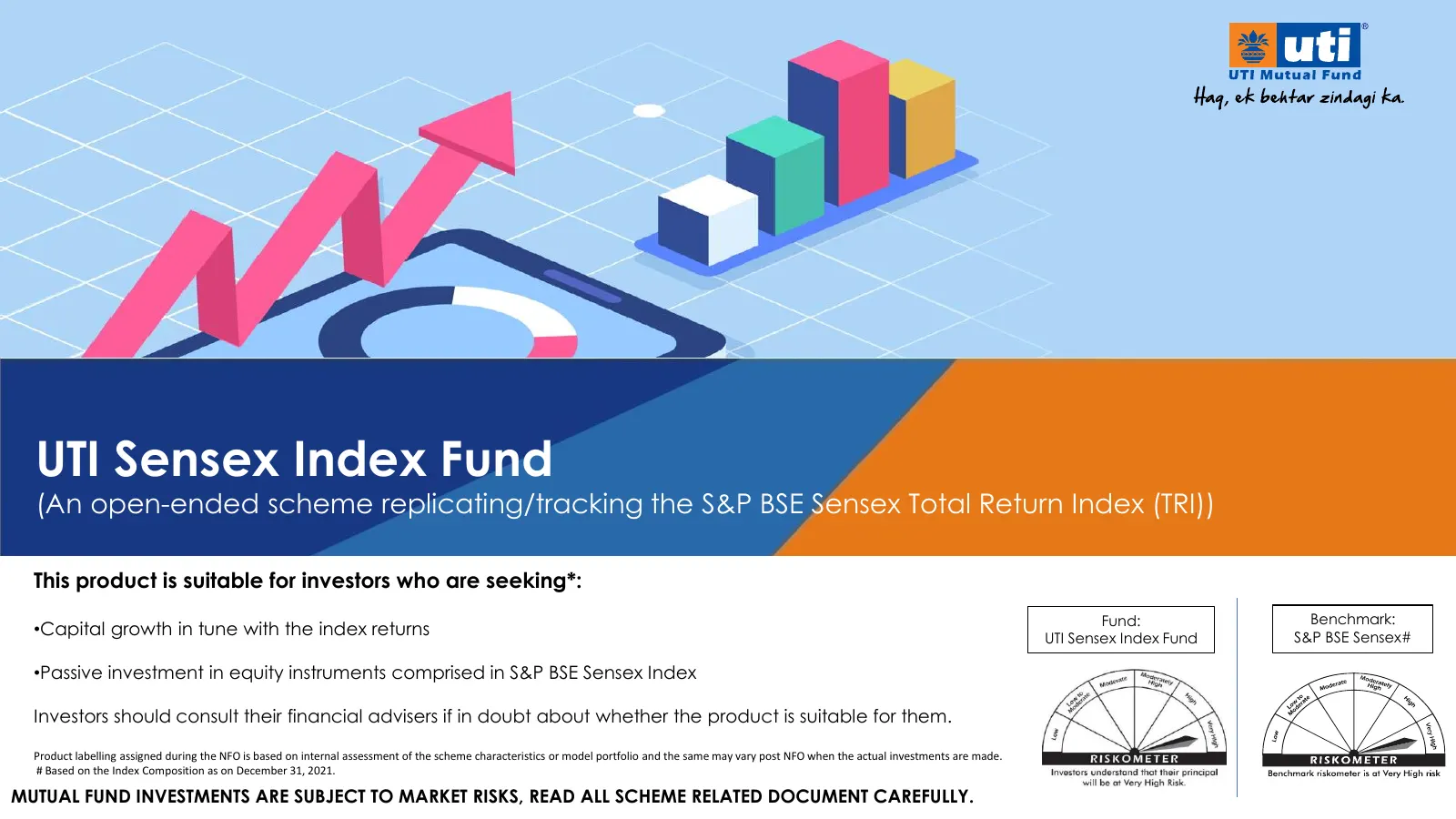
Slide 1: UTI Sensex Index Fund
UTI Sensex Index Fund (An open-ended scheme replicating/tracking the S&P BSE Sensex Total Return Index (TRI)) This product is suitable for investors who are seeking*: Fund: Benchmark: •Capital growth in tune with the index returns UTI Sensex Index Fund S&P BSE Sensex# •Passive investment in equity i
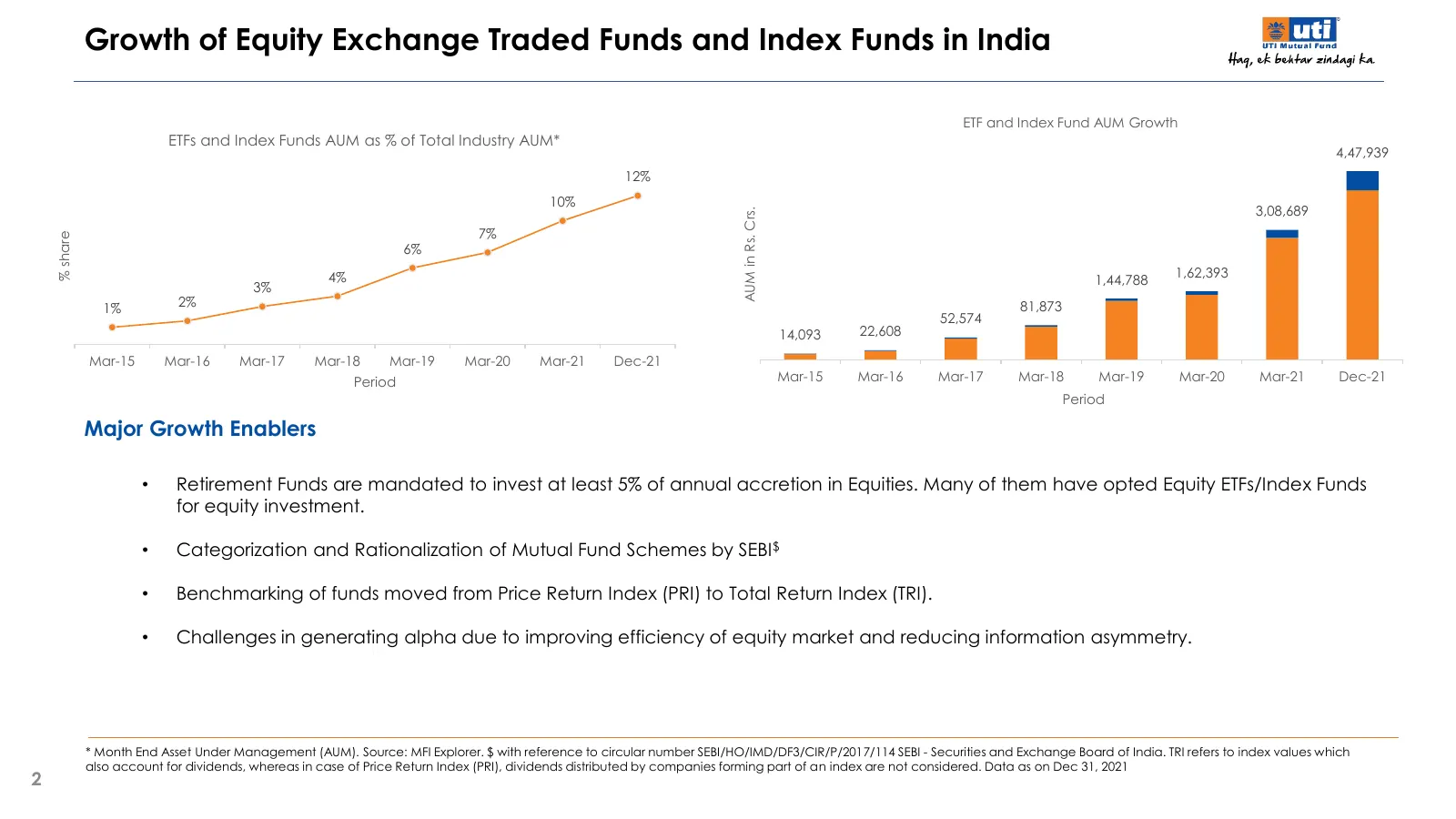
Slide 2: Growth of Equity Exchange Traded Funds and Index Funds in India
Growth of Equity Exchange Traded Funds and Index Funds in India ETF and Index Fund AUM Growth ETFs and Index Funds AUM as % of Total Industry AUM* 4,47,939 12% 10% 3,08,689 AUM in Rs. Crs. 7% % share 6% 4% 1,62,393 1,44,788 3% 1% 2% 81,873 52,574 14,093 22,608 Mar-15 Mar-16 Mar-17 Mar-18 Mar-19 Mar-
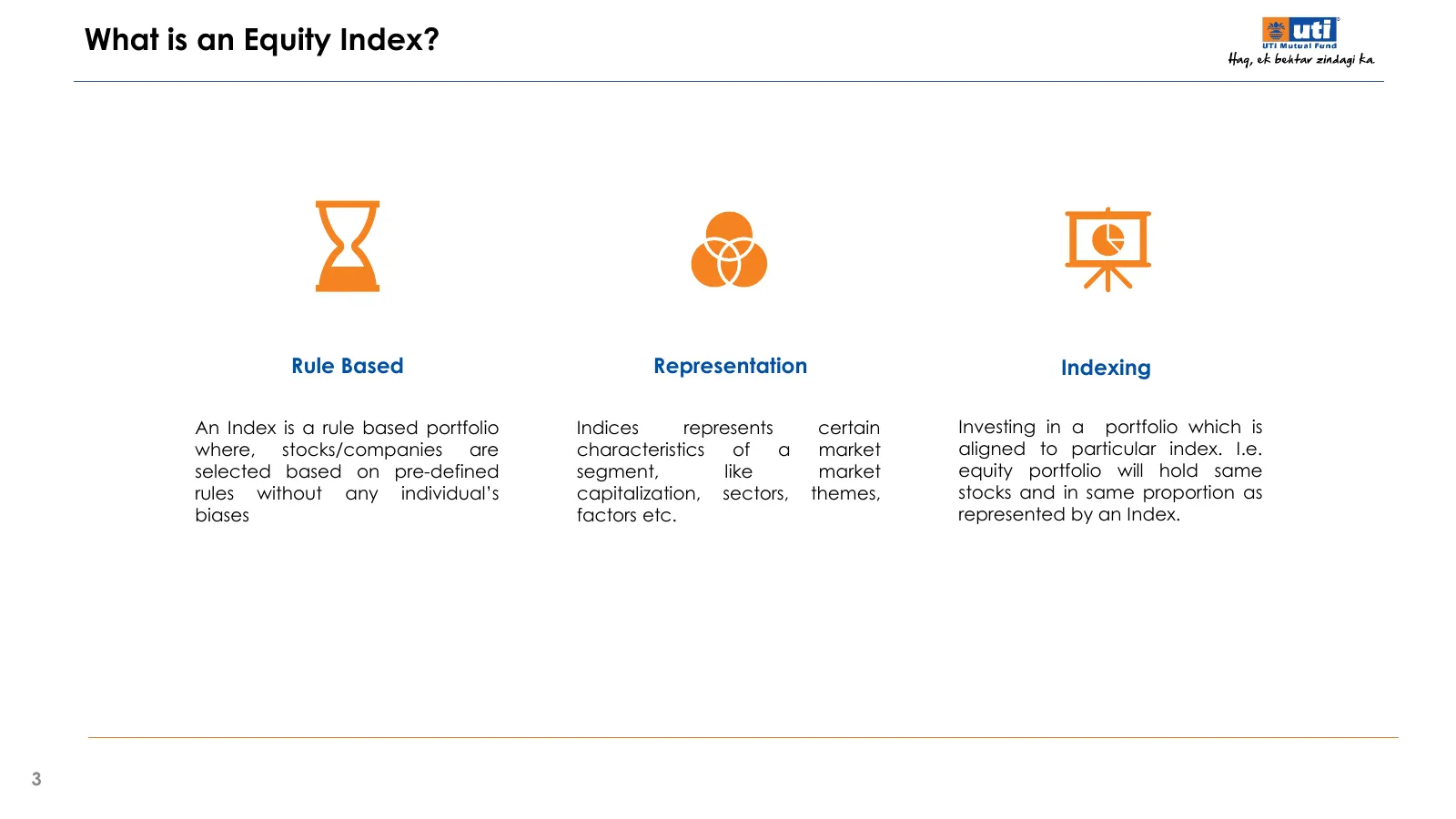
Slide 3: What is an Equity Index?
What is an Equity Index? Rule Based Representation Indexing An Index is a rule based portfolio Indices represents certain Investing in a portfolio which is where, stocks/companies are characteristics of a market aligned to particular index. I.e. selected based on pre-defined segment, like market equ
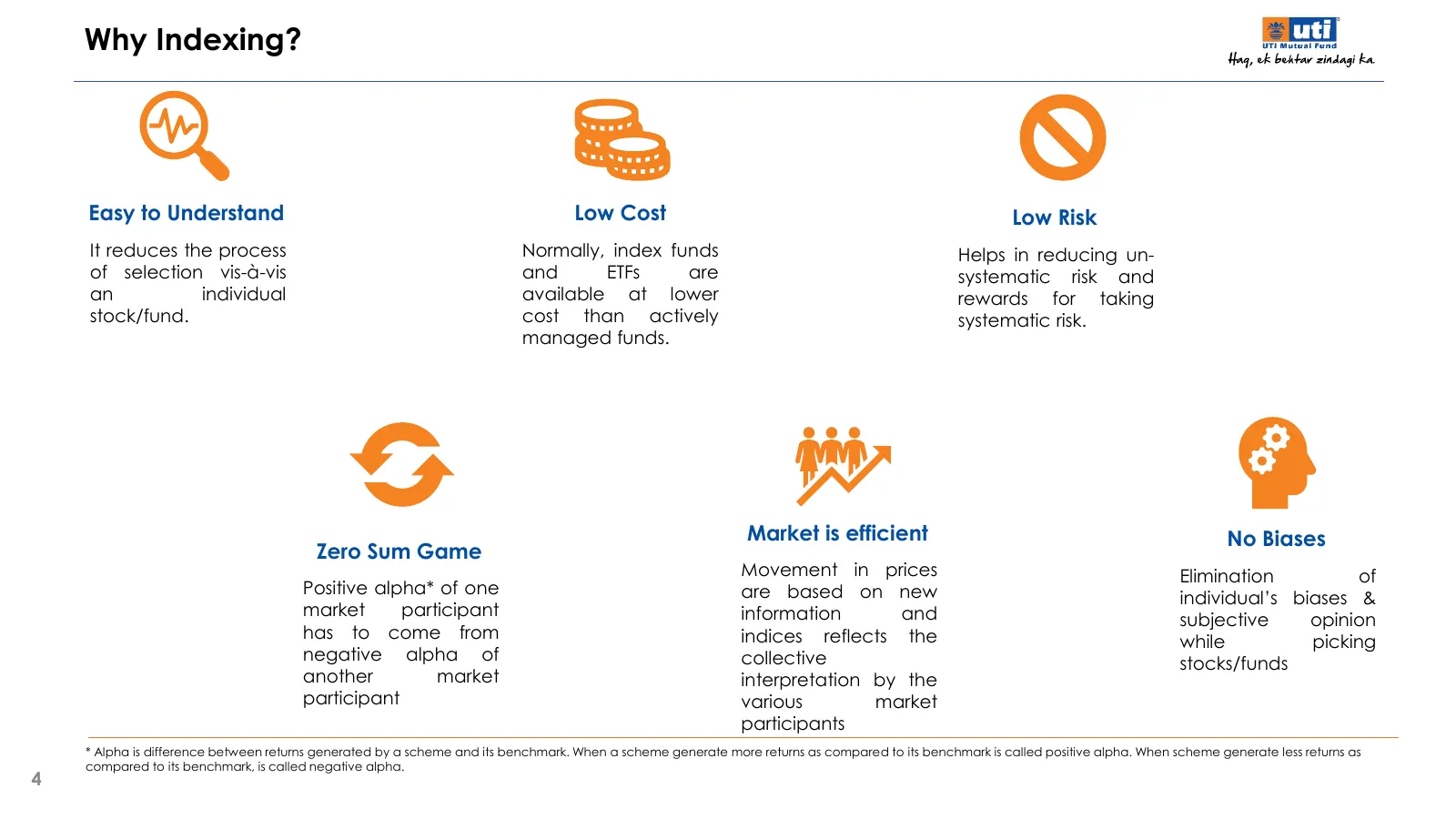
Slide 4: Why Indexing?
Why Indexing? Easy to Understand Low Cost Low Risk It reduces the process Normally, index funds Helps in reducing un- of selection vis-à-vis and ETFs are systematic risk and an individual available at lower rewards for taking stock/fund. cost than actively systematic risk. managed funds. Market is e
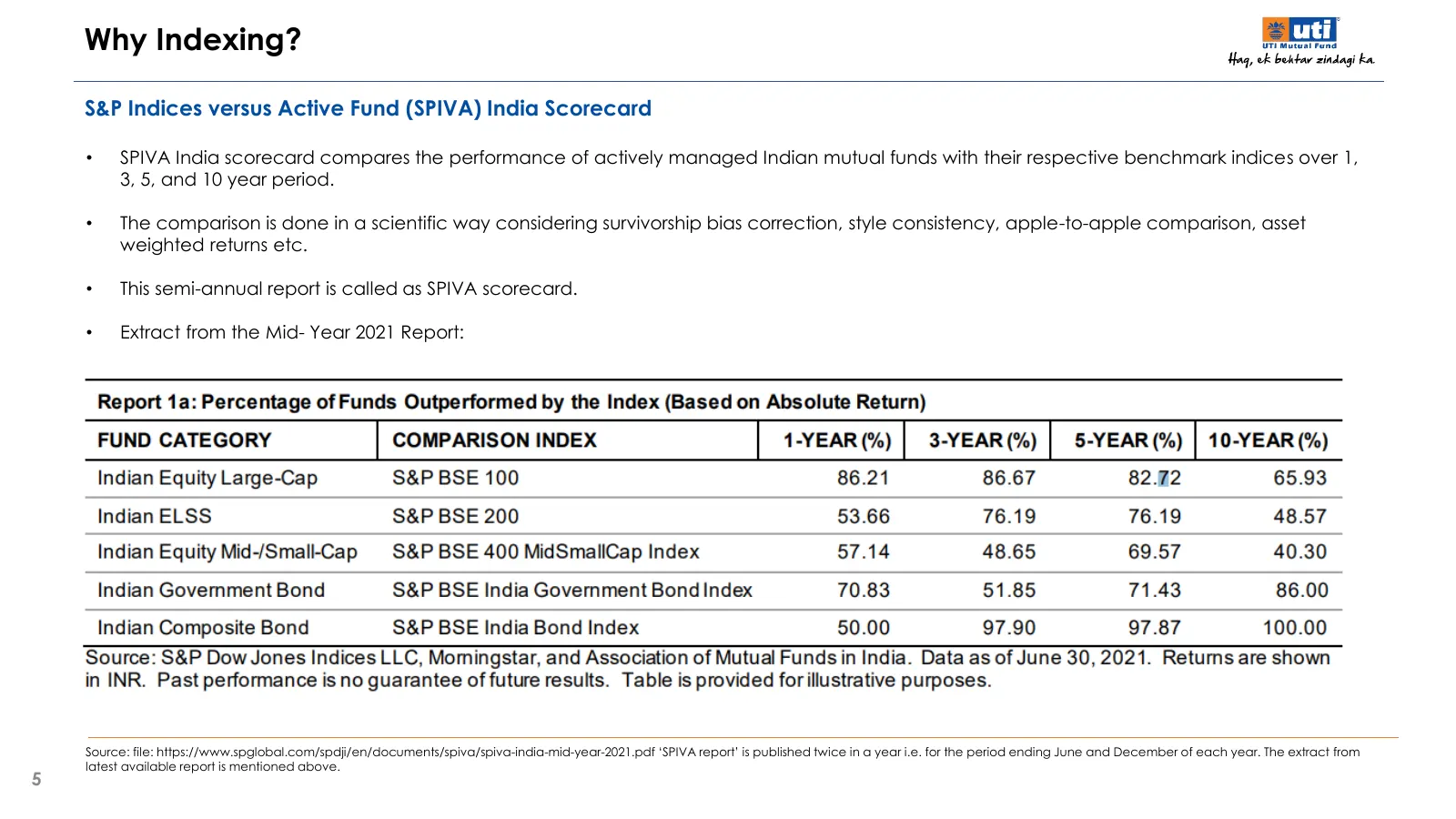
Slide 5: Why Indexing? SPIVA India Scorecard
Why Indexing? S&P Indices versus Active Fund (SPIVA) India Scorecard • SPIVA India scorecard compares the performance of actively managed Indian mutual funds with their respective benchmark indices over 1, 3, 5, and 10 year period. • The comparison is done in a scientific way considering survivorshi
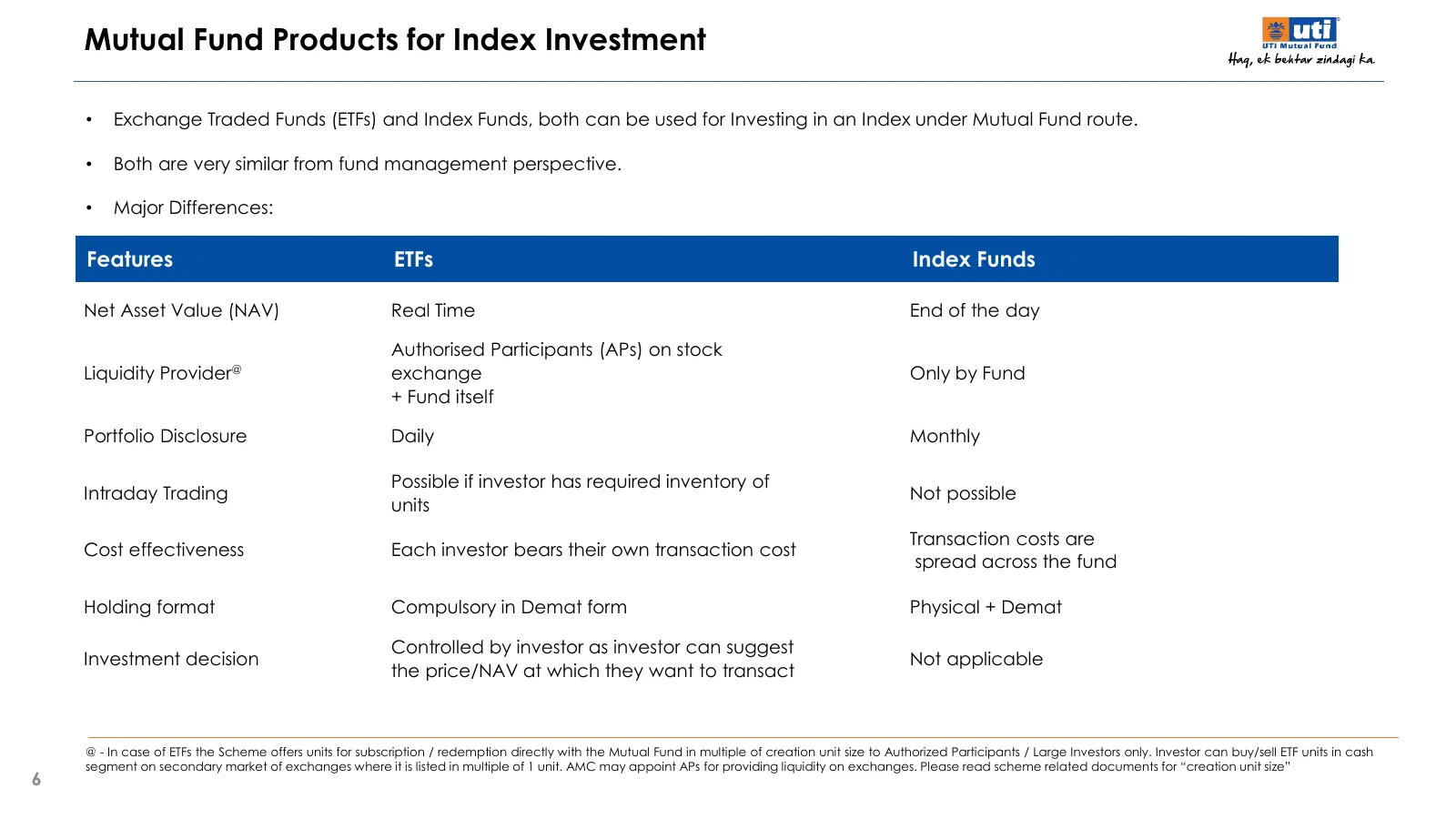
Slide 6: Mutual Fund Products for Index Investment
Mutual Fund Products for Index Investment • Exchange Traded Funds (ETFs) and Index Funds, both can be used for Investing in an Index under Mutual Fund route. • Both are very similar from fund management perspective. • Major Differences: Features ETFs Index Funds Net Asset Value (NAV) Real Time End o
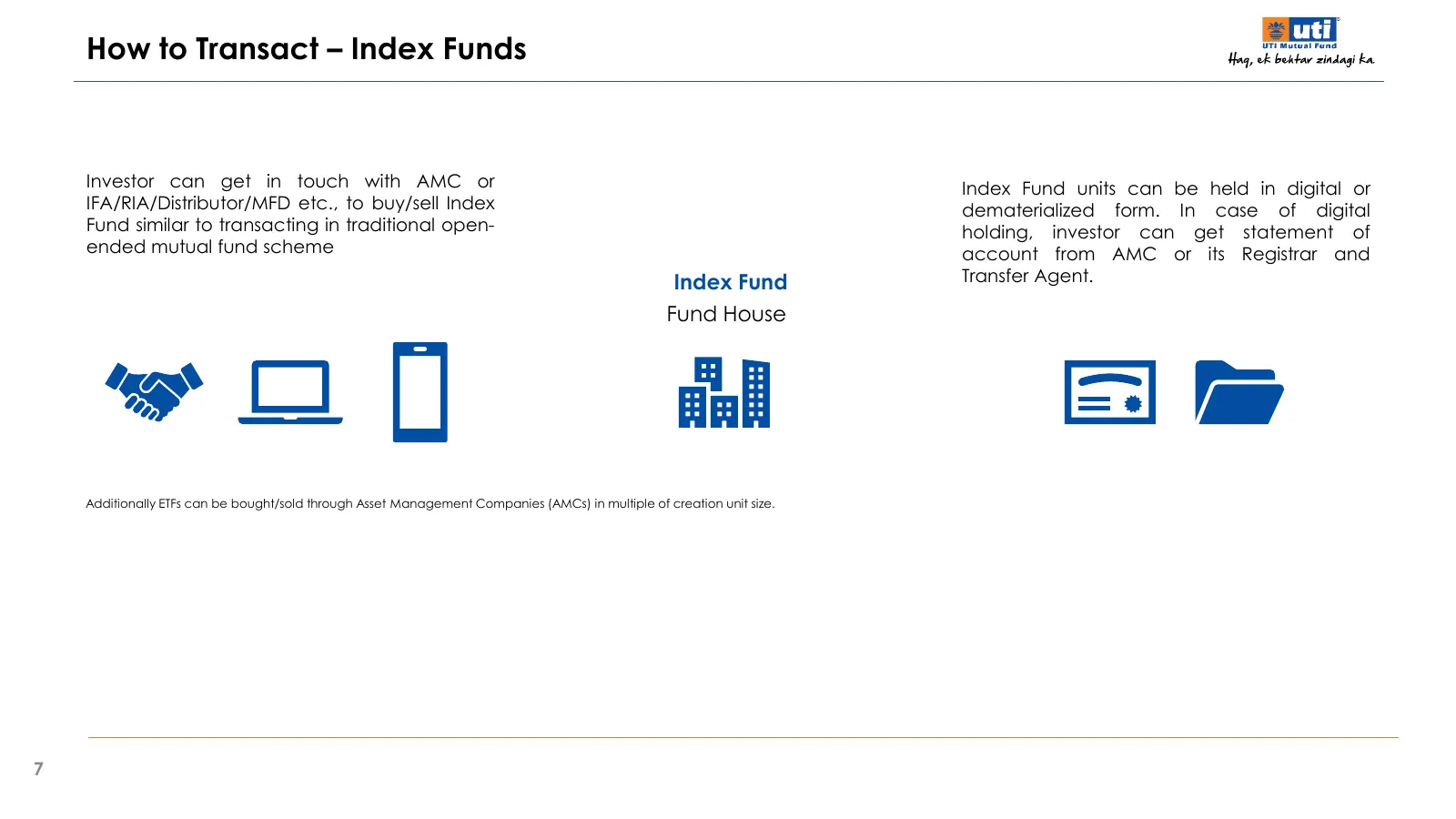
Slide 7: How to Transact – Index Funds
How to Transact – Index Funds Investor can get in touch with AMC or Index Fund units can be held in digital or IFA/RIA/Distributor/MFD etc., to buy/sell Index dematerialized form. In case of digital Fund similar to transacting in traditional open- holding, investor can get statement of ended mutual
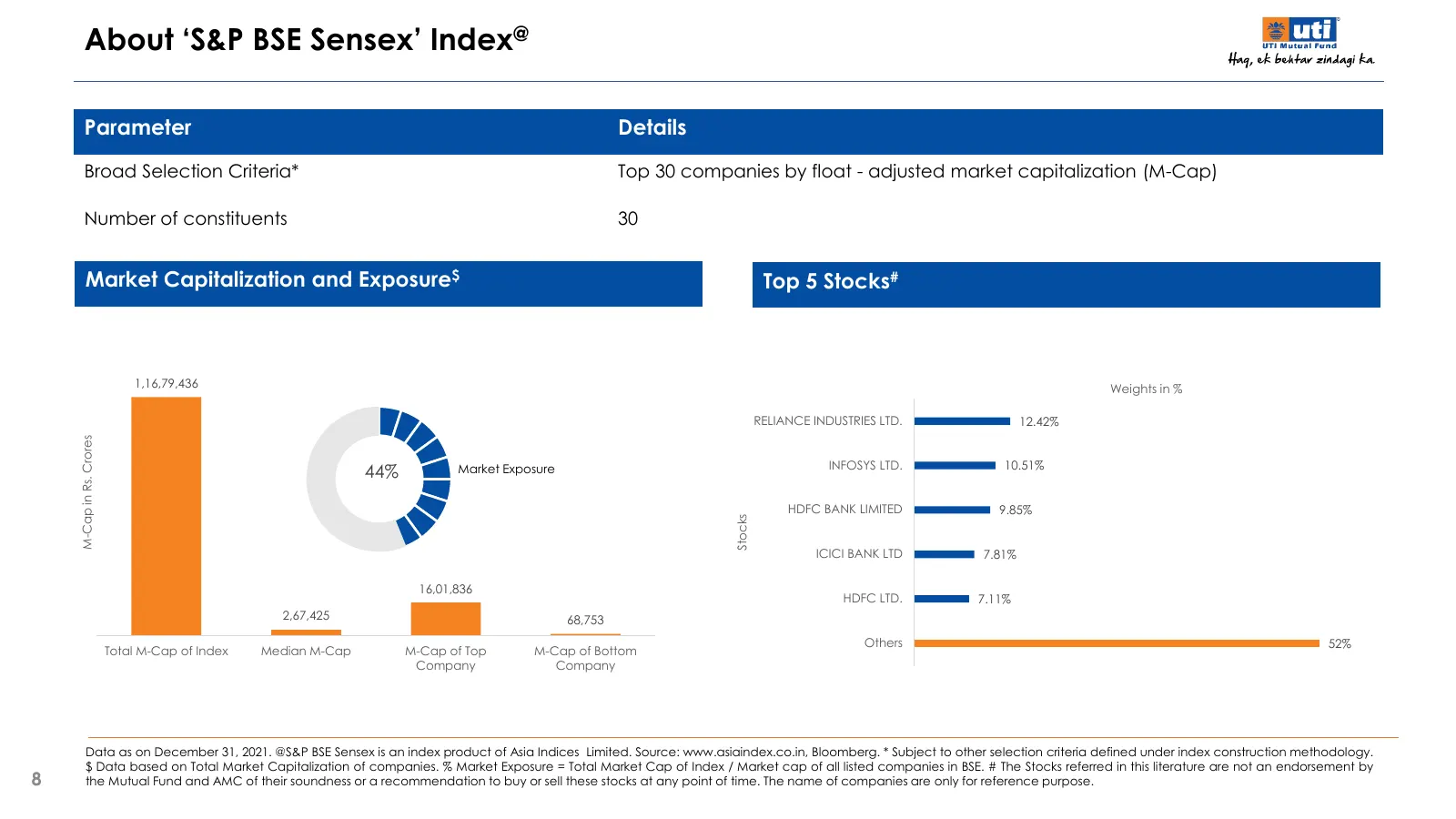
Slide 8: About S&P BSE Sensex Index
About ‘S&P BSE Sensex’ Index@ Parameter Details Broad Selection Criteria* Top 30 companies by float - adjusted market capitalization (M-Cap) Number of constituents 30 Market Capitalization and Exposure$ Top 5 Stocks# 1,16,79,436 Weights in % RELIANCE INDUSTRIES LTD. 12.42% M-Cap in Rs. Crores INFOSY
Slide 9: S&P BSE Sensex Index Comparison – Broad Sector Exposure
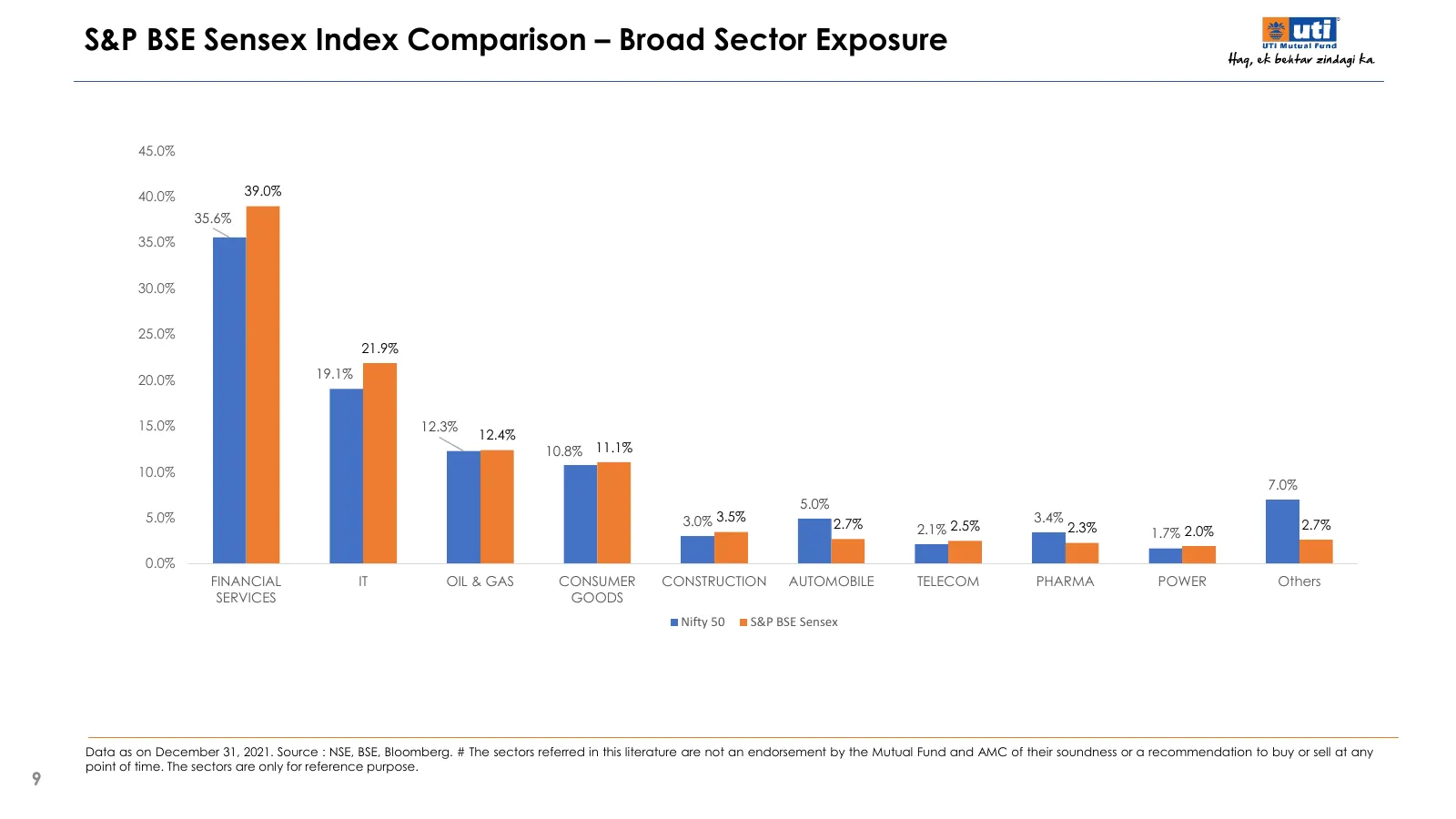
S&P BSE Sensex Index Comparison – Broad Sector Exposure 45.0% 40.0% 39.0% 35.6% 35.0% 30.0% 25.0% 21.9% 20.0% 19.1% 15.0% 12.3% 12.4% 10.8% 11.1% 10.0% 7.0% 5.0% 5.0% 3.0% 3.5% 2.7% 3.4% 2.7% 2.1% 2.5% 2.3% 1.7% 2.0% 0.0% FINANCIAL IT OIL & GAS CONSUMER CONSTRUCTION AUTOMOBILE TELECOM PHARMA POWER O
Slide 10: Why Invest in S&P BSE Sensex Index?
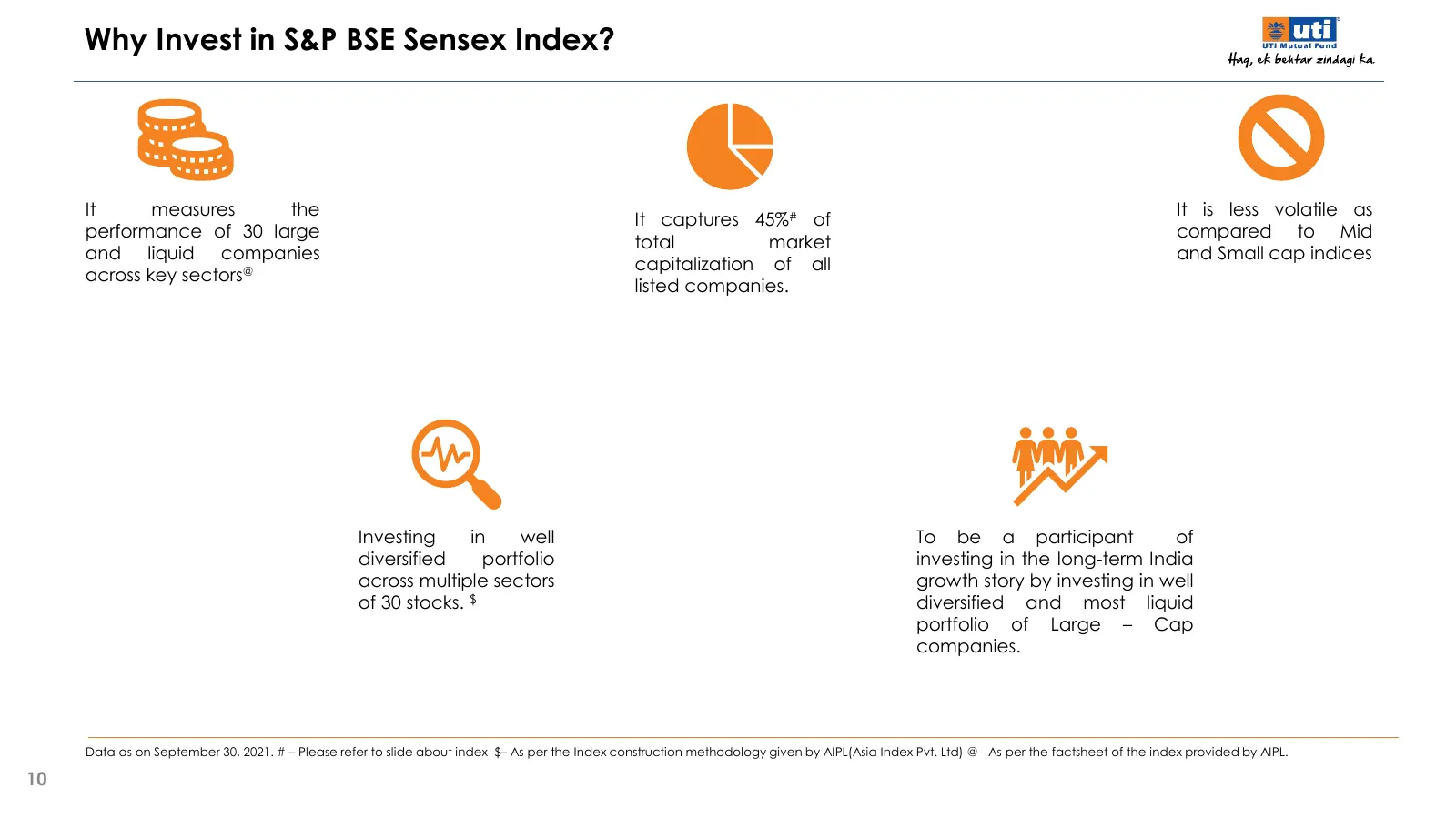
Why Invest in S&P BSE Sensex Index? It measures the It is less volatile as It captures 45%# of performance of 30 large compared to Mid total market and liquid companies and Small cap indices capitalization of all across key sectors@ listed companies. Investing in well To be a participant of diversif
Slide 11: S&P BSE Sensex Index Comparison – Returns
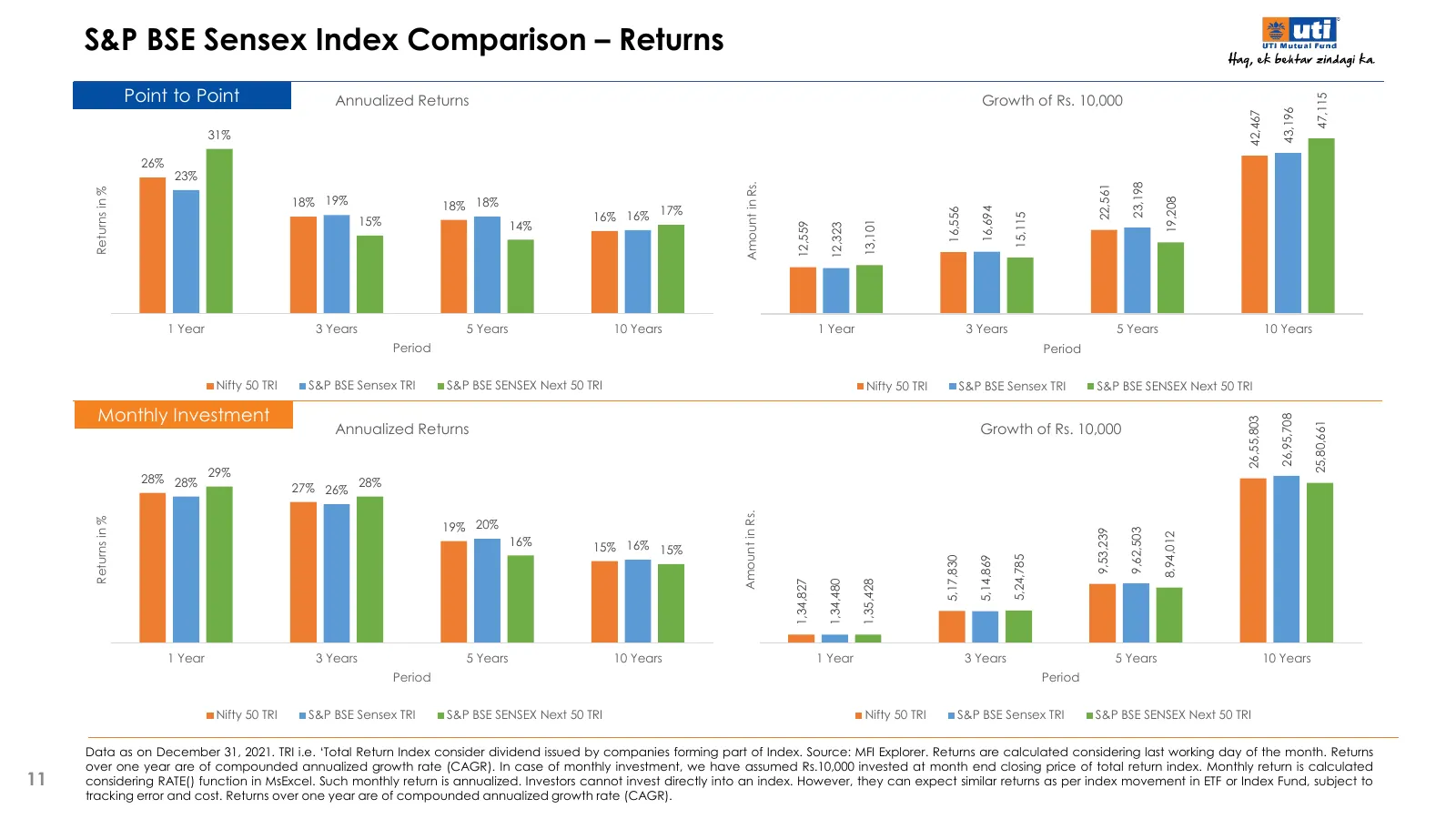
S&P BSE Sensex Index Comparison – Returns Point to Point Annualized Returns Growth of Rs. 10,000 47,115 43,196 42,467 31% 26% 23% Amount in Rs. 23,198 22,561 Returns in % 18% 19% 18% 18% 19,208 17% 16,694 16,556 16% 16% 15,115 15% 14% 13,101 12,559 12,323 1 Year 3 Years 5 Years 10 Years 1 Year 3 Yea
Slide 12: About UTI Sensex Index Fund
About UTI Sensex Index Fund Investment Objective The investment objective of the scheme is to provide returns that, before expenses, closely correspond to the total returns of the securities as represented by the underlying index, subject to tracking error However, there is no guarantee or assurance
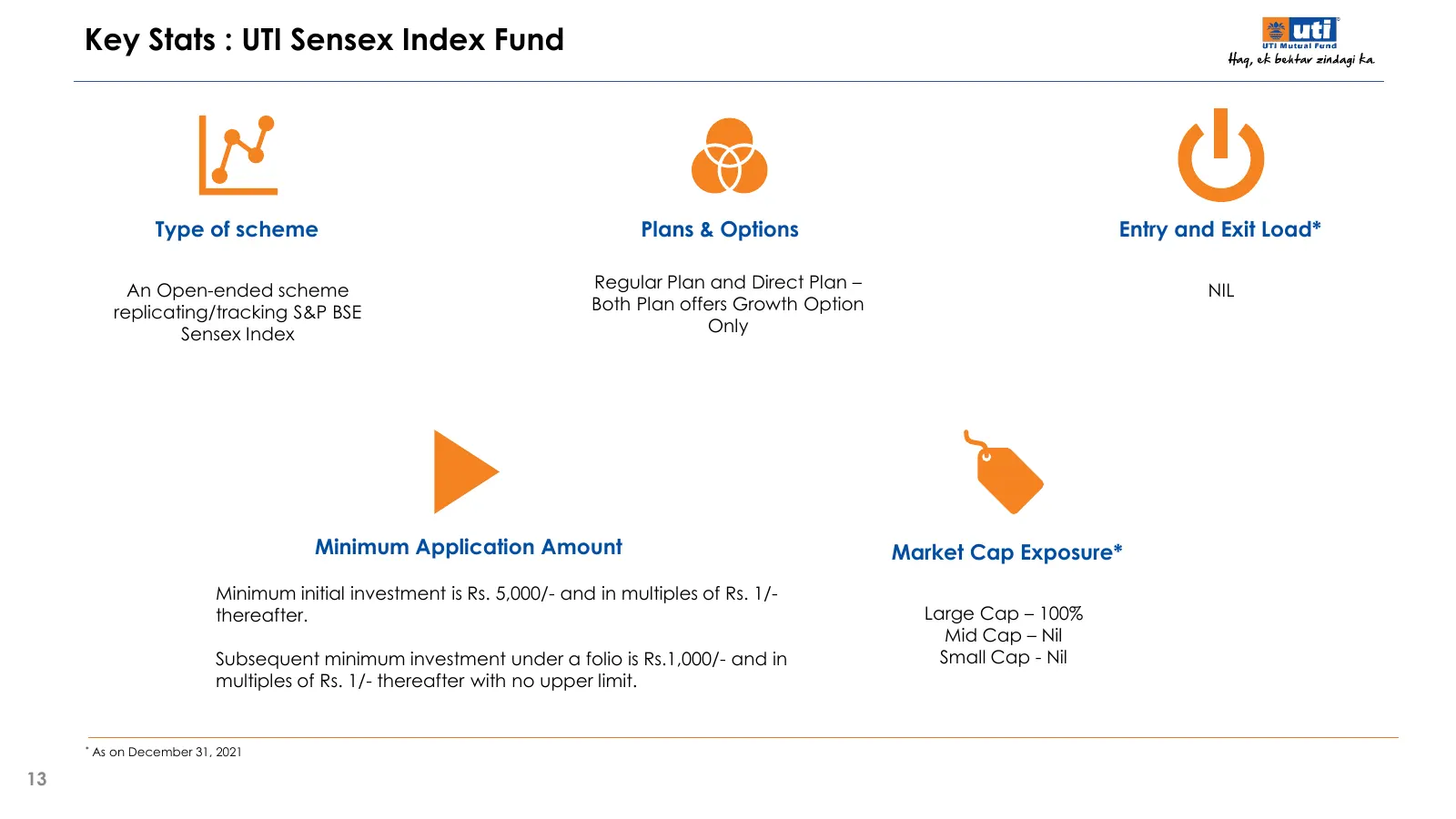
Slide 13: Key Stats: UTI Sensex Index Fund
Key Stats : UTI Sensex Index Fund Type of scheme Plans & Options Entry and Exit Load* An Open-ended scheme Regular Plan and Direct Plan – NIL replicating/tracking S&P BSE Both Plan offers Growth Option Sensex Index Only Minimum Application Amount Market Cap Exposure* Minimum initial investment is Rs
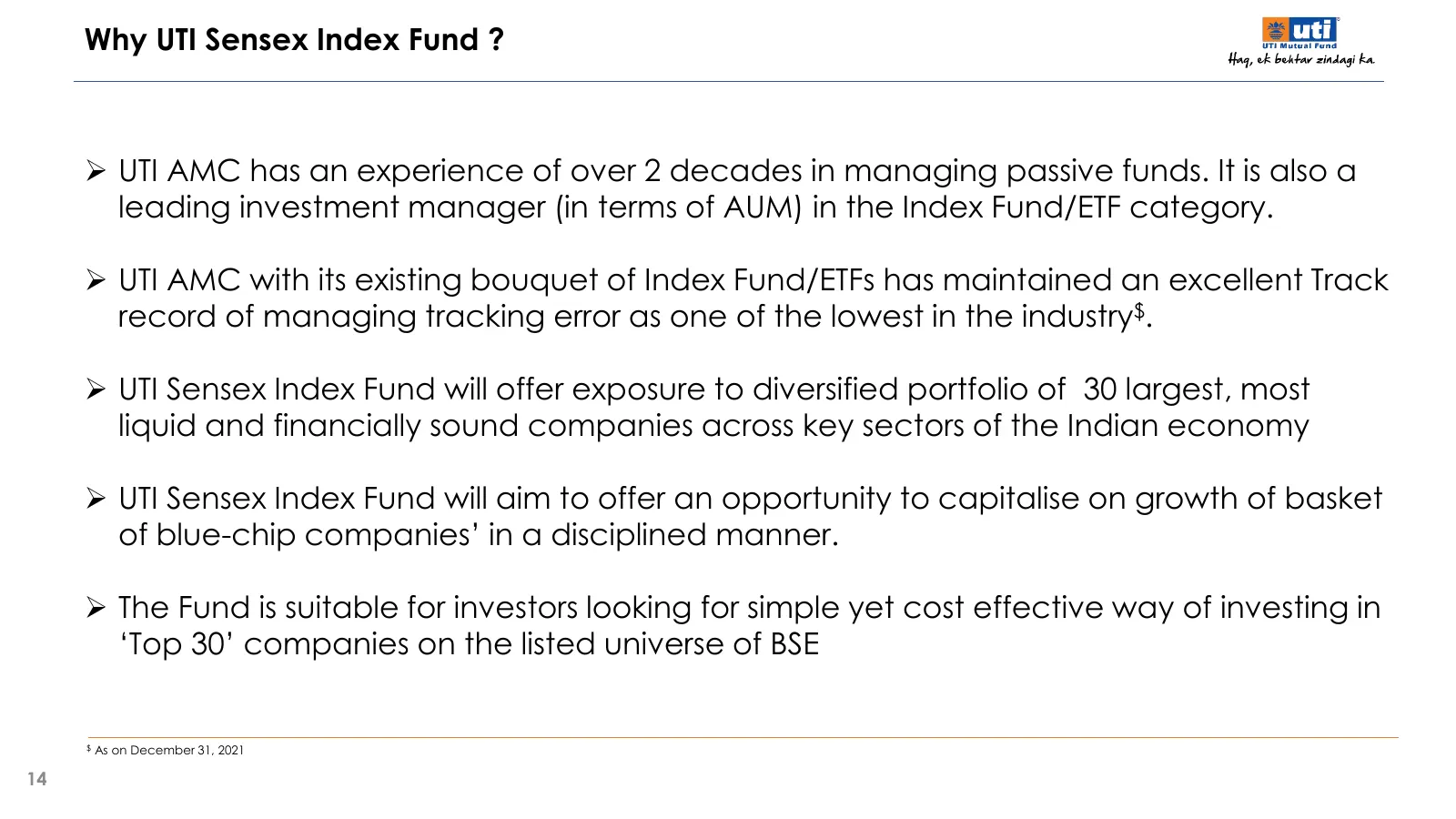
Slide 14: Why UTI Sensex Index Fund?
Why UTI Sensex Index Fund ? ➢ UTI AMC has an experience of over 2 decades in managing passive funds. It is also a leading investment manager (in terms of AUM) in the Index Fund/ETF category. ➢ UTI AMC with its existing bouquet of Index Fund/ETFs has maintained an excellent Track record of managing t
Slide 15: Mutual Fund Investments are subject to market risks
REGISTERED OFFICE: UTI Tower, ‘GN’ Block, Bandra Kurla Complex, Bandra (E), Mumbai - 400051.Phone: 022 – 66786666. UTI Asset Management Company Ltd (Investment Manager for UTI Mutual Fund) Email: [email protected] . (CIN-U65991MH2002PLC137867). For more information, please contact the nearest UTI Fin
Source: Internet Archive copy of doc.utimf.com
More decks from UTI Asset Management Co. Ltd.
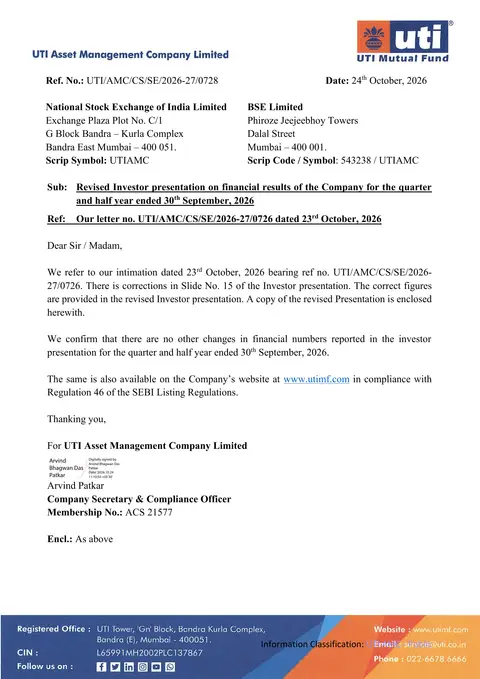 Q2 & H1 FY2026-27 Earnings Presentation49 slides · Oct 24, 2026
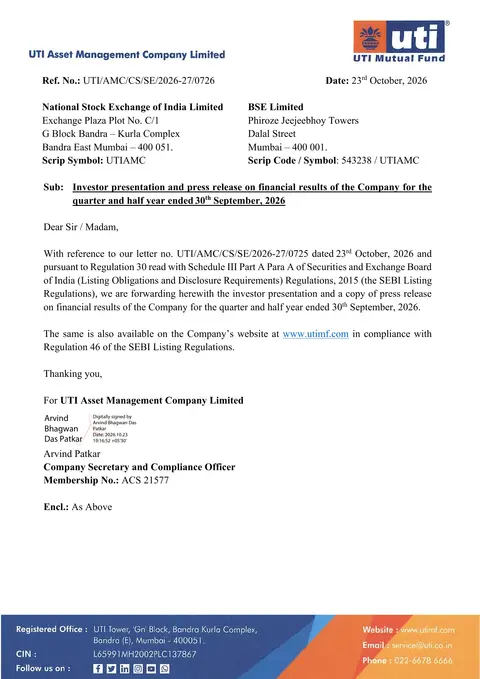 Q2 & H1 FY2026-27 Earnings Presentation51 slides · Oct 23, 2026
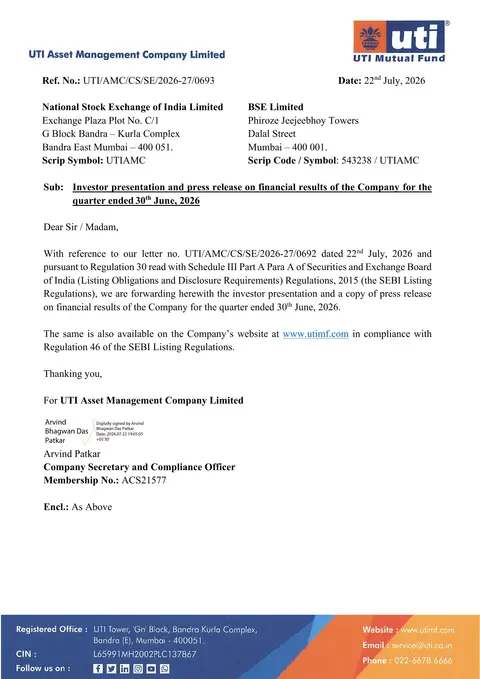 Q1 FY2026-27 Earnings Presentation50 slides · Jul 22, 2026
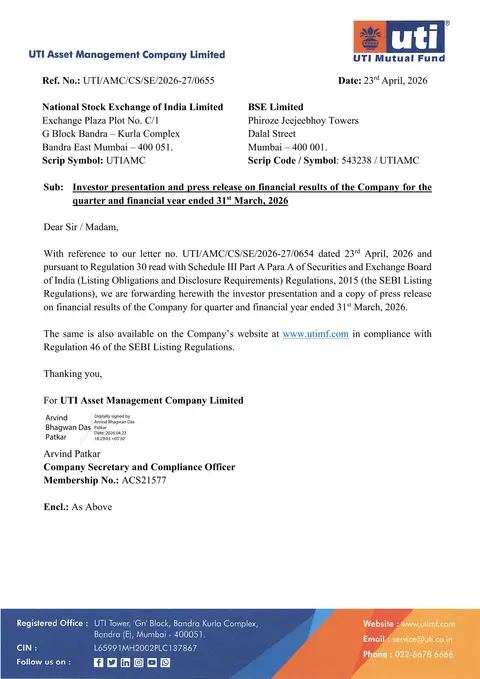 Q4 FY2025-26 Earnings Presentation50 slides · Apr 24, 2026
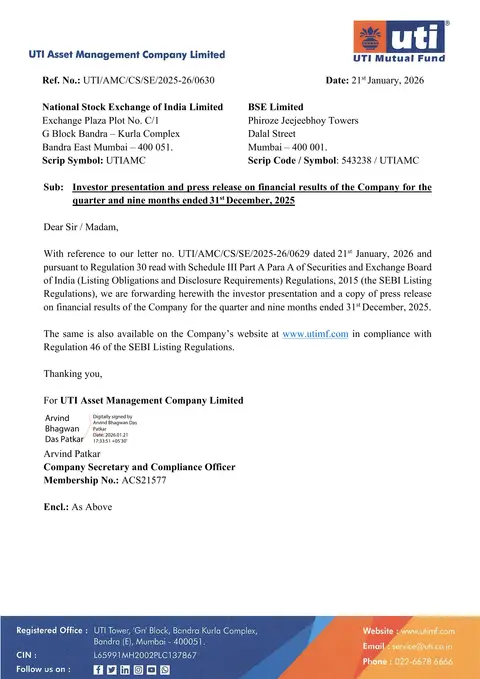 Q3 FY2025-26 Earnings Presentation51 slides · Jan 22, 2026
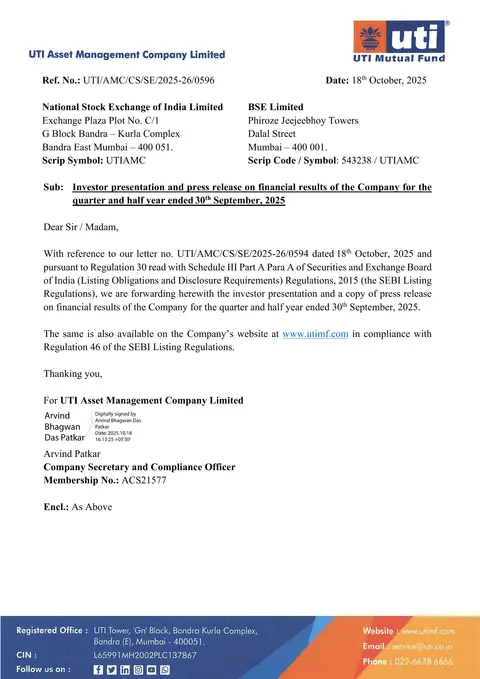 Q2 & H1 FY2025-26 Earnings Presentation49 slides · Oct 19, 2025