ECO Animal Health Group PLC · LSE:EAH
ECO Animal Health — ECO Asia Poultry Online Conference 2021
43 slides from ECO Animal Health's conference presentation, November 2021
Slide 1: Antimicrobial stewardship and its role in sustainable poultry farming and egg production
ECO Asia Poultry Online Conference 2021 Antimicrobial stewardship and its role in sustainable poultry farming and egg production Marcon Tigges BSc, DVM, MBA
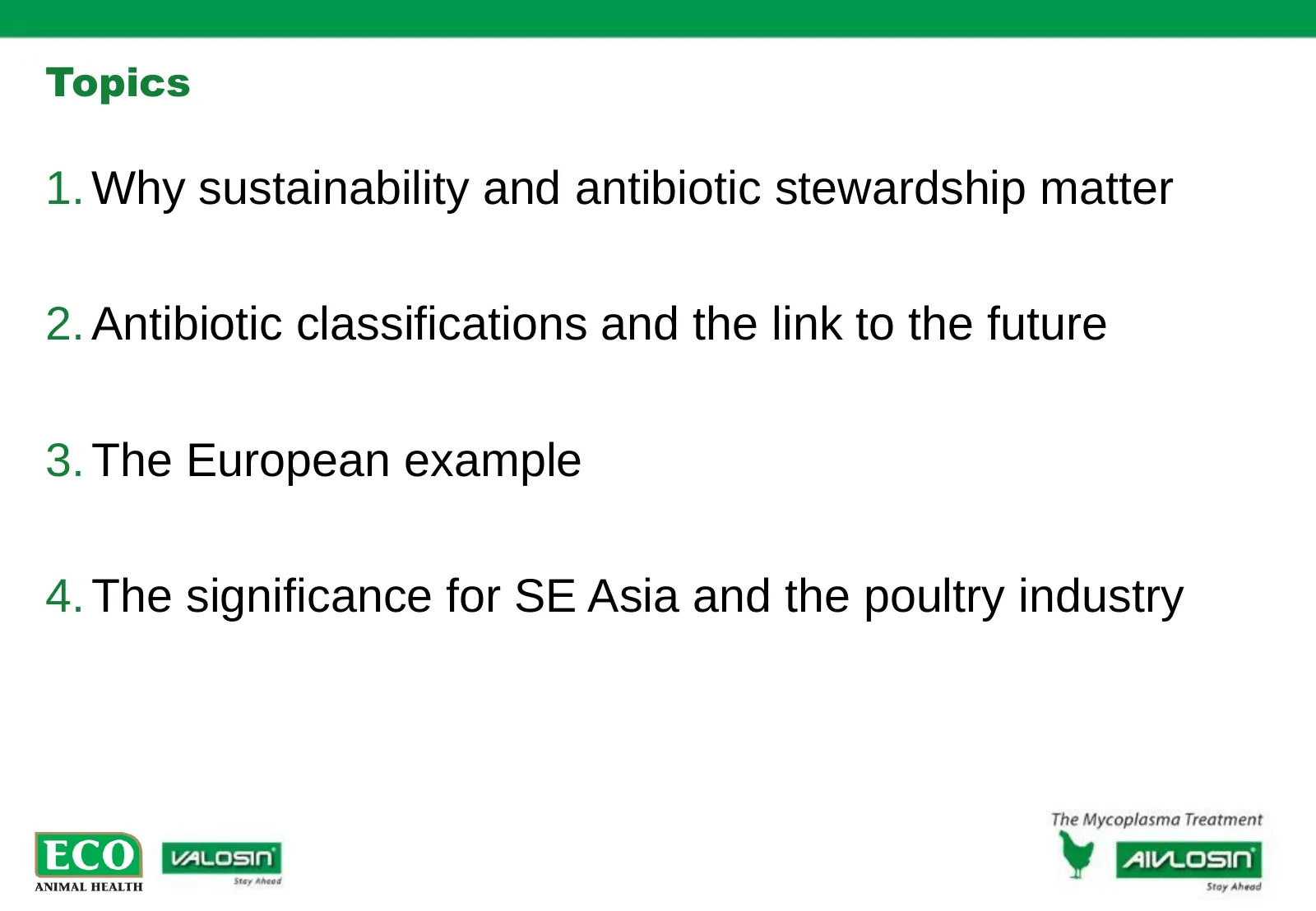
Slide 2: Topics
Topics 1. Why sustainability and antibiotic stewardship matter 2. Antibiotic classifications and the link to the future 3. The European example 4. The significance for SE Asia and the poultry industry
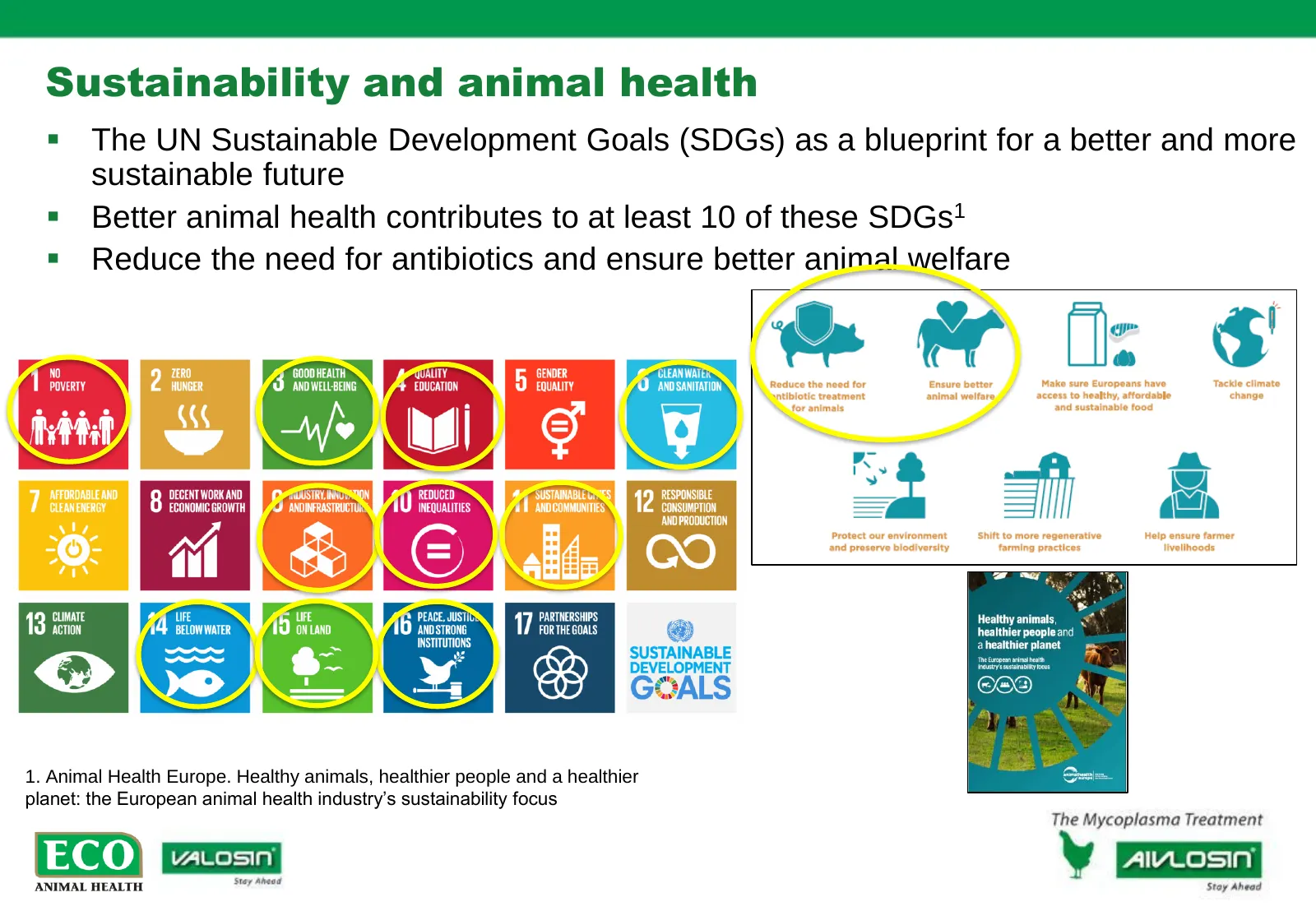
Slide 3: Sustainability and animal health
Sustainability and animal health ▪ The UN Sustainable Development Goals (SDGs) as a blueprint for a better and more sustainable future ▪ Better animal health contributes to at least 10 of these SDGs1 ▪ Reduce the need for antibiotics and ensure better animal welfare 1. Animal Health Europe. Healthy
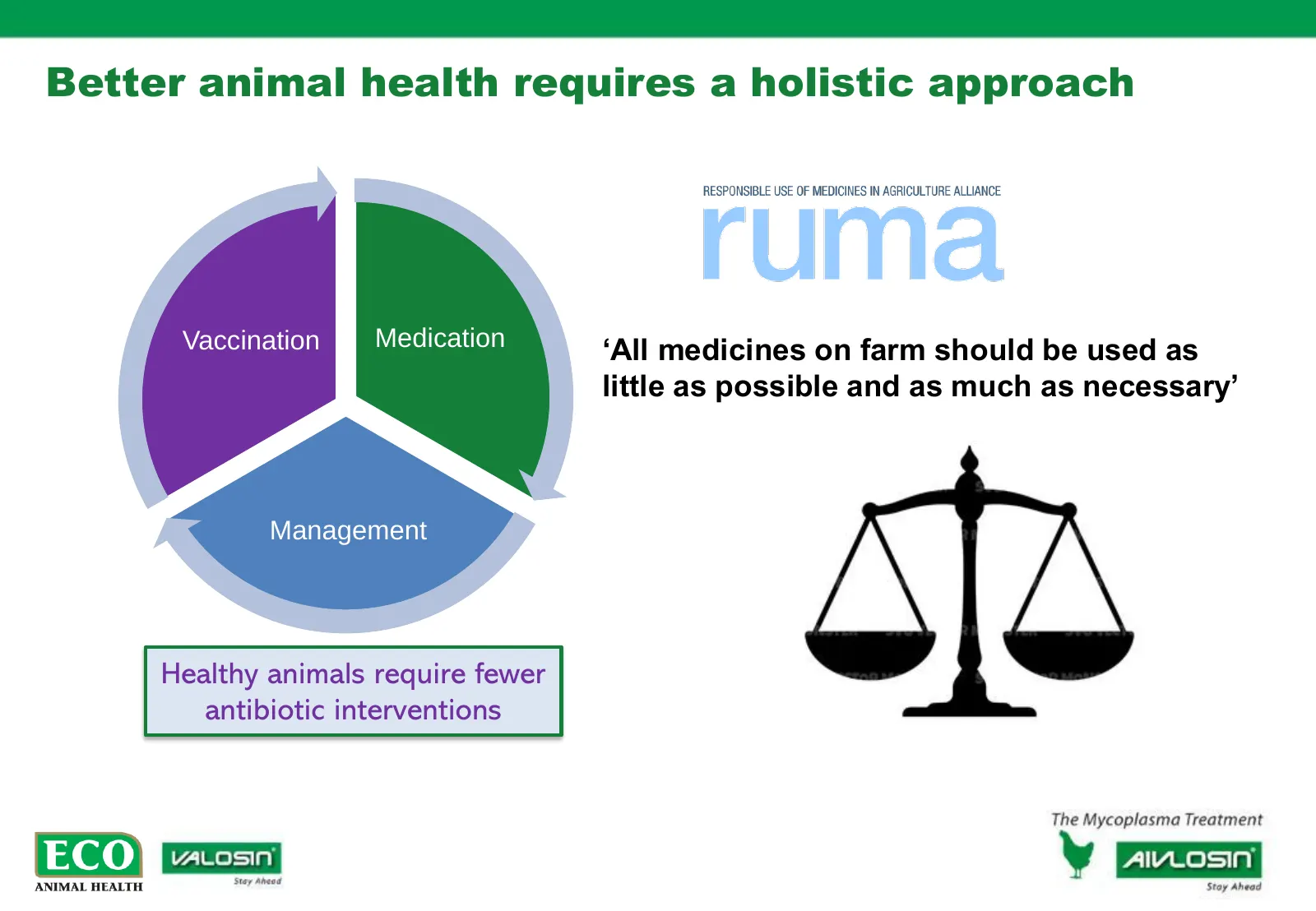
Slide 4: Better animal health requires a holistic approach
Better animal health requires a holistic approach Vaccination Medication ‘All medicines on farm should be used as little as possible and as much as necessary’ Management Healthy animals require fewer antibiotic interventions
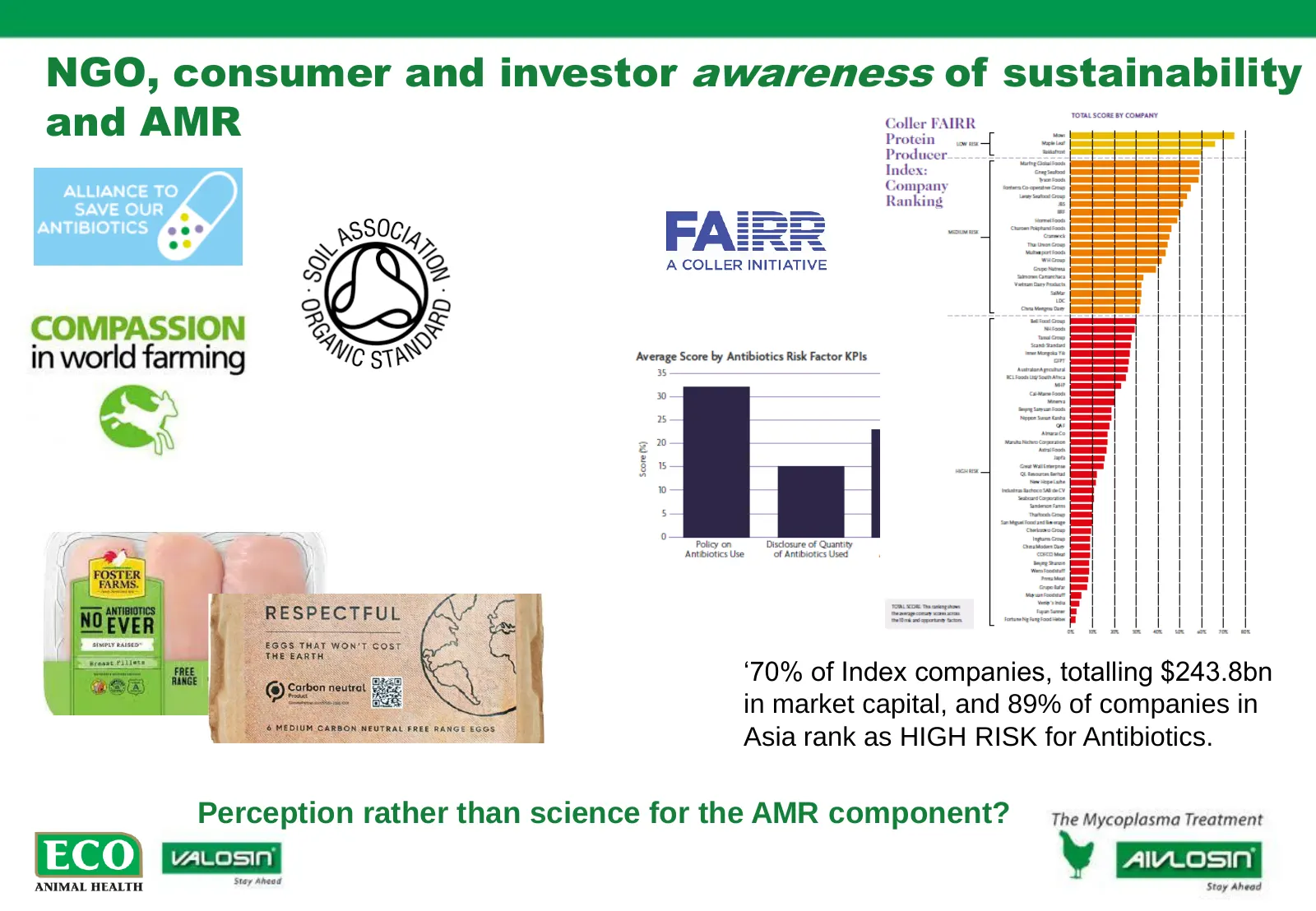
Slide 5: NGO, consumer and investor awareness of sustainability and AMR
NGO, consumer and investor awareness of sustainability and AMR ‘70% of Index companies, totalling $243.8bn in market capital, and 89% of companies in Asia rank as HIGH RISK for Antibiotics. Perception rather than science for the AMR component?
Slide 6: Growing demand for animal-sourced protein in Asia
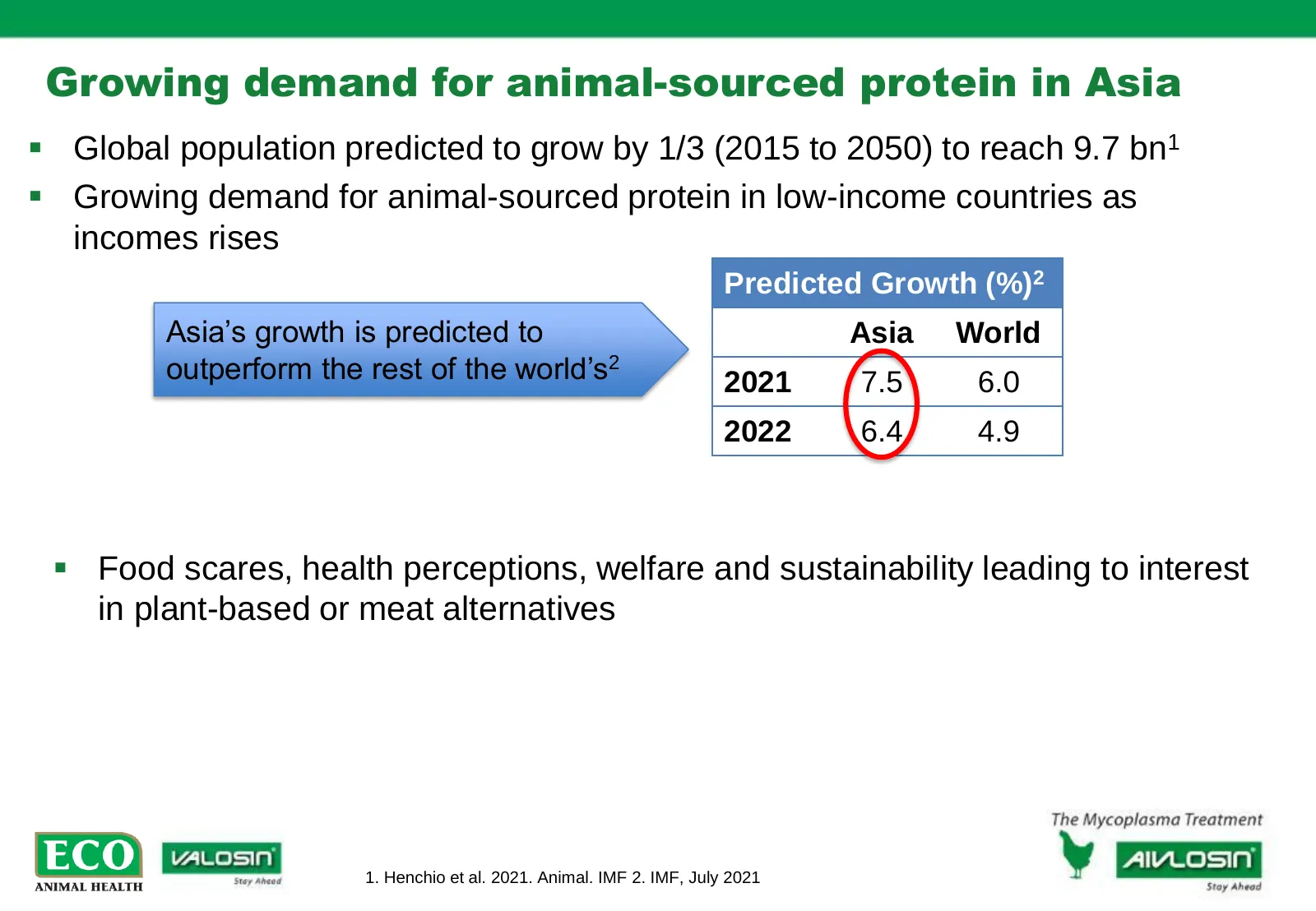
Growing demand for animal-sourced protein in Asia ▪ Global population predicted to grow by 1/3 (2015 to 2050) to reach 9.7 bn1 ▪ Growing demand for animal-sourced protein in low-income countries as incomes rises Predicted Growth (%)2 Asia’s growth is predicted to Asia World outperform the rest of th
Slide 7: Animal-based protein contribution to AMR
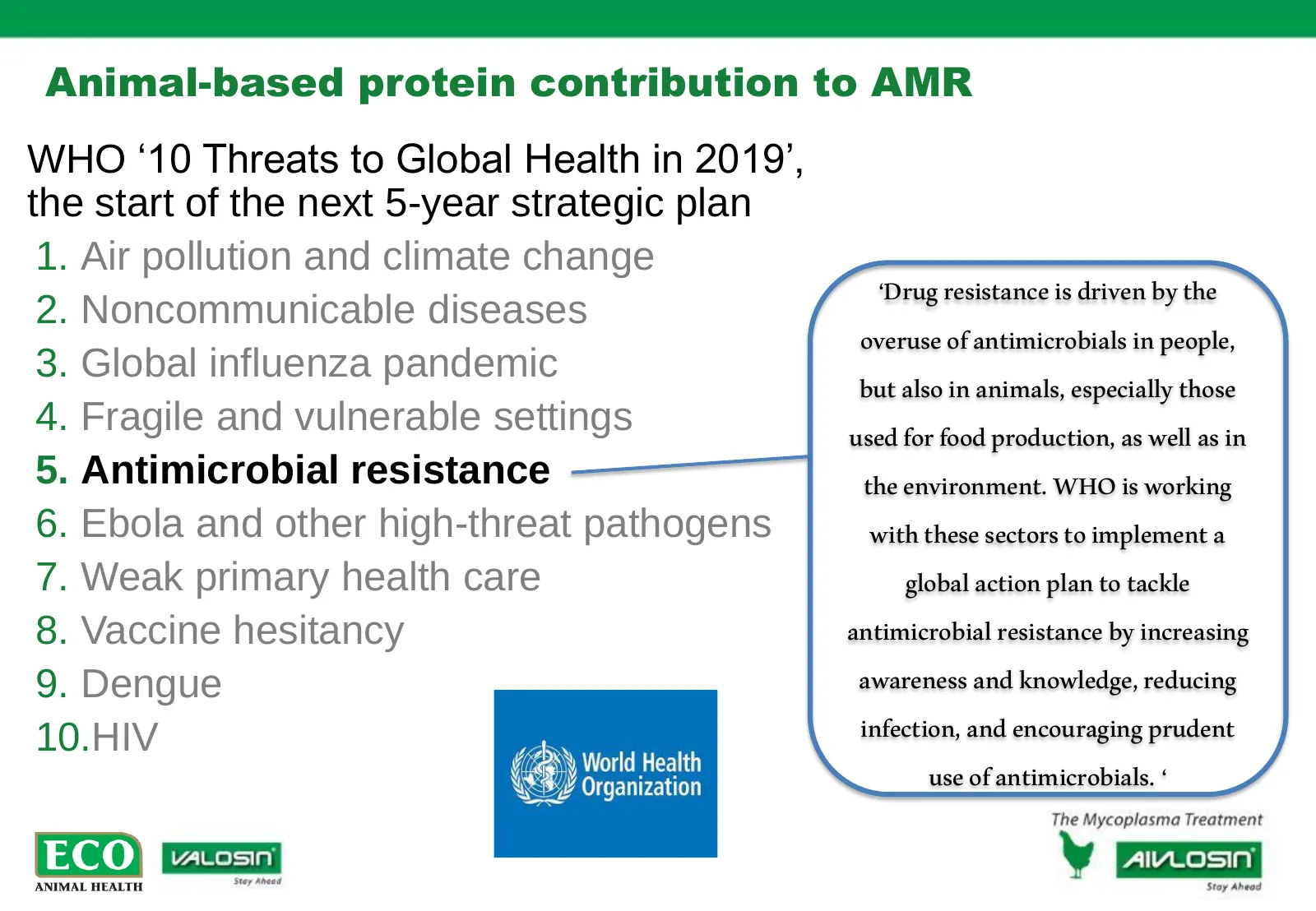
Animal-based protein contribution to AMR WHO ‘10 Threats to Global Health in 2019’, the start of the next 5-year strategic plan 1. Air pollution and climate change ‘Drug resistance is driven by the 2. Noncommunicable diseases overuse of antimicrobials in people, 3. Global influenza pandemic but also
Slide 8: Opportunity for alternative proteins?
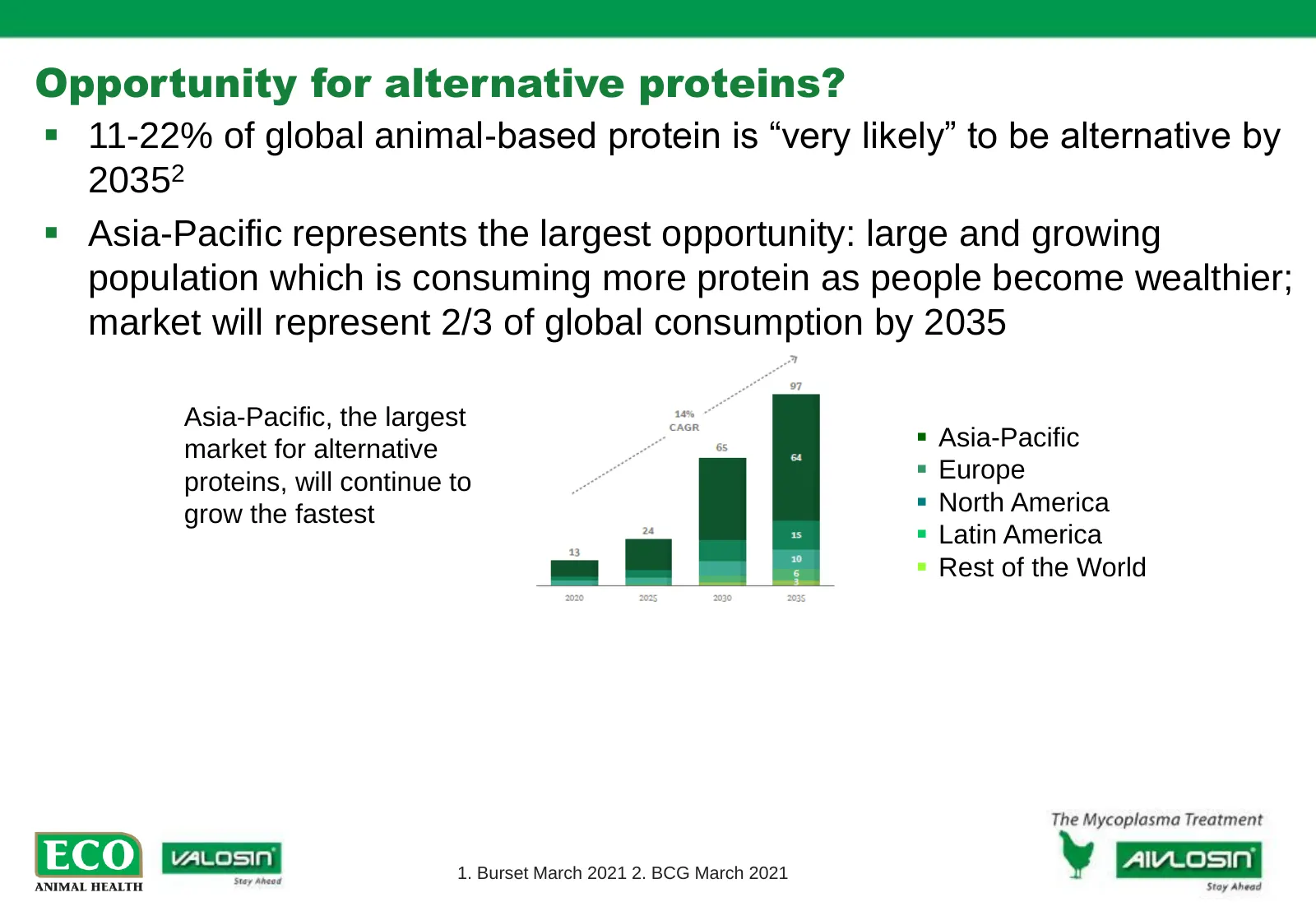
Opportunity for alternative proteins? ▪ 11-22% of global animal-based protein is “very likely” to be alternative by 20352 1. Burset March 2021 2. BCG March 2021
Slide 9: Opportunity for alternative proteins?
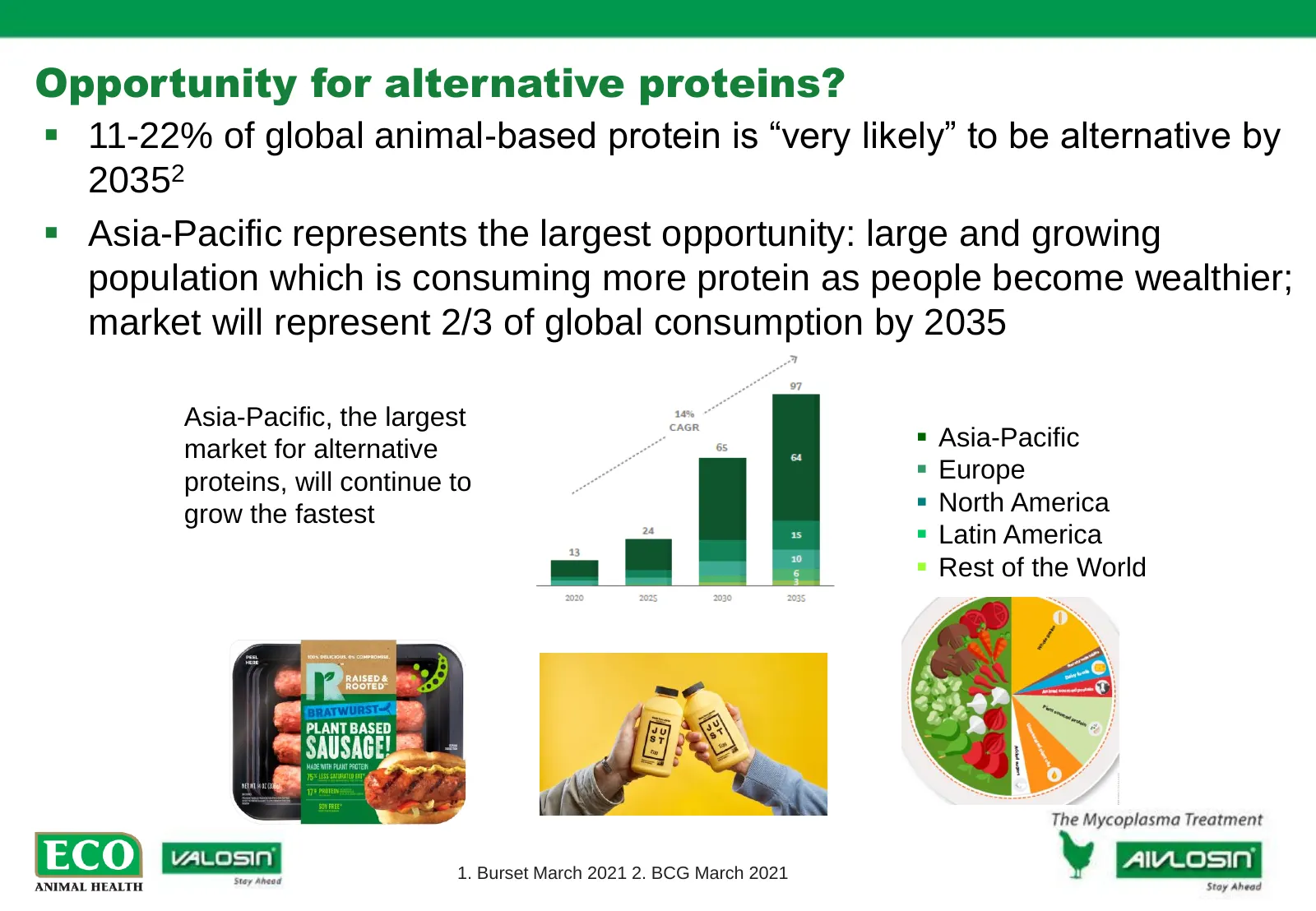
Opportunity for alternative proteins? ▪ 11-22% of global animal-based protein is “very likely” to be alternative by 20352 ▪ Asia-Pacific represents the largest opportunity: large and growing population which is consuming more protein as people become wealthier; market will represent 2/3 of global co
Slide 10: Opportunity for alternative proteins?
Opportunity for alternative proteins? ▪ 11-22% of global animal-based protein is “very likely” to be alternative by 20352 ▪ Asia-Pacific represents the largest opportunity: large and growing population which is consuming more protein as people become wealthier; market will represent 2/3 of global co
Slide 11: The macroenvironment for sustainable livestock farming
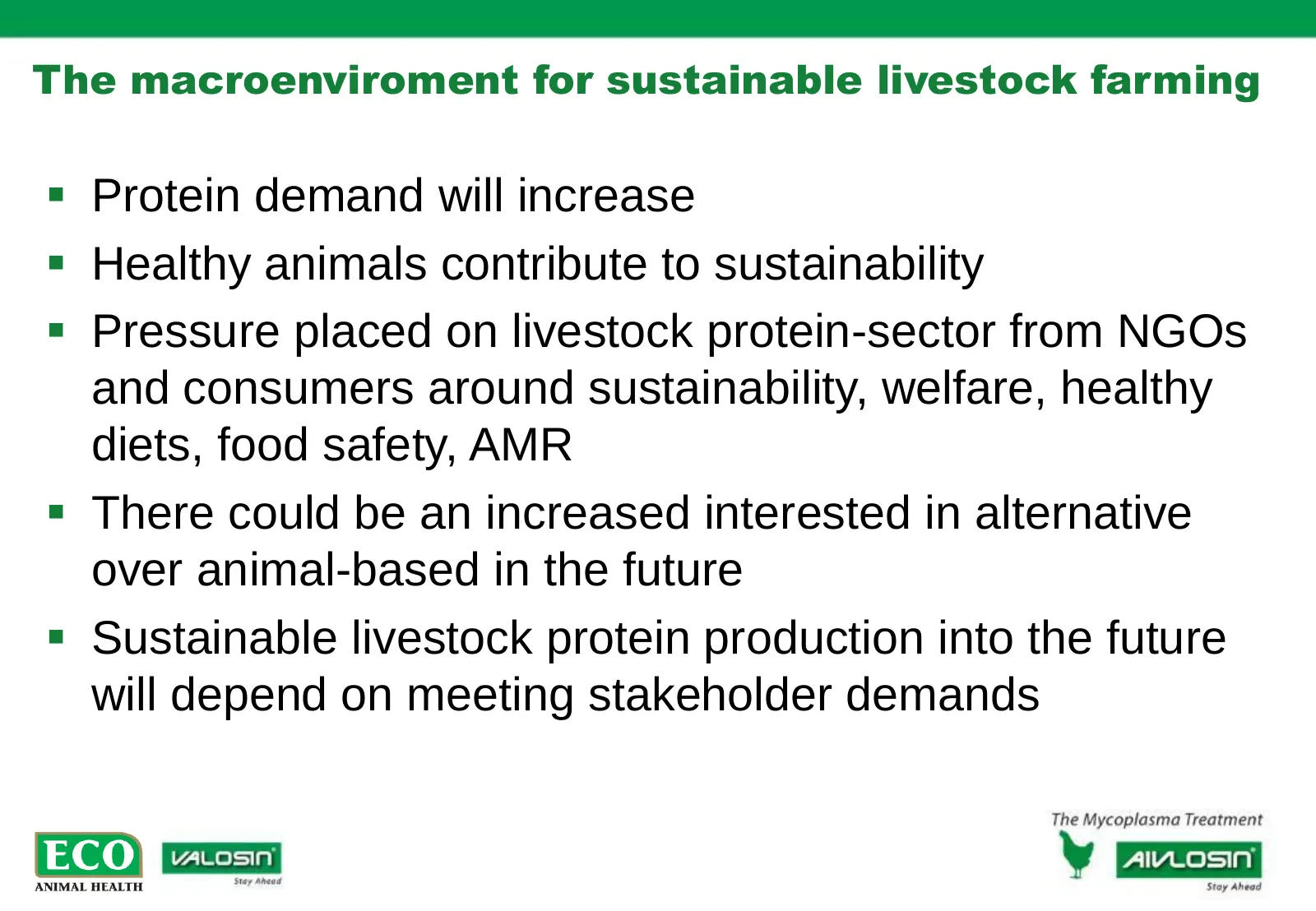
The macroenviroment for sustainable livestock farming ▪ Protein demand will increase ▪ Healthy animals contribute to sustainability ▪ Pressure placed on livestock protein-sector from NGOs and consumers around sustainability, welfare, healthy diets, food safety, AMR ▪ There could be an increased inte
Slide 12: Topics
Topics 1. Why sustainability and AMR matter 2. Antibiotic classifications and the link to the future 3. The European example 4. The significance for SE Asia and the poultry industry
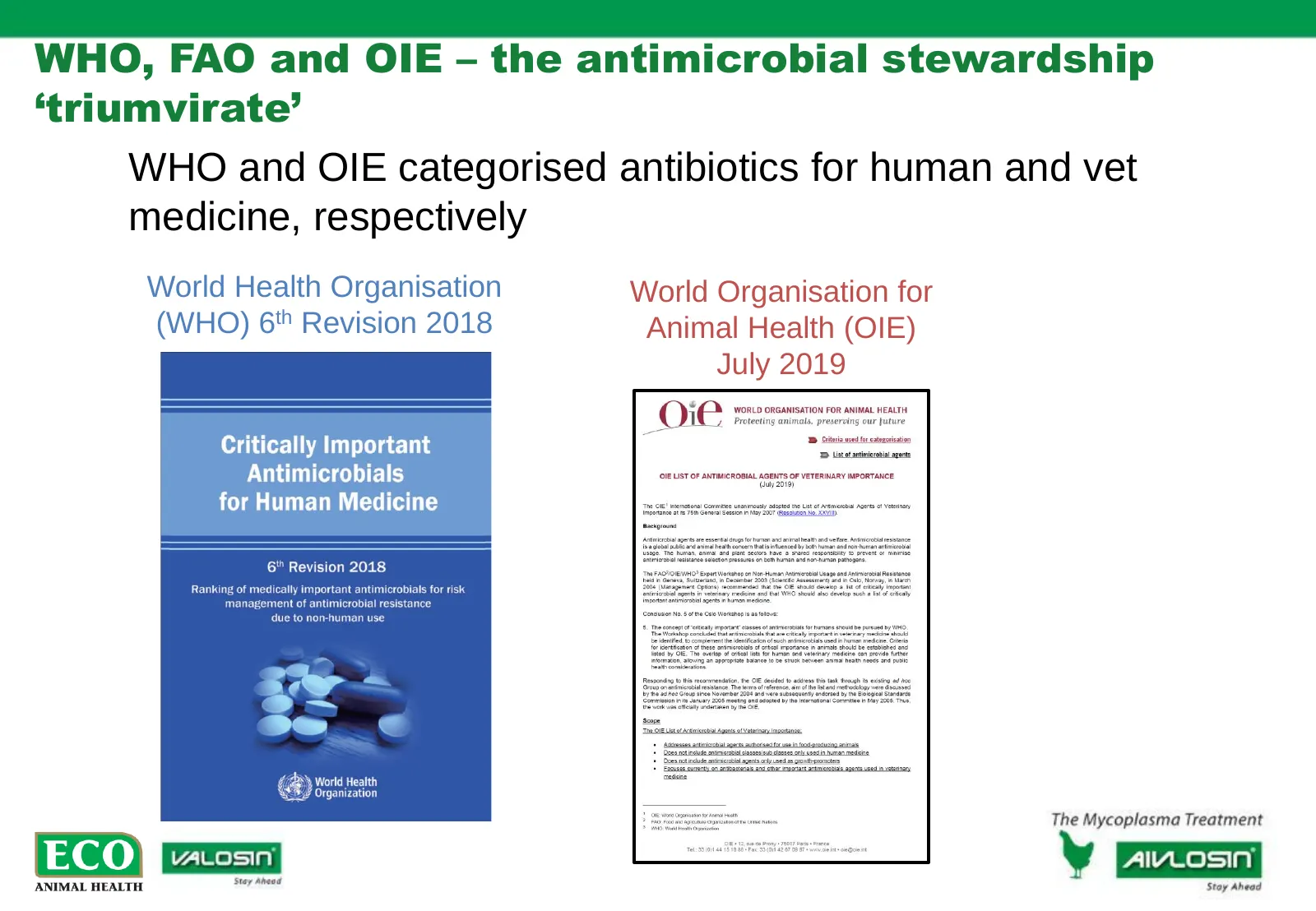
Slide 13: WHO, FAO and OIE – the antimicrobial stewardship triumvirate
WHO, FAO and OIE – the antimicrobial stewardship ‘triumvirate’ WHO and OIE categorised antibiotics for human and vet medicine, respectively World Health Organisation World Organisation for (WHO) 6th Revision 2018 Animal Health (OIE) July 2019
Slide 14: WHO classification in CIA, Highly Important & Important
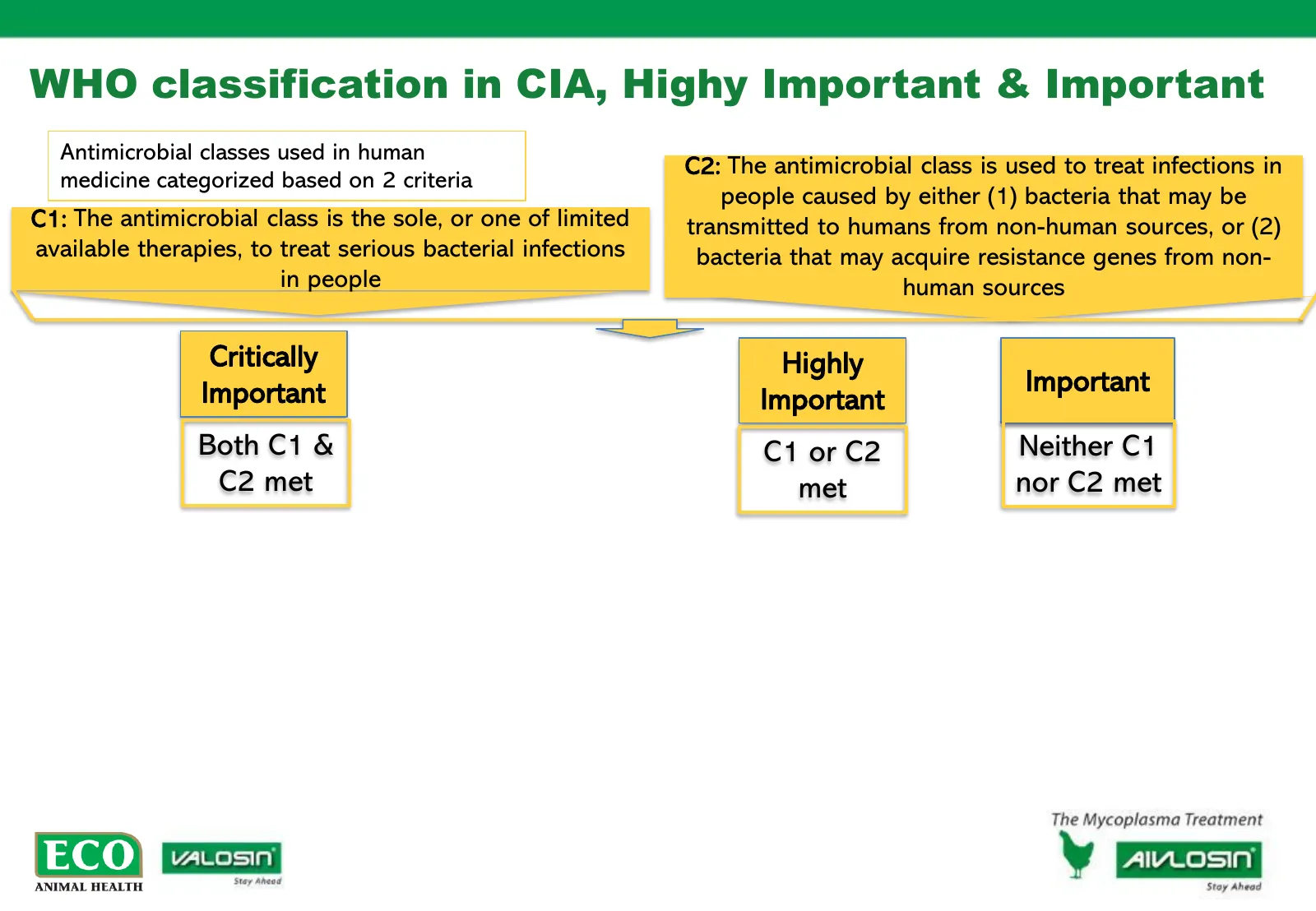
WHO classification in CIA, Highy Important & Important Antimicrobial classes used in human C2: The antimicrobial class is used to treat infections in medicine categorized based on 2 criteria people caused by either (1) bacteria that may be C1: The antimicrobial class is the sole, or one of limited t
Slide 15: WHO classification in CIA, Highly Important & Important
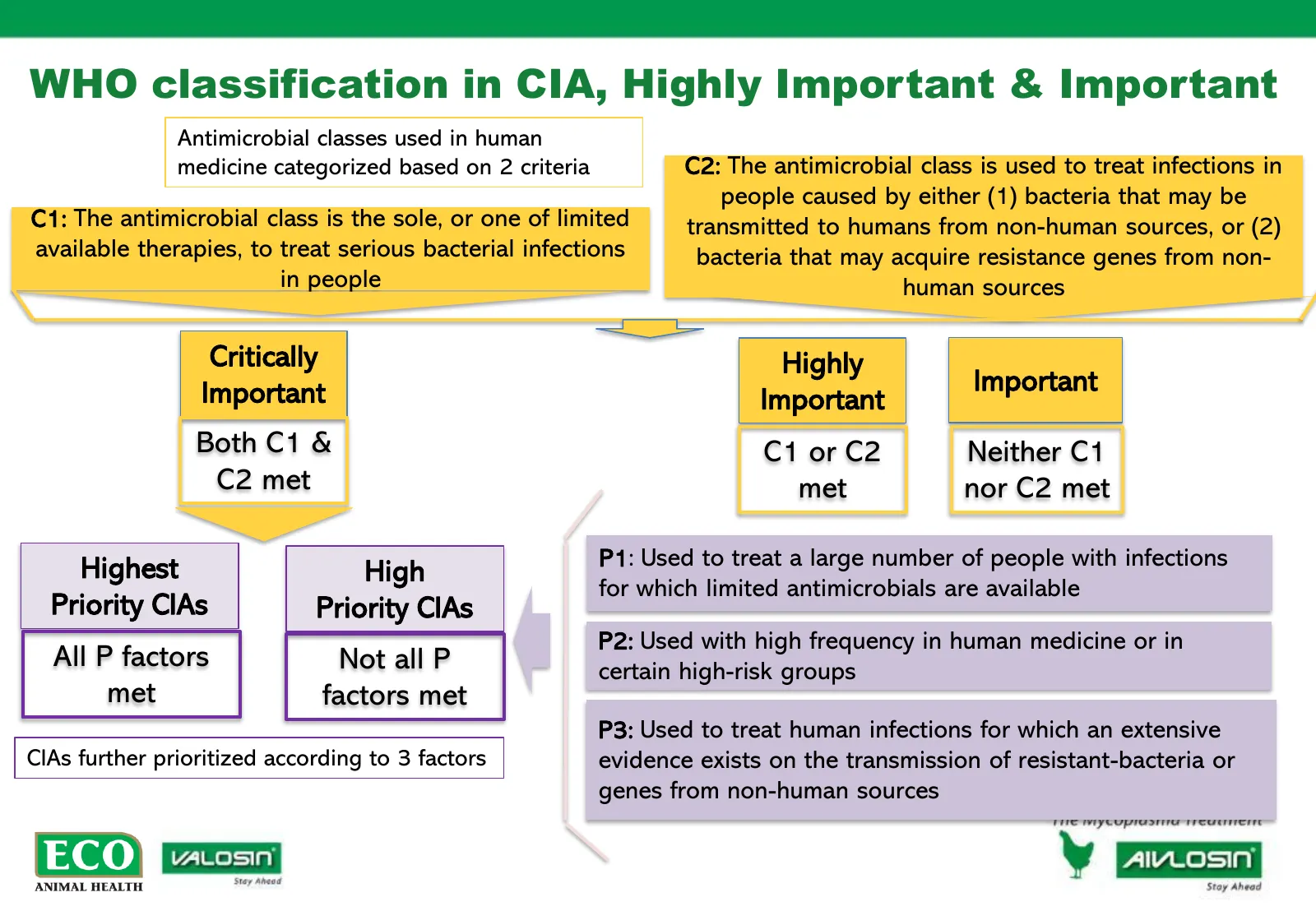
WHO classification in CIA, Highly Important & Important Antimicrobial classes used in human medicine categorized based on 2 criteria C2: The antimicrobial class is used to treat infections in people caused by either (1) bacteria that may be C1: The antimicrobial class is the sole, or one of limited
Slide 16: OIE List of Antimicrobial Agents of Veterinary Importance (2019)
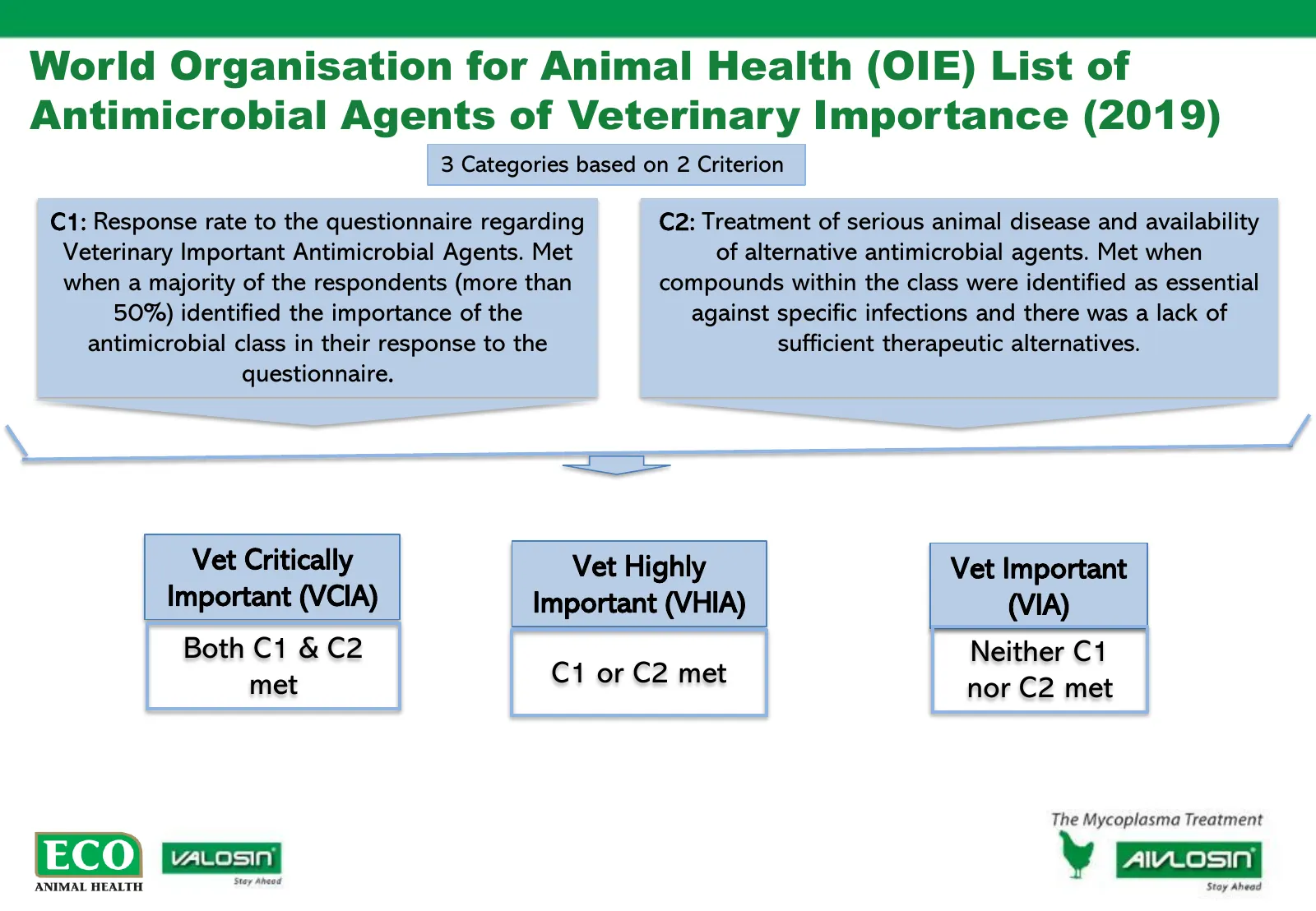
World Organisation for Animal Health (OIE) List of Antimicrobial Agents of Veterinary Importance (2019) 3 Categories based on 2 Criterion C1: Response rate to the questionnaire regarding C2: Treatment of serious animal disease and availability Veterinary Important Antimicrobial Agents. Met of altern
Slide 17: OIE Recommendations
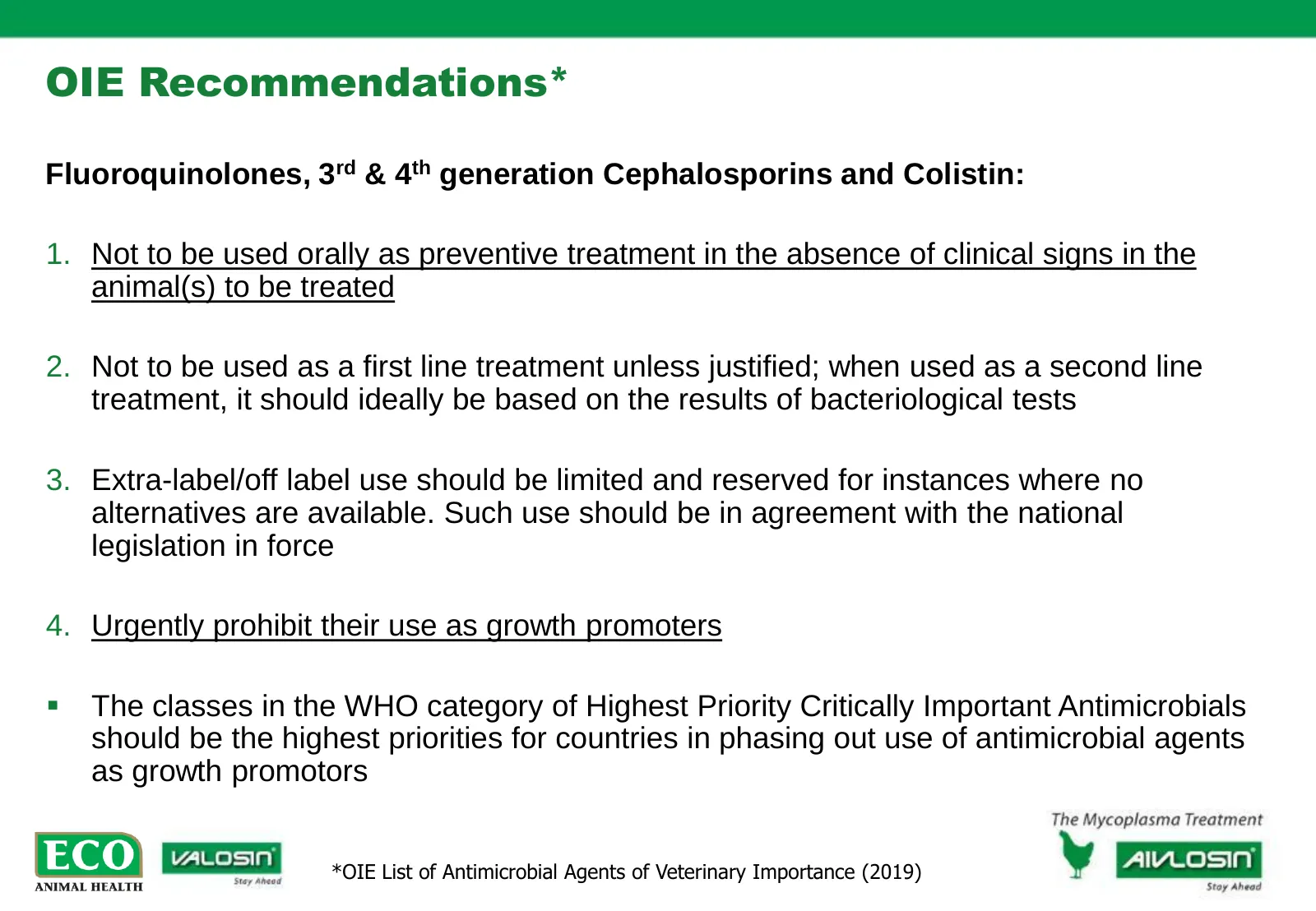
OIE Recommendations* Fluoroquinolones, 3rd & 4th generation Cephalosporins and Colistin: 1. Not to be used orally as preventive treatment in the absence of clinical signs in the animal(s) to be treated 2. Not to be used as a first line treatment unless justified; when used as a second line treatment
Slide 18: WHO and OIE lists comparison
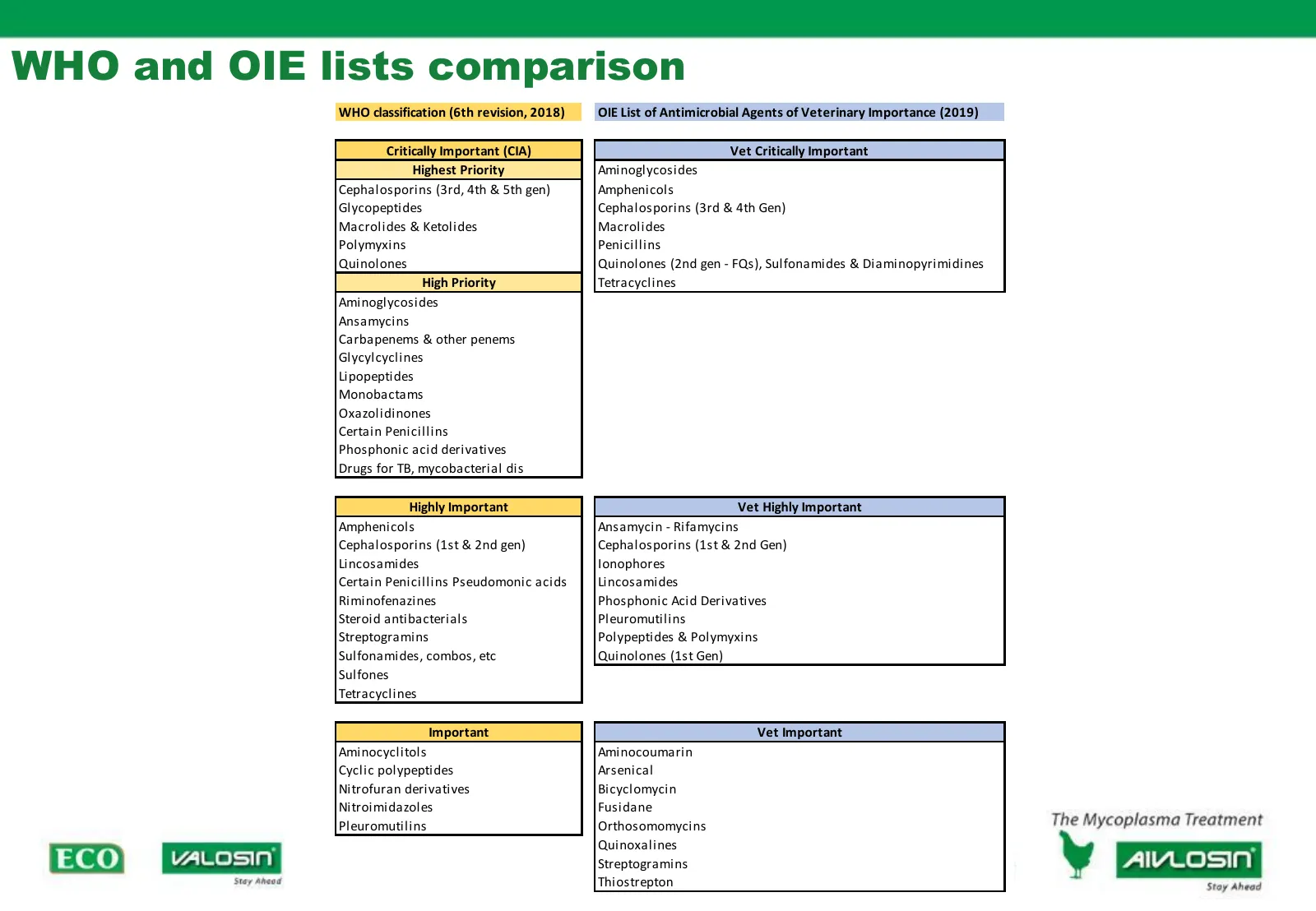
WHO and OIE lists comparison WHO classification (6th revision, 2018) OIE List of Antimicrobial Agents of Veterinary Importance (2019) Critically Important (CIA) Vet Critically Important Highest Priority Aminoglycosides Cephalosporins (3rd, 4th & 5th gen) Amphenicols Glycopeptides Cephalosporins (3rd
Slide 19: WHO and OIE lists comparison
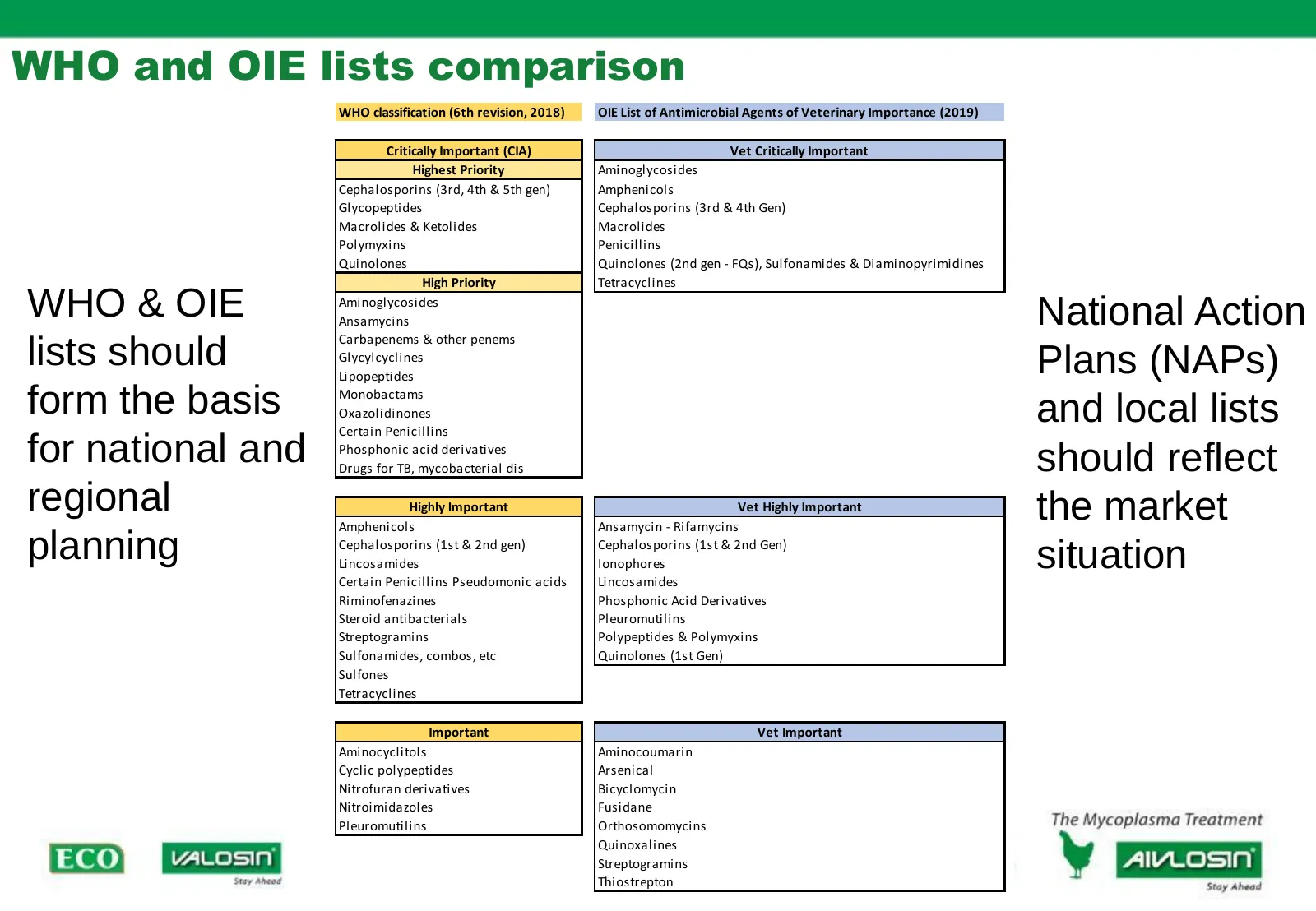
WHO and OIE lists comparison WHO classification (6th revision, 2018) OIE List of Antimicrobial Agents of Veterinary Importance (2019) Critically Important (CIA) Vet Critically Important Highest Priority Aminoglycosides Cephalosporins (3rd, 4th & 5th gen) Amphenicols Glycopeptides Cephalosporins (3rd
Slide 20: Some factors that can influence local antimicrobial use guidelines
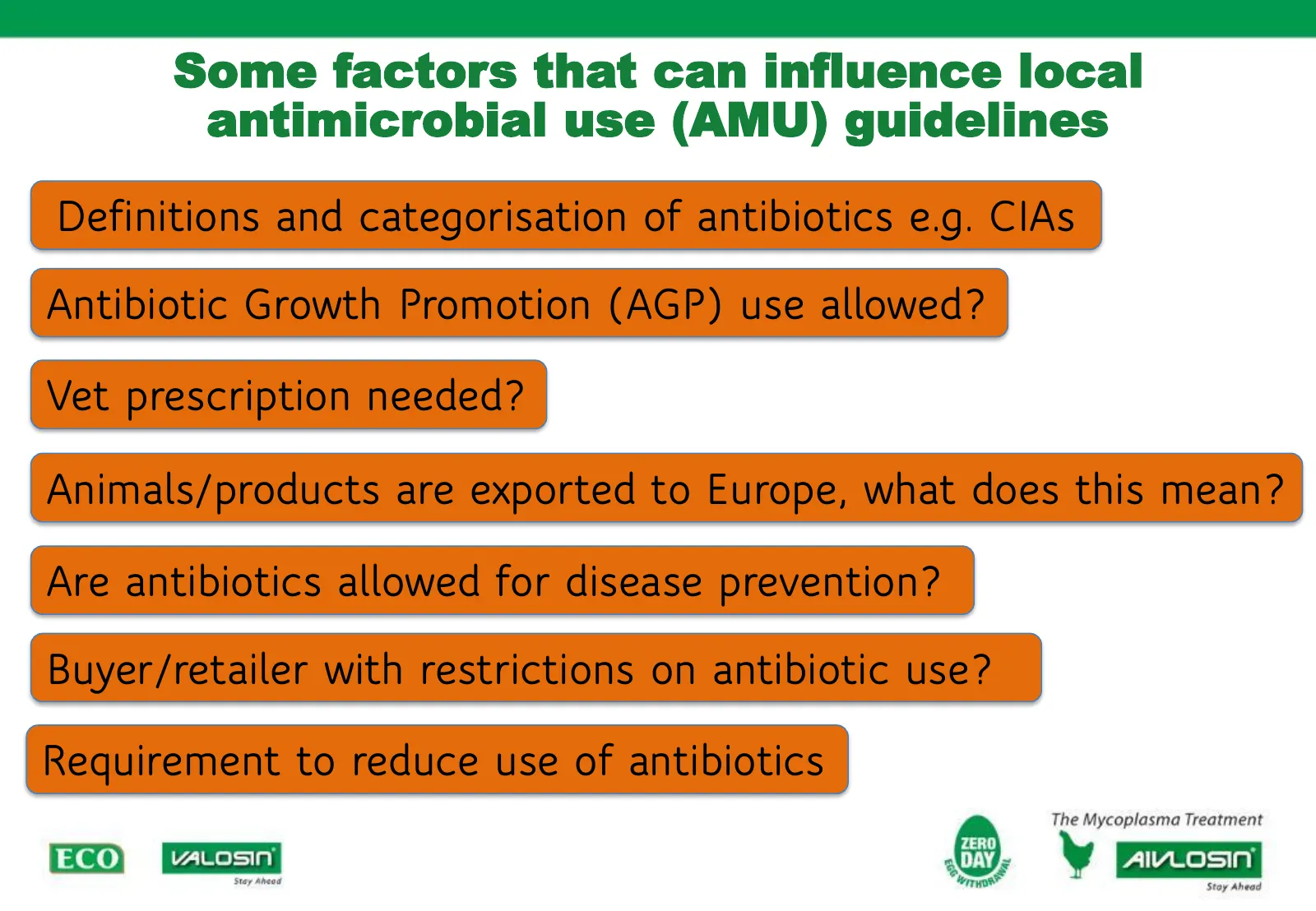
Some factors that can influence local antimicrobial use (AMU) guidelines Definitions and categorisation of antibiotics e.g. CIAs Antibiotic Growth Promotion (AGP) use allowed? Vet prescription needed? Animals/products are exported to Europe, what does this mean? Are antibiotics allowed for disease p
Slide 21: Topics
Topics 1. Why sustainability and AMR matter 2. Antibiotic classifications and the link to the future 3. The European example 4. The significance for SE Asia and the poultry industry
Slide 22: The EU example
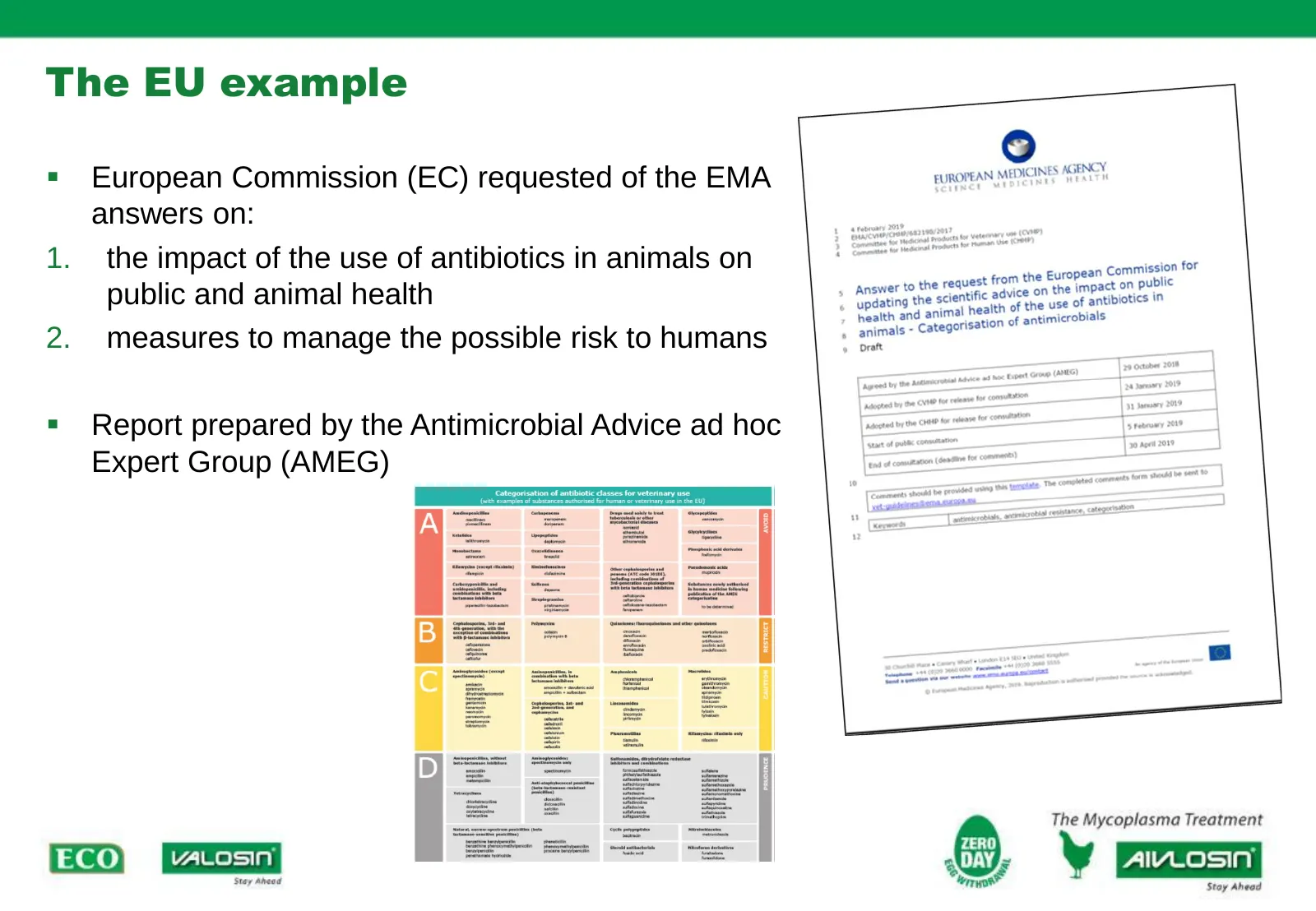
The EU example ▪ European Commission (EC) requested of the EMA answers on: 1. the impact of the use of antibiotics in animals on public and animal health 2. measures to manage the possible risk to humans ▪ Report prepared by the Antimicrobial Advice ad hoc Expert Group (AMEG)
Slide 23: 2nd EMA/AMEG report
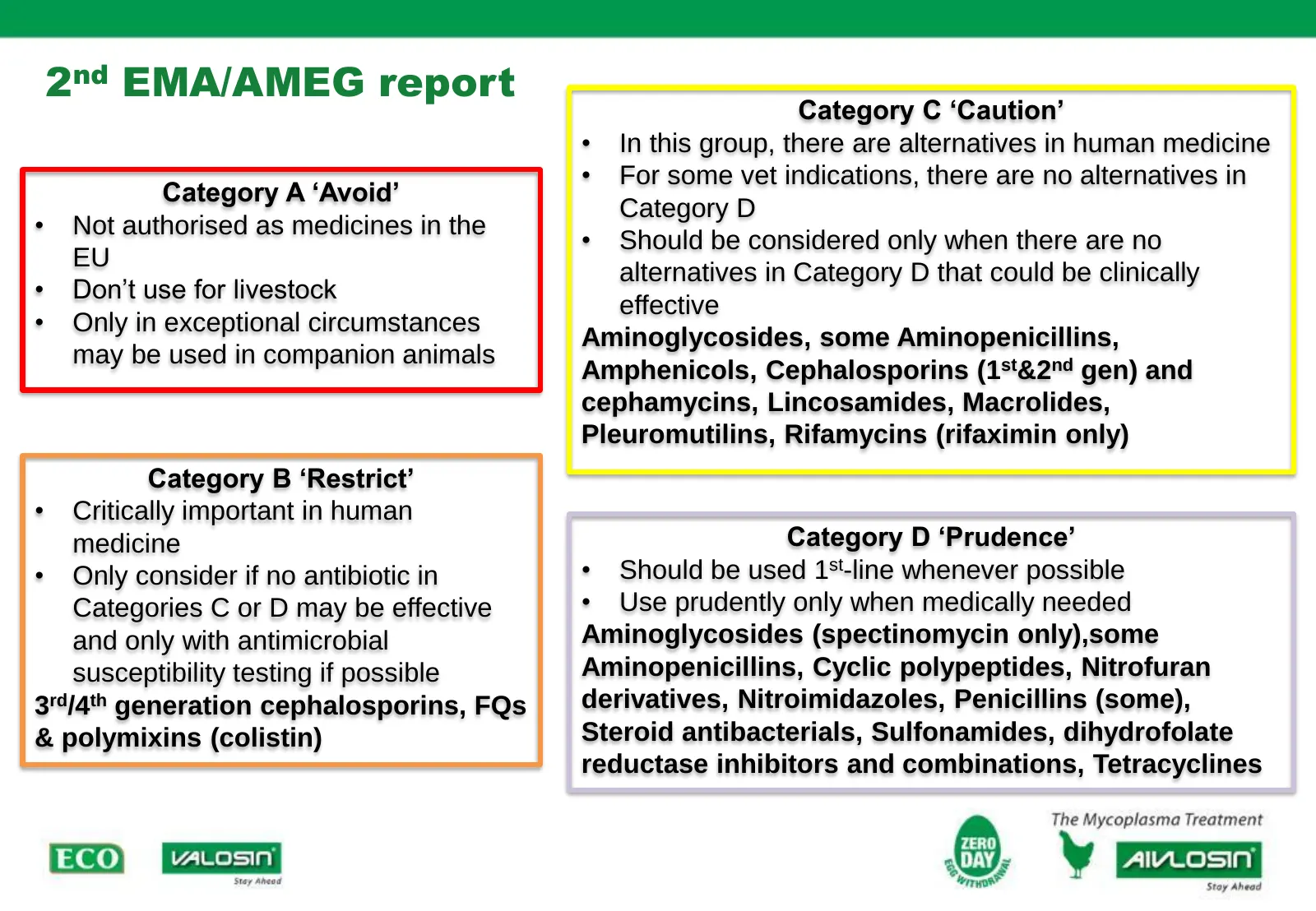
2nd EMA/AMEG report Category C ‘Caution’ • In this group, there are alternatives in human medicine • For some vet indications, there are no alternatives in Category A ‘Avoid’ Category D • Not authorised as medicines in the • Should be considered only when there are no EU alternatives in Category D t
Slide 24: Comparison of the reports
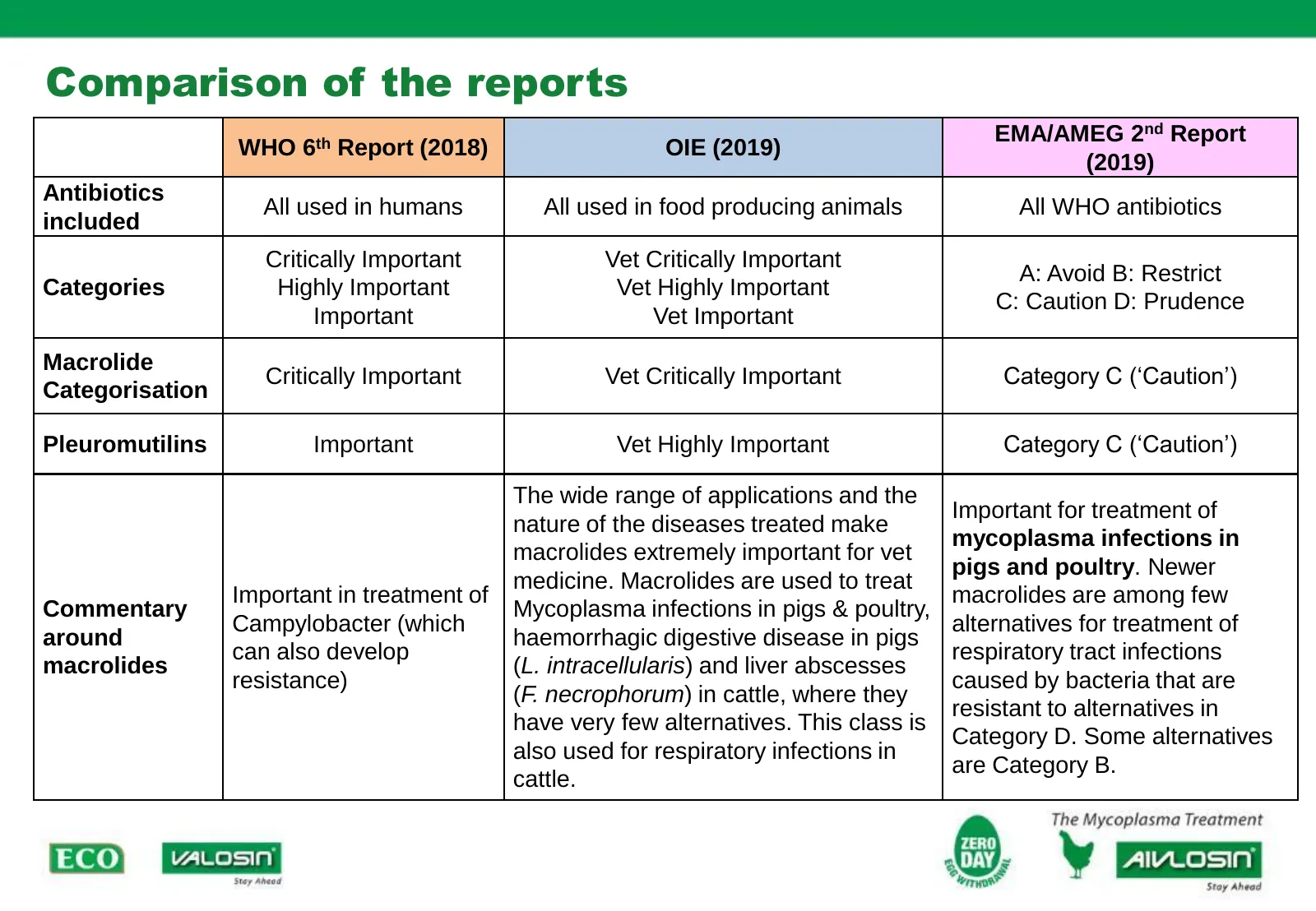
Comparison of the reports EMA/AMEG 2nd Report WHO 6th Report (2018) OIE (2019) (2019) Antibiotics All used in humans All used in food producing animals All WHO antibiotics included Critically Important Vet Critically Important A: Avoid B: Restrict Categories Highly Important Vet Highly Important C:
Slide 25: EU farming strategy and sustainability
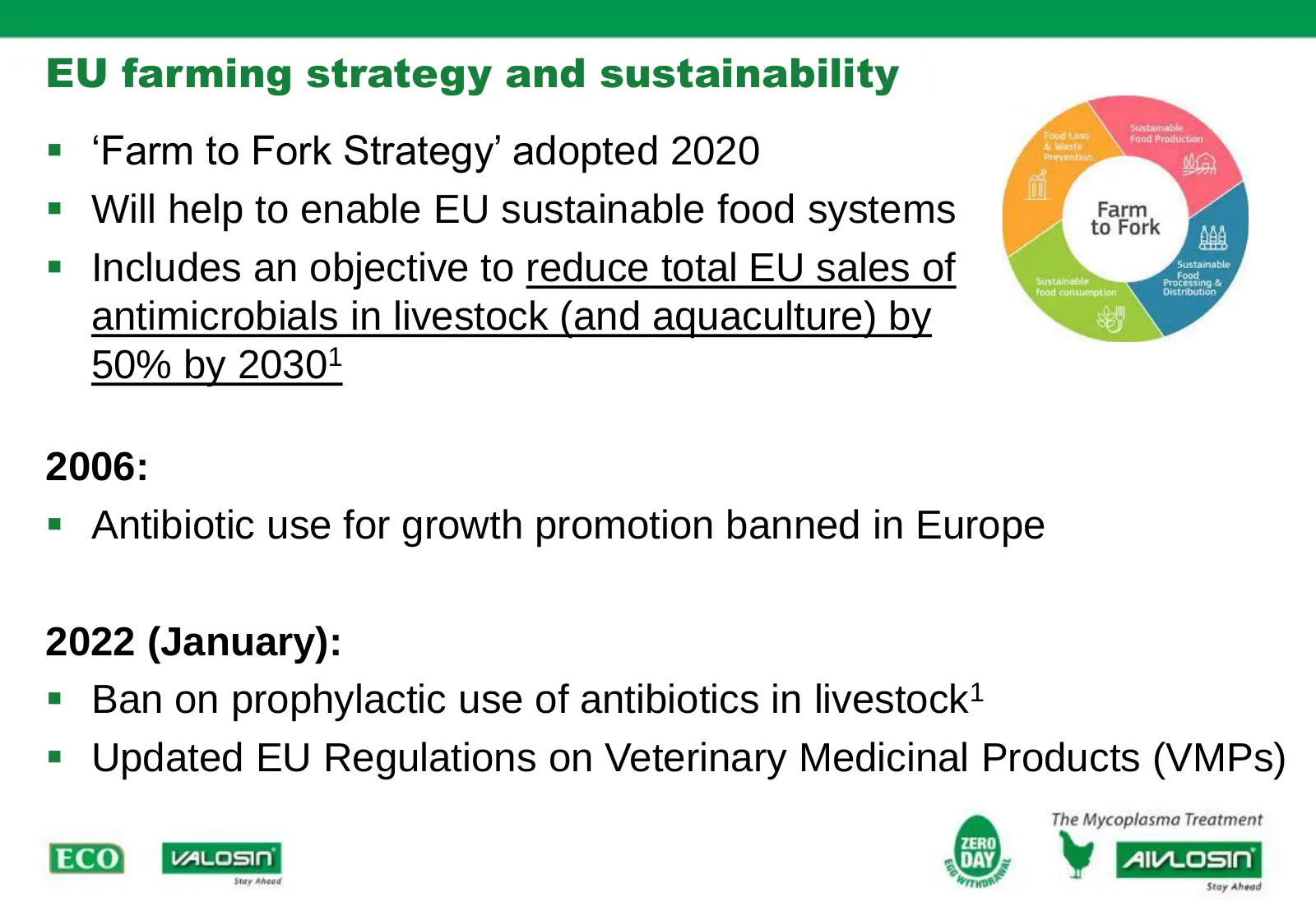
EU farming strategy and sustainability ▪ ‘Farm to Fork Strategy’ adopted 2020 ▪ Will help to enable EU sustainable food systems ▪ Includes an objective to reduce total EU sales of antimicrobials in livestock (and aquaculture) by 50% by 20301 2006: ▪ Antibiotic use for growth promotion banned in Euro
Slide 26: Improving health to reduce antimicrobial use
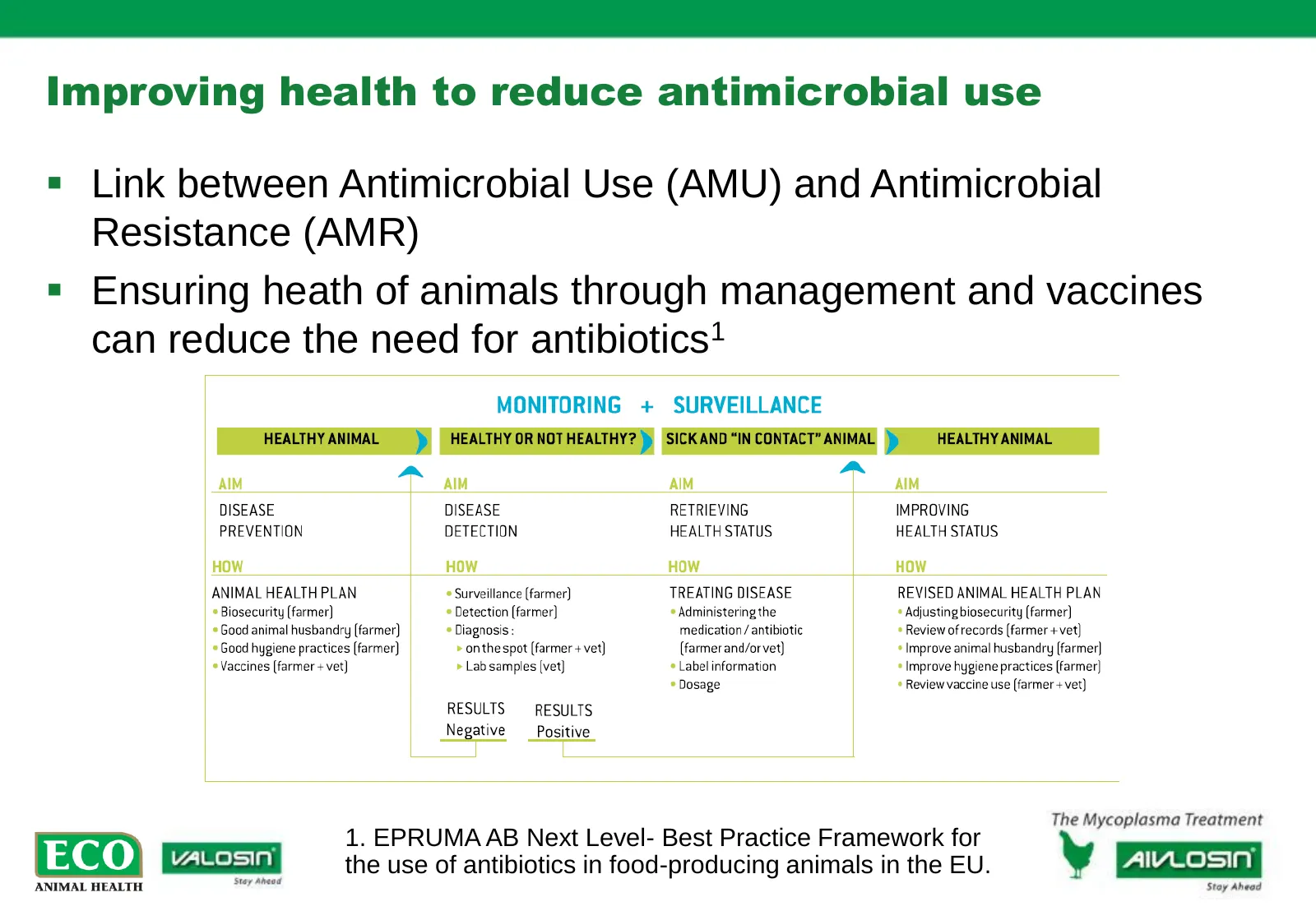
Improving health to reduce antimicrobial use ▪ Link between Antimicrobial Use (AMU) and Antimicrobial Resistance (AMR) ▪ Ensuring heath of animals through management and vaccines can reduce the need for antibiotics1 1. EPRUMA AB Next Level- Best Practice Framework for the use of antibiotics in food-
Slide 27: Livestock antimicrobials surveillance programmes
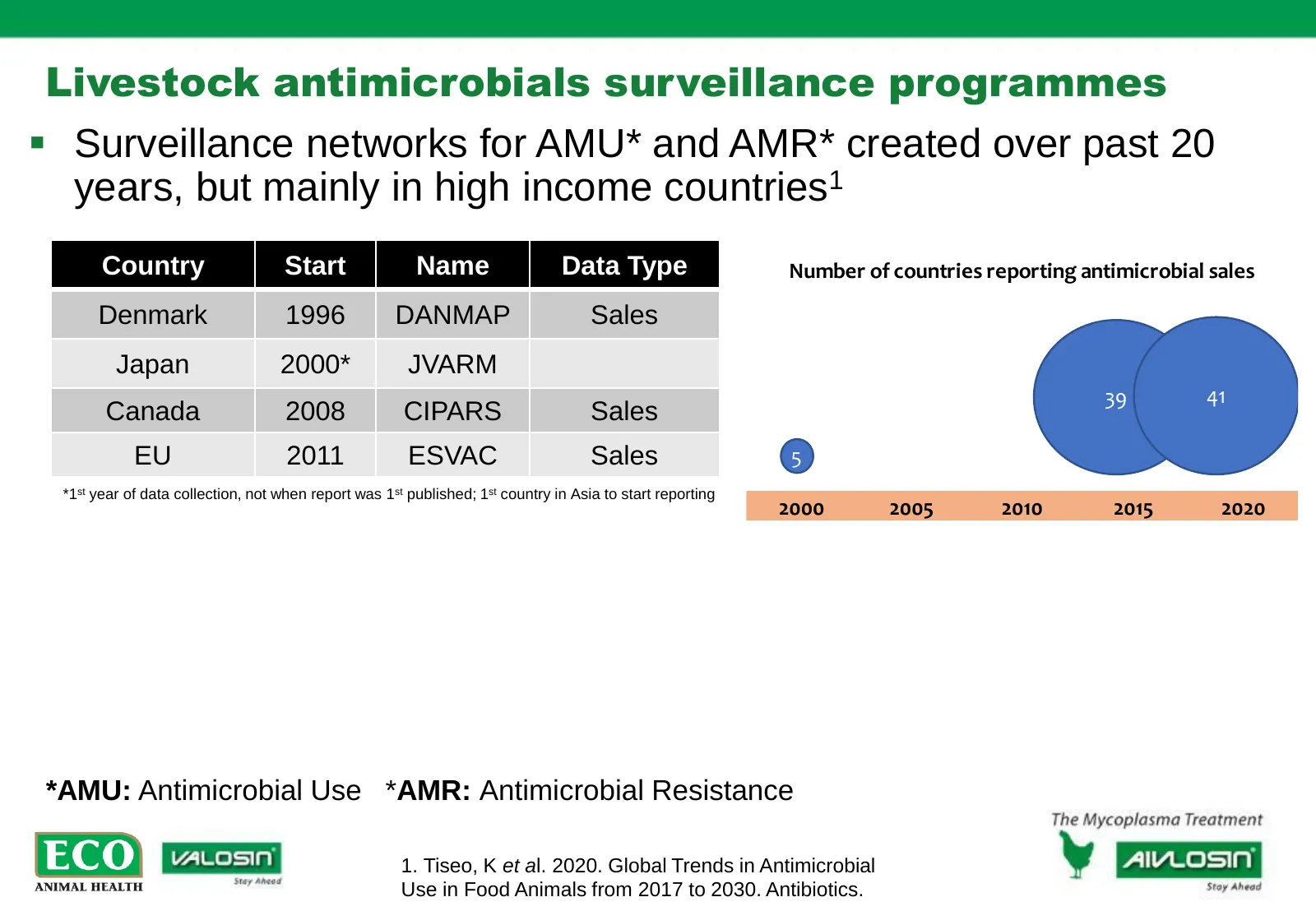
Livestock antimicrobials surveillance programmes ▪ Surveillance networks for AMU* and AMR* created over past 20 years, but mainly in high income countries1 Country Start Name Data Type Number of countries reporting antimicrobial sales Denmark 1996 DANMAP Sales Japan 2000* JVARM 39 41 Canada 2008 CIP
Slide 28: Livestock antimicrobials surveillance programmes
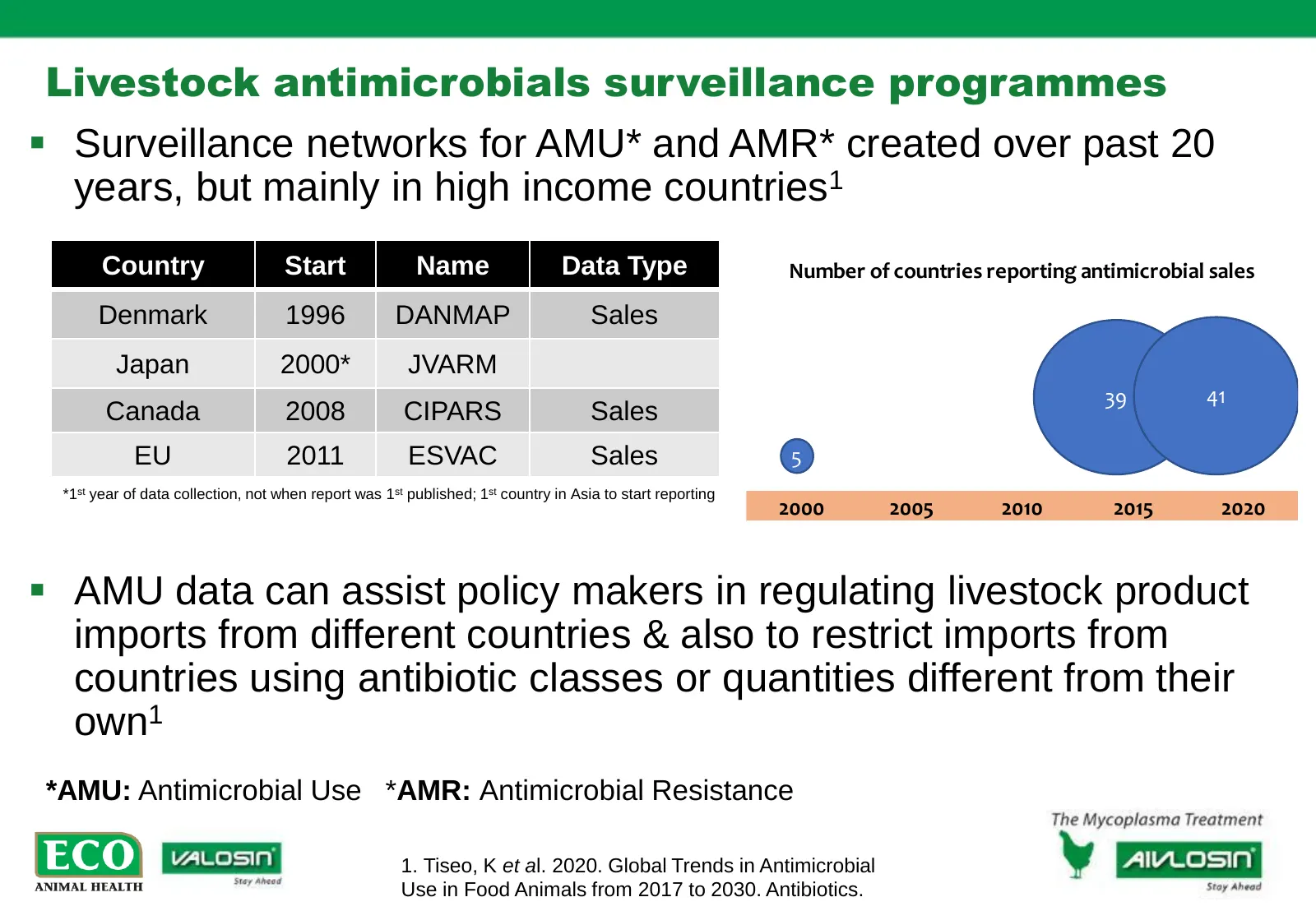
Livestock antimicrobials surveillance programmes ▪ Surveillance networks for AMU* and AMR* created over past 20 years, but mainly in high income countries1 Country Start Name Data Type Number of countries reporting antimicrobial sales Denmark 1996 DANMAP Sales Japan 2000* JVARM 39 41 Canada 2008 CIP
Slide 29: EU ESVAC and AMU information
EU ESVAC and AMU information ▪ EC requested a harmonised approach for collection and reporting of AMU data in animals ▪ EMA developed ESVAC: o collects information on how antimicrobial medicines are used in animals across the EU, helping to identify possible risk factors leading to the development a
Slide 30: EU ESVAC and AMU information
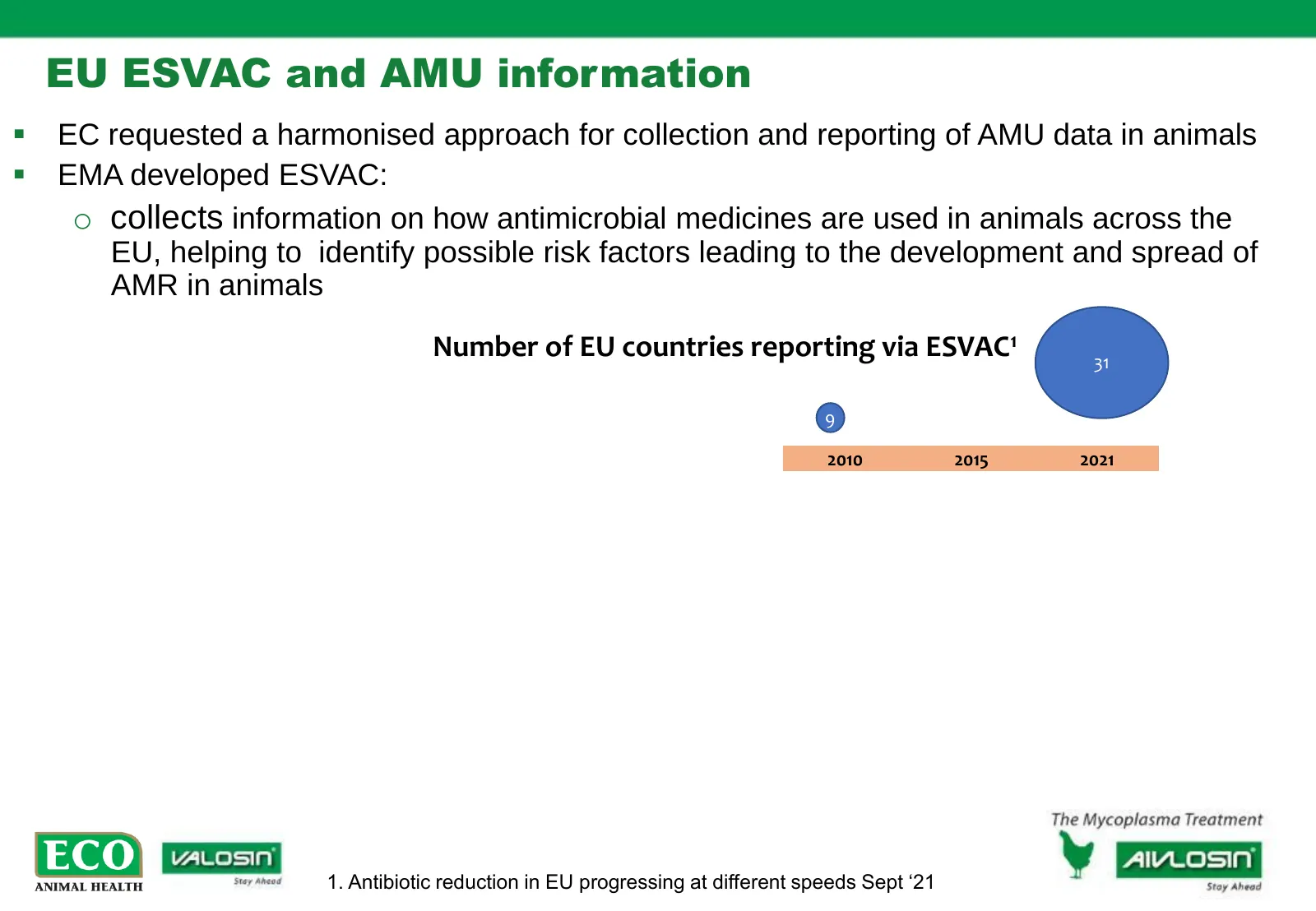
EU ESVAC and AMU information ▪ EC requested a harmonised approach for collection and reporting of AMU data in animals ▪ EMA developed ESVAC: o collects information on how antimicrobial medicines are used in animals across the EU, helping to identify possible risk factors leading to the development a
Slide 31: EU ESVAC and AMU information
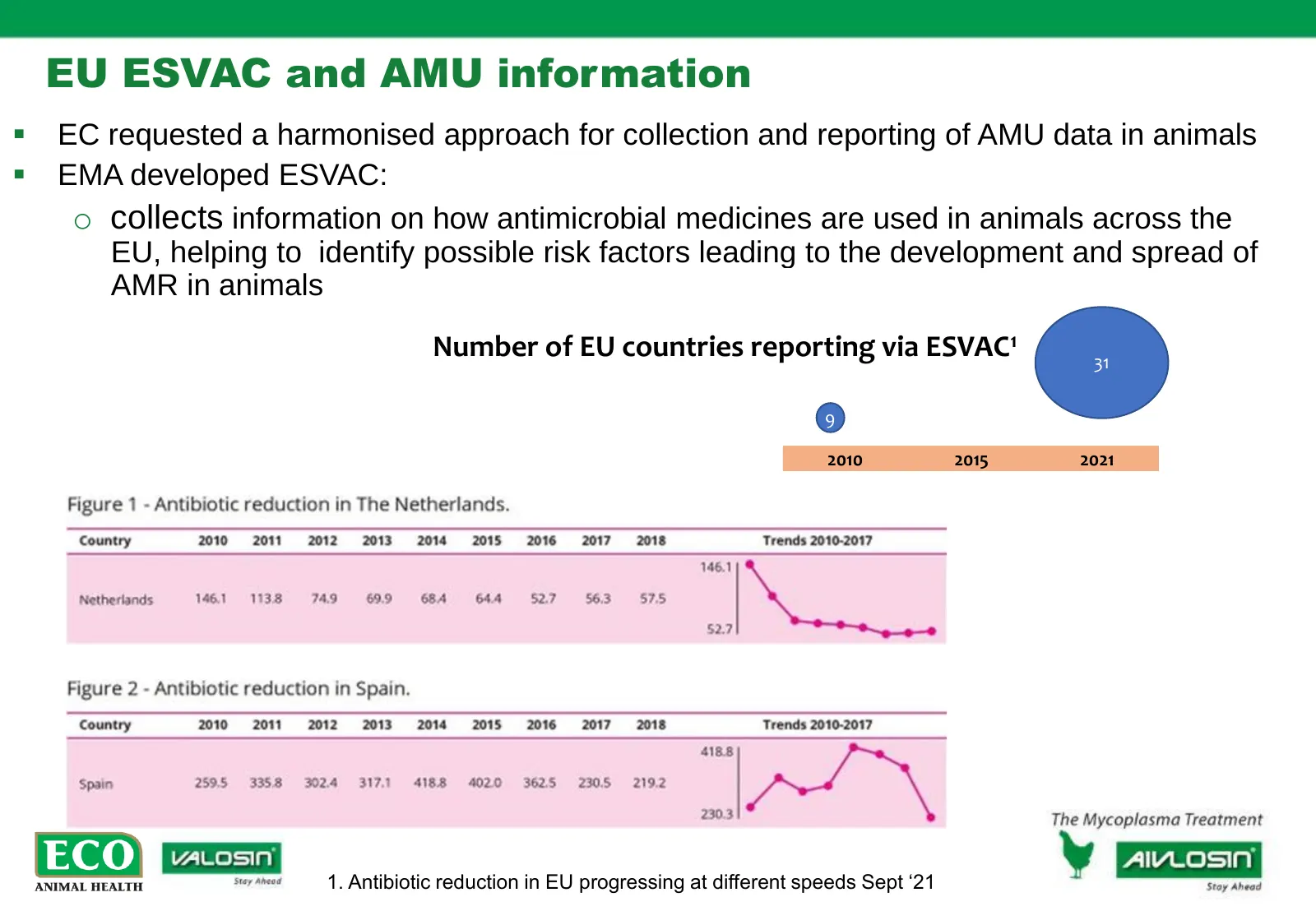
EU ESVAC and AMU information ▪ EC requested a harmonised approach for collection and reporting of AMU data in animals ▪ EMA developed ESVAC: o collects information on how antimicrobial medicines are used in animals across the EU, helping to identify possible risk factors leading to the development a
Slide 32: The Spanish example – prudent use of antimicrobials
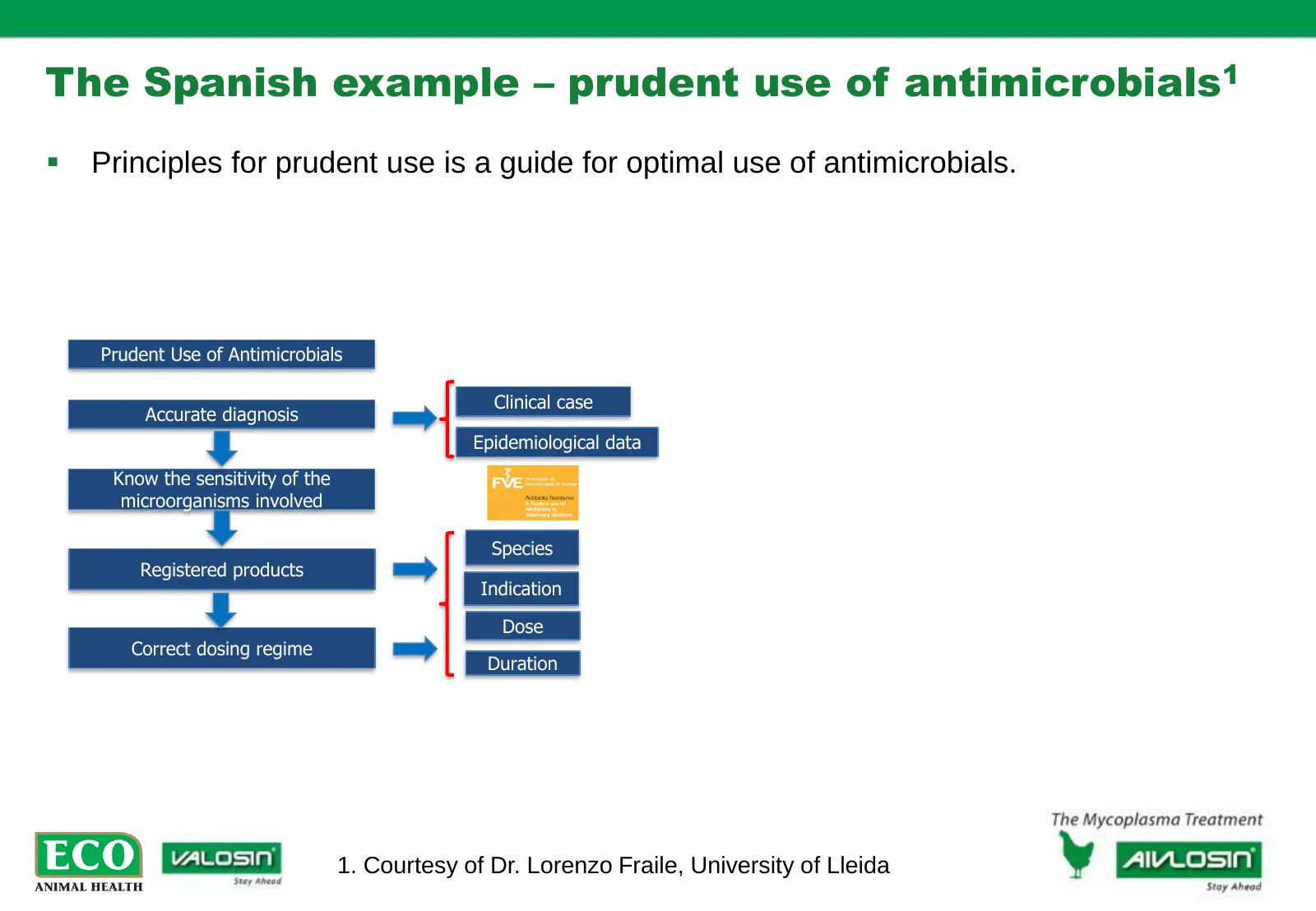
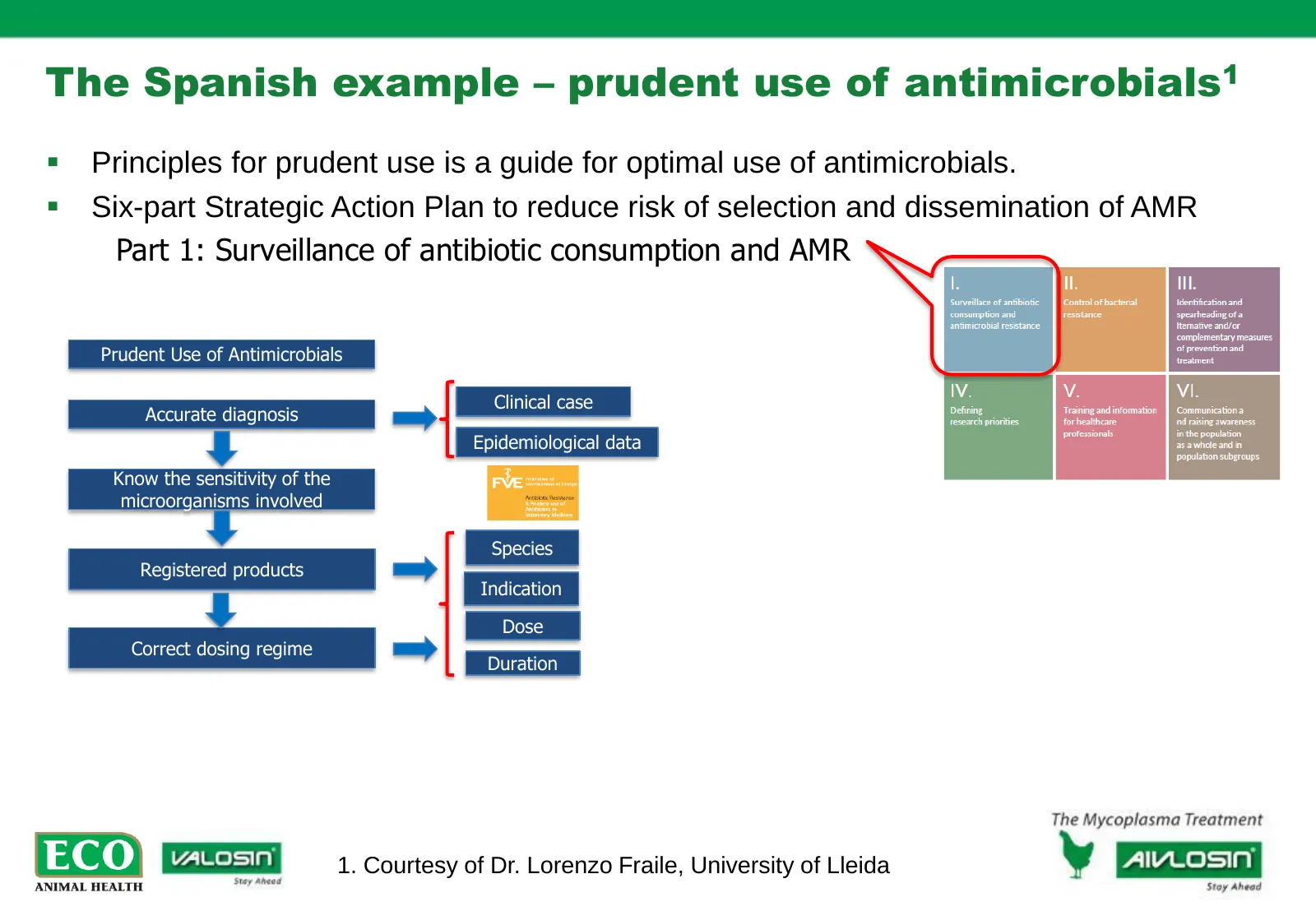
The Spanish example – prudent use of antimicrobials1 ▪ Principles for prudent use is a guide for optimal use of antimicrobials. Prudent Use of Antimicrobials Clinical case Accurate diagnosis Epidemiological data Know the sensitivity of the microorganisms involved Species Registered products Indicati
Slide 33: The Spanish example – prudent use of antimicrobials
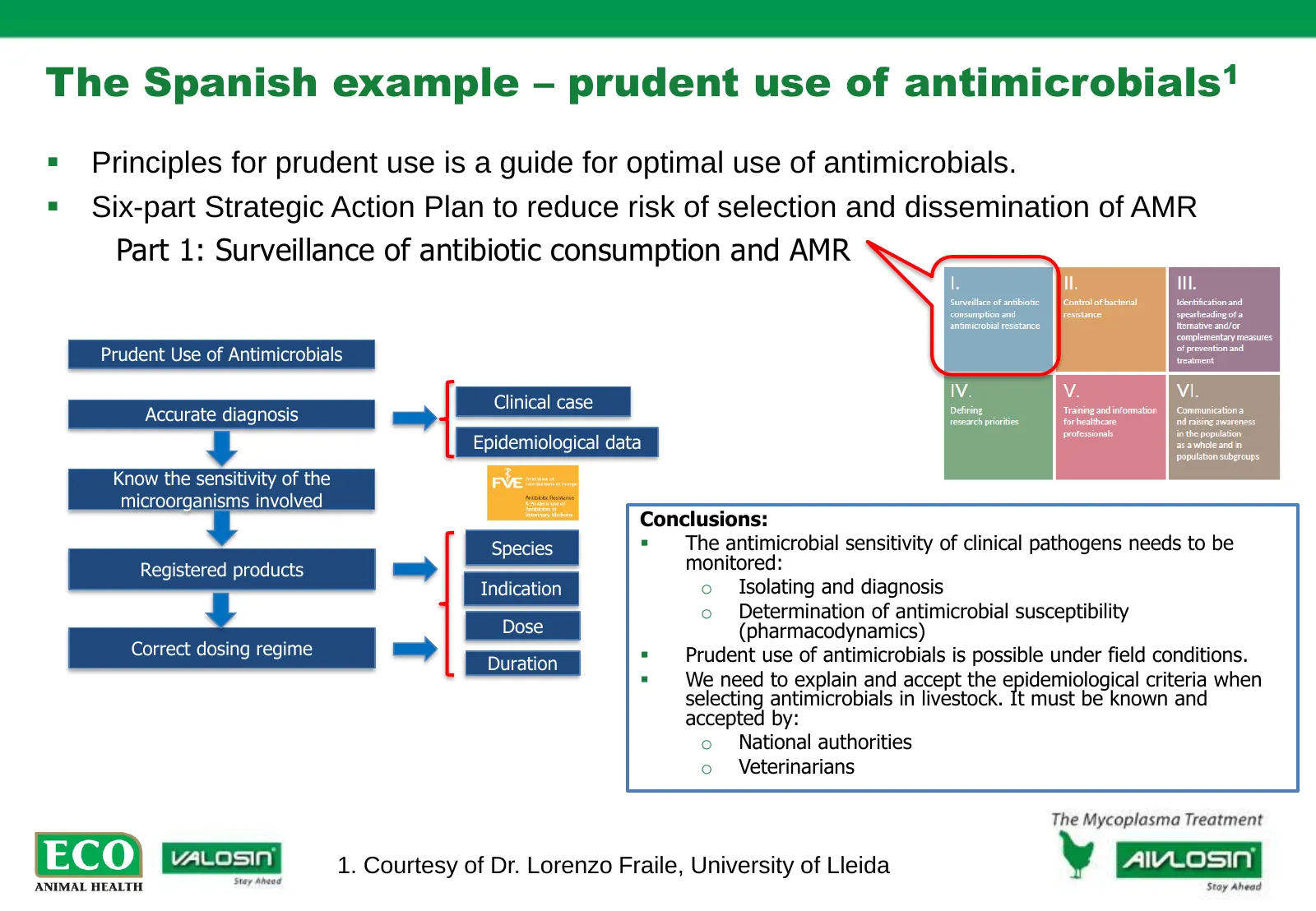
The Spanish example – prudent use of antimicrobials1 ▪ Principles for prudent use is a guide for optimal use of antimicrobials. ▪ Six-part Strategic Action Plan to reduce risk of selection and dissemination of AMR Part 1: Surveillance of antibiotic consumption and AMR Prudent Use of Antimicrobials C
Slide 34: The Spanish example – prudent use of antimicrobials
The Spanish example – prudent use of antimicrobials1 ▪ Principles for prudent use is a guide for optimal use of antimicrobials. ▪ Six-part Strategic Action Plan to reduce risk of selection and dissemination of AMR Part 1: Surveillance of antibiotic consumption and AMR Prudent Use of Antimicrobials C
Slide 35: Topics
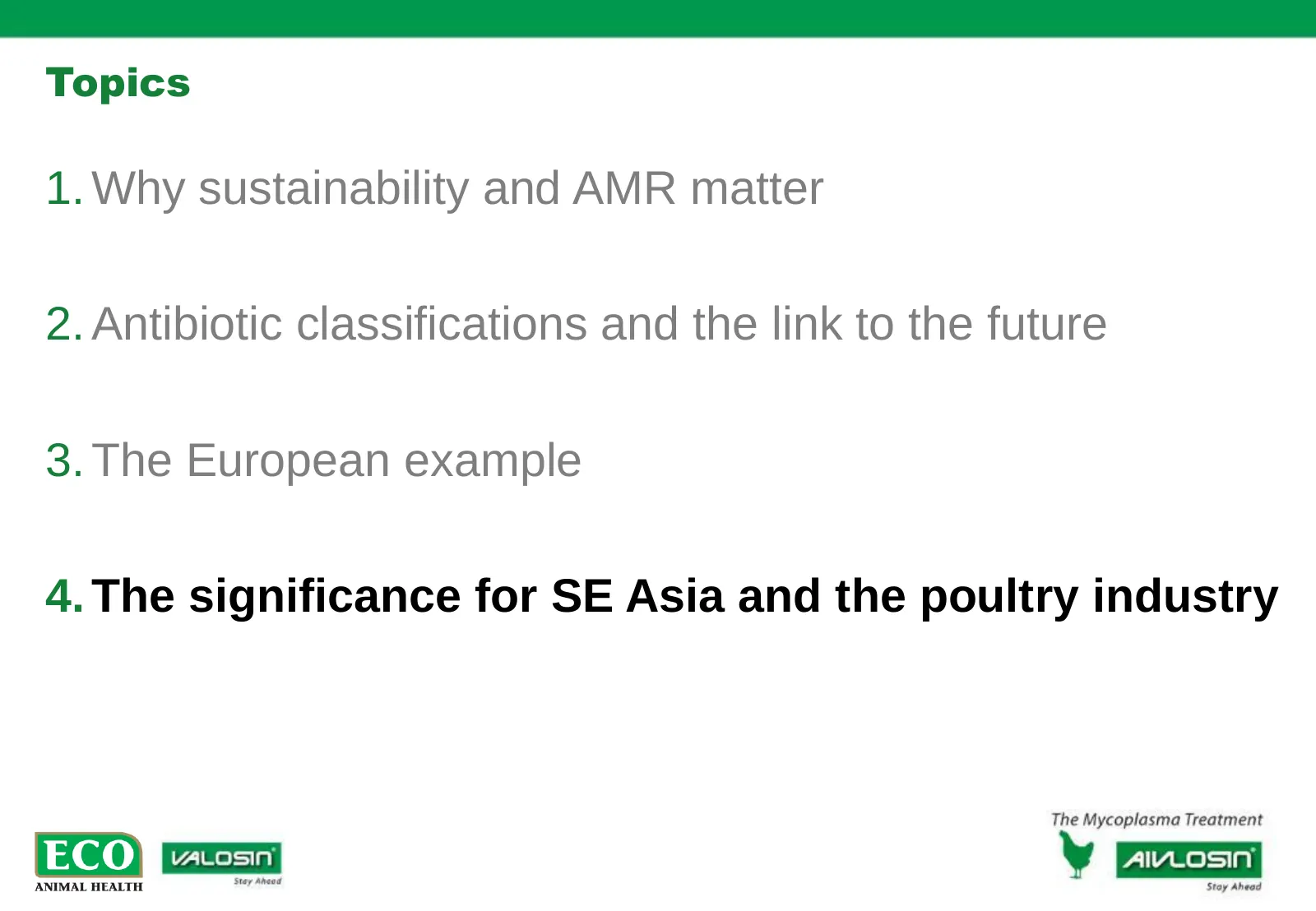
Topics 1. Why sustainability and AMR matter 2. Antibiotic classifications and the link to the future 3. The European example 4. The significance for SE Asia and the poultry industry
Slide 36: SE Asia is also responding
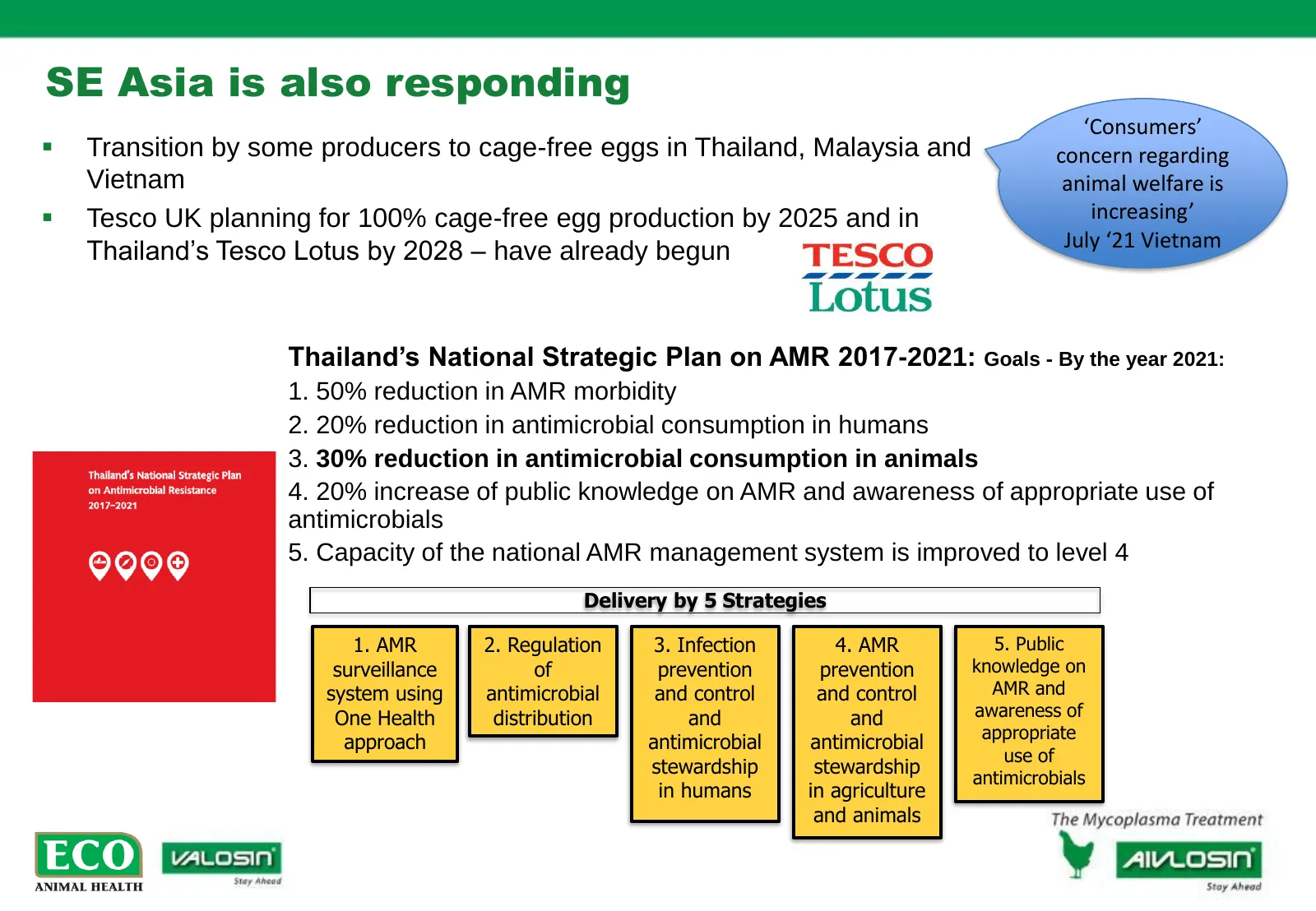
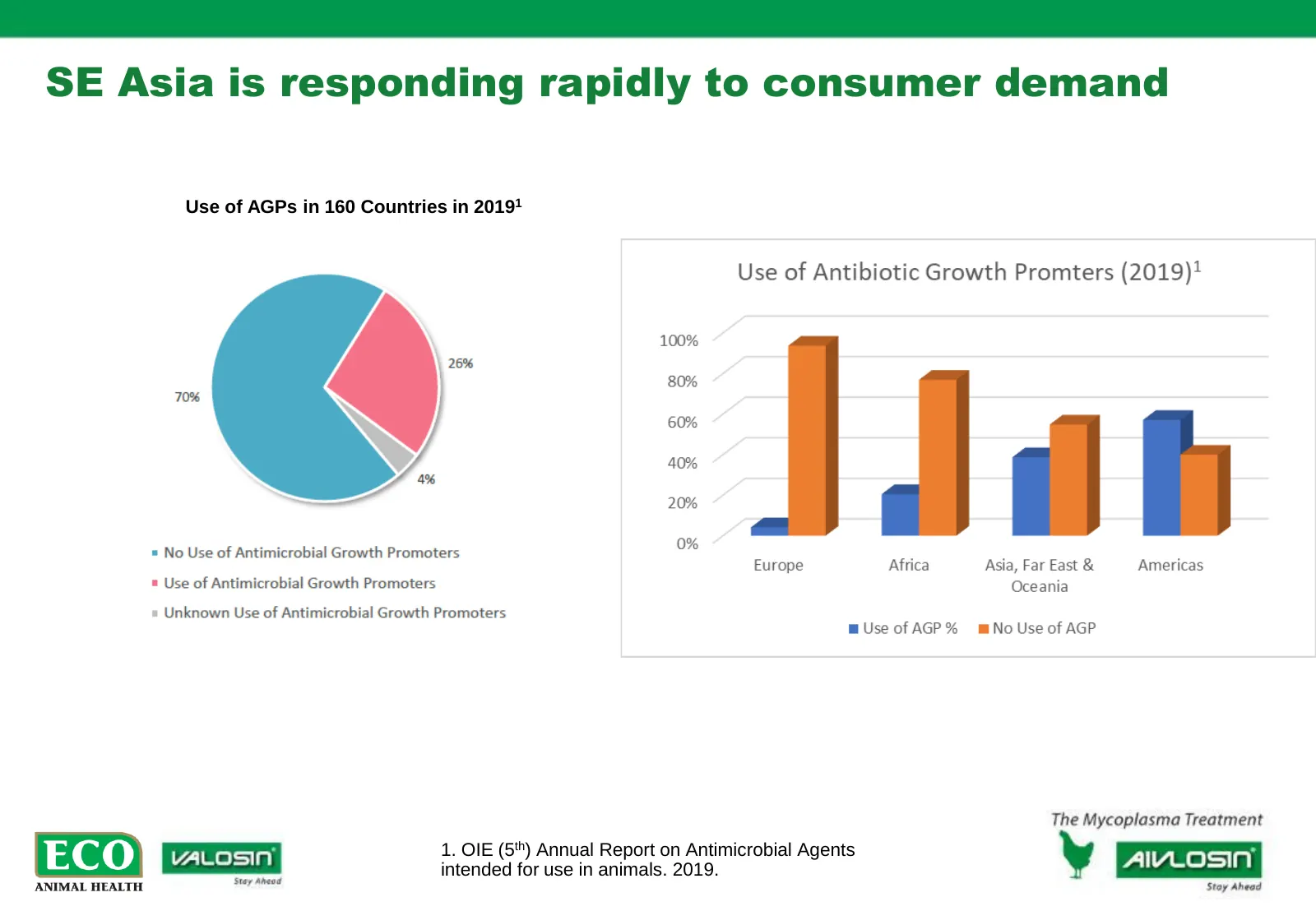
SE Asia is also responding ‘Consumers’ ▪ Transition by some producers to cage-free eggs in Thailand, Malaysia and concern regarding Vietnam animal welfare is ▪ Tesco UK planning for 100% cage-free egg production by 2025 and in increasing’ July ‘21 Vietnam Thailand’s Tesco Lotus by 2028 – have alread
Slide 37: SE Asia is responding rapidly to consumer demand
SE Asia is responding rapidly to consumer demand Use of AGPs in 160 Countries in 20191 1. OIE (5th) Annual Report on Antimicrobial Agents intended for use in animals. 2019.
Slide 38: Pakistan could reduce AMU and should phase out CIAs
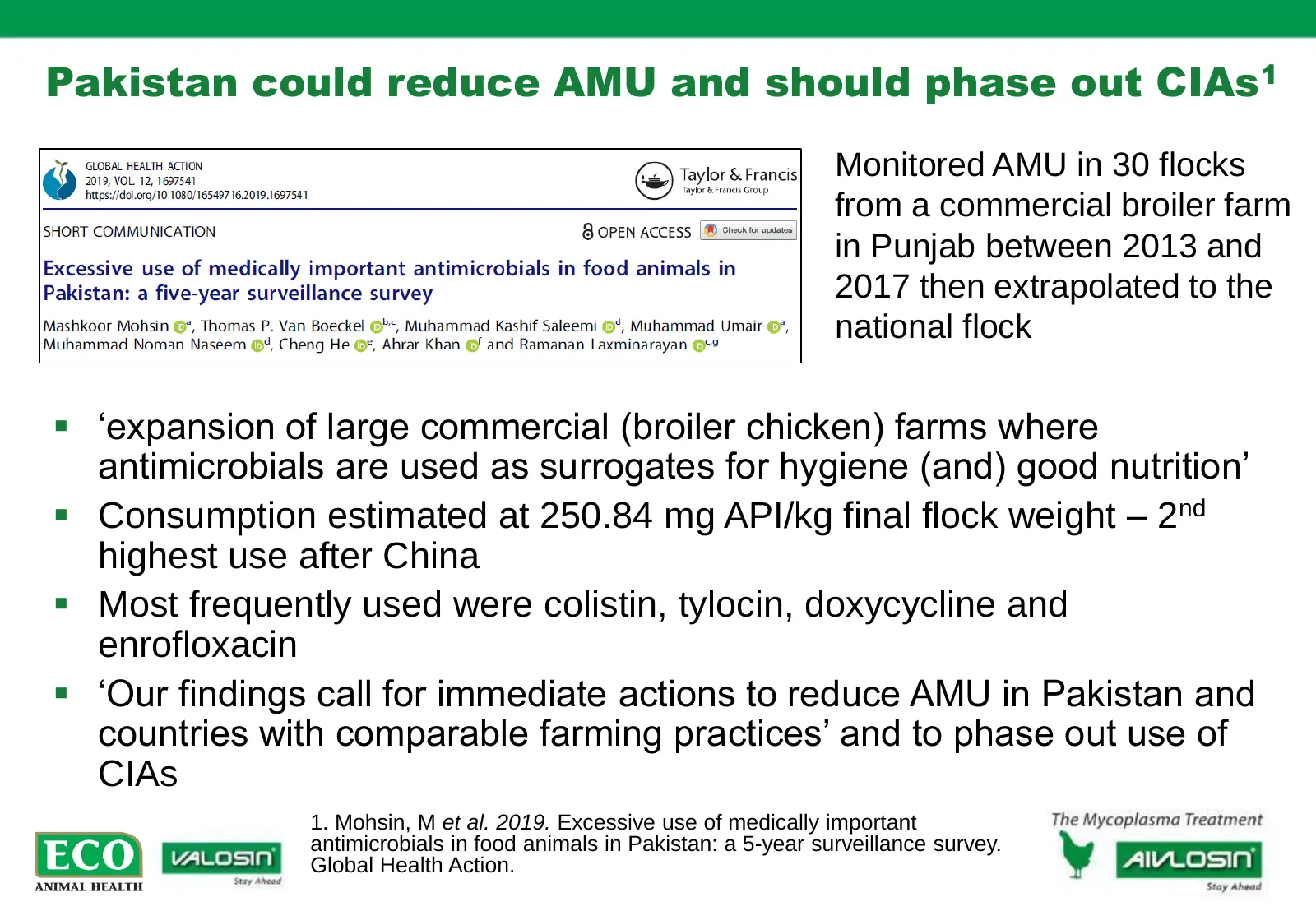
Pakistan could reduce AMU and should phase out CIAs1 Monitored AMU in 30 flocks from a commercial broiler farm in Punjab between 2013 and 2017 then extrapolated to the national flock ▪ ‘expansion of large commercial (broiler chicken) farms where antimicrobials are used as surrogates for hygiene (and
Slide 39: Challenges and a National Strategy in Bangladesh
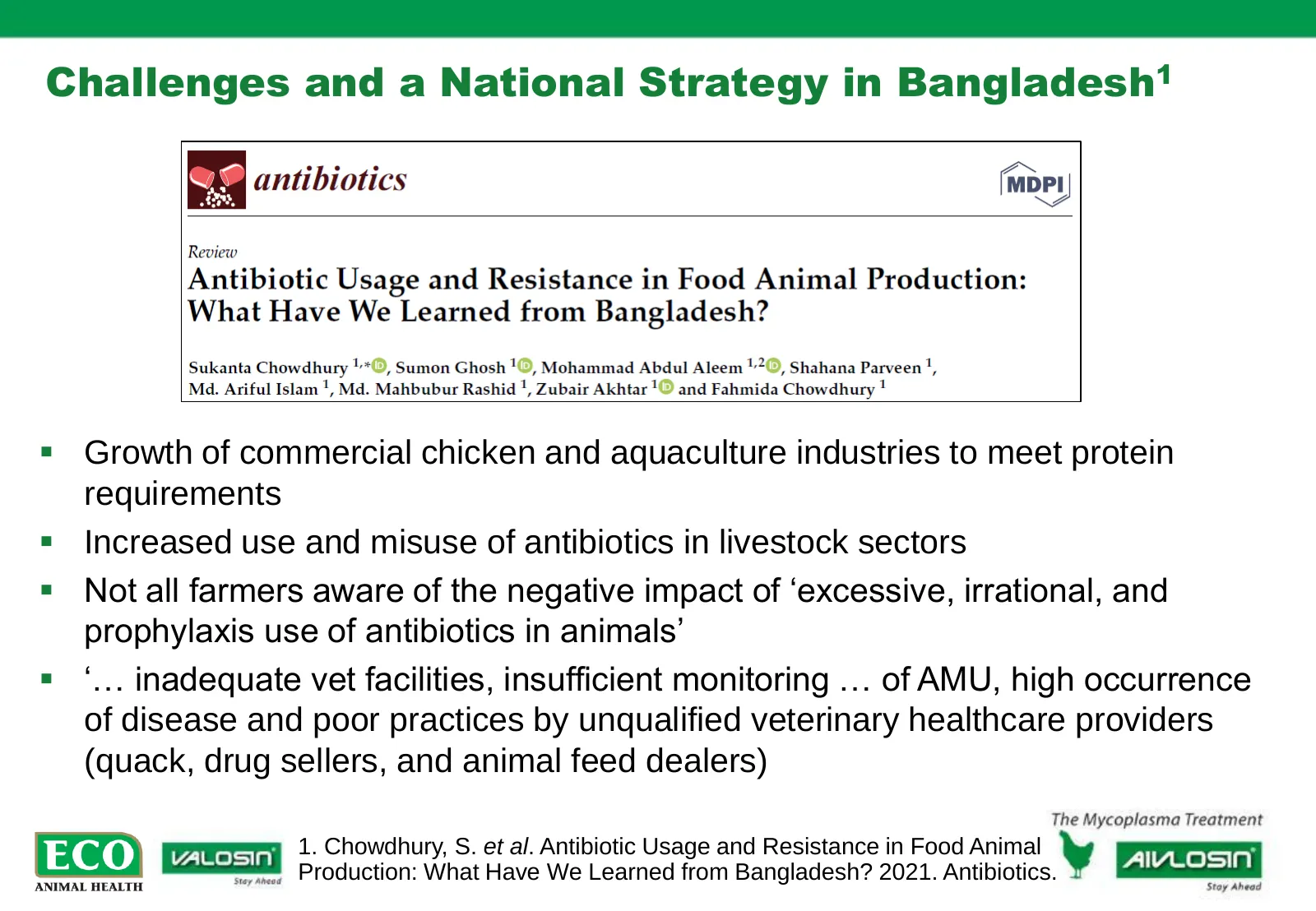
Challenges and a National Strategy in Bangladesh1 ▪ Growth of commercial chicken and aquaculture industries to meet protein requirements ▪ Increased use and misuse of antibiotics in livestock sectors ▪ Not all farmers aware of the negative impact of ‘excessive, irrational, and prophylaxis use of ant
Slide 40: Challenges and a National Strategy in Bangladesh
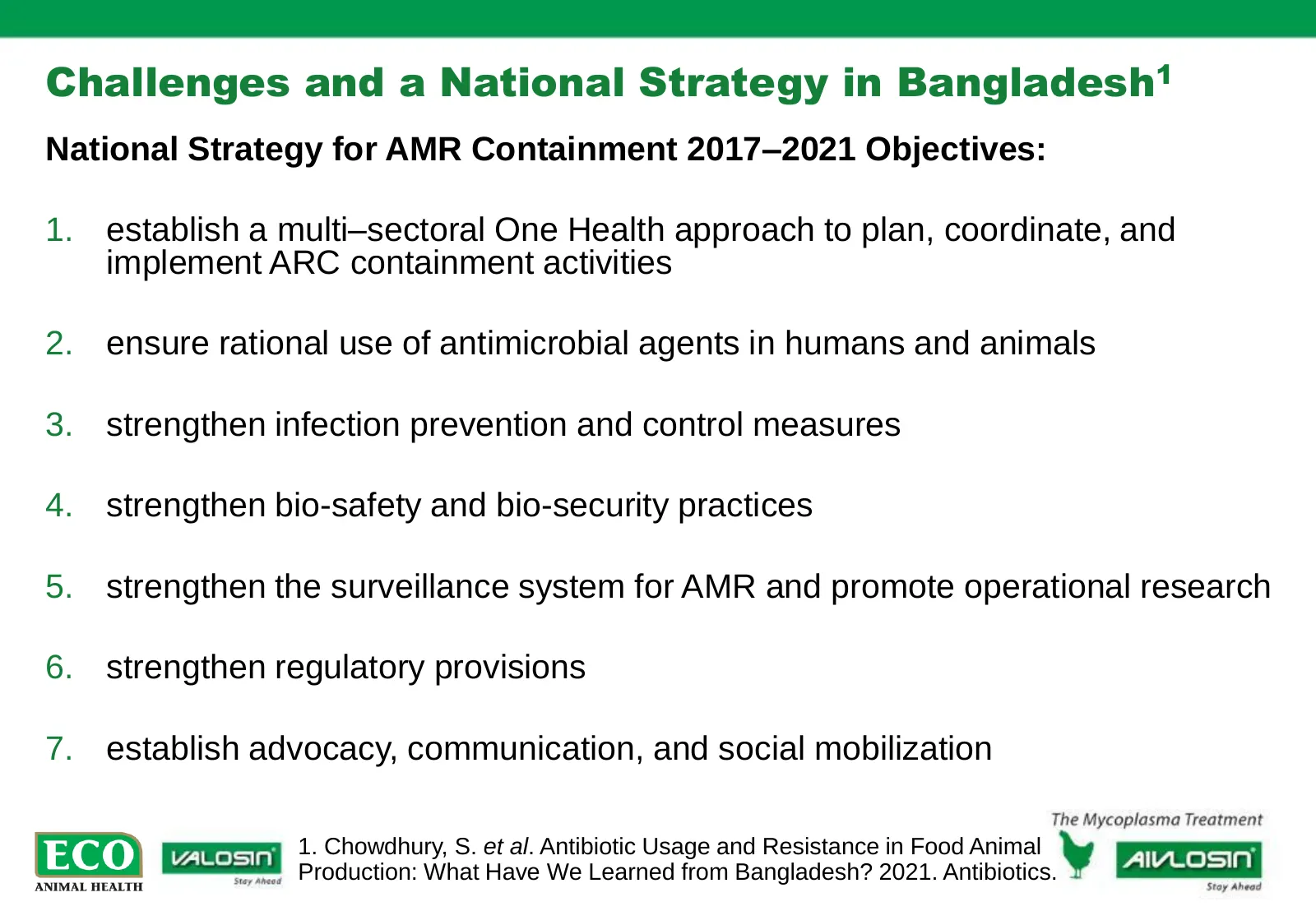
Challenges and a National Strategy in Bangladesh1 National Strategy for AMR Containment 2017–2021 Objectives: 1. establish a multi–sectoral One Health approach to plan, coordinate, and implement ARC containment activities 2. ensure rational use of antimicrobial agents in humans and animals 3. streng
Slide 41: Increased AMU and Action Plans in India
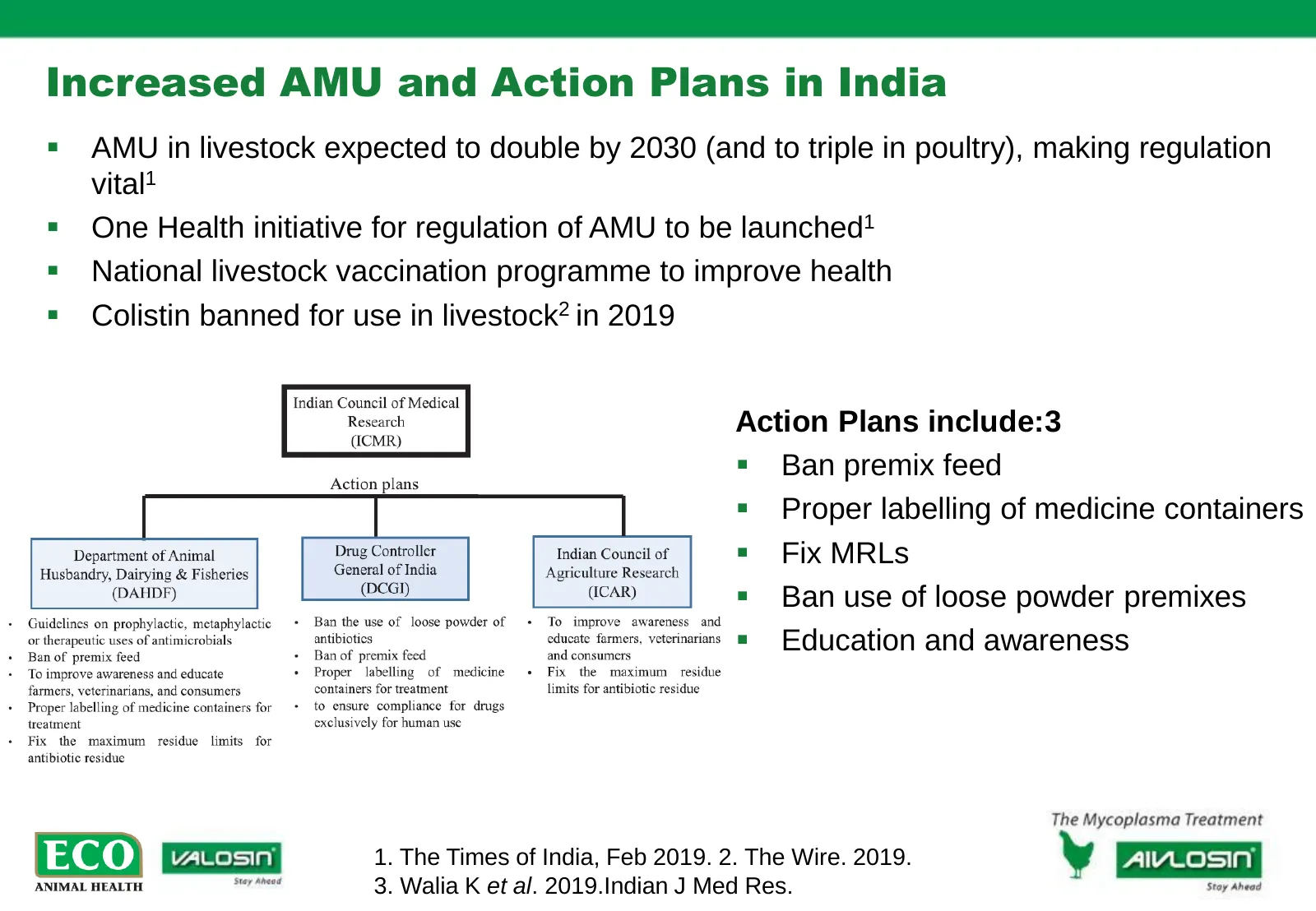
Increased AMU and Action Plans in India ▪ AMU in livestock expected to double by 2030 (and to triple in poultry), making regulation vital1 ▪ One Health initiative for regulation of AMU to be launched1 ▪ National livestock vaccination programme to improve health ▪ Colistin banned for use in livestock
Slide 42: In conclusion
In conclusion ▪ Livestock protein production and consumption will continue to grow in South-East Asia ▪ Alignment with local and global consumers and international bodies for continually improving antimicrobial stewardship platforms ▪ Harnessing the increasing demand for protein and ensuring that eg

Slide 43: Thank you
ECO Asia Poultry Online Conference 2021 Thank you Marcon Tigges, BSc, DVM, MBA [email protected]
Source: Internet Archive copy of ecoanimalhealth.com
More decks from ECO Animal Health Group PLC
 Investor Day (November 2026)56 slides · Nov 11, 2026
 Investor Day (November 2026)59 slides · November 2026
 FY2026 Earnings Presentation34 slides · Jul 15, 2026
 H1 2026 Earnings Presentation27 slides · Dec 1, 2025
 FY2025 Earnings Presentation29 slides · July 2025
 Investor Day (March 2025)88 slides · March 2025