GenVec — American Society of Gene Therapy 2008
34 slides from GenVec's conference presentation, Jun 2, 2008
Slide 1: Clinical Development of TNFerade as an Anticancer Therapeutic
9 GenVec Clinical Development of TNFerade™ as an Anticancer Therapeutic American Society of Gene Therapy May 29, 2008 Mark Thornton, MD, MPH, PhD Senior Vice-President, Product Development
Slide 2: GenVec
GenVec * Building business opportunities with reduced risk by leveraging our core adenovector technology platform — Therapeutics — Vaccines
Slide 3: TNFerade™
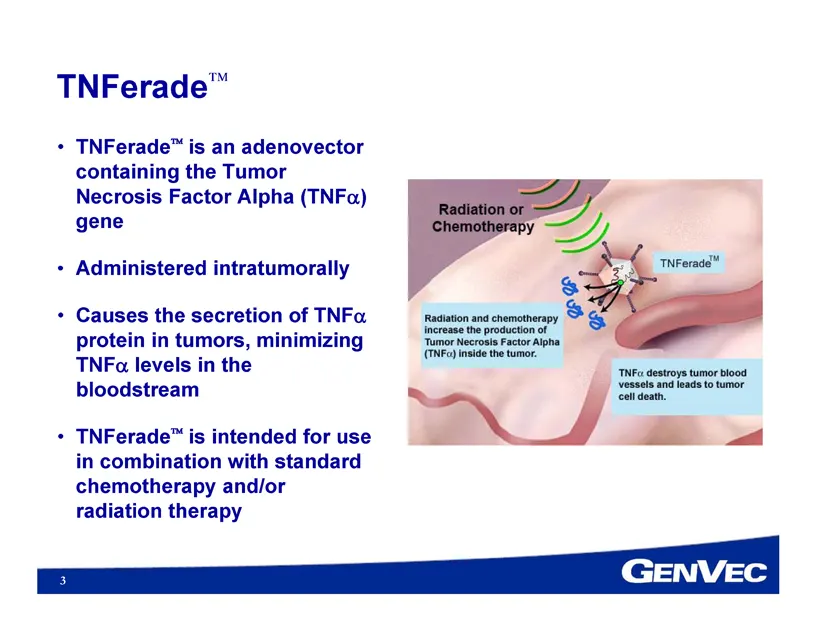
TNFerade™ TNFerade™ is an adenovector containing the Tumor Necrosis Factor Alpha (TNFa) gene Administered intratumorally Causes the secretion of TNFa protein in tumors, mini TNFa. levels in the bloodstream TNFerade™ is intended for use in combination with standard chemotherapy and/or radiation thera
Slide 4: TNFa
TNFa 1 Pp + Causes of tumor e + Stimulates apoptotic pathways * Increases expression of MHC Class | and II antigens + Enhances infiltration of CD8+ T cells Nec |
Slide 5: TNFerade™
TNFerade™ * TNFa is an approved drug for cancer * Controlling delivery has been problematic * TNFa in the blood is toxic * Attractive mechanism of action * Successful treatment requires sustained TNFa in the tumor — not in the blood « Adenovector technology solves the TNFa delivery problem « May imp
Slide 6: Early Clinical Findings
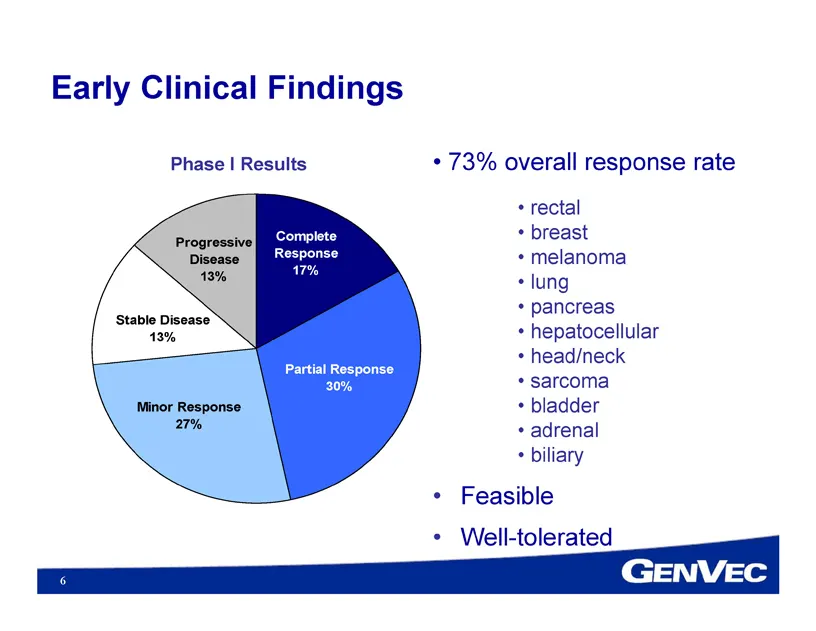
Early Clinical Findings Phase | Results * 73% overall response rate * rectal Complete * breast Response * melanoma m + lung * pancreas + hepatocellular + head/neck * sarcoma + bladder + adrenal + biliary Partial Response. * Feasible ° Well-tolerated VEC,
Slide 7: Phase I Response to TNFerade and Radiation Therapy
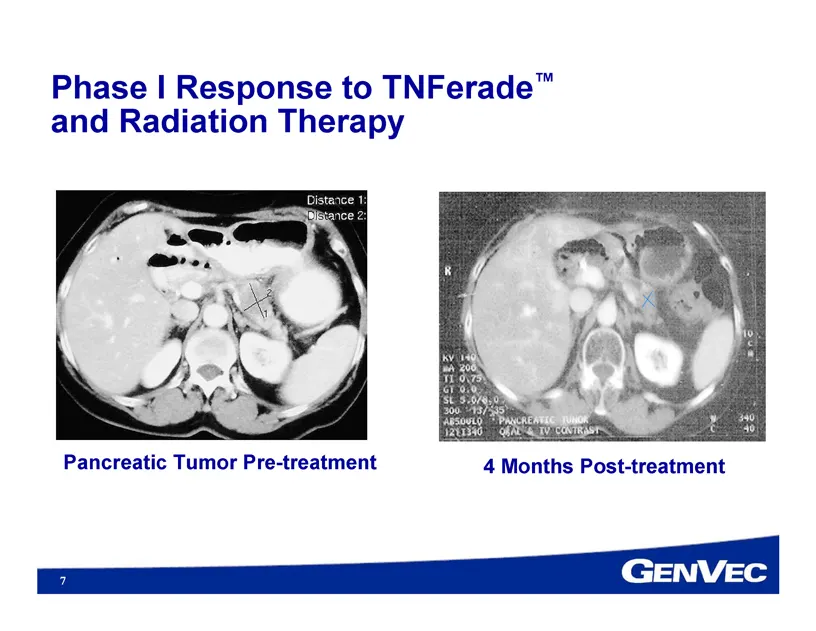
Phase I Response to TNFerade™ and Radiation Therapy P ic Tumor P: 4 Months Post-treatment EE envec |
Slide 8: Phase I Response to TNFerade Plus Chemotherapy and Radiation
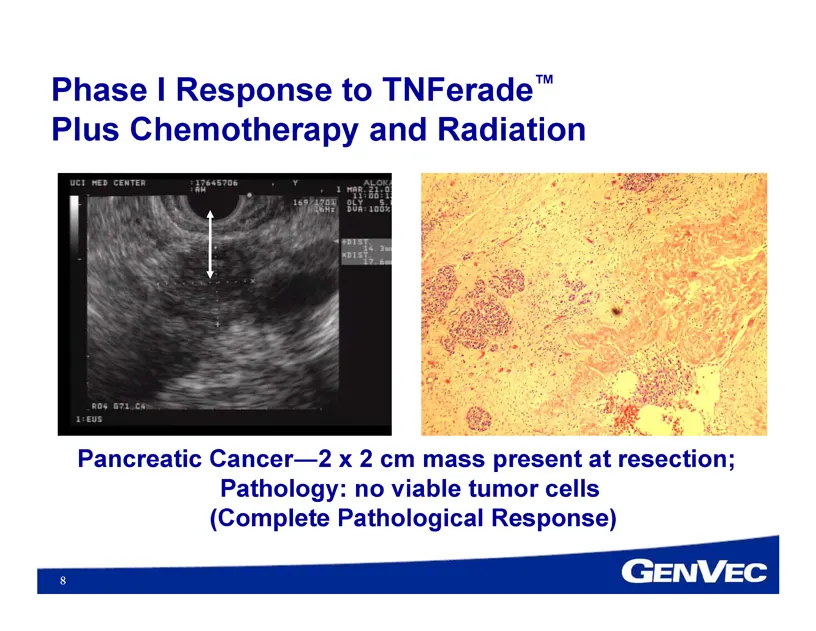
Phase I Response to TNFerade™ Plus Chemotherapy and Radiation Pancreatic Cancer—2 x 2 cm mass present at resection; Pathology: no viable tumor cells (C lete Pathological R ) Pp P' ENV |
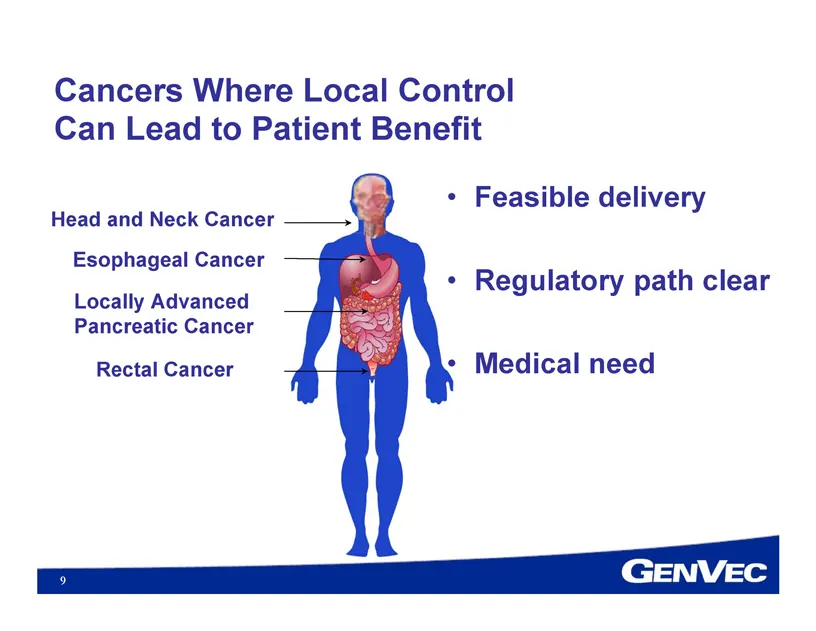
Slide 9: Cancers Where Local Control Can Lead to Patient Benefit
Cancers Where Local Control Can Lead to Patient Benefit ¢ Feasible delivery Head and Neck Cancer —_—_- Esophageal Cancer ¢ Regulatory path clear Locally Advanced Pancreatic Cancer Rectal Cancer - Medical need env |
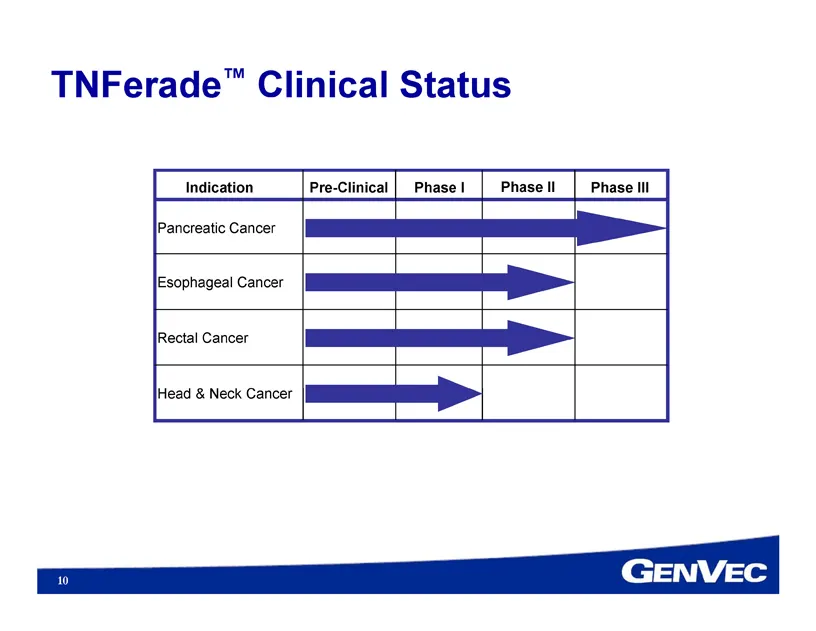
Slide 10: TNFerade™ Clinical Status
TNFerade™ Clinical Status Indication | Pre-ctinical | Phase! | Phasell_| Phase ili —= Rectal Cancer ————— —= > Pancreatic Cancer Esophageal Cancer Head & Neck Cancer ENC |
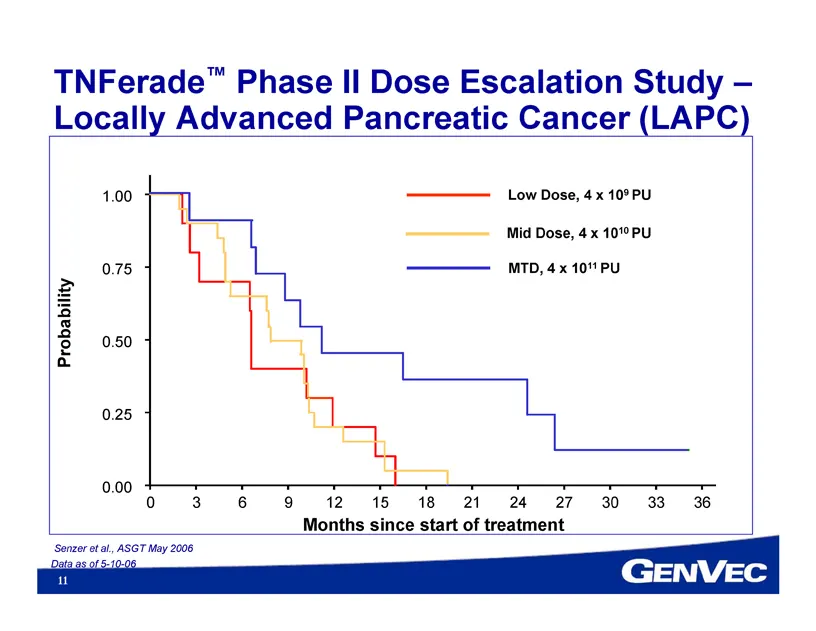
Slide 11: TNFerade Phase II Dose Escalation Study - LAPC
TNFerade™ Phase II Dose Escalation Study — Locally Advanced Pancreatic Cancer (LAPC) 1.00 ———_ Low Dose, 4x 10°PU Mid Dose, 4 x 10" PU 0.75 MTD, 4x 10" PU 2 a sg S 050 a 0.25 0.00 ti) 3 6 9 12 15 18 21 24 27 30 33 36 Months since start of ‘Senzer etal, ASGT May 2006
Slide 12: Results of Phase II Trial in LAPC
Results of Phase II Trial in LAPC * TNFerade™ administered by two methods (PTCA, EUS) ¢ Dose-limiting toxicities identified * Dose for Phase Ill testing determined ¢ Survival effect size allowed sample size calculation for Phase III
Slide 13: Pancreas Cancer Clinical Trial with TNFerade (PaCT) Study
Pancreas Cancer Clinical Trial with TNFerade™ (PaCT) Study * Indication: First-line therapy concurrent with 5-FU and RT, followed by maintenance gemcitabine or gemcitabine/erlotinib, for patients with locally advanced pancreatic cancer (LAPC) « Patient population: Newly diagnosed, unresectable, LAPC
Slide 14: PACT: Phase III Trial in LAPC
PACT: Phase III Trial in LAPC ¢ Standard of care (SOC) vs. TNFerade™ + SOC + Randomized, controlled 330-patient trial + 159 patients enrolled as of 4/30/08 * Overall survival is primary endpoint Three interim overall survival analyses + After 12 events (in December 2006) as part of FDA risk/benefit
Slide 15: PaCT Treatment Schema
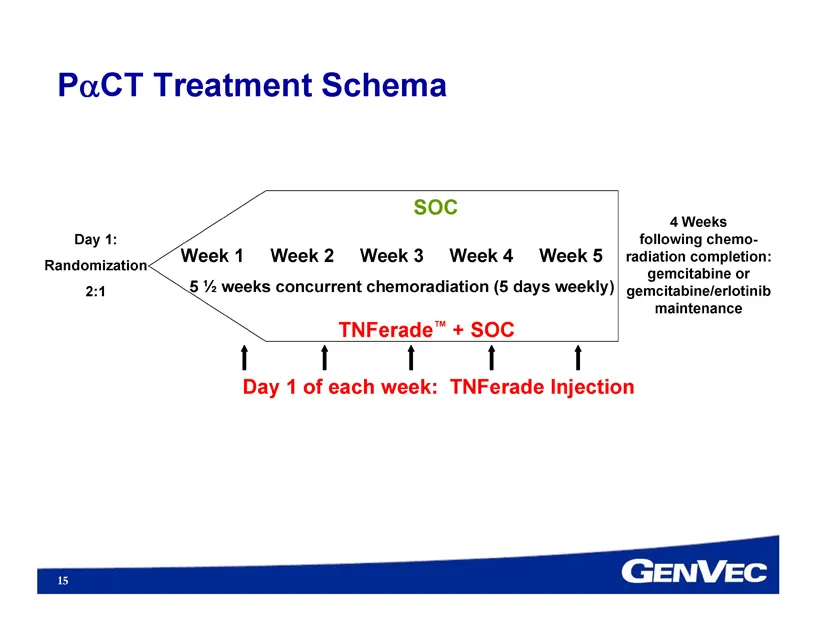
PaCT Treatment Schema soc Day 1: Week1 Week2 Week3 Week4 Week5 2A %e weeks concurrent chemoradiation (5 days weekly) Randomization: TNFerade™ + SOC t t t 4 Weeks following chemo- radiation completion: gemcitabine or gemcitabine/erlotinib maintenance Day 1 of each week: TNFerade Injection GEN |
Slide 16: PaCT Study - Interim Analysis #1
PaCT Study — Interim Analysis #1 - Performed December 2006 - Analyzed safety and efficacy of first 51 patients treated - Safety: + First opportunity to have controlled data to delineate any safety concerns + A favorable risk/benefit profile would allow delivery of TNFerade™ by EUS method - Efficacy:
Slide 17: Baseline Demographics
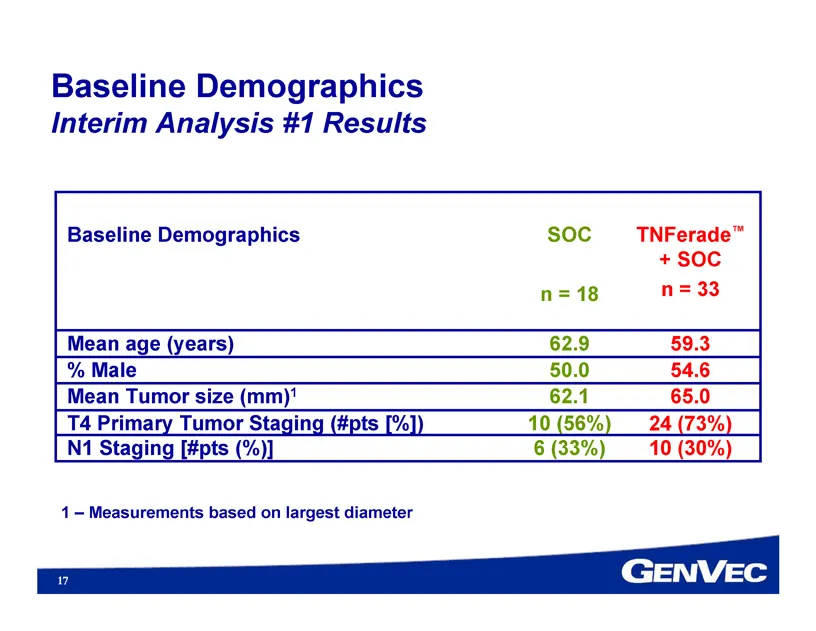
Baseline Demographics Interim Analysis #1 Results Baseline Demographics soc TNFerade™ + SOC n=18 n=33 Mean age (years) 62.9 59.3 % Male 50.0 54.6 Mean Tumor size (mm)' 62.1 65.0 T4 Primary Tumor Staging (#pts [%]) 10 (56%) 24 (73%) N1 Staging [#pts (%)] 6 (33%) 10 (30%) 1 — Measurements based on lar
Slide 18: Interim Analysis #1 Safety Results
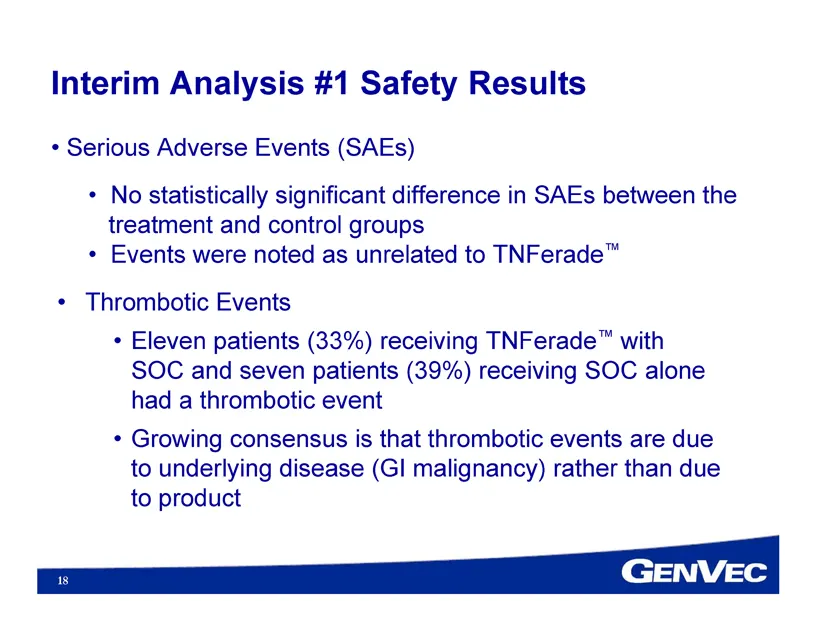
Interim Analysis #1 Safety Results * Serious Adverse Events (SAEs) + No statistically significant difference in SAEs between the treatment and control groups + Events were noted as unrelated to TNFerade™ + Thrombotic Events + Eleven patients (33%) receiving TNFerade™ with SOC and seven patients (39%
Slide 19: Overall Survival Data from Interim Analysis #1
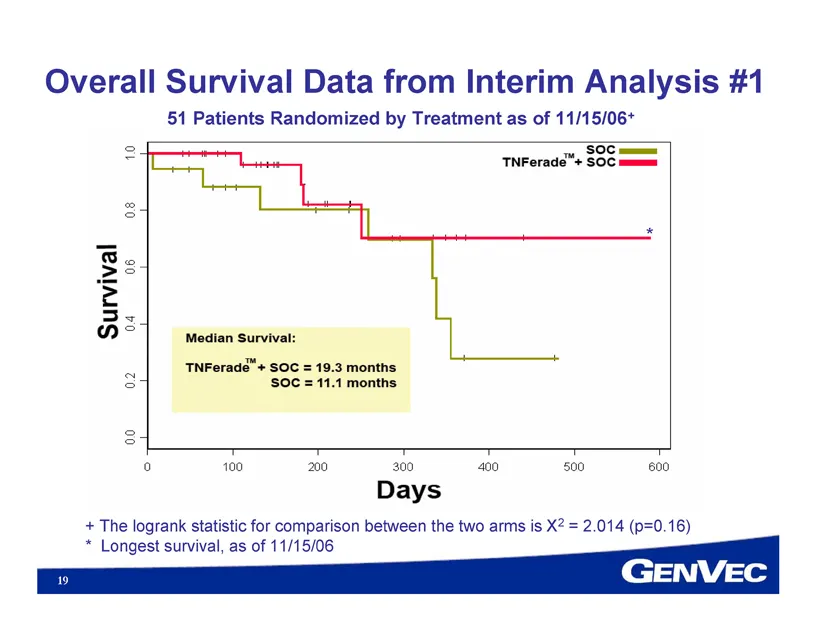
Overall Survival Data from Interim Analysis #1 51 Patients Randomized by Treatment as of 11/15/06* ~~, SOC ‘TNFeradé"+ SOC =m ° 100 200 300 400 500 Days + The logrank statistic for comparison between the two arms is X? * Longest survival, as of 11/15/06
Slide 20: Interim Analysis #1 Conclusions
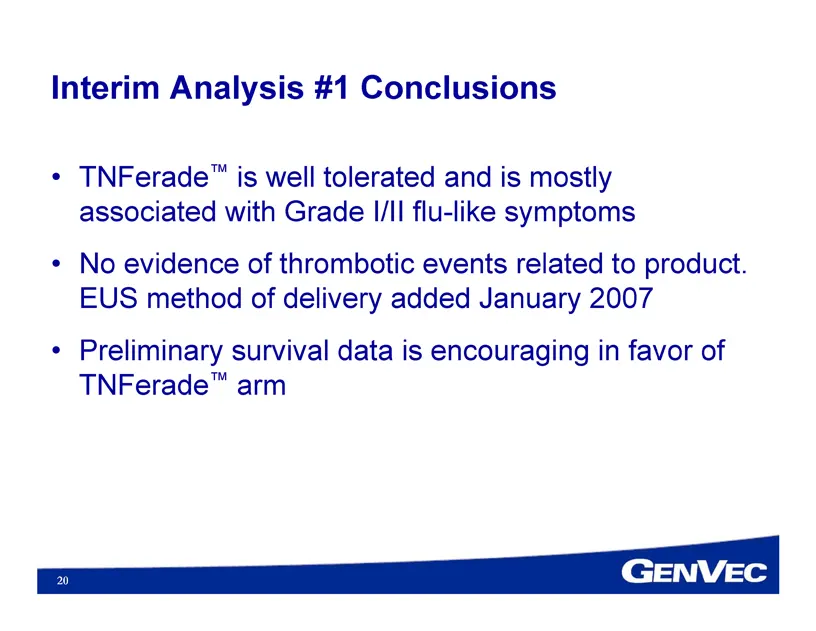
Interim Analysis #1 Conclusions * TNFerade™ is well tolerated and is mostly associated with Grade I/II flu-like symptoms * No evidence of thrombotic events related to product. EUS method of delivery added January 2007 ¢ Preliminary survival data is encouraging in favor of TNFerade™ arm ENV |
Slide 21: Rationale for Esophageal Cancer
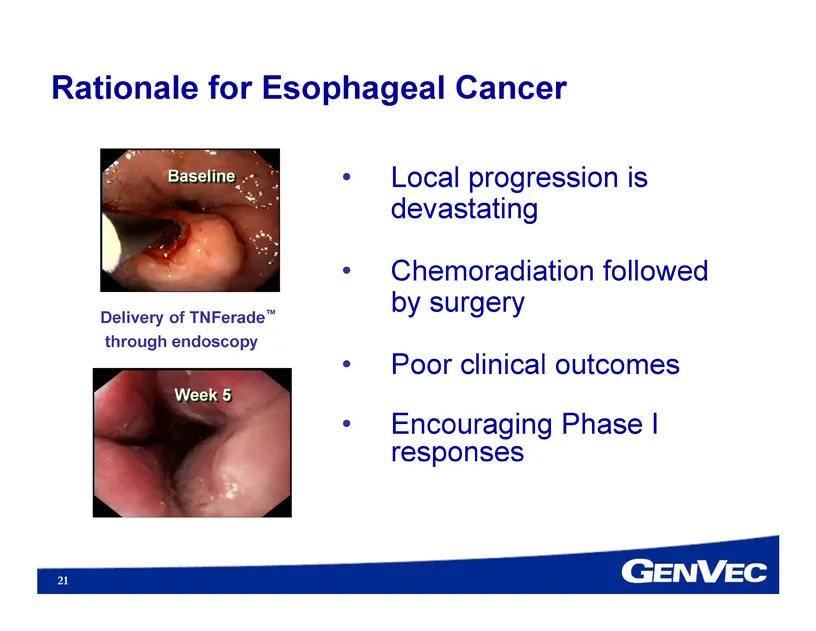
Rationale for Esophageal Cancer Baseline .- * Local progression is ~ devastating * Chemoradiation followed by surgery Delivery of TNFerade™ through endoscopy * Poor clinical outcomes ia Week 5 * Encouraging Phase | responses ~ Po ENC |
Slide 22: Phase II TNFerade Study in Esophageal Cancer
Phase II TNFerade™ Study in Esophageal Cancer Indication: First-line therapy concurrent with standard chemoradiation in patients with locally advanced esophageal cancer Patient population: Newly diagnosed, stage II and III, limited to esophagus and regional lymph nodes, considered resectable. Patien
Slide 23: Phase II TNFerade Study in Esophageal Cancer
Phase II TNFerade™ Study in Esophageal Cancer « Study design — Two part study » Part 1: Dose ranging —To discern optimal parameters for Part 2 » Part 2: Single arm study — Single arm, 50 patient study —Primary endpoint: pCR rate — Secondary endpoints: OS, 12 month survival, time-to-progression, dise
Slide 24: Phase II TNFerade Study in Esophageal Cancer
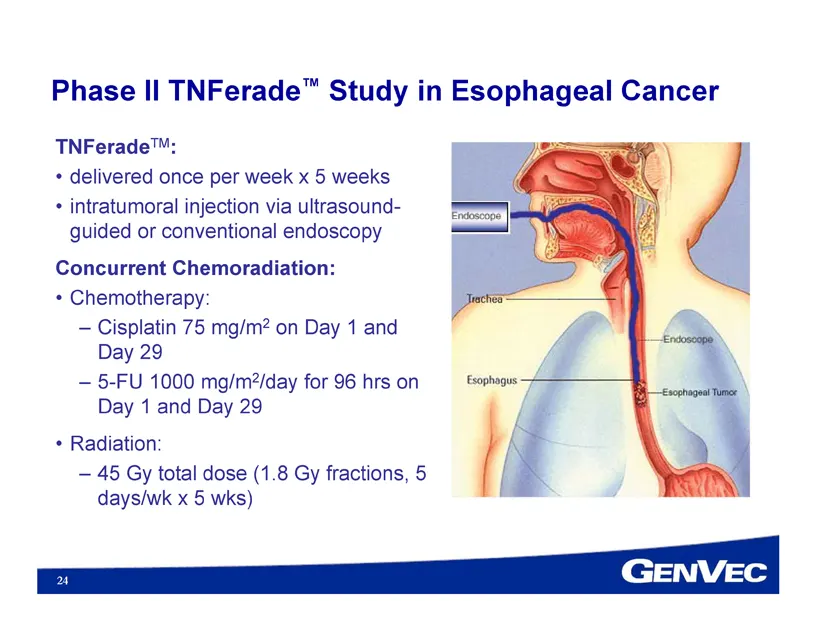
Phase II TNFerade™ Study in Esophageal Cancer TNFerade™: + delivered once per week x 5 weeks + intratumoral injection via ultrasound- guided or conventional endoscopy Concurrent Chemoradiation: + Chemotherapy: — Cisplatin 75 mg/m? on Day 1 and Day 29 — 5-FU 1000 mg/m2/day for 96 hrs on Day 1 and Day
Slide 25: Results - Tumor Responses
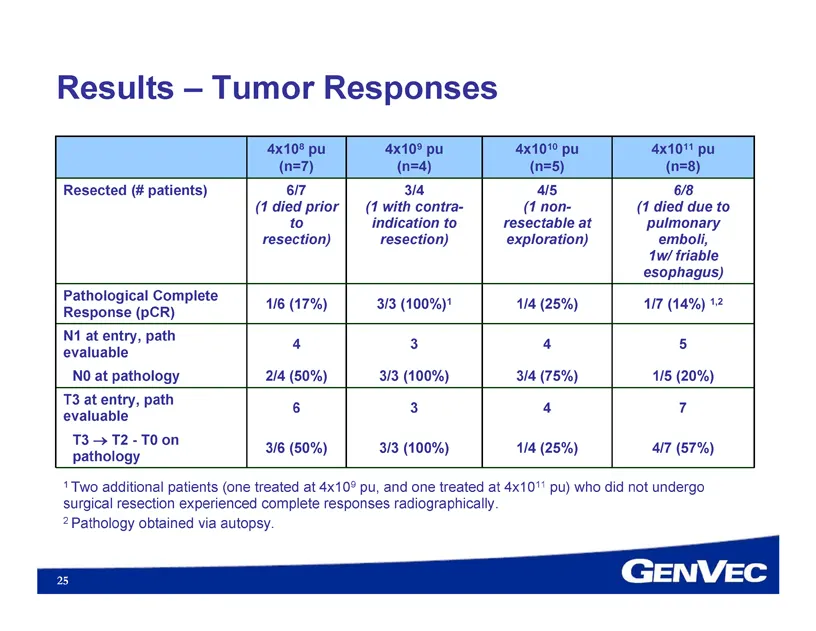
Results — Tumor Responses Resected (# patients) 67 3/4 4/5 68 (1 died prior | (1 with contra- (1 non- (1 died due to. indication to | resectable at pulmonary resection) resection) exploration) emboli, 4w/ friable Pathological Complete y y % Resporee por} 416 (17%) 3/3 (100%)" 114 (25%) 417 (14%) 12
Slide 26: Results - Luminal Responses
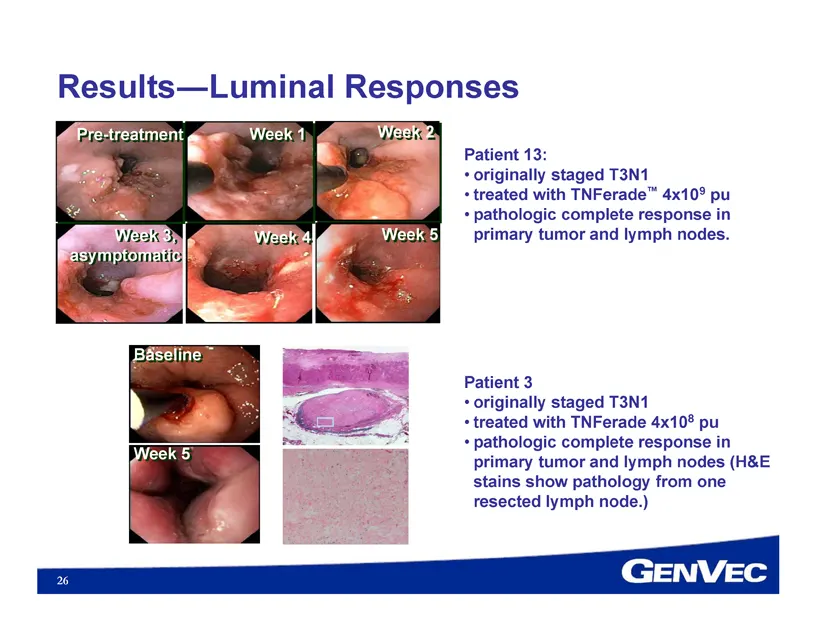
Results—Luminal Responses Patient 13: + originally staged T3N4 + treated with TNFerade™ 4x10° pu + pathologic complete response in primary tumor and lymph nodes. Patient 3 + originally staged T3N4 + treated with TNFerade 4x10° pu + pathologic complete response in primary tumor and lymph nodes (H&E s
Slide 27: Esophageal Cancer Overall Survival in Combined Dose Groups
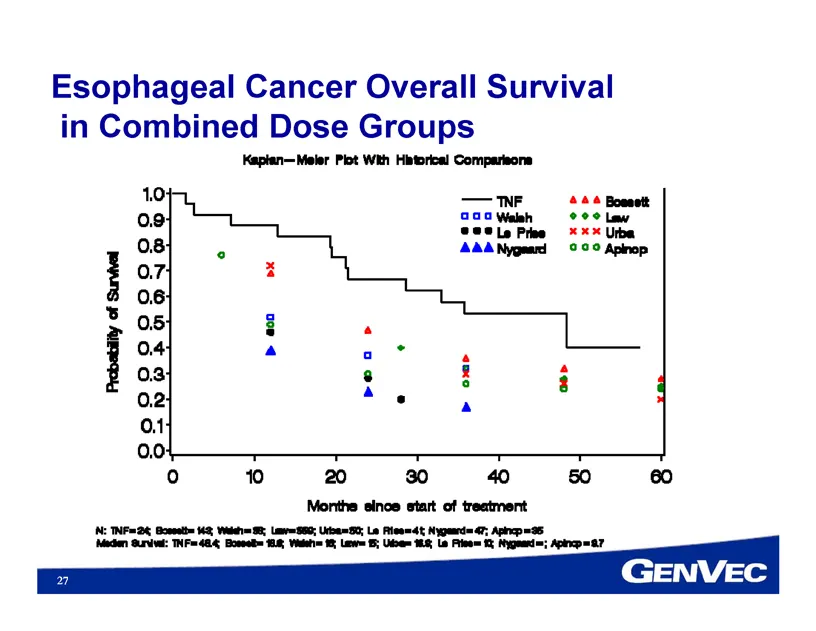
Esophageal Cancer Overall Survival in Combined Dose Groups Kapian—Meler Plt With Historical Comparisone °O 10 20 30 40 50 60 Monthe since start of treatment TNFa Sonet= Ha Warm; rmRG; Usa, Le Rison Nyguann 47; App Maden Qari: THF 48 Bossed= Vide 1, Lawn 8; Ube= Wg, Le Fam; Kygea; Apinop =a
Slide 28: TNFerade: Overall Survival in Esophageal Cancer
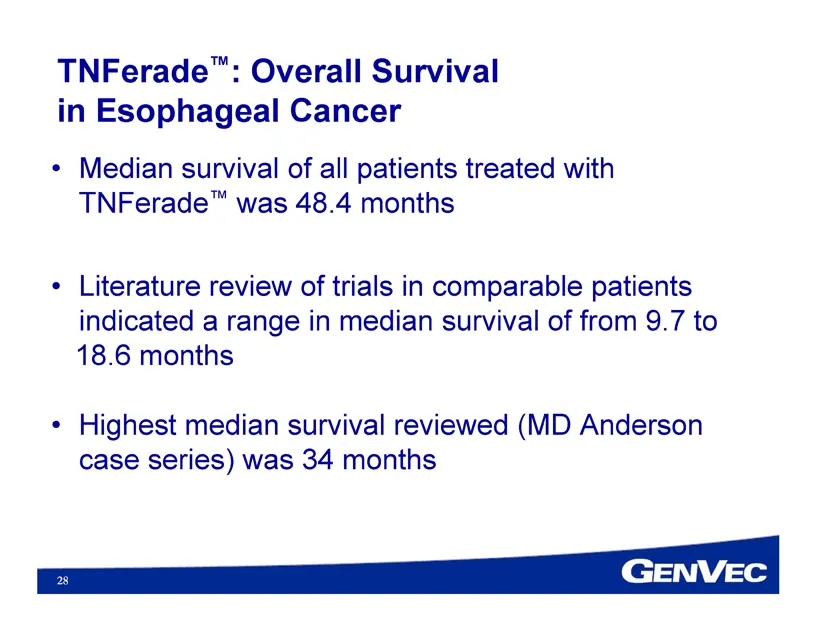
TNFerade”™: Overall Survival in Esophageal Cancer Median survival of all patients treated with TNFerade™ was 48.4 months Literature review of trials in comparable patients indicated a range in median survival of from 9.7 to 18.6 months Highest median survival reviewed (MD Anderson case series) was 3
Slide 29: TNFerade™ in Esophageal Cancer
TNFerade™ in Esophageal Cancer * Top-line data will be expanded upon at a future scientific meeting * Good indication for label expansion — Clinical trial design plans
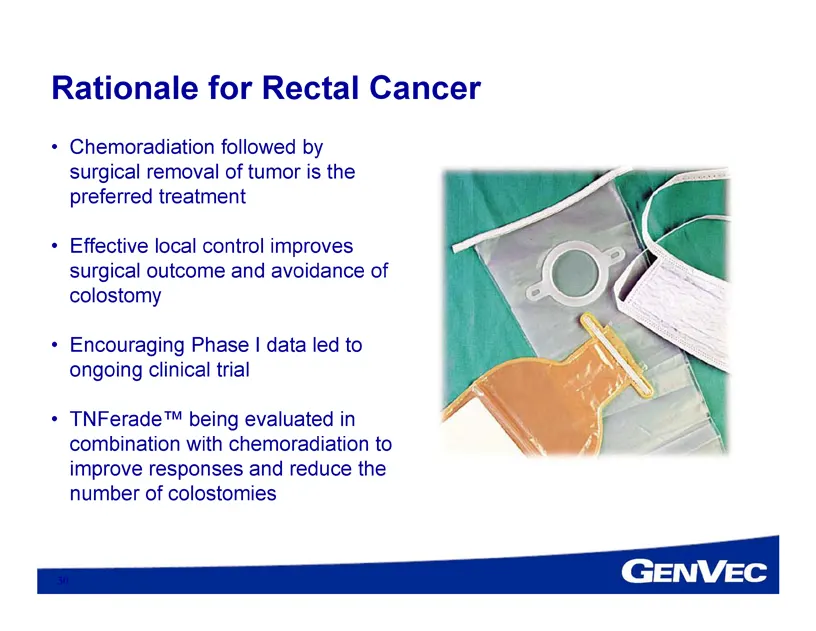
Slide 30: Rationale for Rectal Cancer
Rationale for Rectal Cancer Chemoradiation followed by surgical removal of tumor is the preferred treatment Effective local control improves surgical outcome and avoidance of colostomy Encouraging Phase | data led to ongoing clinical trial TNFerade™ being evaluated in combination with chemoradiation
Slide 31: TNFerade for Rectal Cancer
TNFerade™ for Rectal Cancer Ongoing Phase II Trial * Current Phase II + Initial evaluation of dose and activity in 10 patients in collaboration with the NCI * Single site study + Primary endpoint is rate of complete pathologic tumor response * Data presented at ASTRO (October 2007) * 7 patients curr
Slide 32: Rationale for Head and Neck Cancer
Rationale for Head and Neck Cancer ¢ Improved local control is key ¢ Surgery and chemoradiation are the standard of care * Tumors are generally accessible for local treatment ¢ Recurrent disease is an attractive first target ENV |
Slide 33: Initial Results in Head and Neck Cancer
Initial Results in Head and Neck Cancer ¢ CORE study — Recurrent disease — TNFerade™ dose setting — NCI supported trial at the University of Chicago Data for ASCO 2008 — Safety, dose escalation, and preliminary objective response data will be presented May 31, 2008 ENC |
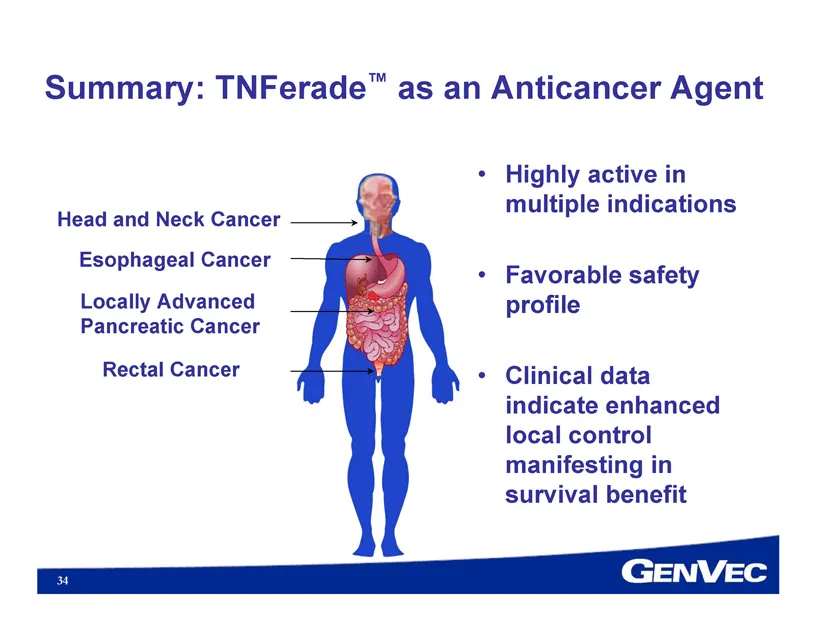
Slide 34: Summary: TNFerade as an Anticancer Agent
Summary: TNFerade™ as an Anticancer Agent Highly active in Head and Neck Cancer multiple indications Esophageal Cancer Favorable safety Locally Advanced profile Pancreatic Cancer Rectal Cancer Clinical data indicate enhanced local control manifesting in survival benefit ENV |
Source: SEC EDGAR · 8-K filed Jun 2, 2008