Sorrento Therapeutics, Inc. · OTC:SRNE
Sorrento Therapeutics — Investor Presentation (February 2015)
34 slides from Sorrento Therapeutics's investor presentation, Feb 9, 2015

Slide 1: Next-Generation Cancer Therapeutics
February 2015 Next-Generation Cancer Therapeutics Exhibit 99.1
Slide 2: A Comprehensive Oncology Company
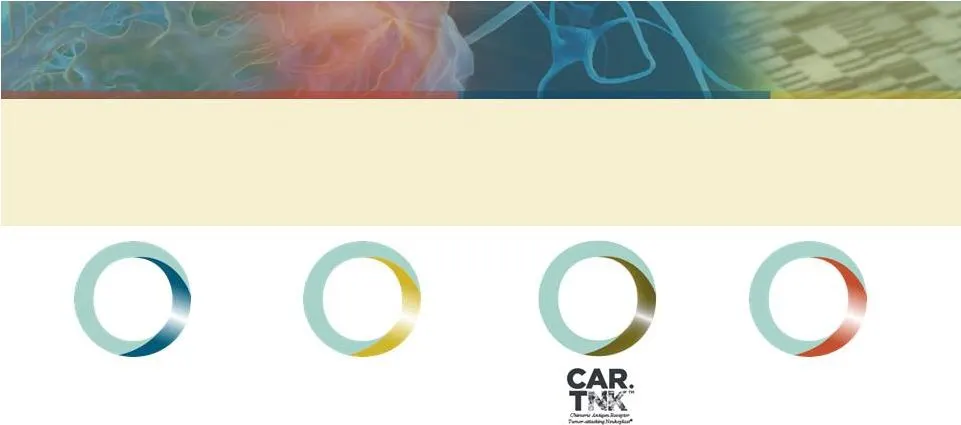
A Comprehensive Oncology Company Cytotoxics CYNVILOQ™ Targeted Therapy MYC inhibitor TRAIL modulator Immunotherapy PD-1, PD-L1, CTLA-4 Bispecific Abs Targeted Therapy Anti-VEGFR2 ADC Anti-c-MET ADC Bispecific ADC Adoptive Cellular Immunotherapy Chimeric Antigen Receptor Tumor-attacking Neukoplast ®

Slide 3: Corporate Events Validate and Advance Sorrento Pipeline
Corporate Events Validate and Advance Sorrento Pipeline Unlocking Significant Value A ntigen R eceptor T umor - attacking N eu K oplast) “The Immunotherapy Antibody Company” Exclusive global partnership with Conkwest to develop next generation anti-cancer cellular immunotherapy with "Off-the-Shelf"
Slide 4: Deep and Complementary Pipeline Creates Significant Opportunities
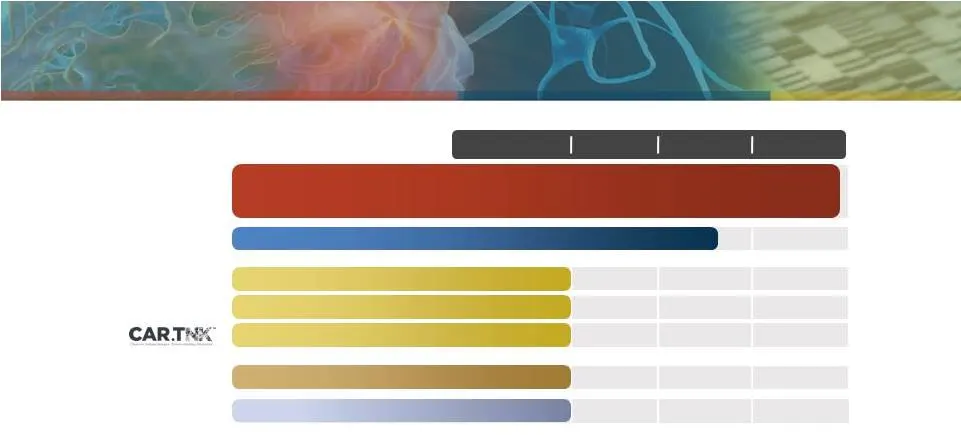
Deep and Complementary Pipeline Creates Significant Opportunities Intractable Cancer Pain Metastatic Breast Cancer Non-Small Cell Lung Cancer T R I B E C A* Registration trial completed PHASE 3 PHASE 2 PHASE 1 PRECLINICAL * TRIBECA (b)(2) Bioequivalence trial versus albumin-bound paclitaxel (Abraxan

Slide 5: Lead Oncology Product Opportunity Registration Trial: Cynviloq
Lead Oncology Product Opportunity Registration Trial Cynviloq (Paclitaxel polymeric micelle)
Slide 6: Cynviloq: Next Generation Paclitaxel Therapy
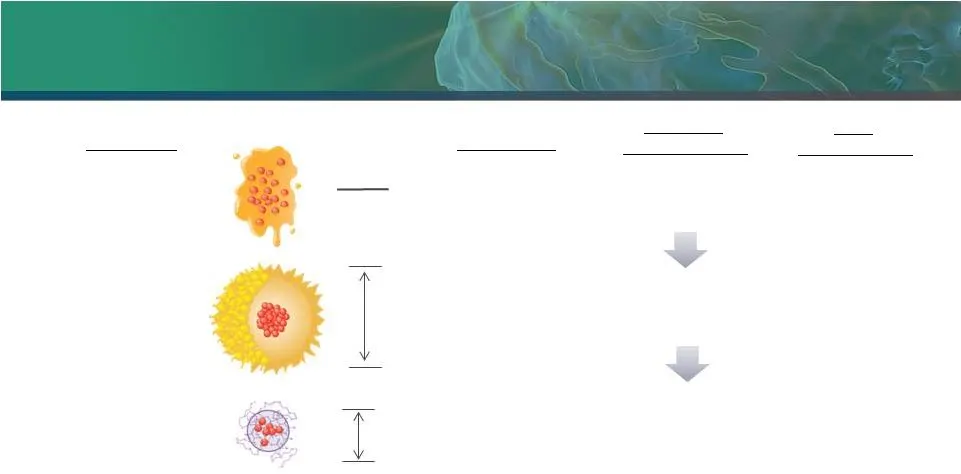
Cynviloq: Next Generation Paclitaxel Therapy Mean size ~25 nm Cynviloq paclitaxel polymeric micelle Chemical polymer: Poly-lactide and polyethylene glycol diblock copolymer >300 mg/m (up to mg/m ) Albumin - bound paclitaxel Mean size 130 nm Biological polymer: Donor-derived human serum albumin (HSA)
Slide 7: Cynviloq Clinical Development Summary
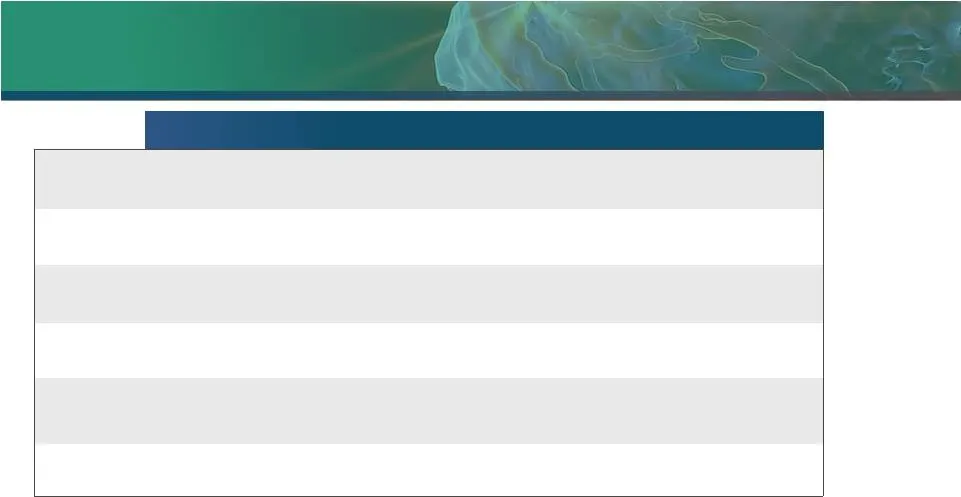
Cynviloq Clinical Development Summary Total number of patients across all trials: 1,260 Phase 1: Trials established MTD at >300 mg/m - Dana Farber Cancer Inst, Russia, & S. Korea (total n=80) >300 mg/m (q3w) vs. mg/m (Taxol; weekly) Phase 2: Completed trials in MBC, NSCLC, PC, OC, BC; in US - Yale C
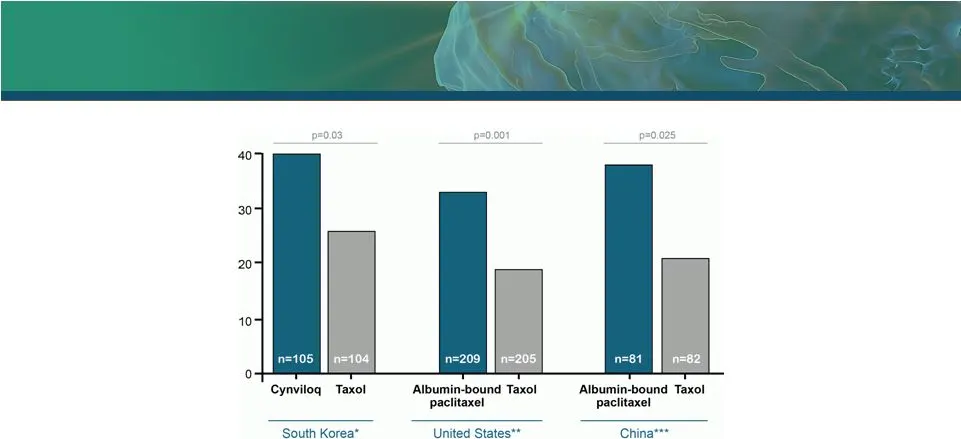
Slide 8: Comparative Phase 3 MBC Clinical Results
Comparative Phase 3 MBC Clinical Results * Trieu et al. 2013. IG-001 for Metastatic Breast Cancer- Interim Analysis of a Phase Trial. Nanomedicine Conference, Sydney, Australia. ** Gradishar et al. 2005. J Clin Oncol , 23:7794-7803. *** Guan et al. 2007. ASCO Annual Meeting Proceedings Part I. Jun 2
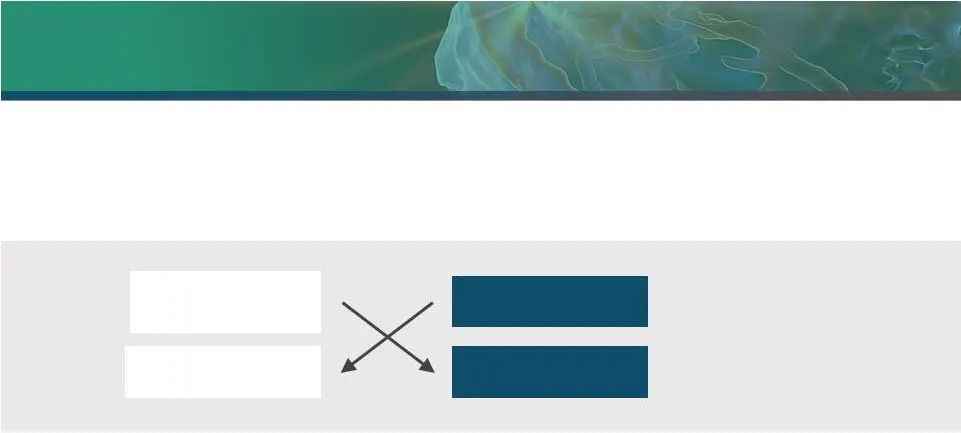
Slide 9: Bioequivalence = Accelerated Pathway to Market
Bioequivalence = Accelerated Pathway to Market Cynviloq (n = 27)* Cynviloq T R I B E C A™ Albumin-bound paclitaxel (n = 27)* Albumin-bound paclitaxel Key Parameters: Cycle 1 Cycle 2 - Patients with MBC Note: Previous trial size estimate of patients was based on PK simulation of albumin-bound paclita
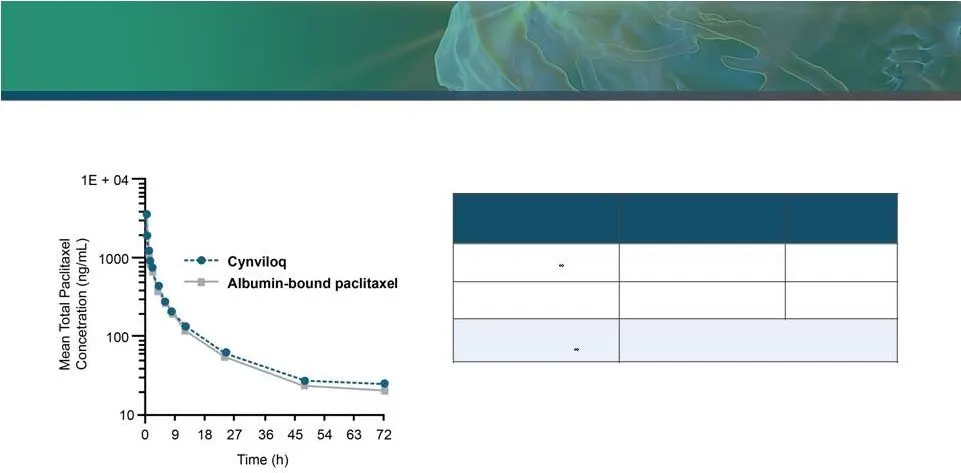
Slide 10: Pilot PK Data Analyses Suggest BE vs. Albumin-Bound Paclitaxel
Pilot PK Data Analyses Suggest BE vs. Albumin-Bound Paclitaxel Parameters Ratio of Cynviloq/ Albumin-bound paclitaxel (%) 90% CI Ln(AUC 0 to ) 109.1 93.98 – 126.58 Ln(C max ) 102.5 83.10 – 126.35 Point estimate - Ln(AUC to ) N = 53 with 90% power BE Assessment and Sample Size Estimate Log - linear P
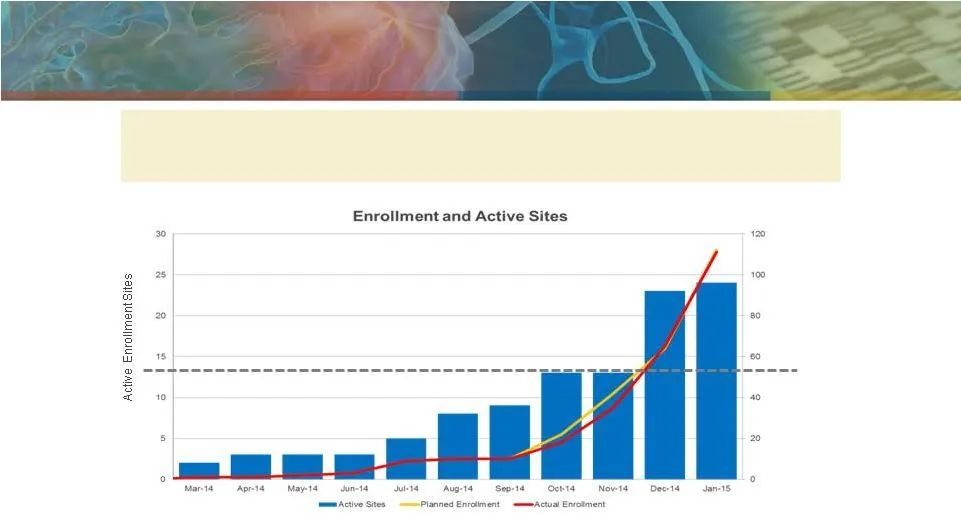
Slide 11: TRIBECA Patient Enrollment Completed
TRIBECA Patient Enrollment Completed 54 pts Patients from recruited from sites in East Europe, USA and Asia Total 111 patients enrolled (expanded safety data) Initial reported AEs consistent with historical nab-paclitaxel toxicity profile
Slide 12: Estimated Timeline and Next Steps
Estimated Timeline and Next Steps* First patient dosed : March 31, Last patient in: January 2015 NDA filing: Q3 Product launch (MBC and NSCLC): BE Study NDA Filing FDA Approval LAUNCH *Estimates, subject to discussions with the FDA.

Slide 13: Intractable Cancer Pain: Resiniferatoxin (RTX)
Intractable Cancer Pain Resiniferatoxin (RTX): A Novel, Non-opiate Analgesic RTX
Slide 14: Two Injection Sites = Two Products for Human Use
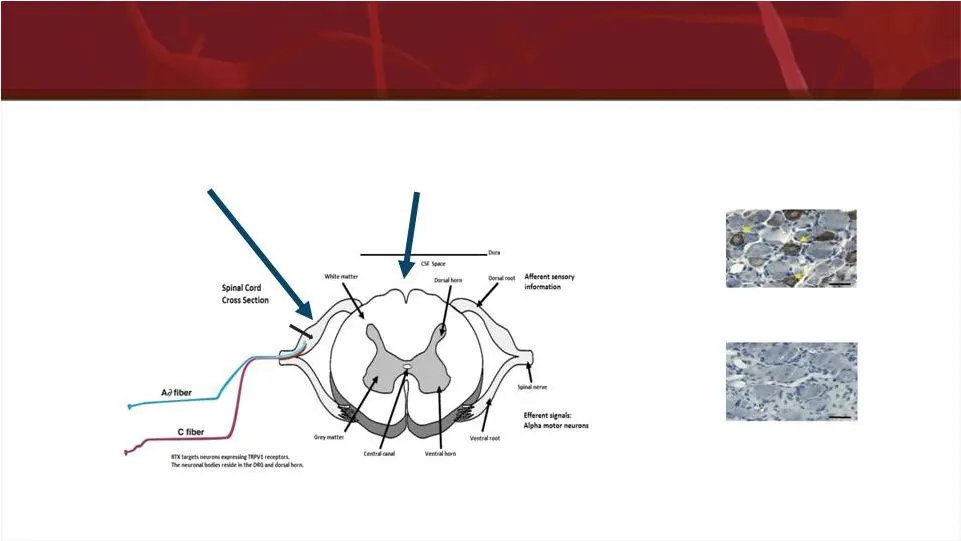
Two Injection Sites = Two Products for Human Use Intraganglionic : injection into or near the dorsal root ganglion Intrathecal : injection into the cerebrospinal fluid space Cross Sections of spinal cord* Absence of TRPV1- positive cells after RTX treatment TRPV1-positive cells (dark brown) * Adapte

Slide 15: Summary of Interim Data from the Phase 1/2 NIH Sponsored Trial
Summary of Interim Data from the Phase 1/2 NIH Sponsored Trial No unexpected toxicities All 6 patients had near complete relief post- injection 100% of non-ambulatory patients could walk post injection (n=2) MTD not reached, additional dose optimization being explored RESULTS Clinically meaningful i
Slide 16: Next Steps for RTX Development
Next Steps for RTX Development ~3 years for clinical development Complete intractable cancer pain clinical Phase 1/2 trial ( intrathecal injection ) under Sorrento IND; n=45-60 patients; optimization of dosing study End of Phase 2 meeting with FDA (for intrathecal injection ) Initiate Phase 3 ( intr
Slide 17: Immunotherapy Programs
Immunotherapy Programs G-MAB + Neukoplast + Proprietary Toxins & Conjugation Chemistries
Slide 18: G-MAB: Library of Therapeutic Antibodies
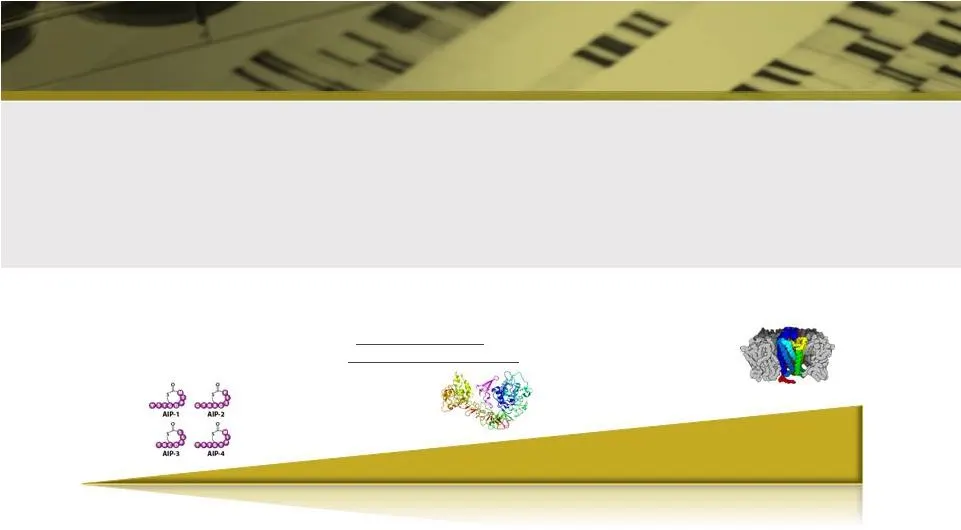
G-MAB: Library of Therapeutic Antibodies Size of Target Antigen High Value Oncology Targets: Immune modulation: PD-1, PD-L1, CD47 Antibody Drug Conjugates: VEGFR2, c-Met Proprietary technology: RNA amplification used for library generation Freedom-To-Operate Very high library diversity: 2.1 x distin
Slide 19: Anti-PD-L1 mAb Exhibits Potent Activity
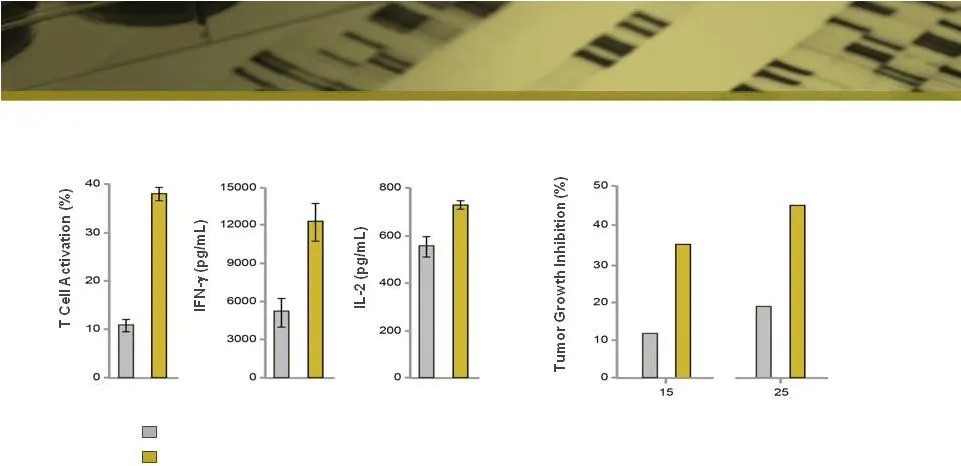
Anti-PD-L1 mAb Exhibits Potent Activity Immune Modulation* Tumor Mouse Model** *** * mAbs @ 0.05 mg/mL ** xenograft model using H1975 human NSCLC cells; % inhibition relative to control mAb treatment *** p<0.05, mean tumor volumes are significantly reduced in STI-A1010 group versus control groups as
Slide 20: Anti-PD1 mAb Exhibits Excellent Activity
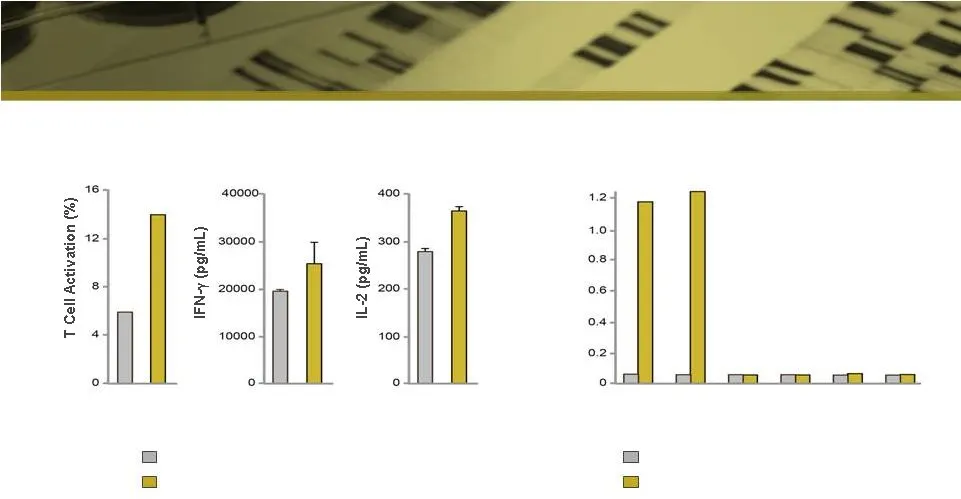
Anti-PD1 mAb Exhibits Excellent Activity Competitor mAb Sorrento mAb Immune Modulation* Target Specificity Control Sorrento mAb Human PD1 Cyno PD1 Human CTLA-4 Human CD28 Human ICOS PBS control
Slide 21: Proprietary K-Lock and C-Lock Conjugation Chemistries Enable Homogeneous ADCs
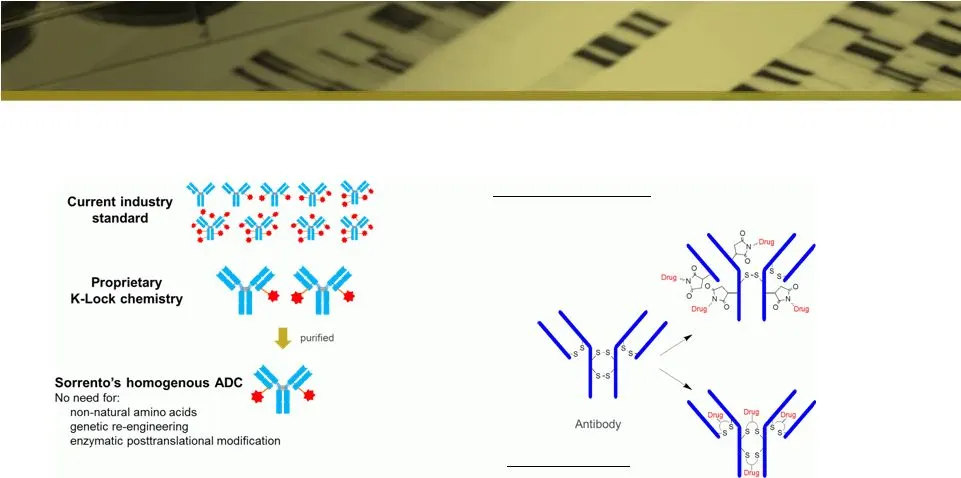
Proprietary K-Lock and C-Lock Conjugation Chemistries Enable Homogeneous ADCs K-Lock C-Lock C-Lock conjugation Enhances ADC stability Prolongs PK profile Reduces off-target effects Maleimide conjugation Destabilizes antibody structure Drug-antibody linkage not stable Altered PK profile Off-target dr
Slide 22: Proprietary High Potency Duostatin Toxins
Proprietary High Potency Duostatin Toxins EC 50 (pM) Cancer Her-2 DM1 MMAE Duostatin 3 SBKR3 Breast +++ HCC1954 Breast +++ BT474 Breast +++ MDA-MB-361 Breast +++ ZR75 Breast +++ HCC1419 Breast +++ MDA-MB-453 Breast ++ 1,877 >100,000 MDA-MB-175 Breast + >100,000 1,348 N87 Gastric +++ OE-19 Gastric ++
Slide 23: In Vivo Proof-of-Concept of Sorrento ADCs
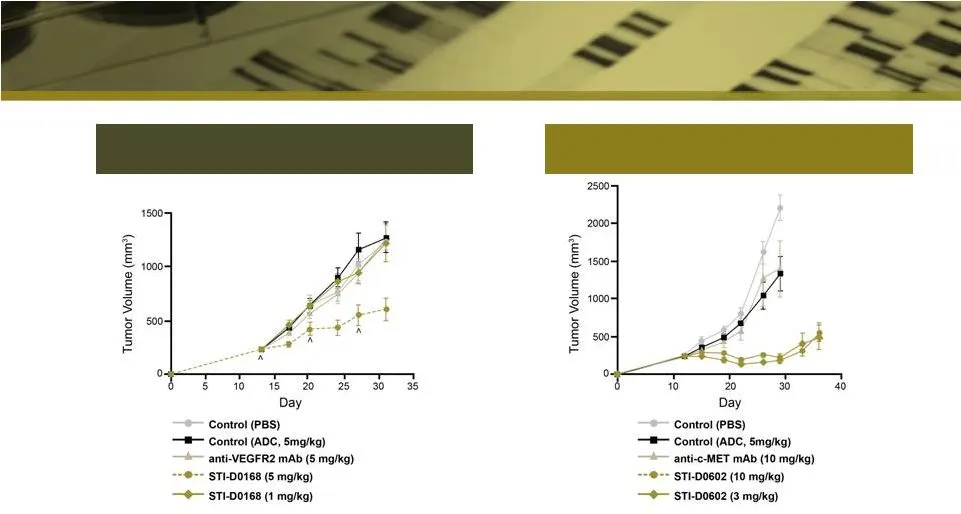
VEGFR2-ADC STI-D0168 c-MET-ADC STI-D0602 In Vivo Proof-of-Concept of Sorrento ADCs A431 squamous-cell carcinoma cells; ^indicates dosing U87 xenograft; dosing twice weekly; maytansinoid drug conjugates

Slide 24: The Immunotherapy Antibody JV Company
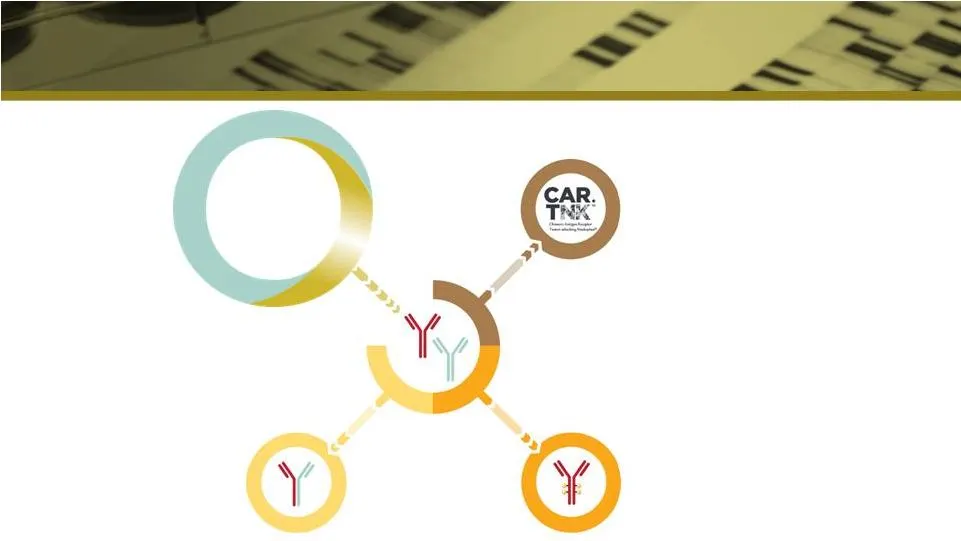
“The Immunotherapy Antibody JV Company” Independent company focused on advancing next generation immunotherapies against cancer and auto- immune diseases. Both companies will contribute to its pipeline of clinical and preclinical assets of novel and proprietary immunotherapies, ADCs, and bispecific
Slide 25: An Exclusive Joint Partnership
AN EXCLUSIVE JOINT PARTNERSHIP CAR.TNK is a trademark owned by Sorrento Therapeutics, Inc. Neukoplast is a trademark owned by Conkwest, Inc.
Slide 26: Advancing Cellular Immunotherapy Beyond CAR-T Cell Therapies
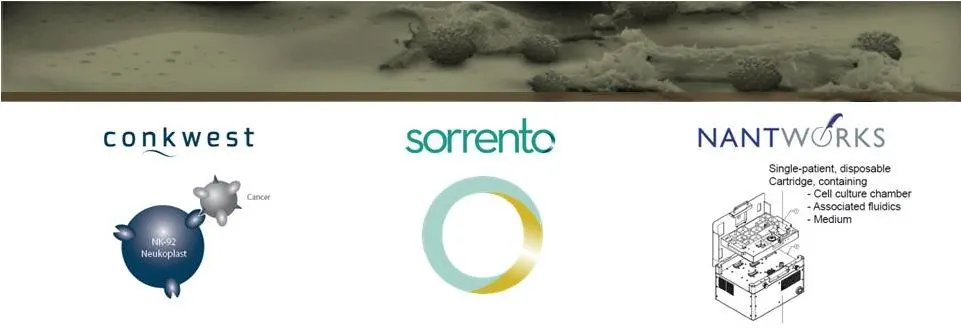
Advancing Cellular Immunotherapy Beyond CAR-T Cell Therapies Neukoplast® NK cell line (“off-the-shelf”) Broad anti-cancer activity in solid and liquid tumors No clinical DLTs/SAEs in over 40 patients treated Advanced proteomics platform Proprietary gene insertion (without use of lentiviruses) ‘GMP i

Slide 27: CAR.TNK vs CAR-T: Key Differentiators
CAR.TNK vs CAR-T: Key Differentiators Simple: Off-the-shelf universal product CAR-modified Neukoplast cells Cell Production Transduction characteristics 100%: Master cell bank with 100% of cells expressing CAR MOA Broad: Multiple MOAs, targeting and killing through CAR-dependent and innate mechanism

Slide 28: Unmodified Neukoplast Clinically Validated In Several Phase 1 Studies
Unmodified Neukoplast Clinically Validated In Several Phase 1 Studies More than 40 patients treated Advanced metastatic disease refractory to chemo, biologics, cytokines, radiation, and surgery Many patients received multiple dosing regimens (up to 6 months) Promising activity against different canc
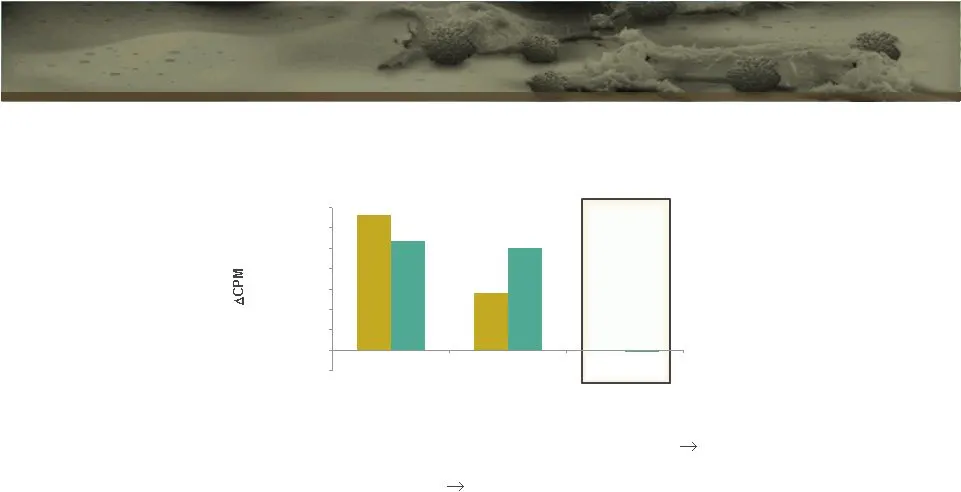
Slide 29: Neukoplast Do Not Stimulate Allogeneic T Cells
PHA Allogeneic Donor NK-92 CPM Neukoplast do not stimulate allogeneic T cells -5000 Lymphocytes from 2 healthy donors co-cultured with each other vigorous proliferation Co-cultured with Neukoplast (7 days) no proliferation Gold: Donor 1 Aqua: Donor 2 T cell Proliferation measured using Mixed Lymphoc
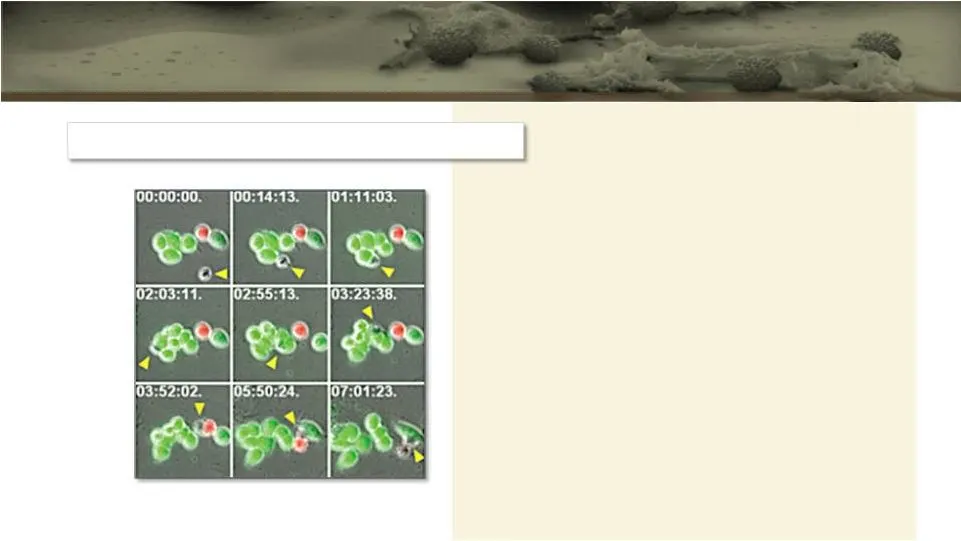
Slide 30: Serial Killing of Her2+ Cells by Her2.TNK Cells
Serial Killing of Her2+ Cells by Her2.TNK Cells Homing to Her2 expressing tumors Inhibition of Her2+ RCC metastasis Selective cytotoxicity (spares normal cells) Schoenfeld et al. Mol Therapy, in press IN VIVO PRECLINICAL MOUSE DATA Growth inhibition and killing correlate with Her2 expression levels
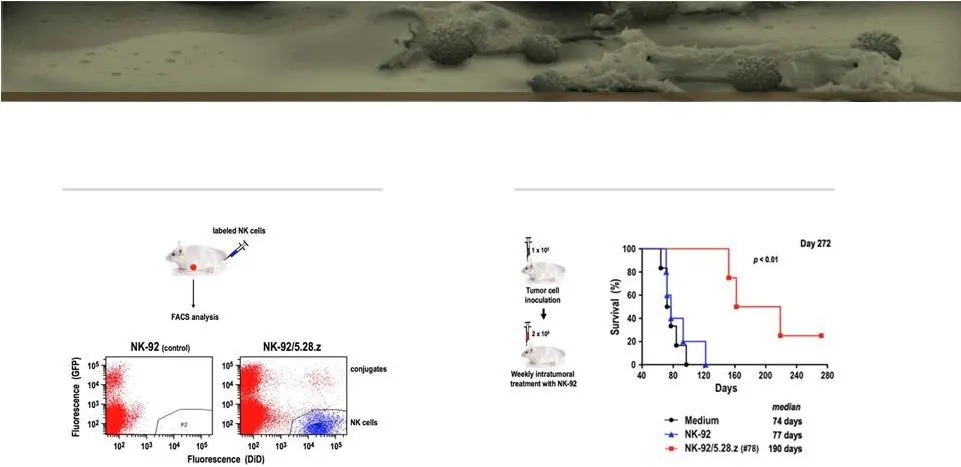
Slide 31: Her2.TNK Demonstrate Tumor Homing and Potent Anti-Glioma Activity in Mice
Her2.TNK Demonstrate Tumor Homing and Potent Anti-Glioma Activity in Mice Schoenfeld et al. Mol Therapy, in press Tumor homing of CAR.TNKs Intracranial LN-319 glioblastoma xenografts in NSG mice
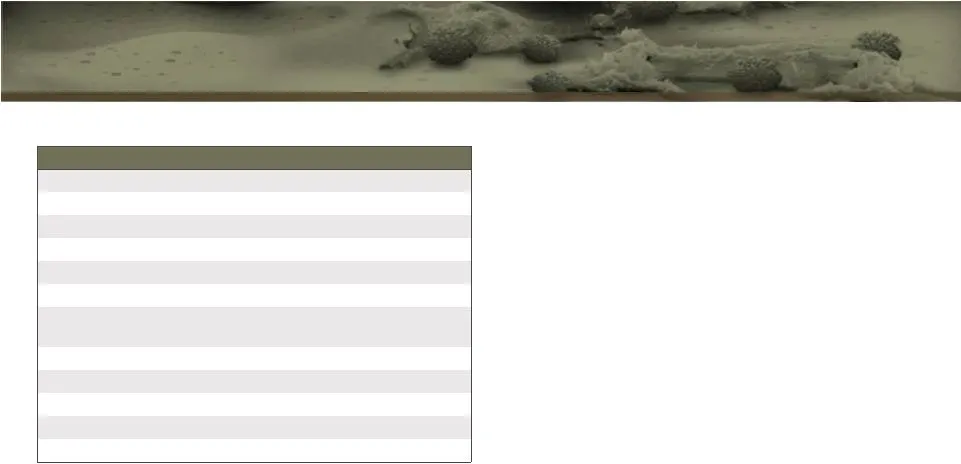
Slide 32: Prospective CAR.TNKs for Development (Initial List)
Prospective CAR.TNKs for Development (Initial List) Target Potential Indication(s) EGFRviii.TNK Glioma EphA3.TNK Glioma, AML L1CAM.TNK Gastric, pancreatic, NSCLC CSPG4.TNK H&N, breast, mesothelioma BCMA.TNK Myeloma ROR1.TNK CLL, ALL, MCL, breast, lung, pancreas PSMA or PSCA.TNK Prostate PDL1.TNK Mye
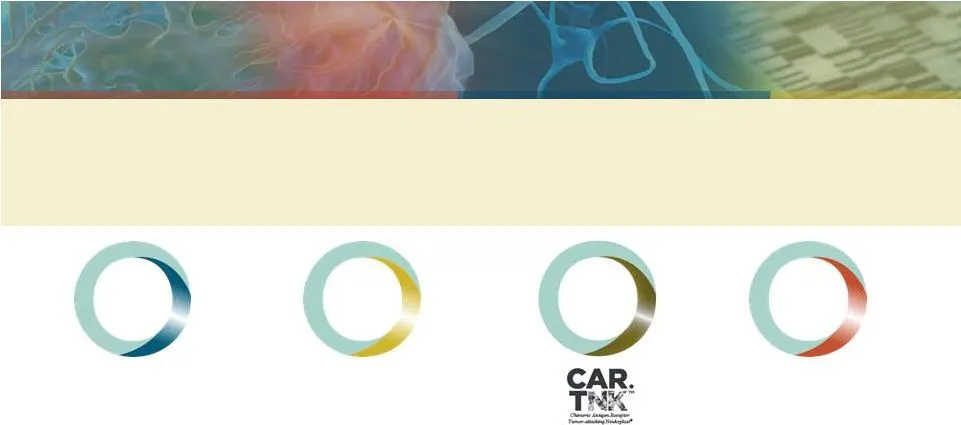
Slide 33: A Comprehensive Oncology Company
A Comprehensive Oncology Company Cytotoxics CYNVILOQ™ Targeted Therapy MYC inhibitor TRAIL modulator Immunotherapy PD1, PD-L1, CTLA-4 Bispecific Abs Targeted Therapy Anti-VEGFR2 ADC Anti-CMET ADC Bispecific ADC Adoptive Cellular Immunotherapy Chimeric Antigen Receptor Tumor-attacking Neukoplast ® (P

Slide 34: Contact: Henry Ji, Ph.D., President and CEO
Henry Ji, Ph.D. President and CEO [email protected] (858) 668-6923 George Uy Executive Vice President and CCO [email protected] (661) 607-4057 CONTACT: Next-Generation Cancer Therapeutics
Source: SEC EDGAR · 8-K filed Feb 9, 2015
More decks from Sorrento Therapeutics, Inc.
 Presentation (August 2023)9 slides · Aug 1, 2023
 SPAC Merger (March 2022)21 slides · Mar 18, 2022
 Technical Presentation (January 2022)13 slides · Jan 21, 2022
 SPAC Merger (December 2021)57 slides · Dec 13, 2021
 Technical Presentation (November 2021)9 slides · Nov 29, 2021
 Investor Presentation (September 2021)37 slides · Sep 13, 2021