G1 Therapeutics — Wedbush PacGrow Healthcare Conference 2017
41 slides from G1 Therapeutics's conference presentation, Aug 17, 2017
Slide 1: Presentation for Wedbush PacGrow Healthcare Conference
Presentation for Wedbush PacGrow Healthcare Conference August 15, 2017 Mark Velleca MD, PhD Chief Executive Officer Exhibit 99.1
Slide 2: Forward-looking statements
Forward-looking statements This presentation and the accompanying oral commentary contain “forward-looking” statements within the meaning of the Private Securities Litigation Reform Act of 1995, known as the PSLRA, that are based on our beliefs and assumptions and on information available to us as o
Slide 3: G1 Therapeutics: clinical-stage oncology company
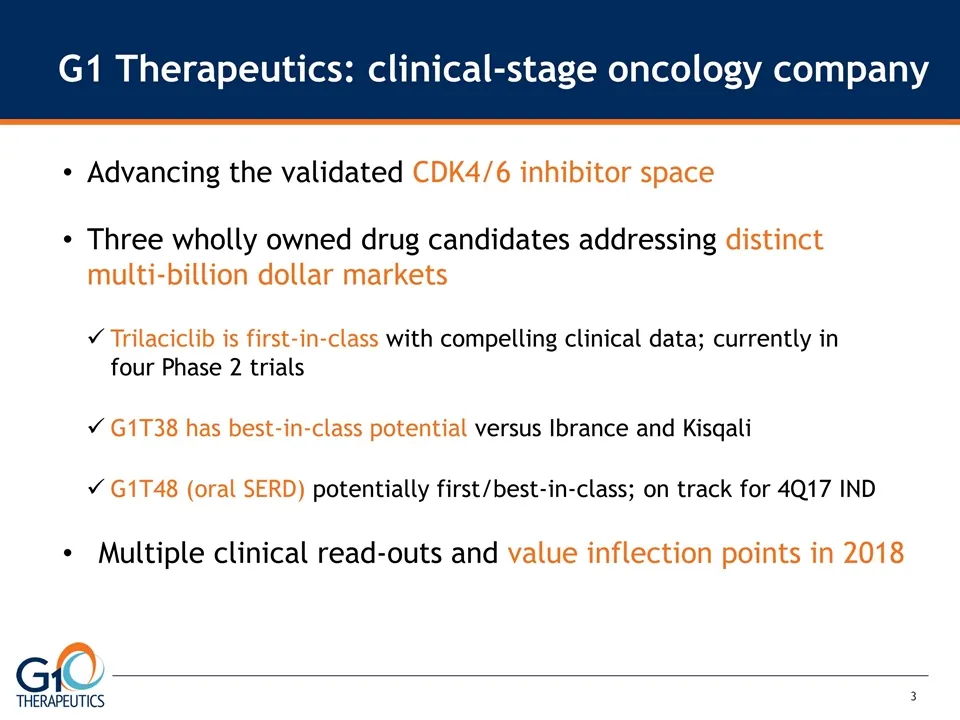
G1 Therapeutics: clinical-stage oncology company Advancing the validated CDK4/6 inhibitor space Three wholly owned drug candidates addressing distinct multi-billion dollar markets Trilaciclib is first-in-class with compelling clinical data; currently in four Phase 2 trials G1T38 has best-in-class po
Slide 4: Proven industry leaders with deep oncology experience
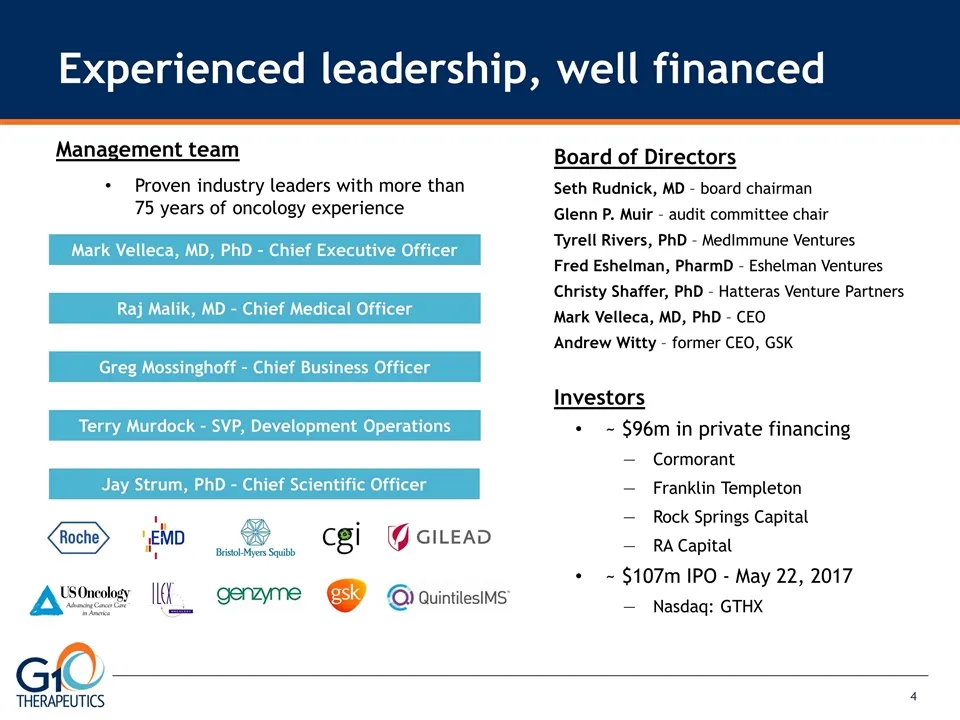
Proven industry leaders with more than 75 years of oncology experience Mark Velleca, MD, PhD – Chief Executive Officer Greg Mossinghoff – Chief Business Officer Jay Strum, PhD – Chief Scientific Officer Board of Directors Seth Rudnick, MD – board chairman Glenn P. Muir – audit committee chair Christ
Slide 5: CDK4/6 is a validated and promising target
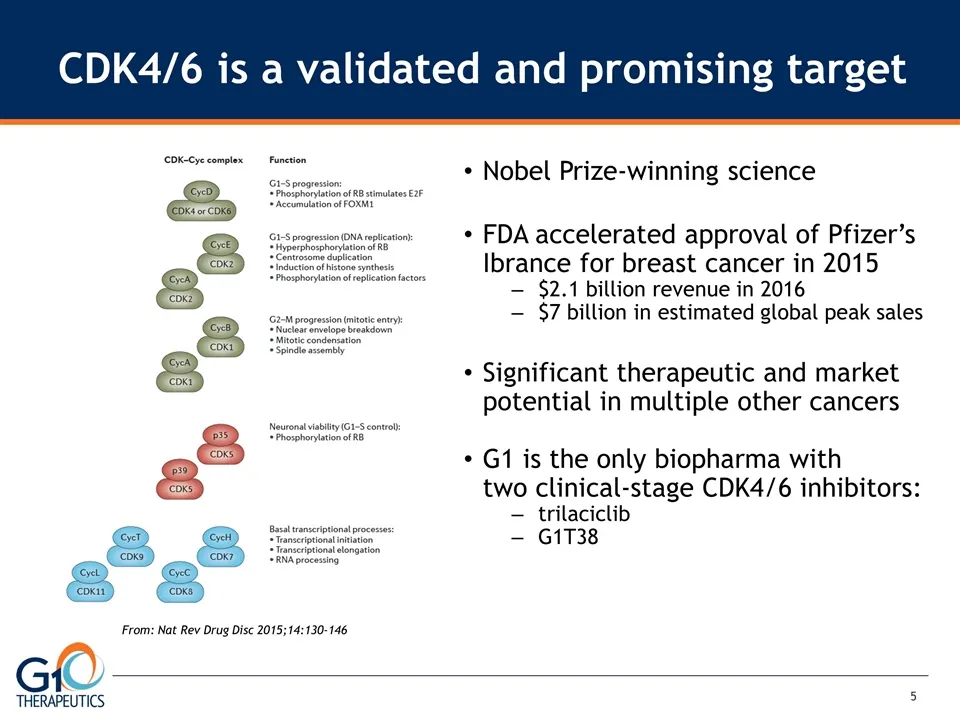
Nobel Prize-winning science FDA accelerated approval of Pfizer’s Ibrance for breast cancer in 2015 $2.1 billion revenue in 2016 $7 billion in estimated global peak sales Significant therapeutic and market potential in multiple other cancers G1 is the only biopharma with two clinical-stage CDK4/6 inh
Slide 6: CDK4/6 typically required for cell cycle progression
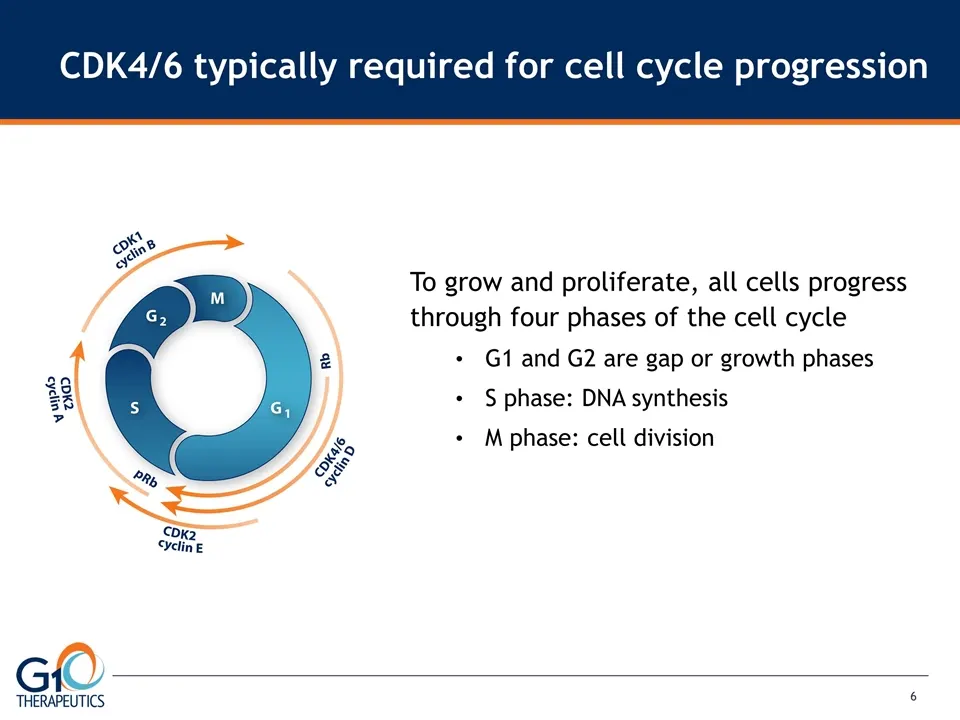
CDK4/6 typically required for cell cycle progression To grow and proliferate, all cells progress through four phases of the cell cycle G1 and G2 are gap or growth phases S phase: DNA synthesis M phase: cell division
Slide 7: Selective CDK4/6 inhibition arrests cells in G1
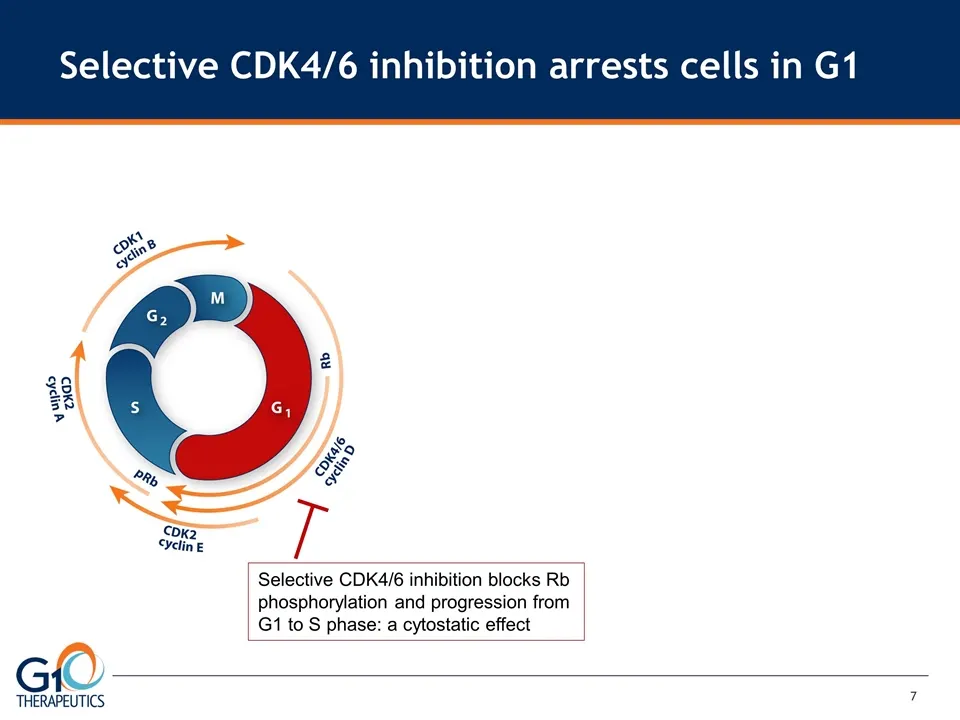
Selective CDK4/6 inhibition arrests cells in G1 Selective CDK4/6 inhibition blocks Rb phosphorylation and progression from G1 to S phase: a cytostatic effect
Slide 8: G1T38: arrests tumor cells in G1
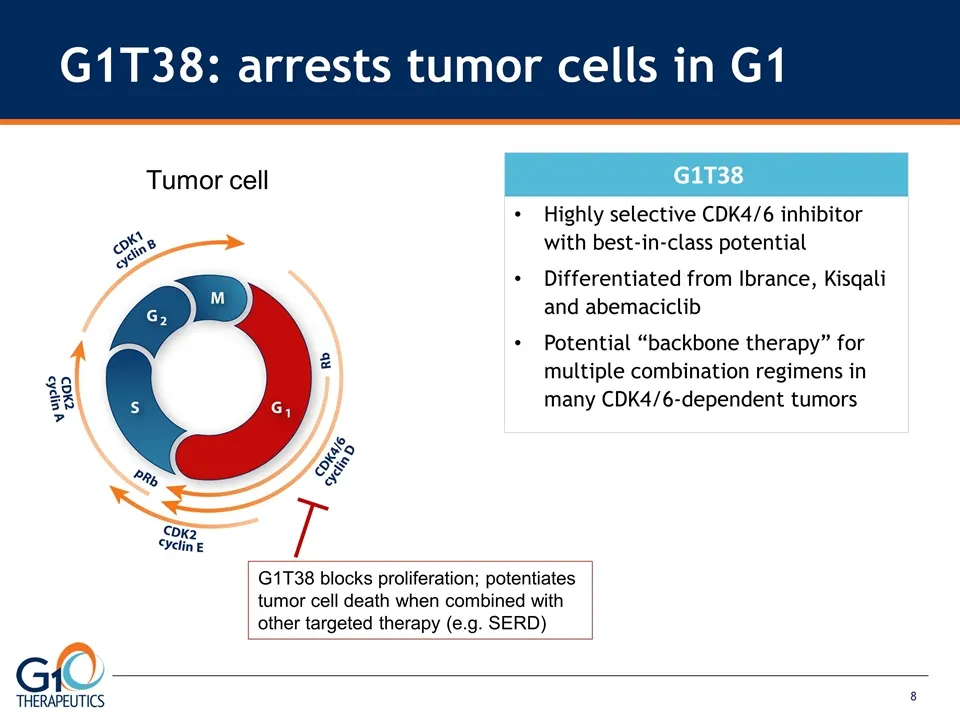
G1T38: arrests tumor cells in G1 G1T38 blocks proliferation; potentiates tumor cell death when combined with other targeted therapy (e.g. SERD) G1T38 Highly selective CDK4/6 inhibitor with best-in-class potential Differentiated from Ibrance, Kisqali and abemaciclib Potential “backbone therapy” for m
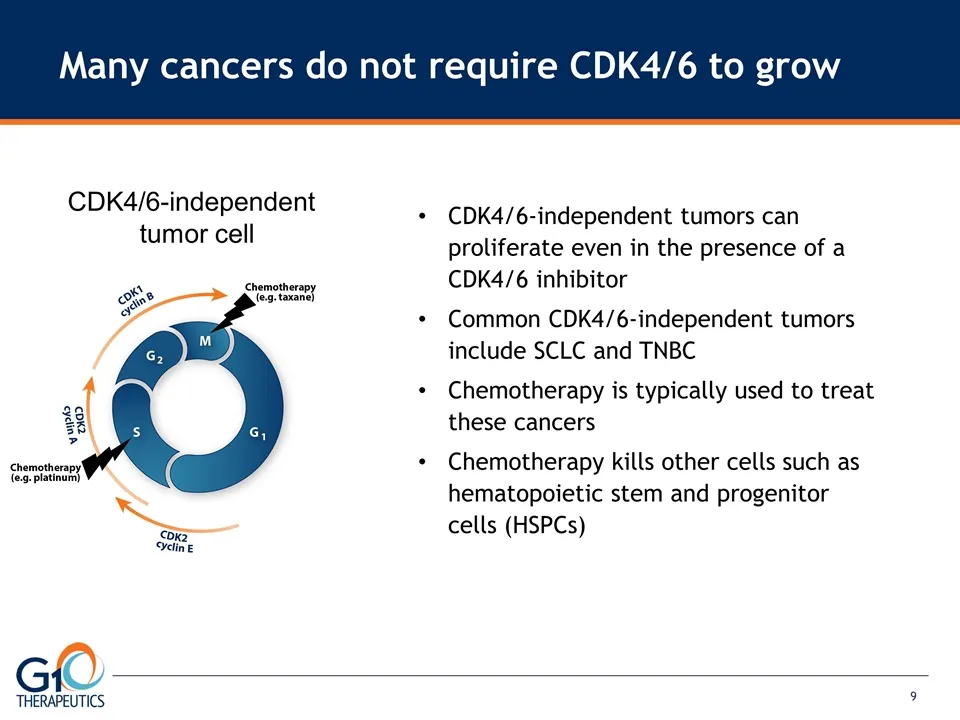
Slide 9: Many cancers do not require CDK4/6 to grow
CDK4/6-independent tumor cell Many cancers do not require CDK4/6 to grow CDK4/6-independent tumors can proliferate even in the presence of a CDK4/6 inhibitor Common CDK4/6-independent tumors include SCLC and TNBC Chemotherapy is typically used to treat these cancers Chemotherapy kills other cells su
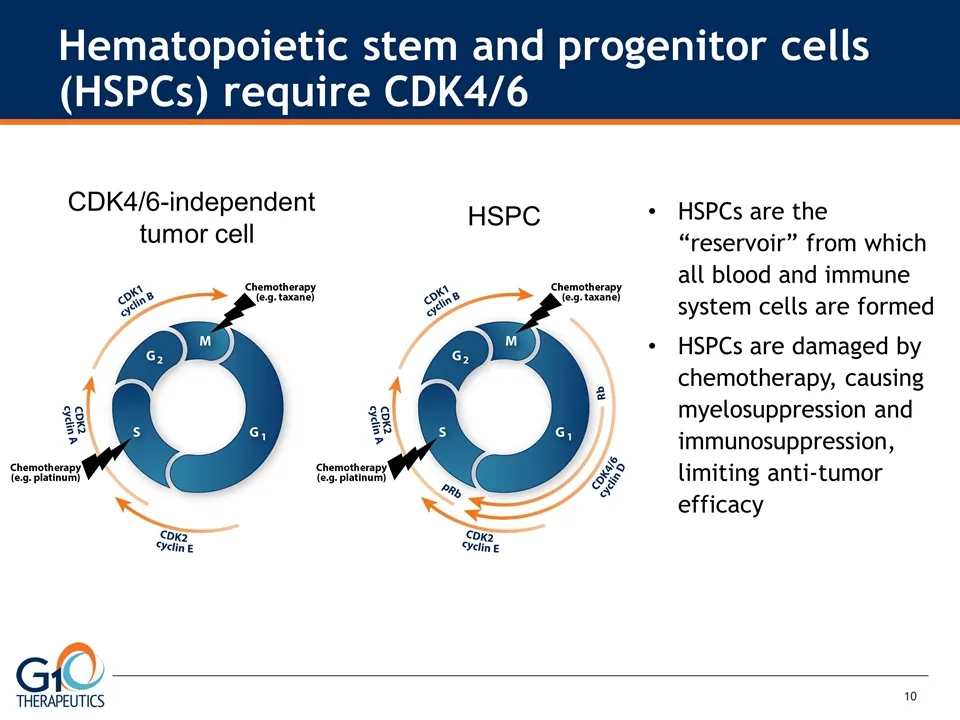
Slide 10: HSPCs are damaged by chemotherapy
HSPC HSPCs are the “reservoir” from which all blood and immune system cells are formed HSPCs are damaged by chemotherapy, causing myelosuppression and immunosuppression, limiting anti-tumor efficacy CDK4/6-independent tumor cell Hematopoietic stem and progenitor cells (HSPCs) require CDK4/6
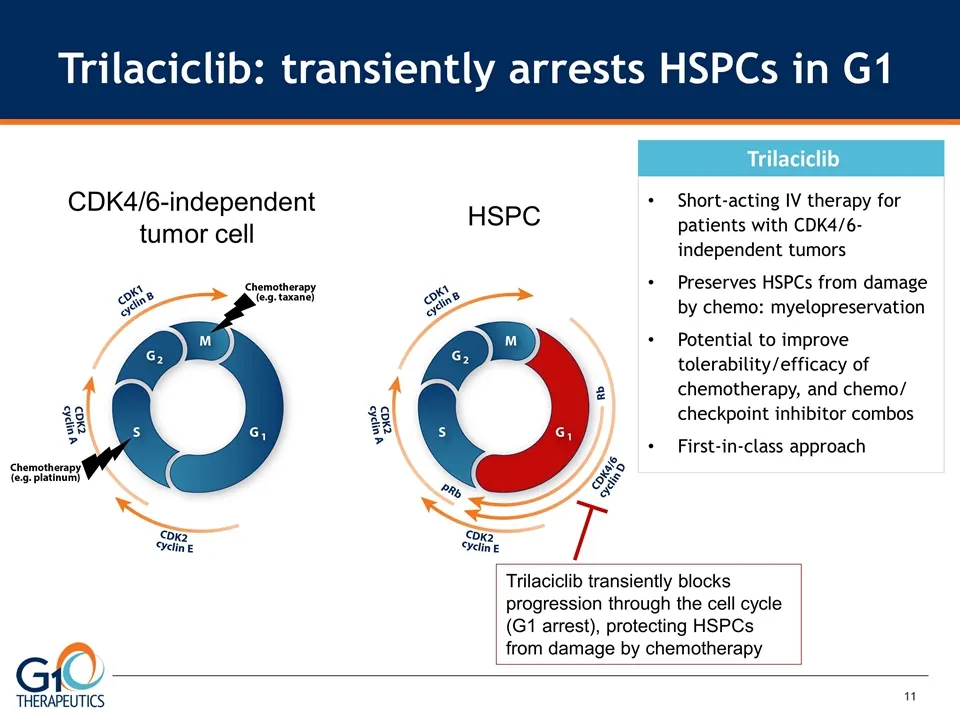
Slide 11: Trilaciclib: transiently arrests HSPCs in G1
HSPC CDK4/6-independent tumor cell Trilaciclib: transiently arrests HSPCs in G1 Short-acting IV therapy for patients with CDK4/6-independent tumors Preserves HSPCs from damage by chemo: myelopreservation Potential to improve tolerability/efficacy of chemotherapy, and chemo/ checkpoint inhibitor comb
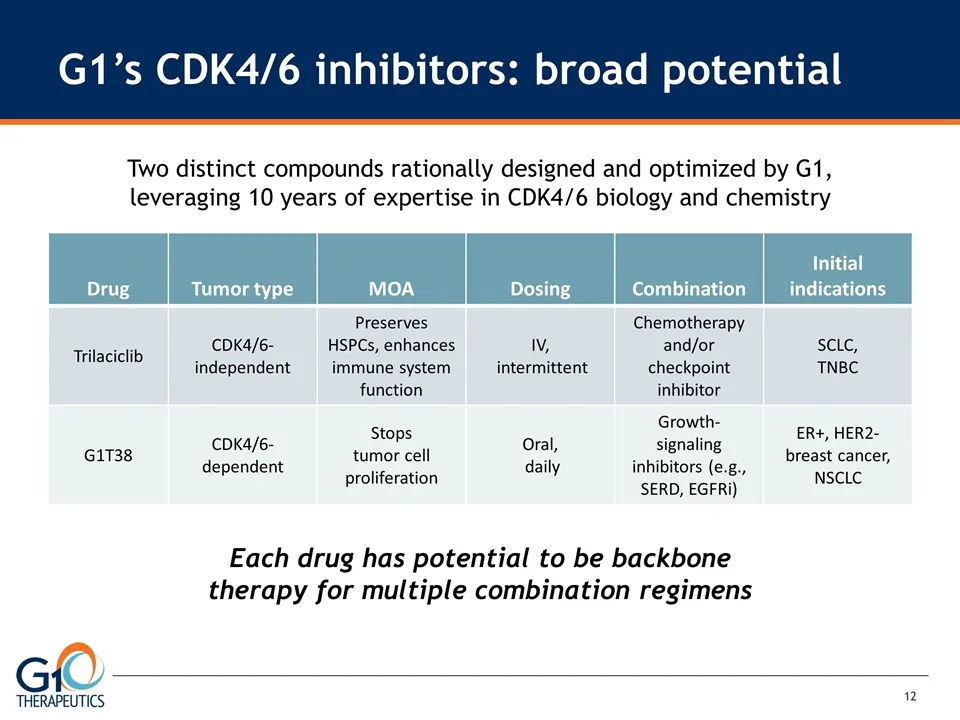
Slide 12: G1's CDK4/6 inhibitors: broad potential
G1’s CDK4/6 inhibitors: broad potential Drug Tumor type MOA Dosing Combination Initial indications Trilaciclib CDK4/6- independent Preserves HSPCs, enhances immune system function IV, intermittent Chemotherapy and/or checkpoint inhibitor SCLC, TNBC G1T38 CDK4/6- dependent Stops tumor cell proliferat
Slide 13: Key advantages of trilaciclib and G1T38
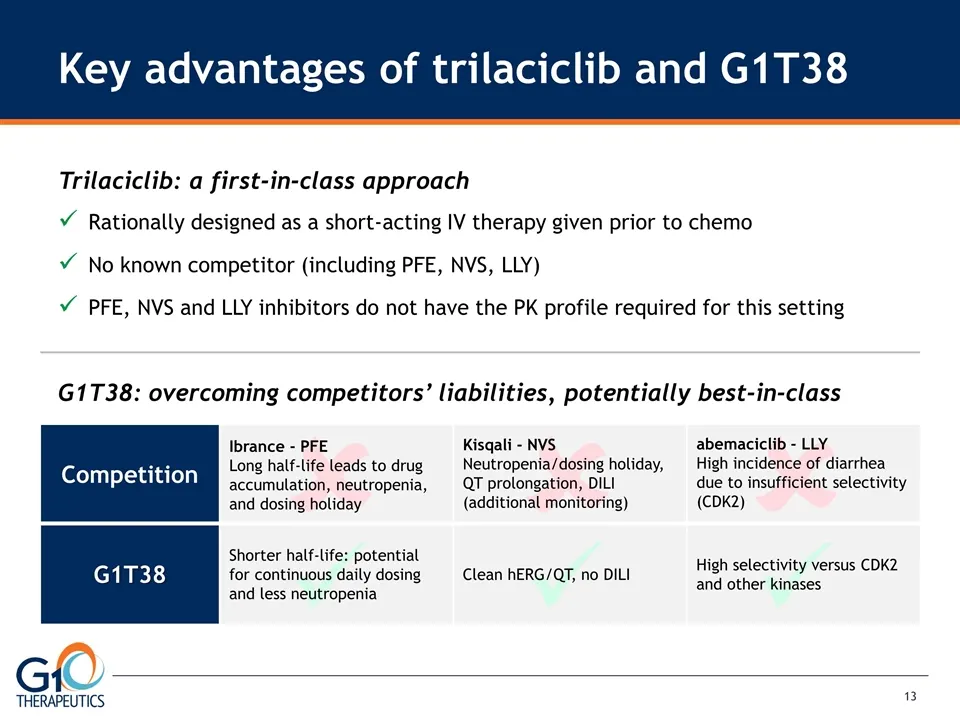
Key advantages of trilaciclib and G1T38 G1T38: overcoming competitors’ liabilities, potentially best-in-class Trilaciclib: a first-in-class approach Rationally designed as a short-acting IV therapy given prior to chemo No known competitor (including PFE, NVS, LLY) PFE, NVS and LLY inhibitors do not
Slide 14: G1's development pipeline
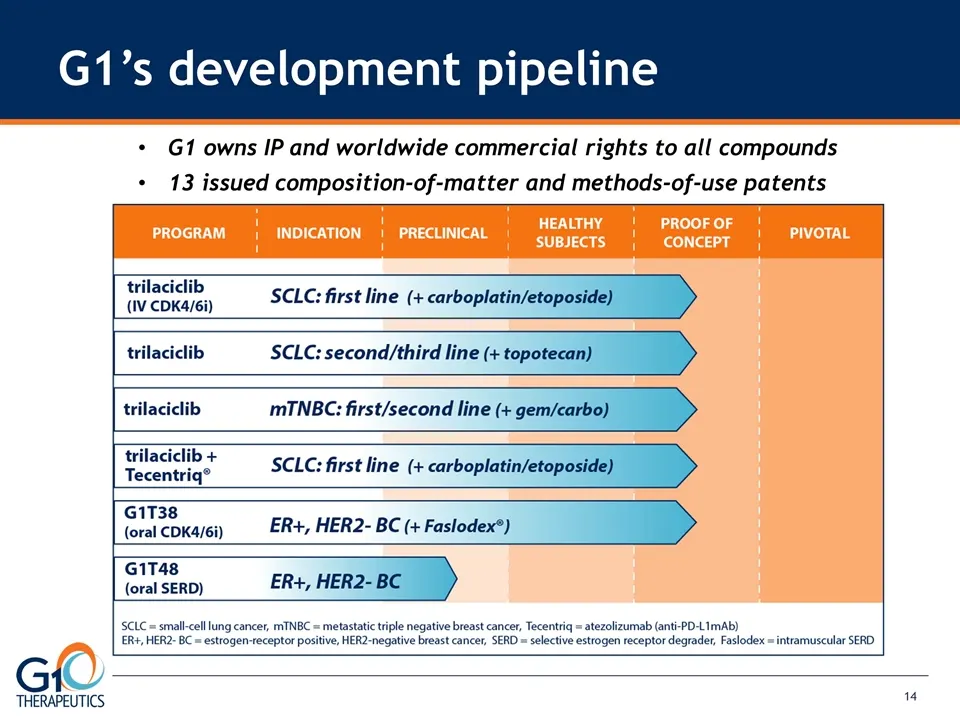
G1’s development pipeline G1 owns IP and worldwide commercial rights to all compounds 13 issued composition-of-matter and methods-of-use patents
Slide 15: Key anticipated milestones through 2Q18
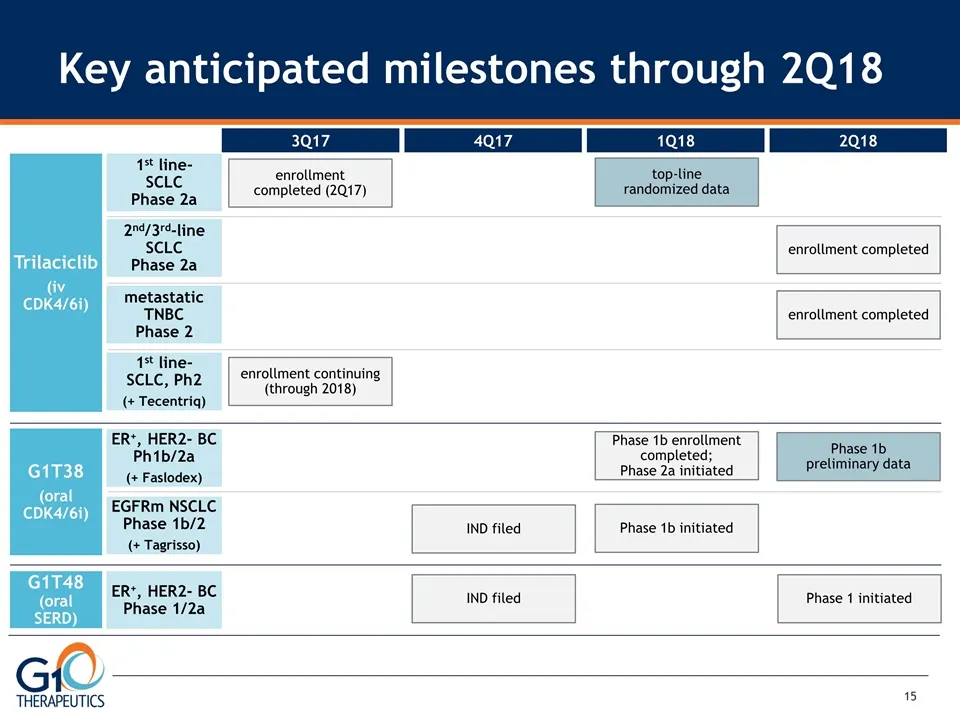
Key anticipated milestones through 2Q18 Trilaciclib (iv CDK4/6i) G1T38 (oral CDK4/6i) 1st line- SCLC Phase 2a 2nd/3rd-line SCLC Phase 2a metastatic TNBC Phase 2 1st line- SCLC, Ph2 (+ Tecentriq) EGFRm NSCLC Phase 1b/2 (+ Tagrisso) ER+, HER2- BC Phase 1/2a 3Q17 4Q17 1Q18 2Q18 G1T48 (oral SERD) Phase
Slide 16: Trilaciclib development program
trilaciclib development program
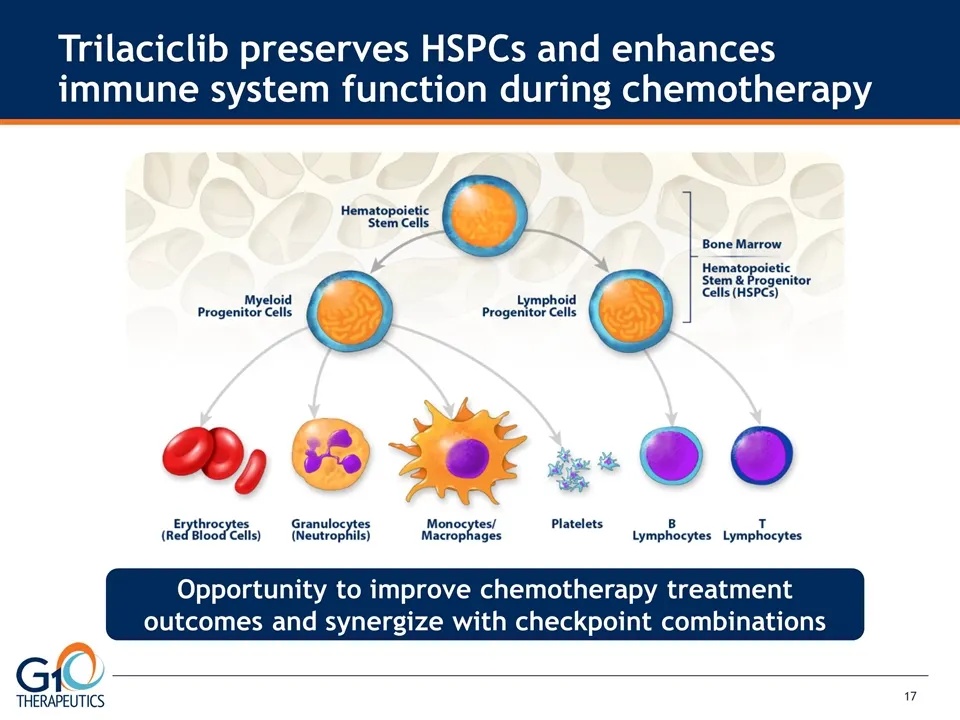
Slide 17: Opportunity to improve chemotherapy treatment outcomes
Opportunity to improve chemotherapy treatment outcomes and synergize with checkpoint combinations Trilaciclib preserves HSPCs and enhances immune system function during chemotherapy
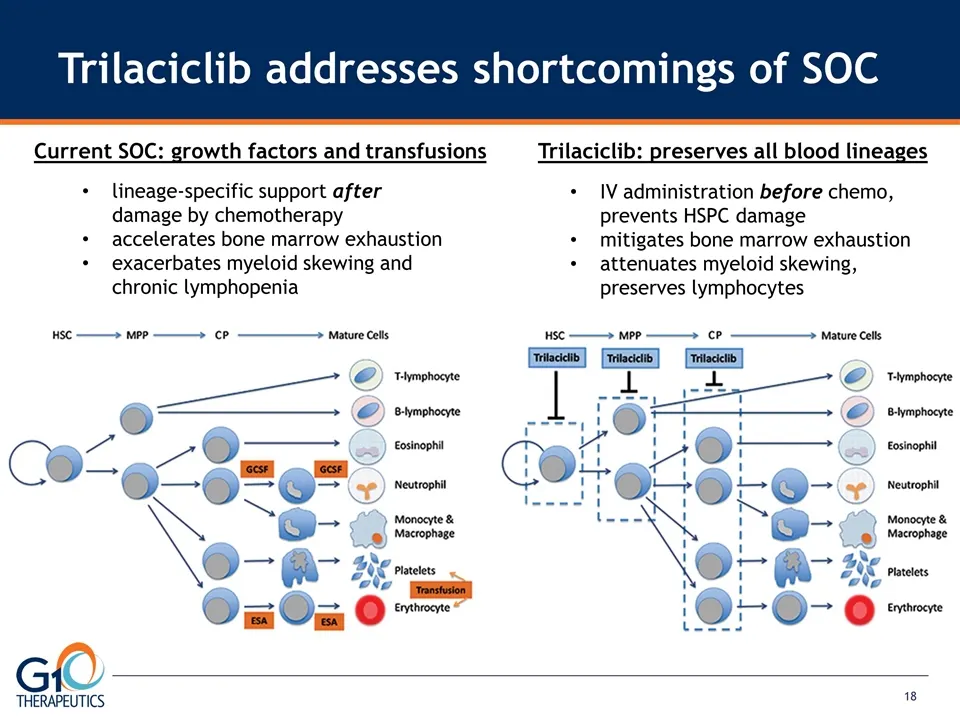
Slide 18: Trilaciclib addresses shortcomings of SOC
Trilaciclib addresses shortcomings of SOC lineage-specific support after damage by chemotherapy accelerates bone marrow exhaustion exacerbates myeloid skewing and chronic lymphopenia Trilaciclib: preserves all blood lineages Current SOC: growth factors and transfusions IV administration before chemo
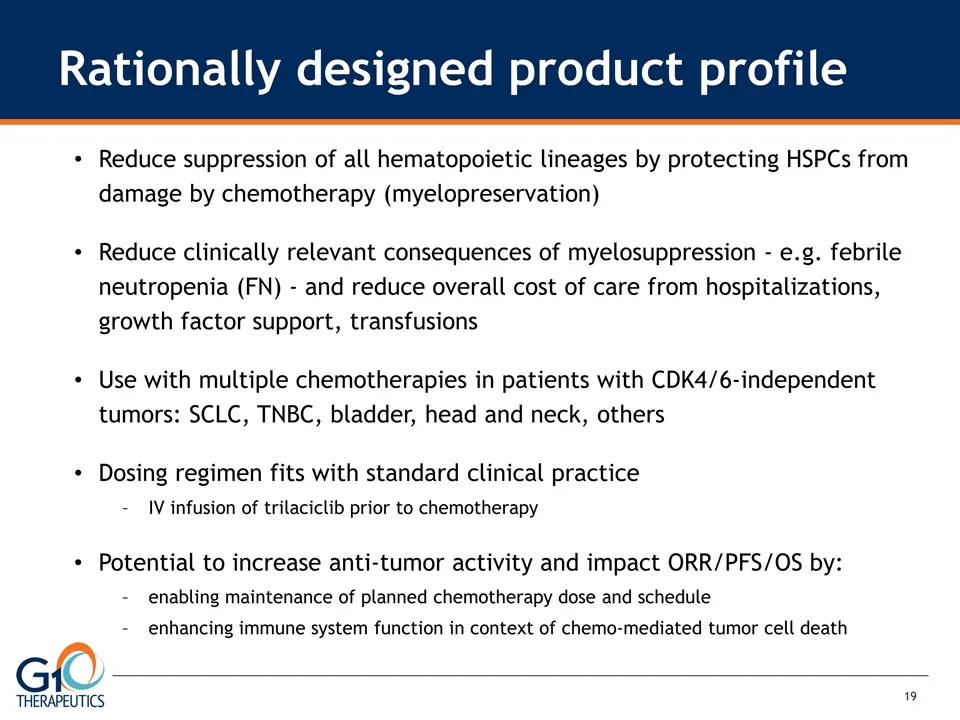
Slide 19: Rationally designed product profile
Rationally designed product profile Reduce suppression of all hematopoietic lineages by protecting HSPCs from damage by chemotherapy (myelopreservation) Reduce clinically relevant consequences of myelosuppression - e.g. febrile neutropenia (FN) - and reduce overall cost of care from hospitalizations
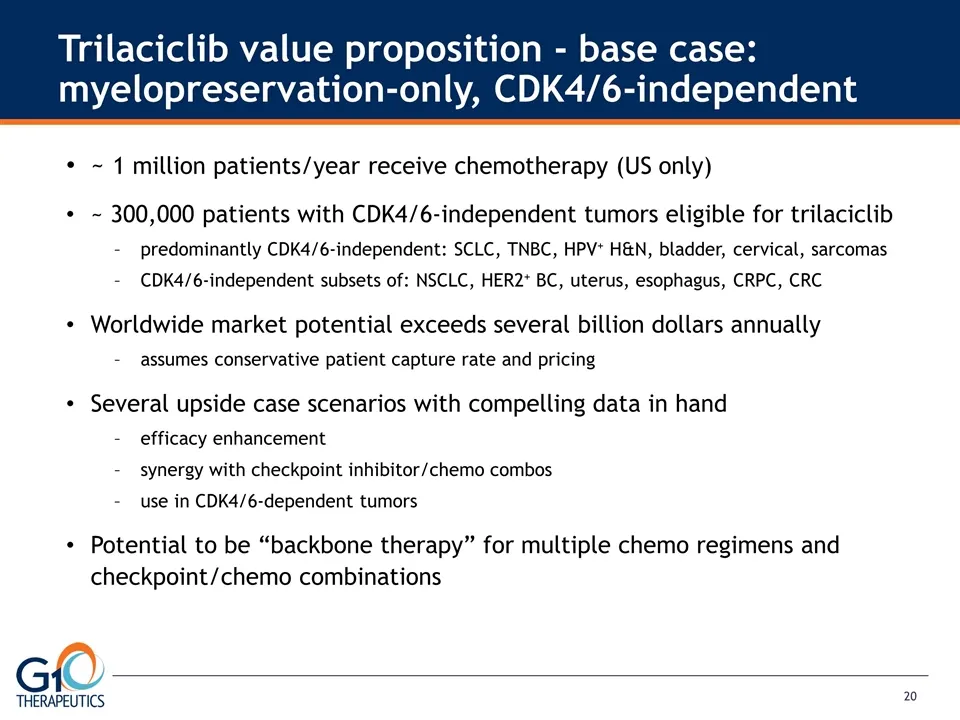
Slide 20: Trilaciclib value proposition - base case
Trilaciclib value proposition - base case: myelopreservation-only, CDK4/6-independent ~ 1 million patients/year receive chemotherapy (US only) ~ 300,000 patients with CDK4/6-independent tumors eligible for trilaciclib predominantly CDK4/6-independent: SCLC, TNBC, HPV+ H&N, bladder, cervical, sarcoma
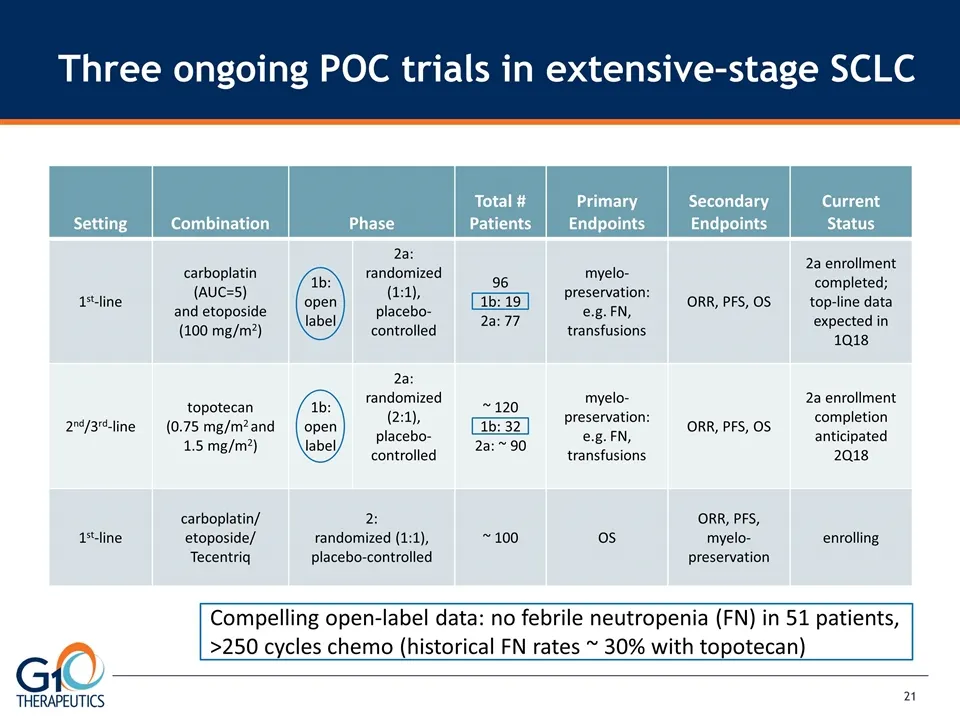
Slide 21: Three ongoing POC trials in extensive-stage SCLC
Three ongoing POC trials in extensive–stage SCLC Setting Combination Phase Total # Patients Primary Endpoints Secondary Endpoints Current Status 1st-line carboplatin (AUC=5) and etoposide (100 mg/m2) 1b: open label 2a: randomized (1:1), placebo-controlled 96 1b: 19 2a: 77 myelo-preservation: e.g. FN
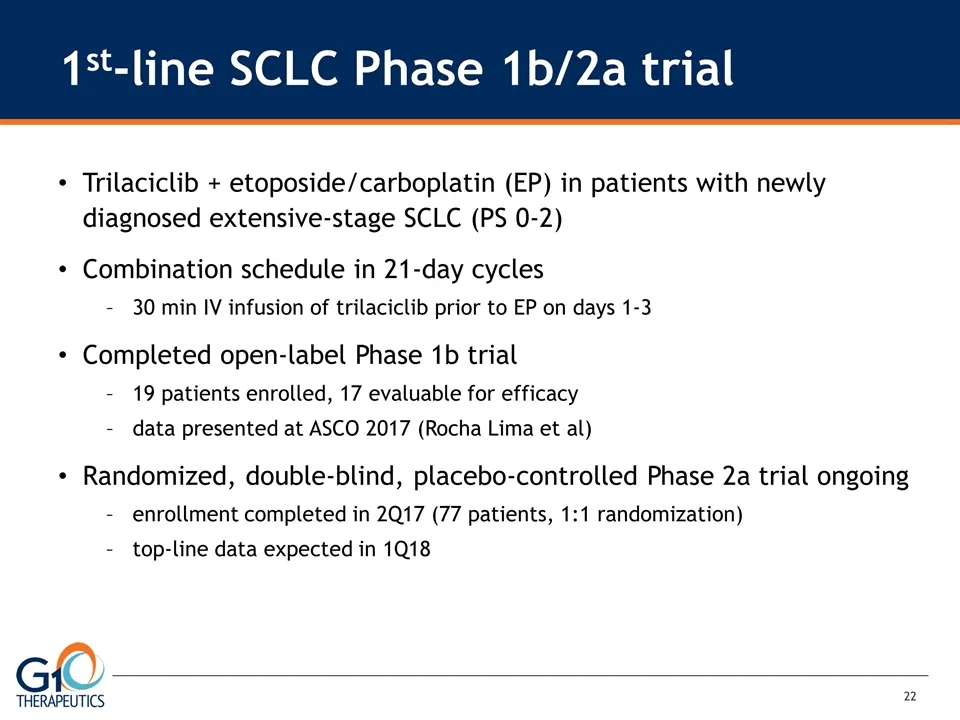
Slide 22: 1st-line SCLC Phase 1b/2a trial
1st-line SCLC Phase 1b/2a trial Trilaciclib + etoposide/carboplatin (EP) in patients with newly diagnosed extensive-stage SCLC (PS 0-2) Combination schedule in 21-day cycles 30 min IV infusion of trilaciclib prior to EP on days 1-3 Completed open-label Phase 1b trial 19 patients enrolled, 17 evaluab
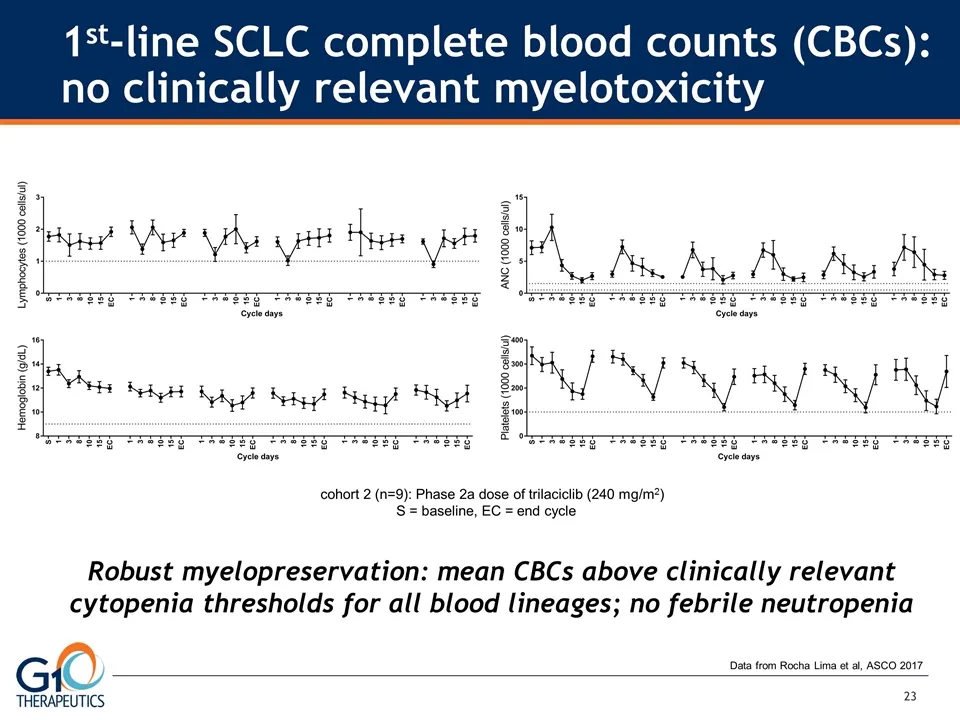
Slide 23: Robust myelopreservation: no febrile neutropenia
Robust myelopreservation: mean CBCs above clinically relevant cytopenia thresholds for all blood lineages; no febrile neutropenia cohort 2 (n=9): Phase 2a dose of trilaciclib (240 mg/m2) S = baseline, EC = end cycle 1st-line SCLC complete blood counts (CBCs): no clinically relevant myelotoxicity Dat
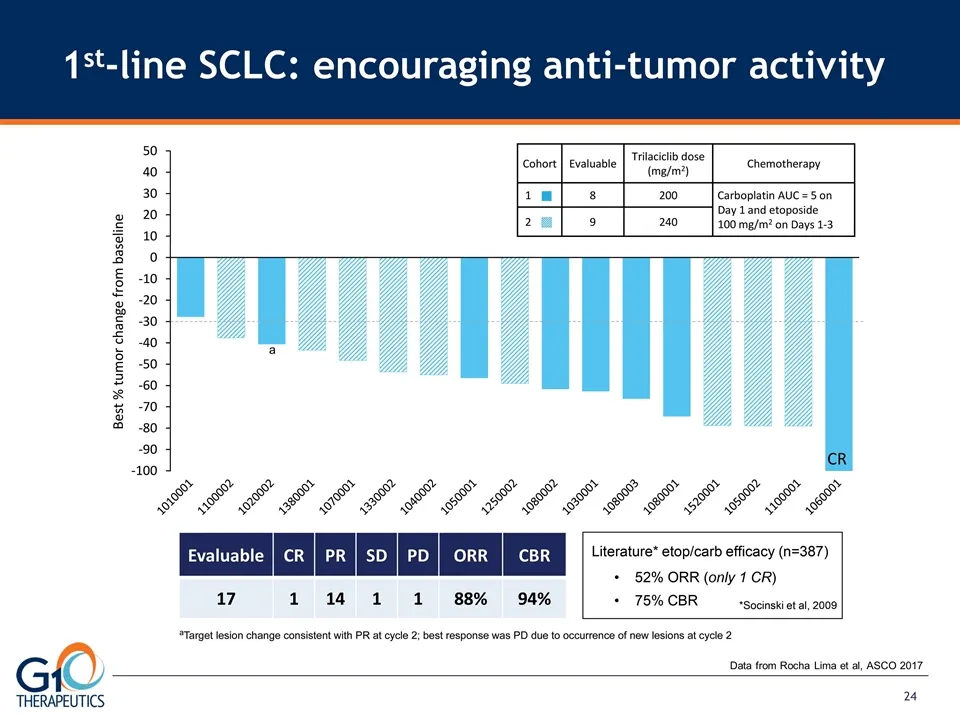
Slide 24: 1st-line SCLC: encouraging anti-tumor activity
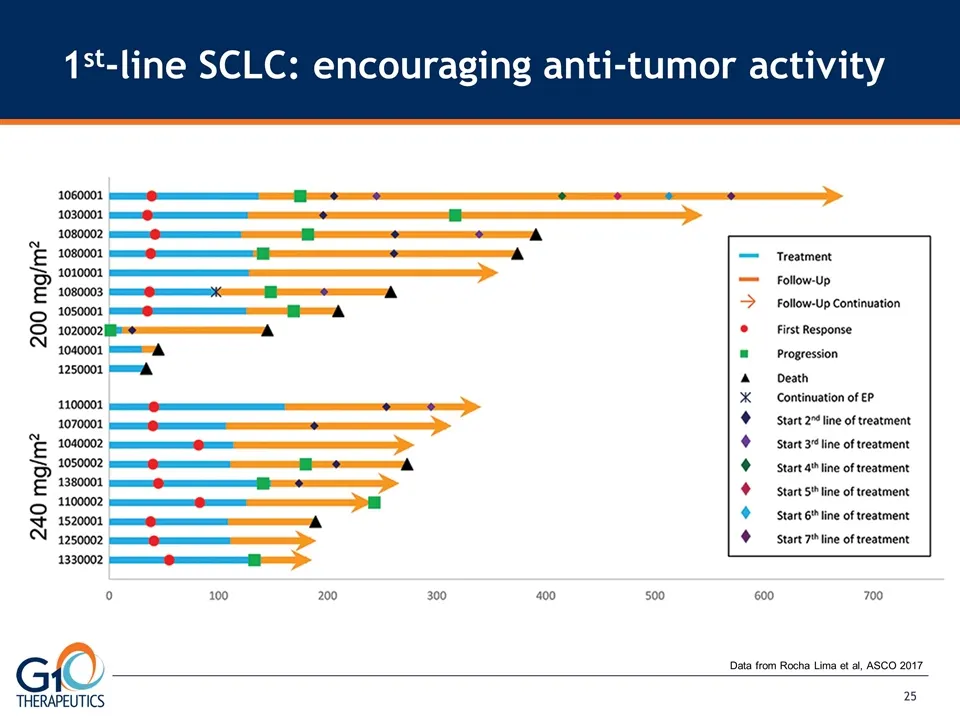
1st-line SCLC: encouraging anti-tumor activity Data from Rocha Lima et al, ASCO 2017
Slide 25: 1st-line SCLC: encouraging anti-tumor activity
1st-line SCLC: encouraging anti-tumor activity Data from Rocha Lima et al, ASCO 2017
Slide 26: SCLC 1b/2a trials: conclusions and plans
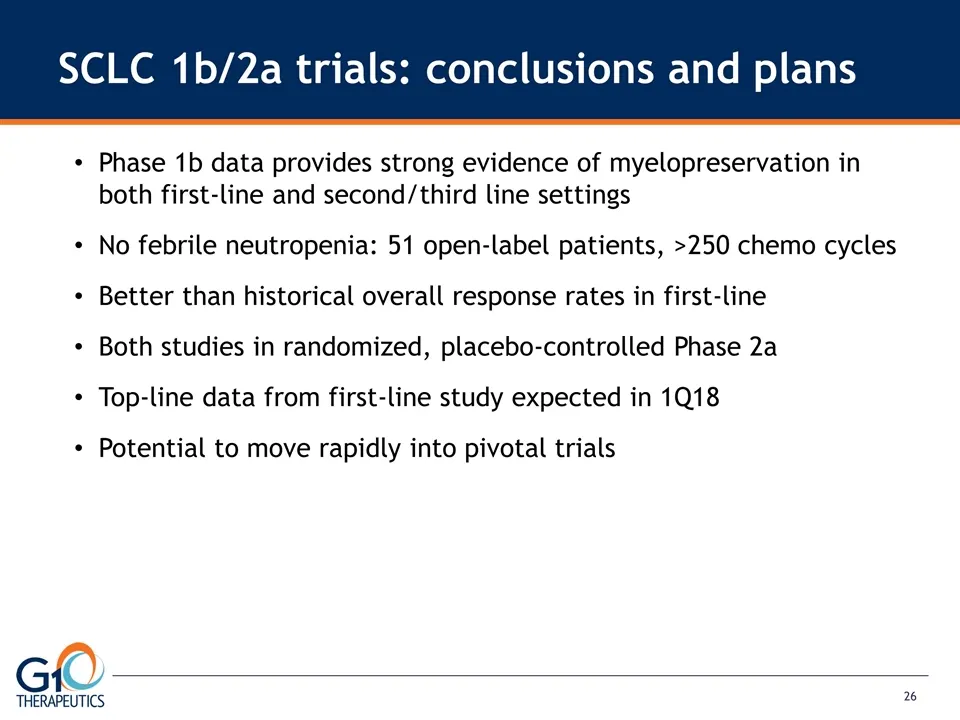
SCLC 1b/2a trials: conclusions and plans Phase 1b data provides strong evidence of myelopreservation in both first-line and second/third line settings No febrile neutropenia: 51 open-label patients, >250 chemo cycles Better than historical overall response rates in first-line Both studies in randomi
Slide 27: SCLC: trilaciclib/chemo/checkpoint inhibitor combination trial
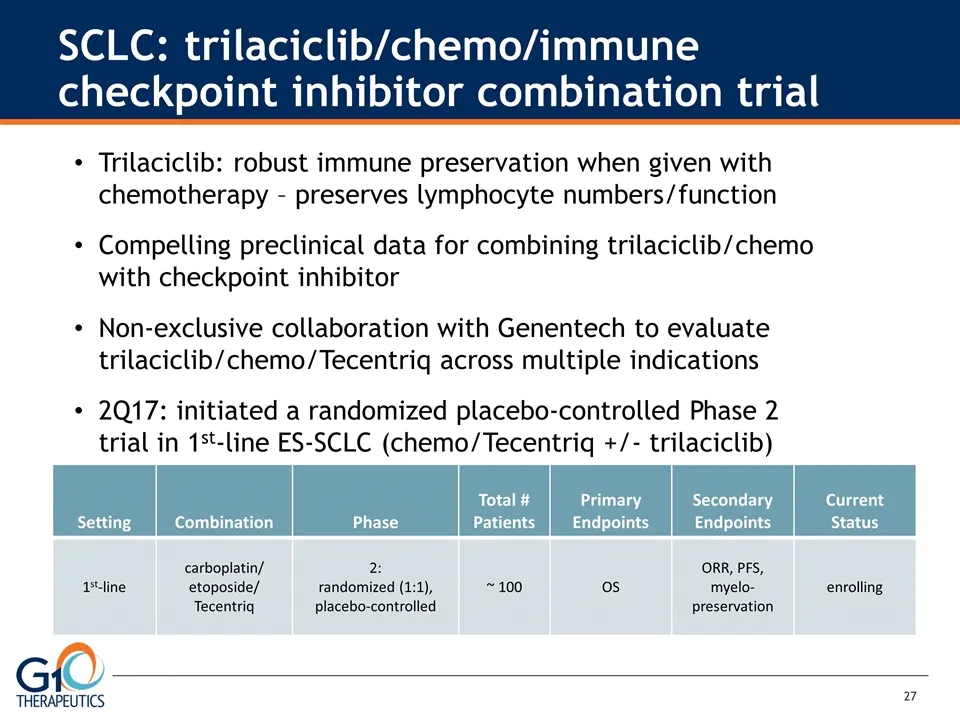
SCLC: trilaciclib/chemo/immune checkpoint inhibitor combination trial Trilaciclib: robust immune preservation when given with chemotherapy – preserves lymphocyte numbers/function Compelling preclinical data for combining trilaciclib/chemo with checkpoint inhibitor Non-exclusive collaboration with Ge
Slide 28: Trilaciclib enhances chemo/checkpoint efficacy in syngeneic tumor model
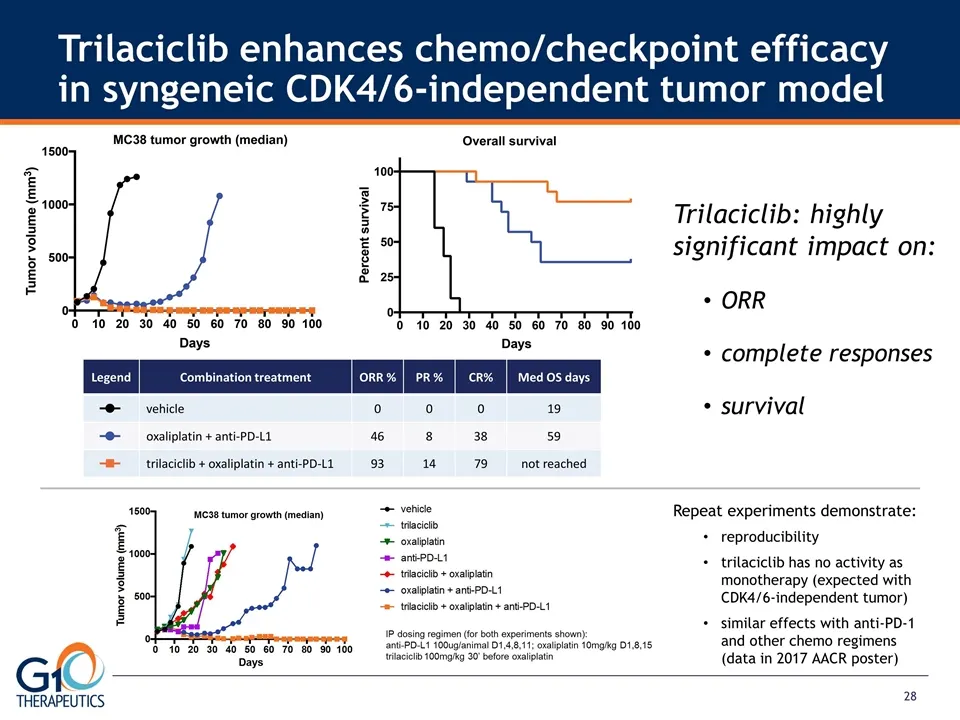
Trilaciclib enhances chemo/checkpoint efficacy in syngeneic CDK4/6-independent tumor model MC38 tumor growth (median) Trilaciclib: highly significant impact on: ORR complete responses survival Repeat experiments demonstrate: reproducibility trilaciclib has no activity as monotherapy (expected with C
Slide 29: Expansion to other indications: TNBC
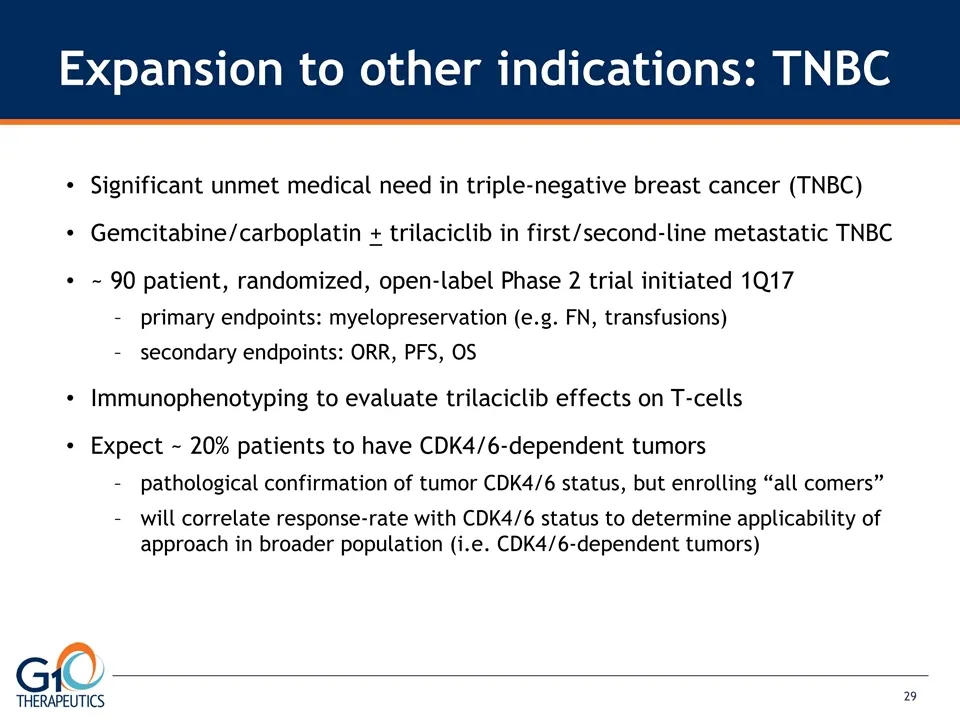
Expansion to other indications: TNBC Significant unmet medical need in triple-negative breast cancer (TNBC) Gemcitabine/carboplatin + trilaciclib in first/second-line metastatic TNBC ~ 90 patient, randomized, open-label Phase 2 trial initiated 1Q17 primary endpoints: myelopreservation (e.g. FN, tran
Slide 30: G1T38 development program
G1T38 DEVELOPMENT PROGRAM GiVC THERAPEUTICS
Slide 31: Only CDK4/6 inhibitor not owned by big pharma
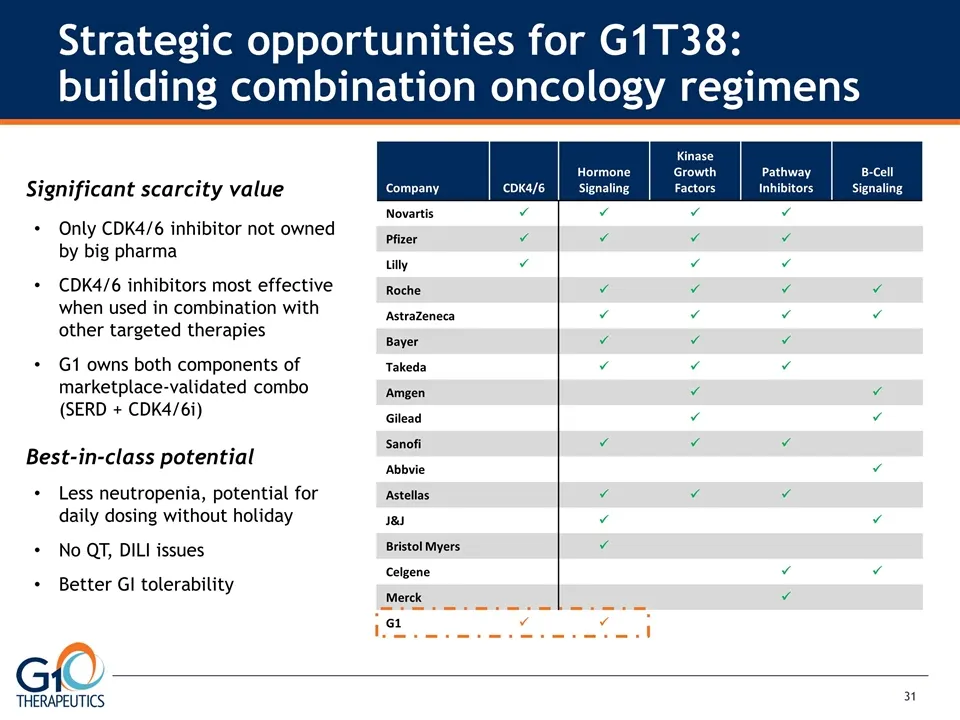
Company CDK4/6 Hormone Signaling Kinase Growth Factors Pathway Inhibitors B-Cell Signaling Novartis ü ü ü ü Pfizer ü ü ü ü Lilly ü ü ü Roche ü ü ü ü AstraZeneca ü ü ü ü Bayer ü ü ü Takeda ü ü ü Amgen ü ü Gilead ü ü Sanofi ü ü ü Abbvie ü Astellas ü ü ü J&J ü ü Bristol Myers ü Celgene ü ü Merck ü G1 ü
Slide 32: G1T38 differentiation: robust preclinical package and early clinical data
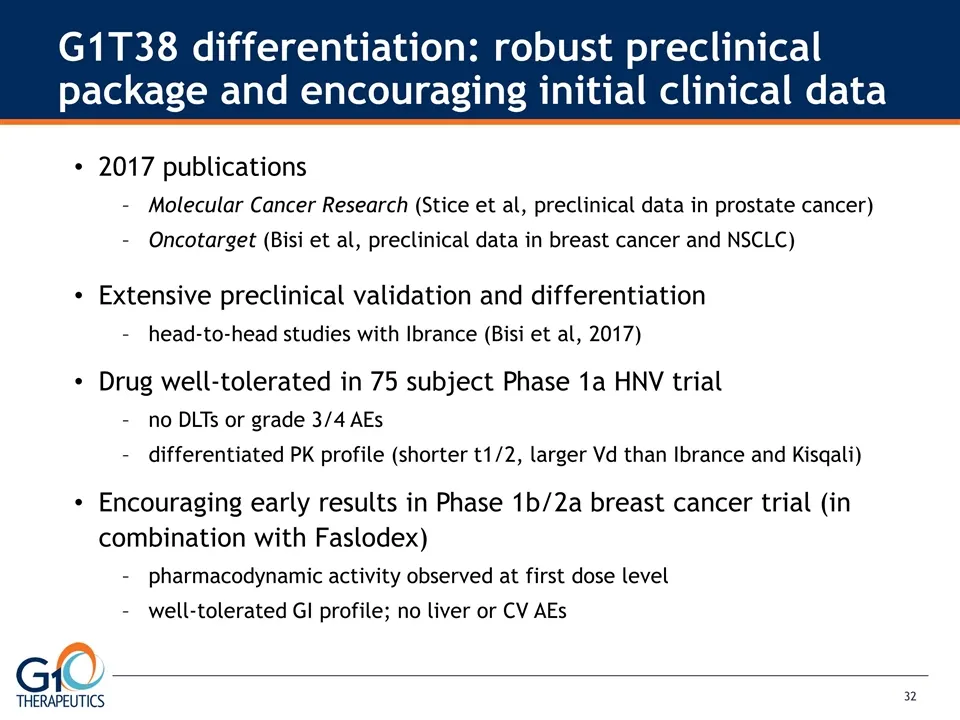
2017 publications Molecular Cancer Research (Stice et al, preclinical data in prostate cancer) Oncotarget (Bisi et al, preclinical data in breast cancer and NSCLC) Extensive preclinical validation and differentiation head-to-head studies with Ibrance (Bisi et al, 2017) Drug well-tolerated in 75 subj
Slide 33: G1T38: backbone therapy for multiple combination regimens
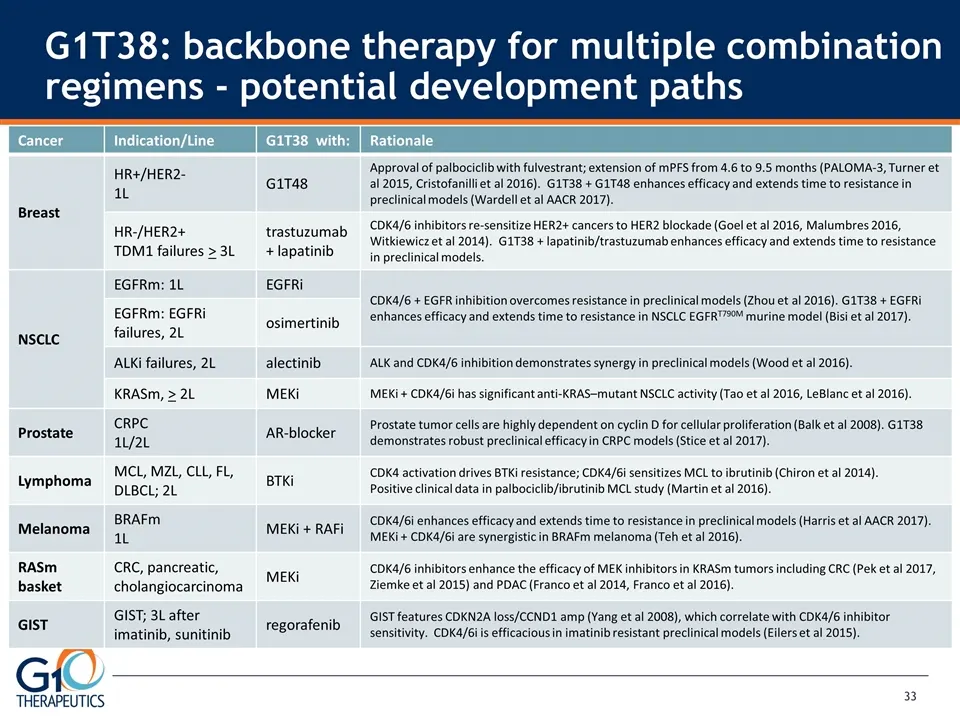
G1T38: backbone therapy for multiple combination regimens - potential development paths Cancer Indication/Line G1T38 with: Rationale Breast HR+/HER2- 1L G1T48 Approval of palbociclib with fulvestrant; extension of mPFS from 4.6 to 9.5 months (PALOMA-3, Turner et al 2015, Cristofanilli et al 2016). G
Slide 34: G1T48 development program
G1T48 DEVELOPMENT PROGRAM GiVC THERAPEUTICS
Slide 35: G1T48: oral SERD, strong strategic fit
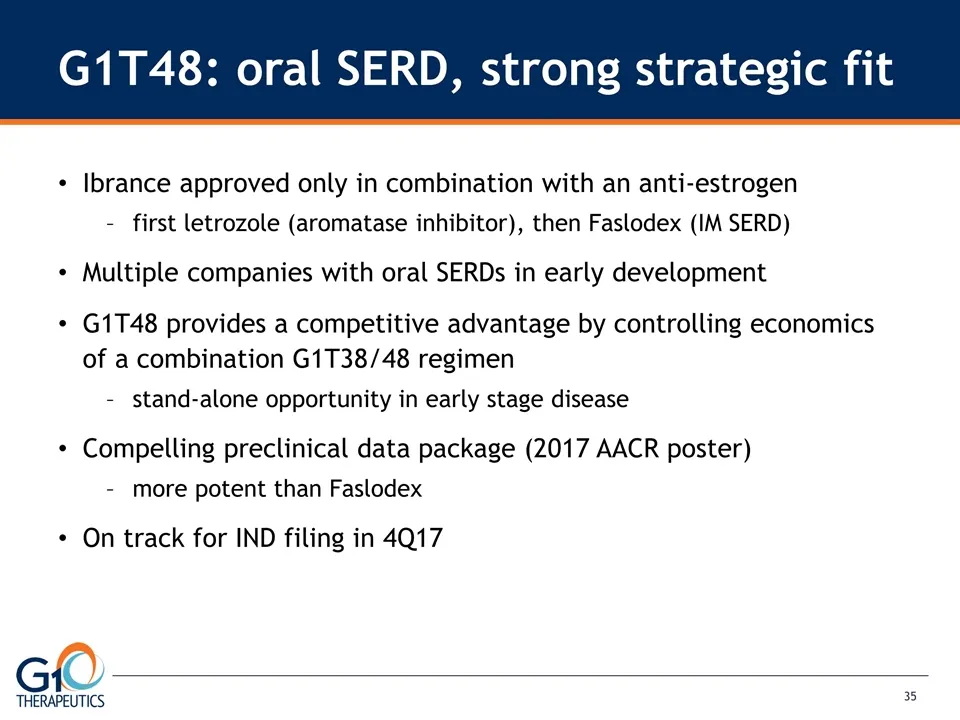
G1T48: oral SERD, strong strategic fit Ibrance approved only in combination with an anti-estrogen first letrozole (aromatase inhibitor), then Faslodex (IM SERD) Multiple companies with oral SERDs in early development G1T48 provides a competitive advantage by controlling economics of a combination G1
Slide 36: Key anticipated milestones through 2Q18
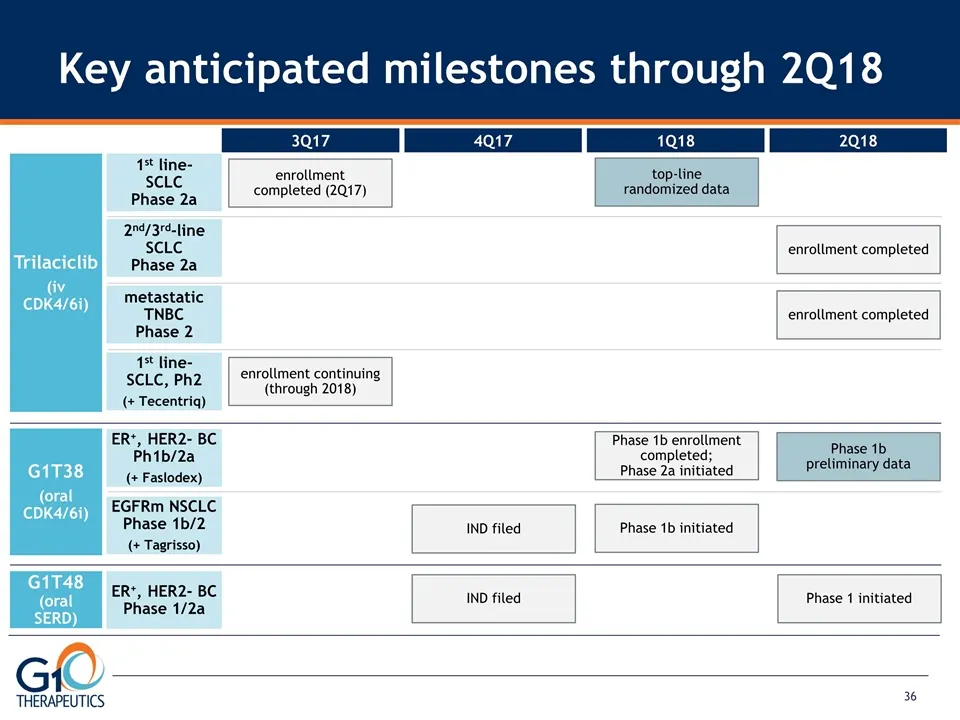
Key anticipated milestones through 2Q18 Trilaciclib (iv CDK4/6i) G1T38 (oral CDK4/6i) 1st line- SCLC Phase 2a 2nd/3rd-line SCLC Phase 2a metastatic TNBC Phase 2 1st line- SCLC, Ph2 (+ Tecentriq) EGFRm NSCLC Phase 1b/2 (+ Tagrisso) ER+, HER2- BC Phase 1/2a 3Q17 4Q17 1Q18 2Q18 G1T48 (oral SERD) Phase
Slide 37: Appendix: Trilaciclib
APPENDIX: TRILACICLIB GiVC THERAPEUTICS
Slide 38: Extensive preclinical and Phase 1a MOA data
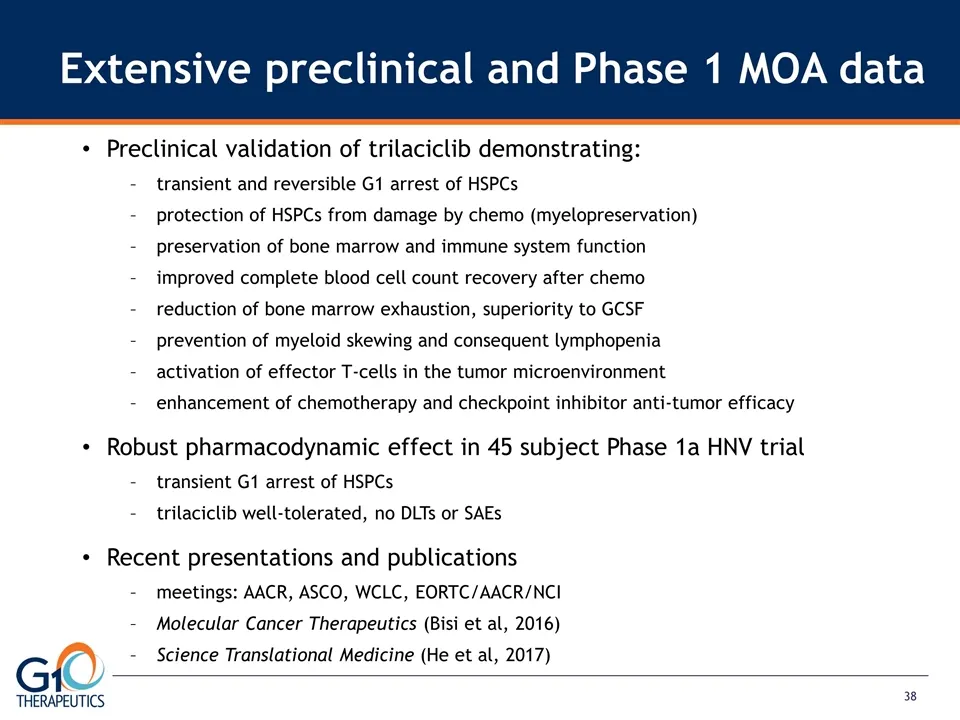
Extensive preclinical and Phase 1 MOA data Preclinical validation of trilaciclib demonstrating: transient and reversible G1 arrest of HSPCs protection of HSPCs from damage by chemo (myelopreservation) preservation of bone marrow and immune system function improved complete blood cell count recovery
Slide 39: Advantages of trilaciclib vs. GCSF
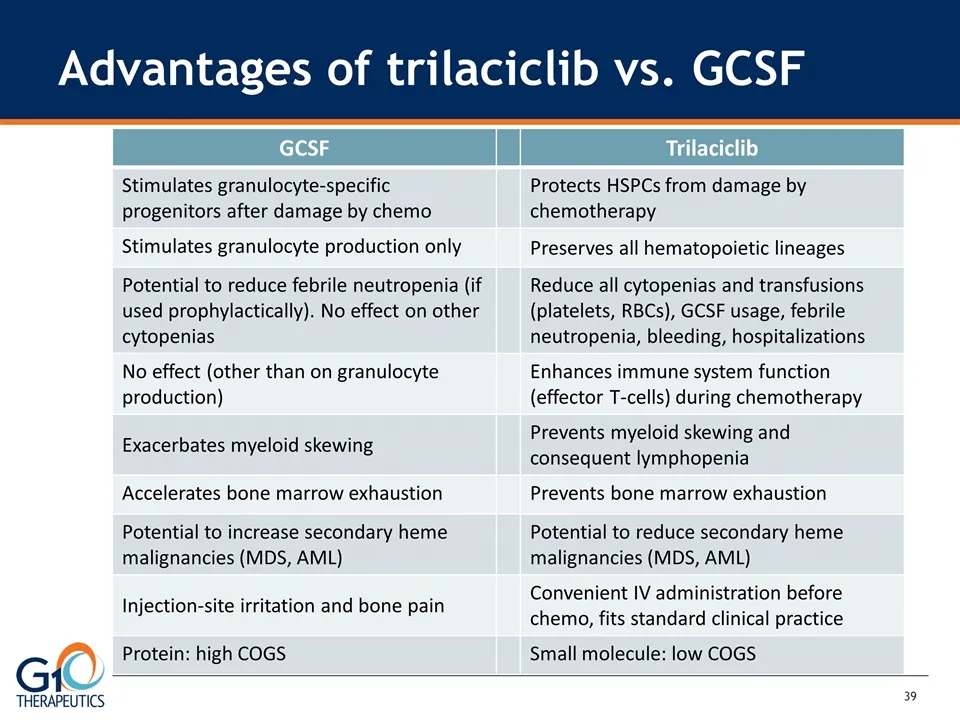
Advantages of trilaciclib vs. GCSF GCSF Trilaciclib Stimulates granulocyte-specific progenitors after damage by chemo Protects HSPCs from damage by chemotherapy Stimulates granulocyte production only Preserves all hematopoietic lineages Potential to reduce febrile neutropenia (if used prophylactical
Slide 40: Short-acting pharmacology is key
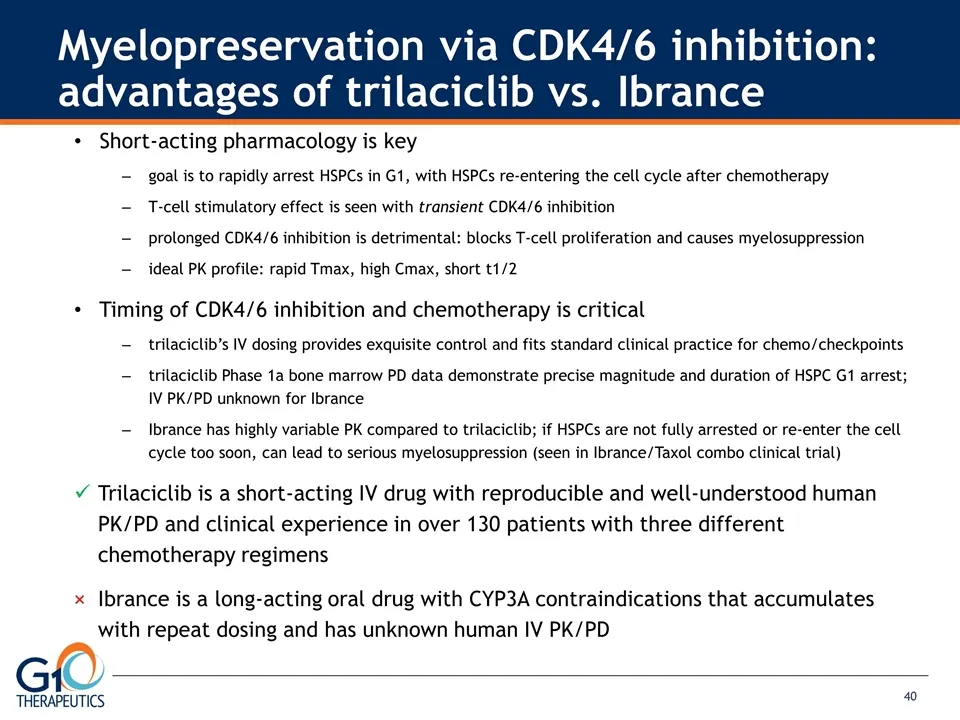
Short-acting pharmacology is key goal is to rapidly arrest HSPCs in G1, with HSPCs re-entering the cell cycle after chemotherapy T-cell stimulatory effect is seen with transient CDK4/6 inhibition prolonged CDK4/6 inhibition is detrimental: blocks T-cell proliferation and causes myelosuppression idea
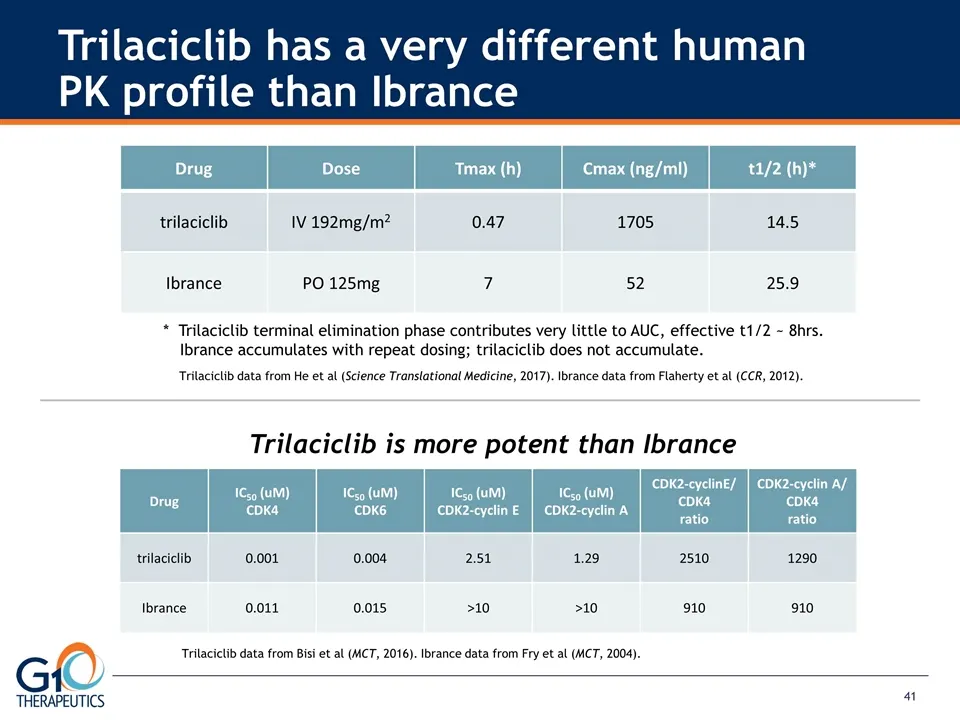
Slide 41: Trilaciclib vs. Ibrance: potency and PK profile
Drug IC50 (uM) CDK4 IC50 (uM) CDK6 IC50 (uM) CDK2-cyclin E IC50 (uM) CDK2-cyclin A CDK2-cyclinE/ CDK4 ratio CDK2-cyclin A/ CDK4 ratio trilaciclib 0.001 0.004 2.51 1.29 2510 1290 Ibrance 0.011 0.015 >10 >10 910 910 Trilaciclib has a very different human PK profile than Ibrance Drug Dose Tmax (h) Cmax
Source: SEC EDGAR · 8-K filed Aug 17, 2017
More decks from G1 Therapeutics Inc
 42nd Annual J.P. Morgan Healthcare Conference (January 2024)31 slides · Jan 8, 2024
 41st Annual J.P. Morgan Healthcare Conference (January 2023)37 slides · Jan 9, 2023
 40th Annual J.P. Morgan Healthcare Conference 202232 slides · Jan 10, 2022
 Investor Presentation (February 2021)38 slides · Feb 16, 2021
 39th Annual J.P. Morgan Healthcare Conference 202134 slides · Jan 11, 2021
 38th Annual J.P. Morgan Healthcare Conference (January 2020)31 slides · Jan 13, 2020