Kymera Therapeutics, Inc. · NASDAQ:KYMR
Kymera Therapeutics — 2nd North American Protein Degradation Congress (February 2021)
21 slides from Kymera Therapeutics's conference presentation, February 2021
Slide 1: Targeted protein degradation in oncology and beyond
Targeted protein degradation in oncology and beyond Xi a ozha ng Zhe ng, PhD Se ni or Di r e ct or of Che mi st r y INVENTING NEW MEDICINES W I T H T A RG ET ED PRO T EI N D EG RA D A T I O N February 2021

Slide 2: Forward-Looking Statements
Forward-Looking Statements This presentation contains forward-looking statements within the meaning of the Private Securities Litigation Reform Act of 1995 (PSLRA) and other federal securities laws. These statements include information about our current and future prospects and our operations and fi
Slide 3: Outline
Outline • Kymera introduction, platform and pipeline • IRAK4 Degradation in Immunology and Inflammation • Summary © 2 0 2 0 K YM ERA T H ERA PEU T I CS, I N C. PA GE 3 o f 2 7
Slide 4: Kymera: A Leading Targeted Protein Degradation Company
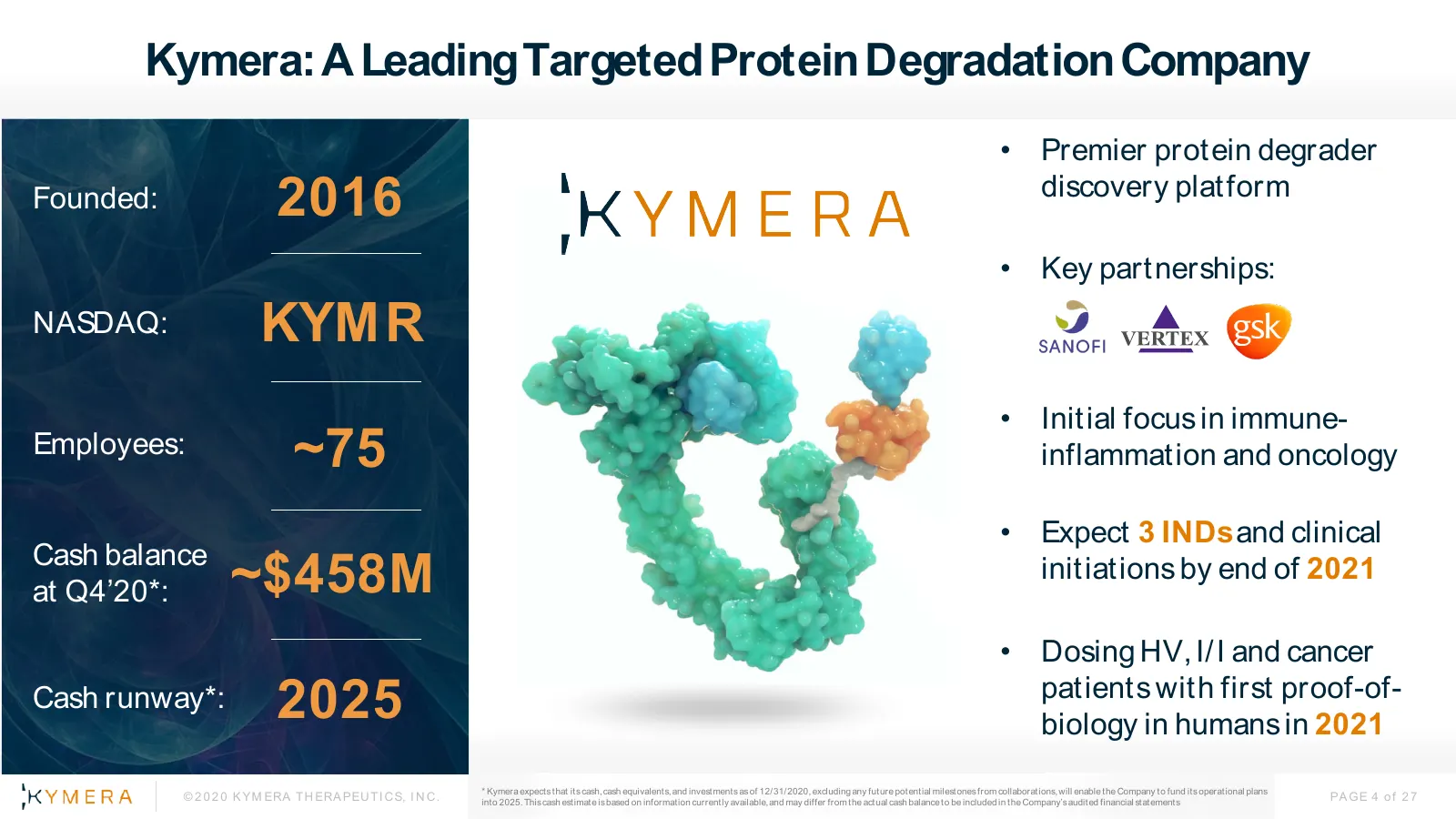
Kymera: A Leading Targeted Protein Degradation Company • Premier protein degrader Founded: 2016 discovery platform • Key partnerships: NASDAQ: KYMR • Initial focus in immune- Employees: ~75 inflammation and oncology • Expect 3 INDs and clinical Cash balance at Q4’20*: ~$458M initiations by end of 20
Slide 5: Proprietary Pegasus TPD Platform
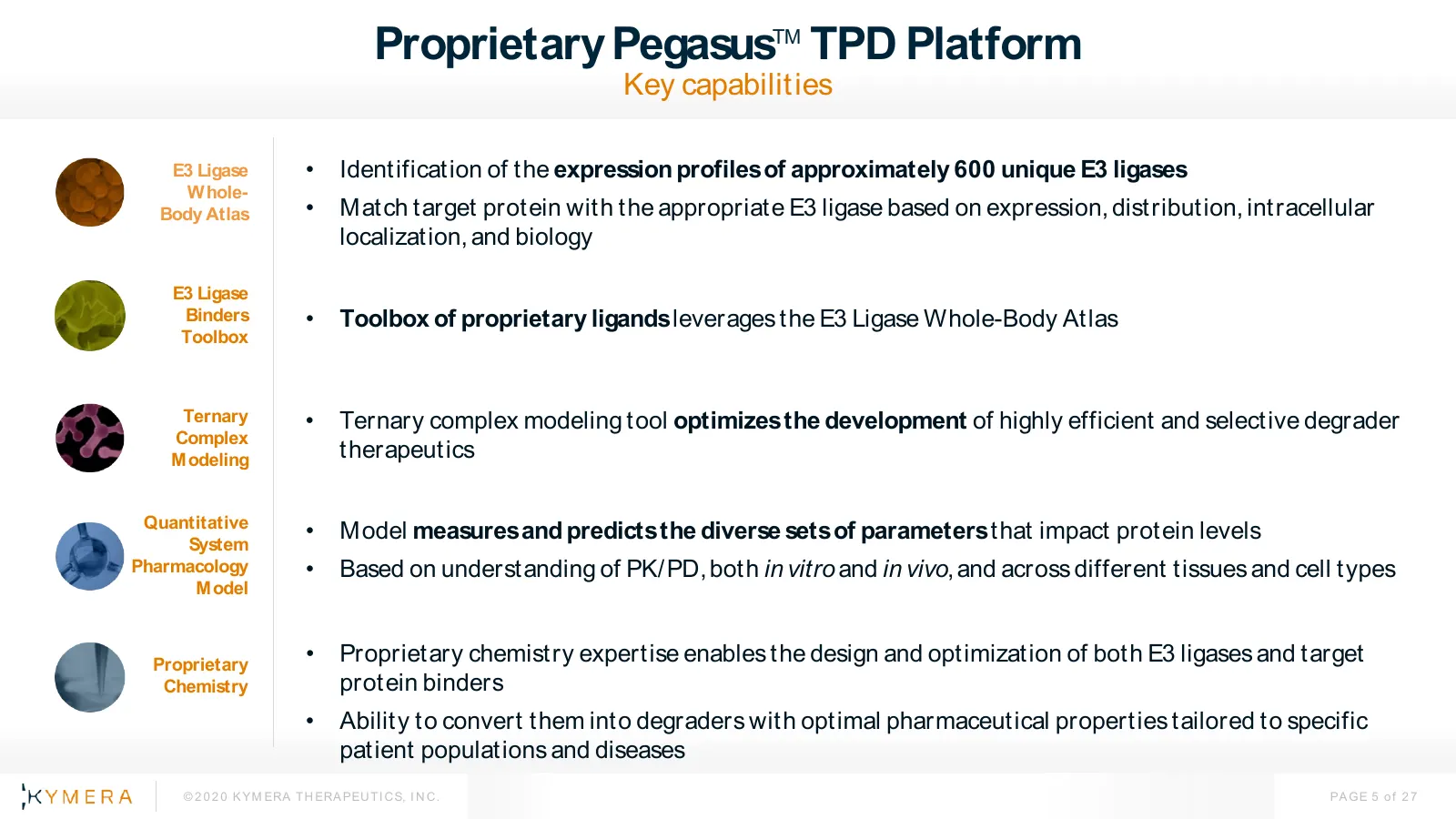
Proprietary PegasusTM TPD Platform Key capabilities E3 Ligase • Identification of the expression profiles of approximately 600 unique E3 ligases W hole- Body Atlas • Match target protein with the appropriate E3 ligase based on expression, distribution, intracellular localization, and biology Proprie
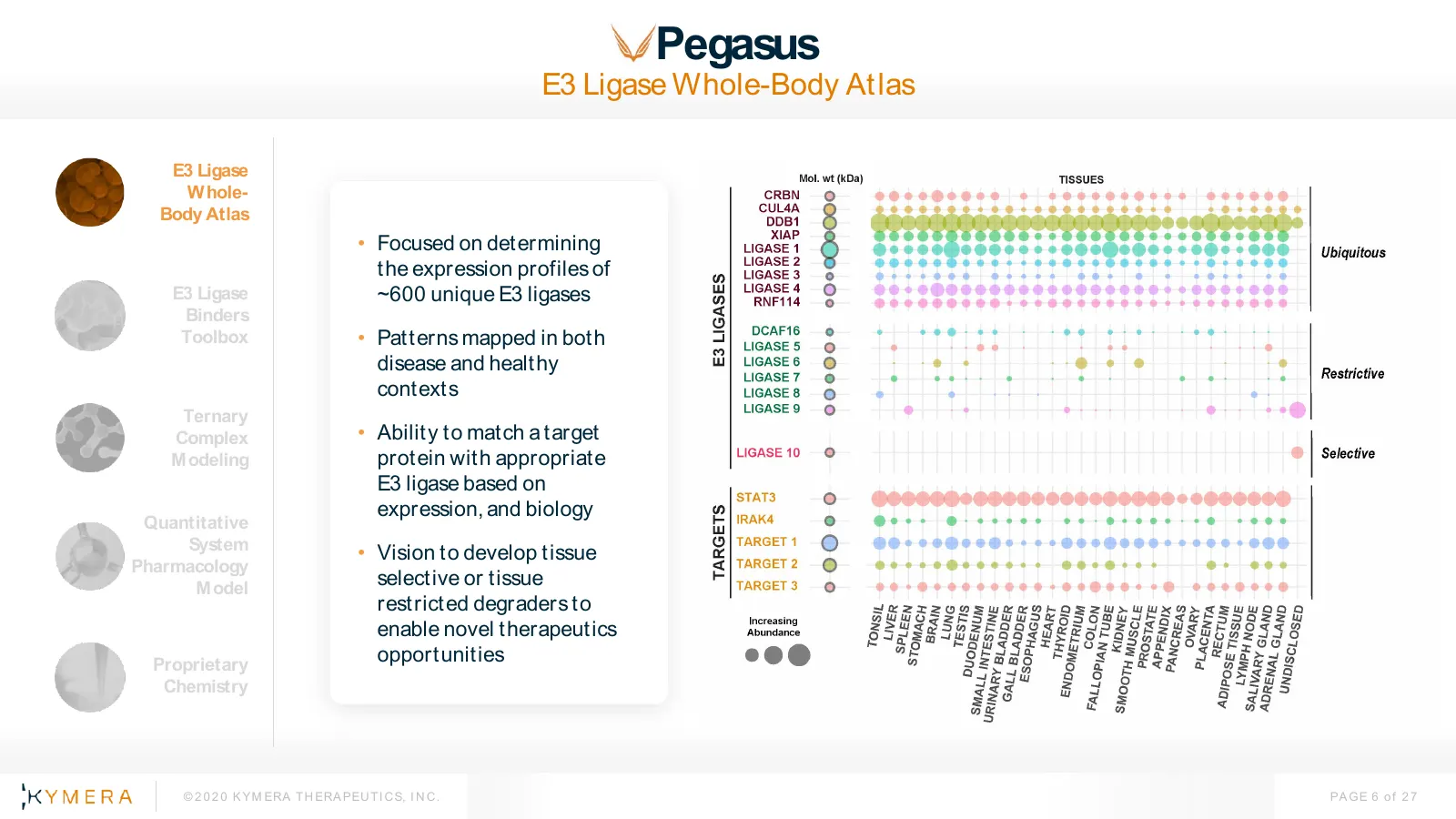
Slide 6: Pegasus: E3 Ligase Whole-Body Atlas
Pegasus E3 Ligase Whole-Body Atlas E3 Ligase W hole- Body Atlas • Focused on determining the expression profiles of E3 Ligase ~600 unique E3 ligases Binders Toolbox • Patterns mapped in both disease and healthy contexts Ternary Complex • Ability to match a target Modeling protein with appropriate E3
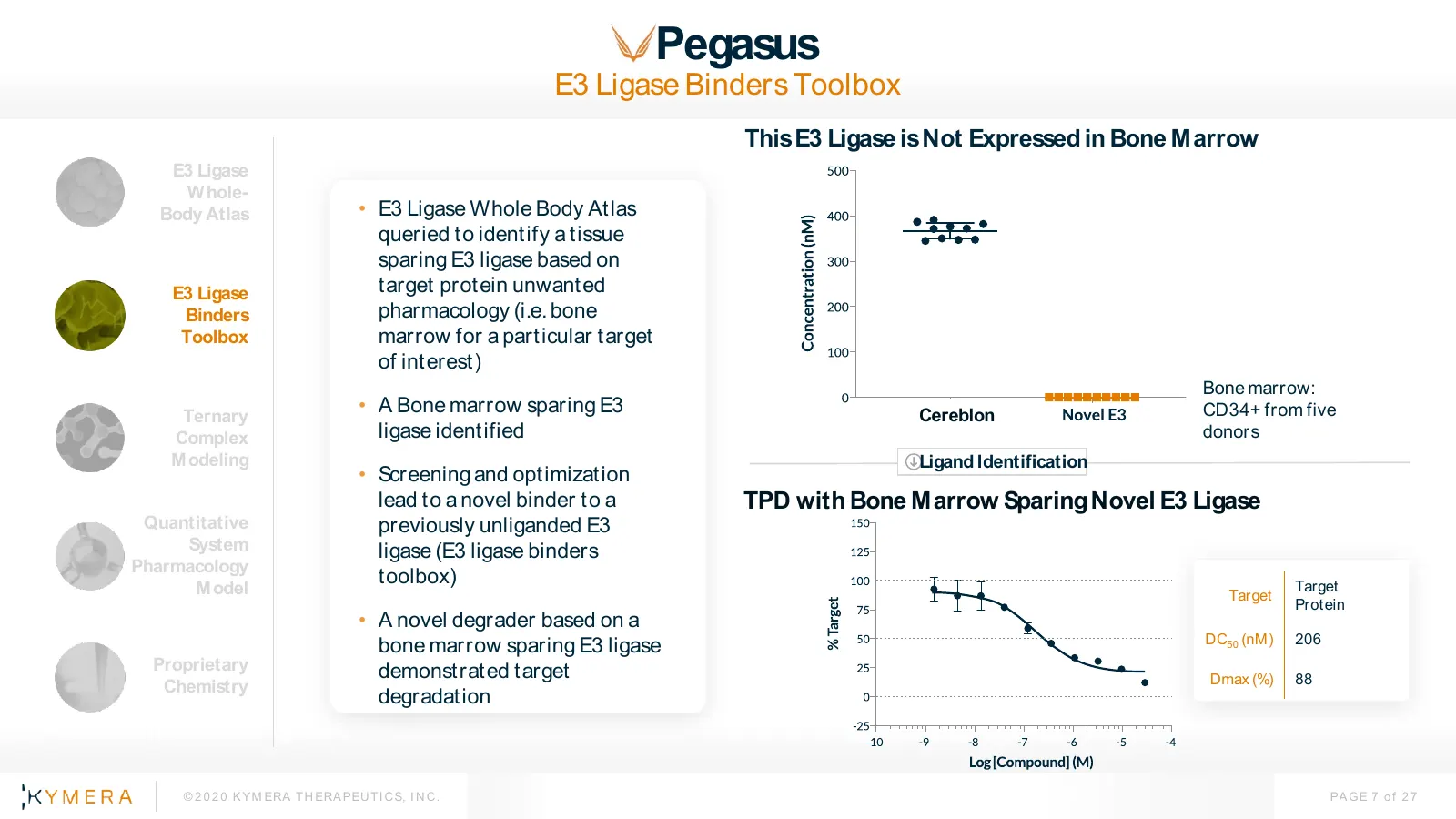
Slide 7: Pegasus: E3 Ligase Binders Toolbox
Pegasus E3 Ligase Binders Toolbox This E3 Ligase is Not Expressed in Bone Marrow E3 Ligase W hole- Body Atlas • E3 Ligase Whole Body Atlas queried to identify a tissue sparing E3 ligase based on E3 Ligase target protein unwanted Binders pharmacology (i.e. bone Toolbox marrow for a particular target
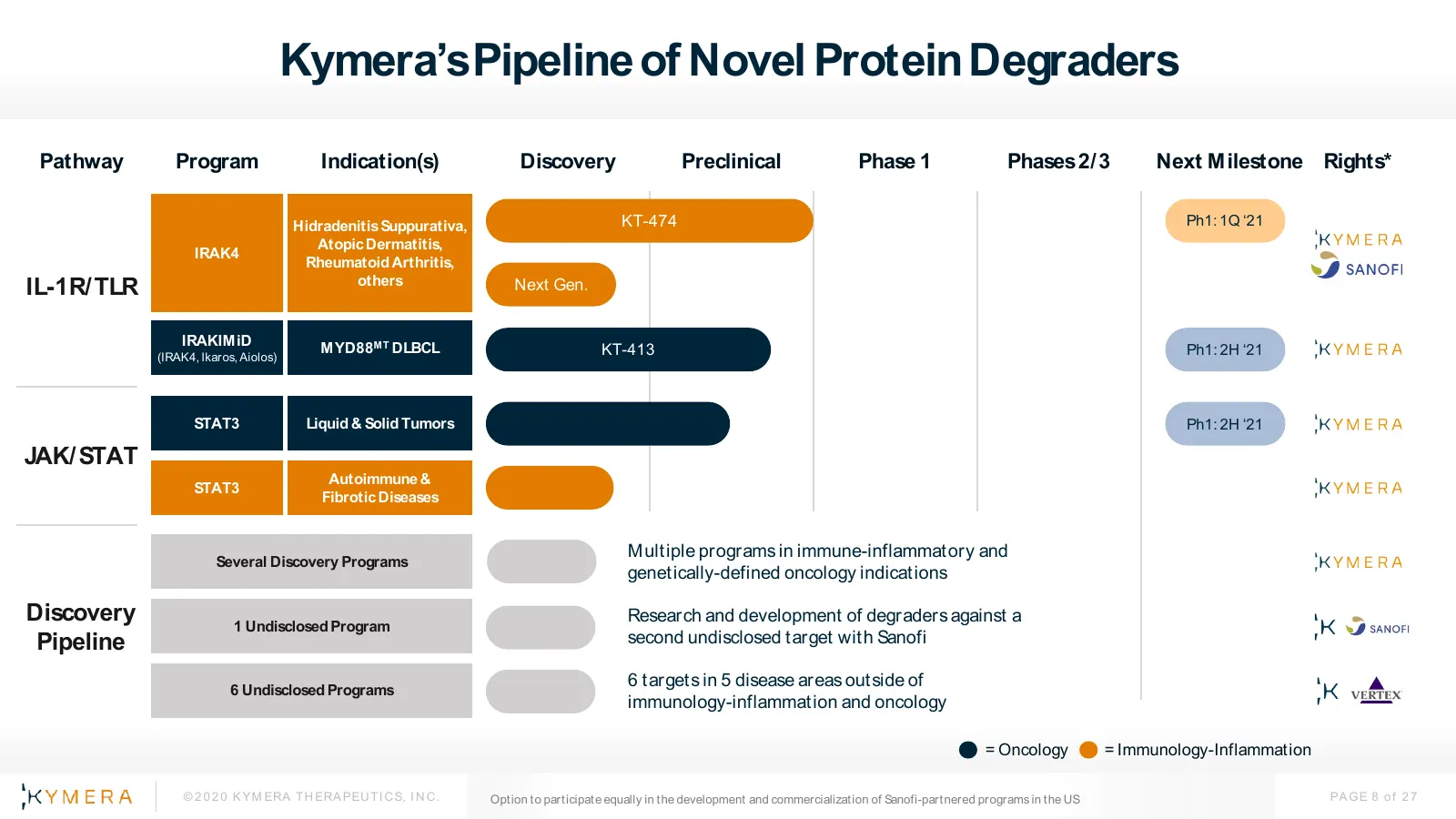
Slide 8: Kymera's Pipeline of Novel Protein Degraders
Kymera’sPipeline of Novel Protein Degraders Pathway Program Indication(s) Discovery Discovery Pre-Clinical Preclinical Phase 1 Phases 1-3 Phases 2/ 3 Next Milestone Rights* Hidradenitis Suppurativa, KT-474 Ph1: 1Q ‘21 Atopic Dermatitis, IRAK4 Rheumatoid Arthritis, IL-1R/ TLR others Next Gen. IRAKIMi

Slide 9: IRAK4
‘/KYMERA
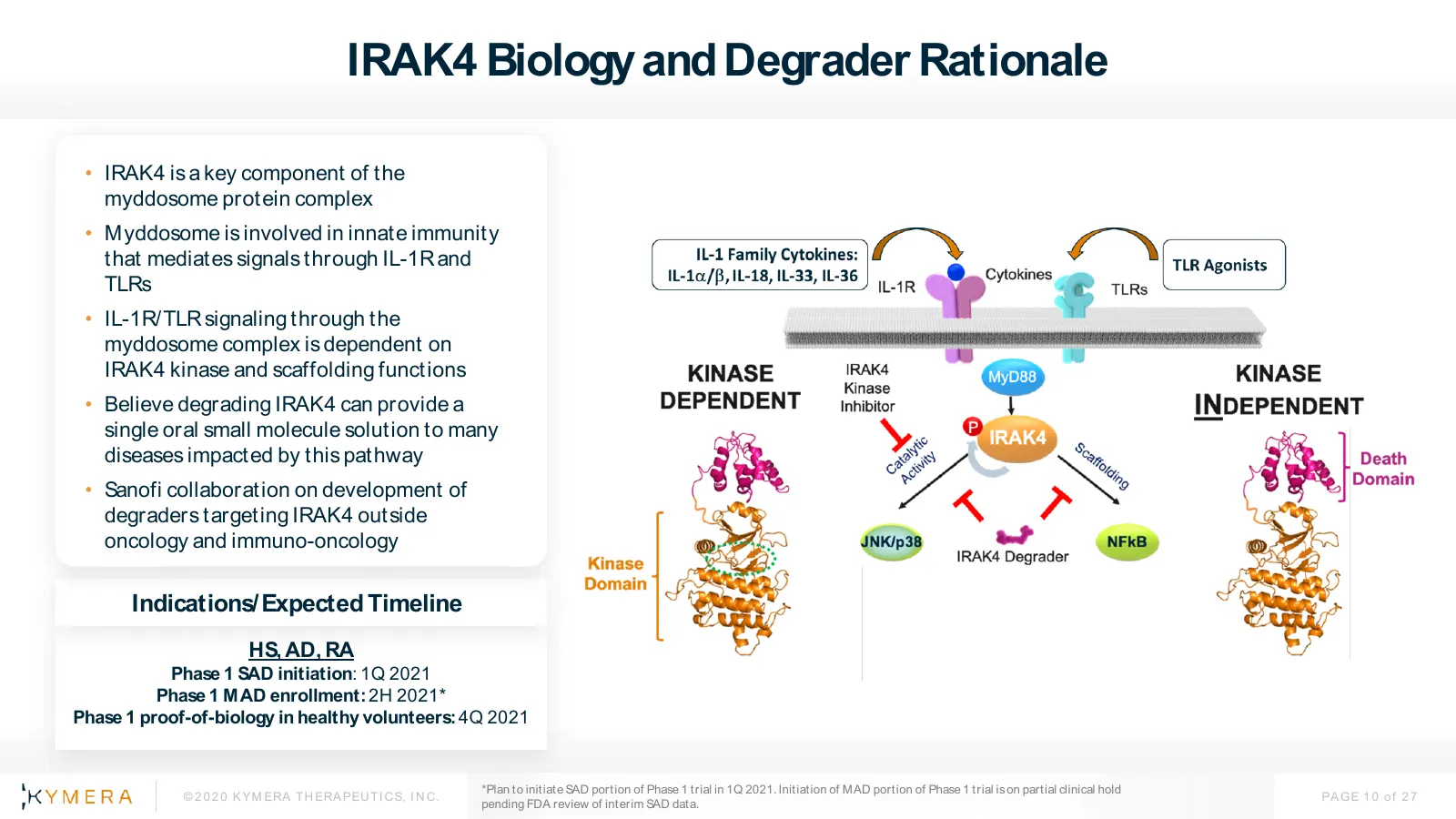
Slide 10: IRAK4 Biology and Degrader Rationale
IRAK4 Biology and Degrader Rationale • IRAK4 is a key component of the myddosome protein complex • Myddosome is involved in innate immunity that mediates signals through IL-1R and TLRs • IL-1R/TLR signaling through the myddosome complex is dependent on IRAK4 kinase and scaffolding functions • Believ
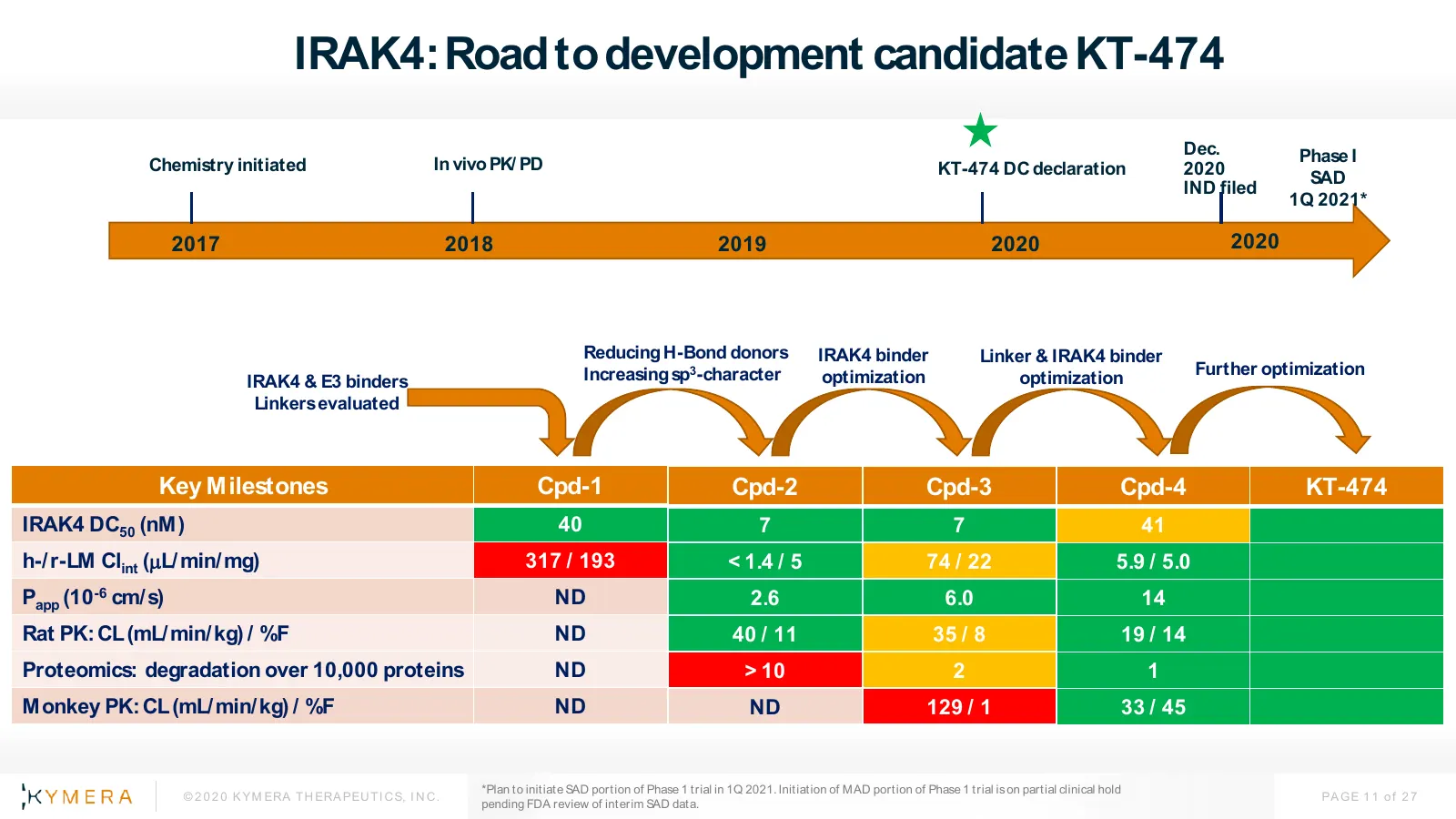
Slide 11: IRAK4: Road to development candidate KT-474
IRAK4: Road to development candidate KT-474 Dec. Phase I Chemistry initiated In vivo PK/ PD KT-474 DC declaration 2020 SAD IND filed 1Q 2021* 2017 2018 2019 2020 2020 Reducing H-Bond donors IRAK4 binder Linker & IRAK4 binder Increasing sp3-character optimization optimization Further optimization IRA
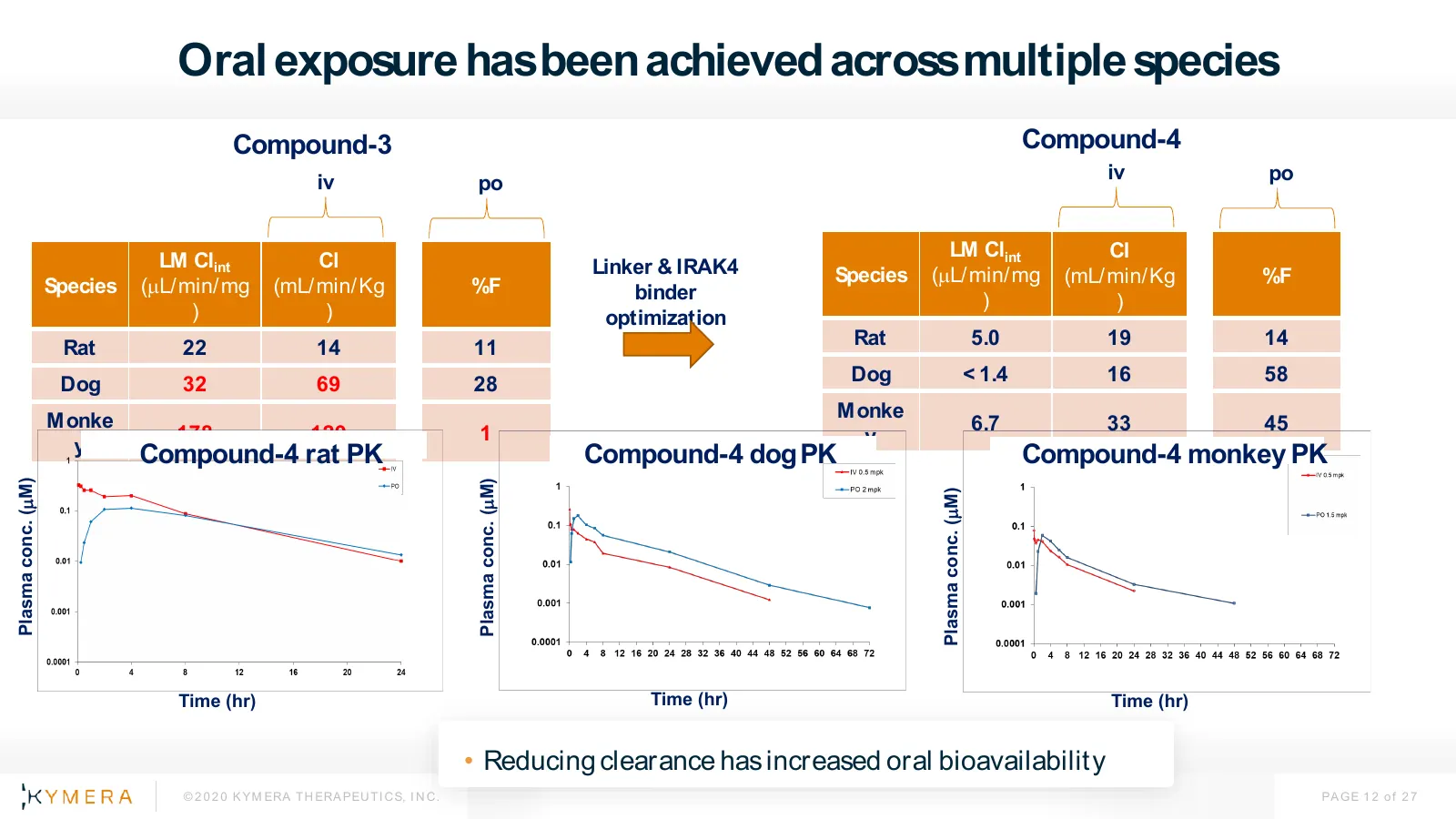
Slide 12: Oral exposure has been achieved across multiple species
Oral exposure has been achieved across multiple species Compound-3 Compound-4 iv iv po po LM Clint Cl LM Clint Cl Linker & IRAK4 Species (µL/min/mg (mL/min/Kg %F Species (µL/min/mg (mL/min/Kg %F binder ) ) ) ) optimization Rat 22 14 11 Rat 5.0 19 14 Dog 32 69 28 Dog < 1.4 16 58 Monke Monke 178 129 1
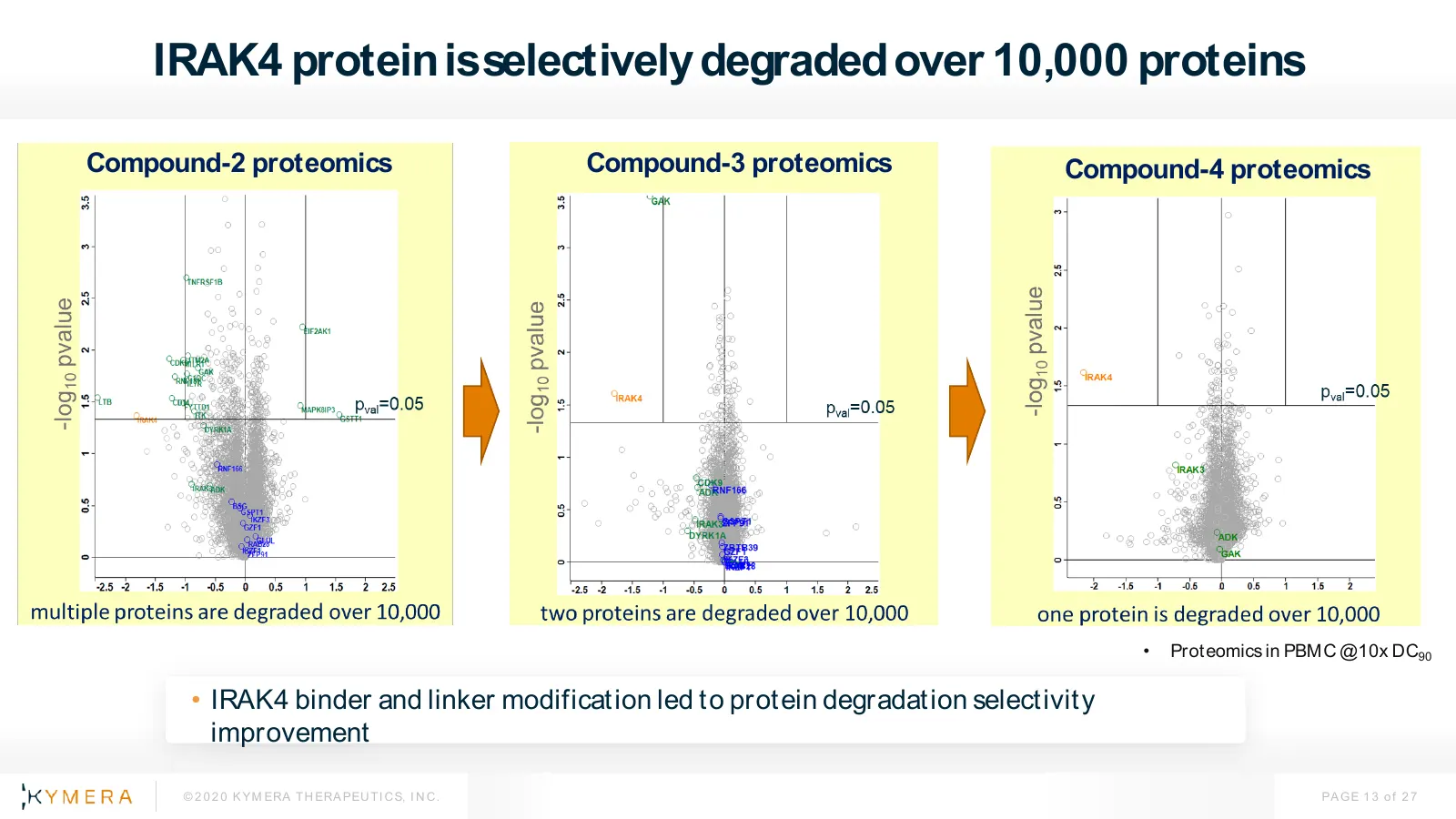
Slide 13: IRAK4 protein is selectively degraded over 10,000 proteins
IRAK4 protein is selectively degraded over 10,000 proteins Compound-2 proteomics Compound-3 proteomics Compound-4 proteomics • Proteomics in PBMC @10x DC90 • IRAK4 binder and linker modification led to protein degradation selectivity improvement © 2 0 2 0 K YM ERA T H ERA PEU T I CS, I N C. PA GE 1
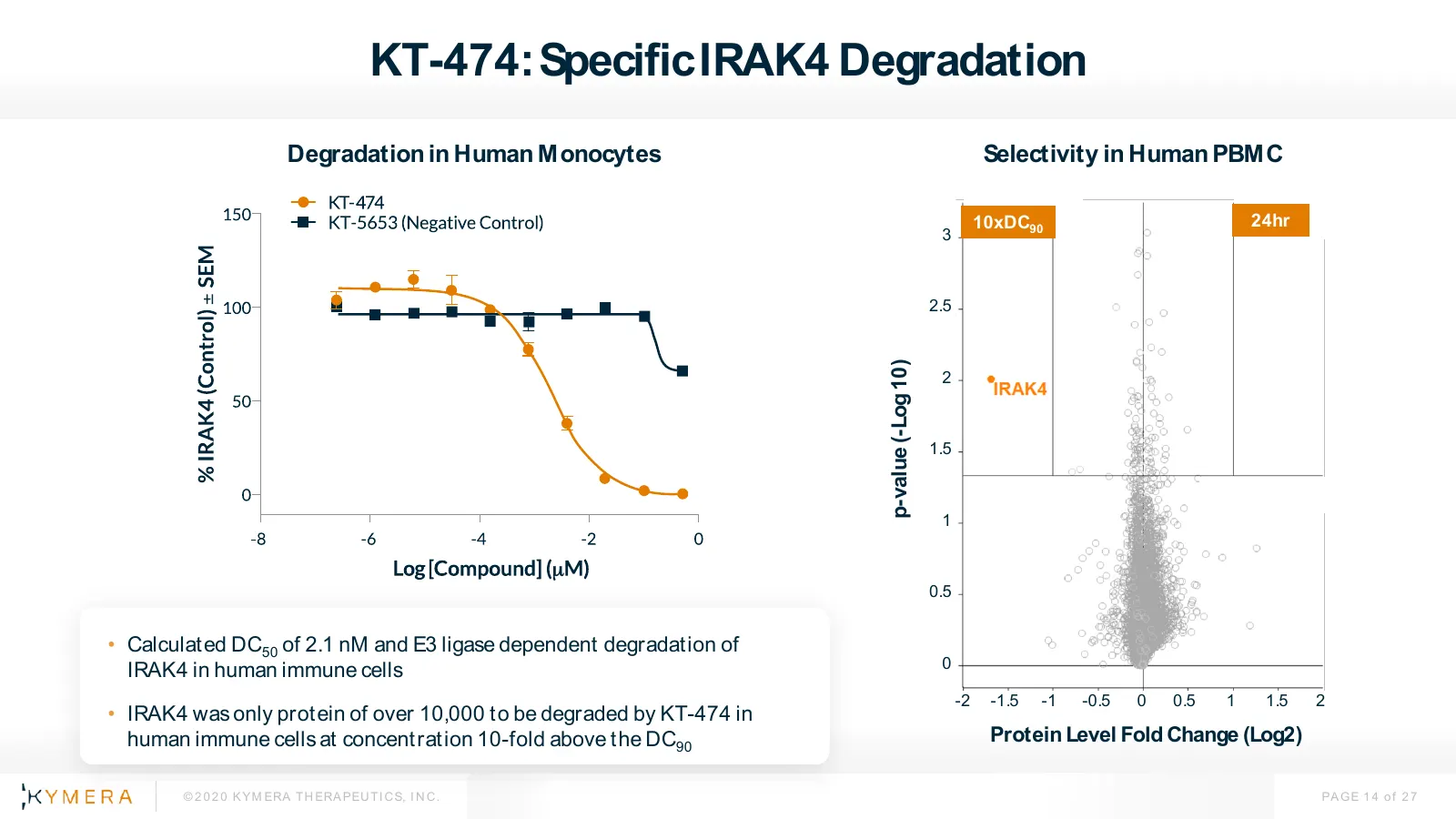
Slide 14: KT-474: Specific IRAK4 Degradation
KT-474: Specific IRAK4 Degradation Degradation in Human Monocytes Selectivity in Human PBMC 10xDC90 24hr 3 2.5 p-value (-Log 10) 2 1.5 pval=0.05 1 0.5 • Calculated DC50 of 2.1 nM and E3 ligase dependent degradation of 0 IRAK4 in human immune cells -2 -1.5 -1 -0.5 0 0.5 1 1.5 2 • IRAK4 was only prote
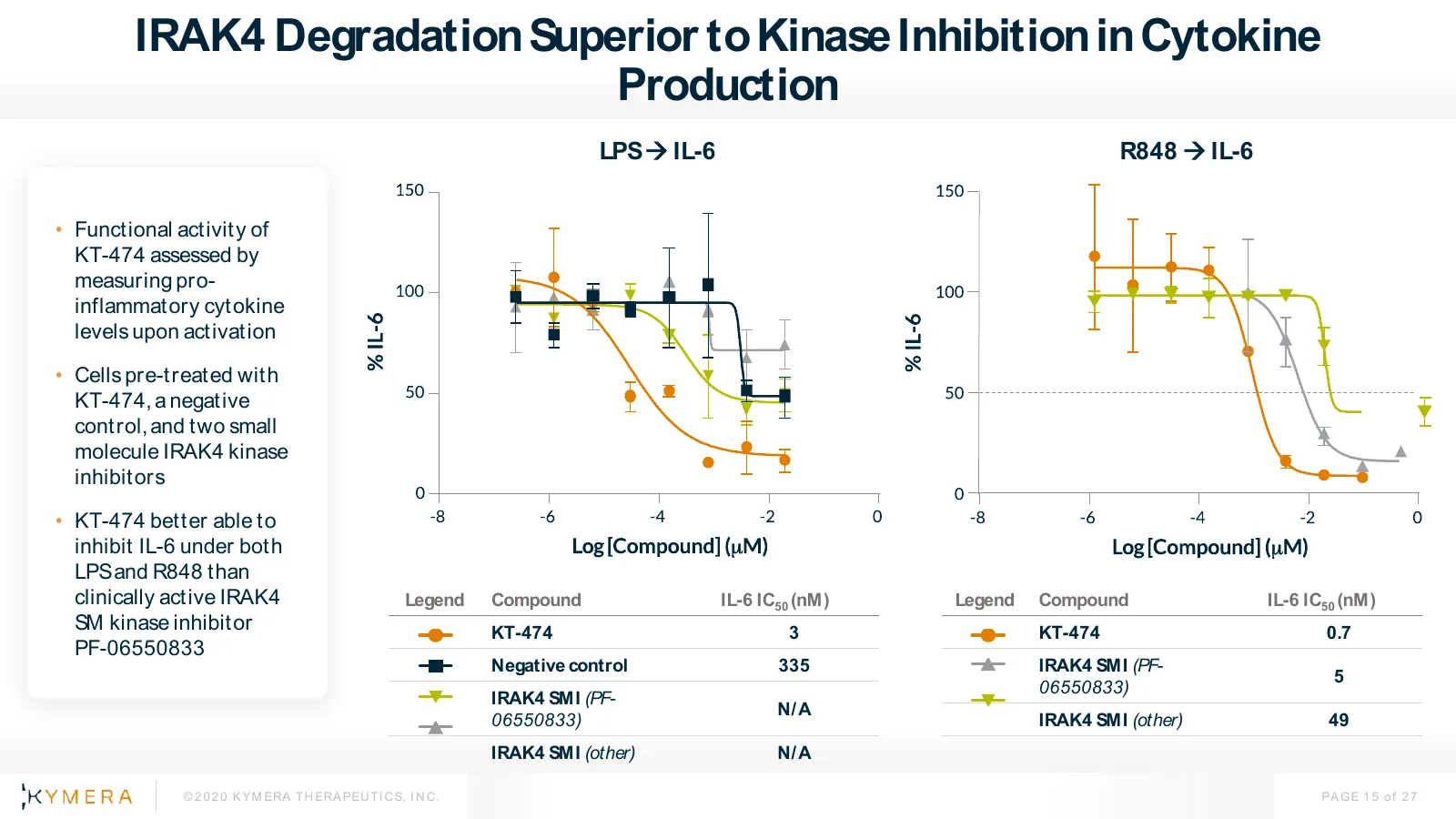
Slide 15: IRAK4 Degradation Superior to Kinase Inhibition in Cytokine Production
IRAK4 Degradation Superior to Kinase Inhibition in Cytokine Production LPS IL-6 R848 IL-6 • Functional activity of KT-474 assessed by measuring pro- inflammatory cytokine levels upon activation • Cells pre-treated with KT-474, a negative control, and two small molecule IRAK4 kinase inhibitors •
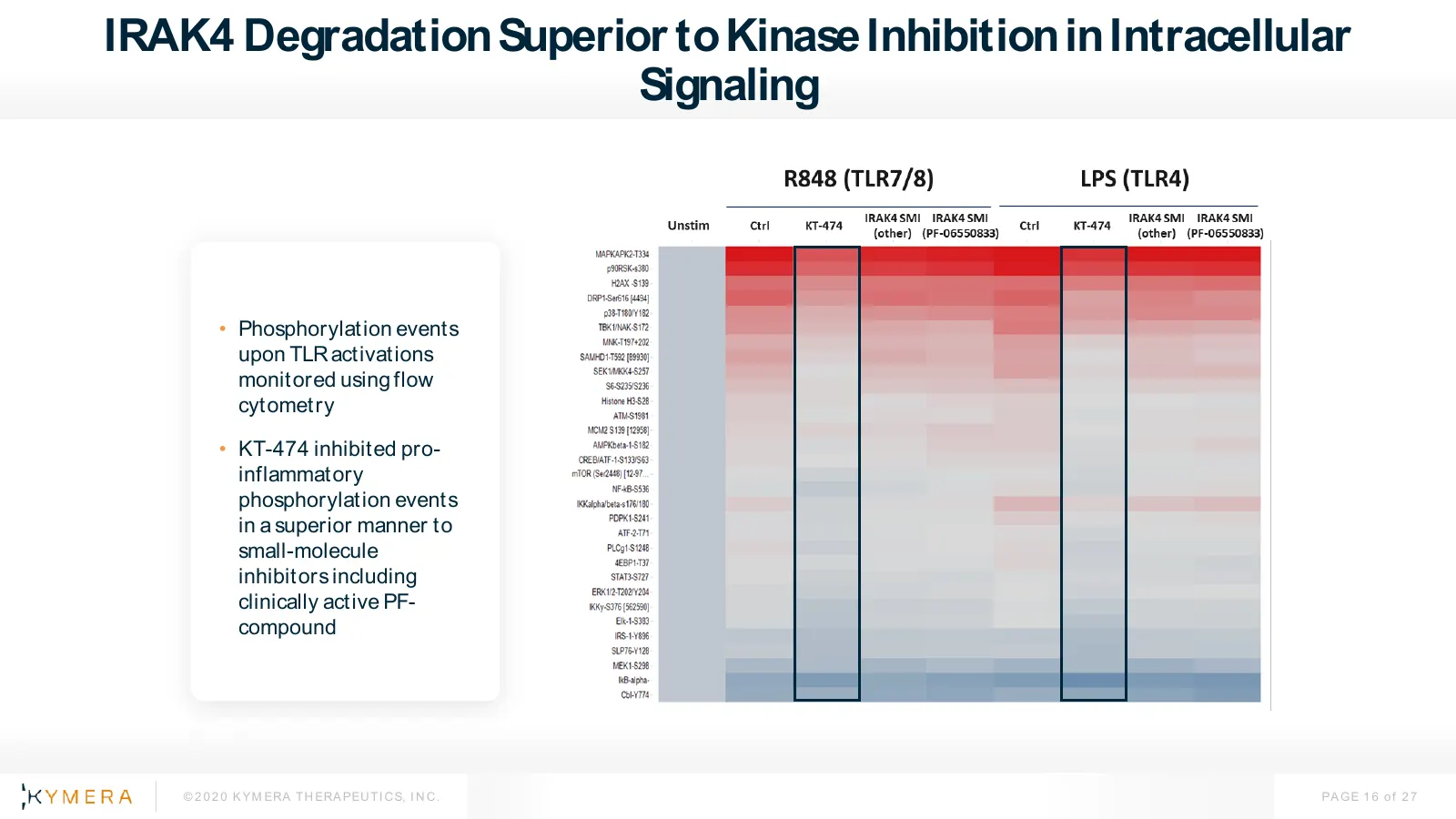
Slide 16: IRAK4 Degradation Superior to Kinase Inhibition in Intracellular Signaling
IRAK4 Degradation Superior to Kinase Inhibition in Intracellular Signaling • Phosphorylation events upon TLR activations monitored using flow cytometry • KT-474 inhibited pro- inflammatory phosphorylation events in a superior manner to small-molecule inhibitors including clinically active PF- compou
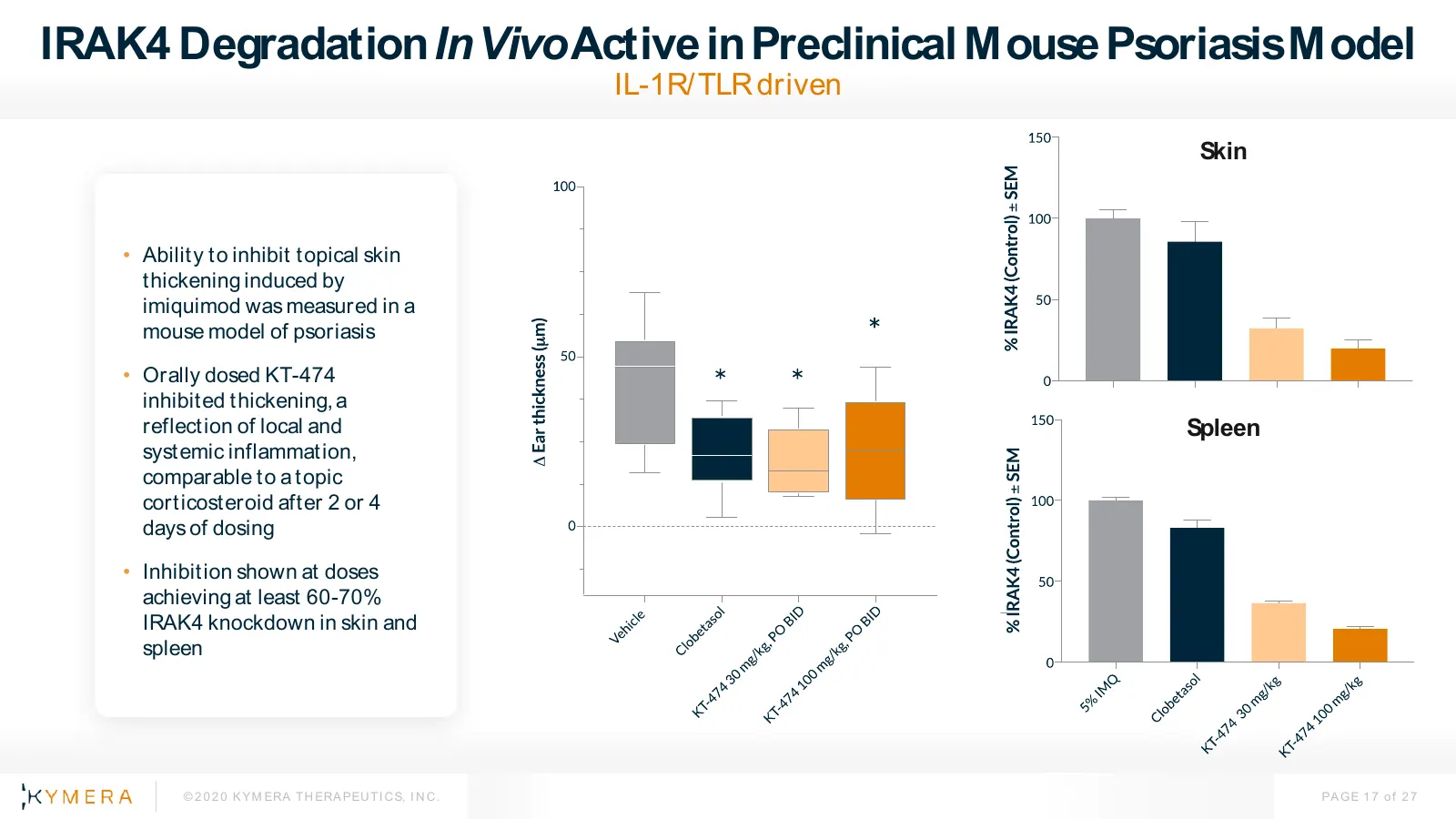
Slide 17: IRAK4 Degradation In Vivo Active in Preclinical Mouse Psoriasis Model
IRAK4 Degradation In Vivo Active in Preclinical Mouse Psoriasis Model IL-1R/TLR driven Skin • Ability to inhibit topical skin thickening induced by imiquimod was measured in a mouse model of psoriasis • Orally dosed KT-474 inhibited thickening, a reflection of local and Spleen systemic inflammation,
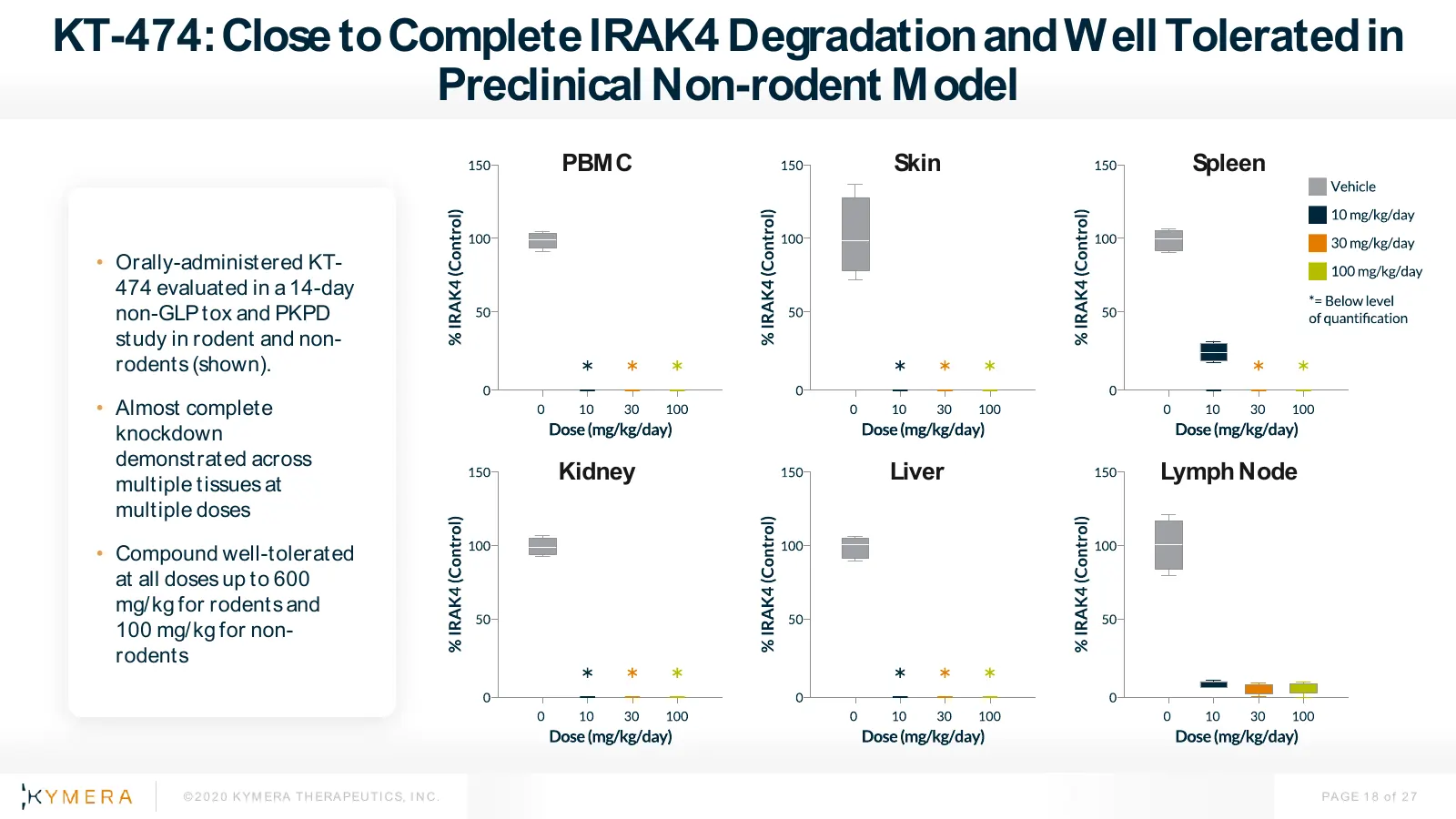
Slide 18: KT-474: Close to Complete IRAK4 Degradation, Well Tolerated in Non-rodent Model
KT-474: Close to Complete IRAK4 Degradation and Well Tolerated in Preclinical Non-rodent Model PBMC Skin Spleen • Orally-administered KT- 474 evaluated in a 14-day non-GLP tox and PKPD study in rodent and non- rodents (shown). • Almost complete knockdown demonstrated across multiple tissues at Kidne
Slide 19: Hidradenitis Suppurativa and interim results from non-interventional study
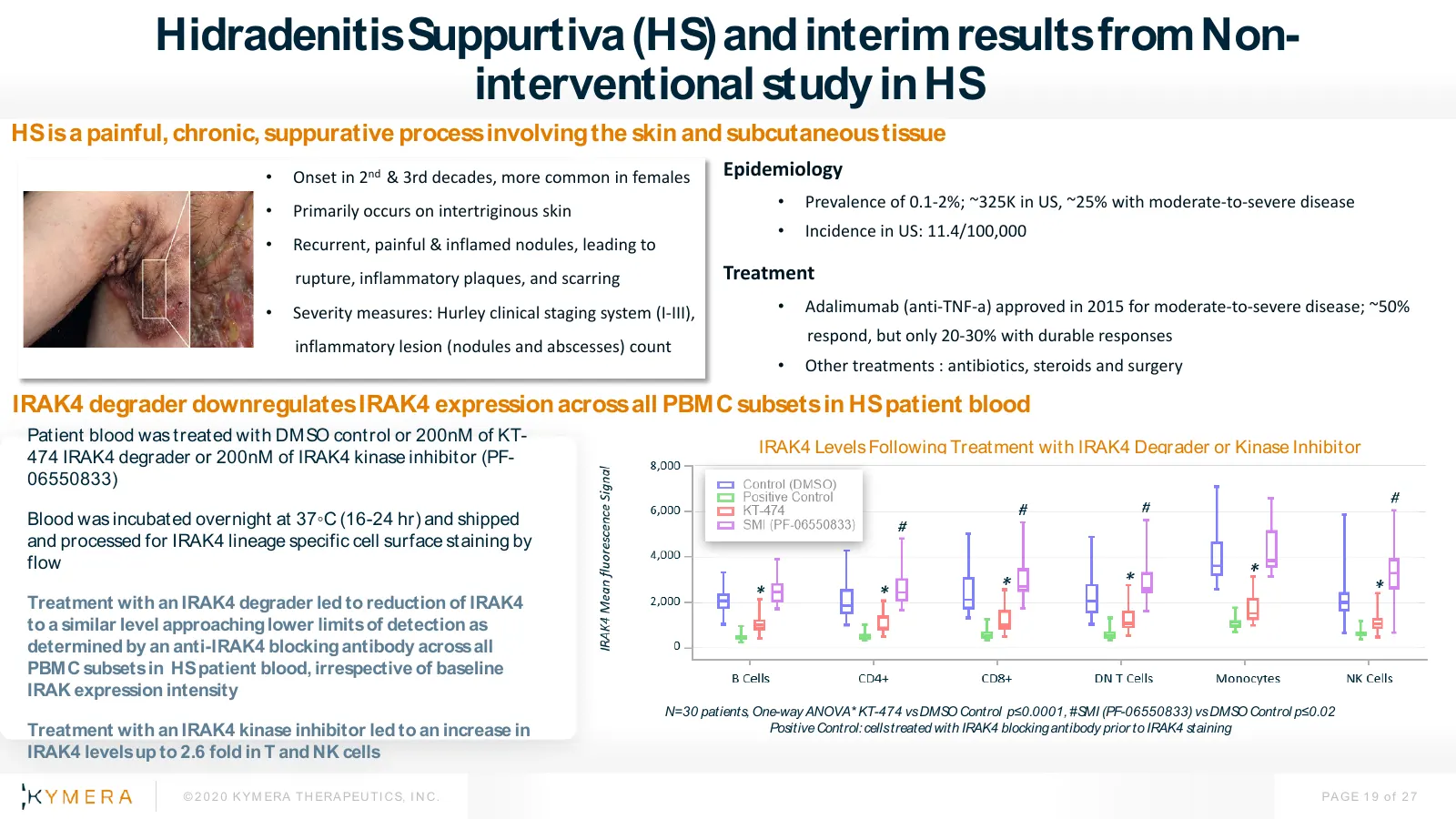
Hidradenitis Suppurtiva (HS) and interim results from Non- interventional study in HS HS is a painful, chronic, suppurative process involving the skin and subcutaneous tissue • Onset in 2nd & 3rd decades, more common in females Epidemiology • Prevalence of 0.1-2%; ~325K in US, ~25% with moderate-to-
Slide 20: IRAK4 Summary
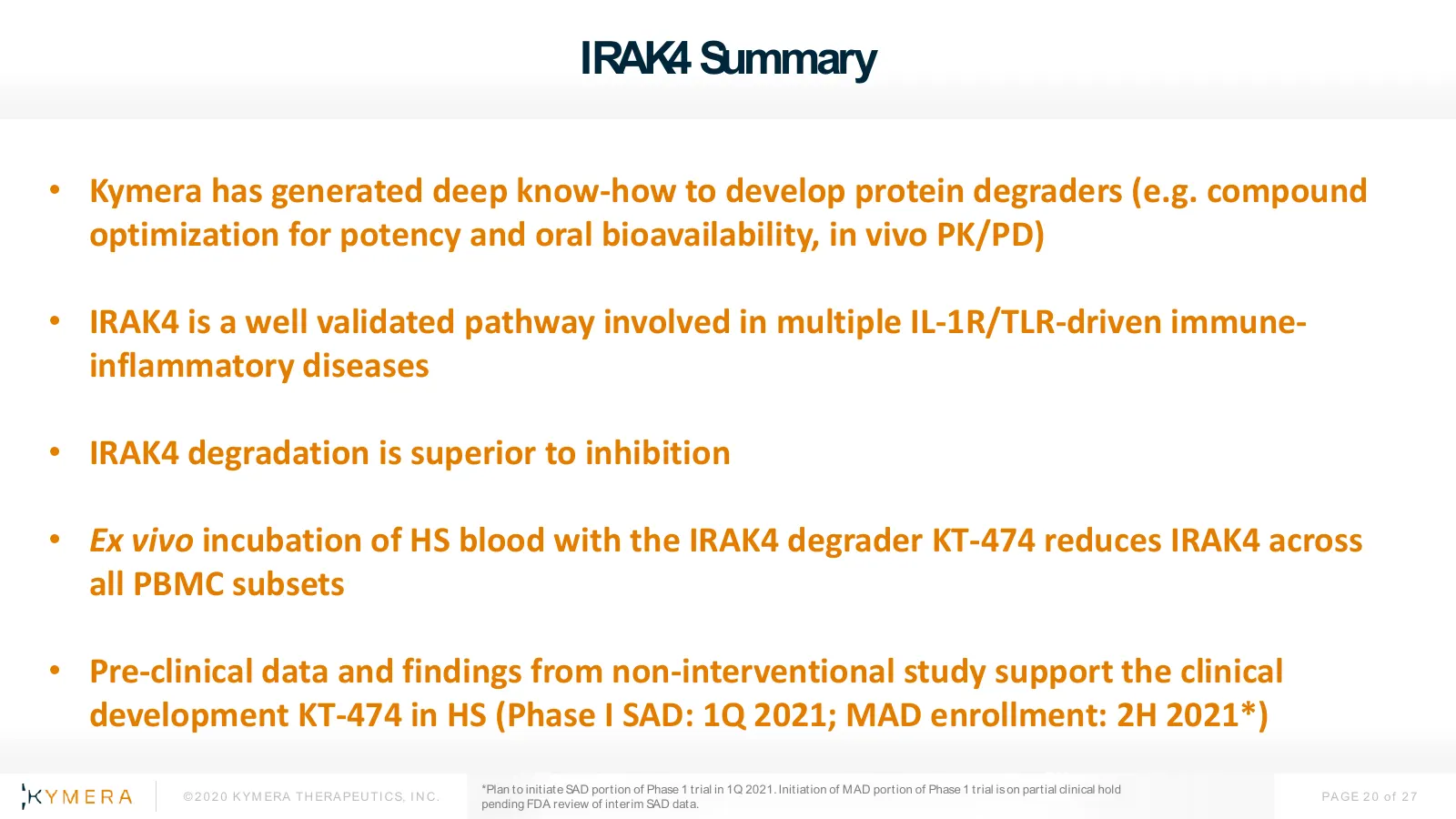
IRAK4 Summary • Kymera has generated deep know-how to develop protein degraders (e.g. compound optimization for potency and oral bioavailability, in vivo PK/PD) • IRAK4 is a well validated pathway involved in multiple IL-1R/TLR-driven immune- inflammatory diseases • IRAK4 degradation is superior to
Slide 21: Q&A Thank You
Q&A THANK YOU February 2021
Source: company website
More decks from Kymera Therapeutics, Inc.
 Technical Presentation (November 2026)31 slides · Nov 23, 2026
 Investor Presentation (September 2026)72 slides · September 2026
 Q2 2026 Earnings Presentation74 slides · Aug 5, 2026
 JDA Annual Meeting 202611 slides · Jun 12, 2026
 ATS Annual Meeting, Respiratory Innovation Summit 20269 slides · May 2026
 Q1 2026 Earnings Presentation15 slides · Apr 30, 2026