Fibrocell Science — 20th Annual American Society of Gene & Cell Therapy Meeting (May 2017)
18 slides from Fibrocell Science's conference presentation, May 11, 2017
Slide 1: Preclinical Development of a Genetically-Modified Human Dermal Fibroblast (FCX-007) for RDEB
Preclinical Development of a Genetically-Modified Human Dermal Fibroblast (FCX-007) for the Treatment of Recessive Dystrophic Epidermolysis Bullosa (RDEB) Marion Chakiath,1 Nazanin-Ehsani-Chimeh, 2 Ngon Nguyen, 2 Scott Moncrief, 1 Darby Thomas, 1 Anna Malyala,3 John Maslowski, 3 Peter Marinkovich2 1
Slide 2: Forward-Looking Statements
This presentation and our accompanying remarks contain “forward-looking statements” within the meaning of the U.S. Private Securities Litigation Reform Act of 1995. All statements that are not historical facts are hereby identified as forward-looking statements for this purpose and include, among ot
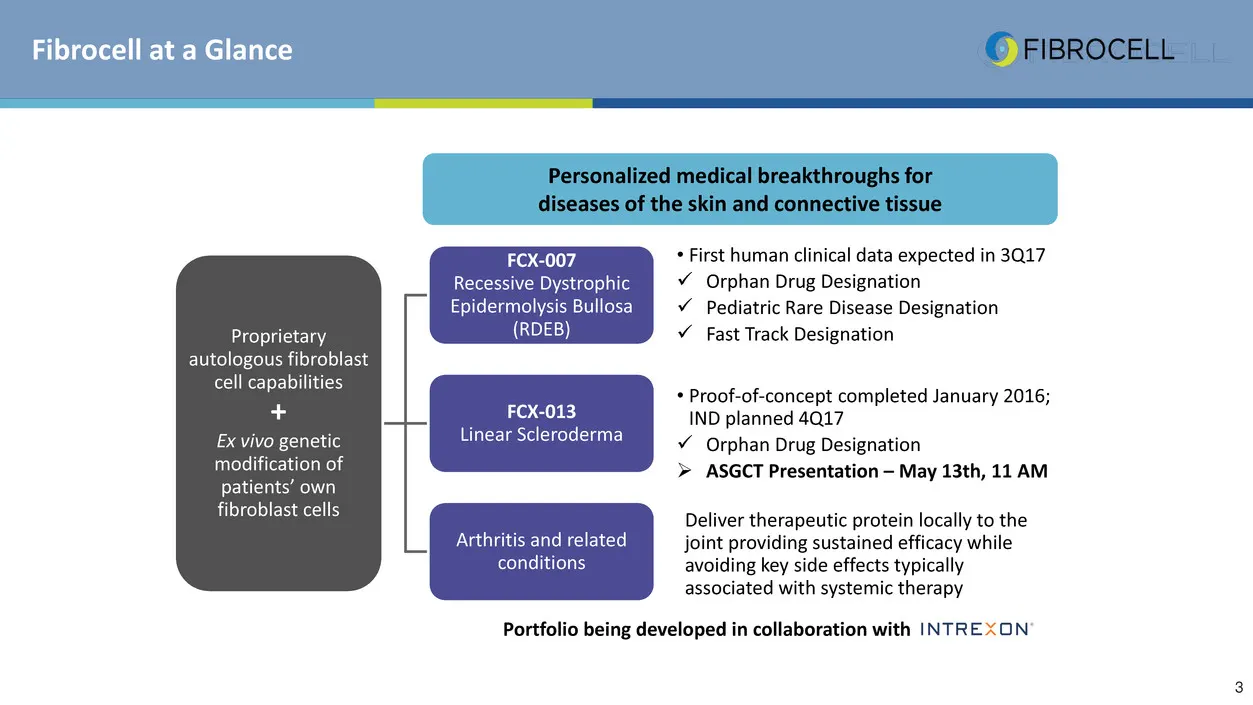
Slide 3: Fibrocell at a Glance
Proprietary autologous fibroblast cell capabilities + Ex vivo genetic modification of patients’ own fibroblast cells FCX-007 Recessive Dystrophic Epidermolysis Bullosa (RDEB) FCX-013 Linear Scleroderma Arthritis and related conditions 3 Fibrocell at a Glance Personalized medical breakthroughs for di
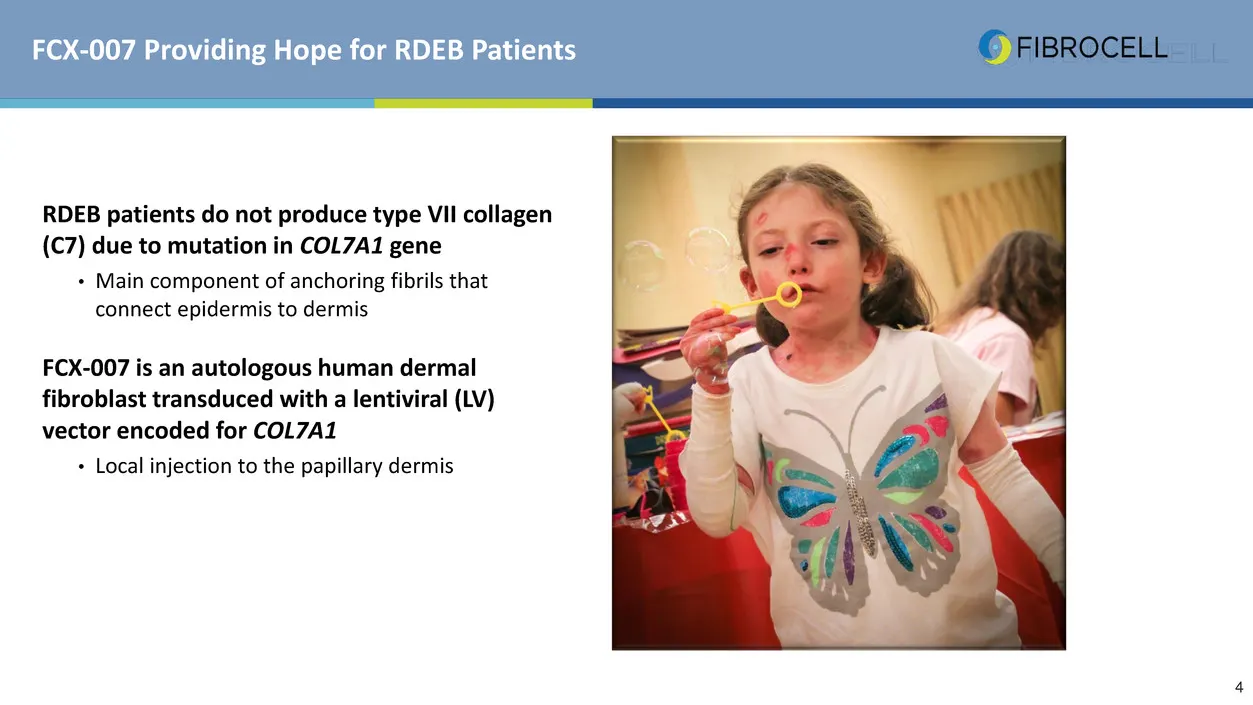
Slide 4: FCX-007 Providing Hope for RDEB Patients
FCX-007 Providing Hope for RDEB Patients 4 RDEB patients do not produce type VII collagen (C7) due to mutation in COL7A1 gene • Main component of anchoring fibrils that connect epidermis to dermis FCX-007 is an autologous human dermal fibroblast transduced with a lentiviral (LV) vector encoded for C
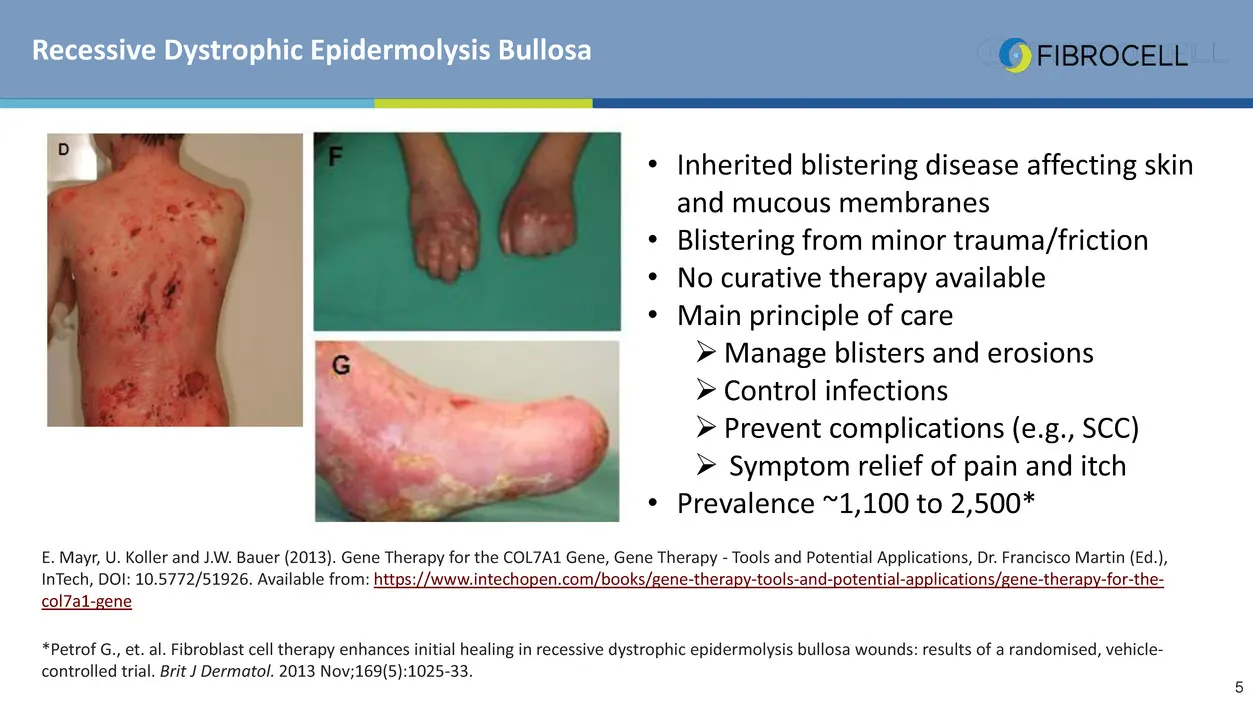
Slide 5: Recessive Dystrophic Epidermolysis Bullosa
5 Recessive Dystrophic Epidermolysis Bullosa E. Mayr, U. Koller and J.W. Bauer (2013). Gene Therapy for the COL7A1 Gene, Gene Therapy - Tools and Potential Applications, Dr. Francisco Martin (Ed.), InTech, DOI: 10.5772/51926. Available from: https://www.intechopen.com/books/gene-therapy-tools-and-po
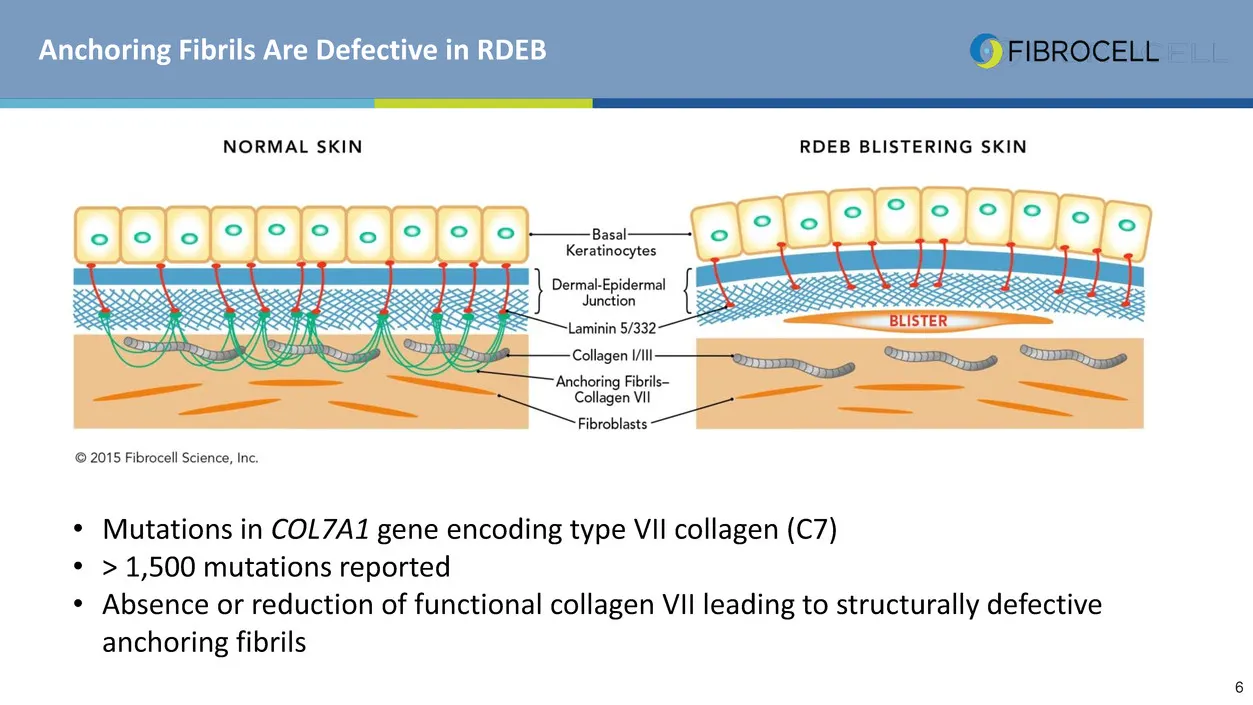
Slide 6: Anchoring Fibrils Are Defective in RDEB
Anchoring Fibrils Are Defective in RDEB 6 • Mutations in COL7A1 gene encoding type VII collagen (C7) • > 1,500 mutations reported • Absence or reduction of functional collagen VII leading to structurally defective anchoring fibrils
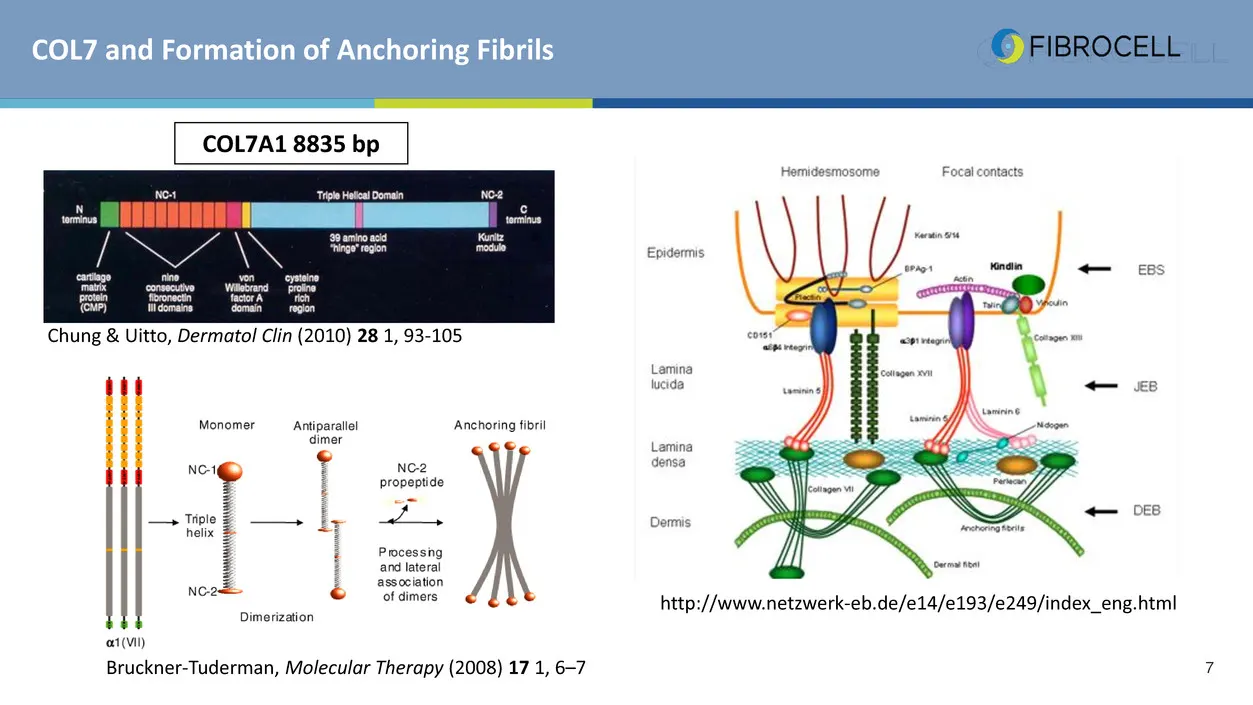
Slide 7: COL7 and Formation of Anchoring Fibrils
COL7 and Formation of Anchoring Fibrils Bruckner-Tuderman, Molecular Therapy (2008) 17 1, 6–7 http://www.netzwerk-eb.de/e14/e193/e249/index_eng.html Chung & Uitto, Dermatol Clin (2010) 28 1, 93-105 COL7A1 8835 bp 7
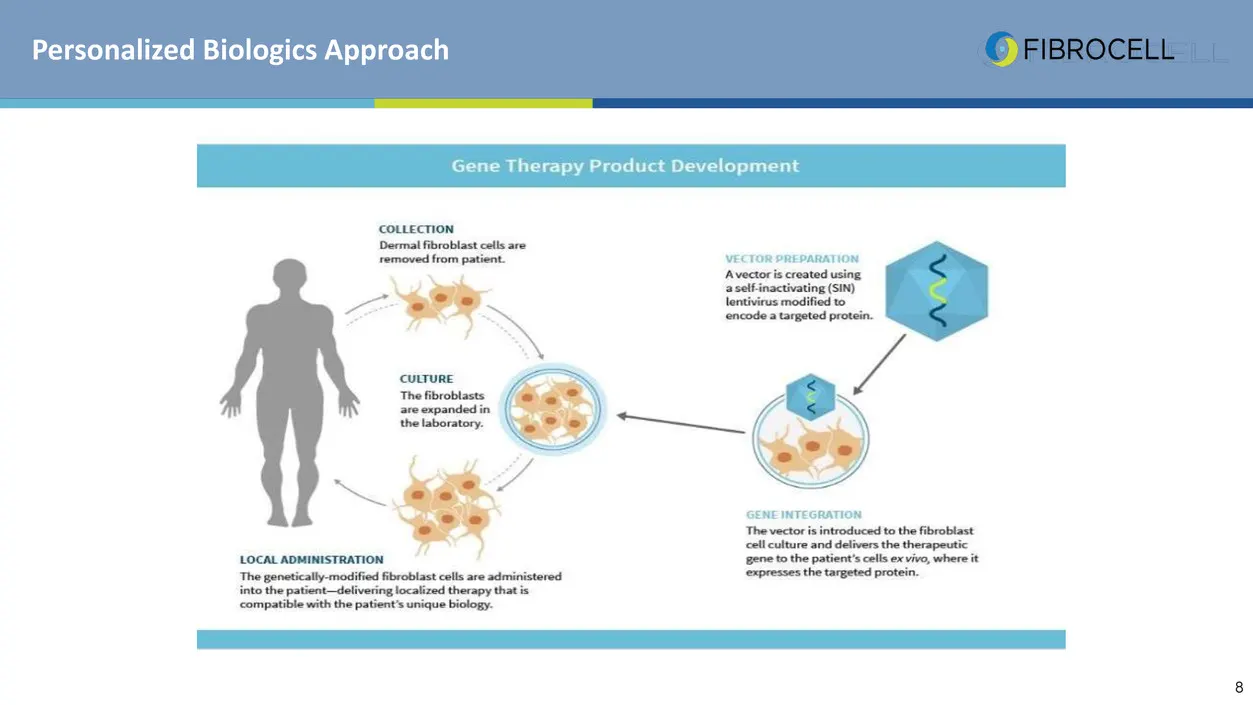
Slide 8: Personalized Biologics Approach
Personalized Biologics Approach 8
Slide 9: FCX-007 Development Path
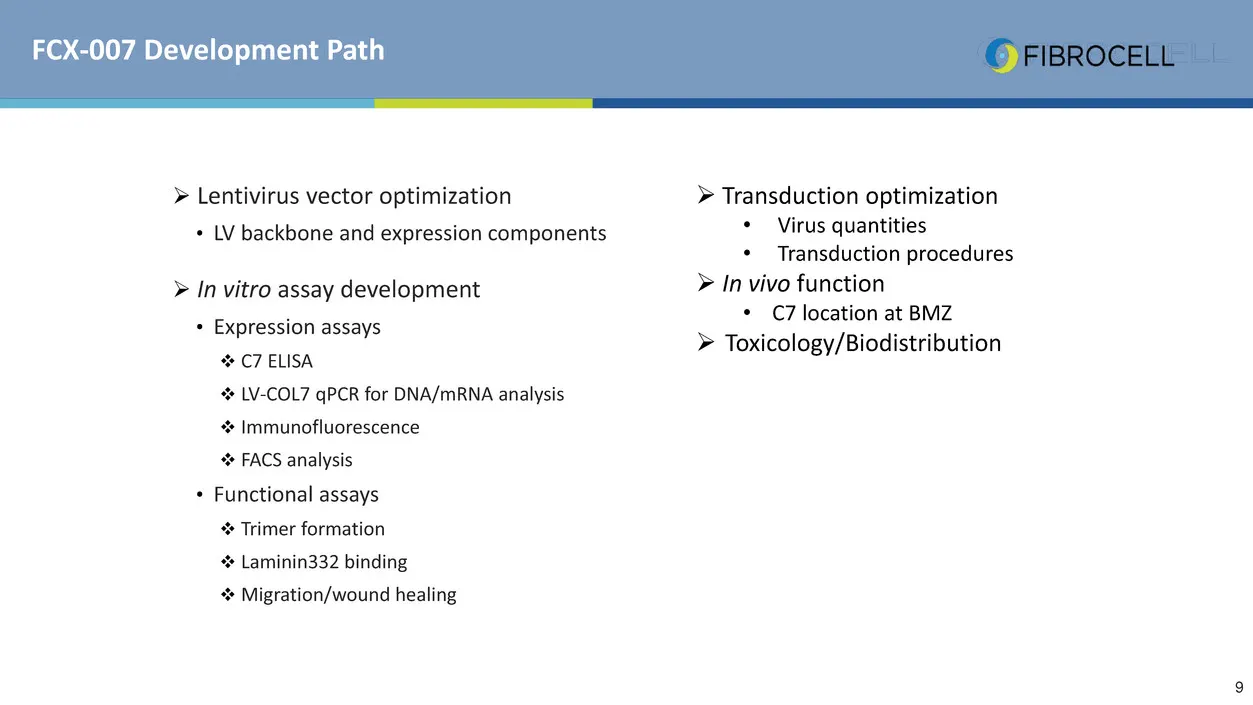
9 FCX-007 Development Path Lentivirus vector optimization • LV backbone and expression components In vitro assay development • Expression assays C7 ELISA LV-COL7 qPCR for DNA/mRNA analysis Immunofluorescence FACS analysis • Functional assays Trimer formation Laminin332 binding Migr
Slide 10: Expression Assay: COL7 Expression Comparison Across Cell Lines
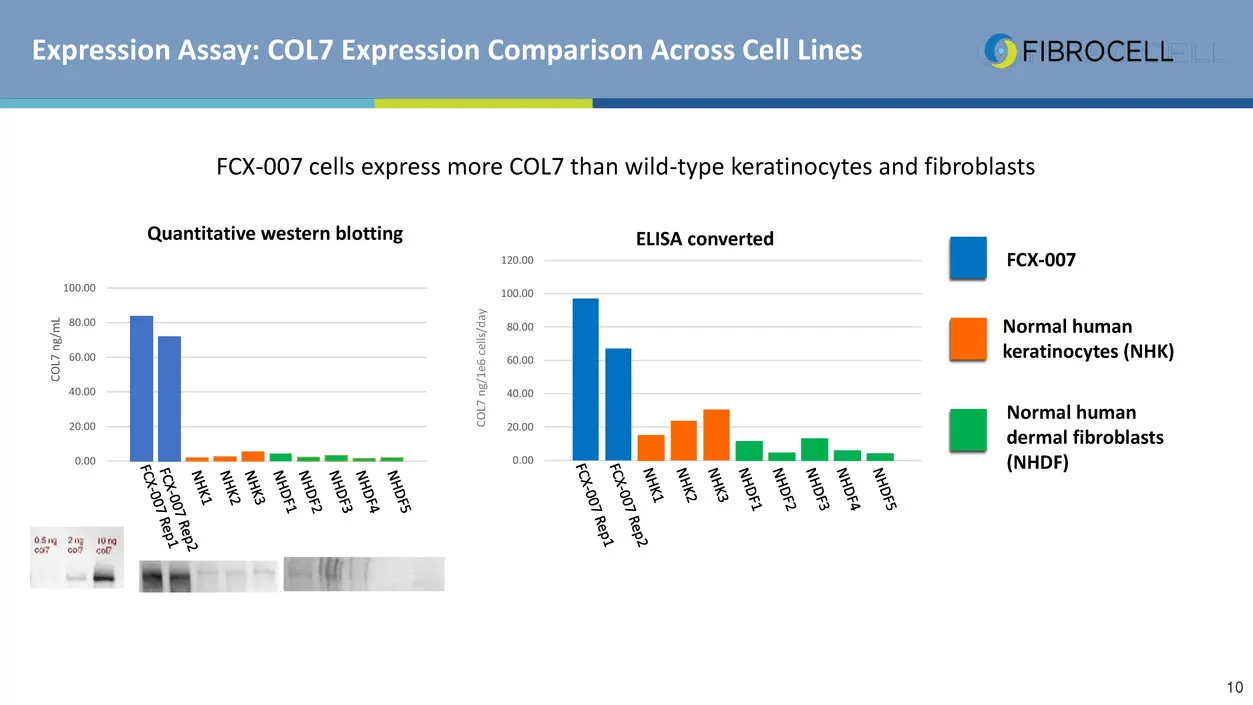
Expression Assay: COL7 Expression Comparison Across Cell Lines 10 0.00 20.00 40.00 60.00 80.00 100.00 COL7 n g/ m L 0.00 20.00 40.00 60.00 80.00 100.00 120.00 Quantitative western blotting ELISA converted COL7 n g/1 e6 c ell s/ d ay FCX-007 Normal human keratinocytes (NHK) Normal human dermal fibrob
Slide 11: Functional Assay: Trimer Formation and Laminin332 Binding
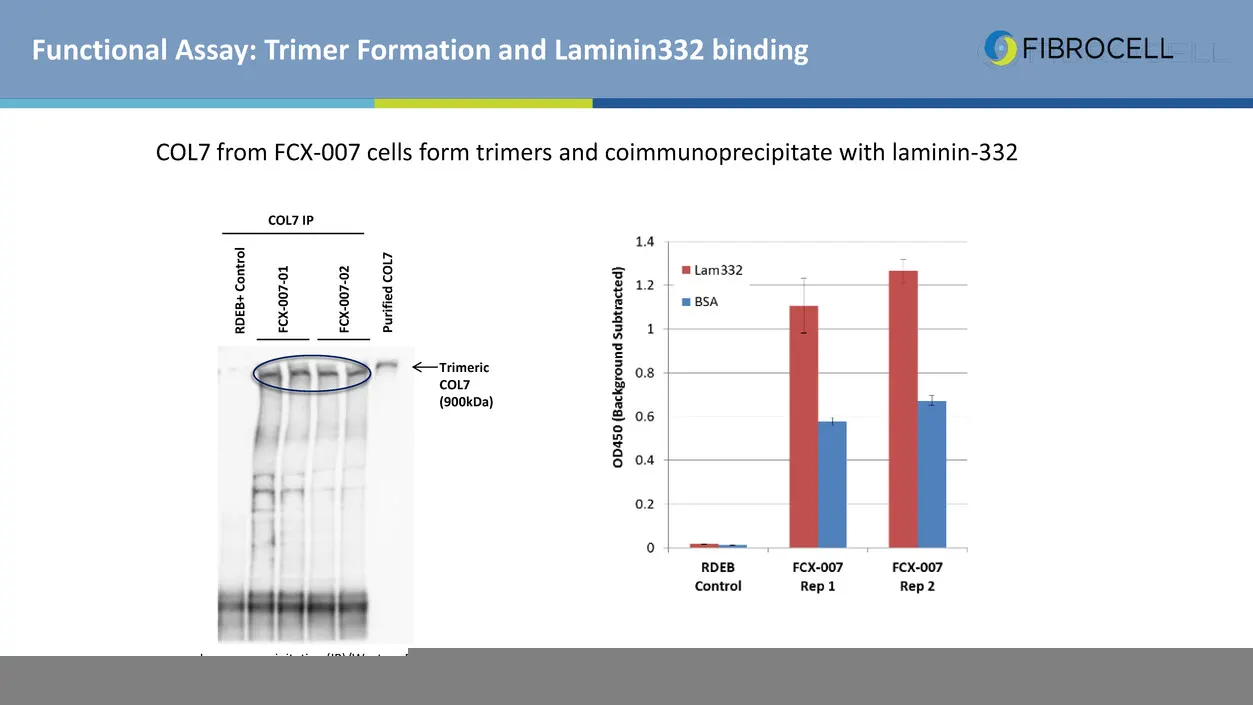
Functional Assay: Trimer Formation and Laminin332 binding 11 RD EB + C o n tr o l P u ri fi e d C OL 7 FC X -0 0 7 -0 1 FC X -0 0 7 -0 2 Trimeric COL7 (900kDa) COL7 IP Immunoprecipitation (IP)/Western Blot COL7 from FCX-007 cells form trimers and coimmunoprecipitate with laminin-332
Slide 12: Functional Assay: Hyper-motility Reversed by LV-COL7
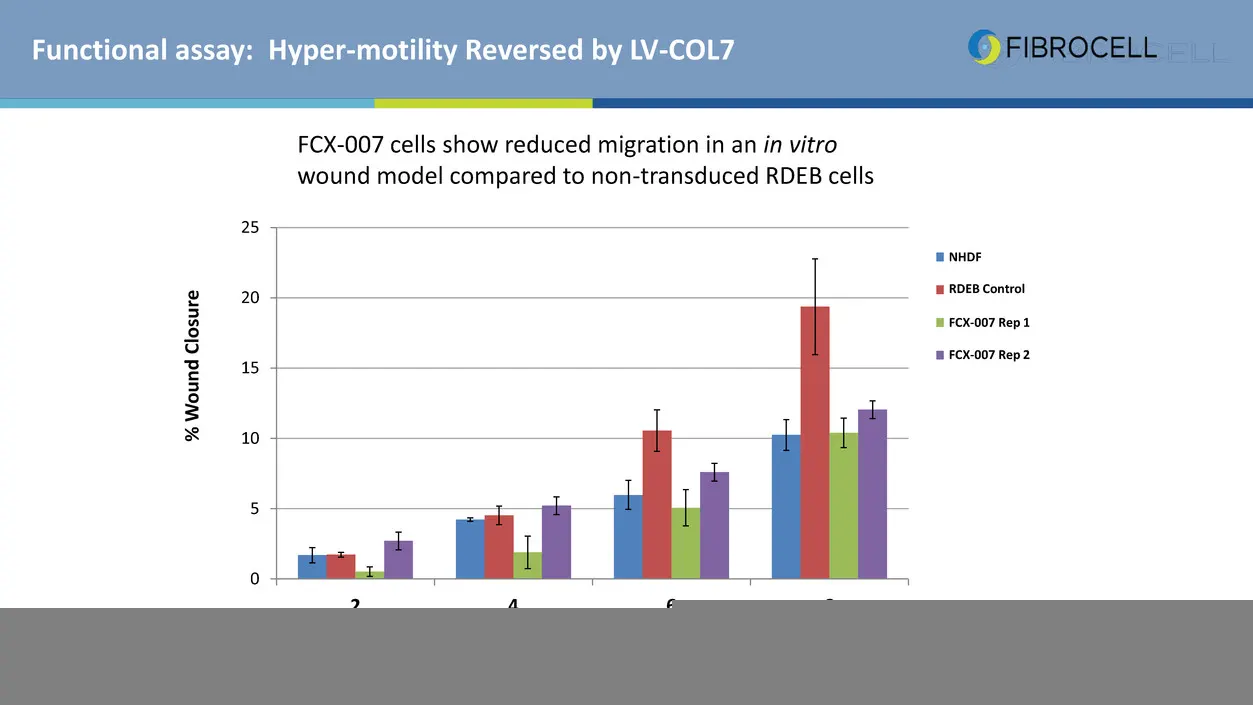
Functional assay: Hyper-motility Reversed by LV-COL7 12 0 5 10 15 20 25 2 4 6 8 % W o u n d Closu re Time (h) NHDF RDEB TR12.1 TR13 F FCX-007 Rep 2 FCX-007 Rep 1 RD B Control FCX-007 cells show reduced migration in an in vitro wound model compared to non-transduced RDEB cells
Slide 13: In Vitro Assay: COL7 Immunofluorescence
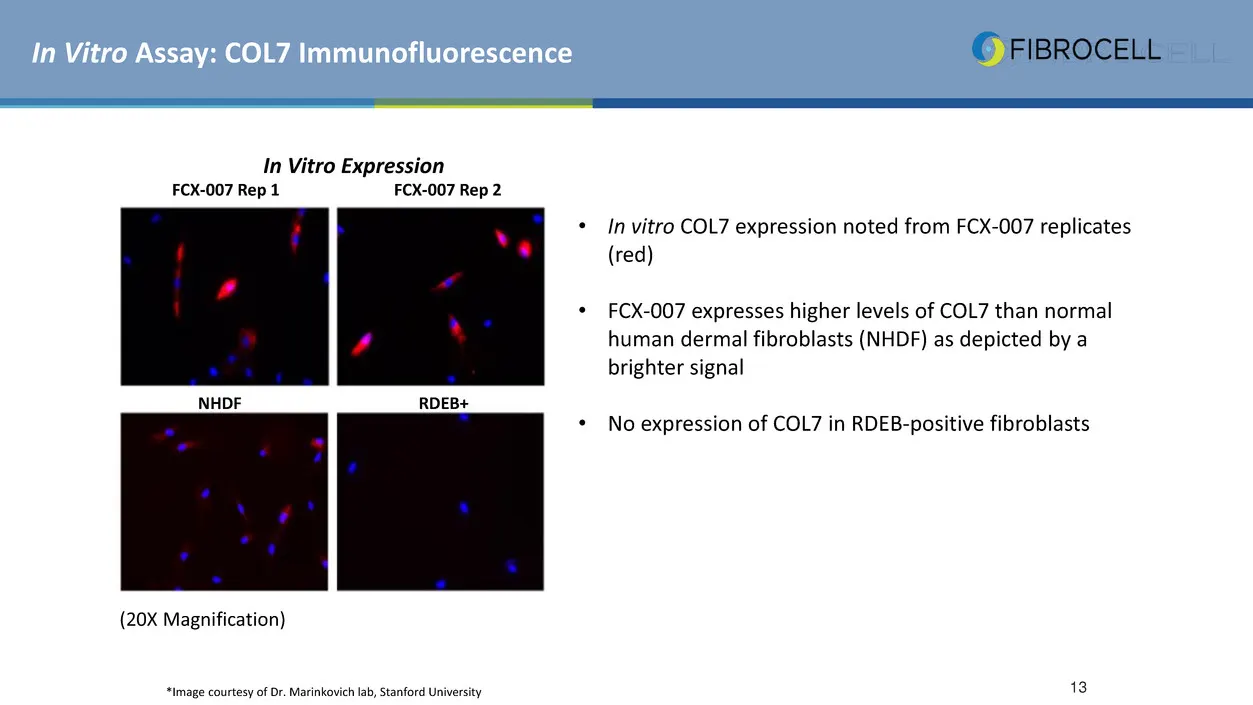
13 In Vitro Assay: COL7 Immunofluorescence *Image courtesy of Dr. Marinkovich lab, Stanford University FCX-007 Rep 1 FCX-007 Rep 2 NHDF RDEB+ In Vitro Expression • In vitro COL7 expression noted from FCX-007 replicates (red) • FCX-007 expresses higher levels of COL7 than normal human dermal fibrobla
Slide 14: In Vivo Assay: COL7 Immunofluorescence at BMZ
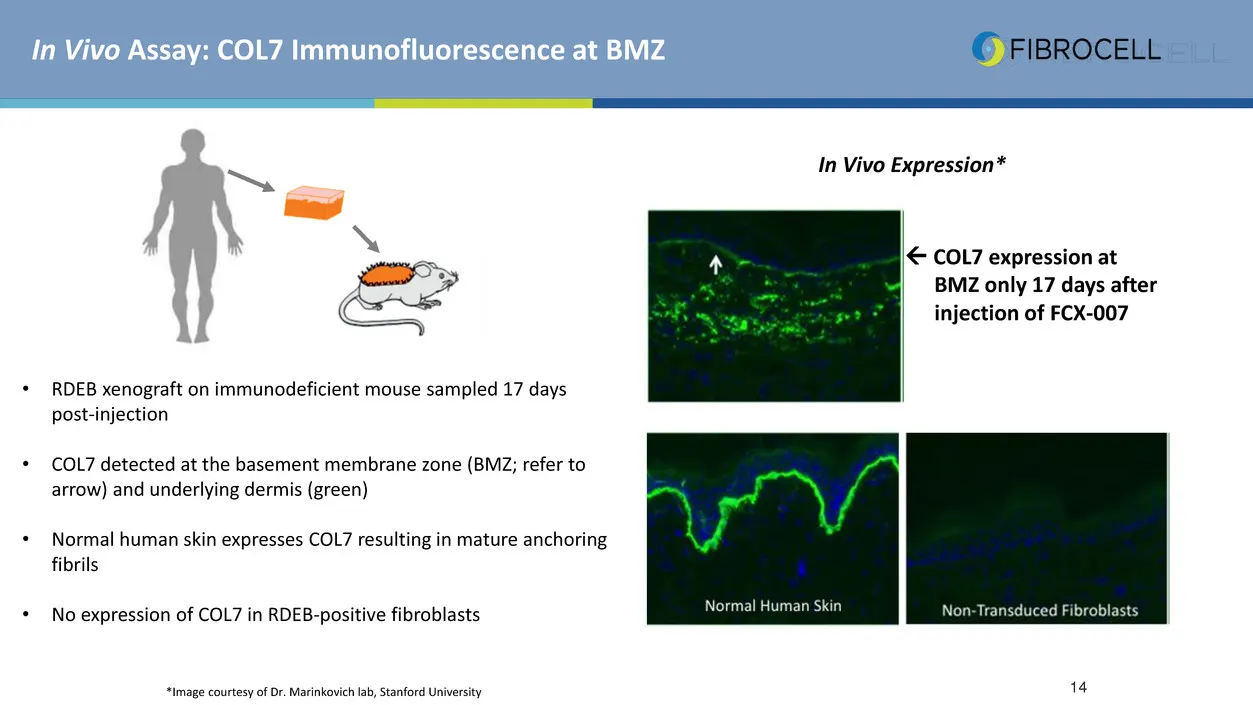
14 In Vivo Assay: COL7 Immunofluorescence at BMZ *Image courtesy of Dr. Marinkovich lab, Stanford University In Vivo Expression* COL7 expression at BMZ only 17 days after injection of FCX-007 • RDEB xenograft on immunodeficient mouse sampled 17 days post-injection • COL7 detected at the basement m
Slide 15: FCX-007 Providing Hope for RDEB Patients
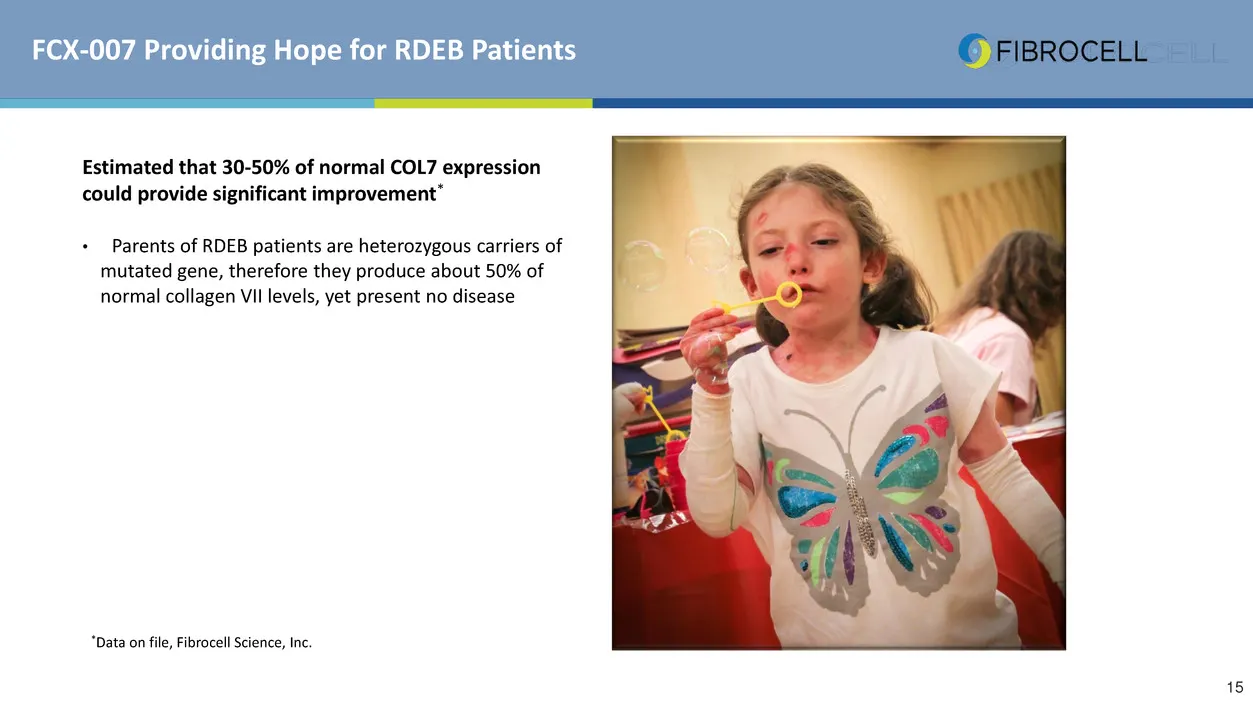
FCX-007 Providing Hope for RDEB Patients 15 Estimated that 30-50% of normal COL7 expression could provide significant improvement* • Parents of RDEB patients are heterozygous carriers of mutated gene, therefore they produce about 50% of normal collagen VII levels, yet present no disease *Data on fil
Slide 16: FCX-007 Phase I/II Clinical Trial Design
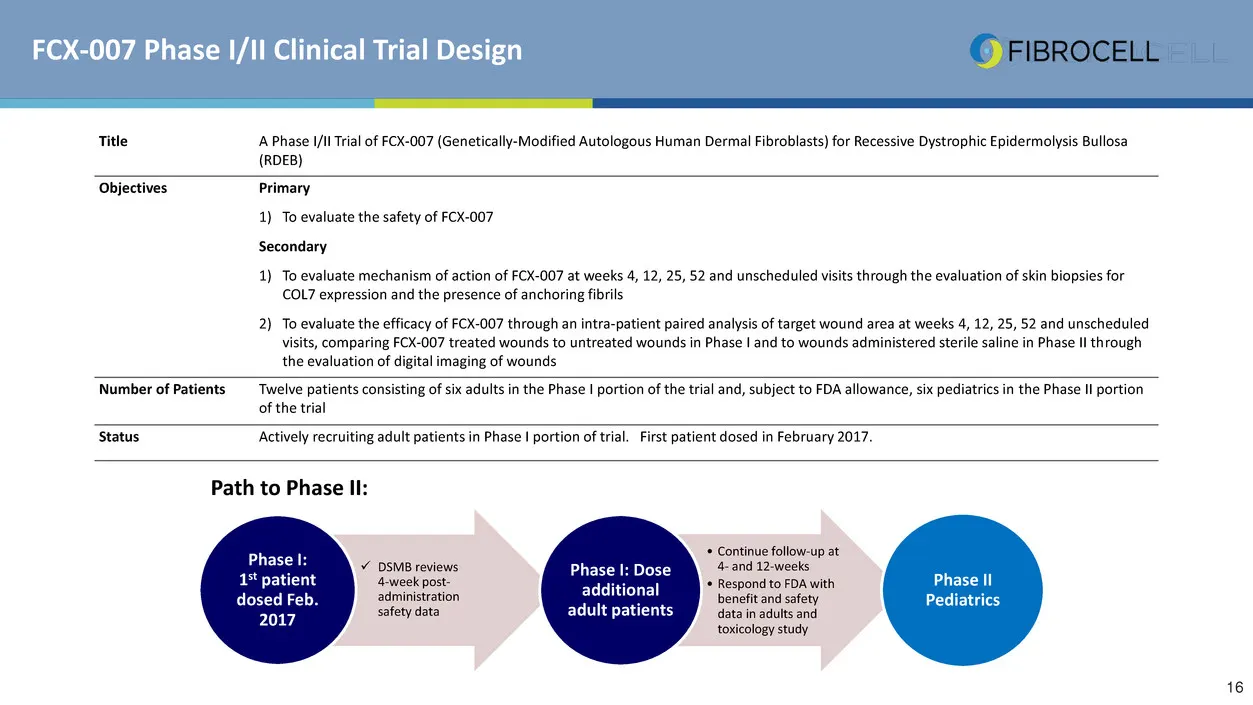
Phase I: 1st patient dosed Feb. 2017 • Continue follow-up at 4- and 12-weeks • Respond to FDA with benefit and safety data in adults and toxicology study Phase I: Dose additional adult patients Phase II Pediatrics FCX-007 Phase I/II Clinical Trial Design 16 Title A Phase I/II Trial of FCX-007 (Genet
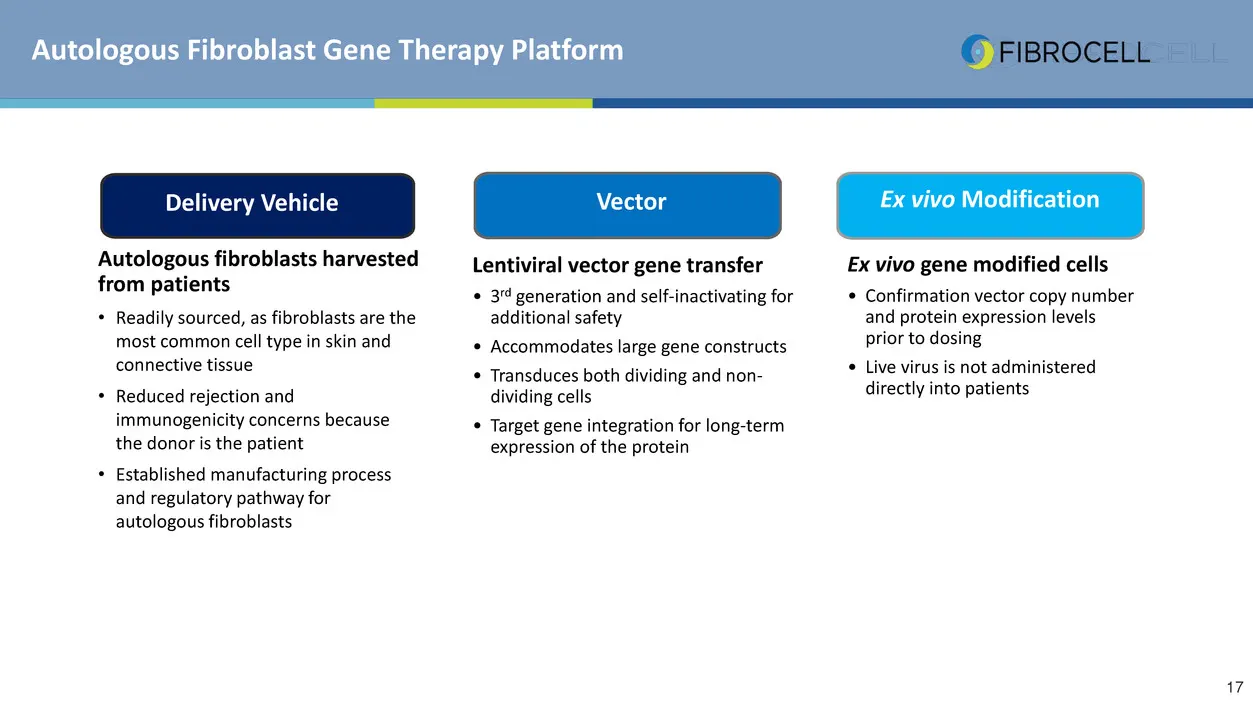
Slide 17: Autologous Fibroblast Gene Therapy Platform
Autologous fibroblasts harvested from patients • Readily sourced, as fibroblasts are the most common cell type in skin and connective tissue • Reduced rejection and immunogenicity concerns because the donor is the patient • Established manufacturing process and regulatory pathway for autologous fibr
Slide 18: Acknowledgments
Stanford University Dr. Peter Marinkovich, MD Nazanin Ehsani-Chimeh, MD Ngon Nguyen Patients & Their Families 18 Acknowledgments Marion Chakiath Scott Moncrief, PhD Darby Thomas, PhD
Source: SEC EDGAR · 8-K filed May 11, 2017
More decks from Fibrocell Science Inc
 Investor Presentation (August 2019)22 slides · Aug 15, 2019
 Investor Presentation (July 2019)22 slides · Jul 2, 2019
 Investor Presentation (May 2019)22 slides · May 29, 2019
 Investor Presentation (March 2019)22 slides · Mar 27, 2019
 Investor Presentation (January 2019)24 slides · Jan 8, 2019
 Investor Presentation (November 2018)24 slides · Nov 13, 2018