Immutep Ltd · ASX:IMM
Immutep — Shareholder Meeting (November 2026)
48 slides from Immutep's shareholder meeting presentation, November 2026

Slide 1: Immutep CEO and CSO AGM 2026 Presentation
Immutep CEO and CSO AGM 2026 Presentation 27 November 2026 (IMM:ASX, IMMP:NASDAQ) rsonal use only Empowering the immune system to fight cancer and autoimmune disease
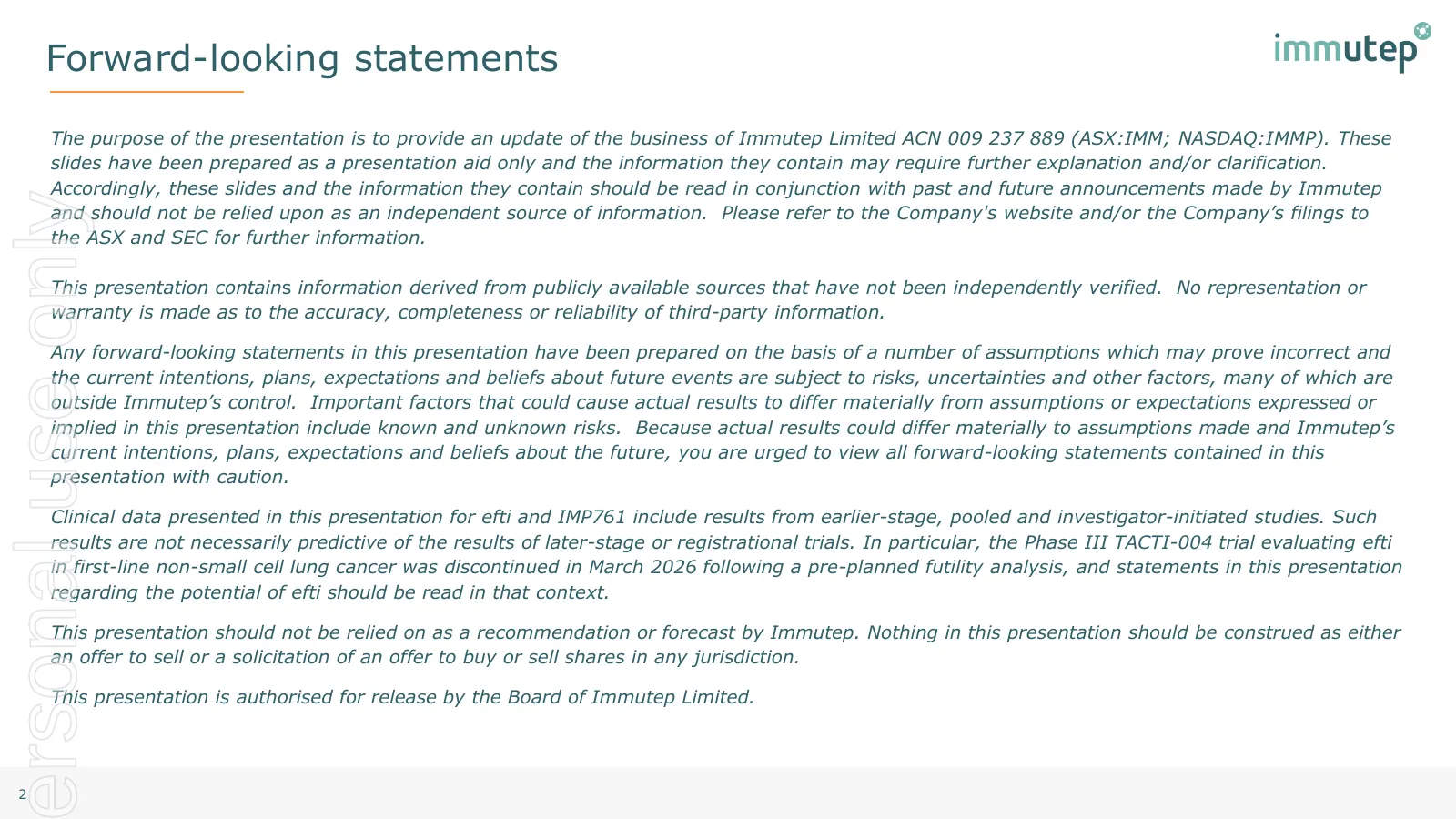
Slide 2: Forward-looking statements
Forward-looking statements The purpose of the presentation is to provide an update of the business of Immutep Limited ACN 009 237 889 (ASX:IMM; NASDAQ:IMMP). These slides have been prepared as a presentation aid only and the information they contain may require further explanation and/or clarificati
Slide 3: Agenda
Agenda rsonal use only • Overview of Immutep • Root Cause Analysis • Efti’s Path Forward • IMP761 Results & Path Forward • Financials and 2027 milestones • Summary
Slide 4: Overview of Immutep
rsonal use only Overview of Immutep
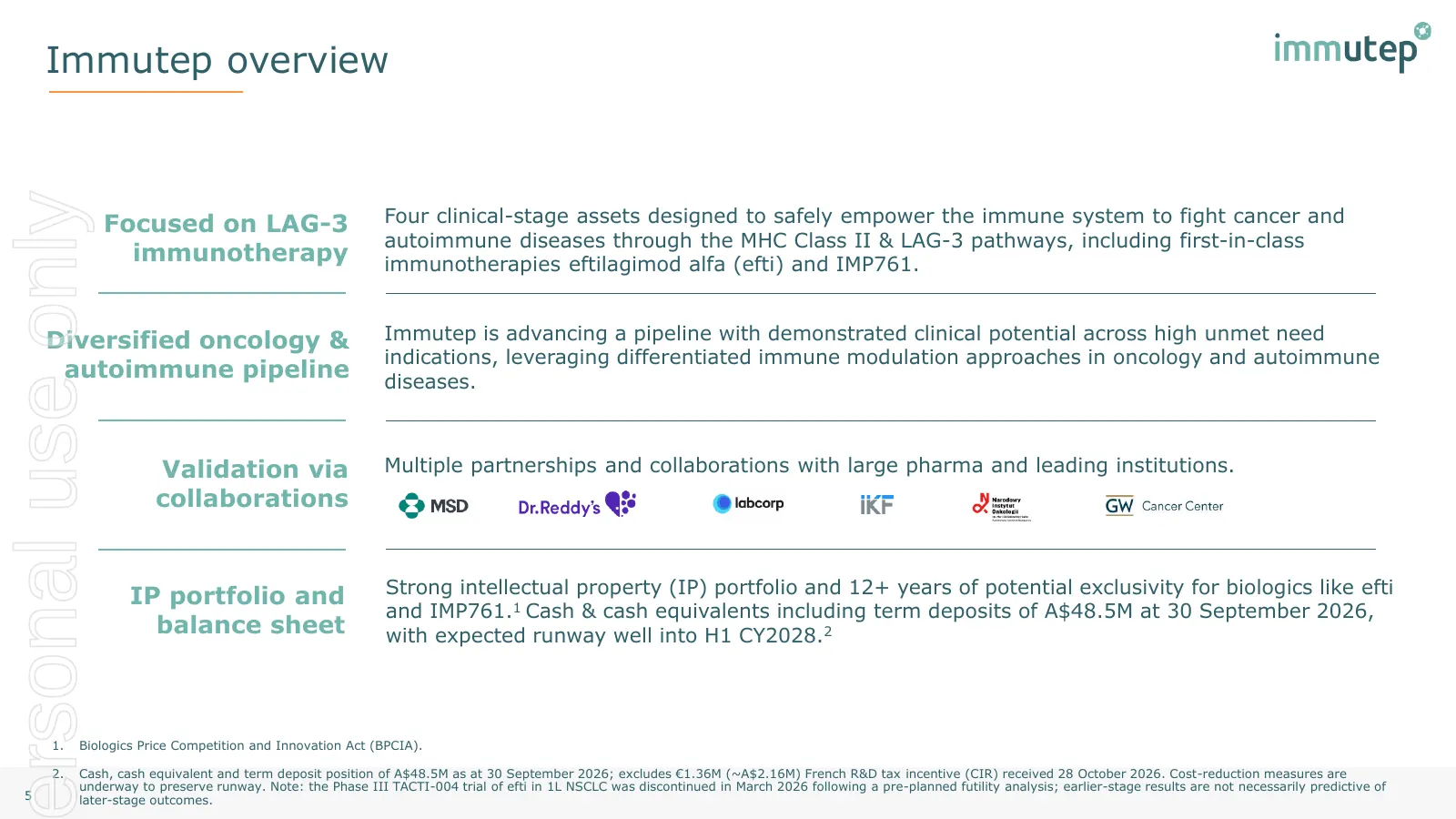
Slide 5: Immutep overview
Immutep overview rsonal use only Focused on LAG-3 Four clinical-stage assets designed to safely empower the immune system to fight cancer and autoimmune diseases through the MHC Class II & LAG-3 pathways, including first-in-class immunotherapy immunotherapies eftilagimod alfa (efti) and IMP761. Dive
Slide 6: FY26: A Year of Progress and Resilience
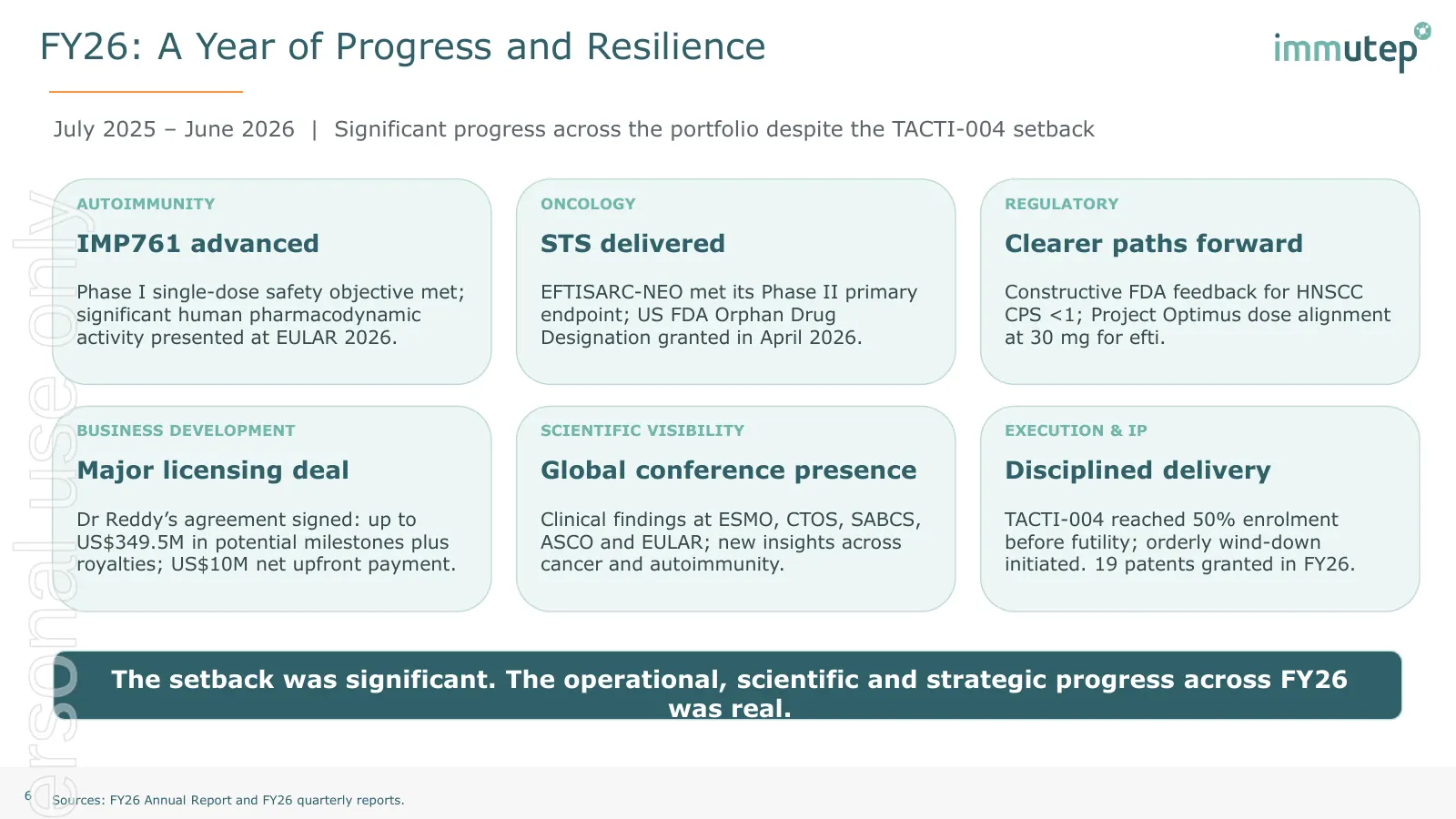
FY26: A Year of Progress and Resilience July 2025 – June 2026 | Significant progress across the portfolio despite the TACTI-004 setback rsonal use only AUTOIMMUNITY ONCOLOGY REGULATORY IMP761 advanced STS delivered Clearer paths forward Phase I single-dose safety objective met; EFTISARC-NEO met its
Slide 7: Deep clinical pipeline in oncology & autoimmune diseases
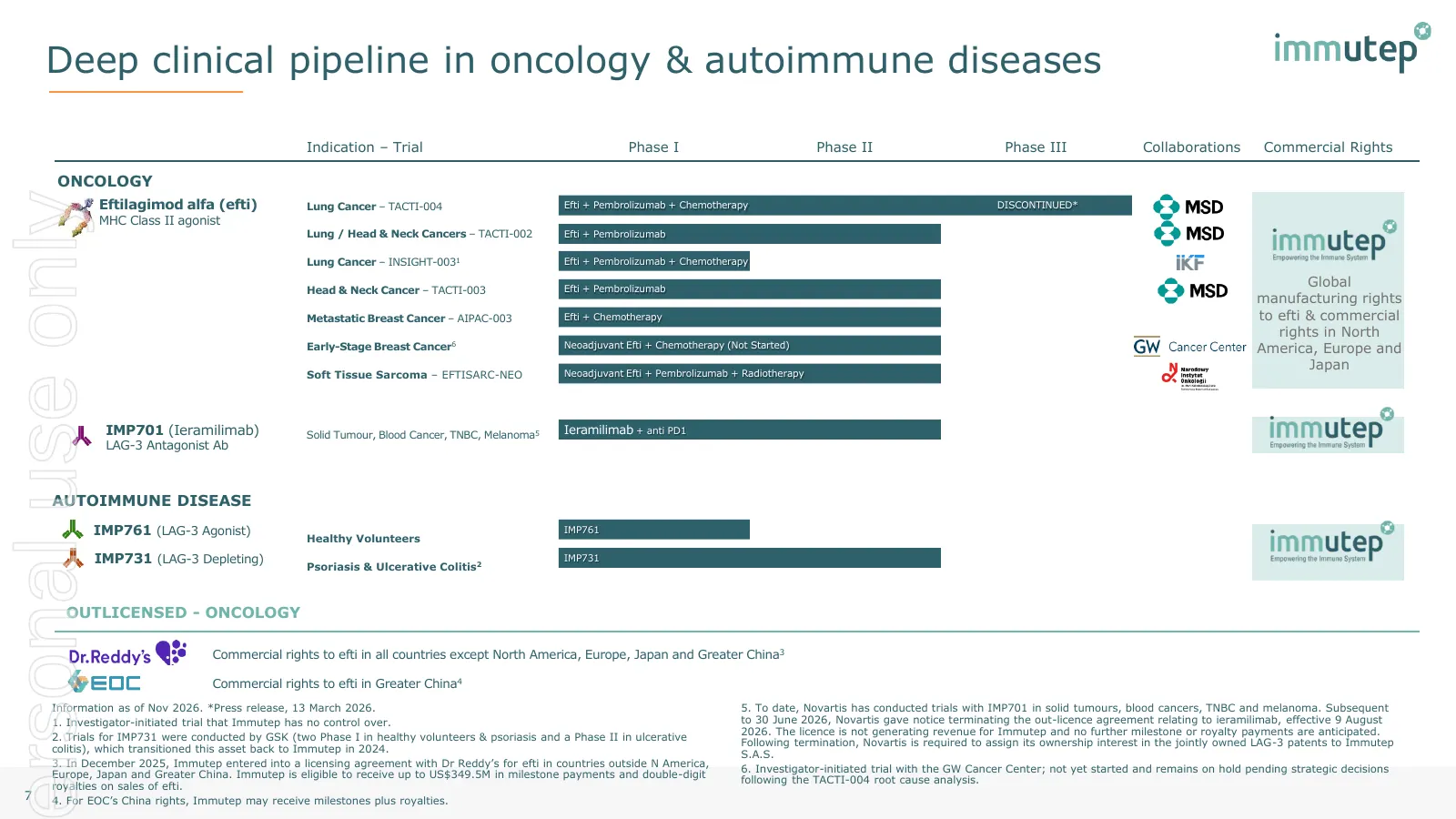
Deep clinical pipeline in oncology & autoimmune diseases Indication – Trial Phase I Phase II Phase III Collaborations Commercial Rights ONCOLOGY rsonal use only Eftilagimod alfa (efti) Lung Cancer – TACTI-004 Efti + Pembrolizumab + Chemotherapy DISCONTINUED* MHC Class II agonist Lung / Head & Neck C
Slide 8: Two priorities, one value-creation strategy
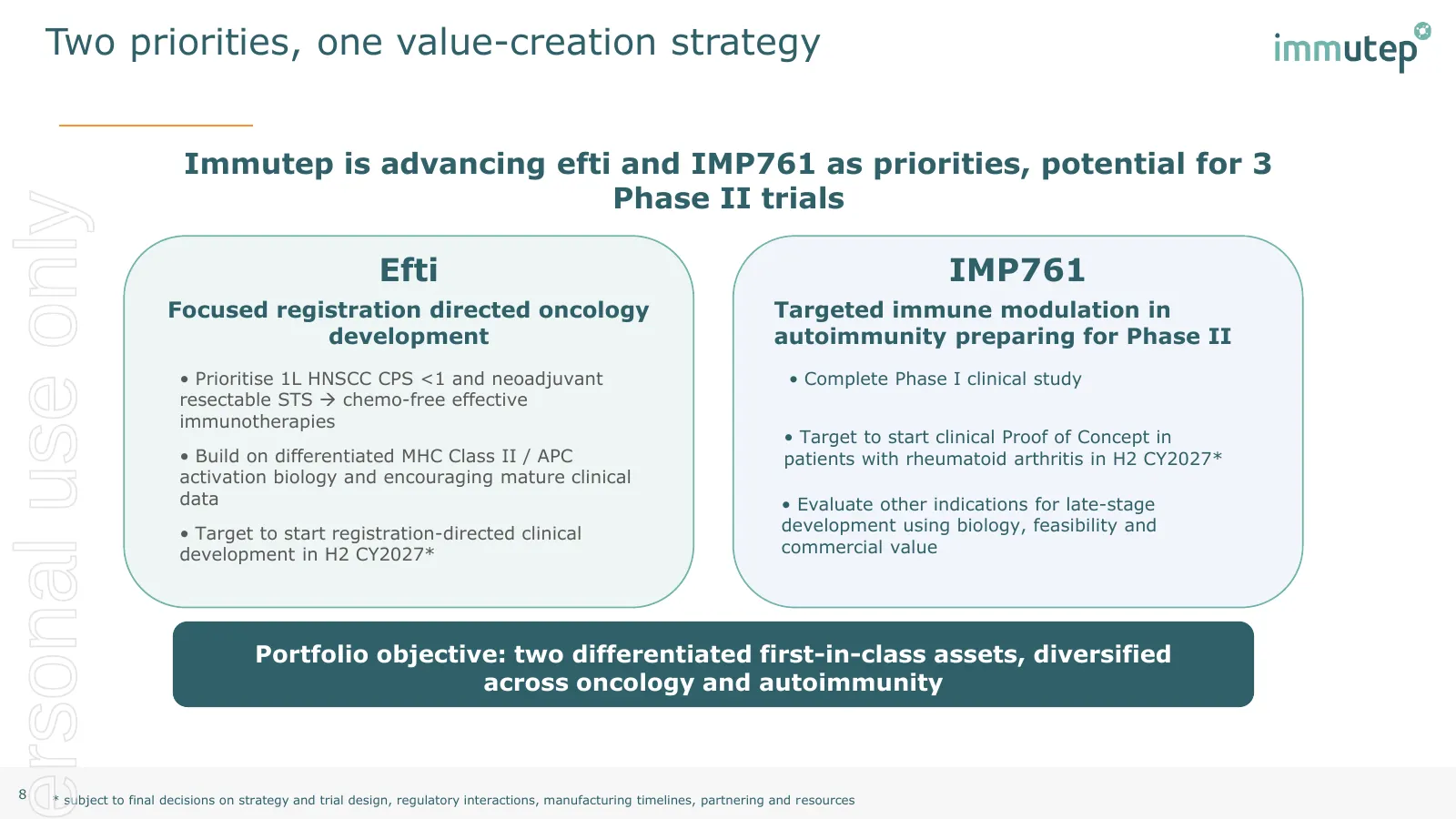
Two priorities, one value-creation strategy Immutep is advancing efti and IMP761 as priorities, potential for 3 Phase II trials rsonal use only Efti IMP761 Focused registration directed oncology Targeted immune modulation in development autoimmunity preparing for Phase II • Prioritise 1L HNSCC CPS <
Slide 9: Oncology: Eftilagimod alfa (efti)
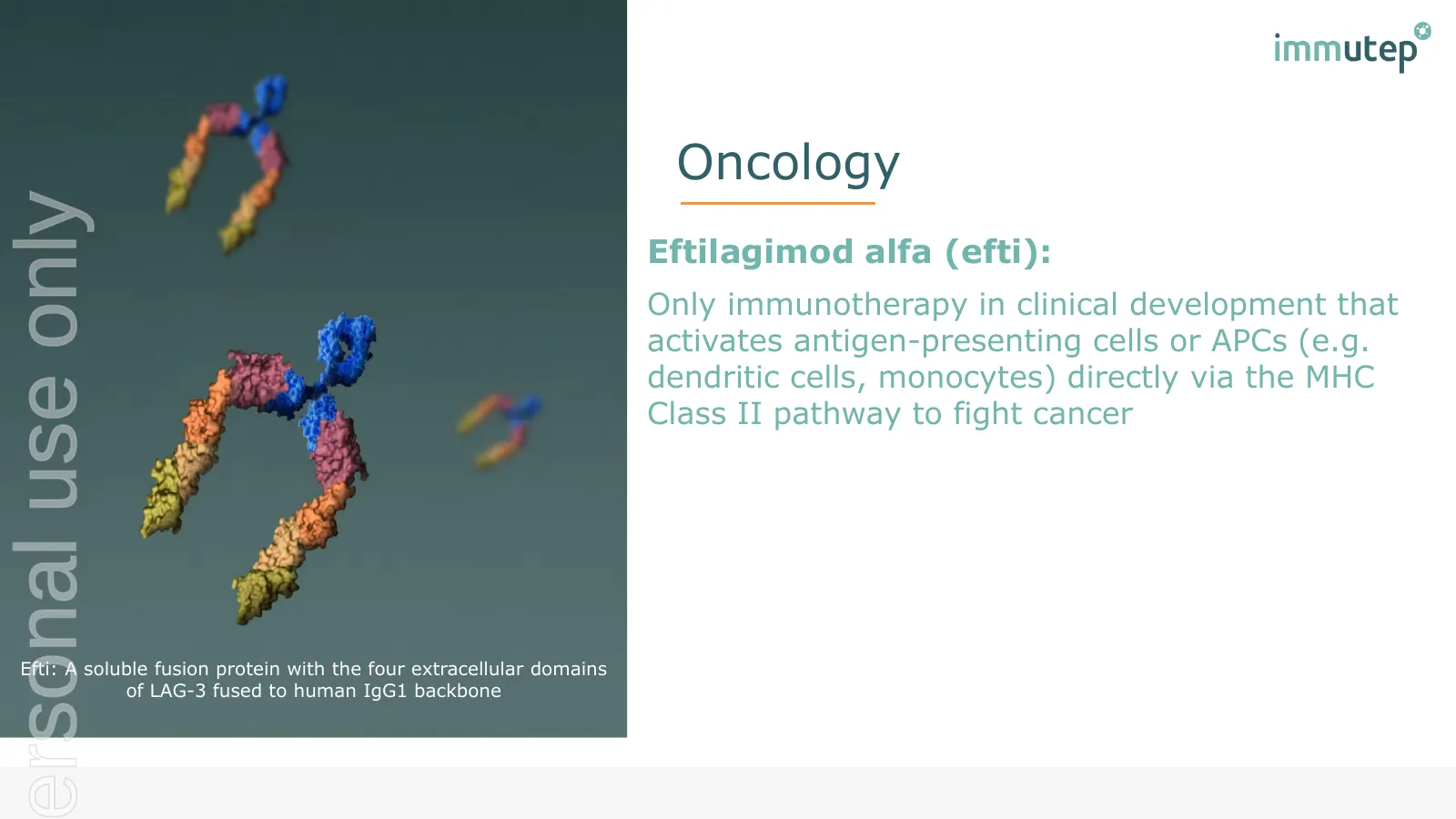
Oncology rsonal use only Eftilagimod alfa (efti): Only immunotherapy in clinical development that activates antigen-presenting cells or APCs (e.g. dendritic cells, monocytes) directly via the MHC Class II pathway to fight cancer Efti: A soluble fusion protein with the four extracellular domains of L
Slide 10: Root Cause Analysis: TACTI-004
rsonal use only Root Cause Analysis TACTI-004 10
Slide 11: Root cause investigation through fishbone analysis
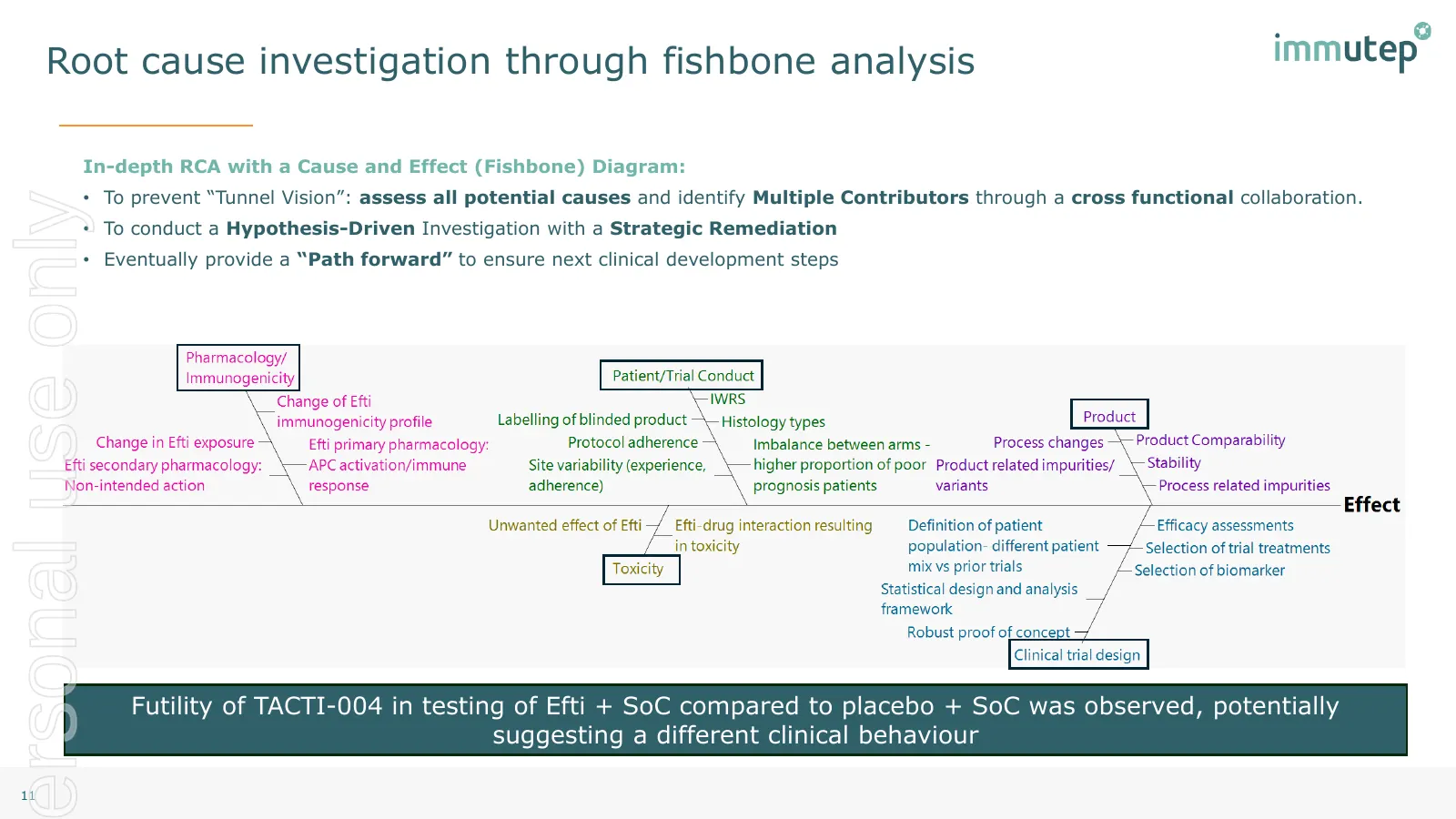
Root cause investigation through fishbone analysis In-depth RCA with a Cause and Effect (Fishbone) Diagram: • To prevent “Tunnel Vision”: assess all potential causes and identify Multiple Contributors through a cross functional collaboration. rsonal use only • To conduct a Hypothesis-Driven Investig
Slide 12: TACTI-004 root cause analysis: findings
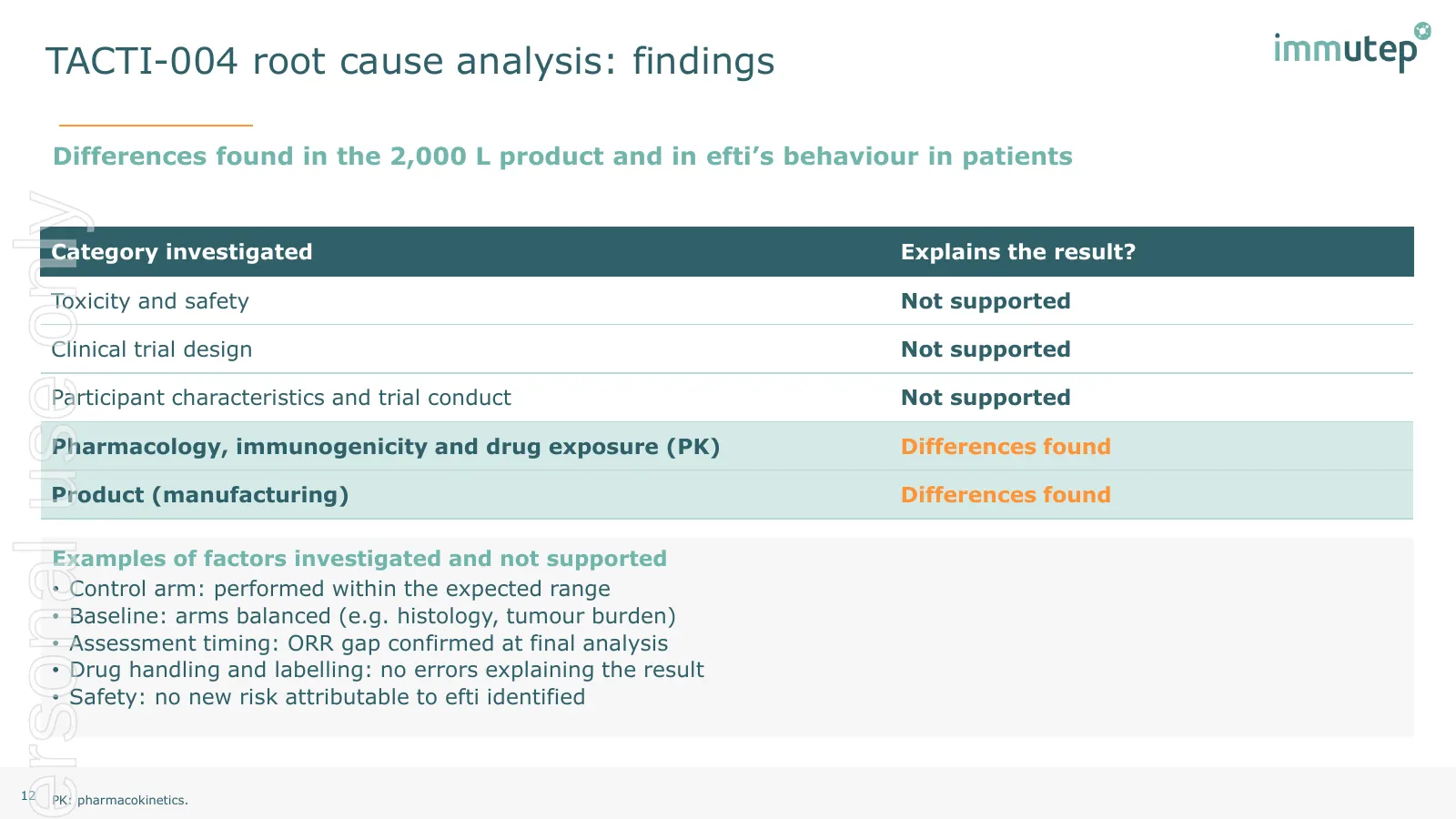
TACTI-004 root cause analysis: findings Differences found in the 2,000 L product and in efti’s behaviour in patients rsonal use only Category investigated Explains the result? Toxicity and safety Not supported Clinical trial design Not supported Participant characteristics and trial conduct Not supp
Slide 13: TACTI-004: unexpected fall in immune-cell counts in futility
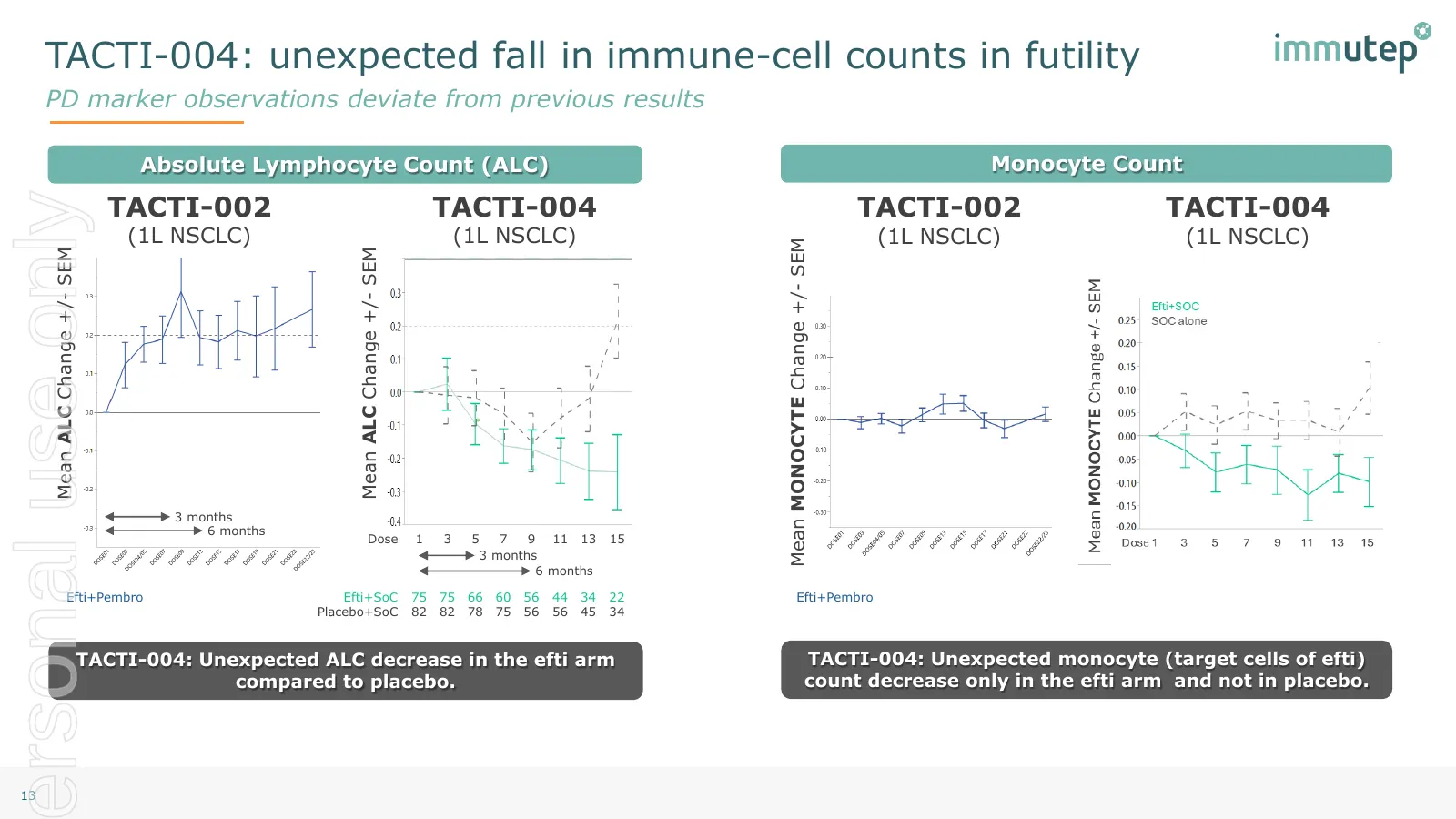
TACTI-004: unexpected fall in immune-cell counts in futility PD marker observations deviate from previous results Absolute Lymphocyte Count (ALC) Monocyte Count TACTI-002 TACTI-004 TACTI-002 TACTI-004 rsonal use only (1L NSCLC) (1L NSCLC) (1L NSCLC) (1L NSCLC) Mean MONOCYTE Change +/- SEM Mean ALC C
Slide 14: TACTI-004: unexpected efti exposure
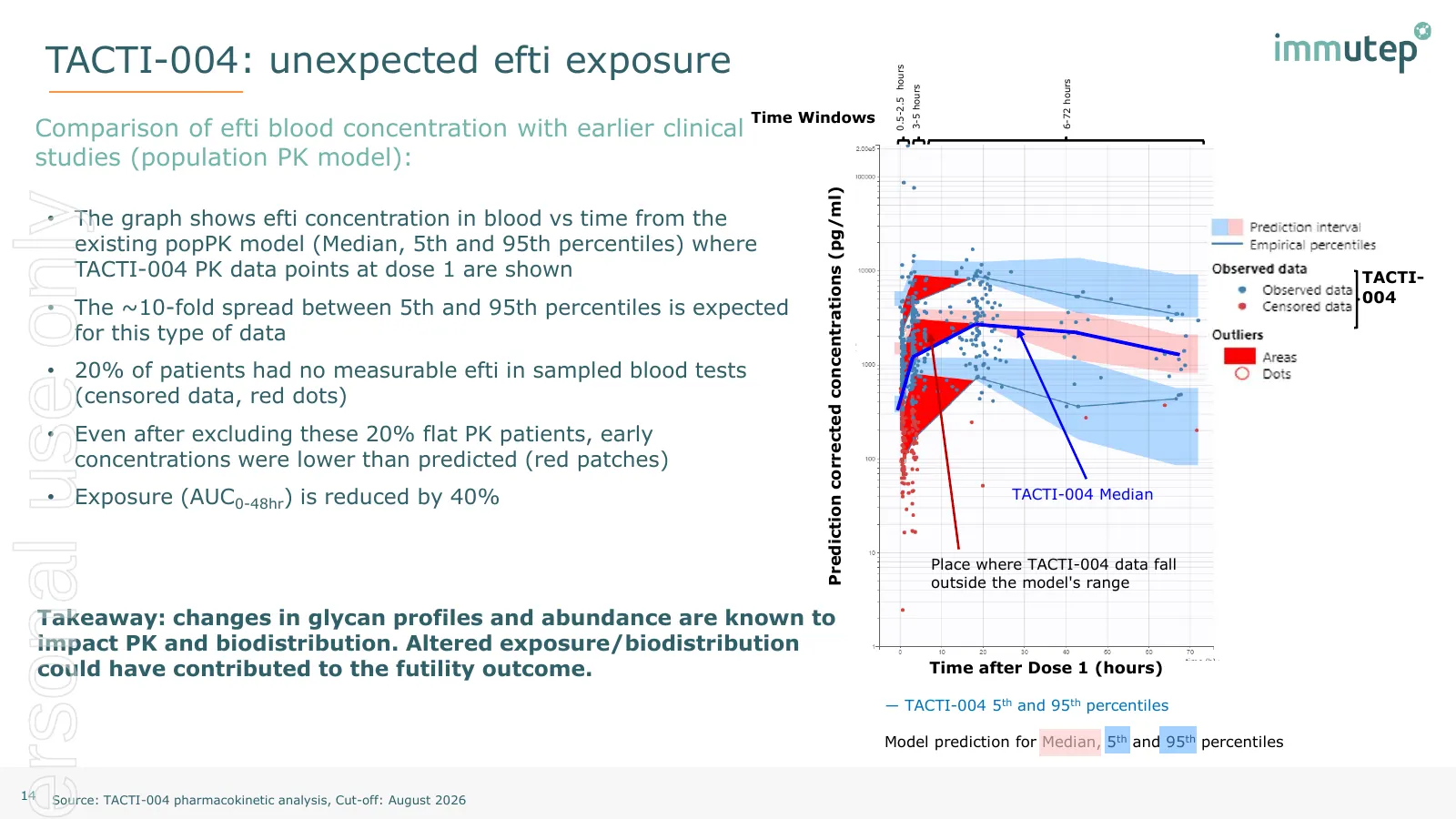
TACTI-004: unexpected efti exposure 0.5-2.5 hours 6-72 hours 3-5 hours Time Windows Comparison of efti blood concentration with earlier clinical studies (population PK model): Prediction corrected concentrations (pg/ml) rsonal use only • The graph shows efti concentration in blood vs time from the e
Slide 15: Efti is a glycoprotein
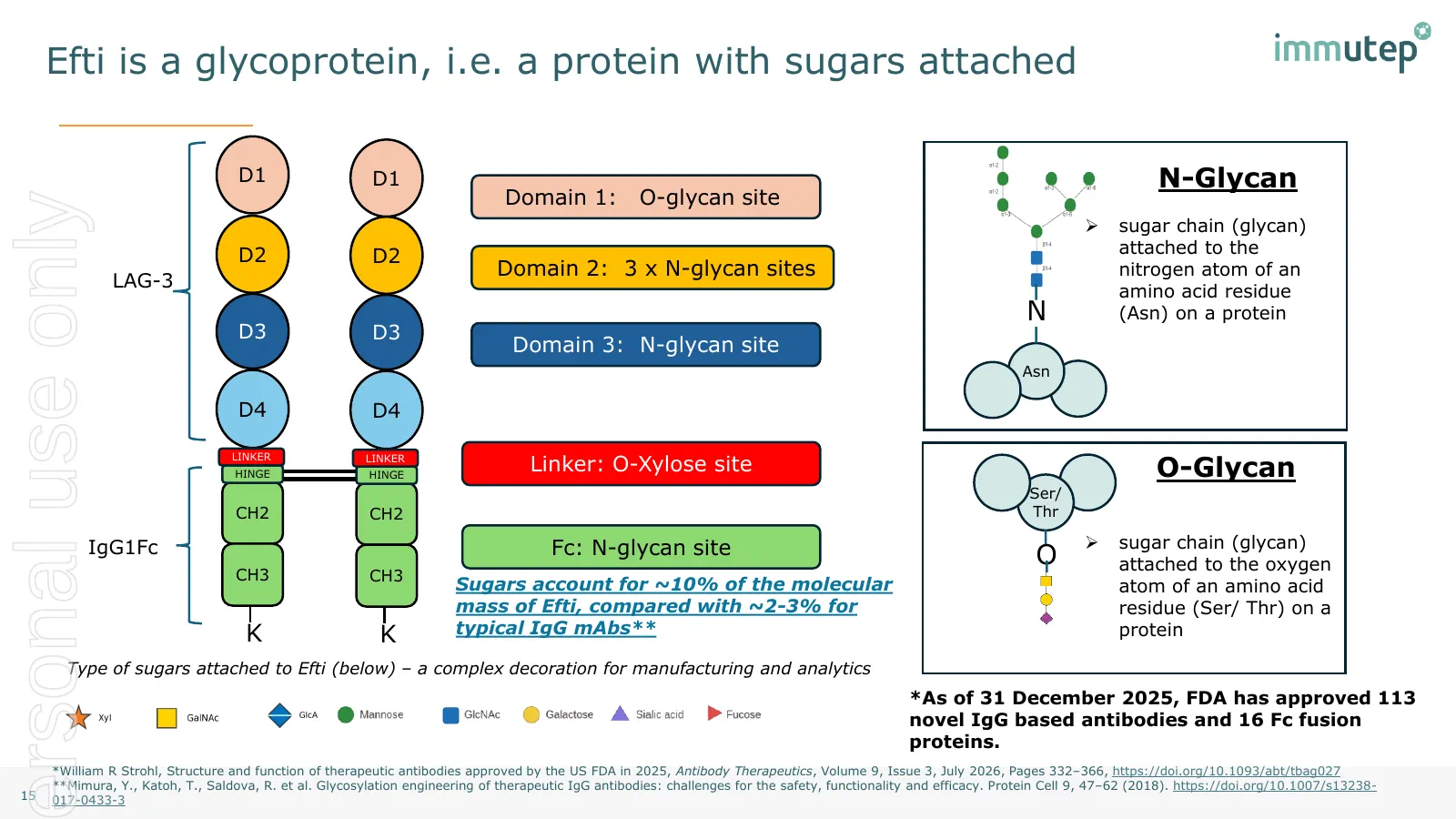
Efti is a glycoprotein, i.e. a protein with sugars attached D1 D1 N-Glycan Domain 1: O-glycan site rsonal use only ➢ sugar chain (glycan) D2 attached to the D2 Domain 2: 3 x N-glycan sites nitrogen atom of an LAG-3 amino acid residue N (Asn) on a protein D3 D3 Domain 3: N-glycan site Asn D4 D4 Linke
Slide 16: What changed from 200L to 2000L
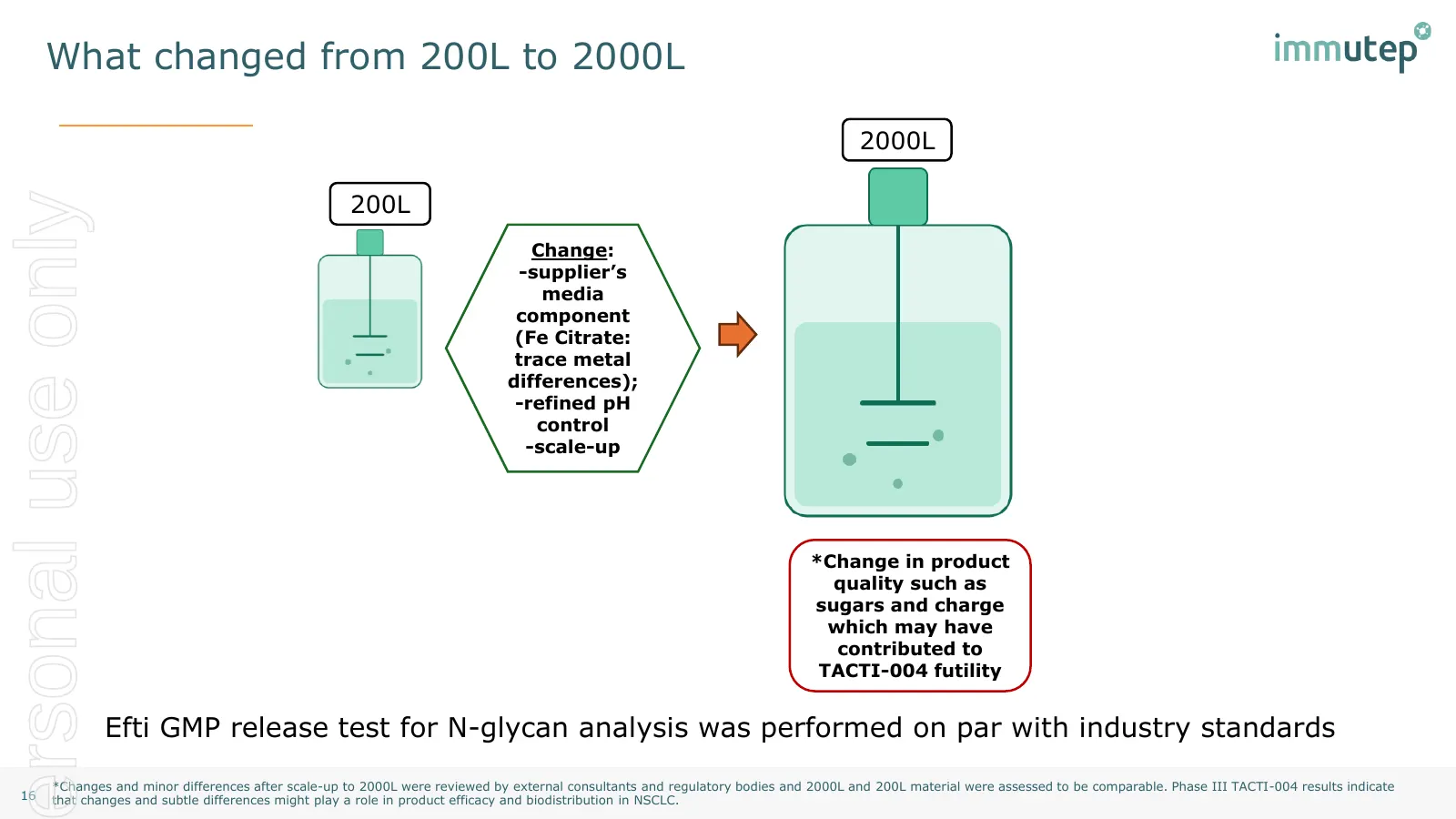
What changed from 200L to 2000L 2000L 200L rsonal use only Change: -supplier’s media component (Fe Citrate: trace metal differences); -refined pH control -scale-up *Change in product quality such as sugars and charge which may have contributed to TACTI-004 futility Efti GMP release test for N-glycan
Slide 17: Differences in glycans discovered in RCA
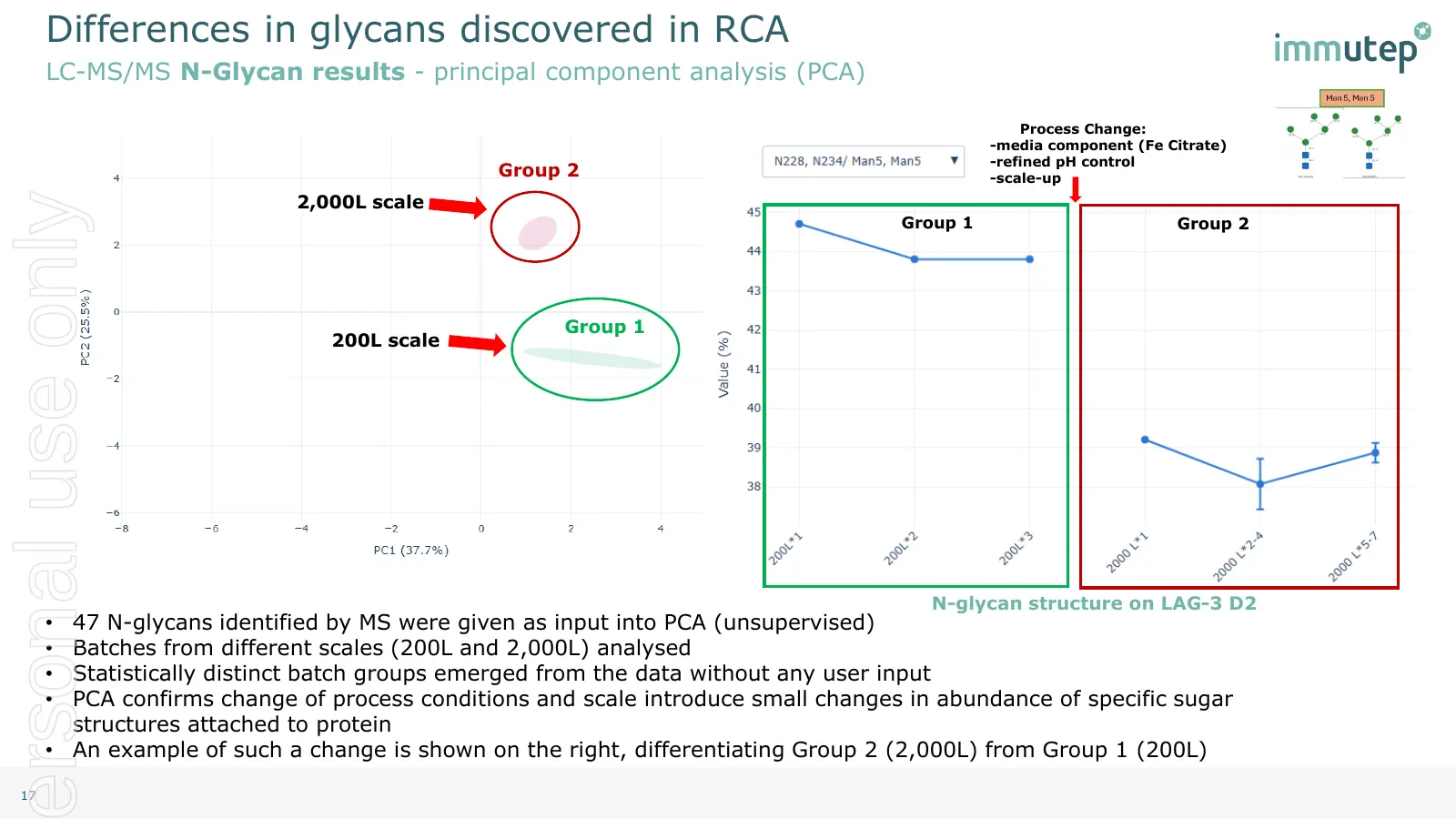
Differences in glycans discovered in RCA LC-MS/MS N-Glycan results - principal component analysis (PCA) Process Change: -media component (Fe Citrate) -refined pH control Group 2 -scale-up 2,000L scale rsonal use only Group 1 Group 2 Group 1 200L scale N-glycan structure on LAG-3 D2 • 47 N-glycans id
Slide 18: TACTI-004 root cause analysis: key findings
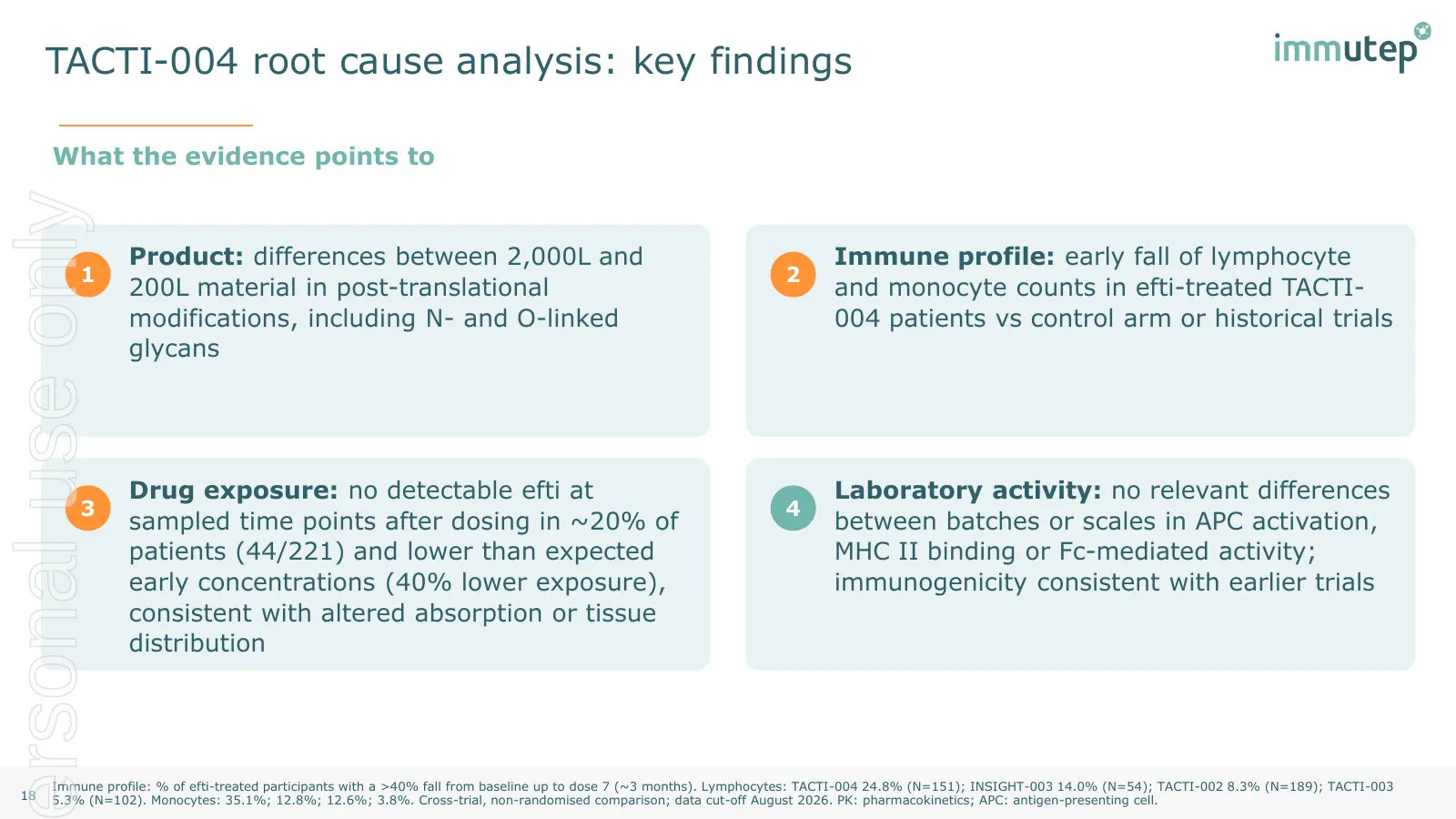
TACTI-004 root cause analysis: key findings What the evidence points to rsonal use only Product: differences between 2,000L and Immune profile: early fall of lymphocyte 1 2 200L material in post-translational and monocyte counts in efti-treated TACTI- modifications, including N- and O-linked 004 pat
Slide 19: RCA outcome
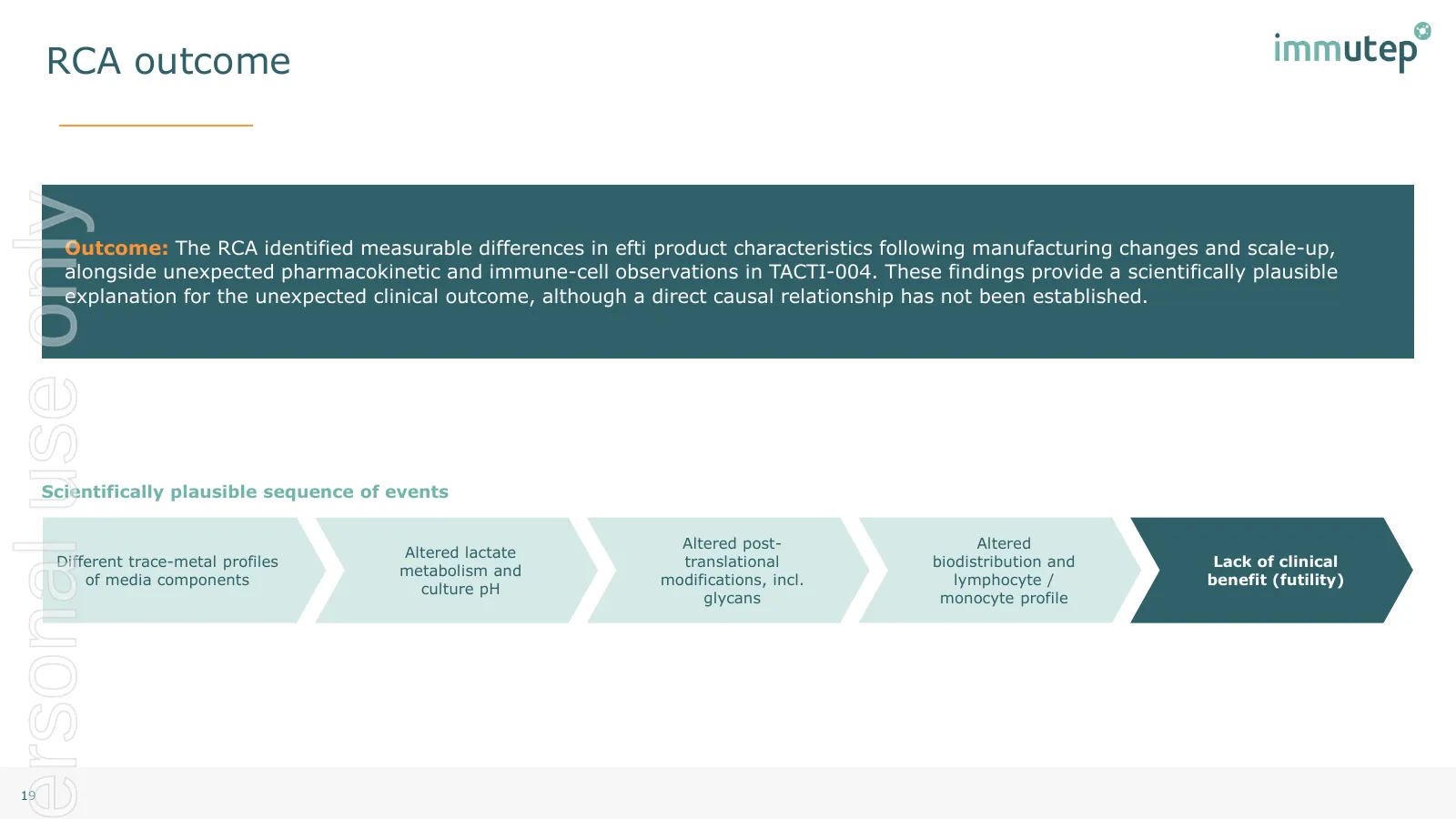
RCA outcome rsonal use only Outcome: The RCA identified measurable differences in efti product characteristics following manufacturing changes and scale-up, alongside unexpected pharmacokinetic and immune-cell observations in TACTI-004. These findings provide a scientifically plausible explanation f
Slide 20: Efti's Path Forward
rsonal use only Efti’s Path Forward 20
Slide 21: Learnings from RCA: Manufacturing path forward for efti
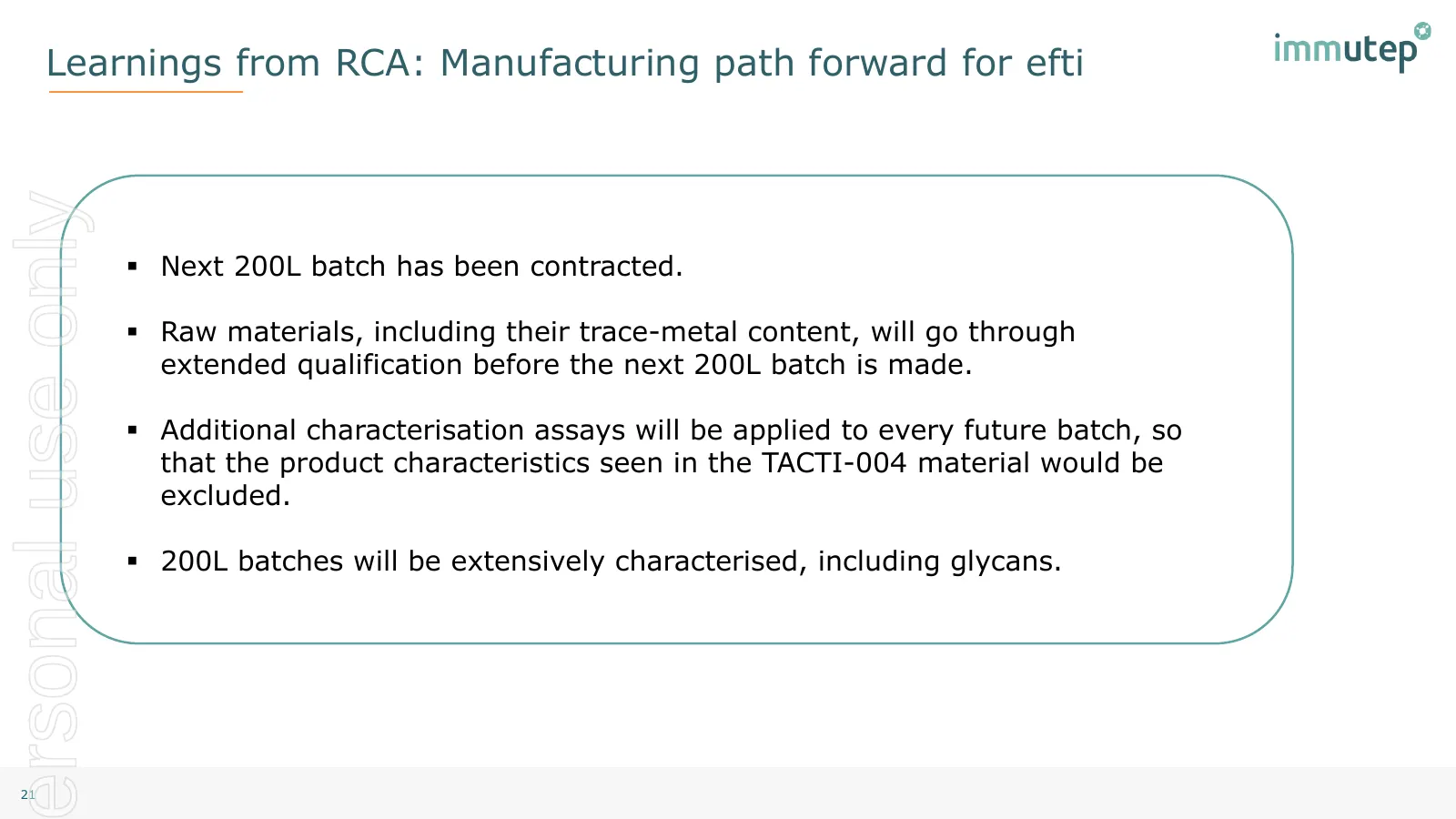
Learnings from RCA: Manufacturing path forward for efti rsonal use only ▪ Next 200L batch has been contracted. ▪ Raw materials, including their trace-metal content, will go through extended qualification before the next 200L batch is made. ▪ Additional characterisation assays will be applied to ever
Slide 22: Efti in oncology: chemo-free path to potential BLA filing in 2 indications
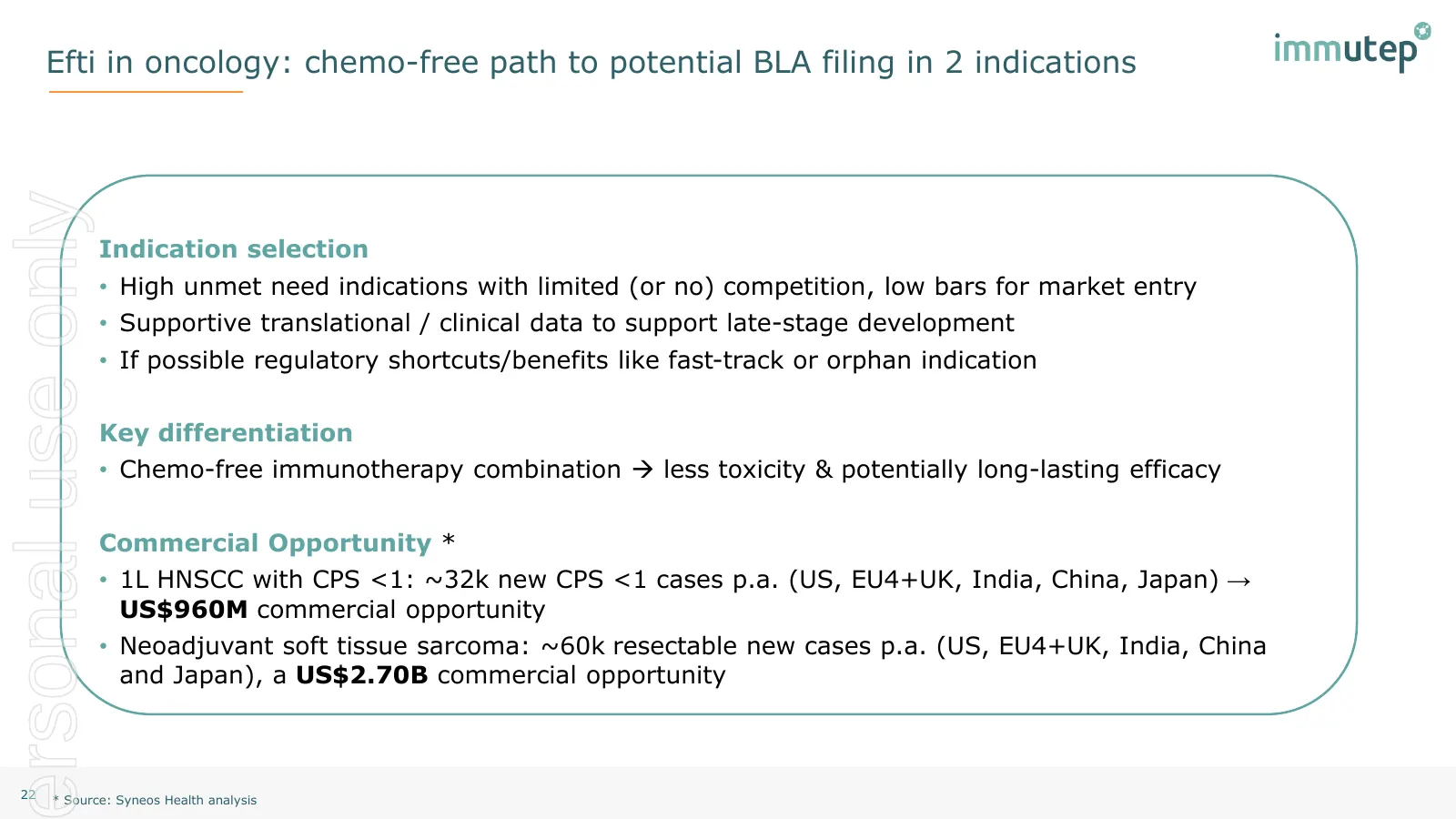
Efti in oncology: chemo-free path to potential BLA filing in 2 indications rsonal use only Indication selection • High unmet need indications with limited (or no) competition, low bars for market entry • Supportive translational / clinical data to support late-stage development • If possible regulat
Slide 23: Efti & anti-PD-1 in 1L HNSCC CPS <1: a chemo-free opportunity
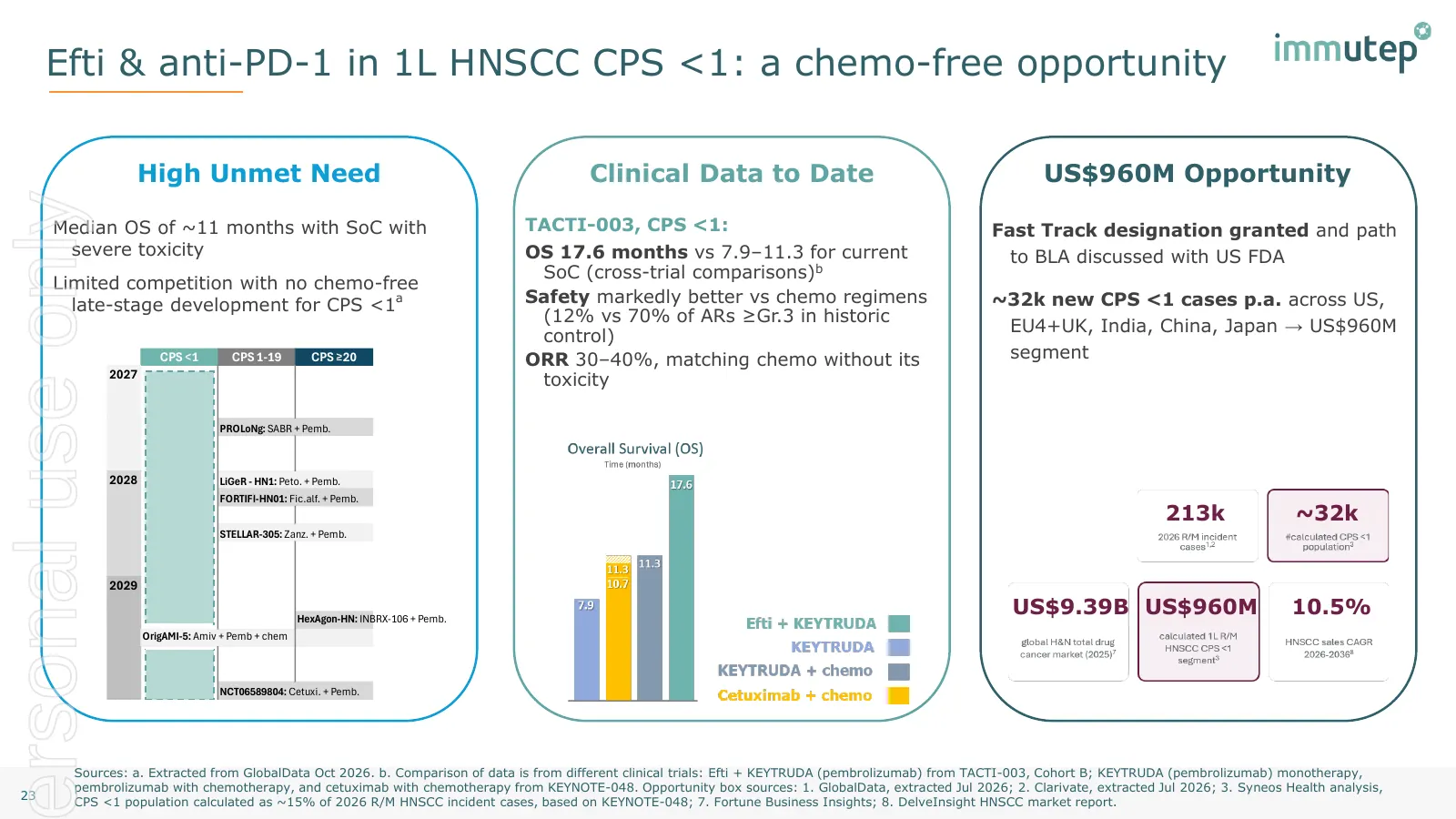
Efti & anti-PD-1 in 1L HNSCC CPS <1: a chemo-free opportunity High Unmet Need Clinical Data to Date US$960M Opportunity rsonal use only Median OS of ~11 months with SoC with TACTI-003, CPS <1: Fast Track designation granted and path severe toxicity OS 17.6 months vs 7.9–11.3 for current to BLA discu
Slide 24: Phase II design in 1L HNSCC CPS <1
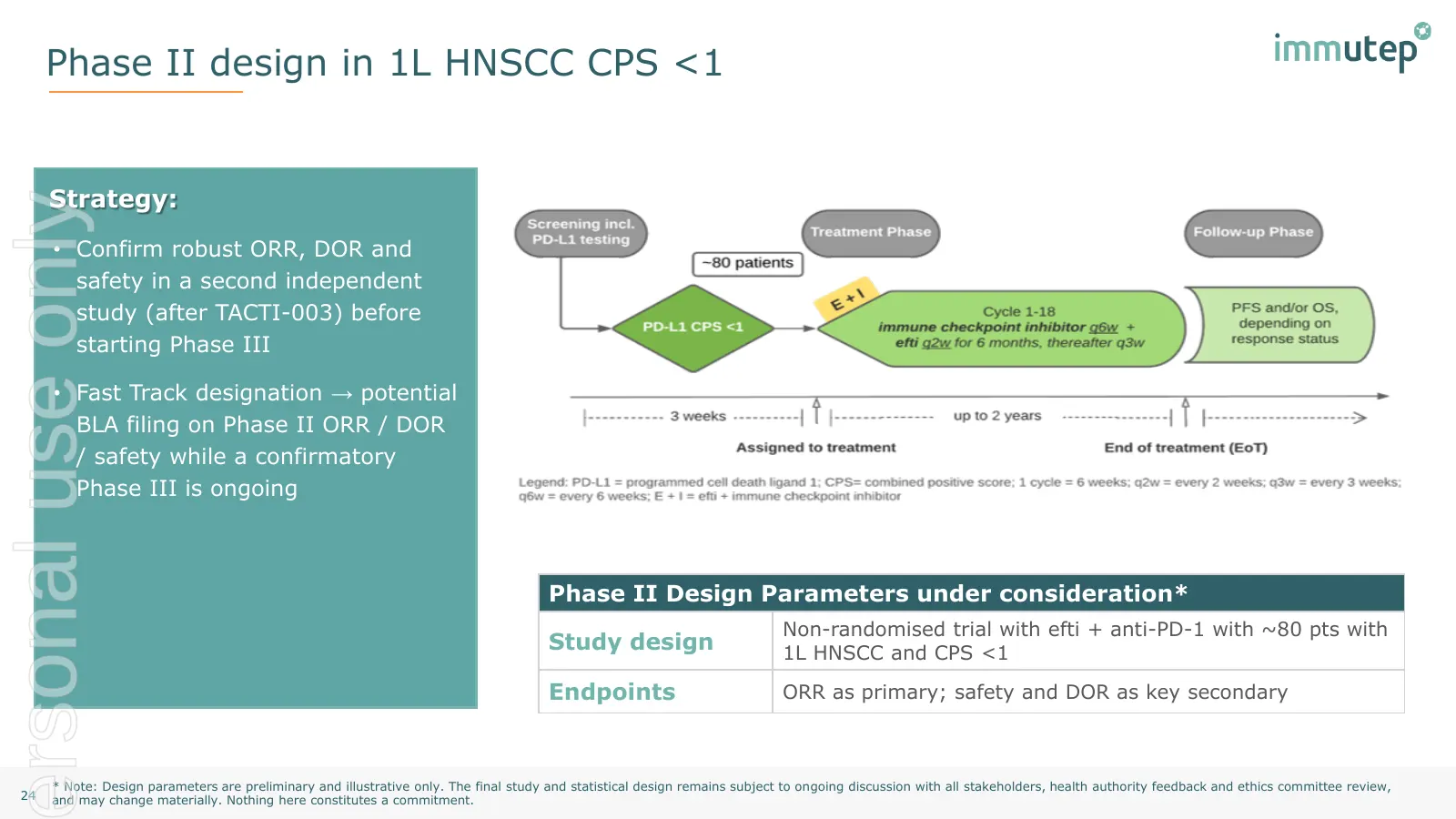
Phase II design in 1L HNSCC CPS <1 Strategy: rsonal use only • Confirm robust ORR, DOR and safety in a second independent study (after TACTI-003) before starting Phase III • Fast Track designation → potential BLA filing on Phase II ORR / DOR / safety while a confirmatory Phase III is ongoing Phase I
Slide 25: Efti + anti-PD-1 in neoadjuvant soft tissue sarcoma
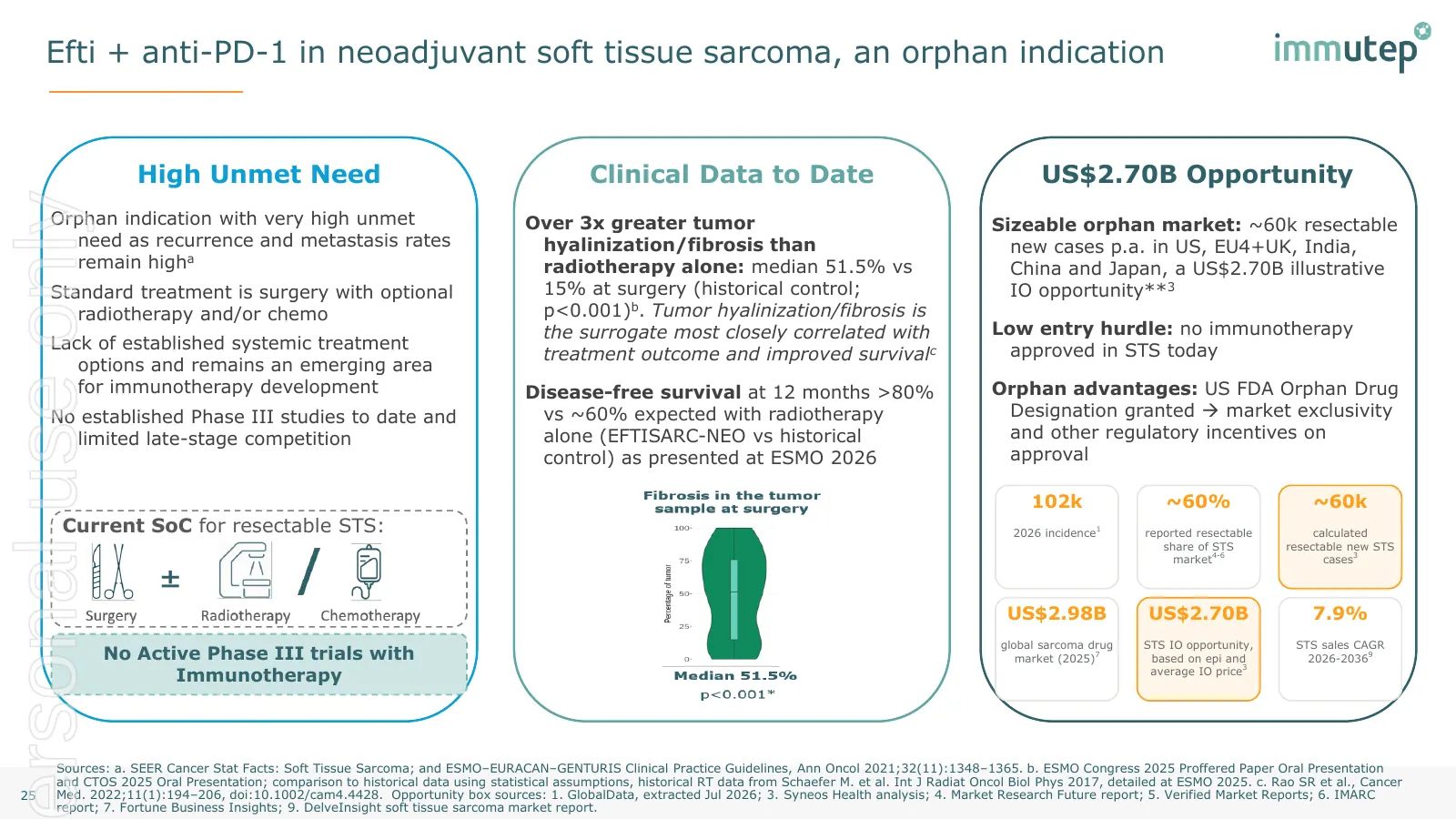
Efti + anti-PD-1 in neoadjuvant soft tissue sarcoma, an orphan indication High Unmet Need Clinical Data to Date US$2.70B Opportunity rsonal use only Orphan indication with very high unmet Over 3x greater tumor Sizeable orphan market: ~60k resectable need as recurrence and metastasis rates hyalinizat
Slide 26: Trial design in soft tissue sarcoma (STS)
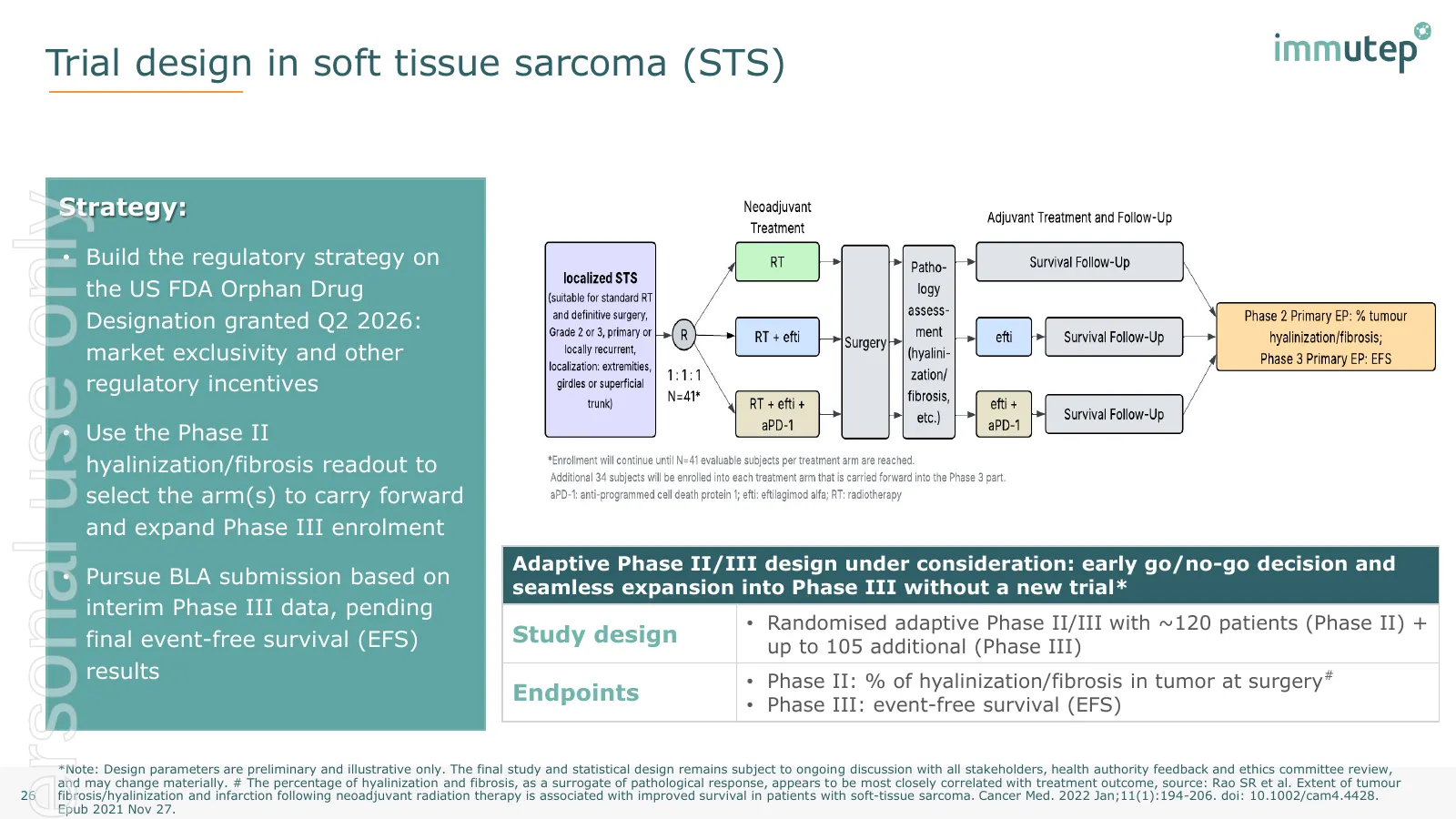
Trial design in soft tissue sarcoma (STS) rsonal use only Strategy: • Build the regulatory strategy on the US FDA Orphan Drug Designation granted Q2 2026: market exclusivity and other regulatory incentives • Use the Phase II hyalinization/fibrosis readout to select the arm(s) to carry forward and ex

Slide 27: IMP761 Results & Path Forward
rsonal use only IMP761 Results & Path Forward Innovative first-in-class opportunity 27
Slide 28: Autoimmune diseases: IMP761
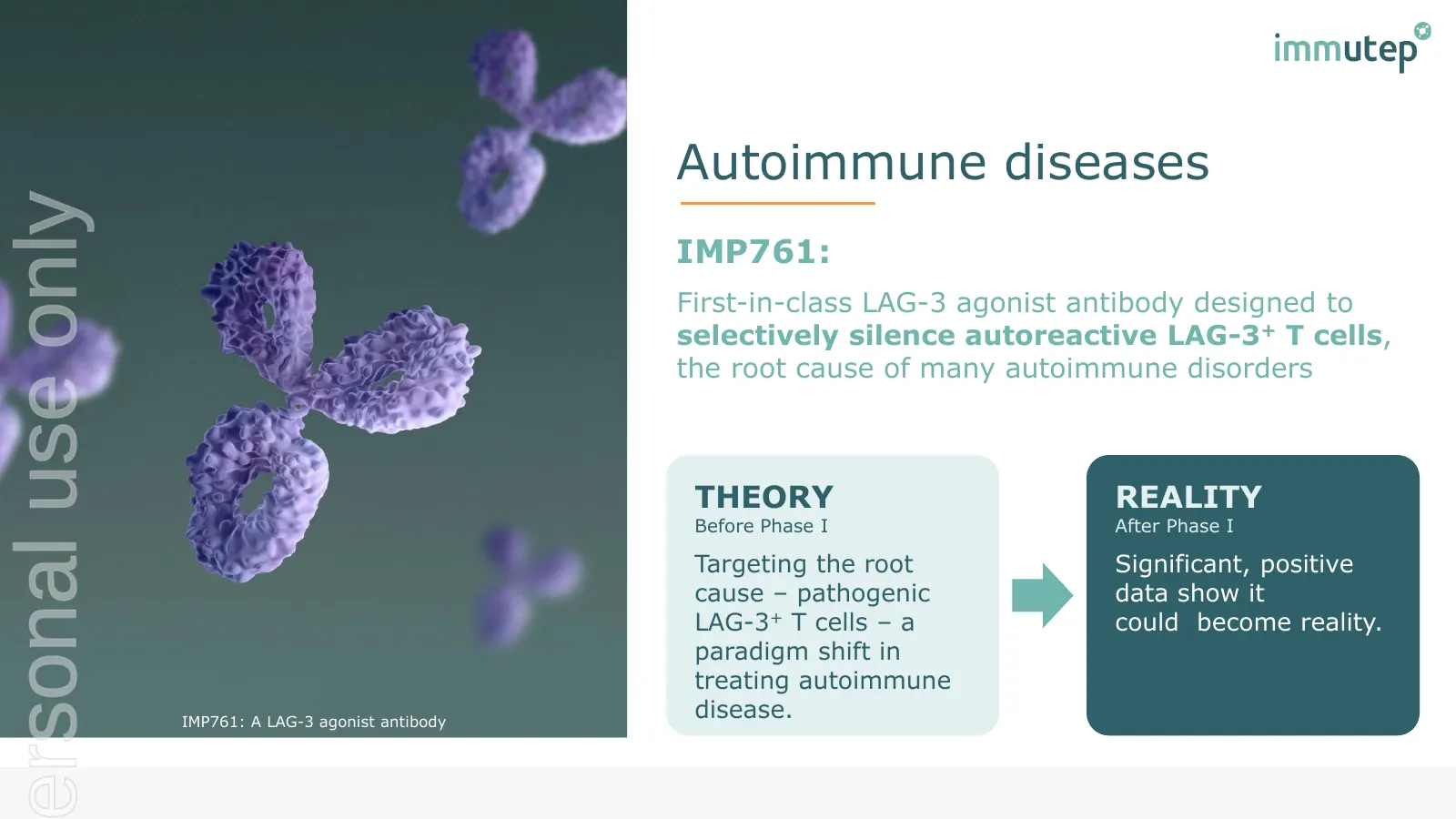
Autoimmune diseases rsonal use only IMP761: First-in-class LAG-3 agonist antibody designed to selectively silence autoreactive LAG-3+ T cells, the root cause of many autoimmune disorders THEORY REALITY Before Phase I After Phase I Targeting the root Significant, positive cause – pathogenic data show
Slide 29: Autoimmune disease: a vast and debilitating problem
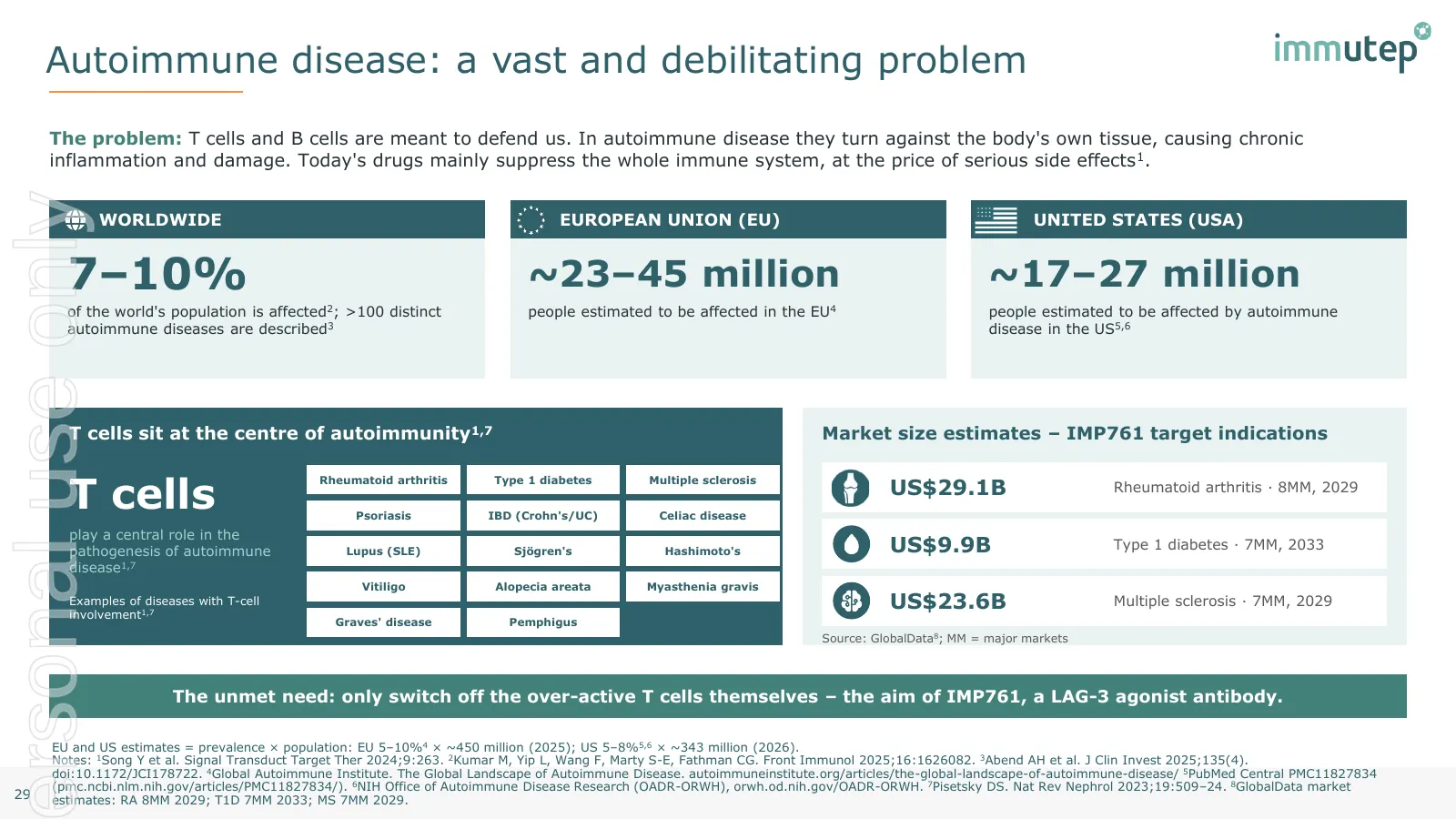
Autoimmune disease: a vast and debilitating problem The problem: T cells and B cells are meant to defend us. In autoimmune disease they turn against the body's own tissue, causing chronic inflammation and damage. Today's drugs mainly suppress the whole immune system, at the price of serious side eff
Slide 30: Selective silencing of autoreactive T cells
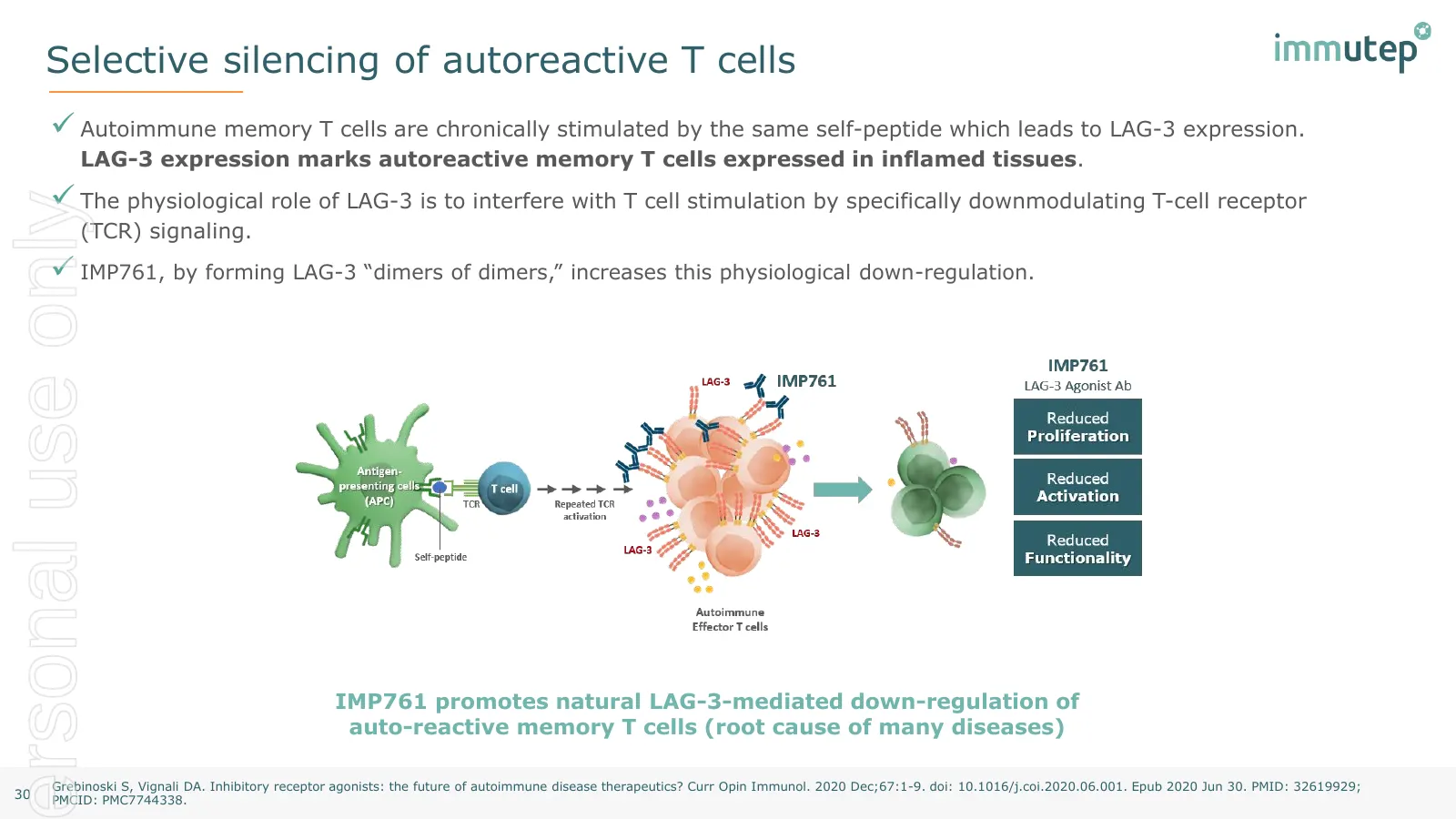
Selective silencing of autoreactive T cells ✓ Autoimmune memory T cells are chronically stimulated by the same self-peptide which leads to LAG-3 expression. LAG-3 expression marks autoreactive memory T cells expressed in inflamed tissues. ✓ The physiological role of LAG-3 is to interfere with T cell
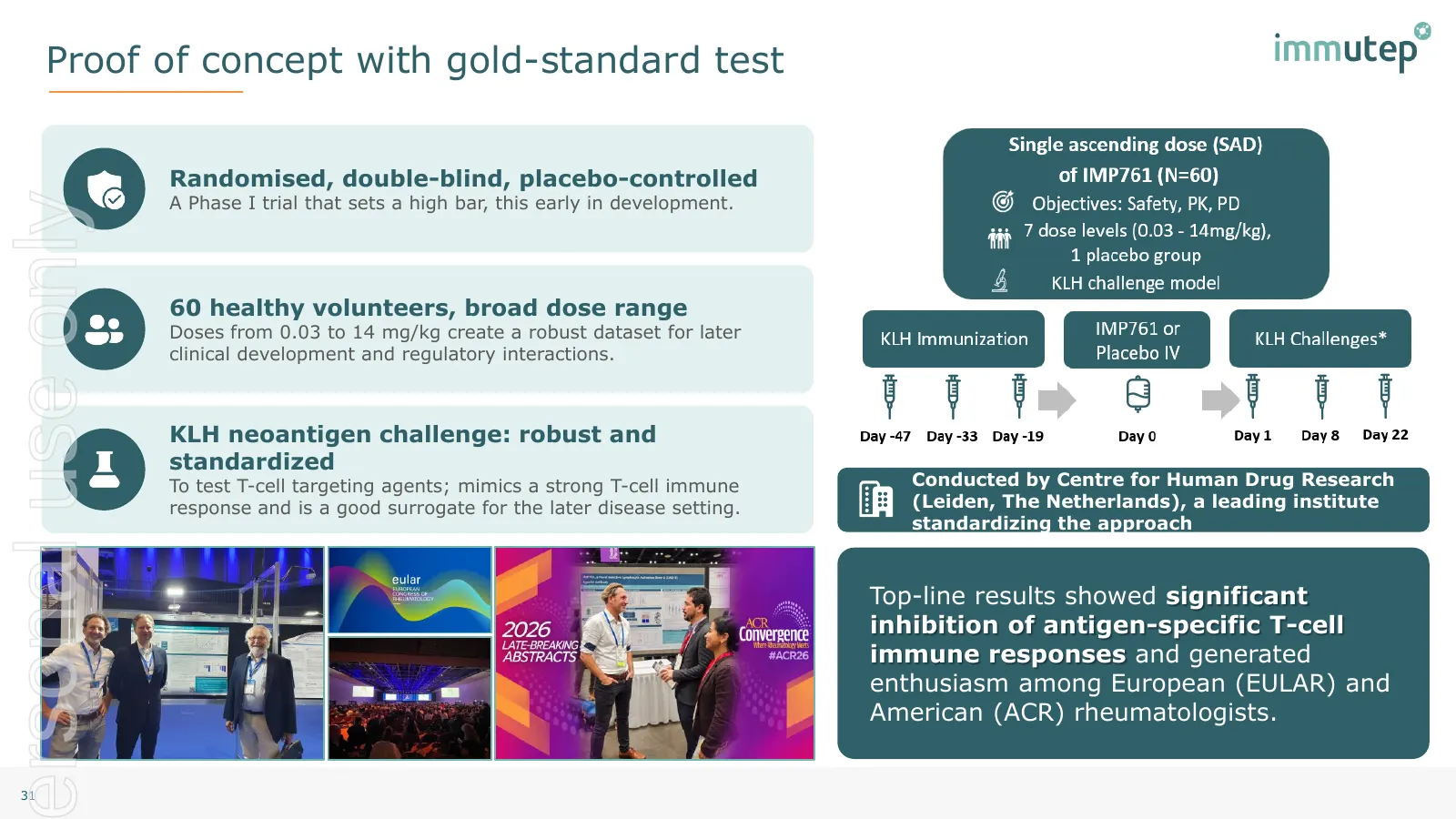
Slide 31: Proof of concept with gold-standard test
Proof of concept with gold-standard test Randomised, double-blind, placebo-controlled rsonal use only A Phase I trial that sets a high bar, this early in development. 60 healthy volunteers, broad dose range Doses from 0.03 to 14 mg/kg create a robust dataset for later clinical development and regula
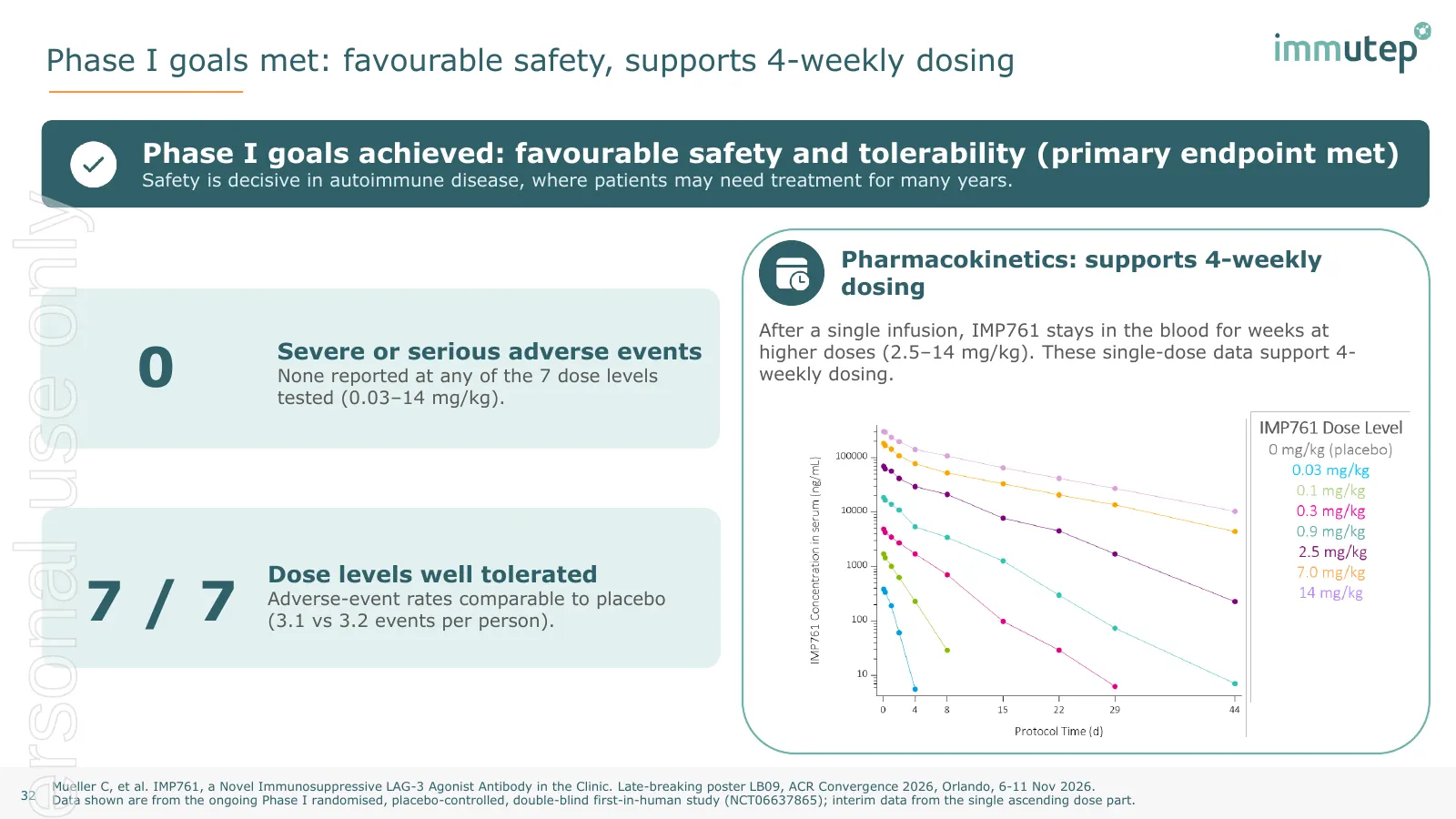
Slide 32: Phase I goals met: favourable safety, supports 4-weekly dosing
Phase I goals met: favourable safety, supports 4-weekly dosing Phase I goals achieved: favourable safety and tolerability (primary endpoint met) Safety is decisive in autoimmune disease, where patients may need treatment for many years. rsonal use only Pharmacokinetics: supports 4-weekly dosing Afte
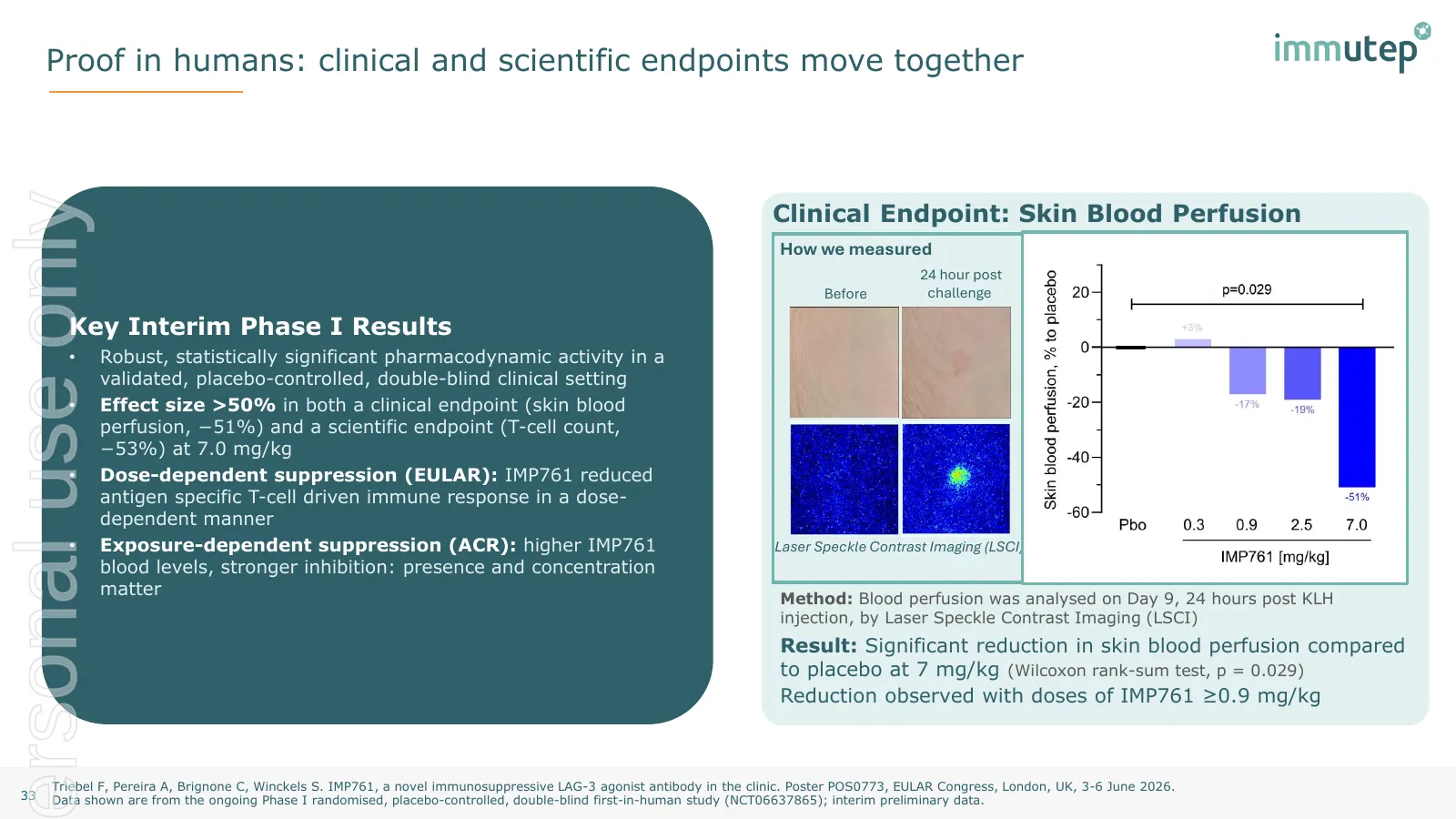
Slide 33: Proof in humans: clinical and scientific endpoints move together
Proof in humans: clinical and scientific endpoints move together rsonal use only Clinical Endpoint: Skin Blood Perfusion How we measured 24 hour post Before challenge Key Interim Phase I Results • Robust, statistically significant pharmacodynamic activity in a validated, placebo-controlled, double-b
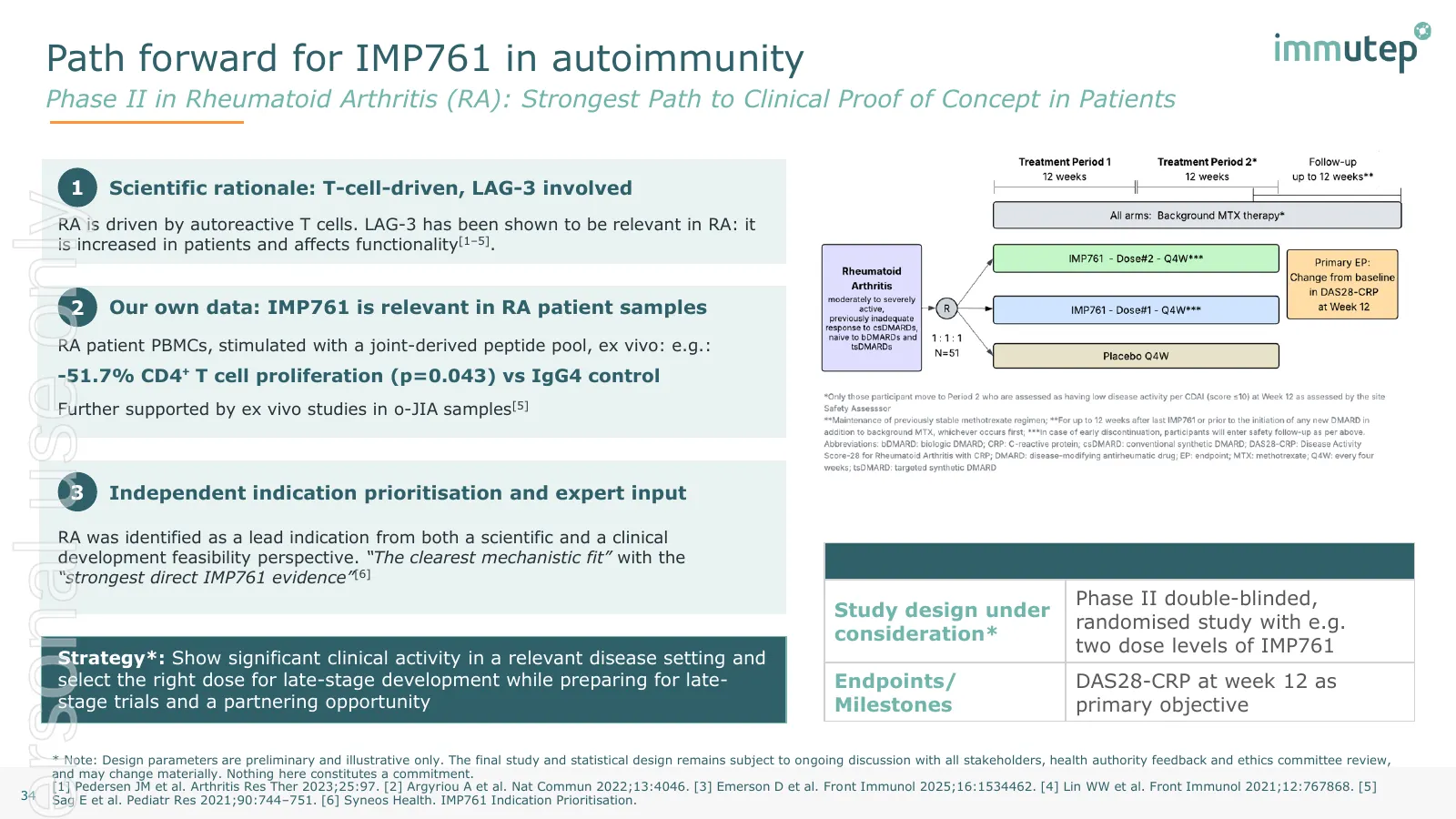
Slide 34: Path forward for IMP761 in autoimmunity
Path forward for IMP761 in autoimmunity Phase II in Rheumatoid Arthritis (RA): Strongest Path to Clinical Proof of Concept in Patients 1 Scientific rationale: T-cell-driven, LAG-3 involved rsonal use only RA is driven by autoreactive T cells. LAG-3 has been shown to be relevant in RA: it is increase
Slide 35: FY26 financial summary
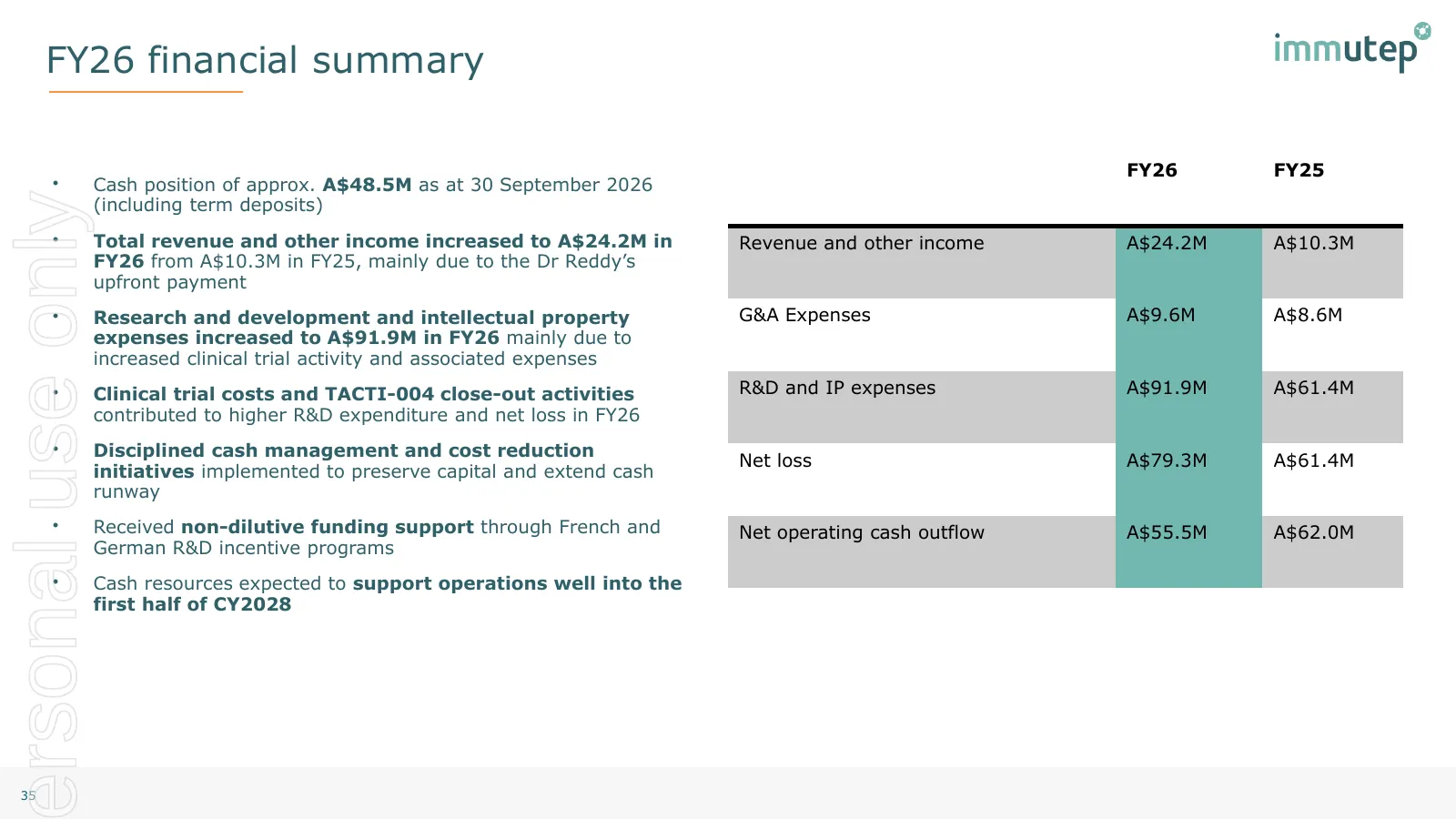
FY26 financial summary FY26 FY25 • Cash position of approx. A$48.5M as at 30 September 2026 rsonal use only (including term deposits) • Total revenue and other income increased to A$24.2M in Revenue and other income A$24.2M A$10.3M FY26 from A$10.3M in FY25, mainly due to the Dr Reddy’s upfront paym
Slide 36: Immutep: substantial assets and multiple paths to value
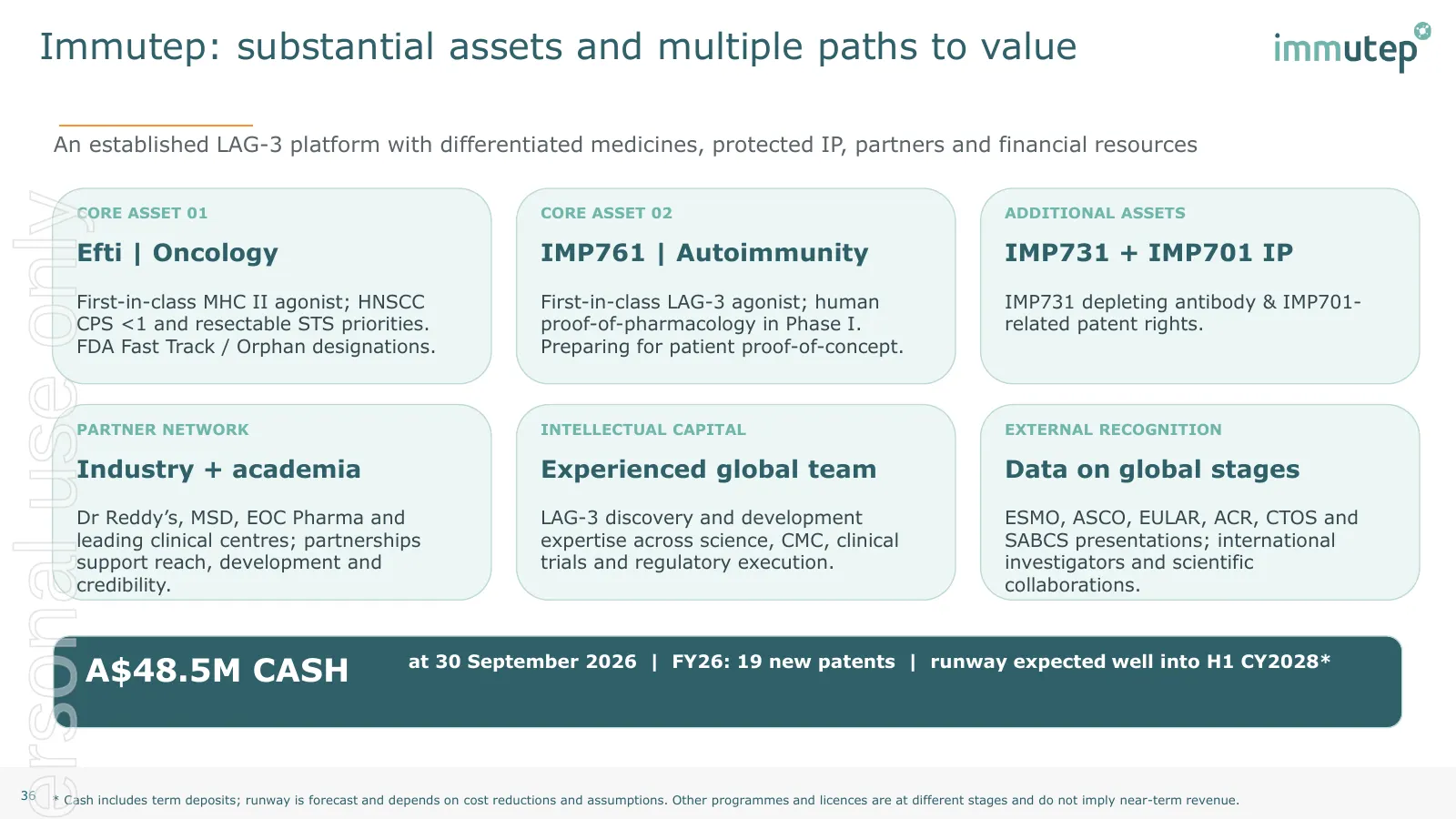
Immutep: substantial assets and multiple paths to value An established LAG-3 platform with differentiated medicines, protected IP, partners and financial resources rsonal use only CORE ASSET 01 CORE ASSET 02 ADDITIONAL ASSETS Efti | Oncology IMP761 | Autoimmunity IMP731 + IMP701 IP First-in-class MH
Slide 37: 2027 milestones and catalysts
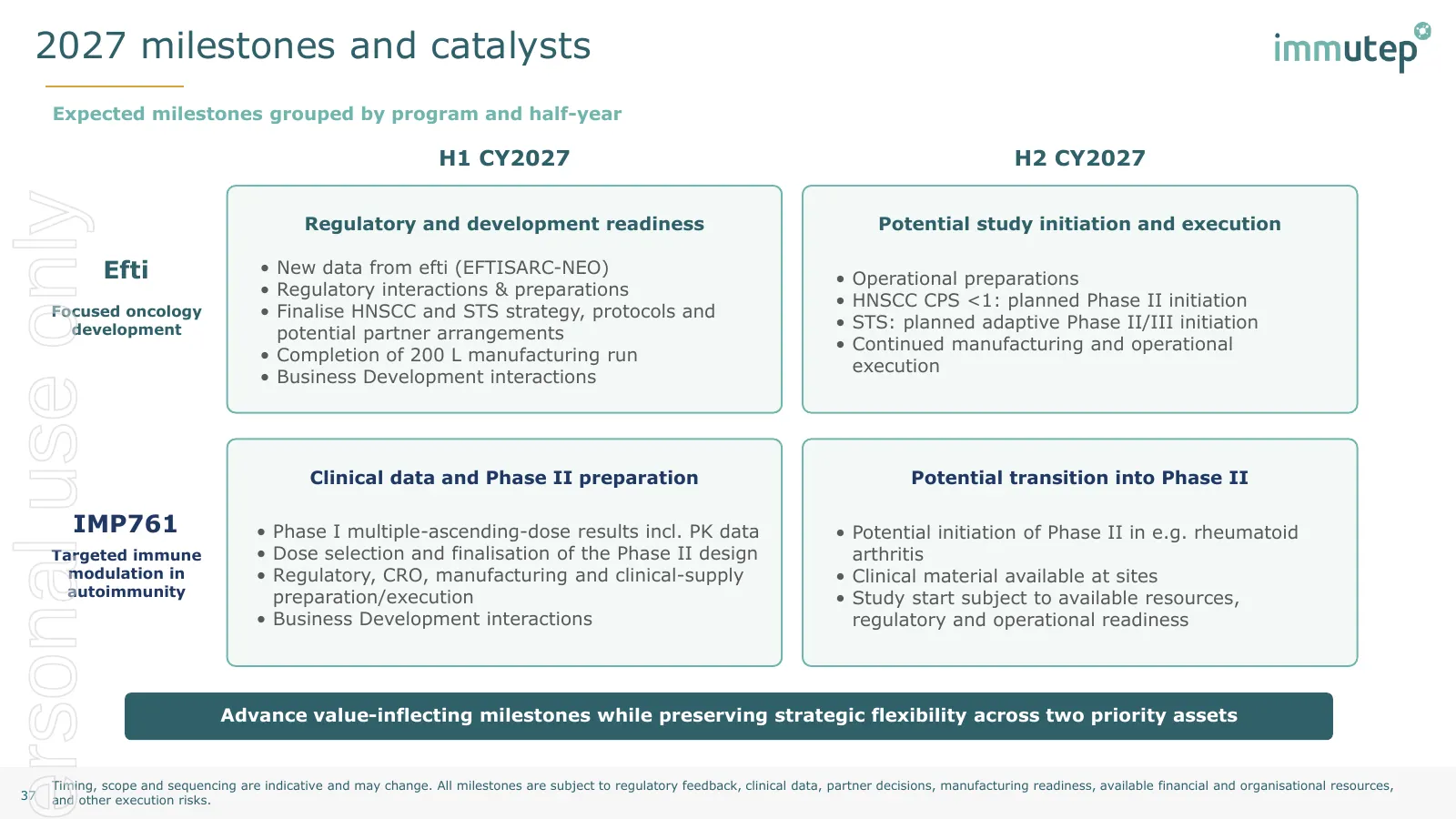
2027 milestones and catalysts Expected milestones grouped by program and half-year H1 CY2027 H2 CY2027 rsonal use only Regulatory and development readiness Potential study initiation and execution Efti • New data from efti (EFTISARC-NEO) • Operational preparations • Regulatory interactions & prepara
Slide 38: Summary
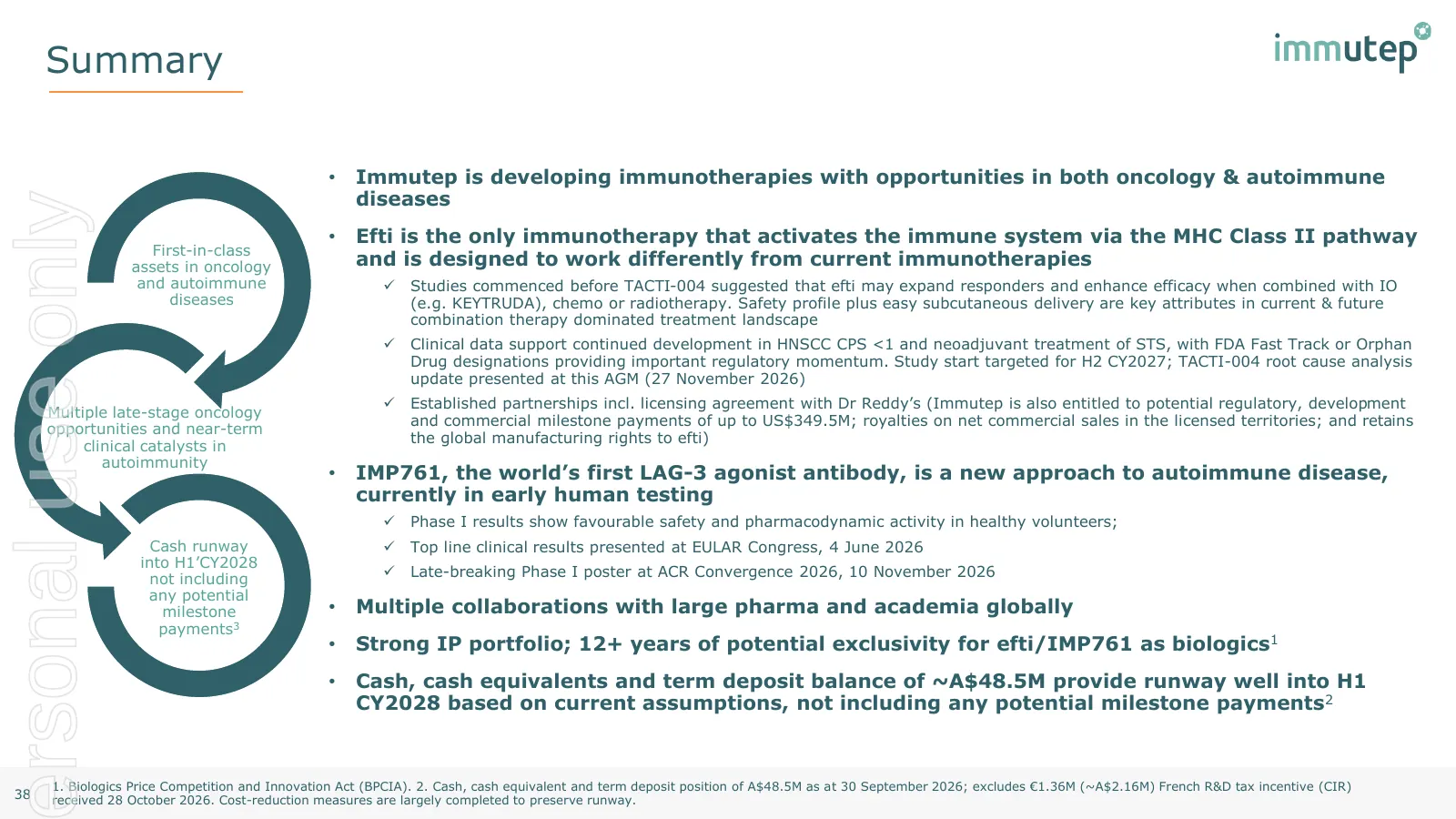
Summary • Immutep is developing immunotherapies with opportunities in both oncology & autoimmune diseases rsonal use only • Efti is the only immunotherapy that activates the immune system via the MHC Class II pathway First-in-class assets in oncology and is designed to work differently from current

Slide 39: Thank You
ersonal use only Thank You . t ® Empowering the Immune System Pp

Slide 40: Appendix
ersonal use only Appendix . t ® Empowering the Immune System Pp
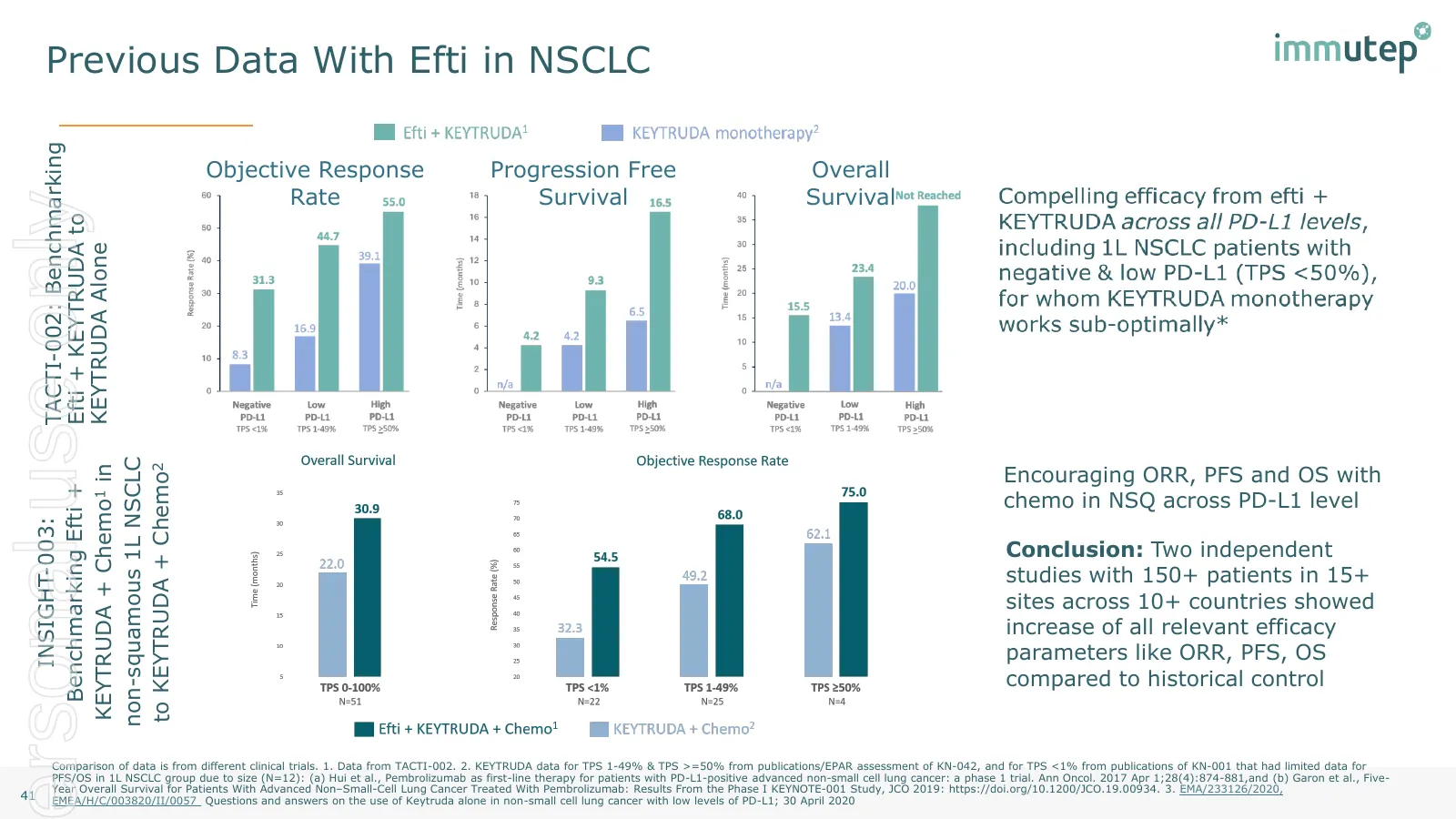
Slide 41: Previous Data With Efti in NSCLC
Previous Data With Efti in NSCLC TACTI-002: Benchmarking Objective Response Progression Free Overall Rate Survival Survival rsonal use only Efti + KEYTRUDA to KEYTRUDA Alone non-squamous 1L NSCLC Encouraging ORR, PFS and OS with to KEYTRUDA + Chemo2 KEYTRUDA + Chemo1 in Benchmarking Efti + chemo in
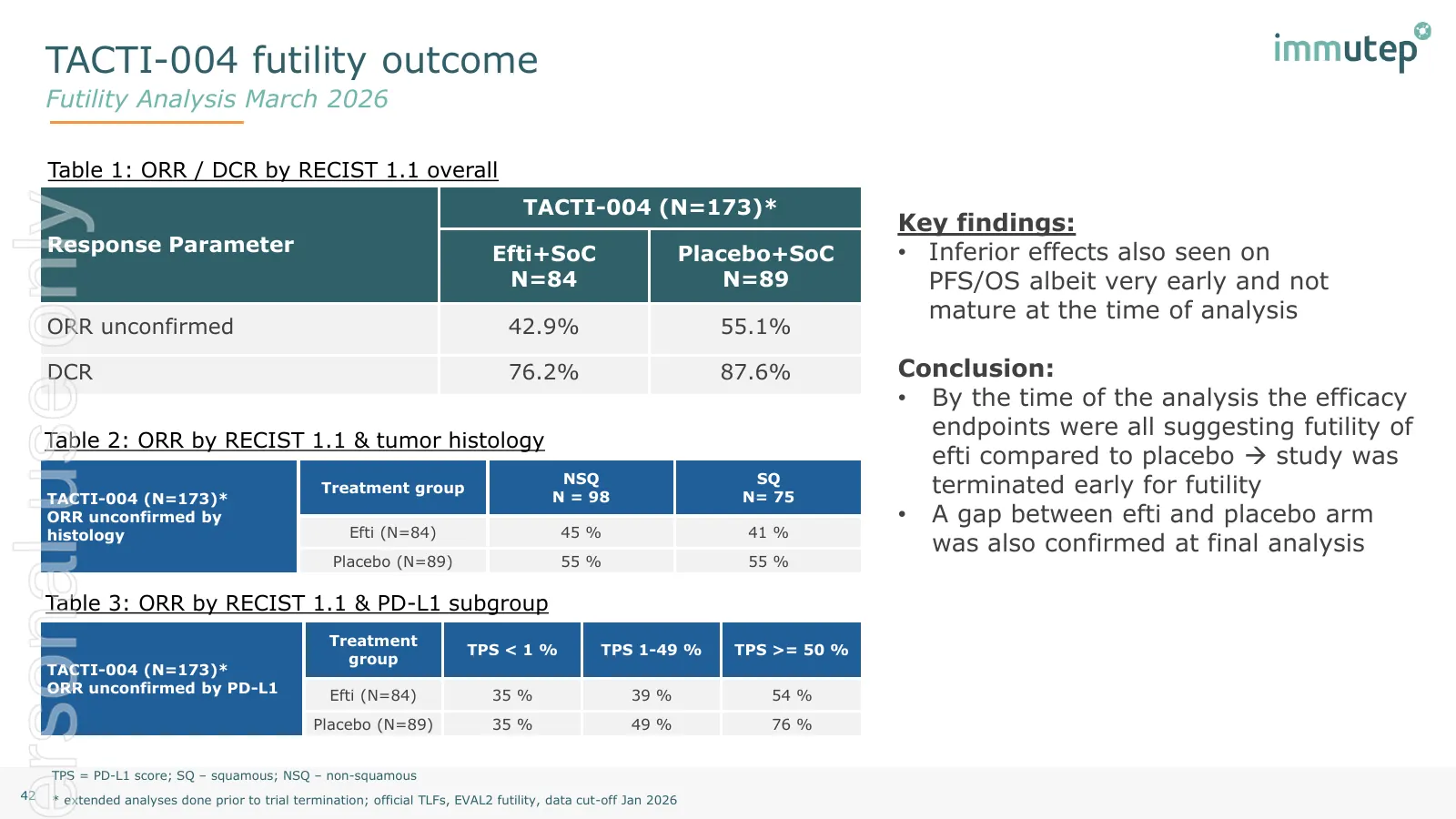
Slide 42: TACTI-004 futility outcome
TACTI-004 futility outcome Futility Analysis March 2026 Table 1: ORR / DCR by RECIST 1.1 overall rsonal use only TACTI-004 (N=173)* Key findings: Response Parameter Efti+SoC Placebo+SoC • Inferior effects also seen on N=84 N=89 PFS/OS albeit very early and not mature at the time of analysis ORR unco
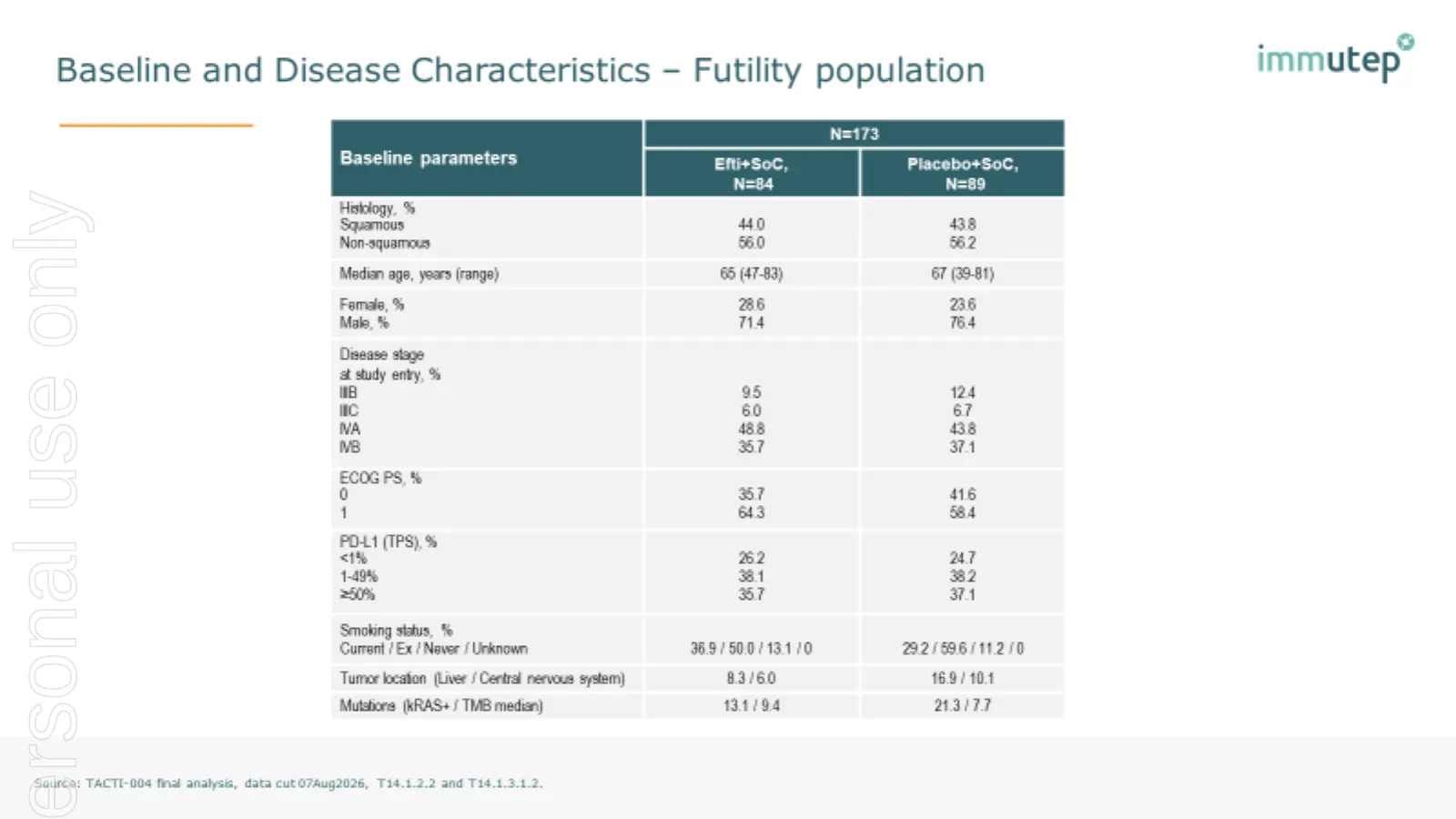
Slide 43: Baseline and Disease Characteristics — Futility population
e o Baseline and Disease Characteristics — Futility population immutep Baseline parameters Efti+Soc, Placebo+SoC, N=84 N=89 440 438 0 62 Median age, years (range) 65 (47-83) 67 (39-81) Female, % 26 26 Mak, m4 764 Oiease stage at study enty, % 1B 95 124 1c 60 67 NA 488 438 MB 37 374 ECOG PS, % 0 37 4
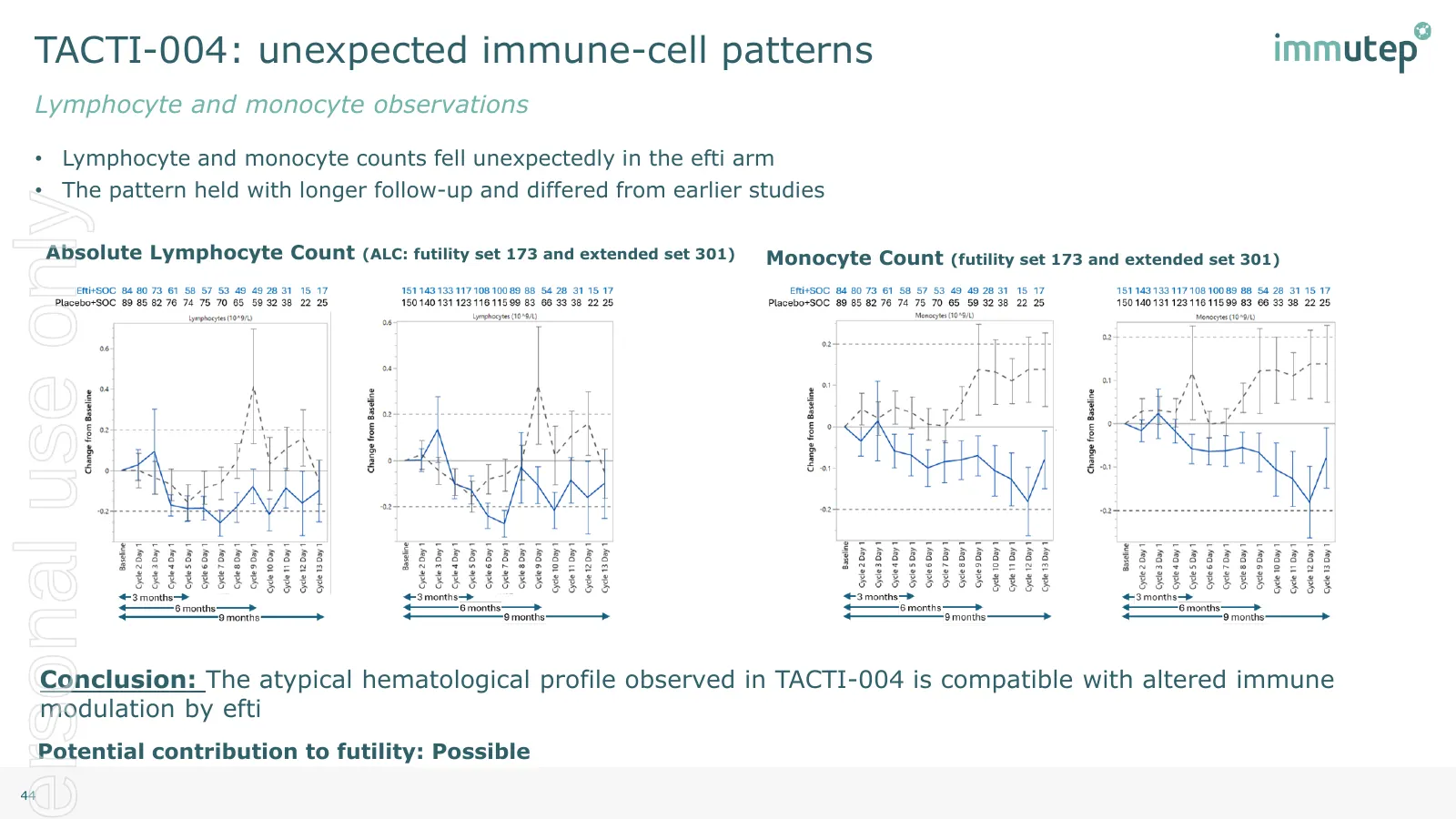
Slide 44: TACTI-004: unexpected immune-cell patterns
TACTI-004: unexpected immune-cell patterns Lymphocyte and monocyte observations • Lymphocyte and monocyte counts fell unexpectedly in the efti arm • The pattern held with longer follow-up and differed from earlier studies rsonal use only Absolute Lymphocyte Count (ALC: futility set 173 and extended
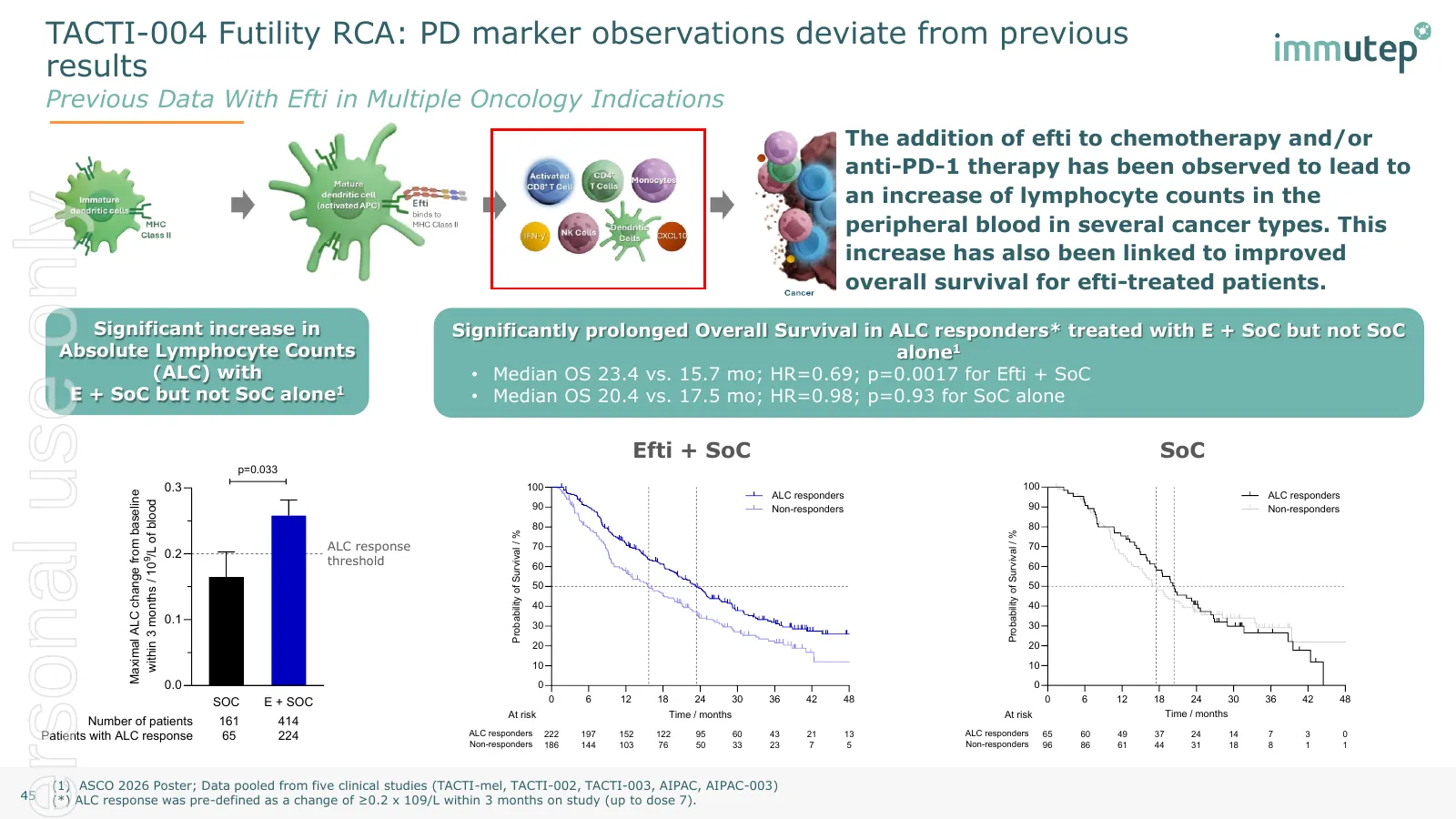
Slide 45: TACTI-004 Futility RCA: PD marker observations deviate from previous results
TACTI-004 Futility RCA: PD marker observations deviate from previous results Previous Data With Efti in Multiple Oncology Indications The addition of efti to chemotherapy and/or anti-PD-1 therapy has been observed to lead to an increase of lymphocyte counts in the rsonal use only peripheral blood in
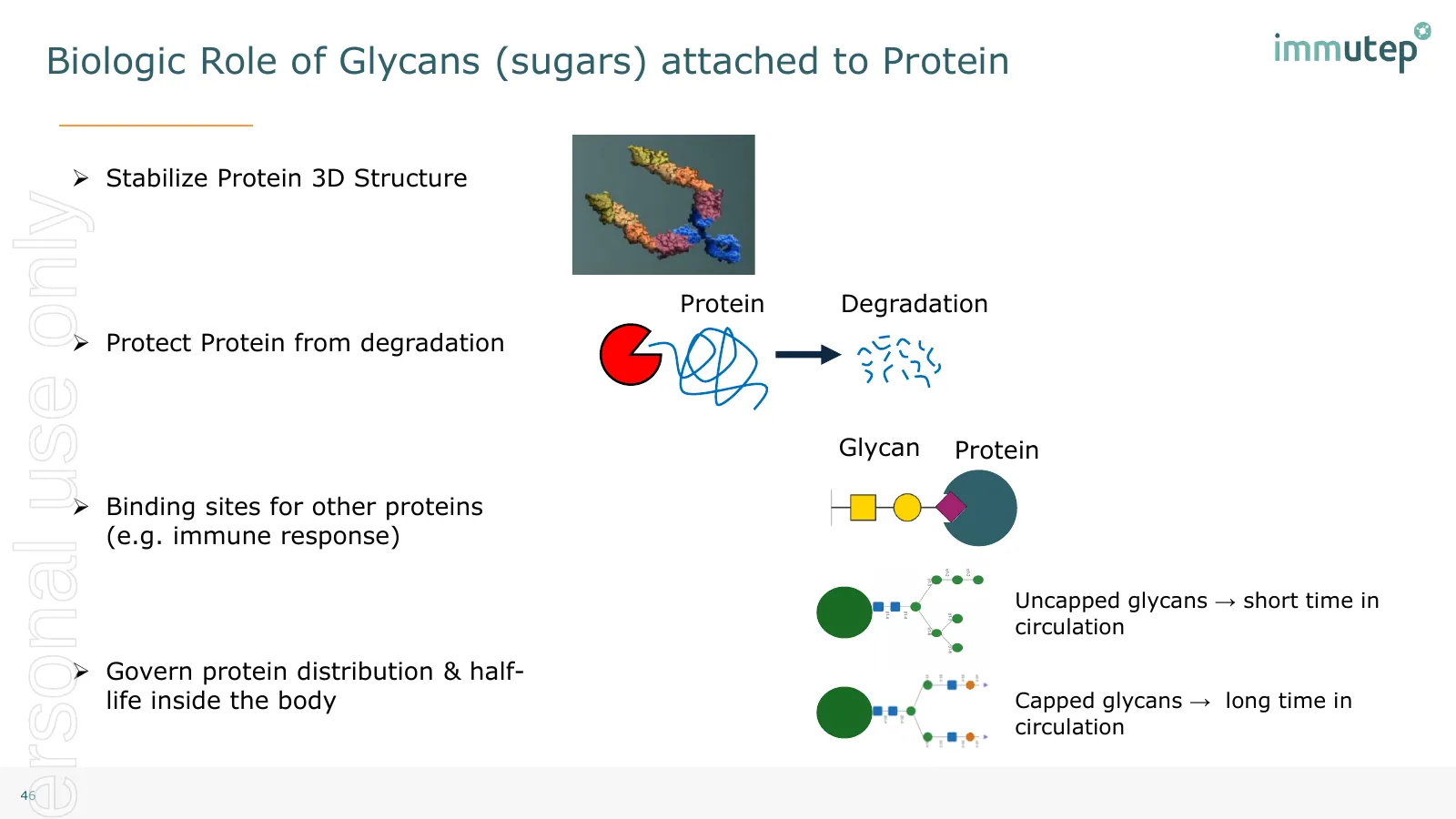
Slide 46: Biologic Role of Glycans attached to Protein
Biologic Role of Glycans (sugars) attached to Protein ➢ Stabilize Protein 3D Structure rsonal use only Protein Degradation ➢ Protect Protein from degradation Glycan Protein ➢ Binding sites for other proteins (e.g. immune response) Uncapped glycans → short time in circulation ➢ Govern protein distrib
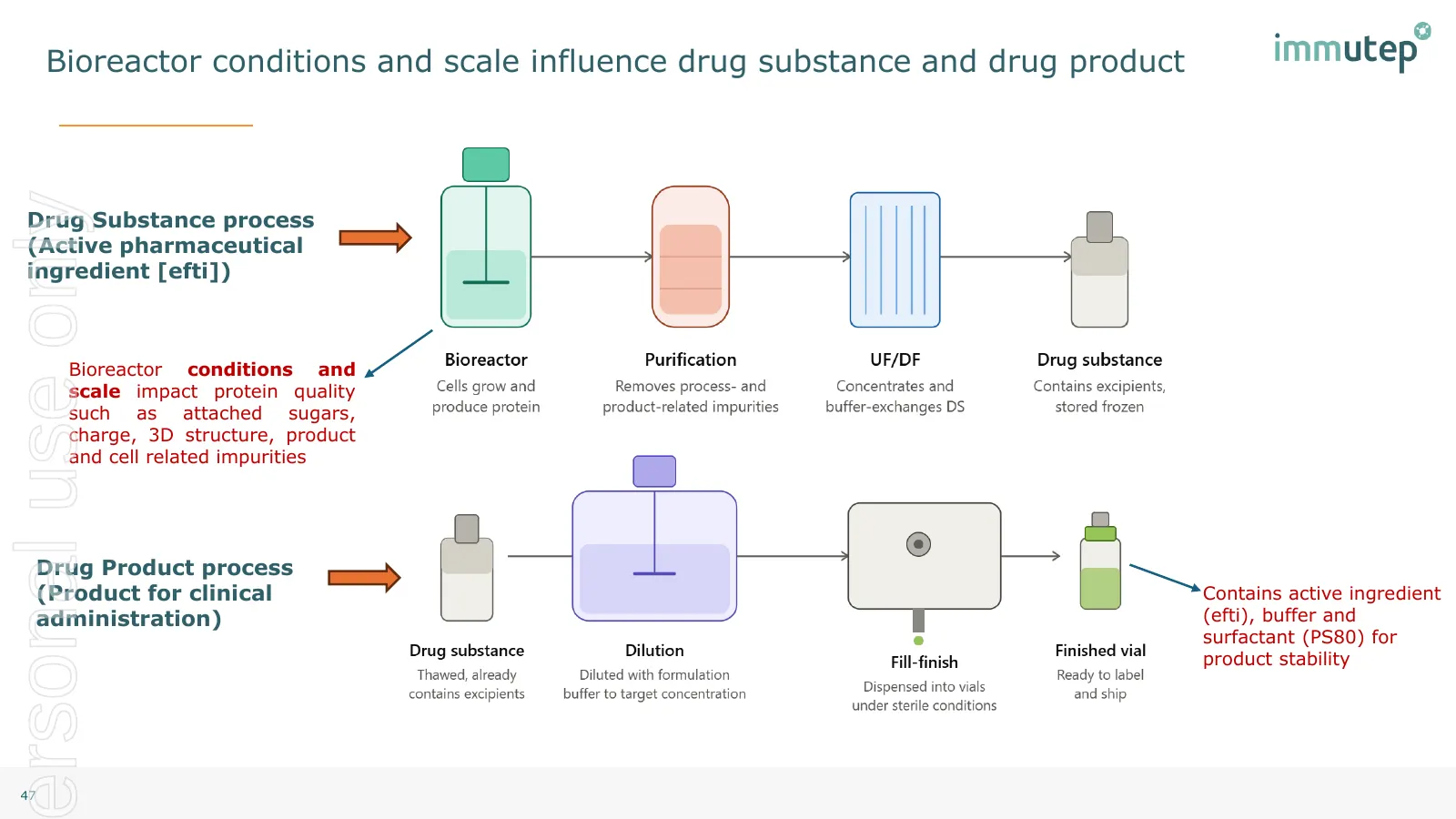
Slide 47: Bioreactor conditions and scale influence drug substance and drug product
Bioreactor conditions and scale influence drug substance and drug product rsonal use only Drug Substance process (Active pharmaceutical ingredient [efti]) Bioreactor conditions and scale impact protein quality such as attached sugars, charge, 3D structure, product and cell related impurities Drug Pr
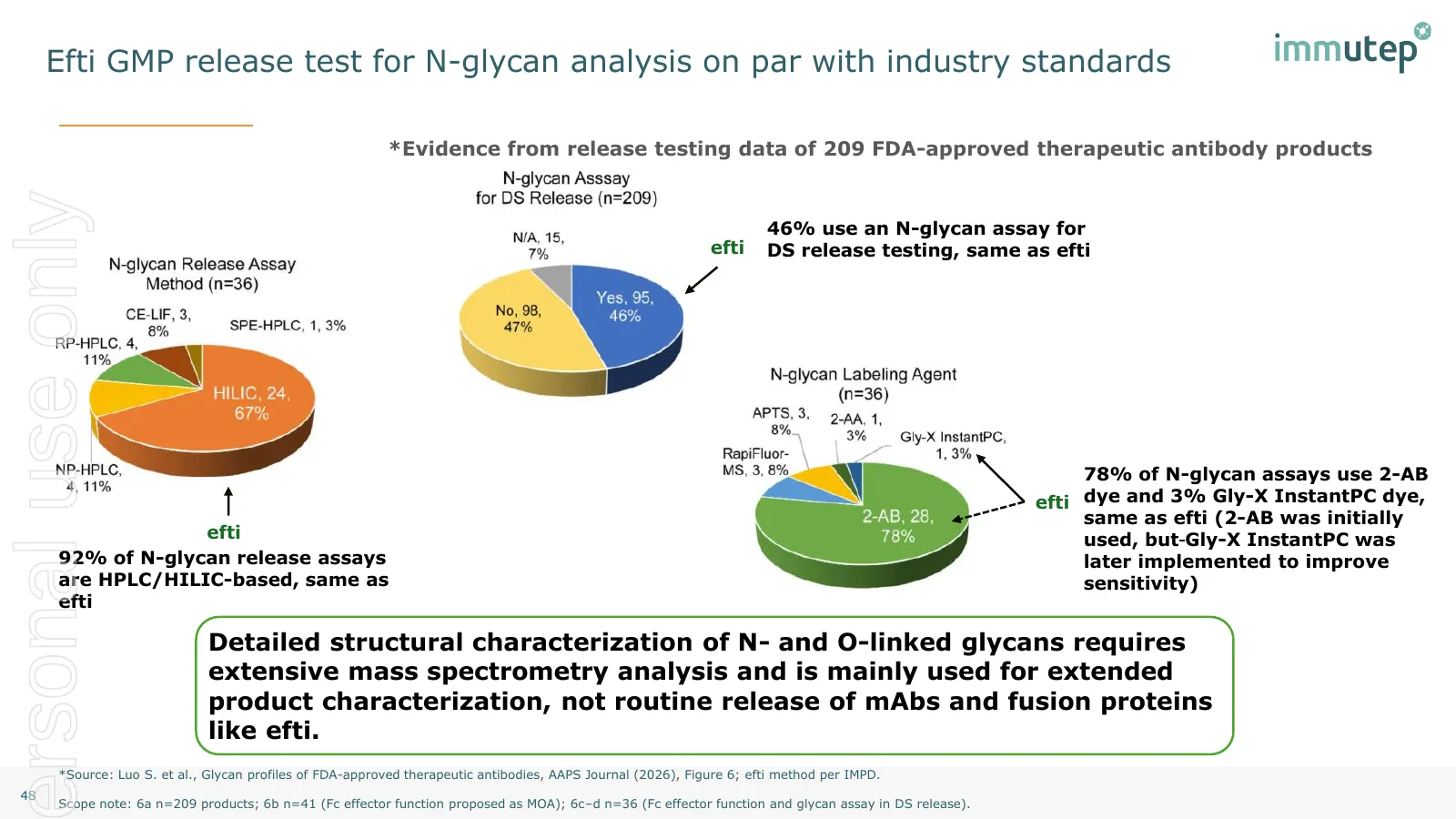
Slide 48: Efti GMP release test for N-glycan analysis on par with industry standards
Efti GMP release test for N-glycan analysis on par with industry standards *Evidence from release testing data of 209 FDA-approved therapeutic antibody products rsonal use only 46% use an N-glycan assay for efti DS release testing, same as efti 78% of N-glycan assays use 2-AB efti dye and 3% Gly-X I
Source: ASX announcement, Nov 27, 2026
More decks from Immutep Ltd
 Investor Presentation (August 2026)30 slides · Aug 20, 2026
 Investor Presentation (February 2026)39 slides · Feb 20, 2026
 Shareholder Meeting (November 2025)24 slides · Nov 27, 2025
 Investor Presentation (October 2025)37 slides · October 2025
 Jefferies Global Healthcare Conference 202540 slides · Jun 2, 2025
 Investor Presentation (February 2025)39 slides · Feb 5, 2025