Bluebird bio — American Academy of Neurology Annual Meeting 2016
22 slides from Bluebird bio's conference presentation, Apr 20, 2016
Slide 1: Starbeam Study Interim Clinical Data
Starbeam Study Interim Clinical Data American Academy of Neurology Annual Meeting April 20, 2016 Exhibit 99.1
Slide 2: Forward-Looking Statement
Forward-Looking Statement These slides and the accompanying oral presentation contain forward-looking statements and information. The use of words such as “may,” “might,” “will,” “should,” “expect,” “plan,” “anticipate,” “believe,” “estimate,” “project,” “intend,” “future,” “potential,” or “continue
Slide 3: bluebird bio: Why We Do What We Do
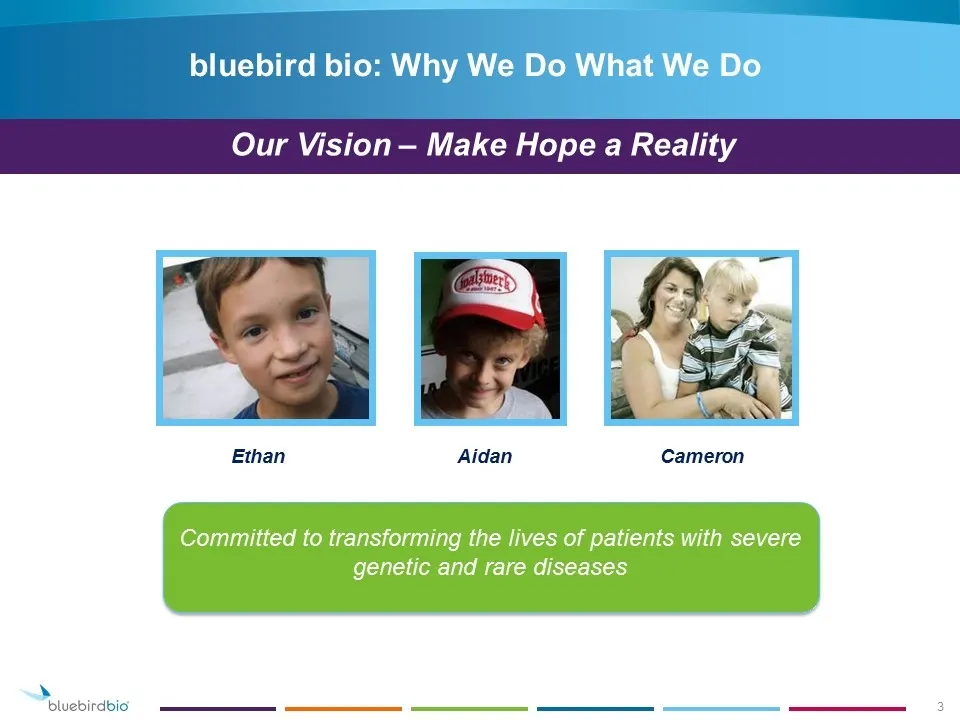
bluebird bio: Why We Do What We Do Our Vision – Make Hope a Reality Ethan Cameron Aidan Committed to transforming the lives of patients with severe genetic and rare diseases
Slide 4: Starbeam Study
Starbeam Study
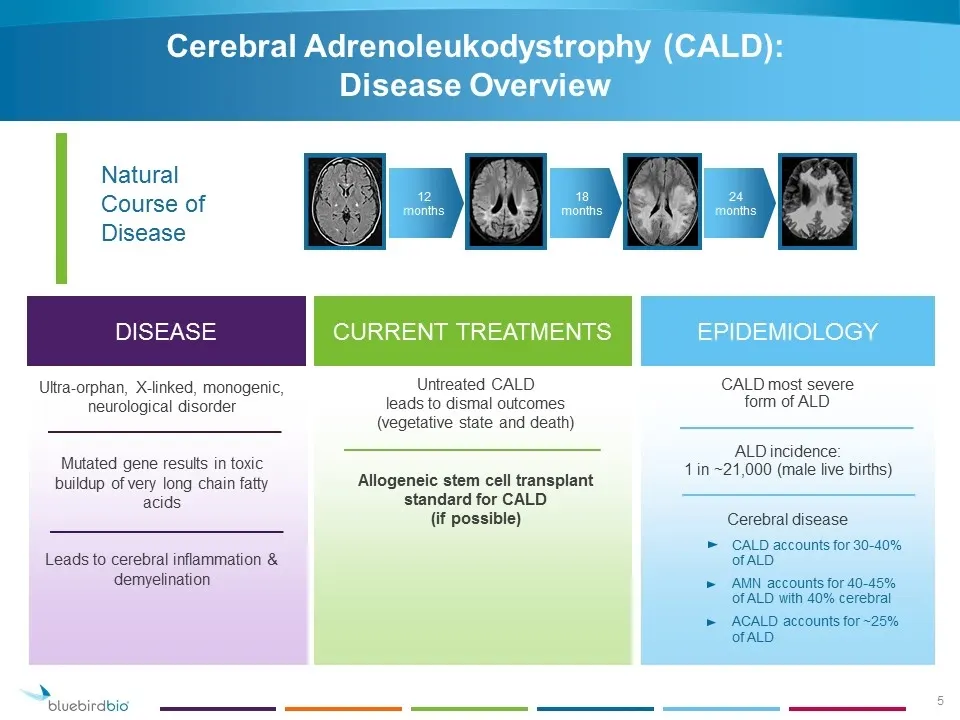
Slide 5: Cerebral Adrenoleukodystrophy (CALD): Disease Overview
CURRENT TREATMENTS Cerebral Adrenoleukodystrophy (CALD): Disease Overview DISEASE EPIDEMIOLOGY Ultra-orphan, X-linked, monogenic, neurological disorder Mutated gene results in toxic buildup of very long chain fatty acids Leads to cerebral inflammation & demyelination Untreated CALD leads to dismal o
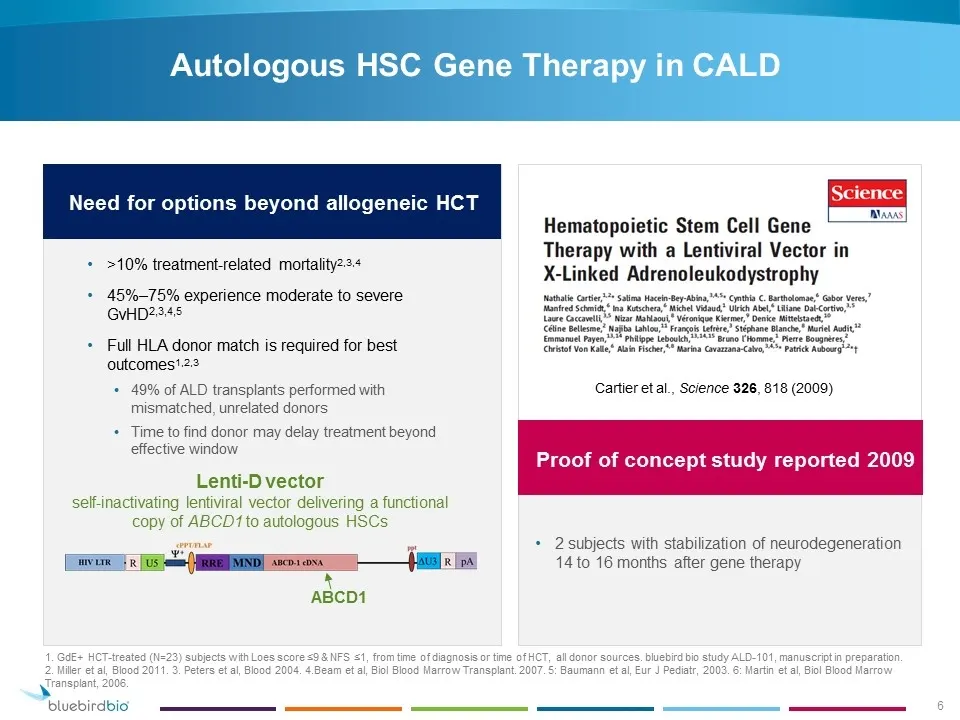
Slide 6: Autologous HSC Gene Therapy in CALD
Autologous HSC Gene Therapy in CALD >10% treatment-related mortality2,3,4 45%–75% experience moderate to severe GvHD2,3,4,5 Full HLA donor match is required for best outcomes1,2,3 49% of ALD transplants performed with mismatched, unrelated donors Time to find donor may delay treatment beyond effecti
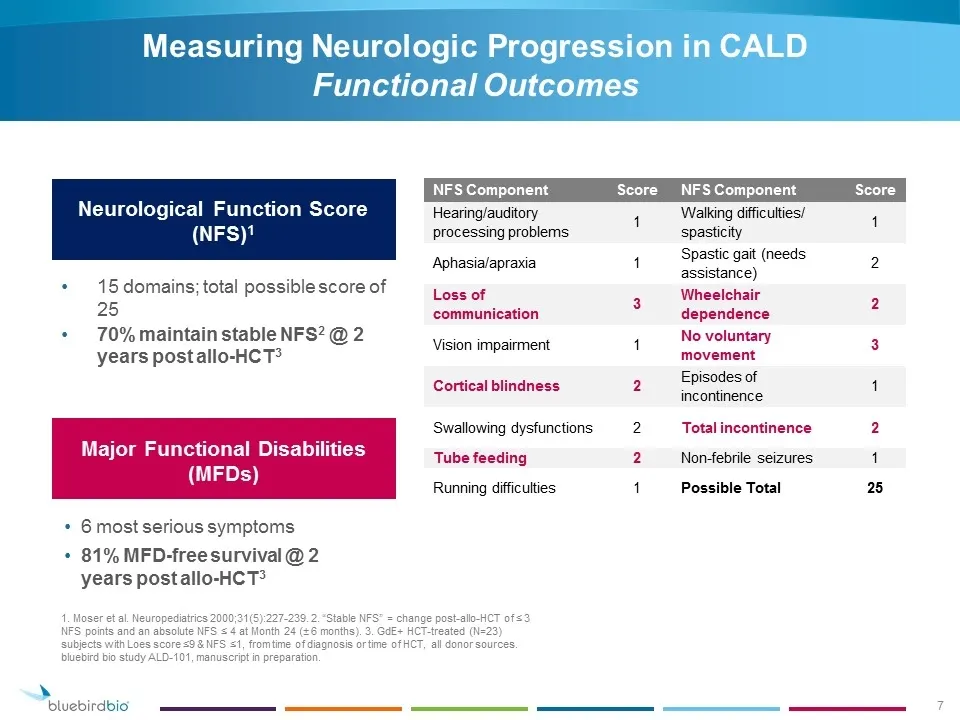
Slide 7: Measuring Neurologic Progression in CALD: Functional Outcomes
Measuring Neurologic Progression in CALD Functional Outcomes 6 most serious symptoms 81% MFD-free survival @ 2 years post allo-HCT3 NFS Component Score NFS Component Score Hearing/auditory processing problems 1 Walking difficulties/ spasticity 1 Aphasia/apraxia 1 Spastic gait (needs assistance) 2 Lo
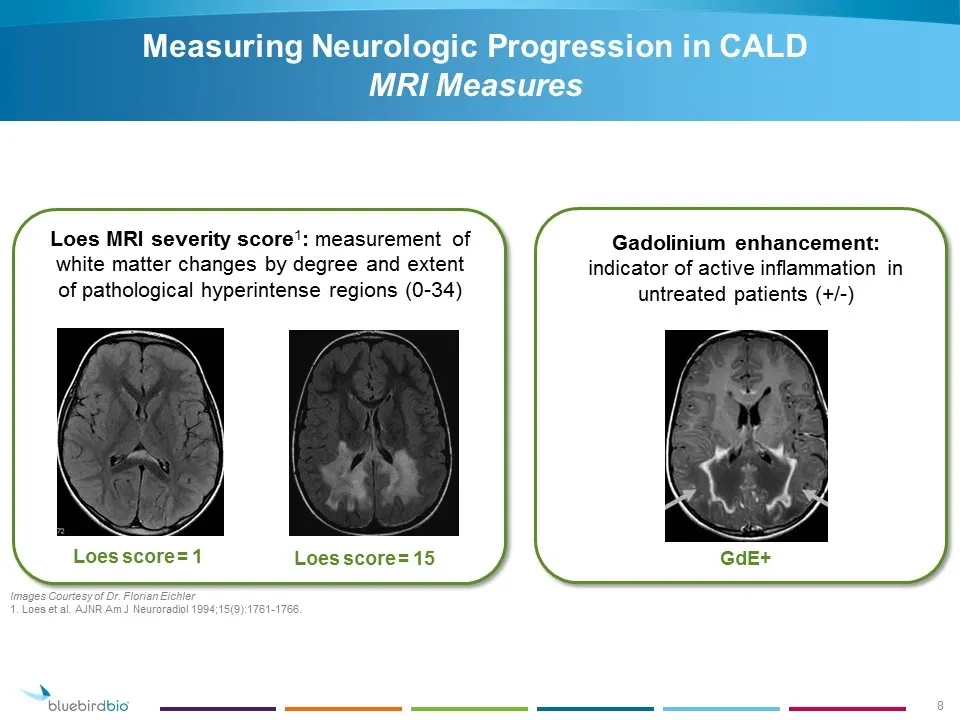
Slide 8: Measuring Neurologic Progression in CALD: MRI Measures
Measuring Neurologic Progression in CALD MRI Measures Gadolinium enhancement: indicator of active inflammation in untreated patients (+/-) Loes score = 1 Loes score = 15 Loes MRI severity score1: measurement of white matter changes by degree and extent of pathological hyperintense regions (0-34) GdE
Slide 9: Starbeam Study – Ongoing Phase 2/3 Study
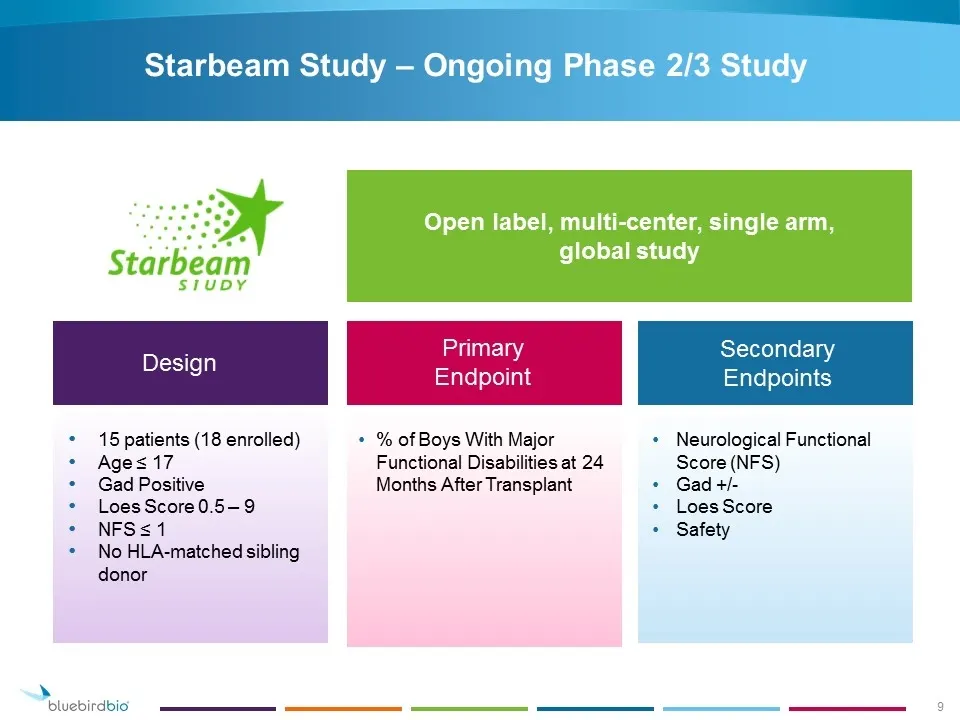
Starbeam Study – Ongoing Phase 2/3 Study Secondary Endpoints Primary Endpoint Design 15 patients (18 enrolled) Age ≤ 17 Gad Positive Loes Score 0.5 – 9 NFS ≤ 1 No HLA-matched sibling donor % of Boys With Major Functional Disabilities at 24 Months After Transplant Neurological Functional Score (NFS)
Slide 10: Starbeam Treatment Protocol Overview
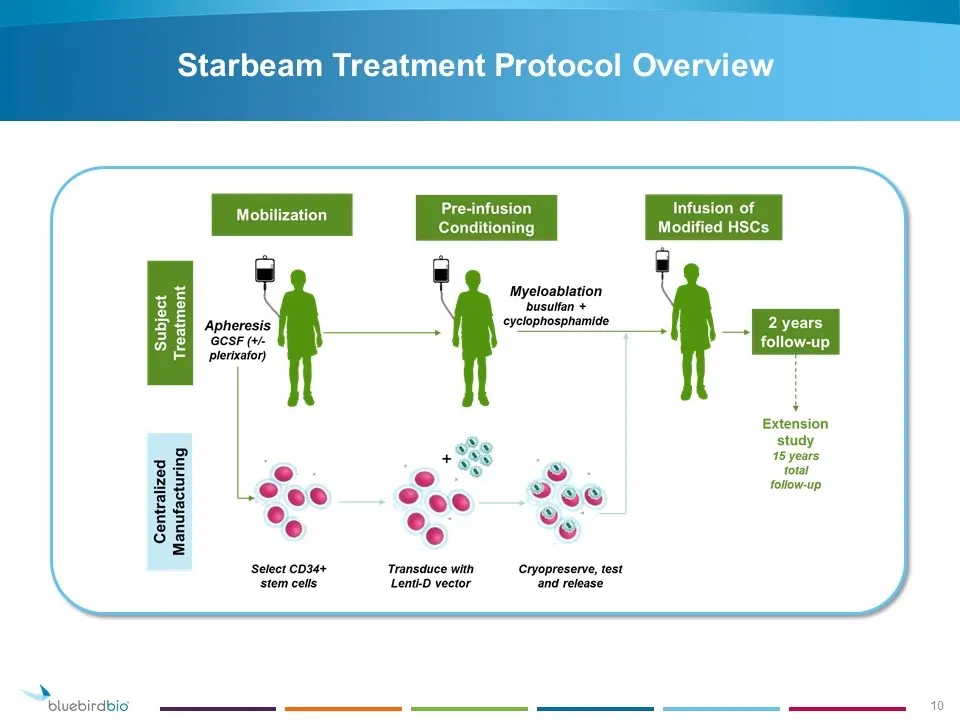
Starbeam Treatment Protocol Overview
Slide 11: Subject and Cellular Product Characteristics
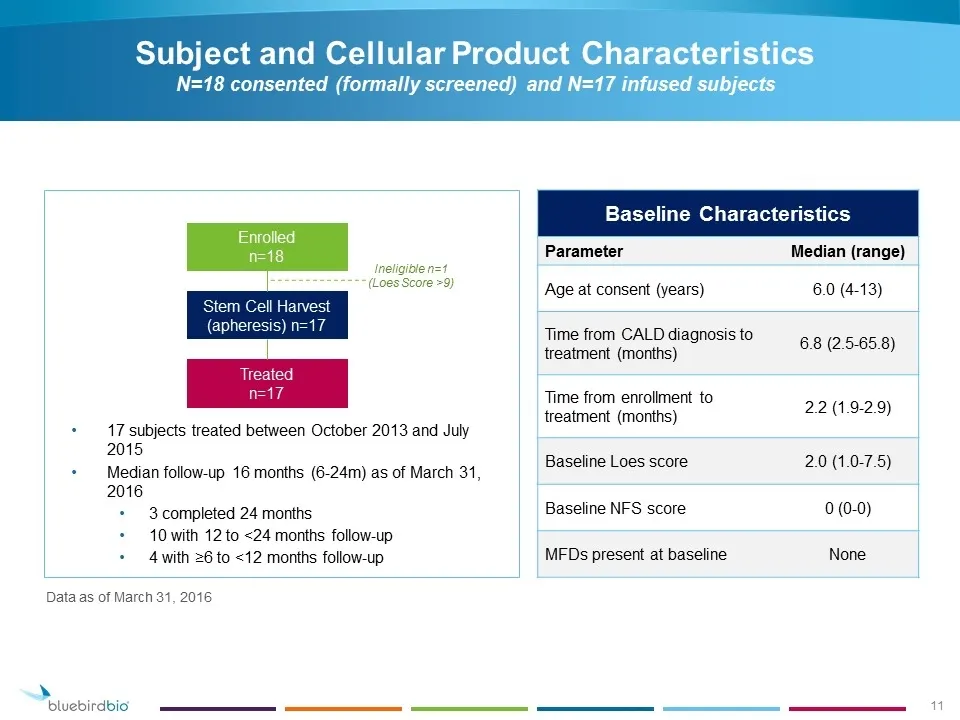
Subject and Cellular Product Characteristics N=18 consented (formally screened) and N=17 infused subjects Baseline Characteristics Parameter Median (range) Age at consent (years) 6.0 (4-13) Time from CALD diagnosis to treatment (months) 6.8 (2.5-65.8) Time from enrollment to treatment (months) 2.2 (
Slide 12: Successful Autologous HSCT Procedure
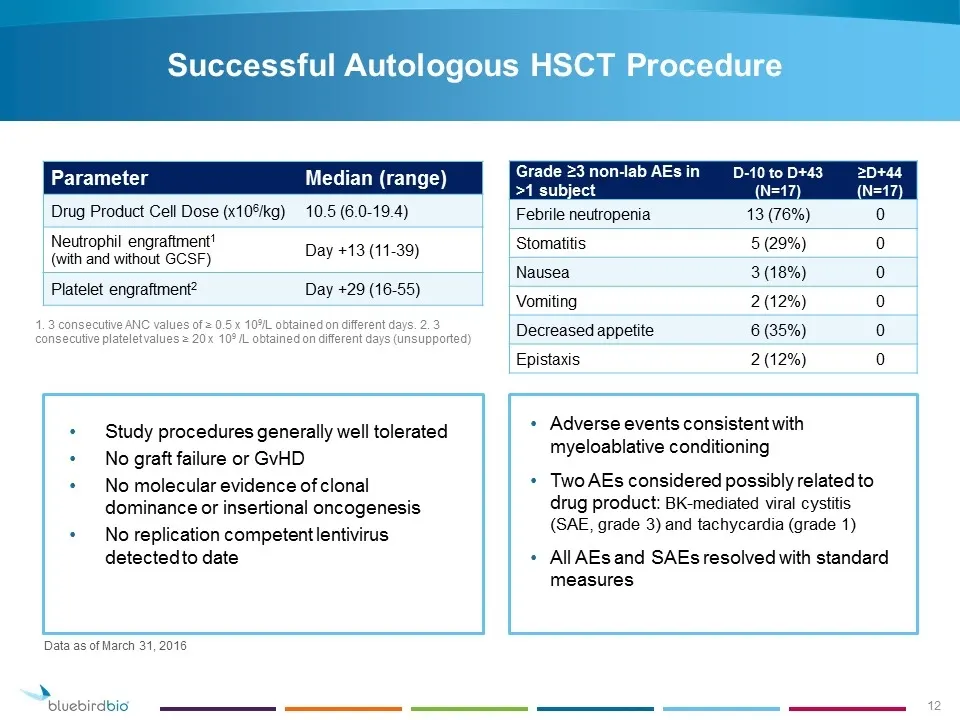
Successful Autologous HSCT Procedure Study procedures generally well tolerated No graft failure Integration site analysis: polyclonal reconstitution in all subjects, no molecular evidence of clonal dominance No replication competent lentivirus detected to date Parameter Median (range) Drug Product C
Slide 13: All Patients Remain Free from Major Functional Disabilities, 16/17 Have Stable NFS
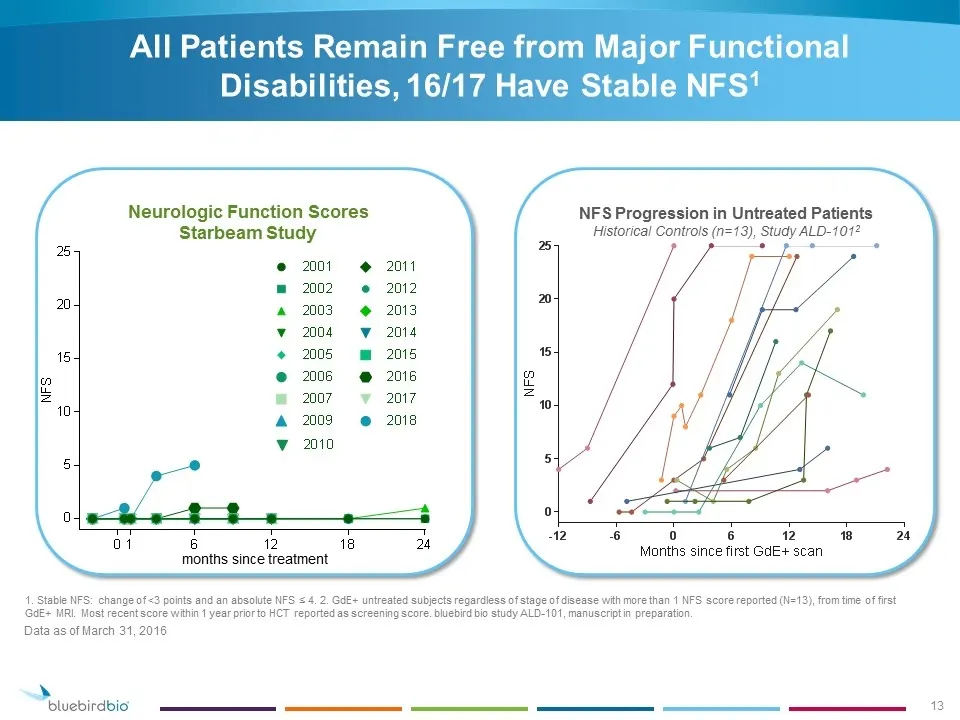
All Patients Remain Free from Major Functional Disabilities, 16/17 Have Stable NFS1 NFS Progression in Untreated Patients Historical Controls (n=13), Study ALD-1012 1. Stable NFS: change of <3 points and an absolute NFS ≤ 4. 2. GdE+ untreated subjects regardless of stage of disease with more than 1
Slide 14: All Patients Remain Free from Major Functional Disabilities, 16/17 Have Stable NFS
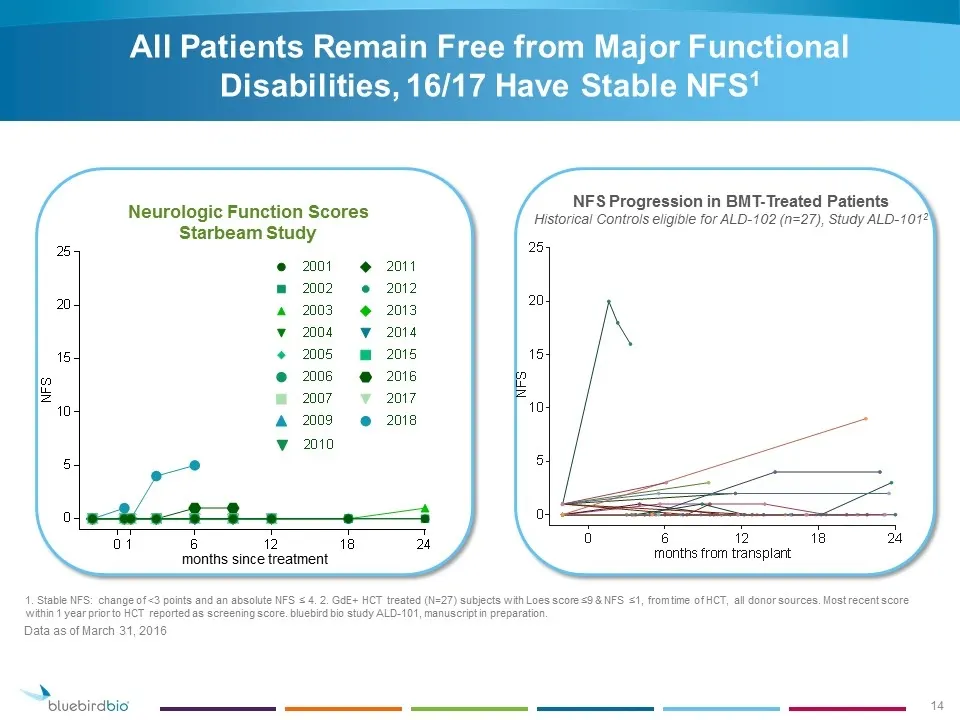
All Patients Remain Free from Major Functional Disabilities, 16/17 Have Stable NFS1 1. Stable NFS: change of <3 points and an absolute NFS ≤ 4. 2. GdE+ HCT treated (N=27) subjects with Loes score ≤9 & NFS ≤1, from time of HCT, all donor sources. Most recent score within 1 year prior to HCT reported
Slide 15: Loes Scores Have Stabilized in 14/17 Patients
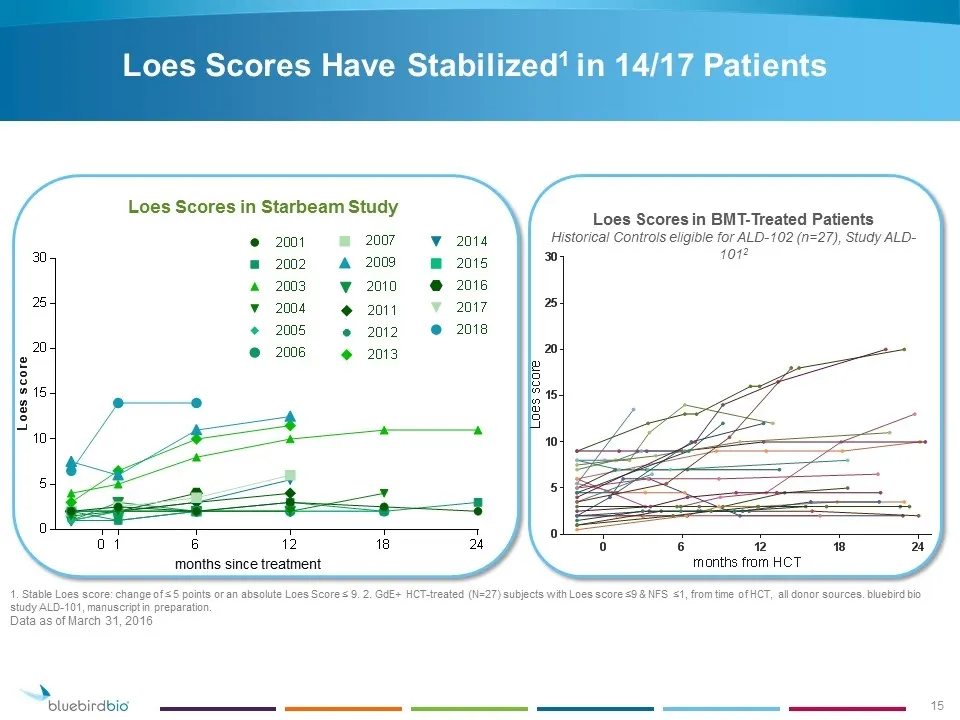
Loes Scores Have Stabilized1 in 14/17 Patients Data as of March 31, 2016 1. Stable Loes score: change of ≤ 5 points or an absolute Loes Score ≤ 9. 2. GdE+ HCT-treated (N=27) subjects with Loes score ≤9 & NFS ≤1, from time of HCT, all donor sources. bluebird bio study ALD-101, manuscript in preparati
Slide 16: Neuroimaging Outcomes Demonstrate Halting of Disease Progression after Lenti-D Treatment
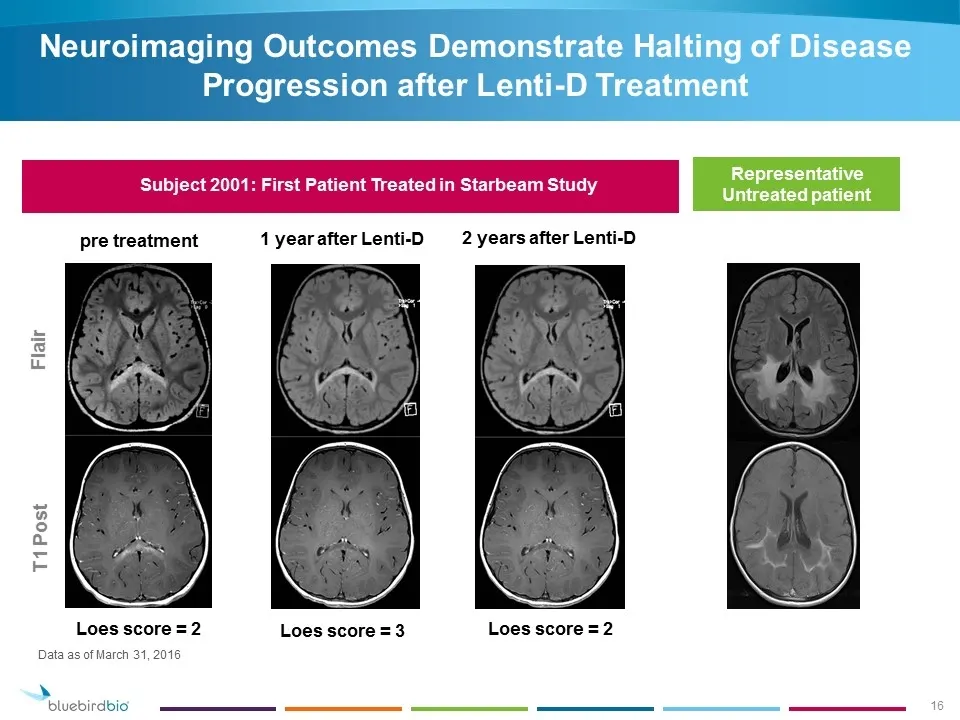
Neuroimaging Outcomes Demonstrate Halting of Disease Progression after Lenti-D Treatment pre treatment Data as of March 31, 2016 1 year after Lenti-D 2 years after Lenti-D Representative Untreated patient Subject 2001: First Patient Treated in Starbeam Study Loes score = 2 Loes score = 3 Loes score
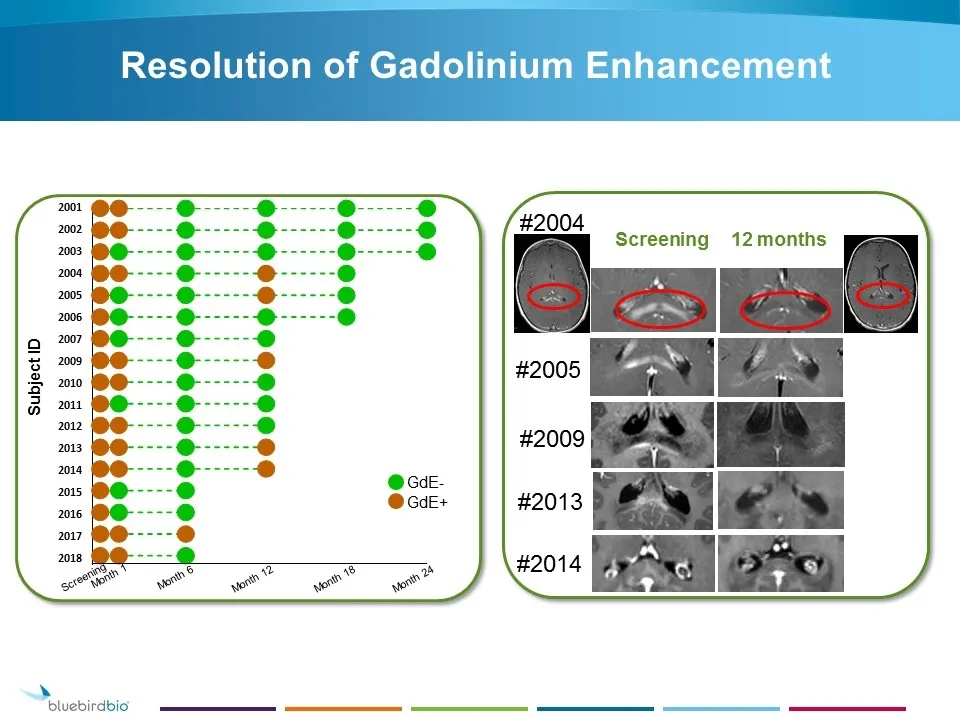
Slide 17: Resolution of Gadolinium Enhancement
Resolution of Gadolinium Enhancement 2001 2002 2003 2004 2005 2006 2007 2009 2010 2011 2012 2013 2014 2015 2016 2017 2018 Data as of March 31, 2016. GdE status (+/-) assigned by central MRI reader blinded to subject and time point GdE- GdE+ Subject ID Screening Month 1 Month 6 Month 12 Month 18 Mont
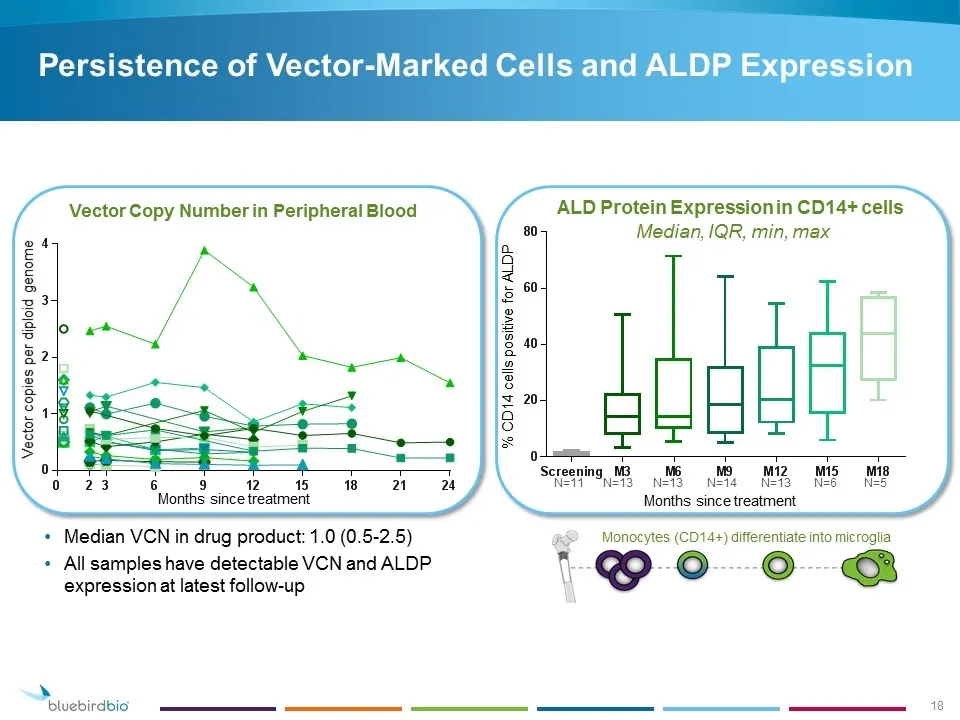
Slide 18: Persistence of Vector-Marked Cells and ALDP Expression
Persistence of Vector-Marked Cells and ALDP Expression ALD Protein Expression in CD14+ cells Vector Copy Number in Peripheral Blood Data as of March 31, 2016 Median VCN in drug product: 1.0 (0.5-2.5) All samples have detectable VCN and ALDP expression at latest follow-up N=11 N=13 N=13 N=14 N=13 N=6
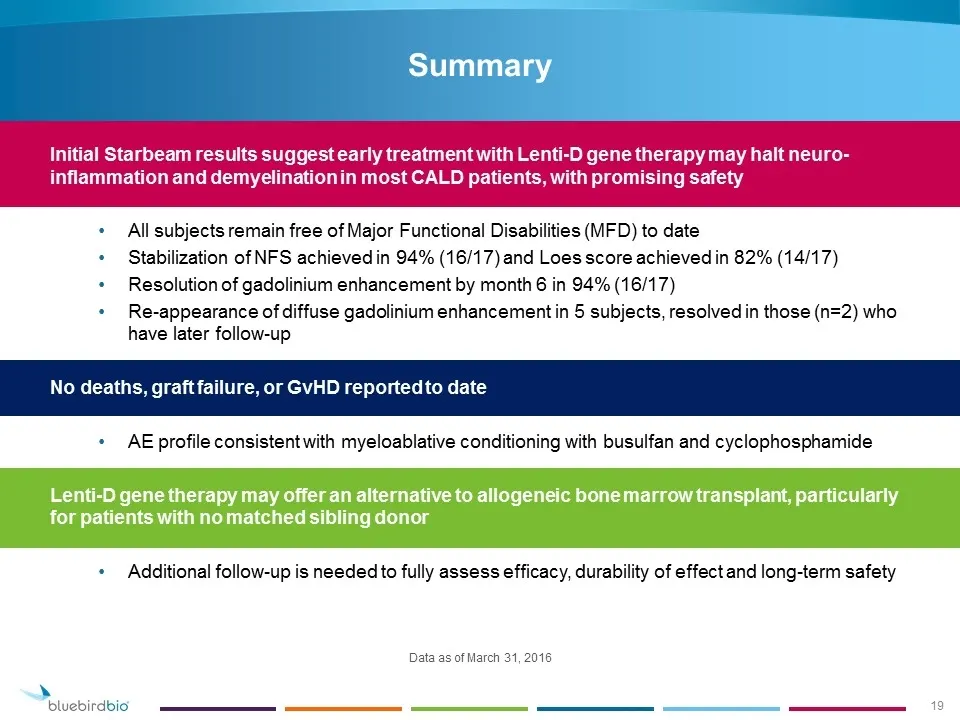
Slide 19: Summary
Summary Data as of March 31, 2016 Initial Starbeam results suggest early treatment with Lenti-D gene therapy may halt neuro-inflammation and demyelination in most CALD patients, with promising safety All subjects remain free of Major Functional Disabilities (MFD) to date Stabilization of NFS achieve
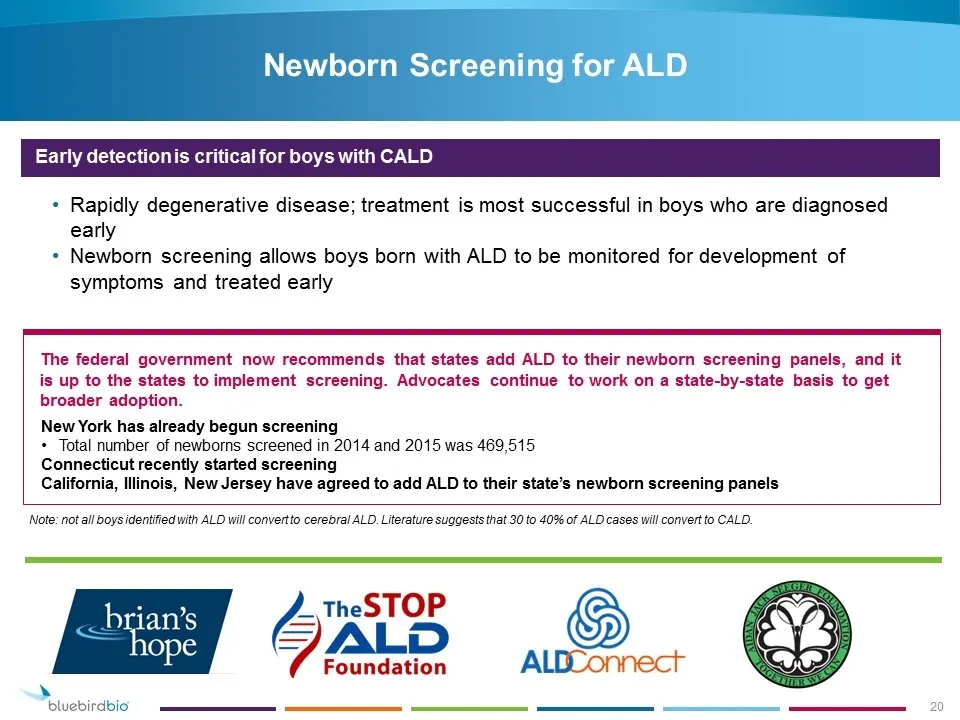
Slide 20: Newborn Screening for ALD
Newborn Screening for ALD Early detection is critical for boys with CALD Rapidly degenerative disease; treatment is most successful in boys who are diagnosed early Newborn screening allows boys born with ALD to be monitored for development of symptoms and treated early The federal government now rec
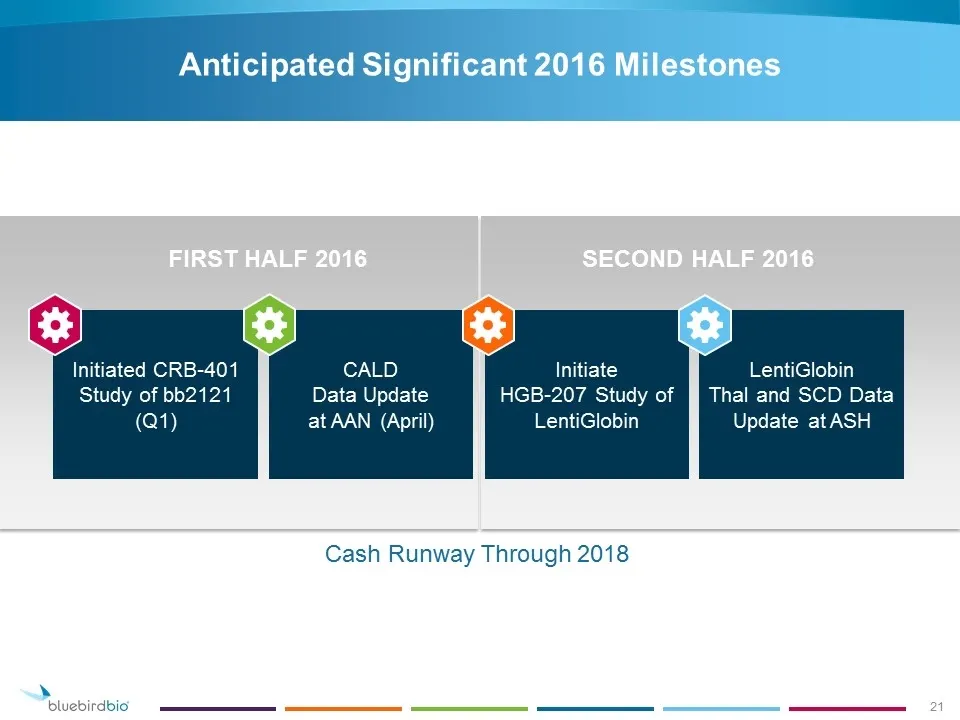
Slide 21: Anticipated Significant 2016 Milestones
Anticipated Significant 2016 Milestones FIRST HALF 2016 SECOND HALF 2016 LentiGlobin Thal and SCD Data Update at ASH Initiated CRB-401 Study of bb2121 (Q1) CALD Data Update at AAN (April) Initiate HGB-207 Study of LentiGlobin Cash Runway Through 2018
Slide 22: Transforming the Lives of Patients with Severe Genetic and Rare Diseases
Transforming the Lives of Patients with Severe Genetic and Rare Diseases Making Hope a Reality
Source: SEC EDGAR · 8-K filed Apr 20, 2016
More decks from Bluebird bio Inc
 J.P. Morgan Healthcare Conference 202423 slides · Jan 8, 2024
 Corporate Update (December 2023)17 slides · Dec 11, 2023
 Q2 2023 Earnings Presentation16 slides · Aug 8, 2023
 Investor Presentation (July 2023)27 slides · Jul 12, 2023
 Investor Presentation (June 2023)27 slides · Jun 12, 2023
 J.P. Morgan Healthcare Conference 202329 slides · Jan 9, 2023