Edgewise Therapeutics, Inc. · NASDAQ:EWTX
Edgewise Therapeutics — ARCH 2-Year Topline Results Investor Call (April 2024)
36 slides from Edgewise Therapeutics's conference presentation, Apr 16, 2024

Slide 1: 2-Year Topline Results from the ARCH Study of Sevasemten in Adults with Becker Muscular Dystrophy
2-Year Topline Results from the ARCH Study of Sevasemten in Adults with Becker Muscular Dystrophy April 16, 2024 NASDAQ: EWTX ©2024 Edgewise Therapeutics. All rights reserved.

Slide 2: Forward looking statement
Forward looking statement This presentation contains forward-looking statements as that term is defined in Section 27A of the Securities Act of 1933 and Section 21E of the Securities Exchange Act of 1934. Statements in this presentation that are not purely historical are forward-looking statements.
Slide 3: Agenda
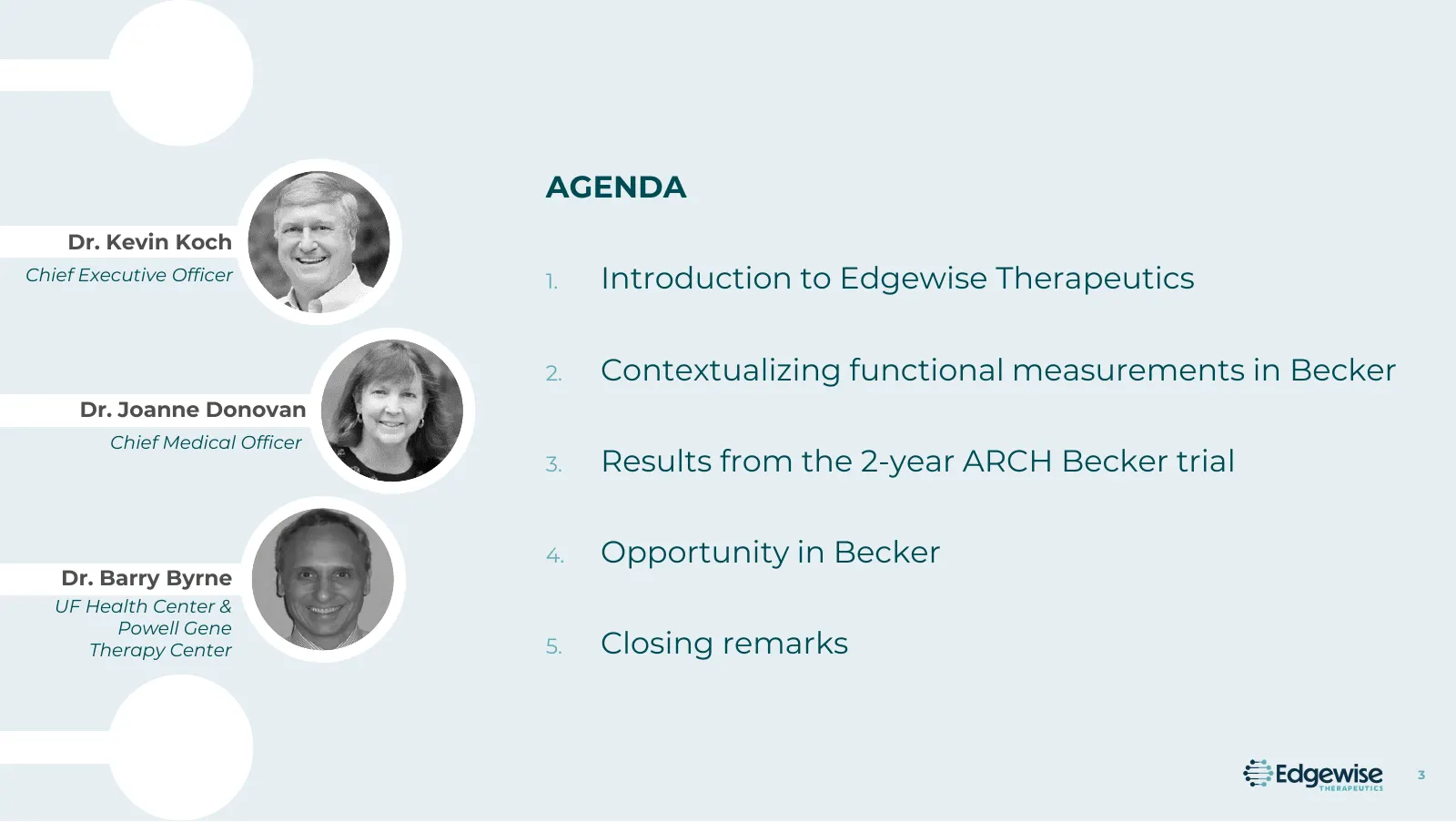
AGENDA Dr. Kevin Koch Chief Executive Officer 1. Introduction to Edgewise Therapeutics 2. Contextualizing functional measurements in Becker Dr. Joanne Donovan Chief Medical Officer 3. Results from the 2-year ARCH Becker trial 4. Opportunity in Becker Dr. Barry Byrne UF Health Center & Powell Gene Th

Slide 4: Opening Remarks
Opening Remarks Kevin Koch, CEO 4
Slide 5: Focused on muscle science, rapidly advancing portfolio, unwavering patient commitment
FOCUSED ON MUSCLE SCIENCE ● Global leader in muscle disease therapeutic development ● Deep knowledge of integrated muscle physiology ● Novel & holistic therapeutic approach to protect muscle RAPIDLY ADVANCING PORTFOLIO ● Advancing sevasemten to become the foundational therapy for Leaders in muscle m
Slide 6: Our goal is to positively impact the course of Becker muscular dystrophy
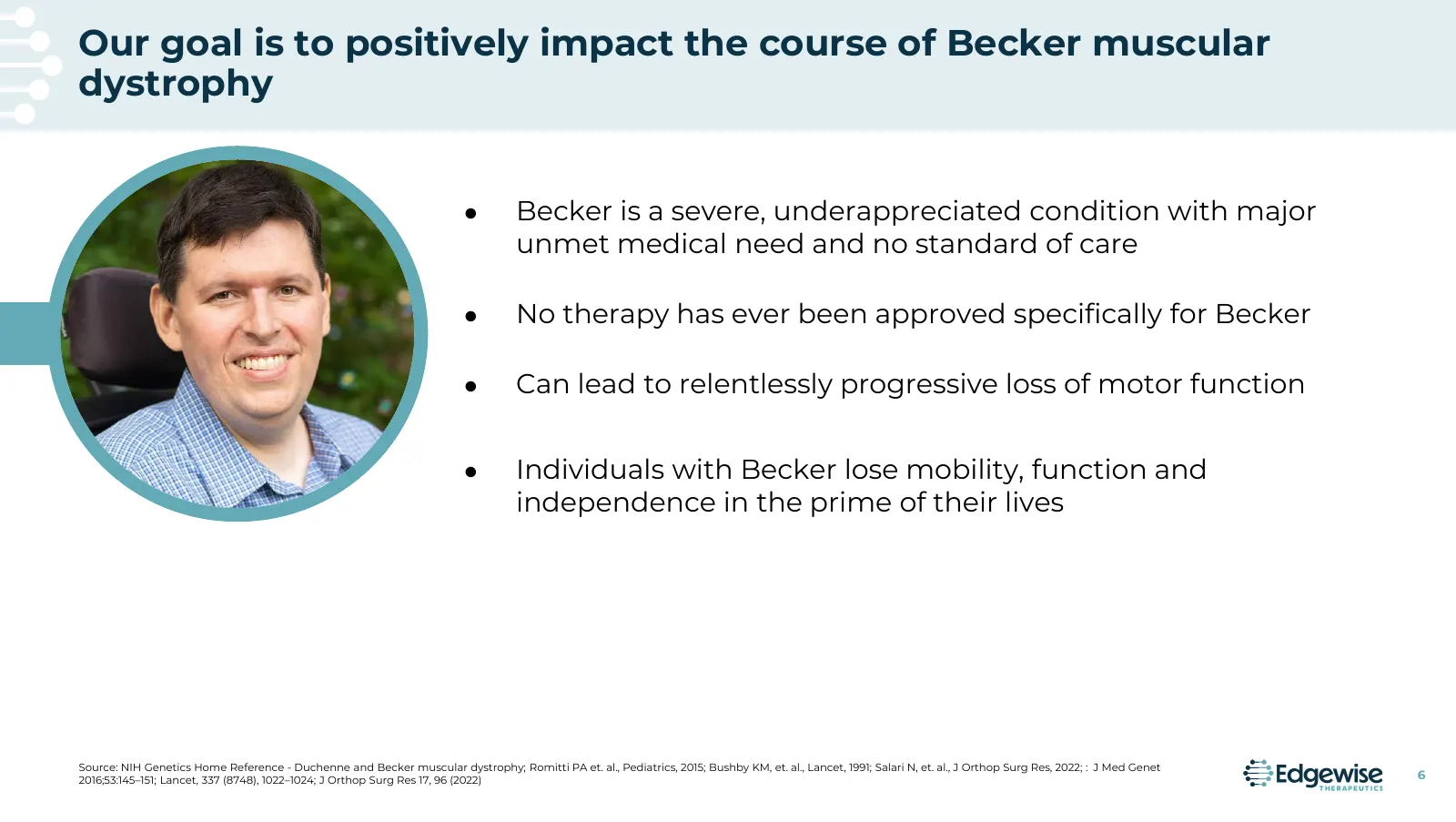
Our goal is to positively impact the course of Becker muscular dystrophy ● Becker is a severe, underappreciated condition with major unmet medical need and no standard of care ● No therapy has ever been approved specifically for Becker ● Can lead to relentlessly progressive loss of motor function ●
Slide 7: In Becker, fast muscle fibers are disproportionately injured by normal, everyday contractions
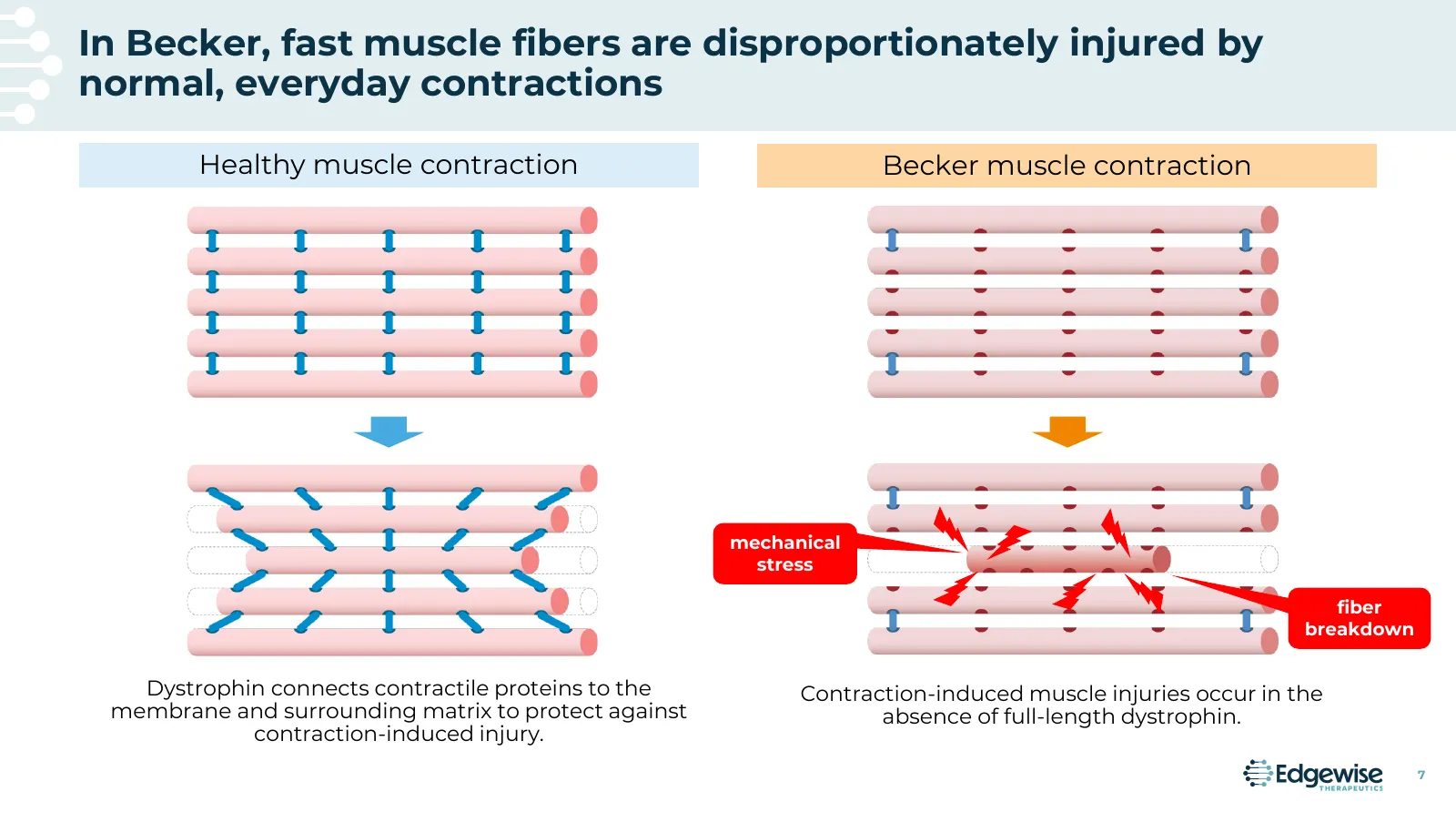
In Becker, fast muscle fibers are disproportionately injured by normal, everyday contractions Healthy muscle contraction Becker muscle contraction mechanical stress fiber breakdown Dystrophin connects contractile proteins to the Contraction-induced muscle injuries occur in the membrane and surroundi

Slide 8: Sevasemten's protective effects against contraction-induced injury in mdx mouse models
Sevasemten’s protective effects against contraction-induced injury in dystrophic muscles demonstrated in mdx mouse models Contracting at 100% without sevasemten Contracting at 85% with sevasemten In mdx mouse muscle, even a few contractions By minimally decreasing contraction while cause visible inj
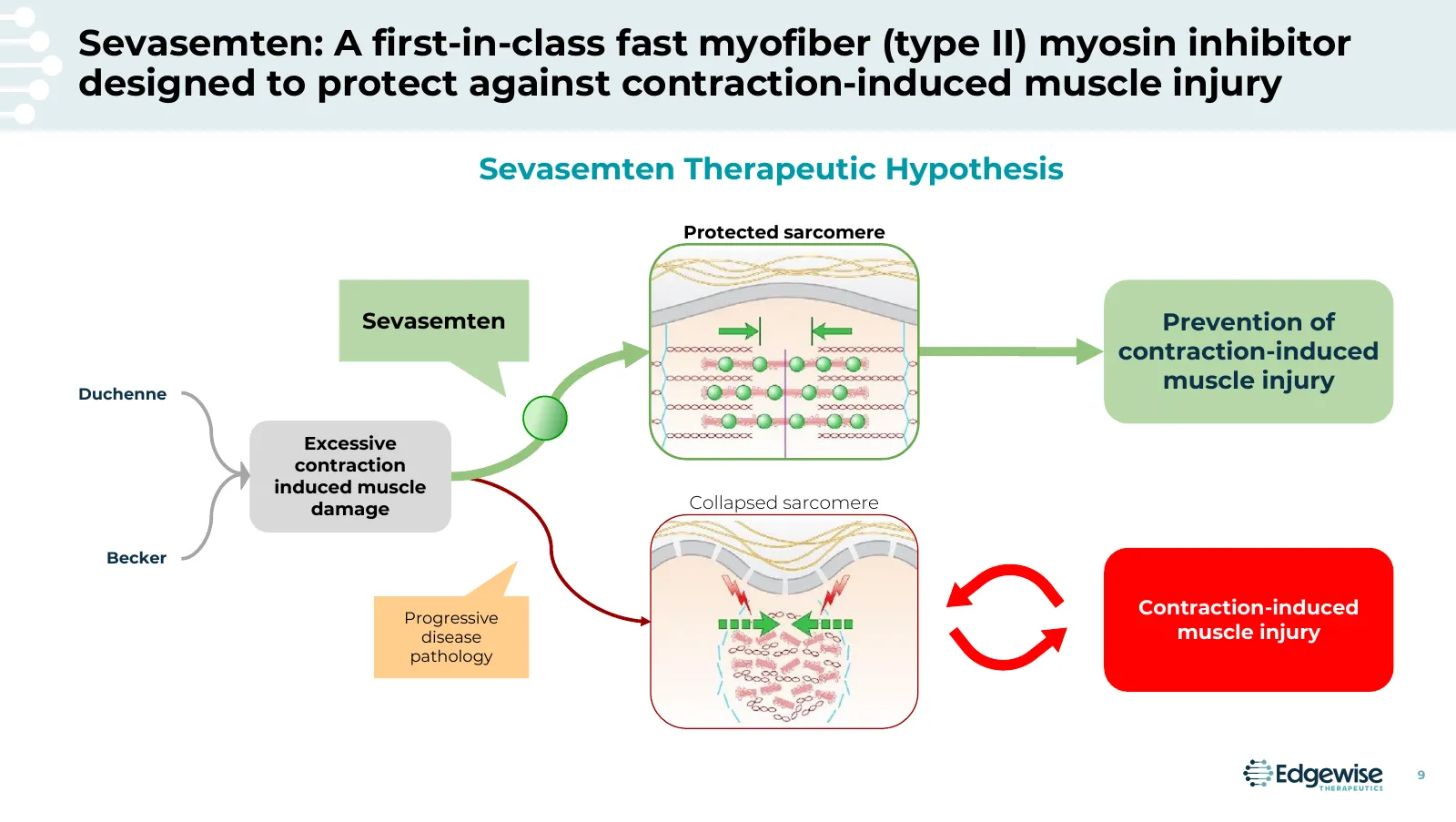
Slide 9: Sevasemten: A first-in-class fast myofiber myosin inhibitor
Sevasemten: A first-in-class fast myofiber (type II) myosin inhibitor designed to protect against contraction-induced muscle injury Sevasemten Therapeutic Hypothesis Protected sarcomere Sevasemten Prevention of contraction-induced Duchenne muscle injury Excessive contraction induced muscle damage Co

Slide 10: Contextualizing North Star Ambulatory Assessment (NSAA) in Becker Muscular Dystrophy
Contextualizing North Star Ambulatory Assessment (NSAA) in Becker Muscular Dystrophy Barry Byrne, MD, PhD 10
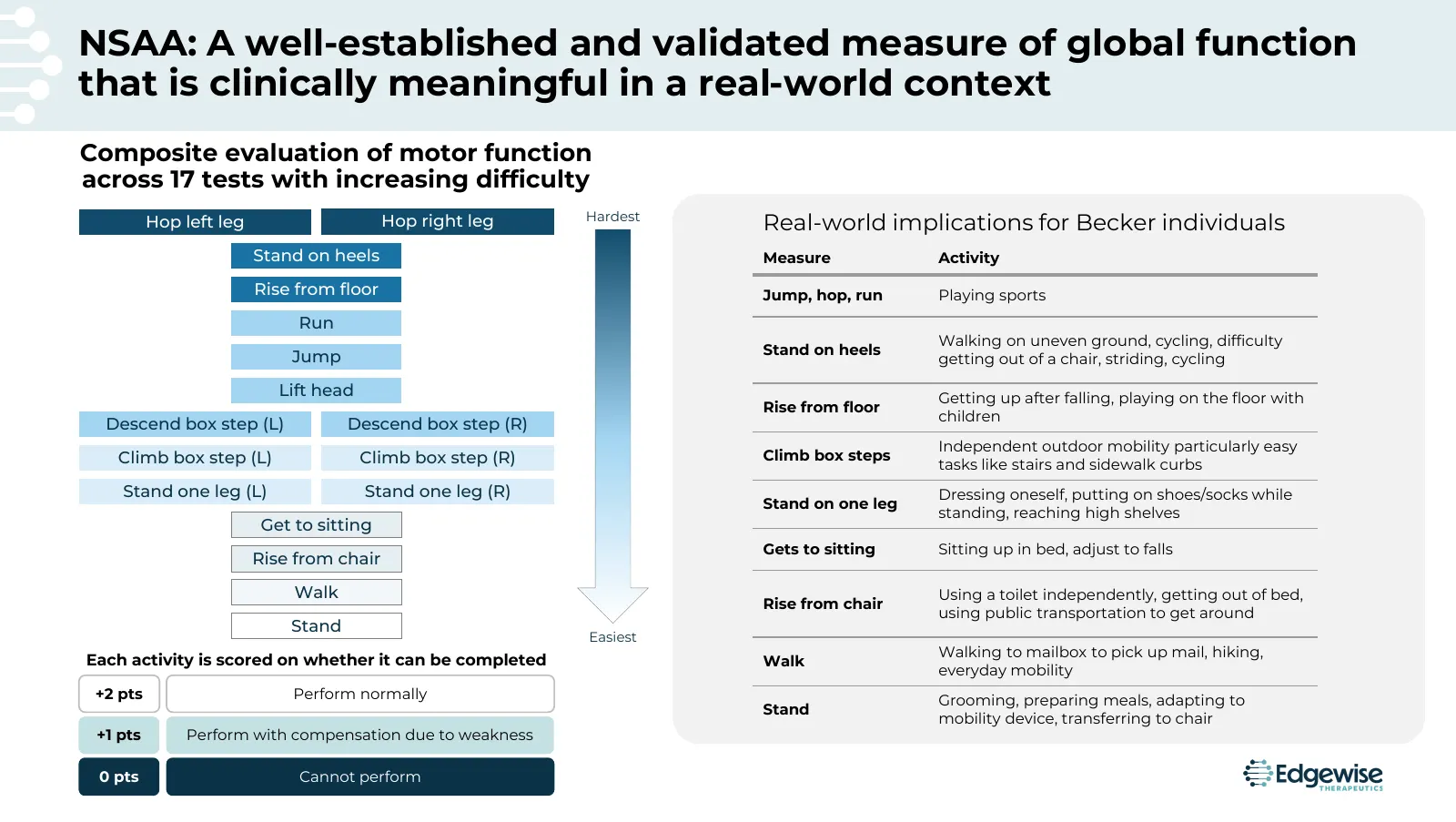
Slide 11: NSAA: A well-established and validated measure of global function
NSAA: A well-established and validated measure of global function that is clinically meaningful in a real-world context Composite evaluation of motor function across 17 tests with increasing difficulty Hop left leg Hop right leg Hardest Real-world implications for Becker individuals Stand on heels M
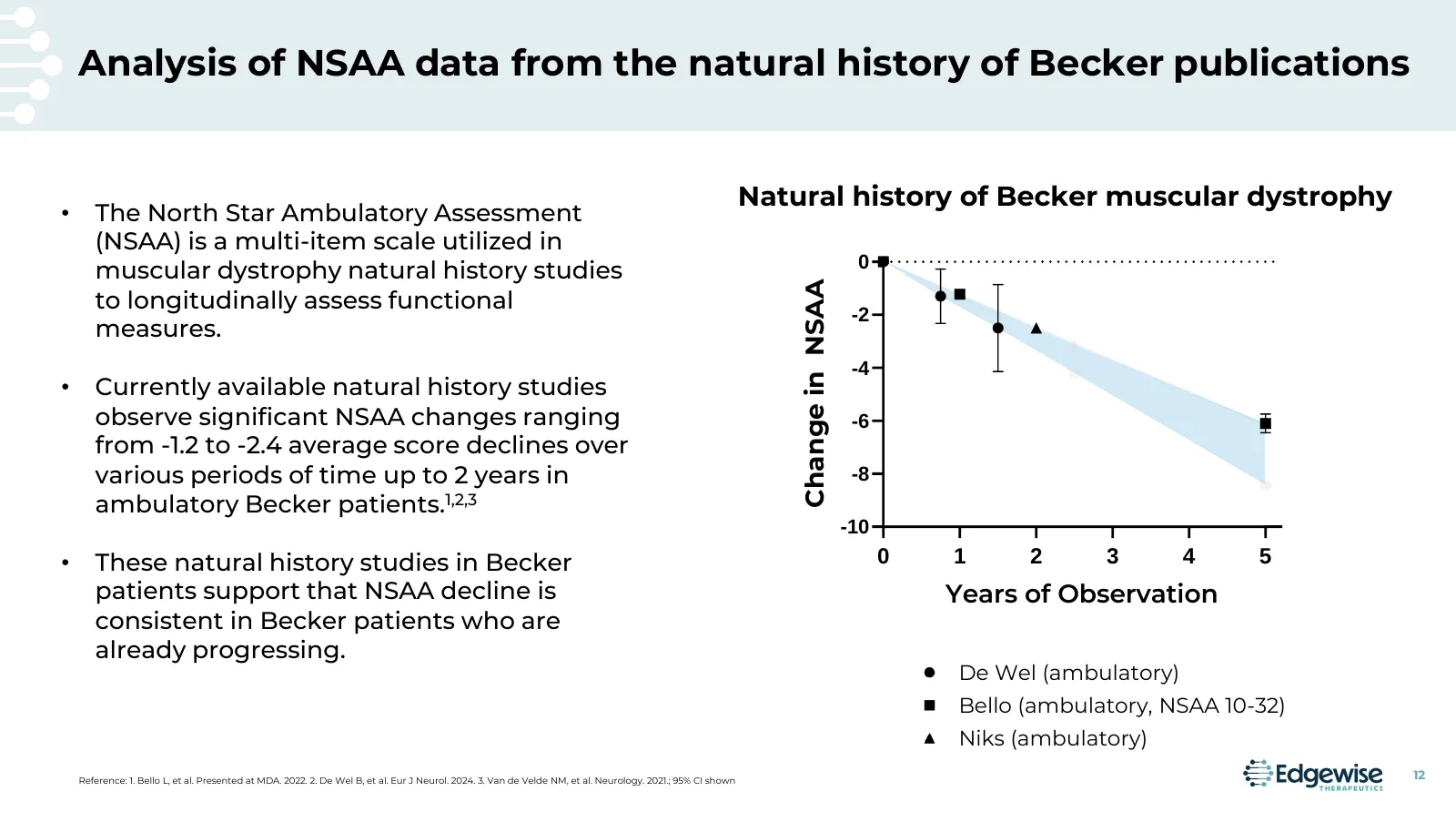
Slide 12: Analysis of NSAA data from the natural history of Becker publications
Analysis of NSAA data from the natural history of Becker publications Natural history of Becker muscular dystrophy • The North Star Ambulatory Assessment (NSAA) is a multi-item scale utilized in 0 muscular dystrophy natural history studies Change in NSAA to longitudinally assess functional -2 measur
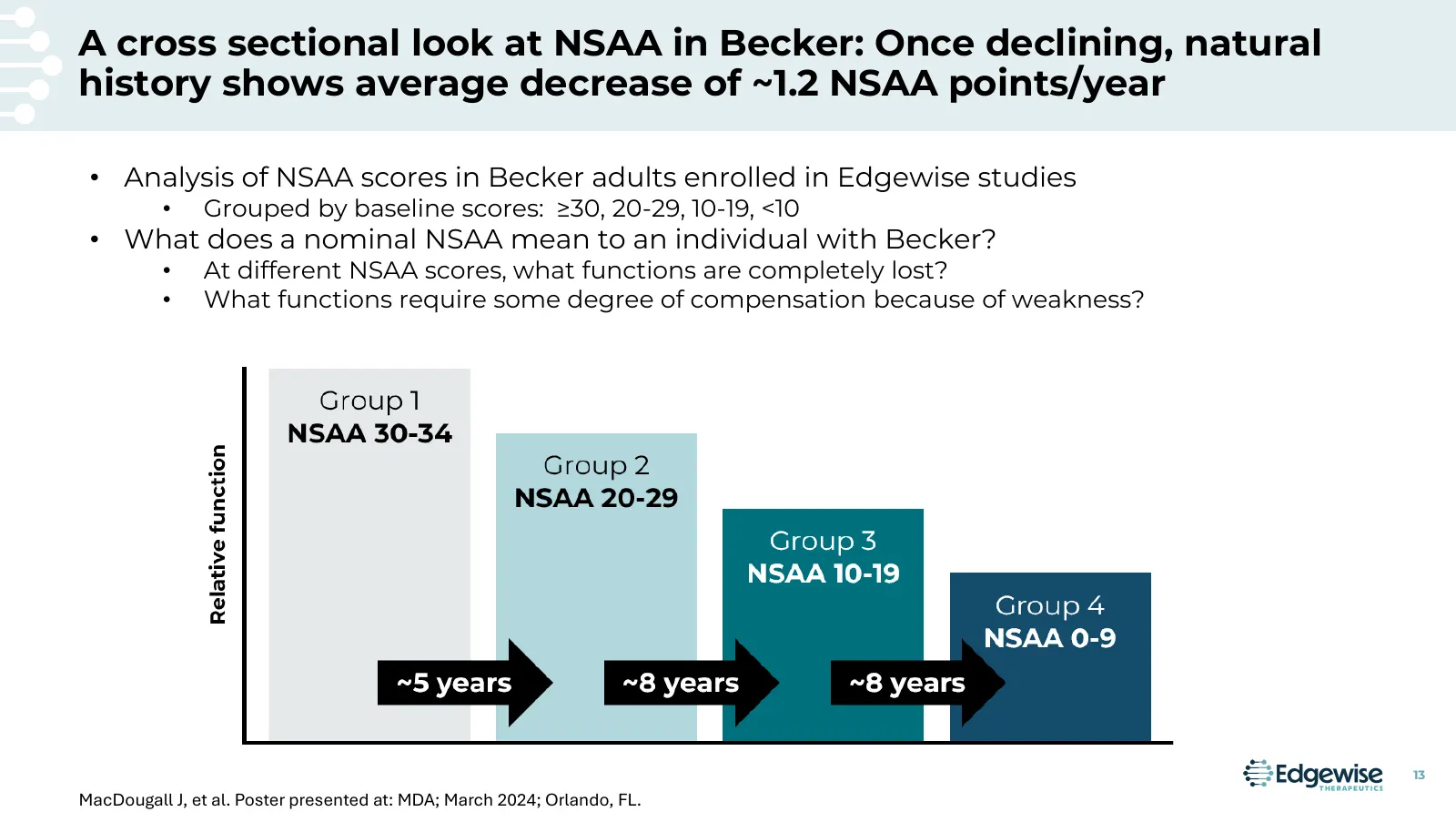
Slide 13: A cross sectional look at NSAA in Becker: average decrease of ~1.2 points/year
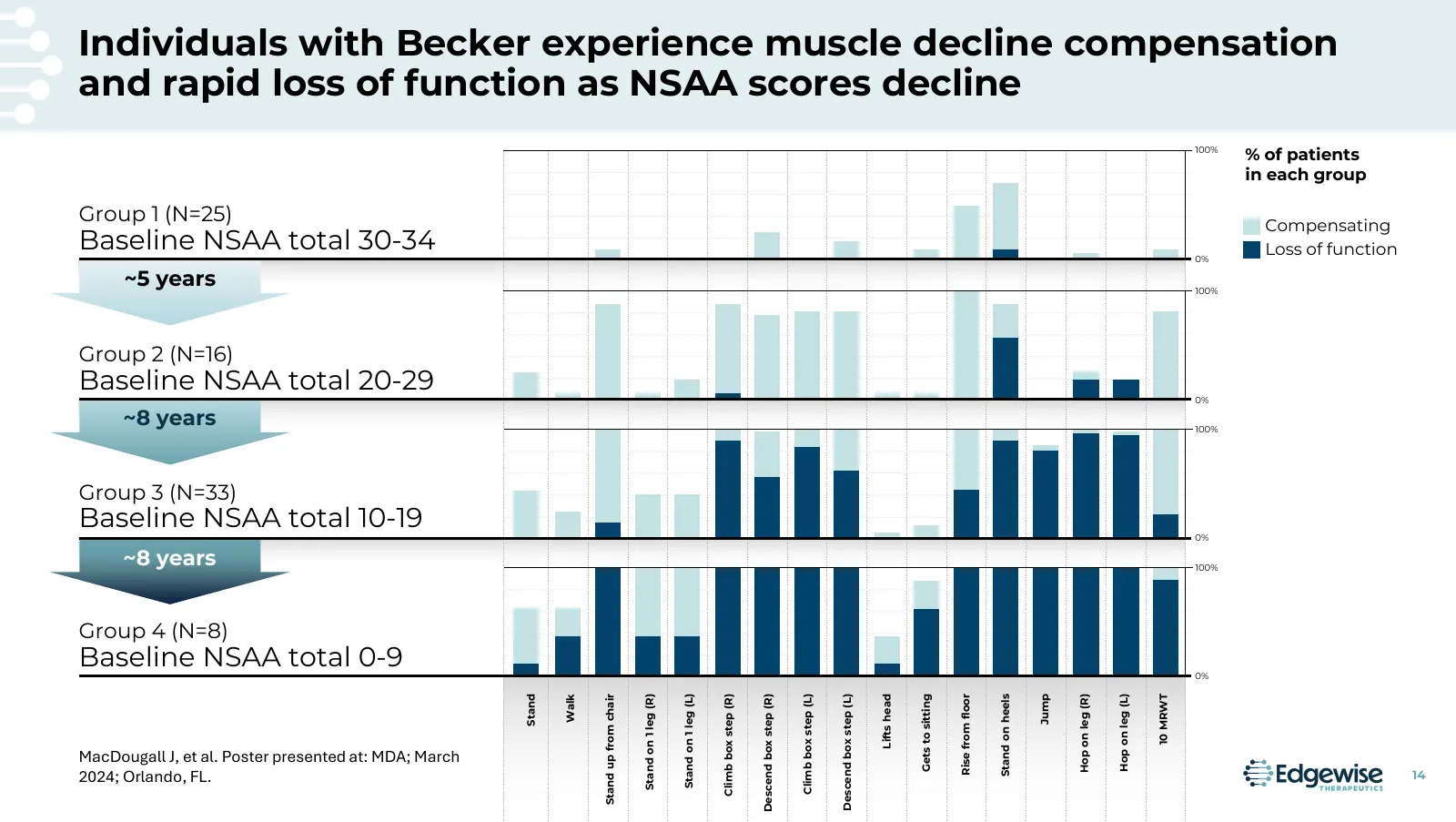
A cross sectional look at NSAA in Becker: Once declining, natural history shows average decrease of ~1.2 NSAA points/year • Analysis of NSAA scores in Becker adults enrolled in Edgewise studies • Grouped by baseline scores: ≥30, 20-29, 10-19, <10 • What does a nominal NSAA mean to an individual with
Slide 14: Muscle decline compensation and rapid loss of function as NSAA scores decline
Individuals with Becker experience muscle decline compensation and rapid loss of function as NSAA scores decline 100% % of patients in each group Group 1 (N=25) Compensating Baseline NSAA total 30-34 0% Loss of function ~5 years 100% Group 2 (N=16) Baseline NSAA total 20-29 0% ~8 years 100% Group 3
Slide 15: NSAA baseline loss of function by item: Group 1
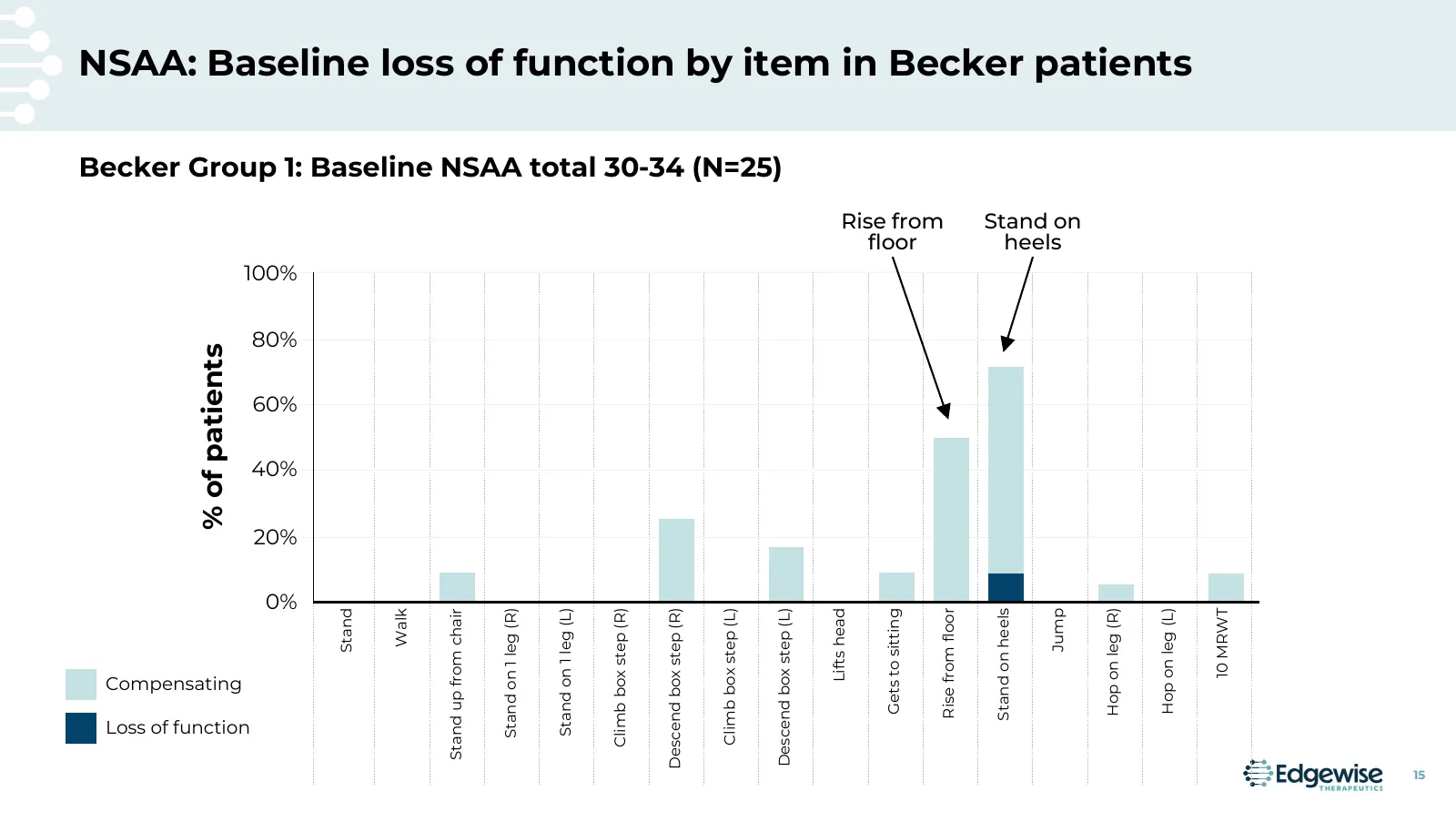
% of patients Compensating Loss of function 80% 0% 20% 40% 60% 100% Stand Walk Stand up from chair Stand on 1 leg (R) Stand on 1 leg (L) Climb box step (R) Descend box step (R) Climb box step (L) Becker Group 1: Baseline NSAA total 30-34 (N=25) Descend box step (L) Lifts head Gets to sitting floor R
Slide 16: NSAA baseline loss of function by item: Group 2
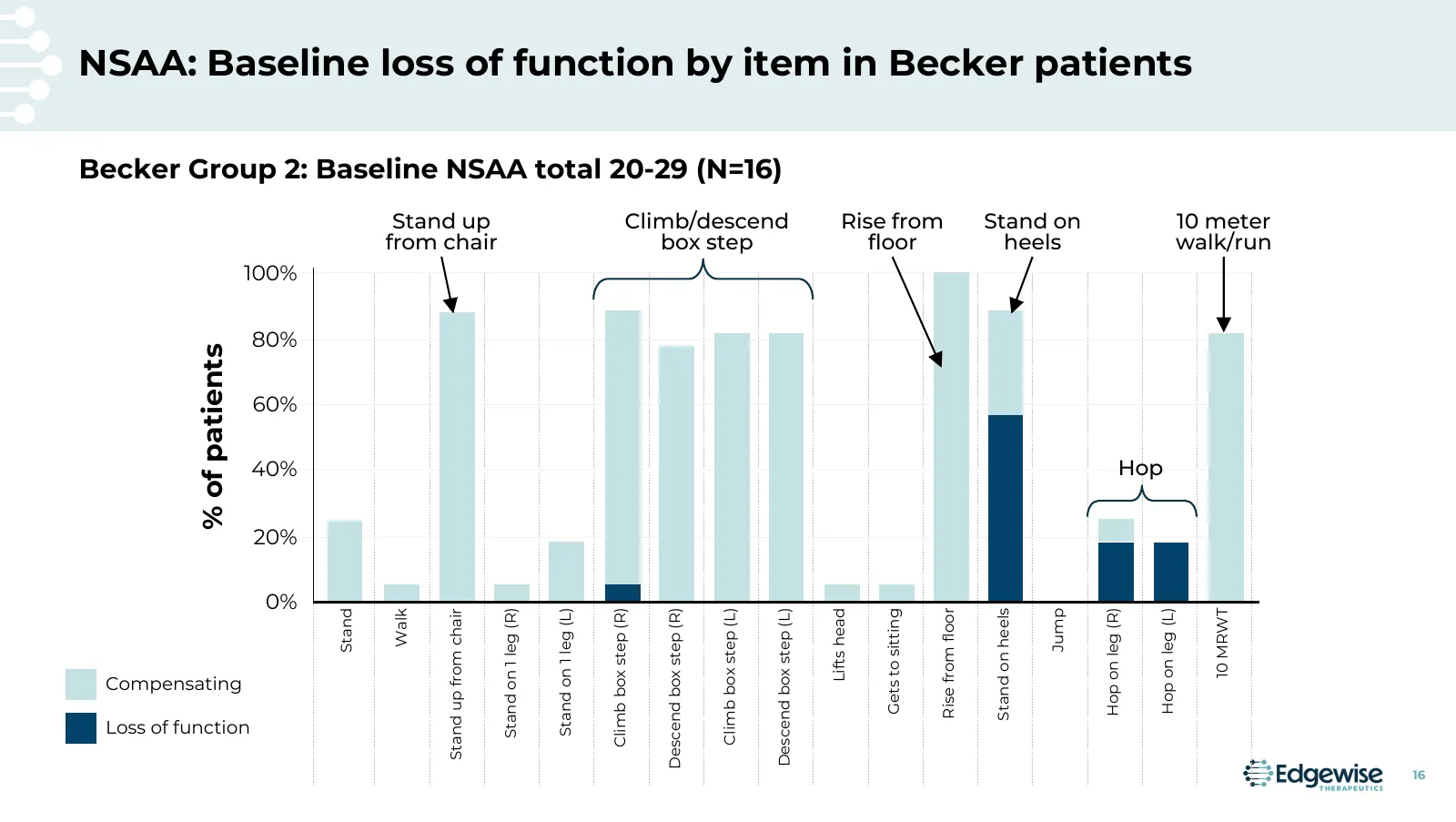
% of patients Compensating Loss of function 80% 0% 20% 40% 60% 100% Stand Walk Stand up from chair Stand up from chair Stand on 1 leg (R) Stand on 1 leg (L) Climb box step (R) Descend box step (R) Climb box step (L) box step Becker Group 2: Baseline NSAA total 20-29 (N=16) Climb/descend Descend box
Slide 17: NSAA baseline loss of function by item: Group 3
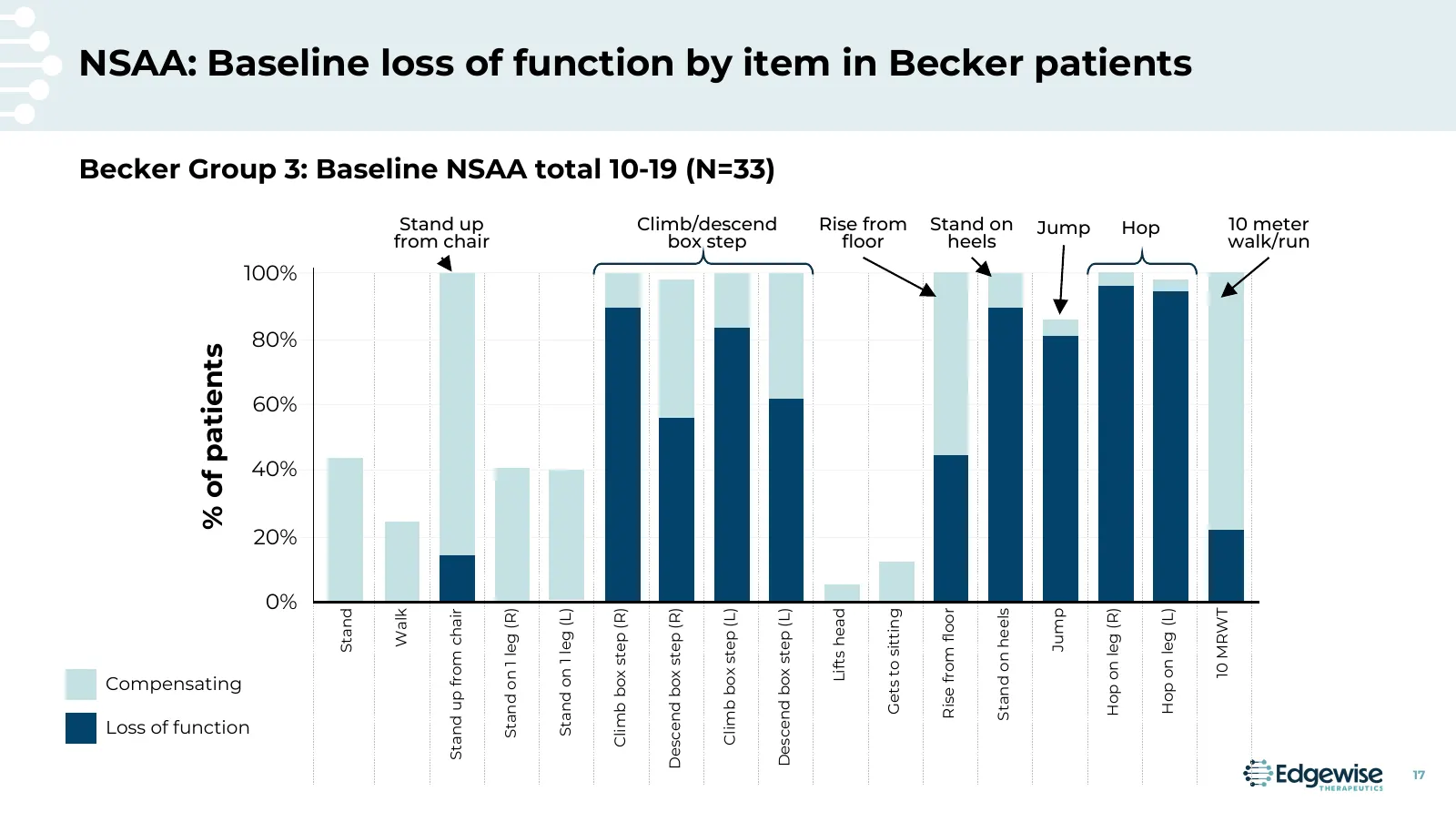
% of patients Compensating Loss of function 80% 0% 20% 40% 60% 100% Stand Walk Stand up from chair Stand up from chair Stand on 1 leg (R) Stand on 1 leg (L) Climb box step (R) Descend box step (R) Climb box step (L) box step Becker Group 3: Baseline NSAA total 10-19 (N=33) Climb/descend Descend box
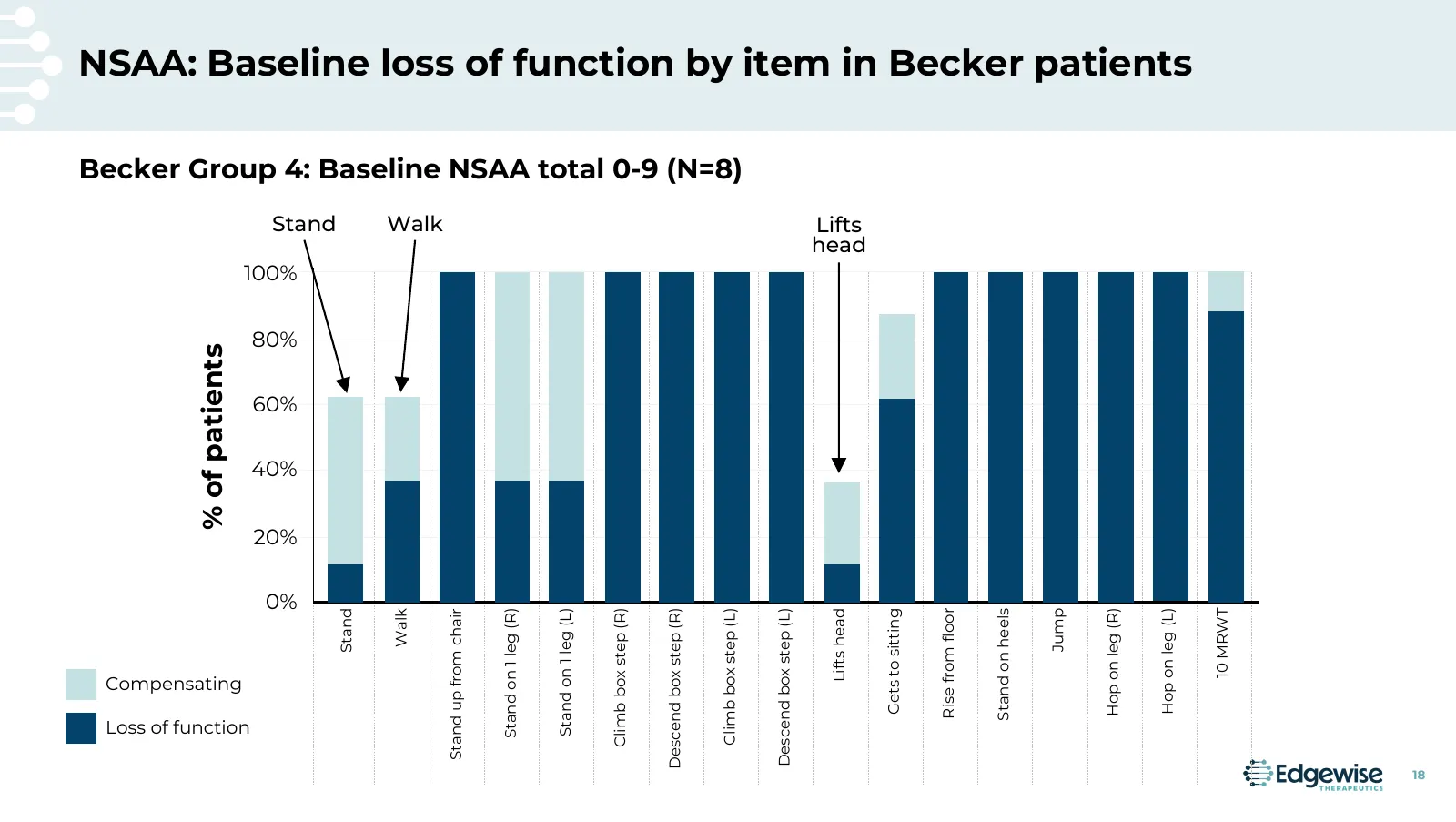
Slide 18: NSAA baseline loss of function by item: Group 4
% of patients Compensating Loss of function 80% 0% 20% 40% 60% 100% Stand Stand Walk Walk Stand up from chair Stand on 1 leg (R) Stand on 1 leg (L) Climb box step (R) Descend box step (R) Climb box step (L) Becker Group 4: Baseline NSAA total 0-9 (N=8) Descend box step (L) Lifts head Lifts head Gets
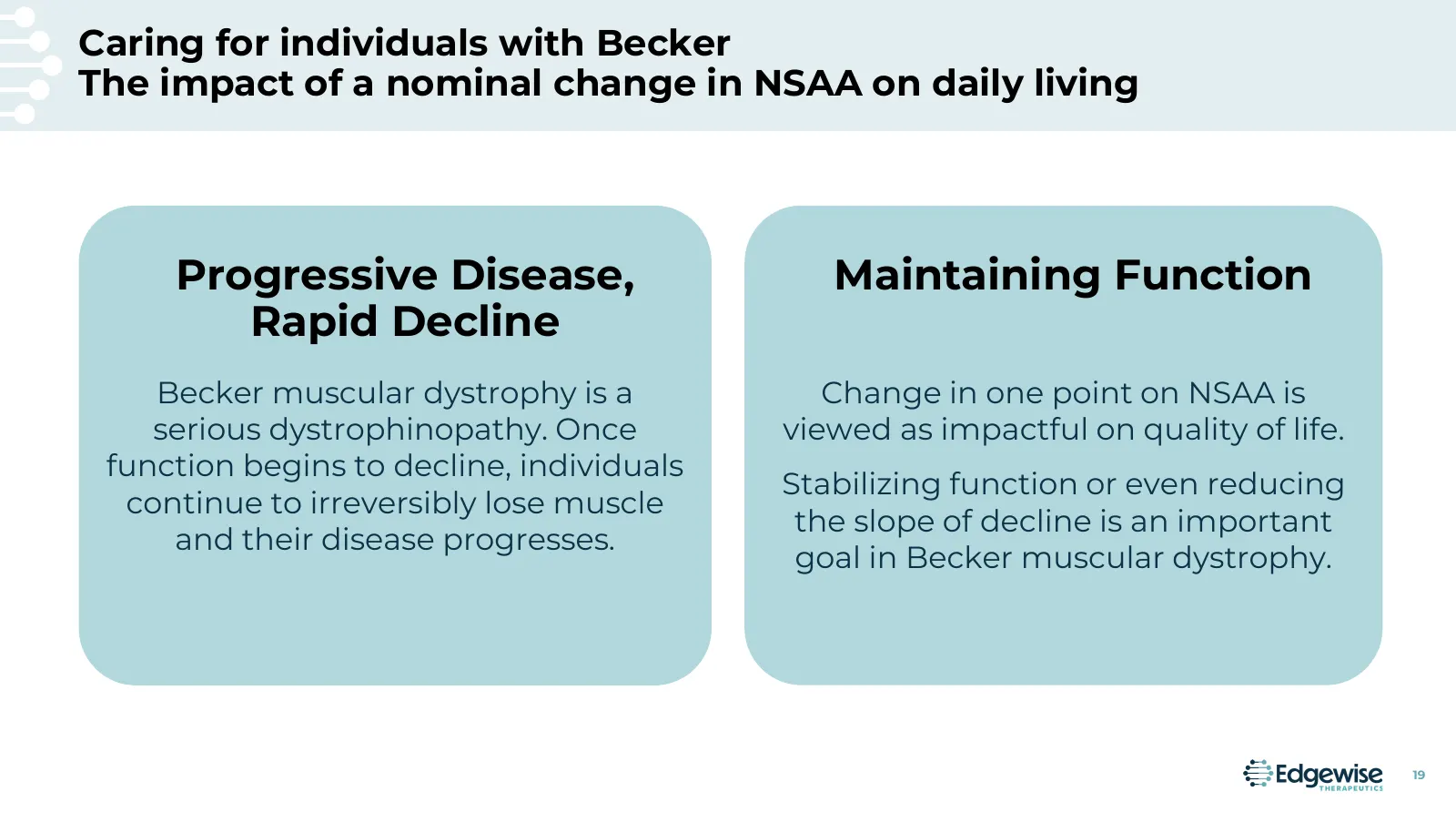
Slide 19: Caring for individuals with Becker
Caring for individuals with Becker The impact of a nominal change in NSAA on daily living Progressive Disease, Maintaining Function Rapid Decline Becker muscular dystrophy is a Change in one point on NSAA is serious dystrophinopathy. Once viewed as impactful on quality of life. function begins to de

Slide 20: Effects of Sevasemten (EDG-5506) on Function and Biomarkers of Muscle Damage in Adults with Becker
Effects of Sevasemten (EDG-5506) on Function and Biomarkers of Muscle Damage in Adults with Becker Joanne Donovan, MD, PhD Chief Medical Officer 20
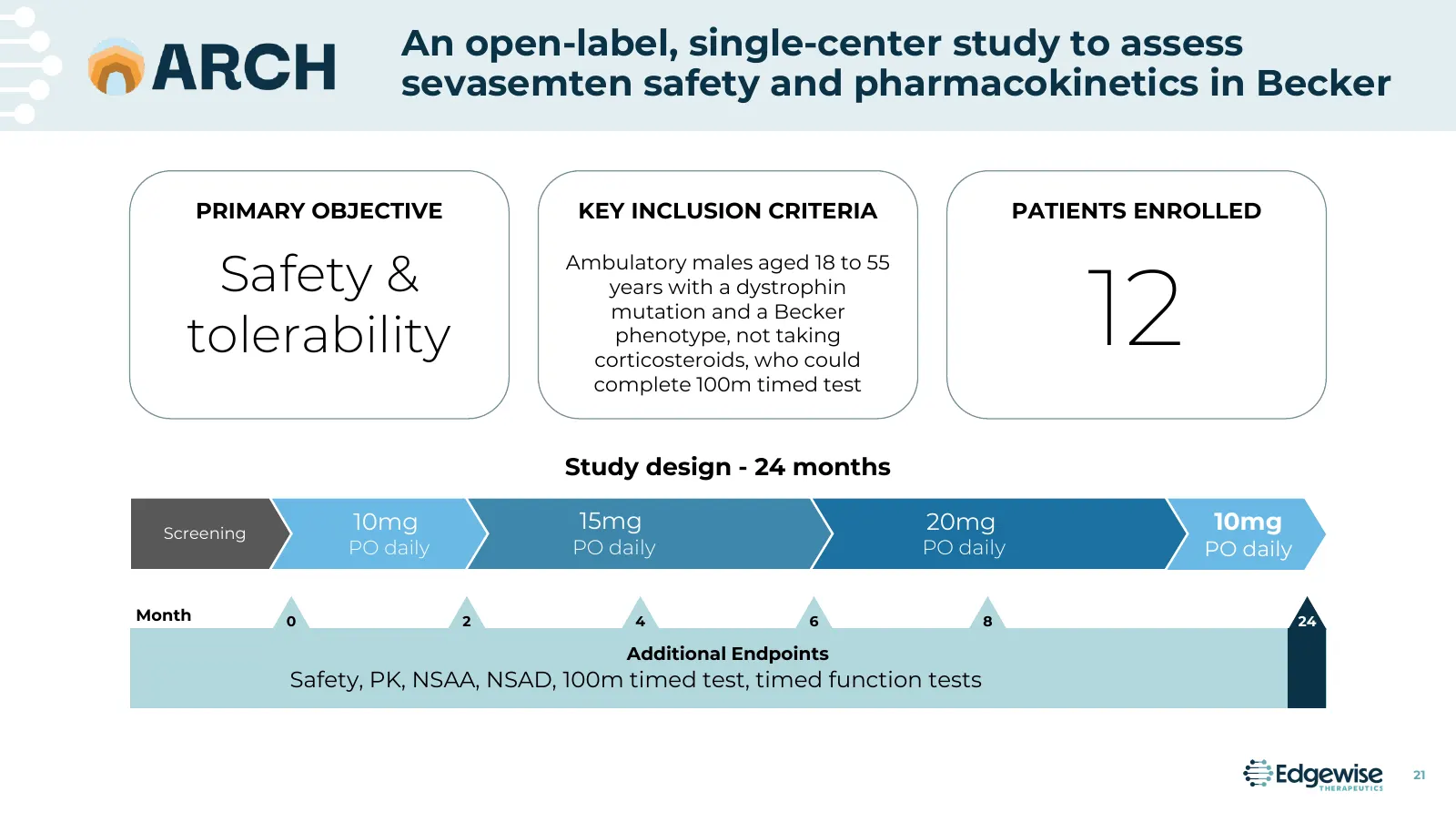
Slide 21: Open-label, single-center study to assess sevasemten safety and pharmacokinetics in Becker
An open-label, single-center study to assess sevasemten safety and pharmacokinetics in Becker PRIMARY OBJECTIVE KEY INCLUSION CRITERIA PATIENTS ENROLLED 12 Safety & Ambulatory males aged 18 to 55 years with a dystrophin mutation and a Becker tolerability phenotype, not taking corticosteroids, who co
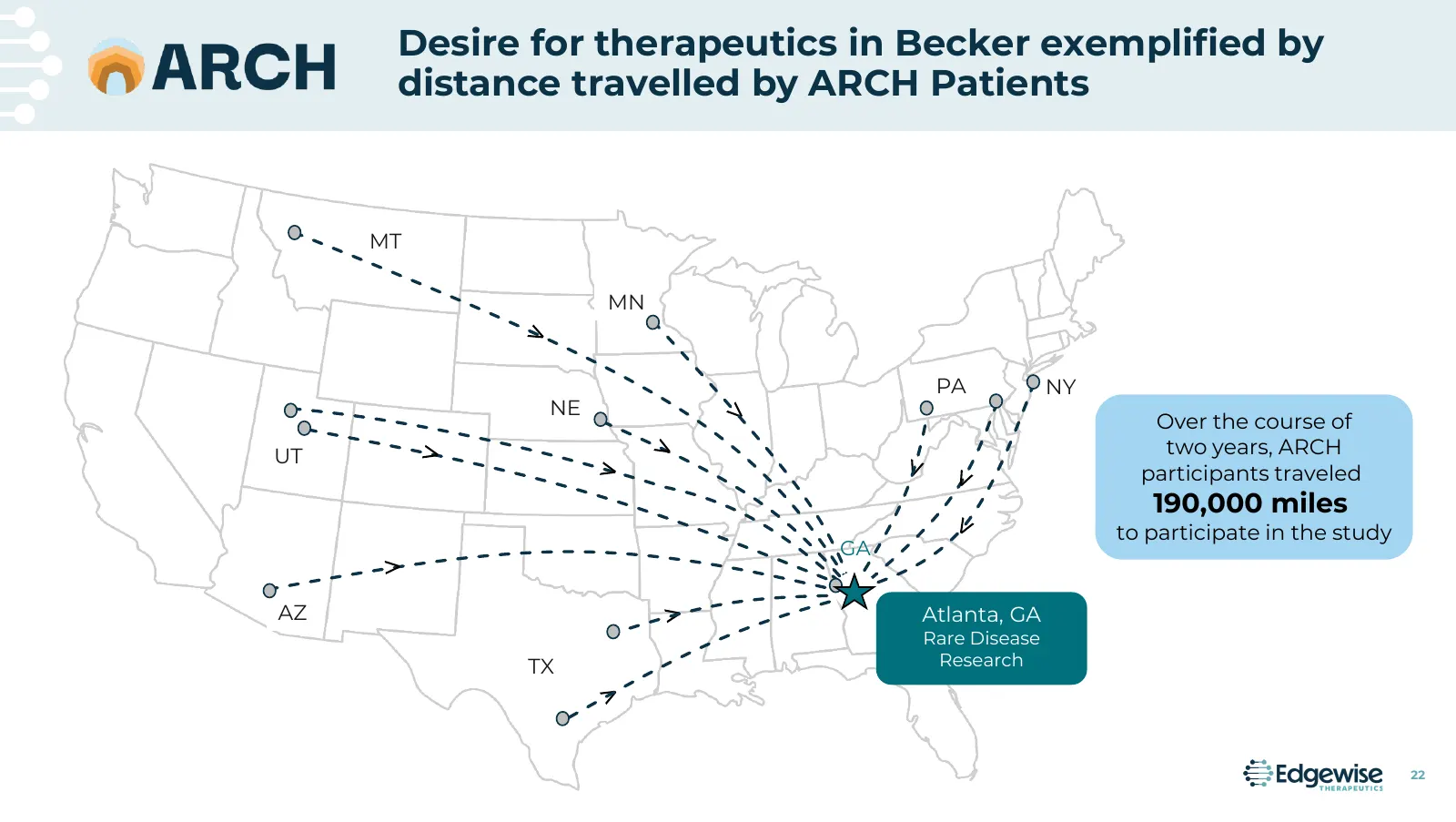
Slide 22: Desire for therapeutics in Becker exemplified by distance travelled by ARCH patients
Desire for therapeutics in Becker exemplified by distance travelled by ARCH Patients MT MN PA NY NE Over the course of UT two years, ARCH participants traveled 190,000 miles to participate in the study GA AZ Atlanta, GA Rare Disease TX Research 22
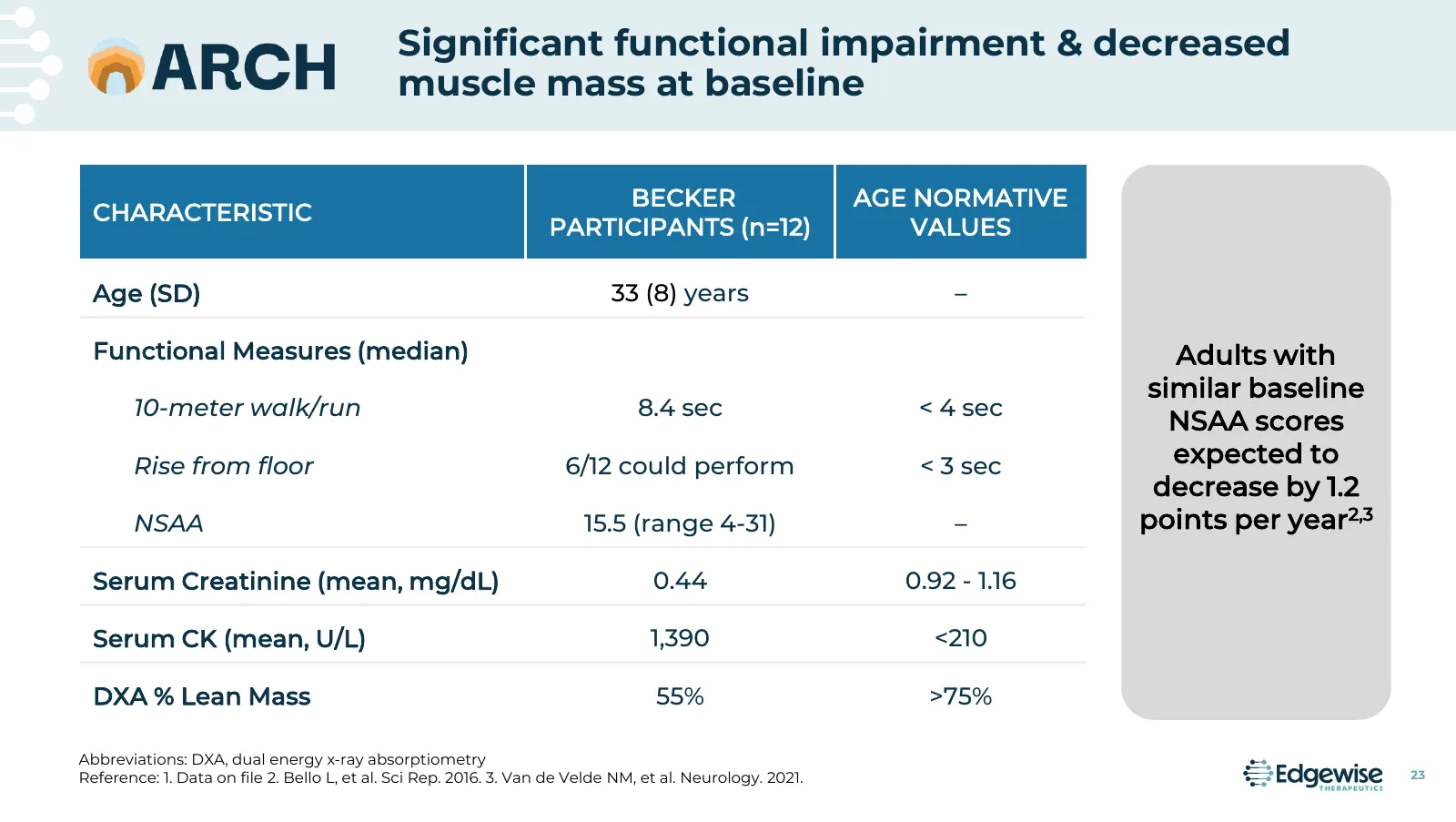
Slide 23: Significant functional impairment and decreased muscle mass at baseline
Significant functional impairment & decreased muscle mass at baseline BECKER AGE NORMATIVE CHARACTERISTIC PARTICIPANTS (n=12) VALUES Age (SD) 33 (8) years – Functional Measures (median) Adults with similar baseline 10-meter walk/run 8.4 sec < 4 sec NSAA scores Rise from floor 6/12 could perform < 3
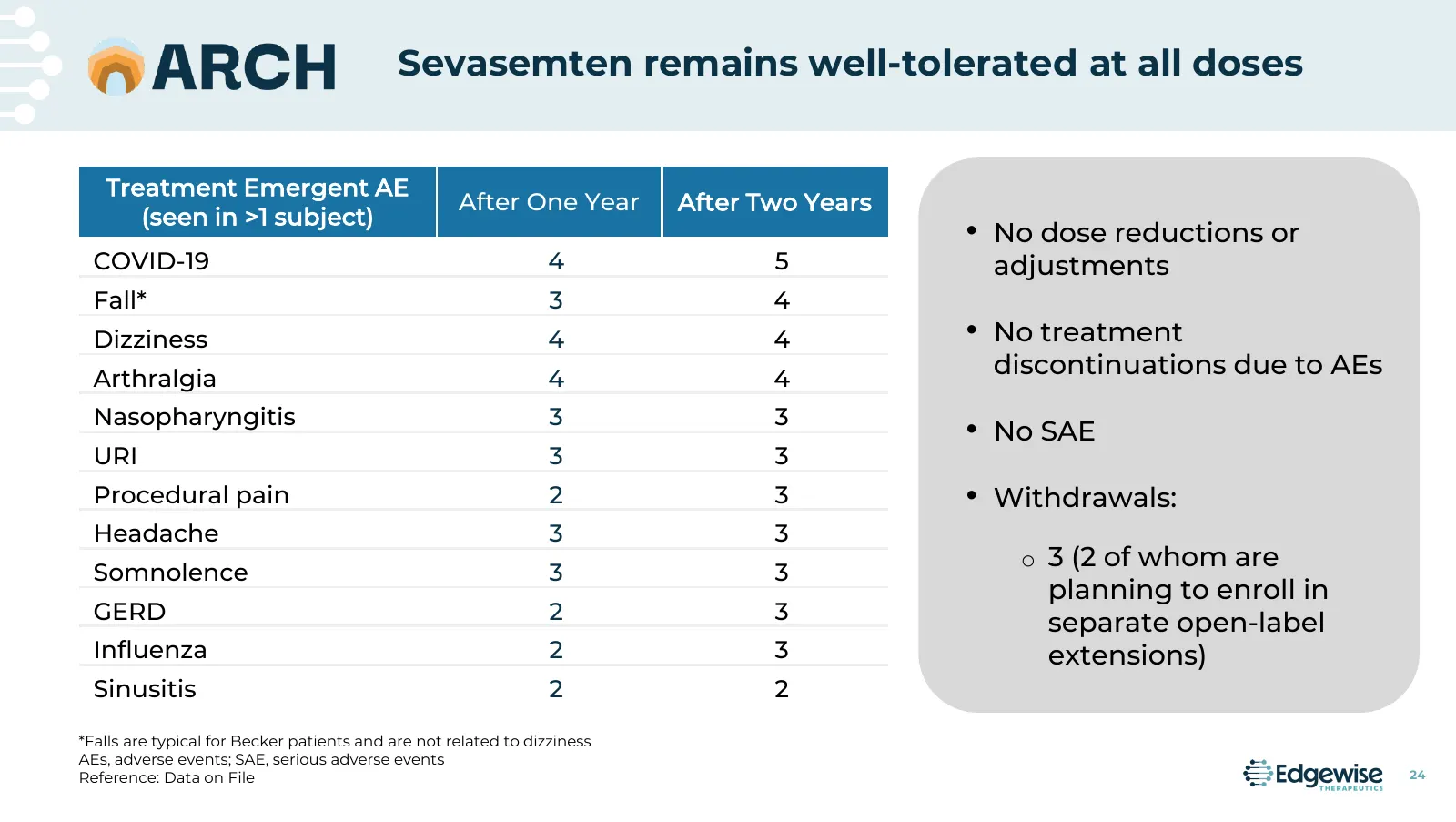
Slide 24: Sevasemten remains well-tolerated at all doses
Sevasemten remains well-tolerated at all doses Treatment Emergent AE After One Year After Two Years (seen in >1 subject) • No dose reductions or COVID-19 4 5 adjustments Fall* 3 4 Dizziness 4 4 • No treatment Arthralgia 4 4 discontinuations due to AEs Nasopharyngitis 3 3 • No SAE URI 3 3 Procedural
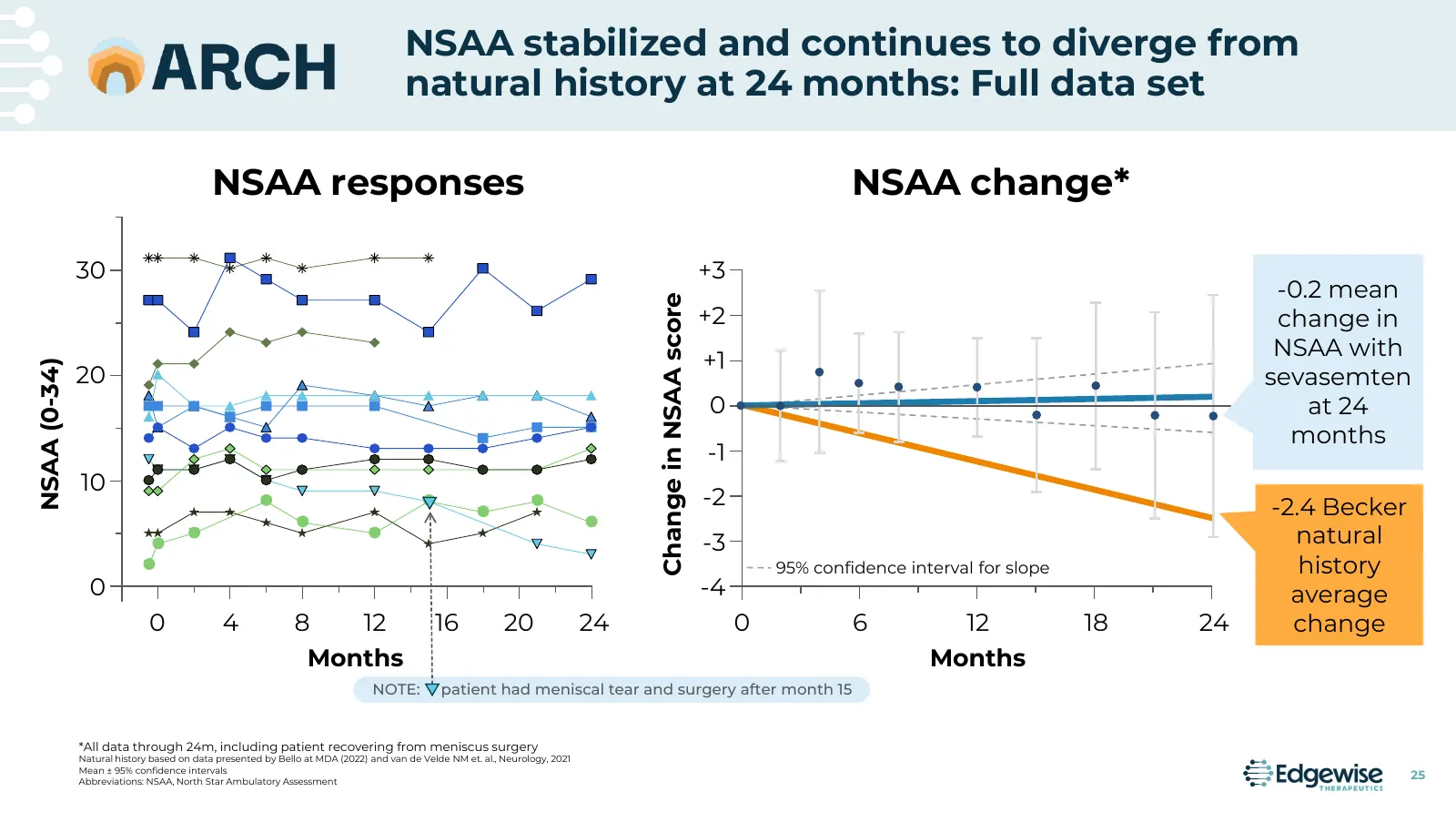
Slide 25: NSAA stabilized and continues to diverge from natural history at 24 months: Full data set
NSAA stabilized and continues to diverge from natural history at 24 months: Full data set NSAA responses NSAA change* 30 30 +3 -0.2 mean Change in NSAA score +2 change in NSAA (0-34) NSAA with +1 NSAA (0-34) 20 20 sevasemten 0 at 24 months -1 1010 -2 -2.4 Becker -3 natural 95% confidence interval fo
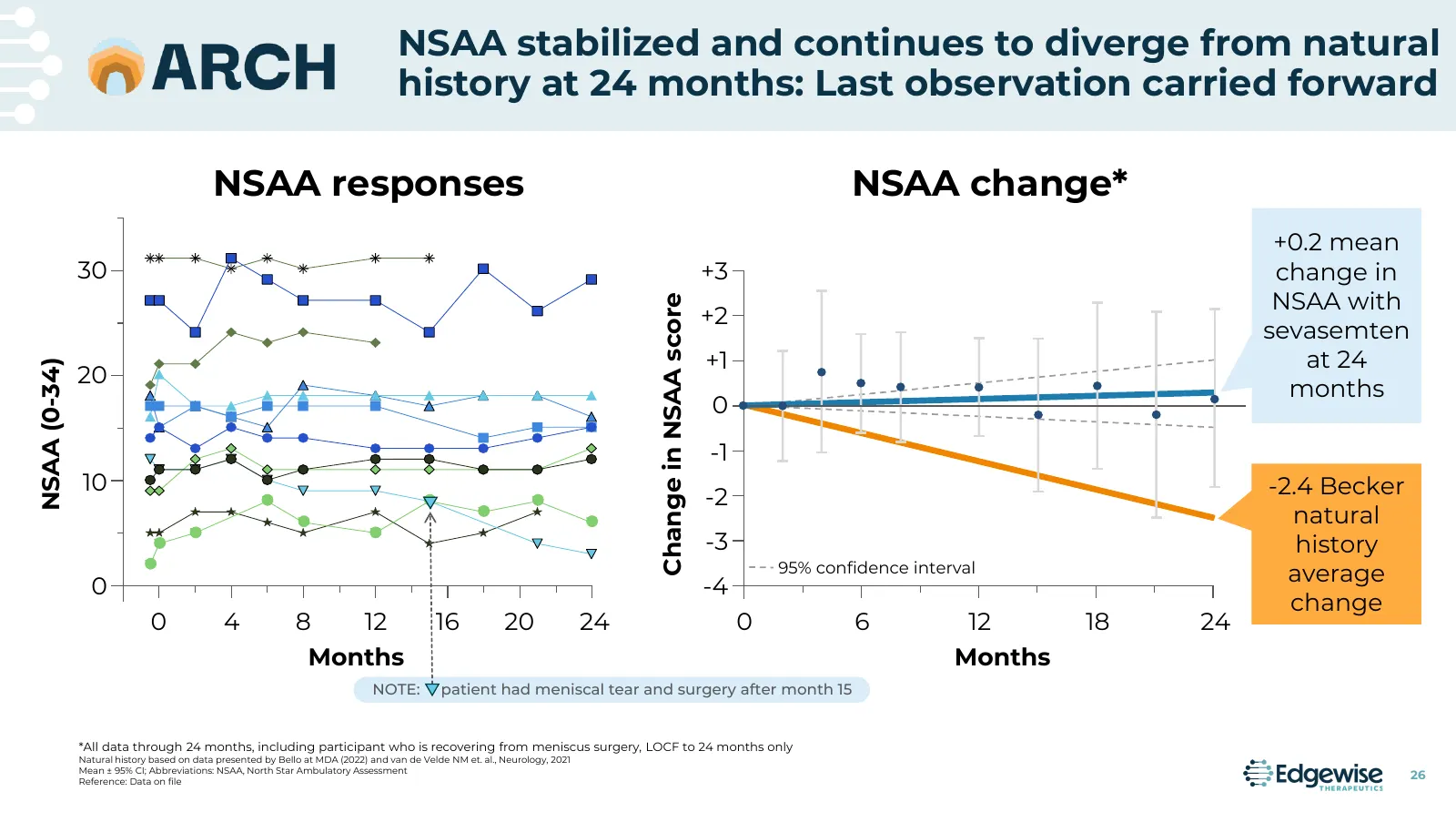
Slide 26: NSAA stabilized at 24 months: Last observation carried forward
NSAA stabilized and continues to diverge from natural history at 24 months: Last observation carried forward NSAA responses NSAA change* +0.2 mean 30 30 +3 change in NSAA with Change in NSAA score +2 NSAA (0-34) sevasemten +1 at 24 NSAA (0-34) 20 20 months 0 -1 1010 -2.4 Becker -2 natural -3 history
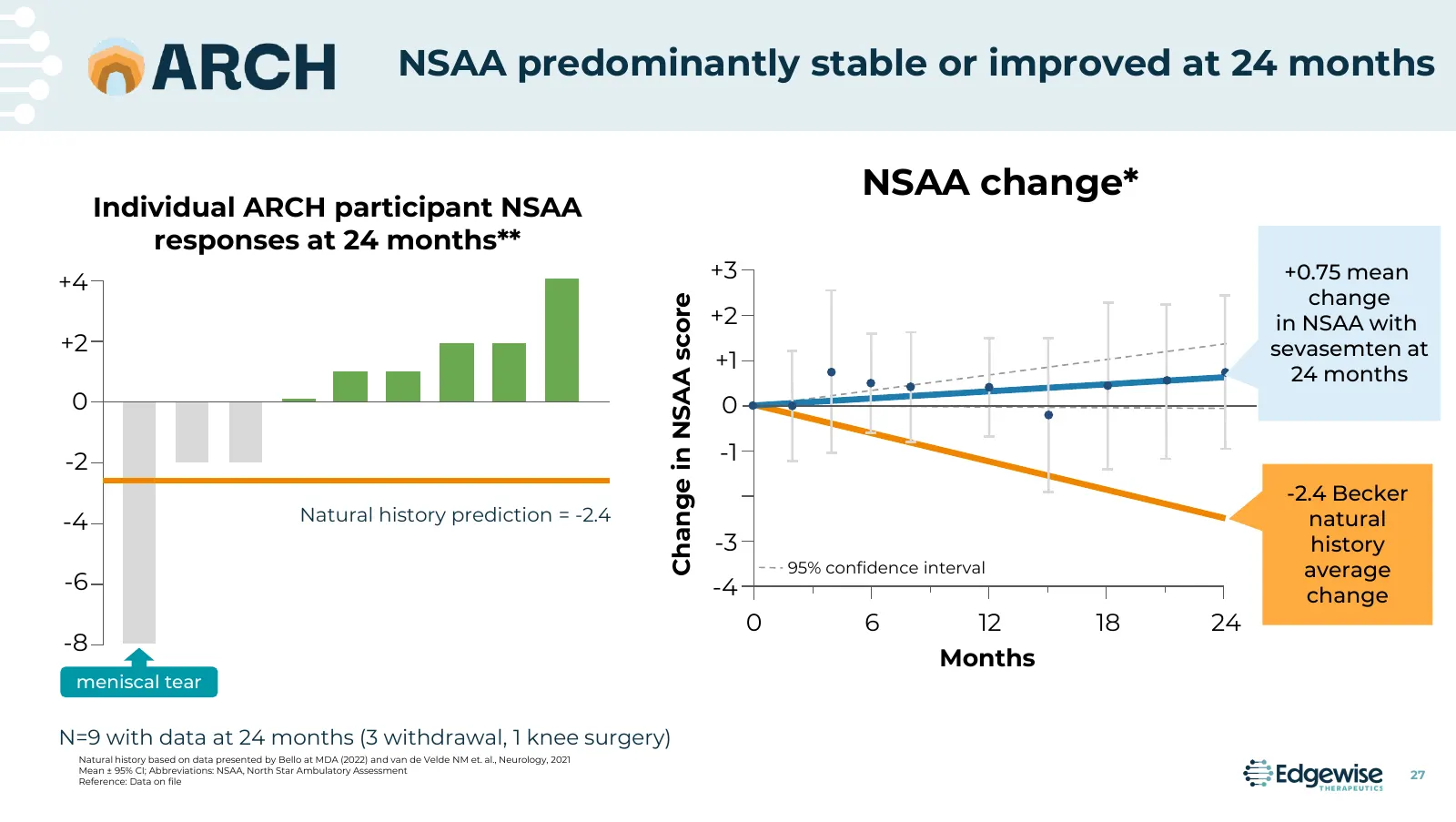
Slide 27: NSAA predominantly stable or improved at months
NSAA predominantly stable or improved at 24 months NSAA change* Individual ARCH participant NSAA responses at 24 months** +4 +3 +0.75 mean change Change in NSAA score +2 in NSAA with +2 sevasemten at +1 24 months 0 0 -2 -1 -2.4 Becker -4 Natural history prediction = -2.4 natural -3 history 95% confi
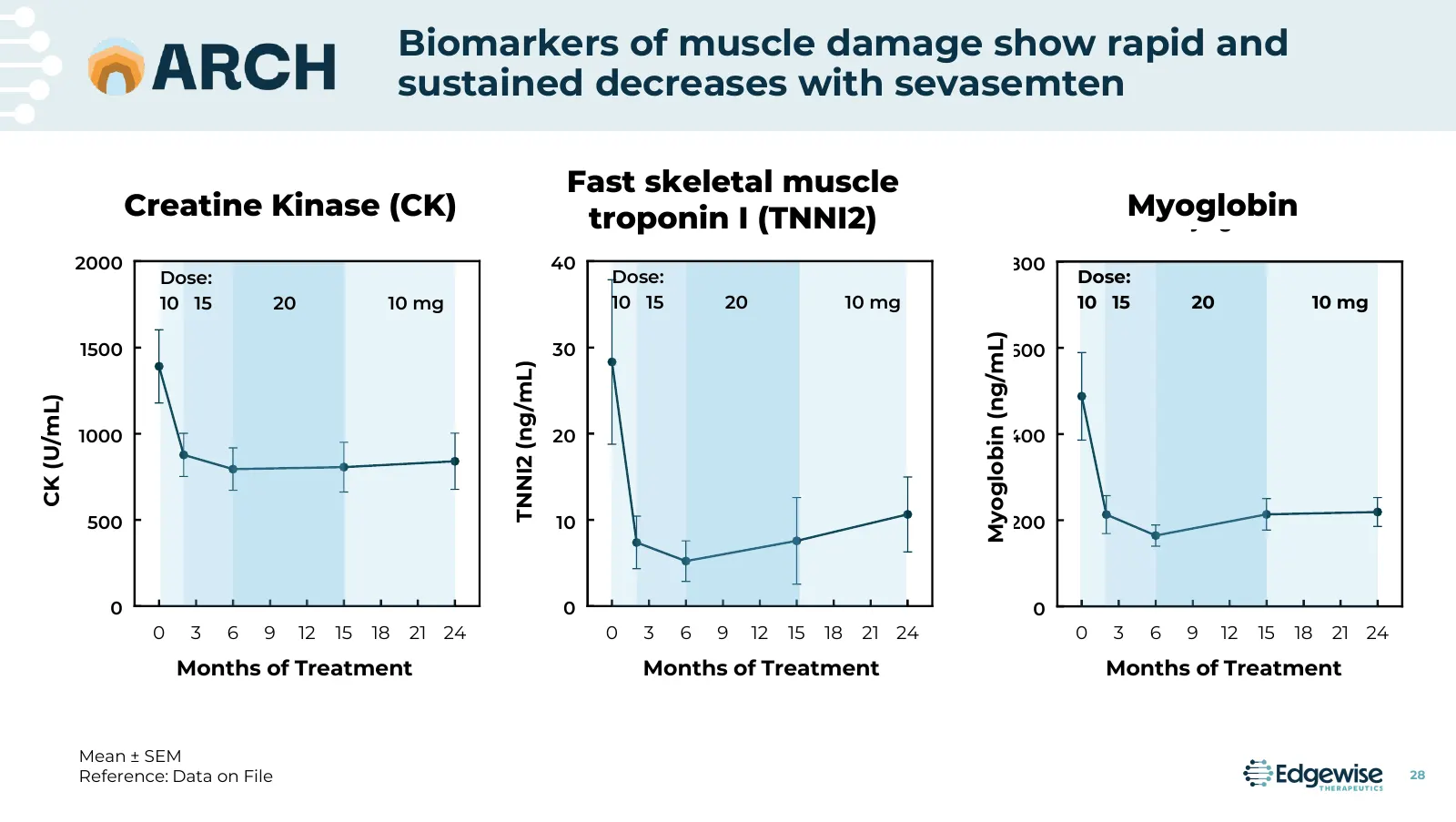
Slide 28: Biomarkers of muscle damage show rapid and sustained decreases with sevasemten
Biomarkers of muscle damage show rapid and sustained decreases with sevasemten Fast skeletal muscle Creatine Kinase CK (CK) troponinTNNI2 I (TNNI2) Myoglobin Myoglobin 2000 40 800 Dose: Dose: Dose: 10 15 20 10 mg 10 15 20 10 mg 10 15 20 10 mg (ng/ml) Myoglobin(ng/mL) 1500 30 600 (ng/mL) TNNI2(ng/mL)
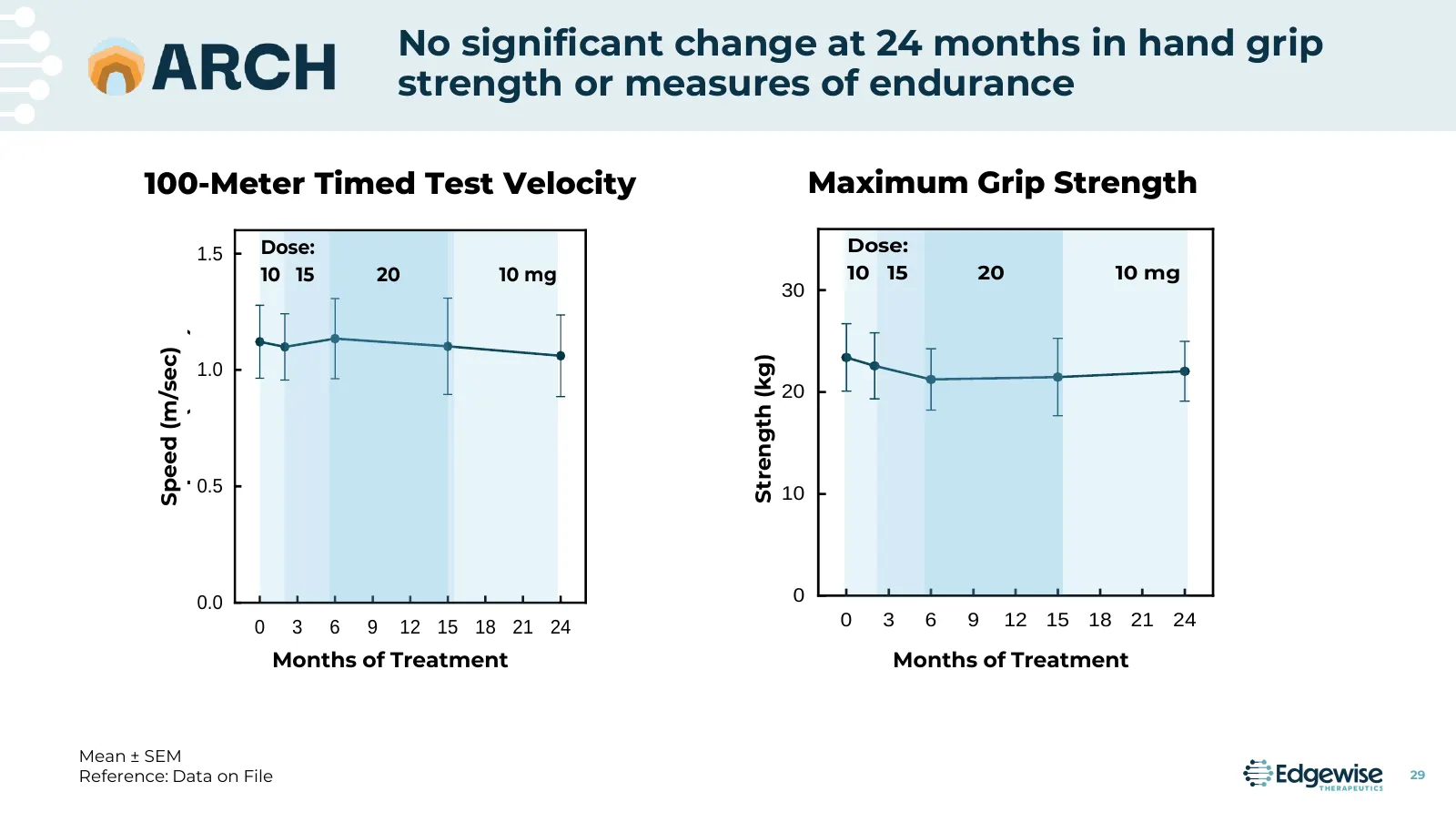
Slide 29: No significant change in hand grip strength or measures of endurance
No significant change at 24 months in hand grip strength or measures of endurance 100-Meter Timed 100-Meter TimedTest Velocity Test Velocity Maximum MaximumGrip Grip Strength Strength 1.5 Dose: Dose: 10 15 20 10 mg 10 15 20 10 mg 30 (m/sec) (kg) Speed(m/sec) (kg) 1.0 20 Strength Strength Speed 0.5 1
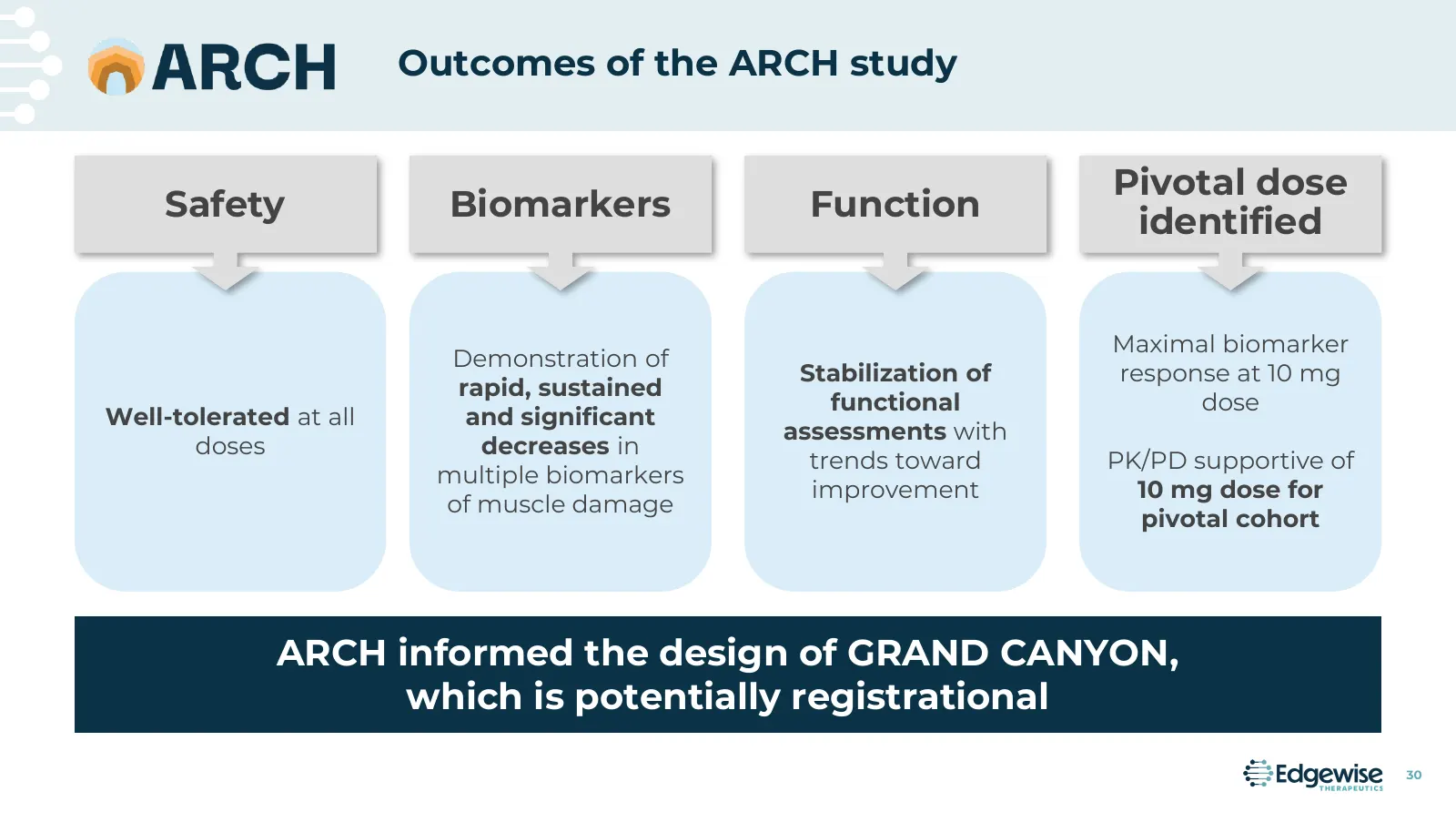
Slide 30: Outcomes of the ARCH study
Outcomes of the ARCH study Pivotal dose Safety Biomarkers Function identified Maximal biomarker Demonstration of Stabilization of response at 10 mg rapid, sustained functional dose Well-tolerated at all and significant assessments with doses decreases in trends toward PK/PD supportive of multiple bi
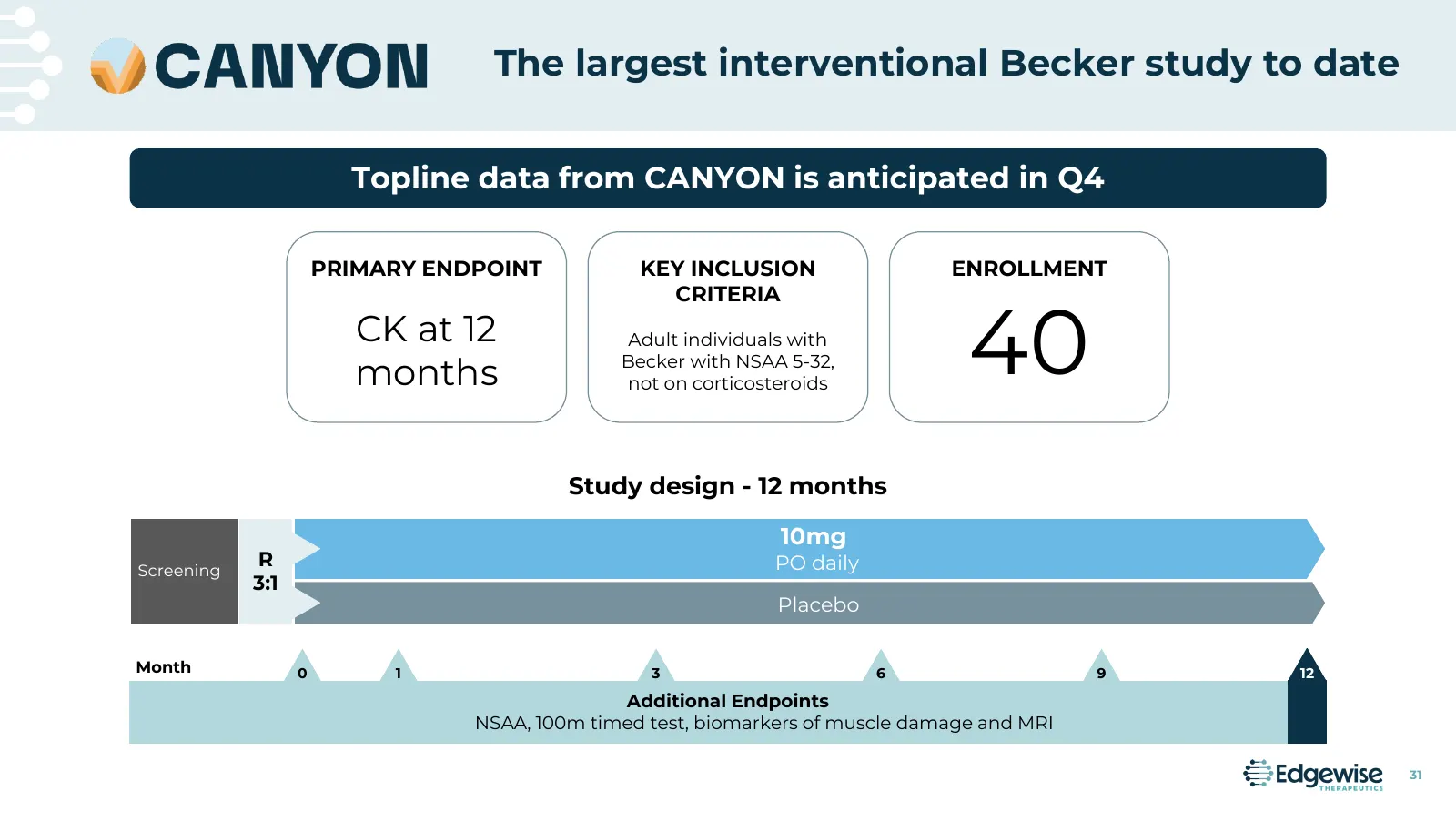
Slide 31: The largest interventional Becker study to date
The largest interventional Becker study to date Topline data from CANYON is anticipated in Q4 PRIMARY ENDPOINT KEY INCLUSION ENROLLMENT CRITERIA CK at 12 months Adult individuals with Becker with NSAA 5-32, not on corticosteroids 40 Study design - 12 months 10mg R PO daily Screening 3:1 Placebo Mont
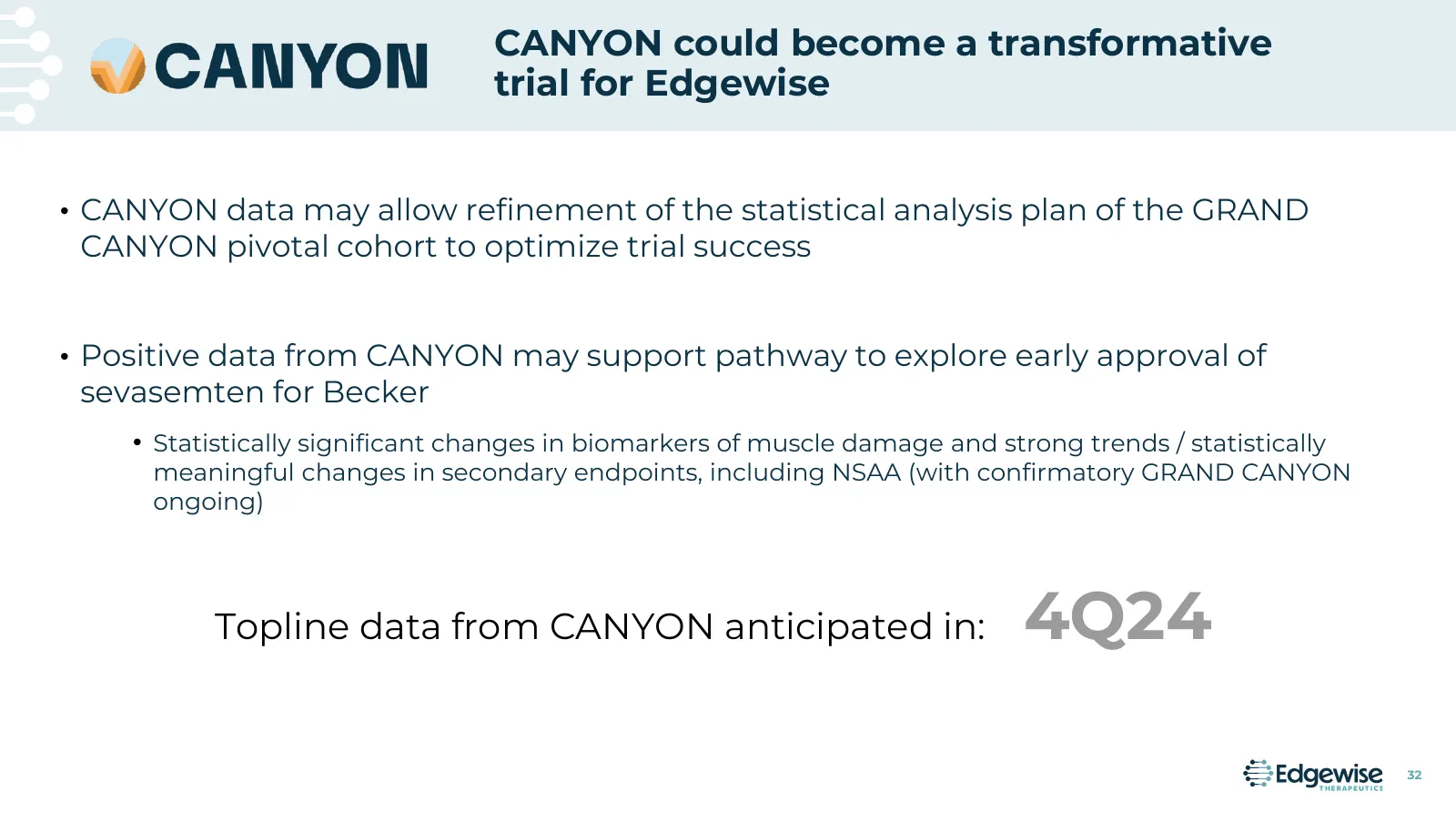
Slide 32: CANYON could become a transformative trial for Edgewise
CANYON could become a transformative trial for Edgewise • CANYON data may allow refinement of the statistical analysis plan of the GRAND CANYON pivotal cohort to optimize trial success • Positive data from CANYON may support pathway to explore early approval of sevasemten for Becker • Statistically
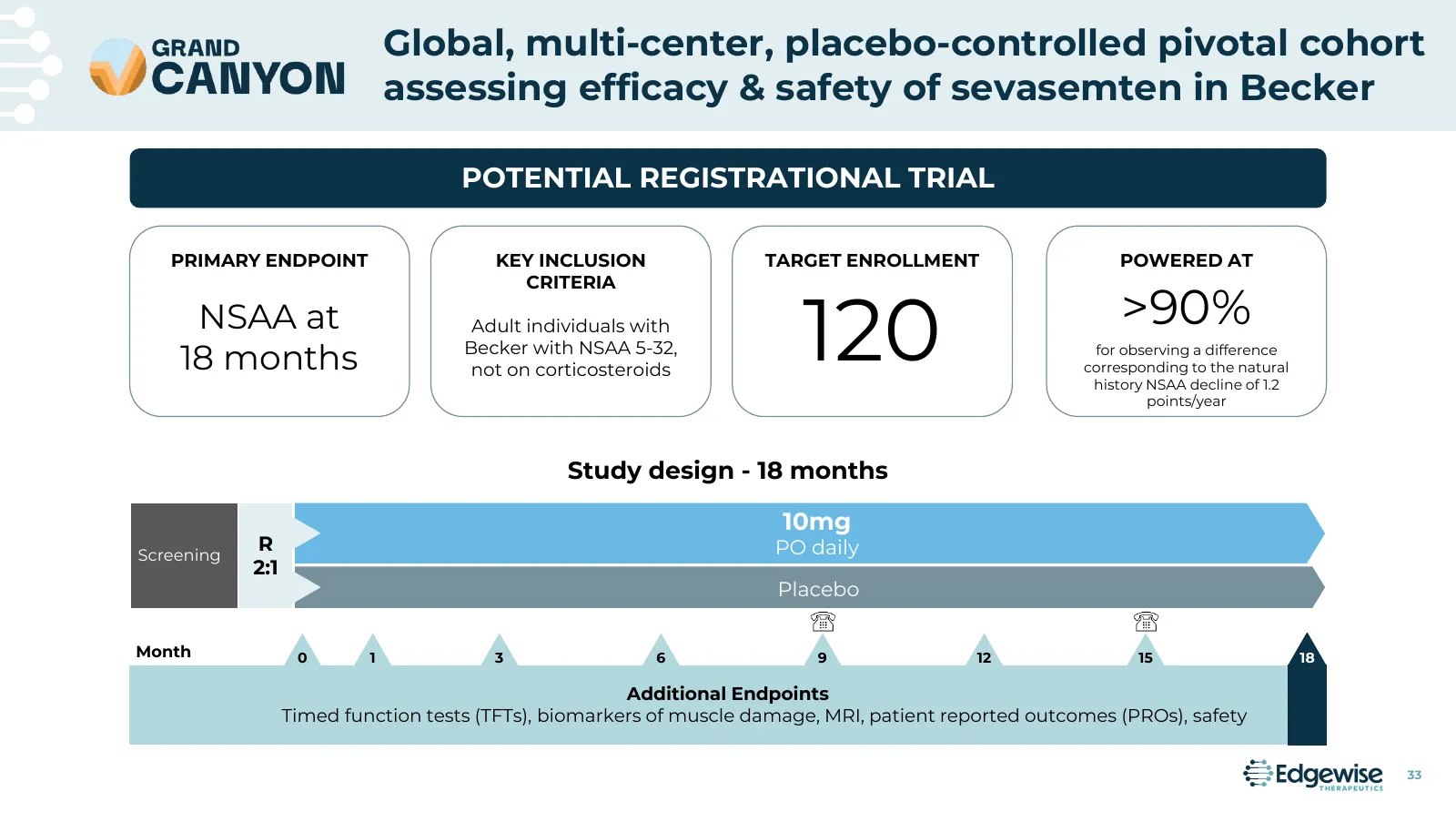
Slide 33: Global, multi-center, placebo-controlled pivotal cohort in Becker
Global, multi-center, placebo-controlled pivotal cohort assessing efficacy & safety of sevasemten in Becker POTENTIAL REGISTRATIONAL TRIAL PRIMARY ENDPOINT KEY INCLUSION TARGET ENROLLMENT POWERED AT CRITERIA NSAA at 18 months Adult individuals with Becker with NSAA 5-32, not on corticosteroids 120 >
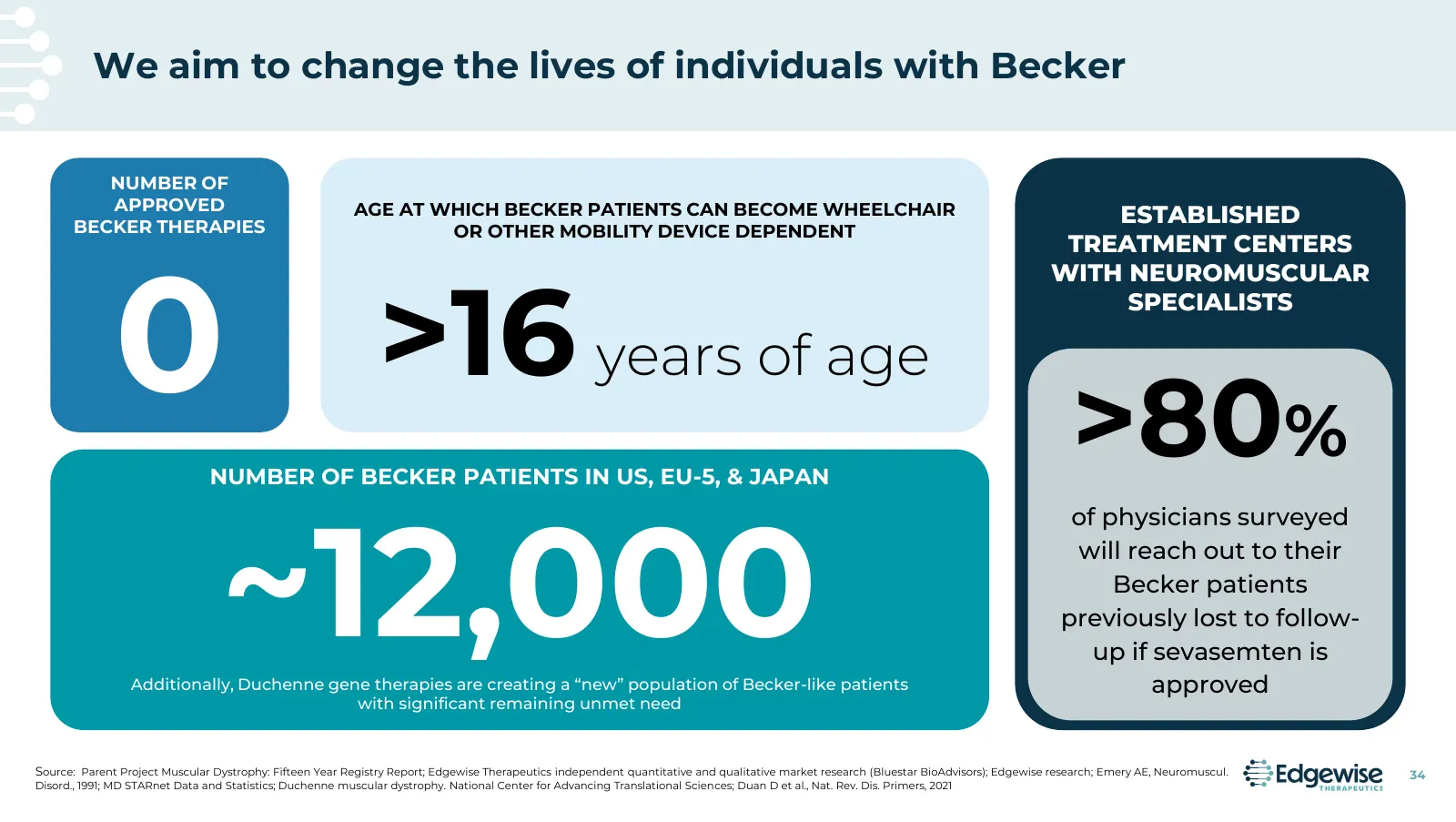
Slide 34: We aim to change the lives of individuals with Becker
We aim to change the lives of individuals with Becker NUMBER OF APPROVED AGE AT WHICH BECKER PATIENTS CAN BECOME WHEELCHAIR BECKER THERAPIES ESTABLISHED OR OTHER MOBILITY DEVICE DEPENDENT TREATMENT CENTERS 0 >16 years of age WITH NEUROMUSCULAR SPECIALISTS NUMBER OF BECKER PATIENTS IN US, EU-5, & JAP
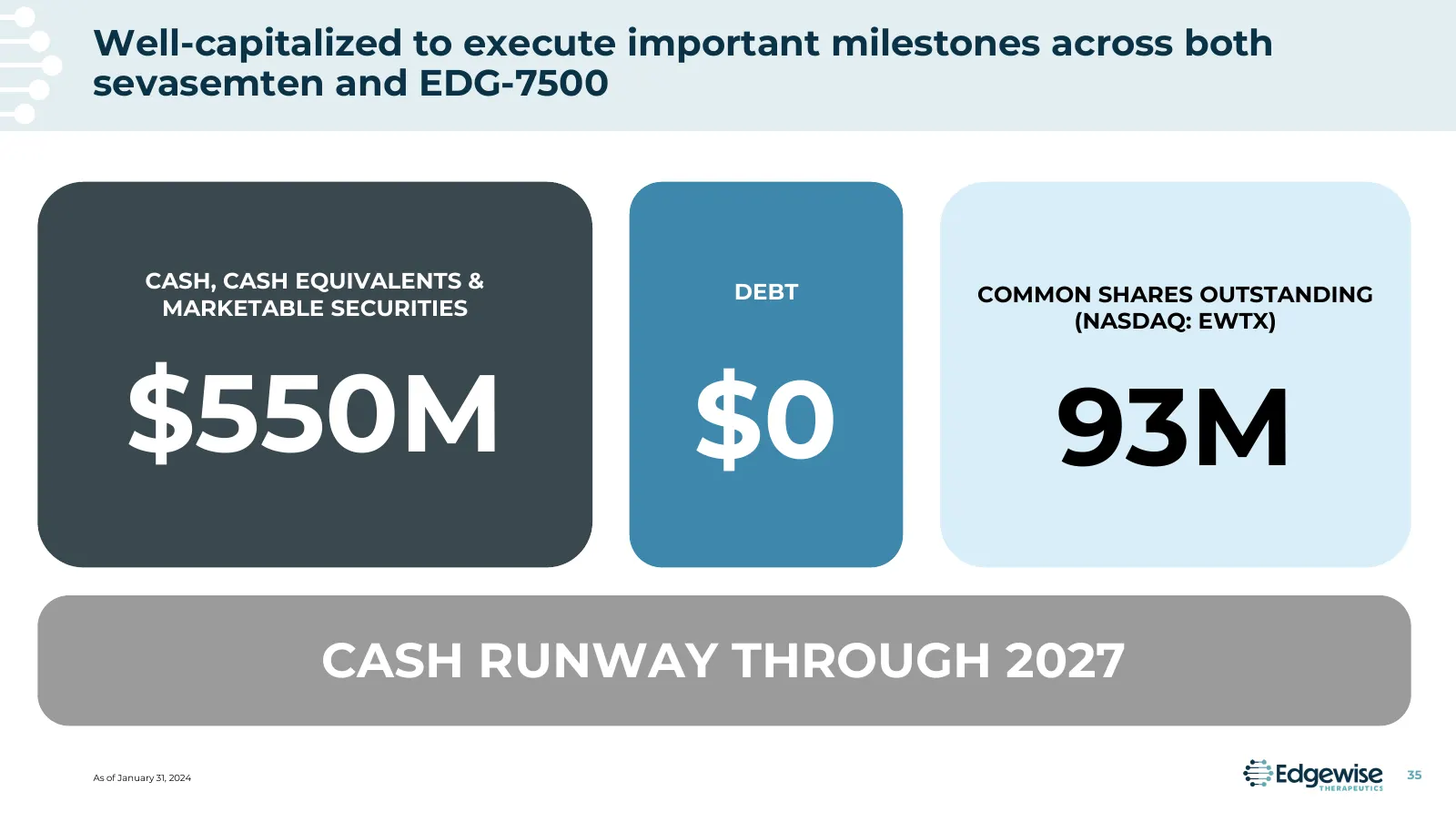
Slide 35: Well-capitalized to execute important milestones across both sevasemten and EDG-7500
Well-capitalized to execute important milestones across both sevasemten and EDG-7500 CASH, CASH EQUIVALENTS & DEBT (1) COMMON (1) SHARES OUTSTANDING MARKETABLE SECURITIES (NASDAQ: EWTX) $550M $0 93M CASH RUNWAY THROUGH 2027 As of January 31, 2024 35

Slide 36: Thank You
Thank You ESEdgewise
Source: Internet Archive copy of s204.q4cdn.com
More decks from Edgewise Therapeutics, Inc.
 Technical Presentation (November 2026)9 slides · November 2026
 Technical Presentation (October 2026)6 slides · October 2026
 Technical Presentation (September 2026)42 slides · Sep 22, 2026
 Technical Presentation (August 2026)25 slides · August 2026
 World Muscle Society Conference 2025 Symposium55 slides · Oct 8, 2025
 Technical Presentation (April 2025)50 slides · Apr 2, 2025