Aimmune Therapeutics — J.P. Morgan Healthcare Conference January 2017
22 slides from Aimmune Therapeutics's conference presentation, Jan 9, 2017

Slide 1: J.P. Morgan Healthcare Conference January 2017
J.P. Morgan Healthcare Conference January 2017 Less risk. More life. Stephen Dilly, CEO Exhibit 99.1
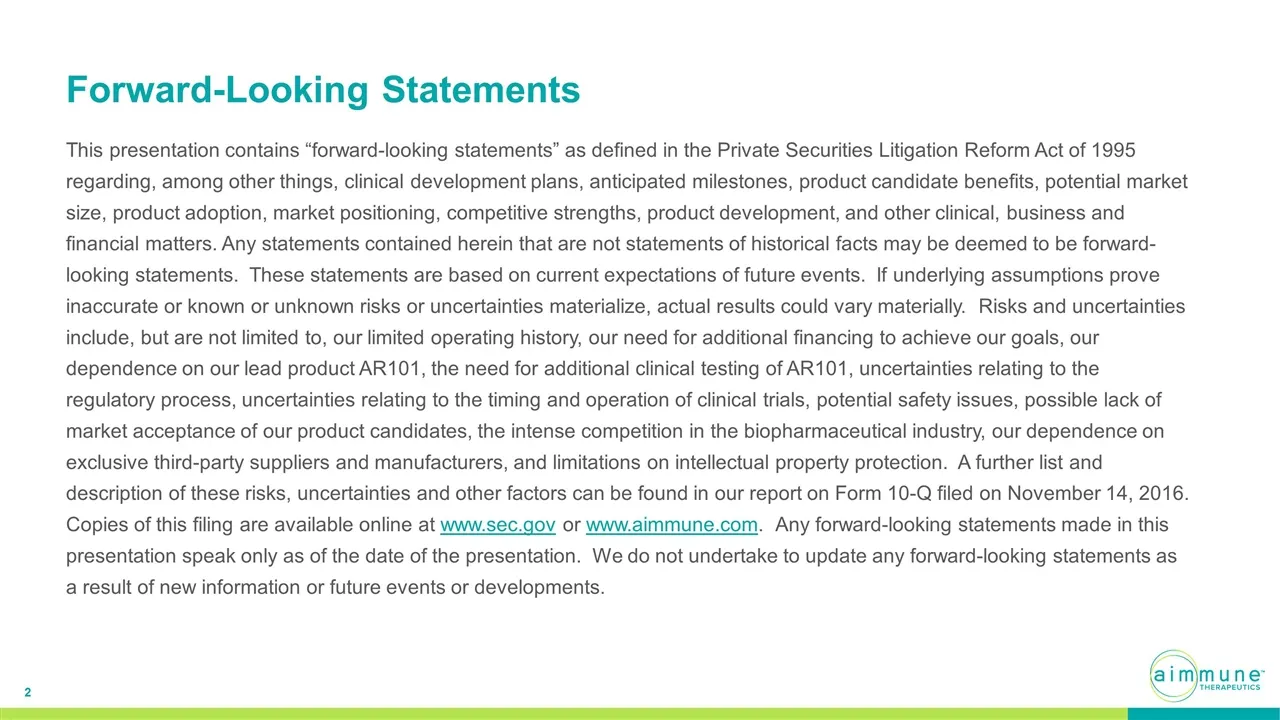
Slide 2: Forward-Looking Statements
Forward-Looking Statements This presentation contains “forward-looking statements” as defined in the Private Securities Litigation Reform Act of 1995 regarding, among other things, clinical development plans, anticipated milestones, product candidate benefits, potential market size, product adoption
Slide 3: Aimmune Therapeutics Today
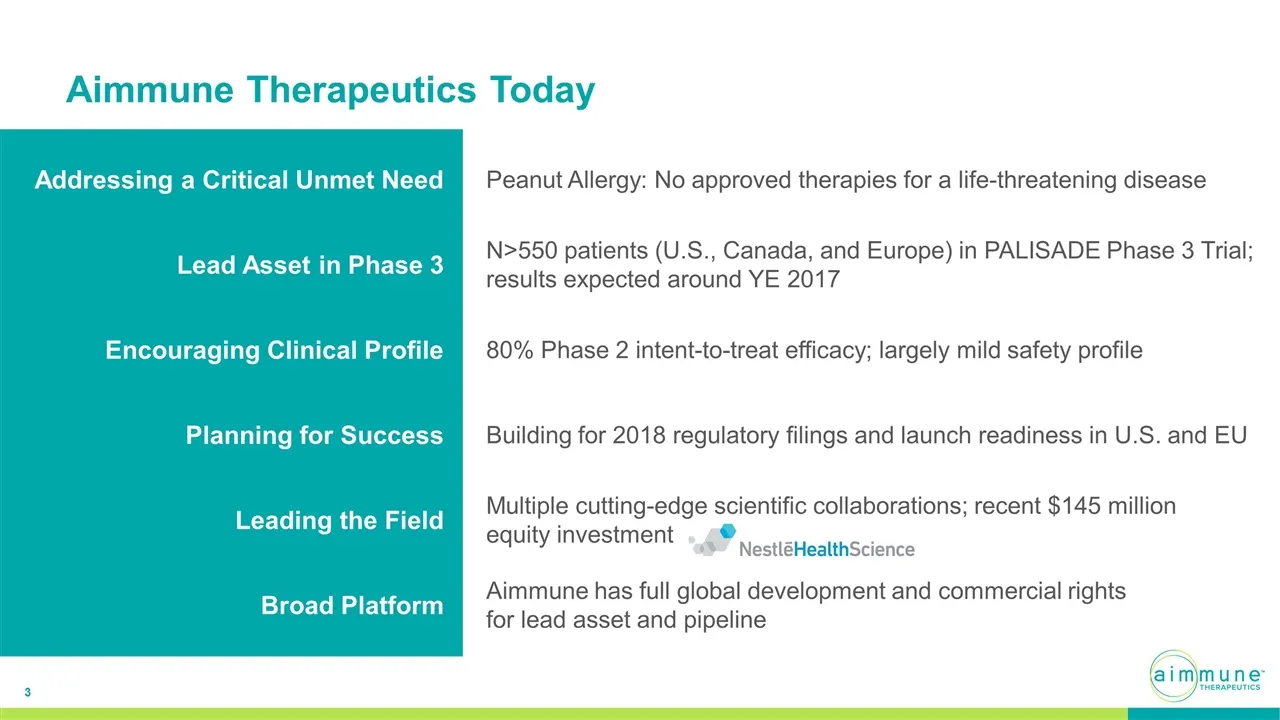
Aimmune Therapeutics Today Addressing a Critical Unmet Need Peanut Allergy: No approved therapies for a life-threatening disease Planning for Success Building for 2018 regulatory filings and launch readiness in U.S. and EU Broad Platform Aimmune has full global development and commercial rights for
Slide 4: IgE-Mediated Hypersensitivity (IMH) to Food Allergens
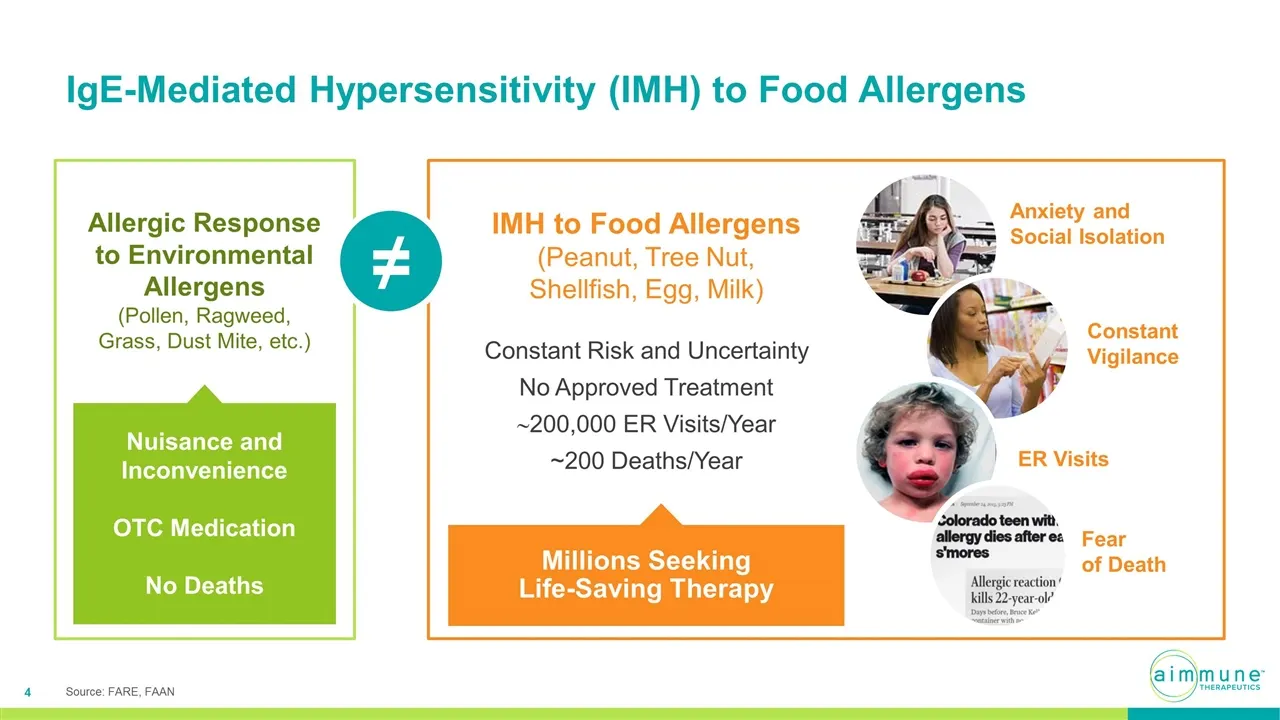
IgE-Mediated Hypersensitivity (IMH) to Food Allergens IMH to Food Allergens (Peanut, Tree Nut, Shellfish, Egg, Milk) Constant Risk and Uncertainty No Approved Treatment ~200,000 ER Visits/Year ~200 Deaths/Year Millions Seeking Life-Saving Therapy Anxiety and Social Isolation Constant Vigilance ER Vi
Slide 5: Prevalence in U.S. and EU5
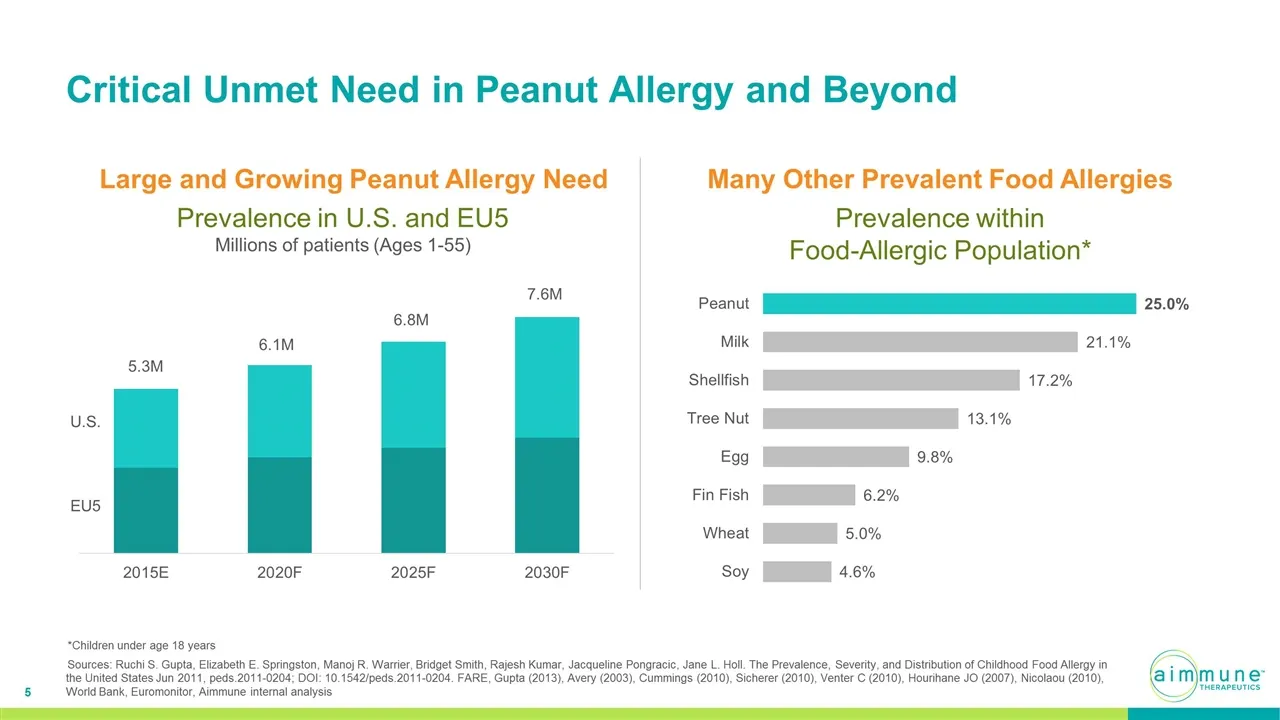
Prevalence in U.S. and EU5 Millions of patients (Ages 1-55) Large and Growing Peanut Allergy Need U.S. EU5 5.3M 6.1M 6.8M 7.6M Critical Unmet Need in Peanut Allergy and Beyond Prevalence within Food-Allergic Population* Many Other Prevalent Food Allergies *Children under age 18 years Sources: Ruchi
Slide 6: OIT: Highest Immunotherapy Efficacy for Peanut Allergy
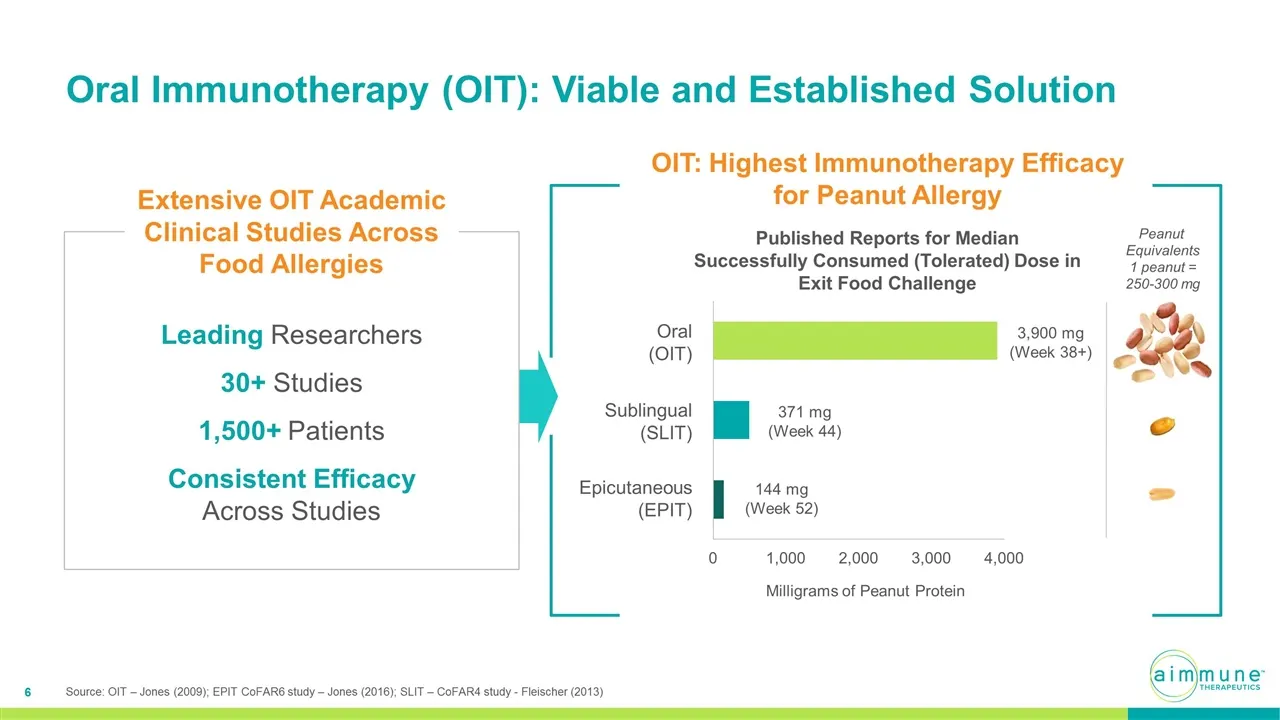
OIT: Highest Immunotherapy Efficacy for Peanut Allergy Published Reports for Median Successfully Consumed (Tolerated) Dose in Exit Food Challenge 144 mg (Week 52) 371 mg (Week 44) 3,900 mg (Week 38+) Epicutaneous (EPIT) Sublingual (SLIT) Oral (OIT) Milligrams of Peanut Protein Oral Immunotherapy (OI
Slide 7: Our Solution for Peanut Allergies
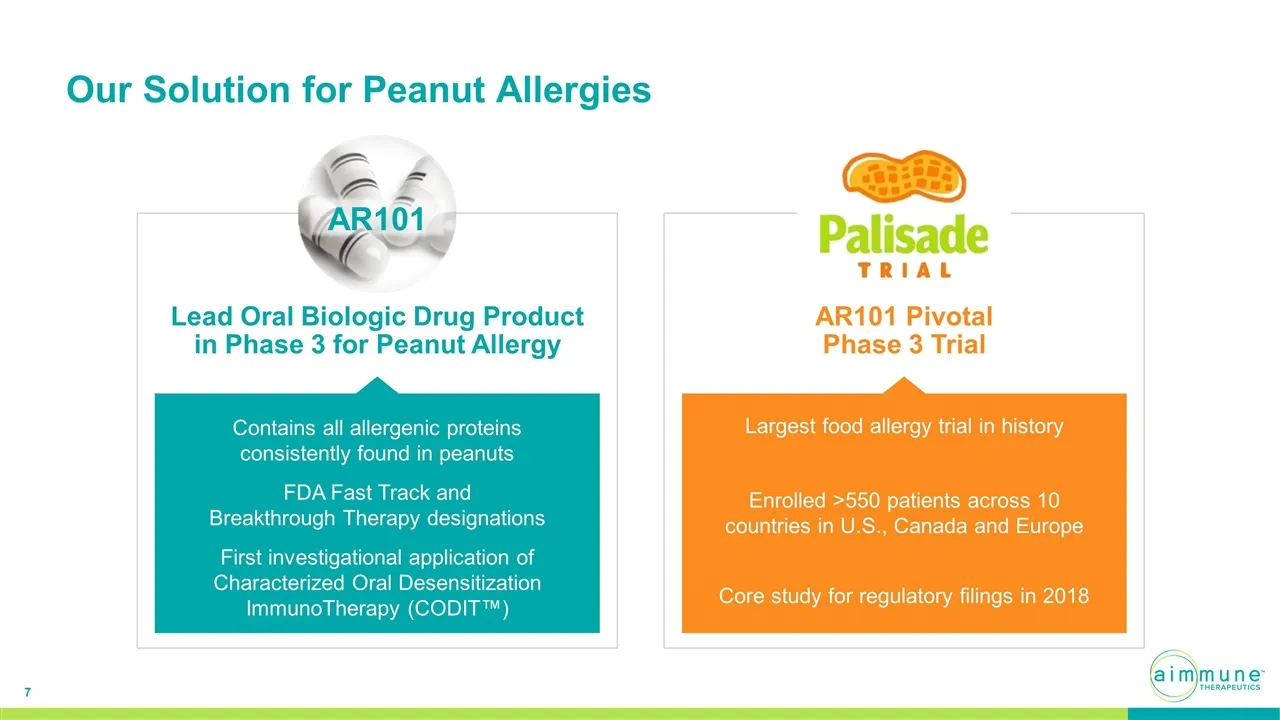
Our Solution for Peanut Allergies AR101 Pivotal Phase 3 Trial Largest food allergy trial in history Enrolled >550 patients across 10 countries in U.S., Canada and Europe Core study for regulatory filings in 2018 Lead Oral Biologic Drug Product in Phase 3 for Peanut Allergy Contains all allergenic pr
Slide 8: CODIT Approach
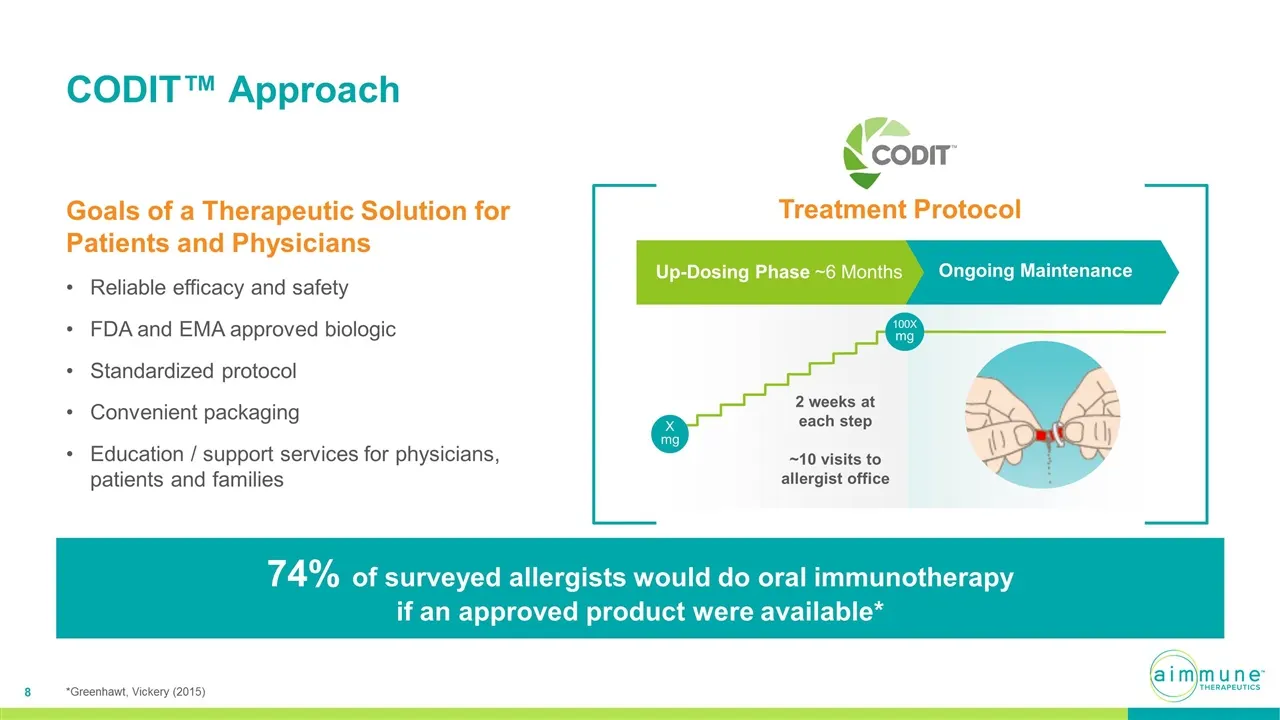
CODIT™ Approach Goals of a Therapeutic Solution for Patients and Physicians Reliable efficacy and safety FDA and EMA approved biologic Standardized protocol Convenient packaging Education / support services for physicians, patients and families 74% of surveyed allergists would do oral immunotherapy
Slide 9: Understanding the Clinical Trial Endpoint: Tolerated Dose
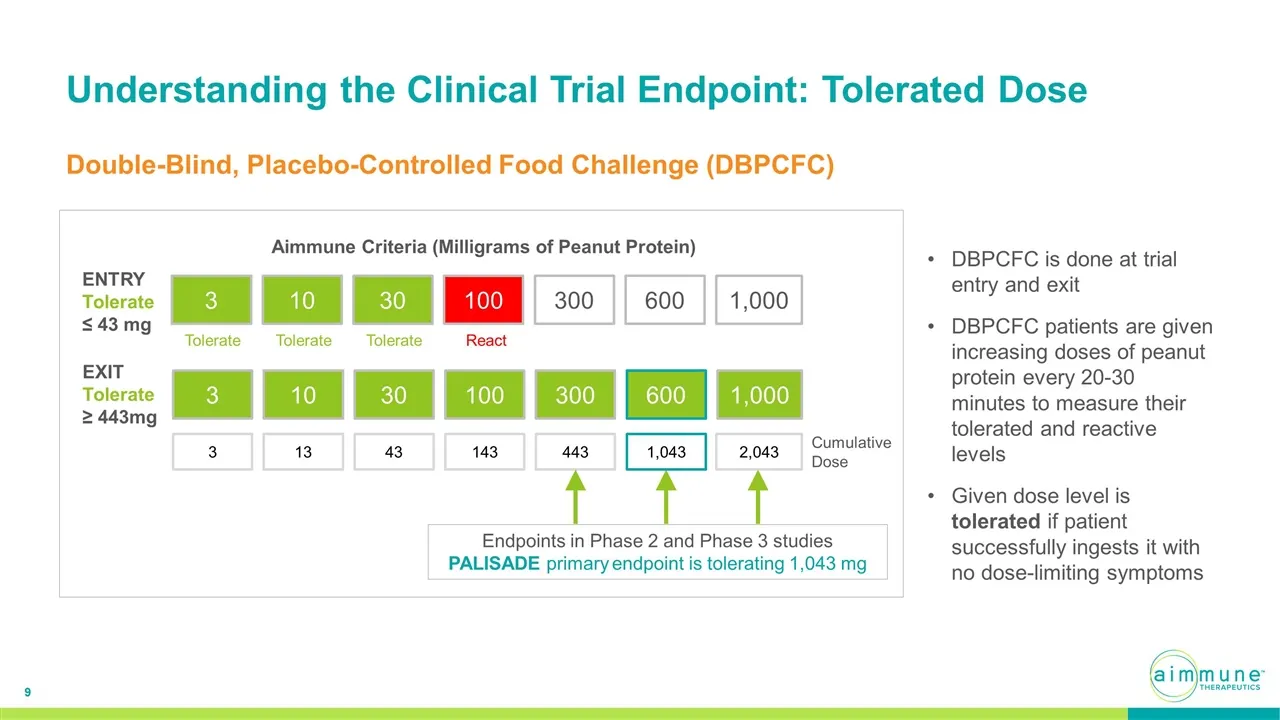
Understanding the Clinical Trial Endpoint: Tolerated Dose Aimmune Criteria (Milligrams of Peanut Protein) ENTRY Tolerate ≤ 43 mg EXIT Tolerate ≥ 443mg 3 3 10 13 30 43 100 143 300 443 600 1,043 3 10 30 100 300 600 1,000 1,000 2,043 Cumulative Dose Endpoints in Phase 2 and Phase 3 studies PALISADE pri
Slide 10: AR101 Phase 2 Data: Level of Protection at End of Up-Dosing
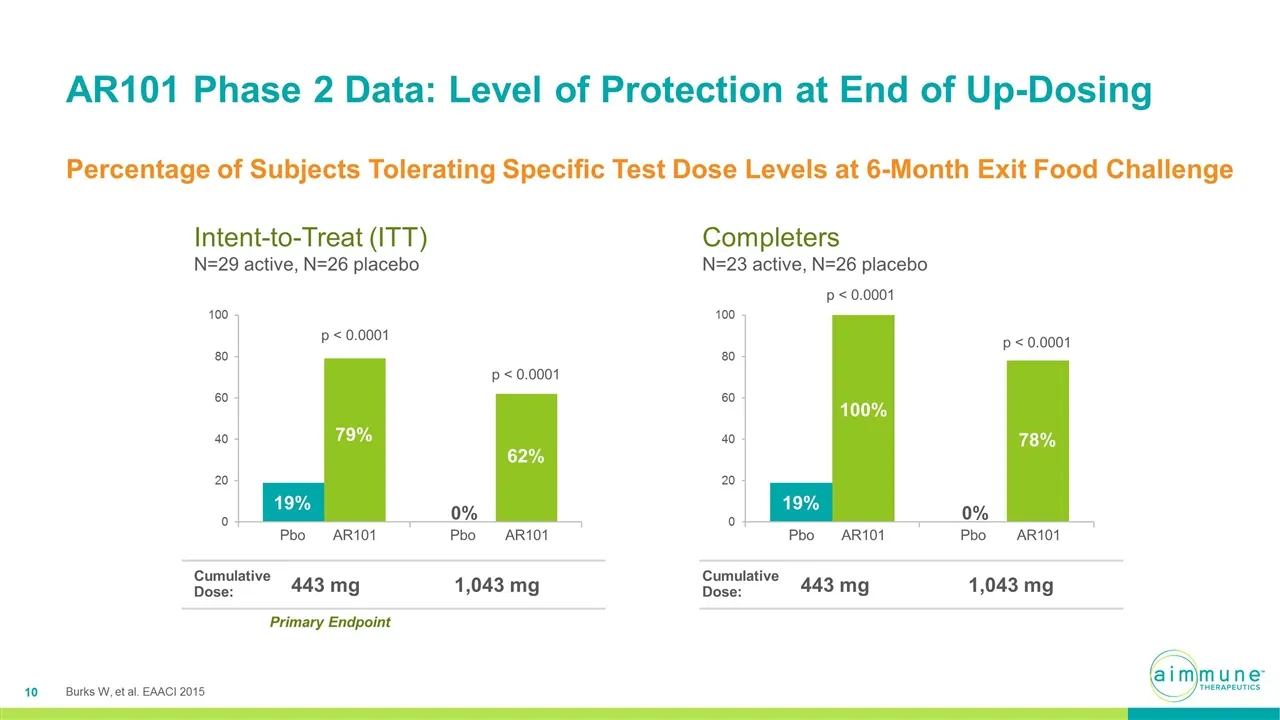
AR101 Phase 2 Data: Level of Protection at End of Up-Dosing Percentage of Subjects Tolerating Specific Test Dose Levels at 6-Month Exit Food Challenge Pbo AR101 Pbo AR101 Pbo AR101 Pbo AR101 p < 0.0001 p < 0.0001 p < 0.0001 p < 0.0001 Intent-to-Treat (ITT) N=29 active, N=26 placebo Completers N=23 a
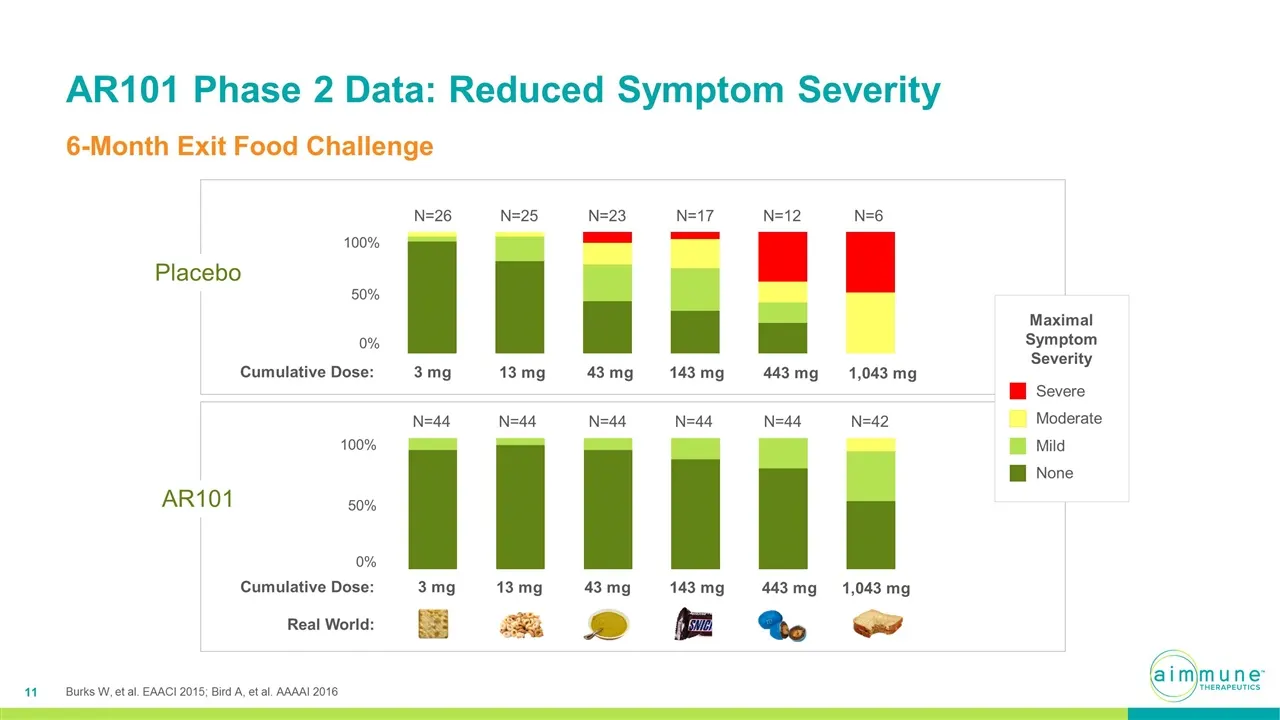
Slide 11: AR101 Phase 2 Data: Reduced Symptom Severity
AR101 Phase 2 Data: Reduced Symptom Severity 6-Month Exit Food Challenge N=23 N=12 N=17 N=26 N=6 N=25 N=44 N=44 N=44 N=44 N=42 N=44 3 mg 13 mg 1,043 mg 43 mg 143 mg 443 mg 50% 50% 0% 0% 3 mg 13 mg 1,043 mg 43 mg 143 mg 443 mg Real World: Cumulative Dose: Cumulative Dose: Placebo AR101 Severe Moderat
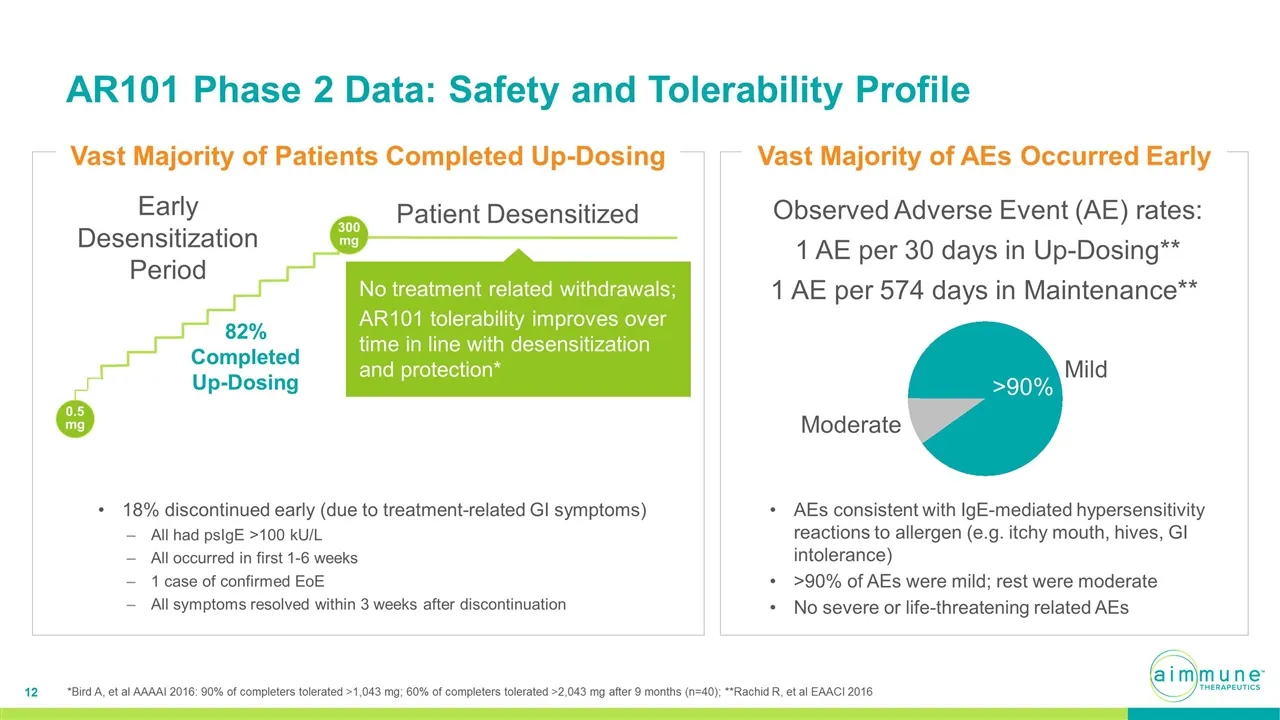
Slide 12: AR101 Phase 2 Data: Safety and Tolerability Profile
AR101 Phase 2 Data: Safety and Tolerability Profile Observed Adverse Event (AE) rates: 1 AE per 30 days in Up-Dosing** 1 AE per 574 days in Maintenance** AEs consistent with IgE-mediated hypersensitivity reactions to allergen (e.g. itchy mouth, hives, GI intolerance) >90% of AEs were mild; rest were
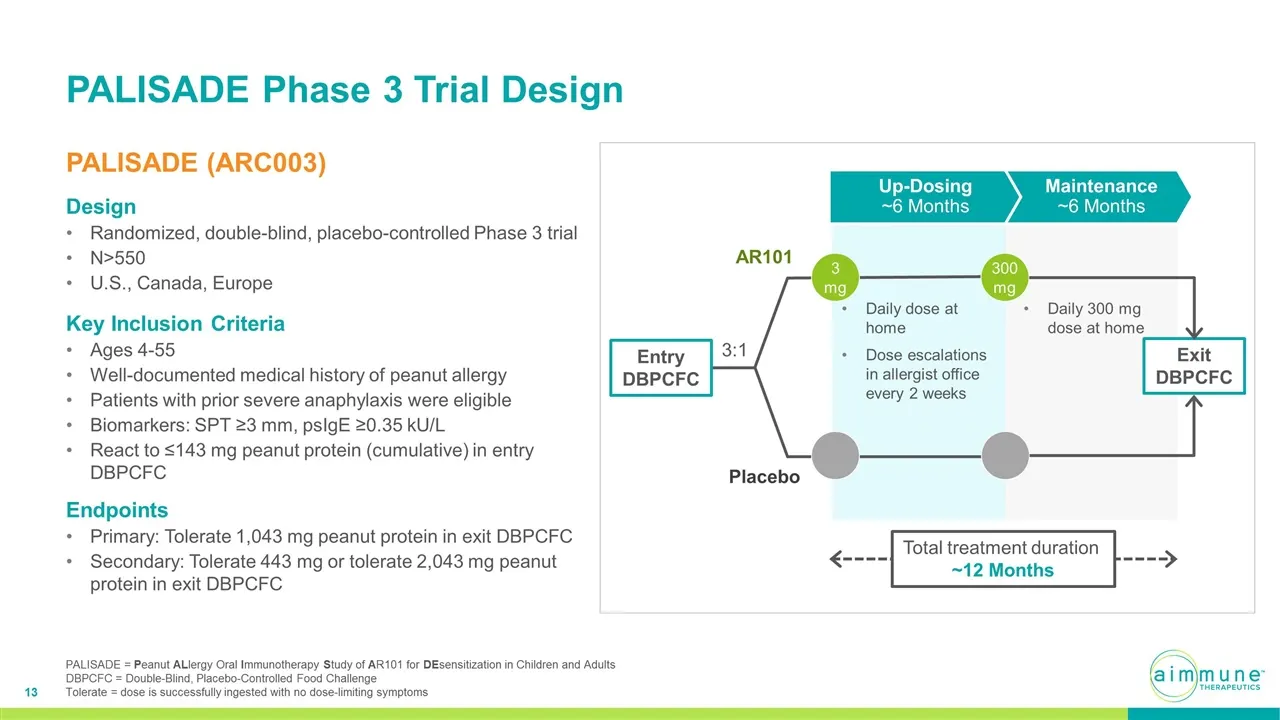
Slide 13: PALISADE Phase 3 Trial Design
PALISADE Phase 3 Trial Design PALISADE (ARC003) Design Randomized, double-blind, placebo-controlled Phase 3 trial N>550 U.S., Canada, Europe AR101 Placebo 3:1 3 mg 300 mg Daily dose at home Dose escalations in allergist office every 2 weeks Maintenance ~6 Months Up-Dosing ~6 Months Daily 300 mg dose
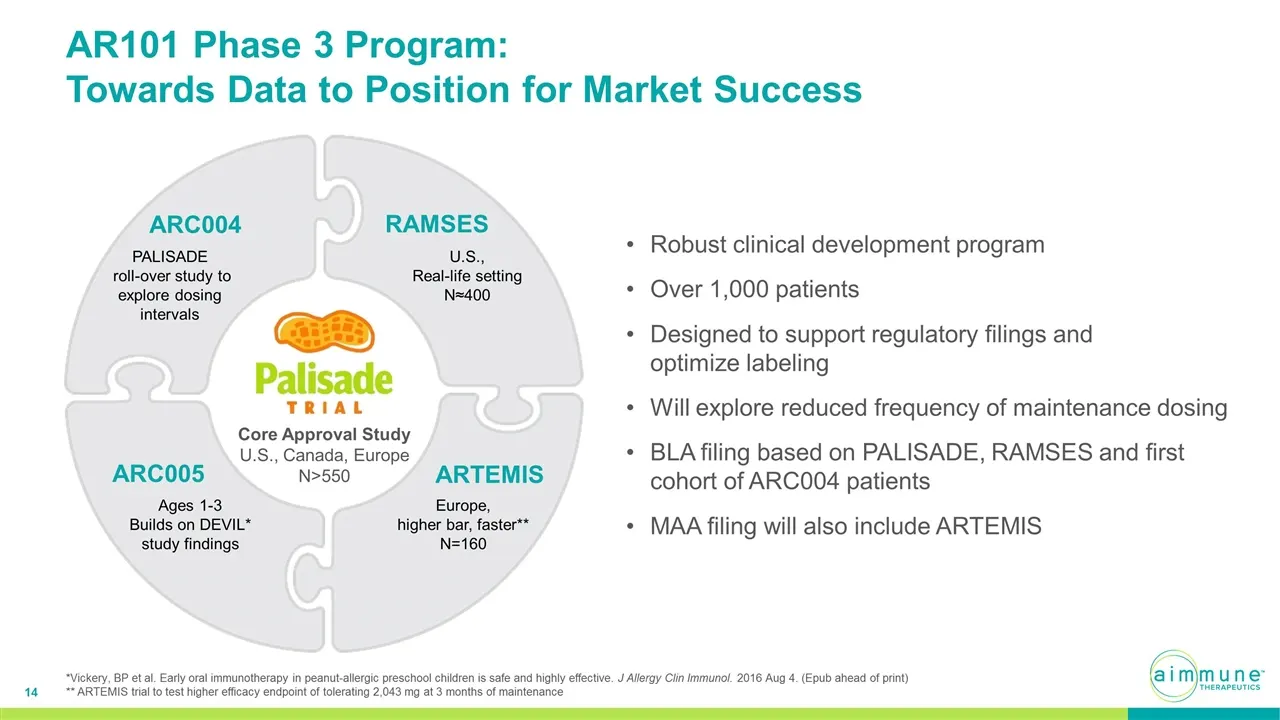
Slide 14: AR101 Phase 3 Program: Towards Data to Position for Market Success
AR101 Phase 3 Program: Towards Data to Position for Market Success Robust clinical development program Over 1,000 patients Designed to support regulatory filings and optimize labeling Will explore reduced frequency of maintenance dosing BLA filing based on PALISADE, RAMSES and first cohort of ARC004
Slide 15: What Patients and Physicians Want in a Peanut Allergy Treatment
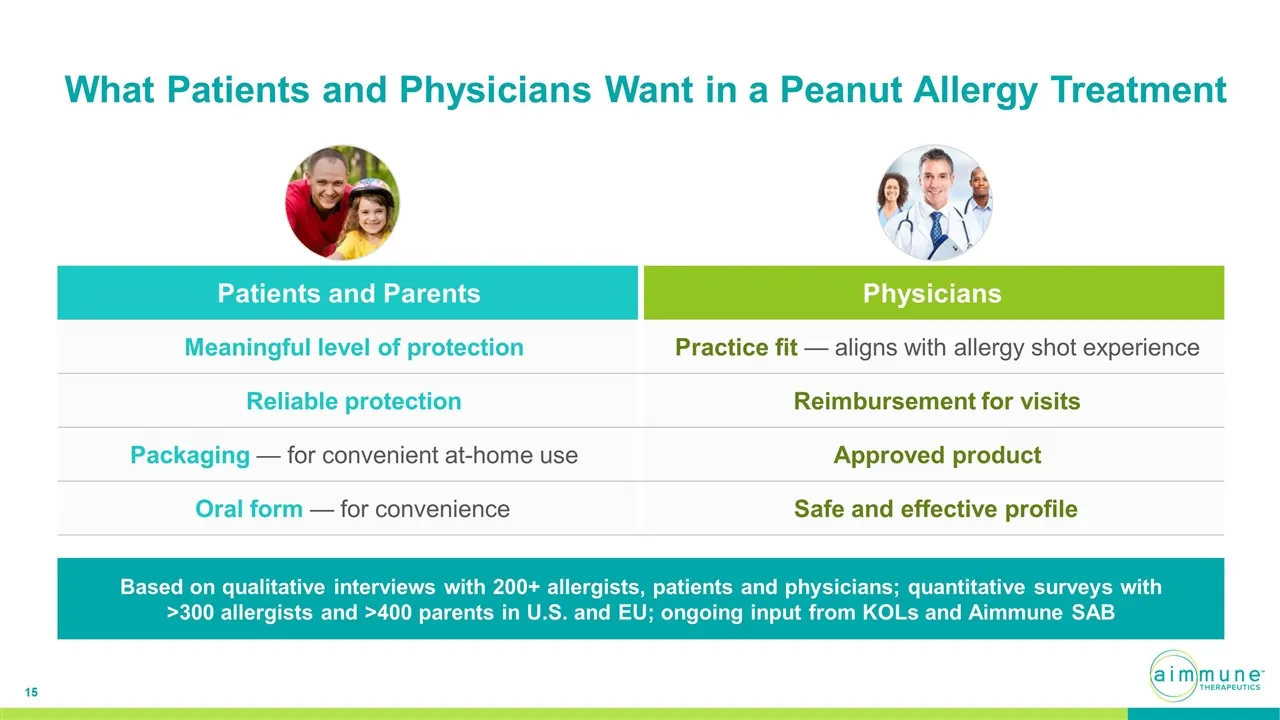
What Patients and Physicians Want in a Peanut Allergy Treatment Based on qualitative interviews with 200+ allergists, patients and physicians; quantitative surveys with >300 allergists and >400 parents in U.S. and EU; ongoing input from KOLs and Aimmune SAB Patients and Parents Physicians Meaningful
Slide 16: Preparing for Successful Commercial Launch of AR101
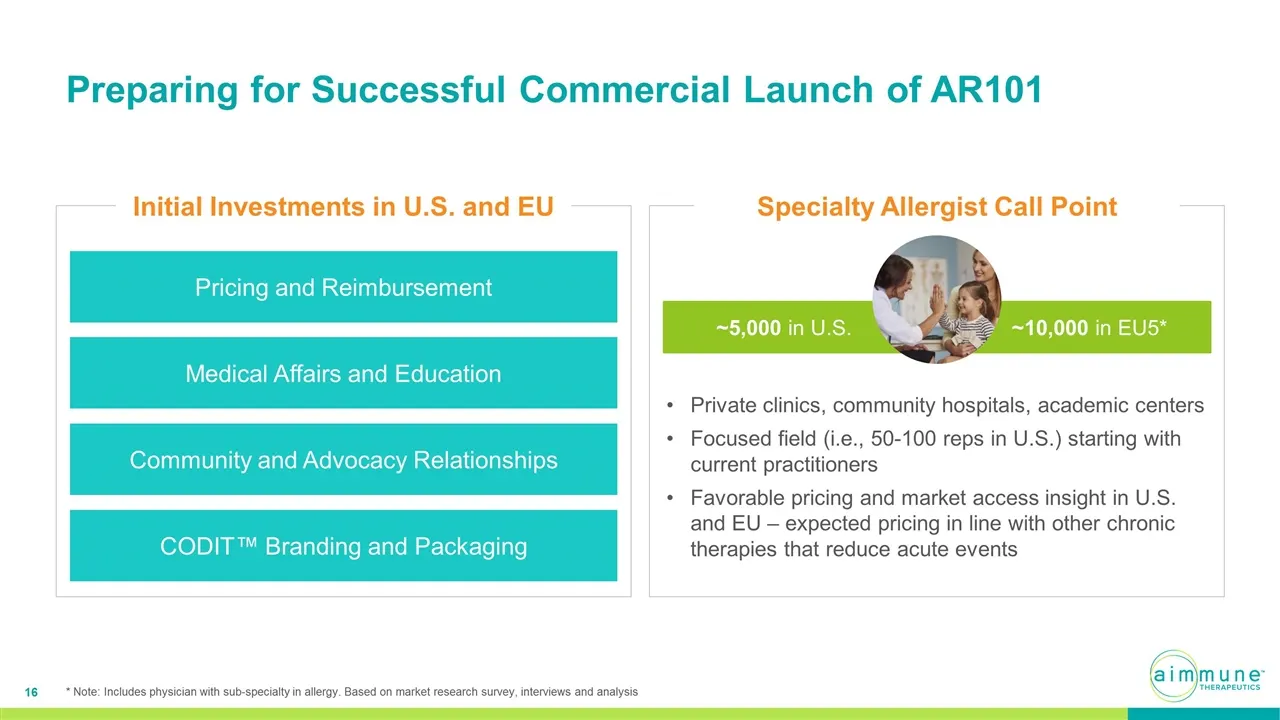
Preparing for Successful Commercial Launch of AR101 Initial Investments in U.S. and EU Pricing and Reimbursement Medical Affairs and Education Community and Advocacy Relationships CODIT™ Branding and Packaging Specialty Allergist Call Point Private clinics, community hospitals, academic centers Focu
Slide 17: Practice Capacity Can Meet Large Demand for AR101 Over Time
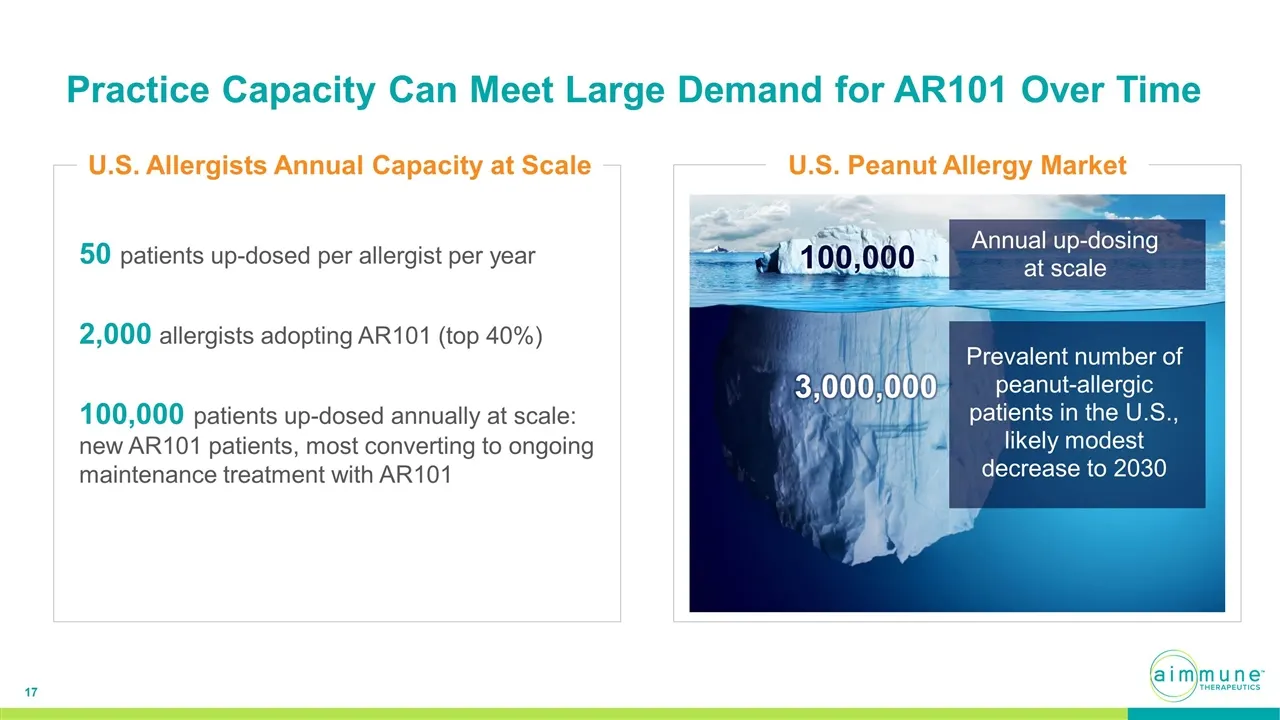
Practice Capacity Can Meet Large Demand for AR101 Over Time 50 patients up-dosed per allergist per year 2,000 allergists adopting AR101 (top 40%) 100,000 patients up-dosed annually at scale: new AR101 patients, most converting to ongoing maintenance treatment with AR101 U.S. Allergists Annual Capaci
Slide 18: Delivered and Future AR101 Milestones
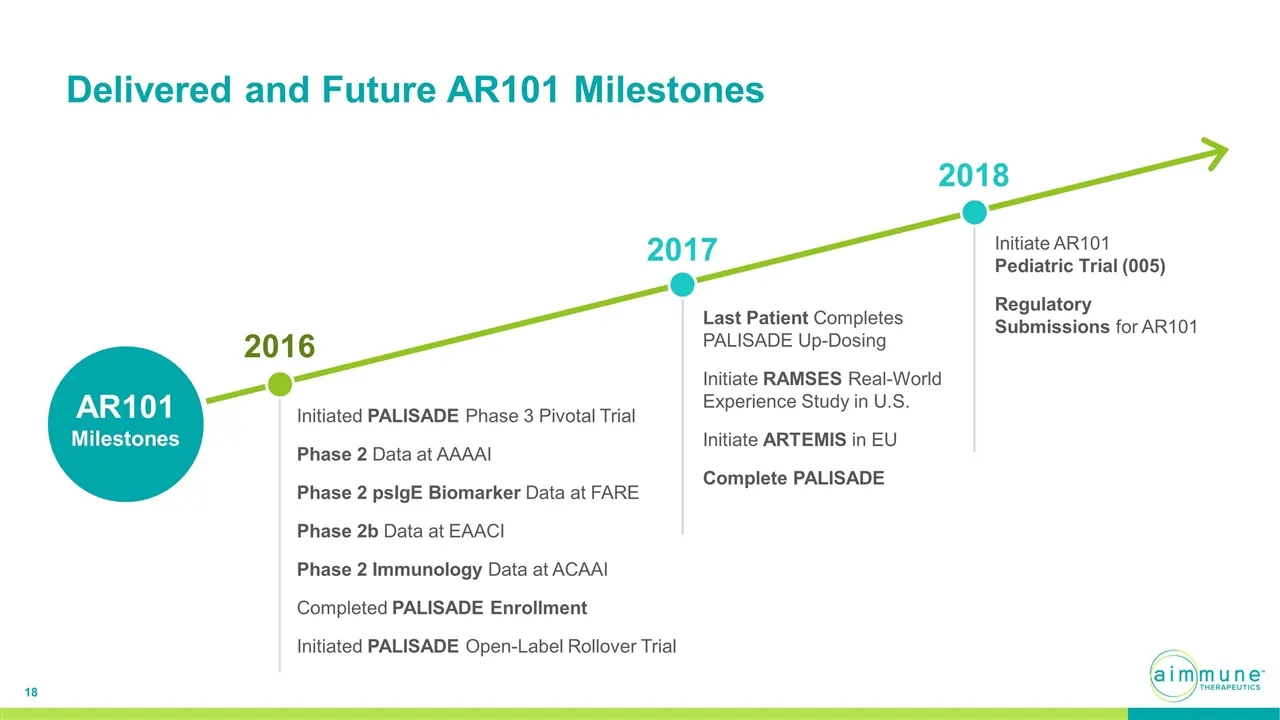
Delivered and Future AR101 Milestones AR101 Milestones 2016 Initiated PALISADE Phase 3 Pivotal Trial Phase 2 Data at AAAAI Phase 2 psIgE Biomarker Data at FARE Phase 2b Data at EAACI Phase 2 Immunology Data at ACAAI Completed PALISADE Enrollment Initiated PALISADE Open-Label Rollover Trial 2017 Last
Slide 19: Collaboration with Nestlé Health Science
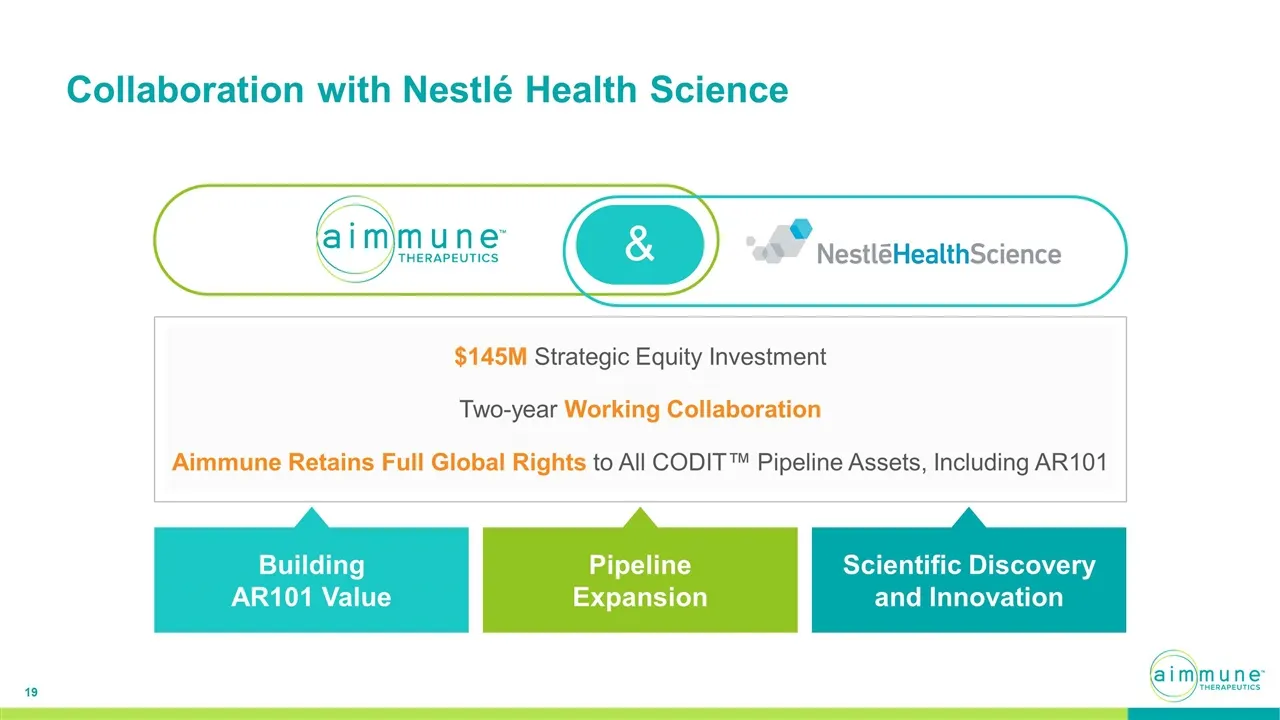
Collaboration with Nestlé Health Science Building AR101 Value Pipeline Expansion Scientific Discovery and Innovation $145M Strategic Equity Investment Two-year Working Collaboration Aimmune Retains Full Global Rights to All CODIT™ Pipeline Assets, Including AR101 &
Slide 20: Expanding CODIT to Other Major Food Allergies
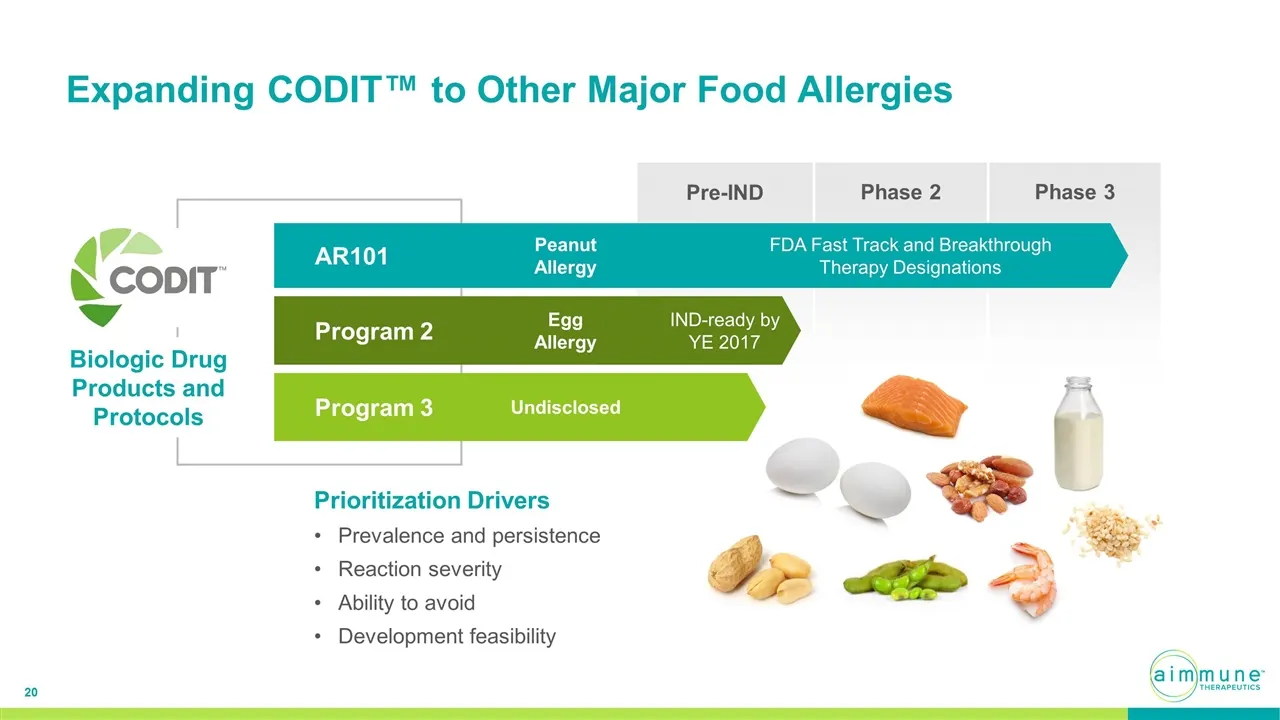
Expanding CODIT™ to Other Major Food Allergies Pre-IND Phase 2 Phase 3 Prioritization Drivers Prevalence and persistence Reaction severity Ability to avoid Development feasibility AR101 Peanut Allergy FDA Fast Track and Breakthrough Therapy Designations Program 3 Undisclosed Program 2 Egg Allergy IN
Slide 21: 2017 Will Be an Exciting Year for Aimmune
2017 Will Be an Exciting Year for Aimmune Well capitalized with ~$300M* in cash to support clinical development and regulatory filings Phase 3 PALISADE results expected around year-end Strategic collaborations with Nestlé Health Science and others to advance food allergy field Aimmune has full globa

Slide 22: Aimmune Therapeutics: Less risk. More life.
a mune \ /] THERAPEUTICS Less risk. More life.
Source: SEC EDGAR · 8-K filed Jan 9, 2017