Blueprint Medicines — 2019 ASCO Annual Meeting
45 slides from Blueprint Medicines's conference presentation, Jun 4, 2019

Slide 1: Advances in Precision Oncology: BLU-667 data review and portfolio update
Diane Legg, founder of LUNGSTRONG visits Blueprint Medicines in June 2018 Advances in Precision Oncology: BLU-667 data review and portfolio update June 3, 2019 2019 ASCO Annual Meeting
Slide 2: Forward-looking statements
Forward-looking statements 2 This presentation contains forward-looking statements as defined in the Private Securities Litigation Reform Act of 1995, as amended. The words “may,” “will,” “could,” “would,” “should,” “expect,” “plan,” “anticipate,” “intend,” “believe,” “estimate,” “predict,” “project
Slide 3: Agenda
Agenda Introduction and portfolio update Jeff Albers Chief Executive Officer BLU-667 clinical data review Benjamin Besse, M.D., Ph.D. Head of Cancer Medicine Department, Gustave Roussy Cancer Center BLU-667 program strategy Andy Boral, M.D., Ph.D. Chief Medical Officer Questions and answers All Clos
Slide 4: Precision therapies for people with cancer and rare diseases
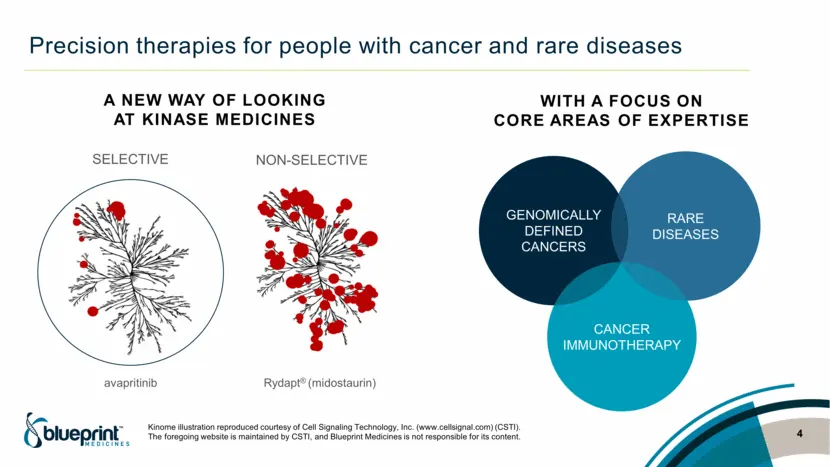
Precision therapies for people with cancer and rare diseases Kinome illustration reproduced courtesy of Cell Signaling Technology, Inc. (www.cellsignal.com) (CSTI). The foregoing website is maintained by CSTI, and Blueprint Medicines is not responsible for its content. 4 A new way of looking at kina
Slide 5: Our vision for building the leading precision therapy company
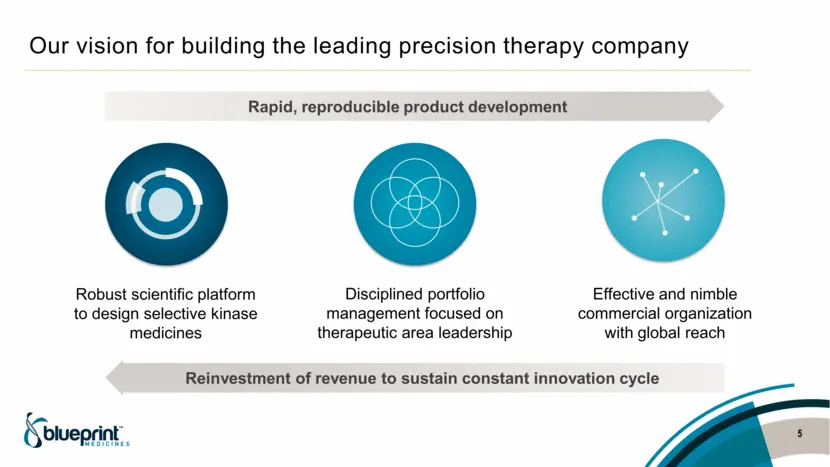
Our vision for building the leading precision therapy company 5 Robust scientific platform to design selective kinase medicines Disciplined portfolio management focused on therapeutic area leadership Effective and nimble commercial organization with global reach Rapid, reproducible product developme
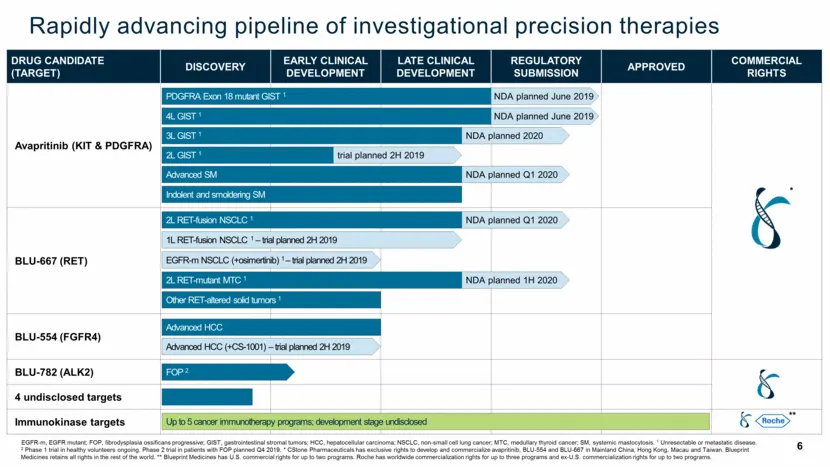
Slide 6: Rapidly advancing pipeline of investigational precision therapies
DRUG CANDIDATE (TARGET) DISCOVERY EARLY CLINICAL DEVELOPMENT LATE CLINICAL DEVELOPMENT REGULATORY SUBMISSION APPROVED COMMERCIAL RIGHTS Avapritinib (KIT & PDGFRA) BLU-667 (RET) BLU-554 (FGFR4) BLU-782 (ALK2) 4 undisclosed targets Immunokinase targets Rapidly advancing pipeline of investigational pre
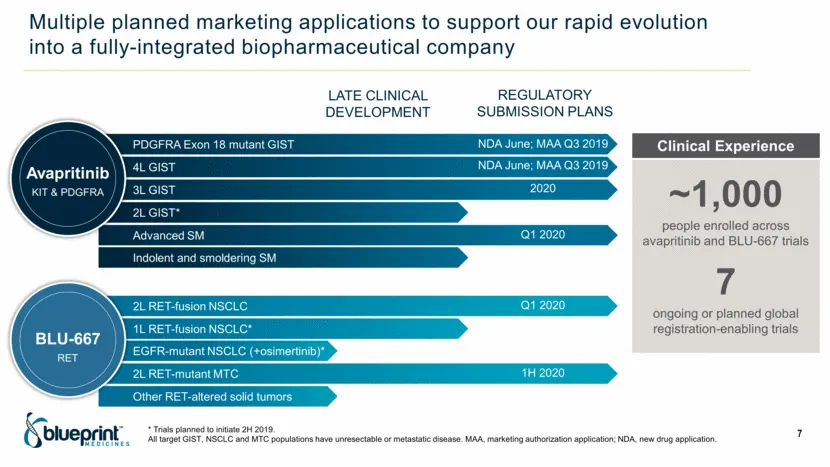
Slide 7: Multiple planned marketing applications
EGFR-mutant NSCLC (+osimertinib)* 3L GIST 4L GIST PDGFRA Exon 18 mutant GIST Multiple planned marketing applications to support our rapid evolution into a fully-integrated biopharmaceutical company * Trials planned to initiate 2H 2019. All target GIST, NSCLC and MTC populations have unresectable or
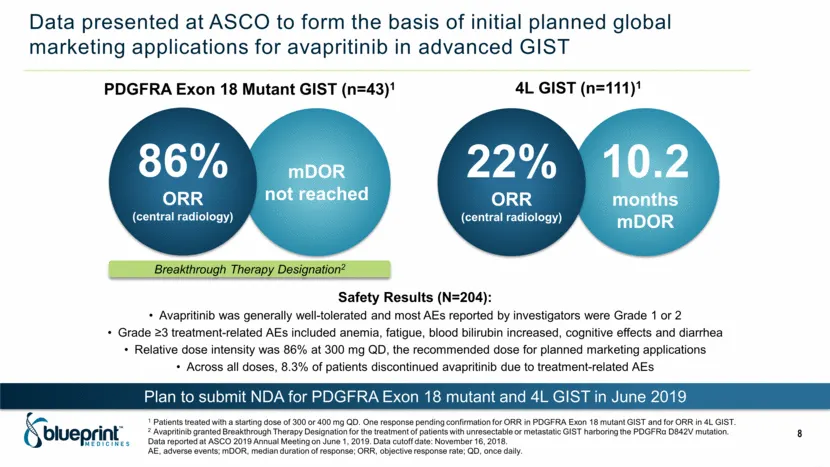
Slide 8: Avapritinib data in advanced GIST
Data presented at ASCO to form the basis of initial planned global marketing applications for avapritinib in advanced GIST mDOR not reached 10.2 months mDOR PDGFRA Exon 18 Mutant GIST (n=43)1 4L GIST (n=111)1 Breakthrough Therapy Designation2 Safety Results (N=204): Avapritinib was generally well-to
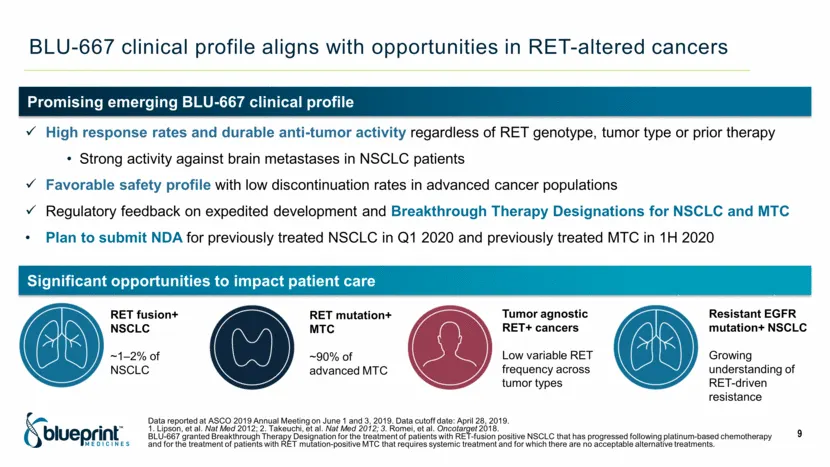
Slide 9: BLU-667 clinical profile aligns with opportunities in RET-altered cancers
BLU-667 clinical profile aligns with opportunities in RET-altered cancers 9 Promising emerging BLU-667 clinical profile High response rates and durable anti-tumor activity regardless of RET genotype, tumor type or prior therapy Strong activity against brain metastases in NSCLC patients Favorable saf

Slide 10: BLU-667 clinical data review
BLU-667 clinical data review Benjamin Besse, M.D., Ph.D. Gustave Roussy Cancer Center
Slide 11: ASCO abstracts for BLU-667
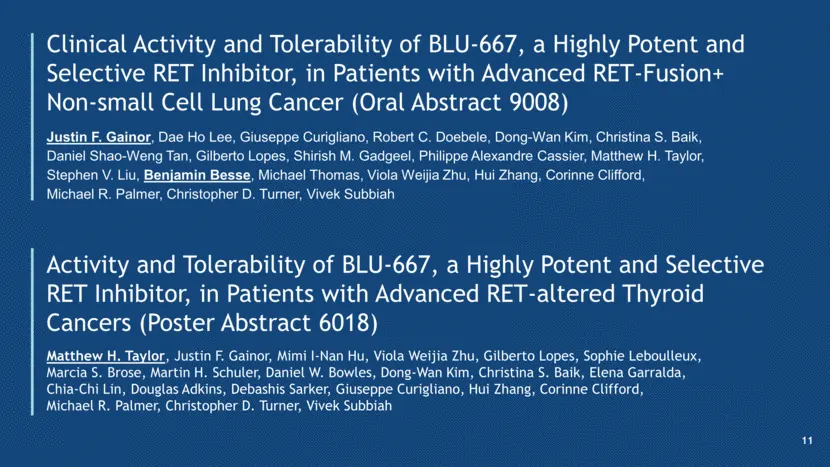
11 Clinical Activity and Tolerability of BLU-667, a Highly Potent and Selective RET Inhibitor, in Patients with Advanced RET-Fusion+ Non-small Cell Lung Cancer (Oral Abstract 9008) Justin F. Gainor, Dae Ho Lee, Giuseppe Curigliano, Robert C. Doebele, Dong-Wan Kim, Christina S. Baik, Daniel Shao-Weng
Slide 12: RET Alterations: Diverse Oncogenic Drivers Lacking Targeted Therapeutic Approach
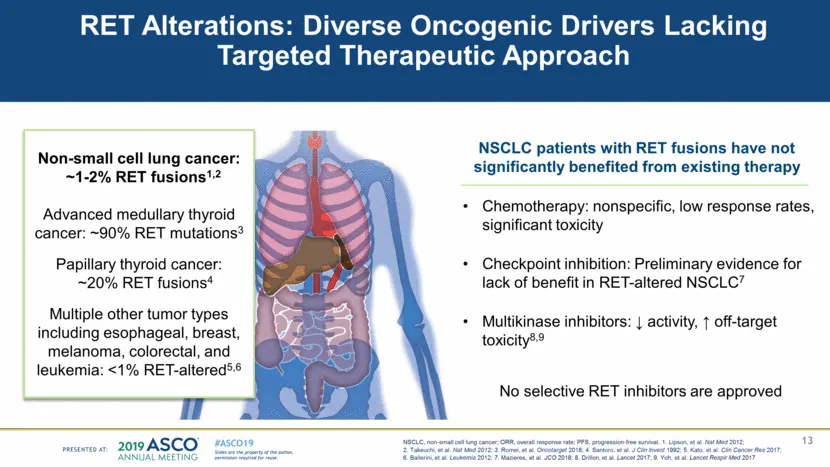
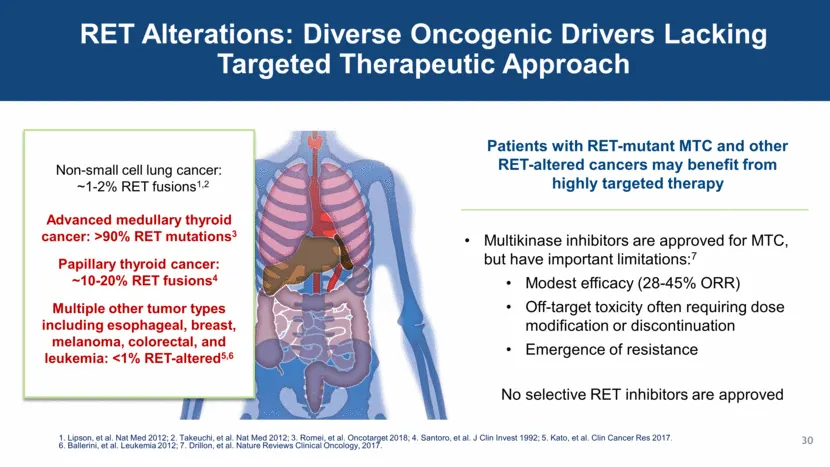
RET Alterations: Diverse Oncogenic Drivers Lacking Targeted Therapeutic Approach 13 Chemotherapy: nonspecific, low response rates, significant toxicity NSCLC patients with RET fusions have not significantly benefited from existing therapy Non-small cell lung cancer: ~1-2% RET fusions1,2 Advanced med
Slide 13: ARROW: BLU-667 Dose-Escalation and Expansion Study
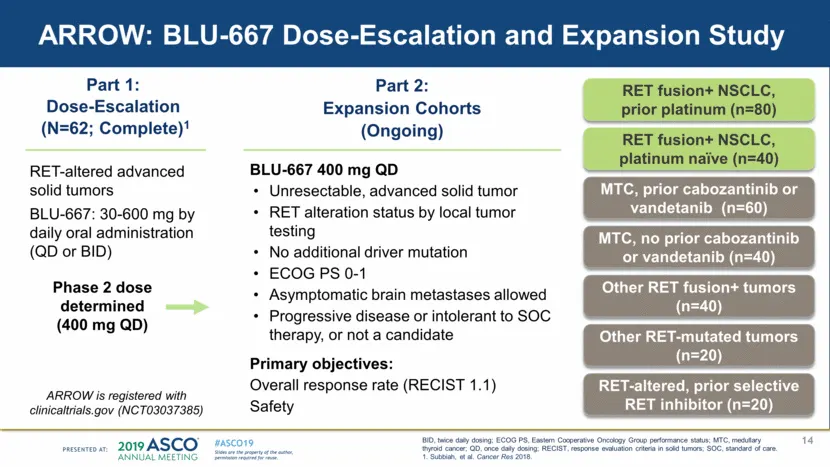
ARROW: BLU-667 Dose-Escalation and Expansion Study ARROW is registered with clinicaltrials.gov (NCT03037385) Part 1: Dose-Escalation (N=62; Complete)1 Phase 2 dose determined (400 mg QD) 14 BID, twice daily dosing; ECOG PS, Eastern Cooperative Oncology Group performance status; MTC, medullary thyroi
Slide 14: BLU-667 Demonstrates Substantial Antitumor Activity in RET Fusion+ Advanced NSCLC
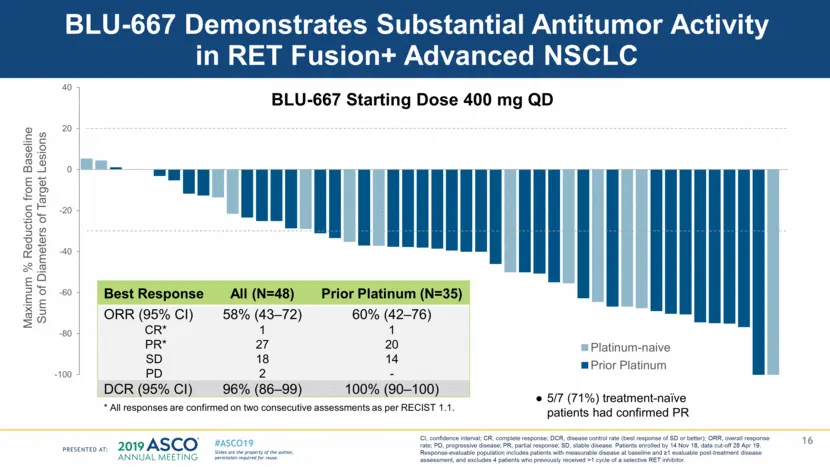
BLU-667 Demonstrates Substantial Antitumor Activity in RET Fusion+ Advanced NSCLC 16 CI, confidence interval; CR, complete response; DCR, disease control rate (best response of SD or better); ORR, overall response rate; PD, progressive disease; PR, partial response; SD, stable disease. Patients enro
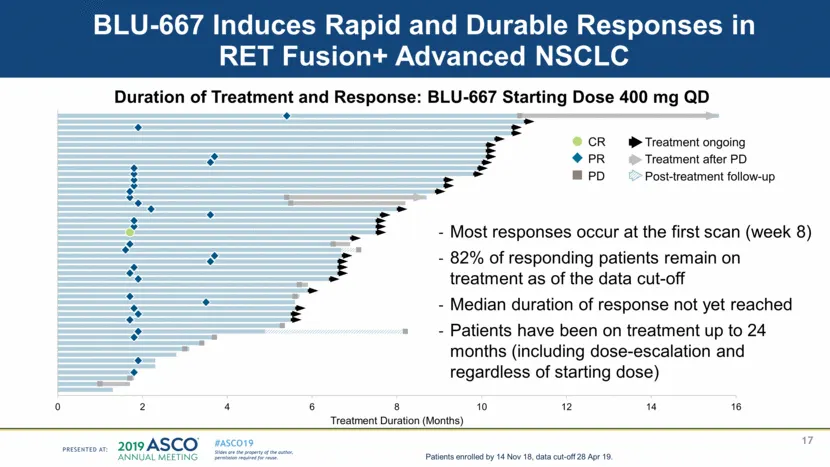
Slide 15: BLU-667 Induces Rapid and Durable Responses in RET Fusion+ Advanced NSCLC
BLU-667 Induces Rapid and Durable Responses in RET Fusion+ Advanced NSCLC 17 Patients enrolled by 14 Nov 18, data cut-off 28 Apr 19. Treatment ongoing Treatment after PD Post-treatment follow-up CR PR PD Most responses occur at the first scan (week 8) 82% of responding patients remain on treatment a
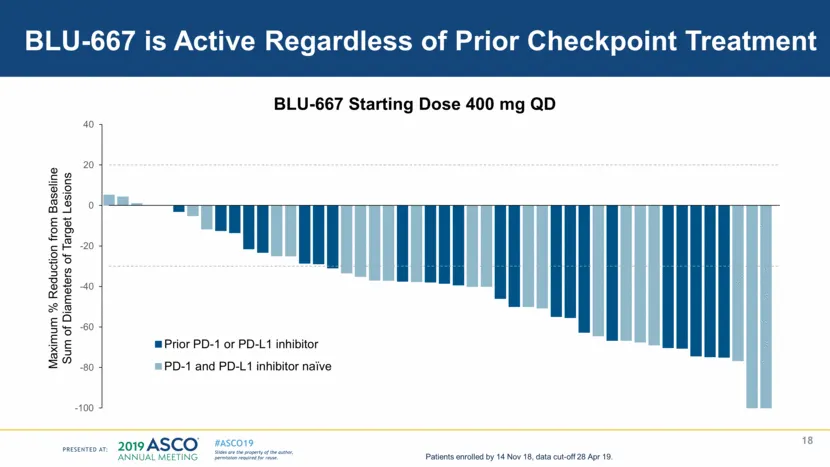
Slide 16: BLU-667 is Active Regardless of Prior Checkpoint Treatment
BLU-667 is Active Regardless of Prior Checkpoint Treatment 18 Patients enrolled by 14 Nov 18, data cut-off 28 Apr 19. -100 -80 -60 -40 -20 0 20 40 Maximum Reduction - Sum of Diameter Change from Baseline, % BLU - 667 Starting Dose 400 mg QD -100 -80 -60 -40 -20 0 20 40 Maximum % Reduction from Basel
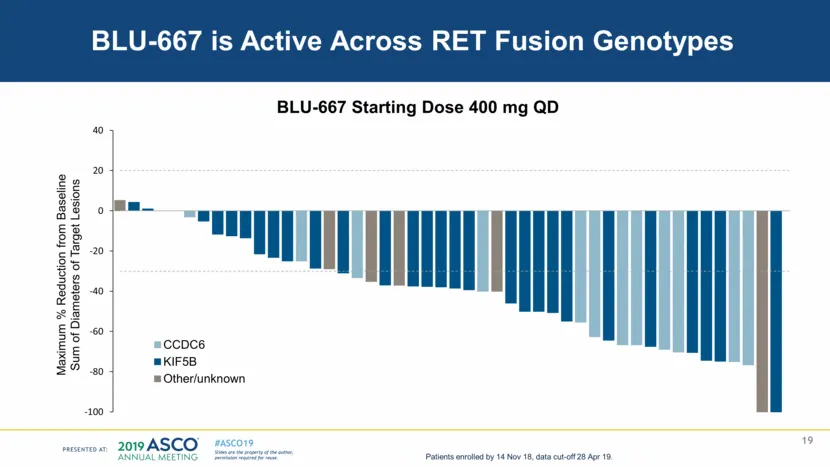
Slide 17: BLU-667 is Active Across RET Fusion Genotypes
BLU-667 is Active Across RET Fusion Genotypes 19 Patients enrolled by 14 Nov 18, data cut-off 28 Apr 19. -100 -80 -60 -40 -20 0 20 40 Maximum % Reduction from Baseline Sum of Diameters of Target Lesions BLU - 667 Starting Dose 400 mg QD CCDC6 KIF5B Other/unknown
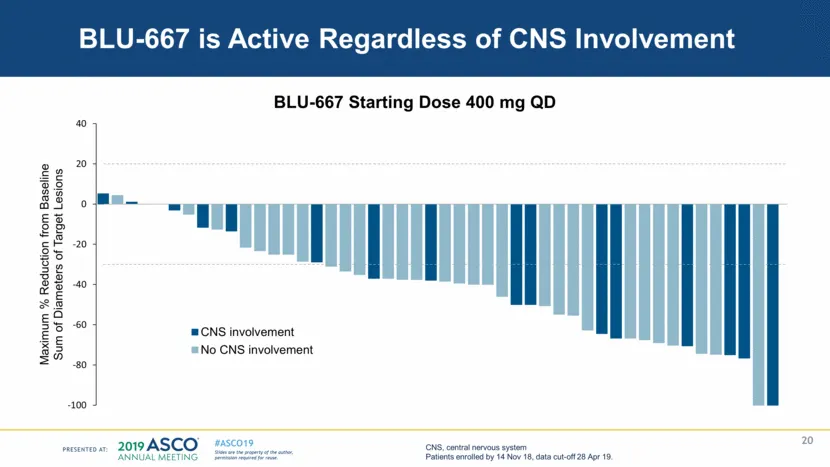
Slide 18: BLU-667 is Active Regardless of CNS Involvement
BLU-667 is Active Regardless of CNS Involvement 20 CNS, central nervous system Patients enrolled by 14 Nov 18, data cut-off 28 Apr 19. -100 -80 -60 -40 -20 0 20 40 Maximum % Reduction from Baseline Sum of Diameters of Target Lesions BLU - 667 Starting Dose 400 mg QD CNS involvement No CNS involvemen
Slide 19: BLU-667 is Active Against Intracranial Metastases
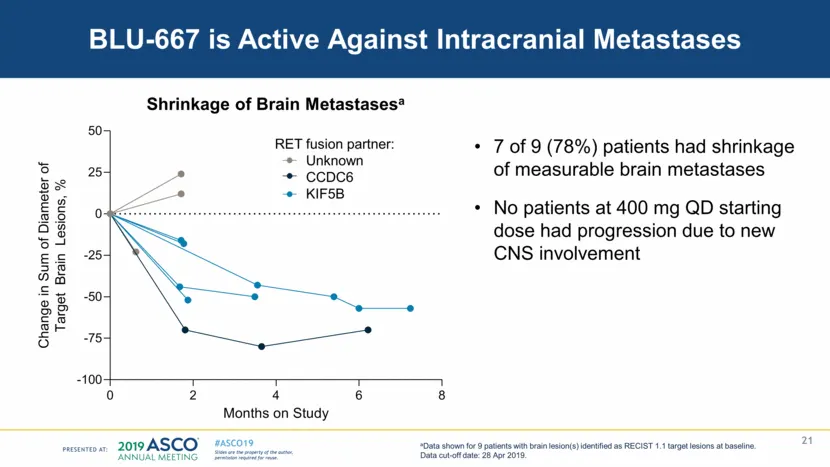
BLU-667 is Active Against Intracranial Metastases 7 of 9 (78%) patients had shrinkage of measurable brain metastases No patients at 400 mg QD starting dose had progression due to new CNS involvement 21 aData shown for 9 patients with brain lesion(s) identified as RECIST 1.1 target lesions at baselin
Slide 20: Brain metastases patient case
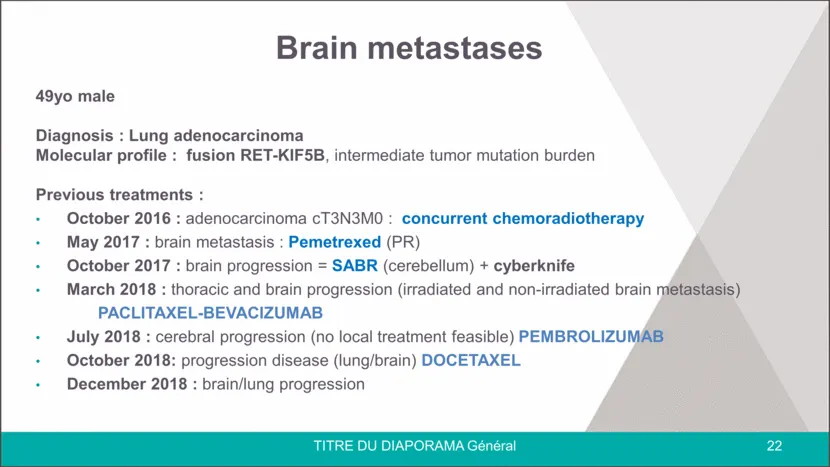
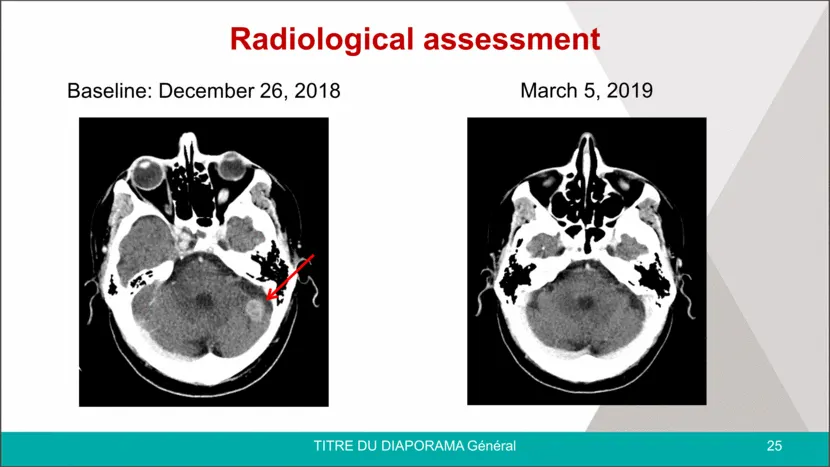
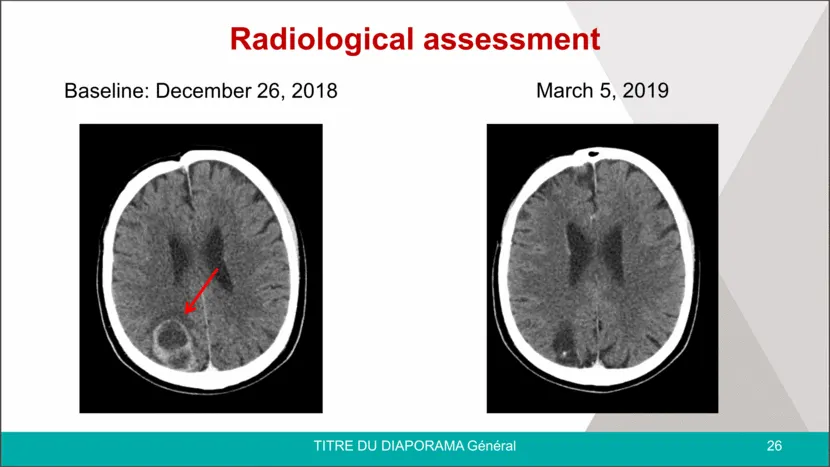
Brain metastases 49yo male Diagnosis : Lung adenocarcinoma Molecular profile : fusion RET-KIF5B, intermediate tumor mutation burden Previous treatments : October 2016 : adenocarcinoma cT3N3M0 : concurrent chemoradiotherapy May 2017 : brain metastasis : Pemetrexed (PR) October 2017 : brain progressio
Slide 21: Brain metastases
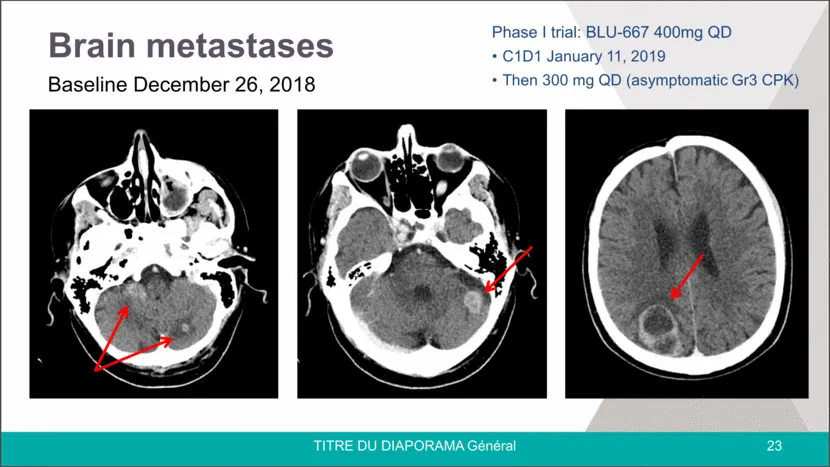
Brain metastases Baseline December 26, 2018 Phase I trial: BLU-667 400mg QD C1D1 January 11, 2019 Then 300 mg QD (asymptomatic Gr3 CPK) TITRE DU DIAPORAMA Général 23
Slide 22: Radiological assessment
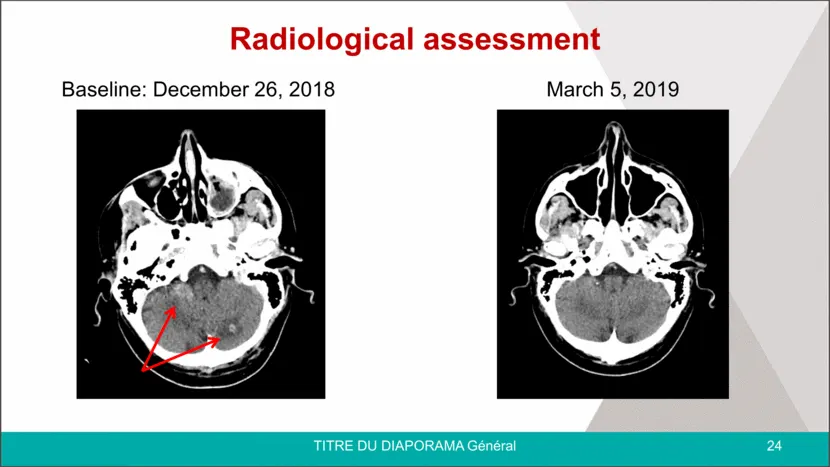
Radiological assessment Baseline: December 26, 2018 March 5, 2019 TITRE DU DIAPORAMA Général 24
Slide 23: Radiological assessment
Radiological assessment TITRE DU DIAPORAMA Général 25 Baseline: December 26, 2018 March 5, 2019
Slide 24: Radiological assessment
Radiological assessment TITRE DU DIAPORAMA Général 26 Baseline: December 26, 2018 March 5, 2019
Slide 25: BLU-667 is Well Tolerated by Patients with RET Fusion+ Advanced NSCLC
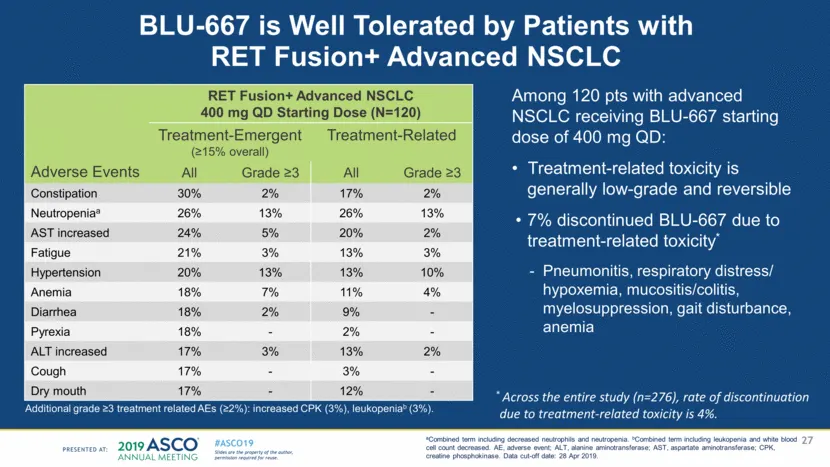
BLU-667 is Well Tolerated by Patients with RET Fusion+ Advanced NSCLC RET Fusion+ Advanced NSCLC 400 mg QD Starting Dose (N=120) Adverse Events Treatment-Emergent (≥15% overall) Treatment-Related All Grade ≥3 All Grade ≥3 Constipation 30% 2% 17% 2% Neutropeniaa 26% 13% 26% 13% AST increased 24% 5% 2
Slide 26: 2nd line TKI patient case
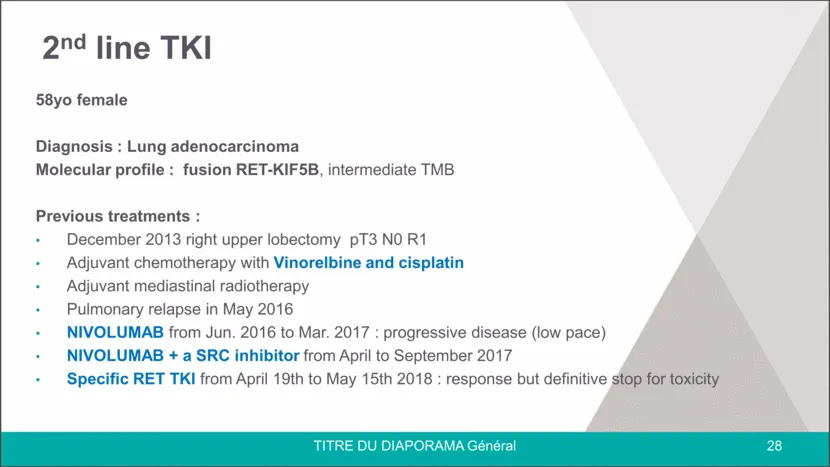
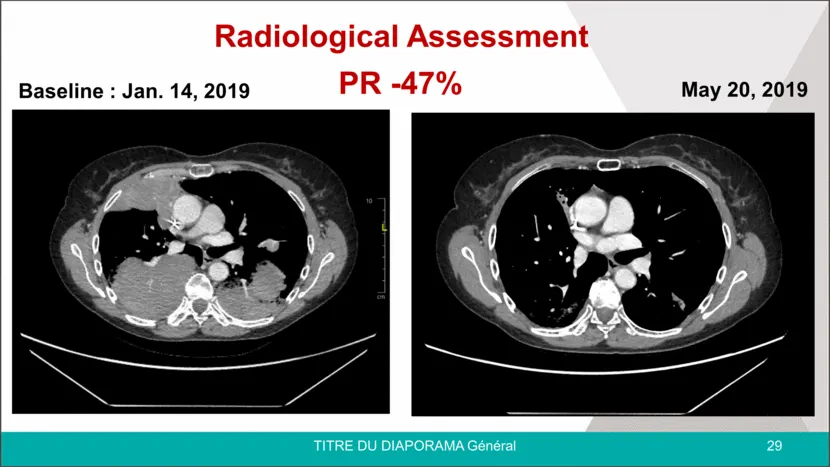
2nd line TKI 58yo female Diagnosis : Lung adenocarcinoma Molecular profile : fusion RET-KIF5B, intermediate TMB Previous treatments : December 2013 right upper lobectomy pT3 N0 R1 Adjuvant chemotherapy with Vinorelbine and cisplatin Adjuvant mediastinal radiotherapy Pulmonary relapse in May 2016 NIV
Slide 27: Radiological Assessment
Radiological Assessment TITRE DU DIAPORAMA Général 29 Baseline : Jan. 14, 2019 May 20, 2019 PR -47%
Slide 28: RET Alterations: Diverse Oncogenic Drivers Lacking Targeted Therapeutic Approach
RET Alterations: Diverse Oncogenic Drivers Lacking Targeted Therapeutic Approach 30 Patients with RET-mutant MTC and other RET-altered cancers may benefit from highly targeted therapy Multikinase inhibitors are approved for MTC, but have important limitations:7 Modest efficacy (28-45% ORR) Off-targe
Slide 29: Results: Advanced RET-Mutated MTC Antitumor Activity – Tumor Response
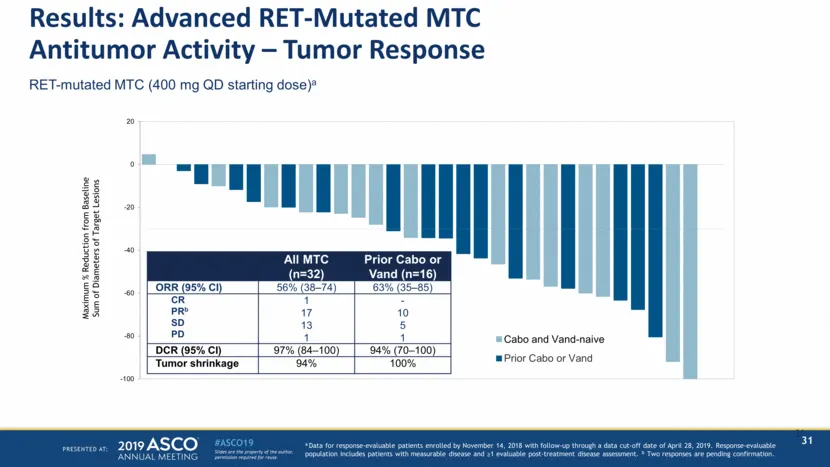
Results: Advanced RET-Mutated MTC Antitumor Activity – Tumor Response 31 RET-mutated MTC (400 mg QD starting dose)a All MTC (n=32) Prior Cabo or Vand (n=16) ORR (95% CI) 56% (38–74) 63% (35–85) CR PRb SD PD 1 17 13 1 - 10 5 1 DCR (95% CI) 97% (84–100) 94% (70–100) Tumor shrinkage 94% 100% 31 a Data
Slide 30: Results: Advanced RET-Mutated MTC Treatment and Response Duration
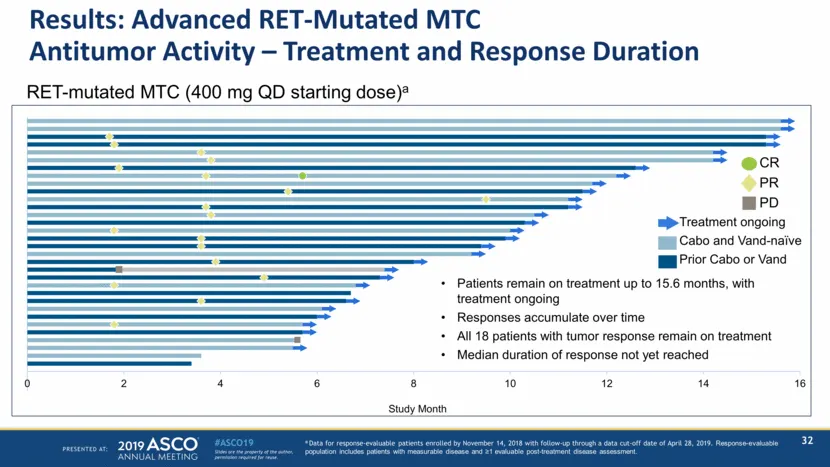
Results: Advanced RET-Mutated MTC Antitumor Activity – Treatment and Response Duration RET-mutated MTC (400 mg QD starting dose)a Treatment ongoing Cabo and Vand-naïve Prior Cabo or Vand Patients remain on treatment up to 15.6 months, with treatment ongoing Responses accumulate over time All 18 pati
Slide 31: Results: Advanced RET-Mutated MTC Adverse Events
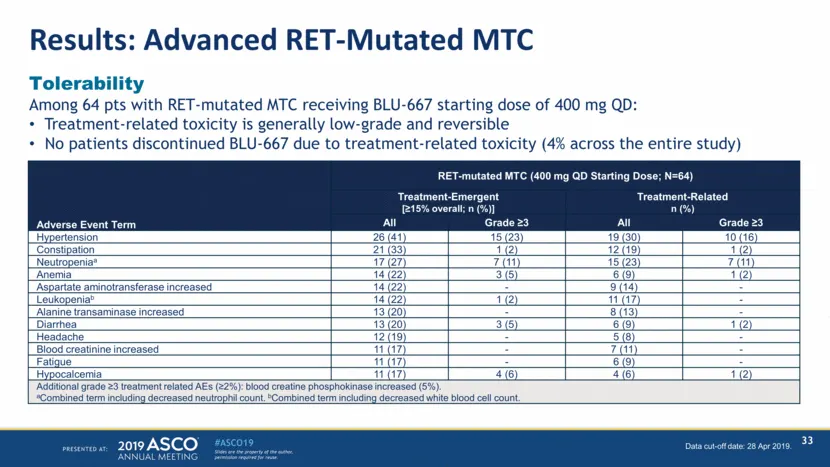
Results: Advanced RET-Mutated MTC Adverse Event Term RET-mutated MTC (400 mg QD Starting Dose; N=64) Treatment-Emergent [≥15% overall; n (%)] Treatment-Related n (%) All Grade ≥3 All Grade ≥3 Hypertension 26 (41) 15 (23) 19 (30) 10 (16) Constipation 21 (33) 1 (2) 12 (19) 1 (2) Neutropeniaa 17 (27) 7
Slide 32: BLU-667 has Activity in Other RET Fusion+ Malignancies
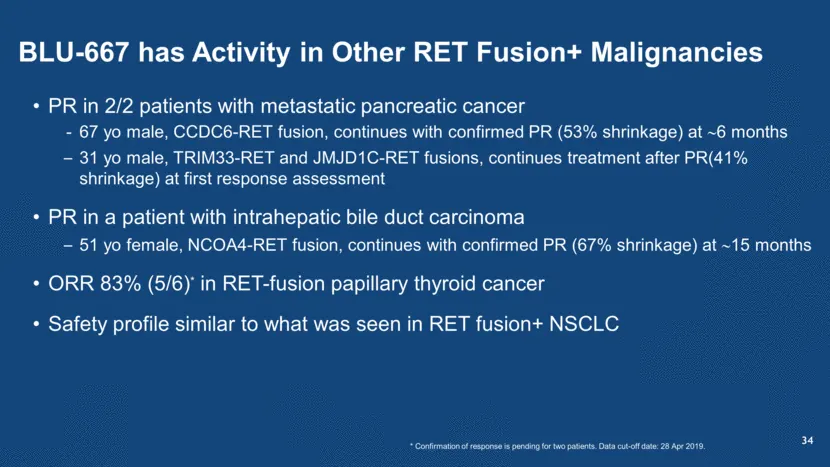
34 BLU-667 has Activity in Other RET Fusion+ Malignancies PR in 2/2 patients with metastatic pancreatic cancer 67 yo male, CCDC6-RET fusion, continues with confirmed PR (53% shrinkage) at 6 months 31 yo male, TRIM33-RET and JMJD1C-RET fusions, continues treatment after PR(41% shrinkage) at first re
Slide 33: Conclusions
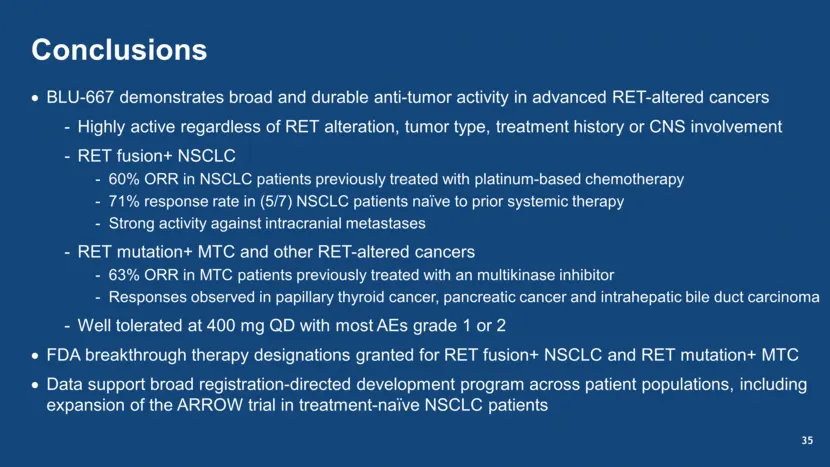
35 Conclusions BLU-667 demonstrates broad and durable anti-tumor activity in advanced RET-altered cancers Highly active regardless of RET alteration, tumor type, treatment history or CNS involvement RET fusion+ NSCLC 60% ORR in NSCLC patients previously treated with platinum-based chemotherapy 71% r
Slide 34: Acknowledgments
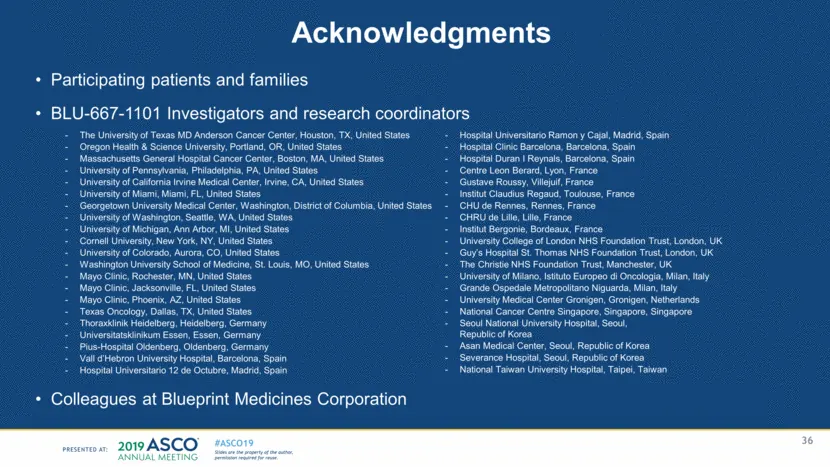
Acknowledgments Participating patients and families BLU-667-1101 Investigators and research coordinators Colleagues at Blueprint Medicines Corporation 36 The University of Texas MD Anderson Cancer Center, Houston, TX, United States Oregon Health & Science University, Portland, OR, United States Mass

Slide 35: BLU-667 program strategy
BLU-667 program strategy Andy Boral, M.D., Ph.D. Chief Medical Officer, Blueprint Medicines
Slide 36: A powerful scientific platform with a focused research strategy
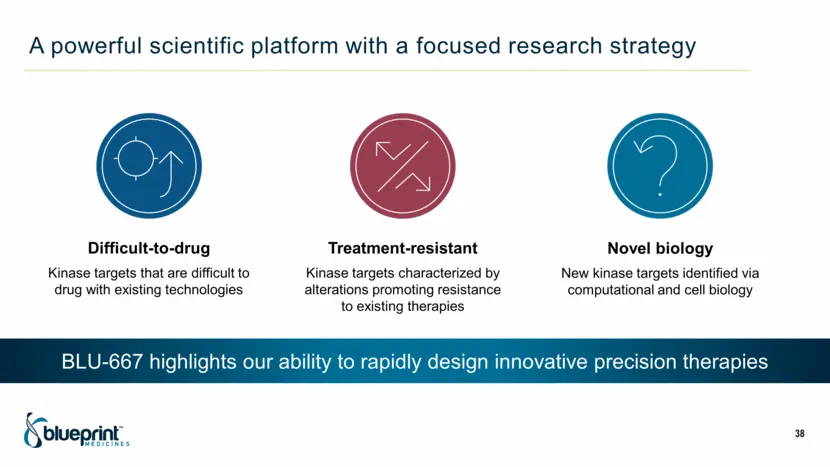
A powerful scientific platform with a focused research strategy 38 Difficult-to-drug Kinase targets that are difficult to drug with existing technologies Treatment-resistant Kinase targets characterized by alterations promoting resistance to existing therapies Novel biology New kinase targets identi
Slide 37: BLU-667 is a highly selective and potent RET inhibitor
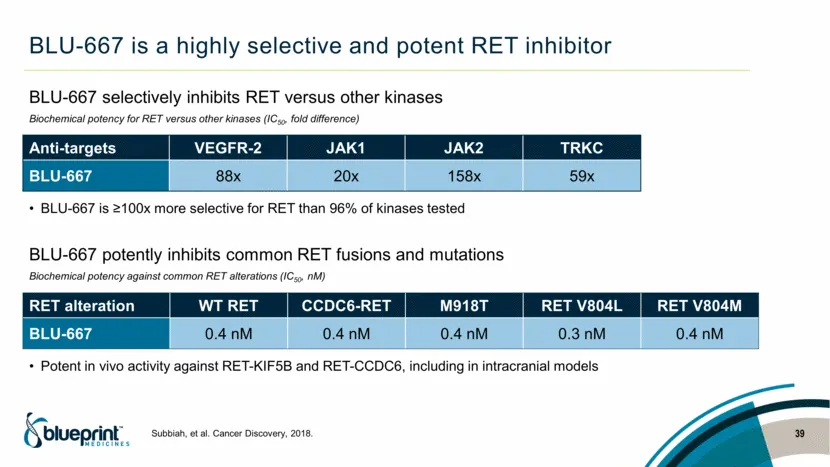
39 BLU-667 is a highly selective and potent RET inhibitor Subbiah, et al. Cancer Discovery, 2018. Anti-targets VEGFR-2 JAK1 JAK2 TRKC BLU-667 88x 20x 158x 59x RET alteration WT RET CCDC6-RET M918T RET V804L RET V804M BLU-667 0.4 nM 0.4 nM 0.4 nM 0.3 nM 0.4 nM BLU-667 selectively inhibits RET versus
Slide 38: BLU-667 has differentiated preclinical activity
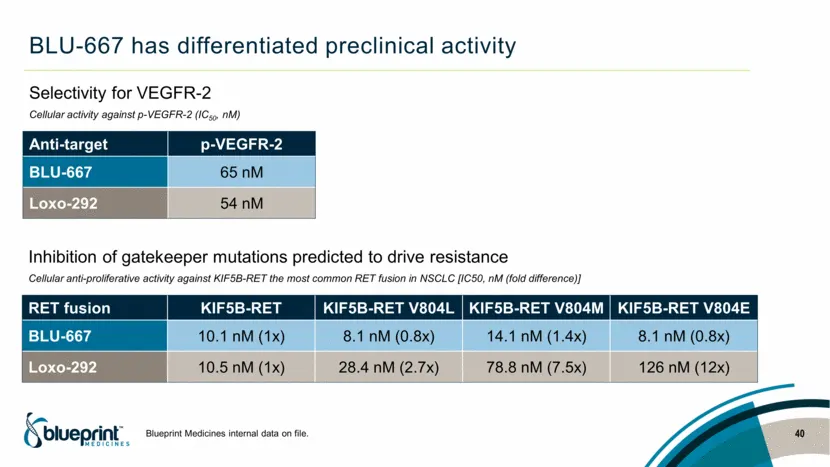
40 BLU-667 has differentiated preclinical activity Blueprint Medicines internal data on file. RET fusion KIF5B-RET KIF5B-RET V804L KIF5B-RET V804M KIF5B-RET V804E BLU-667 10.1 nM (1x) 8.1 nM (0.8x) 14.1 nM (1.4x) 8.1 nM (0.8x) Loxo-292 10.5 nM (1x) 28.4 nM (2.7x) 78.8 nM (7.5x) 126 nM (12x) Inhibiti
Slide 39: Emerging BLU-667 clinical profile reflects original purpose-built design
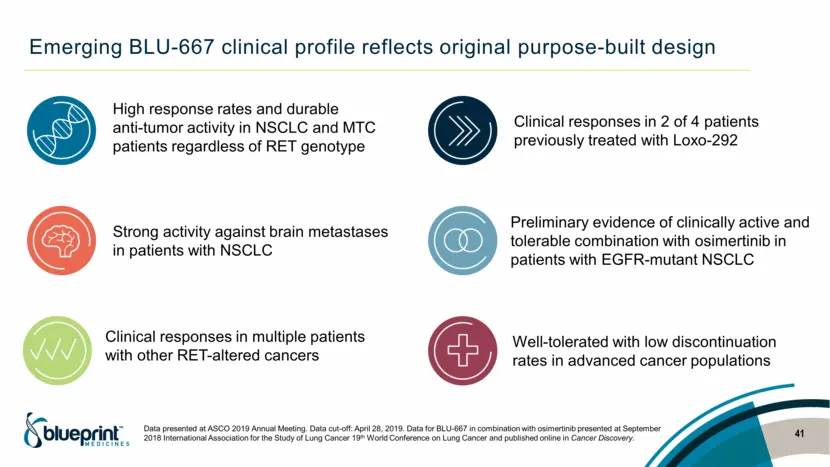
41 Emerging BLU-667 clinical profile reflects original purpose-built design High response rates and durable anti-tumor activity in NSCLC and MTC patients regardless of RET genotype Clinical responses in multiple patients with other RET-altered cancers Strong activity against brain metastases in pati
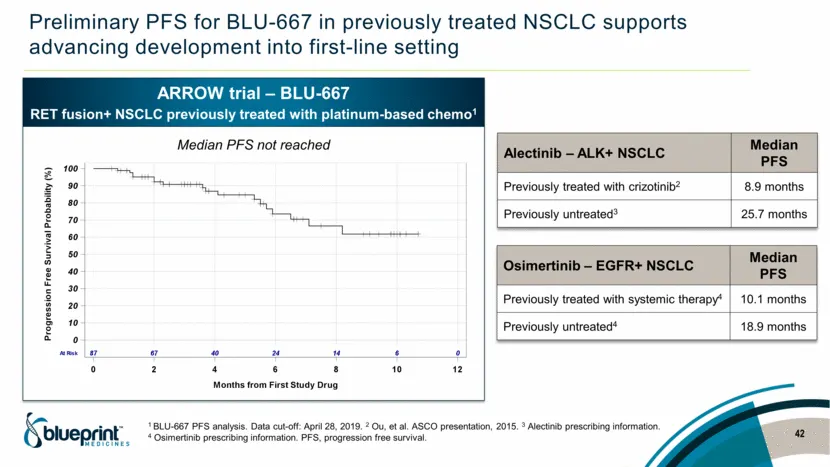
Slide 40: ARROW trial – BLU-667 RET fusion+ NSCLC previously treated with platinum-based chemo
ARROW trial – BLU-667 RET fusion+ NSCLC previously treated with platinum-based chemo1 Preliminary PFS for BLU-667 in previously treated NSCLC supports advancing development into first-line setting 1 BLU-667 PFS analysis. Data cut-off: April 28, 2019. 2 Ou, et al. ASCO presentation, 2015. 3 Alectinib
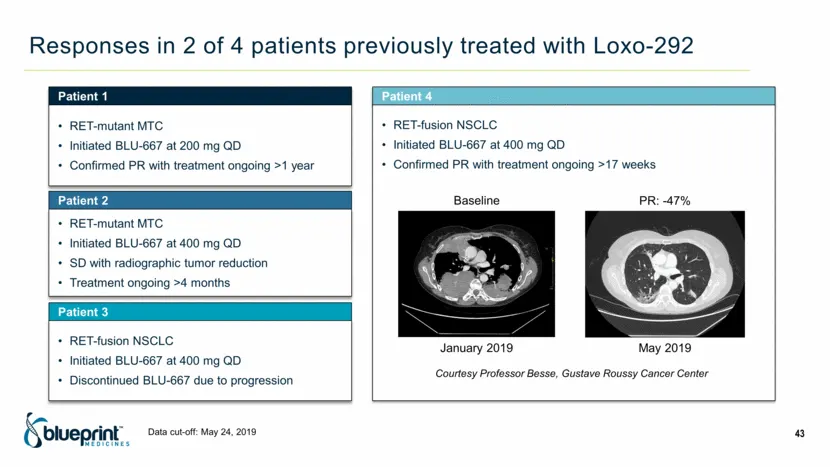
Slide 41: Responses in 2 of 4 patients previously treated with Loxo-292
Patient 4 RET-fusion NSCLC Initiated BLU-667 at 400 mg QD Confirmed PR with treatment ongoing >17 weeks RET-fusion NSCLC Initiated BLU-667 at 400 mg QD Discontinued BLU-667 due to progression RET-mutant MTC Initiated BLU-667 at 400 mg QD SD with radiographic tumor reduction Treatment ongoing >4 mont
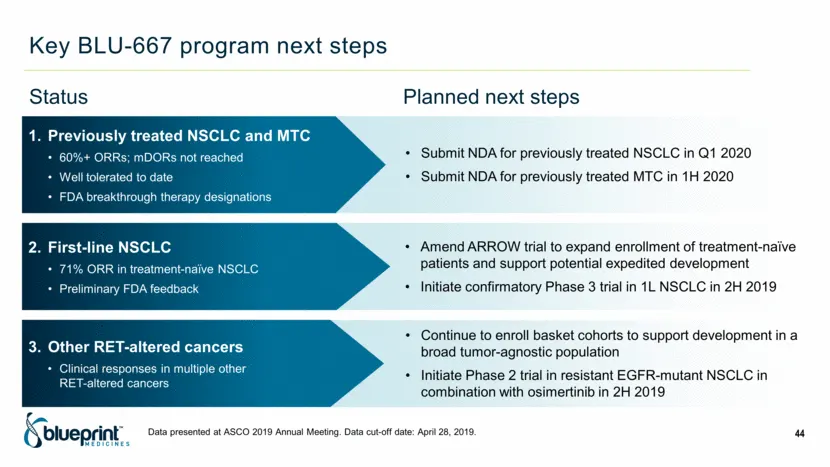
Slide 42: Key BLU-667 program next steps
Key BLU-667 program next steps Data presented at ASCO 2019 Annual Meeting. Data cut-off date: April 28, 2019. 44 Status Planned next steps Submit NDA for previously treated NSCLC in Q1 2020 Submit NDA for previously treated MTC in 1H 2020 Amend ARROW trial to expand enrollment of treatment-naïve pat

Slide 43: Questions and Answers
Questions and Answers (Sbiveprint.

Slide 44: Updated avapritinib data in advanced systemic mastocytosis at EHA
R.S. Living with advanced systemic mastocytosis Updated avapritinib data in patients with advanced systemic mastocytosis 24th EHA Congress Amsterdam, The Netherlands Saturday, June 15 Oral abstract: S830

Slide 45: Thank you
Thank you (blueprint,
Source: SEC EDGAR · 8-K filed Jun 4, 2019
More decks from Blueprint Medicines Corp
 Q1 2025 Earnings Presentation14 slides · May 1, 2025
 Q4 2024 Earnings Presentation12 slides · Feb 13, 2025
 J.P. Morgan Healthcare Conference 202525 slides · Jan 13, 2025
 Technical Presentation (April 2024)19 slides · Apr 25, 2024
 J.P. Morgan Healthcare Conference 202425 slides · Jan 8, 2024
 AAAAI 2023 Annual Meeting35 slides · Feb 27, 2023