Audentes Therapeutics — 24th International Annual Congress of the World Muscle Society (WMS) Annual Meeting 2019
24 slides from Audentes Therapeutics's conference presentation, Oct 9, 2019
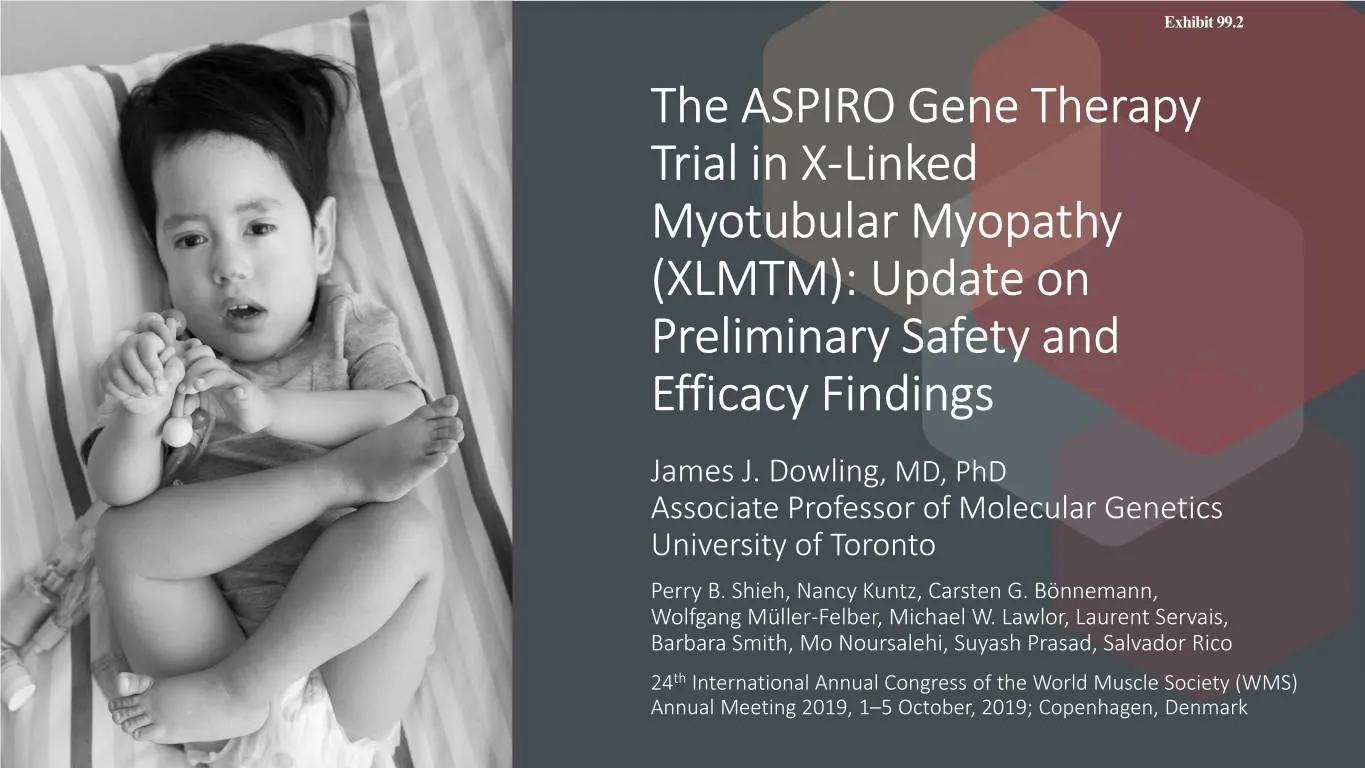
Slide 1: The ASPIRO Gene Therapy Trial in XLMTM: Update on Preliminary Safety and Efficacy Findings
Exhibit 99.2 The ASPIRO Gene Therapy Trial in X-Linked Myotubular Myopathy (XLMTM): Update on Preliminary Safety and Efficacy Findings James J. Dowling, MD, PhD Associate Professor of Molecular Genetics University of Toronto Perry B. Shieh, Nancy Kuntz, Carsten G. Bönnemann, Wolfgang Müller-Felber,
Slide 2: Disclosures
Disclosures ◼ SAB member, Dynacure ◼ SAB member, RYR1 Foundation ◼ MSAC member, MD Canada ◼ MSAC member, MDA USA ◼ CMO, Deep Genomics ◼ Co-chair, MTM/CNM international registry steering committee
Slide 3: XLMTM – Natural History
XLMTM – Natural History Half of XLMTM patients do not survive past 18 months ◼ Incidence ≈1 in 40–50K newborn males1–5 ◼ Estimated 50% mortality by 18 months2,3 − 10-year survival of ≈75% thereafter4 ◼ Motor milestones are substantially delayed or not achieved1,5 − Most cannot sit without support >1
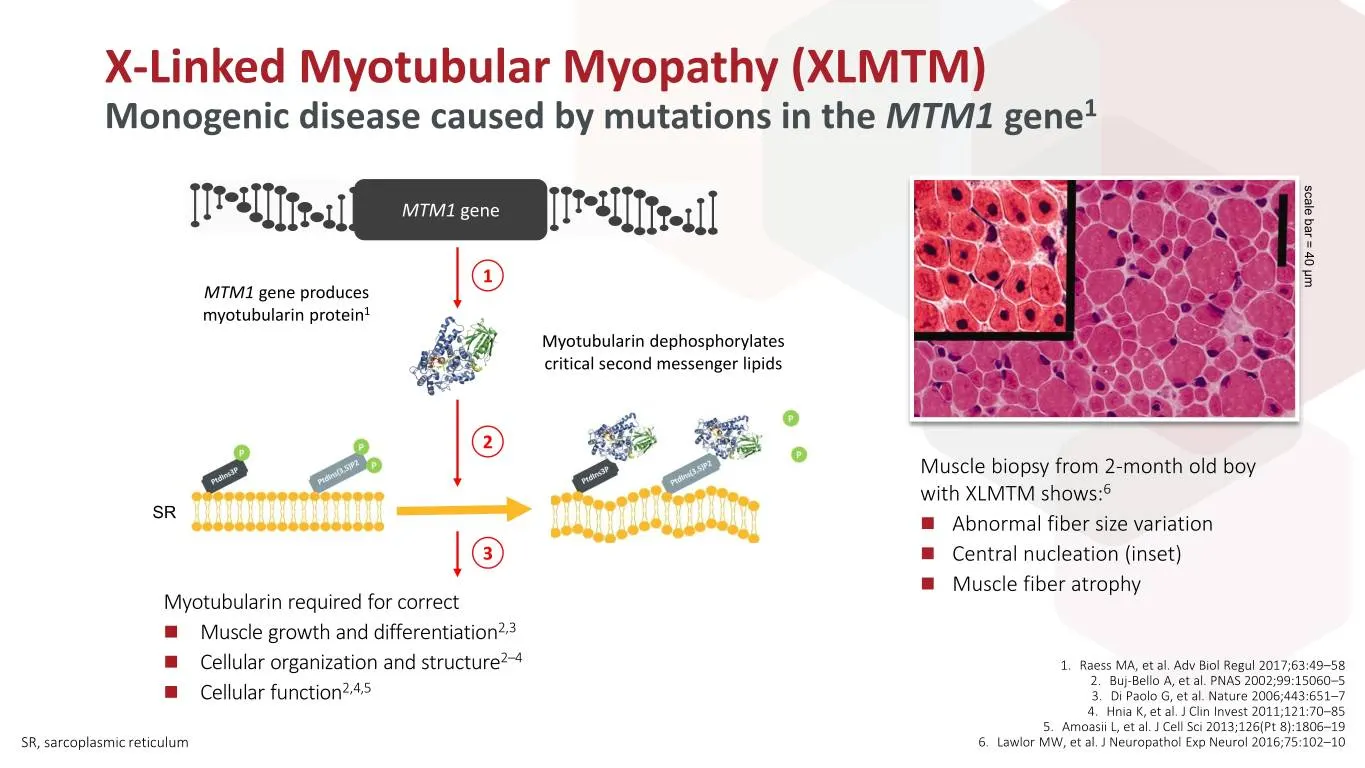
Slide 4: X-Linked Myotubular Myopathy (XLMTM)
X-Linked Myotubular Myopathy (XLMTM) Monogenic disease caused by mutations in the MTM1 gene1 scale scale bar 40 = µm MTM1 gene 1 MTM1 gene produces myotubularin protein1 Myotubularin dephosphorylates critical second messenger lipids 2 Muscle biopsy from 2-month old boy with XLMTM shows:6 SR ◼ Abnorm
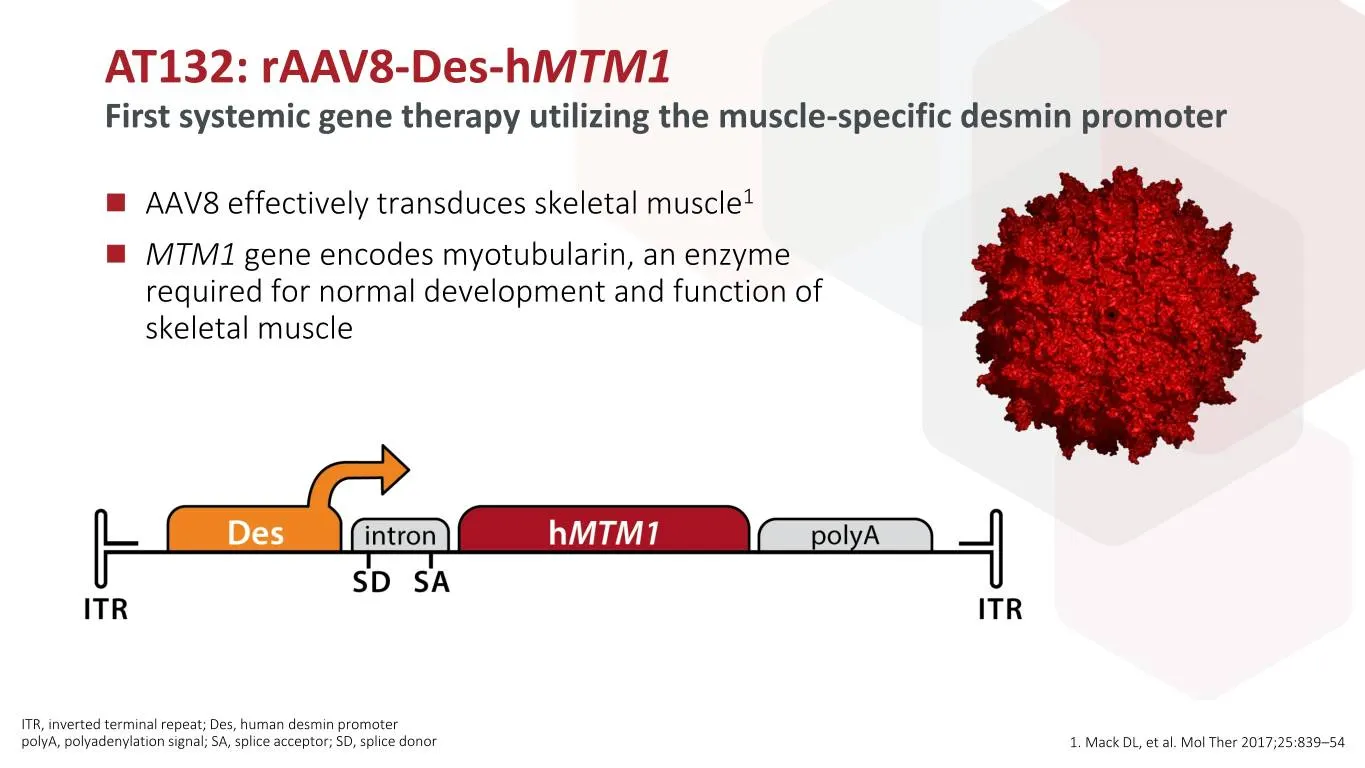
Slide 5: AT132: rAAV8-Des-hMTM1
AT132: rAAV8-Des-hMTM1 First systemic gene therapy utilizing the muscle-specific desmin promoter ◼ AAV8 effectively transduces skeletal muscle1 ◼ MTM1 gene encodes myotubularin, an enzyme required for normal development and function of skeletal muscle ITR, inverted terminal repeat; Des, human desmin
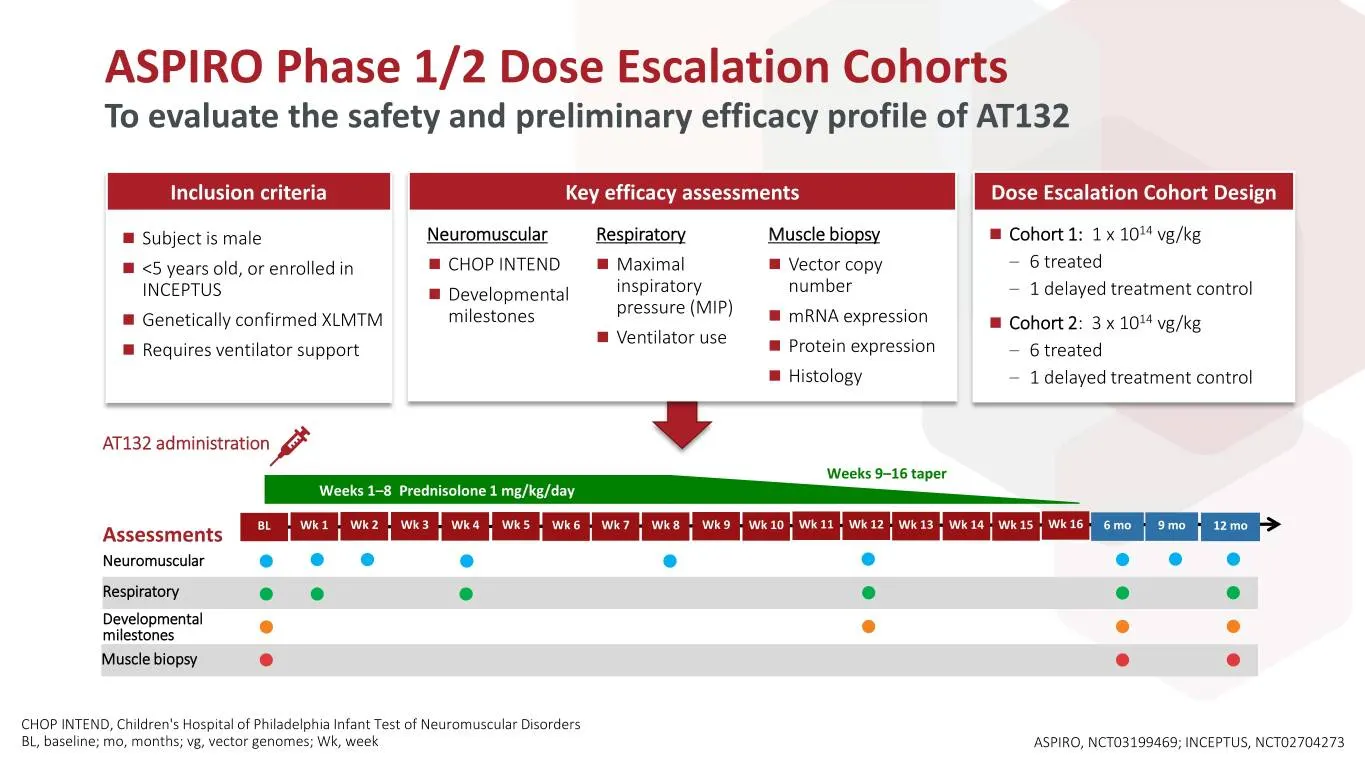
Slide 6: ASPIRO Phase 1/2 Dose Escalation Cohorts
ASPIRO Phase 1/2 Dose Escalation Cohorts To evaluate the safety and preliminary efficacy profile of AT132 Inclusion criteria Key efficacy assessments Dose Escalation Cohort Design ◼ Subject is male Neuromuscular Respiratory Muscle biopsy ◼ Cohort 1: 1 x 10¹⁴ vg/kg ◼ <5 years old, or enrolled in ◼ CH
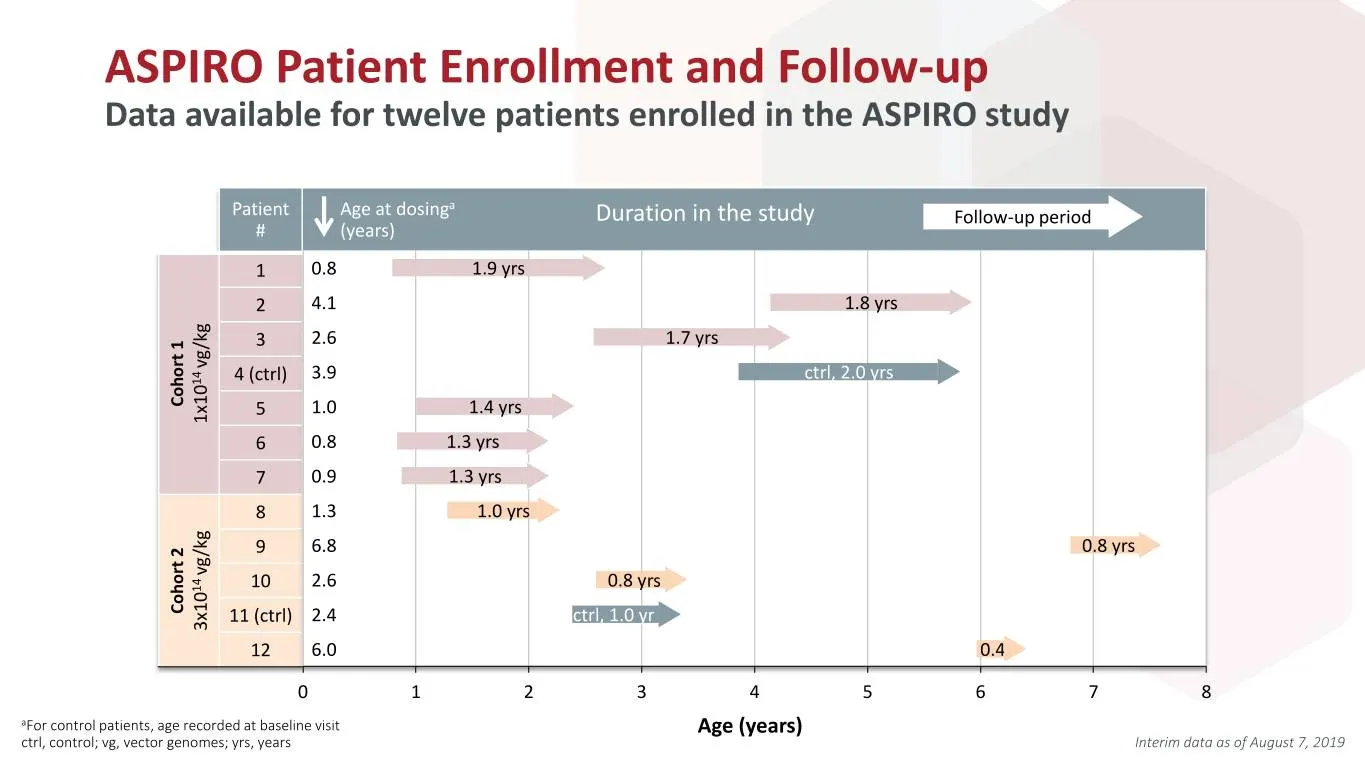
Slide 7: ASPIRO Patient Enrollment and Follow-up
ASPIRO Patient Enrollment and Follow-up Data available for twelve patients enrolled in the ASPIRO study a Patient Age at dosing Duration in the study Follow-up period # (years) 1 0.8 1.9 yrs 2 4.1 1.8 yrs 3 2.6 1.7 yrs vg/kg 3.9 ctrl, 2.0 yrs 14 14 4 (ctrl) Cohort 1 Cohort 5 1.0 1.4 yrs 1x10 6 0.8 1

Slide 8: Safety and Tolerability
Safety and Tolerability
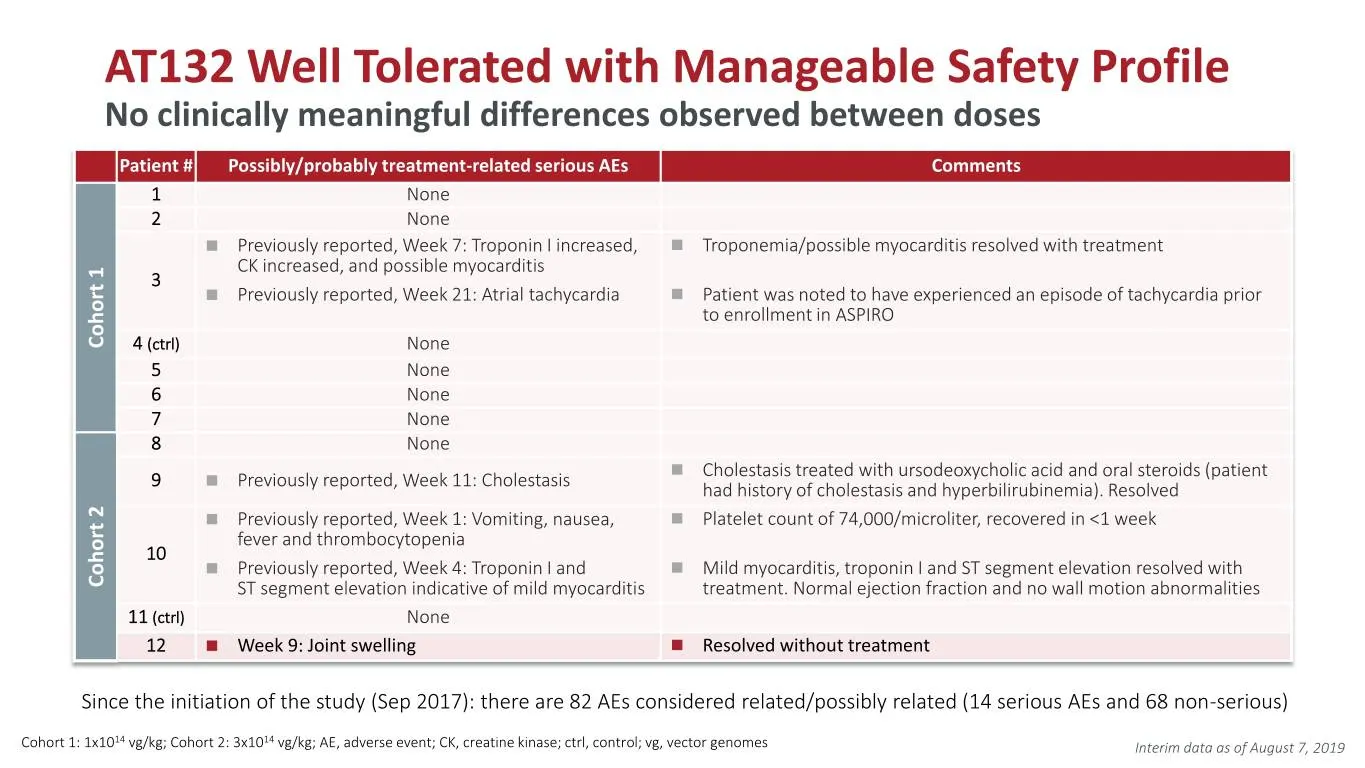
Slide 9: AT132 Well Tolerated with Manageable Safety Profile
AT132 Well Tolerated with Manageable Safety Profile No clinically meaningful differences observed between doses Patient # Possibly/probably treatment-related serious AEs Comments 1 None 2 None ◼ Previously reported, Week 7: Troponin I increased, ◼ Troponemia/possible myocarditis resolved with treatm

Slide 10: Muscle Biopsy
Muscle Biopsy
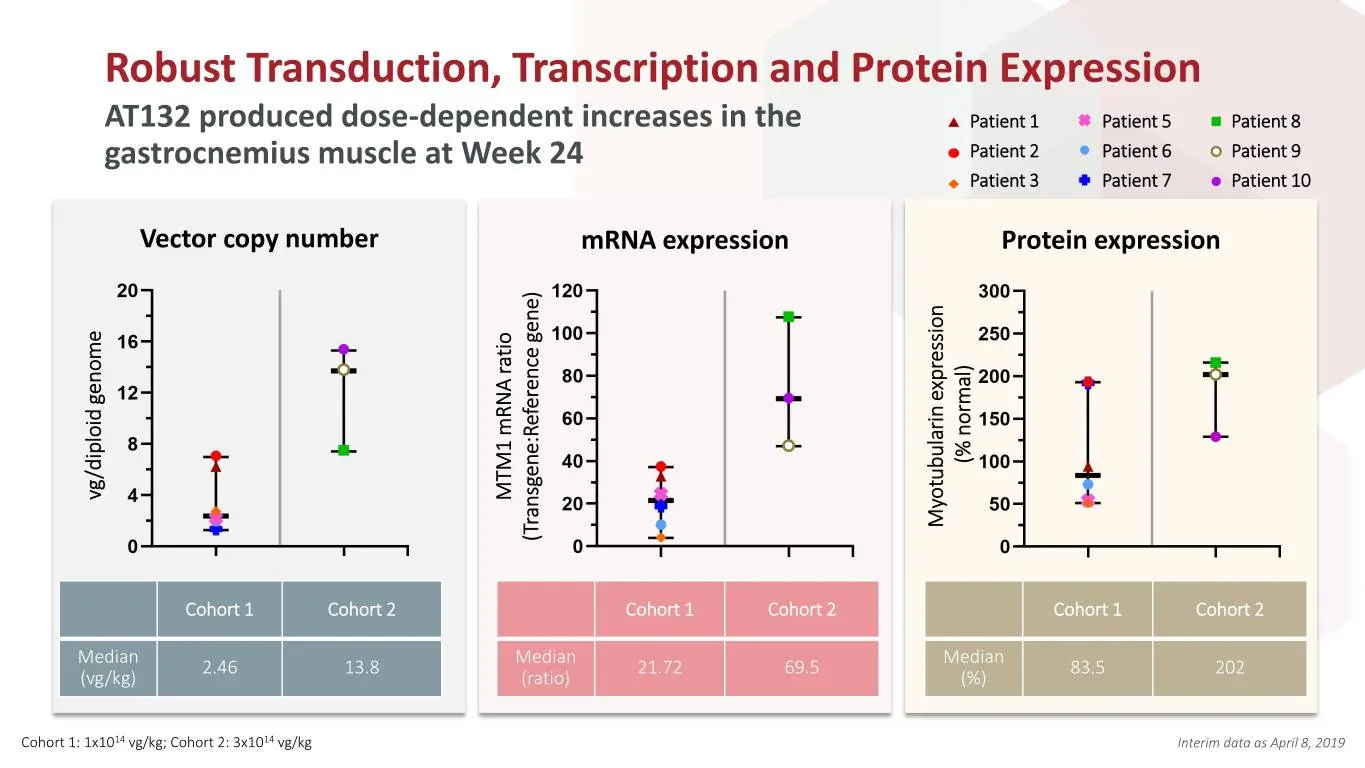
Slide 11: Robust Transduction, Transcription and Protein Expression
Robust Transduction, Transcription and Protein Expression AT132 produced dose-dependent increases in the Patient 1 Patient 5 Patient 8 gastrocnemius muscle at Week 24 Patient 2 Patient 6 Patient 9 Patient 3 Patient 7 Patient 10 Vector copy number mRNA expression Protein expression gene) (% normal) (
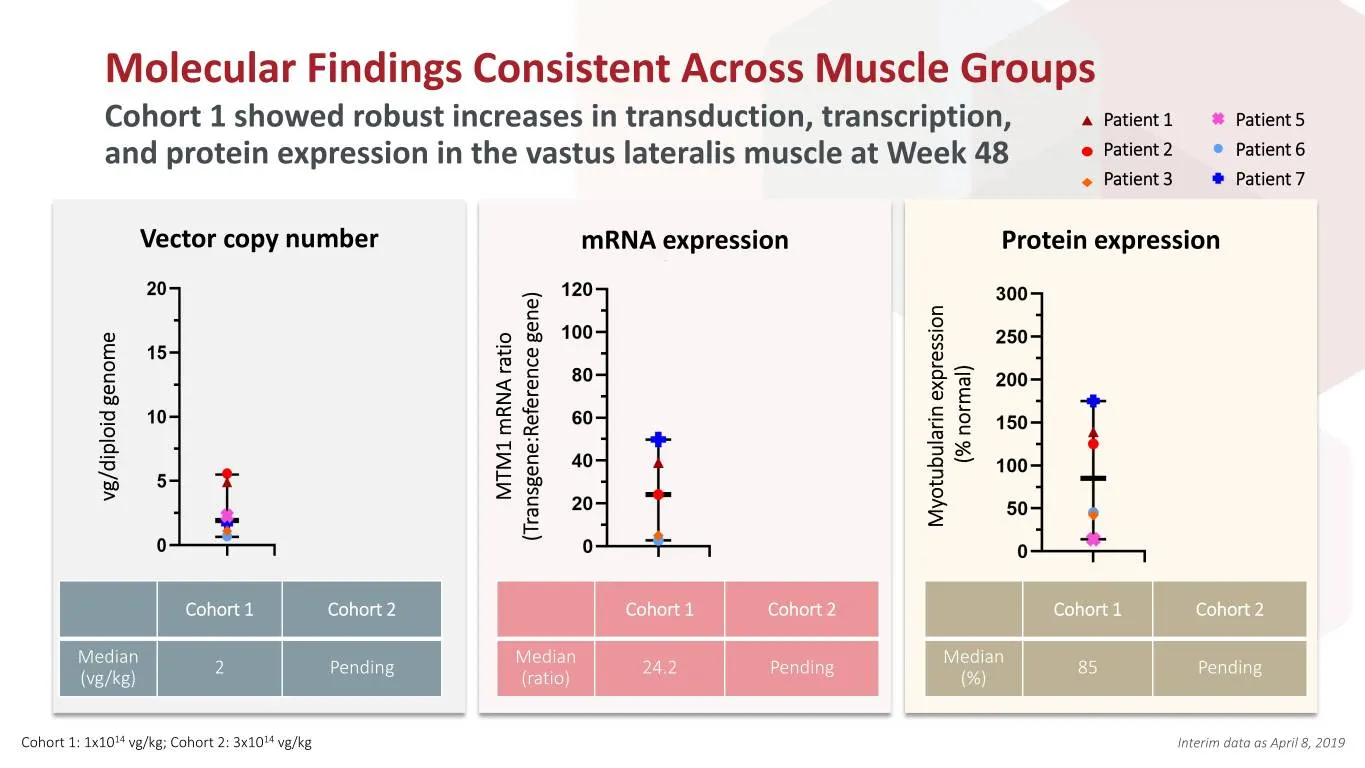
Slide 12: Molecular Findings Consistent Across Muscle Groups
Molecular Findings Consistent Across Muscle Groups Cohort 1 showed robust increases in transduction, transcription, Patient 1 Patient 5 and protein expression in the vastus lateralis muscle at Week 48 Patient 2 Patient 6 Patient 3 Patient 7 Vector copy number mRNA expression Protein expression gene)
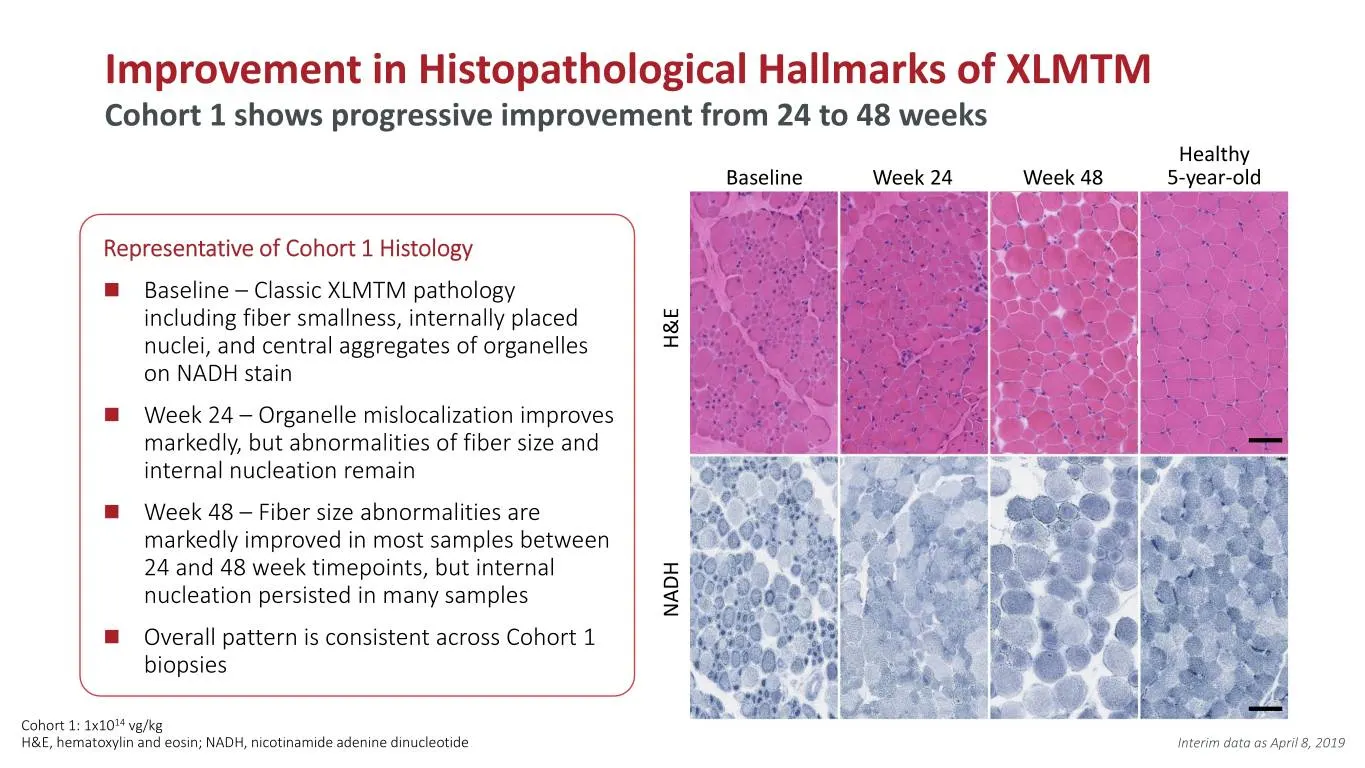
Slide 13: Improvement in Histopathological Hallmarks of XLMTM
H&E, H&E, Cohort 1x10 1: hematoxylin ◼ ◼ ◼ ◼ Representative of Cohort 1 Histology Cohort Cohort 1 shows progressive improvement from 24 to 48 weeks Improvement in Histopathological Hallmarks of XLMTM 14 vg/kg and eosin; NADH, nicotinamide adenine dinucleotide biopsies Overall pattern consistentis ac
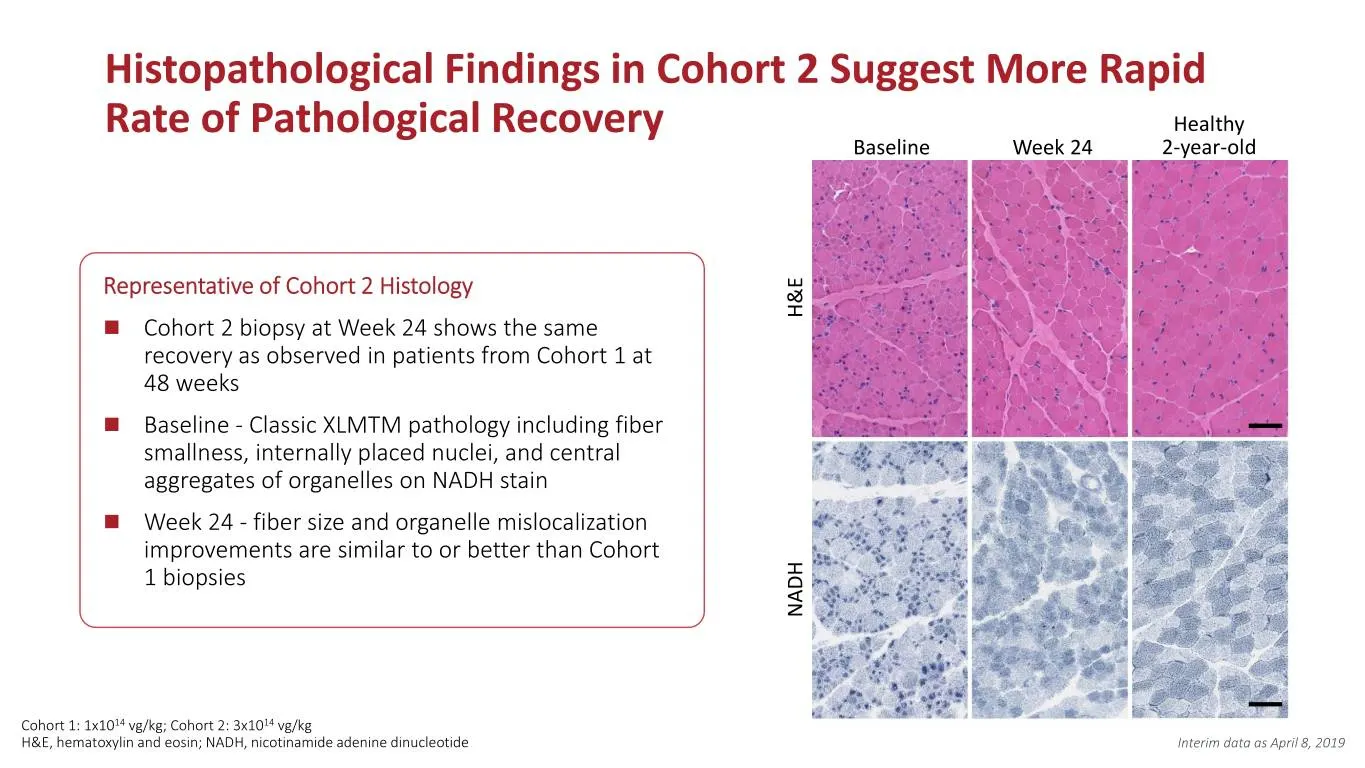
Slide 14: Histopathological Findings in Cohort 2 Suggest More Rapid Pathological Recovery
Histopathological Findings in Cohort 2 Suggest More Rapid Rate of Pathological Recovery Healthy Baseline Week 24 2-year-old Representative of Cohort 2 Histology ◼ Cohort 2 biopsy at Week 24 shows the same H&E recovery as observed in patients from Cohort 1 at 48 weeks ◼ Baseline - Classic XLMTM patho

Slide 15: Neuromuscular Function: CHOP INTEND and Developmental Milestones
Neuromuscular Function CHOP INTEND and Developmental Milestones
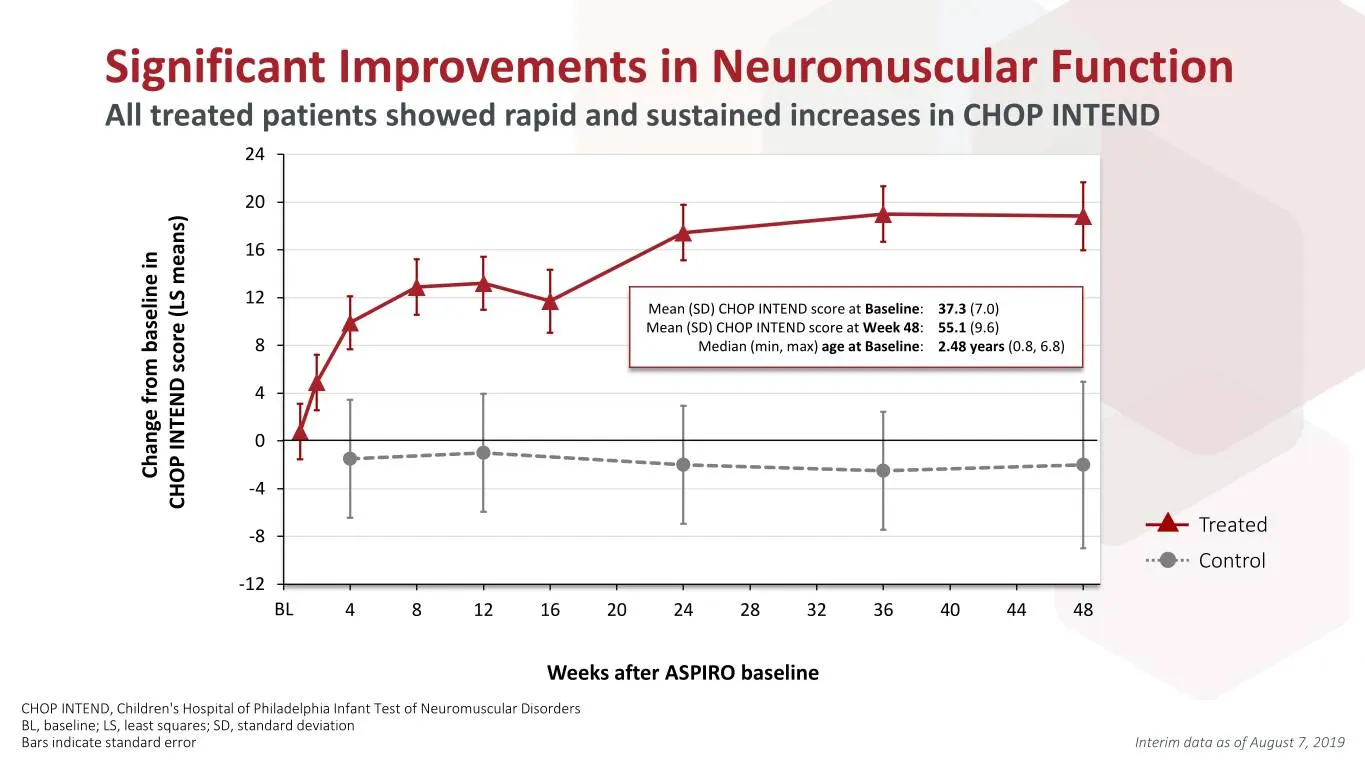
Slide 16: Significant Improvements in Neuromuscular Function
Significant Improvements in Neuromuscular Function All treated patients showed rapid and sustained increases in CHOP INTEND 24 20 16 12 Mean (SD) CHOP INTEND score at Baseline: 37.3 (7.0) Mean (SD) CHOP INTEND score at Week 48: 55.1 (9.6) 8 Median (min, max) age at Baseline: 2.48 years (0.8, 6.8) 4
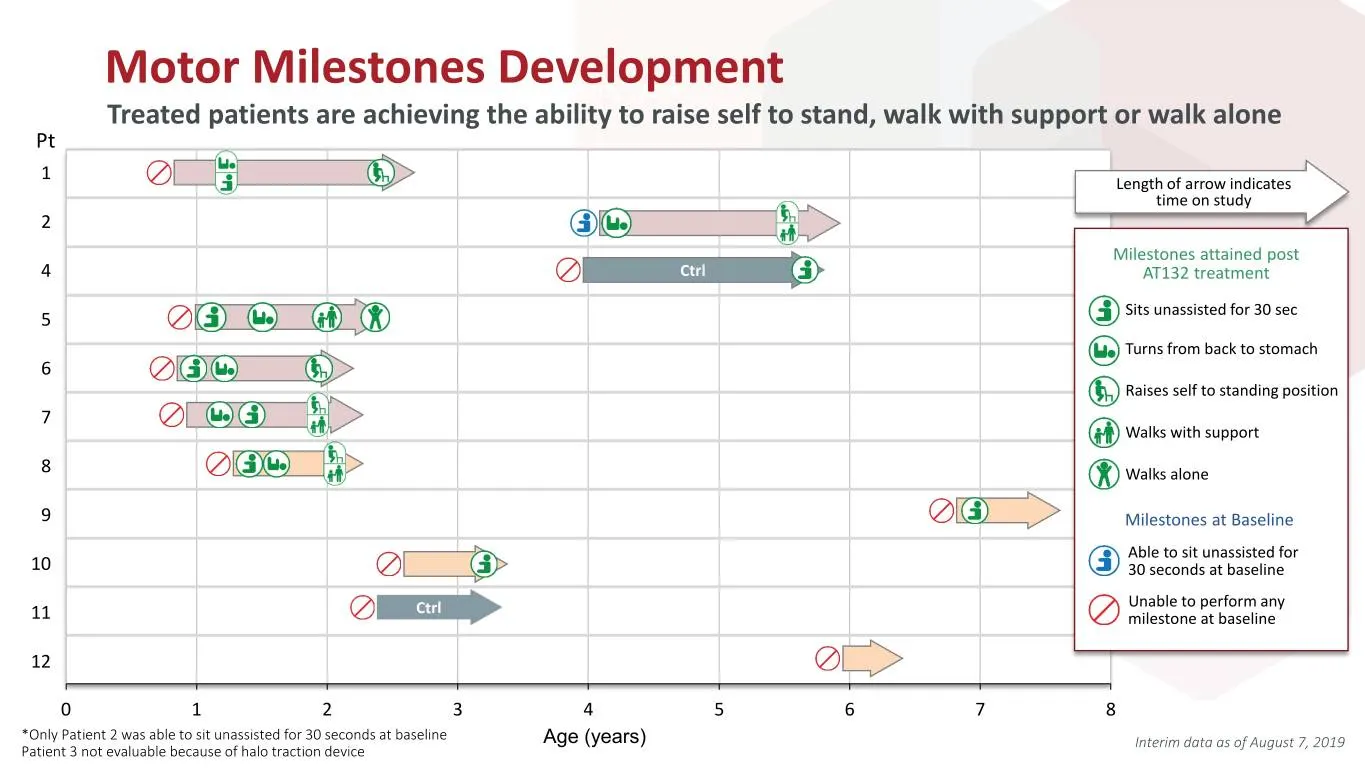
Slide 17: Motor Milestones Development
Motor MilestonesDuration Developmentin the study (years) Treated patients are achieving the ability to raise self to stand, walk with support or walk alone Pt 1 Length of arrow indicates time on study 2 Milestones attained post 4 Ctrl AT132 treatment Sits unassisted for 30 sec 5 Turns from back to s

Slide 18: Respiratory Function: MIP and Ventilator Dependence
Respiratory Function Maximal Inspiratory Pressure (MIP) and Ventilator Dependence
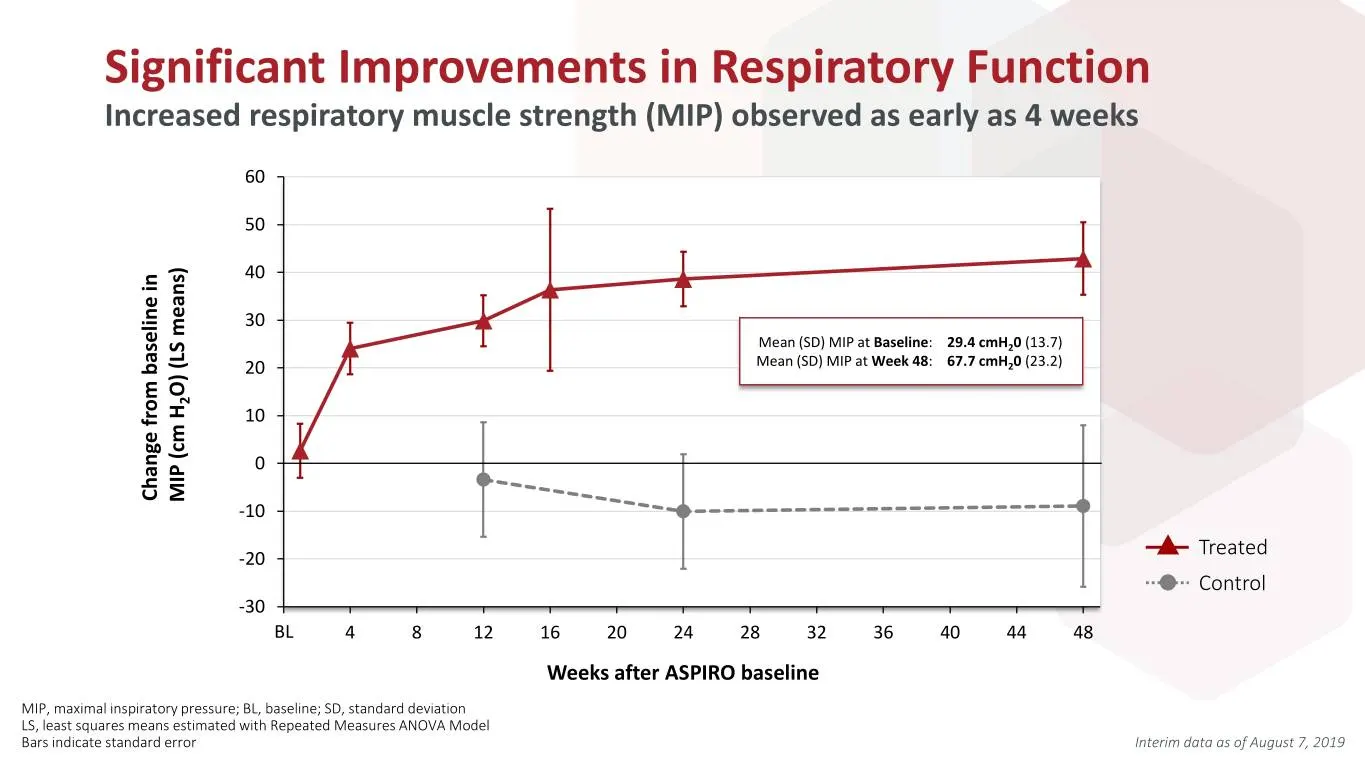
Slide 19: Significant Improvements in Respiratory Function
Significant Improvements in Respiratory Function Increased respiratory muscle strength (MIP) observed as early as 4 weeks 60 50 40 30 Mean (SD) MIP at Baseline: 29.4 cmH20 (13.7) (LS (LS means) 20 Mean (SD) MIP at Week 48: 67.7 cmH20 (23.2) O) 2 10 0 Change from in from Change baseline MIP MIP (cm H
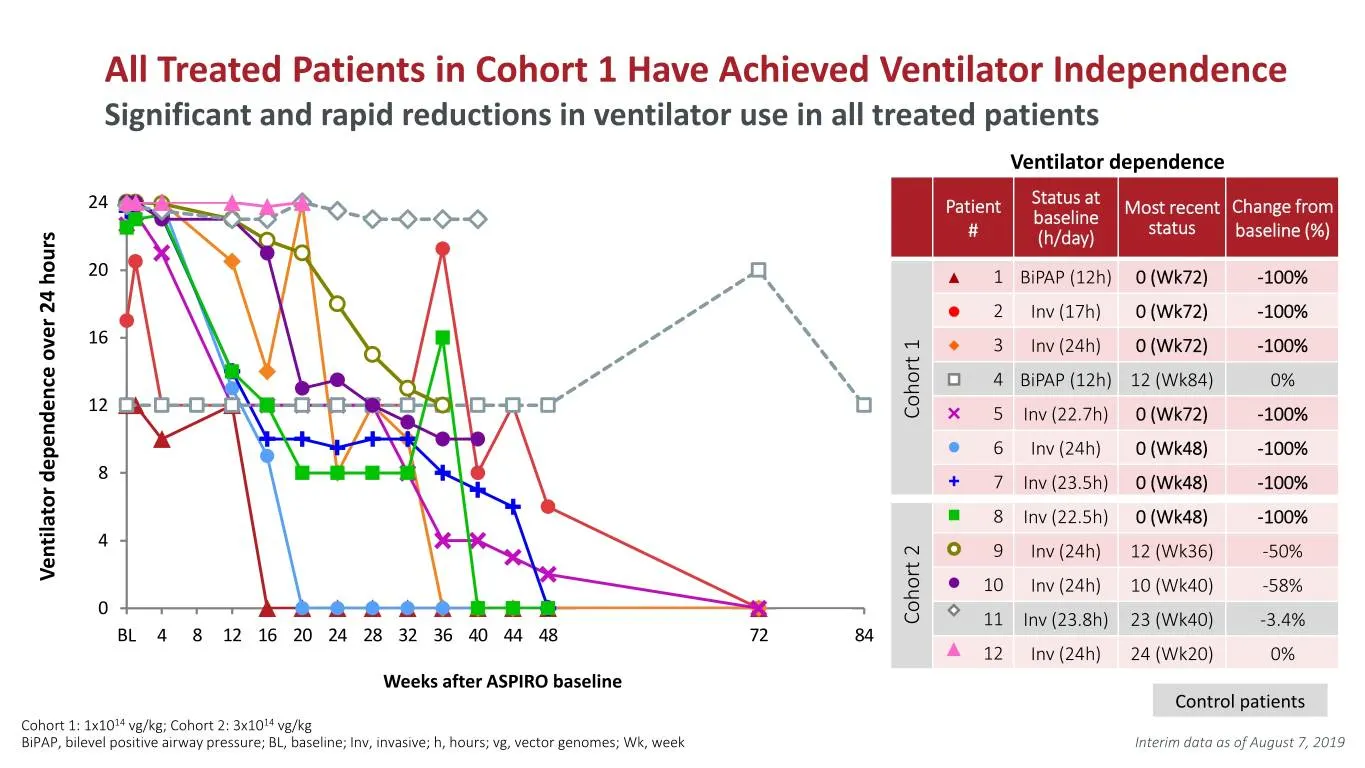
Slide 20: All Treated Patients in Cohort 1 Have Achieved Ventilator Independence
All Treated Patients in Cohort 1 Have Achieved Ventilator Independence Significant and rapid reductions in ventilator use in all treated patients Ventilator dependence Status at 24 Patient Most recent Change from baseline status # (h/day) baseline (%) 20 1 BiPAP (12h) 0 (Wk72) -100% 2 Inv (17h) 0 (W
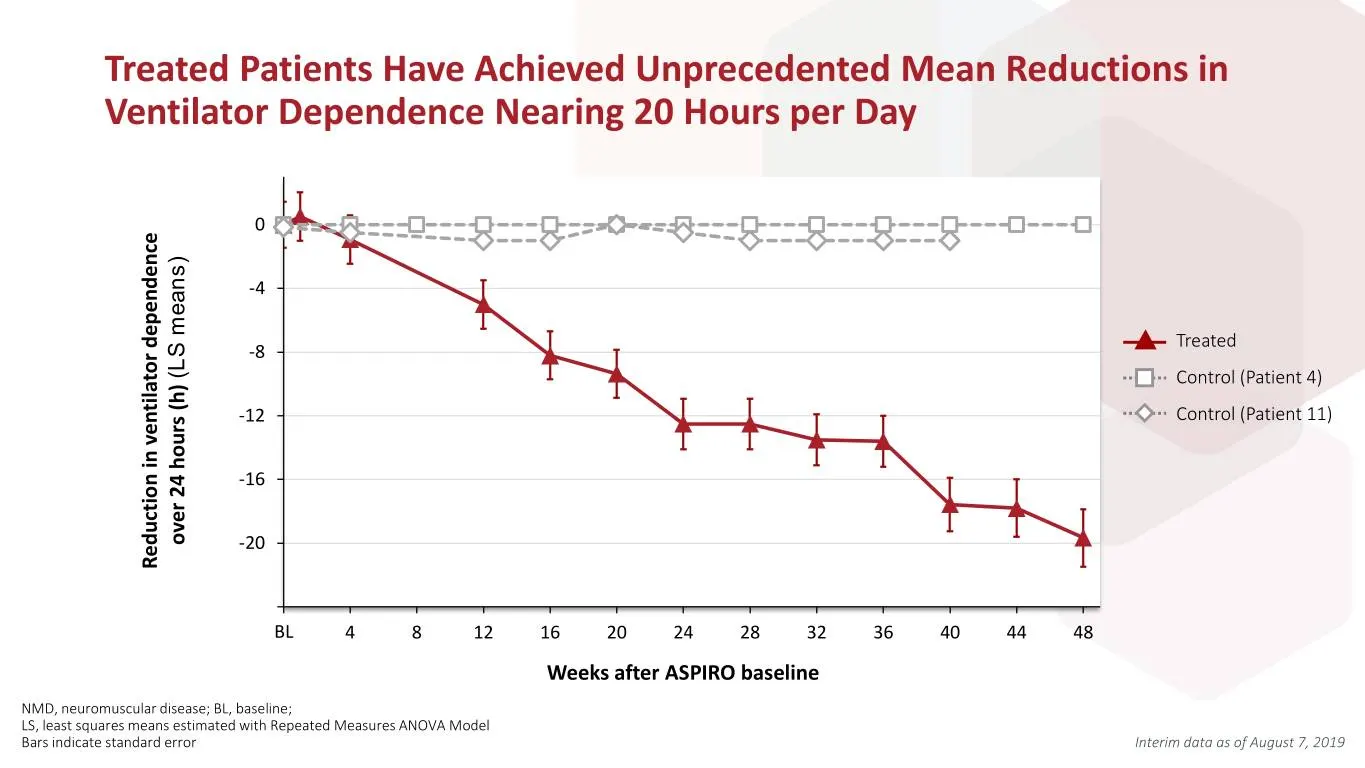
Slide 21: Unprecedented Mean Reductions in Ventilator Dependence
Treated Patients Have Achieved Unprecedented Mean Reductions in Ventilator Dependence Nearing 20 Hours per Day 0 -4 Treated -8 (LS (LS means) Control (Patient 4) -12 Control (Patient 11) -16 over 24 hours (h) hours 24 over -20 Reduction in ventilator dependence dependence ventilator in Reduction -24
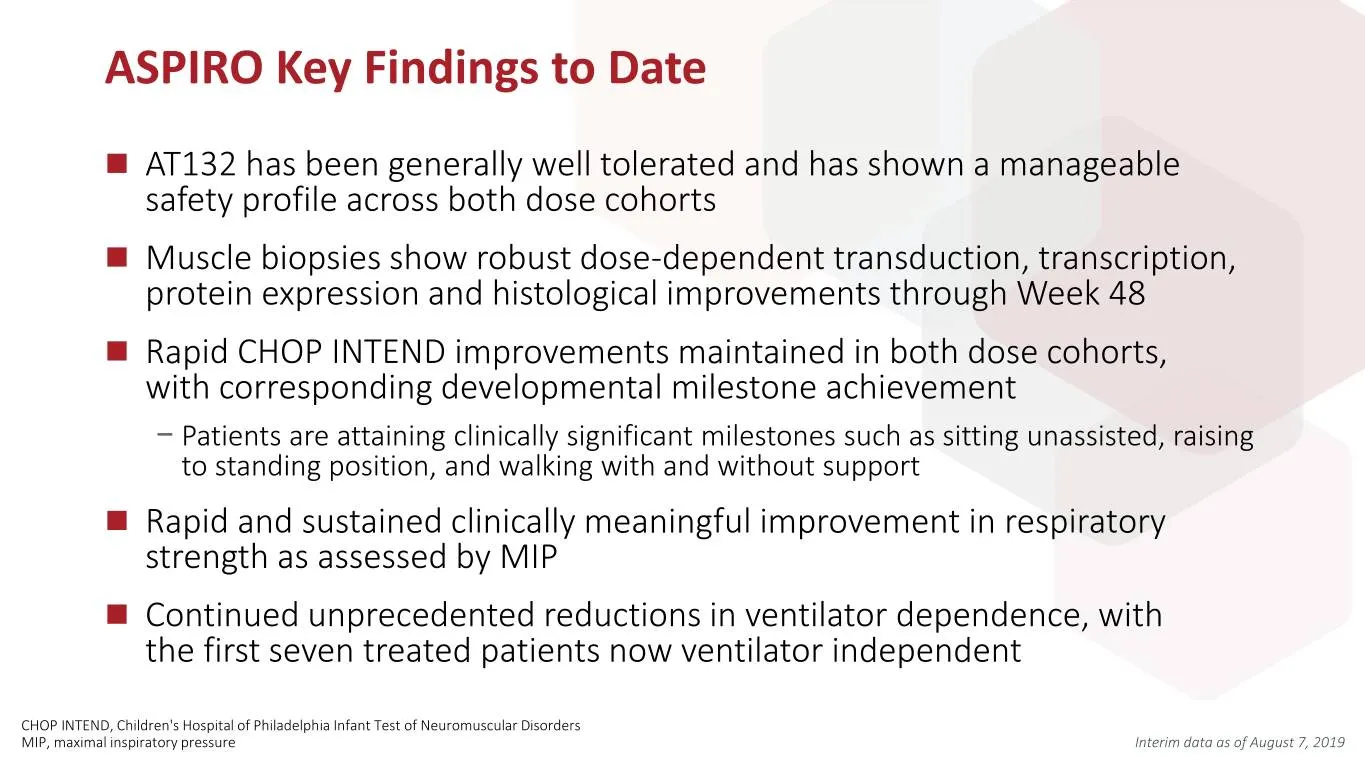
Slide 22: ASPIRO Key Findings to Date
ASPIRO Key Findings to Date ◼ AT132 has been generally well tolerated and has shown a manageable safety profile across both dose cohorts ◼ Muscle biopsies show robust dose-dependent transduction, transcription, protein expression and histological improvements through Week 48 ◼ Rapid CHOP INTEND impr
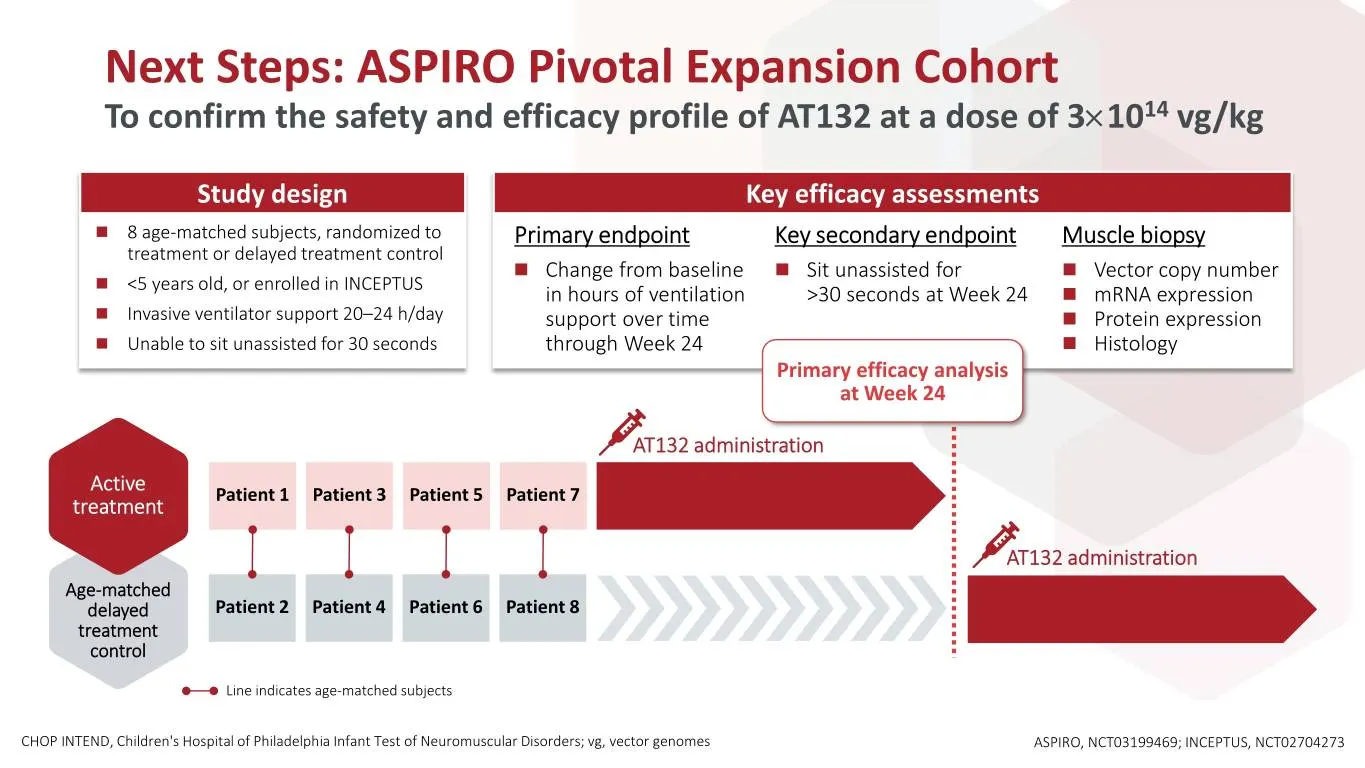
Slide 23: Next Steps: ASPIRO Pivotal Expansion Cohort
Next Steps: ASPIRO Pivotal Expansion Cohort To confirm the safety and efficacy profile of AT132 at a dose of 31014 vg/kg Study design Key efficacy assessments ◼ 8 age-matched subjects, randomized to Primary endpoint Key secondary endpoint Muscle biopsy treatment or delayed treatment control ◼ Chang
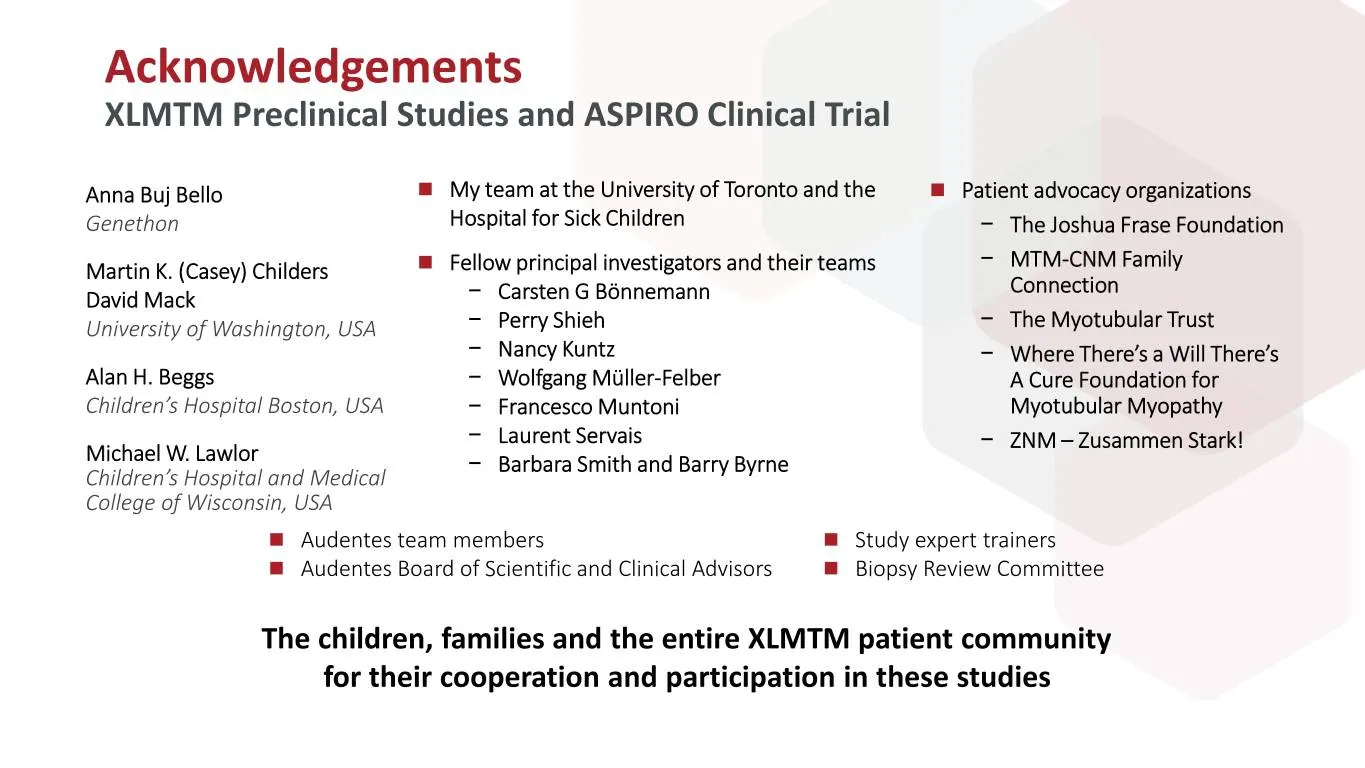
Slide 24: Acknowledgements
Acknowledgements XLMTM Preclinical Studies and ASPIRO Clinical Trial Anna Buj Bello ◼ My team at the University of Toronto and the ◼ Patient advocacy organizations Genethon Hospital for Sick Children − The Joshua Frase Foundation − MTM-CNM Family Martin K. (Casey) Childers ◼ Fellow principal investi
Source: SEC EDGAR · 8-K filed Oct 9, 2019
More decks from Audentes Therapeutics Inc
 Technical Presentation (May 2019)29 slides · May 1, 2019
 Technical Presentation (October 2018)20 slides · Oct 5, 2018
 Technical Presentation (May 2018)16 slides · May 16, 2018
 Technical Presentation (January 2018)21 slides · Jan 4, 2018
 Investor Presentation (September 2017)33 slides · Sep 27, 2017
 Technical Presentation (September 2017)23 slides · Sep 27, 2017