Lumos Pharma — NewLink Genetics — BioCentury NewsMakers in the Biotech Industry 2013
38 slides from Lumos Pharma's conference presentation, Sep 26, 2013
Slide 1: BioCentury NewsMakers in the Biotech Industry 2013
BioCentury NewsMakers in the Biotech Industry 2013 New York City
Slide 2: Forward-Looking Disclaimer
Forward-Looking Disclaimer These slides accompany an oral presentation by NewLink Genetics Corporation, which contains forward-looking statements. The Company’s actual results may differ materially from those suggested here. Additional information concerning factors that could cause such a differenc
Slide 3: NewLink Genetics Corporation: Oncology-Focused Biopharmaceutical Company
NewLink Genetics Corporation Oncology-Focused Biopharmaceutical Company Founded in 1999; IPO in 2011, Currently 100+ employees Pipeline includes biologic and small molecule candidates Completed enrollment for IMPRESS phase 3 trial Strong IP position for technology platforms Added to NASDAQ
Slide 4: Targeting Immune Escape
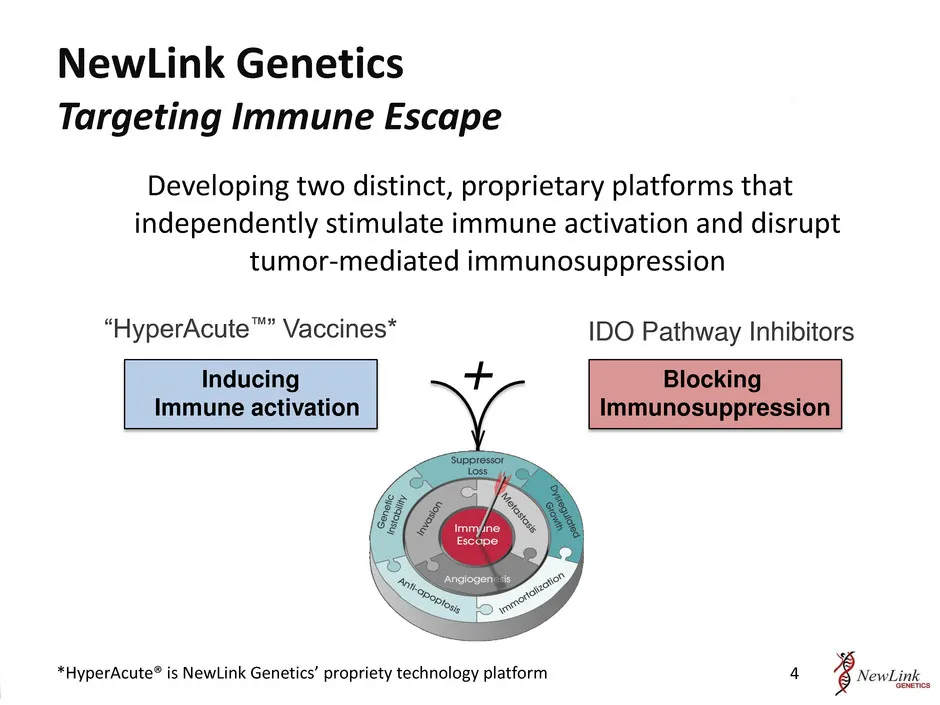
Blocking Immunosuppression “HyperAcute™” Vaccines* IDO Pathway Inhibitors Inducing Immune activation + V NewLink Genetics Targeting Immune Escape Developing two distinct, proprietary platforms that independently stimulate immune activation and disrupt tumor-mediated immunosuppression 4 *HyperAcute®
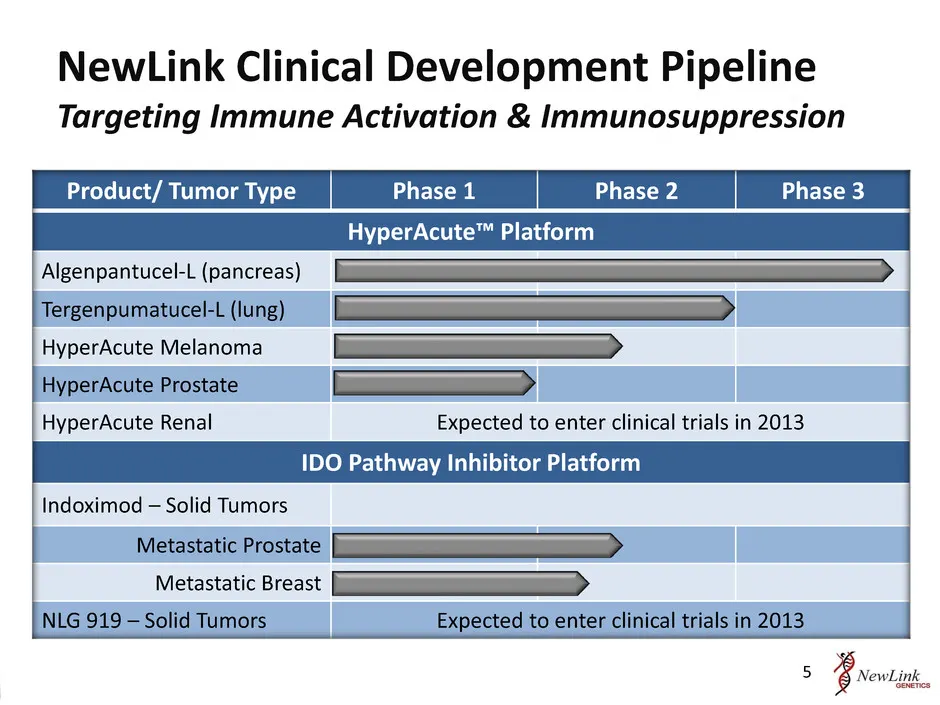
Slide 5: NewLink Clinical Development Pipeline
NewLink Clinical Development Pipeline Targeting Immune Activation & Immunosuppression Product/ Tumor Type Phase 1 Phase 2 Phase 3 HyperAcute™ Platform Algenpantucel-L (pancreas) Tergenpumatucel-L (lung) HyperAcute Melanoma HyperAcute Prostate HyperAcute Renal Expected to enter clinical trials in 201
Slide 6: HyperAcute Immunotherapy
HyperAcute™ Immunotherapy “Stimulating the immune system to recognize and attack cancer cells.” 6
Slide 7: HyperAcute Platform
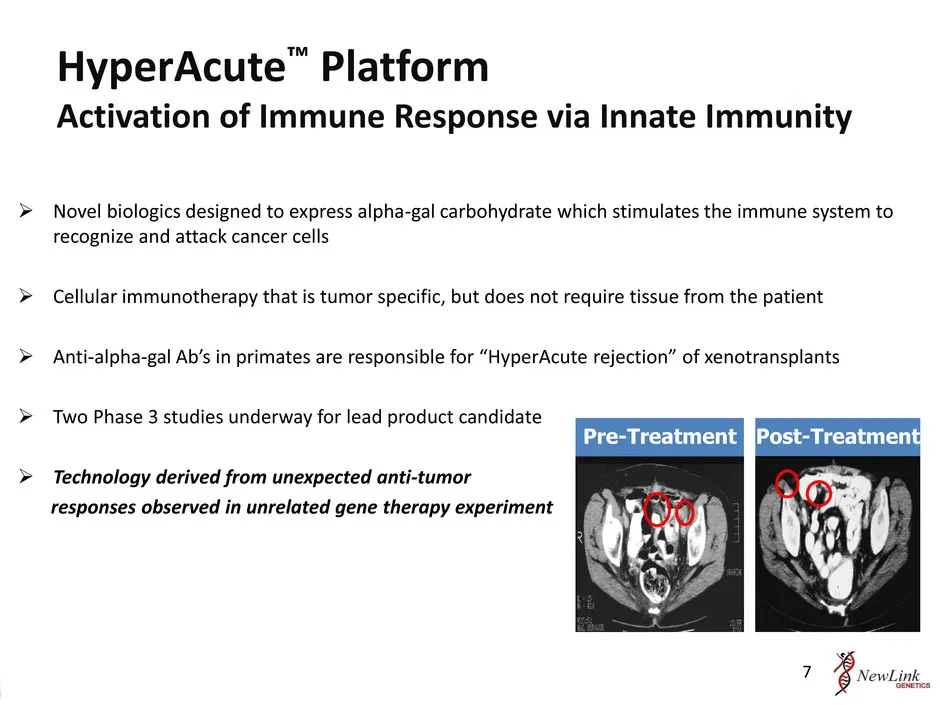
HyperAcute™ Platform Activation of Immune Response via Innate Immunity Novel biologics designed to express alpha-gal carbohydrate which stimulates the immune system to recognize and attack cancer cells Cellular immunotherapy that is tumor specific, but does not require tissue from the patient
Slide 8: Mechanism of Action
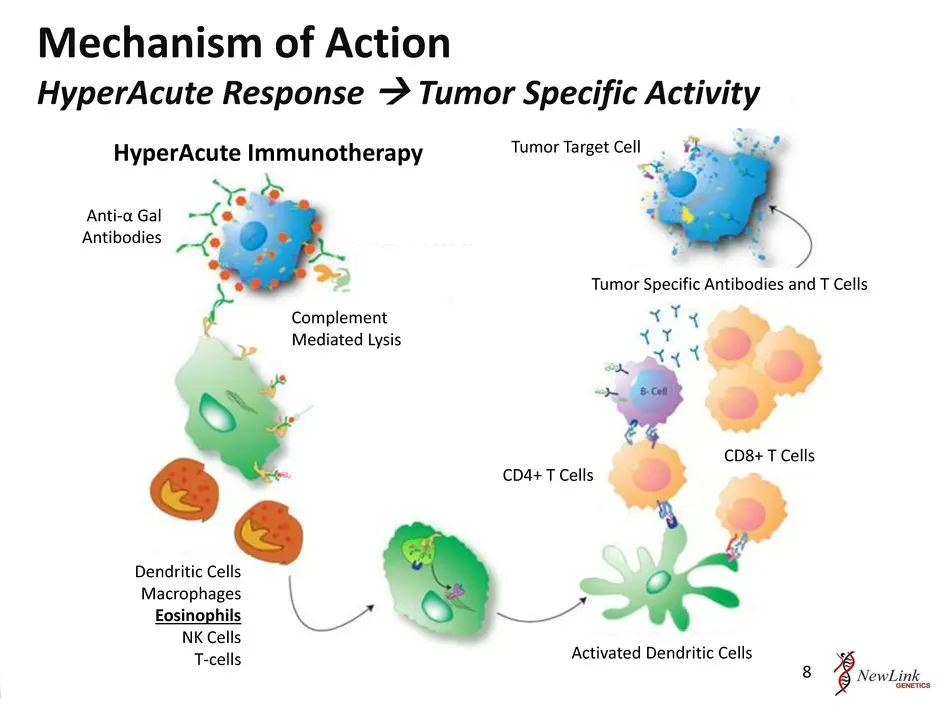
Mechanism of Action HyperAcute Response Tumor Specific Activity Dendritic Cells Macrophages Eosinophils NK Cells T-cells Complement Mediated Lysis Anti-α Gal Antibodies HyperAcute Immunotherapy Tumor Target Cell Tumor Specific Antibodies and T Cells CD8+ T Cells CD4+ T Cells Activated Dendritic Ce
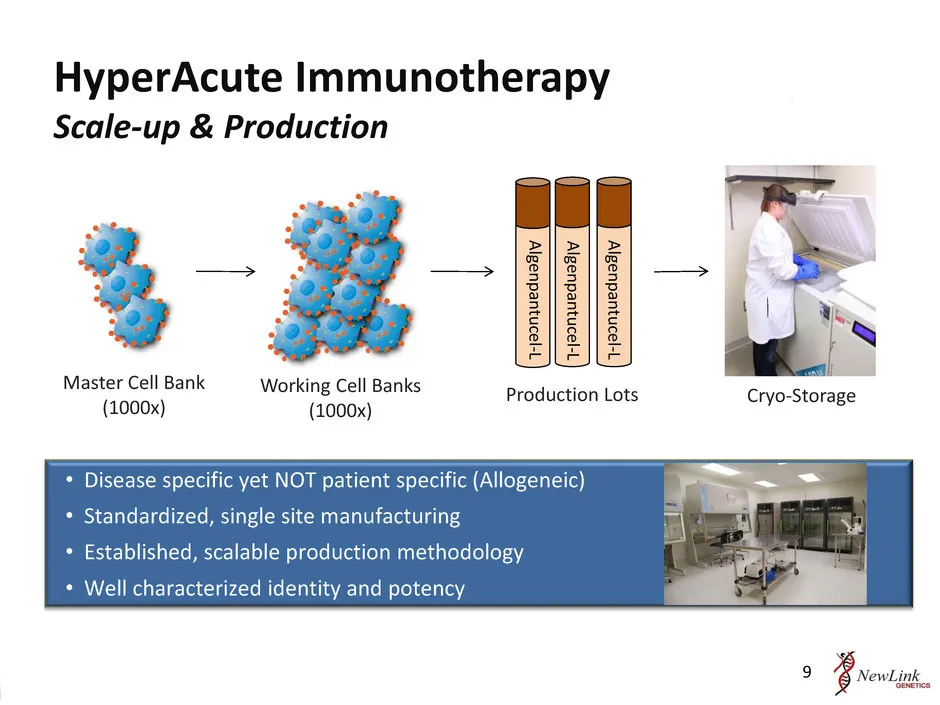
Slide 9: HyperAcute Immunotherapy Scale-up & Production
HyperAcute Immunotherapy Scale-up & Production • Disease specific yet NOT patient specific (Allogeneic) • Standardized, single site manufacturing • Established, scalable production methodology • Well characterized identity and potency Master Cell Bank (1000x) Production Lots Working Cell Banks (1000
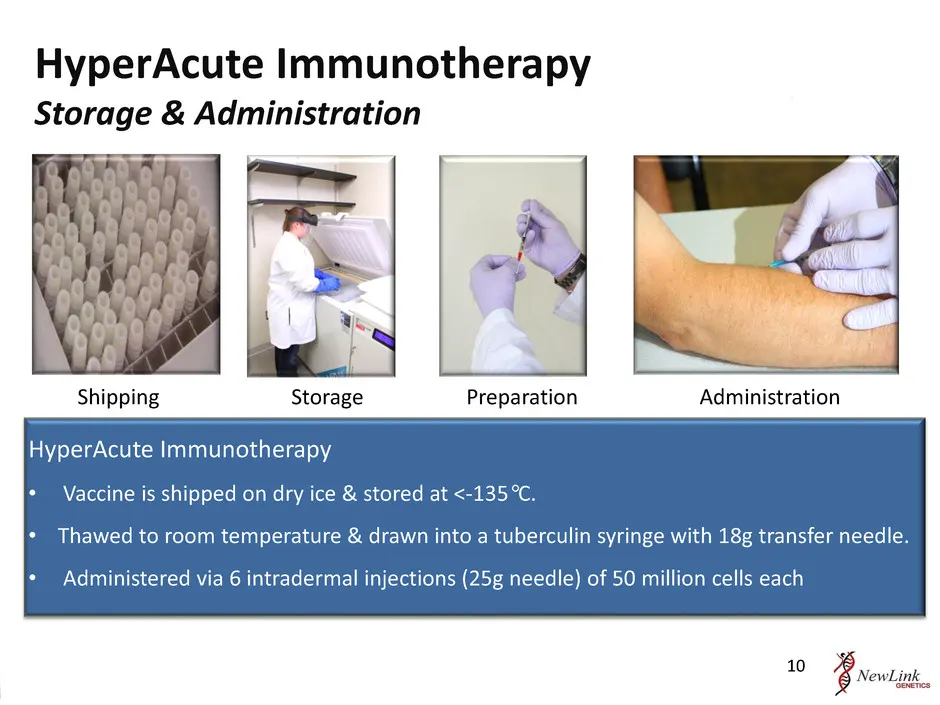
Slide 10: HyperAcute Immunotherapy Storage & Administration
Shipping Storage Preparation Administration HyperAcute Immunotherapy • Vaccine is shipped on dry ice & stored at <-135°C. • Thawed to room temperature & drawn into a tuberculin syringe with 18g transfer needle. • Administered via 6 intradermal injections (25g needle) of 50 million cells each HyperAc
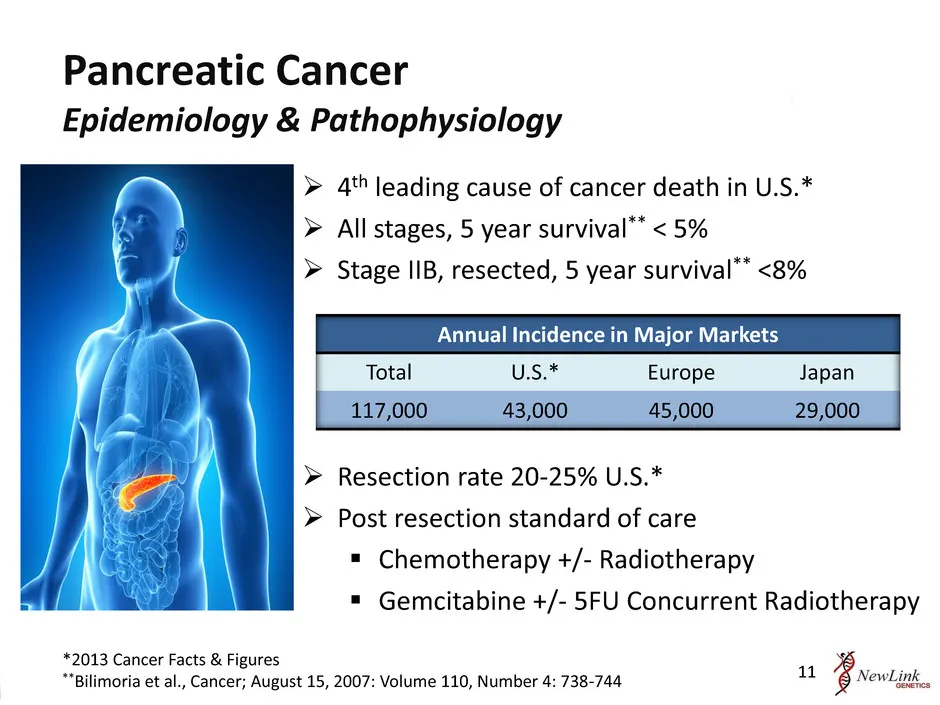
Slide 11: Pancreatic Cancer Epidemiology & Pathophysiology
Pancreatic Cancer Epidemiology & Pathophysiology 11 4th leading cause of cancer death in U.S.* All stages, 5 year survival** < 5% Stage IIB, resected, 5 year survival** <8% Resection rate 20-25% U.S.* Post resection standard of care Chemotherapy +/- Radiotherapy Gemcitabine +/- 5FU Con
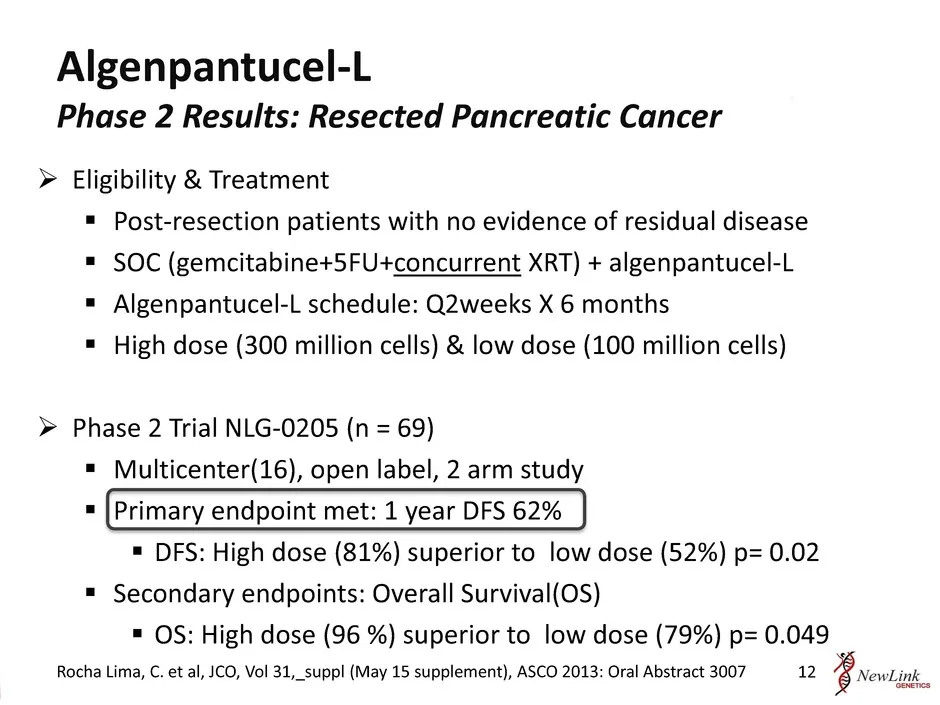
Slide 12: Algenpantucel-L Phase 2 Results: Resected Pancreatic Cancer
Algenpantucel-L Phase 2 Results: Resected Pancreatic Cancer Eligibility & Treatment Post-resection patients with no evidence of residual disease SOC (gemcitabine+5FU+concurrent XRT) + algenpantucel-L Algenpantucel-L schedule: Q2weeks X 6 months High dose (300 million cells) & low dose (100
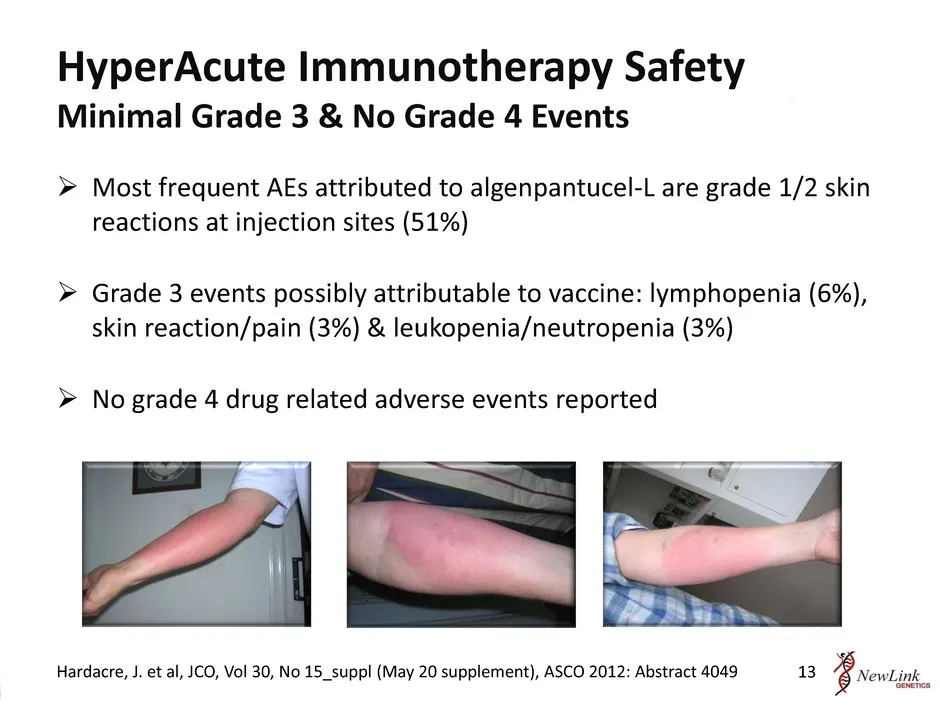
Slide 13: HyperAcute Immunotherapy Safety
HyperAcute Immunotherapy Safety Minimal Grade 3 & No Grade 4 Events Most frequent AEs attributed to algenpantucel-L are grade 1/2 skin reactions at injection sites (51%) Grade 3 events possibly attributable to vaccine: lymphopenia (6%), skin reaction/pain (3%) & leukopenia/neutropenia (3%) No
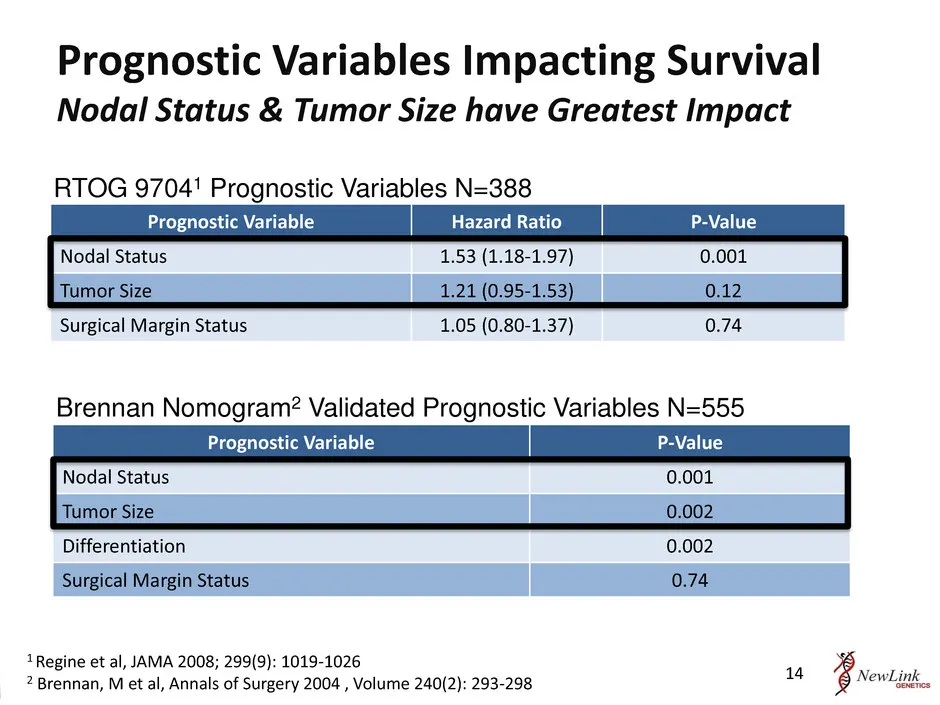
Slide 14: Prognostic Variables Impacting Survival
Prognostic Variables Impacting Survival Nodal Status & Tumor Size have Greatest Impact 14 Brennan Nomogram2 Validated Prognostic Variables N=555 Prognostic Variable Hazard Ratio P-Value Nodal Status 1.53 (1.18-1.97) 0.001 Tumor Size 1.21 (0.95-1.53) 0.12 Surgical Margin Status 1.05 (0.80-1.37) 0.74
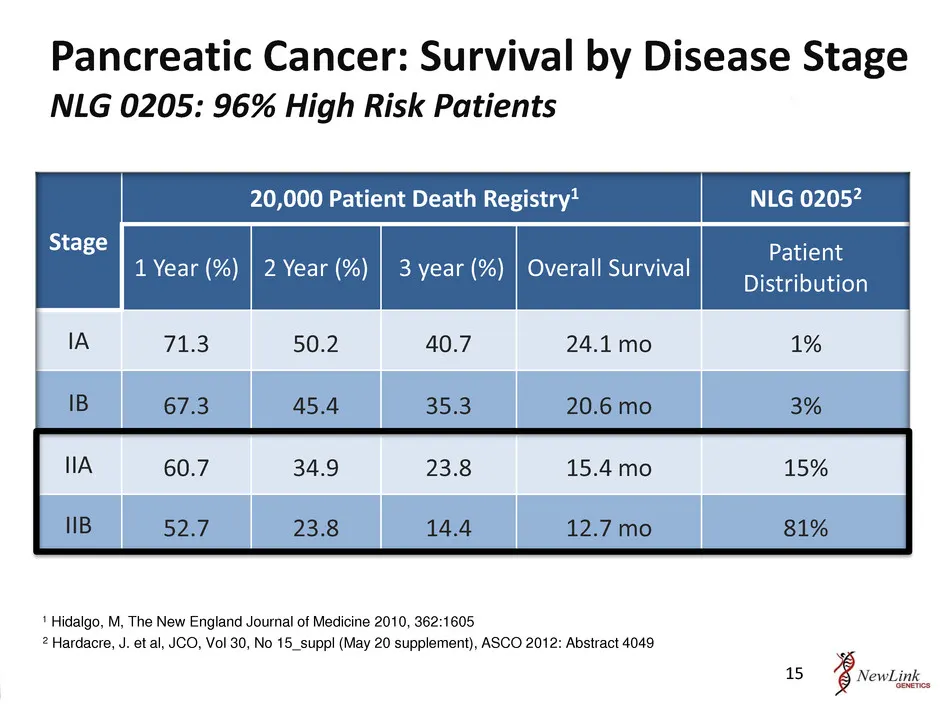
Slide 15: Pancreatic Cancer: Survival by Disease Stage
15 Stage 20,000 Patient Death Registry1 NLG 02052 1 Year (%) 2 Year (%) 3 year (%) Overall Survival Patient Distribution IA 71.3 50.2 40.7 24.1 mo 1% IB 67.3 45.4 35.3 20.6 mo 3% IIA 60.7 34.9 23.8 15.4 mo 15% IIB 52.7 23.8 14.4 12.7 mo 81% 2 Hardacre, J. et al, JCO, Vol 30, No 15_suppl (May 20 supp
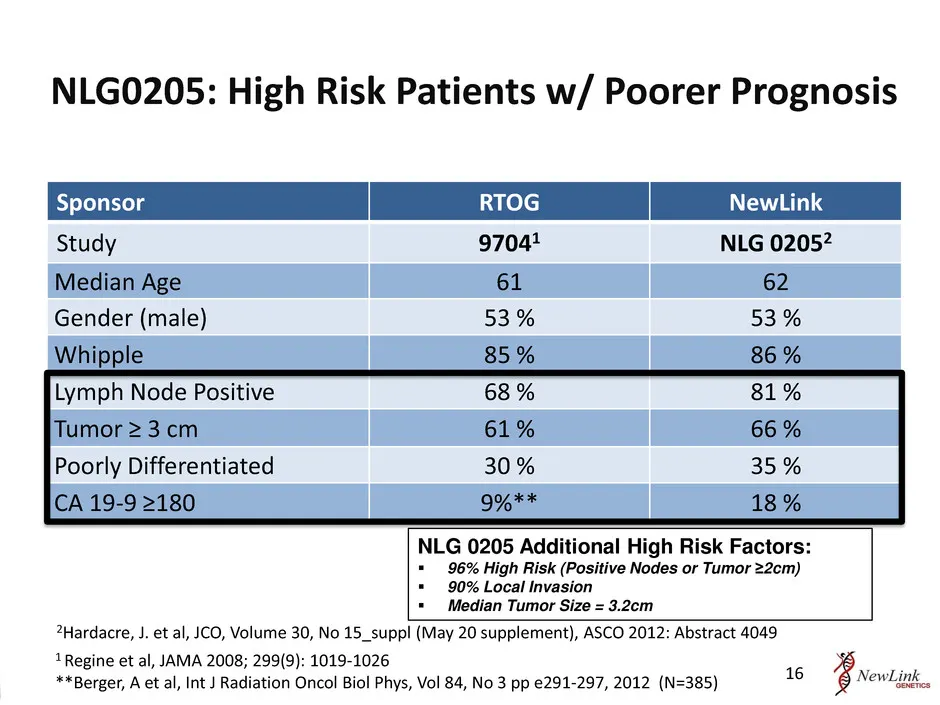
Slide 16: NLG0205: High Risk Patients w/ Poorer Prognosis
NLG0205: High Risk Patients w/ Poorer Prognosis Sponsor RTOG NewLink Study 97041 NLG 02052 Median Age 61 62 Gender (male) 53 % 53 % Whipple 85 % 86 % Lymph Node Positive 68 % 81 % Tumor ≥ 3 cm 61 % 66 % Poorly Differentiated 30 % 35 % CA 19-9 ≥180 9%** 18 % 16 2Hardacre, J. et al, JCO, Volume 30, No
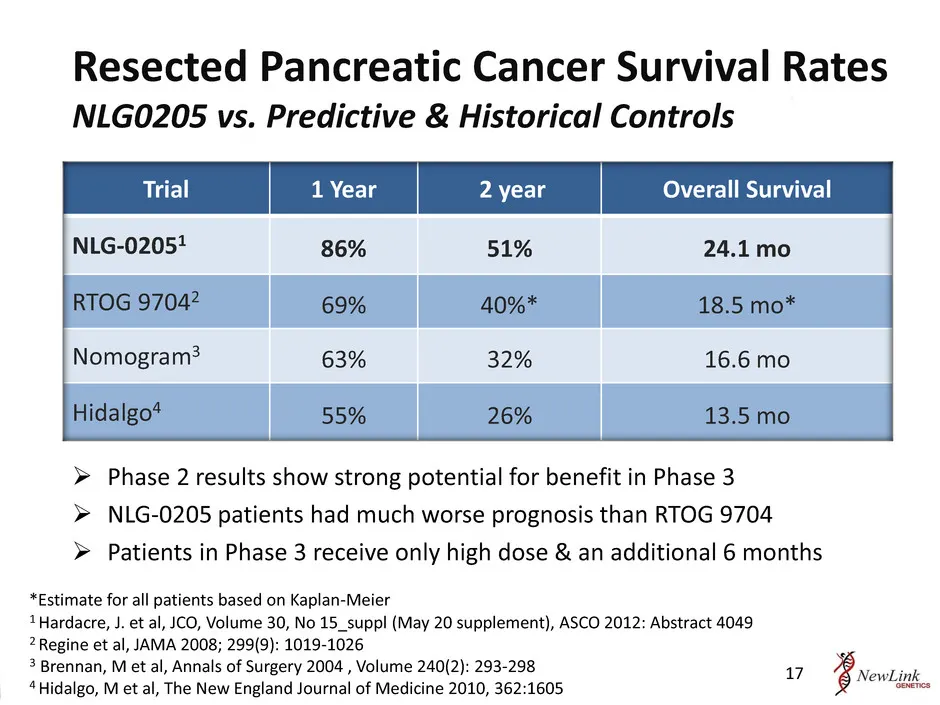
Slide 17: Resected Pancreatic Cancer Survival Rates vs. Controls
Resected Pancreatic Cancer Survival Rates NLG0205 vs. Predictive & Historical Controls 17 Trial 1 Year 2 year Overall Survival NLG-02051 86% 51% 24.1 mo RTOG 97042 69% 40%* 18.5 mo* Nomogram3 63% 32% 16.6 mo Hidalgo4 55% 26% 13.5 mo 1 Hardacre, J. et al, JCO, Volume 30, No 15_suppl (May 20 supplemen
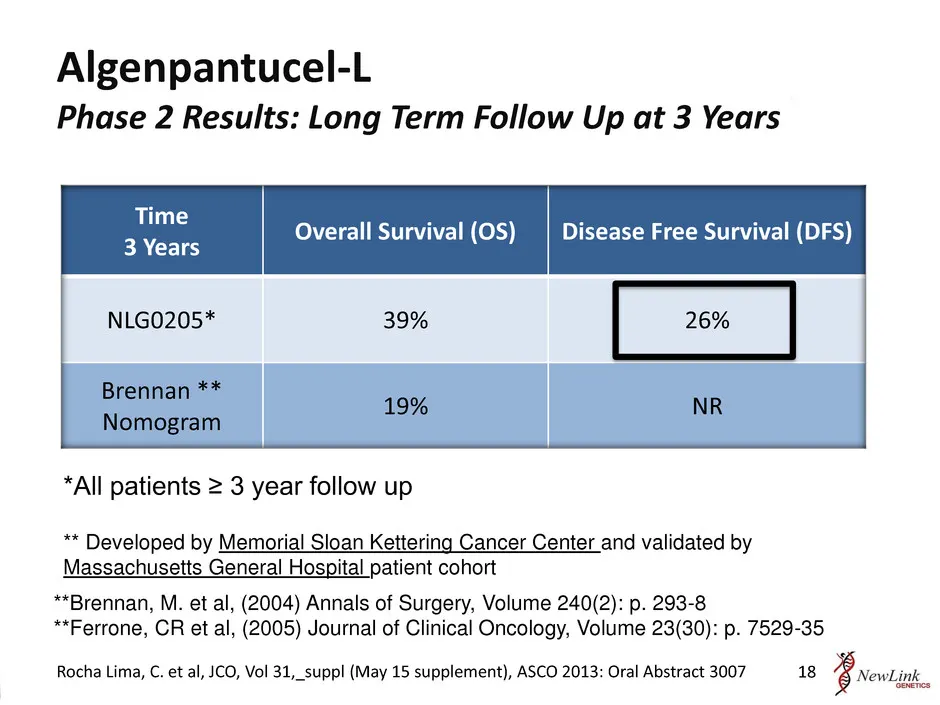
Slide 18: Algenpantucel-L Phase 2 Results: Long Term Follow Up
Algenpantucel-L Phase 2 Results: Long Term Follow Up at 3 Years *All patients ≥ 3 year follow up ** Developed by Memorial Sloan Kettering Cancer Center and validated by Massachusetts General Hospital patient cohort **Brennan, M. et al, (2004) Annals of Surgery, Volume 240(2): p. 293-8 **Ferrone, CR
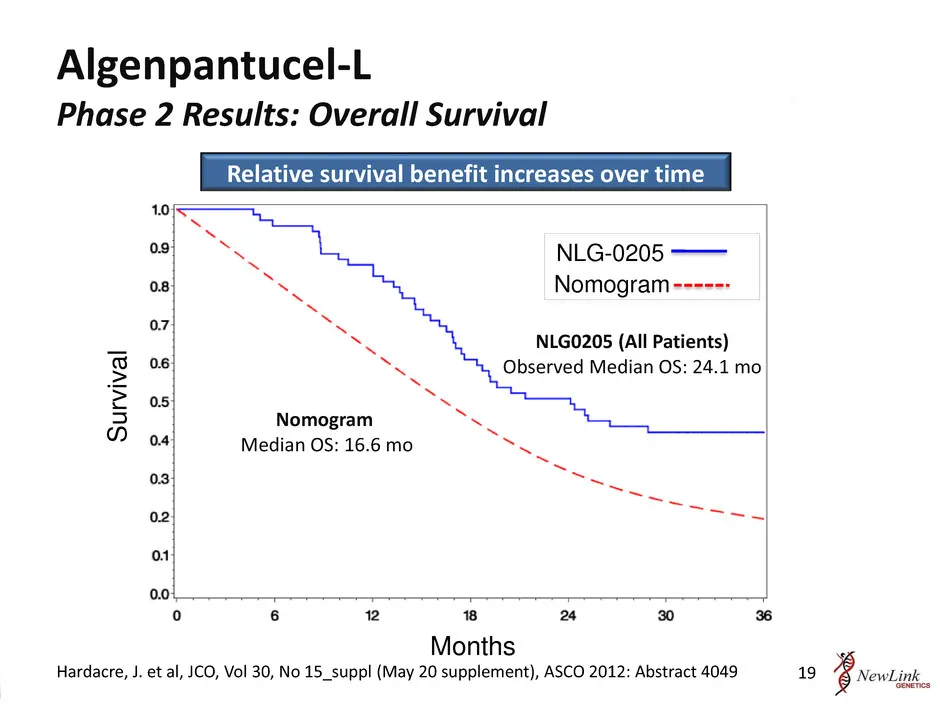
Slide 19: Algenpantucel-L Phase 2 Results: Overall Survival
Algenpantucel-L Phase 2 Results: Overall Survival Hardacre, J. et al, JCO, Vol 30, No 15_suppl (May 20 supplement), ASCO 2012: Abstract 4049 NLG-0205 Nomogram Months Survi v a l Nomogram Median OS: 16.6 mo NLG0205 (All Patients) Observed Median OS: 24.1 mo 19 Relative survival benefit increases over
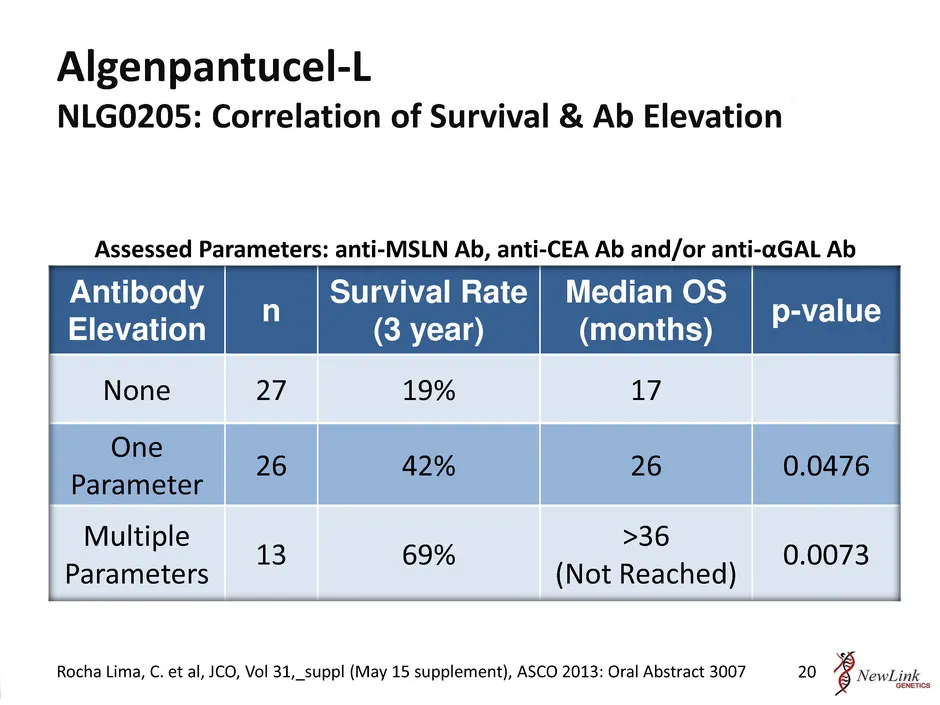
Slide 20: NLG0205: Correlation of Survival & Antibody Elevation
Algenpantucel-L NLG0205: Correlation of Survival & Ab Elevation Antibody Elevation n Survival Rate (3 year) Median OS (months) p-value None 27 19% 17 One Parameter 26 42% 26 0.0476 Multiple Parameters 13 69% >36 (Not Reached) 0.0073 Assessed Parameters: anti-MSLN Ab, anti-CEA Ab and/or anti-αGAL Ab
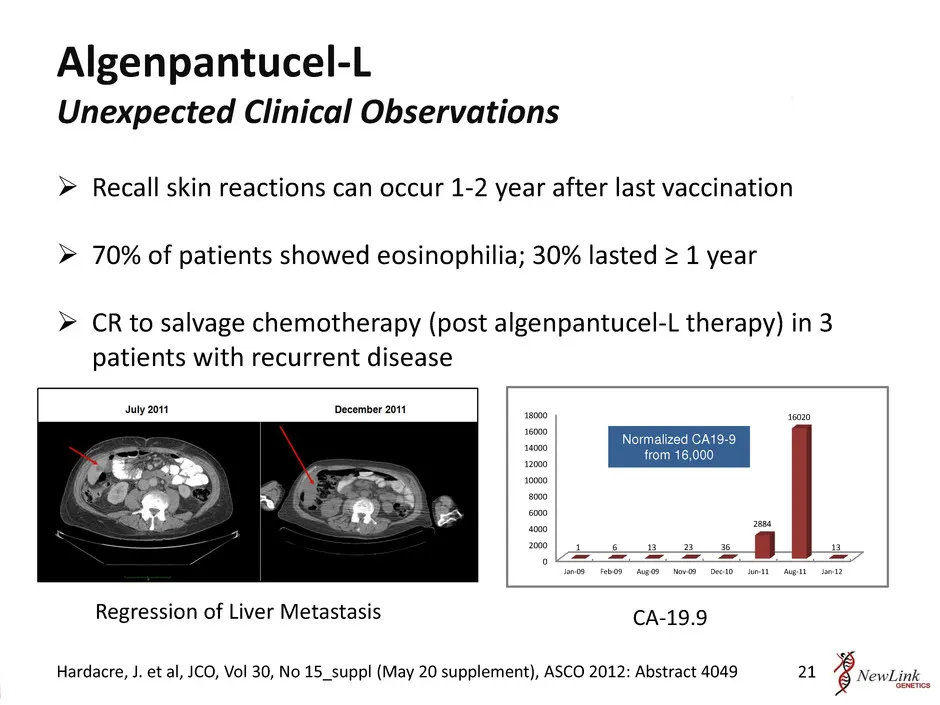
Slide 21: Algenpantucel-L Unexpected Clinical Observations
Algenpantucel-L Unexpected Clinical Observations Recall skin reactions can occur 1-2 year after last vaccination 70% of patients showed eosinophilia; 30% lasted ≥ 1 year CR to salvage chemotherapy (post algenpantucel-L therapy) in 3 patients with recurrent disease 0 2000 4000 6000 8000 10000 1
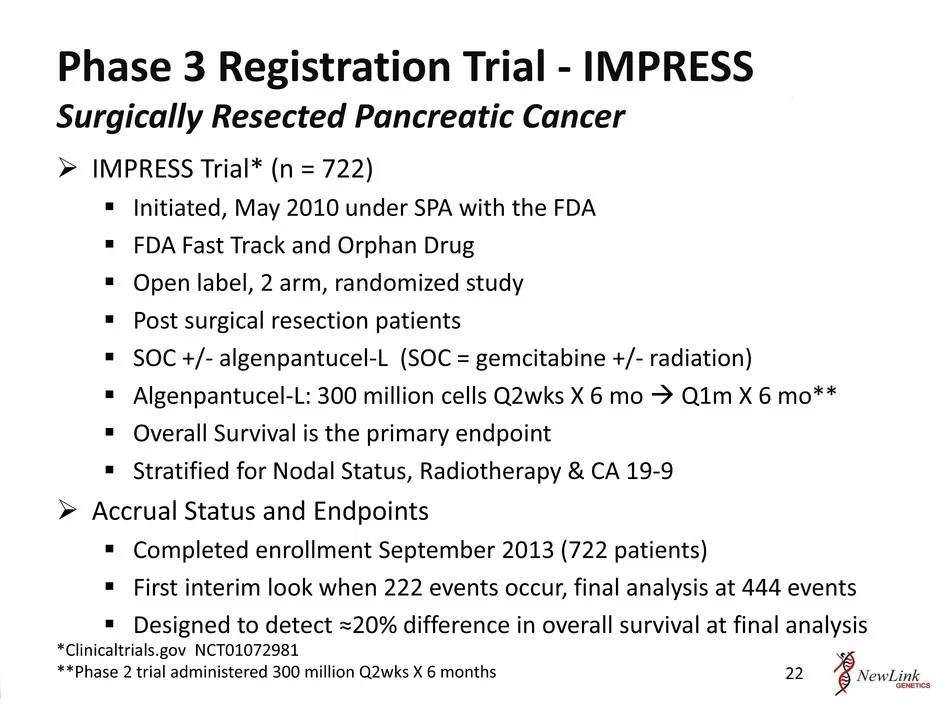
Slide 22: Phase 3 Registration Trial - IMPRESS
Phase 3 Registration Trial - IMPRESS Surgically Resected Pancreatic Cancer IMPRESS Trial* (n = 722) Initiated, May 2010 under SPA with the FDA FDA Fast Track and Orphan Drug Open label, 2 arm, randomized study Post surgical resection patients SOC +/- algenpantucel-L (SOC = gemcitabine +/
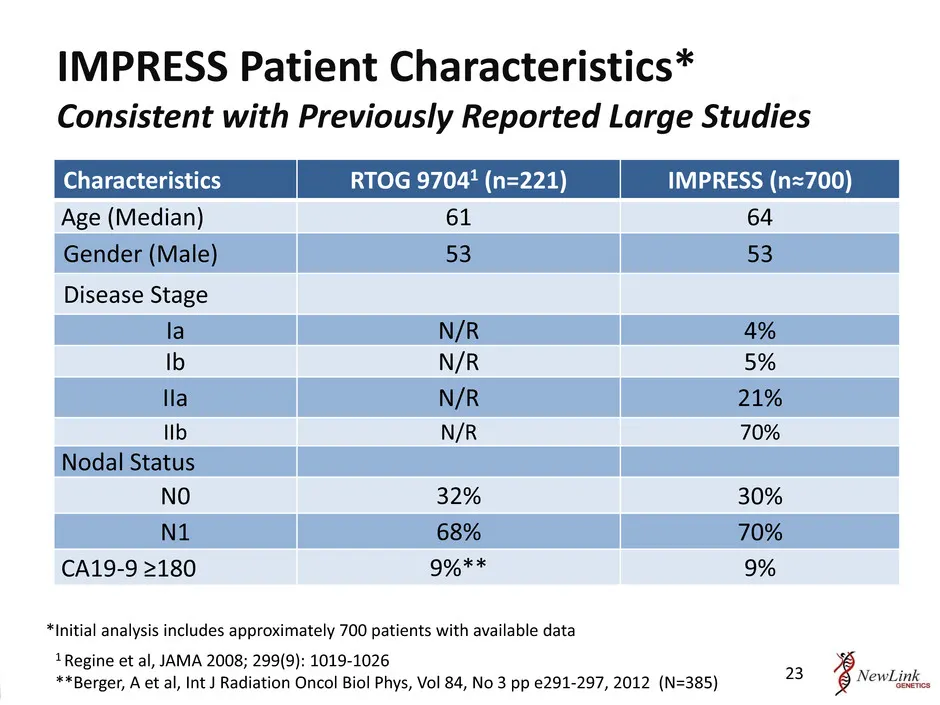
Slide 23: IMPRESS Patient Characteristics
IMPRESS Patient Characteristics* Consistent with Previously Reported Large Studies Characteristics RTOG 97041 (n=221) IMPRESS (n≈700) Age (Median) 61 64 Gender (Male) 53 53 Disease Stage Ia N/R 4% Ib N/R 5% IIa N/R 21% IIb N/R 70% Nodal Status N0 32% 30% N1 68% 70% CA19-9 ≥180 9%** 9% 23 *Initial an
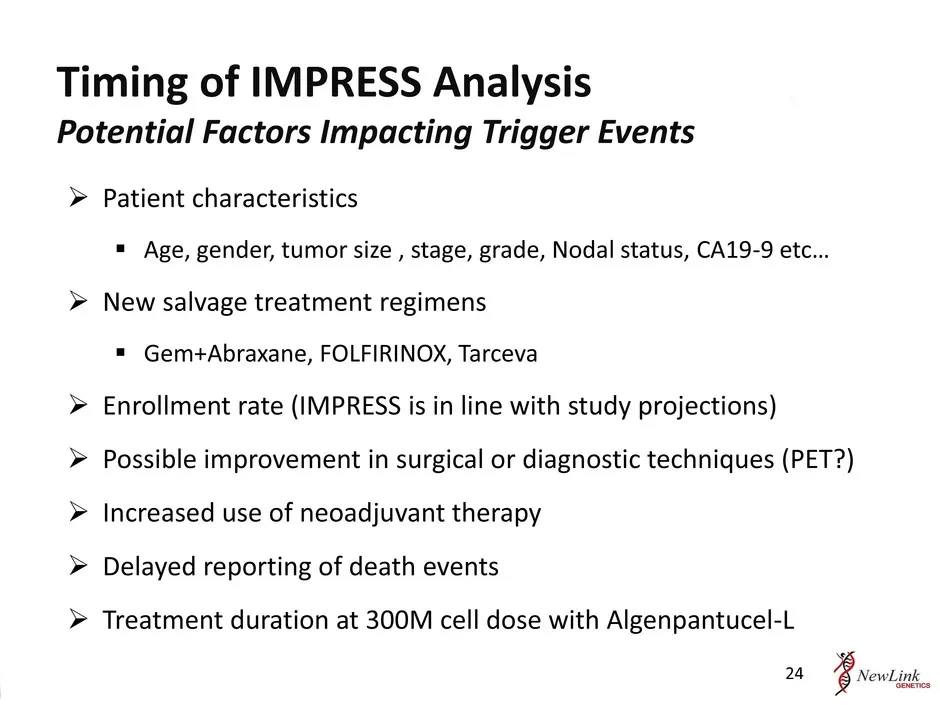
Slide 24: Timing of IMPRESS Analysis
Timing of IMPRESS Analysis Potential Factors Impacting Trigger Events Patient characteristics Age, gender, tumor size , stage, grade, Nodal status, CA19-9 etc… New salvage treatment regimens Gem+Abraxane, FOLFIRINOX, Tarceva Enrollment rate (IMPRESS is in line with study projections) Pos
Slide 25: Second Phase 3 Trial - PILLAR
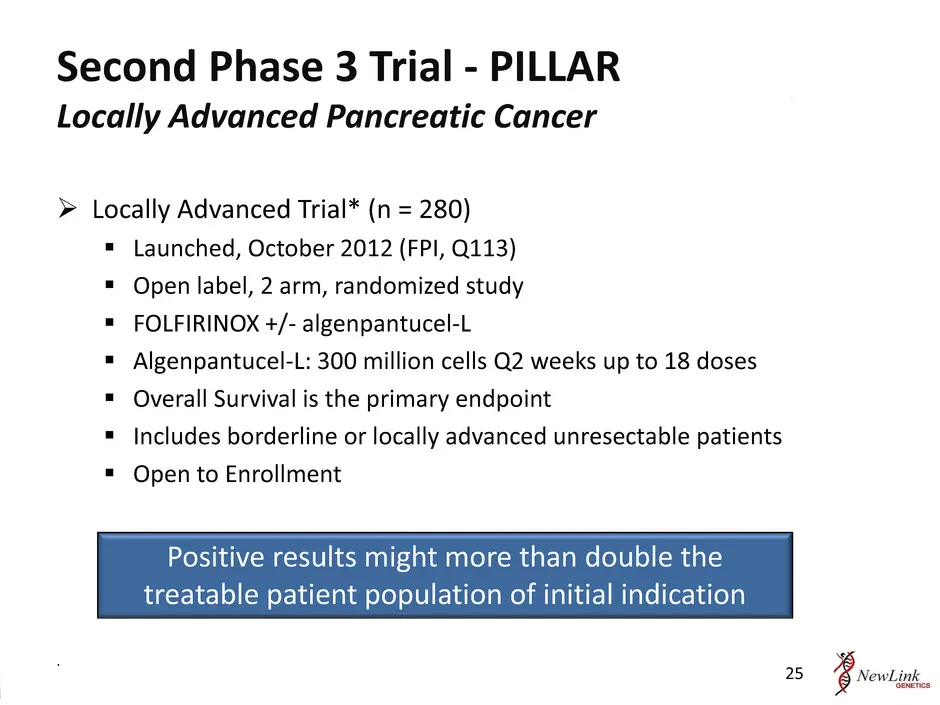
Second Phase 3 Trial - PILLAR Locally Advanced Pancreatic Cancer Locally Advanced Trial* (n = 280) Launched, October 2012 (FPI, Q113) Open label, 2 arm, randomized study FOLFIRINOX +/- algenpantucel-L Algenpantucel-L: 300 million cells Q2 weeks up to 18 doses Overall Survival is the prim
Slide 26: Commercialization Strategy
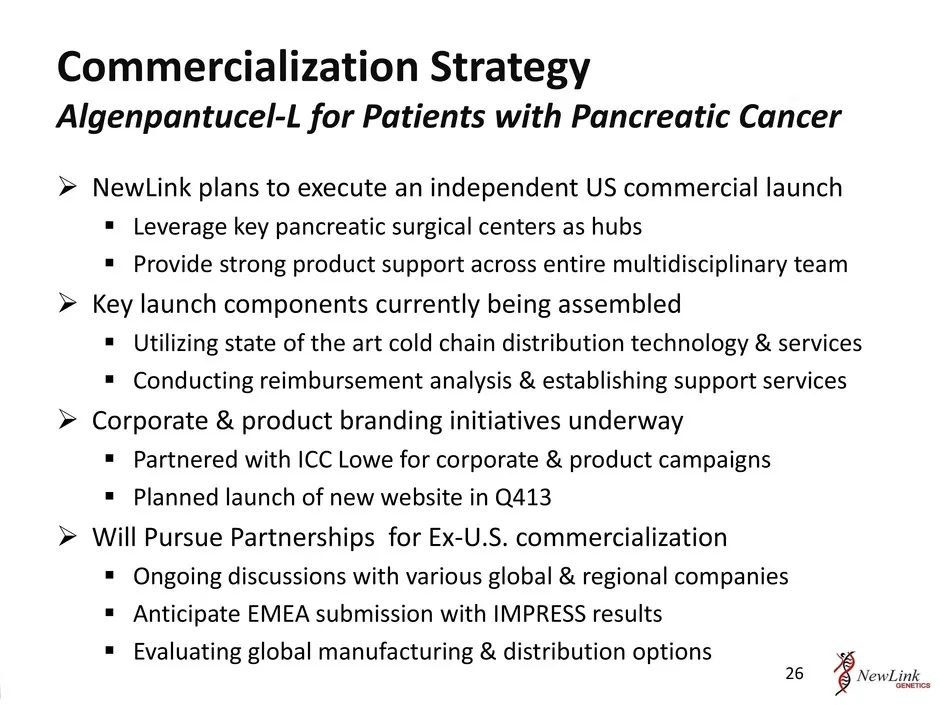
Commercialization Strategy Algenpantucel-L for Patients with Pancreatic Cancer NewLink plans to execute an independent US commercial launch Leverage key pancreatic surgical centers as hubs Provide strong product support across entire multidisciplinary team Key launch components currently bei
Slide 27: Lung Cancer Epidemiology & Pathophysiology
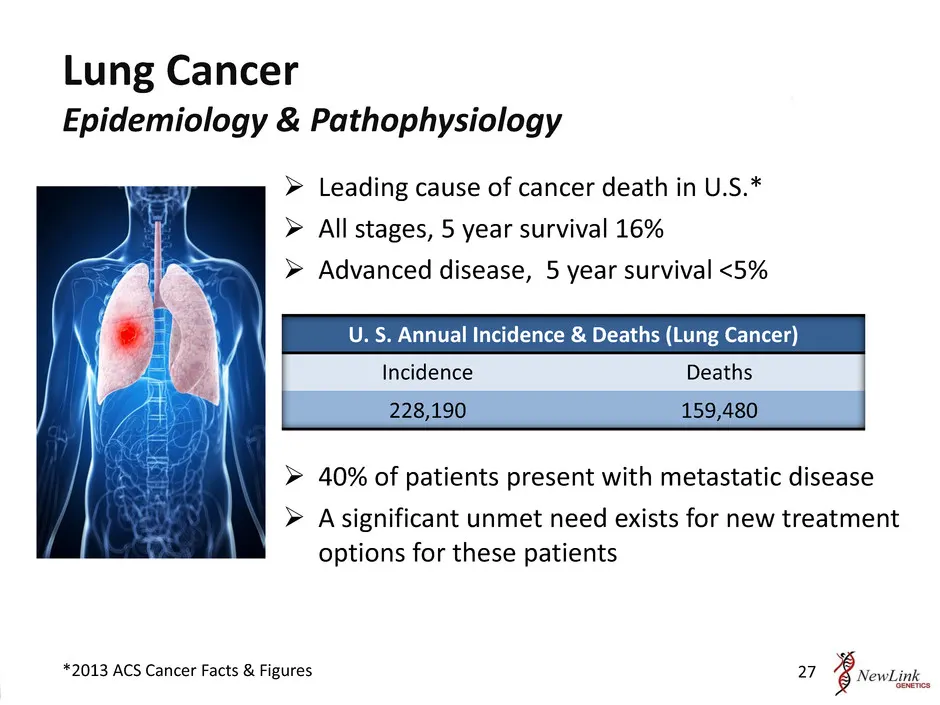
Lung Cancer Epidemiology & Pathophysiology 27 Leading cause of cancer death in U.S.* All stages, 5 year survival 16% Advanced disease, 5 year survival <5% 40% of patients present with metastatic disease A significant unmet need exists for new treatment options for these patients U. S. Annu
Slide 28: Tergenpumatucel-L Phase 2 Study – Previously Treated NSCLC
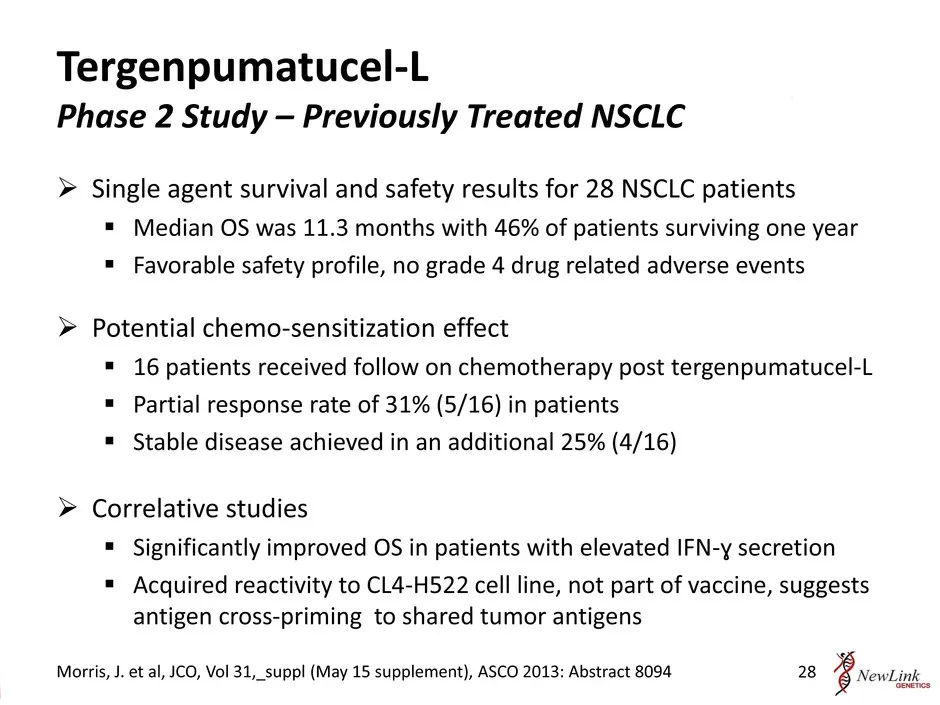
Tergenpumatucel-L Phase 2 Study – Previously Treated NSCLC Single agent survival and safety results for 28 NSCLC patients Median OS was 11.3 months with 46% of patients surviving one year Favorable safety profile, no grade 4 drug related adverse events Potential chemo-sensitization effect
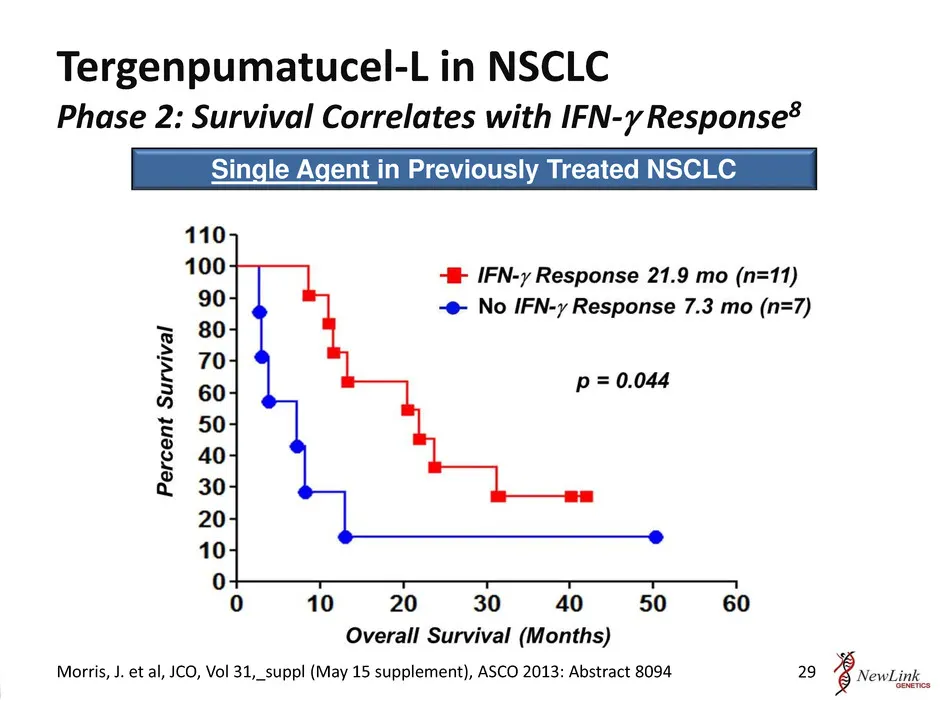
Slide 29: Tergenpumatucel-L in NSCLC: Survival Correlates with IFN-g Response
Single Agent in Previously Treated NSCLC Tergenpumatucel-L in NSCLC Phase 2: Survival Correlates with IFN-g Response8 Morris, J. et al, JCO, Vol 31,_suppl (May 15 supplement), ASCO 2013: Abstract 8094 29
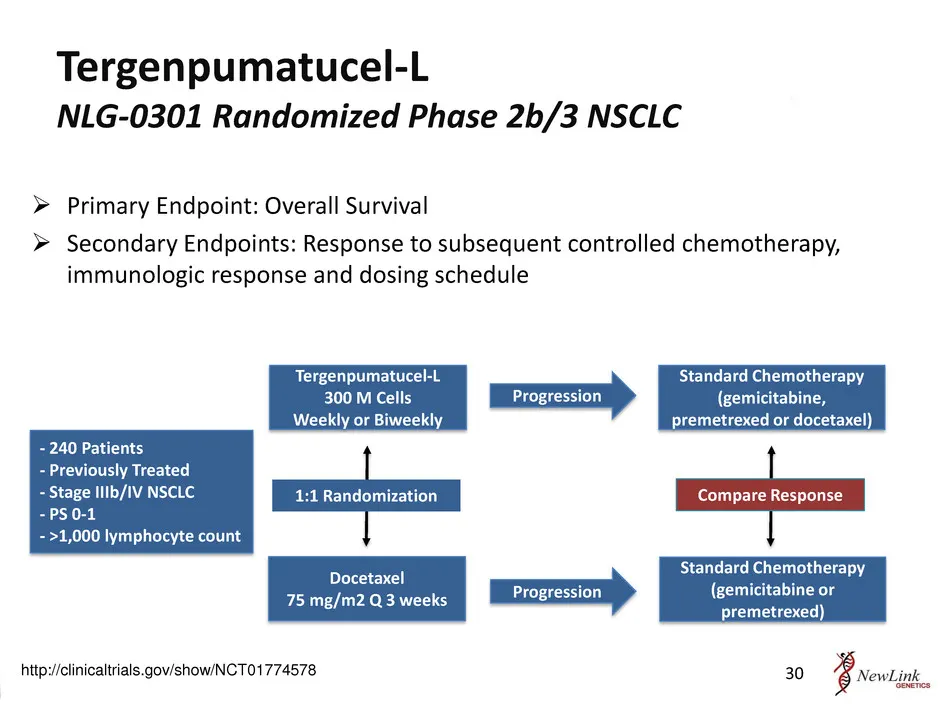
Slide 30: Tergenpumatucel-L NLG-0301 Randomized Phase 2b/3 NSCLC
30 Tergenpumatucel-L 300 M Cells Weekly or Biweekly Docetaxel 75 mg/m2 Q 3 weeks - 240 Patients - Previously Treated - Stage IIIb/IV NSCLC - PS 0-1 - >1,000 lymphocyte count Progression Standard Chemotherapy (gemicitabine, premetrexed or docetaxel) Standard Chemotherapy (gemicitabine or premetrexed)
Slide 31: IDO Pathway Inhibitors
IDO Pathway Inhibitors Indoleamine 2,3-dioxygenase (IDO) “Disrupting mechanisms by which tumors evade a patient’s immune system.” NewLink Genetics IDO Pathway Inhibitors Indoximod NLG-919 31
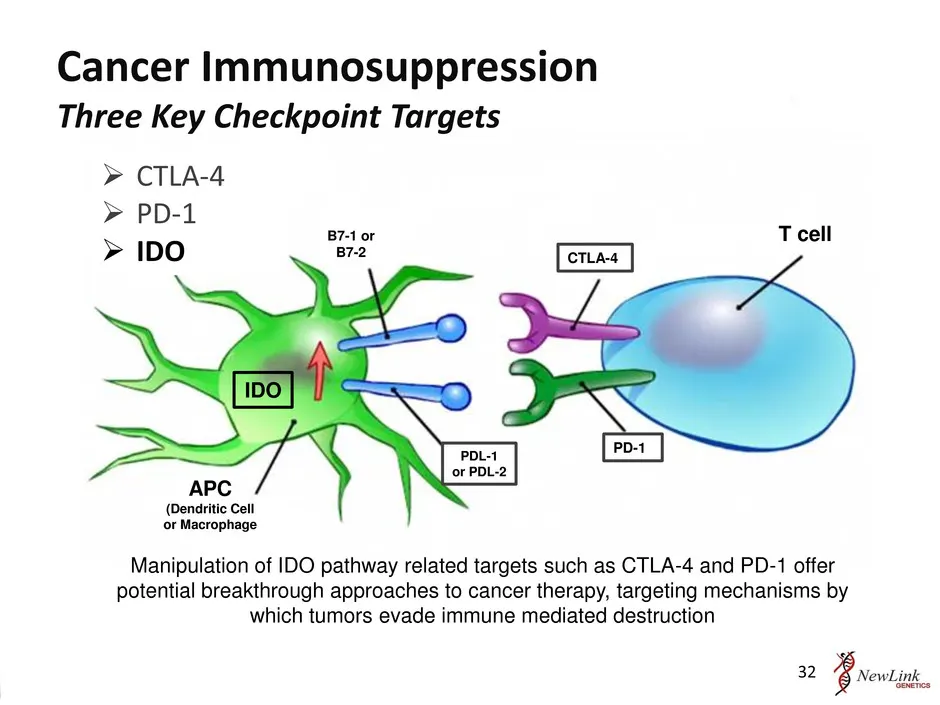
Slide 32: Cancer Immunosuppression: Three Key Checkpoint Targets
Cancer Immunosuppression Three Key Checkpoint Targets CTLA-4 PD-1 IDO B7-1 or B7-2 CTLA-4 T cell PDL-1 or PDL-2 IDO APC (Dendritic Cell or Macrophage PD-1 Manipulation of IDO pathway related targets such as CTLA-4 and PD-1 offer potential breakthrough approaches to cancer therapy, targeting me
Slide 33: IDO Supports Cancer Immunosuppression
Regulates immune response to cancer like CTLA-4 and PD-1 Inhibits effector T-cells, activates suppressive Tregs Enables local tumor immune escape Overexpressed Within tumor cells or antigen presenting cells to directly suppress T- cells, must be targeted with a small molecule NewLink act
Slide 34: Indoximod Phase 1: Key Results Summary
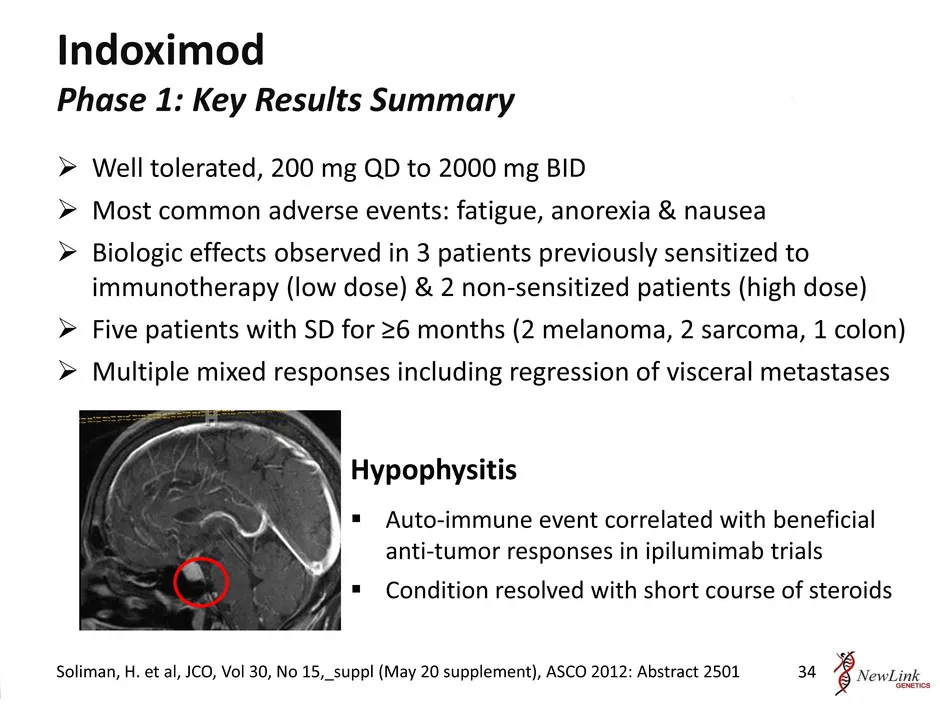
Indoximod Phase 1: Key Results Summary Well tolerated, 200 mg QD to 2000 mg BID Most common adverse events: fatigue, anorexia & nausea Biologic effects observed in 3 patients previously sensitized to immunotherapy (low dose) & 2 non-sensitized patients (high dose) Five patients with SD for ≥
Slide 35: Indoximod + Docetaxel Combination Phase 1: Efficacy Results
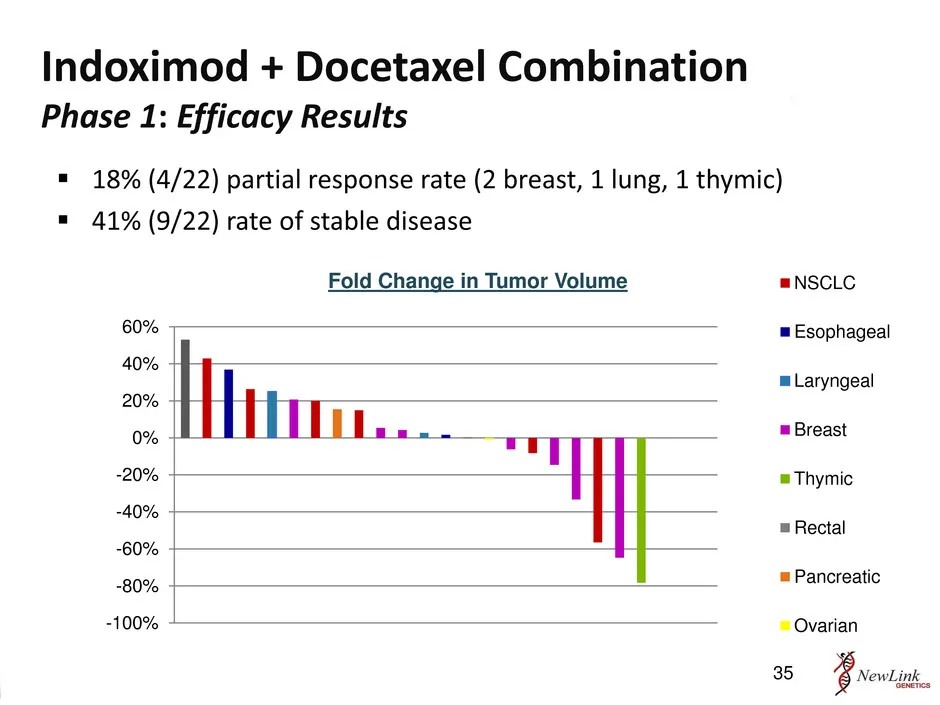
Indoximod + Docetaxel Combination Phase 1: Efficacy Results 18% (4/22) partial response rate (2 breast, 1 lung, 1 thymic) 41% (9/22) rate of stable disease -100% -80% -60% -40% -20% 0% 20% 40% 60% Fold Change in Tumor Volume NSCLC Esophageal Laryngeal Breast Thymic Rectal Pancreatic Ovarian 35
Slide 36: Indoximod Clinical Development
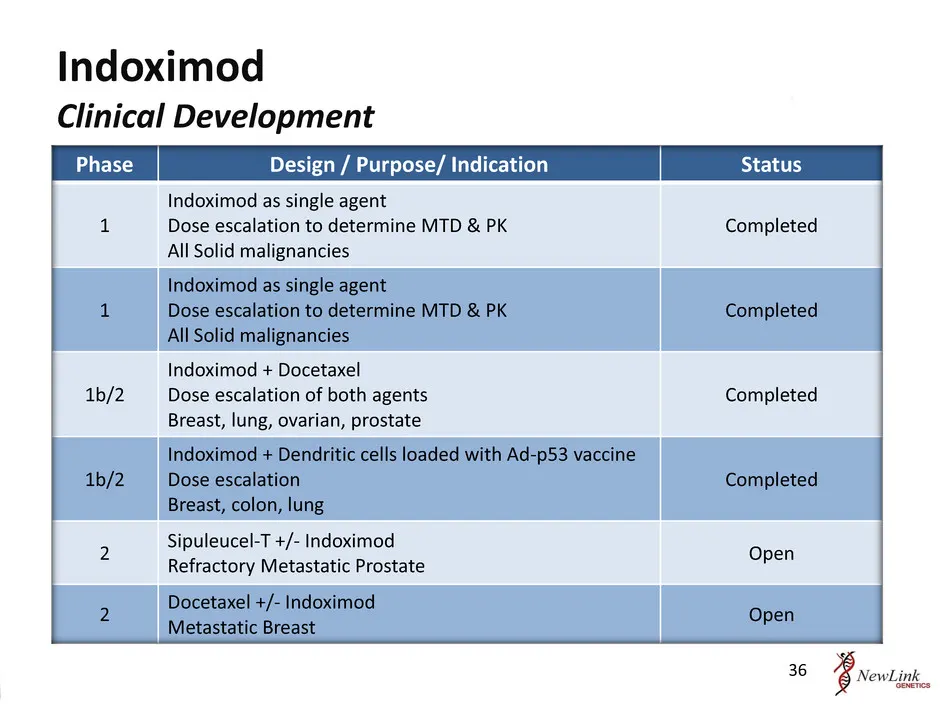
36 Phase Design / Purpose/ Indication Status 1 Indoximod as single agent Dose escalation to determine MTD & PK All Solid malignancies Completed 1 Indoximod as single agent Dose escalation to determine MTD & PK All Solid malignancies Completed 1b/2 Indoximod + Docetaxel Dose escalation of both agents
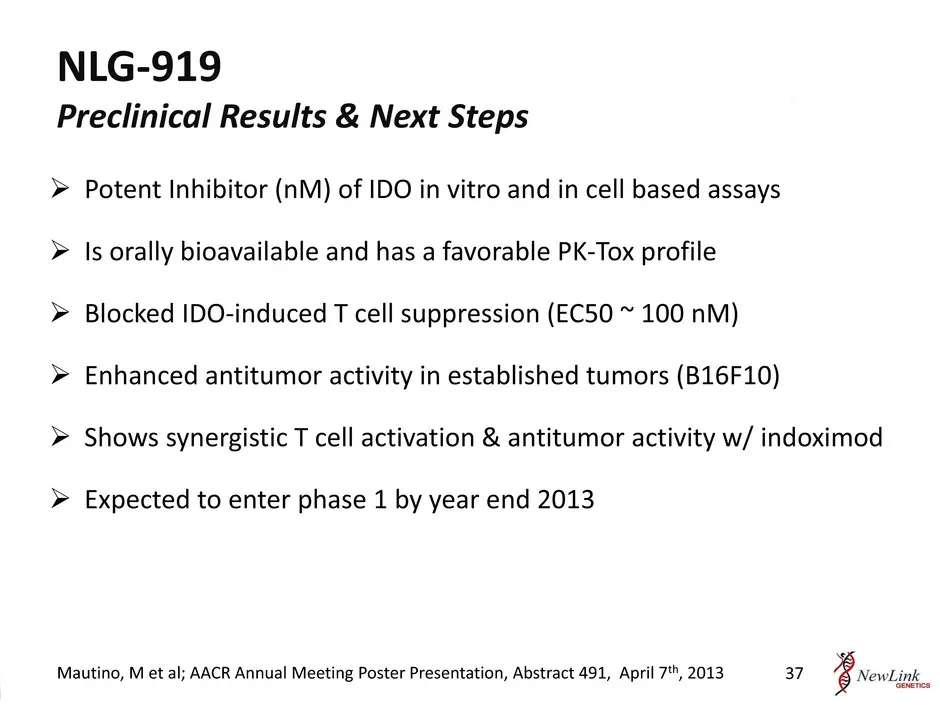
Slide 37: NLG-919 Preclinical Results & Next Steps
NLG-919 Preclinical Results & Next Steps Potent Inhibitor (nM) of IDO in vitro and in cell based assays Is orally bioavailable and has a favorable PK-Tox profile Blocked IDO-induced T cell suppression (EC50 ~ 100 nM) Enhanced antitumor activity in established tumors (B16F10) Shows synergis
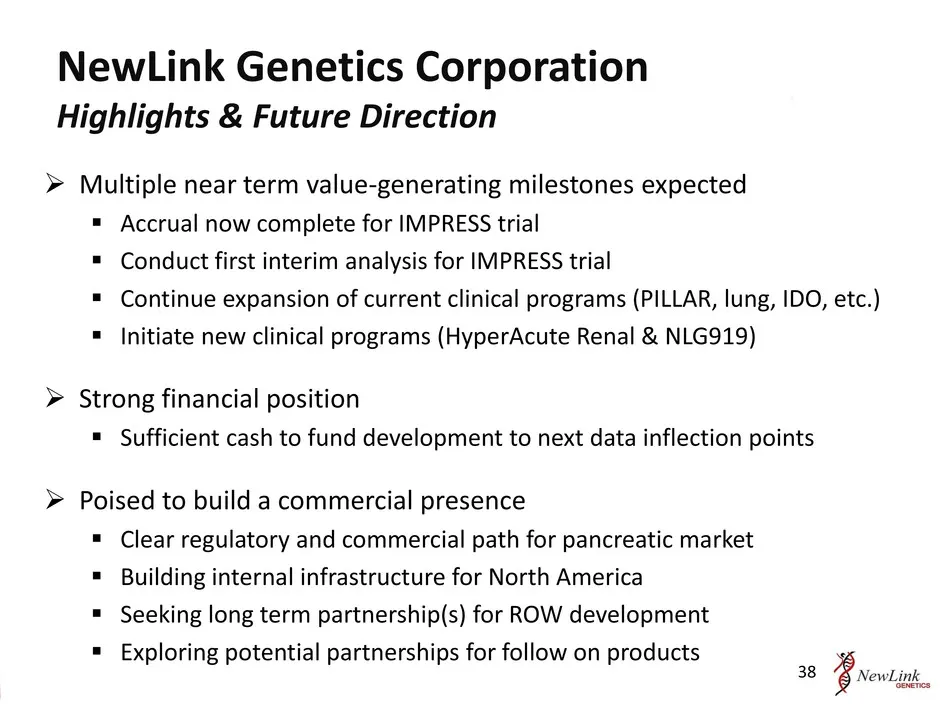
Slide 38: Highlights & Future Direction
NewLink Genetics Corporation Highlights & Future Direction Multiple near term value-generating milestones expected Accrual now complete for IMPRESS trial Conduct first interim analysis for IMPRESS trial Continue expansion of current clinical programs (PILLAR, lung, IDO, etc.) Initiate new
Source: SEC EDGAR · 8-K filed Sep 26, 2013
More decks from Lumos Pharma Inc
 Q2 2024 Earnings Presentation8 slides · Aug 1, 2024
 Investor Presentation (June 2024)44 slides · Jun 5, 2024
 Q1 2024 Earnings Presentation14 slides · May 15, 2024
 FY2023 Earnings Presentation10 slides · Mar 7, 2024
 Investor Presentation (November 2023)57 slides · Nov 15, 2023
 Technical Presentation (November 2023)37 slides · Nov 7, 2023