Nektar Therapeutics · NASDAQ:NKTR
Nektar Therapeutics — 42nd Annual J.P. Morgan Healthcare Conference 2024
26 slides from Nektar Therapeutics's conference presentation, January 2024

Slide 1: 42nd Annual J.P. Morgan Healthcare Conference
42nd Annual J.P. Morgan Healthcare Conference January 2024
Slide 2: Forward-looking Statements
Forward-looking Statements This presentation includes forward-looking statements regarding Nektar’s proprietary drug candidates, the timing of the start and conclusion of ongoing or planned clinical trials, the timing and outcome of regulatory decisions, unaudited year-end cash and investments and s
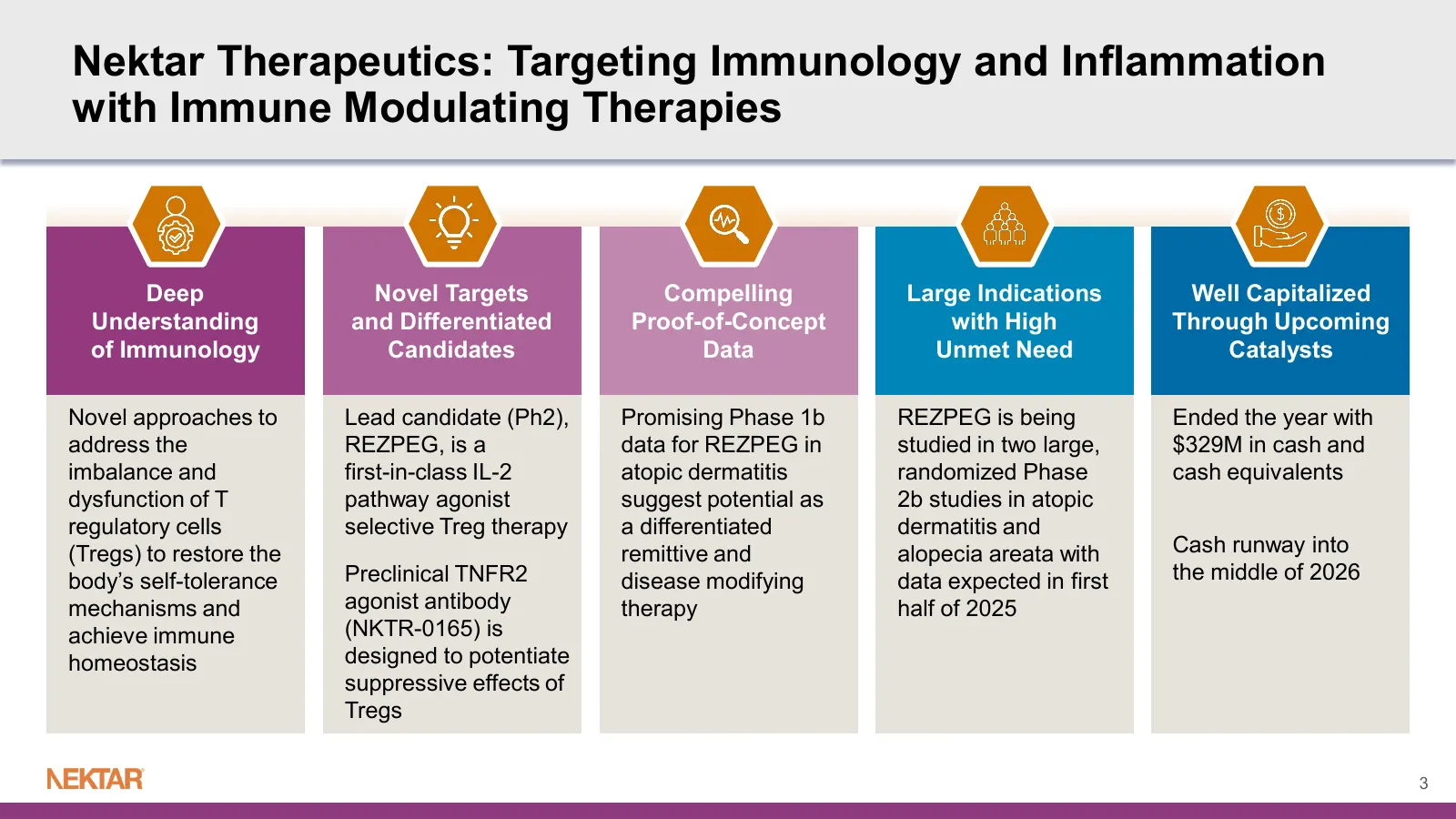
Slide 3: Nektar Therapeutics: Targeting Immunology and Inflammation with Immune Modulating Therapies
Nektar Therapeutics: Targeting Immunology and Inflammation with Immune Modulating Therapies Deep Novel Targets Compelling Large Indications Well Capitalized Understanding and Differentiated Proof-of-Concept with High Through Upcoming of Immunology Candidates Data Unmet Need Catalysts Novel approache
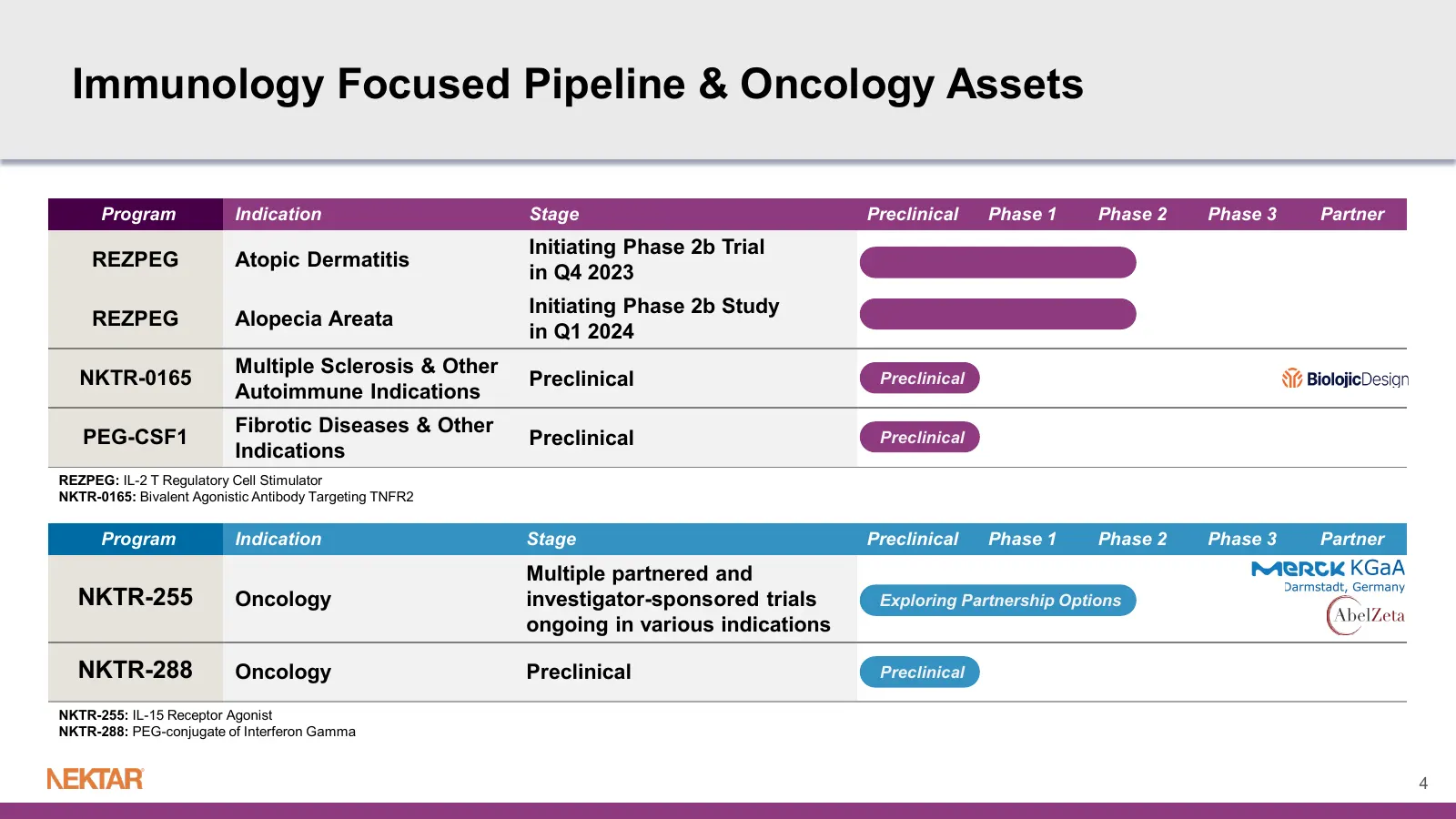
Slide 4: Immunology Focused Pipeline & Oncology Assets
Immunology Focused Pipeline & Oncology Assets Program Indication Stage Preclinical Phase 1 Phase 2 Phase 3 Partner Initiating Phase 2b Trial REZPEG Atopic Dermatitis in Q4 2023 Initiating Phase 2b Study REZPEG Alopecia Areata in Q1 2024 Multiple Sclerosis & Other NKTR-0165 Preclinical Preclinical Au
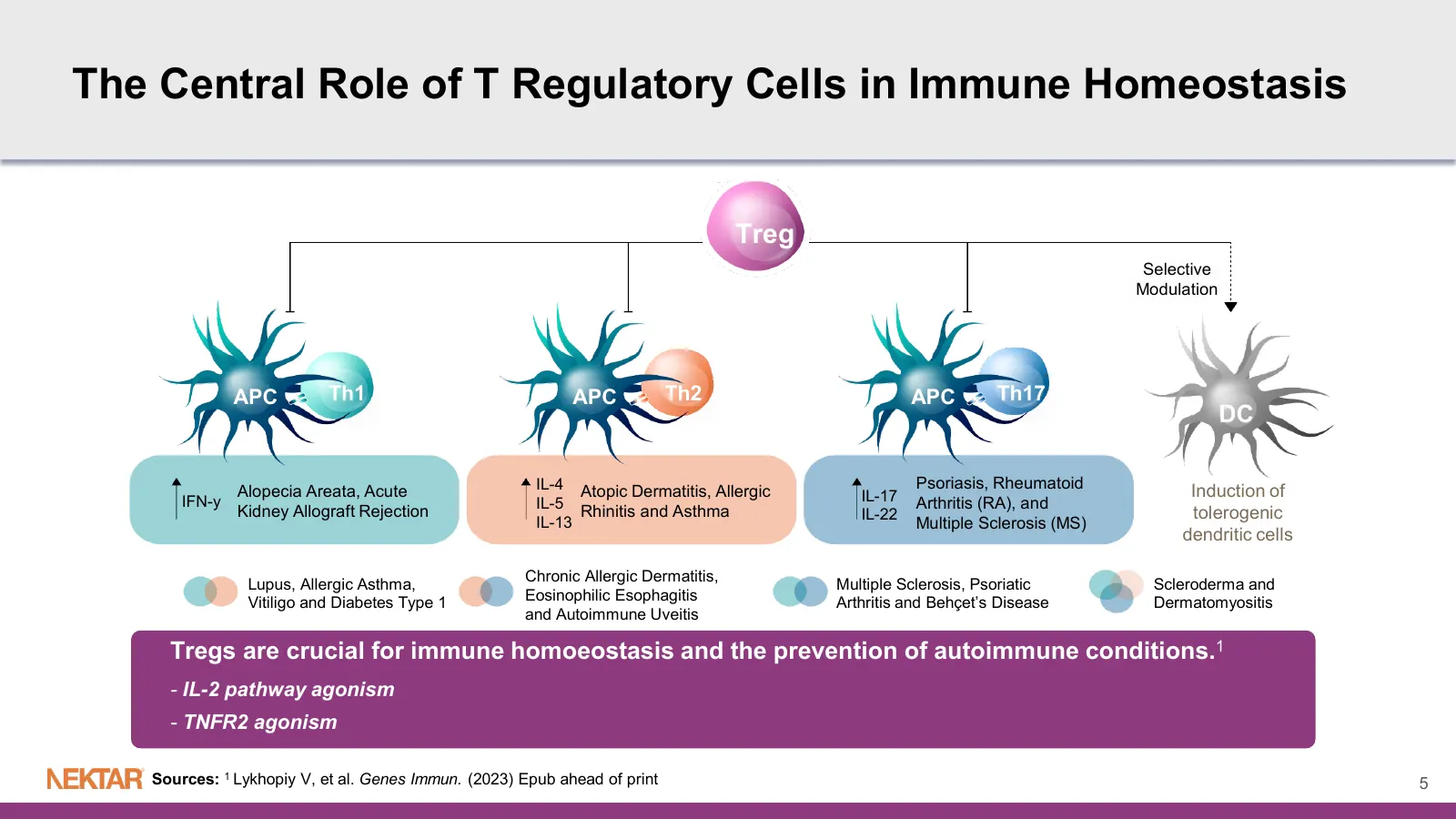
Slide 5: The Central Role of T Regulatory Cells in Immune Homeostasis
The Central Role of T Regulatory Cells in Immune Homeostasis Treg Selective Modulation APC Th1 APC Th2 APC Th17 DC Alopecia Areata, Acute IL-4 Atopic Dermatitis, Allergic Psoriasis, Rheumatoid Induction of IFN-y IL-5 IL-17 Kidney Allograft Rejection Rhinitis and Asthma Arthritis (RA), and IL-13 IL-2
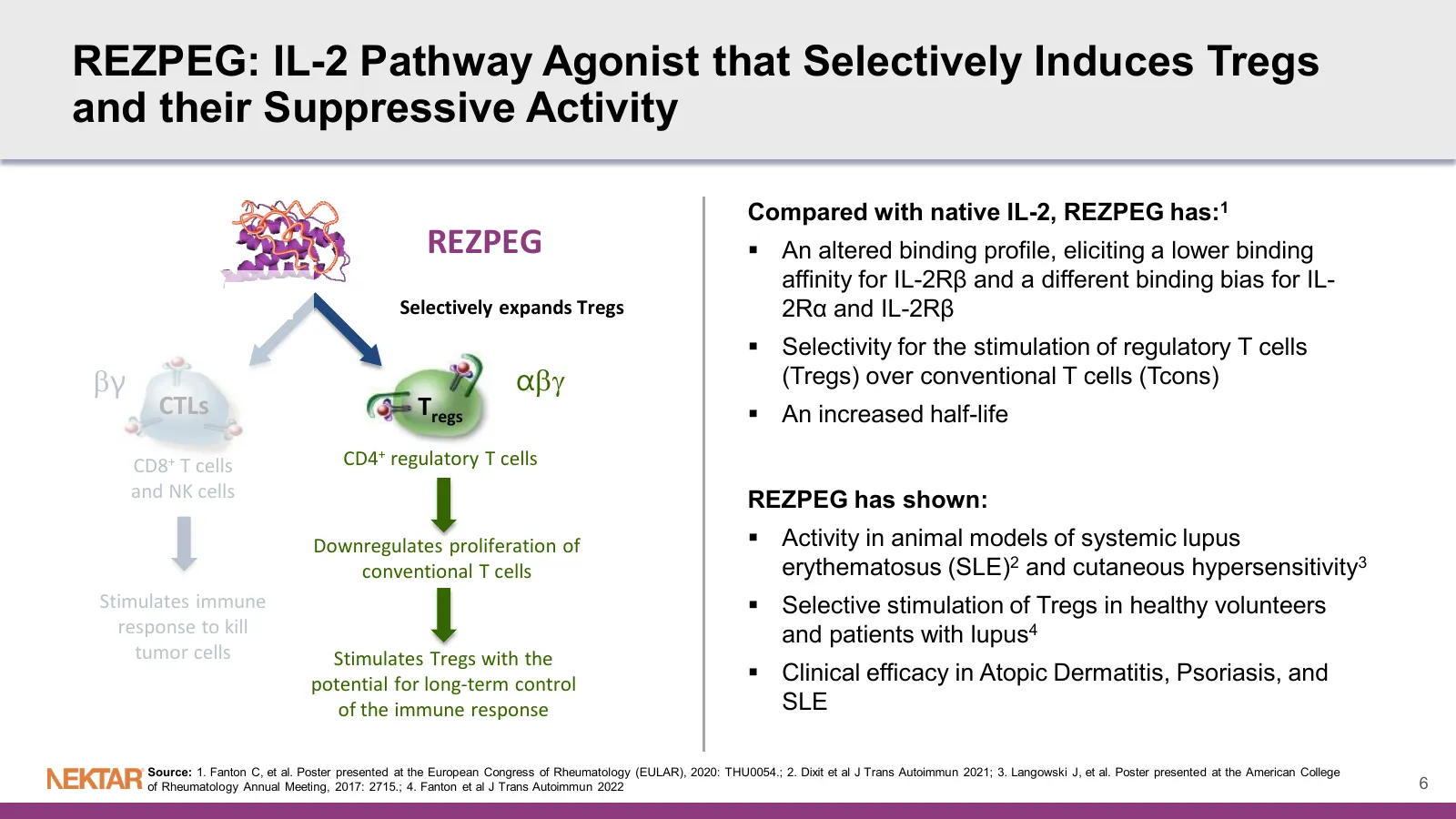
Slide 6: REZPEG: IL-2 Pathway Agonist that Selectively Induces Tregs and their Suppressive Activity
REZPEG: IL-2 Pathway Agonist that Selectively Induces Tregs and their Suppressive Activity Compared with native IL-2, REZPEG has:1 REZPEG An altered binding profile, eliciting a lower binding affinity for IL-2Rβ and a different binding bias for IL- Selectively expands Tregs 2Rα and IL-2Rβ Select
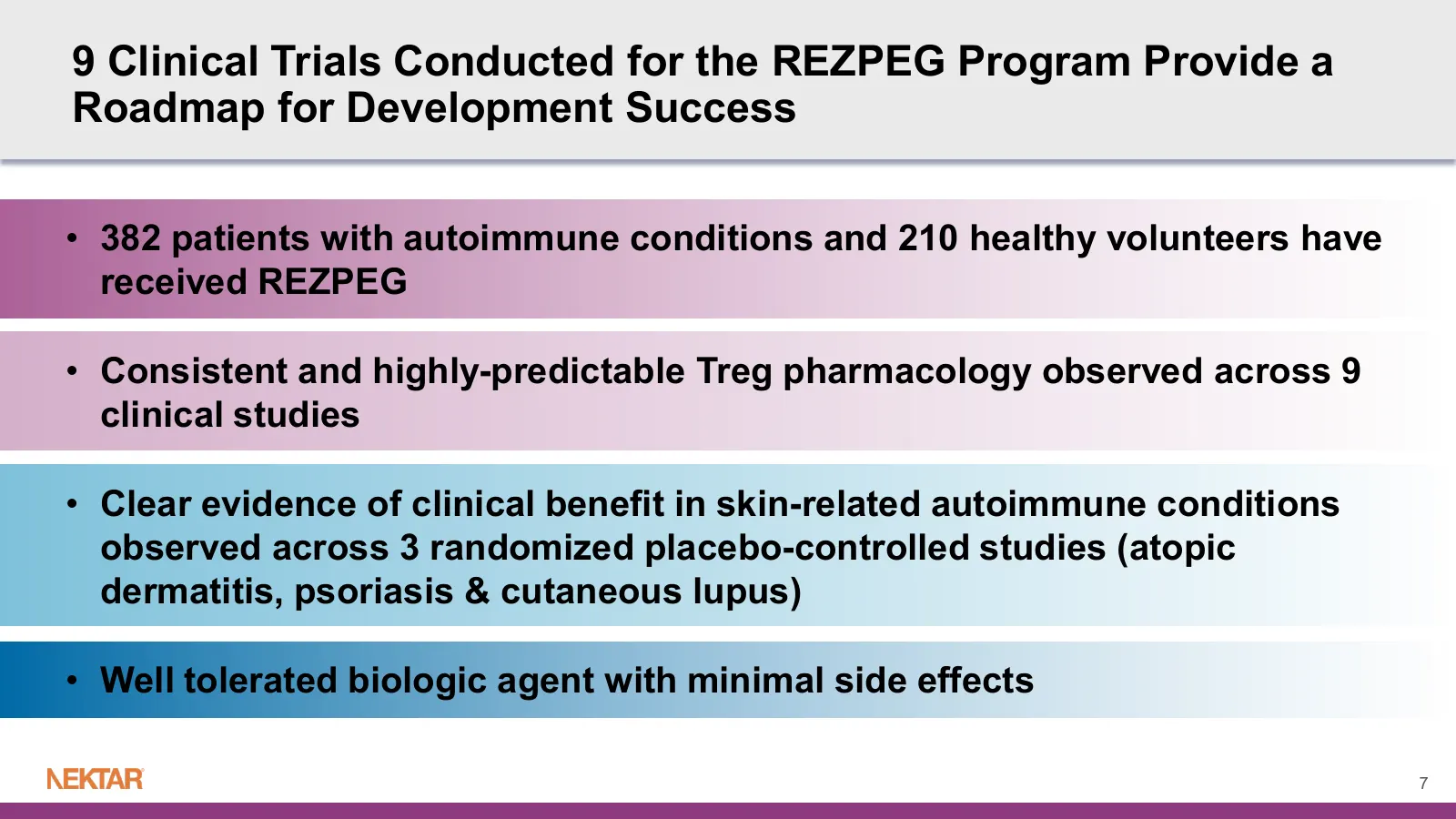
Slide 7: Clinical Trials Conducted for the REZPEG Program Provide a Roadmap for Development Success
9 Clinical Trials Conducted for the REZPEG Program Provide a Roadmap for Development Success • 382 patients with autoimmune conditions and 210 healthy volunteers have received REZPEG • Consistent and highly-predictable Treg pharmacology observed across 9 clinical studies • Clear evidence of clinical
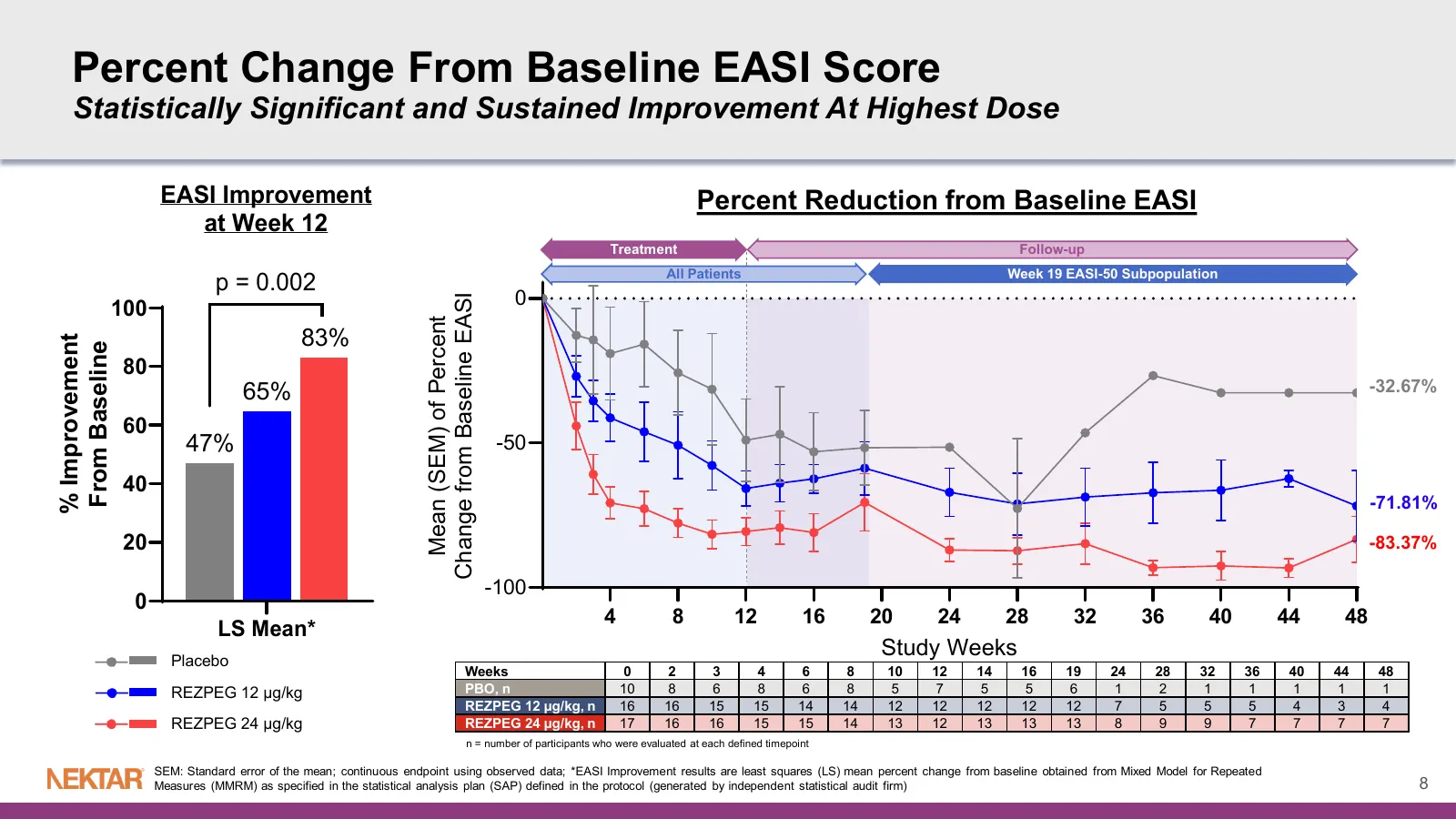
Slide 8: EASI Improvement: Statistically Significant and Sustained Improvement At Highest Dose
Percent Change From Baseline EASI Score Statistically Significant and Sustained Improvement At Highest Dose EASI Improvement Percent Reduction from Baseline EASI at Week 12 Treatment Follow-up All Patients Week 19 EASI-50 Subpopulation p = 0.002 0 Change from Baseline EASI 100 Mean (SEM) of Percent
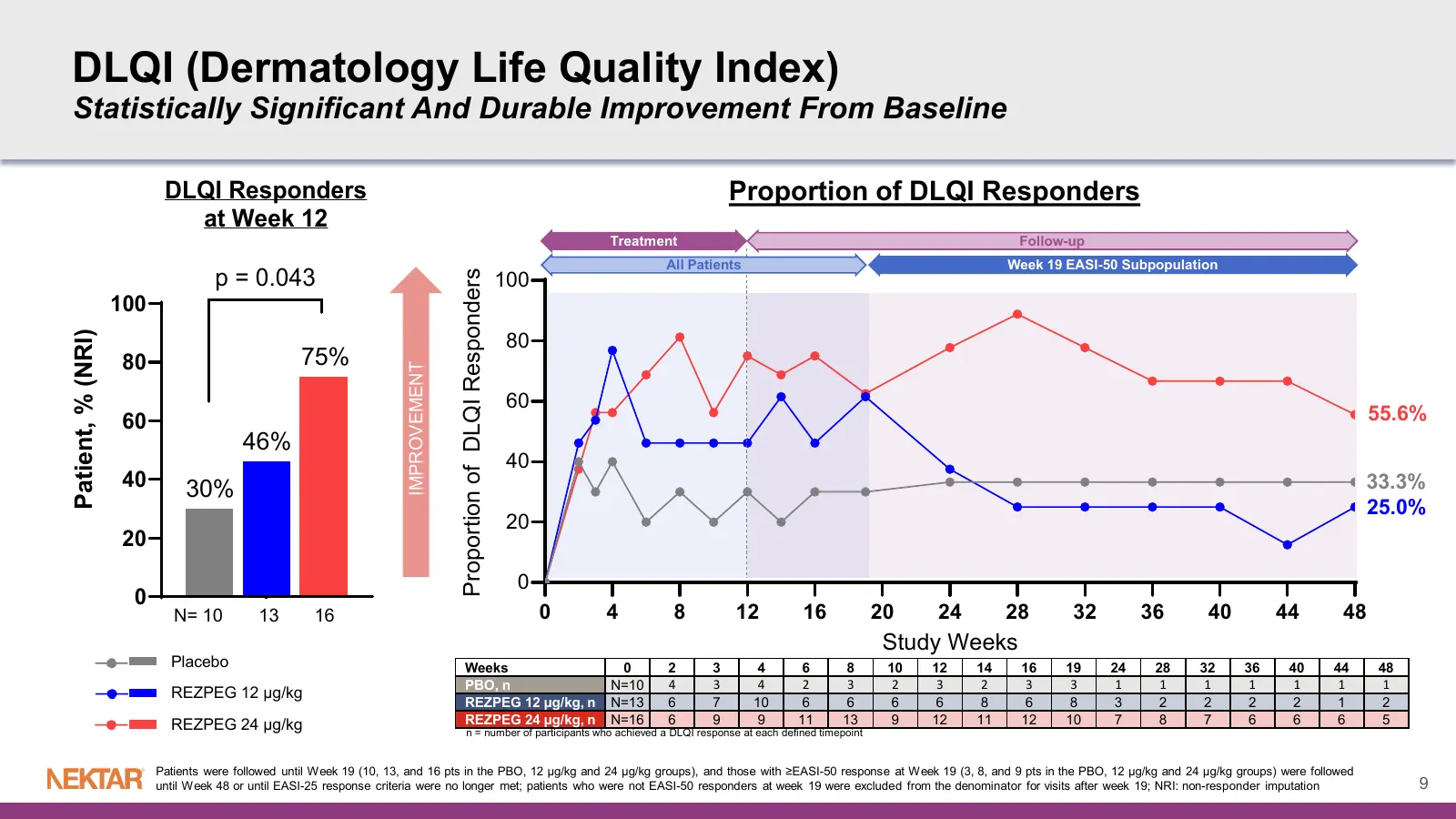
Slide 9: DLQI: Statistically Significant And Durable Improvement From Baseline
DLQI (Dermatology Life Quality Index) Statistically Significant And Durable Improvement From Baseline DLQI Responders Proportion of DLQI Responders at Week 12 Treatment Follow-up All Patients Week 19 EASI-50 Subpopulation p = 0.043 100 Placebo NKTR-358 12 μg/kg NKTR-358 24 μg/kg Proportion of DLQI R
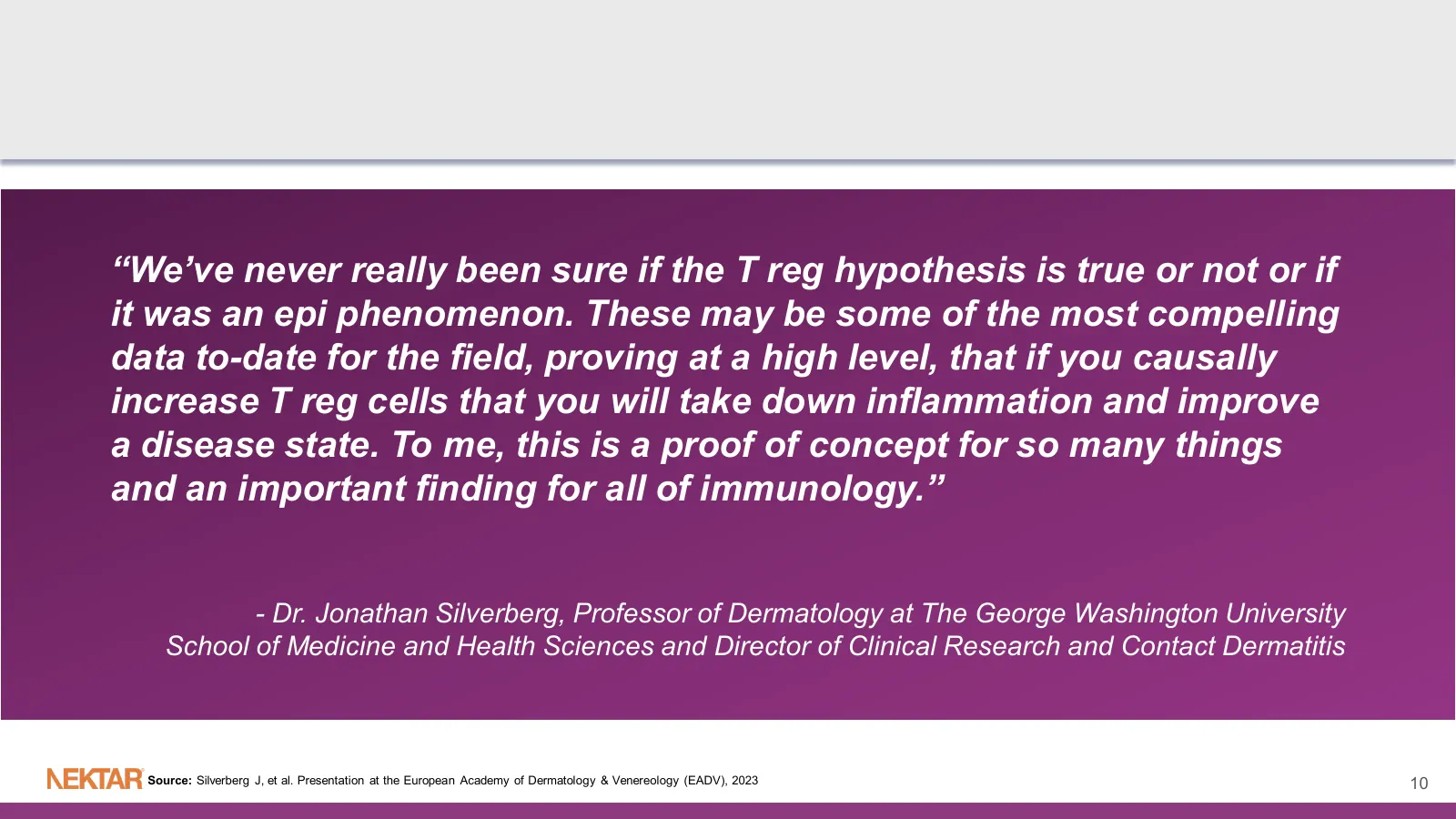
Slide 10: Expert Quote on Treg Hypothesis Data
“We’ve never really been sure if the T reg hypothesis is true or not or if it was an epi phenomenon. These may be some of the most compelling data to-date for the field, proving at a high level, that if you causally increase T reg cells that you will take down inflammation and improve a disease stat
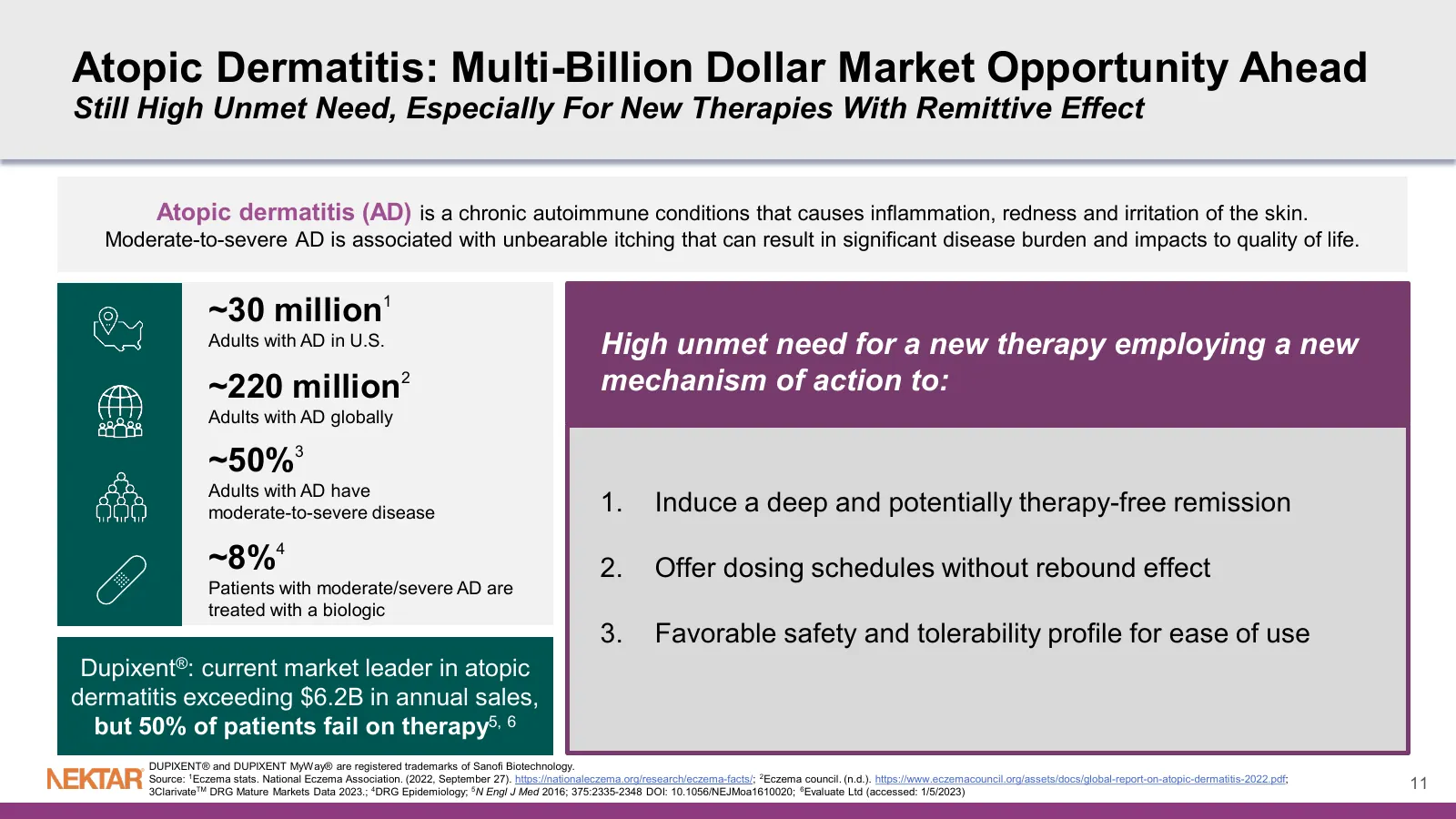
Slide 11: Atopic Dermatitis: Multi-Billion Dollar Market Opportunity Ahead
Atopic Dermatitis: Multi-Billion Dollar Market Opportunity Ahead Still High Unmet Need, Especially For New Therapies With Remittive Effect Atopic dermatitis (AD) is a chronic autoimmune conditions that causes inflammation, redness and irritation of the skin. Moderate-to-severe AD is associated with
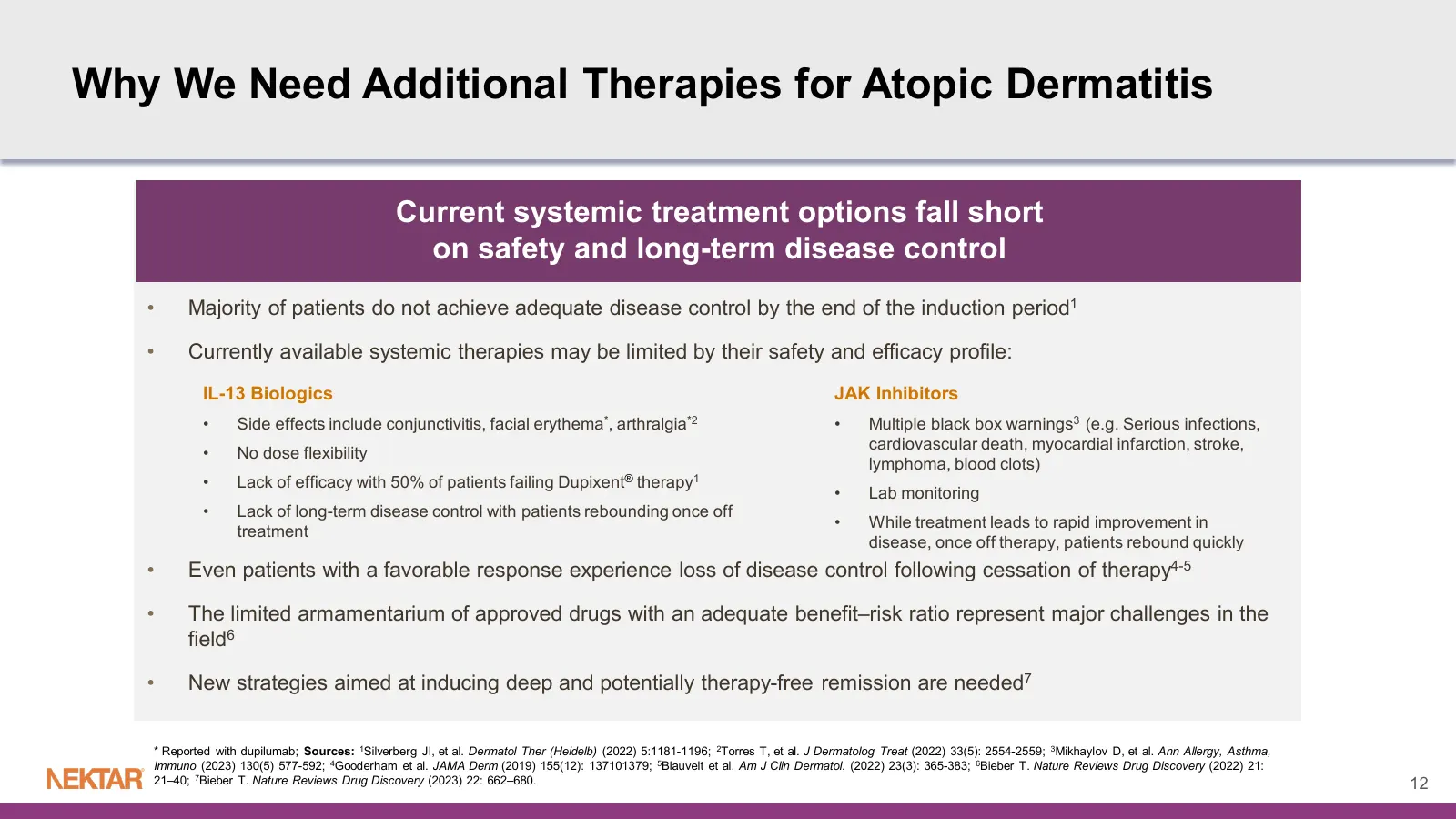
Slide 12: Why We Need Additional Therapies for Atopic Dermatitis
Why We Need Additional Therapies for Atopic Dermatitis Current systemic treatment options fall short on safety and long-term disease control • Majority of patients do not achieve adequate disease control by the end of the induction period1 • Currently available systemic therapies may be limited by t
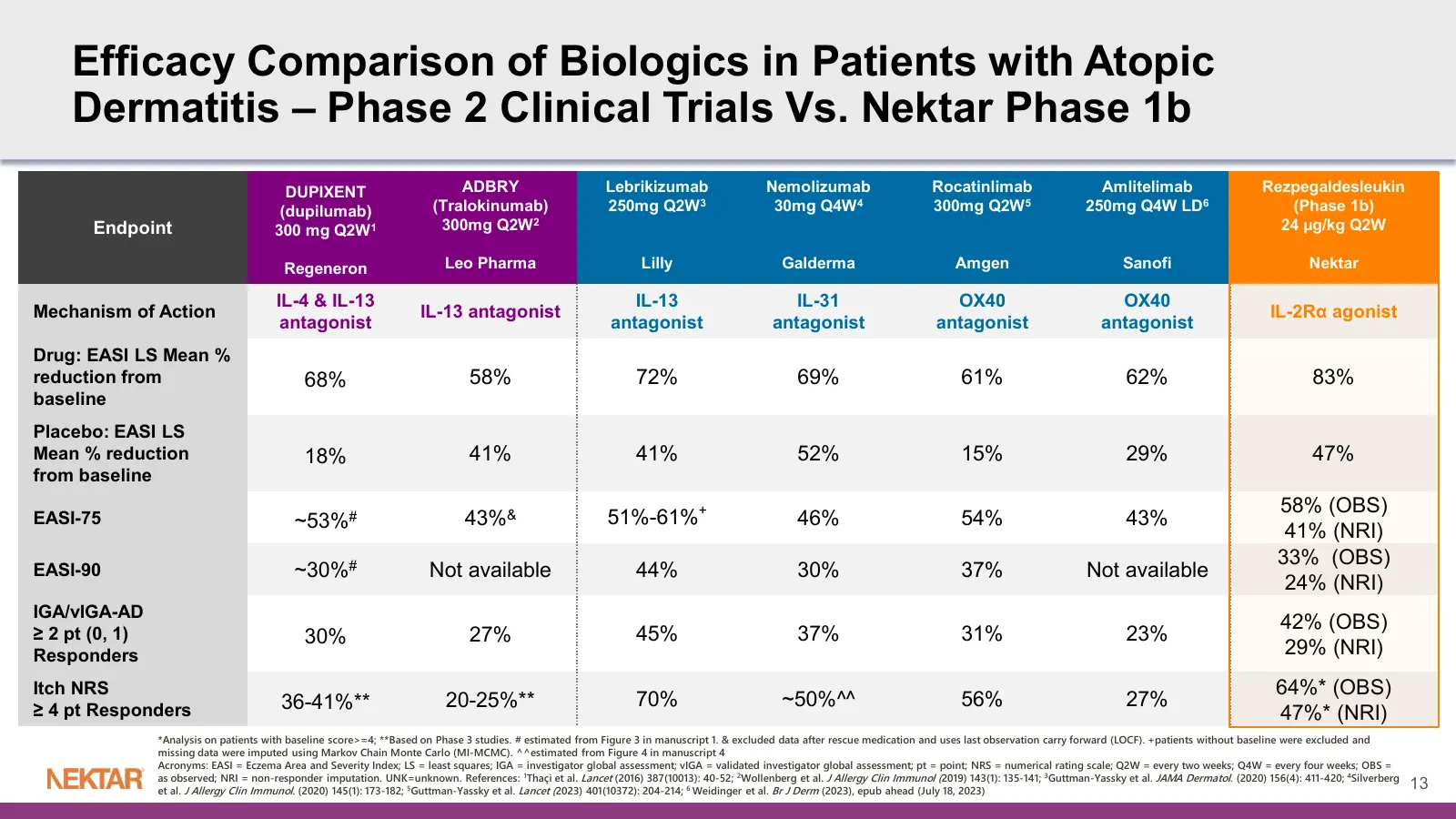
Slide 13: Efficacy Comparison of Biologics in Patients with Atopic Dermatitis
Efficacy Comparison of Biologics in Patients with Atopic Dermatitis – Phase 2 Clinical Trials Vs. Nektar Phase 1b DUPIXENT ADBRY Lebrikizumab Nemolizumab Rocatinlimab Amlitelimab Rezpegaldesleukin (dupilumab) (Tralokinumab) 250mg Q2W 3 30mg Q4W 4 300mg Q2W 5 250mg Q4W LD6 (Phase 1b) Endpoint 300 mg
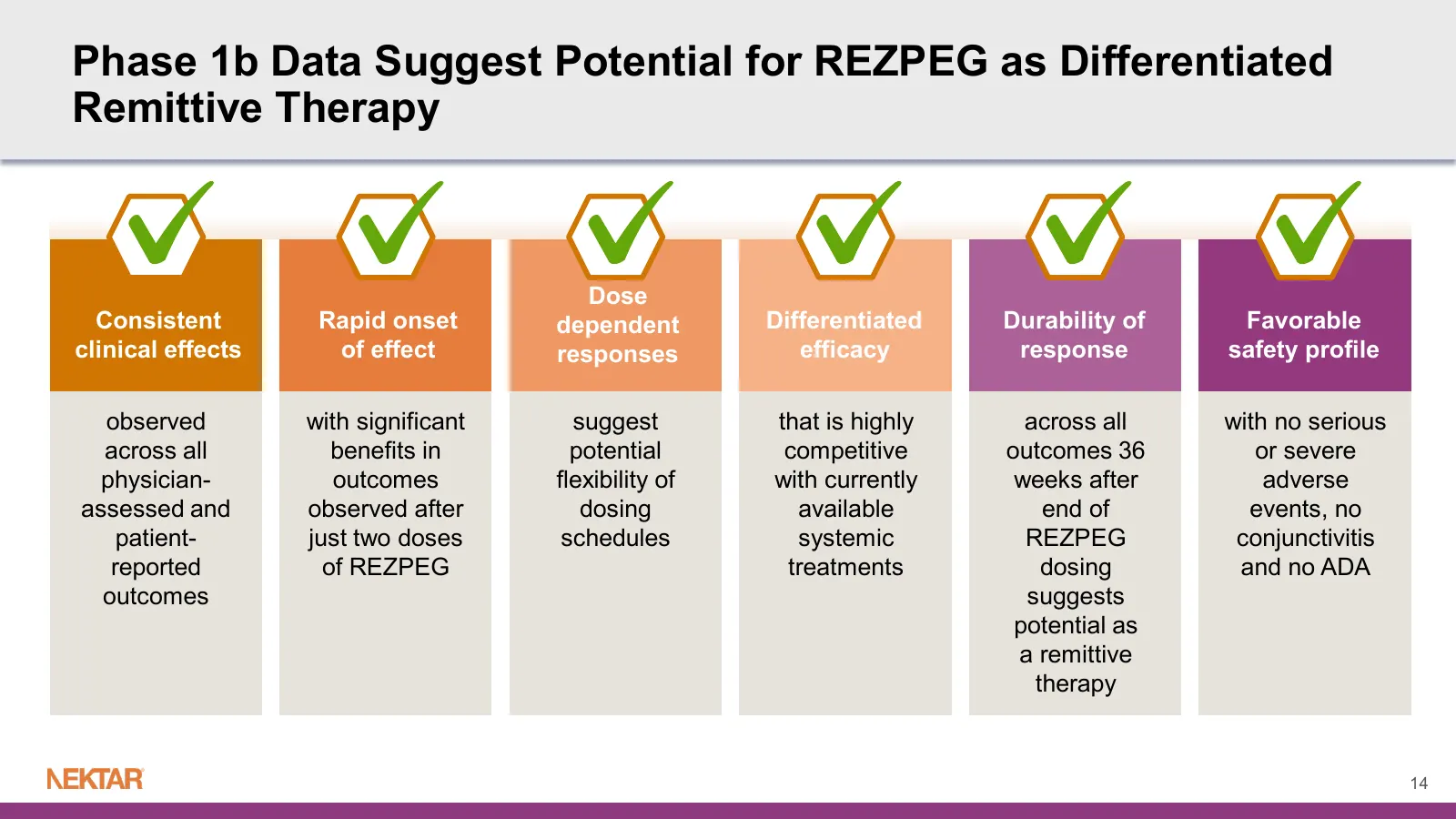
Slide 14: Phase 1b Data Suggest Potential for REZPEG as Differentiated Remittive Therapy
Phase 1b Data Suggest Potential for REZPEG as Differentiated Remittive Therapy Dose Consistent Rapid onset dependent Differentiated Durability of Favorable clinical effects of effect responses efficacy response safety profile observed with significant suggest that is highly across all with no seriou
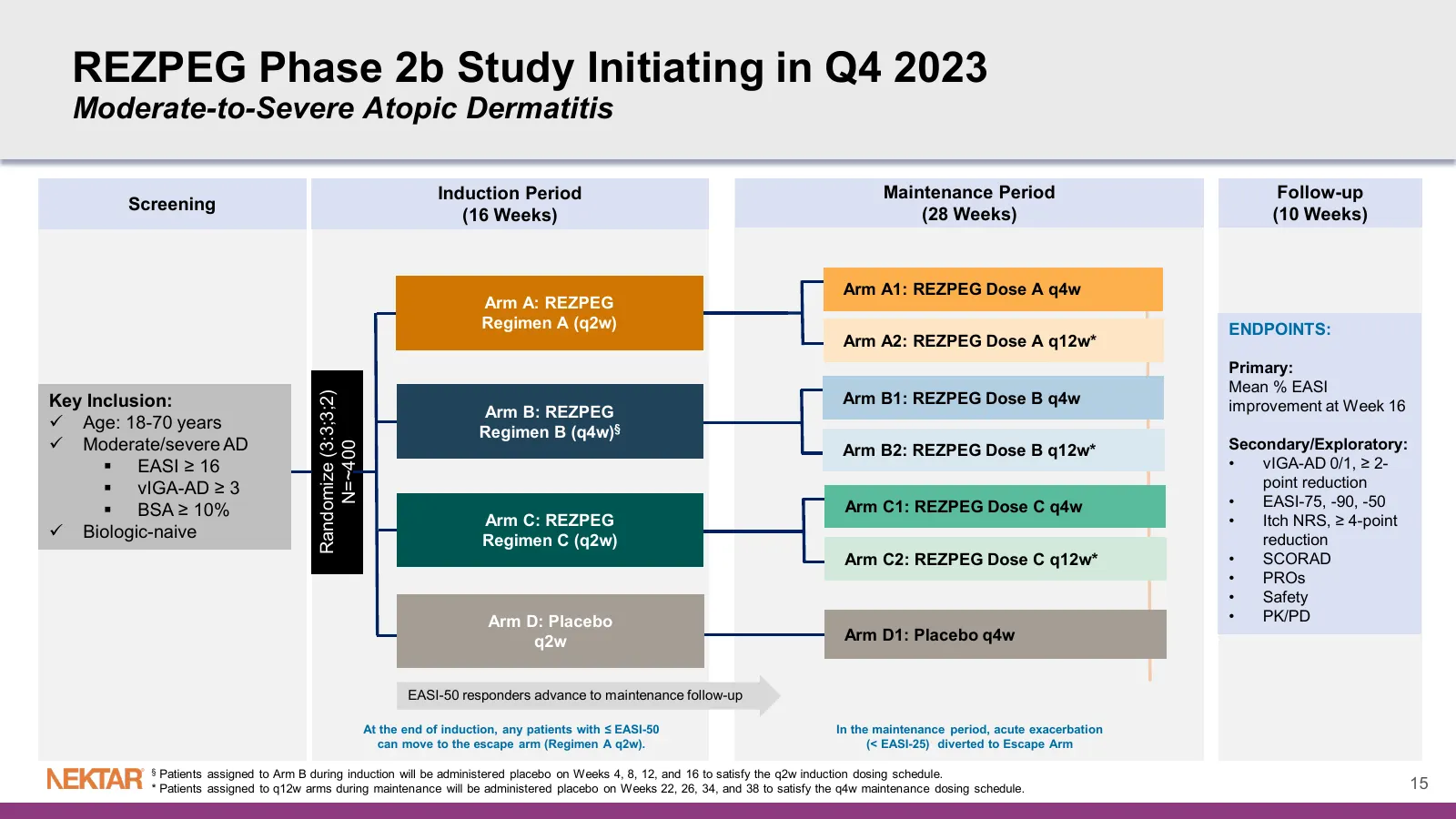
Slide 15: REZPEG Phase 2b Study Initiating in Q4 2023
REZPEG Phase 2b Study Initiating in Q4 2023 Moderate-to-Severe Atopic Dermatitis Induction Period Maintenance Period Follow-up Screening (16 Weeks) (28 Weeks) (10 Weeks) Arm A1: REZPEG Dose A q4w Arm A: REZPEG Regimen A (q2w) ENDPOINTS: Arm A2: REZPEG Dose A q12w* Primary: Mean % EASI Key Inclusion:
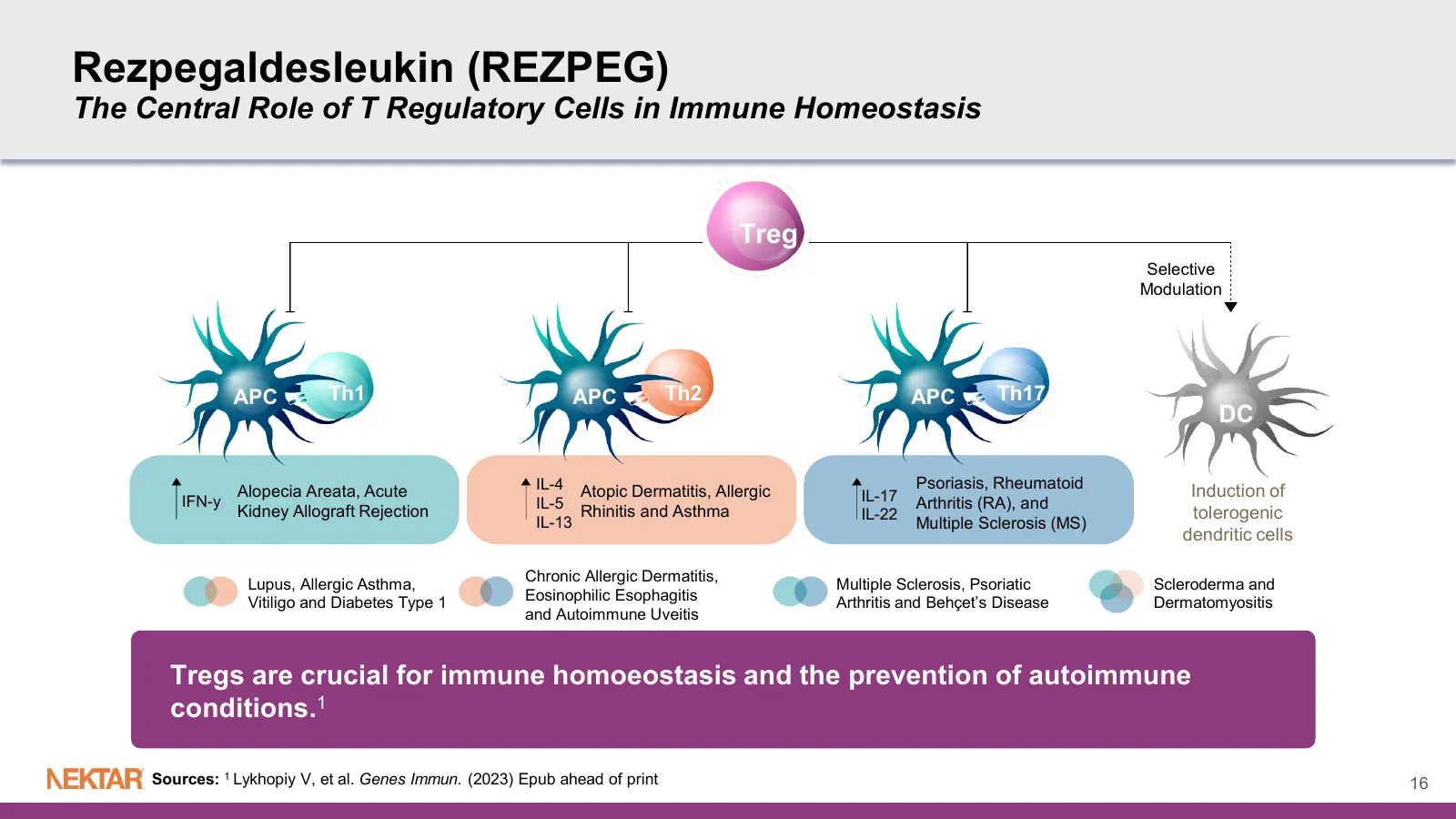
Slide 16: Rezpegaldesleukin (REZPEG)
Rezpegaldesleukin (REZPEG) The Central Role of T Regulatory Cells in Immune Homeostasis Treg Selective Modulation APC Th1 APC Th2 APC Th17 DC Alopecia Areata, Acute IL-4 Atopic Dermatitis, Allergic Psoriasis, Rheumatoid Induction of IFN-y IL-5 IL-17 Kidney Allograft Rejection Rhinitis and Asthma Art
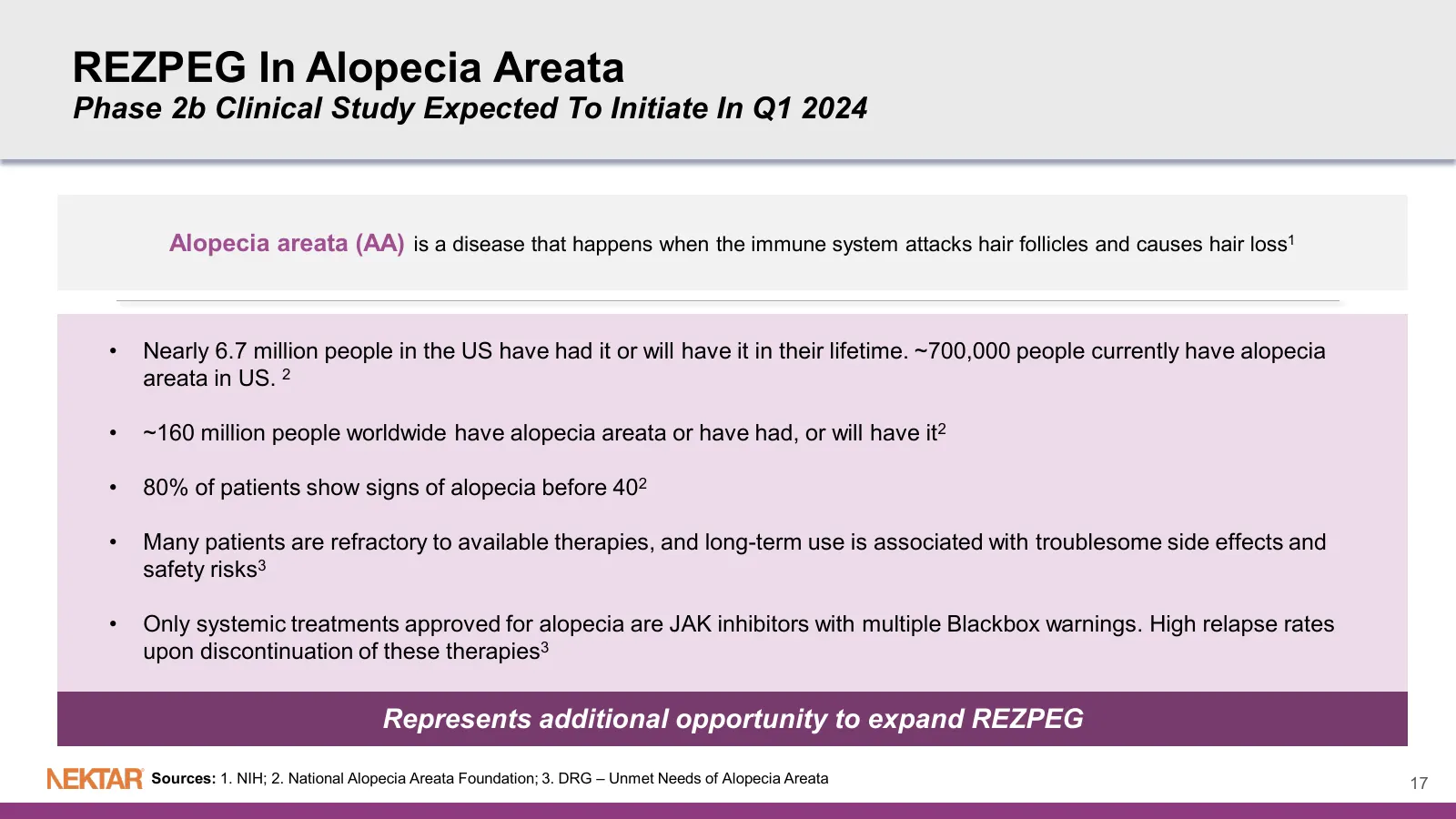
Slide 17: REZPEG In Alopecia Areata
REZPEG In Alopecia Areata Phase 2b Clinical Study Expected To Initiate In Q1 2024 Alopecia areata (AA) is a disease that happens when the immune system attacks hair follicles and causes hair loss1 • Nearly 6.7 million people in the US have had it or will have it in their lifetime. ~700,000 people cu
Slide 18: Anagen Hair Follicles Reside in a State of Immune Privilege
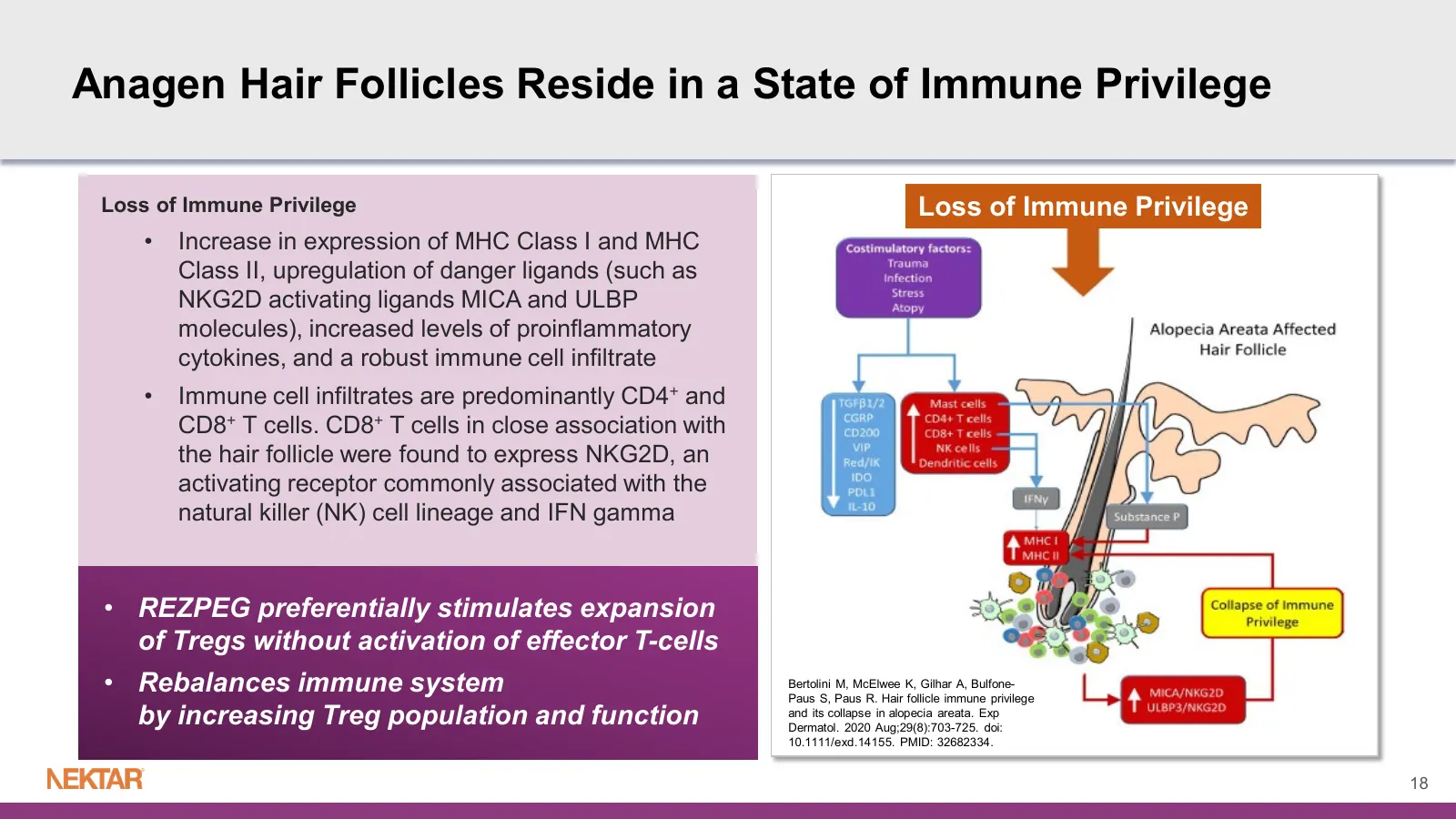
Anagen Hair Follicles Reside in a State of Immune Privilege Loss of Immune Privilege Loss of Immune Privilege • Increase in expression of MHC Class I and MHC Class II, upregulation of danger ligands (such as NKG2D activating ligands MICA and ULBP molecules), increased levels of proinflammatory cytok
Slide 19: Phase 2b Study for Patients with Alopecia Areata
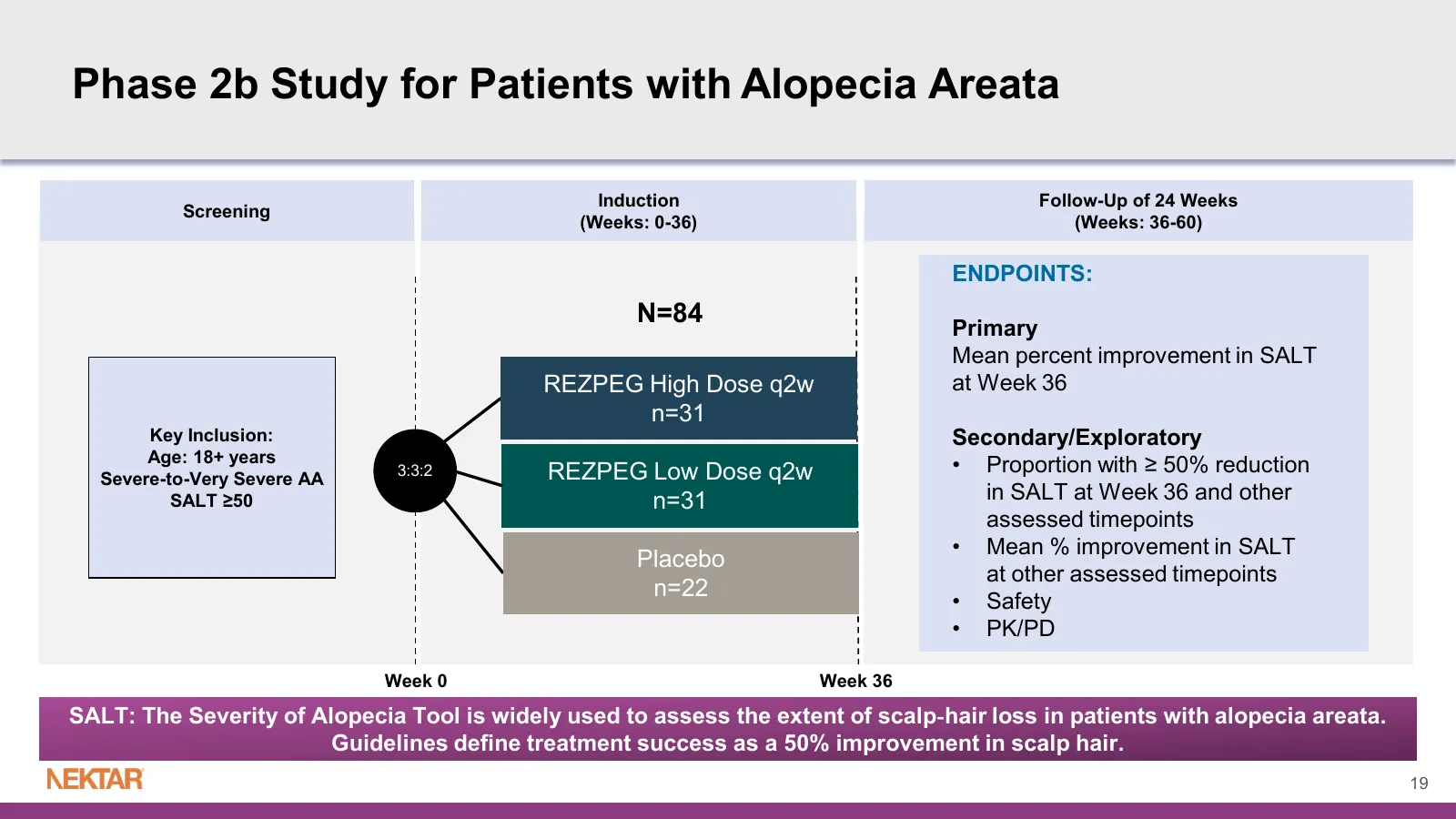
Phase 2b Study for Patients with Alopecia Areata Induction Follow-Up of 24 Weeks Screening (Weeks: 0-36) (Weeks: 36-60) ENDPOINTS: N=84 Primary Mean percent improvement in SALT REZPEG High Dose q2w at Week 36 n=31 Key Inclusion: Secondary/Exploratory Age: 18+ years 3:3:2 REZPEG Low Dose q2w • Propor
Slide 20: NKTR-0165: TNFR2 Agonist Antibody Program
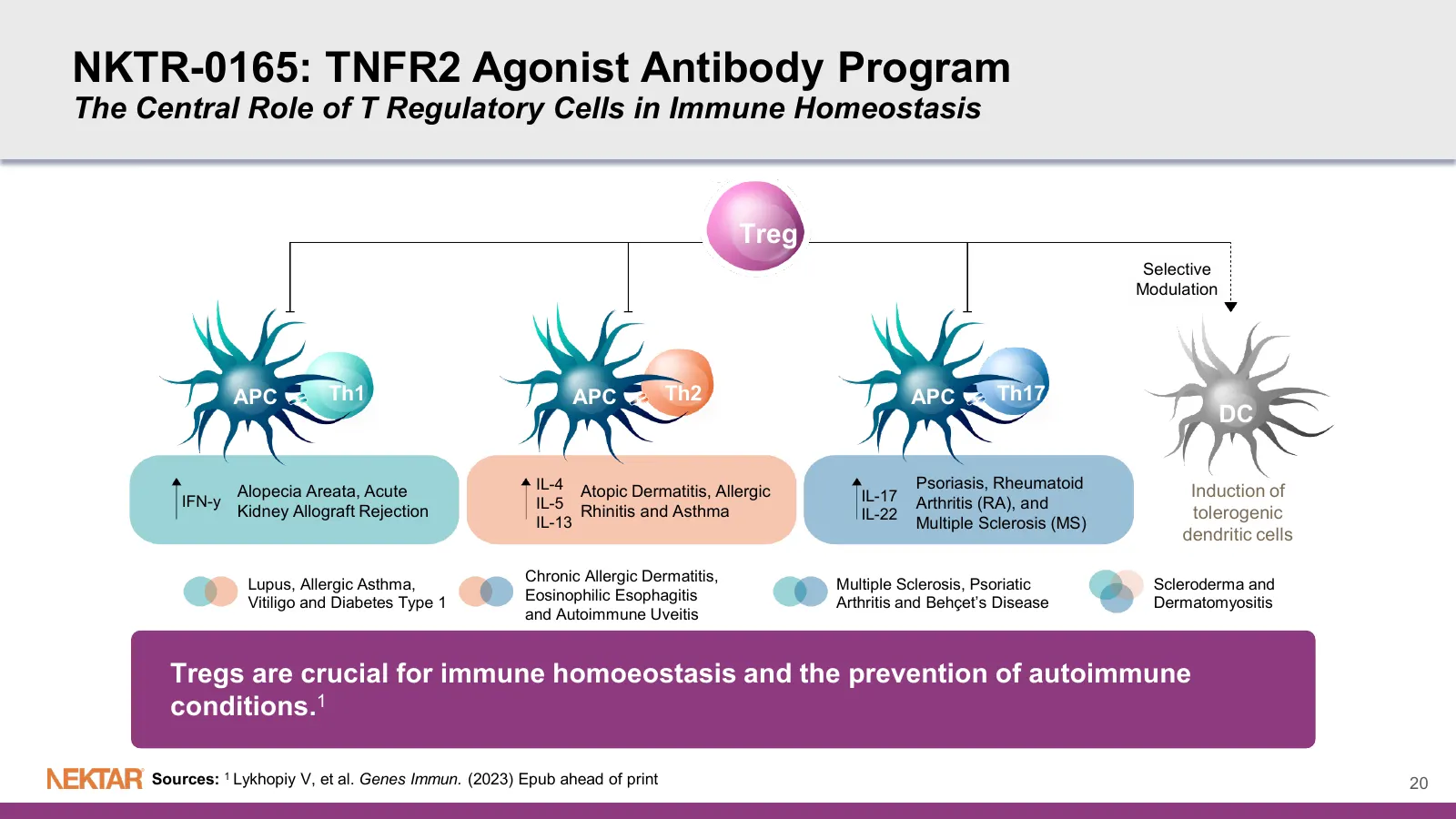
NKTR-0165: TNFR2 Agonist Antibody Program The Central Role of T Regulatory Cells in Immune Homeostasis Treg Selective Modulation APC Th1 APC Th2 APC Th17 DC Alopecia Areata, Acute IL-4 Atopic Dermatitis, Allergic Psoriasis, Rheumatoid Induction of IFN-y IL-5 IL-17 Kidney Allograft Rejection Rhinitis
Slide 21: Nektar's Programs Addressing Treg Biology
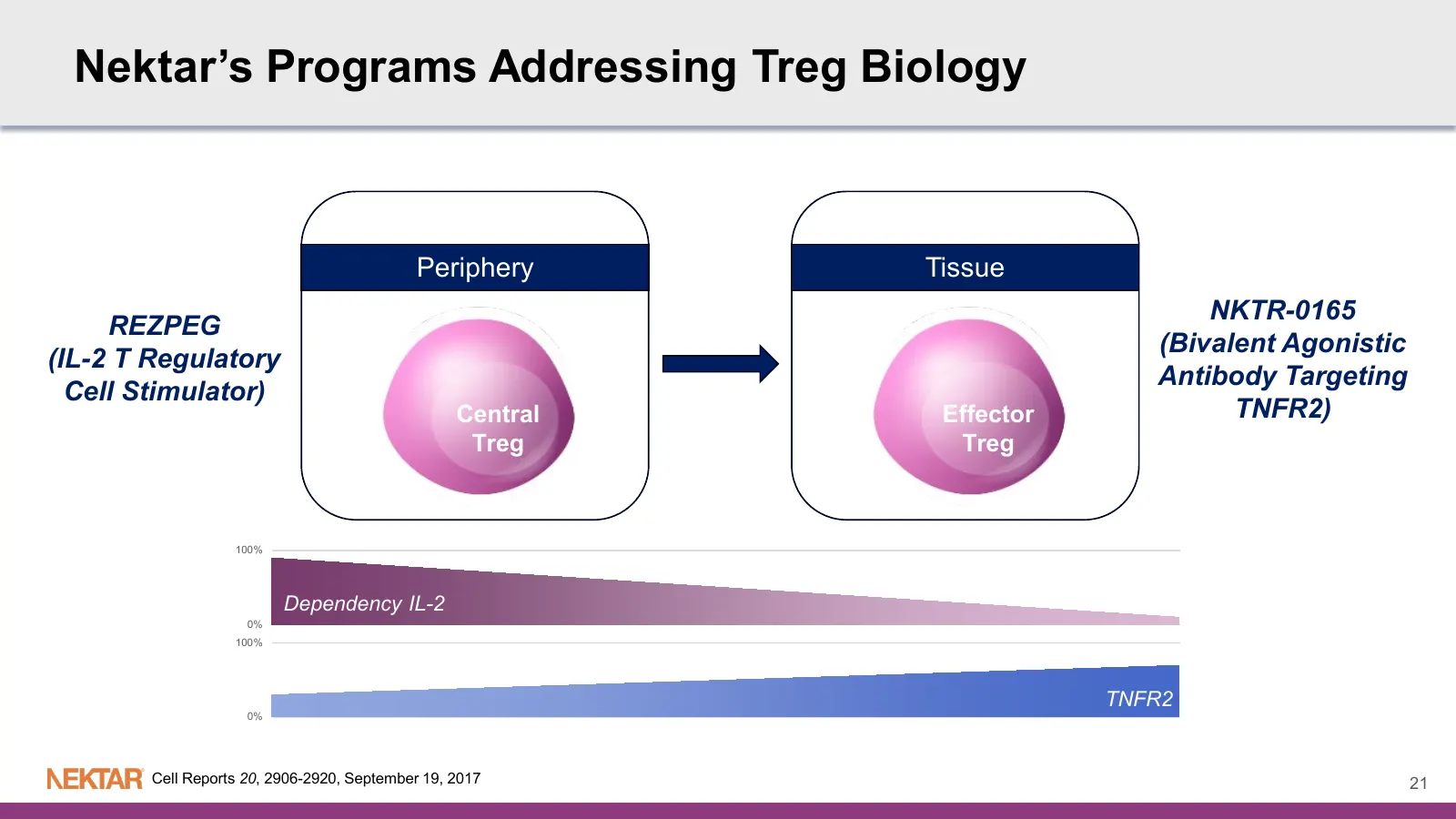
Nektar’s Programs Addressing Treg Biology Periphery Tissue NKTR-0165 REZPEG (Bivalent Agonistic (IL-2 T Regulatory Antibody Targeting Cell Stimulator) Central Effector TNFR2) Treg Treg 100% Dependency IL-2 0% 100% TNFR2 0% Cell Reports 20, 2906-2920, September 19, 2017 21
Slide 22: NKTR-0165: TNFR2 Agonist Antibody Program
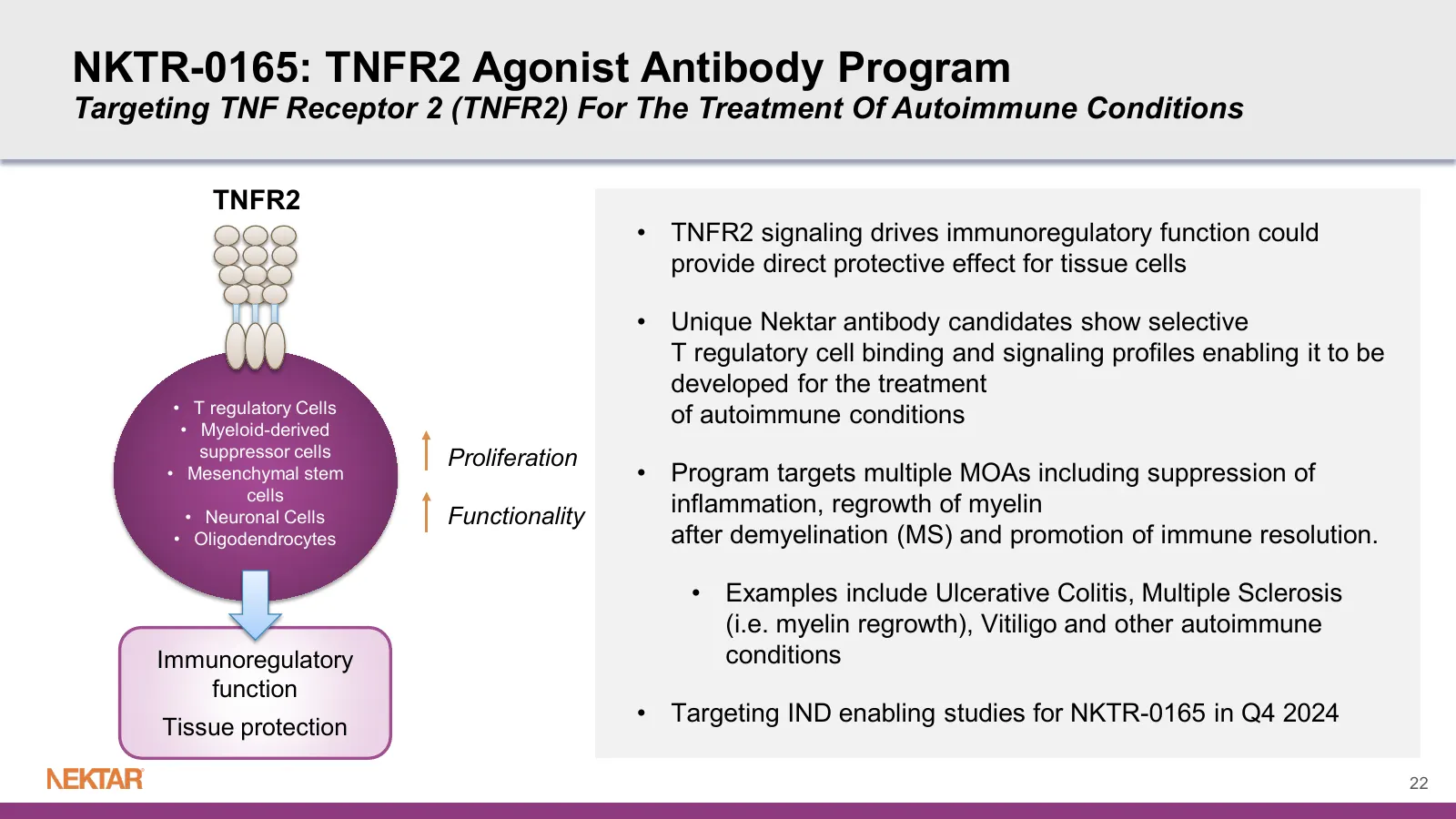
NKTR-0165: TNFR2 Agonist Antibody Program Targeting TNF Receptor 2 (TNFR2) For The Treatment Of Autoimmune Conditions TNFR2 • TNFR2 signaling drives immunoregulatory function could provide direct protective effect for tissue cells • Unique Nektar antibody candidates show selective T regulatory cell
Slide 23: Research Showing Importance of TNFR2 Expression on Regulatory T Cells in Mouse Disease Models
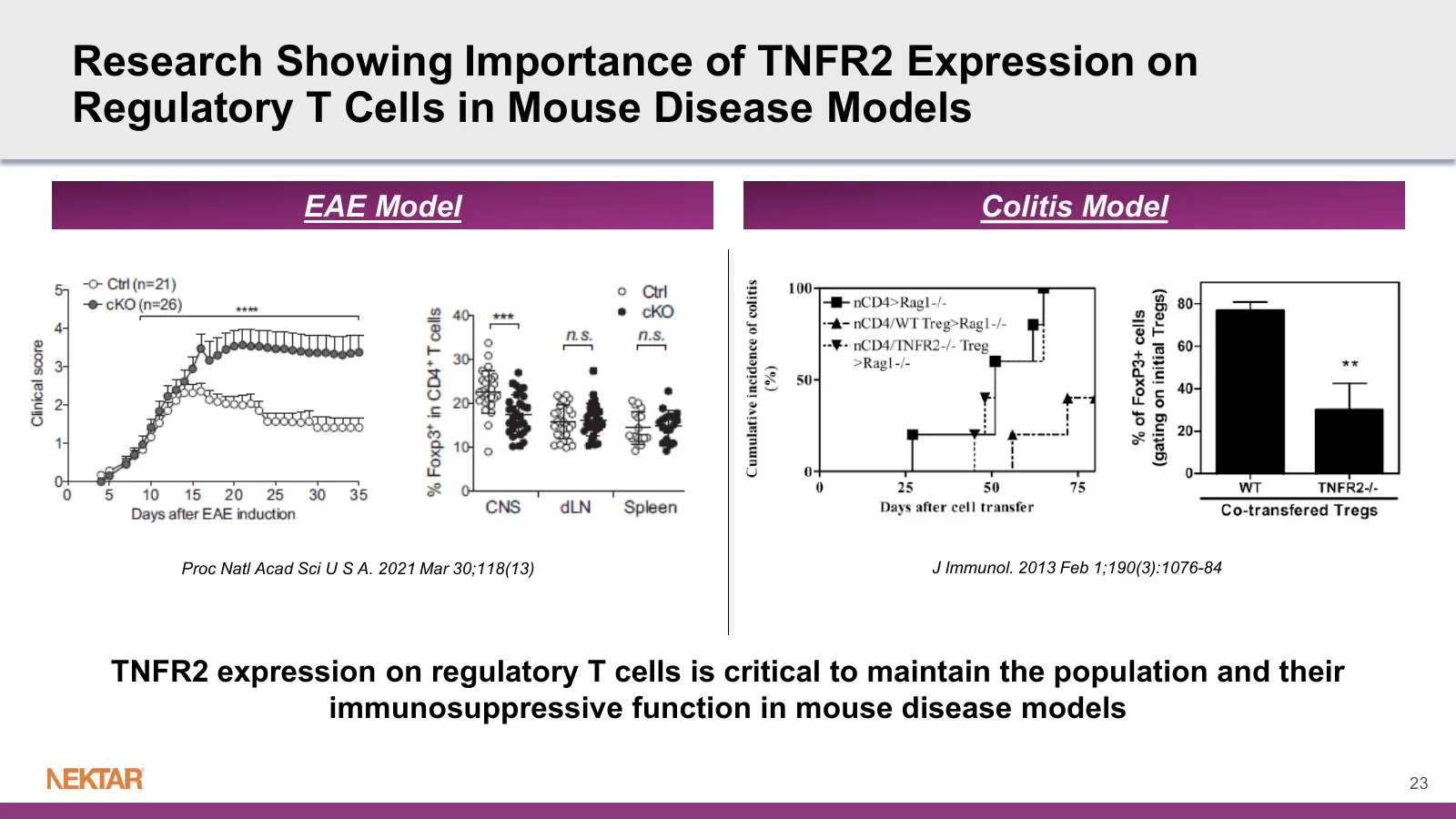
Research Showing Importance of TNFR2 Expression on Regulatory T Cells in Mouse Disease Models EAE Model Colitis Model Proc Natl Acad Sci U S A. 2021 Mar 30;118(13) J Immunol. 2013 Feb 1;190(3):1076-84 TNFR2 expression on regulatory T cells is critical to maintain the population and their immunosuppr
Slide 24: Disease Prevalence of Ulcerative Colitis, Multiple Sclerosis & Vitiligo
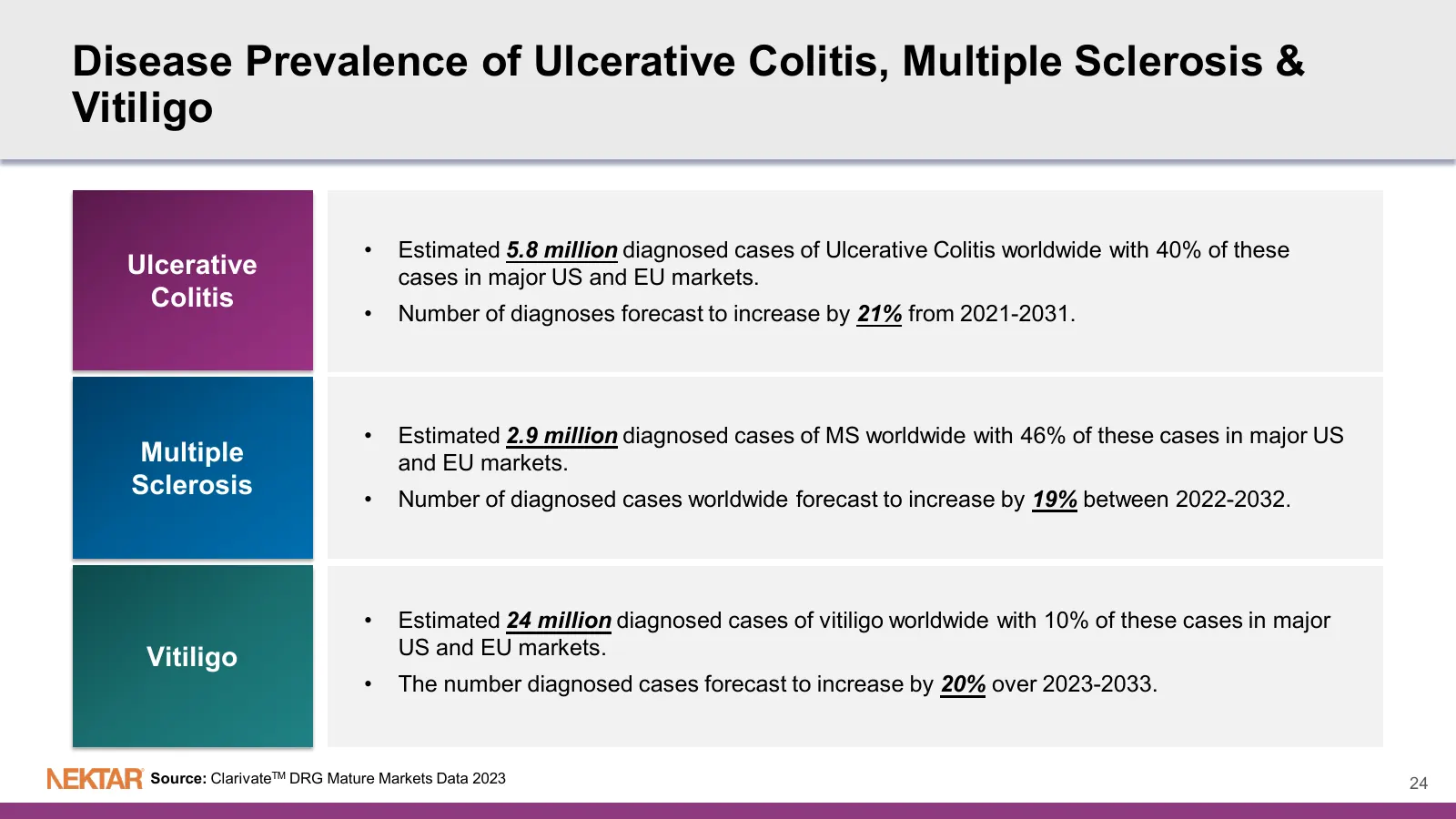
Disease Prevalence of Ulcerative Colitis, Multiple Sclerosis & Vitiligo • Estimated 5.8 million diagnosed cases of Ulcerative Colitis worldwide with 40% of these Ulcerative cases in major US and EU markets. Colitis • Number of diagnoses forecast to increase by 21% from 2021-2031. • Estimated 2.9 mil
Slide 25: NKTR-255: Ongoing Studies
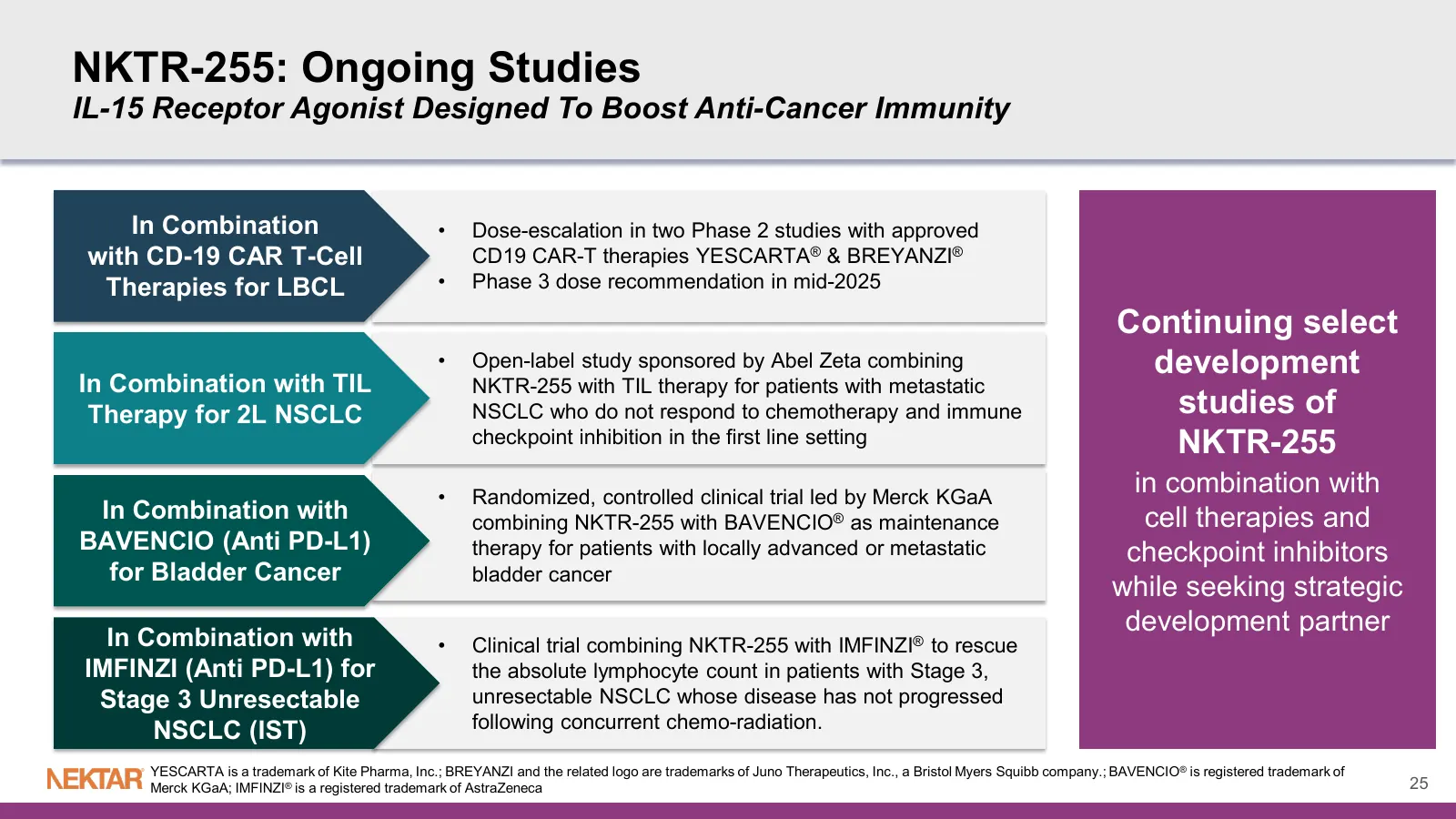
NKTR-255: Ongoing Studies IL-15 Receptor Agonist Designed To Boost Anti-Cancer Immunity In Combination • Dose-escalation in two Phase 2 studies with approved with CD-19 CAR T-Cell CD19 CAR-T therapies YESCARTA® & BREYANZI® Therapies for LBCL • Phase 3 dose recommendation in mid-2025 Continuing selec
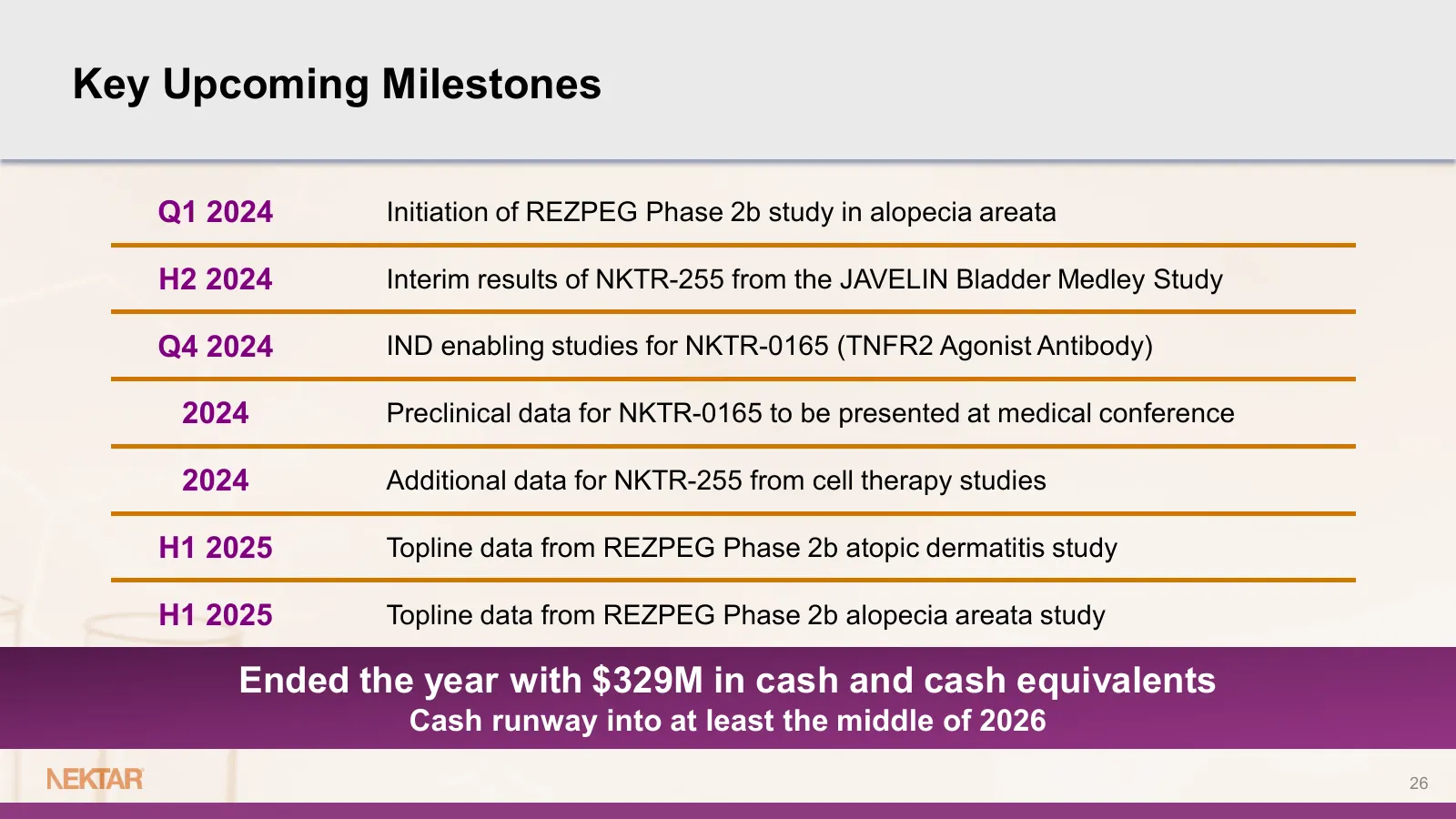
Slide 26: Key Upcoming Milestones
Key Upcoming Milestones Q1 2024 Initiation of REZPEG Phase 2b study in alopecia areata H2 2024 Interim results of NKTR-255 from the JAVELIN Bladder Medley Study Q4 2024 IND enabling studies for NKTR-0165 (TNFR2 Agonist Antibody) 2024 Preclinical data for NKTR-0165 to be presented at medical conferen
Source: Internet Archive copy of nektar.com
More decks from Nektar Therapeutics
 EADV Analyst and Investor Event 202638 slides · Oct 1, 2026
 Investor Presentation (September 2026)70 slides · September 2026
 Investor Presentation (April 2026)36 slides · Apr 20, 2026
 Technical Presentation (February 2026)37 slides · Feb 10, 2026
 Technical Presentation (December 2025)38 slides · Dec 16, 2025
 ACAAI Annual Scientific Meeting 202515 slides · Nov 8, 2025