NewAmsterdam Pharma Company N.V. · NASDAQ:NAMS
NewAmsterdam Pharma — Technical Presentation (May 2025)
18 slides from NewAmsterdam Pharma's technical presentation, May 28, 2025
Slide 1: Safety and Efficacy of Obicetrapib in Patients at High Cardiovascular Risk
Safety and Efficacy of Obicetrapib in Patients at High Cardiovascular Risk Prof. Kausik K Ray FMedSci • Immediate Past President European Atherosclerosis Society • NIHR ARC National Lead for CVD • Chief Clinical Officer and Trials Lead DISCOVER NOW, HDR UK Innovation Hub NW London • Professor of Pub
Slide 2: Safety and Efficacy of Obicetrapib in Patients at High Cardiovascular Risk
Safety and Efficacy of Obicetrapib in Patients at High Cardiovascular Risk Stephen J. Nicholls, Adam J. Nelson, Marc Ditmarsch, John J.P. Kastelein, Christie M. Ballantyne, Kausik K. Ray, Ann Marie Navar, Steven E. Nissen, Mariko Harada-Shiba, Danielle L. Curcio, Annie Neild, Douglas Kling, Andrew H
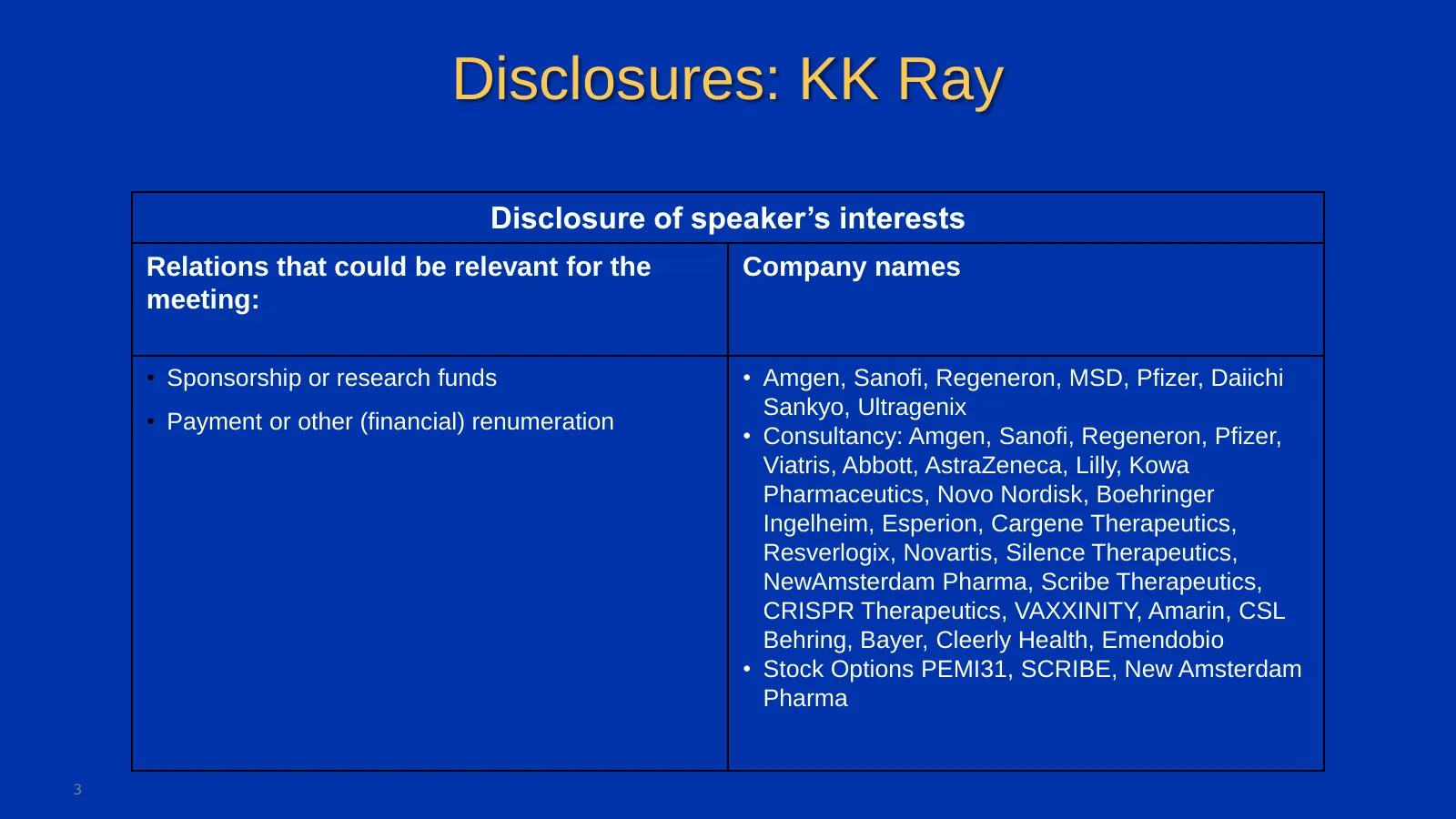
Slide 3: Disclosures: KK Ray
Disclosures: KK Ray Disclosure of speaker’s interests Relations that could be relevant for the Company names meeting: • Sponsorship or research funds • Amgen, Sanofi, Regeneron, MSD, Pfizer, Daiichi Sankyo, Ultragenix • Payment or other (financial) renumeration • Consultancy: Amgen, Sanofi, Regenero
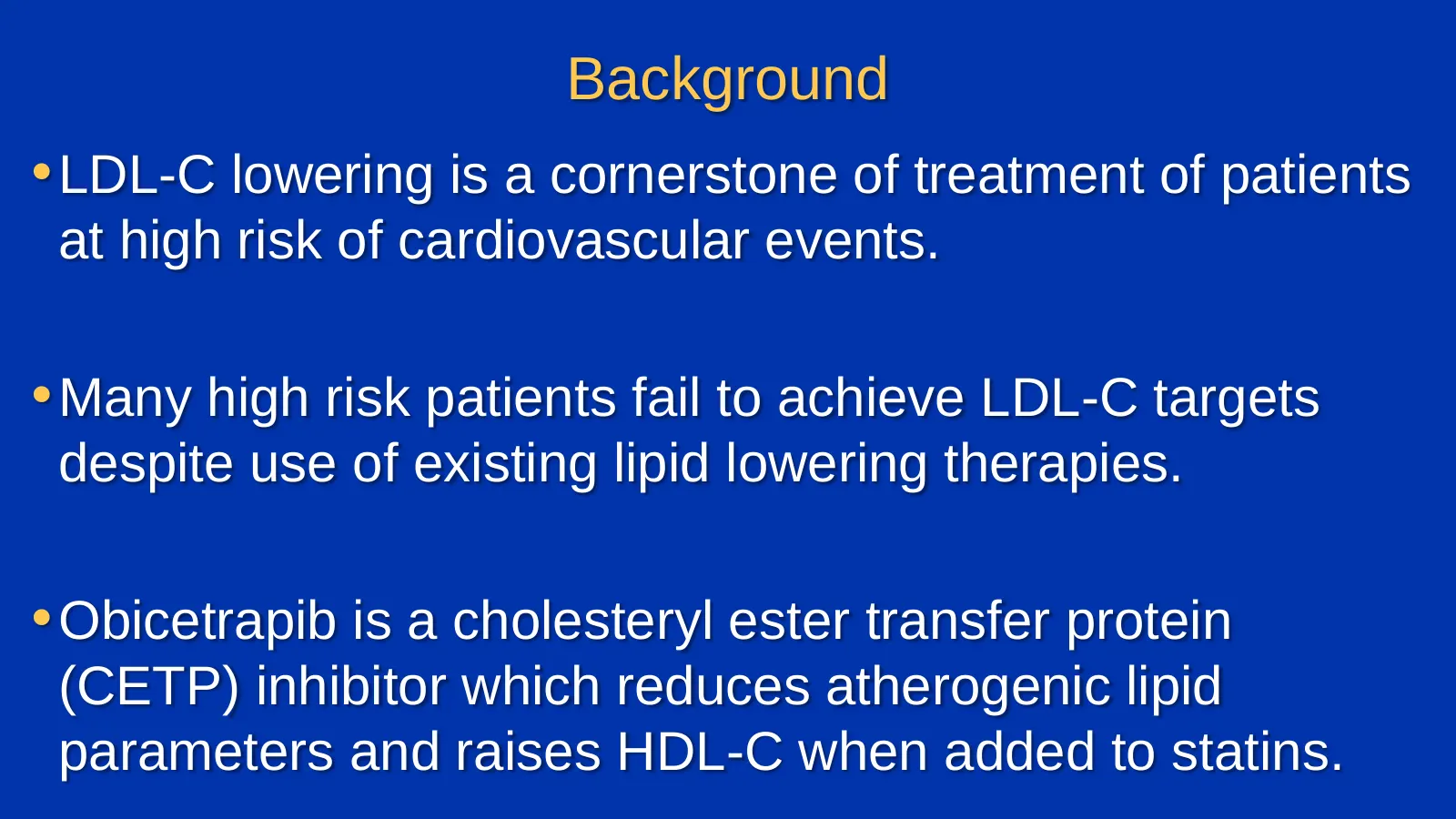
Slide 4: Background
Background • LDL-C lowering is a cornerstone of treatment of patients at high risk of cardiovascular events. • Many high risk patients fail to achieve LDL-C targets despite use of existing lipid lowering therapies. • Obicetrapib is a cholesteryl ester transfer protein (CETP) inhibitor which reduces
Slide 5: Objective
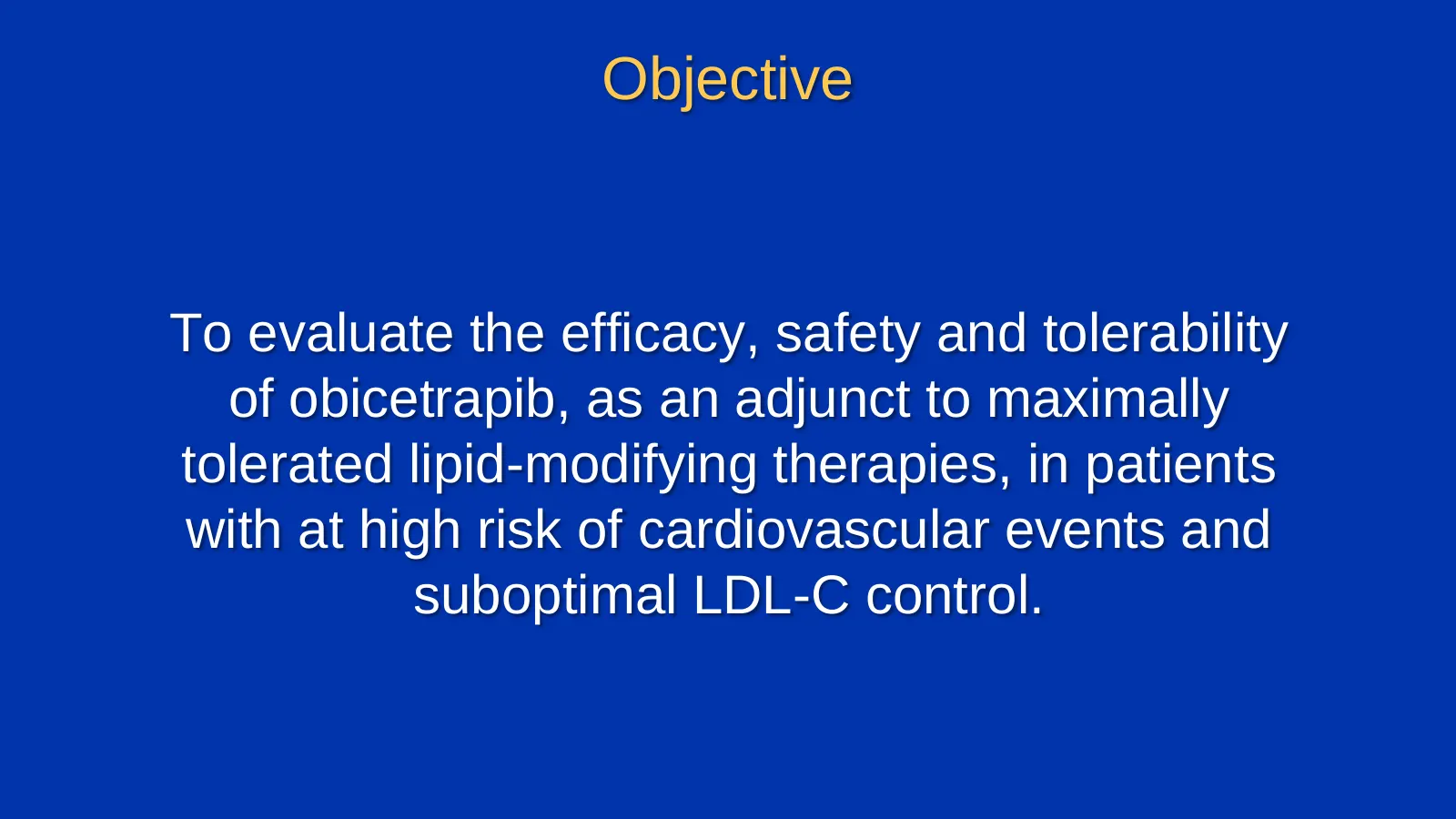
Objective To evaluate the efficacy, safety and tolerability of obicetrapib, as an adjunct to maximally tolerated lipid-modifying therapies, in patients with at high risk of cardiovascular events and suboptimal LDL-C control.
Slide 6: Study Design
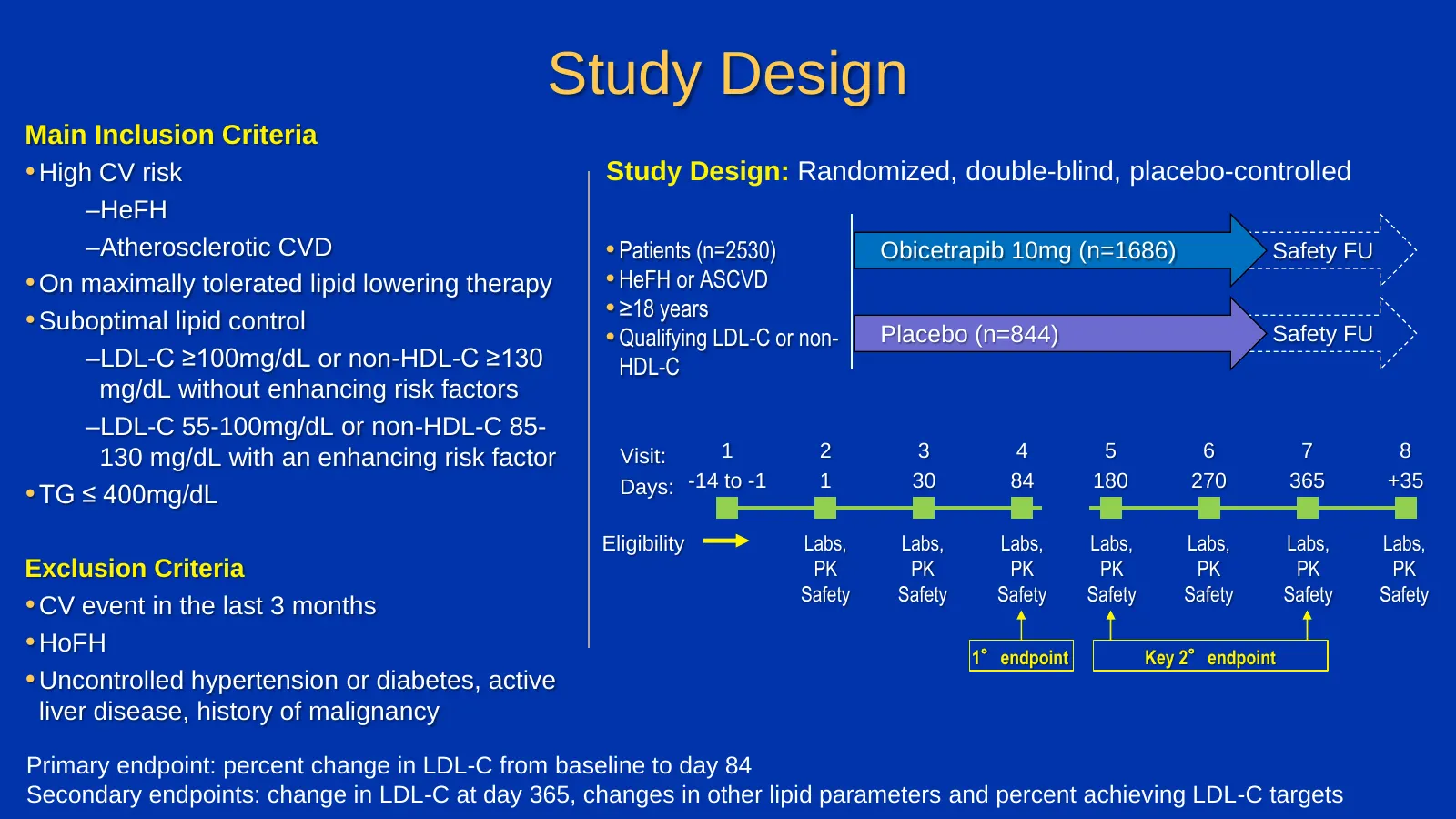
Study Design Main Inclusion Criteria • High CV risk Study Design: Randomized, double-blind, placebo-controlled –HeFH –Atherosclerotic CVD • Patients (n=2530) Obicetrapib 10mg (n=1686) Safety FU • On maximally tolerated lipid lowering therapy • HeFH or ASCVD • Suboptimal lipid control • ≥18 years • Q
Slide 7: Demographics
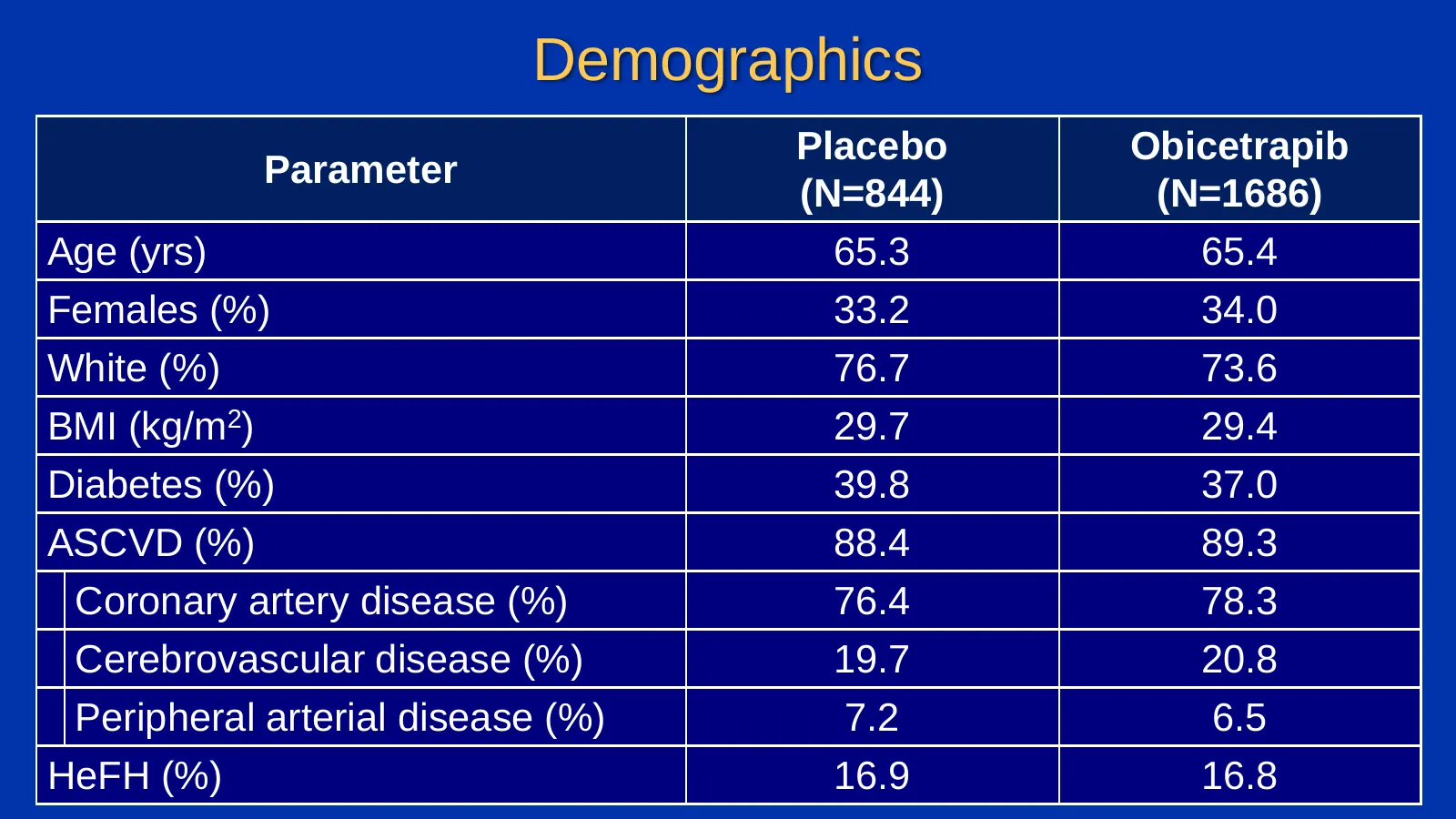
Demographics Placebo Obicetrapib Parameter (N=844) (N=1686) Age (yrs) 65.3 65.4 Females (%) 33.2 34.0 White (%) 76.7 73.6 BMI (kg/m2) 29.7 29.4 Diabetes (%) 39.8 37.0 ASCVD (%) 88.4 89.3 Coronary artery disease (%) 76.4 78.3 Cerebrovascular disease (%) 19.7 20.8 Peripheral arterial disease (%) 7.2 6
Slide 8: Baseline Medication Use and Lipid Parameters
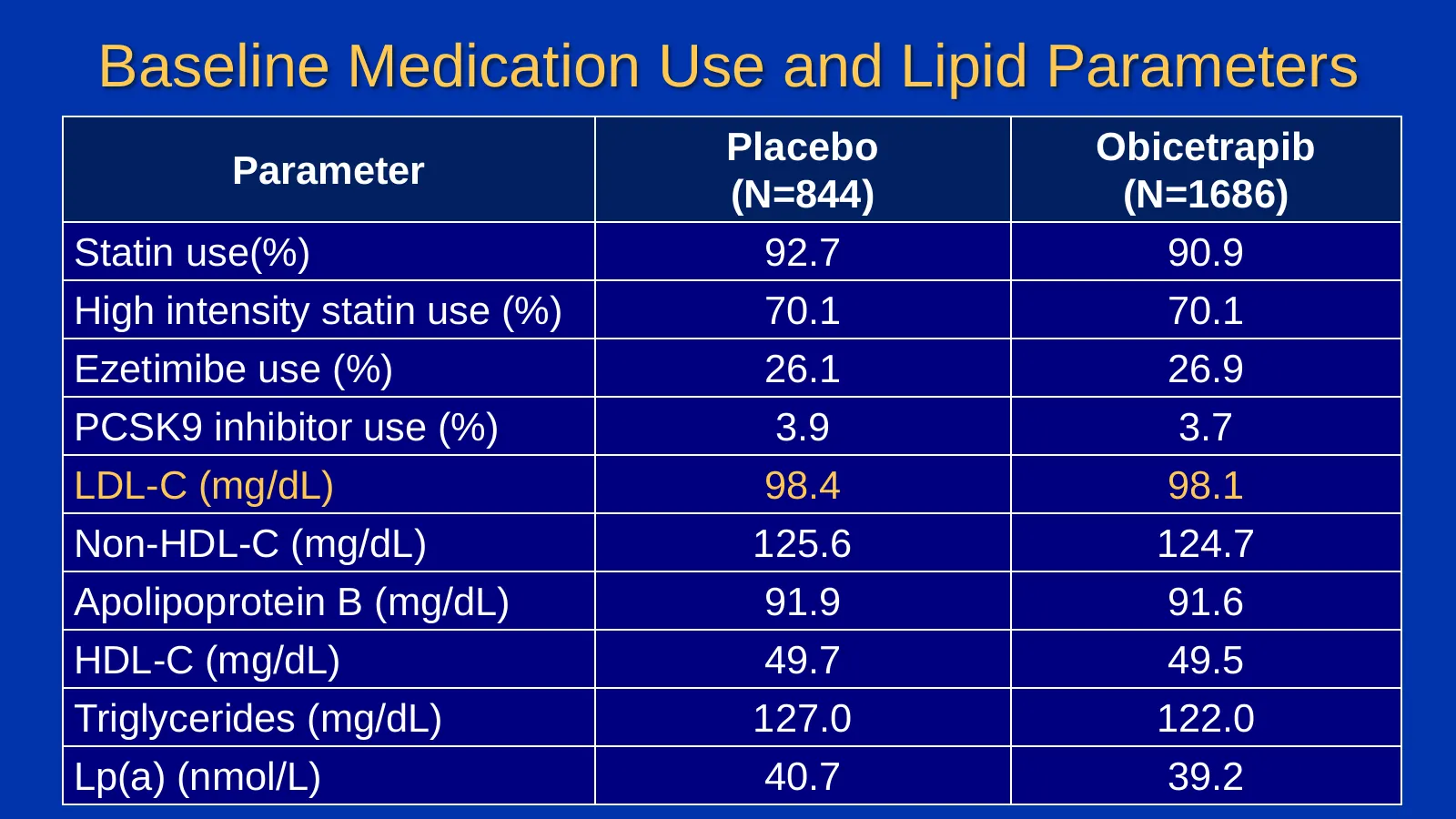
Baseline Medication Use and Lipid Parameters Placebo Obicetrapib Parameter (N=844) (N=1686) Statin use(%) 92.7 90.9 High intensity statin use (%) 70.1 70.1 Ezetimibe use (%) 26.1 26.9 PCSK9 inhibitor use (%) 3.9 3.7 LDL-C (mg/dL) 98.4 98.1 Non-HDL-C (mg/dL) 125.6 124.7 Apolipoprotein B (mg/dL) 91.9
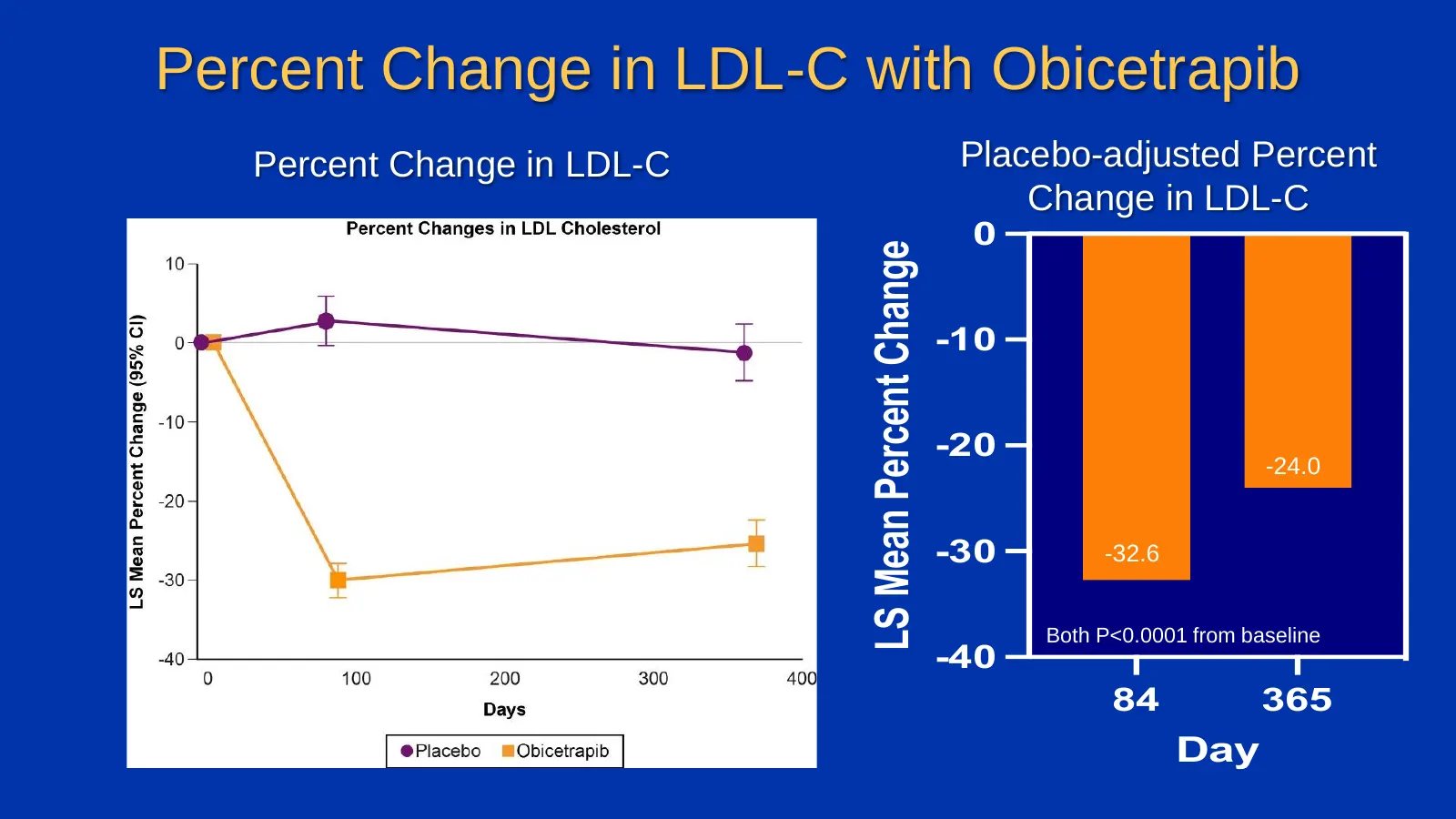
Slide 9: Percent Change in LDL-C with Obicetrapib
Percent Change in LDL-C with Obicetrapib Percent Change in LDL-C Placebo-adjusted Percent Change in LDL-C 0 LS Mean Percent Change -10 -20 -24.0 -30 -32.6 Both P<0.0001 from baseline -40 84 365 Day
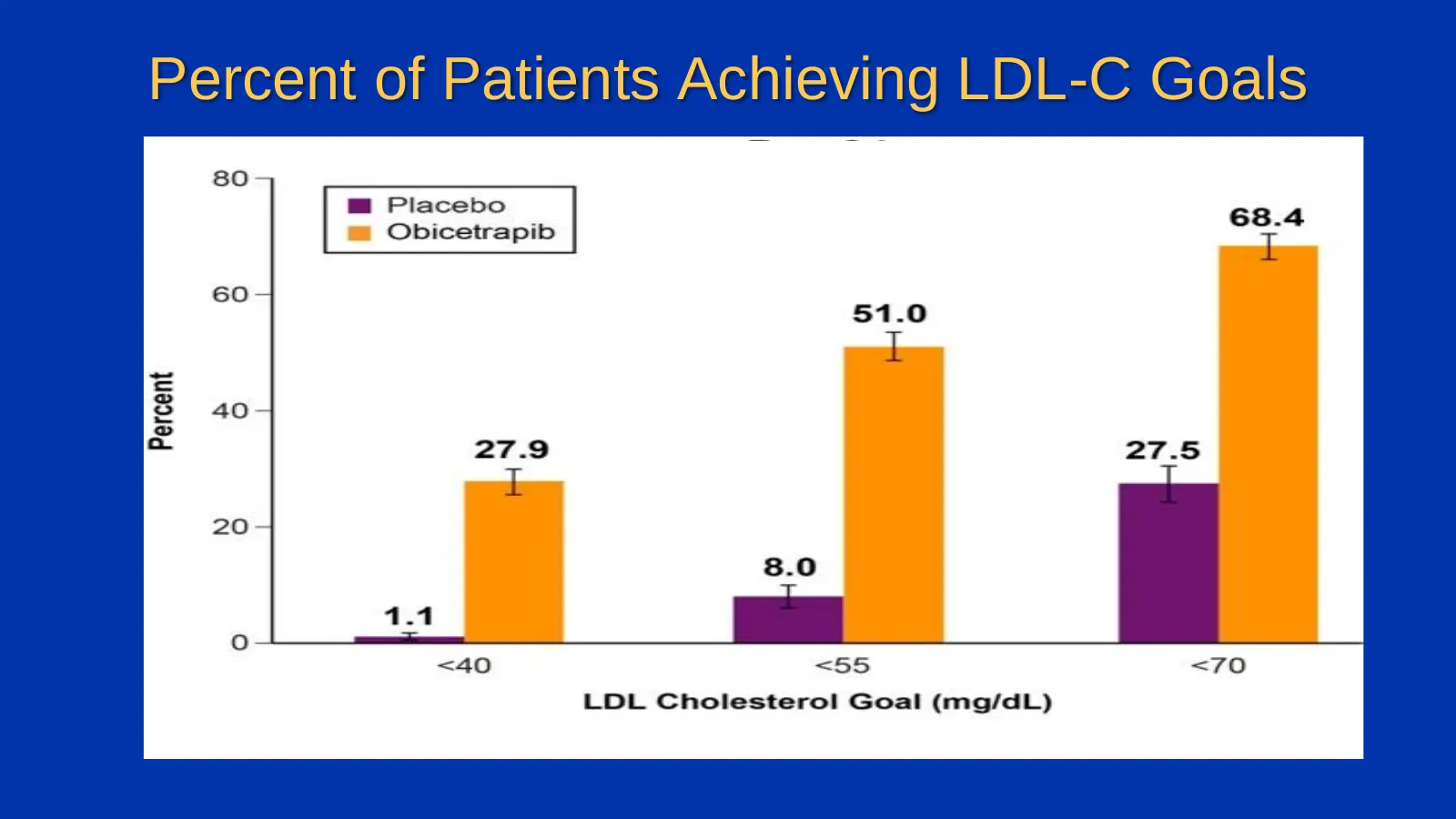
Slide 10: Percent of Patients Achieving LDL-C Goals
Percent of Patients Achieving LDL-C Goals
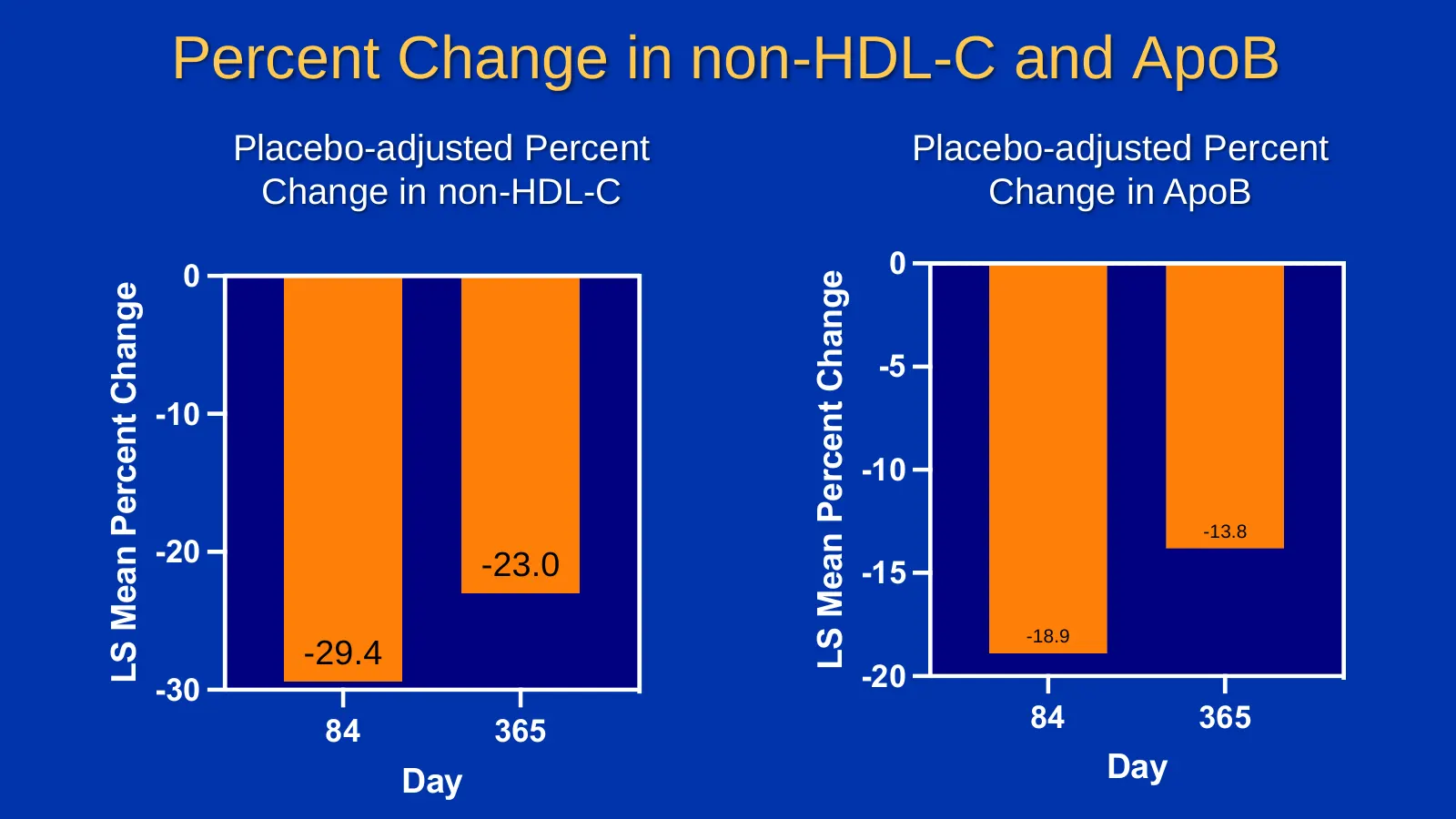
Slide 11: Percent Change in non-HDL-C and ApoB
Percent Change in non-HDL-C and ApoB Placebo-adjusted Percent Placebo-adjusted Percent Change in non-HDL-C Change in ApoB 0 0 LS Mean Percent Change LS Mean Percent Change -5 -10 -10 -13.8 -20 -23.0 -15 -18.9 -29.4 -30 -20 84 365 84 365 Day Day
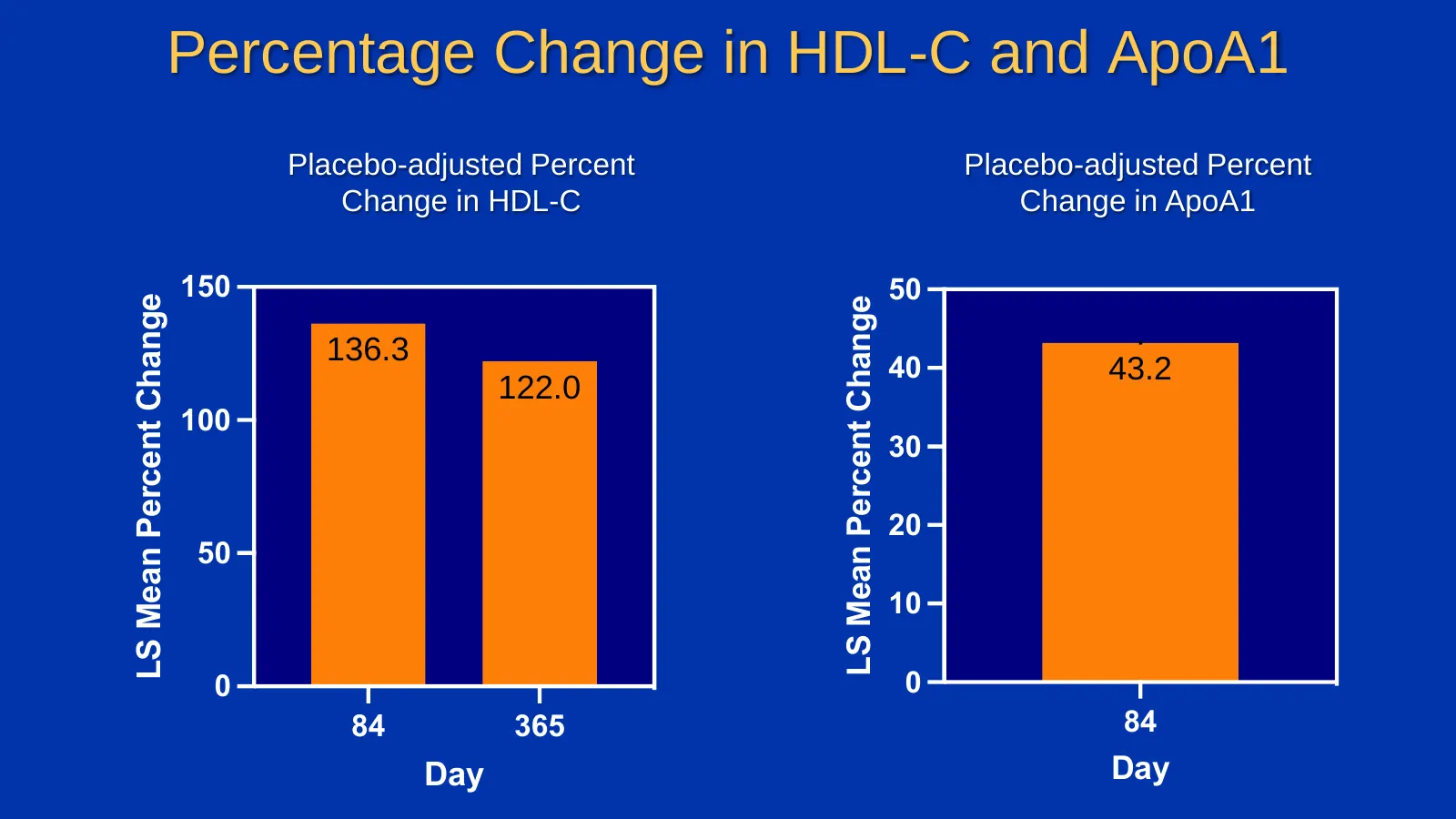
Slide 12: Percentage Change in HDL-C and ApoA1
Percentage Change in HDL-C and ApoA1 Placebo-adjusted Percent Placebo-adjusted Percent Change in HDL-C Change in ApoA1 150 50 LS Mean Percent Change LS Mean Percent Change 136.3 40 43.2 122.0 100 30 20 50 10 0 0 84 365 84 Day Day
Slide 13: Percentage Change in Triglycerides and Lp(a)
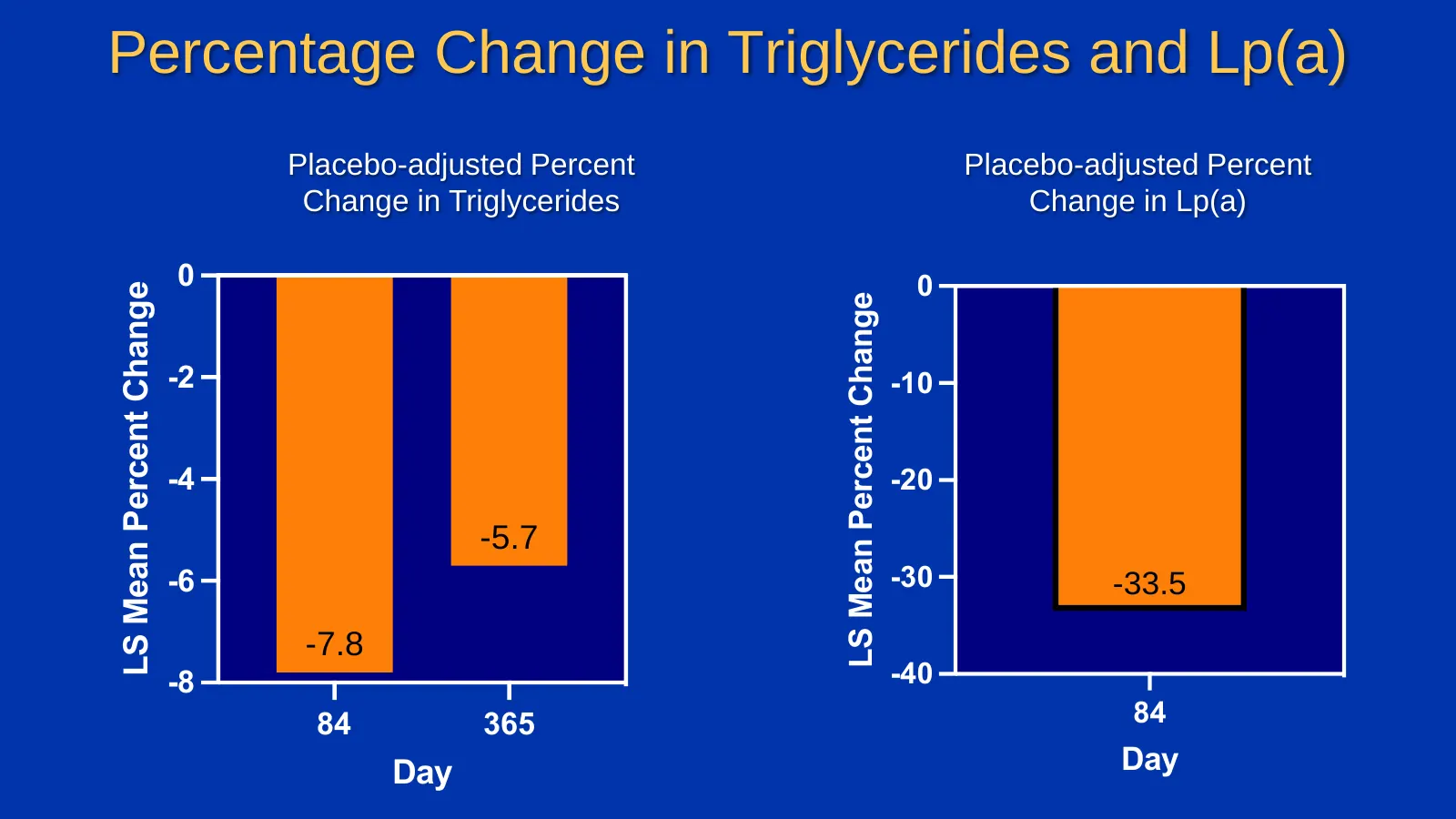
Percentage Change in Triglycerides and Lp(a) Placebo-adjusted Percent Placebo-adjusted Percent Change in Triglycerides Change in Lp(a) 0 0 LS Mean Percent Change LS Mean Percent Change -2 -10 -4 -20 -5.7 -6 -30 -33.5 -7.8 -8 -40 84 365 84 Day Day
Slide 14: Safety and Tolerability
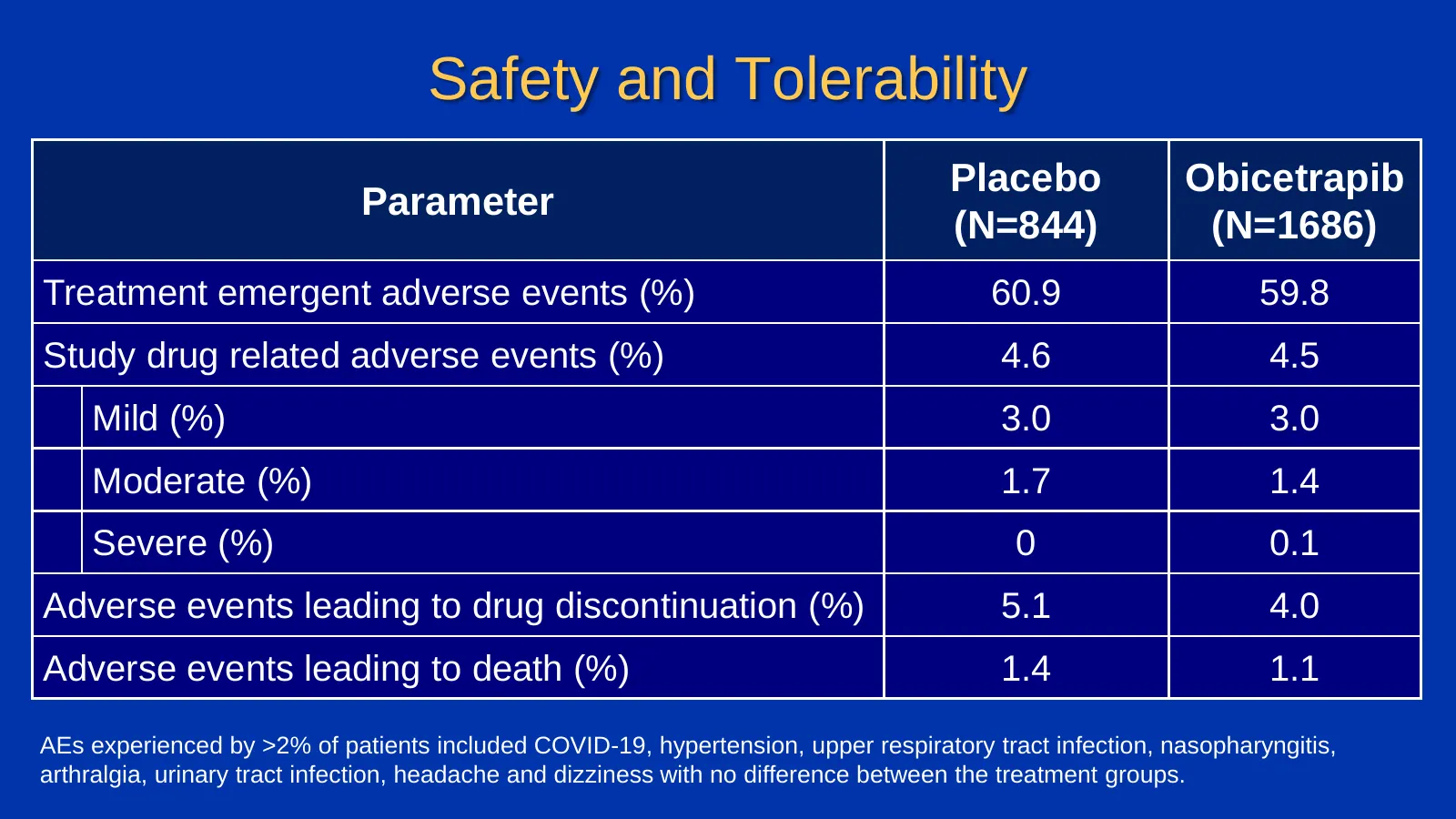
Safety and Tolerability Placebo Obicetrapib Parameter (N=844) (N=1686) Treatment emergent adverse events (%) 60.9 59.8 Study drug related adverse events (%) 4.6 4.5 Mild (%) 3.0 3.0 Moderate (%) 1.7 1.4 Severe (%) 0 0.1 Adverse events leading to drug discontinuation (%) 5.1 4.0 Adverse events leadin
Slide 15: Events of Special Interest
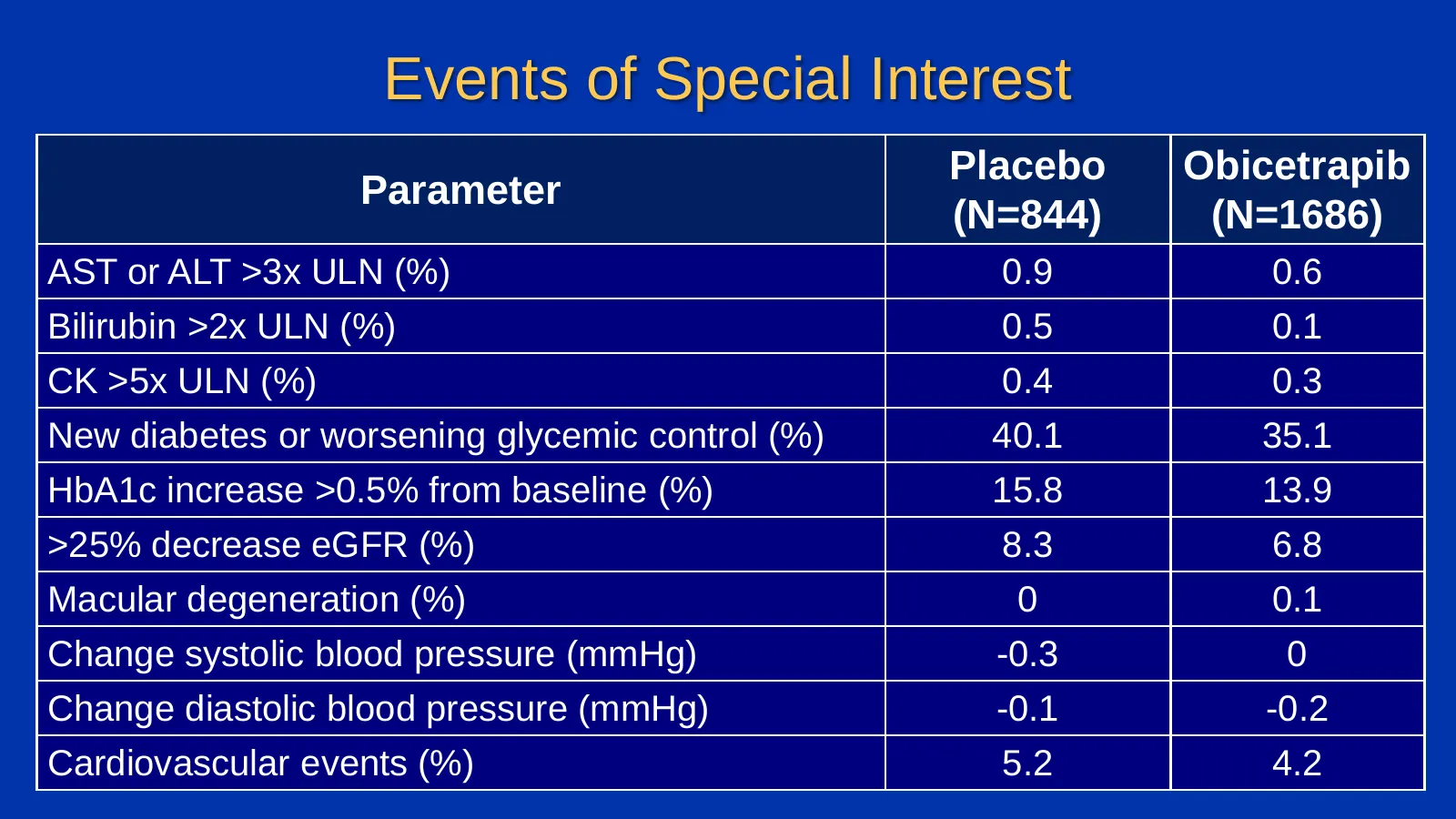
Events of Special Interest Placebo Obicetrapib Parameter (N=844) (N=1686) AST or ALT >3x ULN (%) 0.9 0.6 Bilirubin >2x ULN (%) 0.5 0.1 CK >5x ULN (%) 0.4 0.3 New diabetes or worsening glycemic control (%) 40.1 35.1 HbA1c increase >0.5% from baseline (%) 15.8 13.9 >25% decrease eGFR (%) 8.3 6.8 Macul
Slide 16: Limitations
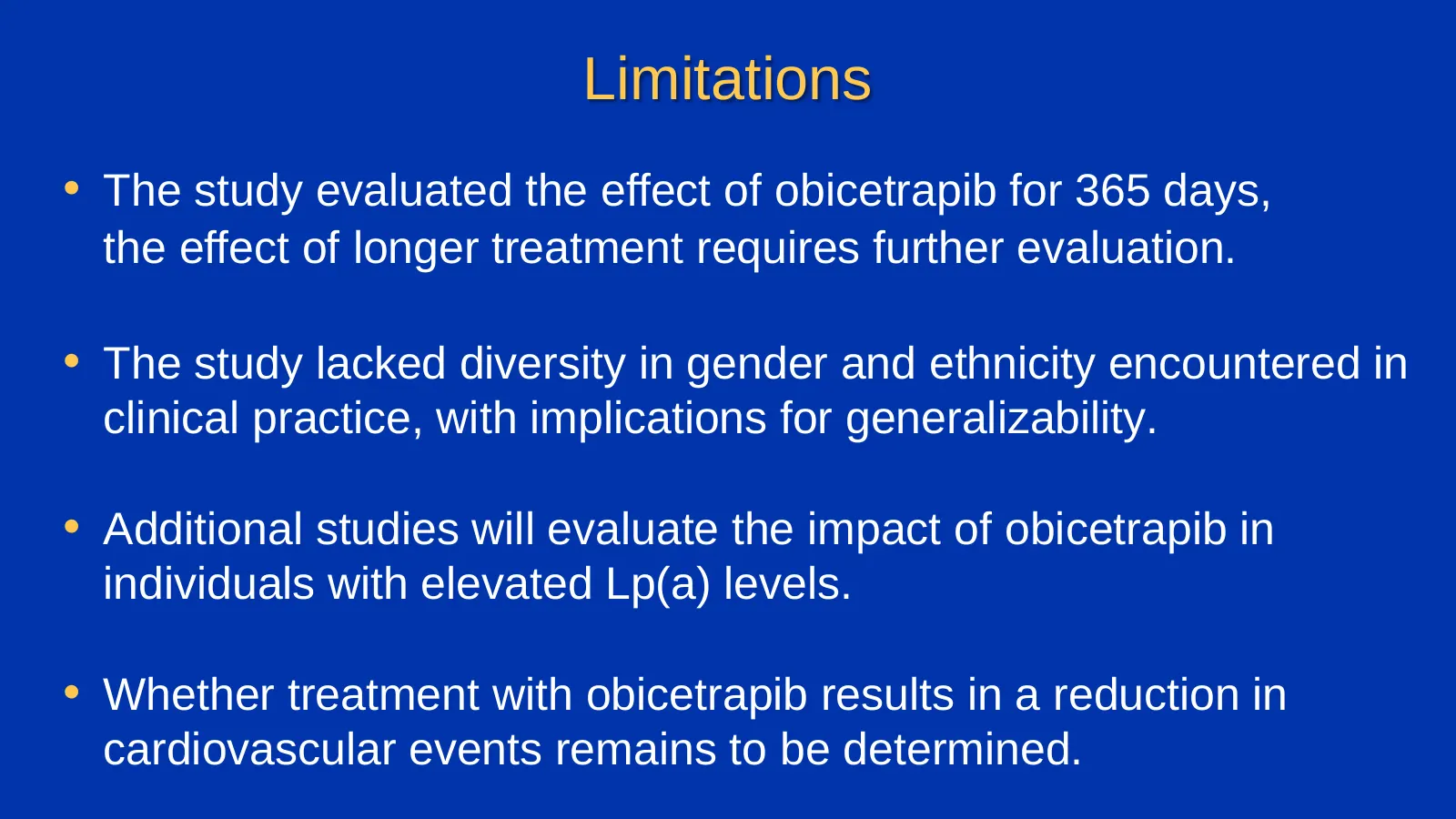
Limitations • The study evaluated the effect of obicetrapib for 365 days, the effect of longer treatment requires further evaluation. • The study lacked diversity in gender and ethnicity encountered in clinical practice, with implications for generalizability. • Additional studies will evaluate the
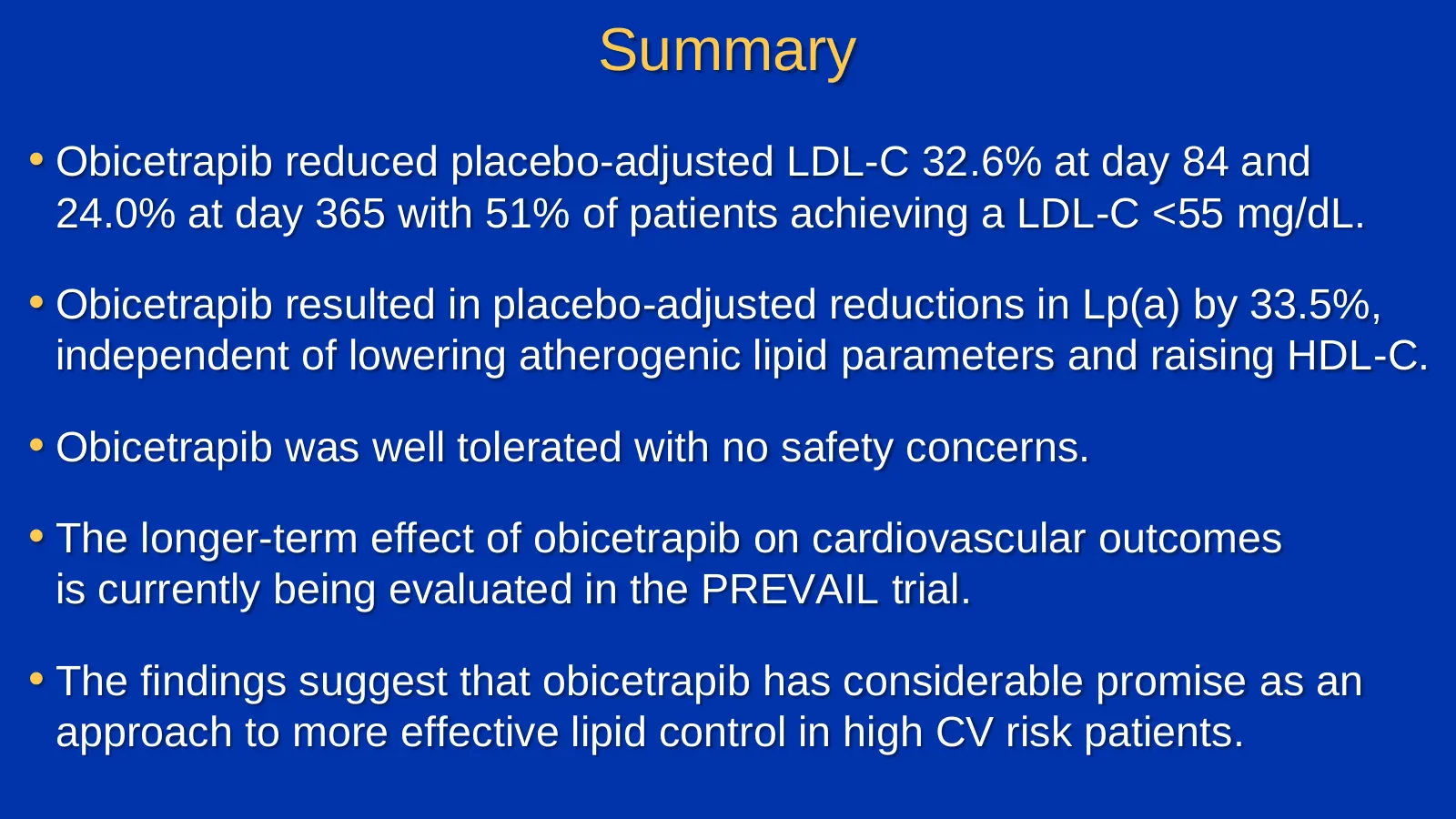
Slide 17: Summary
Summary • Obicetrapib reduced placebo-adjusted LDL-C 32.6% at day 84 and 24.0% at day 365 with 51% of patients achieving a LDL-C <55 mg/dL. • Obicetrapib resulted in placebo-adjusted reductions in Lp(a) by 33.5%, independent of lowering atherogenic lipid parameters and raising HDL-C. • Obicetrapib w
Slide 18: Safety and Efficacy of Obicetrapib in Patients at High Cardiovascular Risk
Safety and Efficacy of Obicetrapib in Patients at High Cardiovascular Risk SJ. Nicholls,! A.J. Nelson, M. Ditmarsch,? J.J.P. Kastelein,?? C.M. Ballant K.K. Ray,° A.M. Navar,’ S.E. Nissen,® M. Harada-Shiba,? D.L. Curcio D. Kling,? A. Hsieh,” J. Butters,! B.A. Ference,”° U. Laufs R. Mehran,” A.L. Cata
Source: Internet Archive copy of newamsterdampharma.com
More decks from NewAmsterdam Pharma Company N.V.
 Investor Presentation (November 2026)40 slides · Nov 4, 2026
 Investor Presentation (August 2026)40 slides · Aug 10, 2026
 Investor Day (August 2026)143 slides · Aug 5, 2026
 Q1 2026 Earnings Presentation6 slides · May 7, 2026
 Investor Presentation (March 2026)38 slides · Mar 2, 2026
 Investor Presentation (November 2025)37 slides · Nov 5, 2025