Aevi Genomic Medicine — Medgenics — JPMorgan Healthcare Conference 2016
36 slides from Aevi Genomic Medicine's conference presentation, Jan 11, 2016

Slide 1: Medgenics JPMorgan January 2016
medgenics JPMorgan January 2016
Slide 2: Forward Looking Statement
Forward Looking Statement This presentation includes certain estimates and other forward - looking statements within the meaning of Section 21 E of the Securities Exchange Act of 1934 , as amended, including statements with respect to anticipated operating and financial performance, clinical results
Slide 3: Company Snapshot
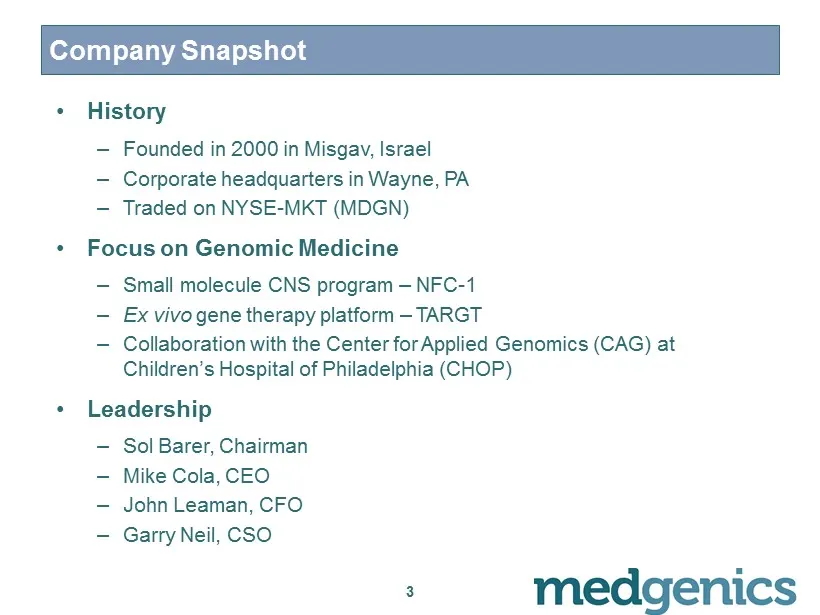
Company Snapshot • History – Founded in 2000 in Misgav , Israel – Corporate headquarters in Wayne, PA – Traded on NYSE - MKT (MDGN) • Focus on Genomic Medicine – Small molecule CNS program – NFC - 1 – Ex vivo gene therapy platform – TARGT – Collaboration with the Center for Applied Genomics (CAG) at
Slide 4: Business Model Evolution: Gene Therapy to Genomic Medicine
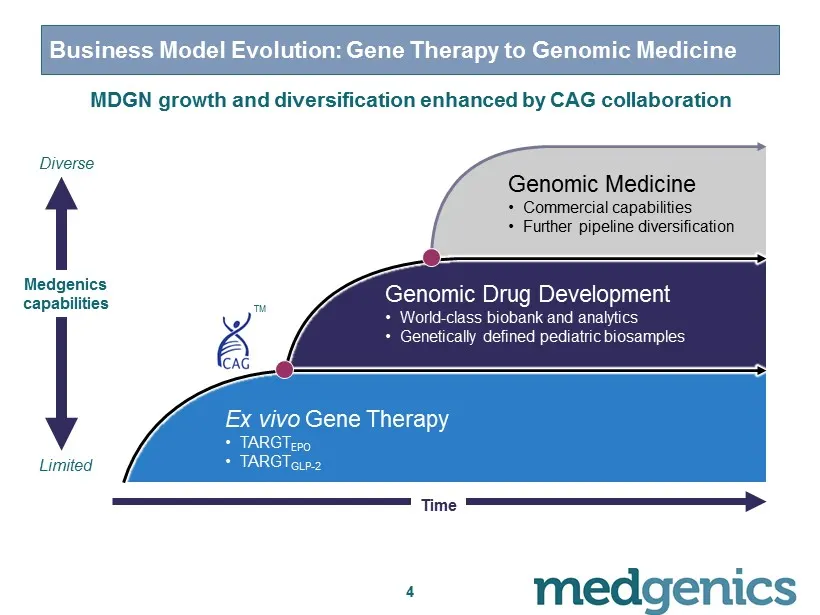
Business Model Evolution: Gene Therapy to Genomic Medicine 4 Diverse Limited Medgenics capabilities Ex vivo Gene Therapy • TARGT EPO • TARGT GLP - 2 Time Genomic Medicine • C ommercial capabilities • Further pipeline diversification Genomic Drug Development • World - class biobank and analytics • G
Slide 5: CAG/CHOP Capabilities
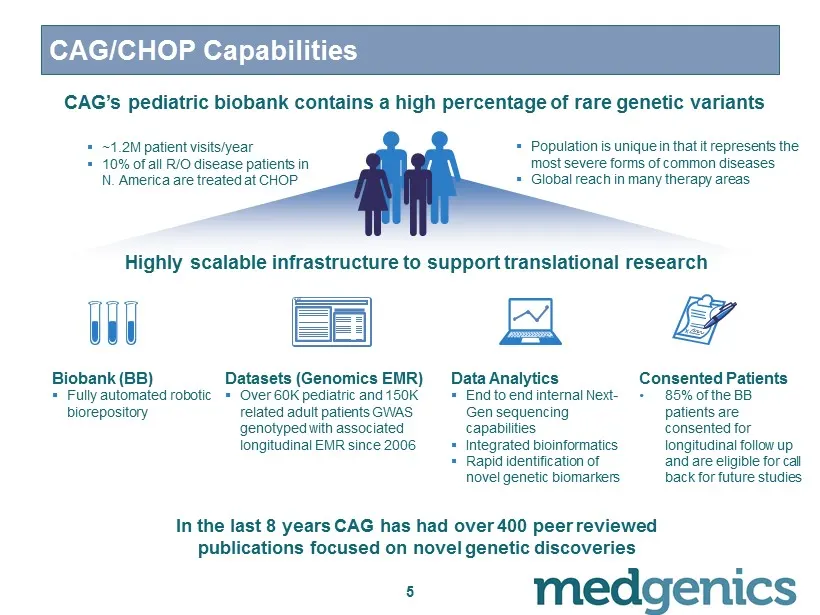
CAG/CHOP Capabilities 5 Datasets (Genomics EMR) ▪ Over 60K pediatric and 150K related adult patients GWAS genotyped with associated longitudinal EMR since 2006 Data Analytics ▪ End to end internal Next - Gen sequencing capabilities ▪ Integrated bioinformatics ▪ Rapid identification of novel genetic
Slide 6: Recent Events
Recent Events 6 • Acquired neuroFix , providing access to a Phase 2 - ready program, NFC - 1 (September 2015) – First program to be announced from ongoing collaboration with Center for Applied Genomics (CAG ) at The Children’s Hospital of Philadelphia (CHOP) – Breakthrough discovery: mGluR mutations
Slide 7: NFC-1 Summary
NFC - 1 Summary • Program in mGluR + ADHD is highly de - risked – Extensive safety database – Compelling Phase 1b efficacy signal in mGluR+ ADHD • Potential rapid path to approval in 22q11.2 DS – Potentially large orphan indication – Compelling genetic hypothesis and positive signal in one patient –
Slide 8: CAG Breakthrough Discovery
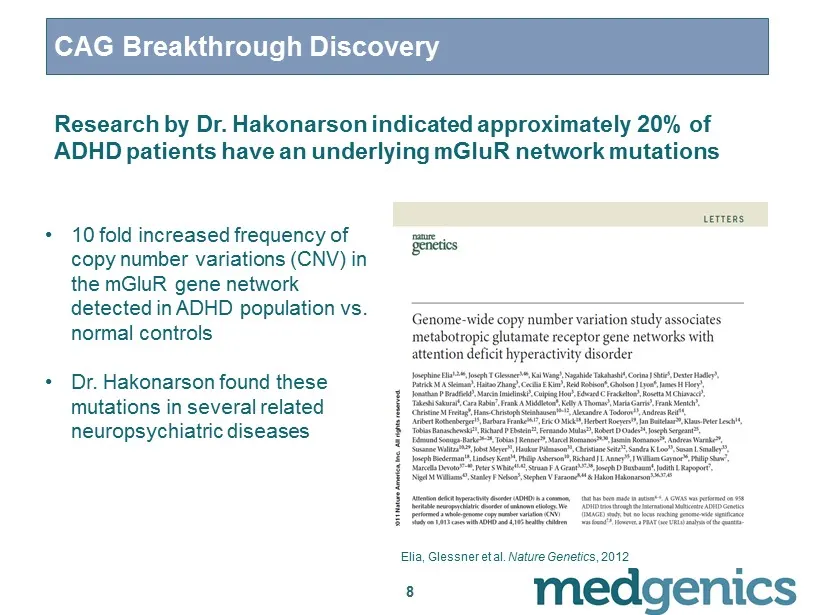
Elia, Glessner et al. Nature Genetic s, 2012 CAG Breakthrough Discovery 8 Research by Dr. Hakonarson indicated approximately 20% of ADHD patients have an underlying mGluR network mutations • 10 fold increased frequency of copy number variations (CNV ) in the mGluR gene network detected in ADHD popul
Slide 9: NFC-1, first-in-class mGluR Neuromodulator
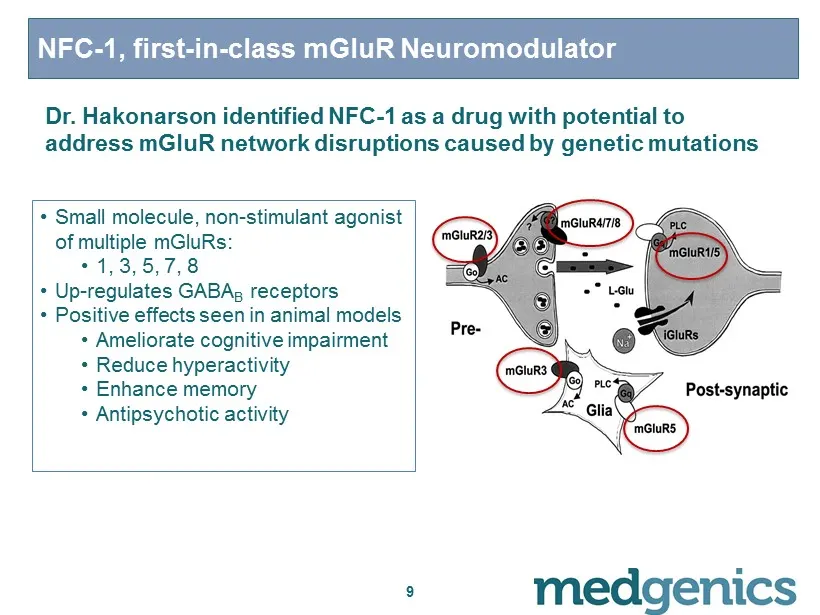
NFC - 1, first - in - class mGluR Neuromodulator 9 • Small molecule, non - stimulant agonist of multiple mGluRs : • 1, 3, 5, 7, 8 • Up - regulates GABA B receptors • Positive effects seen in animal models • Ameliorate cognitive impairment • Reduce hyperactivity • Enhance memory • Antipsychotic activ
Slide 10: NFC-1, An Excellent Candidate for Repositioning
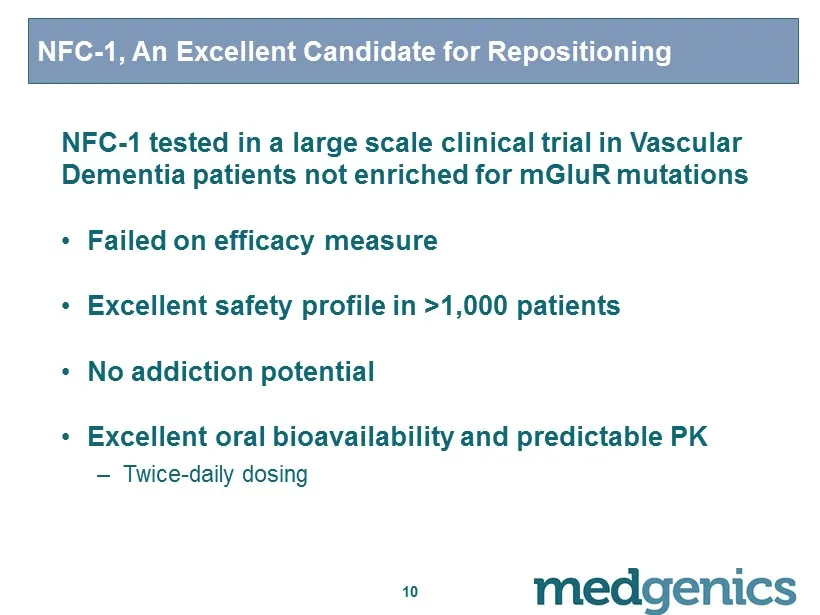
NFC - 1, An Excellent Candidate for R epositioning 10 • Failed on efficacy measure • Excellent safety profile in >1,000 patients • No addiction potential • Excellent oral bioavailability and predictable PK – Twice - daily dosing NFC - 1 tested in a large scale clinical trial in Vascular Dementia pat
Slide 11: NFC-GREAT Study: Design and Execution
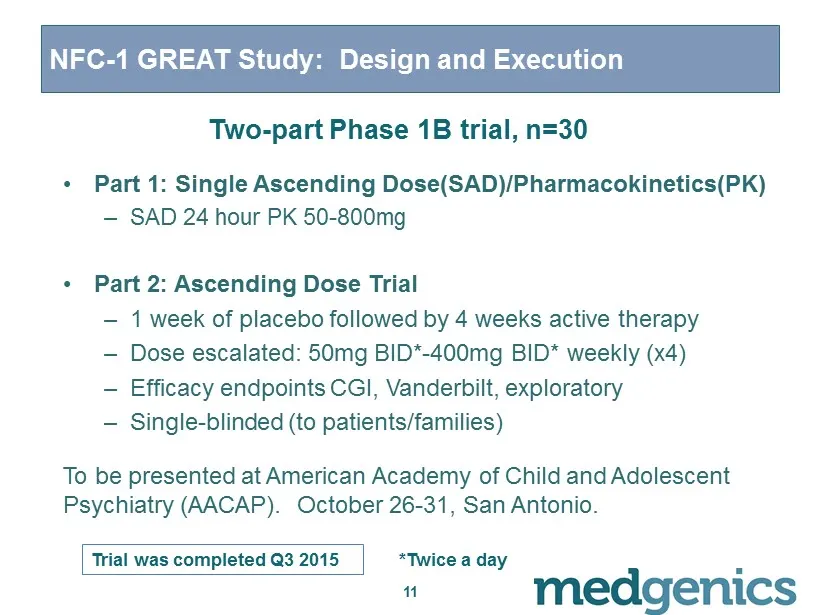
NFC - 1 GREAT Study: Design and Execution • Part 1: Single Ascending Dose(SAD)/Pharmacokinetics(PK) – SAD 24 hour PK 50 - 800mg • Part 2 : Ascending Dose Trial – 1 week of placebo followed by 4 weeks active therapy – Dose escalated: 50mg BID* - 400mg BID* weekly (x4) – Efficacy endpoints CGI, Vander
Slide 12: GREAT Study Enrolled Complex, Severe Patients
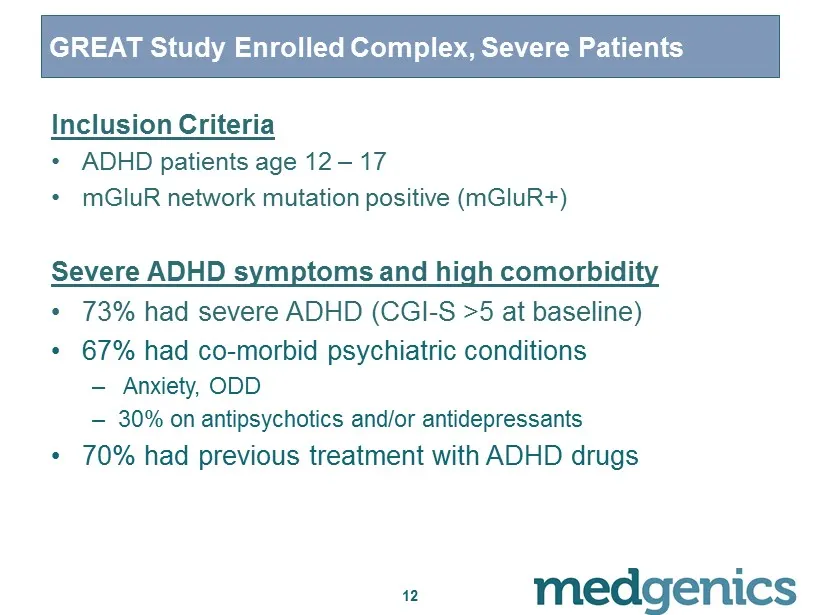
GREAT Study Enrolled Complex, Severe Patients Inclusion Criteria • ADHD patients age 12 – 17 • mGluR network mutation positive ( mGluR +) Severe ADHD symptoms and high comorbidity • 73% had severe ADHD (CGI - S >5 at baseline) • 67% had co - morbid psychiatric conditions – Anxiety, ODD – 30% on anti
Slide 13: Strong Efficacy Signal in Key Endpoints – CGI-I
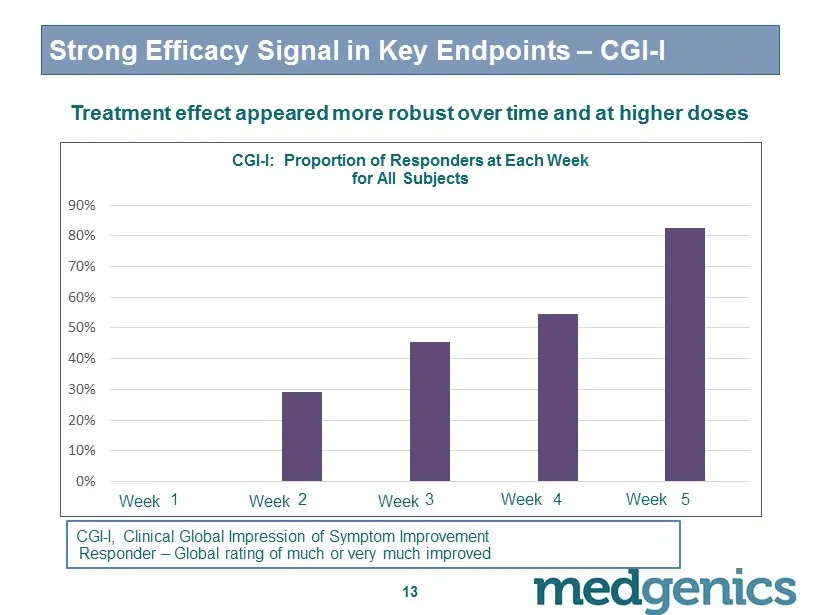
13 Strong Efficacy Signal in Key Endpoints – CGI - I 0% 10% 20% 30% 40% 50% 60% 70% 80% 90% 1 2 3 4 5 CGI - I: Proportion of Responders at E ach Week for All Subjects W eek W eek W eek W eek W eek Treatment effect appeared more robust over time and at higher doses CGI - I, Clinical Global Impression
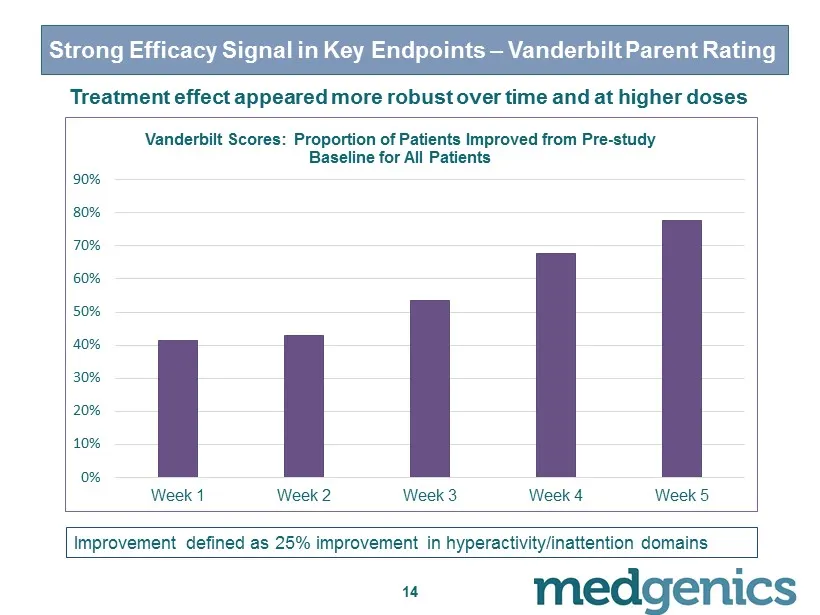
Slide 14: Strong Efficacy Signal in Key Endpoints – Vanderbilt Parent Rating
14 0% 10% 20% 30% 40% 50% 60% 70% 80% 90% Week 1 Week 2 Week 3 Week 4 Week 5 Vanderbilt Scores: Proportion of Patients Improved from Pre - study Baseline for All Patients Improvement defined as 25% improvement in hyperactivity/inattention domains Strong Efficacy Signal in Key Endpoints – Vanderbilt
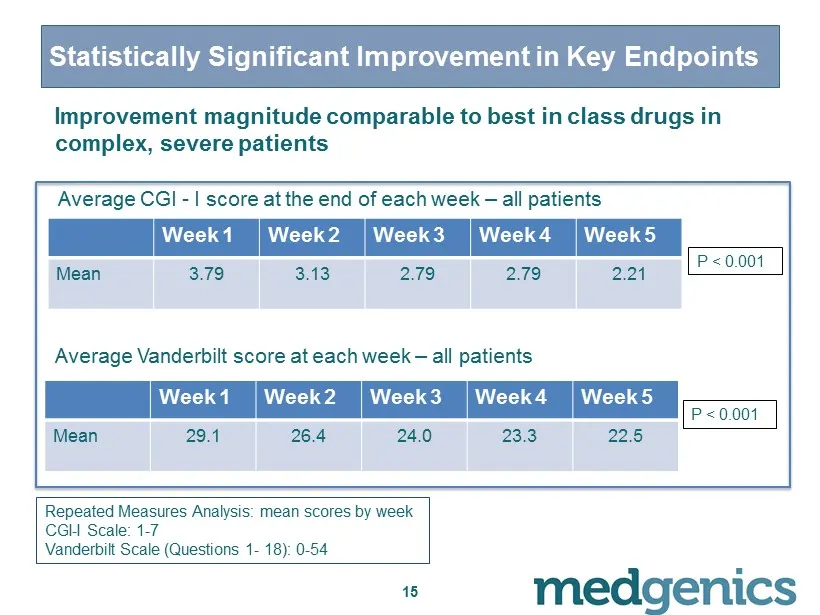
Slide 15: Statistically Significant Improvement in Key Endpoints
Statistically Significant Improvement in Key Endpoints 15 Week 1 Week 2 Week 3 Week 4 Week 5 Mean 29.1 26.4 24.0 23.3 22.5 Week 1 Week 2 Week 3 Week 4 Week 5 Mean 3.79 3.13 2.79 2.79 2.21 P < 0.001 P < 0.001 Average Vanderbilt score at each week – all patients Average CGI - I score at the end of eac
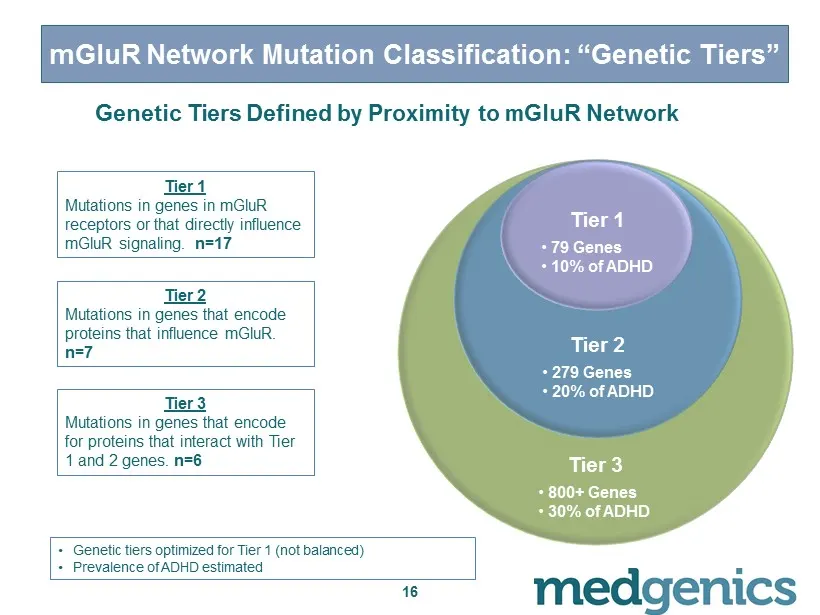
Slide 16: mGluR Network Mutation Classification: Genetic Tiers
16 mGluR Network Mutation Classification: “Genetic Tiers” Tier 3 • 800+ Genes • 30% of ADHD Tier 2 • 279 Genes • 20% of ADHD Tier 1 • 79 Genes • 10% of ADHD Tier 1 Mutations in genes in mGluR receptors or that directly influence mGluR signaling. n=17 Tier 2 Mutations in genes that encode proteins th
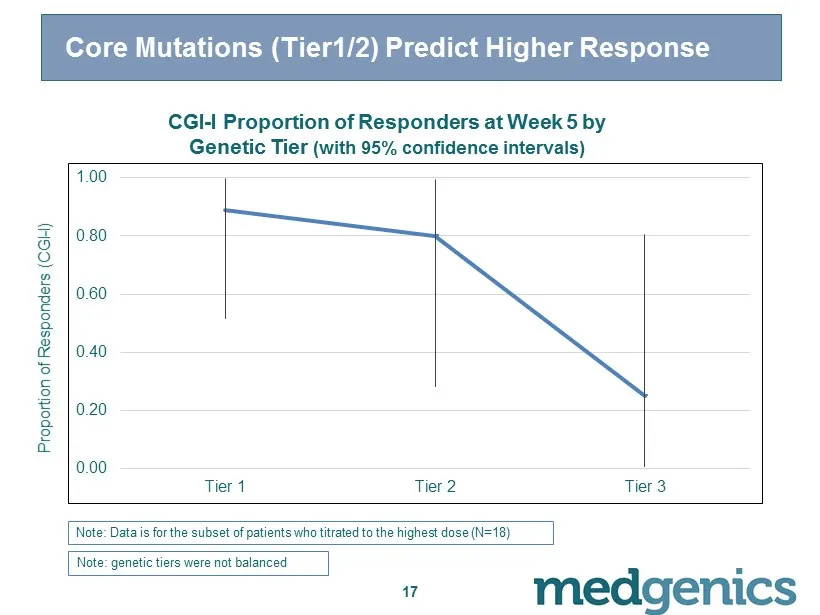
Slide 17: Core Mutations (Tier1/2) Predict Higher Response
Core Mutations (Tier1/2) Predict Higher Response 17 0.00 0.20 0.40 0.60 0.80 1.00 Tier 1 Tier 2 Tier 3 CGI - I Proportion of Responders at Week 5 by Genetic Tier ( with 95% confidence intervals) Proportion of Responders (CGI - I) Note: genetic tiers were not balanced Note: Data is for the subset of
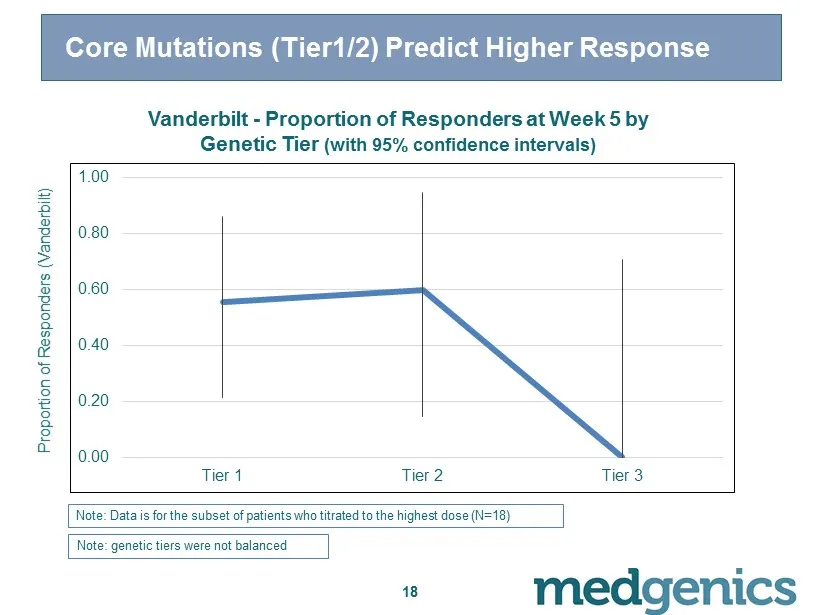
Slide 18: Core Mutations (Tier1/2) Predict Higher Response
18 Proportion of Responders (Vanderbilt) Note: genetic tiers were not balanced Note: Data is for the subset of patients who titrated to the highest dose (N=18) 0.00 0.20 0.40 0.60 0.80 1.00 Tier 1 Tier 2 Tier 3 Vanderbilt - Proportion of Responders at Week 5 by Genetic Tier ( with 95% confidence int
Slide 19: NFC-GREAT Trial Study Summary
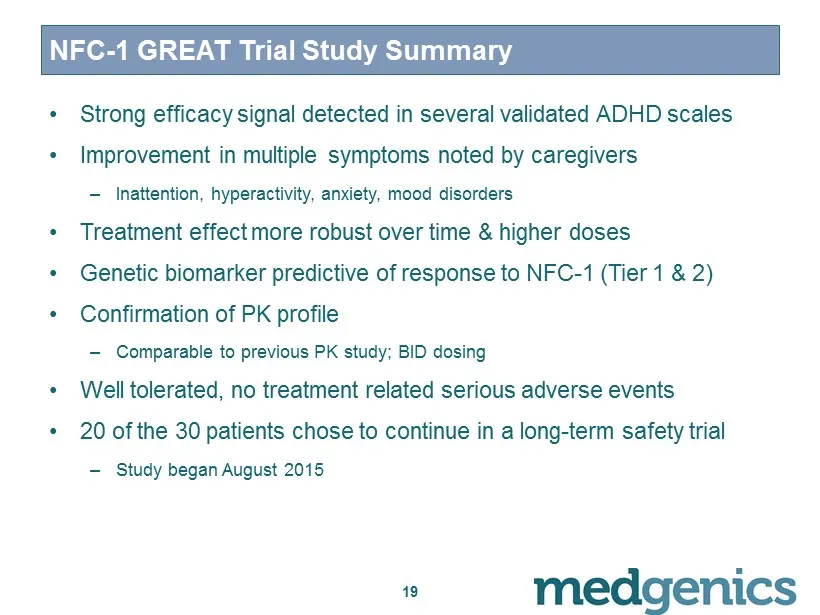
NFC - 1 GREAT Trial Study Summary • Strong efficacy signal detected in several validated ADHD scales • Improvement in multiple symptoms noted by caregivers – I nattention, hyperactivity, anxiety, mood disorders • Treatment effect more robust over time & higher doses • Genetic biomarker predictive of
Slide 20: Next Steps: mGluR+ ADHD Non-Interventional Study
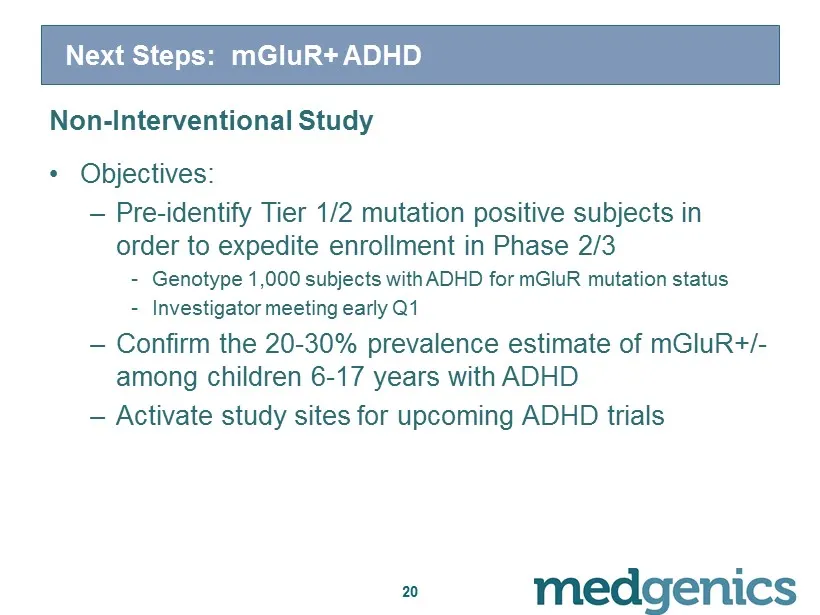
Next Steps: mGluR+ ADHD Non - Interventional Study • Objectives: – Pre - identify Tier 1/2 mutation positive subjects in order to expedite enrollment in Phase 2/3 - Genotype 1,000 subjects with ADHD for mGluR mutation status - Investigator meeting early Q1 – Confirm the 20 - 30% prevalence estimate
Slide 21: Next Steps: mGluR+ ADHD Phase 2/3 Trial
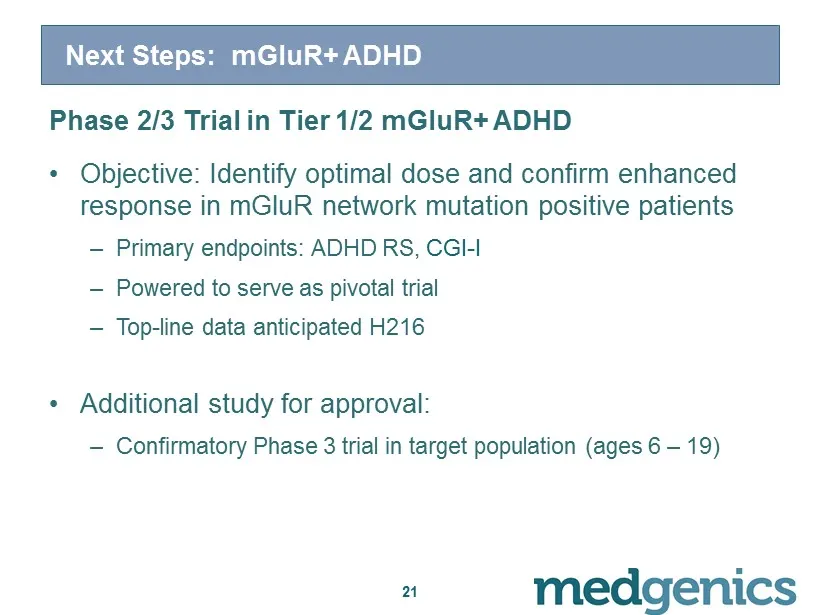
Next Steps: mGluR+ ADHD Phase 2/3 Trial in Tier 1/2 mGluR+ ADHD • Objective: Identify optimal dose and confirm enhanced response in mGluR network mutation positive patients – Primary endpoints: ADHD RS, CGI - I – Powered to serve as pivotal trial – Top - line data anticipated H216 • Additional study
Slide 22: ADHD Market Opportunity
ADHD Market Opportunity Overall US Market • 2015 Sales in excess of $10B* (> 60M total prescriptions**) • Approximately 6M pediatric patients • Stimulants dominate market with 90+% of total prescriptions NFC - 1 Opportunity • Genetic Biomarker identifies eligible patients ( approx 20% of all ADHD) a
Slide 23: 22q11.2 Deletion Syndrome (DS) Overview
22q11.2 Deletion Syndrome (DS) Overview 23
Slide 24: Orphan Opportunity - 22q11.2 DS
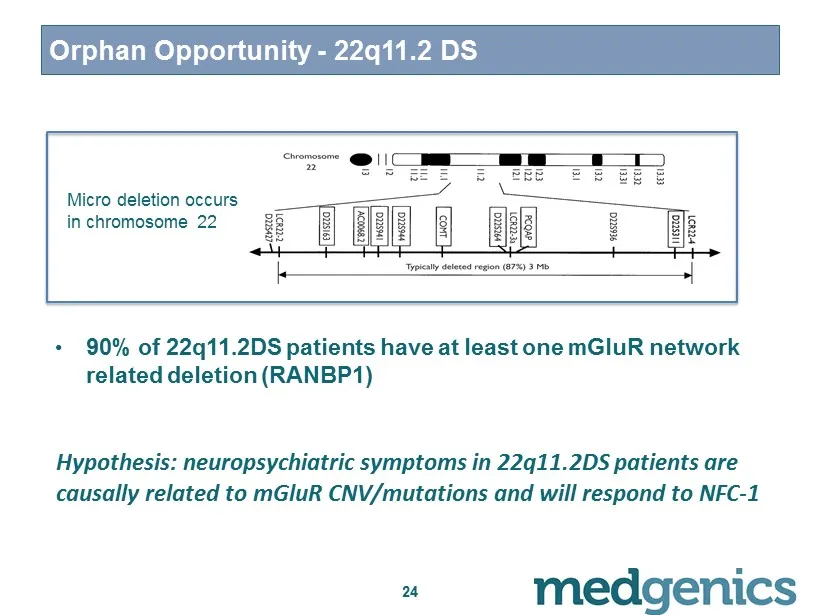
Orphan Opportunity - 22q11.2 DS • 90% of 22q11.2DS patients have at least one mGluR network related deletion (RANBP1) 24 Micro deletion occurs in chromosome 22 Hypothesis: neuropsychiatric symptoms in 22q11.2DS patients are causally related to mGluR CNV/mutations and will respond to NFC - 1
Slide 25: Orphan Opportunity - 22q11.2 DS Symptoms
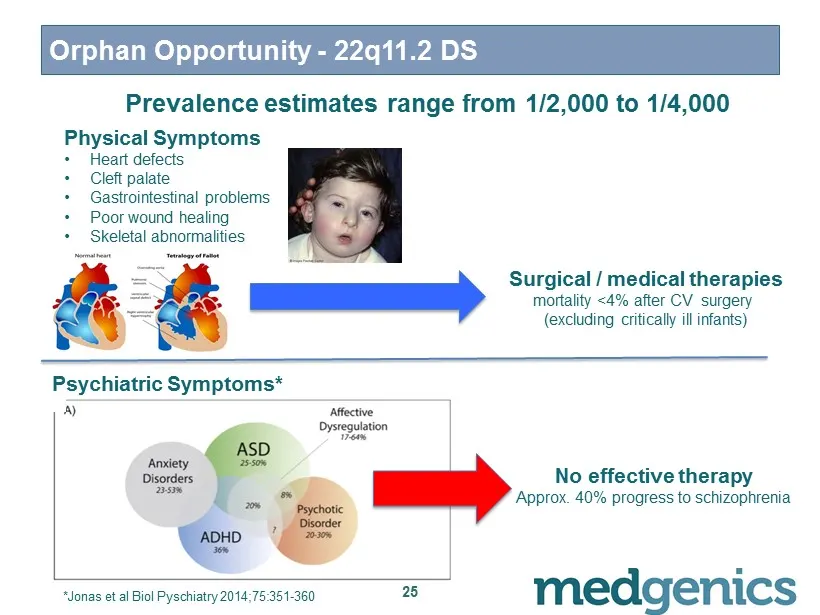
25 Orphan Opportunity - 22q11.2 DS Physical Symptoms • Heart defects • Cleft palate • Gastrointestinal problems • Poor wound healing • Skeletal abnormalities Surgical / medical therapies mortality <4% after CV surgery (excluding critically ill infants) No effective therapy Approx. 40% progress to sc
Slide 26: 22q11.2 Patient in GREAT Study
22q11.2 Patient in GREAT Study 26 T wo 22q11.2 p atients in the trial; one deletion and one duplication • Parents reported significant symptom improvement in both • M arked improvement in CGI - I and Vanderbilt • Both families elected to enroll in long - term safety trial to maintain access to NFC -
Slide 27: Opportunity to work with the Leading 22q11.2 Center
Opportunity to work with the Leading 22q11.2 Center • “ 22q and You” Center at The Children’s Hospital of Philadelphia (CHOP) – World’s leading 22q11.2 Deletion Syndrome (DS) Center – Caring for > 1,300 children with a 22q11.2 deletion – Draws families from around the world – Staffed by geneticists,
Slide 28: Next Steps: 22q11.2 Deletion Syndrome
Next Steps: 22q11.2 Deletion Syndrome Phase 1/2 indication & dose finding study • Filed IND 4Q15 • Explore major neuropsychiatric disorders: ADHD, Anxiety, ASD • Initial data expected mid - 2016 • Transition to pivotal trial in one or more disorders • Rapid path to approval based on potential of Orp
Slide 29: TARGT – Ex vivo Gene Therapy
TARGT – Ex vivo Gene Therapy 29
Slide 30: Stanford GeneRide Technology
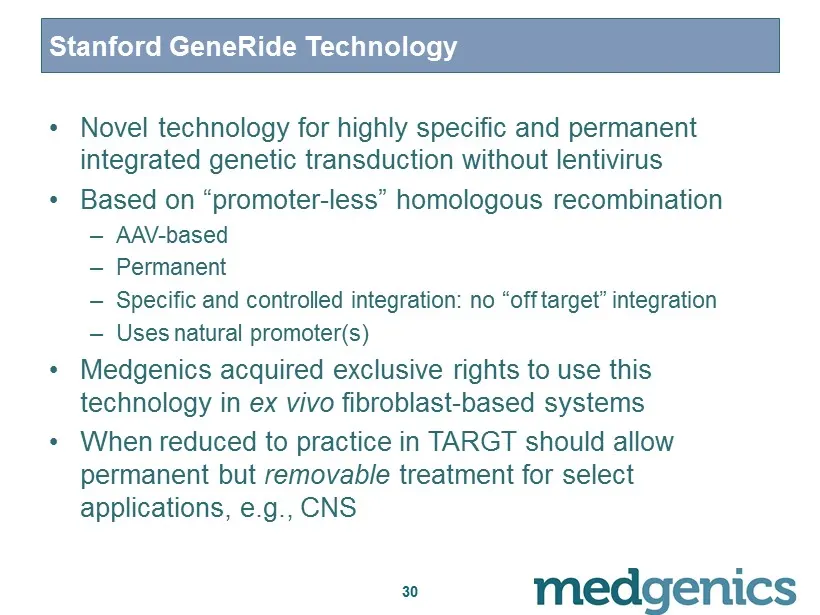
Stanford GeneRide Technology • Novel technology for highly specific and permanent integrated genetic transduction without lentivirus • Based on “promoter - less” homologous recombination – AAV - based – Permanent – Specific and controlled integration: no “off target” integration – Uses natural promo
Slide 31: TARGT CNS
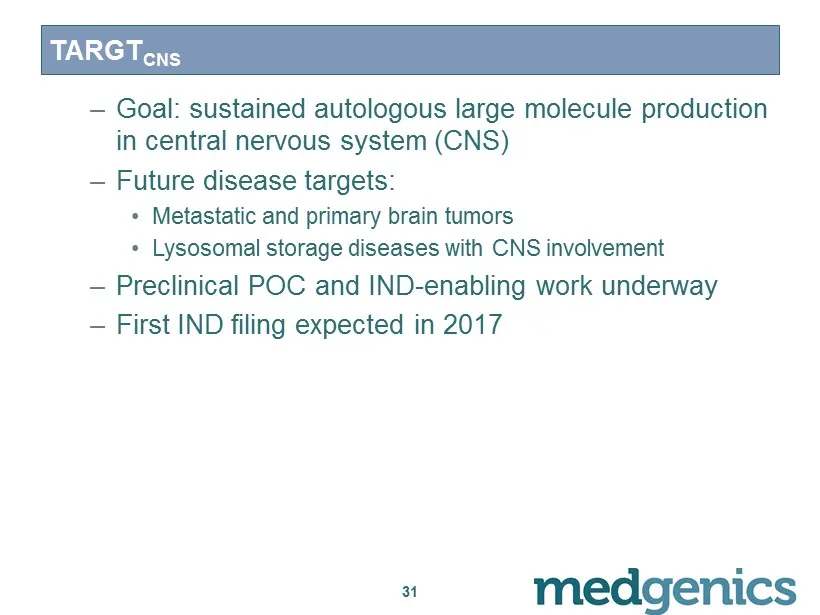
TARGT CNS – Goal : sustained autologous large molecule production in central nervous system (CNS) – Future disease targets: • M etastatic and primary brain tumors • Lysosomal storage diseases with CNS involvement – Preclinical POC and IND - enabling work underway – First IND filing expected in 2017
Slide 32: Financial Update
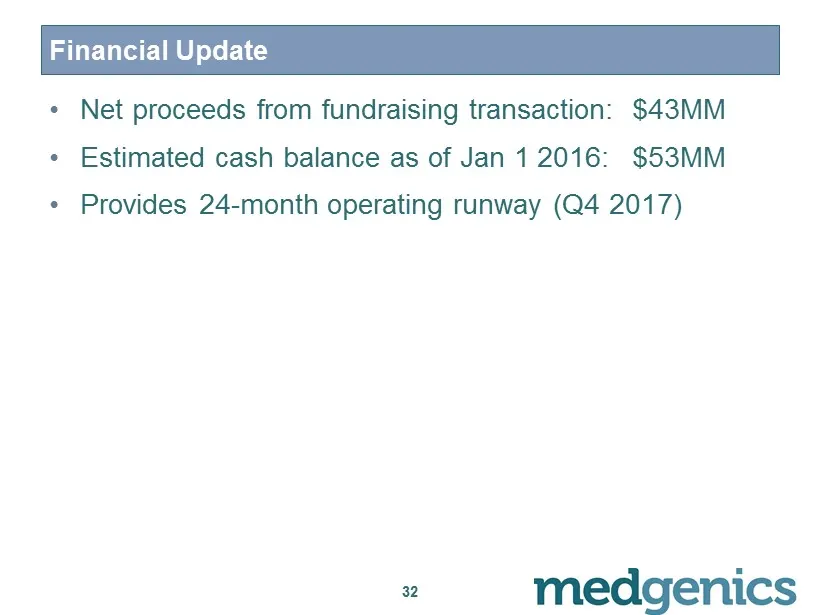
Financial Update • Net proceeds from fundraising transaction: $43MM • Estimated cash balance as of Jan 1 2016: $53MM • Provides 24 - month operating runway (Q4 2017 ) 32
Slide 33: Near-term Milestones
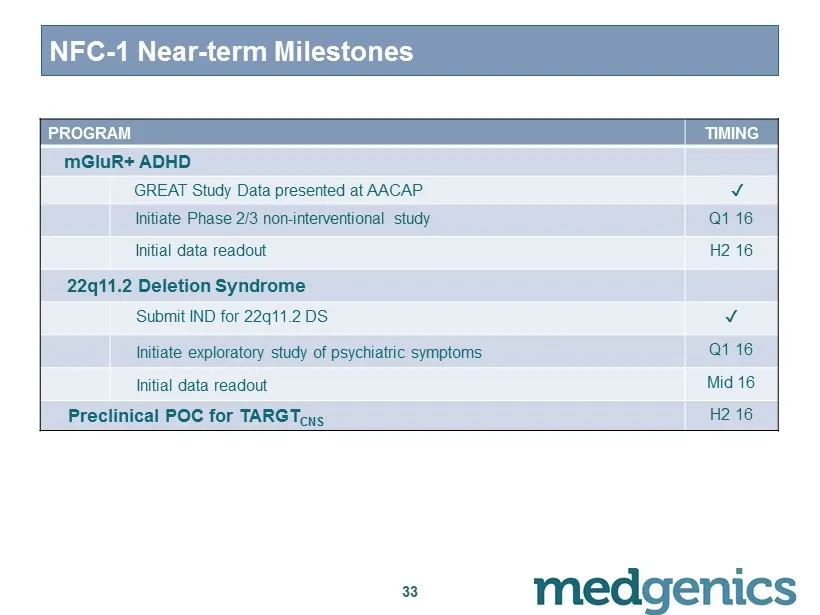
NFC - 1 Near - term Milestones 33 PROGRAM TIMING mGluR + ADHD GREAT Study Data presented at AACAP ✔ Initiate Phase 2/3 non - interventional study Q1 16 Initial data readout H2 16 22q11.2 Deletion Syndrome Submit IND for 22q11.2 DS ✔ Initiate exploratory study of psychiatric symptoms Q1 16 Initial da
Slide 34: Summary
Summary • Transformative year for the Company – Clinical trials with NFC - 1 will initiate in 2016 – Anticipate critical data available in Q3 (22q) and Q4 (mGluR+ ADHD) • P otential for additional deals originating from Medgenics/CHOP collaboration • Promising early data in CNS studies support conti
Slide 35: Appendix
Appendix 2s medgenics
Slide 36: TARGT EPO
TARGT EPO • Trial Status – Completed enrollment in low - dose, mid - dose and PD cohorts • High dose cohort was not needed • Safe and well - tolerated; no treatment related SAE • 9/13 patients were EPO and transfusion free for at least 5 months • One patient maintains stable EPO production and Hb re
Source: SEC EDGAR · 8-K filed Jan 11, 2016
More decks from Aevi Genomic Medicine LLC
 Merger or Acquisition (December 2019)37 slides · Dec 23, 2019
 Investor Presentation (August 2019)36 slides · Aug 7, 2019
 FY2017 Earnings Presentation24 slides · Mar 13, 2018
 Corporate Update (August 2017)17 slides · Aug 10, 2017
 Q1 2017 Earnings Presentation29 slides · May 10, 2017
 Technical Presentation (March 2017)13 slides · Mar 20, 2017