Syndax Pharmaceuticals, Inc. · NASDAQ:SNDX
Syndax Pharmaceuticals — Molecular Therapeutics of Cancer Research Meeting (June 2015)
27 slides from Syndax Pharmaceuticals's conference presentation, June 2015
Slide 1: Targeting the Menin-MLL1 Interaction Site as a Treatment for MLL-r and NPM1c+ AML
Molecular Therapeutics of Cancer Research Meeting Targeting the Menin-MLL1 Interaction Site as a Treatment for Mixed Lineage Leukemia-rearranged (MLL-r) and NPM1c+ AML Jerry McGeehan Syndax Pharmaceuticals 1
Slide 2: Outline
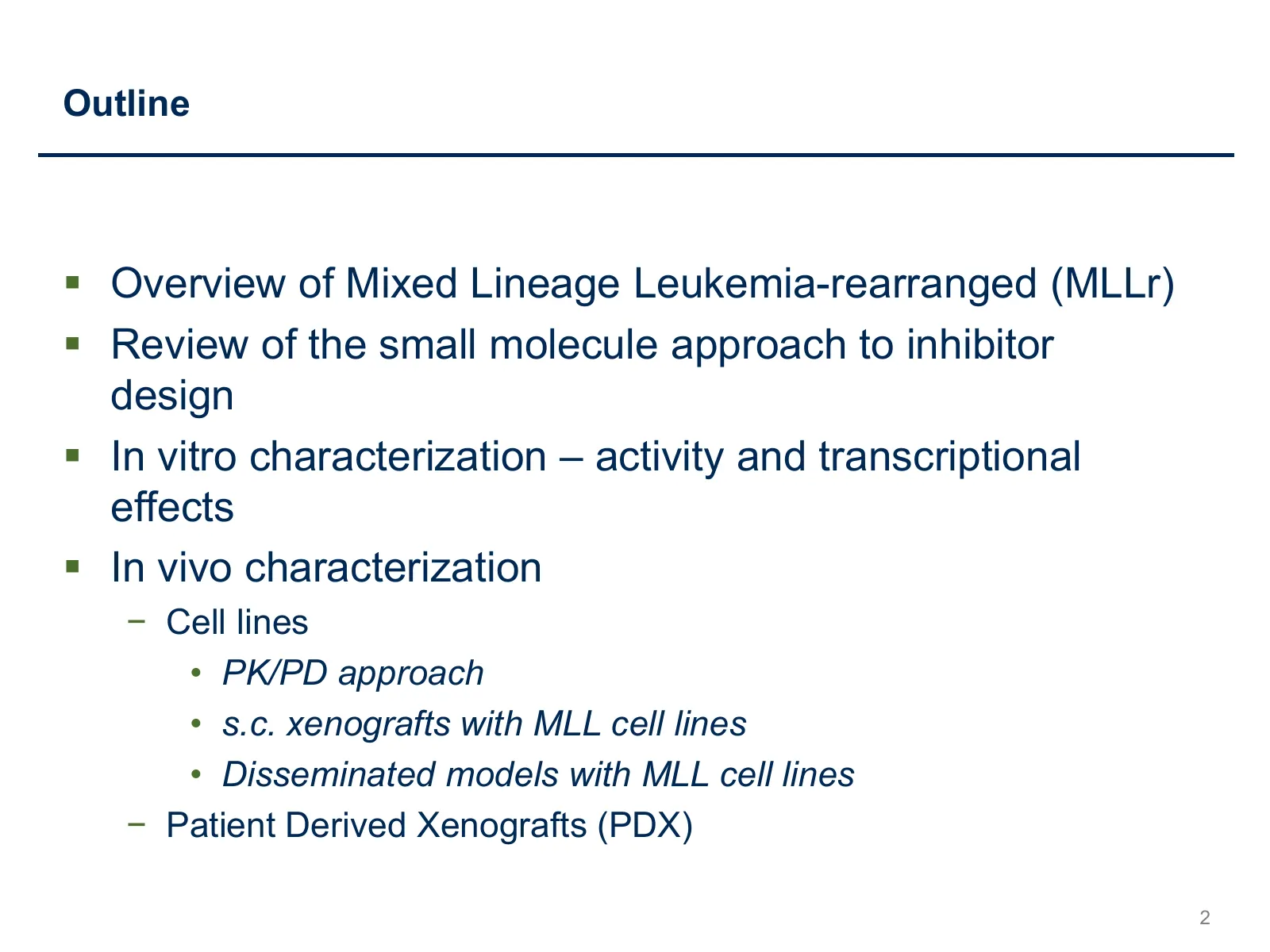
Outline Overview of Mixed Lineage Leukemia-rearranged (MLLr) Review of the small molecule approach to inhibitor design In vitro characterization – activity and transcriptional effects In vivo characterization − Cell lines • PK/PD approach • s.c. xenografts with MLL cell lines • Disseminated
Slide 3: Introduction
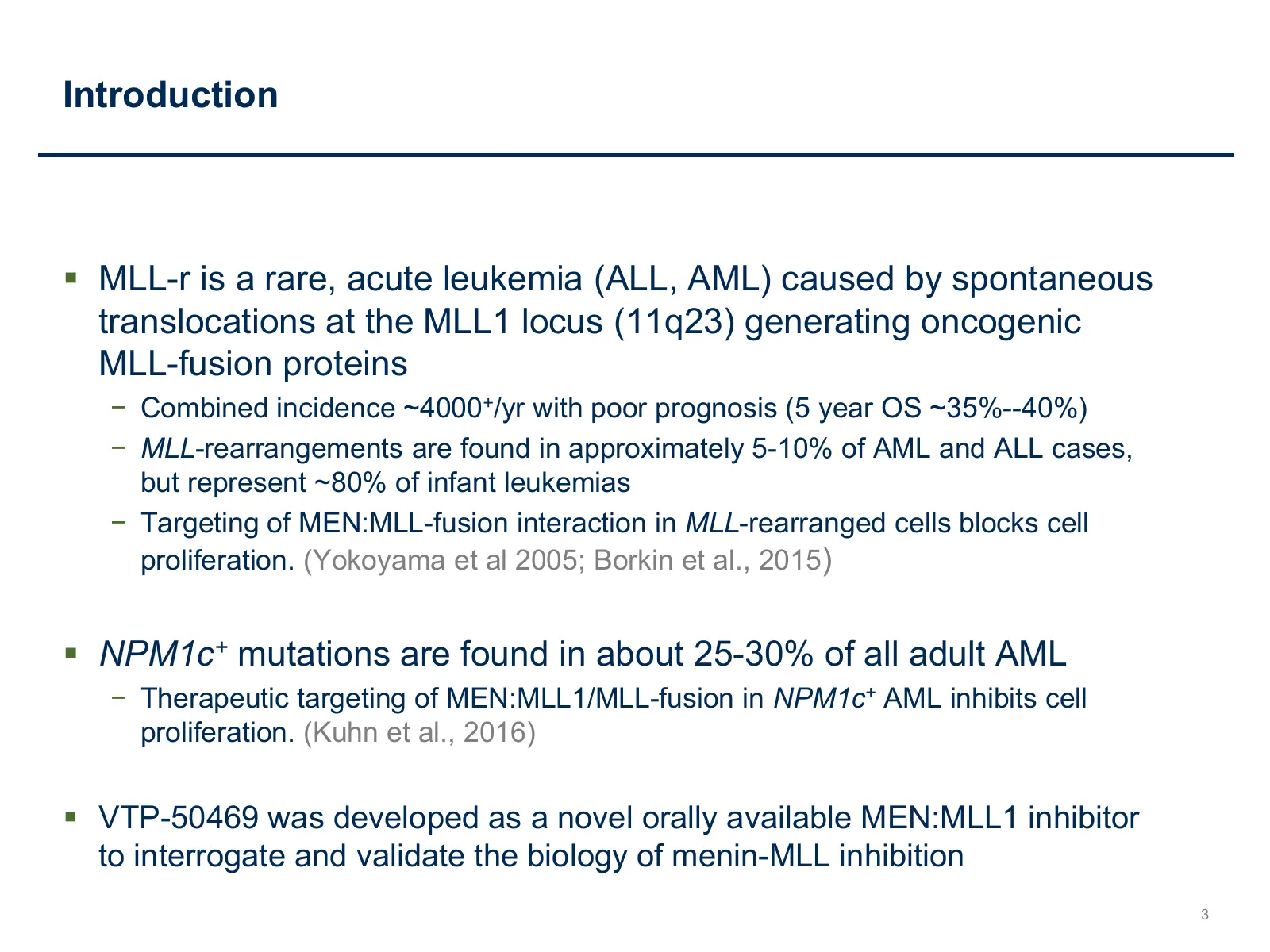
Introduction MLL-r is a rare, acute leukemia (ALL, AML) caused by spontaneous translocations at the MLL1 locus (11q23) generating oncogenic MLL-fusion proteins − Combined incidence ~4000+/yr with poor prognosis (5 year OS ~35%--40%) − MLL-rearrangements are found in approximately 5-10% of AML and
Slide 4: Potential use in multiple areas of unmet need beyond MLL-r
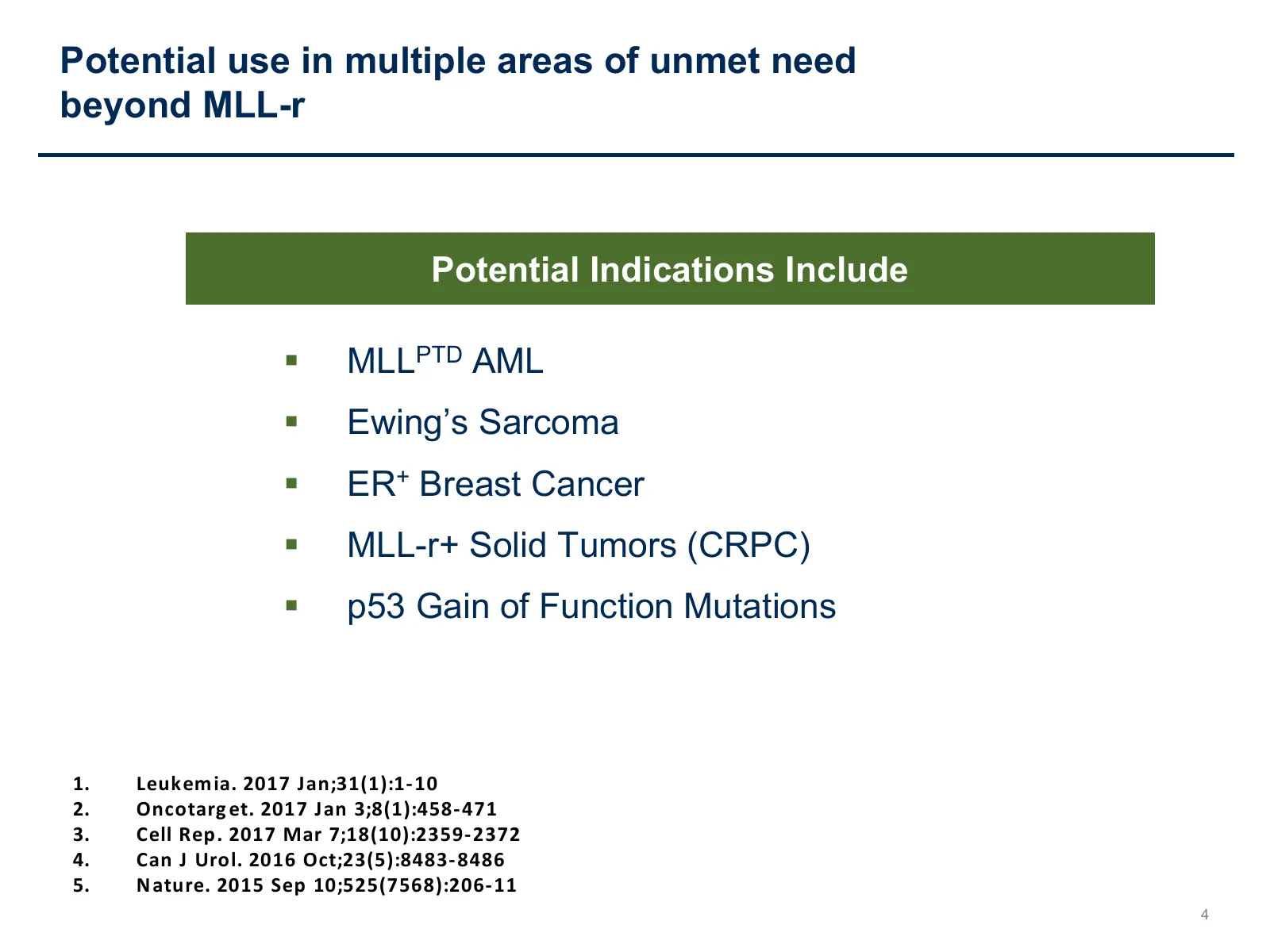
Potential use in multiple areas of unmet need beyond MLL-r Potential Indications Include MLLPTD AML Ewing’s Sarcoma ER+ Breast Cancer MLL-r+ Solid Tumors (CRPC) p53 Gain of Function Mutations 1. Leukem ia. 2017 Jan;31(1):1-10 2. Oncotarg et. 2017 Jan 3;8(1):458-471 3. Cell Rep. 2017 Mar 7;
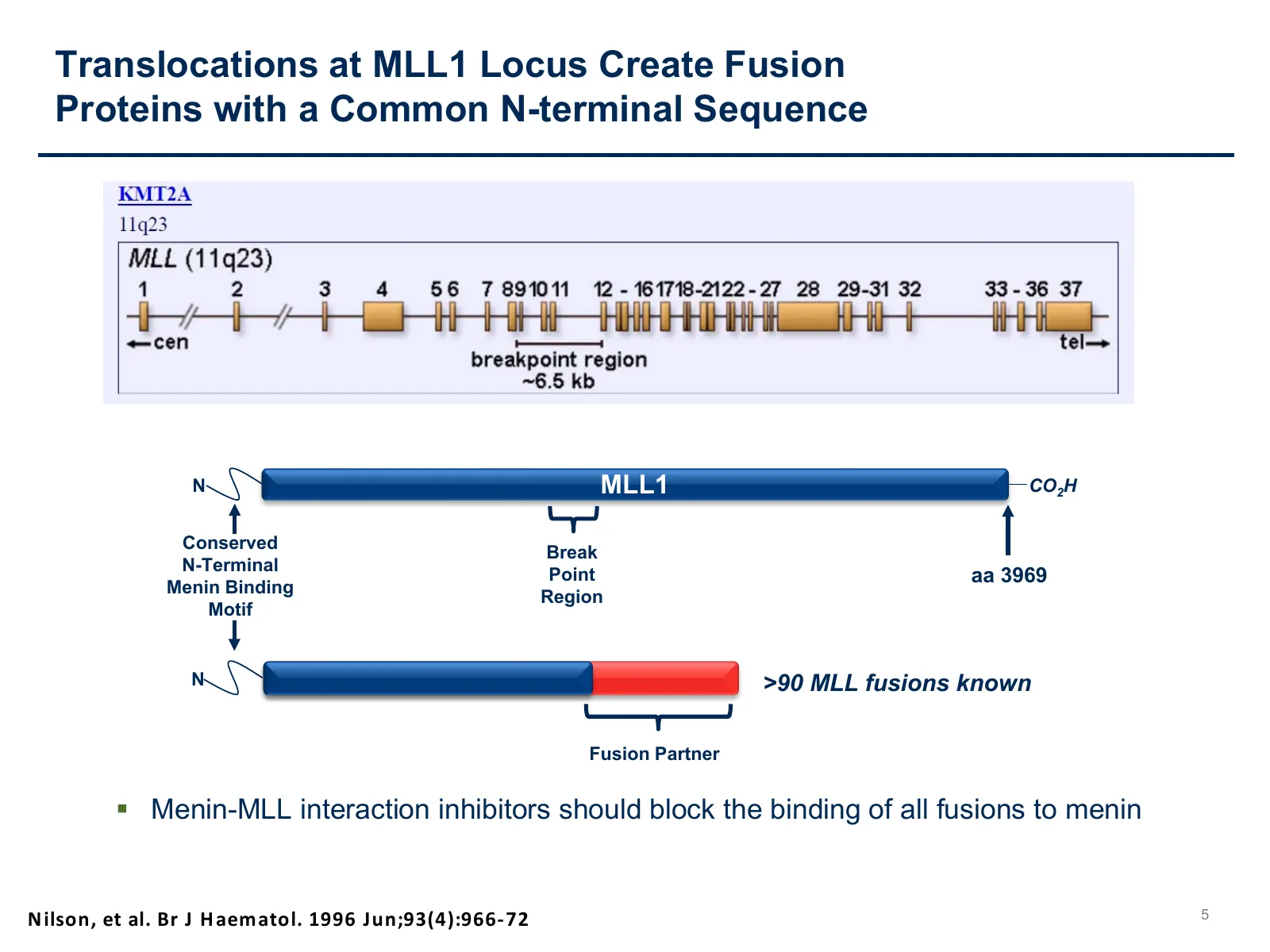
Slide 5: Translocations at MLL1 Locus Create Fusion Proteins with a Common N-terminal Sequence
Translocations at MLL1 Locus Create Fusion Proteins with a Common N-terminal Sequence N MLL1 CO2H Conserved Break N-Terminal Point aa 3969 Menin Binding Region Motif N >90 MLL fusions known Fusion Partner Menin-MLL interaction inhibitors should block the binding of all fusions to menin N ilson, et
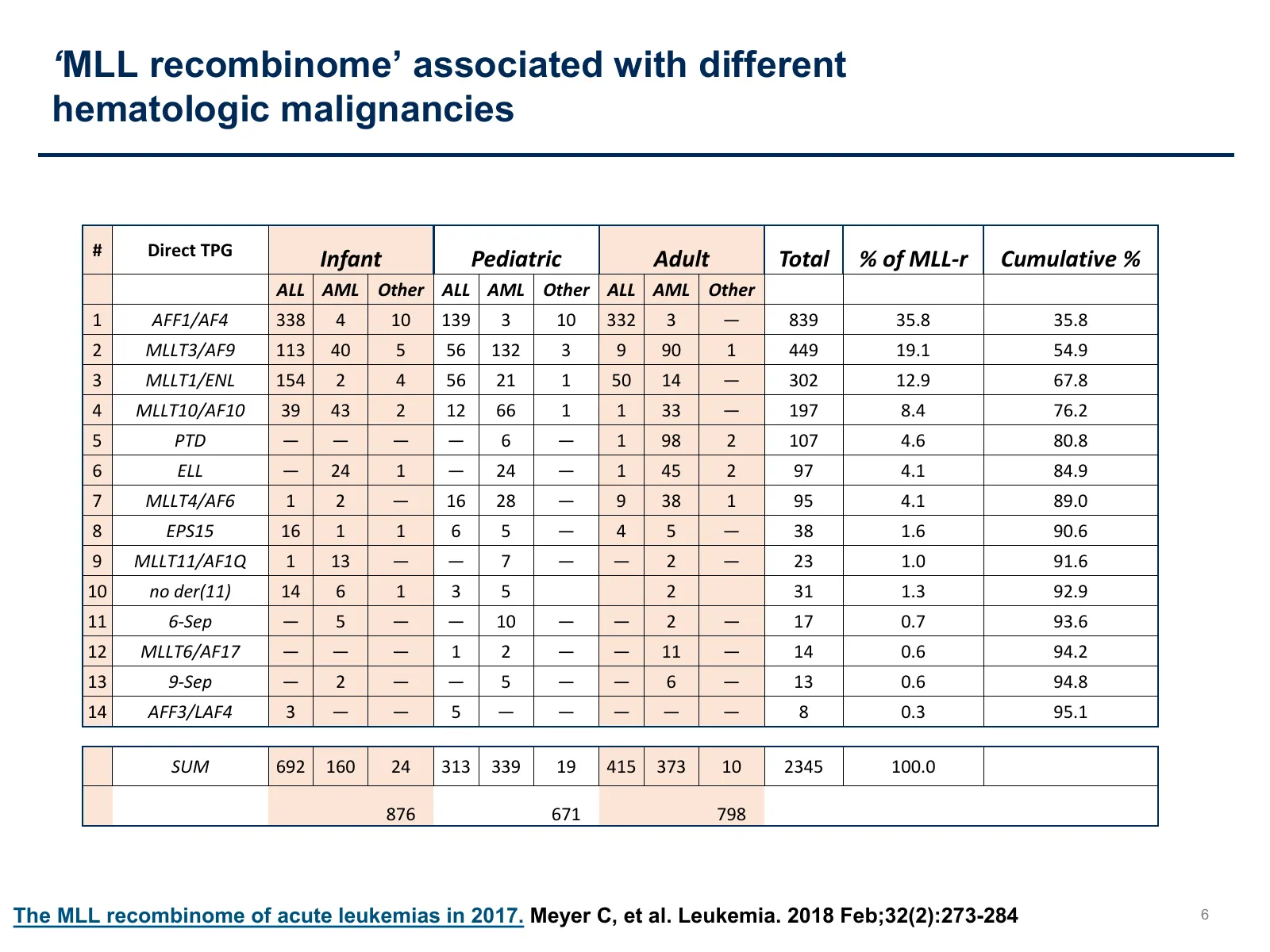
Slide 6: MLL recombinome associated with different hematologic malignancies
‘MLL recombinome’ associated with different hematologic malignancies # Direct TPG Infant Pediatric Adult Total % of MLL-r Cumulative % ALL AML Other ALL AML Other ALL AML Other 1 AFF1/AF4 338 4 10 139 3 10 332 3 — 839 35.8 35.8 2 MLLT3/AF9 113 40 5 56 132 3 9 90 1 449 19.1 54.9 3 MLLT1/ENL 154 2 4 5
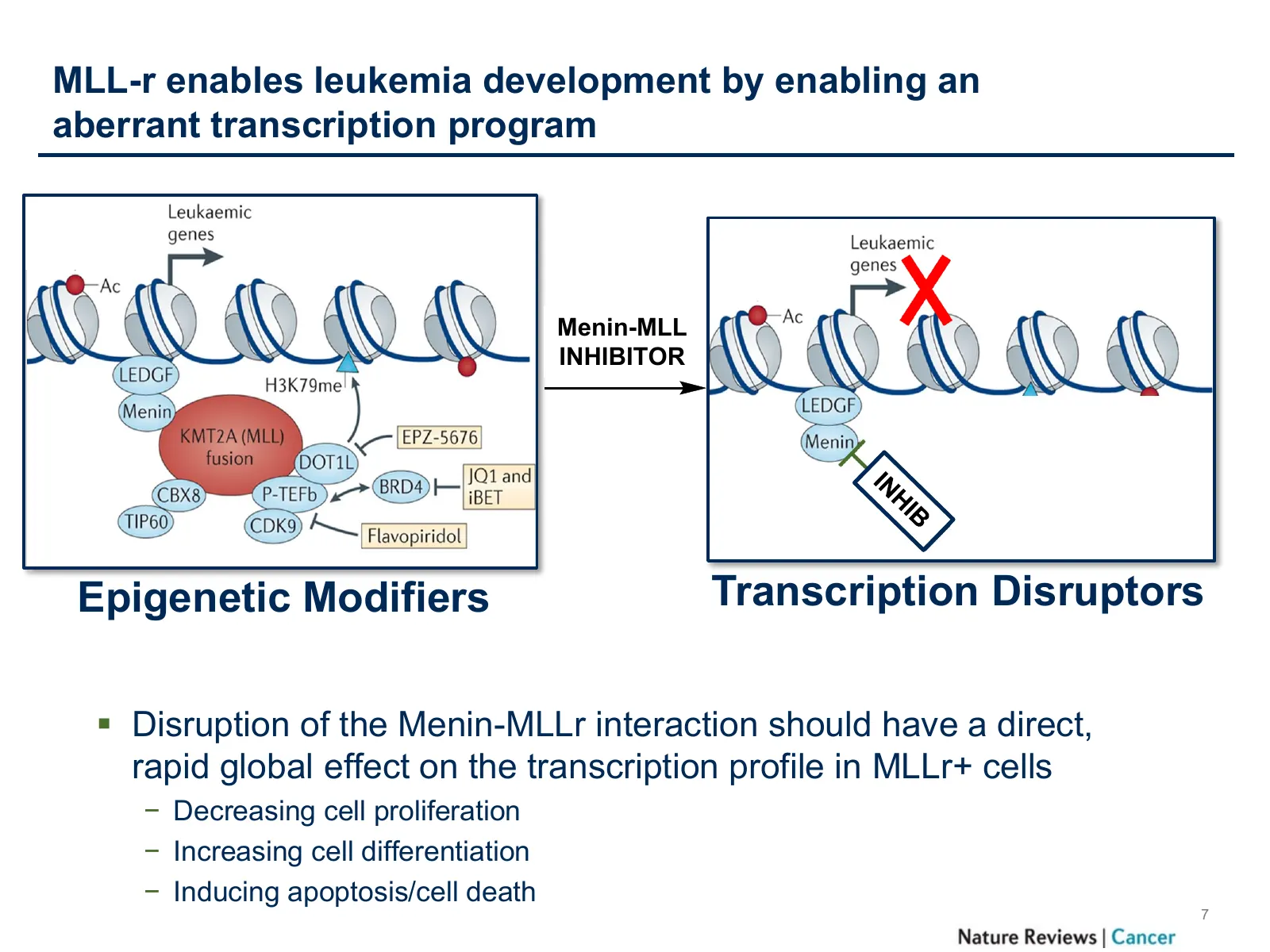
Slide 7: MLL-r enables leukemia development by enabling an aberrant transcription program
MLL-r enables leukemia development by enabling an aberrant transcription program Menin-MLL VTP INHIBITOR Epigenetic Modifiers Transcription Disruptors Disruption of the Menin-MLLr interaction should have a direct, rapid global effect on the transcription profile in MLLr+ cells − Decreasing cell pr
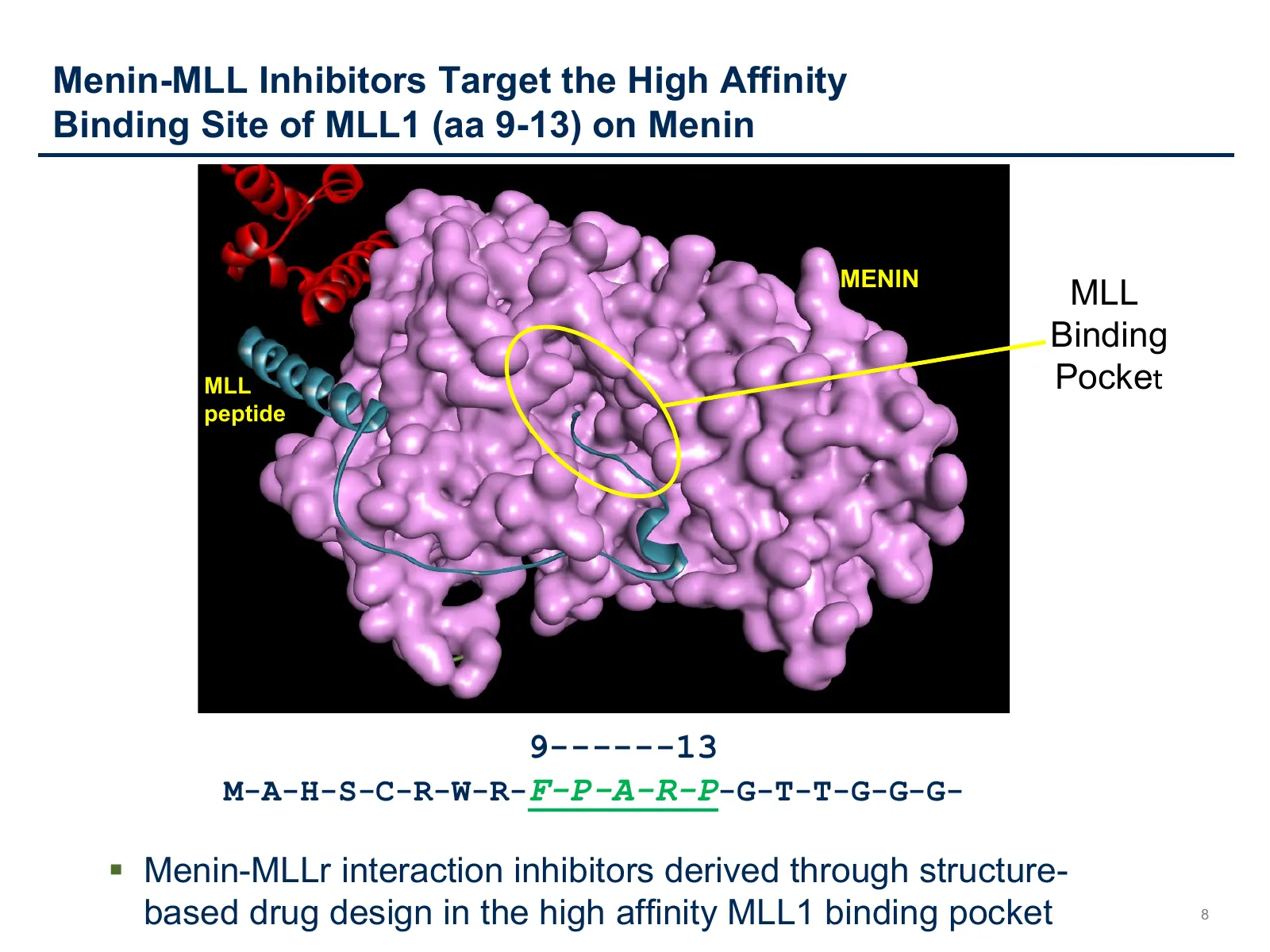
Slide 8: Menin-MLL Inhibitors Target the High Affinity Binding Site of MLL1 on Menin
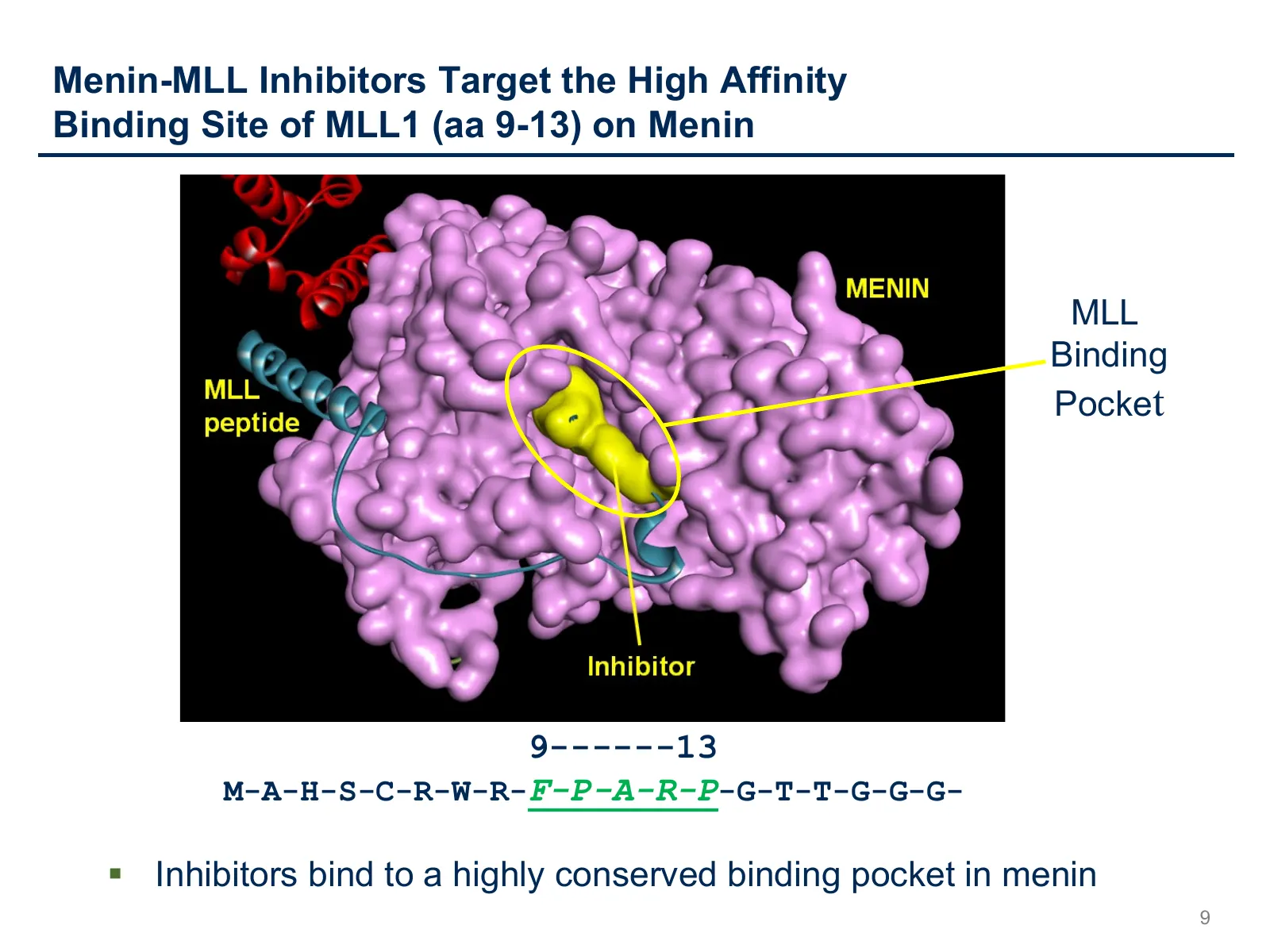
Menin-MLL Inhibitors Target the High Affinity Binding Site of MLL1 (aa 9-13) on Menin MENIN MLL Binding MLL Pocket peptide 9------13 M-A-H-S-C-R-W-R-F-P-A-R-P-G-T-T-G-G-G- Menin-MLLr interaction inhibitors derived through structure- based drug design in the high affinity MLL1 binding pocket 8
Slide 9: Menin-MLL Inhibitors Target the High Affinity Binding Site of MLL1 on Menin
Menin-MLL Inhibitors Target the High Affinity Binding Site of MLL1 (aa 9-13) on Menin MLL Binding Pocket 9------13 M-A-H-S-C-R-W-R-F-P-A-R-P-G-T-T-G-G-G- Inhibitors bind to a highly conserved binding pocket in menin 9
Slide 10: Potent, Orally Active Menin Inhibitor (VTP-50469) Used to Interrogate Menin-MLL Biology
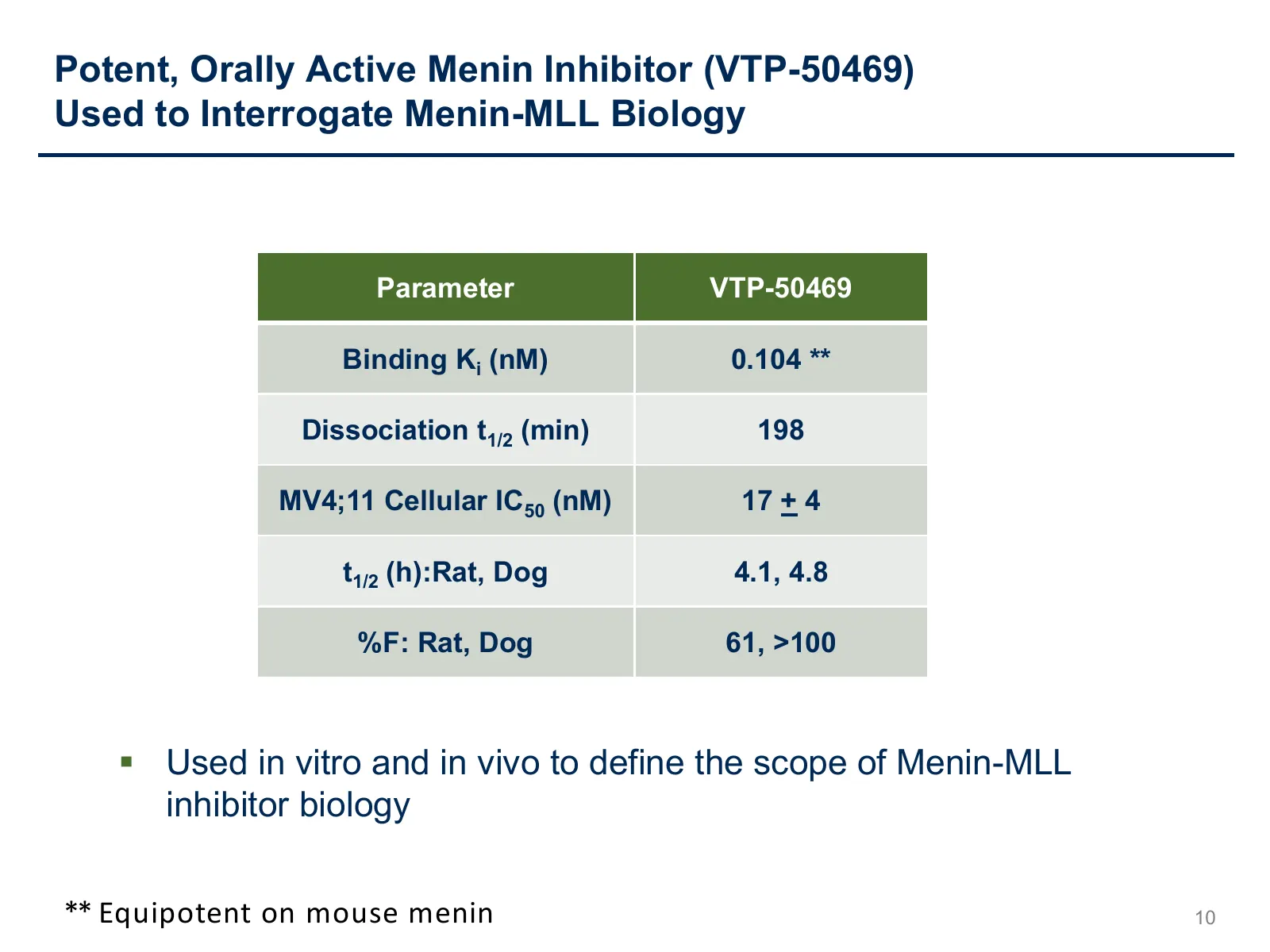
Potent, Orally Active Menin Inhibitor (VTP-50469) Used to Interrogate Menin-MLL Biology Parameter VTP-50469 Binding Ki (nM) 0.104 ** Dissociation t1/2 (min) 198 MV4;11 Cellular IC50 (nM) 17 + 4 t1/2 (h):Rat, Dog 4.1, 4.8 %F: Rat, Dog 61, >100 Used in vitro and in vivo to define the scope of Menin-
Slide 11: VTP-50469 inhibits the proliferation of multiple MLL-r harboring cells
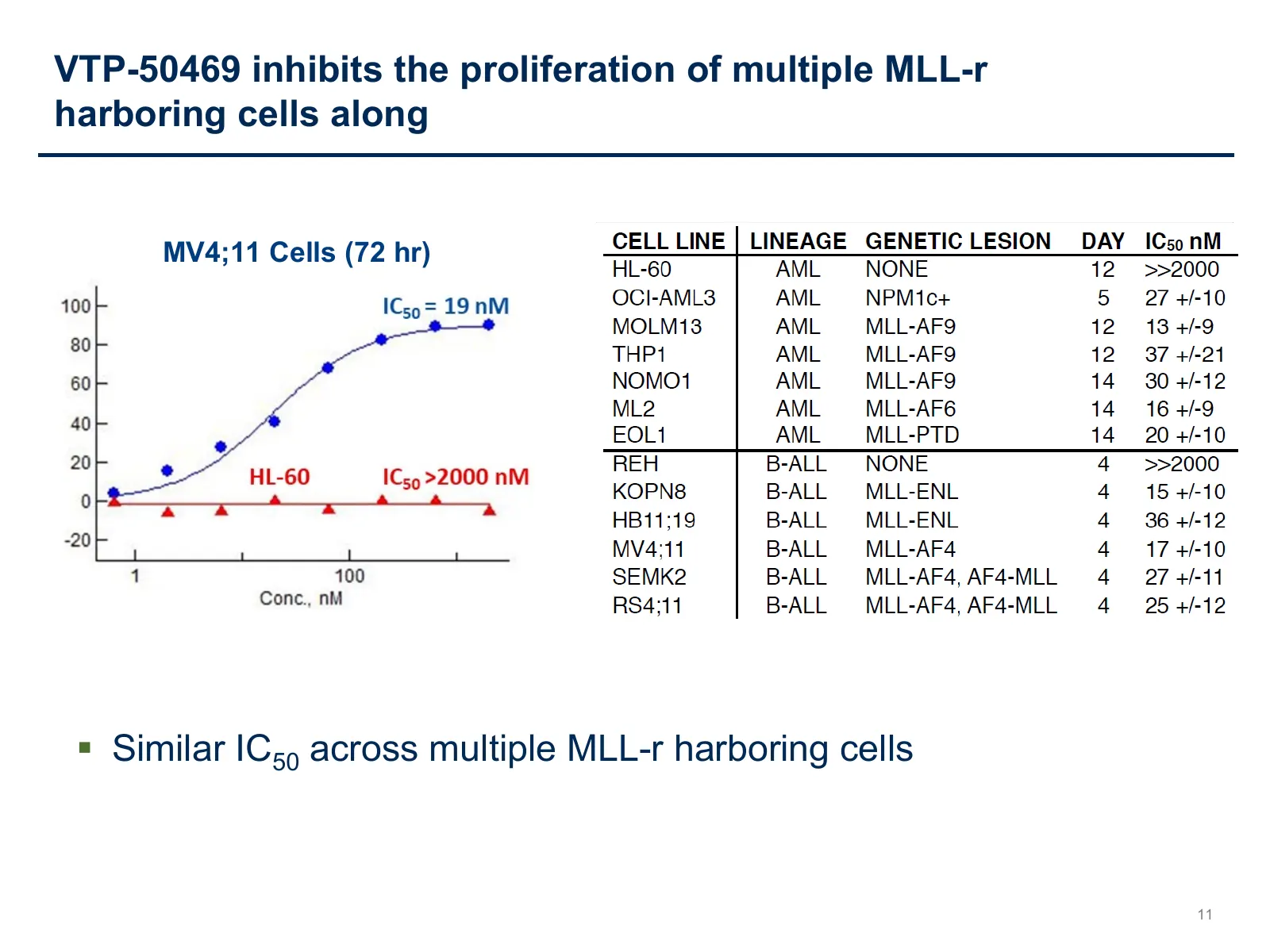
VTP-50469 inhibits the proliferation of multiple MLL-r harboring cells along MV4;11 Cells (72 hr) Similar IC50 across multiple MLL-r harboring cells 11
Slide 12: Menin inhibition in MV4;11 cells differentiated from DOT1L inhibition
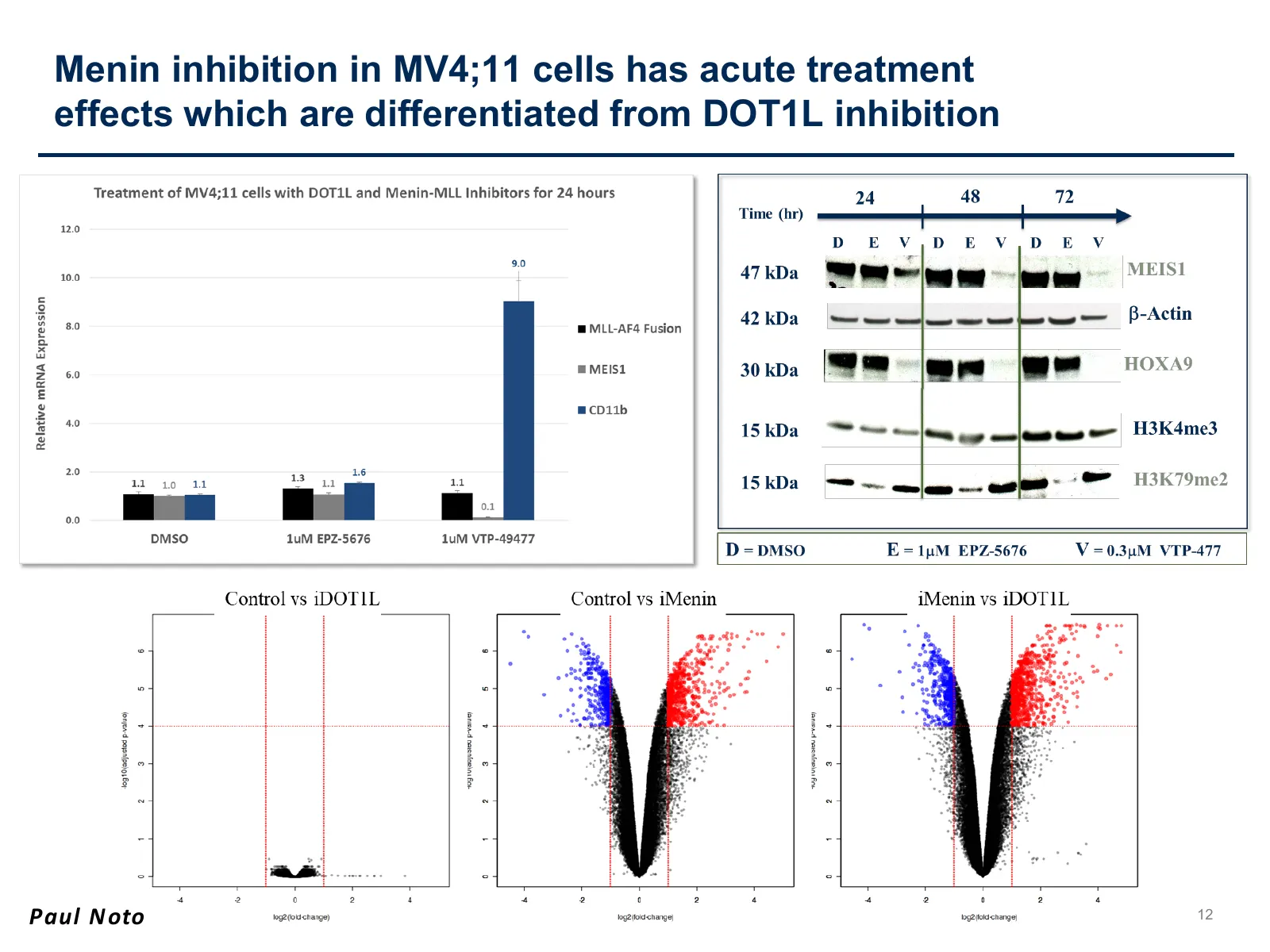
Menin inhibition in MV4;11 cells has acute treatment effects which are differentiated from DOT1L inhibition Paul N oto 12
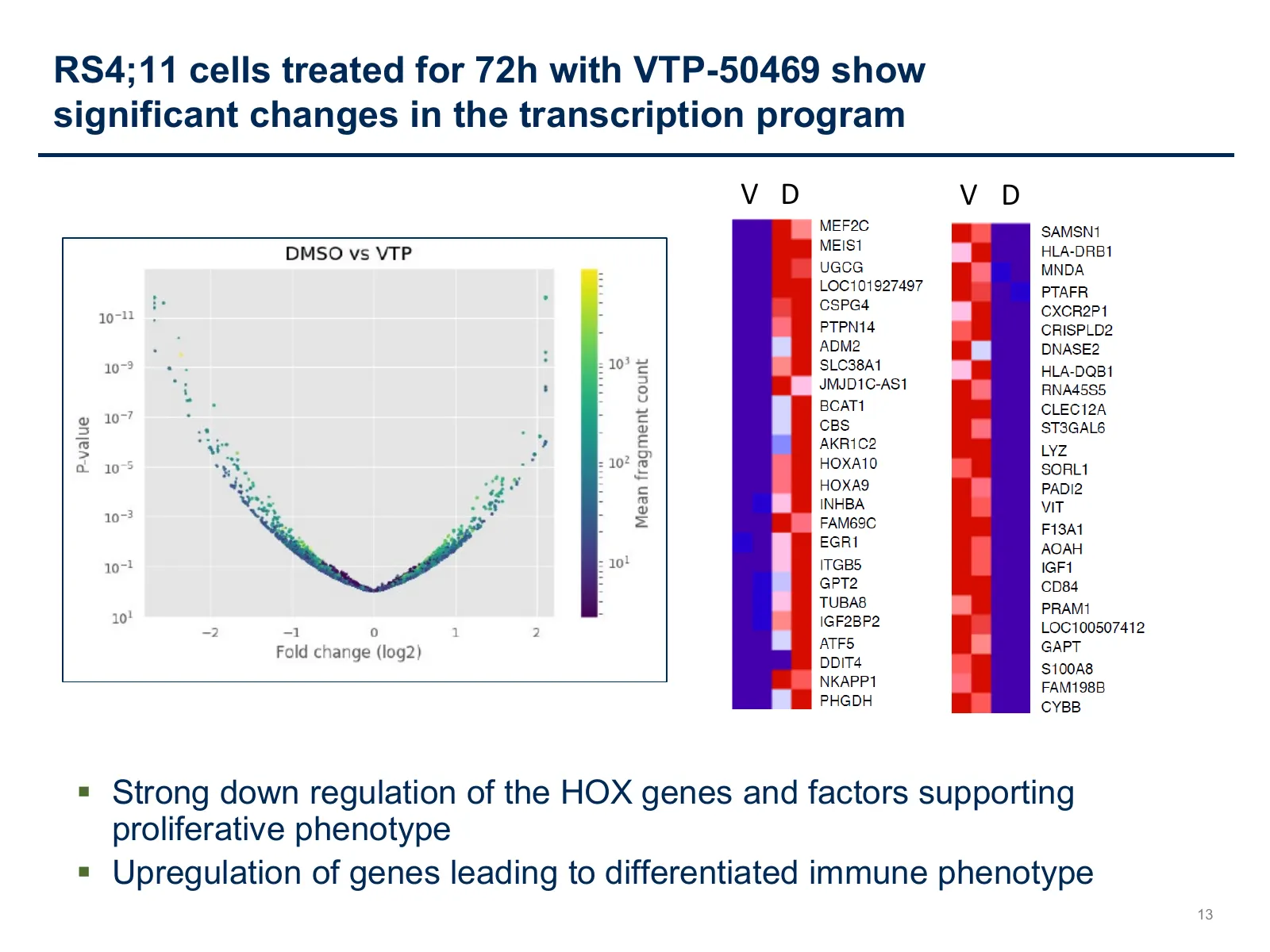
Slide 13: RS4;11 cells treated with VTP-50469 show significant changes in the transcription program
RS4;11 cells treated for 72h with VTP-50469 show significant changes in the transcription program V D V D Strong down regulation of the HOX genes and factors supporting proliferative phenotype Upregulation of genes leading to differentiated immune phenotype 13
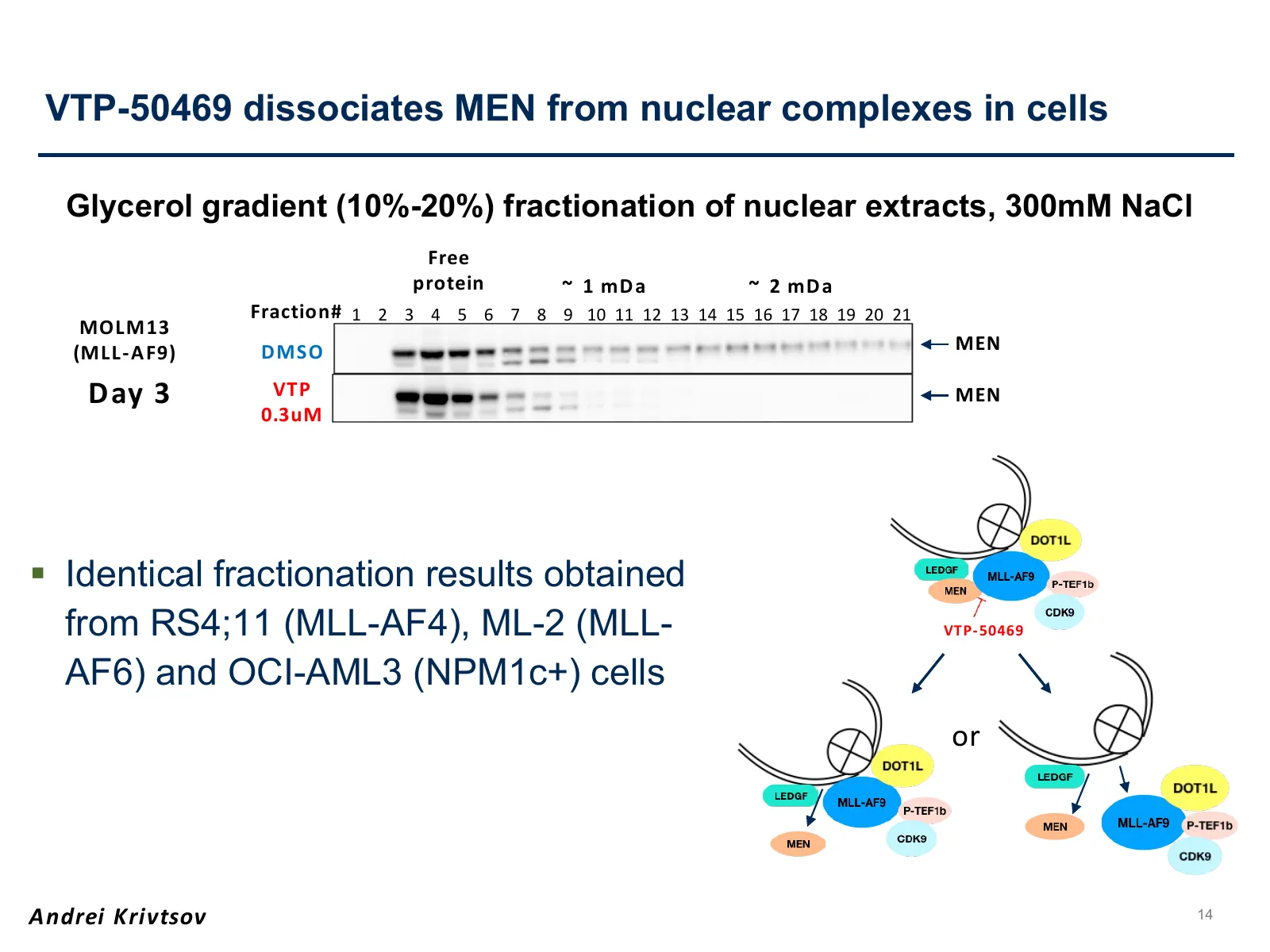
Slide 14: VTP-50469 dissociates MEN from nuclear complexes in cells
VTP-50469 dissociates MEN from nuclear complexes in cells Glycerol gradient (10%-20%) fractionation of nuclear extracts, 300mM NaCl Free protein ~ 1 mD a ~ 2 mD a Fraction# 1 2 3 4 5 6 7 8 9 10 11 12 13 14 15 16 17 18 19 20 21 MOLM13 (MLL-A F9) DMSO MEN Day 3 VTP MEN 0.3uM Identical fractionation
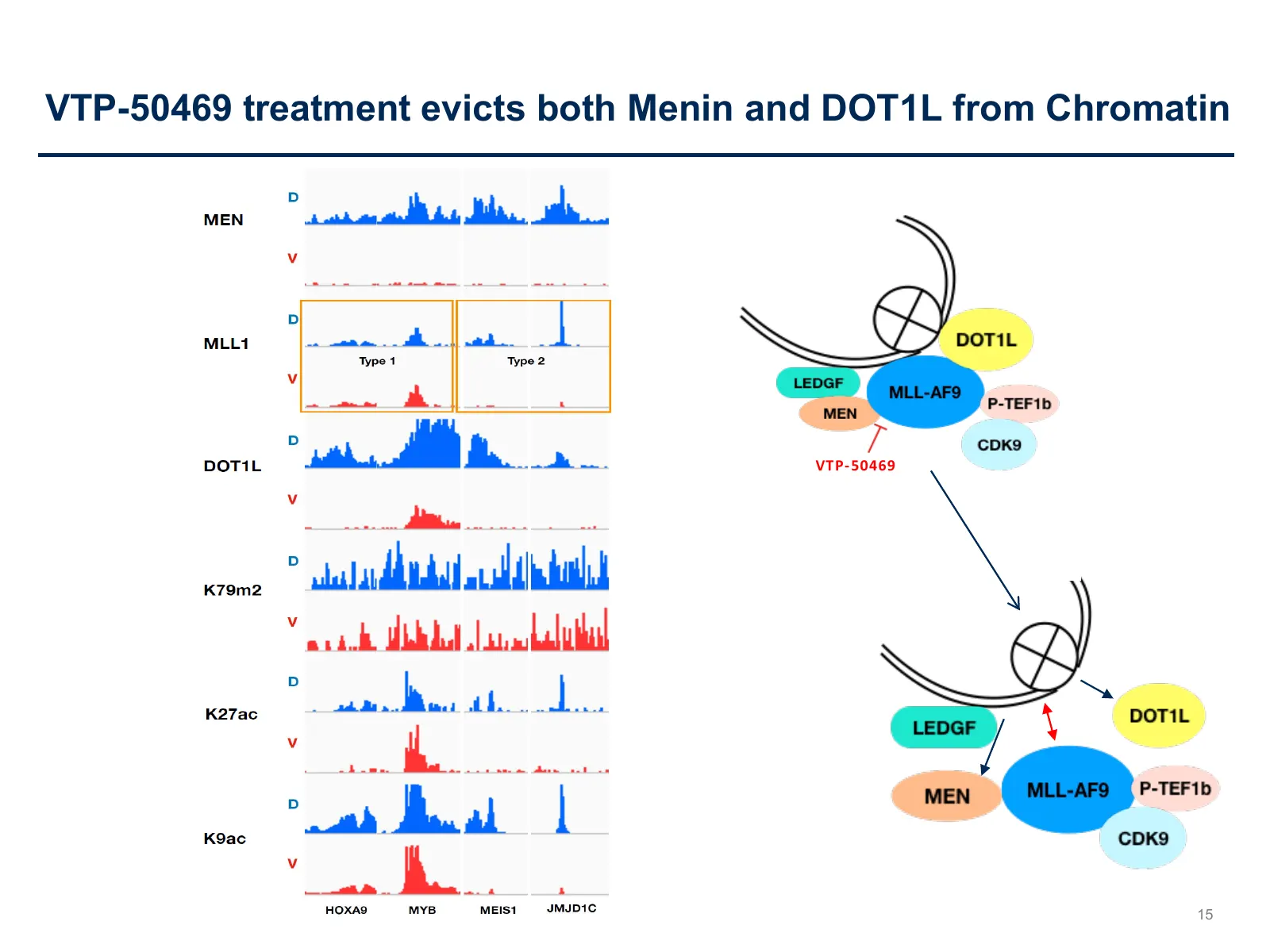
Slide 15: VTP-50469 treatment evicts both Menin and DOT1L from Chromatin
VTP-50469 treatment evicts both Menin and DOT1L from Chromatin VTP- 50469 15
Slide 16: In Vivo Pharmacology with VTP-50469
In Vivo Pharmacology with VTP-50469 In vivo studies with VTP-50469 − PK/PD model development − Antitumor efficacy in s.c. xenog rafts (MV4;11) by oral administration − Survival (K-M) benefit in disseminated leukemia (MV4;11) by oral administration − Survival (K-M) and leukemic burden in multiple P
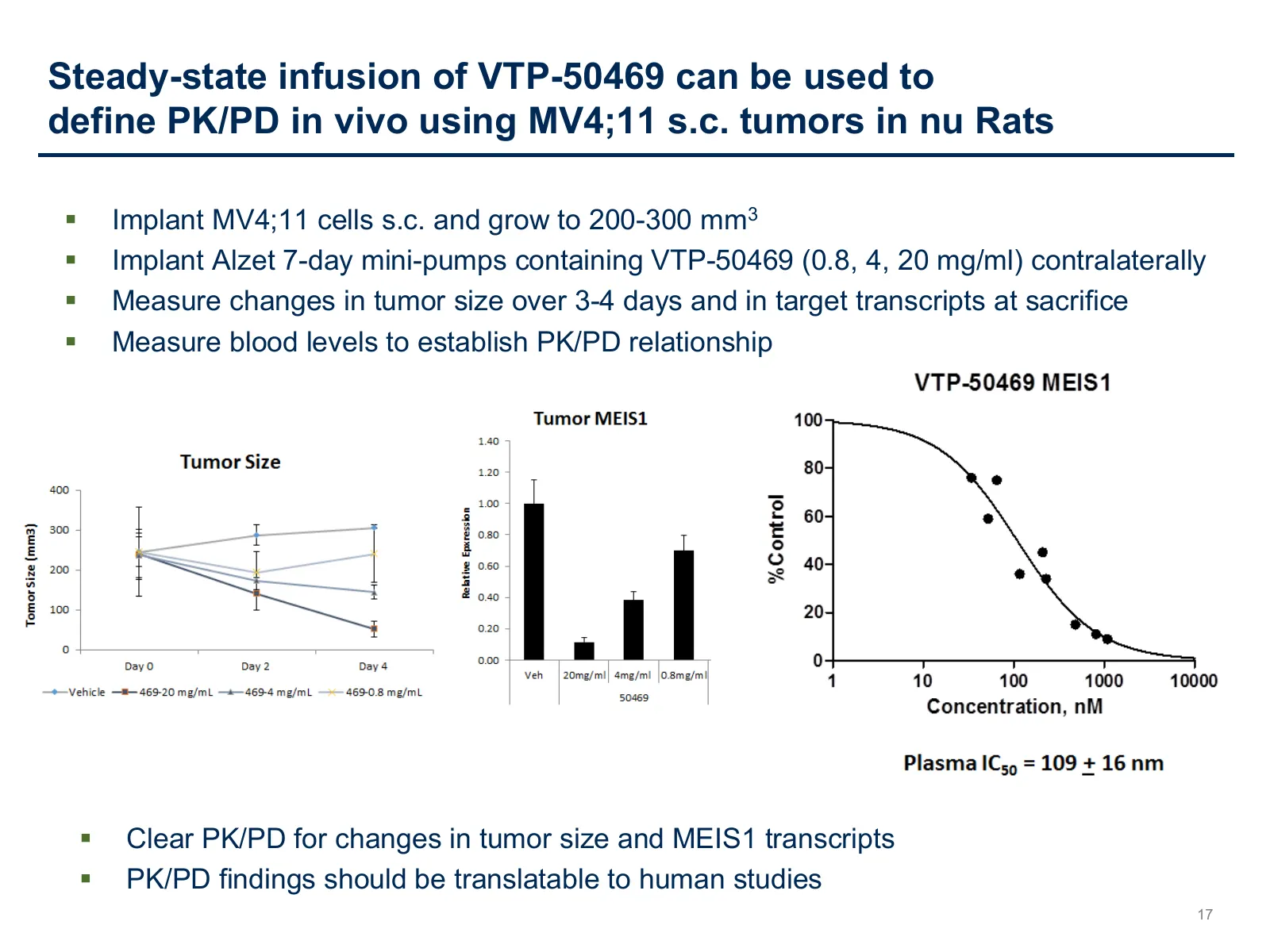
Slide 17: Steady-state infusion of VTP-50469 can be used to define PK/PD in vivo
Steady-state infusion of VTP-50469 can be used to define PK/PD in vivo using MV4;11 s.c. tumors in nu Rats Implant MV4;11 cells s.c. and grow to 200-300 mm3 Implant Alzet 7-day mini-pumps containing VTP-50469 (0.8, 4, 20 mg/ml) contralaterally Measure changes in tumor size over 3-4 days and in
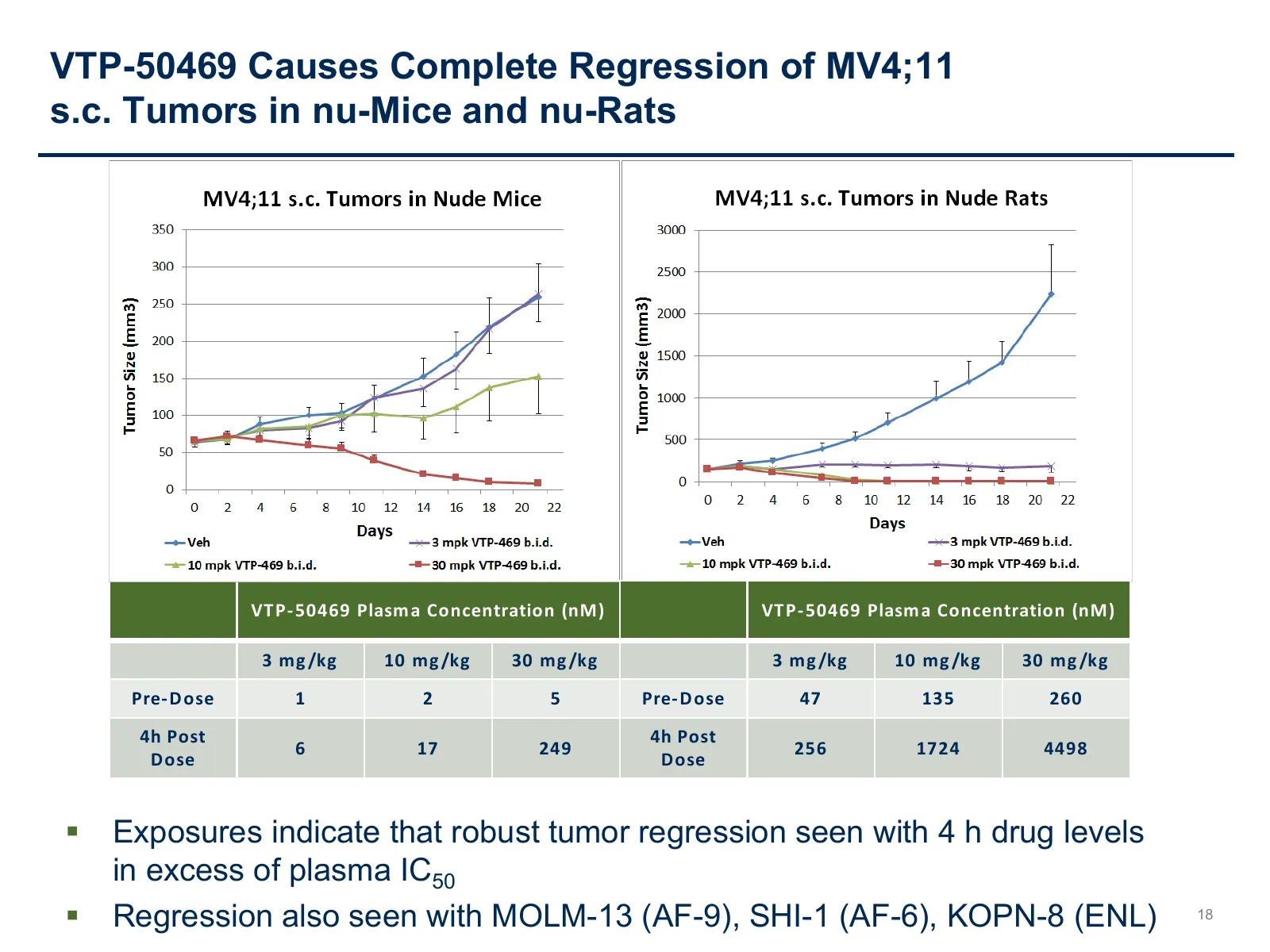
Slide 18: VTP-50469 Causes Complete Regression of MV4;11 s.c. Tumors in nu-Mice and nu-Rats
VTP-50469 Causes Complete Regression of MV4;11 s.c. Tumors in nu-Mice and nu-Rats VTP- 50469 Plasm a Concentration (nM) VTP- 50469 Plasm a Concentration (nM) 3 mg /kg 10 mg /kg 30 mg /kg 3 mg /kg 10 mg /kg 30 mg /kg Pre- D ose 1 2 5 Pre- D ose 47 135 260 4h Post 4h Post 6 17 249 256 1724 4498 Dose D
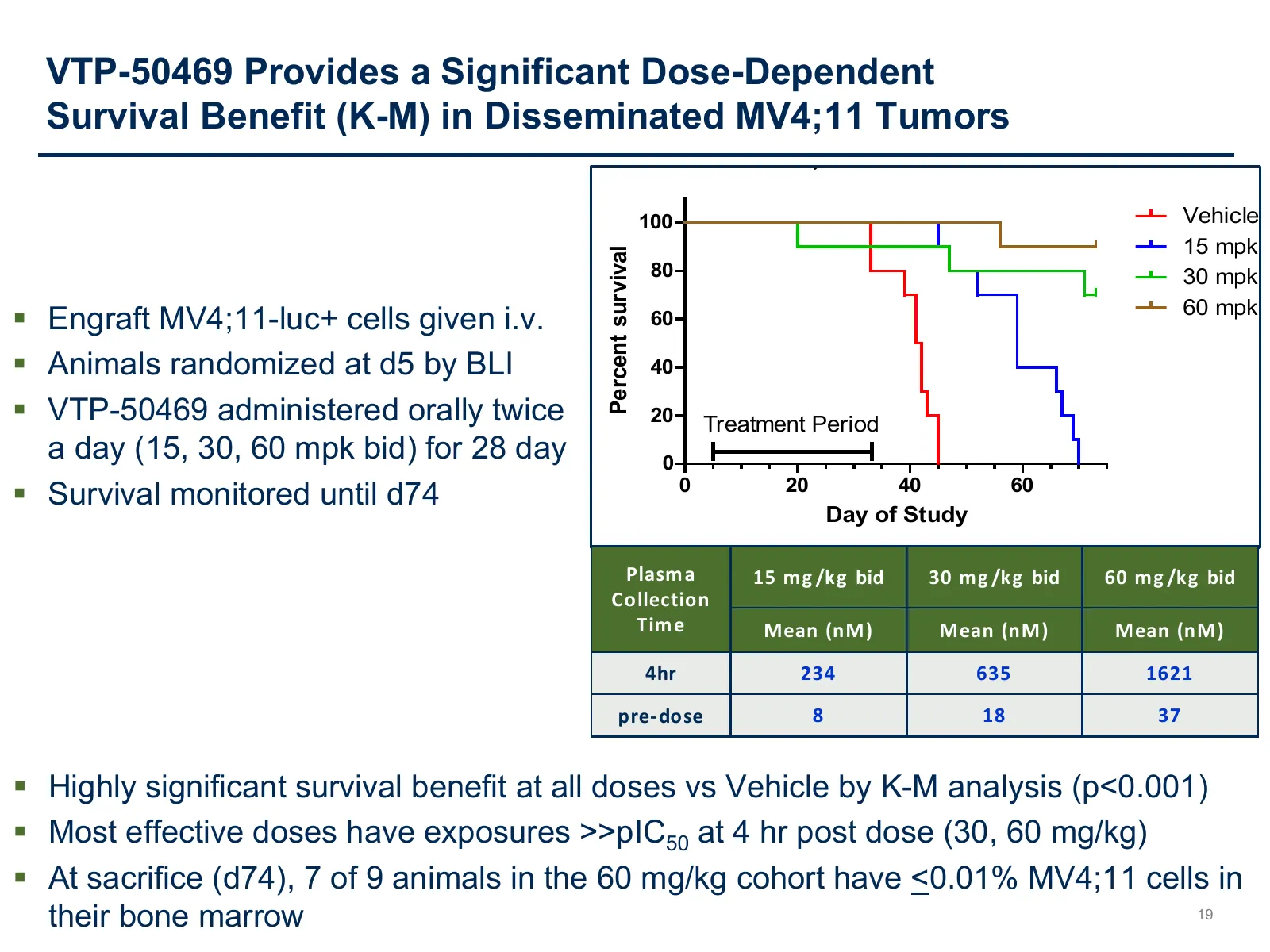
Slide 19: VTP-50469 Provides a Significant Dose-Dependent Survival Benefit in Disseminated MV4;11 Tumors
VTP-50469 Provides a Significant Dose-Dependent Survival Benefit (K-M) in Disseminated MV4;11 Tumors ; 100 Vehicle 15 mpk Percent survival 80 30 mpk 60 mpk Engraft MV4;11-luc+ cells given i.v. 60 Animals randomized at d5 by BLI 40 VTP-50469 administered orally twice 20 Treatment Period a day (
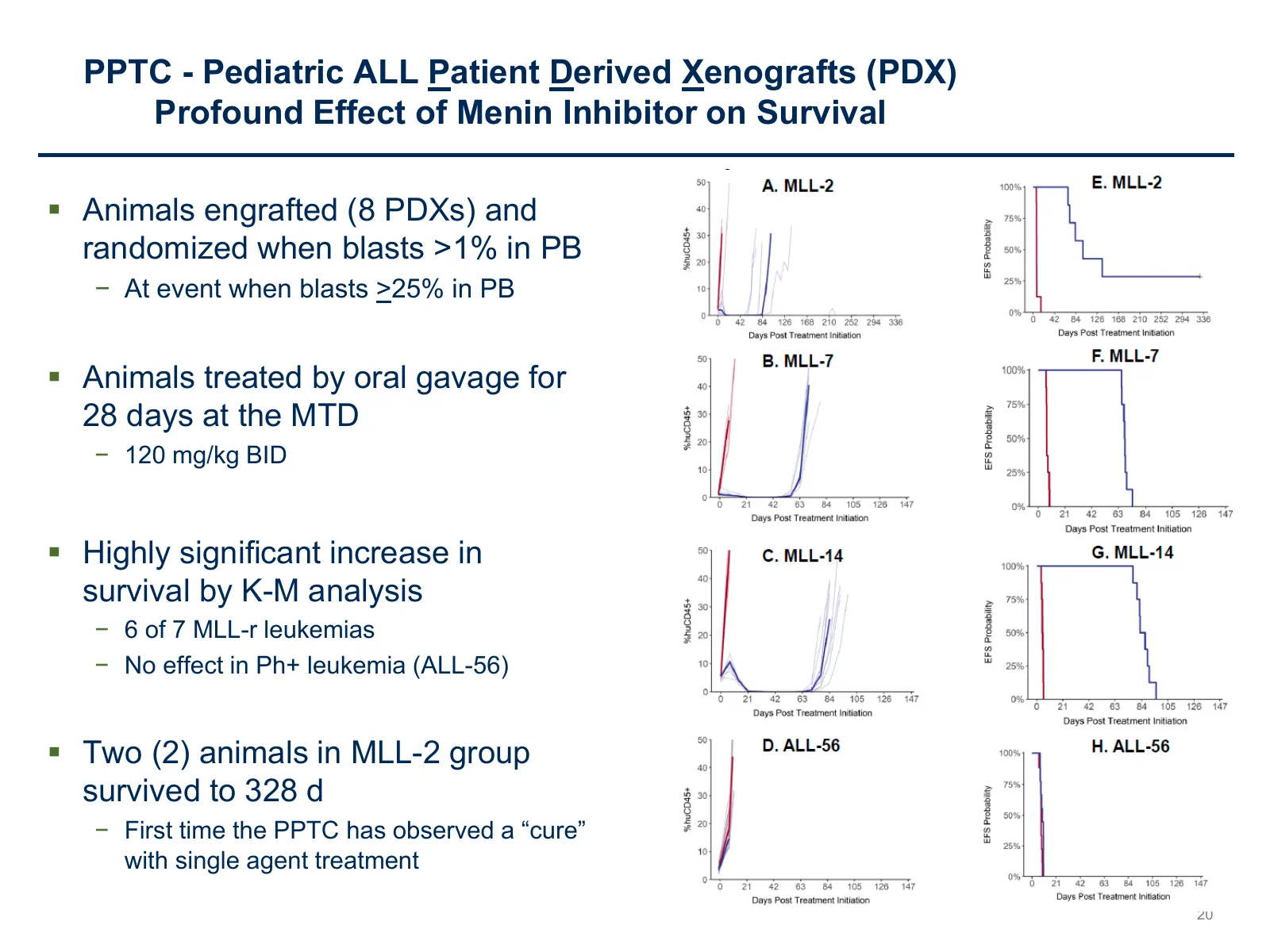
Slide 20: PPTC Pediatric ALL PDX: Profound Effect of Menin Inhibitor on Survival
PPTC - Pediatric ALL Patient Derived Xenografts (PDX) Profound Effect of Menin Inhibitor on Survival Animals engrafted (8 PDXs) and randomized when blasts >1% in PB − At event when blasts >25% in PB Animals treated by oral gavage for 28 days at the MTD − 120 mg/kg BID Highly significant increa
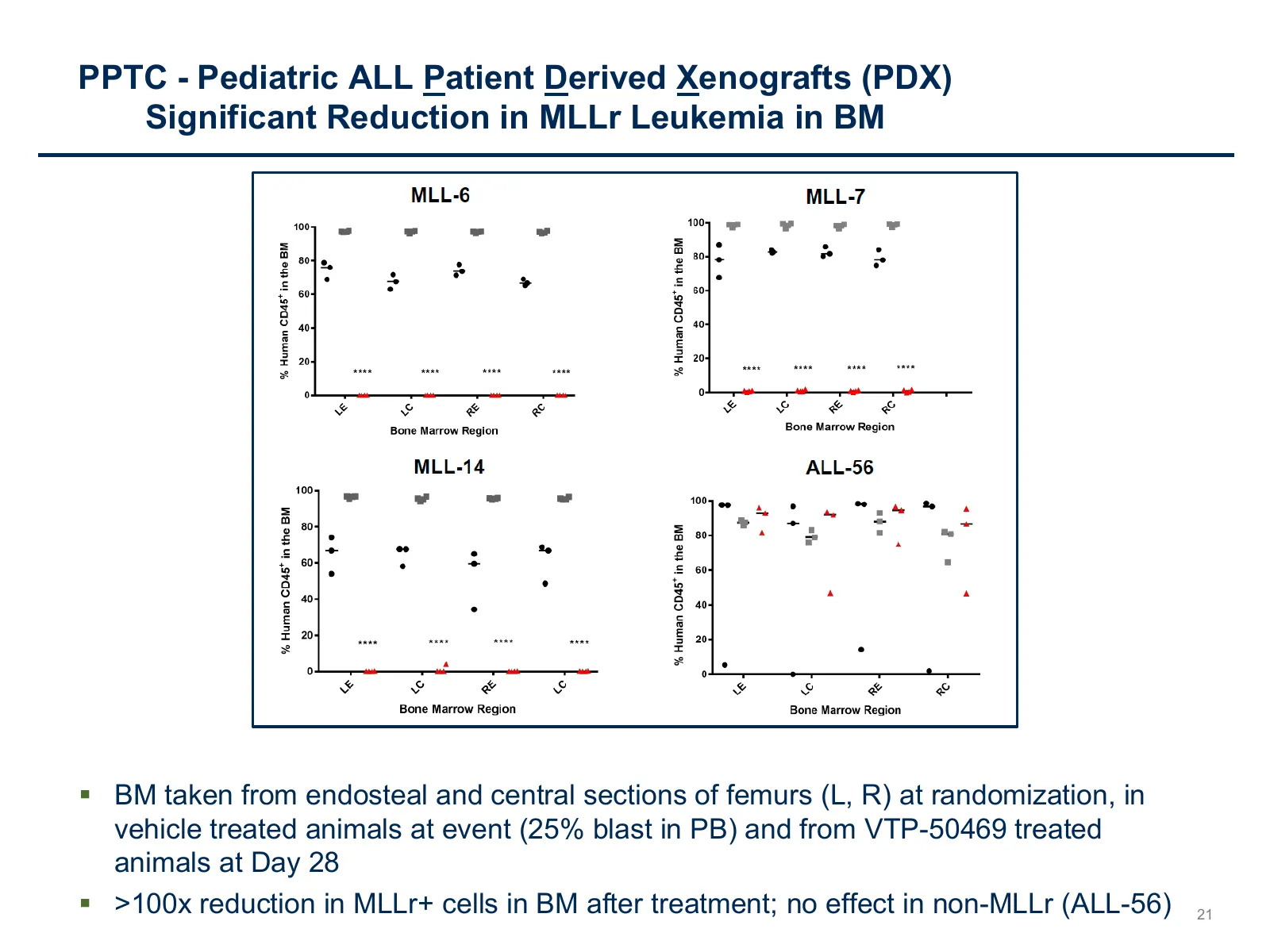
Slide 21: PPTC Pediatric ALL PDX: Significant Reduction in MLLr Leukemia in BM
PPTC - Pediatric ALL Patient Derived Xenografts (PDX) Significant Reduction in MLLr Leukemia in BM BM taken from endosteal and central sections of femurs (L, R) at randomization, in vehicle treated animals at event (25% blast in PB) and from VTP-50469 treated animals at Day 28 >100x reduction in
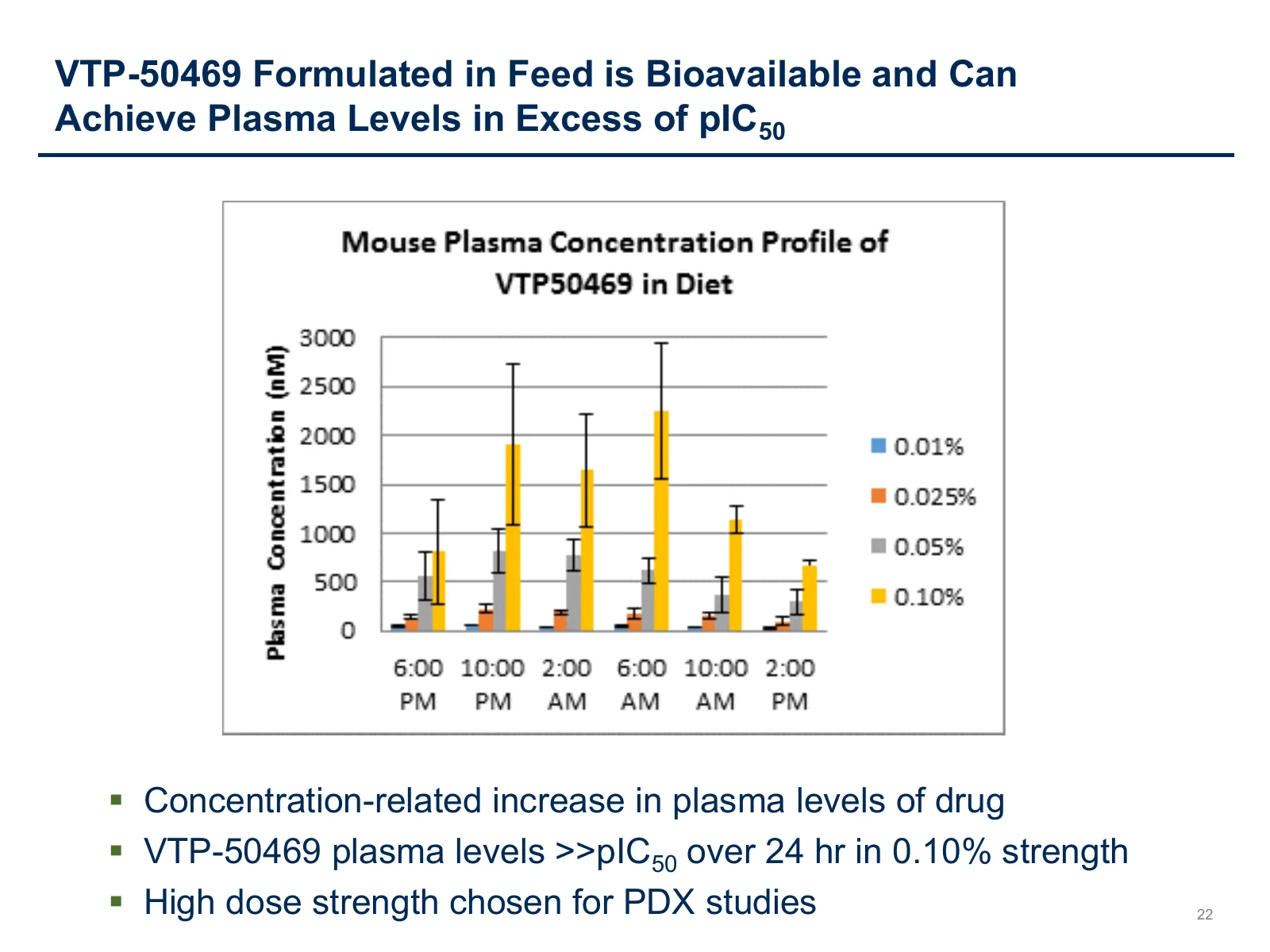
Slide 22: VTP-50469 Formulated in Feed is Bioavailable and Can Achieve Plasma Levels in Excess of pIC50
VTP-50469 Formulated in Feed is Bioavailable and Can Achieve Plasma Levels in Excess of pIC50 Concentration-related increase in plasma levels of drug VTP-50469 plasma levels >>pIC50 over 24 hr in 0.10% strength High dose strength chosen for PDX studies 22
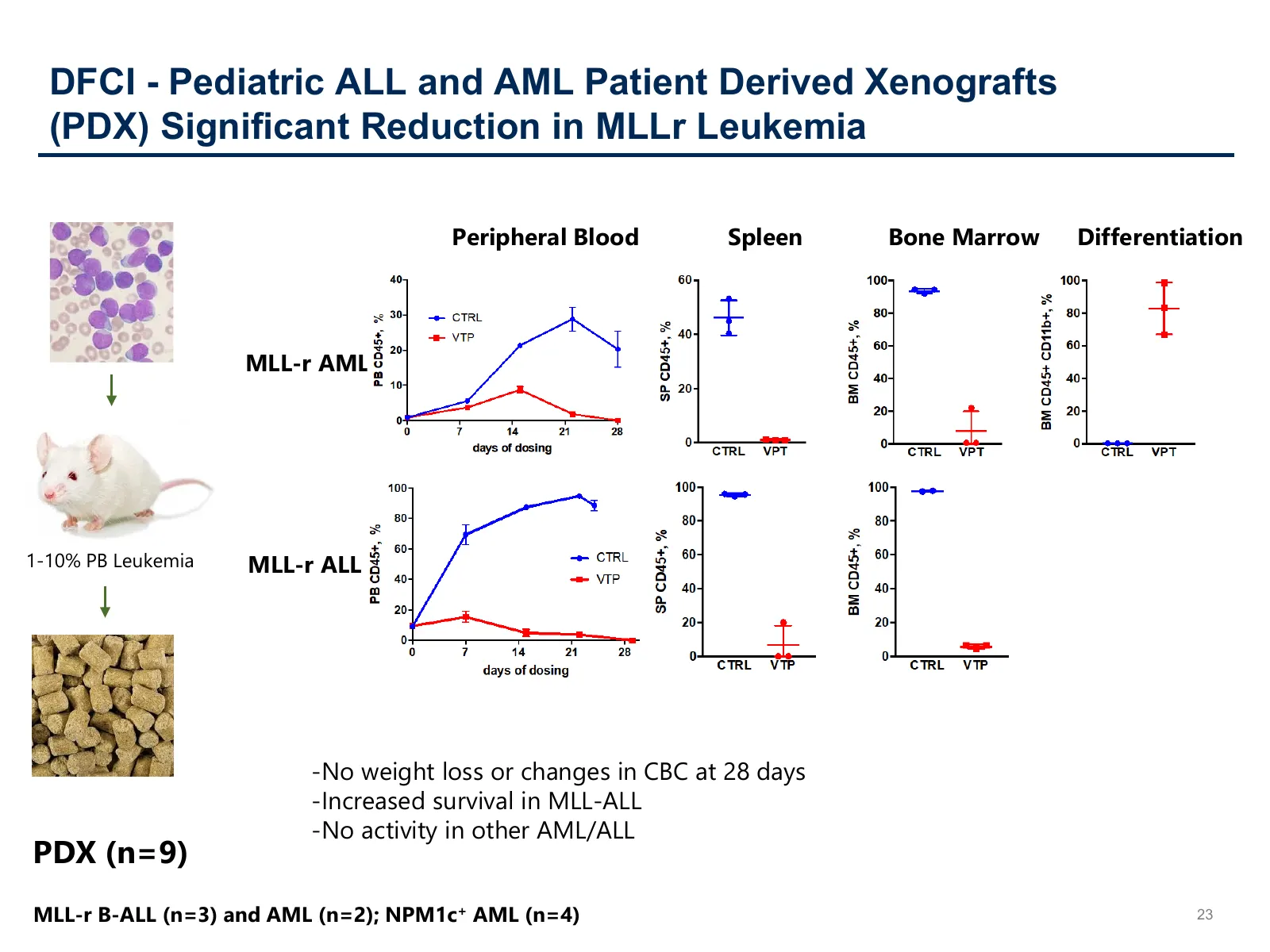
Slide 23: DFCI Pediatric ALL and AML PDX: Significant Reduction in MLLr Leukemia
DFCI - Pediatric ALL and AML Patient Derived Xenografts (PDX) Significant Reduction in MLLr Leukemia Peripheral Blood Spleen Bone Marrow Differentiation MLL-r AML 1-10% PB Leukemia MLL-r ALL -No weight loss or changes in CBC at 28 days -Increased survival in MLL-ALL -No activity in other AML/ALL PDX
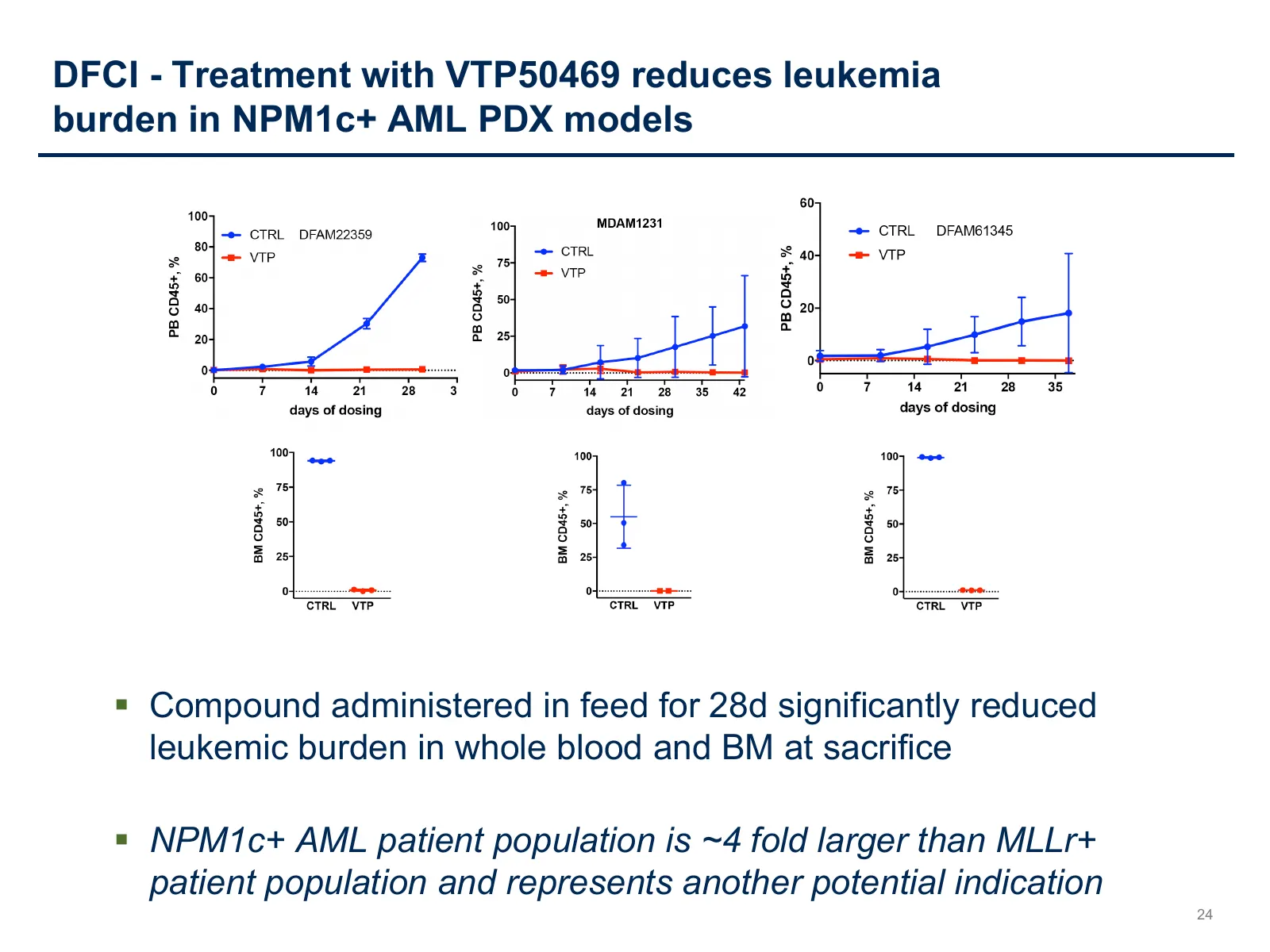
Slide 24: Treatment with VTP50469 reduces leukemia burden in NPM1c+ AML PDX models
DFCI - Treatment with VTP50469 reduces leukemia burden in NPM1c+ AML PDX models Compound administered in feed for 28d significantly reduced leukemic burden in whole blood and BM at sacrifice NPM1c+ AML patient population is ~4 fold larger than MLLr+ patient population and represents another pote
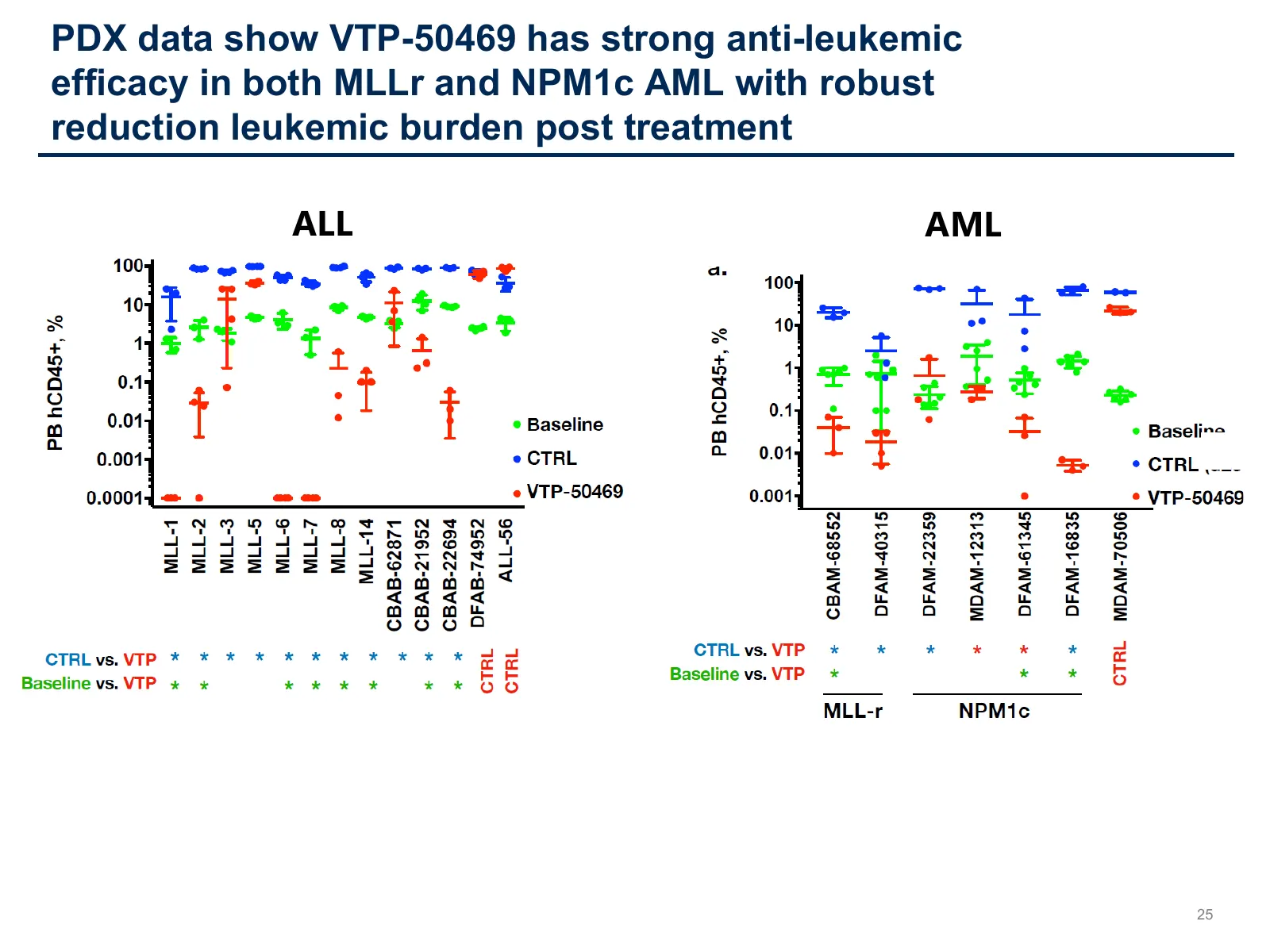
Slide 25: PDX data show strong anti-leukemic efficacy in MLLr and NPM1c AML
PDX data show VTP-50469 has strong anti-leukemic efficacy in both MLLr and NPM1c AML with robust reduction leukemic burden post treatment ALL AML 25
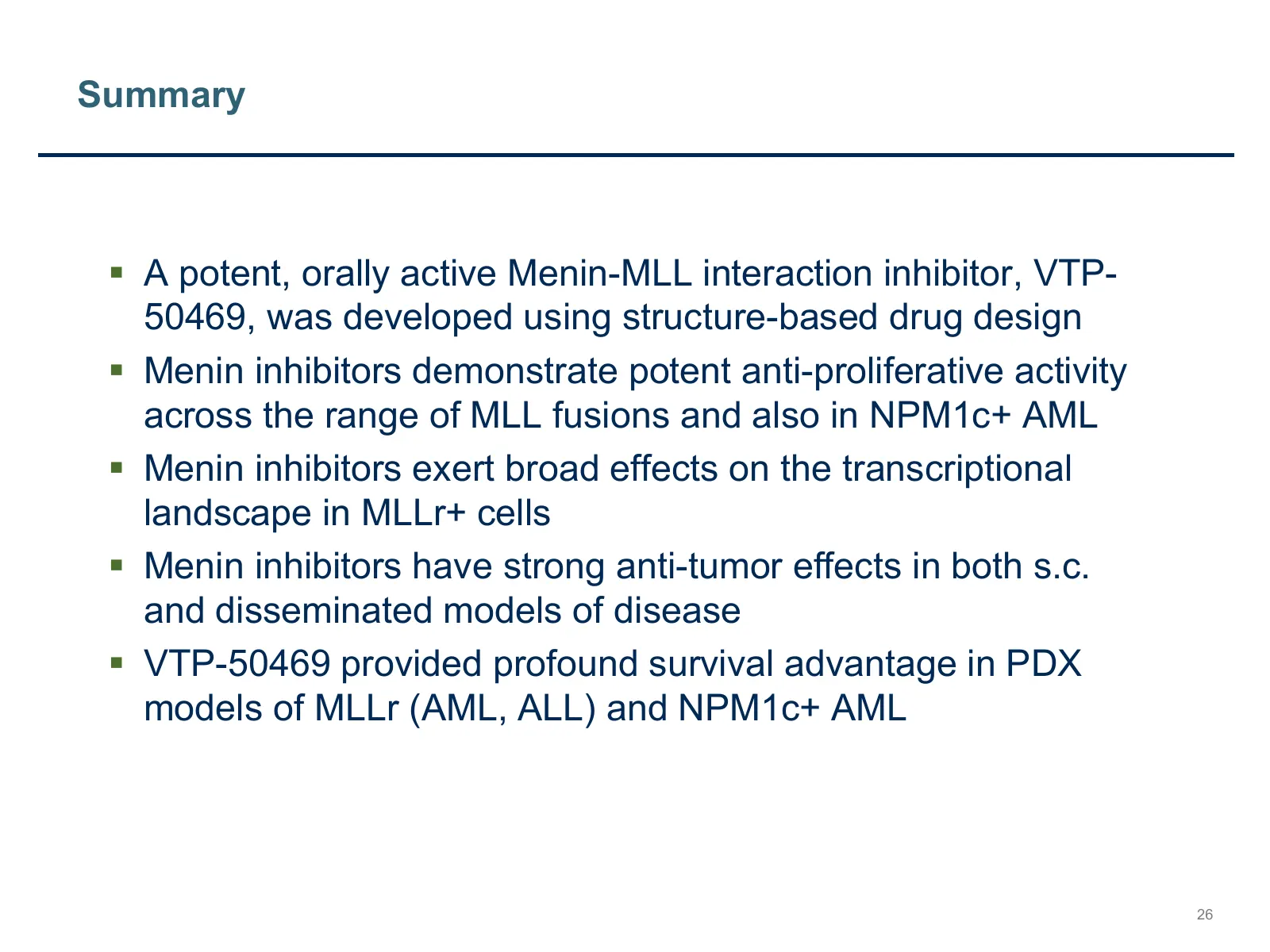
Slide 26: Summary
Summary A potent, orally active Menin-MLL interaction inhibitor, VTP- 50469, was developed using structure-based drug design Menin inhibitors demonstrate potent anti-proliferative activity across the range of MLL fusions and also in NPM1c+ AML Menin inhibitors exert broad effects on the transc
Slide 27: Acknowledgements
Acknowledgements Children’s Cancer Inst. (Sydney) Vitae Pharmaceuticals Biology Vitae Pharmaceuticals Chemistry Richard B. Lock Deepak Lala David Claremon Kathryn Evans Yi Zhao Shankar Venkatraman Tara Pritchard Yuri Bukhtiyarov Cheng-Guo Dong Joan Guo Steven Lotesta RTI International, Research Meng
Source: company website
More decks from Syndax Pharmaceuticals, Inc.
 Q3 2026 Earnings Presentation29 slides · Nov 2, 2026
 Q3 2026 Earnings Presentation14 slides · Nov 2, 2026
 Q2 2026 Earnings Presentation16 slides · Aug 4, 2026
 Investor Presentation (August 2026)43 slides · August 2026
 Investor Day (July 2026)81 slides · Jul 14, 2026
 Q1 2026 Earnings Presentation18 slides · Apr 30, 2026