Resonance Health Ltd · ASX:RHT
Resonance Health — Technical Presentation
15 slides from Resonance Health's technical presentation
Slide 1: FerriScan: be better informed – Using FerriScan in assessment of liver status in HH
FerriScan® : be better informed Using FerriScan in the assessment of liver status in hereditary haemochromatosis
Slide 2: Hereditary Haemochromatosis
Hereditary Haemochromatosis • Hereditary haemochromatosis is an inherited condition that causes high iron absorption from a person’s diet. The condition is caused by an abnormal gene or genes that control iron absorption
Slide 3: Why is it important to control total body iron stores?
Why is it important to control total body iron stores? • The human body has no natural mechanism for excreting iron • Free iron (labile iron) causes tissue damage • Tissue iron deposits are a source of free iron • The liver is the primary site of iron storage • If liver iron storage capacity is exce
Slide 4: Hereditary Haemochromatosis (HH)
Hereditary Haemochromatosis (HH) • HH is common in countries where the population is largely of Northern European origin • Approximately 1 in 200 people of Northern European descent are homozygous for the most common HH gene • Not every individual who has the abnormal gene exhibits symptoms of the d
Slide 5: When is measurement of liver iron concentration (LIC) important?
When is measurement of liver iron concentration (LIC) important? • High LIC over a prolonged period causes liver damage • Measurement of LIC at diagnosis enables risk of liver damage to be assessed • Liver damage (high grade fibrosis) is a risk factor for hepatocellular carcinoma (HCC) • Biopsy and/
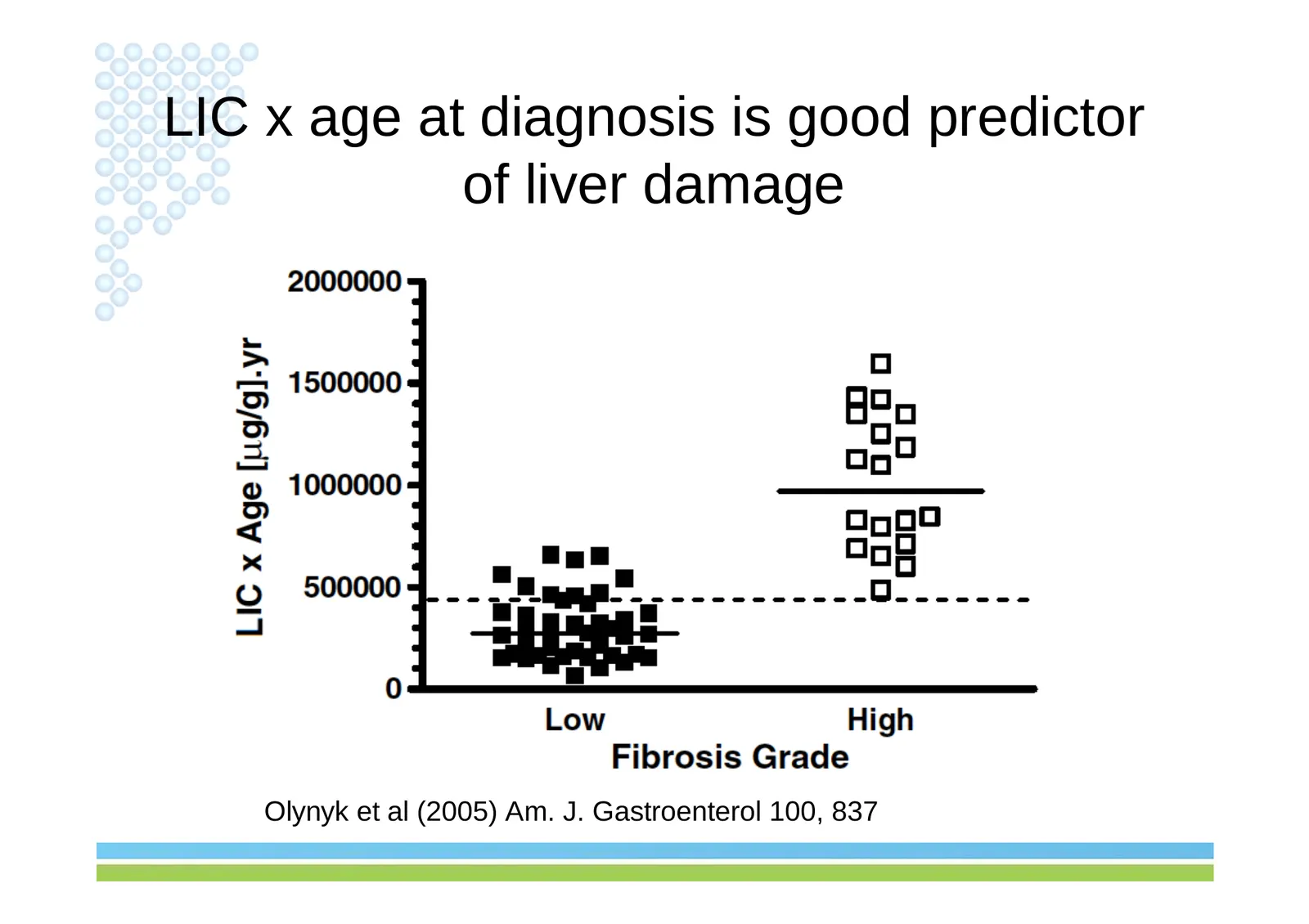
Slide 6: LIC x age at diagnosis is good predictor of liver damage
LIC x age at diagnosis is good predictor of liver damage Olynyk et al (2005) Am. J. Gastroenterol 100, 837
Slide 7: Case Study: Cause of lethargy – iron overload confirmed by FerriScan
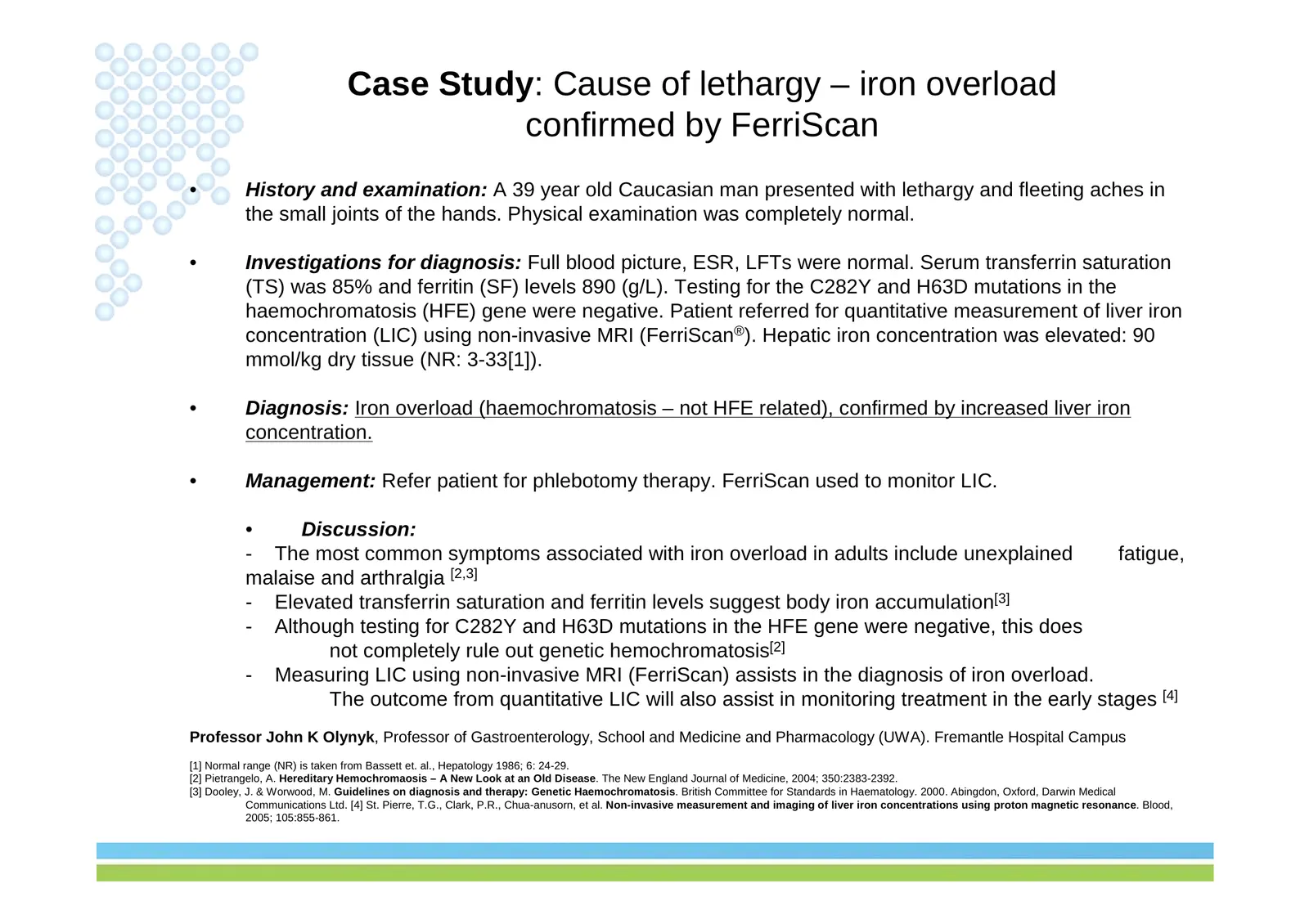
Case Study: Cause of lethargy – iron overload confirmed by FerriScan • History and examination: A 39 year old Caucasian man presented with lethargy and fleeting aches in the small joints of the hands. Physical examination was completely normal. • Investigations for diagnosis: Full blood picture, ESR
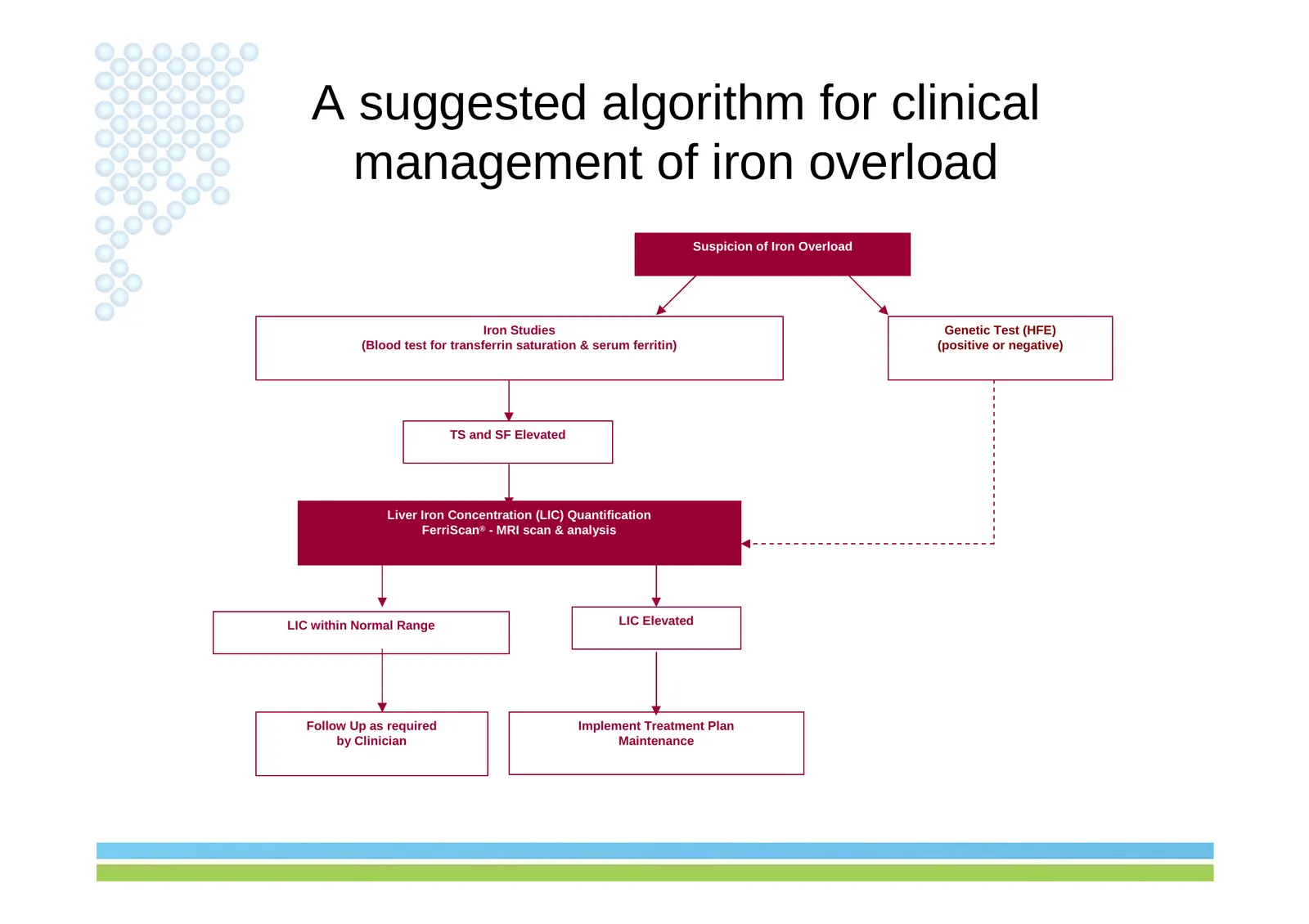
Slide 8: A suggested algorithm for clinical management of iron overload
A suggested algorithm for clinical management of iron overload Suspicion of Iron Overload Iron Studies Genetic Test (HFE) (Blood test for transferrin saturation & serum ferritin) (positive or negative) TS and SF Elevated Liver Iron Concentration (LIC) Quantification FerriScan® - MRI scan & analysis
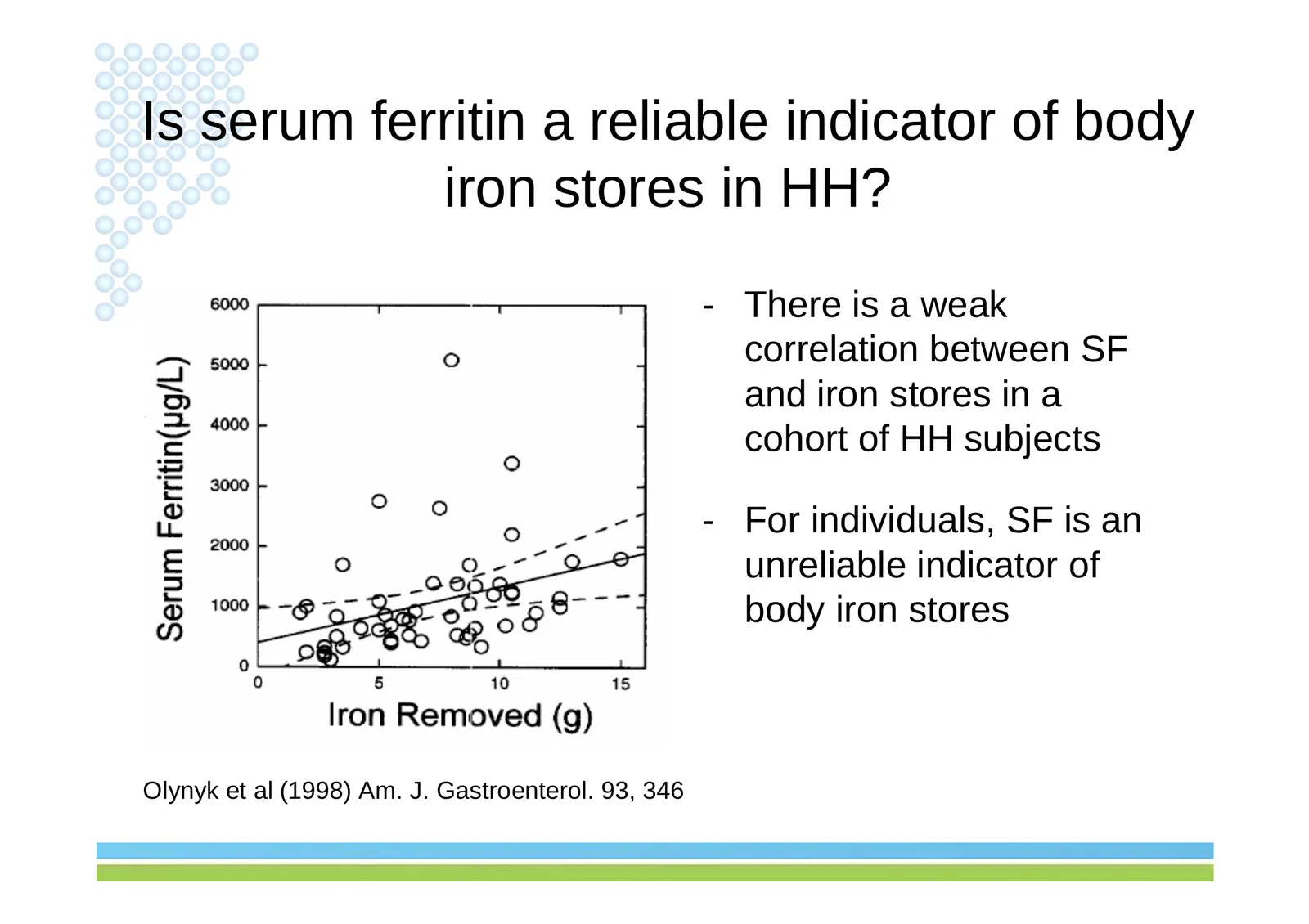
Slide 9: Is serum ferritin a reliable indicator of body iron stores in HH?
Is serum ferritin a reliable indicator of body iron stores in HH? - There is a weak correlation between SF and iron stores in a cohort of HH subjects - For individuals, SF is an unreliable indicator of body iron stores Olynyk et al (1998) Am. J. Gastroenterol. 93, 346
Slide 10: Genetic Testing (HFE)
Genetic Testing (HFE) • Two major mutations of HFE attributable to iron loading are C282Y and H63D • People who inherit the HFE gene mutation from both parents are at the greatest risk of developing haemochromatosis • Negative genetic testing may not rule out hereditary haemochromatosis
Slide 11: FerriScan non-invasive measurement of LIC
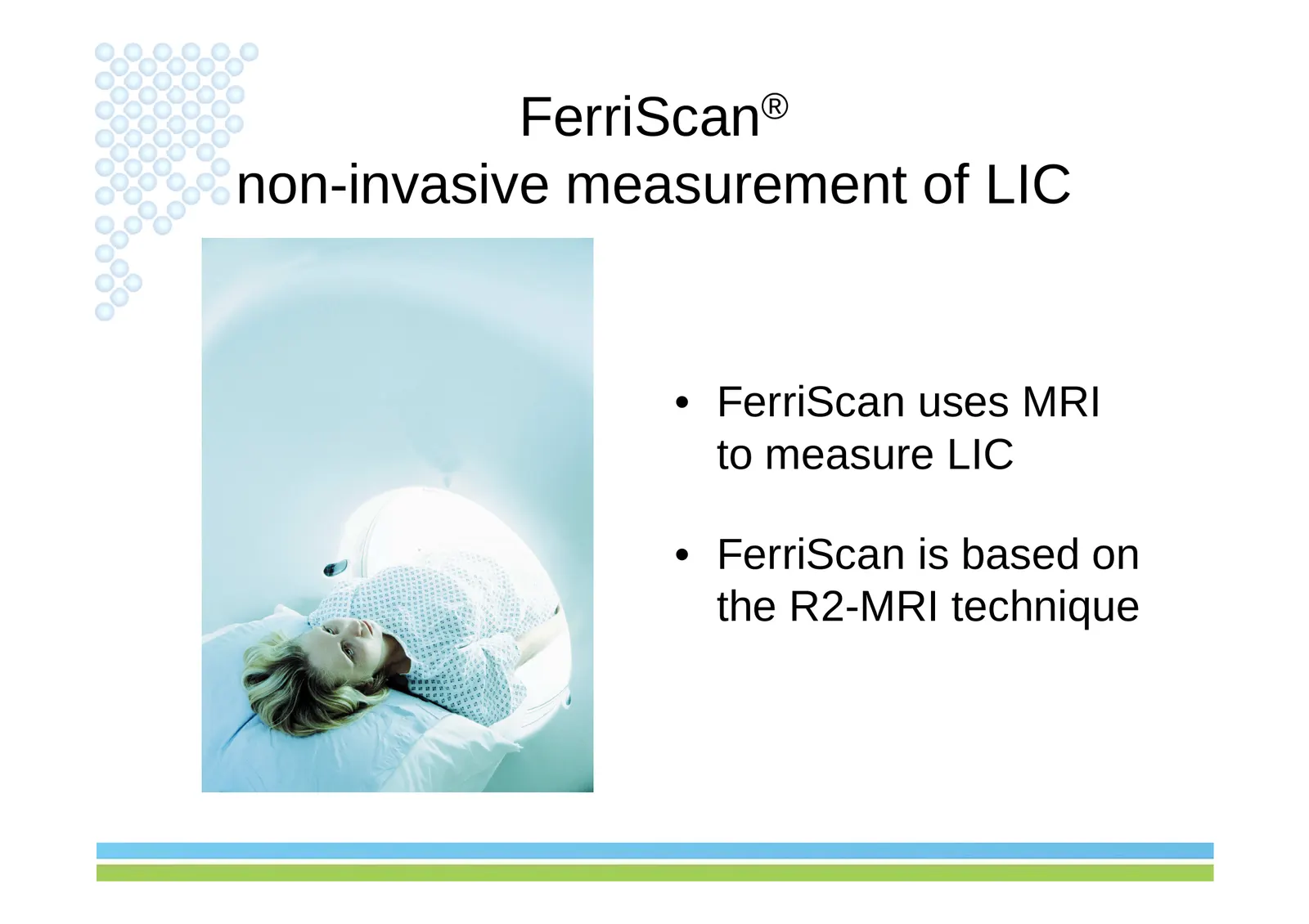
FerriScan® non-invasive measurement of LIC • FerriScan uses MRI to measure LIC • FerriScan is based on the R2-MRI technique
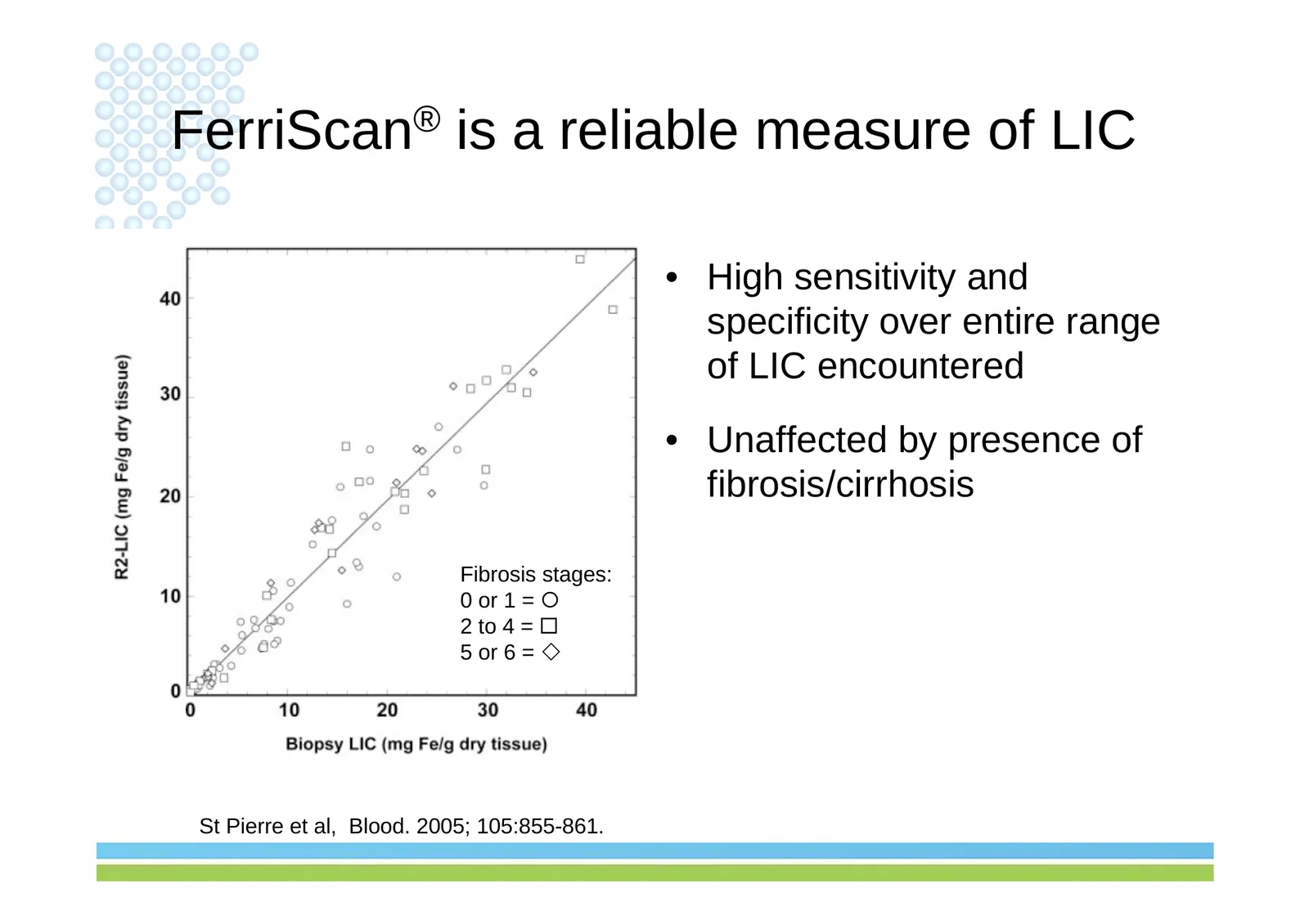
Slide 12: FerriScan is a reliable measure of LIC
FerriScan® is a reliable measure of LIC • High sensitivity and specificity over entire range of LIC encountered • Unaffected by presence of fibrosis/cirrhosis Fibrosis stages: 0 or 1 = 2 to 4 = 5 or 6 = St Pierre et al, Blood. 2005; 105:855-861.
Slide 13: Why choose FerriScan?
Why choose FerriScan®? • FerriScan is the world’s leading liver iron measurement technology • FerriScan has a proven dynamic range of LIC measurement greater than any other MRI technique • All MRI scanners using FerriScan are regularly validated with standards • Centralised global data analysis serv
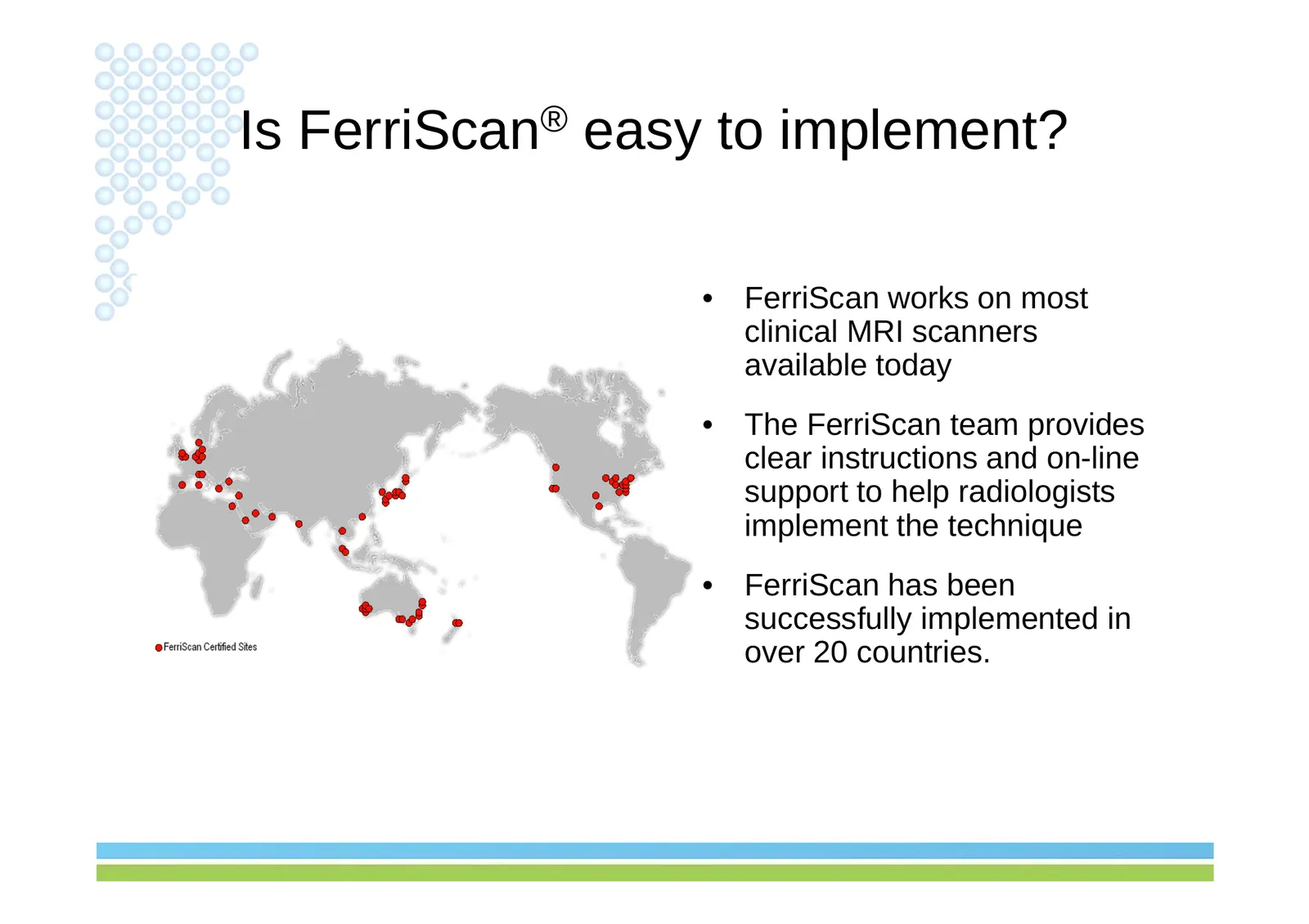
Slide 14: Is FerriScan easy to implement?
Is FerriScan® easy to implement? • FerriScan works on most clinical MRI scanners available today • The FerriScan team provides clear instructions and on-line support to help radiologists implement the technique • FerriScan has been successfully implemented in over 20 countries.
Slide 15: FerriScan: be better informed
FerriScan® : be better informed
Source: Internet Archive copy of resonancehealth.com
More decks from Resonance Health Ltd
 Corporate Update (October 2026)31 slides · Oct 28, 2026
 Investor Presentation (October 2026)29 slides · Oct 27, 2026
 FY2026 Earnings Presentation35 slides · Aug 28, 2026
 H1 FY2026 Earnings Presentation16 slides · Feb 27, 2026
 Shareholder Meeting (November 2025)13 slides · Nov 13, 2025
 Investor Day (October 2025)42 slides · Oct 13, 2025