Pressure BioSciences, Inc. · OTC:PBIO
Pressure BioSciences — Plant and Animal Genome XVI Conference 2008
30 slides from Pressure BioSciences's conference presentation, Jan 15, 2008
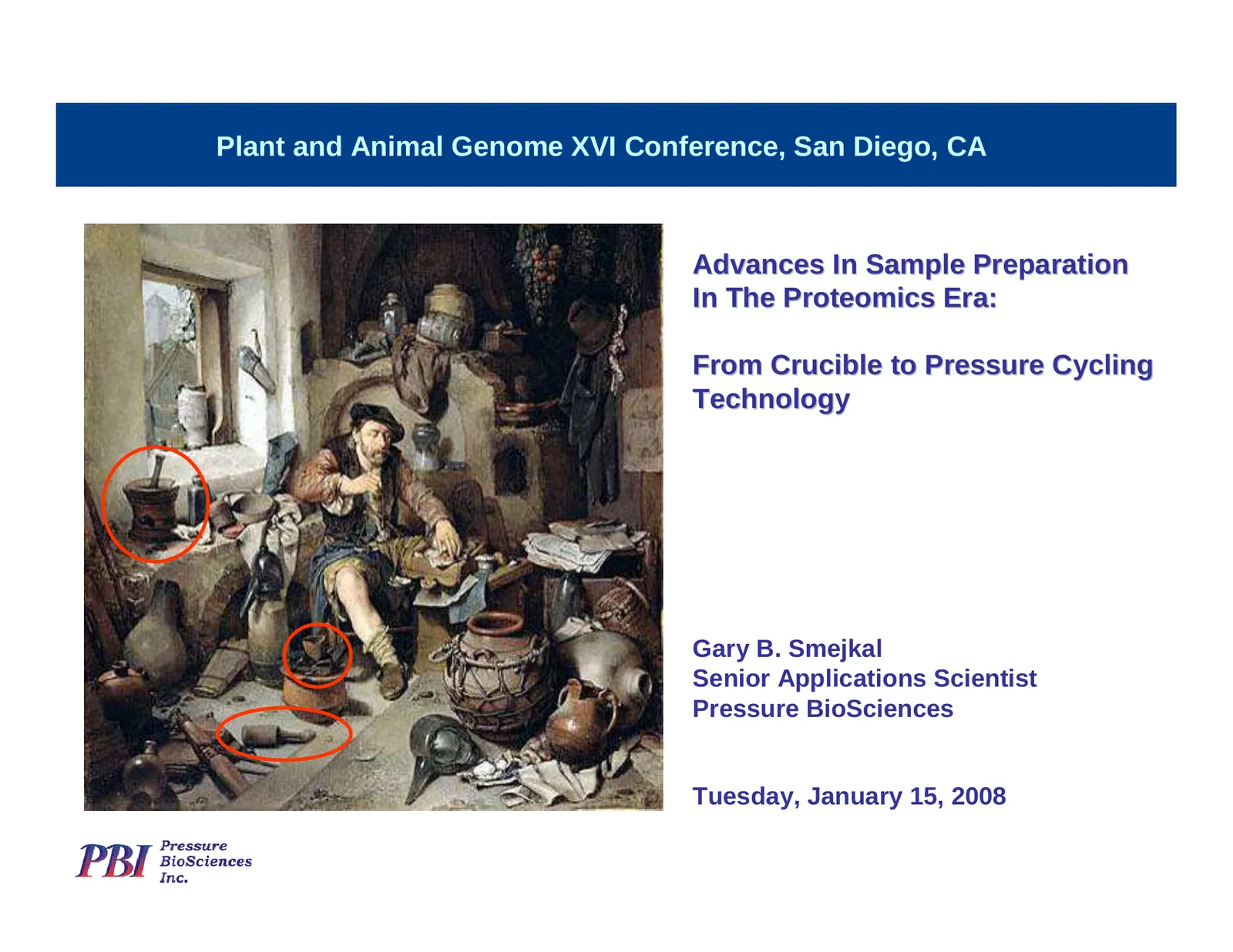
Slide 1: Advances in Sample Preparation in the Proteomics Era: From Crucible to Pressure Cycling Technology
Plant and Animal Genome XVI Conference, San Diego, CA Advances In Sample Preparation In The Proteomics Era: From Crucible to Pressure Cycling Technology Gary B. Smejkal Senior Applications Scientist Pressure BioSciences Tuesday, January 15, 2008
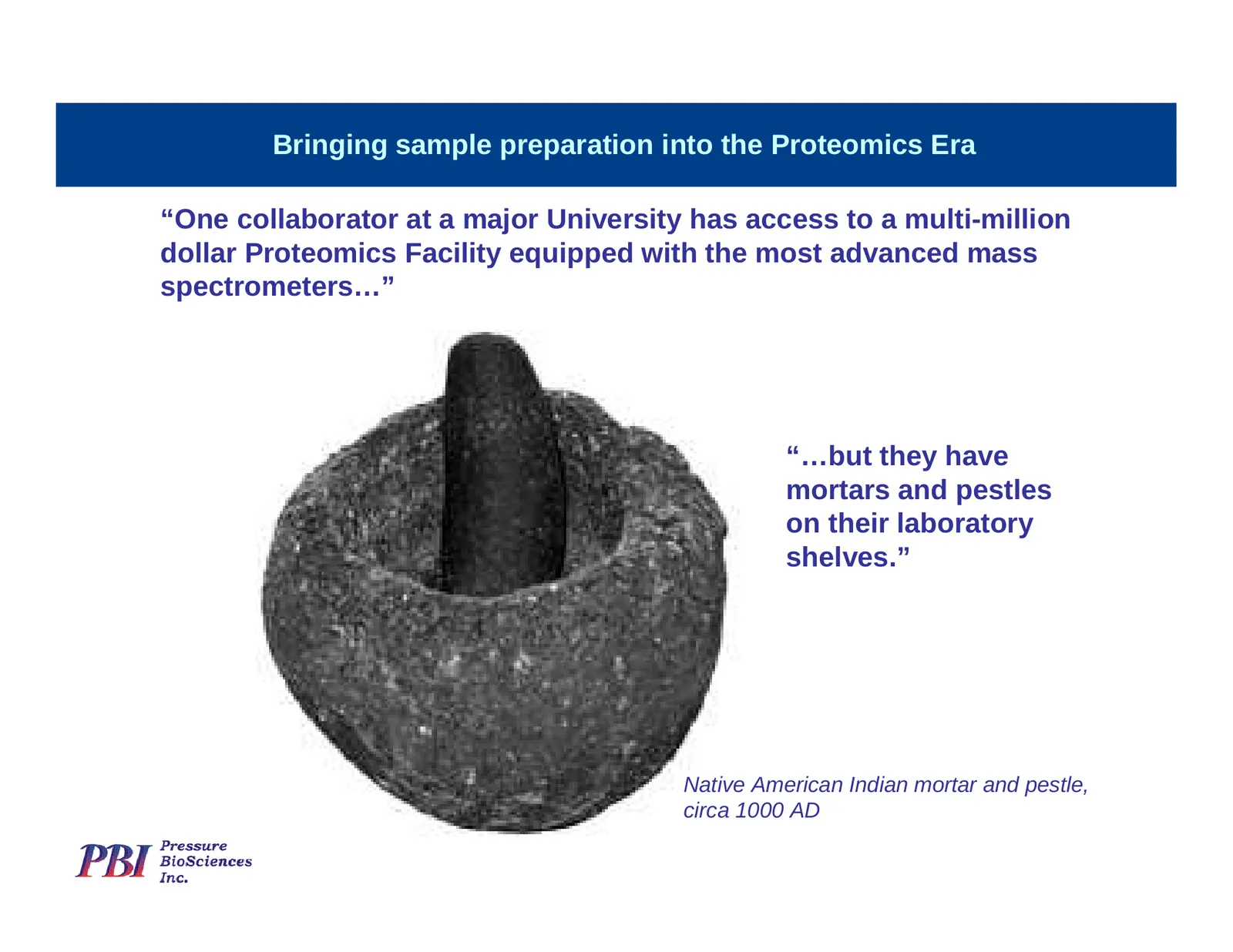
Slide 2: Bringing sample preparation into the Proteomics Era
Bringing sample preparation into the Proteomics Era “One collaborator at a major University has access to a multi-million dollar Proteomics Facility equipped with the most advanced mass spectrometers…” “…but they have mortars and pestles on their laboratory shelves.” Native American Indian mortar an
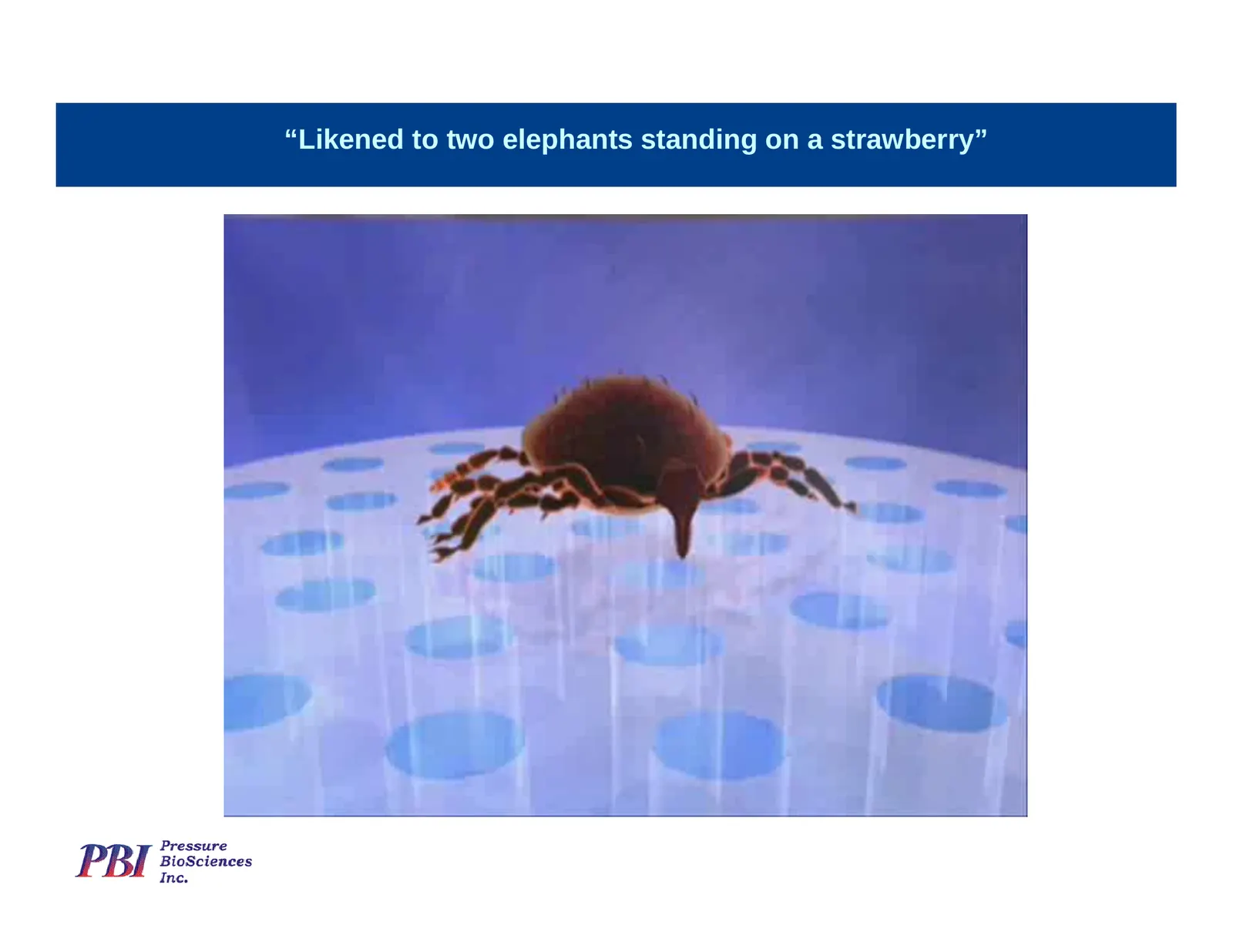
Slide 3: Likened to two elephants standing on a strawberry
“Likened to two elephants standing on a strawberry”
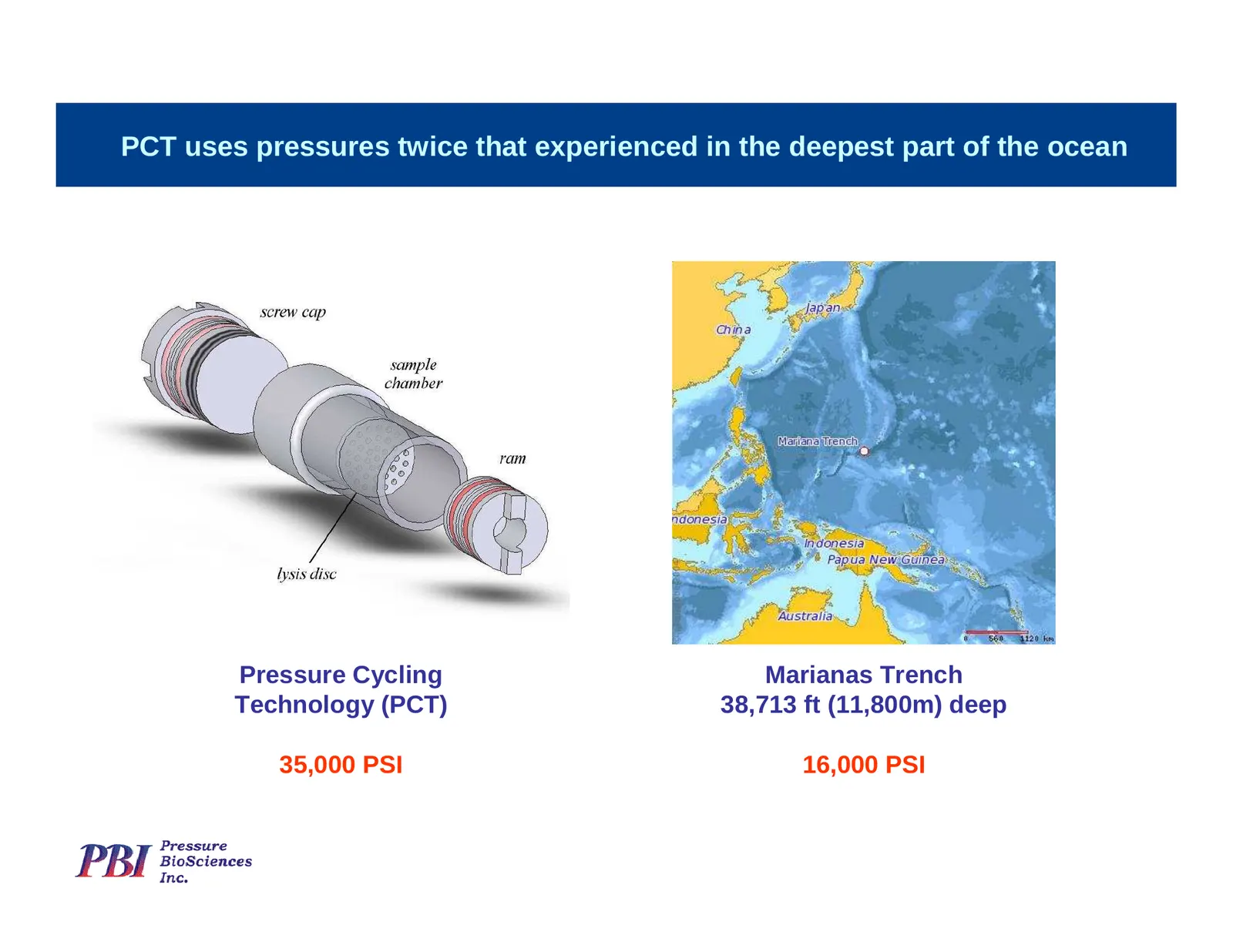
Slide 4: PCT uses pressures twice that experienced in the deepest part of the ocean
PCT uses pressures twice that experienced in the deepest part of the ocean Pressure Cycling Marianas Trench Technology (PCT) 38,713 ft (11,800m) deep 35,000 PSI 16,000 PSI
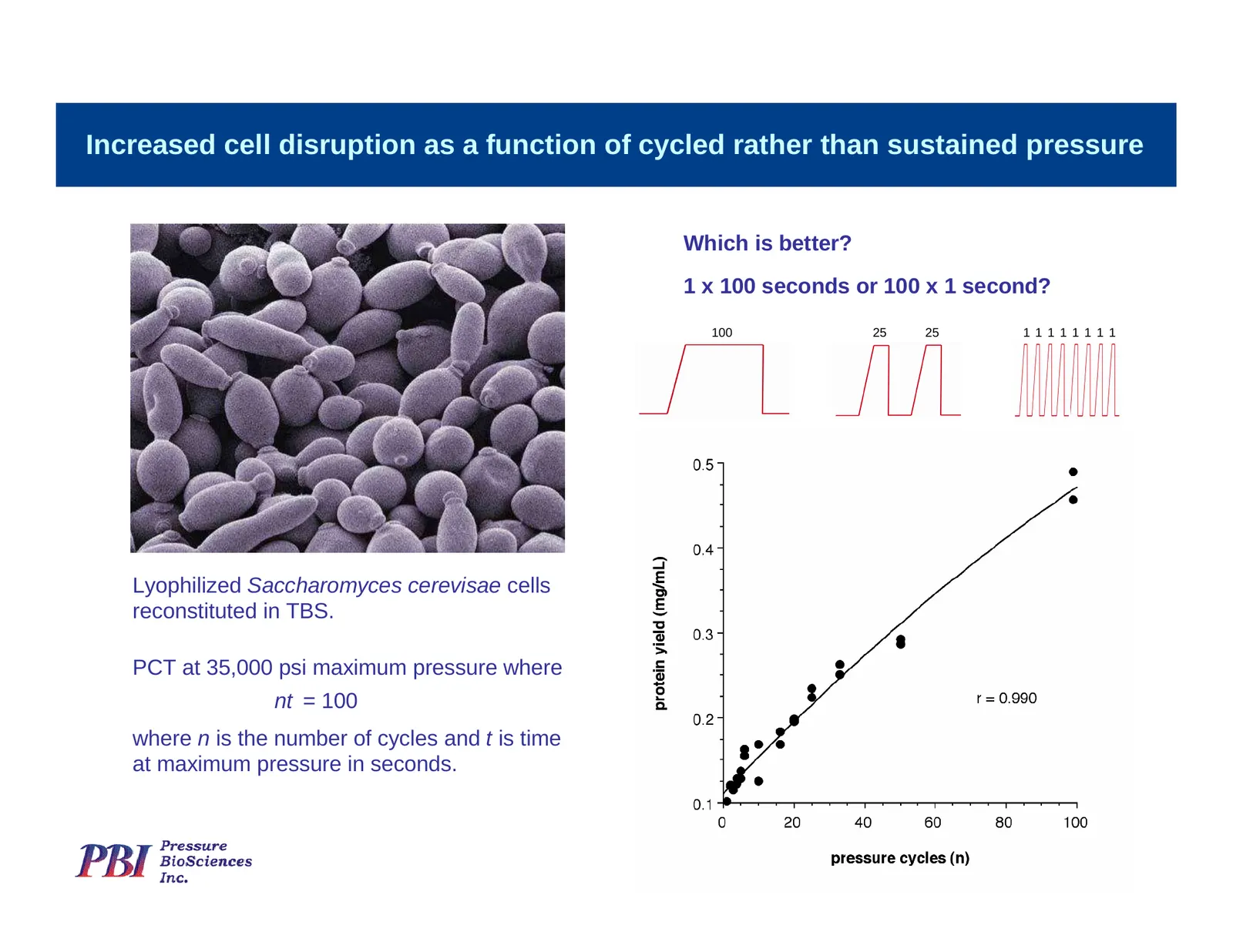
Slide 5: Increased cell disruption as a function of cycled rather than sustained pressure
Increased cell disruption as a function of cycled rather than sustained pressure Which is better? 1 x 100 seconds or 100 x 1 second? 100 25 25 1 1 1 1 1 1 1 1 Lyophilized Saccharomyces cerevisae cells reconstituted in TBS. PCT at 35,000 psi maximum pressure where nt = 100 where n is the number of cy
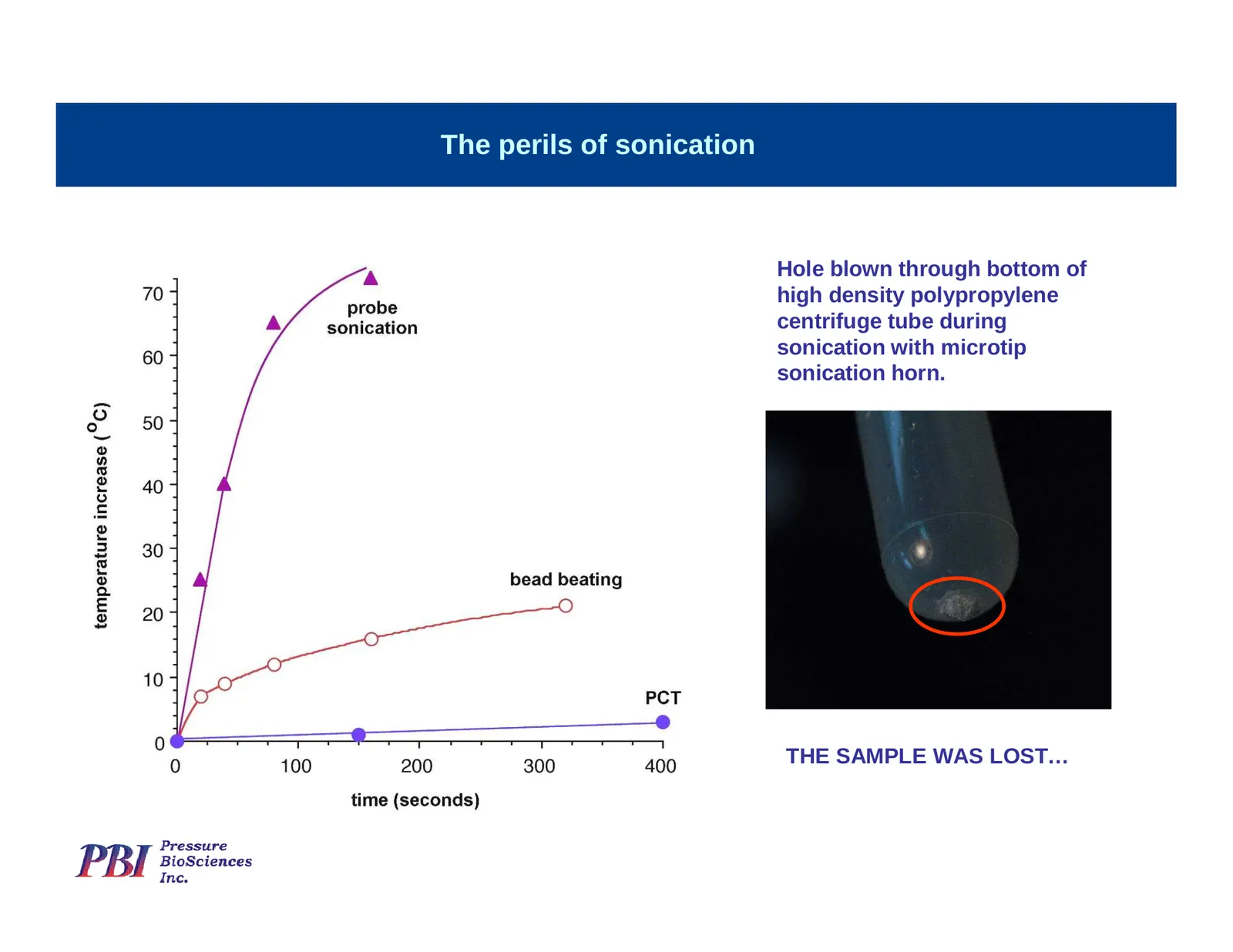
Slide 6: The perils of sonication
The perils of sonication Hole blown through bottom of high density polypropylene centrifuge tube during sonication with microtip sonication horn. THE SAMPLE WAS LOST…
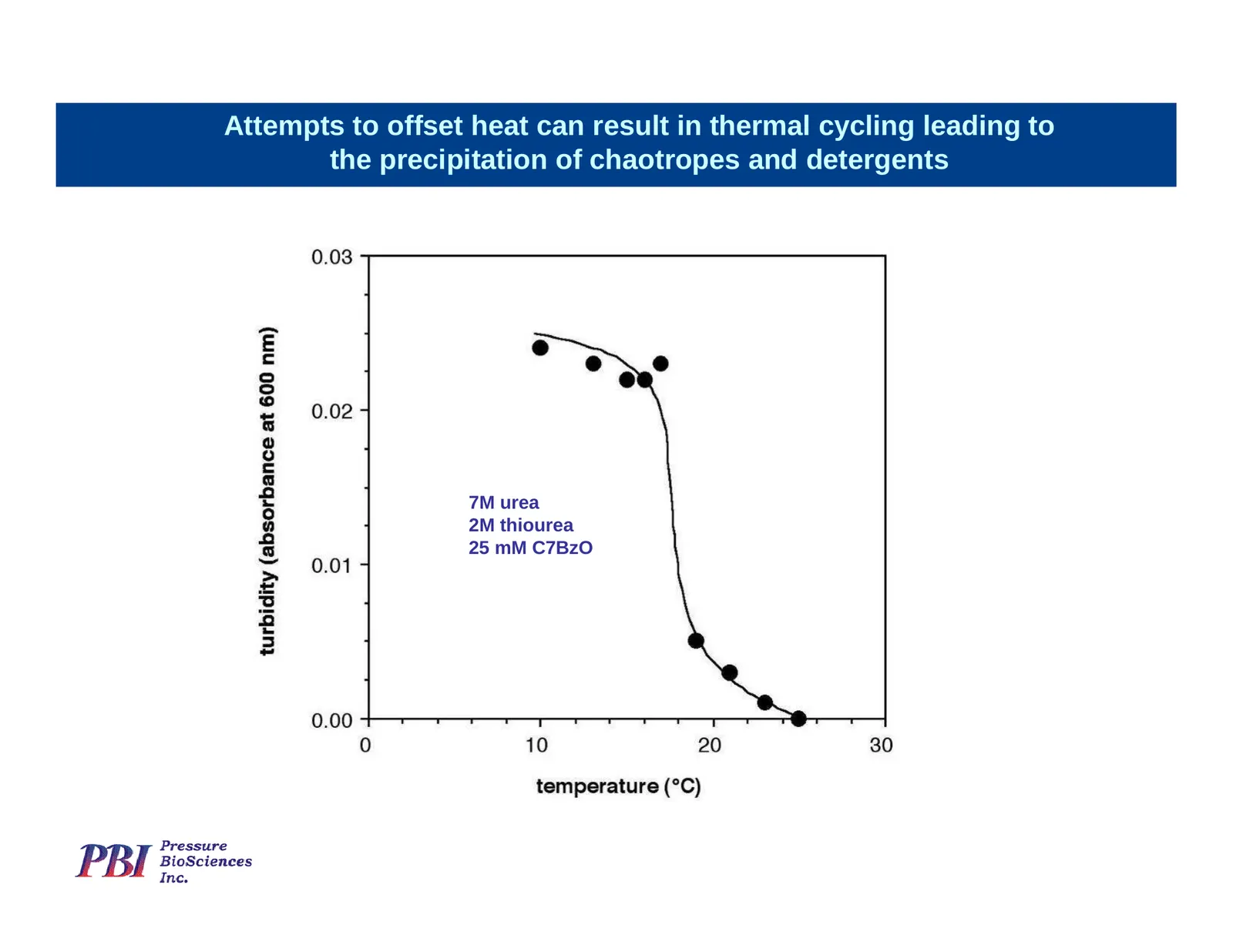
Slide 7: Attempts to offset heat can result in thermal cycling leading to precipitation
Attempts to offset heat can result in thermal cycling leading to the precipitation of chaotropes and detergents 7M urea 2M thiourea 25 mM C7BzO
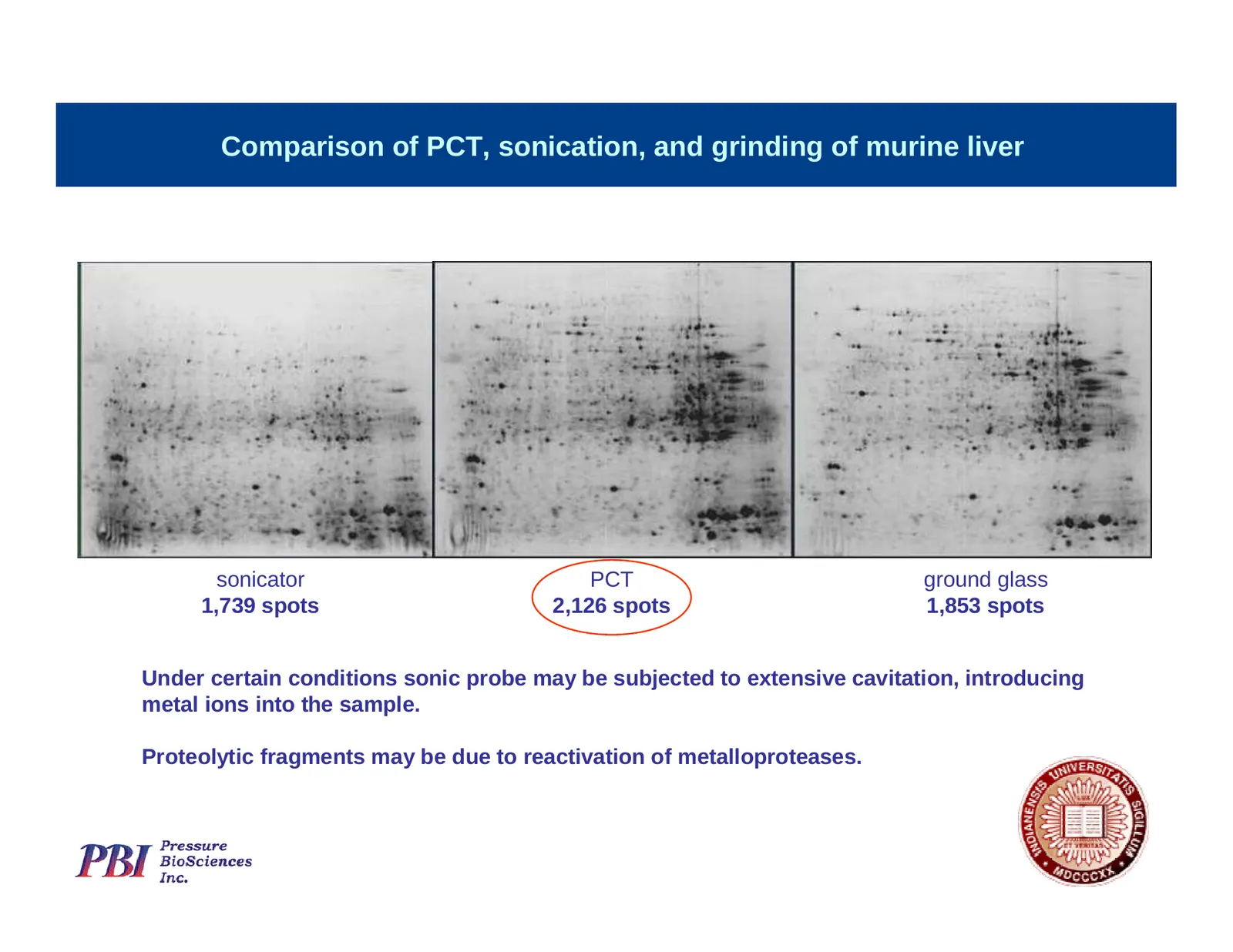
Slide 8: Comparison of PCT, sonication, and grinding of murine liver
Comparison of PCT, sonication, and grinding of murine liver sonicator PCT ground glass 1,739 spots 2,126 spots 1,853 spots Under certain conditions sonic probe may be subjected to extensive cavitation, introducing metal ions into the sample. Proteolytic fragments may be due to reactivation of metall
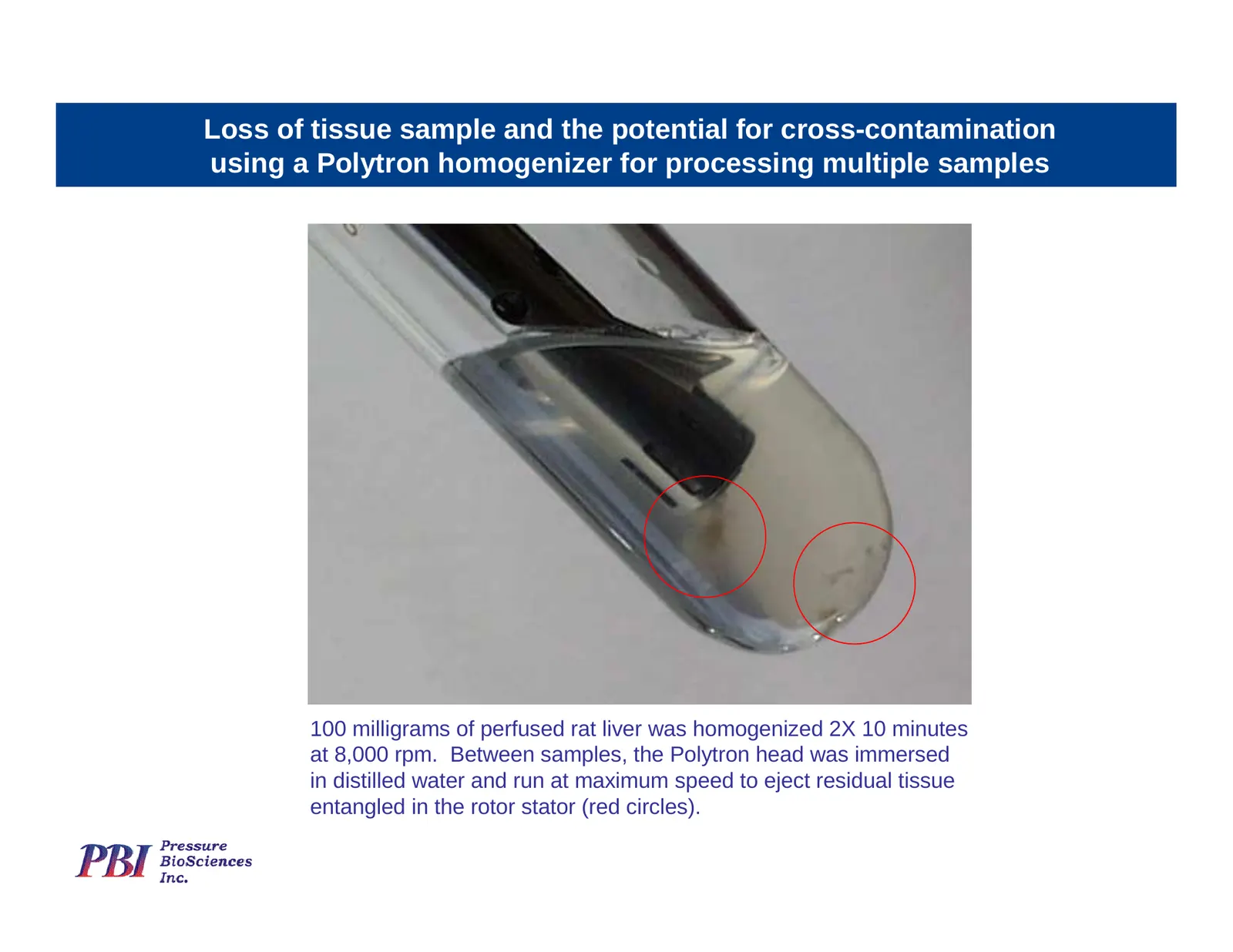
Slide 9: Loss of tissue sample and cross-contamination using a Polytron homogenizer
Loss of tissue sample and the potential for cross-contamination using a Polytron homogenizer for processing multiple samples 100 milligrams of perfused rat liver was homogenized 2X 10 minutes at 8,000 rpm. Between samples, the Polytron head was immersed in distilled water and run at maximum speed to
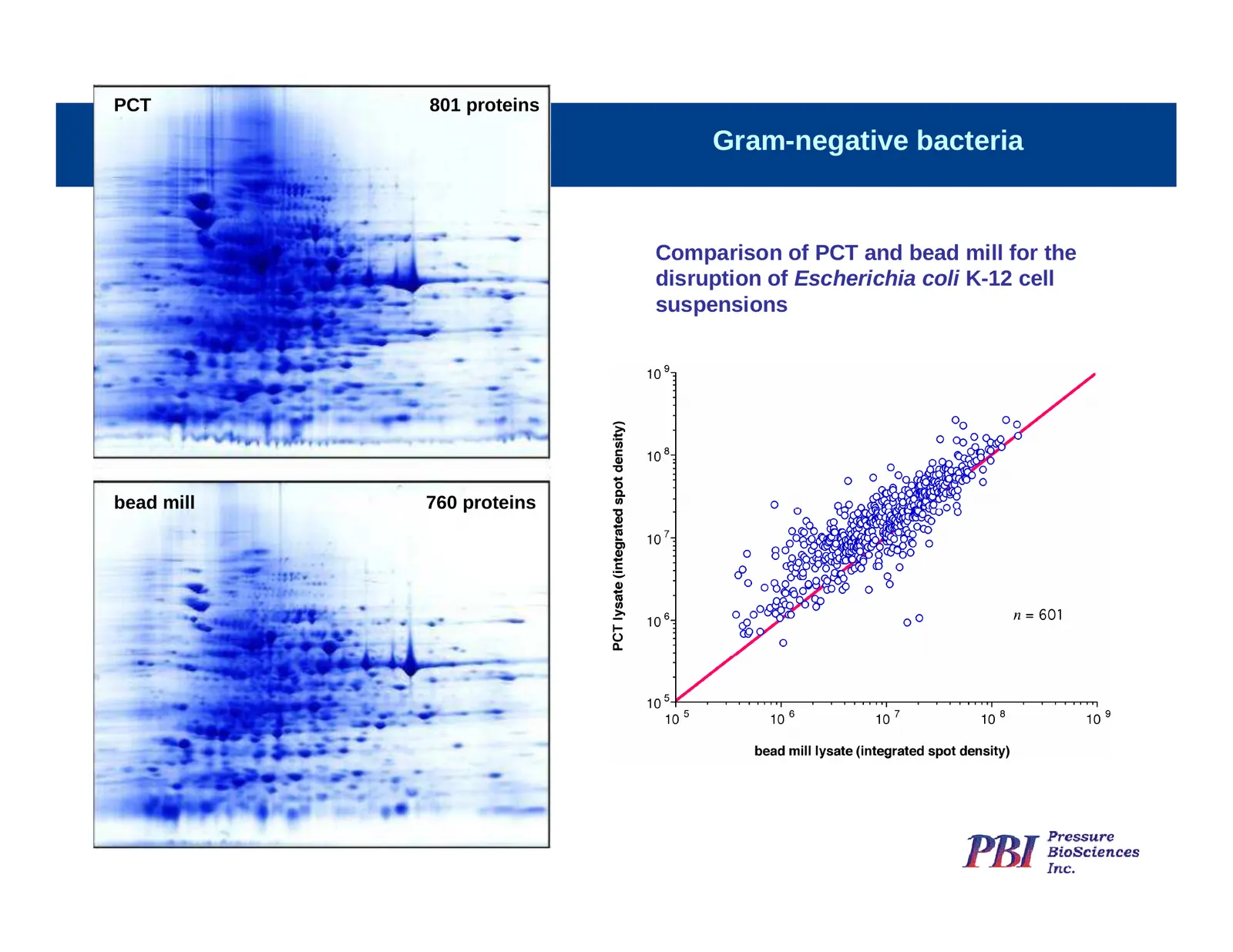
Slide 10: Gram-negative bacteria: PCT vs bead mill for E. coli
PCT 801 proteins Gram-negative bacteria Comparison of PCT and bead mill for the disruption of Escherichia coli K-12 cell suspensions bead mill 760 proteins
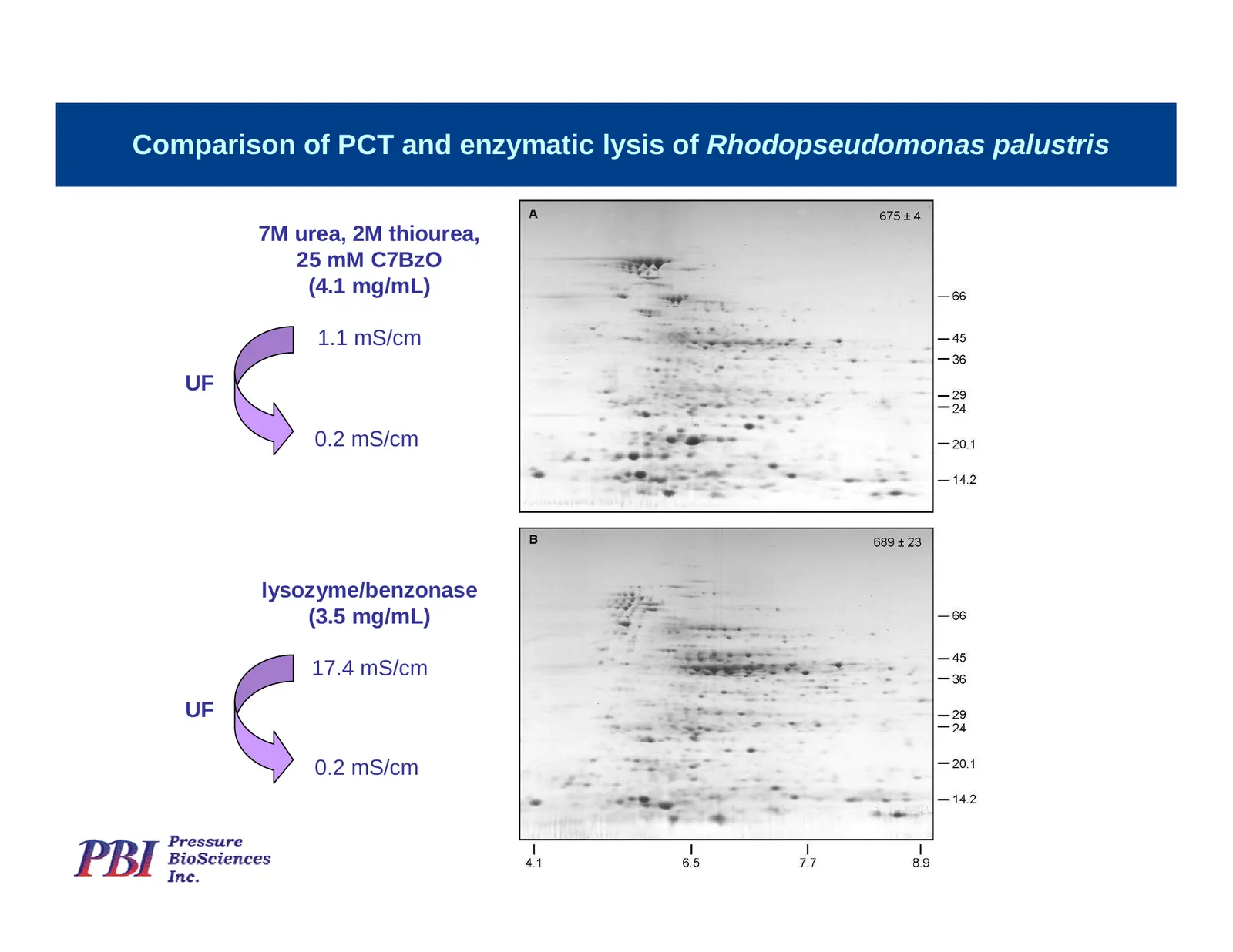
Slide 11: Comparison of PCT and enzymatic lysis of Rhodopseudomonas palustris
Comparison of PCT and enzymatic lysis of Rhodopseudomonas palustris 7M urea, 2M thiourea, 25 mM C7BzO (4.1 mg/mL) 1.1 mS/cm UF 0.2 mS/cm lysozyme/benzonase (3.5 mg/mL) 17.4 mS/cm UF 0.2 mS/cm
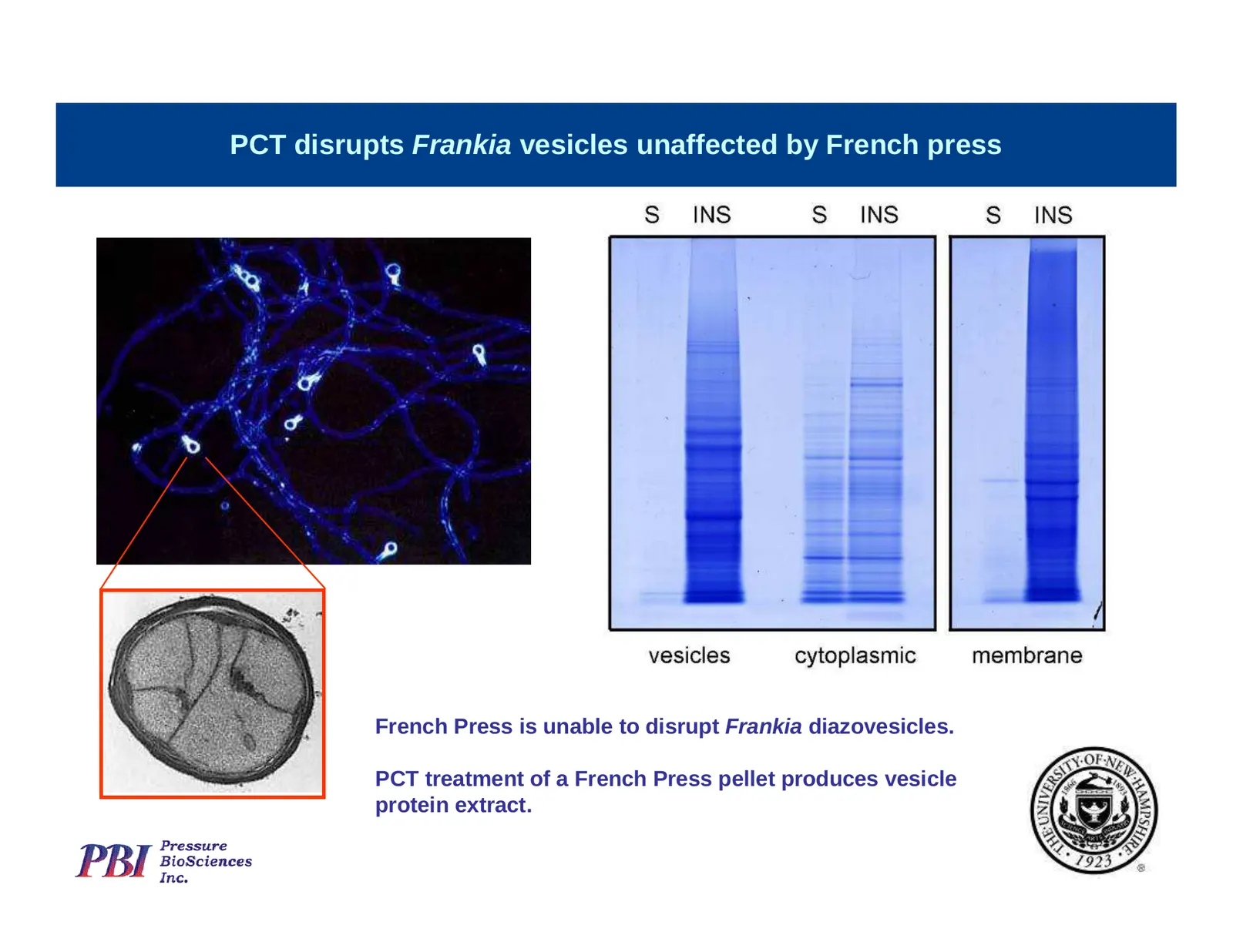
Slide 12: PCT disrupts Frankia vesicles unaffected by French press
PCT disrupts Frankia vesicles unaffected by French press French Press is unable to disrupt Frankia diazovesicles. PCT treatment of a French Press pellet produces vesicle protein extract.
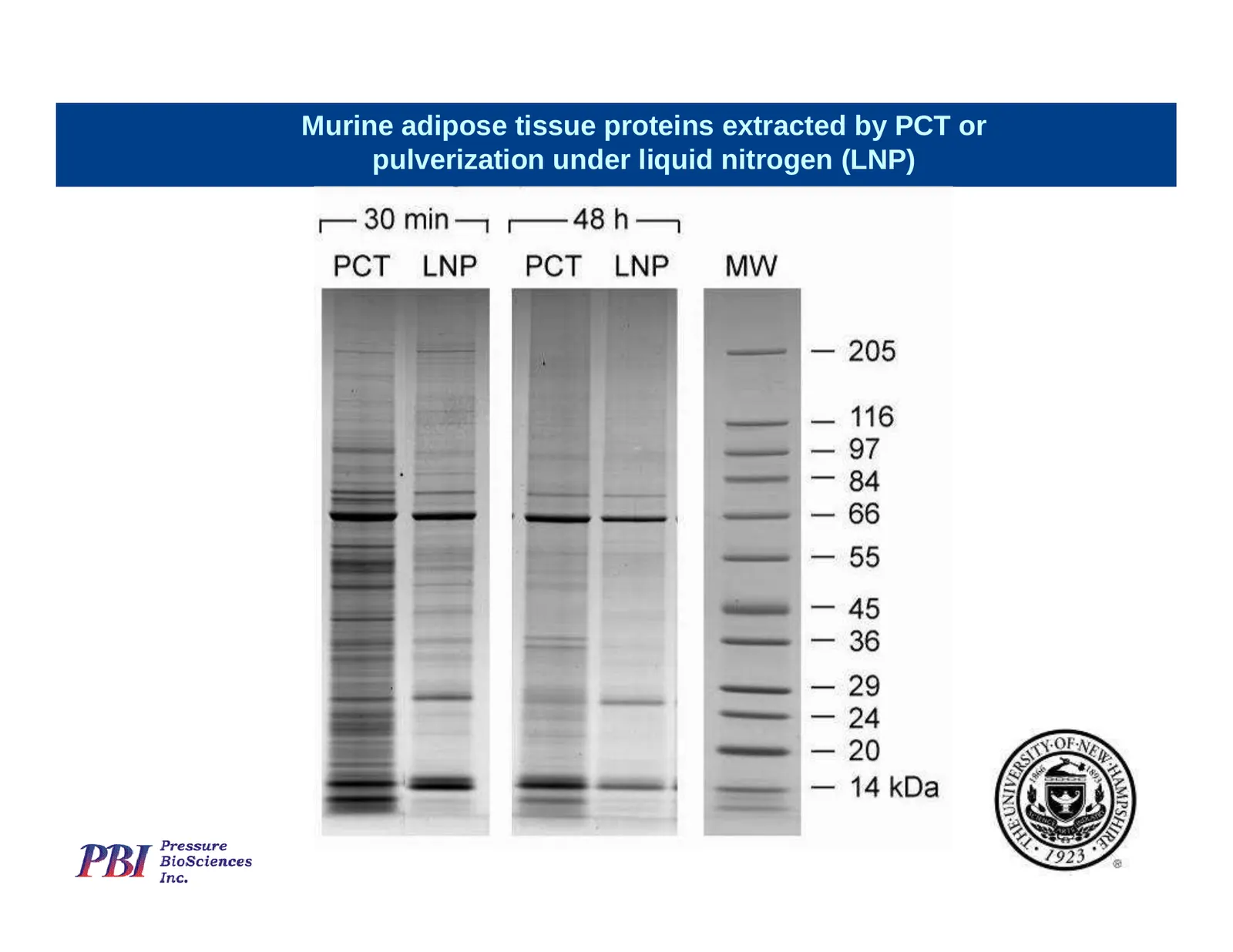
Slide 13: Murine adipose tissue proteins extracted by PCT or pulverization
Murine adipose tissue proteins extracted by PCT or pulverization under liquid nitrogen (LNP)
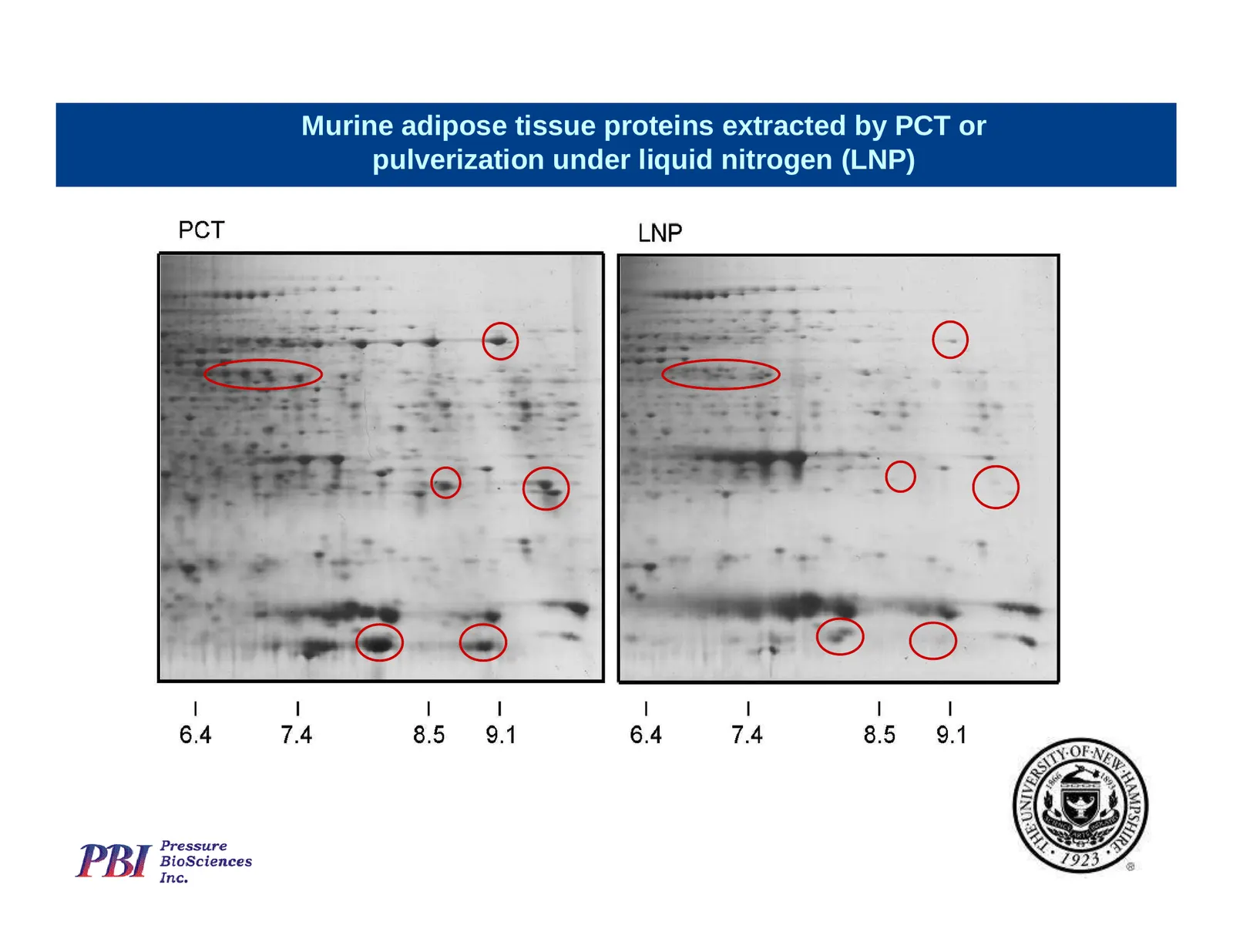
Slide 14: Murine adipose tissue proteins extracted by PCT or pulverization
Murine adipose tissue proteins extracted by PCT or pulverization under liquid nitrogen (LNP)
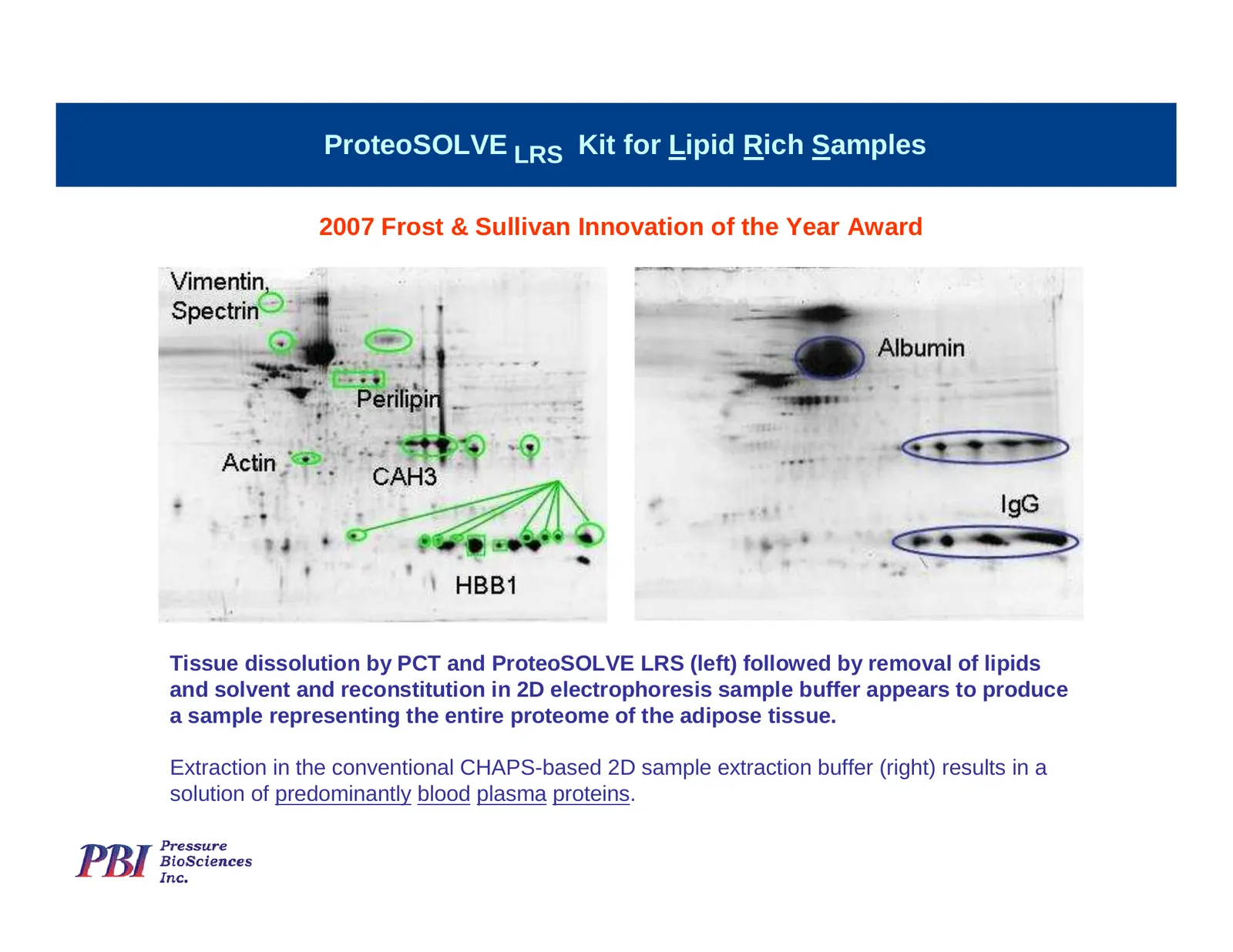
Slide 15: ProteoSOLVE LRS Kit for Lipid Rich Samples
ProteoSOLVE LRS Kit for Lipid Rich Samples 2007 Frost & Sullivan Innovation of the Year Award Tissue dissolution by PCT and ProteoSOLVE LRS (left) followed by removal of lipids and solvent and reconstitution in 2D electrophoresis sample buffer appears to produce a sample representing the entire prot
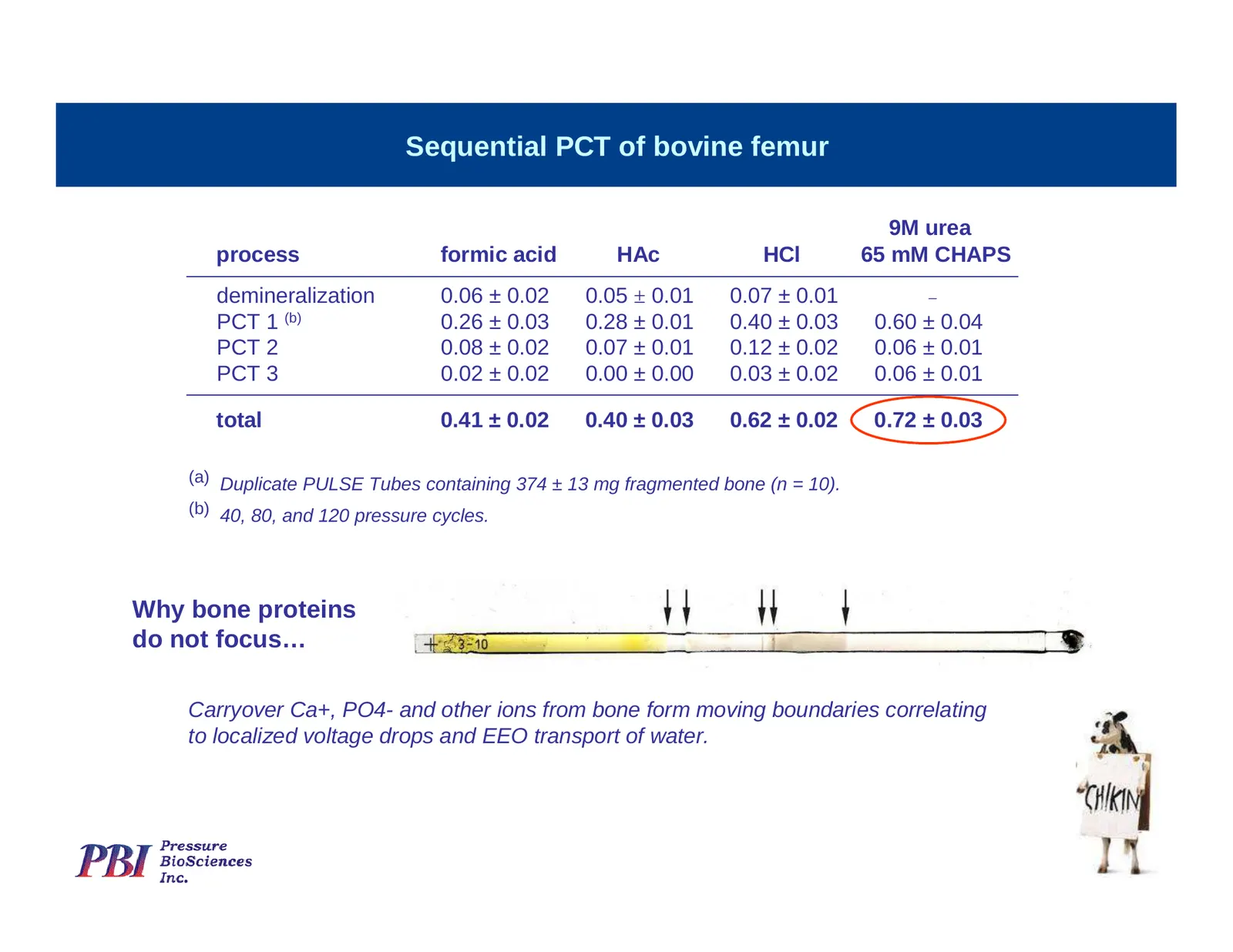
Slide 16: Sequential PCT of bovine femur
Sequential PCT of bovine femur 9M urea process formic acid HAc HCl 65 mM CHAPS demineralization 0.06 ± 0.02 0.05 ± 0.01 0.07 ± 0.01 _ PCT 1 (b) 0.26 ± 0.03 0.28 ± 0.01 0.40 ± 0.03 0.60 ± 0.04 PCT 2 0.08 ± 0.02 0.07 ± 0.01 0.12 ± 0.02 0.06 ± 0.01 PCT 3 0.02 ± 0.02 0.00 ± 0.00 0.03 ± 0.02 0.06 ± 0.01
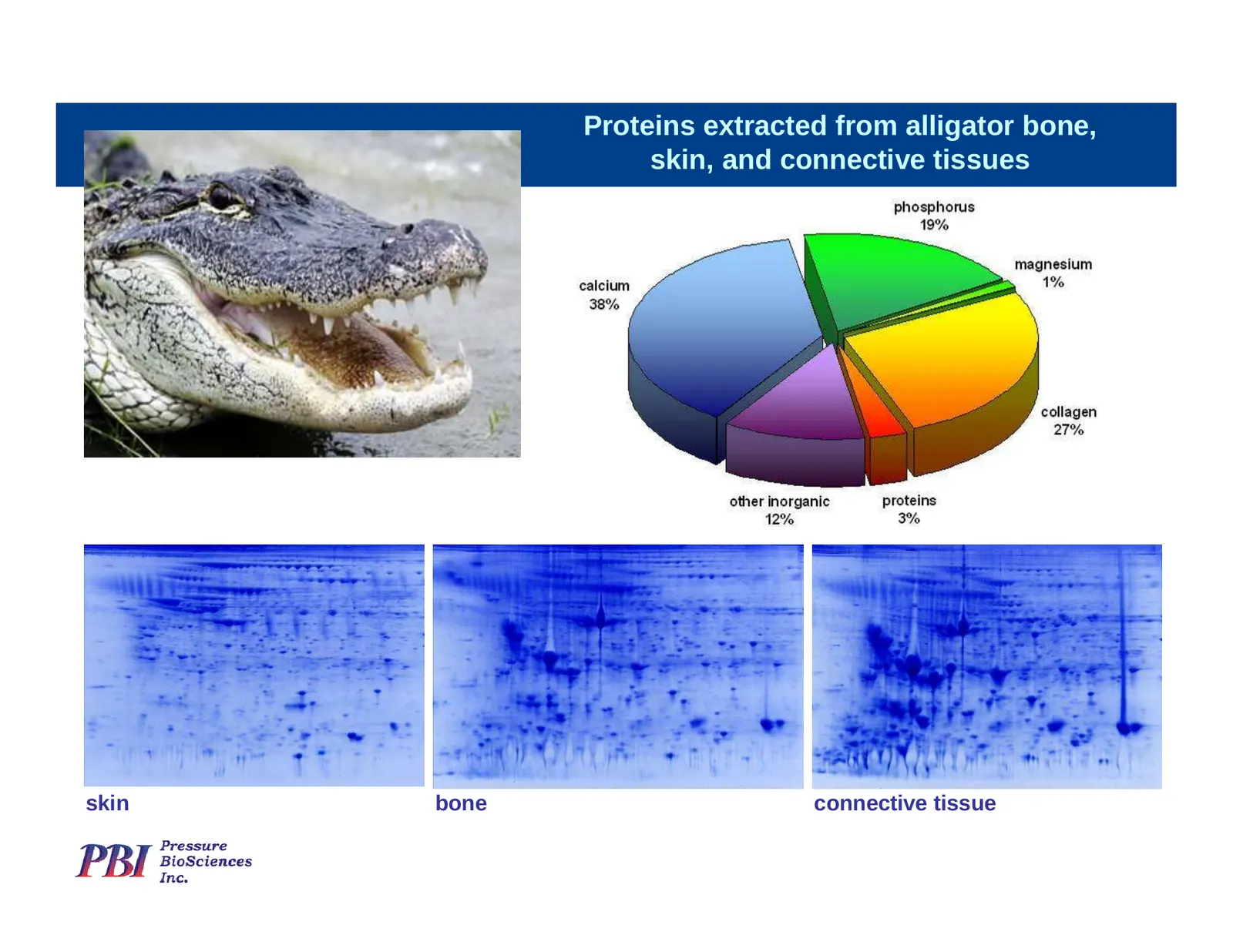
Slide 17: Proteins extracted from alligator bone, skin, and connective tissues
Proteins extracted from alligator bone, skin, and connective tissues skin bone connective tissue
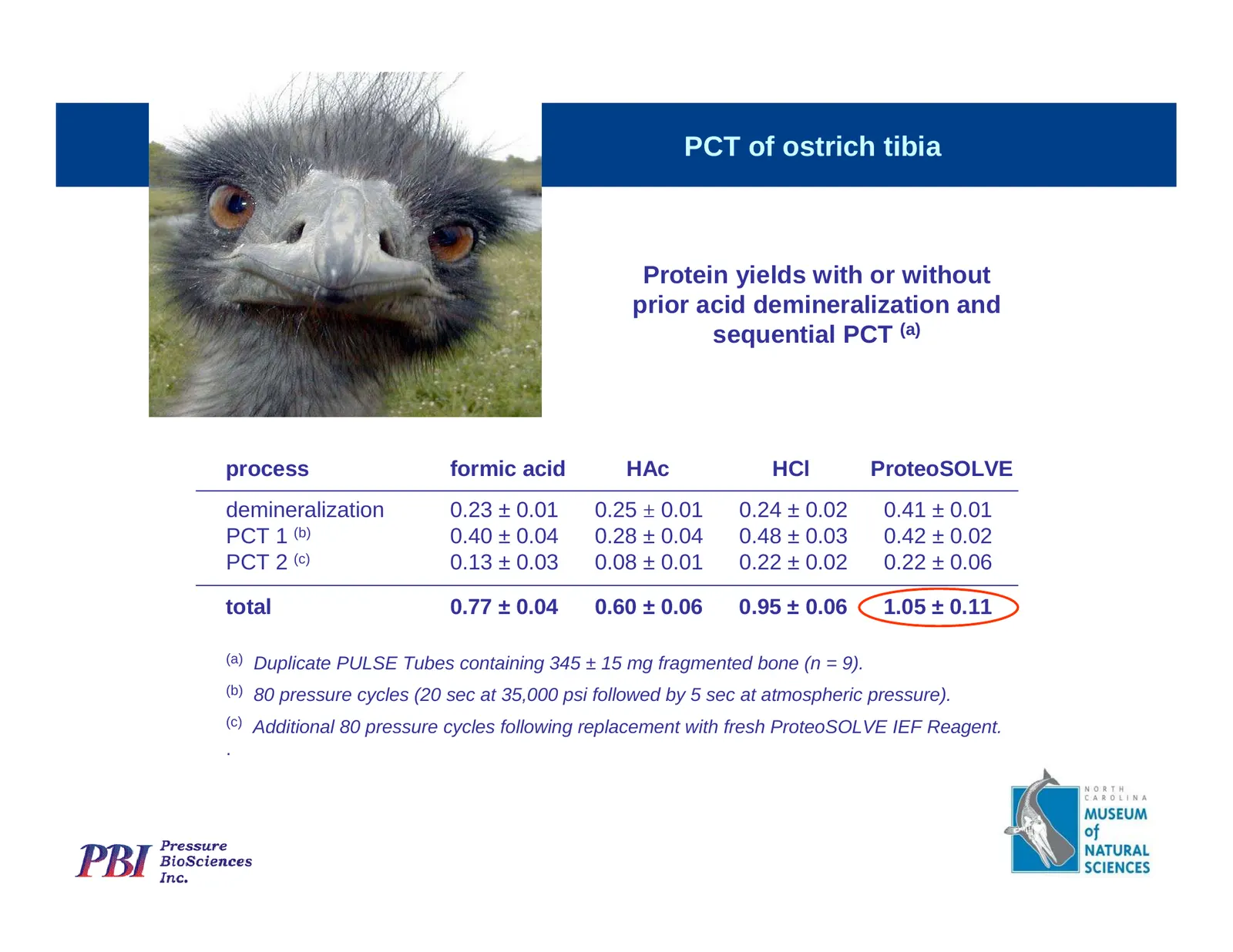
Slide 18: PCT of ostrich tibia
PCT of ostrich tibia Protein yields with or without prior acid demineralization and sequential PCT (a) process formic acid HAc HCl ProteoSOLVE demineralization 0.23 ± 0.01 0.25 ± 0.01 0.24 ± 0.02 0.41 ± 0.01 PCT 1 (b) 0.40 ± 0.04 0.28 ± 0.04 0.48 ± 0.03 0.42 ± 0.02 PCT 2 (c) 0.13 ± 0.03 0.08 ± 0.01
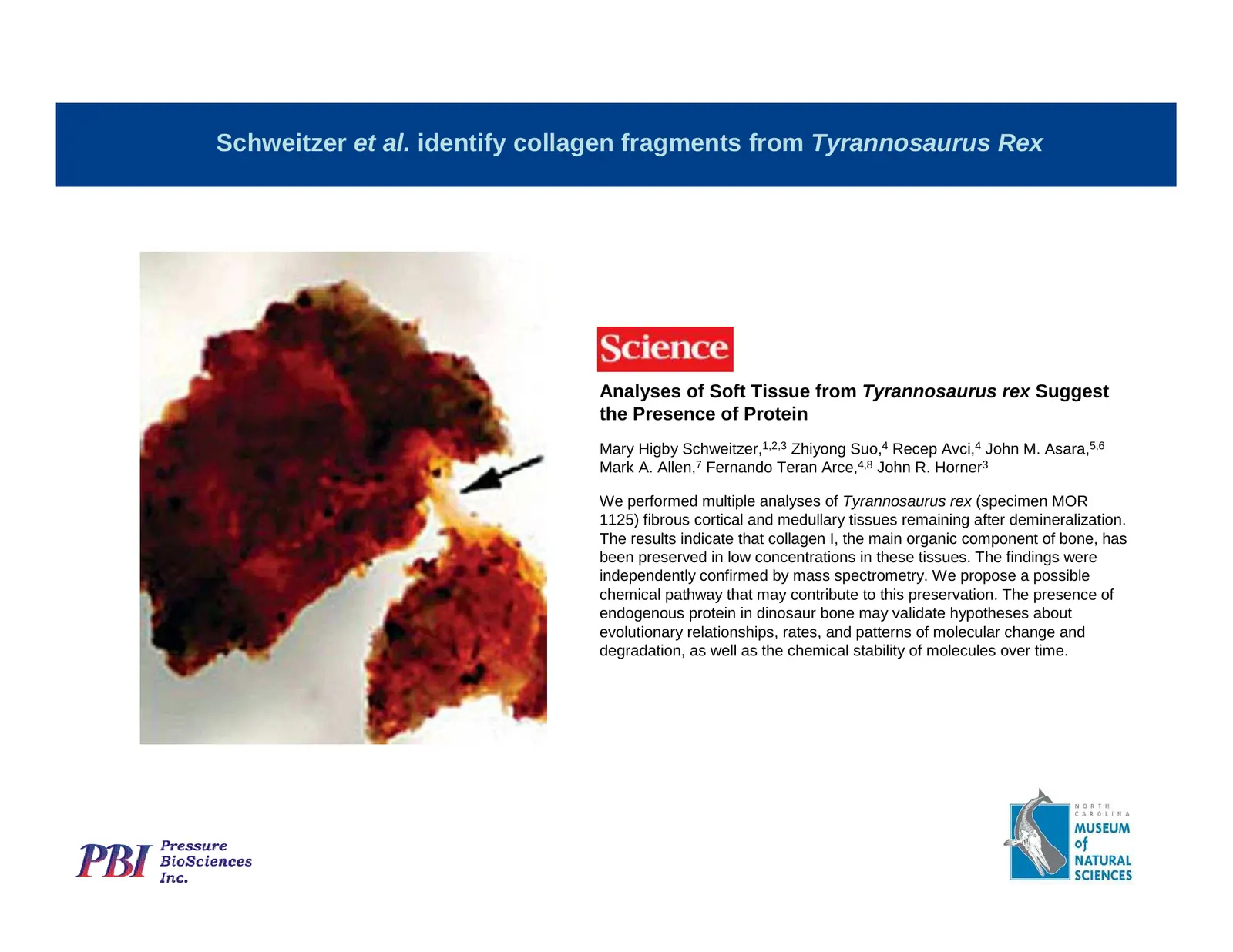
Slide 19: Schweitzer et al. identify collagen fragments from Tyrannosaurus Rex
Schweitzer et al. identify collagen fragments from Tyrannosaurus Rex Analyses of Soft Tissue from Tyrannosaurus rex Suggest the Presence of Protein Mary Higby Schweitzer,1,2,3 Zhiyong Suo,4 Recep Avci,4 John M. Asara,5,6 Mark A. Allen,7 Fernando Teran Arce,4,8 John R. Horner3 We performed multiple a
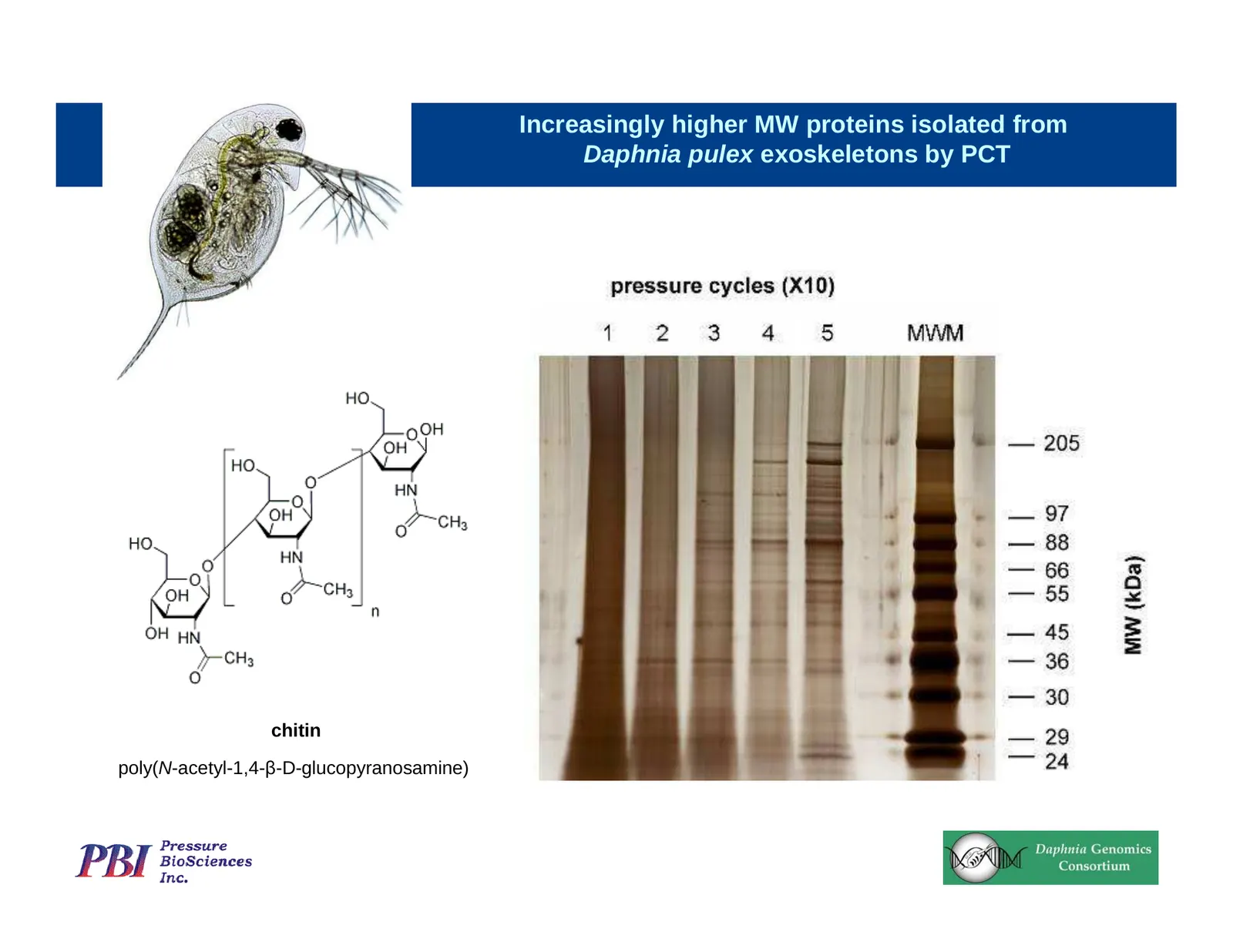
Slide 20: Higher MW proteins isolated from Daphnia pulex exoskeletons by PCT
Increasingly higher MW proteins isolated from Daphnia pulex exoskeletons by PCT chitin poly(N-acetyl-1,4-β-D-glucopyranosamine)
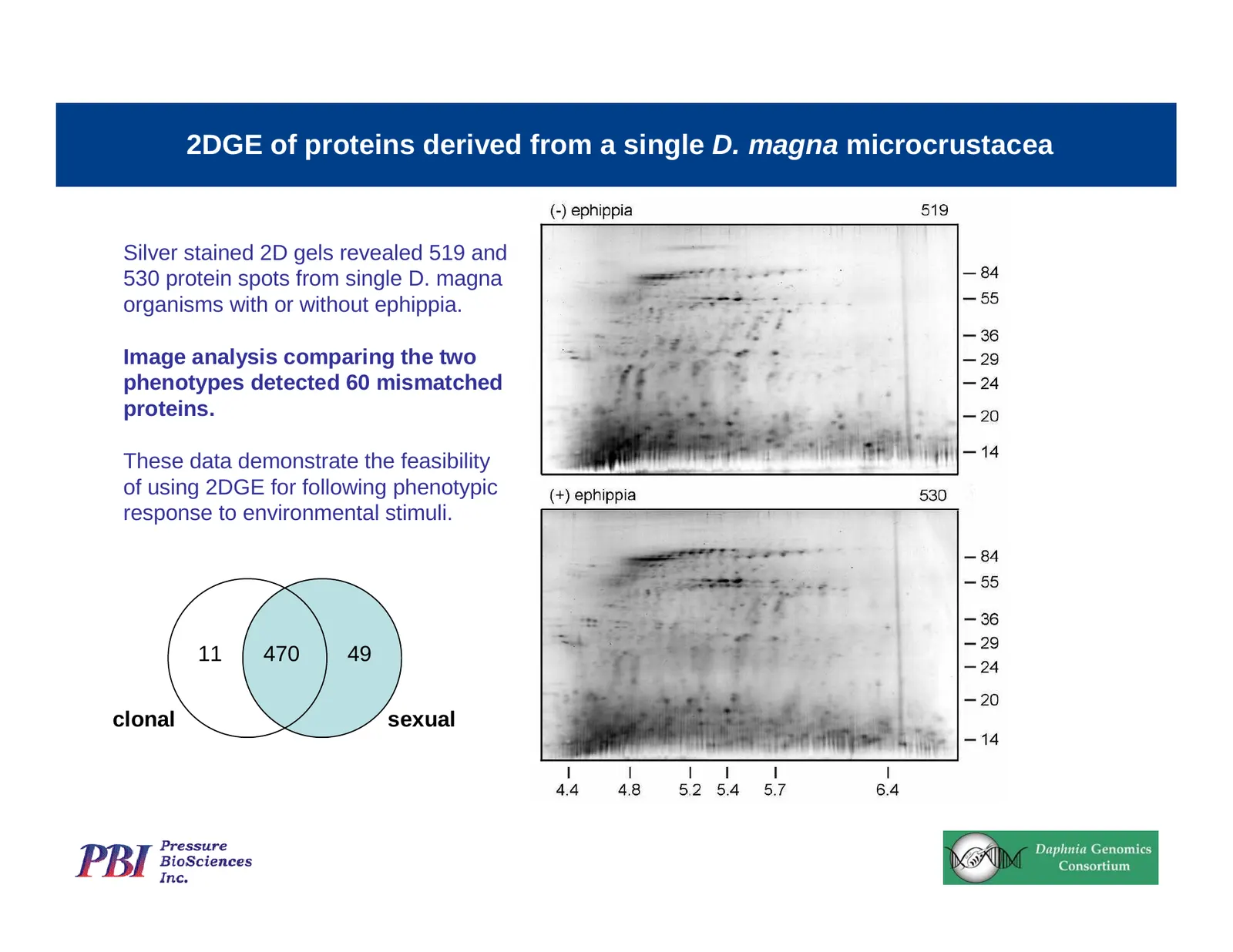
Slide 21: 2DGE of proteins derived from a single D. magna microcrustacea
2DGE of proteins derived from a single D. magna microcrustacea Silver stained 2D gels revealed 519 and 530 protein spots from single D. magna organisms with or without ephippia. Image analysis comparing the two phenotypes detected 60 mismatched proteins. These data demonstrate the feasibility of usi
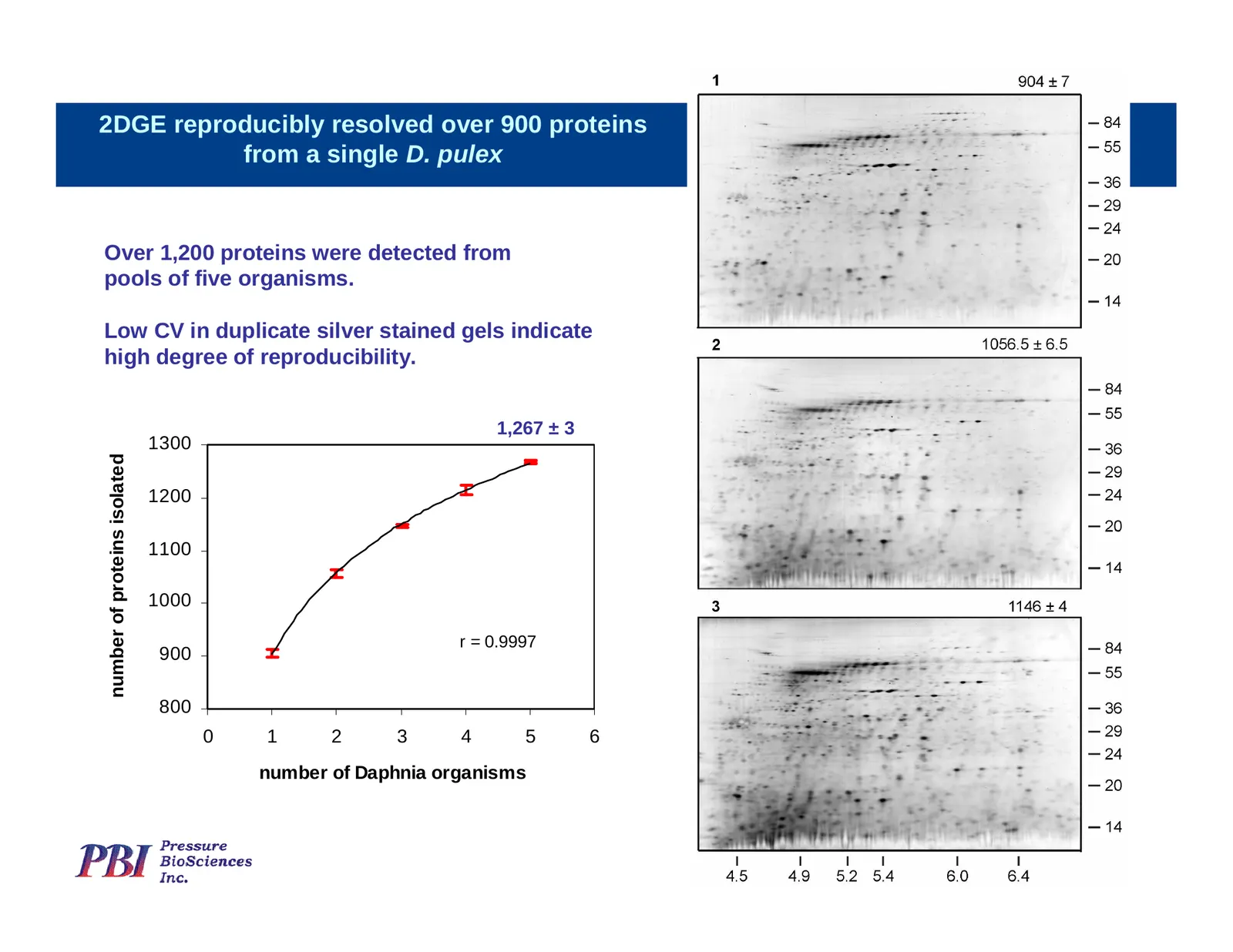
Slide 22: 2DGE reproducibly resolved proteins from a single D. pulex
2DGE reproducibly resolved over 900 proteins from a single D. pulex Over 1,200 proteins were detected from pools of five organisms. Low CV in duplicate silver stained gels indicate high degree of reproducibility. 1,267 ± 3 1300 number of proteins isolated 1200 1100 1000 r = 0.9997 900 800 0 1 2 3 4
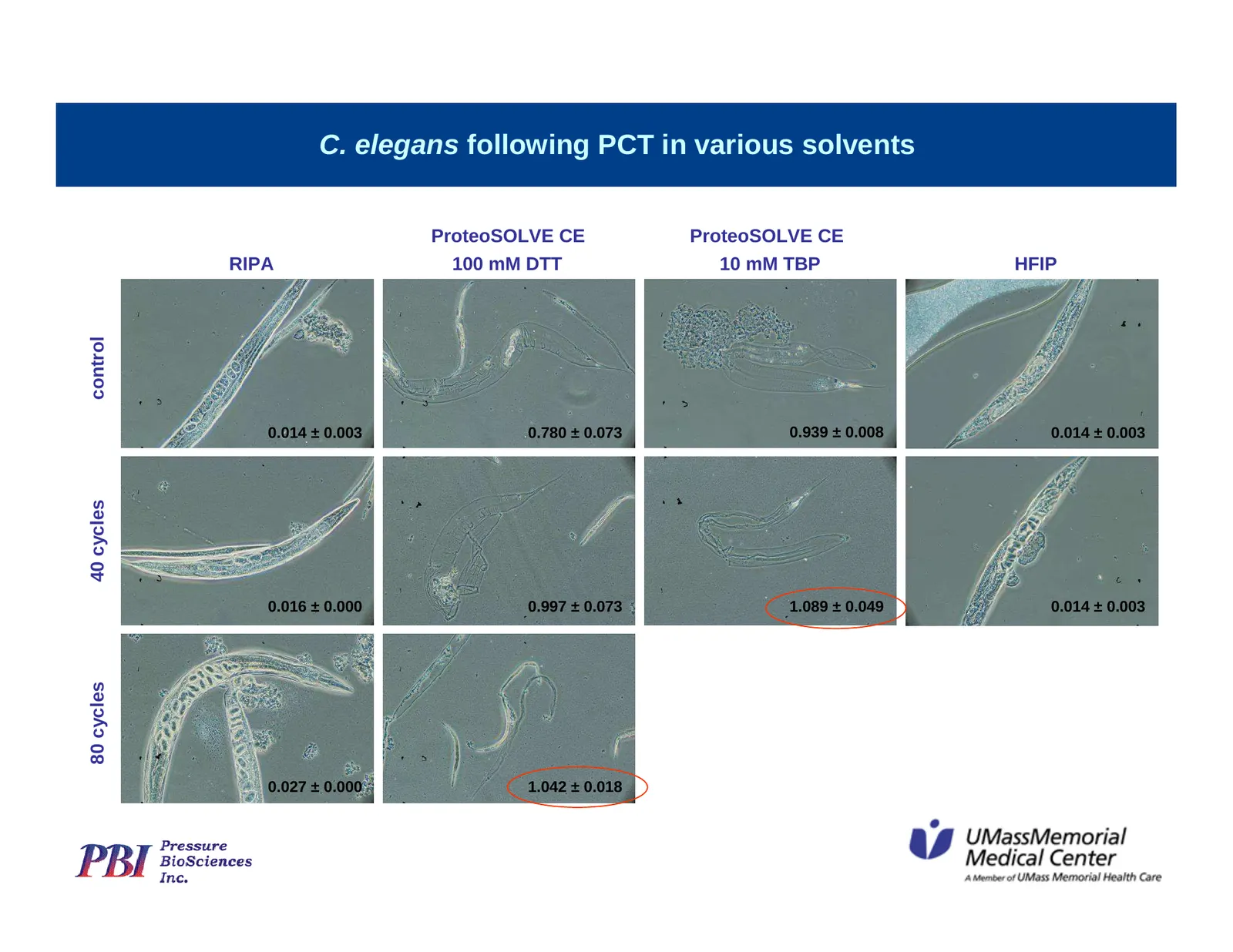
Slide 23: C. elegans following PCT in various solvents
C. elegans following PCT in various solvents ProteoSOLVE CE ProteoSOLVE CE RIPA 100 mM DTT 10 mM TBP HFIP control 0.014 ± 0.003 0.780 ± 0.073 0.939 ± 0.008 0.014 ± 0.003 40 cycles 0.016 ± 0.000 0.997 ± 0.073 1.089 ± 0.049 0.014 ± 0.003 80 cycles 0.027 ± 0.000 1.042 ± 0.018
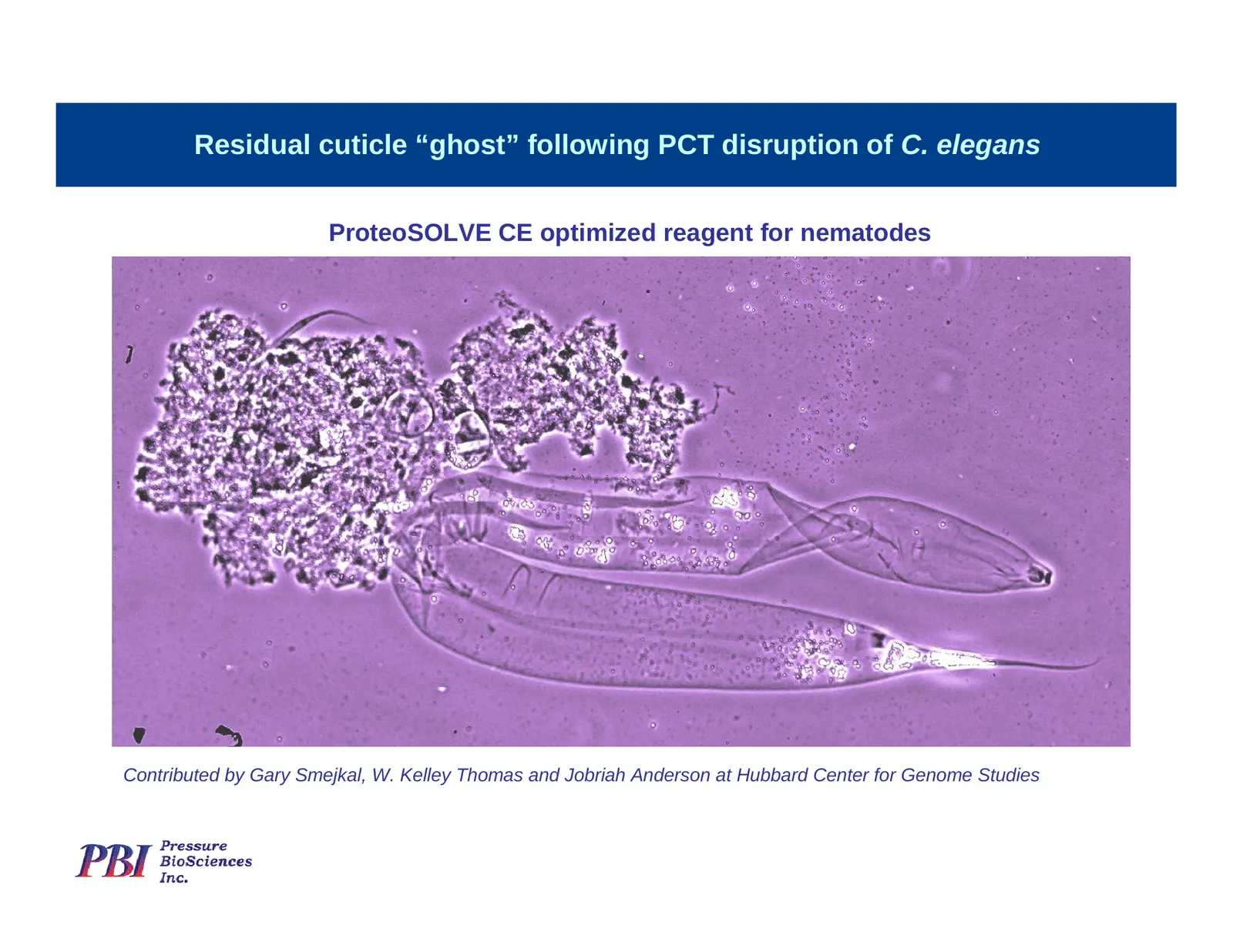
Slide 24: Residual cuticle ghost following PCT disruption of C. elegans
Residual cuticle “ghost” following PCT disruption of C. elegans ProteoSOLVE CE optimized reagent for nematodes Contributed by Gary Smejkal, W. Kelley Thomas and Jobriah Anderson at Hubbard Center for Genome Studies
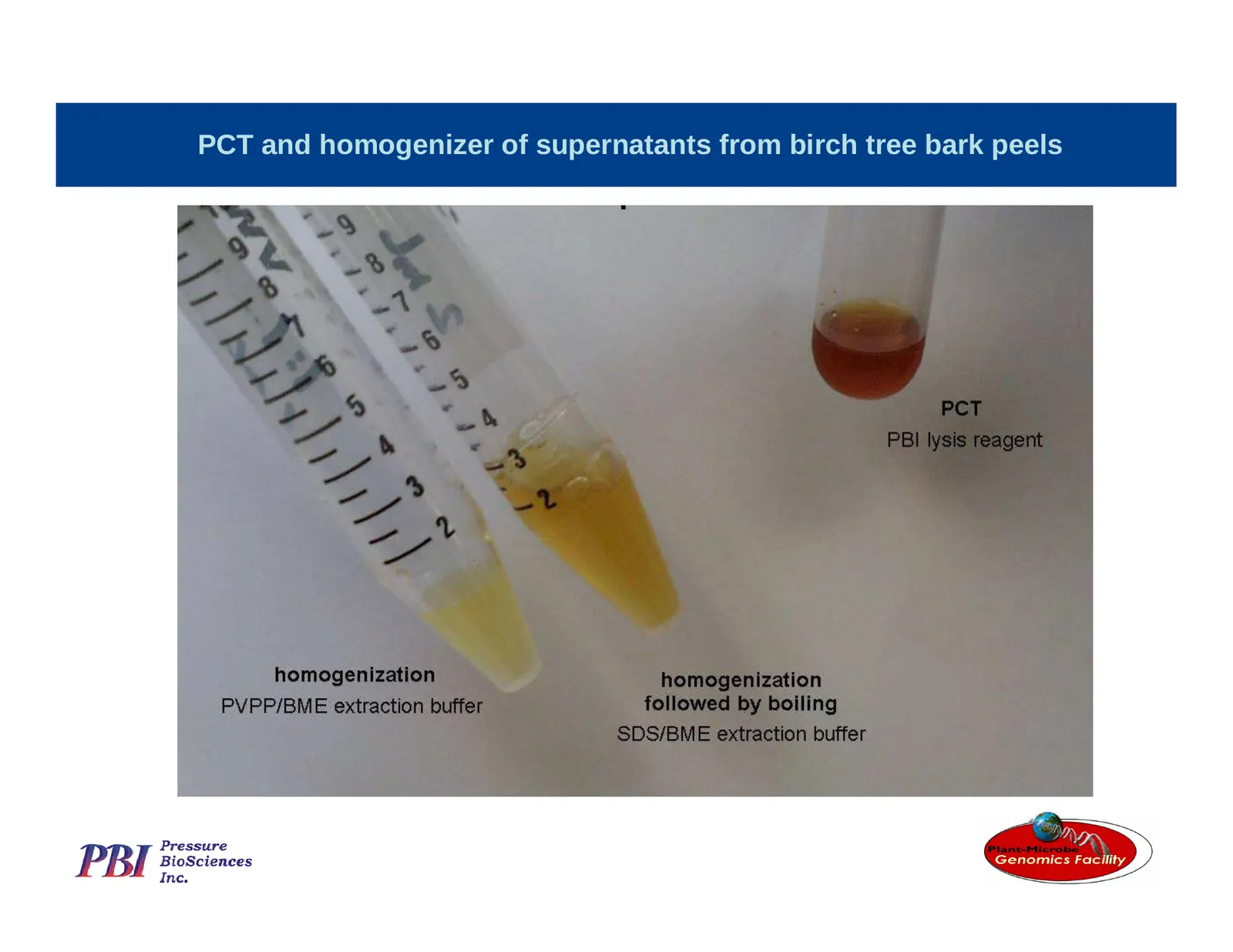
Slide 25: PCT and homogenizer of supernatants from birch tree bark peels
PCT and homogenizer of supernatants from birch tree bark peels
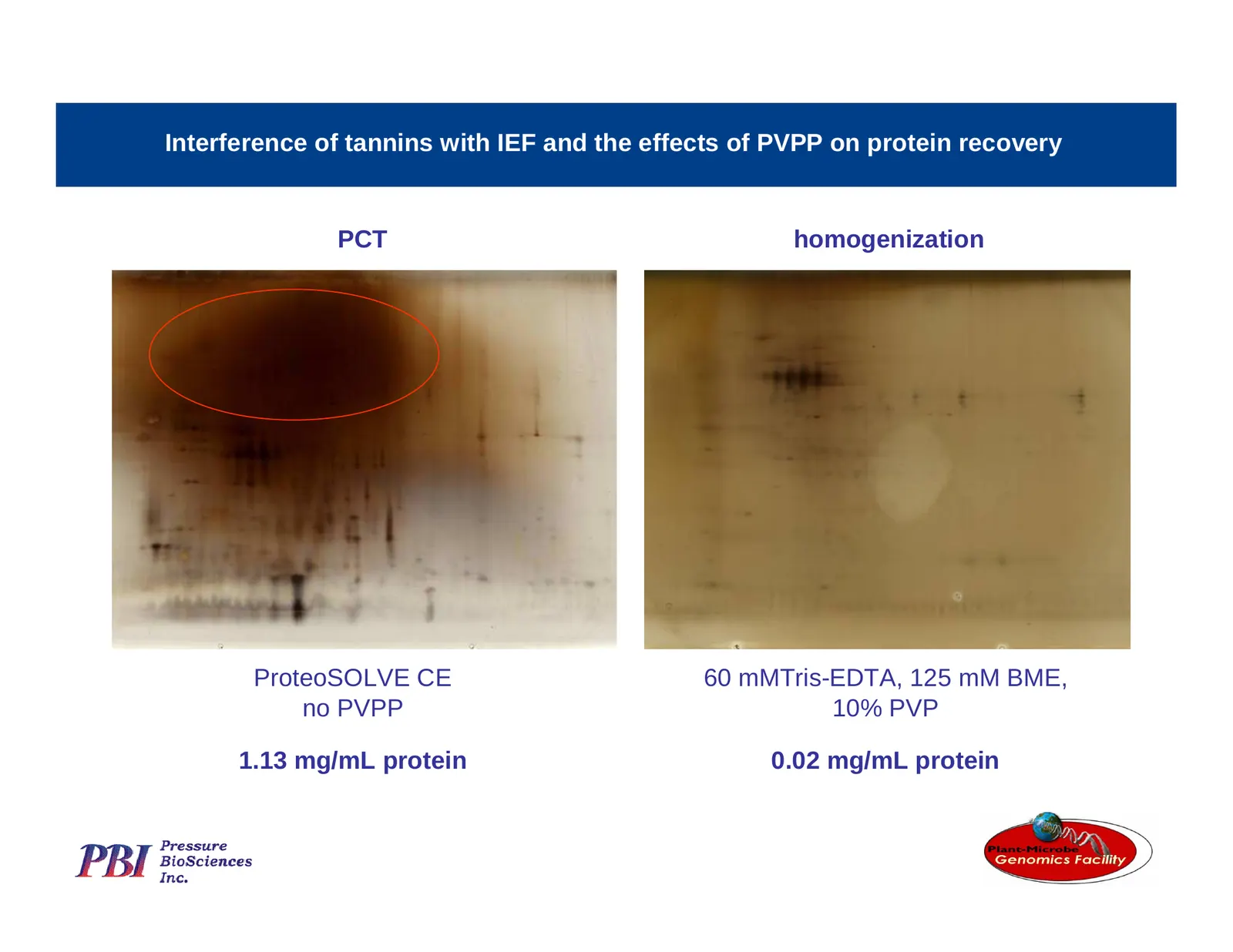
Slide 26: Interference of tannins with IEF and effects of PVPP on protein recovery
Interference of tannins with IEF and the effects of PVPP on protein recovery PCT homogenization ProteoSOLVE CE 60 mMTris-EDTA, 125 mM BME, no PVPP 10% PVP 1.13 mg/mL protein 0.02 mg/mL protein
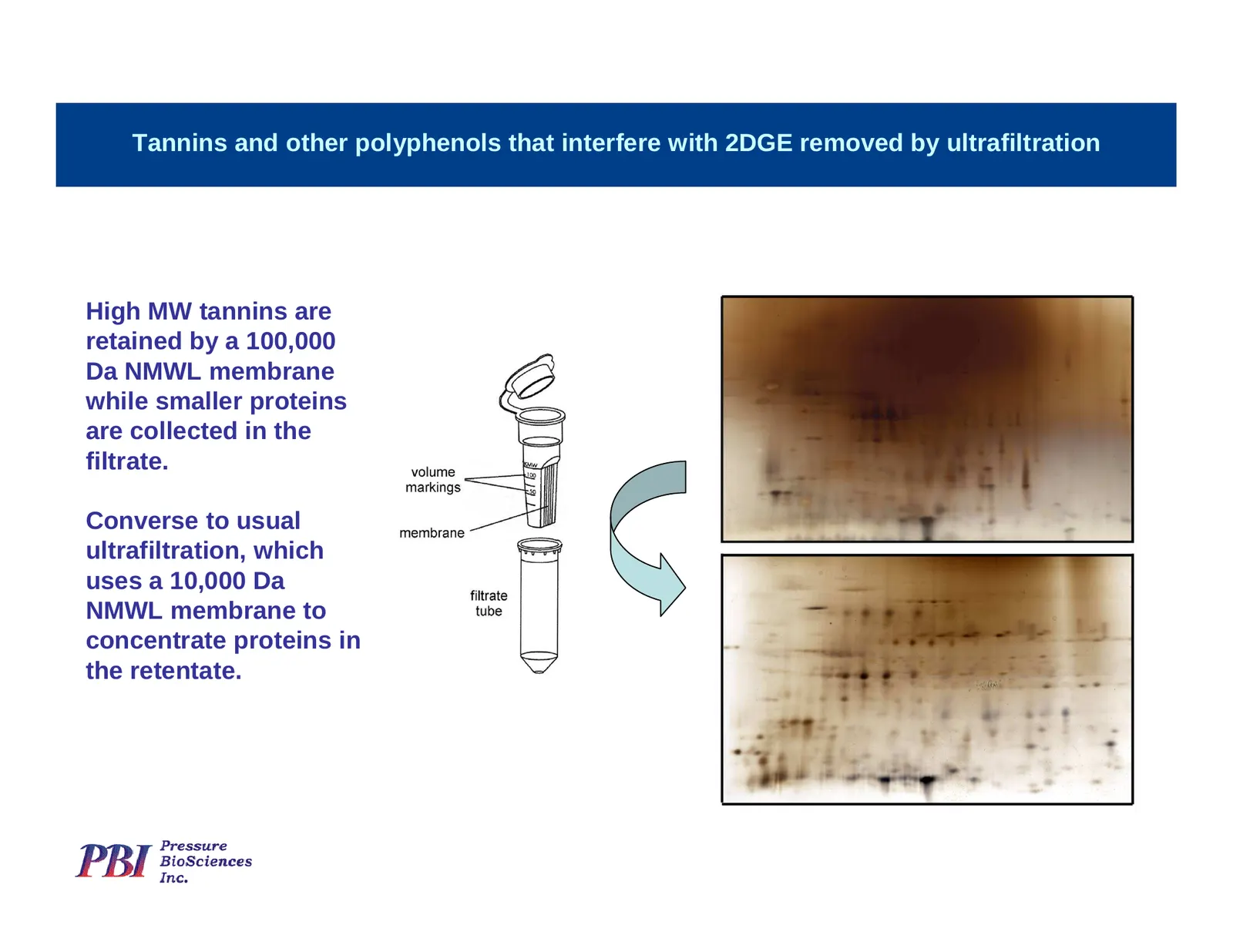
Slide 27: Tannins and polyphenols removed by ultrafiltration
Tannins and other polyphenols that interfere with 2DGE removed by ultrafiltration High MW tannins are retained by a 100,000 Da NMWL membrane while smaller proteins are collected in the filtrate. Converse to usual ultrafiltration, which uses a 10,000 Da NMWL membrane to concentrate proteins in the re
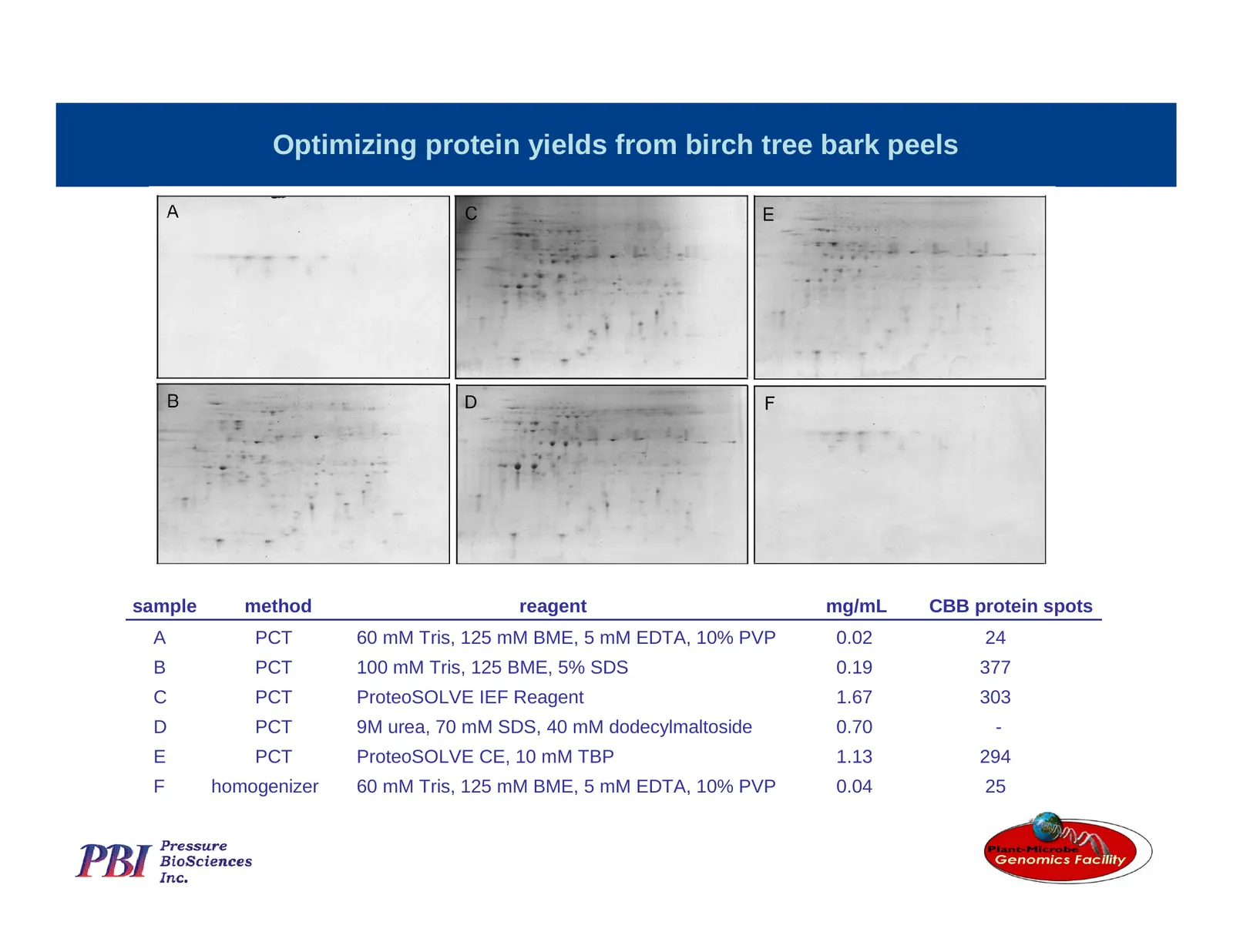
Slide 28: Optimizing protein yields from birch tree bark peels
Optimizing protein yields from birch tree bark peels sample method reagent mg/mL CBB protein spots A PCT 60 mM Tris, 125 mM BME, 5 mM EDTA, 10% PVP 0.02 24 B PCT 100 mM Tris, 125 BME, 5% SDS 0.19 377 C PCT ProteoSOLVE IEF Reagent 1.67 303 D PCT 9M urea, 70 mM SDS, 40 mM dodecylmaltoside 0.70 - E PCT
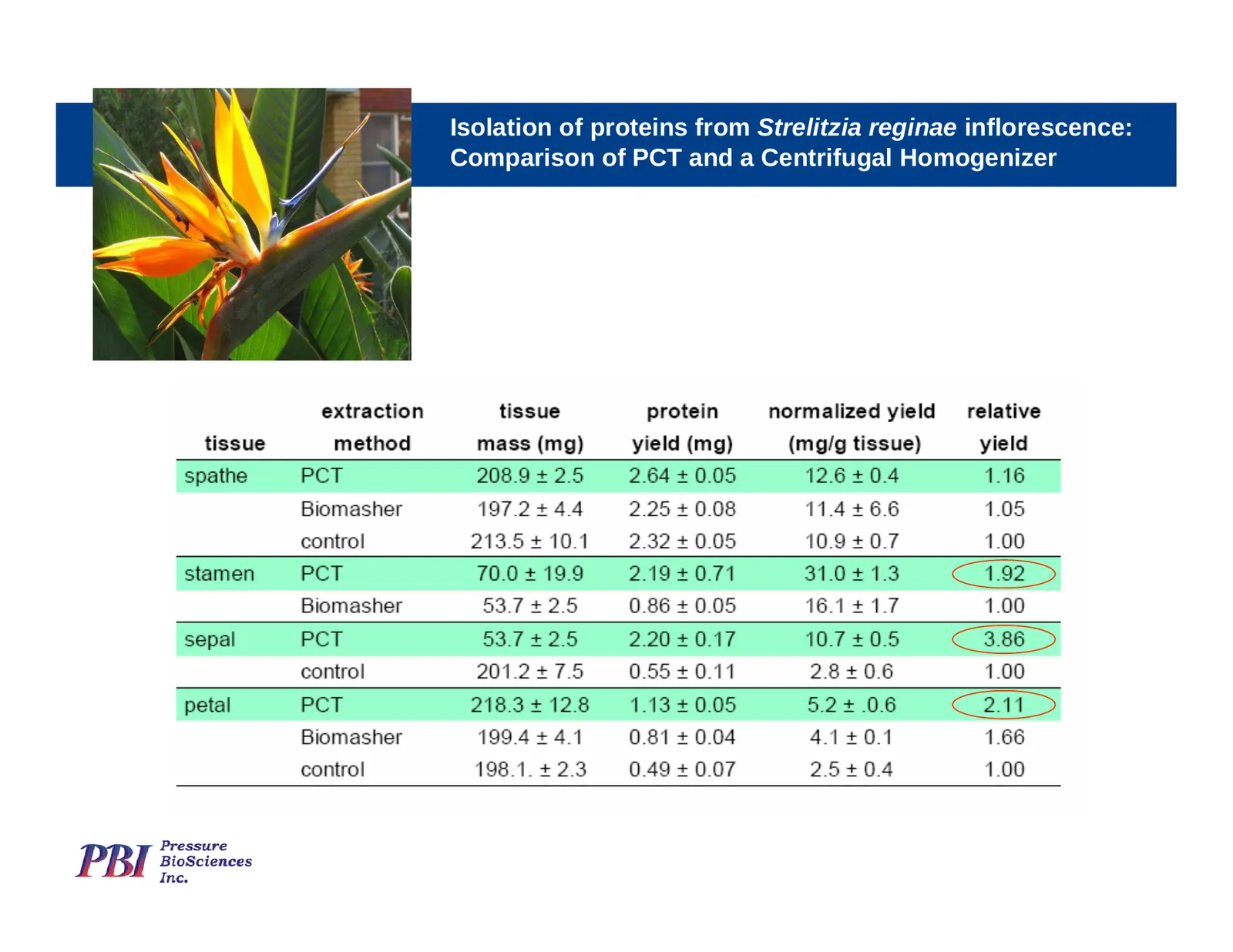
Slide 29: Isolation of proteins from Strelitzia reginae: PCT vs Centrifugal Homogenizer
Isolation of proteins from Strelitzia reginae inflorescence: Comparison of PCT and a Centrifugal Homogenizer
Slide 30: Acknowledgements
Acknowledgements Ric Schumacher Nathan Lawrence Frank Witzmann Alexander Lazarev Deena Small Heather Ringham Myra Robinson Jobriah Anderson Jim Behnke Vera Gross Ada Kwan Greta Carlson W. Kelley Thomas Michael Zianni Darren Bauer David Mandich David Muddiman Jennifer Koch Mary Mason Mary Schweitzer
Source: Internet Archive copy of pressurebiosciences.com
More decks from Pressure BioSciences, Inc.
 Investor Presentation (May 2023)25 slides · May 2023
 Investor Presentation (August 2021)7 slides · Aug 20, 2021
 Investor Presentation (March 2017)21 slides · March 2017
 Investor Presentation (August 2016)24 slides · August 2016
 SeeThruEquity Winter Microcap Investor Conference (February 2015)19 slides · Feb 11, 2015
 FSXinterlinked Investor Conference 201416 slides · Oct 31, 2014