Turning Point Therapeutics Inc
Turning Point Therapeutics — AACR-NCI-EORTC Investor Meeting 2021
29 slides from Turning Point Therapeutics's conference presentation, Oct 7, 2021
Slide 1: Next-Generation Precision Oncology Medicines
Next-Generation Precision Oncology Medicines AACR-NCI-EORTC Investor Meeting October 7, 2021
Slide 2: Forward-Looking Statements
Forward-Looking Statements Statements in this Presentation that are not statements of historical fact are forward-looking statements. Such forward-looking statements include, without limitation, statements regarding our research and clinical development activities, plans and projected timelines, bus
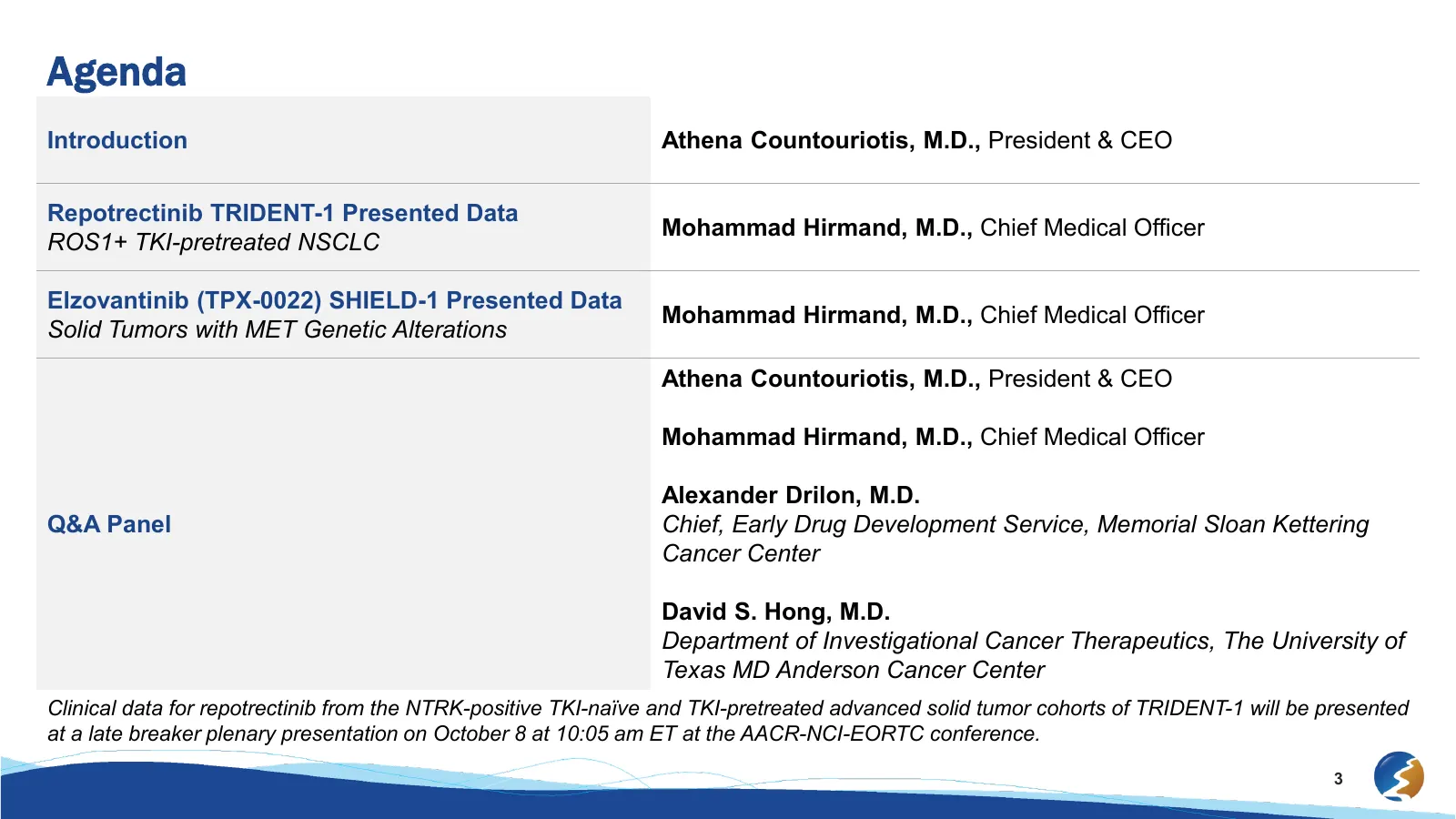
Slide 3: Agenda
Agenda Introduction Athena Countouriotis, M.D., President & CEO Repotrectinib TRIDENT-1 Presented Data Mohammad Hirmand, M.D., Chief Medical Officer ROS1+ TKI-pretreated NSCLC Elzovantinib (TPX-0022) SHIELD-1 Presented Data Mohammad Hirmand, M.D., Chief Medical Officer Solid Tumors with MET Genetic
Slide 4: Introduction
Introduction Athena Countouriotis, M.D. President & Chief Executive Officer
Slide 5: Robust Pipeline with Four Clinical Stage Drug Candidates
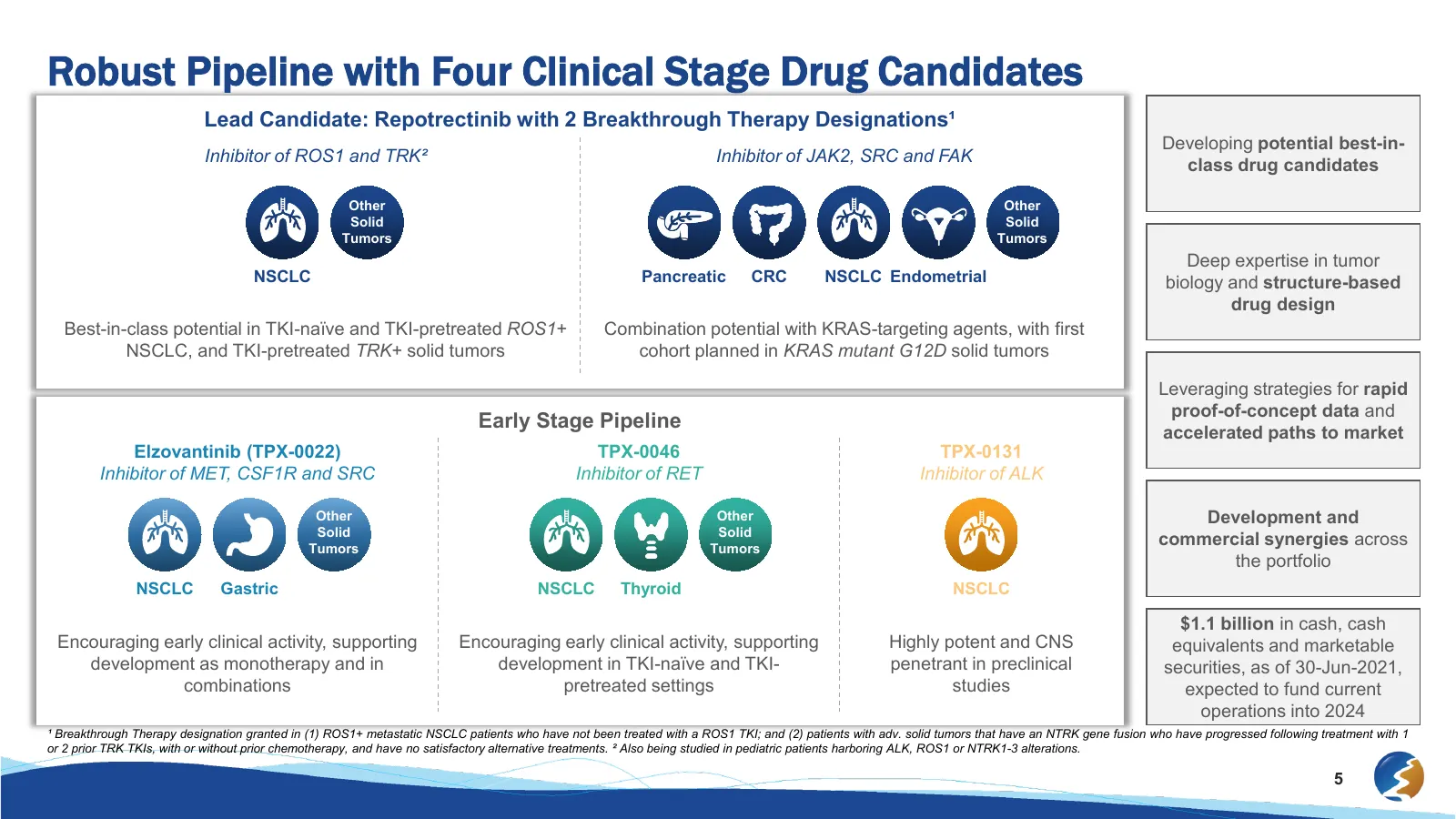
Robust Pipeline with Four Clinical Stage Drug Candidates Lead Candidate: Repotrectinib with 2 Breakthrough Therapy Designations¹ Developing potential best-in- Inhibitor of ROS1 and TRK² Inhibitor of JAK2, SRC and FAK class drug candidates Other Other Solid Solid Tumors Tumors Deep expertise in tumor
Slide 6: Ongoing Clinical Studies Against Well Validated Oncogenic Targets
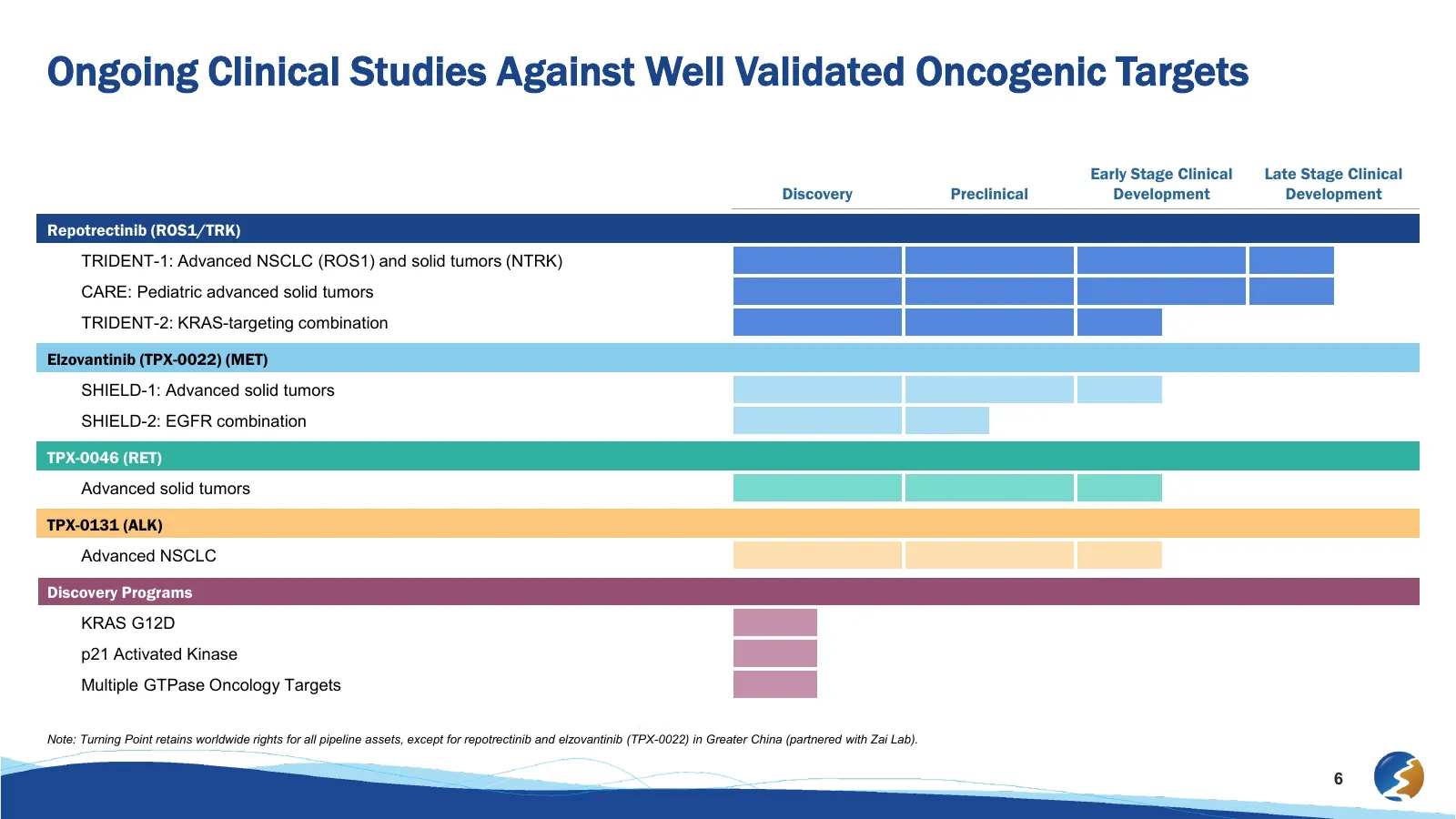
Ongoing Clinical Studies Against Well Validated Oncogenic Targets Early Stage Clinical Late Stage Clinical Discovery Preclinical Development Development Repotrectinib (ROS1/TRK) TRIDENT-1: Advanced NSCLC (ROS1) and solid tumors (NTRK) CARE: Pediatric advanced solid tumors TRIDENT-2: KRAS-targe
Slide 7: Highlights at AACR-NCI-EORTC Virtual International Conference on Molecular Targets and Cancer Therapeutics
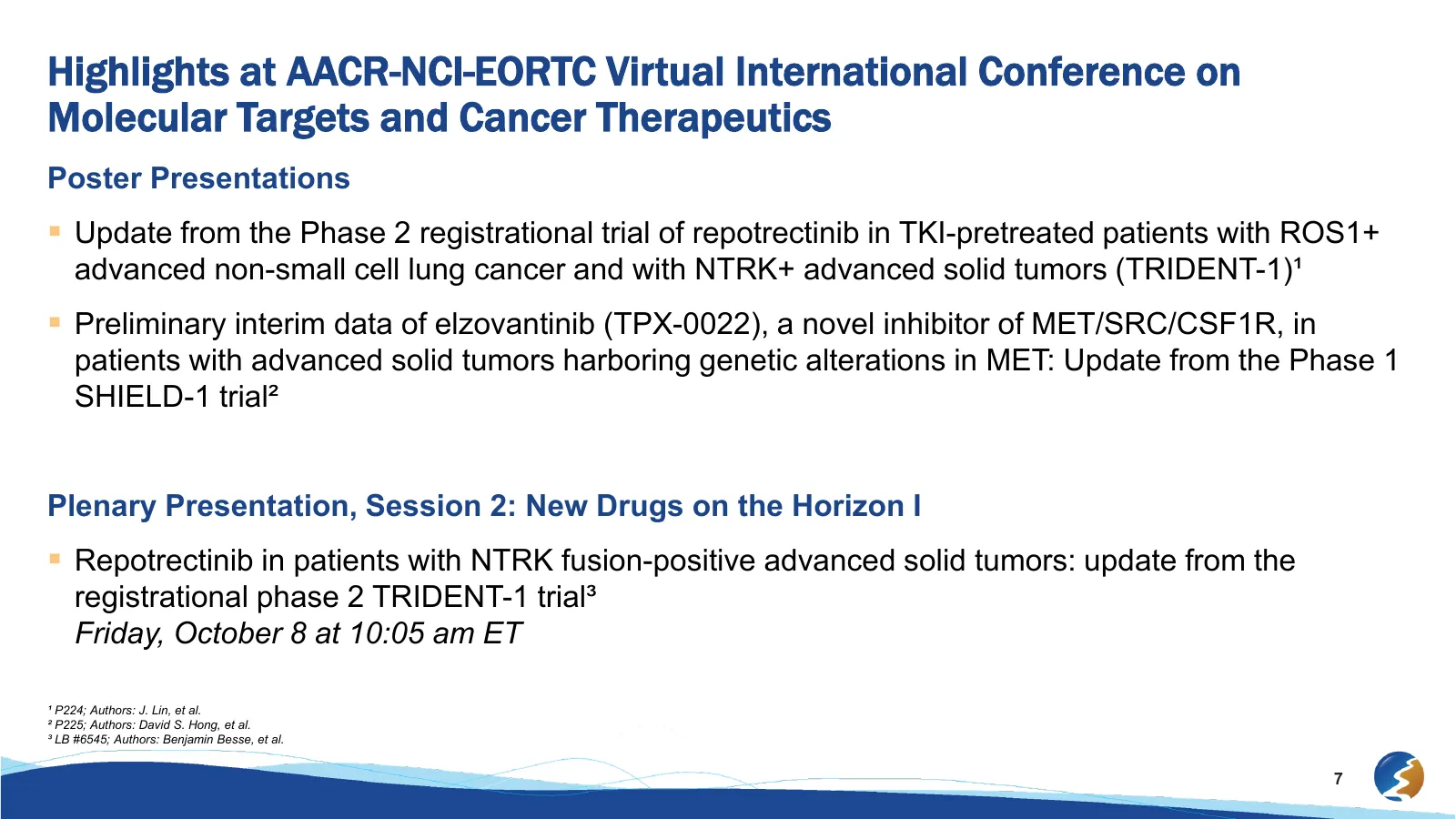
Highlights at AACR-NCI-EORTC Virtual International Conference on Molecular Targets and Cancer Therapeutics Poster Presentations Update from the Phase 2 registrational trial of repotrectinib in TKI-pretreated patients with ROS1+ advanced non-small cell lung cancer and with NTRK+ advanced solid tumo
Slide 8: Repotrectinib: Data from TRIDENT-1 ROS1+ TKI-pretreated NSCLC
Repotrectinib: Data from TRIDENT-1 ROS1+ TKI-pretreated NSCLC Mohammad Hirmand, M.D. Chief Medical Officer
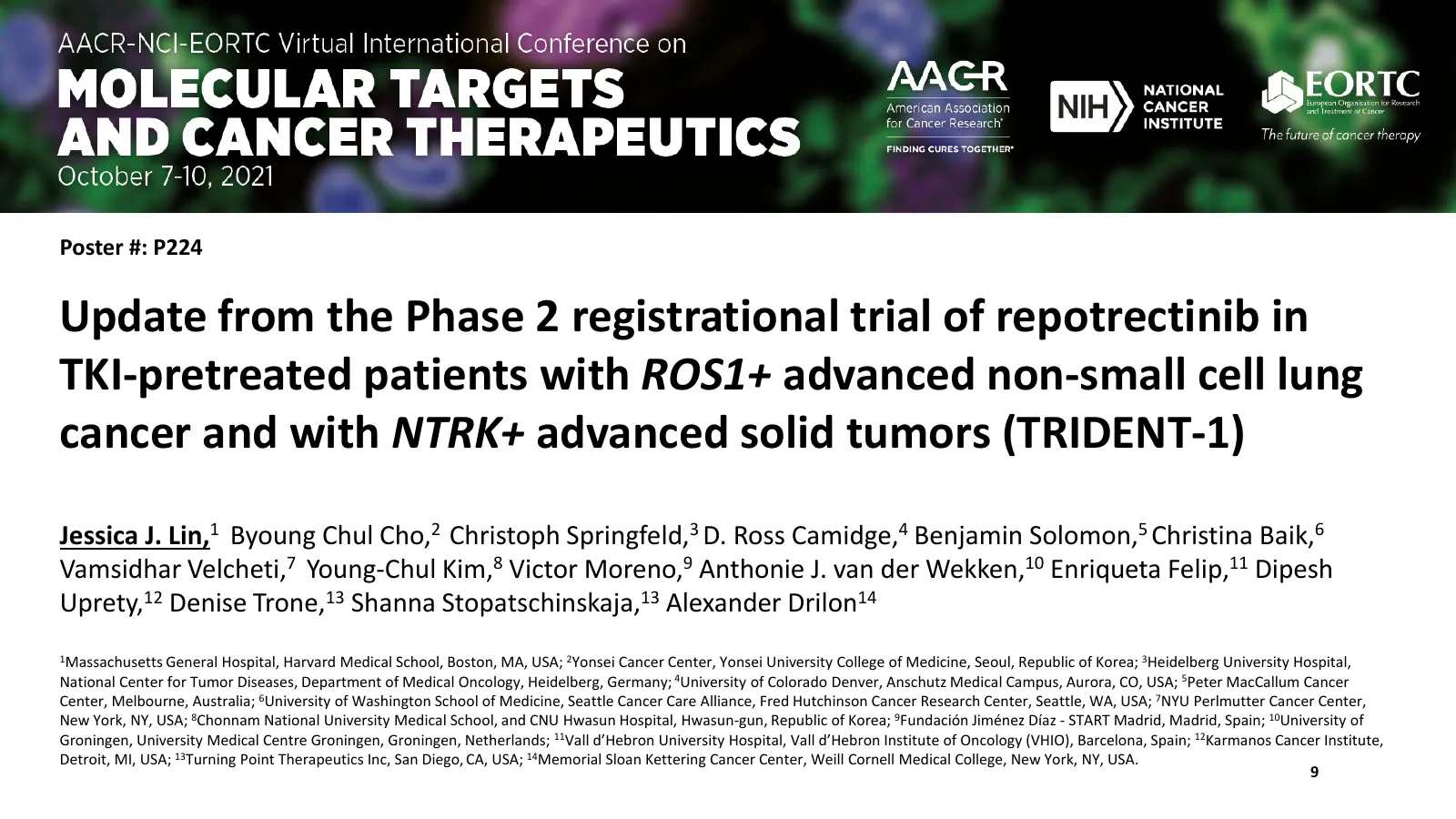
Slide 9: Update from the Phase 2 registrational trial of repotrectinib in TKI-pretreated ROS1+ NSCLC
Poster #: P224 Update from the Phase 2 registrational trial of repotrectinib in TKI-pretreated patients with ROS1+ advanced non-small cell lung cancer and with NTRK+ advanced solid tumors (TRIDENT-1) Jessica J. Lin,1 Byoung Chul Cho,2 Christoph Springfeld,3 D. Ross Camidge,4 Benjamin Solomon,5 Chris
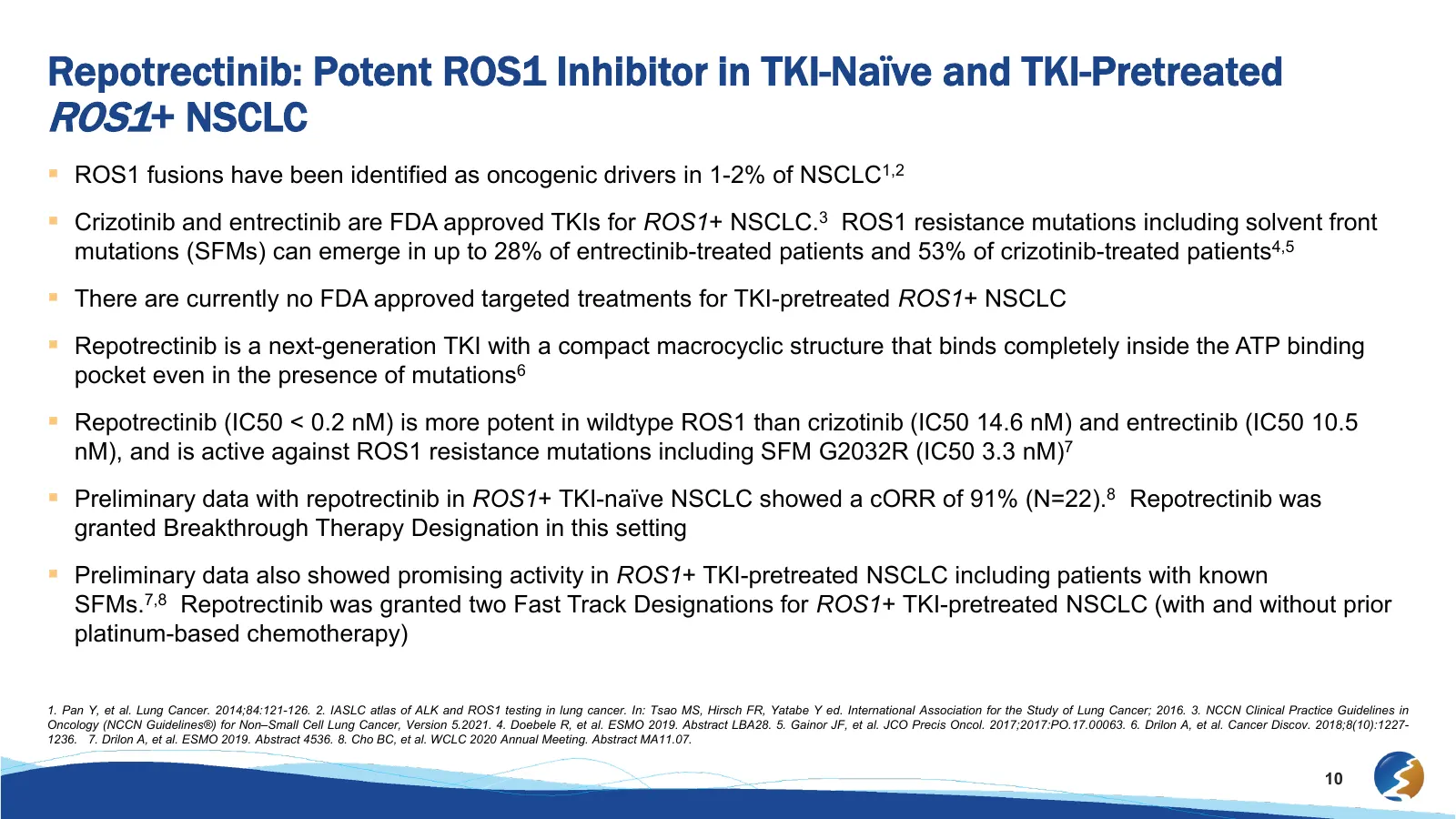
Slide 10: Repotrectinib: Potent ROS1 Inhibitor in TKI-Naïve and TKI-Pretreated ROS1+ NSCLC
Repotrectinib: Potent ROS1 Inhibitor in TKI-Naïve and TKI-Pretreated ROS1+ NSCLC ROS1 fusions have been identified as oncogenic drivers in 1-2% of NSCLC1,2 Crizotinib and entrectinib are FDA approved TKIs for ROS1+ NSCLC.3 ROS1 resistance mutations including solvent front mutations (SFMs) can em
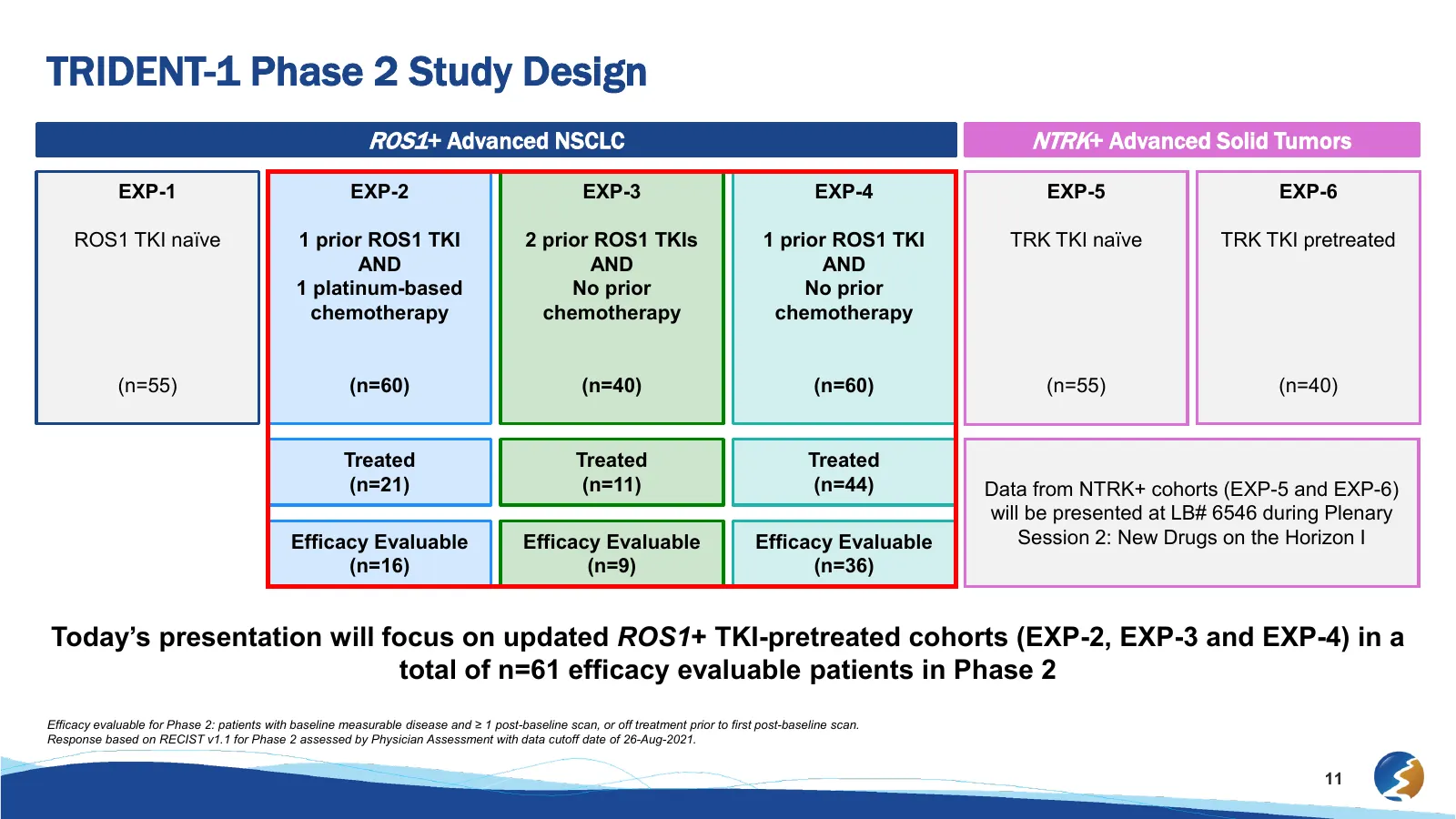
Slide 11: TRIDENT-1 Phase 2 Study Design
TRIDENT-1 Phase 2 Study Design ROS1+ Advanced NSCLC NTRK+ Advanced Solid Tumors EXP-1 EXP-2 EXP-3 EXP-4 EXP-5 EXP-6 ROS1 TKI naïve 1 prior ROS1 TKI 2 prior ROS1 TKIs 1 prior ROS1 TKI TRK TKI naïve TRK TKI pretreated AND AND AND 1 platinum-based No prior No prior chemotherapy chemotherapy chemotherap
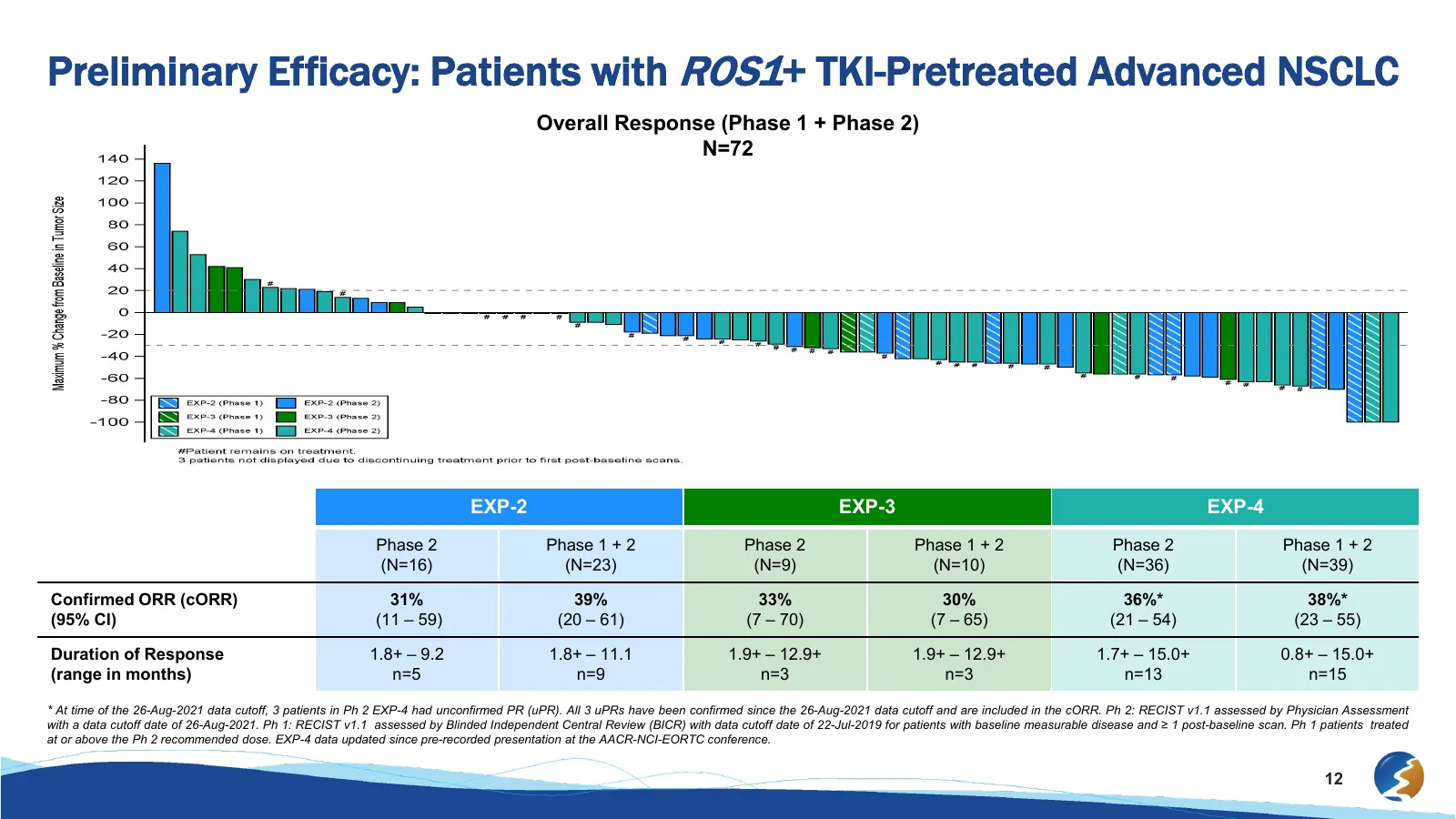
Slide 12: Preliminary Efficacy: Patients with ROS1+ TKI-Pretreated Advanced NSCLC
Preliminary Efficacy: Patients with ROS1+ TKI-Pretreated Advanced NSCLC Overall Response (Phase 1 + Phase 2) N=72 EXP-2 EXP-3 EXP-4 Phase 2 Phase 1 + 2 Phase 2 Phase 1 + 2 Phase 2 Phase 1 + 2 (N=16) (N=23) (N=9) (N=10) (N=36) (N=39) Confirmed ORR (cORR) 31% 39% 33% 30% 36%* 38%* (95% CI) (11 – 59) (
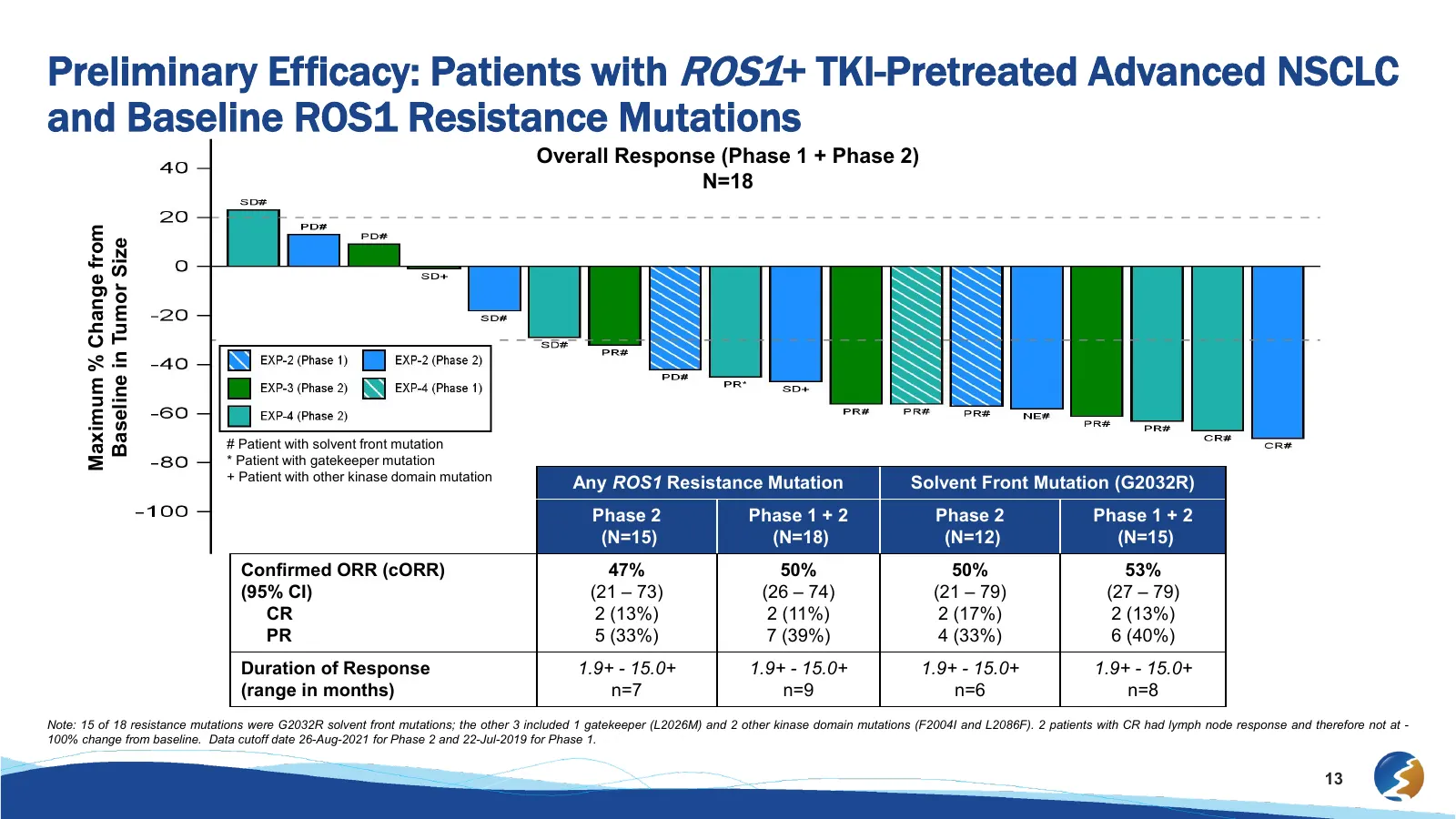
Slide 13: Preliminary Efficacy: ROS1+ TKI-Pretreated NSCLC and Baseline ROS1 Resistance Mutations
Preliminary Efficacy: Patients with ROS1+ TKI-Pretreated Advanced NSCLC and Baseline ROS1 Resistance Mutations Overall Response (Phase 1 + Phase 2) N=18 Maximum % Change from Baseline in Tumor Size # Patient with solvent front mutation * Patient with gatekeeper mutation + Patient with other kinase d
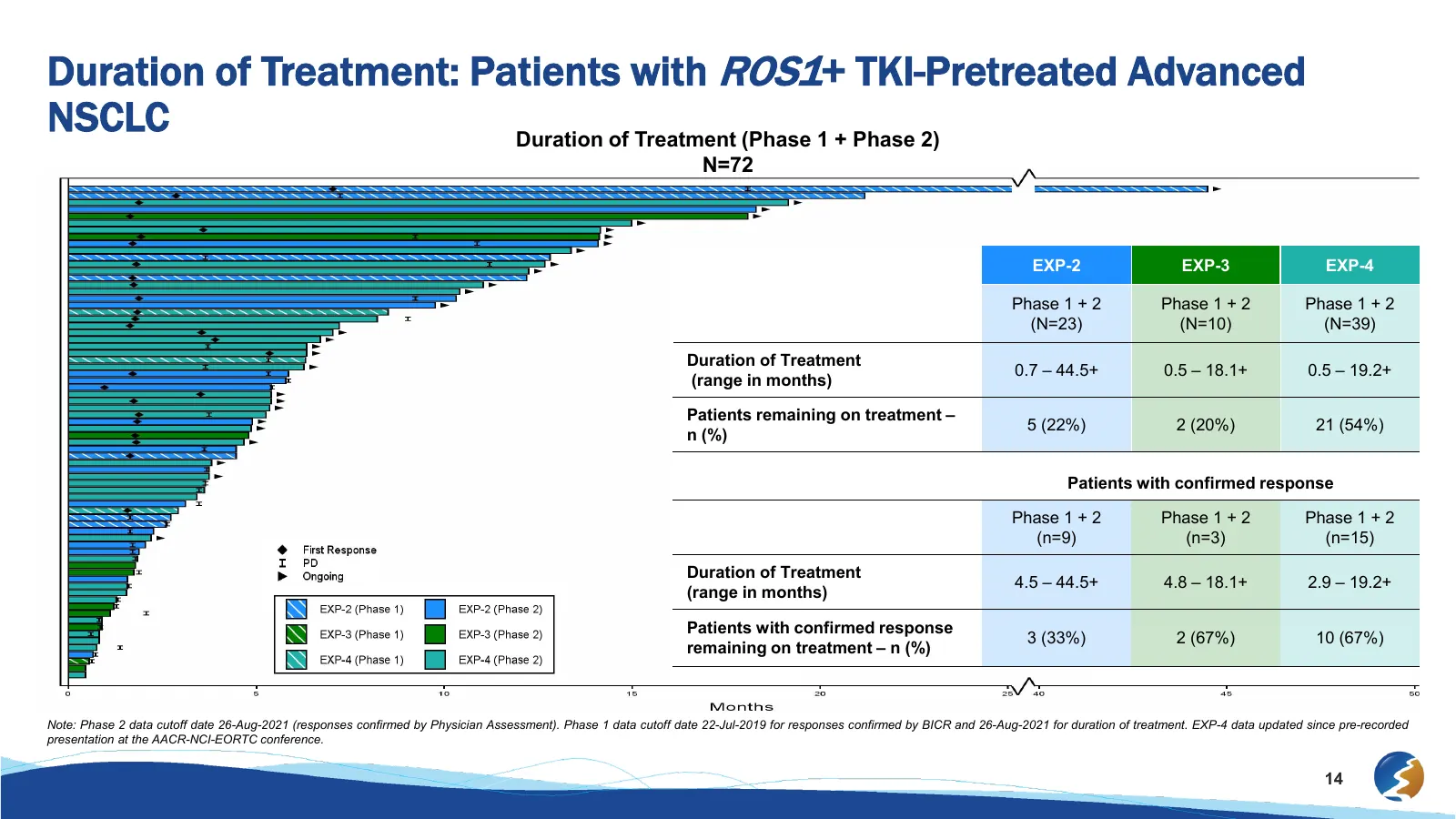
Slide 14: Duration of Treatment: Patients with ROS1+ TKI-Pretreated Advanced NSCLC
Duration of Treatment: Patients with ROS1+ TKI-Pretreated Advanced NSCLC Duration of Treatment (Phase 1 + Phase 2) N=72 EXP-2 EXP-3 EXP-4 Phase 1 + 2 Phase 1 + 2 Phase 1 + 2 (N=23) (N=10) (N=39) Duration of Treatment 0.7 – 44.5+ 0.5 – 18.1+ 0.5 – 19.2+ (range in months) Patients remaining on treatme
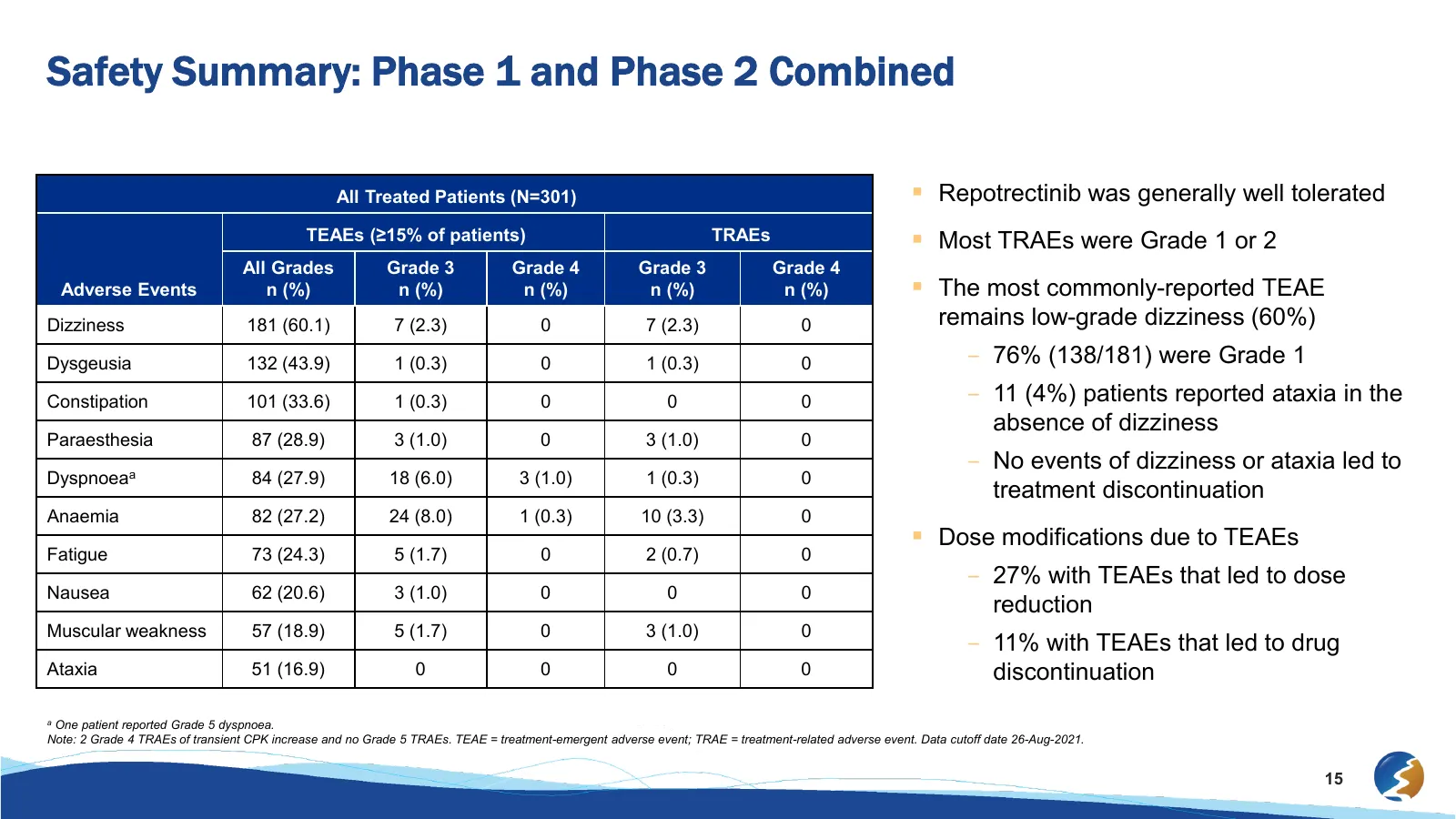
Slide 15: Safety Summary: Phase 1 and Phase 2 Combined
Safety Summary: Phase 1 and Phase 2 Combined All Treated Patients (N=301) Repotrectinib was generally well tolerated TEAEs (≥15% of patients) TRAEs Most TRAEs were Grade 1 or 2 All Grades Grade 3 Grade 4 Grade 3 Grade 4 Adverse Events n (%) n (%) n (%) n (%) n (%) The most commonly-reported TE
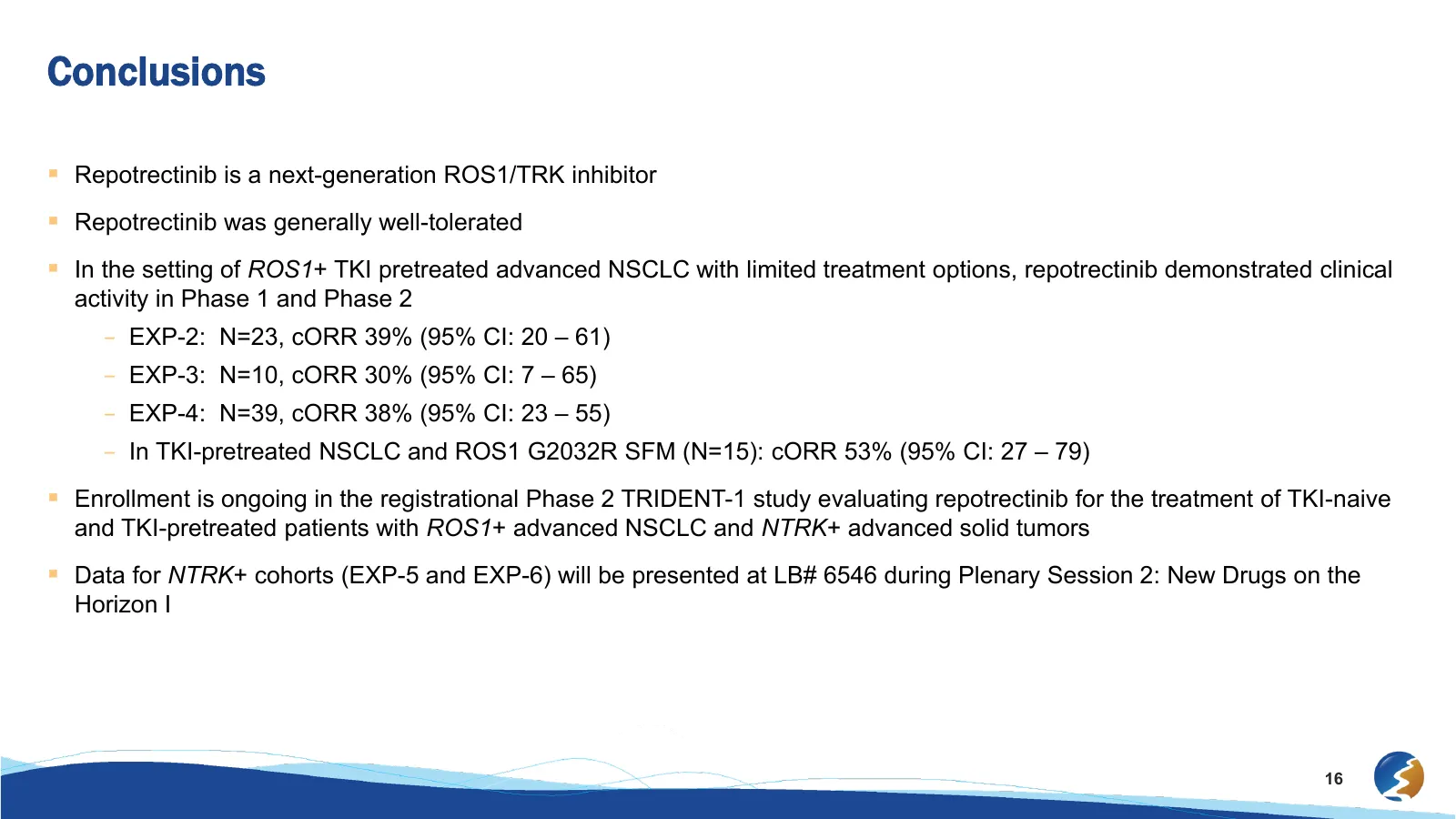
Slide 16: Conclusions
Conclusions Repotrectinib is a next-generation ROS1/TRK inhibitor Repotrectinib was generally well-tolerated In the setting of ROS1+ TKI pretreated advanced NSCLC with limited treatment options, repotrectinib demonstrated clinical activity in Phase 1 and Phase 2 – EXP-2: N=23, cORR 39% (95% CI
Slide 17: Elzovantinib (TPX-0022): Data from SHIELD-1 Solid Tumors with MET Genetic Alterations
Elzovantinib (TPX-0022): Data from SHIELD-1 Solid Tumors with MET Genetic Alterations Mohammad Hirmand, M.D. Chief Medical Officer
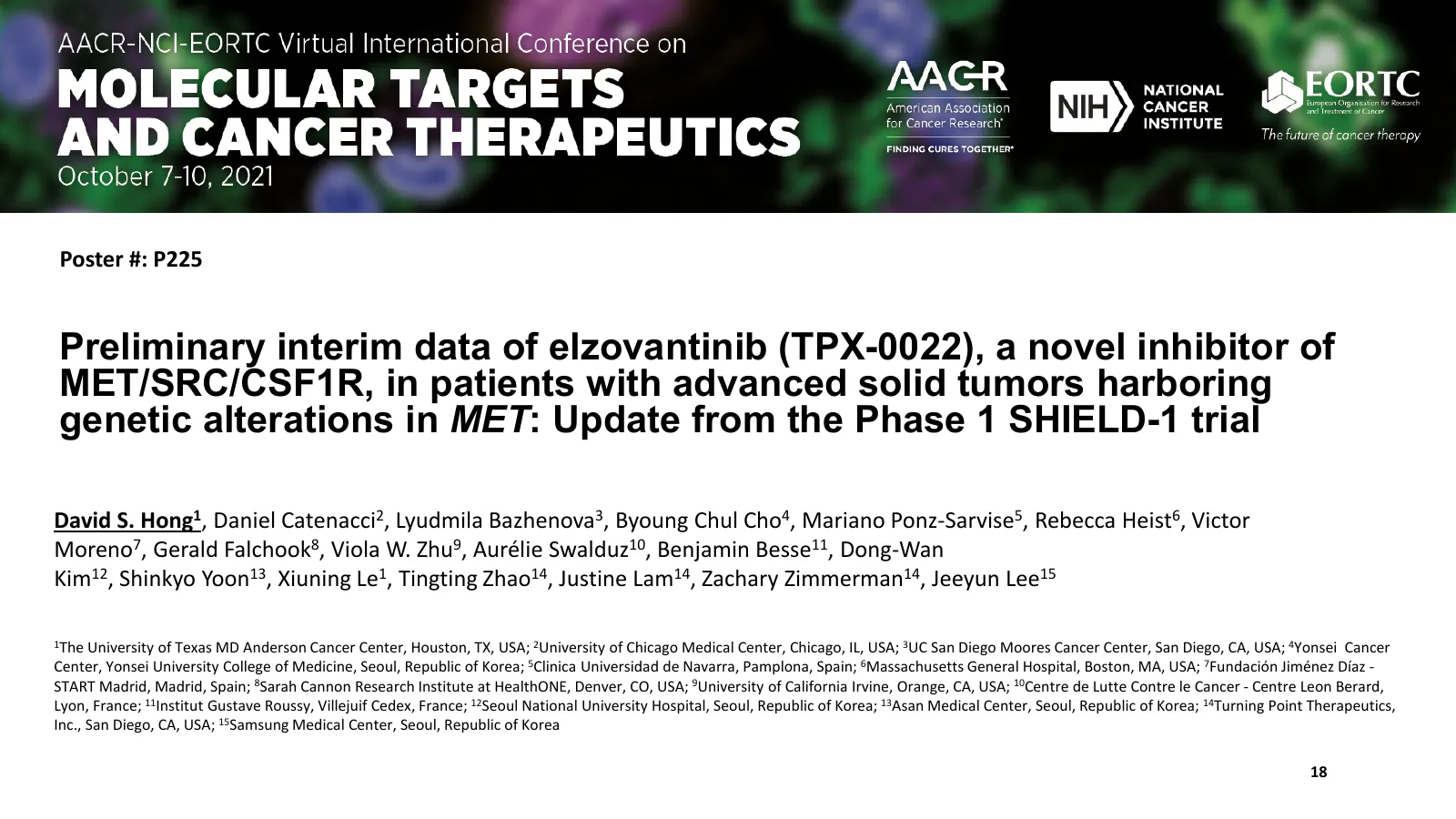
Slide 18: Preliminary interim data of elzovantinib in patients with MET alterations: SHIELD-1 update
Poster #: P225 Preliminary interim data of elzovantinib (TPX-0022), a novel inhibitor of MET/SRC/CSF1R, in patients with advanced solid tumors harboring genetic alterations in MET: Update from the Phase 1 SHIELD-1 trial David S. Hong1, Daniel Catenacci2, Lyudmila Bazhenova3, Byoung Chul Cho4, Marian
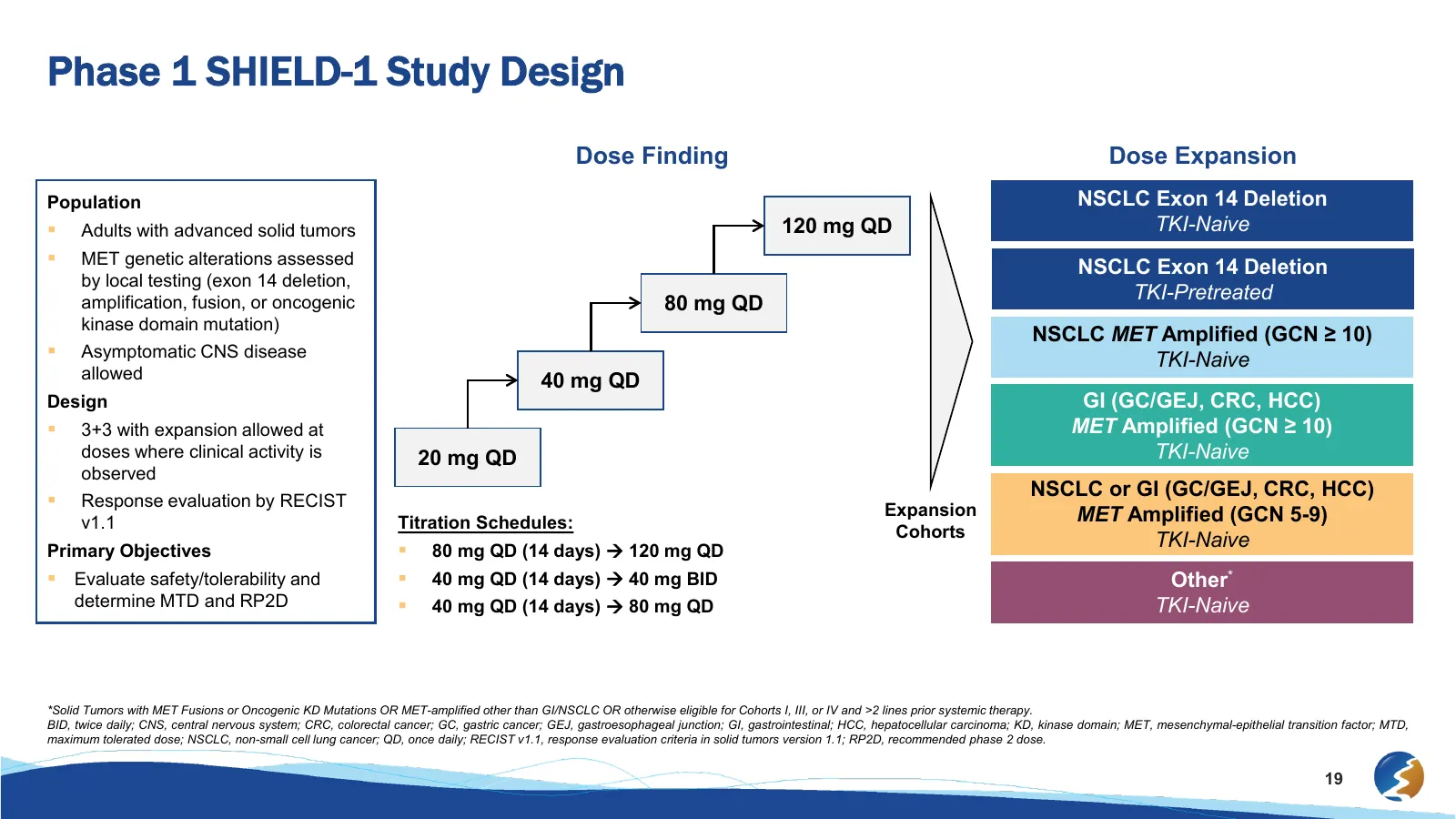
Slide 19: Phase 1 SHIELD-1 Study Design
Phase 1 SHIELD-1 Study Design Dose Finding Dose Expansion Population NSCLC Exon 14 Deletion Adults with advanced solid tumors 120 mg QD TKI-Naive MET genetic alterations assessed NSCLC Exon 14 Deletion by local testing (exon 14 deletion, TKI-Pretreated amplification, fusion, or oncogenic 80 mg Q
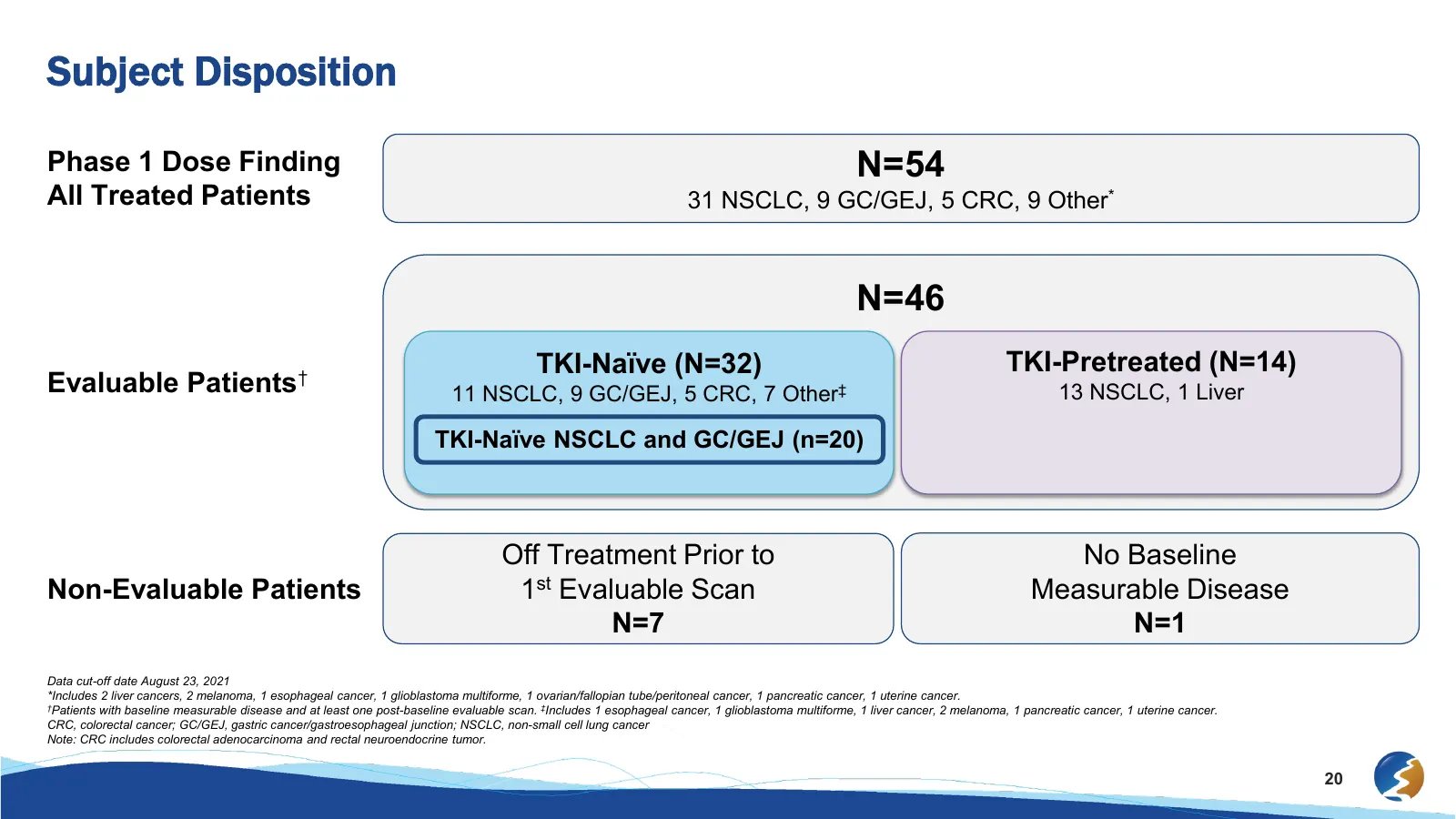
Slide 20: Subject Disposition
Subject Disposition Phase 1 Dose Finding N=54 All Treated Patients 31 NSCLC, 9 GC/GEJ, 5 CRC, 9 Other* N=46 TKI-Naïve (N=32) TKI-Pretreated (N=14) Evaluable Patients† 11 NSCLC, 9 GC/GEJ, 5 CRC, 7 Other‡ 13 NSCLC, 1 Liver TKI-Naïve NSCLC and GC/GEJ (n=20) Off Treatment Prior to No Baseline Non-Evalua
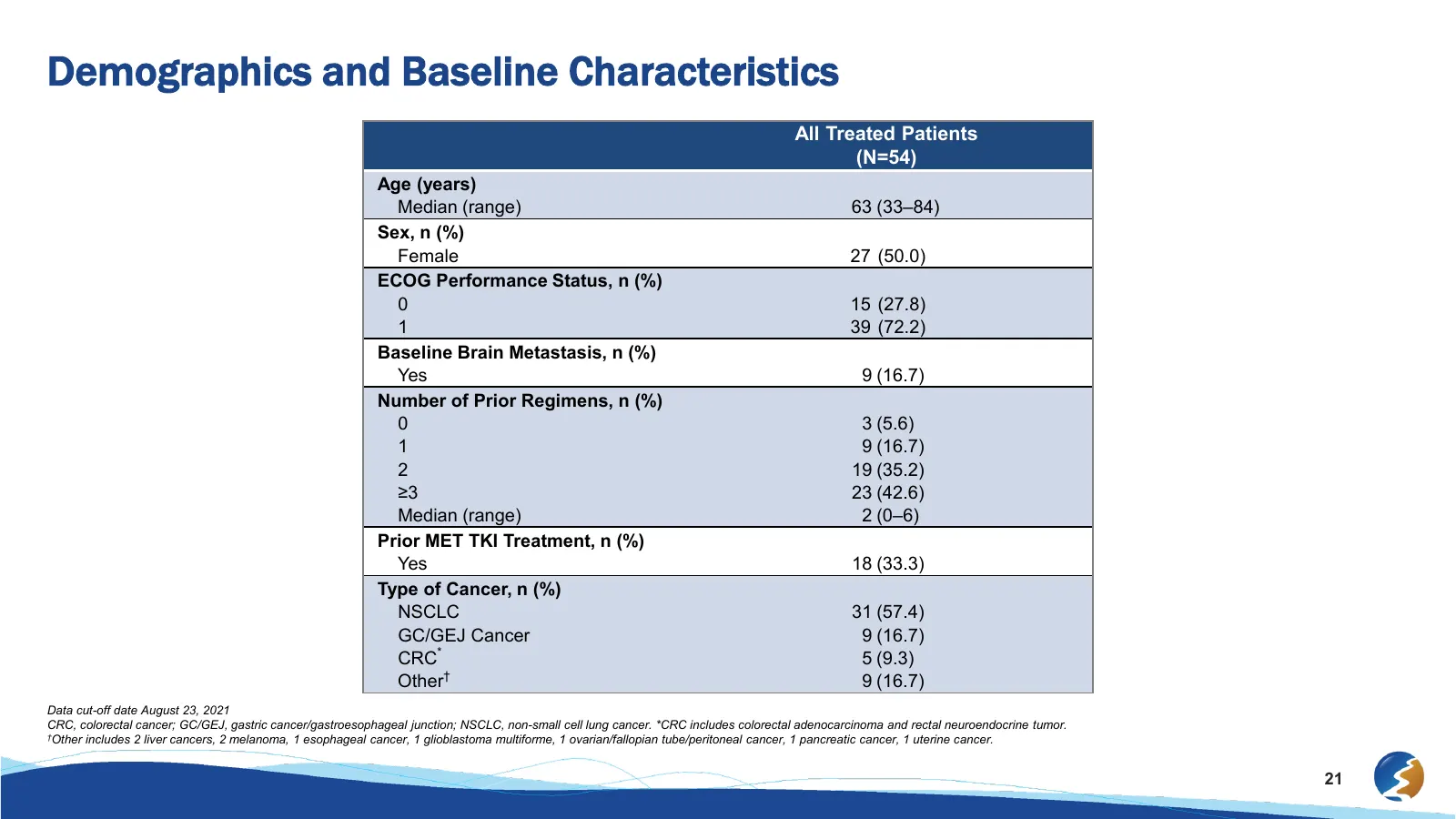
Slide 21: Demographics and Baseline Characteristics
Demographics and Baseline Characteristics All Treated Patients (N=54) Age (years) Median (range) 63 (33–84) Sex, n (%) Female 27 (50.0) ECOG Performance Status, n (%) 0 15 (27.8) 1 39 (72.2) Baseline Brain Metastasis, n (%) Yes 9 (16.7) Number of Prior Regimens, n (%) 0 3 (5.6) 1 9 (16.7) 2 19 (35.2
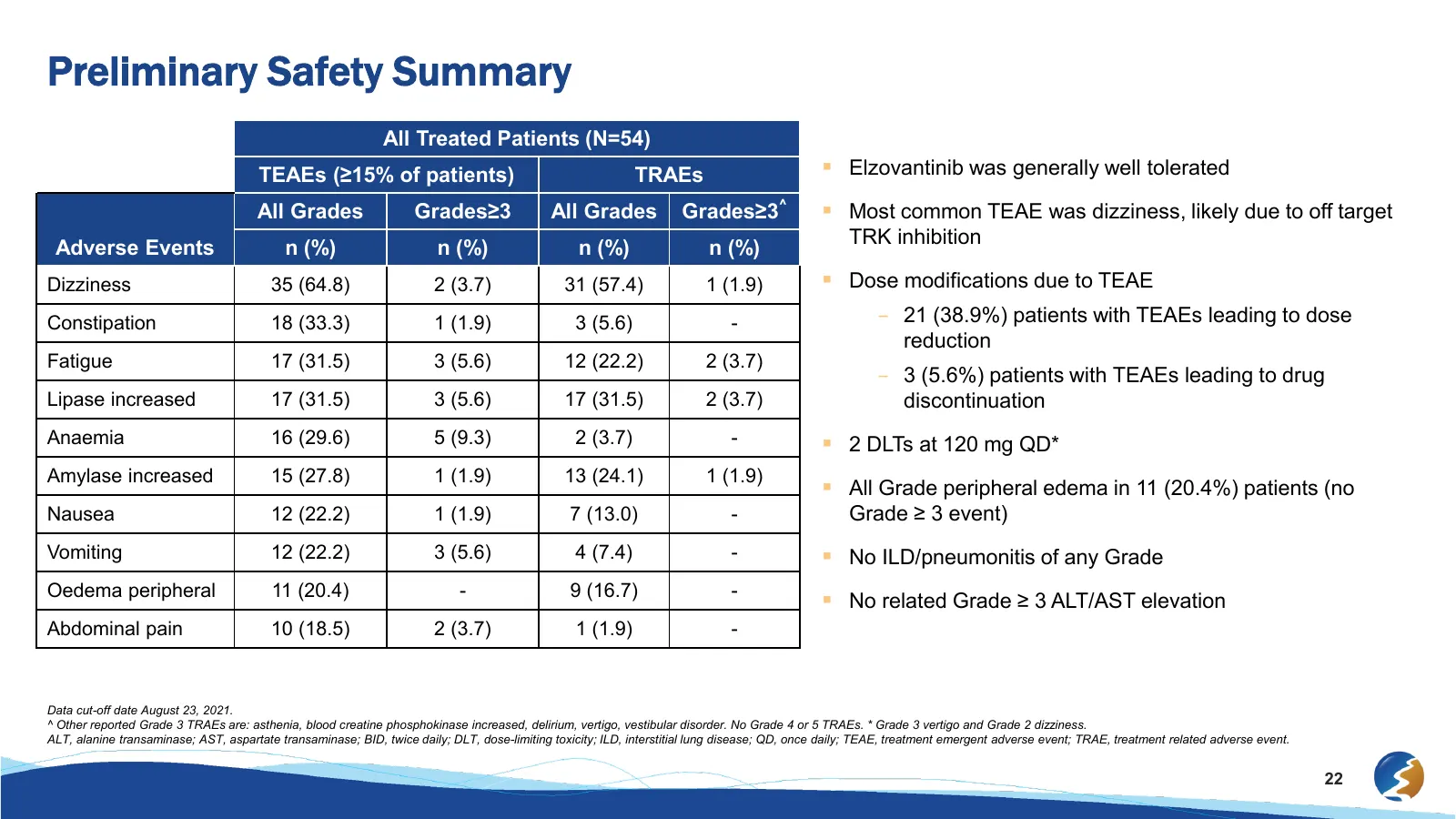
Slide 22: Preliminary Safety Summary
Preliminary Safety Summary All Treated Patients (N=54) TEAEs (≥15% of patients) TRAEs Elzovantinib was generally well tolerated All Grades Grades≥3 All Grades Grades≥3^ Most common TEAE was dizziness, likely due to off target Adverse Events n (%) n (%) n (%) n (%) TRK inhibition Dizziness 35 (64
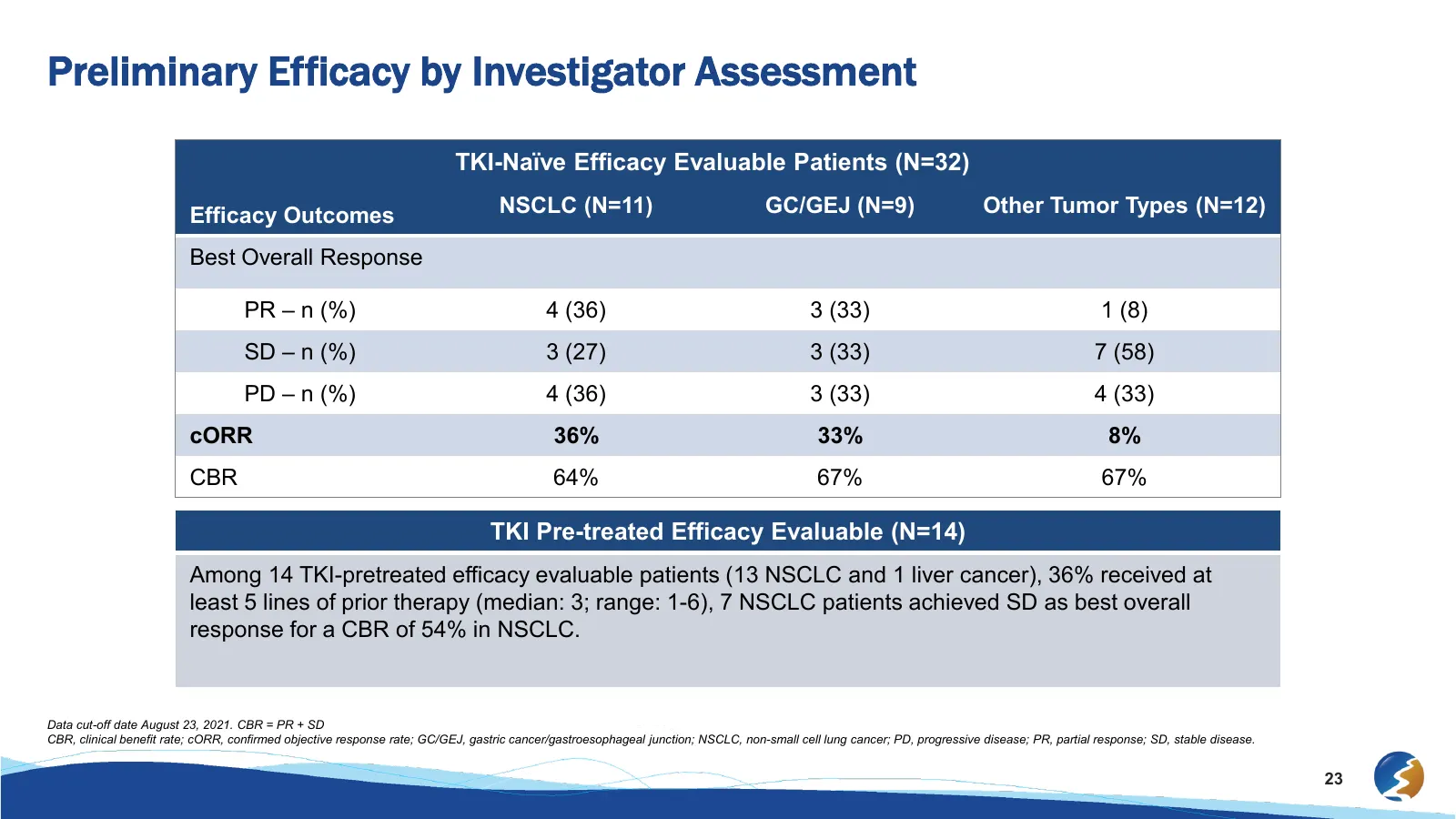
Slide 23: Preliminary Efficacy by Investigator Assessment
Preliminary Efficacy by Investigator Assessment TKI-Naïve Efficacy Evaluable Patients (N=32) Efficacy Outcomes NSCLC (N=11) GC/GEJ (N=9) Other Tumor Types (N=12) Best Overall Response PR – n (%) 4 (36) 3 (33) 1 (8) SD – n (%) 3 (27) 3 (33) 7 (58) PD – n (%) 4 (36) 3 (33) 4 (33) cORR 36% 33% 8% CBR 6
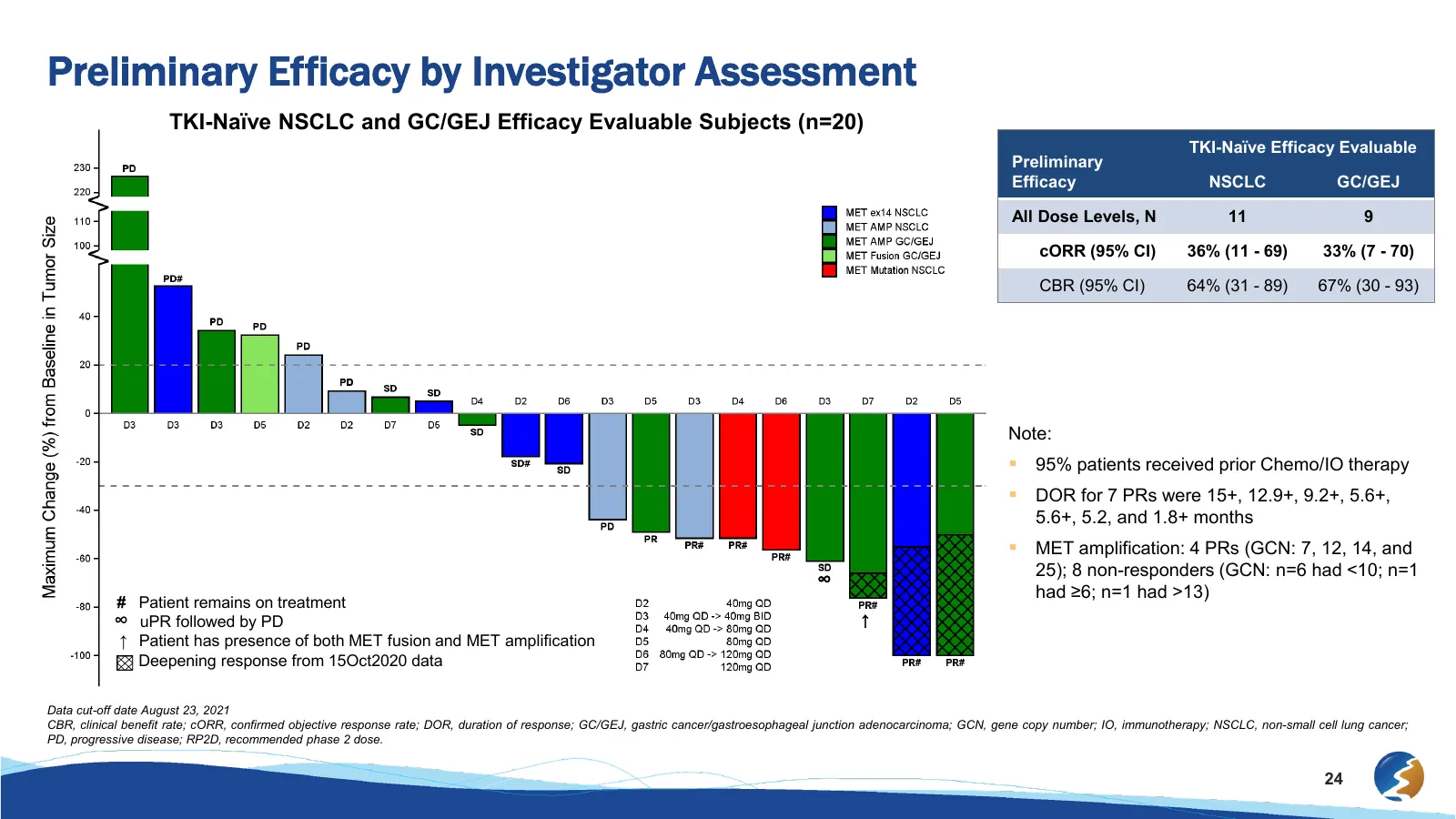
Slide 24: Preliminary Efficacy by Investigator Assessment
Preliminary Efficacy by Investigator Assessment TKI-Naïve NSCLC and GC/GEJ Efficacy Evaluable Subjects (n=20) TKI-Naïve Efficacy Evaluable Preliminary Efficacy NSCLC GC/GEJ All Dose Levels, N 11 9 cORR (95% CI) 36% (11 - 69) 33% (7 - 70) CBR (95% CI) 64% (31 - 89) 67% (30 - 93) Note: 95% patients
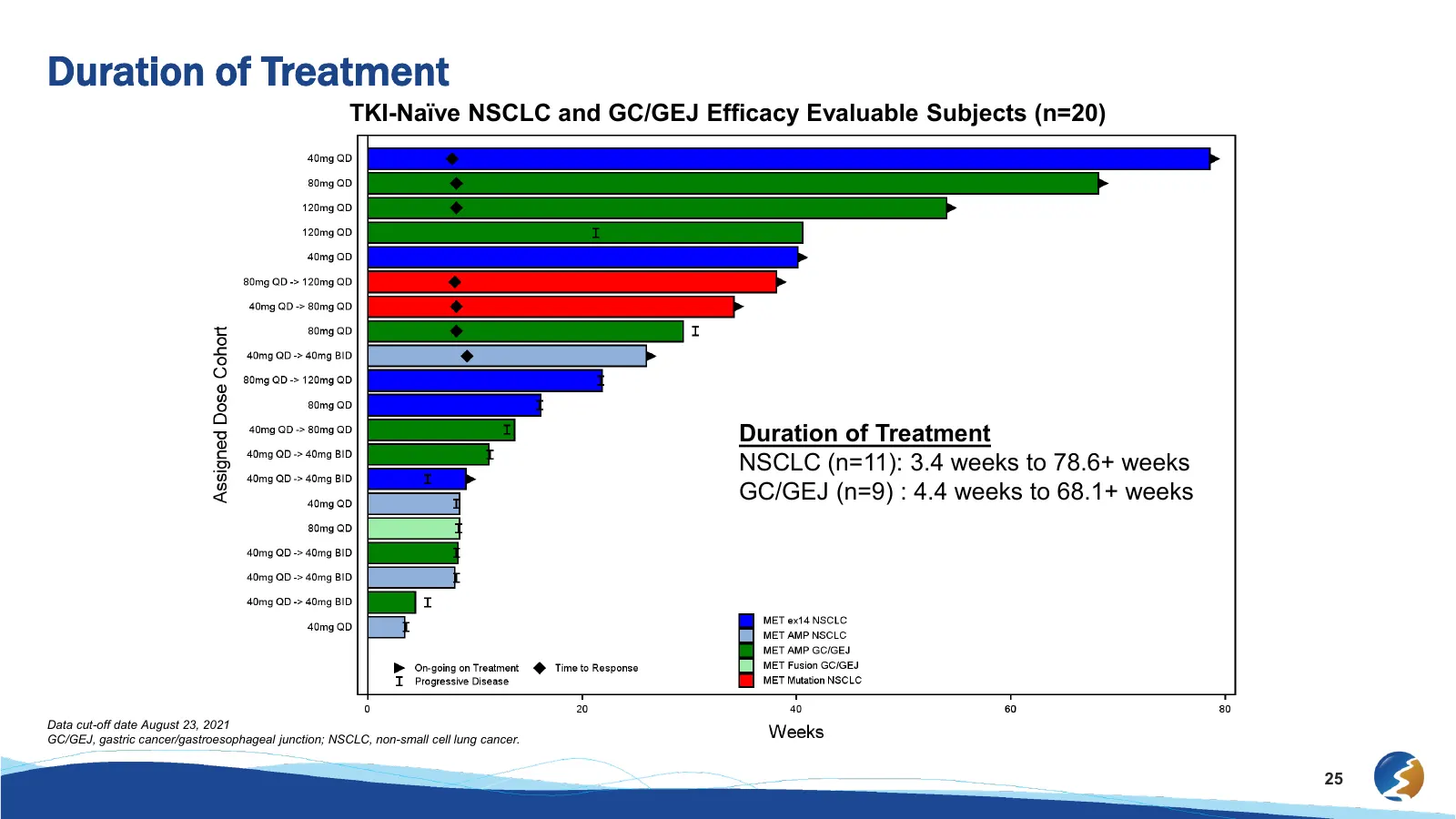
Slide 25: Duration of Treatment
Duration of Treatment TKI-Naïve NSCLC and GC/GEJ Efficacy Evaluable Subjects (n=20) Duration of Treatment NSCLC (n=11): 3.4 weeks to 78.6+ weeks GC/GEJ (n=9) : 4.4 weeks to 68.1+ weeks Data cut-off date August 23, 2021 GC/GEJ, gastric cancer/gastroesophageal junction; NSCLC, non-small cell lung canc
Slide 26: Conclusions
Conclusions Elzovantinib was generally well tolerated Responses in MET TKI-naïve NSCLC and GC/GEJ cancers – 95% patients received prior Chemo/IO therapy – NSCLC: cORR 36% (all dose levels) – GC/GEJ Cancer: cORR 33% (all dose levels) Limited activity in heavily pretreated MET TKI-pretreated pat
Slide 27: Regulatory Updates
Regulatory Updates At the anticipated meeting with the FDA in 1H 2022 to discuss the topline BICR results from EXP-1 of the TRIDENT-1 study, plan to also discuss available BICR data in at least 50 patients from the ROS1- Repotrectinib positive TKI-pretreated NSCLC cohorts of the study (EXP-2, EXP-
Slide 28: Thank you to the patients and investigators for participating in the TRIDENT-1 and SHIELD-1 studies
Thank you to the patients and investigators for participating in the TRIDENT-1 and SHIELD-1 studies
Slide 29: Next-Generation Precision Oncology Medicines
Next-Generation Precision Oncology Medicines AACR-NCI-EORTC Investor Meeting October 7, 2021
Source: SEC EDGAR · 8-K filed Oct 7, 2021
More decks from Turning Point Therapeutics Inc
 Investor Presentation (May 2022)53 slides · May 10, 2022
 Technical Presentation (April 2022)15 slides · Apr 13, 2022
 Investor Presentation (October 2021)46 slides · Oct 8, 2021
 Investor Presentation (January 2021)33 slides · Jan 11, 2021
 Investor Presentation (October 2020)30 slides · Oct 26, 2020
 Technical Presentation (August 2020)17 slides · Aug 19, 2020