Roche Holding Ltd · SIX:RO
Roche — 28th Congress of the European Hematology Association (EHA) 2024
51 slides from Roche's conference presentation, June 2024
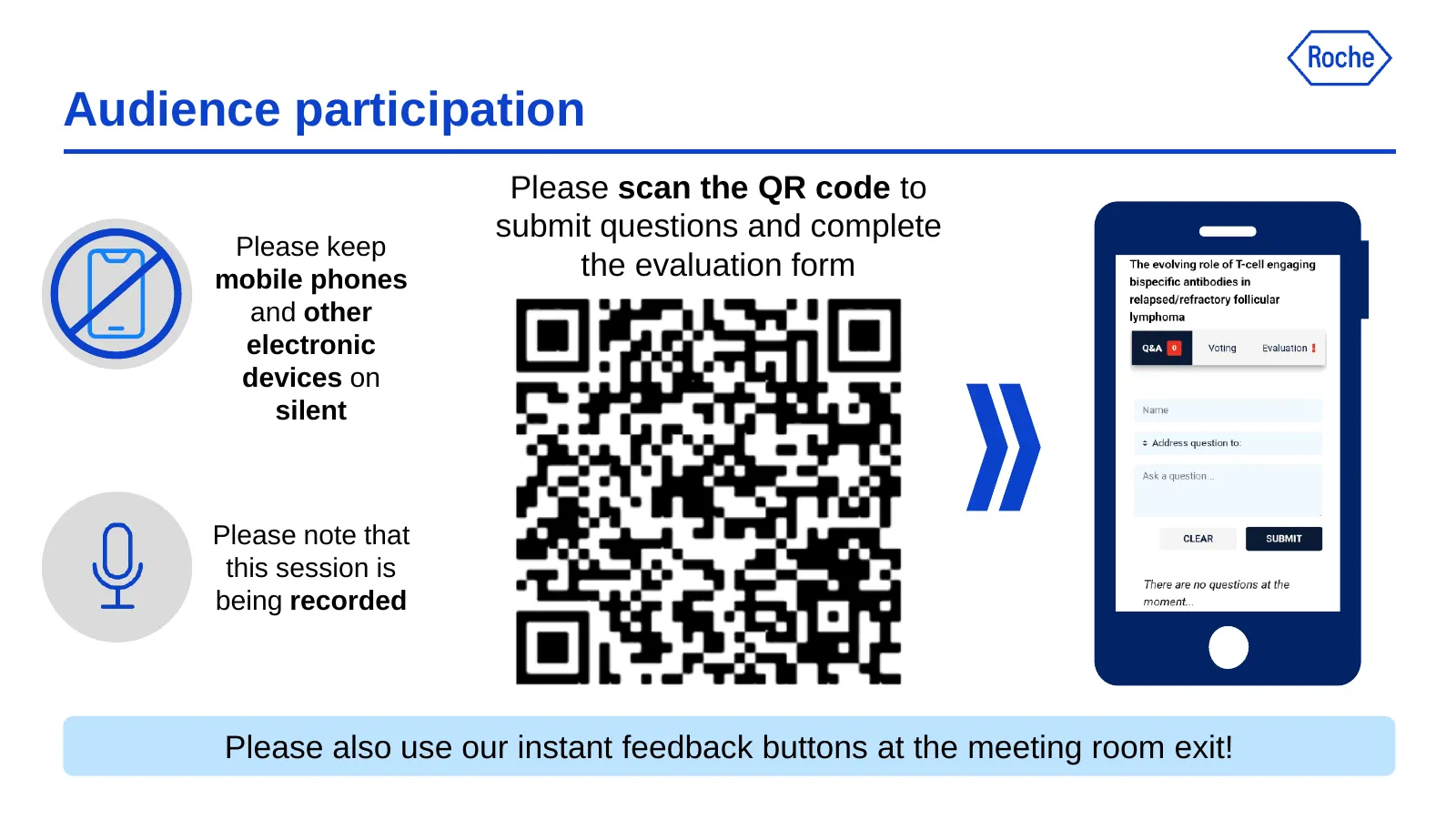
Slide 1: Audience participation
Audience participation Please scan the QR code to submit questions and complete Please keep mobile phones the evaluation form and other electronic devices on silent Please note that this session is being recorded Please also use our instant feedback buttons at the meeting room exit!
Slide 2: The evolving role of T-cell engaging bispecific antibodies in R/R follicular lymphoma
The evolving role of T-cell engaging bispecific antibodies in relapsed/refractory follicular lymphoma 28th Congress of the European Hematology Association (EHA) Roche-sponsored satellite symposium M-XX-00017444 | Date of preparation: June 2024 This is a non-promotional educational meeting organized
Slide 3: Disclaimer
Disclaimer • This is a non-promotional educational meeting organized and funded by F. Hoffmann-La Roche Ltd. It is intended for healthcare professionals outside the USA • This symposium contains information on products that have not yet been approved by the authorities. No statement about safety and
Slide 4: Welcome and introduction
Welcome and introduction Prof. Marco Ladetto Università del Piemonte Orientale, Alessandria, Italy
Slide 5: Disclosures
Disclosures • Consultancy, advisory boards, scientific meetings, institutional research support and contracts: AbbVie, ADC Therapeutics, Amgen, AstraZeneca, BeiGene, Celgene/BMS, Eli Lilly, Ellipses Eusapharma, F. Hoffmann-La Roche Ltd, Gentili, Gilead/Kite, GSK, Incyte, Jazz, J&J, Novartis, Regener
Slide 6: Housekeeping
Housekeeping Please scan the QR code to submit questions and complete the evaluation form Please note that Please keep mobile Questions can also be submitted this session is phones on silent using the microphones being recorded Please also use our instant feedback buttons at the meeting room exit!
Slide 7: Agenda and faculty
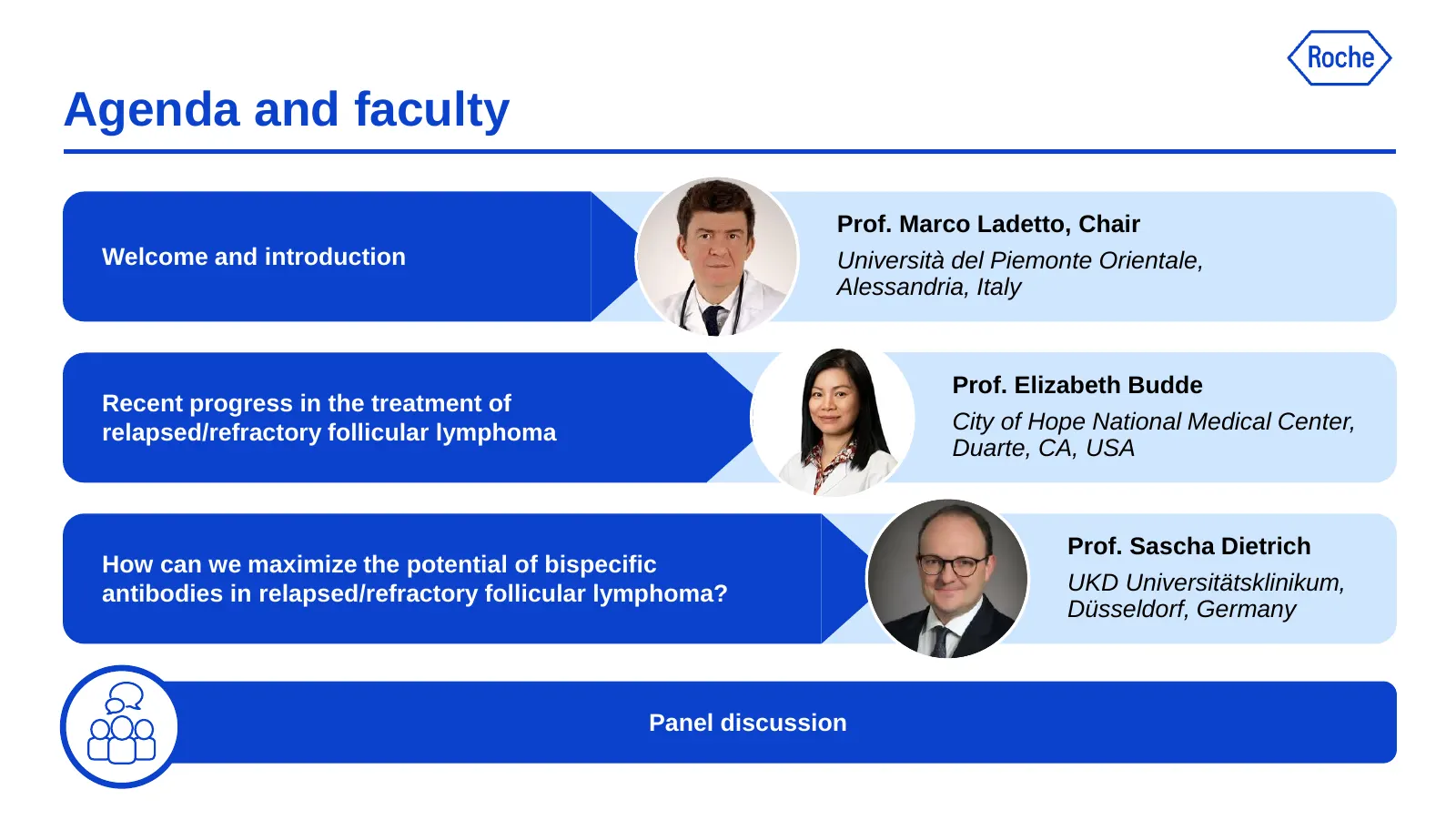
Agenda and faculty Prof. Marco Ladetto, Chair Welcome and introduction Università del Piemonte Orientale, Alessandria, Italy Prof. Elizabeth Budde Recent progress in the treatment of relapsed/refractory follicular lymphoma City of Hope National Medical Center, Duarte, CA, USA Prof. Sascha Dietrich H
Slide 8: FL is often characterized by decreasing PFS with subsequent lines of therapy
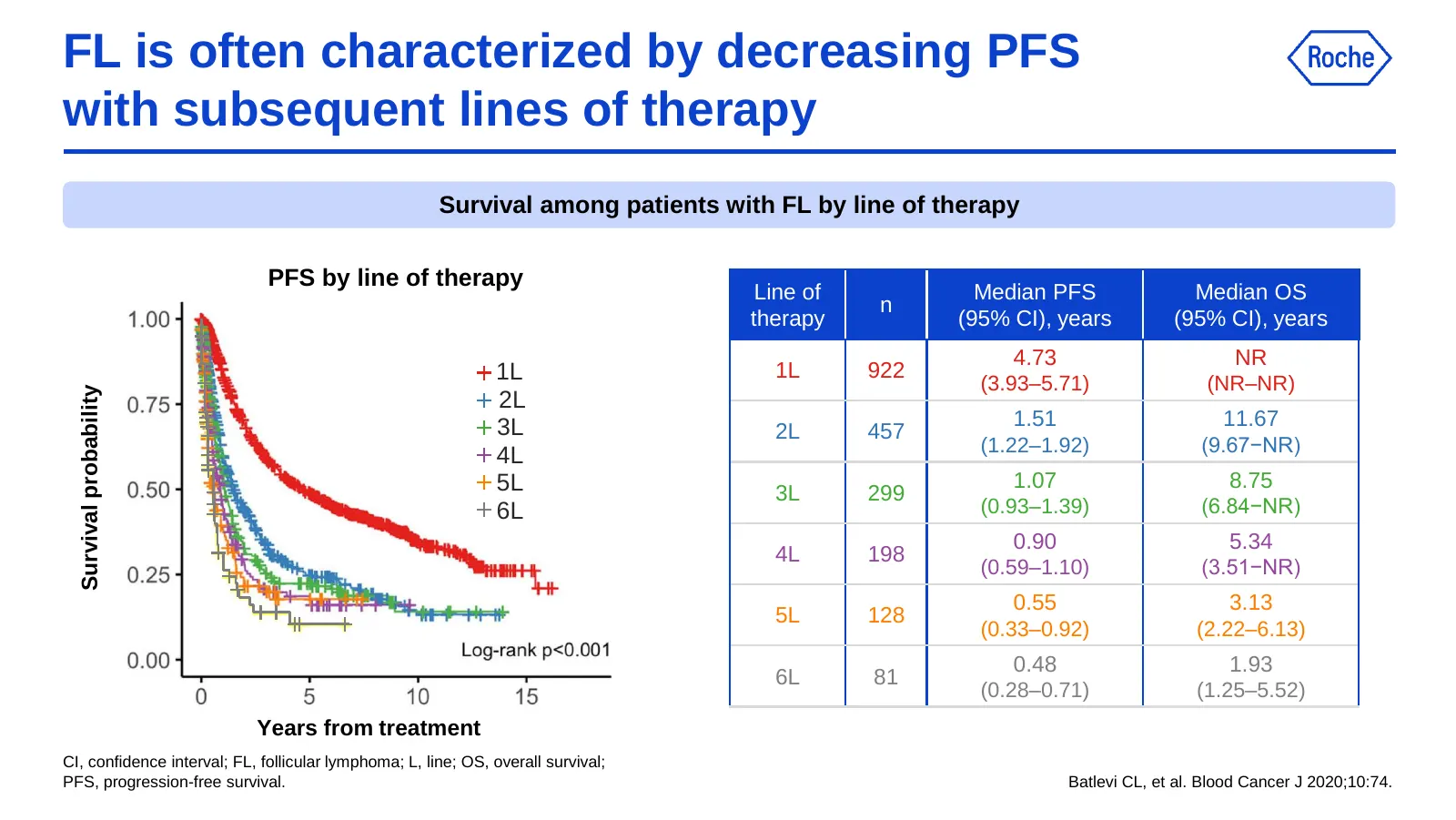
FL is often characterized by decreasing PFS with subsequent lines of therapy Survival among patients with FL by line of therapy PFS by line of therapy Line of Median PFS Median OS n therapy (95% CI), years (95% CI), years 4.73 NR 1L 1L 922 (3.93–5.71) (NR–NR) Survival probability 2L 3L 1.51 11.67 2L
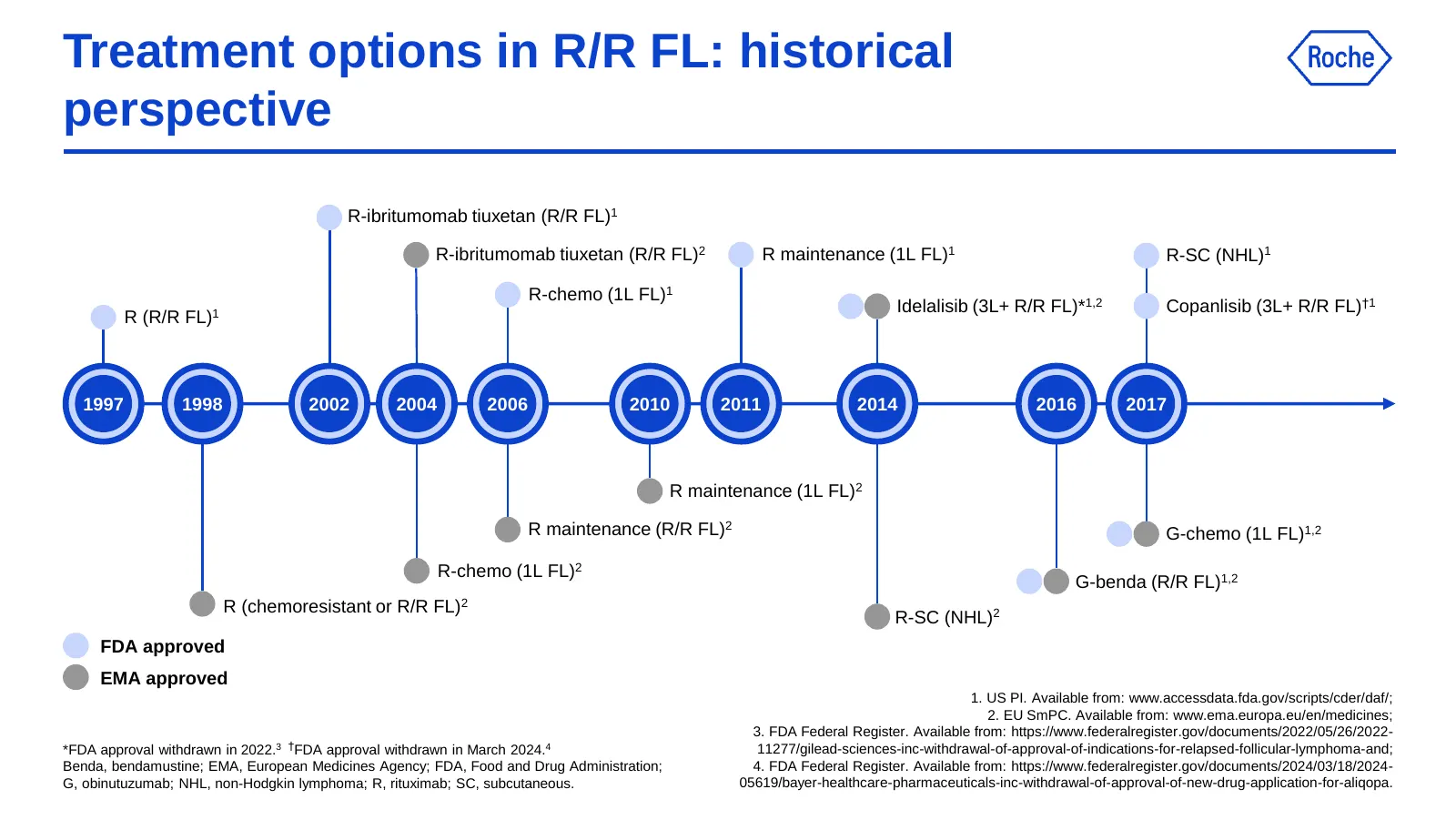
Slide 9: Treatment options in R/R FL: historical perspective
Treatment options in R/R FL: historical perspective R-ibritumomab tiuxetan (R/R FL)1 R-ibritumomab tiuxetan (R/R FL)2 R maintenance (1L FL)1 R-SC (NHL)1 R-chemo (1L FL)1 Idelalisib (3L+ R/R FL)*1,2 Copanlisib (3L+ R/R FL)†1 R (R/R FL)1 1997 1998 2002 2004 2006 2010 2011 2014 2016 2017 R maintenance
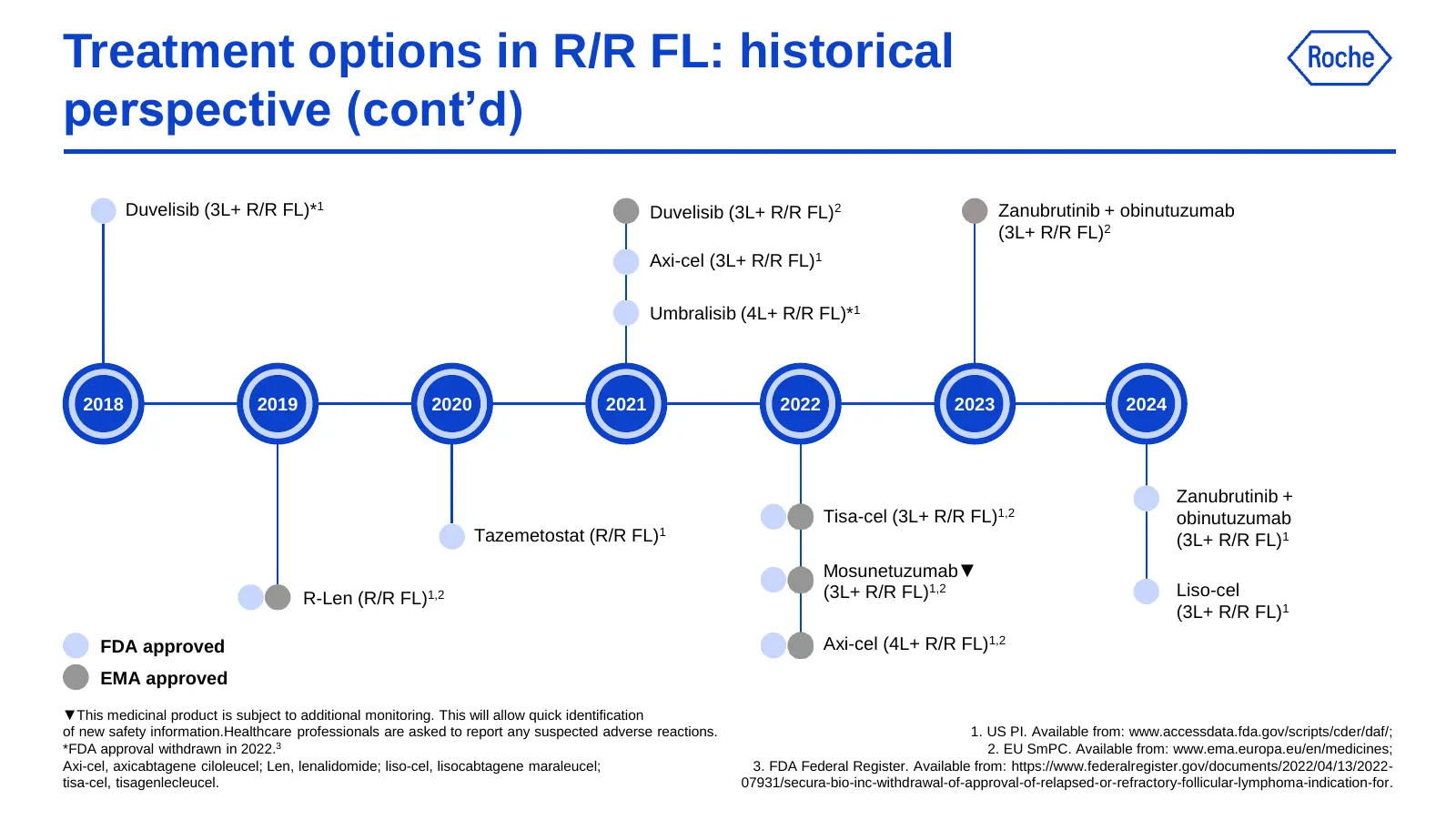
Slide 10: Treatment options in R/R FL: historical perspective (cont'd)
Treatment options in R/R FL: historical perspective (cont’d) Duvelisib (3L+ R/R FL)*1 Duvelisib (3L+ R/R FL)2 Zanubrutinib + obinutuzumab (3L+ R/R FL)2 Axi-cel (3L+ R/R FL)1 Umbralisib (4L+ R/R FL)*1 2018 2019 2020 2021 2022 2023 2024 Zanubrutinib + Tisa-cel (3L+ R/R FL)1,2 obinutuzumab Tazemetostat
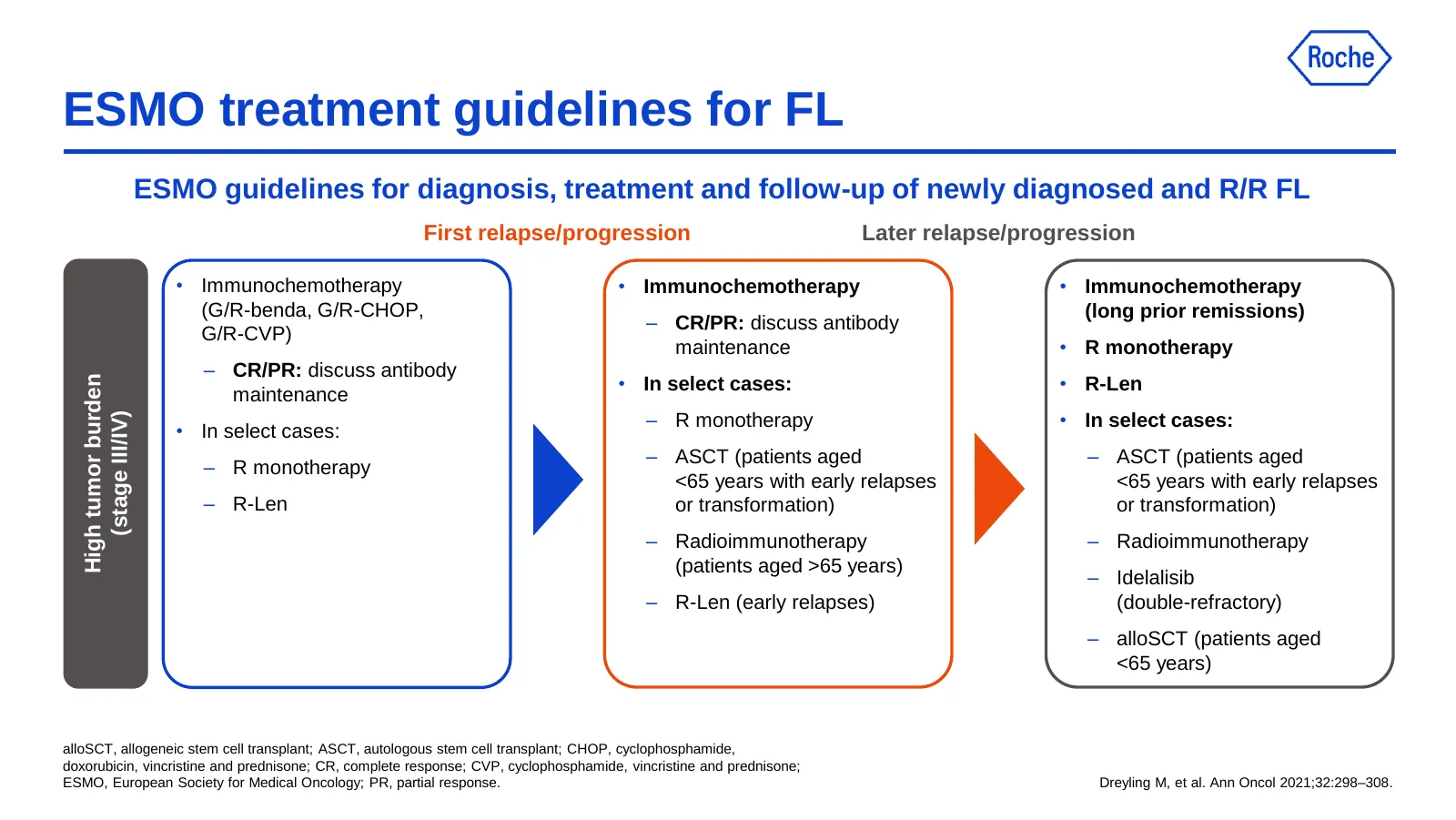
Slide 11: ESMO treatment guidelines for FL
ESMO treatment guidelines for FL ESMO guidelines for diagnosis, treatment and follow-up of newly diagnosed and R/R FL First relapse/progression Later relapse/progression • Immunochemotherapy • Immunochemotherapy • Immunochemotherapy (G/R-benda, G/R-CHOP, (long prior remissions) ‒ CR/PR: discuss anti
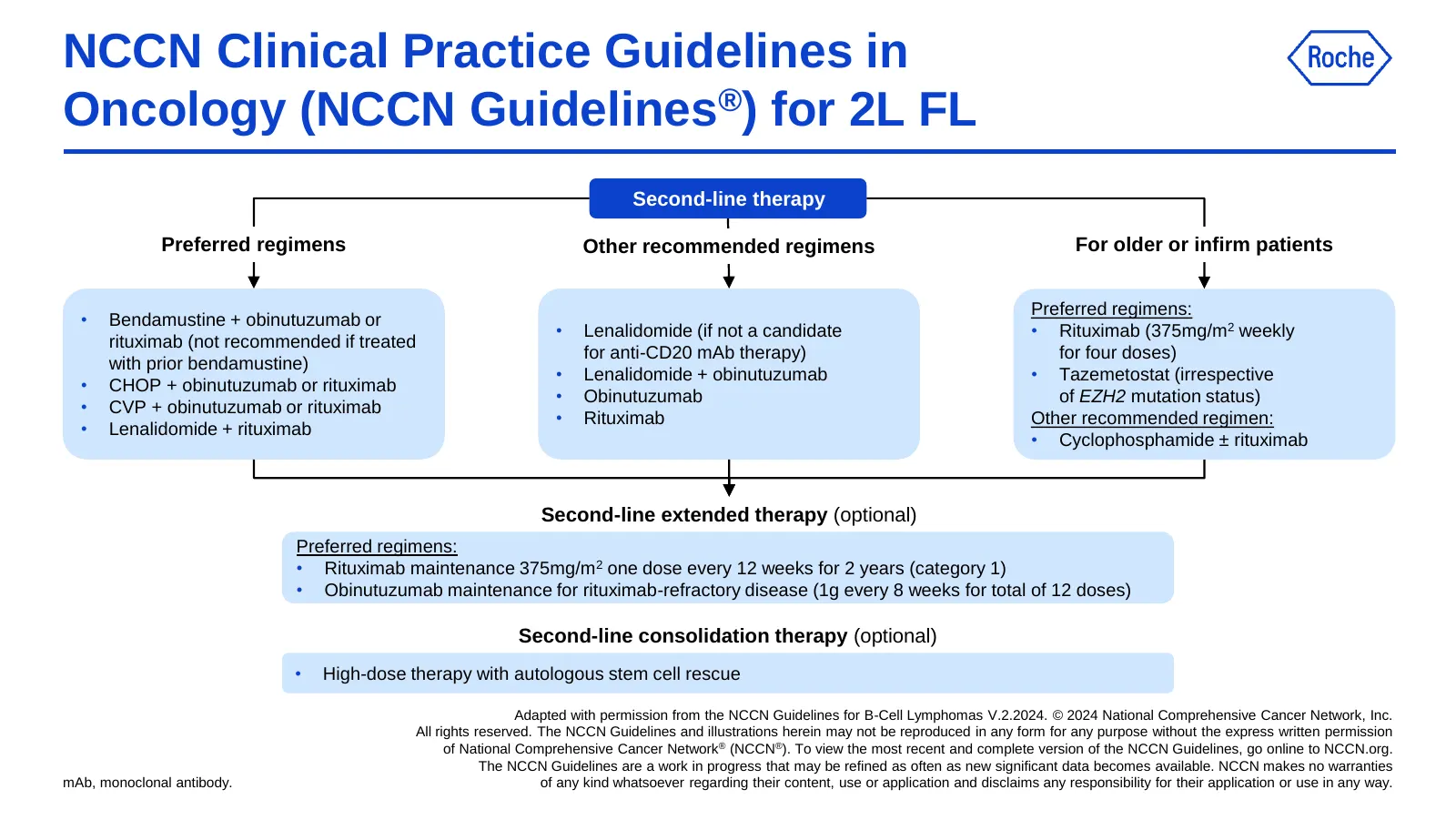
Slide 12: NCCN Guidelines for 2L FL
NCCN Clinical Practice Guidelines in Oncology (NCCN Guidelines®) for 2L FL Second-line therapy Preferred regimens Other recommended regimens For older or infirm patients Preferred regimens: • Bendamustine + obinutuzumab or • Lenalidomide (if not a candidate • Rituximab (375mg/m2 weekly rituximab (no
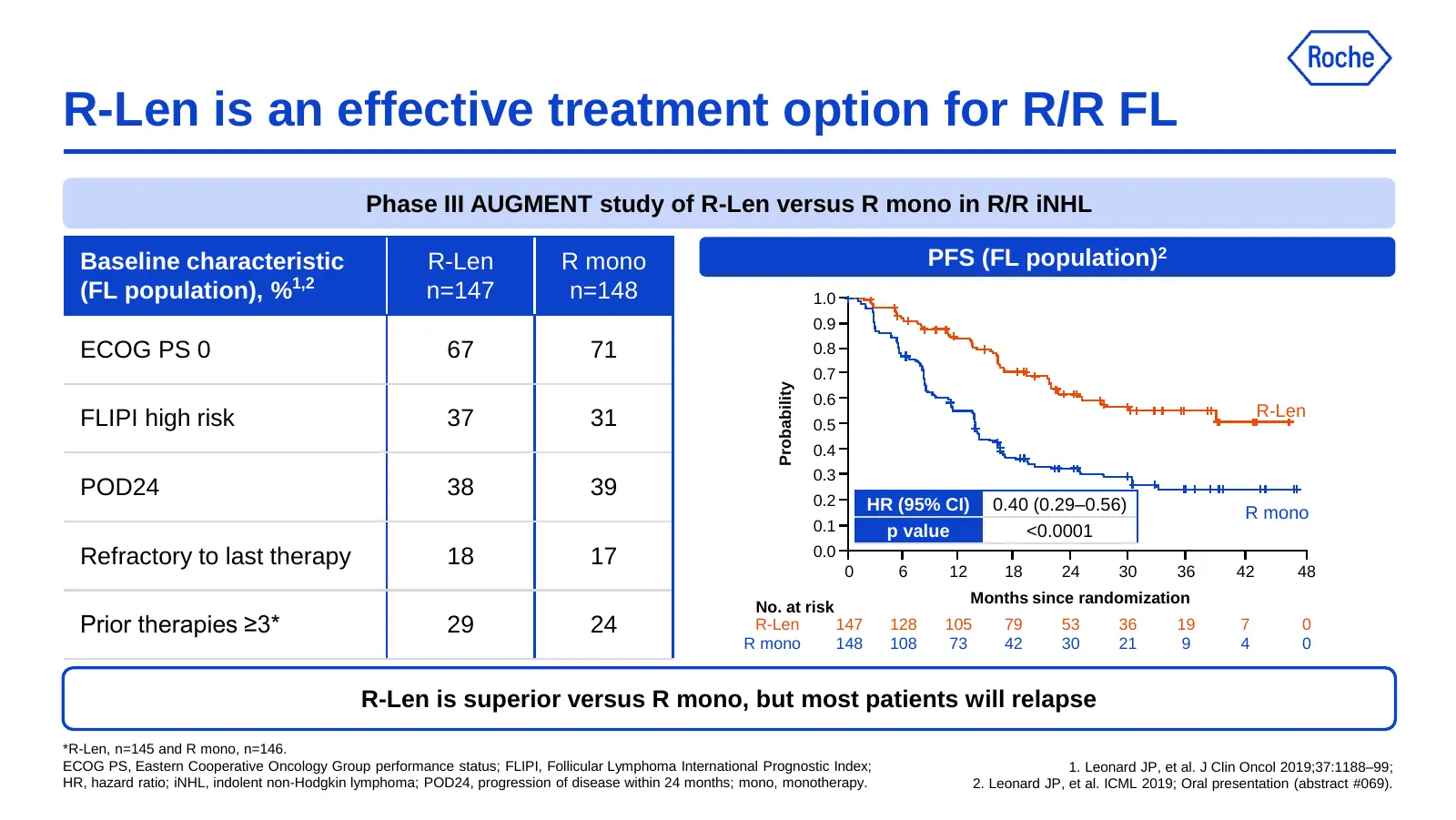
Slide 13: R-Len is an effective treatment option for R/R FL
R-Len is an effective treatment option for R/R FL Phase III AUGMENT study of R-Len versus R mono in R/R iNHL Baseline characteristic R-Len R mono PFS (FL population)2 (FL population), %1,2 n=147 n=148 1.0 0.9 ECOG PS 0 67 71 0.8 0.7 Probability 0.6 R-Len FLIPI high risk 37 31 0.5 0.4 0.3 POD24 38 39
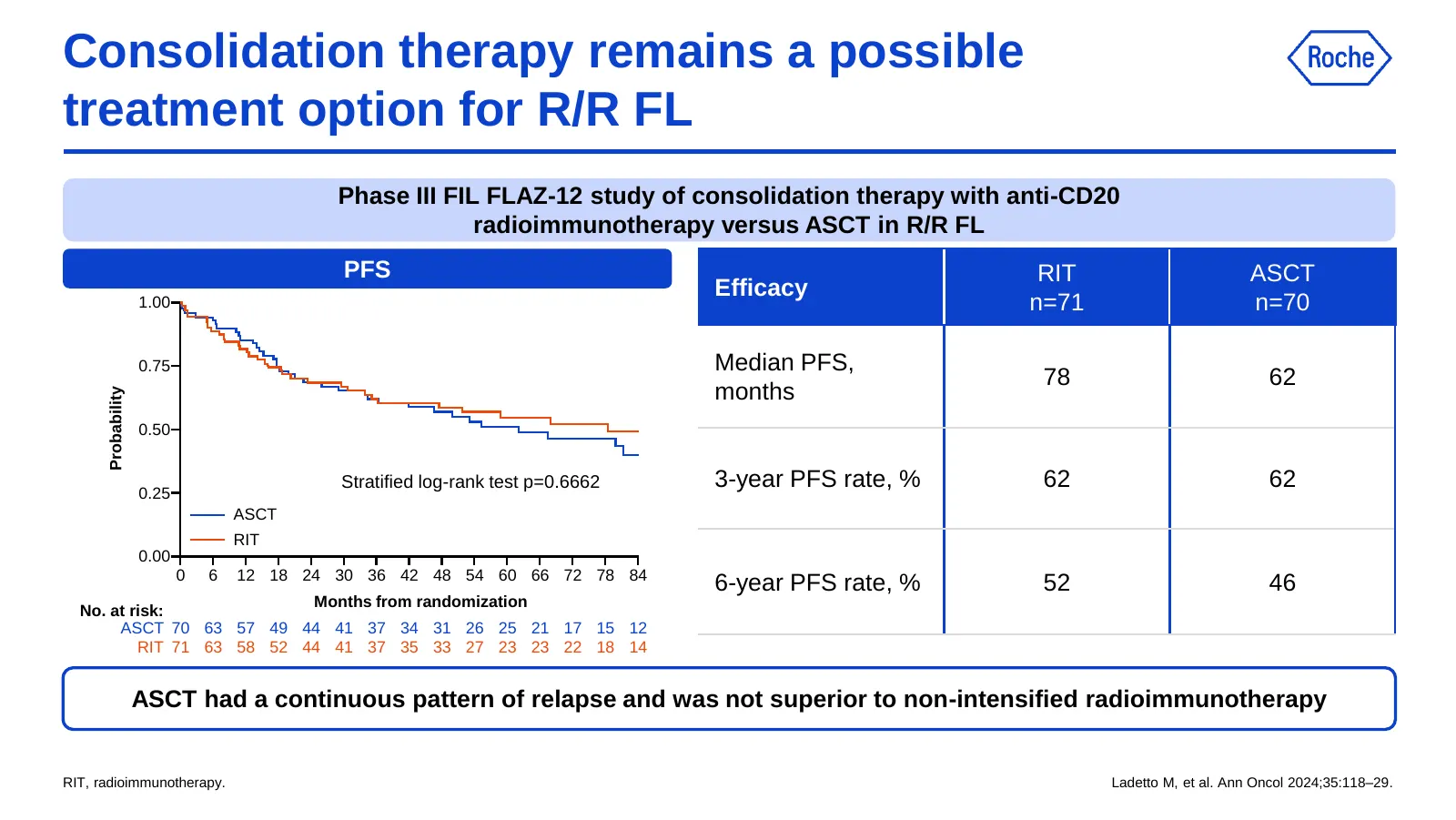
Slide 14: Consolidation therapy remains a possible treatment option for R/R FL
Consolidation therapy remains a possible treatment option for R/R FL Phase III FIL FLAZ-12 study of consolidation therapy with anti-CD20 radioimmunotherapy versus ASCT in R/R FL PFS RIT ASCT Efficacy 1.00 n=71 n=70 0.75 Median PFS, 78 62 months Probability 0.50 0.25 Stratified log-rank test p=0.6662
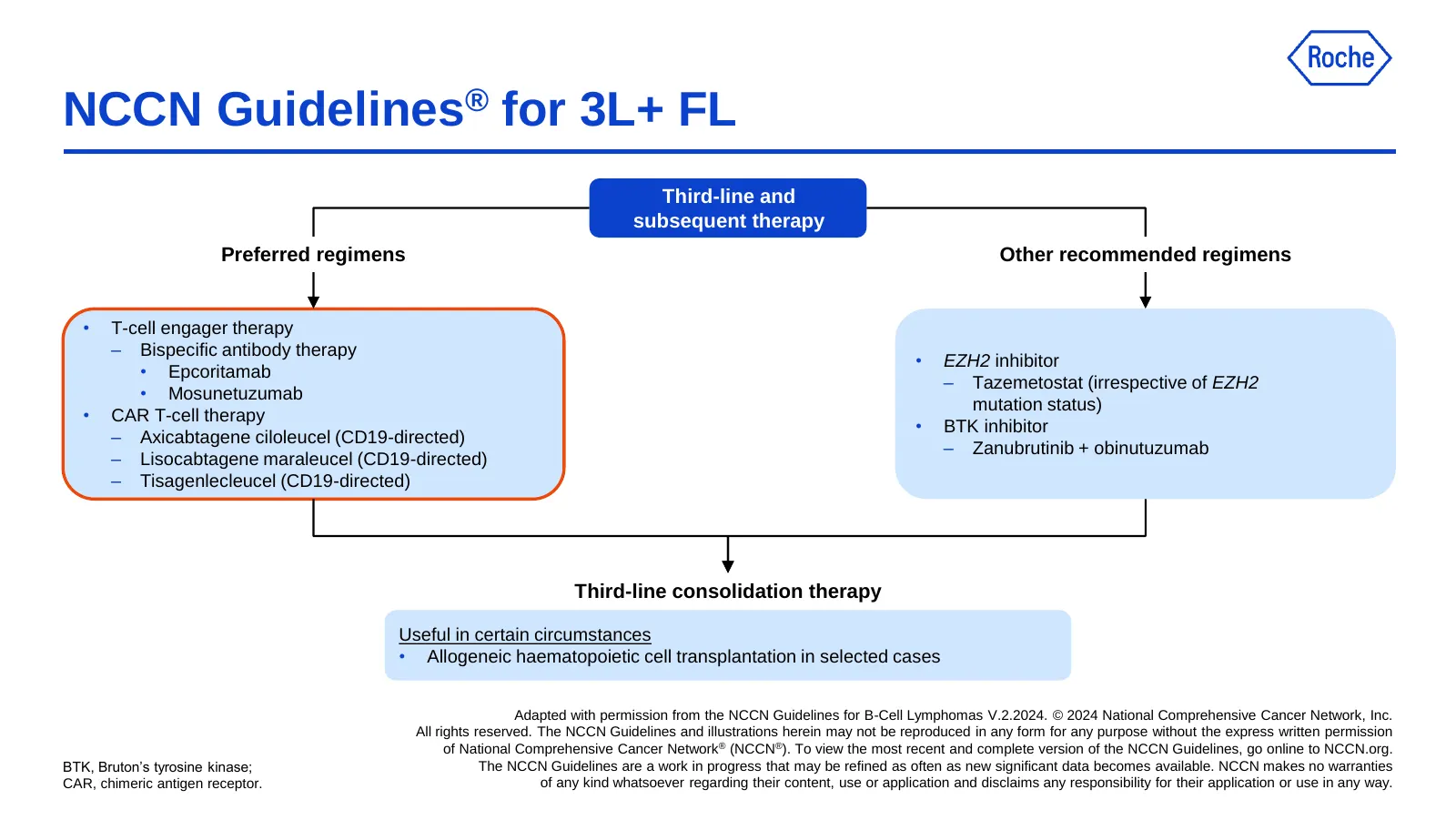
Slide 15: NCCN Guidelines for 3L+ FL
NCCN Guidelines® for 3L+ FL Third-line and subsequent therapy Preferred regimens Other recommended regimens • T-cell engager therapy – Bispecific antibody therapy • EZH2 inhibitor • Epcoritamab – Tazemetostat (irrespective of EZH2 • Mosunetuzumab mutation status) • CAR T-cell therapy • BTK inhibitor
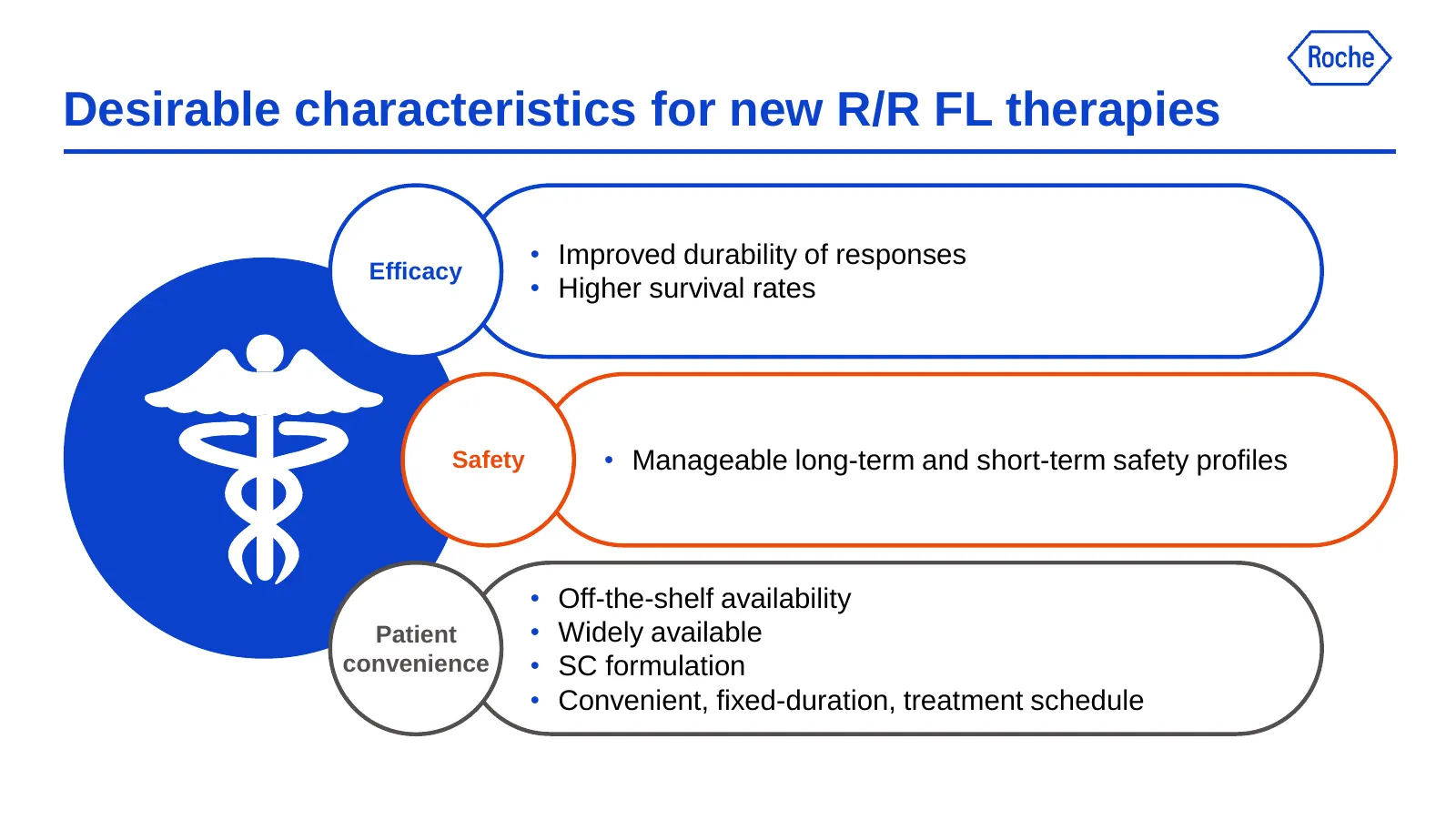
Slide 16: Desirable characteristics for new R/R FL therapies
Desirable characteristics for new R/R FL therapies • Improved durability of responses Efficacy • Higher survival rates Safety • Manageable long-term and short-term safety profiles • Off-the-shelf availability Patient • Widely available convenience • SC formulation • Convenient, fixed-duration, treat
Slide 17: Recent progress in the treatment of relapsed/refractory follicular lymphoma
Recent progress in the treatment of relapsed/refractory follicular lymphoma Prof. Elizabeth Budde City of Hope National Medical Center, Duarte, CA, USA
Slide 18: Disclosures
Disclosures • Research funding: Amgen, AstraZeneca, Merck Inc, Mustang Bio • Consultancy/honoraria: BeiGene, Genentech Inc, Gilead, F. Hoffmann-La Roche Ltd, Novartis
Slide 19: T-cell engaging therapies
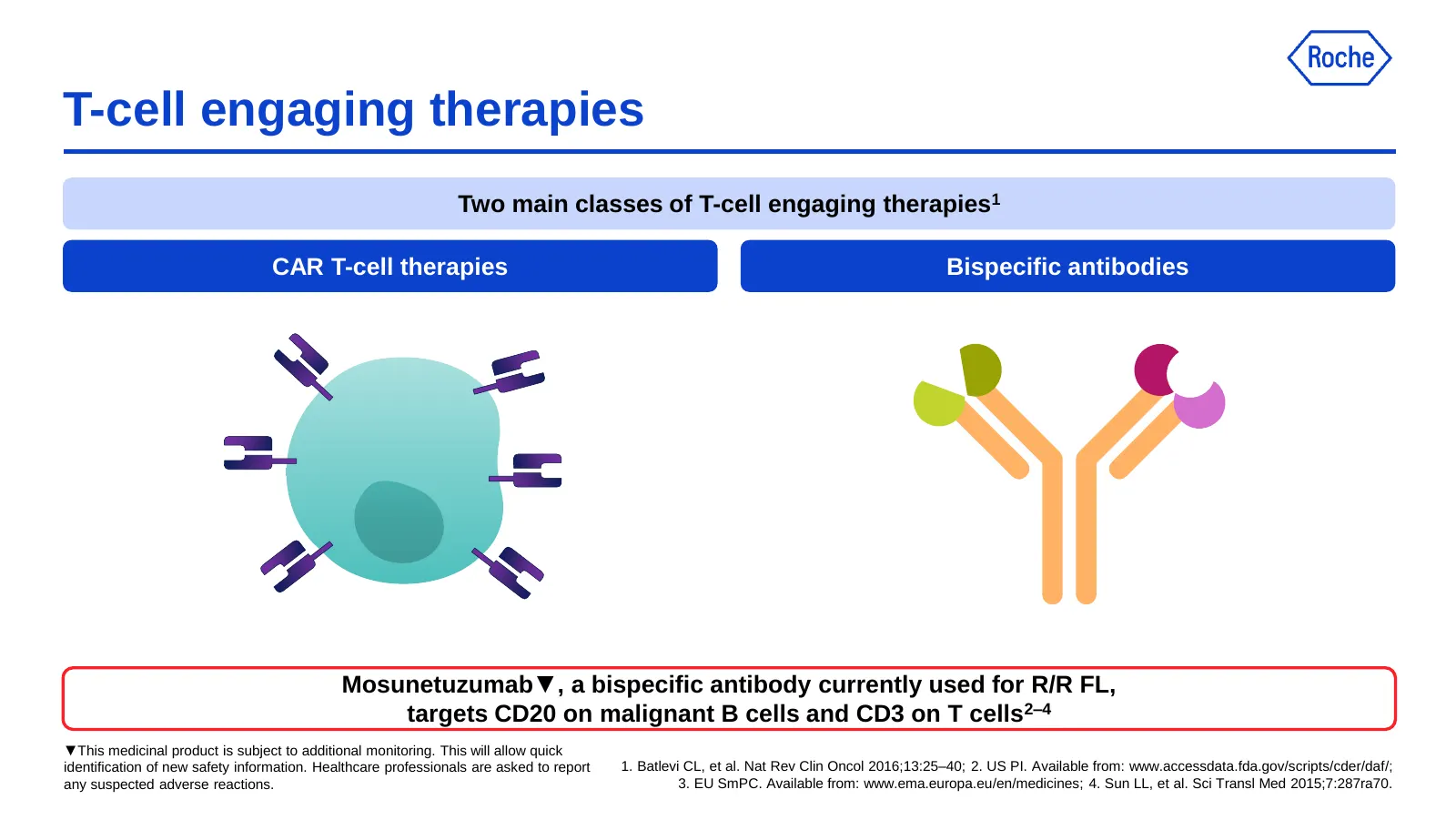
T-cell engaging therapies Two main classes of T-cell engaging therapies1 CAR T-cell therapies Bispecific antibodies Mosunetuzumab▼, a bispecific antibody currently used for R/R FL, targets CD20 on malignant B cells and CD3 on T cells2–4 ▼This medicinal product is subject to additional monitoring. Th
Slide 20: Bispecific antibodies in 3L+ R/R FL
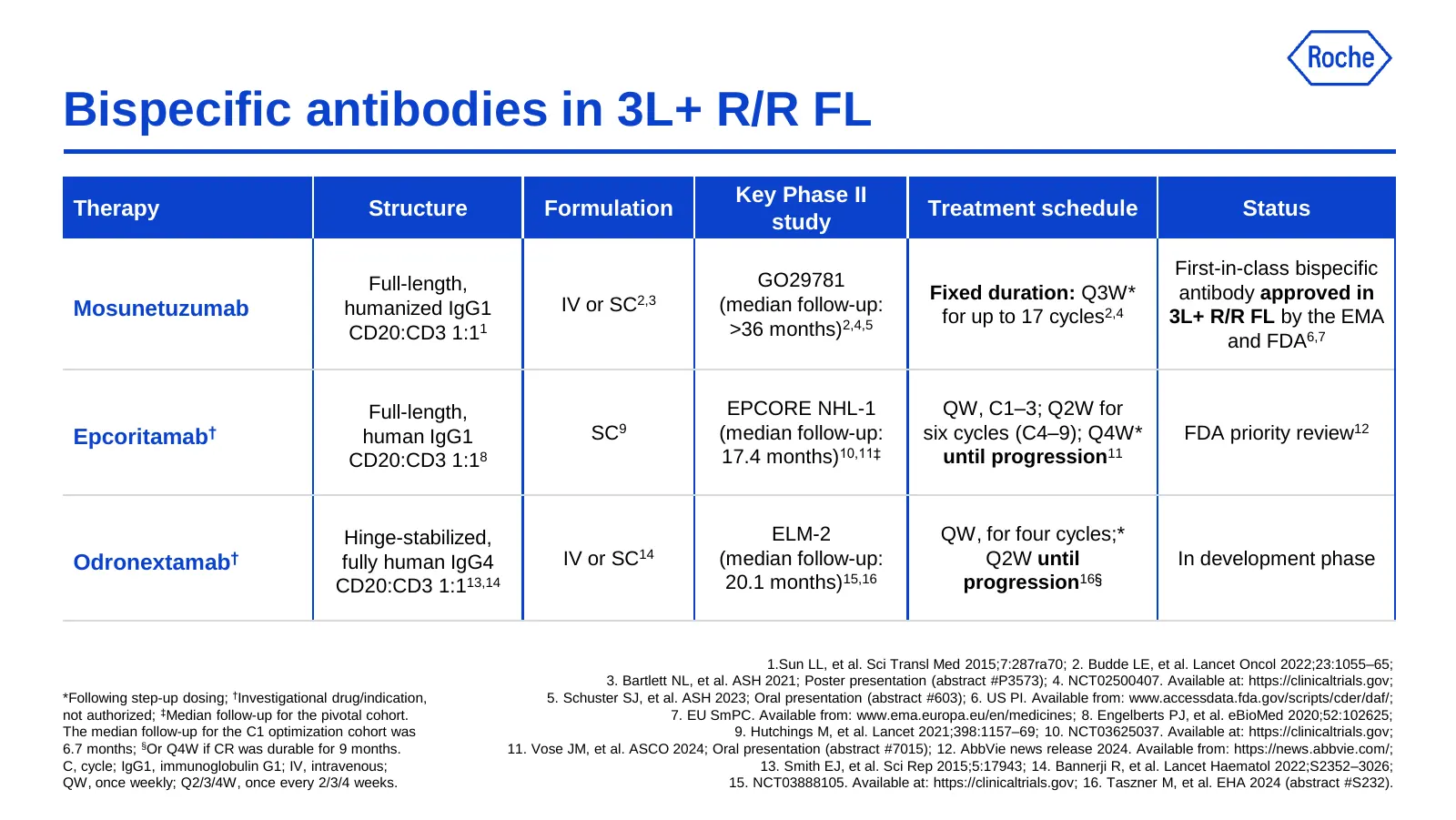
Bispecific antibodies in 3L+ R/R FL Key Phase II Therapy Structure Formulation Treatment schedule Status study First-in-class bispecific Full-length, GO29781 Fixed duration: Q3W* antibody approved in Mosunetuzumab humanized IgG1 IV or SC2,3 (median follow-up: for up to 17 cycles2,4 3L+ R/R FL by the
Slide 21: Phase II GO29781 study of mosunetuzumab in R/R FL
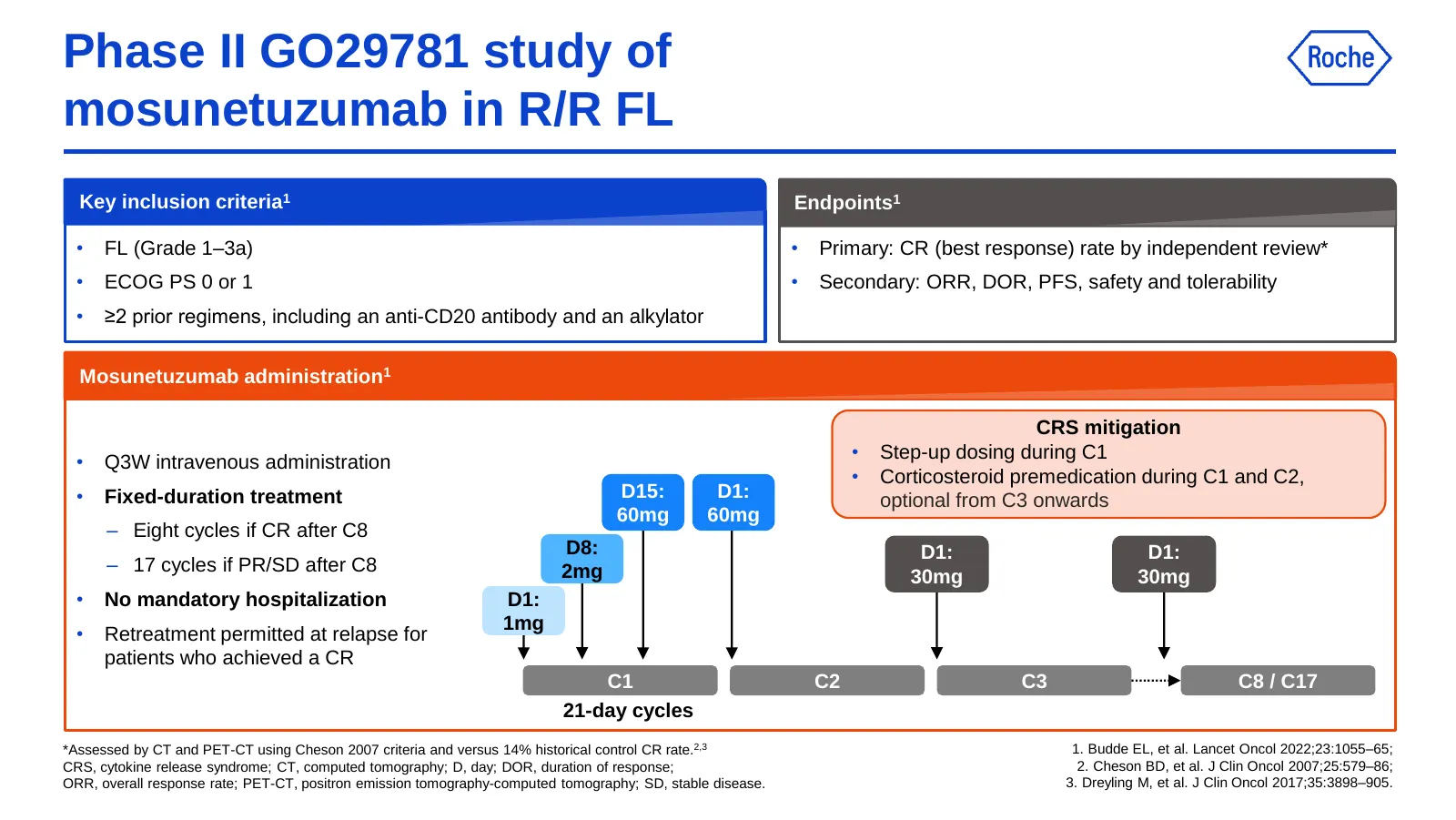
Phase II GO29781 study of mosunetuzumab in R/R FL Key inclusion criteria1 Endpoints1 • FL (Grade 1–3a) • Primary: CR (best response) rate by independent review* • ECOG PS 0 or 1 • Secondary: ORR, DOR, PFS, safety and tolerability • ≥2 prior regimens, including an anti-CD20 antibody and an alkylator
Slide 22: GO29781: mosunetuzumab efficacy
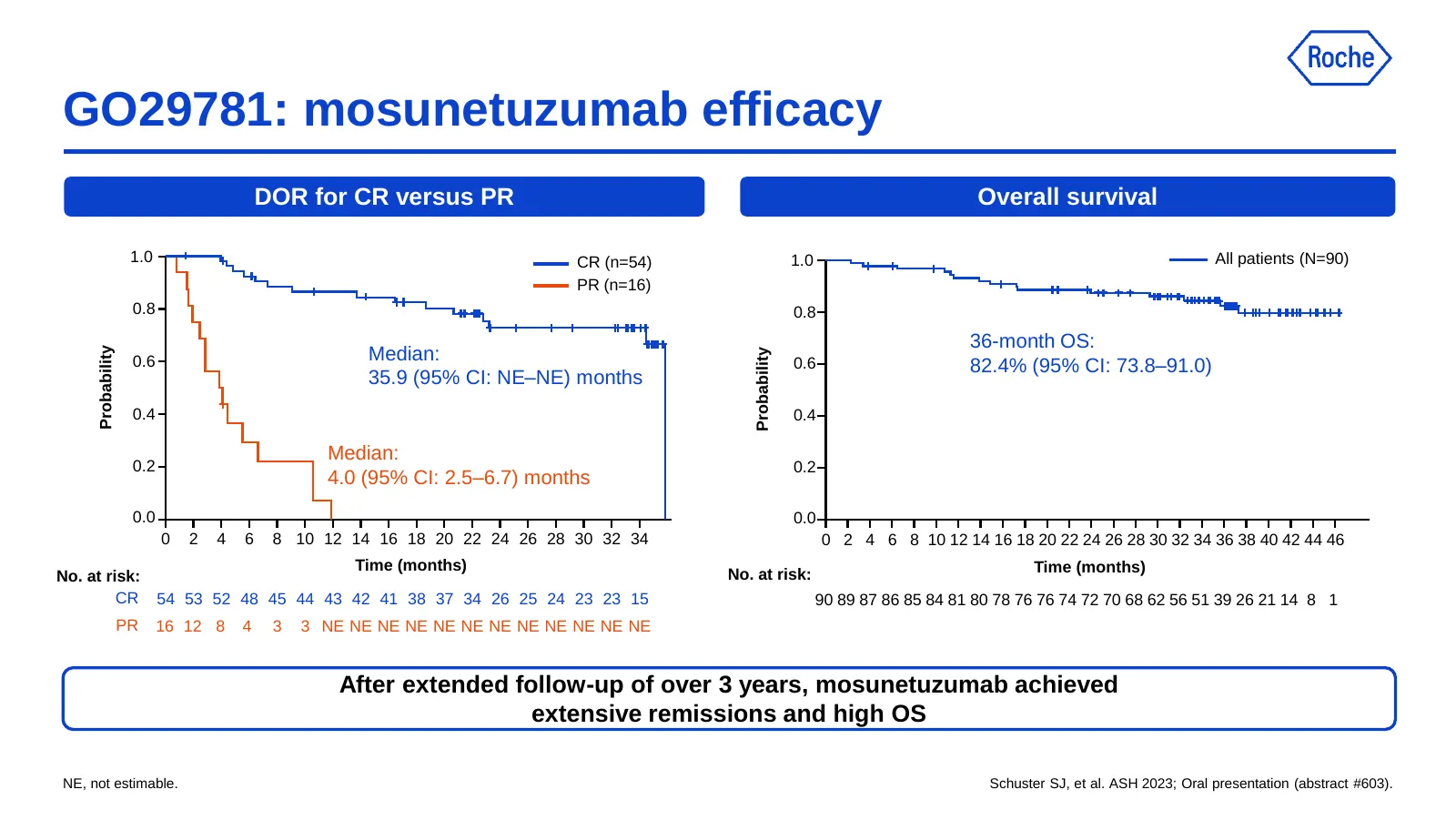
GO29781: mosunetuzumab efficacy DOR for CR versus PR Overall survival 1.0 CR (n=54) 1.0 All patients (N=90) PR (n=16) 0.8 0.8 36-month OS: Probability Median: Probability 0.6 0.6 82.4% (95% CI: 73.8–91.0) 35.9 (95% CI: NE–NE) months 0.4 0.4 Median: 0.2 0.2 4.0 (95% CI: 2.5–6.7) months 0.0 0.0 0 2 4
Slide 23: GO29781: mosunetuzumab efficacy – POD24 status
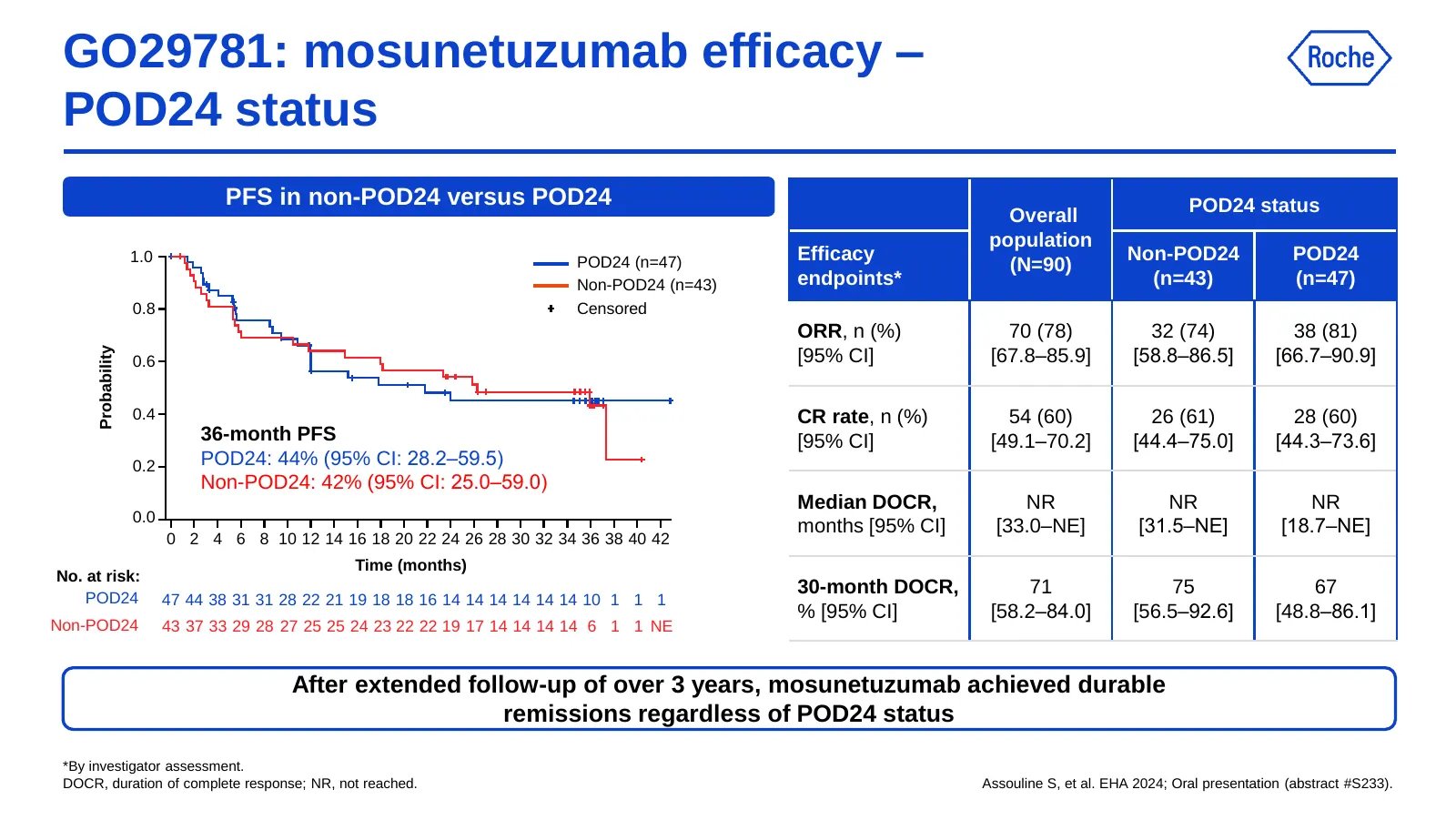
GO29781: mosunetuzumab efficacy – POD24 status PFS in non-POD24 versus POD24 POD24 status Overall population 1.0 POD24 (n=47) Efficacy Non-POD24 POD24 (N=90) Non-POD24 (n=43) endpoints* (n=43) (n=47) 0.8 Censored ORR, n (%) 70 (78) 32 (74) 38 (81) [58.8‒86.5] [66.7‒90.9] Probability 0.6 [95% CI] [67
Slide 24: GO29781: mosunetuzumab safety
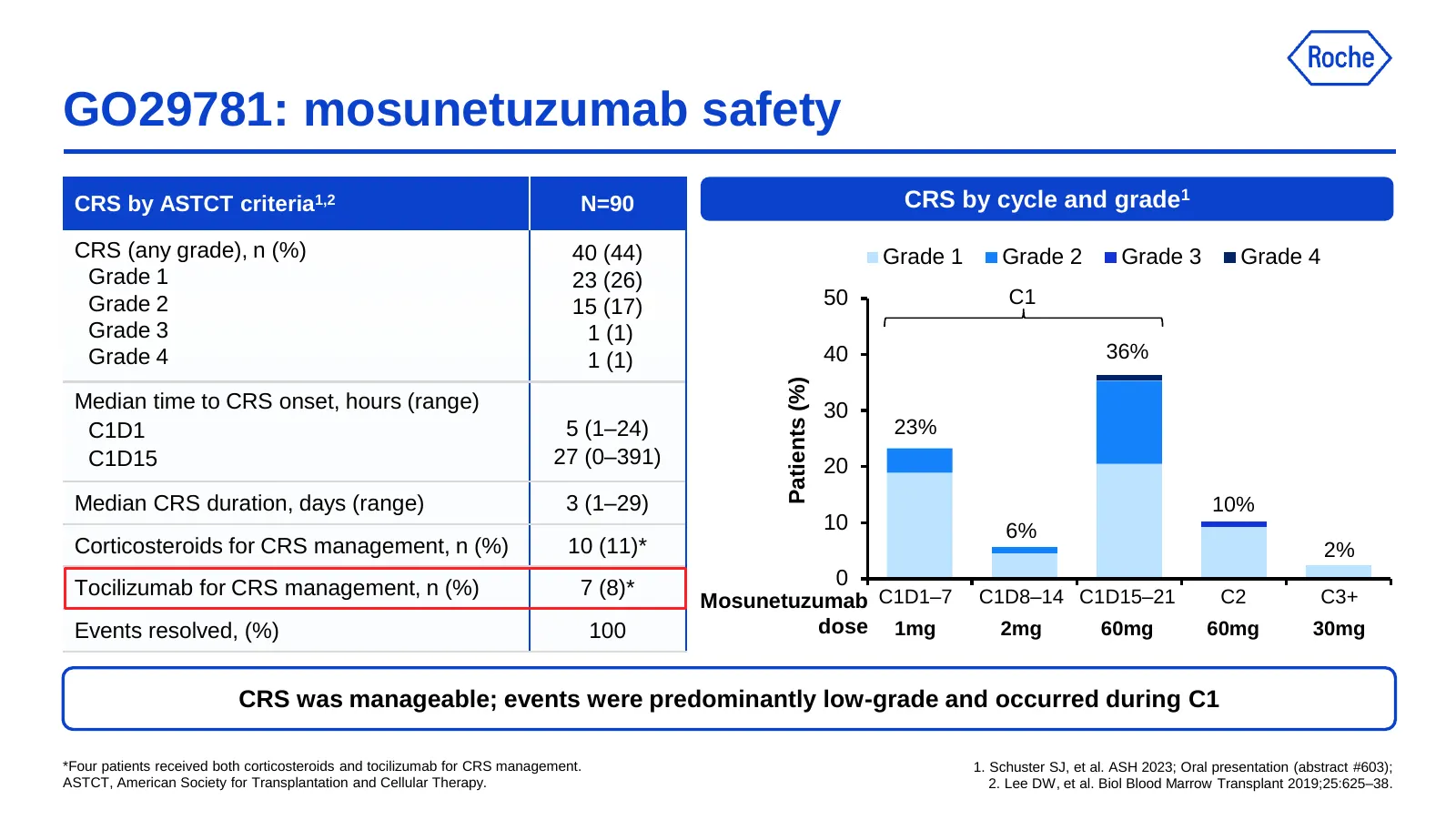
GO29781: mosunetuzumab safety CRS by ASTCT criteria1,2 N=90 CRS by cycle and grade1 CRS (any grade), n (%) 40 (44) Grade 1 Grade 2 Grade 3 Grade 4 Grade 1 23 (26) Grade 2 15 (17) 50 C1 Grade 3 1 (1) Grade 4 1 (1) 40 36% Patients (%) Median time to CRS onset, hours (range) 30 C1D1 5 (1–24) 23% C1D15
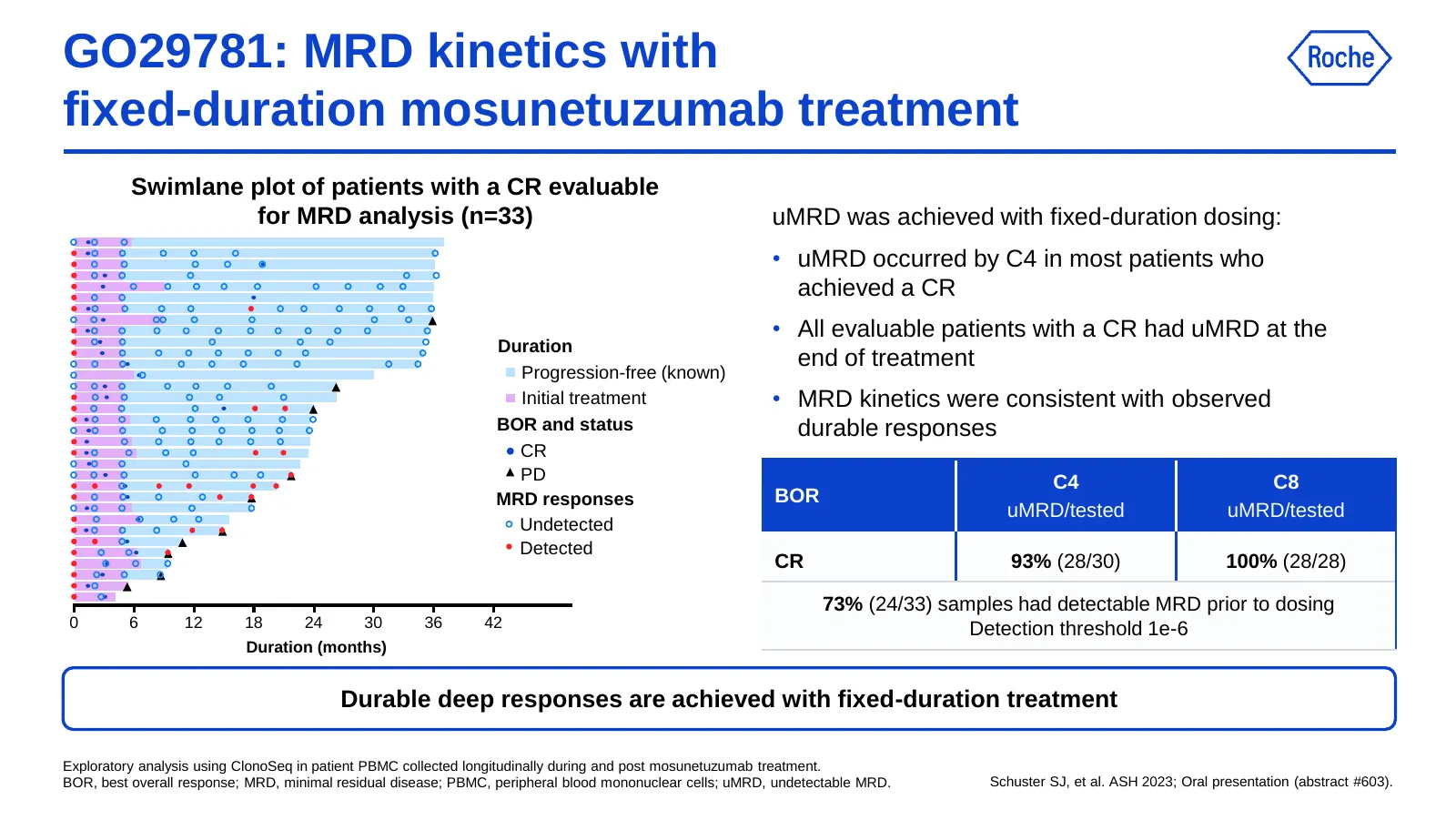
Slide 25: GO29781: MRD kinetics with fixed-duration mosunetuzumab treatment
GO29781: MRD kinetics with fixed-duration mosunetuzumab treatment Swimlane plot of patients with a CR evaluable for MRD analysis (n=33) uMRD was achieved with fixed-duration dosing: • uMRD occurred by C4 in most patients who achieved a CR • All evaluable patients with a CR had uMRD at the Duration e
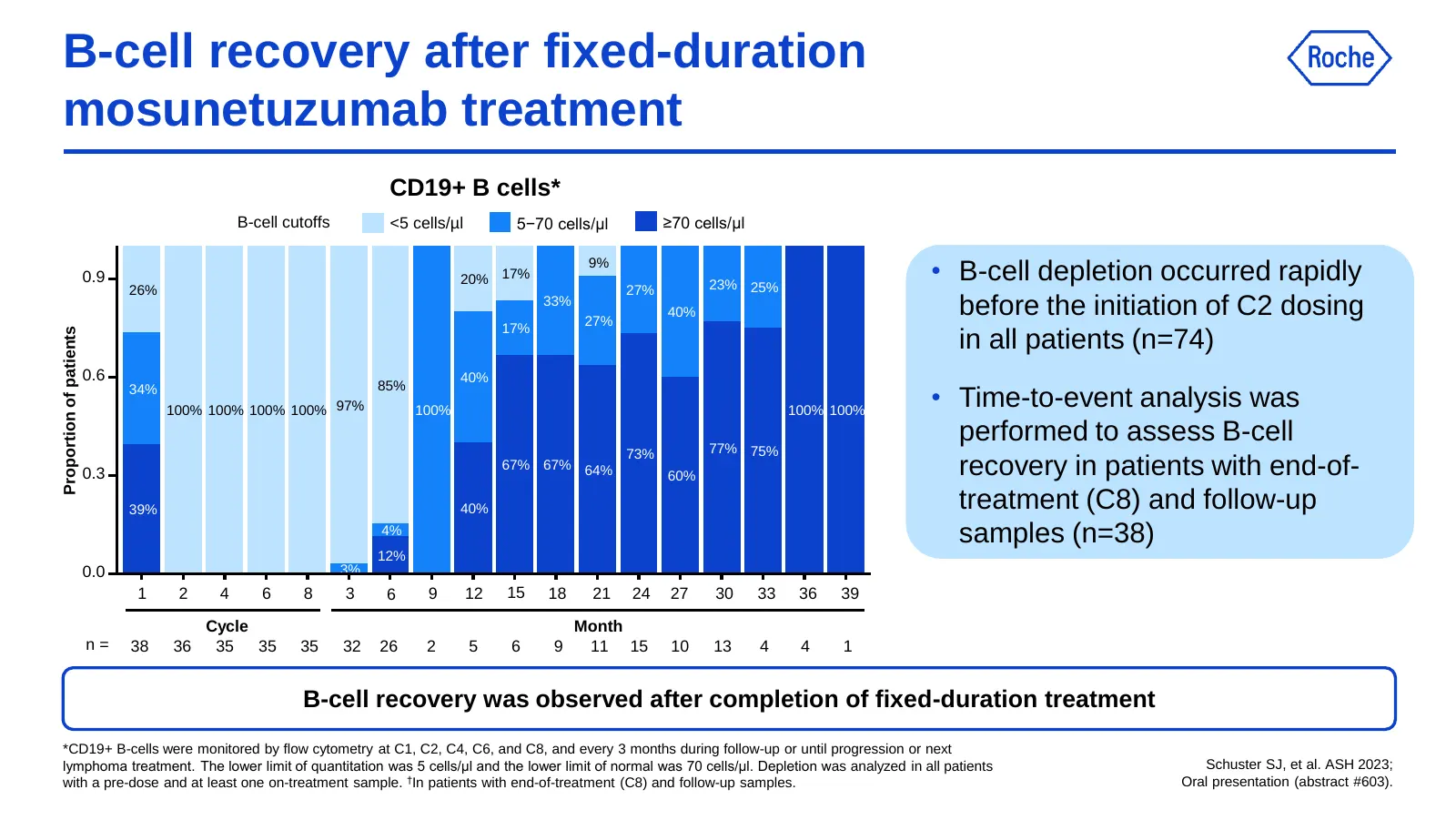
Slide 26: B-cell recovery after fixed-duration mosunetuzumab treatment
B-cell recovery after fixed-duration mosunetuzumab treatment CD19+ B cells* B-cell cutoffs <5 cells/µl 5−70 cells/µl ≥70 cells/µl 0.9 26% 20% 17% 9% 23% 25% • B-cell depletion occurred rapidly 27% 33% 27% 40% before the initiation of C2 dosing 17% Proportion of patients in all patients (n=74) 0.6 40
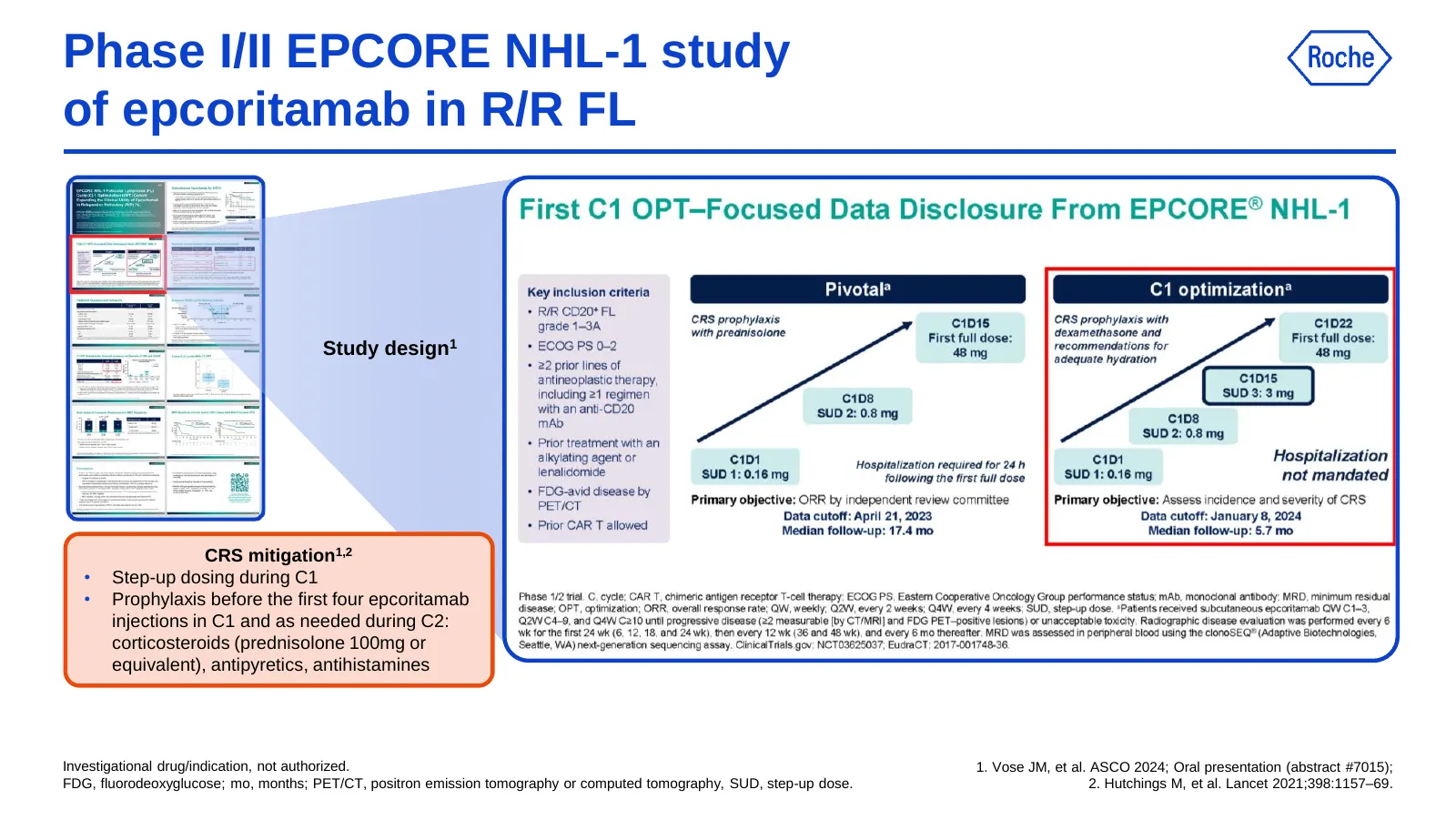
Slide 27: Phase I/II EPCORE NHL-1 study of epcoritamab in R/R FL
Phase I/II EPCORE NHL-1 study of epcoritamab in R/R FL Study design1 CRS mitigation1,2 • Step-up dosing during C1 • Prophylaxis before the first four epcoritamab injections in C1 and as needed during C2: corticosteroids (prednisolone 100mg or equivalent), antipyretics, antihistamines Investigational
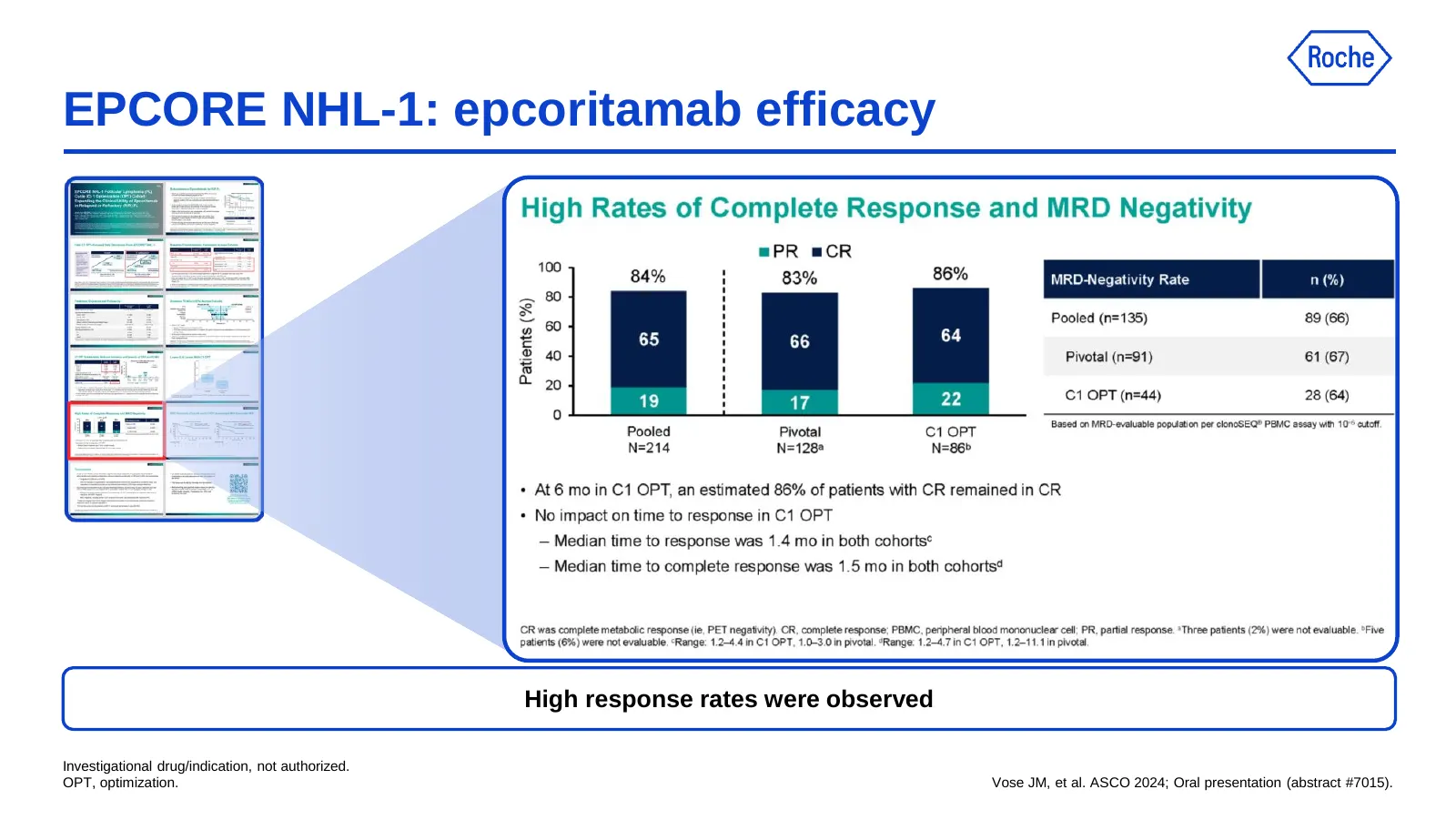
Slide 28: EPCORE NHL-1: epcoritamab efficacy
EPCORE NHL-1: epcoritamab efficacy High response rates were observed Investigational drug/indication, not authorized. OPT, optimization. Vose JM, et al. ASCO 2024; Oral presentation (abstract #7015).
Slide 29: EPCORE NHL-1: epcoritamab safety
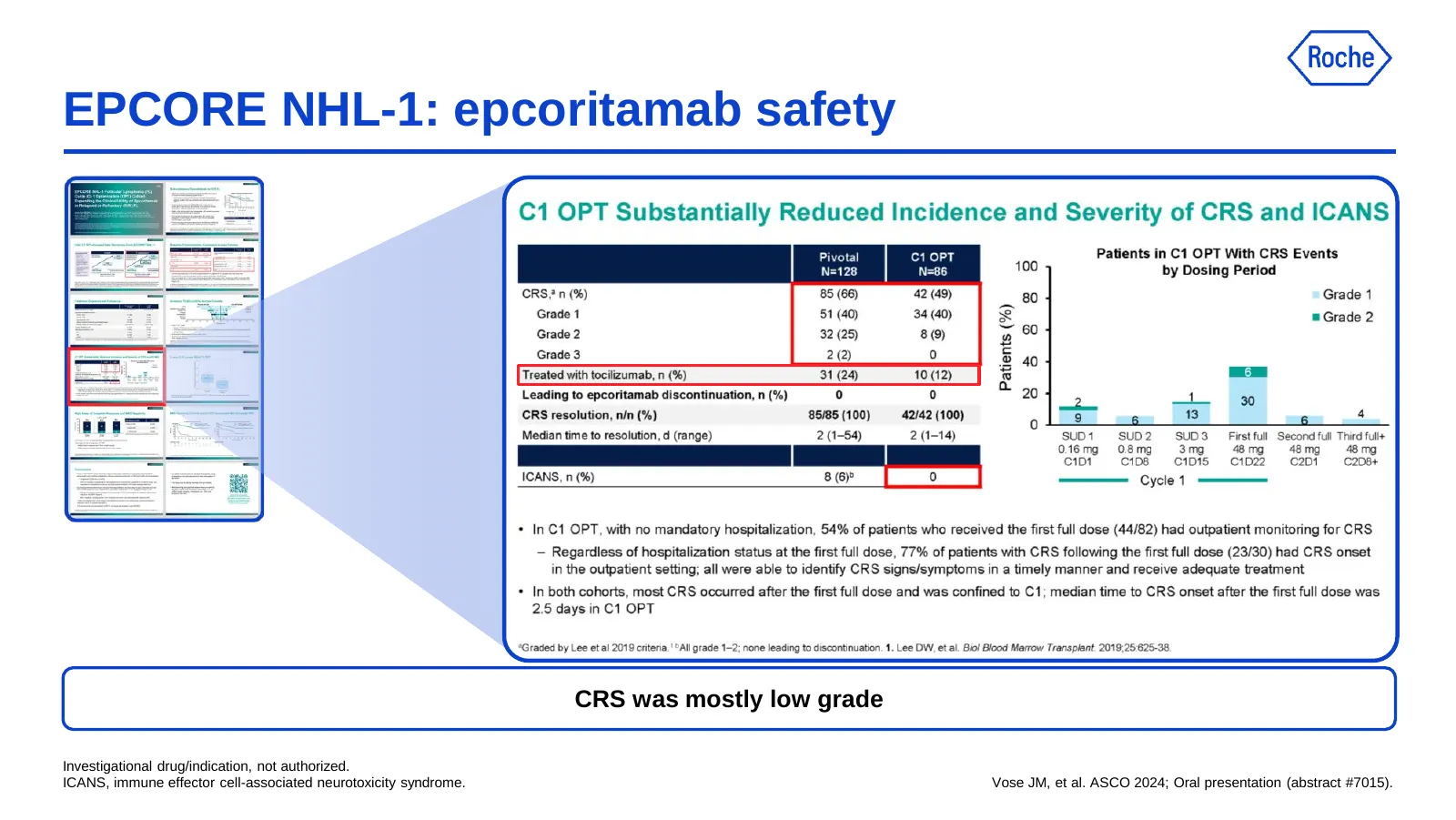
EPCORE NHL-1: epcoritamab safety CRS was mostly low grade Investigational drug/indication, not authorized. ICANS, immune effector cell-associated neurotoxicity syndrome. Vose JM, et al. ASCO 2024; Oral presentation (abstract #7015).
Slide 30: Phase I/II ELM-2 study of odronextamab in R/R FL
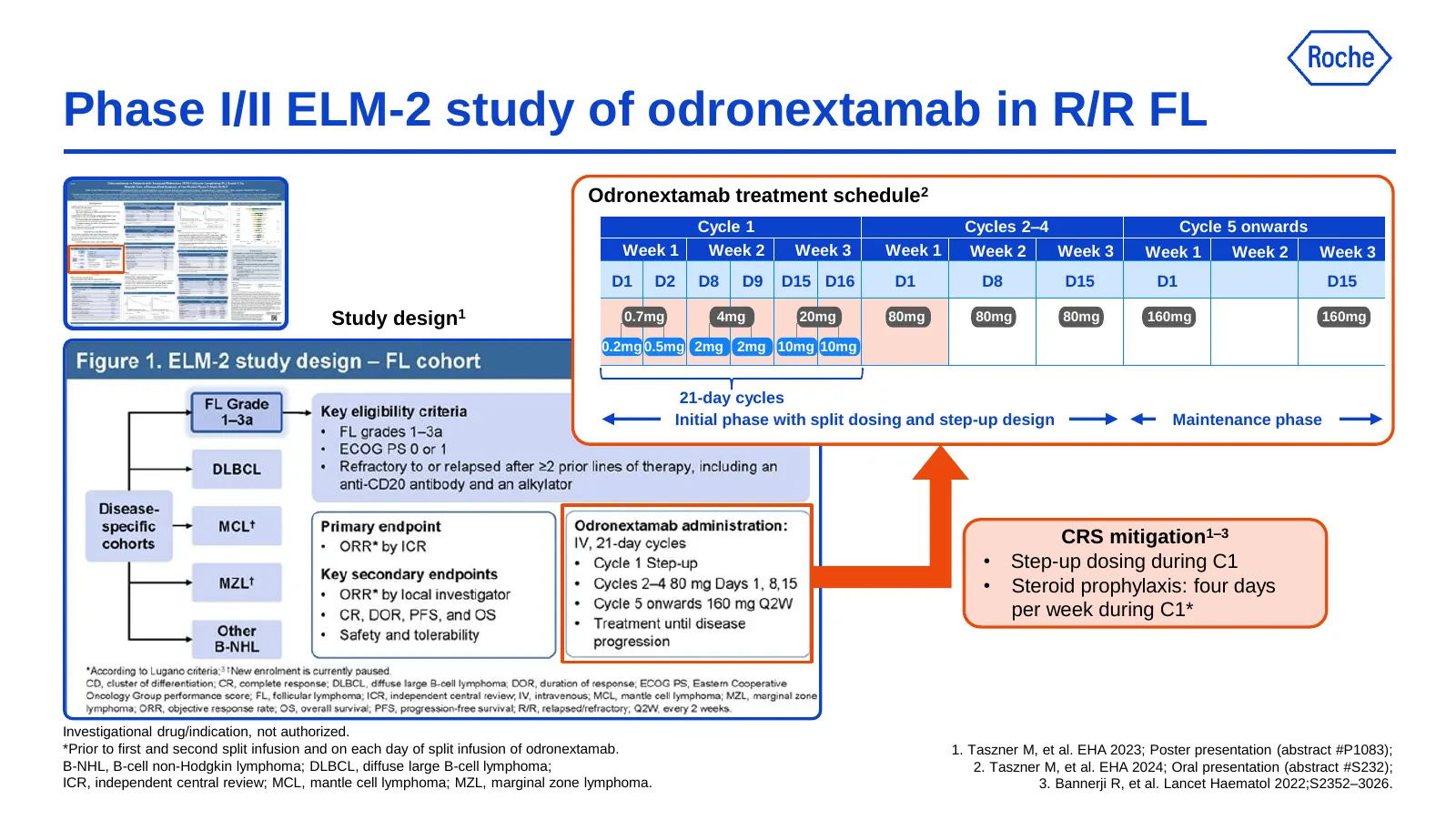
Phase I/II ELM-2 study of odronextamab in R/R FL Odronextamab treatment schedule2 Cycle 1 Cycles 2–4 Cycle 5 onwards Week 1 Week 2 Week 3 Week 1 Week 2 Week 3 Week 1 Week 2 Week 3 D1 D2 D8 D9 D15 D16 D1 D8 D15 D1 D15 Study design1 0.7mg 4mg 20mg 80mg 80mg 80mg 160mg 160mg 0.2mg 0.5mg 2mg 2mg 10mg 10
Slide 31: ELM-2: odronextamab efficacy and safety
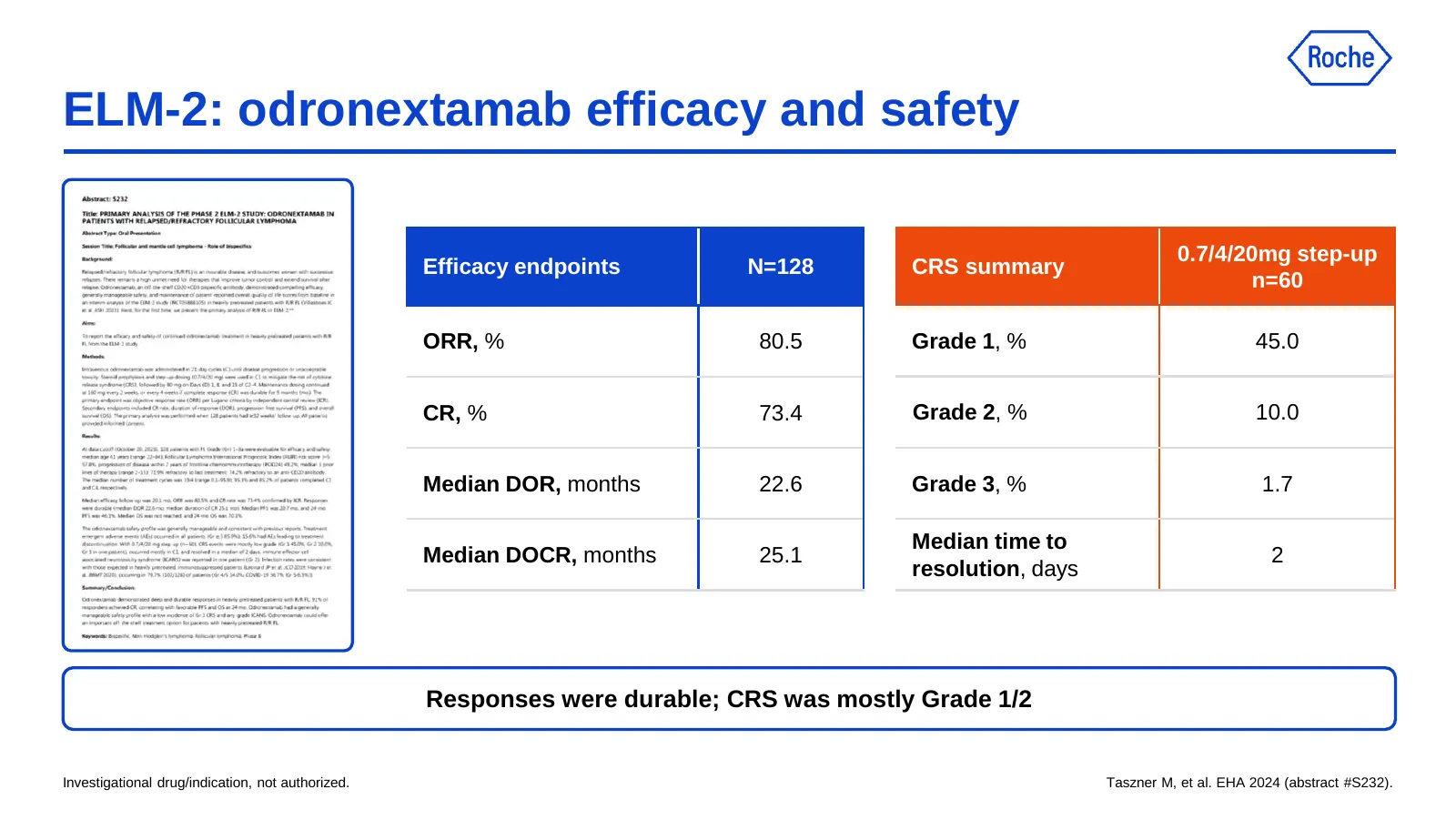
ELM-2: odronextamab efficacy and safety 0.7/4/20mg step-up Efficacy endpoints N=128 CRS summary n=60 ORR, % 80.5 Grade 1, % 45.0 CR, % 73.4 Grade 2, % 10.0 Median DOR, months 22.6 Grade 3, % 1.7 Median time to Median DOCR, months 25.1 2 resolution, days Responses were durable; CRS was mostly Grade 1
Slide 32: Summary
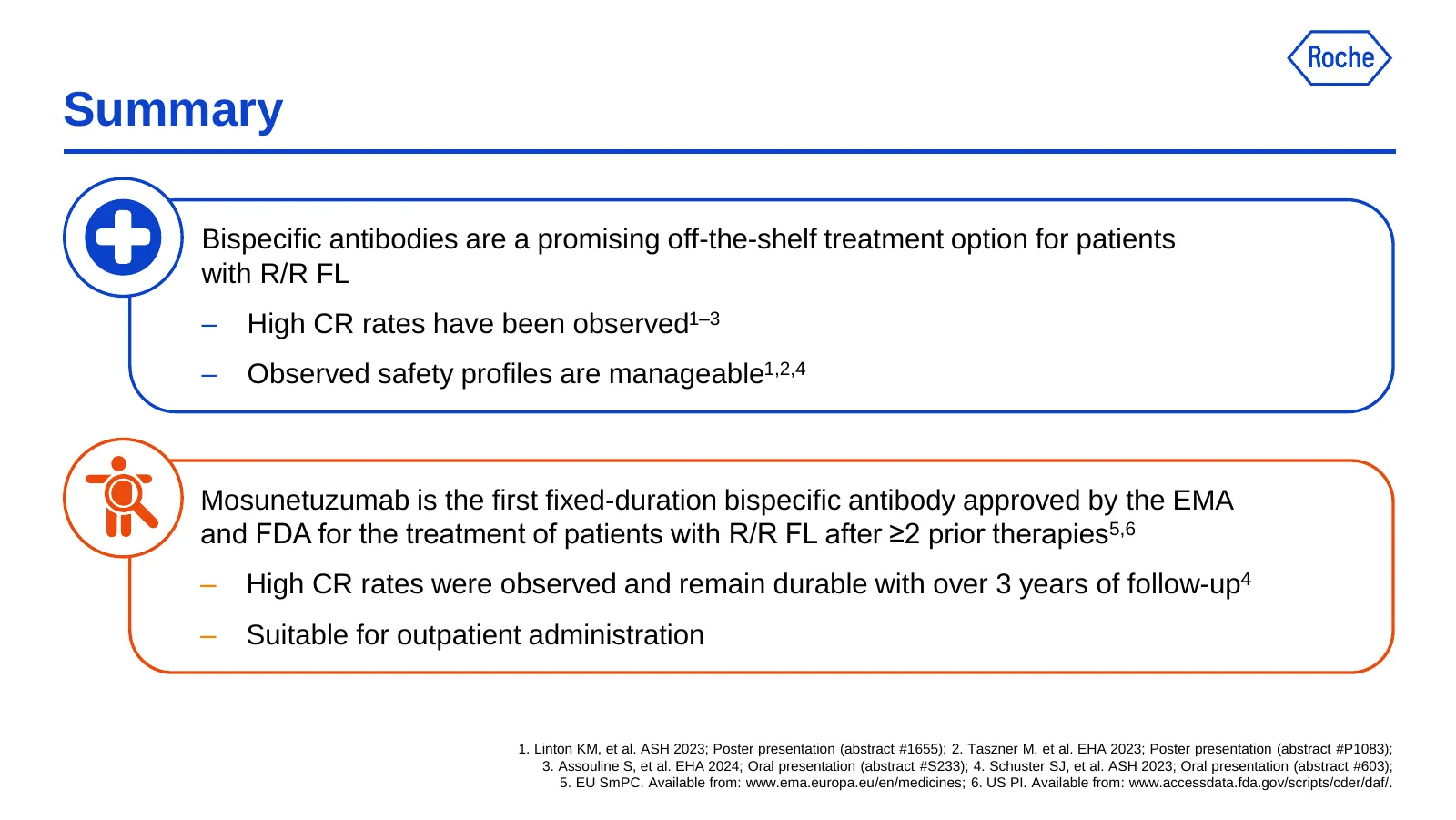
Summary Bispecific antibodies are a promising off-the-shelf treatment option for patients with R/R FL – High CR rates have been observed1–3 – Observed safety profiles are manageable1,2,4 Mosunetuzumab is the first fixed-duration bispecific antibody approved by the EMA and FDA for the treatment of pa
Slide 33: How can we maximize the potential of bispecific antibodies in R/R FL?
How can we maximize the potential of bispecific antibodies in relapsed/refractory follicular lymphoma? Prof. Sascha Dietrich UKD Universitätsklinikum, Düsseldorf, Germany
Slide 34: Disclosures
Disclosures • Consultancy: F. Hoffmann-La Roche Ltd, Gilead/Kite Pharma
Slide 35: Building on the benefits of monotherapy
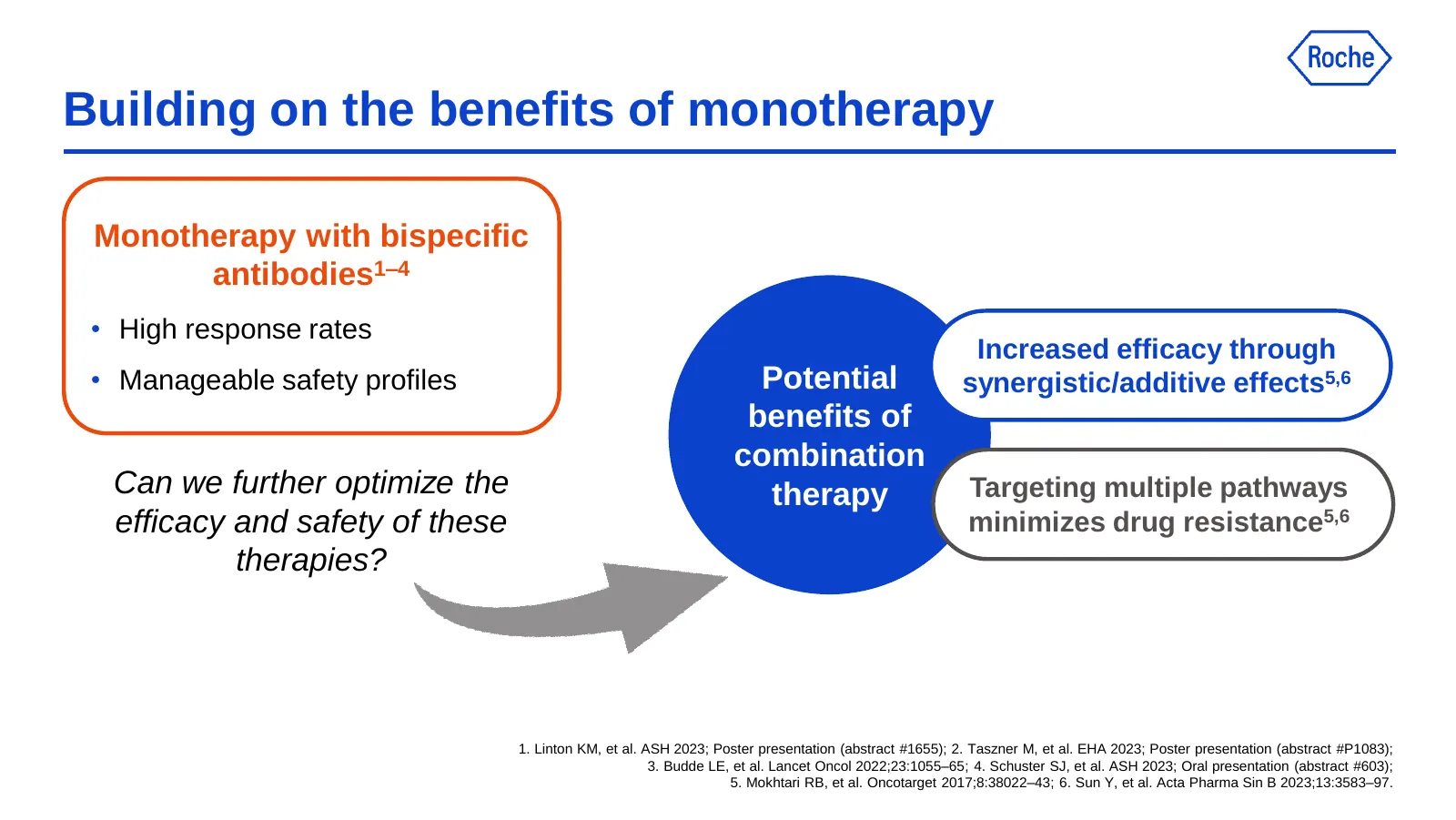
Building on the benefits of monotherapy Monotherapy with bispecific antibodies1–4 • High response rates Increased efficacy through • Manageable safety profiles Potential synergistic/additive effects5,6 benefits of combination Can we further optimize the therapy Targeting multiple pathways efficacy a
Slide 36: Rationale for combinations with lenalidomide
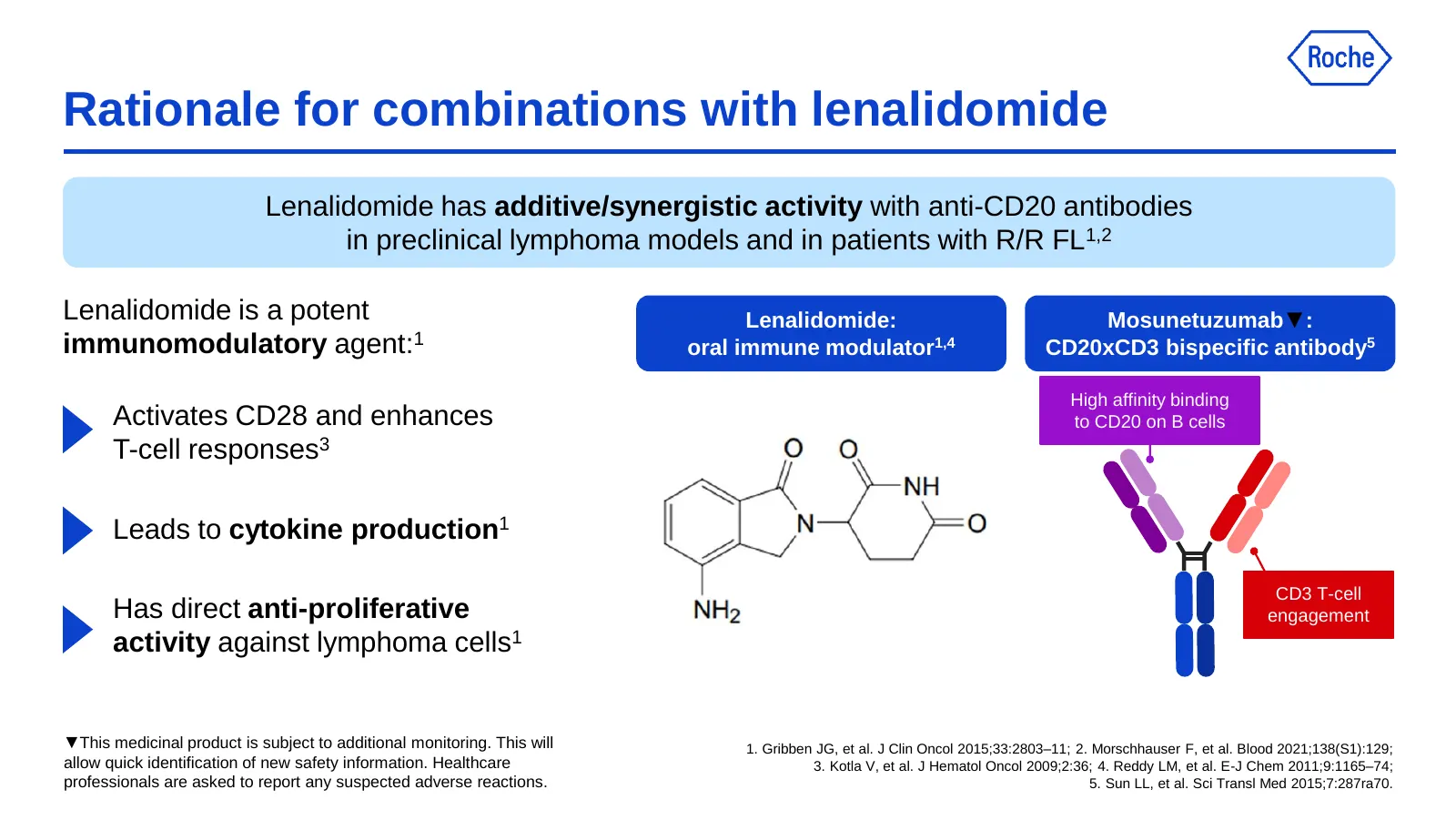
Rationale for combinations with lenalidomide Lenalidomide has additive/synergistic activity with anti-CD20 antibodies in preclinical lymphoma models and in patients with R/R FL1,2 Lenalidomide is a potent Lenalidomide: Mosunetuzumab▼: immunomodulatory agent:1 oral immune modulator1,4 CD20xCD3 bispec
Slide 37: Bispecific antibody combination therapy in R/R FL
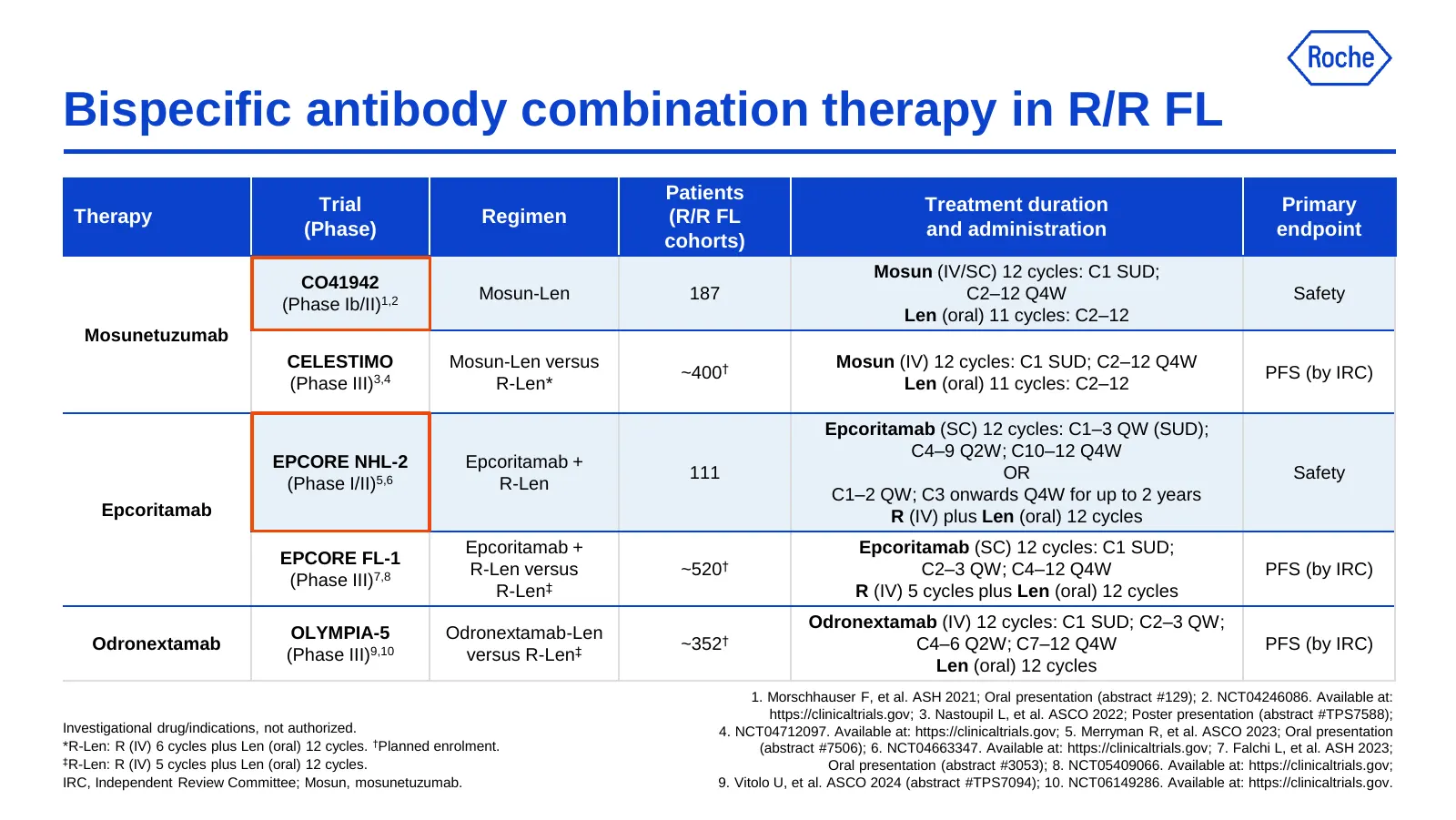
Bispecific antibody combination therapy in R/R FL Patients Trial Treatment duration Primary Therapy Regimen (R/R FL (Phase) and administration endpoint cohorts) Mosun (IV/SC) 12 cycles: C1 SUD; CO41942 Mosun-Len 187 C2–12 Q4W Safety (Phase Ib/II)1,2 Len (oral) 11 cycles: C2–12 Mosunetuzumab CELESTIM
Slide 38: Phase Ib CO41942 trial of Mosun-Len in R/R FL
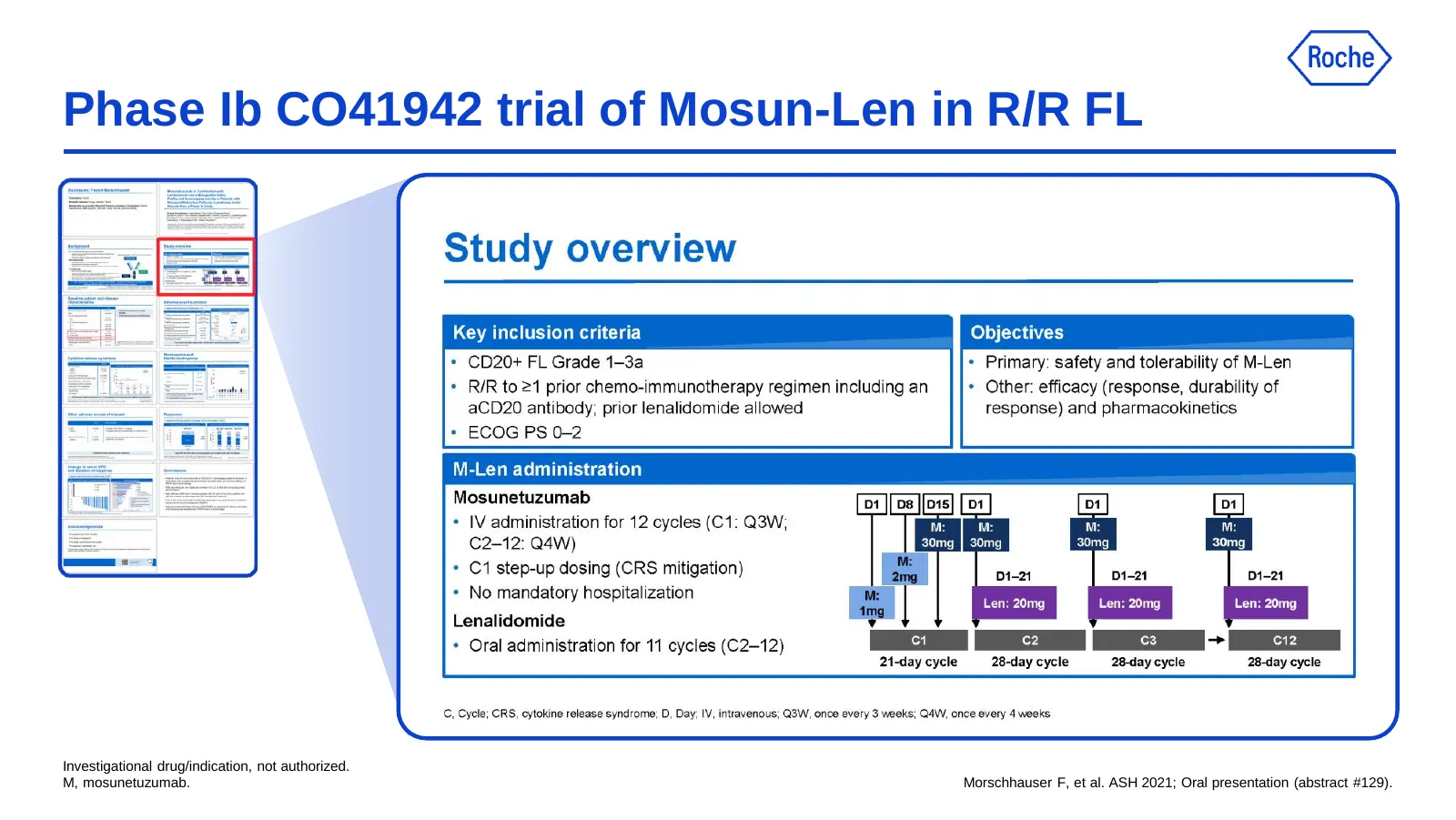
Phase Ib CO41942 trial of Mosun-Len in R/R FL Investigational drug/indication, not authorized. M, mosunetuzumab. Morschhauser F, et al. ASH 2021; Oral presentation (abstract #129).
Slide 39: Mosun-Len in R/R FL: efficacy
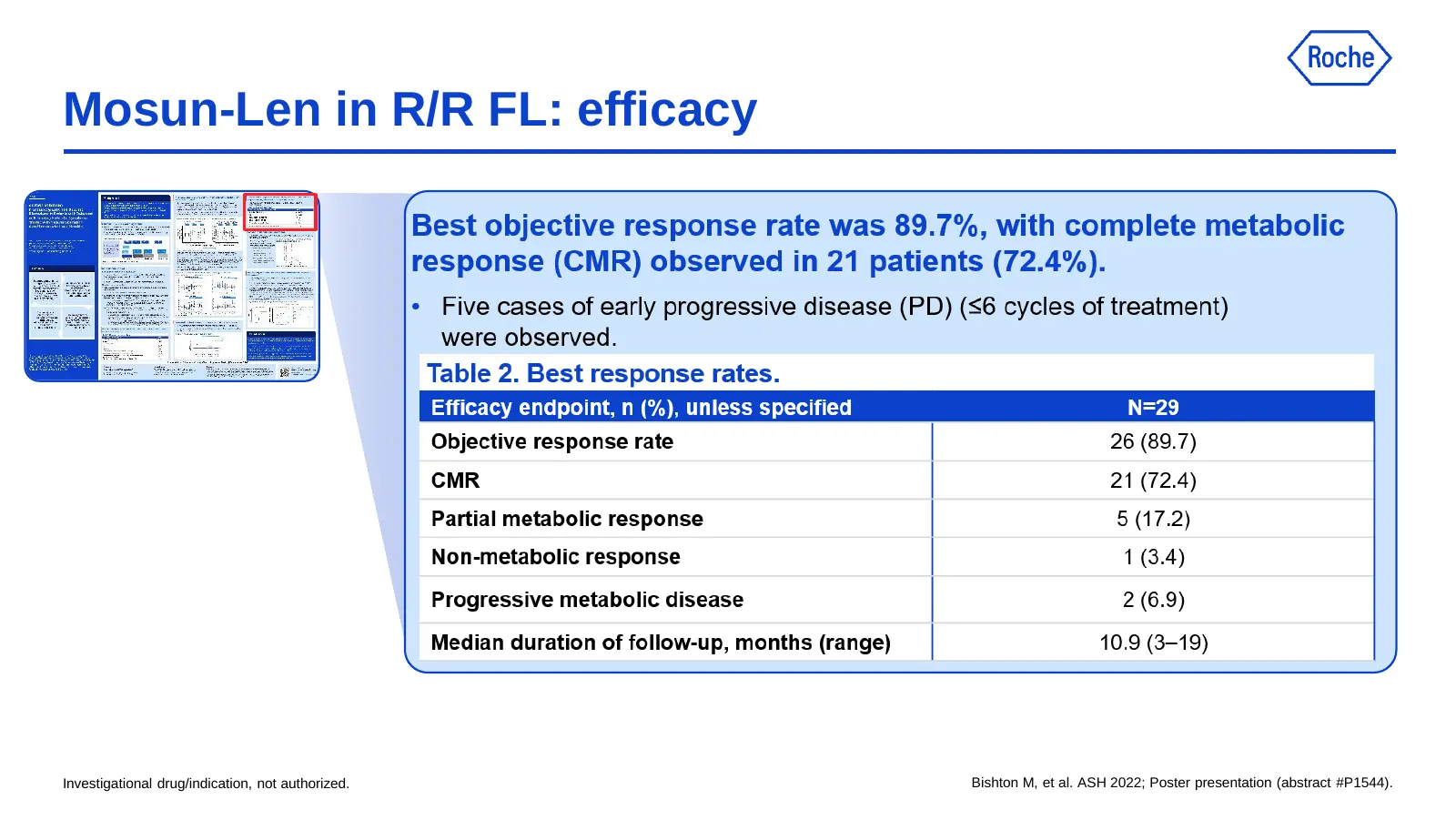
Mosun-Len in R/R FL: efficacy Investigational drug/indication, not authorized. Bishton M, et al. ASH 2022; Poster presentation (abstract #P1544).
Slide 40: Mosun-Len in R/R FL: AE summary
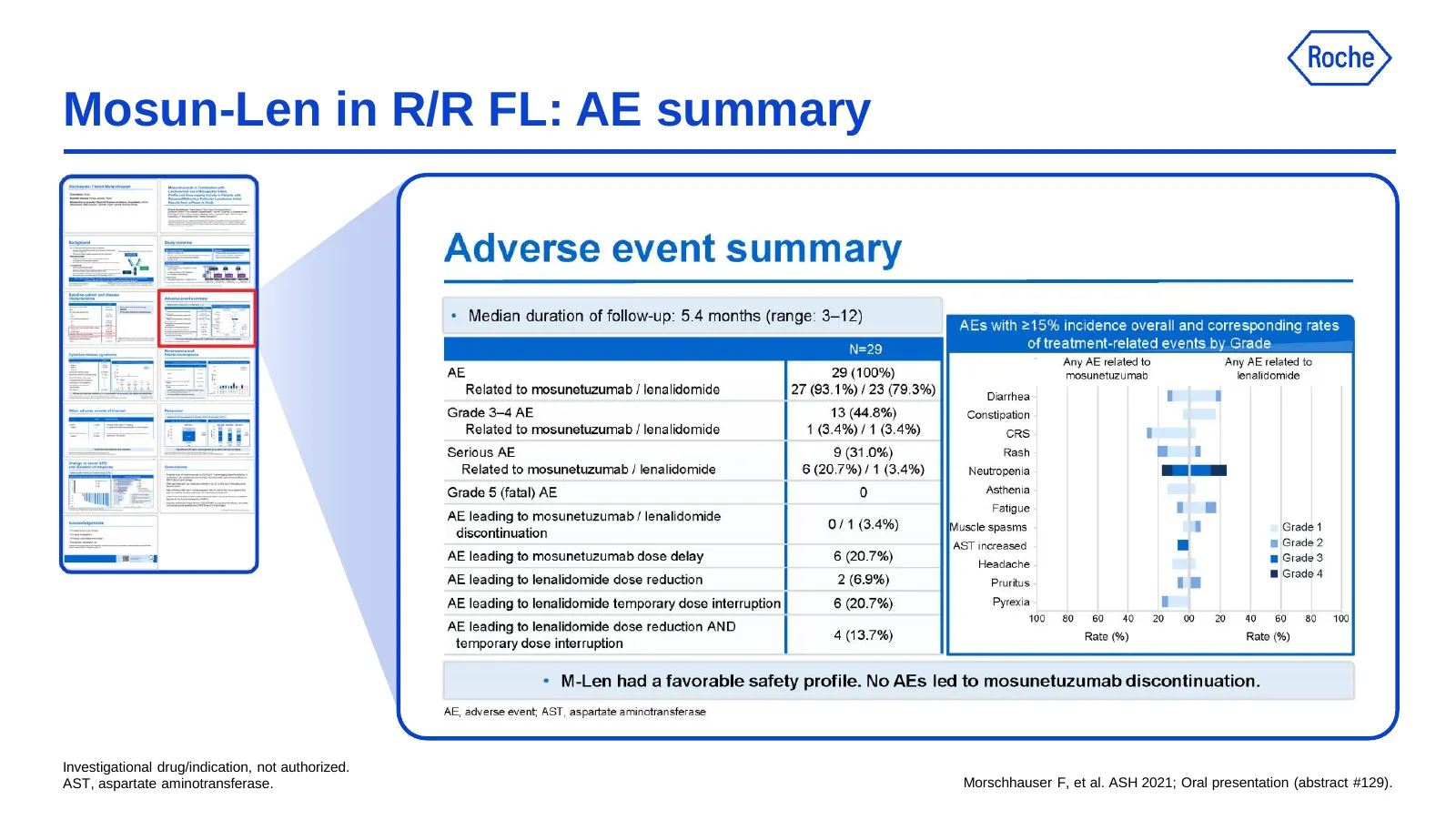
Mosun-Len in R/R FL: AE summary Investigational drug/indication, not authorized. AST, aspartate aminotransferase. Morschhauser F, et al. ASH 2021; Oral presentation (abstract #129).
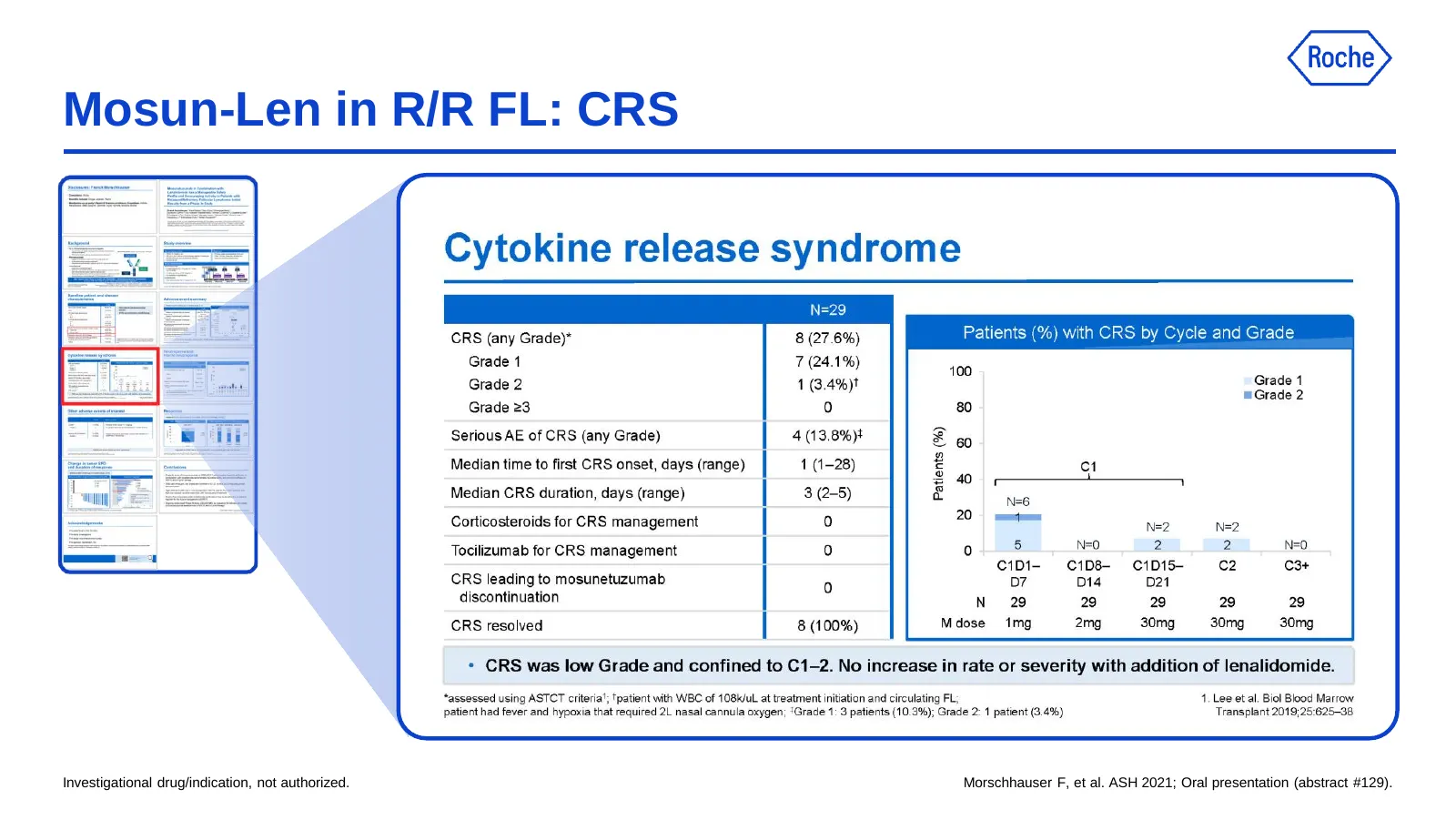
Slide 41: Mosun-Len in R/R FL: CRS
Mosun-Len in R/R FL: CRS Investigational drug/indication, not authorized. Morschhauser F, et al. ASH 2021; Oral presentation (abstract #129).
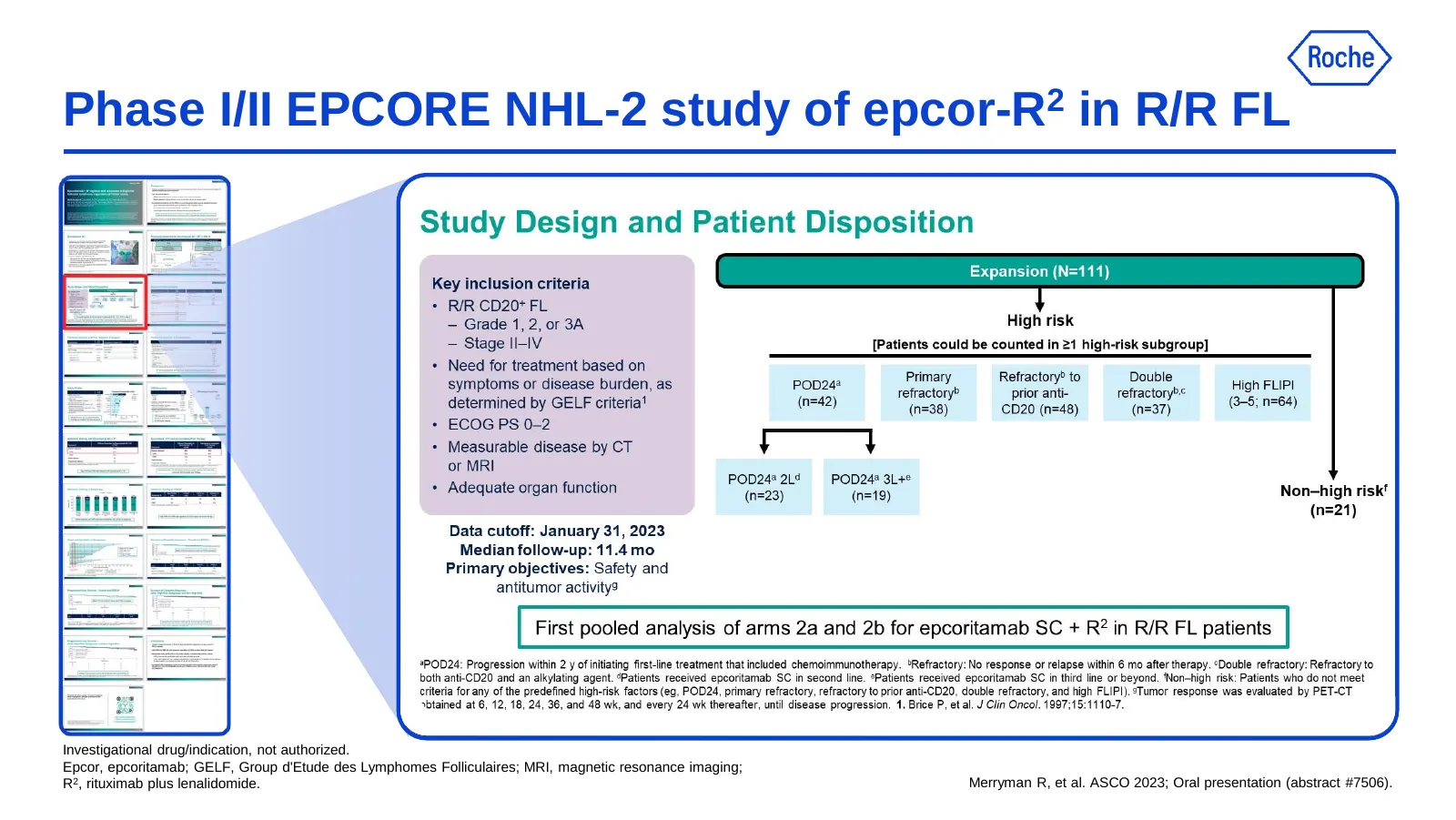
Slide 42: Phase I/II EPCORE NHL-2 study of epcor-R2 in R/R FL
Phase I/II EPCORE NHL-2 study of epcor-R2 in R/R FL Investigational drug/indication, not authorized. Epcor, epcoritamab; GELF, Group d'Etude des Lymphomes Folliculaires; MRI, magnetic resonance imaging; R2, rituximab plus lenalidomide. Merryman R, et al. ASCO 2023; Oral presentation (abstract #7506)
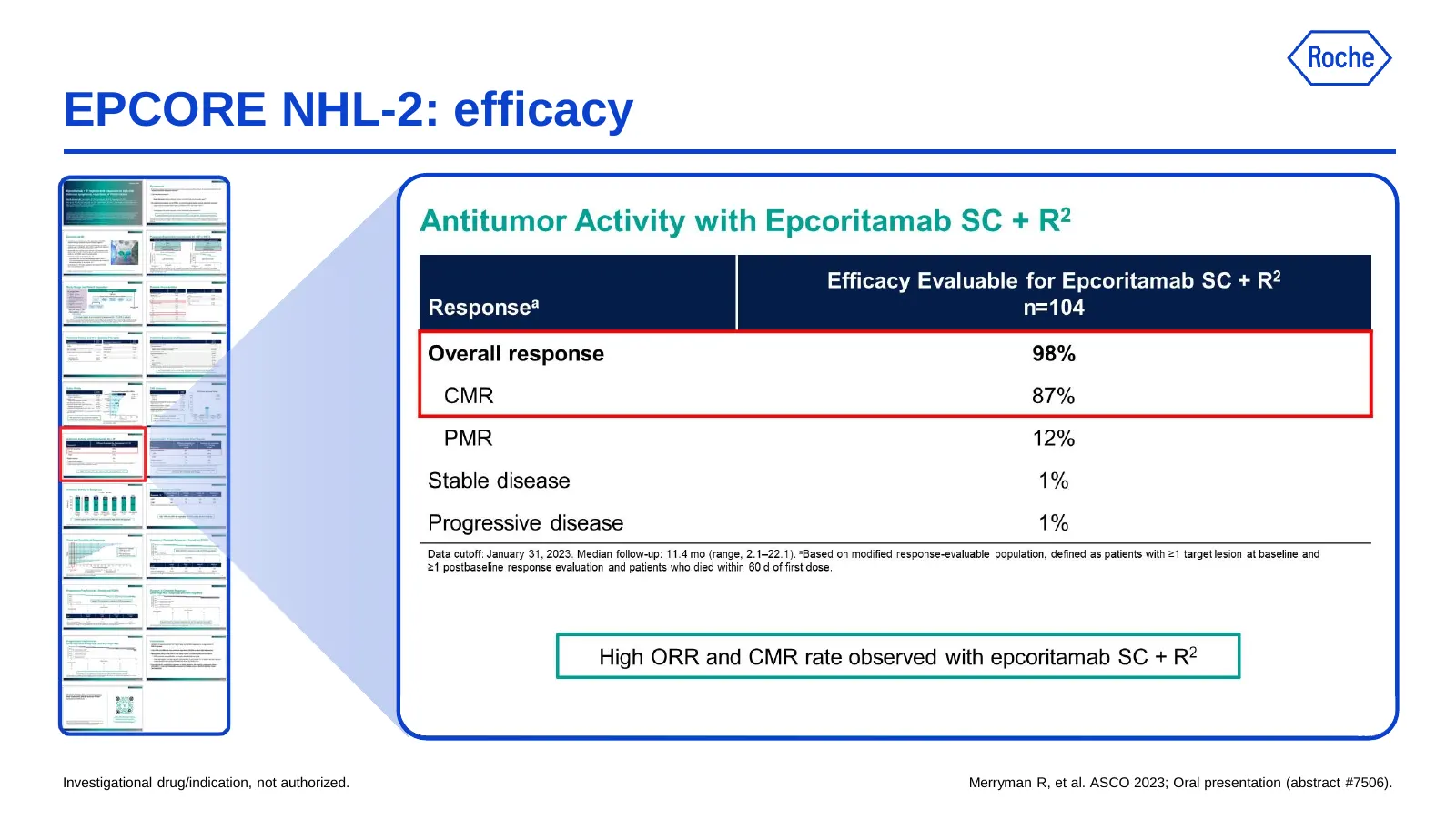
Slide 43: EPCORE NHL-2: efficacy
EPCORE NHL-2: efficacy Investigational drug/indication, not authorized. Merryman R, et al. ASCO 2023; Oral presentation (abstract #7506).
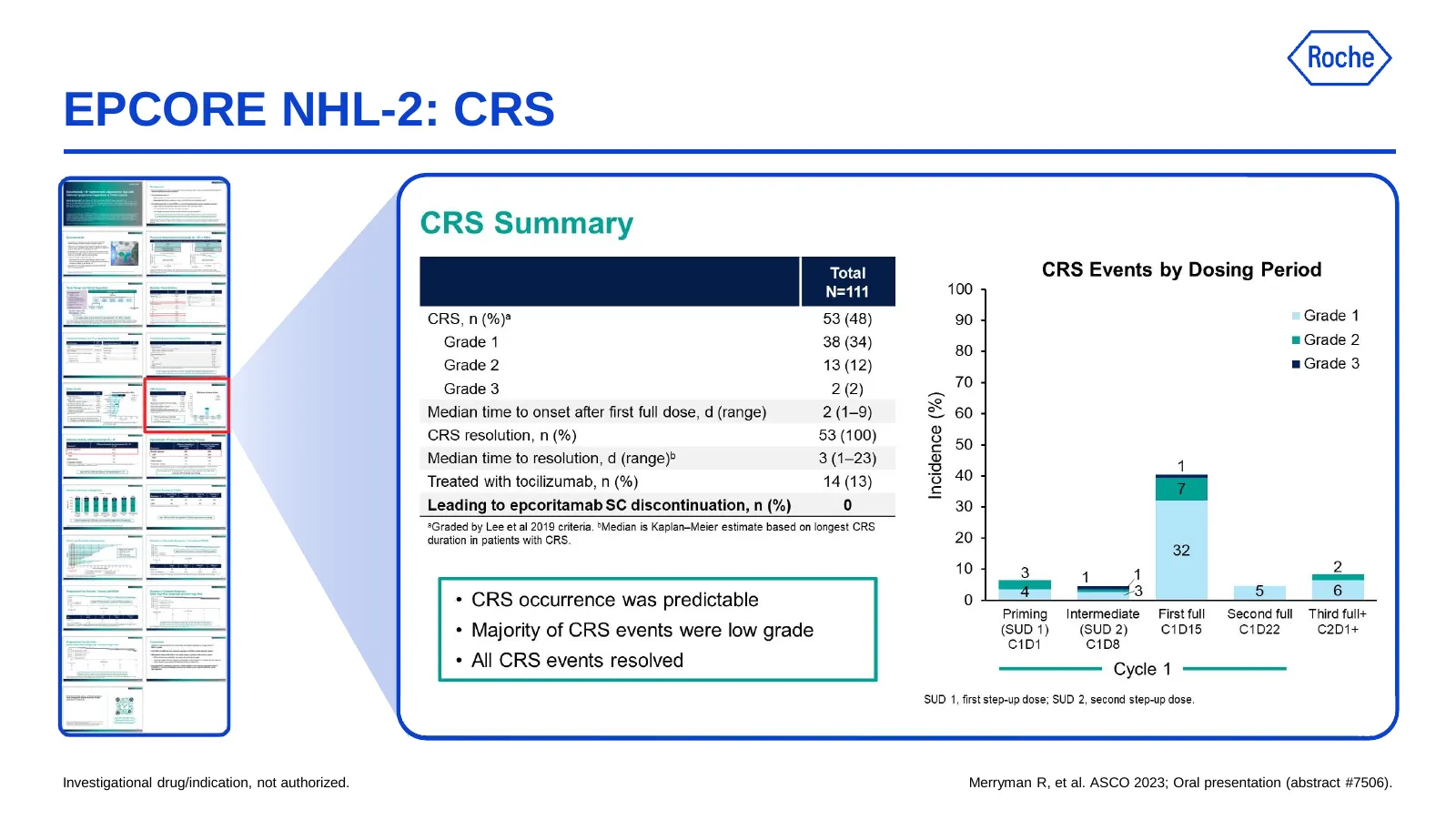
Slide 44: EPCORE NHL-2: CRS
EPCORE NHL-2: CRS Investigational drug/indication, not authorized. Merryman R, et al. ASCO 2023; Oral presentation (abstract #7506).
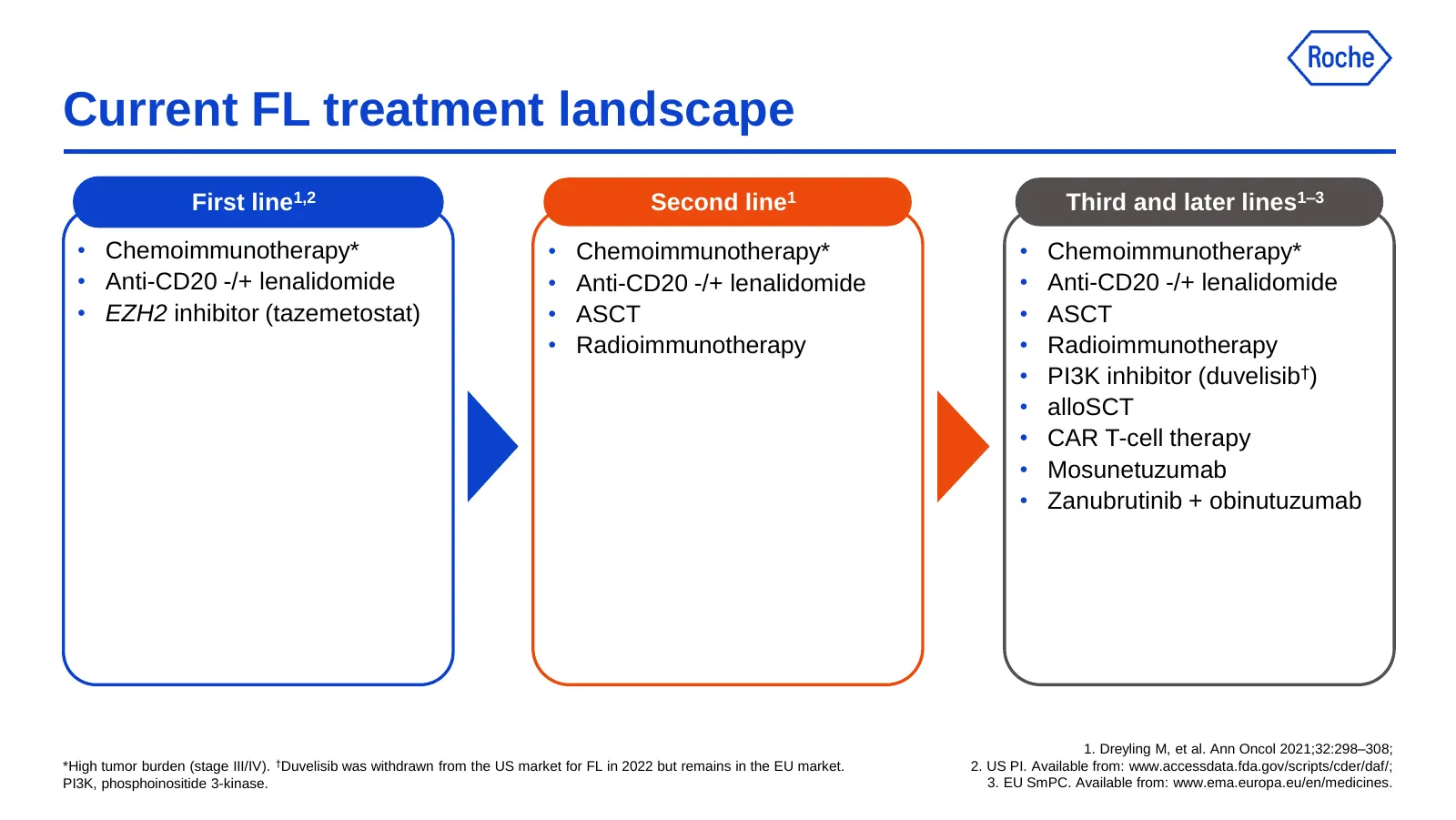
Slide 45: Current FL treatment landscape
Current FL treatment landscape First line1,2 Second line1 Third and later lines1–3 • Chemoimmunotherapy* • Chemoimmunotherapy* • Chemoimmunotherapy* • Anti-CD20 -/+ lenalidomide • Anti-CD20 -/+ lenalidomide • Anti-CD20 -/+ lenalidomide • EZH2 inhibitor (tazemetostat) • ASCT • ASCT • Radioimmunothera
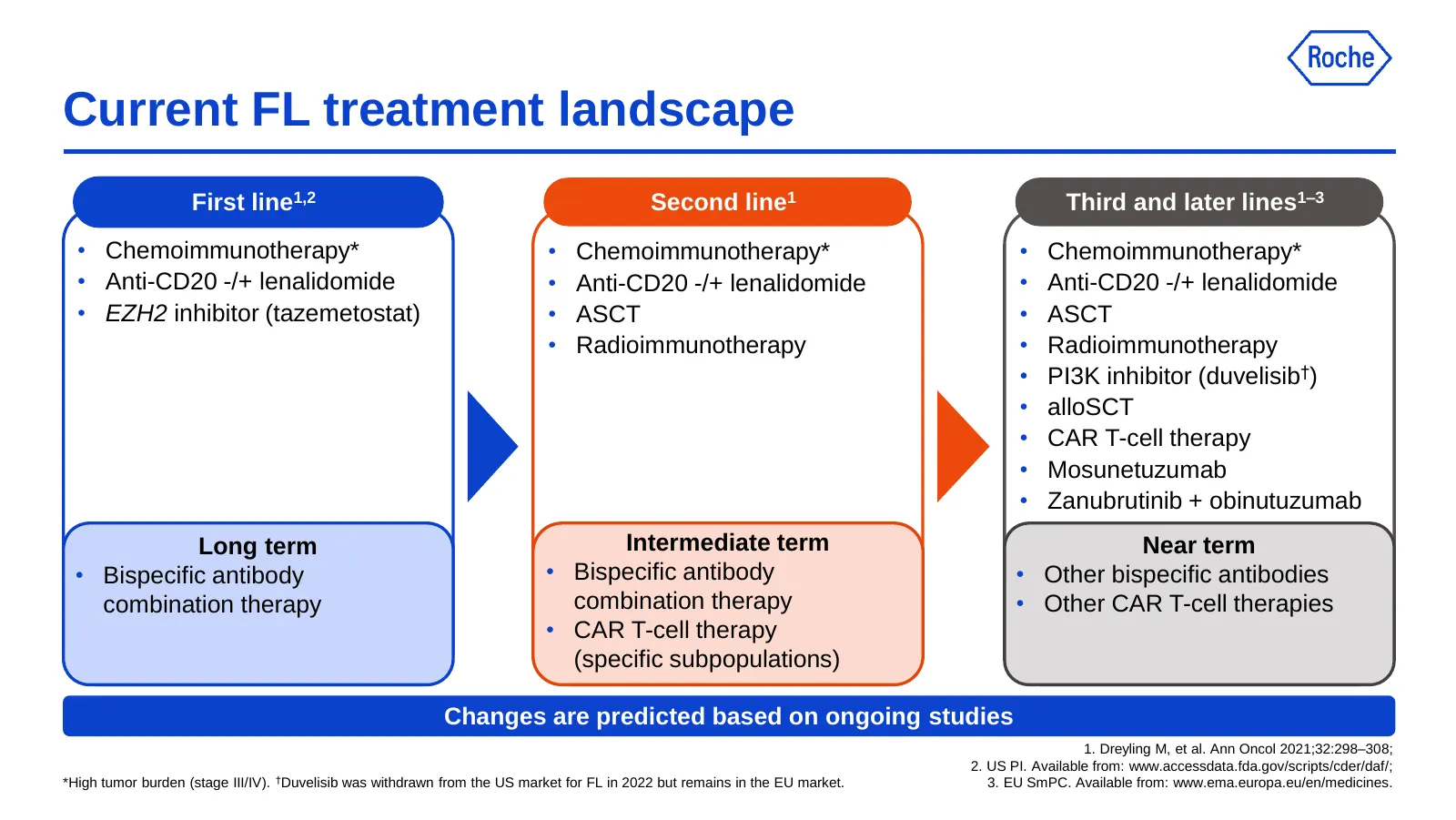
Slide 46: Current FL treatment landscape
Current FL treatment landscape First line1,2 Second line1 Third and later lines1–3 • Chemoimmunotherapy* • Chemoimmunotherapy* • Chemoimmunotherapy* • Anti-CD20 -/+ lenalidomide • Anti-CD20 -/+ lenalidomide • Anti-CD20 -/+ lenalidomide • EZH2 inhibitor (tazemetostat) • ASCT • ASCT • Radioimmunothera
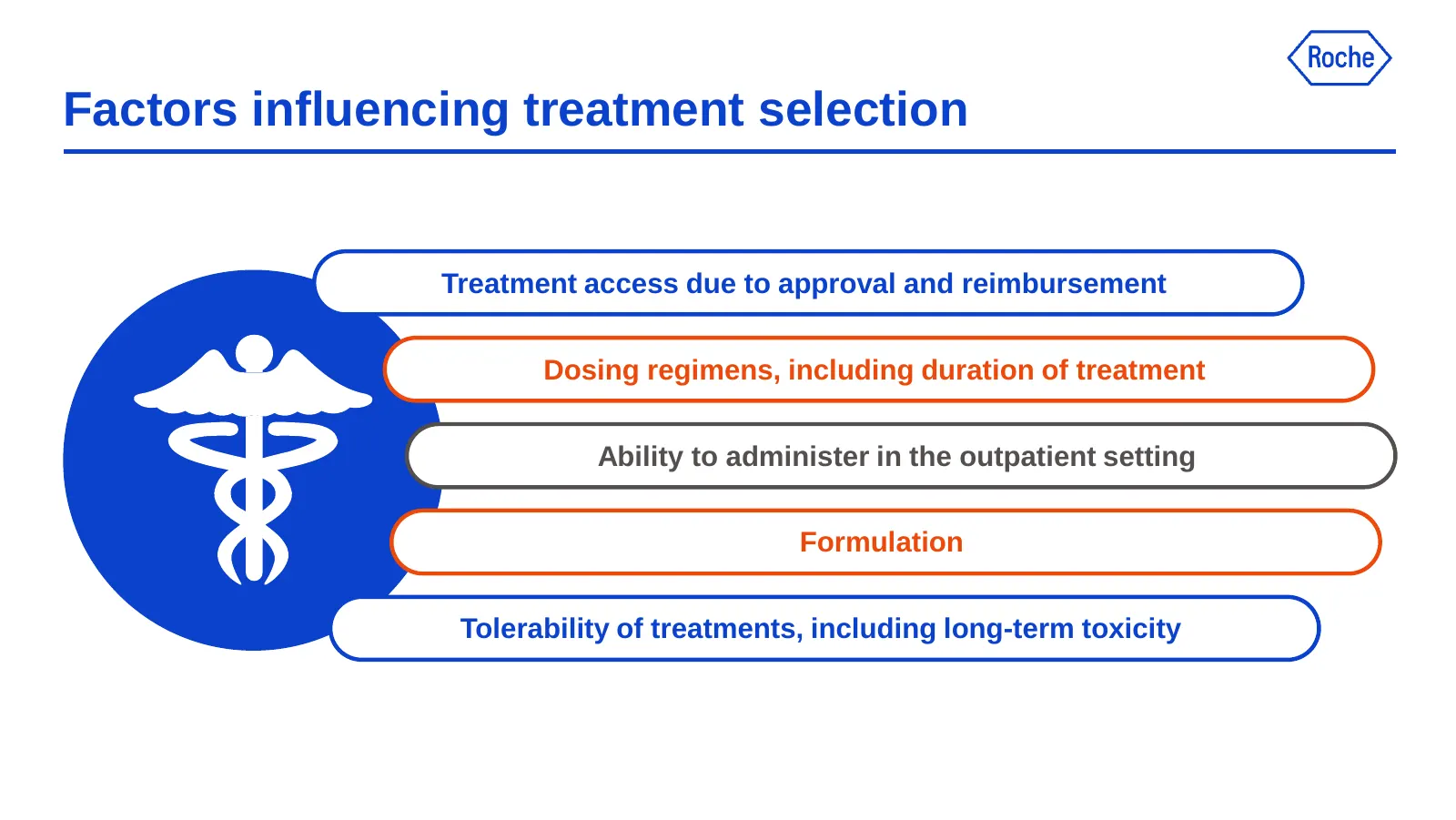
Slide 47: Factors influencing treatment selection
Factors influencing treatment selection Treatment access due to approval and reimbursement Dosing regimens, including duration of treatment Ability to administer in the outpatient setting Formulation Tolerability of treatments, including long-term toxicity
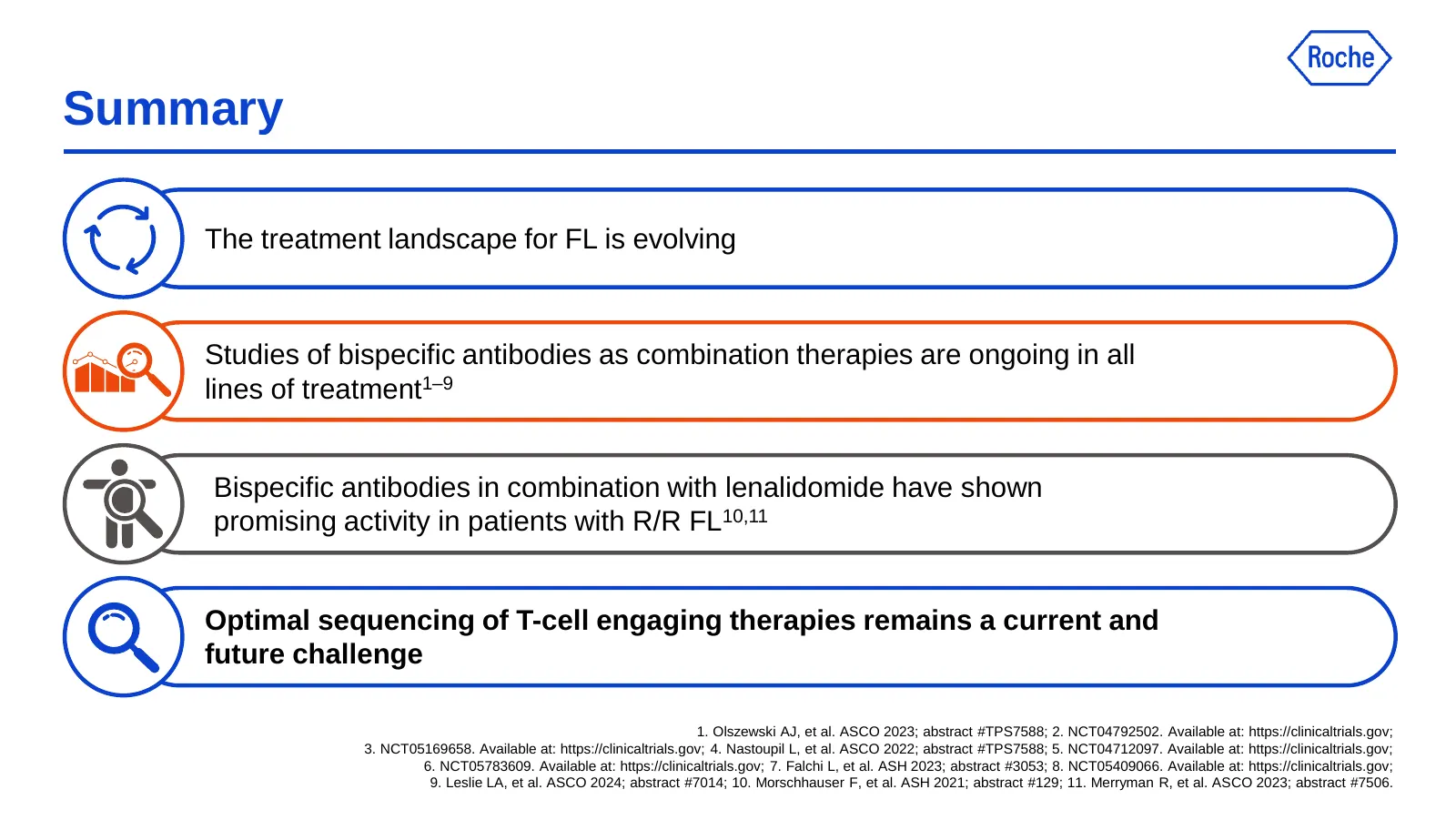
Slide 48: Summary
Summary • The treatment landscape for FL is evolving • Studies of bispecific antibodies as combination therapies are ongoing in all lines of treatment1–9 • Bispecific antibodies in combination with lenalidomide have shown promising activity in patients with R/R FL10,11 • Optimal sequencing of T-cell
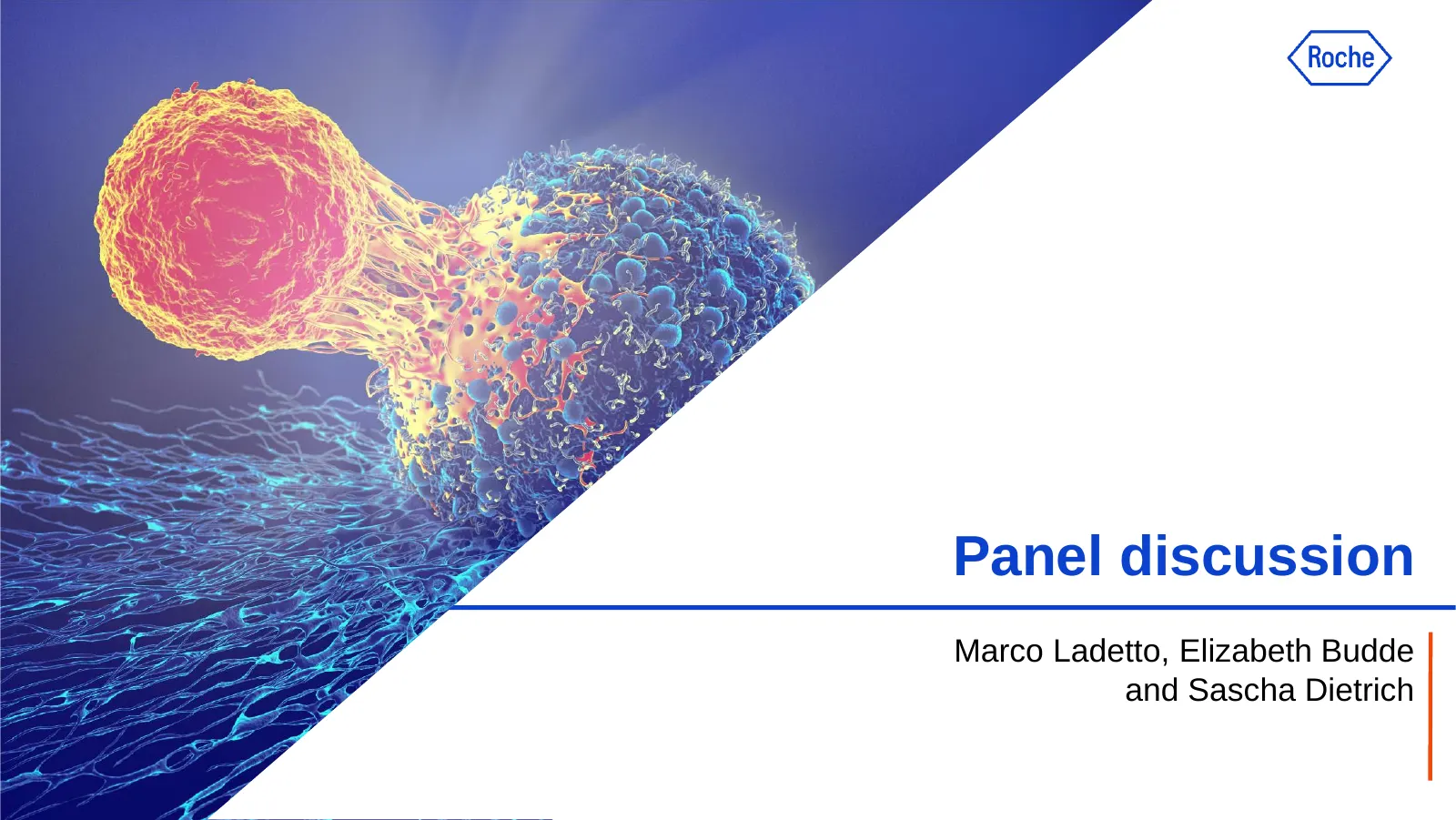
Slide 49: Panel discussion
Panel discussion Marco Ladetto, Elizabeth Budde and Sascha Dietrich
Slide 50: Panel discussion
Panel discussion To submit questions: • Please scan the QR code • Microphones are also available
Slide 51: Thank you for your attendance and contributions!
Thank you for your attendance and contributions! We value your feedback! Please complete a short evaluation form to help shape future events that meet your needs by scanning the QR code Please also use our instant feedback buttons at the meeting room exit!
Source: Internet Archive copy of medically.roche.com
More decks from Roche Holding Ltd
 UBS European Conference 202624 slides · Nov 10, 2026
 YTD September 2026 Earnings Presentation155 slides · Oct 22, 2026
 YTD Sep 2026 Earnings Presentation55 slides · Oct 22, 2026
 H1 2026 Earnings Presentation170 slides · Jul 23, 2026
 H1 2026 Earnings Presentation70 slides · Jul 23, 2026
 ADA 2026 Virtual Obesity IR Event41 slides · Jun 8, 2026