Arena Pharmaceuticals — JP Morgan Healthcare Conference 2017
28 slides from Arena Pharmaceuticals's conference presentation, Jan 6, 2017

Slide 1: Corporate Presentation – JP Morgan Healthcare Conference
Non-Confidential January 2017 Corporate Presentation JP Morgan Healthcare Conference Exhibit 99.1
Slide 2: Forward-Looking Statements
Forward-Looking Statements This presentation includes forward-looking statements that involve a number of risks and uncertainties, including statements about our focus, goals, strategy, plans, timelines and guidance; research and development (R&D) programs and BELVIQ, including with respect to poten
Slide 3: Arena Evolved Executive Summary
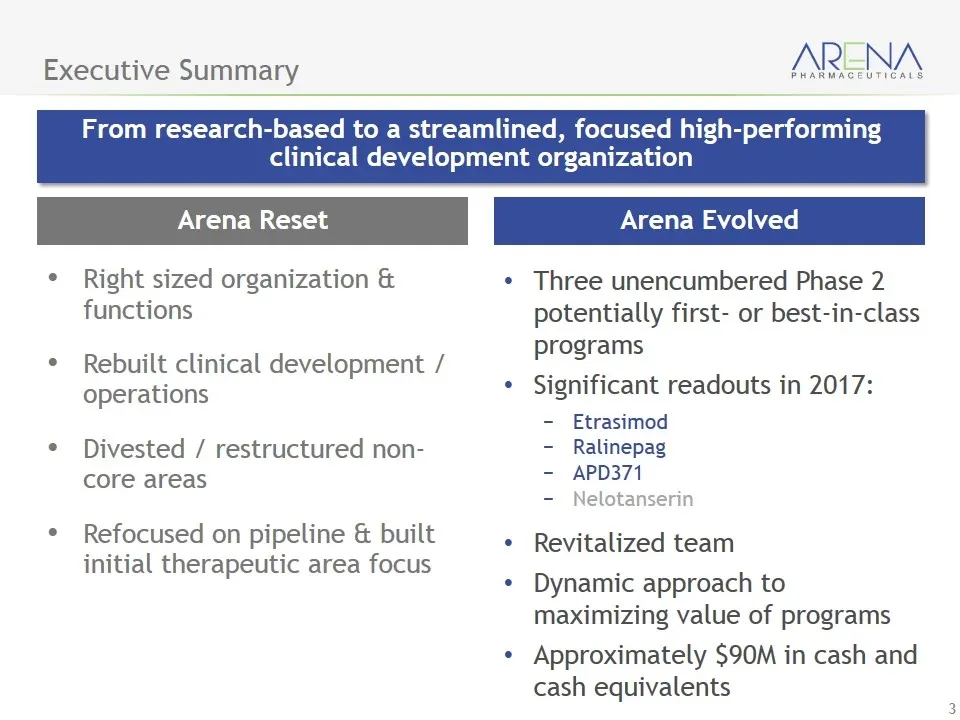
Arena Evolved Executive Summary From research-based to a streamlined, focused high-performing clinical development organization Three unencumbered Phase 2 potentially first- or best-in-class programs Significant readouts in 2017: Etrasimod Ralinepag APD371 Nelotanserin Revitalized team Dynamic appro
Slide 4: Research Platform and Belviq Restructuring Reducing Costs on Non-Core Assets
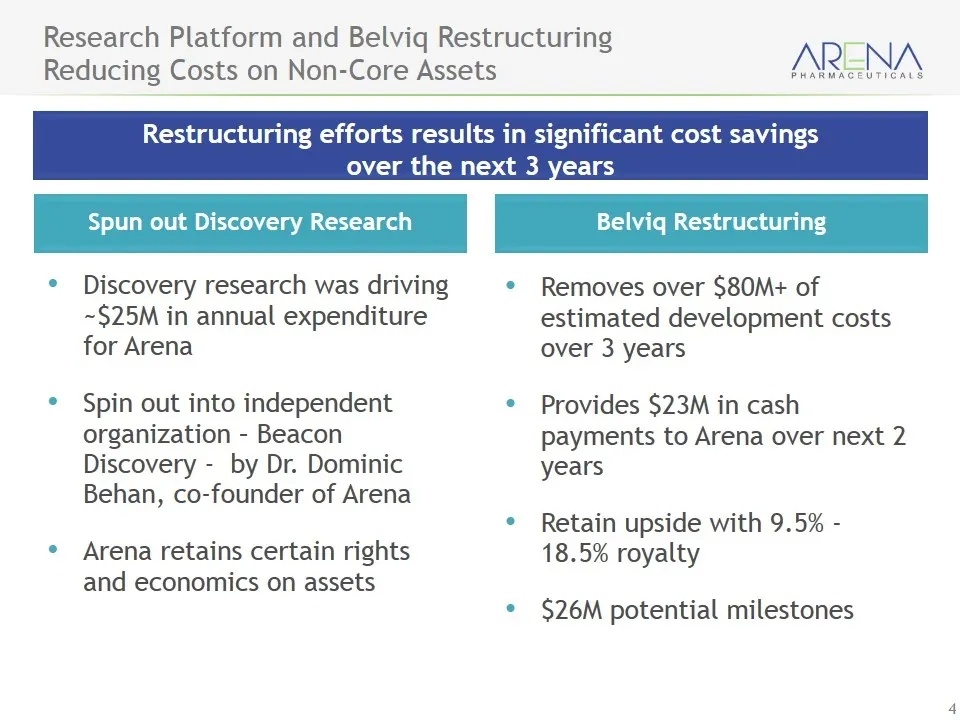
Research Platform and Belviq Restructuring Reducing Costs on Non-Core Assets Discovery research was driving ~$25M in annual expenditure for Arena Spin out into independent organization – Beacon Discovery - by Dr. Dominic Behan, co-founder of Arena Arena retains certain rights and economics on assets
Slide 5: Focus on Pipeline: Differentiated Assets with High-Value Potential
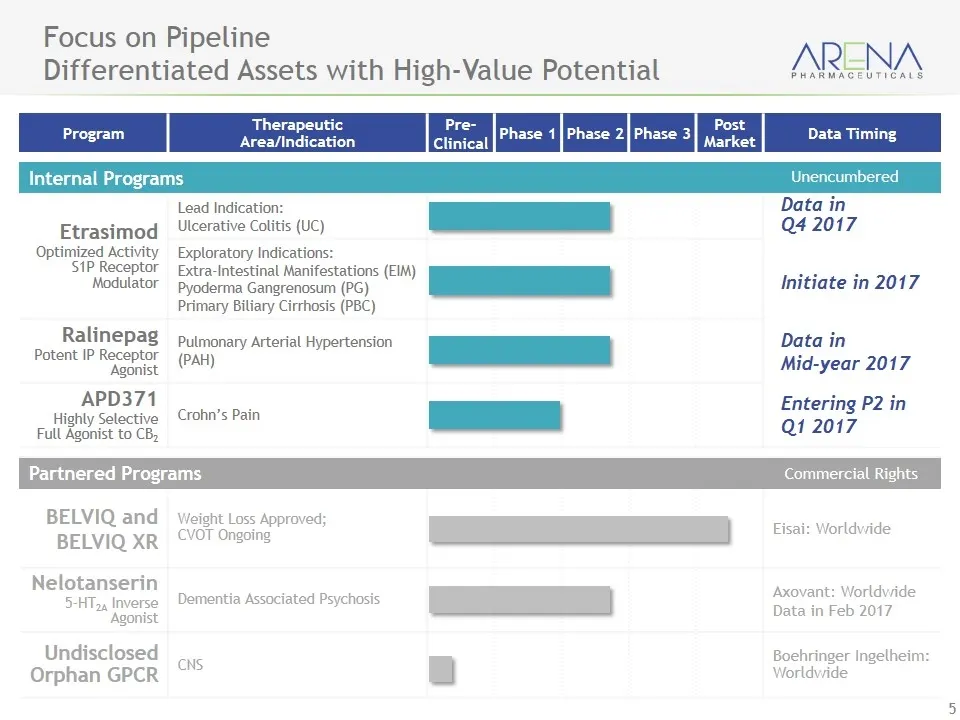
Program Therapeutic Area/Indication Pre- Clinical Phase 1 Phase 2 Phase 3 Post Market Data Timing Internal Programs Etrasimod Optimized Activity S1P Receptor Modulator Lead Indication: Ulcerative Colitis (UC) Exploratory Indications: Extra-Intestinal Manifestations (EIM) Pyoderma Gangrenosum (PG) Pr
Slide 6: Clinical Development Focus and Revamped Operational Team
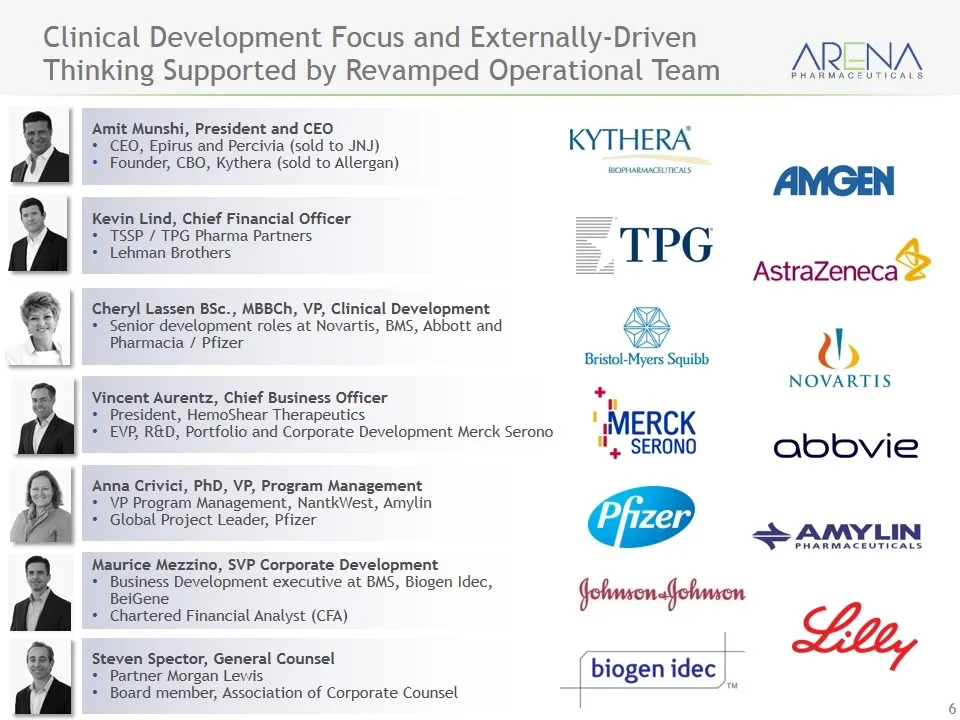
Clinical Development Focus and Externally-Driven Thinking Supported by Revamped Operational Team Amit Munshi, President and CEO CEO, Epirus and Percivia (sold to JNJ) Founder, CBO, Kythera (sold to Allergan) Kevin Lind, Chief Financial Officer TSSP / TPG Pharma Partners Lehman Brothers Cheryl Lassen
Slide 7: Etrasimod
Oral, Next Generation, S1P Receptor Modulator Optimized Activity Being Evaluated for Multiple Autoimmune Diseases Etrasimod
Slide 8: Etrasimod (APD334) - Potentially Best-in-Class Profile
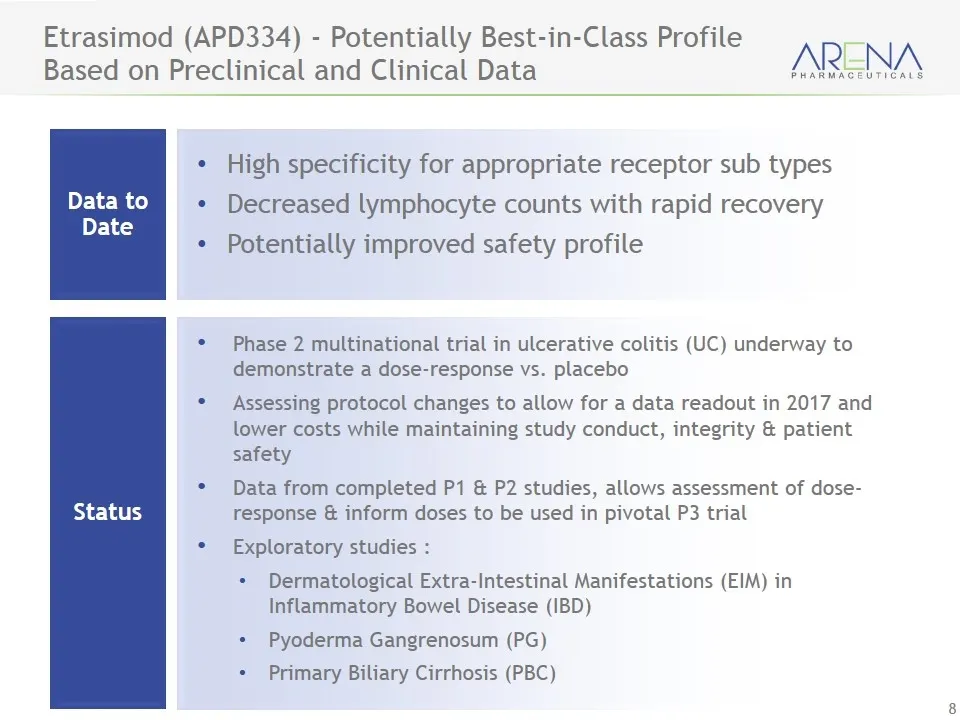
Etrasimod (APD334) - Potentially Best-in-Class Profile Based on Preclinical and Clinical Data Status High specificity for appropriate receptor sub types Decreased lymphocyte counts with rapid recovery Potentially improved safety profile Data to Date Phase 2 multinational trial in ulcerative colitis
Slide 9: Significant Market Potential in Inflammatory Bowel Disease, Specifically Ulcerative Colitis
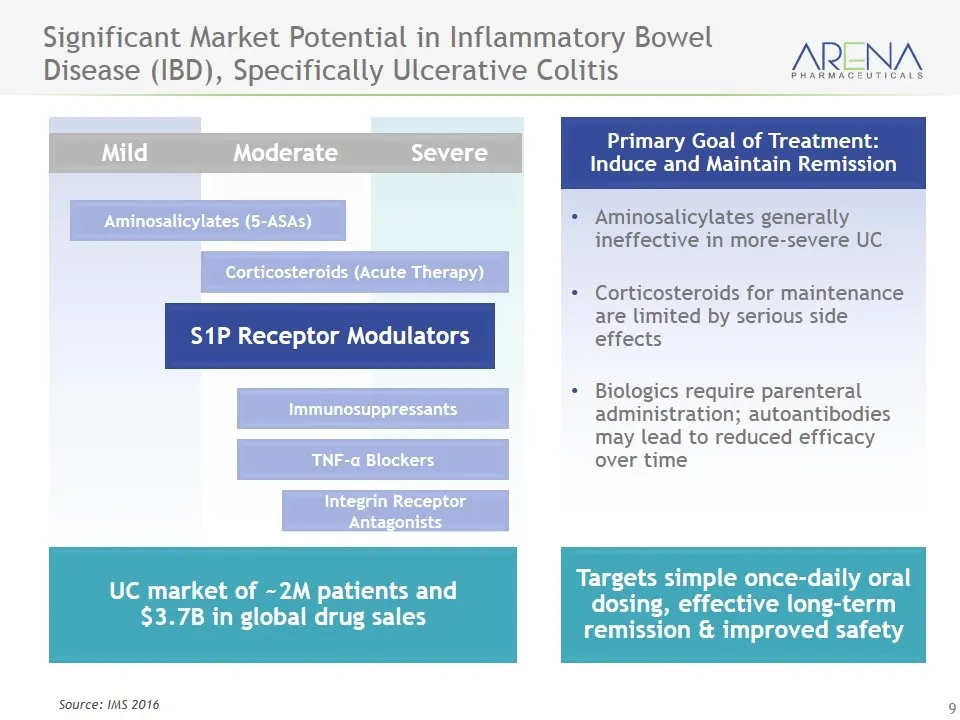
Aminosalicylates (5-ASAs) Corticosteroids (Acute Therapy) Immunosuppressants TNF-α Blockers Integrin Receptor Antagonists S1P Receptor Modulators Significant Market Potential in Inflammatory Bowel Disease (IBD), Specifically Ulcerative Colitis UC market of ~2M patients and $3.7B in global drug sales
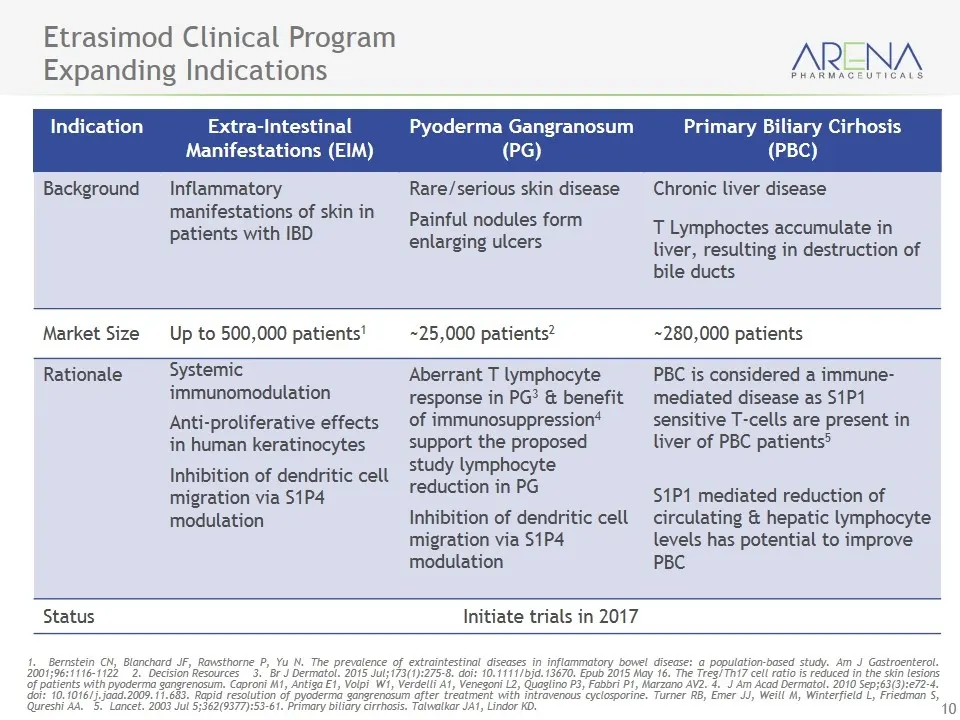
Slide 10: Etrasimod Clinical Program Expanding Indications
Etrasimod Clinical Program Expanding Indications 1. Bernstein CN, Blanchard JF, Rawsthorne P, Yu N. The prevalence of extraintestinal diseases in inflammatory bowel disease: a population-based study. Am J Gastroenterol. 2001;96:1116–1122 2. Decision Resources 3. Br J Dermatol. 2015 Jul;173(1):275-8.
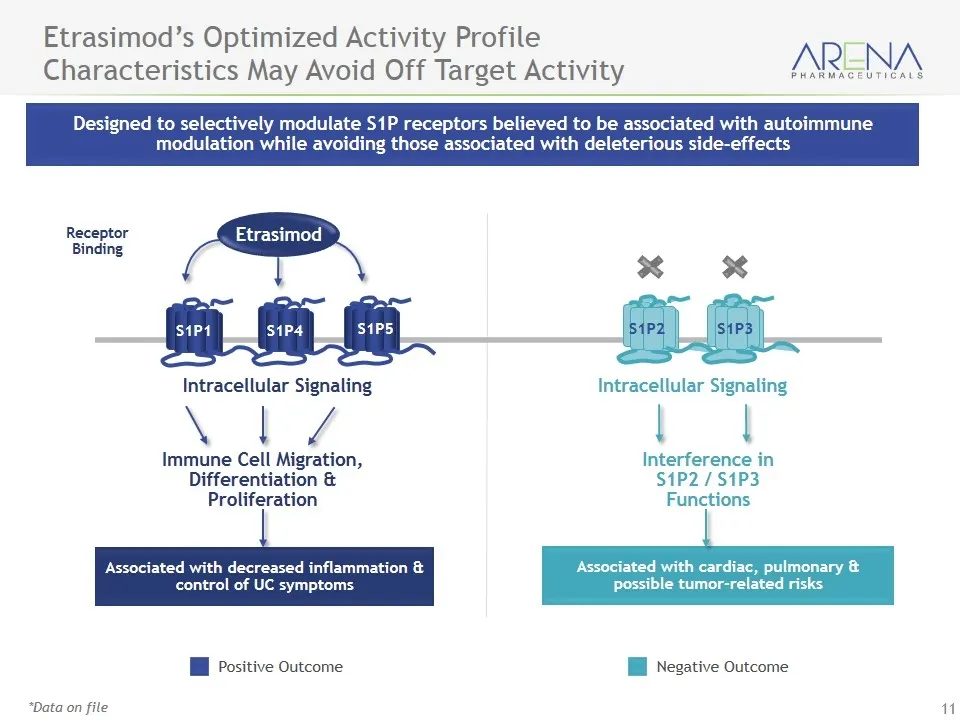
Slide 11: Etrasimod's Optimized Activity Profile Characteristics May Avoid Off Target Activity
Designed to selectively modulate S1P receptors believed to be associated with autoimmune modulation while avoiding those associated with deleterious side-effects Etrasimod’s Optimized Activity Profile Characteristics May Avoid Off Target Activity *Data on file Associated with cardiac, pulmonary & po
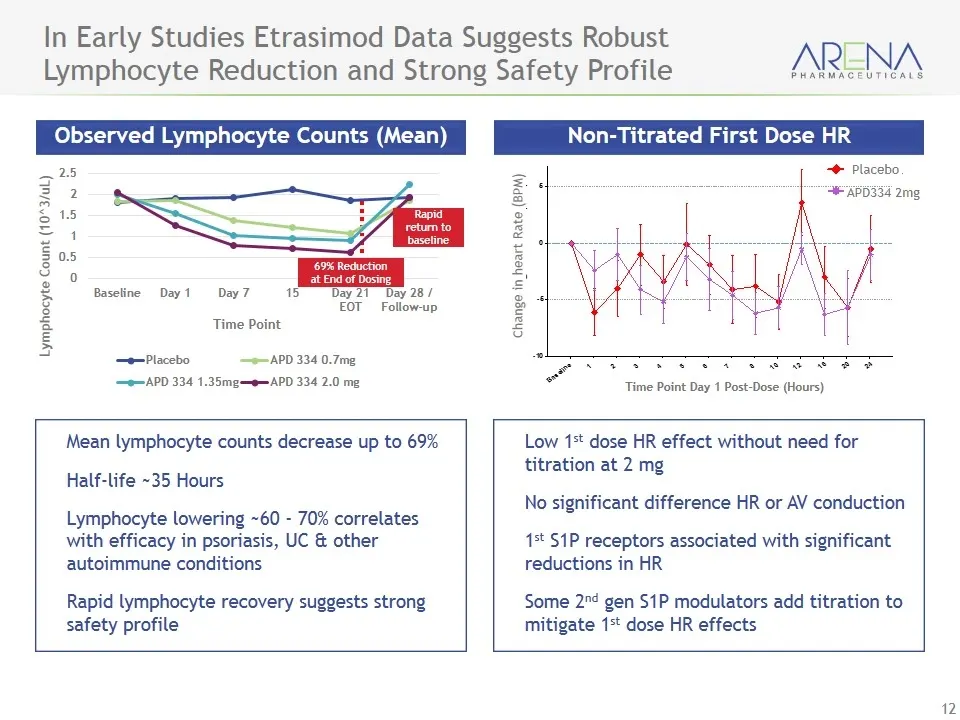
Slide 12: Early Studies Suggest Robust Lymphocyte Reduction and Strong Safety Profile
In Early Studies Etrasimod Data Suggests Robust Lymphocyte Reduction and Strong Safety Profile Observed Lymphocyte Counts (Mean) Non-Titrated First Dose HR Mean lymphocyte counts decrease up to 69% Half-life ~35 Hours Lymphocyte lowering ~60 - 70% correlates with efficacy in psoriasis, UC & other au
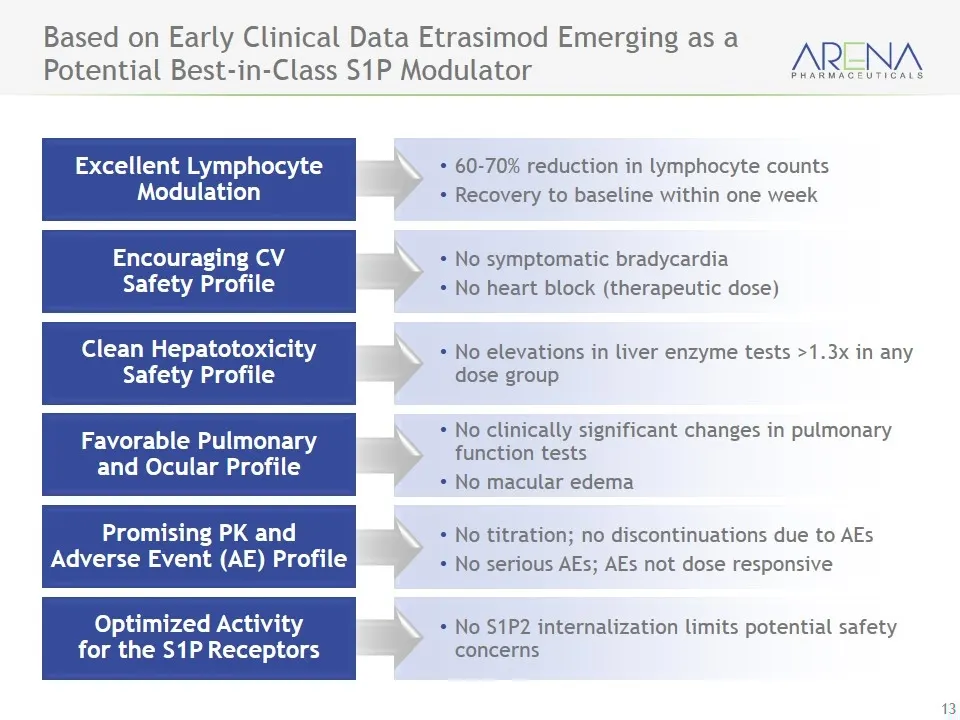
Slide 13: Emerging as a Potential Best-in-Class S1P Modulator
No symptomatic bradycardia No heart block (therapeutic dose) Based on Early Clinical Data Etrasimod Emerging as a Potential Best-in-Class S1P Modulator Excellent Lymphocyte Modulation 60-70% reduction in lymphocyte counts Recovery to baseline within one week Encouraging CV Safety Profile Clean Hepat
Slide 14: Ralinepag
An Oral, Selective IP Receptor Agonist Targeting the Prostacyclin Pathway for the Treatment of Pulmonary Arterial Hypertension (PAH) Ralinepag
Slide 15: Ralinepag (APD811) - Potentially Best-in-Class Profile
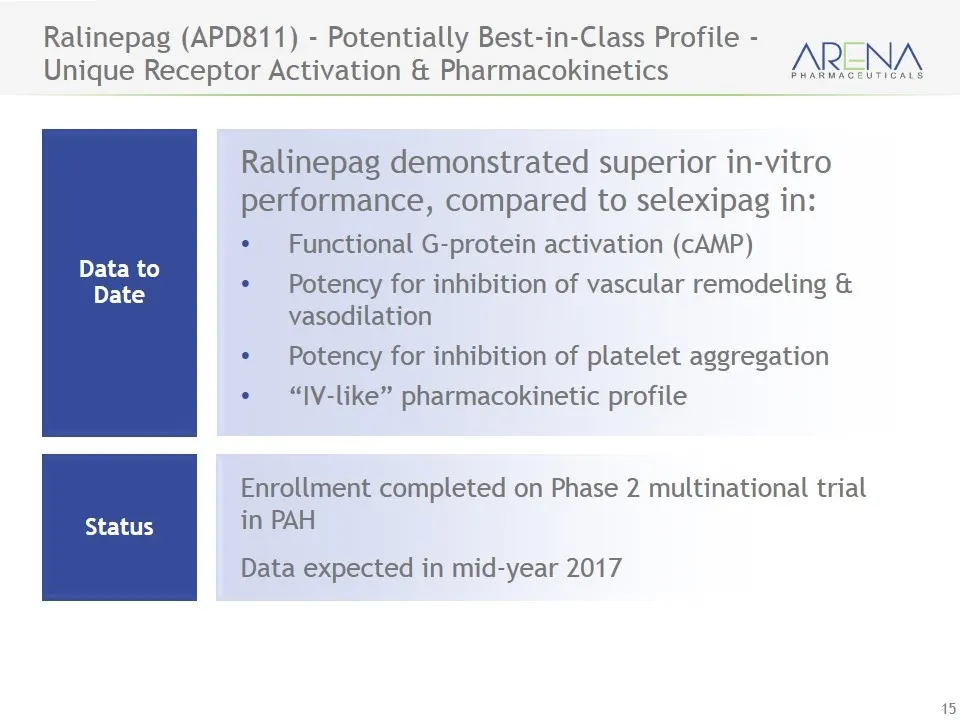
Ralinepag (APD811) - Potentially Best-in-Class Profile - Unique Receptor Activation & Pharmacokinetics Status Ralinepag demonstrated superior in-vitro performance, compared to selexipag in: Functional G-protein activation (cAMP) Potency for inhibition of vascular remodeling & vasodilation Potency fo
Slide 16: Significant Market Potential for Oral Prostacyclin Agonists with Improved PK
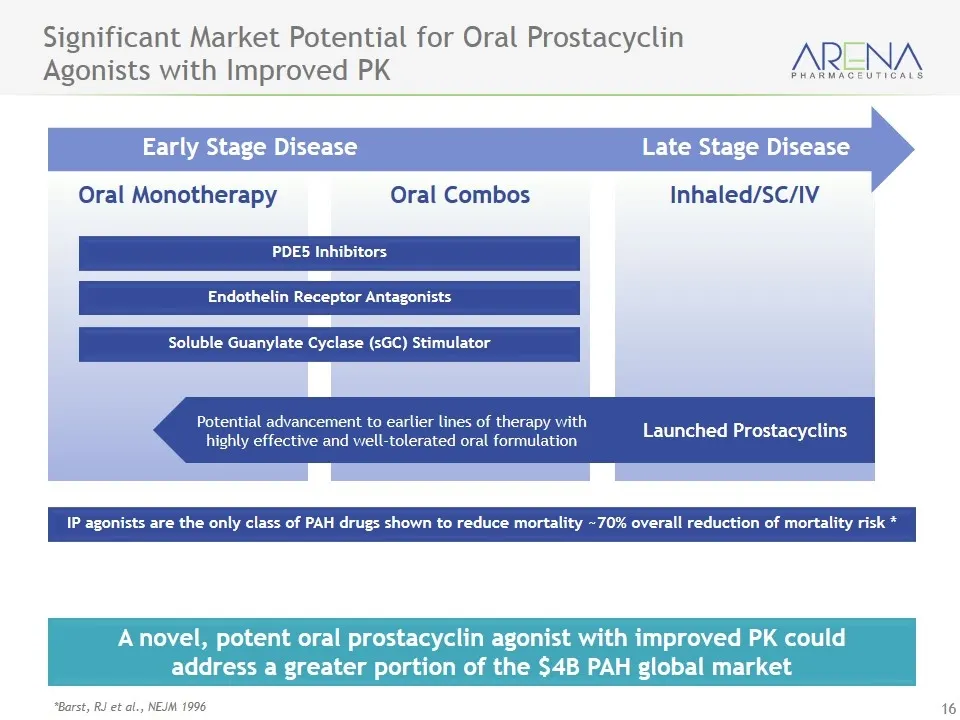
Oral Monotherapy Oral Combos Inhaled/SC/IV Significant Market Potential for Oral Prostacyclin Agonists with Improved PK A novel, potent oral prostacyclin agonist with improved PK could address a greater portion of the $4B PAH global market IP agonists are the only class of PAH drugs shown to reduce
Slide 17: Ralinepag Data Suggests Improved Potency and Efficacy vs. Selexipag
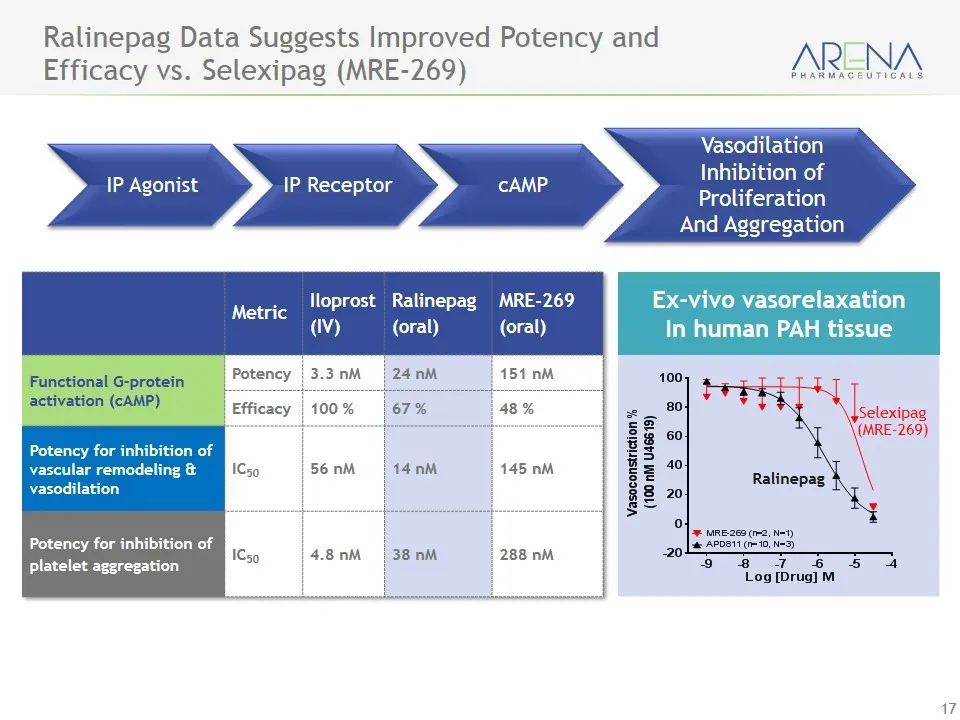
Ralinepag Data Suggests Improved Potency and Efficacy vs. Selexipag (MRE-269) Metric Iloprost (IV) Ralinepag (oral) MRE-269 (oral) Functional G-protein activation (cAMP) Potency 3.3 nM 24 nM 151 nM Efficacy 100 % 67 % 48 % Potency for inhibition of vascular remodeling & vasodilation IC50 56 nM 14 nM
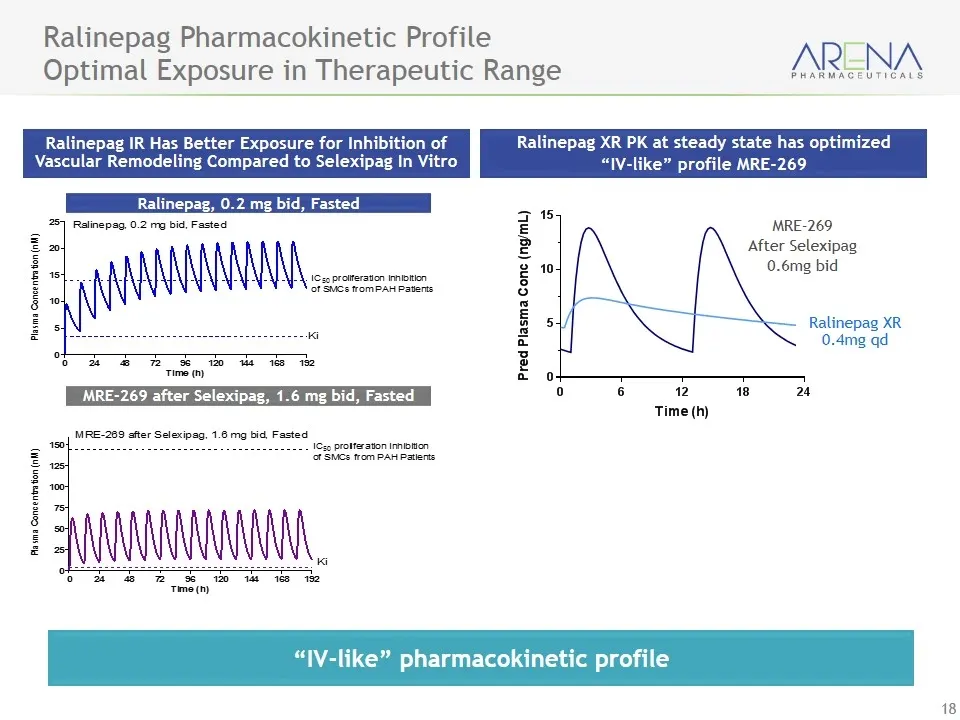
Slide 18: Ralinepag Pharmacokinetic Profile
Ralinepag Pharmacokinetic Profile Optimal Exposure in Therapeutic Range Ralinepag IR Has Better Exposure for Inhibition of Vascular Remodeling Compared to Selexipag In Vitro MRE-269 after Selexipag, 1.6 mg bid, Fasted Ralinepag, 0.2 mg bid, Fasted Ralinepag XR PK at steady state has optimized “IV-li
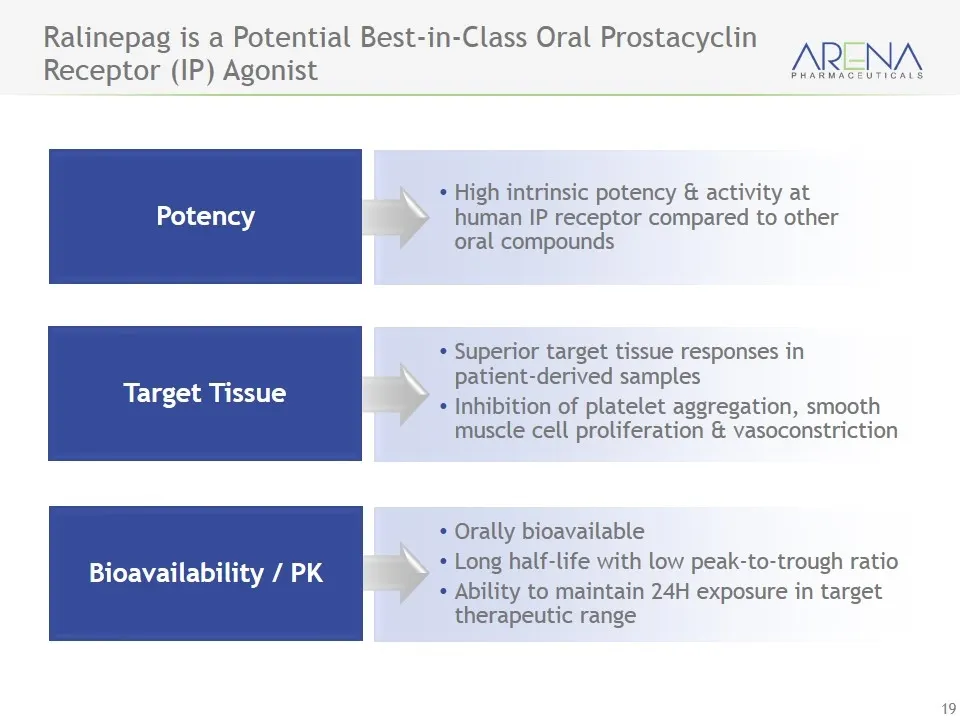
Slide 19: Ralinepag is a Potential Best-in-Class Oral IP Agonist
Ralinepag is a Potential Best-in-Class Oral Prostacyclin Receptor (IP) Agonist Potency High intrinsic potency & activity at human IP receptor compared to other oral compounds Superior target tissue responses in patient-derived samples Inhibition of platelet aggregation, smooth muscle cell proliferat
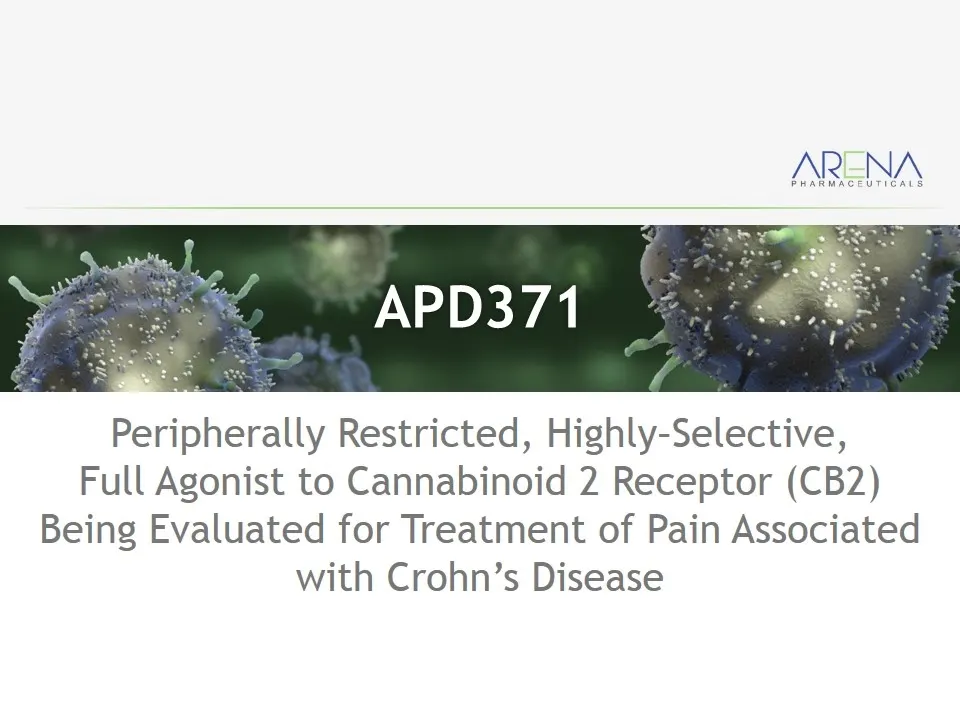
Slide 20: APD371
APD371 Peripherally Restricted, Highly–Selective, Full Agonist to Cannabinoid 2 Receptor (CB2) Being Evaluated for Treatment of Pain Associated with Crohn’s Disease
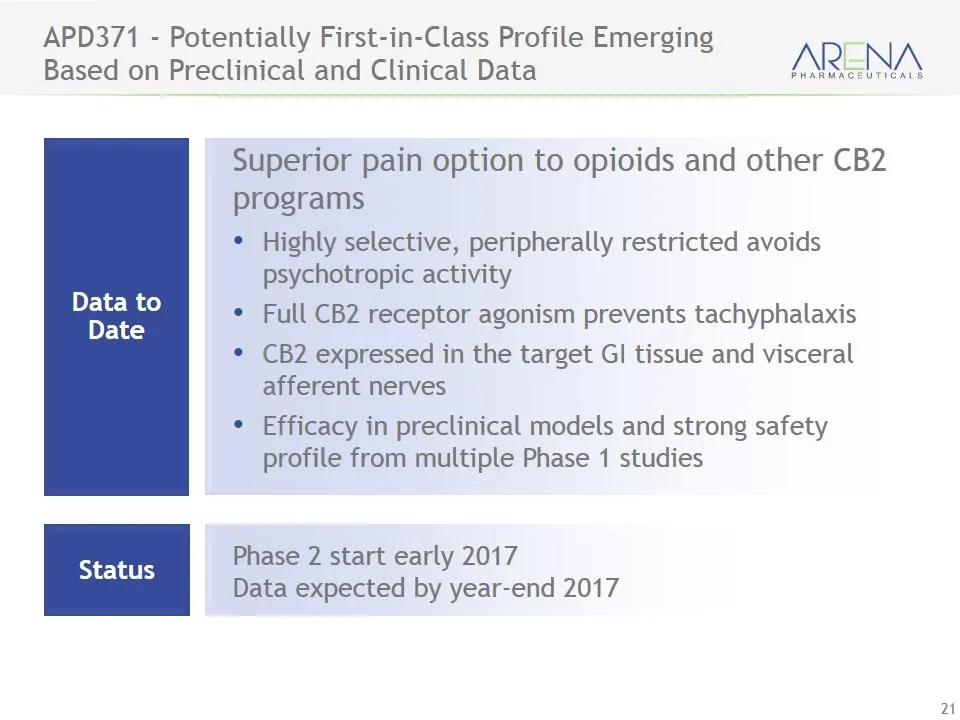
Slide 21: APD371 - Potentially First-in-Class Profile
APD371 - Potentially First-in-Class Profile Emerging Based on Preclinical and Clinical Data Phase 2 start early 2017 Data expected by year-end 2017 Superior pain option to opioids and other CB2 programs Highly selective, peripherally restricted avoids psychotropic activity Full CB2 receptor agonism
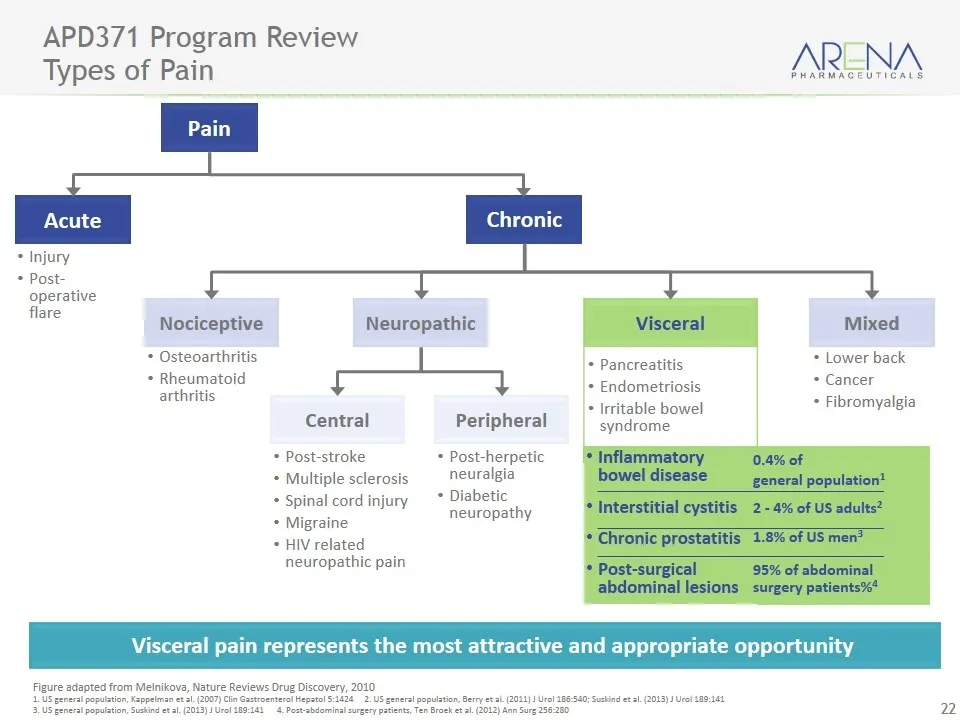
Slide 22: APD371 Program Review: Types of Pain
APD371 Program Review Types of Pain Visceral pain represents the most attractive and appropriate opportunity Figure adapted from Melnikova, Nature Reviews Drug Discovery, 2010 1. US general population, Kappelman et al. (2007) Clin Gastroenterol Hepatol 5:1424 2. US general population, Berry et al. (
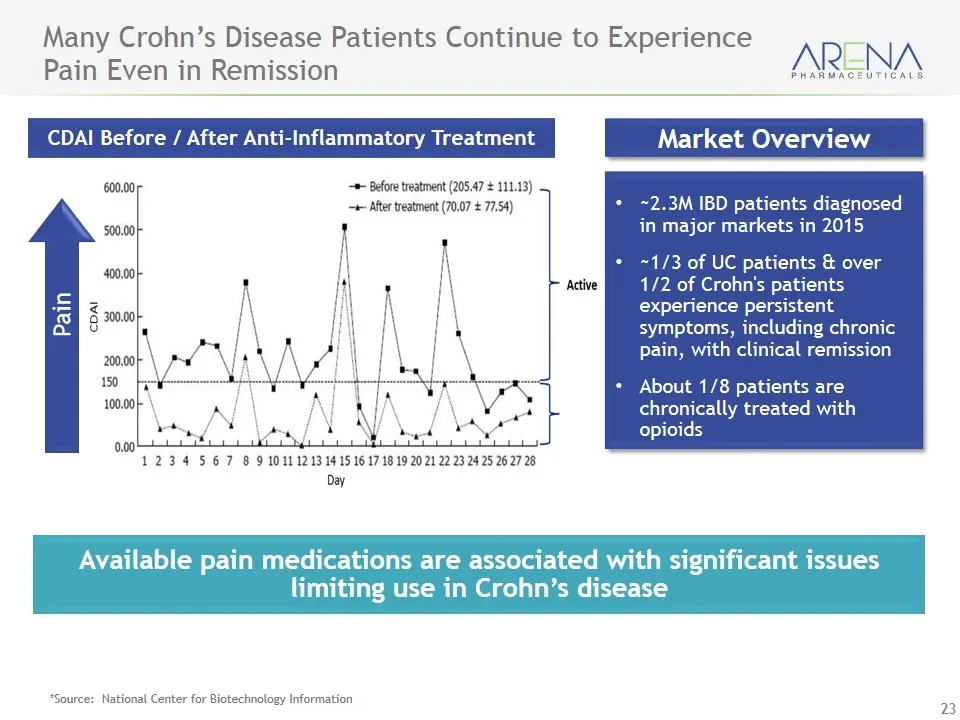
Slide 23: Many Crohn's Disease Patients Continue to Experience Pain Even in Remission
Many Crohn’s Disease Patients Continue to Experience Pain Even in Remission *Source: National Center for Biotechnology Information Available pain medications are associated with significant issues limiting use in Crohn’s disease Market Overview ~2.3M IBD patients diagnosed in major markets in 2015 ~
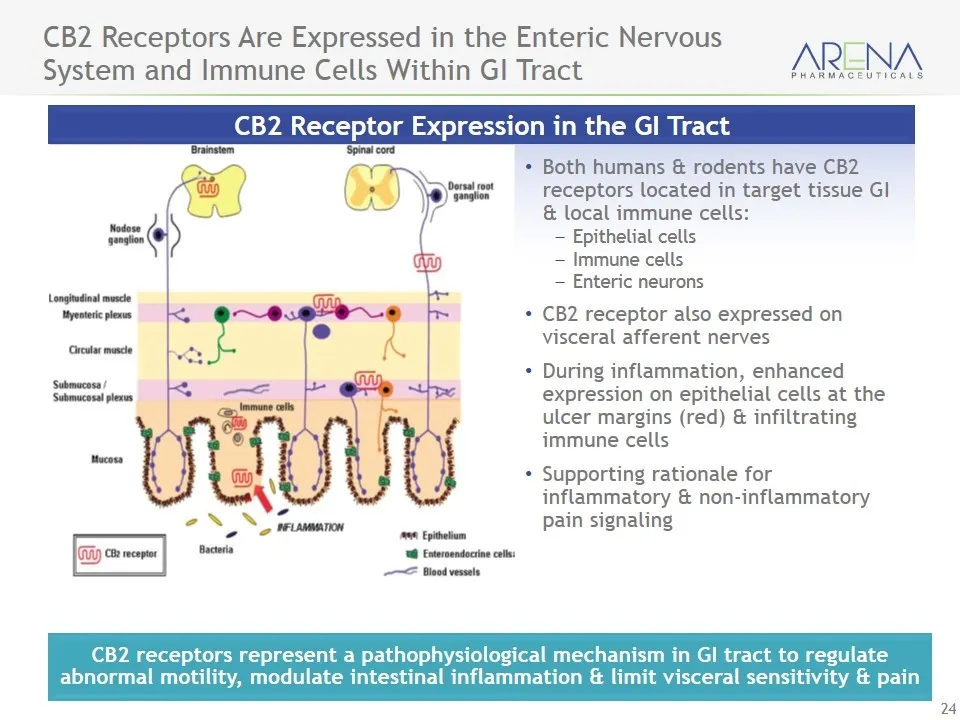
Slide 24: CB2 Receptors Are Expressed in the Enteric Nervous System and Immune Cells
CB2 Receptors Are Expressed in the Enteric Nervous System and Immune Cells Within GI Tract Both humans & rodents have CB2 receptors located in target tissue GI & local immune cells: Epithelial cells Immune cells Enteric neurons CB2 receptor also expressed on visceral afferent nerves During inflammat
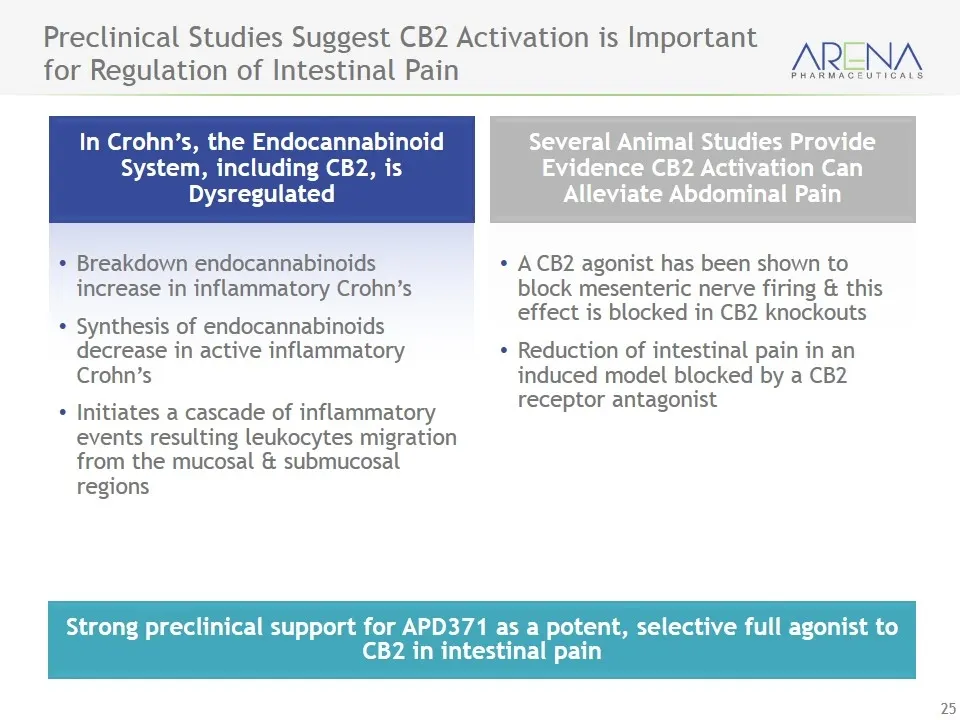
Slide 25: Strong Preclinical Support for APD371 in Intestinal Pain
Strong preclinical support for APD371 as a potent, selective full agonist to CB2 in intestinal pain Preclinical Studies Suggest CB2 Activation is Important for Regulation of Intestinal Pain In Crohn’s, the Endocannabinoid System, including CB2, is Dysregulated Several Animal Studies Provide Evidence
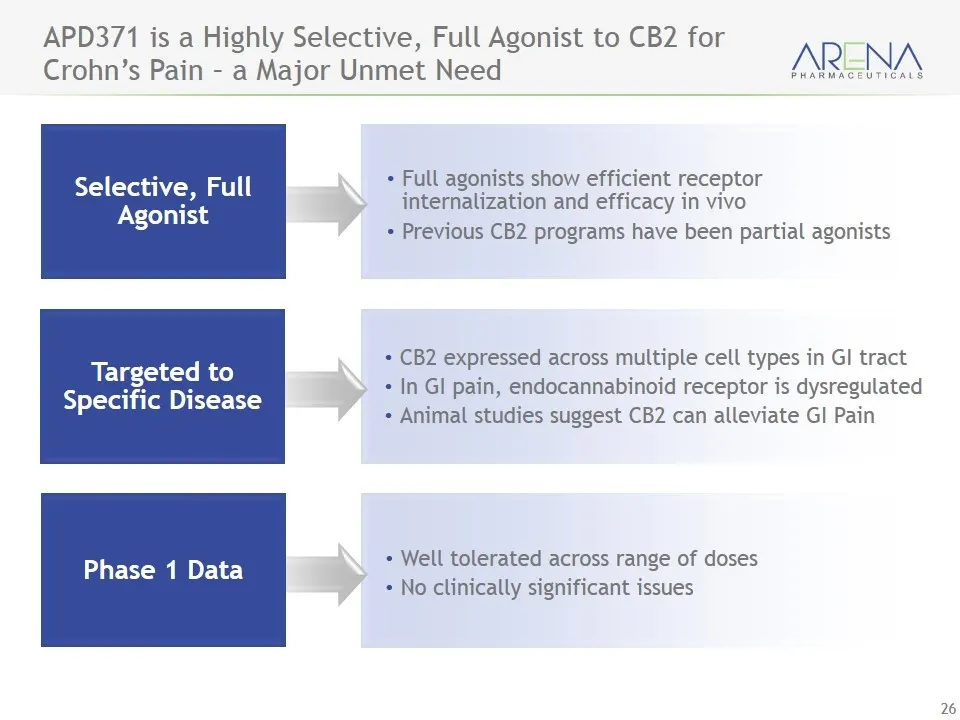
Slide 26: APD371 is a Highly Selective, Full Agonist to CB2 for Crohn's Pain
APD371 is a Highly Selective, Full Agonist to CB2 for Crohn’s Pain – a Major Unmet Need Selective, Full Agonist Full agonists show efficient receptor internalization and efficacy in vivo Previous CB2 programs have been partial agonists CB2 expressed across multiple cell types in GI tract In GI pain,
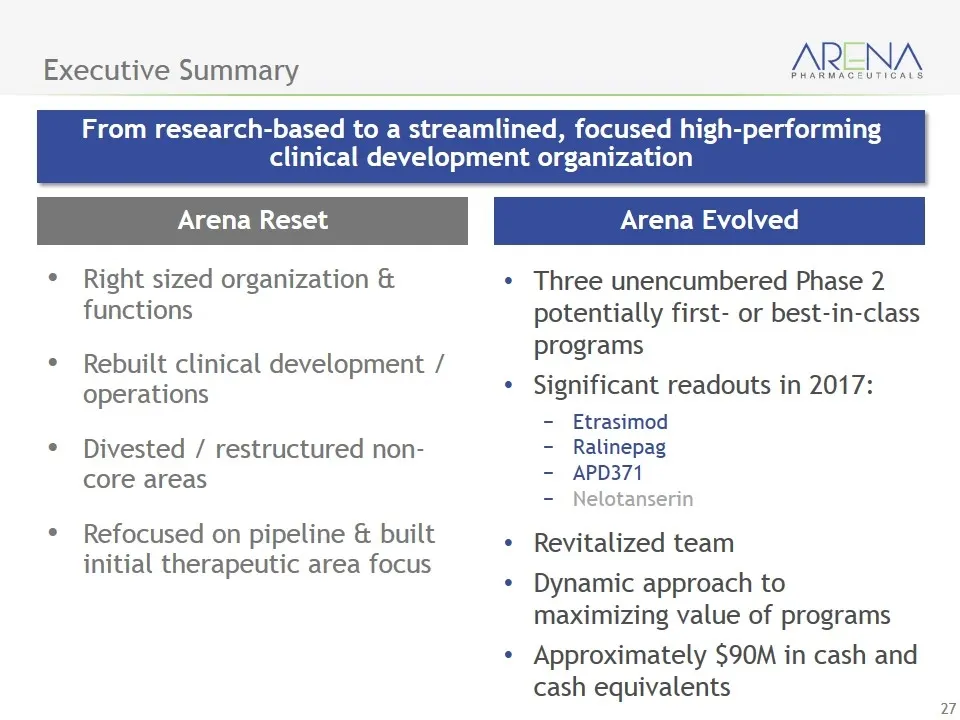
Slide 27: Arena Evolved Executive Summary
Arena Evolved Executive Summary From research-based to a streamlined, focused high-performing clinical development organization Three unencumbered Phase 2 potentially first- or best-in-class programs Significant readouts in 2017: Etrasimod Ralinepag APD371 Nelotanserin Revitalized team Dynamic appro
Slide 28: Thank you
PHARMACEUTICALS Thank you NASDAQ: ARNA
Source: SEC EDGAR · 8-K filed Jan 6, 2017
More decks from Arena Pharmaceuticals Inc
 Merger or Acquisition (December 2021)14 slides · Dec 14, 2021
 Merger or Acquisition (December 2021)9 slides · Dec 13, 2021
 Investor Presentation (January 2021)21 slides · Jan 11, 2021
 Investor Presentation (November 2020)35 slides · Nov 18, 2020
 Investor Presentation (October 2020)32 slides · Oct 26, 2020
 Corporate Update (September 2020)13 slides · Sep 23, 2020