Synergy Pharmaceuticals — Investor Presentation (February 2014)
36 slides from Synergy Pharmaceuticals's investor presentation, Feb 3, 2014
Slide 1: Corporate Overview January 2014
Corporate Overview January 2014
Slide 2: Safe Harbor Statement
2 Safe Harbor Statement This presentation may contain forward-looking statements within the meaning of Section 27A of the Securities Act of 1933 and Section 21E of the Securities Exchange Act of 1934. Such forward-looking statements are characterized by future or conditional verbs such as “may,” “wi
Slide 3: Pioneering Gastrointestinal Research and Development
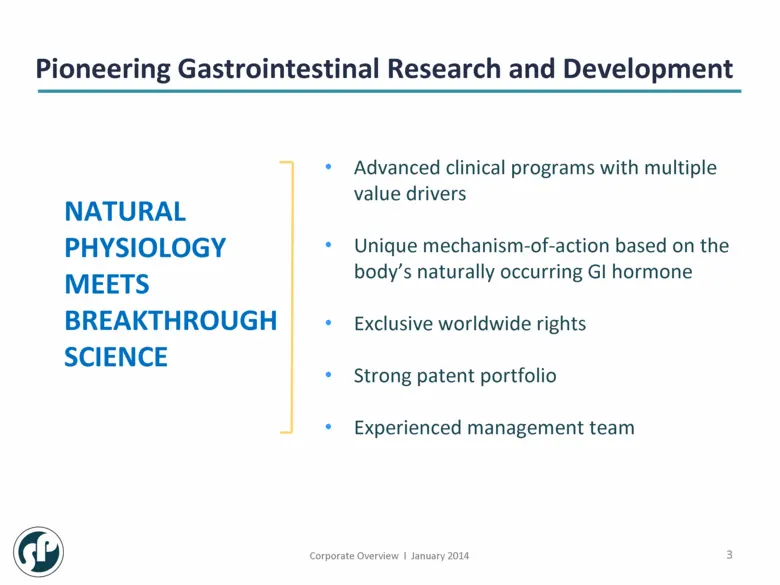
3 Pioneering Gastrointestinal Research and Development Advanced clinical programs with multiple value drivers Unique mechanism-of-action based on the body’s naturally occurring GI hormone Exclusive worldwide rights Strong patent portfolio Experienced management team NATURAL PHYSIOLOGY MEETS BREAKTHR
Slide 4: Building a Proprietary GC-C Platform
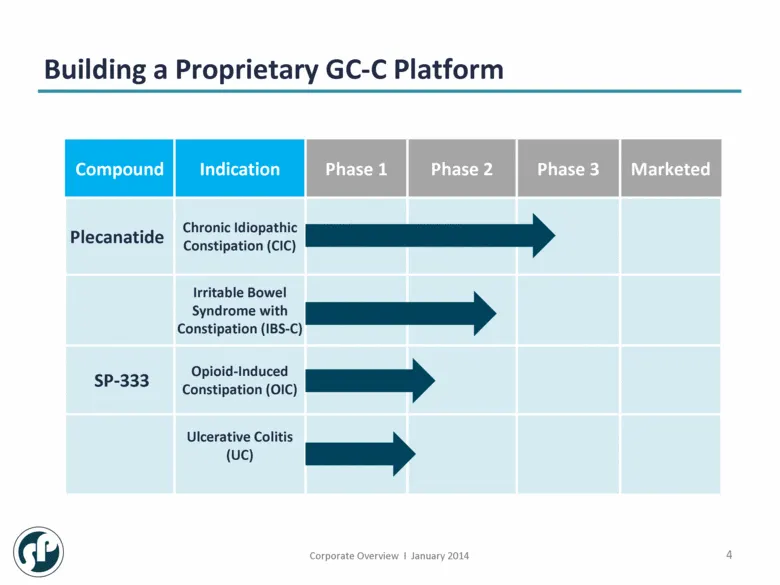
4 Building a Proprietary GC-C Platform Compound Indication Phase 1 Phase 2 Phase 3 Marketed Plecanatide Chronic Idiopathic Constipation (CIC) Irritable Bowel Syndrome with Constipation (IBS-C) SP-333 Opioid-Induced Constipation (OIC) Ulcerative Colitis (UC)
Slide 5: Our Approach: Based on the Natural GI Hormone
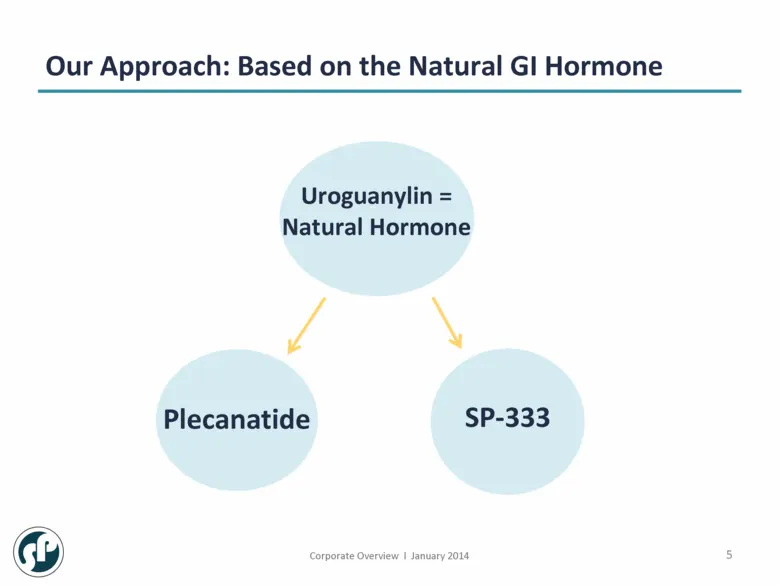
5 Our Approach: Based on the Natural GI Hormone Uroguanylin = Natural Hormone Plecanatide SP-333
Slide 6: Uroguanylin: Chief Regulator of Normal GI Physiology
6 Uroguanylin: Chief Regulator of Normal GI Physiology Natural hormone the body secretes in the GI tract Natural agonist of the human GC-C receptor Activates GC-C and regulates normal digestive functioning
Slide 7: The Natural GC-C Agonist: Physiological Mechanism
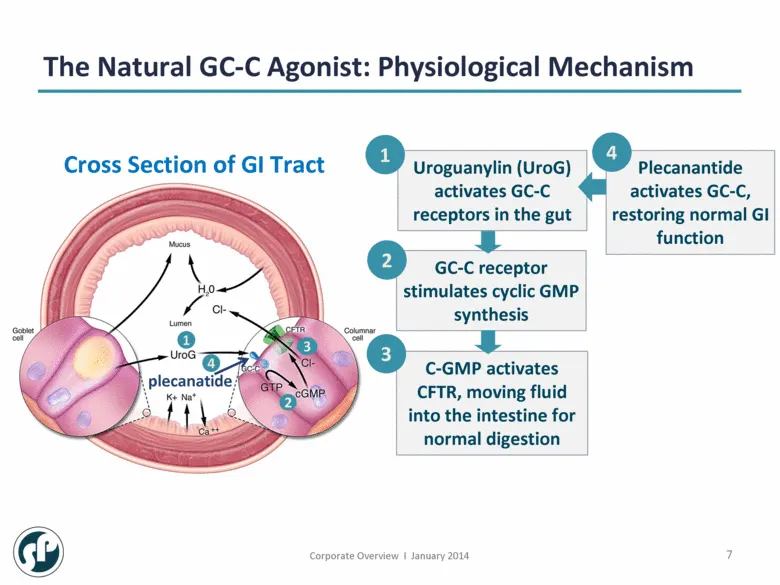
7 The Natural GC-C Agonist: Physiological Mechanism 1 2 3 plecanatide Uroguanylin (UroG) activates GC-C receptors in the gut GC-C receptor stimulates cyclic GMP synthesis C-GMP activates CFTR, moving fluid into the intestine for normal digestion Plecanantide activates GC-C, restoring normal GI funct
Slide 8: Plecanatide: Superior Analog of Natural Uroguanylin
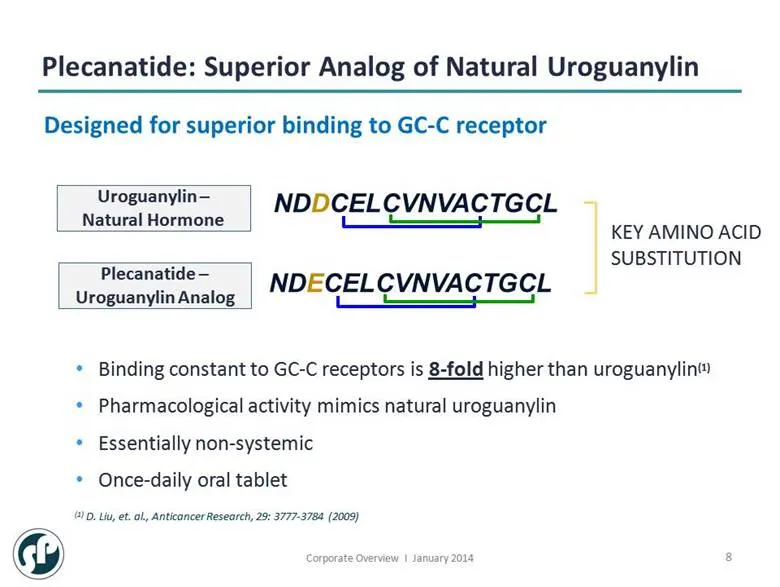
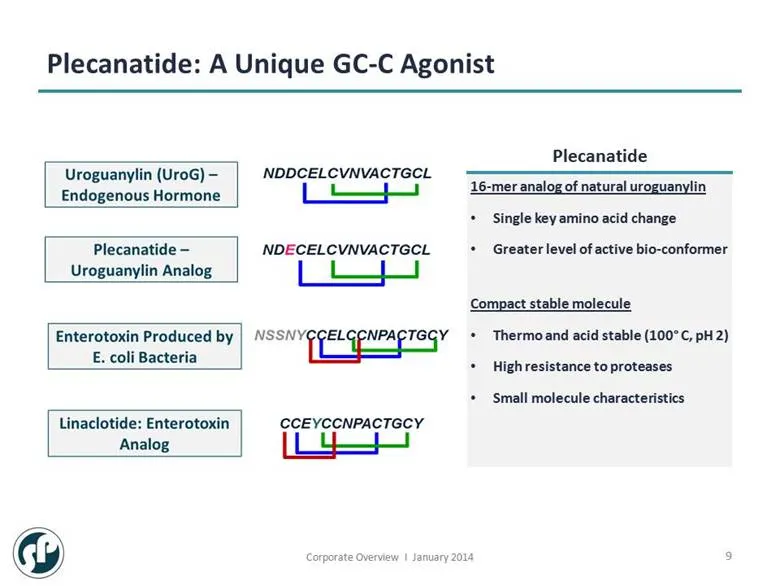
8 Plecanatide: Superior Analog of Natural Uroguanylin NDDCELCVNVACTGCL NDECELCVNVACTGCL Binding constant to GC-C receptors is 8-fold higher than uroguanylin(1) Pharmacological activity mimics natural uroguanylin Essentially non-systemic Once-daily oral tablet KEY AMINO ACID SUBSTITUTION Designed for
Slide 9: Plecanatide: A Unique GC-C Agonist
9 Plecanatide: A Unique GC-C Agonist 16-mer analog of natural uroguanylin Single key amino acid change Greater level of active bio-conformer Compact stable molecule Thermo and acid stable (100° C, pH 2) High resistance to proteases Small molecule characteristics Plecanatide
Slide 10: Plecanatide Program
Plecanatide Program Chronic Idiopathic Constipation (CIC) & Irritable Bowel Syndrome with Constipation (IBS-C)
Slide 11: Attractive US Market with Significant Unmet Need
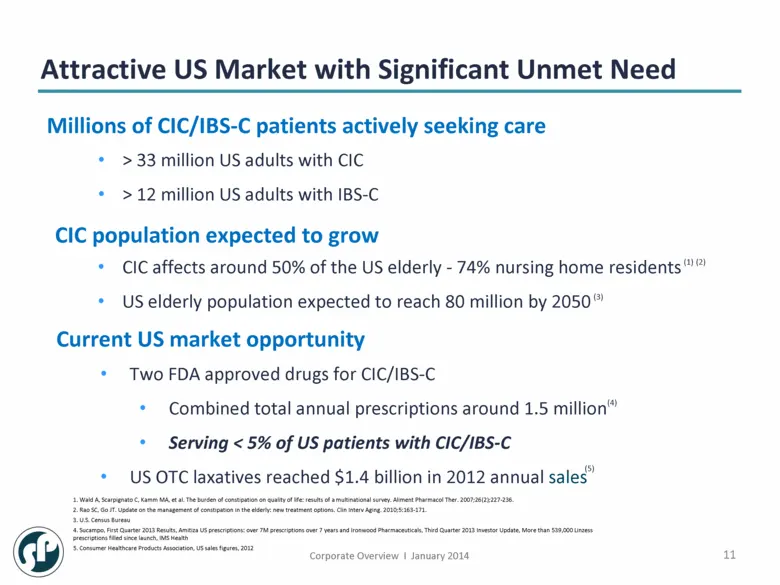
11 Attractive US Market with Significant Unmet Need Millions of CIC/IBS-C patients actively seeking care > 33 million US adults with CIC > 12 million US adults with IBS-C CIC population expected to grow CIC affects around 50% of the US elderly - 74% nursing home residents US elderly population expec
Slide 12: Plecanatide Phase 2b/3 CIC Trial
Plecanatide Phase 2b/3 CIC Trial Results from an adequate and well-controlled 951 Patient, Multi Center Trial
Slide 13: Phase 2b/3 CIC Trial Design
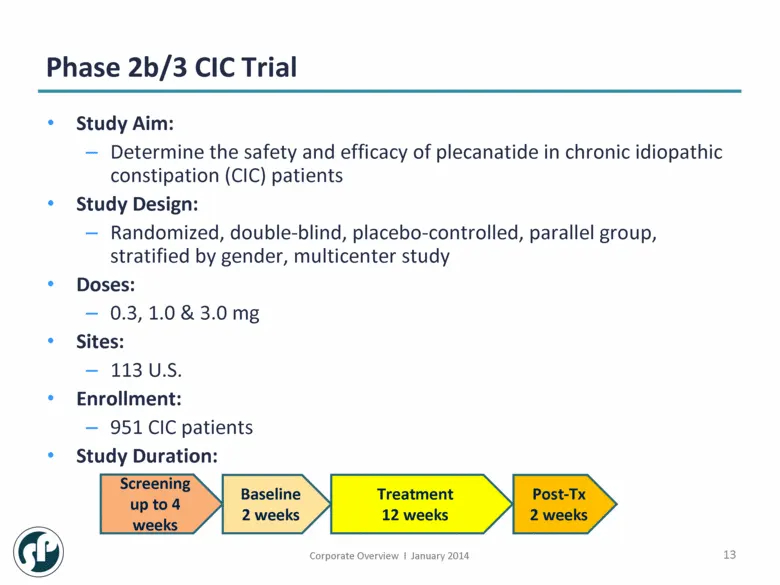
13 Phase 2b/3 CIC Trial Study Aim: Determine the safety and efficacy of plecanatide in chronic idiopathic constipation (CIC) patients Study Design: Randomized, double-blind, placebo-controlled, parallel group, stratified by gender, multicenter study Doses: 0.3, 1.0 & 3.0 mg Sites: 113 U.S. Enrollmen
Slide 14: Phase 2b/3 CIC Trial: Efficacy Endpoints
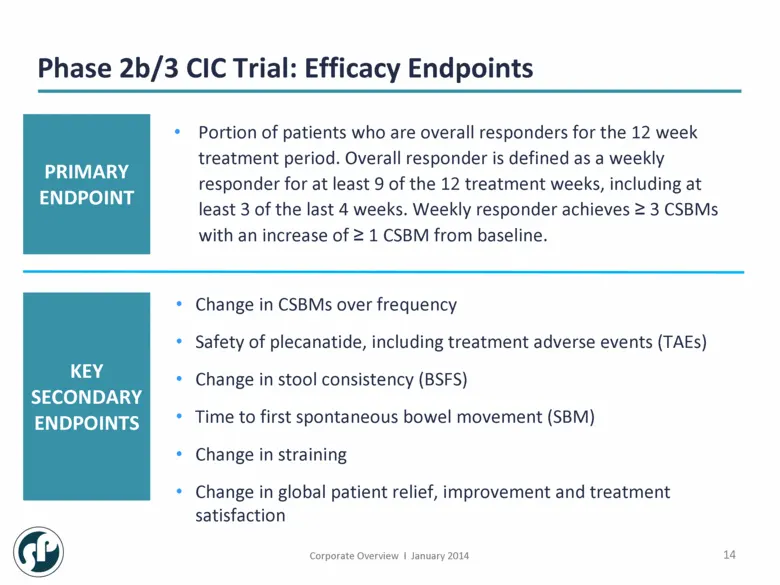
14 Phase 2b/3 CIC Trial: Efficacy Endpoints PRIMARY ENDPOINT KEY SECONDARY ENDPOINTS Portion of patients who are overall responders for the 12 week treatment period. Overall responder is defined as a weekly responder for at least 9 of the 12 treatment weeks, including at least 3 of the last 4 weeks.
Slide 15: Phase 2b/3 CIC Trial: Primary Endpoint
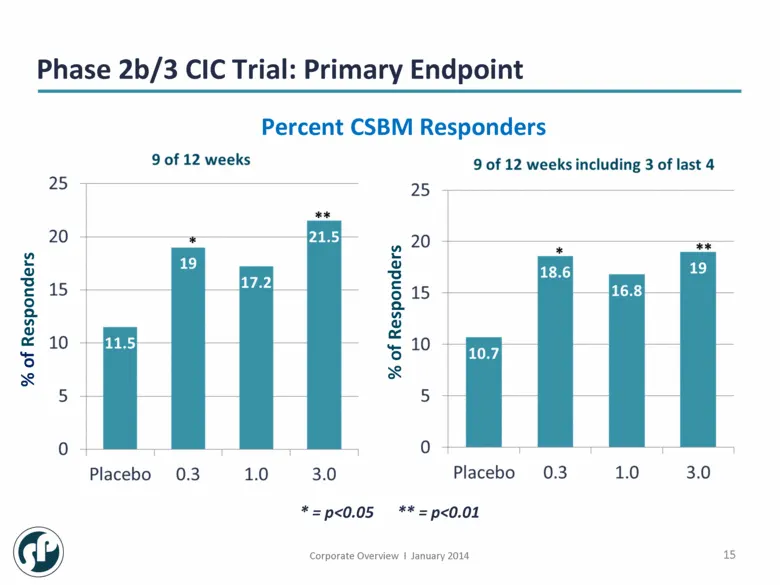
15 Phase 2b/3 CIC Trial: Primary Endpoint Percent CSBM Responders % of Responders % of Responders * = p<0.05 ** = p<0.01
Slide 16: Phase 2b/3 CIC Trial: Weekly Responder Rates
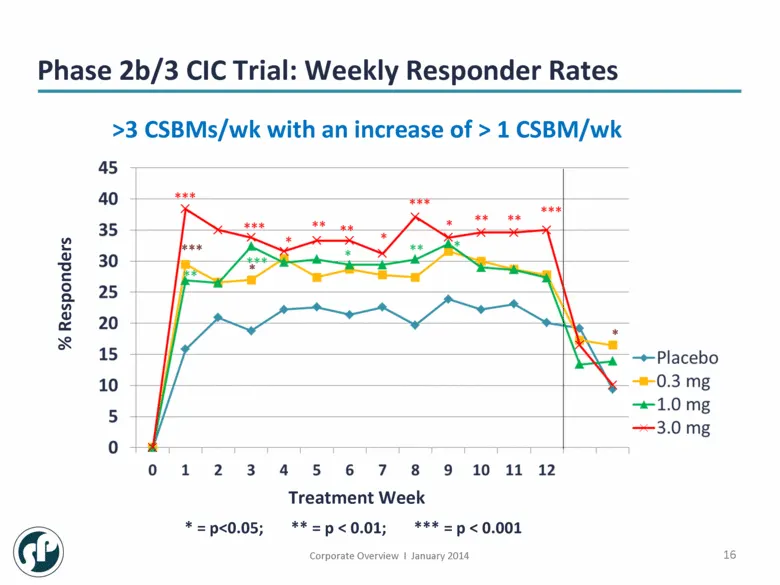
16 Phase 2b/3 CIC Trial: Weekly Responder Rates >3 CSBMs/wk with an increase of > 1 CSBM/wk % Responders * = p<0.05; ** = p < 0.01; *** = p < 0.001 Treatment Week
Slide 17: Phase 2b/3 CIC Trial: Stool Consistency
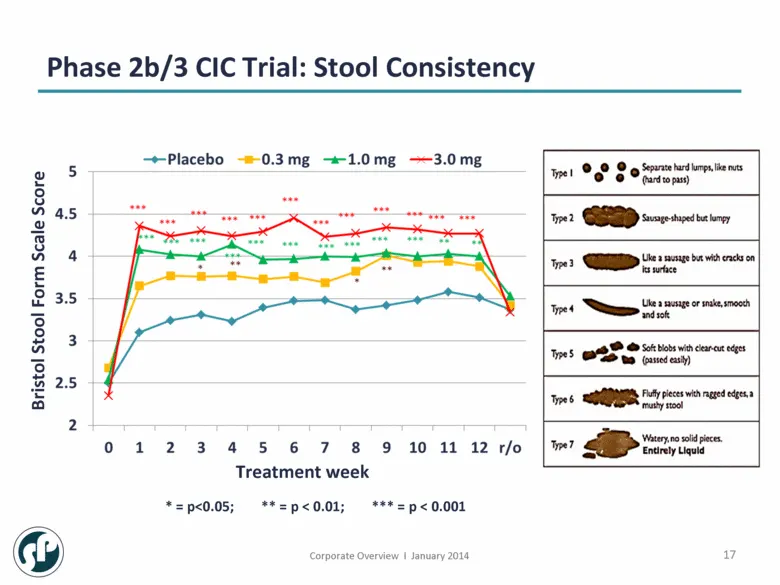
17 Phase 2b/3 CIC Trial: Stool Consistency Bristol Stool Form Scale Score * = p<0.05; ** = p < 0.01; *** = p < 0.001 Treatment week
Slide 18: Clear Dose Response for Secondary Endpoints
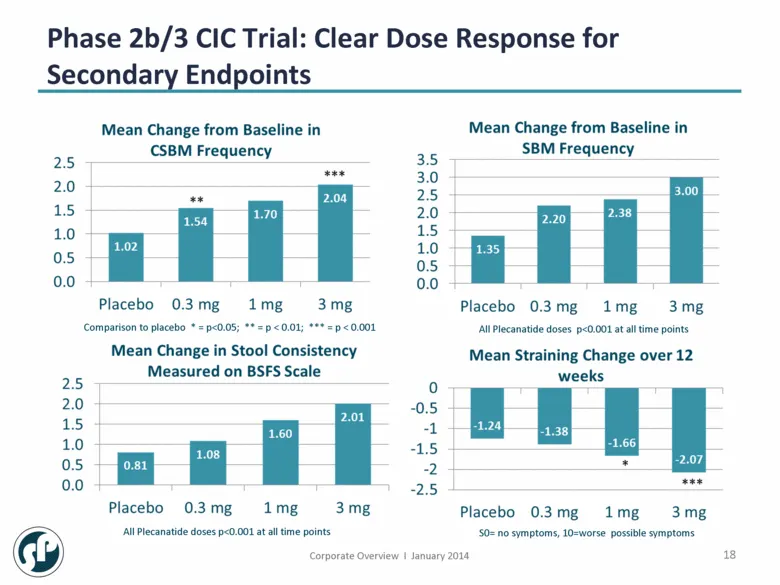
18 Phase 2b/3 CIC Trial: Clear Dose Response for Secondary Endpoints All Plecanatide doses p<0.001 at all time points All Plecanatide doses p<0.001 at all time points S0= no symptoms, 10=worse possible symptoms Comparison to placebo * = p<0.05; ** = p < 0.01; *** = p < 0.001
Slide 19: Phase 2b/3 CIC Trial: Safety Results
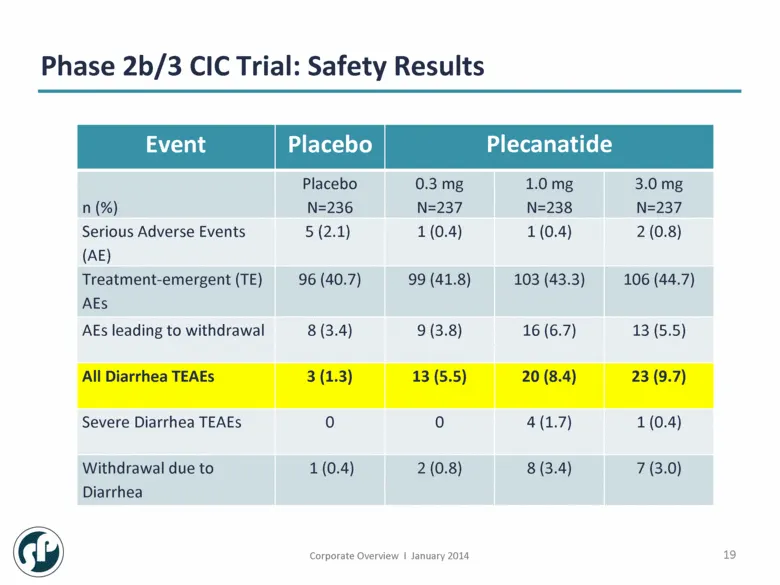
19 Phase 2b/3 CIC Trial: Safety Results Event Placebo Plecanatide n (%) Placebo N=236 0.3 mg N=237 1.0 mg N=238 3.0 mg N=237 Serious Adverse Events (AE) 5 (2.1) 1 (0.4) 1 (0.4) 2 (0.8) Treatment-emergent (TE) AEs 96 (40.7) 99 (41.8) 103 (43.3) 106 (44.7) AEs leading to withdrawal 8 (3.4) 9 (3.8) 16
Slide 20: Phase 2b/3 CIC Data Validate Plecanatide's Unique Profile
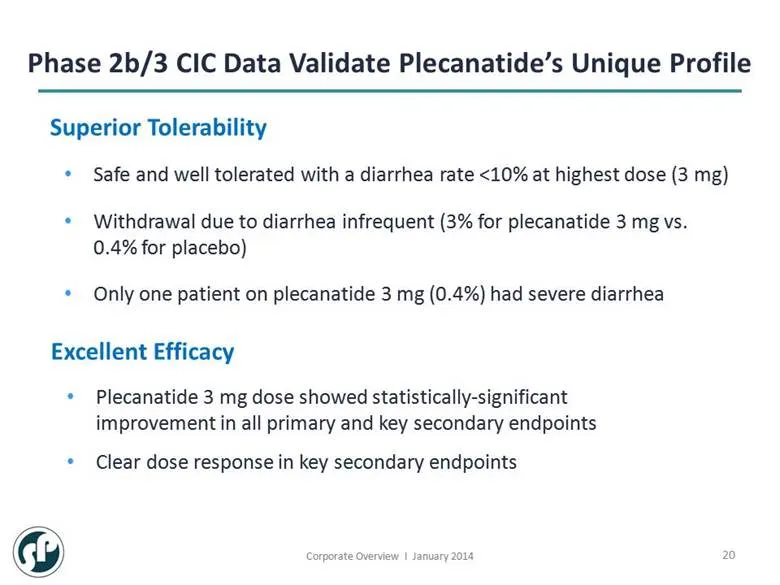
20 Phase 2b/3 CIC Data Validate Plecanatide’s Unique Profile Safe and well tolerated with a diarrhea rate <10% at highest dose (3 mg) Withdrawal due to diarrhea infrequent (3% for plecanatide 3 mg vs. 0.4% for placebo) Only one patient on plecanatide 3 mg (0.4%) had severe diarrhea Superior Tolerabi
Slide 21: Plecanatide Phase 3 CIC Trials Design & Endpoints
Plecanatide Phase 3 CIC Trials Design & Endpoints Nov. 2013: Announced opening of first phase 3 trial
Slide 22: Phase 3 CIC Trials Study Design
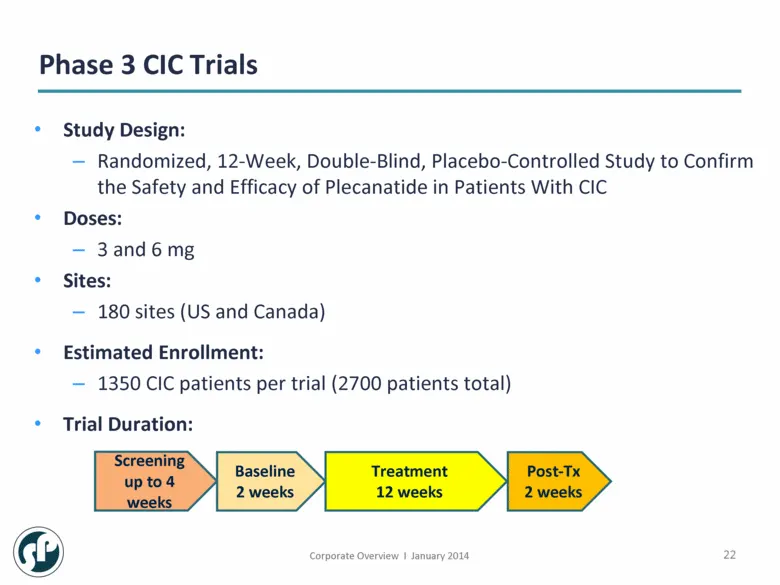
22 Phase 3 CIC Trials Study Design: Randomized, 12-Week, Double-Blind, Placebo-Controlled Study to Confirm the Safety and Efficacy of Plecanatide in Patients With CIC Doses: 3 and 6 mg Sites: 180 sites (US and Canada) Estimated Enrollment: 1350 CIC patients per trial (2700 patients total) Trial Dura
Slide 23: Phase 2b/3 CIC Trial: Observed Diarrhea Plateau Effect
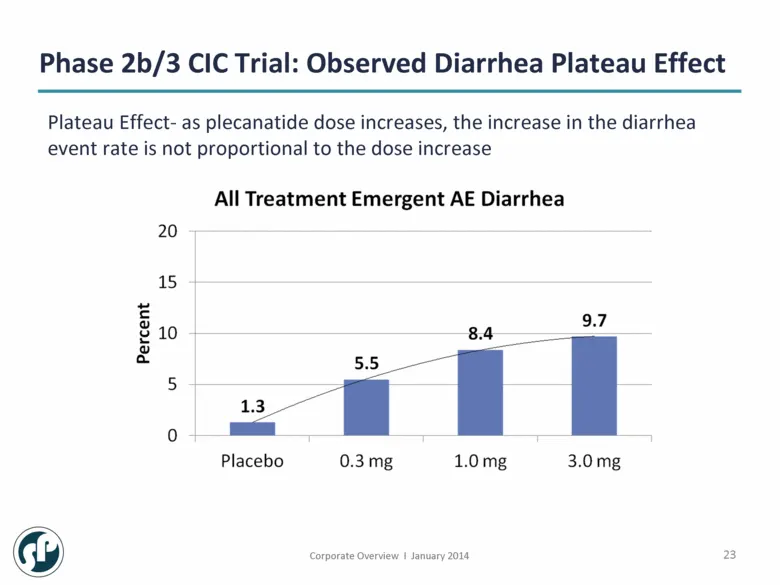
23 Phase 2b/3 CIC Trial: Observed Diarrhea Plateau Effect Plateau Effect- as plecanatide dose increases, the increase in the diarrhea event rate is not proportional to the dose increase
Slide 24: Phase 3 CIC Trials: Efficacy Endpoints
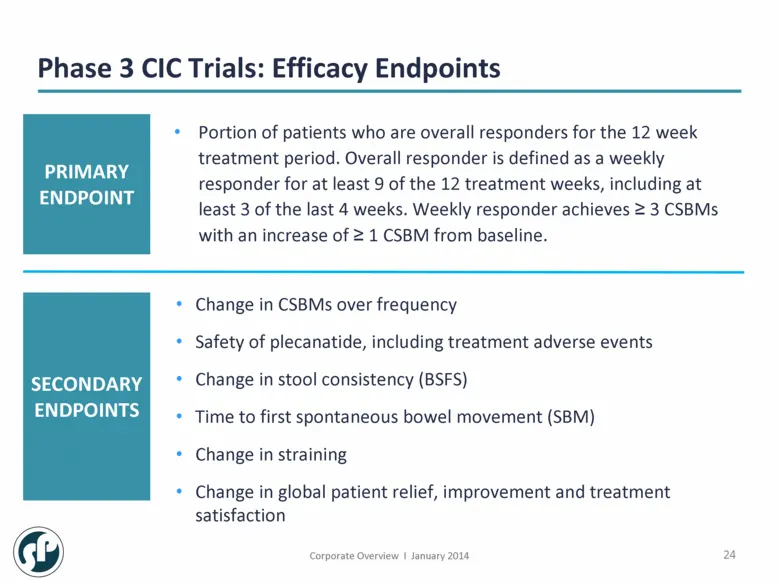
24 Phase 3 CIC Trials: Efficacy Endpoints PRIMARY ENDPOINT SECONDARY ENDPOINTS Portion of patients who are overall responders for the 12 week treatment period. Overall responder is defined as a weekly responder for at least 9 of the 12 treatment weeks, including at least 3 of the last 4 weeks. Weekl
Slide 25: Plecanatide Phase 2b IBS-C Trial Design & Endpoints
Plecanatide Phase 2b IBS-C Trial Design & Endpoints Dec. 2013: Announced completion of patient enrollment
Slide 26: Phase 2b IBS-C Trial
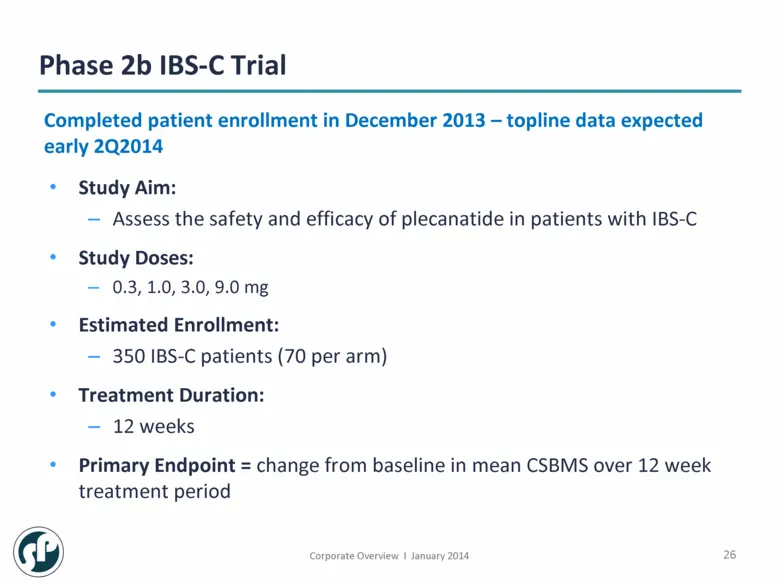
26 Phase 2b IBS-C Trial Study Aim: Assess the safety and efficacy of plecanatide in patients with IBS-C Study Doses: 0.3, 1.0, 3.0, 9.0 mg Estimated Enrollment: 350 IBS-C patients (70 per arm) Treatment Duration: 12 weeks Primary Endpoint = change from baseline in mean CSBMS over 12 week treatment p
Slide 27: SP-333 Program
SP-333 Program Opioid-Induced Constipation (OIC) & Ulcerative Colitis (UC)
Slide 28: SP-333: Superior Stability Expands the Potential
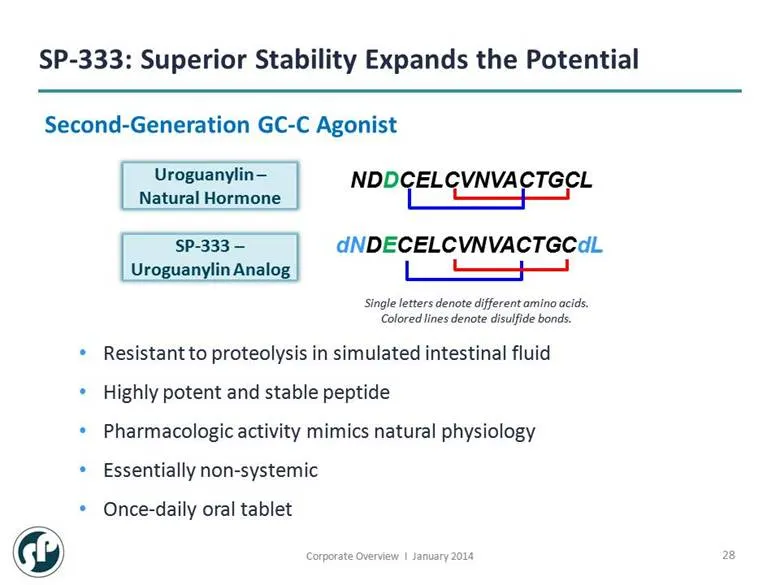
28 SP-333: Superior Stability Expands the Potential Second-Generation GC-C Agonist Resistant to proteolysis in simulated intestinal fluid Highly potent and stable peptide Pharmacologic activity mimics natural physiology Essentially non-systemic Once-daily oral tablet Uroguanylin – Natural Hormone SP
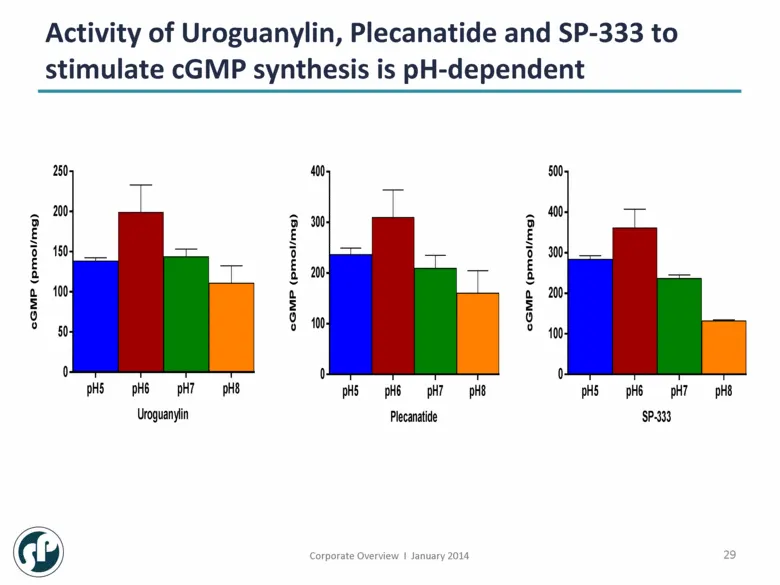
Slide 29: Activity of Uroguanylin, Plecanatide and SP-333 is pH-dependent
29 Activity of Uroguanylin, Plecanatide and SP-333 to stimulate cGMP synthesis is pH-dependent Plecanatide cGMP (pmol/mg) pH5 pH6 pH7 pH8 0 100 200 300 400 Uroguanylin cGMP (pmol/mg) pH5 pH6 pH7 pH8 0 50 100 150 200 250 SP-333 cGMP (pmol/mg) pH5 pH6 pH7 pH8 0 100 200 300 400 500
Slide 30: SP-333: Unique Potential for OIC Market
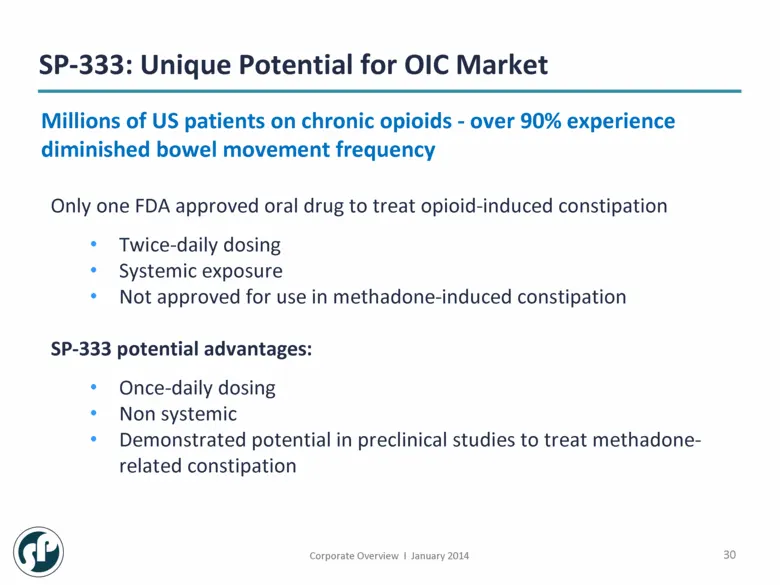
30 SP-333: Unique Potential for OIC Market Only one FDA approved oral drug to treat opioid-induced constipation Twice-daily dosing Systemic exposure Not approved for use in methadone-induced constipation SP-333 potential advantages: Once-daily dosing Non systemic Demonstrated potential in preclinica
Slide 31: SP-333 Phase 2 OIC Trial
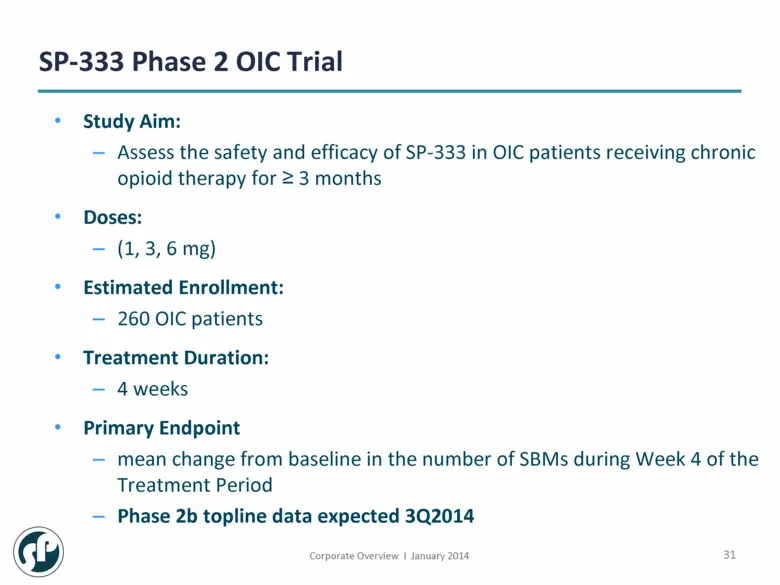
31 SP-333 Phase 2 OIC Trial Study Aim: Assess the safety and efficacy of SP-333 in OIC patients receiving chronic opioid therapy for > 3 months Doses: (1, 3, 6 mg) Estimated Enrollment: 260 OIC patients Treatment Duration: 4 weeks Primary Endpoint mean change from baseline in the number of SBMs duri
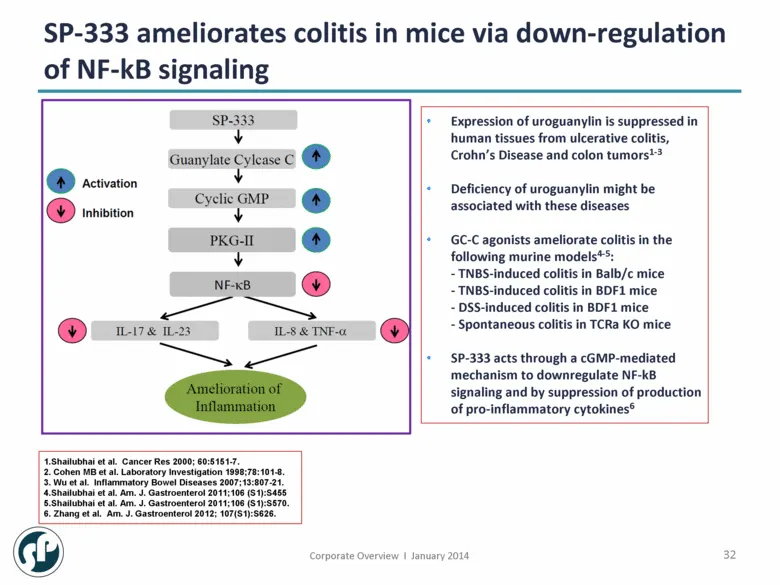
Slide 32: SP-333 ameliorates colitis in mice via down-regulation of NF-kB signaling
32 SP-333 ameliorates colitis in mice via down-regulation of NF-kB signaling Expression of uroguanylin is suppressed in human tissues from ulcerative colitis, Crohn’s Disease and colon tumors1-3 Deficiency of uroguanylin might be associated with these diseases GC-C agonists ameliorate colitis in the
Slide 33: SP-333 for OIC and UC: Development Overview
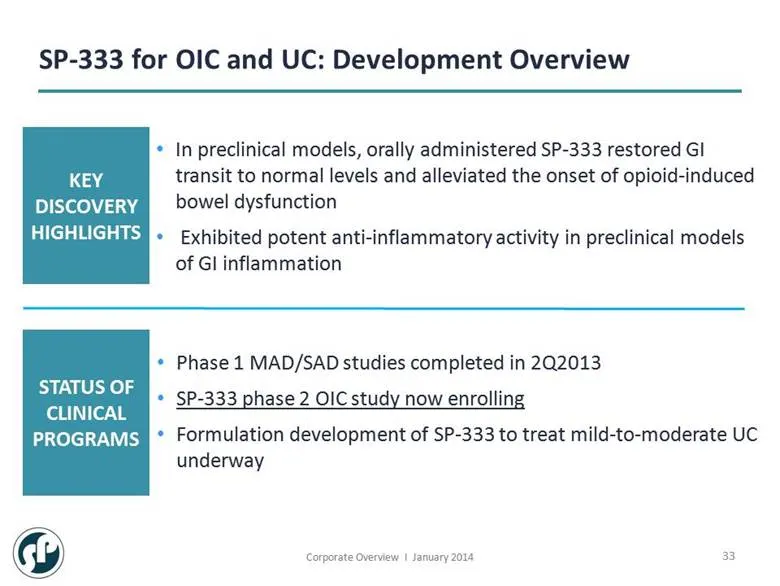
33 SP-333 for OIC and UC: Development Overview KEY DISCOVERY HIGHLIGHTS STATUS OF CLINICAL PROGRAMS In preclinical models, orally administered SP-333 restored GI transit to normal levels and alleviated the onset of opioid-induced bowel dysfunction Exhibited potent anti-inflammatory activity in precl
Slide 34: Synergy: A Unique Opportunity Corporate Summary
Synergy: A Unique Opportunity Corporate Summary
Slide 35: Synergy's Anticipated Milestones
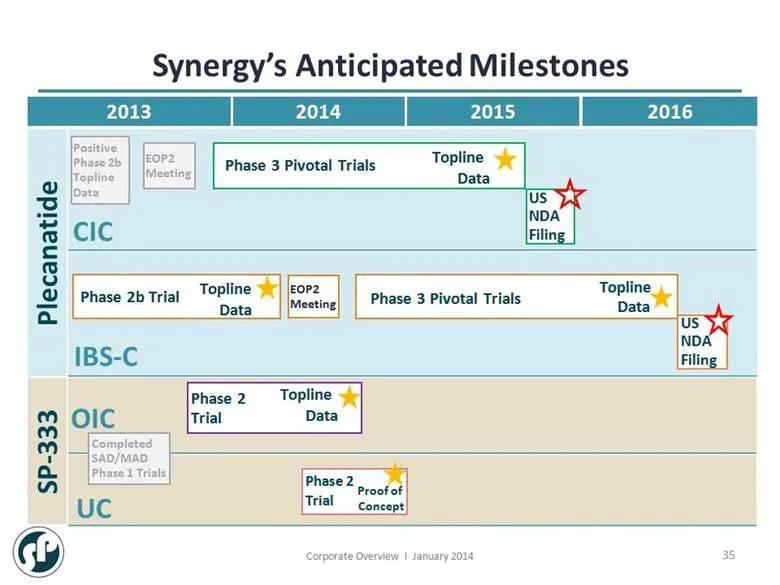
35 Synergy’s Anticipated Milestones 2013 Plecanatide SP-333 CIC IBS-C OIC UC EOP2 Meeting Positive Phase 2b Topline Data 2014 2015 2016 Phase 3 Pivotal Trials Topline Data US NDA Filing Phase 2b Trial Topline Data Topline Data US NDA Filing Phase 2 Trial Topline Data Phase 2 Trial Completed SAD/MAD
Slide 36: The Synergy Opportunity
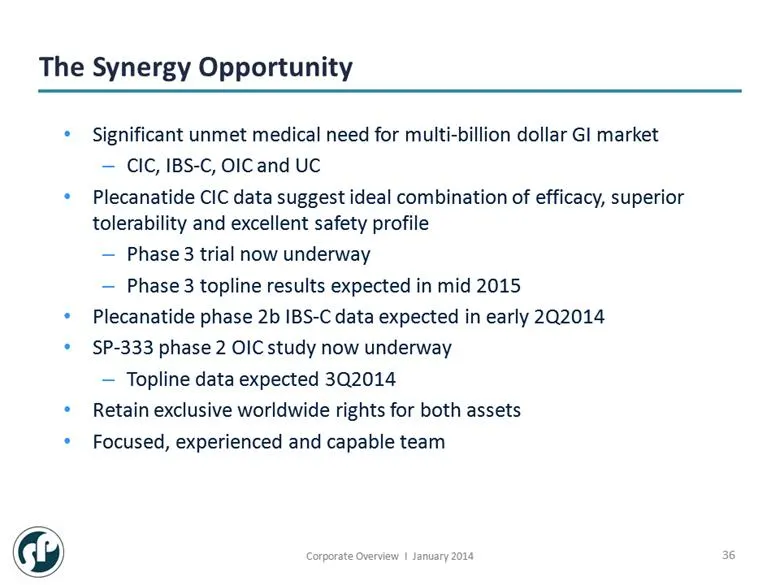
36 The Synergy Opportunity Significant unmet medical need for multi-billion dollar GI market CIC, IBS-C, OIC and UC Plecanatide CIC data suggest ideal combination of efficacy, superior tolerability and excellent safety profile Phase 3 trial now underway Phase 3 topline results expected in mid 2015 P
Source: SEC EDGAR · 8-K filed Feb 3, 2014
More decks from Synergy Pharmaceuticals Inc
 Oppenheimer 28th Annual Healthcare Conference 201827 slides · Mar 20, 2018
 Leerink Partners Global Healthcare Conference 20188 slides · Feb 15, 2018
 Corporate Update (May 2017)27 slides · May 3, 2017
 Oppenheimer Healthcare Conference 201724 slides · Mar 21, 2017
 Leerink Global Healthcare Conference 201716 slides · Feb 15, 2017
 Technical Presentation (October 2014)15 slides · Oct 20, 2014