Beam Therapeutics Inc. · NASDAQ:BEAM
Beam Therapeutics — 66th ASH Annual Meeting 2024
17 slides from Beam Therapeutics's conference presentation, December 2024
Slide 1: Initial Results from the BEACON Clinical Study
INITIAL RESULTS FROM THE BEACON CLINICAL STUDY A Phase 1/2 study evaluating the safety and efficacy of a single dose of autologous CD34+ base-edited hematopoietic stem cells (BEAM-101) in patients with sickle cell disease with severe vaso-occlusive crises Ashish Gupta, Akshay Sharma, Haydar Frangoul
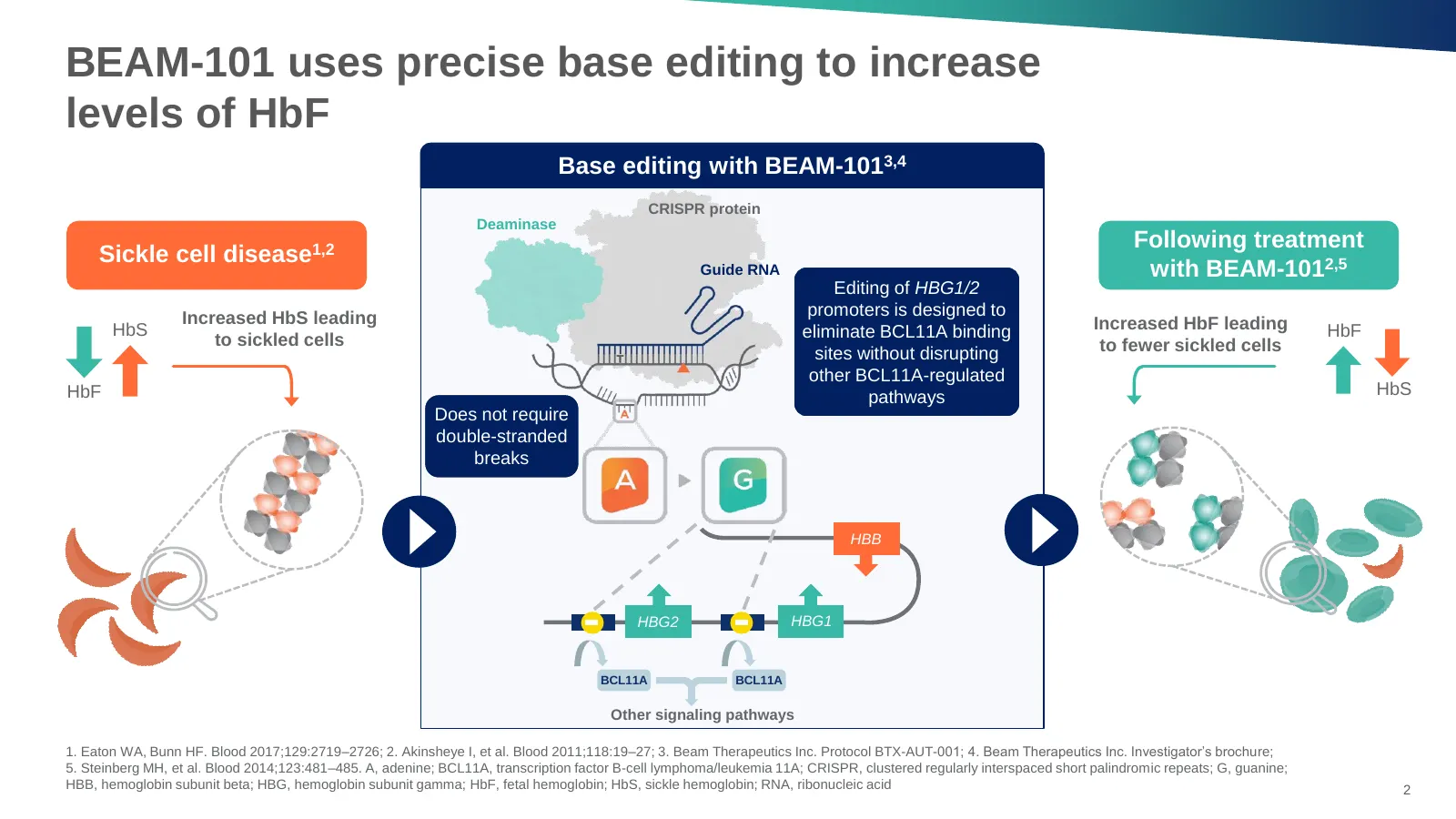
Slide 2: BEAM-101 uses precise base editing to increase levels of HbF
BEAM-101 uses precise base editing to increase levels of HbF Base editing with BEAM-1013,4 CRISPR protein Deaminase Following treatment Sickle cell disease1,2 Guide RNA with BEAM-1012,5 Editing of HBG1/2 Increased HbS leading promoters is designed to HbS eliminate BCL11A binding Increased HbF leadin
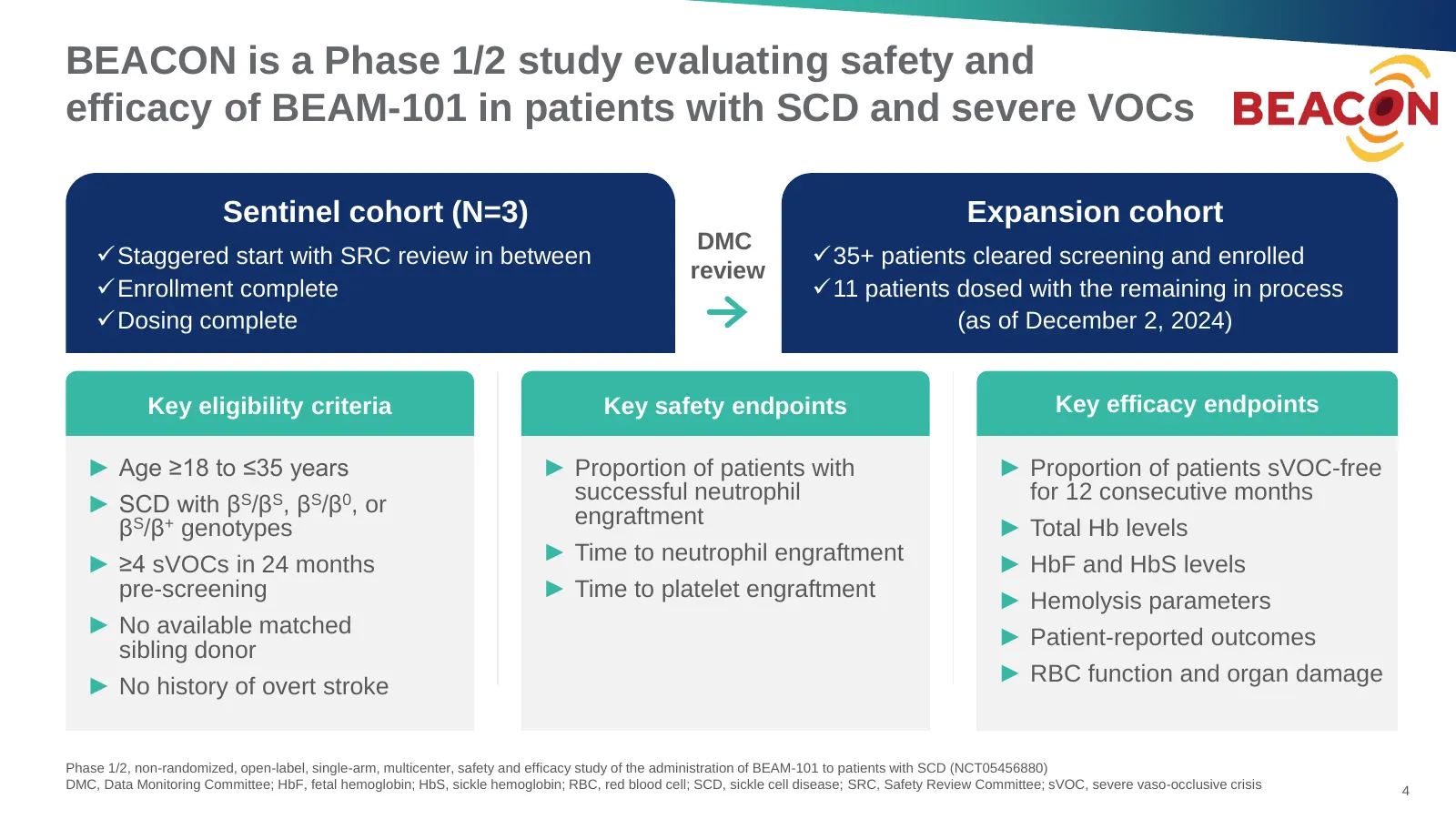
Slide 3: BEACON is a Phase 1/2 study evaluating safety and efficacy of BEAM-101
BEACON is a Phase 1/2 study evaluating safety and efficacy of BEAM-101 in patients with SCD and severe VOCs Sentinel cohort (N=3) Expansion cohort DMC ✓Staggered start with SRC review in between ✓35+ patients cleared screening and enrolled review ✓Enrollment complete ✓11 patients dosed with the rema
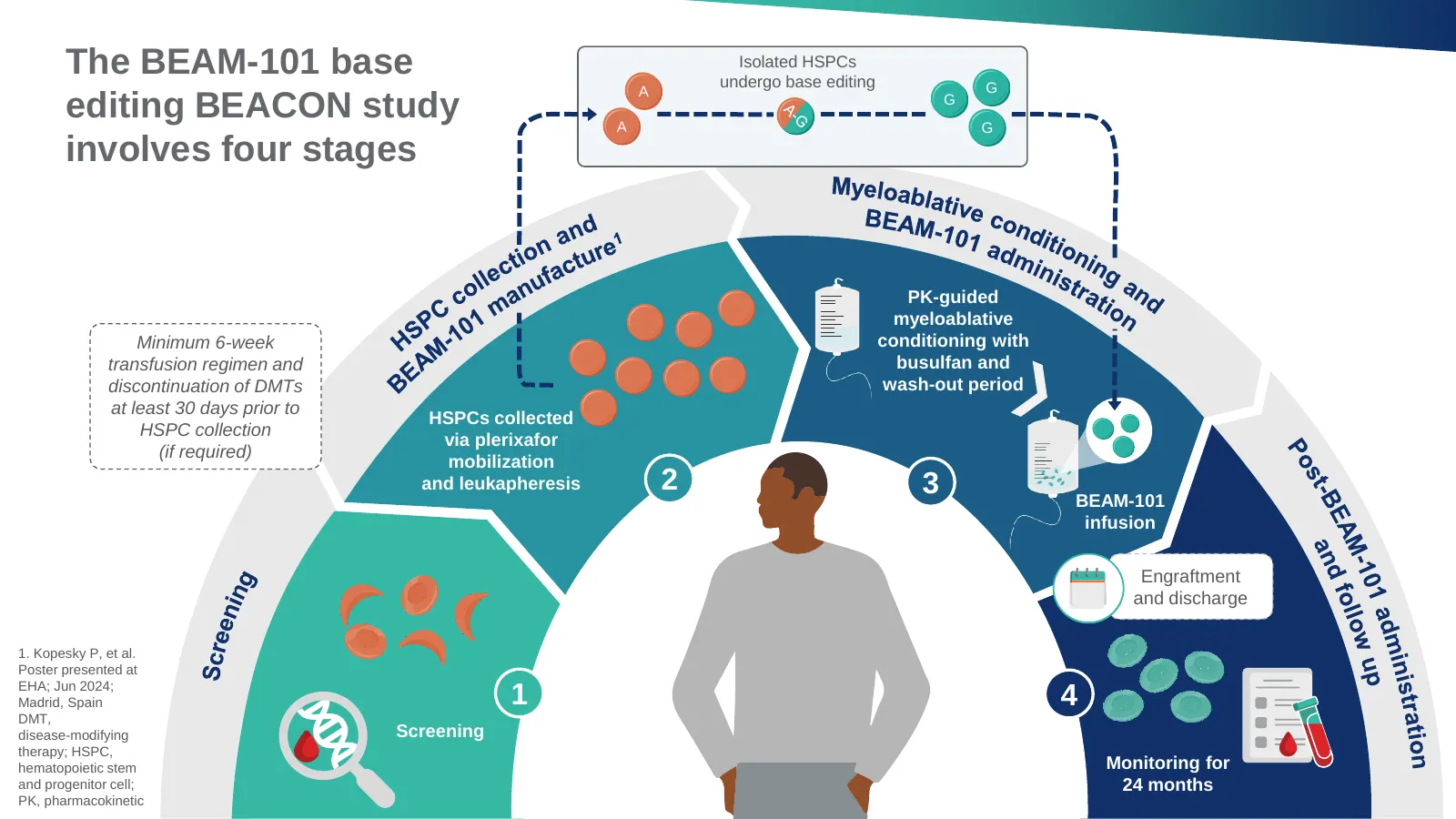
Slide 4: The BEAM-101 BEACON study involves four stages
The BEAM-101 base Isolated HSPCs undergo base editing A G editing BEACON study A G G involves four stages Myeloab lat BEAM ive con and 1 -101 d n e adm ition ctio actur ini ing olle nuf str ati and c ma PK-guided on C P 01 myeloablative Minimum 6-week S H M-1 conditioning with transfusion regimen an
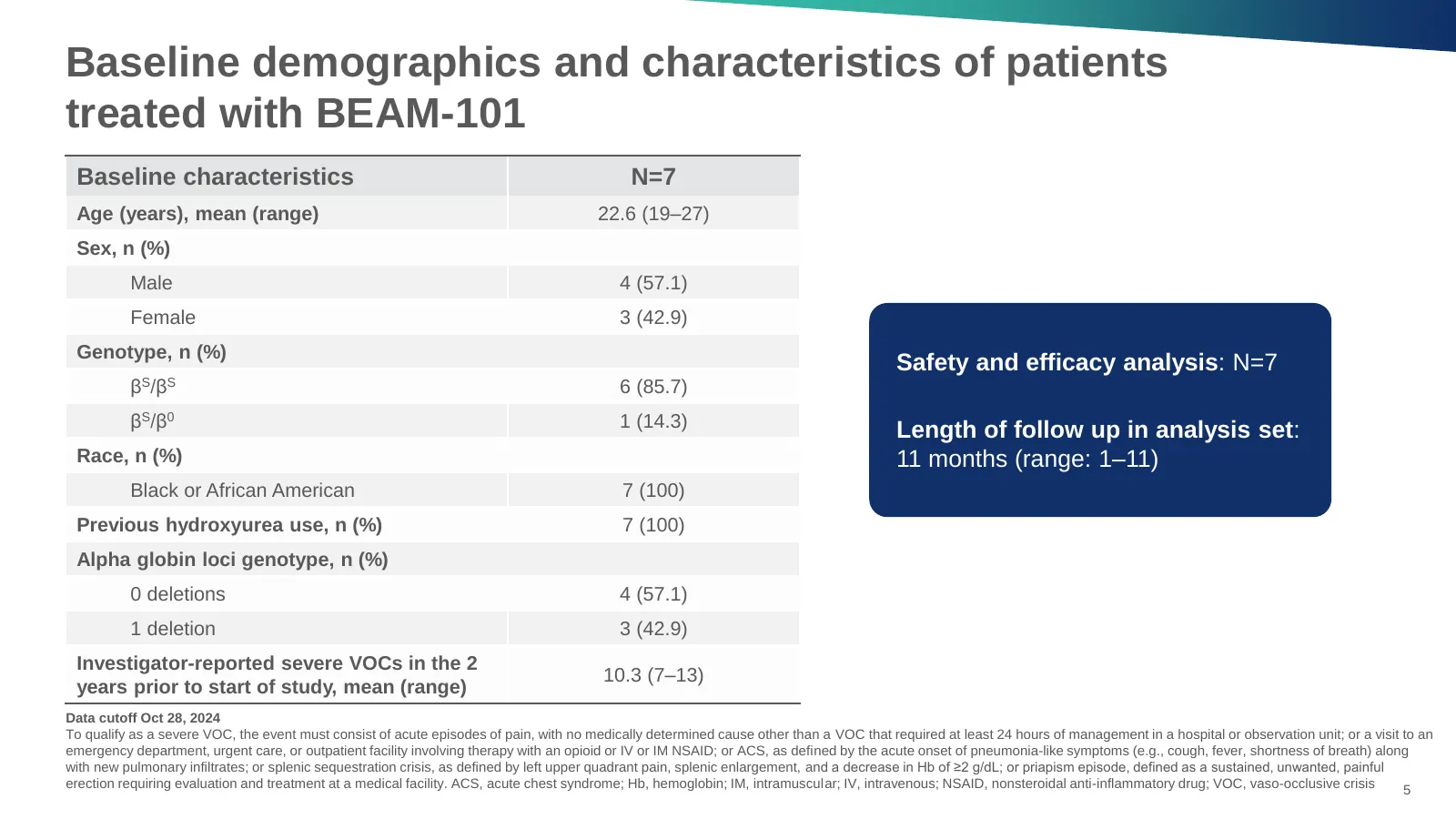
Slide 5: Baseline demographics and characteristics of patients treated with BEAM-101
Baseline demographics and characteristics of patients treated with BEAM-101 Baseline characteristics N=7 Age (years), mean (range) 22.6 (19–27) Sex, n (%) Male 4 (57.1) Female 3 (42.9) Genotype, n (%) Safety and efficacy analysis: N=7 βS/βS 6 (85.7) βS/β0 1 (14.3) Length of follow up in analysis set
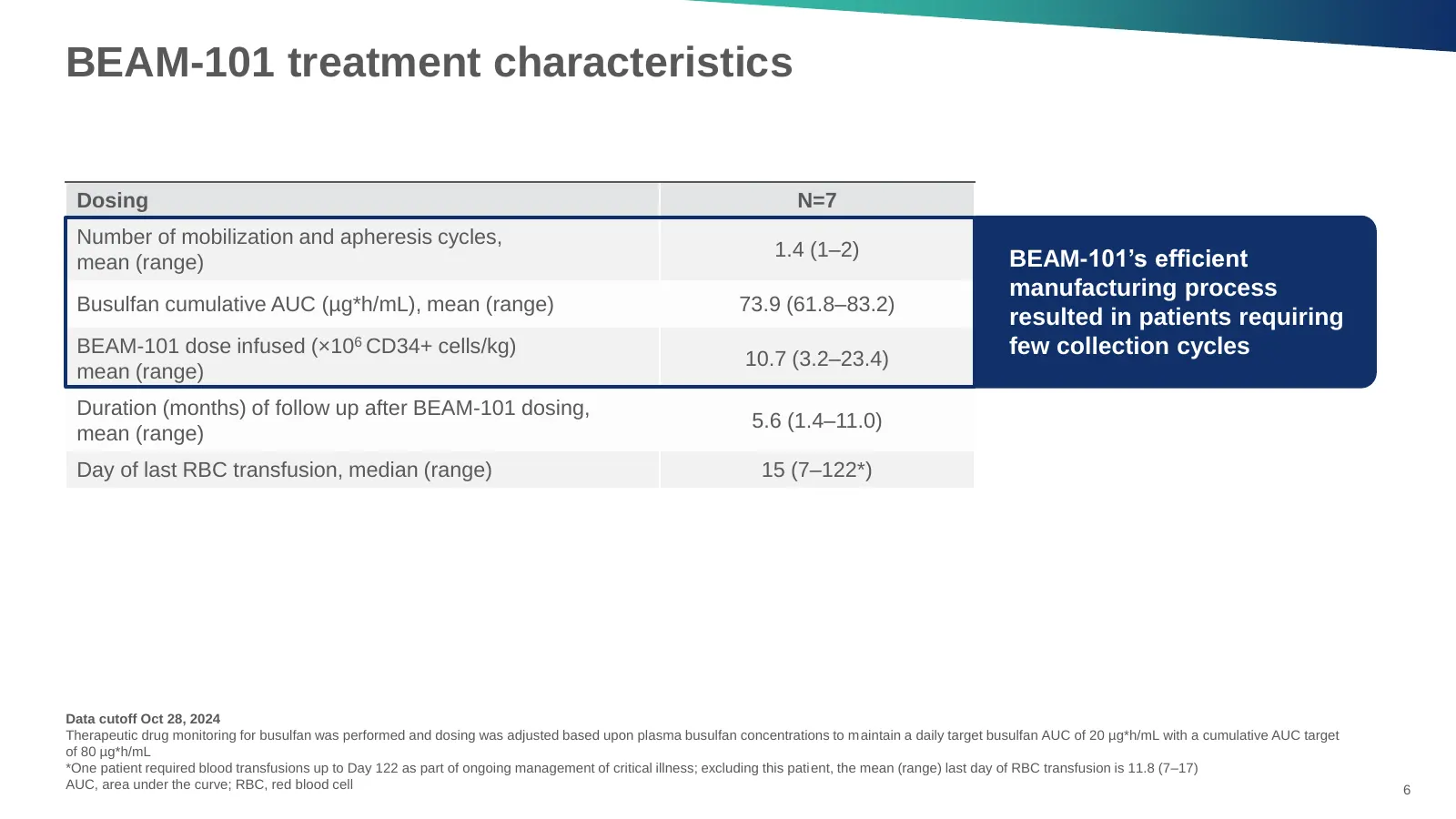
Slide 6: BEAM-101 treatment characteristics
BEAM-101 treatment characteristics Dosing N=7 Number of mobilization and apheresis cycles, 1.4 (1–2) BEAM-101’s efficient mean (range) manufacturing process Busulfan cumulative AUC (µg*h/mL), mean (range) 73.9 (61.8–83.2) resulted in patients requiring BEAM-101 dose infused (×106 CD34+ cells/kg) few
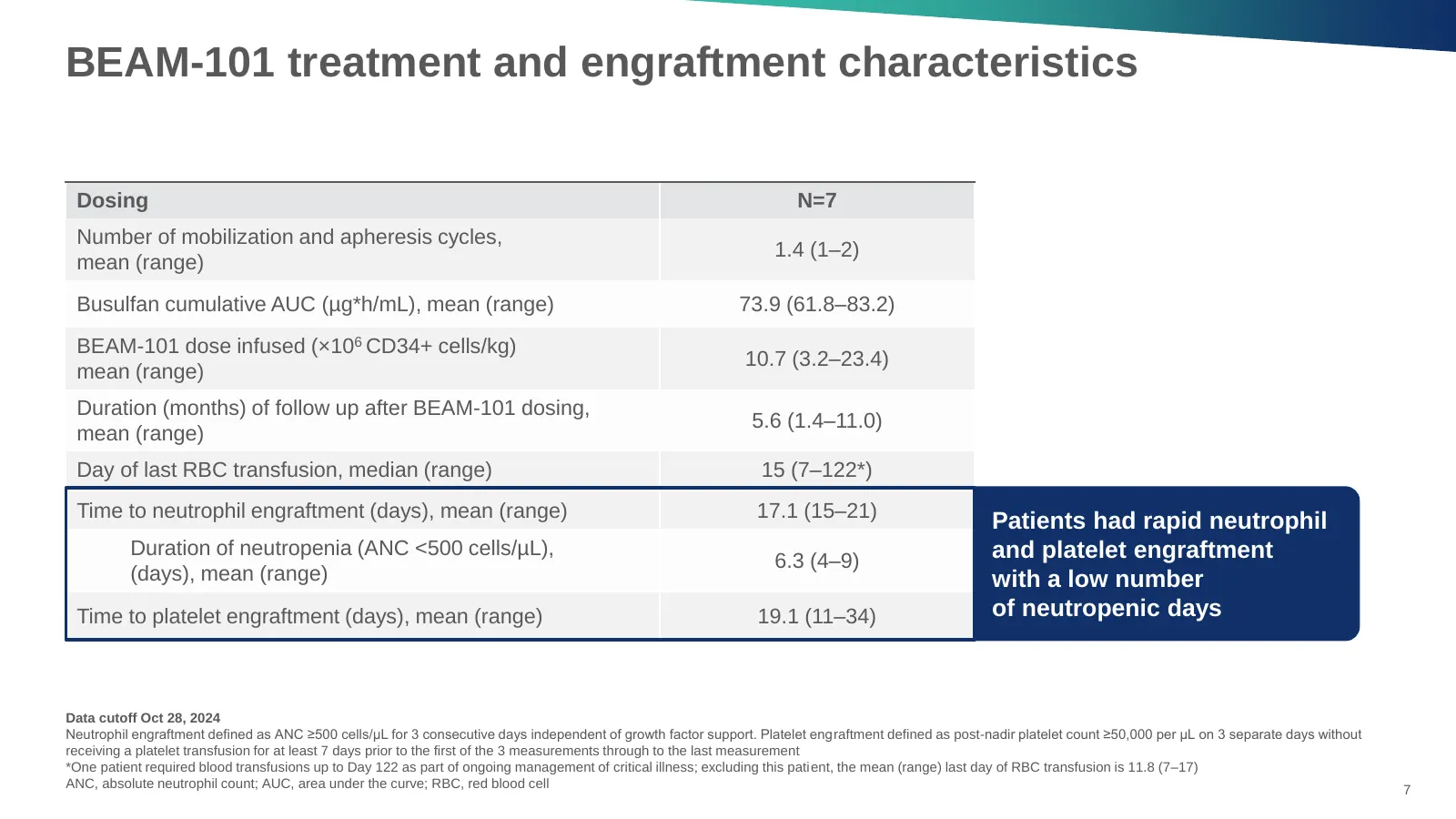
Slide 7: BEAM-101 treatment and engraftment characteristics
BEAM-101 treatment and engraftment characteristics Dosing and engraftment N=7 Number of mobilization and apheresis cycles, 1.4 (1–2) mean (range) Busulfan cumulative AUC (µg*h/mL), mean (range) 73.9 (61.8–83.2) BEAM-101 dose infused (×106 CD34+ cells/kg) 10.7 (3.2–23.4) mean (range) Duration (months
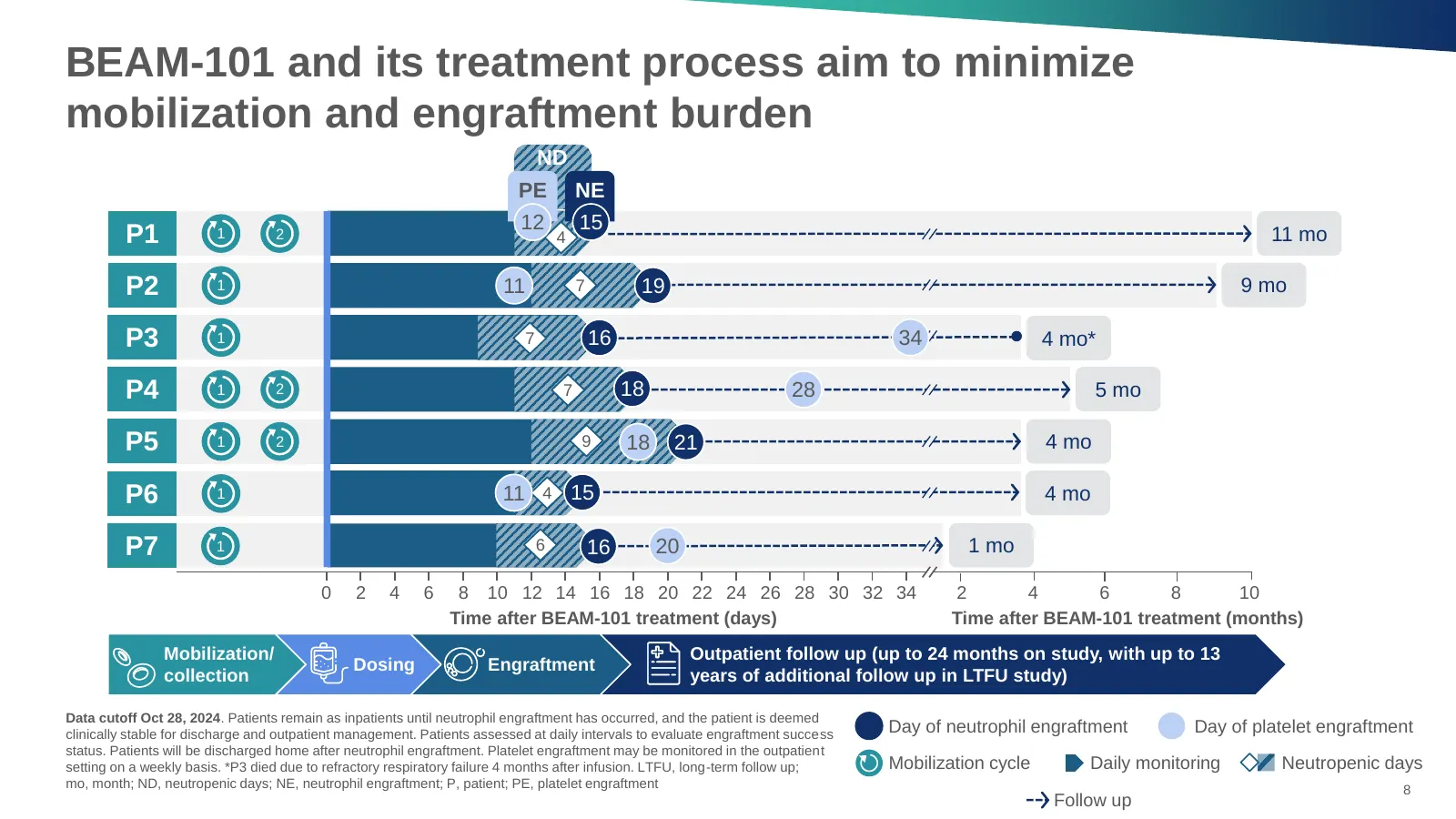
Slide 8: BEAM-101 treatment process aims to minimize mobilization and engraftment burden
BEAM-101 and its treatment process aim to minimize mobilization and engraftment burden ND PE NE 12 15 P1 1 2 4 11 mo P2 1 11 7 19 9 mo P3 1 7 16 34 4 mo* P4 1 2 7 18 28 5 mo P5 1 2 9 18 21 4 mo P6 1 11 4 15 4 mo P7 1 6 16 20 1 mo 0 2 4 6 8 10 12 14 16 18 20 22 24 26 28 30 32 34 2 4 6 8 10 Time after
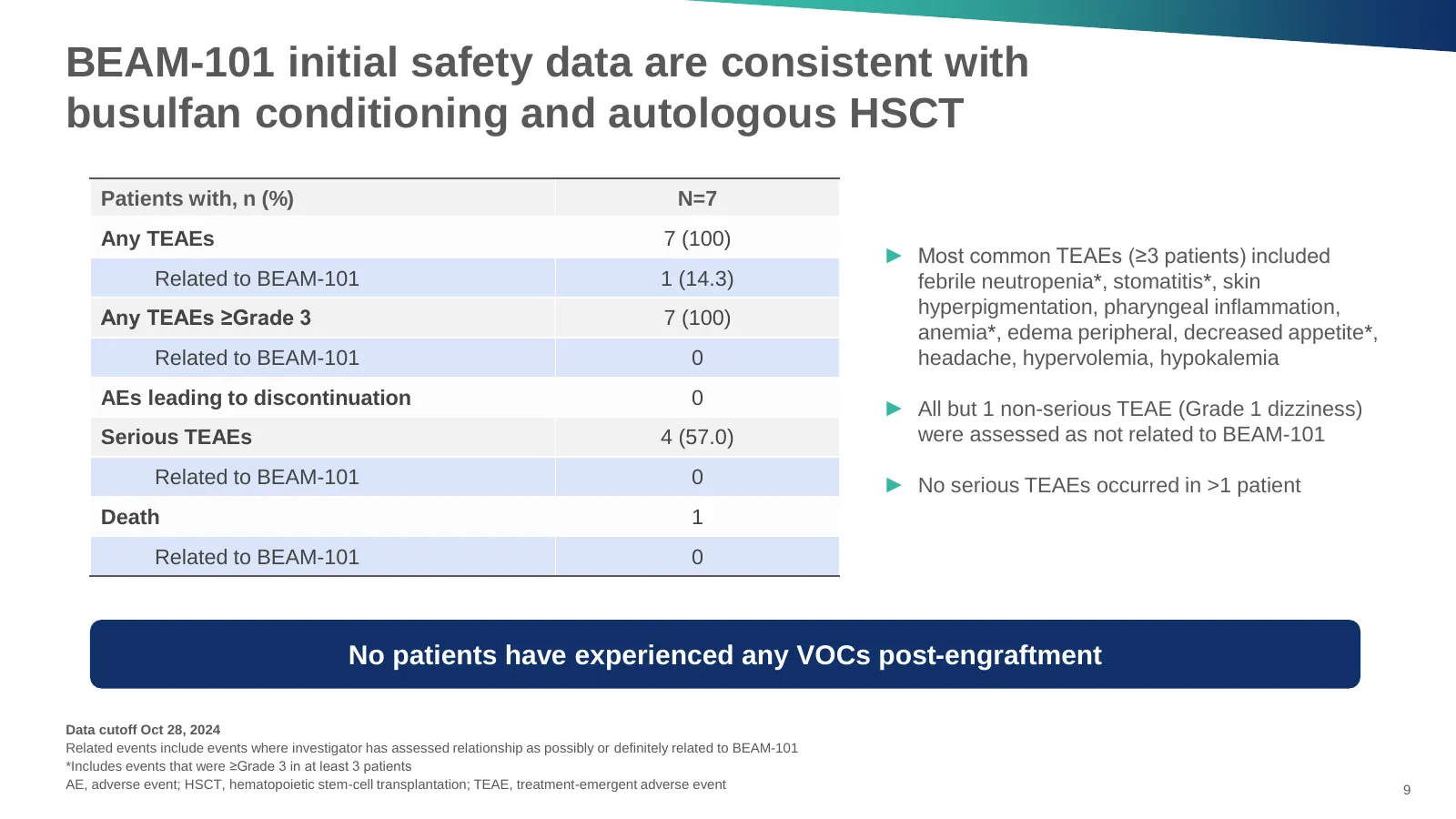
Slide 9: BEAM-101 initial safety data consistent with busulfan conditioning and autologous HSCT
BEAM-101 initial safety data are consistent with busulfan conditioning and autologous HSCT Patients with, n (%) N=7 Any TEAEs 7 (100) ► Most common TEAEs (≥3 patients) included Related to BEAM-101 1 (14.3) febrile neutropenia*, stomatitis*, skin hyperpigmentation, pharyngeal inflammation, Any TEAEs
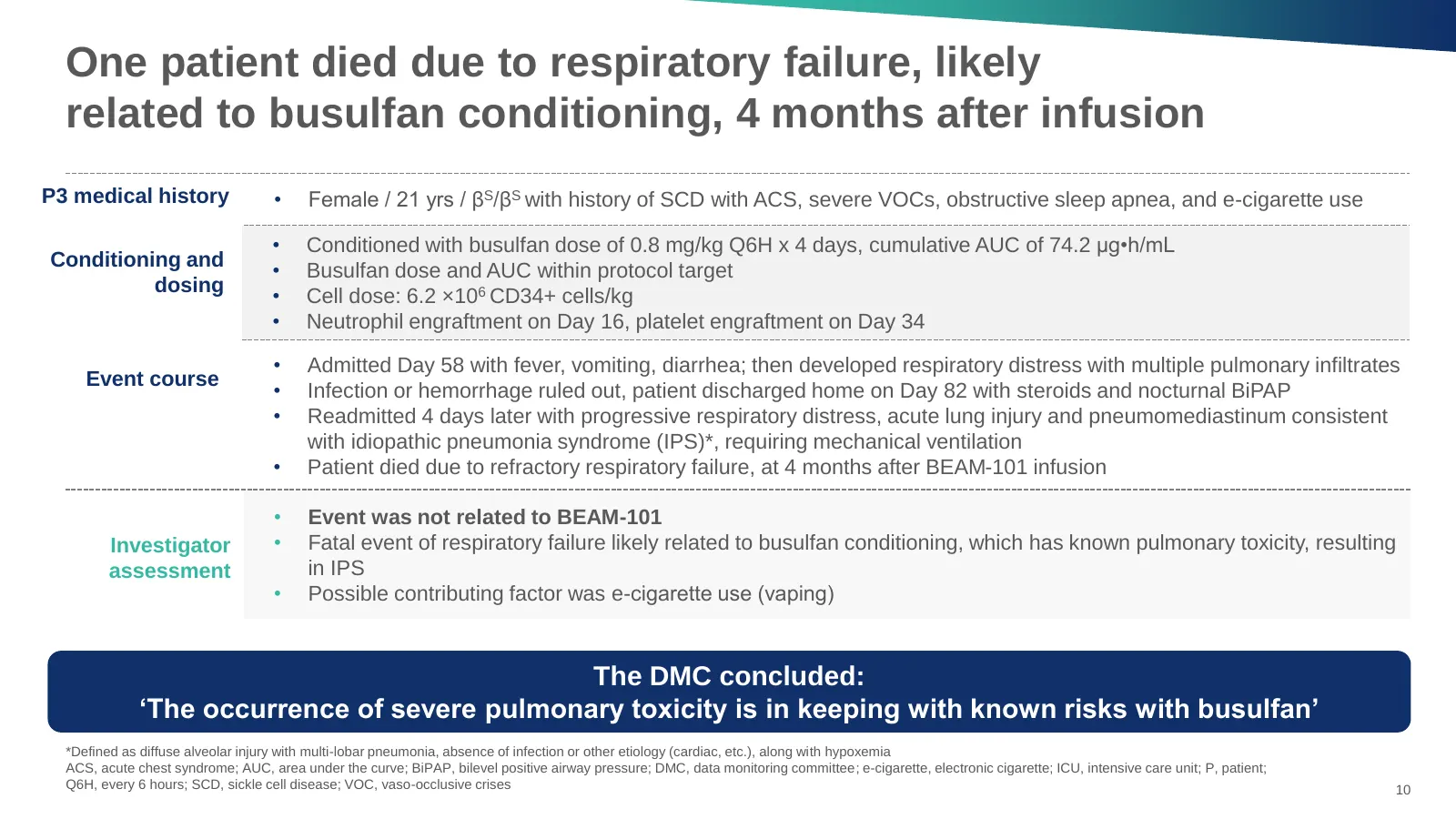
Slide 10: One patient died due to respiratory failure, likely related to busulfan conditioning
One patient died due to respiratory failure, likely related to busulfan conditioning, 4 months after infusion P3 medical history • Female / 21 yrs / βS/βS with history of SCD with ACS, severe VOCs, obstructive sleep apnea, and e-cigarette use • Conditioned with busulfan dose of 0.8 mg/kg Q6H x 4 day
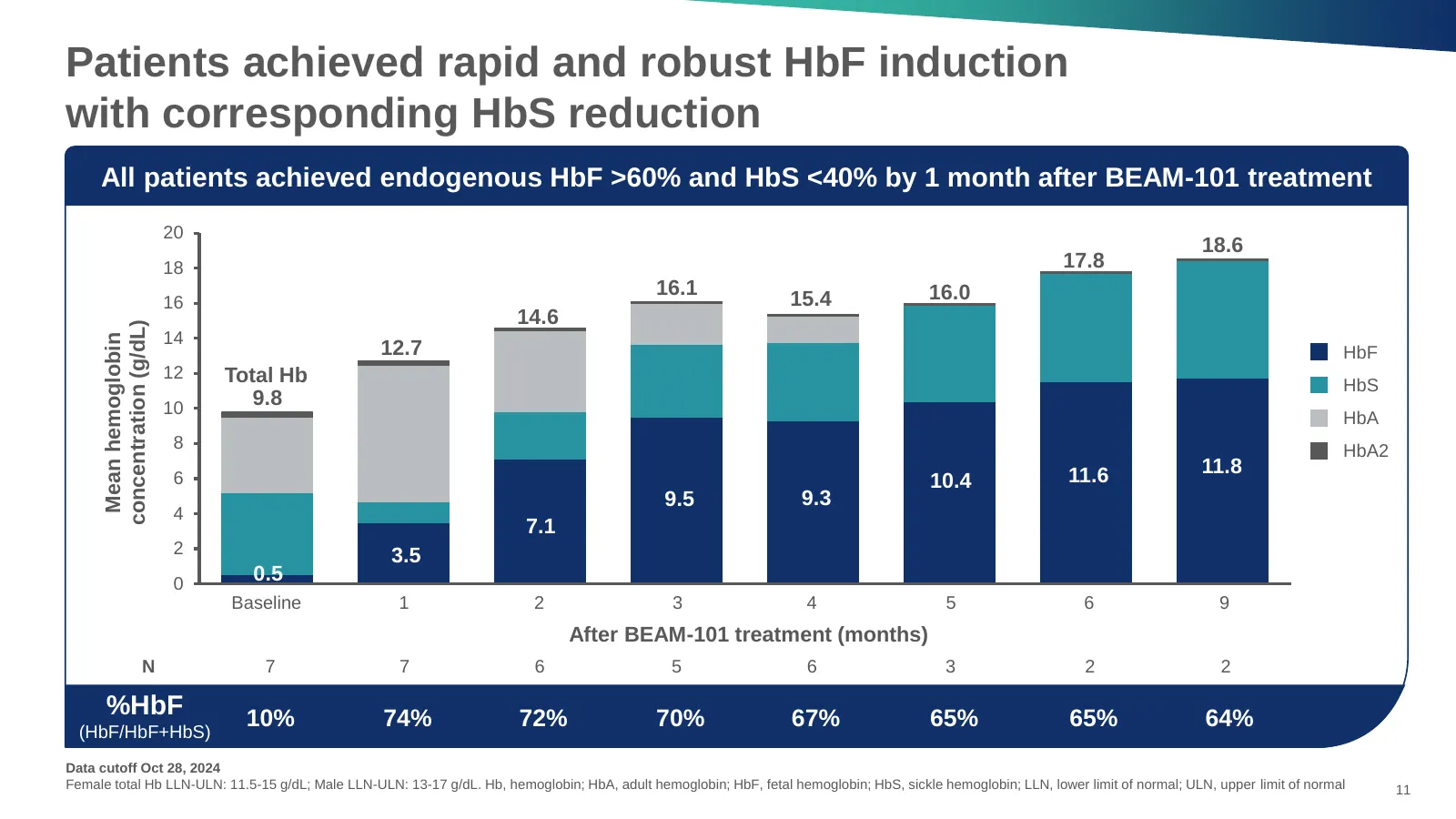
Slide 11: Patients achieved rapid and robust HbF induction with corresponding HbS reduction
Patients achieved rapid and robust HbF induction with corresponding HbS reduction All patients achieved endogenous HbF >60% and HbS <40% by 1 month after BEAM-101 treatment 20 18.6 18 17.8 16.1 16.0 16 15.4 14.6 concentration (g/dL) 14 Mean hemoglobin 12.7 HbF 12 Total Hb HbS 10 9.8 HbA 8 HbA2 6 11.
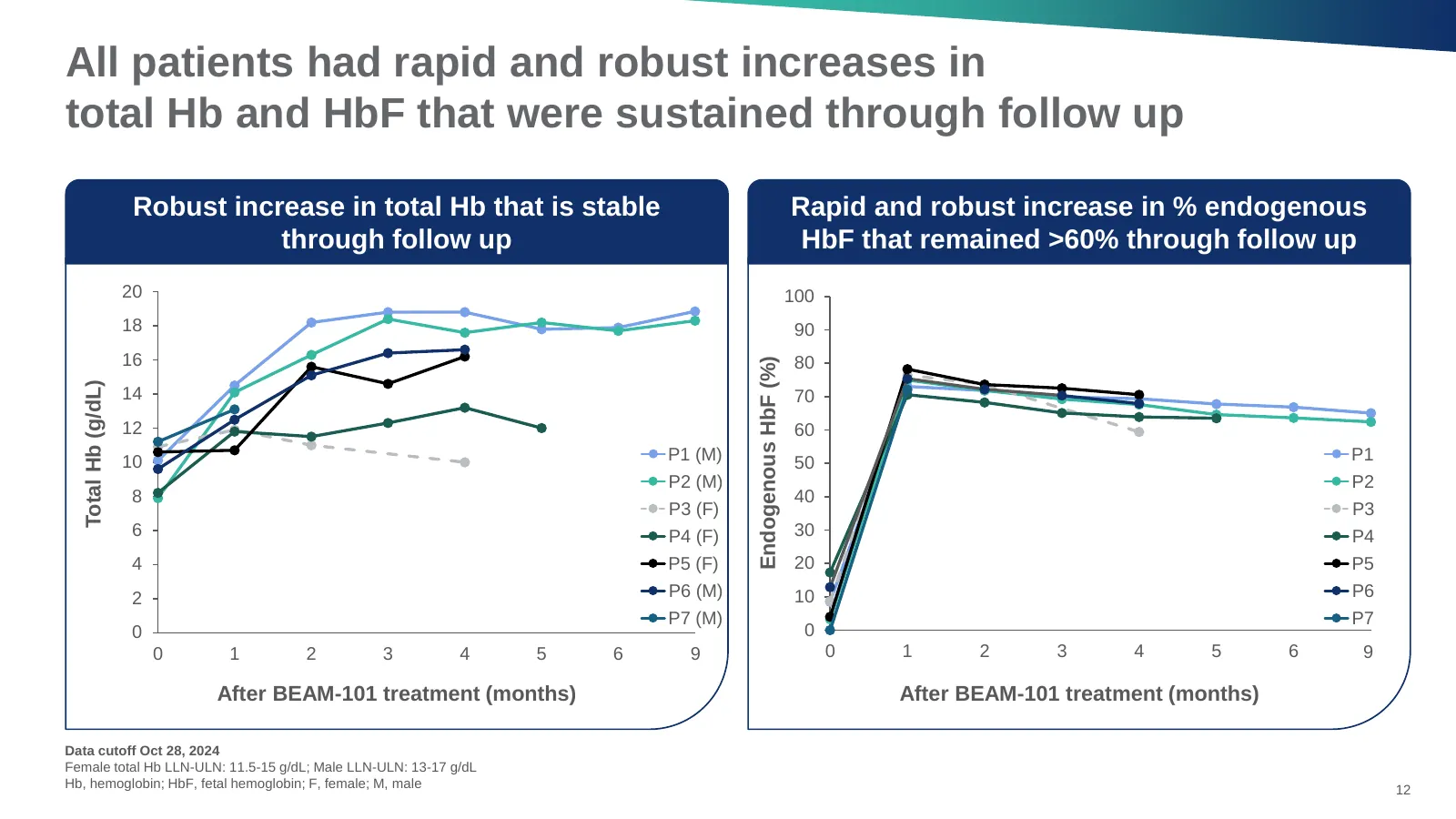
Slide 12: Rapid and robust increases in total Hb and HbF sustained through follow up
All patients had rapid and robust increases in total Hb and HbF that were sustained through follow up Robust increase in total Hb that is stable Rapid and robust increase in % endogenous through follow up HbF that remained >60% through follow up 20 100 18 90 16 80 Endogenous HbF (%) Total Hb (g/dL)
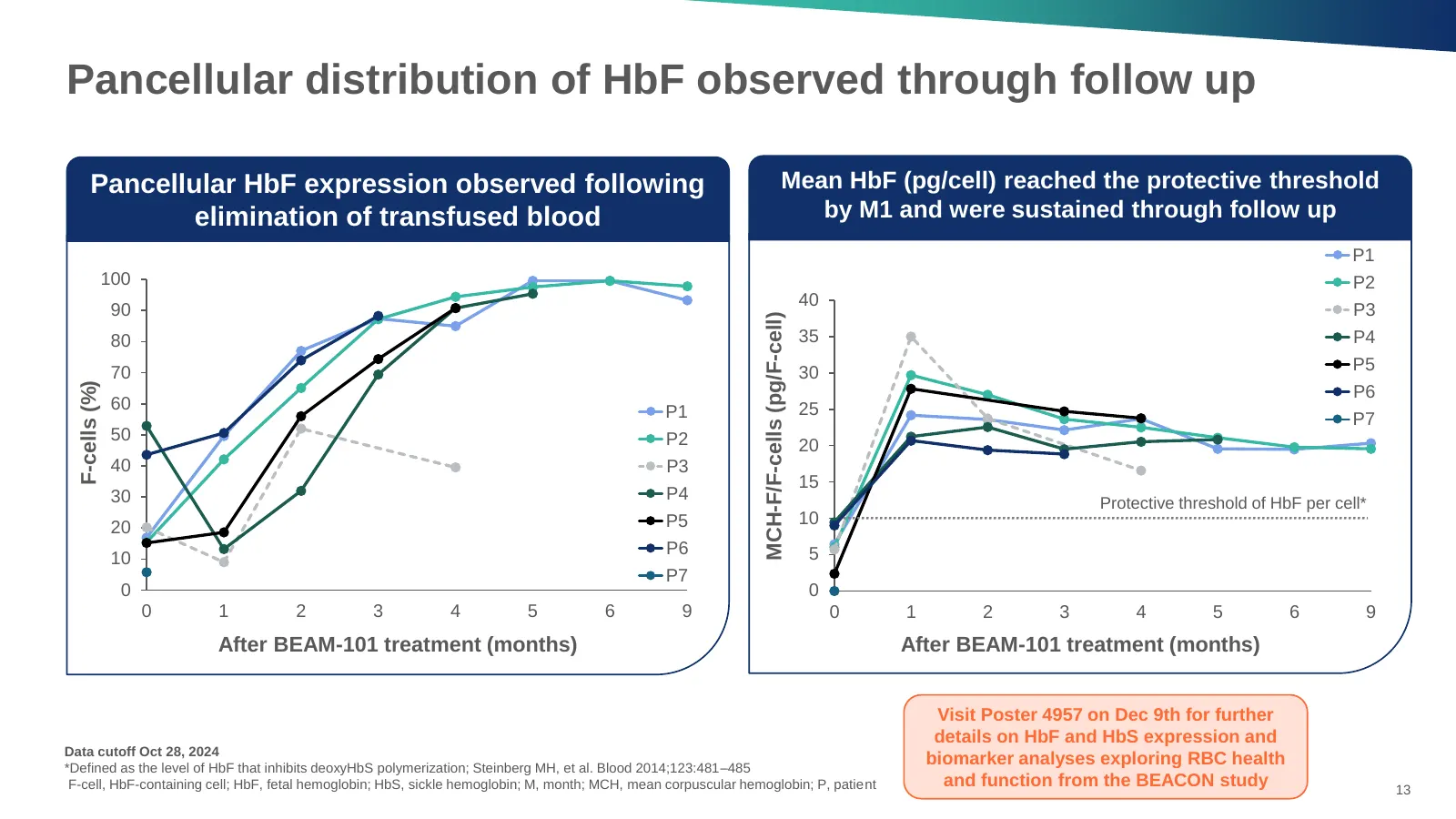
Slide 13: Pancellular distribution of HbF observed through follow up
Pancellular distribution of HbF observed through follow up Pancellular HbF expression observed following Mean HbF (pg/cell) reached the protective threshold elimination of transfused blood by M1 and were sustained through follow up P1 100 P2 40 90 P3 MCH-F/F-cells (pg/F-cell) 80 35 P4 70 30 P5 F-cel
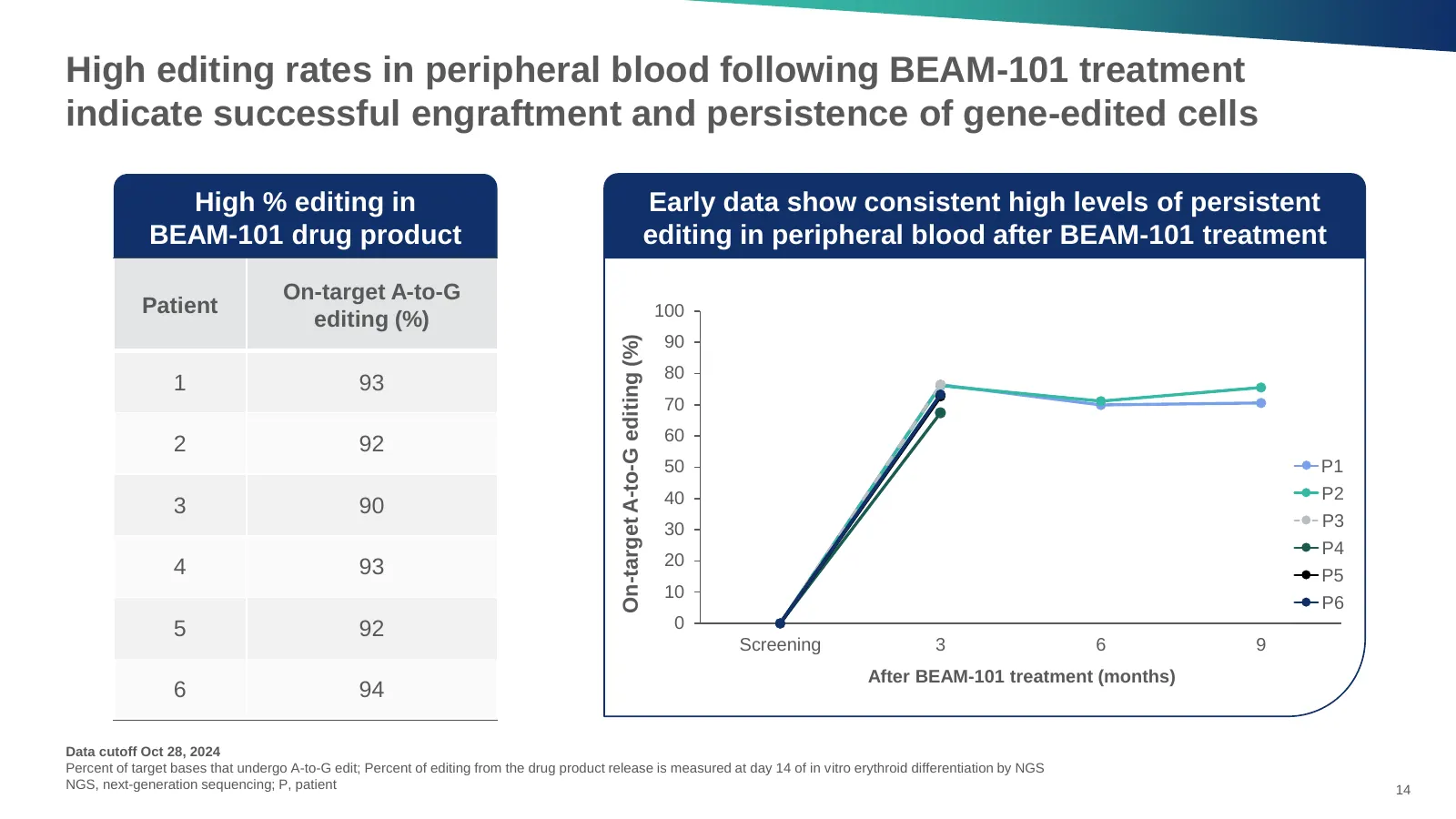
Slide 14: High editing rates in peripheral blood following BEAM-101 treatment
High editing rates in peripheral blood following BEAM-101 treatment indicate successful engraftment and persistence of gene-edited cells High % editing in Early data show consistent high levels of persistent BEAM-101 drug product editing in peripheral blood after BEAM-101 treatment On-target A-to-G
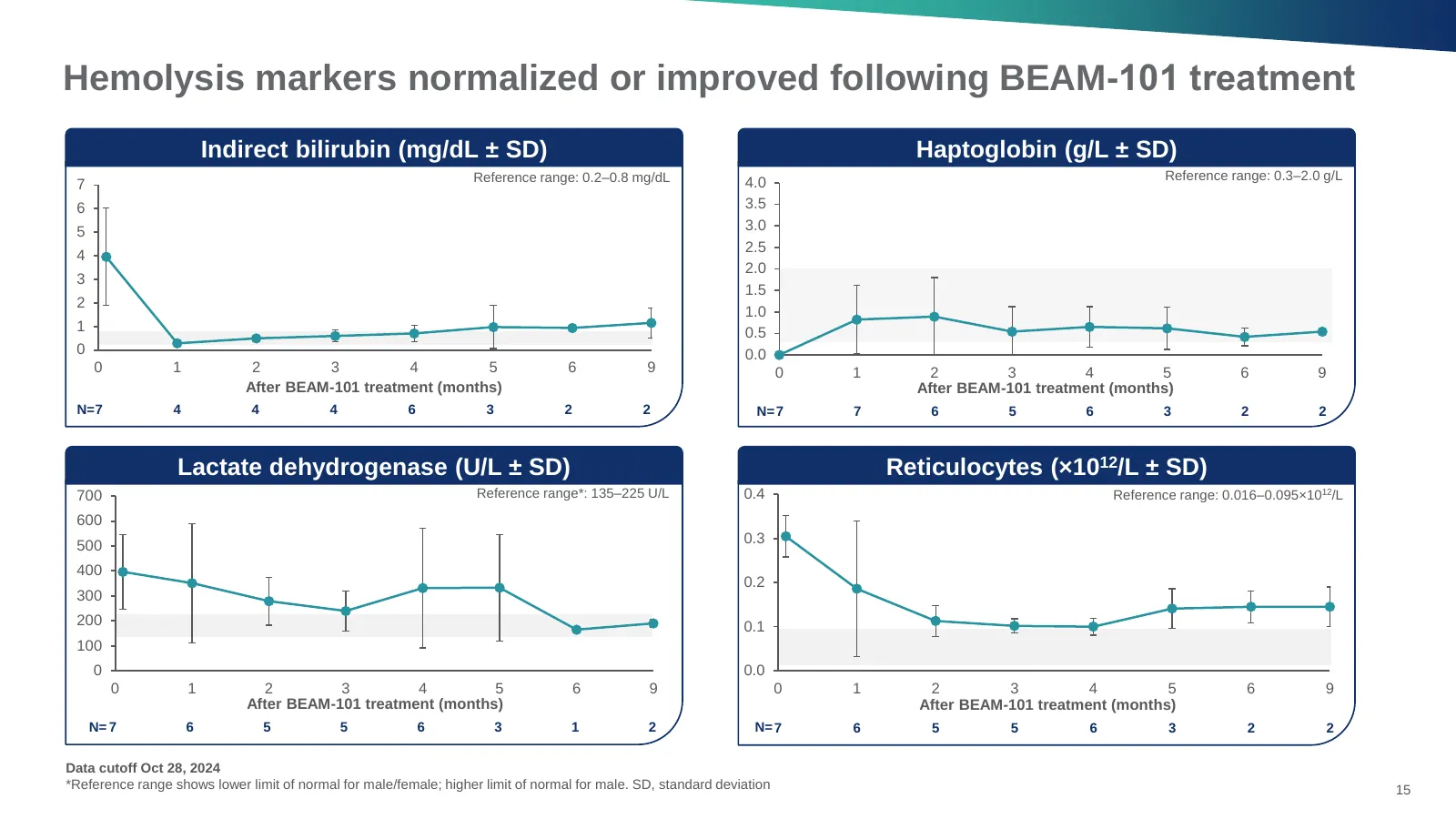
Slide 15: Hemolysis markers normalized or improved following BEAM-101 treatment
Hemolysis markers normalized or improved following BEAM-101 treatment Indirect bilirubin (mg/dL ± SD) Haptoglobin (g/L ± SD) Reference range: 0.2–0.8 mg/dL 4.0 Reference range: 0.3–2.0 g/L 7 6 3.5 5 3.0 2.5 4 2.0 3 1.5 2 1.0 1 0.5 0 0.0 0 1 2 3 4 5 6 7 9 0 1 2 3 4 5 6 9 7 After BEAM-101 treatment
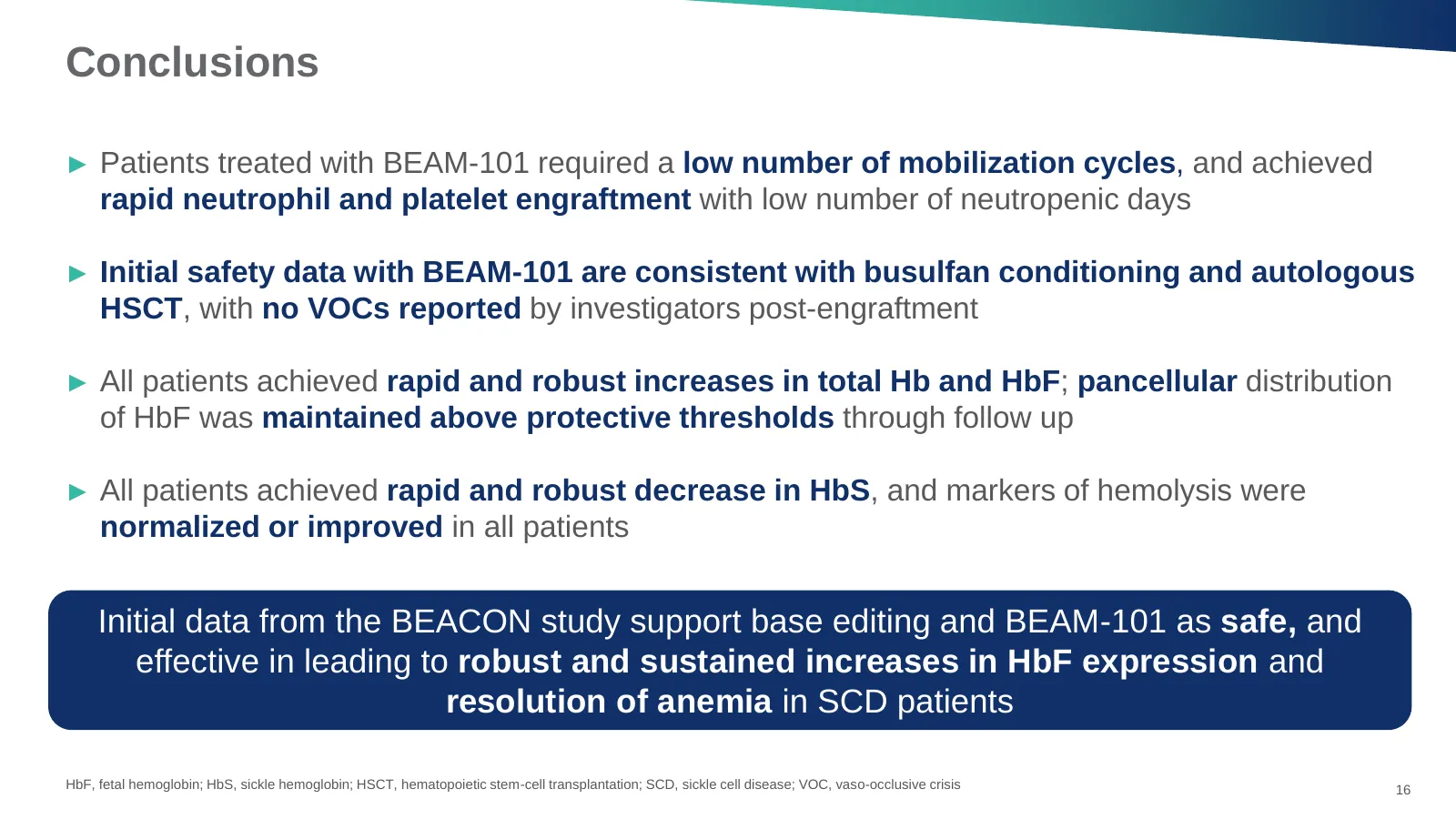
Slide 16: Conclusions
Conclusions ► Patients treated with BEAM-101 required a low number of mobilization cycles, and achieved rapid neutrophil and platelet engraftment with low number of neutropenic days ► Initial safety data with BEAM-101 are consistent with busulfan conditioning and autologous HSCT, with no VOCs report
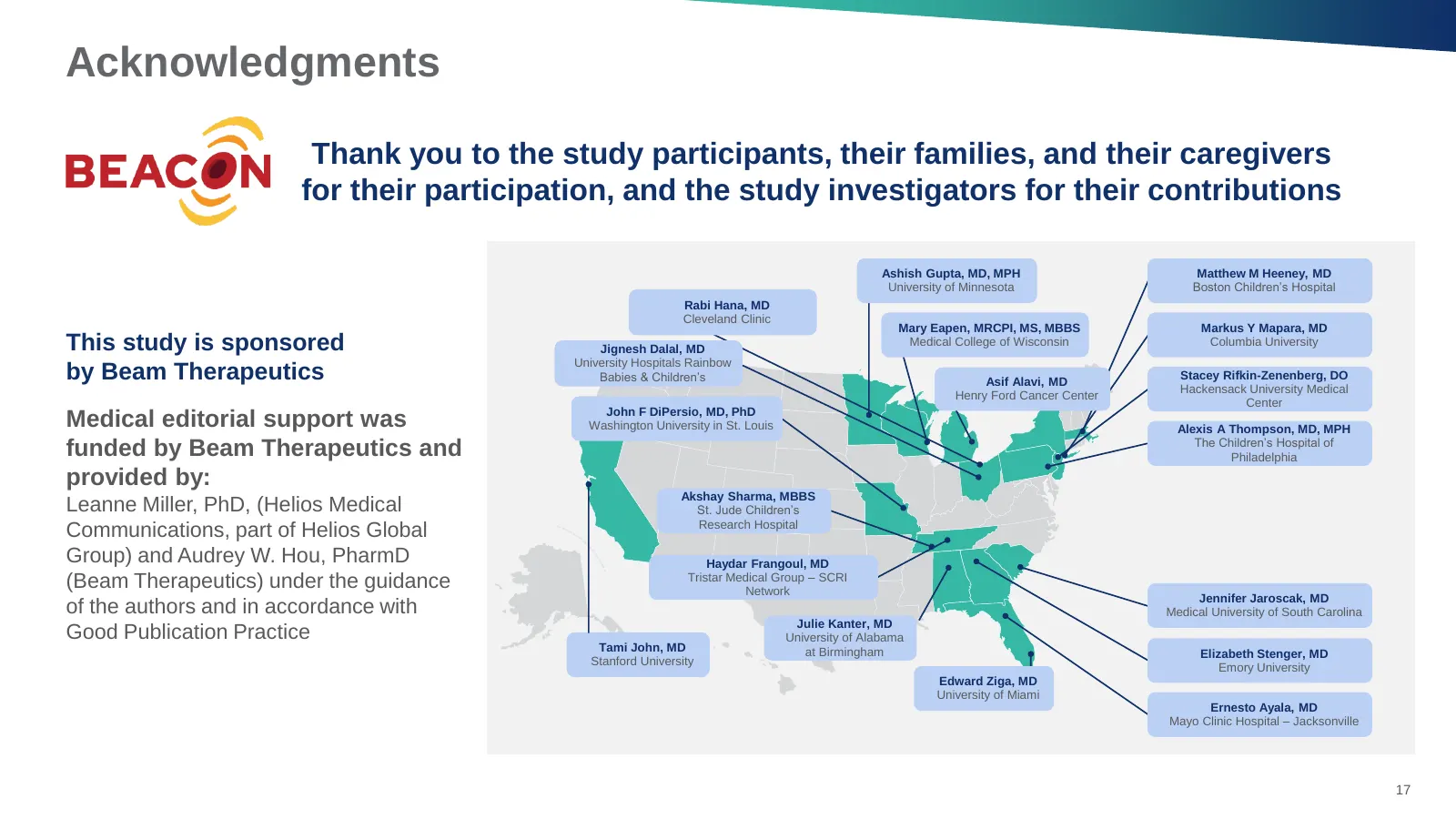
Slide 17: Acknowledgments
Acknowledgments Thank you to the study participants, their families, and their caregivers for their participation, and the study investigators for their contributions Ashish Gupta, MD, MPH Matthew M Heeney, MD University of Minnesota Boston Children’s Hospital Rabi Hana, MD Cleveland Clinic Mary Eap
Source: Internet Archive copy of beamtx.com
More decks from Beam Therapeutics Inc.
 European Respiratory Society (ERS) Congress 20269 slides · September 2026
 ATS 202621 slides · May 2026
 FY 2025 Earnings Presentation39 slides · Feb 24, 2026
 Investor Presentation (January 2026)27 slides · Jan 12, 2026
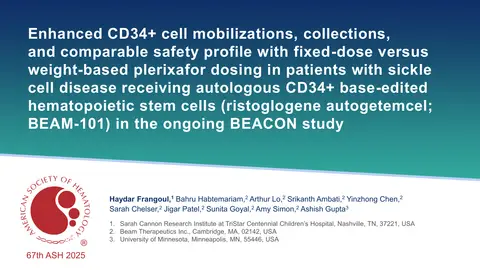 67th ASH Annual Meeting 202515 slides · December 2025
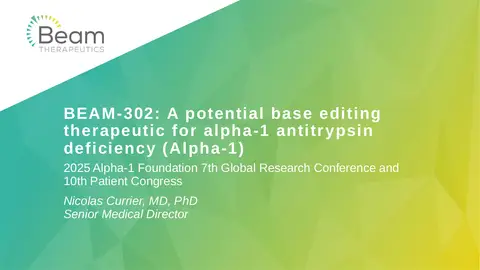 2025 Alpha-1 Foundation 7th Global Research Conference and 10th Patient Congress20 slides · May 2025