Capricor Therapeutics, Inc. · NASDAQ:CAPR
Capricor Therapeutics — 2017 Scientific Sessions of the American Heart Association
24 slides from Capricor Therapeutics's conference presentation, Nov 15, 2017
Slide 1: 12-Month Results from the HOPE-Duchenne Clinical Trial
Capricor Therapeutics 12-Month Results from the HOPE-Duchenne Clinical Trial Presented at the 2017 Scientific Sessions of the American Heart Association NASDAQ: CAPR November 15, 2017
Slide 2: Forward-Looking Statements
Forward-Looking Statements Statements in this presentation regarding the efficacy, safety, and intended utilization of Capricor's product candidates; the initiation, conduct, size, timing and results of discovery efforts and clinical trials; the pace of enrollment of clinical trials; plans regarding
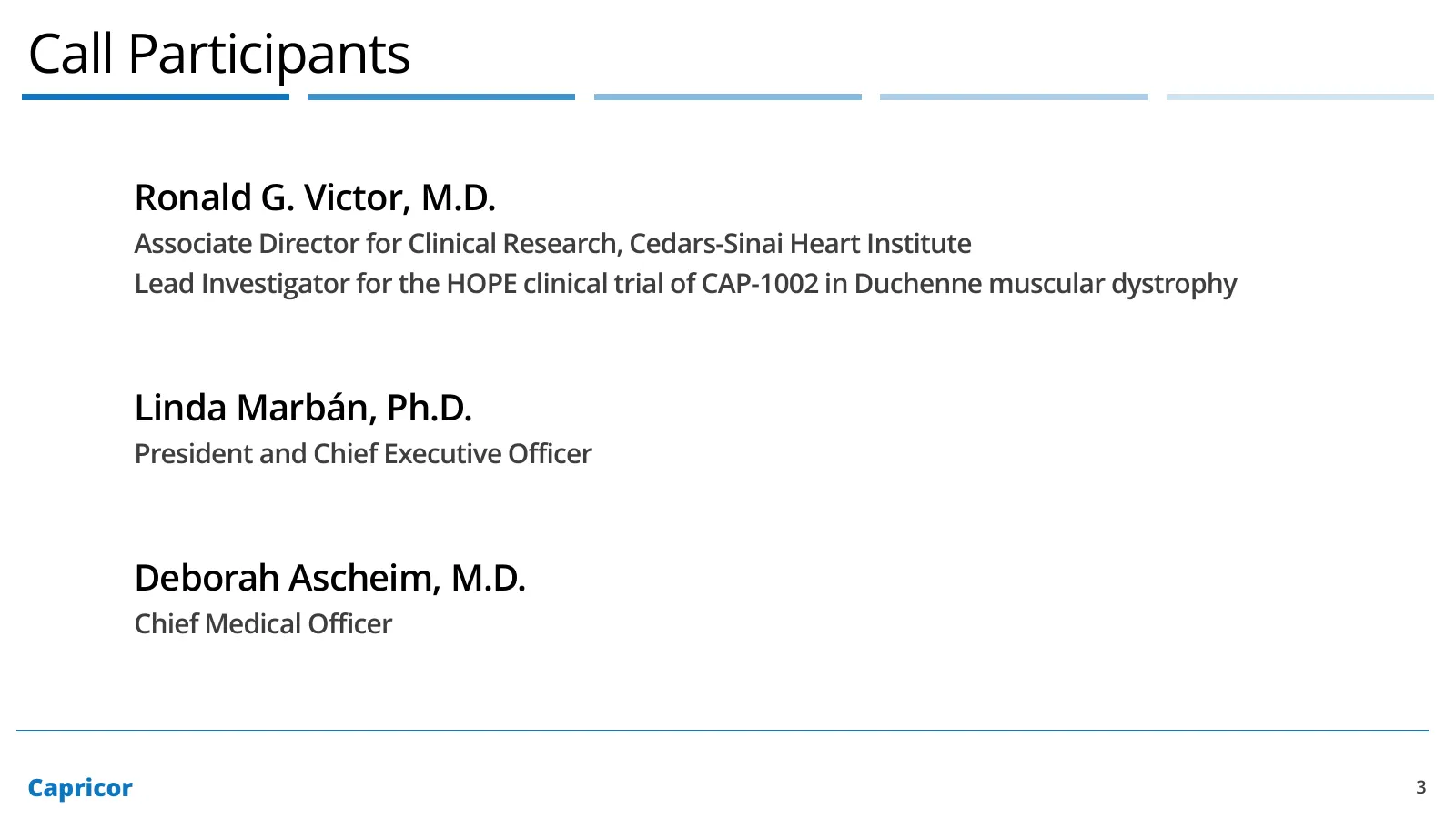
Slide 3: Call Participants
Call Participants Ronald G. Victor, M.D. Associate Director for Clinical Research, Cedars-Sinai Heart Institute Lead Investigator for the HOPE clinical trial of CAP-1002 in Duchenne muscular dystrophy Linda Marbán, Ph.D. President and Chief Executive Officer Deborah Ascheim, M.D. Chief Medical Offic
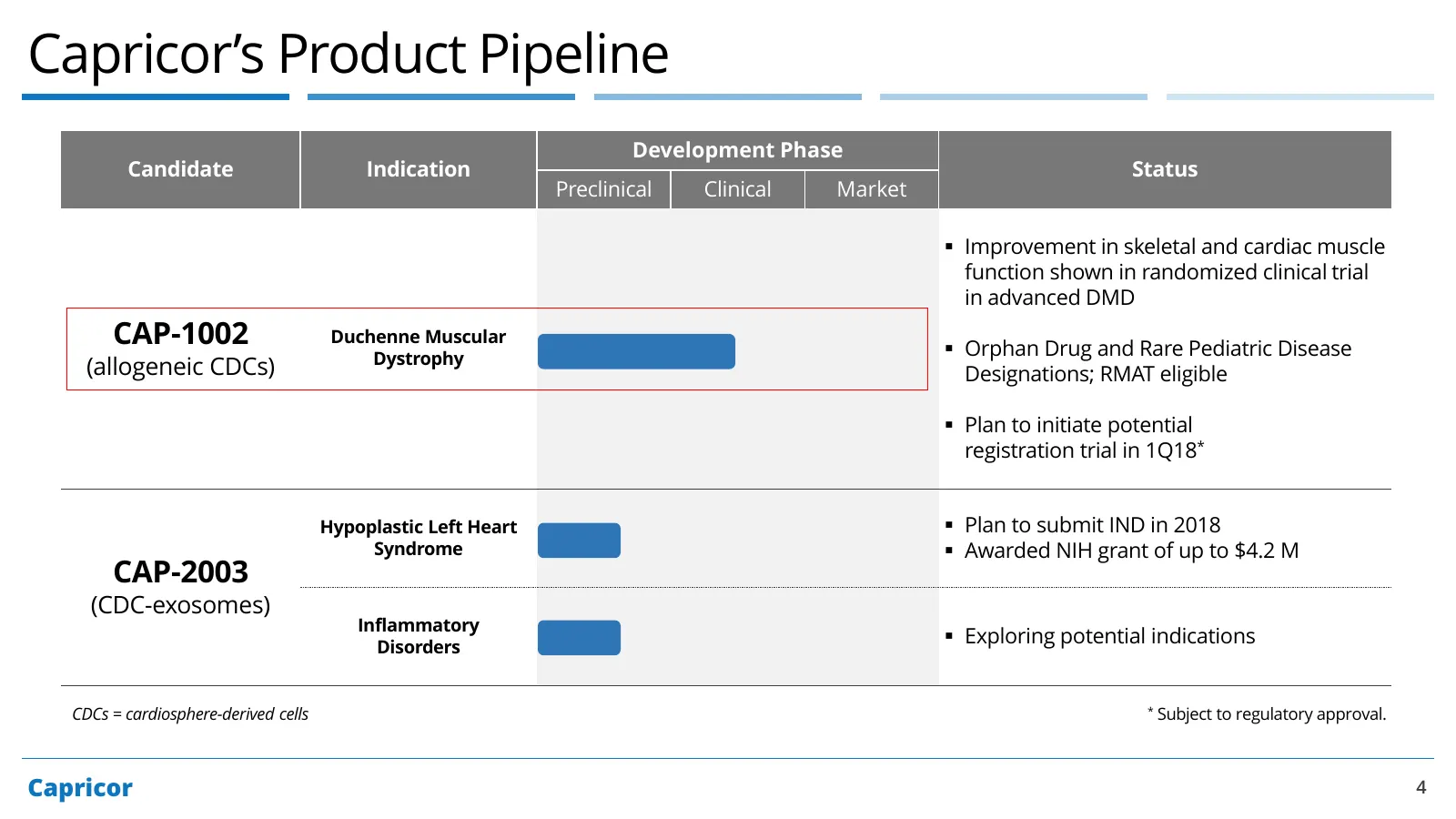
Slide 4: Capricor's Product Pipeline
Capricor’s Product Pipeline Development Phase Candidate Indication Status Preclinical Clinical Market Improvement in skeletal and cardiac muscle function shown in randomized clinical trial in advanced DMD CAP-1002 Duchenne Muscular Orphan Drug and Rare Pediatric Disease Dystrophy (allogeneic CDC
Slide 5: Cardiosphere-Derived Cells for the Treatment of Duchenne Cardiomyopathy: HOPE-Duchenne Trial
Cardiosphere-Derived Cells for the Treatment of Duchenne Cardiomyopathy: Results of the Halt cardiOmyopathy ProgrEssion [HOPE]-Duchenne Trial Ronald Victor, John Jefferies, Michael Taylor, Joao Lima, Rachel Smith, Konstantinos Malliaras, Brian Fedor, Jeff Rudy, Janice Pogoda, Linda Marban, Deborah A
Slide 6: Disclosures
Disclosures HOPE-Duchenne Trial sponsored by Capricor, Inc. Ronald Victor, MD • Capricor: Steering Committee, Site PI • Catabasis Pharmaceuticals: Site PI • Coalition Duchenne: Research Grant PI • Eli Lilly: Steering Committee Chair, Global PI, Site PI 6
Slide 7: Duchenne Muscular Dystrophy
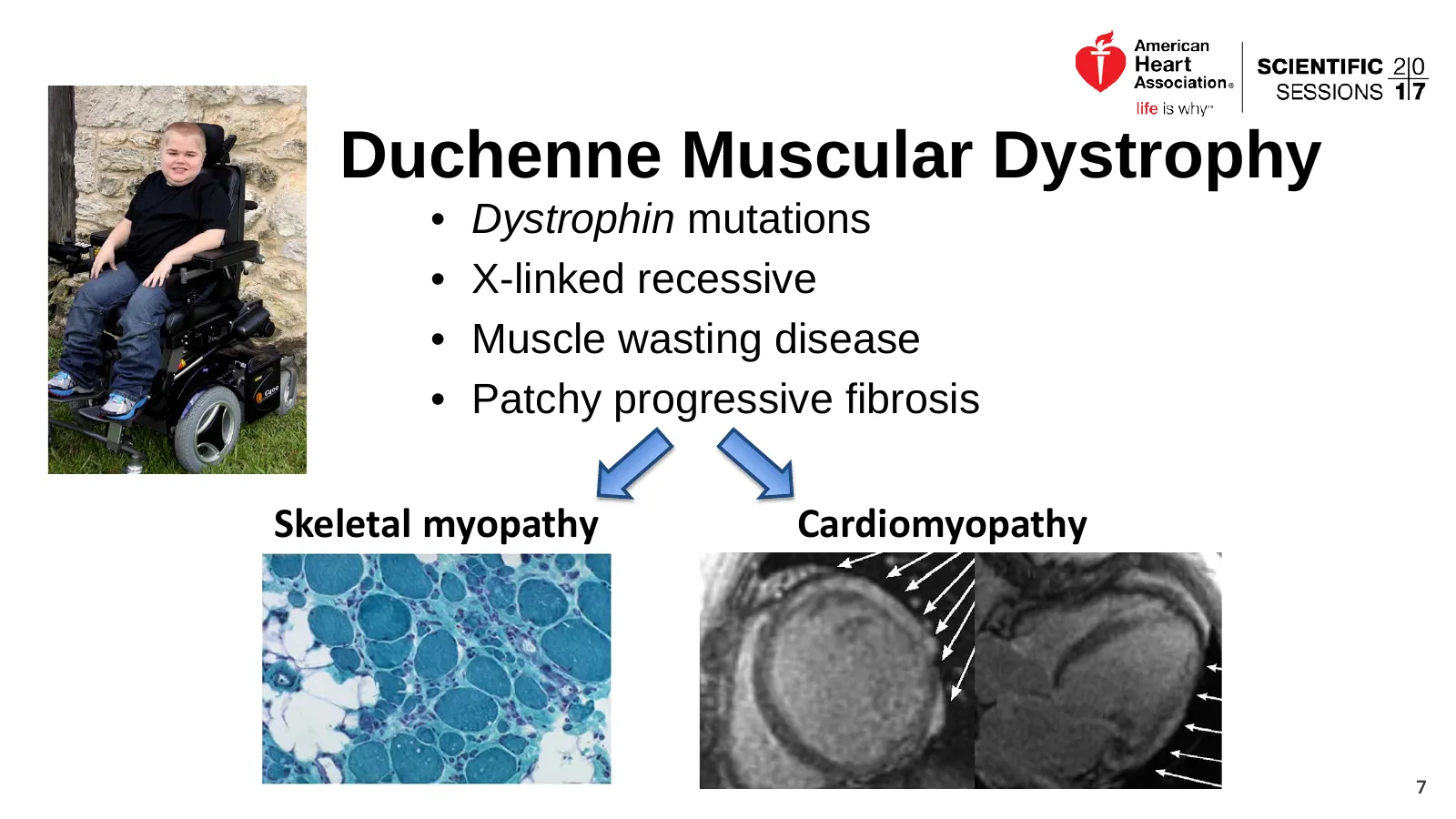
Duchenne Muscular Dystrophy • Dystrophin mutations • X-linked recessive • Muscle wasting disease • Patchy progressive fibrosis Skeletal myopathy Cardiomyopathy 7
Slide 8: CAP-1002: Background
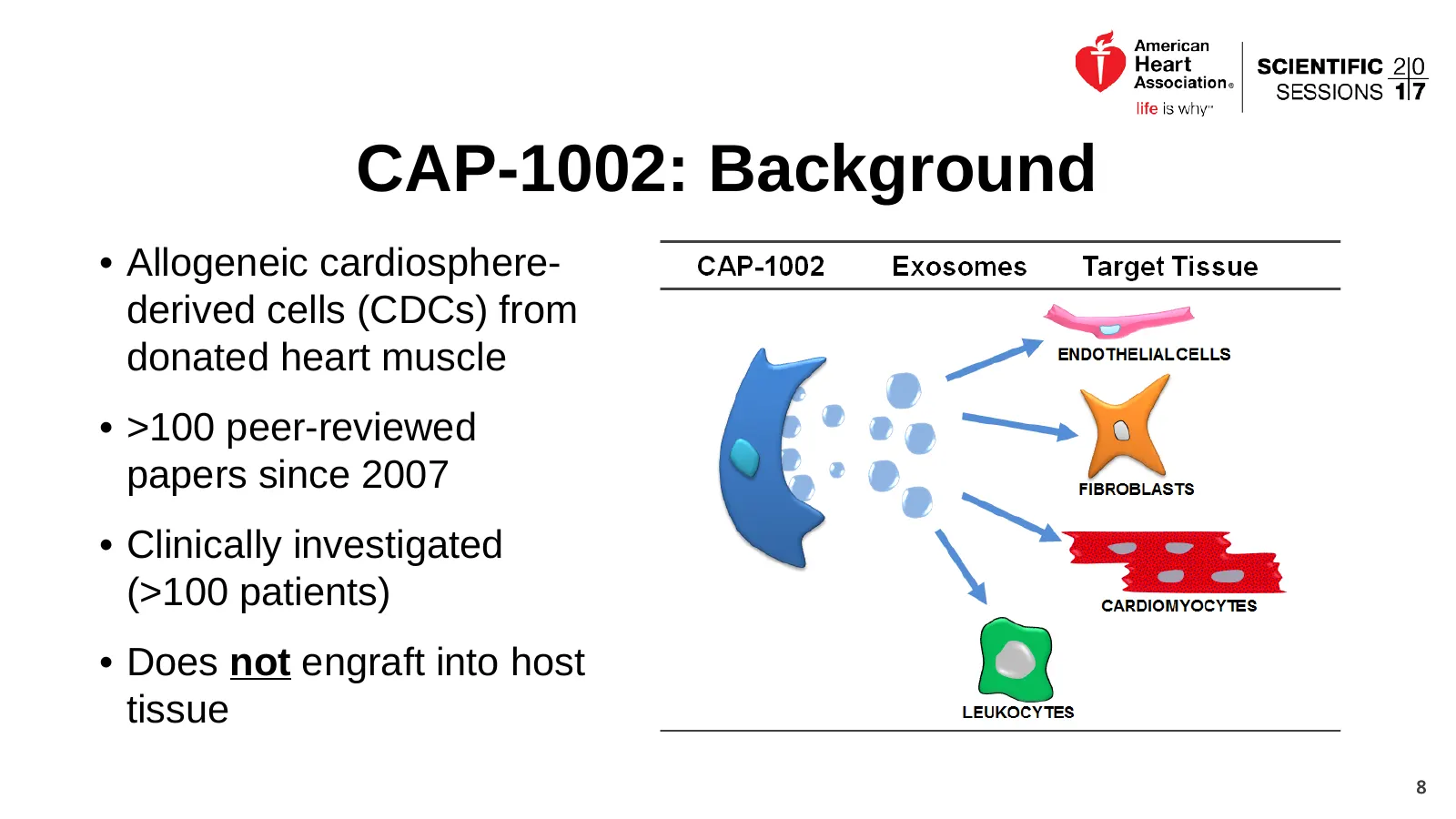
CAP-1002: Background • Allogeneic cardiosphere- derived cells (CDCs) from donated heart muscle • >100 peer-reviewed papers since 2007 • Clinically investigated (>100 patients) • Does not engraft into host tissue 8
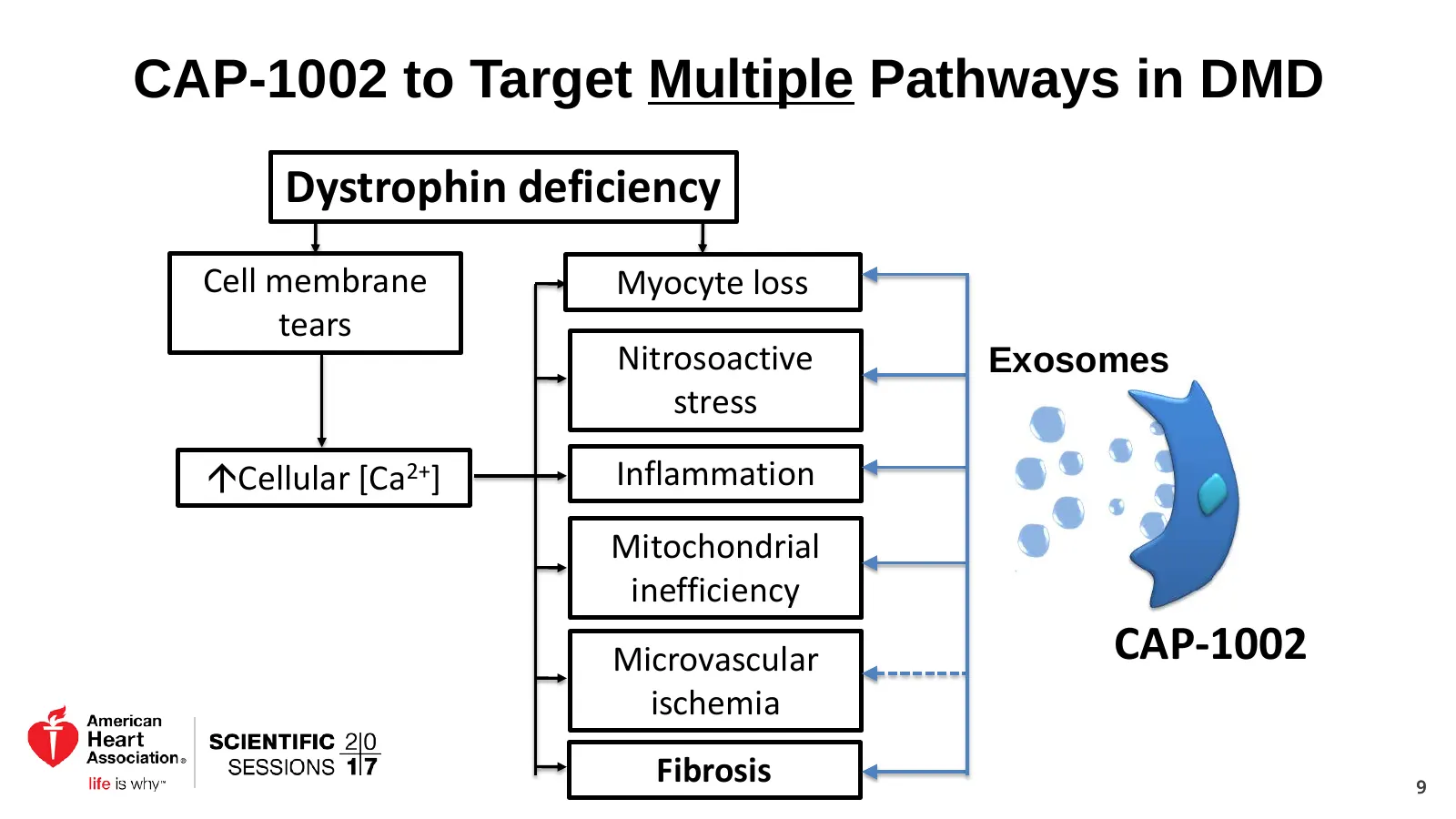
Slide 9: CAP-1002 to Target Multiple Pathways in DMD
CAP-1002 to Target Multiple Pathways in DMD Dystrophin deficiency Cell membrane Myocyte loss tears Nitrosoactive Exosomes stress Cellular [Ca2+] Inflammation Mitochondrial inefficiency Microvascular CAP-1002 ischemia Fibrosis 9
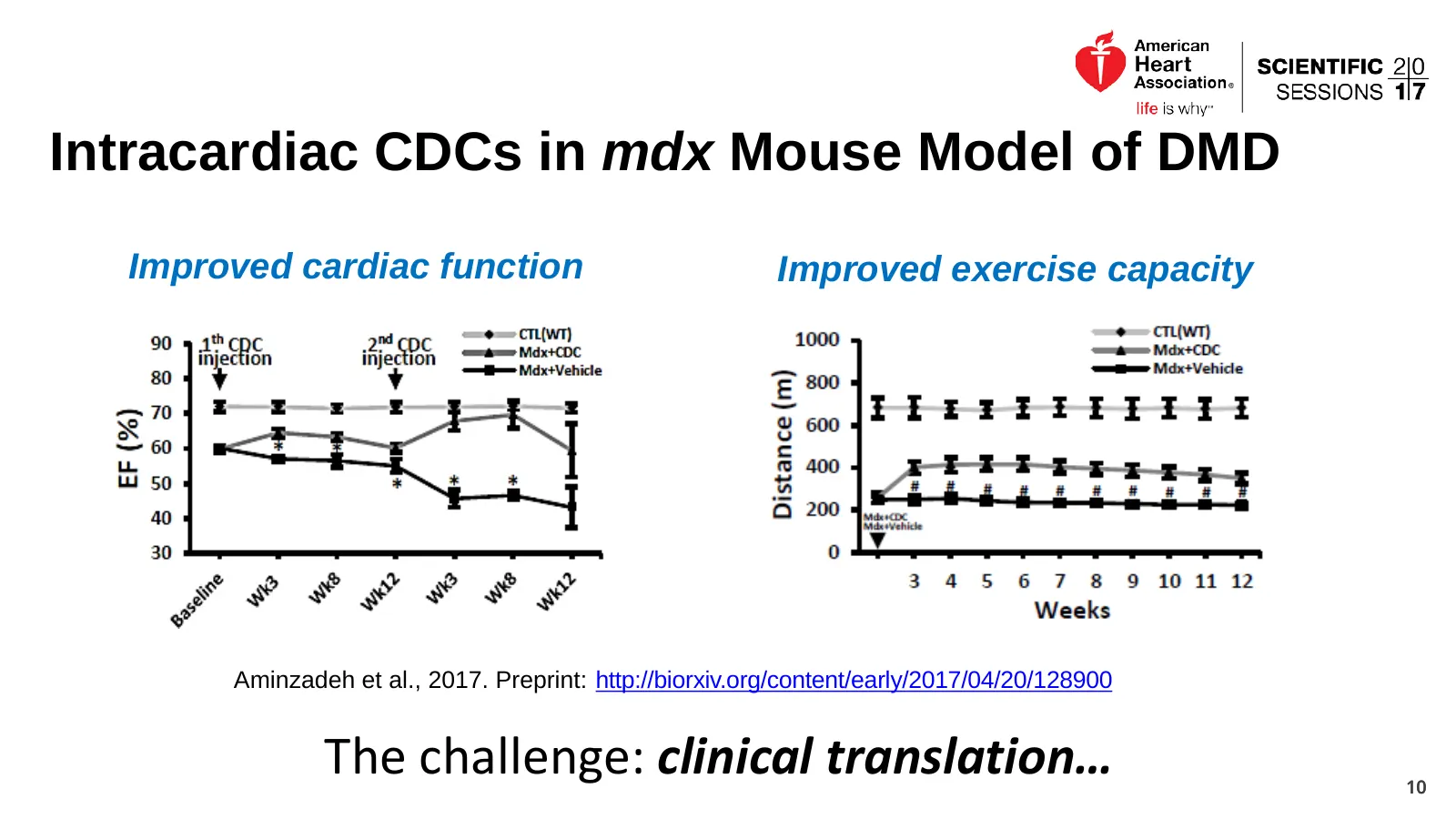
Slide 10: Intracardiac CDCs in mdx Mouse Model of DMD
Intracardiac CDCs in mdx Mouse Model of DMD Improved cardiac function Improved exercise capacity Aminzadeh et al., 2017. Preprint:ahttp://biorxiv.org/content/early/2017/04/20/128900 The challenge: clinical translation… 10
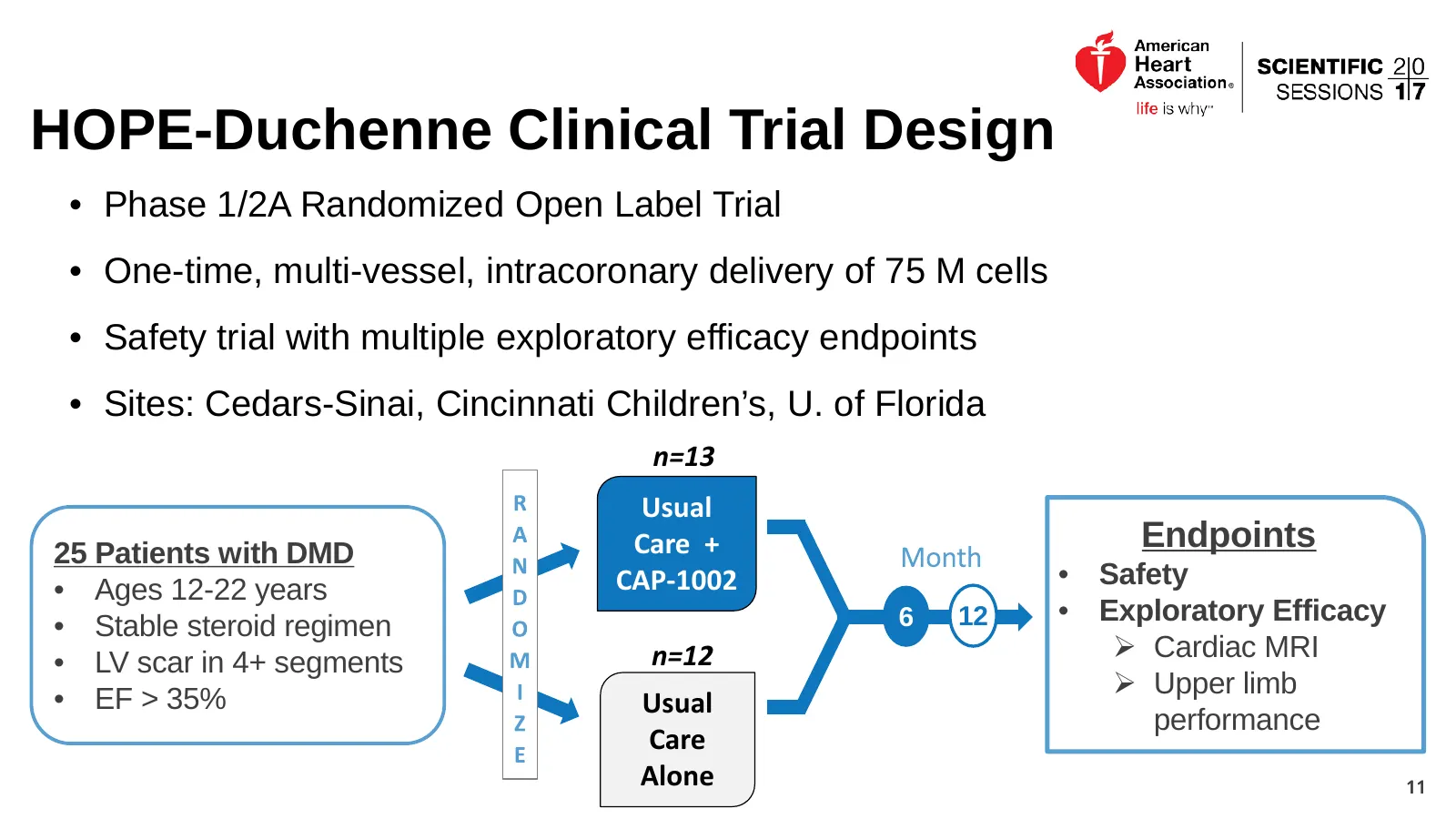
Slide 11: HOPE-Duchenne Clinical Trial Design
HOPE-Duchenne Clinical Trial Design • Phase 1/2A Randomized Open Label Trial • One-time, multi-vessel, intracoronary delivery of 75 M cells • Safety trial with multiple exploratory efficacy endpoints • Sites: Cedars-Sinai, Cincinnati Children’s, U. of Florida n=13 Usual 25 Patients with DMD Care + E
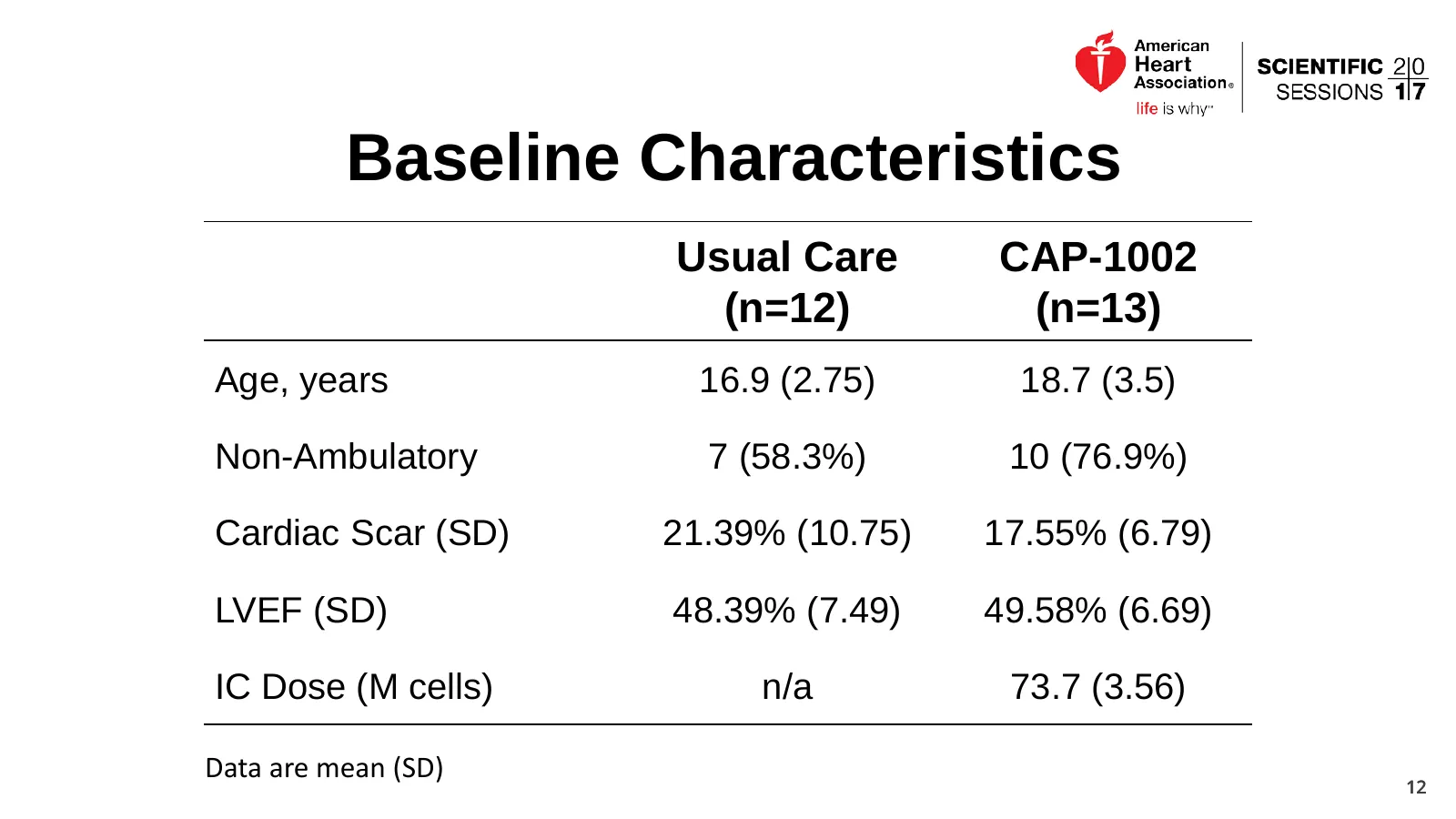
Slide 12: Baseline Characteristics
Baseline Characteristics Usual Care CAP-1002 (n=12) (n=13) Age, years 16.9 (2.75) 18.7 (3.5) Non-Ambulatory 7 (58.3%) 10 (76.9%) Cardiac Scar (SD) 21.39% (10.75) 17.55% (6.79) LVEF (SD) 48.39% (7.49) 49.58% (6.69) IC Dose (M cells) n/a 73.7 (3.56) Data are mean (SD) 12
Slide 13: Safety Outcomes
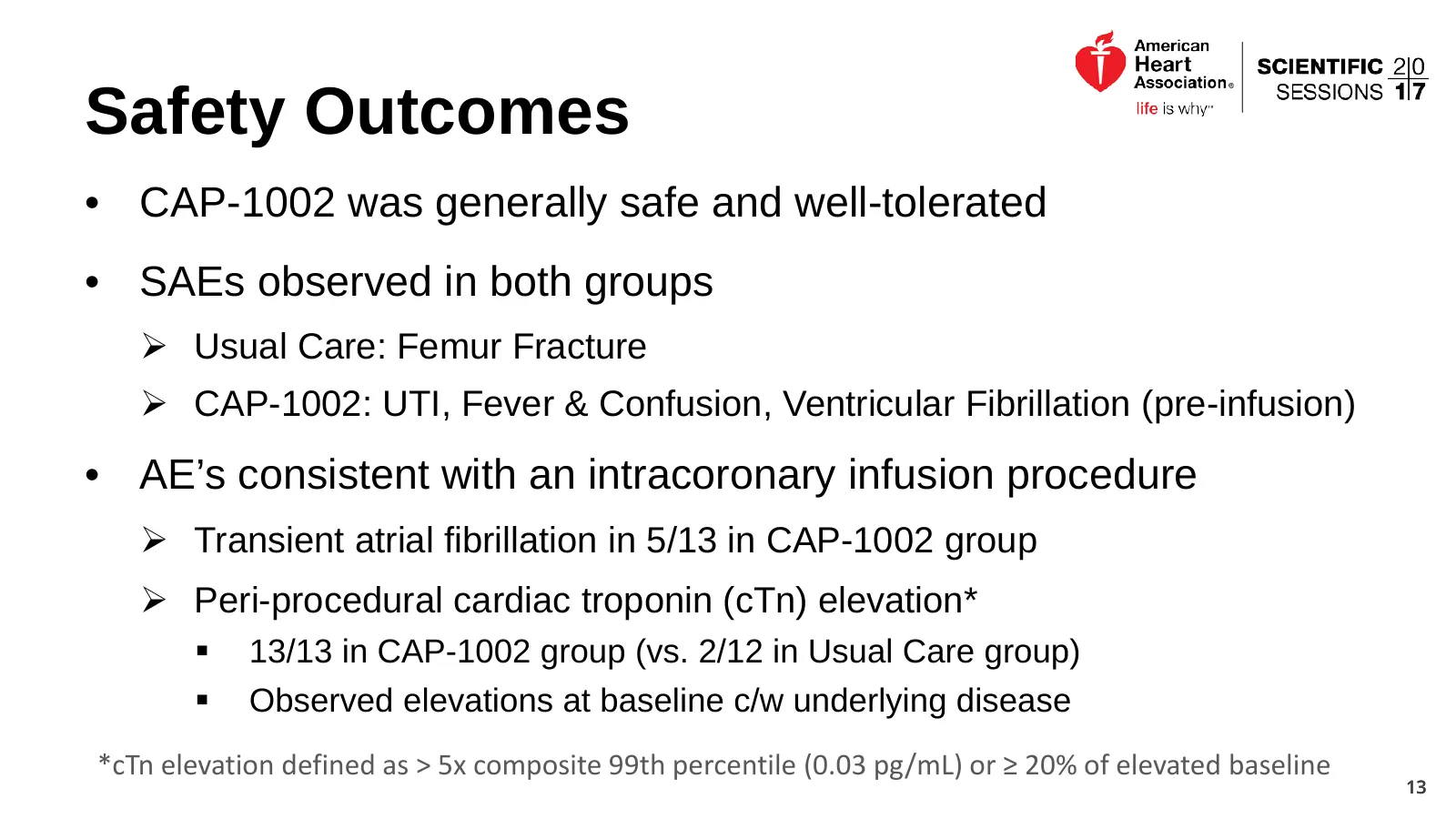
Safety Outcomes • CAP-1002 was generally safe and well-tolerated • SAEs observed in both groups Usual Care: Femur Fracture CAP-1002: UTI, Fever & Confusion, Ventricular Fibrillation (pre-infusion) • AE’s consistent with an intracoronary infusion procedure Transient atrial fibrillation in 5/13
Slide 14: Efficacy Endpoints: Reduced Cardiac Scar Size (LGE)
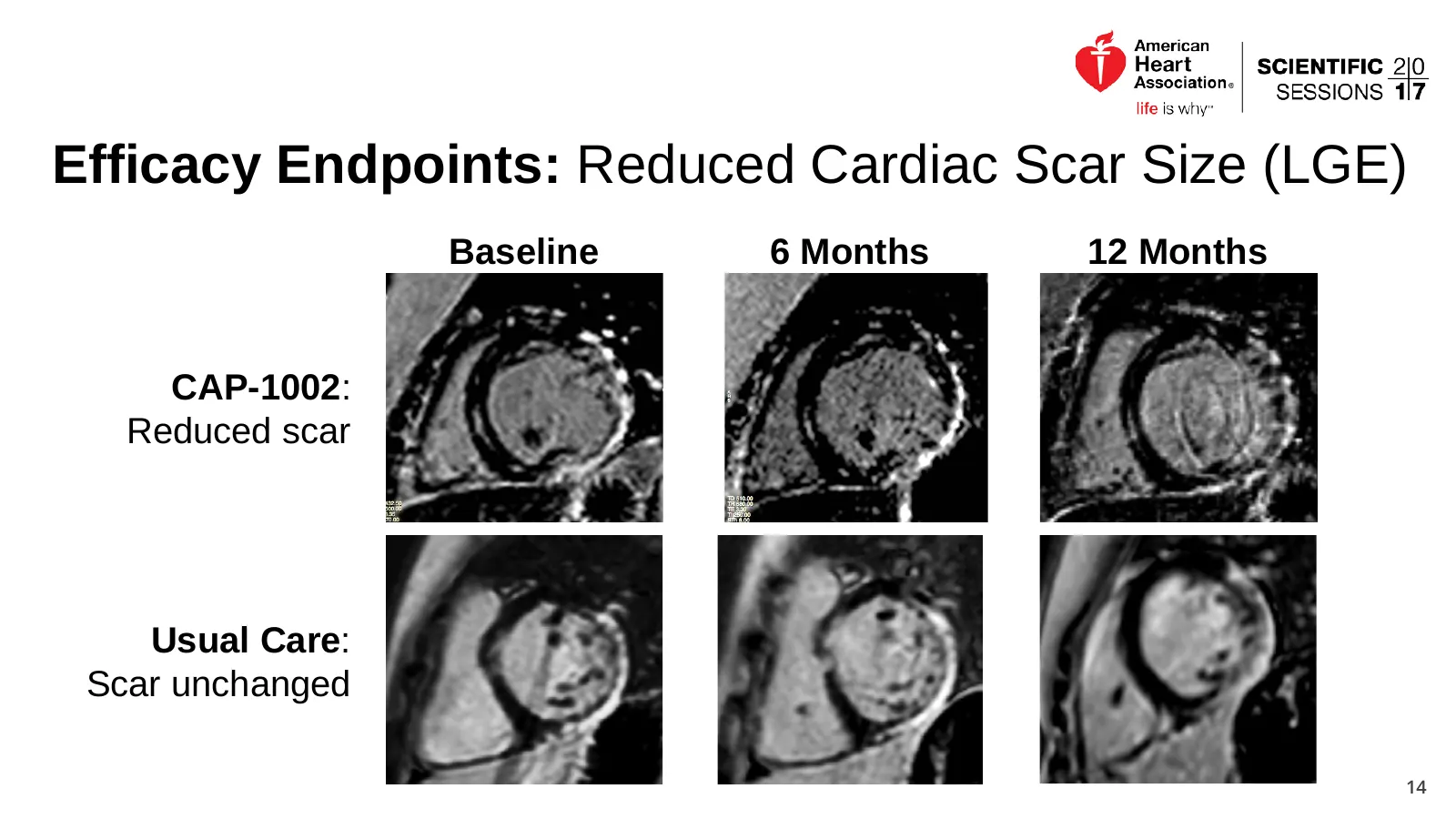
Efficacy Endpoints: Reduced Cardiac Scar Size (LGE) Baseline 6 Months 12 Months CAP-1002: Reduced scar Usual Care: Scar unchanged 14
Slide 15: Reduced Myocardial Scar by Cardiac MRI
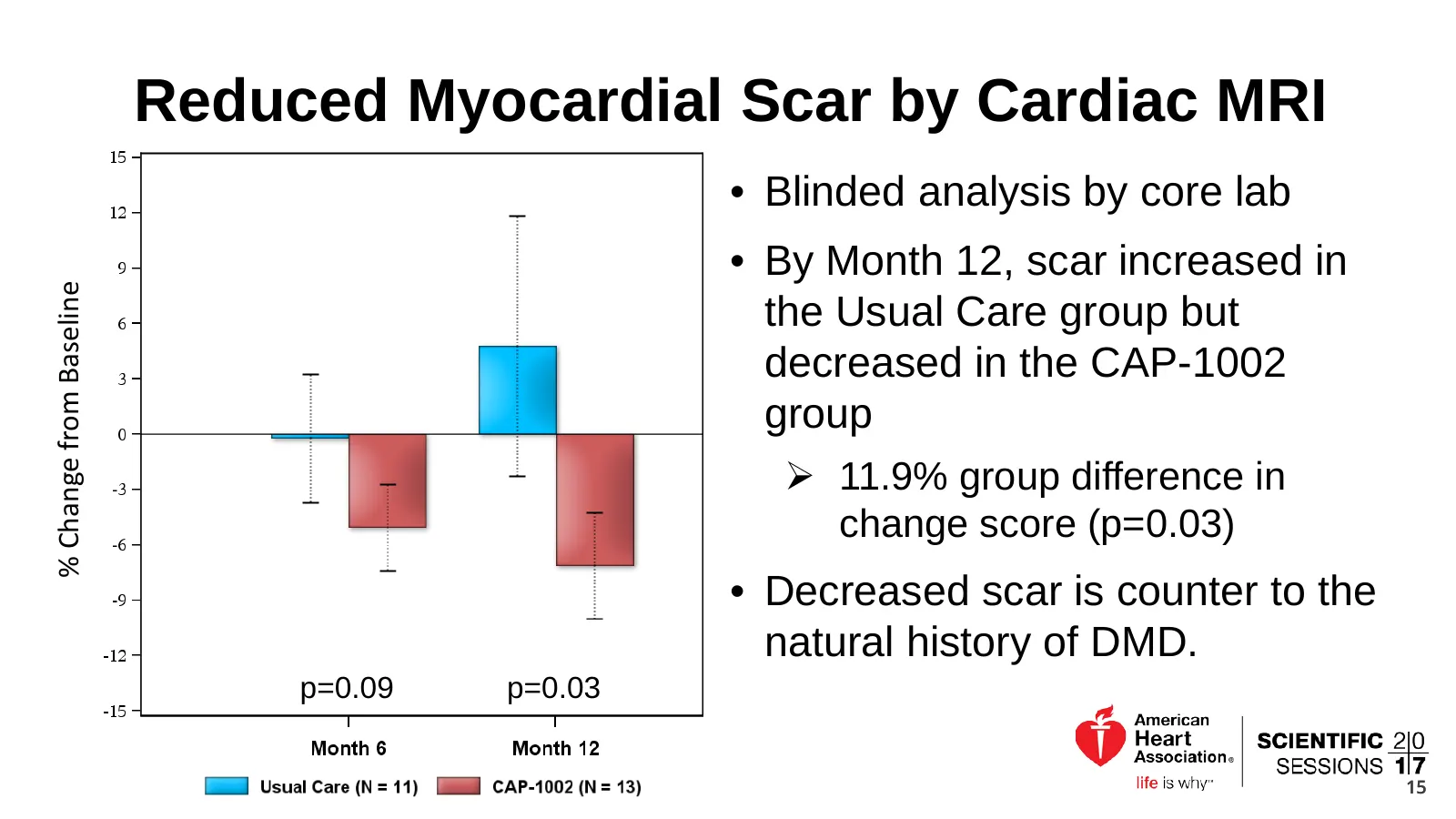
Reduced Myocardial Scar by Cardiac MRI • Blinded analysis by core lab • By Month 12, scar increased in % Change from Baseline the Usual Care group but decreased in the CAP-1002 group 11.9% group difference in change score (p=0.03) • Decreased scar is counter to the natural history of DMD. p=0.09 p
Slide 16: Improved Regional Systolic Wall Thickening
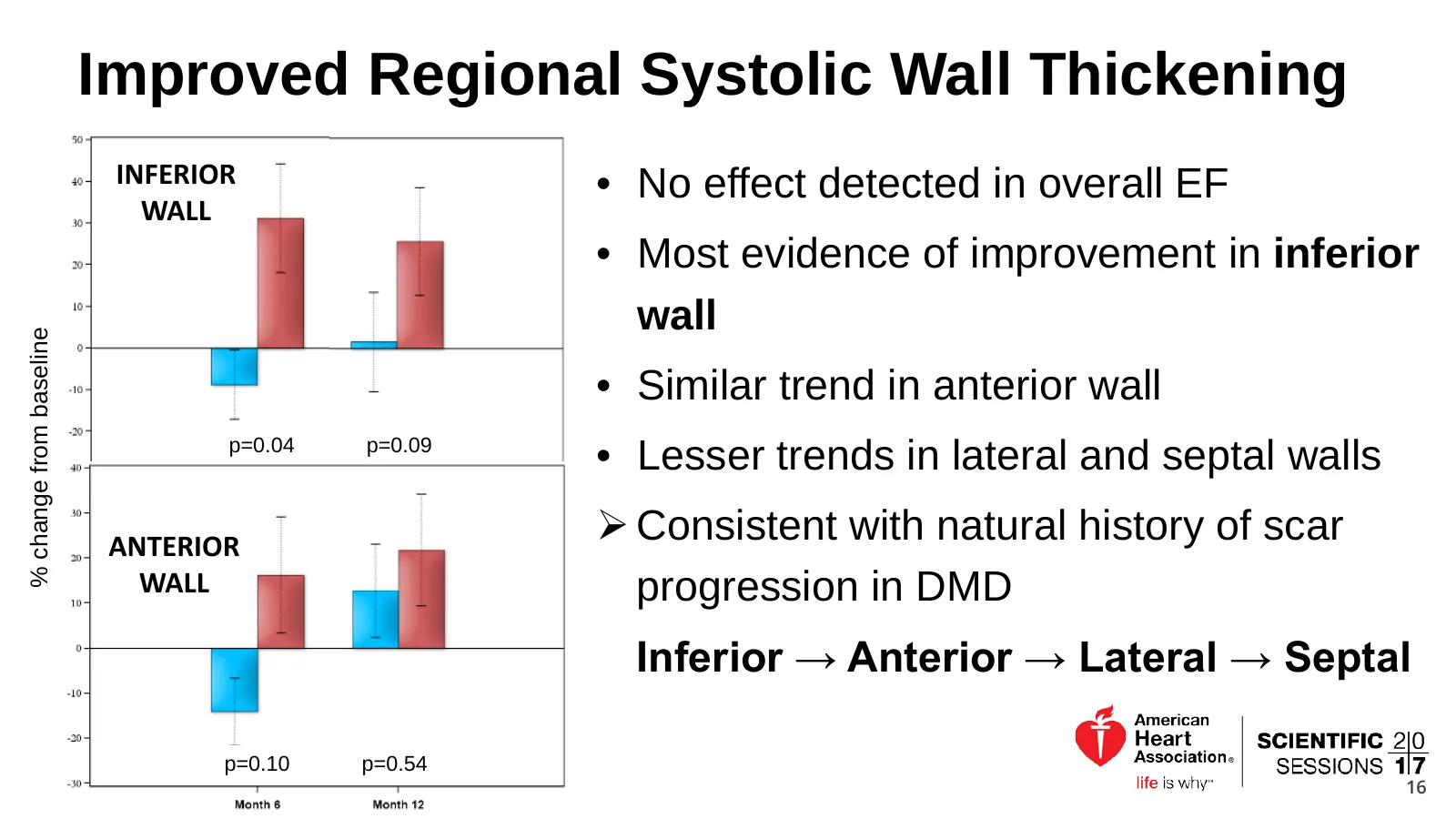
Improved Regional Systolic Wall Thickening INFERIOR • No effect detected in overall EF WALL • Most evidence of improvement in inferior wall % change from baseline • Similar trend in anterior wall p=0.09 p=0.04 p=0.09 • Lesser trends in lateral and septal walls ANTERIOR Consistent with natural hist
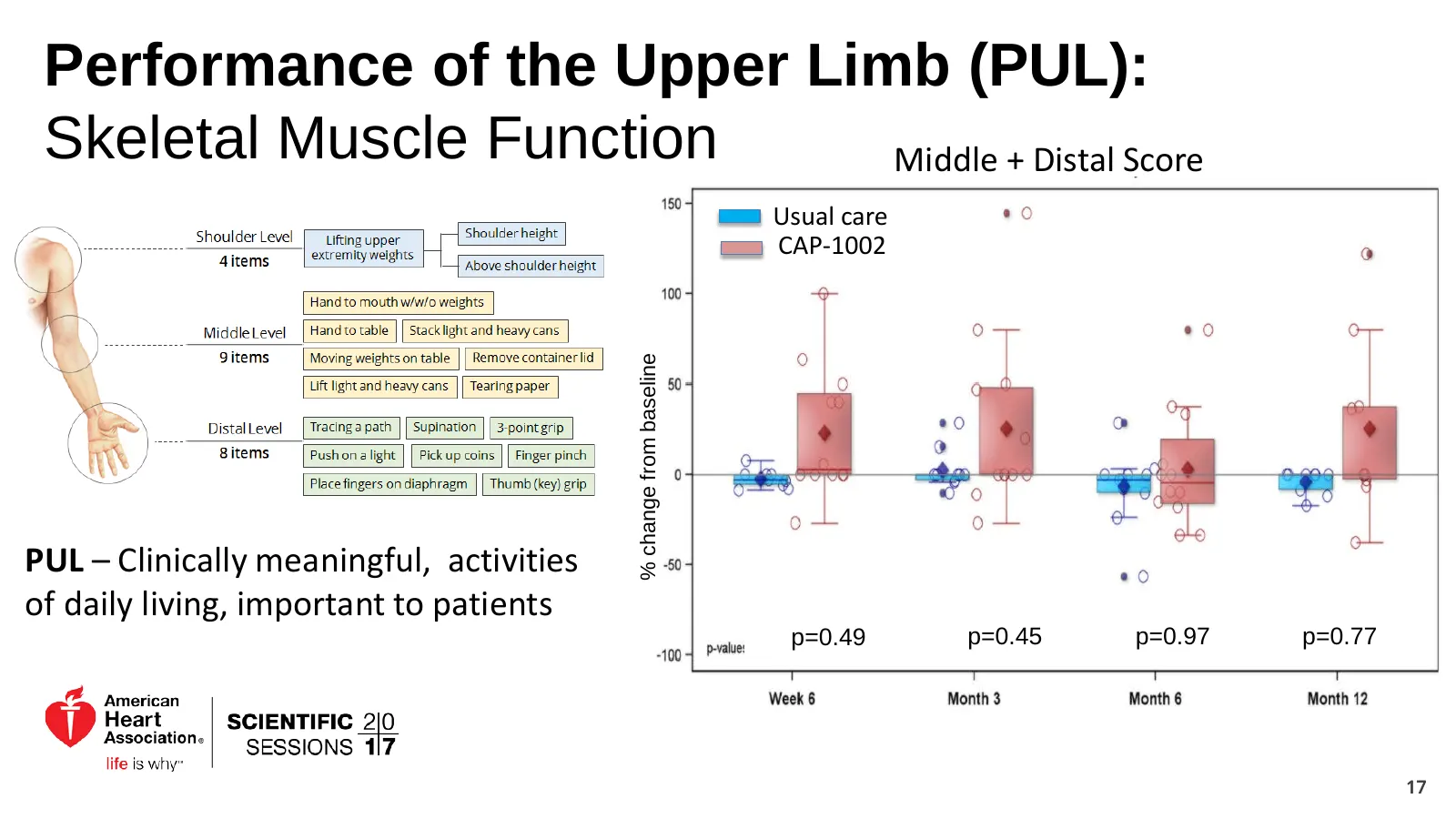
Slide 17: Performance of the Upper Limb (PUL): Skeletal Muscle Function
Performance of the Upper Limb (PUL): Skeletal Muscle Function Middle + Distal Score Usual care CAP-1002 % change from baseline PUL – Clinically meaningful, activities of daily living, important to patients p=0.49 p=0.45 p=0.97 p=0.77 17
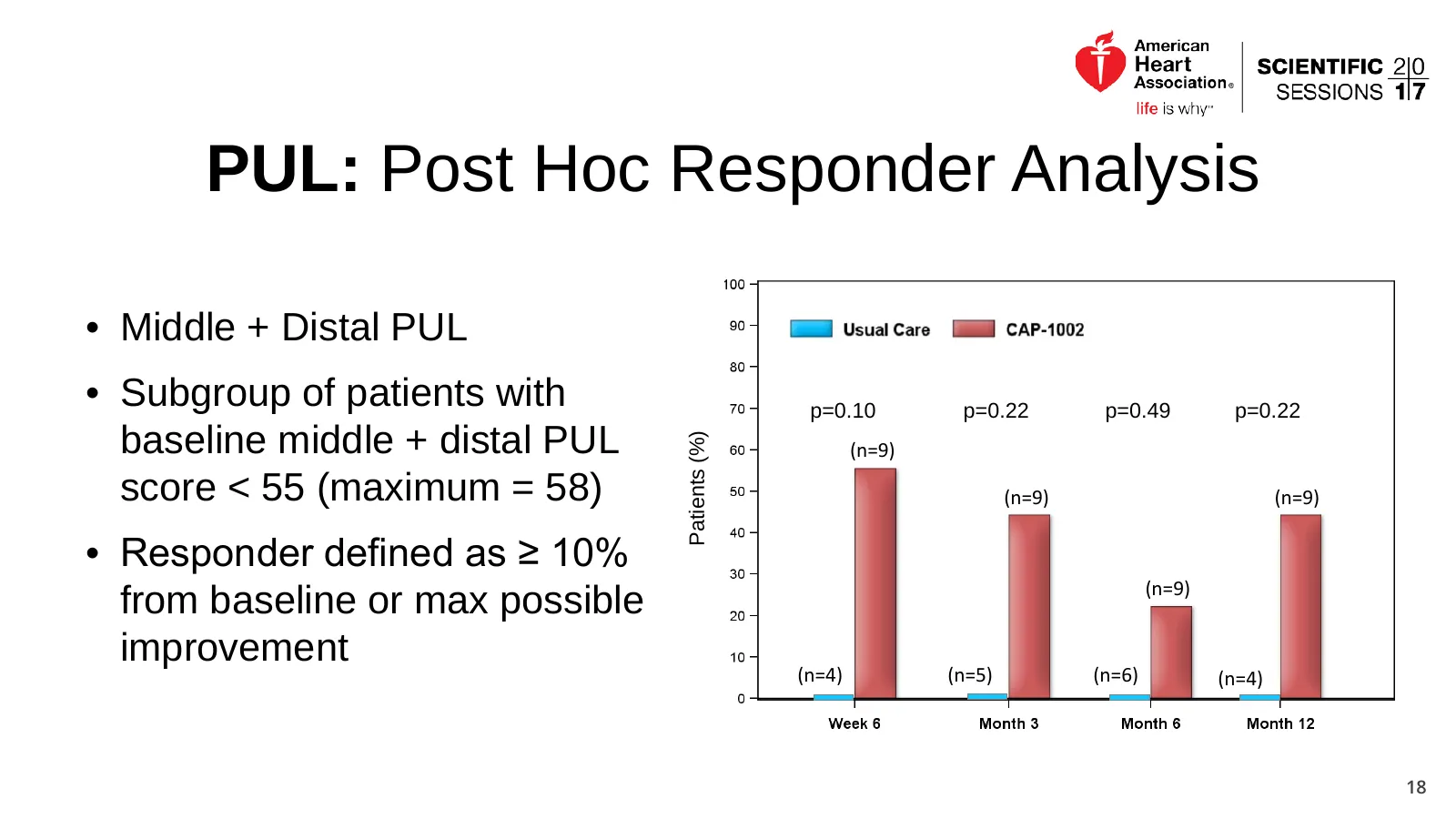
Slide 18: PUL: Post Hoc Responder Analysis
PUL: Post Hoc Responder Analysis • Middle + Distal PUL • Subgroup of patients with p=0.10 p=0.22 p=0.49 p=0.22 baseline middle + distal PUL Patients (%) (n=9) score < 55 (maximum = 58) (n=9) (n=9) • Responder defined as ≥ 10% (n=9) from baseline or max possible improvement (n=4) (n=5) (n=6) (n=4) 18
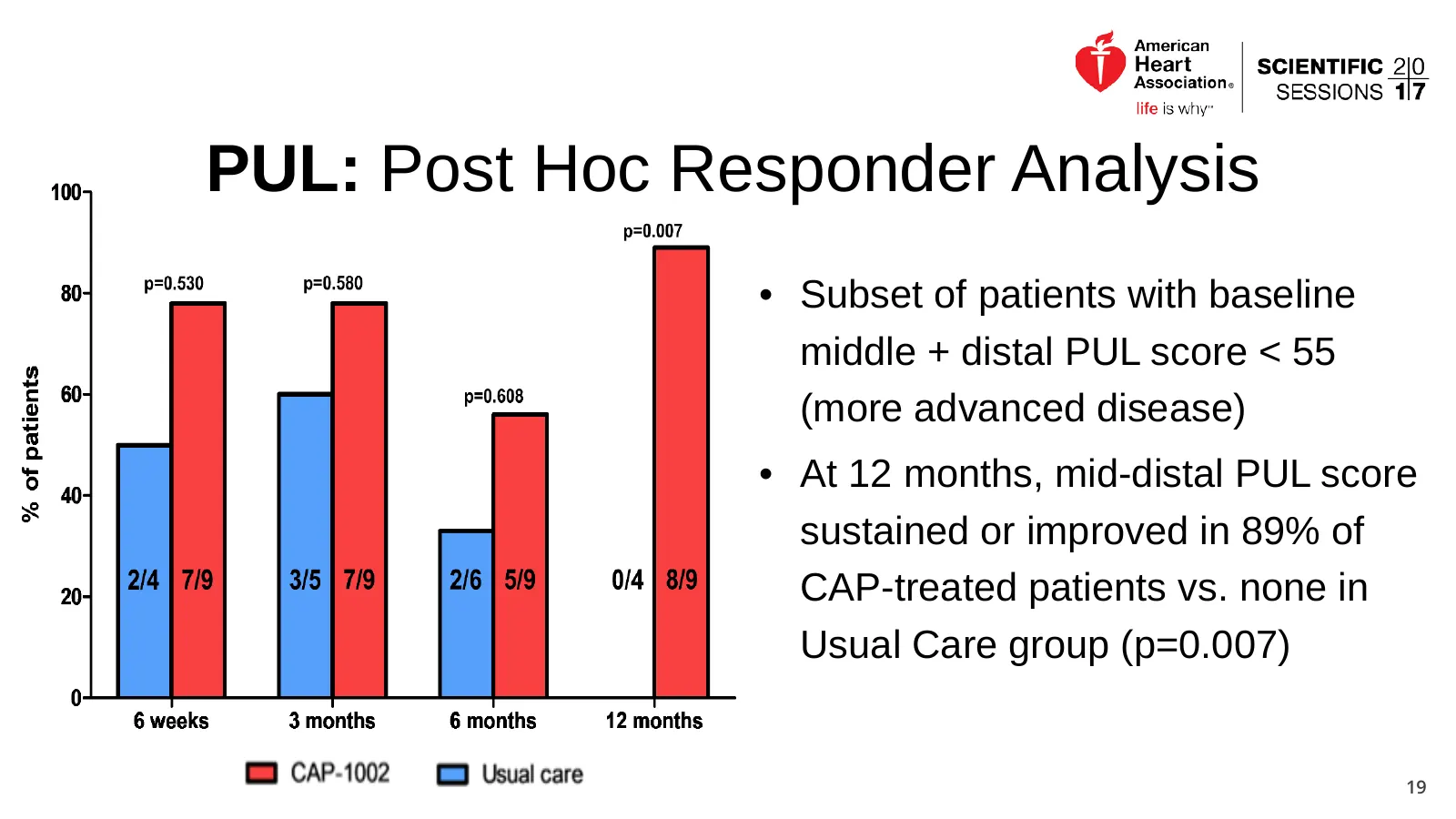
Slide 19: PUL: Post Hoc Responder Analysis
PUL: Post Hoc Responder Analysis • Subset of patients with baseline middle + distal PUL score < 55 (more advanced disease) • At 12 months, mid-distal PUL score sustained or improved in 89% of CAP-treated patients vs. none in Usual Care group (p=0.007) 19
Slide 20: Conclusions
Conclusions • CAP-1002 delivered via IC infusion was generally safe and well-tolerated • These early clinical data are consistent with preclinical studies showing CAP-1002 benefits both cardiac and skeletal muscle in DMD. • Exploratory efficacy analyses signal a potential benefit of CAP-1002 for pat
Slide 21: Acknowledgements
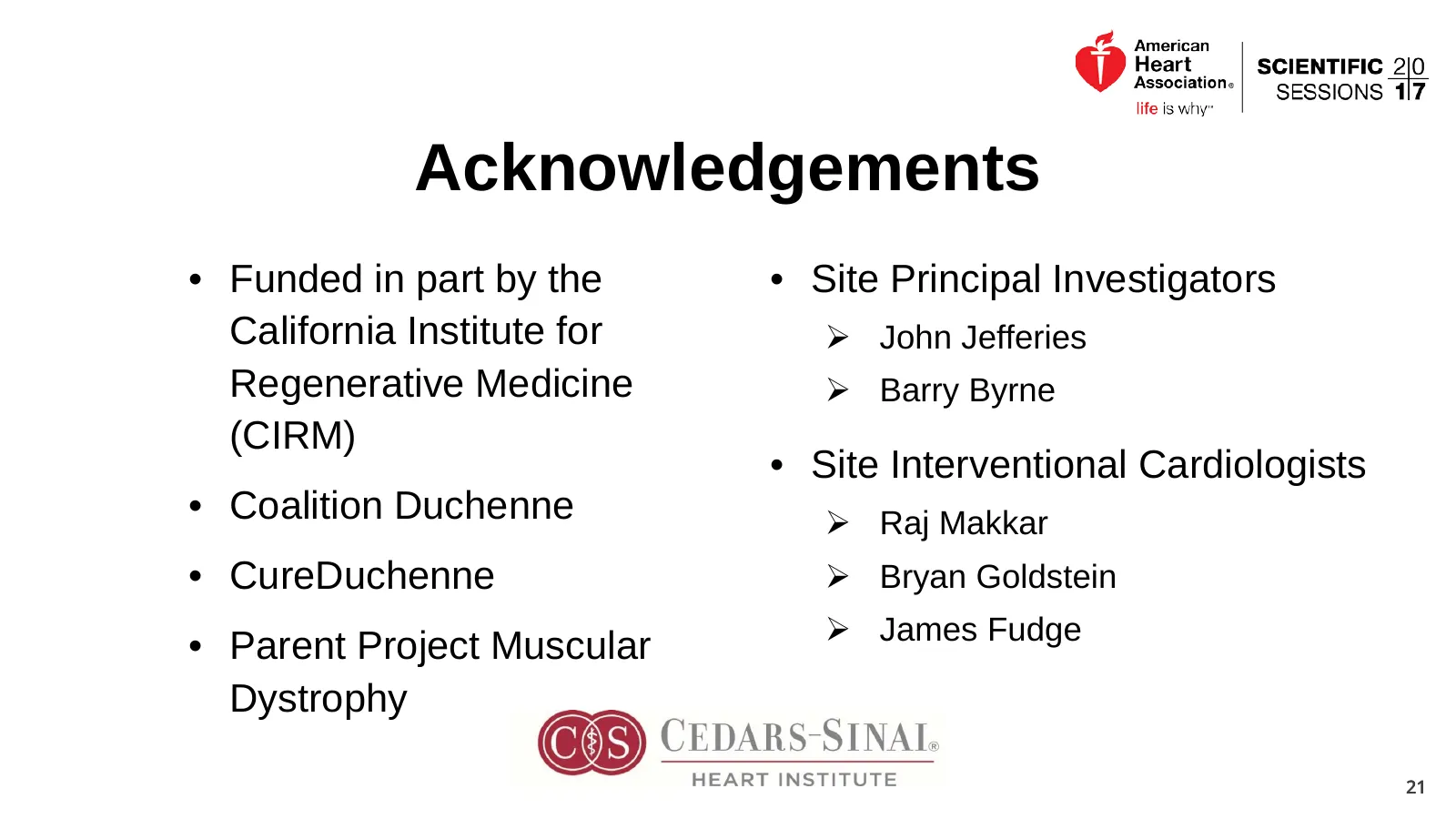
Acknowledgements • Funded in part by the • Site Principal Investigators California Institute for John Jefferies Regenerative Medicine Barry Byrne (CIRM) • Site Interventional Cardiologists • Coalition Duchenne Raj Makkar • CureDuchenne Bryan Goldstein James Fudge • Parent Project Muscular
Slide 22: Plan to Initiate Potential Registration Trial in 1Q18
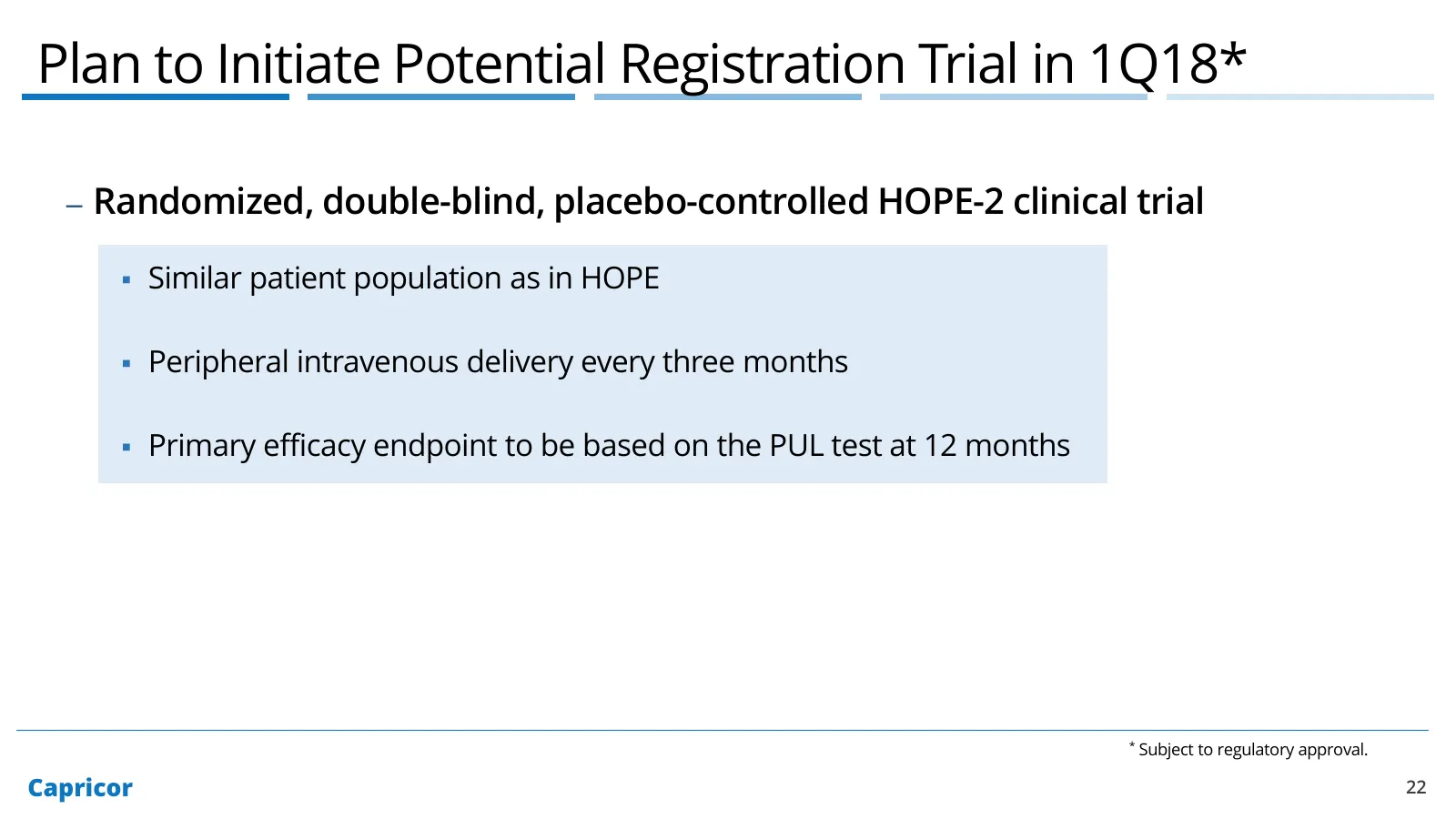
Plan to Initiate Potential Registration Trial in 1Q18* ‒ Randomized, double-blind, placebo-controlled HOPE-2 clinical trial Similar patient population as in HOPE Peripheral intravenous delivery every three months Primary efficacy endpoint to be based on the PUL test at 12 months * Subject to r
Slide 23: CAP-1002 for Duchenne Muscular Dystrophy
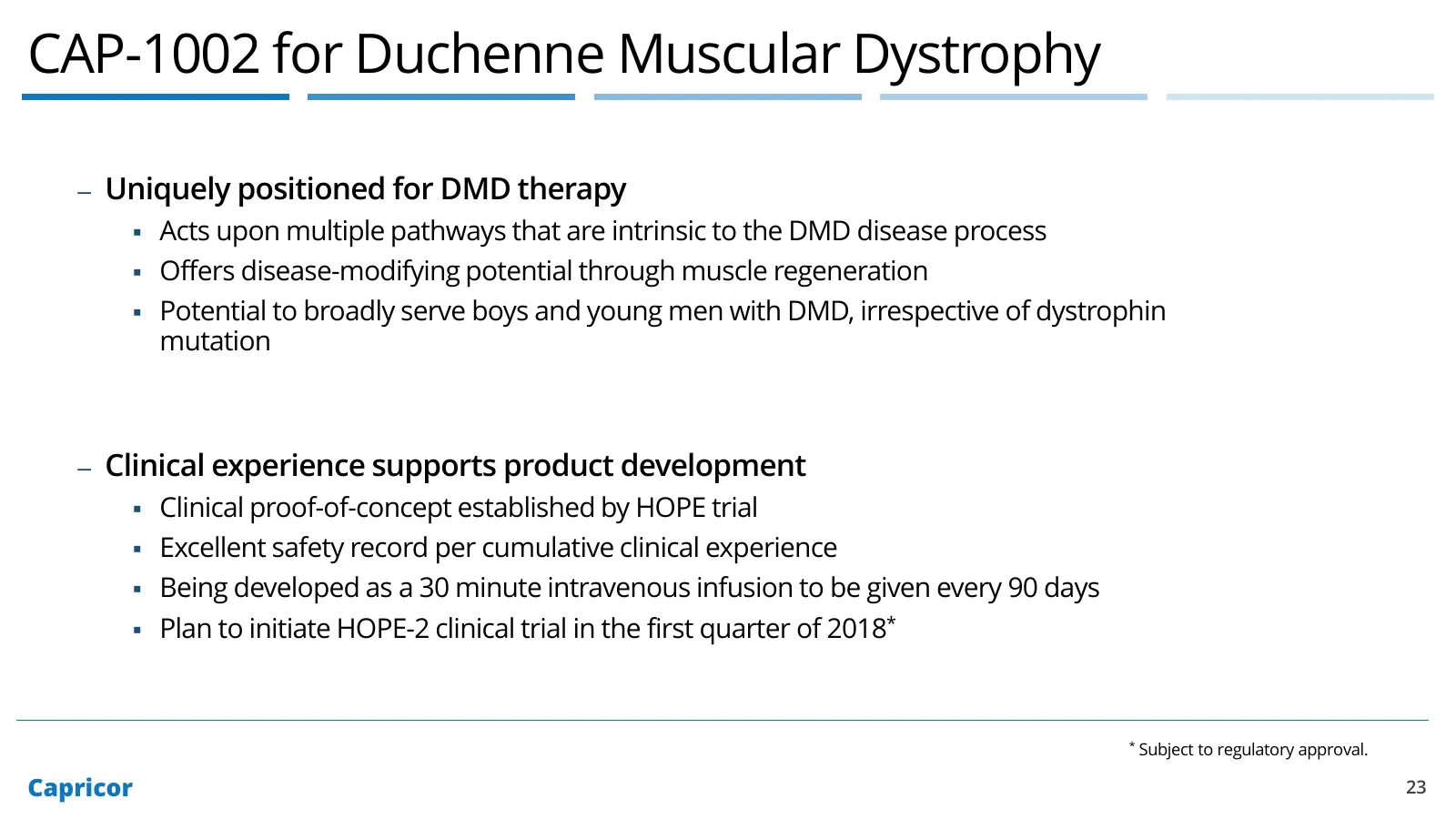
CAP-1002 for Duchenne Muscular Dystrophy ‒ Uniquely positioned for DMD therapy Acts upon multiple pathways that are intrinsic to the DMD disease process Offers disease-modifying potential through muscle regeneration Potential to broadly serve boys and young men with DMD, irrespective of dystro
Slide 24: Capricor Therapeutics
Capricor Therapeutics Capricor Therapeutics, Inc. 8840 Wilshire Boulevard – 2nd Floor Beverly Hills, CA 90211 +1 (310) 358-3200 USA www.capricor.com
Source: Internet Archive copy of capricor.com
More decks from Capricor Therapeutics, Inc.
 PPMD Webinar (October 2026)27 slides · Oct 7, 2026
 Investor Presentation (August 2026)38 slides · August 2026
 Q1 2026 Earnings Presentation41 slides · May 12, 2026
 Q4 2025 Earnings Presentation20 slides · Mar 12, 2026
 Corporate Update (December 2025)18 slides · Dec 3, 2025
 Q4 2024 Earnings Presentation57 slides · Mar 19, 2025