Vir Biotechnology, Inc. · NASDAQ:VIR
Vir Biotechnology — European Association for the Study of the Liver (EASL) Congress 2024
15 slides from Vir Biotechnology's conference presentation, Jun 8, 2024
Slide 1: Efficacy and safety of tobevibart alone or with elebsiran in chronic hepatitis delta
Efficacy and safety of tobevibart (VIR-3434) alone or in combination with elebsiran (VIR-2218) in participants with chronic hepatitis delta virus infection: preliminary results from the phase 2 SOLSTICE trial in non-cirrhotic and compensated cirrhotic participants Tarik Asselah,1 Anca Streinu-Cercel
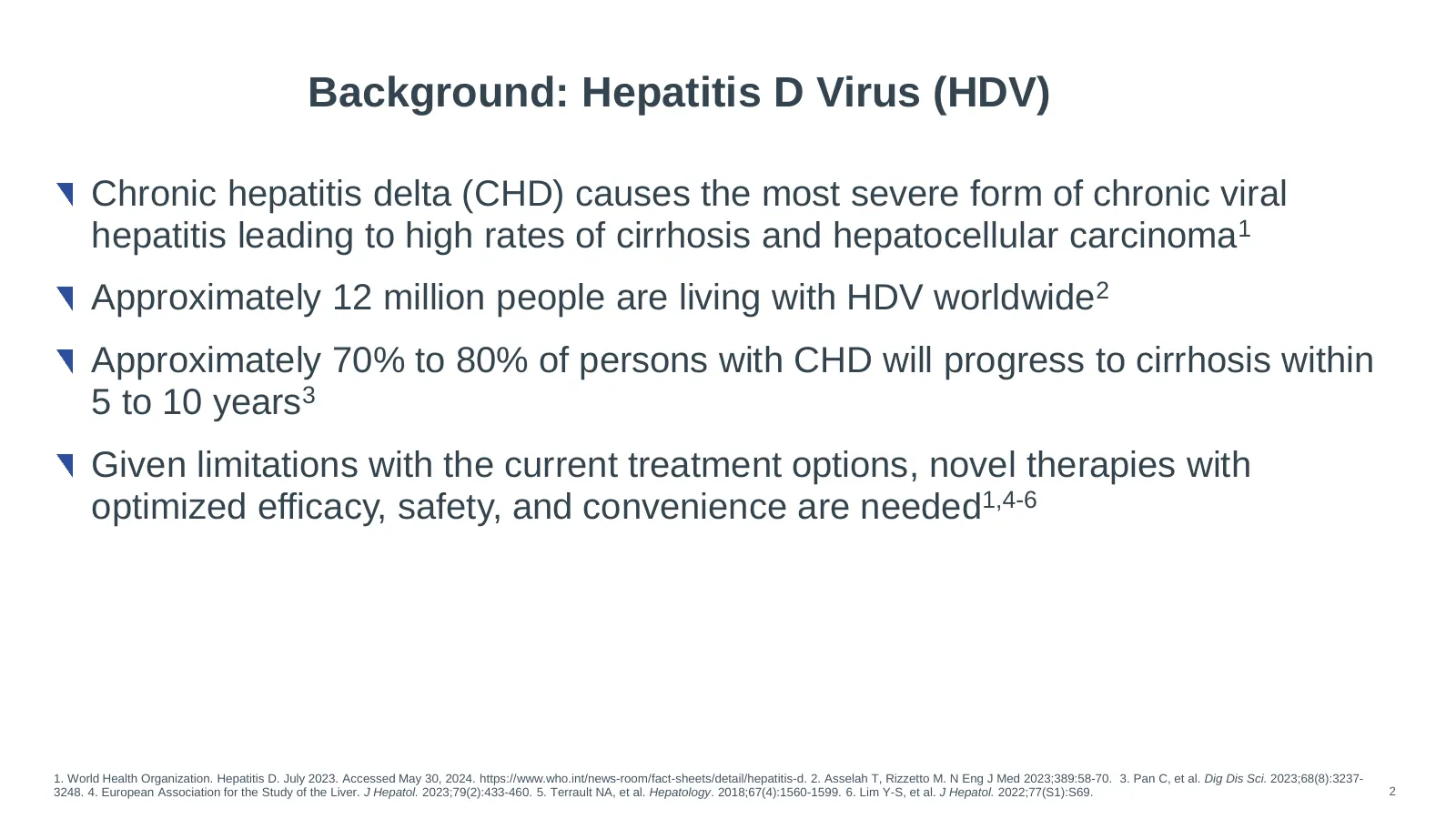
Slide 2: Background: Hepatitis D Virus (HDV)
Background: Hepatitis D Virus (HDV) Chronic hepatitis delta (CHD) causes the most severe form of chronic viral hepatitis leading to high rates of cirrhosis and hepatocellular carcinoma1 Approximately 12 million people are living with HDV worldwide2 Approximately 70% to 80% of persons with CHD will p
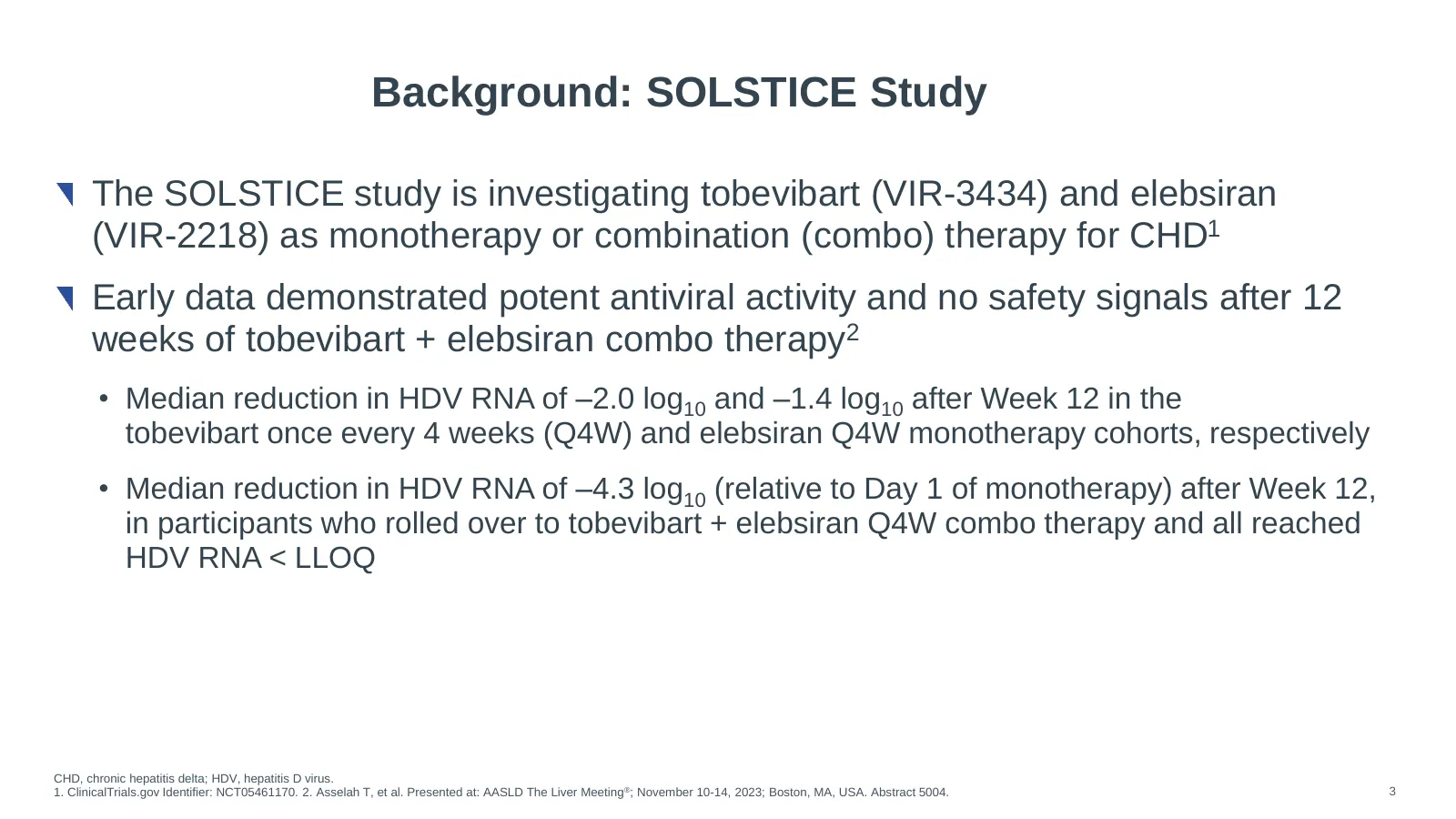
Slide 3: Background: SOLSTICE Study
Background: SOLSTICE Study The SOLSTICE study is investigating tobevibart (VIR-3434) and elebsiran (VIR-2218) as monotherapy or combination (combo) therapy for CHD1 Early data demonstrated potent antiviral activity and no safety signals after 12 weeks of tobevibart + elebsiran combo therapy2 • Media
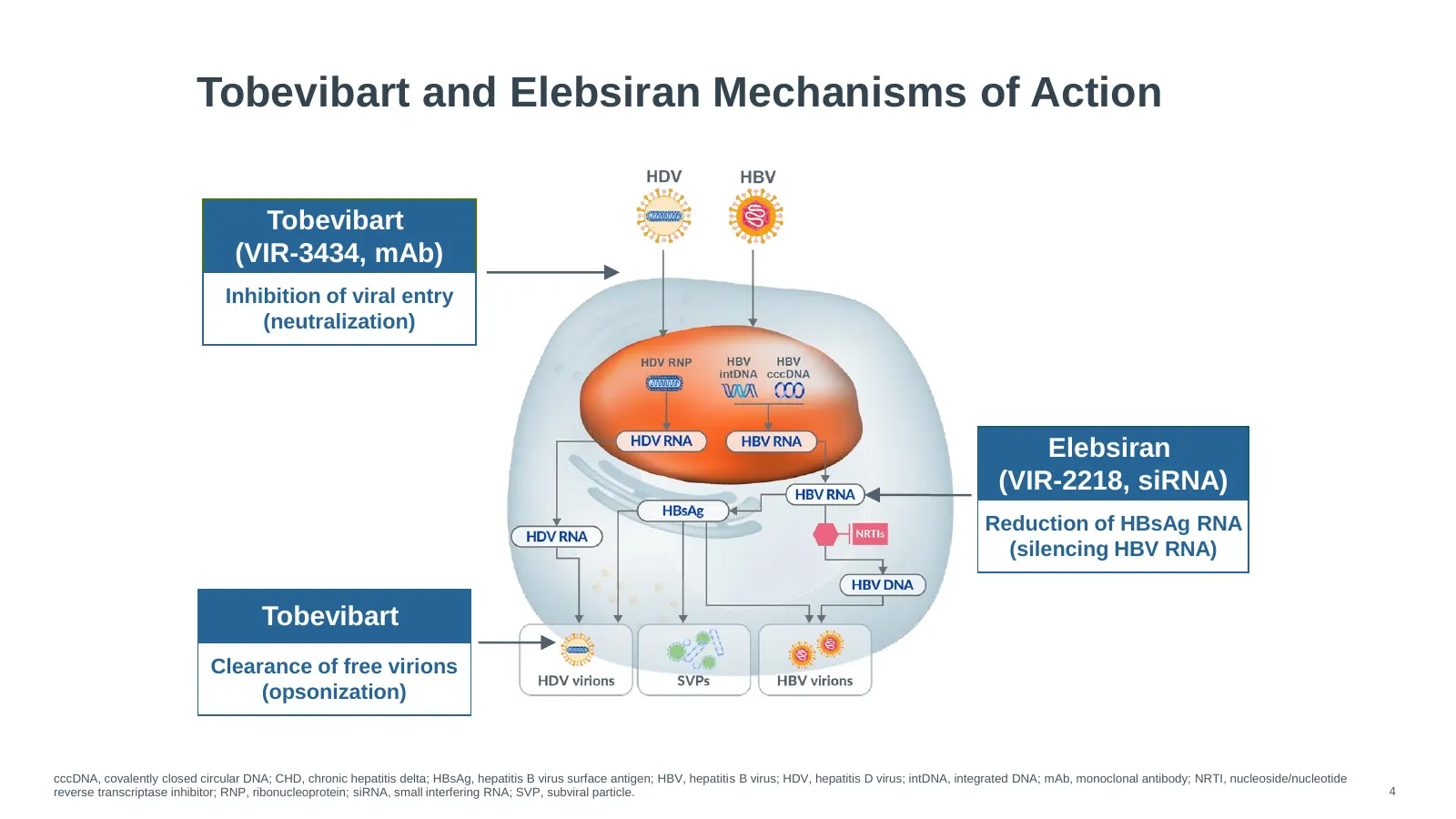
Slide 4: Tobevibart and Elebsiran Mechanisms of Action
Tobevibart and Elebsiran Mechanisms of Action Tobevibart (VIR-3434, mAb) Inhibition of viral entry (neutralization) Elebsiran VIR-2218 (VIR-2218, siRNA) Reduction of HBsAg RNA (silencing HBV RNA) Tobevibart Clearance of free virions (opsonization) cccDNA, covalently closed circular DNA; CHD, chronic
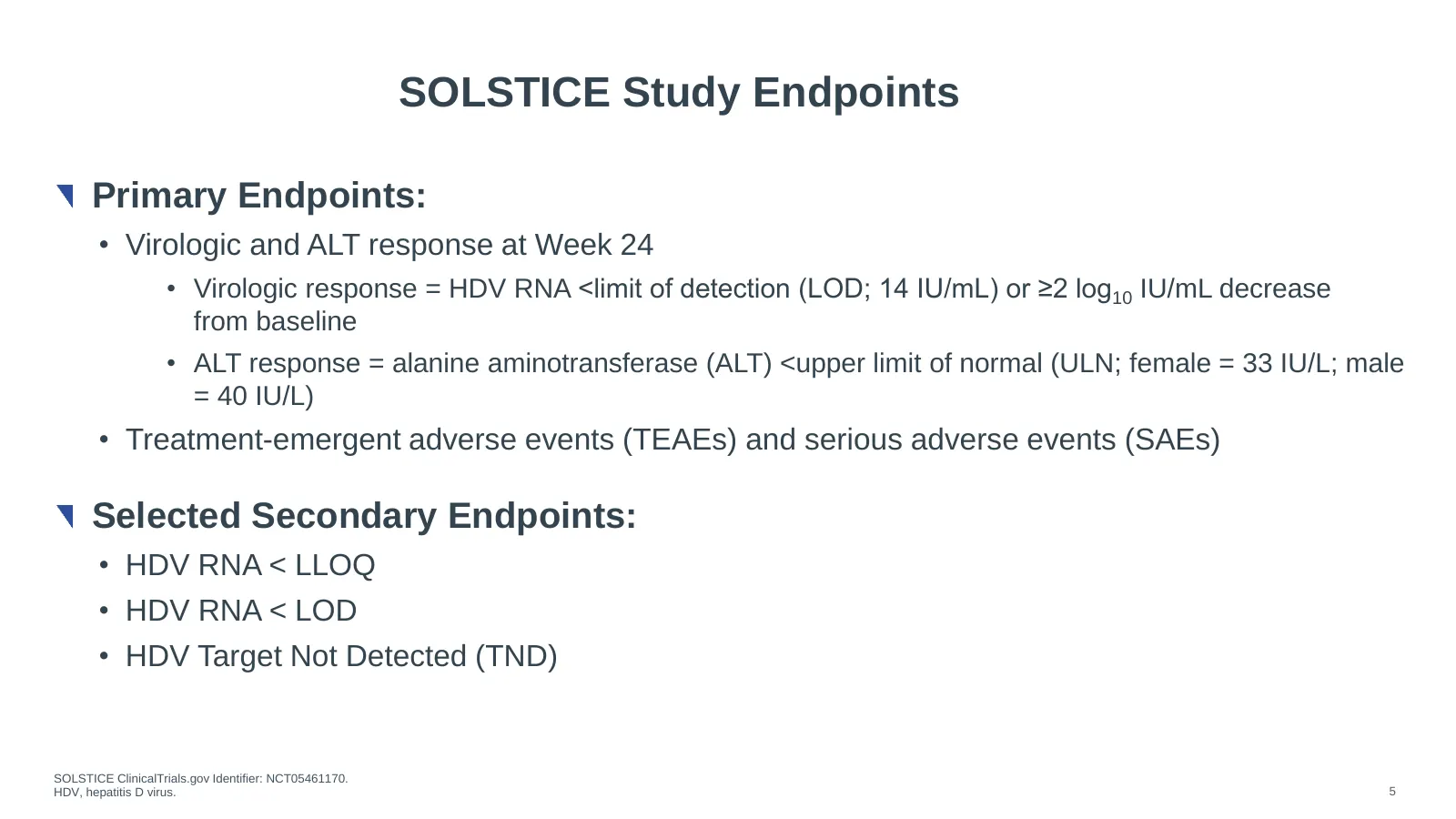
Slide 5: SOLSTICE Study Endpoints
SOLSTICE Study Endpoints Primary Endpoints: • Virologic and ALT response at Week 24 • Virologic response = HDV RNA <limit of detection (LOD; 14 IU/mL) or ≥2 log10 IU/mL decrease from baseline • ALT response = alanine aminotransferase (ALT) <upper limit of normal (ULN; female = 33 IU/L; male = 40 IU/
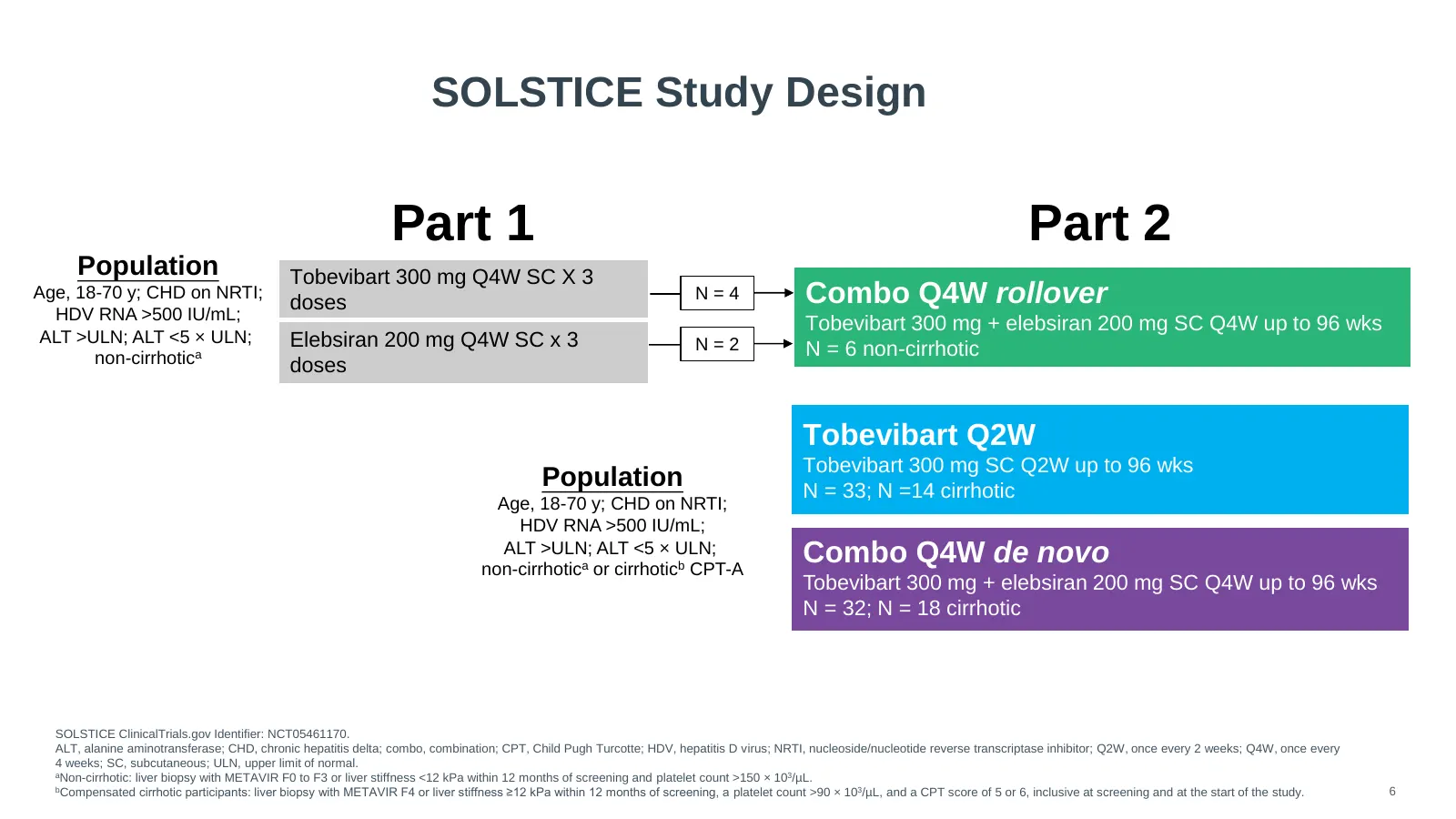
Slide 6: SOLSTICE Study Design
SOLSTICE Study Design Part 1 Part 2 Population Tobevibart 300 mg Q4W SC X 3 Age, 18-70 y; CHD on NRTI; doses N=4 Combo Q4W rollover HDV RNA >500 IU/mL; Tobevibart 300 mg + elebsiran 200 mg SC Q4W up to 96 wks ALT >ULN; ALT <5 × ULN; Elebsiran 200 mg Q4W SC x 3 N=2 non-cirrhotica N = 6 non-cirrhotic
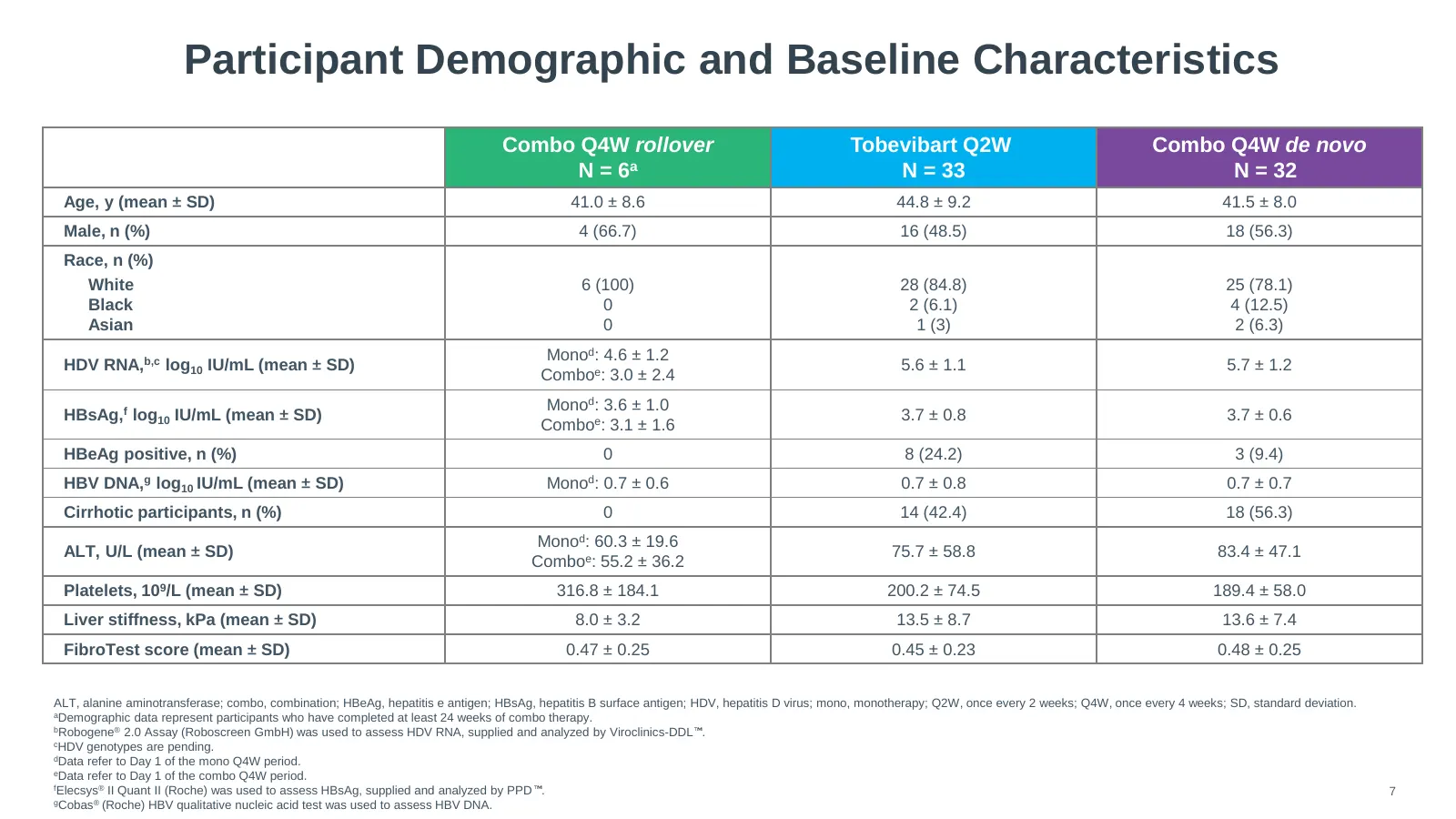
Slide 7: Participant Demographic and Baseline Characteristics
Participant Demographic and Baseline Characteristics Combo Q4W rollover Tobevibart Q2W Combo Q4W de novo N = 6a N = 33 N = 32 Age, y (mean ± SD) 41.0 ± 8.6 44.8 ± 9.2 41.5 ± 8.0 Male, n (%) 4 (66.7) 16 (48.5) 18 (56.3) Race, n (%) White 6 (100) 28 (84.8) 25 (78.1) Black 0 2 (6.1) 4 (12.5) Asian 0 1
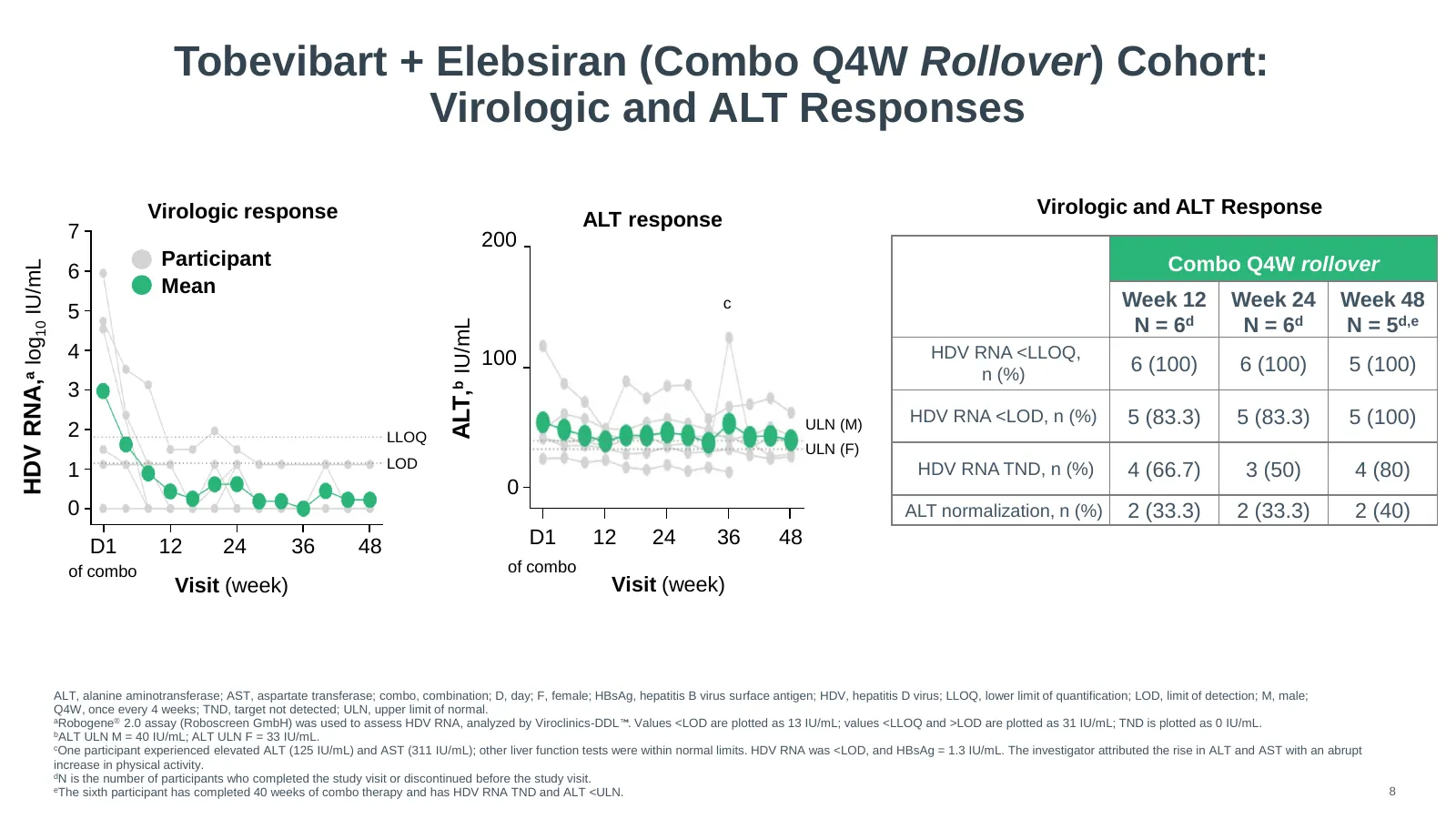
Slide 8: Combo Q4W Rollover Cohort: Virologic and ALT Responses
Tobevibart + Elebsiran (Combo Q4W Rollover) Cohort: Virologic and ALT Responses Virologic response Virologic and ALT Response ALT response 7 200 Participant Combo Q4W rollover HDV RNA,a log10 IU/mL 6 Mean c Week 12 Week 24 Week 48 5 N = 6d N = 6d N = 5d,e ALT,b IU/mL 4 100 HDV RNA <LLOQ, n (%) 6 (10
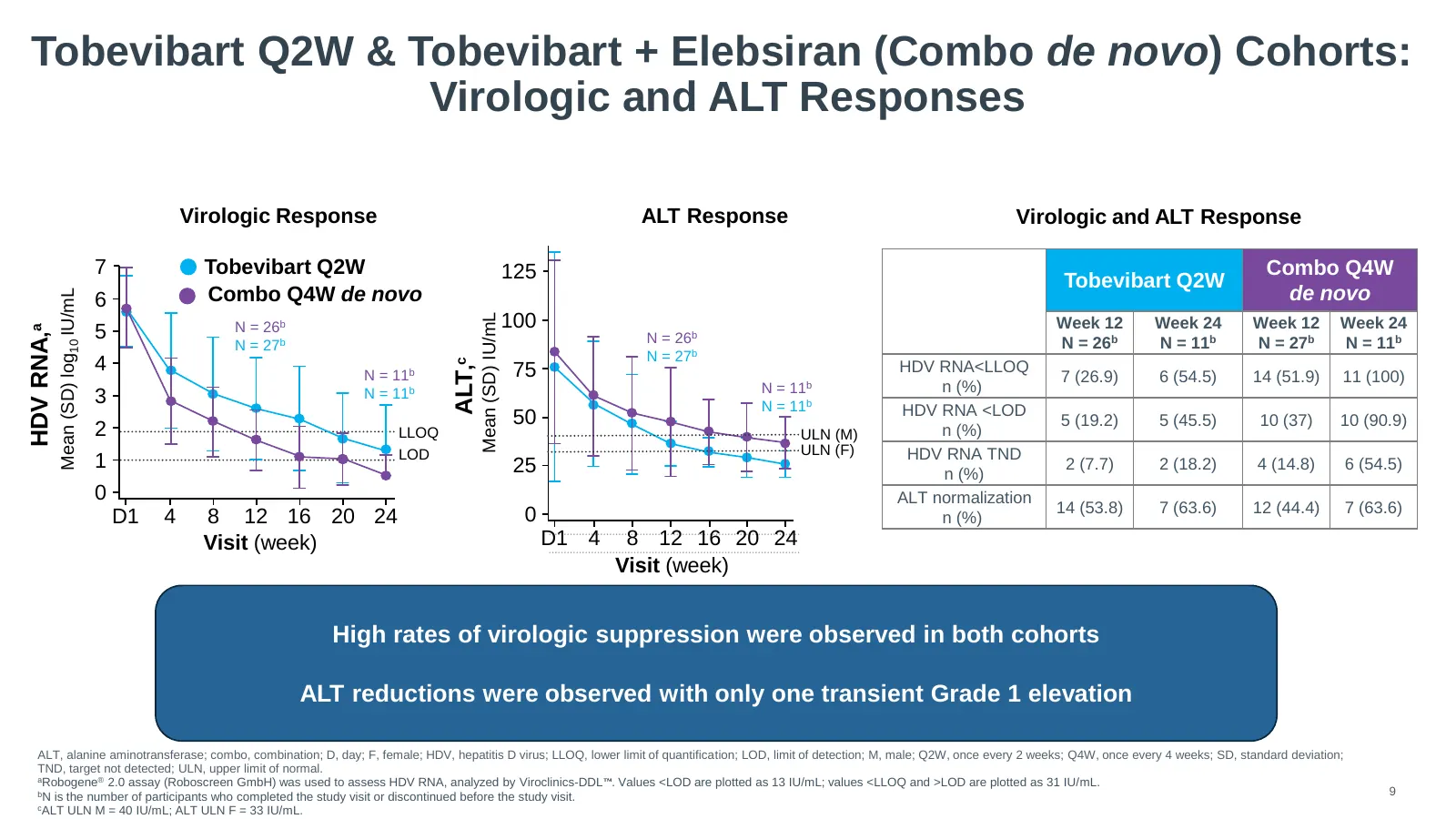
Slide 9: Q2W & Combo de novo Cohorts: Virologic and ALT Responses
Tobevibart Q2W & Tobevibart + Elebsiran (Combo de novo) Cohorts: Virologic and ALT Responses Virologic Response ALT Response Virologic and ALT Response 7 Tobevibart Q2W 125 Combo Q4W Tobevibart Q2W Combo Q4W de novo de novo Mean (SD) log10 IU/mL 6 Mean (SD) IU/mL N = 26b 100 Week 12 Week 24 Week 12
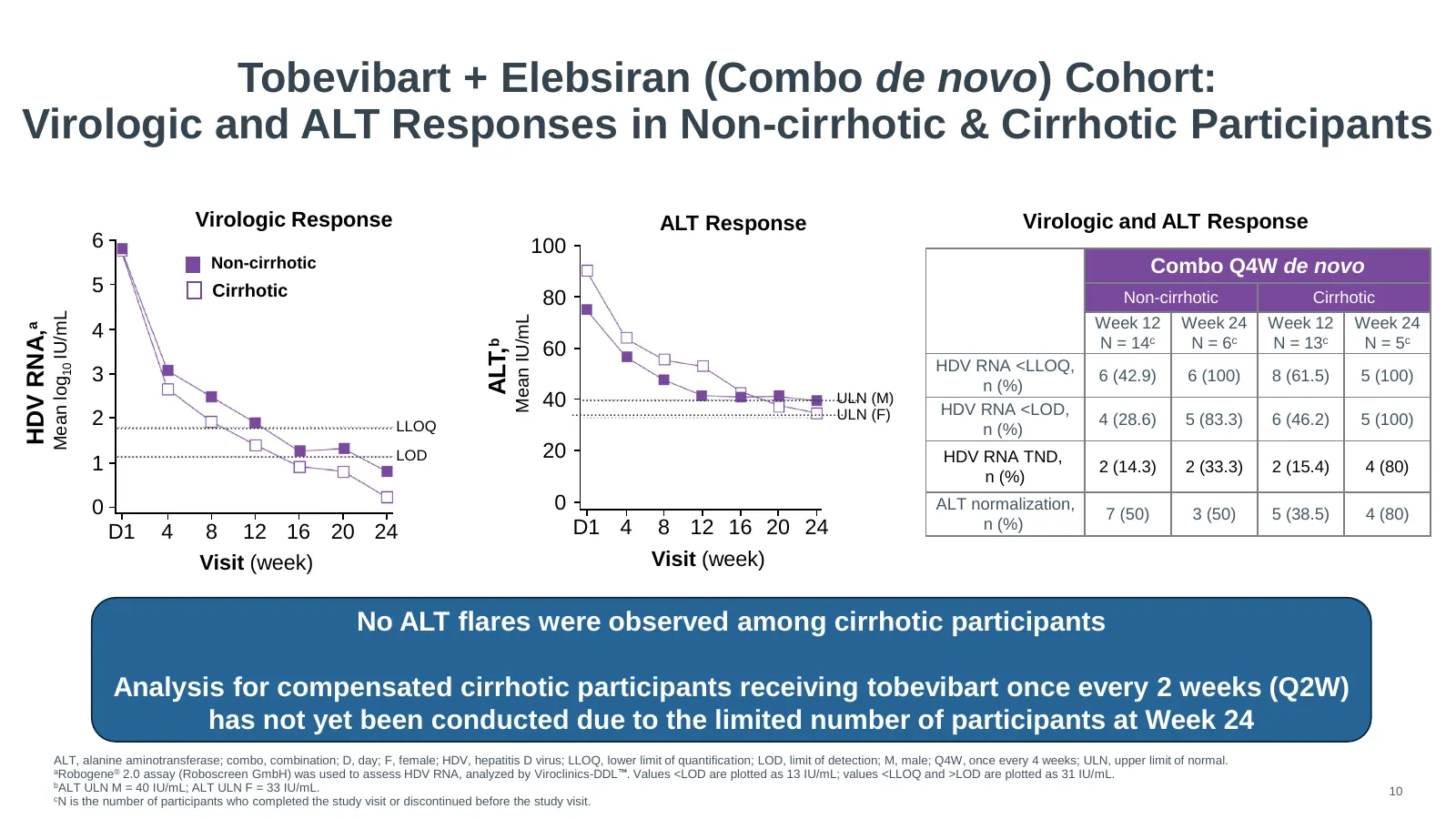
Slide 10: Combo de novo: Responses in Non-cirrhotic & Cirrhotic Participants
Tobevibart + Elebsiran (Combo de novo) Cohort: Virologic and ALT Responses in Non-cirrhotic & Cirrhotic Participants Virologic Response ALT Response Virologic and ALT Response 6 100 Non-cirrhotic Combo Q4W de novo 5 Cirrhotic 80 Non-cirrhotic Cirrhotic Mean log10 IU/mL Mean IU/mL Week 12 Week 24 Wee
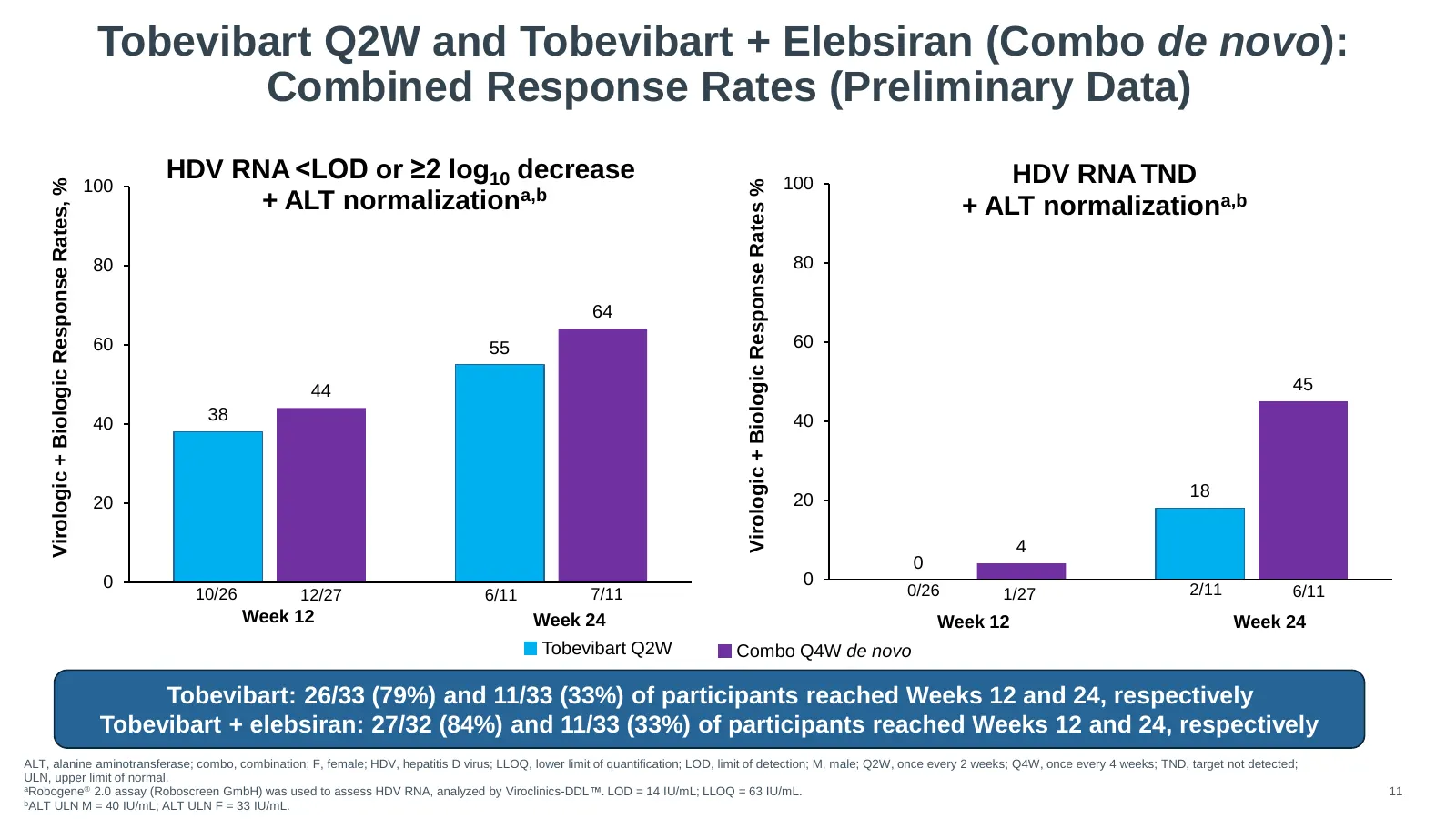
Slide 11: Combined Response Rates (Preliminary Data)
Tobevibart Q2W and Tobevibart + Elebsiran (Combo de novo): Combined Response Rates (Preliminary Data) HDV RNA <LOD or ≥2 log10 decrease 100 HDV RNA TND Virologic + Biologic Response Rates, % Virologic + Biologic Response Rates % 100 + ALT normalizationa,b + ALT normalizationa,b 80 80 64 60 55 60 44
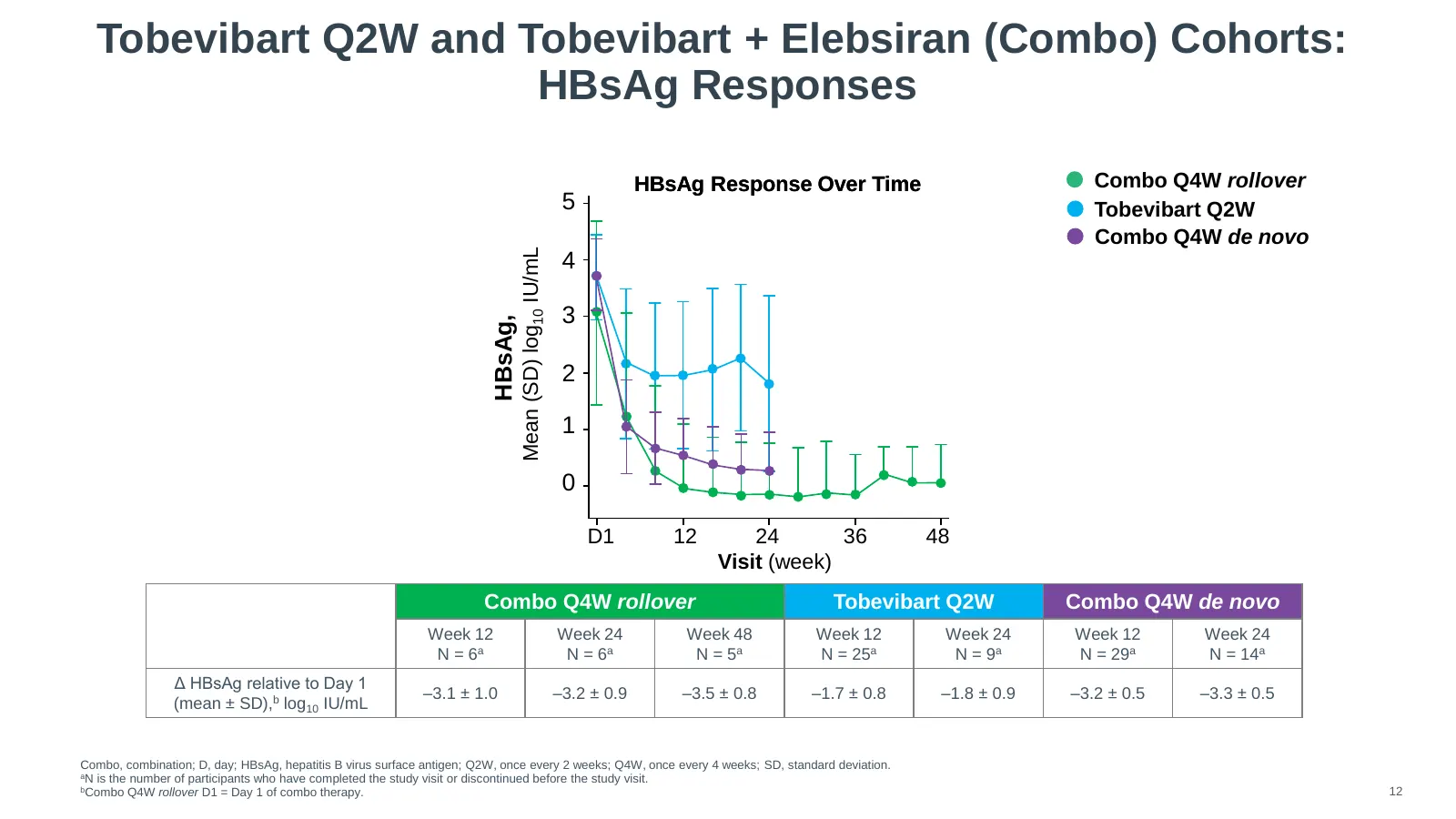
Slide 12: Q2W and Combo Cohorts: HBsAg Responses
Tobevibart Q2W and Tobevibart + Elebsiran (Combo) Cohorts: HBsAg Responses HBsAg Response Over Time Combo Q4W rollover 5 Tobevibart Q2W Combo Q4W de novo Mean (SD) log10 IU/mL 4 3 HBsAg, 2 1 0 D1 12 24 36 48 Visit (week) Combo Q4W rollover Tobevibart Q2W Combo Q4W de novo Week 12 Week 24 Week 48 Wee
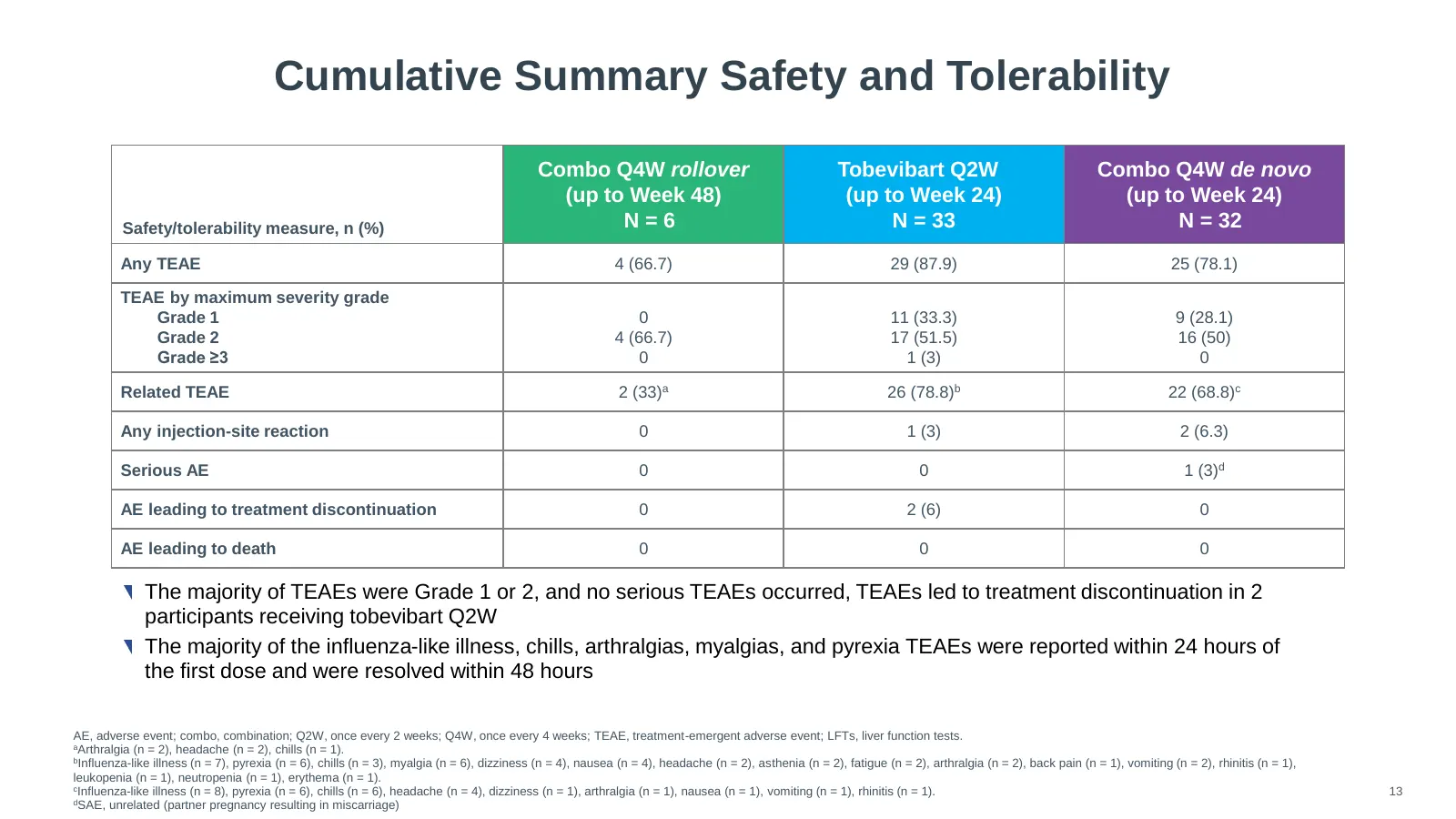
Slide 13: Cumulative Summary Safety and Tolerability
Cumulative Summary Safety and Tolerability Combo Q4W rollover Tobevibart Q2W Combo Q4W de novo (up to Week 48) (up to Week 24) (up to Week 24) Safety/tolerability measure, n (%) N=6 N = 33 N = 32 Any TEAE 4 (66.7) 29 (87.9) 25 (78.1) TEAE by maximum severity grade Grade 1 0 11 (33.3) 9 (28.1) Grade
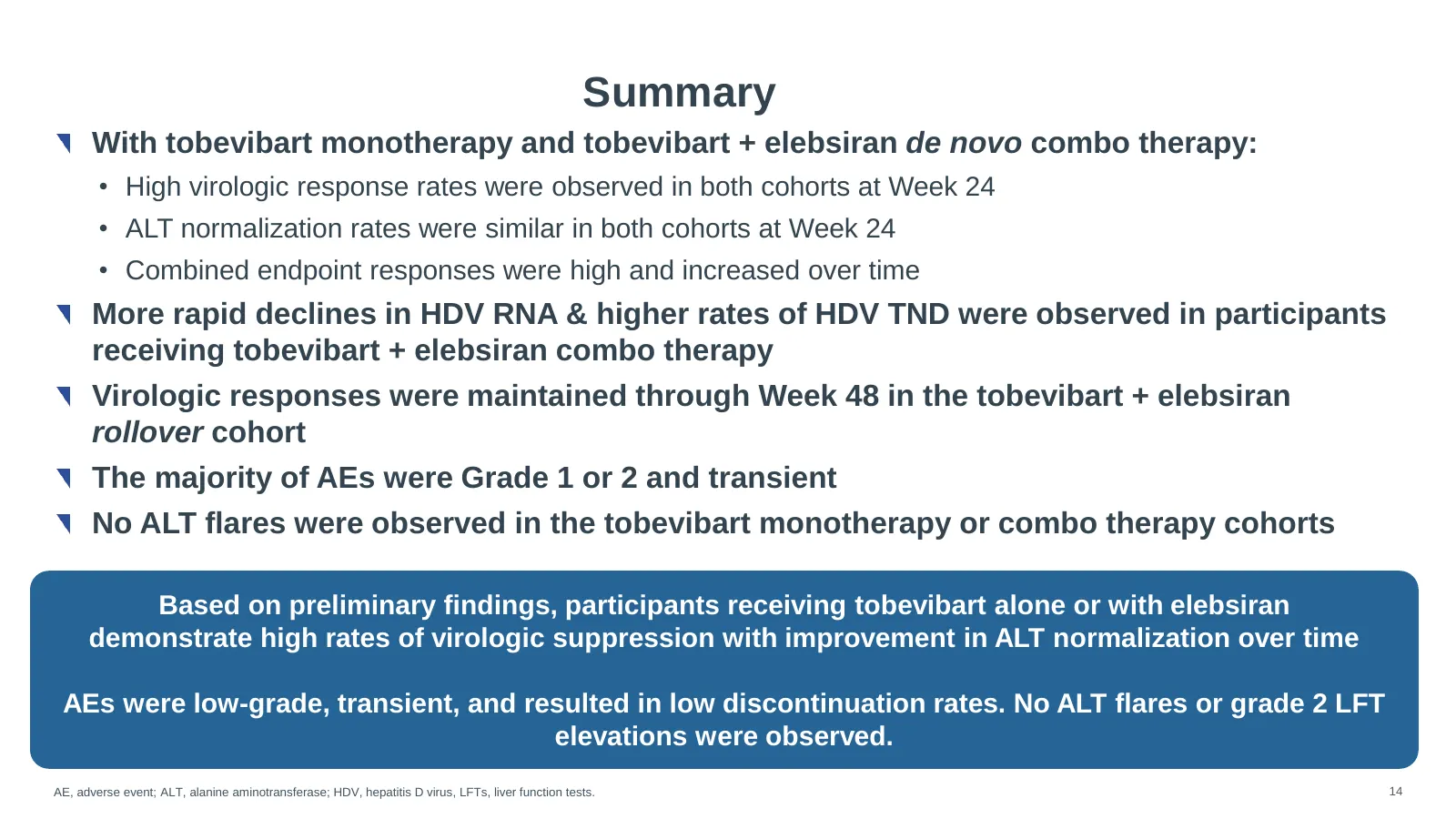
Slide 14: Summary
Summary With tobevibart monotherapy and tobevibart + elebsiran de novo combo therapy: • High virologic response rates were observed in both cohorts at Week 24 • ALT normalization rates were similar in both cohorts at Week 24 • Combined endpoint responses were high and increased over time More rapid
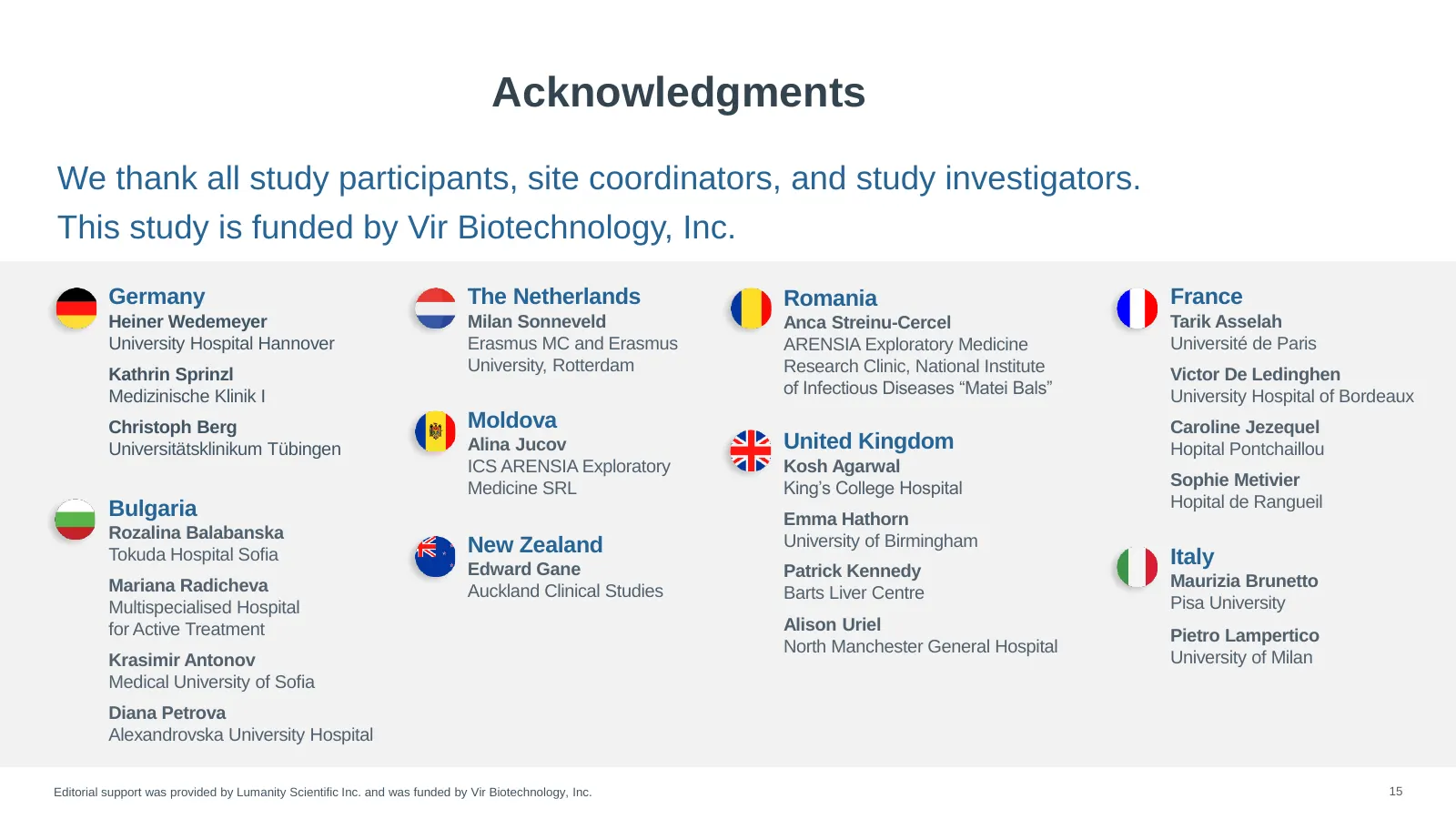
Slide 15: Acknowledgments
Acknowledgments We thank all study participants, site coordinators, and study investigators. This study is funded by Vir Biotechnology, Inc. Germany The Netherlands Romania France Heiner Wedemeyer Milan Sonneveld Anca Streinu-Cercel Tarik Asselah University Hospital Hannover Erasmus MC and Erasmus A
Source: company website
More decks from Vir Biotechnology, Inc.
 Technical Presentation (November 2026)23 slides · Nov 9, 2026
 Q3 2026 Earnings Presentation61 slides · Nov 4, 2026
 Q2 2026 Earnings Presentation62 slides · Aug 5, 2026
 Technical Presentation (May 2026)10 slides · May 6, 2026
 Q1 2026 Earnings Presentation61 slides · May 6, 2026
 FY2025 Earnings Presentation35 slides · Feb 23, 2026