Parker-Hannifin Corporation · NYSE:PH
Parker-Hannifin — Technical Presentation (June 2024)
18 slides from Parker-Hannifin's technical presentation, June 2024
Slide 1: Six Reasons to Dry Biogas to a Low Dewpoint Before Combustion in a CHP Engine
SIX REASONS TO DRY BIOGAS To A LOW DEWPOINT BEFORE COMBUSTION IN A CHP ENGINE STEVEN SCOTT MBA MARKET DEVELOPMENT MANAGER ALTERNATIVE ENERGIES
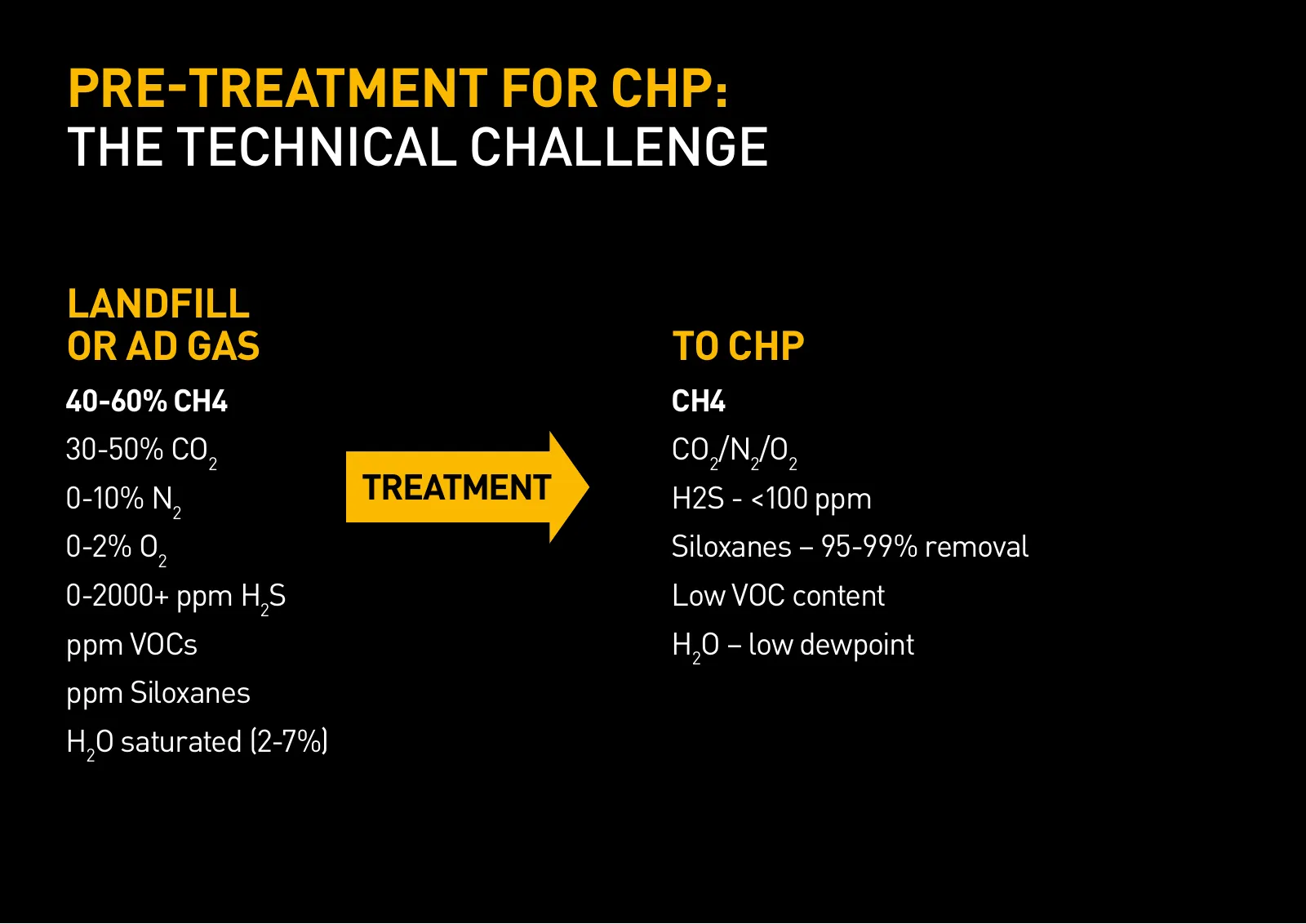
Slide 2: Pre-Treatment for CHP: The Technical Challenge
PRE-TREATMENT FOR CHP: THE TECHNICAL CHALLENGE LANDFILL OR AD GAS TO CHP 40-60% CH4 CH4 30-50% CO2 CO2/N2/O2 0-10% N2 TREATMENT H2S - <100 ppm 0-2% O2 Siloxanes – 95-99% removal 0-2000+ ppm H2S Low VOC content ppm VOCs H2O – low dewpoint ppm Siloxanes H2O saturated (2-7%)
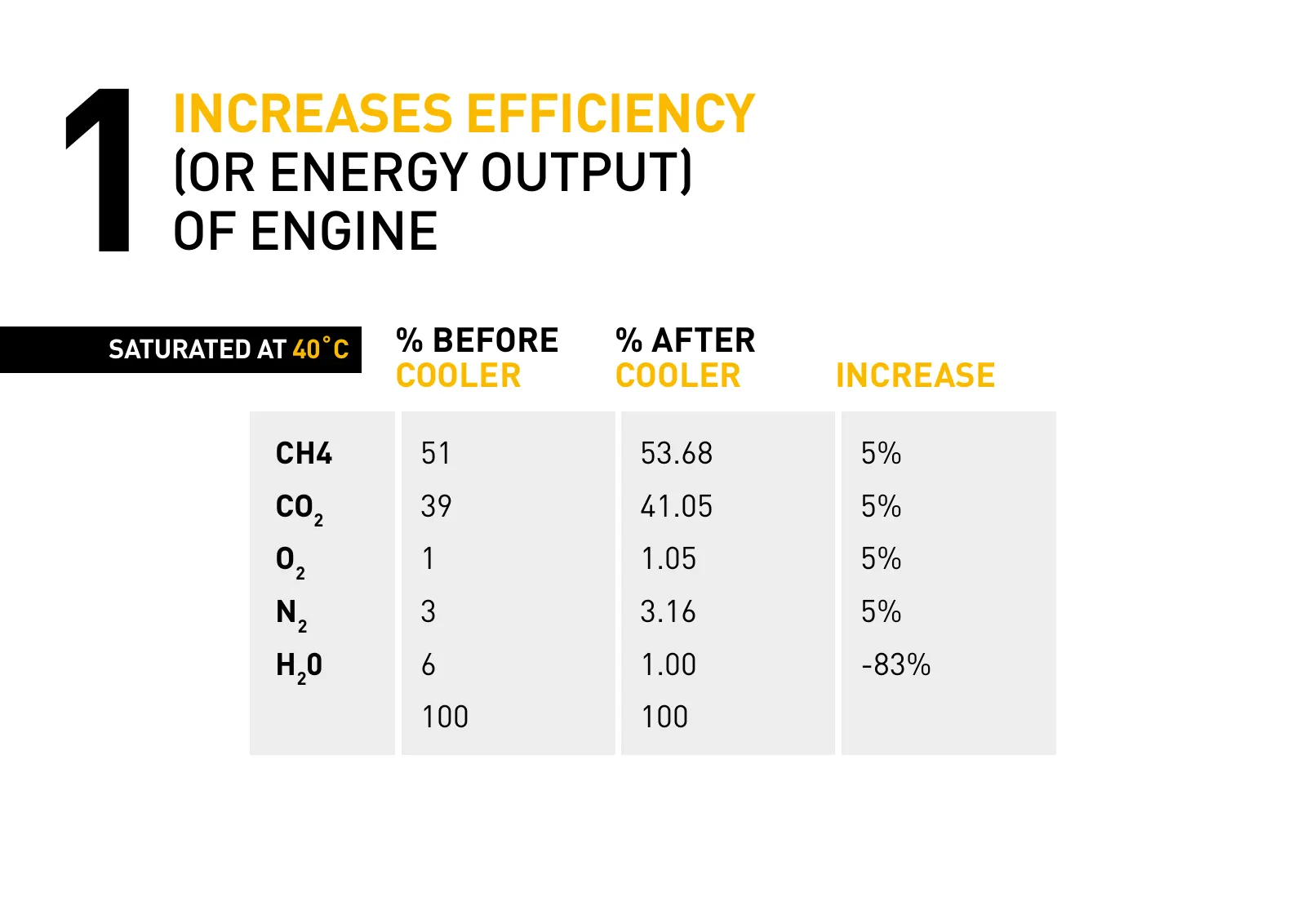
Slide 3: Increases Efficiency (or Energy Output) of Engine
1 INCREASES EFFICIENCY (OR ENERGY OUTPUT) OF ENGINE Saturated at 40˚C % BEFORE % AFTER COOLER COOLER INCREASE CH4 51 53.68 5% CO2 39 41.05 5% O2 1 1.05 5% N2 3 3.16 5% H20 6 1.00 -83% 100 100
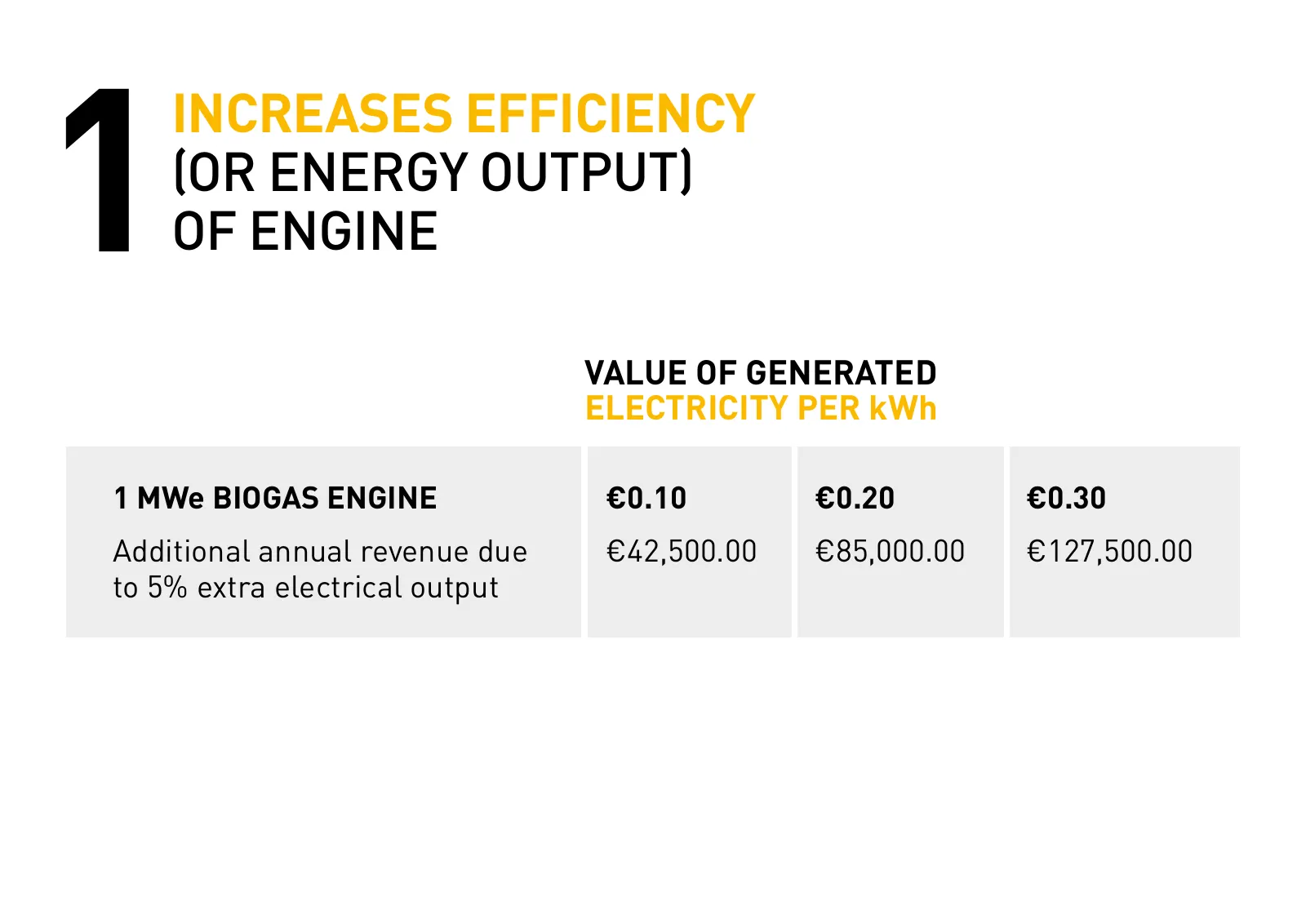
Slide 4: Increases Efficiency (or Energy Output) of Engine
1 INCREASES EFFICIENCY (OR ENERGY OUTPUT) OF ENGINE VALUE OF GENERATED ELECTRICITY PER kWh 1 MWe BIOGAS ENGINE €0.10 €0.20 €0.30 Additional annual revenue due €42,500.00 €85,000.00 €127,500.00 to 5% extra electrical output
Slide 5: Prevents Corrosion of Pipework and Components
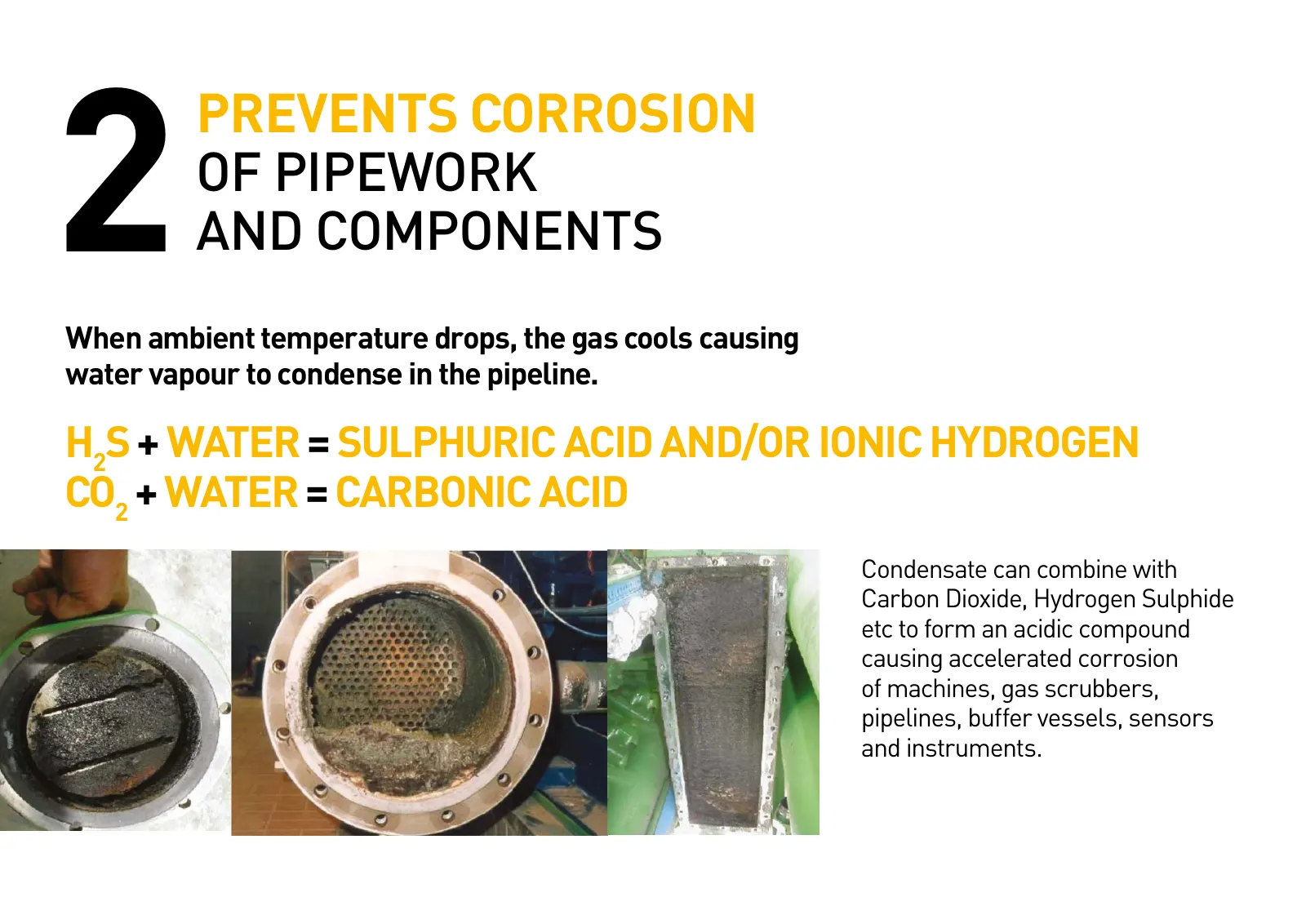
2 PREVENTS CORROSION OF PIPEWORK AND COMPONENTS When ambient temperature drops, the gas cools causing water vapour to condense in the pipeline. H2S + Water = sulphuric acid and/or ionic hydrogen co2 + water = carbonic acid Condensate can combine with Carbon Dioxide, Hydrogen Sulphide etc to form an
Slide 6: Partial Removal of Hydrogen Sulphide, Ammonia, Siloxanes and Other Water Soluble Gases
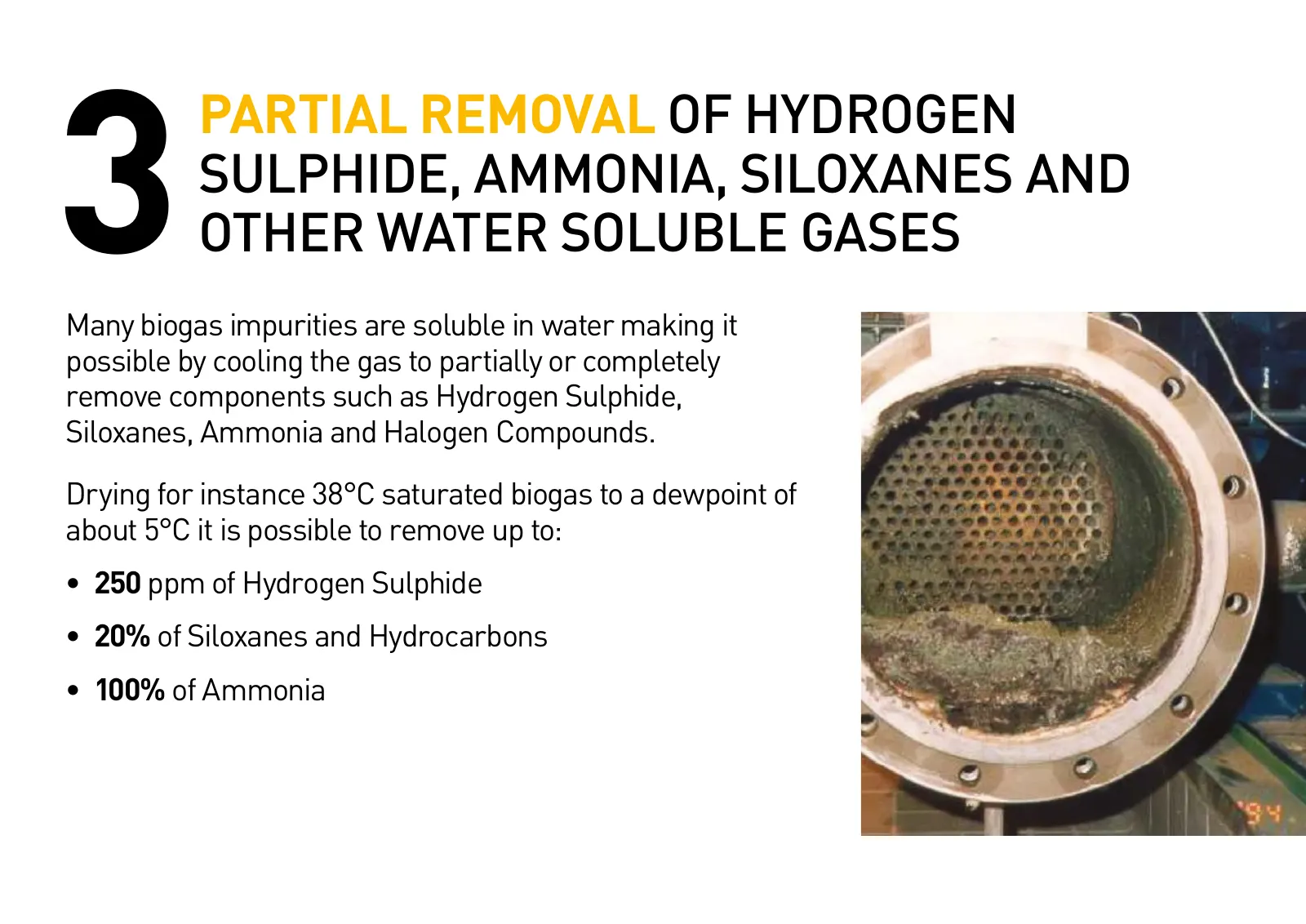
3 PARTIAL REMOVAL OF HYDROGEN SULPHIDE, AMMONIA, SILOXANES AND OTHER WATER SOLUBLE GASES Many biogas impurities are soluble in water making it possible by cooling the gas to partially or completely remove components such as Hydrogen Sulphide, Siloxanes, Ammonia and Halogen Compounds. Drying for inst
Slide 7: Reduces Contamination of Engine Oil
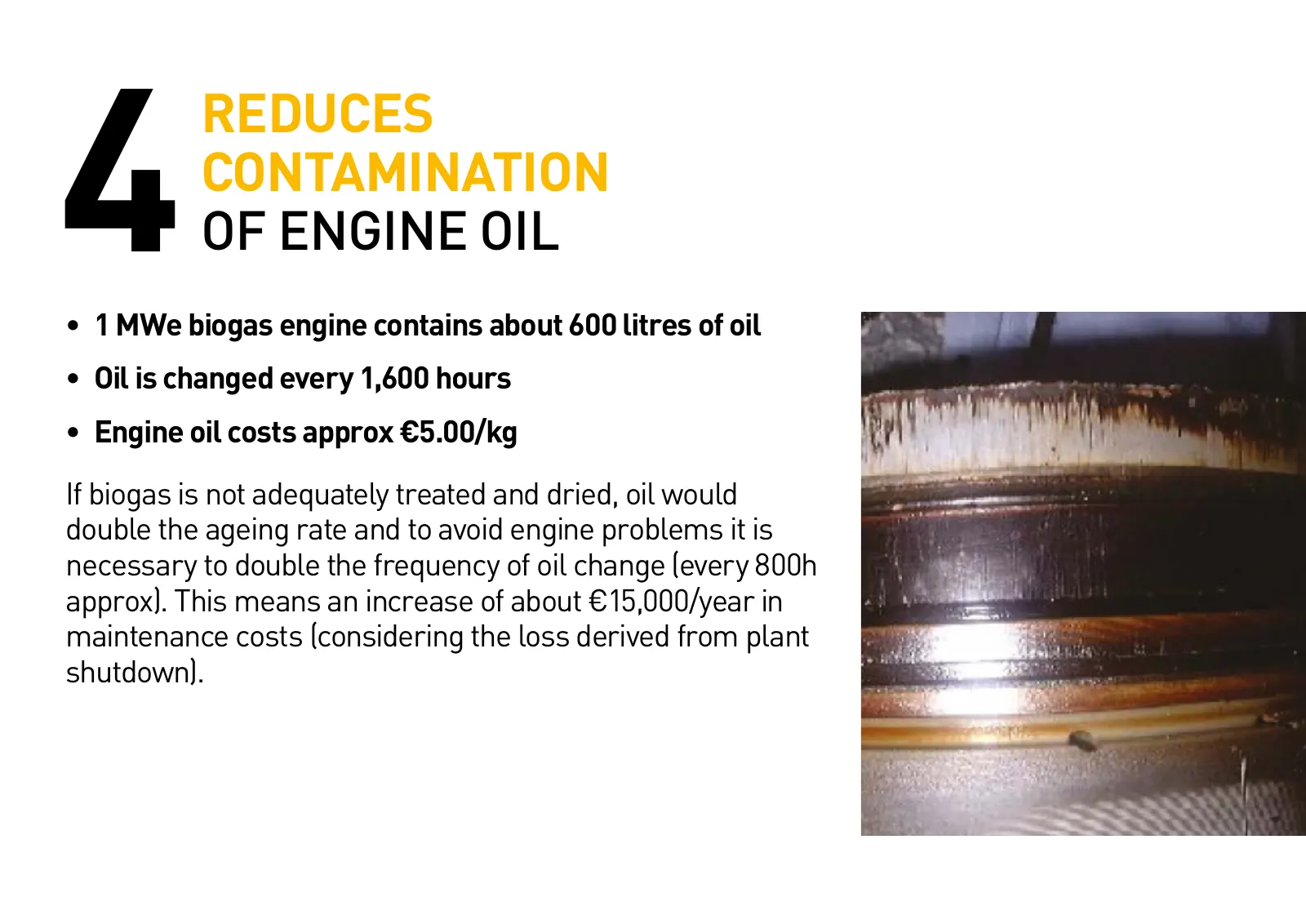
4 REDUCES CONTAMINATION OF ENGINE OIL • 1 MWe biogas engine contains about 600 litres of oil • Oil is changed every 1,600 hours • Engine oil costs approx €5.00/kg If biogas is not adequately treated and dried, oil would double the ageing rate and to avoid engine problems it is necessary to double th
Slide 8: Increases Service Life of Activated Carbon
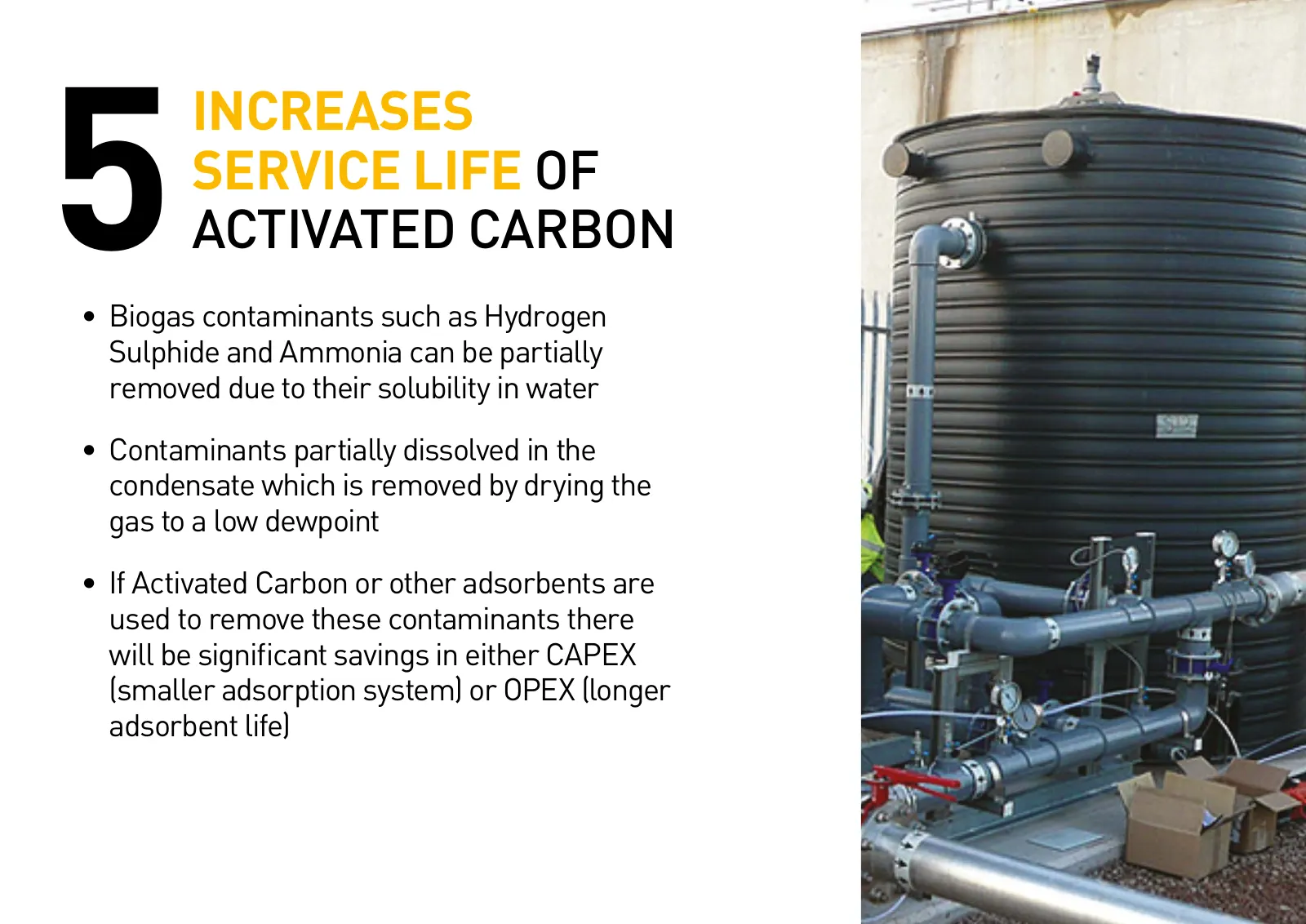
5 INCREASES SERVICE LIFE OF ACTIVATED CARBON • Biogas contaminants such as Hydrogen Sulphide and Ammonia can be partially removed due to their solubility in water • Contaminants partially dissolved in the condensate which is removed by drying the gas to a low dewpoint • If Activated Carbon or other
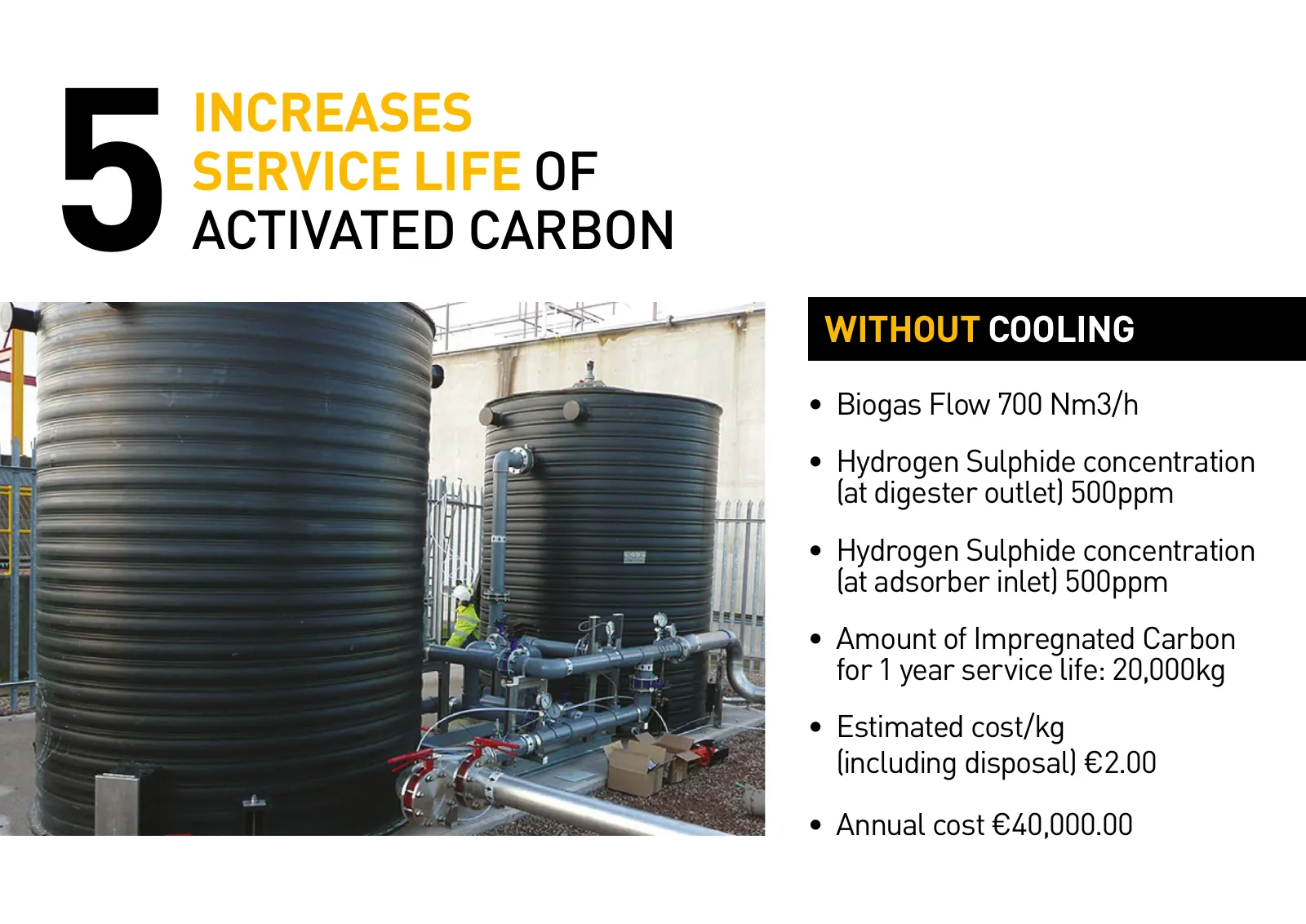
Slide 9: Increases Service Life of Activated Carbon: Without Cooling
5 INCREASES SERVICE LIFE OF ACTIVATED CARBON WITHOUT COOLING • Biogas Flow 700 Nm3/h • Hydrogen Sulphide concentration (at digester outlet) 500ppm • Hydrogen Sulphide concentration (at adsorber inlet) 500ppm • Amount of Impregnated Carbon for 1 year service life: 20,000kg • Estimated cost/kg (includ
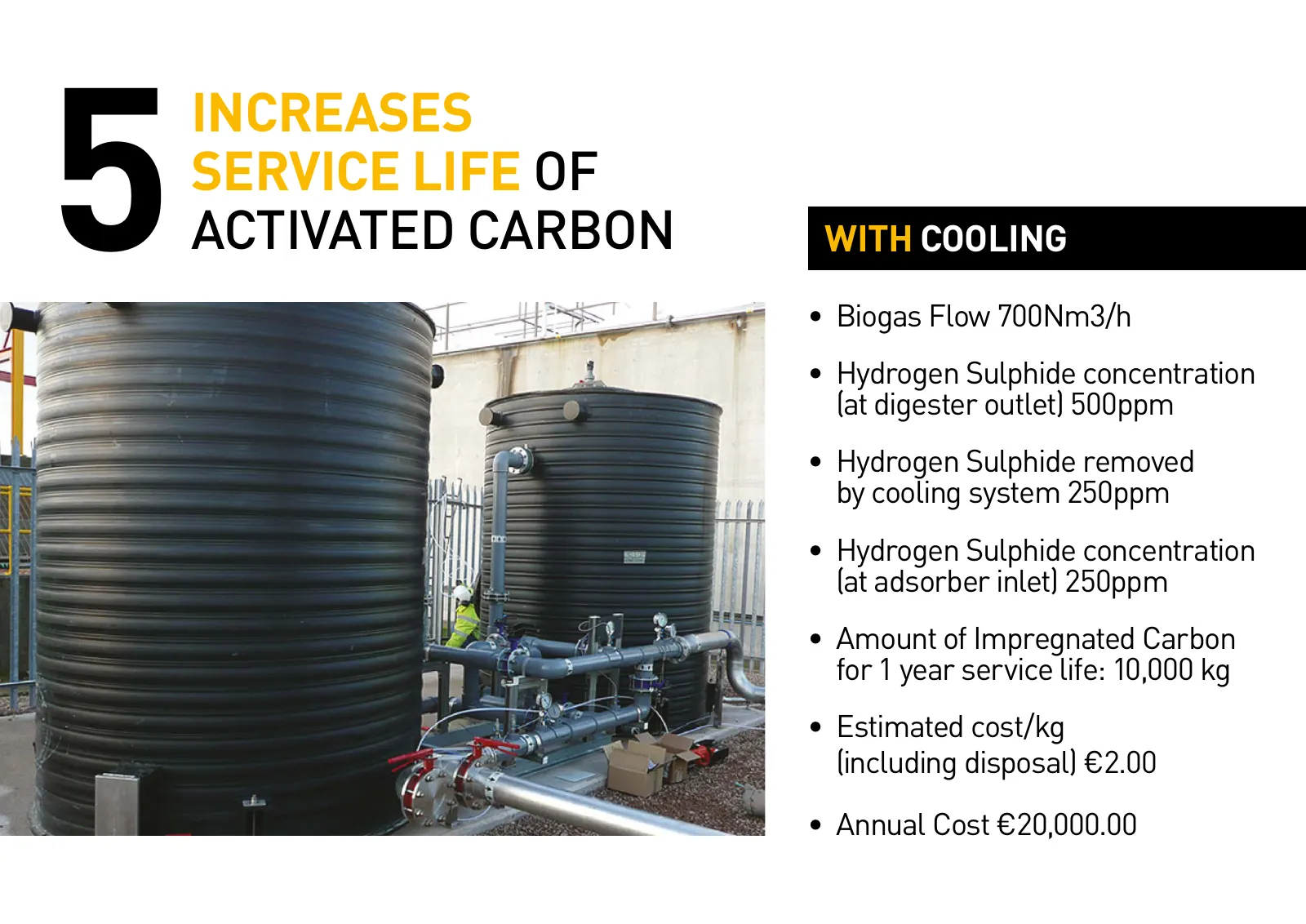
Slide 10: Increases Service Life of Activated Carbon with Cooling
5 INCREASES SERVICE LIFE OF ACTIVATED CARBON WITH COOLING • Biogas Flow 700Nm3/h • Hydrogen Sulphide concentration (at digester outlet) 500ppm • Hydrogen Sulphide removed by cooling system 250ppm • Hydrogen Sulphide concentration (at adsorber inlet) 250ppm • Amount of Impregnated Carbon for 1 year s
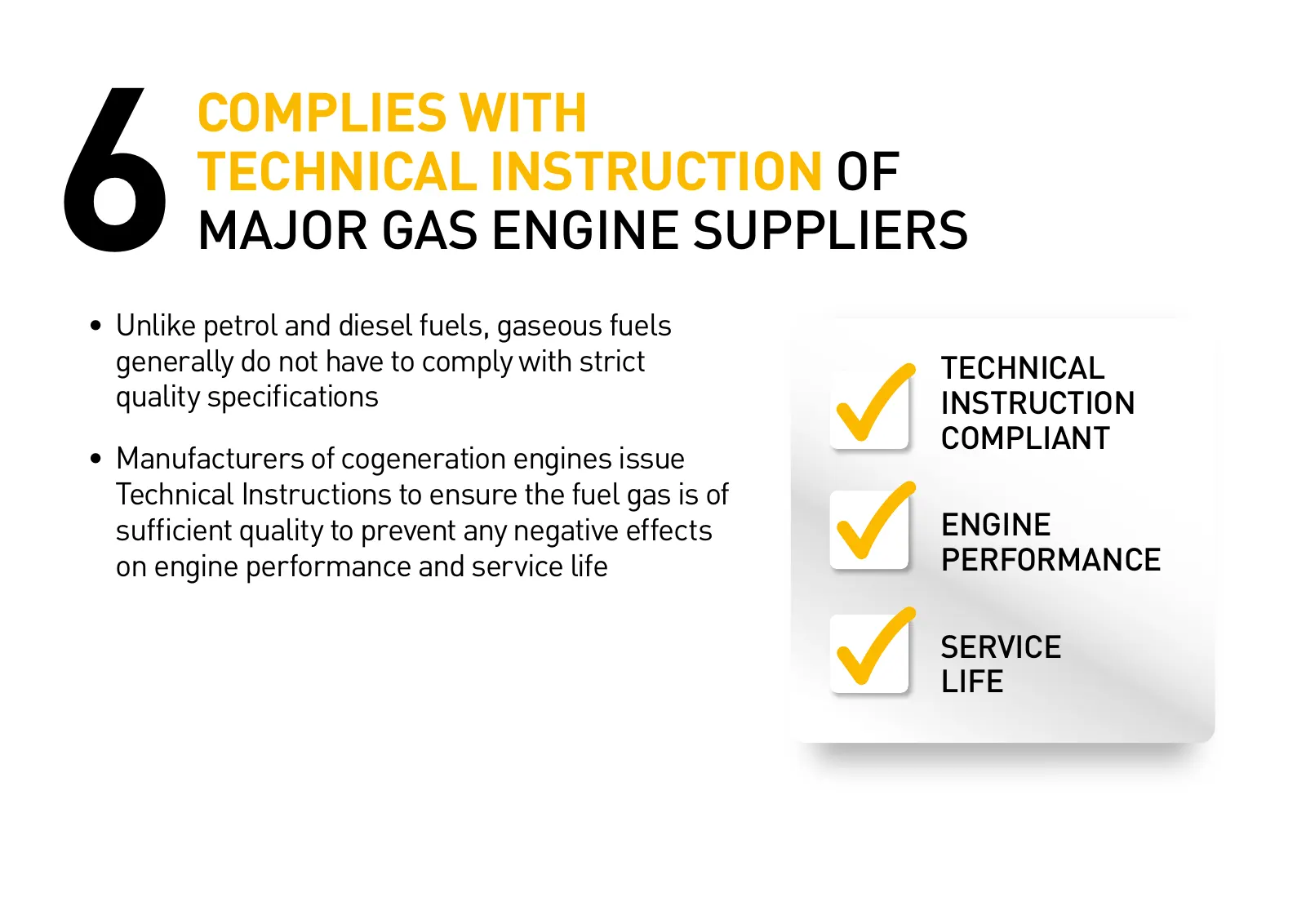
Slide 11: Complies with Technical Instruction of Major Gas Engine Suppliers
6 COMPLIES WITH TECHNICAL INSTRUCTION OF MAJOR GAS ENGINE SUPPLIERS • Unlike petrol and diesel fuels, gaseous fuels generally do not have to comply with strict Technical quality specifications instruction compliant • Manufacturers of cogeneration engines issue Technical Instructions to ensure the fu
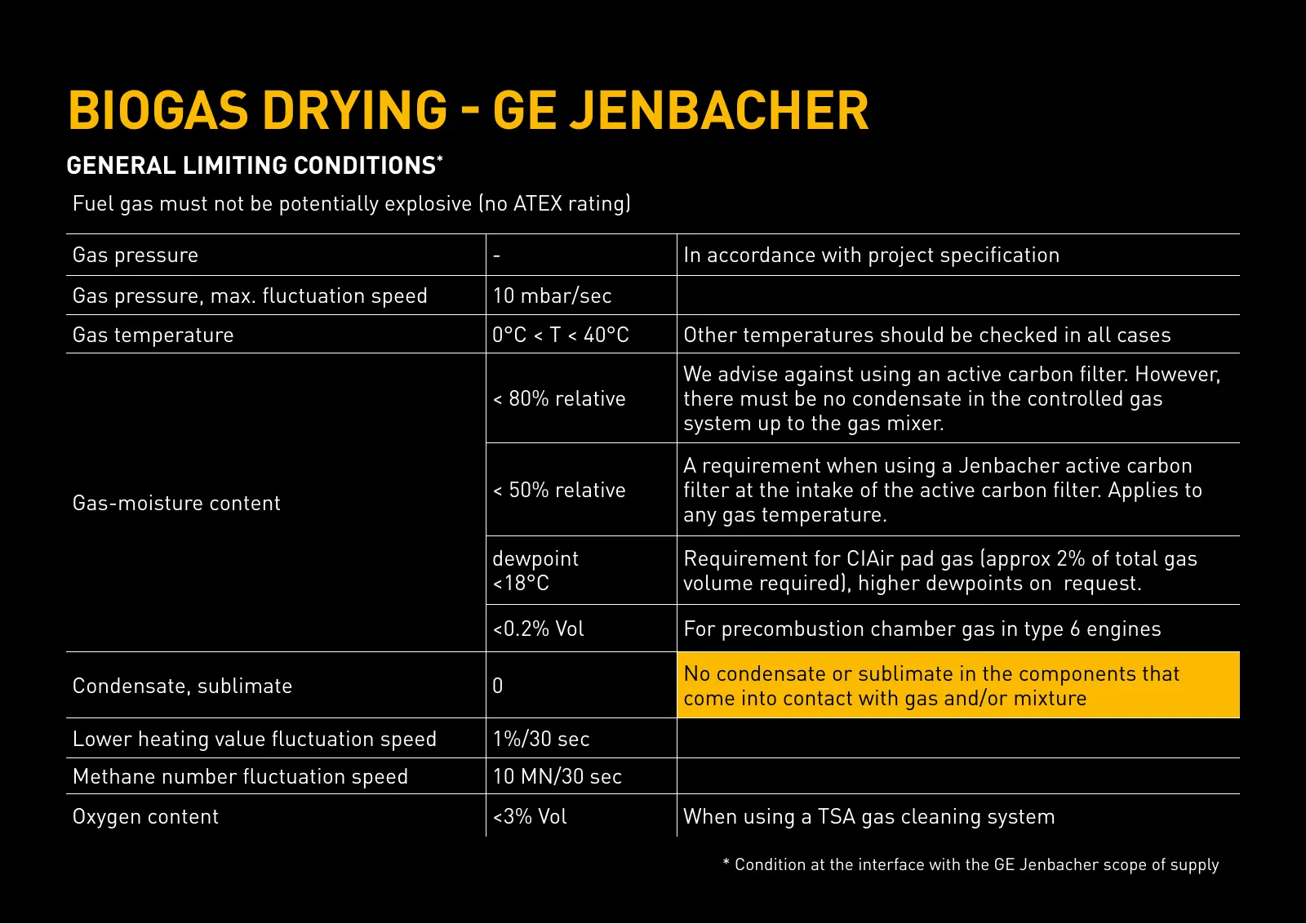
Slide 12: Biogas Drying - GE Jenbacher
BIOGAS DRYING - GE JENBACHER GENERAL LIMITING CONDITIONS* Fuel gas must not be potentially explosive (no ATEX rating) Gas pressure - In accordance with project specification Gas pressure, max. fluctuation speed 10 mbar/sec Gas temperature 0°C < T < 40°C Other temperatures should be checked in all ca
Slide 13: Biogas Drying - Caterpillar
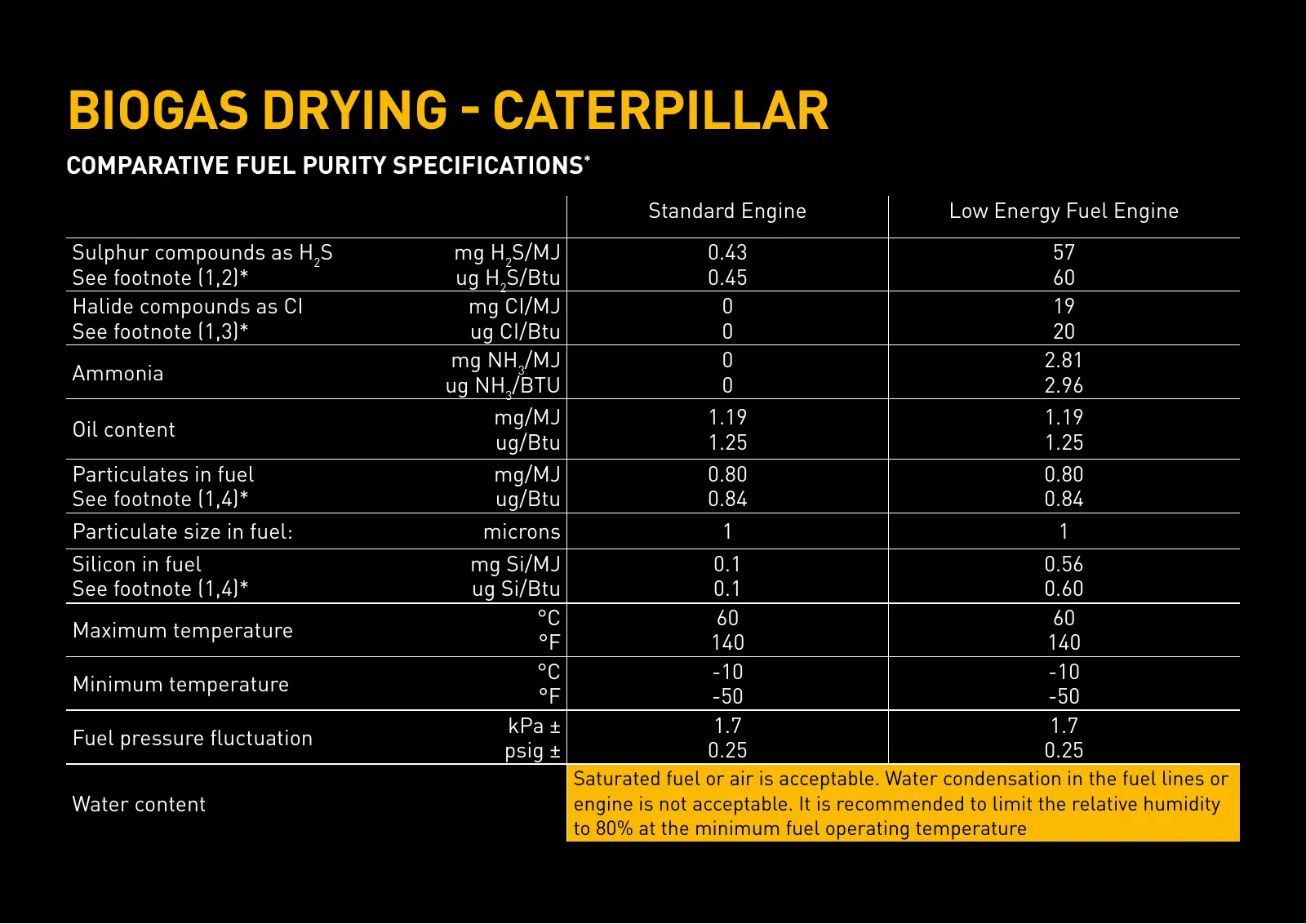
BIOGAS DRYING - CATERPILLAR COMPARATIVE FUEL PURITY SPECIFICATIONS* Standard Engine Low Energy Fuel Engine Sulphur compounds as H2S mg H2S/MJ 0.43 57 See footnote (1,2)* ug H2S/Btu 0.45 60 Halide compounds as CI mg CI/MJ 0 19 See footnote (1,3)* ug CI/Btu 0 20 mg NH3/MJ 0 2.81 Ammonia ug NH3/BTU 0 2
Slide 14: Biogas Drying: Typical Arrangement
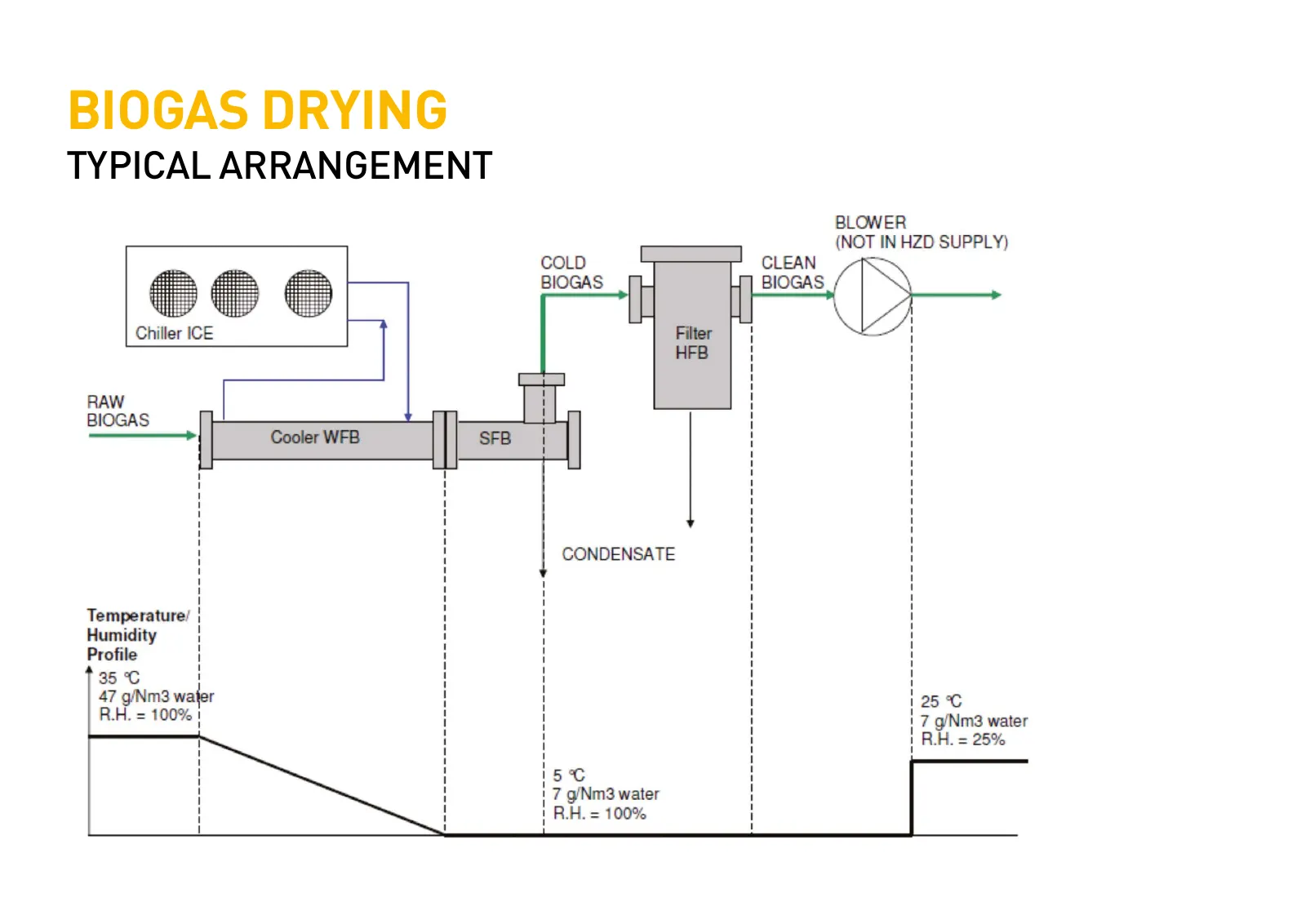
BIOGAS DRYING TYPICAL ARRANGEMENT
Slide 15: Biogas Drying: How Much Water in One Day?
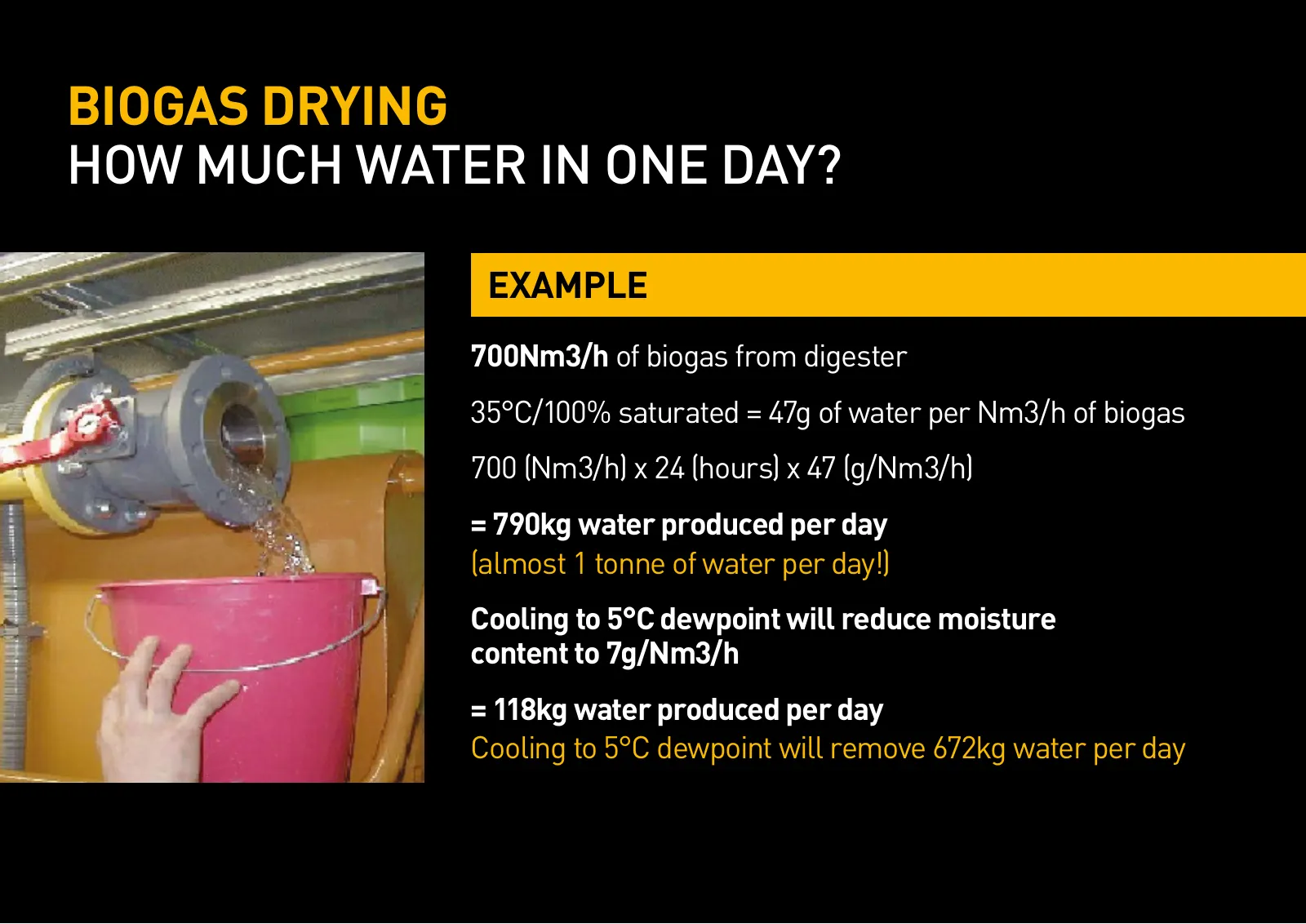
BIOGAS DRYING HOW MUCH WATER IN ONE DAY? EXAMPLE 700Nm3/h of biogas from digester 35°C/100% saturated = 47g of water per Nm3/h of biogas 700 (Nm3/h) x 24 (hours) x 47 (g/Nm3/h) = 790kg water produced per day (almost 1 tonne of water per day!) Cooling to 5°C dewpoint will reduce moisture content to 7
Slide 16: Combined Heat & Power Production (CHP)
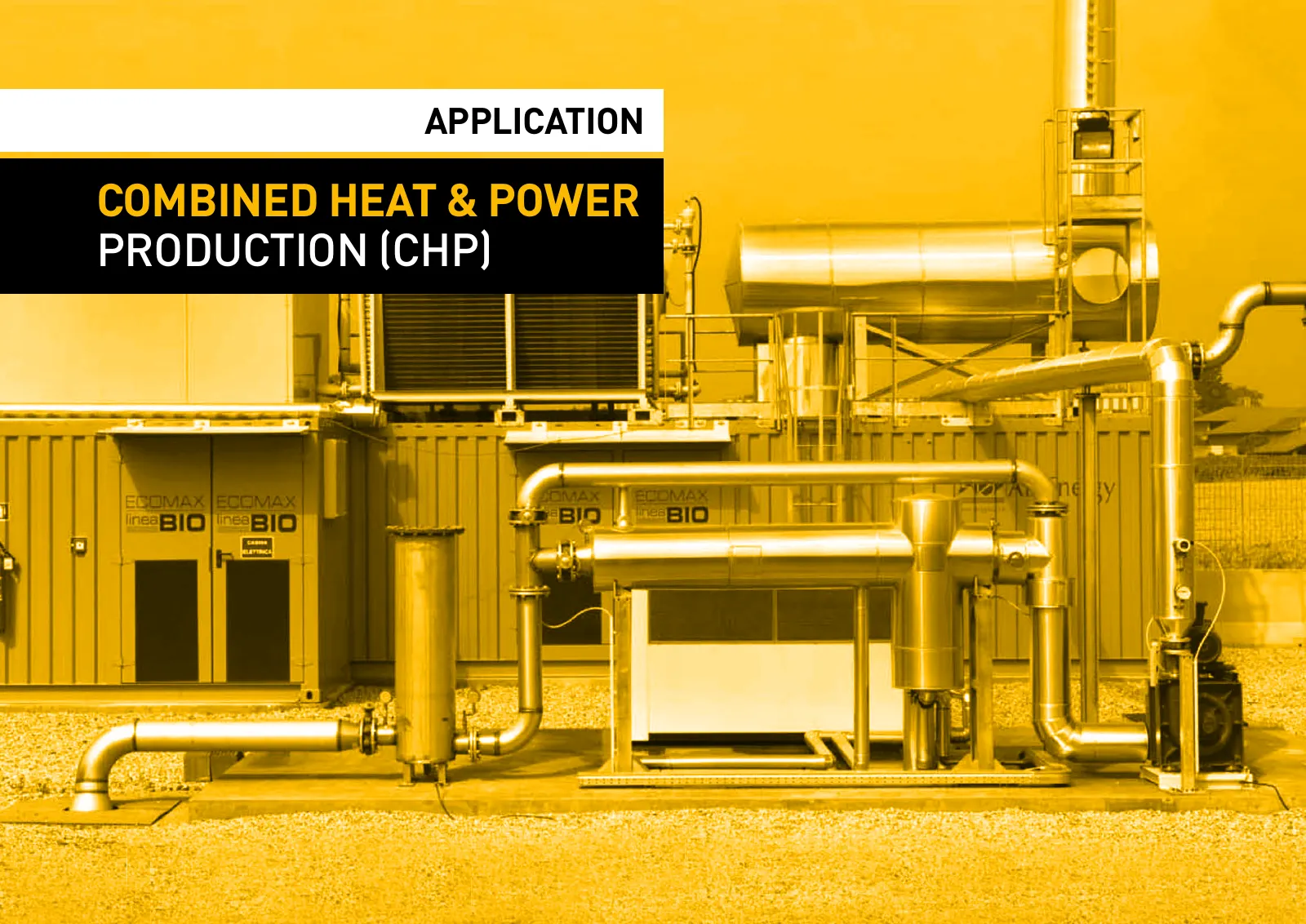
APPLICATION COMBINED HEAT & POWER PRODUCTION (CHP)
Slide 17: Value Proposition
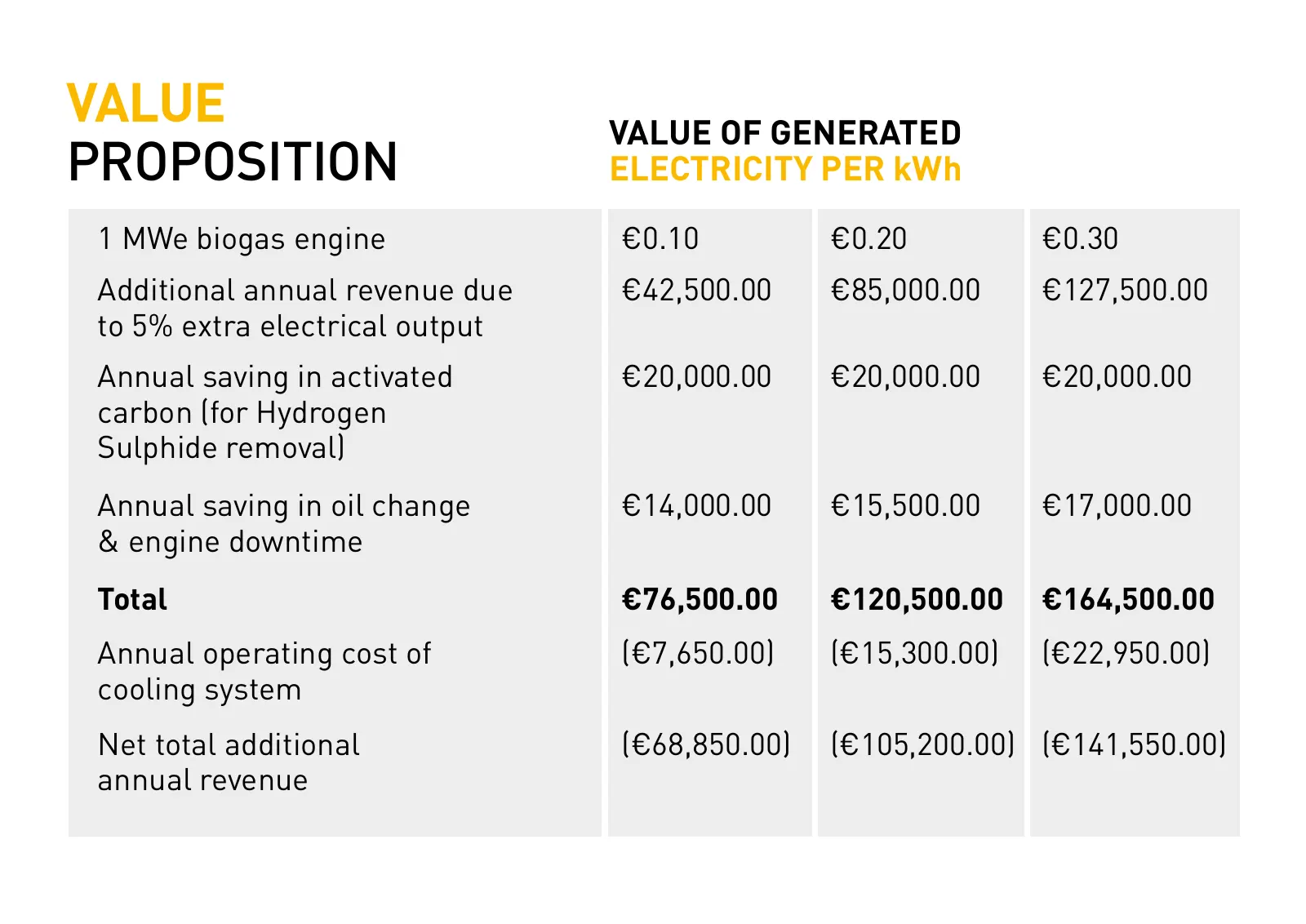
VALUE VALUE OF GENERATED PROPOSITION ELECTRICITY PER kWh 1 MWe biogas engine €0.10 €0.20 €0.30 Additional annual revenue due €42,500.00 €85,000.00 €127,500.00 to 5% extra electrical output Annual saving in activated €20,000.00 €20,000.00 €20,000.00 carbon (for Hydrogen Sulphide removal) Annual savin

Slide 18: E BA. sociation
E BA. sociation \M Zander
Source: Internet Archive copy of parker.com
More decks from Parker-Hannifin Corporation
 Q1 2027 Earnings Presentation32 slides · Nov 5, 2026
 Q4 2026 Earnings Presentation32 slides · Aug 6, 2026
 Q3 2026 Earnings Presentation28 slides · Apr 30, 2026
 Bank of America Global Industrials Conference 202612 slides · Mar 18, 2026
 Q2 2026 Earnings Presentation30 slides · Jan 29, 2026
 Barclays Industrial Select Conference 202611 slides · 2026