Landos Biopharma — Investor Presentation (January 2023)
37 slides from Landos Biopharma's investor presentation, Jan 5, 2023

Slide 1: Corporate Overview January 5, 2023
Corporate Overview January 5, 2023
Slide 2: Forward-looking statements
This presentation contains forward-looking statements that involve substantial risks and uncertainties. All statements, other than statements of historical facts, contained in this presentation, including statements regarding our strategy, future operations, prospects, plans and objectives of manage
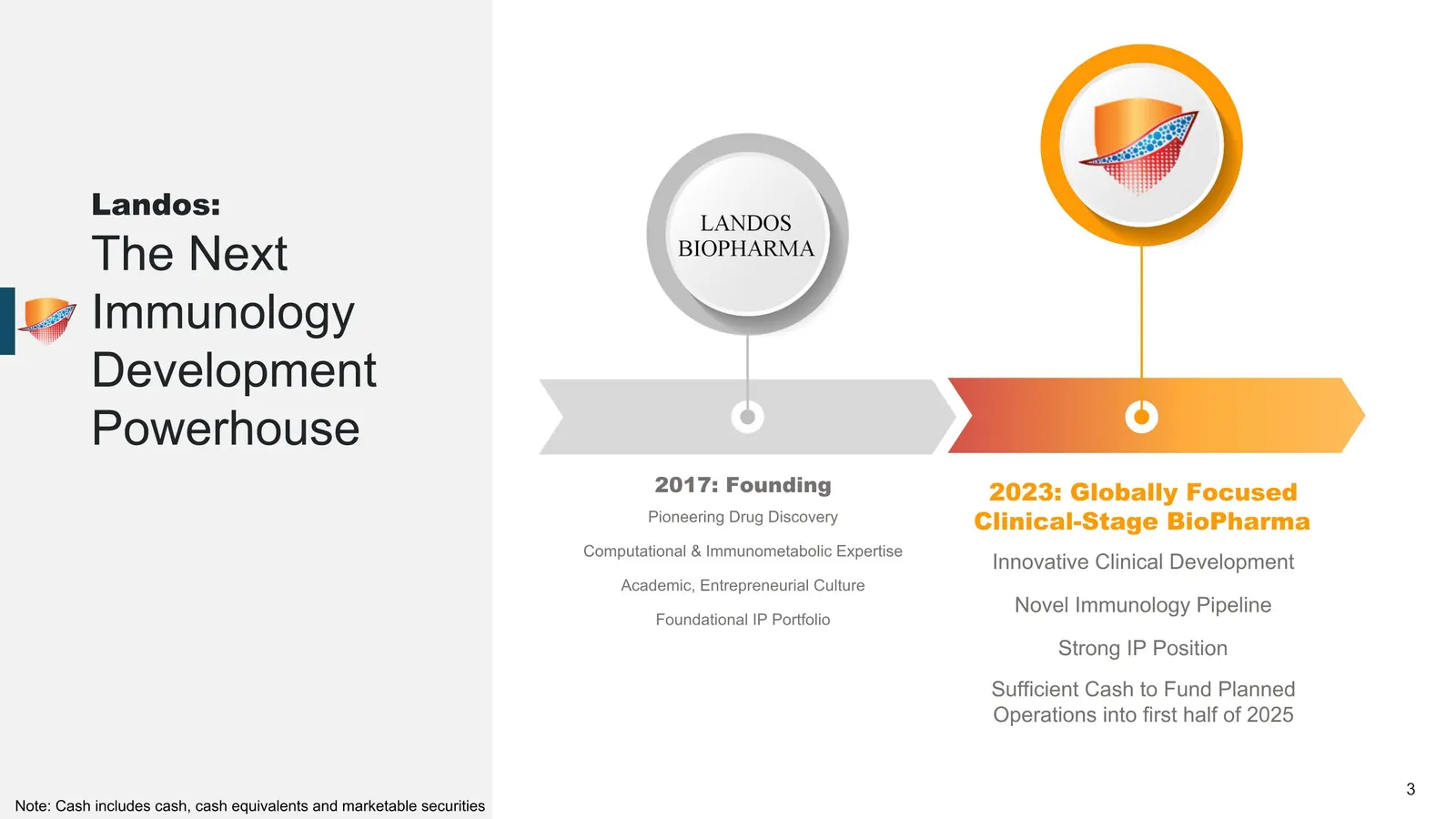
Slide 3: Landos: The Next Immunology Development Powerhouse
Landos: The Next Immunology Development Powerhouse 2017: Founding Pioneering Drug Discovery Computational & Immunometabolic Expertise Academic, Entrepreneurial Culture Foundational IP Portfolio 2023: Globally Focused Clinical-Stage BioPharma Innovative Clinical Development Novel Immunology Pipeline
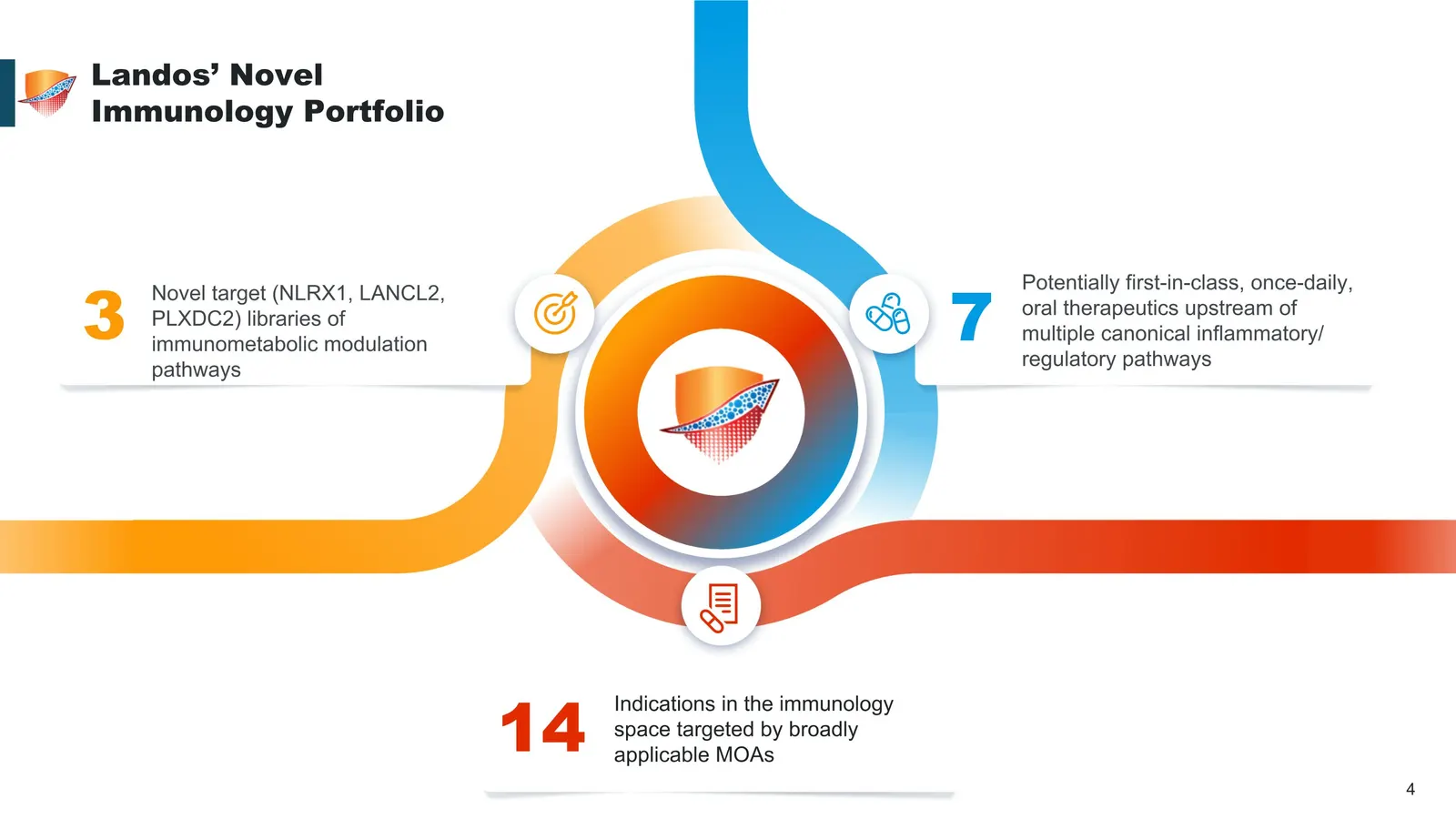
Slide 4: Landos' Novel Immunology Portfolio
Landos’ Novel Immunology Portfolio 3 14 7 Novel target (NLRX1, LANCL2, PLXDC2) libraries of immunometabolic modulation pathways Potentially first-in-class, once-daily, oral therapeutics upstream of multiple canonical inflammatory/ regulatory pathways Indications in the immunology space targeted by b
Slide 5: Broad Portfolio of Clinical & Pre-clinical Programs
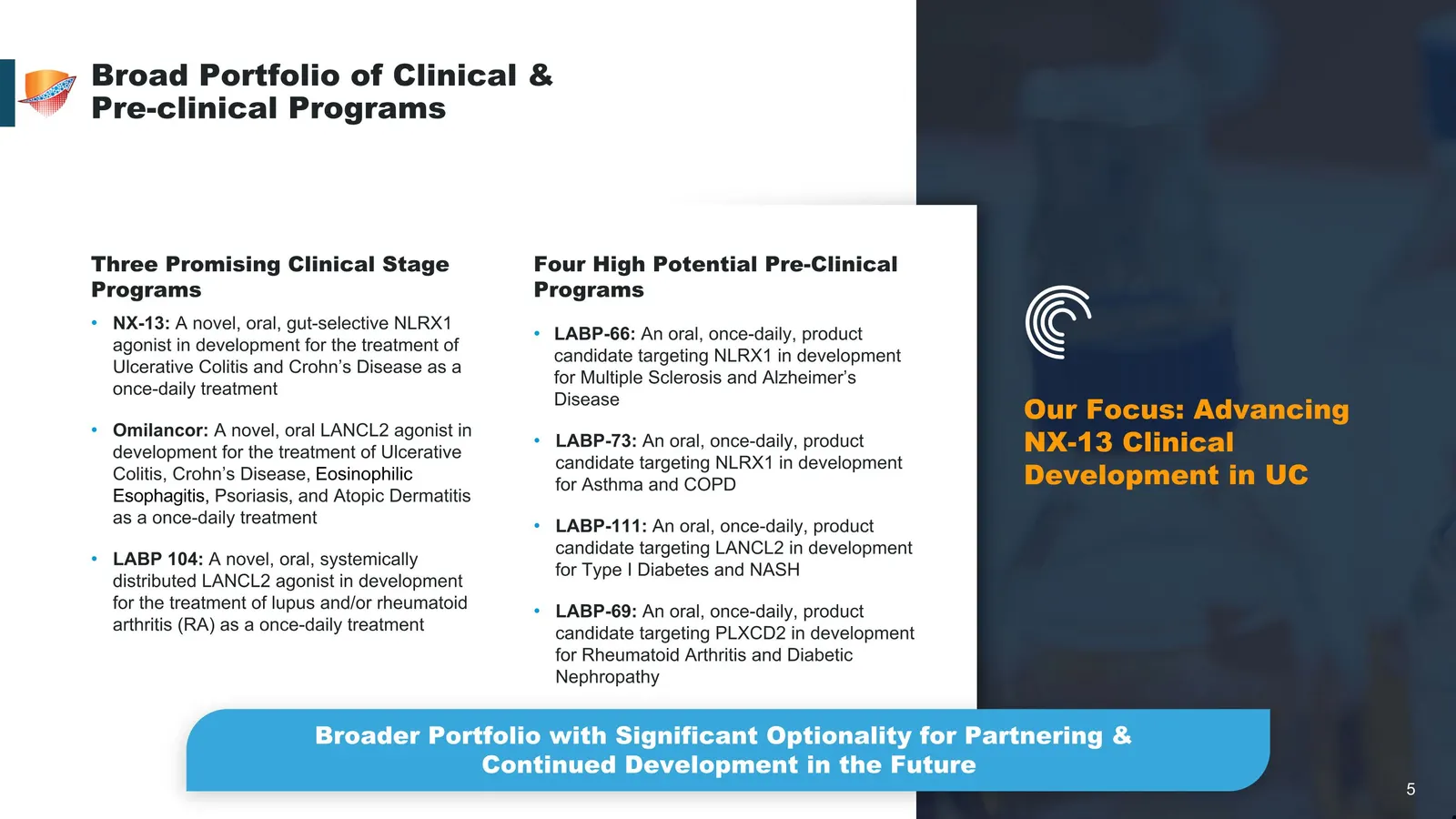
Broad Portfolio of Clinical & Pre-clinical Programs Three Promising Clinical Stage Programs NX-13: A novel, oral, gut-selective NLRX1 agonist in development for the treatment of Ulcerative Colitis and Crohn’s Disease as a once-daily treatment Omilancor: A novel, oral LANCL2 agonist in development fo
Slide 6: Strategic Review: Focused on Most Value-Enhancing Opportunities
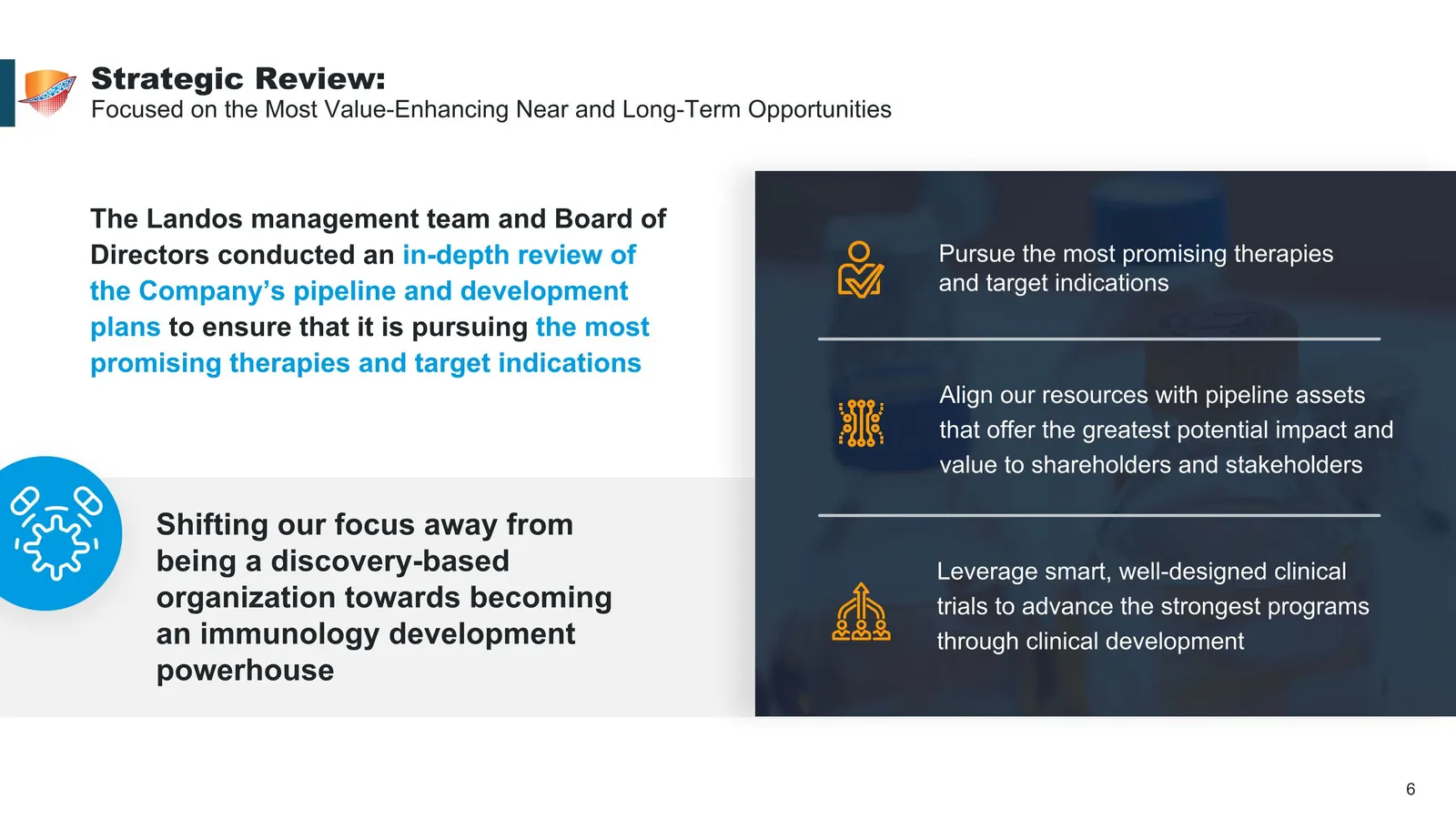
Strategic Review: Focused on the Most Value-Enhancing Near and Long-Term Opportunities Leverage smart, well-designed clinical trials to advance the strongest programs through clinical development Align our resources with pipeline assets that offer the greatest potential impact and value to sharehold
Slide 7: Landos Strategy: Advancing NX-13 in UC is the Focus
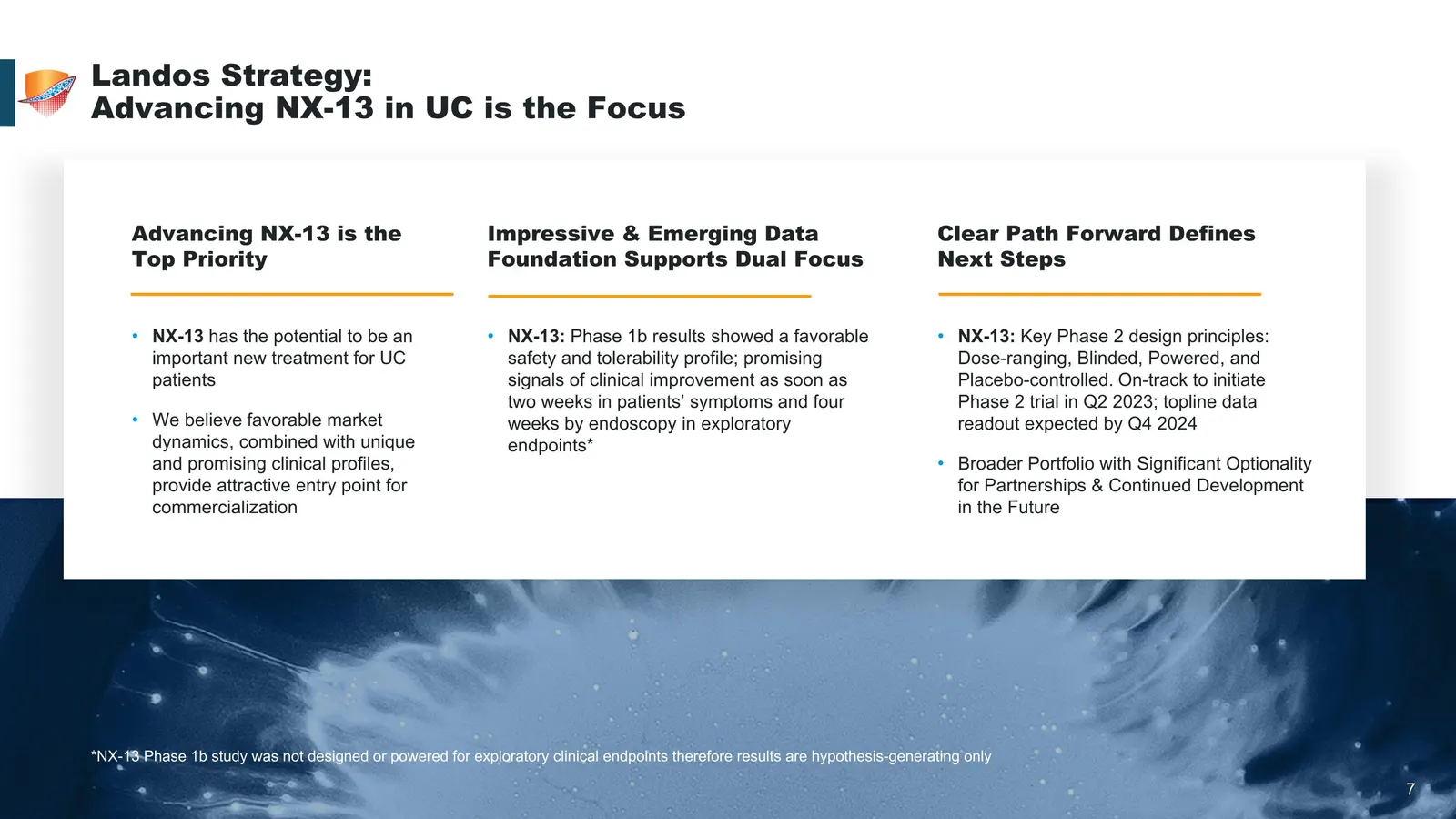
7 Landos Strategy: Advancing NX-13 in UC is the Focus *NX-13 Phase 1b study was not designed or powered for exploratory clinical endpoints therefore results are hypothesis-generating only Advancing NX-13 is the Top Priority Impressive & Emerging Data Foundation Supports Dual Focus Clear Path Forward
Slide 8: UC is an Attractive & Growing Market Opportunity
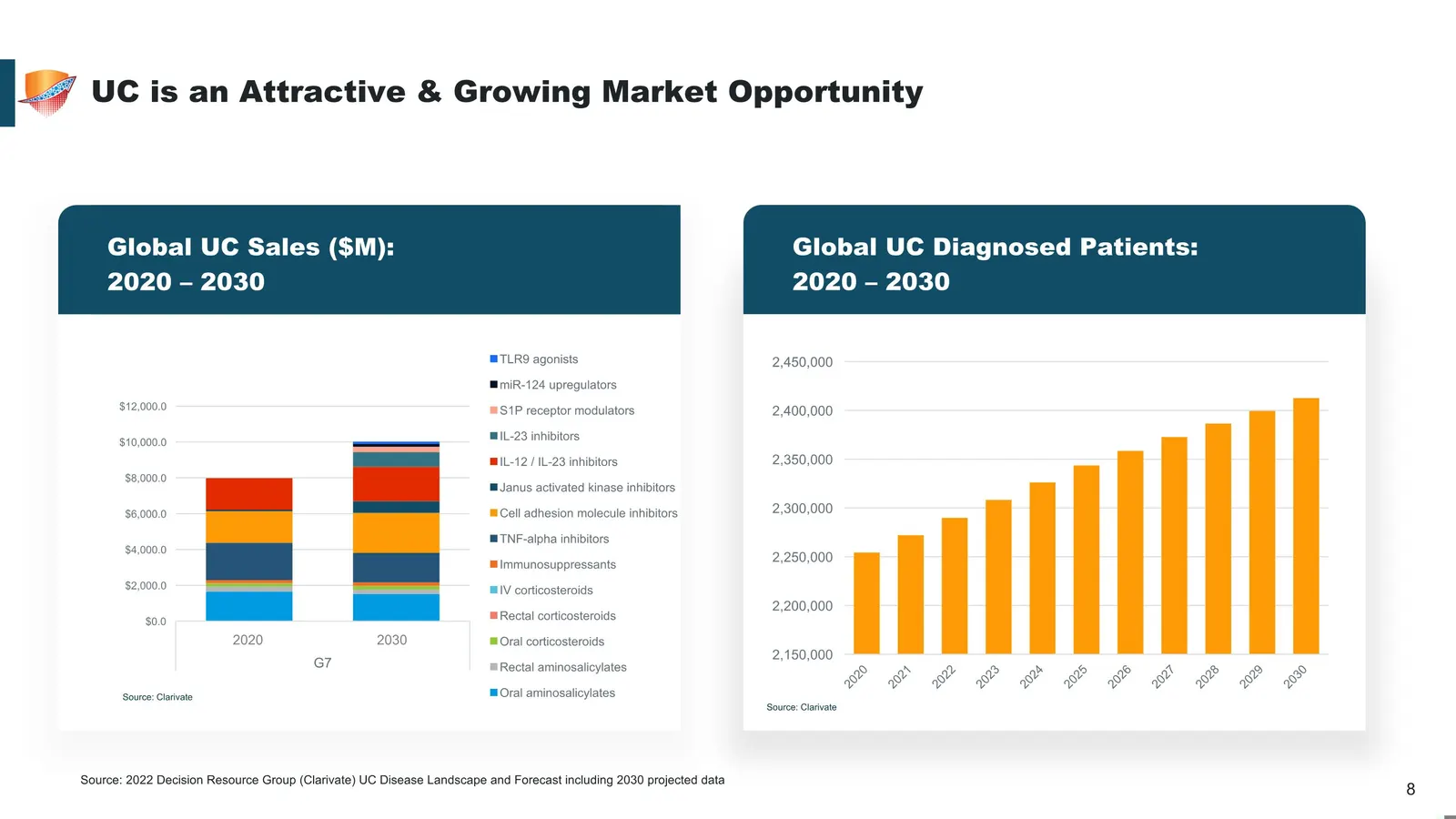
Global Sales ($M): 2020 and 2030 UC is an Attractive & Growing Market Opportunity Source: Clarivate 2020 2030 Global UC Diagnosed Patients: 2020 – 2030 Source: Clarivate Source: 2022 Decision Resource Group (Clarivate) UC Disease Landscape and Forecast including 2030 projected data Global UC Sales (
Slide 9: Clear, Sustainable Entry Point for NX-13
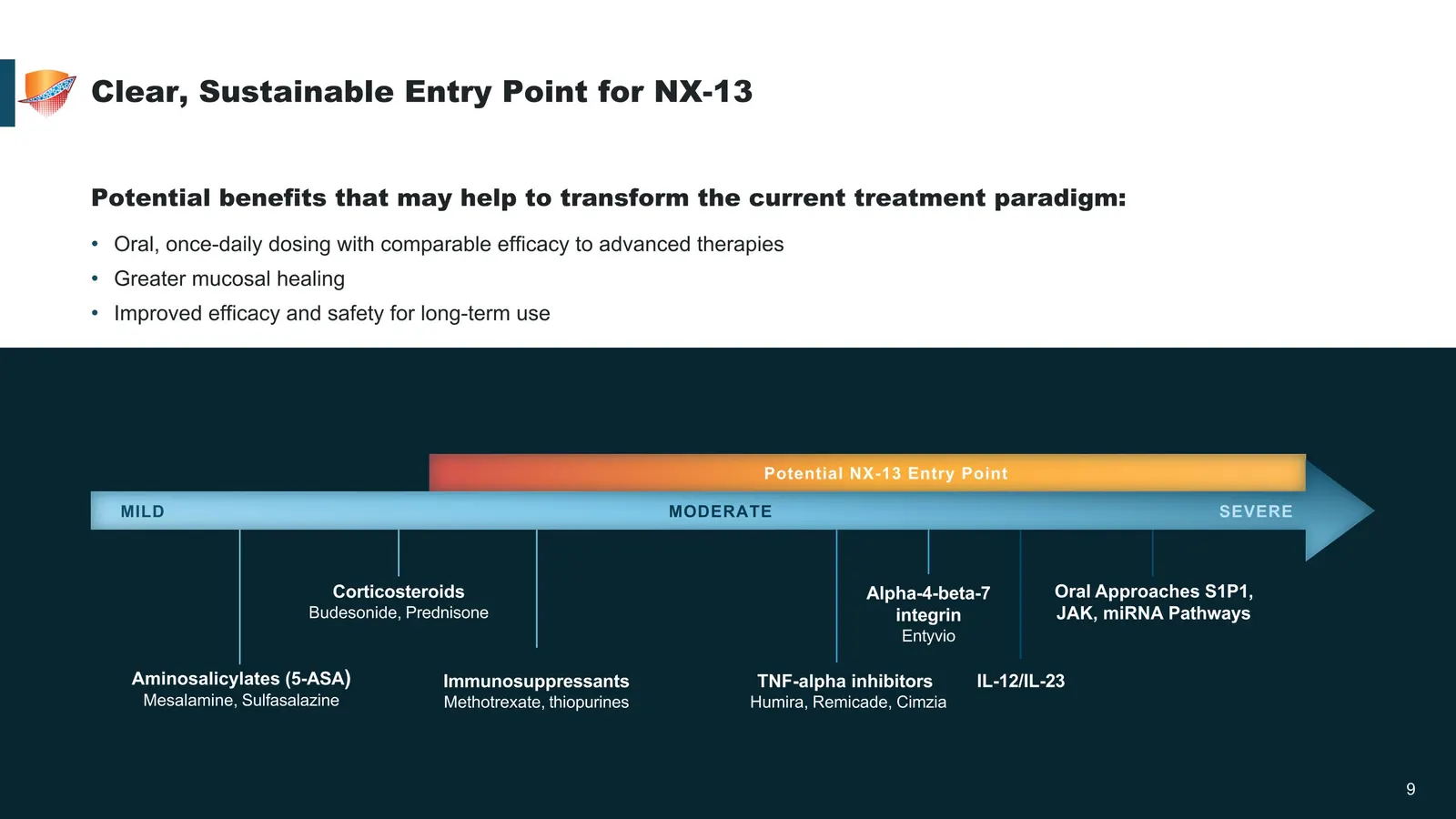
Aminosalicylates (5-ASA) Mesalamine, Sulfasalazine Immunosuppressants Methotrexate, thiopurines Corticosteroids Budesonide, Prednisone Alpha-4-beta-7 integrin Entyvio TNF-alpha inhibitors Humira, Remicade, Cimzia IL-12/IL-23 Oral Approaches S1P1, JAK, miRNA Pathways MILD MODERATE SEVERE Clear, Susta
Slide 10: Landos' Path Forward
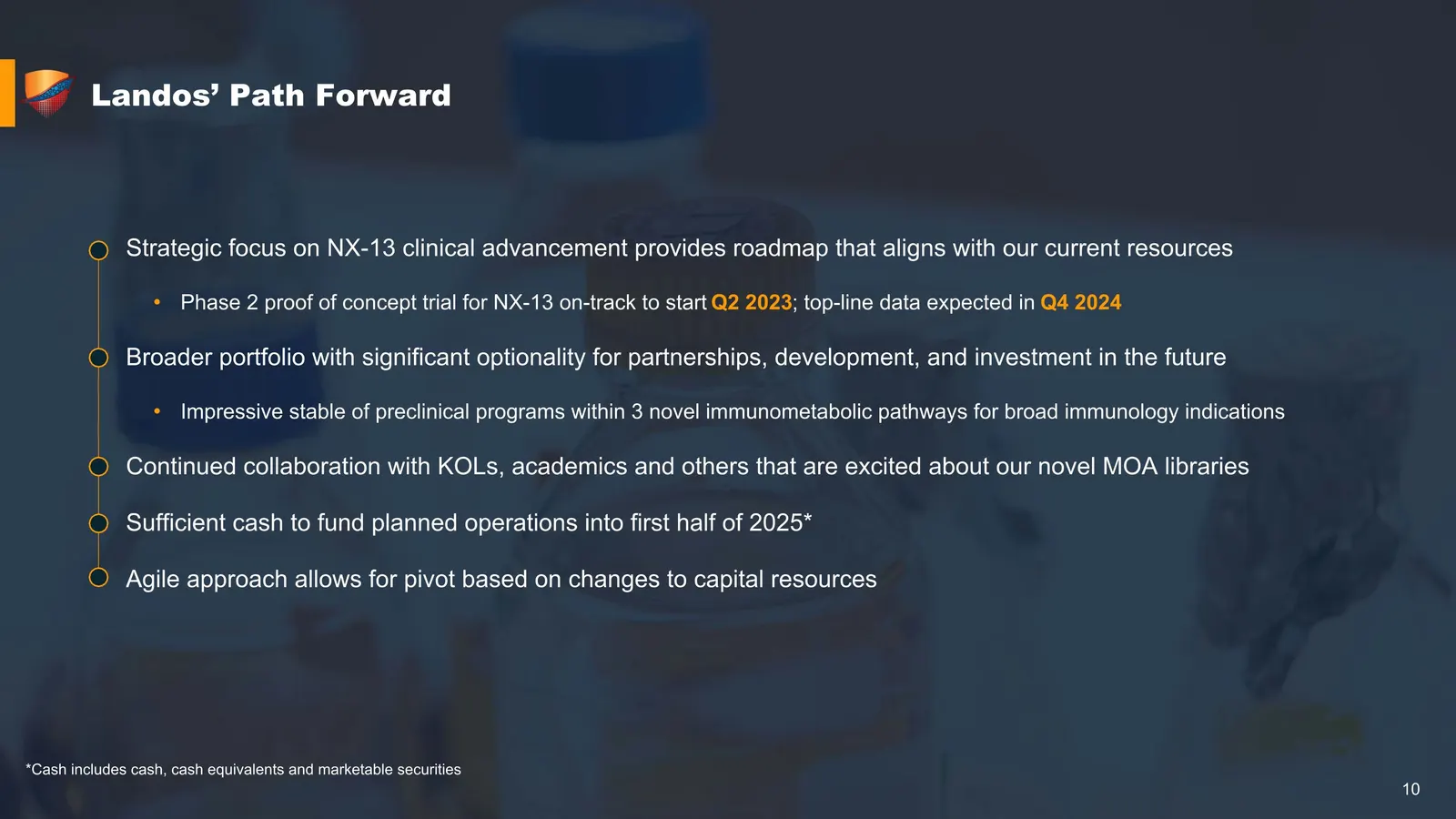
Landos’ Path Forward Strategic focus on NX-13 clinical advancement provides roadmap that aligns with our current resources Phase 2 proof of concept trial for NX-13 on-track to start Q2 2023; top-line data expected in Q4 2024 Broader portfolio with significant optionality for partnerships, developmen

Slide 11: NLRX1 Library
NLRX1 Library
Slide 12: NLRX1 Activation Reduces Inflammatory Cytokines, Cells & Signaling Pathways
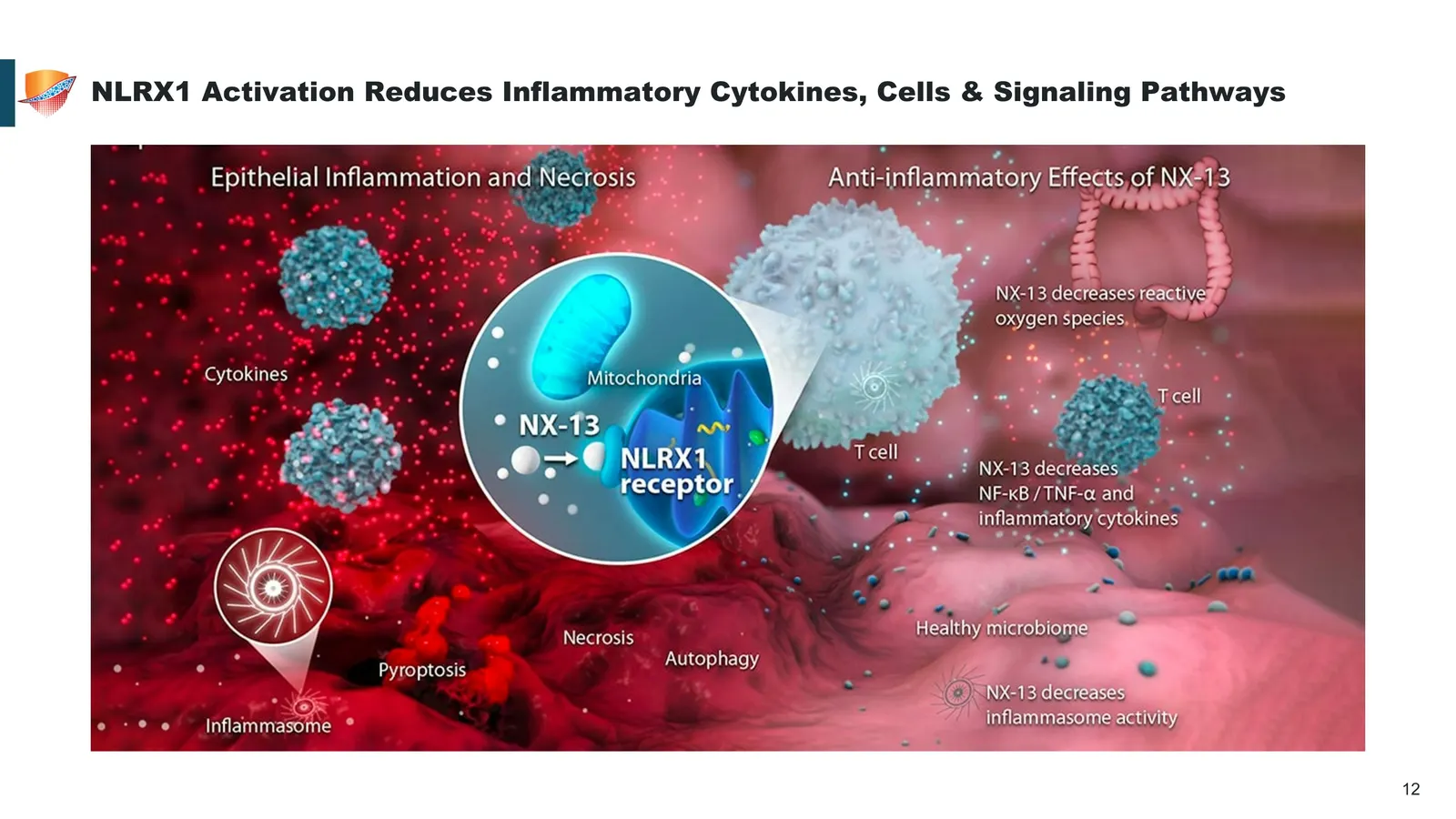
NLRX1 Activation Reduces Inflammatory Cytokines, Cells & Signaling Pathways
Slide 13: NLRX1 Library Profile
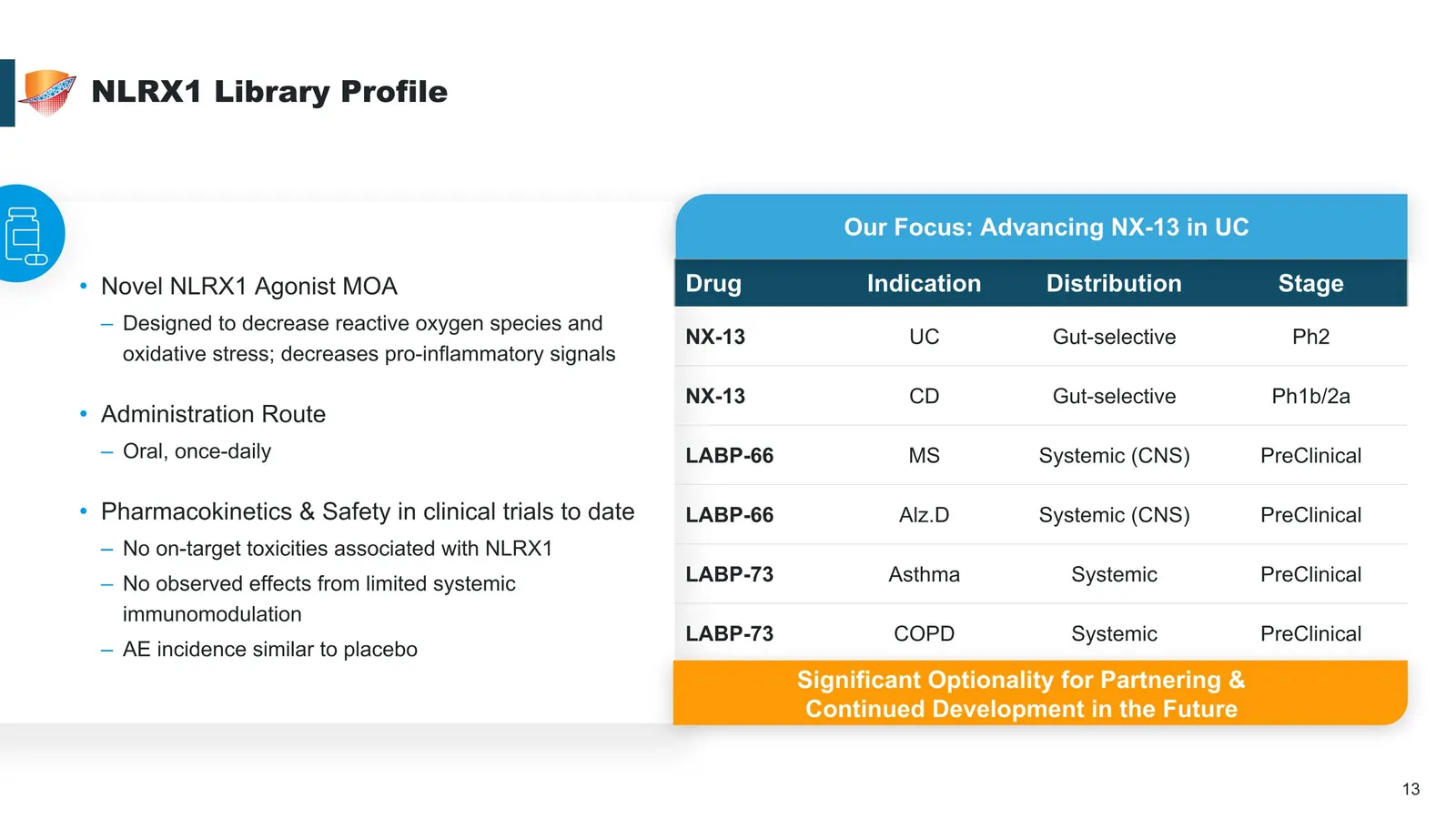
NLRX1 Library Profile Novel NLRX1 Agonist MOA Designed to decrease reactive oxygen species and oxidative stress; decreases pro-inflammatory signals Administration Route Oral, once-daily Pharmacokinetics & Safety in clinical trials to date No on-target toxicities associated with NLRX1 No observed eff
Slide 14: NLRX1 GI Anti-Inflammatory: NX-13 Profile
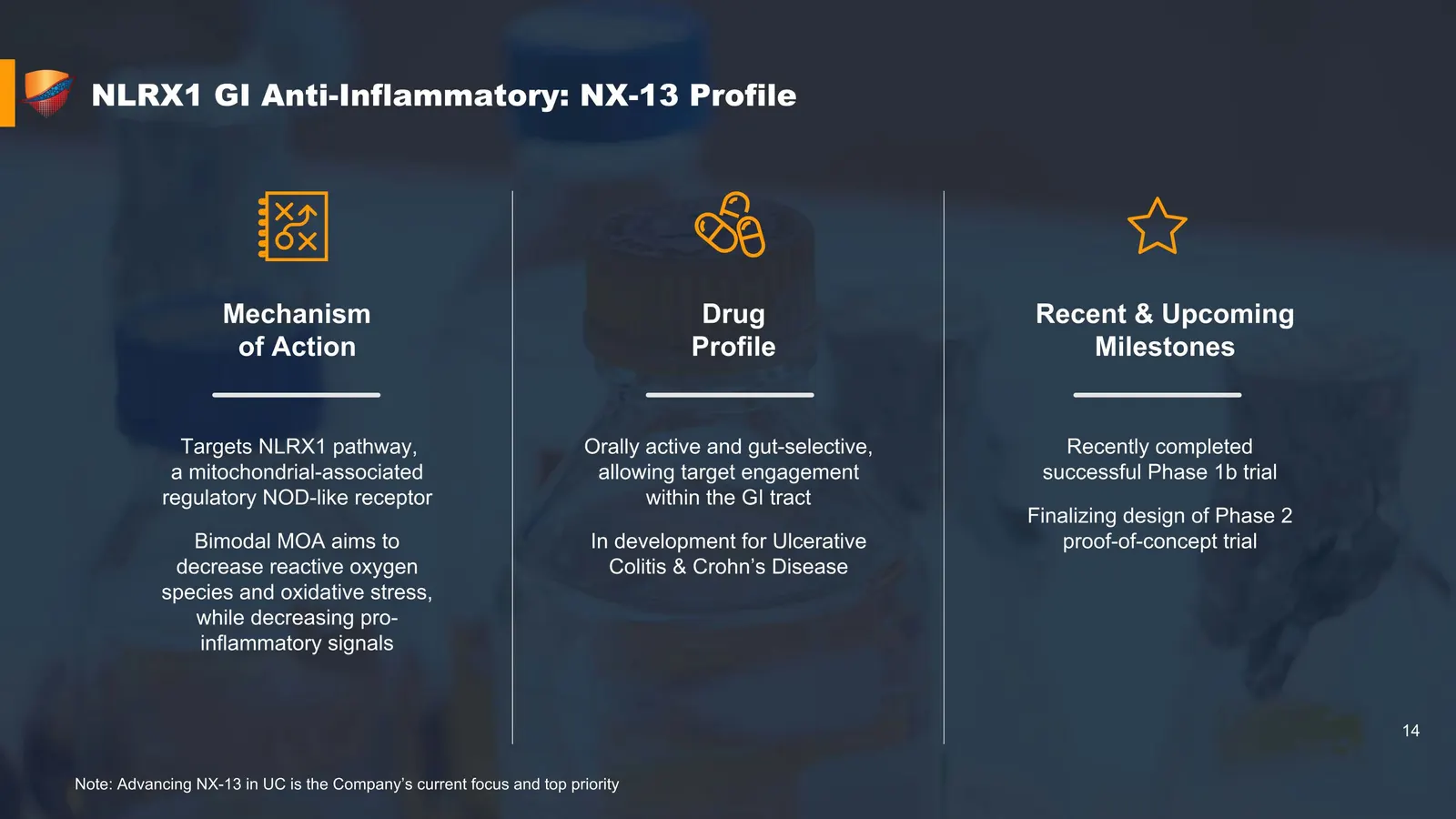
NLRX1 GI Anti-Inflammatory: NX-13 Profile Mechanism of Action Drug Profile Recent & Upcoming Milestones Targets NLRX1 pathway, a mitochondrial-associated regulatory NOD-like receptor Bimodal MOA aims to decrease reactive oxygen species and oxidative stress, while decreasing pro-inflammatory signals
Slide 15: Phase 1b Study Design of NX-13 in Active UC
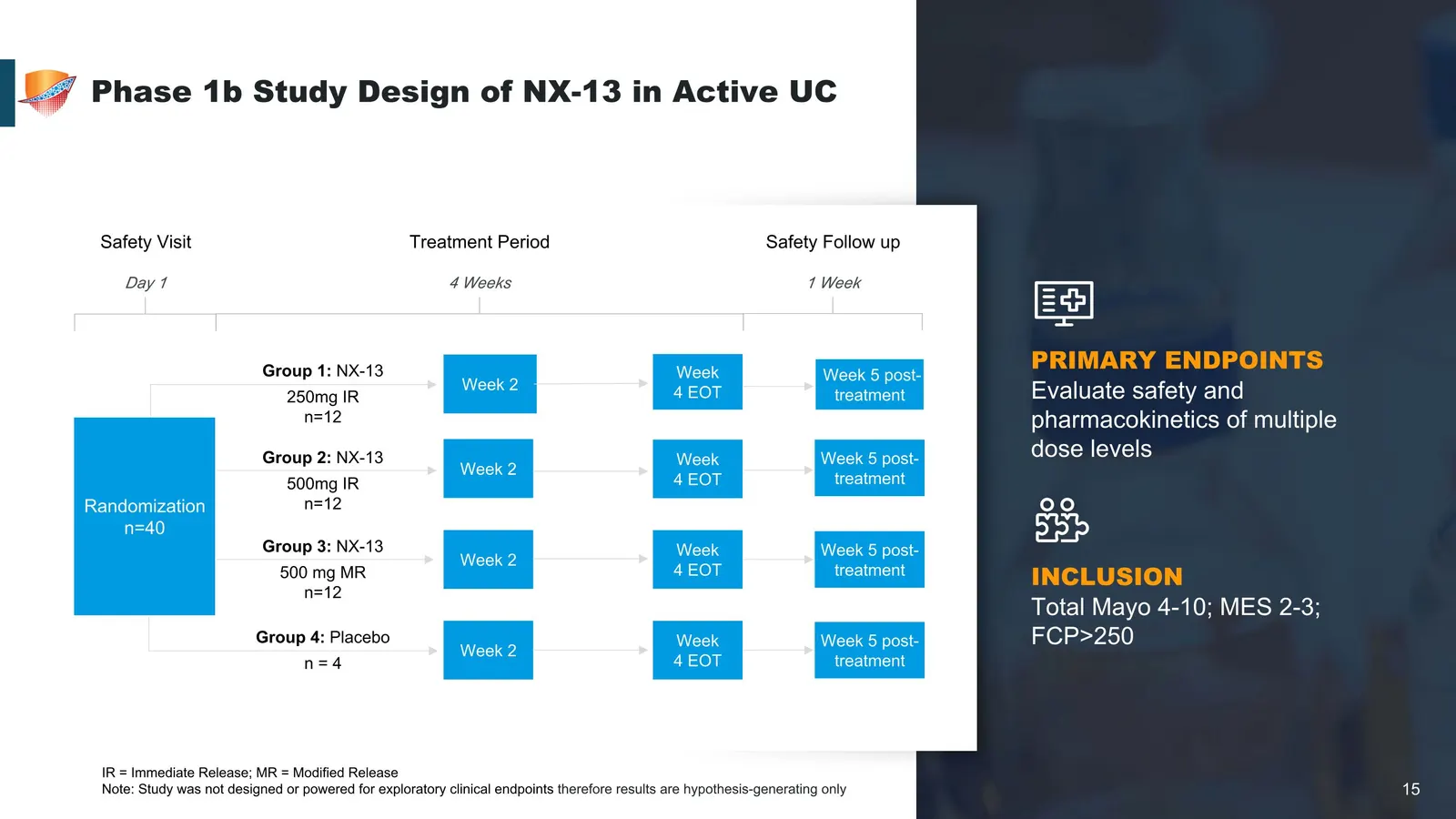
Phase 1b Study Design of NX-13 in Active UC IR = Immediate Release; MR = Modified Release Note: Study was not designed or powered for exploratory clinical endpoints therefore results are hypothesis-generating only Group 1: NX-13 250mg IR n=12 Group 4: Placebo n = 4 Week 2 Week 4 EOT Group 3: NX-13 5
Slide 16: NX-13 Treated Patients Experienced Reductions in Multiple Clinical Measures
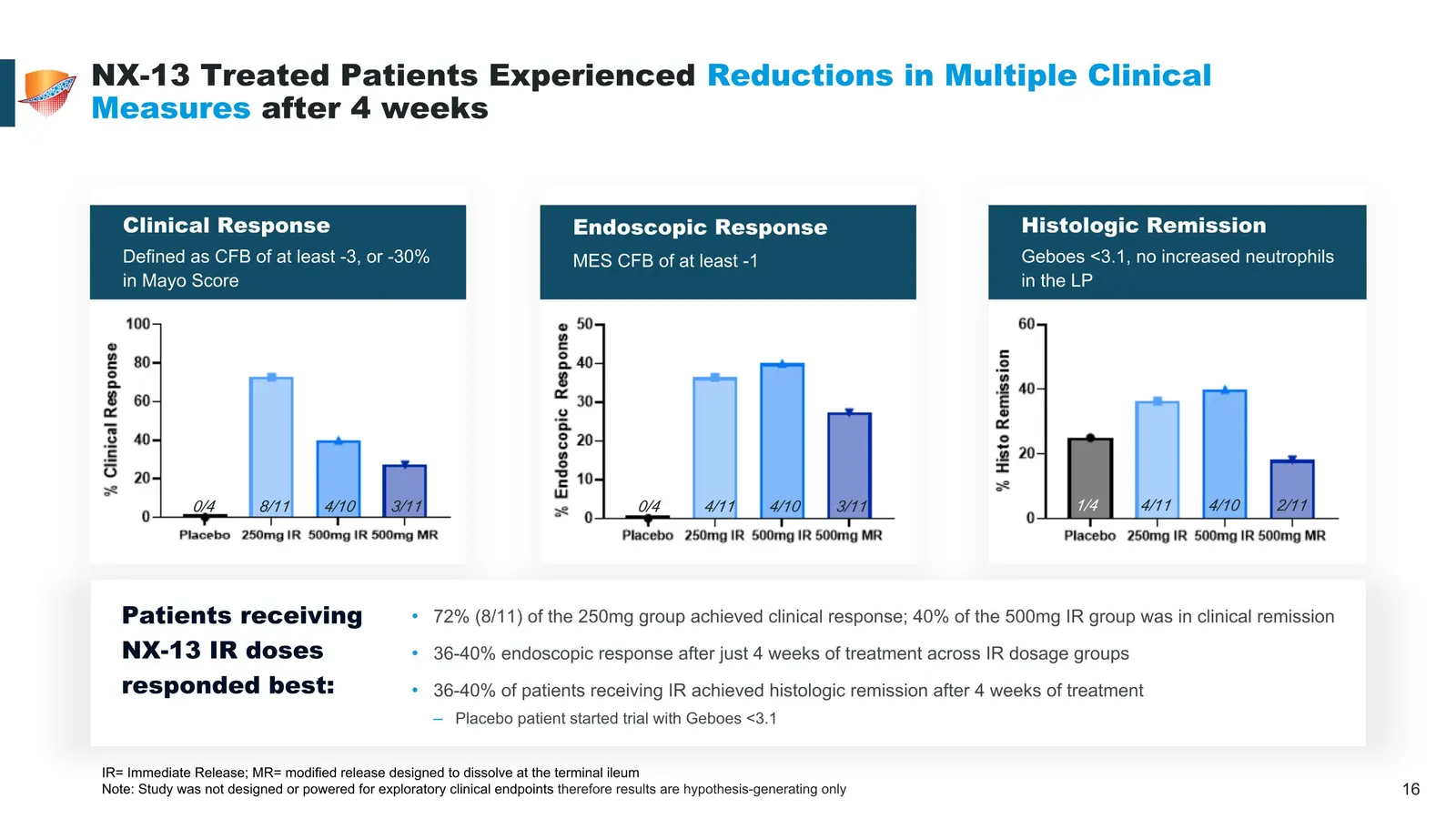
Clinical Response Defined as CFB of at least -3, or -30% in Mayo Score Histologic Remission Geboes <3.1, no increased neutrophils in the LP Endoscopic Response MES CFB of at least -1 NX-13 Treated Patients Experienced Reductions in Multiple Clinical Measures after 4 weeks IR= Immediate Release; MR=
Slide 17: NX-13 Supported Symptomatic Remission in Rectal Bleeding & Stool Frequency
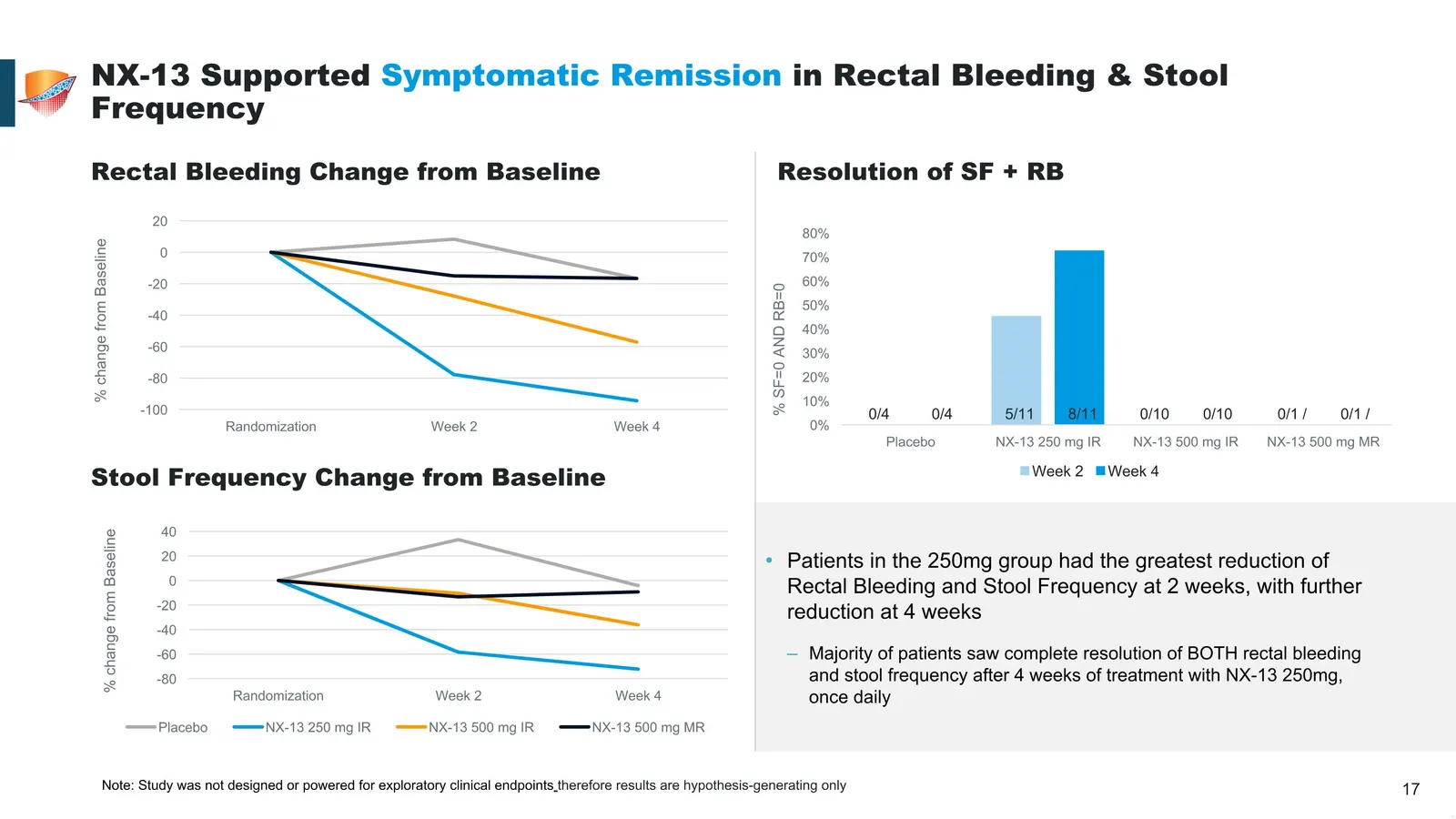
Patients in the 250mg group had the greatest reduction of Rectal Bleeding and Stool Frequency at 2 weeks, with further reduction at 4 weeks Majority of patients saw complete resolution of BOTH rectal bleeding and stool frequency after 4 weeks of treatment with NX-13 250mg, once daily NX-13 Supported
Slide 18: NX-13 was Well-Tolerated & Shows Promising Signs of Clinical Improvement
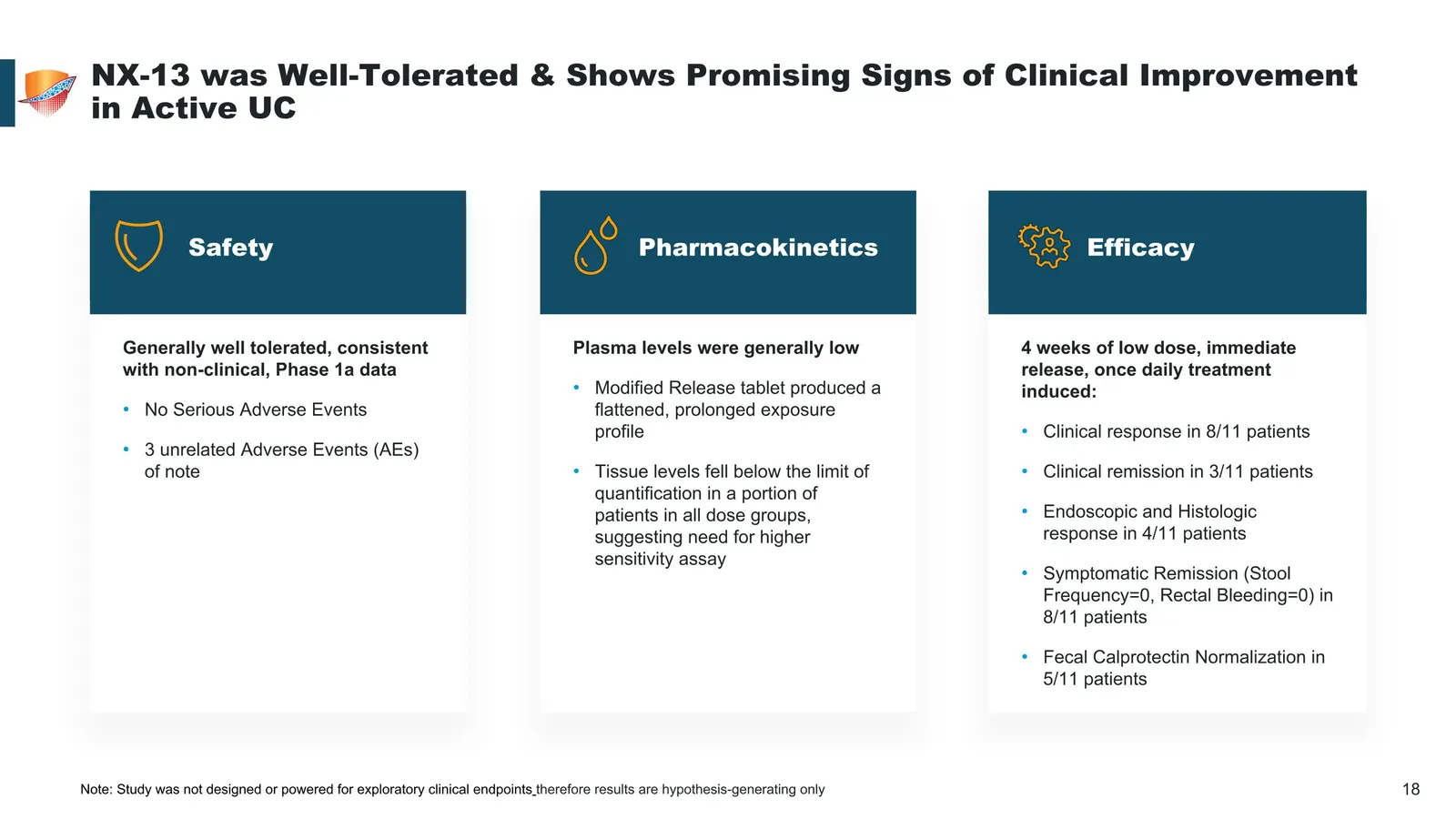
Generally well tolerated, consistent with non-clinical, Phase 1a data No Serious Adverse Events 3 unrelated Adverse Events (AEs) of note 4 weeks of low dose, immediate release, once daily treatment induced: Clinical response in 8/11 patients Clinical remission in 3/11 patients Endoscopic and Histolo
Slide 19: What's Next: Study Design for NX-13 Phase 2 Proof of Concept Trial
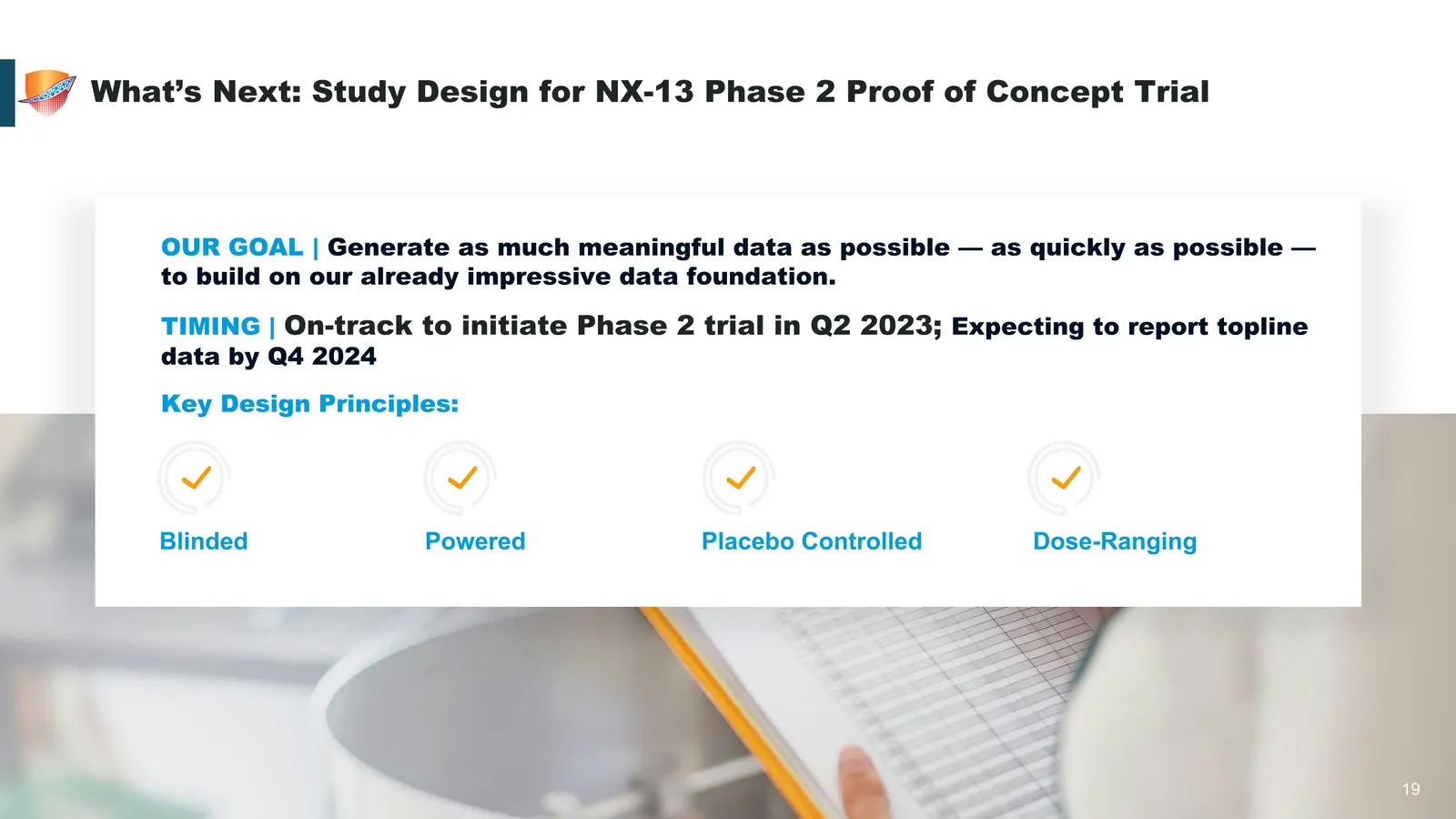
What’s Next: Study Design for NX-13 Phase 2 Proof of Concept Trial OUR GOAL | Generate as much meaningful data as possible — as quickly as possible — to build on our already impressive data foundation. TIMING | On-track to initiate Phase 2 trial in Q2 2023; Expecting to report topline data by Q4 202
Slide 20: Preclinical Programs in the NLRX1 Agonist Library
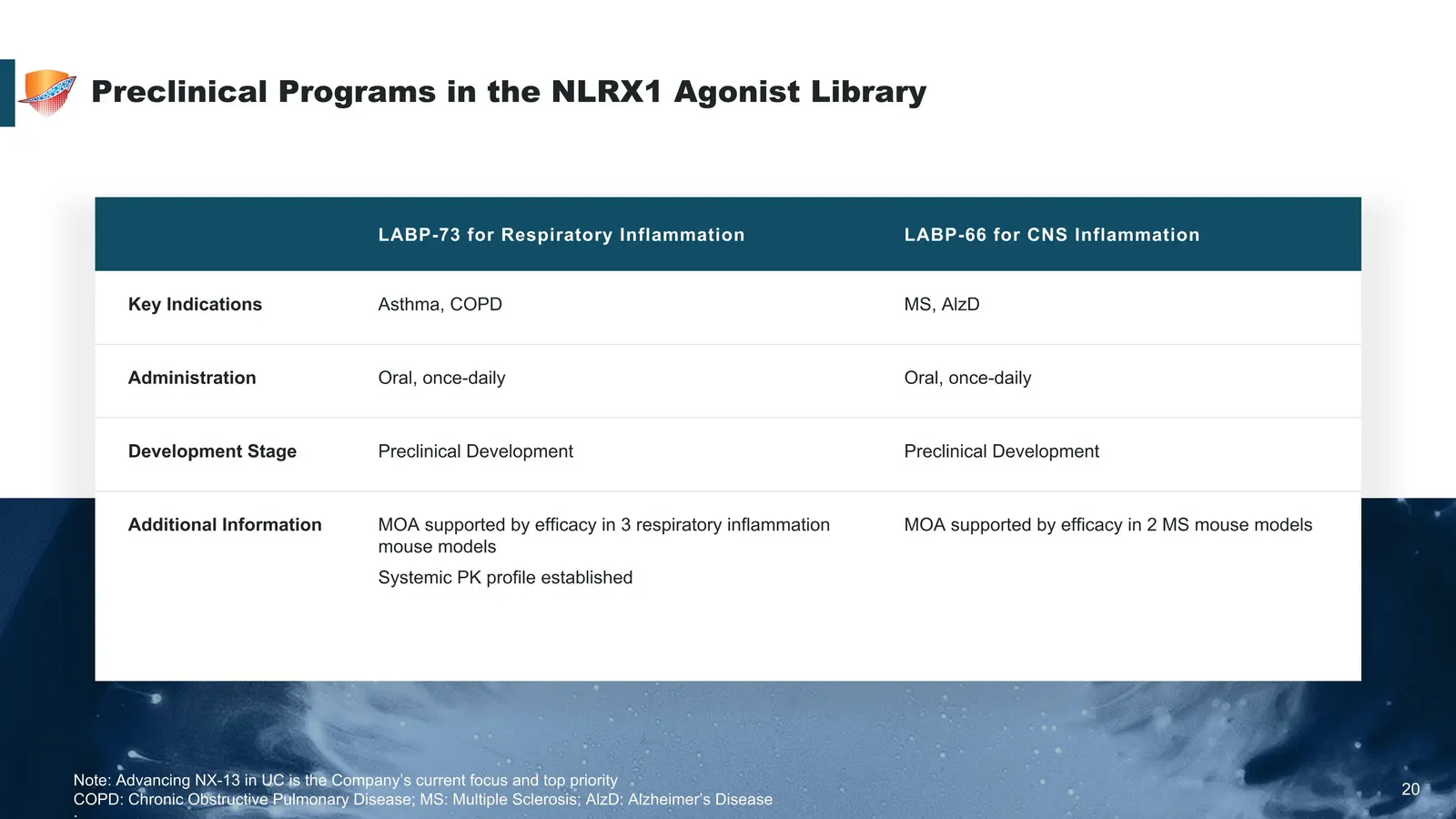
Preclinical Programs in the NLRX1 Agonist Library 20 LABP-73 for Respiratory Inflammation LABP-66 for CNS Inflammation Key Indications Asthma, COPD MS, AlzD Administration Oral, once-daily Oral, once-daily Development Stage Preclinical Development Preclinical Development Additional Information MOA s
Slide 21: LANCL2 Library
LANCL2 Library B1OPHARMA
Slide 22: LANCL2 Activity Exerts Anti-Inflammatory Effects within GI Tract
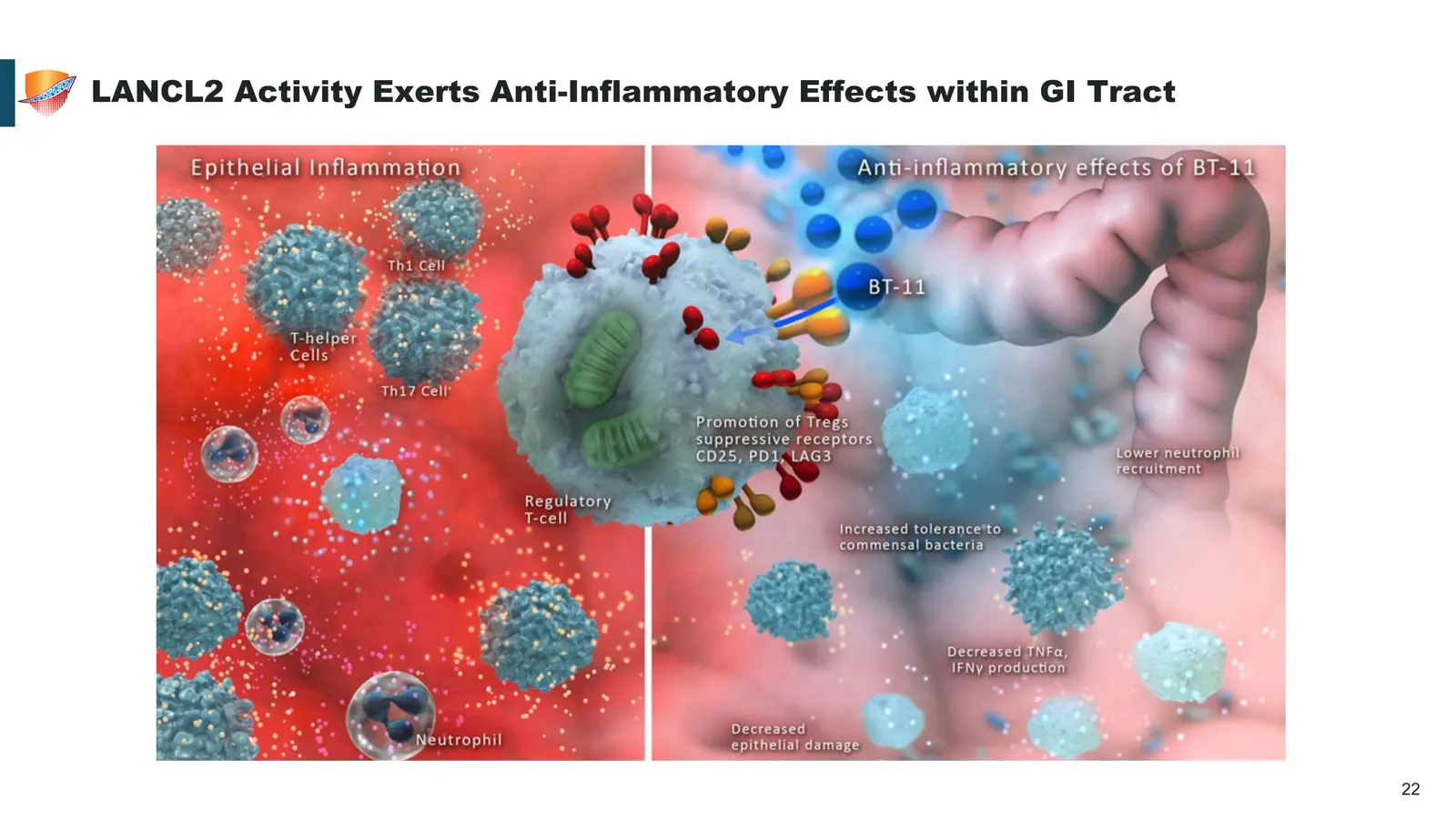
LANCL2 Activity Exerts Anti-Inflammatory Effects within GI Tract
Slide 23: LANCL2 Library Profile
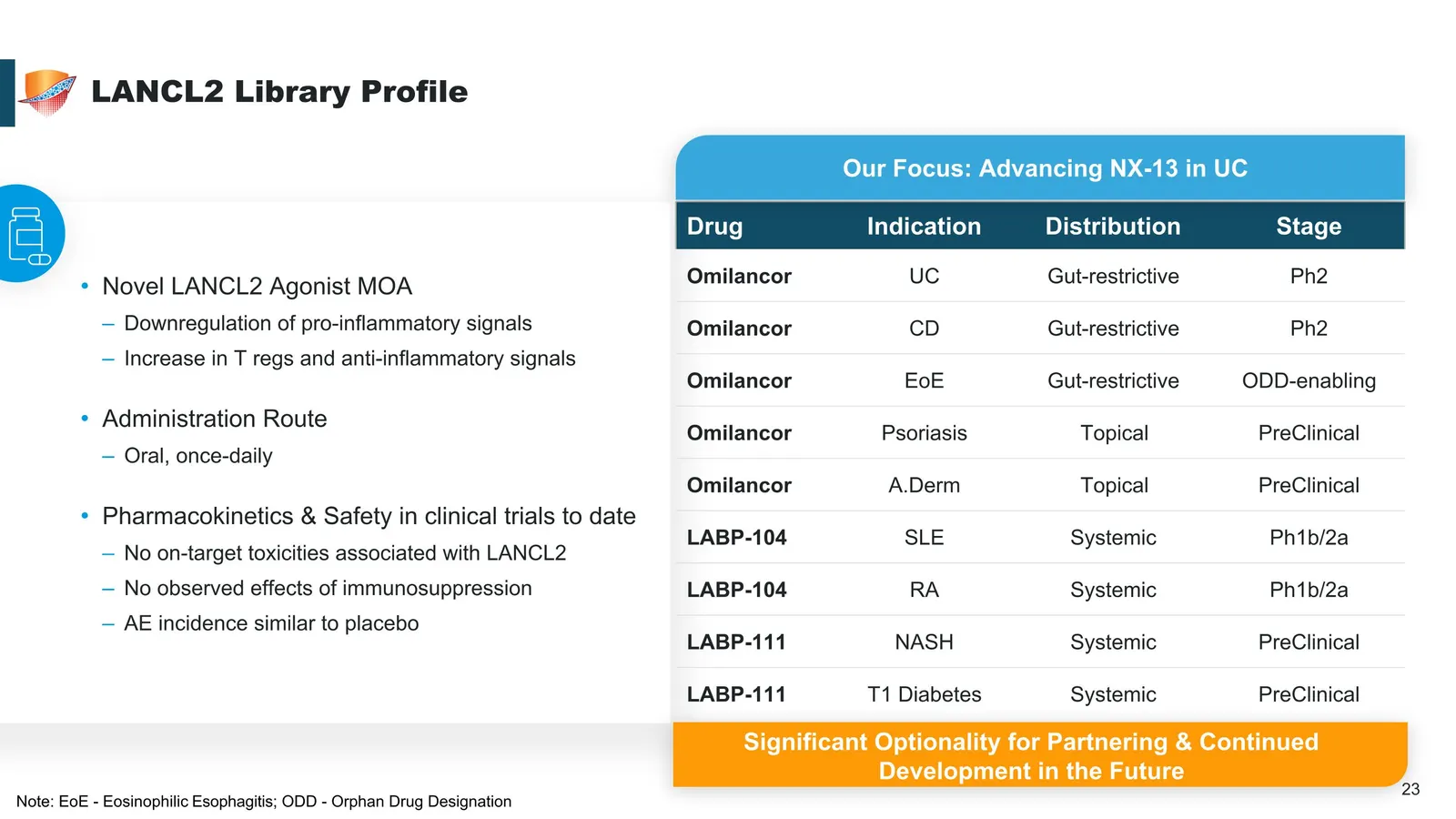
LANCL2 Library Profile Novel LANCL2 Agonist MOA Downregulation of pro-inflammatory signals Increase in T regs and anti-inflammatory signals Administration Route Oral, once-daily Pharmacokinetics & Safety in clinical trials to date No on-target toxicities associated with LANCL2 No observed effects of
Slide 24: LANCL2 Oral GI Anti-Inflammatory: Omilancor Profile
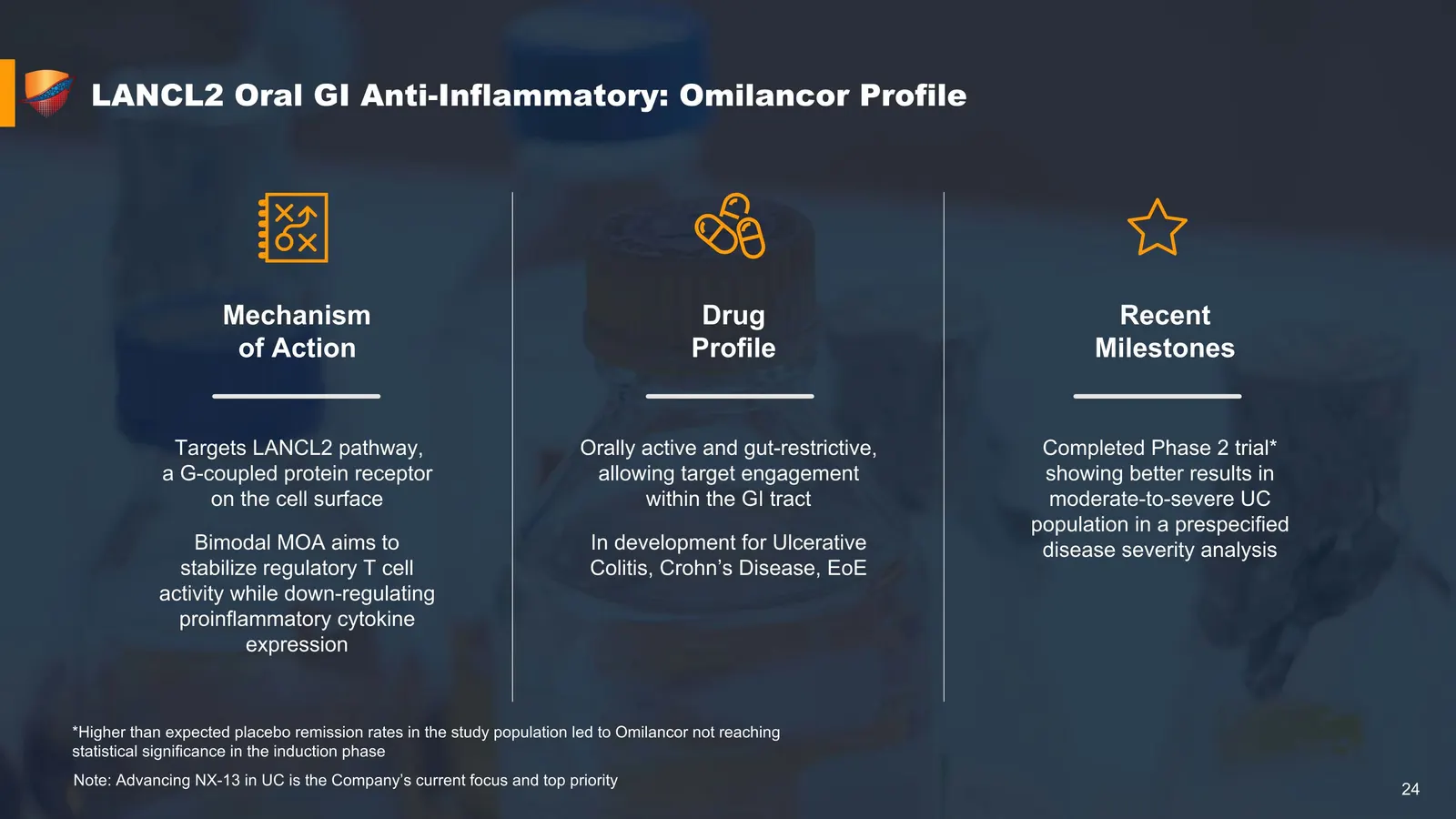
LANCL2 Oral GI Anti-Inflammatory: Omilancor Profile Mechanism of Action Drug Profile Recent Milestones Targets LANCL2 pathway, a G-coupled protein receptor on the cell surface Bimodal MOA aims to stabilize regulatory T cell activity while down-regulating proinflammatory cytokine expression Orally ac
Slide 25: Phase 2 Study of Omilancor in Active UC (BT-11-201)
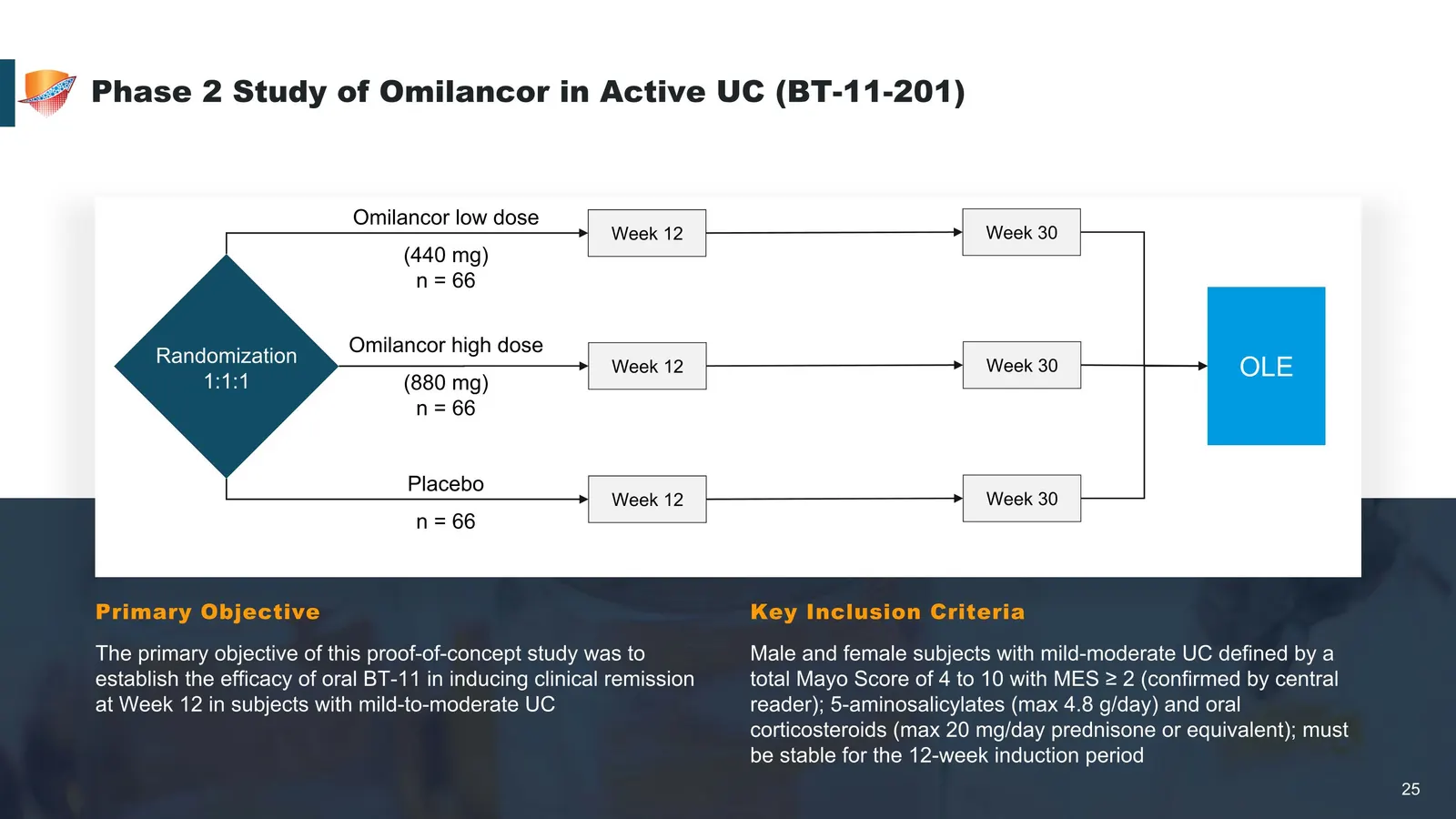
Phase 2 Study of Omilancor in Active UC (BT-11-201) Primary Objective The primary objective of this proof-of-concept study was to establish the efficacy of oral BT-11 in inducing clinical remission at Week 12 in subjects with mild-to-moderate UC Key Inclusion Criteria Male and female subjects with m
Slide 26: Omilancor Induced Remission in Active UC
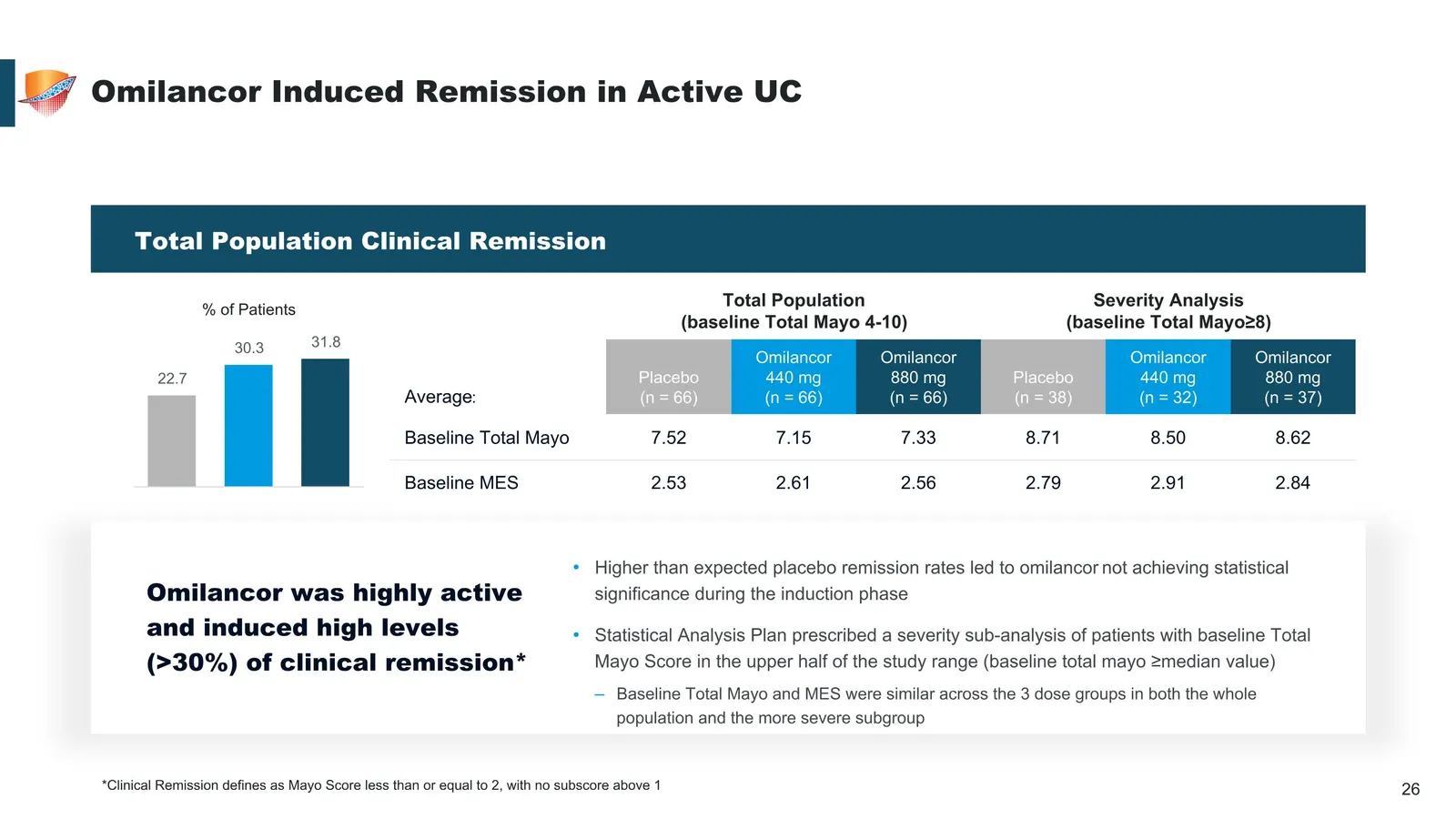
Total Population Clinical Remission Omilancor Induced Remission in Active UC *Clinical Remission defines as Mayo Score less than or equal to 2, with no subscore above 1 Total Population (baseline Total Mayo 4-10) Severity Analysis (baseline Total Mayo≥8) Average: Placebo (n = 66) Omilancor 440 mg (n
Slide 27: Omilancor was Active in a More Severe UC Population
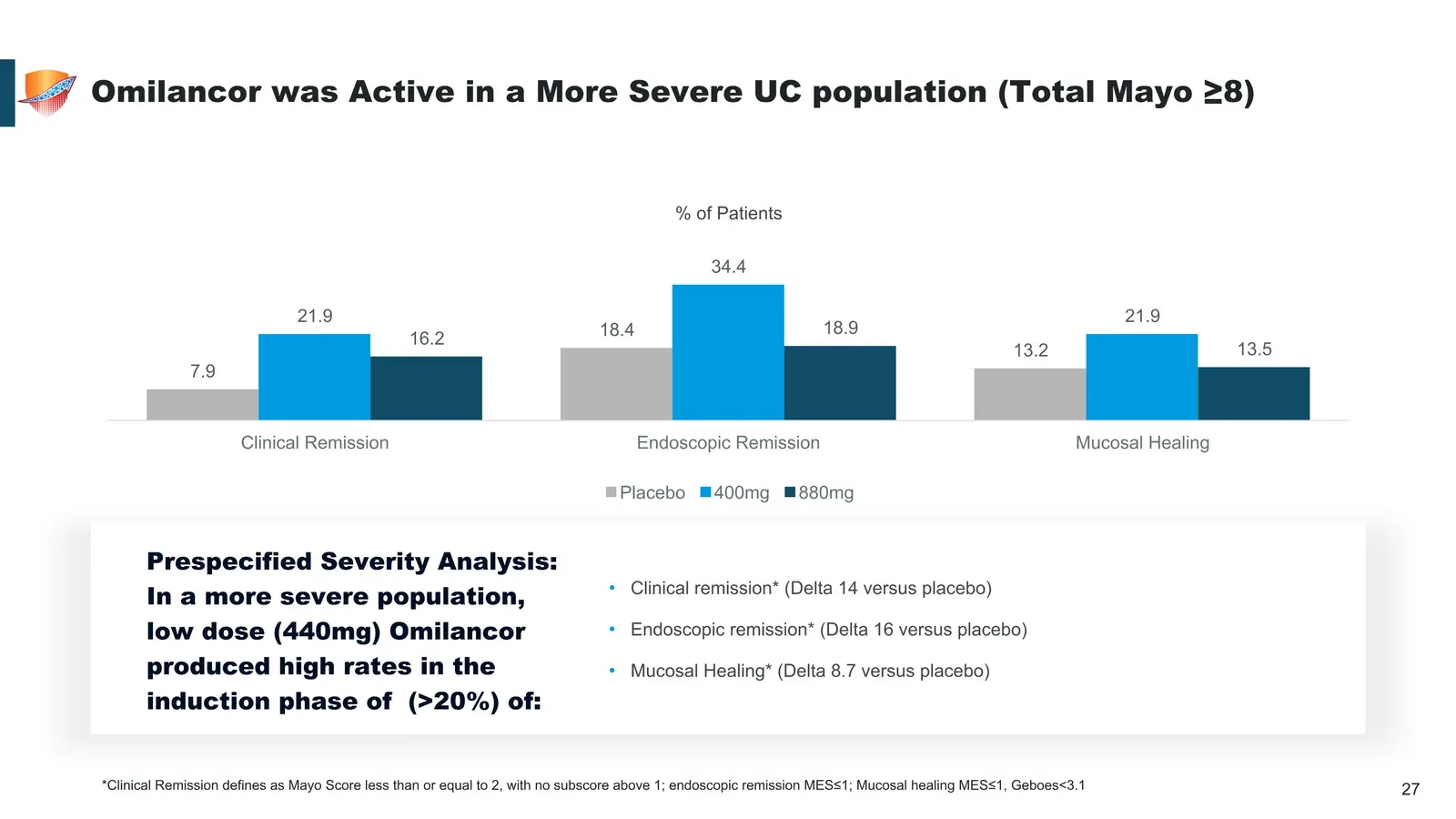
Omilancor was Active in a More Severe UC population (Total Mayo ≥8) *Clinical Remission defines as Mayo Score less than or equal to 2, with no subscore above 1; endoscopic remission MES≤1; Mucosal healing MES≤1, Geboes<3.1 Clinical remission* (Delta 14 versus placebo) Endoscopic remission* (Delta 16
Slide 28: Omilancor GI Summary & Next Steps
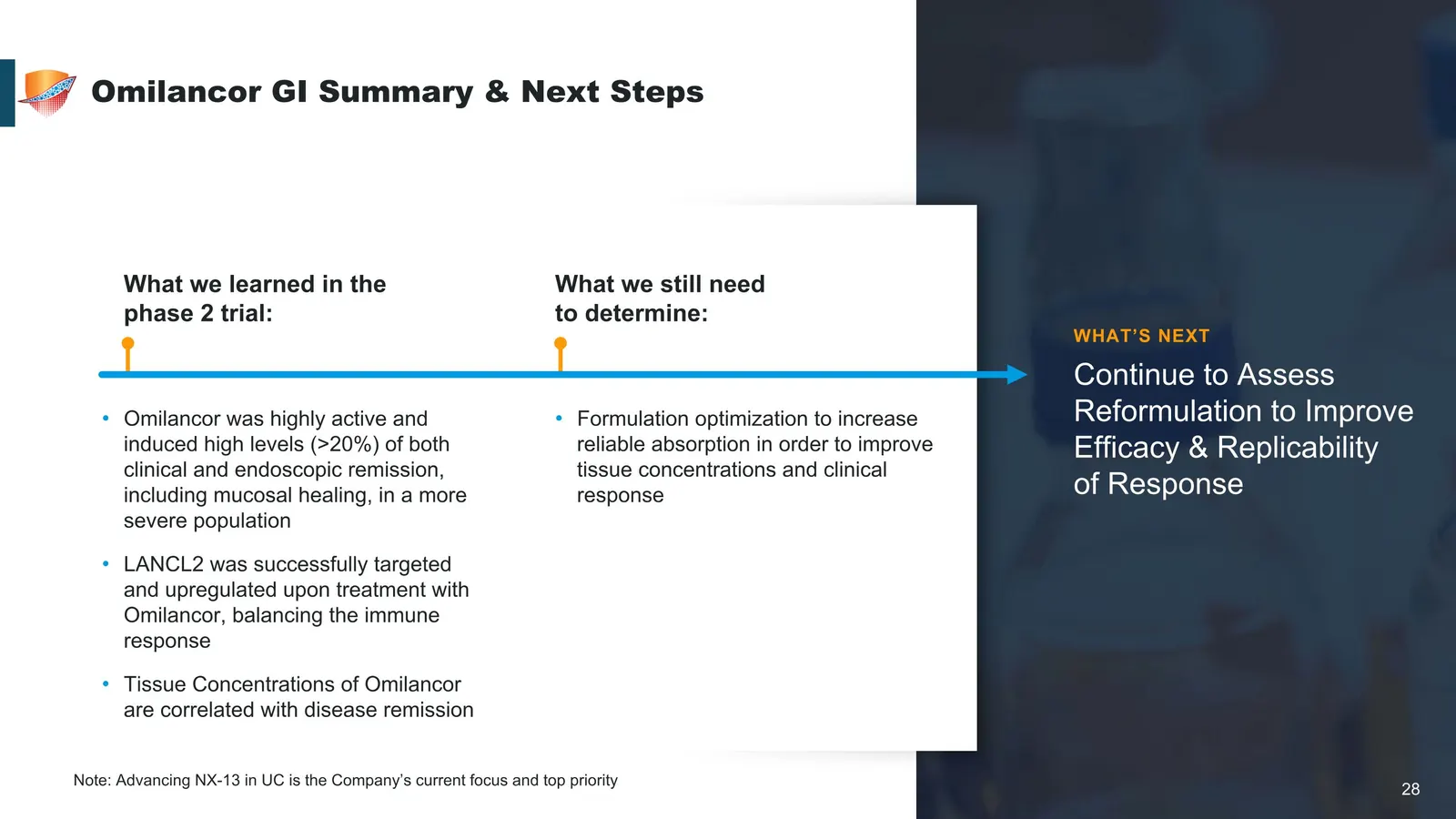
Omilancor GI Summary & Next Steps WHAT’S NEXT Continue to Assess Reformulation to Improve Efficacy & Replicability of Response What we learned in the phase 2 trial: What we still need to determine: Omilancor was highly active and induced high levels (>20%) of both clinical and endoscopic remission,
Slide 29: Systemic LANCL2 Activation Aims to Enhance Tolerability & Restore Homeostasis
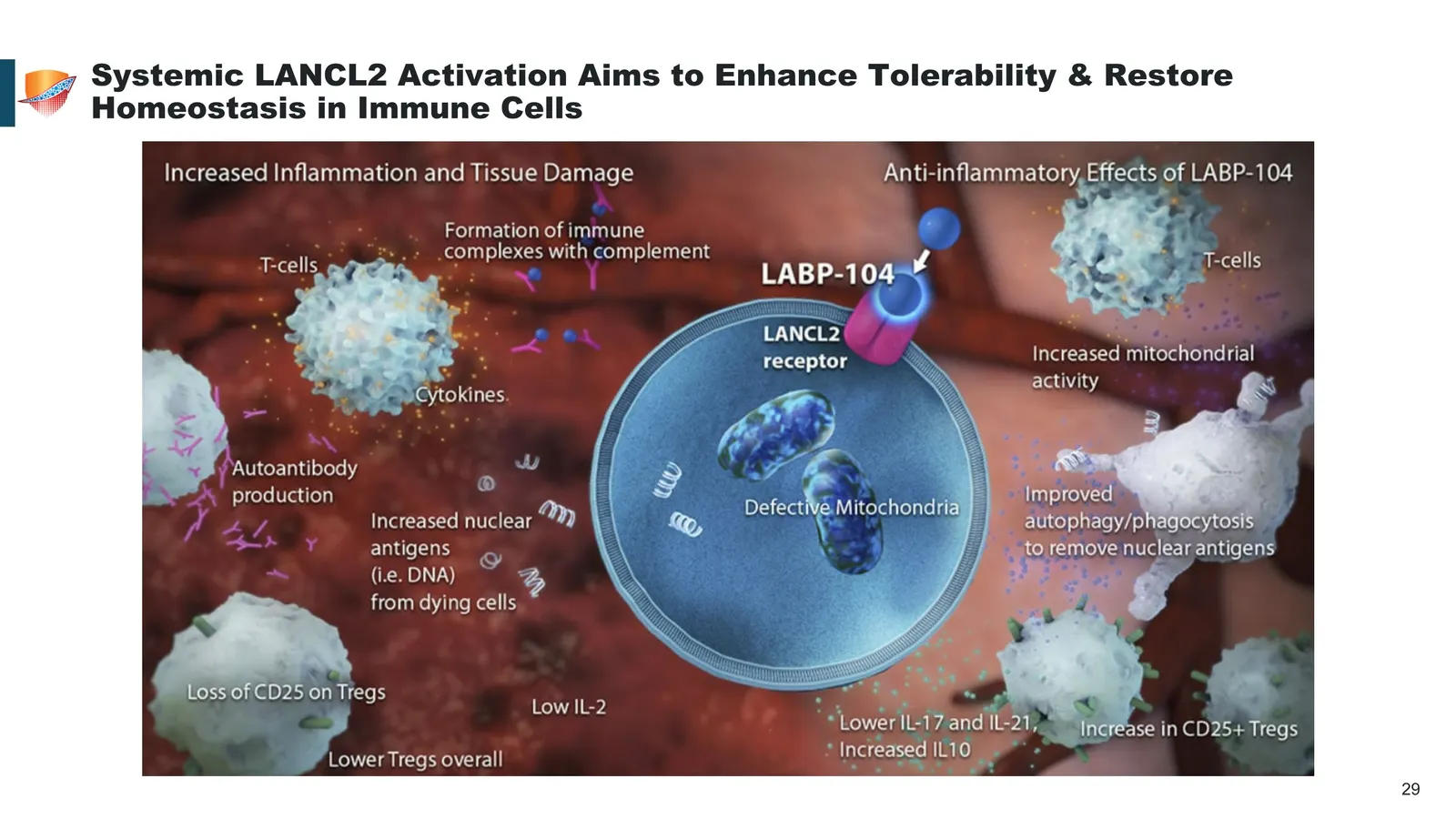
Systemic LANCL2 Activation Aims to Enhance Tolerability & Restore Homeostasis in Immune Cells
Slide 30: LANCL2 Oral Systemic Anti-Inflammatory: LABP-104 Profile
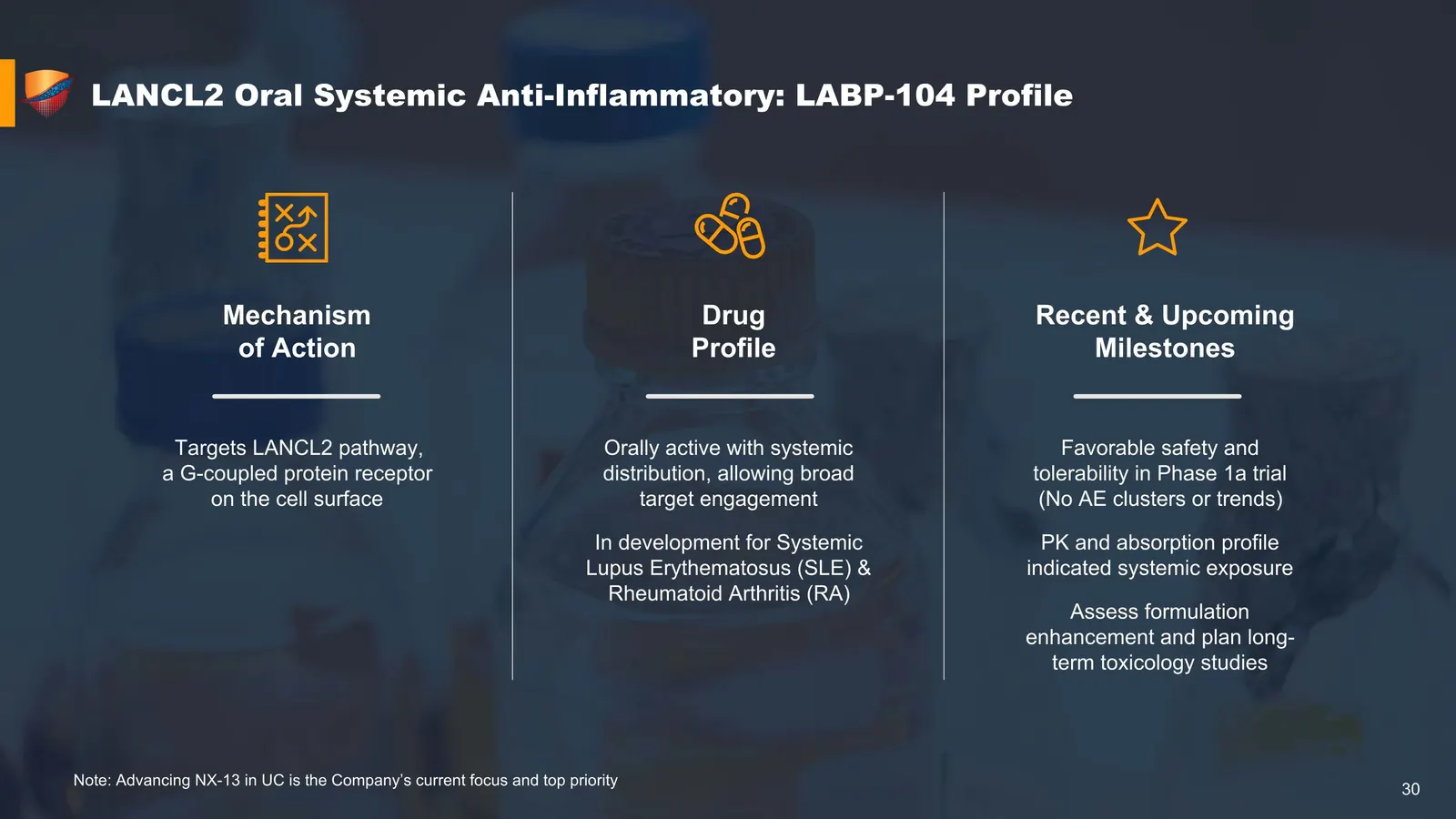
LANCL2 Oral Systemic Anti-Inflammatory: LABP-104 Profile Mechanism of Action Drug Profile Recent & Upcoming Milestones Targets LANCL2 pathway, a G-coupled protein receptor on the cell surface Orally active with systemic distribution, allowing broad target engagement In development for Systemic Lupus
Slide 31: Preclinical Programs in the LANCL2 Agonist Library
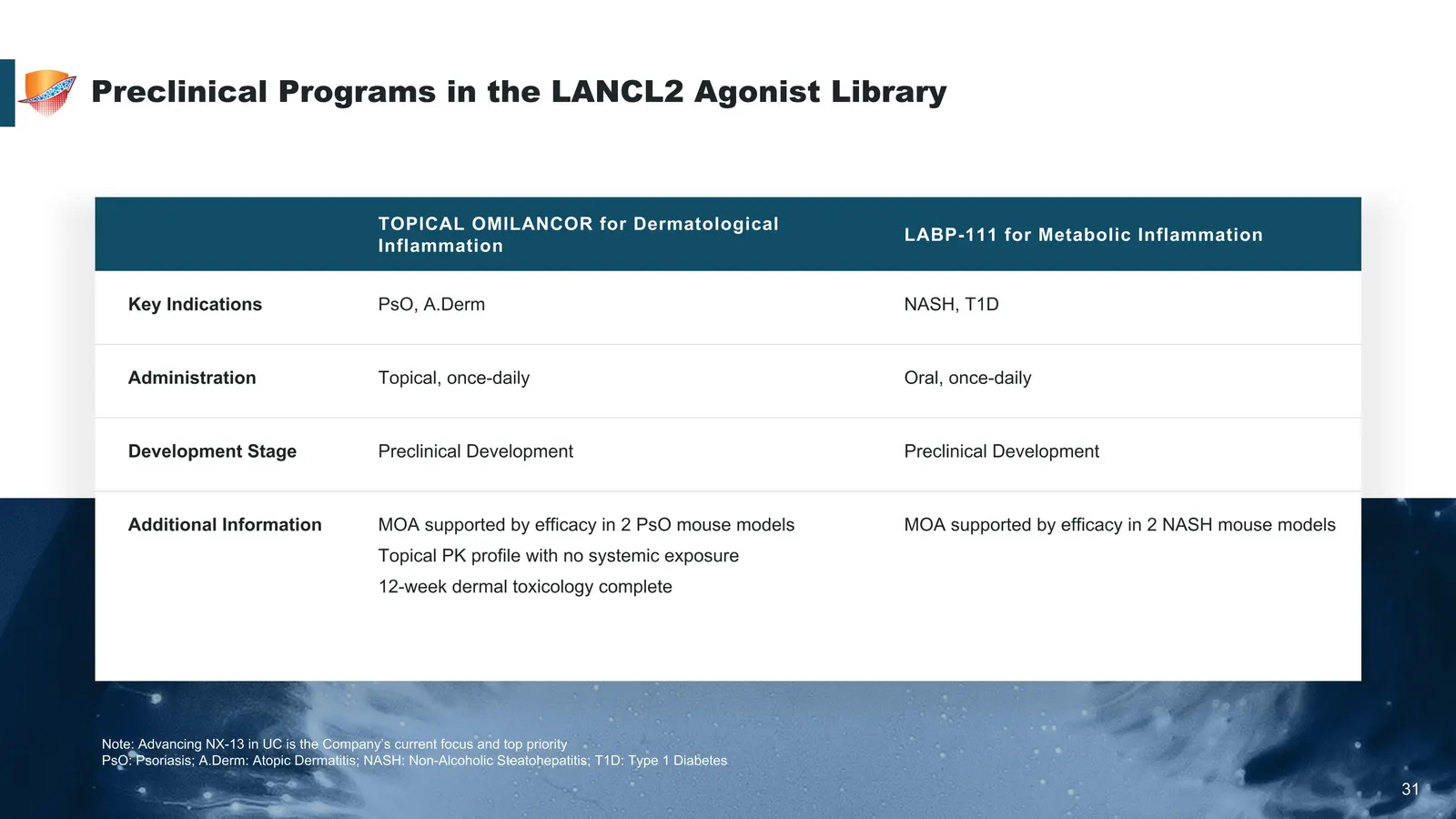
Preclinical Programs in the LANCL2 Agonist Library 31 Note: Advancing NX-13 in UC is the Company’s current focus and top priority PsO: Psoriasis; A.Derm: Atopic Dermatitis; NASH: Non-Alcoholic Steatohepatitis; T1D: Type 1 Diabetes TOPICAL OMILANCOR for Dermatological Inflammation LABP-111 for Metabo
Slide 32: PLXDC2 Family
PLXDC2 Family B1OPHARMA
Slide 33: Activation of PLXDC2 Suppresses Inflammation & Angiogenesis
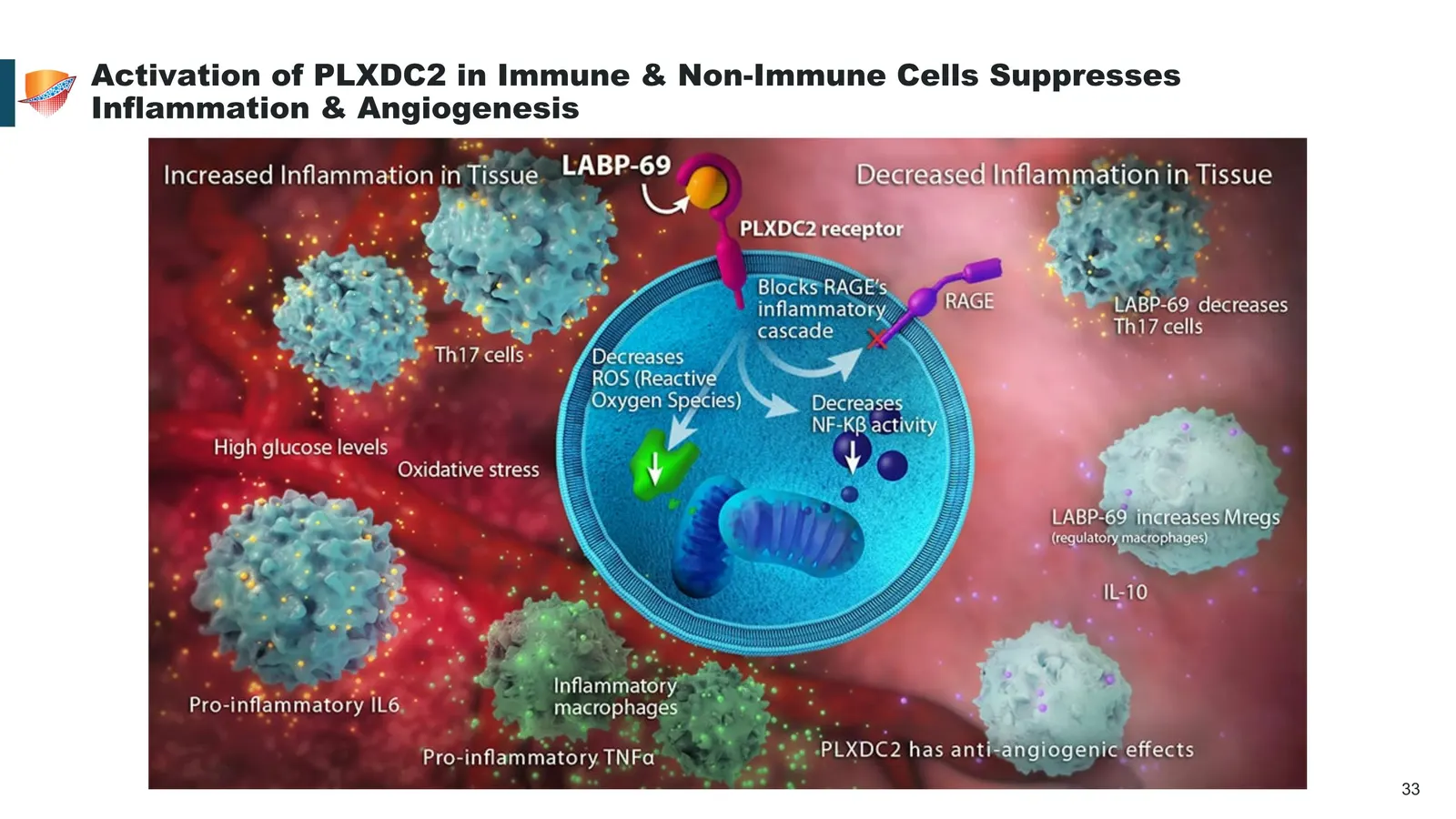
Activation of PLXDC2 in Immune & Non-Immune Cells Suppresses Inflammation & Angiogenesis
Slide 34: PLXDC2 Anti-Inflammatory: LABP-69 Profile
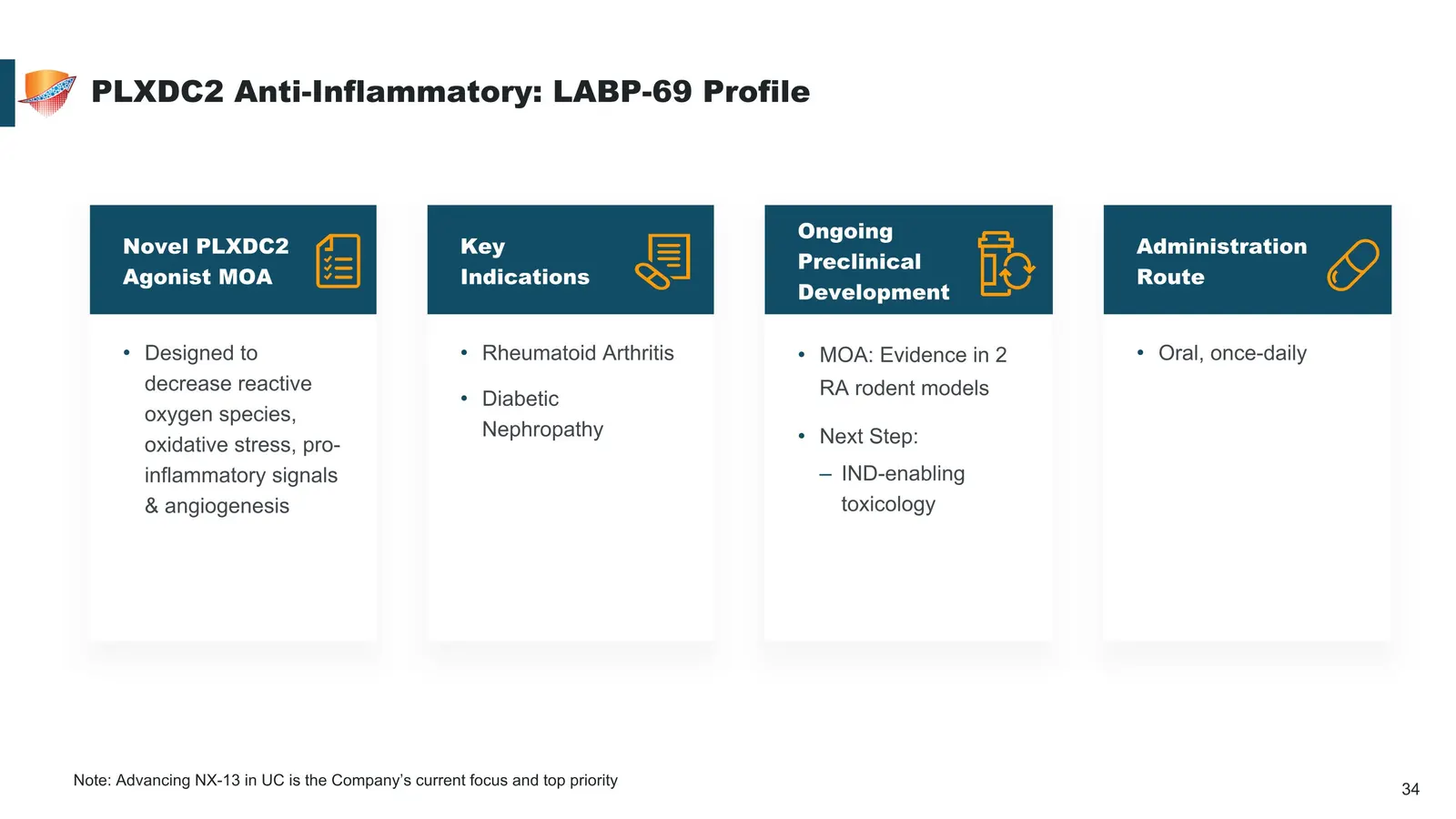
Designed to decrease reactive oxygen species, oxidative stress, pro-inflammatory signals & angiogenesis Novel PLXDC2 Agonist MOA MOA: Evidence in 2 RA rodent models Next Step: IND-enabling toxicology Ongoing Preclinical Development Rheumatoid Arthritis Diabetic Nephropathy Key Indications PLXDC2 Ant
Slide 35: LABP-69 Reduced Disease Severity In Rat Model Of Rheumatoid Arthritis
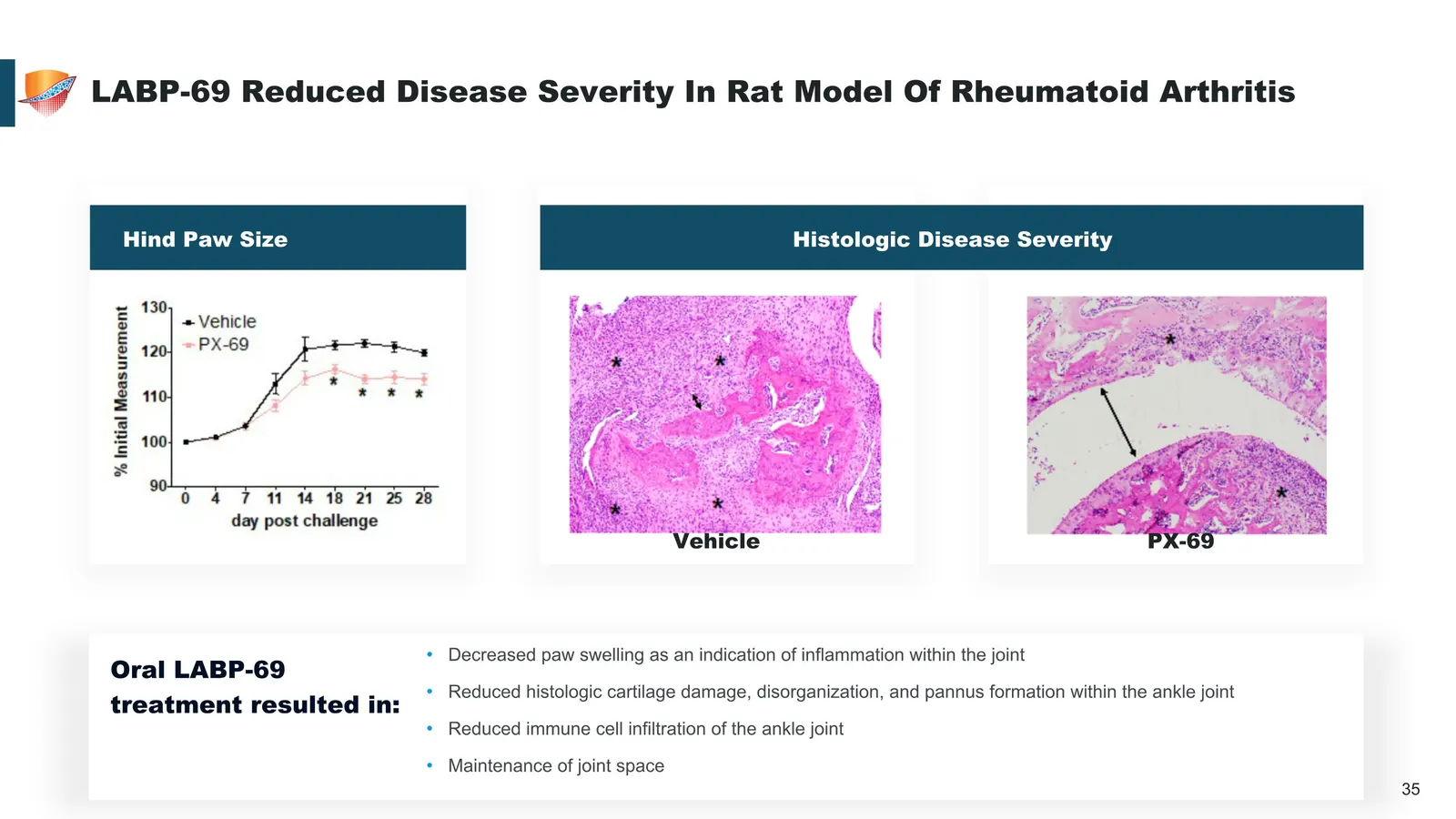
Hind Paw Size Histologic Disease Severity LABP-69 Reduced Disease Severity In Rat Model Of Rheumatoid Arthritis 1/4 Oral LABP-69 treatment resulted in: Decreased paw swelling as an indication of inflammation within the joint Reduced histologic cartilage damage, disorganization, and pannus formation
Slide 36: Landos' Path Forward
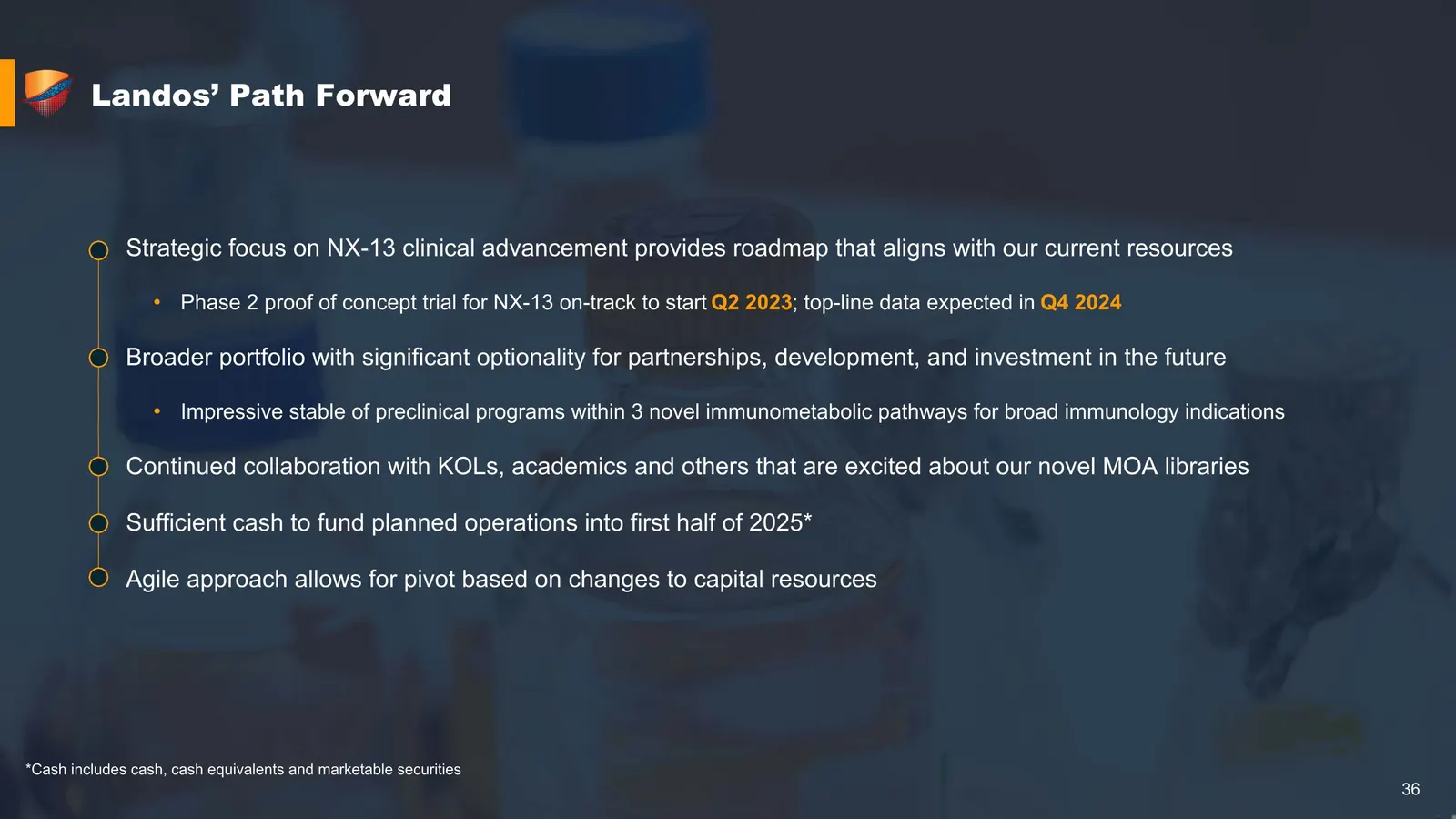
Landos’ Path Forward Strategic focus on NX-13 clinical advancement provides roadmap that aligns with our current resources Phase 2 proof of concept trial for NX-13 on-track to start Q2 2023; top-line data expected in Q4 2024 Broader portfolio with significant optionality for partnerships, developmen
Slide 37: Landos Biopharma
LANDOS BIlOPHARMA
Source: SEC EDGAR · 8-K filed Jan 5, 2023