Novartis AG · SIX:NOVN
Novartis — ASH 2004 (American Society of Hematology annual meeting)
12 slides from Novartis's conference presentation, Dec 7, 2004
Slide 1: Novartis Oncology: Highlights of Key Data Presented at ASH 2004
Novartis Oncology Highlights of Key Data Presented at ASH 2004 December 7, 2004 David R. Epstein President, Novartis Oncology CEO, Novartis Specialty Medicines The following information contains certain "Forward-looking Statements" relating to the Company's business, which can be identified by the u
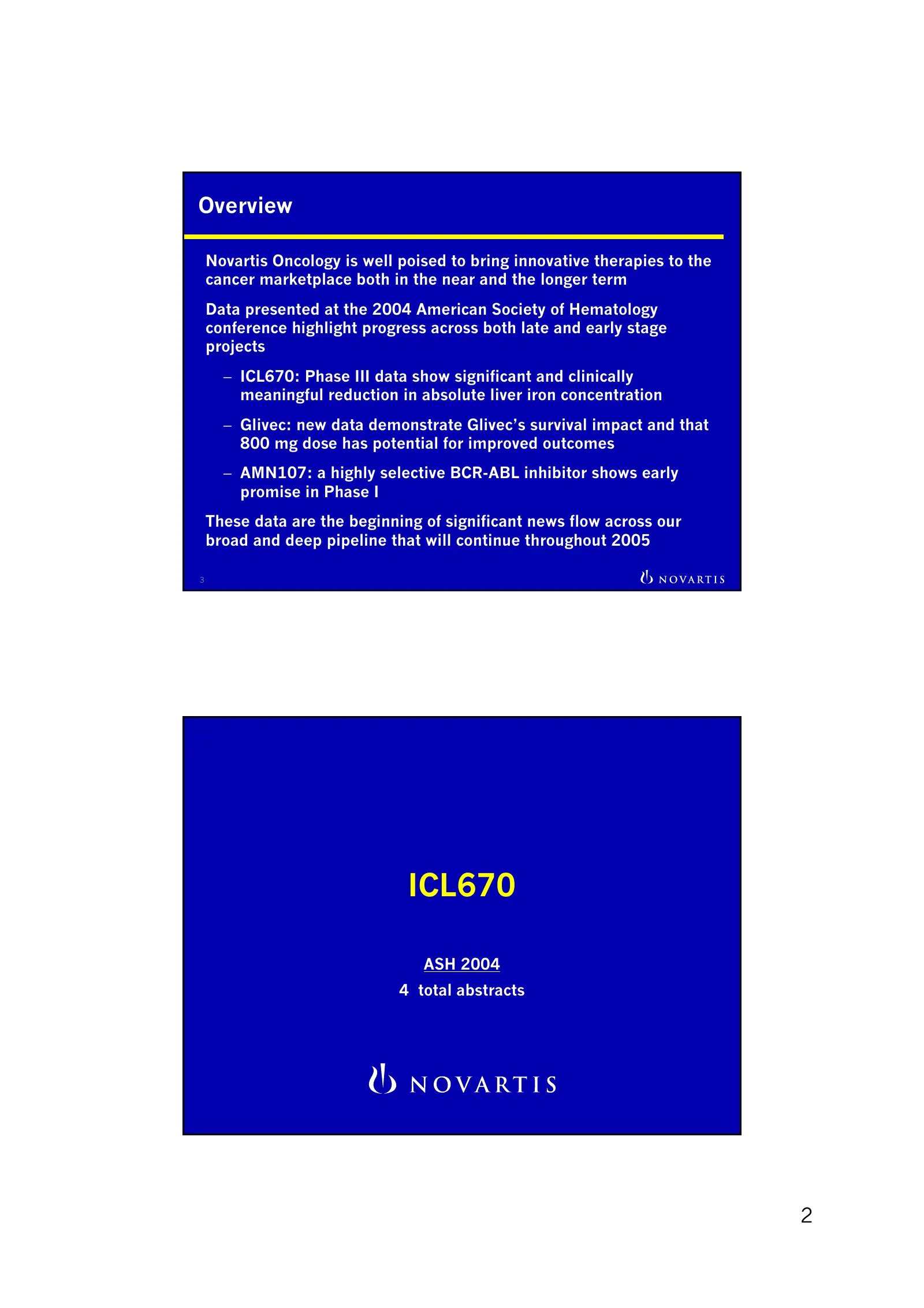
Slide 2: Overview
Overview Novartis Oncology is well poised to bring innovative therapies to the cancer marketplace both in the near and the longer term Data presented at the 2004 American Society of Hematology conference highlight progress across both late and early stage projects − ICL670: Phase III data show signi
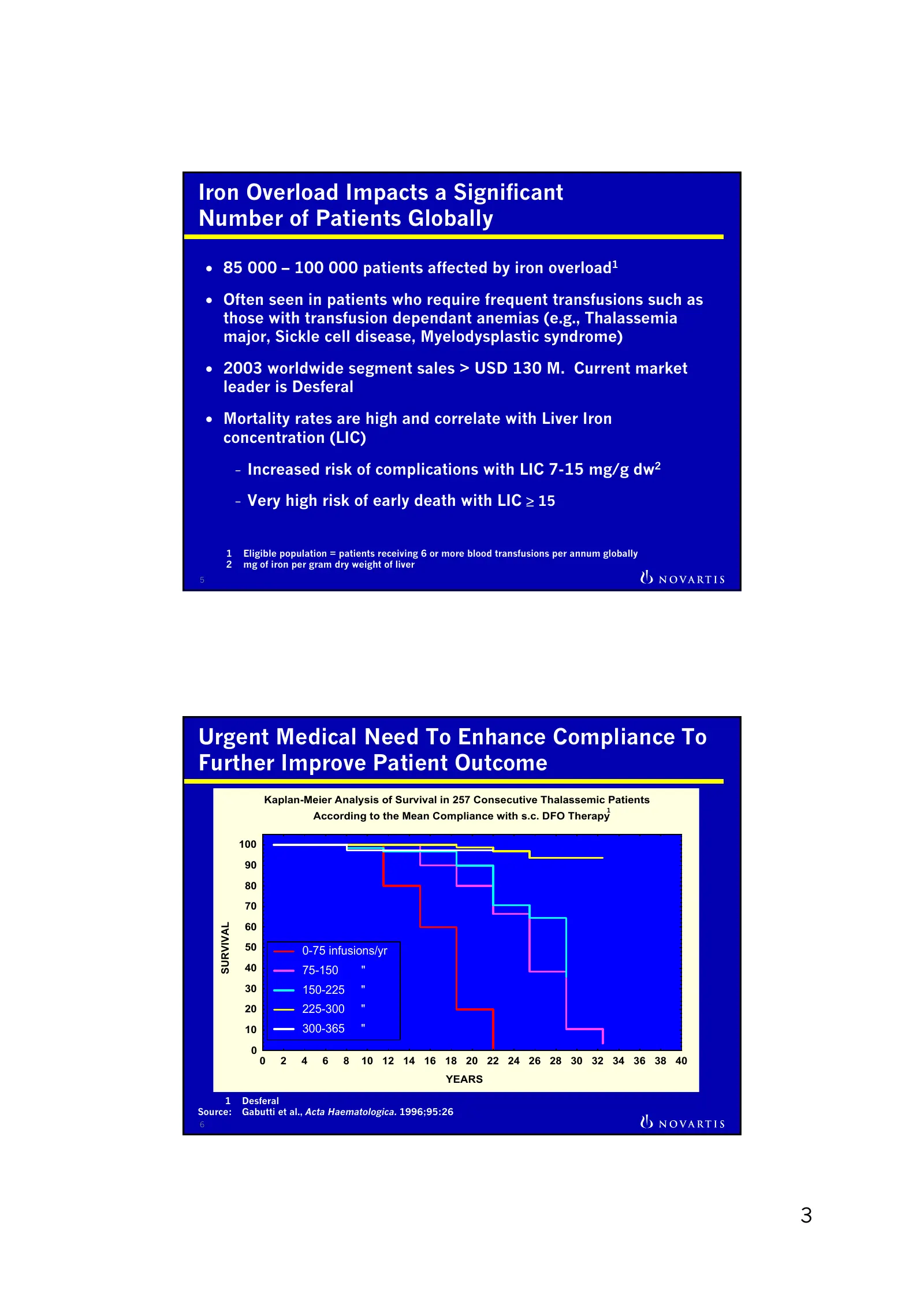
Slide 3: Iron Overload Impacts a Significant Number of Patients Globally
Iron Overload Impacts a Significant Number of Patients Globally • 85 000 – 100 000 patients affected by iron overload1 • Often seen in patients who require frequent transfusions such as those with transfusion dependant anemias (e.g., Thalassemia major, Sickle cell disease, Myelodysplastic syndrome)
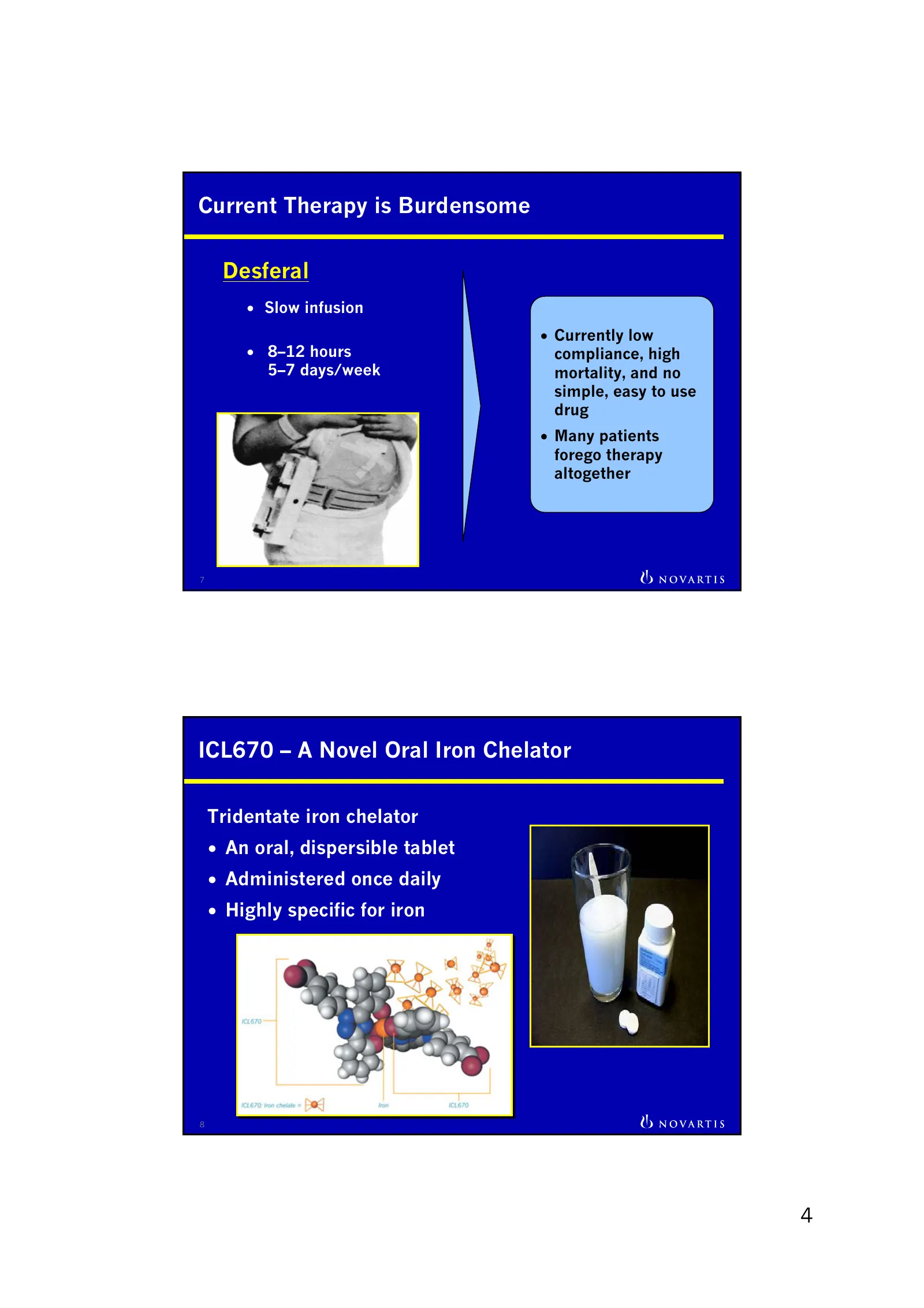
Slide 4: Current Therapy is Burdensome; ICL670 – A Novel Oral Iron Chelator
Current Therapy is Burdensome Desferal • Slow infusion • Currently low • 8–12 hours compliance, high 5–7 days/week mortality, and no simple, easy to use drug • Many patients forego therapy altogether 7 ICL670 – A Novel Oral Iron Chelator Tridentate iron chelator • An oral, dispersible tablet • Admin
Slide 5: Large Phase III Study (Trial 0107) Designed to Show Non-inferiority to Desferal
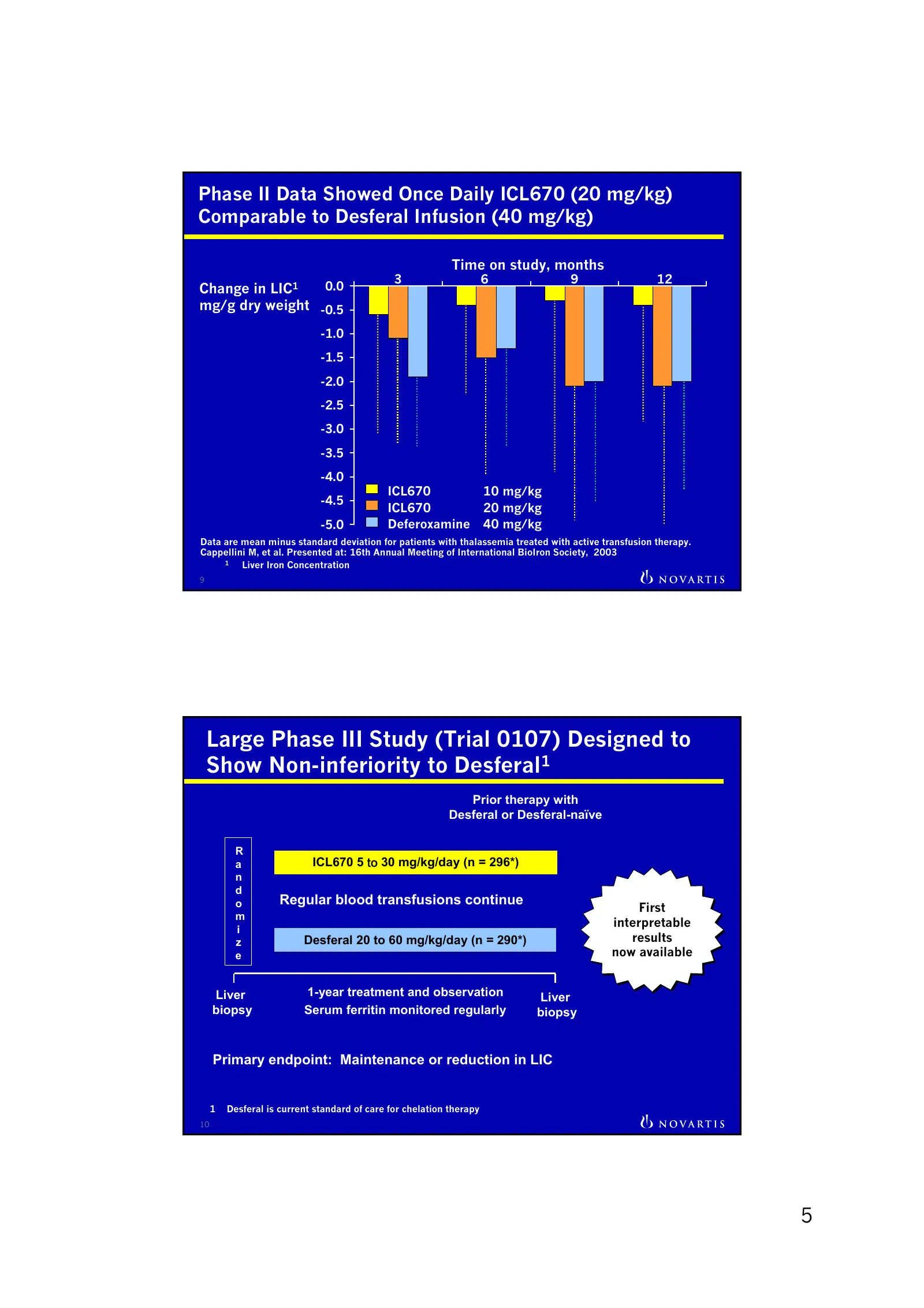
Phase II Data Showed Once Daily ICL670 (20 mg/kg) Comparable to Desferal Infusion (40 mg/kg) Time on study, months 3 6 9 12 Change in LIC1 0.0 mg/g dry weight -0.5 -1.0 -1.5 -2.0 -2.5 -3.0 -3.5 -4.0 ICL670 10 mg/kg -4.5 ICL670 20 mg/kg -5.0 Deferoxamine 40 mg/kg Data are mean minus standard deviatio
Slide 6: Summary of ICL670 Phase III Results Presented at ASH
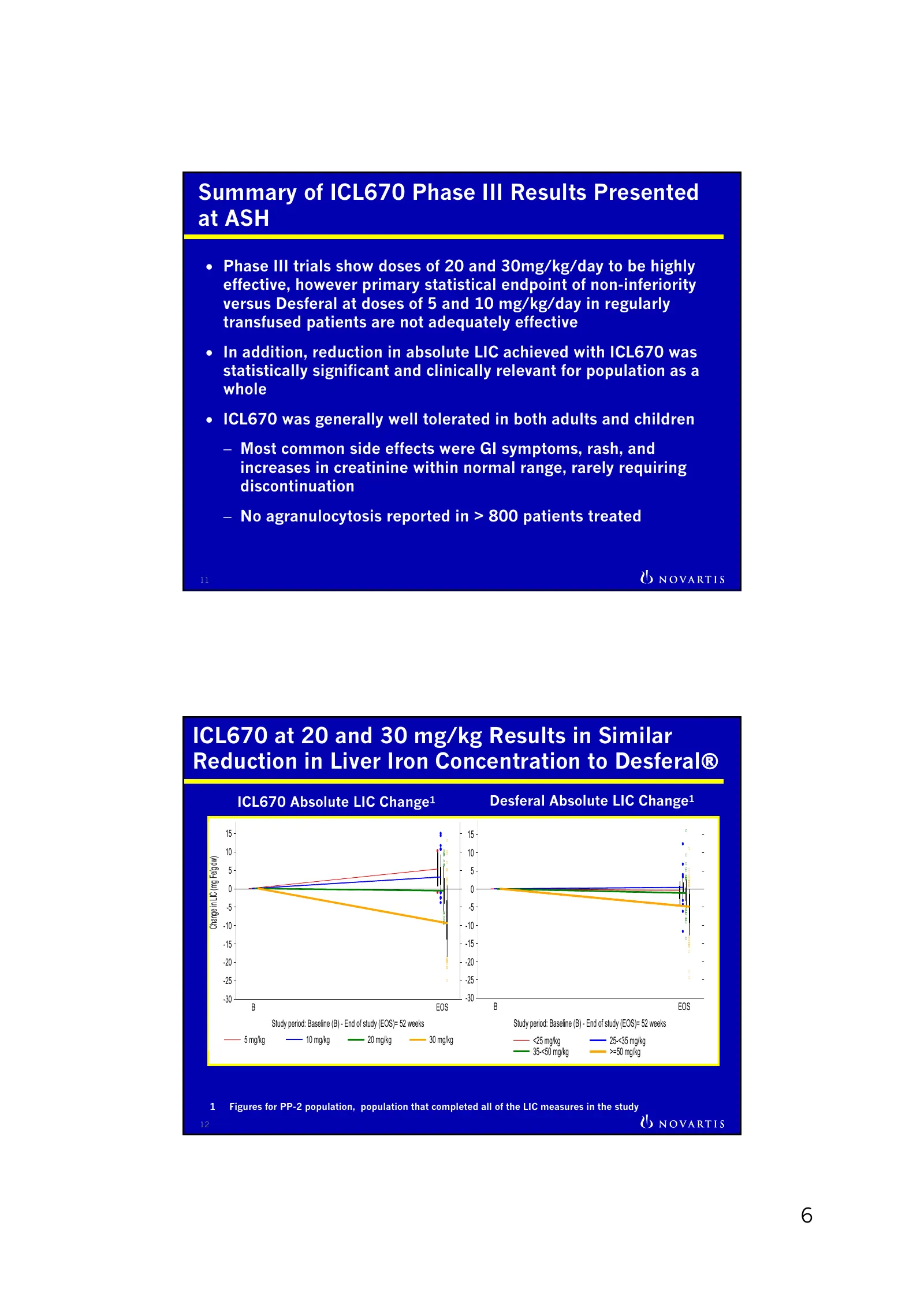
Summary of ICL670 Phase III Results Presented at ASH • Phase III trials show doses of 20 and 30mg/kg/day to be highly effective, however primary statistical endpoint of non-inferiority versus Desferal at doses of 5 and 10 mg/kg/day in regularly transfused patients are not adequately effective • In a
Slide 7: Liver Biopsy Demonstrates ICL670 Removal of Iron; ICL670 Summary
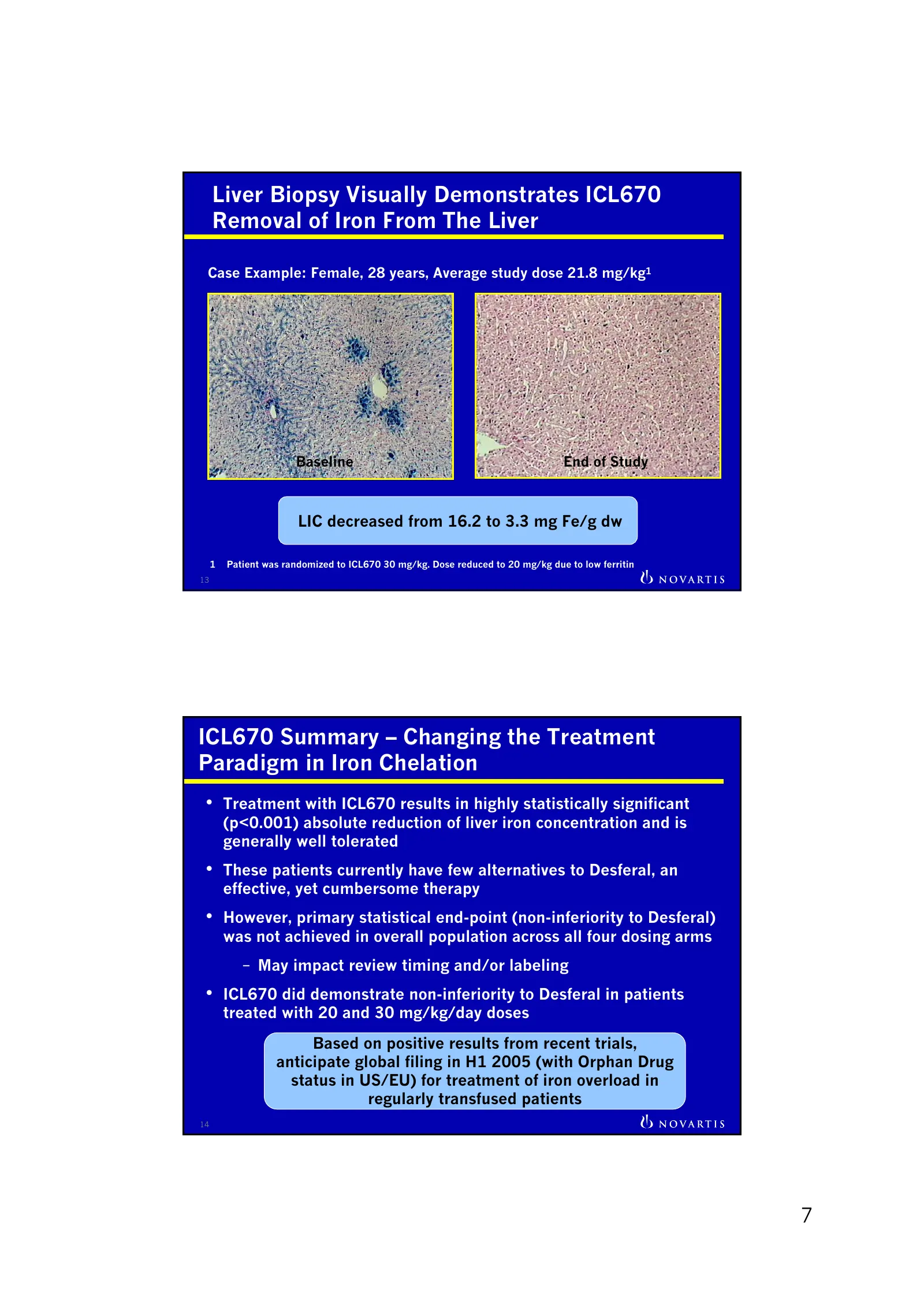
Liver Biopsy Visually Demonstrates ICL670 Removal of Iron From The Liver Case Example: Female, 28 years, Average study dose 21.8 mg/kg1 Baseline End of Study LIC decreased from 16.2 to 3.3 mg Fe/g dw 1 Patient was randomized to ICL670 30 mg/kg. Dose reduced to 20 mg/kg due to low ferritin 13 ICL670
Slide 8: New Data at ASH Reinforce Glivec as Cornerstone Therapy in CML
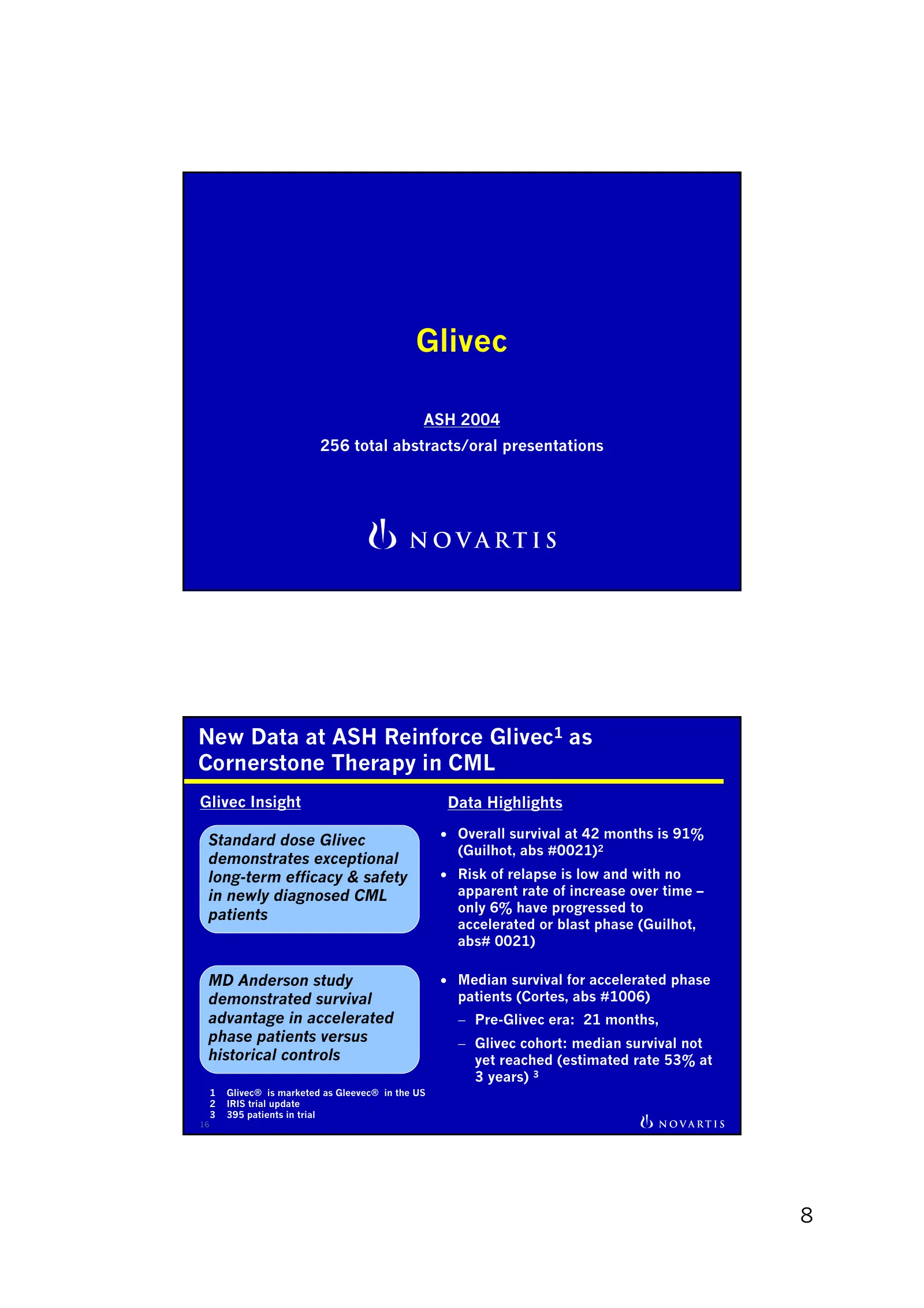
Glivec ASH 2004 256 total abstracts/oral presentations New Data at ASH Reinforce Glivec1 as Cornerstone Therapy in CML Glivec Insight Data Highlights Standard dose Glivec • Overall survival at 42 months is 91% (Guilhot, abs #0021)2 demonstrates exceptional long-term efficacy & safety • Risk of relap
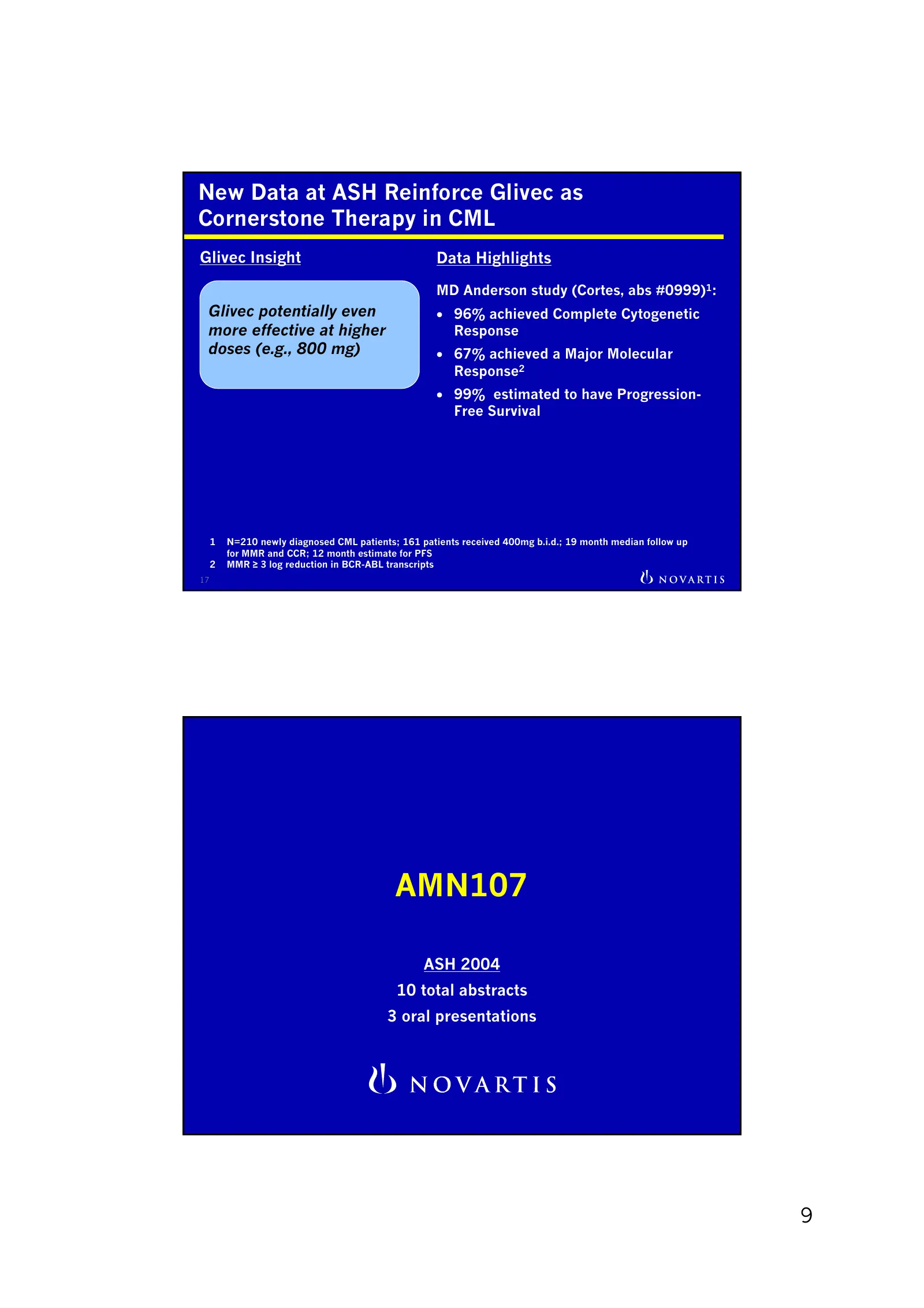
Slide 9: Glivec Potentially More Effective at Higher Doses
New Data at ASH Reinforce Glivec as Cornerstone Therapy in CML Glivec Insight Data Highlights MD Anderson study (Cortes, abs #0999)1: Glivec potentially even • 96% achieved Complete Cytogenetic more effective at higher Response doses (e.g., 800 mg) • 67% achieved a Major Molecular Response2 • 99% es
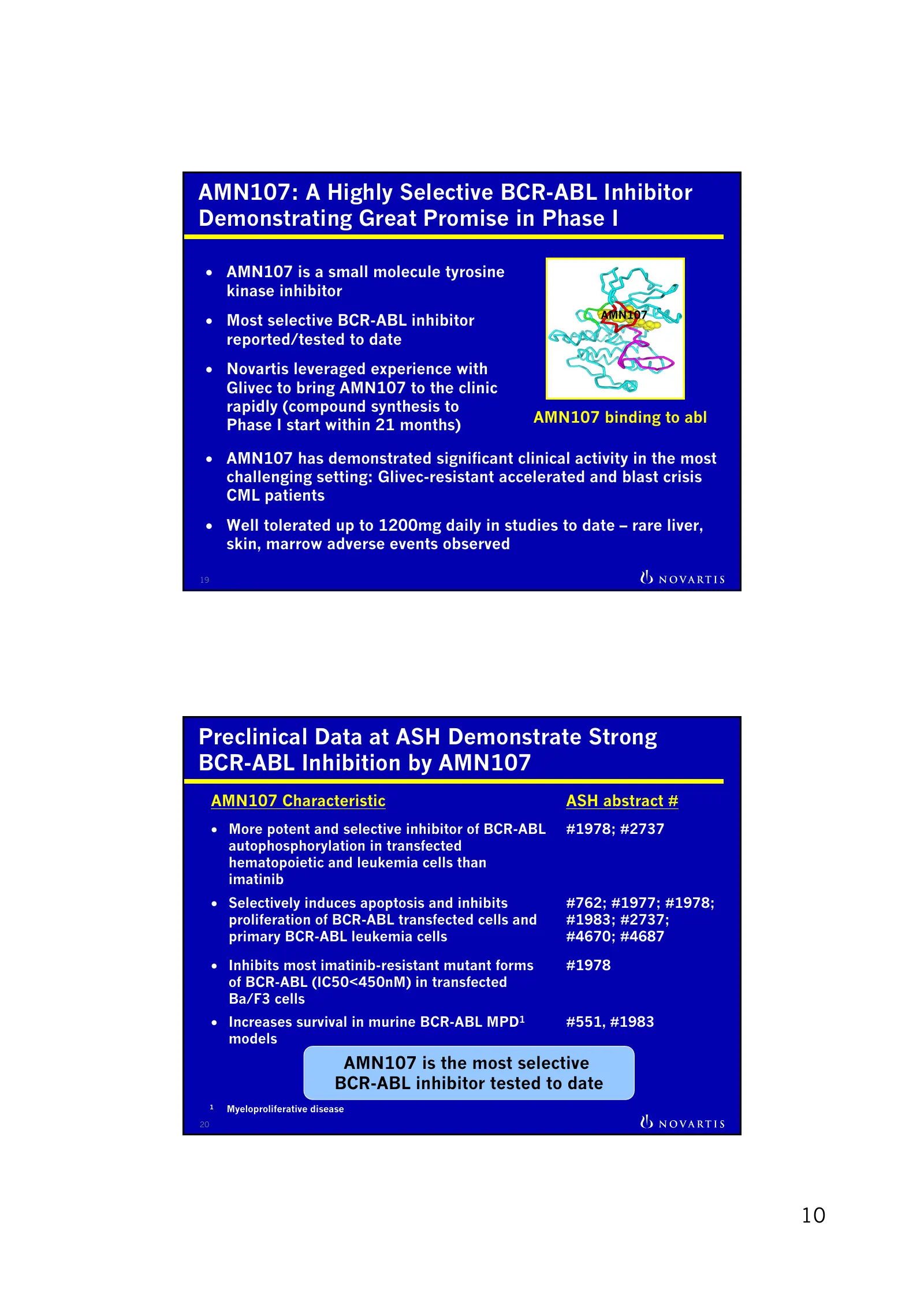
Slide 10: AMN107: A Highly Selective BCR-ABL Inhibitor Demonstrating Great Promise in Phase I
AMN107: A Highly Selective BCR-ABL Inhibitor Demonstrating Great Promise in Phase I • AMN107 is a small molecule tyrosine kinase inhibitor AMN107 • Most selective BCR-ABL inhibitor reported/tested to date • Novartis leveraged experience with Glivec to bring AMN107 to the clinic rapidly (compound syn
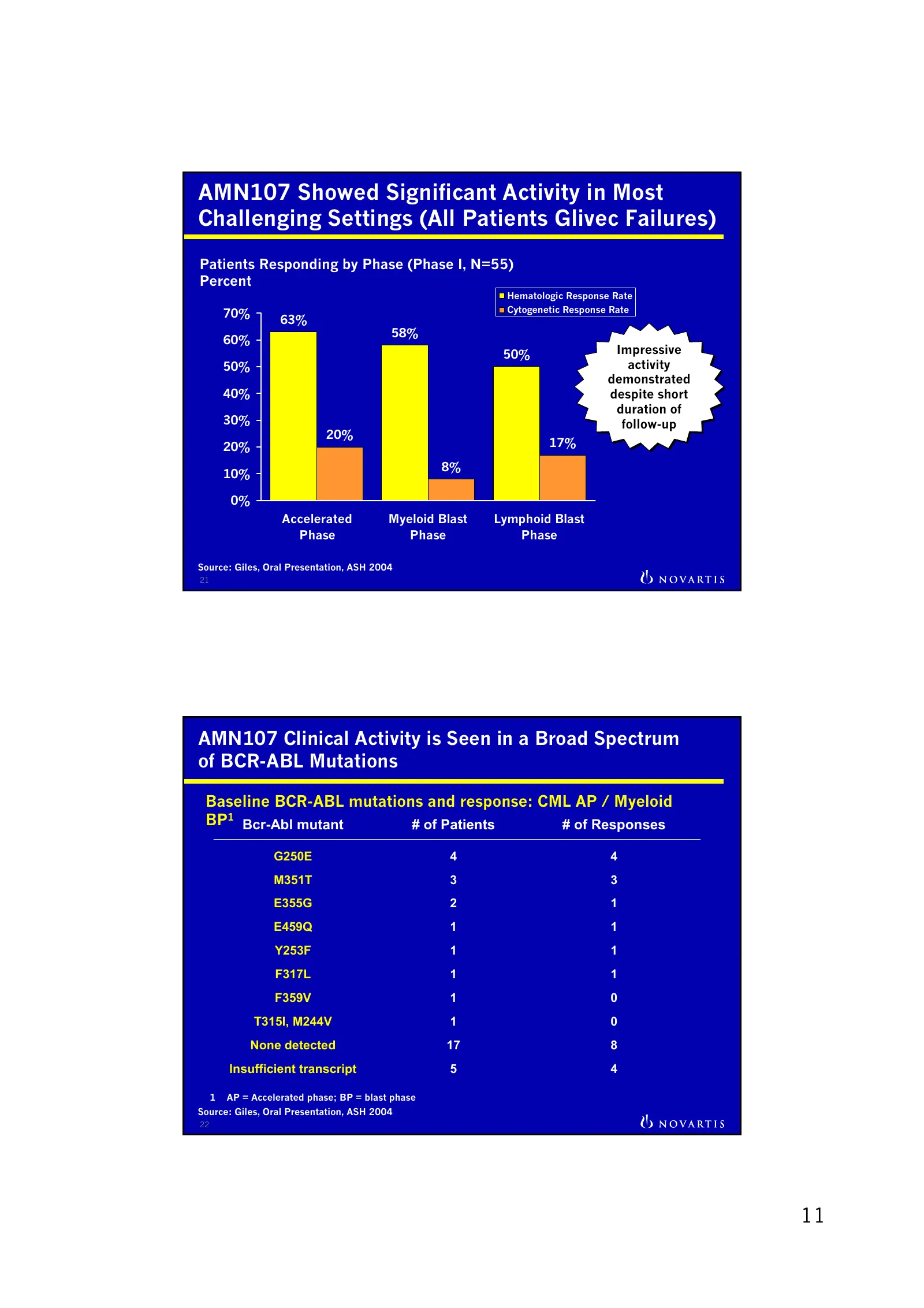
Slide 11: AMN107 Showed Significant Activity in Most Challenging Settings
AMN107 Showed Significant Activity in Most Challenging Settings (All Patients Glivec Failures) Patients Responding by Phase (Phase I, N=55) Percent Hematologic Response Rate 70% Cytogenetic Response Rate 63% 58% 60% 50% Impressive Impressive 50% activity activity demonstrated demonstrated 40% despit
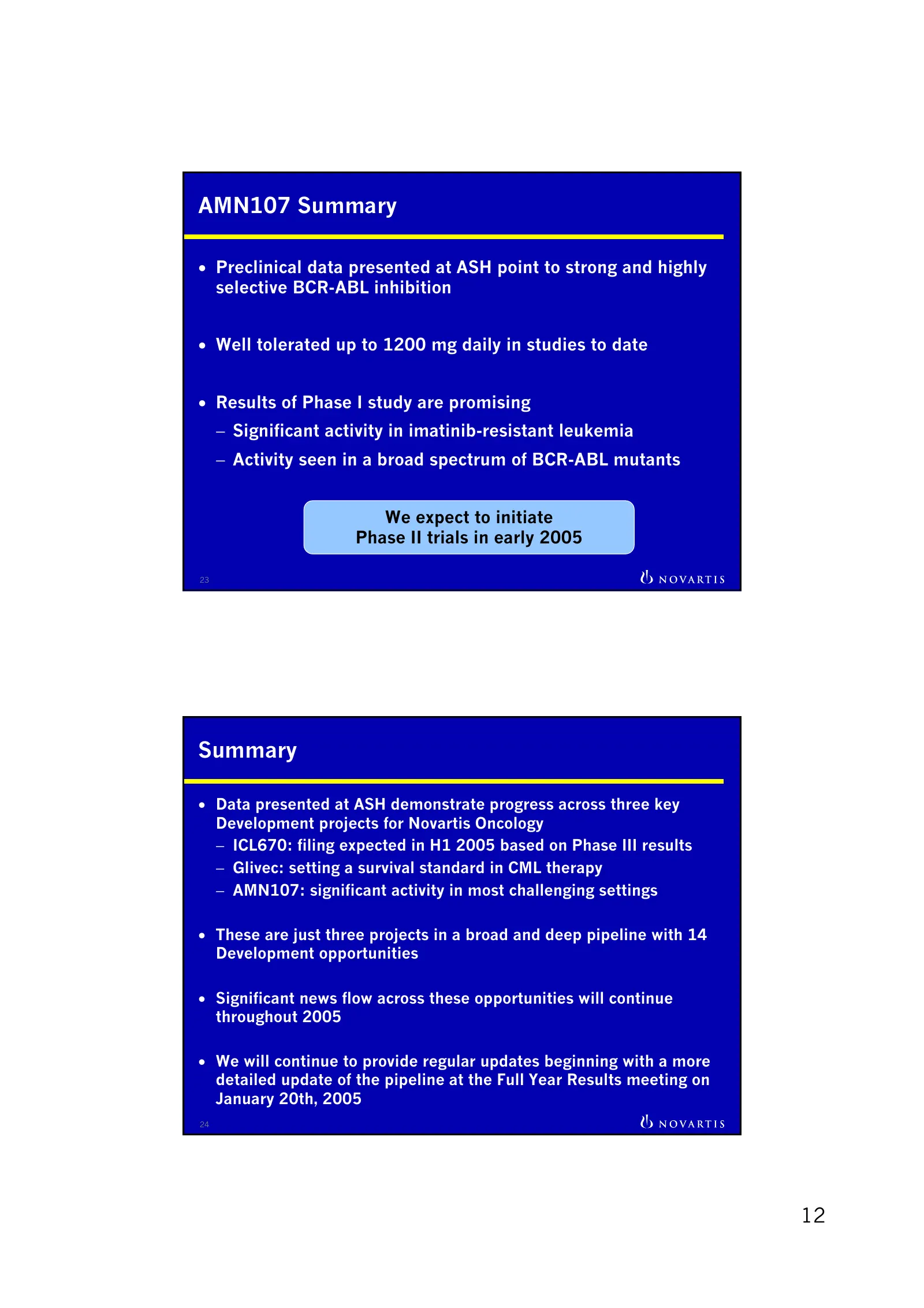
Slide 12: AMN107 Summary and Overall Summary
AMN107 Summary • Preclinical data presented at ASH point to strong and highly selective BCR-ABL inhibition • Well tolerated up to 1200 mg daily in studies to date • Results of Phase I study are promising − Significant activity in imatinib-resistant leukemia − Activity seen in a broad spectrum of BCR
Source: Internet Archive copy of novartis.com
More decks from Novartis AG
 Investor Presentation (November 2026)42 slides · Nov 19, 2026
 Investor Presentation (2026)4 slides · Nov 19, 2026
 Q3 2026 Earnings Presentation91 slides · Oct 27, 2026
 Investor Presentation (October 2026)46 slides · Oct 23, 2026
 Q2 2026 Earnings Presentation87 slides · Jul 21, 2026
 Q1 2026 Earnings Presentation85 slides · Apr 28, 2026