Sesen Bio — 2020 Jefferies Healthcare Conference
69 slides from Sesen Bio's conference presentation, Jun 2, 2020
Slide 1: 2020 Jefferies Healthcare Conference
2020 Jefferies Healthcare Conference Thomas Cannell DVM, President & CEO For Investor Purposes Only June 2, 2020 NASDAQ: SESN
Slide 2: Forward-Looking Statements
FORWARD-LOOKING STATEMENTS This presentation contains forward-looking statements that involve substantial risks and uncertainties. All statements, other than statements of historical facts, contained in this presentation, including statements regarding our strategy, future operations, clinical devel
Slide 3: The Patient Journey in Bladder Cancer
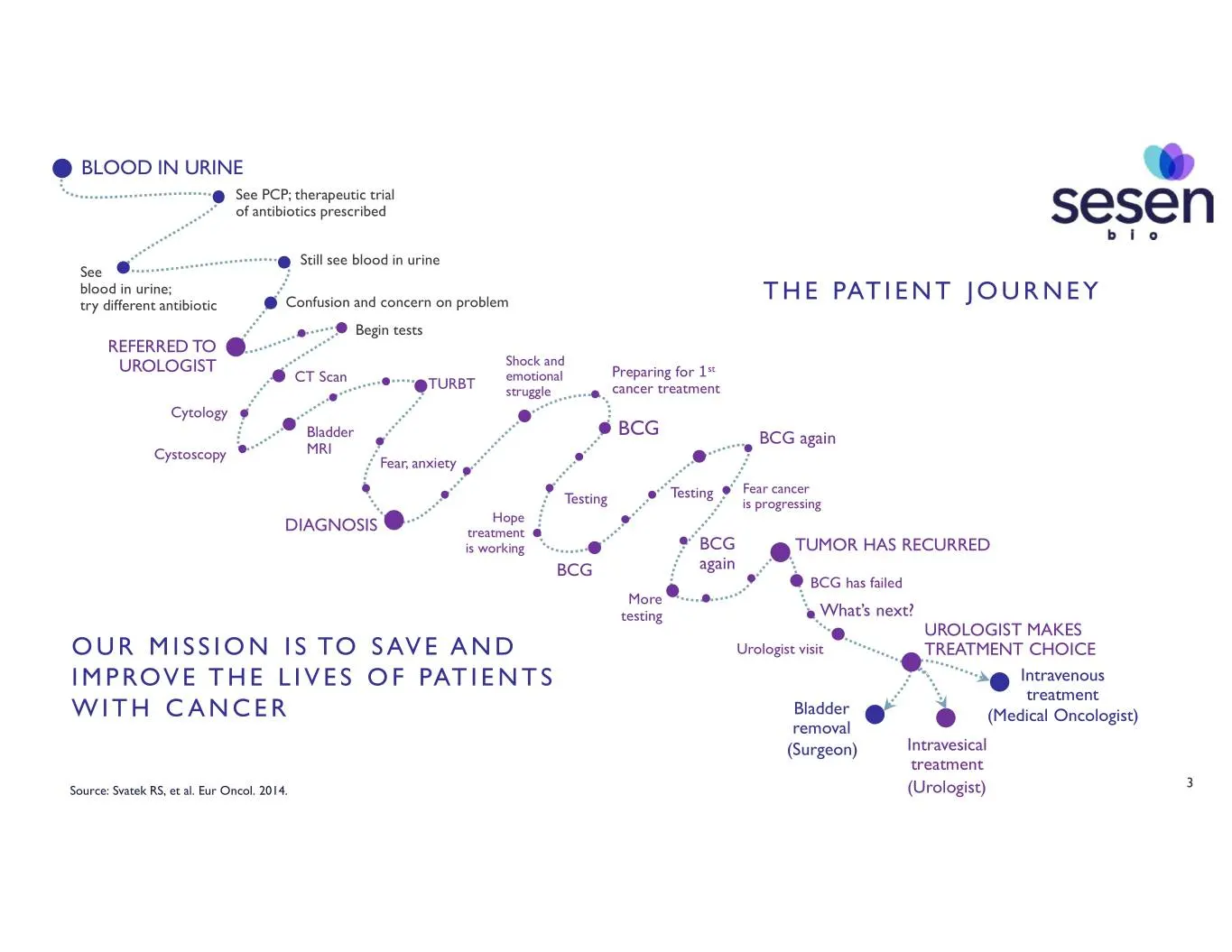
BLOOD IN URINE See PCP; therapeutic trial of antibiotics prescribed Still see blood in urine See blood in urine; THE PATIENT JOURNEY try different antibiotic Confusion and concern on problem Begin tests REFERRED TO Shock and UROLOGIST st CT Scan emotional Preparing for 1 TURBT struggle cancer treatm
Slide 4: June Business Update: Events Since May 11th
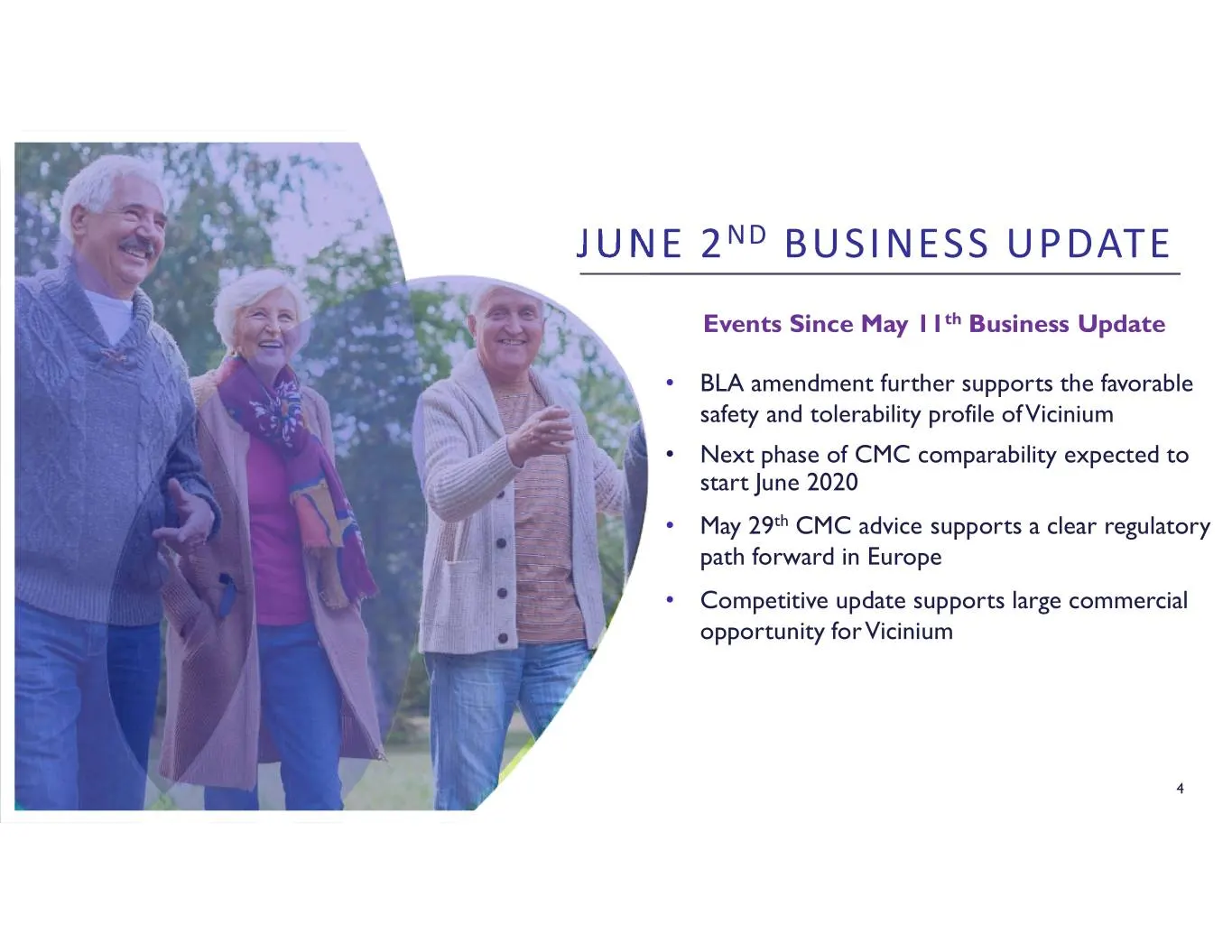
JUNE 2 ND BUSINESS UPDATE Events Since May 11th Business Update • BLA amendment further supports the favorable safety and tolerability profile of Vicinium • Next phase of CMC comparability expected to start June 2020 • May 29th CMC advice supports a clear regulatory path forward in Europe • Competit
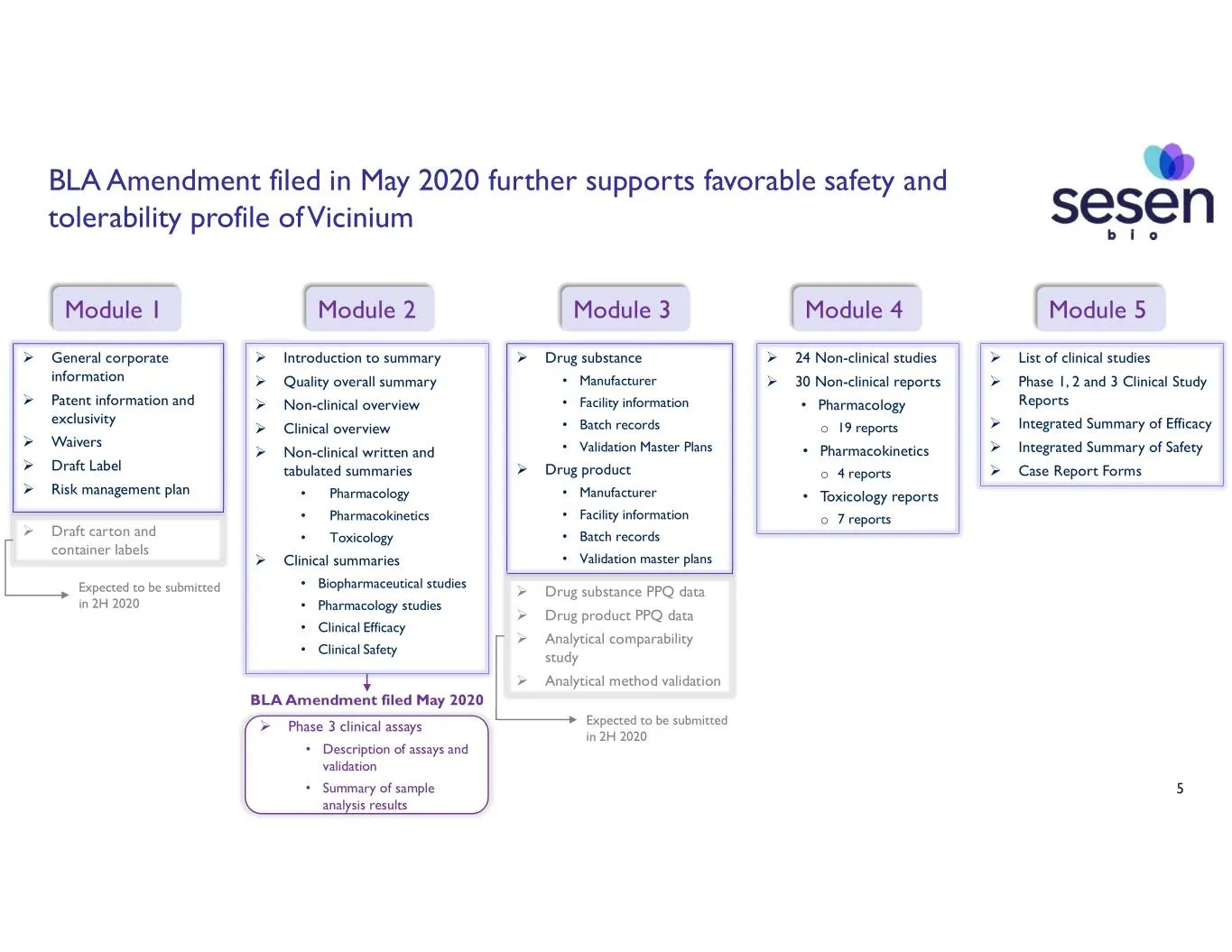
Slide 5: BLA Amendment filed in May 2020 supports safety and tolerability
BLA Amendment filed in May 2020 further supports favorable safety and tolerability profile of Vicinium Module 1 Module 2 Module 3 Module 4 Module 5 General corporate Introduction to summary Drug substance 24 Non-clinical studies List of clinical studies information Quality overall summary • Manufact
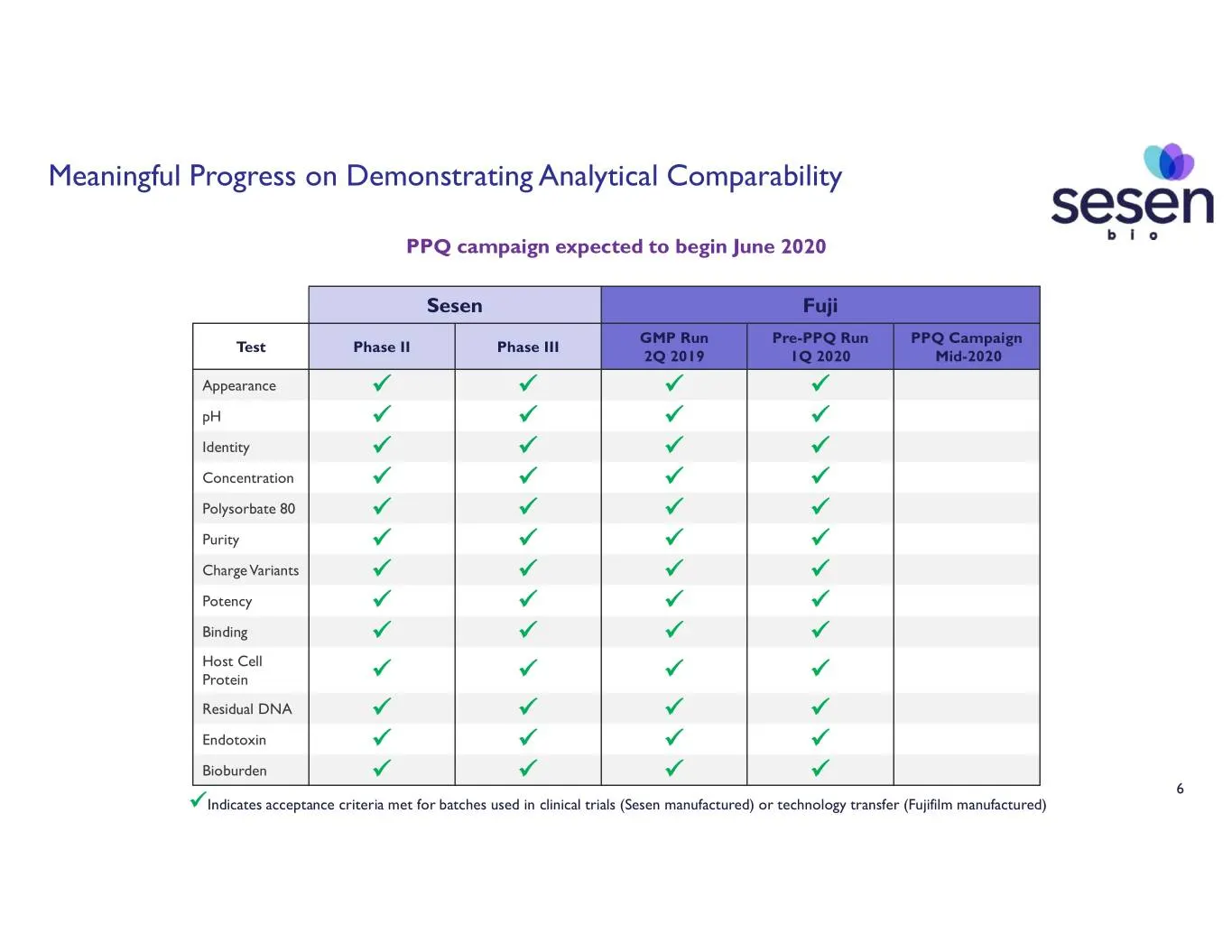
Slide 6: Meaningful Progress on Demonstrating Analytical Comparability
Meaningful Progress on Demonstrating Analytical Comparability PPQ campaign expected to begin June 2020 Sesen Fuji GMP Run Pre-PPQ Run PPQ Campaign Test Phase II Phase III 2Q 2019 1Q 2020 Mid-2020 Appearance pH Identity Concentration Polysorbate 80 Purity Charge Variants Potency Binding Host Cell Pro
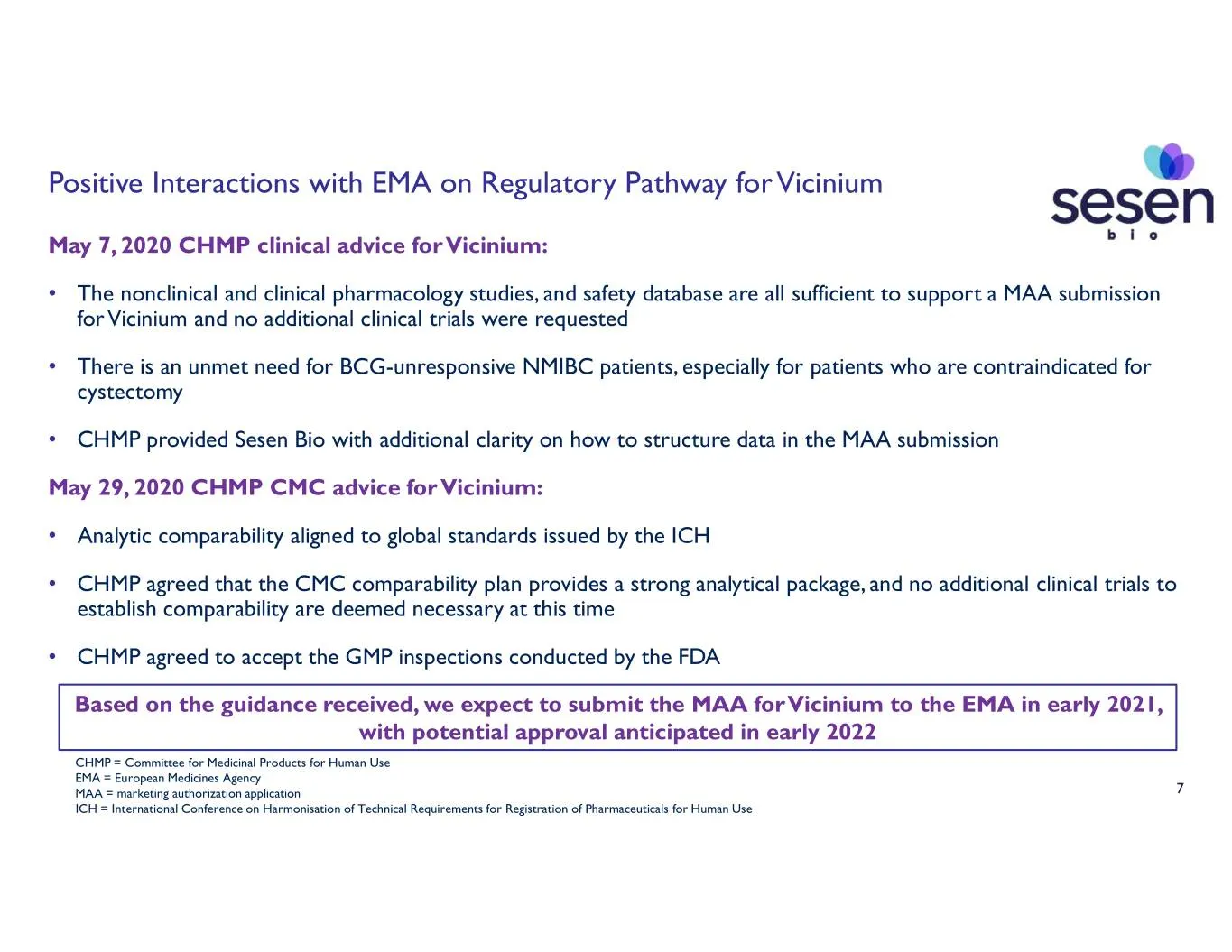
Slide 7: Positive Interactions with EMA on Regulatory Pathway for Vicinium
Positive Interactions with EMA on Regulatory Pathway for Vicinium May 7, 2020 CHMP clinical advice for Vicinium: • The nonclinical and clinical pharmacology studies, and safety database are all sufficient to support a MAA submission for Vicinium and no additional clinical trials were requested • The
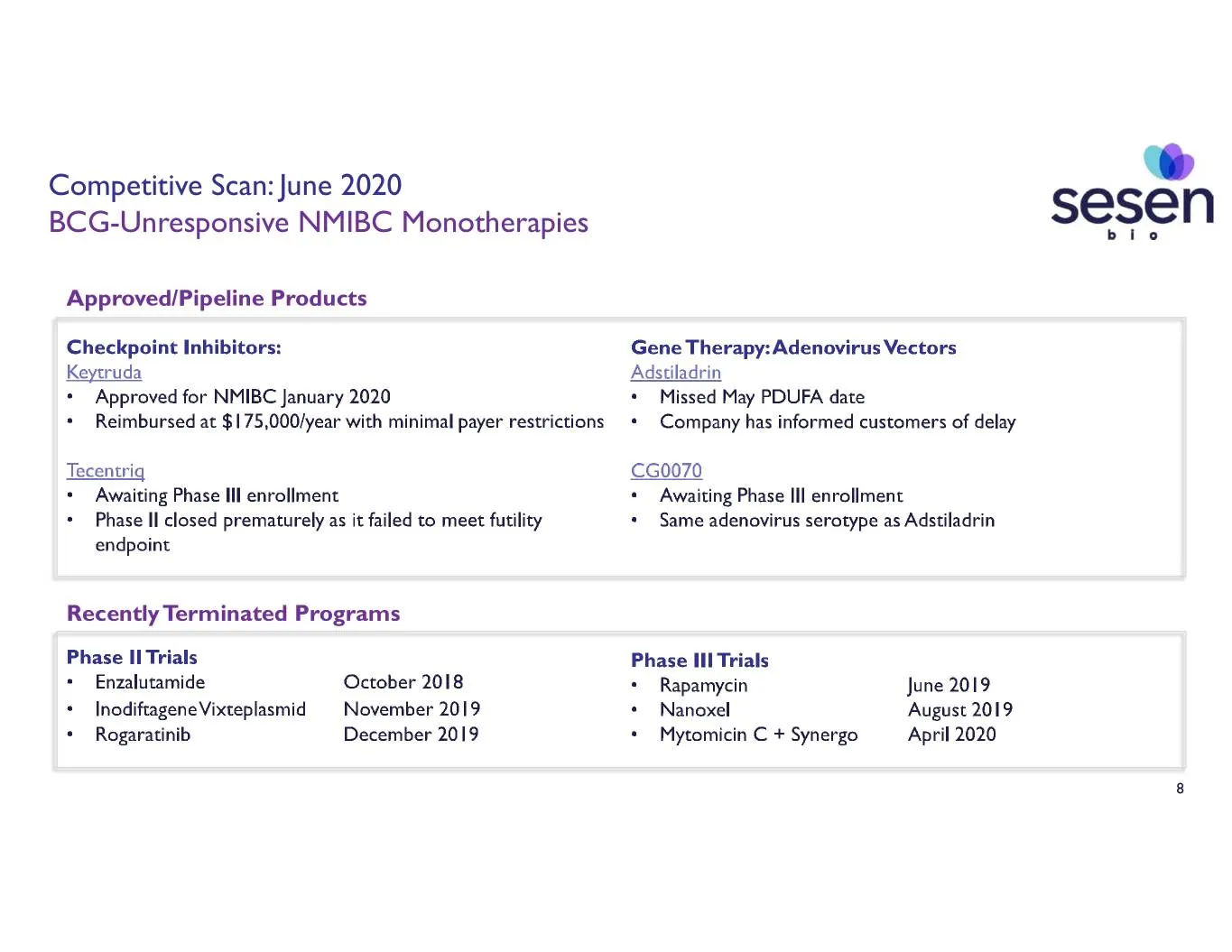
Slide 8: Competitive Scan: June 2020
Competitive Scan: June 2020 BCG-Unresponsive NMIBC Monotherapies Approved/Pipeline Products Checkpoint Inhibitors: Gene Therapy: Adenovirus Vectors Keytruda Adstiladrin • Approved for NMIBC January 2020 • Missed May PDUFA date • Reimbursed at $175,000/year with minimal payer restrictions • Company h
Slide 9: Forward-looking Timeline for Vicinium
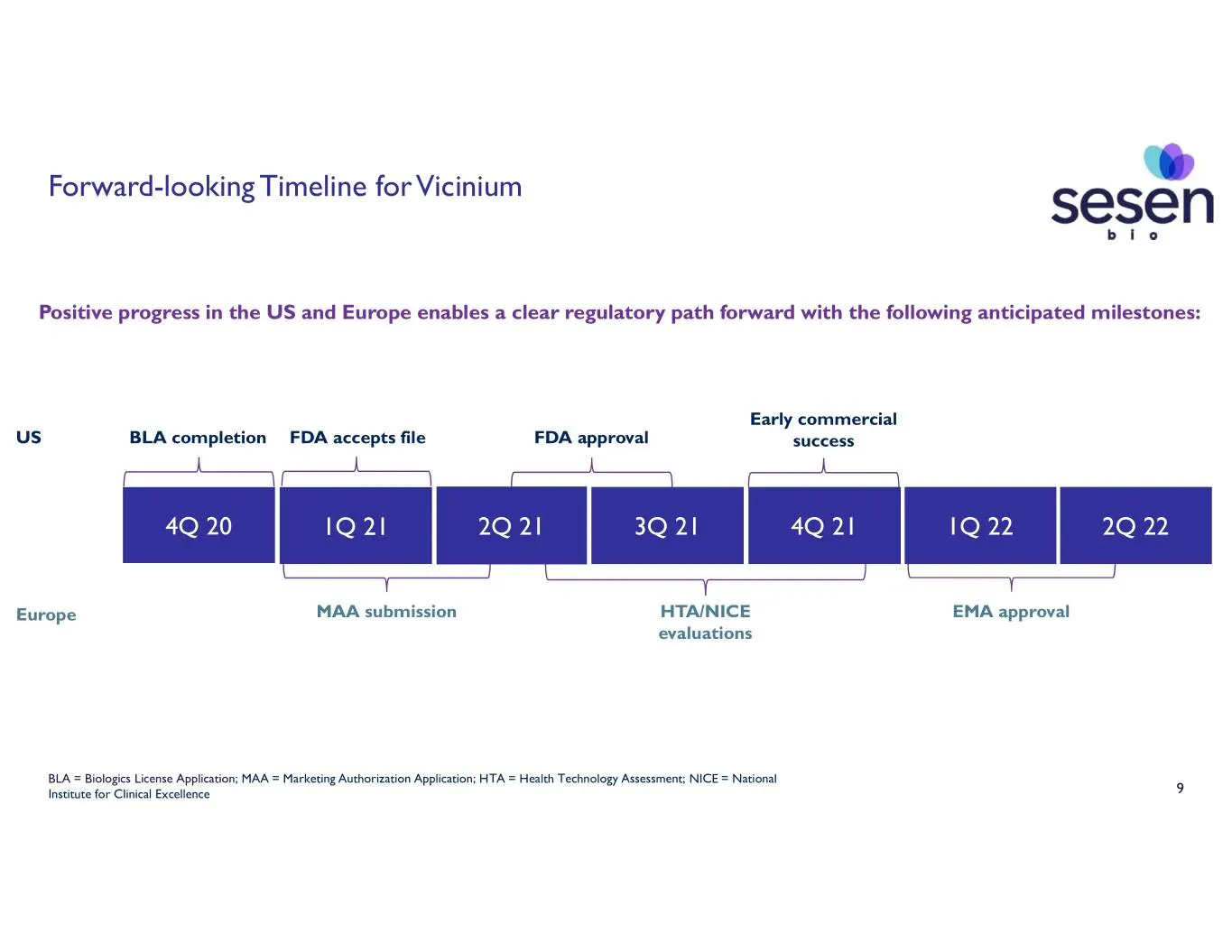
Forward-looking Timeline for Vicinium Positive progress in the US and Europe enables a clear regulatory path forward with the following anticipated milestones: Early commercial US BLA completionFDA accepts file FDA approval success 4Q 20 1Q 21 2Q 21 3Q 21 4Q 21 1Q 22 2Q 22 Europe MAA submission HTA/
Slide 10: Financial Overview
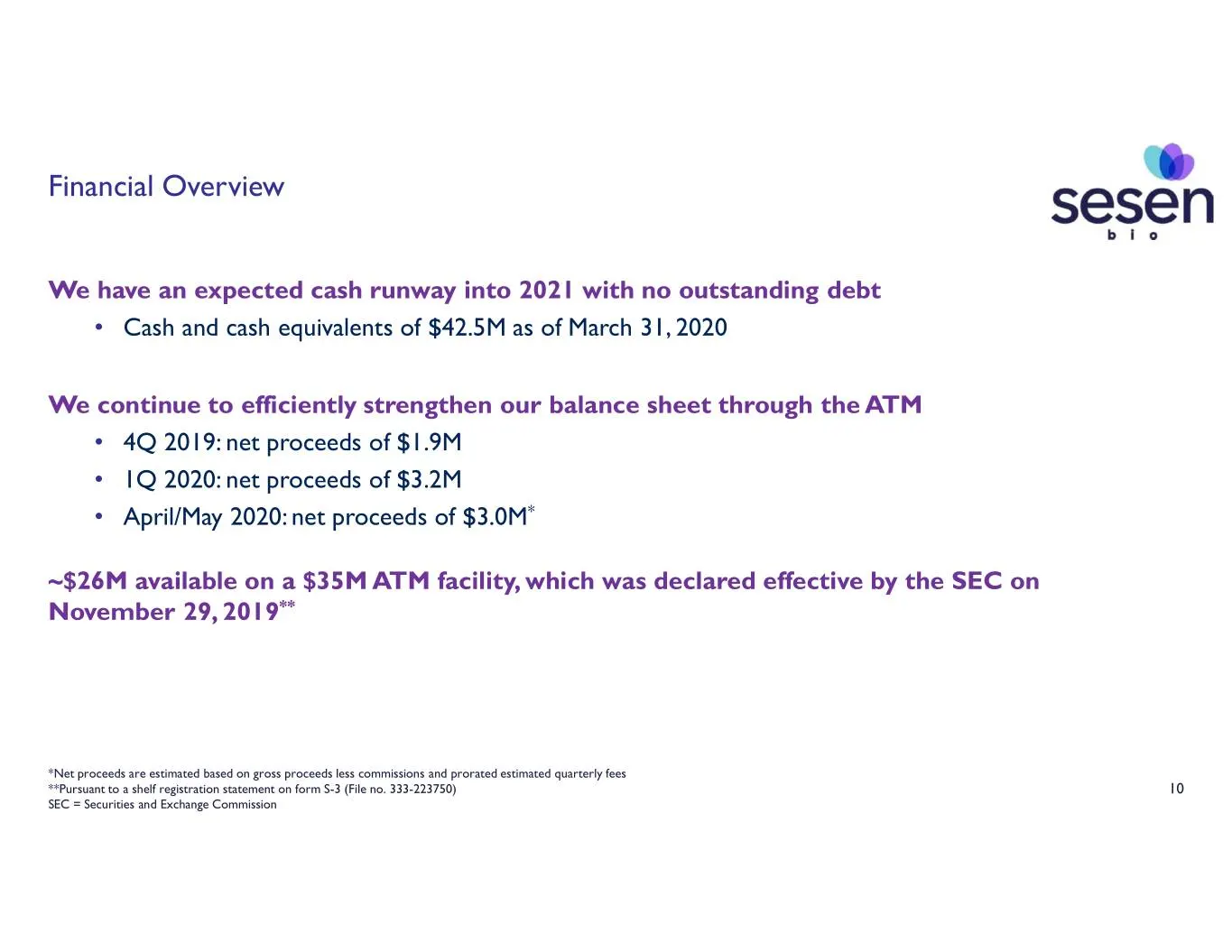
Financial Overview We have an expected cash runway into 2021 with no outstanding debt • Cash and cash equivalents of $42.5M as of March 31, 2020 We continue to efficiently strengthen our balance sheet through the ATM • 4Q 2019: net proceeds of $1.9M • 1Q 2020: net proceeds of $3.2M • April/May 2020:
Slide 11: Thank You
THANK YOU
Slide 12: Talented and Experienced Leadership Team Prepared for Commercial Launch
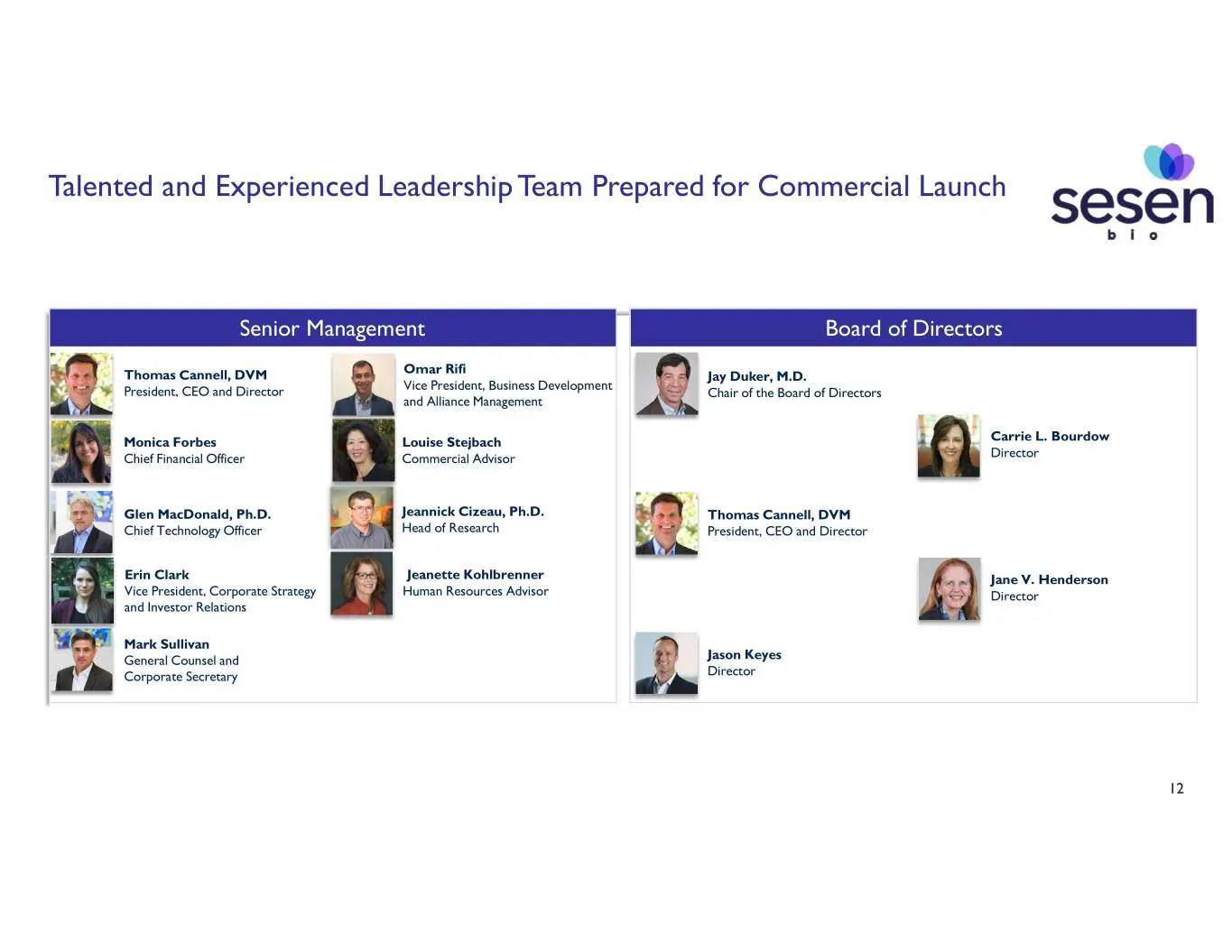
Talented and Experienced Leadership Team Prepared for Commercial Launch Senior Management Board of Directors Omar Rifi Thomas Cannell, DVM Jay Duker, M.D. Vice President, Business Development President, CEO and Director Chair of the Board of Directors and Alliance Management Monica Forbes Louise Ste
Slide 13: Appendix - Table of Contents
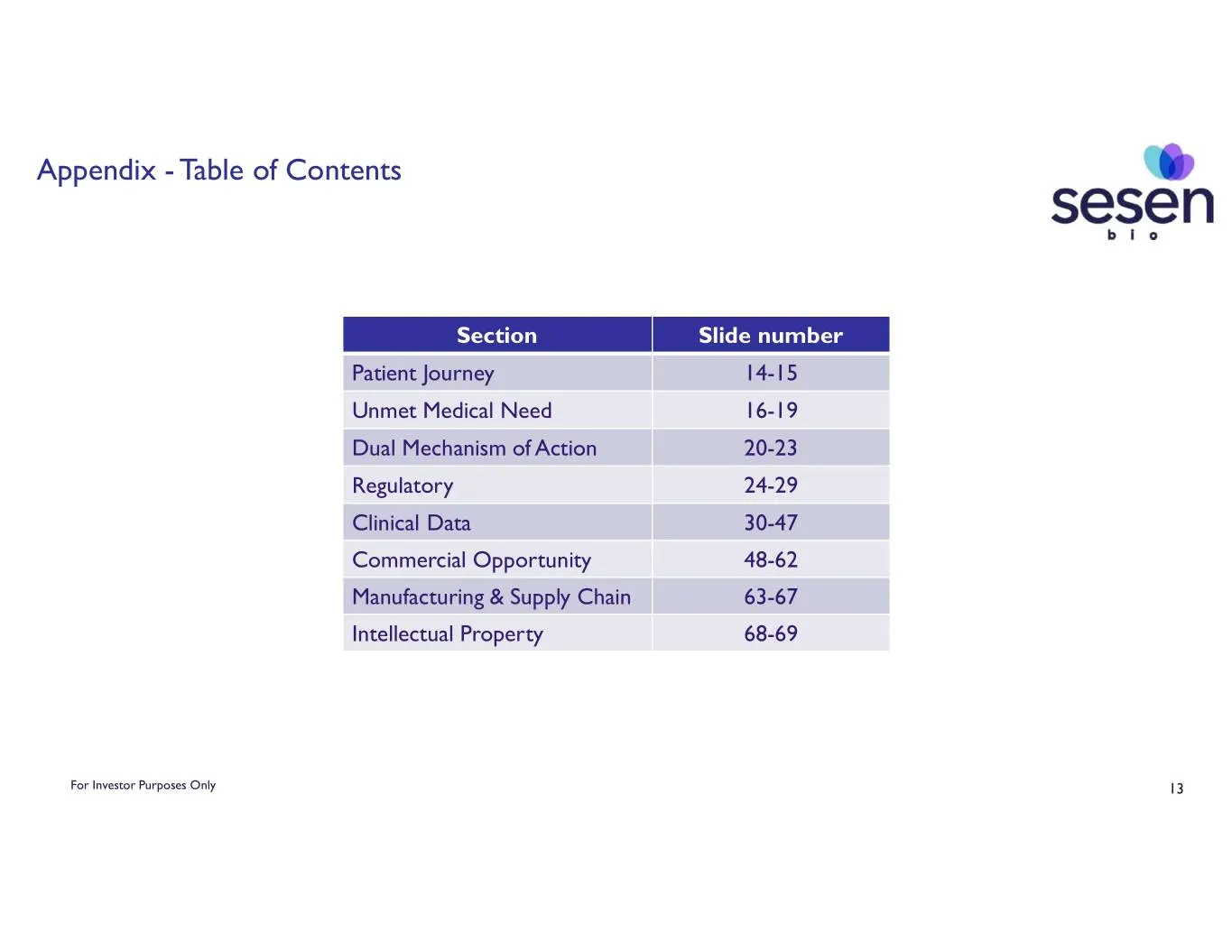
Appendix - Table of Contents Section Slide number Patient Journey 14-15 Unmet Medical Need 16-19 Dual Mechanism of Action 20-23 Regulatory 24-29 Clinical Data 30-47 Commercial Opportunity 48-62 Manufacturing & Supply Chain 63-67 Intellectual Property 68-69 For Investor Purposes Only 13
Slide 14: Appendix: Patient Journey
Appendix Patient Journey 14
Slide 15: Bladder cancer patient experience is among the poorest
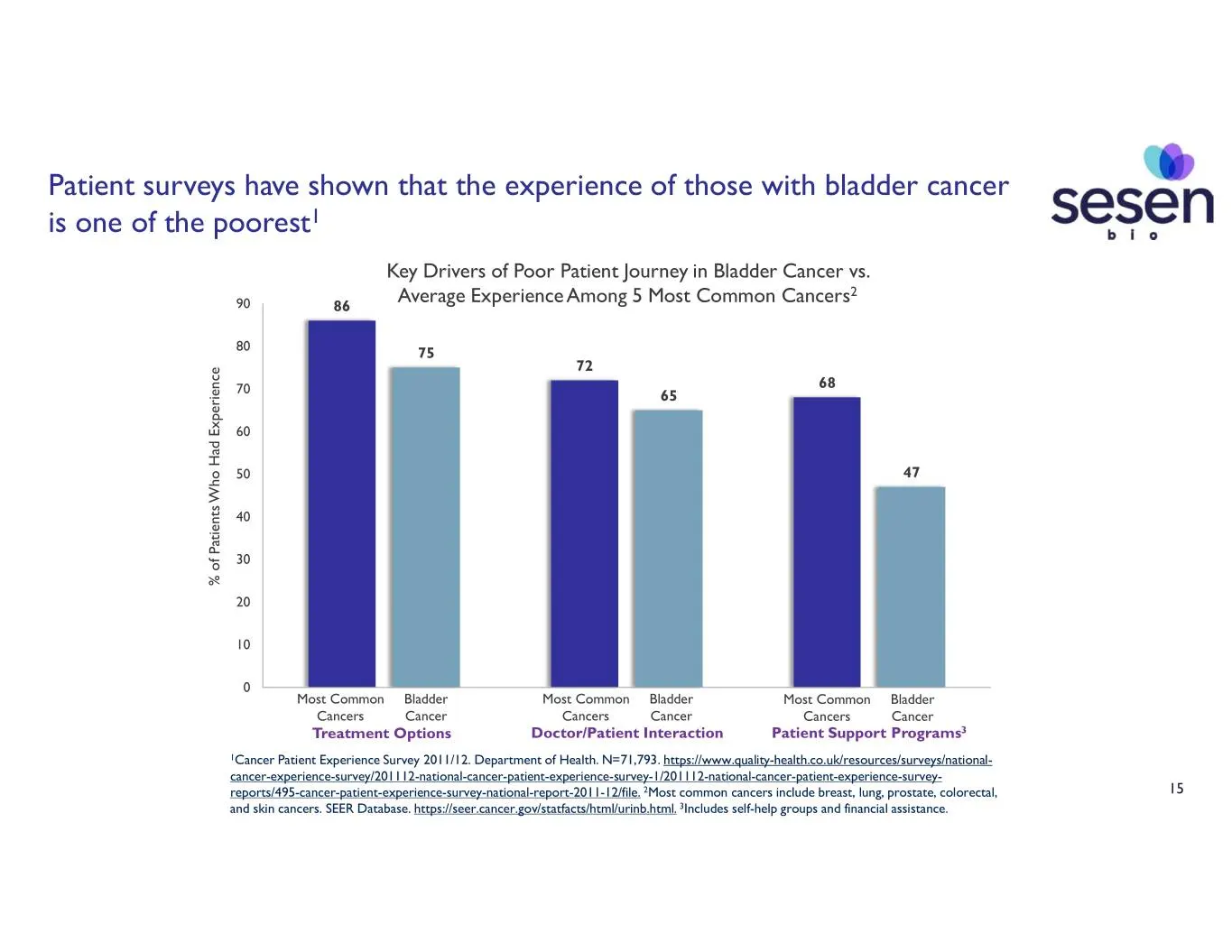
Patient surveys have shown that the experience of those with bladder cancer is one of the poorest1 Key Drivers of Poor Patient Journey in Bladder Cancer vs. Average Experience Among 5 Most Common Cancers2 90 86 80 75 72 68 70 65 60 50 47 40 30 % of Patients Who Had Experience% ofPatients 20 10 0 Mos
Slide 16: Appendix: Unmet Medical Need
Appendix Unmet Medical Need 16
Slide 17: Significant Unmet Medical Need in NMIBC
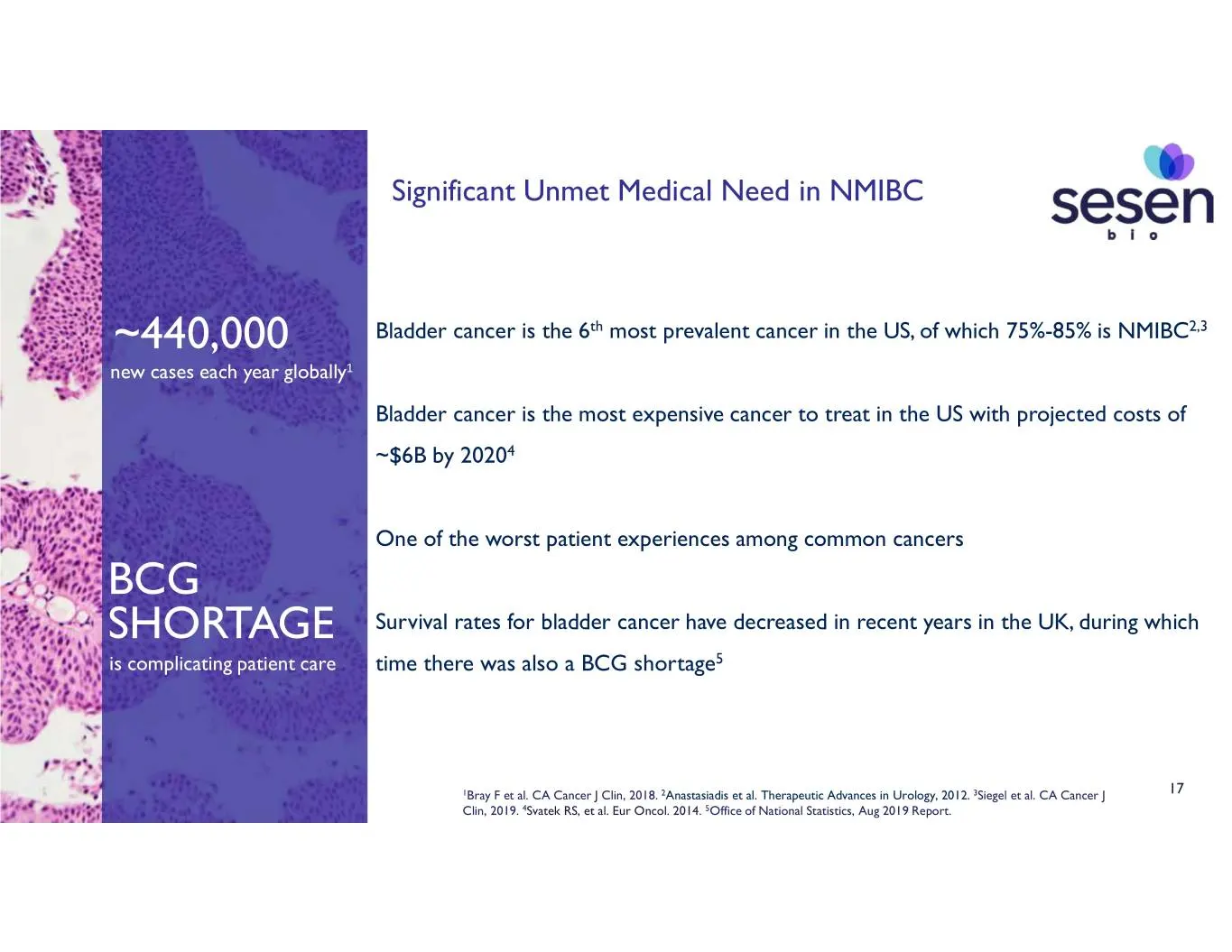
Significant Unmet Medical Need in NMIBC ~440,000 Bladder cancer is the 6th most prevalent cancer in the US, of which 75%-85% is NMIBC2,3 new cases each year globally1 Bladder cancer is the most expensive cancer to treat in the US with projected costs of ~$6B by 20204 One of the worst patient experie
Slide 18: Vicinium is cystectomy-sparing in Phase III data
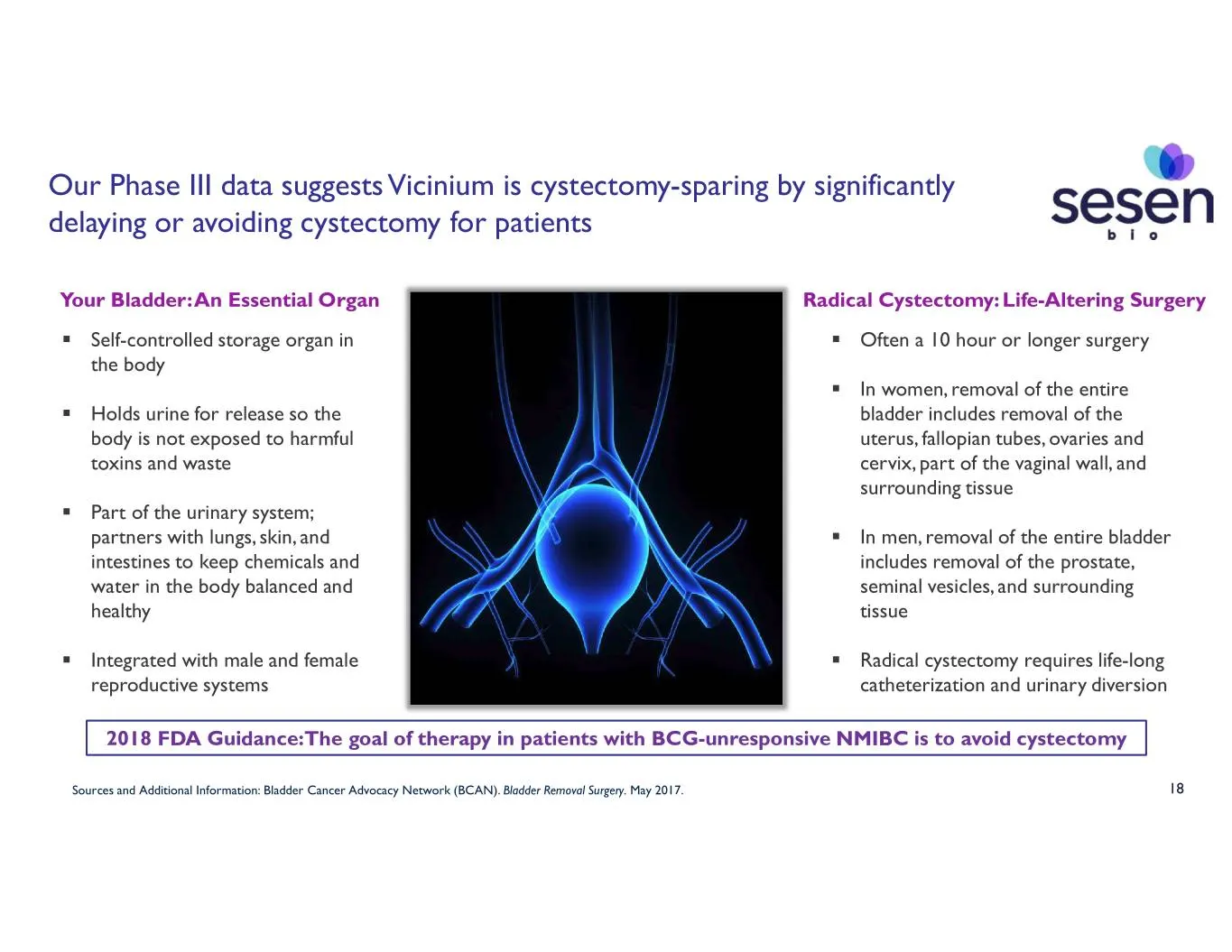
Our Phase III data suggests Vicinium is cystectomy-sparing by significantly delaying or avoiding cystectomy for patients Your Bladder: An Essential Organ Radical Cystectomy: Life-Altering Surgery Self-controlled storage organ in Often a 10 hour or longer surgery the body In women, removal of the ent
Slide 19: Latest global BCG shortage expected to last through 2020
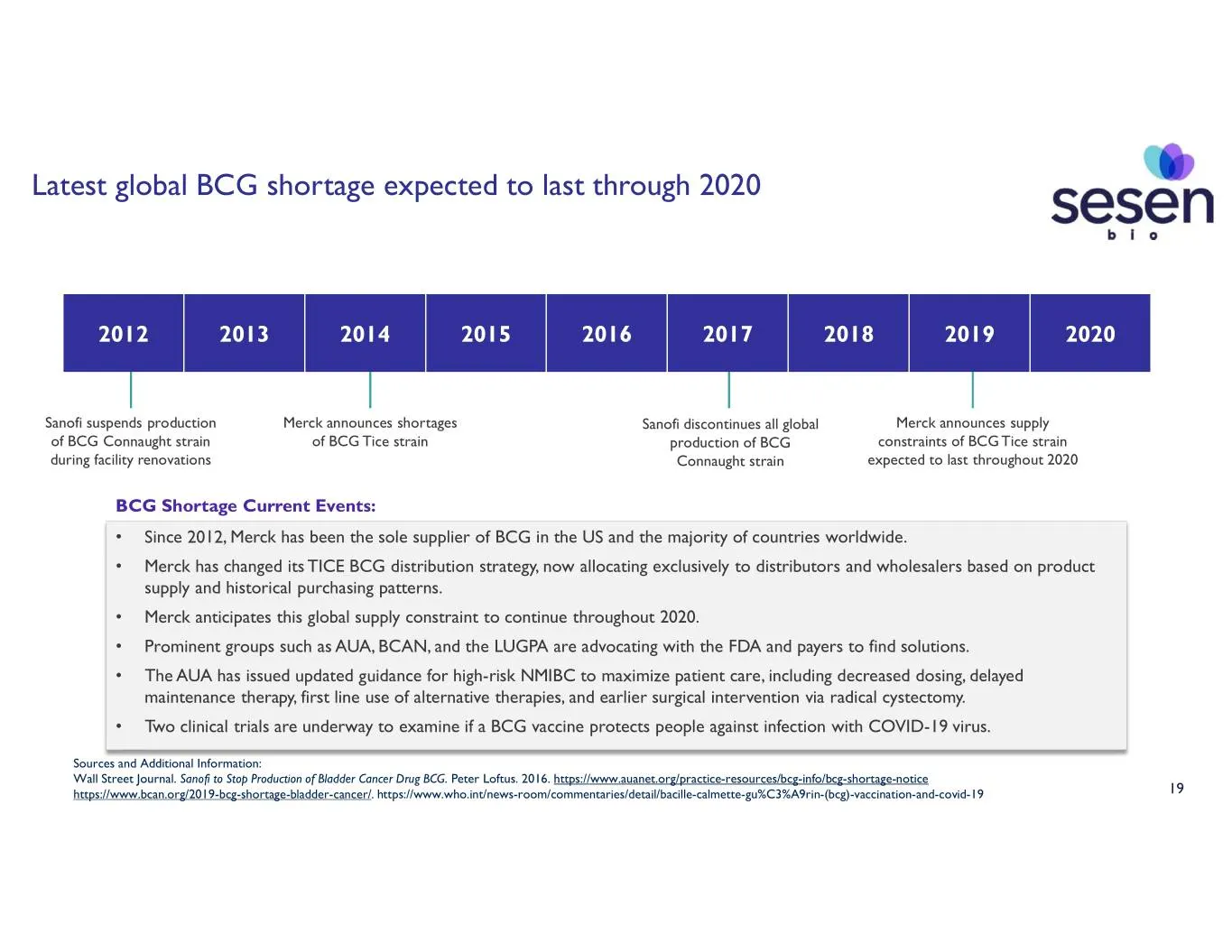
Latest global BCG shortage expected to last through 2020 2012 2013 2014 2015 2016 2017 2018 2019 2020 Sanofi suspends production Merck announces shortages Sanofi discontinues all global Merck announces supply of BCG Connaught strain of BCG Tice strain production of BCG constraints of BCG Tice strain

Slide 20: Appendix: Dual Mechanism of Action
Appendix Dual Mechanism of Action 20
Slide 21: Vicinium has a Highly Differentiated Mechanism of Action
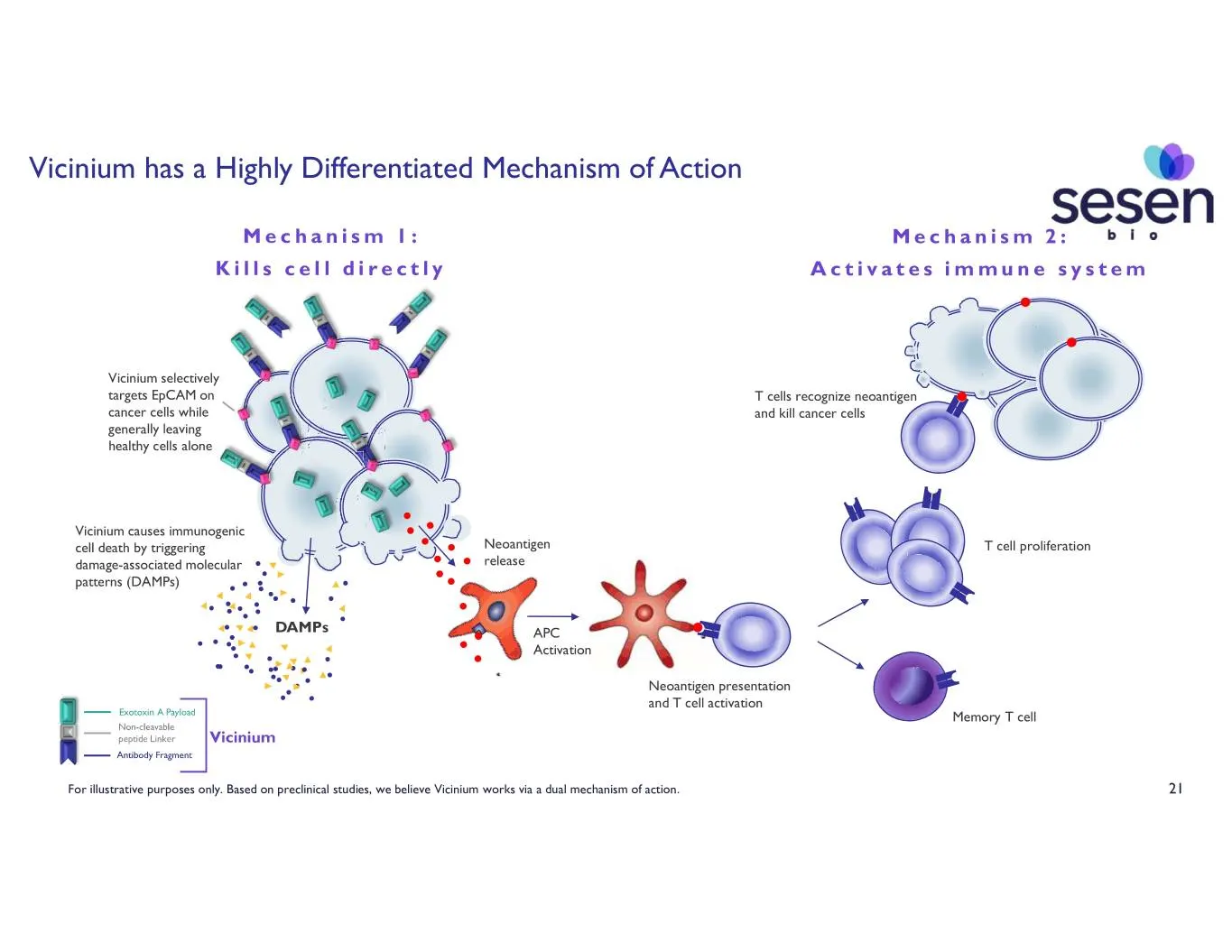
Vicinium has a Highly Differentiated Mechanism of Action Mechanism 1: Mechanism 2: Kills cell directly Activates immune system Vicinium selectively targets EpCAM on T cells recognize neoantigen cancer cells while and kill cancer cells generally leaving healthy cells alone Vicinium causes immunogenic
Slide 22: Vicinium Dual Mechanism of Action
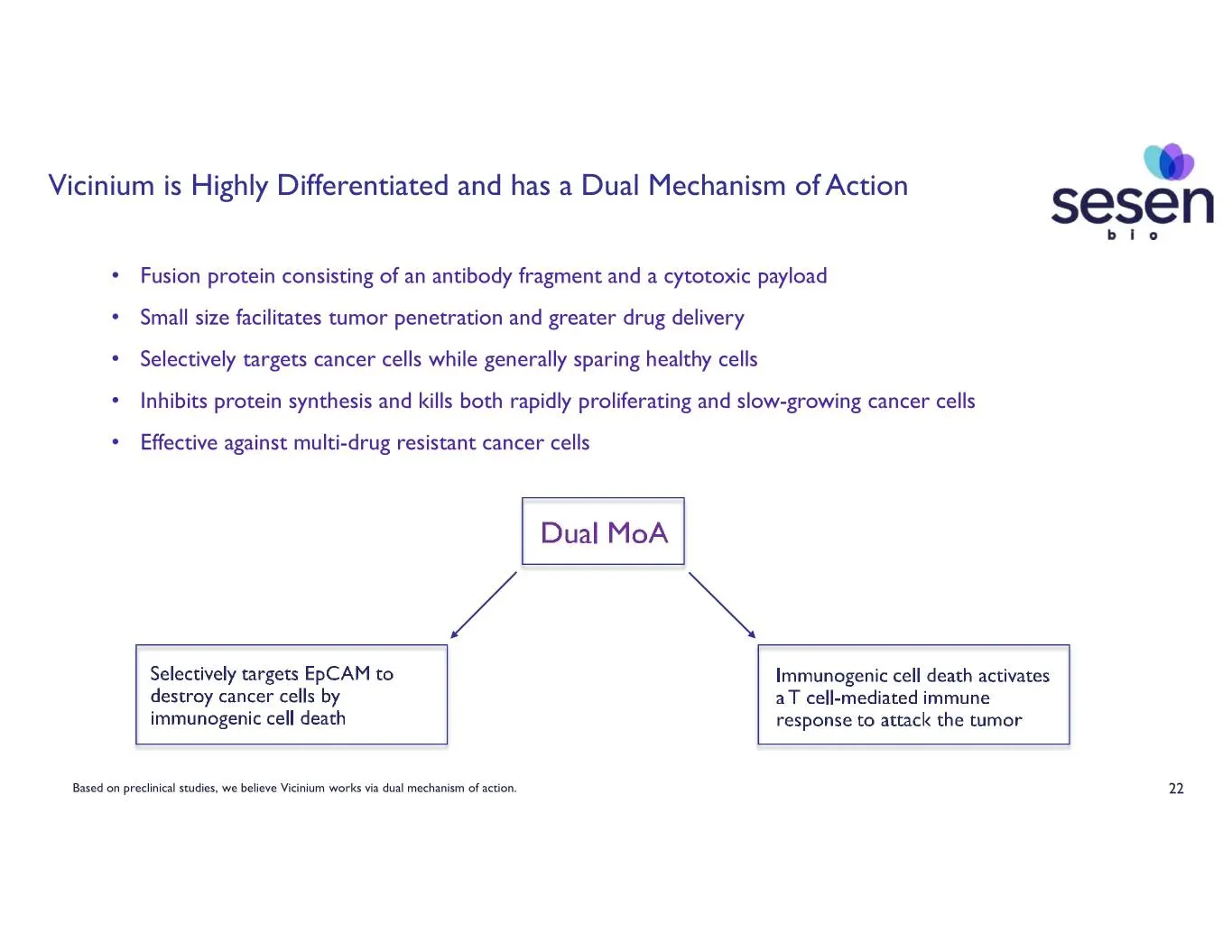
Vicinium is Highly Differentiated and has a Dual Mechanism of Action • Fusion protein consisting of an antibody fragment and a cytotoxic payload • Small size facilitates tumor penetration and greater drug delivery • Selectively targets cancer cells while generally sparing healthy cells • Inhibits pr
Slide 23: High somatic mutation rate in bladder cancer
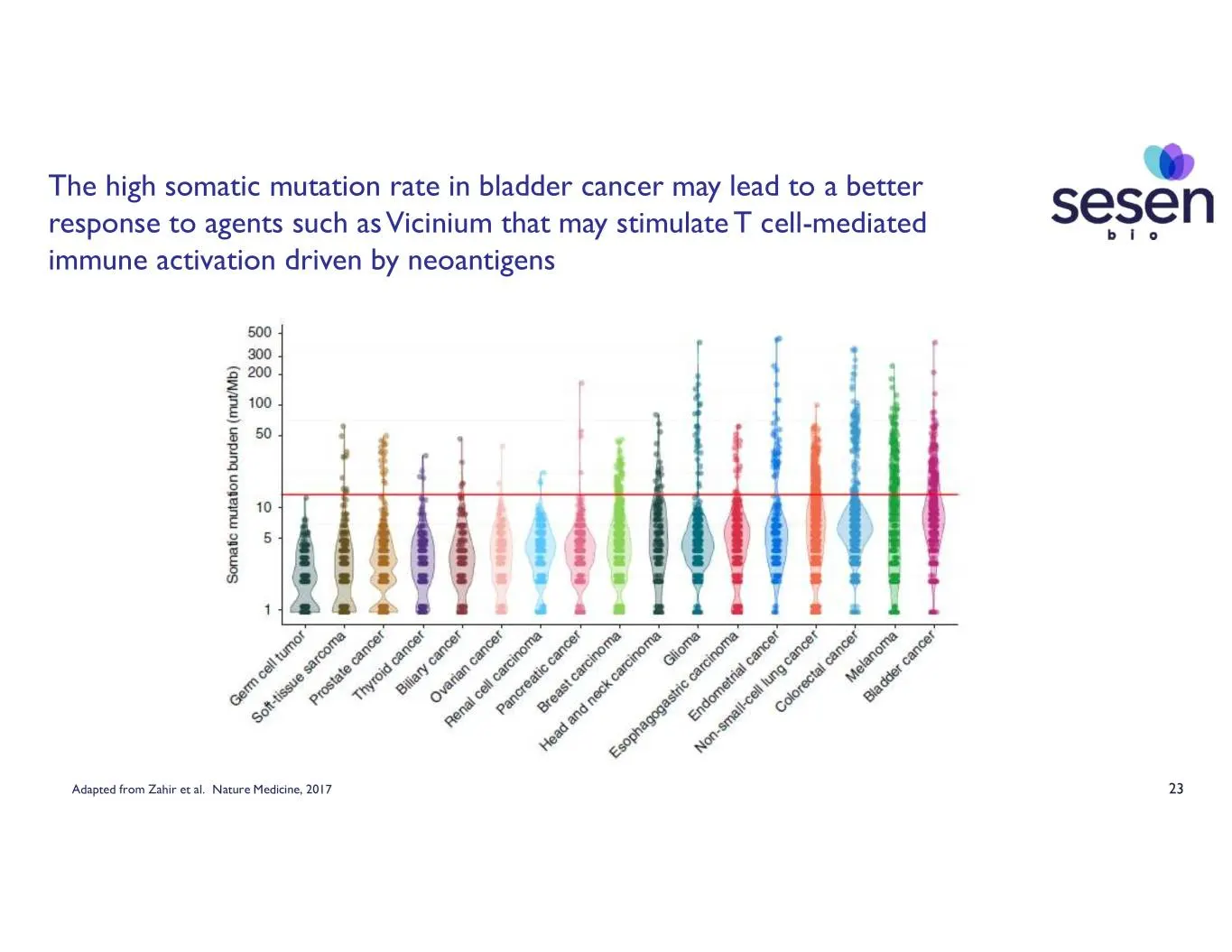
The high somatic mutation rate in bladder cancer may lead to a better response to agents such as Vicinium that may stimulate T cell-mediated immune activation driven by neoantigens Adapted from Zahir et al. Nature Medicine, 2017 23
Slide 24: Appendix: Regulatory
Appendix Regulatory 24
Slide 25: Program aligned with FDA guidance
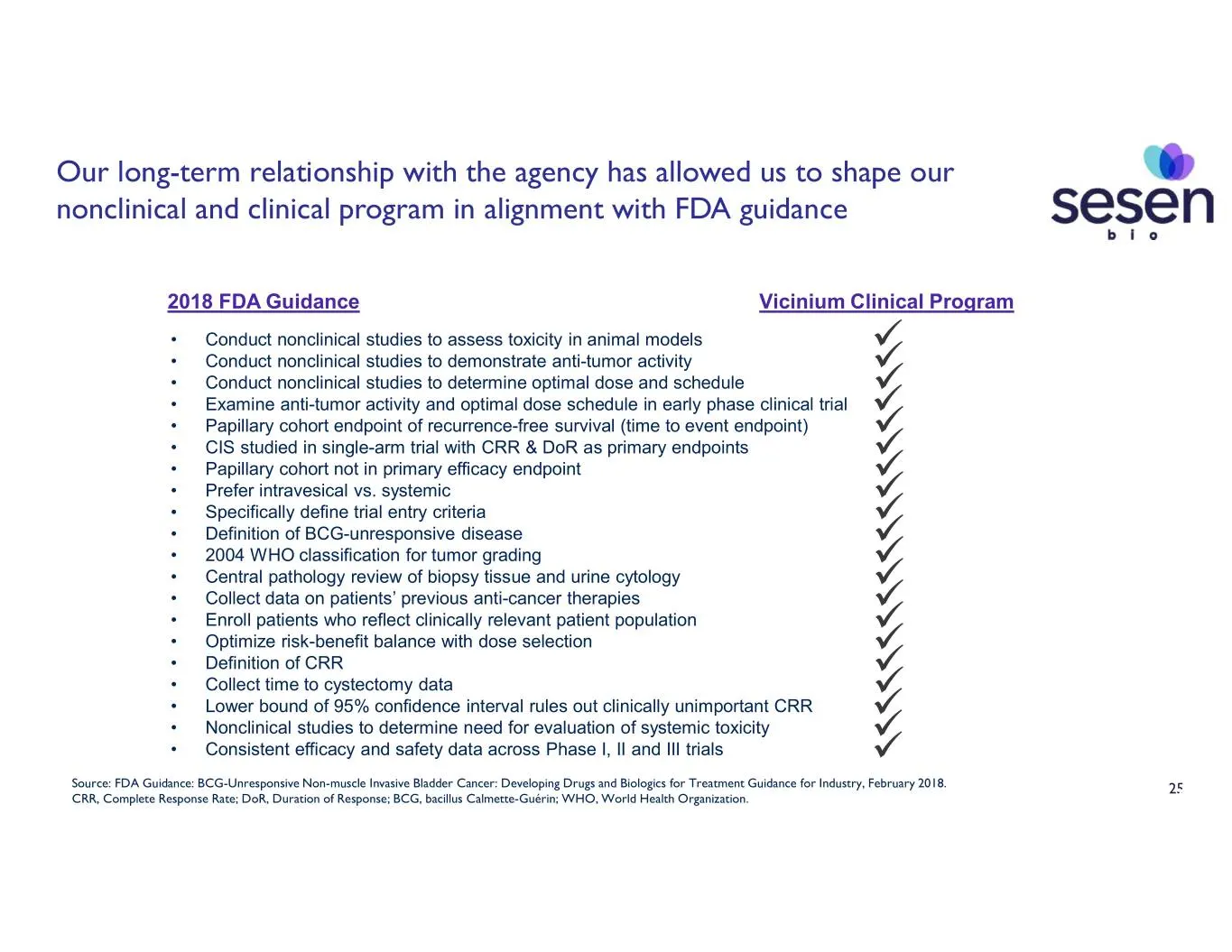
Our long-term relationship with the agency has allowed us to shape our nonclinical and clinical program in alignment with FDA guidance 2018 FDA Guidance Vicinium Clinical Program • Conduct nonclinical studies to assess toxicity in animal models • Conduct nonclinical studies to demonstrate anti-tumor
Slide 26: Strong benefit-risk profile in Phase III Trial
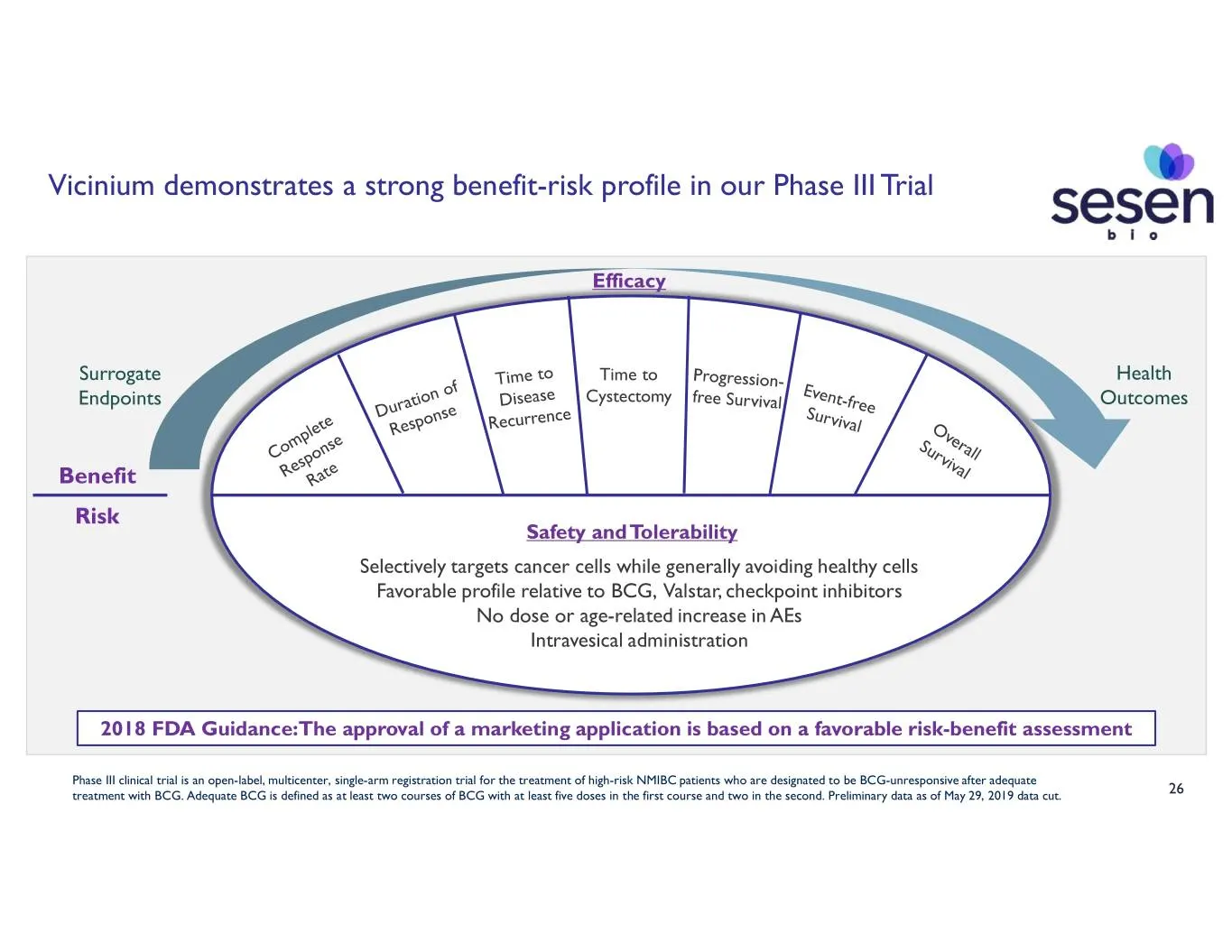
Vicinium demonstrates a strong benefit-risk profile in our Phase III Trial Efficacy Surrogate Time to Health Endpoints Cystectomy Outcomes Benefit Risk : Safety and Tolerability Selectively targets cancer cells while generally avoiding healthy cells Favorable profile relative to BCG, Valstar, checkp
Slide 27: Initiation of Vicinium BLA submission under Rolling Review
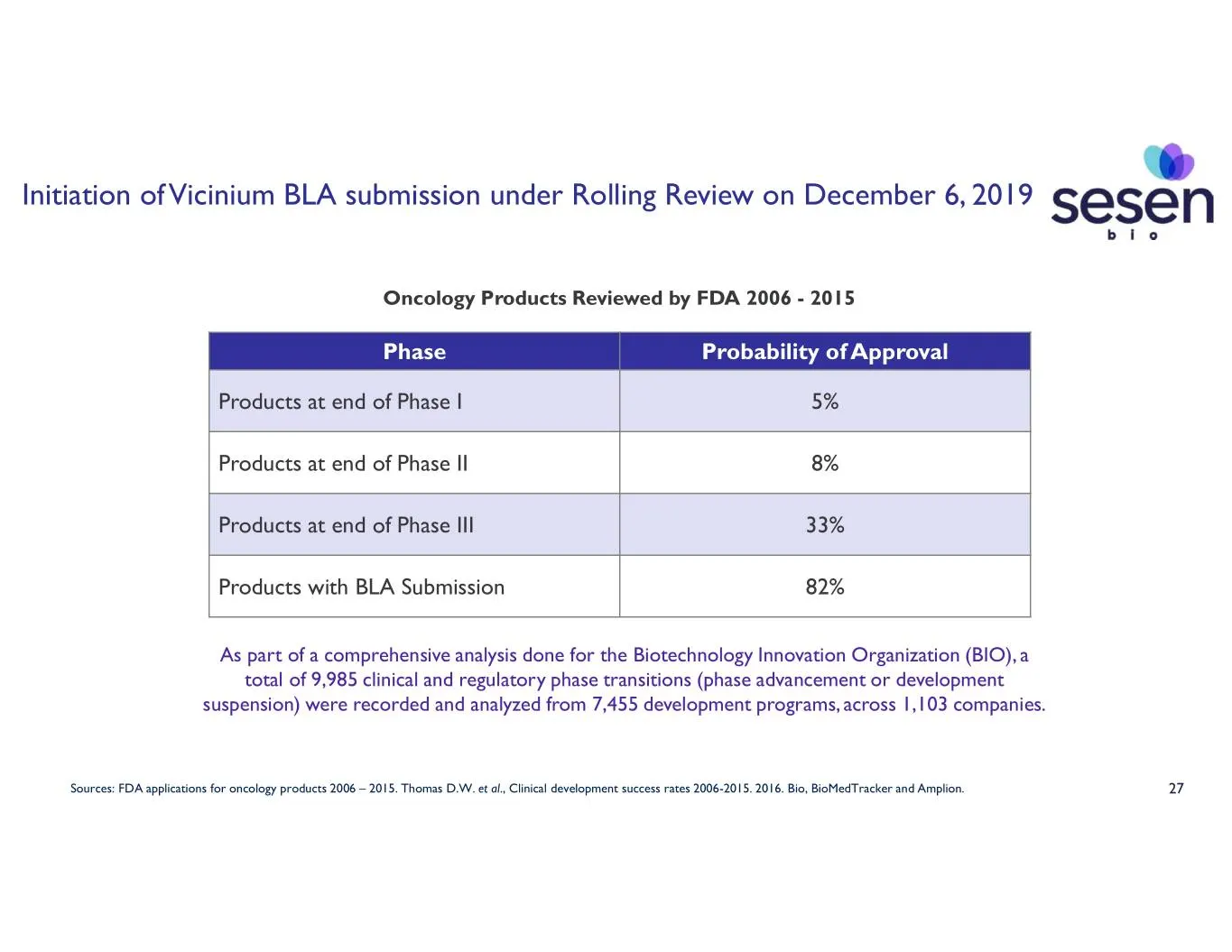
Initiation of Vicinium BLA submission under Rolling Review on December 6, 2019 Oncology Products Reviewed by FDA 2006 - 2015 Phase Probability of Approval Products at end of Phase I 5% Products at end of Phase II 8% Products at end of Phase III 33% Products with BLA Submission 82% As part of a compr
Slide 28: Significant Progress in 2019
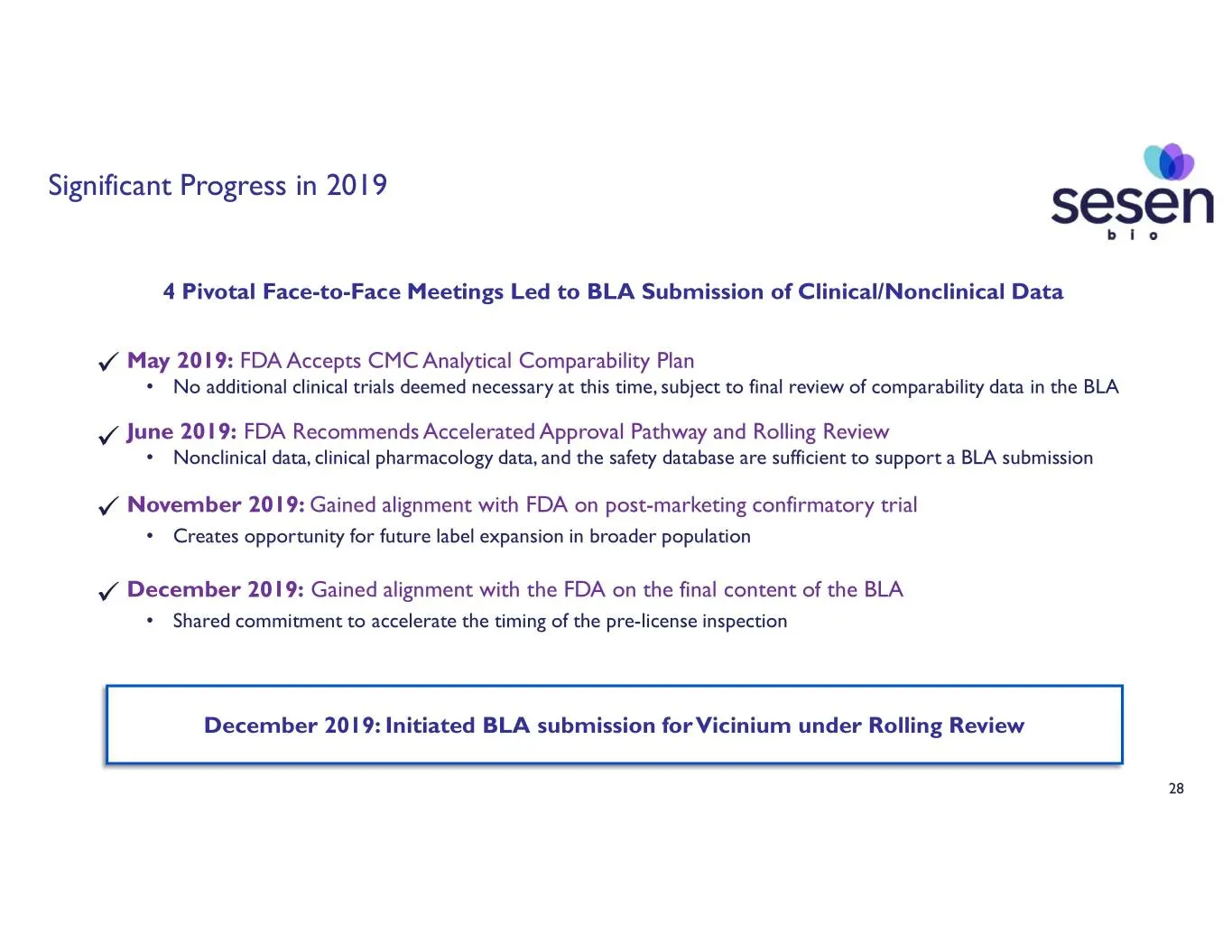
Significant Progress in 2019 4 Pivotal Face-to-Face Meetings Led to BLA Submission of Clinical/Nonclinical Data May 2019: FDA Accepts CMC Analytical Comparability Plan • No additional clinical trials deemed necessary at this time, subject to final review of comparability data in the BLA June 2019: F
Slide 29: Analytical Comparability Outlook
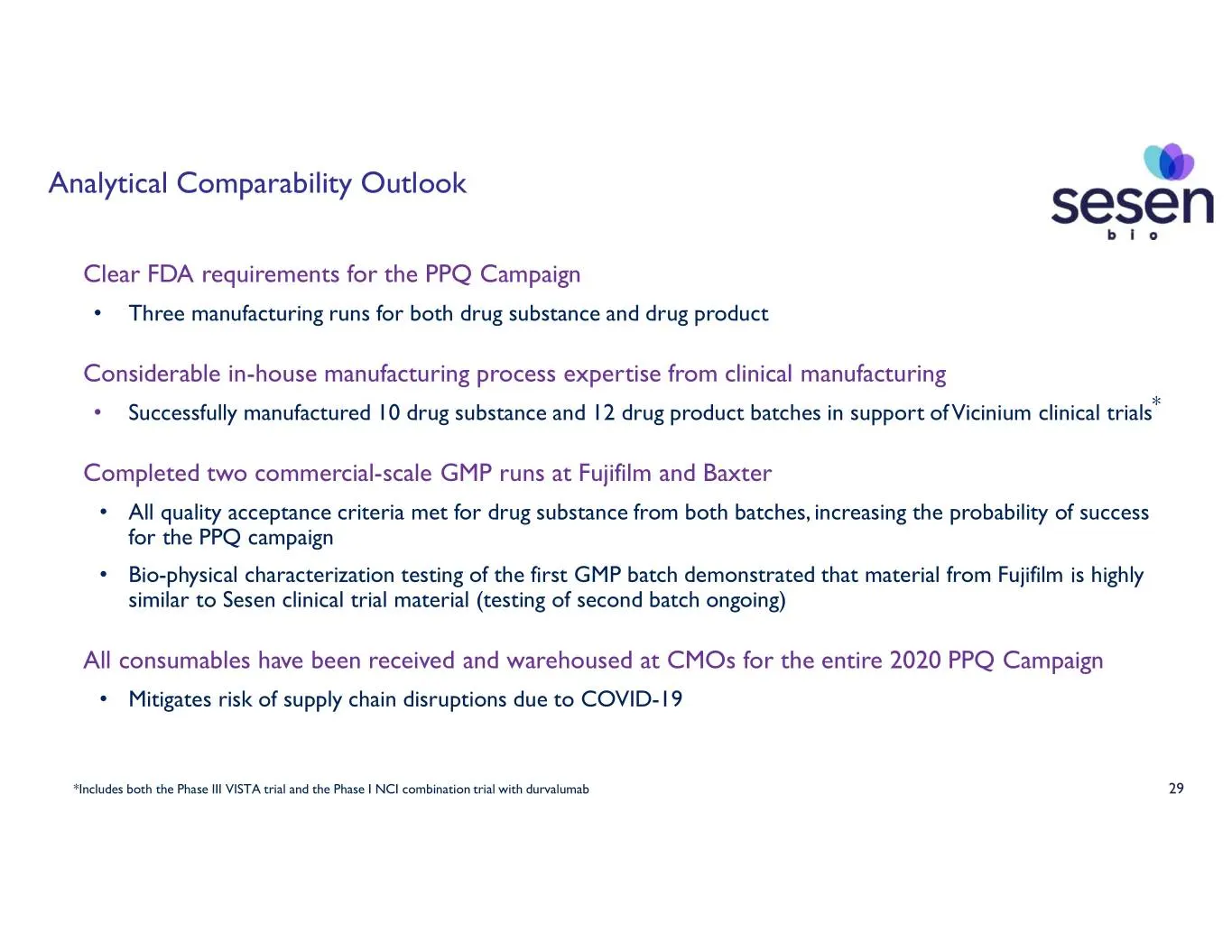
Analytical Comparability Outlook Clear FDA requirements for the PPQ Campaign • Three manufacturing runs for both drug substance and drug product Considerable in-house manufacturing process expertise from clinical manufacturing • Successfully manufactured 10 drug substance and 12 drug product batches
Slide 30: Appendix: Clinical Data
Appendix Clinical Data 30
Slide 31: Phase III Trial: Patient Demographics
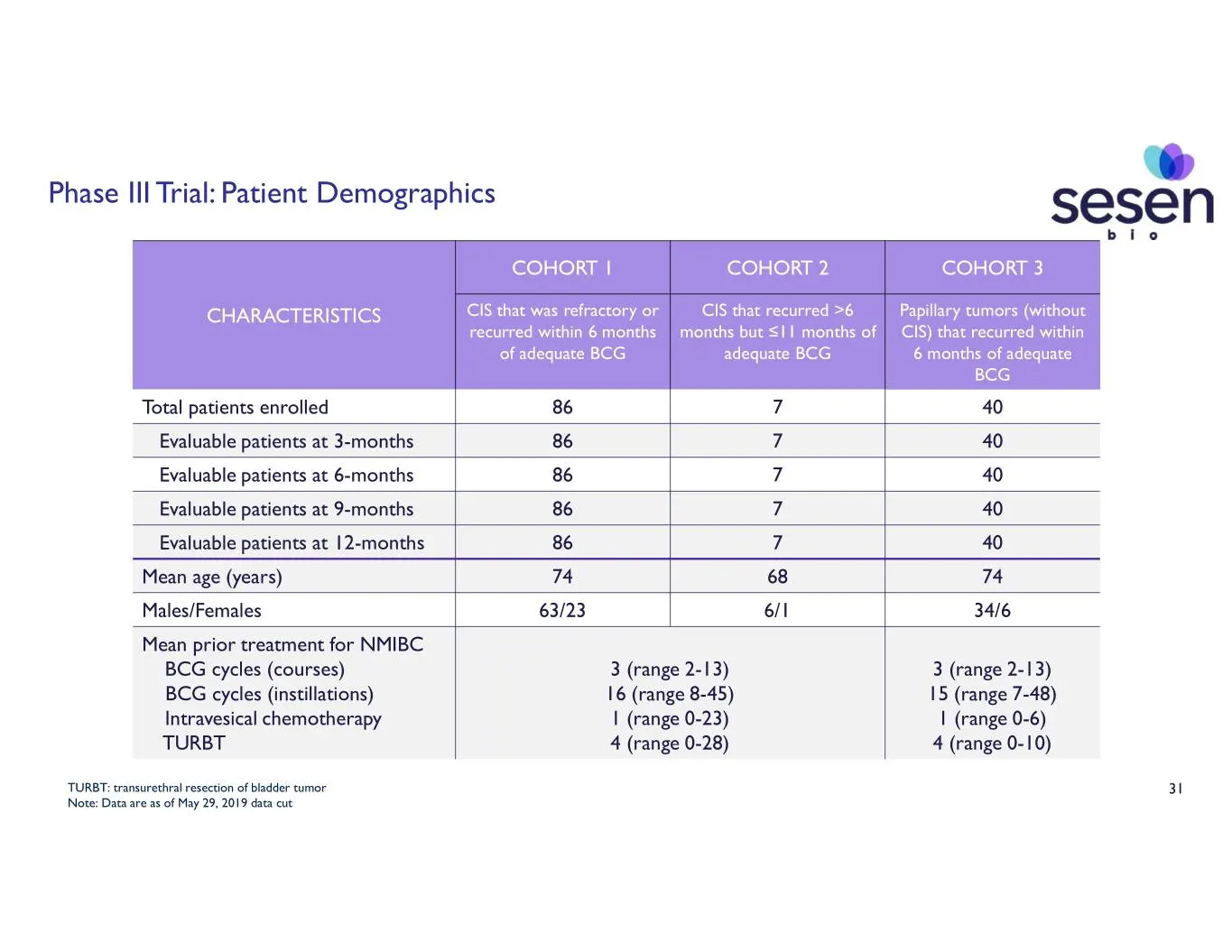
Phase III Trial: Patient Demographics COHORT 1 COHORT 2 COHORT 3 CHARACTERISTICS CIS that was refractory or CIS that recurred >6 Papillary tumors (without recurred within 6 months CIS) that recurred within of adequate BCG adequate BCG 6 months of adequate BCG Total patients enrolled 86 7 40 Evaluabl
Slide 32: Highly Differentiated Clinical Profile
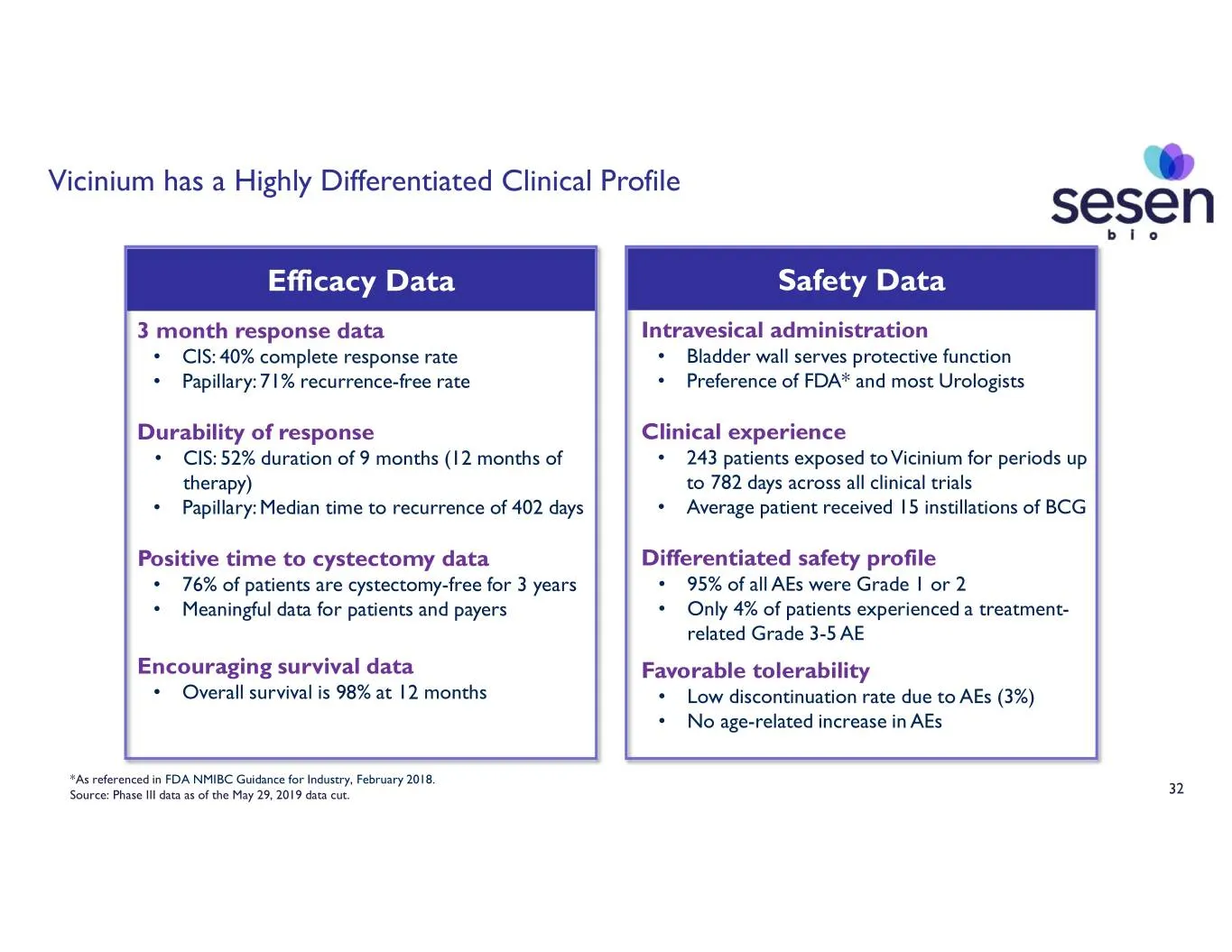
Vicinium has a Highly Differentiated Clinical Profile Efficacy Data Safety Data 3 month response data Intravesical administration • CIS: 40% complete response rate • Bladder wall serves protective function • Papillary: 71% recurrence-free rate • Preference of FDA* and most Urologists Durability of r
Slide 33: Compelling Clinical Data Set
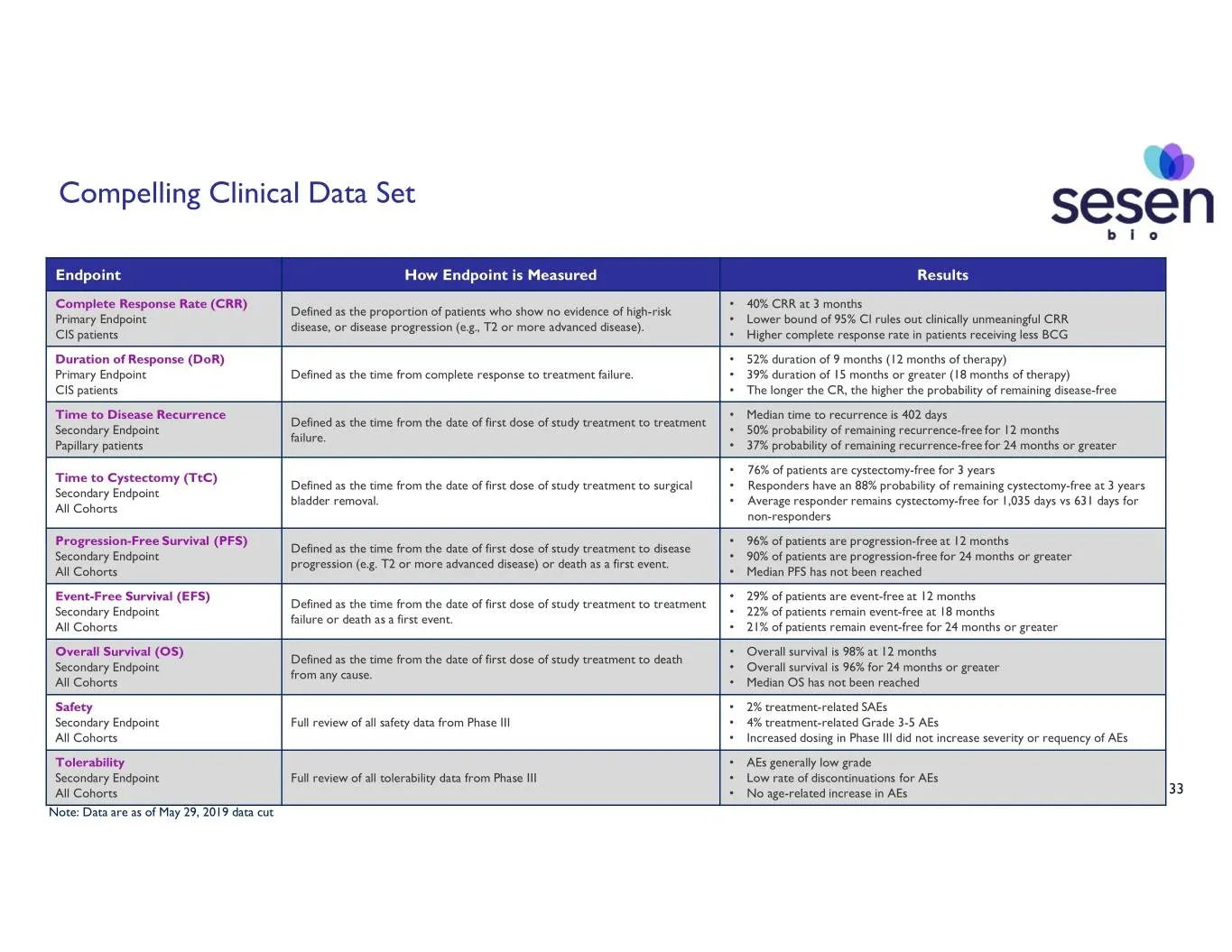
Compelling Clinical Data Set Endpoint How Endpoint is Measured Results Complete Response Rate (CRR) • 40% CRR at 3 months Defined as the proportion of patients who show no evidence of high-risk Primary Endpoint • Lower bound of 95% CI rules out clinically unmeaningful CRR disease, or disease progres
Slide 34: Additional Vicinium Clinical Data: Phase II vs. Phase III
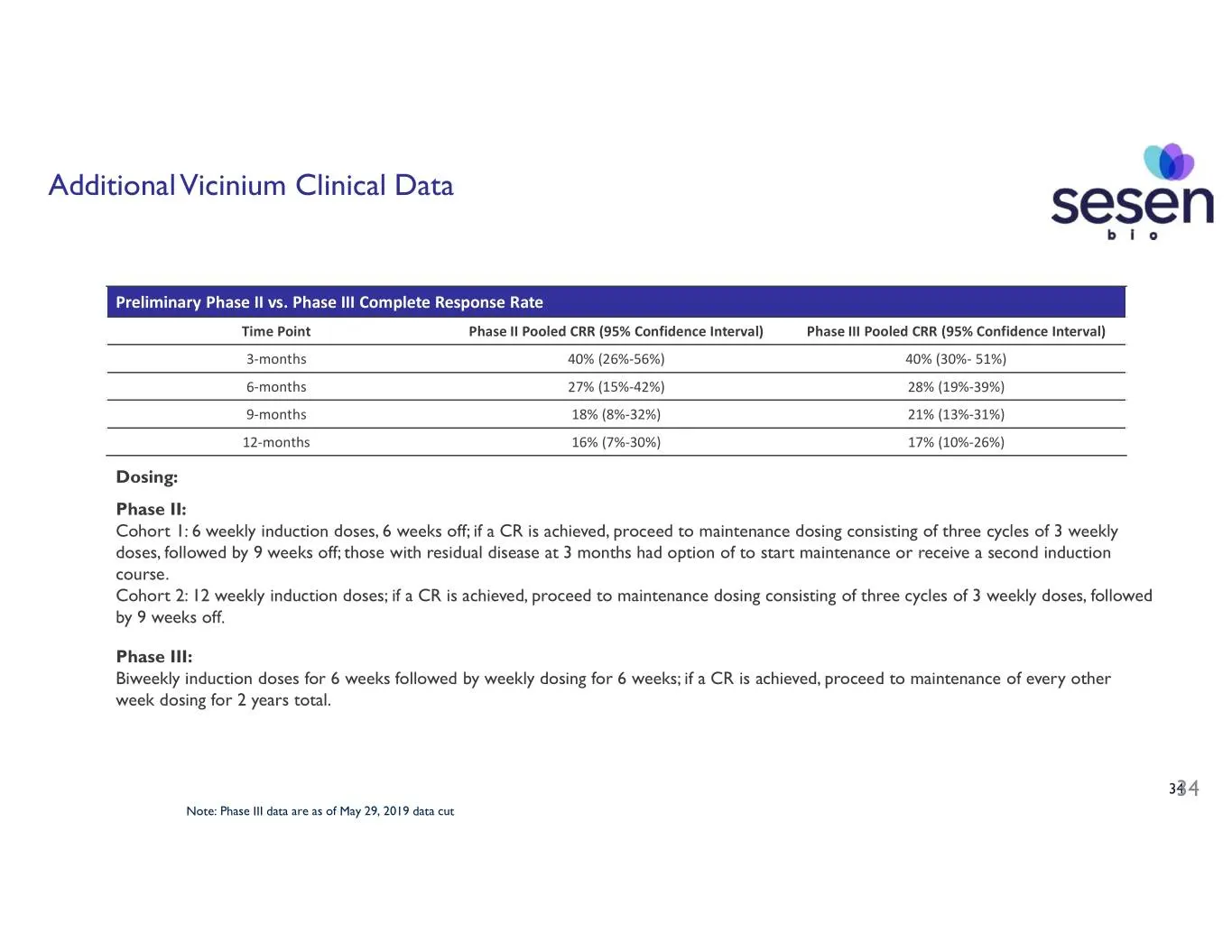
Additional Vicinium Clinical Data Preliminary Phase II vs. Phase III Complete Response Rate Time Point Phase II Pooled CRR (95% Confidence Interval) Phase III Pooled CRR (95% Confidence Interval) 3-months 40% (26%-56%) 40% (30%-51%) 6-months 27% (15%-42%) 28% (19%-39%) 9-months 18% (8%-32%) 21% (13%
Slide 35: Evaluable Patient Data Tables by Cohort
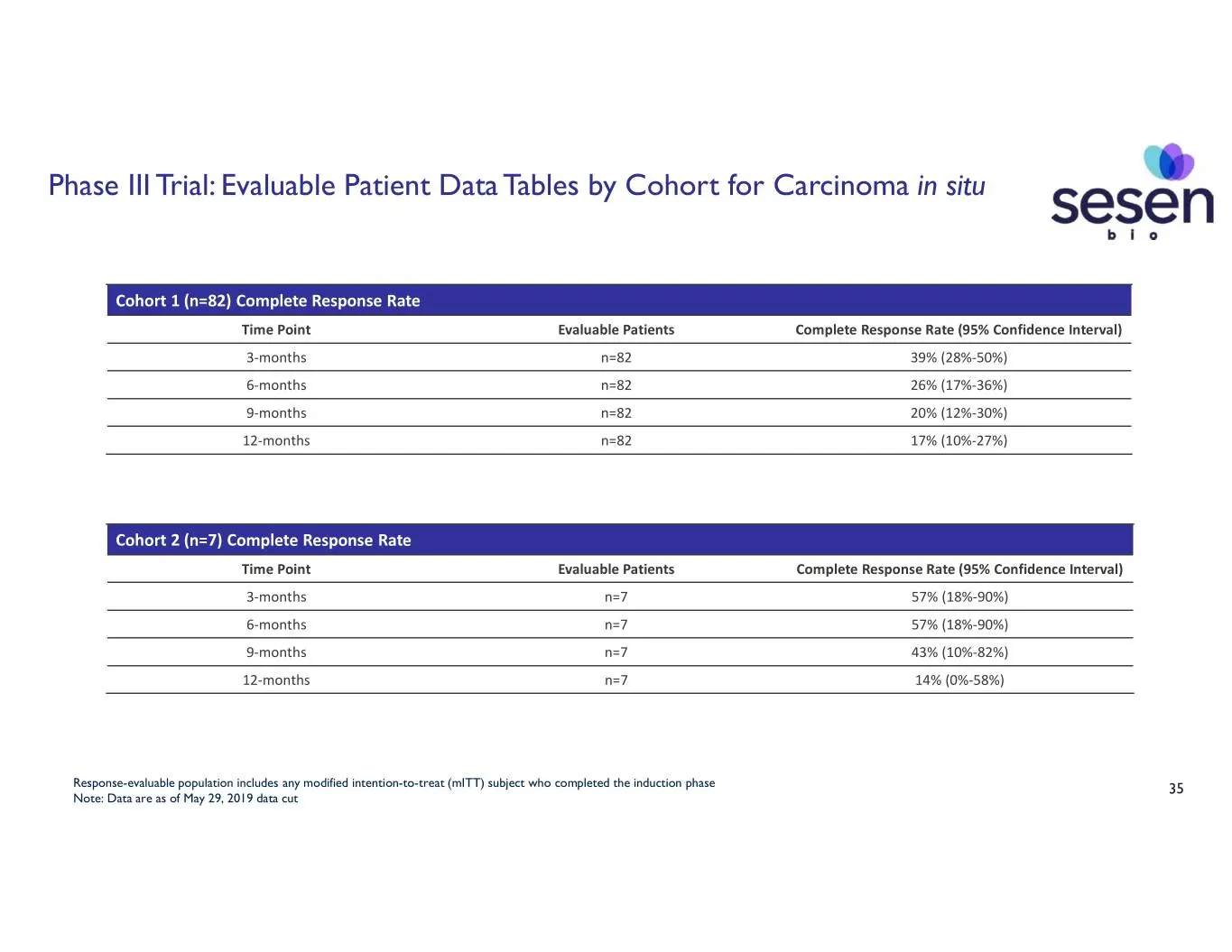
Phase III Trial: Evaluable Patient Data Tables by Cohort for Carcinoma in situ Cohort 1 (n=82) Complete Response Rate Time Point Evaluable Patients Complete Response Rate (95% Confidence Interval) 3-months n=82 39% (28%-50%) 6-months n=82 26% (17%-36%) 9-months n=82 20% (12%-30%) 12-months n=82 17%
Slide 36: Complete and Partial Response
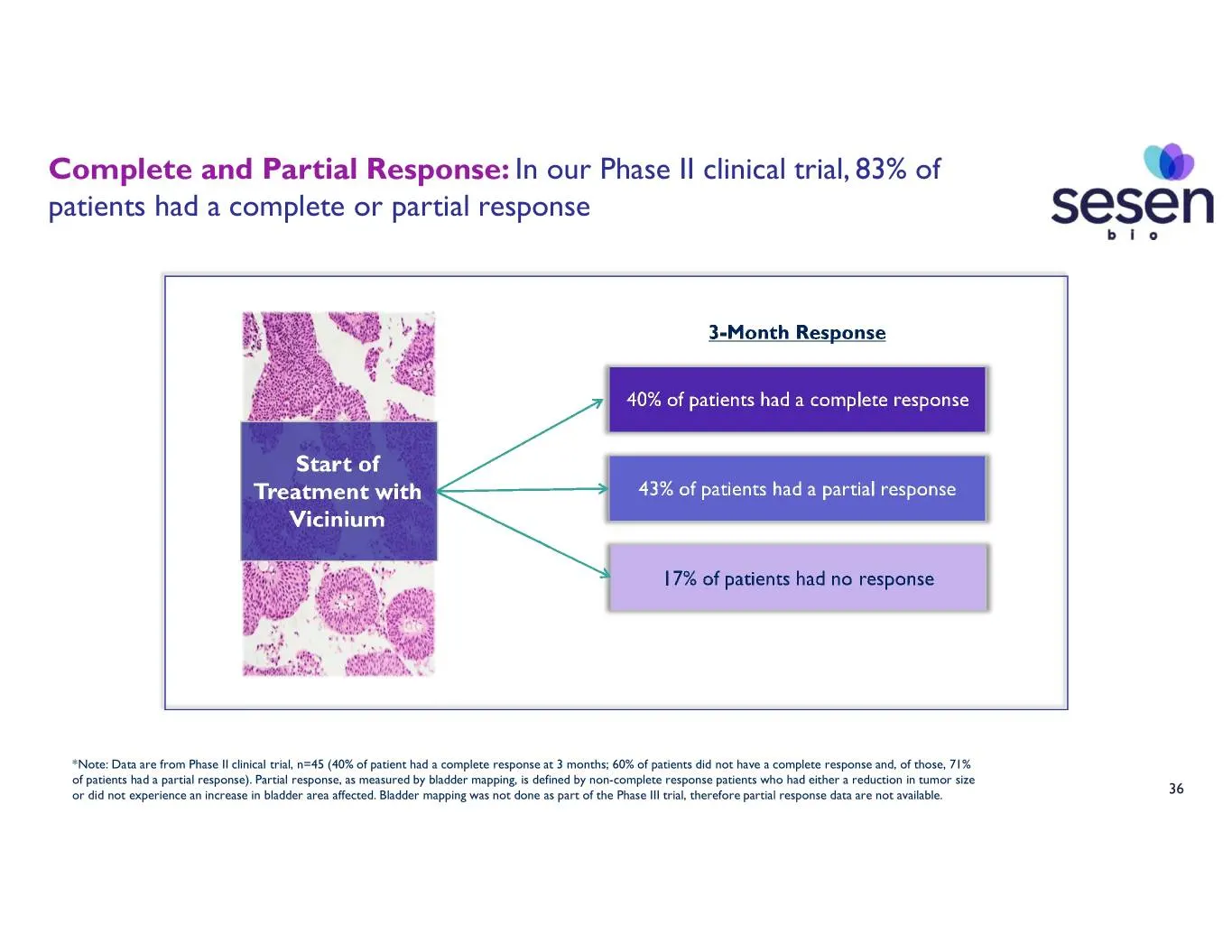
Complete and Partial Response: In our Phase II clinical trial, 83% of patients had a complete or partial response 3-Month Response 40% of patients had a complete response Start of Treatment with 43% of patients had a partial response Vicinium 17% of patients had no response *Note: Data are from Phas
Slide 37: Duration of Response in CIS patients
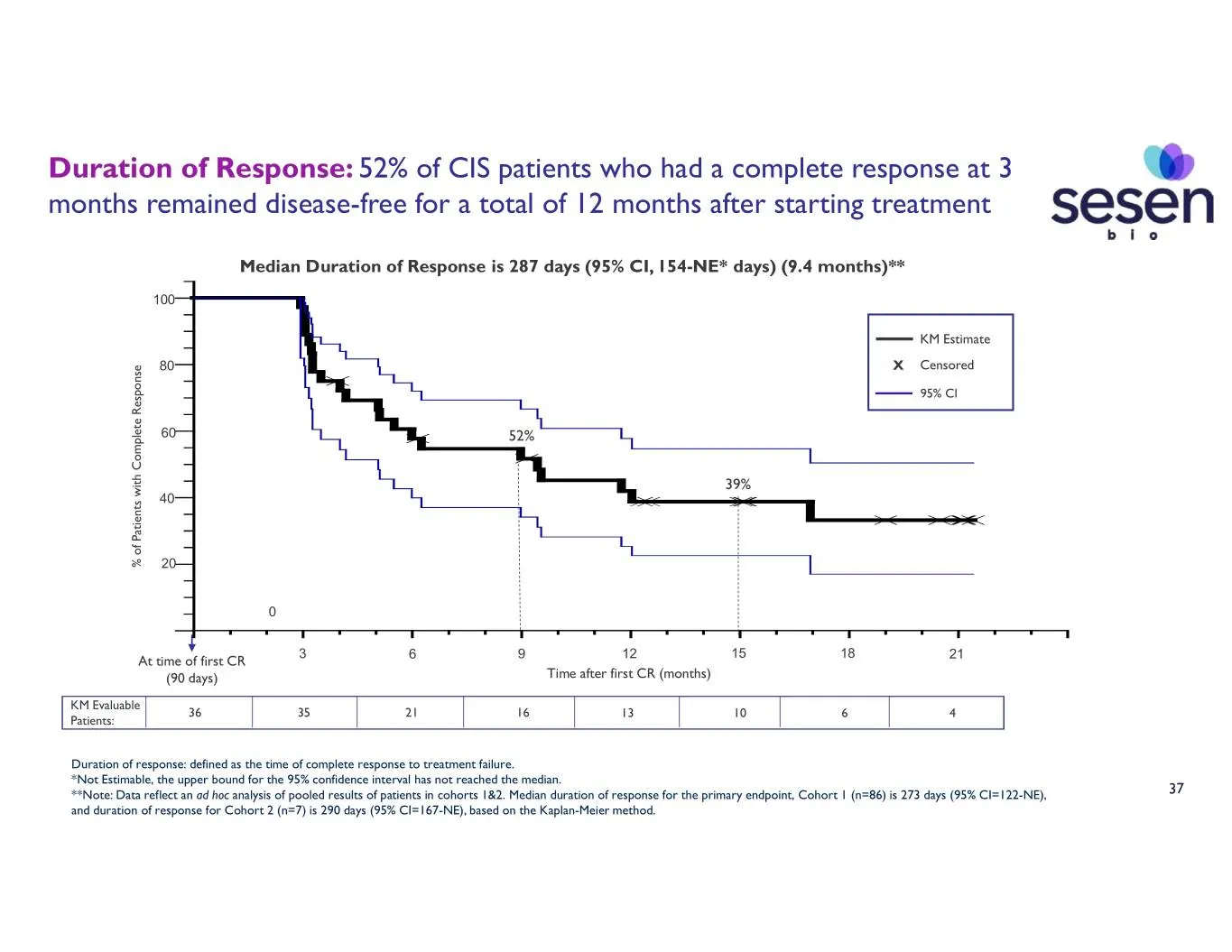
Duration of Response: 52% of CIS patients who had a complete response at 3 months remained disease-free for a total of 12 months after starting treatment Median Duration of Response is 287 days (95% CI, 154-NE* days) (9.4 months)** 100 KM Estimate 80 X Censored 95% CI 60 52% 39% 40 % of Patients Pat
Slide 38: Probability of remaining cancer-free with longer response
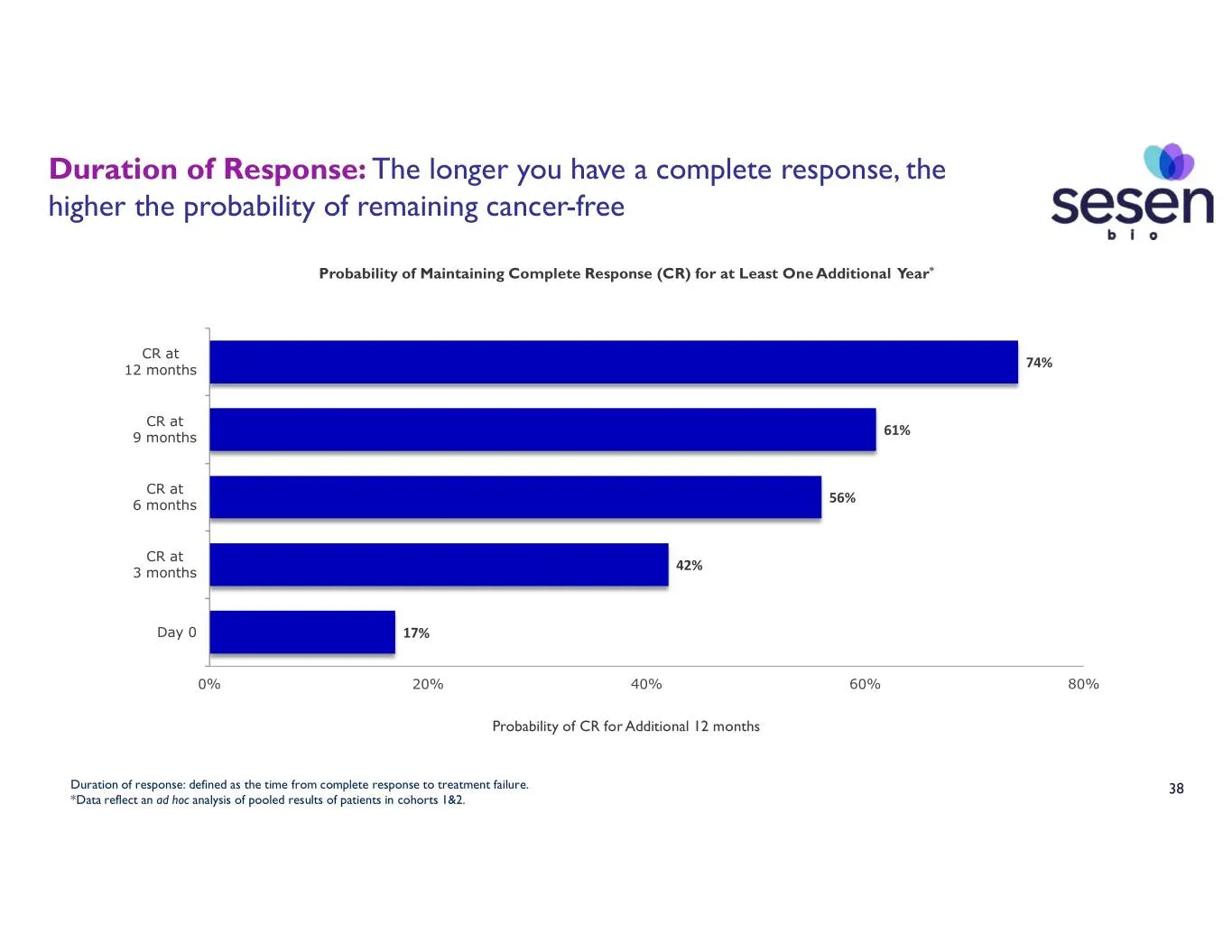
Duration of Response: The longer you have a complete response, the higher the probability of remaining cancer-free Probability of Maintaining Complete Response (CR) for at Least One Additional Year* CR at 12 months 74% CR at 9 months 61% CR at 6 months 56% CR at 3 months 42% Day 0 17% 0% 20% 40% 60%
Slide 39: Vicinium more efficacious in CIS patients treated with less BCG
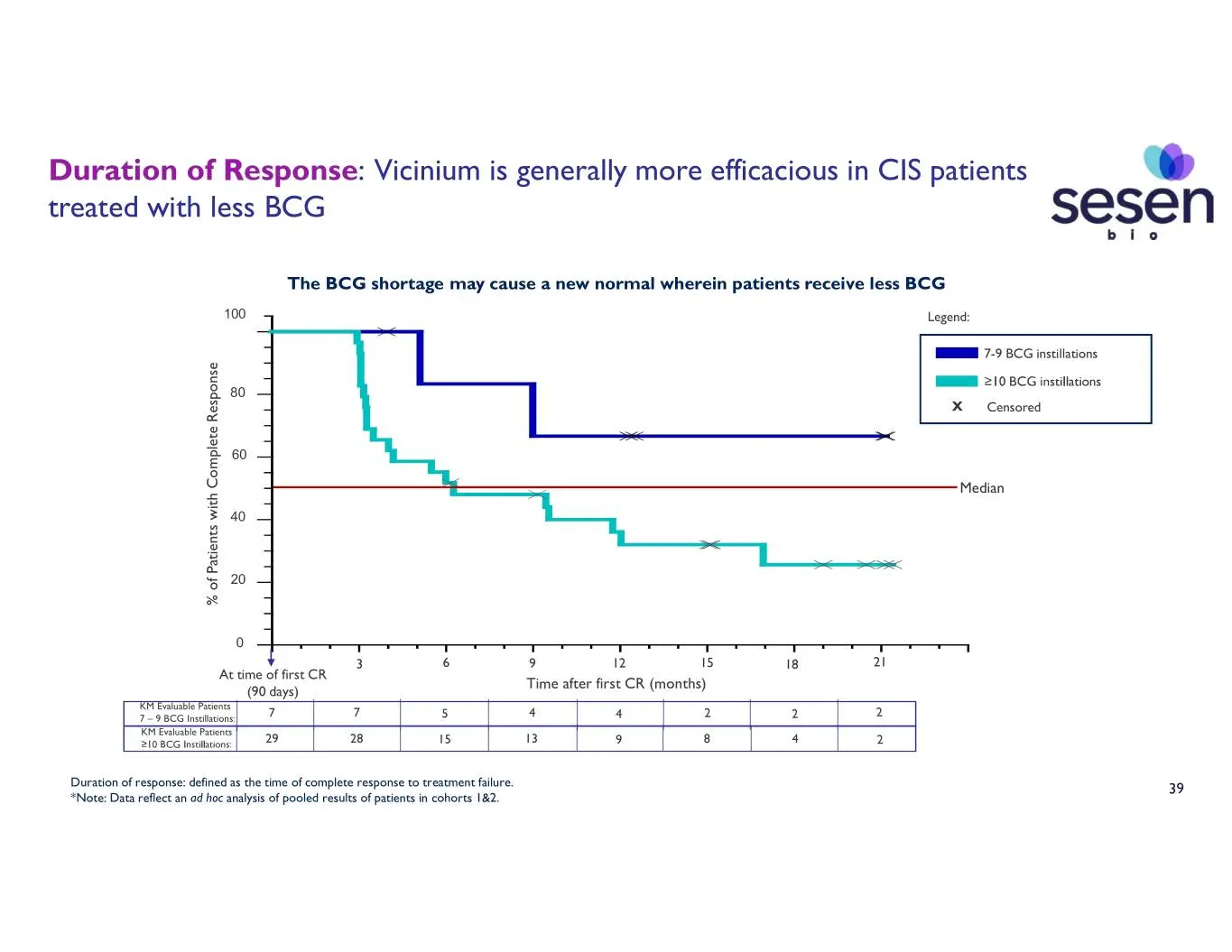
Duration of Response: Vicinium is generally more efficacious in CIS patients treated with less BCG The BCG shortage may cause a new normal wherein patients receive less BCG 100 Legend: 7-9 BCG instillations 80 X Censored 60 Median 40 20 % ofPatients withComplete Response 0 3 6 9 12 15 18 21 At time
Slide 40: Time to Disease Recurrence
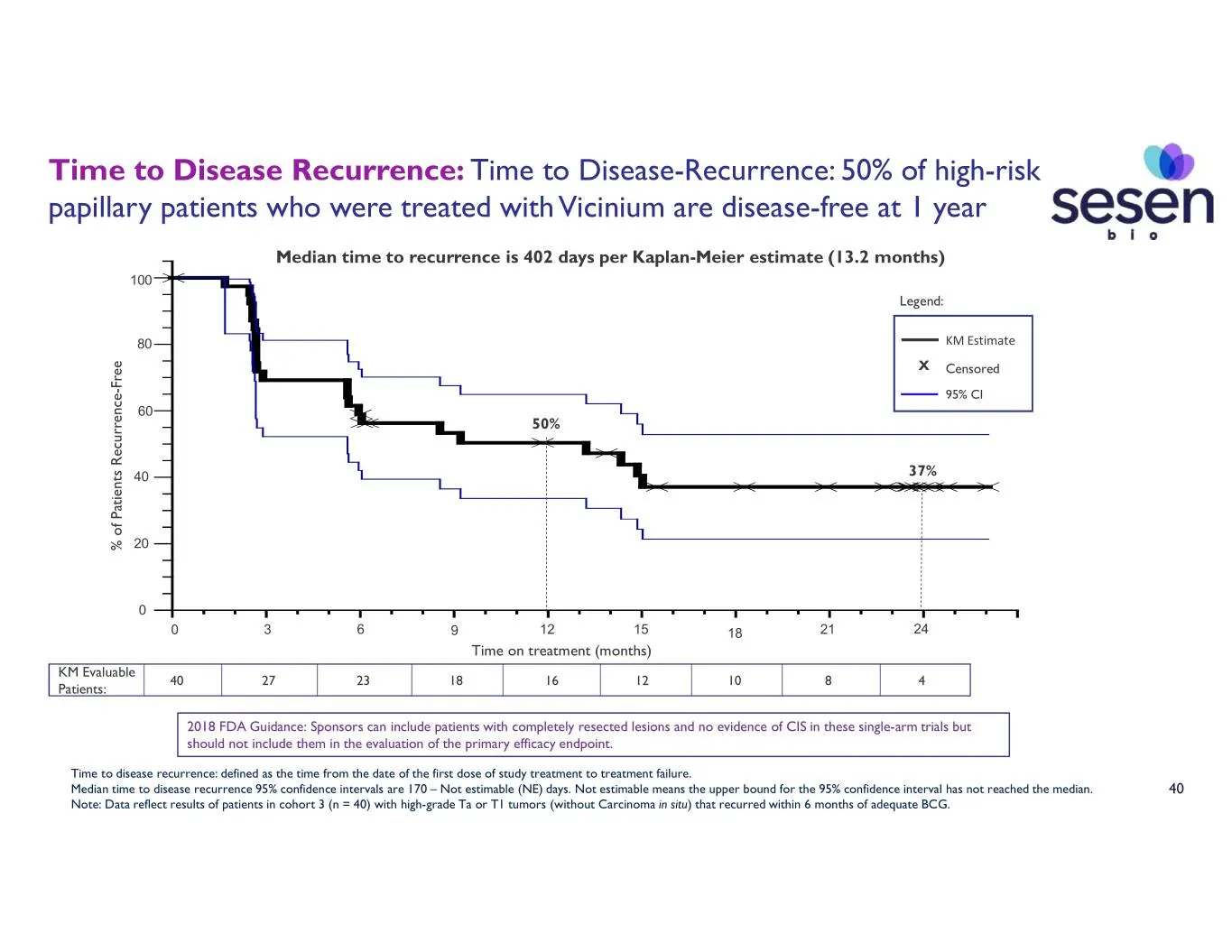
Time to Disease Recurrence: Time to Disease-Recurrence: 50% of high-risk papillary patients who were treated with Vicinium are disease-free at 1 year Median time to recurrence is 402 days per Kaplan-Meier estimate (13.2 months) 100 Legend: 80 KM Estimate X Censored 95% CI 60 50% 40 37% % ofPatients
Slide 41: Recurrence-free Rate in papillary patients
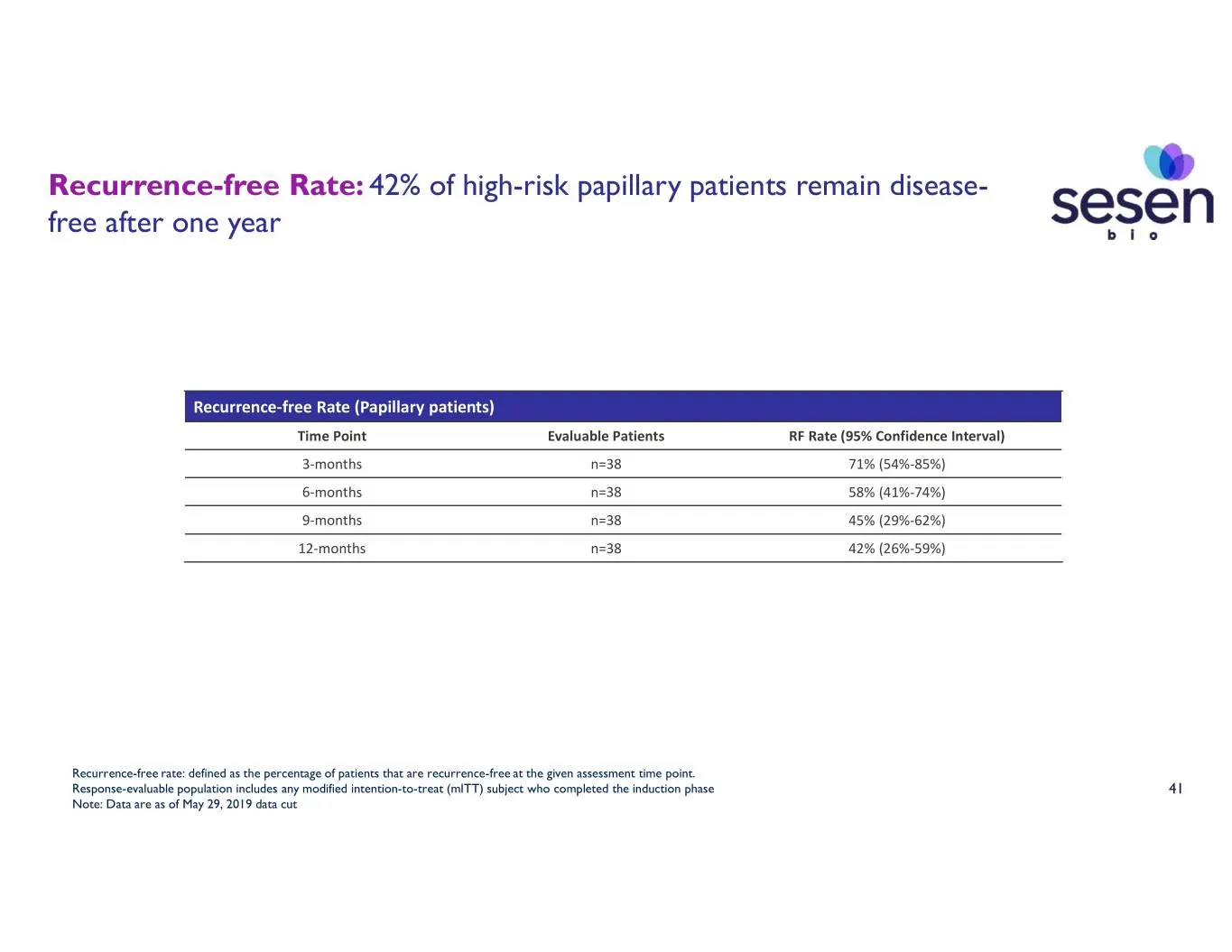
Recurrence-free Rate: 42% of high-risk papillary patients remain disease- free after one year Recurrence-free Rate (Papillary patients) Time Point Evaluable Patients RF Rate (95% Confidence Interval) 3-months n=38 71% (54%-85%) 6-months n=38 58% (41%-74%) 9-months n=38 45% (29%-62%) 12-months n=38 4
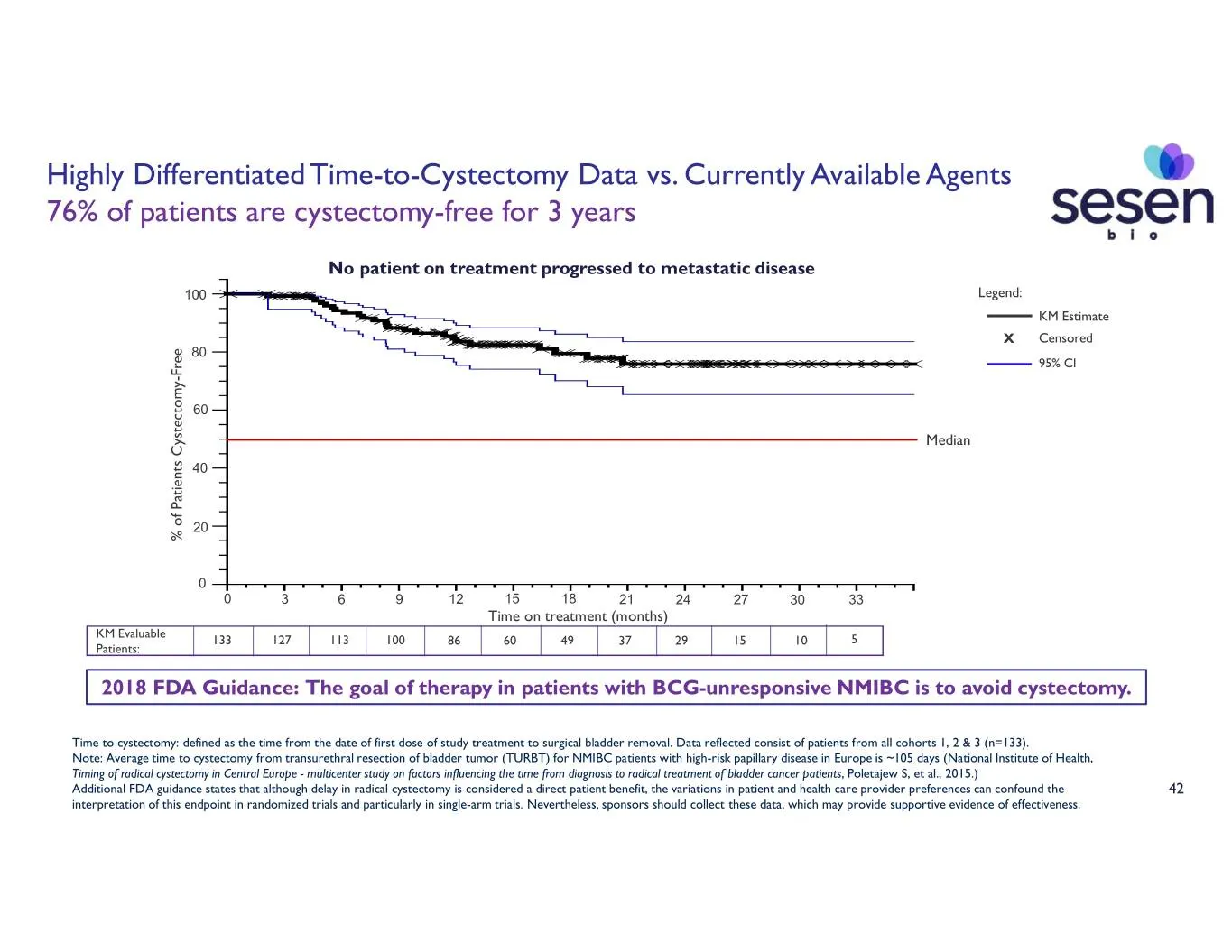
Slide 42: Highly Differentiated Time-to-Cystectomy Data
Highly Differentiated Time-to-Cystectomy Data vs. Currently Available Agents 76% of patients are cystectomy-free for 3 years No patient on treatment progressed to metastatic disease 100 Legend: KM Estimate X Censored 80 95% CI 60 Median 40 20 % ofPatients Cystectomy-Free 0 0 3 6 9 12 15 18 21 24 27
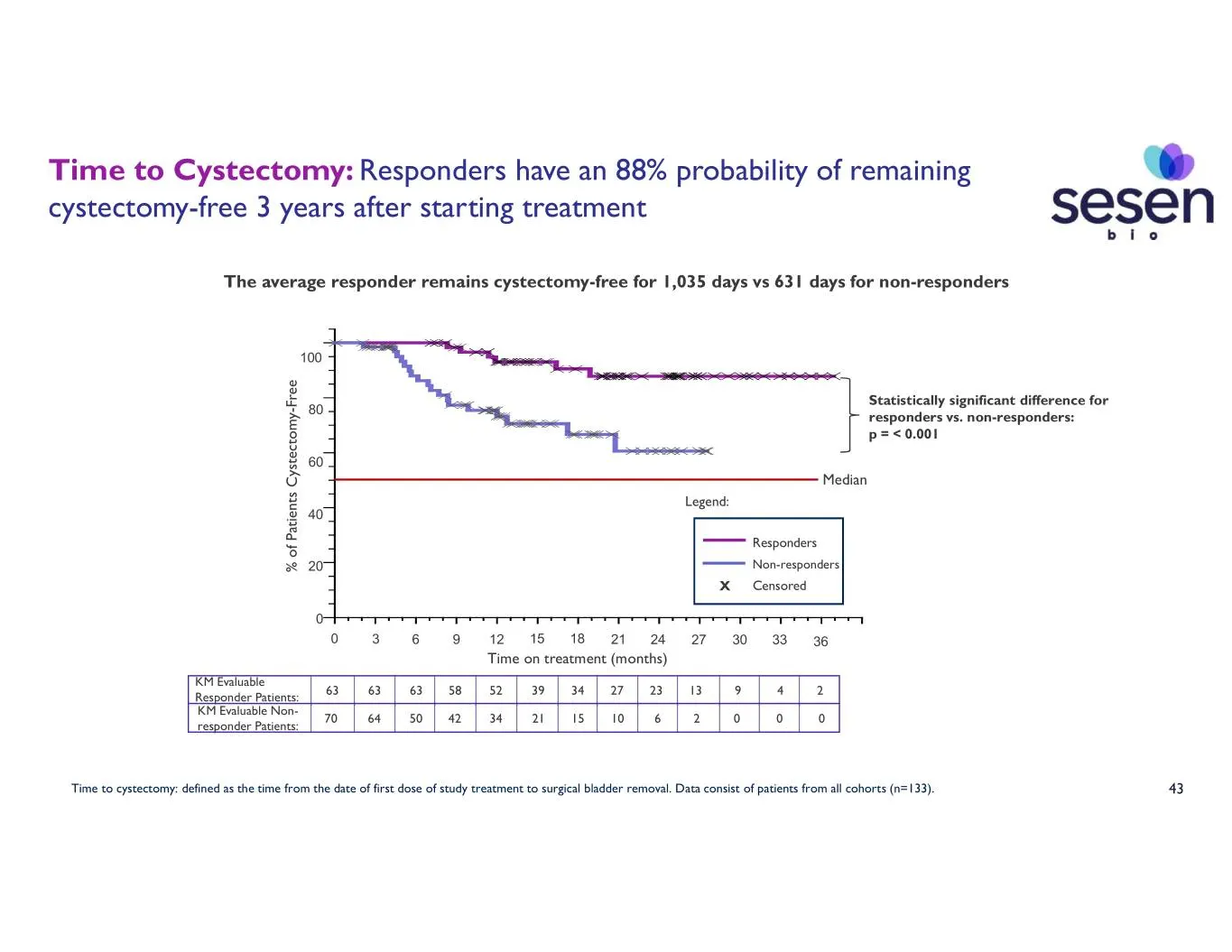
Slide 43: Time to Cystectomy: Responders vs non-responders
Time to Cystectomy: Responders have an 88% probability of remaining cystectomy-free 3 years after starting treatment The average responder remains cystectomy-free for 1,035 days vs 631 days for non-responders 100 Statistically significant difference for 80 responders vs. non-responders: p = < 0.001
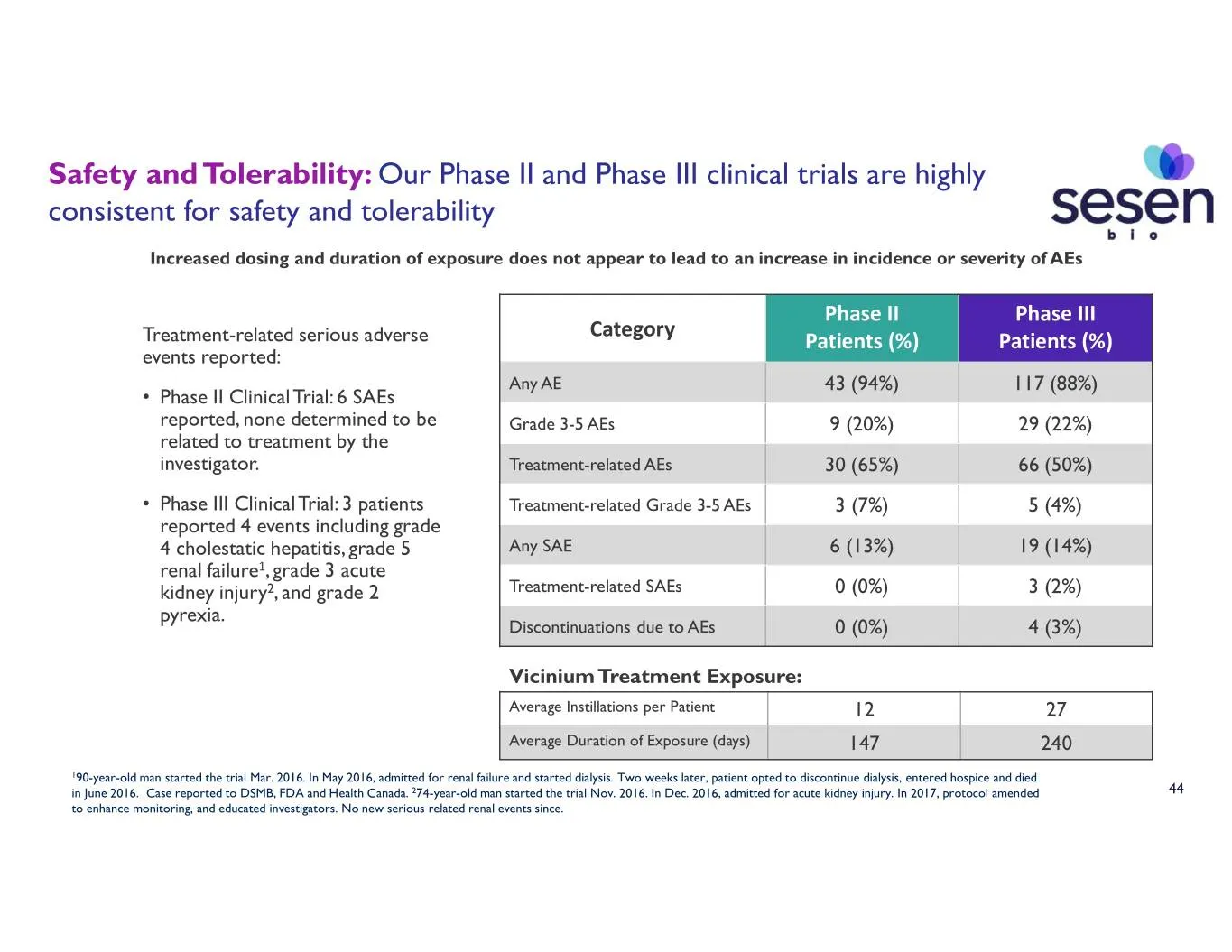
Slide 44: Safety and Tolerability: Phase II and Phase III
Safety and Tolerability: Our Phase II and Phase III clinical trials are highly consistent for safety and tolerability Increased dosing and duration of exposure does not appear to lead to an increase in incidence or severity of AEs Phase II Phase III Category Treatment-related serious adverse Patient
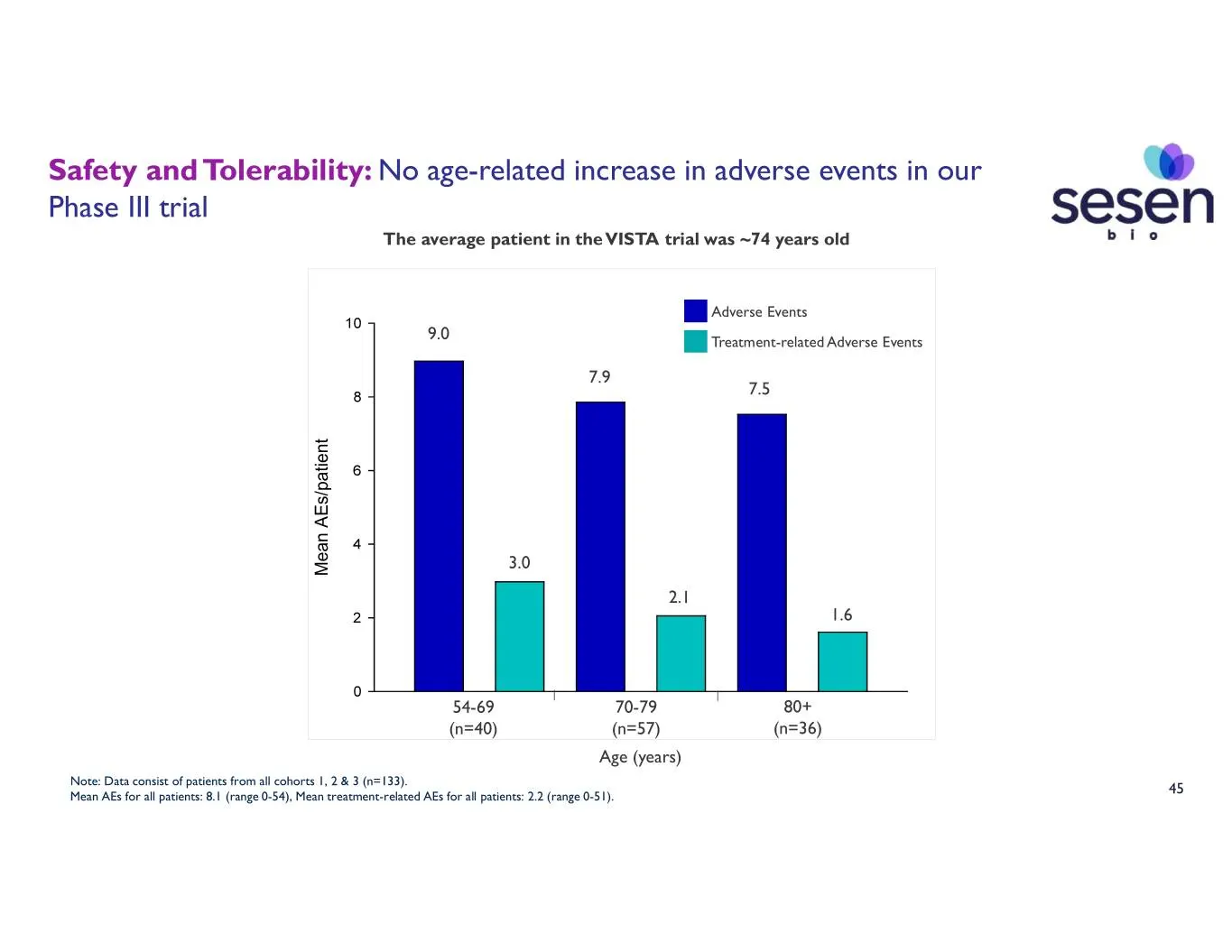
Slide 45: No age-related increase in adverse events
Safety and Tolerability: No age-related increase in adverse events in our Phase III trial The average patient in the VISTA trial was ~74 years old Adverse Events 9.0 Treatment-related Adverse Events 7.9 7.5 3.0 Mean Mean AEs/patient 2.1 1.6 54-69 70-79 80+ (n=40) (n=57) (n=36) Age (years) Note: Data
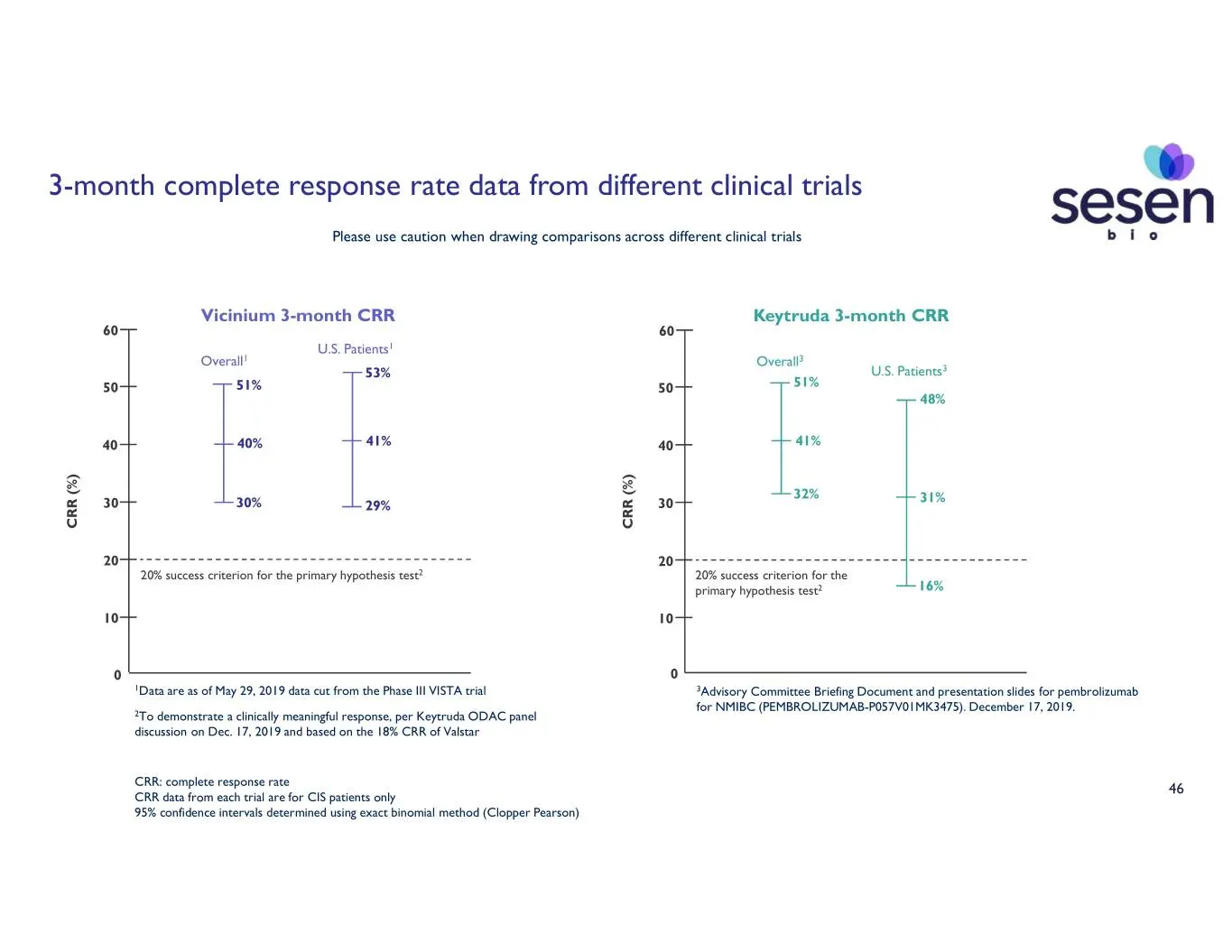
Slide 46: 3-month complete response rate across clinical trials
3-month complete response rate data from different clinical trials Please use caution when drawing comparisons across different clinical trials Vicinium 3-month CRR Keytruda 3-month CRR 60 60 U.S. Patients1 Overall1 Overall3 53% U.S. Patients3 50 51% 50 51% 48% 40 40% 41% 40 41% 32% 31% 30 30% 29% 3
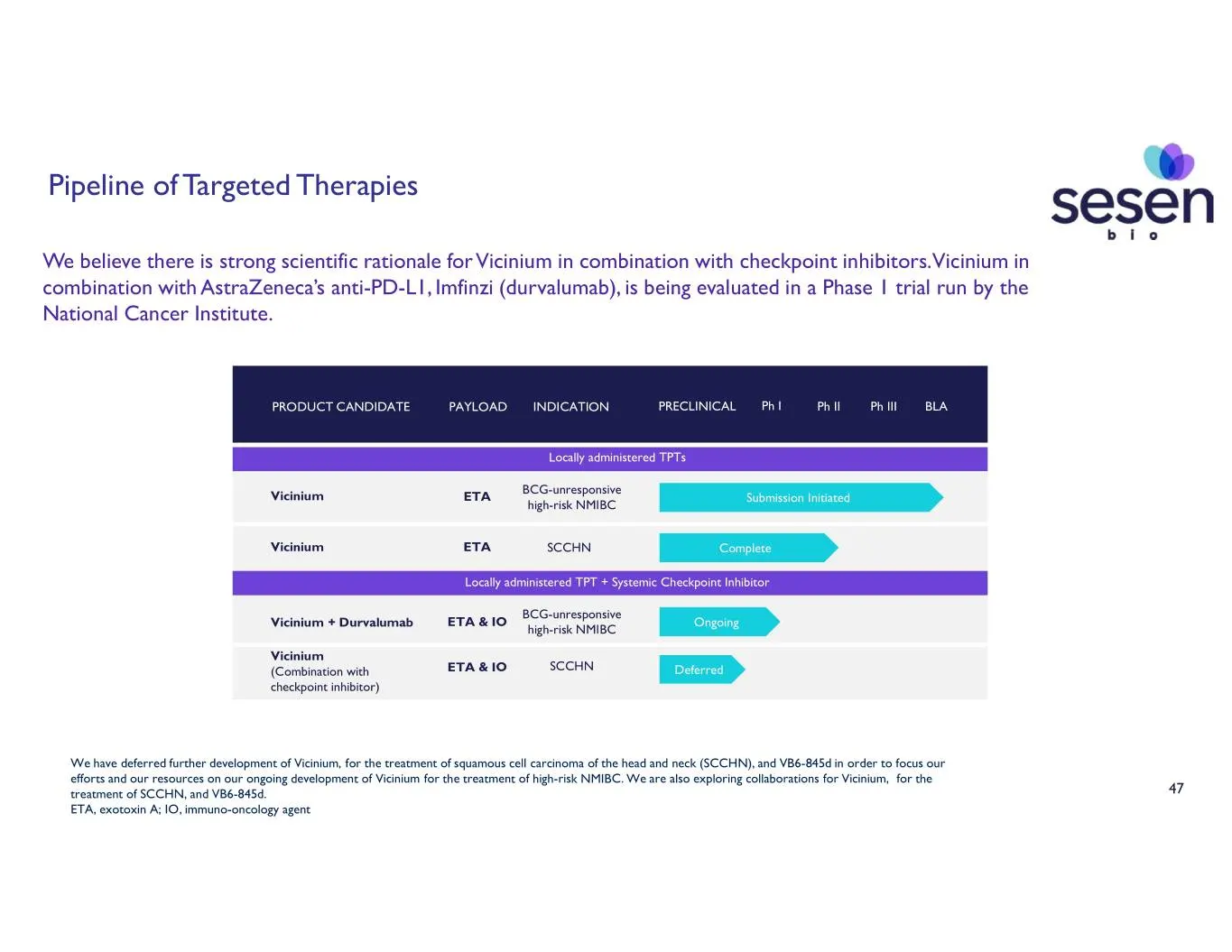
Slide 47: Pipeline of Targeted Therapies
Pipeline of Targeted Therapies We believe there is strong scientific rationale for Vicinium in combination with checkpoint inhibitors. Vicinium in combination with AstraZeneca’s anti-PD-L1, Imfinzi (durvalumab), is being evaluated in a Phase 1 trial run by the National Cancer Institute. PRODUCT CAND
Slide 48: Appendix: Commercial Opportunity
Appendix Commercial Opportunity 48
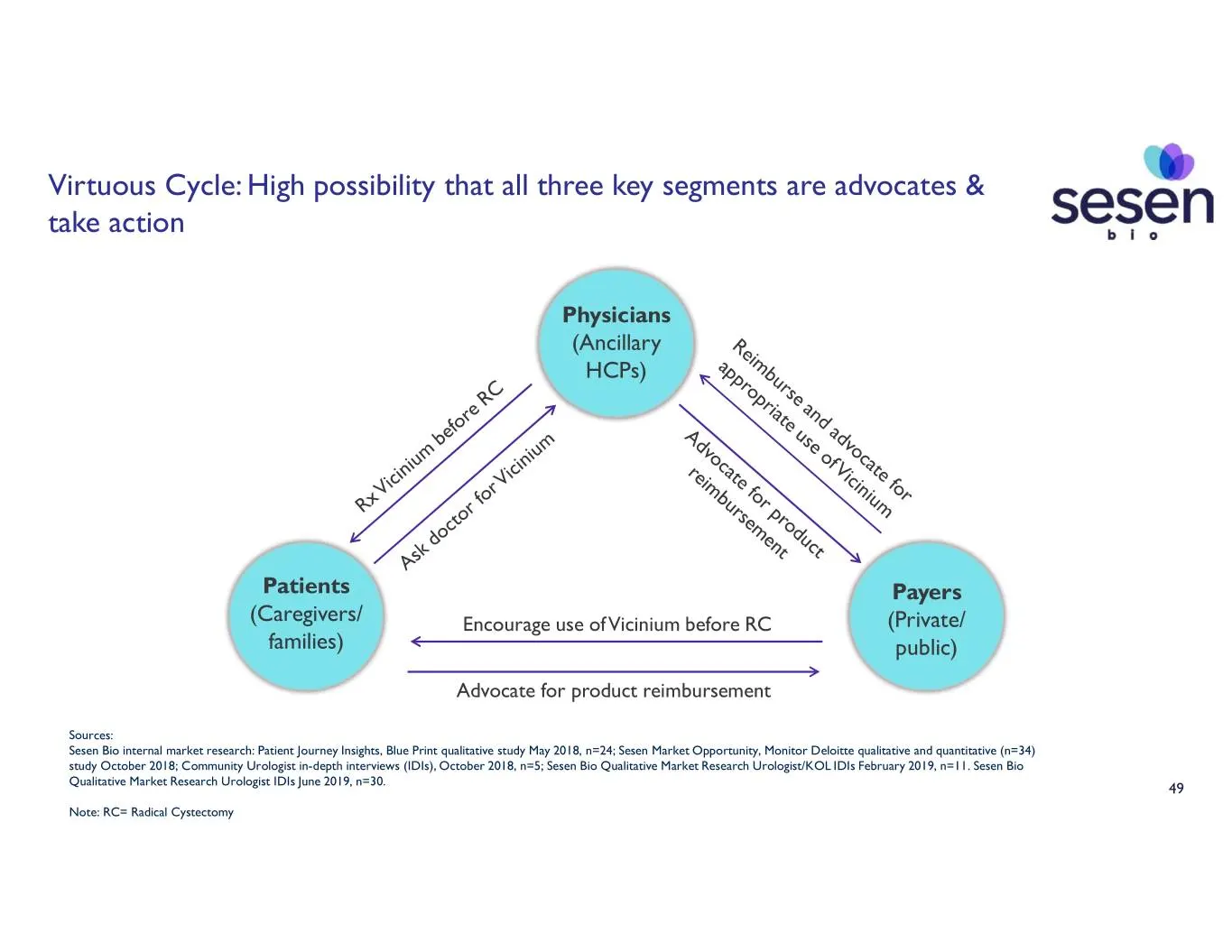
Slide 49: Virtuous Cycle: physicians, patients and payers
Virtuous Cycle: High possibility that all three key segments are advocates & take action Physicians (Ancillary HCPs) Patients Payers (Caregivers/ Encourage use of Vicinium before RC (Private/ families) public) Advocate for product reimbursement Sources: Sesen Bio internal market research: Patient Jo
Slide 50: Large Global Commercial Opportunity
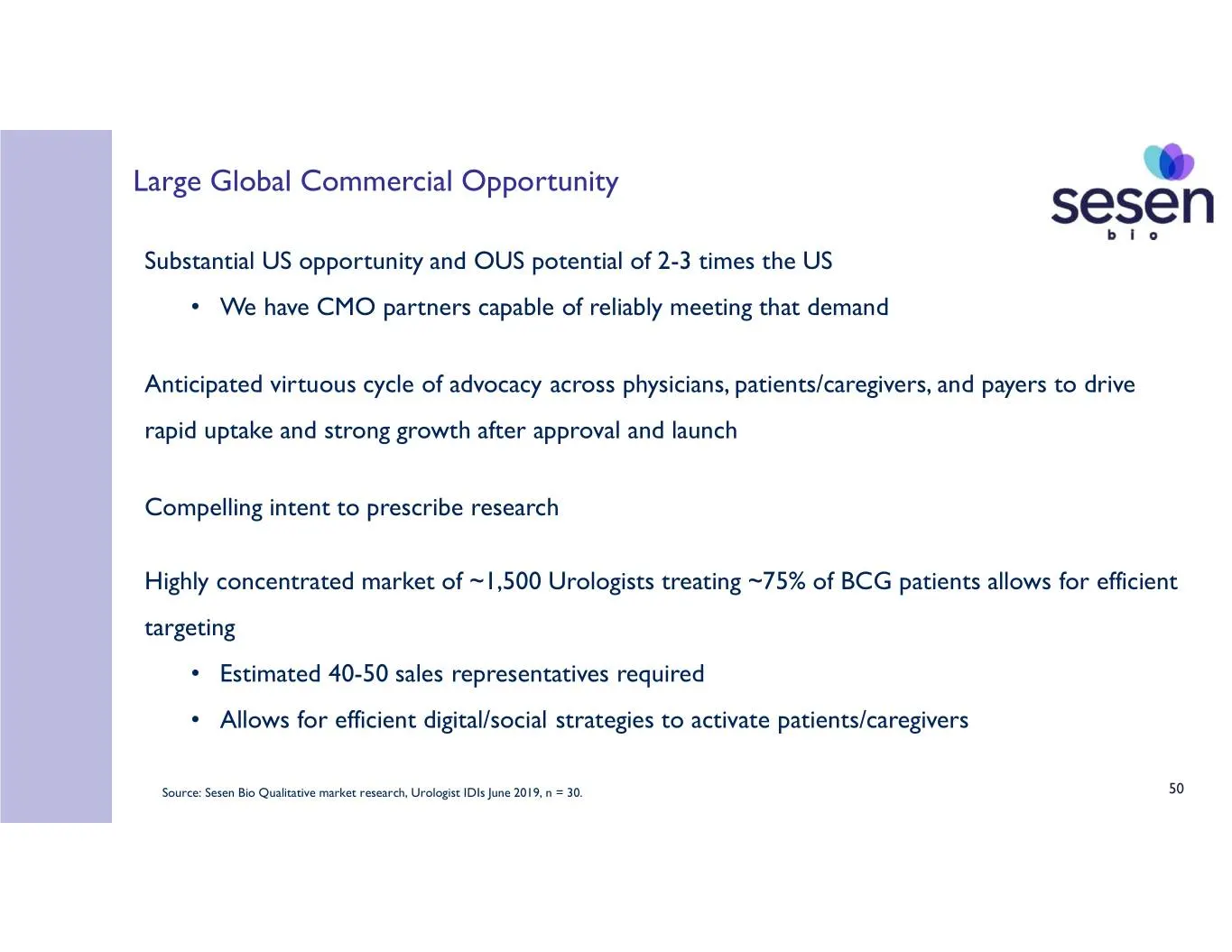
Large Global Commercial Opportunity Substantial US opportunity and OUS potential of 2-3 times the US • We have CMO partners capable of reliably meeting that demand Anticipated virtuous cycle of advocacy across physicians, patients/caregivers, and payers to drive rapid uptake and strong growth after
Slide 51: Continuity of Care for Patients with NMIBC
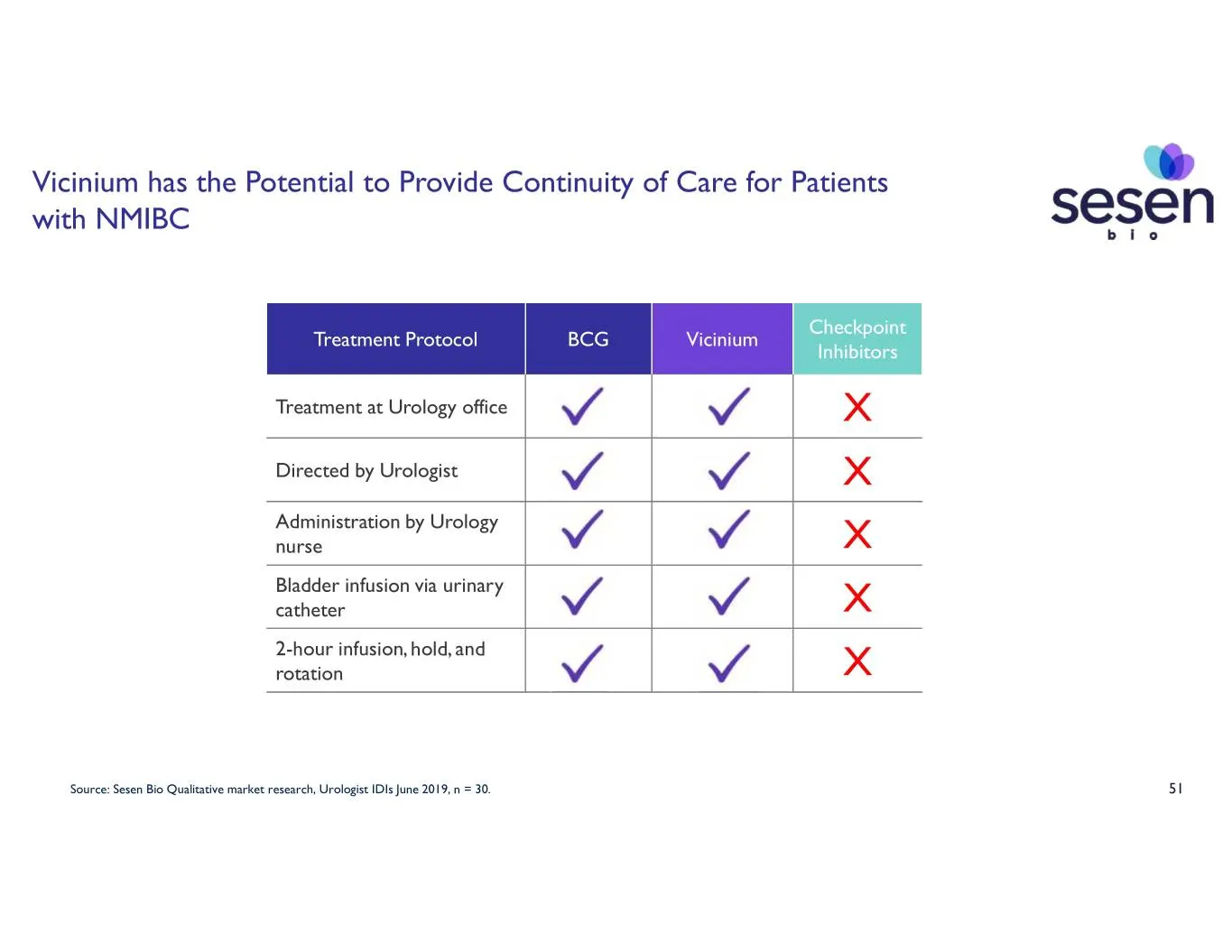
Vicinium has the Potential to Provide Continuity of Care for Patients with NMIBC Checkpoint Treatment Protocol BCG Vicinium Inhibitors Treatment at Urology office X Directed by Urologist X Administration by Urology nurse X Bladder infusion via urinary catheter X 2-hour infusion, hold, and rotation X
Slide 52: Clinical Data from Emerging Treatments: Vicinium vs Tecentriq
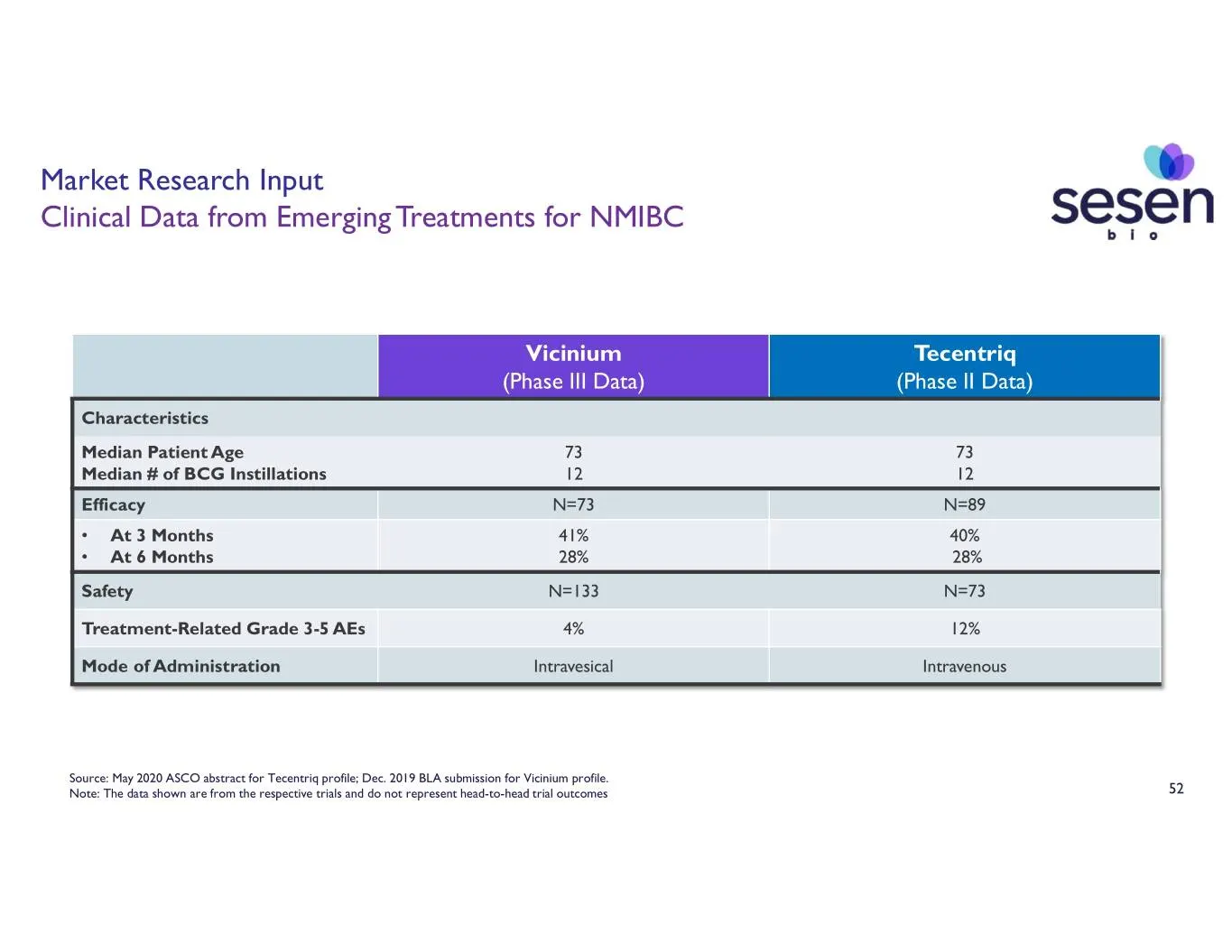
Market Research Input Clinical Data from Emerging Treatments for NMIBC Vicinium Tecentriq (Phase III Data) (Phase II Data) Characteristics Median Patient Age 73 73 Median # of BCG Instillations 12 12 Efficacy N=73 N=89 • At 3 Months 41% 40% • At 6 Months 28% 28% Safety N=133 N=73 Treatment-Related G
Slide 53: 1Q 2020 Intent-to-Prescribe Market Research Results
Appendix 1Q 2020 Intent-to-Prescribe Market Research Results We conducted 30-minute interviews with 34 high- prescribing Urologists to assess their views of the Vicinium profile vs. the Keytruda profile based on available clinical information For investor purposes only 53
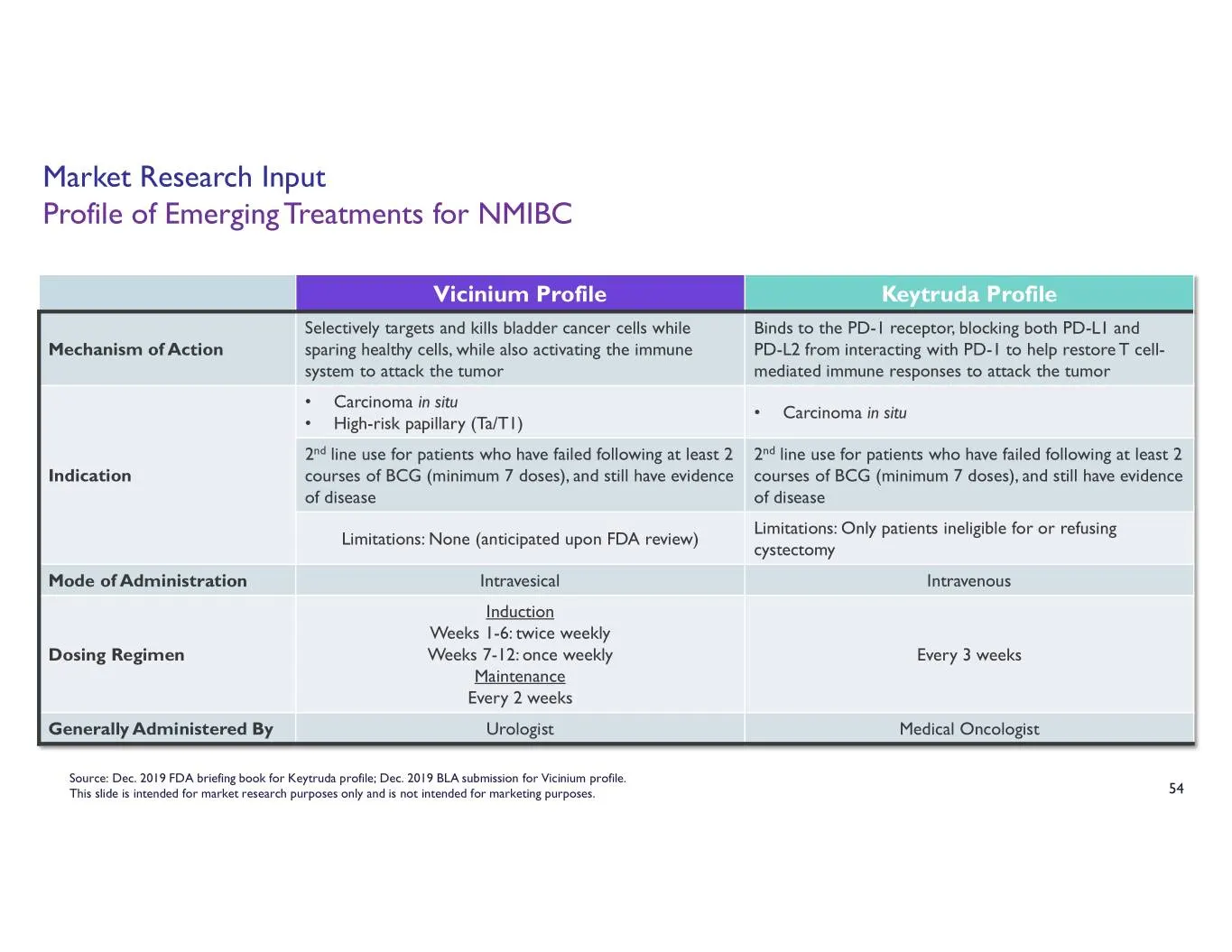
Slide 54: Profile of Emerging Treatments: Vicinium vs Keytruda
Market Research Input Profile of Emerging Treatments for NMIBC Vicinium Profile Keytruda Profile Selectively targets and kills bladder cancer cells while Binds to the PD-1 receptor, blocking both PD-L1 and Mechanism of Action sparing healthy cells, while also activating the immune PD-L2 from interac
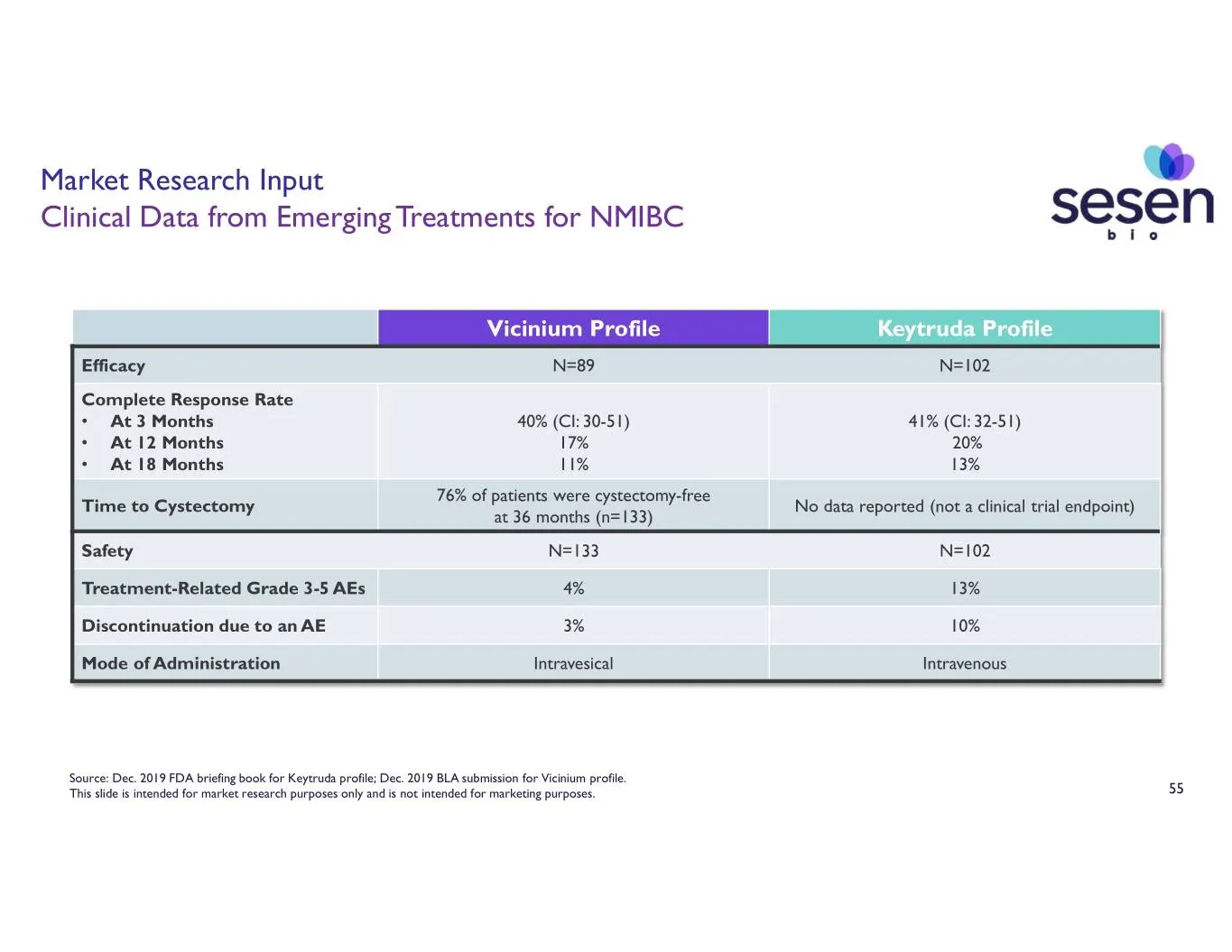
Slide 55: Clinical Data from Emerging Treatments: Vicinium vs Keytruda
Market Research Input Clinical Data from Emerging Treatments for NMIBC Vicinium Profile Keytruda Profile Efficacy N=89 N=102 Complete Response Rate • At 3 Months 40% (CI: 30-51) 41% (CI: 32-51) • At 12 Months 17% 20% • At 18 Months 11% 13% 76% of patients were cystectomy-free Time to Cystectomy No d
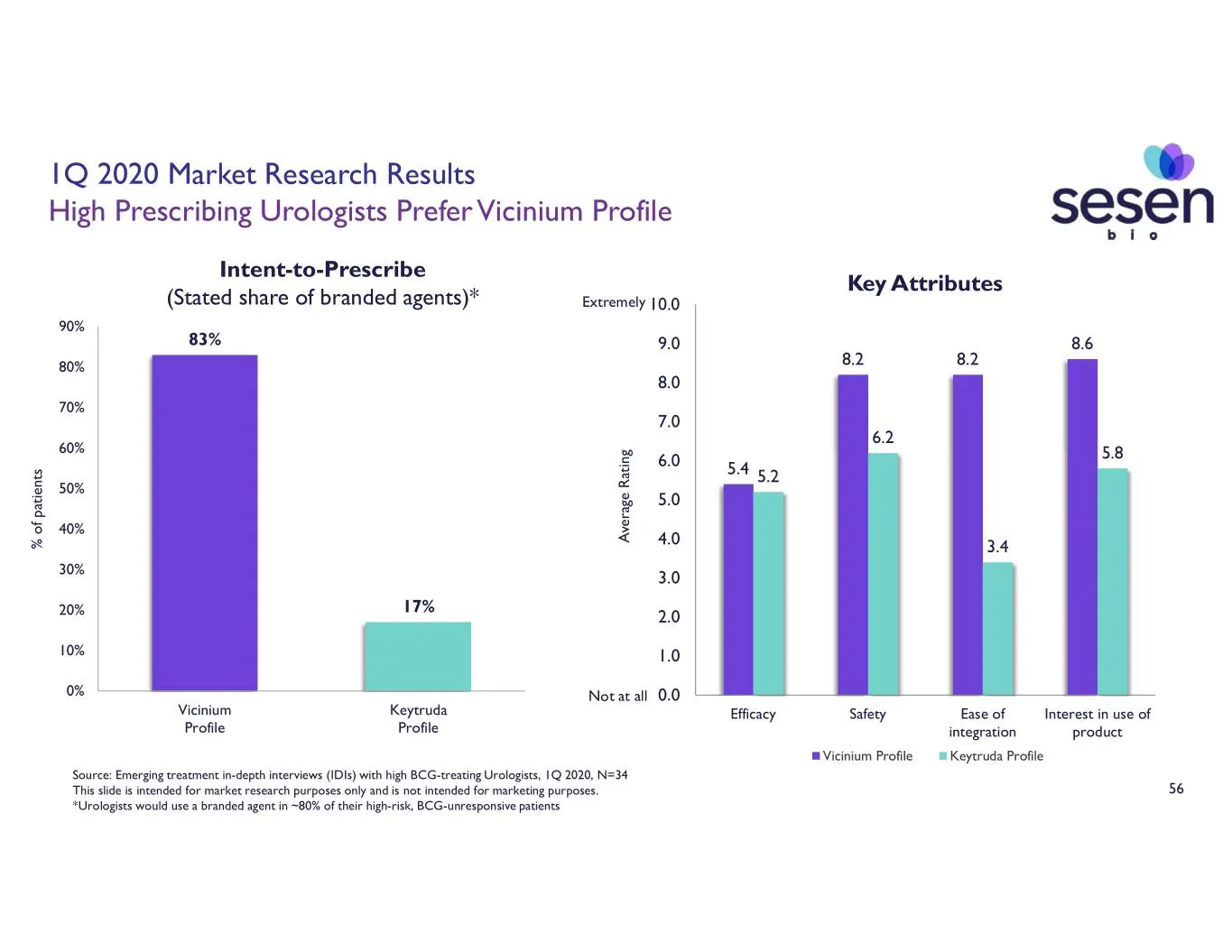
Slide 56: High Prescribing Urologists Prefer Vicinium Profile
1Q 2020 Market Research Results High Prescribing Urologists Prefer Vicinium Profile Intent-to-Prescribe Key Attributes (Stated share of branded agents)* Extremely 10.0 90% 83% 9.0 8.6 80% 8.2 8.2 8.0 70% 7.0 6.2 60% 6.0 5.8 5.4 5.2 50% 5.0 40% Average RatingAverage 4.0 % ofpatients 3.4 30% 3.0 17% 2
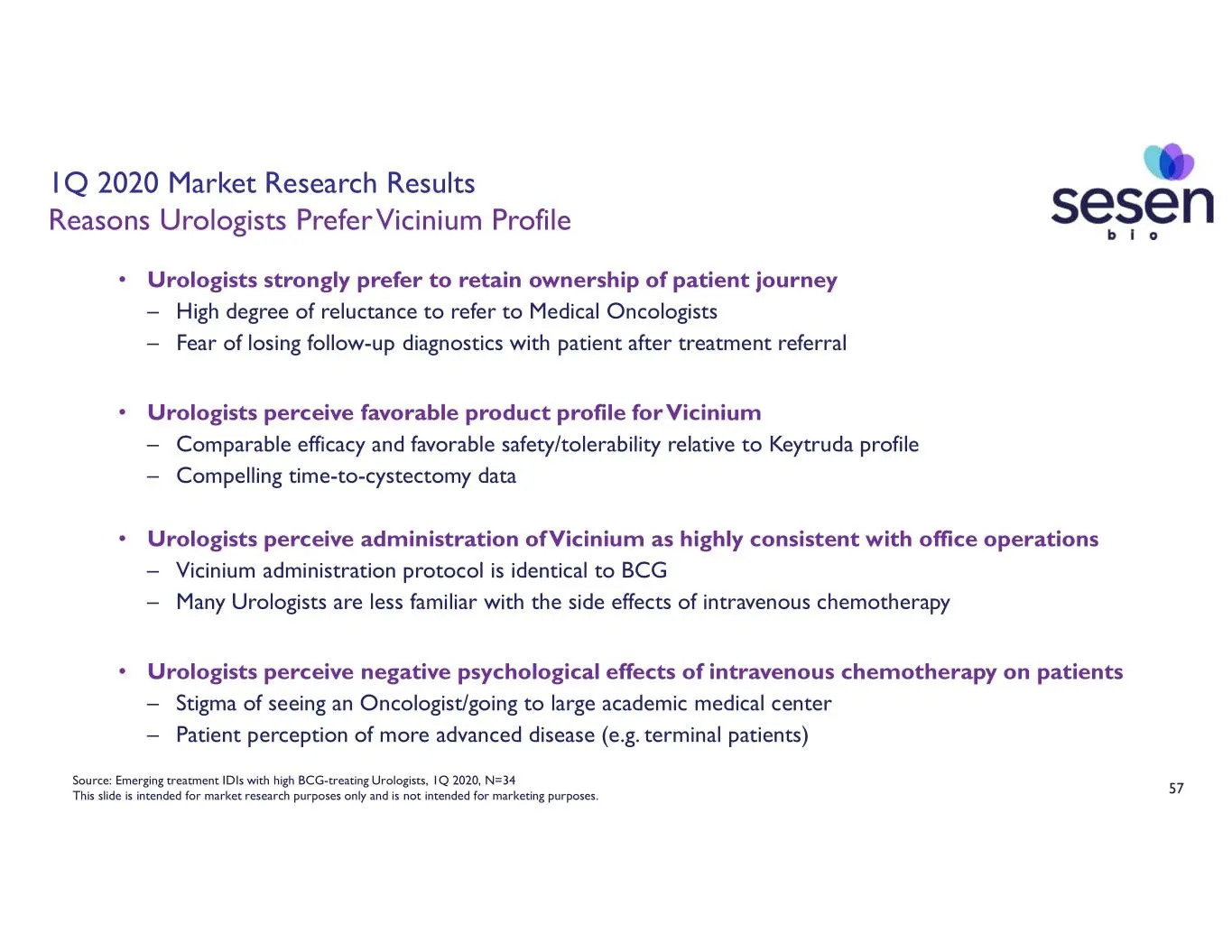
Slide 57: Reasons Urologists Prefer Vicinium Profile
1Q 2020 Market Research Results Reasons Urologists Prefer Vicinium Profile • Urologists strongly prefer to retain ownership of patient journey – High degree of reluctance to refer to Medical Oncologists – Fear of losing follow-up diagnostics with patient after treatment referral • Urologists perceiv
Slide 58: Highly Concentrated Prescriber Base
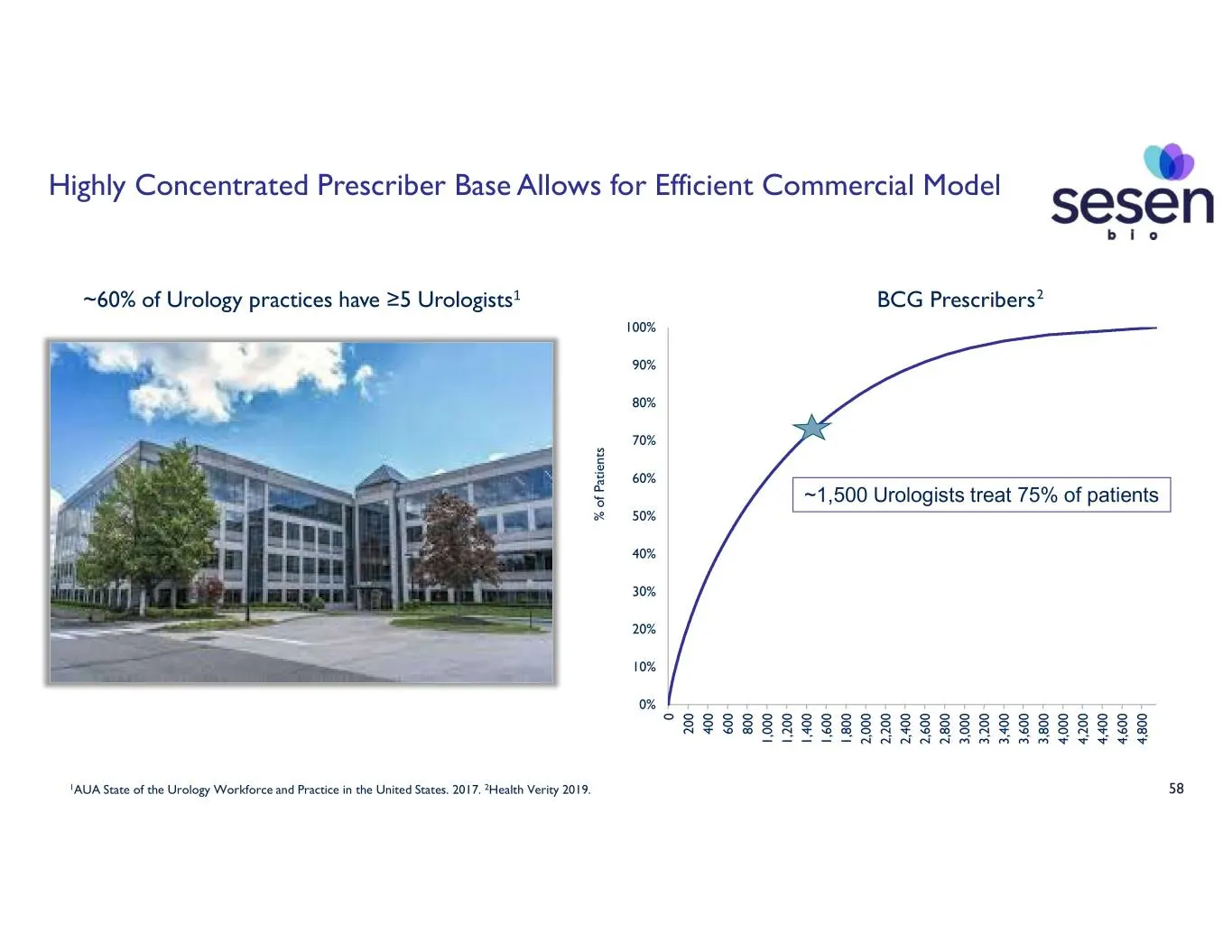
Highly Concentrated Prescriber BasePrescriber Concentrated Highly forAllows Commercial Model Efficient 1 AUA State of the Urology Workforce thetheAUA Urology 2017. of Workforce Unitedand States. Practicein State 2 Health Verity 2019. Health 1 % of Patients 100% 10% 20% 30% 40% 50% 60% 70% 80% 90% 0%
Slide 59: Caregiver education via digital and social channels
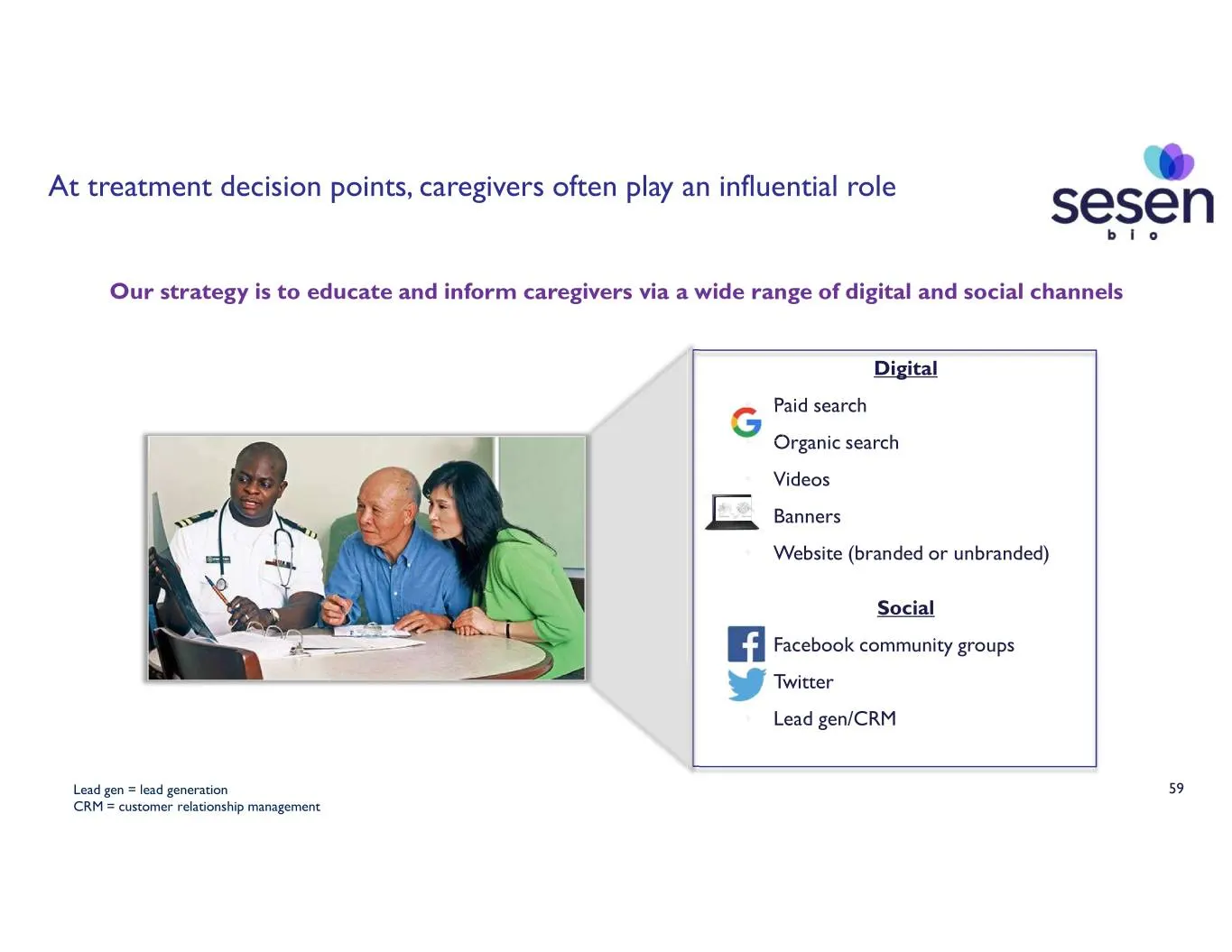
At treatment decision points, caregivers often play an influential role Our strategy is to educate and inform caregivers via a wide range of digital and social channels Digital • Paid search • Organic search • Videos • Banners • Website (branded or unbranded) Social • Facebook community groups • Twi
Slide 60: Pricing and Reimbursement
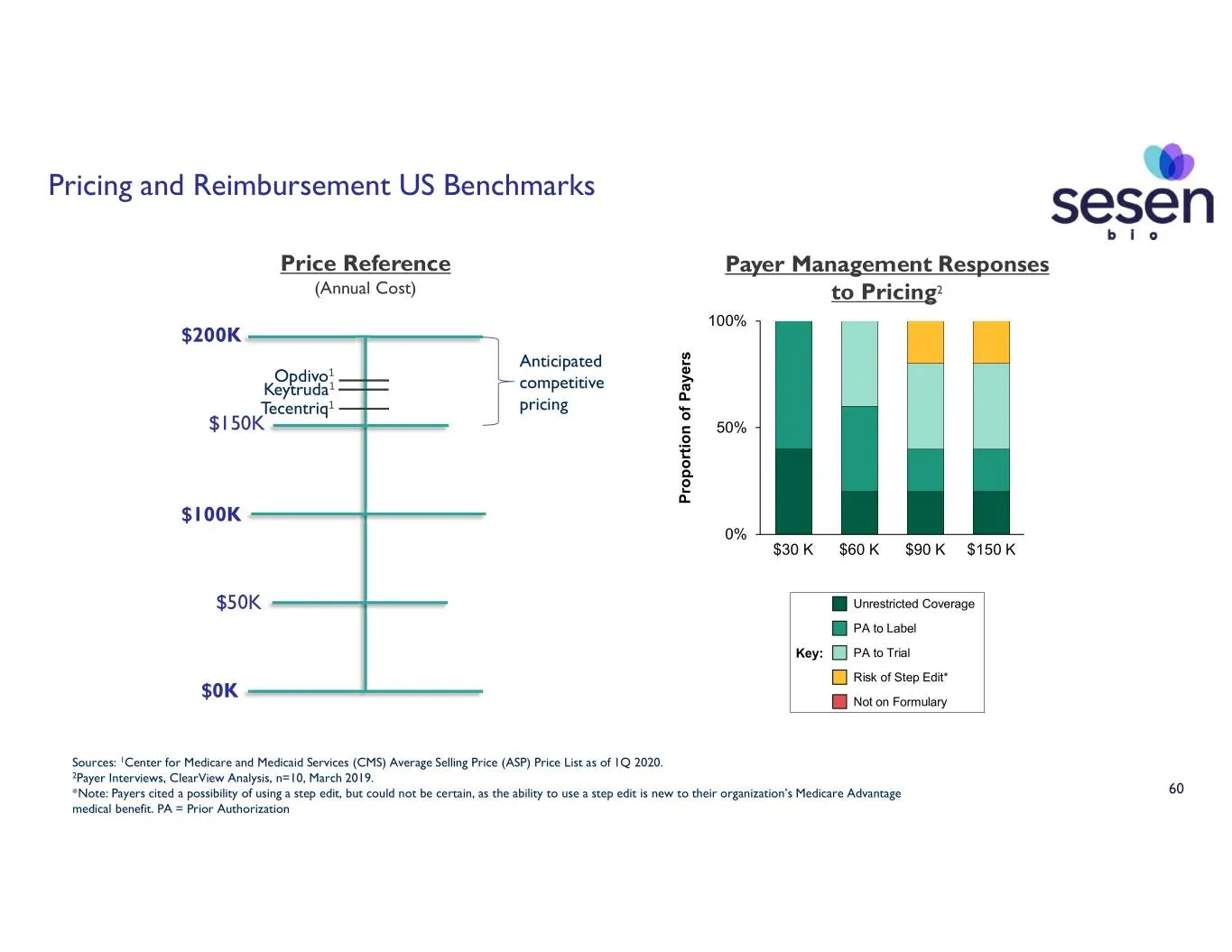
Pricing and Reimbursement US Benchmarks Price Reference Payer Management Responses (Annual Cost) to Pricing2 100% $200K Anticipated Opdivo1 Keytruda1 competitive Tecentriq1 pricing $150K 50% Proportion of Payers $100K 0% $30 K $60 K $90 K $150 K $50K Unrestricted Coverage PA to Label Key: PA to Tria
Slide 61: Addressable Market (US)
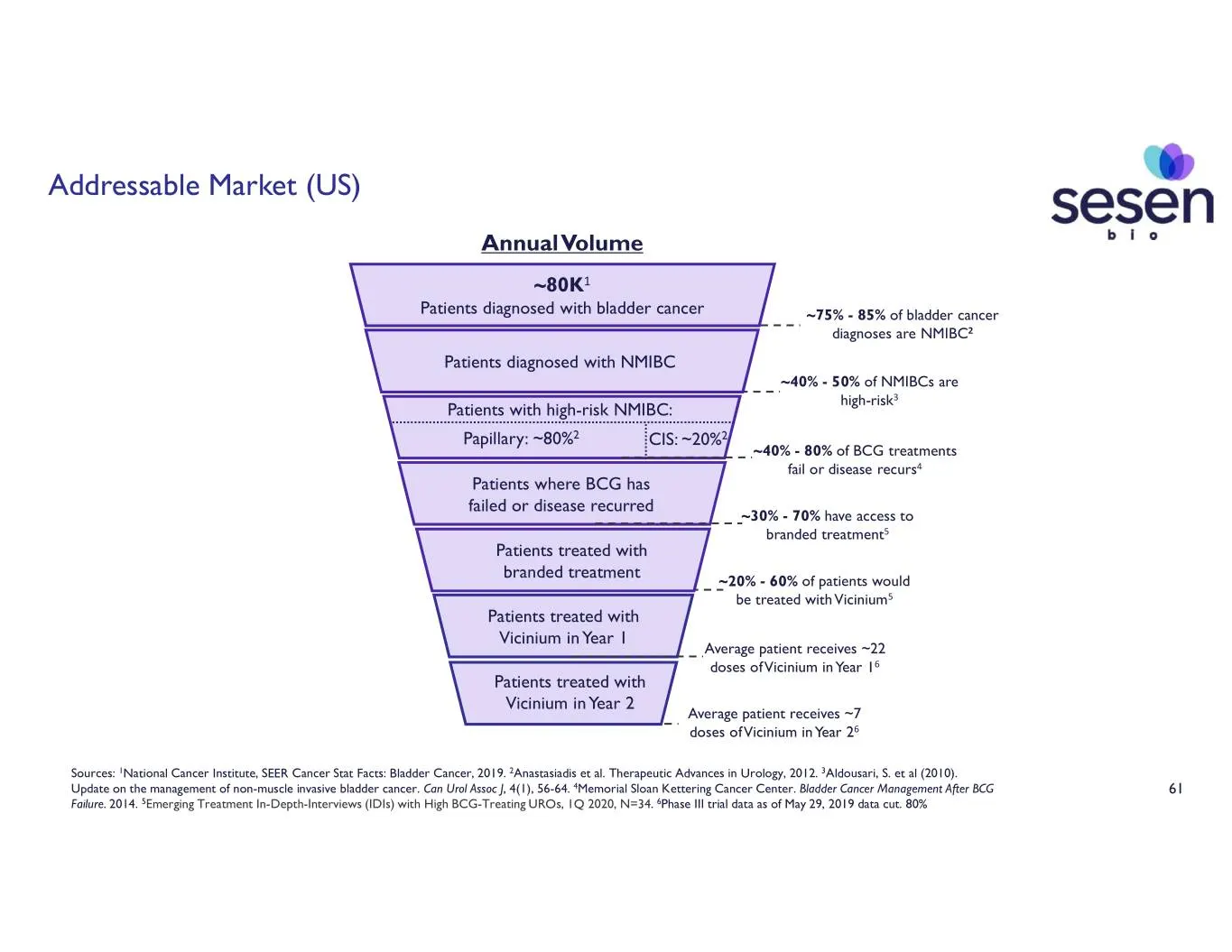
Addressable Market (US) Annual Volume ~80K1 Patients diagnosed with bladder cancer ~75% - 85% of bladder cancer diagnoses are NMIBC2 Patients diagnosed with NMIBC ~40% - 50% of NMIBCs are high-risk3 Patients with high-risk NMIBC: Papillary: ~80%2 CIS: ~20%2 ~40% - 80% of BCG treatments fail or disea
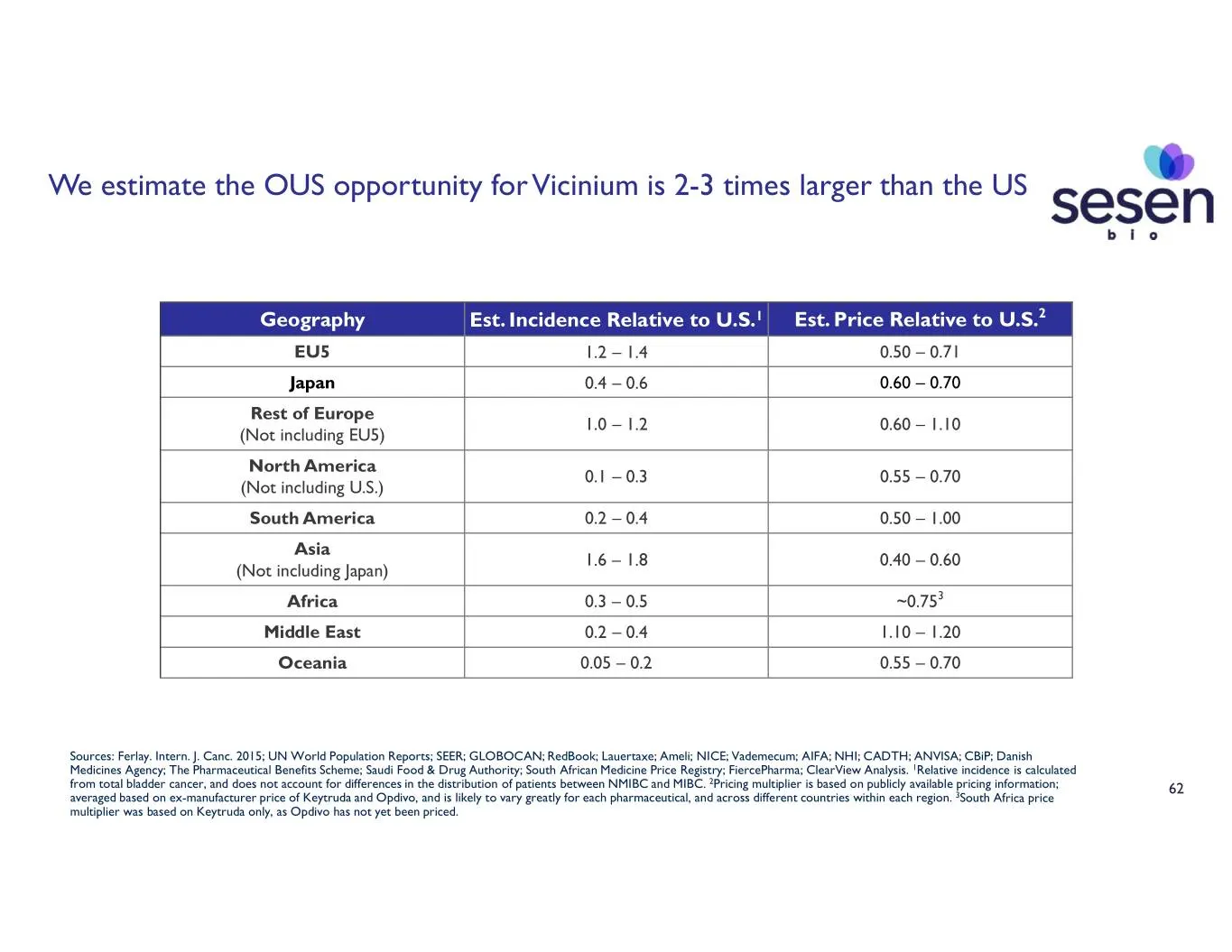
Slide 62: OUS opportunity is 2-3 times larger than the US
We estimate the OUS opportunity for Vicinium is 2-3 times larger than the US Geography Est. Incidence Relative to U.S.1 Est. Price Relative to U.S.2 EU5 1.2 – 1.4 0.50 – 0.71 Japan 0.4 – 0.6 0.60 – 0.70 Rest of Europe 1.0 – 1.2 0.60 – 1.10 (Not including EU5) North America 0.1 – 0.3 0.55 – 0.70 (Not
Slide 63: Appendix: Manufacturing & Supply Chain
Appendix Manufacturing & Supply Chain 63
Slide 64: Reliable and Inexpensive Manufacturing Process
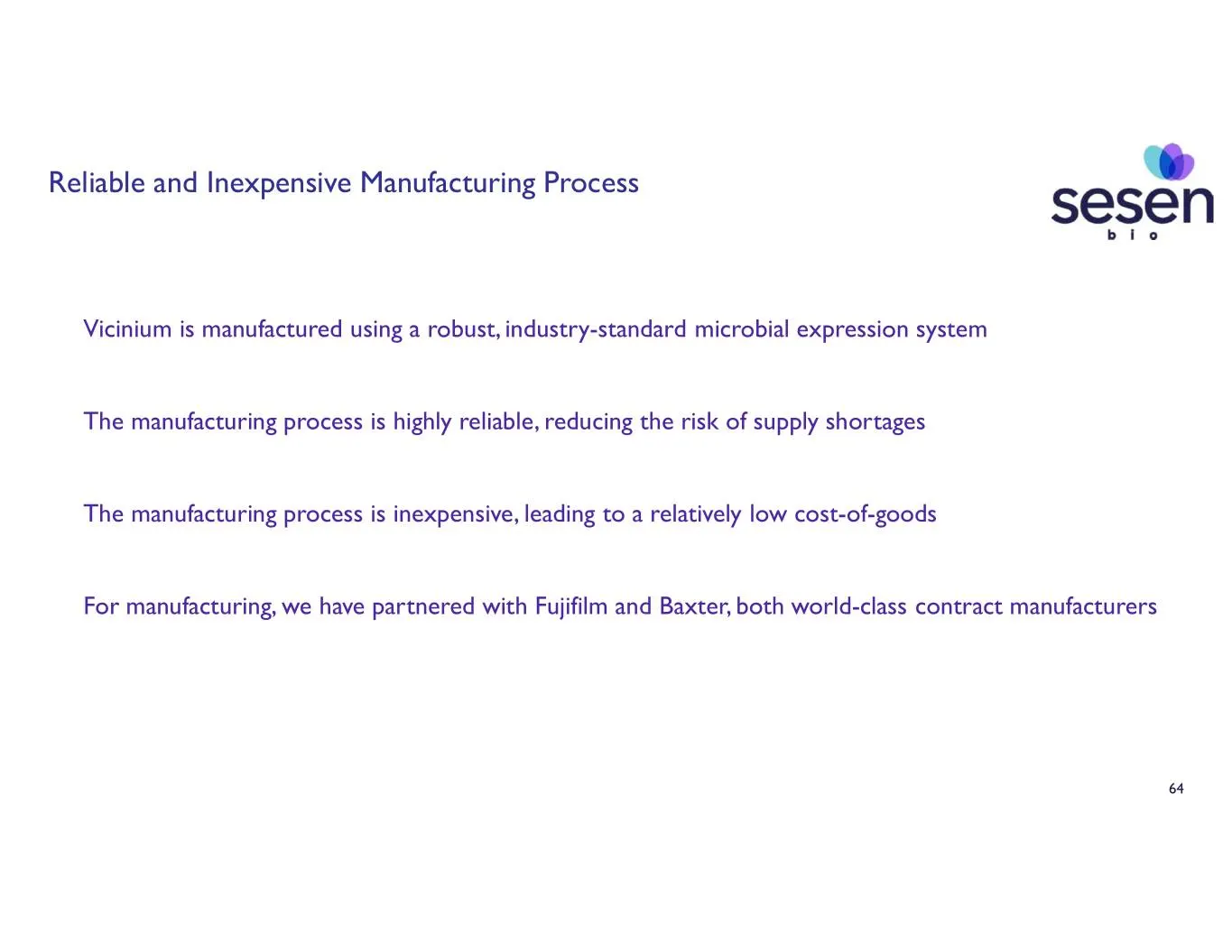
Reliable and Inexpensive Manufacturing Process Vicinium is manufactured using a robust, industry-standard microbial expression system The manufacturing process is highly reliable, reducing the risk of supply shortages The manufacturing process is inexpensive, leading to a relatively low cost-of-good
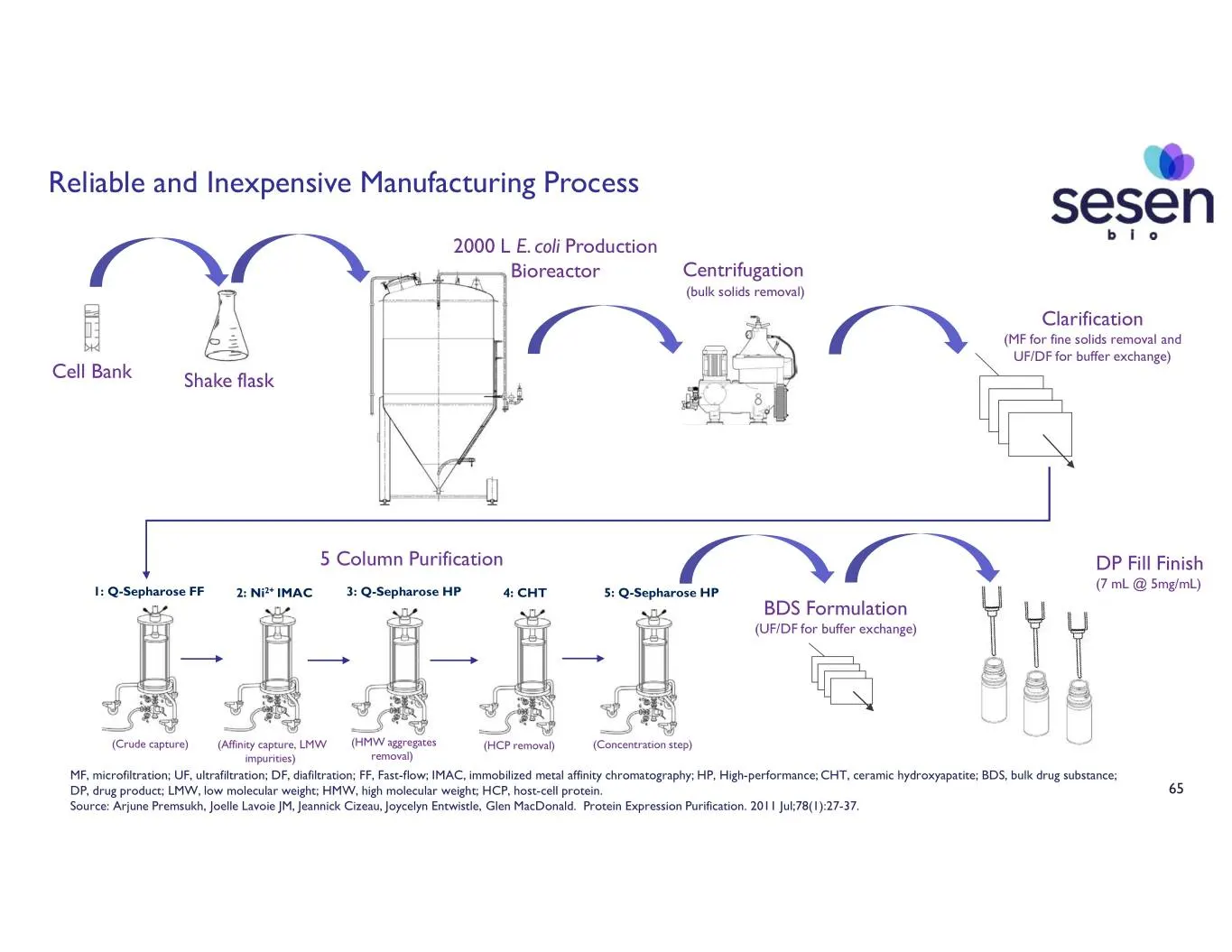
Slide 65: Manufacturing Process Flow
Reliable and Inexpensive Manufacturing Process 2000 L E. coli Production Bioreactor Centrifugation (bulk solids removal) Clarification (MF for fine solids removal and UF/DF for buffer exchange) Cell Bank Shake flask 5 Column Purification DP Fill Finish (7 mL @ 5mg/mL) 1: Q-Sepharose FF 2: Ni2+ IMAC
Slide 66: Experienced Partners for Manufacturing and Supply
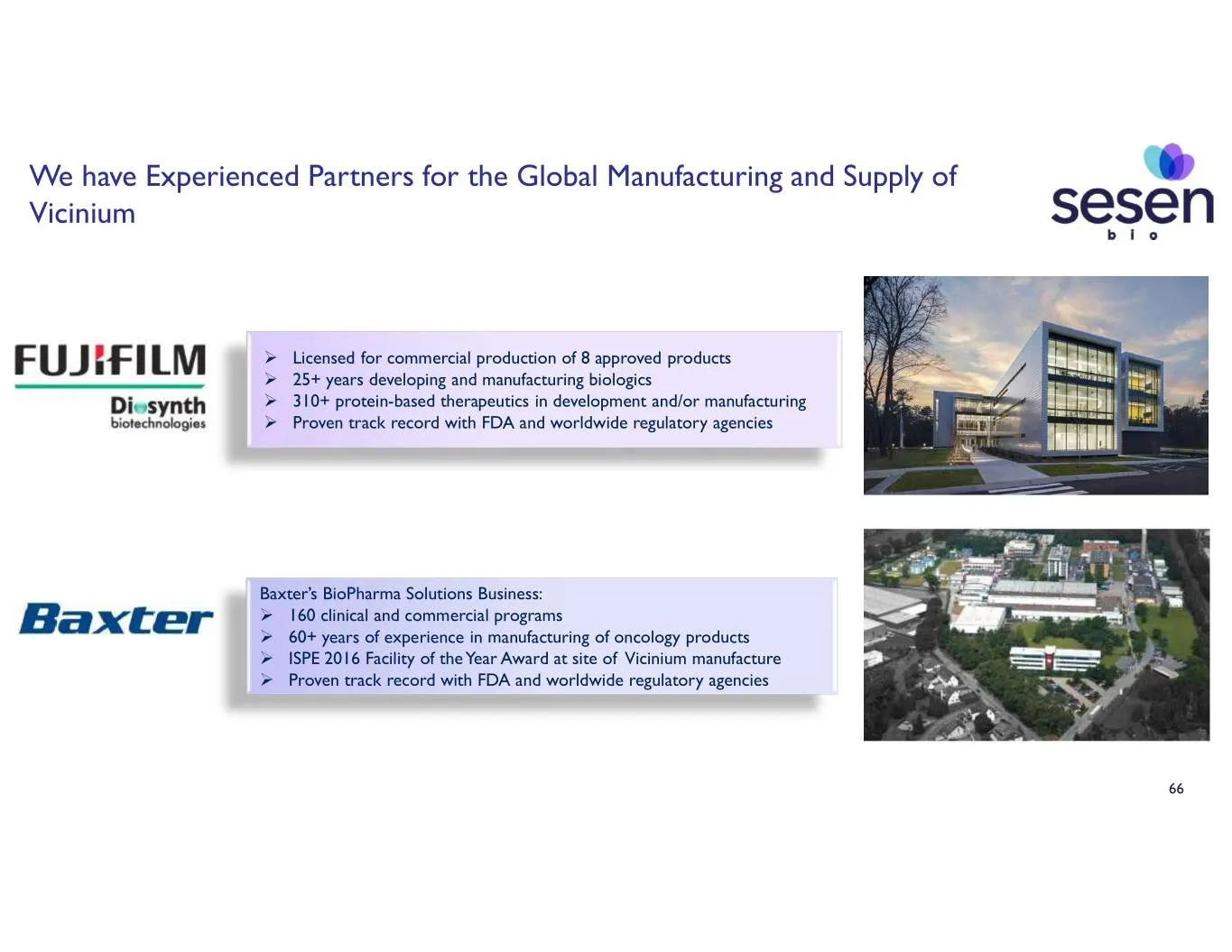
We have Experienced Partners for the Global Manufacturing and Supply of Vicinium Licensed for commercial production of 8 approved products 25+ years developing and manufacturing biologics 310+ protein-based therapeutics in development and/or manufacturing Proven track record with FDA and worldwide r
Slide 67: Vicinium Commercial Manufacturing Strategy
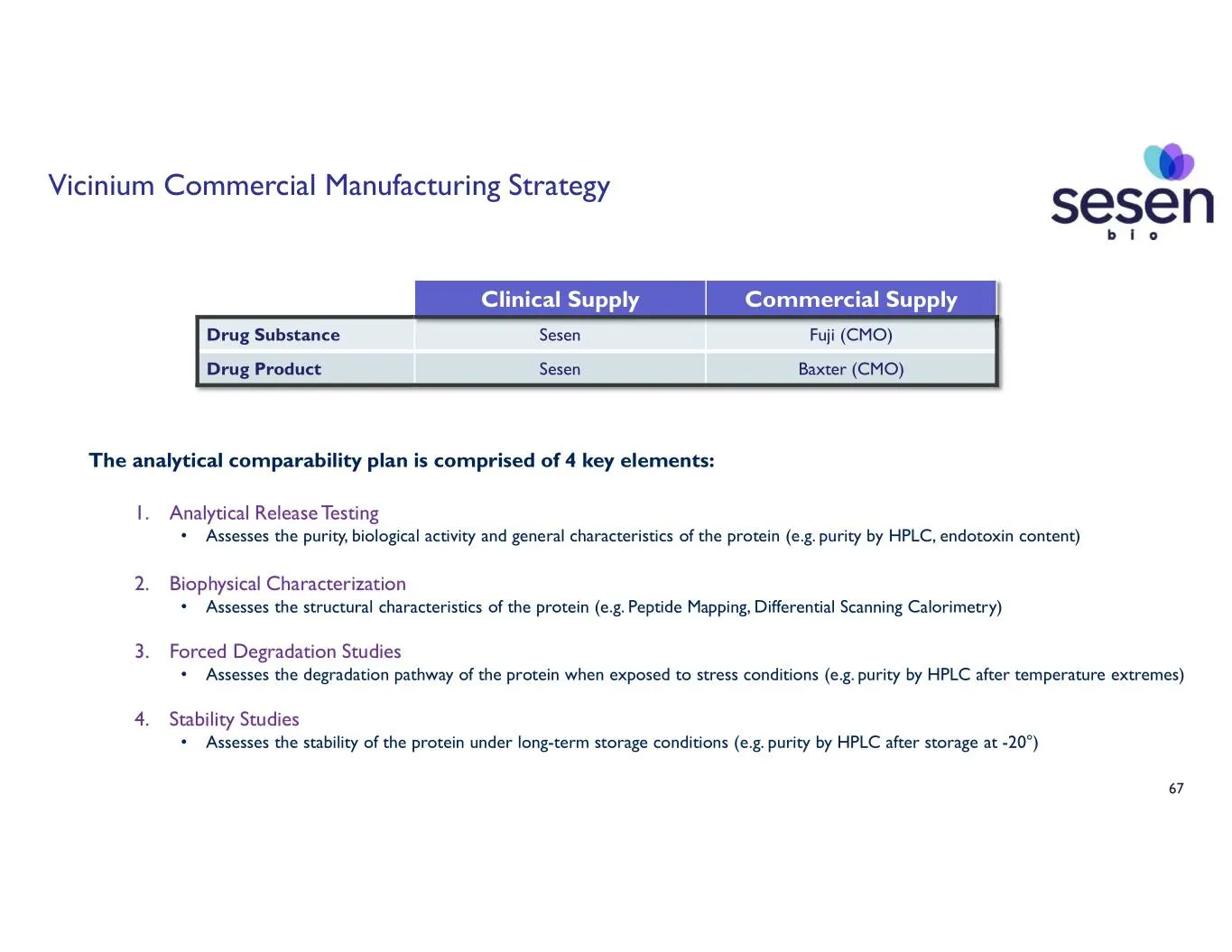
Vicinium Commercial Manufacturing Strategy Clinical Supply Commercial Supply Drug Substance Sesen Fuji (CMO) Drug Product Sesen Baxter (CMO) The analytical comparability plan is comprised of 4 key elements: 1. Analytical Release Testing • Assesses the purity, biological activity and general characte

Slide 68: Appendix: Intellectual Property
Appendix Intellectual Property 68
Slide 69: Vicinium Patent Life
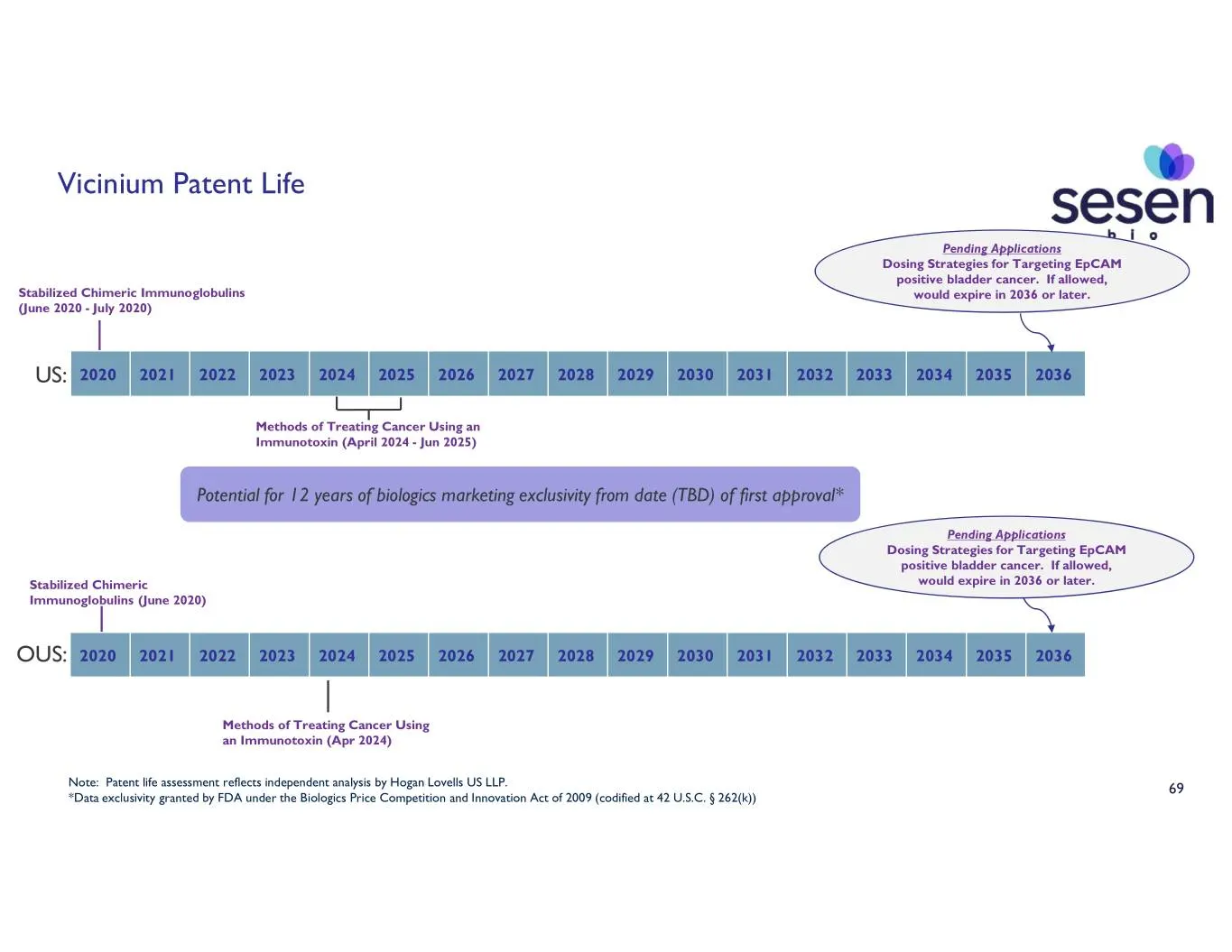
Vicinium Patent Life Pending Applications Dosing Strategies for Targeting EpCAM positive bladder cancer. If allowed, Stabilized Chimeric Immunoglobulins would expire in 2036 or later. (June 2020 - July 2020) US: 2020 2021 2022 2023 2024 2025 2026 2027 2028 2029 2030 2031 2032 2033 2034 2035 2036 Met
Source: SEC EDGAR · 8-K filed Jun 2, 2020
More decks from Sesen Bio Inc
 Carisma Therapeutics — Technical Presentation (April 2024)9 slides · Apr 10, 2024
 Carisma Therapeutics — CAR-TCR Summit 202320 slides · Sep 1, 2023
 Merger or Acquisition (February 2023)17 slides · Feb 2, 2023
 Merger or Acquisition (December 2022)24 slides · Dec 12, 2022
 Merger or Acquisition (September 2022)26 slides · Sep 27, 2022
 Technical Presentation (September 2021)17 slides · Sep 10, 2021