HeartWare International — American Heart Association Scientific Sessions 2010
16 slides from HeartWare International's conference presentation, Nov 15, 2010
Slide 1: Evaluation of the HeartWare HVAD: Results of the ADVANCE Bridge to Transplant Trial
Keith Aaronson, Mark Slaughter, Edwin McGee, William Cotts, Michael Acker, Mariell Jessup, Igor Gregoric, Pranav Loyalka, Valluvan Jeevanandam, Allen Anderson, Robert Kormos, Jeffrey Teuteberg, Francis Pagani, Steven Boyce, David Hathaway, Leslie Miller for the HeartWare ADVANCE Investigators Evalua
Slide 2: Presenter Disclosure Information
Presenter Disclosure Information Keith Aaronson, MD, MS FINANCIAL DISCLOSURE Research Support: HeartWare*, Thoratec*, Terumo Clinical Steering Committee: HeartWare Personal remuneration: none * My activities with HeartWare and Thoratec have been reviewed and approved by the University of Michigan Me
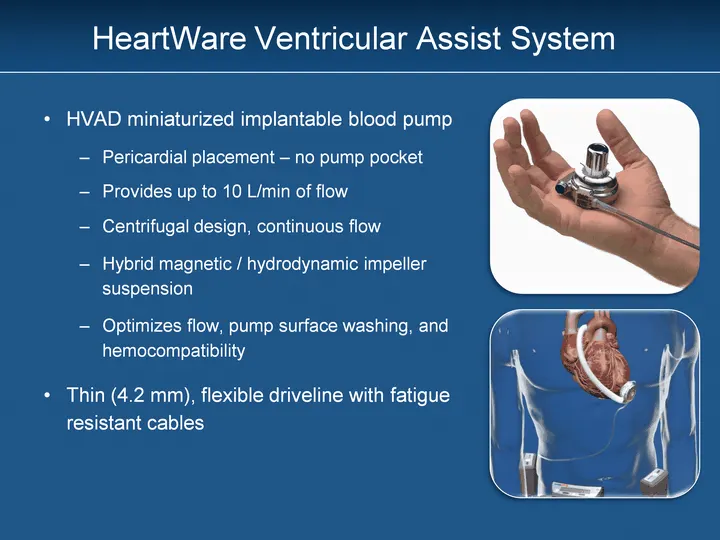
Slide 3: HeartWare Ventricular Assist System
HeartWare Ventricular Assist System HVAD miniaturized implantable blood pump Pericardial placement - no pump pocket Provides up to 10 L/min of flow Centrifugal design, continuous flow Hybrid magnetic / hydrodynamic impeller suspension Optimizes flow, pump surface washing, and hemocompatibility Thin
Slide 4: ADVANCE Trial Design
Multi-site (30), prospective trial to evaluate the HeartWare HVAD as a bridge-to-transplant in the US Enrollment period was August 2008 to February 2010 All patients were followed for ^ 180 days following implant or until earlier cardiac transplantation, device explant for recovery or death Treatmen
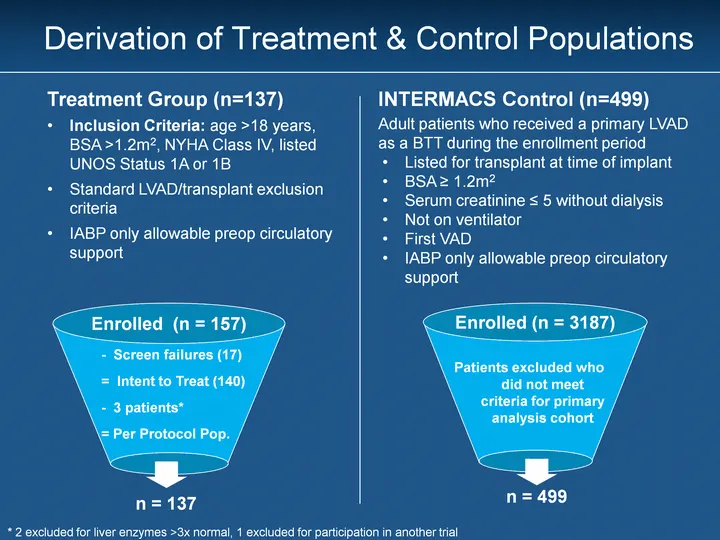
Slide 5: Derivation of Treatment & Control Populations
Adult patients who received a primary LVAD as a BTT during the enrollment period Listed for transplant at time of implant BSA ^ 1.2m2 Serum creatinine ^ 5 without dialysis Not on ventilator First VAD IABP only allowable preop circulatory support Treatment Group (n=137) Inclusion Criteria: age >18 ye
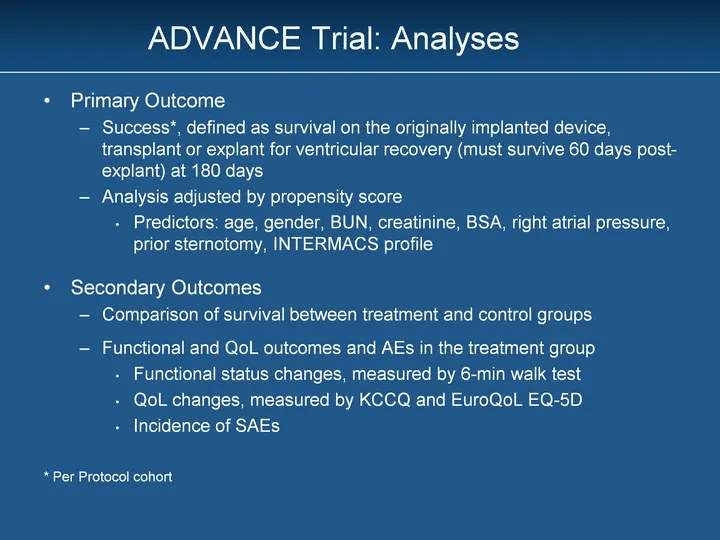
Slide 6: ADVANCE Trial: Analyses
Primary Outcome Success*, defined as survival on the originally implanted device, transplant or explant for ventricular recovery (must survive 60 days post- explant) at 180 days Analysis adjusted by propensity score Predictors: age, gender, BUN, creatinine, BSA, right atrial pressure, prior sternoto
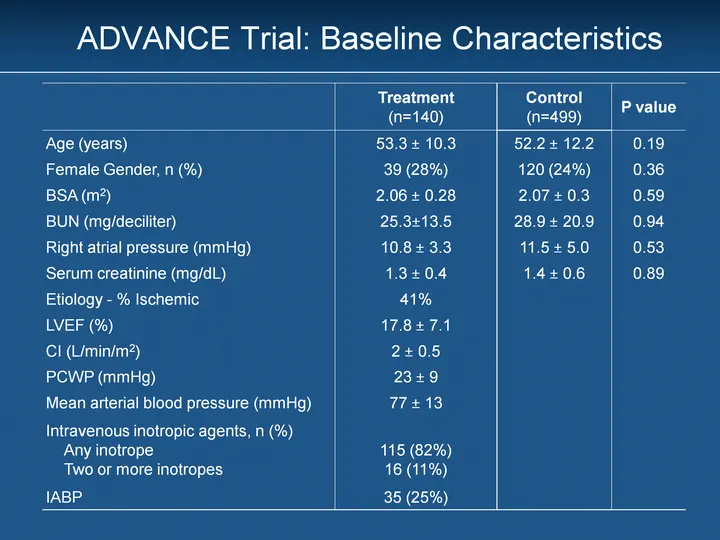
Slide 7: ADVANCE Trial: Baseline Characteristics
Control(n=499) P value 52.2 +- 12.2 0.19 120 (24%) 0.36 2.07 +- 0.3 0.59 28.9 +- 20.9 0.94 11.5 +- 5.0 0.53 1.4 +- 0.6 0.89 ADVANCE Trial: Baseline Characteristics
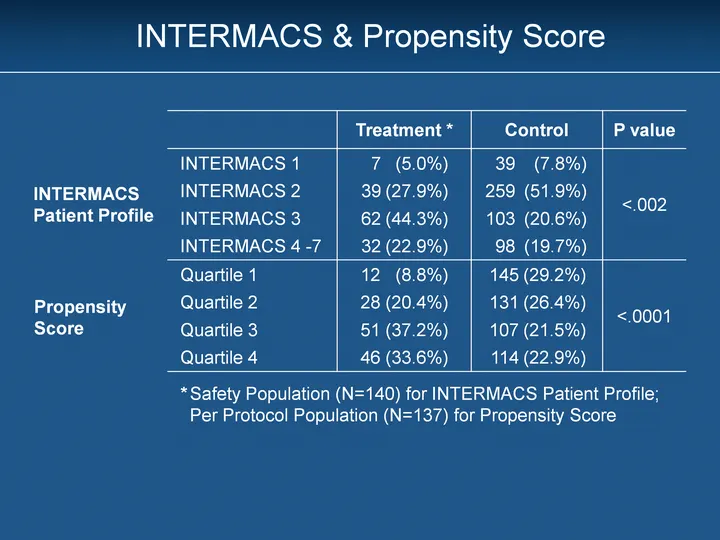
Slide 8: Propensity Score and INTERMACS Patient Profile
Propensity Score INTERMACS Patient Profile * Safety Population (N=140) for INTERMACS Patient Profile; Per Protocol Population (N=137) for Propensity Score INTERMACS & Propensity Score
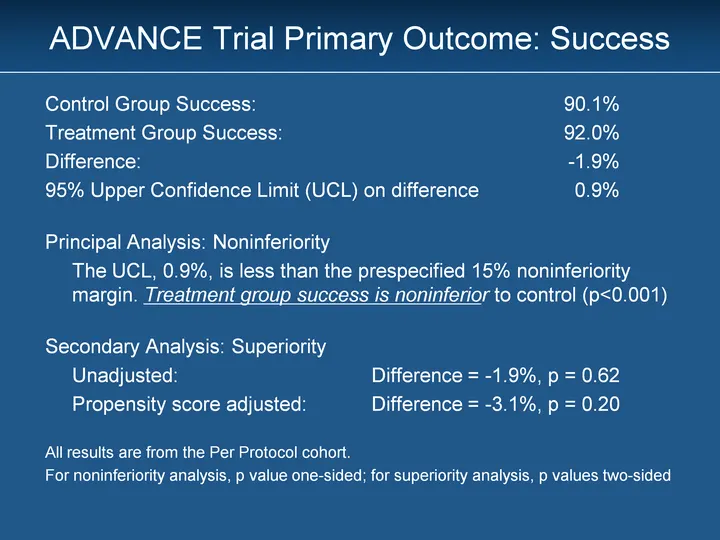
Slide 9: ADVANCE Trial Primary Outcome: Success
Control Group Success: 90.1% Treatment Group Success: 92.0% Difference: -1.9% 95% Upper Confidence Limit (UCL) on difference 0.9% Principal Analysis: Noninferiority The UCL, 0.9%, is less than the prespecified 15% noninferiority margin. Treatment group success is noninferior to control (p<0.001) Sec
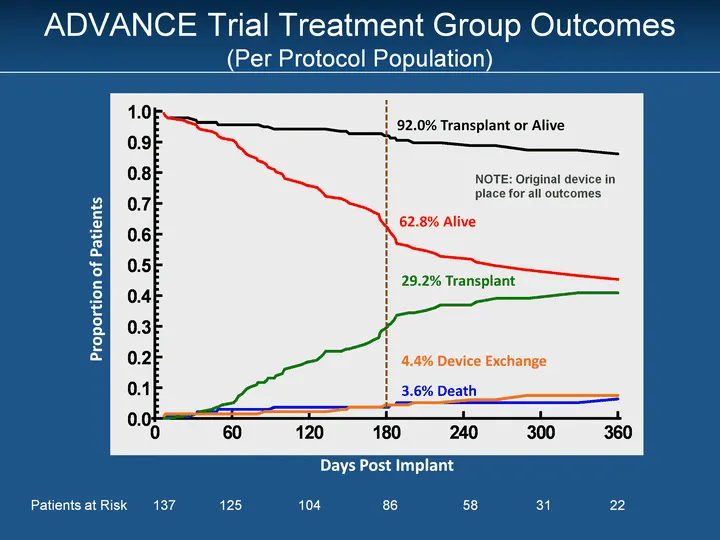
Slide 10: ADVANCE Trial Treatment Group Outcomes (Per Protocol Population)
Days Post Implant Proportion of Patients 62.8% Alive 29.2% Transplant 3.6% Death 4.4% Device Exchange 92.0% Transplant or Alive ADVANCE Trial Treatment Group Outcomes (Per Protocol Population) Patients at Risk 137 125 104 86 58 31 22 NOTE: Original device in place for all outcomes
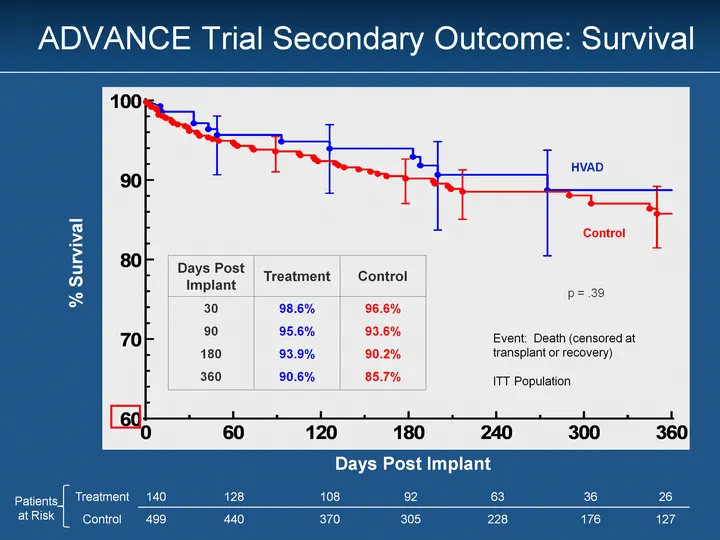
Slide 11: ADVANCE Trial Secondary Outcome: Survival
Days Post Implant % Survival Event: Death (censored at transplant or recovery) ITT Population Patients at Risk Treatment 140 128 108 92 63 36 26 Patients at Risk Control 499 440 370 305 228 176 127 ADVANCE Trial Secondary Outcome: Survival Days Post Implant Treatment Control 30 98.6% 96.6% 90 95.6%
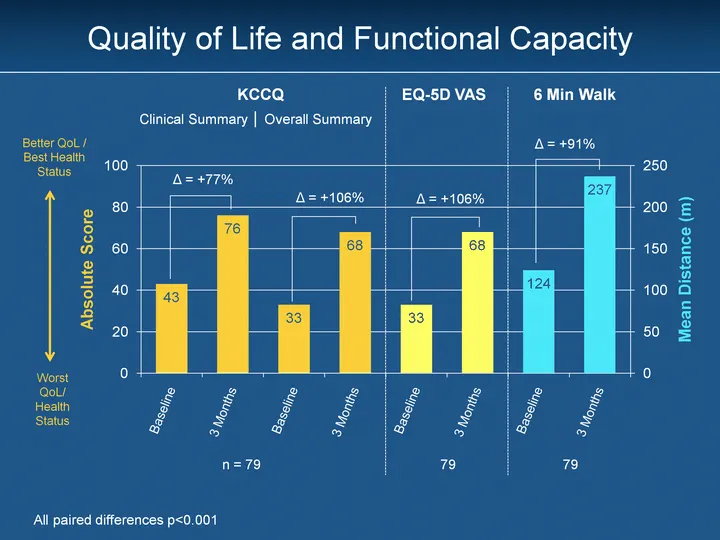
Slide 12: Quality of Life and Functional Capacity
KCCQ KCCQ n = 79 Better QoL / Best Health Status Worst QoL/ Health Status 6 Min Walk Clinical Summary ^ Overall Summary 79 79 All paired differences p<0.001 EQ-5D VAS ^ = +77% ^ = +106% ^ = +91% ^ = +106% Quality of Life and Functional Capacity
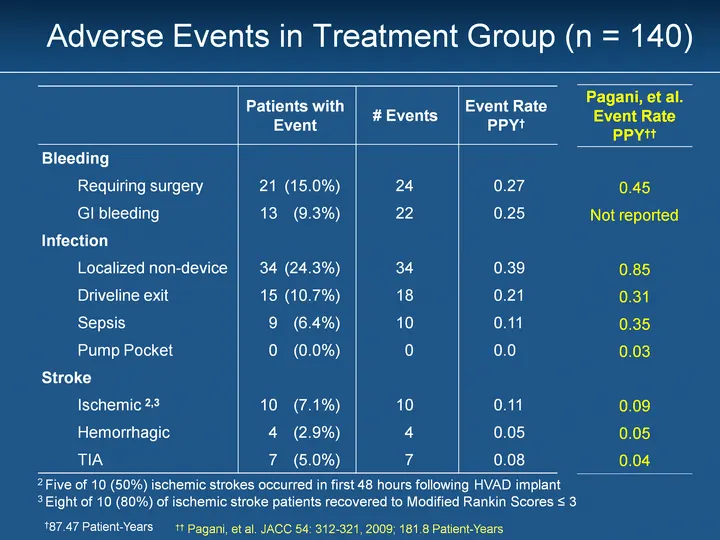
Slide 13: Adverse Events in Treatment Group (n = 140)
Pagani, et al.Event Rate PPY†† 0.45 Not reported 0.85 0.31 0.35 0.03 0.09 0.05 0.04 Adverse Events in Treatment Group (n = 140) Adverse Events in Treatment Group (n = 140) †† Pagani, et al. JACC 54: 312-321, 2009; 181.8 Patient-Years †87.47 Patient-Years 2 Five of 10 (50%) ischemic strokes occurred
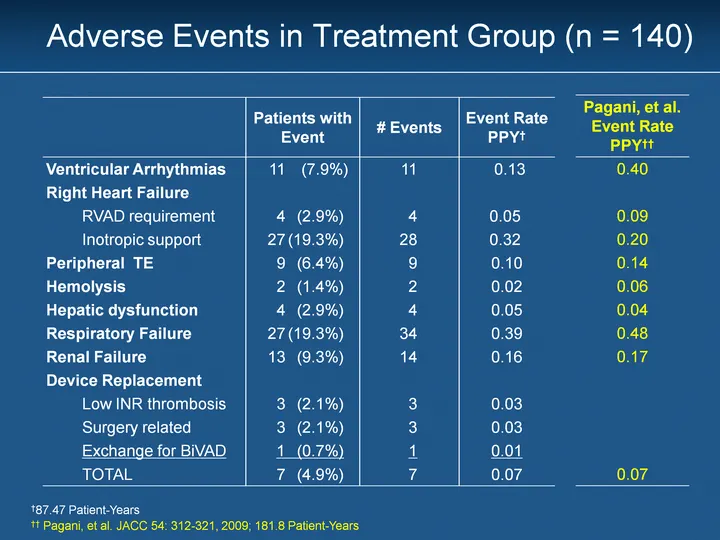
Slide 14: Adverse Events in Treatment Group (n = 140)
Pagani, et al. Event Rate PPY†† 0.40 0.09 0.20 0.14 0.06 0.04 0.48 0.17 0.07 †† Pagani, et al. JACC 54: 312-321, 2009; 181.8 Patient-Years †87.47 Patient-Years Adverse Events in Treatment Group (n = 140)
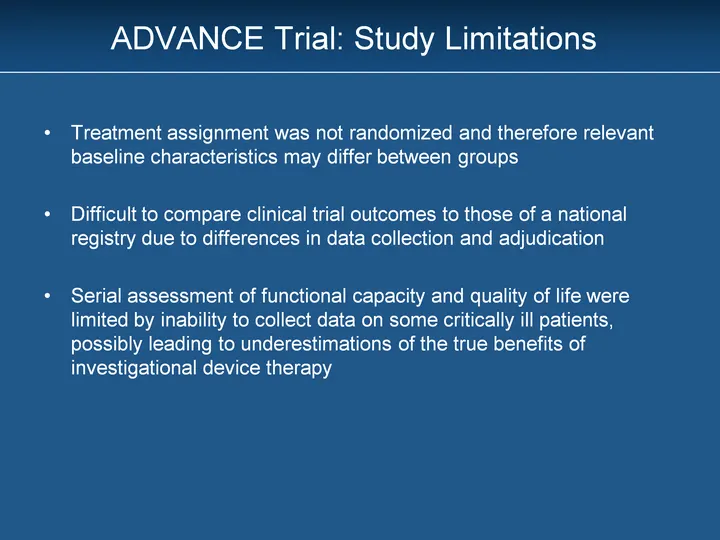
Slide 15: ADVANCE Trial: Study Limitations
Treatment assignment was not randomized and therefore relevant baseline characteristics may differ between groups Difficult to compare clinical trial outcomes to those of a national registry due to differences in data collection and adjudication Serial assessment of functional capacity and quality o
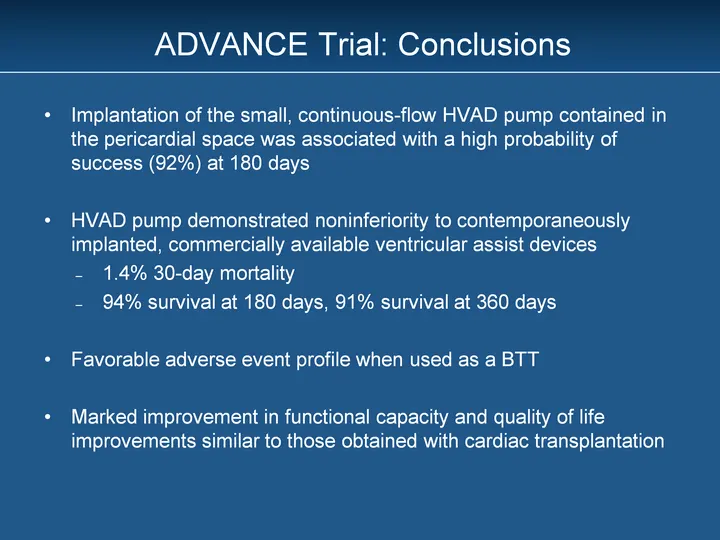
Slide 16: ADVANCE Trial: Conclusions
Implantation of the small, continuous-flow HVAD pump contained in the pericardial space was associated with a high probability of success (92%) at 180 days HVAD pump demonstrated noninferiority to contemporaneously implanted, commercially available ventricular assist devices 1.4% 30-day mortality 94
Source: SEC EDGAR · 8-K filed Nov 15, 2010
More decks from HeartWare International Inc
 34th Annual J.P. Morgan Healthcare Conference (January 2016)35 slides · Jan 11, 2016
 Proxy Contest (January 2016)7 slides · Jan 7, 2016
 Oppenheimer 26th Annual Healthcare Conference 201525 slides · Dec 8, 2015
 Canaccord Genuity Medical Technologies and Diagnostics Forum 201525 slides · Nov 19, 2015
 Credit Suisse 24th Annual Healthcare Conference 201530 slides · Nov 12, 2015
 Merger or Acquisition (September 2015)42 slides · Sep 1, 2015