The Cigna Group · NYSE:CI
The Cigna — Rogers Memorial Hospital — Investor Presentation (October 2012)
24 slides from The Cigna's investor presentation, October 2012
Slide 1: Surviving the holidays if you have an eating disorder
Surviving the holidays if you have an eating disorder Theodore E. Weltzin, MD, FAED Medical Director, Eating Disorder Services Rogers Memorial Hospital
Slide 2: Cookies are made of butter and love
"Cookies are made of butter and love." - Norwegian Proverb
Slide 3: The Dilemma
The Dilemma Holidays should be a time of year to look forward to but are stressful for people with eating disorder. •Have a game plan •Keep your sense of humor •Make yourself useful •Make time for yourself •Look on the bright side
Slide 4: For people who are already overweight, the holiday weight news is worse
For people who are already overweight, the holiday weight news is worse. •Although the average gain is only one pound, people who are already overweight tend to gain a lot more. •Overweight people may be more likely to gain five pounds or more during the holidays. •Amount of exercise during holidays
Slide 5: Mechanism of change
Mechanism of change • You need an approach (or framework) to understand these symptoms that is understandable and consistent with belief systems • Patients need to affectively be engaged in applying this framework • Reality testing in the problematic situations
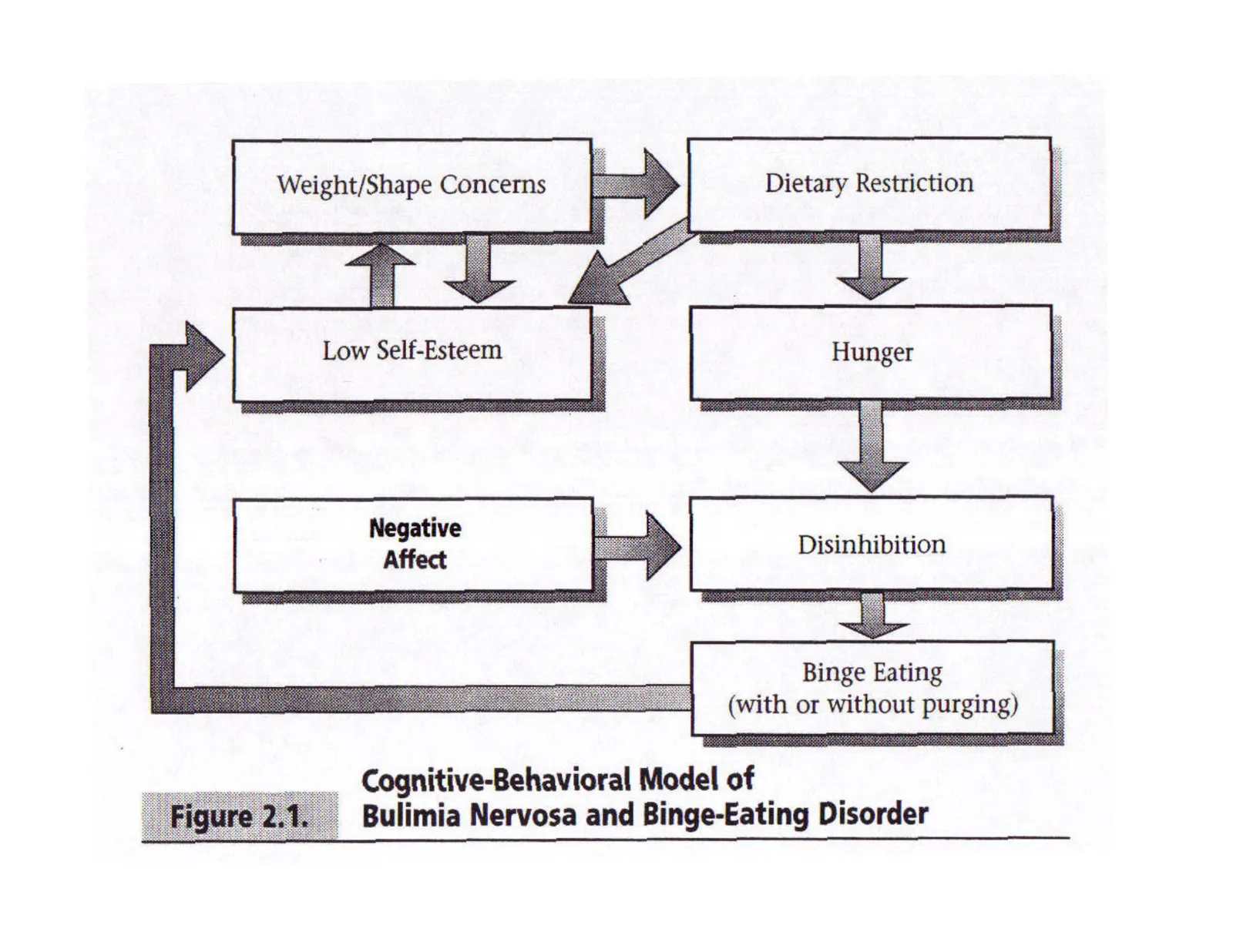
Slide 6: Cognitive-Behavioral Model of Bulimia Nervosa and Binge-Eating Disorder
Weight/Shape Concerns Dietary Restriction Low Self-Esteem Disinhibition Binge Eating (with or without purging) Cognitive-Behavioral Model of Bulimia Nervosa and Binge-Eating Disorder
Slide 7: Eat regularly and in some kind of reasonable pattern
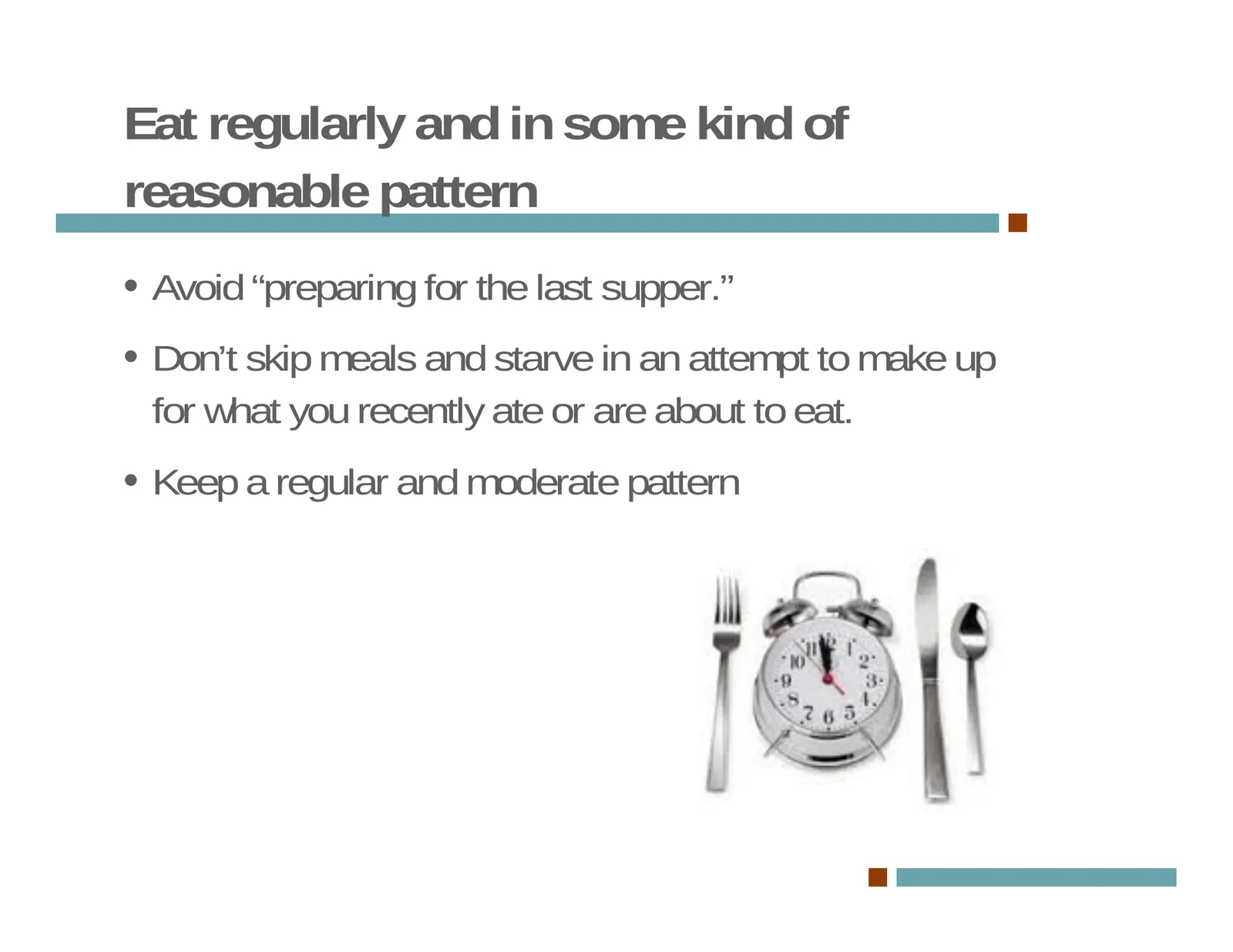
Eat regularly and in some kind of reasonable pattern • Avoid “preparing for the last supper.” • Don’t skip meals and starve in an attempt to make up for what you recently ate or are about to eat. • Keep a regular and moderate pattern
Slide 8: Avoid overstressing and overbooking yourself
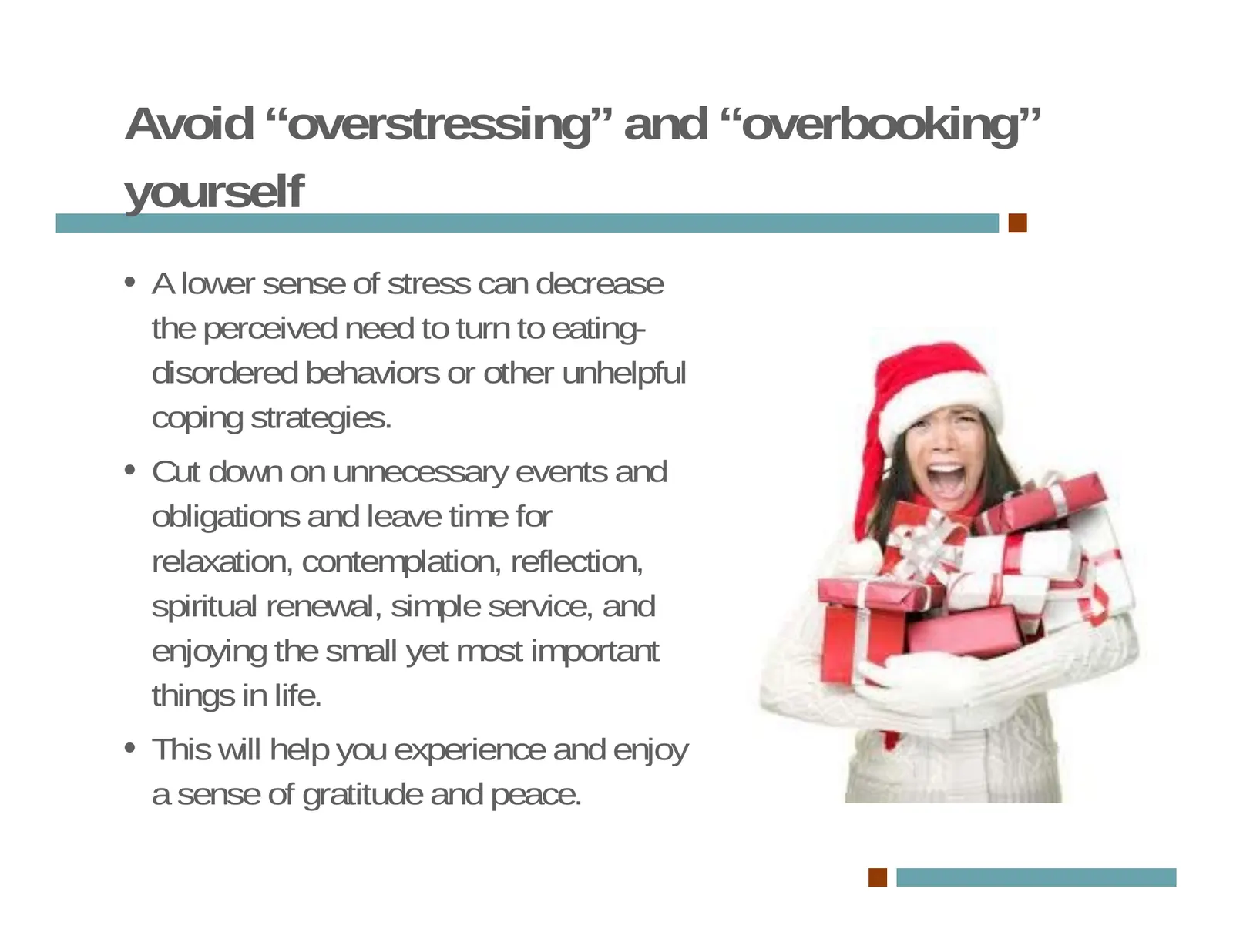
Avoid “overstressing” and “overbooking” yourself • A lower sense of stress can decrease the perceived need to turn to eating- disordered behaviors or other unhelpful coping strategies. • Cut down on unnecessary events and obligations and leave time for relaxation, contemplation, reflection, spiritua
Slide 9: Be flexible
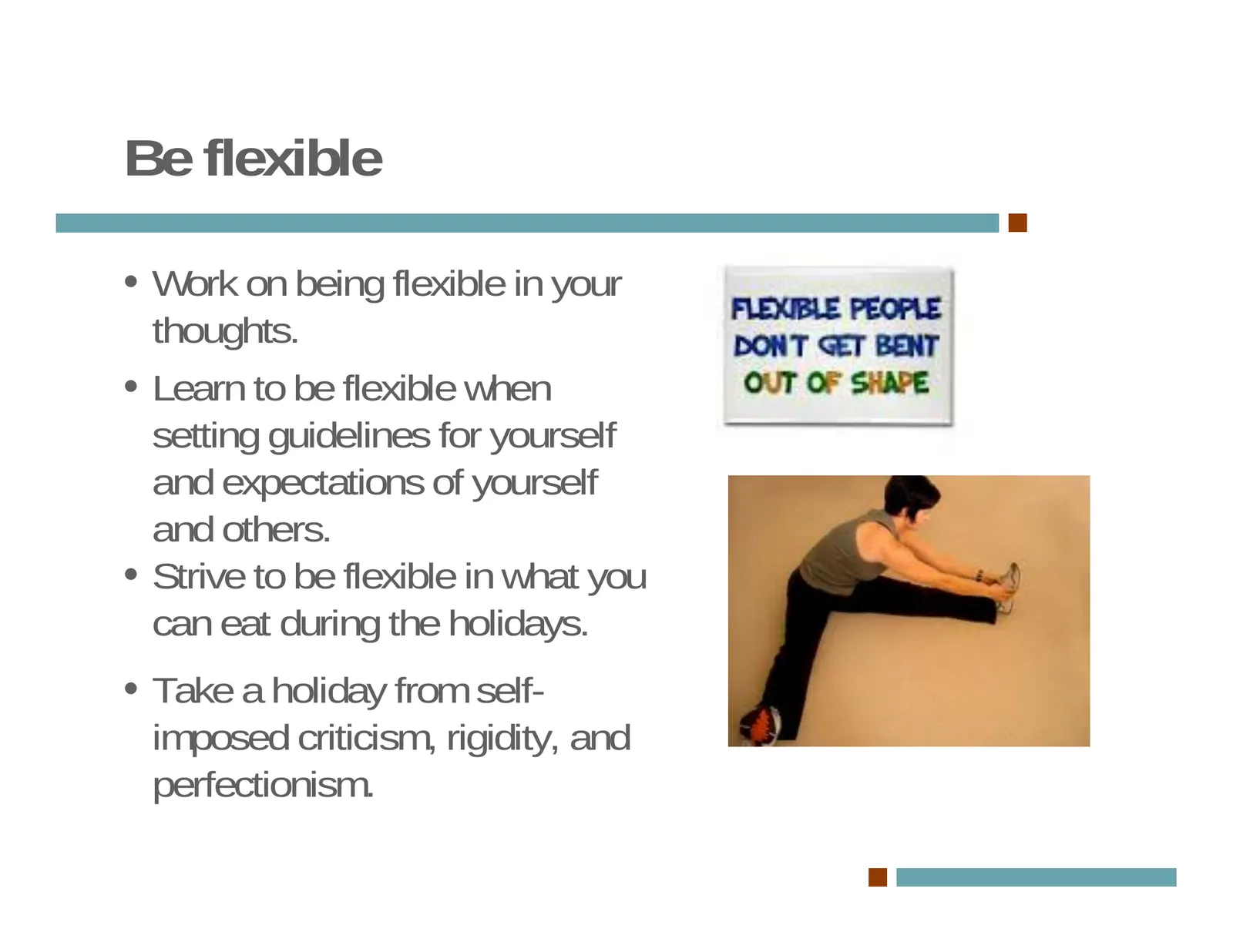
Be flexible • Work on being flexible in your thoughts. • Learn to be flexible when setting guidelines for yourself and expectations of yourself and others. • Strive to be flexible in what you can eat during the holidays. • Take a holiday from self- imposed criticism, rigidity, and perfectionism.
Slide 10: Take advantage of support groups
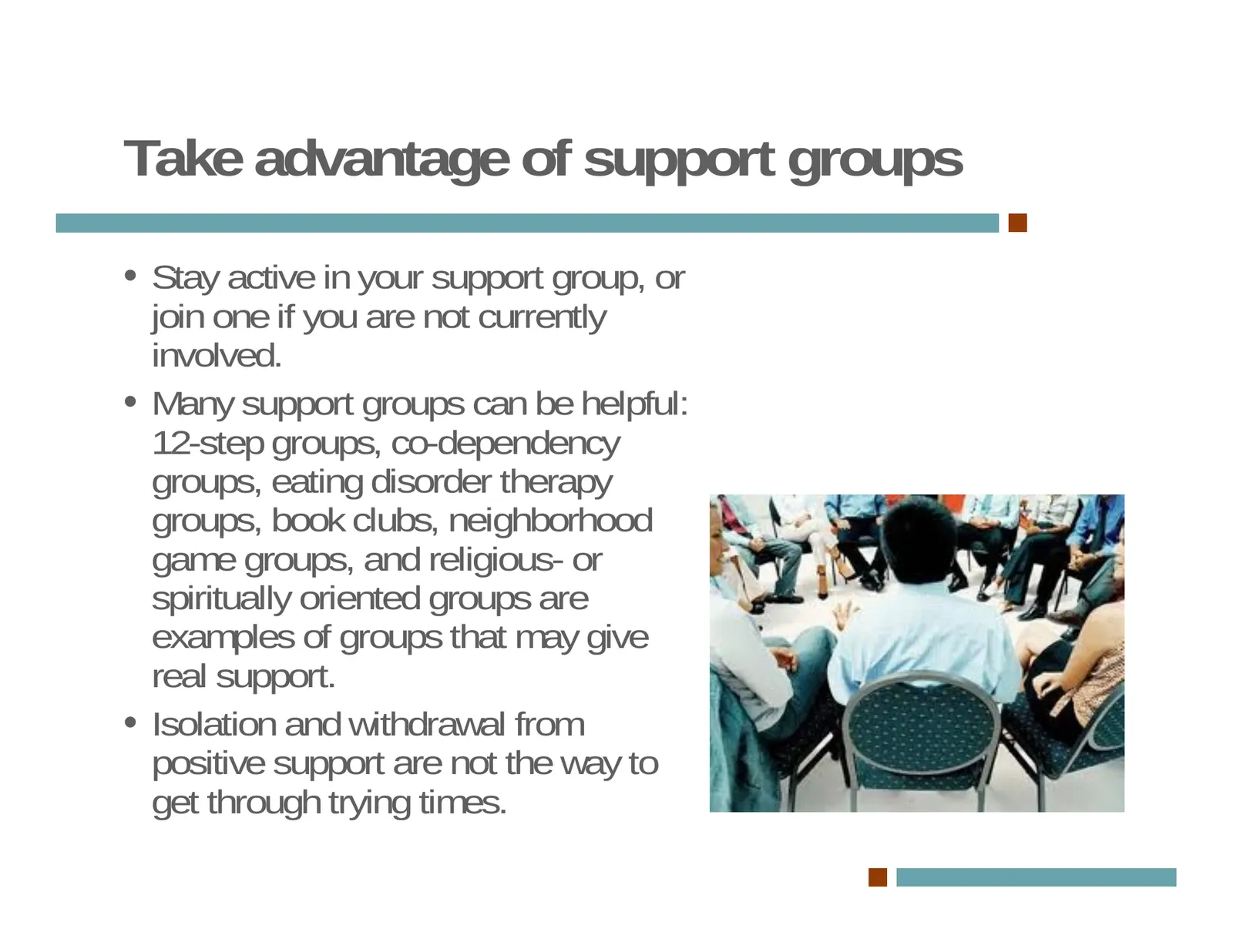
Take advantage of support groups • Stay active in your support group, or join one if you are not currently involved. • Many support groups can be helpful: 12-step groups, co-dependency groups, eating disorder therapy groups, book clubs, neighborhood game groups, and religious- or spiritually oriente
Slide 11: Have a vision
Have a vision • Write down your vision of where you would like your mind and heart to be during this holiday time with loved ones. • Take time, several times per day, to find a quiet place to get in tune with your vision, to remember, to nurture, and to center yourself in the thoughts, feelings, and
Slide 12: Plan ahead
Plan ahead Discuss your anticipation of the holidays with your therapist, physician, dietitian, or other members of your treatment team so that they can help you predict, prepare for, and get through any uncomfortable family interactions without self-destructive coping attempts.
Slide 13: Have a game plan
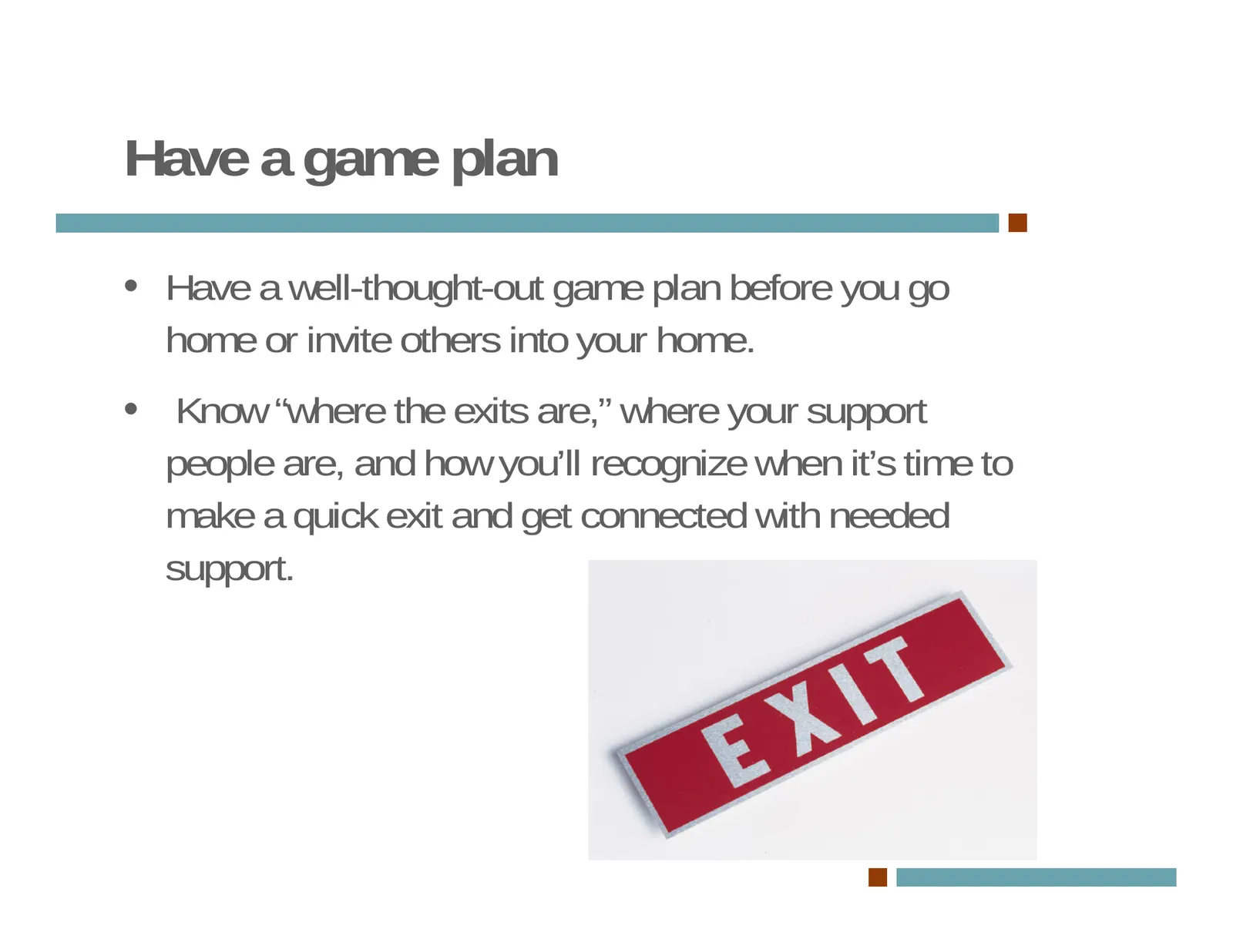
Have a game plan • Have a well-thought-out game plan before you go home or invite others into your home. • Know “where the exits are,” where your support people are, and how you’ll recognize when it’s time to make a quick exit and get connected with needed support.
Slide 14: Set goals for time with loved ones
Set goals for time with loved ones • Focus your personal goals for your time with loved ones during the holidays. Make them about “doing something” rather than about trying to prevent something. • It’s fine to have food goals, but make sure you add personal, emotional, spiritual, and relationship go
Slide 15: Share your struggle with a family member who will be present
Share your struggle with a family member who will be present • Consider choosing one loved one to be your “reality check” with food, to either help fix a plate for you or to give you sound feedback on the food portion sizes you make for yourself. • Reach out rather than isolate!
Slide 16: Have an emergency phone number
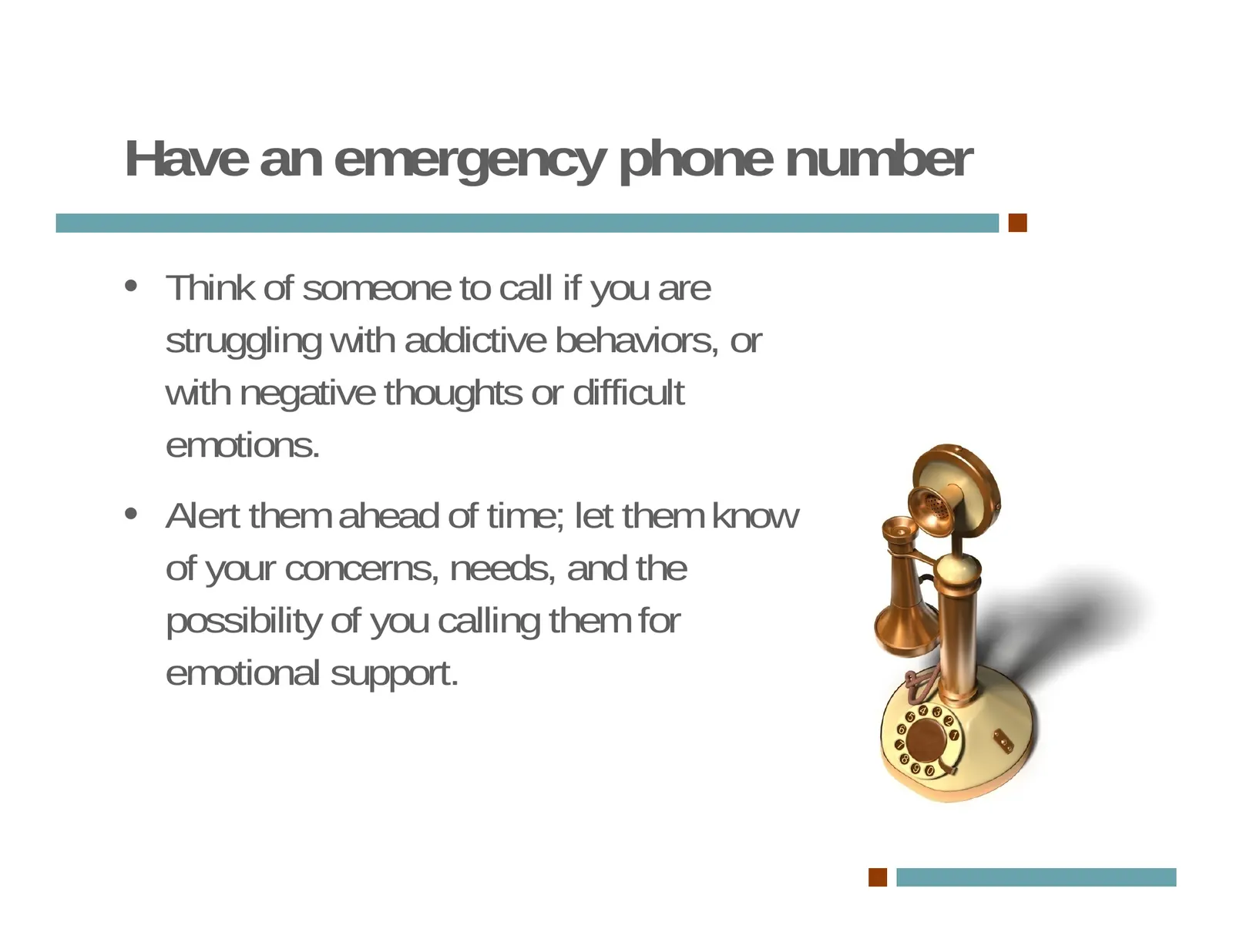
Have an emergency phone number • Think of someone to call if you are struggling with addictive behaviors, or with negative thoughts or difficult emotions. • Alert them ahead of time; let them know of your concerns, needs, and the possibility of you calling them for emotional support.
Slide 17: Have some fun!
Have some fun! • Talk with loved ones about important issues: decisions, victories, challenges, fears, concerns, dreams, goals, special moments, spirituality, relationships and your feelings about them. • Allow important themes to be present. Allow yourself to have fun rather than rigidly focusing o
Slide 18: Diet, exercise and behavior therapy: application to everyday life
Diet, exercise and behavior therapy: application to everyday life • Goals (i.e., increasing positive goal directed activity and maintain intake) are accomplished. • Behavior therapy's principal methodology is an individual functional analysis (through self-monitoring) that seeks to determine the ant
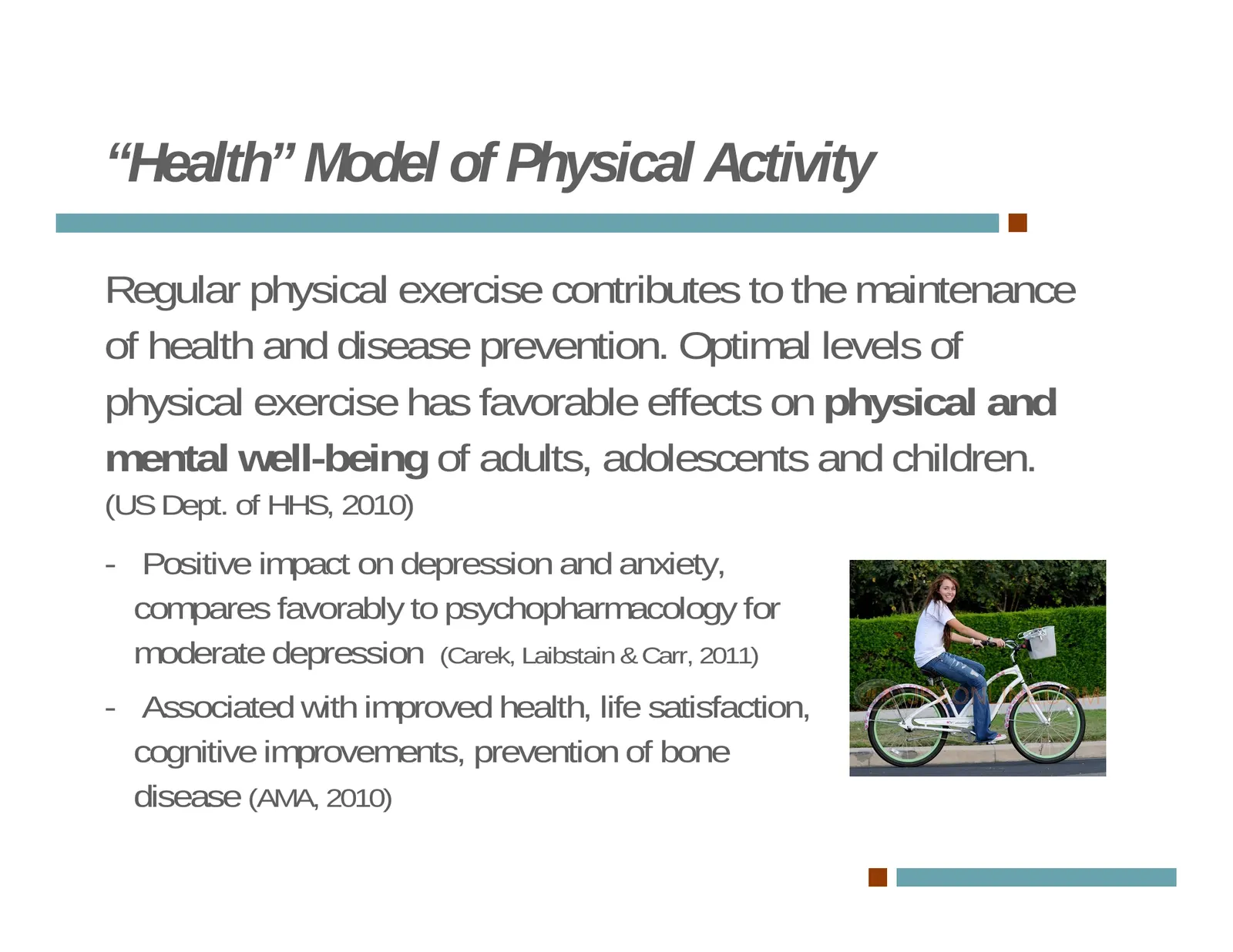
Slide 19: Health Model of Physical Activity
“Health” Model of Physical Activity Regular physical exercise contributes to the maintenance of health and disease prevention. Optimal levels of physical exercise has favorable effects on physical and mental well-being of adults, adolescents and children. (US Dept. of HHS, 2010) - Positive impact on
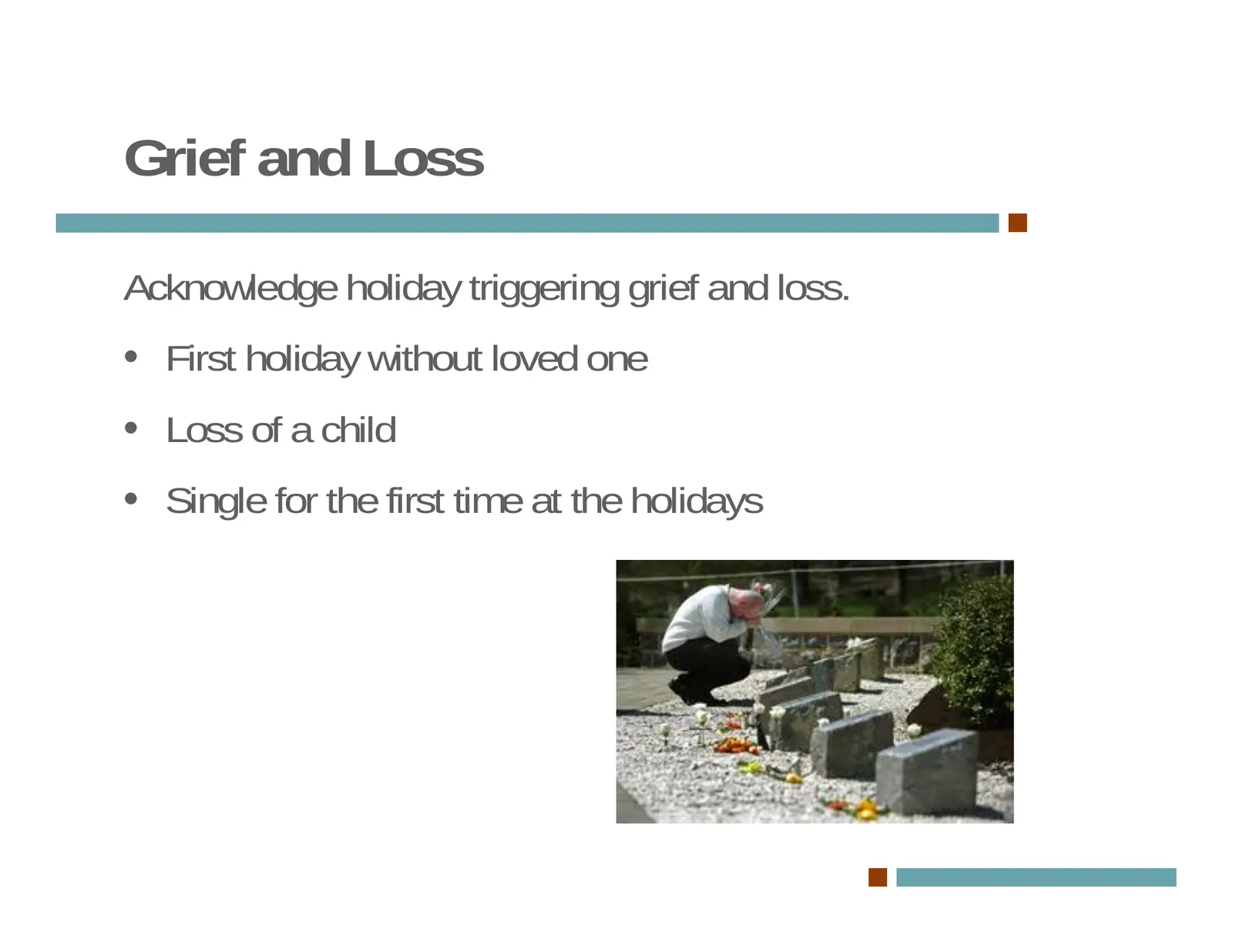
Slide 20: Grief and Loss
Grief and Loss Acknowledge holiday triggering grief and loss. • First holiday without loved one • Loss of a child • Single for the first time at the holidays
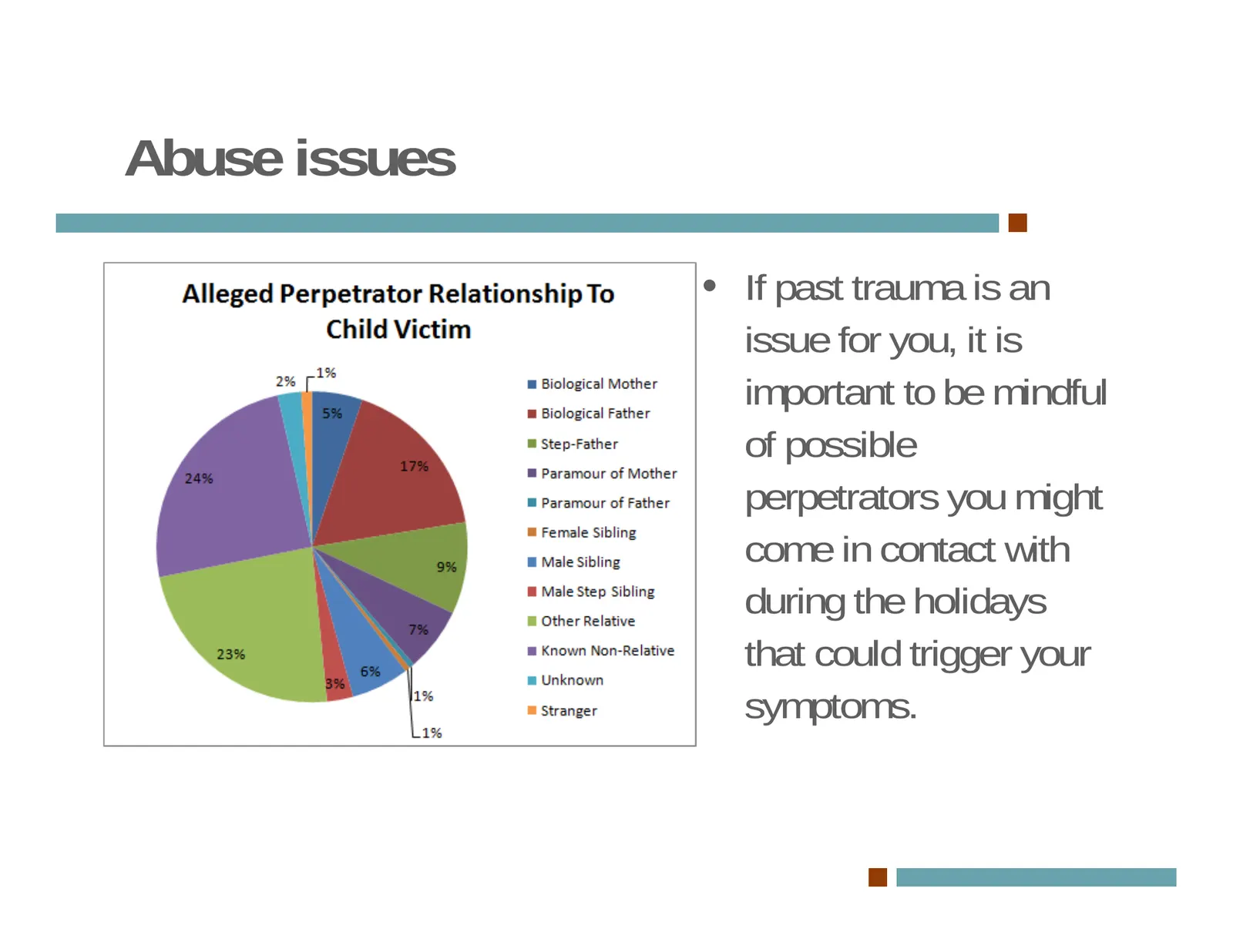
Slide 21: Abuse issues
Abuse issues • If past trauma is an issue for you, it is important to be mindful of possible perpetrators you might come in contact with during the holidays that could trigger your symptoms.
Slide 22: Travel and Holiday
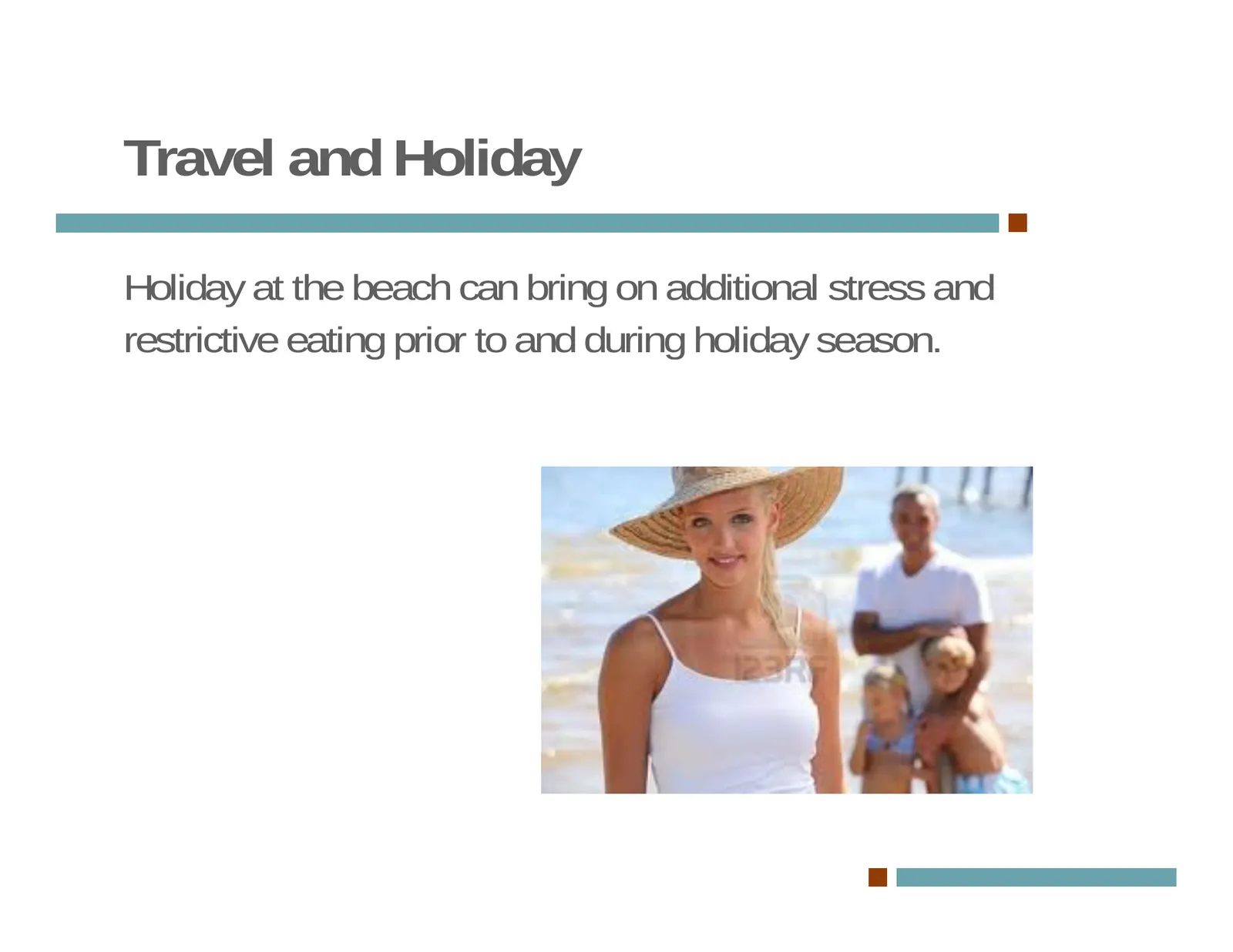
Travel and Holiday Holiday at the beach can bring on additional stress and restrictive eating prior to and during holiday season.

Slide 23: Worry more about the size of your heart than the size of your hips!
Worry more about the size of your heart than the size of your hips! It is the holiday season, a great time to reflect, enjoy relationships with loved ones, and most importantly, a time to feel gratitude for blessings received and to give back through loving service to others.
Slide 24: Rogers Memorial Hospital
Rogers Memorial Hospital Rogers provides trusted treatment for children, adolescents and adults with: •Anxiety disorders •Mood disorders •Eating disorders •Substance use disorders 800-767-4411 rogershospital.org
Source: Internet Archive copy of cigna.com
More decks from The Cigna Group
 Q3 2026 Earnings Presentation18 slides · Nov 5, 2026
 Investor Day (September 2026)119 slides · Sep 30, 2026
 Q1 2026 Earnings Presentation13 slides · Apr 30, 2026
 Q4 2024 Earnings Presentation25 slides · Jan 30, 2025
 Q2 2024 Earnings Presentation19 slides · Aug 1, 2024
 Q1 2024 Earnings Presentation19 slides · May 2, 2024