Puma Biotechnology Inc · NASDAQ:PBYI
Puma Biotechnology — TD Cowen 45th Annual Health Care Conference (March 2025)
44 slides from Puma Biotechnology's conference presentation, March 2025
Slide 1: Puma Biotechnology
Puma Biotechnology TD Cowen 45th Annual Health Care Conference March 2025
Slide 2: Forward-Looking Safe-Harbor Statement
Forward-Looking Safe-Harbor Statement This presentation contains forward-looking statements, including statements regarding commercialization of NERLYNX® and the potential indications and development of our drug candidates. All forward-looking statements involve risks and uncertainties that could ca
Slide 3: Product Pipeline
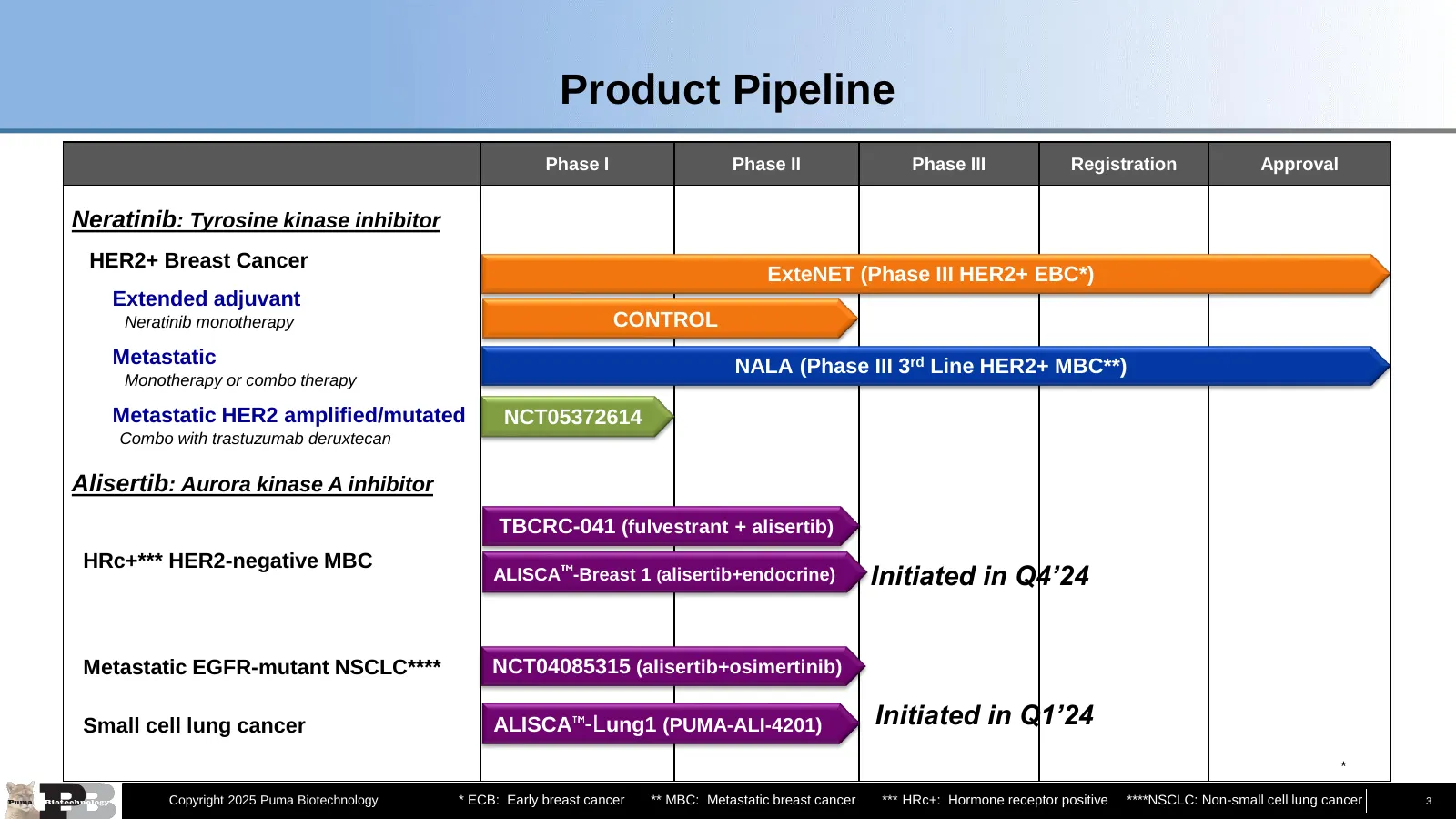
Product Pipeline Phase I Phase II Phase III Registration Approval N Neratinib: Tyrosine kinase inhibitor HER2+ Breast Cancer ExteNET (Phase III HER2+ EBC*) Extended adjuvant Neratinib monotherapy CONTROL Metastatic NALA (Phase III 3rd Line HER2+ MBC**) Monotherapy or combo therapy Metastatic HER2 am
Slide 4: Puma's Pharmacy and Distributor Network
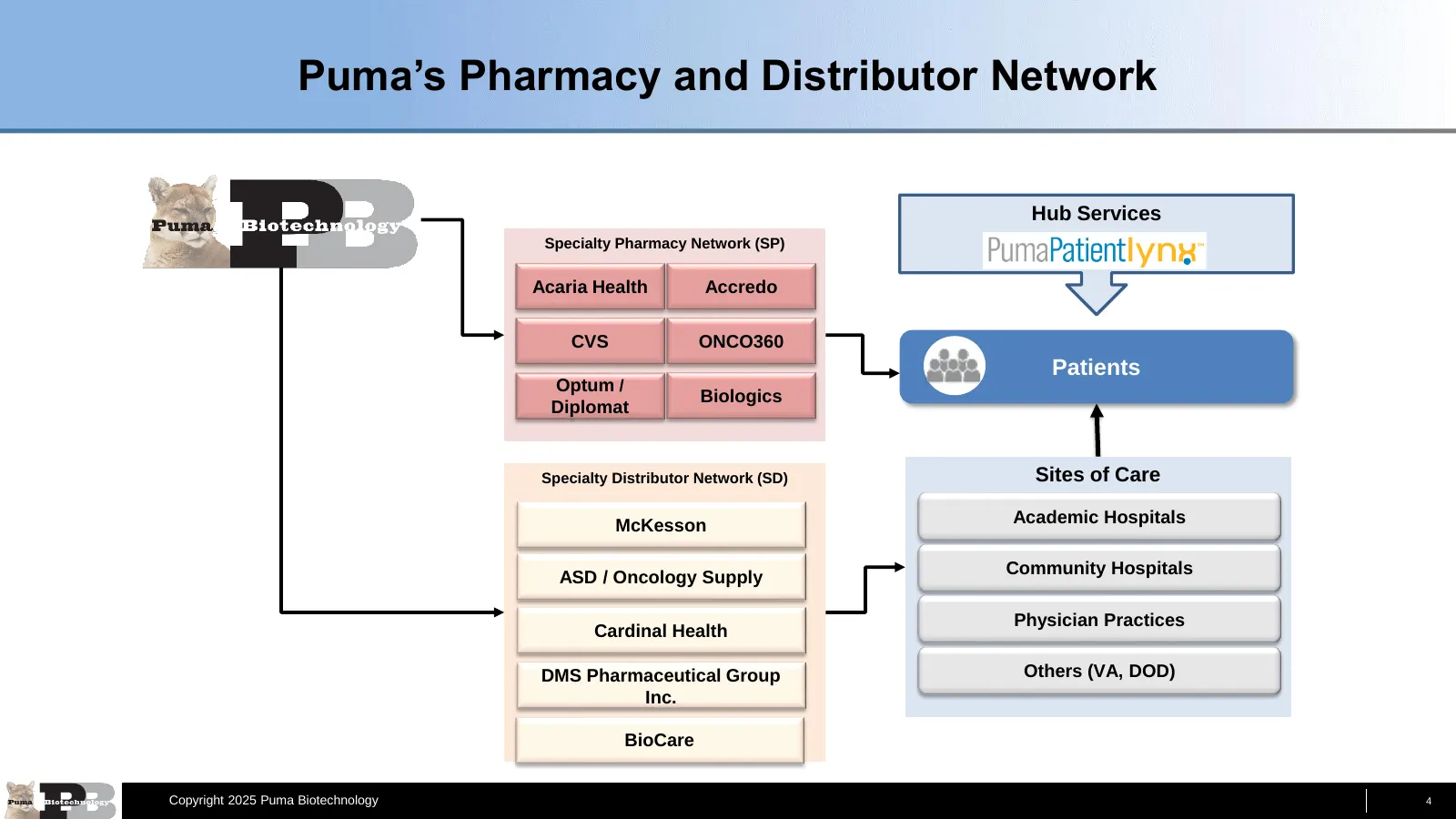
Puma’s Pharmacy and Distributor Network Hub Services Specialty Pharmacy Network (SP) Acaria Health Accredo CVS ONCO360 Patients Optum / Biologics Diplomat Specialty Distributor Network (SD) Sites of Care McKesson Academic Hospitals ASD / Oncology Supply Community Hospitals Physician Practices Cardin
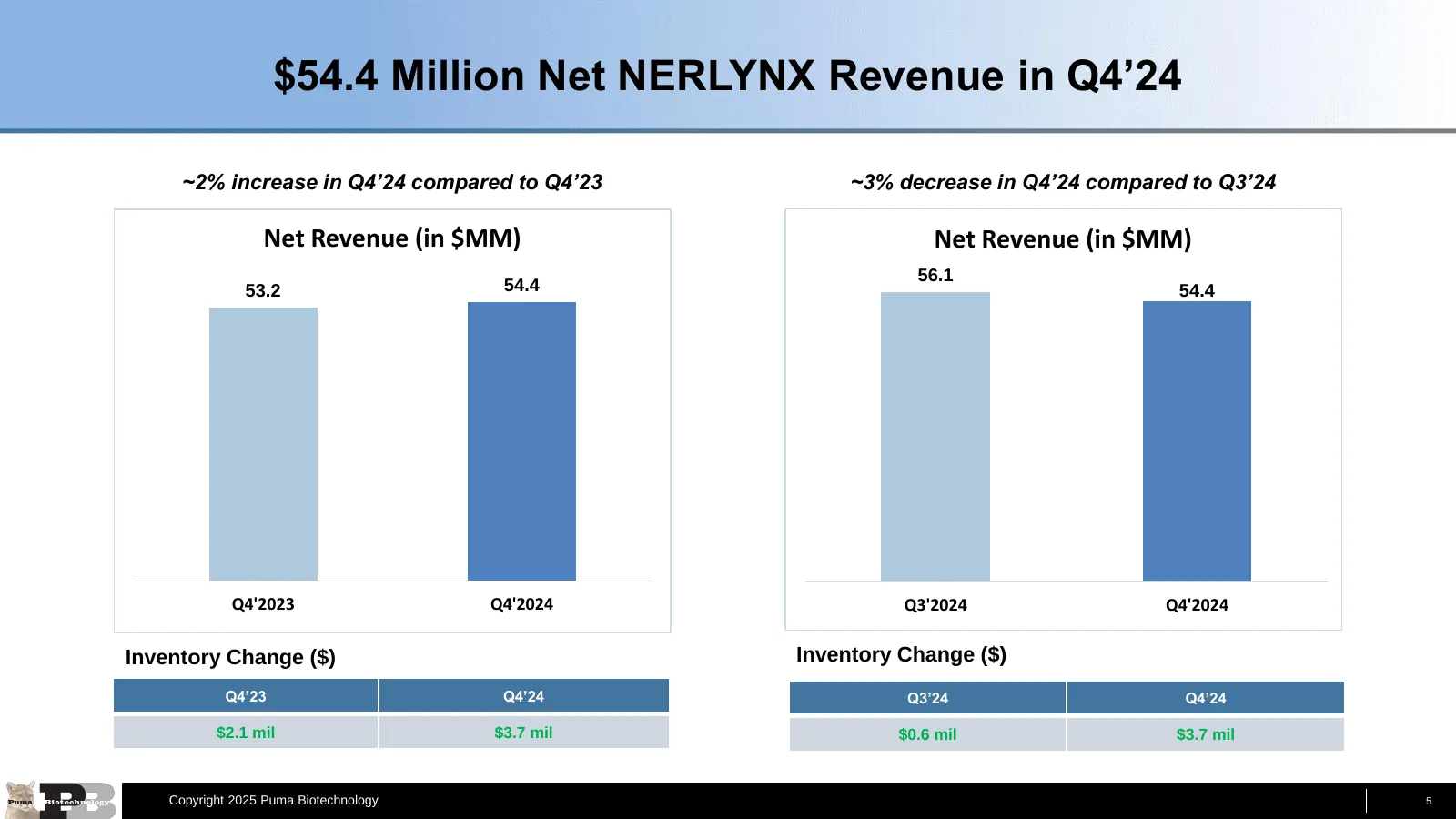
Slide 5: $54.4 Million Net NERLYNX Revenue in Q4'24
$54.4 Million Net NERLYNX Revenue in Q4’24 ~2% increase in Q4’24 compared to Q4’23 ~3% decrease in Q4’24 compared to Q3’24 Net Revenue (in $MM) Net Revenue (in $MM) 56.1 53.2 54.4 54.4 Q4'2023 Q4'2024 Q3'2024 Q4'2024 Inventory Change ($) Inventory Change ($) Q4’23 Q4’24 Q3’24 Q4’24 $2.1 mil $3.7 mil
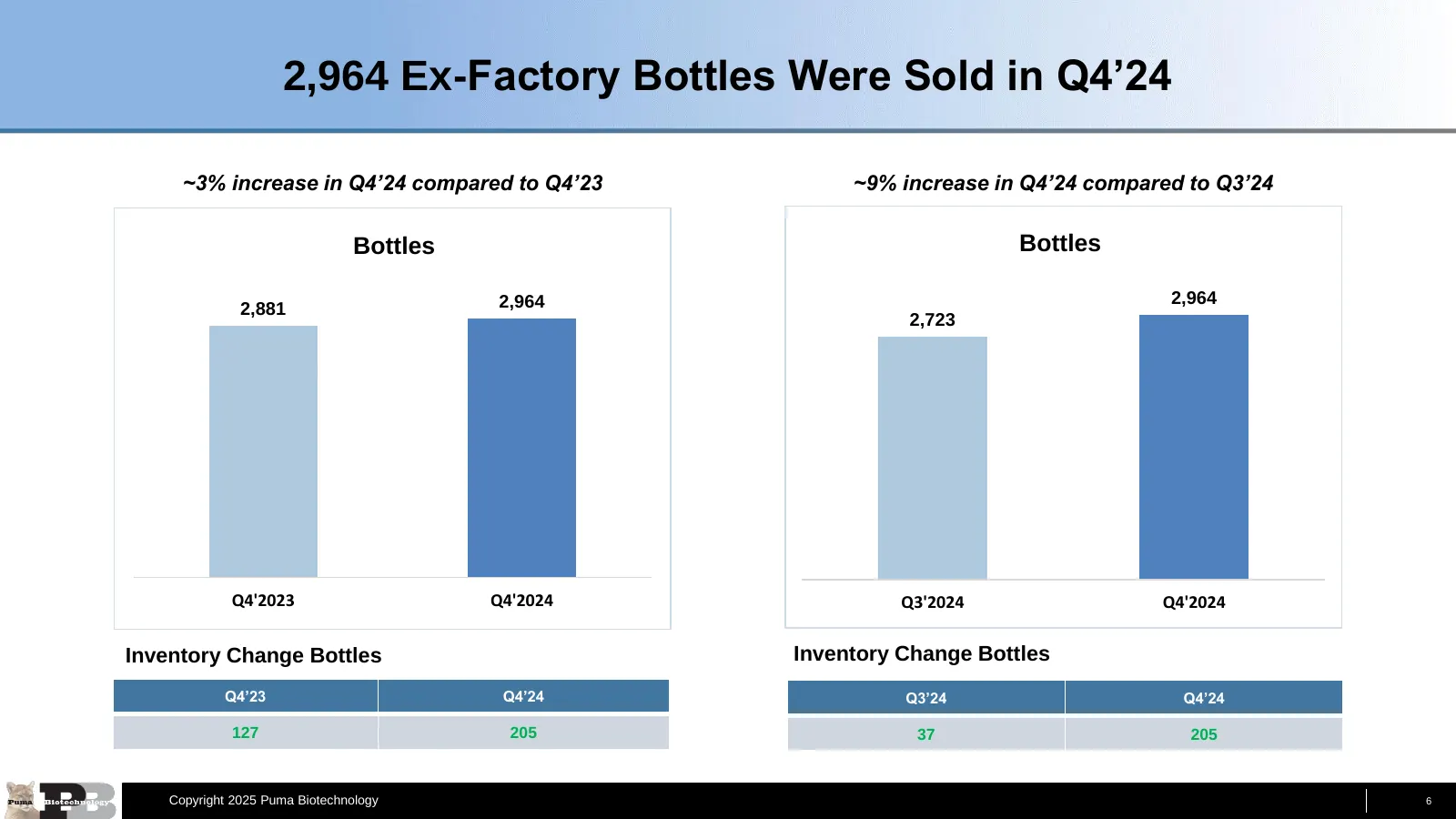
Slide 6: 2,964 Ex-Factory Bottles Were Sold in Q4'24
2,964 Ex-Factory Bottles Were Sold in Q4’24 ~3% increase in Q4’24 compared to Q4’23 ~9% increase in Q4’24 compared to Q3’24 Bottles Bottles 2,964 2,964 2,881 2,723 Q4'2023 Q4'2024 Q3'2024 Q4'2024 Inventory Change Bottles Inventory Change Bottles Q4’23 Q4’24 Q3’24 Q4’24 127 205 37 205 Copyright 2025
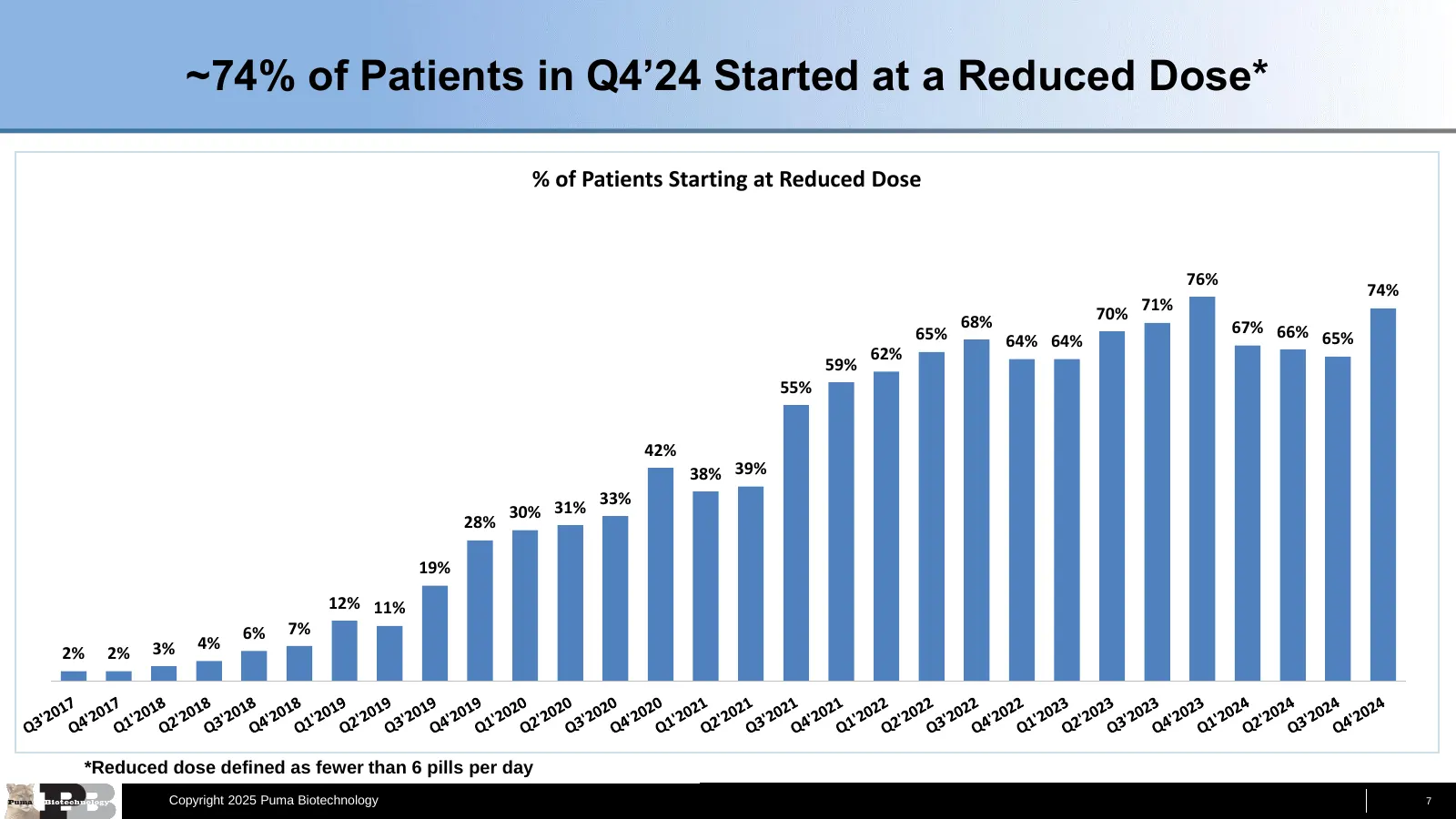
Slide 7: ~74% of Patients in Q4'24 Started at a Reduced Dose
~74% of Patients in Q4’24 Started at a Reduced Dose* % of Patients Starting at Reduced Dose 76% 74% 68% 70% 71% 65% 67% 66% 64% 64% 65% 62% 59% 55% 42% 38% 39% 33% 30% 31% 28% 19% 12% 11% 6% 7% 3% 4% 2% 2% *Reduced dose defined as fewer than 6 pills per day Copyright 2025 Puma Biotechnology 7
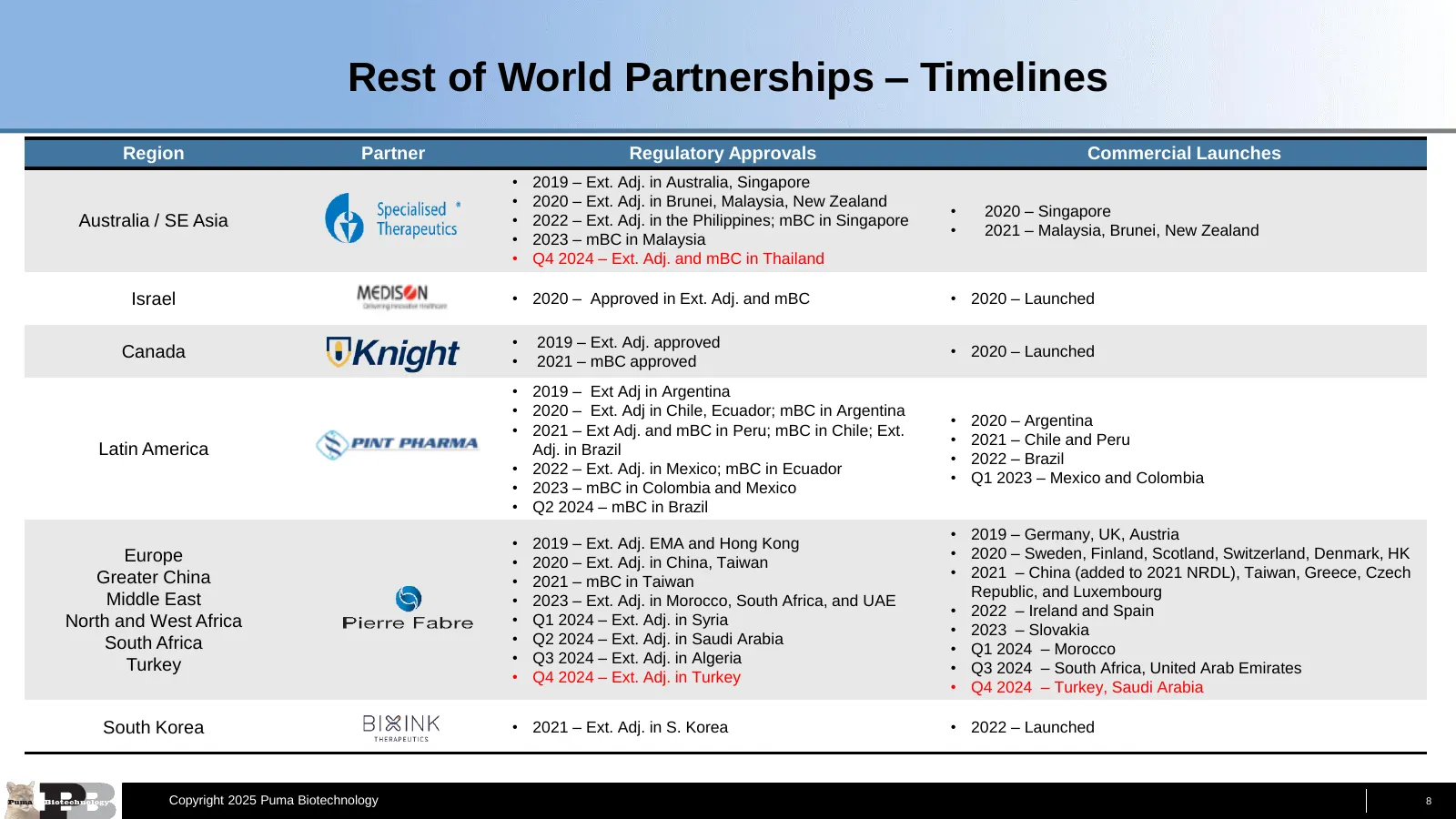
Slide 8: Rest of World Partnerships – Timelines
Rest of World Partnerships – Timelines Region Partner Regulatory Approvals Commercial Launches • 2019 – Ext. Adj. in Australia, Singapore • 2020 – Ext. Adj. in Brunei, Malaysia, New Zealand • 2020 – Singapore Australia / SE Asia • 2022 – Ext. Adj. in the Philippines; mBC in Singapore • 2021 – Malays
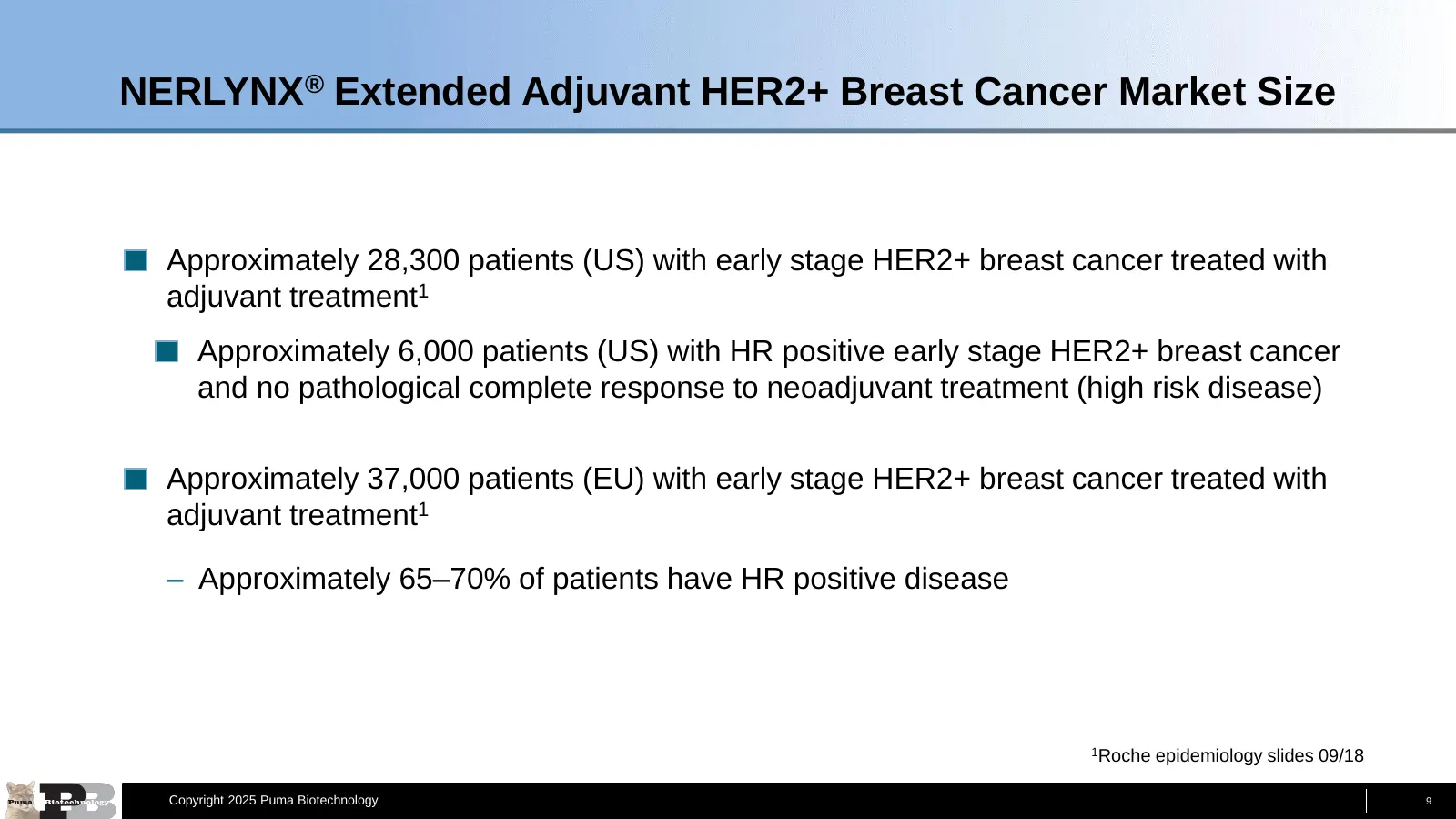
Slide 9: NERLYNX Extended Adjuvant HER2+ Breast Cancer Market Size
NERLYNX® Extended Adjuvant HER2+ Breast Cancer Market Size Approximately 28,300 patients (US) with early stage HER2+ breast cancer treated with adjuvant treatment1 Approximately 6,000 patients (US) with HR positive early stage HER2+ breast cancer and no pathological complete response to neoadjuvant
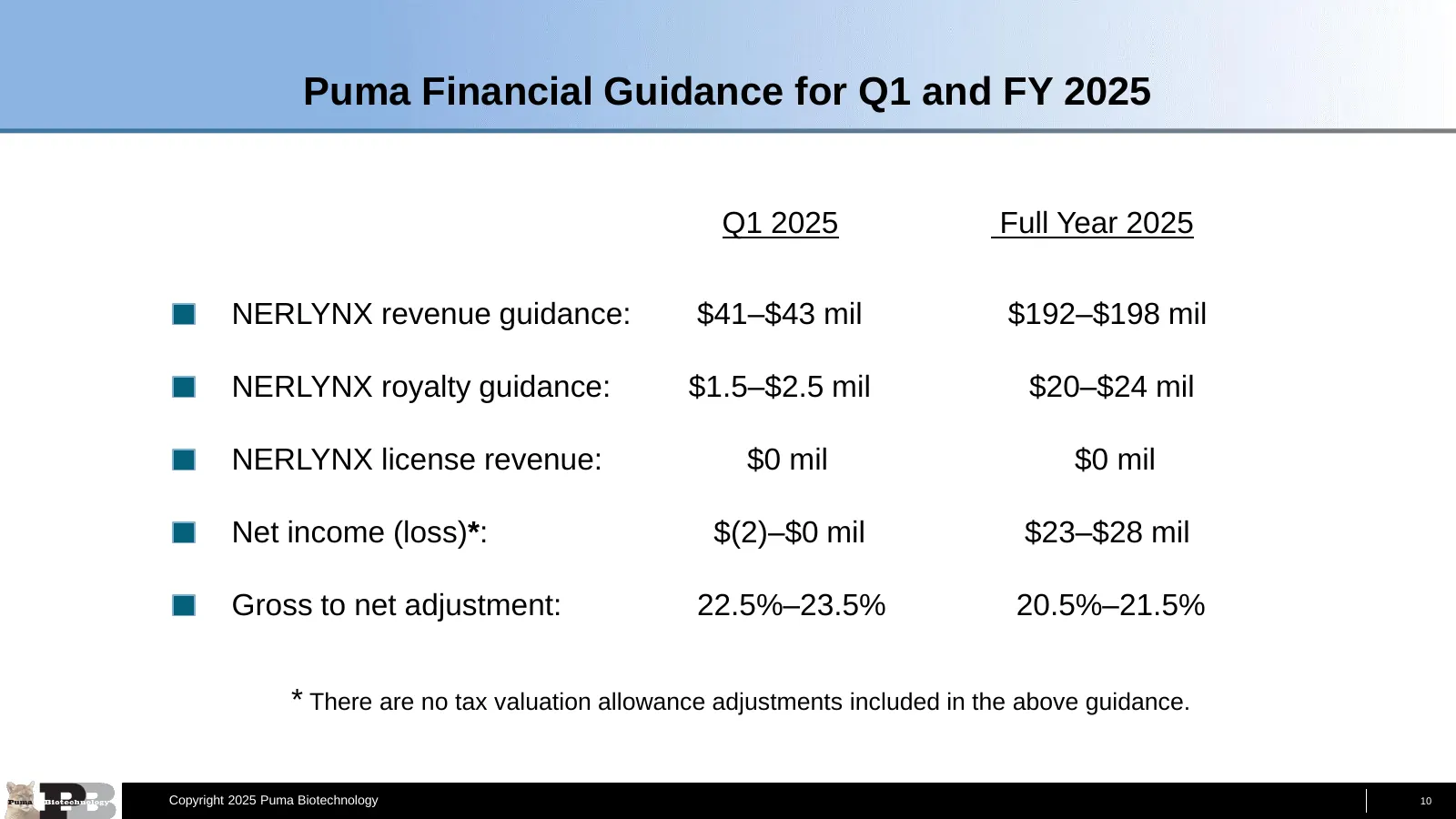
Slide 10: Puma Financial Guidance for Q1 and FY 2025
Puma Financial Guidance for Q1 and FY 2025 Q1 2025 Full Year 2025 NERLYNX revenue guidance: $41–$43 mil $192–$198 mil NERLYNX royalty guidance: $1.5–$2.5 mil $20–$24 mil NERLYNX license revenue: $0 mil $0 mil Net income (loss)*: $(2)–$0 mil $23–$28 mil Gross to net adjustment: 22.5%–23.5% 20.5%–21.5
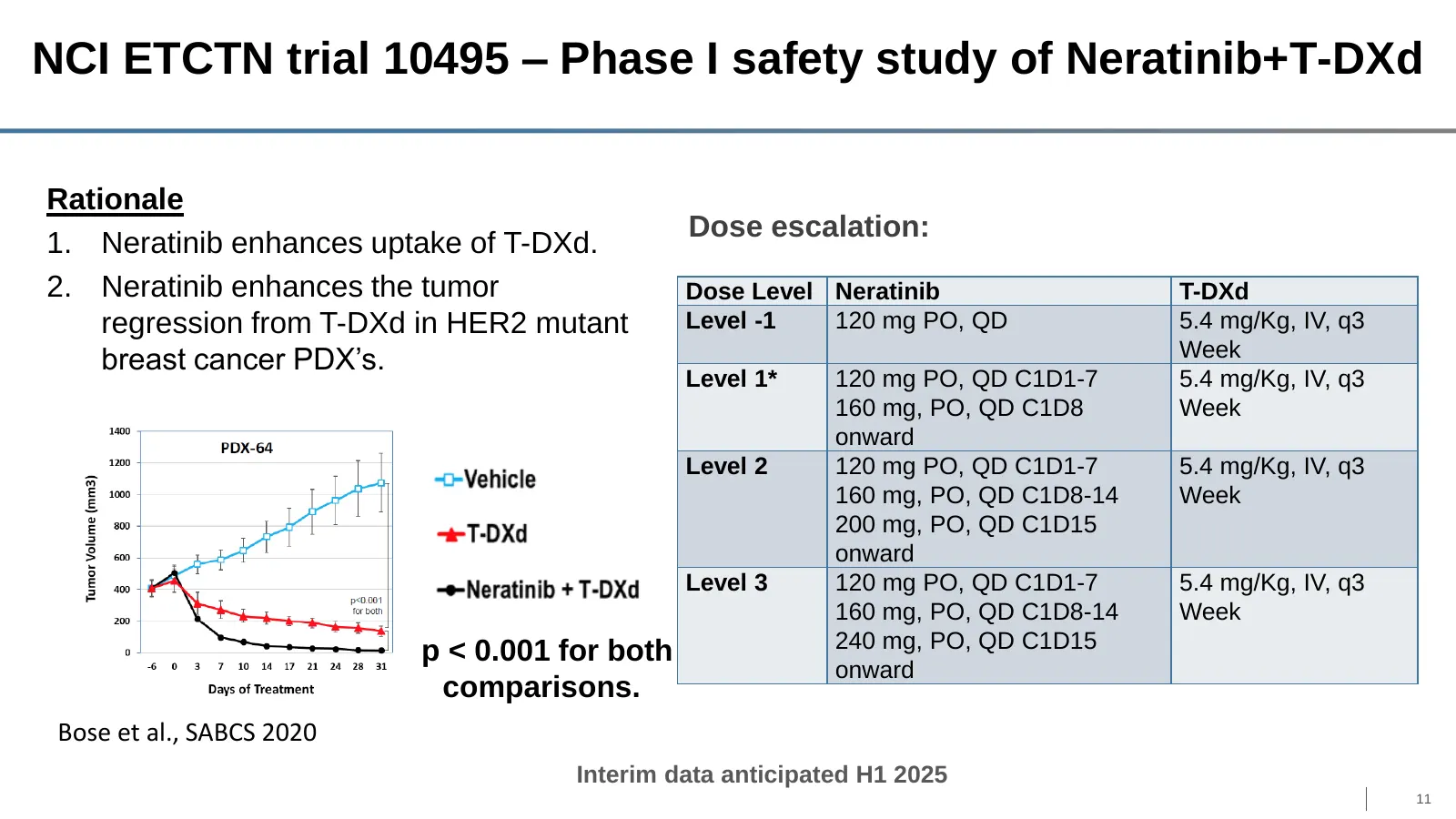
Slide 11: NCI ETCTN trial 10495 – Phase I safety study of Neratinib+T-DXd
NCI ETCTN trial 10495 – Phase I safety study of Neratinib+T-DXd Rationale Dose escalation: 1. Neratinib enhances uptake of T-DXd. 2. Neratinib enhances the tumor Dose Level Neratinib T-DXd regression from T-DXd in HER2 mutant Level -1 120 mg PO, QD 5.4 mg/Kg, IV, q3 Week breast cancer PDX’s. Level 1
Slide 12: ALISERTIB
ALISERTIB Breast Cancer and Small Cell Lung Cancer
Slide 13: Alisertib (MLN 8237) Aurora Kinase A (AURKA) inhibitor
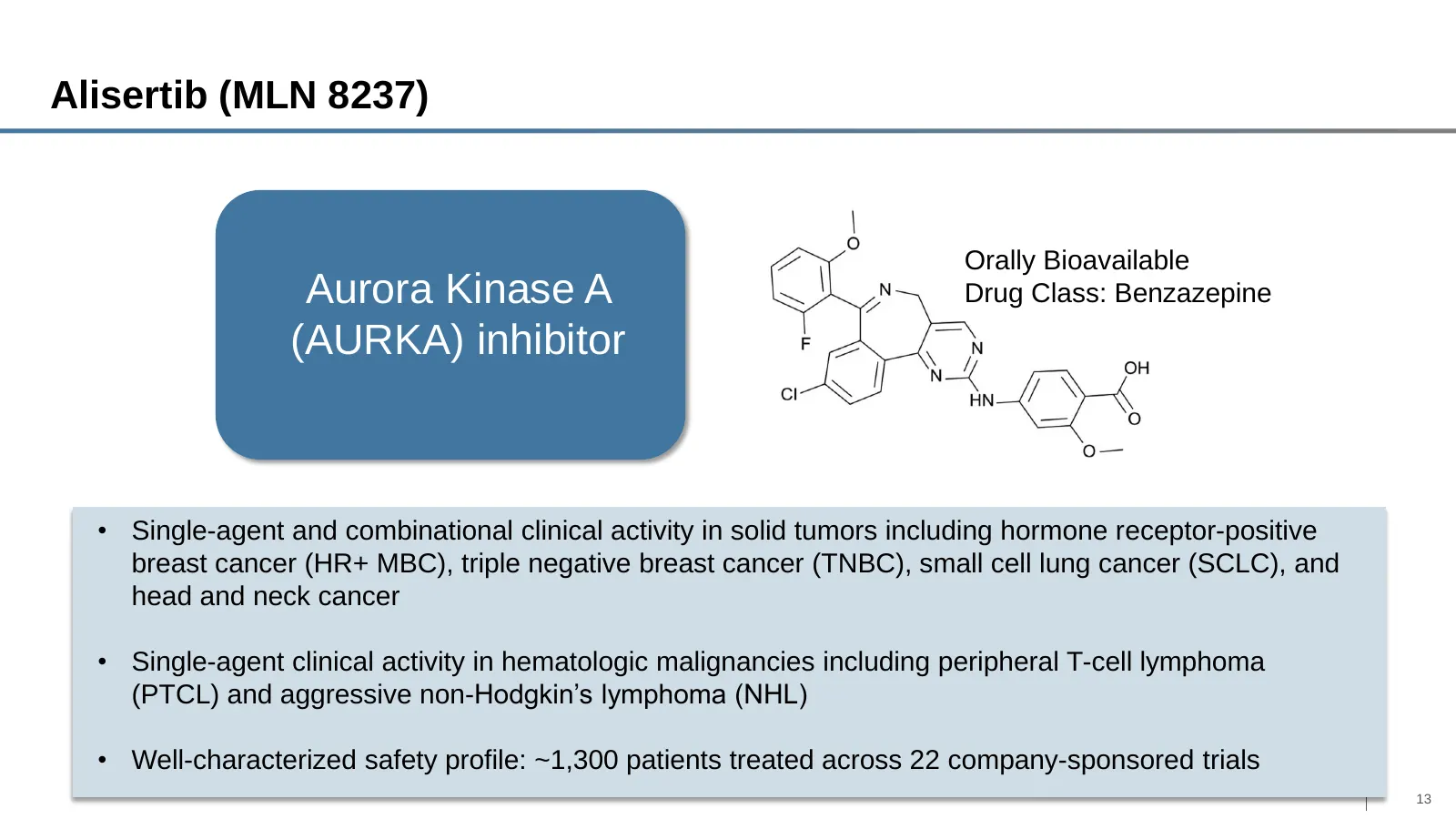
Alisertib (MLN 8237) Orally Bioavailable Aurora Kinase A Drug Class: Benzazepine (AURKA) inhibitor • Single-agent and combinational clinical activity in solid tumors including hormone receptor-positive breast cancer (HR+ MBC), triple negative breast cancer (TNBC), small cell lung cancer (SCLC), and
Slide 14: Synthetic Lethality of AURKA and Rb1
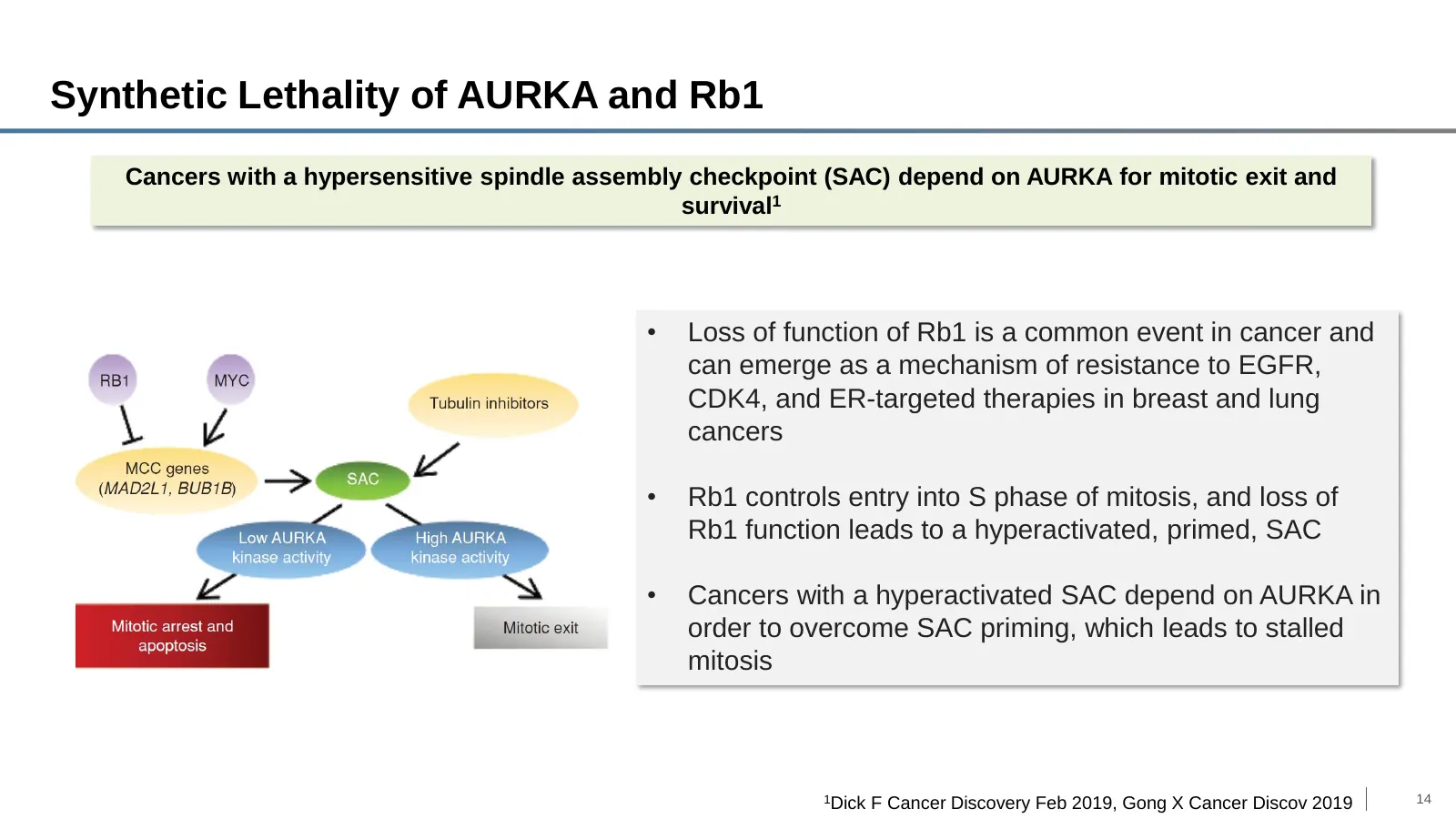
Synthetic Lethality of AURKA and Rb1 Cancers with a hypersensitive spindle assembly checkpoint (SAC) depend on AURKA for mitotic exit and survival1 • Loss of function of Rb1 is a common event in cancer and can emerge as a mechanism of resistance to EGFR, CDK4, and ER-targeted therapies in breast and
Slide 15: AURKA and c-Myc Co-regulate Each Other
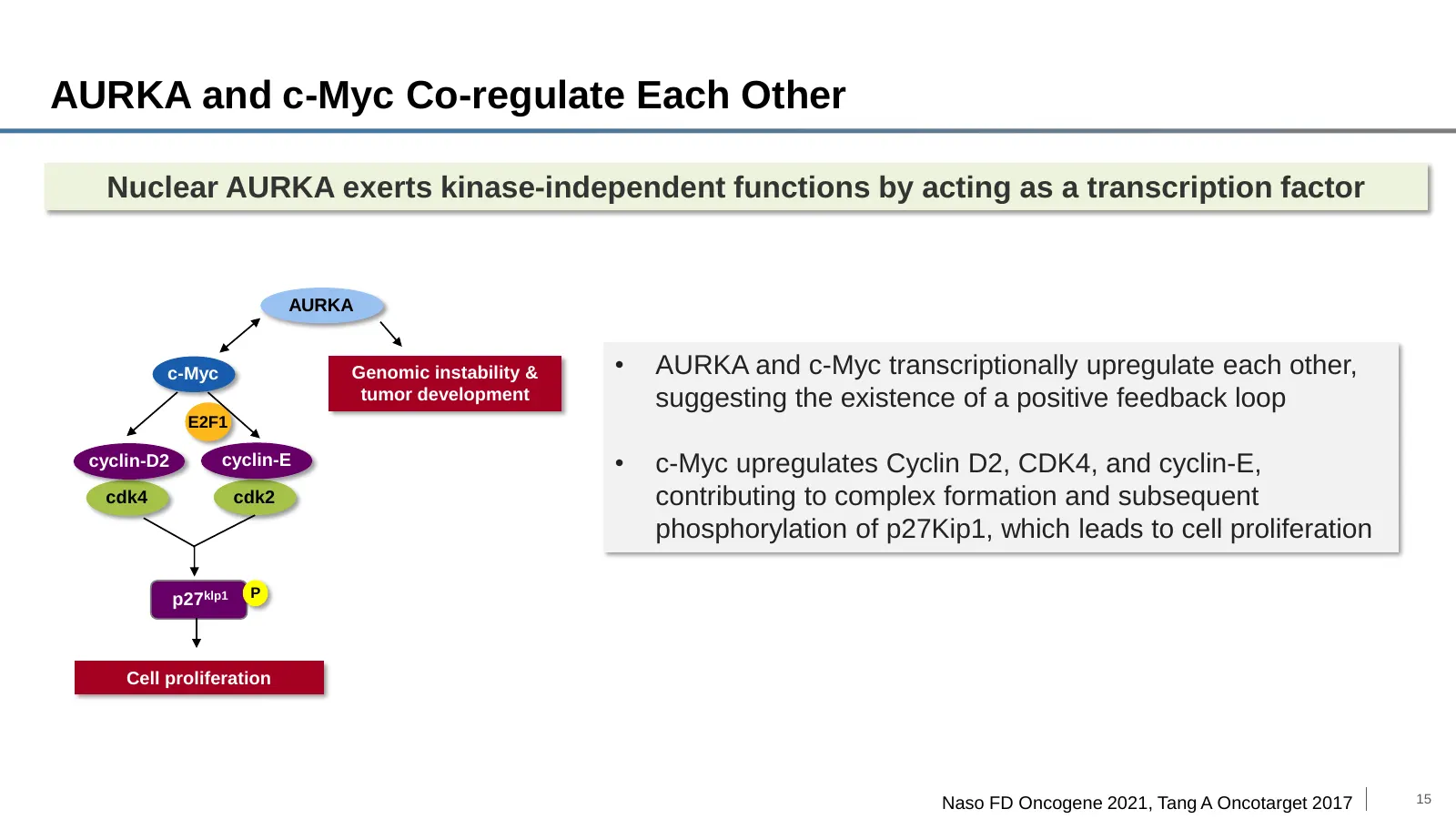
AURKA and c-Myc Co-regulate Each Other Nuclear AURKA exerts kinase-independent functions by acting as a transcription factor AURKA c-Myc Genomic instability & • AURKA and c-Myc transcriptionally upregulate each other, tumor development suggesting the existence of a positive feedback loop E2F1 cyclin
Slide 16: Clinical Development of Alisertib in Breast Cancer
Clinical Development of Alisertib in Breast Cancer
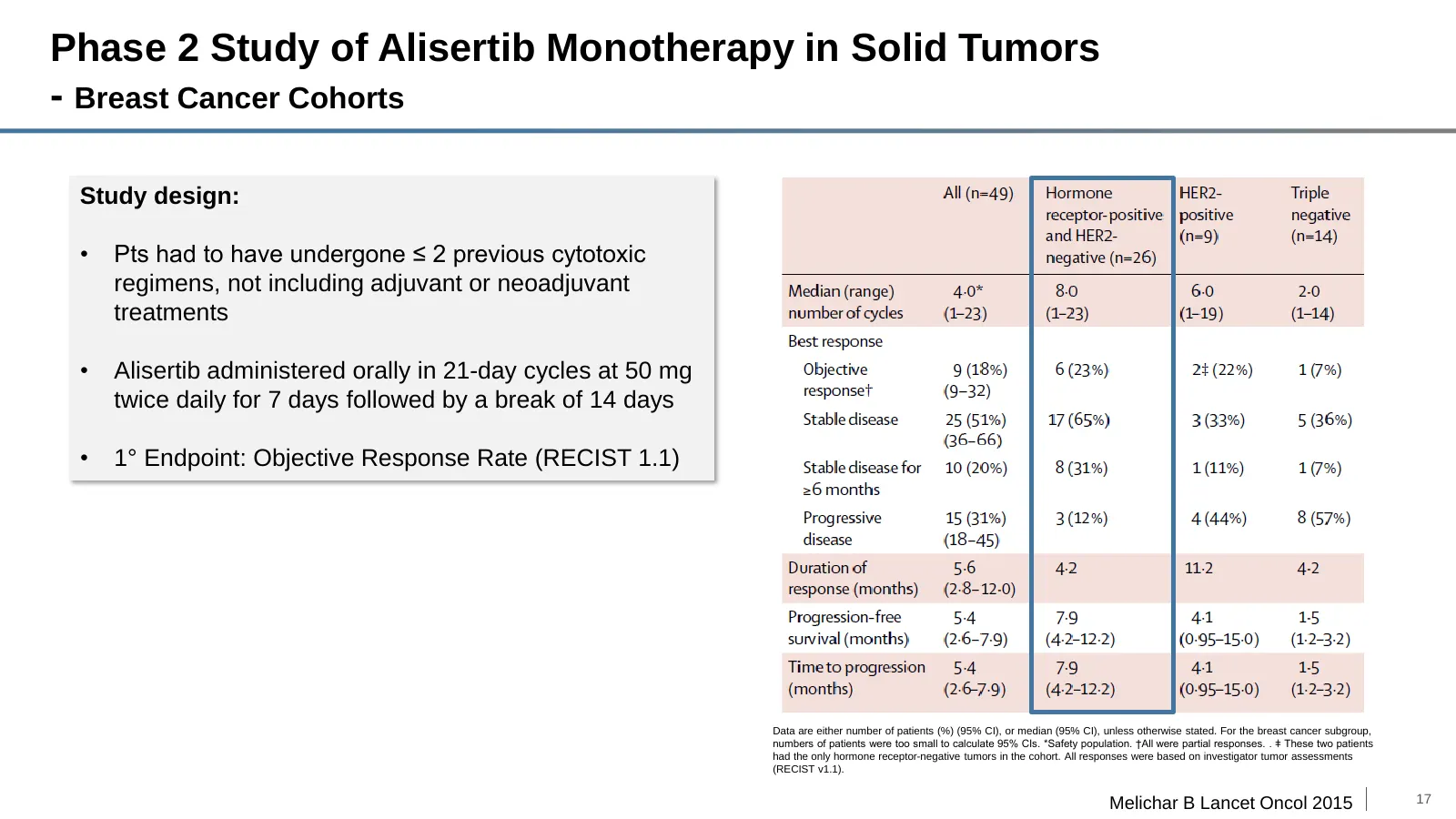
Slide 17: Phase 2 Study of Alisertib Monotherapy in Solid Tumors - Breast Cancer Cohorts
Phase 2 Study of Alisertib Monotherapy in Solid Tumors - Breast Cancer Cohorts Study design: • Pts had to have undergone ≤ 2 previous cytotoxic regimens, not including adjuvant or neoadjuvant treatments • Alisertib administered orally in 21-day cycles at 50 mg twice daily for 7 days followed by a br
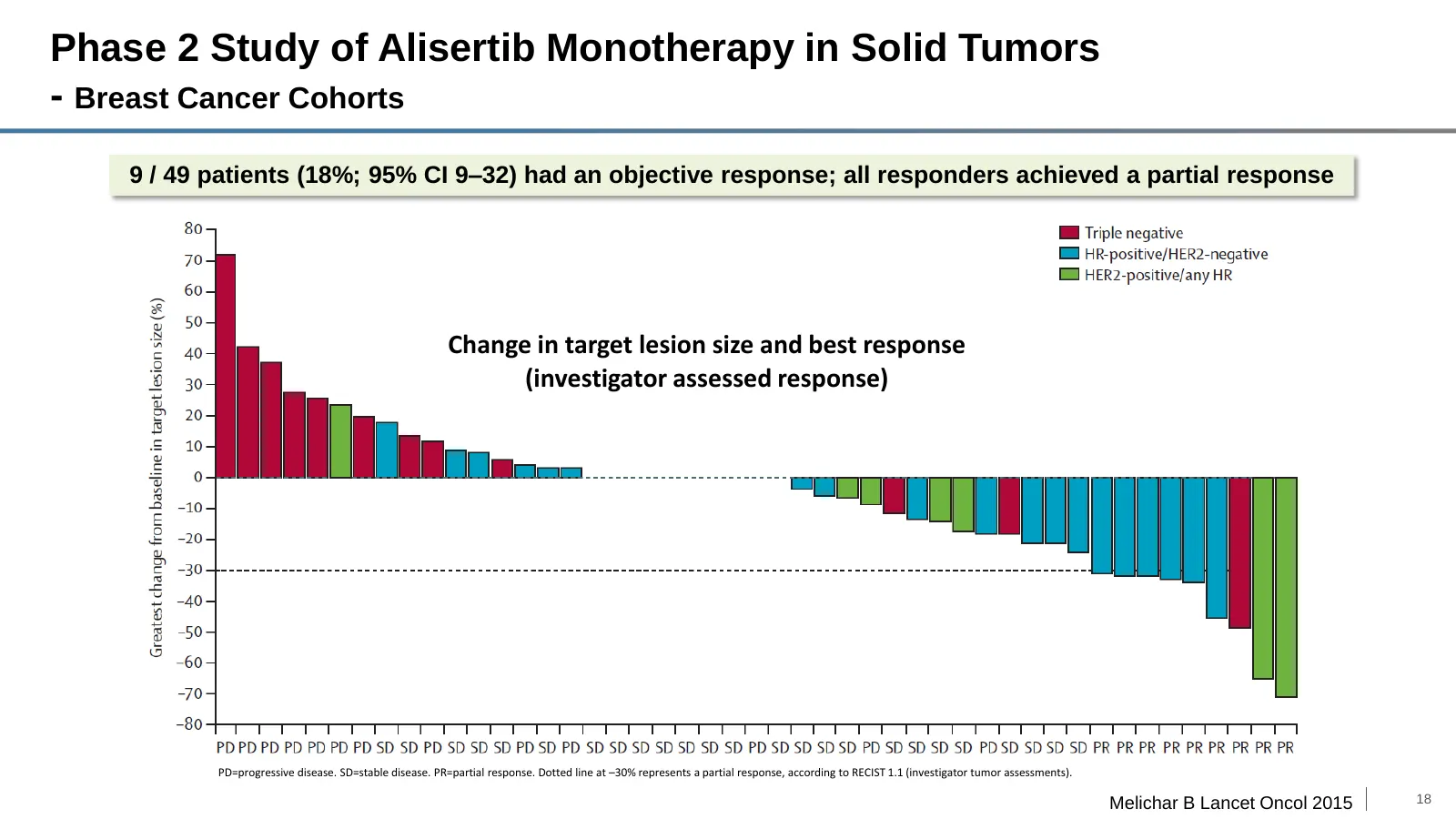
Slide 18: Phase 2 Study of Alisertib Monotherapy in Solid Tumors - Breast Cancer Cohorts
Phase 2 Study of Alisertib Monotherapy in Solid Tumors - Breast Cancer Cohorts 9 / 49 patients (18%; 95% CI 9–32) had an objective response; all responders achieved a partial response Change in target lesion size and best response (investigator assessed response) PD=progressive disease. SD=stable di
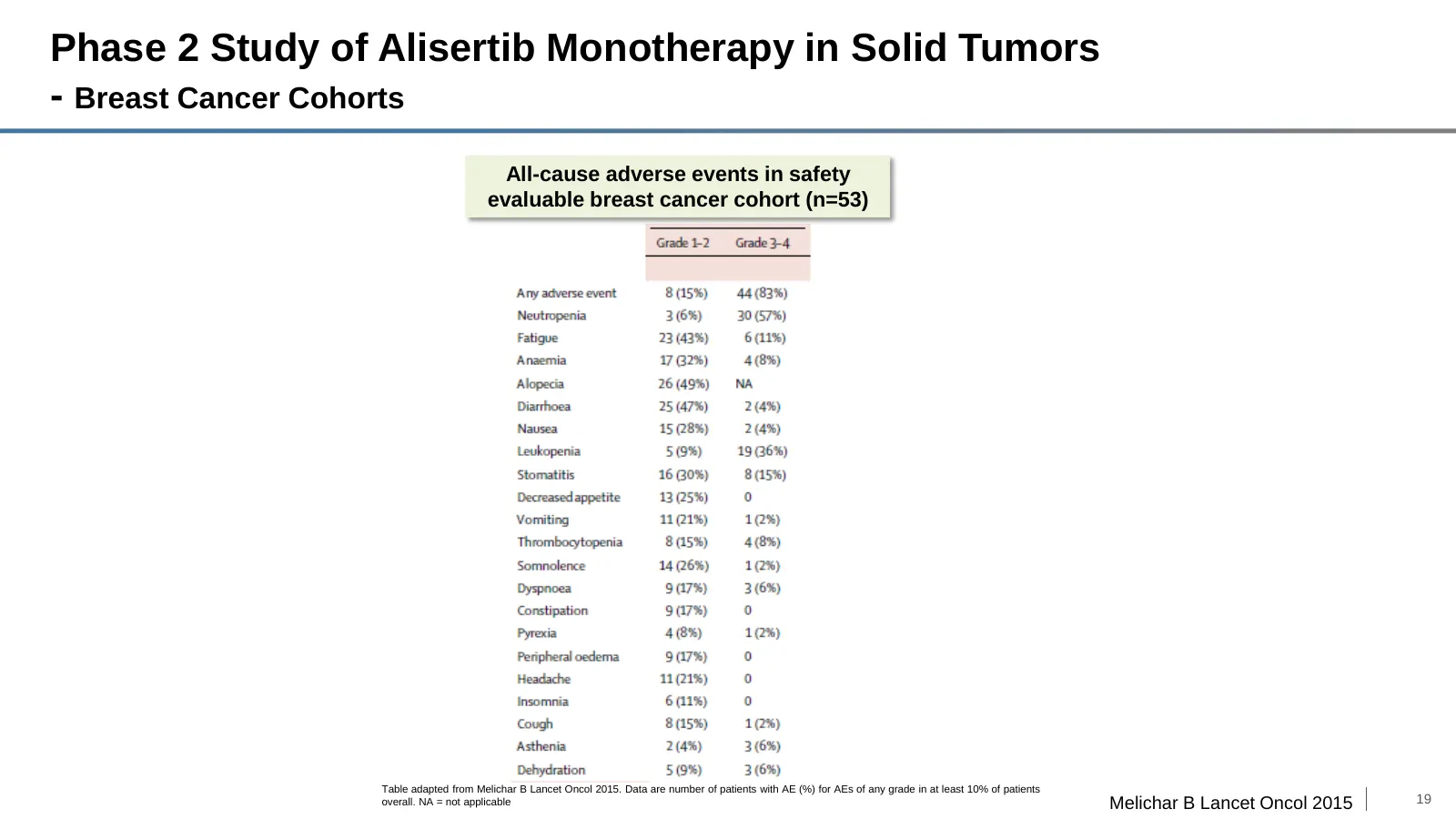
Slide 19: Phase 2 Study of Alisertib Monotherapy in Solid Tumors - Breast Cancer Cohorts
Phase 2 Study of Alisertib Monotherapy in Solid Tumors - Breast Cancer Cohorts All-cause adverse events in safety evaluable breast cancer cohort (n=53) Table adapted from Melichar B Lancet Oncol 2015. Data are number of patients with AE (%) for AEs of any grade in at least 10% of patients overall. N
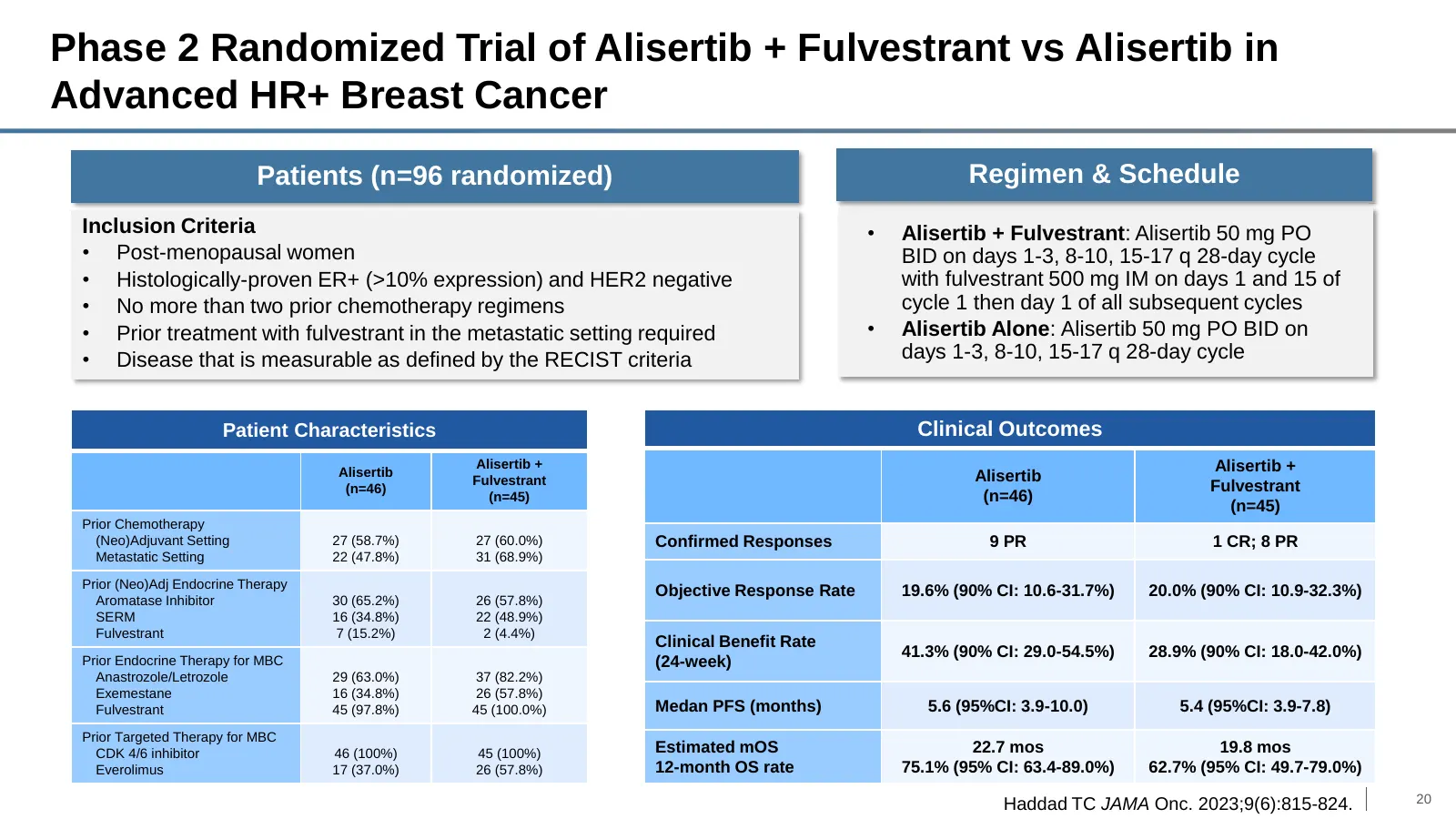
Slide 20: Phase 2 Randomized Trial of Alisertib + Fulvestrant vs Alisertib in Advanced HR+ Breast Cancer
Phase 2 Randomized Trial of Alisertib + Fulvestrant vs Alisertib in Advanced HR+ Breast Cancer Patients (n=96 randomized) Regimen & Schedule Patients Inclusion (n=96) Criteria • Alisertib + Fulvestrant: Alisertib 50 mg PO • Post-menopausal women BID on days 1-3, 8-10, 15-17 q 28-day cycle • Histolog
Slide 21: Phase 2 Randomized Trial of Alisertib + Fulvestrant vs Alisertib in Advanced HR+ Breast Cancer
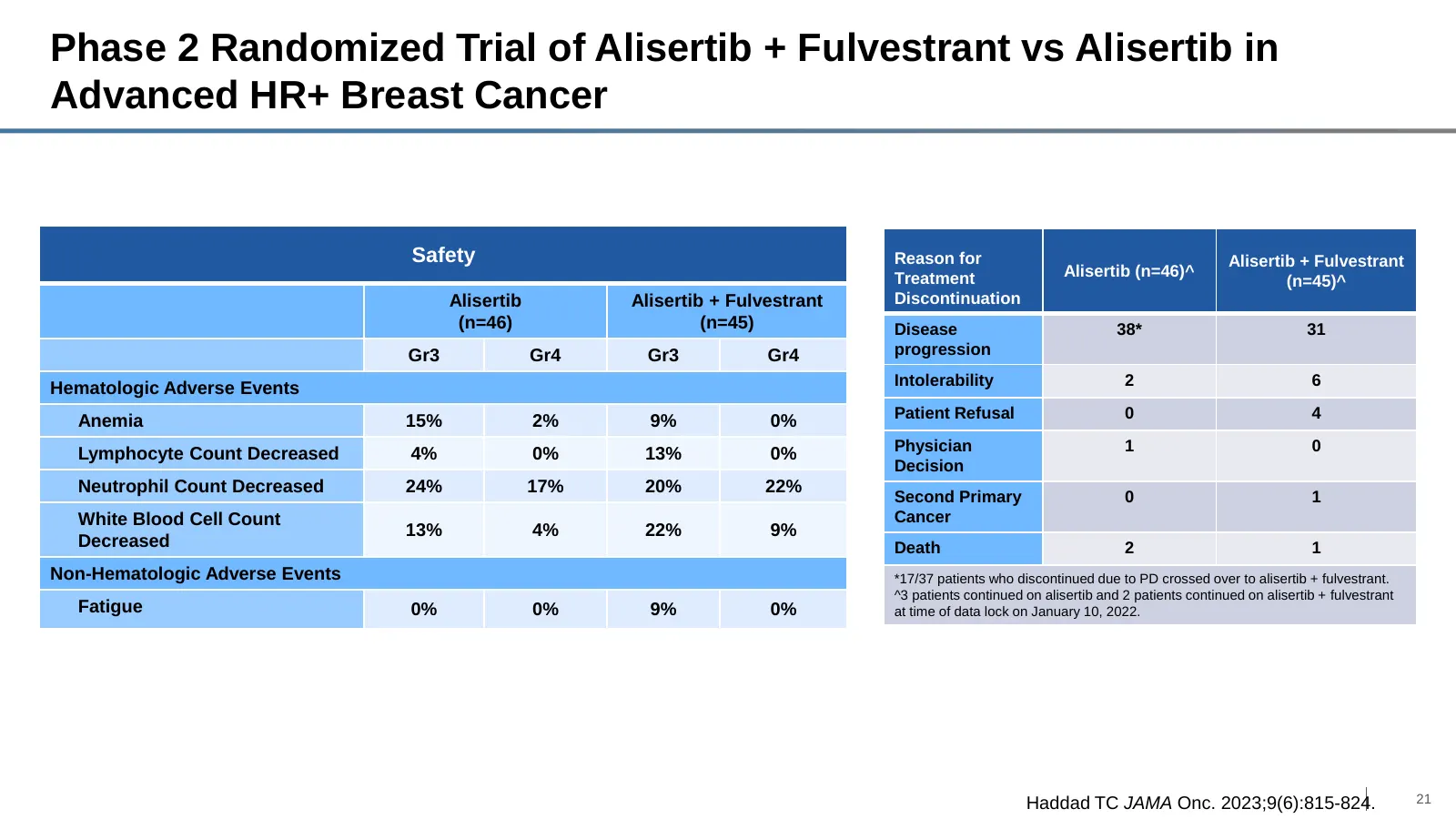
Phase 2 Randomized Trial of Alisertib + Fulvestrant vs Alisertib in Advanced HR+ Breast Cancer Safety Reason for Alisertib + Fulvestrant Treatment Alisertib (n=46)^ (n=45)^ Alisertib Alisertib + Fulvestrant Discontinuation (n=46) (n=45) Disease 38* 31 Gr3 Gr4 Gr3 Gr4 progression Hematologic Adverse
Slide 22: Phase 2 Randomized Study of Paclitaxel + Alisertib vs Paclitaxel Alone
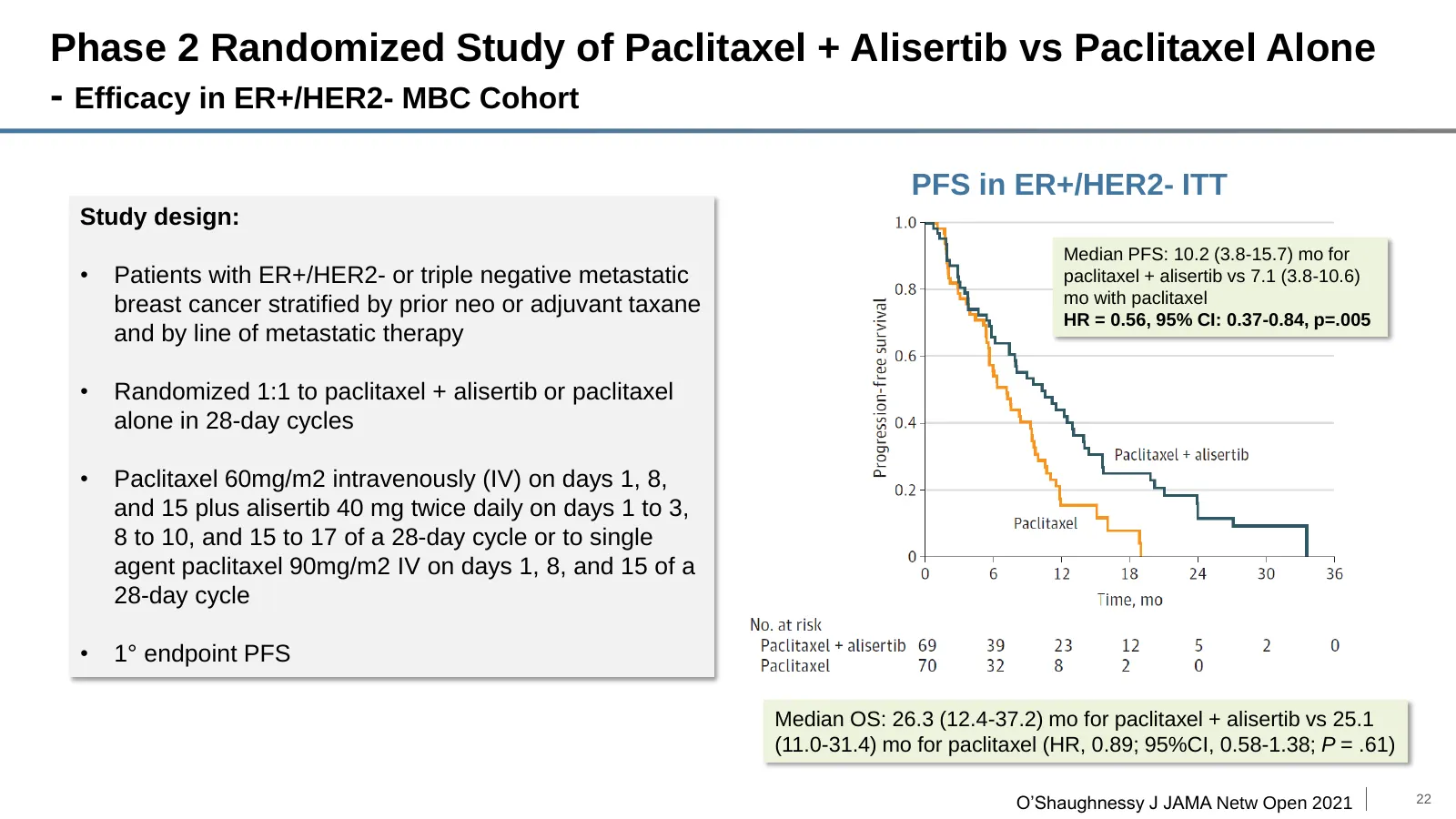
Phase 2 Randomized Study of Paclitaxel + Alisertib vs Paclitaxel Alone - Efficacy in ER+/HER2- MBC Cohort PFS in ER+/HER2- ITT Study design: Median PFS: 10.2 (3.8-15.7) mo for • Patients with ER+/HER2- or triple negative metastatic paclitaxel + alisertib vs 7.1 (3.8-10.6) breast cancer stratified by
Slide 23: Phase 2 Randomized Study of Paclitaxel + Alisertib vs Paclitaxel Alone - Palbociclib Pretreated
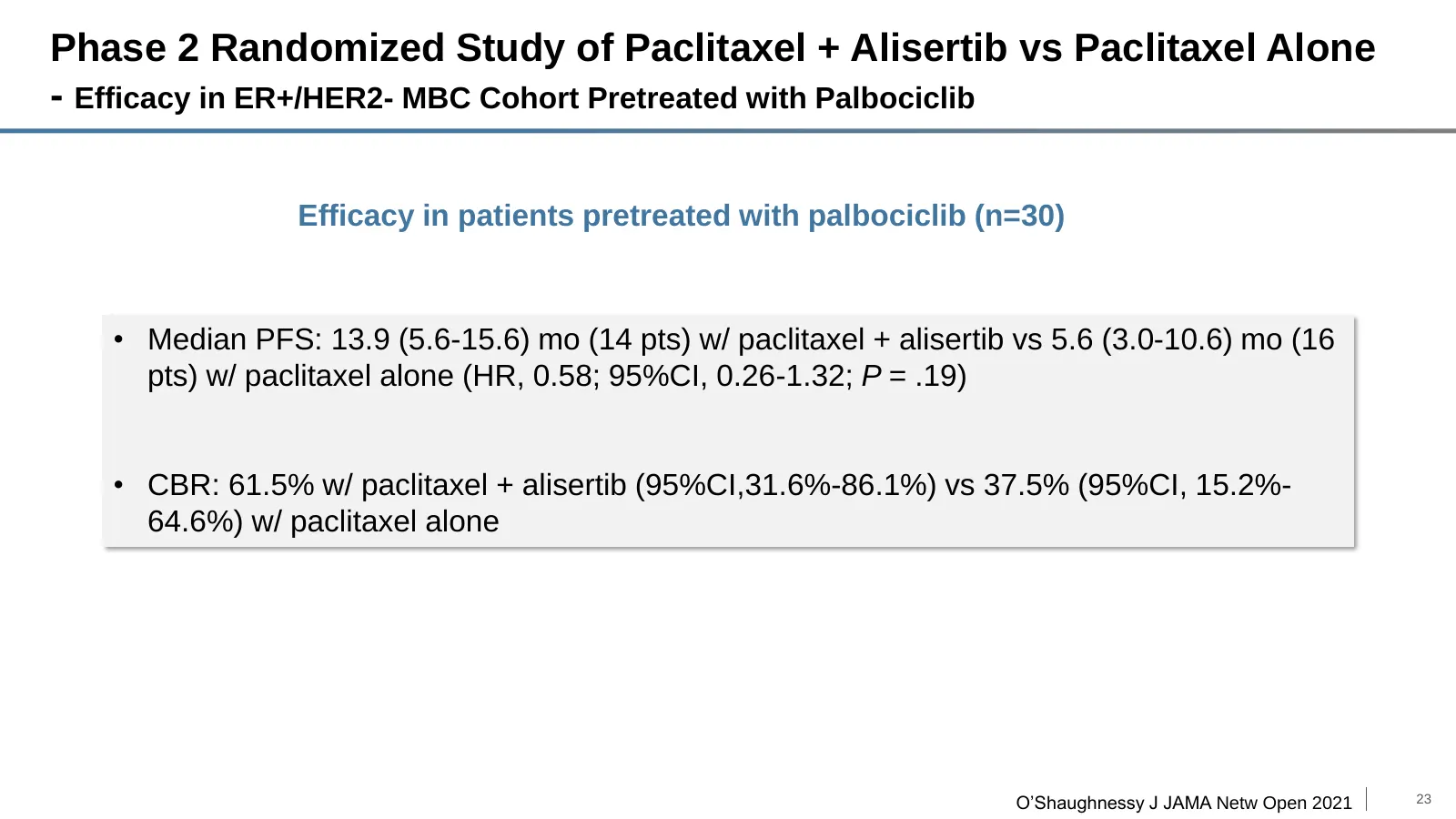
Phase 2 Randomized Study of Paclitaxel + Alisertib vs Paclitaxel Alone - Efficacy in ER+/HER2- MBC Cohort Pretreated with Palbociclib Efficacy in patients pretreated with palbociclib (n=30) • Median PFS: 13.9 (5.6-15.6) mo (14 pts) w/ paclitaxel + alisertib vs 5.6 (3.0-10.6) mo (16 pts) w/ paclitaxe
Slide 24: Rb1 Loss and c-Myc Upregulation Correlate with Palbociclib Resistance
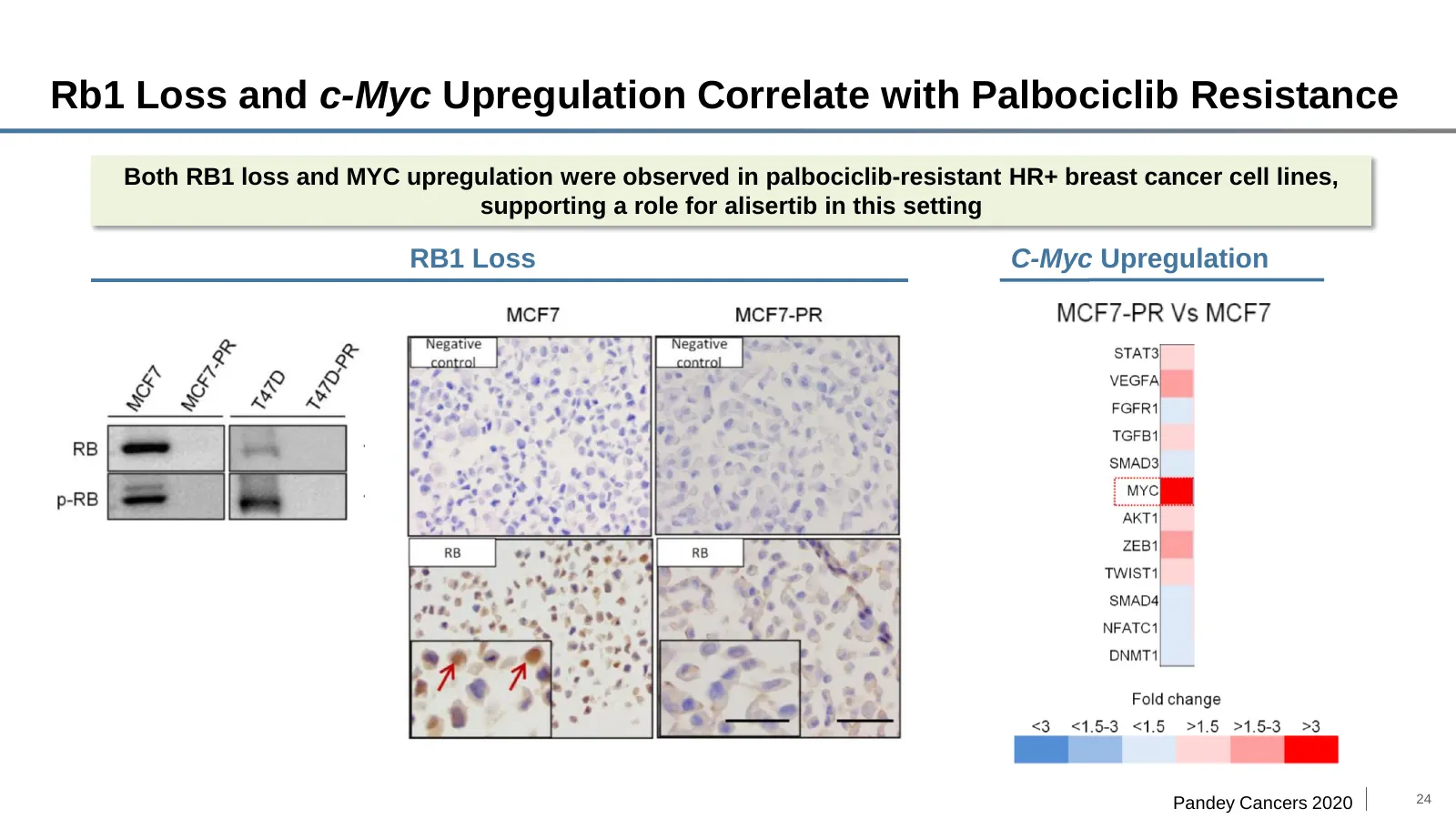
Rb1 Loss and c-Myc Upregulation Correlate with Palbociclib Resistance Both RB1 loss and MYC upregulation were observed in palbociclib-resistant HR+ breast cancer cell lines, supporting a role for alisertib in this setting RB1 Loss C-Myc Upregulation Pandey Cancers 2020 24
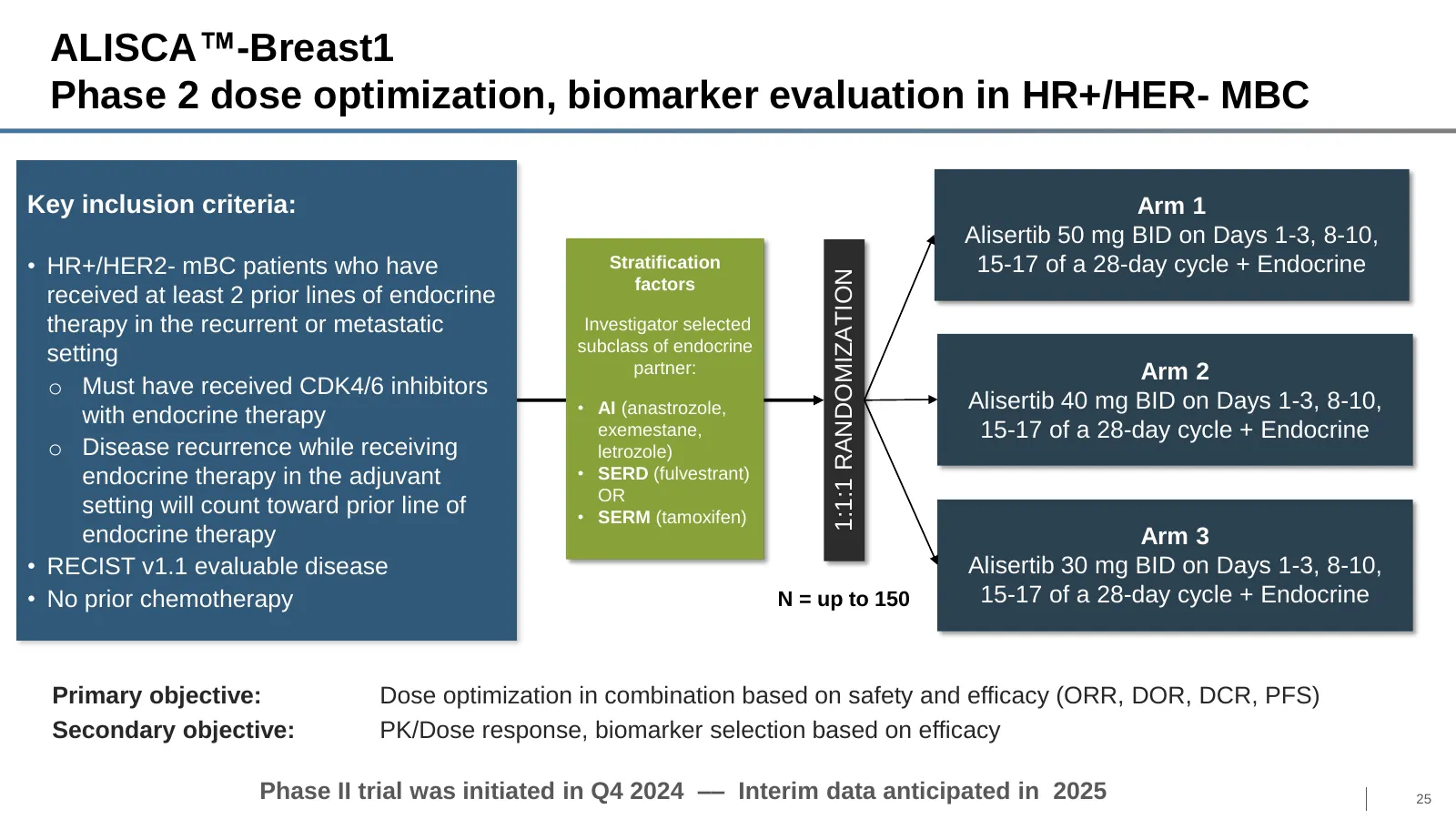
Slide 25: ALISCA-Breast1 Phase 2 dose optimization study design
ALISCA -Breast1 Phase 2 dose optimization, biomarker evaluation in HR+/HER- MBC Key inclusion criteria: Arm 1 Alisertib 50 mg BID on Days 1-3, 8-10, • HR+/HER2- mBC patients who have Stratification 15-17 of a 28-day cycle + Endocrine 1:1:1 RANDOMIZATION factors received at least 2 prior lines of end
Slide 26: Clinical Development in Small Cell Lung Cancer
Clinical Development in Small Cell Lung Cancer
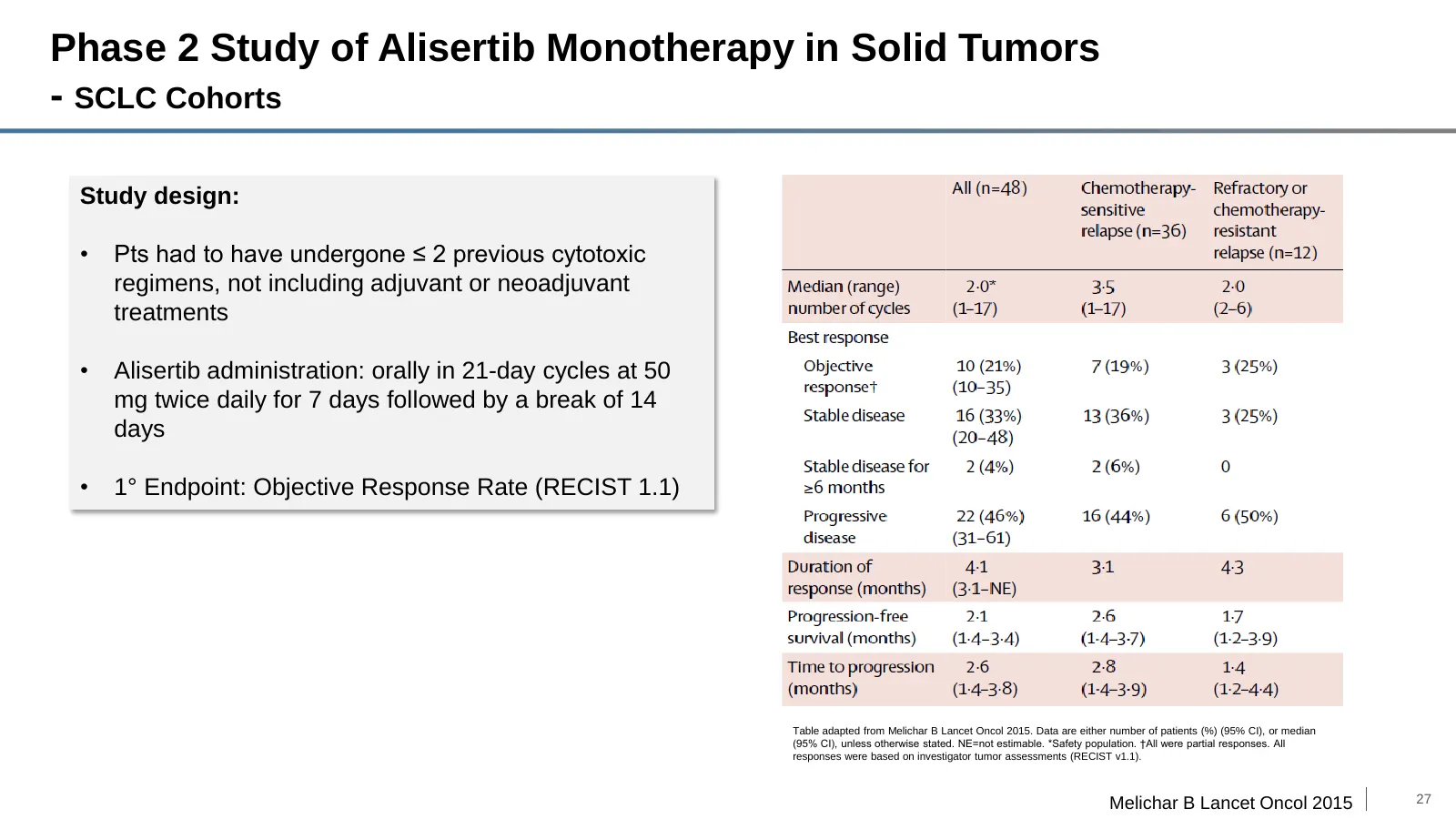
Slide 27: Phase 2 Study of Alisertib Monotherapy in Solid Tumors - SCLC Cohorts
Phase 2 Study of Alisertib Monotherapy in Solid Tumors - SCLC Cohorts Study design: • Pts had to have undergone ≤ 2 previous cytotoxic regimens, not including adjuvant or neoadjuvant treatments • Alisertib administration: orally in 21-day cycles at 50 mg twice daily for 7 days followed by a break of
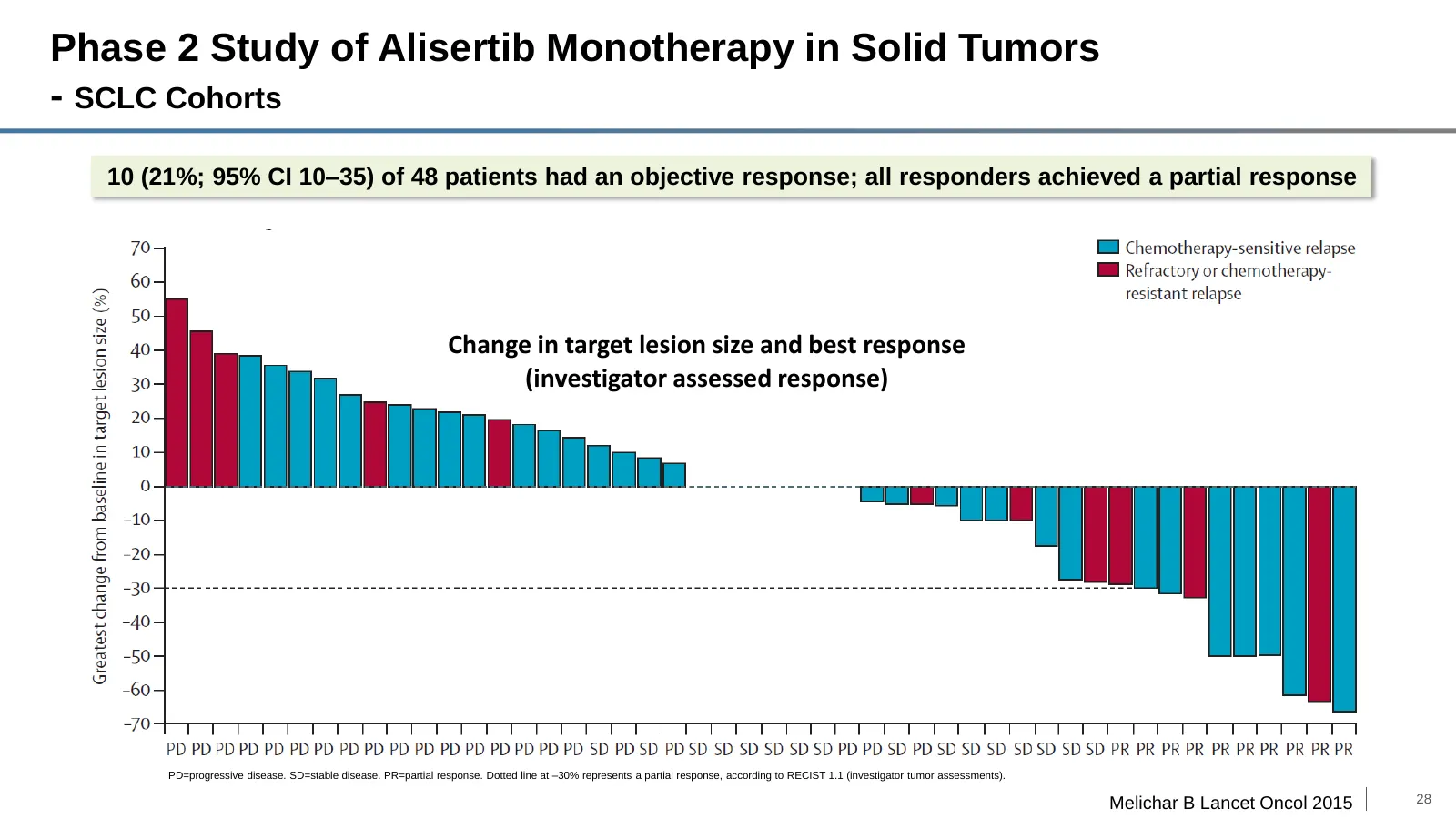
Slide 28: Phase 2 Study of Alisertib Monotherapy in Solid Tumors - SCLC Cohorts
Phase 2 Study of Alisertib Monotherapy in Solid Tumors - SCLC Cohorts 10 (21%; 95% CI 10–35) of 48 patients had an objective response; all responders achieved a partial response Change in target lesion size and best response (investigator assessed response) PD=progressive disease. SD=stable disease.
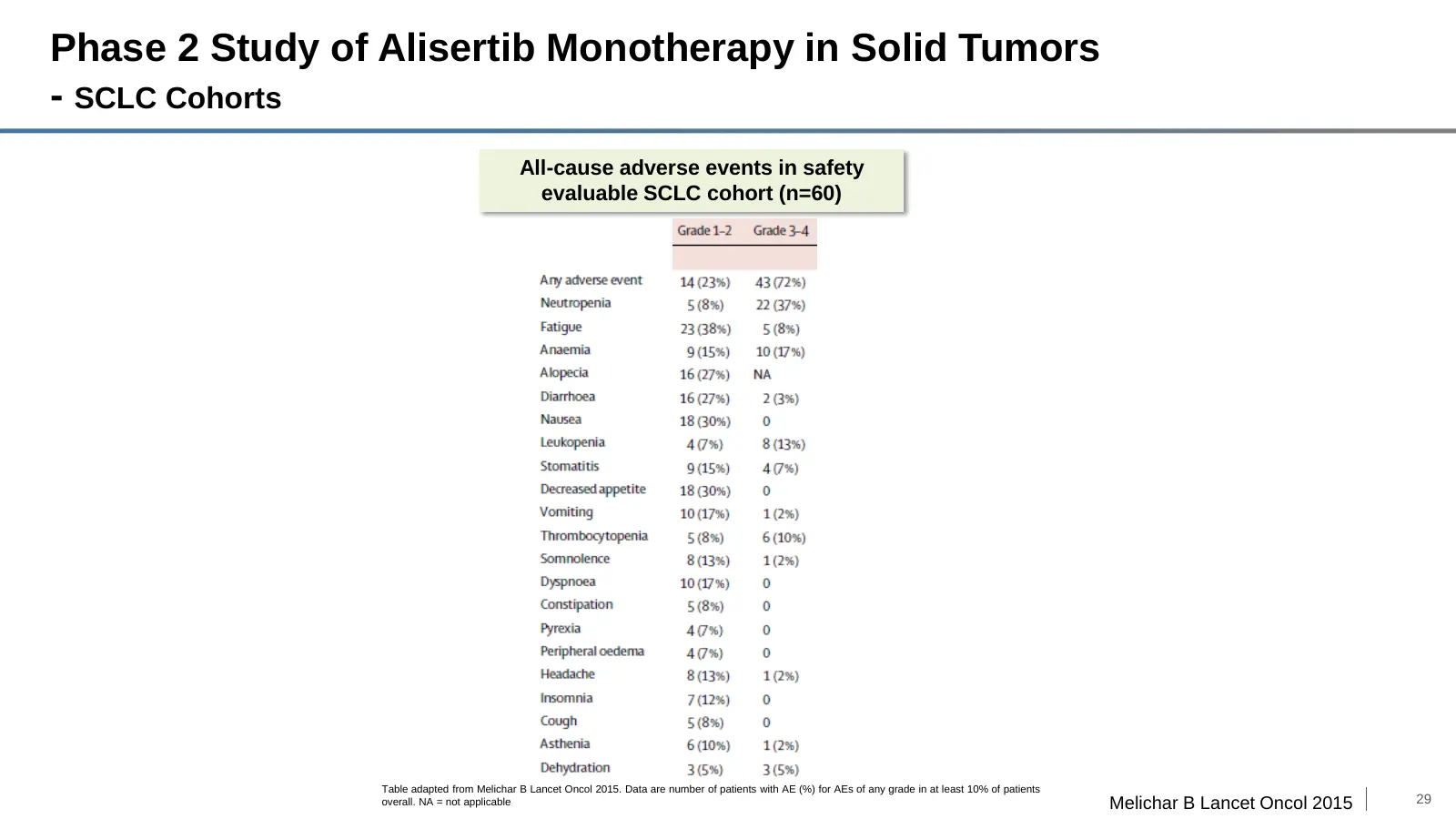
Slide 29: Phase 2 Study of Alisertib Monotherapy in Solid Tumors - SCLC Cohorts
Phase 2 Study of Alisertib Monotherapy in Solid Tumors - SCLC Cohorts All-cause adverse events in safety evaluable SCLC cohort (n=60) Table adapted from Melichar B Lancet Oncol 2015. Data are number of patients with AE (%) for AEs of any grade in at least 10% of patients overall. NA = not applicable
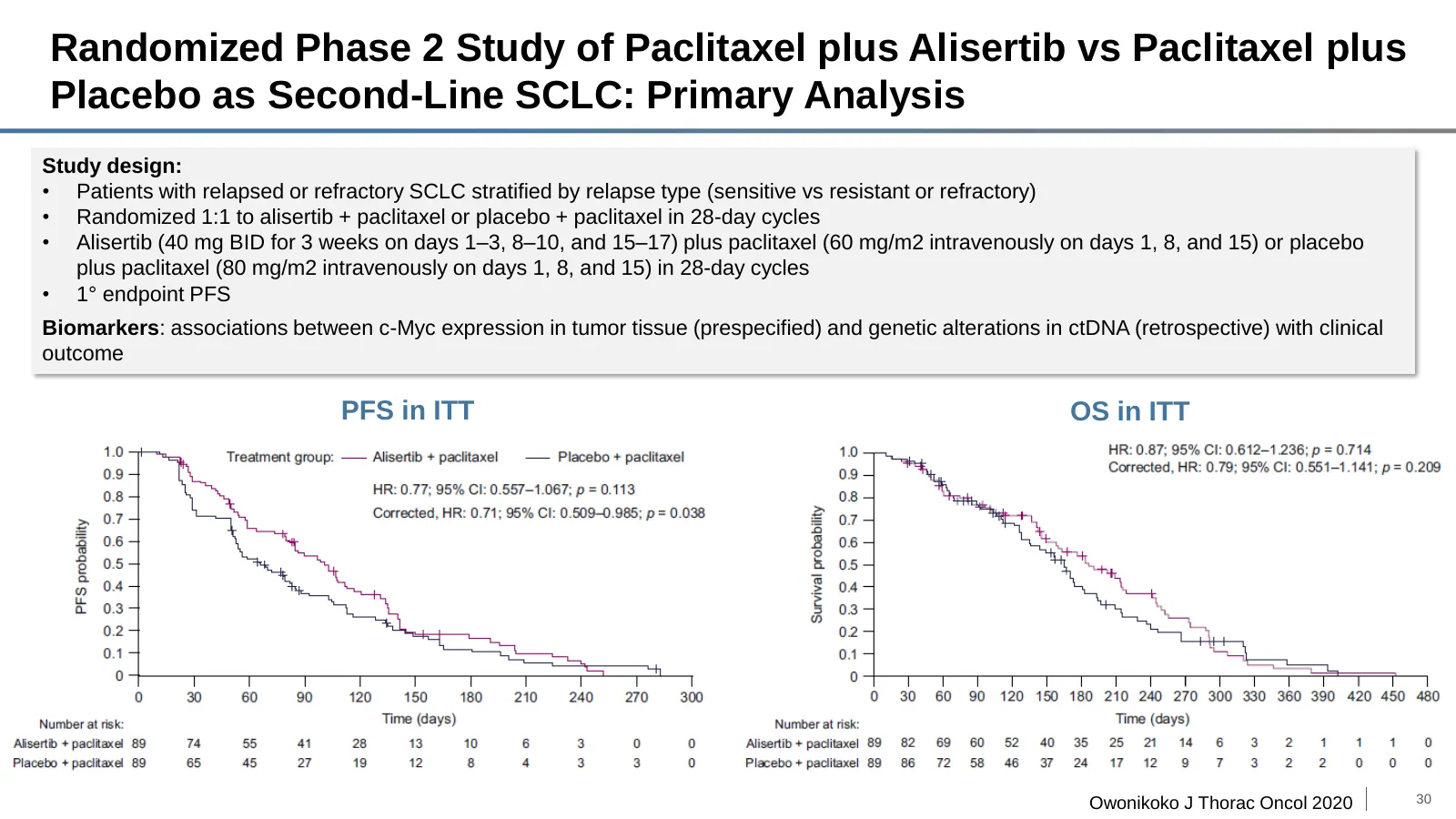
Slide 30: Randomized Phase 2 Study of Paclitaxel plus Alisertib vs Paclitaxel plus Placebo: Primary Analysis
Randomized Phase 2 Study of Paclitaxel plus Alisertib vs Paclitaxel plus Placebo as Second-Line SCLC: Primary Analysis Study design: • Patients with relapsed or refractory SCLC stratified by relapse type (sensitive vs resistant or refractory) • Randomized 1:1 to alisertib + paclitaxel or placebo + p
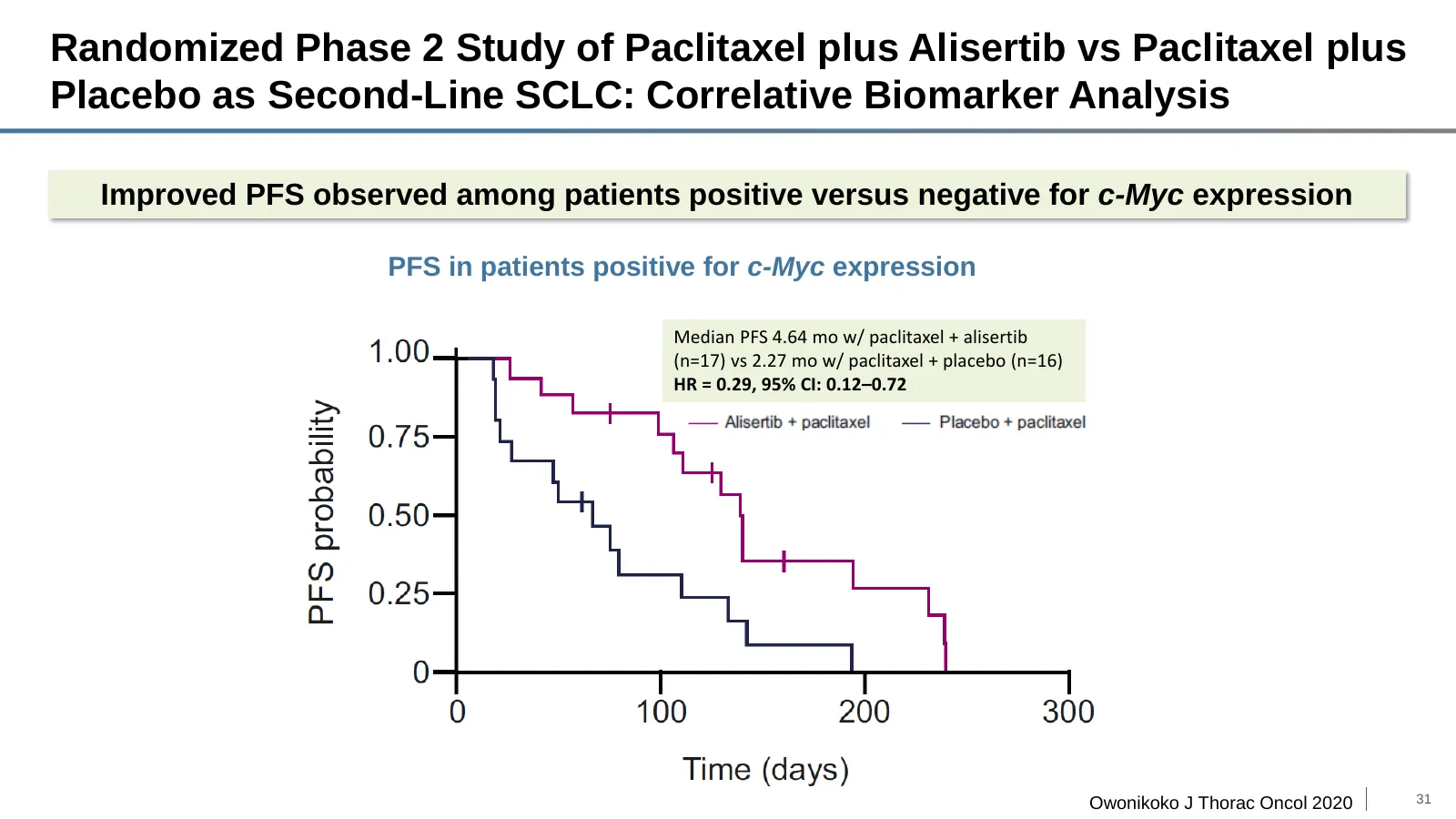
Slide 31: Randomized Phase 2 Study in Second-Line SCLC: Correlative Biomarker Analysis
Randomized Phase 2 Study of Paclitaxel plus Alisertib vs Paclitaxel plus Placebo as Second-Line SCLC: Correlative Biomarker Analysis Improved PFS observed among patients positive versus negative for c-Myc expression PFS in patients positive for c-Myc expression Median PFS 4.64 mo w/ paclitaxel + ali
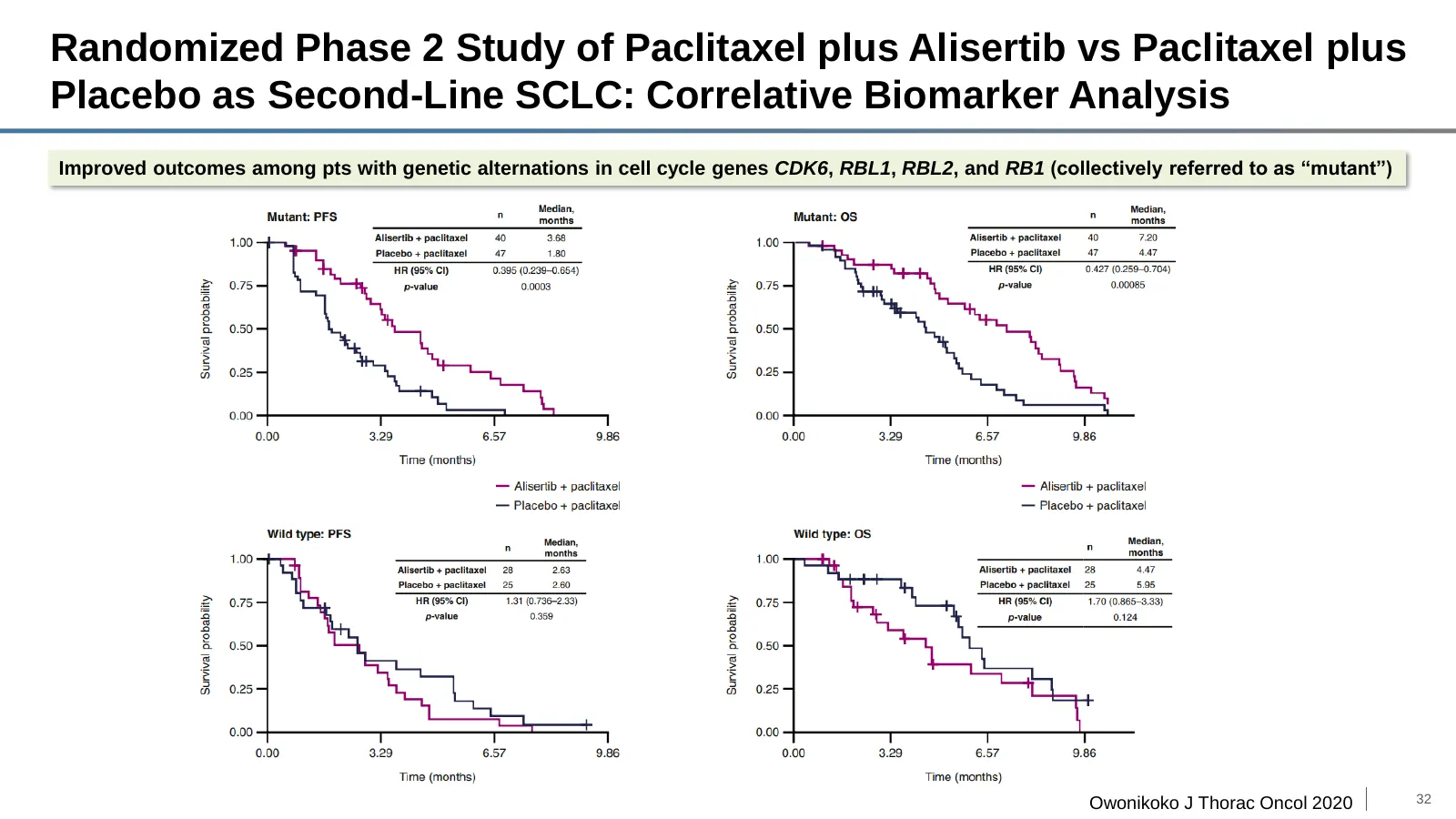
Slide 32: Randomized Phase 2 Study in Second-Line SCLC: Correlative Biomarker Analysis
Randomized Phase 2 Study of Paclitaxel plus Alisertib vs Paclitaxel plus Placebo as Second-Line SCLC: Correlative Biomarker Analysis Improved outcomes among pts with genetic alternations in cell cycle genes CDK6, RBL1, RBL2, and RB1 (collectively referred to as “mutant”) Owonikoko J Thorac Oncol 202
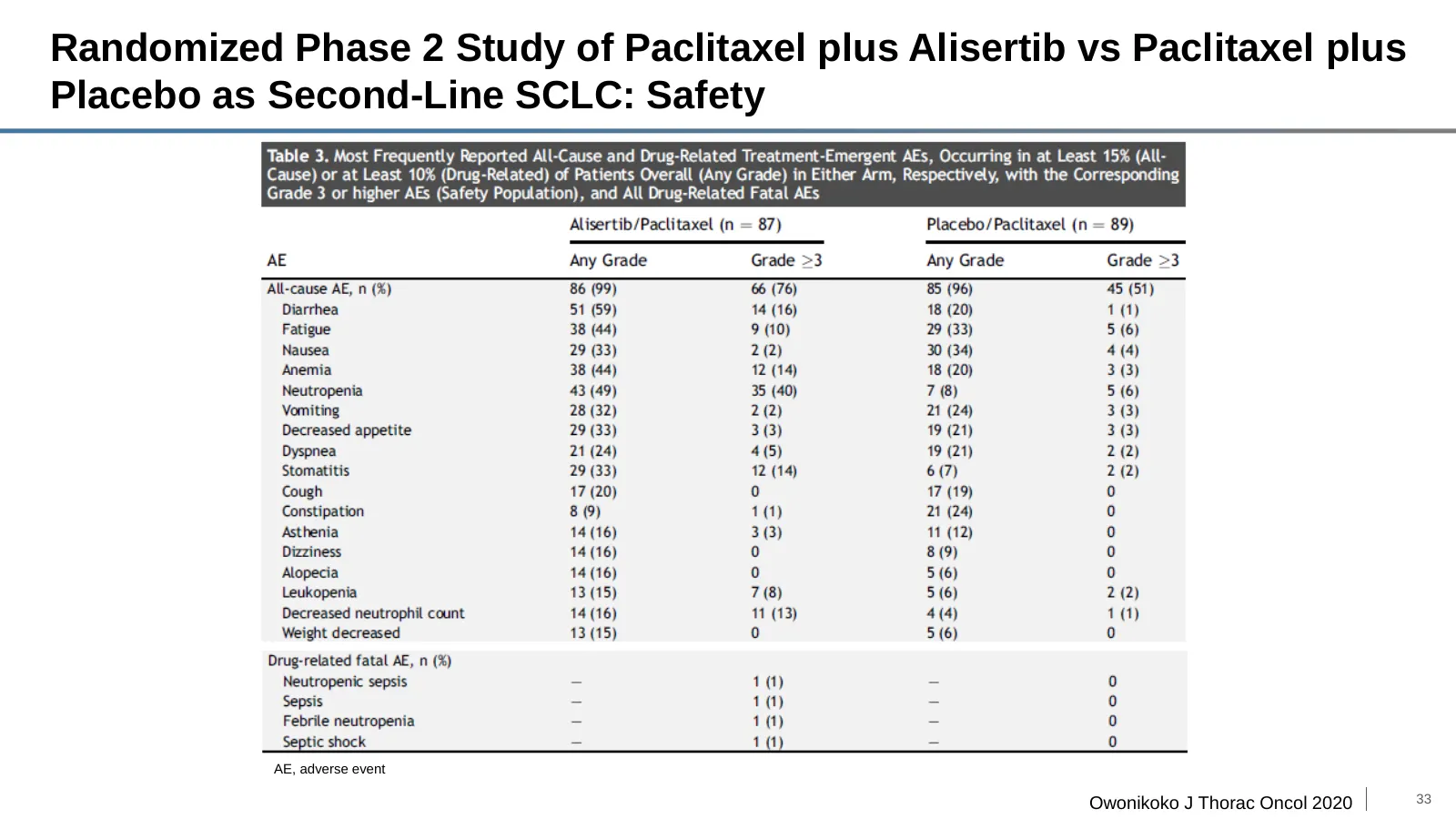
Slide 33: Randomized Phase 2 Study in Second-Line SCLC: Safety
Randomized Phase 2 Study of Paclitaxel plus Alisertib vs Paclitaxel plus Placebo as Second-Line SCLC: Safety AE, adverse event Owonikoko J Thorac Oncol 2020 33
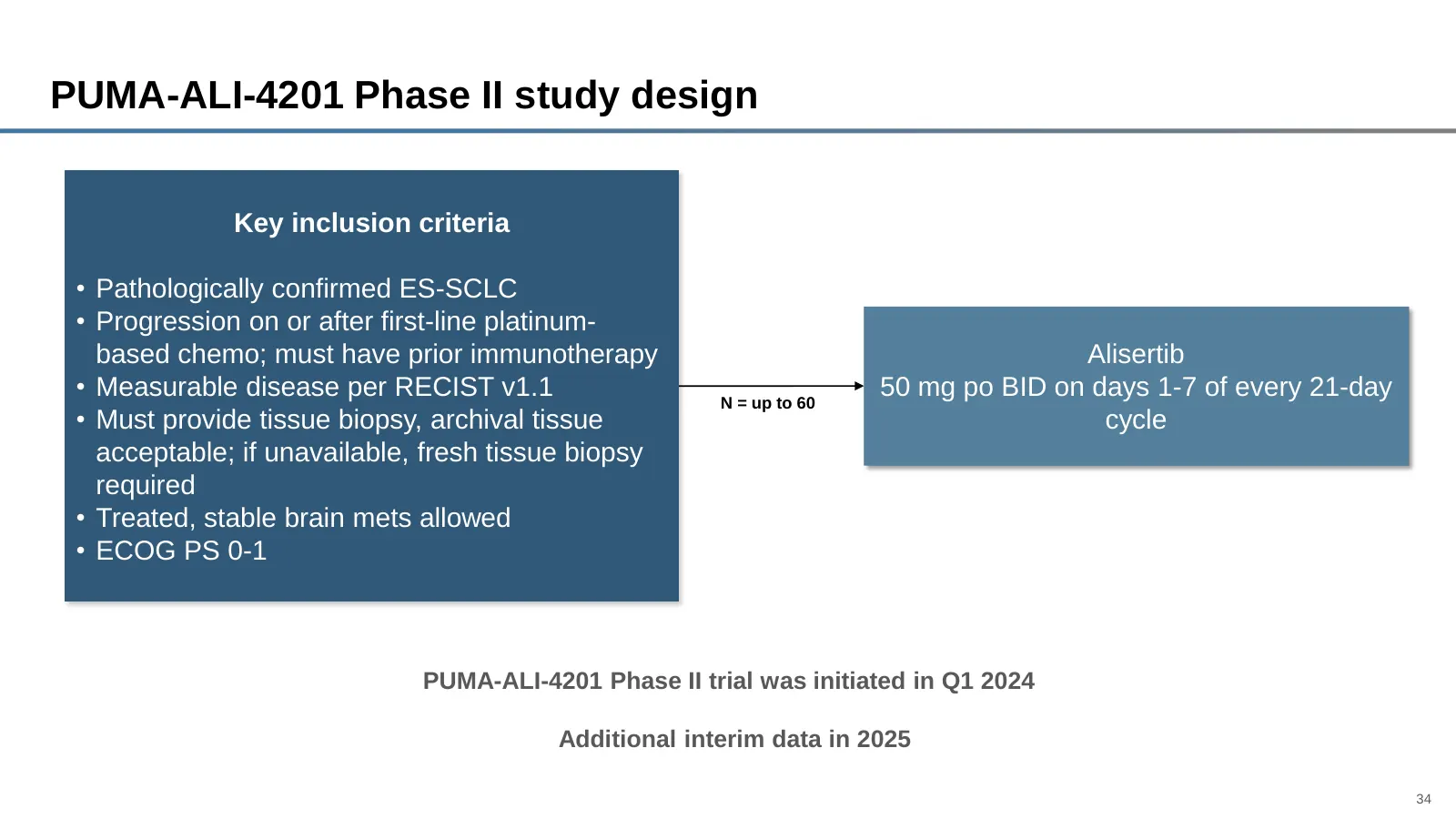
Slide 34: PUMA-ALI-4201 Phase II study design
PUMA-ALI-4201 Phase II study design Key inclusion criteria • Pathologically confirmed ES-SCLC • Progression on or after first-line platinum- based chemo; must have prior immunotherapy Alisertib • Measurable disease per RECIST v1.1 N = up to 60 50 mg po BID on days 1-7 of every 21-day • Must provide
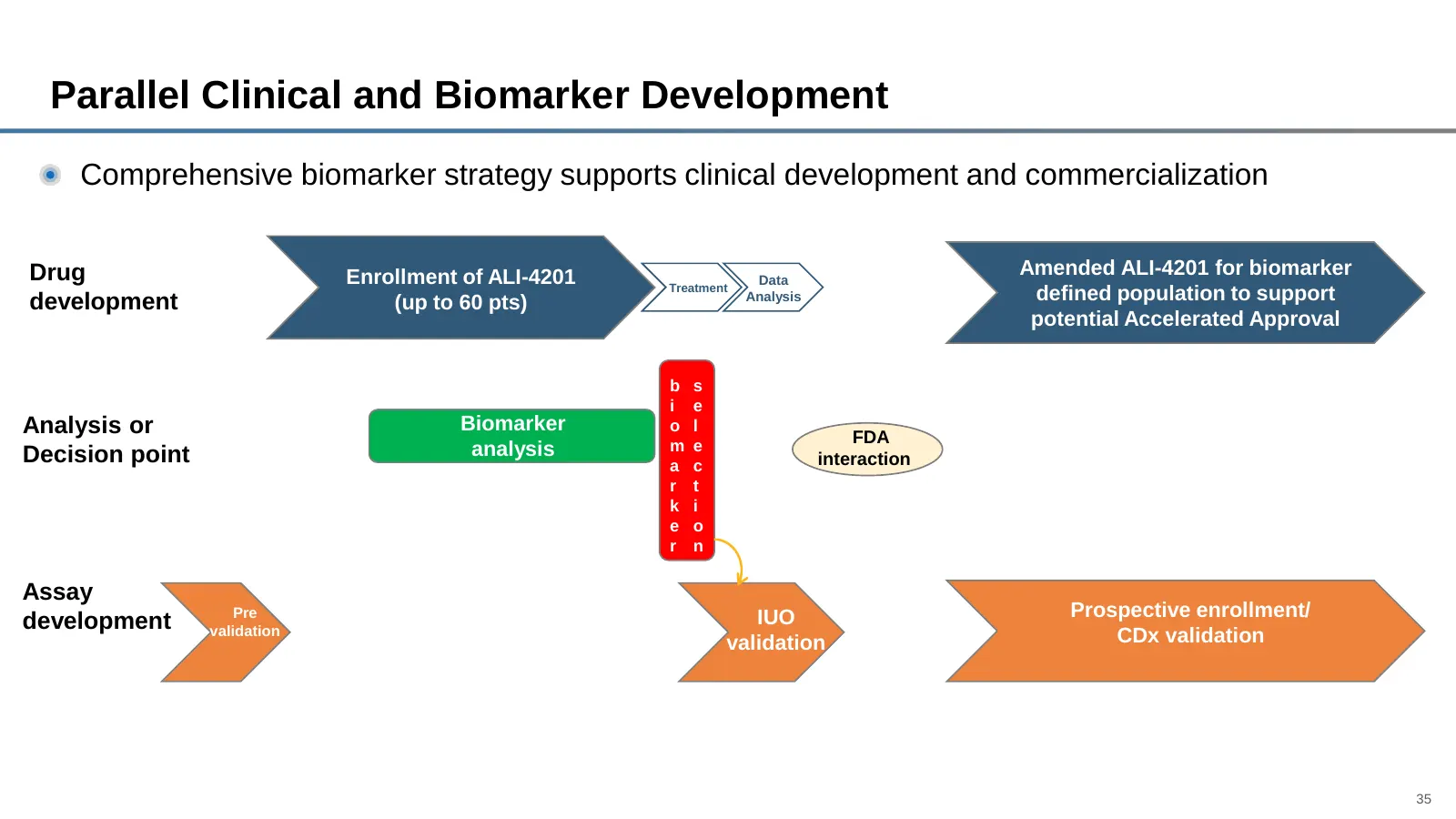
Slide 35: Parallel Clinical and Biomarker Development
Parallel Clinical and Biomarker Development Comprehensive biomarker strategy supports clinical development and commercialization Drug Enrollment of ALI-4201 Data Amended ALI-4201 for biomarker Treatment development (up to 60 pts) Analysis defined population to support potential Accelerated Approval
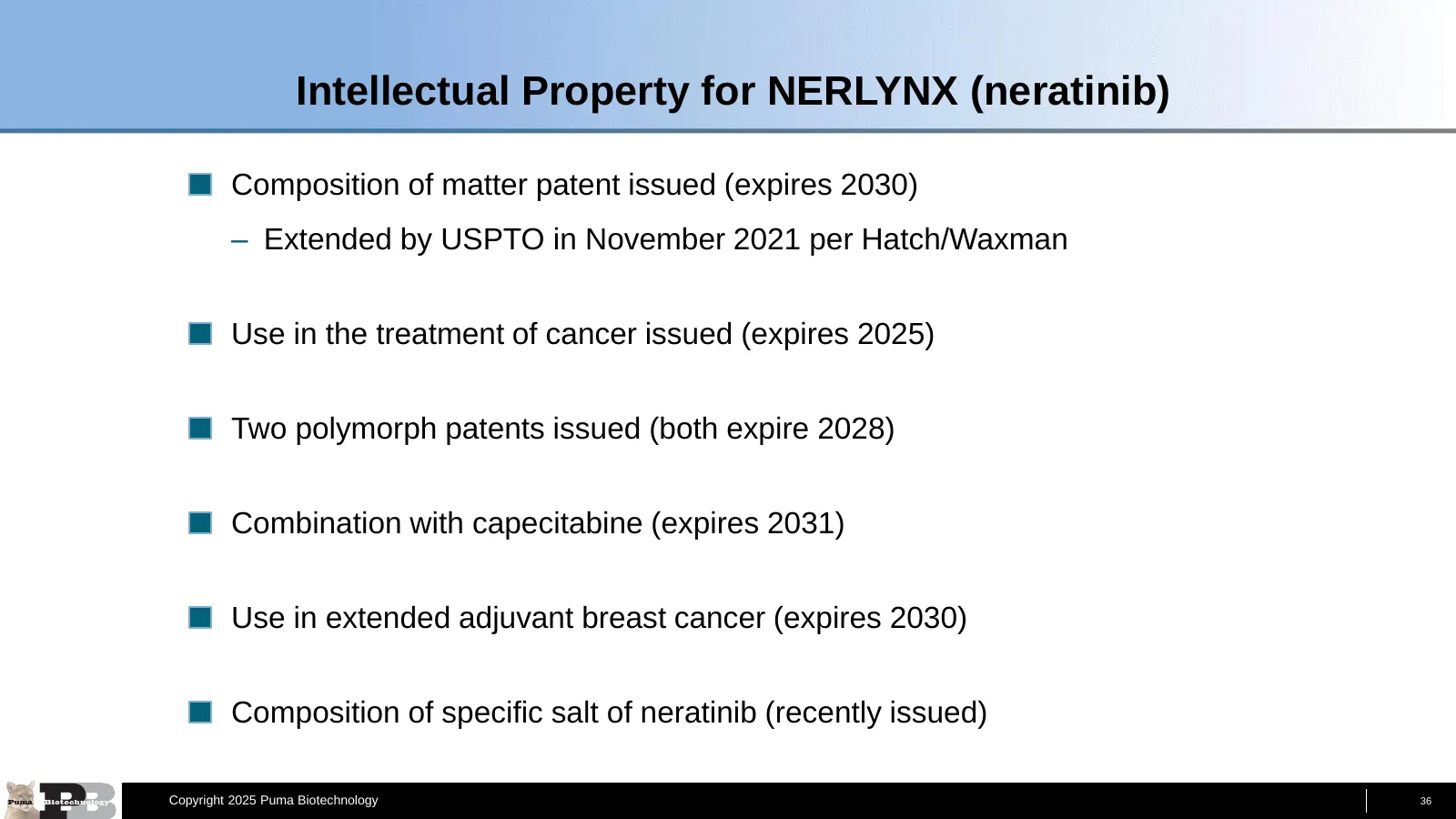
Slide 36: Intellectual Property for NERLYNX (neratinib)
Intellectual Property for NERLYNX (neratinib) Composition of matter patent issued (expires 2030) – Extended by USPTO in November 2021 per Hatch/Waxman Use in the treatment of cancer issued (expires 2025) Two polymorph patents issued (both expire 2028) Combination with capecitabine (expires 2031) Use
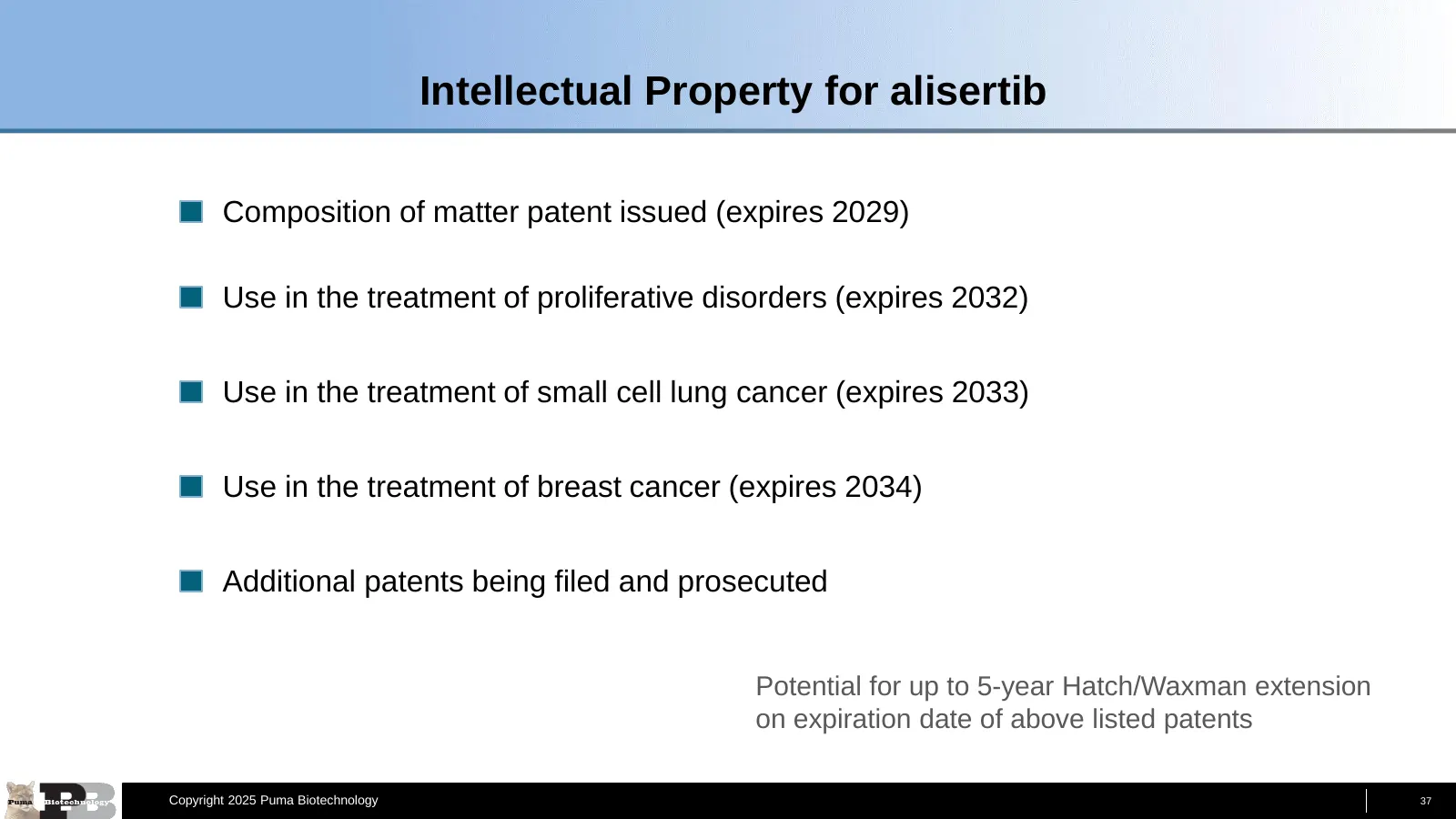
Slide 37: Intellectual Property for alisertib
Intellectual Property for alisertib Composition of matter patent issued (expires 2029) Use in the treatment of proliferative disorders (expires 2032) Use in the treatment of small cell lung cancer (expires 2033) Use in the treatment of breast cancer (expires 2034) Additional patents being filed and
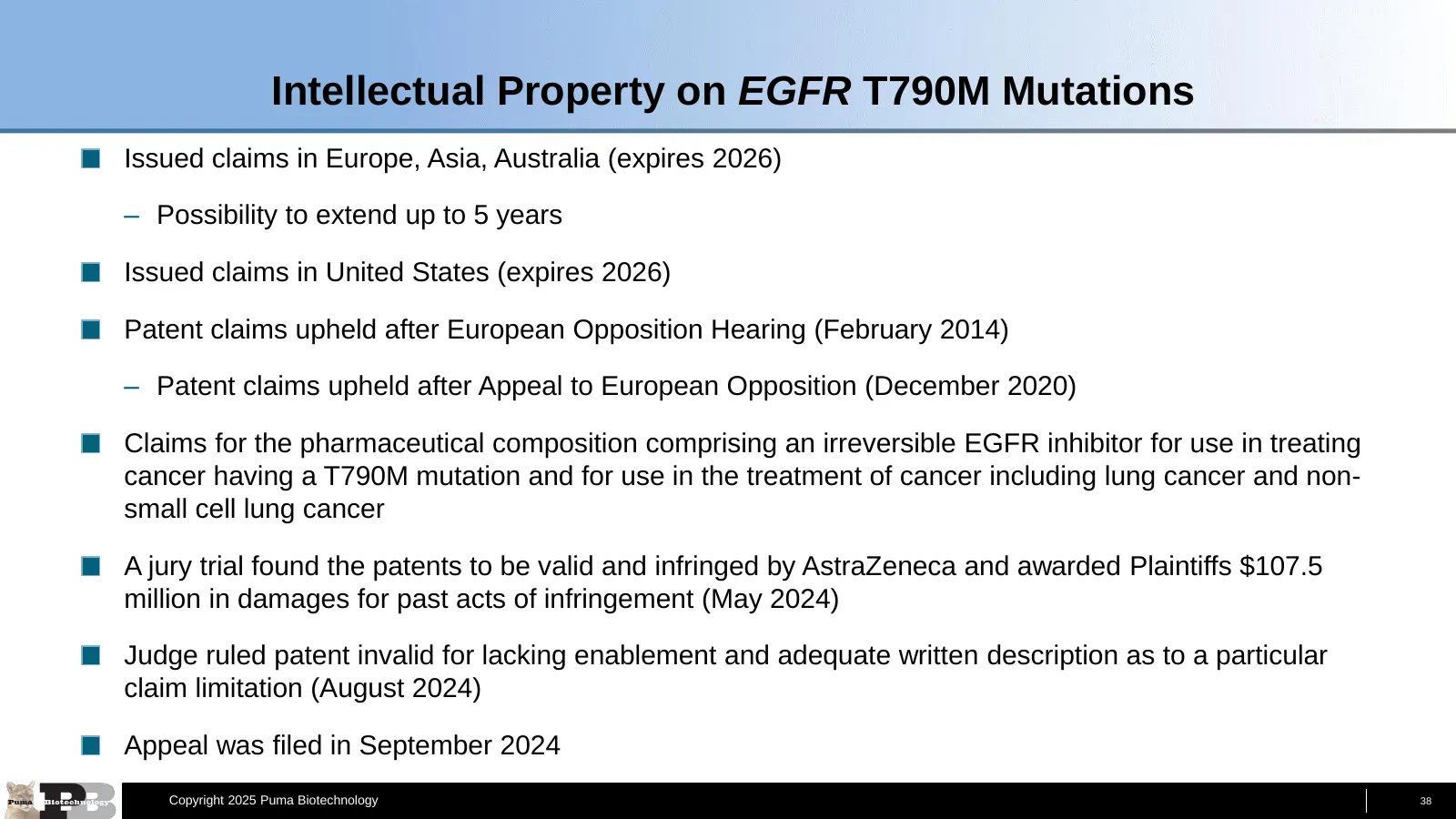
Slide 38: Intellectual Property on EGFR T790M Mutations
Intellectual Property on EGFR T790M Mutations Issued claims in Europe, Asia, Australia (expires 2026) – Possibility to extend up to 5 years Issued claims in United States (expires 2026) Patent claims upheld after European Opposition Hearing (February 2014) – Patent claims upheld after Appeal to Euro
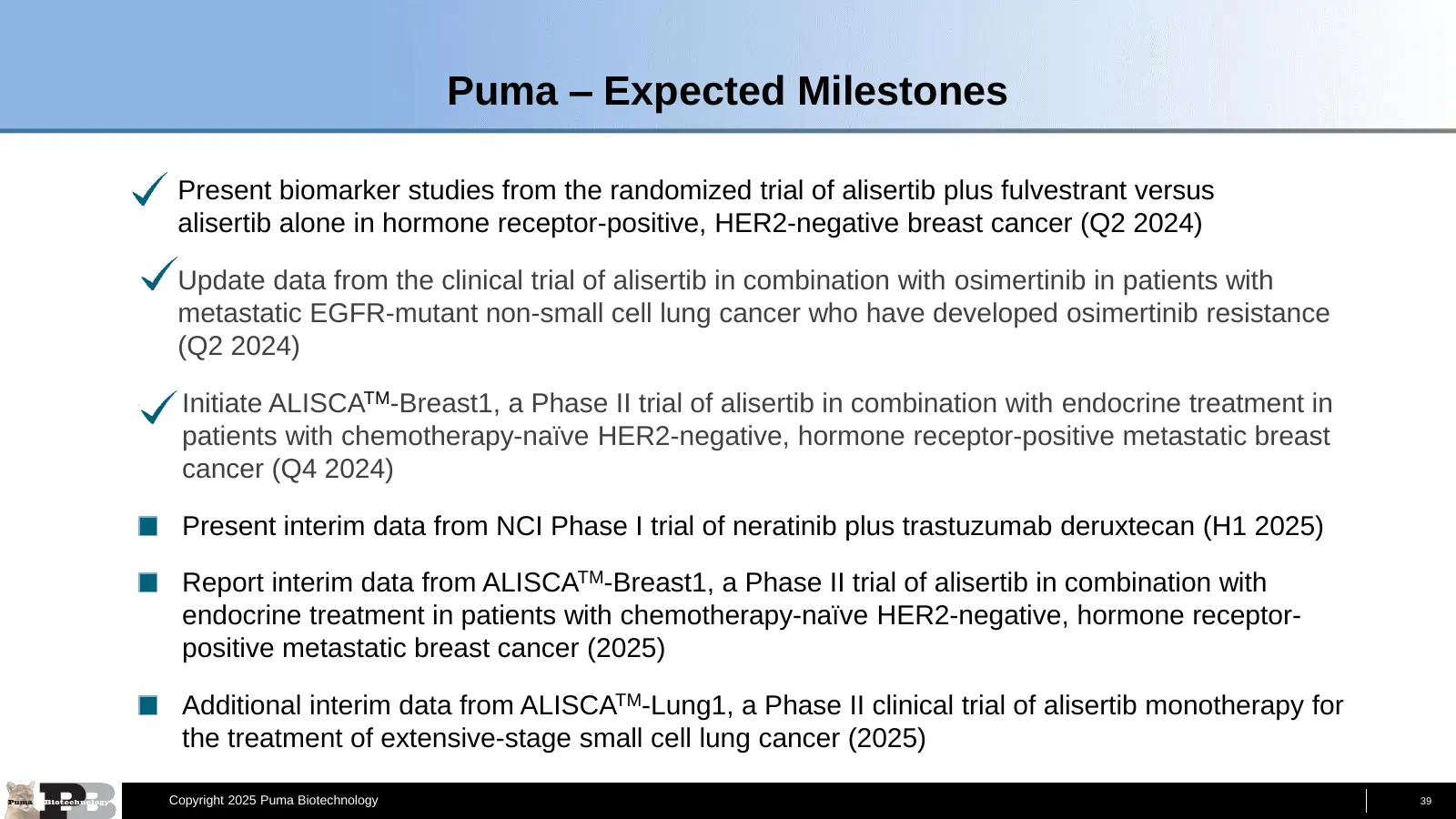
Slide 39: Puma – Expected Milestones
Puma – Expected Milestones ✓ Present biomarker studies from the randomized trial of alisertib plus fulvestrant versus alisertib alone in hormone receptor-positive, HER2-negative breast cancer (Q2 2024) ✓ Update data from the clinical trial of alisertib in combination with osimertinib in patients wit
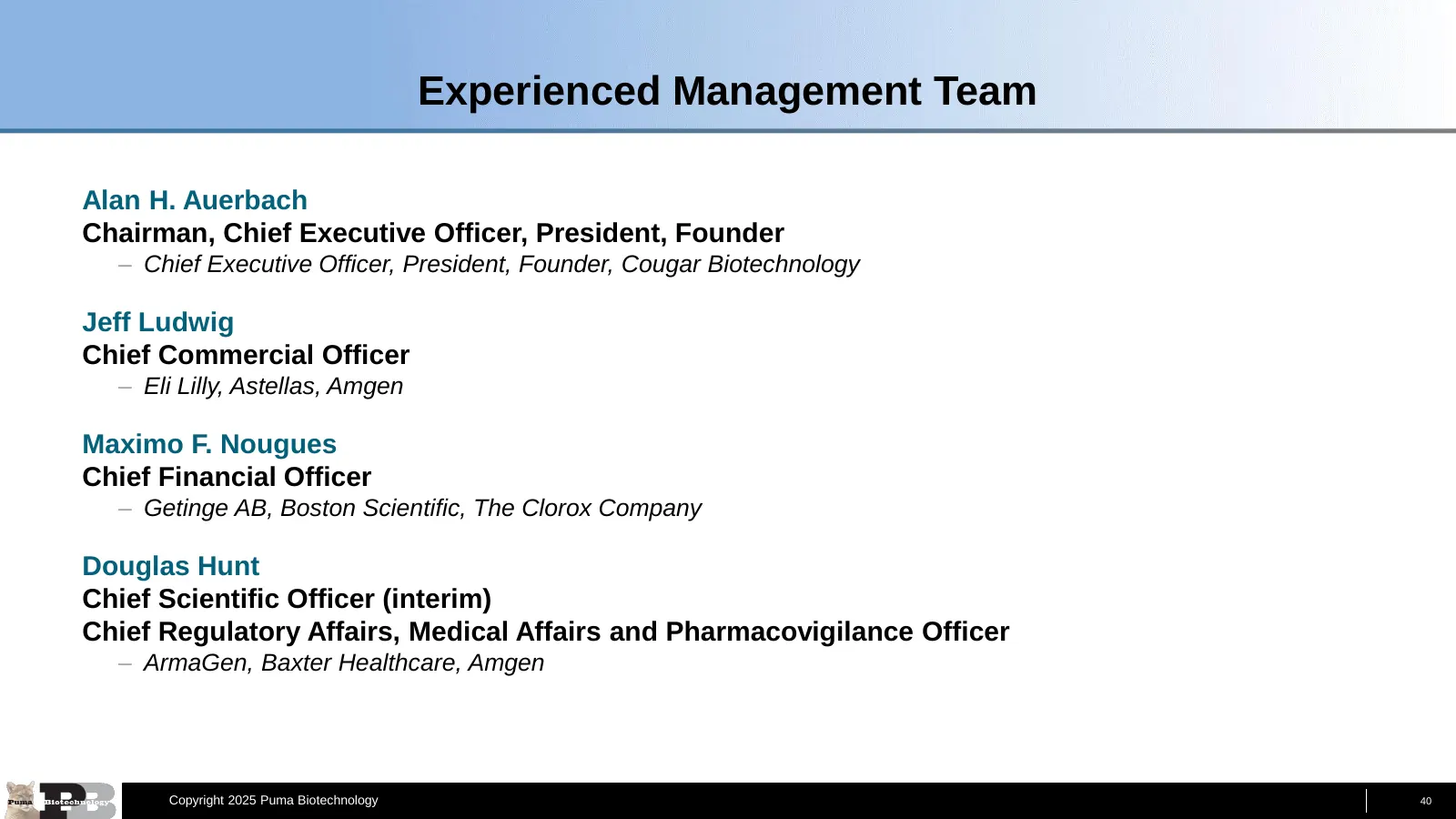
Slide 40: Experienced Management Team
Experienced Management Team Alan H. Auerbach Chairman, Chief Executive Officer, President, Founder – Chief Executive Officer, President, Founder, Cougar Biotechnology Jeff Ludwig Chief Commercial Officer – Eli Lilly, Astellas, Amgen Maximo F. Nougues Chief Financial Officer – Getinge AB, Boston Scie
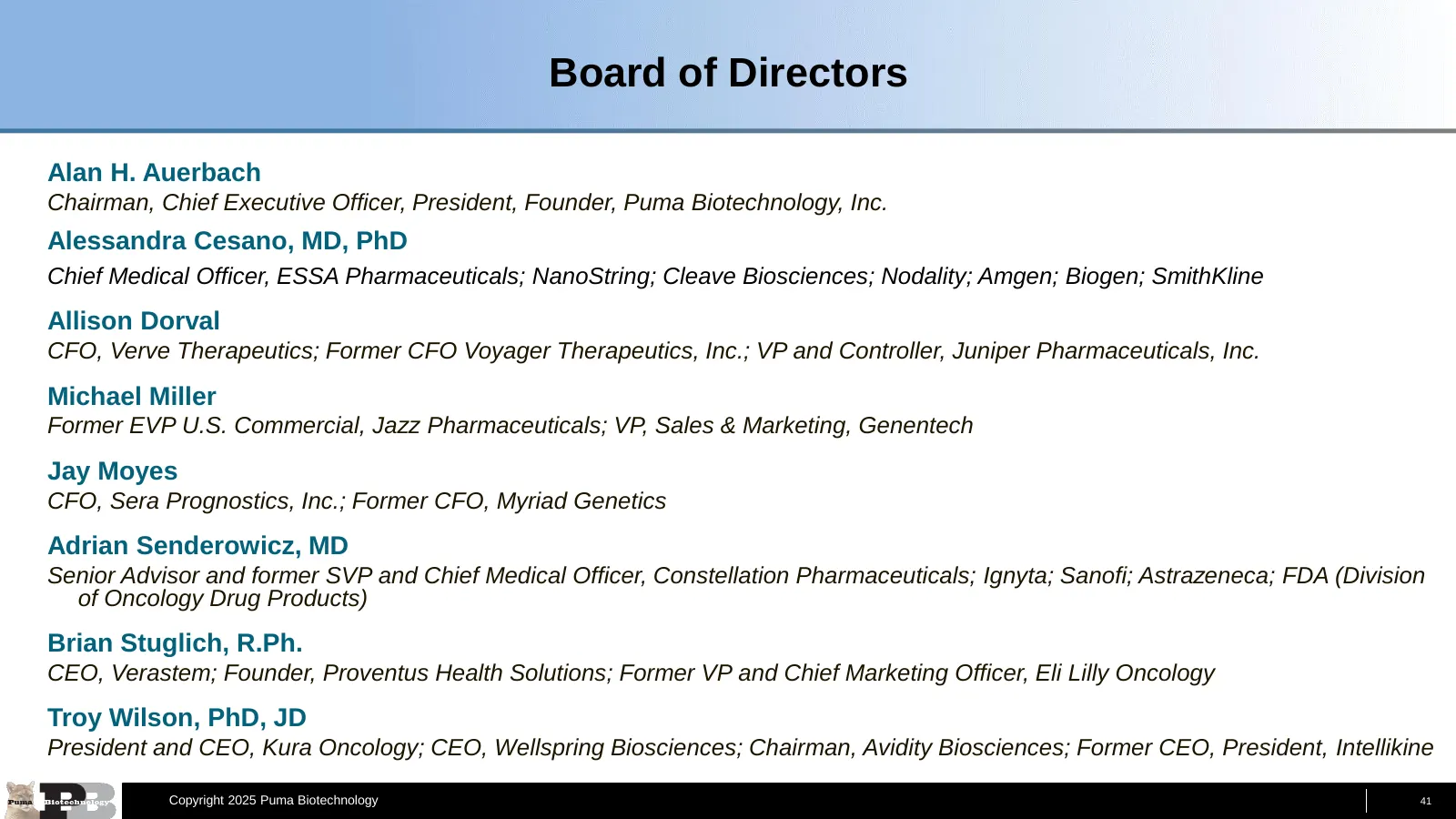
Slide 41: Board of Directors
Board of Directors Alan H. Auerbach Chairman, Chief Executive Officer, President, Founder, Puma Biotechnology, Inc. Alessandra Cesano, MD, PhD Chief Medical Officer, ESSA Pharmaceuticals; NanoString; Cleave Biosciences; Nodality; Amgen; Biogen; SmithKline Allison Dorval CFO, Verve Therapeutics; Form
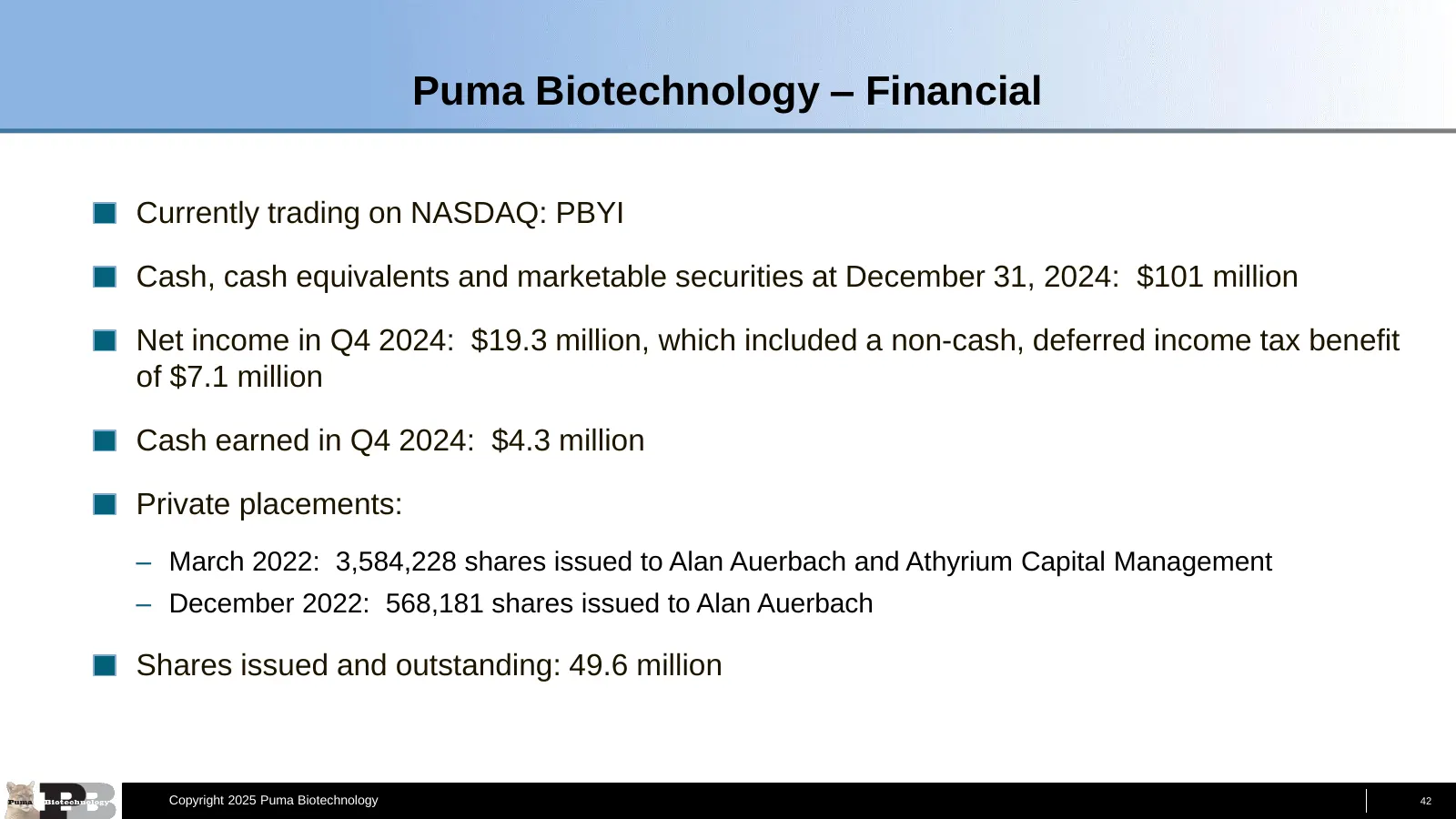
Slide 42: Puma Biotechnology – Financial
Puma Biotechnology – Financial Currently trading on NASDAQ: PBYI Cash, cash equivalents and marketable securities at December 31, 2024: $101 million Net income in Q4 2024: $19.3 million, which included a non-cash, deferred income tax benefit of $7.1 million Cash earned in Q4 2024: $4.3 million Priva
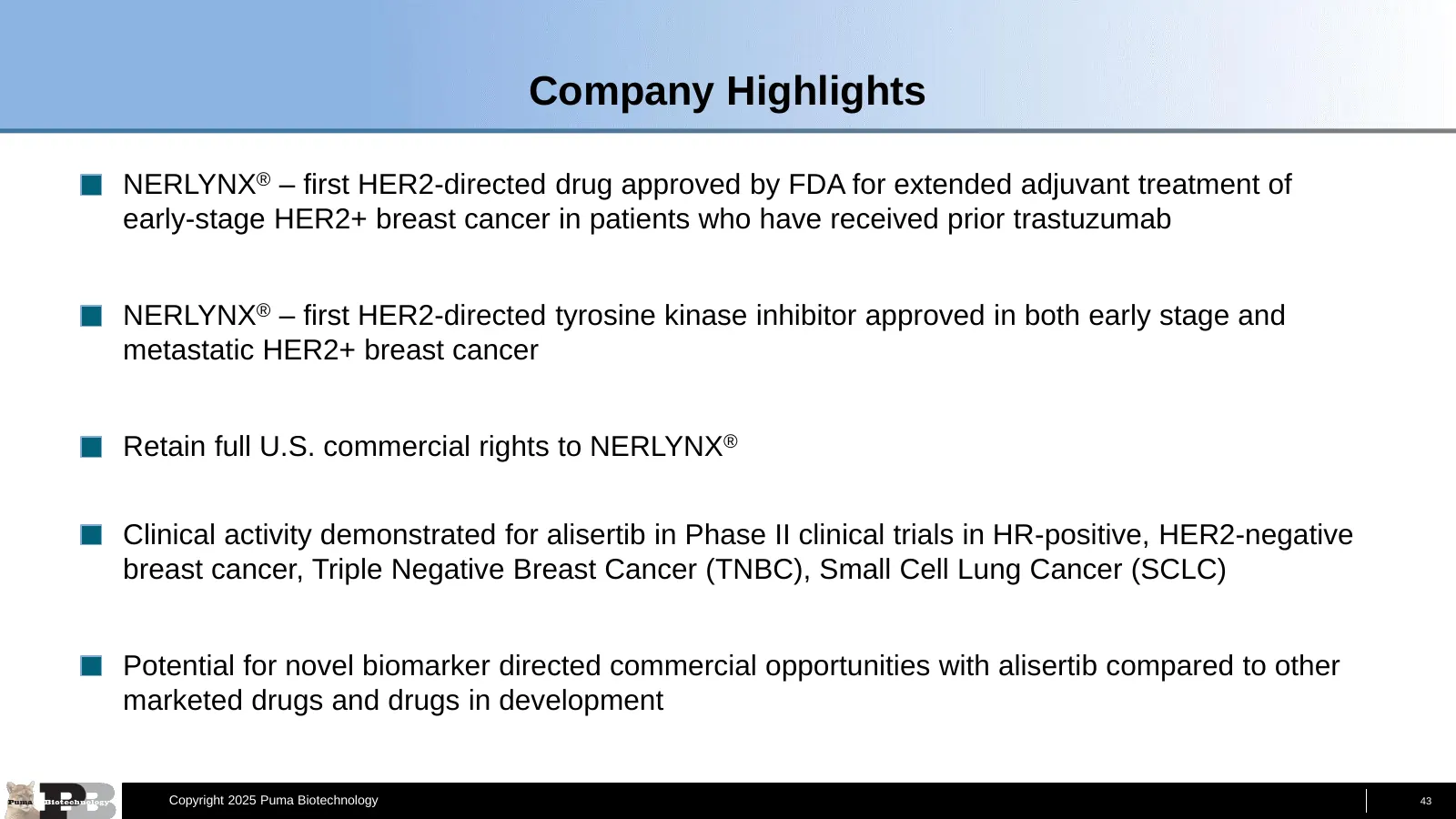
Slide 43: Company Highlights
Company Highlights NERLYNX® – first HER2-directed drug approved by FDA for extended adjuvant treatment of early-stage HER2+ breast cancer in patients who have received prior trastuzumab NERLYNX® – first HER2-directed tyrosine kinase inhibitor approved in both early stage and metastatic HER2+ breast
Slide 44: Puma Biotechnology
Puma Biotechnology TD Cowen 45th Annual Health Care Conference March 2025
Source: company website
More decks from Puma Biotechnology Inc
 Q3 2026 Earnings Presentation8 slides · Nov 5, 2026
 Investor Presentation (September 2026)63 slides · September 2026
 Q2 2026 Earnings Presentation8 slides · Aug 6, 2026
 Investor Presentation (July 2026)63 slides · July 2026
 Q1 2026 Earnings Presentation8 slides · May 7, 2026
 Q1 2026 Earnings Presentation53 slides · May 7, 2026