Viridian Therapeutics, Inc. · NASDAQ:VRDN
Viridian Therapeutics — 92nd Annual Meeting of the American Thyroid Association 2023
23 slides from Viridian Therapeutics's conference presentation, September 2023
Slide 1: In Vitro Pharmacology and Phase 1/2 Results of VRDN-001 in Thyroid Eye Disease
In Vitro Pharmacology and Phase 1/2 Results of VRDN-001, a Full Antagonist Antibody to IGF-1 Receptor, in Thyroid Eye Disease (TED) Kimberly Cockerham, MD Senta Clinic, San Diego, CA 92nd Annual Meeting of the American Thyroid Association®, September 27-October 1, 2023
Slide 2: Disclosures
Disclosures • These studies were sponsored by Viridian Therapeutics, Inc. All data are proprietary. • VRDN-001 is an investigational therapy not approved in any country. All authors met the ICMJE authorship criteria and had full access to relevant data. • All data from the active TED phase 2 proof-o
Slide 3: Learning objectives
Learning objectives To better understand: • Thyroid eye disease (TED) pathophysiology • VRDN-001 preclinical data on distinct binding and antagonism • VRDN-001 phase 2 proof-of-concept (POC) study results 92nd Annual Meeting of the American Thyroid Association®, September 27-October 1, 2023
Slide 4: Thyroid eye disease (TED) pathophysiology
Thyroid eye disease (TED) pathophysiology
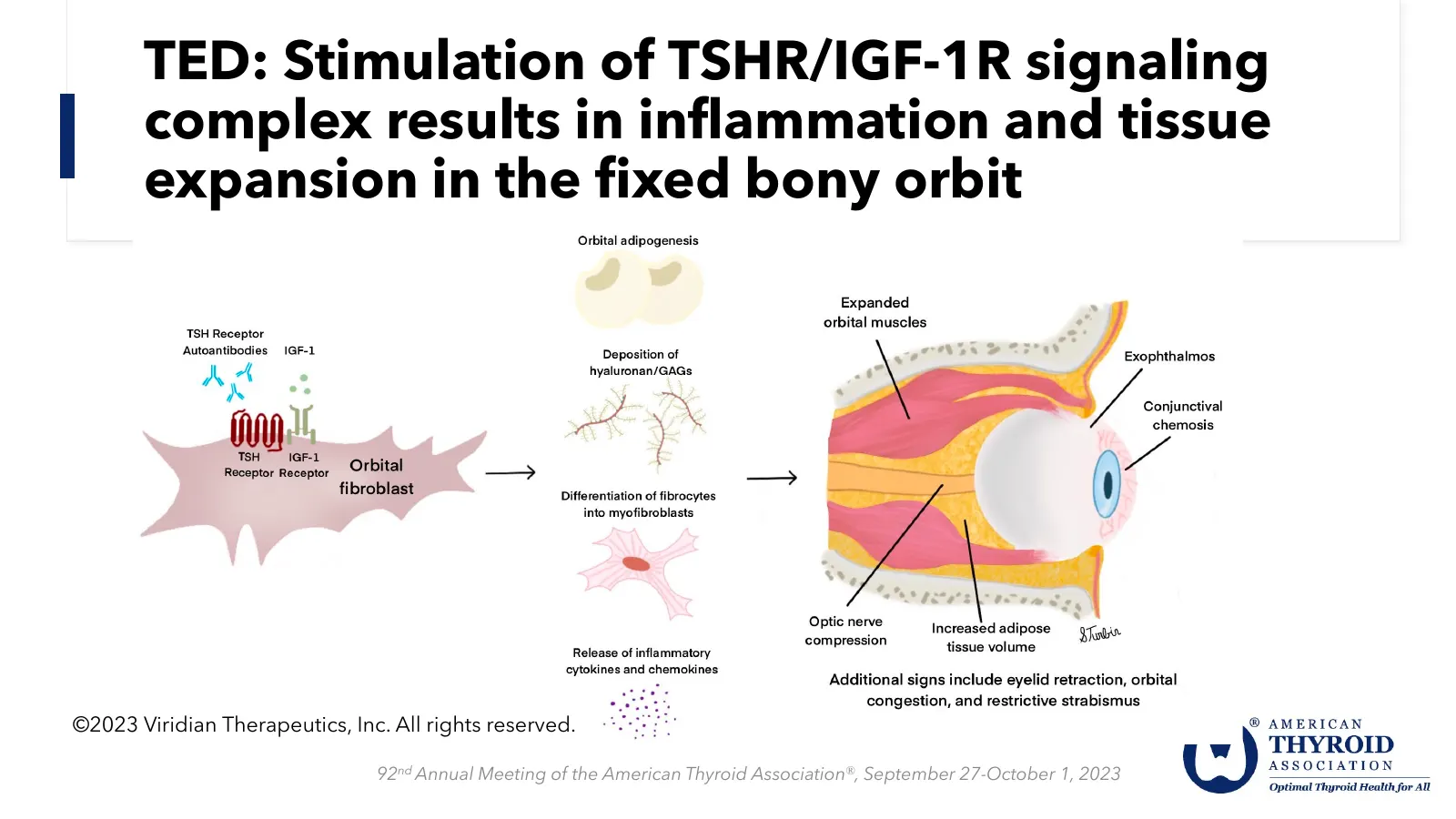
Slide 5: TED: Stimulation of TSHR/IGF-1R signaling complex results in inflammation and tissue expansion
TED: Stimulation of TSHR/IGF-1R signaling complex results in inflammation and tissue expansion in the fixed bony orbit ©2023 Viridian Therapeutics, Inc. All rights reserved. 92nd Annual Meeting of the American Thyroid Association®, September 27-October 1, 2023
Slide 6: VRDN-001 preclinical data: distinct binding & antagonist properties
VRDN-001 preclinical data: distinct binding & antagonist properties
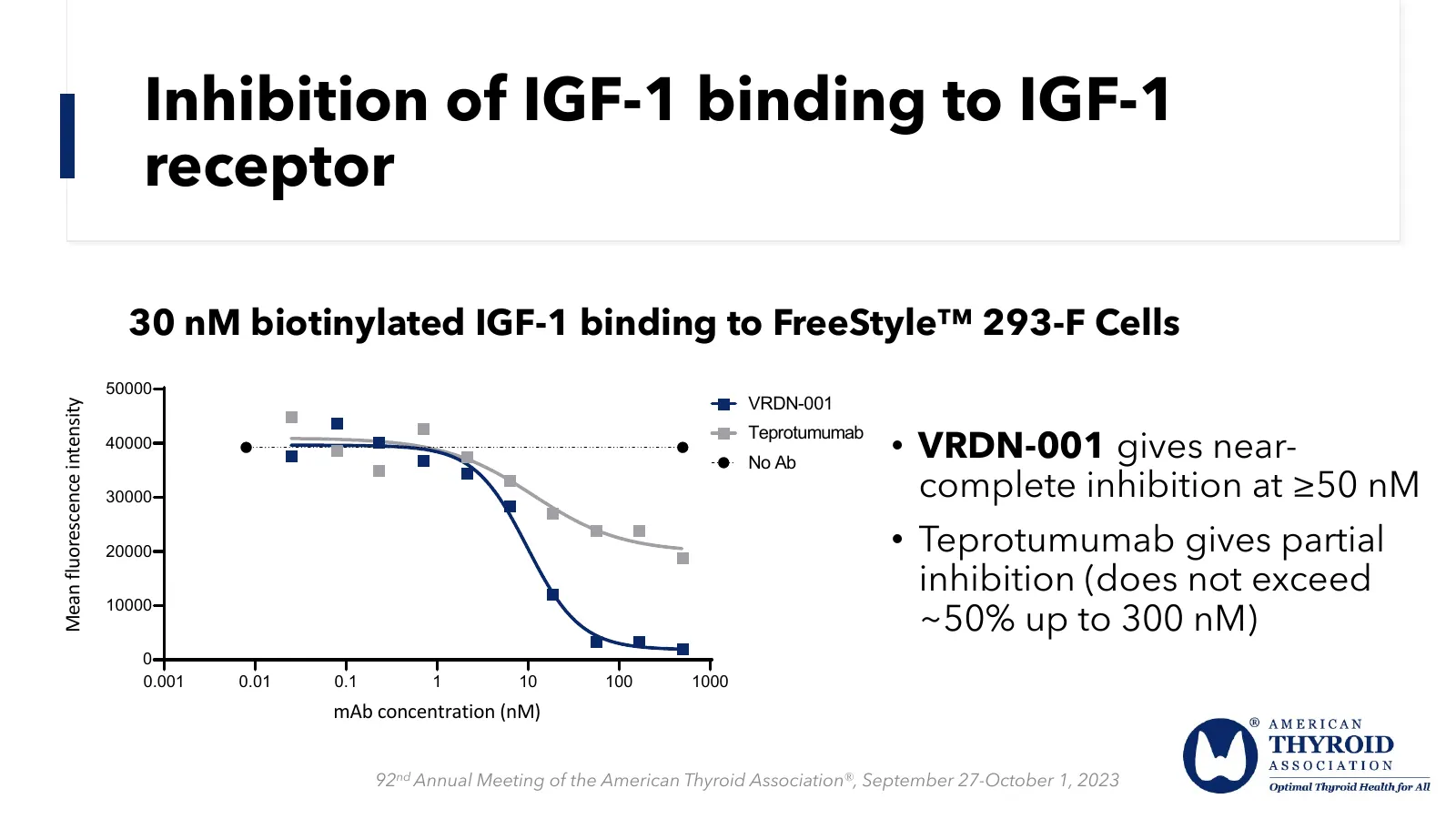
Slide 7: Inhibition of IGF-1 binding to IGF-1 receptor
Inhibition of IGF-1 binding to IGF-1 receptor 30 nM biotinylated IGF-1 binding to FreeStyle™ 293-F Cells 50000 VRDN-001 Mean fluorescence intensity Teprotumumab 40000 No Ab • VRDN-001 gives near- 30000 complete inhibition at ≥50 nM 20000 • Teprotumumab gives partial inhibition (does not exceed 10000
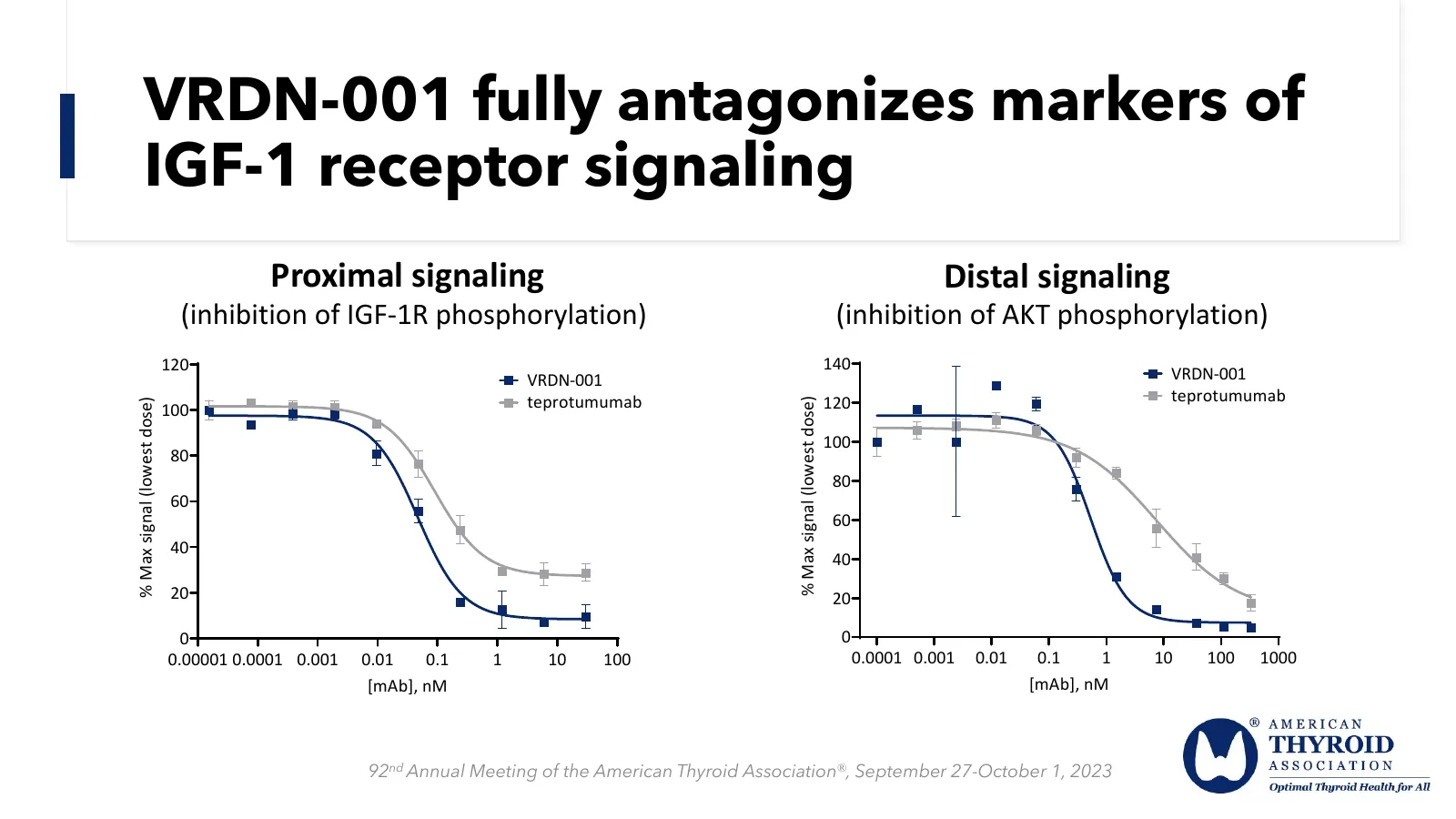
Slide 8: VRDN-001 fully antagonizes markers of IGF-1 receptor signaling
VRDN-001 fully antagonizes markers of IGF-1 receptor signaling Proximal signaling Distal signaling (inhibition of IGF-1R phosphorylation) (inhibition of AKT phosphorylation) 120 140 VRDN-001 VRDN-001 teprotumumab 120 teprotumumab % Max signal (lowest dose) % Max signal (lowest dose) 100 100 80 80 60
Slide 9: VRDN-001 phase 2 proof-of-concept study in active TED
VRDN-001 phase 2 proof-of- concept study in active TED
Slide 10: POC randomized, double-masked trial tested 3 different doses in active TED
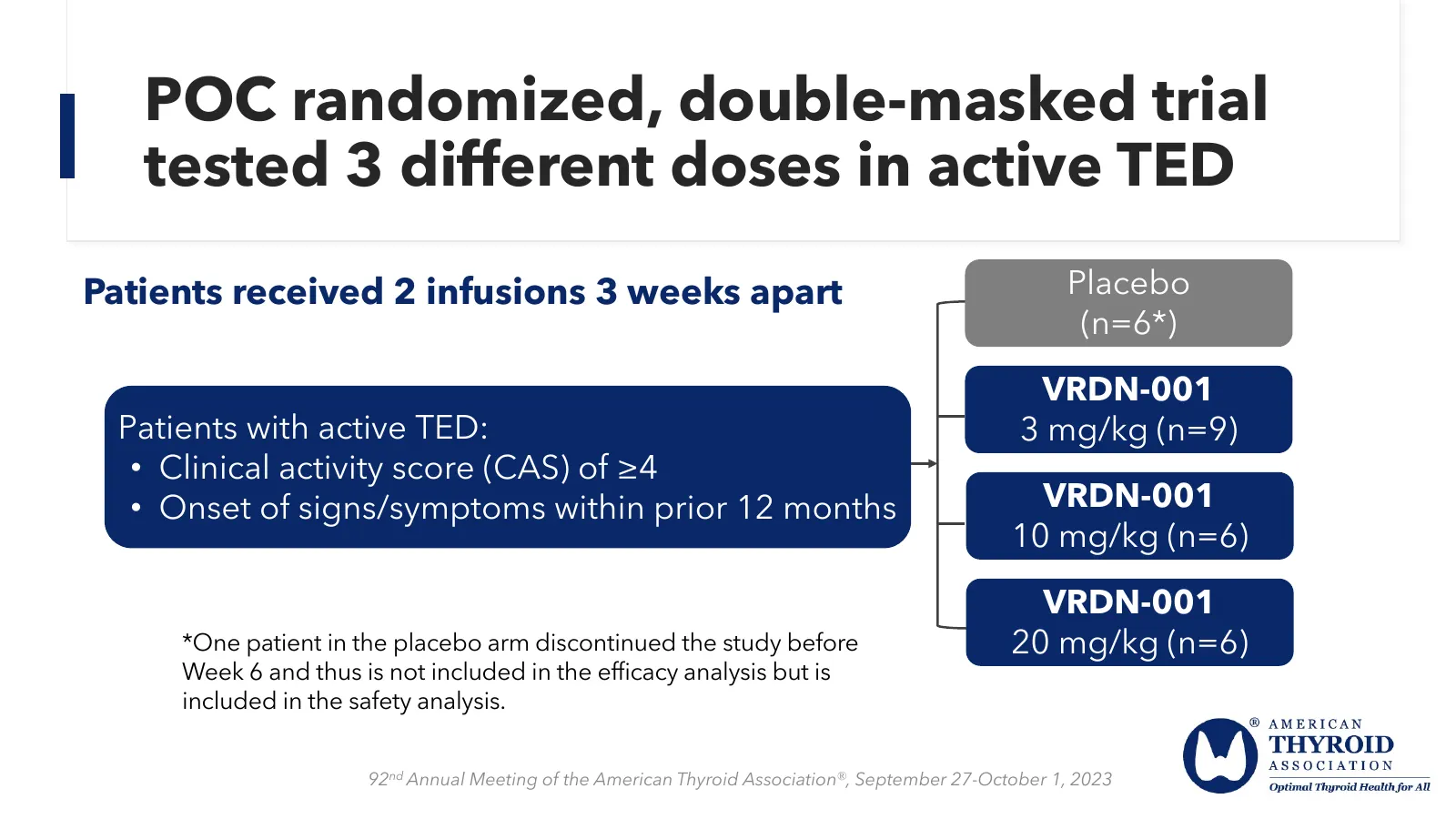
POC randomized, double-masked trial tested 3 different doses in active TED Patients received 2 infusions 3 weeks apart Placebo (n=6*) VRDN-001 Patients with active TED: 3 mg/kg (n=9) • Clinical activity score (CAS) of ≥4 • Onset of signs/symptoms within prior 12 months VRDN-001 10 mg/kg (n=6) VRDN-0
Slide 11: Baseline patient characteristics
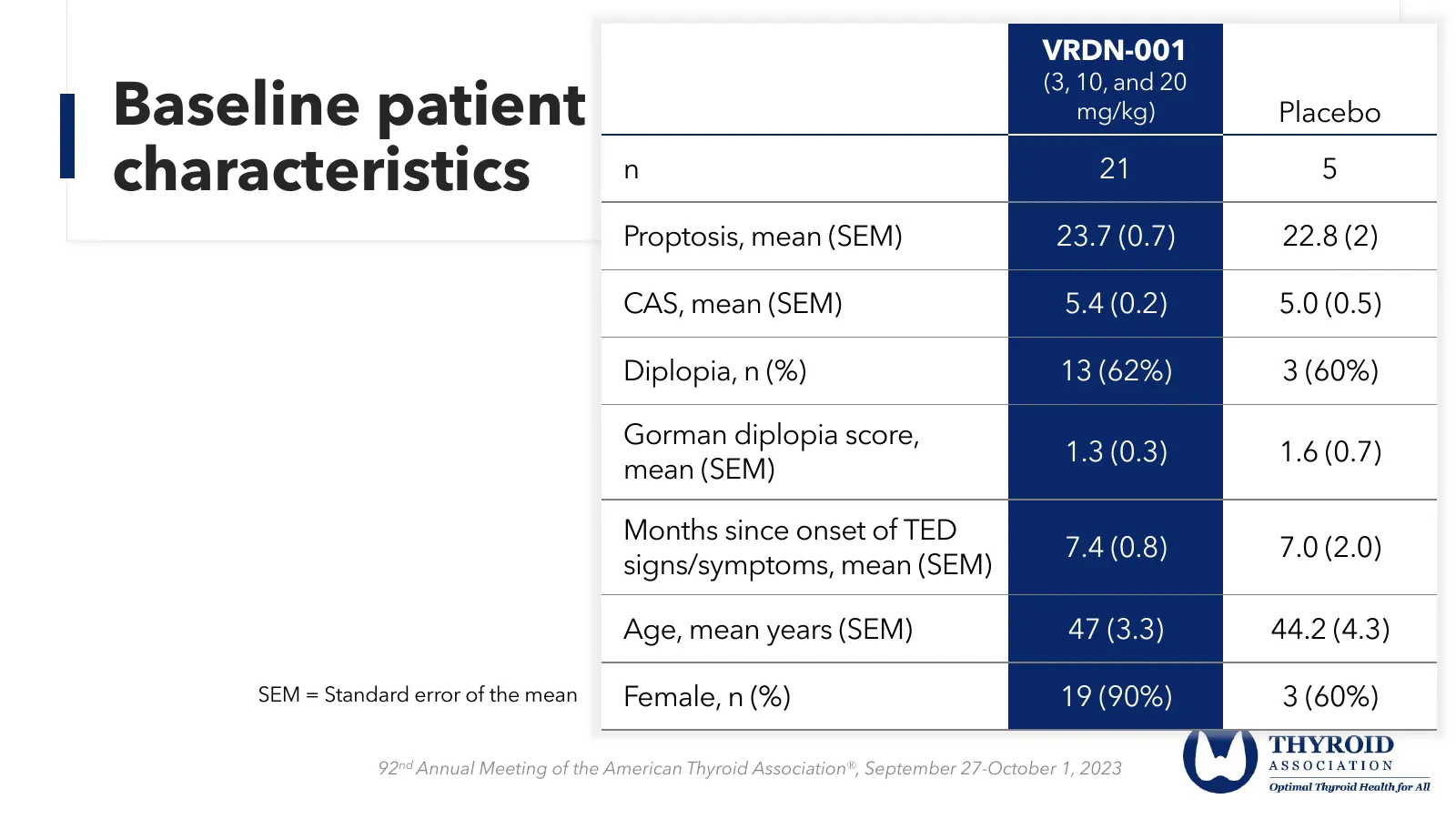
VRDN-001 Baseline patient (3, 10, and 20 mg/kg) Placebo characteristics n 21 5 Proptosis, mean (SEM) 23.7 (0.7) 22.8 (2) CAS, mean (SEM) 5.4 (0.2) 5.0 (0.5) Diplopia, n (%) 13 (62%) 3 (60%) Gorman diplopia score, 1.3 (0.3) 1.6 (0.7) mean (SEM) Months since onset of TED 7.4 (0.8) 7.0 (2.0) signs/symp
Slide 12: Summary of VRDN-001 outcome measures
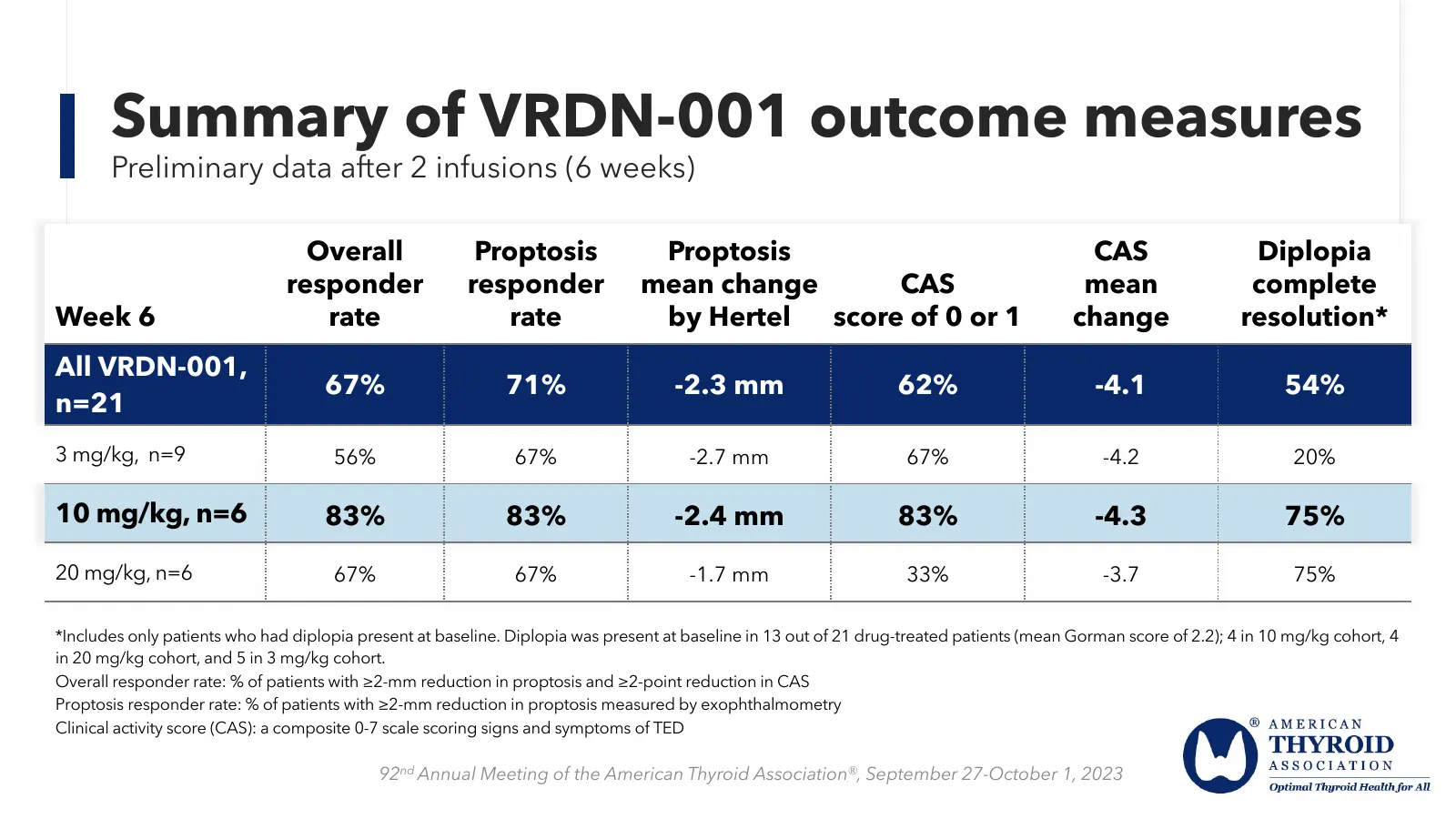
Summary of VRDN-001 outcome measures Preliminary data after 2 infusions (6 weeks) Overall Proptosis Proptosis CAS Diplopia responder responder mean change CAS mean complete Week 6 rate rate by Hertel score of 0 or 1 change resolution* All VRDN-001, 67% 71% -2.3 mm 62% -4.1 54% n=21 3 mg/kg, n=9 56%
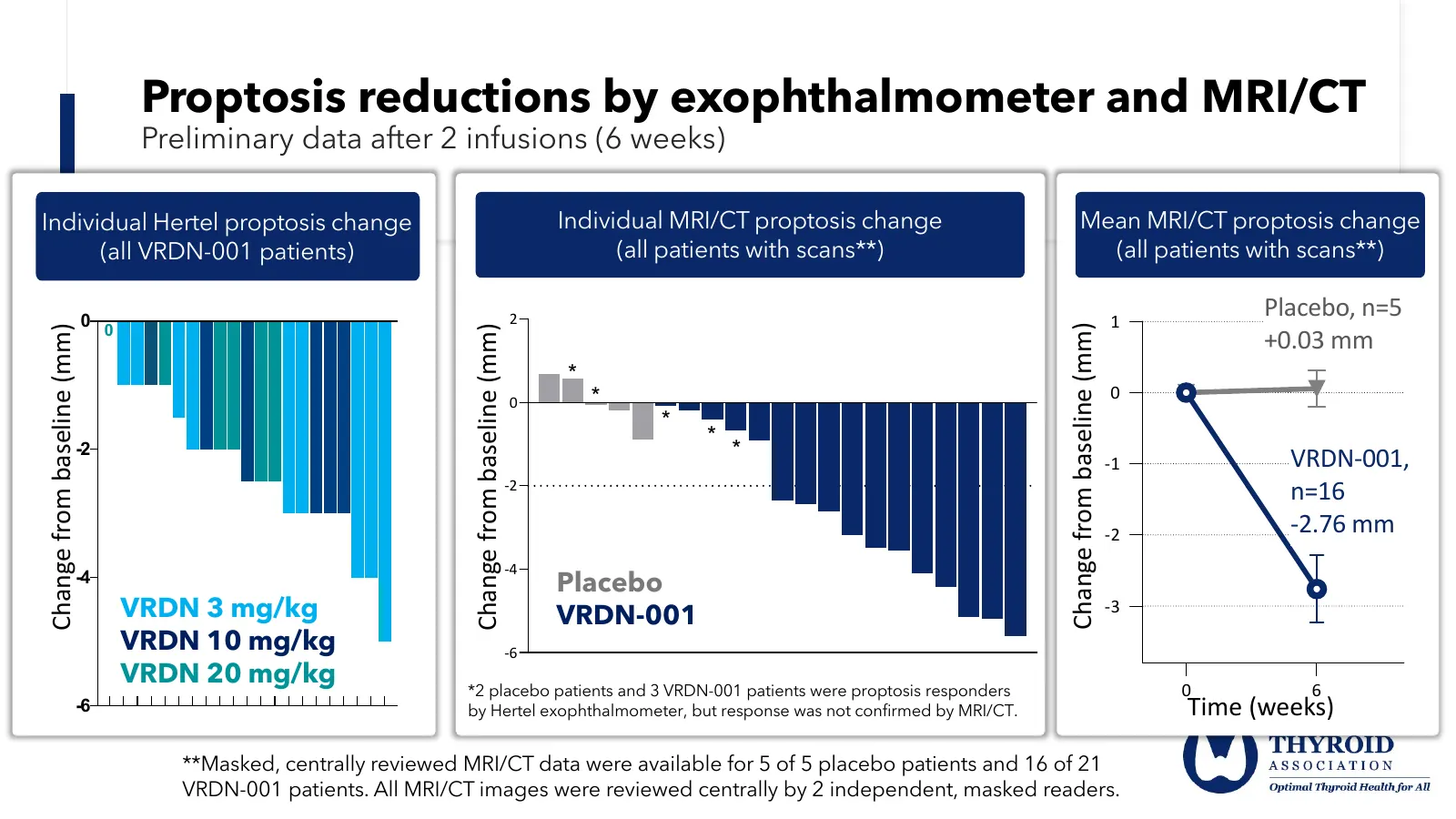
Slide 13: Proptosis reductions by exophthalmometer and MRI/CT
Proptosis reductions by exophthalmometer and MRI/CT Preliminary data after 2 infusions (6 weeks) Individual Hertel proptosis change Individual MRI/CT proptosis change Mean MRI/CT proptosis change (all VRDN-001 patients) (all patients with scans**) (all patients with scans**) 0 2 1 Placebo, n=5 0 +0.
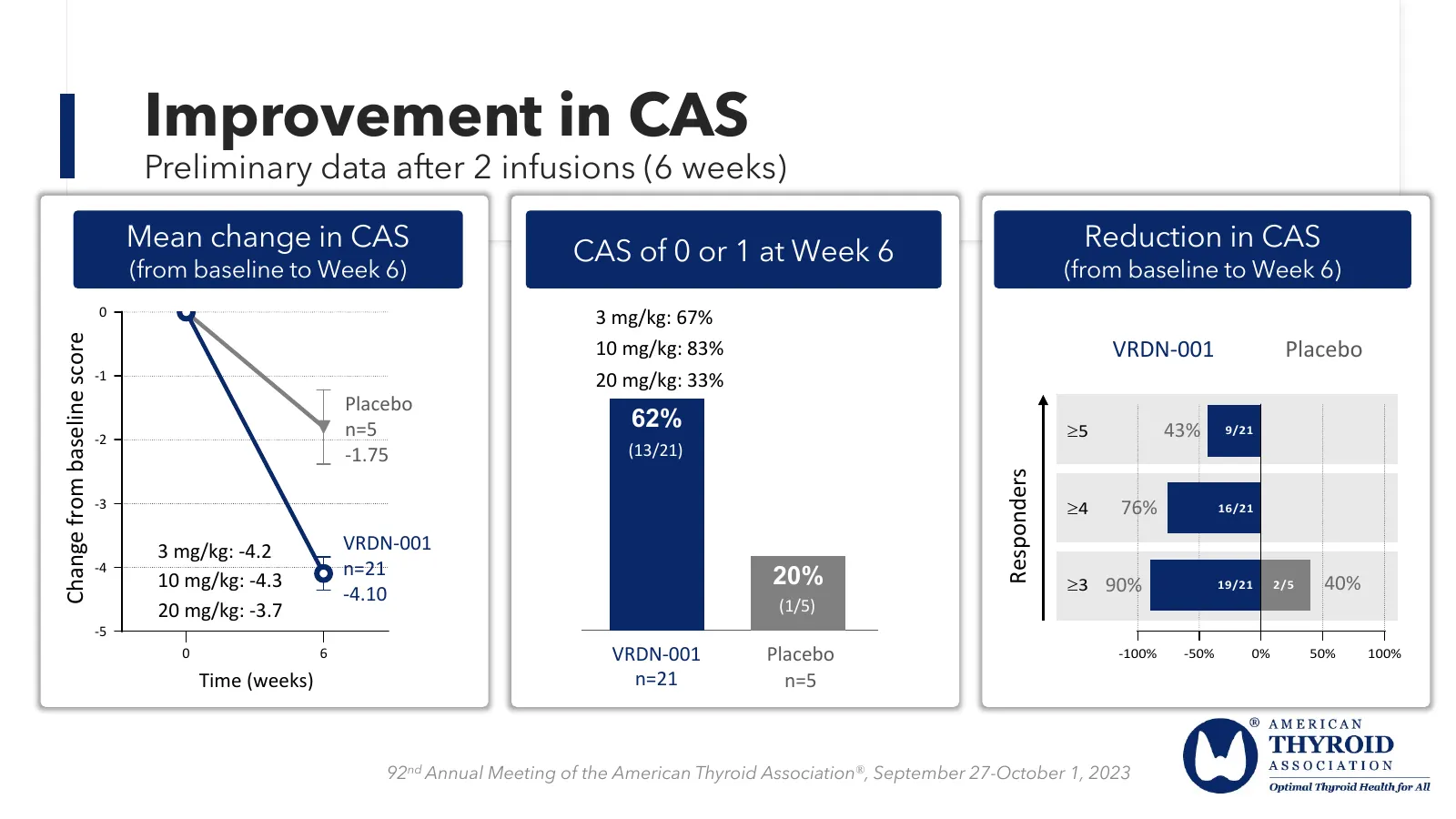
Slide 14: Improvement in CAS
Improvement in CAS Preliminary data after 2 infusions (6 weeks) Mean change in CAS CAS of 0 or 1 at Week 6 Reduction in CAS (from baseline to Week 6) (from baseline to Week 6) 0 3 mg/kg: 67% VRDN-001 Placebo Change from baseline score 10 mg/kg: 83% -1 20 mg/kg: 33% Placebo n=5 62% ≥5 43% 9/21 -2 -1.
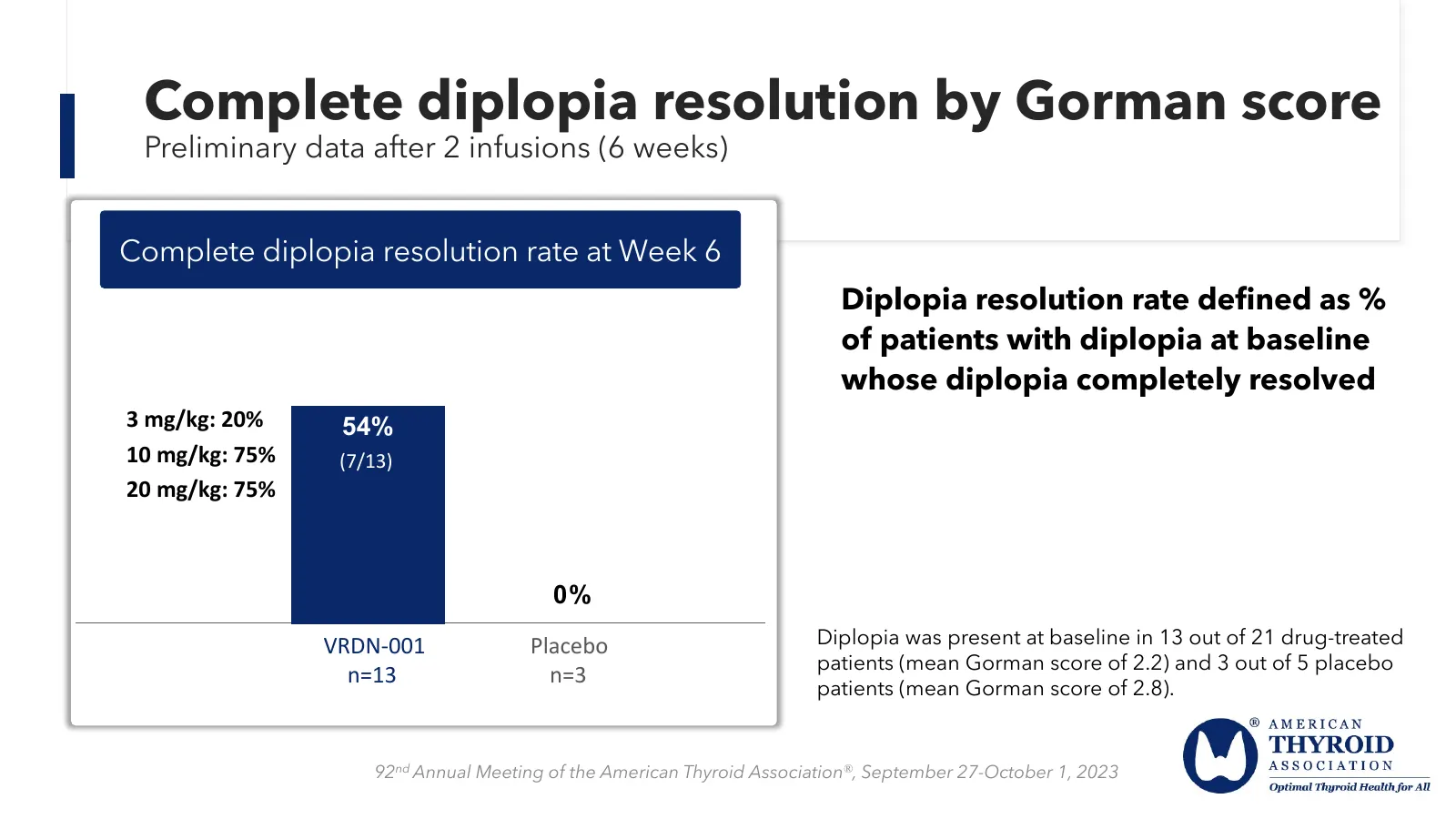
Slide 15: Complete diplopia resolution by Gorman score
Complete diplopia resolution by Gorman score Preliminary data after 2 infusions (6 weeks) Complete Completediplopia resolution diplopia rate resolution at at Week Week 6 6 Diplopia resolution rate defined as % of patients with diplopia at baseline whose diplopia completely resolved 3 mg/kg: 20% 54%
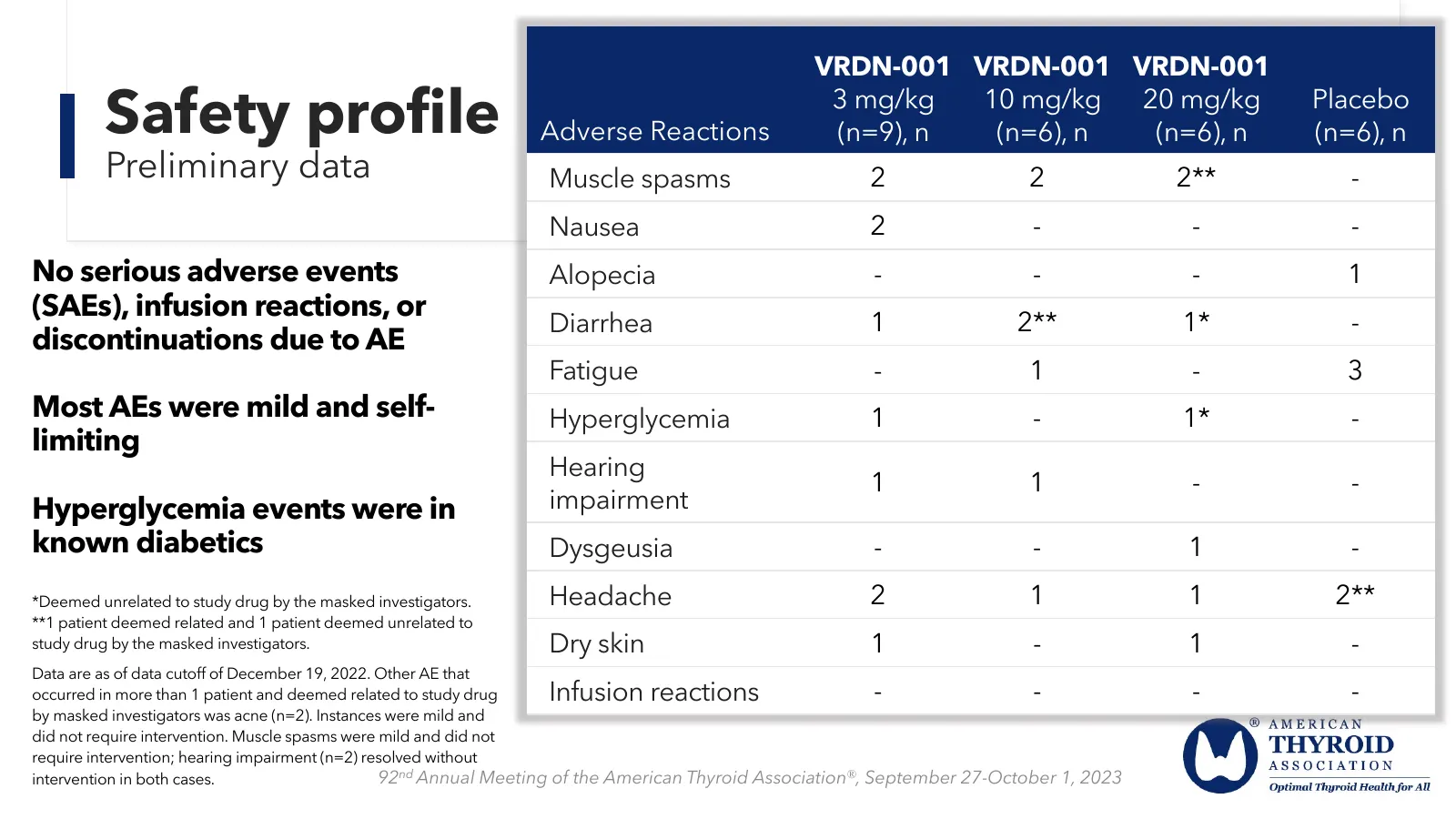
Slide 16: Safety profile
VRDN-001 VRDN-001 VRDN-001 Safety profile Adverse Reactions 3 mg/kg (n=9), n 10 mg/kg (n=6), n 20 mg/kg (n=6), n Placebo (n=6), n Preliminary data Muscle spasms 2 2 2** - Nausea 2 - - - No serious adverse events Alopecia - - - 1 (SAEs), infusion reactions, or Diarrhea 1 2** 1* - discontinuations due
Slide 17: 1st patient example
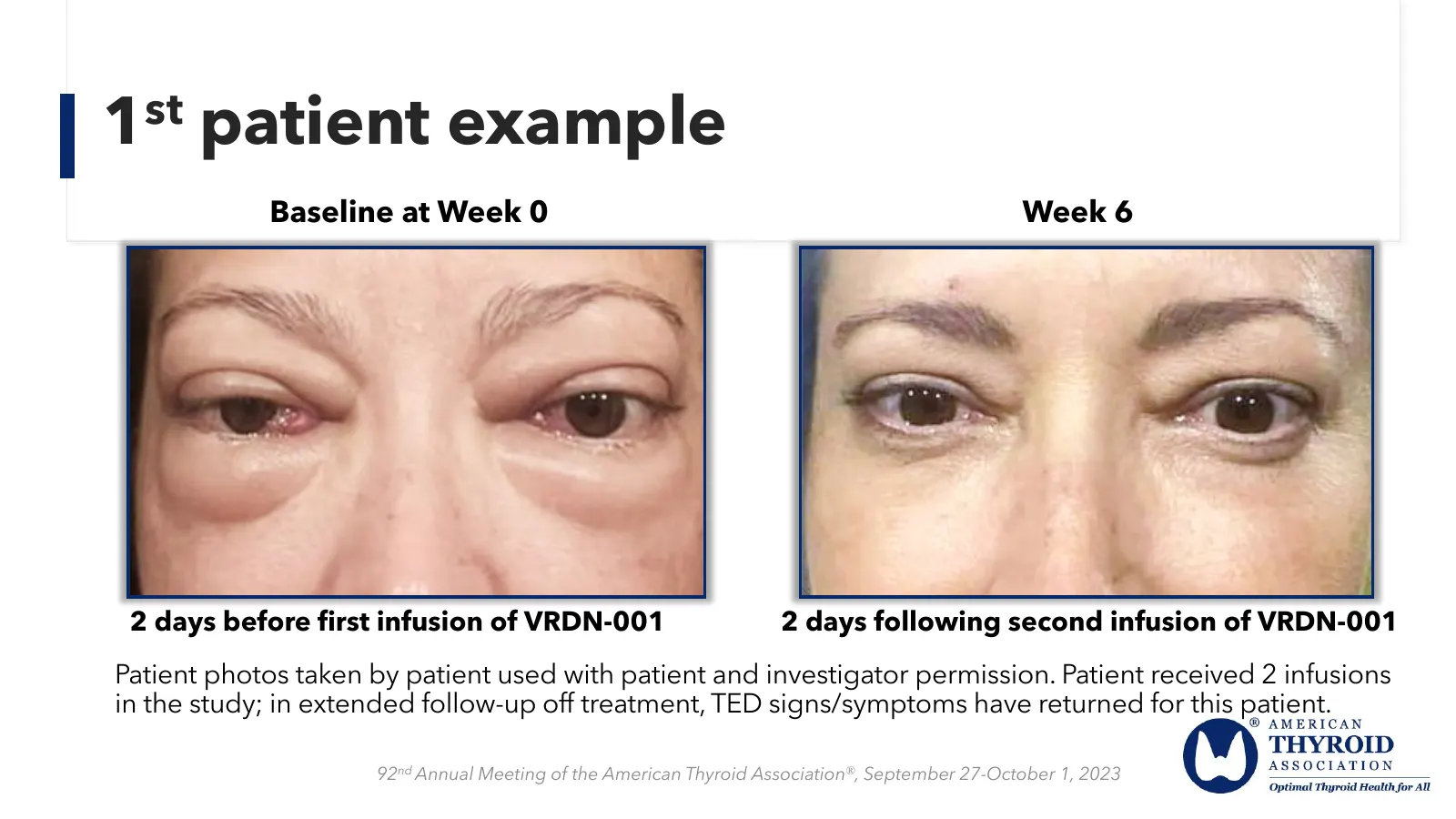
1st patient example Baseline at Week 0 Week 6 2 days before first infusion of VRDN-001 2 days following second infusion of VRDN-001 Patient photos taken by patient used with patient and investigator permission. Patient received 2 infusions in the study; in extended follow-up off treatment, TED signs
Slide 18: 2nd patient example
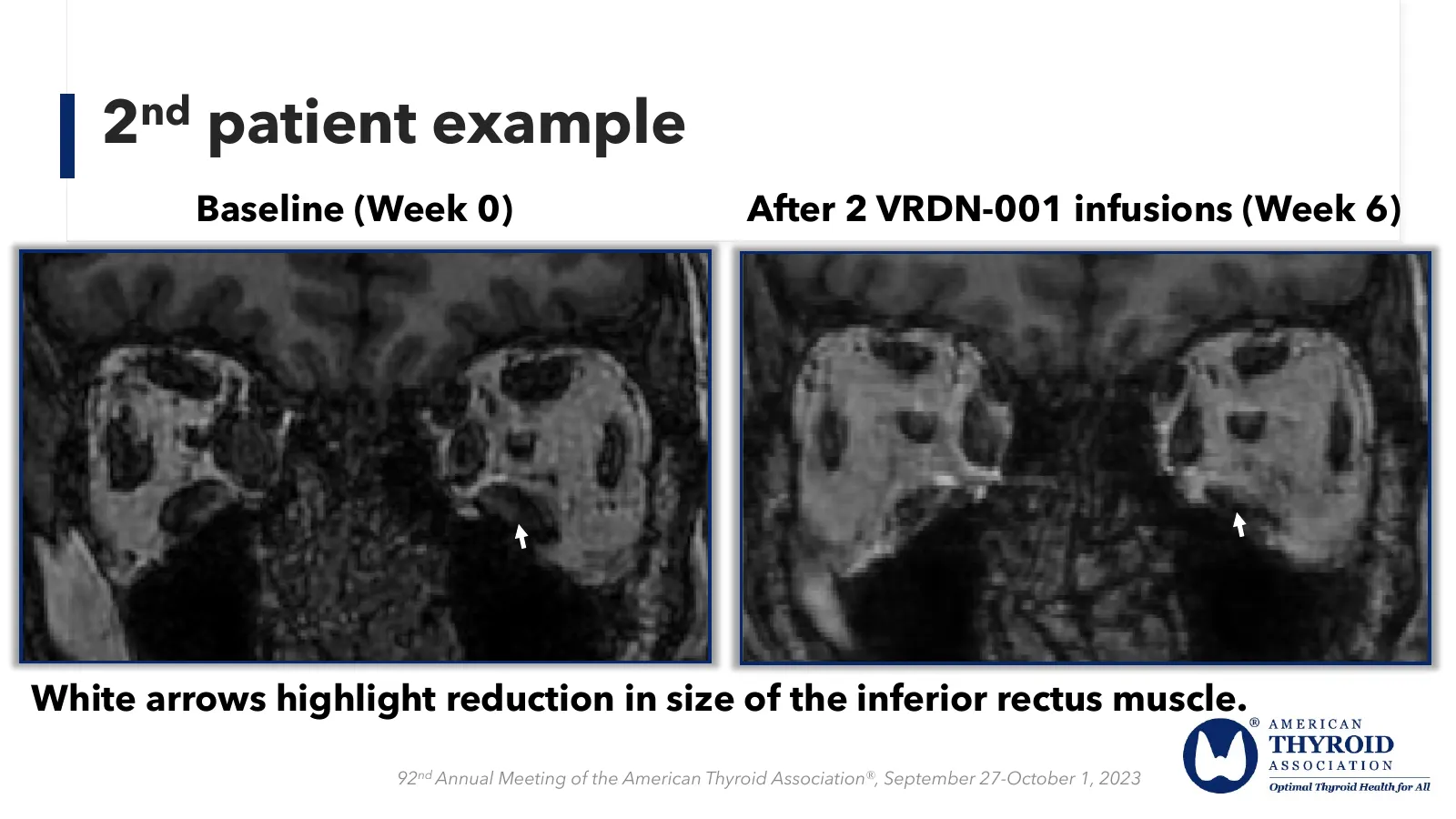
2nd patient example Baseline (Week 0) After 2 VRDN-001 infusions (Week 6) White arrows highlight reduction in size of the inferior rectus muscle. 92nd Annual Meeting of the American Thyroid Association®, September 27-October 1, 2023
Slide 19: VRDN-001 phase 2 POC study in chronic TED
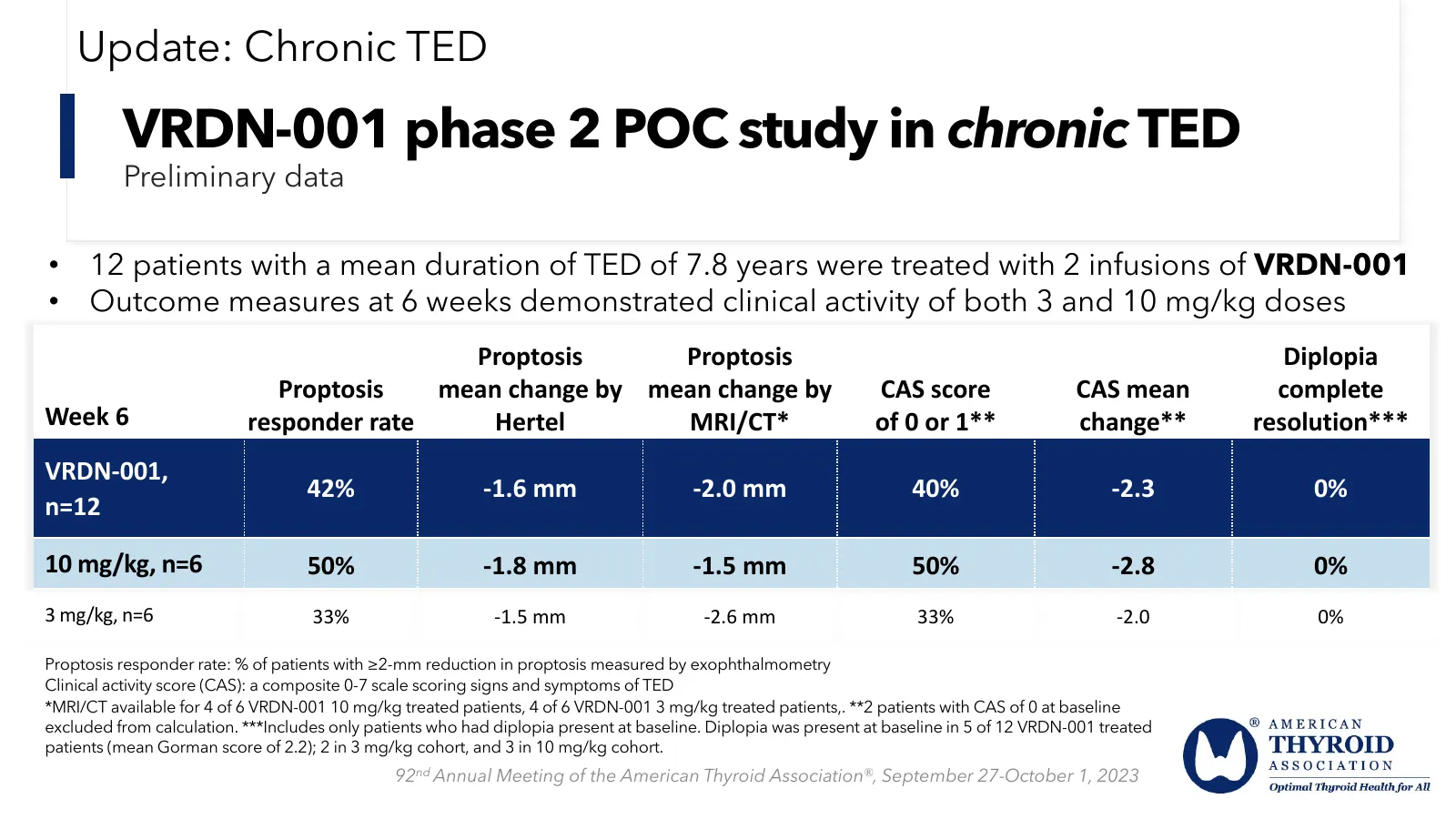
Update: Chronic TED VRDN-001 phase 2 POC study in chronic TED Preliminary data • 12 patients with a mean duration of TED of 7.8 years were treated with 2 infusions of VRDN-001 • Outcome measures at 6 weeks demonstrated clinical activity of both 3 and 10 mg/kg doses Proptosis Proptosis Diplopia Propt
Slide 20: Chronic TED: Proptosis reductions by exophthalmometer and MRI/CT
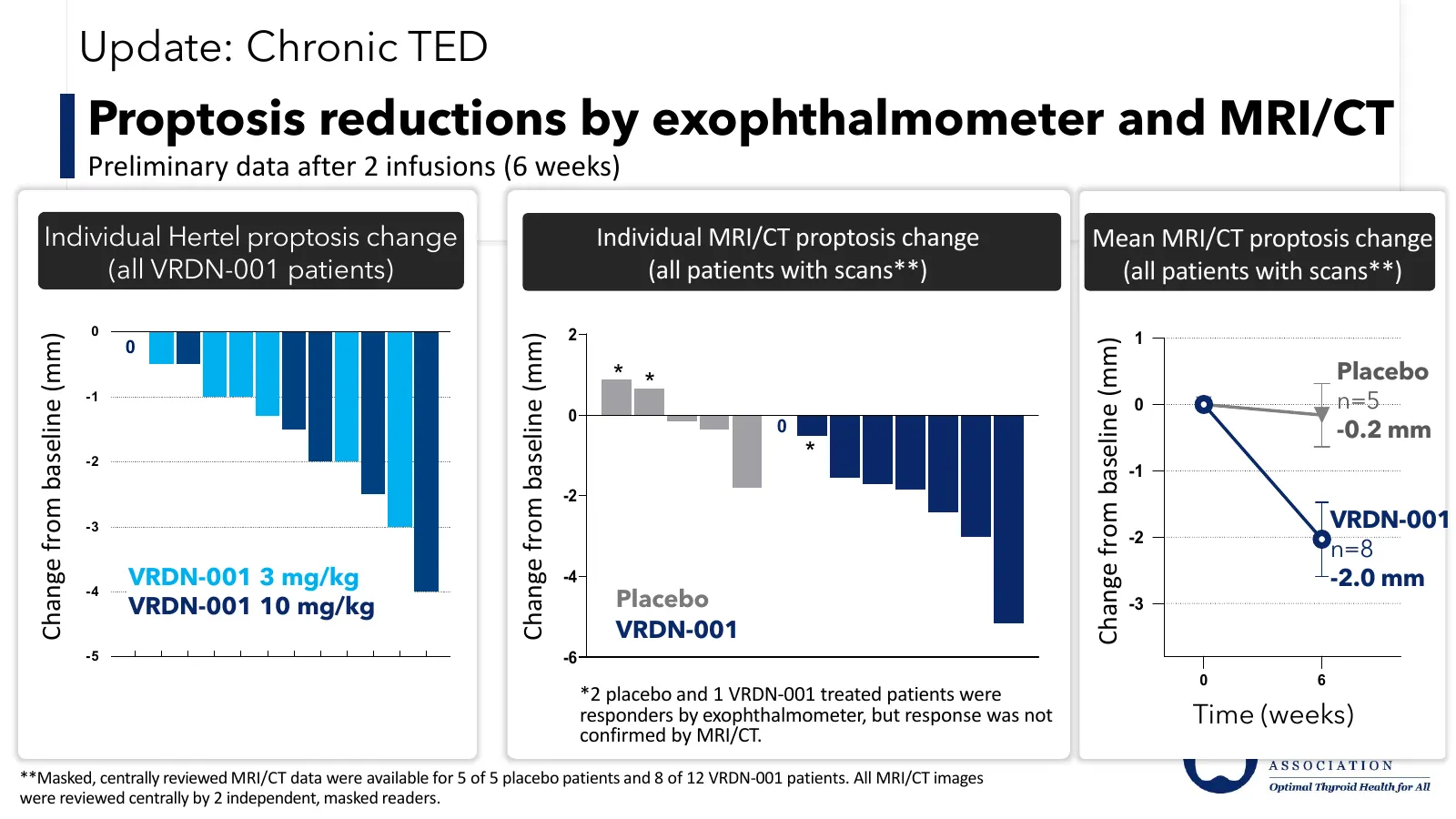
Update: Chronic TED Proptosis reductions by exophthalmometer and MRI/CT Preliminary data after 2 infusions (6 weeks) Individual Hertel proptosis change Individual MRI/CT proptosis change Mean MRI/CT proptosis change (all VRDN-001 patients) (all patients with scans**) (all patients with scans**) 0 2
Slide 21: Chronic TED: safety and adverse events
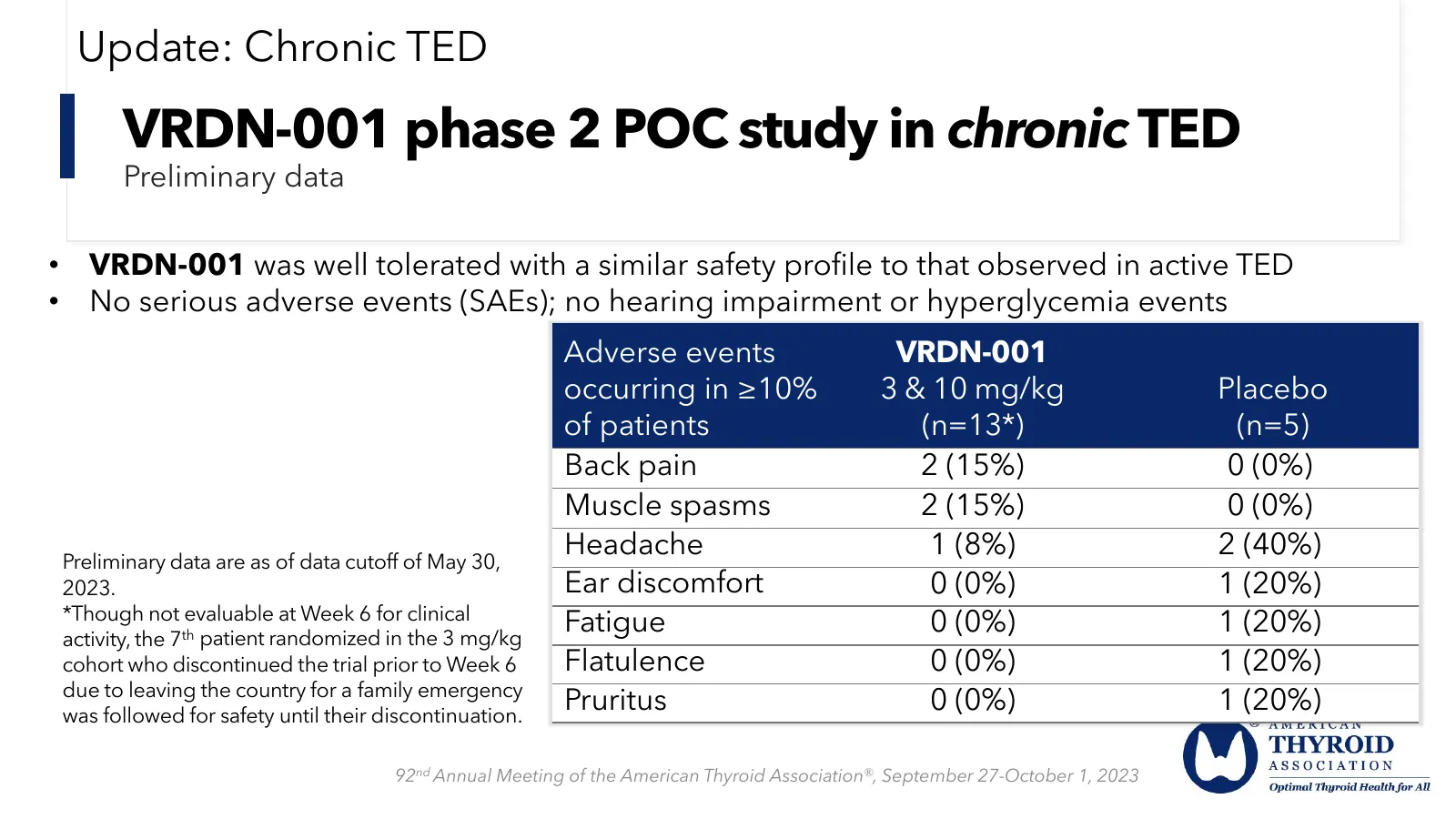
Update: Chronic TED VRDN-001 phase 2 POC study in chronic TED Preliminary data • VRDN-001 was well tolerated with a similar safety profile to that observed in active TED • No serious adverse events (SAEs); no hearing impairment or hyperglycemia events Adverse events VRDN-001 occurring in ≥10% 3 & 10
Slide 22: Conclusions
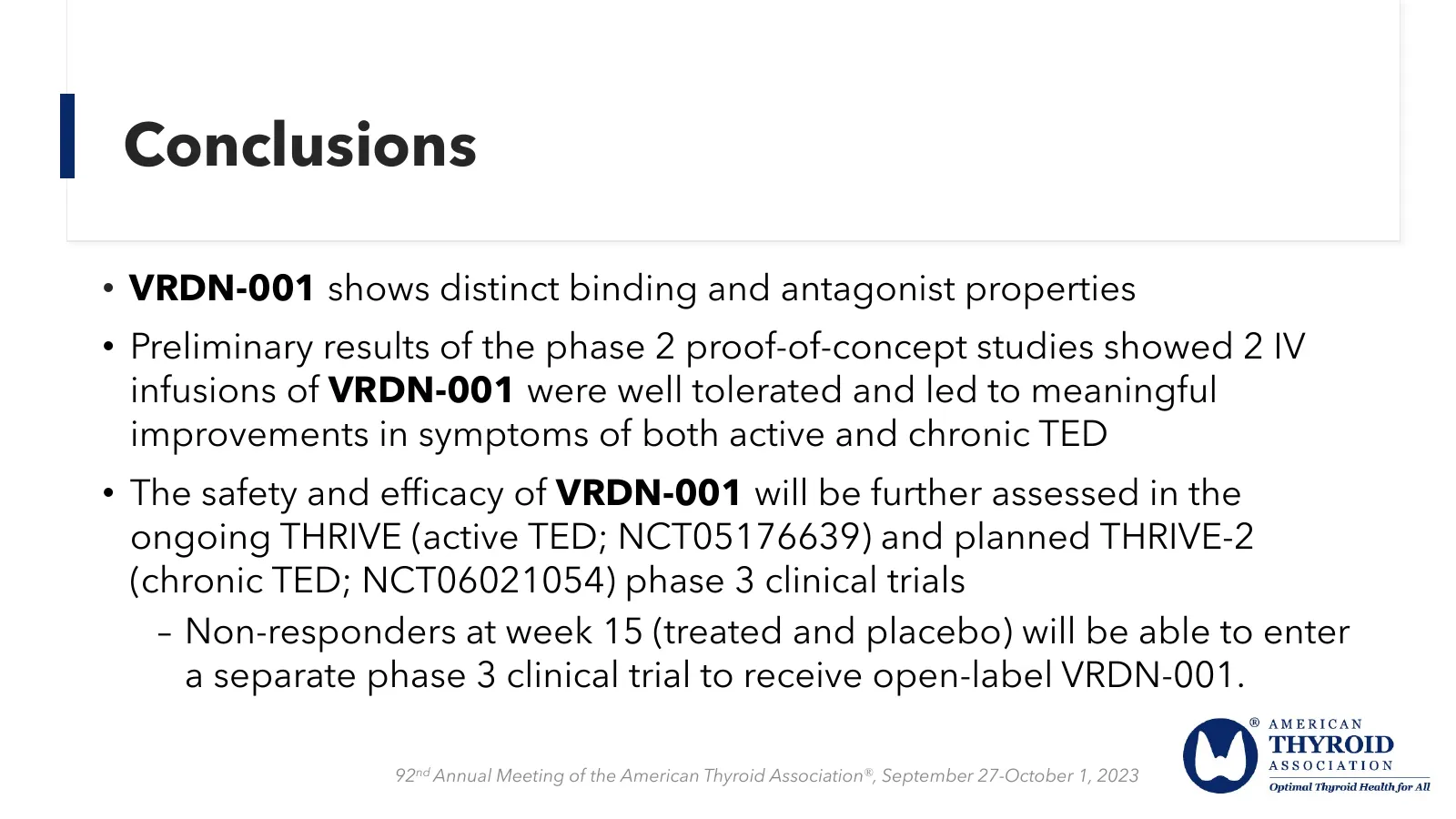
Conclusions • VRDN-001 shows distinct binding and antagonist properties • Preliminary results of the phase 2 proof-of-concept studies showed 2 IV infusions of VRDN-001 were well tolerated and led to meaningful improvements in symptoms of both active and chronic TED • The safety and efficacy of VRDN-
Slide 23: The authors would like to thank the patients who participated in these clinical trials
Kimberly Cockerham, MD [email protected] C: 650-804-9270 Sentaclinic.com In Vitro Pharmacology and Phase 1/2 Results of VRDN-001, a Full Antagonist Antibody to IGF-1 Receptor, in Thyroid Eye Disease (TED) The authors would like to thank the patients who participated in these clinical trials 92nd
Source: Internet Archive copy of viridiantherapeutics.com
More decks from Viridian Therapeutics, Inc.
 Technical Presentation (November 2026)21 slides · Nov 9, 2026
 Q3 2026 Earnings Presentation15 slides · Nov 4, 2026
 Corporate Update (June 2026)28 slides · Jun 29, 2026
 Technical Presentation (May 2026)20 slides · May 5, 2026
 Investor Presentation (May 2026)71 slides · May 5, 2026
 Technical Presentation (March 2026)20 slides · Mar 30, 2026